COFFEE IS OROMO ONTOLOGY: BARACK/BARAK ‘RIVER OF BLESS-INGS’ July 31, 2015
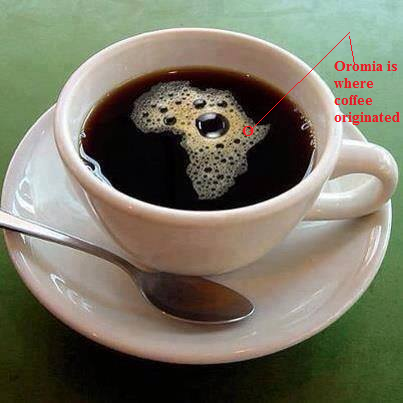
Posted by OromianEconomist in Coffee (Buna).Tags: Africa, African Studies, Buna, Obama, Oromia, Oromia is the region where coffee first originated, Oromia's traditional Coffee farm
2 comments



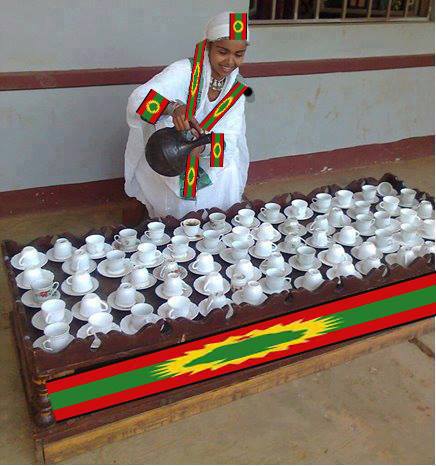
Oromo Coffee ceremony
The original Oromo/ African name for coffee is ‘Buna’.
Akka dammaa mi’aa, akka bunaa urgaa’
(As sweet as honey, as savoury as coffee)
– Oromo saying‘Bunaa fi nagaa hin dhabiinaa’
(May you not lack coffee and peace)
– Oromo saying
COFFEE IS OROMO ONTOLOGY: BARACK/BARAK ‘RIVER OF BLESS-INGS’
By Dereje Makkoo Tadesse on social media
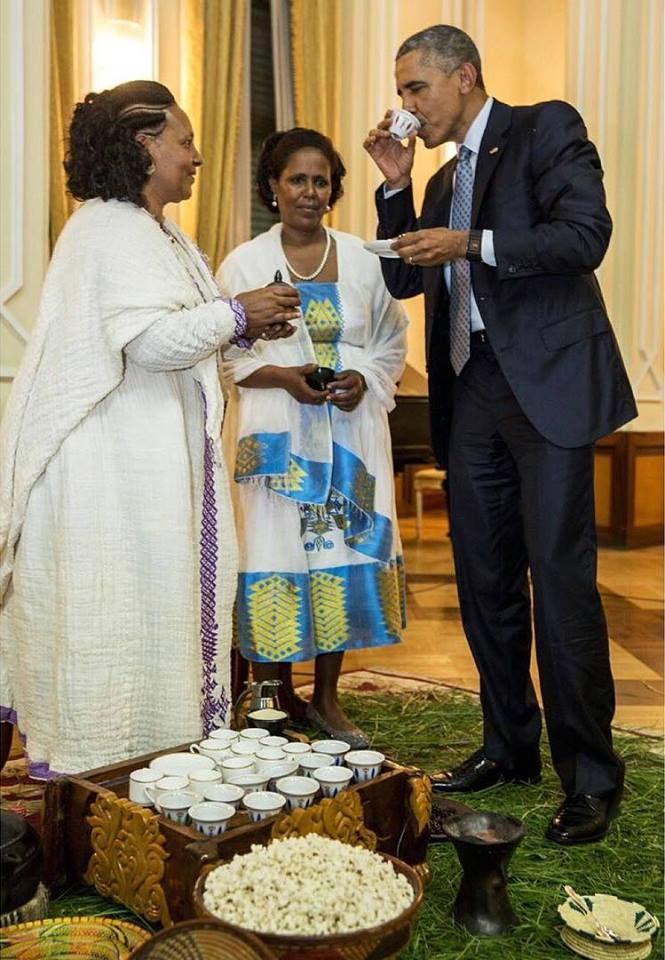
BARACK OBAMA is the only president-professor to ACKNOWLEDGE that COFFEE is the invention of Ethiopians. Indeed, coffee is NOT ONLY invention of the Oromo, but also that, for the OROMO, the color of REAL coffee tree-plant (blue-black) is the color of Waaqa–the BLACK-SKY SUPREME BEING!!! MOREOVER, coffee is not just beverage/drunk, but also is FOOD for the Oromo–sacred ceremonial food of Qaallu Institution and the QAAALLUU ‘First-Born Wise Father of Unction” of the Oromo nation.
MOREOVER, coffee is, for Oromo, mythological since antiquity–it is symbol of, if I may say, TRINITARIANISM/Trinity, but of NOT like the Christian seraphs or mumbo jumbos but of Two Virgin Brides + Offspring (two inner seeds plus cover/jacket of the bean/berry)! Even more mythological-cum-REAL Cultural History for Oromo, the fact that the color of the coffee berry changes SEQUENTIALLY three–from BLUE-BLACK [English ‘green’] to RED to Black. It’s Oromo ontology since Barraqa “the dawn of history”!!!
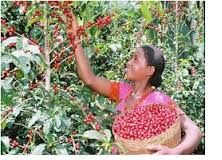
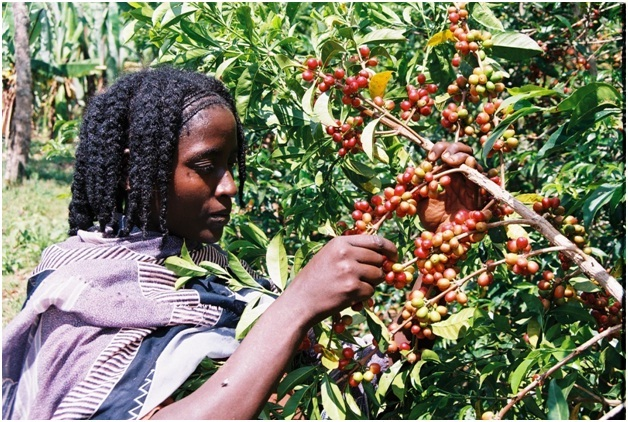
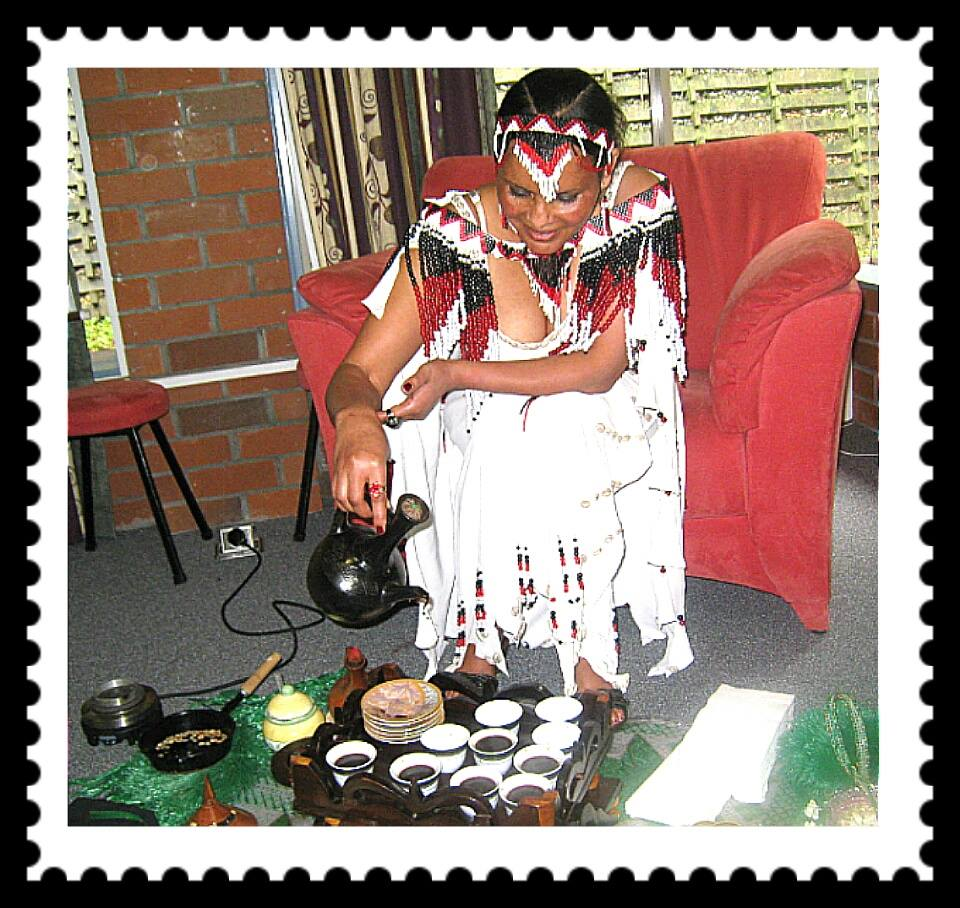
In Oromo BARACK or BARAK-aa is the “Blessing Phase” of the THREE-PHASE Coffee ceremony!! It is drank first during BARAQA ‘Time of MORNING SUNSHINE’ or American ‘Morning Rush-hour’! Or when the morning sun shines like that BEAUTIFUL Oromo queen displayed in the picture!!
Unlike the jabberwockies that some spout, the English word ‘COFFEE” is corruption of Oromo qaawwi/akawwii ‘coffee (boiled only)’, literally ‘the roasted, blackened’ from qawa/akawa ‘to roast; to get black’ (see Tutscheck’s 1844 “Oromo-German-English Dictionary”!!
Europe and Arab saw coffee for FIRST TIME during first half of 19th century–about 1830!! Falsities are recently produced casting anachronistically back to 15th century! ONLY fools believe it! They were surprised and began research on coffee by 1900!! There was Journal of Coffee Research (??) I knew and read. Both Coffee and Circumcision SURPRISED them simultaneously!! They tell you FALSITIES like Jesus Christ circumcision. Neither BIBLE nor Qura’an make a SINGLE word about coffee! NEVER!! BOTH coffee and circumcision are Oromo QAALLU-GADAA Institutions–NEVER DONE haphazardly or unintentionally or whimsically or by intuition. BUT Scientifically!!! Before Christianity and Muslims DISTORTED them!! I discussed elsewhere about Christian falsity of Trinitarianism/Trinity versus Oromo Circumcision philosophy of TRINITY!
One of the reasons that Euro-Abyssin Orthodox-Catholic (I can’t accuse the Ethiosemitic, especially Amaaraa innocently-victimized people) joint hatred of Oromo was for the Oromo drink-eat coffee!!! Like tobacco or SMOKING and Č’aatii/Jimaa or ‘khat’, both of which were sacred and ceremonial for Oromo, coffee was considered PAGANISM for they never knew it. Arabs or Islam was also ‘cheated’ originally. They learned their lessons for it was TOO SWEET, gastro-economically!!!
Coffee leaves, powders and young buds, was and indeed IS today, too, also MEDICINAL for the Oromo—against fatigue, asthma, constipation, diarrhea, pneumonia, snake bites, etc.—perhaps one of the earliest herbal medicine in human history. Arabs or Islam was also ‘cheated’ originally. They learned their lessons for it was TOO SWEET, gastro-economically!!!
Once, the funny Euro-Abbysin ‘scholars’–rather venomous hatred propagandists–told us a funny his-stories; (1) the Galla (their preference to ‘Oromo’) wanderers knew nothing about coffee; (2) a certain people of Island of Grox ate coffee as food–the ONLY people on the planet to eat coffee as food!!! (If there were, they must be Oromo-Afrikan slaves they exported as commodities—the MOST degenerate, despicable human-states project ever against another human being!!]. Rubbish the “Arab origin of Abyssin coffee” that they spewed out!!!! FUNNY!!!
READ the Catholic Father and great scholar Lambert Bartels, who threw away the Catholic mumbo jumbos and turned Qaallu himself!! READ another Catholic Father and GREAT scholar Martial De Salviac who did the same!!!!! I don’t wanna kill my energy and spacetime here!!!!
Our river of BARAK-AA ‘Bless-ings’ go to the great BARACK OBAMA!!!!!!!!!!!!!!!!
Buna (Coffee) is original to the Limmu in Jimma, Limmu Kossa district, a village of chorra in Western Oromia. Any other version of the story is only myth.
It was through Eastern Oromia, that the plant was popularized around the world. The plant was brought to Harar from Western Oromo area by a saint called Sheikh Shazali.
Oromia: A new study found high biodiversity on Oromo traditional shade coffee farms with highest relative bird biodiversity February 6, 2015
Posted by OromianEconomist in Oromia Coffee.Tags: Africa, African culture, African Studies, Biodiversity, Oromia is the region where coffee first originated, Oromia's traditional Coffee farm, Oromiyaa, Oromo, Oromo culture, Oromo people
add a comment
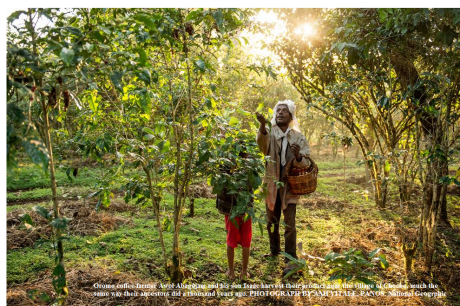
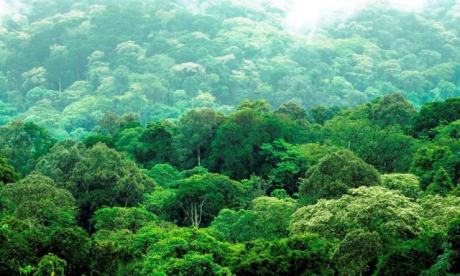
According to the recent study reported in National Geographic New Science Brief, the mainly Oromia’s (Ethiopian) traditional shade coffee farms are the world’s highest relative bird friendly. It is also known that geographically and categorically Oromia is the birth place of coffee and traditional shade coffee farms have been the dominate form of coffee production practice in the state.
“Oromia is the region where coffee first originated and it is by the Oromo people that the usage of coffee as a food started in the beginning of the 5th century. Oromia is approximately located between 3 degree and 15 degree North latitude and 33 degree and 40 degree longitude. The region is known for its unique native vegetation as well as for being the center of diversity for many different species of plant. The region is the birth place of coffee. The Oromo’s use coffee as food, drink, trade, spiritual nourishment and as a tool for peace-keeping.” http://www.oromiacoffeeunion.org/
The details of study reports from National Geographic as follows:
A new study found high biodiversity on traditional coffee farms.
http://news.nationalgeographic.com/news/2015/02/150204-ethiopia-shade-coffee-bird-friendly-environment-ngfood-science/
Shady coffee plantations in Ethiopia, where coffee has been grown for at least a thousand years, hold relatively more forest bird species than any other coffee farms in the world, new research shows.
The research suggests that traditional cultivation practices there support local forest bird biodiversity better than any other coffee farms in the world.
In Ethiopia, coffee is traditionally grown on plantations shaded by native trees. These farms boasted more than 2.5 times as many bird species as adjacent mountain forest, according to a study slated for publication February 11 in the journal Biological Conservation.
“That was a surprise,” says study co-author Cagan H. Sekercioglu, a biologist at the University of Utah and a National Geographic Society grant recipient. Further, “all 19 understory bird species we sampled in the forest were present in the coffee farms too, and that just doesn’t happen elsewhere.”
Other studies have shown that shade coffee farms provide better bird habitat than full-sun plantations, but the effect may be more prominent in Ethiopia because farmers there tend to use native trees instead of the exotic species popular elsewhere.
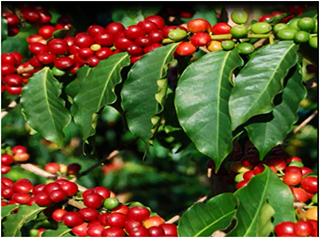
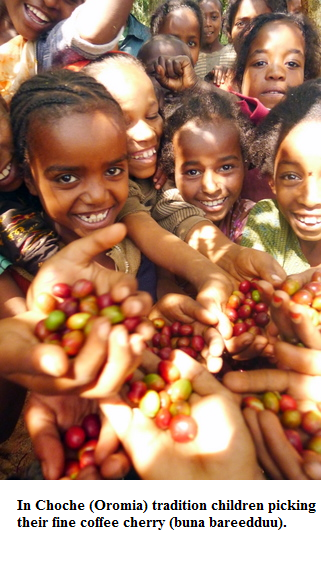
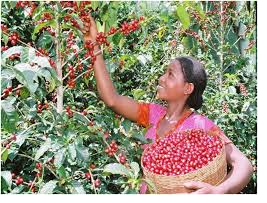
Coffee cherries, the fruit that contains the coffee beans, are seen up close on the plant in Ethiopia.PHOTOGRAPH BY AMI VITALE, PANOSWhy It Matters
The new study may be the first of bird biodiversity on Ethiopian coffee farms, because the country is relatively remote and poor. Ethiopian coffee farmers face pressure—as in many countries—to convert more coffee production to full-sun plantations.
Growing coffee in the sun can reduce the risk of fungal disease, cuts labor, and can yield more coffee beans, but at the costs of lower-quality coffee that fetches less per pound and degraded habitat for wildlife, says Sekercioglu.
The Big Picture
Scientists found all but one of nine species of migratory birds on the coffee farms, but not in adjacent forest. Sekercioglu suspects that the open structure of the farms was more inviting to the birds than the denser natural forest because it more closely resembles the habitat they are used to in the north.
Still, Sekercioglu cautions that “coffee farms cannot simply replace forest for habitat.” Although all forest understory bird species were also represented on the farms, their number of individuals was about 80 percent lower. (See how coffee changed America.)
Birds such as the blue-breasted bee-eater can be found on Ethiopia’s shade coffee farms.PHOTOGRAPH BY CAGAN SEKERCIOGLU, NATIONAL GEOGRAPHIC CREATIVEWhat’s Next
The team would like to measure how birds in the canopy above the coffee farms are faring, since they only measured birds caught in the understory, or the first ten feet above the ground. The scientists also want to study long-term the breeding success and population changes of birds in forest versus shade coffee.
Sekercioglu also suggests that the Smithsonian Migratory Bird Centeror the Rainforest Alliance, which certify bird-friendly coffee from other countries, should consider extending their programs to Ethiopia. Certification allows farmers to recoup a price premium, which can help deter the impulse to convert farms to full sun or otherwise develop their land.
Correction: An earlier version of this story suggested the Ethiopian farms had the highest bird biodiversity anywhere, but it has been updated to clarify that the farms have the highest relative bird biodiversity.
http://news.nationalgeographic.com/news/2015/02/150204-ethiopia-shade-coffee-bird-friendly-environment-ngfood-science/


 Oromian Economist
You must be logged in to post a comment.