Africa: New Infrastructure and Sustainable Development in the Robotic Era October 29, 2024
Posted by OromianEconomist in Uncategorized.add a comment
Africa: New Infrastructure and Sustainable Development in the Robotic Era
Introduction
Africa is at the forefront of technological innovation, often leapfrogging traditional infrastructure to adopt cutting-edge solutions. Just as the continent bypassed landline telephones in favor of mobile phones, it now has the opportunity to revolutionize rural development through the use of solar-powered, autonomous robots. These innovations promise to overcome infrastructural limitations and promote sustainable development.
Leapfrogging Traditional Infrastructure
In many rural areas, the lack of developed road networks and reliable electricity poses significant challenges. However, by adopting advanced technologies, these regions can bypass traditional infrastructure hurdles. Solar-powered robots designed to mimic the capabilities of donkeys and horses can navigate rough terrains, carry goods, and perform agricultural tasks, making them ideal for areas with limited road access.
Sustainability and Environmental Impact
Transitioning from wood fires to solar energy is a crucial step towards sustainability. Solar-powered robots not only reduce reliance on fossil fuels but also help preserve forests and reduce air pollution. This shift aligns with global efforts to combat climate change and promote renewable energy sources. By harnessing the abundant sunlight in Africa, these robots can operate efficiently and sustainably.
Economic and Social Benefits
The introduction of autonomous robots in rural areas can drive economic growth by improving agricultural productivity and transportation efficiency. Farmers can benefit from reduced physical labor and increased yields, while communities gain better access to goods and services. This technological leap can enhance living standards and create new economic opportunities, fostering a more prosperous and resilient rural economy.
Technological Advancements
Recent advancements in robotics and solar technology have made it feasible to develop robust, efficient, and cost-effective robots. These machines can be equipped with durable solar panels, efficient batteries, and advanced navigation systems to operate autonomously in challenging environments. As production scales up, the costs of these robots are expected to decrease, making them more accessible to rural communities.
Conclusion
Africa’s ability to leapfrog traditional infrastructure through innovative technologies holds great promise for sustainable development. By embracing solar-powered, autonomous robots, rural areas can overcome infrastructural limitations, reduce environmental impact, and drive economic growth. This forward-thinking approach not only addresses immediate challenges but also paves the way for a more sustainable and prosperous future.
Irreecha: The Highest of The high Culture October 2, 2024
Posted by OromianEconomist in Uncategorized.add a comment
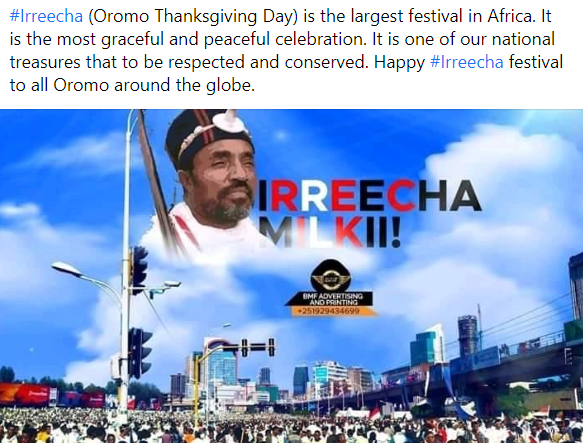
Irreecha, also known as Irreessa or Dhibaayyuu, is a significant cultural festival celebrated by the Oromo people in Ethiopia. When people refer to Irreecha as “the highest of the high culture,” they are highlighting its profound cultural, spiritual, and social importance.

Explore
Irreecha: The Highest of the High Culture
Irreecha, also known as Irreessa or Dhibaayyuu, is a vibrant and deeply significant cultural festival celebrated by the Oromo people in Oromia and all over the world . One of Irreecha’s annual events, Irreecha Birra, which marks the end of the rainy season and the beginning of the harvest season, Autumnal equinox ( the equivalent Irreecha Arfaasa in Spring) is not just a celebration but a profound expression of gratitude, unity, and cultural identity.
A Celebration of Gratitude
At its core, Irreecha is a thanksgiving festival. The Oromo people gather to give thanks to Waaqa (God) for the blessings and mercies received throughout the year. This act of collective gratitude is performed through prayers, songs, dances, and various rituals that symbolize the renewal of life and the hope for a prosperous future1.
Cultural Revival and Identity
Irreecha is more than just a festival; it is a powerful symbol of Oromo cultural revival. Historically, the Oromo people faced numerous challenges, including attempts to suppress their culture and identity. Irreecha serves as a resilient response to these challenges, celebrating the rich traditions and heritage of the Oromo people2. The festival is a testament to the enduring spirit of the Oromo, showcasing their unity and strength. It is a time for the Oromo people to gather and give thanks to Waaqa (God) for the blessings and mercies received throughout the year1. The festival is celebrated with vibrant rituals, including prayers for peace (Nagaa) and reconciliation (Araara), and it serves as a powerful symbol of Oromo identity and cultural revival2.
Rituals and Traditions
The rituals of Irreecha are deeply symbolic. Three of the most significant traditions are the gatherings at Hora Finfinnee, in Finfinnee the capital city of Oromia &Ethiopia, Hora Arsadi, a lake in Bishoftu and Malkaa Ateetee, in Buraayyu near Finfinnee where millions of participants dip grass and flowers into the water as a sign of gratitude and renewal. This act is accompanied by prayers for peace (Nagaa) and reconciliation (Araara), emphasizing the festival’s spiritual and communal aspects3.
A National and Global Event
Irreecha has grown beyond a local celebration to become a national and even global event. Millions of Oromos from all over Oromia and Ethiopia and the diaspora, as well as non-Oromo visitors, come together to participate in the festivities. This gathering not only strengthens the bonds within the Oromo community but also promotes cultural exchange and understanding4.
Irreecha is the largest endogenous festival in Africa which has been based on the evolving very ancient tradition of over 6000 years.
The Highest of the High Culture
When Irreecha is referred to as “the highest of the high culture,” it underscores the festival’s unparalleled significance in Oromo society. It is a time when the Oromo people collectively express their deepest values, including gratitude, unity, and resilience. Irreecha stands as a pinnacle of cultural expression, embodying the essence of Oromo heritage and identity.
In conclusion, Irreecha is a celebration that transcends mere festivity. It is a profound cultural event that honors the past, celebrates the present, and looks forward to the future with hope and gratitude. As the highest of the high culture, Irreecha continues to inspire and unite the Oromo people, preserving their rich traditions for generations to come.
1: Wikipedia 2: Gadaa 3: Waaqeffannaa 4: AI information #Oromo #Culture #Irreecha


 Oromian Economist
You must be logged in to post a comment.