EU Lists Ethiopia Over Money Laundering November 17, 2017
Posted by OromianEconomist in Uncategorized.Tags: Africa, Ethiopia, Ethiopia: TPLF's corruption empire, Illicit Financial Flows from Ethiopia, Money laundering, Political and Economic Corruption, TPLF, TPLF in Somalia, TPLF/EPRDF Ethiopian Regime is a Contra to a Developmental State
add a comment


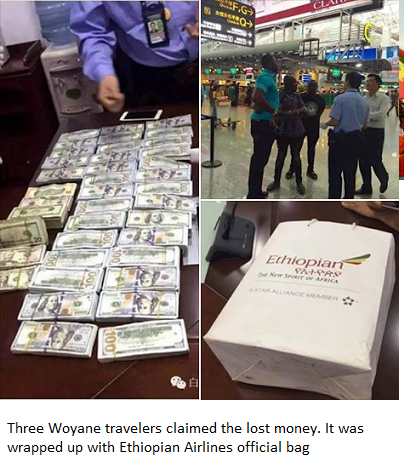
The European Commission blacklisted Ethiopia for being very risky in money laundering and terrorism financing, urging banks situated in Europe to apply enhanced due diligence on financial flows from the country.
Aiming to ensure proper functioning of the European market, the Commission, in its latest regulation released on October 27, 2017, added the country to the list of high-risk third countries along with Iran, Syria, Yemen and seven other nations.
Ethiopia is among the top 10 African countries in terms of being a source of illicit financial flows (IFFs), most of which makes ways to the developed world. #Africa February 10, 2015
Posted by OromianEconomist in Africa, Africa and debt, Illicit financial outflows from Ethiopia.Tags: Africa, African Studies, Developing country, Illicit Financial Flows from Ethiopia, Political and Economic Corruption, Systematic financial theft from Africa, The High Level Panel on Illicit Financial Flows from Africa
add a comment

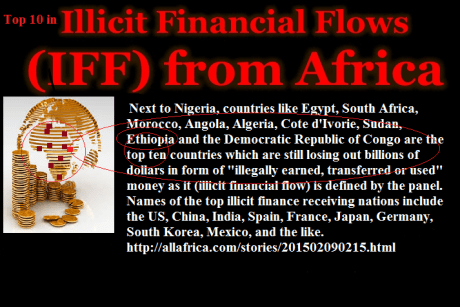
With Nigeria leading the pack of top loser counties in Africa, Ethiopia alone lost a cumulative of USD 16.5 billion between 1970 and 2008. But, since 2010, Ethiopia more likely lost USD 10 billion which could have shortened significantly the 13 years journey that the country have taken to achieve MDG4 (reduce child mortality by two thirds ) to nine years. In addition to that, the panel found out that failing to curtail illicit financial flows cost the country some six percent of its GDP annually.
Ethiopia: Panel Names One of Ethiopia Top Sources for Illicit Financial Flow
By Berhanu Fekade, All Africa
A high level panel delegated by the African Union (AU) and chaired by Thabo Mbeki, the former president of South Africa, has found Ethiopia to be among the top African nations in terms of being a source of illicit financial flows (IFFs), most of which makes ways to the developed world.
The panel was tasked to find out how prone Africa is for a systematic financial theft which mostly is orchestrated by giant multinational companies operating in the continent. The panel’s report dubbed “track it, stop it and get it” found that in five decades alone, the continent is estimated to have lost one trillion dollars; and currently nations including Ethiopia are losing some 60 billion dollars due to illicit financial flows across the board. With Nigeria leading the pack of top loser counties in Africa, Ethiopia alone lost a cumulative of USD 16.5 billion between 1970 and 2008. But, since 2010, Ethiopia more likely lost USD 10 billion which could have shortened significantly the 13 years journey that the country have taken to achieve MDG4 (reduce child mortality by two thirds ) to nine years. In addition to that, the panel found out that failing to curtail illicit financial flows cost the country some six percent of its GDP annually.
This figure puts the country among the top ten losers; rather creditors via illicit financial flows. Next to Nigeria, countries like Egypt, South Africa, Morocco, Angola, Algeria, Cote d’Ivorie, Sudan, Ethiopia and the Democratic Republic of Congo are the top ten countries which are still losing out billions of dollars in form of “illegally earned, transferred or used” money as it (illicit financial flow) is defined by the panel. Names of the top illicit finance receiving nations include the US, China, India, Spain, France, Japan, Germany, South Korea, Mexico, and the like.
During the summit of heads of state and government which was concluded late last week, the panel appeared before the leaders to present its report on the findings of the three-year-long study that the panel has conducted. In its 15 main findings, the report made it loud and clear that the amount of money leaving Africa via IFFs is muscling up over the years. In 2010, the sums of dollars that flew out of the continent are estimated to be 60 billion dollars. Hence, the report went on to indicate that time has come to prompt the continent to the fact that illicit financial flows are political issues. According to Mbeki, the leaders have decided to adopt the report during the 24th ordinary summit.
The report basically made three classifications regarding the way illicit finances are flowing: via commercial activities, falsification of prices (trade mispricing), quantities and qualities of traded goods. Transfer pricing, profit shifting, tax evasion and the tax incentives which lack cost benefit analysis are some of the systemic commercial thefts the high level panel reported upon. Arms and drugs smuggling, human trafficking, poaching, oil and mineral theft are the criminal activities facilitated by illicit financial flows, the panel argued. Corruption and nontransparent deals are also the impeding factors to curtail the flight of finance from Africa. However, some studies allude to the fact that it is corruption which is extremely bleeding the continent really bad. These studies indicate that, up to 150 billion dollars annually is lost due to corrupt systems along the board in the continent.
To make matters worse, the continent faces huge gaps to finance infrastructural requirements as well as human development issues. The illicit flights alone largely exceed the official development assistants many African nations receive, Mbeki noted.
Read More at:
Attention to Ethiopia (Africa): Corruption ‘impoverishes and kills millions’ September 4, 2014
Posted by OromianEconomist in Africa, Africa and debt, Africa Rising, African Poor, Colonizing Structure, Corruption, Dictatorship, Ethiopia's Colonizing Structure and the Development Problems of People of Oromia, Afar, Ogaden, Sidama, Southern Ethiopia and the Omo Valley, Illicit financial outflows from Ethiopia, The Tyranny of Ethiopia, Undemocratic governance in Africa, Youth Unemployment.Tags: Africa, African Studies, Corruption, Political and Economic Corruption, poverty, Sub-Saharan Africa, Tyranny
add a comment

Corruption ‘impoverishes and kills millions’

BBC (4 September 2014) The ONE group says money lost because of corruption would otherwise be spent on school and medicine. An estimated $1tn (£600bn) a year is being taken out of poor countries and millions of lives are lost because of corruption, according to campaigners.A report by the anti-poverty organisation One says much of the progress made over the past two decades in tackling extreme poverty has been put at risk by corruption and crime.Corrupt activities include the use of phantom firms and money laundering. The report blames corruption for 3.6 million deaths every year.
If action were taken to end secrecy that allows corruption to thrive – and if the recovered revenues were invested in health – the group calculates that many deaths could be prevented in low-income countries.
Corruption is overshadowing natural disasters and disease as the scourge of poor countries, the report says.One describes its findings as a “trillion dollar scandal”.
“Corruption inhibits private investment, reduces economic growth, increases the cost of doing business and can lead to political instability,” the report says.
“But in developing countries, corruption is a killer. When governments are deprived of their own resources to invest in health care, food security or essential infrastructure, it costs lives and the biggest toll is on children.”
The report says that if corruption was eradicated in sub-Saharan Africa:
- Education would be provided to an additional 10 million children per year
- Money would be available to pay for an additional 500,000 primary school teachers
- Antiretroviral drugs for more than 11 million people with HIV/Aids would be provided
One is urging G-20 leaders meeting in Australia in November to take various measures to tackle the problem including making information public about who owns companies and trusts to prevent them being used to launder money and conceal the identity of criminals.
It is advocating the introduction of mandatory reporting laws for the oil, gas and mining sectors so that countries’ natural resources “are not effectively stolen from the people living above them”.
It is recommending action against tax evaders “so that developing countries have the information they need to collect the taxes they are due” and more open government so that people can hold authorities accountable for the delivery of essential services.
Read more @ original source:
Africa: Illicit Financial Flows Drain US$55.6bn Annually from the Continent August 10, 2014
Posted by OromianEconomist in Africa, Africa and debt, Africa Rising, African Poor, Aid to Africa, Colonizing Structure, Corruption, Dictatorship, Ethiopia's Colonizing Structure and the Development Problems of People of Oromia, Afar, Ogaden, Sidama, Southern Ethiopia and the Omo Valley, Free development vs authoritarian model.Tags: African Studies, Development and Change, Governance issues, Land grabs in Africa, Political and Economic Corruption, Tyranny
add a comment
Illicit Financial Flows Drain US$55.6bn Annually from African Continent
Only Ethiopia has lost $11.7 billion to illicit fund outflows in the last decade.
A climate of corruption, Ethiopian edition
 Working Group Must Address Trade Misinvoicing and Role of U.S. Business and Government in Facilitating Illicit Finance to Be Truly Effective, Warns GFI
Illicit Financial Flows Drain US$55.6bn Annually from African Continent, Sapping GDP, Undermining Development, and Fueling Crime, Corruption, and Tax Evasion
August 7, 2014, WASHINGTON, DC (GFI) – Global Financial Integrity (GFI) welcomed the announcement from the White House and African leaders today regarding the establishment of a bilateral U.S.-Africa Partnership to Combat Illicit Finance, but the Washington-DC based research and advocacy organization cautioned that any effective partnership must be sure to address deficiencies in both the U.S. and in Africa that facilitate the hemorrhage of illicit capital from Africa.
“We welcome the move by President Obama and certain African leaders to form this partnership on curbing illicit financial flows from African economies,” said GFI President Raymond Baker, who also serves on the UN High Level Panel on Illicit Financial Flows from Africa. “Illicit financial flows are by far the most damaging economic problem facing Africa. By announcing the creation of the U.S.-Africa Partnership to Combat Illicit Finance, President Obama and African leaders have taken the first step towards tackling the most pernicious global development challenge of our time.”
GFI research estimates that illicit financial outflows cost African (both North and Sub-Saharan African) economies US$55.6 billion per year from 2002-2011 (the most recent decade for which comprehensive data is available), fueling crime, corruption, and tax evasion. Indeed, GFI’s latest global analysis found that these illicit outflows sapped 5.7 percent of GDP from Sub-Saharan Africa over the last decade, more than any other region in the developing world. Perhaps most alarmingly, outflows from Sub-Saharan Africa were found to be growing at an average inflation-adjusted rate of more than 20 percent per year, underscoring the urgency with which policymakers should address illicit financial flows.
The problem with illicit outflows from Africa is so severe that a May 2013 joint report from GFI and the African Development Bank found that, after adjusting all recorded flows of money to and from the continent (e.g. debt, investment, exports, imports, foreign aid, remittances, etc.) for illicit financial outflows, between 1980 and 2009, Africa was a net creditor to the rest of the world by up to US$1.4 trillion.
Trade Misinvoicing at the Heart of Illicit Outflows
According to GFI’s research, most of the illicit outflows from Africa—US$35.4 billion of the US$55.6 billion leaving the continent each year—occur through the fraudulent over- and under-invoicing of trade transactions, a trade-based money laundering technique known as “trade misinvoicing.” As GFI noted in a May 2014 study, trade misinvoicing is undermining billions of dollars of investment and domestic resource mobilization in at least a number of African countries. The organization emphasized the importance of ensuring that the new U.S.-Africa partnership prioritizes the curtailment of trade misinvoicing.
“The misinvoicing of ordinary trade transactions is the most widely used method for transferring dirty money across international borders, and it accounts for the vast majority of illicit financial flows from Africa,” said Heather Lowe, GFI’s legal counsel and director of government affairs. “While it is easy to place the blame for this on corrupt officials or transnational crime networks, the truth of the matter is that the bulk of these fraudulent trade transactions are conducted by normal companies, many of them major U.S. and European companies.”
Ms. Lowe continued: “Just yesterday, President Obama announced the Doing Business in Africa Campaign, a U.S. government initiative focused on boosting trade between U.S. and African companies, without a signal mention of the elephant in the room: trade misinvoicing. Increasing trade is important to boosting economic growth across Africa, but only if the trade is done honestly and at fair market values. The single most important step that wealthy nations like the U.S. can take to help African economies curtail illicit flows is to trade legitimately and honestly with Africa. While this topic was not addressed at the U.S.-Africa Business Forum yesterday, it must be on the table as the U.S.-Africa Partnership to Combat Illicit Finance commences its work.”
U.S. Must Clean Up Its Own Backyard
GFI further emphasized the need to address the role of the U.S. financial system as a major facilitator of such outflows.
“For every country losing money illicitly, there is another country absorbing it. Illicit financial outflows are facilitated by financial opacity in tax havens and in major economies like the United States,” said GFI Policy Counsel Joshua Simmons. “Indeed, the United States is the second easiest country in the world—after Kenya—for a criminal, kleptocrat, or terrorist to incorporate an anonymous company to launder their ill-gotten-gains with impunity.
“While governance remains an issue for many African countries, structural deficiencies in the U.S. financial system are just as responsible for driving the outflow of illicit capital. This initiative cannot place the onus entirely on the shoulders of African governments. The burden for curtailing these illicit flows must be shared equally by policymakers in the U.S. and in Africa for this partnership to be effective,” added Mr. Simmons.
http://ayyaantuu.com/africa/illicit-financial-flows-drain-us55-6bn-annually-from-african-continent/
http://globalvoicesonline.org/2012/01/25/ethiopia-reflecting-on-corruption-in-ethiopia/


 Oromian Economist
You must be logged in to post a comment.