The Heartbeat of Oromia: How the Traditional Dibbee Sustains Our Cultural Heritage October 19, 2026
Posted by OromianEconomist in Uncategorized.Tags: African culture, African music, art, Black History, cultural preservation, Culture, history, Music, Oromia music, Oromo, Oromo music, Travel, writing
add a comment
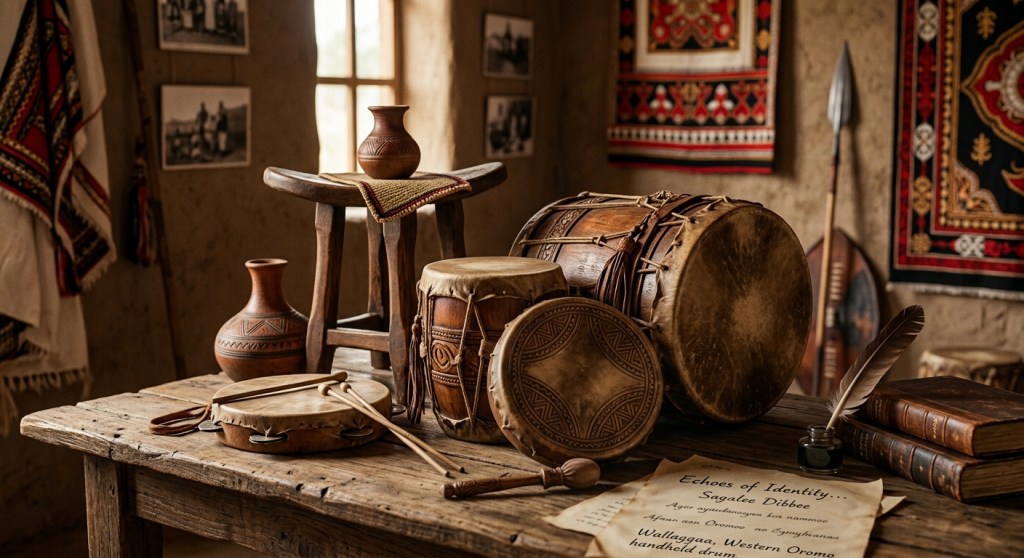
The Heartbeat of Oromia: How the Traditional Dibbee Sustains Our Cultural Heritage
Posted on Culture & Arts | By Temesgen Muleta-Erena | Reading Time: 4 mins
Music in the Oromo tradition is far more than mere entertainment—it is a living library of history, philosophy, spiritual values, and social organization. At the very center of this rich musical heritage lies the traditional drum, known in Afaan Oromoo as the dibbee.
Across Oromia, different styles of traditional drums serve distinct social, ceremonial, and musical functions. From the energetic rhythms of community dances to sacred gatherings, the dibbee carries the pulse of a nation. Recognizing, recording, and preserving these traditional instruments—especially through visual media showcasing drummers in authentic traditional attire—is an essential act of cultural safeguard.
Watch the Video:
A Tapestry of Rhythms: The Diversity of Oromo Drums
The Oromo people utilize various drum styles tailored to specific musical genres, geographic regions, and cultural events:
- The Classic Dibbee: Carved from hollowed hardwood trunks and stretched tightly with cowhide or goatskin, the classic dibbee provides the foundational rhythm for traditional dances like Dhiichisa, Geerarsa, Ragada, and Shagoyyee. Depending on where it is struck—at the center for a deep resonance or near the frame for a sharp snap—it dictates the tempo and energy of the community.
- The Handheld Wallaggaa Dibbee: Popular in Western Oromia (Wallaggaa), this portable, handheld version allows drummers mobility and fluid interaction with dancers, playing an integral role in regional celebrations and social gatherings.
- The Atamo: Lighter frame drums played with hands or thin beaters, widely used during intimate social gatherings, traditional coffee ceremonies, and festive occasions.
- Spiritual & Ritual Drums: In traditional ceremonies (such as Ateetee rituals or Irreecha gatherings), sacred drum rhythms establish a reverent atmosphere, bringing the community together in prayer, unity, and gratitude.
“The drumbeat in Oromia is not just background music; it is the rhythm to which our history, oral poetry, and community values are spoken.”
Why the Drum is a Pillar of Oromo Identity
Oromo drums do not merely accompany a melody; they structure the entire communication and story of a performance:
- Sustaining Oral History: In a culture historically anchored in oral tradition, drum rhythms serve as timekeeping markers for epic poetry, historical recitations, and heroic songs (Geerarsa).
- Fostering Social Harmony: The layered polyrhythms produced by multiple drummers responding to one another reflect core Oromo values of teamwork, mutual respect, and collective harmony (Safuu and Gadaa principles).
- Guarding Indigenous Craftsmanship: Every traditional drum represents generations of artisan knowledge—from selecting native hardwoods to preparing hides using age-old tanning techniques. Preserving the drum safeguards this irreplaceable craftsmanship.
Digital Preservation: Bringing Tradition to the World
In an era dominated by modern synthesized production, traditional acoustic instruments risk being overshadowed. Capturing authentic acoustic recordings and visual performances serves three vital purposes:
- Visual Documentation: Recording hand techniques, postures, and striking methods ensures future generations can study and replicate authentic practices.
- Cultural Pride: Pairing traditional attire (Aadaa) with native instruments highlights the deep connection between Oromo textiles, aesthetics, and musical heritage.
- Global Connection: Sharing raw, traditional percussion online connects the Oromo diaspora and introduces international audiences to the authentic sounds of East Africa.
Key Takeaway: The dibbee is more than an instrument—it is the heartbeat of Oromo identity. By documenting, recording, and sharing traditional drumming, we ensure that the vibrant rhythms of Oromia continue to inspire generations to come.
Join the Conversation!
What is your favorite memory or traditional dance connected to the dibbee? Do you play any traditional Oromo instruments? Drop a comment below and share your thoughts!
From Heritage to High Fashion October 6, 2026
Posted by OromianEconomist in Uncategorized.Tags: #Irreecha, art, creative industry, fashion, Hetritage, High fasshion, lifestyle, Oromo fashion design, style, Sustainable Fasshion, TC Press, Temesgen Muleta‑Erena, Travel
add a comment
How Irreecha Inspired a Cultural Design Revolution
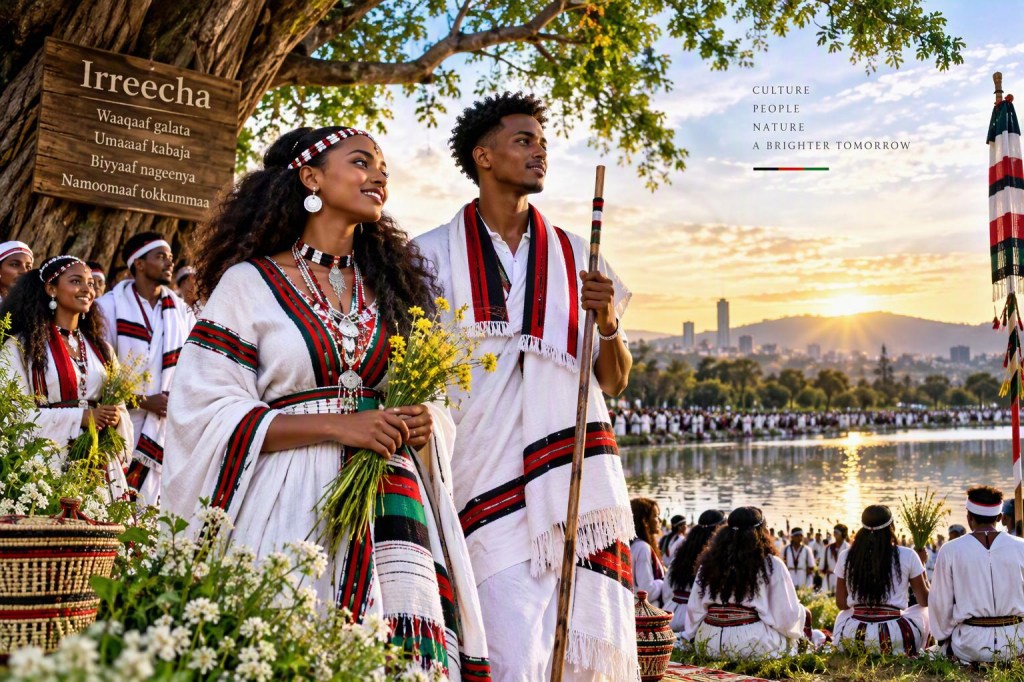
From Heritage to High Fashion
How Irreecha Inspired a Cultural Design Revolution
Every generation inherits something from the past. Some inherit buildings, some inherit languages, and others inherit knowledge. One of the most visible inheritances passed from one generation to another is cultural design.
In Ethiopia, few cultural events have influenced fashion and design as profoundly as Irreecha. While widely known as a celebration of gratitude, community, and cultural identity, Irreecha has also become an unexpected catalyst for creativity, entrepreneurship, and innovation. The celebration has helped transform traditional attire from cultural heritage into a dynamic and evolving design movement.
Today, the influence of Irreecha reaches far beyond the ceremonial field. It can be seen in photography, social media, fashion design, public events, digital art, and contemporary cultural expression.
A Living Design Archive
The success of cultural fashion did not emerge from a vacuum.
Across generations, communities preserved textile traditions, embroidery styles, jewellery designs, colour combinations, and various forms of artistic craftsmanship. These traditions formed a living archive of design knowledge.
Young designers did not need to invent a completely new visual language. Instead, they found inspiration in what already existed.
Traditional attire became a foundation upon which contemporary creativity could flourish.
Rather than looking backward, many designers discovered that cultural heritage provided a pathway forward.
The Irreecha Showcase Effect
Every year, Irreecha creates a unique public stage.
Thousands of people present their finest cultural attire. Photographs circulate widely. Videos are shared across platforms. New designs attract attention. Conversations emerge around colour, tailoring, symbolism, and craftsmanship.
This visibility matters.
For many young creatives, the celebration offers something invaluable: an audience.
A design that might once have been seen only by a small local community can now be viewed by people across continents. Through social media and digital communication, cultural attire has gained a level of visibility unimaginable only a generation ago.
For young graduates entering fashion and design, this creates opportunities that extend far beyond the celebration itself.
Confidence as an Economic Resource
Economists often discuss physical resources, financial capital, and infrastructure. Yet cultural confidence is also a resource.
When people believe their heritage has value, they invest in it.
When they invest in it, new industries emerge.
Designers create new collections.
Photographers build portfolios.
Artisans expand production.
Content creators document and promote cultural stories.
Entrepreneurs discover new markets.
The result is the development of a cultural economy built upon creativity rather than extraction.
This is particularly important because cultural industries often combine economic opportunity with social and educational value.
A Broader Cultural Wave
One of the most interesting outcomes of Irreecha’s success is its wider influence.
As Oromo cultural attire became increasingly visible, other Ethiopian communities also began promoting and celebrating their own traditions more actively.
This demonstrates the power of cultural visibility.
Confidence can be contagious.
When one community successfully presents its heritage with dignity and pride, others are often encouraged to do the same.
The result is not uniformity but diversity.
Different traditions become more visible. Different artistic styles gain recognition. Different communities contribute their own designs and interpretations to a growing cultural landscape.
In this way, cultural expression expands rather than competes.
Beyond Stereotypes
The rise of cultural fashion also challenges outdated assumptions.
Traditional attire is sometimes viewed as something belonging exclusively to ceremonies, museums, or historical memory. Yet contemporary designers increasingly demonstrate that heritage can be modern, elegant, innovative, and internationally relevant.
The growing prominence of cultural attire in public life suggests that indigenous aesthetics are fully capable of participating in global conversations about design, beauty, and creativity.
The question is no longer whether traditional fashion can be contemporary.
The question is how far contemporary cultural design can go.
A Sustainable Creative Future
The future of cultural fashion may be particularly promising because it is rooted in renewable assets.
Knowledge can be shared.
Designs can be refined.
Skills can be taught.
Creativity can multiply.
Unlike finite natural resources, cultural knowledge often grows stronger through use and transmission.
Every new designer contributes to the archive.
Every new interpretation expands the possibilities.
Every new generation adds another layer of creativity.
This makes cultural design both sustainable and adaptive.
Looking Forward
Perhaps the most important lesson of Irreecha’s fashion story is that cultural preservation and innovation are not opposites.
The most successful contemporary designs often emerge from respectful engagement with existing traditions. Heritage provides the foundation. Creativity builds upon it.
As new generations continue to reinterpret cultural attire, they are not simply preserving the past. They are creating the future.
Irreecha demonstrates what becomes possible when tradition is treated not as a constraint but as a source of inspiration.
What began as a celebration of gratitude has also become a platform for artistic excellence, entrepreneurship, and cultural confidence.
In the process, it has helped show that local heritage can have global relevance, and that cultural designs born from community traditions can stand proudly on any stage in the world.
By Temesgen Muleta-Erena
TC Press, London
Ilford Morning Mist — East London Natural Corridor August 1, 2026
Posted by OromianEconomist in Uncategorized.Tags: nature, News, philosophy, Travel, writing
add a comment
🎵 Ilford Morning Mist — East London Natural Corridor
TC Press Ecology Series
Ilford’s morning mist reveals a quiet ecological corridor running beneath the density of East London. At dawn, when soft light rises over the water and the leaning tree casts its long reflection, Ilford shows its deeper identity: a micro‑ecology shaped by river memory, atmospheric stillness, and the slow continuity of urban nature. The viaduct arches and the passing train do not interrupt this scene; they pulse through it, becoming part of the corridor’s rhythm.
This corridor begins in the early‑morning calm where mist forms a natural veil across the river. The leaning tree acts as the anchor of the landscape, echoing the role of Odaa trees in Kombolcha — a natural geometry that holds the corridor together. The reflections on the water merge city and nature into a single surface, reminding us that ecological truth persists even inside metropolitan space.
Ilford’s ecology is subtle but resilient. Green shoots push through pavements, birds weave between branches and bridges, and the river carries a memory older than the city around it. This corridor extends toward Manor Park, West Ham, and Stratford, forming a chain of micro‑habitats that survive within the movement of East London. It is a demonstration of how urban environments retain their ecological logic when observed with care.
The song Ilford Morning Mist — created with Gemini in both boy’s and girl’s voices — captures this atmosphere through a warm reggae rhythm. The dual‑voice melody mirrors the corridor’s blend of human presence and natural quiet. The music moves like the river: steady, reflective, and softly rising. It is not nostalgic; it is ecological. It gives sound to the morning mist and rhythm to the corridor’s unfolding light.
This East‑London corridor stands in dialogue with the rural endogenous corridor of Kombolcha, documented in the TC Press essay Kombolcha Micro‑Rivers, Indigenous Ecology and Planetary Continuity:
Together, these two corridors — one rural, one urban — show that local ecology becomes planetary ecology when understood through observation. The mist, the river, the tree, and the viaduct form a small atlas of urban nature, while Kombolcha’s micro‑rivers form a rural atlas of indigenous continuity. Both reveal the same principle: ecology is not defined by location but by attention.
TC Press — Ecology, Culture, and Planetary Observation.
Kombolcha — Micro Rivers, Indigenous Ecology, and Planetary Continuity August 1, 2026
Posted by OromianEconomist in Uncategorized.Tags: Environment, history, nature, philosophy, Travel
1 comment so far
🎵 Kombolcha — Micro Rivers, Indigenous Ecology, and Planetary Continuity
TC Press, London — Cultural Atlas Series
Ecology Lyrics Series — Oromo Cultural Soundscapes
Kombolcha is one of the most naturally productive ecological fields in Waamaa Dhidhessaa. It lies between Killoo River and Kombolchaa River, separated by a vast flat farm land that has sustained Oromo civilisation for generations. This land is not only agricultural; it is a micro‑ecological engine, determining where humans live, where animals roam, and how culture evolves.
The song Kombolcha emerges from this landscape — a lyrical map of Odaa trees, river corridors, monkey territories, hyena tunnels, indigenous plants, and human settlement patterns. It continues the expanding Ecology Lyrics Series — Oromo Cultural Soundscapes, following earlier works such as Hacaacii, Koottu Yaa Walee, Sherree Yaa Walee, Arjoo, Dhidhessaa, Sandaaboo, Tibbee and Gufte.
- Hacaacii — New Oromo Modern Melody Released https://sites.google.com/view/the-codex-press/hacaacii-new-oromo-modern-melody-released
- Koottu Yaa Walee — From the Love of Two to the Love of a World https://sites.google.com/view/the-codex-press/koottu-yaa-walee-from-the-love-of-two-to-the-love-of-a-world
- Dhidhessaa — The Greatest Hidden River of Africa https://sites.google.com/view/the-codex-press/dhidhessaa-the-greatest-hidden-river-of-africa
- Gufte- Oromo Cultural Soundscapes https://www.youtube.com/shorts/-5CkCX-cjEc
- Gufte- TC Press Links https://sites.google.com/view/the-codex-press/gufte-oromo-cultural-soundscape-from-the-plateau_1
1. River Civilisation: Killoo, Qarsaa, Dooganoo, Kombolchaa
Kombolcha sits inside a four‑river system:
- Killoo River — the main river
- Qarsaa River — tributary joining Killoo
- Dooganoo River — eastern feeding corridor
- Kombolchaa River — originating from Dooyyuu in the southwest
Killoo and Kombolchaa run parallel for long distances, separated by the Kombolchaa farm field, until they finally meet downstream. This separation creates distinct ecological zones:
- river forests
- farm civilisation
- wildlife corridors
- Odaa territories
Across Arjoo, Waamaa Dhidhessaa, and wider Oromia, micro‑rivers determine:
- settlement
- farming
- grazing
- forest boundaries
- wildlife zones
- road paths
- bridge locations
- community clusters
Rivers are the civilisational blueprint of Oromo land.
2. Odaa Trees: Indigenous Institutions of Ecology and Culture
Odaa is not merely a tree; it is an institution — a cultural, ecological, and territorial anchor.
Odaa Roobee — The River Refuge
Located directly on Killoo River, Odaa Roobee is a monkey paradise. Its wide branches and tall canopy make it a perfect escape point during danger. Hyenas also use the ground cover around it as a night shelter.
Odaa Waxaa — The Forest Refuge
North of Hacaacii and southeast of Odaa Roobee, Odaa Waxaa forms the second refuge for the same monkey group. It connects forest ecology with river ecology.
Odaa Risaa / Birbirsa Risaa — The Farmland Giant
Standing in the middle of Kombolchaa farm land, Odaa Risaa is far from river forests. Monkeys do not reside here — the open farm land is too wide for safe crossing. Hyenas, however, use this Odaa because it has a clear escape corridor westward to Kombolchaa River with no human settlement in between.
Odaa Gufte — Plateau Tree Without Wildlife Residence
Odaa Gufte stands on the plateau but is surrounded by dense human residence. Hyenas do not dig tunnels here. Monkeys do not climb it. Human movement is constant, and escape routes are limited.
Odaa Dooganoo — Human Corridor Tree
Located at the south end of Hacaacii near the hill edge toward Dooganoo River, Odaa Dooganoo is:
- close to houses
- beside the main roads connecting Hacaacii, Guftee, Kombolchaa
- constantly disturbed by market movement
- structurally shorter and unsafe for monkeys
Only birds and domestic animals use it. It is a human‑institution Odaa, not a wildlife refuge.
Together, these Odaas form a vertical ecological architecture:
- Canopy level — monkeys (Odaa Roobee, Odaa Waxaa)
- Ground level — hyenas (Odaa Roobee, Odaa Risaa and Odaa Waxaa)
- Human level — Odaa Gufte, Odaa Dooganoo
3. Monkey Territories: Dual‑Home Survival Strategy
Monkeys in Kombolcha exhibit remarkable territorial intelligence:
- They live between Odaa Roobee and Odaa Waxaa.
- They feed from Hacaacii forest and Killoo river forest.
- They rush to whichever Odaa is closest when insecure.
- They laugh, jump, and communicate across the branches.
- They avoid Odaa Risaa, Odaa Gufte, and Odaa Dooganoo due to human density and lack of canopy safety.
Their movement forms a triangle ecology:
- Odaa Roobee
- Odaa Waxaa
- Dooganoo River
A perfect wildlife corridor.
4. Hyena Ecology: Underground Architecture
Hyenas in Kombolcha build horizontal underground tunnels beneath Odaa mini‑jungles at:
- Odaa Roobee
- Odaa Risaa
- Odaa Waxaa
They do not build tunnels at:
- Odaa Gufte
- Odaa Dooganoo
Hyenas choose their residence based on:
- escape routes
- human movement density
- river proximity
- forest cover
- structural safety
They avoid Odaa Gufte and Odaa Dooganoo because:
- human presence is high
- movement corridors are unpredictable
- escape routes are blocked
- canopy cover is insufficient
Hyenas are strategic decision‑makers — as clever as monkeys.
5. Kombolchaa Farm Land: Natural Productivity Without Erosion
Kombolchaa is one of the most productive lands in Oromia:
- flat but not swampy
- topsoil remains (not washed away)
- no need for Bo’oo Loolaa (rainwater lines)
- ideal for all crops:
- barley (Garbuu)
- maize (Boqqoolloo)
- teff (Xaafii)
- peas (Atarii)
- beans (Baaqelaa)
- wheat (Qamadii)
Traditional Oromo farming uses crop rotation, not soil‑fertility rotation with cows — because Kombolchaa’s soil naturally retains nutrients.
This is micro‑economics of land management.
6. Indigenous Tree and Plant Ecology
Kombolcha’s ecological richness includes a constellation of indigenous trees and plants:
Harbuu
Fruit‑rich canopy tree; supports birds, monkeys, and seasonal feeding.
Bakkannisa
Ideal for honey combs; anchors traditional beekeeping.
Hoomii
Elder honey tree; supports wild bees and forest regeneration.
Gatamaa, Laftoo (Acacia), Eebichaa
- Acacia supports honey ecology.
- Eebichaa produces honey superior to acacia; leaves have antibacterial properties used for household cleaning.
Baddeessaa
One of the most important civilisation trees:
- massive size
- immune to termites
- wood does not decay
- used for construction, fences, firewood
- produces grape‑like fruits in May–June
- easy to climb; branches start low
- edible fruits skins; seeds eaten by dogs and wildlife
Hadaamii, Hagamsa, Ceekaa, Goraa
Mid‑level forest trees supporting shade, soil, and wildlife.
Abbayyii
Produces oily fruits used to coat clay plates for baking buddeenaa — preventing burning. A household technology tree.
Handoodee
One of the most culturally powerful plants:
- reddish fruits
- crushed and mixed with water to wash clothes
- behaves like industrial soap
- scientifically found to have anti‑Bilharzia properties
- a planetary health ecology plant
Eucalyptus
Non‑indigenous but economically valuable; grows fast and integrates into local ecology.
Together, these plants form a complete indigenous ecological economy:
- food
- medicine
- hygiene
- construction
- wildlife support
- cultural identity
7. Human Settlement: Rivers as Civilisational Anchors
Across:
- Hacaacii
- Guftee
- Kombolchaa
- Arjoo
- and wider Oromia
Human houses are consistently 100–300 metres from micro‑rivers:
- Killoo
- Dooganoo
- Qarsaa
- Kombolchaa
This pattern is universal.
Rivers determine:
- settlement
- farming
- grazing
- forest boundaries
- wildlife zones
- road paths
- bridge locations
- community clusters
Micro‑rivers are the civilisational blueprint of Oromo land.
8. The Lyrics of Kombolcha
The lyrics capture this ecological civilisation:
Kombolcha keessa naannayee,
Killoo keessaan bayee.
Birbirsa Risaa,
Aja’ibaa dheerrinni isaa.
Odaa Roobeen bayee,
Odaa Waxaa yoon ol ilaaluu,
Ollaa warra keenyaa,
Utuu akka fedhi kooti,
Yoona wajjumaan teenyaa,
Ollaan yaanee,
Bashaddaanee.
They express:
- movement through land
- admiration of Odaa trees
- belonging to river civilisation
- emotional connection to wildlife
- joy inside ancestral ecology
This is indigenous ecological poetry.
9. From Micro Rivers to Planetary Systems: The Killoo–Nile–Mediterranean Continuum
The ecological patterns of Kombolcha are familiar across the wider Dhidhessaa valley, over Oromia, and across Africa. What makes them scientifically powerful is the micro‑level observation itself.
Micro rivers like Killoo, Dooganoo, Qarsaa, and Kombolchaa are often ignored in favour of grand narratives about major rivers such as the Nile. But the truth is simple:
Macro rivers are only aggregations of micro rivers. Planetary oceans are only aggregations of macro rivers. And civilisation is only an aggregation of micro ecologies.
The water that flows through Killoo becomes part of a hydrological pipeline:
Killoo → Kombolchaa → Sandaaboo → Nageessoo → Waamaa → Dhidhessaa → Blue Nile → Nile → Mediterranean → Planetary Oceans
If Killoo loses water, the Nile loses water. If the Nile loses water, the Mediterranean loses water. If the Mediterranean loses water, the planetary ocean system shifts.
No crystal ball is needed.
The Egyptians on the Nile valley and the Oromo on the Killoo micro river drink the same water — but in their own civilisational styles.
Planetary protection cannot begin at the ocean. It must begin at the micro river, the micro forest, the micro settlement, the micro plant, the micro wildlife corridor.
Kombolcha shows that local ecology is planetary ecology, and that survival continuity depends on protecting the smallest units of the hydrological and ecological chain.
10. Conclusion
Kombolcha is a complete ecological atlas:
- river civilisation
- Odaa institution ecology
- monkey and hyena territories
- indigenous tree and plant systems
- farm land micro‑economics
- human settlement logic
- planetary hydrological theory
It shows how local ecology becomes planetary ecology, how micro‑rivers sustain macro‑civilisations, and how indigenous observation reveals global environmental truth.
🌿 Invitation to Experience
Kombolcha’s corridor is more than a subject of analysis; it is a living field of perception. The video and the accompanying song are not illustrations but resonant extensions of this ecology — visual and sonic thresholds into the river civilisation, Odaa institution, indigenous plant systems, and settlement logic described above. To understand these spaces fully, one must eventually step into them: walk the riverbanks, listen to the wind moving through tall maize, and feel the ancestral geometry of Odaa trees. Whether in Kombolcha, Arjoo, Oromia, or any rural endogenous community in the world, the truth of these ecologies is ultimately encountered through presence.
Credits Lyrics: Temesgen Muleta‑Erena; Melody: Gemini; Visual Composition: TC Press; Location: Gufte Plateau, Oromia; Series: Experimental Microeconomics from Daily Life; Umbrella Theme: Ecology Lyrics Series — Oromo Cultural Soundscapes
Ethiopia Travel Warnings June 13, 2017
Posted by OromianEconomist in Uncategorized.Tags: #OromoProtests, Africa, Ethiopia: state of emergency, Oromia, Oromo, Travel, travel advice- Ethiopia, Travel News, Travel warning- Ethiopia, US Gov – Ethiopia Travel Alert
1 comment so far


The Department of State warns U.S. citizens of the risks of travel to Ethiopia due to the potential for civil unrest and arbitrary detention since a state of emergency was imposed in October 2016. The Government of Ethiopia extended the state of emergency on March 15, 2017, and there continue to be reports of unrest, particularly in Gondar and Bahir Dar in Amhara State. This replaces the Travel Warning of December 6, 2016.
The Government of Ethiopia routinely restricts or shuts downs internet, cellular data, and phone services, impeding the U.S. Embassy’s ability to communicate with U.S. citizens in Ethiopia and limiting the Embassy’s ability to provide consular services. Additionally, the Government of Ethiopia does not inform the U.S. Embassy of detentions or arrests of U.S. citizens in Ethiopia.
Avoid demonstrations and large gatherings, continuously assess your surroundings, and evaluate your personal level of safety. Remember that the government may use force and live fire in response to demonstrations, and that even gatherings intended to be peaceful can be met with a violent response or turn violent without warning. U.S. citizens in Ethiopia should monitor their security situation and have contingency plans in place in case you need to depart suddenly.
Given the state of emergency and the unpredictable security situation, U.S. citizens in Ethiopia should have alternate communication plans in place, and let family and friends know that communication may be limited while you are in Ethiopia. The Department of State strongly advises U.S. citizens to registeryour mobile number with the U.S. Embassy to receive security information via text or SMS, in addition to enrolling in the Smart Traveler Enrollment Program (STEP).
For further information:
- See the State Department’s travel website for the Worldwide Caution, Travel Warnings, Travel Alerts, and Country Specific Information for Ethiopia.
- Enroll in the Smart Traveler Enrollment Program (STEP) to receive security messages and make it easier to locate you in an emergency.
- Contact the U.S. Embassy in Addis Ababa, located at Entoto Street, P.O. Box 1014, by email at AddisACS@state.gov, or at +251-11-130-6000 Monday-Thursday, 7:30 a.m.-5:00 p.m. For after-hours emergencies, U.S. citizens should call +251-11-130-6911 or 011-130-6000 and ask to speak with the duty officer.
- Call 1-888-407-4747 toll-free in the United States and Canada or 1-202-501-4444 from other countries from 8:00 a.m. to 8:00 p.m. Eastern Standard Time, Monday through Friday (except U.S. federal holidays).
- Follow us on Twitter and Facebook.
Assistance for U.S. Citizens
U.S. Embassy Addis Ababa
Entoto Street
PO Box 1014
Addis Ababa, Ethiopia
- Telephone+(251) 11 130-6000
- Emergency After-Hours Telephone011 130-6000
- Fax+(251) 11 124-2435 and
+(251) 11 124-2419 - Email consacs@state.gov
- U.S. Embassy Addis Ababa
VOA: Lammiiwwan Ameerikaa Gara Itiyoophiyaatti Akka Hin Imalle Akeekkachiisi Kenname: Ministrii Dhimma Alaa

Lammiiwwan Ameerikaa Gara Itiyoophiyaatti Akka Hin Imalle Akeekkachiisi Kenname: Ministrii Dhimma Alaa
VOA, WAASHINGITAN, DIISII Naannoo Amaaraa Gonder fi Baahir Daar keessatti walitti bu’iinsi itti fufuu isaa tuquu dhaan ministriin dhimma alaa Ameerikaa kan kana dura baatii Sadaasaa keessa baase akeekkachiisa imalaa har’as haaressuun baasee jira.
Labsiin yeroo hatattamaa itiyoopiyaa keessatti baatii Okoloolessaa keessa erga labsameen booda jeeqamni ka’uu fi ajaja seeraatiin ala hidhamuun jiraachuu waan danda’uuf ministriin dhimma alaa lammiiwwan United States gara biyya sanaatti akka hin imalle akeekkachiisee jira.
Akeekkachiisi imalaa har’a ba’e mootummaan Itiyoopoiyaa labsicha Bitootessa 15 waan dheeressuu isaa tuquu dhaan Gondarii fi Baahir Daar keessa amma iyyuu walitti bu’iinsi jiraachuu gabaasaaleen ibsaniiru jedha.
Akeekkachiisi kun mootummaan Itiyoopiyaa yeroo dhaa gara yerootti Interneetii fi tajaajila moobaayila harkaa waan cufuuf embasiin US lammiiwwan Ameerikaa Itiyoopoiyaa keessa jiran irra ennaa rakkinni ga’u tajaajila gorsaa kennuuf ni rakkataa jedha.
Kanatti dabaluu dhaan mootummaan Itiyoopoiyaa lammiiwwan Ameerikaa ennaa to’annaa jala oolchu embasiitti kan hin beeksisne ta’uu illee tuqee jira.
Akeekkachiisi sun lammiiwwan bakka mormiiin uummataa itti geggeessamu ykn wal ga’iin geggeessamu irraa akka fagaatan, yeroo mara nageenya naannoo isaanii akka to’ataniif of eeggatan yaadachiisee jira.
Akeekkachiisi imalaa kun kana duras yeroo adda addaatti kan ba’e waan ta’eef bal’inaan marsaa interneetii keenyaa afaanoromoo.voanews.com irraa argachuu dandeessan.
NEWS ANALYSIS: TOURISM IN PROTEST-RIDDEN ETHIOPIA IS HURTING; REVIVING IT WILL TAKE MORE THAN UNVEILING A LOGO March 28, 2017
Posted by OromianEconomist in Uncategorized.Tags: Africa, Ethiopia, Ethiopia’s secret genocide, Genocide, Genocide Against Oromo People, Janjaweed in Darfur Liyu Police of Ethiopian in Oromia, Oromia, Travel, Travel warning- Ethiopia, Tyranny's False Comfort
add a comment


NEWS ANALYSIS: TOURISM IN PROTEST-RIDDEN ETHIOPIA IS HURTING; REVIVING IT WILL TAKE MORE THAN UNVEILING A LOGO
Fitsum Abera, Addis Standard, 27 March 2017
Last week on March 22, Ethiopia’s Prime Minister Hailemariam Desalegn, who also chairs the Ethiopian Tourism Transformation Council, officially introduced the Amharic version of Ethiopia’s new tourism logo ‘Ethiopia, Land of Origins’. It is now called Midre Kedemt in Amharic.
The Prime Minister unveiled the Amharic version of the new logo while attending the fourth regular meeting of the Council, which was established three years ago in March 2014 along with the Ethiopian Tourism Organization. Reason? To transform the country’s ailing tourism industry.
A sign of urgency to reboot the country’s tourism industry plagued by, among others, poor tourism infrastructure and absence of meaningful coordination, both the Council and the Organization were established following a regulation issued by the Council of Ministers (CoM) in August 2013.
The ups and downs
Tourism in Ethiopia has been witnessing an increasing- if modest- growth since the country officially opened its doors to foreign tourists in 1963. According to the Ministry of Culture and Tourism (MOCT), the most significant dip in the number of foreigners visiting Ethiopia happened during the 17 years in power of the military Derg regime from 1974 to 1991. Since then, following the coming into power of the incumbent in 1991, the numbers have shown a steady growth from 64,000 to 750,000 during the 2014/15 fiscal year.
That was until November 2015, when anti-government protests that would grip the country throughout 2016 first started, an unexpected turn of an event both the Council and the Organization seemed not prepared to handle.
“That [the time the protests began] was when we started to notice the difference,” says a tour operator who requested anonymity. “More and more clients began asking questions about security as the [protests] got international press coverage. Pretty soon the low season was upon us and the number of tourists plummeted as we [feared]. But we didn’t expect that more than 95% of our bookings for the high season would end up being canceled.”
The high season in Ethiopia typically starts in September, when the main rainy season is over; and it ends around February when it becomes too hot to take tourists to famous destinations such as the Danakil depression.
Encouraged by the steady inflow of tourists before the start of the protests, our source invested in two 4WD cars. “We bought two cars towards the end of the last fiscal year,” he explained. “We borrowed money from a bank and invested some from our own accounts. But there are no tourists now and we can’t even rent the cars to business tourists coming to Addis Abeba. We don’t know what to do. We are just paying rent, maintaining a small staff and hoping for the best at the moment.”
Although order seemed to have returned following the declaration of the current state of emergency in October last year, and “we are getting more requests now than before, it is not enough to maintain our business,” our source worries. “If things continue at this rate, we will be forced to close down. We picked a bad time to expand our business.” He also said most of their clients come from abroad after communicating with them via the internet, which suffered its own share misfortune as the country shut down internet following protests. Walk in and domestic clients account only for less than 2% of their total bookings, he said.
His frustrations are shared by many tour and travel companies that joined the market recently. Not only tour operators but those working in the transport sector were affected as well, according to Getnet Asefa, a freelance driver/guide. Getnet, who used to make an average 500birr (around $21) per day as a freelance guide, says he is now considering a change in career. “Last year at this time, I worked at least 4 days a week,” he says, “Now getting tourism work has become very difficult. Some of my friends have started working as taxi drivers. At this point, we don’t know what is going to happen next and that is scary.”
Embassy travel warnings aren’t helping the matter, either. The United States traveling warning, issued in Dec. 2016, and the United Kingdom foreign travel advice, updated most recently in Jan. 2017, are still in effect. In fact, the only country that has lifted its travel ban is Germany. But even that excludes traveling to North Gondar, an area located in a region where most tourist detestations are found.
The effect is also felt among tour and travel agencies that on the surface seemed to be doing well. “We are concerned that the company won’t survive this year,” says Yenealem Getachew, managing director of Horizon Ethiopia Tour and Travel plc. “We don’t expect to be reimbursed for our losses. But we do have many commitments. For example, we have to pay profit tax at the end of the year. Some of us have bank loans. When you have a debt to service, that is the first thing you want to take care of. If you can’t do that, you start to lay off employees.”
Yenealem said his company has asked the government for help but they “still haven’t got a response. I think they are more concerned about companies with physical damage. They don’t seem to grasp that without clients we tour operators get nothing.”
In late Oct. 2016, Ethiopia Ministry of Culture and Tourism, MOCT, has established a command post to assess the damage the industry sustained as well as to ensure the “safety of tourists”. “We went to see the damage caused by the protesters,” Tewedros Derbew, Tourist Services Competence and grading directorate director at the ministry and head of the committee, told Addis Standard. “We called the owners for a meeting to discuss how to help them as well as to offer moral support. We have now sent a report to the investment commission detailing their losses. We have also distributed questionnaires to tour operators but we haven’t received their responses yet.”
Tewedros admits “the industry has been severely affected. There is no question about that.” But contrary to the actors in the industry say, he insists “no tour and travel company was forced or threatened to close down or let go of its employees because of it.”
The opposite of…
In late 2015, around the same time the protests began, MOCT announced that it wanted to “triple the number of foreign visitors, to more than 2.5 million, by 2020”, and make Ethiopia become one of Africa’s top five tourist destinations.
In a stark difference to what the actors in the industry and several reports say in post-protest Ethiopia, in a January 2017 report to the house of people’s representatives, Hirut Woldemariam, the new minister at the ministry of culture and tourism, reported that despite the current state of emergency 300,000 tourists have visited the country during the first quarter of the current fiscal year, generating $872 revenue to the country.
But as in every sector, data for this sector is prepared by the government itself. If one goes by Hirut’s numbers above for example, more tourists have visited Ethiopia during its turbulent year than in its years of peace. In Oct. 2015, one month before the start of the protests, the same ministry said that during the 2014/15 fiscal year, 750,000 tourists have visited Ethiopia, fetching in $2.9 billion income to the county. That figure is close to the $3b the government expected to earn from the industry by the end of its first Growth and Transformation Plan (GTP) in 2015.
Other hurdles
In Oct. 2016, Lonely Planet has rated Ethiopia 10th out of the “Top Ten Countries to visit in 2017.” But, that announcement seemed to contribute little when it comes to shaking off Ethiopia’s image in the aftermath of the widely reported yearlong protests.
“Image is everything for a country’s tourism sector,” one expert says. “We had just managed to overcome decades of bad publicity caused by famines and violent regime changes. [As of late] Ethiopia had been named one of the emerging tourist destinations. The country’s overall infrastructure was getting better. Then this [the protest] happens. It will take a long time to recover from the effects of the unrest. It is difficult to predict just how long.”
Other issues many tour operators cite in relation to the decline in tourism are the substandard services and accommodations, inadequate maintenance given to tourism infrastructure and destinations, and the lack of communication between tour operators and government agencies.
“Take Lalibela for example. It looks exactly the way it did 10 years ago but the entrance fee has increased,” says Yenealem. “Our hotel bookings are dropped with little to no notice when there are big events like Epiphany in Gondar. The local guides monopolize any work to be done on the sites [including] increasing entrance and guide fees at will and they chase away anyone who refuses to have a guide.”
Lots of plans
In addition to the five-year plan by the MOCT, in September 2016, The United Nations Economic Commission for Africa (UNECA) has handed over Ethiopia’s Sustainable Tourism Master Plan (STMP) 2015-2025 to the then minister of tourism and culture, Ayisha Mohammed Mussa. It targets to lift the number of international visitors to five million in the year 2025. The projected income from the industry to increase from ETB14.197 billion in 2012 to ETB180 billion in 2015. The corresponding number of jobs in the tourism sector will increase from 985, 500 to 4.8 million, according to the document.
As part of its several initiatives to revive the industry, as of last week, the Ethiopian Tourism Organization is organizing a series of workshops in several cities in North America including New York, Los Angeles, and Toronto.
ETO has also recently signed, for an undisclosed amount of money, an agreement with New York-based CornerSun, a tourism marketing and public relations firm to “represent and promote Ethiopia” to travel trade and media throughout the United States and Canada. Since it was formed in 2014, the organization, led by an industry veteran Solomon Tadesse, has spent more time and resource to promote Ethiopia by participating in various fairs and exhibitions outside the country.
With all that said and all the inconsistencies considered, however, tour operators worry that the number of tourists visiting Ethiopia will continue falling short than both the five year plan by the ministry and ECA’s STMP have anticipated.
Last week and this week, while Solomon Tadesse, along with a group of hotels as well as tour and travel company owners, is doing a three-city roadshow in the Americas, some tourists who want to take chances to visit Ethiopia signed onto Lonely Planet’s online forums to complain about complicated visa requirements at Ethiopian embassies abroad and a steep rise in domestic flight fare by the state monopoly, Ethiopian Airlines, an indication that beyond the protest-tainted image the industry is facing as of late tourists are also dealing with other problems that are equally urgent; but problems that are less the focus of the endless plans to revive the sector, including a new logo. AS
The Slovak Spectator: Slovak and Czech tourists robbed in Ethiopia November 15, 2016
Posted by OromianEconomist in Travel to Ethiopia.Tags: 'Ethiopia is boiling', Africa, Ethiopia, ETHIOPIA SHOULD STOP KILLING, Slovak and Czech tourists robbed in Ethiopia, Travel, Travel warning- Ethiopia
add a comment



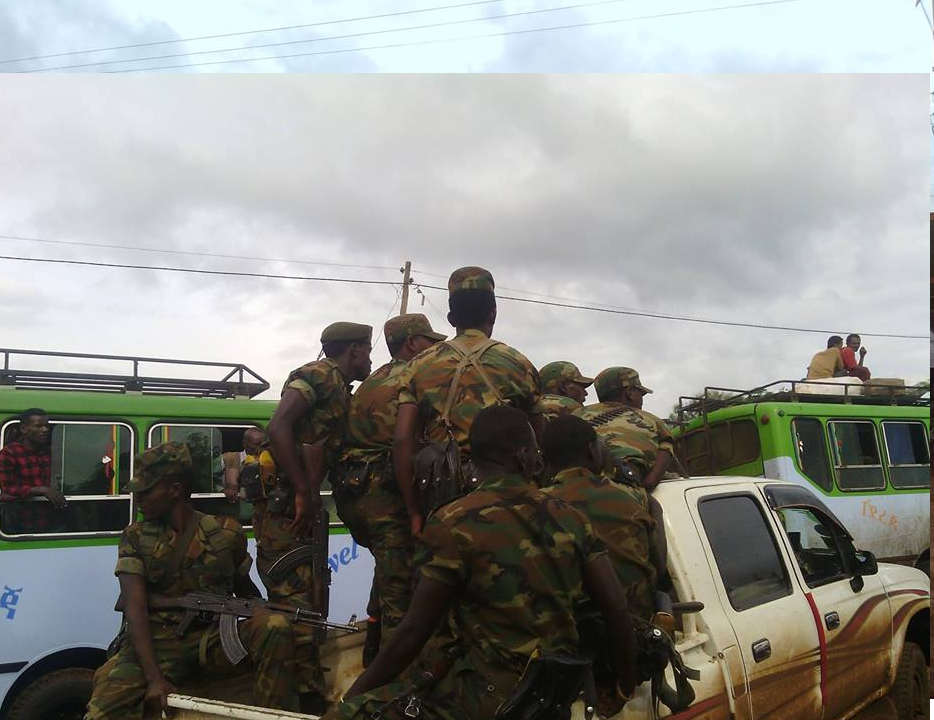
A group of six Slovak and four Czech tourists was attacked by armed robbers in western Ethiopia; driver killed.
The Slovak Spectator, 14 November 2016
A group of six Slovak and four Czech tourists was attacked in Surma woreda near the town of Mizan on November 7. They were robbed of their credit cards, money and other precious things, Irena Valentová from the Czech Foreign Affairs Ministry confirmed to the Novinky.cz website. She also said a female Slovak tourist was injured in the attack. The attackers shot an Ethiopian driver during the incident who died after being transported to the hospital.
Head of the Bubo Travel Agency, Ľuboš Fellner, whom the Czech website cited, said the incident occurred in the so-called green zone considered to be fully safe. The Slovak Foreign Ministry confirmed the case for the TASR newswire on November 11, adding that the Slovak tourists were aided by the local representation office in Addis Ababa with receiving new documents and returning home.
The tourists subsequently returned home, according to the news reports.
The Foreign Ministry recently warned Slovak citizens not to travel to Ethiopia, due to a worsened security situation that resulted in temporary state of emergency starting October 8, for six months. In case they decide to travel to the country anyway, Slovaks should at least register with the voluntary electronic registration system on the FAM website.
Click here to read related News: Zarpa News: Ethiopian Airlines: Thriller night over Crete! | Plane “lost” the engine! November 13, 2016
Alarm sounded at dawn Sunday in Athens FIR when aircraft Ethiopian Airlines sent out distress signal because the engine died!
Immediately the state apparatus was activated to help the aircraft to land safely at the airport Eleftherios Venizelos.
The aircraft sent out a distress signal at 3:40 and was on Crete, while later in 4:15 landed safely in Athens.
The route was performed from Ethiopia to Italy.Source: onalert.gr


You must be logged in to post a comment.