Ethiopia: GNI per capita , Atlas method (current US$) June 24, 2015
Posted by OromianEconomist in Africa Rising, Youth Unemployment.Tags: 2015 Global Economic Prospects, Africa, Africa is not rising, Africa's statistics, Developing country, Ethiopia & The Global Innovation Index, Ethiopia and the social progress index, Ethiopia: TPLF's corruption empire
trackback

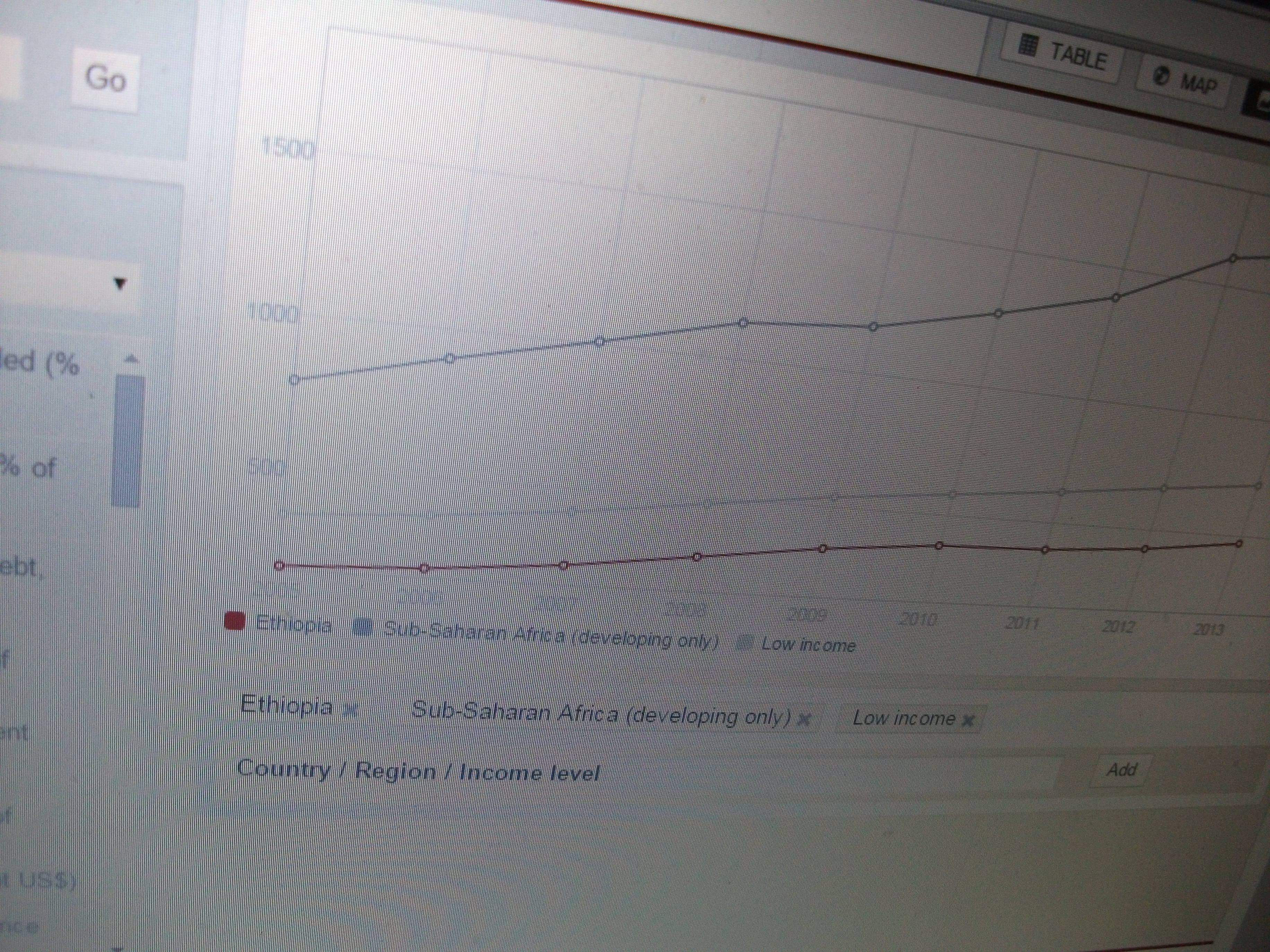
Ethiopia’s Per Capita Income trend, relative to Sub-Saharan Africa Average
Sub-Saharan African countries are the poorest regions of Africa and the world. The World Bank’s Per Head Income trend from 2005 shows that Ethiopia’s trend is by far below Sub-Saharan Africa average trends with constantly widening gap. With Per Capita Income of below $500 throughout the trends, World Bank data shows that Ethiopia’s trend has been below the averages of world’s low income countries. So, what is the point of Ethiopia’s ‘fastest growth’ hype?
GNI per capita, Atlas method (current US$) GNI per capita (formerly GNP per capita) is the gross national income, converted to U.S. dollars using the World Bank Atlas method, divided by the midyear population. GNI is the sum of value added by all resident producers plus any product taxes (less subsidies) not included in the valuation of output plus net receipts of primary income (compensation of employees and property income) from abroad. GNI, calculated in national currency, is usually converted to U.S. dollars at official exchange rates for comparisons across economies, although an alternative rate is used when the official exchange rate is judged to diverge by an exceptionally large margin from the rate actually applied in international transactions. To smooth fluctuations in prices and exchange rates, a special Atlas method of conversion is used by the World Bank. This applies a conversion factor that averages the exchange rate for a given year and the two preceding years, adjusted for differences in rates of inflation between the country, and through 2000, the G-5 countries (France, Germany, Japan, the United Kingdom, and the United States). From 2001, these countries include the Euro area, Japan, the United Kingdom, and the United States. -World Bank national accounts data, andOECDNational Accounts data files


 Oromian Economist
Comments»
No comments yet — be the first.