jump to navigation

EU: The Chair of the European Parliament Subcommittee on Human Rights (DROI) was shocked at arrest of leading Ethiopian opposition figure Prof. Merera Gudina December 6, 2016

Posted by OromianEconomist in Uncategorized.
Tags: , , , , , , , , ,
add a comment


Odaa OromooOromianEconomist

genocide-war-crimes-in-21st-century-is-conducted-by-fascist-tplf-ethiopia-regimemass-arrest-of-students-underway-in-najo-west-wallaggaa-oromia-23rd-november-2016-oromoprotests-oromorevolutionfree-professor-merera-gudina

The Chair of the European Parliament Subcommittee on Human Rights (DROI) was shocked at arrest of leading Ethiopian opposition figure Prof. Merera Gudina after his recent meeting with MEPs

Press release – Human rights05-12-2016 – 17:52


EU

(EP) DROI, Elena Valenciano (S&D, ES), made the following statement:

“On 30 November Ethiopian security forces detained the chairman of the Ethiopian opposition party ‘Oromo Federalist Congress’ (OFC), Professor Merera Gudina, shortly after his arrival in

Addis Ababa.

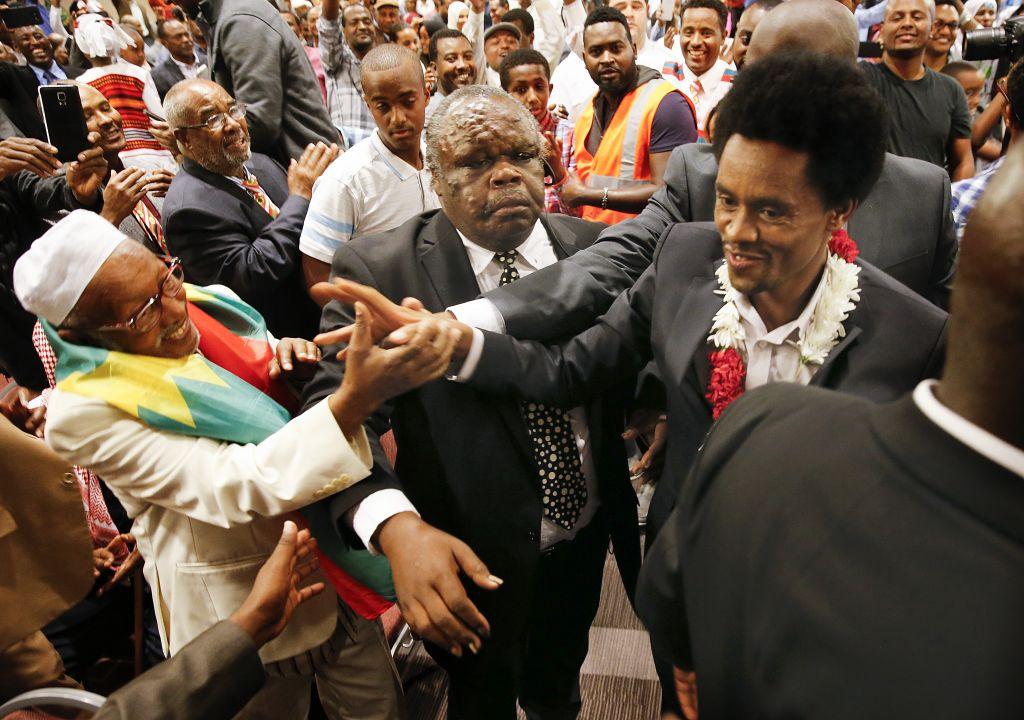
Prof. Merera was returning from Brussels where – together with other Ethiopian activists and the Olympian athlete Feyisa Lellisa – he had had a meeting with MEPs on 9 November 2016.

I urge the Ethiopian Government to make public any charges it has brought against Prof. Merera and I will continue to follow his case very closely.

The European Parliament adopted an urgency resolution on the violent crackdown on protesters in January 2016, which requested that the Ethiopian authorities stop using anti-terrorism legislation to repress political opponents, dissidents, human rights defenders, other civil society actors and independent journalists.

Since January 2016 the human rights situation in Ethiopia has not improved at all. Human Rights Watch reports that security forces have killed more than 500 people during protests over the course of 2016. Moreover the state of emergency has led to further significant restrictions on freedom of expression, association, and assembly. I therefore reiterate Parliament’s demands as set out in its resolution.

The European Parliament is aware of the difficult situation in Ethiopia and stresses the need to continue to support the Ethiopian people.”

International Oromo Lawyers Association (IOLA) Press Release on the Arrest of Professor Merera Gudina December 6, 2016

Posted by OromianEconomist in #OromoProtests.
Tags: , , , , , , , , ,
add a comment

Odaa OromoooromianeconomistInternational Oromo Lawyers Association (IOLA) logofree-professor-merera-gudina


International Oromo Lawyers Association (IOLA) Press Release  on the Arrest of Professor Merera Gudina

5 December, 2016


The International Oromo Lawyers Association (IOLA) expresses its deepest concern over the detention of prominent Oromo/Ethiopian opposition leader professor Merera Gudina, a Chairman of the Oromo Federalist Congress (OFC) and Vice-Chairman of the Coalition of Ethiopian Federal Democratic Unity Forum (MEDREK)).

The Ethiopian government detained prof. Gudina, upon his arrival from Europe where he was addressing the European Parliament in Brussels. He was invited by the EU parliament to brief the MPs on the current situation in Ethiopia in general and the effect of the recently declared state of emergency in particular.

According to the information available to us from the official government media outlet, prof. Gudina was arrested because of his violation of Article 1 of the country’s two-month old State of Emergency decree which, in total contradiction to the nation’s constitution, seriously curtailed citizens’ fundamental right to freedom of expression and assembly. Allegedly, Prof. Merera, was accused of meeting at the EU with official of the so called “terrorist organization” namely Ginbot-7, who was also invitee of the EU MPs.

IOLA is of the opinion that Prof. Merera committed no crime but exercised his fundamental freedom to movement, freedom of expression and assembly as guaranteed in the Constitution of Ethiopia. But invoking terms of the Martial law to detain and subsequently prosecute a citizen is contrary to letters and sprits of international Human Rights Conventions governing aspects of state behaviors during emergency situation.

The imprisonment of Prof. Merera is not an exception. Almost the entire party officials of Oromo Federalist Congress – OFC, has already been imprisoned including the Deputy Chairman of the party, Mr. Bekele Gerba who is in his second round of detention for no other reason than exercising his fundamental human rights as guaranteed in the Constitution.. During his speech at the European Parliament, Prof. Merera also indicated that over 60,000 innocent Oromo civilians are currently detained in several military camps in different parts of the country, following the declaration of state of emergency.

It is with this in mind that IOLA calls on the Ethiopian government to immediately release prof. Merera without any precondition unless otherwise it is proven that he indeed committed a common crime, in which case, the government has to officially charge him with such a crime and bring him to justice.

IOLA calls on friendly government and the international community to intervene in whatever possible means to ensure that prof. Merera’s fundamental human rights are respected as stipulated in the nation’s Constitution of 1995 and demand his release without delay.

OLA stands ready to provide necessary professional support needed in this respect.

Executive Board of IOLA


Human Rights League: Ethiopia: Murders and Mass Incarcerations Cannot Fix the Deep Human Rights Crisis December 5, 2016

Posted by OromianEconomist in #OromoProtests.
Tags: , , , , , , ,
add a comment

Odaa OromooOromianEconomistgenocide-war-crimes-in-21st-century-is-conducted-by-fascist-tplf-ethiopia-regimemass-arrest-of-students-underway-in-najo-west-wallaggaa-oromia-23rd-november-2016-oromoprotests-oromorevolution

Ethiopia:  Murders and Mass Incarcerations Cannot Fix the Deep Human Rights Crisis

HRLHA  Press Release

December 4, 2016


The TPLF/EPRDF government boldly demonstrated its dictatorial behavior by arresting the Oromo Federalist Congress Leader Dr. Merera Giddina on Wednesday, November 30, 2016 under the pretext  that he had met with the other opposition political party-G7  leaders that the TPLF  labeled as a terrorist group.  Dr. Merera Gudina has been taken  to Maikelawi investigation Center with the other two men , Taye Negera and Kumala, both of whom live  in the same home, according to HRLHA Informants.  The Maikelawi Investigation Center In Addis Ababa is the TPLF  Torture – House   known as  “Ethiopian Guntanamo”

free-professor-merera-gudina

Dr. Merera Guddina

The Government spokesman Negeri  Lencho said in his briefing  to   journalists on December  2, 2016  “Dr. Merera  Guddina has been arrested because he violated   the State of Emergency rules  by contacting outlawed opposition party leaders in Brussels”.    Dr. Merera Guddina and Professor Berhanu Nega, the  G7 Leaders  had been invited by the EU parliament to  Brussels  to  attend the Conference  on the Ethiopian current political crisis sponsored by the European Parliament.  In the conference, many stakeholders participated and shared their  views on the  current Ethiopian political crisis. The TPLF/EPRDF has no legal grounds on which to criminalize Dr. Merera Guddina- unless the TPLF government labelled the  conference sponsor, the EU, as a terrorist group.

Meanwhile, the TPLF/EPRDF government of Ethiopia continues terrorizing the people  of Oromia and Amhara Regional States  by murdering and detaining them.  Since the mass movement began in Oromia in November 2015  and later spread to Amhara Regional state, thousands have been killed,  tens of thousands detained and other thousands have disappeared.  The TPLF government mishandled the peaceful  protests in both regional states where both nations demanded  their rights to   fair treatment, stopping the  land grabs and marginalization.

After ten months of unrest in the country, the TPLF/EPRDF declared a state of Emergency on October 8, 2016. The TPLF killing squad Agazi force was  deployed with full authorization into  Oromia and Amhara Regional States  to commit killings, incarcerations, rapes and steal money and valuables. Although there has been no single section of society that the Ethiopian TPLF/EPRDF regime has spared in the past one year, since last November Oromo youths in particular have become  the prime targets of  TPLF killing squad attacks. Several Oromo youths from universities, colleges and high schools have been disappeared by the TPLF killing squads. As a result, Oromia is losing many brilliant young men and women at the hands of TPLF murderers every day. This is putting future generations at risk.

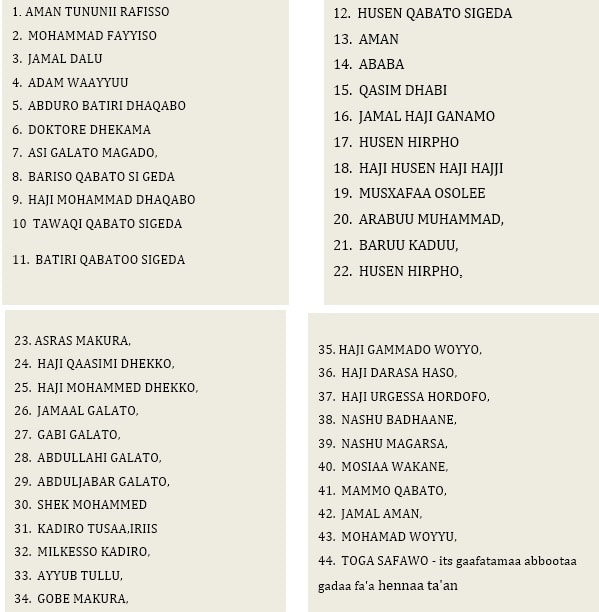
HRLHA informants  report that the TPLF/EPRDF killing squad Agazi  force  continues to abduct  Oromo youths from  universities, colleges, highschools, homes and workplaces on a daily basis. The HRLHA  has received from its informants In south Oromia, Bule Hora District, Guji Zone  and Ada’a Berga District East Showa Zone information that  a number of Oromo youths have been picked up at  night and have been taken to  an unknown destination by the Agazi force.

The following are among the many Oromo youths abducted  by TPLF forces on November  29, 30, 2016 and taken to an unknown destination

among-the-many-oromo-youths-abducted-by-fascist-ethiopias-tplf-forces-on-november-29-30-2016-and-taken-to-an-unknown-destination

Human Rights Crisis in EthiopiaUnder remembering from the past, the HRLHA will try to highlight  the human rights violations reported by HRLHA and other human rights organizations against Oromo youths  in the past ten years which continue to the present.

The TPLF/EPRDF  government has been  targeting Oromo youth since  the Oromo youth  peaceful revolt against subjugation started in Oromia in 2005.

The following is a summary of  Oromo students  killed,  imprisoned, and disappeared  by TPLF/EPRDF security forces  in different universities in 2006

  • June 2006, Mekele, Tigrai: 44 Oromo Students of Mekele University Were Denied Certificates After Graduation
    Reason – In April, 2006 a Tigrean student, who was attending Adama University, committed suicide. However, Tigrean residents of Mekele were told that he was murdered by Oromo students of the university
  • August 2006, Haromaya University, E. Hararge: at Least 42 Detained and Then Dismissed
    Reason –  In August 2006, following clashes between Oromo and other students caused by a student wearing a t-shirt carrying a derogatory anti-Oromo slogan, security forces attacked Oromo  students at Haromaya University, E. Hararge. Only Oromo students were held for two months and dismissed from the university. At least 42 were detained and then dismissed, (OSG  Report, No. 43)
  • August 2006, Adama University: Clash Among Students Spread to Adama University and more Oromo Students Dismissed
    Reason – The clash has spread to Jimma University. In this clash, which was clearly instigated to pit Oromo students against Amhara students, at least 10 lives were lost, at least 30 students from Adama, and 23 from Jimma University, were expelled. (IOYA report, November 2006
  • September 17, 2006, Ginchi, W. Shoa: Two Students Abducted and Disappeared
    Students Bakala Dalasa and Habirru Birru were taken at night from their residence in Ginchi, W. Showa, around 7:00 PM local time, and have disappeared. (OSG report No. 43)
  • November 7, 2006, Mekele, Tigrai: A 3rd Year Student Strangled to Death
    Shibiru Demisse Bati, a 24 year-old Oromo third-year history student, was strangled to death at Mekele University in Tigrai. Shibiru, from Siba Yesus Peasant Association, Homa, near Gimbi, Wallega, was attacked on November 4, 2006, after being dragged out of his room when the power was turned off at the university. Tensions had been growing between security forces and Oromo students in Tigrai since graduation certificates were denied to those students who had been vocal about the government’s disregard of human rights in Oromia Region.(Ethio-Tribune, November 7, 2006, and Oromo Menschenrechts- und Hilfsorganisation (OMRHO), December 2006)
  • December 2006, Harar, Eastern Hararge: at Least 6 Students Detained
    The following Secondary School students were detained in September 2006 in and around Harar, E. Hararge. Known to be held in Harar were Murad Ahmedand Ramadan Abdella, whereas Ramadan Galile, Abdi Amma, Kadir Rabsa and Dhakaba Bakar were taken to an unknown location.(OSG report No. 43)

Source: Revisiting Oromian Students’ Resistance Against Tyranny

The HRLHA  tirelessly  continues  to  express its deepest concerns regarding the human misery taking place in Ethiopia in general and in Oromia and Amhara Regional  States in particular  and appeals to the world community to take tangible action to stop more bloodshed in Ethiopia by putting pressure on the TPLF- led Ethiopian government

Copied To:

  • European Union
    Rue Wiertz/Wiertzstraat 60
    B-1047 Bruxelles/Brussel
    Belgique/België
    Tel: +32 2 284 21 11
    Fax: +32 2 284 69 74
    Links: Website
  • UNICEF Headquarters
    United States Fund for UNICEF
    125 Maiden Lane, 11th Floor
    New York, NY 10038
    https://www.unicef.org
  • UN Security Council
    Office of the Ombudsperson
    Room DC2 2206
    United Nations
    New York, NY 10017
    United States of America
    Tel: +1 212 963 2671
    E-mail: ombudsperson@un.org
  • UN Human Rights Council
    OHCHR address: 
    Office of the United Nations High Commissioner for Human Rights (OHCHR)
    Palais Wilson
    52 rue des Pâquis
    CH-1201 Geneva, Switzerland.
  • Africa Union (AU)
    African Union Headquarters
    P.O. Box 3243 | Roosvelt Street (Old Airport Area) | W21K19 | Addis Ababa, Ethiopia
    Tel: (251) 11 551 77 00 | Fax:(251) 11 551 78 44
    Webmaster: webmaster@africa-union.org
  • African Commission on Human and Peoples’ Rights
    31 Bijilo Annex Layout, Kombo North District
    Western Region P.O. Box 673 Banjul
    The Gambia
    Tel: (220) 441 05 05, 441 05 06
  • The US Department of State Secretarate Secretary
    His Excellency Mr. John Kerry
    WASHINGTON, D.C. HEADQUARTERS
    (202) 895-3500
    OFMInfo@state.gov
    Office of Foreign Missions
    2201 C Street NW
    Room 2236
    Washington, D.C. 20520
    Customer Service Center
    3507 International Place NW
    Washington, D.C. 20522-3303
  • UK Secretary of State for Foreign and Commonwealth Affairs
    The Rt Hon Philip Hammond MP
    Parliamentary
    House of Commons, London, SW1A 0AA
    Tel: 020 7219 4055
    Fax: 020 7219 5851
    Email: hammondp@parliament.ukDepartmental    Street ,
    London, SW1A 2AH
    Tel: 020 7008 1500
    Email: fcocorrespondence@fco.gov.uk
  • Minister of Forenien Affairs (Canada)
    His Excellency Stéphane Dion
    Write to:
    Enquiries Service (BCI)
    Global Affairs Canada
    125 Sussex Drive
    Ottawa, ON
    K1A 0G2
    Email: Enquiry Service – On line form
    Canada
  • Minister for Foreign Affairs (Sweden)
    Her Excellency Margot Wallström
    Switchboard: +46 8 405 10 00
    Street address: Rosenbad 4
    Postal address: SE 103 33 Stockhol
  • Minister of Foreign Affairs (Normway)
    His Excellency BørgeBrende
    Ministry of Foreign Affairs
    E-mail: post@mfa.no
    Phone: + 47 23 95 00 00
    Address: 7. juniplassen

U.S. Department of State Daily Press Briefing – December 1, 2016: Oromo Federal Congress chairman Dr. Merera Gudina has been detained by the Ethiopian Government. December 4, 2016

Posted by OromianEconomist in #OromoProtests.
Tags: , , , , , ,
add a comment

Odaa OromooOromianEconomistfree-professor-merera-gudinadepartment of state


QUESTION: Back to Africa. The chairman of the Oromo Federalist Congress opposition group in Ethiopia has been arrested. Gudina is well known, I think, in this building; has had meetings here and on Capitol Hill in the past; allegedly has met with or communicated with banned terrorist organizations.

MR TONER: Yep.

QUESTION: Any information on that?

MR TONER: Yeah, we do, actually. We’re obviously aware that, as you noted, Oromo Federal Congress chairman Dr. Merera Gudina has been detained by the Ethiopian Government. We’re concerned about this report. We strongly encourage the government to make public any charges it has brought against Dr. Merera. If true, this arrest is yet another example of increasing restrictions on independent voices in Ethiopia and, frankly, further reinforces our view that Ethiopia’s declared state of emergency is perhaps being used to silence dissent and deny the constitutionally protected rights of Ethiopia’s citizens. And that’s contrary, I would say, to the promises of political reform made by the Ethiopian Government when the state of emergency was announced, so we’re watching it very closely.


Related Article:-


U.S. Senator Cardin Statement on Arrest of Dr. Merera Gudina in Ethiopia

Senator calls for immediate release Oromo People’s Congress leader, opening up of political space in Ethiopia.


Friday, December 2, 2016

WASHINGTON – U.S. Senator Ben Cardin (D-Md.), Ranking Member of the Senate Committee on Foreign Relations, released the following statement Friday after Dr. Merera Gudina, leader of the Oromo People’s Congress and one of Ethiopia’s opposition leaders, was arrested earlier this week after returning home following his testimony to the European Union parliament on the current political crisis in the country:

“Dr. Gudina’s arrest appears to be based solely based on the fact that he is a member of the opposition who has spoken out publicly against the regime, and as such he should be immediately released.  He is not the only member of the opposition to be arrested for speaking out, and his detention signals a disturbing lack of commitment to the fundamental freedoms enshrined in the Ethiopian constitution.

“The government’s crackdown on Oromo protesters over the past year have resulted in very troubling allegations of torture and extrajudicial killings by security forces with little in the way of meaningful accountability.

“The Ethiopian government should release all journalists, members of the opposition and civil society activists who have been detained, and take meaningful actions to open political space, starting with lifting current restrictions on social media.

“Ethiopia and the United states are close partners.  As such, I call upon the government to take actions which demonstrate that it is sincere about making political reforms toward an inclusive, truly representative government.”

Background:

Senator Cardin introduced a bipartisan Senate resolution in April that condemns government crackdowns on and violence against civil society, opposition leaders and the media, as well as asks the Secretary of State to conduct a review of U.S. security assistance to Ethiopia.


EurActive: EU: Commission to Ethiopia: ‘start addressing legitimate grievances of your people’ December 2, 2016

Posted by OromianEconomist in #OromoProtests.
Tags: , , , , , ,
9 comments

 Odaa OromoooromianeconomistEU


 Commission to Ethiopia: ‘start addressing legitimate grievances of your people’

The European Commission issued a stinging rebuke to one of its lead partners on the African continent today (2 December), telling the Ethiopian government to “start addressing the legitimate grievances of the Ethiopian people”.

The warning came after the arrest of an Ethiopian opposition leader following his return from Europe where he had spoken out against a state of emergency imposed last month to quell anti-government protests which have seen hundreds killed.

As a major donor of EU development aid, and a key partner in the Commission’s new Trust Fund for Africa aimed at quelling so-called “irregular migration”, Brussels has been slow to publicly criticise the government in Addis Ababa.

However, the detention of Merera Gudina after his trip to Europe, appears to have changed the equation.

Speaking on Friday, a Commission spokeswoman told reporters: “We have raised our concerns over the arrest with the Ethiopian authorities.

“What Ethiopia needs now is political dialogue and interaction to start addressing the legitimate grievances of the Ethiopian people.

“We have repeatedly insisted with the Ethiopian authorities that the state of emergency should be implemented  in a way respectful of human rights and in a way that  serves the ultimate objective of needed  political reforms.

“The arrest of Mr. Gudina is therefore detrimental to process the process of reconciliation and dialogue that the EU was eager to support.

“We call on the Ethiopian authorities to clarify the situation.”

NO EMERGENCY TRUST FUND MONEY GOES TO ETHIOPIAN GOVERNMENT, COMMISSION STRESSES

No monies from the EU’s flagship Emergency Trust Fund (ETF) for Africa goes to the Ethiopian government or its agencies, the Commission stressed yesterday (6 September), as human rights groups say more than 400 people have been killed in clashes with the government.

EurActiv.com

Previously, when quizzed by EurActiv.com about the rising death toll in Ethiopia – estimated by Amnesty International and Human Rights Watch several months ago as more than 500 in some 18 months – the Commisssion merely pointed out that Trust Fund money went to NGOs rather than the government of Hailemariam Desalegn.

Today’s comments are much more forceful.

Gudina, the 60-year-old chairman of the Oromo Federalist Congress (OFC) was arrested at his home in the Ethiopian capital Addis Ababa on Wednesday and is being held in an unknown location with three others, said Beyenne Petros, president of the Medrek opposition alliance of which the OFC is a member.

The government confirmed his arrest to the state-controlled Fana Broadcasting Corporate, saying that he was held for “violating (the) state of emergency”.

Officials told the broadcaster that Gudina is accused of meeting Berhanu Nega, the leader of a banned group, while he was in Belgium.

Earlier this month, Gudina addressed the European Parliament in Brussels, alongside Olympic silver medallist runner and fellow Oromo tribe member, Feyisa Lilesa. EurActiv.com interviewed Lilesa during that trip, where he claimed the real death toll may be over 1,000.

OLYMPICS DISSIDENT: ETHIOPIA COULD ‘BECOME ANOTHER LIBYA’

EXCLUSIVE/ Ethiopia – one of the EU’s largest recipients of development aid and a key partner in the new Emergency Trust Fund for Africa for halting the flow of migrants – garnered unwelcome headlines last summer, when Olympic athlete Feyisa Lilesa raised his arms in protest at the treatment of the Oromia and Amhara peoples.

EurActiv.com

Nega, an opposition activist sentenced to death in absentia, attended the same meeting.

At home in Ethiopia, Gudina has strongly criticised repression of the unprecedented protests that have posed the biggest challenge to the quarter-century rule of the Ethiopian People’s Revolutionary Democratic Front (EPRDF).

“This is the first time they are targeting the highest level of leadership. I don’t fully understand. Merera has always done things peacefully and played by the rules,” Petros said of Gudina, a veteran political leader.

In an interview with EurActiv, the Ethiopian ambassador to the EU blamed anti-peace elements for the protests, and disputed the death toll.

ETHIOPIAN AMBASSADOR: ‘ANTI-PEACE ELEMENTS’ TOOK ADVANTAGE OF OROMIA, AMHARA PROTESTS

Ethiopia is a secure, stable country in the Horn of Africa, says Ethiopia’s Ambassador to the EU, Teshome Toga. However, he admits “gaps” in governance have fuelled year-long protests that have left hundreds dead.

EurActiv.com

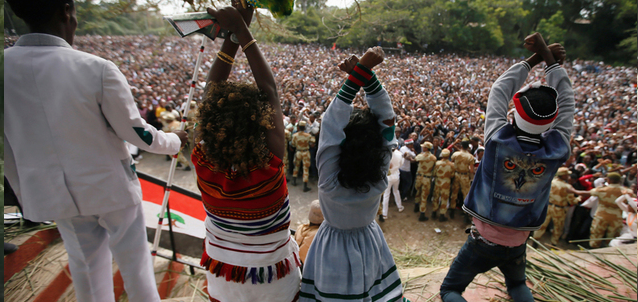
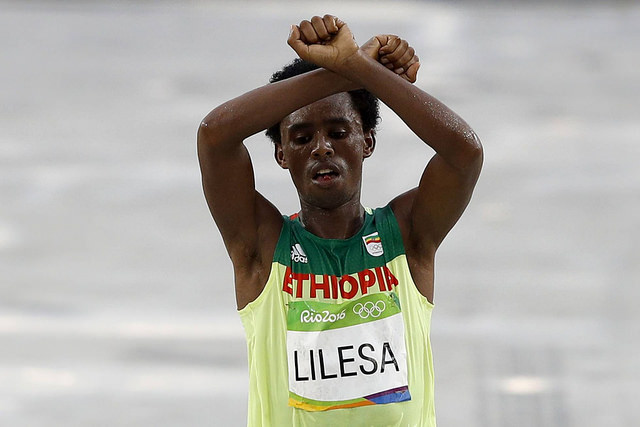
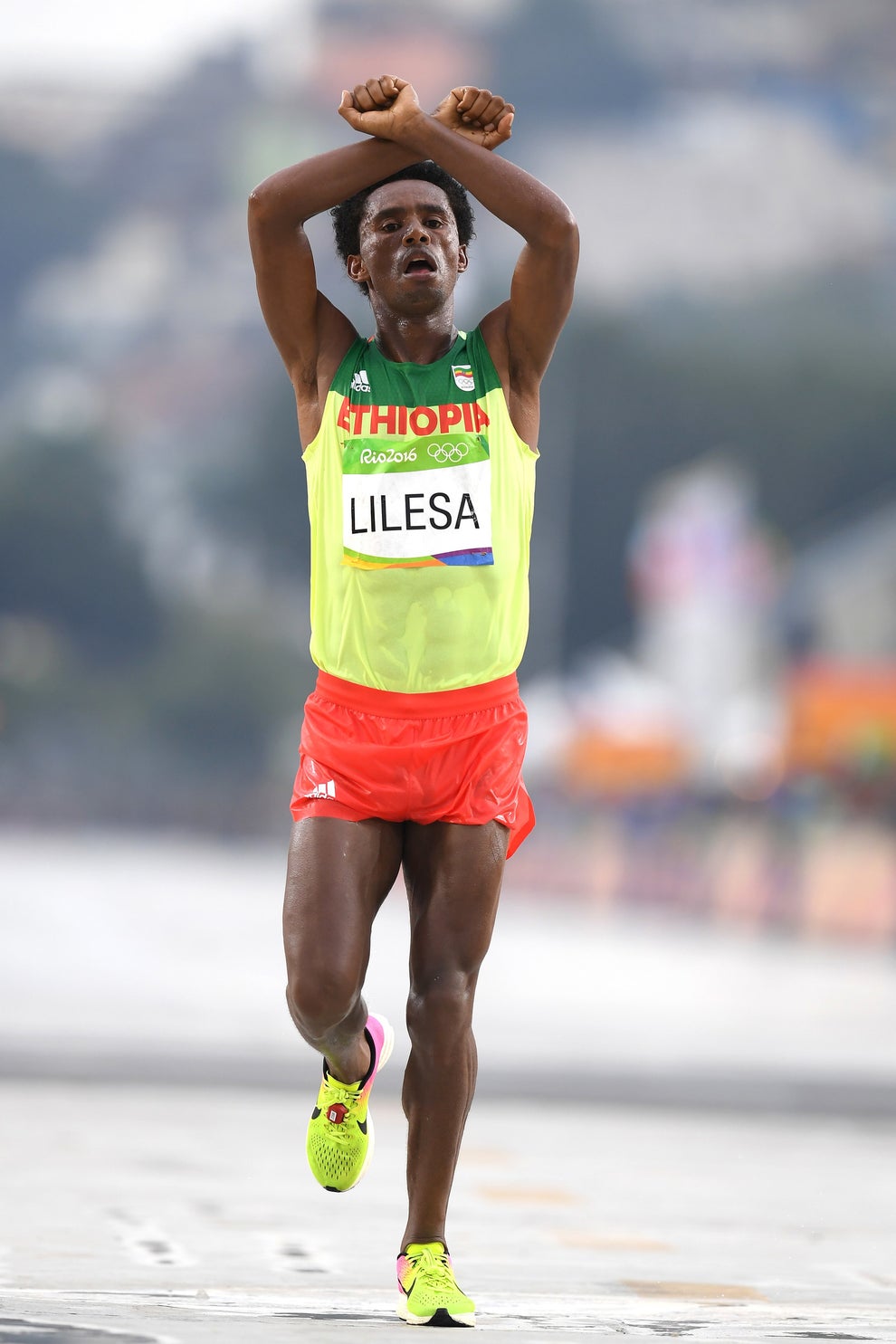
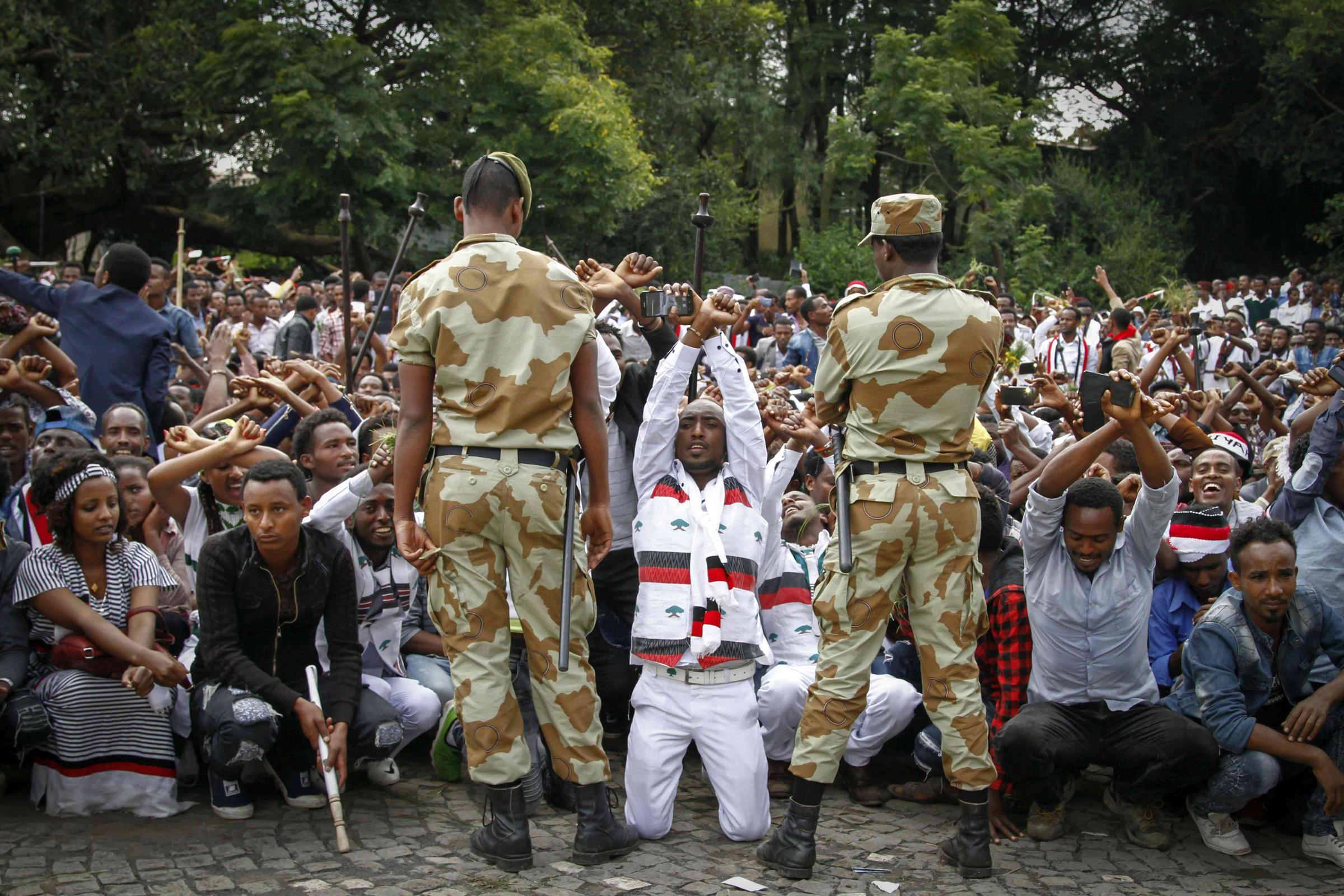
During the Rio games, Lilesa drew attention to an Oromo anti-government movement by crossing his wrists above his head — a gesture that has become a symbol of the protest movement. He has been in self-imposed exile since then.

Hundreds have been killed in a government crackdown since the unrest began about a year ago, according to human rights groups.

A state of emergency was announced in October, a week after more than 50 people died in a stampede in the Oromia region when security forces teargassed a religious festival where protesters were chanting anti-government slogans.

Since then, official figures show over 11,000 people have been arrested in the Oromia, Amhara and Addis Ababa regions where protests had been centred.

Among those arrested are leaders of small opposition parties, journalists and at least two bloggers.

Ethiopian authorities said last month that 2,000 of those detained had been released after undergoing a “re-education” and “counselling” programme.

A key complaint of the protesters is a political system which has meant that the ruling party holds all 546 seats in parliament.

Ethiopian Prime Minister Hailemariam Desalegn in October promised electoral reforms, but Gudina said this was “too little, too late”.

BACKGROUND

‘STATE OF EMERGENCY’ DECLARED IN ETHIOPIA AS PROTEST DEATH TOLL RISES

The Ethiopian government on Sunday (10 October) declared a state of emergency, following a year-long spate of unrest which spiked in a week of deaths and attacks on buildings and foreign companies.

EurActiv.com

WP: Ethiopia arrests top Oromo opposition politician after Europe Parliament speech December 1, 2016

Posted by OromianEconomist in #OromoProtests.
Tags: , , , , , , , ,
6 comments
December 1 at 3:46 AM
A top opposition politician from Ethiopia’s restive Oromo ethnic group was arrested after he spoke out against the country’s state of emergency in front of the European Parliament, a colleague said Thursday.Police arrested Merera Gudina and three others from his home in Addis Ababa late Wednesday shortly after his return from Europe, which included a Nov. 9 speech in front of the European Parliament in which he said tens of thousands have been arrested under the state of emergency.“We don’t know his whereabouts,” Beyene Petros, head of the Medrek coalition of opposition parties that includes Gudina’s Oromo Federalist Congress, told The Washington Post. “In terms of political leadership, he has been around and operating above board, peacefully.”Government spokesman Negeri Lencho said he had no information about the arrest.

Gudina appeared in front of the European Parliament with Rio Olympics marathon silver medalist Feyisa Lilesa, who sensitized the world to the demands of Ethiopia’s Oromo people when he crossed his arms in protest as he ran across the finish line in July.

Also present was Berhanu Nega of the Patriotic Ginbot 7, an armed rebel group fighting the Ethio­pian government, which prompted calls for Gudina’s arrest by pro-government media.

The Oromo ethnic group, the largest in the country, have been protesting for the past year over their historic marginalization as well as corrupt local government and the confiscation of their farm land for factories. At least 700 have died in the ongoing crackdown.

On Oct. 2, a protest during an Oromo cultural festival turned into a deadly stampede when police fired tear gas into the crowd killing more than 50, according to the government — though the opposition maintains the toll was 10 times higher.

The incident was described as a massacre and prompted riots around the Oromo region and attacks on foreign and government-owned factories, farms and hotels doing millions of dollars of damage.

A state of emergency was declared a week later and since then the government said 11,000 people have been detained.

In a briefing of foreign diplomats on Nov. 17, Prime Minister Hailemariam Desalegn said that the country has largely returned to calm since the emergency was declared and promised reforms to address grievances, including a more representative parliament.

There are no opposition members in the current parliament, which was elected in 2015.

Local and international rights organizations, however, have condemned the string of arrests accompanying the state of emergency, including that of journalists and politicians.

Two members of the Zone 9 blogging collective were rearrested after the state of emergency, as well as a newspaper editor.

Gudina spoke frequently with international media, including The Post, about the plight of the Oromo. While hundreds of his party members and most of his key deputies have been arrested, he felt he was safe because of his high profile and because he stayed within the narrow political bounds allowed.

“That’s what all of us are trying to do, play by the rules,” said opposition leader Petros. “What is different now from what he has been doing over the last 20 years?”


Related articles:

BBC: Ethiopia arrests opposition leader after EU visit

Al Jazeera: Ethiopia: Oromo opposition leader arrested

IBT: Ethiopia’s leading opposition leader Merera Gudina arrested after EU visit

Addis Standard: NEWS: ETHIOPIA SECURITY DETAIN PROMINENT OPPOSITION PARTY LEADER DR. MERERA GUDINA

Australian MP Andrew Wilkie addresses the parliament speaking about the plight of Oromo people November 27, 2016

Posted by OromianEconomist in #OromoProtests.
Tags: , , , , , , , , ,
add a comment

Odaa Oromoooromianeconomist


#OromoProtests #OromoRevolution Australian MP Andrew Wilkie addresses the parliament speaking about the plight of Oromo people
“On Tuesday 15th of November 2016. We the Australian Oromo Community of Tasmania invited our independent MP Honourable Andrew Wilkie & expressed the shocking truth of human rights abuse, massacre and mass incarceration & today he is standing in Solidarity with the Oromo people in the parliament of Australia we deeply appreciate for becoming a voice for the voiceless.”

The #OromoProtests have changed Ethiopia November 22, 2016

Posted by OromianEconomist in #OromoProtests.
Tags: , , , , , , ,
1 comment so far

Odaa Oromoooromianeconomist

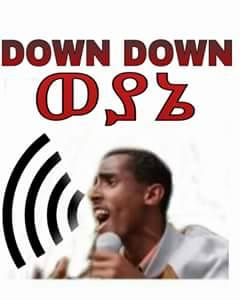
oromoprotests-one-year-on-struggle-november-2015-2016an-oromo-youth-hero-shanted-down-down-woyane-on-the-face-of-mass-killers-tplf-agazi-at-bishoftu-2nd-october-2016-oromoprotestsirreecha-malkaa-birraa-2016-at-horaa-harsadii-bishoftuu-oromia-this-brave-oromo-woman-is-one-of-the-murdered-by-fascist-tplf-ethiopia-2nd-october-2016Congressman Mike Coffman of Colorado in solidarity with Oromo protests at the global Solidarity Rally in Denver, USA. 29 August 2016 p2

The Oromo protests have changed Ethiopia

The struggle of the Oromo people has finally come to the attention of the global public conscience.

 irreecha-malkaa-2016-bishoftu-horaa-harsadi-oromia-oromoprotests
Demonstrators chant slogans while flashing the Oromo protest gesture during Irreecha, the thanksgiving festival of the Oromo people, in Bishoftu town, Oromia region, Ethiopia


By Awol Allo, Al Jazeera

November 12 marked the first anniversary of the Oromo Protests, a non-institutional and anti-authoritarian movement calling for an end to decades of systemic exclusion and subordination of the Oromo.

Although the protests were sparked by a government plan to expand the territorial and administrative limits of Ethiopia’s capital, Addis Ababa, into neighbouring Oromo towns and villages, they were manifestations of long-simmering ethnic discontents buried beneath the surface.

Inside Story – What’s fuelling protests in Ethiopia?

The Oromo are the single largest ethnic group in Ethiopia and East Africa, comprising more than 35 percent of Ethiopia’s 100 million people. Yet, Oromos have been the object of discriminatory and disproportionate surveillance, policing, prosecution and imprisonment under the guise of security and economic development.

The year-long protests, which brought decades of hidden suffering and abuse to the Ethiopian streets, were held under what Human Rights Watch described as a “near-total closure of political space”.

As the protests grew in magnitude and intensity, the government responded with overwhelming and disproportionate force, unleashing what Amnesty international called “a vicious cycle of protests and totally avoidable bloodshed”.

The failure of the government to respond to long-standing grievances and the deployment of disproportionate violence which killed hundreds, exacerbated the tension, transforming what was a single-issue protest into a formidable mass anti-authoritarian movement.

The protests reached a turning point on August 6, 2016, when hundreds of thousands of people marched in more than 200 towns and cities to resist the government’s draconian and ever-escalating repression.

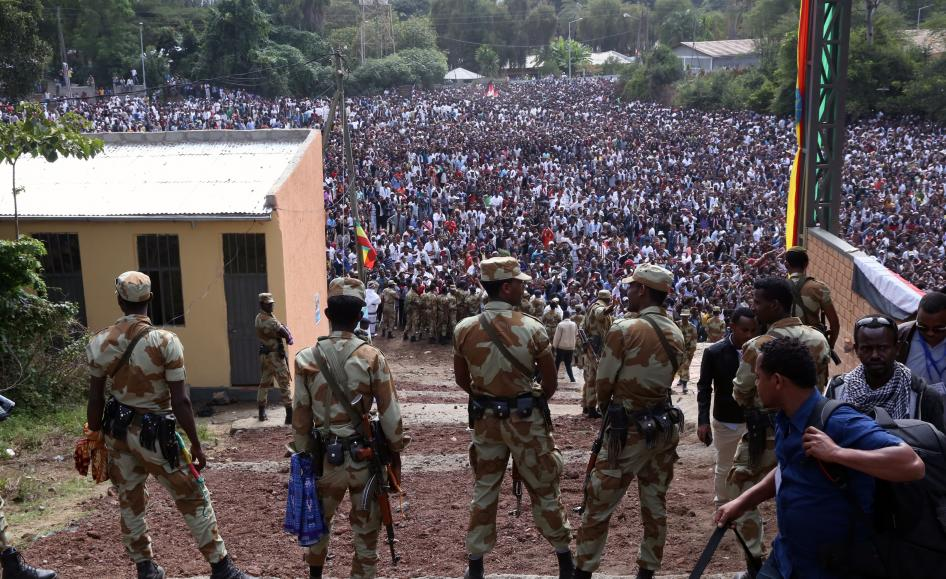
Another milestone came on October 2, 2016, when security forces fired tear gas and live bullets on a crowd of over two million people gathered to celebrate Irreecha, a cultural festival in which Oromos from all walks of life congregate to celebrate life and nature. While the government acknowledged the deaths of 52 people, local reports have put the number in the hundreds.

State of emergency

On October 9, 2016, the government declared a state of emergency, giving security forces and the army new sweeping powers in one of the most censored countries in the world, where the security apparatus is already extensive and permeates all levels of social structures, including individual households.

The government blocked mobile internet, restricted social media, banned protests, closed down broadcast and print media, including the influential Addis Standard magazine, and imposed draconian restrictions on all political freedoms. In its recent report analysing the effect of the emergency, Human Rights Watch described the measures as the securitisation of legitimate grievances.

Suddenly, the Oromo story moved from the periphery of Ethiopia’s political discourse to the centre.

According to the government’s own figures, more than 11,000 people have been arrested since the emergency was imposed.

Under international law, states can impose restrictions on the exercise of rights and freedoms “in times of public emergency threatening the life of the nation”. However, a state of emergency does not give the government carte blanche to do as it pleases.

Governments can only take those measures that are necessary and proportionate to the threat. The measures being taken by the Ethiopian state go far beyond what is required by the exigencies of the circumstances.

In the name of economic development and national security, it established a permanent state of emergency to obscure its lack of democratic mandate, making “development” and “security” the ultimate standards of the regime’s legitimacy.

Oromo Protests at Rio Olympics

The protests rose to global prominence when Feyisa Lilesa, an ethnic Oromo marathon runner, crossed his wrists above his head in an “X”, a gesture that came to define the Oromo protests, as he crossed the finishing line at the Rio Olympics to win the silver medal.

If the Oromo protests are a battle of ideas, a contest between those who seek equal opportunity and those who deny these opportunities to all but a few, a conflict between bullets and freedom songs, it was also a battle for the control of the narrative.

Ethiopia declares state of emergency as protests continue

Unequal access to education and the means of narrative production excluded the Oromo from mainstream knowledge frameworks, rendering them invisible and unnoticeable, and condemning their culture and identity to a precarious subterranean existence. The Rio Olympics reconfigured this dynamic.

Lilesa’s decisive intervention at one of the world’s biggest stages drew overdue attention to the story of oppression that remained largely invisible to mainstream media.

Suddenly, the Oromo story moved from the periphery of Ethiopia’s political discourse to the centre. As the news media filtered the Oromo story into the global public conscience via Lilesa’s expression of solidarity, it provided a revealing perspective on the fiction underneath the country’s reputation as a beacon of stability and an economic success story.

Achievements

This movement has already changed Ethiopia forever. It brought about a change of attitude and discourse in the Ethiopian society, repudiating the ideological proclivities and policies of the state. It enabled the society to see the government, its institutions, its symbols and its western enablers differently.

Topics that used to be considered taboo only a year ago, such as the supremacy of ethnic Tigrean elites, are no longer off limits. In short, it enabled suffering to speak.

A year after the protests erupted, and after hundreds of funerals were held, what remains uppermost in the memory of the protesters is not the dead. It is not even the bereaved. It is the stubborn persistence of the Qabso – struggle – in the face of great sacrifice, and the defiant and unrelenting call for equality and justice.

The government knows that it walked right up to the edge of the precipice. But, if it fails to address the grievances of protesters, if it continues to ignore the social fabric ripped apart by policies of divide and rule, if it does not provide justice to the inconsolable grief of parents whose children were shot by security forces, and the quiet but intensely agitated youth who have become the beating hearts of this defiant generation, it may plunge into it.

Awol Allo is Lecturer in Law at Keele University, UK.

Ethiopia’s crisis:Things fall apart: will the centre hold? #OromoProtests November 22, 2016

Posted by OromianEconomist in #OromoProtests.
Tags: , , , , , , , ,
add a comment

Ethiopia’s crisis

Things fall apart: will the centre hold?

lead

Oct.2,2016.Members of the Oromya Regional Special Police with protesters in Bishoftu, in the Oromia region of Ethiopia. STR/Press Association. All rights reserved.


Almost exactly a year ago, Ethiopia entered its worst crisis since the arrival of the regime in 1991. Last month, a state of emergency was proclaimed. These two events have generated a flood of commentary and analysis. A few key points, sometimes underplayed if not ignored, are worth closer attention.

“Mengist yelem!” – “Authority has disappeared!”

People waited in vain for the government to react other than by brute force alone to the opposition it was facing and the resulting chaos. The unrest in Oromya, Ethiopia’s most populous state with 35% of the country’s total population, began on November 12, 2015; the uprising in part of the Amhara Region, the second largest by population (27%), on July 12, 2016.

For 11 long months the government was content to quell protest and to release information in dribs and drabs, the epitome of one-sided doublespeak. A handful of cryptic press releases repeated the same platitudes ad nauseam. When in June 2016 the ruling power finally realized the severity of the crisis, launching a series of internal deliberations, these took place in total secrecy. This pseudo-communication destroyed its credibility and in turn lent credence to the sole alternative source of information, the diaspora, which itself is often hyperbolic to the point of implausibility. On both sides, the space available for information that exhibits even a degree of measure, not to say simple rationality, is shrinking alarmingly.[1]On both sides, the space available for information that exhibits even a degree of measure, not to say simple rationality, is shrinking alarmingly.

People have stopped taking notice of anything the ruling power says, seeing it as incapable of handling the situation. In short, trust has gone. “It is not even able to listen… It has lost its collective ability to reach the collective mindset of the governed”.[2] The general view is that Prime Minister Hailemariam Dessalegn  “always promises but never delivers”.

Both in central government and in the regional authorities, or between one and the other, authority has dramatically deflated. A multitude of anecdotes confirm that it is being ignored – officials simply turn their backs – or even mocked, right up to the highest levels. The man in the street could only conclude: “Mengist yelem !” – “Authority has disappeared!”. This perception, initially confined to the cities, is increasingly reaching into the rural areas as they open up more and more.

An even more serious indictment is spreading. The government’s primary role is to maintain law and order, and it has proved incapable of doing so; worse still, the violence of repression is further fueling discontent. In the end, rather than fulfilling its first duty, the ruling power has become the principal cause of revolt.In the end, rather than fulfilling its first duty, the ruling power has become the principal cause of revolt.

“Meles left with the password”

Why this impotence and loss of credibility?

Under Meles Zenawi, the all-powerful Prime Minister who died suddenly in August 2012, the system of power was like a pyramid. Meles sat enthroned at the summit, and below him, every tier – executive or legislative, political or economic, national or regional, even local – was simply a transmission belt from the top. Party and State were inextricably intertwined. This profoundly centralized and vertical system, intensifying over the years, hung on him alone.

For most observers, the smooth succession from Meles Zenawi to Hailemariam Desalegn proved the robustness of the regime and the reliability of its institutions. However, Hailemariam lacks what it takes to “fill the boots” of his predecessor. Most of his authority comes not from his own resources but has been handed down to him through a constellation of powers – baronies one might call them – characterized not just by their diversity, but also by the rivalry, or even conflict, between them. In short, Ethiopia is left with a system of power tailored for a strongman and filled accordingly, but which now lacks a strongman. “Meles left with the password”, the joke goes.  

The succession couldn’t be a change of personnel only. The whole power system too needed reshaping, and this is in full swing. Hence the misfires in response to the crisis.

People used to say that Ethiopia was like a plane on autopilot, controlled by the Meles software (“Meles legacy”). To pursue the metaphor in current circumstances, the more turbulence the plane encounters, the more ineffective the software has proved to be. It is noteworthy that constant references to that legacy have practically disappeared from official rhetoric. So the software has been disconnected, but no pilot – whether individual or collective – has been able to take over the controls.

Three big sources of the crisis

The weakening of central authority – Addis Ababa – has thus released centrifugal – regional – forces that had been steadily stifled in Meles Zenawi’s iron grip. The first source of the current crisis is the trial of strength between central authority and the peripheral powers that it originally created – a sort of bid for emancipation from the father – as well as between the peripheral powers.

At stake is the sharing of powers and resources, notably between the regions and Addis Ababa, where Tigrayans are perceived to be overrepresented, wrongly in their view, quite obviously according to all the other ethnicities.

In other words, what is at stake is the place that should be assigned to the “people’s fundamental freedoms and rights” enshrined in the constitution, collective rights. How can the country make the transition from a bogus and ethnically weighted federalism to real decentralization, which would bring about a more authentic and ethnically fairer federalism, or even confederalism? The immemorial “national question” remains as acute as ever: what will the name Ethiopia come to refer to? In other words, why should and how can an Ethiopian state exist, and on what basis?What will the name Ethiopia come to refer to?

This question has deep historical roots. From the mid-nineteenth century onwards, the economic centre of gravity shifted from the North – Abyssinia – towards the Centre. But power always remained Abyssinian. At stake in the current crisis is a historic break that would also shift power to the Centre, i.e. to Oromya. Despite their internal divisions, this claim unites the vast majority of Oromo, justified by their numbers and their major contribution to the economy. It is generally agreed that a genuine application of the constitution would be sufficient for this claim to be satisfied.

For the Amhara, whose elite dominated Abyssinian power for more than a century, the challenge is to revamp their identity. They have to say farewell to their historical ascendancy and accept that their place in the Ethiopian state should reflect their numerical and economic importance, no more, no less. In other words, the only way out of the undoubted ostracism they suffer is not to re-establish the former status quo. The assertion of “Amhara-ness” – legitimate as it is – cannot become a cover for the aspiration for a return to an “Ethiopianness” based around Amhara, with the other ethnicities in a lesser role. This metamorphosis is under way, but not yet complete. Nonetheless, many Oromo and even more Tigrayans deny that anything has changed, convinced that this elite has not abandoned its “chauvinism” and “revanchism”,and that the federal system that they defend tooth and nail could therefore never satisfy its deeply cherished ambition.The only way out of the undoubted ostracism [the Amhara] suffer is not to re-establish the former status quo.

These ethno-nationalisms have become inflamed and even paranoid. Today, “all the politics is revolving around ethnicity”, a former senior TPLF official told me, and in a previous remark: “what I see now dominantly… is the proliferation of racial or ethnic hatred”.[3] It is focused on the Tigrayans, not only because of the major role of the Tigrayan Peoples’s Liberation Front (TPLF), but because both Oromo and Amhara equate Tigrayan silence in the face of repression with approval. “The preliminary rhetoric of ethnic cleansing is already here”, opines one social scientist, a man familiar with the grass roots of the country.

The second source of the crisis relates to what might be called “democratic aspiration”. In this respect, Ethiopia’s leaders are right to talk about the price of success.  Economic growth has brought the emergence of a new middle class, not just urban but also in the countryside, which has seen the rapid enrichment of an upper tier of farmers. In parallel, education has dramatically expanded. This upper tier has opened up to the outside world, in particular through social media. However, the aspiration for “individual rights” runs up against a system of power which, everywhere in Ethiopia, from the summit of the state to the lowliest levels of authority, from the capital to the smallest village, shares the same defects: authoritarianism, stifling control, infantilization.

Finally, the third source of the crisis relates to collateral damage from super-rapid growth. Such damage is inevitable, but has been exacerbated by the type and methods of development pursued. First, forced imposition through ultra-centralized and secretive decision-making, and brutal execution. “Land grabbing”, and more generally almost instant evictions with absurd levels of compensation, are commonplace. Second, the overwhelming role of the ruling power through the “developmental state” has produced an ever more powerful and arrogant oligarchy embedded in the Party-State. The stakes in the crisis are not only political: they directly concern the mobilization, distribution and therefore the accumulation of resources in the hands of the ruling power, and hence the division of the cake between central and peripheral authorities and/or oligarchies, but also between these oligarchies and the population in general.

The present crisis is particularly acute because these three factors reinforce each other. The demonstrators chant “we want justice” and “we want freedom”, but also “Oromya is not for sale” and “we want self rule” or, in Gondar, the historic capital of the Amhara, “respect for Amhara-ness”.[4]The preliminary rhetoric of ethnic cleansing is already here.

“Alarmists” and “complacents”

In this poisonous climate, the vigour and scale of the protest accentuated the “crisis of leadership”.[5] It was the first factor responsible for the government’s paralysis, as confirmed by one participant in the last meeting of the Central Committee of the TPLF, in early October. He ascribes it first of all to pure and simple “power struggles, leading to a tussle that is all the more confused in that these conflicts run through every regional party, the relations between those parties, and between those parties and the centre, while on the same time the centre originates from the peripheries:  the supreme decision-making body is the Executive Committee of the EPRDF (Ethiopian People’s Revolutionary Democratic Front), composed equally of representatives of the TPLF, ANDM (Amhara National Democratic Movement), OPDO (Oromo People’s Democratic Organisation) and SPDM (Southern People’s Democratic Movement).

These conflicts are first of all personal in nature, based on local affinities, religious solidarities, family connections, not to mention business interests. However, the crisis triggered a new and crucial division, between “alarmists” and “complacents”, the former advocating a rapid shift from the status quo, the latter seeing neither its necessity nor its urgency.

The “old guard” is the backbone of the “alarmists”. It consists of the survivors of the founding group of the TPLF, including the heads of the army and the security services, Samora Yunus and Getachew Assefa, plus some old comrades in arms such as Berket Simon, guiding light of the ANDM. They became involved in politics in the early 1970s, within the student protest movement against Haile Selassie. Their long journey together gives them an experience, a maturity, and a cohesion greater than that of any current within the EPRDF. Concentrated in the centre, in Addis Ababa, most of them were sidelined from official positions as Meles imposed generational change. Returning in force behind the scenes after his death, they are the strongest backers of Hailemariam Dessalegn

They ascribe the crisis to the breaking of the bonds between “the people” and the party. In their view, those most responsible are the regional parties, starting with their new leaders. The urgent priority is to restore those bonds and to reinforce central power, to compensate for the failures of the regional authorities.Everywhere in Ethiopia… shares the same defects: authoritarianism, stifling control, infantilization.

Hailemariam expressed the anxiety of this group when he said that the issues facing the regime are a matter of “life or death”,[6] and that Ethiopia is “sliding towards ethnic conflict similar to that in neighbouring countries”.[7] Abay Tsehaye, said to be the most political head of the TPLF, raised the specter of a genocide even worse than Rwanda’s.[8] Bereket Simon warned the leadership of his party that the country was sliding towards the abyss. In vain.

In contrast, Debretsion Gebremichael, member of the Politburo of the TPLF and until recently Deputy Prime Minister, one of the foremost of the second generation of leaders, retorted that there had simply been a few, geographically limited “disturbances”, that they did not reflect the overall situation in the country, that “there is no mobilization against Tigrayans anywhere”. And even, dogmatically: “It is not possible to have people to people [i.e. ethnic] conflict in Ethiopia”.[9]

The “complacents” are usually described as “technocrats” and “careerists”. They are considered to be “apparatchiks”, lacking any political fibre, owing their position and the privileges and advantages – often undeserved – that they enjoy, entirely to it.

They will only be able to conceal and perpetuate those benefits as long as the Party remains a bunker. Any opening up, any movement towards a little good governance, transparency, and accountability, would be the end of them. They are also haunted by the implacable rule of “winner takes all” that has accompanied every previous regime change. However, their attitude is ambivalent. On the one hand, they are tooth and nail defenders of the EPRDF’s monopoly of power, and therefore equally implicated in the repression.The ‘complacents’ will only be able to conceal and perpetuate those benefits as long as the Party remains a bunker.

On the other hand, they ascribe responsibility for the crisis to excessive central power, claiming that it hinders regional authority. In order to reverse this imbalance, and thereby strengthen their own positions, they are taking advantage of the outbreaks of ethno-nationalisms, notably by attempting to exploit the corresponding popular demands to their own advantage, up to and including the serious slide into anti-Tigrayan sentiment.

The fate of Ethiopia would be determined by its periphery

In Oromya, at least part of the OPDO, right up to leadership level, encouraged the opposition to the Addis Ababa Master Plan, the scheme to extend the capital’s administrative scope into adjacent areas of Oromya, which triggered near universal unrest across the whole State.

The same actors then did everything they could to prevent Oromya being placed under military command from Addis Ababa and then, having failed, to put a stop to it. At least locally, the authorities – necessarily members of OPDO – and the militias – under their sole control – went so far as to lend the protesters a hand.

This ethno-nationalist outbreak contributed to the appointment of Lemma Megersa and Workneh Gebeyehu to the leadership of the OPDO, after the forced resignation of numbers one and two Muktar Kedir and Aster Mamo, who were seen as puppets of Addis Ababa. The new duo are long-time members of the security services, but are said to be protégés of Abadula Gemadah, the OPDO’s only strongman, hence formerly sidelined by Meles Zenawi. The main thing is that the OPDO was able to assert its autonomy by electing leaders without external pressure or diktat.

In the Amhara region, it is equally unquestionable that the big initial demonstrations, though officially banned, were held with the support or tacit approval of part of the ANDM. At least at local level, the authorities and the security forces allowed “ethnic cleansing” against Tigrayans to take place, prompting 8000 to flee to Tigray.[10] Gedu Andergatchew, ANDM strongman, who is accused of having at least turned a blind eye, is still in place.

Even in Tigray, the regional authorities – “TPLF Mekele” – are playing the nationalist card. Abay Woldu, President of the region and Chairman of the TPLF, went so far as to declare that the integrity of Tigray was non negotiable, in a clear allusion to Tigray’s retention of the Wolkait area, whose restoration is demanded by some Amhara, and despite Addis Ababa’s call for the Amhara and Tigrayan governments to negotiate this long standing issue.

This firmness played a big part in the shift in at least part of Tigrayan opinion, expressed with rare vehemence by some circles. They vilified the “TPLF Mekele”, despised for its lack of education and impotence. They placed all their hopes in the Tigrayan old guard, “TPLF Addis”. According to them, only this old guard could bring about the democratization essential to the survival of the regime and, in the long term, the Tigrayan minority’s control over its own affairs. The same old guard, they now complain, has doubly betrayed the Tigrayan people: by evolving into an oligarchy that neglects the latter’s economic aspirations; and by turning its back on their national interests.

On the first point, they rightly emphasize that Tigray still lags behind in terms of development. But at the same time Tigrayan businessmen are said to earn exorbitant profits from undeserved privileges. In fact, the paradox is only apparent: there is so little potential in Tigray that they invest elsewhere.

Regarding the “national betrayal”, these critics highlight the old guard’s loyalty to its Marxist past, claiming that they remain “internationalist”, “cosmopolitan”, and “universalist” out of political ambition and material interest. Addis Ababa offers positions and advantages that Tigray, poor and small as it is, would be hard put to provide. The more the balance between centre and periphery shifts towards the centre, the more attractive these positions and advantages become. In short, the view is that the old guard has yielded to a centuries-old tradition of Ethiopian history: letting itself be “assimilated” by the centre and prioritizing the latter’s interests over those of the periphery. As the historian Haggai Erlich has written, “a central position” in Addis Ababa has always been preferable to remaining a “chief in a remote province”.[11]The more the balance between centre and periphery shifts towards the centre, the more attractive these positions and advantages become.

In consequence, these Tigrayans feel they have no other choice than to take charge of their own destiny and count only on themselves, i.e. something like building a “fortress Tigray”. It is up to the new generation to take over from the old, which has given up, even if this means embracing the “narrow nationalism”of which its critics accuse it. This goes as far as to see a re-emergence of the hope of reunifying Tigrayans on both sides of the Ethiopia/Eritrea border into a single nation state.

In this view, the other regions’ demands for self-rule should therefore be heard. Central government should be content with “regulating”,  “balancing”, “moderating”, “arbitrating”, “coordinating”, etc. That it should be headed by an Oromo prime minister would be in the natural order of things, since Ormoya has the largest population, and would help to calm feelings in the region. In short, one Tigrayan intellectual has joked, a new Age of the Princes would be established, but one in which the Princes did not fight amongst themselves,[12] more seriously going on to express the wish that, for the first time in history, “the fate of Ethiopia would be determined by its periphery”.

State of emergency

The indignation aroused by the carnage in Bishoftu during the traditional Oromo annual festival (October 2),[13] the widespread destruction that followed the call for “five days of rage” in response, made the ruling power’s paralysis even more untenable. At the same time, the series of internal consultations within the EPRDF was coming to an end. The package of measures announced on October 9 reflects the shakiness of the snatched compromise. However acute their lack of mutual trust, the political currents and/or the ethnic components of the EPRDF had to arrive at an agreement: they knew that they had “to work together or else to sink together”.

The state of emergency was proclaimed in order “to deal with anti-peace elements that… are jeopardising the peace and security of the country”.[14]Commentators see it as evidence that the regime was “overwhelmed”. But it adds little, whether to the existing legislative arsenal,[15] or to the operational capacities of the security forces since, in practice, they have never seen themselves as severely restricted by the law.

The first objective is to instil fear and uncertainty, especially as several provisions are so vague that they can be interpreted in almost any way. They are now in everyone’s mind. For example, for the first time, long-standing informants have cancelled interviews because of the potential risk.The first objective is to instil fear and uncertainty.

The second objective is to give the military the legal sanction that army chief Samora Yunus was demanding as a condition of continuing to maintain internal order.

However, this proclamation also demonstrates that the centre has won a round in its trial of strength with the peripheries. The state of emergency places all the forces of order under the authority of a federal Command Post, with Hailemariam Dessalegn at its head and the Minister of Defense as its secretary. They thus control the mono-ethnic Special Regional Police in each state, who with 80,000 members far outnumber the Federal Police (around 40,000), and even more so the Army Special Force (the famous Agazi red berets, around 4000). The 500,000 or so militiamen also come under their authority. That is why the proclamation encountered ferocious opposition within the OPDO and ANDM.

Essentially, however, the state of emergency is a show of strength. Not only to try to reassure increasingly nervous foreign investors,[16] but above all to convince the population of the regime’s determination to recover total control of the entire country by any means – the obsession of any Ethiopian ruling power worthy of the name – and, at the same time, to make its promise of reforms credible. Otherwise, it would have been perceived as a capitulation. Sebhat Nega, patriarch of the TPLF, explained that the purpose of the state of emergency was “to create a situation to make us able to reform”.[17]

Ultimately, the aim of the compromise reached within the party was to drive a wedge between the “violent, extremist and armed struggle” – to be repressed through the state of emergency – and the “democratic peaceful engagement” expressed by so many demonstrators – holding out a hand via reform.[18]

Leadership has miserably failed”

Interviews with senior officials cast light on the analysis that the leadership as a whole finally agreed upon. Emollient though it may be, they are all now sticking by it and keeping their previous disagreements to themselves.[19]

The analysis goes as follows: the spirit and letter of the constitution are perfect, as are therefore the federal structure, the format of the institutions, the political line. The latter is not “based on ideology but on the natural laws of development”, as it previously was on Marxist “science”. “Show me a developing country anywhere in the world which has a political strategy and guidelines as well articulated as Ethiopia!” This perfection has accomplished “miracles”. The current crisis is simply “the price of our successes”. It was preceded and will be followed by others, because it is nothing more than a stage, unremarkable and inevitable, on the path that will undoubtedly culminate in the nation catching up with developed countries in the next few decades.

However, this stage, like any other, requires “adjustments”, especially as the society – richer, more educated, more mature – has become a “demanding society”. The young in particular, the spearhead of protest, are making demands that are socio-economic rather than political. The regime is facing “challenges” for having failed to make these adjustments in time.

The main problem is deficiencies in implementation.  In sum, things have gone off the rails because of human failings. Yielding to corruption, bad governance, lack of accountability, etc., “leadership at various levels of the government structure has miserably failed to fully and timely[sic] address the demands made and the questions raised by the people”.[20] The response to the crisis must therefore take two forms. First a massive purge at all levels of the Party, regional governments, the administration. Then, “to delineate” – the new watchword – the Party from the government, from the Assemblies, from justice, etc. in order to develop a system of checks and balances, since the self-correcting mechanisms within the Party have proved inadequate.The essential thing is “to discusswith all stakeholders” in all possible and imaginable “debating platforms”, “assemblies”, “fora”, but with no specific goal or timetable, and under the sole authority of the EPRDF.

For youth employment, a “Mobile Youth Fund” funded to the tune of 500 million dollars – some 4% of the annual budget – will be created, though the details are vague and it will take several years before its effects are felt. Above all, it is part of a largely endogenous strategy of industrialization, focused on Small and Medium Enterprises (SME) on the edge of the rural areas, whereas heated debate continues within the leadership with those who advocate prioritizing foreign investment in “Industrial Parks”.

Angela Merkel and Ethiopia’s Prime Minister Hailemariam Desalegn at the national palace in Addis Ababa, Oct. 11, 2016. The German Chancellor visited Ethiopia to discuss the country’s newly declared state of emergency. Mulugeta Ayene/Press Association. All rights reserved.In strictly political terms, “our democratization process is still nascent. It is moving in the right direction, but it has not yet come up with inclusive engagement”, stated the PM.[21] Electoral law will be reformed to introduce an element of proportional representation into majority rule. However, the next elections are in 2020, and the dozens of opposition MPs present before the 2005 elections could do almost nothing to temper the authoritarianism of the regime. The essential thing is “to discusswith all stakeholders” in all possible and imaginable “debating platforms”, “assemblies”, “fora”, but with no specific goal or timetable, and under the sole authority of the EPRDF. A promise reiterated year after year, without impact. One of the essential causes of the crisis, its federal dimension, is covered in a single short sentence in the 15 pages of President Mulatu’s speech: “more should be done for the effective implementation of the federal system”. In any case, “Ethiopia is an idol… and exemplary for the world for peaceful [interethnic] coexistence”, declares the State Minister for Federal Affairs.[22]

Anticipating the worst

What emerges from all the interviews with nonofficial contacts is that the expectation of a symbolic gesture, one that would be significant and have immediate impact, proving that the regime had grasped the essence of the crisis and wishes sincerely to address it, has not been met.

According to them, the regime is relying first on repression, and on reforms only as a “footnote”. Merera Gudina, a long-standing leader of the opposition, sums up the general sentiment: “too little, too late”.[23] Nothing has been done to reach out to either the main opposition forces, even the legal opposition, nor the civil society or the media, quite the contrary. This could be envisaged only after the end of the state of emergency, Hailemariam is said to have told one figure from the international community.

These interlocutors share the dark pessimism of an editorial in the Washington Post: “the state of emergency will bottle up the pressures even more, increasing the likelihood they will explode anew… It won’t work”.[24] According to this view, the chances of a genuine opening up on the part of the regime are so small that there is a high probability that the worst will happen: a threat to the very survival of the country, the only question being when this dislocation would occur.Washington Post: “the state of emergency … It won’t work

While the official media bang on about the “strong commitment” of the leadership “to make its promise of deep reform a reality”,[25] interviews with top officials provide hints of the form and scope of reform, which remain consistent with the official analysis of the crisis.

Focus on “service delivery”

There is no urgency: change will be “an ongoing endless process”. The first specific deadline is in seven months, in June 2017, to report back on the purge and examine a document currently in preparation, on what the EPRDF should become in the next ten years.

In this view, the crisis is not systemic. So neither the constitution, nor the institutions, nor the political line will be touched. How could the latter be challenged since it obeys universal “laws”? For that reason, regardless of all the promised “discussions”, no convincing reasons are given for the much touted opening up to entail any restructuring of the political arena.

The EPRDF alone, as sectarian as ever, has understood and applies these “laws”, whereas the opposition parties oppose or reject them. The EPRDF alone has the near monopoly of skills needed to implement them, skills that the other parties lack. In short, the opposition is still not “constructive”. If the regime needs to become more inclusive, it is essentially in material terms, by sharing the cake more fairly through improvements in “service delivery”.

To do this, it is necessary and sufficient to put an end to individual erring through the self-reform of the EPRDF, i.e. reform by and for the Party itself. To achieve the famous “delineation”, MPs, judges, ministers, civil servants, etc. would split themselves in two, remaining obedient to the Party but putting their mission first. Why would they do this, given that they never have before? “Because they have become aware of the crisis”, is the explanation. So responding to the crisis requires no systemic reshaping through the establishment of independent counterforces. A U-turn in individual behaviour will be enough.Why would they do this, given that they never have before?

The EPRDF sticks to the same age-old paradigm. Since Ethiopia is still at a precapitalist stage, the intelligentsia is the only social group capable of setting the path to follow and leading the way. The EPRDF contains its best elements. Ethnic identities continue to be society’s main structuring factor. The EPRDF alone represents them. As one senior official confirmed, it is not until the country enters a capitalist stage that pluralism will imposed itself: with the emergence of social classes, each will construct its own political party to express its interests. What the EPRDF is still seeking is not simultaneous development AND democracy, but development THEN democracy.

In this respect, the arrival of technocrats – brandishing the indispensable PhD and with no major party position – was widely interpreted as evidence of a new openness in the cabinet reshuffle. Yet it perpetuates the monopoly rule of the “intellocracy”.

The paradox of the strongman

The consensus reached on October 9 is fragile and hence precarious. Nothing proves that the “reformers” have won the long-term game, though they have scored a point. Deep down, they do not share the same views. They lack a standout personality to act as a leader.

They have a clear view of where they want to go, which is to apply the constitution to the letter, but over a very long timescale and with no precise and concerted idea of the steps needed to get there. As for their rank-and-file adherents, they make no secret of still embracing the same paradox: we need reforms, but we need a new strongman to manage and impose them, for fear that they will otherwise lead to chaos.We need reforms, but we need a new strongman to manage and impose them.

On the opposition side, all the Oromo we spoke to emphasized the generational gap between the educated youth, broadly aged 16 to 25, spearhead of the protests notably in Oromya, and their elders. The latter are ambivalent. They feel a sincere empathy for the grievances and aspirations of the younger generation, but have reservations, even hostility, regarding the violent methods sometimes employed. In some cases they even physically opposed attempts at destruction during the “five days of rage”.[26] They remain traumatized by the Civil War under the previous regime, the Derg. Then they acquired military know-how that the young activists don’t have.

The latter also lack coordination and leadership. For all these reasons, a historian of armed popular uprisings in Ethiopia in the twentieth century has concluded that it is unlikely that the protests could become a significant guerrilla campaign, or that a sustained armed peasant upsurge – a “jacquerie” could occur.

As for the pockets of insurrection that have appeared in the Amhara region, they mainly affect areas where the authorities’ control has always been weak, even essentially formal.

Ethiopian history teaches that a regime only falls if its forces of repression, or at least part of them, turn against it. Today, apart from a few unconfirmed incidents, cohesion seems to be holding, say experts close to them. It might only break down if the EPRDF became divided to the point of being torn apart by centrifugal forces. However, the military command has always let it be known that it would intervene before this happened, as ultimate saviour of the regime. Under these circumstances, steady deterioration – a kind of rotting, seems a possible scenario.

Under these circumstances, steady deterioration – a kind of rotting, seems a possible scenario. Without any substantive resolution, the regime could re-establish law and order, as the first effects of the state of emergency seem to suggest. The reforms would not tackle the core problems. The ruling power would remain contested and delegitimized but, in the absence of an alternative, Ethiopians would toe the line. Investors would remain cautious, not to say skittish, affecting economic growth. But neither of the two opposing camps would gain the upper hand, any more than they would reach a constructive compromise. Ultimately, what might possibly occur is a classic scenario in Ethiopian history: the demise of one strongman, followed by a period of great disorder until a new strongman takes up the reins.


[1] See for example Foreign Affairs, November 7, 2016, https://www.foreignaffairs.com/articles/ethiopia/2016-11-07/twitter-hurting-ethiopia

[2] Unless otherwise specified, all quotations are taken from interviews conducted in October 2016 in Addis Ababa and Mekele, with people who, for obvious reasons, wished to remain anonymous.

[3] Interview, Addis Ababa, October 2016 and Addis Standard, September 28, 2016, http://addisstandard.com/ethiopias-gradual-journey-verge-crisis/

[4] Tigray On Line, July 31 2016, http://hornaffairs.com/en/2016/07/31/ethiopia-massive-protest-gondar/

[5] See René Lefort, Open Democracy, July 4, 2014, https://www.opendemocracy.net/ren%c3%a9-lefort/ethiopia-leadership-in-disarray

[6] Walta, August 30, 2015, http://www.waltainfo.com/index.php?option=com_content&view=article&id=20802:eprdf-determines-to-cease-talking-but-deliver-good-governanace&catid=71:editors-pick&Itemid=396

[7] BBC, August 3, 2016, http://www.bbc.com/news/live/world-africa-36883387

[8] Ethiomedia, September 10, 2016, http://www.ethiomedia.com/1016notes/7451.html

[9] AlMariam, September 25, 2016, http://almariam.com/2016/09/25/disinformation-in-t-tplf-land-of-living-lies-pinocchio-preaches-truth-against-perception-in-ethiopia/

[10] Tigray Online, October 10, 2016, http://www.tigraionline.com/articles/tigraians-victims-inamara.html

[11] Haggai Erlich, Ras Alula, Ras Seyum, Tigre and Ethiopia integrity, p. 364, Proceedings of the Eight International Conference on Ethiopia Studies, Vol. 1, Institute of Ethiopian Studies, Addis Ababa, Froebenius Institute, Goethe Universität, Frankfurt am Main, 1988.

[12] During the Age of the Princes (1769-1855), the Emperor’s power was purely nominal, and local warlords, in constant conflict, ruled the provinces.

[13] Human Rigths Watch has published the most exhaustive narrative of this event but with some omissions, which put its balance into question. https://www.hrw.org/news/2016/10/08/qa-recent-events-and-deaths-irreecha-festival-ethiopia

[14] Ethiopian Broadcasting Corporation, October 9, 2016, cited by http://www.aljazeera.com/news/2016/10/ethiopia-declares-state-emergency-protests-161009110506730.html

[15] Addis Standard, November 2, 2016, http://addisstandard.com/why-ethiopias-freewheeling-regime-does-need-a-state-of-emergency/

[16] See for example Washington Post, November 2, 2016, https://www.washingtonpost.com/world/africa/investors-shy-away-from-ethiopia-in-the-wake-of-violent-protests/2016/11/01/2d998788-9cae-11e6-b552-b1f85e484086_story.html

[17] Interview, Addis Ababa, October 2016.

[18] Ethiopian News Agency, October 11, 2016, http://www.ena.gov.et/en/index.php/politics/item/2082-pm-reaffirms-government-s-commitment-to-democratization

[19] Unless otherwise stated, the quotations that follow are taken from these interviews.

[20] Speech by President of the Republic Mulatu Teshome before both Houses, October 10, 2016.

[21] Ethiopian News Agency, October 11, 2016, http://www.ena.gov.et/en/index.php/politics/item/2082-pm-reaffirms-government-s-commitment-to-democratization.

[22] Walta, November 7, 2016, http://www.waltainfo.com/index.php/news/detail/25576

[23] AFP, October 11, 2016, http://en.rfi.fr/wire/20161011-ethiopia-pm-seeks-reform-electoral-system-after-protests

[24] Washington Post, October 11, 2016, https://www.washingtonpost.com/opinions/ethiopia-meets-protests-with-bullets/2016/10/11/0f54aa02-8f14-11e6-9c52-0b10449e33c4_story.html

[25] Walta, November 5, 2016, http://www.waltainfo.com/index.php/news/editors_pick/detail?cid=25549

[26] See for example Washington Post, November 2, 2016, https://www.washingtonpost.com/world/africa/investors-shy-away-from-ethiopia-in-the-wake-of-violent-protests/2016/11/01/2d998788-9cae-11e6-b552-b1f85e484086_story.html

Ethiopia: ‘State of Emergency’ Is Used As Systematic State Repression in Ethiopia, HRLHA Press Release November 22, 2016

Posted by OromianEconomist in #OromoProtests.
Tags: , , , , , ,
8 comments

Odaa OromooOromianEconomist


Ethiopia: State of Emergency Is Used As Systematic State Repression in Ethiopia


Human rights League of the Horn of Africa

HRLHA Press Release, 


November 20, 2016 The March 2014 Oromo student protests, which began at Jima University and spread quickly to Ambo University then in a few days to all universities, colleges, high schools and elementary schools in Oromia and continued for two months, captured the attention of the world community for the first time. In those two months, over 81 Oromos, mostly university students, were killed and thousands detained by the crackdown on the protest by Agazi force and silenced. After eighteen months, the protest flared up again on November 12, 2015 in Ginchi Town in Western Showa 80 km south of the capital city. Since then, Oromia has remained in a human rights and humanitarian crisis. The Human Rights League of the Horn of Africa (HRLHA) lists over 2000 Oromo deaths, thousands of disappearances and tens of thousands of detentions. Many more thousands have left their homes behind and are now living in forests in order to escape the TPLF sponsored killing squads. To calm the peoples’ anger- after indiscriminate shootings from both the ground and the air of innocent Oromos at the Irrecha festival in Bishoftu on October 2, 2016- the government declared a state of emergency on October 8, 2016.

click-here-to-read-on-repression-in-ethiopia-human-rights-league-of-the-horn-of-africa-21-november 2016 -press-release-pdf


Related: UNPO:  Oromo: State of Emergency Is Systematic State Repression in Disguise

IRIN News: Ethiopia’s internet crackdown hurts everyone November 19, 2016

Posted by OromianEconomist in #OromoProtests.
Tags: , , , , , , , , , ,
add a comment

Odaa OromooOromianEconomistViber, twitter, Facebook and WhatsApp Are strictly forbidden in Fascist regime (TPLF) Ethiopiato-have-facebook-is-illegal-in-ethiopia


Ethiopia’s internet crackdown hurts everyone

IRIN, 17 November 2016


Ethiopia has never been an easy place to operate. But a six-month state of emergency, combined with internet and travel restrictions imposed in response to a wave of anti-government protests, means it just got a whole lot harder.

The government has targeted the mobile data connections that the majority of Ethiopians use to get online. Internet users have also been unable to access Facebook Messenger and Twitter, with a host of other services also rendered unreliable.

This has impacted everyone: from local businesses, to foreign embassies, to families, as well as the extensive and vital international aid community.

“Non-governmental organisations play crucial roles in developing countries, often with country offices in the capitals, satellite offices across remote regions, and parent organisations in foreign countries,” said Moses Karanja, an internet policy researcher at Strathmore University in Nairobi.  “They need access to the internet if their operations are to be efficiently coordinated.”

A political decision

The Ethiopian government has been candid about the restrictions being in response to year-long anti-government protests in which hundreds of people have died.

It has singled out social media as a key factor in driving unrest. Since the beginning of October, there has been a spike in violence resulting in millions of dollars’ worth of damage to foreign-owned factories, government buildings and tourist lodges across Oromia Region, initially ground zero for the dissent.
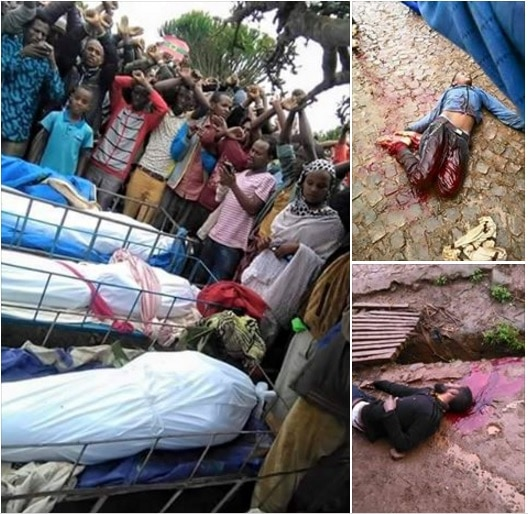
“Mobile data will be permitted once the government assesses that it won’t threaten the implementation of the state of emergency,” government spokesman Getachew Reda – who has since been replaced – told a 26 October press conference in Addis Ababa.

Security forces
James Jeffrey/IRIN
Security forces ready to crackdown

The Oromo are the country’s largest ethnic group, constituting 35 percent of the country’s nearly 100 million population. They have historically felt ignored by successive regimes in Addis Ababa. In August, similar grassroots protest broke out among the Amhara, Ethiopia’s second largest ethnic group. The ruling EPRDF is portrayed by opponents as a narrow, unrepresentative clique that refuses to share power.

Ethiopia is not alone in its approach to political unrest. Around the world, as countries become increasingly integrated with online technology, the more autocratic governments are blocking the internet whenever they deem it necessary.

“The trend appears to be growing because more people are going online and using the internet, often through the use of mobile connections,” said Deji Olukotun of Access Now, which campaigns for digital rights. In 2016, it documented 50 shutdowns, up from less than 20 in 2015.

“People are enjoying the freedom and opportunity that the internet provides, which enables them to organise themselves and advocate for what they want,” Olukotun told IRIN. “In response, governments are shutting down the net to stop this practice.”

Bad timing

An aid worker, who didn’t want to be identified as her agency needs to renew its government permit, explained how she relies on Skype to communicate with far-flung colleagues.

“Before, it was hard enough, but now Skype is even more unreliable,” she said. “People can’t connect with colleagues in the field; people miss invites to meetings, can’t arrange logistics.”

The squeeze comes at a particularly bad time for Ethiopia, beyond the impact of the protest movement. Ten million people are in need of food aid as a result of drought. The Oromia and Amhara regions, where most of the anti-government unrest is happening, have some of the largest numbers of people requiring assistance.

“Websites like the famine early warning system, FEWSNET, which provides detailed regional analysis and projections on food insecurity, cannot be accessed by most stakeholders,” said an international development official.

“Some modern software systems for things like pharmaceutical supply-chain management are not working to their full capacity – making it harder to accurately track inventory and deliveries.”

Phone
Andrew Heavens/Flickr
Careful what you say

Many humanitarian organisations, including UN agencies, are heavily reliant on cash transfers to government organisations that conduct work on their behalf. They are finding it much harder to account for funds.

Another aid worker, again speaking to IRIN on condition of anonymity due to the sensitivity of operating in Ethiopia, said everything was getting delayed, including the rolling out of new programmes.

“If we can’t email or phone, we can’t find out how money has been spent, and if we can’t account and there’s no transparency, we can’t authorise new spending,” the aid worker said.

Post-truth

The importance of social media to people’s lives in Ethiopia is magnified because they so distrust mainstream media, largely controlled by the EPRDF.

“Many Ethiopians are fed up with local and state media and so they turn to diaspora news,” said Lidetu Ayele, founder of the opposition Ethiopia Democratic Party. “The problem is, a lot of things they’d view as gossip if heard by mouth, when they read about it on social media, they take as fact.”

The worst disaster during Ethiopia’s protests occurred at the beginning of October. After police and protesters clashed at a traditional Oromo festival beside a holy lake, a stampede ensued that left about 100 people drowned or crushed to death.

Social media didn’t hang around. It pulsed with claims a circling government helicopter had fired down into panicking crowds.

“My brother was telling me on the phone he was about to protest, and asking me how I couldn’t after the government had done something like that,” an Addis Ababa resident, who is half Oromo and half Amhara, recalled about the days following the stampede. “But I said to him, ‘Don’t be an idiot, it isn’t true.’”

Witnesses and journalists at the event had confirmed that the circling helicopter was in fact innocently dropping leaflets saying “Happy Irreecha”, the name of the festival.

Loading aid
James Jeffrey/IRIN
Unintended consequences

Policy backfire?

Even before the state of emergency, Ethiopia was one of the most censored countries in the world and a top jailer of journalists, according to the Committee to Protect Journalists.

Independent media does exist in Ethiopia, but it struggles. Last month, the Addis Standard, a well-respected private magazine, announced it was stopping its print edition due to the latest round of restrictions.

“The government has created this problem for themselves,” remarked a freelance Ethiopian journalist.

The Ethiopian diaspora in the United States maintains a strong cyber presence and is rallying to the political reform movement. Jawar Mohammed, a particularly prominent US-based social media activist, has 500,000 followers on Facebook, and broadcasts information and footage from protests demanding an end to EPRDF rule.

“The diaspora do amplify what’s happening, but it didn’t start with us,” Jawar said in an interview earlier in 2016.

Internet shutdowns between mid-2015 and mid-2016 have lost the Ethiopian economy about $9 million, according to a recent report by the US-based Center for Technology Innovation at the Brookings Institution.

“Internet disruption slows growth, costs governments tax revenue, weakens innovation, and undermines consumer and business confidence in a country’s economy,” said report author Darrell West, vice president and director of governance studies at the Brookings Institution.

“As internet-powered businesses and transactions continue to grow to represent an increasingly significant portion of global economic activity, the damage from connectivity disruptions will become more severe.”

Olukotun of Access Now said such blackouts were particularly damaging for developing countries “striving to embrace the digital economy and innovation”.

“We’ve seen juice sellers, online banks, courier services, and internet companies all lose drastic amounts of money during disruptions,” he said.

But for the ruling party in Ethiopia, a country that has known centralised authoritarian rule for millennia, the concept of ceding any of that control is anathema.

“Censoring the internet is not a solution to the protests or resistance,” said Karanja, the Kenyan researcher. “It is a blockage to the democratic trajectory of a country.”

Oromia: Two very popular Oromo music artists, Teferi Mekonen and Nafisaa Abdulhakim have been kidnapped by fascist Ethiopia’s regime forces and are being tortured November 16, 2016

Posted by OromianEconomist in Uncategorized.
Tags: , , , , , , , , , , ,
add a comment

Odaa OromooOromianEconomist

Free our lovely singer artists. Free Teferi Mekonen. Free Nafisaa Abdulhakim.

polular-oromo-artist-singer-teferi-mekonenvery-popular-oromo-cultural-music-artist-nafisaa-abddulhakim


Artist Teferi Mekonen was kidnaped  on 15 November 2016. Since then his where about is unknown.

Wallisaa jalatama fi kabajama kan tahe Tafari Mokonnin guyyaa har’a, Sadasaa 15 bara 2016 humnaa nama nyaata wayyaaneettin ukkafamun isaa beekame.


polular-oromo-artist-singer-teferi-mekonen


https://www.youtube.com/watch?v=knDBBMtRwCA

https://www.youtube.com/watch?v=Bmsik2r0s3g


Artist Nafisaa Abdulhakim was bitten and arrested  on 12 November 2016 from her home in midnight in Burayyuu town, Oromia. She is being tortured at the hands of cruel fascist Ethiopia’s TPLF Agazi forces. Both Artist Teferi Mekonen and Nafisaa Abdulhakim are open to the same dangers as other Oromo nationals in TPLF’s  torture chambers.

Wallistuun Oromoo   jallatamtuu fi beekamtuunNafiisaa Abdulhakiim humnoota tikaa fashistii wayyaaneetiin ukkaamfamte. Mana jireenyaa ishii Buraayuu irraa  Sadaasa 12 bara 2016 butanii wayita ammaa mana hidhaa hinbeekamne keessatti hiraarfamaa jirti.


very-popular-oromo-cultural-music-artist-nafisaa-abddulhakim

https://www.youtube.com/watch?v=VSEQXpZNHSA

https://www.youtube.com/watch?v=fVvMJOOAHx8

http://www.oromp3.com/component/allvideoshare/video/nafisa-abdulhakim-mimmieessituu-jaalalaa-new2015-oromo-music


Genocide in the making in Oromia

As Atrocity Crimes Rise in Oromia, Security Assistance and Aid Keep Flowing to Ethiopia

The Oromo in Egypt: Why Have 11,000 Ethiopians Fled Their Homeland? November 15, 2016

Posted by OromianEconomist in #OromoProtests.
Tags: , , , , , , , ,
add a comment

Odaa OromooOromianEconomist

The Oromo are the single largest ethno-national group in northeast Africa. In Ethiopia, they are estimated to comprise 50 million out of the country’s total population of 100 million.

Although the Oromo group is the largest among the country’s 80 ethno-national groups, it is the most oppressed group in Ethiopia and is subjected to torture and arrests from the government for demanding their rights.

“You’ll be oppressed just for being an Oromo; I was a teacher and I was telling students how to protest peacefully against what our territory is facing and the violations the government made,” Boushra told Egyptian Streets.


The Oromo in Egypt: Why Have 11,000 Ethiopians Fled Their Homeland?

NADA NADER, Egyptian Street,  
 
Students watch a movie being projected in the playground
Students watch a movie being projected in the playground of the African Hope Learning Center. Photo: Marwa Abdallah

A couple of weeks ago, a video that made the rounds on social media showed an Egyptian man chanting during an Oromo conference in Egypt that the Oromo will get their rights and come to power in Ethiopia.

The video resulted in minor disturbances in the otherwise stable Egyptian-Ethiopian relations for a few days, with a spokesman from the Ethiopian government accusing “elements” in Egypt of financing, arming and training armed groups in Ethiopia to undermine the government.
Egyptian authorities swiftly denied all such accusations, reiterating its full support and respect of Ethiopia’s sovereignty.
Although the rift was short-lived and has since been forgotten, it is a fact that the presence of the Oromo people in Egypt has been increasing as of late.

The Oromo are the single largest ethno-national group in northeast Africa. In Ethiopia, they are estimated to comprise 50 million out of the country’s total population of 100 million.

Although the Oromo group is the largest among the country’s 80 ethno-national groups, it is the most oppressed group in Ethiopia and is subjected to torture and arrests from the government for demanding their rights.

Among the Oromo community, the majority is Muslim but there are also Christians and individuals of other religions living together in harmony without any discrimination within Oromia territory.

Since the Ethiopian government decided to implement the so-called “Integrated Addis Ababa Master Plan” to expand the Ethiopian capital, which is classified as one of the capital cities witnessing the greatest growth, it started dislocating the Oromo people from their farms without giving proper compensations.

Oromo demonstrations surfaced in Ginchi – about 80 kilometers southwest of the capital – in November 2015, with the Oromo protesting against the selling of the nearby Chilimongo forest, land seizures and the ongoing evictions of Oromo farmers.

Human Rights Watch accused Ethiopian security forces of killing 400 people during the protests. The chaos from the protests resulted in the imposition of martial law in the country, which remains under effect until this moment.

Last August, the Oromo and Amhara groups – which, together, form 80% of Ethiopia’s population – protested against the government for marginalizing the two groups, depriving them of their rights and barring them from holding top positions in the country.

Clashes during the protest resulted in the death of seven protestors who were calling for the release of political prisoners, freedom of expression and an end to human rights violations.

The Ethiopian authorities’ violations against the Oromo people have pushed many of the latter to flee the country, with some of them seeking refuge in Egypt.

According to the United Nations High Commissioner for Refugees (UNHCR) in Egypt, there were 11,192 Ethiopian asylum seekers in Egypt as of September. The number increased noticeably after the clashes between the Oromo and the Ethiopian authorities.

“Of course there’s a significant increase in numbers of Ethiopian refugees,” Tarek Argaz, a media official at UNHCR, told Egyptian Streets. “Since a year and a half, the number of asylum seekers was around 5,000.”

“The reason behind the increased flow of Ethiopian refugees to Egypt is that the Ethiopian authorities can’t arrest us here,” said 25-year-old Abdi Boushra, Director of the Oromo Volunteering Association School in the upscale Cairo neighborhood of Maadi.

Boushra says he fled Ethiopia after being detained for a year after being accused of being a member of the Oromo Liberation Front, an armed group that is outlawed by the Ethiopian government.

“You’ll be oppressed just for being an Oromo; I was a teacher and I was telling students how to protest peacefully against what our territory is facing and the violations the government made,” Boushra told Egyptian Streets.

“I got arrested for a year. Then I fled from Ethiopia to Sudan. I’m like many people who fled from Sudan to Egypt by smugglers through the desert. We paid around USD 300 to reach Egypt.”

Boushra says he spent three months in Sudan but described his time there as a “nightmare,” saying that Sudanese authorities extradite asylum seekers back to Ethiopia.

“If we went there, we will be killed,” Boushra says. “We never imagined to live in Egypt before because of the different culture and language but we come here to feel safe.”

Ashraf Melad, a lawyer and researcher on refugee affairs, described the legal situation of Ethiopian refugees in Egypt.

“The 2014 Egyptian constitution insisted to protect any asylum seeker but there’s no refugee law in Egypt. Egypt is only permitting asylum seekers to live on its land,” Melad told Egyptian Streets. “In case of committing crimes, the Minister of Foreign Affairs alerts the country of the asylum seeker who committed the crime.

“In [Sudan’s case], there’s an implicit convention between the Sudanese and Ethiopian governments of extraditing Ethiopian opposition and asylum seekers. It’s a deal which had no place in Egyptian-Ethiopian relations,” Melad added.

“The UNHCR is keen on giving each refugee his right and make sure that he deserves our help. We decreased the period for discussing the papers of people who seek asylum after they got the yellow card to live legally in Egypt from 28 months to 16 months to accept him as a refugee or not,” UNHCR’s Argaz said. “I consider this as an achievement because we have an increasing flow and a limited budget.”

Noura Mohamed, a house maid who fled from the conflict in Oromia with her 14-year-old son, resorted to smugglers to help her make her way to Egypt through Sudan, like many other Ethiopians fleeing their country.

“The [situation] in Oromia was unbearable. The security comes to arrest you in your home just for being Oromo,” Mohamed told Egyptian Streets. “The government killed my father during clashes.”

Mohamed says that, after working as a maid in Kuwait, she returned to Ethiopia, where she and her husband were detained for demonstrating “and for being an Oromo citizen in the first place.”

Mohamed was released after three months, while her husband is currently still in prison in Ethiopia.

“I wanted to bring up my only son, so I decided to flee no matter what will happen; there’s nothing worse than what we experienced,” Mohamed says.

However, she says that she is struggling in Egypt, where her monthly salary is EGP 1,500 but her rent is EGP 1,000 per month.

“The UNHCR gives me EGP 1,050 in annual expenses for my son but of course this isn’t enough,” she says.

To add to Mohamed’s woes, schools are not accessible to many asylum seekers in Egypt, making it difficult for her to secure an education for her son.

“Asylum seekers have no right to [enroll] their children in Egyptian schools; there are schools for refugees but we noticed that many Oromo children evade these schools because they’re irrelevant to their identity and language,” Boushra says.

In an attempt to address this issue, Boushra says that the community decided to establish a school to teach Oromo children the Oromo language, as well as English, Arabic and other subjects such as math and science.

“We are working in the school as volunteers and there are no fees for children,” Boushra says, adding that the school currently has 150 students but remains free of the supervision of any educational authority.

The school was established in hopes of helping the Oromo people in Egypt maintain their identity as they work to integrate themselves into the society as a whole.

While a number of Ethiopian refugees say they don’t face racism or ethnic discrimination in Egypt, seeking refuge in Egypt is not without its challenges.

Everyday, many refugees who enter Egypt illegally gather in front of the UNHCR headquarters in the 6th of October satellite city, waiting for their turn to be accepted as asylum seekers and begin integrating themselves in Egyptian society.

Olympics dissident: Ethiopia could ‘become another Libya’ November 15, 2016

Posted by OromianEconomist in #OromoProtests.
Tags: , , , , , , , , ,
add a comment

Odaa Oromoooromianeconomist

Olympics dissident: Ethiopia could ‘become another Libya’

EXCLUSIVE/ Ethiopia – one of the EU’s largest recipients of development aid and a key partner in the new Emergency Trust Fund for Africa for halting the flow of migrants – garnered unwelcome headlines last summer, when Olympic athlete Feyisa Lilesa raised his arms in protest at the treatment of the Oromia and Amhara peoples.

He talked to EurActiv.com’s development correspondent, Matthew Tempest.

Since then, the government has declared a state of emergency, as – according to Human Rights Watch and Amnesty International – at least 500 people have died at the hands of the security services.

Interview by EurActiv last month, the Ethiopian Ambassador to the EU refused to put an official figure on the death toll. But speaking to EurActiv today, Feyisa said that the real death toll was over 1,000 and his home country – from which he is now about to seek political asylum – could end up in a Libya-style civil war.

[This interview was conducted via a translator]

When I spoke to the Ethiopian ambassador to the EU last month, he made a public assurance that you and your family would be safe. Do you trust that?

This is what they always say. I might be killed or imprisoned if I return home.

ETHIOPIAN AMBASSADOR: ‘ANTI-PEACE ELEMENTS’ TOOK ADVANTAGE OF OROMIA, AMHARA PROTESTS

Ethiopia is a secure, stable country in the Horn of Africa, says Ethiopia’s Ambassador to the EU, Teshome Toga. However, he admits “gaps” in governance have fuelled year-long protests that have left hundreds dead.

EurActiv.com

The symbol that the TV cameras at the Olympics caught you doing with your arms in Rio, is that supposed to symbolise the ‘X’ of a voting ballot paper? Because Ethiopia is, at least technically, a democracy.

No. It is a sign my people make above their heads to show the police they are unarmed. If we had our hands in our pockets, we might be shot. It is to show our protests are unarmed and peaceful, and to represent the fact that we are all in a prison [Ethiopia].

And why are you here today in Brussels?

To meet with MEPs from the European Parliament to discuss our situation in Ethiopia, and with the head of cabinet for the Parliament President. It was very successful.

And what is your personal situation at the moment?

I have not sought political asylum yet. I have been in the USA long-term since two weeks after the Rio Olympics.

Have your family and relatives back in Ethiopia had any threats from the authorities there?

I am very, very concernced about my family. We live around 60 miles from Addis Ababa, west of the capital, in the Oromia region.

They might attack us in different ways, indirectly. Only 1% of my family actually have jobs. Yet the wife of my brother, who is a journalist, was fired from her job two weeks ago. With no reason given.

They are advancing on us with other measures.

The crux of the issue in Ethiopia seems to be that whilst it is a democracy in theory, the Tigray people have disproportionate power as opposed to the Omoria and Amhara peoples?

Yes – as you say, it is a “democracy”. But the key government and military and defence and police and economic positions are dominated by them [the Tigray].

‘STATE OF EMERGENCY’ DECLARED IN ETHIOPIA AS PROTEST DEATH TOLL RISES

The Ethiopian government on Sunday (10 October) declared a state of emergency, following a year-long spate of unrest which spiked in a week of deaths and attacks on buildings and foreign companies.

EurActiv.com

Based on what you hear from people on the ground, what do you think the death toll from protests over the last year to 18 months would be?

Oromia is a very large region – probably as big as two or three European countries. It has no big road network and very little infrastructure, so it is difficult to get numbers.

But I would say 500 is a very, very small estimate. I would say it is at least 1,000.

And as a voice and a face of the Oromia people now, what would your ideal solution be to the question of representation?

The demand from the public is really not all that complicated at all. It is a demand for equality, for basic human rights, and for an equal share of resources.

And are you optimistic that can happen without further bloodshed?

I am concerned. It is very difficult to be optimistic. At the beginning of the protests [in late 2015], for the first week or two, I was optimistic. But the government crackdown soon came, and this situation has continued.

Ethiopia could become like Libya.

Is that your worst nightmare?

I am very much concerned at this kind of conflict could emerge because they [the authorities] are trying to create tensions between the Amhara and Tigray and others, and because of that, things could get worse in the region.

All though my school life, we had this. In Grade 9, three of my friends were killed by the regime. It continued in 2014. The epicentre was to the west of Addis Ababa. There were other major incidents, killing, repression, and exile.

Repression in the past year was very intensive, even as I was training [for the Olympics]. I have no other job, I was just training. Three months before Rio, they asked me to participate [in the Olympic team], and it was at that point I decided to make my gesture.

And what is your life like currently?

I am now in Arizona. I have permission to stay in the US. Running is my job, and it is my survival. I had much help from the Ethiopian diaspora of exiles, with people helping to facilitate my visa, and fundraising there for me.

FURTHER READING

The Ethiopian embassy to the EU offered an official response to this interview, which EurActiv.com is happy to publish (15/11/2016):

Though Feyisa Lilesa has the right to share his opinion about the situation in Ethiopia, it is important to give a nuanced view of the reality in the country.

The exact number of demonstrators who died during the protests is still investigated by the Ethiopian Human Rights Commission (EHRC). A previous report by EHRC in June 2016 on the unrests that started in November 2015 established that the measures taken by the defense forces and the federal police in collaboration with the public to control the situation were proportionate, though in some specific cases security forces used excessive force to control the violence. According to this report, 173 people died including 14 members of the security forces and another 14 public administrators. Following this report, the Ethiopian Prime Minister H.E. Hailemariam Desalegn has shared the regrets of the government for the avoidable deaths which occurred despite the professional conduct of security forces.

Furthermore, the claim that the Ethiopian authorities are «trying to create tensions between the Amhara and Tigray» is not grounded in reality. Each region is self-administrated, and the national Parliament, the government cabinets and other institutions are representing the different peoples according to their size.  With more than 80 ethnic groups in the country, the authorities have no better option than insuring peaceful coexistence between the different communities and exercising democracy, which has yet a very young history in the country − merely 25 years.

Finally, Feyisa Lilesa is implying that Ethiopia could become «another Libya», probably thereby meaning that the country could fall into chaos and instability. This might in fact precisely be the agenda of extreme anti-peace forces trying to divide the country and take advantage of a situation of chaos which would suit their hidden agendas. Widespread attacks encouraged by some extreme diaspora elements targeting public and private properties, including several foreign investments providing thousands of jobs to local communities testify of this agenda of destruction and chaos. However, the government is fully committed to restore order in the country for the benefit of the citizens and development of the country. The Prime Minister has, in accordance with the Constitution and with the approval of the House of People’s Representatives, announced a State of Emergency beginning of October. Since then, peace and order have been restored throughout the country, and some of the measures have been eased in the meantime, including lifting of travel restrictions for diplomats.

It is to be hoped that the commitment of the authorities and the public will further improve the situation in the country. However, unbalanced and biased comments in the media such as this interview are not helping to advance in this direction.


Oromia: OBS TV Journalist Abdi Gada arrested for broadcasting Oromo cultural news November 15, 2016

Posted by OromianEconomist in The Tyranny of TPLF Ethiopia.
Tags: , , , , , , , ,
add a comment

 Odaa OromoooromianeconomistHRW Media

OBS TV Journalist Abdi Gada arrested for broadcasting Oromo cultural news


Oromo Broadcast Service (OBS) TV journalist Abdi Gada  arrested in Ethiopia. OBS TV is not even a news media, it is rather a history or discovery news channel. The TV never got involved into #OromoProtests. The broadcasting is based on images  from Oromo cultural ceremonies, Oromo history with elders interviews, etc


OBS-Oromia Broadcast Service Television journalist Abdi Gada went missing in Adama, Oromia (Ethiopia) last Wednesday. His whereabouts is not known yet.

An Oromo, Ethiopian journalist missed in Adama/Gazexeessaa Abdii Gadaa achi buuteen dhabame.

 abdii-gadaa
Journalist Abdi Gada

An Oromo, Ethiopian journalist is missing in Adama. OBS-Oromia Broadcast Service Television journalist Abdi Gada went missing in Adama, Ethiopia last Wednesday. His whereabouts is not known yet. His family, friends and colleagues have been looking for him in all areas of detainees and prisoners including Ma’ikelawi, and Zeway (Batu). Many of his family, friends and colleagues believe that Journalist Abdi Gada was kidnapped by Ethiopian security forces because thousands of Oromo people are missing and have been arrested in Ethiopia. Journalist Abdi Gada was one among 20 Oromo (Ethiopian) journalists who were dismissed from the Oromia Radio and Television Organization in 2014, in a single day.——————————-


Gaazeexeessaan  TV OBS-Oromia Broadcast Service, AbdiGadaaRoobiidarbiteAdaamattihojiidhaquufakkamanaabahettiachibuuteenisaadhabameera.  Gaazexeessaankun, bara 2014 keessagaazexeessitootaOromoo 17 dhaabbataRaadiyoo fi TV Oromiyaakeessaasababatokkomalee ari’aman keessaa tokkoakka ta’eefi, saaniinbooda TV OBS keessa kan hojjataajiruudha.

Namoonni itti dhiheennaan gaazexeessaa Abdii Gadaa beekanu akka jedhanitti, “haaluma yeroo ammaa Oromoo irratti raawwamaa jirutti isarrattille raawwatame jennee shakkina malee, Abdiin waan balleesseefi yakki inni hojjate hin jiruu; diina biraa itti shakkinulle hin qabnu” jechuun himan. Gabaasa guutuuf oduu OMN 14.11.2016 caqasaa.

https://www.oromiamedia.org/2016/11/15/omn-oduu-sad-14-2016/

As Atrocity Crimes Rise in Oromia, Security Assistance and Aid Keep Flowing to Ethiopia November 15, 2016

Posted by OromianEconomist in #OromoProtests.
Tags: , , , , , , ,
1 comment so far

 Odaa OromooOromianEconomistoromoprotests-started-in-gincii-ginchi-oromia-on-12-november-2015-and-continues-oromorevolution


As Atrocity Crimes Rise in Oromia, Security Assistance and Aid Keep Flowing to Ethiopia

aid-to-ethiopia-overlooks-genocide-going-on-in-oromia-ethiopia-oakland-institute-oromoprotests

 un-copyfascist-ethiopias-regime-forces-are-conducting-rape-and-mass-killings

(Oromo Press, 14 April 2016 ) — In Oromia, Ethiopia, and in the Diasporas where significant numbers of Oromo people live, the first year anniversary of the Oromo mass uprising against the repressive policies of the Ethiopian regime is being observed worldwide this month.

The anniversary is being observed with mixed feelings and outcomes: with jubilation that the Oromo struggle for self-government has reached a critical mass effectively crippling the colonial civilian administration of the Tigrean-led Ethiopian regime in Oromia; with dismay at the failure of the international community to take meaningful action against the regime that has killed over 2500, maimed tens of thousands and imprisoned and tortured hundreds of thousands of civilians in Oromia alone.

All who observe the tragic developments in Oromia and Ethiopia know that major donor governments to Ethiopia such as the US, EU, England and Canada along with international financial institutions such as the World Bank and IMF have remained dangerously silent on the wide-ranging atrocity crimes the Ethiopian government has been committing against civilian populations in Oromia and other regions of Ethiopia.

The international community is failing once again in Oromia, Ethiopia in stopping crimes against humanity and genocide despite providing a whopping USD 3.5B a year to the Tigrean-led Ethiopian government in “development aid.”

According to a report by The Oakland Institute, a US-based public policy think tank that has produced several credible reports on massive violations of land rights in Ethiopia, development aid makes up 50-60 percent of the national budget. Instead of improving the human condition, aid has been unquestionably used by the Ethiopian government to implement contested and malicious programs aimed at enriching the ruling elites at the expense of impoverishing and dislocating millions of farmers from their ancestral lands.

In Oromia, and dozens of cities around the world Oromo communities staged protests against the mass killings and the massive abuses in their homeland all year round. They marched in front government offices in Washington, London, Ottawa, Brussels, among other cities, demanding donors to end supporting repressive Ethiopian regime and urging intervention to stop the carnage.

Despite these recurrent and desperate pleas, all the protesters have received from the US, UK, Canada, and the EU has been lukewarm press releases and expressions of concern. The protesters wanted donors to intervene in stopping mass atrocities by withdrawing aid and by imposing other sanctions against the the leadership of the regime. To their disappointment and frustration, foreign aid/security assistance to the Ethiopian government have actually increased simultaneously with massive repressive measures by the Ethiopian government, including mass killings during the Grand Oromo Protests of August 6th and the Irreecha Massacre of October 2, 2016 and the declaration of state emergency on October 9th justify military rule through “Command Posts.”

After the state of emergency, state-led mass atrocities continued in the dark because the regime fully disrupted all means of communication, including the internet, social media applications and diaspora based radio and satellite television broadcasts.

Tepid and misconstrued statements from the US State Department, the African Union, and the European Union, which contained no action or even a threat of meaningful action against the genocidal behaviors of the Ethiopian government, have at best signaled to the regime that donor inaction meant approval to the regime to proceed with violent measures against defenseless civilians.

A quick review of US security assistance to Ethiopia between April 2014 and November 2016 (periods of intense mass uprising in Oromia) shows that aid increased as state-led atrocity crimes increased there. According to Security Assistance Monitor, a Washington DC-based policy group that “tracks and analyzes U.S. security sector assistance programs worldwide,” Ethiopia received funds in the following areas and amounts: “Military & Police Aid $1,270,000(2016); Humanitarian & Development Aid $402,613,000(2016); Arms Sales $5,763,335(2014); Trainees 49 (2014).”

Data shows that US military and police aid to Ethiopia spiked from $1.5M in 2014 to $25M in 2015. This declined back to slightly over 1.5M in 2016.

The popular expectation is that donor countries and financial institutions would stop security assistance and development funds to Ethiopia at this juncture when the Ethiopian regime is engaged in massive atrocity crimes in Oromia and Ethiopia. The tragic reality is that aid money continues to flow into Ethiopia despite massive totalitarian repressions.

Donor countries and major international financial institutions are among international actors with significant leverage in their hands—aid—to demand the respect for human rights and end to genocide, and to create a new broad-based inclusive and democratic order in Ethiopia. Donors have been reluctant in using this leverage.

Generating further instability and uncertainty, donors have so far failed in their responsibility to protect majority civilian populations from atrocity crimes by an ethnic-extremist minority regime. If this trend of inaction continues, donor countries would be one of the biggest losers because they have effectively alienated the majority by enabling minority totalitarianism over them.

The Oromo and other persecuted peoples of Oromia-Ethiopia should organize and form strategic alliances not only to reverse the ongoing genocide, but also to prove to the world that a determined and organized majority shall win and install a just and democratic order worthy of international support.

Oromia (Ethiopia): Bishoftu Massacre: #IrreechaMassacre: The day that changed the game November 10, 2016

Posted by OromianEconomist in #OromoProtests, Irreecha, Irreecha Birraa.
Tags: , , , , , , , , ,
add a comment

Odaa Oromoooromianeconomistirreecha-malkaa-birraa-2016-at-horaa-harsadii-bishoftuu-oromia-oromo-people-with-oromo-flag-2nd-october-2016oromoprotests-gesture-at-irreecha-2016-the-thanksgiving-festival-of-the-oromo-people-in-horaa-harsadii-bishoftu-town-oromia-p2


remember-irreechamassacrebishoftu-mascare-2nd-october-2016-fascist-ethiopias-regime-tplf-conducted-masskillings-against-oromo-people-at-irreecha-celebration

#OromoProtests image, Addis Standard

Addis-standard-special-edition-on-irreechaa-massacre-oct-2-2016

P. 5 – #IrreechaMassacre: The day that changed the game (By Addis Standard staffs)

“I saw people who had fallen inside ditches and deeper pits. I saw people who had no one to pick them up. I saw people suffocated by the smoke of the tear gas”

P.8 – A survivor’s account (By Bekel Atoma Boruu)

“Those who ran to save their lives from the teargas bombs and the gun shots pulled themselves and one another to the nearby 6 meters long ditch in front of the podium. The tear gas bomb thrown at the mass increased the number of people running to the ditch not seeing what is in front of them; besides they were blinded by the heavy smoke from tear gas”

P.10 – Irreecha is sacred! We cannot let them take it away (By Ayantu Ayana)

“I keep asking myself how dare they kill on sacred grounds and on a sacred day. How dare they? All those people muddied and bloodied in their beautiful and colorful clothes. All those lives lost. Should mourning be all we do these days? “

P. 13 – Into the heart of Irreecha: Why is it so important to the Oromo? (Buli Edjeta Jobir, Guest Writer)

“An amazing part of the Irreecha ceremony is its absolute orderliness, the reigning of absolute peaceful aura, the showering of love and mutual respect, the sense of oneness and unity. In all the Irreecha ceremonies recorded over the last two decades, after its first rejuvenation, there has never been a single stampede or injury recorded.”

P. 17 – Irreecha: A defining moment in a hallowed land (By Prof. Ezekiel Gebissa, Special to Addis Standard)

“In 2016, it was clear that the largest gathering of Oromos from Oromia’s all corners would be a scene of expression of anger in the wake of the government’s brutal crackdown of Oromo protests during the preceding ten months.

AI: Ethiopia: After a year of protests, time to address grave human rights concerns November 10, 2016

Posted by OromianEconomist in #OromoProtests.
Tags: , , , , , , ,
8 comments

Odaa Oromoooromianeconomistoromoprotests-one-year-on-struggle-november-2015-2016orompoprotests-picture-from-the-economist-13-october-2016

Ethiopia: After a year of protests, time to address grave human rights concerns

Amnesty International, 9 November 2016


Nearly one year on from the start of a wave of protests that has left at least 800 people dead at the hands of security forces, the Ethiopian government must take concrete steps to address grave human rights concerns in the country, Amnesty International said today.

The protests began in the central Oromia region on 12 November 2015, in opposition to the Addis Ababa Masterplan, a government plan to extend the capital Addis Ababa’s administrative control into parts of the Oromia.


A year after these deadly protests began, tensions in Ethiopia remain high and the human rights situation dire
Michelle Kagari, Amnesty International’s Deputy Regional Director for East Africa, the Horn and the Great Lakes

“A year after these deadly protests began, tensions in Ethiopia remain high and the human rights situation dire, with mass arrests internet shutdowns and sporadic clashes between the security forces and local communities, especially in the north of the country,” said Michelle Kagari, Amnesty International’s Deputy Regional Director for East Africa, the Horn and the Great Lakes.

“It’s high time the Ethiopian authorities stopped paying lip service to reform and instead took concrete steps to embrace it, including by releasing the myriad political prisoners it is holding merely for expressing their opinions. They should also repeal the repressive laws that imprisoned them in the first place, including the draconian Anti-Terrorism Proclamation that has also contributed to the unrest.”

Even after the Addis Ababa Masterplan was scrapped in January 2016, protests continued with demonstrators demanding an end to human rights violations, ethnic marginalization and the continued detention of Oromo leaders.

The protests later expanded into the Amhara region with demands for an end to arbitrary arrests and ethnic marginalization. They were triggered by attempts by the security forces to arrest Colonel Demeka Zewdu, one of the leaders of the Wolqait Identity and Self-Determination Committee, on alleged terrorism offences. Wolqait, an administrative district in the Tigray region, has been campaigning for reintegration into the Amhara region, to which it belonged until 1991.

Just as in Oromia, security forces responded with excessive and lethal force in their efforts to quell the protests. Amnesty International estimates that at least 800 people have been killed since the protests began, most of them in the two regions.

The Ethiopian government’s heavy-handed response to largely peaceful protests started a vicious cycle of protests and totally avoidable bloodshed. If it does not address the protesters’ grievances, we are concerned that it is only a matter of time before another round of unrest erupts
Michelle Kagari, Amnesty International’s Deputy Regional Director for East Africa, the Horn and the Great Lakes

One of the worst single incidents took place on 2 October 2016 when at least 55 people were trampled to death in a stampede during the Oromo religious festival of Irrecha, held in the town of Bishoftu, about 45 kilometres southeast of Addis Ababa. Oromo activists blamed the stampede on the security forces who they said fired live rounds and tear gas into the crowd causing a panic. The authorities deny any wrongdoing.

No protests have been observed since a state of emergency was declared on 9 October, but this has come at the steep price of increased human rights violations, including mass arbitrary arrests and media restrictions, including internet blockages.

“The Ethiopian government’s heavy-handed response to largely peaceful protests started a vicious cycle of protests and totally avoidable bloodshed. If it does not address the protesters’ grievances, we are concerned that it is only a matter of time before another round of unrest erupts,” said Michelle Kagari.

“The restrictive measures imposed as part of the state of emergency only sweeps the underlying issues under the carpet. To fully address the situation, the government must genuinely commit to human rights, including by amending legislation like the anti-terrorism proclamation to bring it fully in line with Ethiopia’s human rights obligations; and ensure its people can enjoy their right to express their opinions including those which criticise government policy and action; and their right to peaceful assembly.”

Background

Ethiopia’s Anti-Terrorism Proclamation of 2009 includes an overly broad and vague definition of terrorist acts and a definition of “encouragement of terrorism” that makes the publication of statements “likely to be understood as encouraging terrorist acts” punishable by 10 to 20 years in prison.

The ruling Ethiopian People’s Revolutionary Democratic Front (EPRDF) has repeatedly promised to undertake fundamental reform in governance, but has shown no overt sign of genuine commitment to reform. It continues to use excessive force against largely peaceful protesters, labelling them as anti-peace forces, instead of acknowledging and addressing their legitimate grievances.

Crossing Arms: The Plight and Protest of the Oromo in Ethiopia November 8, 2016

Posted by OromianEconomist in #OromoProtests, Uncategorized.
Tags: , , , , , ,
7 comments

Odaa Oromoooromianeconomistoromorevolution-oromoprotestsoromoprotests-one-year-on-struggle-november-2015-2016

#OromoProtests against the Ethiopian regime fascist tyranny. Join the peaceful movement for justice, democracy, development and freedom of Oromo and other oppressed people in Ethiopia
Under the false impression that the TPLF/EPRDF are adequately democratic entities, the global community continues to uphold support and offer aid to the government. In the 2015 general elections, the ERPDF won one hundred percent of parliamentary seats. in the previous election the party won 99.6%. Election results like this one reveal that the government is, in all reality, authoritarian, masking their lack of democratic principles with elections as well as the elimination of rivaling civil society groups and independent media.

Crossing Arms: The Plight and Protest of the Oromo in Ethiopia


Equity statement: Accurate information on African politics and culture is extremely difficult to attain. Western countries routinely delegitimize African professionals and news outlets by sharing biased accounts of issues occurring in African countries to African people. I have done my absolute best to adequately research and interview in order to offer the most accurate account of the political situation in Ethiopia and plight of the Oromo people. If you or a loved one is affected by the current situation in Ethiopia or Oromia, and/or you feel that any information is not accurate, please feel free to comment and discuss below.

The Oromo community makes up nearly fourty million people, mainly residing within the borders of Ethiopia. The Horn of Africa, a pastoral hub, is continuously marred by its colonial history; one of the main factors creating ethnic, economic, political, and social instability today. Their colonization and fusion into Ethiopian society disrupted the established and independent, political structure of the Oromos while also placing a massive ethnic group in a subordinate position to two other smaller ethnic groups, the Amhara and Tigray.

The current political group in power, The Ethiopian People’s Revolutionary Democratic Front (EPRDF), is facing scrutiny for its treatment of minority groups. Following the establishment of the 1994 Constitution, after Eretria’s secession and independence, local and international sources began to suspect that the members of the Tigray People’s Liberation Front (TPLF), later reorganizing into the EPRDF, manipulated the country’s constitution for its own aims:
“The TPLF-dominated EPRDF intentionally included Article 39 [The right to secession] in Ethiopia’s 1994 Constitution so that the Tigray region could loot Ethiopia of its resources, use the Ethiopian military to expand the borders of Tigray, and then secede from Ethiopia”.

Under the false impression that the TPLF/EPRDF are adequately democratic entities, the global community continues to uphold support and offer aid to the government. In the 2015 general elections, the ERPDF won one hundred percent of parliamentary seats. in the previous election the party won 99.6%. Election results like this one reveal that the government is, in all reality, authoritarian, masking their lack of democratic principles with elections as well as the elimination of rivaling civil society groups and independent media. Peaceful, anti-government protests erupted across the Amhara and Oromia regions following the election results. Between November 2015 and August 2016, at least 500 protesters were killed by security forces and thousands detained under terrorism charges.

10,000 people march for Oromo demonstration in Seattle Washington.

10,000 people march for Oromo demonstration in Seattle Washington. Credits: https://biturl.io/VRsTq4

Successive government leaders have been cited by Human Rights Watch and Non-Governmental Organizations (NGOs) for human rights abuses as well as non-democratic and severe “iron-fistedness” against dissension; such as, “the Charities and Societies Proclamation of 2008. This restricts Ethiopian non-governmental organizations from embarking on any human rights-related work if they receive their funding from foreign source” according to Adeyinka Makinde of Global Research. The EPRDF has the capacity to stamp down any and all forms of dissension due to its “full control of the security apparatus, the military, the police force and the intelligence services, dominated by ethnic Tigrayans”. EPRDF also legitimizes the use of extreme force under its “vaguely drafted counter-terrorism laws”.

Why Now?

The most recent protests and government crackdown have entered international focus with figures such as Olympic silver-medalist Feyisa Lilesa crossing his arms in solidarity with the Oromo people during the Rio 2016 Olympics.

Feyisa Lilesa crosses his arms in solidarity with the Oromo people when finishing 2nd in the 2016 Rio Olympics Marathon Race. Credits: https://flic.kr/p/LgPMgh

The Oromo people endured oppression for the past century; the question remains as to why, finally, the Oromo peoples’ protests have gained traction.

In an interview with Gemechu Mekonnen, an undergraduate student studying at the University of Minnesota Twin Cities, an Ethiopian, and an Oromo, he explained that the oppression of the Oromo people reached a tipping point around a year ago when the government planned to enact what is coined “The Master Plan” to seize Oromia land. Farmers around the capital would in turn, lose their source of income with little to no compensation while the government sold their property, arguably for some the most fertile land in Africa, to foreign investors such as China.

Man holds sign in protest of Ethiopian government Master Plan to seize Oromo property. https://biturl.io/VRIOf5

Man holds sign in protest of Ethiopian government Master Plan to seize Oromo property. Credits: http://bit.ly/2fqlO5B

The lack of representation, subjugation and oppression of the Oromo group by ethnic groups such as the Ahmara and Tigray resulted in an “unsurprising amount of frustration and resentment”. the Ethiopian government had, “already taken the dignity, voice, and lives of so many, [that] the Oromo people finally said ‘enough is enough’ to the government’s unjust actions”.

Understanding a country’s history and human rights record, while necessary, is not sufficient to comprehend the opinions, needs, and future of an ethnic group. Mekonnen’s insight offers a rare and intimate perspective on the plight of the Oromo people, their tenacity, and their unwavering battle for self-determination:
“The ‘why now’ really comes rooted in many different now. Whether it’s the influence of globalization revealing more of the world to Ethiopians [and to] Oromos, the emboldened and educated students and youth [who] question the status quo, or the blatant lack of respect for the land and life of their people, all these [factors] were important in catalyzing the active voices for change that now exist. The more the government tries to arrest journalist, suppress independent media, and kill opposition leaders, the more the people protest”.

The more pressure the international and domestic community puts on the government, the greater the voice the Oromo people have to advocate or their rights domestically and on a global stage. However, signs of progress are small and incremental. On October 2nd 2016, an estimated 678 civilians were killed and countless injured by government forces in what is now infamously known as The Irreecha Massacre. Nearly two million people from across Oromia assembled to celebrate Irreecha, a festival marking the changing of seasons. Irreecha, for many Oromo, is a setting for “resistance and reaffirmation of identity” where attendees sing revolutionary songs and denounce human rights abuses. Following what the attendees considered a politicization of the festival, an individual openly defied the organizers (who were affiliated with the government) and spoke out against the EPRDF. Security forces responded by firing bullets and tear gas on the unarmed participants. Repeatedly hearing news about the tragic loss of life of his people leaves Mekonnen feeling “a sense of hopelessness”. He describes “a recurring feeling dread, not for what could happen to me, but for what is most likely happening to the family I have in Ethiopia”.

The situation in Ethiopia reaches far beyond its borders. The Oromo peoples’ struggle, while inadequately understood by the rest of the world, is catalyzing what will be true, grass-roots changes. There remains much reform that needs to be done regarding Oromo self-determination and within the Ethiopian government itself, but the process has begun. It is important for the international community to recognize the atrocities occurring within Ethiopia as well as stand in solidarity with the Oromo people and the victims of violence and human rights abuses.

Click here for more information and to donate to The Advocates for Human Rights

One Of The World’s Best Long Distance Runners Is Now Running For His Life November 4, 2016

Posted by OromianEconomist in #OromoProtests.
Tags: , , , , , , , , , ,
7 comments

Odaa OromooOromianEconomistOromo Olympic marathon athlete Fayyisaa Lalisaa on the Guardian. #OrompProtests global icon p1

Oromo Olympian Fayyisaa Leellisaa (Feyisa Lilesa) draws big crowd at his Minneapolis appearance-18 September 2016

Oromo Olympian Fayyisaa Leellisaa (Feyisa Lilesa) draws big crowd at his Minneapolis appearance-18 September 2016

Oromo Olympic marathon athlete Fayyisaa Lalisaa in the social and international media. #OrompProtests global icon. p7


One Of The World’s Best Long Distance Runners Is Now Running For His Life

As marathon runner Feyisa Lilesa crossed the finish line to win the silver medal at the Olympics this summer, he raised his arms over his head in an X to defiantly protest the Ethiopian government’s treatment of his fellow Oromo people. Three months later, unable to go home or see his family, he contemplates the price of being a world-class athlete speaking out.


As 26-year-old Ethiopian Olympic marathoner Feyisa Lilesa neared the finish line at the 2016 Rio Olympics with what would be a blazing time of 2:09:54, fast enough to win a silver medal in the men’s marathon, he felt no sudden wave of euphoria.

Instead, Lilesa took a deep breath and carried out the plan he’d dreamed about from the moment he was selected to compete in Rio: He crossed his arms above his head in an X. Putting them down for a quick moment and raising them again, he held the gesture as he ran through the finish line with his country’s strife running through his head.

“I knew by all accounts I was supposed to feel happiness in that moment, but all I could think about was the people dying back home,” the long-distance runner told me in Amharic when we spoke in Washington, DC, in September.

Lilesa’s gesture was unfamiliar to most international viewers, but Ethiopian audiences around the world recognized it immediately as the sign associated with anti-government protests stemming from Lilesa’s home region of Oromia, which have been growing in breadth and intensity since November 2015. The #OromoProtests contend that the country’s current government represses its largest ethnic population both culturally and economically.

Later, after flowers were placed around his neck at the end of the race, Lilesa prepared to make a second statement — this time at the post-race press conference. Stepping up to the conference-area podium with his official jacket unzipped — to disrupt the block text bearing Ethiopia’s name — he raised his arms once again and crossed his wrists above his head, spotlighting a wristband in Oromo colors: black, white, and red. If the first gesture could have been interpreted as spontaneous, Lilesa used this second one to make evident his long-held plan to speak out.

Feyisa Lilesa crosses the finish line to win silver during the men’s marathon. Matthias Hangst / Getty Images

Despite government spokesman Getachew Reda’s insistence that Lilesa would receive a “hero’s welcome” if he returned to Ethiopia, Lilesa told reporters in Rio he knew he could not go home without either being either jailed or killed for his actions. In fact, subsequent airings of the Olympics in Ethiopia did not show his gesture, and few state-run print publications covered that or even his win — at all.

Lilesa told journalists he’d seen the government’s duplicity with his own eyes: “The state-run Oromia TV posted on Facebook after I won saying, ‘Feyisa Lilesa successfully sent the terrorists’ message to the international community,’ but they immediately took down that message and changed their narrative” to a more positive one echoing spokesman Reda’s statement.

Rule 50 of the Olympic Charter forbids explicit political activity, decreeing that “No kind of demonstration or political, religious, or racial propaganda is permitted in any Olympic sites, venues, or other areas.” But sports — and the Olympics in particular — have long played host to protests both quiet and overt, a stage for the world’s greatest to express both physical rigor and patriotic dissent.

In 1968, American gold and bronze medalists Tommie Smith and John Carlos were sent home from the Summer Olympics in Mexico City and suspended from the US team for raising a fist in the air as they stood on the podium during the national anthem. In the aftermath of the protest, they lost their medals, their reputations, their friends, and in Carlos’s case, a marriage. Lilesa had never heard of John Carlos and Tommie Smith before he protested, and Colin Kaepernick’s national anthem protest had not yet garnered headlines. Becoming a hero or entering historical record was never part of Lilesa’s plan.

But online, Ethiopians around the world were discussing his historic show of solidarity. All over Facebook, Viber, and WhatsApp, Oromo people were changing their avatars to pictures of Lilesa with hands raised and wrists crossed in front of him. At the end of his race, he’d emerged a hero to Oromos everywhere, even with his own future uncertain.

Days later, Lilesa saw rumors on social media that his friend Kebede Fayissa was among the countless dead after a fire — and officers’ bullets — erupted at a prison just outside Addis Ababa. He called home from his Rio hotel; confirmation of the news strengthened his resolve to continue speaking out.

American athletes Tommie Smith (center) and John Carlos (right), protest with the Black Power salute at the Summer Olympic Games, Mexico City, October 1968. John Dominis / Getty Images

For Lilesa, the choice to protest came at tremendous personal cost. His wife and two young children, whom he did not inform of his plan to protest, live in the nation’s capital. He kept the decision from them, afraid they might compel him to change his mind. As an athlete, he supported them and his extended family, living a fairly comfortable life compared with those around him: He had his own house, a car, and an athletic career that had been thriving since he’d won the Dublin Marathon at only 19. Athletes are among the most respected public figures in the country, and remaining publicly apolitical — or even performing gratitude to the Ethiopian Athletics Federation — would have eased Lilesa into a simpler life. But amid the chaos that ensued after his protest, Lilesa lost valuable training time; his diet changed in transit, and the stress of impending exile wore on him.

The resultant series of setbacks will keep him from competing in this year’s New York City Marathon. Afraid to return home amid worsening political unrest, Lilesa is now training in Arizona for April’s London Marathon. Nine thousand miles away from his wife, his children, and the community he holds closest, he contemplates the personal cost of his protest.

To stay silent with the world’s eyes trained on him would have been a wasted opportunity to attract the media and political attention Lilesa believes is necessary to bring about change in Ethiopia. Progress in the region has not been linear, but Lilesa’s actions marked a catalyst: In the months since his protest, Western media coverage of the country’s political affairs has both increased and taken on a more widespread critical lens. “The little happiness I feel now is because I was able to show the world our desire for peace and it’s reached the world’s media,” he said.

But Lilesa himself lives in fear despite being one of the world’s most celebrated and talented elite athletes, the course of his life and career effectively derailed by the decision to speak out. At the apex of his career, one of the best runners in the world is now running for his life.

Feyisa Lilesa, photographed on September 13, 2016. T.J. Kirkpatrick for BuzzFeed News

The Oromo account for almost 40% of Ethiopia’s population — an estimated 39 million people — and a disproportionate amount of the nation’s elite runners. Born in 1990, Feyisa Lilesa grew up in Jaldu, a district in the West Shewa region of Oromia. The child of farmers, he was the second of seven children raised in a farming community about 75 miles west of Addis Ababa. Like many children in the surrounding area, Lilesa grew up thinking of running as a way to get to his classes — or as fellow runner Biruk Regassa told me, “When school is far, everyone is a runner.”

Since November 2015, protests in the region have sprung up in response to what the government called its “Addis Ababa Integrated Regional Development Plan,” or “Master Plan.” The plan outlined the method by which the federal government would integrate the capital city, Addis Ababa, with surrounding towns in Oromia.

“When school is far, everyone is a runner.”

Concerns over the proposed expansion were raised in 2014 by farmers who feared the government’s ongoing takeover of their land would expand under the plan. Uniting under the hashtag #OromoProtests, citizens of the region organized to make their concerns known: The re-zoning plan would constitute an effective government takeover of their land, yet another blow to their autonomy and livelihood after years of ongoing repression.

In January, however, the Ethiopian government announced it would abandon the Master Plan following the deaths of an estimated 140 protesters in clashes with federal security forces. The televised government statement, which has since been removed from the state media where it was originally aired, cited a “lack of transparency” and “huge respect” for the Oromo people as reasons for the decision to scrap the widely opposed plan. But activists — and Lilesa himself — contend the plan was just one flash point in Oromos’ ongoing struggle for equal rights.

The presiding political coalition, the Ethiopian People’s Revolutionary Democratic Front (EPRDF), rose to power in May 1991. Before the May 2015 elections, the EPRDF, led by Prime Minister Hailemariam Desalegn, held all but one seat in the nation’s 546-seat parliament. Amid widespread claims of intimidation and suppression of media, the coalition secured a landslide victory, claiming every single seat. Many opposition leaders contend that the Tigrayan People’s Liberation Front party, which represents Ethiopia’s Tigrayan minority (approximately 6% of the population), holds all the power within the ruling EPRDF coalition — and by extension, within the country. The Oromo People’s Democratic Organization, another one of the EPRDF coalition’s four parties, is viewed by many as a comparatively toothless group.

The Oromos have found an unlikely ally in the Amhara, the nation’s second-largest ethnic group. The Amhara comprise about 27% of the population; together, the groups account for about 62% of Ethiopia’s estimated 100 million people. After over a century of oscillating tensions, the two ethnic groups are coming together to protest what they say is shared repression under a Tigrayan-led government and the #AmharaProtests movementhas been rapidly gaining steam. Many people, Lilesa included, note that the groups’ unprecedented union against the EPRDF could portend “Rwanda-like” ethnic conflict in the country.

Lilesa said he has been bearing witness to ongoing discontent in Oromia since well before this round of protests. Born just a year before the EPRDF came into power, he grew up seeing the repression of his people — so helping protesters came as second nature to him.

“People are being exiled from the place I was born, so I tried to do what little I can to help; sometimes I give them my shoes or a little money,” he said. “But after I started doing that, people told me the government had become suspicious of me. Because I trained in the countryside, I feared they could come at any moment and just snatch me.”

Lilesa during the men’s marathon post-race press conference. Lucy Nicholson / Reuters

It’s part of what made him take his protest to the Olympic stage, pushed by a growing sense that only international intervention would change the situation in Ethiopia for the better. Protesters and opposition forces had been agitating for so long and facing only violence in return because their pleas were not heard by international press, he insisted.

“I would have regretted it for the rest of my life if I didn’t make that gesture,” he said. “I knew that the media would be watching, and the world will finally see and hear the cry of my people.”

“We just want peace, we just want equality,” Lilesa said. “That’s why people are still protesting. Even if [the government] says there is no Master Plan anymore, they are still killing us.”

Human rights organizations estimate state forces have killed over 500 protesters in the last year, with elections taking place against a backdrop of “restrictions on civil society, the media and the political opposition, including excessive use of force against peaceful demonstrators, the disruption of opposition campaigns, and the harassment of election observers from the opposition.”


From the minute Lilesa crossed his wrists as he crossed the finish line in Rio, things moved quickly. He says the moments immediately following his gesture still feel like a blur of cameras and rapid-fire questions from journalists, but he remembers his fellow Ethiopian athletes’ embrace as he left the Olympic Village vividly.

“The athletes cried. They sent me off with tears,” he said. “I’m usually not the kind of person that cries, but they actually made me cry, saying goodbye.”

“The federation officials knew that they would get in trouble if they spoke with me or if they helped me,” he continued. “They gave me some signs and gestures but that was really it because they could not really do much because they presumably had concerns for their safety.”

T-shirts made for Lilesa’s welcoming ceremonyHannah Giorgis / BuzzFeed News

Within hours of his protest, a GoFundMe page to support Lilesa and his family was launched and exceeded both its initial $10,000 goal and the subsequent $40,000 goal. It has since raised a total of over $160,000, much of which has been set aside for Lilesa’s legal expenses. Oromo friends like Bayissa Gemechu, a sports agent who had just left Rio after his wife Tigist Tufa competed in the women’s marathon a week earlier, raced back to his side. By the time Gemechu arrived back in Rio to meet Lilesa, the US embassy had already heard of his case — and made the decision to allow him to apply for a special skills visa into the country from Rio instead of insisting he return to Ethiopia to do so.

Bonnie Holcomb, an American anthropologist who has been closely involved with the Oromo community since living in Oromia during the last years of Emperor Haile Selassie’s reign in the early ’70s, also played an integral role in supporting Lilesa from the US and facilitating his contact with Brazilians who would ensure his safety. Holcomb, the co-author of a book investigating Ethiopia’s political history, reached out to Brazilian friends who helped shepherd Lilesa’s visa application process.

The Brazilian couple contacted their local friends, who then worked quickly to support Lilesa, sending officials from the foreign ministry to take him to the airport and begin his temporary visa application to stay in Brazil. Fearing he would be sought by Ethiopian authorities, Lilesa had left the Olympic Village immediately. Alone in his hotel, he was terrified when the Brazilian officials knocked on his door.

But when the Brazilian officials entered the room, they greeted him with smiles instead of the violence or the detainment he’d feared — and took him for coffee. On the car ride to the airport, he called friends in the US to inform them he was safe. By the time he made it to the US embassy after securing his temporary Brazilian visa, Lilesa was surprised by his newfound celebrity among Brazilians and how excited people were to see his medal.

Fearing he would be sought by Ethiopian authorities, Lilesa had left the Olympic Village immediately.

“People were fascinated and they wanted to touch it and they wanted to look at it,” he said. “There was a moment when everybody stopped working and they were just lining up to look at the medal and that sort of made me realize that this is a big deal.”

Gemechu saw the warm reception firsthand when he walked around Rio with Lilesa: “Most of the time we were outside around the beach, and a lot of people there, they watched [him] on the TV and media, so we had fun. They said ‘Oromo!’” he recalled while raising his hands above his head to replicate the now-famous gesture. Stopping to high-five Lilesa periodically on the street, they heralded him as a champion of resistance whose symbolic act spoke to communities well beyond his own people. This support didn’t make up for being away from his wife and two young children, but it helped sustain him for the long, lonely journey ahead.

Lilesa at a press conference in Washington, DC, on Sept. 13, 2016. T.J. Kirkpatrick for BuzzFeed News

A conference at Washington, DC’s Phoenix Park Hotel on September 13 was an opportunity for Lilesa to keep attention on the issue he’d brought to the world stage at Rio and his second big hurdle after arriving in the United States. Earlier in the day he had held his first news conference outside the US Capitol, where he implored Congress members to intervene on behalf of the Ethiopian people. Congressman Chris Smith later announced the introduction of House Resolution 861, “Supporting respect for human rights and encouraging inclusive governance in Ethiopia.”

Stepping up to the podium, Lilesa immediately thanked the journalists in the DC hotel’s conference room, noting that freedom of speech is not a right he takes lightly. The urgency of the protests had been suppressed by state-run Ethiopian media and largely ignored by the West — until, of course, Lilesa.

“We Oromo have not had access to you in the media,” he told journalists through an interpreter, OPride.com founder and editor Mohammed Ademo. “We have been cut off from you. We have not had a free press in our country.”

Ethiopia has come under fire for restricting journalists’ freedoms in recent years. Ahead of the May 2015 elections, government forces had tamped down on dissidents, most notably charging nine bloggers and journalists with terrorism and arresting eight of them under the guise of the 2009 anti-terrorism law (one member residing in the US was charged in absentia).


Lilesa’s first language, like many other Oromo people, is Afaan Oromo. He speaks Amharic in a soft, self-conscious cadence. Lilesa is at his most vibrant when he speaks in Afaan Oromo, especially with the runners who approached him after the press conference. They came to him with beaming smiles, ushering him into hugs to thank him for his gesture. He was visibly relieved to be alongside people who are almost family. Among them was Demssew Tsega, a marathoner who has been in the US for seven months now. Tsega also testified at the news conference announcing House Resolution 861 on Capitol Hill.

One day last December, Tsega wound up amid a crowd of peaceful protesters on his way home from training for the marathon in Sululta, a city 20 miles north of Addis Ababa. Along with four other athletes, Tsega joined the protest. When government security forces came to apprehend protesters, three runners got away — but Tsega and another teammate didn’t.

“Because I’m a runner and the security forces recognized me since they’d seen me on TV before, they were especially keen on capturing me,” he told me in Amharic in October. “They jailed me for two days and tortured me on my feet so I couldn’t run anymore.”

Lilesa with runners Ketema Amensisa and Demssew Tsega, advocate Obang Metho, and runner Bilisuma Shugi Courtesy of Andrea Barron

Upon his release, Tsega did not seek treatment for his injuries at the local hospital because it’s run by the government.

“I was afraid they would arrest me again if I went to the hospital,” he said. “Before I lived with my family in Addis Ababa, but after [my arrest and torture] I hid in the countryside.”

When the notice that Tsega had met the minimum qualification to compete in the marathon arrived, he was conflicted. With injured feet, he had no hope of racing, and it seemed all his training had been for nothing. But he took the opportunity to secure a visa and came to the United States, knowing it was his only shot at accessing treatment for his injuries and one day racing again.

“They’re still looking for me now,” he said. “[The government] still harasses my father; they took our land.”

Sitting next to Tsega at a downtown Silver Spring restaurant, fellow long distance runner Ketema Amensisa sighs. Before the government took 75% of their land, Amensisa’s family had 20 cows in Gebre Guracha, a central Ethiopian town in the North Shewa region of Oromia. Stripped of their primary means of income, the family of subsistence farmers has been struggling to survive since.

“We miss our country,” Amensisa said. “When we don’t have any other options as a people, we stand beside the government because we fear for our safety if we say otherwise.”

The two runners paused their stories intermittently to check in on Momina Aman, a teammate who arrived later in our conversation. Tsega mentioned repeatedly that he wants to take her to TASSC, the Torture Abolition and Survivors Support Coalition, the organization that’s been helping him access medical care for his foot, immigration support, and psychological care.

“I came to this country because Ethiopia’s government killed my father, stepmother, my sisters, and my brothers.”

“I came to this country because Ethiopia’s government killed my father, stepmother, my sisters, and my brothers,” Aman said through tears. “The rest of my brothers and I were only spared because we were in Addis Ababa.”

“We were in Addis Ababa when we got the call that our family had been killed,” she continued. “Recently another one of my brothers was beaten and left to die by government security forces.”

Aman’s brother was one of the 2 million attendees of this year’s Irreecha celebration the first weekend of October. Irreecha, the annual thanksgiving holiday that marks the shift from Ethiopia’s rainy season to the warmth and bounty of the dry months at the end of September, draws crowds of up to 4 million from across Ethiopia to the town of Bishoftu, about 25 miles southeast of Addis Ababa, to pray and sing alongside the crater lake Hora Arsadi. The festivities are filled with color and calm, an opportunity to reflect on the changing seasons and their attendant harvests.

But this year’s Irreecha took place against the backdrop of heightened police presence in Oromia. State forces encircled festivalgoers, eventually firing a mixture of tear gas and bullets into the crowd after attendees began reciting chants associated with the #OromoProtests movement that has grown in the region in the last year. Some reportsestimate up to 678 people were killed between authorities’ violence and the resultant stampede.

When reports first emerged that the festival had turned violent, Aman stayed up all night trying to call her brother. She reached him in the morning, relieved to hear he was shaken but safe.

The festival’s deadly turn was covered widely in international press, despite the Ethiopian government’s control of state-run media in the country. Questions about Ethiopia’s future as beacon of the once-promising “Africa rising” narrative surfaced again in the West, pointing not only to the massacre but also to the simple gesture that put enough attention on Ethiopia for its people’s suffering to even matter outside the continent.

Immediately after the bloodshed at Irreecha, the government declared a three-day period of mourning. One week later, it announced a six-month “state of emergency,” under which the army was deployed nationwide and access to social media and mobile internet indefinitely suspended. In three weeks, over 2,000 people were detained for participating in anti-government protests, which government officials blamed on “foreign anti-peace forces” from neighboring Eritrea and Egypt.

“They laid their actions bare,” Lilesa said of the state of emergency. “But there’s nothing new here.”

A celebration of Irreecha held in Maryland the morning after the bloodshed in Ethiopia. Hannah Giorgis / BuzzFeed News

Even amid the uncertainty of the government’s state of emergency, Lilesa remains a beacon of hope for runners like Tsega, Amensisa, and Aman — and for Oromo people around the world.

In the time between Lilesa’s protest and his arrival in the US, two more Ethiopian runners had repeated the gesture as they crossed finish lines around the world. On August 29, Ebisa Ejigu won the Quebec City Marathon and followed in Lilesa’s footsteps. On September 11 — Ethiopian New Year — Tamiru Demisse did the same as he claimed the silver medal in the men’s 1,500-meter T-13 race at the Paralympics in Rio.

Even those who have not protested themselves see Lilesa’s actions as a path forward, an opportunity to rally around one another especially as Ethiopia’s government continues its crackdown. It’s an act they see as fundamentally patriotic: If he didn’t love his country, he wouldn’t want it to be better.

For Tsega, Lilesa’s action and the ensuing media attention was a matter of life and death: “I know sports and politics don’t always go together, but when situations are this urgent, it’s something you have to do even if it kills you. Leaving his children, wife, and all his possessions behind, he… I don’t even have the words. He did all that for his country, for his people.”

“I know it was hard to say that,” Amensisa added. “But after Feyisa did it, he opened up a new path for us.”

All of them are hopeful for the potential of Lilesa’s spotlight on the issue to attract more international intervention in the area — especially from the US, long a military ally of Ethiopia. In the weekend following his arrival in the US alone, there were over 60 news stories on Lilesa and the Oromo protests.

Many of them called for the US government to halt aid to Ethiopia until the totalitarian nature of security measures in the country are addressed. Some of the sanctions being sought by the community are reflected in Congressman Smith’s House Resolution 861 and the identical 21-cosponsor Senate resolution introduced in April.

But Lilesa’s impact reverberates far beyond runners’ circles, community events, and the dense Ethiopian population of the DC metro area. As conversations about athletes’ political voices continue to gain steam following Kaepernick’s silent protest of the American national anthem, Lilesa remains a lightning rod for a community divided by both politics and geography.

On Twitter, the hashtag bearing his name is most often used to share updates on news regarding the community at large. Facebook and Viber — when not being axed by the government — remain digital organizing hubs. And on Snapchat, a massively popular channel for Ethiopian and Eritrean youth held a discussion about Oromo politics earlier this month while one of its hosts wore a shirt printed with Lilesa’s name and face.

“How could I feel the same comfort I did before? How could I feel happiness?”

“BunaTime” (taken from the Amharic word for coffee) draws an average of 15,000 views per Snapchat story, and Ethiopian and Eritrean youth from around the diaspora take turns hosting it for several hours at a time. Its attendant Twitter and Instagram channels boast almost 10,000 and 37,000 followers respectively.

The Oromo-led Snapchat teach-in drew both excitement and ire from young viewers. But hosts were clear: Lilesa, and the #OromoProtests, are the future — not just for the Oromo community, but for all of Ethiopia.

And Lilesa is committed to keeping his career going, despite the complications. He has been training in Arizona since last month. The choice to head west was made partly because of the state’s altitude, and partly, Gemechu joked, because “he don’t like snow.” Lilesa had briefly considered Kenya as another training location, but fears that the Kenyan government’s close relationship with Ethiopia’s would lead to his extradition kept him from pursuing that option. He would’ve been closer to his family, but recent developments in Ethiopia reinforce his decision to stay away from the region.

“The crisis puts [runners] in a position where we can’t focus on our training,” he said. “If this continues without any change, Ethiopia may not win as many medals as it used to.”

Lilesa won’t be running in the New York City Marathon in November, but he has plans to run in both December’s Honololu Marathon and next April’s race in London. The return to the sport he loves has left him energized, but tensions flaring up back home — and his own distance — continue to sap him of energy.

“I left my country and I live in a strange country,” he said when we spoke recently. “How could I feel the same comfort I did before? How could I feel happiness?”

Lilesa photographed on September 13, 2016. T.J. Kirkpatrick for BuzzFeed News

Both his own future and that of his country feel tenuous at the moment, a heavy sense of both revolutionary excitement and dread hanging over both. Lilesa speaks to his wife and children regularly, but hasn’t seen any of them since August 17. “I don’t feel weight on myself since I did what I did, because I believed in it,” he said. “But I do worry about my family back home.”

He was careful and exacting when speaking of his 5-year-old daughter and 3-year-old son in hushed tones: “I don’t want to look at my children any differently from others in my country who are being killed,” Lilesa said. “They face the same fate and the same destiny like all other children in Ethiopia.”

He knows he cannot return to them until the political situation changes, but hopes now that he will one day be able to see them in the US if it doesn’t. The decision to live here for now — even and especially in exile — weighs on him, a sense of guilt pervading his words as he responds to the fact that Oromos around the world now consider him a hero.

“The one who leaves isn’t a hero,” he said recently. “Heroes are the ones who go and fight alongside the people.”

Global Journalist: Ethiopia’s State of Emergency & #OromoProtests November 4, 2016

Posted by OromianEconomist in #OromoProtests.
Tags: , , , , , , , , , ,
7 comments

Odaa Oromoooromianeconomistglobal-journalist-on-oromoprotests

Global Journalist: Ethiopia’s State of Emergency

Global Journalist, 4 November 2016

CREDIT AP PHOTO


Until recently, Ethiopia has been hailed as an African success story. After a decade of strong economic growth, the country has begun to shed its image as a famine-struck wasteland.

But repression by Ethiopia’s authoritarian government has sparked demonstrations that have led to the deaths of hundreds of protesters this year.

The movement gained worldwide attention at the Rio Olympics when the country’s silver medal-winning marathon runner Feyisa Lilesa crossed his wrists above his head at the finish line in a symbol of the protest movement.

On this edition of Global Journalist, we explore the dangerous ethnic tensions fueling the unrest and the government’s effort to silence its critics after declaring a state of emergency.

Joining the program:

  • Tsedale Lemma, editor of the Addis Standard magazine, an Ethiopian magazine forced to stop publication in October
  • William Davison, Ethiopia correspondent for Bloomberg News
  • Birhanu Lenjiso, an Oromo rights activist and former lecturer at Ambo University in Ethiopia
  • Felix Horne, a senior researcher on Ethiopia and Eritrea for Human Rights Watch

Assistant producers: Bryce Arthur, Eloise Speleers, Menchen Xin  Supervising producer: Vera Tan  Visuals editor: Anadil Iftekhar  Audio engineer: Pat Akers Director: Travis McMillen Host: Jason McLure


“Open Letter to Government of Ethiopia” From Lotte Leicht, EU Director, Human Rights Watch. #OromoProtests #OromoRevolution #Africa November 4, 2016

Posted by OromianEconomist in #OromoProtests.
Tags: , , , , , , , , , ,
6 comments


Odaa Oromoooromianeconomist


lotte-leicht-eu-director-human-rights-watch


Open Letter to Government of Ethiopia From Lotte Leicht, EU Director, Human Rights Watch

fascist-tplf-armed-security-forces-watch-as-protesters-stage-a-protest-against-government-during-the-irreechaa-cultural-festival-in-bishoftu-oromia-ethiopia-on-october-02-2016


Fascist TPLF security forces  watch as protesters stage a protest against government during the Irreechaa cultural festival in Bishoftu, Oromia (Ethiopia) on October 02, 2016. © 2016 Getty Images


November 4, 2016

Minister of Foreign Affairs
Ministry of Foreign Affairs
P.O. Box 393
Addis Ababa
Ethiopia


Re: Human Rights Watch Reporting on Ethiopia


Dear Minister,


Human Rights Watch notes the October 22, 2016 blog post of Dr. Tedros Adhanom, then minister of foreign affairs, on the Ministry’s website about our recent presentation to the European Parliament’s subcommittee on human rights and committee on development and concerns for our research into security force abuses.

Human Rights Watch’s research and recommendations are grounded in international human rights law, including regional human rights treaties. This applies to our research on Ethiopia and the other 90 countries where we work globally. As with all countries, we welcome engaging with Ethiopian government officials regarding our research and recommendations prior to and after we publish findings. Before any major report on Ethiopia is published, we provide a summary of our findings to the government for comment and seek to meet to discuss our findings and recommendations. Our letters and responses received are included in the report or on our website. To date there has rarely been a direct response from the Ethiopian government to our communications.

Because we have not received a response to our research queries or requests for meetings, we cannot exchange information that may illuminate our conclusions, or explain to government officials how we reached our conclusions.

We go to great lengths to corroborate victim accounts and other research findings. As a general practice we make corrections to our reporting when clear and corroborated information contravening our findings comes to light. For your information, our corrections page is at: https://www.hrw.org/corrections.

In most of the contexts in which Human Rights Watch works, we do not make our sources public or reveal identifying details, because those interviewed have genuine fear of reprisals or other security concerns. The safety of those we interview is a primary consideration in everything we do.

In Ethiopia, the government’s harassment and arbitrary detention of individuals providing information to civil society has effectively been codified in the state of emergency directive, underscoring the need for those sources to remain confidential. Detention of individuals providing information to journalists, both domestic and international, has also been previously documented by Human Rights Watch and others.

The decreasing space available for independent voices to express a range of views and to have those voices be heard by the government has contributed to the current human rights crisis in Ethiopia. Recent statements directed toward international organizations who conduct independent, corroborated research is illustrative of this growing intolerance for divergent opinions and perspectives. Nevertheless, Human Rights Watch will continue to encourage the government’s feedback on the substance of our research.

Need for an independent investigation

Recent calls for an international investigation reflect the gravity of human rights violations that we and others have documented, but also the lack of a credible, transparent, and impartial national investigation into the abuses that have occurred since November 2015. The June 2016 Human Rights Commission oral report to parliament that largely exonerated the state security forces did not meet basic international standards. No one, including several parliamentarians who have spoken to Human Rights Watch, has seen a written version of the report, which reaches conclusions very different from those of all other organizations who have documented abuses. If a written version of this report exists we urge you to publicly release it. We remain concerned that an impartial international investigation is needed and those implicated in serious abuses be held to account. We have called for such investigations in other contexts, most recently Burundi, South Sudan, and Eritrea – some of which your government was quick to support. The thousands of victims of human rights violations deserve justice and accountability.

The inquiry board set up by parliament to monitor abuses under the state of emergency provides another opportunity to demonstrate impartiality. While the lack of opposition voices on that board raises concerns, it still presents an opportunity to willfully monitor abuses and show that those responsible for serious abuses will be held to account.

We reiterate our desire to meet with representatives of the government in Ethiopia or elsewhere to discuss our research findings, and welcome specific information on your efforts to meaningfully investigate allegations of abuses, hold perpetrators to account, and provide redress for victims.

Sincerely,

Lotte Leicht
EU Director
Human Rights Watch

Ethiopia on the brink? Politics and protest in the horn of Africa November 2, 2016

Posted by OromianEconomist in #OromoProtests.
Tags: , , , , , , , ,
add a comment

Odaa OromooOromianEconomist

stop-killing-oromo-people

Ethiopia on the brink? Politics and protest in the horn of Africa

Report  from Relief Web    Peace Direct 02 Nov 2016 View Original


Ethiopia is 12 months in to a political crisis which has seen at least 1,000 people killed. But unless the government introduces significant reforms, it will get worse, says Andrea Carboni.

An unprecedented wave of protests has shaken Ethiopia since November last year. These protests have revealed the fragility of the social contract regulating Ethiopia’s political life since 1991, when the Ethiopian People’s Revolutionary Democratic Front coalition (EPRDF) overthrew the Derg and assumed power. This tacit agreement between the ruling coalition and the Ethiopian people offered state-sponsored development in exchange for limited political liberalisation. After twenty-five years of EPRDF rule, frustrated with widespread corruption, a political system increasingly perceived as unjust and the unequal gains of economic development, hundreds of thousands of Ethiopians have now descended into the streets, triggering a violent reaction from the state.

As we enter the twelfth month of the uprising, violence shows no sign of decreasing in Ethiopia. In its efforts to put down unrest, the government has allowed the security forces to use lethal violence against the protesters. According to the Armed Conflict Location and Event Data Project, more than one thousand people are estimated to have died as a result of violent state repression since last November. Thousands of people, including prominent opposition leaders and journalists, have been arrested and are currently detained in prison.

International concern

International institutions and non-governmental organisations have expressed major concerns about the deteriorating human rights situation in the country. The UN Human Rights Council called for “international, independent, thorough, impartial and transparent investigations” over the repression in Ethiopia, a request that was swiftly rejected by the government. Ethiopia’s Information Minister instead blamed “foreign elements” linked with the Egyptian and the Eritrean political establishments for instigating the rebellion and arming the opposition.

Rather than stifling dissent, state repression has contributed to escalating protests. Violent riots have increased after the events in Bishoftu on October 2, when a stampede caused by police firing on a protesting crowd killed at least 55 people. In the following days, demonstrators have vandalised factories and flower farms – including many under foreign ownership – accused of profiting from the government’s contested development agenda. An American researcher also died when her vehicle came under attack near Addis Ababa. Although protesters have largely remained peaceful and resorted to non-violent tactics, these episodes of violence raise concerns over escalating trends in the protest movement.

Unrest and repression

The geography of unrest is also telling of the evolving protest cycle in Ethiopia. The protests originated last November in the Oromia region, where the local population mobilised to oppose a government-backed developmental plan which would displace many farmers. The Oromo people, who constitute Ethiopia’s single largest ethnic group,accuse the EPRDF of discriminating against their community, and its local ally, the Oromo People’s Democratic Organisation (OPDO), as being a puppet in the hands of the Tigray-dominated ruling coalition.

Until mid-July, the unrest had largely remained confined to Oromia’s towns and villages. Local tensions around the northern city of Gondar inaugurated a new round of protestsin the Amhara region, where regionalist demands joined the widespread discontent with state repression. In the following weeks, protests spread further into the Southern Nations, Nationalities, and Peoples’, the native region of Prime Minister Hailemariam Desalegn, as local communities began to stage anti-government protests. Episodes of communal violence and attacks against churches have been reported in Oromia as well as in other ethnically mixed areas of the country.

Despite increasing dissent, the government seems unwilling to mitigate its repressive measures. Internet access was allegedly shut down in an attempt to hamper the protest movement, which uses online media and social networks to disseminate anti-government information. On October 9, the government introduced a six-month state of emergency, the first time since the ruling EPRDF came to power in 1991. At least 1,600 people are reported to have been detained since the state of emergency was declared, while the Addis Standard, a newspaper critical of the government, was forced to stop publications due to the new restrictions on the press.

Polarised politics: government and opposition

These decisions notwithstanding, it is unclear how the EPRDF can manage to restore the government’s authority and preserve investor confidence by adopting measures that continue to feed resistance. After pressure from German Chancellor Angela Merkel, Hailemariam pledged to reform Ethiopia’s electoral system, which currently allows the EPRDF to control 500 of the 547 seats in Parliament. These limited political concessions are unlikely to satisfy the protesters’ demand for immediate and substantial change, since the proposed reform would only produce effects after the 2020 general elections.

According to the opposition, this is the evidence that the Tigray minority, which dominates the upper echelons of the government and the security apparatus, is unwilling to make any significant concessions in the short term. By labelling the opposition’s demands as racist and even denying their domestic nature, the government is leaving little room for negotiation and compromise and risks contributing to the escalation of the protests.

For over a decade, Ethiopia has been one of the fastest growing economies in Africa. Foreign investments – most notably from China – have funded large-scale infrastructure projects, including the recently inaugurated railway to the port of Djibouti.

The on-going unrest is likely to have a negative impact on Ethiopia’s economy, reducing the country’s considerable appeal among foreign investors and tourists. The demonstrations have revealed the growing discontent of the Ethiopian people, and especially of its disenfranchised youth, over the EPRDF’s authoritarian and unequal rule. The EPRDF therefore needs to implement far-reaching reforms and embrace dialogue with the opposition to prevent the current unrest from deteriorating.

Human Rights Watch: Ethiopia: State of Emergency Risks New Abuses October 31, 2016

Posted by OromianEconomist in #OromoProtests.
Tags: , , , , , , , , ,
add a comment

Odaa Oromoooromianeconomist

HRW

Ethiopia: State of Emergency Risks New Abuses

Directive Codifies Vague, Overbroad Restrictions


(HRW, Nairobi,  31 October 2016) –An Ethiopian government directive under a state of emergency contains overly broad and vague provisions that risk triggering a human rights crisis, Human Rights Watch said today in a legal analysis. The government should promptly repeal or revise all elements of the directive that are contrary to international law.

A woman cries as she attends a prayer session at Biftu Bole Lutheran Church during a prayer and candle ceremony for those who died in the town of Bishoftu during Ireecha, the thanksgiving festival for the Oromo people, Addis Ababa, Ethiopia, October 9, 20

A woman cries as she attends a prayer session at Biftu Bole Lutheran Church during a prayer and candle ceremony for those who died in the town of Bishoftu during Ireecha, the thanksgiving festival for the Oromo people, Addis Ababa, Ethiopia, October 9, 2016.

On October 9, 2016, the government announced a six-month state of emergencyfollowing the destruction of some government buildings and private property by demonstrators. Over the past year, security forces have killed hundreds of protesters and detained tens of thousands in two regions where there have been numerous protests over government policies.“Ethiopia’s state of emergency bans nearly all speech that the government disagrees with anywhere in the country for at least six months,” said Felix Horne, senior Africa researcher at Human Rights Watch. “The state of emergency hands the army new sweeping powers to crack down on demonstrators, further limiting the space for peaceful dissent.”

Under the new state of emergency, the army can be deployed country-wide for at least six months. The implementing directive prescribes draconian restrictions on freedom of expression, association, and assembly that go far beyond what is permissible under international law and signal an increased militarized response to the situation. The directive effectively codifies many of the security forces’ abusive tactics that Human Rights Watch has documented since the protests began.

The directive includes far-reaching restrictions on sharing information on social media, watching diaspora television stations, and closing businesses as a gesture of protest, as well as curtailing opposition parties’ ability to communicate with the media. It specifically bans writing or sharing material via any platform that “could create misunderstanding between people or unrest.”

It bans all protests without government permission and permits arrest without court order in “a place assigned by the command post until the end of the state of emergency.” It also permits “rehabilitation” – a euphemism for short-term detention often involving physical punishment. Many of these restrictions are country-wide and not limited to the two of Ethiopia’s nine regions where most of the unrest took place.

Under international law, during a state of emergency a government may only suspend certain rights to the extent permitted by the “exigencies of the situation.” Many of the measures, including the restrictions on freedom of expression, assembly, and association go far beyond what is permitted under international law.

The government reports that since the state of emergency began, 1,600 people have been arrested, including about 50 for closing their businesses. Human Rights Watch also has received unconfirmed reports of unlawful killings, mass arrests, and looting of houses and businesses by the security forces. There have been some armed clashes between security forces and unidentified groups. Mobile phone access to the internet has been blocked since October 5. Addis Standard, a monthly English language magazine and one of the few independent publications left in Ethiopia, announced on October 25 that it was halting publication of its print edition due to state-of-emergency restrictions.

Large-scale, and mainly peaceful anti-government protests have been sweeping through Oromia, Ethiopia’s largest region, since November 2015, and the Amhara region since July 2016. Ethiopian security forces have killed more than 500 people during protests over the last year. These protests occurred in a context of the near-total closure of political space.

Protesters have voiced a variety of concerns, including issues related to development, the lack of political space, the brutality of the security forces, and domination of economic and political affairs by people affiliated with the ruling party. The emergency measures send a strong and chilling message that rather than dealing with expressed grievances and ensuring accountability for violence by both government forces and protesters, the government will continue and probably escalate the militarized response.

On October 2, in Bishoftu, a town 40 kilometers southeast of the capital, Addis Ababa, tensions ignited at the annual Irreecha festival – an important Oromo cultural event that draws millions of people each year. Security forces confronted huge crowds with tear gas and fired shots and scores of people then died during a stampede. Since then, alleged demonstrators have damaged a number of government buildings and private businesses perceived to be close to the ruling party, setting some on fire.

The government has in part blamed human rights groups seeking to document violations of international law for the recent unrest. Human Rights Watch has repeatedly called for an independent and credible investigation into the security force response to the protests and to the deaths in Bishoftu.

“Many of the abuses committed by security forces since November 2015 have now been codified under the state of emergency,” Horne said. “Trying to use the legal cover of a state of emergency as a pretext for the widespread suspension of rights not only violates the government’s international legal obligations, but will exacerbate tensions and long-term grievances, and risks plunging Ethiopia into a greater crisis.”

More Reading

Devex: Inside Development: Ethiopia’s state of emergency silences aid workers. #OromoProtests October 31, 2016

Posted by OromianEconomist in Uncategorized.
Tags: , , , , , , , ,
add a comment

Odaa Oromoooromianeconomist

Ethiopia’s state of emergency silences aid workers — and some of their work

By Andrew Green, devex31 October 2016


to-have-facebook-is-illegal-in-ethiopiaun-copyoromo-youth-murdered-by-fascist-ethiopias-agaziforces-in-arsi-kokosaa-dstrict-on-17-october-2016

The Ethiopian government’s recently imposed state of emergency, which followed months of clashes between political protesters and security forces, has imposed new curfews, limited the movement of civilians and diplomats and outlawed opposition media.

It has also largely silenced the extensive international aid community operating in the country from speaking about what effect the current political dynamic is having on their work.

The quiet itself is telling of the fear NGOs and agencies are operating under. More than a dozen agencies working in a variety of humanitarian and development fields — including the United Nations’ resident humanitarian coordinator — either did not respond to interview requests or declined to speak to Devex for this story, most citing concerns about the potential risk to staff operating in Ethiopia.

Meanwhile, some development projects have been slowed by the government’s reaction to the protests, according to NGO officials. Security forces have fired tear gas and bullets into crowds and temporarily shut down some channels of communication. Transportation restrictions threaten to wreak havoc with the ongoing efforts to address food shortages following monthslong droughts. If violence broadens, it could precipitate a larger humanitarian crisis.

International officials — including from U.N. agencies — appear reluctant to speak candidly on the situation for fear it could cost them access to the communities they are trying to assist or even result in their agencies being expelled from the country. That could be devastating in a country where 9.7 million people are estimated to need food relief before the end of the year.

Can USAID’s disaster team avert catastrophe in Ethiopia?

In Ethiopia, the U.S. Agency for International Development has a “crucial window of time” to use disaster response tools to prevent the very worst impacts of drought.

Yet if not aid agencies, human rights activists wonder who is going to speak up about the situation in Ethiopia. They say the state of emergency has presaged a crackdown on local journalists and civil rights groups. Most diplomats have been wary about offending a key regional partner, even as the situation looks set to worsen.

“Right now the general intolerance the government is demonstrating toward criticism is only fueling people’s frustrations,” said Clementine de Montjoye, the advocacy and research manager for the East and Horn of Africa Human Rights Defenders Project. With the violence looking to continue, aid agencies will remain in the precarious position of calibrating how — or whether — to respond.

Roots of discontent

The current protests date to November 2015 and began in Oromia, the region that extends over much of the country’s south and east like a sideways “V”. Demonstrators initially reacted to a government plan to take land from Oromia to expand the capital, Addis Ababa, which falls inside the region. The proposal stoked long-simmering feelings of marginalization among the Oromo ethnic group — the country’s largest, accounting for more than a third of Ethiopia’s 100 million people.

Clashes recently spread to the Amhara region in the country’s north, home of the country’s second-largest ethnic group. Though the demonstrations are unrelated, they are both rooted in feelings of exclusion from the government, which is dominated by the Tigray — a community that makes up only 6 percent of the population. The government has acknowledged that more than 500 people may have died because of the security force’s response to the protests or in stampedes that have followed, as people have tried to escape.

The roots of the discontent extend beyond political marginalization, said Yared Hailemariam, the executive director of the Association for Human Rights in Ethiopia. Cyclical humanitarian crises — including periodic food shortages — and the slow pace of infrastructural development have deepened frustration. Despite the country’s rapid economic growth over the past decade, progress has come unevenly and left some regions lagging behind.

Oromia and Amhara, in part because they are the largest regions, have the largest numbers of people in need of food assistance, according to a midyear review by the government and aid agencies. After a failed rainy season in 2015 and a drought so far in 2016, three times more people are in need of aid this year, according to the review.

Many areas in these regions rely on domestic and international agencies for support. If the state of emergency interferes with humanitarian relief efforts or development projects, Yare said it could push more people onto the streets. The declaration includes not just a ban on protests, but also a 6 p.m. curfew and a prohibition on foreign diplomats traveling more than 40 kilometers from Addis Ababa without approval.

“Some of the embassies have development projects, for example,” he said. “If they can’t visit those areas and can’t communicate with the staff on the ground, they won’t know what’s going on. Maybe it ignites another round of protests. It’s ridiculous.”

Impact on aid work

The few NGO officials willing to talk told Devex that they are still waiting to find out how the state of emergency will impact their work. Location seems to be the most critical determinant of whether aid projects are directly affected.

Most of Mercy Corps’ projects, for example, are far from the areas where the clashes have taken place, and their services have not been interrupted, said Christine Nyirjesy Bragale, the director of media relations. The organization works on emergency responses to the droughts as well as long-term climate change and other environmental adaptation.

Some of WaterAid’s projects, have been forced to slow down as contractors have refused to show up for work if there are nearby protests, said Lydia Zigomo, the organization’s head for the East Africa region.

Focusing on access to water and raising hygiene and sanitation standards, the organization has funded more than 50 projects in Ethiopia, including ongoing sites in Oromia and Amhara.

Officials and activists also said aid projects experience some overarching challenges in communication as the government regularly shutting down the internet and phone lines.

WaterAid’s Zigomo said the organization has been helped by the perception of the water and sanitation sector as nonpolitical. “We tend not to be in the first line of any problems that are going on.”

The danger of being viewed as political is something the international community is very attuned to, and their caution is likely warranted. The government maintains acute oversight of the international community, including through a 2009 law regulating the activities of nongovernmental organizations. That alone already makes it difficult for groups to even do their work, Yared said.

His own experience is telling of the challenges: Though he operates out of Brussels after escaping into exile in 2005, he said he still gets calls from international aid agencies asking him if he has reports from communities outside Addis Ababa he can share. Relief organizations “can’t get information,” he said. “The government restricts them from moving in these conflict areas.”

Yared said he understands international agencies are in a difficult position. Even the perception of commenting on the effect of the government’s policies could prove devastating for their programs. But he also wonders who will tell the world what is happening in Ethiopia.


Ethiopia: The Fascist regime’s (TPLF/EPRDF) Crimes Against Humanity in Oromia Escalate After the State Of Emergency is Declared October 30, 2016

Posted by OromianEconomist in #OromoProtests.
Tags: , , , , , , , , ,
add a comment

Odaa Oromoooromianeconomist

stop-killing-oromo-peopleun-copyoromo-youth-murdered-by-fascist-ethiopias-agaziforces-in-arsi-kokosaa-dstrict-on-17-october-2016

 Human rights League of the Horn of Africa

Ethiopia: TPLF/EPRDF Crimes Against Humanity in Oromia Escalate After the State Of Emergency is Declared


HRLHA’s Appeal to the International Community

October 30, 2016

Crimes against humanity against the  Oromo nation have escalated after the State of Emergency was declared on October 8, 2016 by the TPLF.  The Tigray People’s Liberation Front blocked  all means of  communication in order to hide the  heinous crimes it perpetrated all over the Oromo and Amhara regions. According to the unconfirmed information  obtained in Oromia regional state, over 1000 Oromos have been killed and about 40,000 Oromos detained in different places from October 8 – 30, 2016. The HRLHA  has received  a partial list of those killed and detained in the South Oromia Zone in West and Arsi Zones. According to our informants, from October 8 – 30, 2016 , 248 have been killed and 3706 were detained. Most of these were youths.


genocide-against-oromo-people-escalates-by-ethiopian-regime-state-of-emergency

The following are the names of Oromos among the detainees in Munessa and Digalu districts of Arsii Zone , Oromia

genocide-against-oromo-people-escalates-by-ethiopian-regime-state-of-emergency-these-are-among-oromo-nationals-killed-in-arsi-oromia

International attention on Ethiopia has been in a continuous ebb and flow since the outbreak of the mass movement that began in November 2015 in Oromia Regional State. Lethal force has been used against the protestors. The Human Rights League of the Horn of Africa and other international human rights agencies such as Human Rights Watch and Amnesty International have repeatedly reminded the International community to stop the vicious human rights abuses in Ethiopia. However the world community has abstained from taking concrete action.

The HRLHA again calls upon the international community to act collectively in a timely and decisive manner – through the UN Security Council and in accordance with the UN charter on a case-by – case basis to stop the Ethiopian government’s assaults on its own citizens before it is too late.The International community has a responsibility to use appropriate diplomatic,humanitarian and other means to protect populations from crimes. If a State is manifestly failing to protect its population, the international community must be prepared to take collective action to protect populations,in accordance with the UN Charter.

Copied To:

  • UN Security Council
    Office of the Ombudsperson
    Room DC2 2206
    United Nations
    New York, NY 10017
    United States of America
    Tel: +1 212 963 2671
    E-mail: ombudsperson@un.org
  • UN Human Rights Council
    OHCHR address: 
    Office of the United Nations High Commissioner for Human Rights (OHCHR)
    Palais Wilson
    52 rue des Pâquis
    CH-1201 Geneva, Switzerland.
  • Africa Union (AU)
    African Union Headquarters
    P.O. Box 3243 | Roosvelt Street (Old Airport Area) | W21K19 | Addis Ababa, Ethiopia
    Tel: (251) 11 551 77 00 | Fax:(251) 11 551 78 44
    Webmaster: webmaster@africa-union.org
  • African Commission on Human and Peoples’ Rights
    31 Bijilo Annex Layout, Kombo North District
    Western Region P.O. Box 673 Banjul
    The Gambia
    Tel: (220) 441 05 05, 441 05 06
  • The US Department of State Secretarate Secretary
    His Excellency Mr. John Kerry
    WASHINGTON, D.C. HEADQUARTERS
    (202) 895-3500
    OFMInfo@state.gov
    Office of Foreign Missions
    2201 C Street NW
    Room 2236
    Washington, D.C. 20520
    Customer Service Center
    3507 International Place NW
    Washington, D.C. 20522-3303
  • UK Secretary of State for Foreign and Commonwealth Affairs
    The Rt Hon Philip Hammond MP
    Parliamentary
    House of Commons, London, SW1A 0AA
    Tel: 020 7219 4055
    Fax: 020 7219 5851
    Email: hammondp@parliament.ukDepartmental
    Street ,
    London, SW1A 2AH
    Tel: 020 7008 1500
    Email: fcocorrespondence@fco.gov.uk
  • Minister of Forenien Affairs (Canada)
    His Excellency Stéphane Dion
    Write to:
    Enquiries Service (BCI)
    Global Affairs Canada
    125 Sussex Drive
    Ottawa, ON
    K1A 0G2
    Email: Enquiry Service – On line form
    Canada
  • Minister for Foreign Affairs (Sweden)
    Her Excellency Margot Wallström
    Switchboard: +46 8 405 10 00
    Street address: Rosenbad 4
    Postal address: SE 103 33 Stockhol
  • Minister of Foreign Affairs (Normway)
    His Excellency BørgeBrende
    Ministry of Foreign Affairs
    E-mail: post@mfa.no
    Phone: + 47 23 95 00 00
    Address: 7. juniplassen 1, N-0032 Oslo

Situation in Ethiopia October 30, 2016

Posted by OromianEconomist in #OromoProtests, Uncategorized.
Tags: , , , , , , ,
add a comment

Odaa OromooOromianEconomiststop-killing-oromo-people

The current situation is based on the build up of years of frustration from ethnic groups who have felt marginalized by the government. Ethiopia is made up of about 80 different ethnolinguistic groups with the Oromo nation comprising the largest ethnic group in the country. The communist regime was overthrown in 1991 and the current government, which acts essentially as a single-party, has been ruling as an authoritarian regime since that time.Throughout the years, there have been varying degrees of unrest and protest, the biggest and until now occurring in 2005 during the country’s heavily contested elections. The results of that election, which sustained the ruling party’s power (the Ethiopian People’s Revolutionary Democratic Front (EPRDF)), was considered fraudulent by both the opposition as well as outside observers. Now, the country’s two largest regions – Oromia

Source: Situation in Ethiopia

Al Jazeera: Ethiopia ‘ruthlessly targeted’ Oromo ethnic group, report finds. #OromoProtests #OromoRevolution October 30, 2016

Posted by OromianEconomist in #OromoProtests.
Tags: , , , , , , , , ,
8 comments

Former detainees describe beatings, electric shocks and gang rape, according to Amnesty International report


Ethiopia has “ruthlessly targeted” and tortured thousands of people belonging to its largest ethnic group for perceived opposition to the government, rights group Amnesty International said in a report released Tuesday.

The report, based on over 200 testimonies, said at least 5,000 members of the Oromo ethnic group, which has a distinct language and accounts for over 30 percent of the country’s population, had been arrested between 2011 and 2014 for their “actual or suspected peaceful opposition to the government.”

“The Ethiopian government’s relentless crackdown on real or imagined dissent among the Oromo is sweeping in its scale and often shocking in its brutality,” said Amnesty International researcher Claire Beston.

The rights group said those arrested included students and civil servants. They were detained based on their expression of cultural heritage such as wearing clothes in colors considered to be symbols of Oromo resistance – red and green – or alleged chanting of political slogans.

Oromia, the largest state in Ethiopia, has long had a difficult relationship with the central government in Addis Ababa. A movement has been growing there for independence. And the government has outlawed a secessionist group, the Oromo Liberation Front (OLF), which has fought for self-determination for over 40 years.

Since 1992, the OLF has waged a low-level armed struggle against the Ethiopian government, which has accused the group of carrying out a series of bombings throughout the country.

Amnesty said that the majority of Oromo people targeted are accused of supporting the OLF, but that the “allegation is frequently unproven” and that it is “merely a pretext to silence critical voices and justify repression.”

“The report tends to confirm the claims that diaspora-based Oromo activists have been making for some time now,” Michael Woldemariam, a professor of international relations and political science at Boston University, told Al Jazeera. “What it does do, however, is provide a wealth of detail and empirical material that lends credibility to claims we have heard before.”

Missing fingers, ears, teeth

Former detainees – who fled the country and were interviewed by Amnesty in neighboring Kenya, Somaliland and Uganda – described torture, “including beatings, electric shocks, mock execution, burning with heated metal or molten plastic, and rape, including gang rape,” Amnesty said.

Although the majority of former detainees interviewed said they never went to court, many alleged they were tortured to extract a confession.

“We interviewed former detainees with missing fingers, ears and teeth, damaged eyes and scars on every part of their body due to beating, burning and stabbing – all of which they said were the result of torture,” said Beston.

Redwan Hussein, Ethiopia’s government spokesman, “categorically denied” the report’s findings. He accused Amnesty of having an ulterior agenda and of repeating old allegations.

“It (Amnesty) has been hell-bent on tarnishing Ethiopia’s image again and again,” he told Agence France-Press.

The report also documented protests that erupted in April and May over a plan to expand the capital Addis Abba into Oromia territory. It said that protests were met with “unnecessary and excessive force,” which included “firing live ammunition on peaceful protestors” and “beating hundreds of peaceful protesters and bystanders,” resulting in “dozens of deaths and scores of injuries.”

Oromo singers, writers and poets have been arrested for allegedly criticizing the government or inciting people through their work. Amnesty said they, along with student groups, protesters and people promoting Oromo culture, are treated with hostility because of their “perceived potential to act as a conduit or catalyst for further dissent.”

Al Jazeera and wire services. Philip J. Victor contributed to this report. 


VOA: Rights Activists in Ethiopia Report Obstacles at Every Turn. #OromoProtests #OromoRevolution October 29, 2016

Posted by OromianEconomist in #OromoProtests.
Tags: , , , , , , , , ,
add a comment

A man attends a prayer session at Biftu Bole Lutheran Church during a prayer and candle ceremony for protesters who died in the town of Bishoftu two weeks ago during Irreecha, the thanksgiving festival of the Oromo people, in Addis Ababa, Ethiopia, October 16, 2016.

A man attends a prayer session at Biftu Bole Lutheran Church during a prayer and candle ceremony for protesters who died in the town of Bishoftu two weeks ago during Irreecha, the thanksgiving festival of the Oromo people, in Addis Ababa, Ethiopia, October 16, 2016.

As Ethiopia heads toward crisis, Congress must act. #OromoProtests #OromoRevolution October 29, 2016

Posted by OromianEconomist in #OromoProtests.
Tags: , , , , , , ,
add a comment

Odaa OromooOromianEconomist

As Ethiopia heads toward crisis, Congress must act


Getty Images

Ethiopia, an important security partner and ally, is heading for crisis. The country is suffering its worst unrest in years in response to the government’s intensifying abuses and restrictions on freedoms, as documented by Freedom House.When Congress adjourned in September, it had failed to vote on resolutions on Ethiopia (S.Res. 432/H.Res. 861).

When it returns, it should pass them without delay.

On Oct. 8, for the first time in the ruling government’s 25-year history, a state of emergency was declared. Thousands of people have since been detained.

The pending resolutions condemn the killing and arrests of protestors and journalists by security forces and call on the U.S. government to review security assistance and democracy strategies for Ethiopia. They are an important first step in addressing the crisis in Ethiopia, and a needed pivot from current inaction by the U.S. government.They should be passed for these reasons.

1. Tensions are worsening.

Unrest began in November 2015, sparked by the government’s plan to expand the capital by seizing land from farmers in Oromia.

This region produces most of the nation’s wealth and is home to the Oromo, Ethiopia’s largest ethnic group — and one of its most marginalized.

After security forces brutally responded to peaceful demonstrations, protests expanded, encompassing abuses and restrictions on freedoms and the dominance of Tigrayan elites in the country’s political and economic structures.

The ruling political coalition, the Ethiopian People’s Revolutionary Democratic Front (EPRDF), is led primarily by members of the Tigray ethnic group, which comprises about 6 percent of the population. Ethiopia’s constitution commits the EPRDF to uniting Ethiopia’s more than 80 ethnic groups.

Instead, the EPRDF’s policies have fueled ethnic divisions and distributed economic wealth and political power to the Tigrayan People’s Liberation Front (TPLF) and political loyalists.

Following the 2005 elections, when the opposition won a third of the seats in parliament, the EPRDF clamped down violently, jailing opposition and enacting laws effectively eliminating independent media and civil society work on human rights, governance and elections issues. The EPRDF has continued to consolidate power, “winning” all 547 seats in parliament in 2015.

Before the state of emergency, the situation was already serious. More than 500 were killed and tens of thousands injured, arrested or disappeared.

The state of emergency — the full text of which is still not public — makes tensions worse. It imposes a strict curfew, travel restrictions on foreign diplomats, limitations on social media, and prohibitions on protests and opposition-supported television channels.

Security forces are going house-to-house searching for violators.

2. U.S. policy hasn’t worked.

The severity of the situation is not disputed, but some policymakers argue private pressure would be better than public resolutions.

Unfortunately, private pressure for the last decade has yielded few results.

Instead of relaxing restrictions to allow critical voices, Ethiopia has tightened them.

The Obama administration’s shifting positions on Ethiopia have proved ineffective. The State Department’s human rights reports document intimidation of political opposition, but last year Undersecretary for Political Affairs Wendy Sherman praised Ethiopia as a democracy with free and fair elections.

One day later, she clarified that “there are concerns that remain about whether the election will be free and fair and credible,” before then issuing a fuller clarification stating that Ethiopia “has a long road to full democracy.”

Since then, the State Department has expressed “concern about recent clashes,” called for dialogue with the Oromo community and was “troubled” by the recent state of emergency, but has remained silent at other key moments.

The State Department’s inconsistency and frequent public silence seem to embolden the EPRDF.

In September, the government’s spokesperson bragged, “We will not hire any lobbyists to kill the draft resolution. We have many USG officials that support our government, so we do not need additional lobbyists.”

He dismissed the resolutions as “a seasonal flu that comes every now and then,” and said he would “rather US officials not put out statements about the protests [or] the loss of lives and destruction of property in connection thereof.”

3. Passage of resolutions provides clear direction for U.S. policy.

The resolutions are mild given the severity of the situation.

But they provide key elements currently missing from our Ethiopia policy: a consistent position on the violence and how to address it; clear direction for specific actions by the executive branch; and a call for the Ethiopian government to allow a “full, credible, and transparent investigation,” the results of which can be used to inform a more robust U.S. response.

The Ethiopian government’s current repression is destructive, not only for the EPRDF, but for Ethiopia’s long-term economic growth and effectiveness as a security partner. In order to thrive, it must uphold the rights enshrined in its international commitments and its own constitution.

Passage of these resolutions will send this message and will provide much-needed direction for addressing the worsening crisis after years of inaction and inconsistency from the U.S.

Boyajian is advocacy manager at Freedom House.


Slow Food: Ethiopia: Repression, land grabbing and hunger. #OromoRevolution #OromoProtests October 27, 2016

Posted by OromianEconomist in #OromoProtests.
Tags: , , , , , , , , , , ,
add a comment

Odaa OromooOromianEconomistoromorevolution-thefinalmarchforfreedom

Ethiopia: Repression, land grabbing and hunger


A story told all too often, especially in Africa. Tear gas, rubber bullets, police charges: the State’s answer to public protest. Nor has the latest wave of murders come suddenly or unexpectedly; it is simply the latest in a catalogue of incidents stretching back to last November, when the Ethiopian government first made public its plans to expand the capital, Addis Ababa, into the surrounding countryside, displacing a significant number of farmers. While those plans appear to have been shelved temporarily, the danger is far from over.

On Sunday in Bishoftu, in the Oromia region, just 40km south-east of the capital, the protests grew out of the traditional Irrecha religious festival, where an estimated two million people were gathered. Community elders seen as being allied to the government were prevented from speaking, and the police responded violently, causing a stampede which saw dozens of protestors fall to their deaths from cliffs.

stop killing Oromo People

While in many media outlets, the focus is on ethnic tensions between the Oromo people (the single largest ethnicity in the country) and the Tigrayan minority, this doesn’t give us the full picture. The reality in Ethiopia is one of extreme food insecurity, which has been made worse this year by failed rains, with between 50 and 90 per cent of crops lost in some regions. The government itself estimated that 4.5 million people were in need of emergency food assistance in August, while UNICEF puts the total figure of people in need of humanitarian assistance in the country at over 10 million.

The importance of agriculture to the Ethiopian economy cannot be underestimated: over 80% of the workforce are directly employed in it, and it account for a similar amount of the country’s exports. The desire to increase the latter at the expense of the former threatens to make matters much worse. The government would particularly like to increase sugar production, and has announced its desire to be one of the top-ten sugar producers in the world by 2023. Such plans could mean more mass displacement of indigenous peoples, further exacerbate interethnic tensions and cause further migration out of the country.

One of the drivers in this new direction for the Ethiopian government is Chinese investment, which totals more than $20 billion since 2005. The Chinese-built railway linking the capital to the port of Dijibouti has been built for freight, not passengers: it’s for taking Ethiopian exports out of the country. Making a profit from industrial agriculture will require a large-scale shift in the economy (read: land grabbing), as 95% of agriculture in the country is still run by small-scale family farms, though this figure is being slowly eroded over time as the government seeks to sell off land to foreign investors. As part of its so-called development program, the government has earmarked more than 11 million hectares of land for foreign investment, talking of it as “potential land” as if it were not being currently used by pastoralists.

The government’s official line is that foreign investment will lift the population out of poverty, but the truth is that many will be denied access to their ancestral lands, and forced to work for the new owners in order to stay there. The Ethiopian government has the backing of the UK, the European Union and the World Bank in this endeavor, which the BBC reports will create “100,000 jobs” on two new industrial parks. But at what cost?

oromo-family-farm-coffee-production

At the men’s marathon in the Olympic games in Brazil, the silver medallist Feyisa Lilesa crossed his arms above his head both as he crossed the finish line and again at the medal ceremony, in protest at the government’s actions. “The Ethiopian government are killing the Oromo people and taking their land and resources so the Oromo people are protesting and I support the protest as I am Oromo. My relatives are in prison and if they talk about democratic rights they are killed. I raised my hands to support with the Oromo protest.” After the games, Lilesa did not return to Ethiopia, and is seeking political asylum in the United States.

Slow Food believes that the land belongs to the people who work it with love and care. We will continue our work to support small-scale farmers in Ethiopia through our Presidia in the country and 129 gardens helping people to grow their own food, and speak out in support of people who are fighting for their right to live and work the land in peace.

Read more:

The Oakland Institute: Miracle or Mirage? Manufacturing Hunger and Poverty in Ethiopia

Other sources:

Ethiopian Investment Commission

Washington Post: Ethiopia has a lot riding on its new Chinese built railroad to the sea

BBC New story: Refugee criss: Plan to create 100,000 jobs in Ethiopia

UNICEF Document on Humanitarian Requirements in Ethiopia, 2016

Human Rights Watch: Ethiopia: Forced Relocations Bring Hunger, Hardship


AFK Insider: Ethiopia Chose Economic Growth Over Inclusion. #OromoProtests #OromoRevolution October 26, 2016

Posted by OromianEconomist in #OromoProtests.
Tags: , , , , , , , ,
add a comment

Odaa OromooOromianEconomist


oromorevolution-thefinalmarchforfreedommilitary-grade-humvee-inside-the-civilian-perimeter-at-the-2nd-october-2016-irreecha-festivalin-bishoftu-why-was-the-soldieed-against-oromo-irreecha-participants-on-2nd-october-2016-bishoftu-massacroromo-youth-murdered-by-fascist-ethiopias-agaziforces-in-arsi-kokosaa-dstrict-on-17-october-2016

The self-defeating tactics adopted by the Ethiopian government to address genuine cries against lack of job opportunities, more political inclusion and more space to enjoy freedoms and rights in the Oromo and Amhara regions may scare away investors, according to theEmbassy of the US.


Ethiopia Chose Economic Growth Over Inclusion

By Kevin Mwanza AFK Insider, October 25, 2016


Nearly a year since the Oromia protests began, and despite efforts by the Ethiopian government to hide the ugly suppression on its own citizens from the rest of the world, it has culminated into a state of emergency for the next six months to restore order in restive Oromia and Amhara regions.

The decision to put one of Africa’s fastest growing nation on lock-down came after three incidents that are likely to redefine one of the continent’s silent massacres where economic and political marginalization has for months been met with brutal force and resulted in the deaths of hundreds of people.

In September, Dutch-owned florist, Esmeralda Farms BV shut down operations in the horn of Africa nation after protesters attacked its farm in Bahir Dar, causing at least $7.8 million of destruction. Last week, the protesters attacked a Dangote Cement plant in the Amhara region.

The government linked the two attacks to the Oromia protests that have rocked the country since November last year.

Prior to the attack on Dangote Cement plant, dozens of people died in a stampede in Bishoftu after helicopter gunship fired on nearly two million celebrants attending the Irreecha festival, an annual thanksgiving ceremony by the Oromo tribe.

The stampede is so far the darkest moment in the clashes. At least 250 people died in the melee, according to social activists quoted byTesfaNews.

Two weeks after the massacre, the government decreed a state of emergency, an uncomfortable admission that state machinery has failed to suppress protests by the two biggest tribes.

Foreign investors are already developing cold feet in a nation where cheap labor and electricity has wooed manufacturers to set up operations. Ethiopia is on course to become the continent’s manufacturing hub in coming years.

The authoritarian regime under Hailemariam Desalegn accused some foreign eyes of inciting the Oromo and Amhara people to the violence. It branded opposition politicians terrorists and dissidents.

This decision follows an all-too familiar tact by African governments that cannot tolerate objective opposition, choosing to label those involved as enemies of the state.

It accused neighboring Eritrea, Egypt and other countries of arming and training the groups that attacked the two plants in the months-long violence that is threatening to undo the nation’s economic gains, The Guardian reported.

Economic and political marginalization became the fire behind the protests that have seen investors leave the nation and others incur losses running into billions of dollars. The government can no longer hide it.

The declaration came days after Ethiopia opened Africa’s first electric railway linking it to Djibouti which will boost Ethiopia’s economy by reducing the transport of imports from the port of Djibouti from three days by road to about 12 hours.

It will handle nearly 90 percent of the nation’s imports currently transported by road, BBCreported.

The government however chose economic growth over the economic inclusion of its people, despite their persistent protests and now it is paying the price through the state of emergency.

After hundreds of deaths ignored by the international community and trampled upon by the government’s security forces, the next six-months are set to be key to the country.

It will be a testing period for the nation to maintain investor confidence on the back of the Oromia protests.

The self-defeating tactics adopted by the Ethiopian government to address genuine cries against lack of job opportunities, more political inclusion and more space to enjoy freedoms and rights in the Oromo and Amhara regions may scare away investors, according to theEmbassy of the US.


Click here to read related article: FP: Dispatch: The Rotten Foundation of Ethiopia’s Economic Boom. #OromoProtests

 Click here to read related article: Ethiopia’s fake economic growth borrows from ENRON’s accounting


(Financial Times, 25 October 2016): A wave of anti-government protests and the imposition of a state of emergency has triggered a collapse in tourism bookings in Ethiopia.


#OromoProtests, #OromoRevolution: The point of no return in Ethiopia October 26, 2016

Posted by OromianEconomist in #OromoProtests.
Tags: , , , , , , , , ,
1 comment so far

oromorevolution-thefinalmarchforfreedom

“We revolt simply because, for many reasons, we can no longer breathe.”  In Ethiopia, the government’s actions have left many people with no other option but to fight.


irreecha-oromo-2016-oromoprotests-bishoftu-horaa-harsadi
Screen grab of a video of Irreechaa protest, published by Jawar Mohammed via France24.


Hundreds of Ethiopians have been killed by their government this year. Hundreds. You might not have known because casualty numbers have been played down; “evil forces” and accidents are blamed rather than the soldiers that fired the bullets; we are even deprived of the ability to fully grasp the situation because journalists are not allowed to report on it and the Internet is periodically shut down by the government. (In fact, last week Ethiopia finally admitted to the deaths of more than 500 anti-government protestors. Protesters insist that more people have died.) Whatever we make of the government’s prevarication, the Irreechaa Massacre that took place at the beginning of this month was a point of no return.

Irreechaa is a sacred holiday celebrated by the Oromo people, when several thousands gather annually at the banks of Lake Hora Arasadi in the town of Bishoftu to give thanks. At this year’s Irreechaa celebration, a peaceful protest broke out after government officials tried to control who was allowed to speak at the large gathering. What happened next is unpardonable.

Video footage shows government forces shooting tear gas and live ammunition into the crowd. Panic erupts. Women, children and men who had come to celebrate flee for safety but many are trampled on, drown and fall to their deaths. The government claims only 55 were killed in the incident. Non-governmental sources, however, put that figure at over 300. Mainstream media has conveniently portrayed the cause of the tragedy as a stampede yet simple logic refutes this. “When you fire on a crowd of 3 million close to a cliff and adjacent to a lake, causing mayhem, that is not a stampede. It is a massacre,” says Dr. Awol Allo, a law lecturer at Keele University in the United Kingdom.

Frustrations and grievances in Ethiopia have been growing for years. In 2014, protests began over the Master Plan to expand the capital Addis Ababa into Oromia Region. This was just the spark. Though the Master Plan has been abandoned for now, thousands of people across Oromia and more recently Amhara regions have continued to protest against the government. Their demands are fairly basic: human rights, an end to authoritarian rule, equal treatment of all ethnic groups, and restoration of ancestral lands that have been snatched and sold oftentimes under the guise of development.

The government’s brutal response has only added fuel to the fire. Irreechaa is the most recent example of this. Within days of the massacre a wave of anti-government protests erupted across the country, mostly in the Oromia Region. People are coming out in larger and larger numbers. Fear is dissipating and giving way to determination. Many activists believe it is too late for reconciliation — that “the opportunity for dialogue was closed with Ireechaa”.

No one is to blame for this but the government itself. The EPRDF government in Ethiopia has been tragically recalcitrant and short-sighted in dealing with the legitimate concerns of its citizens. Externally it has touted its success in maintaining stability and spurring double digit economic growth rates as a source of legitimacy, while internally it shoved itself into the seat of power by eradicating any form of real opposition. But anyone who has been to Ethiopia knows precisely well that the image of “Africa’s rising star” is only a façade, which tries to cover up deep rooted social and economic inequalities, abject poverty and human suffering, ethnic patronage and corruption, and a weak economy that is overly reliant on foreign investment. In short, the political, economic and social situation in Ethiopia today is not, by any stretch of the imagination, stable, despite what the EPRDF’s self-interested allies like the United States would like to believe.

Over the years, various groups that have tried many ways to peacefully seek change in Ethiopia. In 2005, opposition groups tried to compete in elections. When they almost won, they were arrested and exiled. In 2012 Muslims across the country peacefully demonstrated for more liberties and autonomy. As their movement gained momentum, many of their leaders were labeled as terrorists and sent to prison. In 2014, Oromos began to protest against the government’s ill-conceived Master Plan and are now paying the price. Throughout this period, countless activists, journalists and students have been arrested, numerous independent media outlets have been shut down, and the space for civil society groups has shrunk almost to the point of nonexistence.

The great Frantz Fanon explained that, “we revolt simply because, for many reasons, we can no longer breathe.”  In Ethiopia, the government’s actions have left many people with no other option but to fight. It is a country that has experienced much civil violence in the past, and is reluctant to return to it. However, the people’s patience is limited. Already, protestors are beginning to take more desperate measures. Some have torched foreign companies to send a message to the government and its foreign investors that their concerns and frustrations can no longer be brushed aside. From Eritrea, Dr. Berhanu Nega — who once ran as part of an opposition party in the 2005 elections — is preparing for a full-fledged guerilla war.

At this point the EPRDF only has two options: cut its losses, gradually cede power and make way for meaningful elections or dig its boots deeper into the ground, like a stubborn child, and hold out for as long as it can. The consequences of the second option will be more bloodshed and in the end a much greater fall for the regime. History has shown that when Ethiopians have had enough, they have overthrown even an imperial monarchy dating back centuries. The old Ethiopian proverb should be a warning: “When spider webs unite, they can tie up a lion.”

Ethiopia: Access Now urges companies not to sell technology used in suppressing human rights October 24, 2016

Posted by OromianEconomist in #OromoProtests.
Tags: , , , , , , , , ,
add a comment

Odaa OromooOromianEconomist

to-have-facebook-is-illegal-in-ethiopiaun-copyViber, twitter, Facebook and WhatsApp Are strictly forbidden in Fascist regime (TPLF) Ethiopia

Ethiopia: Access Now urges companies not to sell technology used in suppressing human rights

Business & Human Rights Resource Center, 22 October 2016


A recent joint report by the Open Observatory for Network Interference and the Centre for Intellectual Property and Information Technology Law has concluded that there is sufficient evidence of recent internet shutdowns in Ethiopia, which pose restrictions on demonstrations and human rights generally. Consequently, Access Now has urged technology companies not to sell software used in supressing human rights.


Ethiopia: Access Now urges companies to “desist from selling or servicing technology” used to “infringe on human rights”

Author: Access Now (USA)

“What’s happening in Ethiopia and how can we protect human rights?”

Ethiopia has issued a six-month state of emergency in the country following months of citizen protests. The state of emergency comes in an environment of increasing repression. Government forces have killed more than 500 people since November 2015and authorities have already shut down access to social media in the Oromia region four times this year…Internet shutdowns do not restore order. They hamper journalism, obscure the truth of what is happening on the ground, and stop people from getting the information they need to keep safe.

…In the U.N. statement last week, special rapporteurs Maina Kiai and Dr. Agnes Callamard said, “We are outraged at the alarming allegations of mass killings, thousands of injuries, tens of thousands of arrests and hundreds of enforced disappearances…We are also extremely concerned by numerous reports that those arrested had faced torture and ill-treatment in military detention centres.”…

[We urge] companies selling products or services in Ethiopia] to d]esist from selling or servicing technology that is used to infringe on human rights in the country. This includes technology used to surveil citizens or technology used to disrupt access to information online. Some of the companies with a record of bad practices in Ethiopia include Hacking Team and Gamma International.

Read the full post here

Report says data “provides strong indicators” internet was shut down during protests

Author: Moses Karanja (CIPIT), Maria Xynou & Arturo Filastò, in Open Observatory of Network Interference’s blog

“Ethiopia: Internet Shutdown Amidst Recent Protests?”

Nearly 100 deaths and thousands of arrests have been reported in Ethiopia over the last days, as part of protests against the marginalization and persecution of the Oromos and Amharas, Ethiopia’s two largest ethnic groups…Last weekend, the internet was reportedlyshut down in the country.

In an attempt to understand whether the internet was in fact shut down, we looked at some public sources of data that contain information about internet traffic. Such data provides strong indicators that the internet was most likely shut down during the Ethiopian protests last weekend, though it remains unclear if this occurred in all regions and/or on all types of networks across the country…

Internet shutdowns effectively pose restrictions on demonstrations and on human rights generally. In the recent case of Ethiopia, shutting down the internet in the middle of intense protests likely not only had an effect on the mobilization and coordination of protesters, but also on the communication between families and friends of victims. This also likely had an effect on journalists reporting on the protests in real-time on the ground, if they were using networks that were blocked.


Read the full post here

Oromo nationals who fled over land rights from Oromia (Ethiopia) now face eviction from Calais “Jungle” October 24, 2016

Posted by OromianEconomist in #OromoProtests.
Tags: , , , , , , , , , ,
add a comment

CALAIS, France, Oct 24 (Thomson Reuters Foundation) – Deep in the Calais “Jungle” migrant camp in northern France, hundreds of Oromo Ethiopians set up their own school.

An Irish volunteer came to teach classes during the day, but at other times groups of Oromo men, and a few women, gathered to discuss the news from Ethiopia: this month’s announcement of a state of emergency, or the rising death toll in protests.

On the sides of makeshift wooden shelters they painted the crossed arms protest symbol of the Oromo struggle, publicised by Ethiopian marathon runner Feyisa Lilesa at the summer Olympics.

“Feyisa never give up,” was written on one wall, and “Stop killing Oromo students” was scrawled on another.

People from Oromiya, a region at the heart of Ethiopia’s industrialisation efforts, accuse the state of seizing their land and offering tiny compensation, before selling it on to companies, often foreign investors, at inflated prices.

“When we went to demonstrations they killed many people, they arrested many people, they put in jail many people. So we had to escape from the country,” said Solan, a 26-year-old from Addis Ababa.

An Oromo Ethiopian plays a video showing unrest and pictures of protesters who have been imprisoned or died during the unrest in Ethiopia, in Calais, France, November 20, 2016. Thomson Reuters Foundation/Sally Hayden

The former science student left Ethiopia in 2014 after his family was forcibly evicted from the land they had lived on for generations, he told the Thomson Reuters Foundation.

Now Solan and hundreds of his fellow Oromo in the Jungle face eviction once again.

On Monday, French authorities began clearing the sprawling, ramshackle camp outside the port town of Calais, in preparation for the demolition of the shanty-town that has become a symbol of Europe’s struggle to respond to an influx of migrants fleeing war and poverty.

Hundreds of migrants carrying suitcases lined up outside a hangar to be resettled in reception centres across France.

But most migrants in the camp have made their way to Calais because they want to reach Britain, and make regular attempts to sneak aboard trucks or trains bound for the UK.

Groups like the Oromo say they have a particular reason for doing so. They are worried France won’t grant them asylum because it doesn’t recognise them as persecuted, based on the experience of others who have been rejected.

ASYLUM

The U.N. refugee agency UNHCR said everyone in the Calais camp would be offered the chance to be transferred to a reception centre where they could apply for asylum.

“There will be no blanket decisions for certain nationalities,” spokeswoman Laura Padoan said.

French asylum chief Pascal Brice recently visited the Jungle and offered reassurances to the migrants and refugees, including the Oromo group, said Solan.

Brice was not available for comment when the Thomson Reuters Foundation contacted his office on Monday.

“If they accept us we want to stay here (in France),” said Solan, who did not want to give his full name. “We are not searching for a better country, we are here (in Calais) because England accepts Oromo people.”

An Oromo Ethiopian pictured with “Jungle News”, an information leaflet handed out to migrants, in Calais, France, November 20, 2016. Thomson Reuters Foundation/Sally Hayden

The latest unrest broke out last year in Oromiya, as people took to the streets accusing the state of seizing their land and handing it over to investors with minimal compensation.

Unrest spread to other areas, including parts of Amhara region north of the capital, over land rights and wider complaints over political freedoms.

Ethiopian authorities said on Thursday they had detained 1,645 people since declaring the state of emergency in a bid to quell mass protests and violence.

Rights groups report more than 500 have been killed in protests in Oromiya since last year, but the government denies using excessive force and says the death toll is exaggerated.

Solan has been moving back and forth between Calais and a makeshift migrant camp in Paris for the past year, he said. In that time many other Oromo have come and gone from Calais – some as young as 12 or as old as 65. Many lose hope of reaching Britain and instead go to the Netherlands or Germany, he said.

“I am asking for everybody to stay with us, to support us, to save our children, to save our home, to save our story, to save our land,” he said.

(Editing by Ros Russell; Please credit the Thomson Reuters Foundation, the charitable arm of Thomson Reuters, that covers humanitarian news, women’s rights, trafficking, corruption and climate change. Visit http://www.trust.org)


Related:-#OromoRevolution Oromo refugees protest against the regime that forced them into this life as they are being evicted from Calais refugee camp in France
Down
Down
Weyane

Ethiopia: The TPLF Tyrants clan encapsulated in the Ring oF Fire October 23, 2016

Posted by OromianEconomist in #OromoProtests.
Tags: , , , , , , ,
add a comment

Odaa OromooOromianEconomist

The TPLF Tyrants clan encapsulated in the Ring oF Fire


Truth Barometer # 7 : THE TPLF -TYRANTS CLAN ENCAPSULATED IN THE EPICENTER OF THE RING OF FIRE

By Odaa Hora,  Bilisummaa.com, 23 October 2016


An Irish proverb says, “Put a silk on a goat and it is still a goat.”  As whatever  pretext, name they attest to themselves,  portrayes and propagates, history has repeatedly proved that tyrants are always tyrants independent of time and place.


They possess contradictory behaviors of an anomaly, live with fear because  they do  know their deeds in thier life. They consistency lies, and posses the culture of denials, hypocrsy, nepotism, fabrications used to erect false edifices that must maintain at all costs till they cought red handed, captured and brought to justice or killed. Power for the tyarnt is a license to corruption, killing, torturing, incarcerating, burning, looting and lust for wealth. Tyrants held power by armed supression, grisly combination of maschine-gun and mysticism on down-trodden populations.


They  generally moves with four M’s (Motivations, Muscles or Maschine-guns, Murder and Mysticism) in their lifetime. Their primary motivation sets on lust to acquire wealth, chauvinism, cynicism, greediness, and selfishness. To achieve their goal they implementes a grisly  combination of muscle; machine-gun in holding, maintaining  and clinging into  political power as the main means to achieve their goal and solutions  for ever challenges they face.


A year after the  current regime led by Meles, the architect and the brain of the TPLF–gangster clan took power planned, calculated and systematically implemented Stalin style of power-holding and maintaining. The regime began the process of elimination of  the genuine political parties and their  political leaders with whom they drafted the charter of transition after the collapse of the military junta in 1991.


The regime began in overt and in covert operations against them, began targeted killing,  jailing in mass, hunting closed all offices, facilites, pludrerd  their properties and forced to exile. The overt and covert elimination was  ordered against formidable political forces, personals and institutions and systematically and cold-blooded killings followed all form atrocities committed  against their sympathizers, business mean artists, e.t.c. people from all sphere of life, indiscriminately, who said no to the tyrant WAYANE hegemony.

The regime operated and still do operates under the masks of Federalism, Democracy, Terrorism, Development, e.t.c., as a client stuck with the political west, mentored,  financed, blessed as “good guys” by the same people who tells us today that  the regimes stakeholders belongs to one clan, the very minority and tell us the statistics.


During his Stalinist-style of power consolidation and maintenance, the regime conducted the act of genocide, in Oromia, Ogaden, Gambel, the lists go on, and evicted millions of the  indigenous people from the ancestral soil,  incarceration  in  one of the poorest barbaric, predatory empire in the horn of  Africa ruled  iron-fisted until his death  in the year 2012.


Haile Mariam Desalgn a perfect assimilate from the south was brought to the position from nowhere to avoid the internal clashes between the deep-rooted TPLF rival groups after his master, Legesse “Meles” Zenawi has physically gone that turned his back against his own people and becomes a marionette and  a talking drum of the TPLF commanded and ruled regime. fabricated, cloned, branded  by Meles as a good product, loyal servant during his iron-fisted rule.That is why  people official says and continues saying that “Meles is ruling from his graveyard” and that does not come out of the vacuum, rather based on the facts on the ground of the commanding power of WEYANE. Once they brought him to the post, H. Mariam sworn to proceeds with his master’s project, plans, and preaches in the name of his master.


The famous anti-slavery hero of the  African-American  Frederick Douglass reminds us that:

Those who profess to favor freedom; and yet depreciate agitation, are men who want crops without plowing up the ground. They want rain without thunder and lightning. They want the ocean without the awful roar of its waters. This struggle may be a moral one ; or a physical one ; or it  may be both moral and physical; but it must be a struggle. Power concedes nothing without demand. It never did, and it never will. Find out just what people will submit to, and you have found out the exact amount of injustice and wrong which will be imposed upon them;and this will continue till they are resisted with other words or blows, or with both. The limits of tyrants are prescribed by the endurance of those whom they oppress. He further said: Where justice is  denied, where poverty is  enforced, where ignorance prevails, and  any one class is made to fill that society is an organized conspiracy to oppress, rob and  degrade them, neither persons nor property will be safe.

Today while we thank our Heroes and Heroines of our people who sacrificed their life to preserve our culture and tradition that went through planned, calculated  and implemented wars and waged to wipe out Oromummaa:, the Gada-Seeqqee System:the unique primordial pure African culture and holidays like Irrecha, the apex of  Oromo cultural celebration  among many others.


Oromummaa went through extremely genocide and ethnocide for centuries by aliens of the north, the Habeshas /Abyssinia to the very date. Never theless, whatever vilification was done and still do, It survived. Now more than every, our culture is found in renaissance (the revival of of anything which has longbeen in decay or  extent), in the position of flowering, in each and every angle of Oromia and no one on the planet reverses it and  furthermore gained global reckon. Let the pictures of Hora Sadii speak for itself.


Irreesa as the apex of  the holidays of thanksgiving to Waaqa to all Oromo people, the  Omnipotent, the creator of the universe according to Oromo philosophy, and Worldview. Irreessa  has been celebrated two times annually, in Birraa (Spring) and Arfaasaa /Afraasa (Autumn) seasons before it suffered extreme ethnocide since the Occupation of Oromia. Irreessa a signature of the  identity of the Oromo people (Orommumaa/ Oromonesss) part and parcel of the complex  unique egalitarian system of Gada-Seeqee System of Oromos in the horn of  Africa.


The  Oromos celebrate their symbolical rituals of their Irrecha in the open air around their Waaqas (God) given beautiful natural lakes (Hora), Malkaa (Streams), Mountains, Hills, e.t.c. Water is  primordial, a source and maintains of Life  in Oromo philosophy and mythology.  They prepare from one to the next Irrecha holiday  celebration and show up with their beautiful cultural dressings and symbolical  tools and express their personal and collective experiences of the past and their hopes for the future after the Rainy season (Gana) has passed.


Nothing is new, but there are new Ears!  

The Declaration of a state of emergency by TPLF tyrant regime: Today, while we thank the heroes and heroines who sacrificed their life for freedom and liberation with empty hand crossed and  to the technological advances of human endeavor, Internets, face books, youtubes, twitters, google etc, an era of flowering Oromo medias and  global medias like Aljazira,  the gruesome acts of the regime, at list can’t leave hidden to the world. It will not stay long as untold history buried in the empire whatever major the tyrants deploys.


The planned, calculated and systematically implemented massacre (ethnocide) committed by the regime  on  holy Ireessa  celebration of 2016 Sunday,  October the 2nd  in Bishooftu at Hora Arsadii on Pilgrims  was brought to the world at the spot to be watched and judged.


The world had witnessed  fighter jets flying lower and lower to the Masses, again and again, spraying  tear- and- burning gasses, dropping  stones packed with paper right from the top  tanks  rolling and shooting on the ground, armed disguised surrogate killers intermingled within the crowd and shooting the person next to them


The atrocities committed  by trained sniper-shooters with modern automatic rifles hidden in the bushes around Hora Arsadii hills began precise shot in the head and heart. As the military jet began spraying the gas and shooting began from all sides the masses of the pilgrims were turned into panic, Hora Sadii was turned to a death toll of the beautiful colored Oromo pilgrims.


The massacre what the world has destined to witness in Horsade, Bishooftu at an umbilical cord of Oromia on the day of IRREECHA PLIGRAMAGE on October 2, 2016 is nothing more than spilling more Benzine to the Ring of Fire and Flame of the Liberation Struggle people blowing toward the  the heart of OROMIA, and to others with similar historical fates and victims of genocide and ethnocide  to dismantle one of the most gruesome tyrant’s, TPLF-Fascist regimes that controlled the empire at gunpoint for the last solid 25 years and conducted genocide and annihilation policy.


The year 2016 was expected  to be the final phase of Irreessa or Irrecha Oromo culture and Religion celebration in Bishooftu, Hora Arsadii  to be registered as the UNESCO World Heritage in Human History. For this unique holiday, a conservative estimation of about two million people who succeed to arrive at  Hora  Sadii/Sadee, Bishoftu to their destiny for celebration by hook or crook, breaking down all hurdles and manipulations the regime has worked on it  in every angle to  block them once the Abba Gada had announced the Date of  celebration of Irrecha festival of year 2016 on Sunday, October the  2nd.


Right know we are witnessing that the tyrant TPLF gangsters are acting like a dog  infected by theRabies virus and do not know what come out of their stinging mouth and calcified Brain. They do sense that they are sitting on the epicenter of the  HOT VOLCANO at the umbilical cord of OROMIA in Finfinne surrounded by the RING OF FIRE and FLAME blowing toward them in every direction with tempo and to melts them as a piece of butter droped in to flame the  very soon.


Attribute to those Pilgrims who lost their life by TPLF-Bloodthirsty Ogres in Hora Sadii, Bishooftu;Oromia. one of my favor Poet, let her Soul RIP, Maya Angelou:

Recovery

A Last love,
proper in conclusion,
should snip the wings
forbidding further flight.
But I, now,
reft of that confusion,
am lifted up
and speeding toward the light. 

Maya Angelou


odaahora@gmail.com

ABC News: #OromoProtests Global Solidarity Rally in Perth, Australia on 23rd October 2016 October 23, 2016

Posted by OromianEconomist in #OromoProtests.
Tags: , , , , , ,
1 comment so far

Odaa OromooOromianEconomist

irreecha-malkaa-2016-bishoftu-horaa-harsadi-oromia-oromoprotests


Perth Ethiopians protest against government crackdown


Hundreds of members of Ethiopia’s ethnic communities have marched in Perth to raise awareness of a government crackdown leading to the detention of thousands of people.

Authorities in Ethiopia have detained more than 2,000 people in recent weeks, amid large anti-government protests.

President of the Oromo Community in Perth Nuru Said has called on the Australian Government to put pressure on its Ethiopian counterpart.

“What we say is the Australian Government [should] not support this terrorist government who is killing [its] citizens and also to put pressure to abide human rights in Ethiopia,” he said.

“Australia is one of the leading democratic countries with respect for human rights.

“And this Government is violating the basic human rights and the constitutional rights of the people.

“So I think the Australian Government can play a major role on this.”

State of emergency

Human rights groups say hundreds of people have died over the past year as a result of clashes with authorities.

A state of emergency was declared a week after more than 50 people died on October 2, when an Oromo religious festival in the town of Bishoftu turned into a protest and a stampede ensued.

Ethiopia’s Prime Minister said the state of emergency was declared due to the “enormous” damage to property.

An Ethiopian Government statement last week said more than 1,600 people had been detained in the Oromia and Amhara regions, on top of 1,000 arrests near the capital.

Authorities said the arrests near Addis Ababa were made in response to attacks on warehouses and factories, which had been set on fire.

Members of the Oromo, Amhara and Ogaden communities came together for the protest march in Perth.

Chairman of the Ogaden community Omar Hasan said there had been many deaths in detention.

“The Ethiopian Government gained the power and they want to keep the power by gun,” he said.

“We’re urging the Australian Government to stop financing, and cut off all the democratic relationship.

“Investment should be stopped – foreign aid is misused.

“There’s a lot of civilian unrest and it’s not appropriate for Australian companies or corporates to try to invest in Ethiopia.”

#OromoProtests Global Solidarity Rally in Washington DC on Oct. 21, 2106: Oromoonni Ameerikaa Jiraatan Diisiitti Hiriira Geggeessan October 23, 2016

Posted by OromianEconomist in #OromoProtests.
Tags: , , , , , , , ,
1 comment so far

Odaa OromooOromianEconomist

oromorevolution-thefinalmarchforfreedom


#OromoProtests peaceful global solidarity rally was held on Friday, October 21, 2016 in Washington, DC., USA. The rally was  jointly organized by Oromo Communities Association-North America (OCA-NA) and Oromo Community Association of Washington, DC (OCO).  A large number of Oromos who came from different states of the US were gathered in front of the White House to express their opposition and anger against the Irreecha Massacre of Bishoftu, Oromia in which TPLF/Agazi military force have committed genocide on peaceful Oromo people who have been attending the nation’s only annual Thanks Giving festival on October 02, 2016.

The rally also protesting against fascist TPLF Ethiopia’s regime emergency and the going on mass arrests and killings.

oromoprotests-global-solidarity-rally-in-washington-dc-on-oct-21-2106-concluded-successfully-p2

oromoprotests-global-solidarity-rally-in-washington-dc-on-oct-21-2106-concluded-successfully-p3oromoprotests-global-solidarity-rally-in-washington-dc-on-oct-21-2106-concluded-successfully-p4


The protesters were chanting slogans that denounce the Irreechaa Massacre and the on going killing, mass incarceration and all rounded crimes against the Oromo people in all corners of Oromia by the dictatorial and minority regime led by TPLF in Ethiopia.

The rally covered a march to World Bank head office here in Washington, DC up on which president of the Oromo Communities Association-North America, Dr. Gulumma Gammada presented a letter detailing the grave human right abuses, killings, torture, forceful evictions, displacements including the recent Irrecha Massacre that the TPLF led minority regime has been committing against the Oromo and other peoples in Ethiopia with the fund it get from the World Bank and other international financial institutions under the disguise of development.

The World Bank representative after receiving the appeal letter from Dr. Gulummaa, expressed that his organization is closely following the situation in Ethiopia & Oromia and also handed to Dr. Gulumma a press release issued by World Bank (WB) on October 18, 2016 regarding the situation in Ethiopia and the Banks activities in the country.

After a brief stay in front of the World Bank the Oromo protesters who were outraged by the brutality of the TPLF Agazi marched towards the US State Department chanting slogans that request the US government to stop financing and supporting the brutal TPLF led regime in Ethiopia that is on the verge of collapse and civil war that can lead to genocide at large.

In front of the State Department, the Oromo protesters were loudly asking the US government and State Department to support the Oromo just struggle and demanded US to stop financing the undemocratic & killer regime in Ethiopia that is committing all kinds of crimes against humanity by keeping the people in dark away from international media.

The Organizers of the rally submitted another appeal letter to the Ethiopian Desk Officer in State Department. The Officer then promised to examine the concerns and demands of the Oromo protesters.


Oromoonni Ameerikaa Jiraatan Diisiitti Hiriira Geggeessan. Mootummaan Itoophiyaa Labsii Atattamaa Dahoo Godhachuudhan Lammiilee Dararuun Isaa Nu Yaachiseera Jedhan


Huntington Post: The Blog: What Is Going On In Ethiopia? #OromoProtests #OromoRevolution October 23, 2016

Posted by OromianEconomist in #OromoProtests.
Tags: , , , , , , , ,
add a comment

Odaa OromooOromianEconomist

What Is Going On In Ethiopia?

By Charlotte Allan,  , Lawyer, Blogger, Hyper-Activist, Huntington Post, 20 October 2016

 irreecha-malkaa-2016-bishoftu-horaa-harsadi-oromia-oromoprotests


(Huntington Post) — The athlete looked up at the sky when he crossed the finish line, and made an X shape above his head with his wrists. The stadium cheered, a new moment in history was made. Later when he took to the podium with ‘Ethiopia’ written across his top to collect a medal for the marathon he had run, he made the gesture again.

Two months after the 2016 Olympics, this protest salute made by runner Feyisa Lilesa before a TV audience of millions, is still the most audacious red flag on what was a largely ignored iceberg. The iceberg being the Ethiopian state’s deadly crackdown on its Oromo people. His protest was in support of the struggles of an estimated forty million Oromo in Ethiopia’s Oromia region against an authoritarian rule historically committed to keeping them in their place. In a month that has seen Ethiopia call a State of Emergency in an attempt to stop the massive Oromo protests from spreading, Lilesa’s daring stand and thewill he-or-won’t he question of whether he will return to Ethiopia continues to force the subject onto the global news agenda and encourages people to ask: who are the Oromo and why are they protesting?

The answers lie in the history of the Oromo. The Oromia region was once made up of autonomous sultanates with distinct cultural traditions. Its people lived on the land for over five hundred years before the Abyssinian Empire moved in and established its new capital of Addis Ababa in the centre of Oromia at the end of the 1800s. What followed was a mass eviction of the Oromo, and then a state waged campaign against them, continued to this day by the modern Ethiopian government, which has previously sought to extinguish Oromo traditions, ban the language of Oromiffa in schools, and prevent Oromo civil and political status.

For the last year, the Oromo have been protesting the Ethiopian government’s plans to extend the capital into Oromia further still, however in recent months the protests have turned into a broader call for a multi-ethnic government, justice and the application of the rule of law. The Amhara ethnic group, their number estimated at 20 million, have now begun their own protests in the Amhara region and voiced their concern at a repressive government made up of one ethnic group. However since the protests began, at least 500 deaths have been confirmed, reports of torture and forced disappearances are widespread and an additional one thousand people have been detained so far in October alone.

Media attention on the protests therefore couldn’t come at a more important time. Since Lilesa’s salute and following a horrific stampede at an Oromo thanksgiving festival at the start of October, killing between 52 and 300 people (concrete figures are difficult to come by in Ethiopia) after police used teargas, rubber bullets and batons on protesters, the Ethiopian government has ordered a six month state of emergency. It has also continued to blame the violence and deaths at protests on banded opposition groups and gangs funded by Ethiopia and Eritrea, the former of which has already denied the claim and the latter of which has maintained a frosty silence. Human Rights groups however implicate the security forces in the deaths.

As a result of the state of emergency, Ethiopia is on lock down. Foreign diplomats have been banned from travelling more than 40kms outside the capital, protests in schools, universities and other higher education institutions are forbidden, there are country-wide curfews, security services are barred from resigning, satellite TV, pro-opposition news and foreign news are banned and posting links on social media a criminal activity. In short, there is a total news black-out of anything that is not state sponsored.

On the African continent, condemnation of Ethiopia’s actions by African governments has been very quiet. However, the protests have been well covered by African media and civil society organizations particularly in Uganda, Kenya and South Africa, while protests supporting the Oromo have taken place in South Africa and Egypt.

Although it is disappointing that African governments have not spoken out, it is important that the Ethiopian diaspora, along with African and global civil society continue to call loudly for an independent investigation into the deaths and violence occurring and that wealthy Western governments continue to evaluate their support for the increasingly authoritarian Ethiopian state.

Indeed an independent investigation is key and not without precedent. The Burundian government vowed to cooperate with an African Union investigation into state abuses only this week. However, the Ethiopian government should also be pressed to pass inclusive multi-ethnic state reforms as quickly as possible before this crisis escalates. The Oromo and Amhara are 65% of the Ethiopian population so it is suggested the Ethiopian government tread more thoughtfully and less violently because as precedents on the continent show, mismanagement can lead to devastating losses in any numbers game.


Lawyer, Blogger, Hyper-Activist

Charlotte Allan is a lawyer and human rights activist from the UK. She has lived in Egypt, Switzerland, France and Tanzania, and is currently based in Johannesburg, South Africa as the Policy & Advocacy Officer for CIVICUS: World Alliance for Citizen Participation. She has previously worked as a Protection Advisor for UNHCR and as a Legal Advisor for African Middle Eastern Refugee Assistance (AMERA). Her specialisms are refugee law, women’s rights and global protest movements while her other passion is using pop culture to engage youth in politics and activism. You may tweet with Charlotte at twitter

Ethiopia’s Declaration of State of Emergency on Oromia is an equivalent of Derg’s “Red Terror.” : Here is why. October 23, 2016

Posted by OromianEconomist in #OromoProtests.
Tags: , , , , , , ,
add a comment

Odaa OromooOromianEconomist

oromo-youth-murdered-by-fascist-ethiopias-agaziforces-in-arsi-kokosaa-dstrict-on-17-october-2016un-copyethiopia-regime-conducted-mass-killing-at-irreecha-cultural-festival-2nd-october-2016-bishoftu-oromia-irreeechamassacrebishoftu-mascare-2nd-october-2016-fascist-ethiopias-regime-tplf-conducted-masskillings-against-oromo-people-at-irreecha-celebrationethiopia-regime-conducted-mass-killing-at-irreecha-cultural-festival-2nd-october-2016-bishoftu-oromia-irreeechamassacre-p1

Ethiopia’s Declaration of State of Emergency on Oromia is an equivalent of Derg’s “Red Terror.” : Here is why.


By Leelloo Sabaa, October 20, 2016


In Ethiopian Empires’ political history, the year 1977-78 is remembered as the year when Mangistu Haile Mariam’s political power   was absolutely threatened and his rulmengistue was shaken. The opponents to his power became so strong and lethal such that Mangistu was forced to declare “Red Terror” on its real or imagined enemies to its reign in Ethiopia between 1977-78.  By this declaration of “Red Terror”(Mangistu’s state of emergency),  Mangistu asserted that all “progressives” were given freedom of action in helping to root out enemies of his rule. Peasants, workers, public officials and even students loyal to the Mangistu regime were provided with arms to: assassinate, kill, imprison and loot as they wished. Militia attached to the Kebeles, the neighborhood watch committees were given freedom to train their gun on anyone with whom they have even personal but no ideological disagreement. All people allied to Mangistu went into killing spree and even children were not spared. During these years of “Red Terror”, Amnesty International estimated that up to 500, 000 to 2,000,000 people were butchered and thousands were left on the street for their body to decompose. In May 1977, the Swedish general secretary of  Save the Children Fund estimated too that “1000 children have been killed and their bodies are left in the streets and being eaten by wild hyenas.” Parents of the deceased were asked to collect the bodies of their loved ones by paying money for the bullet wasted killing their children.

All this crimes against humanity and genocide were planned and executed under the watch of the United Nation, United State of America, Europe and African Union.  However, all this horrendous decision and action by Mangistu Haile Mariam did not safe his regime from collapse but lead to the collapse of his terrorist regime and his demise from the political scene by running for his life to Zimbabwe were he was sentenced to death in absentia in the year2008.
Having got freedom to: kill, loot, rape, arrest, imprison, and torture Oromians from the Prime Minister of Ethiopian colonial and brutal rule in Oromia, Ethiopian: military, security and administrative organs have intensified their “Red Terror” on innocent Oromians since October 11, 2016. In Oromia, bodies  of innocent Oromian killed on the :street, in the forest, in the mountain, urban, towns and country sides are decomposing and being eaten by wild hyenas and rogue dogs. On the top of big trees in Oromian forests today, you can see vultures who fed on the bodies of young Oromians butchered by wayyaanee under those trees. You can see young and innocent Oromian students riddled by Ethiopian soldiers bullet who got full lee way to do whatever they want on Oromians from: Haile Mariam Dessalegn, Abbay-Tsehaye, Saamoraa and Abbaa Duulaa Gamada. The entire Oromia is in prison today.All this crimes against humanity and genocide against Oromians have continued to be committed, still under the watch of : United Nations, European Union, the USA, African Union in Oromia and all foreign Ambassadors. As we witnessed the Ruwandan genocide of the 1994 under the watch  of the United Nation then lead by Kofi Anan, we are witnessing genocide being committed on Oromians under the watch of the United Nation lead by Bank Moon. As Menelik, killed 5,000,000 Oromians and reduced Oromian population by half, the reign of “Red Terror” declared  on Oromians today  by Haile Mariam Dessalegn and his god fathers will definitely going to be existential threat to Oromia and Oromians. This “Red Terror”by Haile Mariam and his god fathers is involving poisoning: rivers, food, drugs, alcohol and beverages. Viruses (HIV/AIDS)and bacteria, as well as using poisonous gases (chemical weapon) are being used. Than more than any time in its history of slavery under Ethiopia, Oromians are under threat  of extinction today.As the Oromians struggle for the right to self-determination for Oromia started to tie a rope around the neck of Ethiopia’s colonial and brutal rule in Oromia,  on October 11, 2016, the government of Ethiopian Empire lead by Wayyaanee declared its so called state of emergency, Derg’s equivalent of “Red Terror.”  According to this declaration of ‘Red Terror” on Oromians, Ethiopian colonial government in Oromia suspended all rights that have never been there after all. It declared that all human right laws provided for in its colonial constitution (that have never been there after all) have been suspended for six months. According to this declaration of “Red Terror” by the terrorist Ethiopian empire government in Oromia, all military, security and administrative agents loyal to the regime have the right to: kill, arrest, rape,  imprison, confiscate properties of Oromians who Wayyaanee considers real or imagined enemy. No warrant of arrest or search are required from the court to : arrest, imprison, kill, torture Oromians and confiscate the properties they got by their sweat labeling them they belong to the Oromo LiberatinFront, the vanguard, the restorer and the savior of Oromian independence and the dignity of its citizen.

The national duties under such a circumstance is to rise up in unity to defend ourselves from Ethiopia and its puppets that is bent on securing its life only by exterminating us from the face of Oromia.  If we think, we are going to be immune from this reign of horror by Ethiopian colonial rule lead by Haile Mariam, the 500,000 up to 2000000 people killed by Mangistu Haile Mariam is going to be like a Christmas gift. Before it is to late, the national call for all  of us Oromians from all walks of life is to rise up and save ourselves from extinction.   Today, we are witnessing “the harma muraa and harka muraa Annoolee”repeating itself by the order from Haile Mariam Dessalegn. Today, we are witnessing “the Calii Callanqoo and Watar Massacre” repeating itself. Today, we are witnessing the repeat of Boruu Meda”  massacre by Yonnis of Tigray. If we do not stand up for our survival today, the killing spree of 5,000,000 Oromians by Menelik is going to look like a Christmas movie.

Today, Oromia is in crisis of unparalleled magnitude ever seen since its birth.  We are under the threat of the enemy that is determined to destroy us the same way aborgines were exterminated in the USA, Australia and  Europe. If we are expecting any foreign power to save us, we are going to be like a sheep that is waiting to be slaughtered on the Christmas or Arafa .

The vehicle is already on the road and moving forward toward securing our survival and freedom from all threats in its all forms from Ethiopia and its colonial governor Haile Mariam Dessalegn. That vehicle is the Oromo Liberation Front, committed from its establishment to guarantee the survival and freedoms of Oromians by defeating Ethipian colonal rule in Oromia and declaring an Independent and Democratic Republic of Oromia, the surest way to save Oromians from extinction. The Oromoo Liberation Front is our insurance and guarantee for safety and security  tomorrow and for posterity. The Oromoo Liberation Front lead by Chairman Daawwud Ibsaa isour: Spear, shield and sword. Our todays situation does not need any bickering but   to be at the war front defending our people from extermination. At the war front, in the trenches of Oromia, defending our people and securing our future, we find our gallant sons and daughters of Oromoo Liberation Front, the Oromoo Liberation Army and its Youth wing Qeerroo Bilisummaa. From each one of us, big or small, old or young, female or male, rich or poor, educated or uneducated, from urban or countryside, from students or teachers, from employed or unemployed, the situation in which we find ourselves need unwavering and practical support for   The Oromoo Liberation Front and its armed wing, the Oromoo Liberation Army and its youth wing, Qeerroo Bilisummaa.  

hailemariam

Haile-mariam Desalegn

By all means at our disposal, lets sharpen its capability and strength over the enemy whose dream is only to eradicate us from our God given and blessed country, The Republic of Oromia. Let’s rise up and stop this enemy from achieving its dream of finishing Oromians and  bring them to the court of free Oromia. We have to redouble our effort more than ever before. We have to mobilize all our savings and wealth for our survival through The Oromo Liberation Front.We have to witness the day Haile Mariam Dessalegn and his god fathers face justice in our life time.  Lets give Ethiopian colonial rule in Oromia the last blow. Lets show to our enemy the miracle of the power of Oromians. Lets defeat this enemy and freely exercise our right to self determination for Oromia through free and internationaly observed referendum.Lets realize :free, united, peaceful, prosperous and happy life the pioneers of the struggle for Oromian independence envisaged for Oromians.

By our blood we shall defend ourselves!

The bickering is the flood gate of the enemies!

Victory to the Oromoo People!