Economic and development analysis: Perspectives on economics, society, development, freedom & social justice. Leading issues in Oromo, Oromia, Africa & world affairs. Oromo News. African News. world News. Views. Formerly Oromia Quarterly
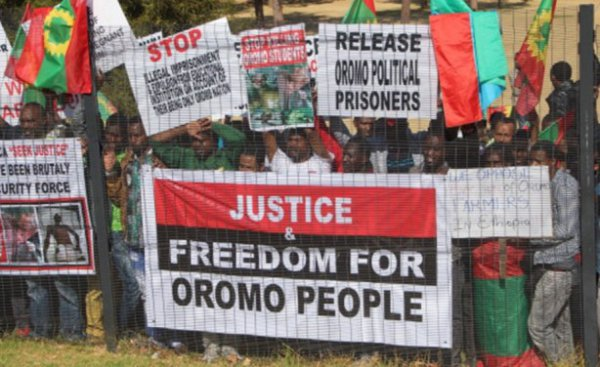
Although no single event seems to have triggered the 10 months of demonstrations in Ethiopia, the Oromo people complained of a plan to expand the capital, Addis Ababa, into their lands, and that they are disenfranchised by a government largely led by the Tigray grouping, from northern Ethiopia.
The EU follows the human rights situation in Ethiopia very closely.
No monies from the EU’s flagship Emergency Trust Fund (ETF) for Africa goes to the Ethiopian government or its agencies, the Commission stressed yesterday (6 September), as human rights groups say more than 400 people have been killed in clashes with the government.
The ETF was set up last year, at the Valleta migration summit, in an attempt to mitigate the ‘pull’ factors behind uncontrolled migration from sub-Saharan Africa to Europe, in the wake of the migration crisis.
Ethiopia, with a stable and West-friendly government in the Horn of Africa, is one of the major recipients of the trust fund, which aims to improve life chances and livelihoods in some of the world’s poorest countries.
However, the authoritarian government in Addis Ababa has long been the butt of accusations over its treatment of the Oromia people and their region – which surrounds the capital.
Since November 2015 – when Commission President Jean-Claude Juncker signed the ETF – some 400 people have been killed by Ethiopian government security forces during protests, according to New York-based Human Rights Watch.
Thousands more have been detained.
Credit: Human Rights Watch
Amnesty International says over 100 people were killed at a demonstration in early August.
This week, the situation deteriorated further, with the deaths of at least 23 inmates in a fire at a prison believed to be holding detained protestors.
Pictures showed smoke billowing from the jail, but the BBC cited local media reporting the sound of gunfire from the Qilinto prison.
Pressed by EurActiv.com on whether the Commission had a view on the unrest in one of its key partners in sub-Saharan Africa, and whether the ETF contained a mechanism for either reviewing or even suspending payments through the Emergency Trust Fund, a spokesman was quick to point out that no monies were channelled directly through the government in Addis Ababa, or any government agencies.
In an emailed statement later, it added, “As far as the Emergency Trust Fund for Africa is concerned, it is important to know that no funding are decentralised to, or channelled through, the beneficiary countries’ government structures.
Ethiopia is being hit hard by one the most severe El Niño phenomenon on record. Numbers speak for themselves – in the past year, the number of food insecure people has increased from 2.9 million to over 10 million at present, write Neven Mimica and Christos Stylianides.
Ethiopia, which is a close ally of Washington, is surrounded by failed states in the Horn of Africa, such as South Sudan, Somalia and Eritrea. This year it has had to deal with one of its worst droughts in 50 years, worse even than that of the famine of 1984-85, exacerbated by the El Niño weather phenomenon.
However, it has a difficult relationship with major aid agencies and NGOs, some of whom complain privately that operating in the country is dependent on not criticising the government in Addis Ababa.
The government in Addis Ababa, led by Prime Minister Hailemariam Dessalegn, has angrily dismissed the numbers cited by HRW, although admitting people have died in the protests, and blamed “illegal demonstrations and criminal attacks on property” for the unrest.
Desssalegn gave a press briefing on 30th August in which he made it clear that the government had a “responsibility to deal carry out its mandate to maintain law and order.”
“The government would never abrogate its responsibility to maintain peace, law and order. It would not allow the illegal demonstrations, violent clashes or criminal attacks on property that have been disturbing the country to continue,” he added.
Dessalegn stressed that peaceful demonstrations were allowed under the Ethiopian constitution – but must be agreed in time and in advance over location, be peaceful and “avoid disrupting day-to-day public activities or civic engagement.”
Although no single event seems to have triggered the 10 months of demonstrations in Ethiopia, the Oromo people complained of a plan to expand the capital, Addis Ababa, into their lands, and that they are disenfranchised by a government largely led by the Tigray grouping, from northern Ethiopia.
In a wide-ranging interview, Commissioner Neven Mimica tells EurActiv.com’s Matthew Tempest about the executive’s master plan for legal migration, as well as the limits of development aid to African states in the rough.
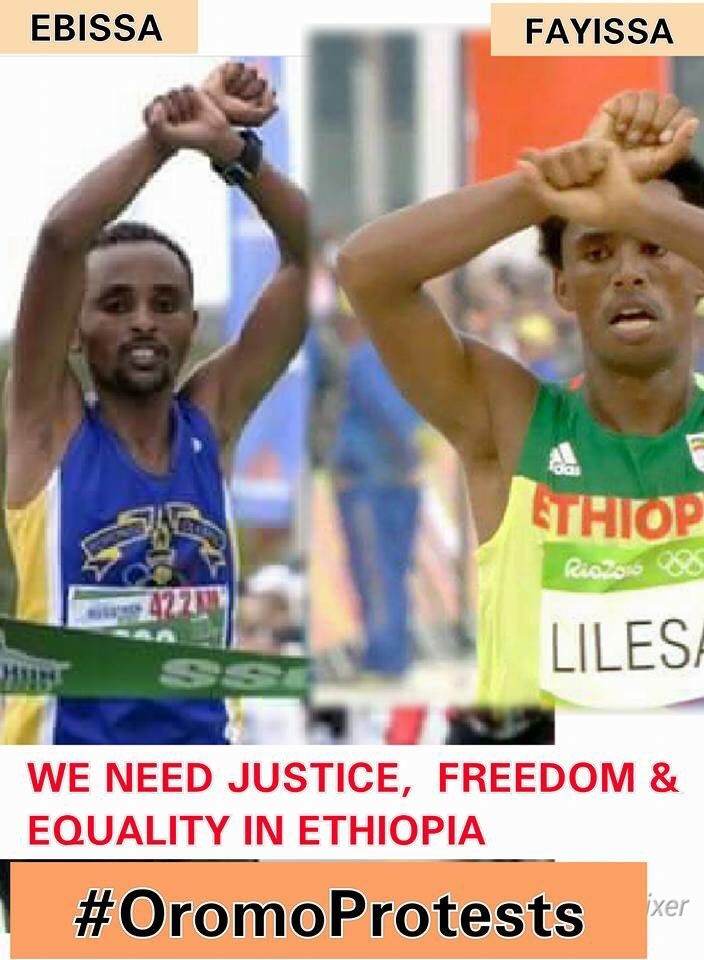
The cause of the Oromo people hit the headlines worldwide this summer, as Ethiopian runner Feyisa Lilesa crossed the finishing line at the Rio Olympics with his arms crossed in protest, before seeking political asylum abroad.
A spokesman for the Commission said, “The EU follows the human rights situation in Ethiopia very closely.
“Through high-level political contacts, the EU consistently raises concerns with the Ethiopian government.
“The EU also provides specific assistance to support human rights in the country, notably through the EU Civil Society Fund. We firmly believe that the combination of constructive dialogue and targeted development assistance will lead to positive changes in the human rights situation in Ethiopia and in the region.
“Key areas of concern are human rights, peace and stability in the country, as well as irregular migration and displacement.
Recently, the Ethiopian government began a big drive to increase its attraction as a high-end international tourism destination.
With the worst drought in 50 years, some 18 million people dependent on emergency food supplies, and aid agencies warning the money and the aid will run out in two months, it seems a strange time for Ethiopia to be marketing itself as an upmarket tourist destination.
Protests reportedly began in the Oromia region in November 2015, opposing the Federal Government’s plan to expand the boundaries of Addis Ababa. Reports indicate that despite the termination of the expansion plan, the protests continued due to the detention of activists, the use of excessive force, and killing of protestors by law enforcement officers.
More recently, protests reportedly erupted in the Amhara region of Gondar in July 2016 when armed police arrested members of the Welkait Committee who called for the recognition of the Welkait community, currently within the Tigray region, as part of the neighbouring Amhara region.
Reports further indicate that from 6 – 7 August 2016, thousands of people around the country took to the streets calling for political reform, equality, justice and the rule of law. The Commission is seriously disturbed by reports which aver that law enforcement agents responded with excessive force, including firing live bullets at protestors in Bahir Dar killing at least 30 people, and beating protestors with batons in Addis Ababa. Reports indicate that nearly 100 protestors were killed from 6 – 7 August 2016.
The Commission has also received information that the Government completely blocked internet throughout the country for 48 hours in an attempt to stop the use of social media to organise further protests. It is alleged that most social media applications are still blocked, hampering communication.
Reports allege that following the first protests in November 2015, hundreds of protestors have been killed, and many more have been beaten, arbitrarily arrested and detained.
The Commission is equally concerned about reports that members and human rights monitors of the Human Rights Council of Ethiopia (HRCO) have been arrested and detained in the Amhara and Oromo regions, while allegedly monitoring and documenting the crack-down on protestors in these regions.
Without reaching conclusions on the above allegations, the Commission is concerned that if these allegations are correct they would amount to violations of Articles 2, 3, 4, 5, 6, 7, 9, 11, 13 and 19 of theAfrican Charter on Human and Peoples’ Rights (the African Charter), as well as other regional and international human rights instruments to which the Federal Democratic Republic of Ethiopia is a party.
In view of the above, the Commission calls on the Government of the Federal Democratic Republic of Ethiopia to:
Fully investigate or allow the African Commission and other international/regional human rights mechanisms unimpeded access to the concerned areas in order to carry out prompt and impartial investigations into the allegations, so that these reports can be verified;
Ensure due process of law for those arrested and detained;
Respect peoples’ right to freedom of assembly, freedom of expression and access to information;
Ensure that perpetrators of the alleged violations are held accountable;
Ensure that the victims and their families obtain full redress, including restitution, compensation, rehabilitation, satisfaction and guarantees of non-repetition; and
Uphold its obligations under the regional and international human rights instruments to which it is a party, in particular the African Charter.
When Ethiopian security forces killed dozens of peaceful protesters in a hail of gunfire last month, the Canadian government responded with a brief tweet to say it was “disturbed” by the deaths.
But Canada’s Defence Minister Harjit Sajjan did not cancel his scheduled visit to Ethiopia.
Three days after the killings, he arrived in its capital and held a friendly meeting with Ethiopia’s defence minister and prime minister, making no public comment about the government’s actions.
Canada’s muted response to the lethal crackdown on the biggest protests in Ethiopia’s recent history is a sign of its continuing close relationship with the East African country.
Ethiopia is often among the first stops for Canadian cabinet ministers when they visit Africa, and it remains one of the biggest beneficiaries of Canadian foreign aid, receiving $108-million from Ottawa last year.
The Liberal government, which has promised a “re-engagement” with Africa, must decide how to engage with Africa’s human-rights abusers, of which Ethiopia is among the worst.
The government in Addis Ababa has a long record of jailing and killing its critics, manipulating elections and using Western food aid to reward its supporters and punish its opponents.
The question many are asking now is whether the Liberals will turn a blind eye to these abuses as it tries to revive Canada’s often-neglected relations with Africa.
The growing wave of protests against the Ethiopian government over the past 10 months, especially in the Oromiya and Amhara regions, has been the most significant in this authoritarian nation for more than a decade.
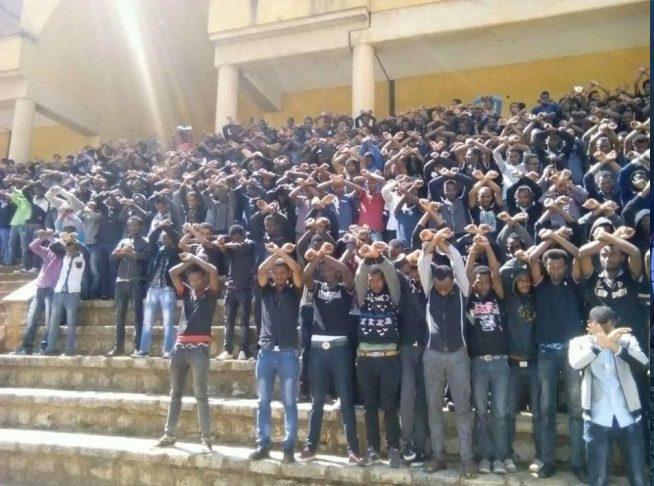
And they have spread to the Ethiopian diaspora around the world, symbolized by Ethiopian marathon runners who made protest gestures as they crossed the finish line at the Rio Olympics and elsewhere.
The protests reached Canada last Sunday, at the Quebec City Marathon, when the winning runner, Ebisa Ejigu, a Canadian resident of Ethiopian origin, clenched his fists and crossed his arms in an “X” sign above his head as he crossed the finish line.
The gesture is a sign of solidarity with the Oromo people, the largest ethnicity in Ethiopia, who have been demonstrating against government plans to expand the capital, Addis Ababa, into traditional Oromo farmland.
A week earlier, Ethiopian runner Feyisa Lilesa made the same protest gesture as he crossed the finish line at the Olympics.
He won the silver medal – and then refused to return home to Ethiopia, telling journalists that he is afraid of being imprisoned or killed for his protest actions.
“The Ethiopian government is killing my people,” he told journalists.
“My relatives are in prison, and if they talk about democratic rights they are killed.”
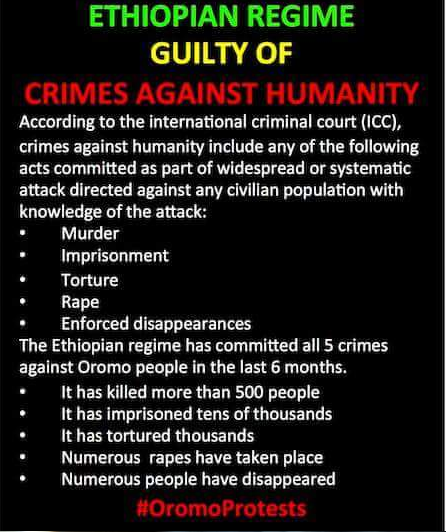
Ethiopian security forces killed more than 400 protesters in the Oromiya region – and arrested tens of thousands more – from last November until June, according to a Human Rights Watch report.
This was followed by the killing of a further 100 protesters last month, reports say.
Canada and other Western countries have long regarded Ethiopia as a useful ally in the fight against Islamist extremism in Somalia and elsewhere in East Africa.
Canada has been one of the biggest donors to Ethiopia in recent years, providing several hundred million dollars in development and humanitarian assistance.
The Liberal government could use this leverage to put pressure on Ethiopia to halt its killing of protesters, according to human-rights groups and Ethiopian-Canadian activists.
“We’ve been very concerned that the Ethiopian government has had a bit of a free ride from Canada and the international community,” said Alex Neve, secretary general of the Canadian branch of Amnesty International.
He said it is “utterly unacceptable” that Canadian officials and cabinet ministers don’t apply strong pressure on the Ethiopian government to halt the killing of protesters.
“It is absolutely time for Canada to make clear that this has to stop.”
Aside from the short tweet of disapproval from the Global Affairs department, there is no record of public statements by the Liberal government about the killings last month.
But a Global Affairs spokeswoman said Canada is “deeply concerned” about the reported deaths of the protesters.
“Canada has raised these concerns directly with the government of Ethiopia, and will continue to do so,” spokeswoman Jocelyn Sweet said in response to questions from The Globe and Mail.
“We continue to monitor the situation closely.”
Renée Filiatrault, deputy chief of staff to Mr. Sajjan, said the issue of the killing of protesters was “raised in private bilateral conversations” during the defence minister’s visit to Ethiopia.
“While I can’t go any further, I can say that the protection and promotion of human rights and fundamental freedoms is key to our foreign policy and was a topic of discussion in every meeting that we had,” she said.
Some activists are urging the Liberal government to halt the flow of Canadian aid to Ethiopia and find ways to penalize the regime for its crackdown on protesters.
“Canada’s aid to Ethiopia has been a failed experiment in turning brutal dictators into democrats,” said Yohannes Berhe, an Ethiopian-Canadian human-rights activist.
“Spending taxpayers’ money without any measure of accountability and without demanding true political reform is, at the very least, a wasteful endeavour, and at worst, tantamount to encouraging one of the most repressive regimes in Africa.”
Badii fi seera malee namoonni keenya mana hidhaatti guuraman yeroo dhihootti akka gadi lakkifaman sagalee tokkoon gaafanna.
Namoonni dhiiga Oromoo taatanii lammii keessan ajjeestanii fi ajjeesaa turtan, waan hamaaf dabarsitanii kennitan sobaaf raga baatan, guyyaa har’aatii kaasee yaa’ii tokkummaa abbootii gadaa oromoo kun maqaa uummata oromoo kabajamaa fi guddaatiin badii darbeef dhiifama gaafattanii,dhugaa lammii keessaniitiif akka dhaabbatan isinii dhaamaa, kanarra kan darbe kana booda gocha kana irra deebitanii yoo raawwattan lafee fi dhiigni ilmaan oromoo, akka safuu fi safeeffannaa Sirna Gadaatiin kan isin gaafatu taha.
Ilmaan Oromoo naannawaa Finfinnee lafarraa buqqaa’an akka deebi’anii manni jirenyaa kennamuuf ni gaafanna.
Irreechi hora Finfinnee akka nuuf deebi’uuf fulbaana 24/2009 ummatni Oromoo fi Abbootiin Gadaa achirratti argamuun akka kabajannu beeksisaa akka nuuf mirkanaa’u ni gaafanna.
Qotee bulaan sababa baballina masterpilaanii magaalaatiinii fi investimentiitiin uummata keenya lafarraa buqqisaa jiraachuun akka nurraa dhaabbatu ni gaafanna.
Hojii dhabdummaa Naannoo Oromiyaatti babal’ataa jiruufi naannoowwan magaalotaa fi Finfinnee jirurratti dargaggoota yuniversitii fi koollejii irraa eebbifamaniif rakkoo hojiidhabdummaatiin dararaman haalli mijachuun deeggersi barbaachisaa tahe akka
godhamuuf ni gaafanna.
Nuti uummatni Oromoo sabaa fi sablammiiwwan jiran waliin nagaan jiraachuu barbaadna. Sababa daangaan keenya sharafamaa jiruuf uummatni keenya sabaa fi sablammiiwwan ollaa jiruun walitti bu’aa jira. Kanaafuu ,mootummaaan kara lachanuu ilaaluun furmaata akka kennuuf ni gaafanna.
Sirni Gadaa Oromoo safuu fi safeeffannaa isaa ganamaa eegee caasaa qabuun akka ijaaramuu fi kan ijaaramee jiru jabinaan akka itti fufu imaanaa guddaa saba keenyaaf kallattii hundaan cimsinee haa hojjennu.
Sirni Gadaa Oromoo Sirna Bulchiinsa Oromoo karaa nagaa fi tasgabbii qabuun rakkoowwa hawaasaa hiikuun aadaa fi duudhaa hawasaa babl’isuun abbaa qabeenyummaa dinagdee hawaasichaa kan mirkaneessudha waan taheef sirni kun jabeeffamuu kan qabuu fi kan ittiin bullu tahuu uumata keenyaaf dhaamsa dabarsiina.
Sirni Gadaa Oromoo faajjii mataa isaa:- Gurraacha, Diimaa Fi Adii kan qabu dha.kanaafuu ummatni Oromoo fi ummatni Ayyaana Irreechaa fuuldura keenyaa kamirratuu kabajamu irratti Faajjii kanaan ala alaabaa dhaaba siyaasaa kamiyyuu qabatee akka hin dhufne ni akeekkachiisna.
Afaan Oromoo afaan hojii federaalaa akka tahu ni gaafanna.
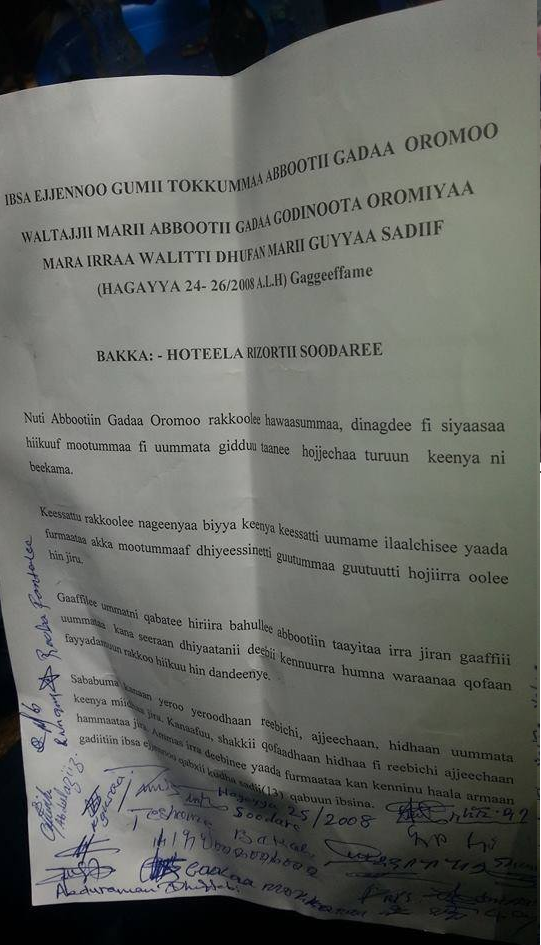
Statement by the Union of Oromo Gadaa Councils on Current Affairs in Oromia
Statement by the Union of Oromo Gadaa Councils on Current Affairs in Oromia
Issued following the conclusion of a three day extraordinary assembly held from 30 August- 1st September 2016 by Abba Gaddas representing all Oromia provinces
Place: Sodere Resort Hotel
We, Oromo Gadaa elders, have been working with the government and the community to solve the societal, economic and political predicaments facing the Oromo nation. Yet, none of the recommendations we presented to the government – particularly on issues that have caused lack of stability in the country- has been implemented. The government’s decision to violently suppress legitimate questions raised in peaceful rallies instead of dealing with them calmly and in accordance with the law has failed to solve the problem. Persecutions, killings and imprisonments as a result of this are worsening, even on mere suspects whose involvements in protest activities have not been established. In the light of this, and while having regard to our earlier recommendations, we have issued the following 13-point resolution.
The people of Oromia- regardless of zones, districts or localities we hail from or our religious & political differences- will stand in unity under the umbrella of The Gadaa and uphold our customs, values and traditions.
The national defense army that should be guarding the outside borders of the country has, in clear contravention of the constitution, entered into the territory of our regional state and stationed in different parts of Oromia. The army’s inability to communicate in the local vernacular and lack of awareness of the customs, culture and traditions has created a huge problem for the people. We would like to state our position that we should be able to resolve any problems within Oromia in line with the principles and structures of the Gadaa constituting the Abbaa Duulaa (a military commander with the highest authority), Kuusaa, dabballe and foollee. We would also like to call on the federal government to withdraw its army from the territory of Oromia.
We demand that the government immediately release innocent people unlawfully held in prisons
To Oromo agents of the government who collaborate/collaborated in killings, betray/betrayed and bore/bear false witness on your own people, we plead with you in the name of the noble people of Oromia to turn from your immoral ways, to plead for forgiveness and to stand with our people from now onwards. If you refuse and continue to stand on the wrong side of history, you will be held responsible for infringement of the moral and ethical order laid down in the Gadaa rules of governance.
We request that the government return the Oromo who have been displaced from areas surrounding Finfinnee back to their land and dwellings.
We demand for the ban on Lake Finfinne as a gathering point for Irreecha (thanksgiving) celebrations to be lifted and for our right to celebrate at this location be respected. We would also like to inform the authorities of the intentions of the Gadaa elders and people of Oromia to celebrate the upcoming Irreecha on the 24th of September 2016 at Lake Finfinne and request for this to be confirmed by the government.
We request that the evictions of our farmers from their ancestral lands with the pretext of investments and city master plans be ceased.
To keep rising levels of unemployment in Oromia, regional towns and Finfinnee in check, we request that the government provide the necessary support to college & university graduates struggling to make a living and create better opportunities for them.
We –the people of Oromia- would like to live in harmony with other nations and nationalities in the country. However, encroachments on our borders are giving rise to skirmishes between our people and other nations and nationalities. We, therefore, call on the government to look into this matter and rectify the problems.
We urge members of the Oromo public to strengthen and take a keen interest in the Gadaa system of governance, which plays a crucial role in terms of dealing with societal challenges in a peaceful and orderly manner, preserving and helping flourish the cultures and values of the Oromo as well as ensuring the society’s resource ownership.
The Gadaa system has its own unique badge: Black, Red and White. We urge the people of Oromia and other Irreecha festival participants not to bring flags representing any political organization in future celebrations other than the Black, Red and White badge.
We request that Afaan Oromo become a federal working language.
Several people are reported to have been killed in various parts of the Amhara regional state in Northern Ethiopia, where an ongoing protest by the people is intensifying. The VOA Amharic service quoted a resident in Debarq yesterday that four people were killed when security officers fired live bullets at protesting civilians.
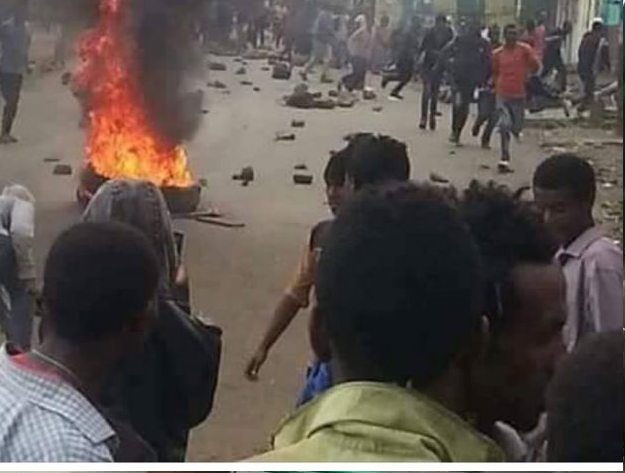
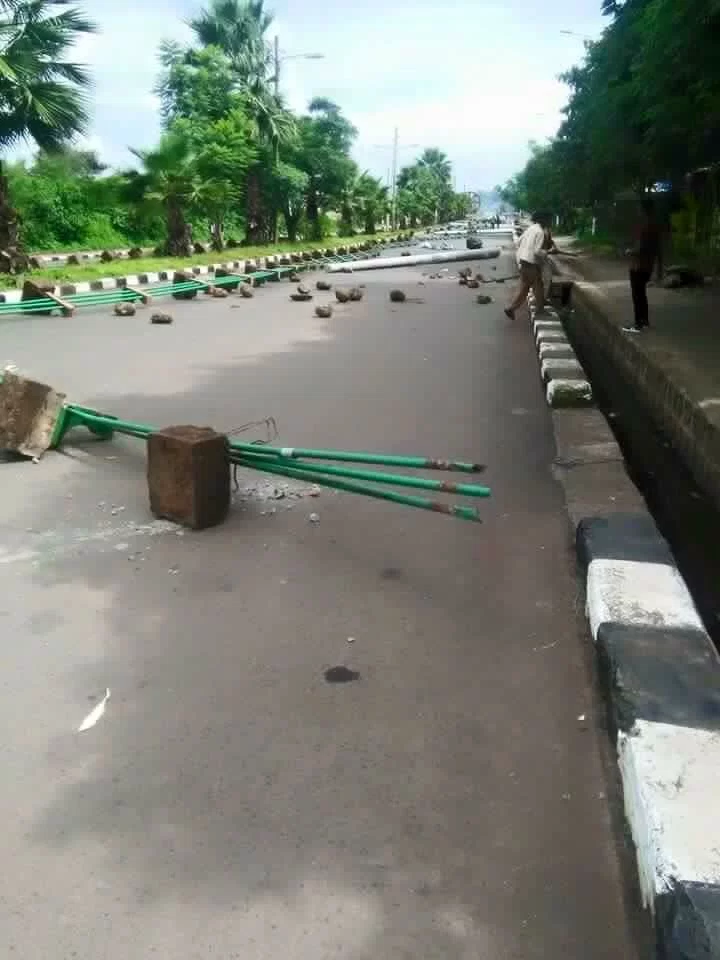
Over the last few days several reports on social media indicated a rising death toll following security crackdown against a stay-at-home protests in Bahir Dar and Gonder, the region’s capital and a historic city visited by thousands of tourists respectively. Pictures coming from many cities and towns in the region also show protesting citizens, burning tyres and roadblocks. Reports also indicate that up to 50 civilians were killed in the past one week only.
Tensions are on the rise following a statement given to state owned media by Prime Minister Hailemariam Desalegn in which he announced that he has ordered the Ethiopian National Defense Force (ENDF) to intervene to control the situation in the region, home to the second largest ethnic group in the country. In his speech PM Hailemariam blamed Ethiopia’s “outside enemies” for being the instigators to disrupt the country by providing “radicals with sacks full of money.” He further stated that the government will use “its full forces to bring the rule of law” into the region.
A day prior to PM Hailemariam’s statement, Sheger FM, a private radio based in Addis Abeba, reported that the regional state has requested a military intervention by the Federal government. Talking to the station, Nigusu Tilahun, the regional government’s Chief spokesperson, conceded that lives were lost in the recent protests but declined to give numbers. As a result of intensifying protests, the regional government requested the intervention of the federal army, Sheger FM quoted the spokesperson.
Pictures circulating around social media show heavy artillery moving towards the state capital Bahir Dar, 550 North of Addis Abeba, and the nearby town of Gondar where the recent wave of #Amharaprotests originated late last month. Addis Standard could not independently verify the authenticity of those pictures. Internet is shut off in the whole region while locals fear government sanctioned phone call monitoring.
In the last few days tens of thousands of citizens in several cities and towns in Gojam and Gonder areas of the region have come out to the streets to protest the government. In what many see as the ultimate test of the ruling EPRDF protesters are also showing solidarity with the #Oromoprotests which began in Nov. 2015.
In the weekend of 6-7 August region wide protests both in Amhara and Oromia regions were met by violent crackdown by security forces. It’s reported that more than 100 civilians were killed in that weekend only, according to Amnesty International. In Bahir Dar only, more than 30 people were killed when a security guard opened fire at protesters. The government disputes that number. The stay-at-home protests in Bahir and Gonder followed the deadliest weekend, however in the last few days that too turned violent when security forces began breaking into houses in an attempt to force citizens and businesses to stop the stay-at-home protests.
Roadblock in Bahir Dar. Photo: Social Media
Some reports claim that attacks against government institutions and party owned and affiliated businesses were witnessed in some cities and towns. There are also reports that young men and women are being arrested en mass by security forces.








 Oromian Economist
You must be logged in to post a comment.