UNDP: Human Development Report 2016: Left behind and unable to catch up: systemic discrimination against women, indigenous peoples and ethnic minorities, among others. Ethiopia ranks 174th out of 188 countries March 23, 2017
Posted by OromianEconomist in Uncategorized.Tags: 2016, Africa, Ethiopia, Human development Index, Human Development Report, UNDP
trackback

Human Development Report 2016: Human Development for Everyone
It is time to face up to deep-rooted barriers to development
“In order to advance, we need to examine more closely not just what has been achieved, but also who has been excluded and why.” – Selim Jahan
“By eliminating deep, persistent, discriminatory social norms and laws, and addressing the unequal access to political participation, which have hindered progress for so many, poverty can be eradicated and a peaceful, just, and sustainable development can be achieved for all.” – Helen Clark
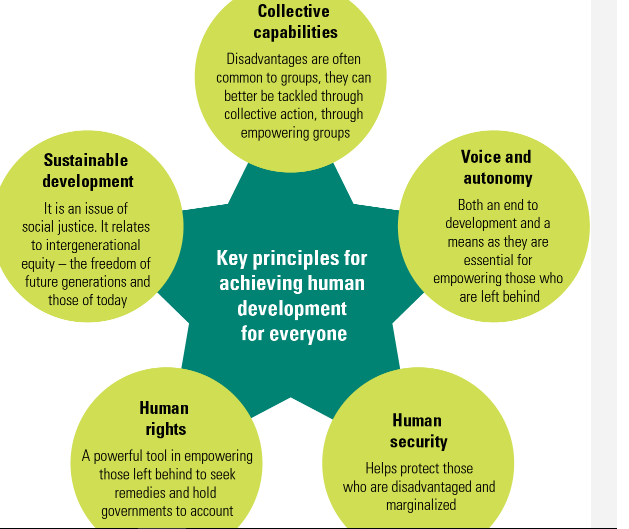
UNDP Report 2017, key principles to achieve human development to everyone
Beyond averages—using the family of human development indices
Human development is about improving the life chances of individuals. However, the measures used to monitor progress in human development often cover only countries and not individuals or groups. Disaggregated measures are therefore needed that show who is deprived, where they live and the nature of their deprivations. National, subregional and regional Human Development Reports have identified deprivations by analysing data disaggregated by age, gender, subnational units, ethnicity and other parameters. Disaggregating and analysing the family of human development indices— the Human Development Index (HDI), the Inequality-adjusted Human Development Index (IHDI), the Gender Development Index (GDI), the Gender Inequality Index (GII) and the Multidimensional Poverty Index (MPI)— are early steps towards quantifying the scale of deprivations globally.
Collective capabilities—helping marginalized groups
Human development is not only a matter of promoting the freedoms that individuals have and have reason to choose and value. It is also a matter of promoting the freedoms of groups or collective entities. Individuals are not the only unit of moral concern; structures of living together are, too. The failure to explicitly include them in evaluating the state of affairs leads to the loss of important information.
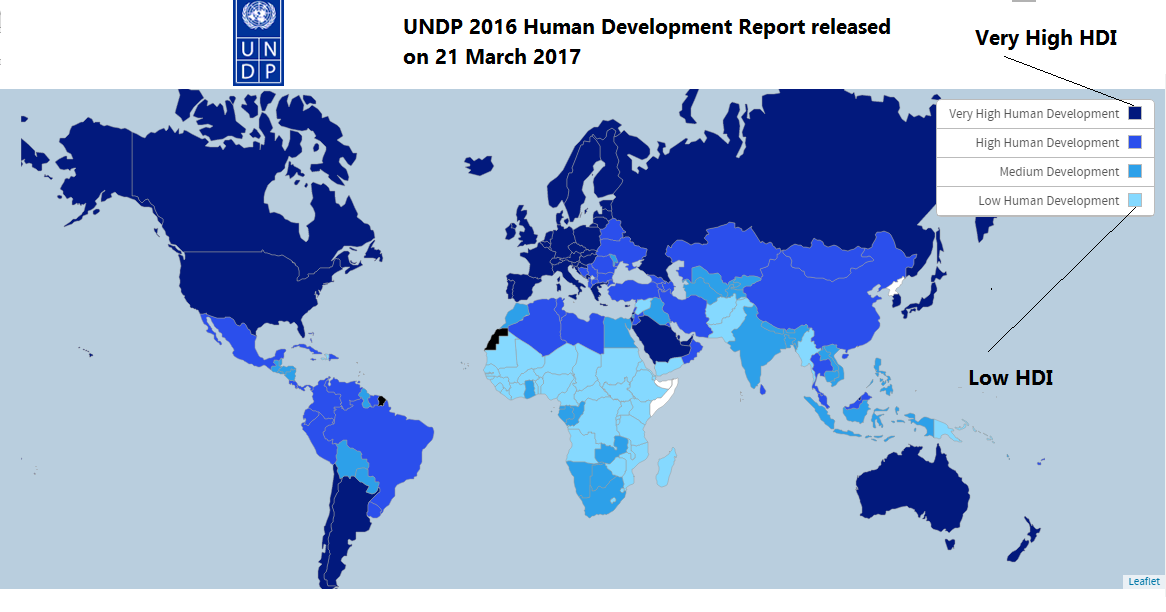
Ethiopia ranks 174th out of 188 countries in the latest UNDP Human Development Report (published 21st March 2017). Ethiopia’s Human Development Index (HDI) value for 2015 is 0.448, which put the country in the low human development category. According to the report, Ethiopia’s 2015 HDI of 0.448 is below the average of 0.497 for countries in the low human development group and below the average of 0.523 for countries in Sub-Saharan Africa.
Top 10 countries on the Human development index are Norway, Australia, Switzerland, Germany, Denmark, Singapore, Netherlands, Ireland, Iceland and Canada.
Click here to explore more on International Human Development Indicators 2016 report


Comments»
No comments yet — be the first.