Ethiopia Scores the Worst (80) in Net Freedom in Africa & One of the 5 Worst Countries in the World: Freedom House’s Freedom on the Net 2014 Report and Key Findings. #Oromia December 4, 2014
Posted by OromianEconomist in Amnesty International's Report: Because I Am Oromo, Dictatorship, Free development vs authoritarian model, Internet Freedom, Knowledge and the Colonizing Structure. Africa Heritage. The Genocide Against Oromo Nation, The Tyranny of Ethiopia, Tweets and Africa.Tags: Africa, African Studies, Because I Am Oromo: Amnesty International Report, Economic and Social Freedom, Human rights violations, Internet Freedom, Tyranny
add a comment


According to Freedom House: “The internet is a crucial medium through which people can express themselves and share ideas and has become an increasingly important tool through which democracy and human rights activists mobilize and advocate for political, social, and economic reform. Fearing the power of the new technologies, authoritarian states have devised subtle and not-so-subtle ways to filter, monitor, and otherwise obstruct or manipulate the openness of the internet.”
Ethiopia (80 marks) is the worst performer in Africa and one of the 5 worst performers in the world (Iran, Syria, China, Cuba and Ethiopia).
https://freedomhouse.org/report/freedom-net-2014/freedom-net-2014-graphics#.VIDhUNKsX5M
The following are Freedom House 2014 Report and Key findings on Ethiopia:-
https://freedomhouse.org/report/freedom-net/freedom-net-2014#.VIDatNKsX5O
https://freedomhouse.org/report/freedom-net/2014/ethiopia
Ethiopia: Key Findings:–
| POPULATION: | 89.2 MILLION |
| INTERNET PENETRATION: | 2 PERCENT |
| SOCIAL MEDIA/ICT APPS BLOCKED: | YES |
| POLITICAL/SOCIAL CONTENT BLOCKED: | YES |
| BLOGGERS/ICT USERS ARRESTED: | YES |
| PRESS FREEDOM STATUS: | NOT FREE |
| 2014 FREEDOM ON THE NET TOTAL (0 = BEST, 100 = WORST) | 80 |
2014 SCORES
FREEDOM ON THE NET STATUS
FREEDOM ON THE NET TOTAL
OBSTACLES TO ACCESS
LIMITS ON CONTENT
VIOLATIONS OF USER RIGHTS
-
2013 FREEDOM ON THE NET TOTAL (0 = BEST, 100 = WORST) 79
May 2013 – May 2014
- Telecom services worsened, characterized by frequently dropped phone calls, prolonged internet service interruptions, and slow response times to service failures (see Obstacles to Access).
- Facebook, Twitter, Yahoo, and CNN were inaccessible for 12 hours in July 2013, while the number of permanently blocked webpages also increased (see Limits on Content).
- A law enacted in November 2013 gives the Information Network Security Agency (INSA) carte blanche to inspect private online activities without oversight (see Violations of User Rights).
- The government launched sophisticated surveillance malware against several online journalists in the Ethiopian diaspora and dissidents in exile (see Violations of User Rights).
- Six bloggers of the prominent Zone9 blogging collective were arrested in April 2014 on charges of terrorism (see Violations of User Rights).
Introduction
Ethiopia continues to have one of the lowest rates of internet and mobile phone connectivity in the world, as meager infrastructure, government monopoly over the telecommunications sector, and obstructive telecom policies have significantly hindered the growth of information and communication technologies (ICTs) in the country. Coupled with highly repressive laws and tactics aimed at restricting freedom of expression and access to information, internet freedom in Ethiopia is consistently rated the worst in sub-Saharan Africa and among the worst in the world.
Despite the country’s extremely poor telecommunications services and a largely disconnected population, Ethiopia is also known as one of the first African countries to censor the internet, beginning in 2006 with opposition blogs.[1] Since then, internet censorship has become pervasive and systematic through the use of highly sophisticated tools that block and filter internet content and monitor user activity. The majority of blocked websites feature critical news and opposition viewpoints run by individuals and organizations based mostly in the diaspora. Surveillance of mobile phone and internet networks is systematic and widespread, enabled by Chinese-made technology that allows for the interception of SMS text messages, recording of phone calls, and centralized monitoring of online activities. The government also employs commentators and trolls to proactively manipulate the online news and information landscape.
During the report’s coverage period, internet freedom in Ethiopia worsened due to increasing restrictions on access to social media and communications tools, such as Storify, and the temporary blocking of Facebook and Twitter in July 2013. A new law passed in November 2013 gave the Information Network Security Agency (INSA) carte blanche to track private online communications and investigate electronic devices without oversight. In addition, a number of diaspora journalists and exiled dissidents were targeted with surveillance malware, demonstrating a growing level of sophistication in the government’s effort to silence critical voices that extends beyond the country’s borders.
In 2014, the Ethiopian authorities increased their crackdown against bloggers and online journalists, using the country’s harsh laws to prosecute individuals for their online activities and quash dissent. Most alarmingly, six bloggers from the critical Zone9 blogging collective and three journalists associated with Zone9 were arrested in late April 2014 on charges of terrorism, which, under the Telecom Fraud Offenses Law and anti-terrorism proclamation, can entail a sentence of up to 20 years in prison if the bloggers are found guilty. The Zone9 case was repeatedly stalled by the courts throughout 2014, leaving the bloggers in pre-trial detention for over six months as of late-2014. Meanwhile, two online radio journalists were arrested and detained for a week without charges in August 2013, and the prominent dissident blogger, Eskinder Nega, and award-winning journalist, Reeyot Alemu, continue to serve lengthy prison sentences, despite international pressure for their release. The overall crackdown has had a major chilling effect on internet freedom and freedom of expression in the country, leading to increasing levels of self-censorship among online journalists, bloggers, and ordinary users alike.
In 2013 and 2014, access to ICTs in Ethiopia remained extremely limited, hampered by slow speeds and the state’s tight grip on the telecom sector.[2] According to the International Telecommunications Union (ITU), internet penetration stood at a mere 1.9 percent in 2013, up from 1.5 percent in 2012.[3] Only 0.25 percent of the population had access to fixed-broadband internet, increasing from 0.01 percent in 2012.[4] Ethiopians had more access to mobile phone services, with mobile phone penetration rates increasing from 22 percent in 2012 to 27 percent in 2013,[5] though such access rates still lag behind a regional average of 80 percent.[6] Meanwhile, less than 5 percent of the population has a mobile-broadband subscription.[7] Radio remains the principal mass medium through which most Ethiopians stay informed.
While access to the internet via mobile phones increased slightly in the last year, prohibitively expensive mobile data packages still posed a significant financial obstacle for the majority of the population in Ethiopia, where per capita income in 2013 stood at US$470.[8] Ethiopia’s telecom market is very unsaturated due to monopolistic control, providing customers with few options at arbitrary prices.[9] Prices are set by the state-controlled Ethio Telecom and kept artificially high. As of mid-2014, monthly packages cost between ETB 200 and 3,000 (US$10 to $150) for 1 to 30 GB of 3G mobile services.[10]
The computer remains the most practical option for going online, though in 2014, personal computers are still prohibitively expensive. The combined cost of purchasing a computer, initiating an internet connection, and paying usage charges makes internet access beyond the reach of most Ethiopians. Consequently, only 2 percent of Ethiopian households had internet access in their homes in 2013.[11] The majority of internet users rely on cybercafes to log online, leading to a growth of cybercafes in recent years, particularly in large cities. A typical internet user in Addis Ababa pays between ETB 5 and 7 (US$0.25 to $0.35) for an hour of access. Because of the scarcity of internet cafes outside urban areas, however, rates in rural cybercafes are more expensive.
For the few Ethiopians who can access the internet, connection speeds are known to be painstakingly slow. For years, logging into an email account and opening a single message could take as long as six minutes at a standard cybercafe with broadband in the capital city.[12]According to May 2014 data from Akamai’s “State of the Internet” report, Ethiopia has an average connection speed of 1.2 Mbps (compared to a global average of 3.9 Mbps).[13] Meanwhile, Ethiopia’s broadband adoption (characterized by connection speeds greater than 4 Mbps) is less than 3 percent,[14] while the country’s narrowband adoption (connection speed below 256 Kbps) is about 20 percent among those with access.[15] Numerous users reported that internet and text messaging speeds were extremely slow during the coverage period, with services completely unavailable at times.[16] Frequent electricity outages are also a contributing factor to poor telecom services.
Despite reports of massive investments from Chinese telecom companies in recent years,[17] Ethiopia’s telecommunications infrastructure is among the least developed in Africa and is almost entirely absent from rural areas, where about 85 percent of the population resides. The country is connected to the international internet via satellite, a fiber-optic cable that passes through Sudan and connects to its international gateway, and the SEACOM cable that connects through Djibouti to an international undersea cable. In an effort to expand connectivity, the government has reportedly installed several thousand kilometers of fiber-optic cable throughout the country over the past few years.[18] Construction of the East African Submarine Cable System (EASSy) was completed and launched in July 2010, but its effects on Ethiopia have yet to be seen as of mid-2014.[19]
The space for independent initiatives in the ICT sector, entrepreneurial or otherwise, is extremely limited,[20] with state-owned Ethio Telecom holding a firm monopoly over internet and mobile phone services in the country. Consequently, all connections to the international internet are completely centralized via Ethio Telecom, enabling the government to cut off the internet at will. As a result, the internet research company Renesys classified Ethiopia “as being at severe risk of Internet disconnection,” alongside Syria, Uzbekistan, and Yemen in a February 2014 assessment.[21] During the coverage period, one Renesys report found that 40 percent of Ethiopia’s networks were down for a few hours on July 18, 2013 as a result of a disruption on the SEACOM network, though the exact reason for the disruption was unknown.[22]In September 2013, a number of cybercafe owners in Ethiopia reported an increasing trend of unpredictable internet connections and speeds beginning in June that resulted in a significant decline in business, with internet connections reported as unavailable for up to 15 days in a month.[23]
Mobile phone networks—also completely centralized under Ethio Telecom—are similarly vulnerable to service disruptions and shutdowns by the government, which often occur during politically sensitive times. During the coverage period, there were frequent reports of dropped cell phone and landline calls, complete network blackouts in many parts of the country,[24] and overlapping voices in calls. The latter phenomenon led people to suspect government engagement in a widespread eavesdropping scheme (see “Violations of User Rights” for details on surveillance).
Meanwhile, cybercafes are subject to onerous requirements under the 2002 Telecommunications (Amendment) Proclamation,[25] which requires cybercafe owners to obtain an operating license with Ethio Telecom via a murky process that can take months. During the coverage period, Ethio Telecom began enforcing its licensing requirements more strictly in response to the increasing spread of cybercafes, reportedly penalizing Muslim cafe owners more harshly. Violations of the stringent requirements, such as a prohibition on providing Voice-over-IP (VoIP) services, entail criminal liability.[26]
Despite repeated international pressure to liberalize telecommunications in Ethiopia, the government has not eased its grip on the sector.[27] In June 2013, the prime minister publicly affirmed that the government would maintain a monopoly over the country’s telecoms.[28] In the meantime, China has emerged as a key investor and contractor in Ethiopia’s telecommunications industry,[29] and in July 2013, the government signed a US$1.6 billion agreement with the Chinese telecom companies, Zhongxing Telecommunication Corporation (ZTE) and Huawei, to upgrade its broadband network to 4G in Addis Ababa and expand 3G across the country.[30] The networks built by the Chinese firms have been criticized for their high costs and poor service,[31] though the partnership has enabled Ethiopia’s authoritarian leaders to maintain their hold over the telecom sector.[32] Furthermore, the contracts have led to increasing fears that the Chinese may also be assisting the authorities in developing more robust internet and mobile phone censorship and surveillance capacities.[33]
The Ethiopian Broadcasting Authority (EBA) and the Ethiopian Telecommunications Agency (ETA) are the primary regulatory bodies overseeing the telecommunications sector. These two organizations were established as autonomous federal agencies, but both are highly controlled government bodies.
During the coverage period, over a hundred websites remained inaccessible in Ethiopia, with a greater number of online tools and services targeted for blocking. A June 2014 report affirmed the government’s efforts to recruit and train progovernment citizens to attack politically objectionable content online.
The Ethiopian government imposes nationwide, politically motivated internet blocking and filtering that tends to tighten ahead of sensitive political events. The majority of blocked websites are those that feature opposition or critical content run by individuals or organizations based in the country or the diaspora. The government’s approach to internet filtering generally entails hindering access to a list of specific internet protocol (IP) addresses or domain names at the level of the Ethio Telecom-controlled international gateway. A more sophisticated strategy of blocking websites based on a keyword in the URL path, known as deep-packet inspection (DPI),[34] was detected in May 2012 when the Tor network—an online tool that enables users to browse anonymously—was blocked.[35]
In January 2014, an independent test conducted by a researcher based in the country found 120 unique URLs that were inaccessible in the country, 62 of which were Ethiopian news websites, 14 of which were political party websites, 37 of which were blogs, and 7 of which were television and online radio websites.[36] During the test, some websites opened at the first attempt but were inaccessible when refreshed. The test also found that select tools and services on Google’s Android operating system on smart phones were inaccessible at irregular intervals but for unclear reasons. A separate test on over 1,400 URLs between July and August 2013 by the OpenNet Initiative in partnership with Human Rights Watch similarly found 62 websites blocked altogether and numerous others intermittently inaccessible.[37]
International news outlets were increasingly targeted for censorship. Al Arabiya, a Saudi Arabia-based media outlet, and both of Al Jazeera’s Arabic and English websites were intermittently blocked during the coverage period.[38] In July 2013, websites belonging to Yahoo and CNN were reportedly inaccessible for about 12 hours. Facebook and Twitter were also targets of the short-term July 2013 blocking.[39]There was no evident impetus or reason for the short-term blocking, and other major services such as Gmail and new outlets such as the New York Times remained accessible. Nevertheless, the incident further increased worries over reports of government plans to block popular social media tools completely.[40] Facebook and Twitter platforms were otherwise generally accessible, although some individual Facebook groups belonging to opposition individuals remained blocked altogether, particularly when accessed via the unencrypted (http://) URL pathway. Meanwhile, the social media curation tool Storify—first blocked in July 2012[41]—remained blocked during the coverage period,[42] while the URL shortening tool Bit.ly was inexplicably blocked in late 2013.[43]
In the past few years, the authorities have become more sophisticated in their censorship techniques, electing to block select webpages as opposed to entire websites. Critical online news articles are usually targeted, such as an August 2012 Forbes article titled, “Requiem for a Reprobate Ethiopian Tyrant Should Not Be Lionized,” which was blocked for criticizing the local and global praise of the former prime minister’s debatable economic growth achievements; the article remained blocked as of June 2014.[44] A July 2013 YouTube video of the antigovernment Muslim protests that occurred from 2012-13 was also blocked as of late 2013.[45]
International blog-hosting platforms such as Blogspot have been frequently blocked since the disputed parliamentary elections of 2005, during which the opposition used online communication tools to organize and disseminate information that was critical of the ruling Ethiopian People’s Revolutionary Democratic Front.[46] In 2007, the government instituted a blanket block on the domain names of two popular blog-hosting websites, Blogspot and Nazret, though the authorities have since become more sophisticated in their censorship techniques, now blocking select pages such as the Zone9 independent blog hosted on Blogspot,[47] as opposed to the entire blogging platform. Nazret, however, remained completely blocked as of June 2014. Circumvention strategies have also been targeted, with the term “proxy” yielding no search results on Google,[48] according to an independent source. Meanwhile, the terms “sex” or “porn” are still searchable.
In addition to increasing blocks of online content, politically objectionable content is often targeted for removal, often by way of threats from security officials who personally seek out users and bloggers to instruct them to take down certain content, particularly critical content on Facebook. The growing practice suggests that at least some voices within Ethiopia’s small online community are being closely monitored. Some restrictions are also placed on mobile phones, such as the requirement for a text message to obtain prior approval from Ethio Telecom if it is to be sent to more than ten recipients.[49] A bulk text message sent without prior approval is automatically blocked.
There are no procedures for determining which websites are blocked or why, which precludes any avenues for appeal. There are no published lists of blocked websites or publicly available criteria for how such decisions are made, and users are met with an error message when trying to access blocked content. This lack of transparency is exacerbated by the government’s continued denial of its censorship efforts. Meanwhile, the decision-making process does not appear to be controlled by a single entity, as various government bodies—including the Information Network Security Agency (INSA), Ethio Telecom, and the ministry of ICT—seem to be implementing their own lists, contributing to a phenomenon of inconsistent blocking.
Lack of adequate funding is a significant challenge for independent online media in Ethiopia, as fear of government pressure dissuades local businesses from advertising with politically critical websites. Local newspapers and web outlets receive their news and information from regime critics and opposition organizations in the diaspora. While the domestic Ethiopian blogosphere has been expanding, most blogging activity on Ethiopian issues still originates in the diaspora. Few Ethiopian journalists work for both the domestic print media and overseas online outlets due to the threat of repercussions.
Increasing repression against journalists and bloggers has had a major chilling effect on expression online, particularly following the arrest of the Zone9 bloggers in April 2014 (see “Violations of User Rights”). Fear of pervasive surveillance has led to widespread self-censorship, and many bloggers publish anonymously to avoid reprisals.[50] Notably, users on social media platforms such as Facebook and Twitter seem to practice a lower degree of self-censorship, which may be due to poor awareness of privacy settings, or the perception that posts on social media are anonymous or more secure.
Despite extremely low levels of internet access, the authorities employ progovernment commentators and trolls to proactively manipulate the online news and information landscape. Acrimonious exchanges between commentators on apologist websites and an array of diaspora critics and opposition figures have become common in online political debates. There was a noticeable increase in the number of progovernment commentators during the coverage period, as confirmed in a June 2014 report by the Ethiopian Satellite Television Service (ESAT) that detailed the government’s efforts to recruit and train progovernment citizens to attack politically objectionable content online. According to the ESAT report, hundreds of bloggers who report directly to government officials had been trained on how to post progovernment comments and criticize antigovernment articles on social media platforms.[51]
As the country prepares for the upcoming 2015 National Election, the state media has stepped up its campaign against the press in general and the use of social media in particular, claiming that foreign agents and terrorists are using social media to destabilize the country. Consequently, many civil society groups based in the country are wary of mobilizing against the government, and calls for protest come mostly from the Ethiopian diaspora rather than from local activists who fear the government’s violent crackdowns against protest movements.
Nevertheless, over the past few years, Facebook has become one of the most popular mediums through which Ethiopians share and consume information. Social media services have also become significant platforms for political deliberation and social justice campaigns. For example, in September 2013, a group of young Ethiopian bloggers and activists based in Addis Ababa launched a Facebook and Twitter campaign on the occasion of Ethiopia’s New Year celebration to share their vision of a better Ethiopia, using the hashtag #EthiopianDream.[52] In November 2013, Ethiopians responded to the Saudi government’s crackdown on undocumented Ethiopian immigrants in Saudi Arabia by organizing the online campaign, #SomeoneTellSaudiArabia, to protest the abusive treatment of Ethiopian immigrants.[53]
Netizen activism was particularly pronounced and widespread following the arrest of six Zone9 bloggers and three journalists for their alleged affiliation with the Zone9 collective (see “Violations of User Rights”). Ethiopian bloggers and social media users flocked online to spread the #FreeZone9Bloggers hashtag in a campaign that quickly swept across the social media sphere and garnered widespread support from around the world. Within five days, the #FreeZone9Bloggers hashtag had been tweeted more than 8,000 times.[54] Unfortunately, the international campaign elicited no response from the government, and the imprisoned bloggers and journalists are still awaiting trial on charges of terrorism as of late-2014.
During the coverage period, the Ethiopian government’s already limited space for online expression continued to deteriorate alongside its poor treatment of journalists. A new proclamation passed in November 2013 empowered INSA with sweeping surveillance capabilities without judicial oversight. Sophisticated malware was launched against online radio journalists and dissidents in exile, while repression against bloggers and ICT users in the country increased notably. Six bloggers of the critical Zone9 blogging collective were arrested for their alleged terrorist activities.
The 1995 Ethiopian constitution guarantees freedom of expression, freedom of the press, and access to information, while also prohibiting censorship.[55] These constitutional guarantees are affirmed in the 2008 Mass Media and Freedom of Information Proclamation, known as the press law, which also provides certain protections for media workers, such as prohibiting the pre-trial detention of journalists.[56]Nevertheless, the press law also includes problematic provisions that contradict constitutional protections and restrict free expression. For example, media outlets are required to obtain licenses to operate through an onerous registration process that applies to all outlets, regardless of size, though it is uncertain whether the press law’s broad language encompasses online media.[57] Penalties for violating the registration requirement and other restrictions on content, such as defamation, involve high fines and up to two and three years in prison, respectively.[58]
In September 2012, the government codified specific restrictions on various telecommunications activities through the passage of the Telecom Fraud Offences law,[59] which revised a 1996 law that had placed bans on certain communication applications, such as Voice over Internet Protocol (VoIP)[60]—including Skype and Google Voice—call back services, and internet-based fax services.[61] Under the new law, the penalties under the preexisting ban were toughened, increasing the fine and maximum prison sentence from five to eight years for offending service providers, and penalizing users with three months to two years in prison.[62] The law also added the requirement for all individuals to register their telecommunications equipment—including smart phones—with the government, which security officials typically enforce by confiscating ICT equipment when a registration permit cannot be furnished at security checkpoints, according to sources in the country.
Most alarmingly, the Telecom Fraud Offences law extended the violations and penalties defined in the 2009 Anti-Terrorism Proclamation and 2004 Criminal Code to electronic communications, which are broadly defined yet explicitly include both mobile phone and internet services.[63] The anti-terrorism legislation prescribes prison sentences of up to 20 years for the publication of statements that can be understood as a direct or indirect encouragement of terrorism, vaguely defined.[64] Meanwhile, the criminal code holds any “author, originator or publisher” criminally liable for content allegedly linked to offenses such as treason, espionage, or incitement, which carries with it the penalty of up to life imprisonment or death.[65] The criminal code also penalizes the publication of a “false rumor” with up to three years in prison.[66]
In 2014, the Ethiopian authorities increased their crackdown against bloggers and online journalists, using the country’s harsh laws to prosecute individuals for their online activities and silence dissent. Most alarmingly, six bloggers from the critical Zone9 blogging collective and three journalists associated with Zone9 were arrested in late April 2014 on charges of terrorism. They were accused of “working with foreign organizations that claim to be human rights activists… and receiving finance to incite public violence through social media,”[67]though the arrests had occurred just days following Zone9’s Facebook post announcing plans to resume its activism. The blogging collective had been inactive for seven months as a result of “a considerable amount of surveillance and harassment” the bloggers had suffered at the hands of security agents for their writings and social media activism.[68] Despite widespread international condemnation of the Zone9 arrests, the detainees were denied bail in August and remained in jail as of fall 2014, awaiting trial.[69] Meanwhile, the well-known dissident journalist and blogger Eskinder Nega is still carrying out an 18-year prison sentence handed down in July 2012 under the anti-terrorism law.[70]
Numerous other journalists and media outlets—both online and print—were targeted for arrest and prosecutions during the coverage period, including Darsema Sori and Khalid Mohammed who were arrested in August 2013 for their work with the online radio station, Radio Bilal, which is known for its extensive coverage of the 2012-13 antigovernment protests organized by Ethiopian Muslims. They were released after being held for a week without charges,[71] but the arrests were in keeping with the government’s concerted efforts to silence the protests.
Given the high degree of online repression in Ethiopia, some political commentators use proxy servers and anonymizing tools to hide their identities when publishing online and to circumvent filtering, though the ability to communicate anonymously has become more difficult. The Tor Network anonymizing tool was blocked in May 2012, confirming that the government has deployed deep-packet inspection technology, and Google searches of the term “proxy” mysteriously yield no results.
Anonymity is further compromised by strict SIM card registration requirements. Upon purchase of a SIM card through Ethio Telecom or an authorized reseller, individuals must provide their full name, address, government-issued identification number, and a passport-sized photograph. Ethio Telecom’s database of SIM registrants enables the government to cut-off the SIM cards belonging to targeted individuals and to restrict those individuals from registering for new SIM cards. Internet subscribers are also required to register their personal details, including their home address, with the government. In 2013, an inside informant leaked worrying details of potential draft legislation that seeks to mandate real-name registration for all internet users in Ethiopia, though there are no further details of this development as of mid-2014.[72]
Government surveillance of online and mobile phone communications is pervasive in Ethiopia, and evidence has emerged in recent years that reveal the scale of such practices. According to 2014 Human Rights Watch research, there are strong indications that the government has deployed a centralized monitoring system from the Chinese telecommunications firm ZTE, known as ZXMT, to monitor phone lines and various types of communications, including mobile phone networks and the internet.[73] Known for its use by repressive regimes in Libya and Iran, ZXMT enables deep-packet inspection (DPI) of internet traffic across the Ethio Telecom network and has the ability to intercept emails and web chats.
Another ZTE technology, known as ZSmart, is a customer management database installed at Ethio Telecom that provides the government with full access to user information and the ability to intercept SMS text messages and record phone conversations.[74] ZSmart also allows security officials to locate targeted individuals through real-time geolocation tracking of mobile phones.[75] While the extent to which the government has made use of the full range of ZTE’s sophisticated surveillance systems is unclear, the authorities frequently present intercepted emails and phone calls as evidence during trials against journalists and bloggers or during interrogations as a scare tactic.[76]
In November 2013, a new Cyber Security Law expanded the surveillance powers of the Information Network Security Agency (INSA)—the government body established in 2011 to preside over the security of the country’s critical communications infrastructure.[77] According to reports, the law states that “social media outlets, blogs and other internet related media have great capabilities to instigate war, to damage the country’s image and create havoc in the economic atmosphere of the country”—setting the logic for expanding INSA’s duties to include developing offensive cyber capabilities and ICT tools. The proclamation also empowers INSA to investigate computers, networks, internet, radio, television, and social media platforms “for any possible damage to the country’s social, economic, political and psychological well being.”[78]
INSA reportedly uses sophisticated spyware, such as the commercial toolkit FinFisher—a device that can secretly monitor computers by turning on webcams, record everything a user types with a key logger, and intercept Skype calls—to target dissidents and supposed threats.[79] A leaked document confirmed that the UK-based company, Gamma International, had provided Ethio Telecom with the FinFisher surveillance toolkit at some point between April and July 2012.[80] In addition, research conducted by Citizen Lab in March 2013 worryingly found evidence of an Ethio Telecom-initiated FinSpy campaign launched against users that employed pictures of the exiled prodemocracy group, Ginbot 7, as bait.[81]
There has been an increasing trend of exiled dissidents targeted with surveillance malware in the past few years. In April 2013, Tadesse Kersmo, a senior member of Ginbot-7 living in exile in the United Kingdom since 2009, came across the above-mentioned Citizen Lab FinSpy report and noticed that one of the spyware campaign’s bait was a picture of himself.[82] He contacted Citizen Lab to have his computer examined and found that FinSpy had been active on his computer over two days in June 2012.[83] The spyware may have transmitted any or all of Kersmo’s emails, chats, Skype calls, files, and web searches to a server based in Ethiopia, which could have provided the authorities with names of contacts, colleagues, and family members still living in the country.[84] In February 2014, Privacy International filed a criminal complaint to the UK’s National Cyber Crime Unit on Kersmo’s behalf, urging them to investigate the potential unlawful interception of communications.
In the same month, the Electronic Frontier Foundation filed a similar suit in the United States on behalf of another Ethiopian dissident (and American citizen) identified publicly under the pseudonym Mr. Kidane.[85] Kidane’s computer had also been found infected with the FinSpy malware sometime between late October 2012 and March 2013, which had secretly recorded dozens of his Skype calls, copied emails he had sent, and logged a web search conducted by his son on the history of sports medicine for a school research project.[86] The FinSpy IP address was linked to a server belonging to Ethio Telecom.
Recent Citizen Lab research published in February 2014 uncovered the use of Remote Control System (RCS) spyware against two employees of the diaspora-run independent satellite television, radio, and online news media outlet, Ethiopian Satellite Television Service (ESAT), based in Alexandria, VA.[87] Made by the Italian company Hacking Team, RCS spyware is advertised as “offensive technology” sold exclusively to law enforcement and intelligence agencies around the world, and has the ability to steal files and passwords, and intercept Skype calls/chats. [88] While Hacking Team claims that they do not deal with “repressive regimes,”[89] the RCS virus sent via sophisticated bait to the two ESAT employees made it clear that the attack was targeted, and researchers have strong suspicions of the Ethiopian government’s involvement.[90]
While the government’s stronghold over the Ethiopian ICT sector enables it to proactively monitor users, its access to user activity and information is less direct at cybercafes. For a period following the 2005 elections, cybercafe owners were required to keep a register of their clients, but the requirement has not been enforced since mid-2010.[91] Nevertheless, some cybercafe operators revealed that they are required to report any “unusual behavior” to security officials, and officials often visit cybercafes (sometimes in plainclothes) to ask questions about specific users or monitor user activity themselves.[92]
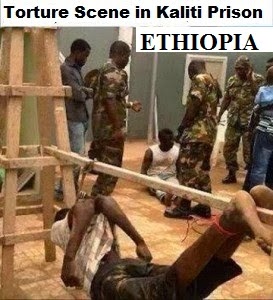
Government security agents frequently harass and intimidate bloggers, online journalists, and ordinary users for their online activities. Independent bloggers are often summoned by the authorities to be warned against discussing certain topics online, while activists claim that they are consistently threatened by state security agents for their online activism. Bloggers from Zone9, for example, reported suffering a considerable amount of harassment for their work, leading them to go silent for several months. Shortly after the blog announced on Facebook that it was resuming activities in April 2014, six Zone9 bloggers were arrested and sent to a federal detention center in Addis Ababa where the torture of detainees is reportedly common.[93] The active Gmail accounts belonging to several of the Zone9 bloggers[94] while in detention suggests that they may have been forced give their passwords to security officials against their will.
[1] Rebecca Wanjiku, “Study: Ethiopia only sub-Saharan Africa nation to filter net,” Computerworld, October 8, 2009, http://news.idg.no/cw/art.cfm?id=353092F0-1A64-67EA-E4FBE79C305B60AB.
[2] Tom Jackson, “Telecoms slow down development of Ethiopian tech scene – iceaddis,” humanipo, October 22, 2013, http://www.humanipo.com/news/34843/telecoms-slow-down-development-of-ethiopian-tech-scene-iceaddis/.
[3] International Telecommunication Union, “Percentage of Individuals Using the Internet, 2000-2013,” http://www.itu.int/en/ITU-D/Statistics/Pages/stat/default.aspx.
[4] International Telecommunication Union, “Fixed (Wired)-Broadband Subscriptions, 2000-2013.”
[5] International Telecommunication Union, “Mobile-Cellular Telephone Subscriptions, 2000-2013.”
[6] John Koetsier, “African mobile penetration hits 80% (and is growing faster than anywhere else),” Venture Beat, December 3, 2013, http://venturebeat.com/2013/12/03/african-mobile-penetration-hits-80-and-is-growing-faster-than-anywhere-else/.
[7] International Telecommunication Union, “Ethiopia Profile (Latest data available: 2013),” ICT-Eye, accessed August 1, 2014.
[8] World Bank, “Ethiopia Overview,” last updated July 21, 2014, http://www.worldbank.org/en/country/ethiopia/overview.
[9] “Ethiopia – Telecoms, Mobile, Broadband and Forecasts,” Paul Budde Communication Pty Ltd. June 2014,http://www.researchandmarkets.com/reports/1222503/ethiopia_telecoms_mobile_broadband_and.
[10] Ethio Telecom’s Facebook page, post on September 7, 2014, accessed October 1, 2014, https://www.facebook.com/permalink.php?story_fbid=1501293840115809&id=1435268306718363.
[11] International Telecommunication Union, “Ethiopia Profile (Latest data available: 2013),” ICT-Eye, accessed August 1, 2014, http://www.itu.int/net4/itu-d/icteye/CountryProfileReport.aspx?countryID=77.
[12] Kebena, “Internet Access in the Capital of Africa, Addis Ababa,” video, EthioTube.net, posted June 19, 2010, last accessed August 1, 2014, http://www.ethiotube.net/video/9655/Internet-Access-in-the-Capital-of-Africa-Addis-Ababa.
[13] Akamai, “Average Connection Speed: Ethiopia,” map visualization, The State of the Internet Q1 (2014), http://www.akamai.com/stateoftheinternet/soti-visualizations.html#stoi-map.
[14] Akamai, “Broadband Adoption (connections to Akamai >4 Mbps): Ethiopia,” map visualization, The State of the Internet, Q1 2014, http://www.akamai.com/stateoftheinternet/soti-visualizations.html#stoi-map.
[15] Akamai, “Narrowband Adoption (connections to Akamai <256 kbps): Ethiopia,” map visualization, The State of the Internet, Q1 2014, http://www.akamai.com/stateoftheinternet/soti-visualizations.html#stoi-map.
[16] Bewket Abebe, “Internet Connection Grief,” Addis Fortune, September 29, 2013, http://allafrica.com/stories/201310020838.html?viewall=1.
[17] Aaron Maasho, “Ethiopia signs $700 mln mobile network deal with China’s Huawei,” Reuters, July 25, 2013, http://www.reuters.com/article/2013/07/25/ethiopia-mobile-huawei-idUSL6N0FV4WV20130725.
[18] Bewket Abebe, “Internet Connection Grief,” Addis Fortune, September 29, 2013.
[19] Brian Adero, “WIOCC-EASSy Cable Ready for Business,” IT News Africa, July 23, 2010, http://www.itnewsafrica.com/?p=8419.
[20] Al Shiferaw, “Connecting Telecentres: An Ethiopian Perspective,” Telecentre Magazine, September 2008, http://bit.ly/16DdF6Z.
[21] Jim Cowie, “Syria, Venezuela, Ukraine: Internet Under Fire,” Renesys (blog), February 26, 2014, http://www.renesys.com/2014/02/internetunderfire/.
[22] Renesys, Twitter post, July 18, 2013, 5:10pm, https://twitter.com/renesys/status/357955490237513729/photo/1.
[23] Bewket Abebe, “Internet Connection Grief,” Addis Fortune, September 29, 2013.
[24] Yonas Abiye, “Network Blackout Hits Addis As Parliament Slams Ethio Telecom,” The Reporter, February 8, 2014, http://allafrica.com/stories/201402102129.html.
[25] “Proclamation No. 281/2002, Telecommunications (Amendment Proclamation,” Federal Negarit Gazeta No. 28, July 2, 2002, http://bit.ly/1snLgsc.
[26] Ethiopian Telecommunication Agency, “License Directive for Resale and Telecenter in Telecommunication Services No. 1/2002,” November 8, 2002, accessed August 4, 2014,http://bit.ly/1pUtpWh.
[27] “US urge Ethiopia to Liberalise Telecom Sector,” Africa News via Somali State, March 10, 2010, http://www.somalistate.com/englishnewspage.php?articleid=4638; Technology Strategies International, “ICT Investment Opportunities in Ethiopia—2010,” March 1, 2010, http://bit.ly/1bmsGvq.
[28] “Ethio Telecom to remain monopoly for now,” TeleGeography, June 28, 2013, http://www.telegeography.com/products/commsupdate/articles/2013/06/28/ethio-telecom-to-retain-monopoly-for-now/.
[29] “Ethiopia’s Ethio Telecom signs deal with China’s ZTE,” BBC, August 19, 2013, http://www.bbc.co.uk/news/world-africa-23754626.
[30] “Out of reach,” The Economist, August 24, 2013, http://www.economist.com/news/middle-east-and-africa/21584037-government-expands-mobile-phone-network-tightens-its-grip-out-reach.
[31] Matthew Dalton, “Telecom Deal by China’s ZTE, Huawei in Ethiopia Faces Criticism,” The Wall Street Journal, January 6, 2014,http://online.wsj.com/news/articles/SB10001424052702303653004579212092223818288.
[32] “Out of reach,” The Economist, August 24, 2013.
[33] Based on allegations that the Chinese authorities have provided the Ethiopian government with technology that can be used for political repression—such as surveillance cameras and satellite jamming equipment—in the past. See: “China Involved in ESAT Jamming,” Addis Neger, June 22, 2010, http://addisnegeronline.com/2010/06/china-involved-in-esat-jamming/, Gary Sands, “Ethiopia’s Broadband Network – A Chinese Trojan Horse?” Foreign Policy Association, September 6, 2013, http://foreignpolicyblogs.com/2013/09/06/ethiopias-broadband-network-a-chinese-trojan-horse/.
[34] Daniel Berhane, “Ethiopia’s Web Filtering: Advanced Technology, Hypocritical Criticisms, Bleeding Constitution,” Daniel Berhane’s Blog, January 16, 2011,http://danielberhane.wordpress.com/2011/01/16/ethiopias-web-filtering-advanced-technology-hypocritical-criticisms-bleeding-constitution/.
[35] “Ethiopia Introduces Deep Packet Inspection,” Tor, May 31, 2012, https://blog.torproject.org/blog/ethiopia-introduces-deep-packet-inspection; Warwick Ashford, “Ethiopian Government Blocks Tor Network Online Anonymity,” Computer Weekly, June 28, 2012, http://www.computerweekly.com/news/2240158237/Ethiopian-government-blocks-Tor-Network-online-anonymity.
[36] Test conducted by an anonymous researcher contracted by Freedom House.
[37] “Citizen Lab collaborates with Human Rights Watch on Internet censorship testing in Ethiopia,” Citizen Lab (blog), April 16, 2014, https://citizenlab.org/2014/04/citizen-lab-collaborates-human-rights-watch-internet-censorship-testing-ethiopia/. “Ethiopia 2013 Testing Results,” Citizen Lab (Google Drive document), accessed September 8, 2014,https://docs.google.com/spreadsheet/pub?key=0Ah0XQ-1lDRPYdE9JYzBPNWZudEdXMXl4VVk0TC1JNXc&gid=0.
[38] “Ethiopia ‘Blocks’ Al Jazeera Websites,” Al Jazeera, March 18, 2013, http://www.aljazeera.com/news/africa/2013/03/201331793613725182.html.
[39] Websites blocked were all reportedly accessible via proxy servers. See: “Twitter and Facebook Access Restored After 12-Hour Blackout,” OPride, July 19, 2013,http://www.opride.com/oromsis/news/horn-of-africa/3685-twitter-and-facebook-blocked-in-ethiopia.
[40] An old Amharic saying that demonstrates the country’s deep-rooted culture of fear —“Stay away from electricity and politics”—recently evolved to: “Stay away from Social Media.” The contemporary saying implies that giving one’s political opinions via social media could cause grave bodily injury similar to exposing oneself to electricity.
[41] Mohammed Ademo, Twitter post, July 25, 2012, 1:08 p.m., https://twitter.com/OPride/status/228159700489879552.
[42] Mohammed Ademo, “Media Restrictions Tighten in Ethiopia,” Columbia Journalism Review, August 13, 2012, http://www.cjr.org/behind_the_news/ethiopia_news_crackdown.php?page=all.
[43] Ory Okolloh Mwangi, Twitter post, November 6, 2013, 9:20 a.m., https://twitter.com/kenyanpundit/status/398077421926514688.
[44] Research conducted by Freedom House consultant.
[45] Human Rights Watch, “They Know Everything We Do,” March 2014, pg 57, http://www.hrw.org/sites/default/files/reports/ethiopia0314_ForUpload_0.pdf.
[46] Bogdan Popa, “Google Blocked in Ethiopia,” Softpedia, May 3, 2007, http://news.softpedia.com/news/Google-Blocked-In-Ethiopia-53799.shtml.
[47] Zone9 blog hosted at: http://zone9ethio.blogspot.com/.
[48] A 2014 report from Human Rights Watch also noted that the term “aljazeera” was unsearchable on Google while the news site was blocked from August 2012 to mid-March 2013. According to HRW research, the keywords “OLF” and “ONLF” (acronyms of Ethiopian opposition groups) are not searchable on the unencrypted version of Google (http://) and other popular search engines. Human Rights Watch, “They Know Everything We Do,” March 2014, pg 56, 58.
[49] Interview with individuals working in the telecom sector, as well as a test conducted by a Freedom House consultant who found it was not possible for an ordinary user to send out a bulk text message.
[50] Markos Lemma, “Disconnected Ethiopian Netizens,” Digital Development Debates(blog), http://www.digital-development-debates.org/issues/09-prejudice/african-innovation/disconnected-ethiopian-netizens/.
[51] “Ethiopia Trains Bloggers to attack its opposition,” ECADF Ethiopian News & Opinions, June 7, 2014, http://ecadforum.com/2014/06/07/ethiopia-trains-bloggers-to-attack-its-opposition.
[52] Selamawit, “Millions of Ethiopians share their dream for our country in the new year. What is your dream?” Sodere, September 6, 2013, http://sodere.com/profiles/blogs/millions-of-ethiopians-share-their-dream-for-their-country-in-the.
[53] Ndesanjo Macha, “Ethiopians: #SomeoneTellSaudiArabia to Stop Immigration Crackdown,” Global Voices (blog,) November 13, 2013, http://globalvoicesonline.org/2013/11/13/ethiopians-someonetellsaudiarabia-to-stop-immigration-crackdown/.
[54] “#BBCtrending: Jailed bloggers spark Ethiopia trend,” BBC Trending, April 30, 2014, http://www.bbc.com/news/blogs-trending-27212472.
[55] Constitution of the Federal Democratic Republic of Ethiopia (1995), articles 26 and 29, accessed August 24, 2010, http://www.ethiopar.net/.
[56] Freedom of the Mass Media and Access to Information Proclamation No. 590/2008, Federal Negarit Gazeta No. 64, December 4, 2008.
[57] Article 19, “The Legal Framework for Freedom of Expression in Ethiopia,” accessed September 10, 2014, http://www.article19.org/data/files/pdfs/publications/ethiopia-legal-framework-for-foe.pdf.
[58] Freedom of the Mass Media and Access to Information Proclamation No. 590/2008, Federal Negarit Gazeta No. 64, December 4, 2008.
[59] “A Proclamation on Telecom Fraud Offence,” Federal Negarit Gazeta No. 61, September 4, 2012, http://www.abyssinialaw.com/uploads/761.pdf.
[60] The government first instituted the ban on VoIP in 2002 after it gained popularity as a less expensive means of communication and began draining revenue from the traditional telephone business belonging to the state-owned Ethio Telecom. In response to widespread criticisms, the government claimed that VoIP applications such as Skype would not be considered under the new law, though the proclamation’s language still enables the authorities to interpret it broadly at whim.
[61] Ethiopian Telecommunication Agency, “Telecommunication Proclamation No. 281/2002, Article 2(11) and 2(12),” July 2, 2002, accessed July 25, 2014,http://www.researchictafrica.net/countries/ethiopia/Telecommunications_(Amendment)_Proclamation_no_281:2002.pdf. As an amendment to article 24 of the Proclamation, the Sub-Article (3) specifically states, “The use or provision of voice communication or fax services through the internet are prohibited” (page 1782).
[62] A Proclamation on Telecom Fraud Offence.
[63] Article 19, “Ethiopia: Proclamation on Telecom Fraud Offences.”
[64] “Anti-Terrorism Proclamation No. 652/2009,” Federal Negarit Gazeta No. 57, August 28, 2009.
[65] International Labour Organization, “The Criminal Code of the Federal Democratic Republic of Ethiopia, Proclamation No. 414/2004, Article 44,”http://www.ilo.org/dyn/natlex/docs/ELECTRONIC/70993/75092/F1429731028/ETH70993.pdf.
[66] “The Criminal Code of the Federal Democratic Republic of Ethiopia.”
[67] “Six Members of Blogging Collective Arrested in Ethiopia,” Global Voices Advocacy, April 26, 2014, http://advocacy.globalvoicesonline.org/2014/04/26/six-members-of-blogging-collective-arrested-in-ethiopia/.
[68] Six members of Zone Nine, group of bloggers and activists are arrested” [in Amharic], Zone9 (blog), April 25, 2014, http://zone9ethio.blogspot.com/2014/04/9.html.
[69] “Nine Journalists and Bloggers Still Held Arbitrarily,” Reporters Without Borders, August 21, 2014, http://en.rsf.org/ethiopia-nine-journalists-and-bloggers-21-08-2014,46830.html.
[70] Such trumped-up charges were based on an online column Nega had published criticizing the government’s use of the Anti-Terrorism Proclamation to silence political dissent and calling for greater political freedom in Ethiopia. Nega is also the 2011 recipient of the PEN/Barbara Goldsmith Freedom to Write Award. Sarah Hoffman, “That Bravest and Most Admirable of Writers: PEN Salutes Eskinder Nega,” PEN American Center (blog), April 13, 2012, http://www.pen.org/blog/?p=11198. See also, Markos Lemma, “Ethiopia: Online Reactions to Prison Sentence for Dissident Blogger,” Global Voices, July 15, 2012, http://globalvoicesonline.org/2012/07/15/ethiopia-online-reactions-to-prison-sentence-for-dissident-blogger/; Endalk, “Ethiopia: Freedom of Expression in Jeopardy,” Global Voices, February 3, 2012, http://advocacy.globalvoicesonline.org/2012/02/03/ethiopia-freedom-of-expression-in-jeopardy/.
[71] “Two Ethiopian journalists held for a week without charge,” CPJ (news alert), August 9, 2013, http://cpj.org/2013/08/two-ethiopian-journalists-held-for-a-week-without.php.
[72] Interview conducted by Freedom House consultant.
[73] Human Rights Watch, “They Know Everything We Do,” March 2014, pg 62, http://www.hrw.org/sites/default/files/reports/ethiopia0314_ForUpload_0.pdf.
[74] Human Rights Watch, “They Know Everything We Do,” March 2014, pg 67.
[75] Human Rights Watch, “They Know Everything We Do,” March 2014, pg 52.
[76] Committee to Protect Journalists, “Ethiopian Blogger, Journalists Convicted of Terrorism,” January 19, 2012, http://cpj.org/2012/01/three-journalists-convicted-on-terrorism-charges-i.php.
[77] Yonas Abiye, “INSA to reign all-powering cyberspace,” The Reporter, November 9, 2013, http://www.thereporterethiopia.com/index.php/news-headlines/item/1217-insa-to-reign-all-powerful-over-cyberspace.
[78] “Informationa Network Security Agency (INSA) of Ethiopia is to be reestablished,” Dire Tube, November 5, 2013, http://www.diretube.com/articles/read-information-network-security-agency-insa-of-ethiopia-is-to-be-reestablished_3833.html#.UyDWIPldVz4.
[79] Fahmida Y. Rashid, “FinFisher ‘Lawful Interception’ Spyware Found in Ten Countries, Including the U.S.,” Security Week, August 8, 2012, http://www.securityweek.com/finfisher-lawful-interception-spyware-found-ten-countries-including-us.
[80] The document was seen by Freedom House consultant. Morgan Marquis-Boire et al., “You Only Click Twice: FinFisher’s Global Proliferation,” Citizen Lab (University of Toronto), March 13, 2013, https://citizenlab.org/2013/03/you-only-click-twice-finfishers-global-proliferation-2/.
[81] Marquis-Boire, “You Only Click Twice.”
[82] Liat Clark, “Ethiopian refugee ‘illegally’ spied on using British software,” Wired, February 17, 2014, http://www.wired.co.uk/news/archive/2014-02/17/illegal-spying-ethiopian-refugee.
[83] “Privacy International seeking investigation into computer spying on refugee in UK,” Privacy International (press release), February 17, 2014, https://www.privacyinternational.org/press-releases/privacy-international-seeking-investigation-into-computer-spying-on-refugee-in-uk; Liat Clark, “Ethiopian refugee ‘illegally’ spied on using British software.”
[84] Joshua Kopstein, “Hackers Without Borders,” The New Yorker, March 10, 2014, http://www.newyorker.com/online/blogs/elements/2014/03/hacked-by-ones-own-government.html.
[85] “American Sues Ethiopian Government for Spyware Infection,” Electronic Frontier Foundation (press release), February 18, 2014, https://www.eff.org/press/releases/american-sues-ethiopian-government-spyware-infection.
[86] “Kidane v. Ethiopia,” Electronic Frontier Foundation, last updated August 28, 2014, https://www.eff.org/cases/kidane-v-ethiopia.
[87] Bill Marczak et al., “Hacking Team and the Targeting of Ethiopian Journalists,” Citizen Lab, February 12, 2014, https://citizenlab.org/2014/02/hacking-team-targeting-ethiopian-journalists/.
[88] “Customer Policy,” Hacking Team, accessed February 13, 2014, http://hackingteam.it/index.php/customer-policy.
[89] Declan McCullagh, “Meet the ‘Corporate Enemies of the Internet’ for 2013,” CNET, March 11, 2013, accessed February 13, 2014, http://news.cnet.com/8301-13578_3-57573707-38/meet-the-corporate-enemies-of-the-internet-for-2013/.
[90] Craig Timberg, “Foreign regimes use spyware against journalists, even in U.S.,” Washington Post, February 12, 2014, http://wapo.st/McG3TZ.
[91] Groum Abate, “Internet Cafes Start Registering Users,” Capital, December 25, 2006, http://www.capitalethiopia.com/index.php?option=com_content&view=article&id=259:internet-cafes-start-registering-users-&catid=12:local-news&Itemid=4.
[92] Human Rights Watch, “They Know Everything We Do,” March 2014, pg 67.
[93] “Timeline,” Zone9ers ‘Trial’ (blog), April 26, 2014, http://trialtrackerblog.org/press/.
[94] Anonymous Freedom House researcher reported seeing several of the detained Zone9 bloggers actively online in Gmail chat.
Finfinneen Handhuura Oromiyaa Taatullee Addis Ababaan Godaannisa Gabrummaati, Jafer Ali November 20, 2014
Posted by OromianEconomist in Africa, Amnesty International's Report: Because I Am Oromo, Daraartuu Abdataa, Ethiopia's Colonizing Structure and the Development Problems of People of Oromia, Ethiopia's Colonizing Structure and the Development Problems of People of Oromia, Afar, Ogaden, Sidama, Southern Ethiopia and the Omo Valley, Ethnic Cleansing, Finfinnee is the Capital City of Oromia, Finfinnee n Kan Oromoo ti, Groups at risk of arbitrary arrest in Oromia: Amnesty International Report, Jafer Ali, NO to the Evictions of Oromo Nationals from Finfinnee (Central Oromia), Oromia, Oromians Protests, Oromiyaa.Tags: Africa, African Studies, Because I am Oromo, Economic and Social Freedom, Finfinnee, Genocide Against Oromo People, Genocide against the Oromo, Human rights violations, Jafer Ali, National Self Determination, Oromia, Oromiyaa, Oromo, Oromo people, Oromo Protests, Oromummaa
add a comment


Finfinneen Handhuura Oromiyaa Taatullee Addis Ababaan Godaannisa Gabrummaati | Jafer Ali
Qabeenya uumaa hunda keeysaa bu’urri guddaanii fii fiinxeen lafa hoggaa tahu oromooniis qabeenya uumaan badhaafame keeysaa guddichi lafuma isaati.Lafti oromoo bal’ina isii caalaa gabbatuu fii ameeytii tahuu isiitiin beekkamti. Magariisa tahuu daran tan qabeenya bishaaniitiin badhaate tahuu isiitiin jaalatamti. Gubbaa isii qofa osoo hintahin keeysi isiitiis albuda garagaraatiin kan duroome akka tahe niamanama. Dur irraa jalqabee masaanuun ollaa weeraraaf ittiduuluuniis kanumaafi.
Bar dhibbee 19ffa keeysa eega biiyti oromoo kiyyoo Miniliik 2fa jala kufte irraa eegalee, lafti namaa wajjiin weerartoota habashaatiif hiramtee, abbaan biyyaa lafuma isaa irratti sirna gabbaar ja’amee beekkamuun ciisanyaa ykn hojjataa qonnaa tahuun yaadannoo jaarraa dabreeti.
Warraaqsa ummatoota Ethiopia kan bara 1974 irratti lafti tan qotee bulaa akka taatu labsamuun abbootii lafaa hiddaan buqqaasullee mootummaan dargii ifumaafuu abbaa lafaa haaraya itti tahuudhaan qoteebulaan ciisanyaa mootummaa malee abbaa lafaa akka hintahin shalaguun nama hindhibu. Oromoo laalchiseetiis dhugaadhaa dargiin ummata oromoo qilleensa irrattillee tahu, akka sabaati beekuudhaaf dirqamullee lafa isaa
(oromiyaa) beekuudhaaf ammoo osoo hudhamuuti kufa ka’insa hinqabne kufuu mudate.Seenaa empaayera kanaa keeysatti juuzni biraa guddaan jijjiirama mootummaa kan bara 1991 hoggaa tahu hunda dura ammoo geeddarama mootummaa malee geeddarama sirna siyaasaa akka hintahin jala muramuudha qaba. Haatahu malee sabni oromoo kan gaafa dargii qilleensa irratti beekkamuu ture mootumma kana jalatti lafti isaatiis OROMIYAA ja’amtee seeraan beekkamuu dandeeyseeti jirti. Kuniis gumaata mootummaan kun oromoof arjoome osoo hintahin bu’aa dhiiga gootota orommoti.
Lafti oromiyaa akka waliigalaatti seeraan beekkamtee daangawuun waan tokko tahee, mootummaan mooteeqorkeen kun rakkoollee tokko tokko uumuuf ykn habaqaaluuf tattaafachuun isaa ammoo hinoolamne. Fakkeenyaaf daangaa sabaa fii sablammootaa kanneen oromiyaa daandeysan hunda irratti jechuun nidandayamaa, bakka takka takkatti ona (aanaa) tokko tokko, baka gariitti ammaas araddaalee hedduu abboommee laguudhaan akka Oromiyaa waliin gaafii daangaa keeysa galan taasisaati as afe. Kanneen keeysaahiif magaalota akka Dirree Dhawaa, Harar, Jijjiga, Moyyaaleefii Awaash faa maqaa dhahuun nidandayama. Bifa kanaan naannoo hundaan lafa Oromyaa kottoonfachiisuun shira mootummaa kanaa kan fuulduraas Oromoo fii sabaa sablammoota walgalaafachiisuuf karoorfamee bal’inaan itti hojjatamaa jiru hoggaa tahu tooftaan biraa ammaas tan magaalaa finfinnee irratti xiyyeefatte tana tahuu isiiti.
Maggaalaan Finfinnee hundeeyfamuma isii irraa kaaftee kan bu’uramte akkuma magaalota biraa kanneen Oromiyaa keeysatti arkaman hundaatti qubsuma weerartootaa hoggaa taatu barreeysitoota seenaa birattiis magaalota batalaa ykn mishigii ja’amaniiti beekkaman. Kana jechuuniis bara weerara miniliik keeysa lafa nafxanyootni ummata naannawaa humnaan buqqaasanii qubatan hoggaa tahan lakkuma qubsumti tun babal’achaa deemtuuniis magaalawaa deemuu isaanii caalaa ummata Oromoo daran madditti dhiibaa akka dhufan qabeentaa ummata magaalotaa kanaa kan ammallee calaqqisu irraa hubachuun nidandayama.
Magaalaan finfinneetiis qubsuma miniliikii fii ashkaroota isaa taatee eega bu’uramtee as bara baraan babal’achaa dhufuun isii hangam takka ummata oromoo madditti dhiibaa akka dhufte shalaguun nama hindhibu. Kana jechuun magaalaan takka eega hundooyte hinguddtin jechuu akka hintahin osoo hindagatamin wayta bal’attu kana ammoo ummata naannawaa buqqaasuudha balaan isii. babal’atinsa magaalaa keeysattiis qubsumti naannawaa akka dhunfatamtu kanuma eeggamu tahullee, warra buqqa’u san kafaltii gayaa kennuudhaan osoo raaw’atamee dandamata ture. Mootummaan wayyaanee jalqabuma irraahuu lafti kan mootummaati je’ee seeruun isaa saamichuma lafaa kanaaf ifqopheeysuu isaa akka tahe hubachuun nidandayama. Wayta magaalaan finfinnee babal’attu qotee bulaa naannawaa hiyyummaaf saaxiluu daran abbootiin qabeenyaa kanneen lafa tana horataniis galtuu alagaa tahuu isaaniiti balaan lamadaa. Akkaataa kanaan wayta magaalaan tun lafa dabalachaa babal’attu hunda oromoo qofa osoo hintahin oromummaaniis waliin haxaawamtee akka madditti bahaa deemtuus dagatamuu hinqabu. Fakkeenyaaf magaalaa finfinnee tan handhura oromiyaa tiifii maqaafillee tahu galma mootummaa oromiyaa taate tana keeysatii afaan hujii afaan amaaraa hoggaa tahu magaalota amma ammatamuuf deeman kanneen akka laga xaafoo keeysattiis guyyaa bulchiinsa finfinnee jala kufan irraa jalqabee afaan oromoo afaan hujii fii barnootaa tahuun akka hafu irra daddeebinee sodaachuutu nurraa eeggama. Magaalaan finfinnee duriis tahe arraa fii boruus handhura oromiyaa tahuun isii hafuu baattullee, hamma dhunfata oromiyaa jala ooltee oromo oromoo shurufkooytutti ammoo addis ababaan godaannisa gabrummaati wanni jennuufiis tanaafi.
Guddinni finfinnee kan oromoo madditti dhiibaa adeemsifamu kun galmi isaa lakkuma deemuun gama kaabaatiin naannoo amaaraatiin fii gama kibbaatiin ammaas naannoo ummatoota kibbaatiin waliin tuquudhaan oromiyaa amma jirtu tana baka lamatti fottoysuu irratti kan xiyyeefate taachaa shalaguuniis gamnummaadha. Gaafas kutaa walloo kan amma naannoo amaaraa jalatti buluu wajjiin oromiyaa guddittii takka tahuun hafee oromiyaa xixiqqoo sadihiifii sanii ol uumuuf akka yaaddamaa jiruus hubachuun nidandayama. Kuniis bulchiinsa qofa osoohintahin ilaalcha sammuu tiifii sabboonummaa oromootiis qoqqooduu fii darachiisuuf akka tahe shalaguun nama hindhibu.
Walumaagalatti shira mootummaan habashaa dhufaa fii dabraan saganteeyfatee saba kanaan oggolchuuf tattaafatuuf oromoon yoomiyyuu taanaan duuyda shiireysee bitamee hinbeeku. Lolli walloo, kan arsiitii fii calanqootiis kanuma mirkaneeysa. Fincilli barattoota oromoo kan amma masrer planii wayyaannee kana mormuudhaan qabsiifamees ittifufa diddaa abrummaa kan oromoon bara baraan gaggeeysaa ture hoggaa tahu wareegamtootni fincila kanaatiis gootota yoomiyyuu seenaan faarsuu akka taham ragaa bahuun barbaada.
Jafer Ali
Gaazexeysaa fii kitaabsaa
20 Cam, 2014, California USA
UNPO Report on Ogaden persecution in Ethiopia November 18, 2014
Posted by OromianEconomist in Africa, Aid to Africa, Amnesty International's Report: Because I Am Oromo, Colonizing Structure, Ethiopia's Colonizing Structure and the Development Problems of People of Oromia, Afar, Ogaden, Sidama, Southern Ethiopia and the Omo Valley, Free development vs authoritarian model, Ogaden, Oromia, The Tyranny of TPLF Ethiopia, Uncategorized, UNPO.Tags: Africa, African Studies, Genocide, Genocide against Ogaden People, Genocide against the Oromo, National Self Determination, Ogaden People, Oromia, Oromo, Oromo people, The Tyranny of Ethiopia, Tyranny
add a comment
UNPO Publishes Report on Ogaden persecution in Ethiopia

In recent years the Ogaden people in Eastern Ethiopia have increasingly suffered various human rights abuses as the Ethiopian State continues its mission of ethnic oppression.
These violations of human rights often compound the current humanitarian crisis that is developing in the region; with foreign aid funds supporting a state that actively deters humanitarian organisations from operating in the Ogaden region.
To help increase awareness about the worsening situation for the Ogaden people, UNPO has published abackground report outlining some of the major human rights that currently exist.
This report focuses on many of the Ogaden people’s civil and political rights that have been violated by the Ethiopian Government, and puts them into the broader context of the general state of human rights compliance throughout the whole country.
Cause for serious concern continues to be the suppression of the free media and freedom of expression within Ethiopia. Silencing the voices of those willing voice concerns of state suppression means that the outside world is never likely to know the full scale of rights violations that are taking place within the country.
Of further concern to international law is the occurrence of extra-territorial activity of the Ethiopian State in both targeting political opposition and persecuting the Ogaden people. The fact that these actions have now begun to span borders makes it even harder to encourage transparency on the issues.
For a full copy of the report click @
Tom Lantos Human Rights Commission: Hearing on the Human Rights Dilemmas in Ethiopia Testimony of Felix Horne, Human Rights Watch Researcher, Africa Division November 18, 2014
Posted by OromianEconomist in Africa, Africa Rising, African Poor, Aid to Africa, Amnesty International's Report: Because I Am Oromo, Ethiopia's Colonizing Structure and the Development Problems of People of Oromia, Afar, Ogaden, Sidama, Southern Ethiopia and the Omo Valley, Ethnic Cleansing, Human Rights Watch on Human Rights Violations Against Oromo People by TPLF Ethiopia, Jen & Josh (Ijoollee Amboo), Land Grabs in Oromia, Oromia, Oromians Protests, Oromo students protests, Tyranny.add a comment


Mr. Chairman and members of the committee, thank you for providing me the opportunity to speak today about the human rights situation in Ethiopia.
The other panelists have articulated some of the critical issues that are facing Ethiopia ahead of the May 2015 elections. I would like to elaborate on human rights concerns associated with Ethiopia’s many development challenges.
Ethiopia is the one of the largest recipients of development assistance in the world, including more than $800 million in 2014 from the US government. Many of Ethiopia’s 94 million people live in extreme poverty, and poverty reduction is rightly one of both the US and Ethiopian government’s core goals. Improving economic and human development is fundamental to ensuring that Ethiopians are able to enjoy their rights to health care, education, shelter, food and water, and Ethiopia’s government, civil society, international donors and private investors all have important roles contributing to the realization of these rights.
But sustainable development also requires a commitment to the full range of human rights, not just higher incomes, access to education and health care, but the ability for people to express their views freely, participate in public policy decision-making, join associations of their choice, have recourse to a fair and accessible justice system, and live free of abuse and discrimination.
Moreover, development that is not rooted in respect for human rights can be counter-productive, associated with abusive practices and further impoverishment of people already living in situations of extreme poverty. In Ethiopia, over the past few years Human Rights Watch has documented disturbing cases where international donors providing development assistance are turning a blind eye to government practices that fail to respect the rights of all beneficiaries. Instead of improving life in local communities, these projects are proving harmful to them. And given the repression of independent voices, media and associations, there are no realistic mechanisms for many local communities to express their views to their government. Instead, those who object or critique the government’s approach to development projects face the prospect of intimidation, harassment and even serious abuse.
In 2011 in Ethiopia’s western region, Gambella, Human Rights Watch documented such abuses during the implementation of the first year of the government’s “villagization” program. Gambella is a region populated by indigenous groups who have suffered from political marginalization and lack of development for decades. In theory the villagization program aimed to address some of these concerns. This program required all indigenous households in the region to move from their widely separated homes into larger villages – ostensibly to provide improved basic services including much-needed schools, health clinics and roads.
I was in Gambella for several weeks in 2011 and travelled to 16 different villages in five different districts. I met with people who had not yet moved from their homes and others who had been resettled. I interviewed dozens of people who said they did not wish to move but were forced by the government, by police, and by Ethiopia’s army if necessary. People described widespread human rights violations, including forced displacement, arbitrary arrest and detention, beatings, and rape and other sexual violence. Thousands of villagers fled into neighboring countries where they became refugees. At the same time, in the new villages, many of the promised services were not available and the food security situation was dire.
The villagization program has also been implemented in other marginalized regions in Ethiopia. These regions are the same areas where government is leasing large pieces of land to foreign investors, often from India, China and the Gulf states, without meaningful consultation with local communities, without any compensation being paid to local communities, and with no benefits for local communities other than low-paying labor jobs on the plantations.
In the Omo valley in southern Ethiopia, Human Rights Watch found that the combination of sugar and cotton plantations and hydroelectric development is causing the displacement of up to 200,000 indigenous people from their lands. Massive amounts of water are being used for these projects which will have devastating impacts for Lake Turkana across the border in Kenya and the 300,000 indigenous people who live in the vicinity of the lake and depend upon it. The displacement of communities in the Omo valley is well underway. As in Gambella, communities in the Omo valley told Human Rights Watch about coercion, beatings, arrests and threats from military and police to force people to move to new settlements.
Human Rights Watch also found politically motivated abuse in development programs. In 2010, we documented discrimination and “political capture” in the distribution of the benefits of development programs especially prior to the 2010 elections. Opposition party supporters and others who did not support the ruling party were denied access to some of resources provided by donor-funded programs, including food aid, micro credit, seeds, fertilizers, and other critical agricultural inputs needed for food security, and even employment opportunities. Schools, funded as part of education programs by the US and other development partners, were used to indoctrinate school children in ruling party ideology and teachers were required to report youth perceived to support the opposition to the local authorities. These government practices, many of which continue today, show the intense pressure put on Ethiopian citizens to support the ruling party, and the way in which development aid is manipulated to discriminate against certain communities.
All of these cases have several common features. First, the Ethiopian government routinely denies the allegations without investigation, claiming they are politically motivated, while simultaneously restricting access for independent media and investigators. Second, these programs are directly and indirectly funded by Western donors, who seem unwilling to acknowledge, much less address human rights concerns in Ethiopia.
Monitoring and evaluation of these programs for human rights abuses is inadequate. Even when donors carry out assessments to look into the allegations, as has happened in Gambella, they are not conducted rigorously and do not ensure victims of abuses can speak freely and safely. In the current environment in Ethiopia, it is essential for anyone seeking to investigate human rights violations to go to locations where victims can speak openly, to understand the dynamics of the local communities, and recognize the depths of the fear they are experiencing.
All of these problems are exacerbated by the ongoing government crackdown on the media and civil society. The independent press has been ravaged since the 2010 election, with the vast majority of journalists terrified to report anything that is remotely critical of the government. In October I was in a country neighboring Ethiopia where over 30 journalists have fled in the past few months alone. I spoke to many of them: their papers were closed, their families were threatened, and many had been charged under repressive laws merely because they criticized and questioned the Ethiopian government’s policies on development and other issues. I spoke with someone who was forced to seek asylum abroad because he had questioned in writing whether the development of Africa’s largest dam on the Nile River was the best use of money in a country where poverty is pervasive.
As for Ethiopian civil society, it has been decimated by another law, the Charities and Societies Proclamation. It has made obtaining foreign funding nearly impossible for groups working on human rights, good governance, and advocacy. Leading members of the human rights movement have been forced to flee abroad.
Some people take to the streets to peacefully protest. Throughout 2014 there were various protests throughout Ethiopia. In many of these protests, including during the student protests in the Oromia region in April and May of this year, the security forces used excessive force, including the use of live ammunition against the students. We don’t even know how many Oromo students are still detained because the government publicizes no information, there is no comprehensive human rights monitoring and reporting, and family members are terrified of reporting the cases. Members of the Muslim community who organized protests in 2012 against what they saw as government interference in religious affairs have also paid an enormous price for those demonstrations, with many beaten or arrested and most of the protest organizers now imprisoned on terrorism charges.
Finally, bringing about change through the ballot box is not really an option. Given that 99.6 percent of the parliamentary seats in the 2010 election went to the ruling party and that the political space has shrunk dramatically since then, there is little in the way of a viable opposition that can raise questions about government policy, including development plans, or other sensitive topics.
This situation leaves Ethiopians no real means to express concerns over the policies and development strategies imposed by the government. They either accept it, they face threats and imprisonment for speaking out, or they flee their country as thousands have done. The refugee communities in countries neighboring Ethiopia are full of individuals who have tried to raise concerns in all of these ways, and are now in exile.
To conclude, we all recognize that Ethiopia needs and requires development. The problem is how development is being undertaken. Development projects need to respect the rights of the local communities and improve their quality of life, regardless of ethnicity or political perspective. The United States and Ethiopia’s other major partners can and should play a leading role in supporting sustainable, rights-respecting development. The US should not accept arguments that protecting human rights is in contradiction to development goals and implementation.
In 2014, the appropriations bill required the US to scrutinize and suspend funding for development programs in Ethiopia that might contribute to forced evictions in Ethiopia, including in Gambella and Omo. This was an important signal that the abuses taking place were unacceptable, and this should be maintained in the upcoming FY15 appropriations bill, whether it is a stand-alone bill or a continuing resolution.
As one of Ethiopia’s key partners and supporters of Ethiopia’s development, the US needs to do more to ensure it is rigorously monitoring and consistently responding to human rights abuses in Ethiopia, both bilaterally and multilaterally. The US should be pressing the Ethiopian government to ensure that there is genuine consultation on development initiatives with affected communities, that more robust monitoring is put in place to monitor for potential abuses within programs, and that independent civil society, both domestic and foreign, are able to monitor and report on rights abuses. Respect for human rights is first and foremost a concern of all Ethiopians, but it is also central to all US interests in Ethiopia, from security to good governance to sustainable development.
Felix Horne, Ethiopia Researcher, Human Rights Watch
Joshua Klemm, International Rivers
Read more @ http://www.hrw.org/news/2014/11/17/tom-lantos-human-rights-commission-hearing-human-rights-dilemmas-ethiopia
http://ethsat.com/video/esat-special-report-on-congressional-hearing-on-human-rights-nov-18-2014/
In Defense of the Latest Amnesty International (AI) report Repression in the Oromia, Begna Dugassa, Ph.D November 15, 2014
Posted by OromianEconomist in Africa, Amane Badhaso, Amnesty International's Report: Because I Am Oromo, Ethiopia's Colonizing Structure and the Development Problems of People of Oromia, Afar, Ogaden, Sidama, Southern Ethiopia and the Omo Valley, Ethnic Cleansing, Groups at risk of arbitrary arrest in Oromia: Amnesty International Report, Human Rights Watch on Human Rights Violations Against Oromo People by TPLF Ethiopia, Janjaweed Style Liyu Police of Ethiopia, Land and Water Grabs in Oromia, The Tyranny of Ethiopia.Tags: Africa, African Studies, Because I Am Oromo: Amnesty International's Report, Genocide against the Oromo, Human rights violations, Land grabs in Africa, Oromia, Oromo, Oromo people
add a comment

Begna Dugassa, Ph.D
Email: begna.dugassa@gmail.com
Secretary General of the Amnesty International
Amnesty International Ltd
Peter Benenson House
1 Easton Street
London WC1X 0DW
United Kingdom
Dr. Shiferaw Teklemariam
Minster of Federal Affairs
P.O. Box 5718
Finfinee (Addis Ababa)
Getachew Ambaye
Minister of Justice
P.O. Box 1370
Finfinee (Addis Ababa)
Ethiopia
November 12, 2014
Subject: In Defense of the Latest Amnesty International (AI) report Repression in the Oromia
Dear the Secretary General & the Minsters of the Ethiopian Federal Government:
I am writing this letter to defend the latest Amnesty International (AI) report BECAUSE I AM OROMO’ Sweeping Repression in the Oromia Region of Ethiopia1 from the attacks and mischaracterizations of the Ethiopian government presented on BBC Radio and other media outlets. I believe I am entitled to do this for four reasons.
The first reason is, I was born and raised in Oromia among the followers of the Oromo indigenous religion– Waqefaata. I have witnessed human violations perpetuated by consecutive Ethiopian regimes. During the Haile Selassie regime, I witnessed my family members giving a quarter of their harvests to the Abyssinians and paying taxation without representation in the government. I witnessed many Oromo family members tried not to allow baptizing their children in the Abyssinian Orthodox Church. In the belief that if someone first goes through the Waqefaata ceremony known as Amachisa, the person will remain Waqefaata, my community members developed strategy to take their children through the indigenous ceremony first. Accordingly, in the Amachisa ceremony I got the name Tolera = things are good. After that, they had me baptized because the Oromo people were forced to baptize their children in the Orthodox Church. In the ceremony of baptism they gave me a name Gebre Giyorgis = the slave of George. I leave it to the readers to compare the differences in meaning between the two names.
I heard many stories about many innocent Oromo persons being charged with the crimes they did not commit. In most cases it was to free the Abyssinians from crimes they had committed. There is a case that I well knew- about an Oromo person being penalized for referring to the Supreme Court judge as (አንች=anchi) ‘you’, a term used in Amharic in reference to women,-instead of (እርስዎ=irswo) ‘you’ used in reference to the higher officials. The person did not use the term አንች (anchi) to undermine the Supreme Court. The reason was that he did not fully understand the Amharic language. This means that the Oromo people’s cultural rights are regularly violated and such violations are legal. As the UN document clearly states “human rights are indivisible, interrelated and interdependent”; the rights of the Oromo people to social, economic, political and cultural rights are being violated and this is clearly demonstrated in this case of a person being penalized for making a grammar mistake.
— Full Document in PDF
Click to access In-Support-Amensty-International-Report-A.pdf
Amnesty International’s report titled, “‘Because I Am Oromo’: A Sweeping Repression in Oromia …” can be accessed here.
Ethiopian regimes (past & present) have committed genocide against the Oromo people: 28TH OSA ANNUAL CONFERENCE PRESENTATION BY HABTAMU DUGO November 13, 2014
Posted by OromianEconomist in Aannolee and Calanqo, Amane Badhaso, Amnesty International's Report: Because I Am Oromo, Ayantu Tibeso, Because I am Oromo, Ethiopia's Colonizing Structure and the Development Problems of People of Oromia, Afar, Ogaden, Sidama, Southern Ethiopia and the Omo Valley, Ethnic Cleansing, Genocidal Master plan of Ethiopia, Groups at risk of arbitrary arrest in Oromia: Amnesty International Report, Human Rights Watch on Human Rights Violations Against Oromo People by TPLF Ethiopia, Janjaweed Style Liyu Police of Ethiopia, Jen & Josh (Ijoollee Amboo), Oromians Protests, Oromo, Oromo Nation.Tags: African Studies, Genocide against the Oromo, Geonocide, Oromia, Oromo, Oromo people
add a comment

See also Amnesty International report:
ETHIOPIA: ‘BECAUSE I AM OROMO’: SWEEPING REPRESSION IN THE OROMIA REGION OF ETHIOPIA @
http://www.amnesty.org/en/library/info/AFR25/006/2014/en
Cooperation with the Regime Hostile to the Peoples’ of Ethiopia is Against the Principles of International Law (A Statement by the Oromo Liberation Front in Support of Report of Amnesty International on Human Rights Violation Against the Oromo People) November 10, 2014
Posted by OromianEconomist in Africa, Amnesty International's Report: Because I Am Oromo, Because I am Oromo, Ethnic Cleansing, Groups at risk of arbitrary arrest in Oromia: Amnesty International Report, Human Rights Watch on Human Rights Violations Against Oromo People by TPLF Ethiopia, Janjaweed Style Liyu Police of Ethiopia, Jen & Josh (Ijoollee Amboo), Oromiyaa, Oromo, Oromo Liberation Front (OLF).Tags: A Statement by the Oromo Liberation Front in Support of Report of Amnesty International on Human Rights Violation Against the Oromo People, Africa, African Studies, Because I Am Oromo: Amnesty International's Report, Economic and Social Freedom, Genocide against the Oromo, Human rights violations, Oromia, Oromiyaa, Oromo, Oromo people
add a comment

Cooperation with the Regime Hostile to the Peoples’ of Ethiopia is Against the Principles of International Law
(A Statement by the Oromo Liberation Front in Support of Report of Amnesty International on Human Rights Violation Against the Oromo People)
OROMO LIBERATION FRONT
Date: 10-11-14 No.: 004/stm-abo/2014
In the history of shocking tortures of dictatorial regimes against the peoples ruled under their iron fist, the Ethiopian government cruelty is unparalleled. Since its ascension to power by force in 1991, the Ethiopian government’s records of human rights violations through extraordinary killings, forced disappearances, massive imprisonments, displacements and other means of suppression against the Oromo people is incalculable. The world has repeatedly witnessed that the incumbent regime of Ethiopia is a government that has adopted a policy of ruling by violence, and commit harsh and cruel actions flagrantly.
Although the political objective of the Oromo Liberation Front is primarily to achieve and protect the rights of the Oromo people, it has never remained silent when other oppressed peoples of the Ethiopian empire were attacked by the regime. It has confronted the regime, exposed and denounced its maltreatment and gross human rights abuses. The Oromo Liberation Front has accomplished its duty by repeatedly exposing and denouncing the brutal annihilation committed against the Sidama, Gambela, Ogadenia, Amhara and other peoples and also asked those powers assisting this government to stop and re-evaluate their policies and relations with such government. The Oromo Liberation Front will continue to do so. However, lack of adequate response and action from outside for the cry and appeals of these oppressed peoples fighting for democracy and liberty has encouraged the TPLF Government to continue its brutal actions against these peoples and still it has intensified state terrorism.
It is to be recalled that on October 28, 2014 the international human rights organization, Amnesty International, exposed and released a report on a gross human rights violations specifically focusing on the Oromo that has been committed by the TPLF government. The Oromo Liberation Front would like to thank Amnesty International in general, and the head of this report Mrs. Claire Beston in particular, for releasing this genuine and detailed report.
The Oromo Liberation Front understands that the investigation and compiling of this gross human rights violations has been conducted under difficult circumstances where the government of Ethiopia never allows such inquiry. Because of this, though Amnesty International has worked hard under such difficult situation and revealed the suffering of the Oromo people, the Oromo Liberation Front would like to inform the international public that the gross human rights violations committed by TPLF government against the Oromo people is by far larger, wide and shocking in scope than the report of Amnesty International.
Nowadays, no one knows how many prison cells exist in the empire state of Ethiopia. However, even if the places and the number of the prisons are not exactly known, the peoples in Ethiopia know very well that there are a number of secret prison cells in different parts of the country. In particular, members of the Oromo nationals who are suspected having link with the Oromo Liberation Front have been detained in prison cells outside Oromia so as to distance them from their relatives. Most of these Oromo nationals are detained in the region of TPLF, Tigray, and mistreated by TPLF loyalists who are purely Tigrayans.
In addition to mass killings, the TPLF government torture the Oromos psychologically, mutilate men’s sex organs, extract their teeth, rape Oromo girls and women, detain the Oromos in extremely hot and cold rooms, shower boiled and cold water on their body. They shoot and kill one Oromo in front of the other, and commit so many other types of torture in order to force the Oromo to refrain from demanding and exercising their rights. Arbitrary killings, mass detention and eviction of the oppressed peoples in general, and the Oromo in particular, from their ancestral land are the crimes against humanity that are blatantly committed and known to everyone.
These crimes have been committed for the last 23 years in front of the Western and Eastern diplomats, the African diplomats, and regional and international human rights organizations. It is sad that when all these gross human rights violations are committed in front of them, including the DAG and African Union (AU) – all of them remained silent. When such International entities are silent on such criminal acts, the peoples in Ethiopia are forced to raise questions, such as what are the meanings of good governance, democracy, and human rights that these institutions and organizations are talking about.
Consequently, based on the existing reality, the Oromo Liberation Front would like to pass the following messages:
1. Advocates of all human rights have a moral responsibility to thoroughly investigate and work on exposing and reporting the ongoing brutal actions by the Ethiopian government;
2. The diplomatic communities of different countries, including African diplomats, should not be silent on the brutal actions committed against the oppressed peoples of Ethiopia in general, and the most targeted Oromo people in particular. They should expose and put pressure on the TPF government to stop its inhuman actions;
3. Above all the African Union(AU) and DAG should stop their attempt to conceal the reality of the Oromo people, and they should work on stopping the inhuman actions of the TPLF regime;
4. The Oromo Liberation Front also calls on local and international media to assess the injustice that the TPLF government commit against the oppressed peoples of the empire state of Ethiopia and disclose it to the international public;
5. There are no peoples unaffected under the brutal and hostile regime of Ethiopia. All the peoples have faced their children detained, their properties confiscated and displaced from their ancestral land. Therefore, the Oromo Liberation Front would like to remind the oppressed peoples in Ethiopia that the only means to remove the dictatorial rule of the TPLF is a concerted action. The success of the Oromo liberation struggle paves way for the success of all other peoples; hence, the Oromo Liberation Front calls for other peoples in Ethiopia to cooperate with the Oromo people to remove this brutal regime of the TPLF;
6. The Oromo people: you are the prime victim, and you know more than anybody else that the Ethiopian government categorized you as its main enemy. Although others understand that great majority of you have been impoverished and subjected to harsh rule during the whole reign of the TPLF government, it is only if you step up the struggle for your rights that others extend their hand. Therefore, you should understand that there is no other way than intensifying your struggle, and we call for strengthening your resolve and unity for the struggle. You should understand that there is no alien who will willingly lose its advantage to protect your rights;
7. In addition, the Oromo Liberation Front calls on the Oromos in the Diaspora, to energetically appeal to different governments, human rights organizations, donors and organizations based on Amnesty International report and expose that the Oromo people are suffering under the TPLF regime and deserve attention to end this agony.
Victory to the Oromo People!
Oromo Liberation Front
November 10, 2014
Mootummaa Itophiyaa Ummata Diina Godhate Tumsuun Fallaa Seera Addunya ti
(Ibsa ABO Gabaasaa Amnesty International Deggaruun)
ADDA BILISUMMAA OROMOO
Guyyaa: 10-11-14 Lakk.: 004/stm-abo/2014
Mootummoota darara suukanneessaan ummatoota humnaan bulchan irratti raawwatan keessaa mootummaa Wayyaanee kan dursu hin jiru. Dhufaatii isaa bara 1991 irraa eegalee waggoota aangoo irra ture kanneen keessatti kan ifatti fixee fi dhoksaan dhabamsiise, jireenya irraa mancaasee kadhattummaaf dabarse kenne lakkoobsaan kaa’uun mootummaa abbaa irree kanaafuu hin laaffatu. Mootummaa “Humnaan bitaa jiraatuu” imaammata godhatuun raggaafatee bittaa isaa gara jabinaan itti fufee jiru, gochaa suukanneessaa fi faashistummaa raawwadhus “maaltu ana gaafata?” tuffii jedhuun ifatti raawwatu addunyaan irra deddeebi’ee kan ifatti arge dha.
ABOn mirgi ummatni Oromoo akka kabajamuuf durummaan qabsaa’uun akeeka isaa tahullee yeroon inni itti miidhaan ummatoota cunqorfamoo Empaayera Itophiyaa irra geessifamu dantaan sobamee callisuun bira hin tarre. Dura dhaabbatuun balaaleffateera. Saaxiluun abaareera. Fixiinsa gara jabinaa fi diinummaa ummatoota Sidaamaa, Gambeellaa, Ogadeniyaa fi Amaara dabalatee kanneen biro irratti raawwatame ifatti balaaleffatuun kanneen mootummaa shororkeessaa kana duuba goruun jajjabeessanii fi tumsan akka hariiroo isaanii gamaaggaman yaadachiisuun gahee isaa bahatee jira. Fuula duraafis kun kan itti fufu taha. Haa tahu malee iyyatni ummatoota cunqurfamoo bilisummaa fi dimokraasiif falmanii hawaasa addunyaa irraa deebii fi tarkaanfiin quubsaa fudhatamuu dhabuun mootummaan Wayyaanee sodaan alatti tarkaanfii suukanneessaa ummatoota irratti fudhatu akka itti fufuuf onnachiisee shororkeessummaa moootummaan durfamu akka itti fufetti jira.
Onkoloolessa 28, 2014 dhaabbatni mirga namoomaa Amnesty International dalagaa faashistummaa ummata Oromoo irratti xiyyeeffate mootummaan Wayyaanee raawwatu saxiluun gabaasa dhiheesuun kan yaadatamu dha. Amnesty International gabaasa kana dhiheesuu isaatiif galata guddaa jedhan. Addatti ammo itti mataa gabaasa kanaa Mrs. Kleer Bestonf ABO galata kenna.
Gabaasi dhihaate kunis haala ulfaataa bakka mootummaan qorannoo bifa kanaa geggeessuuf hin haayyamne jalatti kan adeemsifame tahuun hubannoo ABO ti. Kanaaf, haala ulfaataa jalatti hojjatuudhaan dhugaa ummata Oromoo hanga kana ifa gochuun kan galatoomfamu tahullee dalagaan suukanneessaa fi gara jabinaa ummata Oromoo irratti raawwatame kana irra guddaa, bal’aa fi suukanneessaa ta-huu ABOn hubachiisuu fedha.
Wayta ammaa kana Empaayera Itopiyaa keessa manneen hidhaa meeqa akka jiran kan beeku hin jiru. Kanneen ifatti beekamaniin alatti manneen hidhaa dhoksaa baay’inni fi bakki isaanii hin beekamne naannoolee hedduu keessa jiraachuun kan ummata bal’inaan beekkamu dha. Addatti ammoo ilmaan Oromoo ABOf hojjataa jirtan jechuun hidhaman ummata isaanii irraa fageessuuf manneen hi-dhaa naannoo dhuunfaa mootummaa Wayyaanee tahe keessatti tolfame, kanneen hidhaman amanamoo isaaniin alatti kan biraa arguu hin dandeenye Tigraayitti dabarsuun irratti roorrisaa akka jiran ifatti beekama.
Manneen hidhaa keessatti dalagaalee sukanneessaa Amnesty International himeen olitti raawwataman jiraachuu kanneen akka tasaa hidhaa Wayyaanee keessaa ba-hanii lubbuun jiran hedduu ragaaf dhiheessuutu danda’ama. Jumulaan ajjeesuu caalaatti kan qor-qalbii hidhamaa fi ummataa miidhaa jiru ummatni mirga isaatiif akka hin falmanneef “jiilchuu qabna” yaada jedhuun jumulaan gudeeddii raaw-watuu, dhiira kolaasuu, ilkee irraa fixuu, qaamaa hir’isuu fi gochaalee kan biroo as irratti ibsuun ulfaatu manneen hidhaa Wayyaanee keessatti ilmaan ummatoota cunqurfamoo addatti ammo lammiilee Oromoo irratti raawwatamaa jira.
Ummatoota cunqurfamoo addatti ummata Oromoo jumulaan fixuu, hidhuu, lafa isaa irraa beenyaan alatti buqqaasuudhaan ari’uun gochaa ifatti raawwatamu eenyuyyuu argaa turee fi jiru dha. Diplomaatota biyyoota Dhihaa fi Bahaa, Diplomaatota Afrikaa, dhaabbattoota mirga namoomaaf falman hunda duratti waggoota 23 dabraniif raawwatamaa har’a gahe. DAG fi Tokkummaa Afriikaa (AU) dabalatee qaamotni kanneen hundi osoo fuula isaanii duratti kun hundi raawwatamuu callisanii ilaaluun dhimma ummatoota miidhaan irra gahaa jiru hunda kan aja’ibe dha. Gocha kana irratti erga callifamee bulchiinsa gaarii fi mir-gi dimokraasii baanan hiikti isaa maal jechuu akka tahe hanga gaafatuu fi huba-tuu irratti rakkoo itti uumu gahe.
Waan taheef haala qabatamaa fi ifatti mul’atu kana irratti hundaa’ee ABOn:
1. Jaarmayaaleen mirga dhala namaaf falman tarkaanfii shororkeessummaa mootummaan geggeeffamaa jiru kana qoratuun ifa gochuun gaafatama na-moomaa irra jiru tahuu beekuun qoratuun haqa jiru akka ifa godhuu irratti hojjatan;
2. Diploomaatotni biyyoota gara garaa fi Afriikaa dalagaa faashistummaa um-matoota cunqurfamoo addatti ammo ummata Oromoo irratti xiyyeef-fatamee mootummaa Itophiyaan adeemsifamaa jiru kana callisanii ilaaluu dhiisanii akka saaxilanii fi dhaabsisuuf dhiibbaa barbaachisu akka taasisan;
3. Hundaan olitti ammoo Tokkummaan Afriikaa (AU) fi DAG dhugaa jiru dhoksuuf tattaafatuu dhiisanii daba kana daangessuu irratti akka hojjatan;
4. Midiyaaleen daba ummatoota cunqurfamoo irratti raawwatamaa jiru kana gadi faginaan hubatuu fi qoratuun hawaasa addunyaa akka dhaqqabsiisan ABOn waamicha dabarsaaf;
5. Ummatoota cunqurfamoo Itophiyaa keessaa bittaa Wayyaanee gara jabinaa fi diinummaan guutameen kan ilmaan isaa hin dhabiin, qabeenyi isaa hin saamamiin, qe’ee isaa irraa hin ari’amiinii fi hin hidhamiin hin jiru. Kanaaf, kana hubatuun ummatootni cunqurfamoo mootummaa Abbaa Irree kana of irraa jijjiiruuf falli jiru qabsoo qofa tahuu beekuun akka mootummaa kana irratti jabinaan qabsoo isaanii itti fufan ABO yaadachiisa. Milkaa’uun QBO milkaa’ina isaaniif kan xurree saaqu tahuu hubatuun ummata Oromoo wali-in akka dhaabbatan waamicha isaa dabarsaaf;
6. Ummatoota Itophiyaa keessaa mootummaan Itophiyaan akka diina duraatti fudhatamuun miidhaan ol aanaa sirra gahaa akka jiru sihi abbaa dhimmaa ummata Oromoo caalaa kan beekuu fi hubatu hin jiru. Waggoota bittaa Wayyaanee keessatti harka guddeessaan hiyyummaatti ittifamtee kadhaan jiraachuu dirqamaa akka jirtu kan biraa siif argullee akka kee itti dhaga’amuu dhiisuu mala. “Abbaan iyyate Ollaan dirmata” waan taheef qabsoo itti jirtu jabeessuun alatti daandiin biraa akka hin jirre hubatuun qabsoo kee akka finiinsitu. Alagaan kamuu dantaa isaa dura dhimma keef akka hin dhaabbanne hubadhu. Kan mirga Abbaa biyyummaa fi dimokraasii si gonfachiisu jaarmayaa kee ABO kallacha godhatuun falmaa kee itti fufuu tahuu ABO irra deebi’ee yaadachiisa;
7. Kanatti dabaluun lammiileen Oromoo biyyoota ambaa gara garaa keessa ji-raatan, akkasumas jaarmayaaleen mirga namoomaa fi gargaarsaa miidhaa Oromoo irra gahaa jiru kan Amnesty International ifa godhe kana qabatuun sagalee ummataa tahuun mootummootaa fi dhaabbiilee adda addaatti akka iyyata ummata Oromoo dhiheessitan ABOn waamicha isaa isiniif dhi-heessa.
Injifannoo Ummata Oromoof!
Adda Bilisummaa Oromoo
Sadaasa 10, 2014


 Oromian Economist
You must be logged in to post a comment.