Economic and development analysis: Perspectives on economics, society, development, freedom & social justice. Leading issues in Oromo, Oromia, Africa & world affairs. Oromo News. African News. world News. Views. Formerly Oromia Quarterly
“When plunder becomes a way of life for a group of men in a society, over the course of time they create for themselves a legal system that authorizes it and a moral code that glorifies it.”
― Frédéric Bastiat
And also, protests against this new systematic escalation of TPLF’s thievery in the name of taxation is viral on Ethiopia’s related social and independent media.
Oromia business owners asked to pay upto 500% tax compared to previous year. Mutinational companies who extract resources has 3 years taxfri pic.twitter.com/5mlb05liSn
In a tragedy akin to the Treaty of Wichale of May 2, 1889, the Ethiopian federal government is repudiating the self-governance rights of the Oromo people of themselves and their territory by trying to separate Addis Ababa from Oromia.
This is very problematic and evil by design which will undermine social harmony and peaceful coexistence among Ethiopians, and maybe even might lead to Ethiopia’s disintegration as a nation.
The issue is very simple for every living human being to understand. If Oromo lands where other Ethiopian ethnic groups settle in large number and live are snatched and taken away from the Oromo people under the pretext of Oromos have become minority in their own city or land or Oromos cannot govern other Ethiopian ethnic groups (which comes only out of the heart of a group who has extreme hatred and disrespect for the Oromo people), then, why on Earth will the Oromos allow for other ethnic groups to come and live among them in the first place?
This malicious and evil policy driven by shortsighted land grab agenda by few will force the Oromo people to adopt xenophobic attitude or not to allow anymore for other Ethiopian ethnic groups to live anywhere among the Oromo people. That is natural human instinct particularly when it is clear that the policy is not to live together with the Oromo people but to slowly take Oromo people’s land by eliminating the Oromo.
This is not nuclear science. All Ethiopians who really care about Ethiopia and harmony among Ethiopians should just close their eyes for a minute and think about it. It is a nightmarish situation. I don’t understand why EPRDF is doing this against the Oromo people and the Ethiopian people unless the intention is something evil and sinister.
I strongly advise EPRDF and the Ethiopian government to immediately restore the status of Addis Ababa as one of the Oromia cities under Oromia jurisdiction, and decide upon the special interest of the federal government in Addis Ababa.
Imagine what will happen if the same situation is contemplated on Gonder, Bahir Dar, Mekele or Awassa? Will the Amhara or Tigray people sit idle?
How long could the EPRDF continue disrespecting the Oromo people and for what end?! If the EPRDF as a group thinks the Oromo people will not assert their rights in their own country and on their own land? Then, the EPRDF has little understanding of the Oromo people and the Ethiopian history! I don’t know why this policy of mutual self-destruction become a top priority for the EPRDF when there are many other policy options available to it?
In Ethiopia’s capital (and elsewhere in Ethiopia), homeless people are plentiful. Nobody really knows just how many Ethiopians spend most of their time on the streets, though the number of street children alone is well over 100,000. Wherever you go in Addis Ababa or in other towns in Ethiopia, you will never have any trouble at all finding an abundance of beggars, street children, even whole families, many spending their days and nights trying survive on the streets, and some begging or selling pitiful amounts of items by day and sleeping in what you can barely called homes at night.I lived in Ethiopia for four years, from 2012 to 2017. The brutal and oppressive regime shot thousands of peaceful protesters, and escalated control of it citizens by killing more protesters, torturing, jailing them, creating a state-of-emergency designed to stifle human rights more strictly, and sending tens of thousands of them to “education camps.”I left Ethiopia, reluctantly because I loved my job as a professor there, after I saw federal soldiers brutally beating unarmed peaceful students, and was almost shot myself by an out-of-control soldier who screamed at me as he was shaking and pointing his kalashnikov at me. When I criticized the brutality of the regime to my colleagues at Addis Ababa University, I was harassed and forced to resign. But that’s another story.Prior to that, every Sunday for many months in 2015 and 2016, I would get up early morning and deliver bread and candy to street-bound people in various areas of Addis Ababa. I got to know some of these homeless people almost as friends. Each one has a terribly tragic story to tell, often of neglect of their human rights. I will share some of these stories in future posts.
Mr. Steinman advises foreign democracy movements. He authored the novel “Money, Blood and Conscience” about Ethiopia’s secret genocide.
In what could be an important test of the Trump Administration’s attitude toward foreign aid, the new United Nations Secretary-General, António Guterres, and UN aid chief Stephen O’Brien have called on the international community to give the Ethiopian government another $948 million to assist a reported 5.6 million people facing starvation.
Speaking in the Ethiopian capital, Addis Ababa, during the recent 28th Summit of the African Union, Guterres described Ethiopia as a “pillar of stability” in the tumultuous Horn of Africa, praised its government for an effective response to last year’s climate change-induced drought that left nearly 20 million people needing food assistance, and asked the world to show “total solidarity” with the regime.
Women and children wait for care at an outpatient treatment center in Lerra village, Wolayta, Ethiopia, on June 10, 2008. (Jose Cendon/Bloomberg News)
Ethiopia is aflame with rebellions against its unpopular dictatorship, which tried to cover up the extent of last year’s famine. But even if the secretary general’s encouraging narrative were true, it still begs the question: Why, despite ever-increasing amounts of foreign support, can’t this nation of 100 million clever, enterprising people feed itself? Other resource-poor countries facing difficult environmental challenges manage to do so.
Two numbers tell the story in a nutshell:
1. The amount of American financial aid received by Ethiopia’s government since it took power: $30 billion.
2. The amount stolen by Ethiopia’s leaders since it took power: $30 billion.
The latter figure is based on the UN’s own 2015 report on Illicit Financial Outflows by a panel chaired by former South African President Thabo Mbeki and another from Global Financial Integrity, an American think tank. These document $2-3 billion—an amount roughly equaling Ethiopia’s annual foreign aid and investment—being drained from the country every year, mostly through over- and under-invoicing of imports and exports.
Ethiopia’s far-left economy is centrally controlled by a small ruling clique that has grown fantastically wealthy. Only they could be responsible for this enormous crime. In other words, the same Ethiopian leadership that’s begging the world for yet another billion for its hungry people is stealing several times that amount every year.
America and the rest of the international community have turned a blind eye to this theft of taxpayer money and the millions of lives destroyed in its wake, because they rely on Ethiopia’s government to provide local counterterror cooperation, especially with the fight against Al-Shabab in neighboring Somalia. But even there we’re being taken. Our chief aim in Somalia is to eliminate Al-Shabab. Our Ethiopian ally’s aim is twofold: Keep Somalia weak and divided so it can’t unite with disenfranchised fellow Somalis in Ethiopia’s adjoining, gas-rich Ogaden region; and skim as much foreign assistance as possible. No wonder we’re losing.
The Trump Administration has not evinced particular interest in democracy promotion, but much of Ethiopia’s and the region’s problems stem from Ethiopia’s lack of the accountability that only democracy confers. A more accountable Ethiopian government would be forced to implement policies designed to do more than protect its control of the corruption. It would have to free Ethiopia’s people to develop their own solutions to their challenges and end their foreign dependency. It would be compelled to make the fight on terror more effective by decreasing fraud, basing military promotions on merit instead of cronyism and ending the diversion of state resources to domestic repression. An accountable Ethiopian government would have to allow more relief to reach those who truly need it and reduce the waste of U.S. taxpayers’ generous funding. Representative, accountable government would diminish the Ogaden’s secessionist tendencies that drive Ethiopia’s counterproductive Somalia strategy.
Prime Minister of Ethiopia Hailemariam Desalegn attends the 28th African Union summit in Addis Ababa on January 30, 2017. (ZACHARIAS ABUBEKER/AFP/Getty Images)
But Ethiopia’s government believes it has America over a barrel and doesn’t have to be accountable to us or to its own people. Like Mr. Guterres, past U.S. presidents have been afraid to confront the regime, which even forced President Barack Obama into a humiliating public defense of its last stolen election. The result has been a vicious cycle of enablement, corruption, famine and terror.
Whether the Trump Administration will be willing to play the same game remains to be seen. The answer will serve as a signal to other foreign leaders who believe America is too craven to defend its money and moral values.
Fascist TPLF Ethiopia’s federal defence army, Abbay Tsehaye & Samora Yunus are architects of the ongoing genocidal ethnic cleansing against Oromo people in South and Eastern Oromia.
Several members of Ethiopia’s Somali region’s Liyu special police were reportedly killed by armed locals on 14 February in Gursum district, Oromia region, allegedly in response to recent raids into the area by these security forces, according to Ethiopian opposition media. Locals also seized unspecified amounts of police ammunition and weapons during the violence.
Earlier in February, both an Oromia government official and an Oromo opposition party had claimed Somali regional police involvement in recent cattle raids, looting, and killings in Oromia’s East Haraghe (which includes Gursum), Bale, Guji, and Borena zones.
Complicity by the Ethiopian government, dominated by its Tigrayan People’s Liberation Front (TPLF) wing, in these raids would most likely be part of a strategy designed to prevent the formation of a cross-ethnic domestic opposition and marginalise the ethnic-Oromo opposition ahead of the scheduled end of the state of emergency in April.
About Jane’s
Jane’s Defence Weekly (abbreviated as JDW) is a weekly magazine reporting on military and corporate affairs, edited by Peter Felstead. It is one of a number of military-related publications named after John F. T. Jane, an Englishman who first published Jane’s All the World’s Fighting Ships in 1898. It is a unit of Jane’s Information Group, which was purchased by IHS in 2007. The magazine has a large circulation and is frequently cited in publications worldwide
“General Gabre” the most corrupt Ethiopian officer in Somalia
Ethiopian military and political backing for sale by a corrupt officer called “Gabre” (Part 1)
(Suna Times )- The most Ethiopian corrupt military officer who is called Haile Gabre known by Somalis as General Gabre becoming extremely wealthy from the huge sums of money that he is getting from opportunistic Somali politicians who want to buy the sympathy of Addis Ababa, one of his juniors told Waagacusub anonymously.
“Atto Gabre was corrupted by Somali politicians and he also then corrupted Ethiopian senior officials so they will condone his wrong doing,” the officer who could not give his name afraid of reprisals said
“There was several vehicles that were taken from somali individuals by intimidation or corruption which were later donated by Gabre to most senior military officials and their family members,” he said.
Gabre had a business interest in United Arab Emirates in which he is represented by one of cousins
The bussiness is to give a better exchange rate of foreign currency for Ethiopians who want to import goods to landlocked hugely populated Ethiopia.
“Recently large construction equipment owned by Gabre were sent to Ethiopia on a duty free from Dubai through port of Djibouti,” an Ethiopian business man based in Djibouti said.
“All the materials belonged to Gabre but his name can’t be seen on the manifest,” he said.
Gabre most incoming generation is from Somali politicians who want to use his country’s support in order to come to power.
He also gets money from the funds donated by the west for the regional East African body known as IGAD, he is suppose to be a facilitator for Somali so called peace process.
The Ethiopian traitor started his murky business in very early 90 in Bay and Bakol region by selling small arms to rival warring factions in southern Somalia but he became principal corruption boss after 2002 when the major Somalia talks in Kenya started.
There is a famous Mogadishu saying “if you want the power in Somalia first corrupt Gabre and enjoy military and political backing of Ethiopia.”
Gabre is from the Tigre tribe which is ruling the country since 1992.
Most of his dark business is well known by many Ethiopians but no one dare to say a word of that as most of national secret service agents are from his compatriots of Tigre Libration Front.
The continuation of violence in Somalia us a surviving kit for Gabre and few other African corrupt officials, but he is the most ruthless money monger in that sector.
Somali elected president Mohamed Abdullahi Mohamed “Farmaajo” was requested by many people and political groups to declare Ethiopian secret service official Hailu Gabre persona non grata for intermingling in the internal affairs of Somalia and masterminding renewed hostilities.”The spy, Gabre, is rearming former warlords to foil the newly elected Somali president,” Ahmed Daud Ibrahim who is a local district official in Medina district said.
“Gabre is always working against the peace in Somalia because violence is the best chance for him to sell weapons,” he said.
The officer who falsely calls himself as General Gabre is a spy committed to serve only the interest of few Tigre ruling tribe of Ethiopian.
He is highly paid for his services by Somali politicians who want to come to power through corruption, violence and intimidation.
But he attracted extreme antipathy of those who care about Somalia.
“Everybody in Somalia knows Gabre is a weapons dealer, corrupt and saboteur,” Ahmed Tubako, a shop owner in Mogadishu said.
“He is part of the so called international community but Gabre is a cancer in the national interest of Somalia.” said Tabako.
Maryan Awale, elementary school teacher, warned that if the new president did not expel Gabre from our country then no progress will be made to rebuild Somalia.
“You can’t avoid sickness if you have bacteria in your food or or environment at home,” says Maryan who is 36 years old mother.
“Gabre is a combination of bacteria and virus that harm the nerve of our politics ,” she said by adding ” he is the most hated person in Somalia.”
Somali president was elected by overwhelming vote on Wednesday in Mogadishu to replace president Hassan Sheikh Mohamud who was rejected for corruption and misrule.
The Ethiopian empire was founded not based on the will of its nations and nationalities. It was formed by force by elites from the north with help of the European powers. Since its formation, Ethiopia has never respected the interests of other nationalities in the empire. Today, as in the past, the empire is serving only elites from the Tigray, particularly TPLF and members of its pseudo organizations, while majority of ordinary people from other nationalities, particularly the Oromos, are languishing under its tyranny. Subsequently, the economic, socio-cultural and political exploitations have continued unabated. Tired of such tyranny, the Oromo revolutionaries and the youth has stepped up an uprising that has engulfed the entire nation since 2014. Though the responses of the TPLF security forces were brutal, killing hundreds of peaceful protesters and detaining tens of thousands, the protest has continued and even expanded to the Amhara regional state and to the southern Nations and Nationalities regional state.
Desperate to control the people’s uprising, TPLF first declared a command post rule and then a state of emergency. However, neither of the command post nor the state of emergency has stopped the protest as TPLF hopes. Today, there is no political order in the country especially in Oromia and Amhara regional states. Failed to control the situation in the country, TPLF and its pseudo allies used various strategies to silence people’s quest for freedom and democracy. Since clinch on power, TPLF has been instigating a conflict along national and religion lines. Interestingly, after selfinstigating conflict using its undercover security agents, often it presents itself as a mediator while supporting one group with all sorts of logistics up to militarization. Subsequently, TPLF uses this self-instigated conflict as a propaganda on its statecontrol media to tell the people that TPLF is the best, perhaps the only, remedy for the state to continue as a nation. These are among the strategies that this minority group uses to stay on power. Contrary to this fact the TPLF and its dictatorial rule that are destroying the integrity of the country it claims to maintain.
In Oromia, there are countless instances where TPLF intentionally created a conflict between Oromos and other ethnic groups such as Somali. The current “Oromo -Somali conflict” in East and west Hararge, Bale, Borena and Guji zones seem unique in its nature from previous incidents. A well-trained special police forces (aka Liyu police) solely composed of ethnic Somalis are the fore front of the conflict. This conflict, perhaps a war, has been going on for now three weeks and hundreds of innocent Oromo people have been killed by this special police forces.
Although these special forces are composed of carefully selected ethnic Somalis, it is commanded by a TPLF general Abrhaa Qurater and is also enforced by TPLF Agazi Special Force. The Ethiopian government, as usual, is trying to divert this war as if it is just a conflict between Oromo and Somali farmers. Unlike previous conflicts, this is a large-scale war encompassing East and West Hararge, Bale, Borena and Gujii zones. It is also worth noting here that this Somali special forces are trained by Britain for a so called counter insurgency. The UK- and US-governments also finance the training and supported with all the logistics, which are now murdering innocent Oromo farmers in the East, south-east and southern Oromia bordering the Somali regional state. The TPLF government is using this special police forces, trained supposedly for counter insurgency, to raid just unarmed Oromo farmers. It not a simple conflict to ransack cattle and camels, as TPLF tried to present, however, it a war of ethnic cleansing by a well-trained police forces. Not only those directly involved in the war but also those who trained and armed them will be responsible for such atrocity on hundreds of innocent people.
Our people are fighting back with what they have, but one should note that these are a well-trained and armed forces. Thus, they need support from all Oromos in Oromia and across the globe. This is the time that we standup for the right cause, and show our support for those in dire need, putting aside our little differences. Thus, we call upon all Oromo in Oromia and in diaspora to stand with those who are facing the TPLF special forces with bare hand. The only ever lasting solution we have at stake now is to remove TPLF from power for once and for all. This is possible only when we all united and act as one people for one goal, remove TPLF, the killer of our people. We also call upon all Oromos who are currently serving at various posts in police and military camps of the TPLF to turn their weapons against the enemy of your people.
Those who supported the TPLF killing machinery financially as well as in logistics will not escape from accountability. Thus, we call upon the Western governments, specially the government of USA and UK who financially sponsored the training of such killing machinery should immediately withdraw their support and held the TPLF government accountable for all the killings and destruction. Finally, we would like to call upon all people in Ethiopian to stand together to bring an end to the TPLF tyranny.
Victory to the Oromo people!
Oromo Liberation Front
January 21, 2017
(Ayyaantuu News):There has been frequent, but in fact subsequent, attacks launched by what is called the Liyu Police Force of the Somali Regional State on different districts of Oromia along the South, South east and east particularly along the Hararghe, Bale and Borana lowlands. More than 200 people are estimated to have been killed so far. The Liyu Police, as commanded by the psychopath Abdi Illey did repeatedly commit war crimes and crimes against humanity on civilians in the Ogaden region. Most of the units of the Liyu police are said to have been recruited from Illey’s own clan. After he established the murderous militia group and took the command and control of it, Mr. Illey has literally turned himself into a war lord. He never gives sh* about what the officials at the federal gov’t had to say. It’s even with in the public domain that he spitted on the face of the puppet prime minister HMD in Jigjiga while he was there as a ‘guest of honor’ during the celebration day of what they call “nations and nationalities day” in 2013. While even most of the cabinet ministers of the federal government go on the routine per diem scales on trips to foreign countries, Abdi Illy makes it so differently. The man even contracts and commissions top security guards while reserving hotel rooms in some of the top hotels of the cities he goes for trip to.
It has been a matter of generic knowledge among the public that the Afar-Issa-Somali conflict over land was the cause for the dismissal for three-fourth of government cabinet members in the Somali regional State a couple of years back. At the heart of the conflict lies, as the Afar diaspora network claims, the Somali-Issa militia forces did expand their control into the heart of the Afar land reaching to the banks of the Awash River and the strategic highway linking Addis Ababa to the port cities of Assab and Djibouti. Apparently, the dispute was halted by TPLF’s interventionist deal that favored the position of the Afar. But insider informants had it that the TPLF-imposed decision to seal the deal favoring the position of the Afar asymmetrically divided the 12-membered cabinet of the Somali Regional State into a fiercely fighting group of 4 to 8 members. Accordingly, 8 of the 12 cabinet members including the then vice-president did reject the decision while 4 of them (including the president Abdi Illey) accepted the TPLF-imposed decision. But the whole saga then went astray so much so that the 8 cabinet members in the Somali Regional State who opposed the move had to be all fired out to implement the land dispute deal proposed by the TPLF, at the end of the day. Abdi Illey’s 4-membered group in the cabinet, a minority by any democratic sense, had to turn victorious by firing all the 8 others (including the vice-president) because Abdi Illey & co had the keen supported from TPLF Generals. What is more??
Why the TPLF wanted to favor the Afar in the tribal land dispute/conflict?
For the TPLF, the Afar region is just part of the greater Tigray it envisions. If article 39 of Ethiopia’s facade federalism is to be first invoked by the TPLF (the maker and its breaker) any time it reads greater risk in the wider Ethiopian politics, Tigreay will secede taking Afar along with it — we all know it and they all know it too. Tigreans have not only political and economic supremacy in the Afar areas but they even dominate the urban culture in there – much like the Amhara do in Oromia due to the lingering legacy of the imperial era and that of the derg. Most businesses in the Afar towns are owned by business men of Tigray origin who are affiliates of the TPLF, more often than not. So, for the TPLF, it’s a natural instinct choice for any land dispute deal between the Afar and the Somali being sealed in favor of the former. But more importantly, the TPLF can make sure that the later won’t lose the land it claimed or at least be compensated for it by what could possibly be paid by a party that had no involvement either in the conflict or in the deal to seal it at the end of the day. Here is where Abdi Illey’s attack on Oromia, as supported by the TPLF Generals comes in. He has already been declared as “the best person of the year” by the TPLF’s mouth piece called “Tigraionline.com”. Sooner or later, we will be told that some remote territories disputed among some tribal pastoralists of the Oromo and Somali have been given to the later. And that seals the backdoor deal between Abdi Illey and the TPLF Generals.
It’s conceivable that the OPDO are neither aware of it nor capable of stopping this deal. They are created to contradict the Oromo in the very first place. While the Liyu police not only raids Oromo villages crossing borders but also killing their cadre sitting in office, the OPDO did nothing other than dialing on the old digits of the Arat kilo palace. The response was loud and clear though: ‘the number you calling doesn’t exist’. But they are still calling….so amazing…….
.
So, the public should defend itself against these TPLF’s mercenary group called Liyu police by all means possible. We believe semi-organic bodies like the Oromia Police shall stand by the side of the public. We will overcome this dirty war of the TPLF too!
Many of the countries that feature toward the bottom end of the index have been hit hard by wars and outbreaks of disease.
The countries are generally lacking in strong economies, governments, and education systems.
The Legatum Institute, a London based research institute released its 10th annual global Prosperity Index, a huge survey that ranks the most prosperous countries in the world, on Thursday 3rd November 2016.
Prosperity may mostly be used to talk about money, but the Legatum Institute thinks there is more to it than that.
The organisation compared 104 separate variables to come up with its list. These variables include traditional indicators like per-capita gross domestic product and the number of people in full-time work, but also more interesting areas such as social tolerance and how good a nation’s internet is.
The variables are then split into nine subindexes: economic quality, business environment, governance, education, health, safety and security, personal freedom, social capital, and natural environment.
We’ve already shown you the 25 countries that the Prosperity Index rated as the most prosperous, or in other words, the happiest, wealthiest, and most crime-free places on earth. Now it’s time to look at the countries at the other end of the list.
Many of the countries that feature toward the bottom end of the index have been hit hard by wars and outbreaks of disease. They are generally lacking in strong economies, governments, and education systems.
We’ve taken the bottom 19 countries from the Legatum Institute’s index and ranked them in reverse order, where No. 1 represents the “least prosperous” country.
The index looked at the 149 countries in the world that have the most available data. As a result, it should be noted that certain prominent countries, including Syria and North Korea, do not feature because of a lack of available data.
19. Comoros — The tiny island nation of the Comoros is pretty safe in the grand scheme of things, ranking 69th out of 149 countries. However, it ranks as one of the least prosperous nations thanks to bottom 20 scores in five of nine subindexes, including being 135th in the entrepreneurship subindex.
18. Ethiopia — Ethiopia scored pretty well in some subindexes, but low levels of entrepreneurship and opportunity, and a bad score in the education subindex mean that the Legatum Institute ranks it as one of the 20 least prosperous countries on Earth.
(Getty Images)
17. Liberia — It was hit badly by 2014’s Ebola virus epidemic, and almost 5,000 people were killed in the country. As a result Liberia’s score in the health subindex was in the bottom five, its worst individual subindex score.
16. Mali — While it scored in the top 100 nations for personal freedom and social capital, Mali was pushed down the Prosperity Index by having a bottom five education score.
15. Nigeria — Nigeria may have one of Africa’s most powerful economies, but it scored pretty poorly in all nine subindexes, with its lowest rank being in safety and security, reflecting the presence of militant groups like Boko Haram and the Niger Delta Avengers.
14. Libya — After the ousting of brutal dictator Muammar Gaddafi, it was hoped that Libya would prosper, but a power vacuum and years of fighting have ravaged the country. The Legatum Institute puts it in the bottom 10 for personal freedom, governance, and entrepreneurship.
13. Niger — Niger faces similar problems to Nigeria when it comes to terrorist groups like Boko Haram, although it scores relatively highly (87th) for safety and security. Its worst individual subindex score came in education, where it was 3rd last.
12. Guinea — Despite a natural environment ranking in the top 60 globally, terrible scores for health and education keep Guinea’s overall ranking incredibly low, making it the 12th least prosperous nation surveyed.
11. Pakistan — Despite having fairly good scores for both economy and governance, Pakistan was ranked as one of the seven most unsafe countries on Earth. It has the worst natural environment of any nation, according to the Legatum Institute.
10. Burundi — Improving its position from the 5th least prosperous nation in 2015, Burundi’s top score came for personal freedom (101 out of 149). It was dead last when it comes to social capital.
9. Angola — Angola, on Africa’s south west coast, is oil rich, but not at all prosperous, according to the Legatum Institute. It is in the bottom 20 countries in all nine subindexes.
8. Mauritania — The North African country has a pretty good score for social capital (it’s 82nd out of 142 countries) but is in the bottom 15 for six of the 15 sub-indexes, meaning that it comfortably makes our list as one of the least prosperous countries on Earth.
7. Iraq — As one of the areas occupied by ISIS, it is not hugely surprising to see Iraq rank in the bottom three of the safety and security subindex. Despite ranking in the top 100 in one subindex — social capital — Iraq ranks 143rd out of the 149 countries surveyed.
6. Chad — In 2014, only the Central African Republic was less prosperous than Chad. Last year it was the 4th least prosperous, but it has improved its position again this year. It’s highest subindex score came for natural environment.
5. Democratic Republic of Congo — Citizens in the Democratic Republic of Congo have to contend with the country being ranked as the second most unsafe country in the whole Prosperity Index. Its top subindex score was 131st in social capital.
4. Sudan — Sudan has fallen from 134th last year to 145th now. The country’s citizens are the second-least free of any in the Prosperity Index, and it ranks in the bottom ten for all but two subindexes.
3. Central African Republic — As its name suggests, the country is located in the heart of Africa. The nation has improved its standing from least prosperous in 2015 to 3rd least this year, despite ranking in the bottom 10 in all but one subindex.
2. Afghanistan — Ravaged by war for decades, it is perhaps unsurprising that Afghanistan ranked as having the worst personal freedom of all countries surveyed, and the third-worst for governance. These factors, combined with poor scores across the board make it second-least prosperous of any country surveyed, the same position as 2015.
1. Yemen — Devastated by civil war, Yemen is dead last in the economy, entrepreneurship, and governance subindexes, second last in social capital, and in the bottom three for personal freedom.
Expression of Strong Opposition to the Candidacy of Dr. Tedros Adhanom, Ethiopian Foreign Minister, to Lead the World Health Organization
October 30, 2016
Dr. Margaret Chan
Executive Director,
Office of the Director General, World Health Organization (WHO)
From: Oromo Studies Association (OSA)
Re: Expression of Strong Opposition to the Candidacy of Dr. Tedros Adhanom, Ethiopian Foreign Minister, to Lead the World Health Organization
Dear Dr. Chan,
On behalf of the Oromo Studies Association Board of Directors, the Executive Committee and its membership, we are writing to express strong opposition to the candidacy of Dr. Tedros Adhanom to serve as Director General of the World Health Organization. OSA members have been studying health issues along with other matters which affect the well-being of the populations in the Horn of Africa for thirty years, since our founding in 1986. OSA’s opposition to Tedros Adhanom’s candidacy to the top WHO post is based on four principal points:
Dr. Adhanom is unqualified in terms of medical training and professional experience for the position for which he has been put forward.
Dr. Tedros Adhanom politicized Ethiopia’s Ministry of Public Health while in office and the corruption under his leadership became legendary. He failed to ensure fair distribution of resources to all regions and peoples; his tenure was marked by episodes of denial of care to tens of thousands who deserved treatment during a cholera outbreak.
Adhanom has been complicit in crimes against humanity committed by the Ethiopian regime since he assumed Politburo membership. While he has served on its Executive Committee, the TPLF has been charged with genocide, ethnic cleansing and widespread human rights violations. He cannot be absolved from responsibility. He was complicit in violation of international laws and conventions while serving as the Foreign Minister of Ethiopia when hundreds who were victims of orchestrated security force brutality against protesters, starting in 2014 and continuing until the current day, October 2016.
Tedros Adhanom’s negligence and lack of responsibility while serving both as Federal Minister of Public Health and as the top diplomat in Ethiopia disqualifies him from assuming moral leadership as WHO Director General. His policies and practices while serving in Ethiopia have been contrary to the very principles enshrined in the WHO conventions.
Regarding lack of the professional experience required to serve the World Health Organization, please note that as soon as Dr. Tedros Adhanom received his degree in community heath in 2000, he was appointed as the Director of the Health Bureau of the regional state of Tigray. Very shortly afterward, he was appointed as the Deputy to the Federal Ministry of Health. By 2005 he was appointed as the Federal Minister of Health. His rapid rise to power was based, rather than on a proven record of competency, on his membership in the Tigrayan Liberation Front (TPLF), the party that has dominated Ethiopian politics since 1991. In 2012 he was moved into the Foreign Ministry, the position he still holds.
The World Health Organization champions the connection between human rights and health. Achieving the highest attainable standard of health (health being defined as “a state of complete physical, social and mental well-being…”) is a fundamental right possible to ensure only if people are free from torture, from inhumane and degrading treatment, from discrimination or exclusion and able to freely participate in identifying their social problems and finding solutions. To the contrary the TPLF/Adhanom government exposes the peoples in Ethiopia to poverty, homelessness and disease and torture or killing of those who oppose their policies, through massive farmer evictions, confiscation of land and resources and withholding services which severely limit the choices in life of the dispossessed.
Since Ethiopia was also signatory to WHO’s 2005 “International Health Regulations” Ethiopia’s Ministry of Public Health was obligated to report to WHO any sign of a cholera epidemic. Dr. Adhanom’s failure to declare the cholera outbreak in Oromia demonstrates his disregard for the kind of responsibility required by WHO from member states. Appointing such an official to serve as Director General of WHO will be adding insult to the injury already suffered by thousands of Oromo families who lost their loved ones due to his dereliction of duty in the position of Ethiopian Minister of Public Health. Whether Dr. Adhanom’s refusal to declare a cholera outbreak was out of utter negligence of responsibility or was a politically motivated inaction, he violated his main duty and highest moral responsibility of a minister of heath, which is to save lives. With this malfeasance in his record, it would be scandalous to select him as the Director General of WHO.
Again in 2016, as occurred in 2008, a cholera outbreak is building in Oromia with the same result that the Ethiopian government is failing to report it. This move to hide the extent of the problem reveals a pattern that gives support to the belief of many residents of Oromia that it is the intent of this regime to reduce the Oromo population in Ethiopia. We urge the WHO to give attention to this pattern. Oromo are reminded that the former Prime Minister Meles Zenawi boldly asserted “the majority can become minority.” Such politicized mishandling of public responsibility is beyond malfeasance. And a key member of the regime responsible should not be advanced to an even more elevated level of international public trust.
Our second objection to Dr. Adhanom’s candidacy concerns corruption and politicization of the health services. Regarding corruption, when Dr. Adhanom was Ethiopian Federal Minister of Health his office was characterized by widespread misappropriation of aid funds. For example, “the Global Fund to fight AIDS Tuberculosis and Malaria,” was used to carry out politically motivated programs. In 2010 unacceptable allocation of funds led to a 79 percent cut in United States’ financial assistance that was desperately needed for the treating HIV/AIDS patients across the country. Adhanom’s record in office indicates that he would not meet the minimal requirements for the WHO Code of Conduct in conducting the work of the office of Director-General.
Our third objection to Dr. Adhanom’s candidacy pertains to his complicity as Foreign Minister in the violation of international conventions. Exploiting the ‘opportunity’ provided by the international war on terrorism, the leaders of the TPLF regime have deliberately characterized all independent Oromo activists and Oromo political organizations as “terrorist” and prosecuted them under the so-called “Anti-Terrorism Proclamation of 2009.” The Ethiopian regime has sent security agents across international borders to kidnap, deport or kill those it suspects of opposition. Back in Ethiopia the deportees are imprisoned, tortured and many are killed without mercy.
The crime of crossing international borders and kidnapping asylum seekers has been intensified and extended to other Ethiopian refugees under Dr. Adhanom’s tenure as Ethiopia’s Foreign Minister. Of particular concern to OSA is the disappearance of an iconic figure who is the holder of Oromo sacred knowledge. Kidnapped by Ethiopian security agents abroad in the last two years is Dabbasaa Guyyoo, a highly respected 88-year-old, Gadaa historian, cultural guru and thinker. Mr. Guyyoo, who is considered by many as the Dalai Lama of the Horn of Africa, was kidnapped on September 27, 2015. He lived under the protection of the UNHCR for 35 years in Kenya and travelled extensively internationally to teach about Oromo traditional knowledge. It is believed that he has been deported to Ethiopia as Tedros presided in the responsible role in government. Also among Adhanom’s government’s well-known victims are Andargachew Tsige of Ginbot 7, an Ethiopian opposition party in exile, who was kidnapped on 23, June 2014 while in transit at Sana’a Airport in Yemen and deported to Ethiopia. David Ojulu, an Anuak refugee from Gambella, was kidnapped on December 17, 2013 in Juba, South Sudan, and deported to Ethiopia. Both Andargachew and Ojulu remain in prison in Ethiopia. Dr. Adhanom’s candidacy should be obviated by his complicity in such human rights violations in Ethiopia that have been extensively documented among others by Amnesty International (AI), Ethiopian Human Rights League (EHRL), Human Rights League of the Horn of Africa (HRLHA), the Oromia Support Group (OSG) and Human Rights Watch (HRW).
Since 2010, the Ethiopian regime, has been involved in large scale rural and urban land transfers which have evicted hundreds of thousands of Oromos and others exposing them to homelessness, poverty and disease. The most infamous of such actions of the regime was the Addis Ababa Master Plan (AAMP) exposed in 2014, whose design was launched to expand Finfinnee/Addis Ababa to twenty times its current size evicting millions from their homes and impacting over six million Oromo in the vicinity. By 2014, while Tedros Adhanom served as active leader in the ruling party structure, the AAMP had already caused the destruction of the livelihood of over 30,000 Oromo households or 150,000 men women and children when it caught public attention. This act of “ethnic cleansing” was openly referred to as such by inside participants. The design called for denial of livelihood to Oromo farmers in the vicinity of Addis Ababa, but also the suppression of Oromo culture, language and identity in its path.
When its enormous threat against the Oromo people was exposed in April 2014, the AAMP was met by peaceful protests with massive turnout from Oromo students and farmers across the region of Oromia. The response of the TPLF regime to peaceful demands to stop the project were to send government security forces to fire live ammunition into groups of peaceful Oromo student demonstrators, killing 70 innocent individuals, including an 8-year-old boy, wounding around one thousand unarmed civilians while detaining nearly 50,000. By the end of 2014 the protest abated in the wake of assurances that the program would not proceed.
The student protest against the Master Plan was re-ignited, however, in November 2015 by an incident in Ginchi, a small town 80 km west of Addis Ababa, which revealed that the Master Plan was indeed proceeding apace despite assurances. The news and the protest spread rapidly across Oromia, becoming a national uprising. The response from the government was brutal everywhere, ushering in destruction across the country. On January 21, 2016 the European Union condemned the brutal crackdown by Ethiopian security forces in Oromia. By June 16, 2016 Human Rights Watch reported that over 400 Oromo nationals had been killed by government forces and that thousands wounded and tens of thousands had been detained without trial or charge. At the time these events were known to be unfolding in Ethiopia, its Foreign Minister, Tedros Adhanom was put forward as a candidate for Director General of WHO! It is an outrage. Since his nomination, the killing has escalated while Tedros Adhanom continued to preside actively as Ethiopia’s top diplomat, its Foreign Minister, intensifying brutality in the implementation of these policies. He cannot be absolved from responsibility for their lethal impact.
The peaceful resistance which persisted for months in the Oromia region, even in the face of deadly retaliation, spread to other regions by mid-summer. In July 2016 protests were mounted in the second largest and second most populous Amhara region. On August 6-7th, 2016 protests in the Amhara and Oromia region were met with a brutal crackdown by the regime’s forces, killing at least 100 in the Oromia region and 70 in the Amhara region. The death toll was likely much higher.
Circumstances have deteriorated under Adhanom’s recent tenure. On September 3, 2016, gunfire broke out at the Kilinto Prison in the capital city Addis Ababa where around three thousand five hundred prisoners had been detained in connection to the Oromo protests. Within hours the facility erupted in flames. The wrapped bodies of about two dozen prisoners were delivered to the local hospitals. Deliberately causing the death of prisoners is an obvious crime against humanity, for which Dr. Adhanom shares responsibility as a leading member of the group who set this policy.
Dr. Adhanom’s comment on events that culminated in a massacre were to defend his government’s worsening brutality. Last week he shamefully blamed the victims of the Irreecha Massacre and the media who reported the events for what had happened (see Africa News, Oct. 24, 2016). The massacre took place at the Irreecha Oromo cultural and spiritual festival which was attended by over two million persons on October 2, 2016 at sacred Hora (Lake) Arsadi in the town of Bishoftu, Oromia, about 50 km south of Addis Ababa. Taking anti-government slogans shouted by festival goers as an excuse, Ethiopian government forces fired barges of teargas and bullets from the ground and charged the massive crowds of celebrants using an Ethiopian government helicopter gunship. If the purpose was to create pandemonium and cause the highest possible number of causalities, then the Ethiopian government authorities were not disappointed at what they achieved. Hundreds of men, women and children were killed. There are many more individuals who are still missing and hundreds who were wounded without recovery.
Following the horrors of the Irreecha massacre, on October 9, 2016, the Ethiopian government declared a state of emergency over the entire country, shutting down internet, communications via social and telecom media. In an attempt to make it impossible to count their victims or to track their arrests, the government has created conditions where they pursue perceived enemies with impunity. The Ethiopian blackout is complete and the people more desperate than in any previous condition described above.
Dr. Adhanom should not be allowed to escape from accountability for these crimes committed by the government in which he holds a central responsible position, by finding refuge in one of the United Nations most revered bodies. To elect him would be a travesty. He does not deserve this honor and he is not qualified professionally or morally to assume this office.
Dr. Adhanom’s tenure as head of the Ethiopian Federal Ministry of Health revealed a disturbing lack of ethics. He should be barred from assuming moral and administrative responsibility for leading the WHO. In fact, we see his consideration for appointment to serve as Director General of WHO to be a disservice to the purposes for which WHO was established. Ignoring such a record could bring damage to the reputation of the UN, and injury to the morale of those who work under the auspices of WHO to improve the health all people across the globe.
We call upon the member states of the United Nations to investigate the information provided here and reject the candidacy of Dr. Adhanom for this high office. To do so will provide .
We urge all who are committed to safeguarding the integrity of the WHO to oppose Dr. Tedros Adhanom for the position of Director General of the World Health Organization.
Sincerely,
Professor Mekuria Bulcha
Chair, OSA Board of Directors
C.C:
Fadéla Chaib, WHO Spokesperson, WHO Department of Communication,
The Oromo Studies Association (OSA) is an independent international scholarly organization, which holds not-for-profit status in the United States. The main objectives of OSA include (but are not limited to): (1) to serve as an umbrella organization in guiding, developing and promoting scholarship on the history, economy, health, education, politics and welfare of the Oromo and other people in Ethiopia, and (2) to foster understanding between the Oromo and other people in Ethiopia and globally. OSA members include Oromo, other Ethiopians, Africans, Americans, Australians, Canadians, Europeans, Japanese and many other nationals.
Well, Ethiopia’s man who pretends to represent Africa can not even understand the very simple questions asked by the audience after his presentation. Dr. Adhanom plans to reduce the WHO down to a regulatory enterprise and a security agency (the violent & repressive concept that he learned from his TPLF bosses) rather than making it a prestigious standard setting body for the global health. Alas! Amboo Ilma Arsee #VoteNo4Adhanom
#CluelessTedros was used to get praise from international community by presenting cooked numbers to show case false expansion of healthcare in Ethiopia. But when he was faced with group of experts vetting candidates for for WHO directorship, he could not understand or answer very elementary questions. This guy was so intoxicated with his own propaganda, he decided to run for WHO directorship and expose his own incompetence the lies of his regime. Jawar Mohammed
Tedros Adhanom, a politburo member of the Tigray People’s Liberation Front (TPLF) that has been ruling Ethiopia for the last 25 years is in the inner circle of the regime well known for its systematic patterns of political repression and egregious human rights violations against Ethiopian citizens. The abysmal human rights record of the Ethiopian regime is very well documented by all the major international rights groups (Human Rights Watch, Amnesty International and Freedom House) as well as by the U.S. State Department in its annual human rights report.
In 2008, under his watch at the Federal Ministry of Health (2005-2012) there was a major cholera outbreak in Ethiopia’s Oromia Region. As a result of the deliberate inaction of Dr. Adhanom, the preventable and treatable outbreak tragically claimed many lives. Dr. Adhanom’s tenure as head of the Federal Ministry of Health was fraught with mismanagement and gross incompetence particularly as it relates to the monies (USD 1,306,035,989) granted from the Global Fund to Fight AIDS Tuberculosis and Malaria (GFATM).
The audit by the Office of the Inspector General into the USD 1,306,035,989 allocated to Ethiopia found: 1) misappropriation of funds and use of donor funds for unsound and politically motivated programs, 2) substandard quality of constructed health facilities and 3) ineligible expenditures. It was the recommendation of the OIG that the Ethiopian government should refund USD 7,026,929 to the Global Fund. To this day, no action has been taken by the Ethiopian government to refund the money.
The candidate for Director General of a prestigious organization such as the WHO should not only be a person of high personal achievement but should also embody the highest adherence to internationally recognized human rights standards. Dr. Adhanom’s record as one of the leaders of the ruling party in Ethiopia and specifically his record as Minister of Health does not meet the exceedingly high standards required for a Director General of the WHO.
An Irish proverb says, “Put a silk on a goat and it is still a goat.” As whatever pretext, name they attest to themselves, portrayes and propagates, history has repeatedly proved that tyrants are always tyrants independent of time and place.
They possess contradictory behaviors of an anomaly, live with fear because they do know their deeds in thier life. They consistency lies, and posses the culture of denials, hypocrsy, nepotism, fabrications used to erect false edifices that must maintain at all costs till they cought red handed, captured and brought to justice or killed. Power for the tyarnt is a license to corruption, killing, torturing, incarcerating, burning, looting and lust for wealth. Tyrants held power by armed supression, grisly combination of maschine-gun and mysticism on down-trodden populations.
They generally moves with four M’s (Motivations, Muscles or Maschine-guns, Murder and Mysticism) in their lifetime. Their primary motivation sets on lust to acquire wealth, chauvinism, cynicism, greediness, and selfishness. To achieve their goal they implementes a grisly combination of muscle; machine-gun in holding, maintaining and clinging into political power as the main means to achieve their goal and solutions for ever challenges they face.
A year after the current regime led by Meles, the architect and the brain of the TPLF–gangster clan took power planned, calculated and systematically implemented Stalin style of power-holding and maintaining. The regime began the process of elimination of the genuine political parties and their political leaders with whom they drafted the charter of transition after the collapse of the military junta in 1991.
The regime began in overt and in covert operations against them, began targeted killing, jailing in mass, hunting closed all offices, facilites, pludrerd their properties and forced to exile. The overt and covert elimination was ordered against formidable political forces, personals and institutions and systematically and cold-blooded killings followed all form atrocities committed against their sympathizers, business mean artists, e.t.c. people from all sphere of life, indiscriminately, who said no to the tyrant WAYANE hegemony.
The regime operated and still do operates under the masks of Federalism, Democracy, Terrorism, Development, e.t.c., as a client stuck with the political west, mentored, financed, blessed as “good guys” by the same people who tells us today that the regimes stakeholders belongs to one clan, the very minority and tell us the statistics.
During his Stalinist-style of power consolidation and maintenance, the regime conducted the act of genocide, in Oromia, Ogaden, Gambel, the lists go on, and evicted millions of the indigenous people from the ancestral soil, incarceration in one of the poorest barbaric, predatory empire in the horn of Africa ruled iron-fisted until his death in the year 2012.
Haile Mariam Desalgn a perfect assimilate from the south was brought to the position from nowhere to avoid the internal clashes between the deep-rooted TPLF rival groups after his master, Legesse “Meles” Zenawi has physically gone that turned his back against his own people and becomes a marionette and a talking drum of the TPLF commanded and ruled regime. fabricated, cloned, branded by Meles as a good product, loyal servant during his iron-fisted rule.That is why people official says and continues saying that “Meles is ruling from his graveyard” and that does not come out of the vacuum, rather based on the facts on the ground of the commanding power of WEYANE. Once they brought him to the post, H. Mariam sworn to proceeds with his master’s project, plans, and preaches in the name of his master.
The famous anti-slavery hero of the African-American Frederick Douglass reminds us that:
Those who profess to favor freedom; and yet depreciate agitation, are men who want crops without plowing up the ground. They want rain without thunder and lightning. They want the ocean without the awful roar of its waters. This struggle may be a moral one ; or a physical one ; or it may be both moral and physical; but it must be a struggle. Power concedes nothing without demand. It never did, and it never will. Find out just what people will submit to, and you have found out the exact amount of injustice and wrong which will be imposed upon them;and this will continue till they are resisted with other words or blows, or with both. The limits of tyrants are prescribed by the endurance of those whom they oppress. He further said: Where justice is denied, where poverty is enforced, where ignorance prevails, and any one class is made to fill that society is an organized conspiracy to oppress, rob and degrade them, neither persons nor property will be safe.
Today while we thank our Heroes and Heroines of our people who sacrificed their life to preserve our culture and tradition that went through planned, calculated and implemented wars and waged to wipe out Oromummaa:, the Gada-Seeqqee System:the unique primordial pure African culture and holidays like Irrecha, the apex of Oromo cultural celebration among many others.
Oromummaa went through extremely genocide and ethnocide for centuries by aliens of the north, the Habeshas /Abyssinia to the very date. Never theless, whatever vilification was done and still do, It survived. Now more than every, our culture is found in renaissance (the revival of of anything which has longbeen in decay or extent), in the position of flowering, in each and every angle of Oromia and no one on the planet reverses it and furthermore gained global reckon. Let the pictures of Hora Sadii speak for itself.
Irreesa as the apex of the holidays of thanksgiving to Waaqa to all Oromo people, the Omnipotent, the creator of the universe according to Oromo philosophy, and Worldview. Irreessa has been celebrated two times annually, in Birraa (Spring) and Arfaasaa /Afraasa (Autumn) seasons before it suffered extreme ethnocide since the Occupation of Oromia. Irreessa a signature of the identity of the Oromo people (Orommumaa/ Oromonesss) part and parcel of the complex unique egalitarian system of Gada-Seeqee System of Oromos in the horn of Africa.
The Oromos celebrate their symbolical rituals of their Irrecha in the open air around their Waaqas (God) given beautiful natural lakes (Hora), Malkaa (Streams), Mountains, Hills, e.t.c. Water is primordial, a source and maintains of Life in Oromo philosophy and mythology. They prepare from one to the next Irrecha holiday celebration and show up with their beautiful cultural dressings and symbolical tools and express their personal and collective experiences of the past and their hopes for the future after the Rainy season (Gana) has passed.
Nothing is new, but there are new Ears!
The Declaration of a state of emergency by TPLF tyrant regime: Today, while we thank the heroes and heroines who sacrificed their life for freedom and liberation with empty hand crossed and to the technological advances of human endeavor, Internets, face books, youtubes, twitters, google etc, an era of flowering Oromo medias and global medias like Aljazira, the gruesome acts of the regime, at list can’t leave hidden to the world. It will not stay long as untold history buried in the empire whatever major the tyrants deploys.
The planned, calculated and systematically implemented massacre (ethnocide) committed by the regime on holy Ireessa celebration of 2016 Sunday, October the 2nd in Bishooftu at Hora Arsadii on Pilgrims was brought to the world at the spot to be watched and judged.
The world had witnessed fighter jets flying lower and lower to the Masses, again and again, spraying tear- and- burning gasses, dropping stones packed with paper right from the top tanks rolling and shooting on the ground, armed disguised surrogate killers intermingled within the crowd and shooting the person next to them
The atrocities committed by trained sniper-shooters with modern automatic rifles hidden in the bushes around Hora Arsadii hills began precise shot in the head and heart. As the military jet began spraying the gas and shooting began from all sides the masses of the pilgrims were turned into panic, Hora Sadii was turned to a death toll of the beautiful colored Oromo pilgrims.
The massacre what the world has destined to witness in Horsade, Bishooftu at an umbilical cord of Oromia on the day of IRREECHA PLIGRAMAGE on October 2, 2016 is nothing more than spilling more Benzine to the Ring of Fire and Flame of the Liberation Struggle people blowing toward the the heart of OROMIA, and to others with similar historical fates and victims of genocide and ethnocide to dismantle one of the most gruesome tyrant’s, TPLF-Fascist regimes that controlled the empire at gunpoint for the last solid 25 years and conducted genocide and annihilation policy.
The year 2016 was expected to be the final phase of Irreessa or Irrecha Oromo culture and Religion celebration in Bishooftu, Hora Arsadii to be registered as the UNESCO World Heritage in Human History. For this unique holiday, a conservative estimation of about two million people who succeed to arrive at Hora Sadii/Sadee, Bishoftu to their destiny for celebration by hook or crook, breaking down all hurdles and manipulations the regime has worked on it in every angle to block them once the Abba Gada had announced the Date of celebration of Irrecha festival of year 2016 on Sunday, October the 2nd.
Right know we are witnessing that the tyrant TPLF gangsters are acting like a dog infected by theRabies virus and do not know what come out of their stinging mouth and calcified Brain. They do sense that they are sitting on the epicenter of the HOT VOLCANO at the umbilical cord of OROMIA in Finfinne surrounded by the RING OF FIRE and FLAME blowing toward them in every direction with tempo and to melts them as a piece of butter droped in to flame the very soon.
Attribute to those Pilgrims who lost their life by TPLF-Bloodthirsty Ogres in Hora Sadii, Bishooftu;Oromia. one of my favor Poet, let her Soul RIP, Maya Angelou:
Recovery
A Last love, proper in conclusion, should snip the wings forbidding further flight. But I, now, reft of that confusion, am lifted up and speeding toward the light.
Despite the country’s constitution professing the equality of ‘all the peoples of Ethiopia’, for the past 25 years ‘equality’ has been a factor of who has the most firepower among the rebel groups that toppled the former military regime in 1991. As a result of the political atmosphere in the country, wherethe best armed takes all, all aspects of the federal government (i.e. intelligence, military, police, state banks, airlines and core sectors of the country’s economy) are now dominated by an elite from a Tigray People’s Liberation Front (TPLF) that represents only 6% of the general population.
Divide and rule: For 25 years, the TPLF elite has guaranteed its grip on state power through the divide-and–rule tactic of festering ethnic animosity. The Amhara and the Oromo are their prime targets. Hate speech against the Amhara (the second–largest ethnic group in the country)was broadcast on state– and party–owned mass media outlets, denigrating millions of people by referring to them as ‘timkehetegna’, which means ‘the conceited’ The killing and jailing of the Oromo (the largest ethnic group in the country) has been normalised, thereby creating an entire generation of people who feel like second-class citizens in their own country.
Ethiopia is seeing an increasing number of civilian protests, which are brutally suppressed by the government. It seems that the elite in power needs to heed the lessons taught by the Rwandan genocide: Do not play with ethnic hatred.
Oromo Liberation Front fighters. Photo: Jonathan Alpeyrie/ Wikimedia Commons
The year-long, nationwide and unceasing popular anti-government revolt in Ethiopia has brought the country’s ‘ethnolinguistic federalism’experiment to a dead end. Despite the country’s constitution professing the equality of ‘all the peoples of Ethiopia’, for the past 25 years ‘equality’ has been a factor of who has the most firepower among the rebel groups that toppled the former military regime in 1991. As a result of the political atmosphere in the country, where the best armed takes all, all aspects of the federal government (i.e. intelligence, military, police, state banks, airlines and core sectors of the country’s economy) are now dominated by an elite from a Tigray People’s Liberation Front (TPLF) that represents only 6% of the general population.
Divide and rule
For 25 years, the TPLF elite has guaranteed its grip on state power through the divide-and–rule tactic of festering ethnic animosity. The Amhara and the Oromo are their prime targets. Hate speech against the Amhara (the second–largest ethnic group in the country)was broadcast on state– and party–owned mass media outlets, denigrating millions of people by referring to them as ‘timkehetegna’, which means ‘the conceited’ The killing and jailing of the Oromo (the largest ethnic group in the country) has been normalised, thereby creating an entire generation of people who feel like second-class citizens in their own country.
There is a lesson to be learned from the Rwandan genocide: Do not to play with ethnic hatred.
Threatening the country they lead
Unlike the former military regime, which relied on force to crush any opposition but never compromised on the sovereignty of the nation, the current TPLF–led dictatorship is unprecedented in its threat to wreak havoc if its absolute power is contested. The late Meles Zenawi was often seen using this tactic of bullying the country whenever his party’s reckless corruption and unconstitutional dominance over the federal government was questioned.
One aspect of the mayhem that Meles designed and his colleagues now desire to unleash isthat of instilling hatred among the people of Tigray and other ethnic groups by turning anycriticism of them as leaders of the country into an attack on the Tigray people. This hate–mongering is evidence that the elite does not have the Ethiopian people at heart, onlypower. The Tigray people have not only been betrayed by the TPLF elite but they are alsobeing manipulated as the party tries to hide its many failing. Tigray deserves peace and development as much as the other parts of Ethiopia, not to be taken hostage by the corrupt and power-hungry TPLF, which is terrorising them.
For the first time in the 25 years of minority control of the federal government, the people of the two major ethnic groups, the Amhara and the Oromo, have come together to create a common front of the oppressed. This unexpected show of unity has sent a shockwave throughthe TPLF elite, who is frantic and has sent in the military, armed with tanks, helicopters and missiles, against civilians – as if people who are simply demanding their rights and equalitywere foreign invaders.
Country at a crossroads
The current popular opposition in the Oromia and Amhara regional states is a great opportunity for the government to re–examine its divisive policies, admit to its failings and design a reconciliatory road map that would save the nation from descending further into conflict. The elite, however, still chooses to use special killing squads, military force, burning prisons and killing prisoners in custody.
For the past 25 years, ‘equality’ has been a factor of who has the most firepower among the rebel groups that toppled the former military regime in 1991.
In addition, it is now spending taxpayers’ money and foreign aid on the launching of media campaigns to derail the unity of the Amhara and the Oromo people.
A silent coup
Following the first wave of uprising by the Oromo last year, the Ethiopian military, controlled by the TPLF, has made official its unequivocal allegiance to the ‘Revolutionary Democracy’ policy, which is the governing policy of the ruling party. This act of merging party and government into one practically re-mandated the defence force of Ethiopia into being a mere protector of the minority elite and, by implication, declared the country’s constitution obsolete.
This is a silent coup. This fact becomes evident when one considers the supposed industrialisation of Ethiopia, which is to be led by the military, under the Metals and Engineering Corporation (METEC). This is a corporation under the Ethiopian National Defence Force that is fully controlled by generals who were former TPLF rebel leaders. They were tasked by the late Meles Zenawi with the industrialisation of the country. This dangerous disregard for the constitution amounts to running a government inside a government and is pushing Ethiopia towards being an ethnic apartheid state. This can only lead to more violence.
Embracing real democracy
Just a few months ago, the government won 100% of the seats in parliament seats. Voterigging is suspected. The whole country erupted in opposition, showing the real danger of authoritarianism.
Sending in an army, equipped with tanks and missiles, against civilians – as the government has done against the people of Amhara – for no reason other than the fact that they exercisedtheir democratic rights, is not how democracy works. Such a display of power is the most cowardly and desperate exhibition of despotism.
It is incumbent on the people of Ethiopia not to fall for the traps set by the elite, who seem more determined than ever to encourage ethnic conflict and hatred through their media propaganda.
The path of national reconciliation
Unfortunately, due to the divide-and–rule policy of the government over the past 25 years,Ethiopians have been targeted for their ethnicity: The Amhara, Oromo, Anuak, Somali, Tigray, Kembata, Konso and many other ethnic groups have been targeted at different times. This is a sad reality and testifies to the policy of hate–mongering that is practised by the elite.
The government of Ethiopia needs to stop encouraging further division and animosity. No Ethiopian should be targeted for his or her ethnicity. There is a lesson to be learned from the Rwandan genocide: Do not to play with ethnic hatred.
However, it is incumbent on the people of Ethiopia not to fall for the traps set by the elite who now, more than ever, seem determined to encourage ethnic conflict and hatred through their media propaganda. Our silence today will not save us sorrow tomorrow. We should say no to the machetes of hatred that the country’s leaders are selling in their media. We should say no to the use of our name to justify the killing of any Ethiopian.
The martyrdom of our time is saying no to hatred and ethnic conflict while calling for equality and justice for all.
“What is being seen right now is that people come out to protest, EPRDF kills. It is trying to govern by the force of arms, but the Ethiopian people are not going to accept that. If things continue this way, we are getting into a very dangerous road. Talking about development while refusing to protect the rights and freedoms of the people, who are the main instruments of development, is both insanity and an embarrassment. Any dictatorial regime can build infrastructure but development, in its essence, is intertwined with the rights and freedoms of the people who benefit from it. Unless EPRDF tries to seek its legitimacy from respecting these rights and freedoms, it is taking the country in a wrong way, to a very dangerous place where there might be carnages.”
(Addis Standard) — Born in Mekelle, the Capital of the Tigray regional state in the north, Gebru Asrat became one of the early members of the Tigray People Liberation Front (TPLF), Ethiopia’s all too powerful member of the governing coalition, Ethiopian People’s Revolutionary Democratic Front (EPRDF). But Gebru left EPRDF in early 2000 following a major split within TPLF in the wake of the 1998-2000 war between Eritrea and Ethiopia. Prior to that Gebru served as the president of the Tigray Regional State from 1991 – 2001 and was one of the top executive members of the TPLF’s politburo as well as the executive member of EPRDF. After leaving EPRDF, Gebru established the opposition Arena Tigray and became its chairman in 2007. Today Arena Tigray is one of the member parties of the larger opposition block, MEDREK. In 2014, Gebru has published an acclaimed book: “LualawinetEna Democracy Be Ethiopia” (Sovereignty and Democracy in Ethiopia). Addis Standard’s
Addis Standard – In your 2014 book “Democracy and Sovereignty in Ethiopia” you argued that TPLF’s culture of secrecy had helped its eventual triumph in overthrowing the militarist Derg and most of the party’s followers were indoctrinated with the propaganda of Stalinist determination. What’s the context of that culture, if you will, in light of the current situation in the TPLF-dominated-EPRDF led Ethiopia?
GebruAsrat – TPLF was initially formed to pursue a political struggle. In order to meet that political goal through military means, it had established an army. This is one of its features. In its early days TPLF was a Marxist Leninist party. An army needs prudence [and] caution; secrets are not needed to be passed to the opposing group or to the enemy. But there is also fierce centralism which comes from the Marxist Leninist ideology.
These two factors [contributed to TPLF’s culture of secrecy] and helped it for the success of the armed struggle. But later on, after the armed struggle came to an end [with victory] TPLF denounced the Marxist Leninist ideology, and its militarist approach was seemingly replaced by a political program. But what TPLF did was to remove the flesh from its Stalinism structure, not the bone and the skeleton. It kept the skeleton so that it would help it to rule the people of Ethiopia. It did so by using the fundamental principles of centralism; there is the rule of one party, which now they call the dominant party under the guise of revolution ary democracy. The party kept its culture of secrecy and its centralism principle because they are convenient to rule [with an iron first].All the talks about democracy, justice, equality and the rule of law were eventually abandoned. Although it somehow shifted the gear to Capitalism during the early days of its rule the transition was not clear either. The party didn’t completely abandon the old Marxist Leninist ways; it selected what it needed to rule, to maintain its power and sustained them. Transparency was lost and a highly centralized one party dominated system was established. This secretive nature of the dominant TPLF and its refusal to be open to the public has impacted the democratization process of the country. More than that the features it has brought from the Marxist Leninist ideology like centralism, the concept of a dominant party and revolutionary democracy has eventually hampered the road to democracy and gave way to our reality today in which one party does whatever it wants.
AS – There are people who argue that TPLF betrayed its initial noble goals, which were its foundations, after it assumed power. But judging from what you just said above (its culture of secrecy and its loyalty to an out-of-date ideology) one could say that the formation of TPLF was essentially flawed from the very beginning. And it seems that the problems we are witnessing today are the manifestations of those flaws. Am I correct?
GA – We have to clarify this in two ways: there are those who argue that TPLF’s noble goals could have only been attained through [the guiding principles of] Marxist Leninist ideology. I was one of those who believed in this. I used to fully believe that other ways of democratization were wrong; that it would not bring equality, liberty and justice. It was a mixture of belief, philosophy and ideology. So people who saw [the party’s last minute conversion to capitalism] felt they were betrayed. Many of the old guard (the old cadres), were carved in this way, so they clearly felt betrayed. On the other hand there were those even in that time who asked [if TPLF] shouldn’t have to be a democratic organization in which a marketplace of ideas were entertained. People who saw things from this perspective felt like the Marxist Leninist ideology, in its essence, could not have brought democracy. These were people who felt betrayed from the very beginning. At the end both of them have lost. There is no democracy; and there was no Marxist Leninist as it was envisioned in the beginning. Those ardent Marxist Leninist ideology supporters were betrayed because at the dawn of victory when the rebel soldiers entered into the capital the ideology was not even to be mentioned. And those who yearned for democracy were also betrayed because we ended up having a system of one dominant party rule.
AS – In chapter two of your book you explained the rocky relationship that often existed between TPLF and other armed groups that were operating in the country during the armed struggle. As someone who has been in the inner circles of the TPLF both during the armed struggle and afterwards, how do you characterize this nature of TPLF as a party vis a vis its relationship with the other sister parties within the governing coalition of EPRDF?
GA – Yes I have written that TPLF often ended its relationships with other armed groups, which did not identify with it, by force and war. That was during the time of the armed struggle. Now, these four parties that make up the EPRDF are sister parties. More than that they say they have the same program and objective. But even in that case, there is something that must be known: these parties are not unified and it is not clear why. If they do not have a program difference, if they have similar national visions, if they do not have a principle or ideology difference, as they claim, they should have been one national party [or] should have formed a unity. But this didn’t happen because there is this notion that EPRDF can keep the interests of each party, so it stayed this way for 25 years.
As it is known, of the four parties the one with the highest influence and the most veteran is TPLF. The amount of influence TPLF has, or we should rather say had, on other parties is not a minor one. This is not visible during eventless and peaceful times. But when there is a problem, things start to surface. For example in 2000, when EPRDF as a governing coalition was hit by a serious crisis, the value of these parties began to be measured by their loyalties to the late MelesZenawi, or TPLF. The leaders of some of these parties have even found themselves in dangerous positions. Senior party members who have a sense of independence were kicked out and were replaced by others. This is to say that during the times of peace, the parties appear to be equal. Gradually this led the umbrella party to become what we can call a one man tyranny. As a result every party or member, who is not loyal, has faced difficulties.
But now there appear to be changes following the death of MelesZenawi, which had a very big tactical implication to EPRDF. The late Meles was a leader who managed to control and rule all the parties as well as the army. After his death all the parties within EPRDF, or rather senior leaders within those parties, have nominated him/herself to be the next Meles, showing visible signs of an increasing distance between the four parties.
AS – In the past intra-party or intra-region conflicts which are common in federal states like Ethiopia were effectively managed by TPLF/EPDRF. This was attributed to the absence of the role of opposition parties in any of the regions. Since EPRDF governs all the regions, it has found it to be easier to manage potential intra-party or intra-region conflicts. But recent regional squabbles, for example between the Amhara and Tigray regions, seem to be on the rise. These are not simply expressions of discontent by the people of the two regions. They are rather conflicts between the two parties governing the two regions. What is at the bottom of this? These are two parties under the same umbrella. What does this say about the two parties which are seemingly loyal to the principles of the mother party EPRDF?
GA – We can call these parties one and at the same time four. They are one because they have a common program and a national vision. On the other hand they are parties formed to maintain the interests of their individual regional interests. So this problem, even if it was not as accentuated as now, was seen before, especially in border issues. There were problems about border demarcation between Tigray and Amhara in two particular places; one in Wolkait, specifically in the place called Dansha; the second around Agaw, in the area called Abergede. There were conflicts. At the end of the day what are these parties loyal to? Their own regions or the country in general? It is not clear. Even if we see them as members of one party, they are also four different entities. So they give precedence for their respective regions. This in itself creates conflicts; here it is expressed in the form of border conflict. It might as well be expressed in a different form. In benefits, in budget, for instance.So it can stem from the regional interest each party is trying to pursue. But essentially the Wolkait situation can be resolved by following the dictates of the Constitution. The same with Addis Abeba and Oromia. They can be solved following the Constitution. But the questions raised by the public go beyond that. They are questions of basic rights and liberties. They are questions of justice. They are questions of governorship. But in EPRDF’s Ethiopia whenever there is a problem, there is a tendency to externalize the sources. They point fingers at others. They are even saying that the public movement we are seeing now is the doing of the Eritrean government, the doings of our enemies from abroad. I think it is pure insanity to assume that millions are bought by the enemy; it is insane to assume that the Eritrean government has the power, in our country, to mobilize all these people. This externalization is also visible in other ways; whenever there is a problem in Oromia, the others see it as the fault line of OPDO. Whenever there is a problem in Amhara, the others point their fingers at ANDM and so on. They do not see it as a national problem. So when big problems, like we are witnessing now, occur, they tend to pull each other. We have seen it in 2000. It was triggered by the Eritrean question and how sovereignty was handled. There are problems within one party, let alone a front of four parties that are not unified.
AS – Ethiopia is experiencing frequent protests almost in every corner. With that in mind some prominent veterans say TPLF/EPRDF is at a crossroads and they are calling for a reform from within. What is your take on that? Do you agree that their prescription of reform within the TPLF/EPRDF is what a better Ethiopia needs now?
In my view TPLF was at the crossroads for a long time now. It’s been a long time but now it is very clear. It is failing to even manage the situation in its own backyard. There are demonstrations, for example the one in Embasenet. There is public discontent. There are questions of absence of good governance and democracy, and the presence of rampant corruption. These problems, through time, have penetrated into the party itself. Last year in August and September when the TPLF held its convention, the questions were raised from within the party. Party members were saying that the party was not in the right track. They criticized TPLF for being so weak that it can’t even manage its own region properly let alone impact the wider country. These questions are still alive. Now the situation is very critical. For an entire year, there have been public gatherings, public meetings by members of civil servants and the society at large. But as [Albert] Einstein said it well it’s insanity to do the same thing over and over again and expect a different result. They have tried it for more than twenty years without a change. And now we have reached at a tipping point. This problem cannot be solved in a similar way unless there is a fundamental change in the country. So these people, my older comrades, appear to be concerned by this reality. I agree with the analyses they give about the presence of a critical situation in the country. I see their initiation to do this as a much needed positive move. However, when we come to solutions they subscribed, I must say that, they have said what I have said personally and as a member of Arena Tigray Party, which is also a member of the larger Medrek. We, as a party, have long put what we saw as the solutions to the problems in Ethiopia on several occasions. Fundamental democratic change is needed, much different from what EPRDF is following right now. If there is no democratization in Ethiopia, the problems will keep on escalating and they will put the country in a very dangerous situation. So I agree with some of what they had to say personally. But there are also suggestions that revolutionary democracy is still right. I disagree with that. It is not right. It hasn’t been right. It never worked. It cannot be a means to cultivate democracy. In fact it chokes it to death. And those commentators are saying that they agree with the principles of the developmental state. This is a scheme to put the entire economy in the hands of the state; to put the land, the budget, the country’s wealth in the hands of the state to oppress the others more easily. So I don’t agree. I do not have any problem with the government putting its hand in the economy. But like the way it is now, when the government controls everything, it becomes wrong. But the main thing is they have seen it that the country is in a critical state. And there are some solutions they suggested, like mass public discussions. But I don’t have the naiveté to believe that EPRDF is capable of reforming itself. I don’t believe that. To be fair, these are not the only solutions they suggested. They also recommended the party to have a dialogue with other opposition parties and to open the political space, which I agree with. If EPRDF reforms itself it might be useful for it. However I, as an opposition, and as someone who is a member of a party representing an alternative way, I say, as long as democracy is not practiced in its entirety, I don’t see a way out of this quagmire for Ethiopia. There will not be justice. A fundamental change is what is needed; not a mending reform.
AS – But do you believe TPLF/EPRDF is capable of reforming itself? The language of reform has been applied for over 15 years. It’s been that long since the late MelesZenawi himself admitted EPRDF was ‘rotten’ inside out. Can TPLF/EPRDF reform itself or is the fear that if it does it might bring in its own demise takes precedence? Which one do you believe in: is it the unwillingness or the incapacity to reform that’s holding it back?
In my view reform can come in two ways; from the forces within or from the outside public. In TPLF/EPRDF when they talk about reform, it is all about keeping the status quobecause on many of the important questions the party falters. They believe any change must happen over the graves of the party. They say they are ready to debate but they are not open for debate because they are afraid; they work from the assumption that any change on the status quo will be dangerous for them. They tried it after the split in 2000 and during elections in 2005, but the results became overwhelming. So they used all means to close until they ended up taking a 100 per cent of the parliamentary seats. They have managed to have eight million members in an attempt to control every village. The recent statement by Prime Minister HailemariamDesalegn can be read in this light. For over a year, he has been saying they have problems of all sorts. But recently he resorted to force as a means to relinquish these pubic demands. All he said was they have the military power and they can control the situation forcefully. He didn’t solicit political legitimacy. He didn’t see democratization as a solution, unless nominally. So far the way TPLF/EPRDF follows is guided by the principle that it controls the army, the police and the intelligence to rule the country with an iron fist. So the pressures witnessed from within are not making TPLF/EPRDF to reform. Now we have to wait and see how the public demands are pressurizing them into having a reform.
AS – Perhaps getting into the bottom of the party’s way of governing the county may help us understand on whether or not applying the language of reform could yield any result. You have, for instance, served as the president of the Tigray Regional state for about ten years. And one of the long standing problems of TPLF/EPRDF is its failure to implement the federal system as stipulated in the constitution. You had a chance to see how exactly that was played out during your presidency. How do you evaluate, for example, the fault lines in the federal-regional nexus? And what’s its contribution to the current crisis?
GA – This is a good question. Constitutionally speaking Ethiopia is a federated country. There are authority levels and limitations between the Federal government and the Regional governments. But the Constitution is not functioning. EPRDF is not practicing the Constitution. The fundamental rights and freedoms stipulated in the constitution are not respected. They are being muzzled. Human rights, freedom of speech, freedom of assembly, freedom of organization, are to mention few. My opinion is that the government is not operating following the Constitution. It must be known that EPRDF is a highly centralized party which has and follows its own program outside of the Constitution. There is nothing like revolutionary democracy in the Constitution; it is a liberal constitution. There is no centralism in the Constitution. The Constitution is designed in such a fabulous manner only to appease the public and the wider world. But what is practiced is EPRDF’s party program. The party releases so many regulations and directives and that is what is used to govern the county. Almost all these papers are written to ensure the hegemony of one party. And all the cadres are guided by these papers. The ‘shared-rule’ and ‘self-rule principles of federalism cannot work in a highly centralized party. Let me make myself an example. [In 2000] the split within TPLF occurred. When the split occurred, I was the President of Tigray Regional government. I was elected by the Tigray people. But I was sacked by the central government. This means that the people have no right at all. The party ousts, sacks anybody that it wants to. The regional government, the regional entity has no power at all. This didn’t happen only to me. Abate Kisho, the president of the Southern regions was sacked in a similar manner. In Benishangul and Gambella and Somali regional states the leaders are changed frequently by the order from the EPRDF office. This flawed operation of the Federal system is just one example. But it works in all aspects. The justice system suffers from similar fate as is the military. EPRDF’s central hand is stretched in every aspect.
AS – Often time people talk about first 2000 and then 2005 being the turning points or the downward spiral in the country’s democratic experiment. The implications of these assertions are that all was well before 2000. You were the President of a Regional government before the first turning point in 2000. Do you believe that the country was on the right track before that?
GA– There are two things here: on the one hand I was the President of a regional state, on the other I was a member of EPRDF’s central committee as part of TPLF’s Executive Committee. Decisions were always made not by the regional parliament but by the party’s Executive committee. After that happened, the decision was taken to the public. In what I mentioned earlier as democratic centralism, it is not possible to refuse this. Even if it was wrong, you can’t refuse it. Of course there are possibilities to convince the committeeby raising arguments but it was up to the committee, not the public. One of the flaws of the system, I believe, is this. The party members are everywhere. They are in the Federal system. They are in the civil service structure. And they decide based on the instructions that they receive from above, from the party. Not according to what the public demand and need in every aspect. It must be known that the cause of public resentment, especially now, is this. What the people need is one thing, the party’s interest is another. There is a gap. When I look back at what was happening in the party then, there were arguments and dialogues but when it comes to the relationship between the Federal government and regional states, the dominance lies within the party. It makes the decisions.
AS – Despite these blatant failure of the ruling party to implement the federalism arrangement many people, including some opposition parties, point their fingers at the ethnic (some call it linguistic) federalism to be the main cause of the problem the country finds itself today. What is your opinion of that? Do you think the federalism arrangement is something that is worth protecting or something to blame for the country’s problems today?
GA – I don’t agree with such accusations. Federalism can be arranged in various ways. Now, what we have here in Ethiopia is an ethnic Federalism arrangement. There can also be a Federal arrangement based on geography. But the main thing is not this; the main thing is whether there is a condition for the pubic to choose these freely. Is there a condition to protect the people’s rights and freedoms? I believe that is the fundamental thing. As long as there is no democracy, there is going to be a problem. I mean, if there is a democratic system, those things can be debated upon. If the people don’t like them, the people can change them. But in the absence of democracy, there can’t even be a debate. So what I say is the source to all problems is lack of democratic practices, rights and freedoms by and for the public. As I said earlier the current federalism is not practiced rightly. It’s just nominal. Yes, people work in their own languages, they celebrate their cultures. But when it comes to essential decisions, the Federal arrangement is not functioning at all. As long as there is a dominance of one party, federalism, ethnic or geographical, cannot function. I don’t think the root of Ethiopian problems is this arrangement. Problems were there long before the system came in place. TPLF and OLF and others started armed struggle in the absence of this arrangement. It was the lack of democracy. In fact what I believe is that, the structuring of the current system has lessened ethnic resentments. What the Ethiopian people, including intellectuals should focus on is the absence or presence of democracy. Rights and freedoms must be respected. Without doing this all the attempts will be futile. What I am saying is that this is not the root cause of all problems the country is facing today. It is the dominance of one party and the lack of basic democratic practices.
AS – When you say the dominance of one party, are you saying EPRDF in general or TPLF’s dominance over EPRDF?
GA – To make it clear, I don’t think EPRDF is a non-existent entity. Their level of power might be different but OPDO is an existing party. ANDM is an existing party. I don’t think those parties are free from taking responsibilities from whatever is happening in the country. I don’t think they have no influence on what is going on. TPLF used to be the most influential one; I doubt if it is like this now. It’s not clear. When I see what is going on and ask if TPLF has the level of influence it used to have, I have [doubts]. But even if TPLF is the most influential party, the other three cannot be exempted from taking the blame.
AS – What do you mean when you say TPLF might not have the level of influence it once has? The protests in Oromia throughout the year and quite recently in Amhara have laid bare not only the level of public discontent, but also the deep seated dissatisfactions by the two parties representing the two regions, the OPDO and ANDM against the all too powerful TPLF. Do you agree with that?
GA – I find it difficult to answer this question with full certainty. However I tried to explain it earlier. Whenever there is a problem, pointing fingers is very common. In my opinion, for the lack of democracy in the country, for the muzzling of rights and freedoms, and for the rampant corruption all member parties of the EPRDF are blameworthy. They participated in the thievery; they have participated in the oppression so they can’t claim innocence. But as I said earlier pointing fingers is very common. TPLF points its fingers at others. It says it has been betrayed as the recent article on Aigaforum claims. It is nothing more than casting blame on others. And the fact is in a union that was not formed in a democratic way, this is inevitable. Because whenever individuals or groups become stronger the others develop a sentiment of antipathy. When I see TPLF and others, I don’t think the lower level party members think like the leadership. I don’t think the leadership has enough control, influence, on its own members, like it used to have. It’s weak now. Each party has more than a million members. Those members can’t even control what’s going on in oneKebele, or in one Woreda. So when this happens, instead of saying this happens because of us, because of the roads we follow, they say it’s all about failed implementation, even worse, they say it’s because some betrayed us. It’s an inevitable accusation.
AS – What do you think is the best way to address the country’s not only political and economic but also historical crisis without causing a regrettable outcome? What do you see as prescription for redemption, if you will?
GA– As I see Ethiopia is a country at the verge of crisis. In this regard I agree with what my previous comrades have written about. The crisis is created. In this reality, there are things not just politicians but also the general public must think about. The first one is that in Ethiopia there is lack of one strong guiding vision. So the main thing, I think, is to have a consensus of vision for the country. When I say this I am not denying the fact that each party has its own vision. But it has become a country without a vision which can gather people around. So in order to salvage the country out of this crisis, we must have more dialogues, more ideas. We need ideas, strong ideas that can gather the public together. But since ideas are not enough, strong institutions are needed. Strong parties are needed. By this I don’t mean dominant party.I think Ethiopia lacks strong national parties that can gather people of all spectrums together. Some of them incline too much to their region. Some others deny the questions of nations and ethnicity; they claim to be national but their influence doesn’t transcend from one region. So I don’t see alternatives in which strong parties with strong vision can be created. We evaluate EPRDF on many parameters and we understand that the party is finding it difficult to bring forth solutions to the problems the country is facing. Or we are saying the party is in crisis. But we must also ask does the alternative certainly has principles and organizations that can bring forth change? We can’t bring in change using the same ideas. What Ethiopia needs is a change of ideas. Besides that there is yet another question that must be raised. Before now, during the Derg and Imperial regimes, there were problems in the country such as lack of democracy, lack of justice, lack of equality. But the country somehow survived these problems and stayed as one. We should be careful that the current situation isn’t any different. What I see now dominantly, among the radical opposition and EPRDF alike, is the proliferation of racial or ethnic hatred. We can see that in the state owned and affiliated media there is a proliferation of mixing the ruling party with the people. This will lead us to irrevocable conflicts. There is no weak area in this regard, even if it is small. But sadly EPRDF is using it to its advantage. To put it bluntly, TPLF is doing a lot of mobilization saying to the [Tigray] people that chauvinists are going to invade them and they should gather around it. It is trying to make the [Tigray] people believe that all the critiques it is receiving are critiques not against the party but against the [Tigray] people. This is very dangerous. Similarly there are others who mix up the party and the people and spread rumors that the Tigayans are about to do this or that to this or that people. The opposition finds it easy to collect followers by telling people that what’s happening to them is done to them by Tigrayans. The ruling party is doing the same. They have been doing it for quite a long time actually. Every time an election approaches they tell the people in Tigray that chauvinist Amharas are going to engulf them. And they tell the Amhara that narrow Oromos are coming to destroy them. And for the Oromo they say the chauvinists are going to sabotage them. This is an age old way of the party. And I believe that it has contributed to what is going on now. If religious leaders in this country were not followers and executers of EPRDF’s program who never slide an inch from the party’s dictates, they would have been important in looking for solutions for the country’s problems. The intellectuals and religious leaders must be part of the solution. So what I see as a strategy to get out of this quagmire is there must be an organization with a strong vision which can be an alternative to the EPRDF and which can gather the people of Ethiopia around this vision.
AS – Owing to this monumental failure to uphold the rule of law, many people say the ruling party in Ethiopia has forced its relationship with the people of Ethiopia to become violent. Your own party Arena Tigray has been pushed left and right to a point where peaceful politicking has become virtually impossible. This is leading many people to say that the idea of armed struggle is now becoming the last resort to deal with EPRDF. As a party which is denied the means to a peaceful struggle, do you see Arena Tigray responding to EPRDF’s dominance in what many say is the only means EPRDF understands: armed struggle?
GA – Your question is right. EPRDF is pushing the people, especially the youth, to the extreme. It made me recall a Central Committee member we once had. He raised an argument that with EPRDF in power it’s impossible to have a peaceful struggle. But we said we have to use the political space that is available, as narrow as it can be, and conduct a peaceful struggle. Otherwise the other way is going to unleash calamity. He finally moved to Eritrea to join TIMIHT. This man represents a way of thinking among the youth. And the narrower the space gets, the more the youth are pushed to pick up armed struggle because they see what they see; they believe peaceful struggle is just getting to jail. But I don’t believe in that; I believe the current movements [the protests in various parts of the country] are essentially peaceful. I have a belief that it is possible to force the government to change. I also believe that it is possible to execute policy in a peaceful way.
Right after the election [in 2015] we have three of our members killed including a member of our central committee here in Addis Abeba. Another of our member was poisoned to death and we have about twenty members in jail. Incidents like this make peaceful struggle difficult. But paying the prices requires us to continue the peaceful struggle. And the protests we are seeing now, I count them as part and parcels of peaceful struggle. Other than that I don’t see anything but bloodshed from armed struggle.
AS – Where is EPRDF taking Ethiopia to?
GA – This is a very difficult question. A hard one. In its own book, it is taking the country to development, to wealth, to job creation, to the providing of health services and what have you. That’s what it says. Of course there are some changes in some regards. This is undeniable. Access to health and education is better than what it used to be. There are foreign and domestic investments. But this cannot be a source of legitimacy for a regime. The main thing is: is there democracy? Are the rights and freedoms of people protected? A person who owns a cart feeds the horse that pushes the cart but it doesn’t mean that he gives the horse freedom. And humans are different from horses, from animals. Freedom is the main foundation and element of development. What is being seen right now is that people come out to protest, EPRDF kills. It is trying to govern by the force of arms, but the Ethiopian people are not going to accept that. If things continue this way, we are getting into a very dangerous road. Talking about development while refusing to protect the rights and freedoms of the people, who are the main instruments of development, is both insanity and an embarrassment. Any dictatorial regime can build infrastructure but development, in its essence, is intertwined with the rights and freedoms of the people who benefit from it. Unless EPRDF tries to seek its legitimacy from respecting these rights and freedoms, it is taking the country in a wrong way, to a very dangerous place where there might be carnages.
Dr. Tedros sits in EPRDF’s central committee responsible for the killings of peaceful protesters (of not only the more than 200 killed during the aftermath of the May 2005 elections) but also for the more than 600 peaceful protesters killed in the ongoing nationwide protests, as per the Human Rights Watch’s latest report.
(Addis Standard) — As a matter of historical coincidence, both Ethiopia’s Ministry of Health and the World Health Organization (WHO) were established in 1948. Dr. Tedros Adhanom became the former’s first unqualified but politically appointed minister in history and he now wants to take over the later, in a similar and unjustifiable trajectory.
First, it has to be established as to how such a man with all sorts of personal shortcomings, including but not limited to, professionalism, integrity, leadership quality and even humanity made atop Ethiopia’s political hierarchy. Dr. Tedros is the executive member of the TPLF, a party constituting the core of the lofty ruling coalition, EPRDF, which ruled Ethiopia for over quarter a century with an iron fist. TPLF elites hail from the minority Tigrean ethnicity in the north who played a significant role in ousting Ethiopia’s communist dictator, Derg, in 1991 only to appear yet as another version of it under the leadership of the late Meles Zenawi. By effectively annihilating the country’s capable political elites, the late Meles created an amorphous political buffer around himself where opportunist elites such as Dr. Tedros were to be welcomed. The promotion of Dr Tedros from a mere malaria desk expert at the regional health department of Tigray to the ministerial portfolio of Ethiopia in 2005 was part of this trajectory. Accordingly, the biologist-turned malaria entomologist became the first health minister with non-health background in the history of the Ethiopian state.
Following the death of his late mentor Meles Zenawi, the malaria expert even astonished the whole world by becoming, all of a sudden, the minister of foreign affairs in a country home to some of the most experienced career diplomats. In a nutshell, both his shortcomings in professional competence and the typically opportunist twists of the political pathway for his ascendancy to power proves the modes operandi of his party TPLF and how such people like him benefited from that.
It’s true that under his tenure as a minister of health, there were some progresses registered in the country’s health sector. But, the narrative that Ethiopia registered miracles, as even wrongly propagated by few western media, should be filtered so carefully. Ethiopia’s health sector is still categorized by the WHO itself among those “in critical crisis”. Nevertheless, because of the politically motivated decisions made by the regime to crackdown on international NGOs working on human rights (especially after the 2005 elections fallout) thereby channeling some huge international funds only into the health sector, there were progresses made during his tenure as a health minister. This is particularly true in the areas of health facilities expansion and the globally politicized care involving maternity and child health. But below, I outline examples of Dr. Tedros’ grim failures even in these allegedly modest gains.
Corruption: As huge international funds pumped by NGOs & philanthropists to strengthen Ethiopia’s health sector, mismanagement of funds and corruption were the hallmark of Dr. Tedros’ tenure as a minister of health between 2005-2012. This was brought to public attention as some media went on meticulously reporting it. Even the US government was obliged to cut funds for HIV/AIDS by 79% because of such financial mismanagement and corruption.
Inequality in health: Ethiopia has been praised for its achievements in the areas of maternity and child health. While there could exist some elements of truth in this intentionally hyped story, taking it as such would amount to a gross distortion of the country’s reality. In fact, the progresses made were achieved only for the wealthier class in the health quintiles. According to the latest report by the “Count Down” project, a US-funded project established in 2005 with the aim of assisting countries to generate and utilize empirical evidences in order to track progress towards health-related MDGs – particularly in areas of Reproductive, Maternal, Newborn and Child Health (RMNCH) – the disparity across wealth quintiles – between the poorest 20% and the richest 20% of the population – is extremely high in several indicators. For instance, the under-5 mortality rate, though declined overall, has actually increased among the poorest 20% of the population, from 130 in 2005 to 137 per 1,000 in 2011. Disparities in coverage also remain large across Ethiopia’s administrative regions, and between residents of urban and rural areas. According to this report, not only in remote regions like Afar and Somali, but also in the largest & central region of Oromia, from where 60% of Ethiopia’s GDP comes, a significant majority receive two or less out of eight essential RMNCH interventions; while in Addis Abeba & Dr. Tedros’ homeland of Tigray in the remote north, a vast majority of children receive at least six out of the eight.
Politicization of health: Dr. Tedros left the Ethiopian health sector very much politicized and crippled, which has to be yet depoliticized if it has to function properly. The more than 35,000 female health extension workers trained for six months and deployed across Ethiopia during his tenure, which many praise him for, are more of political cadres who are deployed in rural household families to serve the TPLF than helping health workers. This has been verified by their own internal memos and reports on various occasions.
In addition to these, under Dr. Tedros’ tenure, Ethiopia experienced outbreaks of many rudimentary diseases, like the cholera outbreak in 2006, 2008 and 2011 among others. Even though the Ethiopian law stipulates cholera to be a “mandatory notifiable disease”, Dr. Tedros left the legacy of keeping disease outbreaks “secrete”. Today that legacy remains as cholera ravages the whole country including the capital Addis Abeba.
Even worse, Dr. Tedros sits in EPRDF’s central committee responsible for the killings of peaceful protesters (of not only the more than 200 killed during the aftermath of the May 2005 elections) but also for the more than 600 peaceful protesters killed in the ongoing nationwide protests, as per the Human Rights Watch’s latest report.
In my view, Dr. Tedros doesn’t deserve to represent the face of such a prestigious global organization as the WHO, which is much regarded as an utmost humane. Ethiopia has many talents and capable leaders both in the health sector and beyond to offer to the WHO if professional competence, integrity and leadership quality are to be considered. Dr. Tedros Adhanom is not one of them.
Ethiopians wait to fill water cans in February during the recent drought. With the return of the rains, however, have come flooding and disease — something the government is reluctant to discuss. (Aida Muluneh for The Washington Post)
ADDIS ABABA, ETHIOPIA — After going through its worst drought in 50 years, Ethiopia is again seeing rain. In fact, in some places, it’s falling too hard and has set off floods.
So while the number of people requiring food aid has dropped slightly from 10.2 million in January to 9.7 million, according to the latest figures, there is a new threat of disease in a population weakened by drought.
Measles, meningitis, malaria and scabies are on the rise. And most seriously, there has been an outbreak of something mysteriously called “AWD,” according to the Humanitarian Requirements Document, issued by the government and humanitarian agencies on Aug. 13.
“There is a high risk that AWD can spread to all regions with high speed as there is a frequent population movement between Addis Ababa and other regions,” it warned.
The letters stand for acute watery diarrhea. It is a potentially fatal condition caused by water infected with the vibrio cholera bacterium. Everywhere else in the world it is simply called cholera.
But not in Ethiopia, where international humanitarian organizations privately admit that they are only allowed to call it AWD and are not permitted to publish the number of people affected.
The government is apparently concerned about the international impact if news of a significant cholera outbreak were to get out, even though the disease is not unusual in East Africa.
This means that, hypothetically, when refugees from South Sudan with cholera flee across the border into Ethiopia, they suddenly have AWD instead.
In a similar manner, exactly one year ago, when aid organizations started sounding the alarm bells over the failed rains, government officials were divided over whether they would call it a drought and appeal for international aid.
Police break up anti-government protest in Ethiopian capital
Play Video0:57
Hundreds of protesters on Saturday clashed with police in Ethiopia’s capital Addis Ababa after campaigners called for nationwide protests due to what they say is an unfair distribution of wealth in the country. (Reuters)
The narrative for Ethiopia in 2015 was a successful nation with double-digit growth, and the government did not want to bring back memories of the 1980s drought that killed hundreds of thousands and left the country forever associated with famine.
“We don’t use the f-word,” explained an aid worker to me back in September, referring to famine.
Like many of its neighbors in the region, Ethiopia has some issues with freedom of expression and is very keen about how it is perceived abroad. While the country has many developmental successes to celebrate, its current sensitivity suggests it will be some time before this close U.S. ally resembles the democracy it has long claimed to be.
Ultimately, the government recognized there was a drought and made an international appeal for aid. The systems put into place over the years prevented the drought from turning into a humanitarian catastrophe — for which the country has earned praise from its international partners.
In the same manner, even though it doesn’t call it cholera, the government is still waging a vigorous campaign to educate people on how to avoid AWD, by boiling water and washing their hands.
Yet this sensitivity to bad news extends to the economic realm as well. Critics have often criticized Ethiopia’s decade of reported strong growth as being the product of cooked numbers. The government does seem to produce rosier figures than international institutions.
After the drought, the International Monetary Fund predicted in Aprilthat growth would drop from 10.2 percent in 2015 to just 4.5 percent in 2016.
Prime Minister Hailemariam Desalegn, maintained, however, that growth would be a robust 8.5 percent, despite the falling agriculture productivity and decreased export earnings.
In the political realm, news of unrest and protests is suppressed. During a weekend of demonstrations on Aug. 6 and 7, the Internet was cut, making it difficult to find out what happened.
Human rights organizations, opposition parties and media tried to piece together the toll from the deadly demonstrations, which according to Amnesty International may have been up to 100.
The United Nations has called for international observers to carry out an investigation in the affected regions, which the government has strongly rejected even as it has dismissed estimates of casualties without providing any of its own.
“That is one of the factors we are struggling against with this government, the blockade of information,” complained Beyene Petros, the chairman of a coalition of opposition parties. “Journalists cannot go and verify. We cannot do that.”
Local journalists are heavily constrained, and as Felix Horne of Human Rights Watch points out, Ethiopia is one of the biggest jailers of journalists on the continent.
“Limitations on independent media, jamming of television and radio signals, and recent blocking of social media all point to a government afraid to allow its citizens access to independent information,” he said.
Foreign journalists do not fare much better, especially if they attempt to venture out of the capital to do their reporting.
In March, the New York Times and Bloomberg correspondents were detained by police while trying to report on the disturbances in the Oromo Region.
They were sent back to Addis Ababa and held overnight in a local prison before being interrogated and released.
In a similar fashion, a television crew with American Public Broadcasting Service was detained on Aug. 8 south of the capital trying to do a story on the drought conditions.
They and their Ethiopian fixer — an accredited journalist in her own right — were released after 24 hours, and they were told not to do any reporting outside of Addis.
In both cases the journalists were all accredited by the Government Communication Affairs Office, with credentials that are supposed to extend the breadth of the country but in practice are widely ignored by local officials.
The government spokesman, Getachew Reda, has dismissed the allegations about the information crackdown in the country and in recent appearances on the Al Jazeera network he maintained that there are no obstacles to information in Ethiopia.
“This country is open for business, it’s open for the international community, people have every right to collect whatever information they want,” he said.
The 2015 Corruption Perceptions Index clearly shows that corruption remains a blight around the world. But 2015 was also a year when people again took to the streets to protest corruption. People across the globe sent a strong signal to those in power: it is time to tackle grand corruption.
José Ugaz, Chair, Transparency International
Ethiopia is listed among the countries in the world where corruption highly prevails. According to Transparency International’s Corruption Perception Index, Ethiopia ranks 103 out of 168 countries and territories included in this year’s index.This doesn’t come as a surprise to many as Ethiopia has been for two decades under the control of a bunch of corrupt officials who are deafening us with the ‘11% economic growth’ mantra while millions of Ethiopians are starving to death.These corrupt officials are killing, torturing and imprisoning citizens in hundreds and thousands because they challenged their corrupt attitudes and their endless greed for wealth and power.
TPLF/EPRDF Regime a Contra to a Developmental State
By Dr Barii Ayano, Economic Thinker
Introduction
One of the catchy phrases the TPLF/EPRDF regime leaders and their cadres often use to describe the regime is “limatawi mengist” or “developmental state”. However, the TPLF/EPRDF regime is not pursuing a development state economic model since the regime’s economic system does not meet standard features of a development state. Actually, the regime’s economy and its rhetoric are in contradiction with the conventional features of a developmental state enshrined in nation building and economic nationalism that unify a nation. There is difference between state-led developmental state and state-controlled and state-owned economy of TPLF-led regime. The regime’s rulers and bureaucrats have predatory and kleptocratic motives, which are fed by structural and institutional corruptions and rentseeking. Unlike a developmental state, which builds foundations for private entrepreneurship and innovative enterprises, Ethiopia’s monetized economy is dominated by interest groups affiliated or aligned with the regime such as REST. The regime marginalized and displaced most of the traditional entrepreneurial and business class. The foundation of Ethiopia’s economy under the current regime is not entrepreneurial or business skill but alliance with TPLF leaders. The leaders of the TPLF/EPRDF regime and interest groups aligned with them designed get-rich-quick schemes based on land grabs and cronyism, which have nothing to do with economic efficiency, entrepreneurship, innovative value adding, business acumens, etc. of a developmental state. Therefore, the regime’s leaders and their cadres use of the phrase ‘developmental state’ to the describe economy is similar to the regime’s leaders and their cadres use of the word ‘democracy’ to describe the current political system. It is also important to note that a developmental state is not always synonymous with authoritarianism and dictatorship, but many Asian states have been authoritarian to a degree, particularly at the earlier stages of development.
What is a Developmental State?
A developmental state is a term coined by Chalmers Johnson that is used to describe states which follow a particular model of economic planning and management. It was initially used to describe post World War II Japan and its rapid modernization and economic growth. It is the developmental state of Japan that led to innovative creation of world renowned Japanese brands such as Toyota, Honda, Mazda, Mitsubishi, Nisan, Sony, Toshiba, etc. Other examples often cited as developmental states include Singapore, Thailand, Taiwan, Malaysia, South Korea, and Indonesia. In terms of an economic jargon, a developmental state is a state where the government is intimately involved in the macro and micro economic planning in order to grow the economy whilst attempting to deploy its resources in developing better lives for the people. Developmental states invest and mobilize the majority of capital into the most promising sector of an economy that will have maximum spillover effect for the society and reduce the dislocations caused by shifts in investment and profits from old to new sectors. Such state plays the social engineering role to restructure the national economic system for promoting long-term (industrial) development. Thus it is based on combinations of nurturing innovative private enterprises as the key owners and the positive role of government via an ambition use of the interventionist power of the state and its fiscal and monetary policy to guide investment in a way that promotes economic solidarity of different interest groups based vision for national economy and its growth.
Key Features of a Developmental State
In order to understand the concept of a developmental state, it is important to highlight some of the characteristics of a developmental state. Although dictators pursuing developmental states generally believe that they will attain state legitimacy through delivery of services to citizens rather than through the ballot, they use economic nationalism to unify the nation based on a collective goal of economic development. Developmental states hugely invest in quality education, especially in technical fields in both domestic universities and overseas scholarship. This leads to the emergence of bureaucratic layers populated by extremely educated people, who have sufficient tools of analysis to be able to take economic leadership initiatives, based on sound scientific basis, at diverse levels of decision making within the government structure. Moreover, developmental states have been observed to be able to efficiently distribute and allocate resources and, therefore, invest optimally in critical areas that are the basis of growth such as education, research and development, infrastructure, etc. It is this ideology-structure nexus that distinguishes developmental states from other forms of states. Let me elaborate the ideology-structure nexus of a developmental state in two areas.
1. Economic Nationalism as an Ideology
The successful developmental states are based promoting economic nationalism as a unifying ideology. The state promotes economic nationalism as an essential keystone, which unifies different interest groups. A developmental state conceives economic development as its national mission and the mission of the country at large. Although a development state establishes its principle of legitimacy as its ability to promote sustained development, it does not alienate experts of diverse interest groups and political views in participating in economic nationalism since real development requires expertise for steady high rates of economic growth and structural change in the productive system, both domestically and in its comparative competition in the international economy. In spite of dictatorial development states control of political sphere, there is economic freedom where experts of diverse professions are able to establish an “ideological hegemony” based on economic nationalism to which key actors in the nation adhere voluntarily in order to contribute towards economic development for the benefits of their country. The main force behind the developmentalist ideology has usually been economic nationalism, inducing nations to seek to “catch up” with countries considered as more developed. It is essential to stress the ideological underpinnings of state policies knit together the ruling class and the ruled class of a country with economic nationalism as a unifying factor. In other words, the centrality of economic nationalism as an alternative ideology points to de-politicized national quest for economic development, which is driven by professional expertise with the help and support of a developmental state. The economy falls under some kind of technocratic governance of the best and the brightest a country can offer for economic development to carry out state policies that are good for the nation without focusing on cronyism and self-serving profiteering of politicians and their relatives. The TPLF-led regime does not function in this mindset. Economic development is not only a central preoccupation for political leaders but also by professional technocrats of a developmental state. Nationalist-cum-developmentalist ideology is used for both unifying nation building and economic development. Economic nationalism ideology is used to rally the masses for national unity and economic development. The centrality of economic development was such that it acquired the status of an ideology (“developmentalism”) national ideology, which seeks to subordinate the energy of the people behind a single national goal. Among others, the role of the government is maintaining public investment in infrastructure, research and development, and education to stimulate private investment, create skilled labor force and entrepreneurial class, etc. In the politics of nation building, the developmental state leadership focuses on the economics of nation building. In dictators-led developmental state leaders swear by economic growth and seem to view good growth indicators as the main source of their legitimacy. The developmental state is also committed to resolving conflicts in the on-going process of social restructuring as it tends to induce winners and losers in economic development. Conflict management in this regard involves ensuring that the benefits, expected benefits, of the growth process are widely shared and discussed among politicians, experts and the public. The developmental state is understood to be identified with its actual achievement of economic growth, since its legitimacy stems from the significant improvement in standards of living for a broad cross section of society. Thus economic nationalism can include political interest groups molded into a developmental coalition for a common goal.
2. Developmental State-Structure: Professional Capacity Building
The state-structure of a developmental state emphasizes building structural capacity to implement economic policies sensibly and effectively. The capacity is determined by structural, institutional, technical, administrative, and political engagements and professional bureaucrats. Undergirding all these layers is the autonomy of the state from social forces so that it can use these capacities to devise long-term economic policies unfettered by private interests of corrupt politicians and unprofessional bureaucrats. The quest for a “strong state” in the development process is aligned with building administrative capacity more than the political ability to push through its developmental project using political power. The developmental state has some social anchoring that prevents it from using its autonomy in a predatory manner and enables it to gain devotion of key social actors. It does not rely on asymmetric nature of centre-periphery power relations, which tend to produce various class structures. Rather, it focuses on building capacity for appropriate state structures and functions that effectively promote development as a national goal. (See “a” and “b” below) The foundation to building a developmental state is to develop an educated population and a knowledgeable society with high levels of scientific literacy in building a knowledge economy based on professional business people and entrepreneurship. Economic nationalism leads to a harmonious society with a strategic partnership amongst labor, government, industry and society, which leads to a society that efficiently allocates and distributes resources.
a. Competent and Efficient Bureaucracy
It goes without saying that cooperation between state and major industries is crucial for maintaining stable macroeconomy since policies decided at the top levels of government are administered by middle-level bureaucrats. One of the main characteristics of a successful developmental state capacity building is creating an extensive bureaucratic layer consisting of mainly professional technocrats with highly developed economic and innovative visions, who are able to plan in large cycles that extend over long time periods. The bureaucrats also pay special attention to reconfiguring the social sphere so that the culture of appreciating the value of education is entrenched since technical education is the driver of increasing developmental capacity. For instance, in East Asia, the developmental state’s bureaucracy has several important characteristics. There was an extensive discourse on ‘developmentalism,’ the necessity of industrialization and of state intervention to promote it. The professional bureaucracy in Asia has a powerful social group of highly educated bureaucrats with predictable and coherent national interests. Thus, the public-private cooperation between the bureaucracy and business sector has been developed and refined through institutional adaptation over time, and responds flexibly to changing new realities in the respective country and international economic conditions. By and large, the behavior of Asian bureaucrats has been bound to the pursuit of collective goals rather than individual opportunities presented by the market, allowing the state to act with autonomy from certain societal pressures. The fact that formal competence, as opposed to clientelistic ties or loyalties, is the chief requirement for entry into the bureaucratic network makes it all the more valued among people. A competent and efficient bureaucracy dedicated to devising and implementing a planned process of economic development is central role of a developmental state. Developmental states staff the bureaucracy by the respective countries best human resources, who are charged with the task of directing the course of their countries’ development. Thus the chance to join the state bureaucracy has a high degree of prestige and professional legitimacy. This allows a developmental state not only to continue recruiting outstanding personnel, but also to utilize policy tools that tend to give them additional authority. As a result, the developmental state economies have developed the greatest state capacity not only to formulate development policies but also to implement them effectively to promote economic development. The TPLF-led regime has never nurtured bureaucratic professionalism but bureaucratic clientelism of loyal servants.
b. Embedded Autonomy of Professional Bureaucrats and Entrepreneurs
A competent and efficient bureaucracy under a developmental state is able to maintain effective relationship, especially regarding the direction and funding of investment projects, with the domestic business sector without direct intervention of the central government. Thus, the professional bureaucrats, entrepreneurs and the business sector have “embedded autonomy” when it comes to the relationship between the developmental state and the business sector. A successful developmental state needs to be sufficiently embedded in society so that it can achieve its development objectives by acting through “social infrastructure”, but not so close to business sector that it risks ‘capture’ by particular interest groups, which tend to lead to entrenched corruptions and rent-seeking. This no demarcation between the TPLF-led regime’s politics and the economy since politics and economy, including dominating economic ownership, are meshed together in Ethiopia-politics is economy; economy is politics.
TPLF-led Regime: A Kleptocratic State
The TPLF/EPRDF regime vividly lacks an ideology of development anchored in some form of economic nationalism that unifies Ethiopia as a collective goal. The government has not attempted to build national consensus on economic development of different interest groups with the exception of the Grand Ethiopian Renaissance Dam (GERD). Some argue that the GERD campaign by the regime is more for finance and political expedience than unifying the people under a national project. Economic growth rhetoric is sold as the domain and monopoly of the regime whereas the general public is ridiculously divided into “pro-development” and “anti-development”. And the opposition groups, by and large, fall under the category of “anti-development”. Surely, this is anti-thesis to a developmental state’s theme of building economic nationalism, which binds different interest groups of a country so that they all accept and take part in it as a collective national goal. Abay Tsehaye, in one of his interviews, clearly stated the economic goal of the regime in the long run. He stated that the regime has the agenda of creating an economically empowered class, which will control the economy and lead politics. This agenda has nothing to do with a developmental state agenda founded on building national consensus and economic nationalism as an ideology. The regime’s economic agenda is aligned with “divide-and-rule” and long term goal to lord over Ethiopia. Like the political goal of the regime, the economic agenda is also inherently discriminatory in its nature. In the lack of nurturing national development ideology and intrinsic one-party rule, loyalty to the regime easily overrides societal development goals. Individuals aligned with the regime often hold highly idiosyncratic mindset that they flout with impunity and with no moral qualms in politics, the economy and their general interaction with the business sector and the society at large. Consequently, TPLF/EPRDF regime’s leaders have no moral basis on which they could demand enthusiastic and internalized compliance to whatever “national project” they launch due to the lack of ideology of development, which addresses the public demand and national economic interests shared by all interest groups. Unlike the developmental state, the central political stage and layers of bureaucracies of the regime are not occupied by well educated professionals, who are guided by the aspirations of nation building and economic development. Loyalty is the major factor in bureaucratic appointments from top to the bottom, and hence most of the regime’s bureaucrats are less merited to occupy their offices. Rather than being competent and efficient bureaucracy, the processes of appointing less qualified individuals based on loyalty has led to an inescapable “development of underdevelopment” in Ethiopia’s bureaucracy, which in turn produced a series of political and economic contradictions and bureaucratic cronyism. Moreover, unlike a development state, the TPLF/EPRDF regime portrays foreign dependence syndrome, with a significant part of the regime’s budget covered by international budgetary aid. Externally dependent growth is not conducive for dynamic capital accumulation, which builds basis for a development state economy. Thus, even accepted at face value, equating the regime’s claimed booming economy of Ethiopia with a developmental state becomes problematic since the economy heavily depends on external factors, such as export of primary products and aid inflows.
TPLF-led State Controlled and Owned Economy
The institutional and economic structures of the regime are reinforced and constructed by political power to control the economy rather than developing national economic ideology or creating discourses with interest groups. Structural aspects of the regime’s economy include mass dislocation of society without offering alternative settings or means of survival. This kind of economic structure resembles settler colonial economy much more than a development state. This is most apparent in land-grab and the privileging of elements of the regime, their families and supporters. Access to politicians paves way for getting rich much more than individuals’ entrepreneurial and business skills. Large chunk of renowned entrepreneurs and business people have been forced to leave Ethiopia and migrate to other countries. The economic system and its bureaucracy are structured as a predatory state, where top rulers and layers of bureaucracy have predatory motives, and hence less willing to part with corruptions and rent-seeking. The aim of regime is to exploit the physical, human, and economic resources for the benefit the leaders of the regime and few others aligned with them. The economic goals of regime are simple. It is to provide maximum economic benefit to the individuals in power at the expense of the majority. Like colonial settlers, the individual needs of their subjects are neither important nor part of their economic goals. The imposition of economic policy is often arbitrary and unrelated to any real need of the majority of the people. This led to inadequacy of the food entitlements and chronic malnutrition and famine. Unlike a development state’s national development driven by all-encompassing economic nationalism, the TPLF/EPRDF regime’s economic agenda is more about economic subjugation and about the regime’s ability to control of the economy. Improving the production methods and strengthening national economy for all people are not the priorities. It’s all about empowering the likes of REST to be unchallengeable economic giants of Ethiopia. There is a crystal clear lack of autonomy of the business sector due to the unholy relationship of state-society and state-business under the TPLF-EPRDF regime. There is bureaucratic malaise into both market and state structures and it has eaten into the very core of the edifice of modern administration rendering it both weak and incoherent, at best. Mired in clientelism, the state has not been able to provide the bureaucratic order and predictability that business sector and entrepreneurs need to engage in long-term investment and contribute to long-term national development. TPLF-led regime is literally driven interest groups and mired in state-clientelist relationships. And hence it is even lacking in “stateness” in a strict sense of the word. Self-interest groups which control the state adopt policies that generated rents for them. The TPLF/EPRDF state is essentially a rent generating institution that inhibited efficient allocation of resources. Rent seeking usually involves redistribution of income from one group to another, and in Ethiopia, it is redistribution from poor to the rich through corruptions and rent-seeking. Let alone being a development state, the regime cannot pursue the collective task of development in the long run. It has crushed most of the strategies and institutions that build a solid foundation for development. State-society relationships are inherent to national development, and mistrust runs both ways-the regime does not trust the people and the people don’t trust the regime.
Conclusion
The developmental state refers to the collective economic and human development via state’s essential role in harnessing national human, financial, etc. resources and directing incentives through a distinctive policy-making process. The foundation for building a developmental state is the ability to establish nationalist educated population by creating a harmonious society with strategic partnerships amongst labor, government, industry and society as well as efficiently allocating and distributing resources. The success of the developmental state also stems from the ‘embedded autonomy,’ in which the developmental state is linked intimately with the private sector but preserves sufficient distance for the renegotiation of goals and policies when capital interests are inconsistent with national development. The key government actors under the TPLF-led are irredeemably greedy, corrupt and captured by rent seekers and economies of personal wealth accumulation, and hence focus on promoting vested interests over national development. They don’t think creatively of modes of social organization at both macro and micro level that can extricate Ethiopia from poverty and lead it to the long term path of development. Appropriate institutional structures do not exist in Ethiopia to socially engineer a developmental state since a development state is a social construct consciously brought about by a state, its bureaucracy and societies. Economic nationalism of a developmental state cannot take root. We cannot draw parallels between TPLF-led regime and developmental states implemented in Asia. Unlike TPLF, Asian dictators were/are very nationalist with the goal to change the living standard of their people and promote their countries in the world. TPLF leaders have beef with most of the people in Ethiopia such as Oromos and Amaras. TPLF’s governance resembles settler colonialism of the apartheid system in South Africa and British land-grab system in Rhodesia (now Zimbabwe) much more than the developmental state systems in Asia. The regime does not pursue collective economic empowerment agenda. In dictatorial developmental states, even where was no political freedom but people had economic freedom. Under the TPLF/EPRDF regime, there is neither political nor economic freedom. Discriminatory economic policies, with enclave economy nature, are more aligned to colonial policies. TPLF governance is unequivocally becoming ethnic apartheid in political, economic, etc. fronts. Its policies are designed to marginalize dissenting people from economic benefits and then to impoverish them for long term political and economic control whereas the leaders and their relatives profiteering through deeply entrenched cronyism. Developmental state dictators in Asia were not consumed by self-enriching schemes via corruptions and rent-seeking. Actually, the Asian dictators were very tough on corrupted individuals, politicians, etc. Although they did not stop it, corruption leads to very long imprisonments. But people join the TPLF/EPRDF regime to get license to be corrupt and rent-seeker without any repercussion. The TPLF –led regime is structurally and institutionally corrupt, which was not the case under Asian developmental state system. Finally, the TPLF-led regime is weak, over-extended, and interfere with the smooth functioning of the markets with its repressive characters and draconian policies. It heavily depends on foreign powers for its existence. Therefore, it is not an example of a developmental state by any account. I think phrases like the “rentier state”, the “overextended state”, the “parasitical state”, the “predatory state”, the “crony state”, and the “kleptocratic state” better fit the TPLF/EPRDF regime. I think it is a kleptocratic state/autocracy (rule by thieves) made up of very greedy individuals addicted to personal wealth accumulation through structured and institutionalized corruptions and rent-seeking.
The EPRDF government officials are repeatedly denying the current famine that around fifteen million people are facing In Ethiopia. International media are busy reporting about the famine showing the pictures of emaciated children; the dead bodies of hundreds of animals and telling stories of mothers who lost their children due to starvation. It is funny to hear what the government officials say regarding the drought and famine that is causing the death of many people and animals. Some of the government officials are even accusing these media (BBC for example) that tried to showcase the extent of the problem to the world saying that they have sensationalized reports about the drought in Ethiopia.
The EPRDF leaders say Ethiopia is food self sufficient; needs no aid from outside. They say there is no problem, no famine, no drought and no death. Other time they say, there is drought in some parts of the country and it is under control. Still, they say, only very insignificant number of people (15 million people out of 90 million people) are affected by the drought. Oh, my God, how on earth they say that 15million people are very insignificant? These people are gone out of their mind; the life of a single person matters let alone the life of 15 million people.
Recently, we have learned that the government is building very modern houses with 154million birr for six retired EPRDF officials. What a paradox! People are dying because they have nothing to eat while the government is allocating all this money for building houses for its corrupt retired officials who have been amassing unimaginable wealth over the last two decades.
Why does this government likes denying the facts on the ground? Why is it they are hiding the famine? is it because it contradicts with their 11% economic growth for 10 consecutive years?Please, guys come to your sense, tell the world the truth about the scale of the problem; mobilize all the citizens and gather the resources needed to save the millions of people who are on the verge of death. At least for now, forget the politics and do the right thing-saving the lives of people should be given a priority.#Ethiopiafamine
State terror is described as a politically motivated violence, transgression, repression, torture and murder aimed at citizens by authoritarian governments. Jeffrey A. Sluka (2000, p.3) has eloquently defined as:
“State terror refers to the use or the threat of violence by the state or its agents or supporters , particularly against civilian individuals and populations, as a means of political intimidation and control (i.e., a means of repression).”Overwhelming empirical evidence demonstrates state violence has been standard in Abyssinian empire and occupied Oromia in particular.
Researchers have documented that in the end of 19th century alone 5 million Oromos were victims of Abyssinian mass killings. Prominent political leaders, cultural figures, artists, writers and enterpreueners have been murdered. The Oromo sport heroes like Ababba Biqila (during Haile Selassie regime) and Mammo Walde (by Melese regime) were murdered. Who can forget the cold blood murder of singer Ebbisa Adunya by Meles regime killing squad? Who can forget the murder of engineer Tasfahun Camadaa by the same tyrannic state?
Abyssinian rulers has been engaged in state terrorism to maintain the status quo and eliminate the courage and voice for change. Hence, the voice against subjugation has been labelled as terrorism. At present terrorism is a new ideology.
The Oromo society under the Abyssinian system has been regimented by force, fear and intimidiation. There is no recourse to justice. There is no rule of law. The media is wholly controlled by the government, it served to regulate all intellectual, cultural and political activity, and at the same time, to defame the critics and opponents of the ruling regime. There is little room for creative work; the function of art has to be entirely political, the function of a writer no other than that of a partisan. Freedom of Speech, of press, and of association has been systematically curbed. Terror has been employed to enforce obedience. The secret police subjected the dissidents to unscrupulous intimidation and tortures in order to elicit confessions from them. The government is not only annihilated dissidents but also suppressed the opposition within its ruling party. The ruling clique systematically purged the so called anti-peace and narrow nationalists from its rank and file. The Agazi and Liyu Police are conducting systematic mass genocidal killings. Recent research conducted indicates that 0ver 87% of the political prisoners by Ethiopia are Oromo nationals.
Leo Tolstoy in his masterpiece and one of the greatest novels in any language on the earth, WarandPeace put forward the following compelling historical assertions:
‘All historians agree that the external activity of states and nations in their conflicts with one another is expressed in wars and that as a direct result of greater or less success in war the political strength of states and nations increases or decreases. Strange as may be the historical account of how some king or emperor, having quarrelled with another, collects an army, fights his enemy’s army, gains a victory by killing three, five , or ten thousand men, and subjugates a kingdom and an entire nation of several millions, all the facts of history (as far as we know it) confirm the truth of the statement that the greater or lesser success of one army against another is the cause, or at least an essential indication, of an increase or decrease in the strength of a nation – should obliged that whole nation to submit. An army gains a victory, and at once the rights of the conquering nation have increased to the detriment of the defeated. An army has suffered defeat, and at once a people loses its rights in proportion to the severity of the reverse, and if its army suffers a complete defeat the nation is quite subjugated.’
Tolstoy’s logical insight and historical depiction of conquer and conquest well describes the grim realities and experiences of Abyssinian and Oromian saga of 19th and 20th century and also of the present day. As a result of the defeat of the Oromian defence, Oromia has lost its rights and the power of Abyssinia stretched over Oromia to the extent of the destruction of the independent existence of Oromia and its capital Finfinnee.
As a result, the people of Oromia become dehumanised, the conquered and the colonised subject of Abyssinian oppressors. The consequences of this tragedy in development studies are what Wilber (1988) calls ‘convoluted history and convoluted development.’ This can succinctly and elegantly depicted through the Paulo Freire’s (1988) terminology of educational process also known in his world view of the development process of the oppressed as the pedagogy of the oppressed. Development in this framework taken as the recitation, in human history, of the progressive freeing of peoples and nations from the domination of nature, peoples and other nations. Accordingly, in terms of Wilber (1988): ‘Development becomes the means, not the end, for the end is to enhance what people value. Development or growth is desirable only if it is consistence with people’s deepest values.’ Development cum liberation is a means to overcome oppressive and exploitative forces of all kinds. In order to achieve those ‘deepest values’, people who are the subject of the development process have to able to hold these essential key and locus of power of this very process and their density. In the context of Oromia, the lack of holding this essential key kept the country and the people in the present grim nature development process, the underdevelopment or low level development trap.
In Tolstoy’s 19th century trajectory, Russia had to liberate itself from Napoleon (France). In the Trajectory of pedagogy of the oppressed, Freire (1988) : ‘The oppressed, having internalised the image of the oppressor and adopted his guidelines, are fearful of freedom. Freedom would require them to eject this image and replace it with autonomy and responsibility. Freedom is to be acquired by struggle, not by gift. It must be pursued constantly and responsibly. Freedom is not an ideal located outside of man; nor is it an ideal which becomes myth. It is rather indispensable condition for the quest for human completion.’ From both writers, in their evocative delineations of human experiences, we come to understand that the compelling realities of nations like Oromia and its people that they have to empower themselves and do their best to earn their intimate values.
The Critical Minimum Effort: What Role for Oromummaa?
Oromian Freedom Function
Bilisummaa (Freedom) is a positive function of Qabsoo (Struggle) and Tokummaa Oromo (Oromo Unity) (T) and the Spirit of Oromummaa ( here in after the O factor). These three variables together form the minimum critical efforts (MCE) for Bilisummaa. They are not just mere positive factors. Rather they are real causations.
B= f(Q,T,O)
Garbummaa (Subjugation cum slavery), the inverse function of bilisummaa is the positive function of Abyssinian occupation (A), Neo Gobanaa’s factor (N factor) and Lack of Oromo unity(L) and Unoromummaa (U) (lack of the Spirit of Oromummaa). These three variables (ANL) together form the primary factors or causations of Garbummaa.
G= f(A, N, L, U)
Garubummaa (G) is the negation of Bilisummaa (B) and vice versa. The N factor is the negative of the O factor and vice versa.
Interview with Oromo farmer who was uprooted by TPLF instigated conflict beween Oromos and Ogadenians
‘Waraannii naannoo Soomalii, Oromoo daangaa Soomaletti dhihaattu ammaas weeyrare, namni kumaan lakkaawamu
balaa haarayaaf Saaxilaman. Gabaasaan Mayyu (ona Anniyyaa) irraa nu dhaqqabe akka mirkaneeysutti. Waraannii dhaabbataan
naannoo Soomalii kan Ogaaden fii loltoonni Liyyuu Polis kan Ogaaden keeysatti ummata shoorarkeeysuun beekkame, daangaa naannoo Oromiyaa cabseee, lafa Oromoo Anniyyaa, Mayyuu Muluqee humnaan dhuunfate. Akka gabaasaa tanaatti, torbaan dabre guyyaa
Salaasaa, tuutni loltoota Somalee lamaanuu harka tokko tahanii Oromoorratti waliin bobbahanii jiraattoota Oromoo kanneen naannoo Mayyuuqubatan balaa guddaa irraan gahanii jiran. Gaafa dura humna waraanaatiin dhufanii Oromiyaa dhunfatan, Wayyaaneen Ummata
Oromoo kan amma wayyaba tahe saba xiqqatti deebisuun nidandayama yaada ja’u Mallas dubbatee ture. Sagantaa dabaa, tan ummata Oromoo xiqqeeysuufii lafa isaa dhiphisuu kana hojiirra oolchuuf Wayyaneen, ollaalee Oromiyaa gara hundaan hidhachiiftee Oromoorratti bobbaasaa jirti. Humni Liyyuu Poolis, humna wayyaaneen jaartee hidhachiifte tahuun hubatamaadha. Tarkaanfiin Liyyuu Poolis fii humna waraana Ogaaden kan amma Mayyutti bobbahee kuni Oromoo lafa isarraa buqqisani saba biraa qubsiisuuf sagantaa lafa kaayyame dalagatti
hiikuuf duula walirraa hin cinne tahee jira. Akka kanaan baatii ( ji’a ) jahan dabre baha Oromiyaa kutaa Harar, Oromoota Anniyya, Oromoo Jaarsoo tiifii Oromoo naannoo Mi’eeysoo qubatan lafa isaaniirraa buqqiftee Ogaadenootaafii Issaaf kennanii ummatoota Oromoo fii Soomalee jiddutti xifaa uumani jiran. Baatii April tana keysa, lafa Anniyyaa ona Mayyuu irratti duulli gara Ogaadeniin baname Oromoo kumaatamaan lafa isaa, Mayyurraa buqqisee jira. Oromoon meeshaa,humna waranaatiifii lojistikii (logistics) akka isaanii waan hin qabneef lola itti baname dura dhaabbatuu hin dadeenye. Warri Oromoo Anniyyaa, Jaarsoofii Mieeysoon lolaa jiru kun eenyu faa? 1, Waraana
mootummaa naannoo Soomalii fii,2, waraana addaa ka liyuu police ja’amu, ka wayyaaneen akeeka ykn dalagaa tanaaf qopheeyfatte. Mayyu lafa jidduu Cululiifii laggeen Ereriifii Gobeelle jiddutti argamti. Lafti Mayyu ja’amtu tun hedduu guddoodha. Dheerinni isii kaabaa kibbatti km 350 ni caalti, baharraa dhihatti KM 180 ni caalti. Lola haaraya kanaan Qabeenyi Anniyyarraa a’ame (saamame); Loon 475, Gaala 25 fii Harree 15. Ummanni Oromoo Anniyyaa kan ona isaarraa buqqa’ee Huusetti walitti qabamee jiru 500,000 ni gayan ja’ama. Namoonni taniis ni jira. Lafa qonnaa kani duraan qabaniifii oomisha isaanii akkasumatti dhiisanii biraa baqatan. Ummanni Oromoo qawwee gayaa
hin qaban. Bakka heddutti mootummaanirraa hiiktee jirt. Hanga xiqqaa harkatti hafeef ammoo rasaasa hin qaban. gara geejjibaatiin
akkasumatti ir’ina guddaa qaban. Yeroo kuni tahu Soomalootaafii Wayyaanota hidhannoo fii rasaasni konkolataa, xayyaaraa fii gaalatti
fe’mee jala deema. Karaa biraatiin yoo Oromoon Anniyya humna waraana Soomalee kan ofirraa dhawan OPDOn hidhannoo ni hiikkachiifti.Torbaan dabre yeroo ummanni Oromoo Anniyyaa humna Soomalee ifirraa ittisuuf tattaafate, OPDOn ajaja Wayyaneetiin amoota Oromoo kudhanirraa qawwee hiikanii turan. Balaan ammaa tuni tan Anniyya, Jaarsoo fii Mi’eeyso qofa xiyyeeffattee miti.
Balaan tuni tan Wayyaneedhaan karoorfamte; balaa duguugiinsa shanyiiti. Kanaafuu Oromoon gara hundaan harka walqabatee, duguuginsa
shannyi kan akka ummataatti isaan aaggate kanarraa if eewaluu qaba.’ Source: Oromo social networks, 7th May 2013
‘According to reports obtained by HRLHA from different sources, this government-backed violence that has been going on in the name of border dispute around the Anniya, Jarso and Miyesso districts between the Oromia and Ogaden regional states has already resulted in the death and/or disappearance of 37 Oromo nationals and the displacement of about 20,000 others. Around 700 different types of cattle and other valuable possessions are also reported to have been looted. The reports indicate that the violence has been backed by two types of armed forces (the Federal Liyou/Special Police and the Ogaden Militia) from the Ogadenis side, while on the side of the Oromos, even those who demonstrated the intentions of defending themselves in the same manner were disarmed, dispossessed and detained. Despite these facts, the reports also dissociate the Ogadeni nationals from the violence mentioning that they have never made claims of ownership of the piece of land in the name of which the government-backed violence has been taking place. HRLHA has also learnt that the said piece of land was demarcated and declared to be part of Oromia Regional State during the 1996 referendum.Among the 37 dead and/or disappeared Oromos Mohamed Kasim and Kadir Ali were local Oromo elders who were killed by the armed government forces in an effort to resolve the violence in a peaceful manner. According to HRLHA informants from Anniya, the hundreds of thousands of displaced Oromos from Rasa Harre, Marfata, Qillee, Mulqee, Dirraa, Waldayyaa, Biqqoo and Libee community fled to the highland areas in Eastern Hararge Zone in search of temporary shelters and other basic needs. The reports add that the displaced Oromos did not get any kind of help from any local, regional, or federal sources. More worrisome is that there are no hints as to when and where the violence against innocent civilians is going to end. Besides, the fact that the governments at various levels turned blind eyes and deaf ears toward such deadly and destructive violence for this all time strengthens the allegations that the federal government and the ruling party are behind the conspiracy of clearing the area suspected of harbouring armed opposition groups of anything on it.The Human Rights League of the Horn of Africa urges the Ethiopian Federal Government and the Regional Government of Oromia to discharge their responsibilities of ensuring the safety and stability of citizens by taking immediate actions of interference to bring the violence to end facilitate the return of the displaced Oromos back to their homes. It also calls upon all local, regional and international diplomatic and human rights organizations to impose necessary pressures on both the federal and regional governments so that they refrain from committing irresponsible actions against their own citizens for the purpose of political gains.’ http://humanrightsleague.com/2013/05/ethiopia-loss-of-lives-and-displacement-due-to-border-dispute-in-eastern-ethiopia/
‘Over 20,000 people are displaced and some 37 are dead, as the notorious Liyu police ( TPLF proxy mafia in Somali region) expands its invasion deep into Eastern Hararghe zone. Previously the Liyu Police paramilitary force invaded and ransacked the Moyale town in Borona zone. About 13 Borana zone officials, including the chief administrator Kano Jilo, who complained about 4th Army division watching idly while the town was invaded, were thrown to Kality jail where they still remain. Although technically a branch of the Somali regional government, in reality Liyu police is directly controlled by General Abraha Woldemariam of TPLF’s Eastern Command. The TPLF strategic objective simple, they want to provoke conflict between Somali and Oromo communities in order to make it difficult for OLF and ONLF to function in the region. You might recall The Daily Mail’s report that revealed British government’s planning to give £15 million to fund this mercenary paramilitary group.’ Jawar Mohammed, 8th May 2013. http://www.youtube.com/watch?feature=player_detailpage&v=SSFJHxCTbVs
“Tigire ruling elites often misleadingly frame genocidal massacres against Oromo in various parts of Oromia as “inter-communal violence, ethnic conflict, border conflict or water conflict” in order to absolve themselves from responsibility and possible future indictment in local and international courts. For at least two decades, genocidal massacres against Oromo have been framed that way in order to cover-up the deliberate effort by TPLF elites to either reduce Oromo by attrition to a minority population or to destroy them fully so that Tigireans can take over Oromia and its resources. That is their long-term plan. Aslii Oromo, an exiled Oromo political prisoner and torture survivor, cited the late Ethiopian Prime Minster Meles Zanawi ( from Tigray) who said,“We [TPLF or Tigrean elites] will reduce the number of Oromos from 40 million to 4000 without the knowledge of the world.” Yet, many, including some well-meaning Oromos, have hesitated calling widespread massacres against Oromo a “genocide”, and comfortably stayed on the human rights violations side of a much protracted problem. Ethnic Tigire elites declared their intent of destroying the Oromo partially or fully and have acted on their declarations. Where they did not declare these intents, they can be inferred from the actions of singling out and massacring and displacing Oromo en masse or selling their lands to land grabbers by the millions of hectares. Even an airhead would understand that no one group will massacre other groups just out of love or to do them some favor by killing them off of their land. Calling massacres against Oromo “genocide” has been avoided mainly because some people make false strategic calculations and believe that it is enough for the Oromo to claim human rights abuses instead of claiming genocide too. Human rights violations are indicators. There are some who see the talk of genocide as an inflation or overstatement. But, connecting evidence on the ground can show us that massacres in Oromia are indeed conspicuous acts of genocide.Let’s just go beyond routine condemnation press releases, which echo the official framing of such massacres as “border conflicts or ethnic clashes etc”, and come to grips with the reality–genocide. The methods are multi-pronged: direct massacre, displacement, landgrab, spread of lethal infectious diseases, starving, withholding services, destroying crops to just list a few. In the process, it becomes important to see these massacres as part of an ongoing genocide, “the deliberate and systematic destruction, in whole or in part, of an ethnic,racial, religious, or national group”“http://ayyaantuu.com/horn-of-africa-news/oromia/patterns-of-genocidal-massacres-against-oromo-in-oromia-ethiopia/
“The research and information unit of the Oromo Liberation Front (OLF) has conducted a study on the allegiance that accounted for some political prisoners to be sentenced or otherwise been unjustly detained. The herewith attached partial list of political prisoners has been collected from prisons of Kaliti, Torhailoch (Military Police Prison), Maikelawi and Kilinto. Almost all prisoners are charged for act of terror, violation of territorial integrity, attempts to overthrow the constitutional order by violent means and being suspected member of OLF or any other organizations. These political prisoners are ranging in age from young high school and University students to elderly civic society leaders. Professionally, they are also diverse – from farmers, businessmen, government employees, political leaders, journalists and etc. The overwhelming portions are Oromos and some are also from different nations and nationalities of Ethiopia. Most of these political prisoners already gave prison service for several years; many of them are tortured and subjected to irreversible mental damages, and some of them were shot to death in the course of time. Since the fall of Transitional Government in 1992, Ethiopian authorities continued to severely restrict basic rights of freedom of expression, association, and assembly. Violation of human rights is a daily record of the regime. Instead of solving the root cause of political conflict, it rather declared war on the Oromo people and its vanguard Organisation, the OLF. Consequently, many thousands of Oromos and other nationals were arbitrarily arrested and detained and remain at risk of torture, ill-treatment and extrajudicial killings. Many of them were executed during peaceful demonstrations due to excessive use of force by police or security agents. The TPLF regime promulgated and adopted the restrictive Anti-Terrorism Proclamation in 2009. This regime, which from its very initial, was known for its massive human rights violations is currently using this law to justify all atrocities it conducted. In this attempt to hood wink opinions of the international community, the EPRDF regime is still trying to make others believe that the current problem of the empire is act of terror but not deep rooted political conflict of domination. The OLF vehemently opposes any forms of terrorism and reject the use of terrorism neither as a form of struggle nor also for suppression of dissidents by states. Thus, we denounce the Ethiopian state terrorism that is used to crush any form of struggle and decent. OLF is cognizant of, and appreciate the concern of various human rights advocating organizations and some democratic governments that expressed their concerns about Anti-Terrorism, Press and Civic society laws of Ethiopia on various international forums. In a country like Ethiopia where the government structure is monopolized by a single ethnic group, legalizing the abuse of the universal human rights is a way that leads for the establishment of a totalitarian system which is more sustaining than a simple personal dictatorship. Therefore, OLF alarms that the dangerous political development sustaining over Ethiopia demands more than just a concern but towards a proactive action of the international communities and UN member states. We denounce legalized form of state terrorism and call up on the international community to exert diplomatic pressure on Ethiopian government to release all political prisoners unconditionally and repeal these brutal and repressive laws.”
From the outset TPLF defines itself as a liberator for one specifically racially defined group. And still after two decades on power, irrespective of its ostensible claim that it is under the umbrella of EPRDF, people of the same origin monopolistically has held the whip-hand; and the whole country has been cash cowed by one specific racial group while the majority is being treated as impediments.
The apartheid nature and characteristics of TPLF’s policies and behavior is as covert as possible to throw the majority into total muddle until it is too late. To put it bluntly, the fledgling apartheid system of TPLF is emerging through a frog boiling tactic.
The TPLF’s apartheid system can be described as a subtle state action designed to secure and maintain the Tigrian domination by furthering their Economic and Political interests through control over the majority Non-Tigrian population.
The following categories make the necessary, sufficient, and defining characteristics of the emerging tender-plant apartheid system in Ethiopia:
1. Economic Interest
Furthering the Tigrean economic dominance is mainly achieved through a threefold economic sabotage: i.e.,
Through the creation of Tigrian tycoons in every facet of the economy;
By building extractive business empire;
Through emasculation of Non-Tigrian business firms.
Let’s see each of the above points in detail.
1.1 The incubation of the Tigrian Racketeers: Unlike the loosely dispersed and individualistic Non-Tigrian business men, the Tigrian racketeers are a highly organized kleptomaniacs that are exclusively nurtured by the under-table action of the government in a way that:
– Favoring to get loan from state-owned banks with least or no collateral;
– Facilitating the bureaucratic process in the Custom office with least search procedure while this government office intentionally delays the items that belonged to the Non-Tigrian business men.
– Government toleration for their criminal act of tax evasion.
– For the Tigrian importers, letter of credit will be processed easily and access to hard currency is almost unlimited; whereas the Non-Tigrians must wait a minimum of 4 to 6 months since their application.
– The government has granted them key business sites under low bid.
– The government conducts special training programs and video conferences to create situational awareness among them and update them with first hand information. At this point, we must not forget that nowadays information is equivalent to money.
On top of that, they have been informed /’’trained’’/ and equipped with the following racketeering tactics.
1. Insider Trading: Obviously all key governmental positions are occupied by the Tigrian; which means any policy or information particularly related with business reaches to the Tigrian racketeers before the crowd gets it so they adjust everything in advance to suit to the new condition. And due to such a prior knowledge they net millions from insider trading.
They also have foreknowledge on every government auction however the Non-Tigrians get it lately from news papers. For insider information equals ‘’money’’ in a modern market economy, it is a great power in the hands of people who are the most cohesive and organized criminal group like the Tigrian racketeers. As a matter of fact, insider information is illegal both from moral and law perspective.
2. Dual Set of Ethics: In fact, the Tigrian racketeers have been informed directly or indirectly to practice a dual set of ethics:
I. An altruistic set of ethics for themselves and
II. A predatory one for the rest of Ethiopian people.
– They don’t compete with one another for a single niche of market;
– They don’t interfere with the monopoly controlled by other Tigrian racketeer;
– They are barred from underbidding fellow Tigrian racketeer.
– They are always cooperate with one another so as “not to lose the money of Tigray”
3. Team Strategy: Before we go to how they act in team, let’s see the psychological set up of the Tigrian racketeers and the Non-Tigrian business men.
The Non-Tigrian have been conditioned to think that everyone must be judged on his or her merits and that it would be immoral to be biased for his own race. The Tigrian racketeers, on the other hand, have been conditioned from early time of TPLF to think in terms of the good of their race.
Keeping this fact in mind, what they are practicing is through “Infect to insolvency and then wait to takeover” approach. For example, if they need to monopolize certain business sector they allocate a calculated sum of money to under bid the price of item which certainly makes the Non-Tigrian competitor unable to fight with irrationally low price then put the competitor company into insolvency and finally buy the company itself with a giveaway price and will apply “the abuse of dominance” once they control the sector.
In general, a cohesive and powerful team effort, dual set of ethics along with insider information consistently amasses collective power to the Tigrian racketeers over a scattered and individualistic Non-Tigrian.
1.2 By Establishing Extractive Trade Empire: An acronym EFFORT stands for the TPLF’s multi-billionaire trade empire called Endowment Fund for the Rehabilitation of Tigray. It was established by expropriating capital equipments from different parts of the country and by the infamous defaulted bank debts. Currently there is no business sector that is free from the involvement of EFFORT. It stretched from production to distribution, from finance to insurance, from wholesale to retail, from real-estate to horticulture, from mining to IT. Peculiarly, this trade empire hasn’t ever been audited by external auditor nor repays the loan it borrowed periodically.
Similar to the Tigrian private companies, EFFORT is also privileged in the following manner:
– It is awarded government auctions of big projects;
– Favored to borrow in billions without collateral and it is not subject to repayment;
– Equipped with insider information;
– Granted fertile land at a giveaway price by displacing tens of thousands of indigenous people from their ancestral land;
– Granted key mining sites without open bid;
– Market opportunity will be arranged for it by forcing regional and federal offices to buy products which haven’t a relevant importance or in an exaggerated quantity.
Surprisingly, almost 99.9% of the employees in these innumerable companies of EFFORT are Tigrian; which means that majority of the economy is occupied by either the Tigrian private companies or by the extractive trade empire called EFFORT; and they primarily privileged job opportunity for Tigrians. As the complete cycle of economic dominance and privileged labor market portrays, we are under a severe economic genocide.
1.3 Stifling of Non-Tigrians’ Business Firms: Obviously the playing ground is not level; and the whole situation is an uphill battle for Non-Tigrians’ business firms to survive all the barriers that they faced from the government bureaucracy and from economic sabotage of the highly privileged EFFORT companies and the cohesive Tigrian racketeers. Consequently, especially after election-2005 we have seen that many Non-Tigrian businesses have been either liquidated or down-sized.
2. Political Interest
The foremost plan of TPLF was to secede the Tigray region from the rest of the country and to establish a sovereign republic, as plainly stated in Manifesto-68 which was formulated by the triumvirate of Abay Tsehaye, Sebhat Nega and Meles Zenawi. However, through time they inferred that a sovereign republic of Tigray would be a weak and failed state. Then they changed their program to live together as a state-within-a state and TPLF’s role as a Quasi-Occupying Force.
Similar to the case for economic dominance, TPLF and Tigrians maintain their political dominance using racial solidarity as weapon against the Non-Tigrian Ethiopians in the following manner:
2.1. Surrogate Colonization /Repopulation/: The TPLF apartheid system has also been featured with Depopulation andPopulation-Transfer. The annexation of arable lands of the Amhara region like Humera, Welkayt, Tsegede, Alamata, Korem and so on, to Tigray province and depopulating the indigenous Amharas from those places and then replacing with Tigrians is a case in point of the surrogate colonization of the TPLF regime. The expansion of Tigrians is also continuing in west and north Gondar to annex the North Mountains after they learned that the North Heights are fields of Gold and other Precious metals.
2.2. Expropriation of Land /Landed Property/ Belonging to A Racial Group: As a matter of the truth, the people of Gambella have been denied its natural right of living on its ancestral land. And clearly we know that more than quarter of arable land of the region has been awarded to land grabbers at a giveaway price by TPLF megalomaniacs. But beside to this, more than 2/3 of the remaining arable land has been expropriated by Tigrian Mechanized-Farm owners in which it left more than 70,000 indigenous people for forcible relocation to the place where the soil is dry with poor quality and with no infrastructure. What worsened the situation was that the deployment of the TPLF mechanized army upon the unprotected civilians to enforce forcible relocation of the indigenous people. As a result, they became victim of genocide, rape and conflagration of their villages by TPLF militias.
2.3. Deliberate Denigration of Living Conditions of Non-Tigrian Racial Groups: This includes:
– Demolishing of business areas under cover story of investment which are mainly occupied by Gurage business men in the capital city of Addis Ababa. Particularly after election-2005, the Gurages have been profiled as “Accomplice of Neftegna” and currently as “Ginbot-7 Sympathizers”; and consequently, they are paying the expensive price ever for the alleged charge.
– Internal deportation and expulsion of hundreds of thousands of the Amhara people from different parts of the country by confiscation of their tenure and property is also one of the cruelest repressions of the racist regime of TPLF in order to break the potential resistance from this group by throwing them into absolute destitution and instability.
2.4. Infliction of Serious Bodily and Mental Harm upon Certain Racial Members: Tens of thousands of political and Conscience prisoners are concentrated in three federal and 120 regional major prisons. They are also found in an unofficial detention centers in military camps including in Dedessa, Bir Sheleqo, Tolay, Hormat, Blate, Tatek, Jijiga, Holeta, and Senqele. Majority of the prisoners are racially Oromo; and their alleged charge is “Sympathizers of OLF”. The number of Amhara, Gambella and Ogadenese political and conscience prisoners are also significant.
The condition of these political prisoners is extremely harsh, overcrowded and life threatening. Besides, the TPLF henchmen often use a series of torture and brutal interrogation to extract confessions including whipping on the soles of feet, over stretching of limbs, slow dripping of water on the head, slandering of their race, pulling out of nails, forcible extraction of teeth, weights suspended on testicles, plunging into spoiled water, solitary confinement in dark cell for long period of time, signing a confession, forced self-incrimination, threatening with injection of HIV infected blood, forcing to denounce others, burning with cigarette, insertion of bottle and hot candle into prisoners’ rectum, drowning into ice cold water for long period of time and beating with rifle butt, stick, whip, belt etc.
2.5. Access: No matter how the Non-Tigrians have the qualification for the high post in the army or the security apparatus or for key government offices, they have already been denied by the unwritten law of TPLF. Access to government-sponsored scholarship at the overseas is also highly secured for Tigrians.
In conclusion, Ethiopia is a country of nations and nationalities. So there must not be room for the socio-political and economic dominance of single race. All the people of Ethiopia must be treated as an empowered citizen. The fledgling Tigrian apartheid system must be nipped in the bud before it sparks the bloody genocide.
As a universal truth, no one ever negotiated successfully from weakness, but from strength. It must be our primary target to be strong. And, I do personally believe that awakening to the truth will make us strong. We are now in the middle of life-or-death struggle; if we fail to break the yoke of TPLF’s apartheid system the future of our people, the continuity of our race and the stability of our country will be at stake.
We have left nothing with TPLF; we have been cornered, humiliated, persecuted, harassed, assaulted, exiled, locked-in jail, tortured, expelled, impoverished by design, confiscated and decimated. We must not have room for the source of all these evil, TPLF, anymore!!! We must fight it by all possible means until we regain our freedom!!! We must struggle desperately until we tear apart the reins of the Quasi-Occupiers!!!
On the other hand, the Tigrians must also do their own homework before they are being treated as:
– Accomplice of Criminally guilty TPLF officials;
– Politically guilty as TPLF Supporters;
– Morally guilty as Tigrians;
– And perhaps, metaphysically guilty as Ethiopians.
“Land grabbing is the major source of military, political, and economic powers of successive regimes of Ethiopia. Each regime distinctively designed land governance system to maintain colonial ownership of land of peoples of Oromia and Southern Ethiopia. After incorporation of South Ethiopia into the Abyssinian (North Ethiopia) empire at end of 19th century the relationship between the Southern and Northern is characterized by inequality, exploitation, and resource extraction by collection of tributes and taxes, and slave and ivory trades (Dereje, 2006 and Donham, 2002). Gebar land tenure system in the South Ethiopia as well as the Rist tenure system of North show some esemblance to the current land tenure system and with some reservations also resemble that of the military regime, with the exceptions that the communal Rist system is replaced by the organs of state, i.e. the peasant associations (Crewett et al. 2008). Power of domestic colonial politics is highly centralized with absolute land ownership right of governance core of Abyssinia to sustain rule of dictatorship through chains of colonial agents at regional, provincial, and local levels. Government of Ethiopia (the TPLF regime) is the owner of land, but the rights of individuals and communities are ‘holding (use) rights’ (Proclamation No. 456/200550). Though ethnic equality is now legally recognized, in practice, emergent regions are still politically marginalized and permitted less autonomy, partly due to the federal development strategy, which requires central control of local land resources and changes in livelihoods (Lavers, 2011). Centralization of Abyssinian land governance politics is manifested by five levels of land use rights: (1) owner-ship, (2) management, (3) sanction, (4) full accessibility right, & (4) limited accessibility right (Table7). Land tenure politics of both imperial and military or TPLF regimes are generally sharing similar political goal, i.e. manipulation of land use rights to maintain monopoly of governance powers. The commercialization of land has served as a political advantage for the state, because it enhances greater concentration of authority in the hands of the governors. A woreda (district) or an urban administration shall have the power to expropriate rural or urban landholdings for public purpose where it believes that it should be used for a better development project to be carried out by public entities, private investors, cooperative societies or other organs, or where such expropriation is decided by the appropriate higher regional or federal government organ for the same purpose (Proclamation No. 455/200558). The TPLF regime is intentionally violating the land accessibility right of rural communities of Oromia and Southern Ethiopia to achieve political goals of suppressing national struggle of colonized peoples. The regime has already institutionalized practices of human right violations through manipulation of constitution. It formulated politically motivated proclamations (1) to limit humanitarian activities of NGOs using charities proclamation and (2) to crash political opponents through manipulation of anti-terrorism law in order to protect its monopolistic ownership of military, political, and economic powers (Mulataa, 2010b). The regime is not hesitated to practice arbitrary arrest, long detention, or extrajudicial killings of tens of thousands, and torturing peoples suspected to be supporters of opposition political organizations to sustain fears in civil societies. As society becomes more fearful, many individuals yearn for the safety and order promised by strong, controlling regime: and that the fears create conditions under which such regime gains control (Alan Hall, 2010). The regime is systematically advancing level of insecurity by aggravating poverty, expanding borders of food insecurity, manipulating conflicts, degrading safety of ecosystem, and advancing violation of human rights in order to produce the poorest of poor peoples. Thus it can easily use victims of poverty as political animal through manipulation of land use right. The regime easily regulates rural communities’ support of opposition political parties by threatening subsistence livelihoods of about 75% of 85 million populations. Therefore the rural communities are directly controlled by the regime and they cannot be free in any means to vote opposition political parties during election. They will loss land use right, if they vote for opposition.
Power of the regime is frequently dependant of external aids. During 1974 – 1991 financial, material, & technical supports of the international donor communities were channeled through political NGOs of the TPLF to areas under its control to support both military and emergency programs (Mulataa, 2010a). The aids were resulted in increase of peasant-based supports, legitimacy expansion among the civilian population, use of aid resources to support organizational structures, and quantitative capability in feeding the armies (URD, 2002). The regime received very huge sum of financial aids since 1991. It has received a sum of US $ 26 billion in development aid as of 2009 (Helen, 2010). Ethiopians remained in the most wretched poverty, despite decades of development policies (The Economist, 2007). The regime is manipulating foreign military and development aids as instrument to suppress peaceful transfer of political power since1991 through marginalization of opposition political parties. The government of Ethiopia used donor-supported programs, salaries, and training opportunities as political weapons to control the population, punish dissent, and undermine political opponents—both real and perceived, that the local officials deny these people (i.e. supporters of opposition parties) to access seeds and fertilizer, agricultural land, credit, food aid, and other resources for development (HRW, 2010). Policies of aggravating poverty through destruction of livelihood of rural communities are systematically implemented by the TPLF regime to sustain political manipulation of aids, because either emergency or development aids are political instrument of the regime to enforce political support. Increasing level of poverty is tactically increasing enforcement of peoples electing the regime. The regime is frequently manipulating food aid distribution to crash supporters of political opponents. It uses food aids as an instrument to achieve political objectives and to protect its governance powers. Land grabbing policy of the regime is systematically intended to increase size of people dependant on food aids in order to secure political support. For example: “Despite being surrounded by other communities which are well fed, a village with a population of about 1700 adults is starving. We were told that in the two weeks prior to our team’s arrival 5 adults and 10 children had died. Lying on the floor, too exhausted to stand, and flanked by her three-year-old son whose stomach is bloated by malnutrition, one woman described how her family had not eaten for four days. Another three-year-old boy lay in his grandmother’s lap, listless and barely moving as he stared into space. The grandmother said, we are just waiting on the crop, if we have one meal a day we will survive until the harvest, beyond that there is no hope for us (BBC, 2011).” The message is clear and simple. It increases climate of insecurity and fear in society that for who depend on food aids they must support the ruling party in order to survive from a threat of systematic assassination. Therefore political loyalty to the state and the ruling party (the TPLF regime) governs the very existence of rural communities of Ethiopia.” Malkamuu Jaatee and Zakaariyaas Mulataa
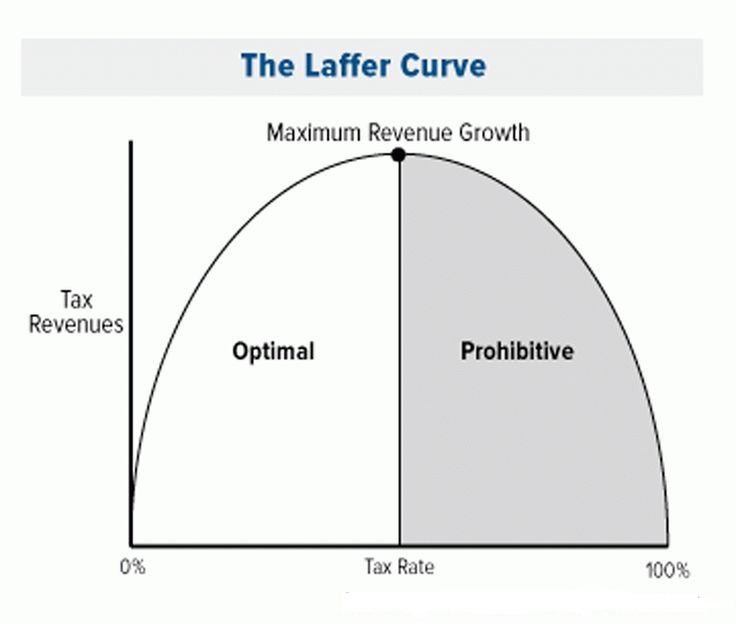
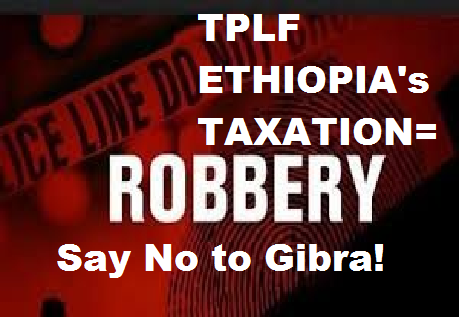


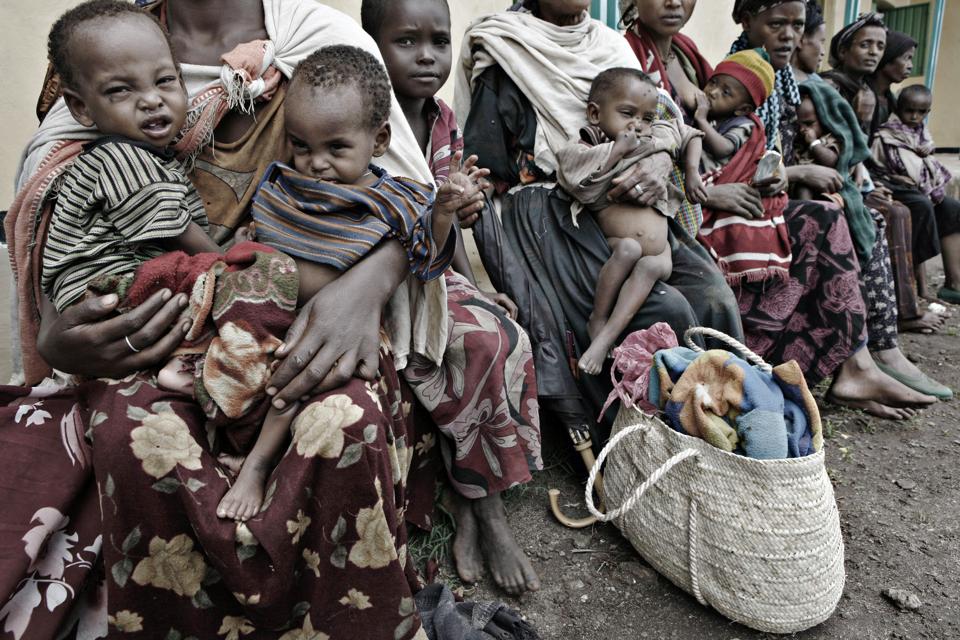
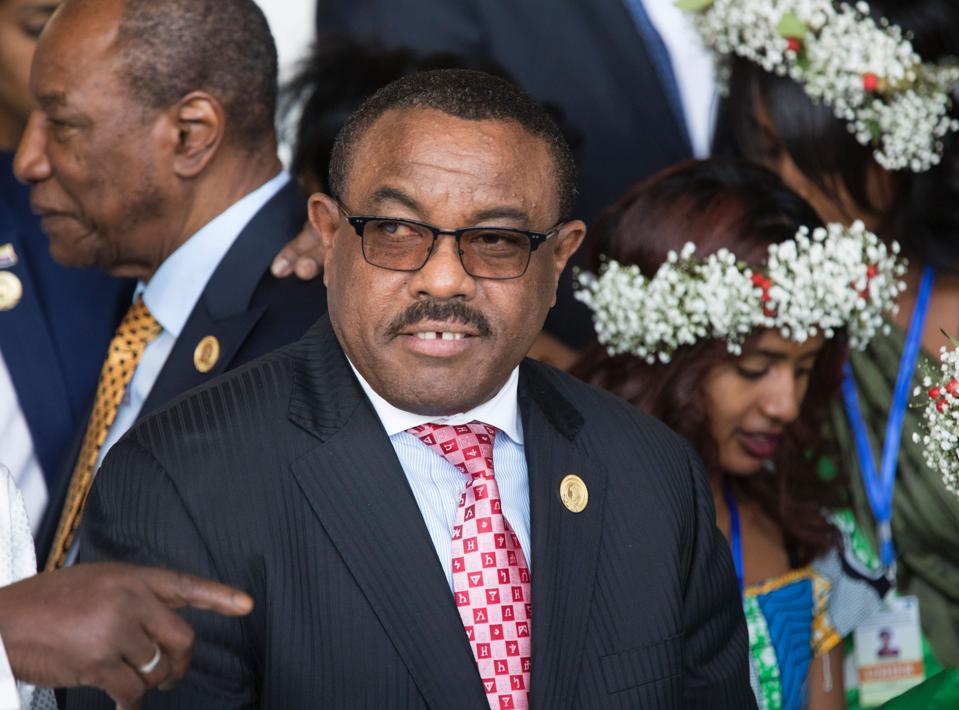
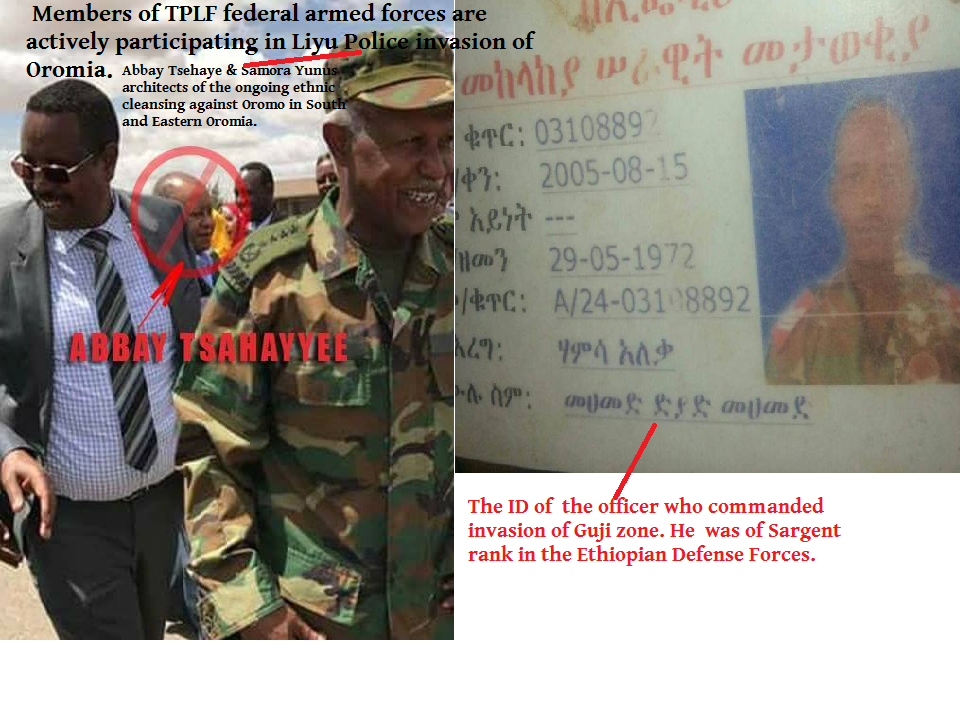

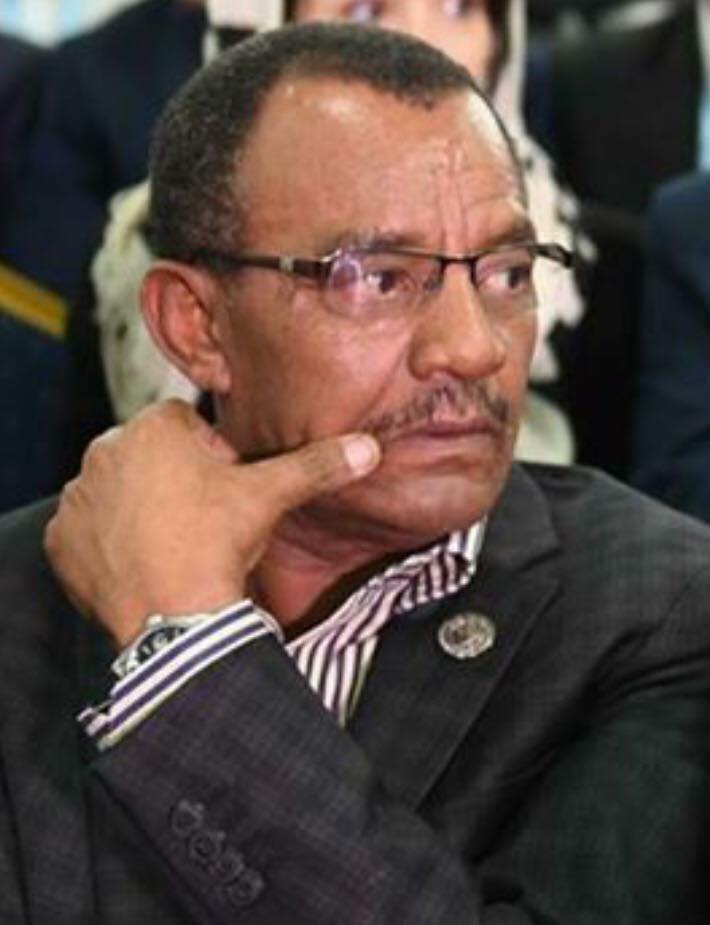



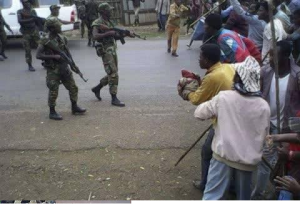
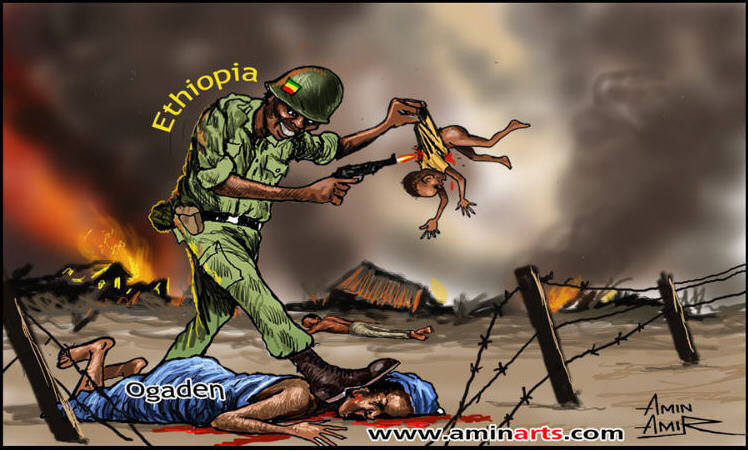
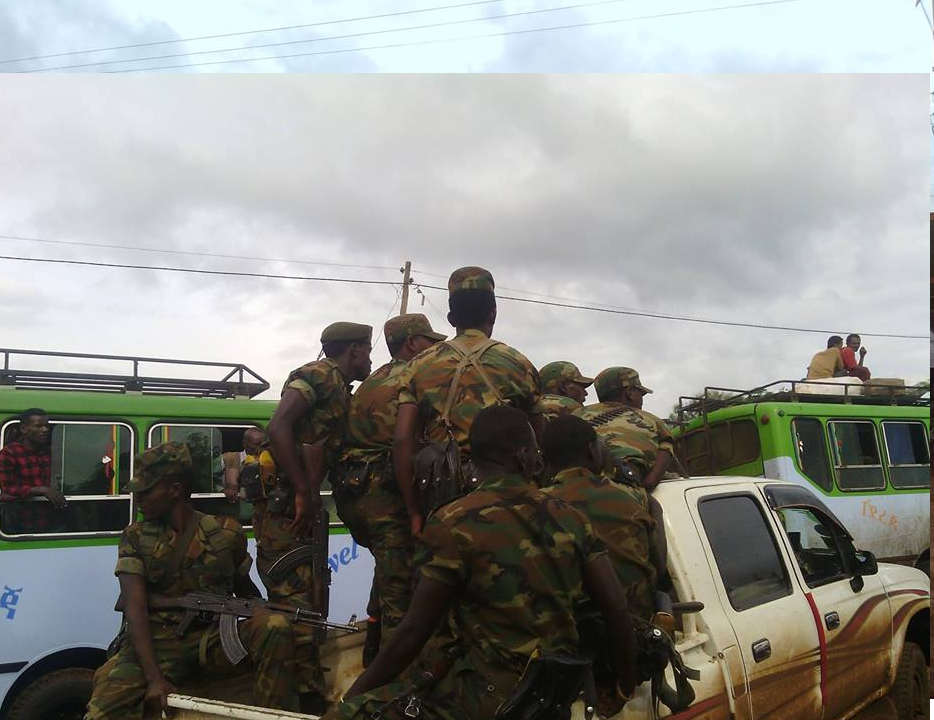
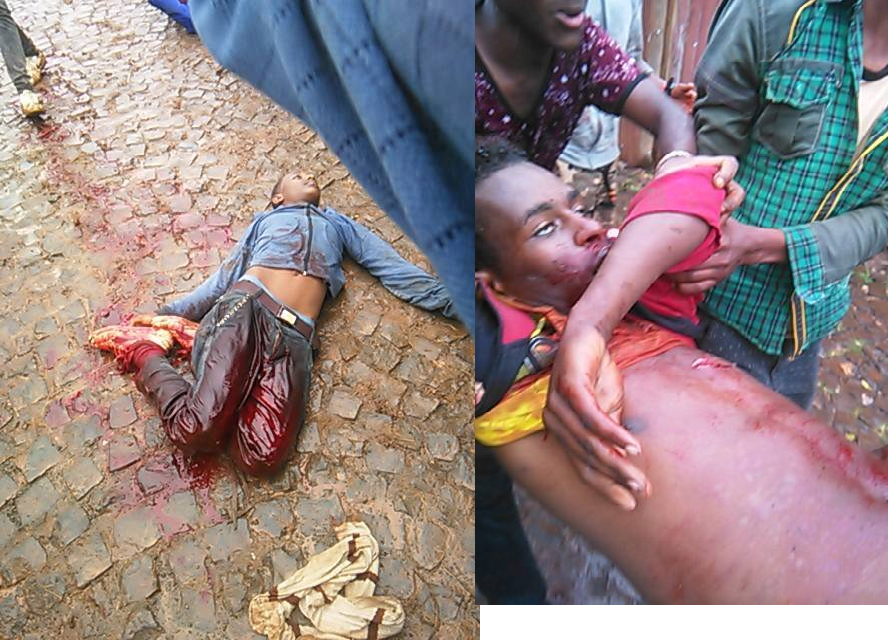
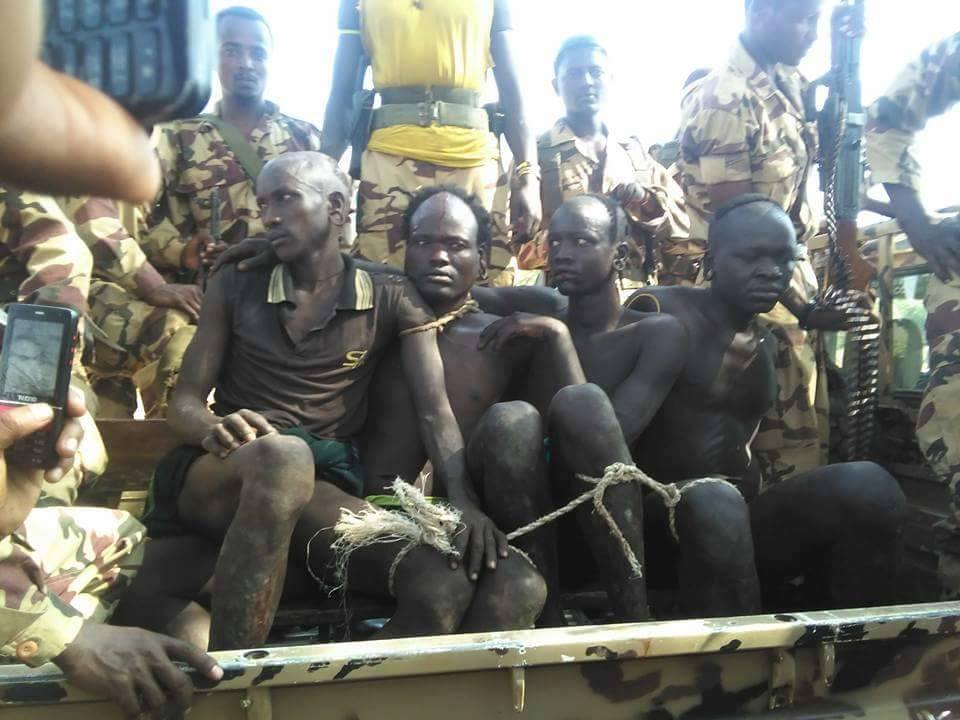
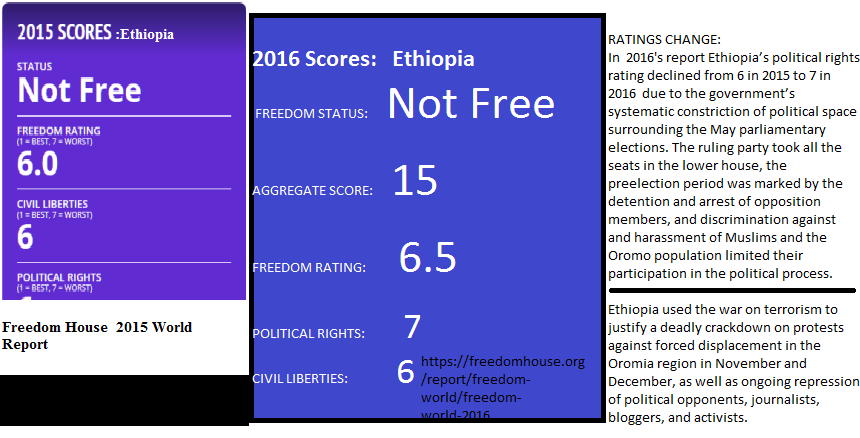
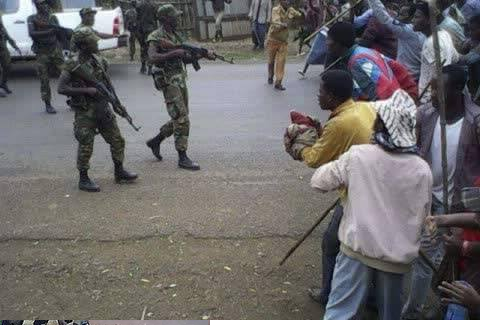

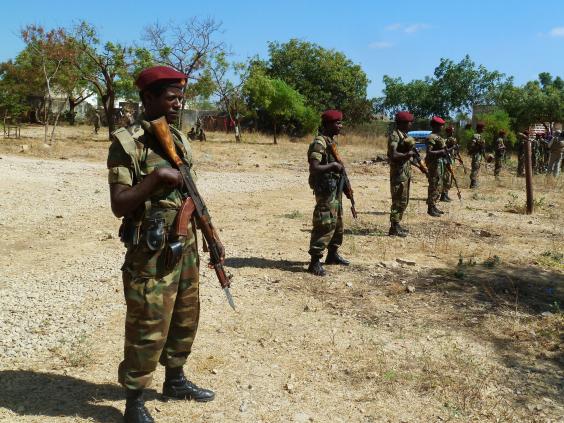
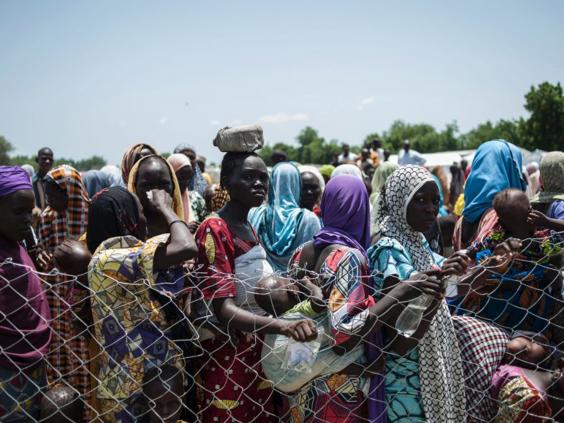
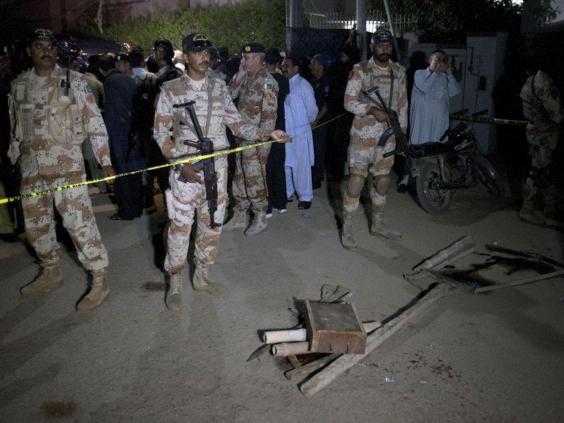
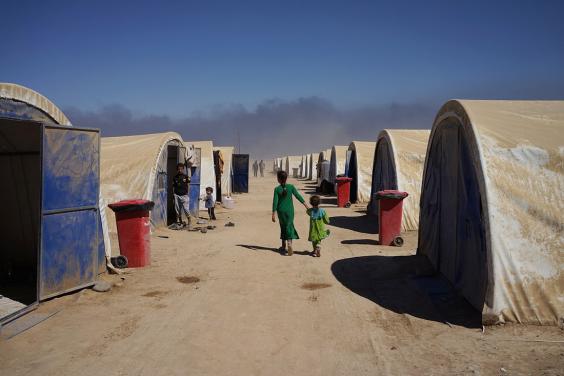
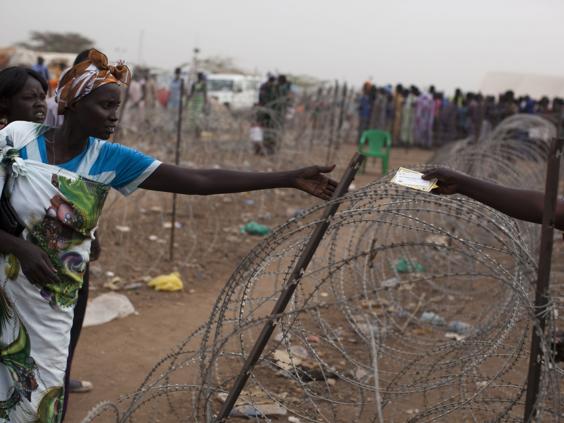

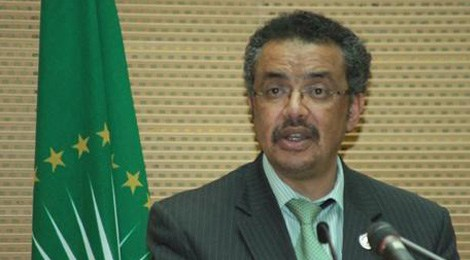

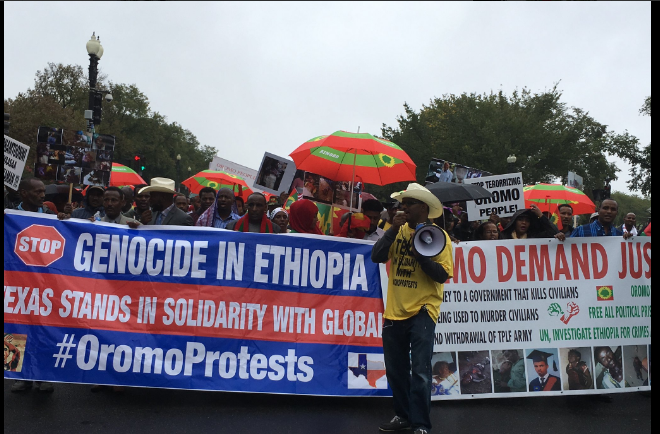


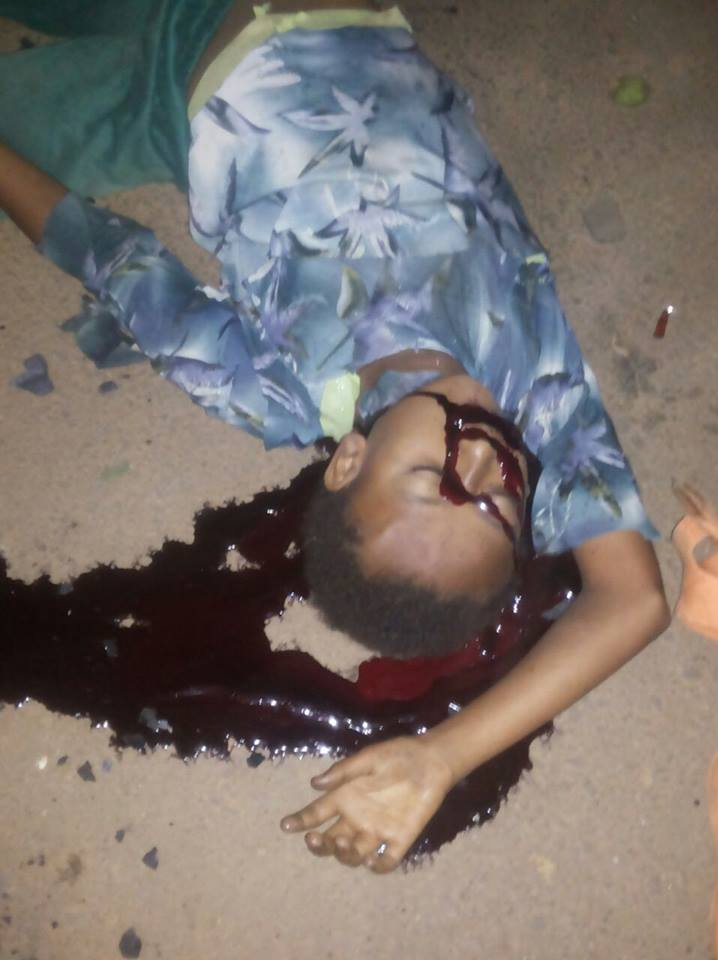
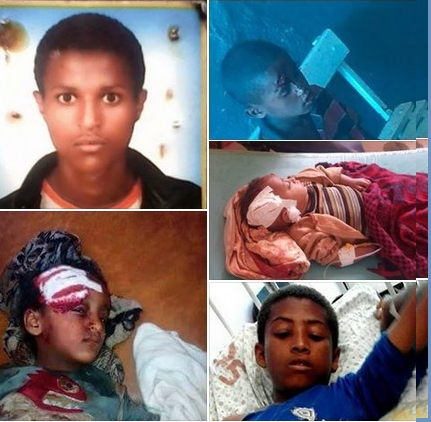

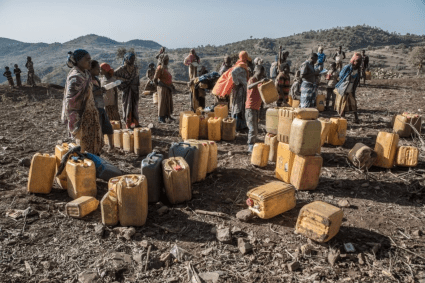

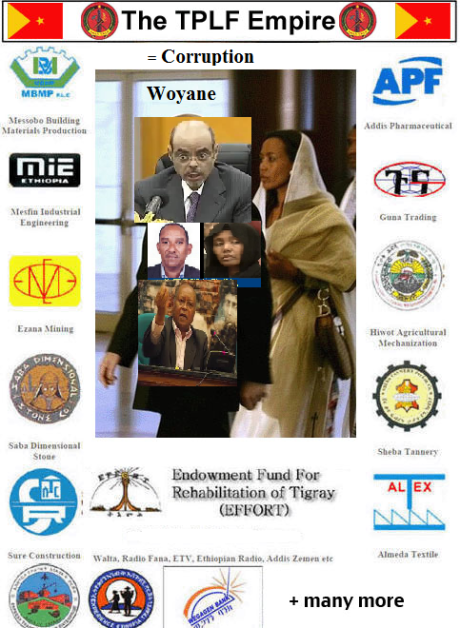


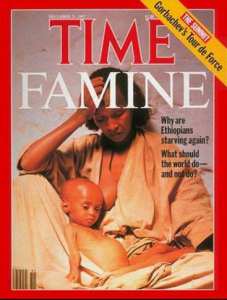
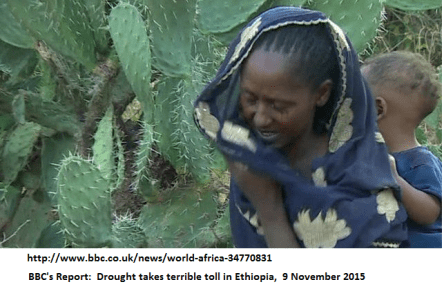

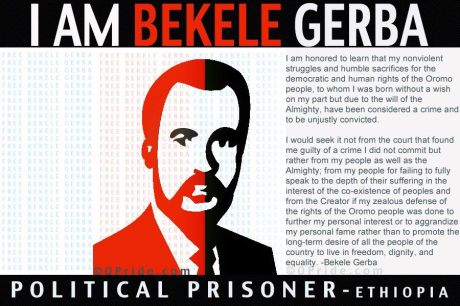



 Oromian Economist
You must be logged in to post a comment.