Leapfrogging the Industrial Sequence: Africa’s Digital‑First Development Path and the Elimination of Institutional Entropy September 10, 2026
Posted by OromianEconomist in Uncategorized.Tags: Africa, Development Economics, economics, Game theory, governance-micro-grids-mobile-money-industrial-policy, institutional-entropy, leapfrogging, Politics, renewable-energy, technology, temesgen-muleta-erena
1 comment so far
Leapfrogging the Industrial Sequence: Africa’s Digital‑First Development Path and the Elimination of Institutional Entropy
Temesgen Muleta-Erena (PhD) Economist, Sovereign Publisher, Epistemic Steward
Affiliation: TC Press / The Codex Press, London
Abstract
Africa’s development trajectory differs fundamentally from the historical industrial pathways of Europe and Asia. The continent’s limited legacy infrastructure, mobile‑first digital culture, and abundant renewable energy potential create conditions for industrial leapfrogging—the ability to bypass multiple generations of industrial development and transition directly into decentralized, digital, and sustainable systems. This paper integrates a literature review, expanded sectoral analysis, mathematical game‑theory modelling, and institutional analysis to examine how Africa can leapfrog traditional industrial stages while addressing its most significant barrier: institutional entropy, a human‑made, correctable form of systemic fragmentation. The paper concludes with a clear, accessible explanation of why entropy must be eliminated and how Africa can build coherent, future‑ready institutions.
Keywords: Leapfrogging; Institutional Entropy; Development Economics; Game Theory; Renewable Energy; Digital Industrialization; Africa; Governance; Micro‑grids; Mobile Money; Industrial Policy.
JEL Codes: O10; O14; O33; O55; D02; C72
1. Introduction
Africa’s industrial future is frequently evaluated through outdated assumptions suggesting the continent must replicate the sequential industrialization model of the West. Yet Africa’s structural conditions—low legacy infrastructure, high solar potential, and rapid digital adoption—mirror the telecommunication leapfrog of past decades, where the continent bypassed copper landlines entirely to adopt mobile cellular networks.
This paper argues that Africa can similarly bypass heavy industrial phases across energy, manufacturing, agriculture, logistics, and finance. However, this historic opportunity is constrained by institutional entropy, a correctable, human‑made problem rather than an inherent genetic or cultural limitation.
2. Literature Review
2.1 Leapfrogging Theory
Fagerberg (2005) and Perez (2010) argue that latecomer economies can adopt frontier technologies without incurring the heavy sunk costs of maintaining legacy systems. Aker and Mbiti (2010) demonstrate how mobile phones transformed African markets organically without traditional landline infrastructure. Ndulu (2007) emphasizes that Africa’s lack of legacy constraints can serve as a strategic advantage, provided that institutional coordination is optimized.
2.2 Institutional Constraints
North (1990) defines institutions as the “rules of the game” that shape long-term economic performance. Acemoglu and Robinson (2012) argue that inclusive institutions foster broad-based innovation, whereas extractive institutions suppress it. African institutional challenges—such as bureaucratic inertia, fragmentation, and regulatory unpredictability—are entirely human-made and correctable. Muleta‑Erena (2026) introduces Institutional Entropy as a diagnostic framework to explain how disorder accumulates within governance systems and how efficiency can be engineered through deliberate, coherent institutional design.
2.3 Digital Industrialization
The African Development Bank (2020) identifies renewable energy, mobile finance, and digital agriculture as the core pillars of Africa’s leapfrog economy. Concurrently, the World Bank (2022) highlights regulatory sandboxes and continental free trade initiatives (AfCFTA) as vital policy enablers.
3. Sectoral Leapfrogging Opportunities
3.1 Energy: Decentralized Solar Micro‑Grids
- What can be done: Deploy community‑level solar micro‑grids; distribute home solar kits; build local solar maintenance industries.
- What can be achieved: Universal electrification; lower household energy costs; creation of sustainable local employment.
- How it can be implemented: Harmonize regional solar standards under the AfCFTA; train local technicians; establish flexible regulatory sandboxes.
- Citizen‑friendly explanation: Villages can generate electricity immediately from sunlight, bypassing the decades-long wait for massive, centralized power plants and transmission lines.
3.2 Manufacturing: Additive and Modular Production
- What can be done: Establish decentralized micro‑factories; manufacture spare parts locally via 3D printing; train youth in digital fabrication.
- What can be achieved: Reduced import dependency; faster repair cycles for critical machinery; thriving local entrepreneurship ecosystems.
- How it can be implemented: Provide tax incentives for micro-manufacturing; integrate digital fabrication into technical colleges; build open-source digital design marketplaces.
- Citizen‑friendly explanation: Local communities can print needed tools and replacement parts in hours instead of waiting months for expensive imports to clear customs.
3.3 Agriculture: Precision Farming
- What can be done: Deploy agricultural drones; utilize IoT soil sensors; apply artificial intelligence for localized climate prediction.
- What can be achieved: Significantly higher crop yields; optimized water usage; drastically reduced post-harvest losses.
- How it can be implemented: Launch farmer training cooperatives; offer smart-farming subsidies; build unified national agricultural data platforms.
- Citizen‑friendly explanation: Farmers can use simple mobile apps to receive real-time advice on precisely when to water, fertilize, plant, or harvest their crops.
3.4 Logistics: Drones and Electric Mobility
- What can be done: Expand autonomous drone delivery networks; promote electric two‑wheelers; build decentralized logistics hubs.
- What can be achieved: Accelerated delivery times for critical goods; lower transport overhead; reduced urban and rural pollution.
- How it can be implemented: Establish unified drone air corridors; set up solar-powered charging stations; integrate digital tracking systems across supply chains.
- Citizen‑friendly explanation: Life-saving medicine and emergency medical supplies can reach remote villages in minutes via drone, rather than taking days over broken roads.
3.5 Finance: Mobile Money and Decentralized Finance (DeFi)
- What can be done: Expand mobile money cross-border interoperability; introduce digital national identities; promote accessible digital savings and credit tools.
- What can be achieved: Deep financial inclusion; explosive growth of digital micro-commerce; lower transaction costs for everyday citizens.
- How it can be implemented: Harmonize regional financial regulations; digitize secure national IDs; support homegrown fintech incubation hubs.
- Citizen‑friendly explanation: People can securely save, borrow, and pay for goods using basic mobile phones, eliminating the need to travel to physical brick-and-mortar banks.
4. Mathematical Game‑Theory Model of Leapfrogging
4.1 Model Setup
Let:
- G= Government
- F= Firms
- C= Citizens
Each actor chooses between:
- A (Legacy Path)
- B (Leapfrog Path)
Payoff Functions



Where:
E= institutional entropy
R= regulatory uncertainty
U= user level uncertainty
α,γ,θ= benefits of coordination
β,δ,λ= costs of uncertainty
Constraints



Nash Equilibrium
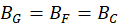
A Nash equilibrium occurs when:
But this equilibrium is only stable when:

Thus:

4.2 Graphical Representation of the Leapfrogging Coordination Equilibrium
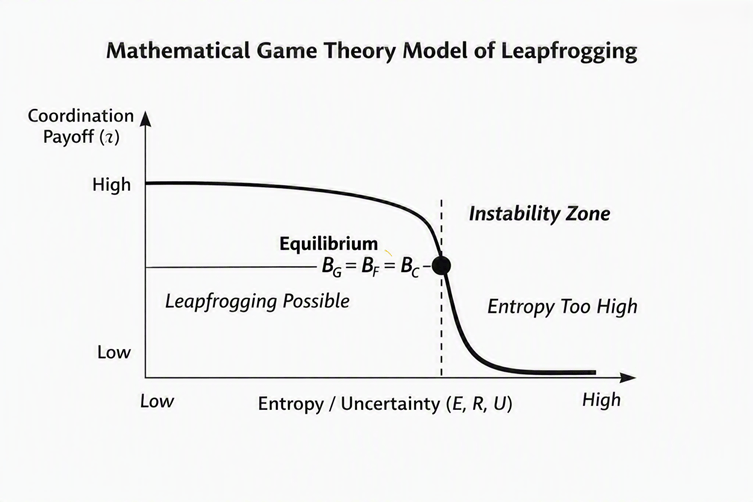
Figure 1*. Mathematical Game Theory Model of Leapfrogging. The diagram depicts the coordination payoff (π) as a function of institutional, regulatory, and user‑level entropy (E, R, U). The curve remains high and stable at low entropy but drops sharply beyond a critical threshold, marking the Nash equilibrium where BG=BF=BC. Leapfrogging is feasible only when entropy and uncertainty approach zero; beyond this point, the system enters an instability zone in which coordination collapses.
The figure titled Leapfrogging Coordination Equilibrium illustrates the relationship between institutional entropy (E) on the horizontal axis and leapfrog payoff (π) on the vertical axis. The curve remains flat at high payoff levels when entropy is low, then drops sharply after a critical threshold — representing the fragility of coordination under rising uncertainty.
This threshold curve captures the core intuition of the model: as institutional entropy increases, the payoff from leapfrogging collapses beyond a critical point. When institutions are coherent, predictable, and well‑coordinated, entropy is low and the payoff is high. When fragmentation and inconsistency rise, entropy crosses the equilibrium threshold and coordination fails.
The equilibrium point is marked where:
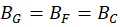
This represents the Nash equilibrium — the condition under which governments, firms, and citizens successfully coordinate on leapfrog strategies. The equilibrium is stable only when E, R, U → 0, meaning institutional, regulatory, and user‑level uncertainties are minimized.
To the right of the equilibrium threshold lies the Instability Zone, where entropy becomes too high for coordination. In this region:
- policy signals become inconsistent
- regulatory uncertainty increases
- firms hesitate to invest
- citizens lose confidence
- governments revert to legacy strategies
The graph therefore reinforces the central insight of the model: leapfrogging is not simply a technological choice — it is an institutional equilibrium. Africa’s ability to bypass traditional industrial stages depends on keeping entropy below the critical threshold.
5. Africa’s Institutional Limitations: Human‑Made, Not Genetic
Africa’s historical institutional weaknesses are not genetic, cultural, or geographical invariants. Instead, they are human‑made structural errors resulting from:
- Colonial administrative fragmentation that ignored organic local trade routes.
- Post‑independence replication of rigid, heavy bureaucratic models.
- Short-term political cycles that prioritize immediate optics over 20-year structural plans.
- Weak inter-ministerial coordination mechanisms.
- Fragmented and unpredictable regulatory environments.
Because these limitations are human-made, they are entirely correctable through deliberate, modern institutional design.
6. Institutional Entropy: Nature, Causes, and Elimination
6.1 What Institutional Entropy Is
Institutional entropy refers to the gradual, systemic loss of coherence, strategic direction, and operational coordination within public governance systems over time.
6.2 Why Entropy Must Be Eliminated
Unchecked institutional entropy directly destroys a nation’s capacity to leapfrog by:
- Exponentially increasing regulatory uncertainty for investors.
- Discouraging foreign and domestic capital investment.
- Fragmenting national and regional development strategies.
- Slowing down necessary regulatory innovations.
- Weakening the unifying potential of continental economic integration.
6.3 How Africa Can Eliminate Entropy
- Continental Integration (AfCFTA): Enforcing harmonized trade, digital, and technical standards across borders to eliminate market fragmentation.
- Regulatory Sandboxes: Creating safe, flexible legal spaces where innovators can test drones, fintech models, and micro-grids without bureaucratic penalties.
- Long‑Term Industrial Planning: Shifting governance frameworks away from short-term election-cycle planning toward binding 20-year national development visions.
- Digital Governance Systems: Digitize public procurement, business licensing, and regulatory filings to remove human friction and corruption.
- Incentive Realignment: Structuring civil service performance metrics to reward cross-ministerial cooperation rather than isolated bureaucratic silo-building.
7. Conclusion
Africa possesses a rare historical window to skip outdated, high-pollution industrial stages—much like it bypassed landlines to embrace mobile communications. However, achieving this requires governments to align their policies, establish transparent and predictable rules, and eliminate internal institutional friction.
When institutional systems are streamlined and organized, Africa can reliably generate clean power from sunlight, manufacture goods locally through digital fabrication, modernize farming with smart analytics, deliver critical healthcare via autonomous drones, and bank securely through mobile networks. Leapfrogging is entirely achievable; institutional entropy is the primary obstacle, and deliberate cross-sector coordination is the definitive solution.
References
- Acemoglu, Daron, and James Robinson. 2012. Why Nations Fail. New York: Crown.
- African Development Bank. 2020. African Economic Outlook. Abidjan: AfDB.
- Aker, Jenny, and Isaac Mbiti. 2010. “Mobile Phones and Economic Development in Africa.” Journal of Economic Perspectives 24(3): 207–232.
- Fagerberg, Jan. 2005. Innovation: A Guide to the Literature. Oxford: Oxford University Press.
- Muleta‑Erena, Temesgen. 2026. Institutional Entropy and the Thermodynamics of Governance: A Framework for Diagnosing Disorder and Engineering Efficiency. London: TC Press.
- Ndulu, Benno. 2007. The Political Economy of Economic Growth in Africa. Cambridge: Cambridge University Press.
- North, Douglass. 1990. Institutions, Institutional Change and Economic Performance. Cambridge: Cambridge University Press.
- Perez, Carlota. 2010. Technological Revolutions and Financial Capital. Cheltenham: Edward Elgar.
- World Bank. 2022. Digital Africa: Transforming Economies Through Technology. Washington, DC: World Bank.
About the Author
Temesgen Muleta-Erena, PhD (University of West London) and MA in Economics (University of East Anglia), is an independent economist, sovereign publisher, and epistemic steward based in London. He is the founder of TC Press (The Codex Press), a sovereign imprint dedicated to legacy-driven publishing, ceremonial documentation, and civilizational theorization. His works explore post-labour economics, value theory, planetary coordination, and the recursive architecture of knowledge. His books and essays are archived in global institutions including the British Library, Cambridge, Oxford, Berkeley, and UNAM, and distributed across federated platforms such as Kobo Plus, OverDrive, Smashwords and Hoopla. He publishes modular essays and republical scrolls to activate epistemic sovereignty and inspire coordinated futures.
21 Century Social and Economic Apartheid: In the TPLF variant of Apartheid System of Ethiopia, the Oromo are making the Majority of the Prisoners April 6, 2013
Posted by OromianEconomist in Uncategorized.Tags: Abusive power, Aphartheid, Corruption, Development, Dictators, Economic Aphartheid, economic sabotage, economy, Ethiopian People's Revolutionary Democratic Front, Gadaa System, Human rights violations, Meles Zenawi, Oromia, Oromia Region, Oromo, Oromoo, Politics, Poor Goveranance, racial discrimination, Tigray Region, Tigrayan People's Liberation Front, TPLF, Tyranny, Undemocratic System, Underdvelopment
6 comments

From the outset TPLF defines itself as a liberator for one specifically racially defined group. And still after two decades on power, irrespective of its ostensible claim that it is under the umbrella of EPRDF, people of the same origin monopolistically has held the whip-hand; and the whole country has been cash cowed by one specific racial group while the majority is being treated as impediments.
The apartheid nature and characteristics of TPLF’s policies and behavior is as covert as possible to throw the majority into total muddle until it is too late. To put it bluntly, the fledgling apartheid system of TPLF is emerging through a frog boiling tactic.
The TPLF’s apartheid system can be described as a subtle state action designed to secure and maintain the Tigrian domination by furthering their Economic and Political interests through control over the majority Non-Tigrian population.
The following categories make the necessary, sufficient, and defining characteristics of the emerging tender-plant apartheid system in Ethiopia:
1. Economic Interest
Furthering the Tigrean economic dominance is mainly achieved through a threefold economic sabotage: i.e.,
Through the creation of Tigrian tycoons in every facet of the economy;
By building extractive business empire;
Through emasculation of Non-Tigrian business firms.
Let’s see each of the above points in detail.
1.1 The incubation of the Tigrian Racketeers: Unlike the loosely dispersed and individualistic Non-Tigrian business men, the Tigrian racketeers are a highly organized kleptomaniacs that are exclusively nurtured by the under-table action of the government in a way that:
– Favoring to get loan from state-owned banks with least or no collateral;
– Facilitating the bureaucratic process in the Custom office with least search procedure while this government office intentionally delays the items that belonged to the Non-Tigrian business men.
– Government toleration for their criminal act of tax evasion.
– For the Tigrian importers, letter of credit will be processed easily and access to hard currency is almost unlimited; whereas the Non-Tigrians must wait a minimum of 4 to 6 months since their application.
– The government has granted them key business sites under low bid.
– The government conducts special training programs and video conferences to create situational awareness among them and update them with first hand information. At this point, we must not forget that nowadays information is equivalent to money.
On top of that, they have been informed /’’trained’’/ and equipped with the following racketeering tactics.
1. Insider Trading: Obviously all key governmental positions are occupied by the Tigrian; which means any policy or information particularly related with business reaches to the Tigrian racketeers before the crowd gets it so they adjust everything in advance to suit to the new condition. And due to such a prior knowledge they net millions from insider trading.
They also have foreknowledge on every government auction however the Non-Tigrians get it lately from news papers. For insider information equals ‘’money’’ in a modern market economy, it is a great power in the hands of people who are the most cohesive and organized criminal group like the Tigrian racketeers. As a matter of fact, insider information is illegal both from moral and law perspective.
2. Dual Set of Ethics: In fact, the Tigrian racketeers have been informed directly or indirectly to practice a dual set of ethics:
I. An altruistic set of ethics for themselves and
II. A predatory one for the rest of Ethiopian people.
– They don’t compete with one another for a single niche of market;
– They don’t interfere with the monopoly controlled by other Tigrian racketeer;
– They are barred from underbidding fellow Tigrian racketeer.
– They are always cooperate with one another so as “not to lose the money of Tigray”
3. Team Strategy: Before we go to how they act in team, let’s see the psychological set up of the Tigrian racketeers and the Non-Tigrian business men.
The Non-Tigrian have been conditioned to think that everyone must be judged on his or her merits and that it would be immoral to be biased for his own race. The Tigrian racketeers, on the other hand, have been conditioned from early time of TPLF to think in terms of the good of their race.
Keeping this fact in mind, what they are practicing is through “Infect to insolvency and then wait to takeover” approach. For example, if they need to monopolize certain business sector they allocate a calculated sum of money to under bid the price of item which certainly makes the Non-Tigrian competitor unable to fight with irrationally low price then put the competitor company into insolvency and finally buy the company itself with a giveaway price and will apply “the abuse of dominance” once they control the sector.
In general, a cohesive and powerful team effort, dual set of ethics along with insider information consistently amasses collective power to the Tigrian racketeers over a scattered and individualistic Non-Tigrian.
1.2 By Establishing Extractive Trade Empire: An acronym EFFORT stands for the TPLF’s multi-billionaire trade empire called Endowment Fund for the Rehabilitation of Tigray. It was established by expropriating capital equipments from different parts of the country and by the infamous defaulted bank debts. Currently there is no business sector that is free from the involvement of EFFORT. It stretched from production to distribution, from finance to insurance, from wholesale to retail, from real-estate to horticulture, from mining to IT. Peculiarly, this trade empire hasn’t ever been audited by external auditor nor repays the loan it borrowed periodically.
Similar to the Tigrian private companies, EFFORT is also privileged in the following manner:
– It is awarded government auctions of big projects;
– Favored to borrow in billions without collateral and it is not subject to repayment;
– Equipped with insider information;
– Granted fertile land at a giveaway price by displacing tens of thousands of indigenous people from their ancestral land;
– Granted key mining sites without open bid;
– Market opportunity will be arranged for it by forcing regional and federal offices to buy products which haven’t a relevant importance or in an exaggerated quantity.
Surprisingly, almost 99.9% of the employees in these innumerable companies of EFFORT are Tigrian; which means that majority of the economy is occupied by either the Tigrian private companies or by the extractive trade empire called EFFORT; and they primarily privileged job opportunity for Tigrians. As the complete cycle of economic dominance and privileged labor market portrays, we are under a severe economic genocide.
1.3 Stifling of Non-Tigrians’ Business Firms: Obviously the playing ground is not level; and the whole situation is an uphill battle for Non-Tigrians’ business firms to survive all the barriers that they faced from the government bureaucracy and from economic sabotage of the highly privileged EFFORT companies and the cohesive Tigrian racketeers. Consequently, especially after election-2005 we have seen that many Non-Tigrian businesses have been either liquidated or down-sized.
2. Political Interest
The foremost plan of TPLF was to secede the Tigray region from the rest of the country and to establish a sovereign republic, as plainly stated in Manifesto-68 which was formulated by the triumvirate of Abay Tsehaye, Sebhat Nega and Meles Zenawi. However, through time they inferred that a sovereign republic of Tigray would be a weak and failed state. Then they changed their program to live together as a state-within-a state and TPLF’s role as a Quasi-Occupying Force.
Similar to the case for economic dominance, TPLF and Tigrians maintain their political dominance using racial solidarity as weapon against the Non-Tigrian Ethiopians in the following manner:
2.1. Surrogate Colonization /Repopulation/: The TPLF apartheid system has also been featured with Depopulation andPopulation-Transfer. The annexation of arable lands of the Amhara region like Humera, Welkayt, Tsegede, Alamata, Korem and so on, to Tigray province and depopulating the indigenous Amharas from those places and then replacing with Tigrians is a case in point of the surrogate colonization of the TPLF regime. The expansion of Tigrians is also continuing in west and north Gondar to annex the North Mountains after they learned that the North Heights are fields of Gold and other Precious metals.
2.2. Expropriation of Land /Landed Property/ Belonging to A Racial Group: As a matter of the truth, the people of Gambella have been denied its natural right of living on its ancestral land. And clearly we know that more than quarter of arable land of the region has been awarded to land grabbers at a giveaway price by TPLF megalomaniacs. But beside to this, more than 2/3 of the remaining arable land has been expropriated by Tigrian Mechanized-Farm owners in which it left more than 70,000 indigenous people for forcible relocation to the place where the soil is dry with poor quality and with no infrastructure. What worsened the situation was that the deployment of the TPLF mechanized army upon the unprotected civilians to enforce forcible relocation of the indigenous people. As a result, they became victim of genocide, rape and conflagration of their villages by TPLF militias.
2.3. Deliberate Denigration of Living Conditions of Non-Tigrian Racial Groups: This includes:
– Demolishing of business areas under cover story of investment which are mainly occupied by Gurage business men in the capital city of Addis Ababa. Particularly after election-2005, the Gurages have been profiled as “Accomplice of Neftegna” and currently as “Ginbot-7 Sympathizers”; and consequently, they are paying the expensive price ever for the alleged charge.
– Internal deportation and expulsion of hundreds of thousands of the Amhara people from different parts of the country by confiscation of their tenure and property is also one of the cruelest repressions of the racist regime of TPLF in order to break the potential resistance from this group by throwing them into absolute destitution and instability.
2.4. Infliction of Serious Bodily and Mental Harm upon Certain Racial Members: Tens of thousands of political and Conscience prisoners are concentrated in three federal and 120 regional major prisons. They are also found in an unofficial detention centers in military camps including in Dedessa, Bir Sheleqo, Tolay, Hormat, Blate, Tatek, Jijiga, Holeta, and Senqele. Majority of the prisoners are racially Oromo; and their alleged charge is “Sympathizers of OLF”. The number of Amhara, Gambella and Ogadenese political and conscience prisoners are also significant.
The condition of these political prisoners is extremely harsh, overcrowded and life threatening. Besides, the TPLF henchmen often use a series of torture and brutal interrogation to extract confessions including whipping on the soles of feet, over stretching of limbs, slow dripping of water on the head, slandering of their race, pulling out of nails, forcible extraction of teeth, weights suspended on testicles, plunging into spoiled water, solitary confinement in dark cell for long period of time, signing a confession, forced self-incrimination, threatening with injection of HIV infected blood, forcing to denounce others, burning with cigarette, insertion of bottle and hot candle into prisoners’ rectum, drowning into ice cold water for long period of time and beating with rifle butt, stick, whip, belt etc.
2.5. Access: No matter how the Non-Tigrians have the qualification for the high post in the army or the security apparatus or for key government offices, they have already been denied by the unwritten law of TPLF. Access to government-sponsored scholarship at the overseas is also highly secured for Tigrians.
In conclusion, Ethiopia is a country of nations and nationalities. So there must not be room for the socio-political and economic dominance of single race. All the people of Ethiopia must be treated as an empowered citizen. The fledgling Tigrian apartheid system must be nipped in the bud before it sparks the bloody genocide.
As a universal truth, no one ever negotiated successfully from weakness, but from strength. It must be our primary target to be strong. And, I do personally believe that awakening to the truth will make us strong. We are now in the middle of life-or-death struggle; if we fail to break the yoke of TPLF’s apartheid system the future of our people, the continuity of our race and the stability of our country will be at stake.
We have left nothing with TPLF; we have been cornered, humiliated, persecuted, harassed, assaulted, exiled, locked-in jail, tortured, expelled, impoverished by design, confiscated and decimated. We must not have room for the source of all these evil, TPLF, anymore!!! We must fight it by all possible means until we regain our freedom!!! We must struggle desperately until we tear apart the reins of the Quasi-Occupiers!!!
On the other hand, the Tigrians must also do their own homework before they are being treated as:
– Accomplice of Criminally guilty TPLF officials;
– Politically guilty as TPLF Supporters;
– Morally guilty as Tigrians;
– And perhaps, metaphysically guilty as Ethiopians.
Facts about Tigree Domination in the Military
High Ranking Military Officials , see http://ayyaantuu.com/horn-of-africa-news/ethiopia/the-tplf-variant-on-apartheid-majority-of-the-prisoners-are-racially-oromo/
By Dawit Fanta
Copyright © Oromianeconomist 2013 and Oromia Quarterly 1997-2013. All rights reserved. Disclaimer.
Related articles
- Tplf’s Genocidal Killings Continued on Oromoo in Ethiopia (odaakoo.wordpress.com)
- Tigray Economics and Ethiopian Politics: by Teklu Abate (ethioinfo.wordpress.com)
- The Same System, the Same Techniques, and Different Targets by TPLF (bilisummaaa.wordpress.com)
- Graziani and the TPLF, an Ethiopian saga. (yourfreedomvoice.wordpress.com)
Gadaa Oromo Democracy: Three Approaches to the Study of African Society September 27, 2012
Posted by OromianEconomist in Africa, Ancient African Direct Democracy, Culture, Finfinnee, Gadaa System, Humanity and Social Civilization, Irreecha, Kemetic Ancient African Culture, Oromo, Oromo Culture, Oromo First, Oromo Identity, Oromo Nation, Oromo Social System, Oromummaa, Self determination, Sirna Gadaa, State of Oromia, The Oromo Democratic system, The Oromo Governance System, Uncategorized.Tags: Africa, African culture, African Studies, Ancient African Direct Democracy, Ancient Black People, Ancient Egyptian people, Democracy, Economic and Social Freedom, From, Gadaa System, Governance issues, Horn of Africa, Kemet, Kushitic people, National Self Determination, Oromia, Oromiyaa, Oromo, Oromo culture, Oromo people, Oromummaa, Politics, Siqqee, Siqqee Oromo Women Institution, Sirna Gadaa, Social Sciences, State and Development, Sub-Saharan Africa, United Nations, Universal Declaration of Human Rights, World Bank
3 comments


These closely related books reveal the many creative solutions an African society found for problems that people encounter when they try to establish a democratic system of governing their affairs. In much of what has been written about Africa, the common image is that of people governed by primitive customs and practices, in which only feudal roles of elders, kings, chiefs, sultans, and emirs have been acknowledged by Western observers. Little is ever shown of indigenous African democratic systems, under which there is distribution of authority and responsibility across various strata of society, and where warriors are subordinated to deliberative assemblies, customary laws are revised periodically by a national convention, and elected leaders are limited to a single eight-year terms of office and subjected to public review in the middle of their term. All these ideals and more are enshrined in the five-century old constitution of the Oromo of Ethiopia, which is the subject matter of these books.
In these books, Legesse brings into sharp focus the polycephalous or “multi-headed” system of government of the Oromo, which is based on clearly defined division of labor and checks and balances between different institutions. Revealing the inherent dynamism and sophistication of this indigenous African political system, Legasse also shows in clear and lucid language that the system has had a long and distinguished history, during which the institutions changed by deliberate legislation, and evolved and adapted with time.’ Amazon Books &
Related articles
Introduction
http://oromopress.blogspot.co.uk/2011/12/review-of-oromo-democracy-indigenous.html?m=1
http://www.readperiodicals.com/201203/2672718591.html
- Gadaa: An Oromo Democracy and the Symbol of Oromo Civilization (odaakoo.wordpress.com)
- Contours of the Emergent & Ancient Oromo Nation (oromianeconomist.wordpress.com)
- http://www.iwmi.cgiar.org/publications/CABI_Publications/CA_CABI_Series/Community_Law/protected/Ch%2009.pdf
- Oromia of Dhaqabo Ebba: The Cradle of Mankind Is Also A Home of The Oldest Living person On Earth (oromianeconomist.wordpress.com)
Copyright © Oromianeconomist 2012 and Oromia Quarterly 1997-2012. All rights reserved. Disclaimer.
Cognitive Democracy May 27, 2012
Posted by OromianEconomist in Uncategorized.Tags: Africa, Democracy, Environment, Gadaa, Oromia Region, Oromo people, Politics
add a comment
“Some of the problems that we face in politics are simple ones (not in the sense that solutions are easy, but in the sense that they are simple to analyze). However, the most vexing problems are usually ones without any very obvious solutions. How do we change legal rules and social norms in order to mitigate the problems of global warming? How do we regulate financial markets so as to minimize the risk of new crises emerging, and limit the harm of those that happen? How do we best encourage the spread of human rights internationally?”
“Specifically, we argue that democracy has unique benefits as a form of collective problem solving in that it potentially allows people with highly diverse perspectives to come together in order collectively to solve problems. Democracy can do this better than either markets and hierarchies, because it brings these diverse perceptions into direct contact with each other, allowing forms of learning that are unlikely either through the price mechanism of markets or the hierarchical arrangements of bureaucracy. Furthermore, democracy can, by experimenting, take advantage of novel forms of collective cognition that are facilitated by new media.”
It is interesting to engage in such analysis as this topic directly and indirectly details the role s of democratic institutions such as the Gadaa system of the Oromo can play to advance society.
To read in detail on this topic: Democracy
Copyright © Oromianeconomist 2012 and Oromia Quarterly 1997-2012. All rights reserved. Disclaimer.
Related articles
- H.L. Mencken on elections, politics, government (aei-ideas.org)
- Gadaa: An Oromo Democracy and the Symbol of Oromo Civilization (odaakoo.wordpress.com)
- Gadaa Oromo Democracy: Three Approaches to Study African Society (oromianeconomist.wordpress.com)


You must be logged in to post a comment.