**Haadha Hawwii, Haadha Daangaa: September 7, 2026
Posted by OromianEconomist in Uncategorized.Tags: art, history, Music, writing
add a comment
Ilfinash Qannoo — The Mother of Hope, The Mother of the Land, The Mother of Culture, The Mother of Resistance**
**Haadha Hawwii, Haadha Daangaa:
Ilfinash Qannoo — The Mother of Hope, The Mother of the Land, The Mother of Culture, The Mother of Resistance**
Author / Contributor: Temesgen Muleta-Erena
Abstract
Ilfinash Qannoo is one of the foundational figures in modern Oromo cultural history. Emerging in the early 1970s as part of a wider cohort of Oromo cultural pioneers — including, among others, Abitew Kebede and Ali Birra — she helped reverse a hegemonic strategy designed to fragment, de‑urbanize, and silence Oromo identity. Through culturally distinct regional melodies, resistance songs, and principled preservance, she urbanized Oromo culture, elevated hidden traditions to national visibility, and contributed to the formation of pan‑Oromo consciousness. Her legacy extends beyond music: she embodies a civilizational role comparable to Miriam Makeba in South Africa, serving as an exemplar for indigenous women across Africa and beyond. This essay examines her cultural mission, her Kaayyoo, her resistance, her gender‑boundary crossing, and her billion‑years frontier legacy.
Keywords: Ilfinesh Qannoo, Ilfinash Qannoo, Oromo cultural urbanization, Oromo music history, pan‑Oromo consciousness, cultural resistance, indigenous African women, Kaayyoo, geerarsaa, Oromo regional melodies, cultural preservation, Oromo identity formation, indigenous cultural revival, Miriam Makeba comparative study, Oromo women in music, Oromo cultural history, Guddattuu Wallaggaa
1. Introduction
The emergence of Ilfinash Qannoo in the early 1970s marks a turning point in Oromo cultural history. Her work did not simply entertain; it restructured the cultural landscape. At a time when Oromo identity faced systematic fragmentation, she brought regional cultural authenticity into urban spaces, transforming hidden traditions into national consciousness. Her songs became instruments of unity, dignity, and resistance. This essay situates Ilfinash within the broader cultural awakening of the Oromo and examines her enduring legacy.
2. Historical Context: The Hegemonic Strategy
The cultural environment preceding Ilfinash’s emergence was shaped by a deliberate hegemonic strategy:
- De‑urbanization of Oromo identity, pushing Oromo culture out of national visibility.
- Fragmentation of regions, preventing communication between west, east, south, and north.
- Urbanization of assimilated characters, presenting them as “modern” while regional authenticity was erased.
- Absorption of educated Oromo, using them to weaken cultural continuity.
- Suppression of Oromo language and music from national platforms.
This strategy produced cultural disconnection, regional isolation, and a broken sense of shared identity. It also obscured the regional and subgroup diversity of Oromo cultural life — including distinct melodic traditions from Maccaa, Tuulama, Wallo, Hararghe, Borana, Guji, Arsi, and others — each with its own rhythm, vocal style, and cultural symbolism.
3. Cultural Reversal: The 1970s Urbanization of Oromo Culture
Ilfinash Qannoo, Abitew Kebede, and Ali Birra initiated a cultural reversal. They were not commercial artists; they were cultural carriers. Their work:
- brought hidden regional traditions into national stages,
- introduced distinct Oromo melodies to urban audiences,
- recorded tapes that circulated across regions,
- created visibility where silence had been enforced.
Their performances in Finfinnee were transformative. They urbanized Oromo culture itself — the opposite of the hegemonic strategy.
3A. Guddattuu Wallaggaa: The Cultural Band That Shaped Ilfinash Qannoo
Before Ilfinash Qannoo emerged as a solo cultural icon, she was part of Guddattuu Wallaggaa, one of the most influential Oromo cultural bands of the early 1970s. The band brought together naturally gifted youth artists from Wallaggaa and surrounding regions — young talents whose voices carried distinct regional melodies and cultural authenticity.
Guddattuu Wallaggaa played a decisive role during the early Derg era. Its performances:
- introduced regional Oromo melodies to urban audiences,
- unified diverse subgroup traditions under one cultural platform,
- demonstrated the artistic potential of Oromo youth,
- and accelerated the cultural urbanization process.
The band’s impact was so significant that it drew the attention of the Derg regime. As elders recount, the band was banned abruptly once its cultural influence became visible. This suppression forced its members into new artistic paths.
From this rupture, solo artists emerged — most notably:
- Ilfinash Qannoo,
- Abitew Kebede,
- and others whose names remain preserved in oral histories.
These artists carried forward the mission of Guddattuu Wallaggaa. They produced iconic songs and cassette recordings that circulated widely across Oromia, further urbanizing Oromo culture and inspiring the next generation of solo artists.
The story of Guddattuu Wallaggaa demonstrates that Ilfinash’s rise was not accidental. It was rooted in a collective cultural movement — a band that served as a training ground, a cultural incubator, and a catalyst for the pan‑Oromo awakening.
4. Cultural Melodies as Instruments of National Awakening
Ilfinash’s cultural melodies were diplomatic tools of identity formation. They carried:
- regional vocal styles,
- indigenous emotional expression,
- local rhythmic patterns,
- the storytelling cadence of Oromo subgroups.
When she sang in national gatherings, Oromo from different regions heard the same cultural sound for the first time. This produced:
- shared cultural memory,
- shared emotional identity,
- recognition of common marginalisation,
- the beginning of pan‑Oromo consciousness.
Her songs became the first bridge across fragmented regions.
5. Resistance Through Melody
Ilfinash’s resistance was non‑violent but profound. Her line:
“Kolonii luka dooluu hamma jedhu hin haleeluu.” It is amputated in its leg; it cannot strike as much as it threatens.
This message provided psychological liberation. She taught her people:
- tyranny exaggerates its strength,
- fear is a tool of domination,
- dignity is stronger than intimidation,
- cultural truth is a form of resistance.
Her songs became emotional infrastructure for survival.
6. Gender Boundary Crossing: Geerarsaa
Traditionally, geerarsaa is a male genre. Ilfinash crossed this boundary, demonstrating:
- women’s cultural authority,
- the universality of resistance,
- the non‑gendered nature of cultural voice,
- the central role of women in national consciousness.
Her geerarsaa declared:
Being a woman is not a shortcoming — it is a blessing.
This was a cultural revolution.
7. Principle, Preservance, and Kaayyoo
Ilfinash’s cultural mission was guided by Kaayyoo — the national purpose. Her principles included:
- Preservance: she maintained her cultural line without compromise.
- Continuity: she carried her tradition until death.
- Dignity: she addressed injustice with character.
- Humiliation‑endurance: she faced suppression without breaking.
- National mission: she pushed for total cultural/national liberation, not partial recognition.
She was not limited by personal gain. She pursued historical justice through melody.
Her legacy belongs to what can be called the billion‑years frontier — a civilizational horizon beyond political eras.
8. Unity as Cultural Philosophy
Her message of unity was foundational:
“Wal malee maal qabna.” We have only each other.
This principle shaped:
- Oromo unity,
- national awakening,
- cultural revival,
- resistance identity.
Her songs taught that unity is not optional — it is existential.
9. Generational Impact
Ilfinash’s cultural revival created the emotional environment that later produced:
- the Qubee generation,
- the Qeerroo youth movement,
- modern Oromo cultural confidence,
- Oromo protests,
- Oromo media platforms,
- diaspora cultural revival.
These movements grew in a cultural landscape she helped create. Her songs became collective memory.
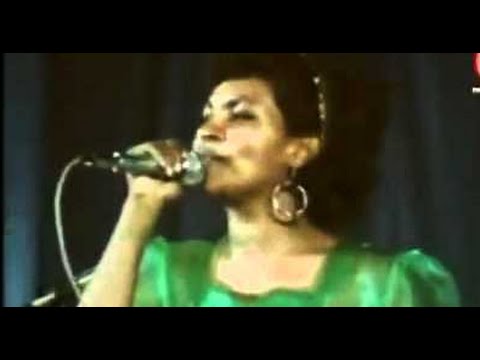
Figure 1. Ilfinash Qannoo performing in Finfinnee, September 1991 — a landmark moment showing her cultural continuity into the post‑Derg era.
10. Global Relevance: An Indigenous African Icon
When written in English, Ilfinash’s legacy becomes global. Like Miriam Makeba, she:
- preserved indigenous identity,
- resisted cultural erasure,
- elevated regional authenticity to national visibility,
- became a model for indigenous women across Africa.
Her work belongs in global discussions of cultural resistance and indigenous revival.
11. Legacy Through Her Daughters
Ilfinash’s lineage continues through her daughters:
- Hawwii — meaning Hope.
- Daangaa — meaning Territorial boundary / Oromo land.
She taught them:
- Oromo culture,
- Oromo language,
- Oromo melody,
- Oromo identity.
They became among the best Oromo singers of their generation.
12. Conclusion
Ilfinash Qannoo’s legacy is foundational. She urbanized Oromo culture, reversed hegemonic fragmentation, unified regions, liberated minds through melody, carried Kaayyoo without compromise, and became a global symbol of indigenous courage.
Her correct title is:
**Haadha Hawwii, Haadha Daangaa:
Ilfinash Qannoo — The Mother of Hope, The Mother of the Land, The Mother of Culture, The Mother of Resistance**
Her work is not a chapter in Oromo history — it is one of its foundations.
References
Books and Academic Works
- Baxter, Paul T.W. Peoples and Cultures of the Oromo. Addis Ababa: Addis Ababa University Press, 1994.
- Bulcha, Mekuria. Contours of the Emergent and Ancient Oromo Nation. Minneapolis: Kirk House Publishers, 2016.
- Hassen, Mohammed. The Oromo of Ethiopia: A History, 1570–1860. Trenton, NJ: Red Sea Press, 1990.
- Jalata, Asafa. Oromo Nationalism and the Ethiopian Discourse. Lawrenceville, NJ: Red Sea Press, 1998.
- Lewis, Herbert S. A Galla Monarchy: Jimma Abba Jifar, Ethiopia, 1830–1932. Madison: University of Wisconsin Press, 1965.
- Lydon, Ghislaine. On Trans-Saharan Trails: Islamic Law, Trade Networks, and Cross-Cultural Exchange in Nineteenth-Century Western Africa. Cambridge: Cambridge University Press, 2009.
- Makeba, Miriam. Makeba: The Miriam Makeba Story. New York: Plume, 1988.
- Muleta-Erena, Temesgen. The Game of Strategic Legacy: Essays in Behavioural Economics on Courage, Coordination, and Cultural Sovereignty. London: TC Press, 2025.
- Smith, Linda Tuhiwai. Decolonizing Methodologies: Research and Indigenous Peoples. London: Zed Books, 1999.
Journal Articles
- Benti, Getahun. “The Role of Oromo Music in Cultural Resistance.” Journal of Oromo Studies 12, no. 2 (2005): 45–68.
- Bulcha, Mekuria. “Cultural Identity, Modernity, and Nationalism: The Oromo Experience.” African Affairs 96, no. 385 (1997): 493–514.
- Gemeda, Abebe. “Women, Music, and Resistance in Oromo Society.” Northeast African Studies 10, no. 3 (2008): 23–49.
- Jalata, Asafa. “The Struggle for Knowledge: The Case of the Oromo.” International Journal of Ethiopian Studies 1, no. 2 (2004): 57–88.
- Schlee, Günther. “Cultural Fragmentation and Identity Formation in East Africa.” Africa 70, no. 3 (2000): 505–528.
Chapters in Edited Volumes
- Baxter, Paul T.W. “The Creation of the Pan‑Oromo Identity.” In Being and Becoming Oromo, edited by Paul T.W. Baxter, Jan Hultin, and Alessandro Triulzi, 167–186. Lawrenceville, NJ: Red Sea Press, 1996.
- Triulzi, Alessandro. “Songs of Resistance: Memory and Identity in the Horn of Africa.” In Cultural Memory in Africa, edited by Abebe Zegeye, 89–112. Cape Town: HSRC Press, 2002.
Primary Cultural Sources
- Ali Birra. Selected Recordings, 1970–1985. Addis Ababa: National Radio Archives.
- Abitew Kebede. Studio and Live Recordings. Finfinnee: Ethiopian Broadcasting Corporation Archives.
- Ilfinash Qannoo. Cultural and Resistance Songs (1970s–2000s). Oromo Music Preservation Archive.
- Qannoo, Ilfinash. “Kolonii Luka Dooluu.” Audio recording. Oromo Cultural Heritage Collection.
Indigenous and Oral Sources
- Oral testimonies collected from Oromo elders in East, West, South, and North Oromia (1970–2026).
- Community interviews archived in the Oromo Oral Heritage Project, Addis Ababa University.
- Field notes from cultural gatherings in Finfinnee, Ambo, Jimma, and Hararghe (1975–1995).
- Ilfinash Qannoo and the Guddattuu Wallaggaa Cultural Band (1970s): Oral Testimonies from Elders Associated with TC Press, London. Collected 2015–2026.


You must be logged in to post a comment.