Economic and development analysis: Perspectives on economics, society, development, freedom & social justice. Leading issues in Oromo, Oromia, Africa & world affairs. Oromo News. African News. world News. Views. Formerly Oromia Quarterly
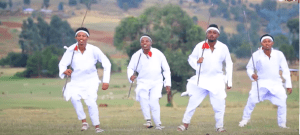
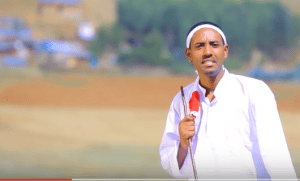
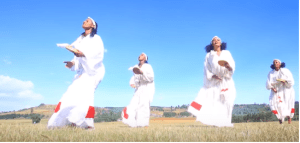
Culture, Dance, and Cultural Exchange Along the Arjo–Dhidhessaa Corridor
Watch the Video
Gelloo Yaa Gelloo
Culture, Dance, and Cultural Exchange Along the Arjo–Dhidhessaa Corridor
Music, dance, and cultural memory have always travelled together. Long before modern media, communities transmitted stories, values, traditions, and collective identities through songs performed at gatherings, celebrations, and social occasions. The song Gelloo Yaa Gelloo belongs to this continuing tradition.
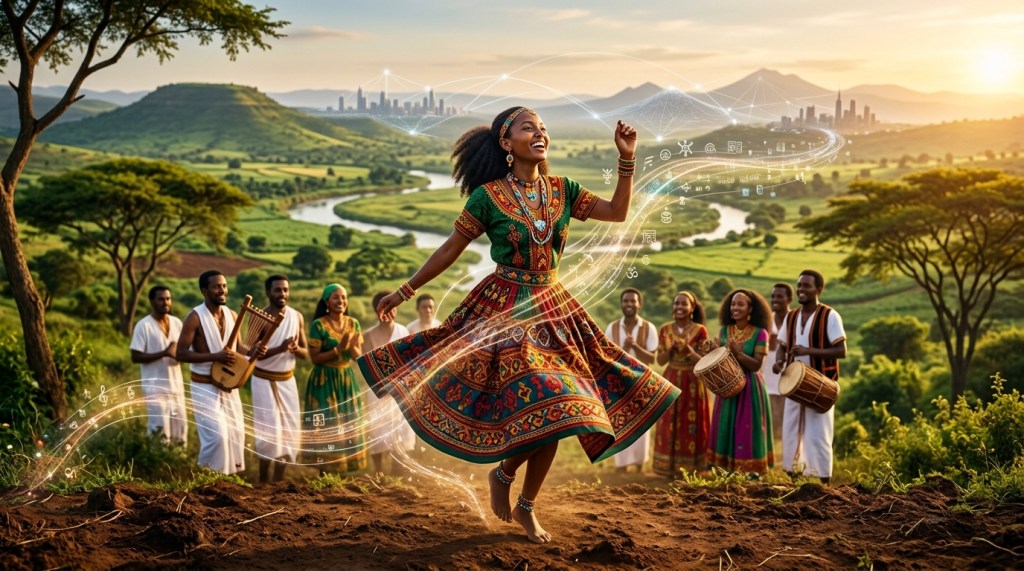
Inspired by the cultural life of Arjo and the wider Dhidhessaa corridor of Oromia, the song combines traditional Oromo lyricism with modern creative technologies to create a new interpretation of an enduring cultural atmosphere. Through music, dance, imagery, and digital production, the project seeks to document and celebrate a living cultural landscape while making it accessible to wider audiences.
Koottu gaaddissa teenyaa, Maal abbaashee wal dhabnaa.
The Cultural Landscape of Arjo
The world represented in Gelloo Yaa Gelloo emerges from a specific cultural and ecological setting. Arjo and the wider Dhidhessaa corridor have long been places where community life, agriculture, nature, and cultural expression intersect.
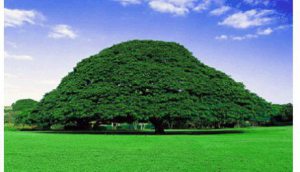
Songs from such environments often reflect everyday social relationships. They carry memories of gatherings under trees, seasonal celebrations, village pathways, communal experiences, and the landscapes that shape people’s lives. The lyrics of Gelloo Yaa Gelloo capture this atmosphere through playful dialogue, invitations to dance, and references to shared cultural spaces.
Although the song is rooted in a particular locality, its themes remain familiar across many societies. Friendship, celebration, belonging, and human connection are experiences that transcend geography.
Dance as a Living Cultural Language
Dance occupies an important place within Oromo cultural expression.
It is more than movement. It is a language of participation.
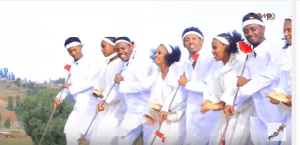
Through rhythm, gesture, and collective performance, people communicate identity, community, and joy. The repeated invitation within the song to dance together reflects a longstanding tradition in which celebration becomes a shared cultural experience rather than an individual activity.
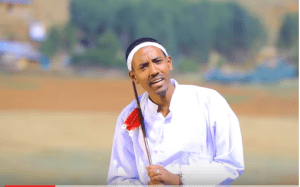
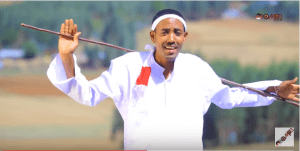
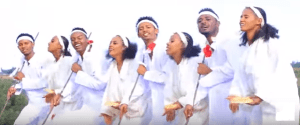
The dance imagery accompanying the song illustrates how cultural forms continue to evolve. Traditional influences remain visible while contemporary styles and technologies contribute new dimensions to presentation and preservation.
Tradition Meets Technology
One of the most distinctive aspects of this project is the fusion of traditional inspiration with modern technology.
The lyrics emerged from cultural memory and local expression. The melody was developed using AI-assisted music generation. Video technologies made it possible to transform a simple concept into a visual performance capable of reaching audiences across the world.
Rather than replacing cultural traditions, technology can support their preservation and dissemination. Songs that might previously have been limited to local performance can now become part of a permanent digital archive, available to future generations.
In this sense, technology functions as a cultural bridge.
Cultural Exchange in Both Directions
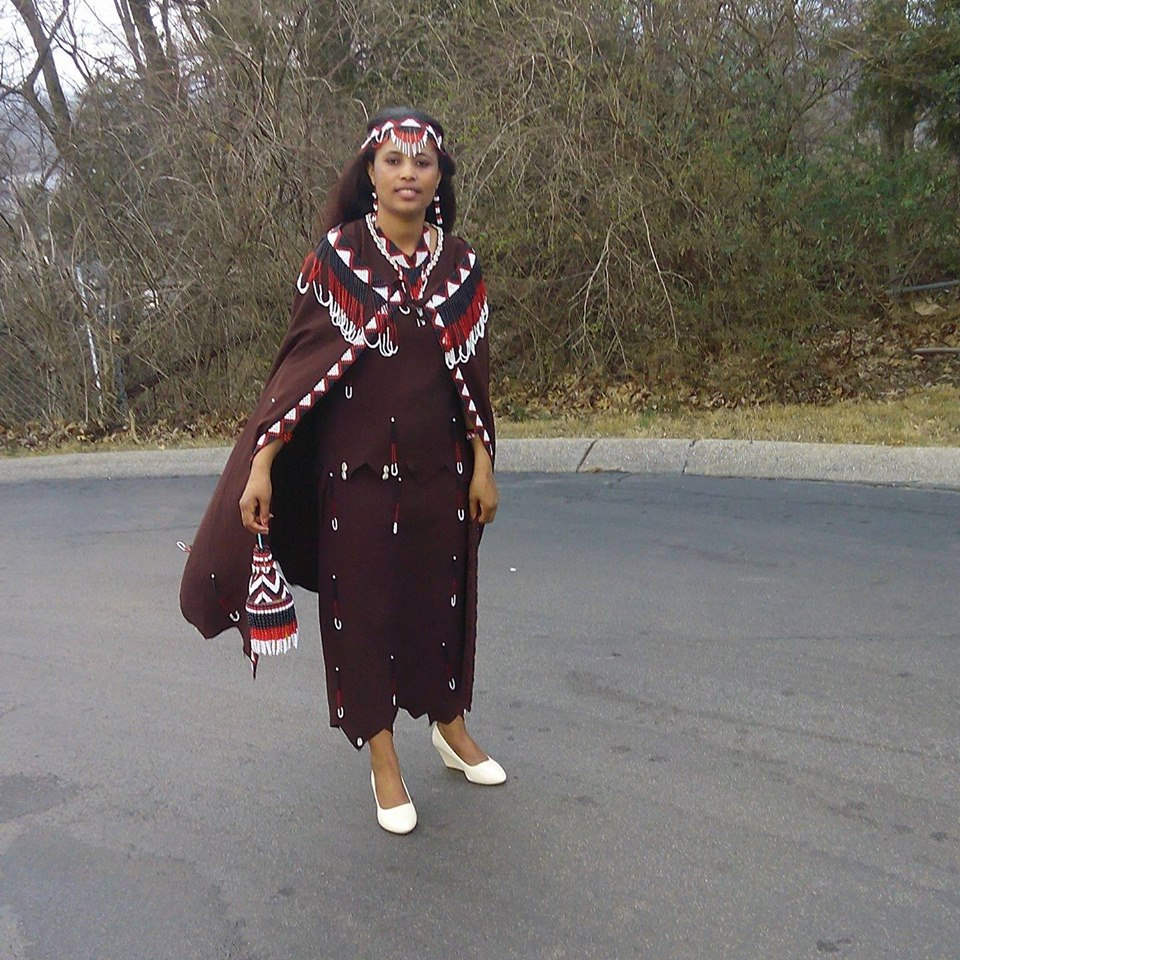
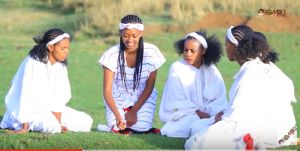
The video presents traditional Oromo attire and cultural aesthetics while simultaneously incorporating creative approaches that resonate with broader global audiences.
This creates a two-way exchange.
Culture travels from Arjo to the world through music, dance, and storytelling.
At the same time, exposure to global technologies and creative tools provides new ways of documenting and renewing local cultural expression.
The result is not cultural loss but cultural dialogue.
A community remains rooted in its heritage while participating in wider conversations about creativity, identity, and artistic expression.
Ecology, Memory, and Culture
The song also reflects a broader principle that runs throughout the TC Press Ecology Series.
Culture and ecology are deeply connected.
People inherit landscapes, but they also inherit songs about those landscapes.
Memories become attached to rivers, fields, schools, trees, pathways, and gathering places. Cultural expressions preserve those relationships long after individual events have passed.
Documenting music therefore contributes not only to cultural preservation but also to the preservation of ecological memory.
In this way, songs become part of a larger record of lived experience.
Conclusion
Gelloo Yaa Gelloo is both a cultural performance and a cultural document.
It celebrates the traditions of the Arjo–Dhidhessaa corridor while demonstrating how modern technologies can help preserve, share, and renew local heritage.
The project shows that culture does not need to choose between tradition and innovation. It can remain deeply rooted in place while engaging with the wider world.
From Arjo to global audiences and back again, the journey of the song illustrates how cultural expression continues to connect people across generations, landscapes, and communities.
TC Press Ecology Lyrics Series – Oromo Cultural Soundscapes
The Heartbeat of Oromia: How the Traditional Dibbee Sustains Our Cultural Heritage
Posted on Culture & Arts | By Temesgen Muleta-Erena | Reading Time: 4 mins
Music in the Oromo tradition is far more than mere entertainment—it is a living library of history, philosophy, spiritual values, and social organization. At the very center of this rich musical heritage lies the traditional drum, known in Afaan Oromoo as the dibbee.
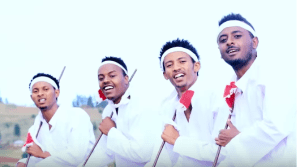
Across Oromia, different styles of traditional drums serve distinct social, ceremonial, and musical functions. From the energetic rhythms of community dances to sacred gatherings, the dibbee carries the pulse of a nation. Recognizing, recording, and preserving these traditional instruments—especially through visual media showcasing drummers in authentic traditional attire—is an essential act of cultural safeguard.
Watch the Video:
A Tapestry of Rhythms: The Diversity of Oromo Drums
The Oromo people utilize various drum styles tailored to specific musical genres, geographic regions, and cultural events:
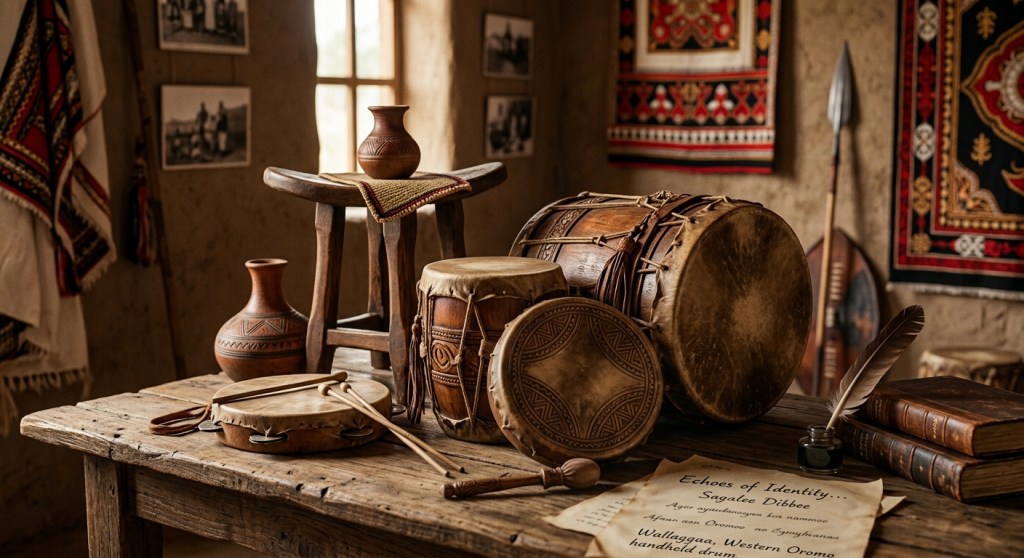
The Classic Dibbee: Carved from hollowed hardwood trunks and stretched tightly with cowhide or goatskin, the classic dibbee provides the foundational rhythm for traditional dances like Dhiichisa, Geerarsa, Ragada, and Shagoyyee. Depending on where it is struck—at the center for a deep resonance or near the frame for a sharp snap—it dictates the tempo and energy of the community.
The Handheld Wallaggaa Dibbee: Popular in Western Oromia (Wallaggaa), this portable, handheld version allows drummers mobility and fluid interaction with dancers, playing an integral role in regional celebrations and social gatherings.
The Atamo: Lighter frame drums played with hands or thin beaters, widely used during intimate social gatherings, traditional coffee ceremonies, and festive occasions.
Spiritual & Ritual Drums: In traditional ceremonies (such as Ateetee rituals or Irreecha gatherings), sacred drum rhythms establish a reverent atmosphere, bringing the community together in prayer, unity, and gratitude.
“The drumbeat in Oromia is not just background music; it is the rhythm to which our history, oral poetry, and community values are spoken.”
Why the Drum is a Pillar of Oromo Identity
Oromo drums do not merely accompany a melody; they structure the entire communication and story of a performance:
Sustaining Oral History: In a culture historically anchored in oral tradition, drum rhythms serve as timekeeping markers for epic poetry, historical recitations, and heroic songs (Geerarsa).
Fostering Social Harmony: The layered polyrhythms produced by multiple drummers responding to one another reflect core Oromo values of teamwork, mutual respect, and collective harmony (Safuu and Gadaa principles).
Guarding Indigenous Craftsmanship: Every traditional drum represents generations of artisan knowledge—from selecting native hardwoods to preparing hides using age-old tanning techniques. Preserving the drum safeguards this irreplaceable craftsmanship.
Digital Preservation: Bringing Tradition to the World
In an era dominated by modern synthesized production, traditional acoustic instruments risk being overshadowed. Capturing authentic acoustic recordings and visual performances serves three vital purposes:
Visual Documentation: Recording hand techniques, postures, and striking methods ensures future generations can study and replicate authentic practices.
Cultural Pride: Pairing traditional attire (Aadaa) with native instruments highlights the deep connection between Oromo textiles, aesthetics, and musical heritage.
Global Connection: Sharing raw, traditional percussion online connects the Oromo diaspora and introduces international audiences to the authentic sounds of East Africa.
Key Takeaway: The dibbee is more than an instrument—it is the heartbeat of Oromo identity. By documenting, recording, and sharing traditional drumming, we ensure that the vibrant rhythms of Oromia continue to inspire generations to come.
Join the Conversation!
What is your favorite memory or traditional dance connected to the dibbee? Do you play any traditional Oromo instruments? Drop a comment below and share your thoughts!
A Reflection on Love, Nature, and Shared Belonging
Where the River Meets the Sky
A Reflection on Love, Nature, and Shared Belonging
Author (Contributor): Temesgen Muleta-Erena
TC Press Ecology Series
Some songs are about two people. Others are about nature. Where the River Meets the Sky is about both.
The song begins with a simple image: two people sharing a moment beside a river. There is no grand stage, no city lights, and no pursuit of material wealth. Instead, the setting is a living landscape of water, trees, birds, mountains, and open sky. In this environment, love becomes part of the natural world rather than something separate from it.
The central idea of the song is that human relationships flourish when they are connected to the places that sustain life. The river represents continuity and movement. The trees symbolize endurance. The mountains suggest stability. Together, these elements remind us that love grows not only between people but also through our connection with the Earth itself.
Throughout the lyrics, nature is not a background decoration. It is an active companion. Birds contribute to the music, rivers carry stories, and changing seasons become reminders of renewal and continuity. The song suggests that caring for another person and caring for nature are closely related acts. Both require attention, patience, appreciation, and stewardship.
At a time when many people experience life primarily through screens and fast-moving information, Where the River Meets the Sky invites listeners to slow down and reconnect with the world around them. It celebrates simple experiences: walking together, listening to birds, watching a sunset, and appreciating the beauty that already exists.
The song also carries a message for future generations. The landscapes we enjoy today are not ours alone. Rivers, forests, flowers, and wildlife are living inheritances that deserve protection and renewal. Love, therefore, extends beyond the present moment. It includes a responsibility to leave the world in good condition for those who come after us.
Musically, the composition blends world-music inspiration with a warm, uplifting atmosphere. It seeks to create a feeling of peace, belonging, and gratitude. The listener is invited into a space where human affection and ecological awareness exist together in harmony.
Ultimately, Where the River Meets the Sky is a celebration of two forms of love: love for another person and love for the living world that surrounds us. It reminds us that some of life’s most meaningful moments occur not in places of noise and urgency, but beside rivers, beneath trees, under open skies, and in the company of those we cherish.
Ilfinash Qannoo — The Mother of Hope, The Mother of the Land, The Mother of Culture, The Mother of Resistance**
**Haadha Hawwii, Haadha Daangaa:
Ilfinash Qannoo — The Mother of Hope, The Mother of the Land, The Mother of Culture, The Mother of Resistance**
Author / Contributor: Temesgen Muleta-Erena
Abstract
Ilfinash Qannoo is one of the foundational figures in modern Oromo cultural history. Emerging in the early 1970s as part of a wider cohort of Oromo cultural pioneers — including, among others, Abitew Kebede and Ali Birra — she helped reverse a hegemonic strategy designed to fragment, de‑urbanize, and silence Oromo identity. Through culturally distinct regional melodies, resistance songs, and principled preservance, she urbanized Oromo culture, elevated hidden traditions to national visibility, and contributed to the formation of pan‑Oromo consciousness. Her legacy extends beyond music: she embodies a civilizational role comparable to Miriam Makeba in South Africa, serving as an exemplar for indigenous women across Africa and beyond. This essay examines her cultural mission, her Kaayyoo, her resistance, her gender‑boundary crossing, and her billion‑years frontier legacy.
Keywords: Ilfinesh Qannoo, Ilfinash Qannoo, Oromo cultural urbanization, Oromo music history, pan‑Oromo consciousness, cultural resistance, indigenous African women, Kaayyoo, geerarsaa, Oromo regional melodies, cultural preservation, Oromo identity formation, indigenous cultural revival, Miriam Makeba comparative study, Oromo women in music, Oromo cultural history, Guddattuu Wallaggaa
1. Introduction
The emergence of Ilfinash Qannoo in the early 1970s marks a turning point in Oromo cultural history. Her work did not simply entertain; it restructured the cultural landscape. At a time when Oromo identity faced systematic fragmentation, she brought regional cultural authenticity into urban spaces, transforming hidden traditions into national consciousness. Her songs became instruments of unity, dignity, and resistance. This essay situates Ilfinash within the broader cultural awakening of the Oromo and examines her enduring legacy.
2. Historical Context: The Hegemonic Strategy
The cultural environment preceding Ilfinash’s emergence was shaped by a deliberate hegemonic strategy:
De‑urbanization of Oromo identity, pushing Oromo culture out of national visibility.
Fragmentation of regions, preventing communication between west, east, south, and north.
Urbanization of assimilated characters, presenting them as “modern” while regional authenticity was erased.
Absorption of educated Oromo, using them to weaken cultural continuity.
Suppression of Oromo language and music from national platforms.
This strategy produced cultural disconnection, regional isolation, and a broken sense of shared identity. It also obscured the regional and subgroup diversity of Oromo cultural life — including distinct melodic traditions from Maccaa, Tuulama, Wallo, Hararghe, Borana, Guji, Arsi, and others — each with its own rhythm, vocal style, and cultural symbolism.
3. Cultural Reversal: The 1970s Urbanization of Oromo Culture
Ilfinash Qannoo, Abitew Kebede, and Ali Birra initiated a cultural reversal. They were not commercial artists; they were cultural carriers. Their work:
brought hidden regional traditions into national stages,
introduced distinct Oromo melodies to urban audiences,
recorded tapes that circulated across regions,
created visibility where silence had been enforced.
Their performances in Finfinnee were transformative. They urbanized Oromo culture itself — the opposite of the hegemonic strategy.
3A. Guddattuu Wallaggaa: The Cultural Band That Shaped Ilfinash Qannoo
Before Ilfinash Qannoo emerged as a solo cultural icon, she was part of Guddattuu Wallaggaa, one of the most influential Oromo cultural bands of the early 1970s. The band brought together naturally gifted youth artists from Wallaggaa and surrounding regions — young talents whose voices carried distinct regional melodies and cultural authenticity.
Guddattuu Wallaggaa played a decisive role during the early Derg era. Its performances:
introduced regional Oromo melodies to urban audiences,
unified diverse subgroup traditions under one cultural platform,
demonstrated the artistic potential of Oromo youth,
and accelerated the cultural urbanization process.
The band’s impact was so significant that it drew the attention of the Derg regime. As elders recount, the band was banned abruptly once its cultural influence became visible. This suppression forced its members into new artistic paths.
From this rupture, solo artists emerged — most notably:
Ilfinash Qannoo,
Abitew Kebede,
and others whose names remain preserved in oral histories.
These artists carried forward the mission of Guddattuu Wallaggaa. They produced iconic songs and cassette recordings that circulated widely across Oromia, further urbanizing Oromo culture and inspiring the next generation of solo artists.
The story of Guddattuu Wallaggaa demonstrates that Ilfinash’s rise was not accidental. It was rooted in a collective cultural movement — a band that served as a training ground, a cultural incubator, and a catalyst for the pan‑Oromo awakening.
4. Cultural Melodies as Instruments of National Awakening
Ilfinash’s cultural melodies were diplomatic tools of identity formation. They carried:
regional vocal styles,
indigenous emotional expression,
local rhythmic patterns,
the storytelling cadence of Oromo subgroups.
When she sang in national gatherings, Oromo from different regions heard the same cultural sound for the first time. This produced:
shared cultural memory,
shared emotional identity,
recognition of common marginalisation,
the beginning of pan‑Oromo consciousness.
Her songs became the first bridge across fragmented regions.
5. Resistance Through Melody
Ilfinash’s resistance was non‑violent but profound. Her line:
“Kolonii luka dooluu hamma jedhu hin haleeluu.”It is amputated in its leg; it cannot strike as much as it threatens.
This message provided psychological liberation. She taught her people:
tyranny exaggerates its strength,
fear is a tool of domination,
dignity is stronger than intimidation,
cultural truth is a form of resistance.
Her songs became emotional infrastructure for survival.
6. Gender Boundary Crossing: Geerarsaa
Traditionally, geerarsaa is a male genre. Ilfinash crossed this boundary, demonstrating:
women’s cultural authority,
the universality of resistance,
the non‑gendered nature of cultural voice,
the central role of women in national consciousness.
Her geerarsaa declared:
Being a woman is not a shortcoming — it is a blessing.
This was a cultural revolution.
7. Principle, Preservance, and Kaayyoo
Ilfinash’s cultural mission was guided by Kaayyoo — the national purpose. Her principles included:
Preservance: she maintained her cultural line without compromise.
Continuity: she carried her tradition until death.
Dignity: she addressed injustice with character.
Humiliation‑endurance: she faced suppression without breaking.
National mission: she pushed for total cultural/national liberation, not partial recognition.
She was not limited by personal gain. She pursued historical justice through melody.
Her legacy belongs to what can be called the billion‑years frontier — a civilizational horizon beyond political eras.
8. Unity as Cultural Philosophy
Her message of unity was foundational:
“Wal malee maal qabna.”We have only each other.
This principle shaped:
Oromo unity,
national awakening,
cultural revival,
resistance identity.
Her songs taught that unity is not optional — it is existential.
9. Generational Impact
Ilfinash’s cultural revival created the emotional environment that later produced:
the Qubee generation,
the Qeerroo youth movement,
modern Oromo cultural confidence,
Oromo protests,
Oromo media platforms,
diaspora cultural revival.
These movements grew in a cultural landscape she helped create. Her songs became collective memory.
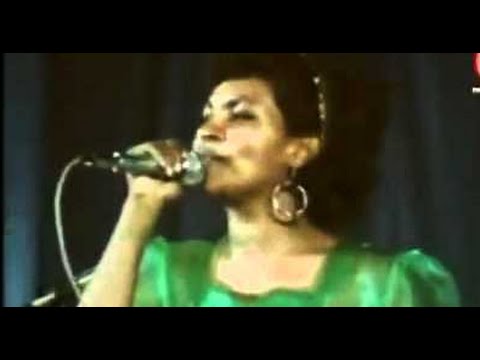
Figure 1. Ilfinash Qannoo performing in Finfinnee, September 1991 — a landmark moment showing her cultural continuity into the post‑Derg era.
10. Global Relevance: An Indigenous African Icon
When written in English, Ilfinash’s legacy becomes global. Like Miriam Makeba, she:
preserved indigenous identity,
resisted cultural erasure,
elevated regional authenticity to national visibility,
became a model for indigenous women across Africa.
Her work belongs in global discussions of cultural resistance and indigenous revival.
11. Legacy Through Her Daughters
Ilfinash’s lineage continues through her daughters:
Hawwii — meaning Hope.
Daangaa — meaning Territorial boundary / Oromo land.
She taught them:
Oromo culture,
Oromo language,
Oromo melody,
Oromo identity.
They became among the best Oromo singers of their generation.
12. Conclusion
Ilfinash Qannoo’s legacy is foundational. She urbanized Oromo culture, reversed hegemonic fragmentation, unified regions, liberated minds through melody, carried Kaayyoo without compromise, and became a global symbol of indigenous courage.
Her correct title is:
**Haadha Hawwii, Haadha Daangaa:
Ilfinash Qannoo — The Mother of Hope, The Mother of the Land, The Mother of Culture, The Mother of Resistance**
Her work is not a chapter in Oromo history — it is one of its foundations.
References
Books and Academic Works
Baxter, Paul T.W. Peoples and Cultures of the Oromo. Addis Ababa: Addis Ababa University Press, 1994.
Bulcha, Mekuria. Contours of the Emergent and Ancient Oromo Nation. Minneapolis: Kirk House Publishers, 2016.
Hassen, Mohammed. The Oromo of Ethiopia: A History, 1570–1860. Trenton, NJ: Red Sea Press, 1990.
Jalata, Asafa. Oromo Nationalism and the Ethiopian Discourse. Lawrenceville, NJ: Red Sea Press, 1998.
Lewis, Herbert S. A Galla Monarchy: Jimma Abba Jifar, Ethiopia, 1830–1932. Madison: University of Wisconsin Press, 1965.
Lydon, Ghislaine. On Trans-Saharan Trails: Islamic Law, Trade Networks, and Cross-Cultural Exchange in Nineteenth-Century Western Africa. Cambridge: Cambridge University Press, 2009.
Makeba, Miriam. Makeba: The Miriam Makeba Story. New York: Plume, 1988.
Muleta-Erena, Temesgen. The Game of Strategic Legacy: Essays in Behavioural Economics on Courage, Coordination, and Cultural Sovereignty. London: TC Press, 2025.
Smith, Linda Tuhiwai. Decolonizing Methodologies: Research and Indigenous Peoples. London: Zed Books, 1999.
Journal Articles
Benti, Getahun. “The Role of Oromo Music in Cultural Resistance.” Journal of Oromo Studies 12, no. 2 (2005): 45–68.
Bulcha, Mekuria. “Cultural Identity, Modernity, and Nationalism: The Oromo Experience.” African Affairs 96, no. 385 (1997): 493–514.
Gemeda, Abebe. “Women, Music, and Resistance in Oromo Society.” Northeast African Studies 10, no. 3 (2008): 23–49.
Jalata, Asafa. “The Struggle for Knowledge: The Case of the Oromo.” International Journal of Ethiopian Studies 1, no. 2 (2004): 57–88.
Schlee, Günther. “Cultural Fragmentation and Identity Formation in East Africa.” Africa 70, no. 3 (2000): 505–528.
Chapters in Edited Volumes
Baxter, Paul T.W. “The Creation of the Pan‑Oromo Identity.” In Being and Becoming Oromo, edited by Paul T.W. Baxter, Jan Hultin, and Alessandro Triulzi, 167–186. Lawrenceville, NJ: Red Sea Press, 1996.
Triulzi, Alessandro. “Songs of Resistance: Memory and Identity in the Horn of Africa.” In Cultural Memory in Africa, edited by Abebe Zegeye, 89–112. Cape Town: HSRC Press, 2002.
Primary Cultural Sources
Ali Birra. Selected Recordings, 1970–1985. Addis Ababa: National Radio Archives.
Abitew Kebede. Studio and Live Recordings. Finfinnee: Ethiopian Broadcasting Corporation Archives.
Ilfinash Qannoo. Cultural and Resistance Songs (1970s–2000s). Oromo Music Preservation Archive.
Qannoo, Ilfinash. “Kolonii Luka Dooluu.” Audio recording. Oromo Cultural Heritage Collection.
Indigenous and Oral Sources
Oral testimonies collected from Oromo elders in East, West, South, and North Oromia (1970–2026).
Community interviews archived in the Oromo Oral Heritage Project, Addis Ababa University.
Field notes from cultural gatherings in Finfinnee, Ambo, Jimma, and Hararghe (1975–1995).
Ilfinash Qannoo and the Guddattuu Wallaggaa Cultural Band (1970s): Oral Testimonies from Elders Associated with TC Press, London.Collected 2015–2026.
Beyond Official Titles: Cultural Breakthroughs in Performance and Representation
Competitions often create moments where the official winner is not the only artist who leaves a lasting impact. In the BBC Fame Academy series, David Sneddon secured the title with 3.5 million votes. Yet two other finalists — Lemar Obika and Sinéad Quinn — became widely recognised as cultural winners. Their performances resonated strongly with audiences, and both went on to build successful music careers. Their breakthrough came not from the final vote, but from the authenticity and talent they displayed on stage.
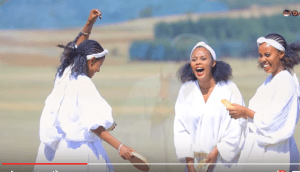
A similar dynamic is emerging with Ruth Yirgalem Weldesilasie, whose performance in traditional Oromo dance introduced a global audience to a cultural heritage that has long been underrepresented. Her appearance — authentic choreography, traditional costume, and confident cultural expression — revealed a tradition that many viewers had never encountered before. The reaction from international audiences, influencers, and cultural commentators was overwhelmingly positive, recognising the performance as a display of a rich and distinctive heritage.
For a culture that has faced historical suppression, this moment carried a different kind of significance. When given visibility, indigenous traditions often resonate far beyond expectations, and Ruth’s performance demonstrated how cultural authenticity can create its own form of victory — independent of any official result.
Her journey is also marked by personal resilience, including the loss of her senior sister to kidnappers. Despite this, she has continued to carry herself with strength and dignity, treating all cultures with equal respect. Her background, including her Tigrayan roots, has enabled her to navigate diverse cultural spaces with openness, helping to bring people together across East Africa and beyond.
Whether or not she wins an official title, Ruth’s performance at Miss World 2026 has already achieved something meaningful: it opened a window for the world to witness a cultural treasure, and it placed her on a path similar to artists who became iconic through impact rather than votes.
To support visual understanding of the cultural analysis, this essay includes a link to a publicly available YouTube clip uploaded by an independent creator. The video provides a clear view of Ruth Yirgalem Weldesilasie’s Oromo traditional dance performance:
Bilingual recording artist Hamelmal Abate has been nominated for the All Africa Music Awards, AFRIMA, in the “African Traditional” category. The nomination song is titled “Harar” (watch below). The competition is based on fan votes; to cast your vote in the “African Traditional” category, click here. In a recent interview (link below), Hamelmal said she’d dedicate the Award, if she wins, to the people of eastern Oromia; thousands have been killed and displaced in recent months in eastern Oromia by TPLF.
This week, Wole Soyinka, the first African to win the Nobel prize in literature, said he wanted another award: The Grammy. Speaking at Oxford University, Soyinka was responding to Bob Dylan’s recent crowning as the winner of the prestigious literature prize, when he said: “Since I’ve written quite a number of songs for my plays,…
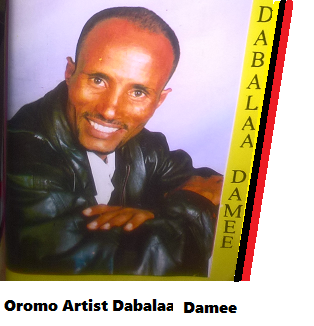
The beloved and one of the greatest Oromo musicians, actors and poets, Dabalaa Damee died on 29 October 2016. He was highly talented and gifted artist and selfless. He dedicated all his life to develop the suppressed Oromo art music and culture. He was very incredible. He lived a life as an artist, activist and selfless human being. he was advocating for equality, peace, justice and freedom for Oromo people and all oppressed people.
Remembering his wonderful and gentle soul will forever remain in our hearts. May he rest in peace!
Artist Dabalaa Damee Onkoloolessa 29 bara 2016 du’aan addunyaa kana irraa Boqote.
Dabalaa Damee nama walleef artii Afaan Oromoo keessatti bakka guddaa qabudha.
Jireenya isaa guutuu artii saba kanaaf hanga dhumaatti nama cichaa turedha. Kuusaa artii Oromoo nama jabaa tokko dhabneerra har’a. Biyyoon isatti haa salphatu. Maatii saaf Oromo maraaf immoo rabbi jajjabina haa kennu.
“Lagatafo Studio best for Oromia entertainment”
Lagatafo Studio requests for subscription to its YouTube Channel to get the latest and exciting Oromo song/Music. Don’t forgot to share this Video with your friends and family as well. If you happen to have any new Oromo Song, please forward to Lagatafo Studio https://www.youtube.com/channel/UCeiu…
Title: Listening to Ethiopia’s South: Music, Musicians, and the Performance of Oromo Nationalism Author:Kay Kaufman Shelemay (Professor of Music and of African and African American Studies at Harvard University) Published:Seminar Presentation, African Studies Workshop at Harvard University Language: English Keywords: Ethnography, Ethnomusicology, Music, Oromo Nationalism
On March 3, 2014, Kay Kaufman Shelemay, G. Gordon Watts Professor of Music and of African and African American Studies at Harvard University, presented, “Listening to Ethiopia’s South: Music, Musicians, and the Performance of Oromo Nationalism.” Ingrid Monson, Quincy Jones Professor of African American Music at Harvard University, was the discussant.

















You must be logged in to post a comment.