Cheechee Yaa Fardaa: Love and Horses in the Green Lands of Arjo November 24, 2026
Posted by OromianEconomist in Uncategorized.Tags: Afaan Oromoo, African Folk Music, AI Music, Arjo, Arjo highlands, Arjoo, Arjoo Oromia, art, Buundho, Buundhoo, Buundhoo Beddellee, Cheechee Yaa Fardaa, Cultural Ecology, cultural preservation, Dhidheessaa Corridor, Dhidheessaa River, Digital Creativity, East African Music, From Oromia to the World, Gelloo Music, history, Human AI Collaboration, Indigenous culture, Indigenous Knowledge, Iyyaasee Style, Killoo Kombolcha, Music, Oromia, Oromia highlands, Oromo Community, Oromo Cultural Heritage, Oromo Cultural Soundscapes, Oromo Cultural Storytelling, Oromo culture, Oromo dance, Oromo Dance Music, Oromo Folk Music, Oromo Heritage, Oromo Highlands, Oromo History, Oromo Horse Culture, Oromo Horse Song, Oromo Identity, Oromo Landscape, Oromo Love Song, Oromo music, Oromo Romance, Oromo song, Oromo Tradition, Oromo Village Life, Oromo Youth, Rural Oromia, TC Press, Temesgen Muleta-Erena, Traditional Oromo Music, Travel, Western Oromia, world music, writing
add a comment
Cheechee Yaa Fardaa: Love and Horses in the Green Lands of Arjo
How a song from the Arjo–Killoo Kombolcha–Dhidheessaa corridor keeps Oromo memory alive—and shows how AI and digital tools can carry local culture to the world.
By Temesgen Muleta-Erena
Music has a way of holding onto memories that formal history books often leave behind. A melody or refrain can carry the feel of a landscape, everyday habits, friendships, and lived traditions long after daily life has changed. Cheechee Yaa Fardaa grows out of that living tradition. Rooted in the Arjo–Killoo Kombolcha–Dhidheessaa corridor in western Oromia, the song weaves together horse culture, companionship, romance, movement, and ties between neighbouring communities, while showing how modern creative tools can help document local culture and share it far beyond its home ground.
The Horse in Oromo Cultural Life
In Oromo history and culture, the horse has always meant more than a way to get from one place to another. It has long stood for skill, dignity, courage, prestige, and responsibility. Before modern transport reached rural areas, owning and riding a horse shaped mobility and everyday usefulness, and skilled riders earned respect not just for how they rode, but for how they helped relatives, neighbours, travellers, and friends get where they needed to go. That is why horses show up so often in Oromo songs, stories, poetry, and celebrations, and why in Cheechee Yaa Fardaa, the horse becomes a true cultural companion linking people, places, and shared memory.
The Meaning of Uddeelachuu
One of the central ideas in the song comes through in the line “Na uddeeladhuu,” which refers to uddeelachuu—the practice of riding on a horse behind another rider. In traditional rural life, especially where roads were scarce and modern vehicles were unavailable, a capable rider would take along someone who could not ride on their own, whether a relative, neighbour, friend, spouse, or community member needing assistance. While that custom began as a practical act of trust and mutual help, Cheechee Yaa Fardaa transforms it into a playful and romantic invitation, as the female singer asks to join the ride in a scene that blends everyday tradition with youthful affection and joy.
Arjo and the Cool Air of the Highlands
Another defining line, “Arjoo qilleensa baddaa,” places the listener straight into the cool highland climate, open views, and natural beauty of Arjo. Rather than treating geography as a flat map, the song evokes a lived world shaped by farming, community gatherings, horses, rivers, and forests. Here, the landscape is not merely background scenery; it becomes part of the musical narrative itself, turning a journey across space into a heartfelt celebration of place.
The Journey to Buundhoo
Halfway through, the song calls out “Wajjin Buundhoo dhaqnaa”—an invitation to go together to Buundhoo. On the surface, the line suggests a simple ride, yet for anyone familiar with the region, it carries a deeper historical resonance. Buundhoo and Arjo share long-standing social, cultural, and geographical ties along the Dhidheessaa corridor, maintaining extensive contact, cooperation, and mutual support even when neighbouring communities developed distinct political traditions over time. In historical memory, Buundhoo is associated with the Guumaa political tradition while Arjo remains closely linked to the Gadaa system, yet the two sides lived in coexistence and interdependence—turning a ride to Buundhoo into a symbolic journey through shared history.
Technology and Cultural Preservation
Although the themes in Cheechee Yaa Fardaa are deeply traditional, bringing the piece to life relied on thoughtful collaboration with contemporary tools. Modern video-generation and editing technologies made it possible to depict two Oromo youths riding together across lush highland landscapes evocative of Arjo, while the lyrics were written independently to honour local culture, memory, geography, and custom. The musical arrangement emerged through creative experimentation with artificial intelligence, testing different interpretations before selecting a fast Gelloo/Iyyaasee-inspired rhythm that captures the spirit of rural Arjo music. Rather than any single element working alone, the finished work reflects a seamless partnership between human cultural memory, creativity, and judgment on one hand, and artificial intelligence, digital media, and visual design tools on the other.
From the Dhidheessaa Corridor to the World
One of the most remarkable possibilities of contemporary technology is how easily it connects local lived experiences with global audiences. A song inspired by the traditions of Arjo and Buundhoo can now be experienced by viewers who have never visited western Oromia, allowing cultural practices like uddeelachuu and traditional horse heritage to be documented and preserved through video, music, and digital archives. When guided with care and human intention, technology does not replace culture; instead, it helps preserve, communicate, and carry local knowledge across borders.
Conclusion
Cheechee Yaa Fardaa is far more than a lively dance song—it is a cultural narrative weaving together landscape, memory, horse tradition, neighbourly history, romance, and digital creativity from the Arjo–Killoo Kombolcha–Dhidheessaa corridor. Ultimately, the ride toward Buundhoo is more than a physical journey on horseback; it is a passage through living memory, carried forward through music, imagination, and the creative partnership between human heritage and new technology.
TC Press
Ecology Lyrics Series – Oromo Cultural Soundscapes
The Heartbeat of Oromia: How the Traditional Dibbee Sustains Our Cultural Heritage October 19, 2026
Posted by OromianEconomist in Uncategorized.Tags: African culture, African music, art, Black History, cultural preservation, Culture, history, Music, Oromia music, Oromo, Oromo music, Travel, writing
add a comment
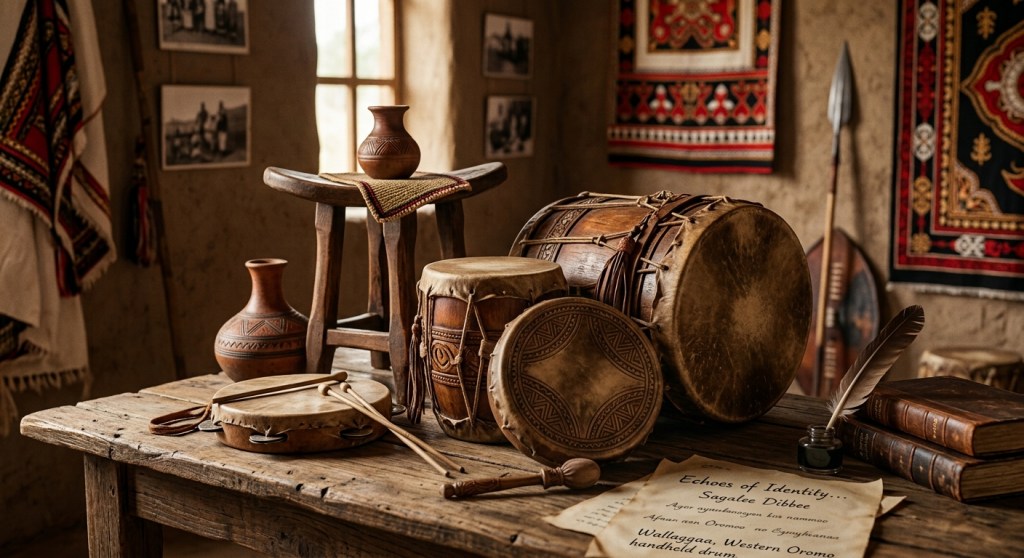
The Heartbeat of Oromia: How the Traditional Dibbee Sustains Our Cultural Heritage
Posted on Culture & Arts | By Temesgen Muleta-Erena | Reading Time: 4 mins
Music in the Oromo tradition is far more than mere entertainment—it is a living library of history, philosophy, spiritual values, and social organization. At the very center of this rich musical heritage lies the traditional drum, known in Afaan Oromoo as the dibbee.
Across Oromia, different styles of traditional drums serve distinct social, ceremonial, and musical functions. From the energetic rhythms of community dances to sacred gatherings, the dibbee carries the pulse of a nation. Recognizing, recording, and preserving these traditional instruments—especially through visual media showcasing drummers in authentic traditional attire—is an essential act of cultural safeguard.
Watch the Video:
A Tapestry of Rhythms: The Diversity of Oromo Drums
The Oromo people utilize various drum styles tailored to specific musical genres, geographic regions, and cultural events:
- The Classic Dibbee: Carved from hollowed hardwood trunks and stretched tightly with cowhide or goatskin, the classic dibbee provides the foundational rhythm for traditional dances like Dhiichisa, Geerarsa, Ragada, and Shagoyyee. Depending on where it is struck—at the center for a deep resonance or near the frame for a sharp snap—it dictates the tempo and energy of the community.
- The Handheld Wallaggaa Dibbee: Popular in Western Oromia (Wallaggaa), this portable, handheld version allows drummers mobility and fluid interaction with dancers, playing an integral role in regional celebrations and social gatherings.
- The Atamo: Lighter frame drums played with hands or thin beaters, widely used during intimate social gatherings, traditional coffee ceremonies, and festive occasions.
- Spiritual & Ritual Drums: In traditional ceremonies (such as Ateetee rituals or Irreecha gatherings), sacred drum rhythms establish a reverent atmosphere, bringing the community together in prayer, unity, and gratitude.
“The drumbeat in Oromia is not just background music; it is the rhythm to which our history, oral poetry, and community values are spoken.”
Why the Drum is a Pillar of Oromo Identity
Oromo drums do not merely accompany a melody; they structure the entire communication and story of a performance:
- Sustaining Oral History: In a culture historically anchored in oral tradition, drum rhythms serve as timekeeping markers for epic poetry, historical recitations, and heroic songs (Geerarsa).
- Fostering Social Harmony: The layered polyrhythms produced by multiple drummers responding to one another reflect core Oromo values of teamwork, mutual respect, and collective harmony (Safuu and Gadaa principles).
- Guarding Indigenous Craftsmanship: Every traditional drum represents generations of artisan knowledge—from selecting native hardwoods to preparing hides using age-old tanning techniques. Preserving the drum safeguards this irreplaceable craftsmanship.
Digital Preservation: Bringing Tradition to the World
In an era dominated by modern synthesized production, traditional acoustic instruments risk being overshadowed. Capturing authentic acoustic recordings and visual performances serves three vital purposes:
- Visual Documentation: Recording hand techniques, postures, and striking methods ensures future generations can study and replicate authentic practices.
- Cultural Pride: Pairing traditional attire (Aadaa) with native instruments highlights the deep connection between Oromo textiles, aesthetics, and musical heritage.
- Global Connection: Sharing raw, traditional percussion online connects the Oromo diaspora and introduces international audiences to the authentic sounds of East Africa.
Key Takeaway: The dibbee is more than an instrument—it is the heartbeat of Oromo identity. By documenting, recording, and sharing traditional drumming, we ensure that the vibrant rhythms of Oromia continue to inspire generations to come.
Join the Conversation!
What is your favorite memory or traditional dance connected to the dibbee? Do you play any traditional Oromo instruments? Drop a comment below and share your thoughts!


You must be logged in to post a comment.