Jamila Ali Damacoo: The Hidden Mother in Ethiopia’s Imperial Narrative September 14, 2026
Posted by OromianEconomist in Uncategorized.Tags: Ali Damacoo, book-reviews, genealogy, history, Jamila Ali Damacoo, Mekonnen Guddisaa, Munaa Ali Damacoo, Qixxo Hussein, writing, Yejjuu Oromo, Yeshimebet
1 comment so far
⭐ Jamila Ali Damacoo: The Hidden Mother in Ethiopia’s Imperial Narrative
TC Press Cultural Ecology Series — Continuation
Author/ Contributor: Temesgen Muleta-Erena
History often remembers power but forgets the people who shaped it. Among these forgotten figures stands Jamila Ali Damacoo, a woman whose identity was rewritten inside the machinery of Ethiopia’s imperial state. Her story is not only personal — it is a window into the broader pattern of Oromo erasure within official historiography.
Jamila, born to Ali Damacoo of the Yejjuu Oromo, carried a lineage deeply rooted in Oromo cultural identity. Her mother, Qixxoo Hussein, embodied a mixed heritage: Silxee on her maternal side and Yejjuu Oromo on her paternal side. The name Qixxoo itself means “equal” in Afaan Oromo — a symbolic reflection of balance and dignity.
Jamila was not alone in this heritage. She had a junior sister, Munaa Ali, who shared the same ancestral roots. Together, Jamila and Munaa represent a family whose identity was shaped by Oromo values, yet later obscured by imperial narratives.
According to author Tesfaye Gebre’ab, whose research includes a detailed interview on OMN with journalist Fiqaaduu (VOA Afaan Oromo), Jamila’s original name and identity were replaced with Yeshimebet — the name officially recorded as the mother of Emperor Haile Selassie. This renaming was not accidental; it was part of a systematic pattern of assimilation within the imperial court.
The pattern extends further. Haile Selassie’s father, Ras Makonnen, was born Mekonnen Guddisa, tracing his lineage through Fitawrari Woldemikael Guddisa, a noble family of Oromo origin. Both maternal and paternal lines reveal a clear Oromo heritage — yet official imperial narratives reframed these identities to fit the Solomonic mythos.
This rewriting served a political purpose: to reinforce centralized legitimacy by absorbing Oromo ancestry into a highland Christian imperial identity. Jamila’s transformation into “Yeshimebet” is one example of how personal identity became a tool of state narrative construction.
Tesfaye Gebre’ab’s work — including the OMN interview — helps restore these erased histories. It reveals how Oromo lineage shaped the imperial establishment, even as the state attempted to conceal it. Jamila Ali Damacoo’s story is therefore not only about one woman; it is about the broader struggle for historical truth, cultural recognition, and the dignity of remembering.
Her name, her lineage, and her story deserve to stand in the open — not hidden behind the architecture of empire.
Eyyoo, Ya Faacha Ishee — Ilfinash Qannoo September 10, 2026
Posted by OromianEconomist in Uncategorized.Tags: art, history, Oromo music, poetry, writing
add a comment
A Short Essay on Courage, Lineage, and Oromo Cultural Memory
Eyyoo, Ya Faacha Ishee — Ilfinash Qannoo
A Short Essay on Courage, Lineage, and Oromo Cultural Memory
Video Reference:
Essay Link:
https://theoromianeconomist.blogspot.com/2026/09/haadha-hawwii-haadha-daangaa-ilfinash.html
Oromo cultural history is carried not only by political leaders and fighters, but by women whose courage shaped the continuity of their people. Among these foundational figures stand Warqituu and Mastawat of Walloo (North Oromia) — 19th‑century Oromo women who assumed leadership after Abyssinian hegemonic forces killed many male leaders. In a period marked by severe repression and mass violence under Emperor Tewodros II, they stepped forward to protect their communities. Historical records show that they cooperated with the British Napier Expedition, whose intervention ended Tewodros’s rule, halting the mass killings in Walloo. Their leadership was an act of survival, clarity, and strategic resistance.
Alongside them stands Saartuu (Saartu) of Hararghee (Eastern Oromia) — a 20th‑century resistance figure whose courage became a symbol of Eastern Oromo endurance. Saarituu represents a later generation of Oromo women who continued the tradition of stepping into leadership when danger threatened their people. Saartuu Yuusuf — also known as Saartu Yusuf or Saartuu Bonnayaa — remains one of the most revered yet least documented Oromo women of the resistance era. A daughter of Eastern Oromia, from the Harraghee and Chercher region, she served as a combatant with OLF forces during the Dergue regime, carrying responsibilities far beyond her age. In oral accounts, Saartuu is remembered as a symbol of ultimate resistance: a woman who moved quietly, decisively, and with unwavering commitment to her people’s survival. Her sacrifices were known across villages even when her name never entered written archives. By restoring her presence in cultural memory, we honour not only her courage but the countless Oromo women whose contributions were preserved only through spoken lineage and communal remembrance.
Ilfinash Qannoo emerged in the lineage these women opened. She did not stand alone; she stood after Warqituu, Mastaw, and Saartuu, carrying forward the cultural energy they created. Her faachaa — the call that lifts, awakens, and mobilizes — was originally sung for them, for their courage, for their sacrifices, for the path they carved. In the essay on Oromo cultural activation, we explored how certain individuals become sources of motion in a community. Warqituu, Mastaw, and Saarituu were among the first. Ilfinash Qannoo became one of the strongest.
Her faachaa strengthened Hawwii. It guided Dangaa. It echoed in the footsteps of Haylee Fidaa, Abbishee Garbaa, Taaddee Birruu, and Waaqoo Guutuu — figures whose names mark the geography of Oromo resistance.
Clarifying a Common Misunderstanding
Some people ask why Ilfinash Qannoo is honoured so strongly now, even though she lived a difficult life and did not receive wide support during her lifetime. This question misunderstands the nature of Oromo resistance. Women like Ilfinash acted in periods of repression, displacement, and silence — times when public recognition was dangerous, and when cultural work happened quietly, inside families, villages, and hidden gatherings. The absence of public celebration during her life was not neglect; it was the reality of living under systems that suppressed Oromo identity. Honouring her now is not “late”—it is finally possible. It is the restoration of dignity that was denied by historical conditions, not by her people.
By turning her faachaa back toward her — Eyyoo, ya faacha ishee — we restored the cultural circle. We honoured Ilfinash Qannoo with the same force she once gave to others. This is how Oromo culture works: courage is transmitted, not consumed. It moves through lineage — from Warqituu, Mastaw, and Saarituu, to Ilfinash, to Hawwii and Dangaa, and onward to the present.
The song and the essay together remind us that heritage is an active system, not a passive memory. When we name Ilfinash Qannoo, we are not only remembering her — we are acknowledging the infrastructure of courage she inherited and expanded. And when we write, sing, or publish about her, we extend that infrastructure into the future.
This is serious work. It is for Africa. It is for the Oromo people. It is for anyone who understands that cultural memory is a form of power — one that must be read carefully, respected deeply, and put into action.
Lyrics Section
TC Press Cultural Ecology Series
Lyrics by Temesgen Muleta‑Erena
Melody by Gemini
Eyyoo Ya faacha ishee,
Kan Ilfinash Qannoo utuu ittiin garmaamsani.
Akka Warqituu,
Akka Saarituu!
Iyyoo, ya faacha ishee,
Kan haadha Hawwii utuu ittin garmaamsani,
Akka Haylee Fidaa,
Akka Abbishee Garbaa,
Akka Taaddee Birruu,
Akka Waaqoo Guutuu!
Iyyoo, ya faacha ishee,
Kan Haadha Dangaa utuu ittin garmaamsani!
Faachaa ishee — the melody she gave to those who sacrificed for Oromo causes — now returns to her, the one who carried courage in her voice and passed it to a generation.
**Haadha Hawwii, Haadha Daangaa: September 7, 2026
Posted by OromianEconomist in Uncategorized.Tags: art, history, Music, writing
add a comment
Ilfinash Qannoo — The Mother of Hope, The Mother of the Land, The Mother of Culture, The Mother of Resistance**
**Haadha Hawwii, Haadha Daangaa:
Ilfinash Qannoo — The Mother of Hope, The Mother of the Land, The Mother of Culture, The Mother of Resistance**
Author / Contributor: Temesgen Muleta-Erena
Abstract
Ilfinash Qannoo is one of the foundational figures in modern Oromo cultural history. Emerging in the early 1970s as part of a wider cohort of Oromo cultural pioneers — including, among others, Abitew Kebede and Ali Birra — she helped reverse a hegemonic strategy designed to fragment, de‑urbanize, and silence Oromo identity. Through culturally distinct regional melodies, resistance songs, and principled preservance, she urbanized Oromo culture, elevated hidden traditions to national visibility, and contributed to the formation of pan‑Oromo consciousness. Her legacy extends beyond music: she embodies a civilizational role comparable to Miriam Makeba in South Africa, serving as an exemplar for indigenous women across Africa and beyond. This essay examines her cultural mission, her Kaayyoo, her resistance, her gender‑boundary crossing, and her billion‑years frontier legacy.
Keywords: Ilfinesh Qannoo, Ilfinash Qannoo, Oromo cultural urbanization, Oromo music history, pan‑Oromo consciousness, cultural resistance, indigenous African women, Kaayyoo, geerarsaa, Oromo regional melodies, cultural preservation, Oromo identity formation, indigenous cultural revival, Miriam Makeba comparative study, Oromo women in music, Oromo cultural history, Guddattuu Wallaggaa
1. Introduction
The emergence of Ilfinash Qannoo in the early 1970s marks a turning point in Oromo cultural history. Her work did not simply entertain; it restructured the cultural landscape. At a time when Oromo identity faced systematic fragmentation, she brought regional cultural authenticity into urban spaces, transforming hidden traditions into national consciousness. Her songs became instruments of unity, dignity, and resistance. This essay situates Ilfinash within the broader cultural awakening of the Oromo and examines her enduring legacy.
2. Historical Context: The Hegemonic Strategy
The cultural environment preceding Ilfinash’s emergence was shaped by a deliberate hegemonic strategy:
- De‑urbanization of Oromo identity, pushing Oromo culture out of national visibility.
- Fragmentation of regions, preventing communication between west, east, south, and north.
- Urbanization of assimilated characters, presenting them as “modern” while regional authenticity was erased.
- Absorption of educated Oromo, using them to weaken cultural continuity.
- Suppression of Oromo language and music from national platforms.
This strategy produced cultural disconnection, regional isolation, and a broken sense of shared identity. It also obscured the regional and subgroup diversity of Oromo cultural life — including distinct melodic traditions from Maccaa, Tuulama, Wallo, Hararghe, Borana, Guji, Arsi, and others — each with its own rhythm, vocal style, and cultural symbolism.
3. Cultural Reversal: The 1970s Urbanization of Oromo Culture
Ilfinash Qannoo, Abitew Kebede, and Ali Birra initiated a cultural reversal. They were not commercial artists; they were cultural carriers. Their work:
- brought hidden regional traditions into national stages,
- introduced distinct Oromo melodies to urban audiences,
- recorded tapes that circulated across regions,
- created visibility where silence had been enforced.
Their performances in Finfinnee were transformative. They urbanized Oromo culture itself — the opposite of the hegemonic strategy.
3A. Guddattuu Wallaggaa: The Cultural Band That Shaped Ilfinash Qannoo
Before Ilfinash Qannoo emerged as a solo cultural icon, she was part of Guddattuu Wallaggaa, one of the most influential Oromo cultural bands of the early 1970s. The band brought together naturally gifted youth artists from Wallaggaa and surrounding regions — young talents whose voices carried distinct regional melodies and cultural authenticity.
Guddattuu Wallaggaa played a decisive role during the early Derg era. Its performances:
- introduced regional Oromo melodies to urban audiences,
- unified diverse subgroup traditions under one cultural platform,
- demonstrated the artistic potential of Oromo youth,
- and accelerated the cultural urbanization process.
The band’s impact was so significant that it drew the attention of the Derg regime. As elders recount, the band was banned abruptly once its cultural influence became visible. This suppression forced its members into new artistic paths.
From this rupture, solo artists emerged — most notably:
- Ilfinash Qannoo,
- Abitew Kebede,
- and others whose names remain preserved in oral histories.
These artists carried forward the mission of Guddattuu Wallaggaa. They produced iconic songs and cassette recordings that circulated widely across Oromia, further urbanizing Oromo culture and inspiring the next generation of solo artists.
The story of Guddattuu Wallaggaa demonstrates that Ilfinash’s rise was not accidental. It was rooted in a collective cultural movement — a band that served as a training ground, a cultural incubator, and a catalyst for the pan‑Oromo awakening.
4. Cultural Melodies as Instruments of National Awakening
Ilfinash’s cultural melodies were diplomatic tools of identity formation. They carried:
- regional vocal styles,
- indigenous emotional expression,
- local rhythmic patterns,
- the storytelling cadence of Oromo subgroups.
When she sang in national gatherings, Oromo from different regions heard the same cultural sound for the first time. This produced:
- shared cultural memory,
- shared emotional identity,
- recognition of common marginalisation,
- the beginning of pan‑Oromo consciousness.
Her songs became the first bridge across fragmented regions.
5. Resistance Through Melody
Ilfinash’s resistance was non‑violent but profound. Her line:
“Kolonii luka dooluu hamma jedhu hin haleeluu.” It is amputated in its leg; it cannot strike as much as it threatens.
This message provided psychological liberation. She taught her people:
- tyranny exaggerates its strength,
- fear is a tool of domination,
- dignity is stronger than intimidation,
- cultural truth is a form of resistance.
Her songs became emotional infrastructure for survival.
6. Gender Boundary Crossing: Geerarsaa
Traditionally, geerarsaa is a male genre. Ilfinash crossed this boundary, demonstrating:
- women’s cultural authority,
- the universality of resistance,
- the non‑gendered nature of cultural voice,
- the central role of women in national consciousness.
Her geerarsaa declared:
Being a woman is not a shortcoming — it is a blessing.
This was a cultural revolution.
7. Principle, Preservance, and Kaayyoo
Ilfinash’s cultural mission was guided by Kaayyoo — the national purpose. Her principles included:
- Preservance: she maintained her cultural line without compromise.
- Continuity: she carried her tradition until death.
- Dignity: she addressed injustice with character.
- Humiliation‑endurance: she faced suppression without breaking.
- National mission: she pushed for total cultural/national liberation, not partial recognition.
She was not limited by personal gain. She pursued historical justice through melody.
Her legacy belongs to what can be called the billion‑years frontier — a civilizational horizon beyond political eras.
8. Unity as Cultural Philosophy
Her message of unity was foundational:
“Wal malee maal qabna.” We have only each other.
This principle shaped:
- Oromo unity,
- national awakening,
- cultural revival,
- resistance identity.
Her songs taught that unity is not optional — it is existential.
9. Generational Impact
Ilfinash’s cultural revival created the emotional environment that later produced:
- the Qubee generation,
- the Qeerroo youth movement,
- modern Oromo cultural confidence,
- Oromo protests,
- Oromo media platforms,
- diaspora cultural revival.
These movements grew in a cultural landscape she helped create. Her songs became collective memory.
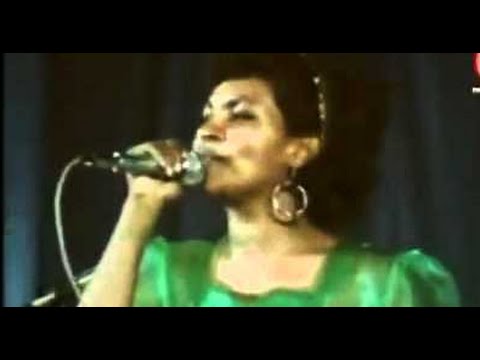
Figure 1. Ilfinash Qannoo performing in Finfinnee, September 1991 — a landmark moment showing her cultural continuity into the post‑Derg era.
10. Global Relevance: An Indigenous African Icon
When written in English, Ilfinash’s legacy becomes global. Like Miriam Makeba, she:
- preserved indigenous identity,
- resisted cultural erasure,
- elevated regional authenticity to national visibility,
- became a model for indigenous women across Africa.
Her work belongs in global discussions of cultural resistance and indigenous revival.
11. Legacy Through Her Daughters
Ilfinash’s lineage continues through her daughters:
- Hawwii — meaning Hope.
- Daangaa — meaning Territorial boundary / Oromo land.
She taught them:
- Oromo culture,
- Oromo language,
- Oromo melody,
- Oromo identity.
They became among the best Oromo singers of their generation.
12. Conclusion
Ilfinash Qannoo’s legacy is foundational. She urbanized Oromo culture, reversed hegemonic fragmentation, unified regions, liberated minds through melody, carried Kaayyoo without compromise, and became a global symbol of indigenous courage.
Her correct title is:
**Haadha Hawwii, Haadha Daangaa:
Ilfinash Qannoo — The Mother of Hope, The Mother of the Land, The Mother of Culture, The Mother of Resistance**
Her work is not a chapter in Oromo history — it is one of its foundations.
References
Books and Academic Works
- Baxter, Paul T.W. Peoples and Cultures of the Oromo. Addis Ababa: Addis Ababa University Press, 1994.
- Bulcha, Mekuria. Contours of the Emergent and Ancient Oromo Nation. Minneapolis: Kirk House Publishers, 2016.
- Hassen, Mohammed. The Oromo of Ethiopia: A History, 1570–1860. Trenton, NJ: Red Sea Press, 1990.
- Jalata, Asafa. Oromo Nationalism and the Ethiopian Discourse. Lawrenceville, NJ: Red Sea Press, 1998.
- Lewis, Herbert S. A Galla Monarchy: Jimma Abba Jifar, Ethiopia, 1830–1932. Madison: University of Wisconsin Press, 1965.
- Lydon, Ghislaine. On Trans-Saharan Trails: Islamic Law, Trade Networks, and Cross-Cultural Exchange in Nineteenth-Century Western Africa. Cambridge: Cambridge University Press, 2009.
- Makeba, Miriam. Makeba: The Miriam Makeba Story. New York: Plume, 1988.
- Muleta-Erena, Temesgen. The Game of Strategic Legacy: Essays in Behavioural Economics on Courage, Coordination, and Cultural Sovereignty. London: TC Press, 2025.
- Smith, Linda Tuhiwai. Decolonizing Methodologies: Research and Indigenous Peoples. London: Zed Books, 1999.
Journal Articles
- Benti, Getahun. “The Role of Oromo Music in Cultural Resistance.” Journal of Oromo Studies 12, no. 2 (2005): 45–68.
- Bulcha, Mekuria. “Cultural Identity, Modernity, and Nationalism: The Oromo Experience.” African Affairs 96, no. 385 (1997): 493–514.
- Gemeda, Abebe. “Women, Music, and Resistance in Oromo Society.” Northeast African Studies 10, no. 3 (2008): 23–49.
- Jalata, Asafa. “The Struggle for Knowledge: The Case of the Oromo.” International Journal of Ethiopian Studies 1, no. 2 (2004): 57–88.
- Schlee, Günther. “Cultural Fragmentation and Identity Formation in East Africa.” Africa 70, no. 3 (2000): 505–528.
Chapters in Edited Volumes
- Baxter, Paul T.W. “The Creation of the Pan‑Oromo Identity.” In Being and Becoming Oromo, edited by Paul T.W. Baxter, Jan Hultin, and Alessandro Triulzi, 167–186. Lawrenceville, NJ: Red Sea Press, 1996.
- Triulzi, Alessandro. “Songs of Resistance: Memory and Identity in the Horn of Africa.” In Cultural Memory in Africa, edited by Abebe Zegeye, 89–112. Cape Town: HSRC Press, 2002.
Primary Cultural Sources
- Ali Birra. Selected Recordings, 1970–1985. Addis Ababa: National Radio Archives.
- Abitew Kebede. Studio and Live Recordings. Finfinnee: Ethiopian Broadcasting Corporation Archives.
- Ilfinash Qannoo. Cultural and Resistance Songs (1970s–2000s). Oromo Music Preservation Archive.
- Qannoo, Ilfinash. “Kolonii Luka Dooluu.” Audio recording. Oromo Cultural Heritage Collection.
Indigenous and Oral Sources
- Oral testimonies collected from Oromo elders in East, West, South, and North Oromia (1970–2026).
- Community interviews archived in the Oromo Oral Heritage Project, Addis Ababa University.
- Field notes from cultural gatherings in Finfinnee, Ambo, Jimma, and Hararghe (1975–1995).
- Ilfinash Qannoo and the Guddattuu Wallaggaa Cultural Band (1970s): Oral Testimonies from Elders Associated with TC Press, London. Collected 2015–2026.
Beyond Official Titles: Cultural Breakthroughs in Performance and Representation September 5, 2026
Posted by OromianEconomist in Uncategorized.Tags: Africa, art, Ethiopia, history, Miss World 2026, Music, News, Oromo, Oromo culture, Oromo music, Ruth Yirgalem Weldesilasie, writing
add a comment
Beyond Official Titles: Cultural Breakthroughs in Performance and Representation
Competitions often create moments where the official winner is not the only artist who leaves a lasting impact. In the BBC Fame Academy series, David Sneddon secured the title with 3.5 million votes. Yet two other finalists — Lemar Obika and Sinéad Quinn — became widely recognised as cultural winners. Their performances resonated strongly with audiences, and both went on to build successful music careers. Their breakthrough came not from the final vote, but from the authenticity and talent they displayed on stage.
A similar dynamic is emerging with Ruth Yirgalem Weldesilasie, whose performance in traditional Oromo dance introduced a global audience to a cultural heritage that has long been underrepresented. Her appearance — authentic choreography, traditional costume, and confident cultural expression — revealed a tradition that many viewers had never encountered before. The reaction from international audiences, influencers, and cultural commentators was overwhelmingly positive, recognising the performance as a display of a rich and distinctive heritage.
For a culture that has faced historical suppression, this moment carried a different kind of significance. When given visibility, indigenous traditions often resonate far beyond expectations, and Ruth’s performance demonstrated how cultural authenticity can create its own form of victory — independent of any official result.
Her journey is also marked by personal resilience, including the loss of her senior sister to kidnappers. Despite this, she has continued to carry herself with strength and dignity, treating all cultures with equal respect. Her background, including her Tigrayan roots, has enabled her to navigate diverse cultural spaces with openness, helping to bring people together across East Africa and beyond.
Whether or not she wins an official title, Ruth’s performance at Miss World 2026 has already achieved something meaningful: it opened a window for the world to witness a cultural treasure, and it placed her on a path similar to artists who became iconic through impact rather than votes.
To support visual understanding of the cultural analysis, this essay includes a link to a publicly available YouTube clip uploaded by an independent creator. The video provides a clear view of Ruth Yirgalem Weldesilasie’s Oromo traditional dance performance:
Kombolcha — Micro Rivers, Indigenous Ecology, and Planetary Continuity August 1, 2026
Posted by OromianEconomist in Uncategorized.Tags: Environment, history, nature, philosophy, Travel
1 comment so far
🎵 Kombolcha — Micro Rivers, Indigenous Ecology, and Planetary Continuity
TC Press, London — Cultural Atlas Series
Ecology Lyrics Series — Oromo Cultural Soundscapes
Kombolcha is one of the most naturally productive ecological fields in Waamaa Dhidhessaa. It lies between Killoo River and Kombolchaa River, separated by a vast flat farm land that has sustained Oromo civilisation for generations. This land is not only agricultural; it is a micro‑ecological engine, determining where humans live, where animals roam, and how culture evolves.
The song Kombolcha emerges from this landscape — a lyrical map of Odaa trees, river corridors, monkey territories, hyena tunnels, indigenous plants, and human settlement patterns. It continues the expanding Ecology Lyrics Series — Oromo Cultural Soundscapes, following earlier works such as Hacaacii, Koottu Yaa Walee, Sherree Yaa Walee, Arjoo, Dhidhessaa, Sandaaboo, Tibbee and Gufte.
- Hacaacii — New Oromo Modern Melody Released https://sites.google.com/view/the-codex-press/hacaacii-new-oromo-modern-melody-released
- Koottu Yaa Walee — From the Love of Two to the Love of a World https://sites.google.com/view/the-codex-press/koottu-yaa-walee-from-the-love-of-two-to-the-love-of-a-world
- Dhidhessaa — The Greatest Hidden River of Africa https://sites.google.com/view/the-codex-press/dhidhessaa-the-greatest-hidden-river-of-africa
- Gufte- Oromo Cultural Soundscapes https://www.youtube.com/shorts/-5CkCX-cjEc
- Gufte- TC Press Links https://sites.google.com/view/the-codex-press/gufte-oromo-cultural-soundscape-from-the-plateau_1
1. River Civilisation: Killoo, Qarsaa, Dooganoo, Kombolchaa
Kombolcha sits inside a four‑river system:
- Killoo River — the main river
- Qarsaa River — tributary joining Killoo
- Dooganoo River — eastern feeding corridor
- Kombolchaa River — originating from Dooyyuu in the southwest
Killoo and Kombolchaa run parallel for long distances, separated by the Kombolchaa farm field, until they finally meet downstream. This separation creates distinct ecological zones:
- river forests
- farm civilisation
- wildlife corridors
- Odaa territories
Across Arjoo, Waamaa Dhidhessaa, and wider Oromia, micro‑rivers determine:
- settlement
- farming
- grazing
- forest boundaries
- wildlife zones
- road paths
- bridge locations
- community clusters
Rivers are the civilisational blueprint of Oromo land.
2. Odaa Trees: Indigenous Institutions of Ecology and Culture
Odaa is not merely a tree; it is an institution — a cultural, ecological, and territorial anchor.
Odaa Roobee — The River Refuge
Located directly on Killoo River, Odaa Roobee is a monkey paradise. Its wide branches and tall canopy make it a perfect escape point during danger. Hyenas also use the ground cover around it as a night shelter.
Odaa Waxaa — The Forest Refuge
North of Hacaacii and southeast of Odaa Roobee, Odaa Waxaa forms the second refuge for the same monkey group. It connects forest ecology with river ecology.
Odaa Risaa / Birbirsa Risaa — The Farmland Giant
Standing in the middle of Kombolchaa farm land, Odaa Risaa is far from river forests. Monkeys do not reside here — the open farm land is too wide for safe crossing. Hyenas, however, use this Odaa because it has a clear escape corridor westward to Kombolchaa River with no human settlement in between.
Odaa Gufte — Plateau Tree Without Wildlife Residence
Odaa Gufte stands on the plateau but is surrounded by dense human residence. Hyenas do not dig tunnels here. Monkeys do not climb it. Human movement is constant, and escape routes are limited.
Odaa Dooganoo — Human Corridor Tree
Located at the south end of Hacaacii near the hill edge toward Dooganoo River, Odaa Dooganoo is:
- close to houses
- beside the main roads connecting Hacaacii, Guftee, Kombolchaa
- constantly disturbed by market movement
- structurally shorter and unsafe for monkeys
Only birds and domestic animals use it. It is a human‑institution Odaa, not a wildlife refuge.
Together, these Odaas form a vertical ecological architecture:
- Canopy level — monkeys (Odaa Roobee, Odaa Waxaa)
- Ground level — hyenas (Odaa Roobee, Odaa Risaa and Odaa Waxaa)
- Human level — Odaa Gufte, Odaa Dooganoo
3. Monkey Territories: Dual‑Home Survival Strategy
Monkeys in Kombolcha exhibit remarkable territorial intelligence:
- They live between Odaa Roobee and Odaa Waxaa.
- They feed from Hacaacii forest and Killoo river forest.
- They rush to whichever Odaa is closest when insecure.
- They laugh, jump, and communicate across the branches.
- They avoid Odaa Risaa, Odaa Gufte, and Odaa Dooganoo due to human density and lack of canopy safety.
Their movement forms a triangle ecology:
- Odaa Roobee
- Odaa Waxaa
- Dooganoo River
A perfect wildlife corridor.
4. Hyena Ecology: Underground Architecture
Hyenas in Kombolcha build horizontal underground tunnels beneath Odaa mini‑jungles at:
- Odaa Roobee
- Odaa Risaa
- Odaa Waxaa
They do not build tunnels at:
- Odaa Gufte
- Odaa Dooganoo
Hyenas choose their residence based on:
- escape routes
- human movement density
- river proximity
- forest cover
- structural safety
They avoid Odaa Gufte and Odaa Dooganoo because:
- human presence is high
- movement corridors are unpredictable
- escape routes are blocked
- canopy cover is insufficient
Hyenas are strategic decision‑makers — as clever as monkeys.
5. Kombolchaa Farm Land: Natural Productivity Without Erosion
Kombolchaa is one of the most productive lands in Oromia:
- flat but not swampy
- topsoil remains (not washed away)
- no need for Bo’oo Loolaa (rainwater lines)
- ideal for all crops:
- barley (Garbuu)
- maize (Boqqoolloo)
- teff (Xaafii)
- peas (Atarii)
- beans (Baaqelaa)
- wheat (Qamadii)
Traditional Oromo farming uses crop rotation, not soil‑fertility rotation with cows — because Kombolchaa’s soil naturally retains nutrients.
This is micro‑economics of land management.
6. Indigenous Tree and Plant Ecology
Kombolcha’s ecological richness includes a constellation of indigenous trees and plants:
Harbuu
Fruit‑rich canopy tree; supports birds, monkeys, and seasonal feeding.
Bakkannisa
Ideal for honey combs; anchors traditional beekeeping.
Hoomii
Elder honey tree; supports wild bees and forest regeneration.
Gatamaa, Laftoo (Acacia), Eebichaa
- Acacia supports honey ecology.
- Eebichaa produces honey superior to acacia; leaves have antibacterial properties used for household cleaning.
Baddeessaa
One of the most important civilisation trees:
- massive size
- immune to termites
- wood does not decay
- used for construction, fences, firewood
- produces grape‑like fruits in May–June
- easy to climb; branches start low
- edible fruits skins; seeds eaten by dogs and wildlife
Hadaamii, Hagamsa, Ceekaa, Goraa
Mid‑level forest trees supporting shade, soil, and wildlife.
Abbayyii
Produces oily fruits used to coat clay plates for baking buddeenaa — preventing burning. A household technology tree.
Handoodee
One of the most culturally powerful plants:
- reddish fruits
- crushed and mixed with water to wash clothes
- behaves like industrial soap
- scientifically found to have anti‑Bilharzia properties
- a planetary health ecology plant
Eucalyptus
Non‑indigenous but economically valuable; grows fast and integrates into local ecology.
Together, these plants form a complete indigenous ecological economy:
- food
- medicine
- hygiene
- construction
- wildlife support
- cultural identity
7. Human Settlement: Rivers as Civilisational Anchors
Across:
- Hacaacii
- Guftee
- Kombolchaa
- Arjoo
- and wider Oromia
Human houses are consistently 100–300 metres from micro‑rivers:
- Killoo
- Dooganoo
- Qarsaa
- Kombolchaa
This pattern is universal.
Rivers determine:
- settlement
- farming
- grazing
- forest boundaries
- wildlife zones
- road paths
- bridge locations
- community clusters
Micro‑rivers are the civilisational blueprint of Oromo land.
8. The Lyrics of Kombolcha
The lyrics capture this ecological civilisation:
Kombolcha keessa naannayee,
Killoo keessaan bayee.
Birbirsa Risaa,
Aja’ibaa dheerrinni isaa.
Odaa Roobeen bayee,
Odaa Waxaa yoon ol ilaaluu,
Ollaa warra keenyaa,
Utuu akka fedhi kooti,
Yoona wajjumaan teenyaa,
Ollaan yaanee,
Bashaddaanee.
They express:
- movement through land
- admiration of Odaa trees
- belonging to river civilisation
- emotional connection to wildlife
- joy inside ancestral ecology
This is indigenous ecological poetry.
9. From Micro Rivers to Planetary Systems: The Killoo–Nile–Mediterranean Continuum
The ecological patterns of Kombolcha are familiar across the wider Dhidhessaa valley, over Oromia, and across Africa. What makes them scientifically powerful is the micro‑level observation itself.
Micro rivers like Killoo, Dooganoo, Qarsaa, and Kombolchaa are often ignored in favour of grand narratives about major rivers such as the Nile. But the truth is simple:
Macro rivers are only aggregations of micro rivers. Planetary oceans are only aggregations of macro rivers. And civilisation is only an aggregation of micro ecologies.
The water that flows through Killoo becomes part of a hydrological pipeline:
Killoo → Kombolchaa → Sandaaboo → Nageessoo → Waamaa → Dhidhessaa → Blue Nile → Nile → Mediterranean → Planetary Oceans
If Killoo loses water, the Nile loses water. If the Nile loses water, the Mediterranean loses water. If the Mediterranean loses water, the planetary ocean system shifts.
No crystal ball is needed.
The Egyptians on the Nile valley and the Oromo on the Killoo micro river drink the same water — but in their own civilisational styles.
Planetary protection cannot begin at the ocean. It must begin at the micro river, the micro forest, the micro settlement, the micro plant, the micro wildlife corridor.
Kombolcha shows that local ecology is planetary ecology, and that survival continuity depends on protecting the smallest units of the hydrological and ecological chain.
10. Conclusion
Kombolcha is a complete ecological atlas:
- river civilisation
- Odaa institution ecology
- monkey and hyena territories
- indigenous tree and plant systems
- farm land micro‑economics
- human settlement logic
- planetary hydrological theory
It shows how local ecology becomes planetary ecology, how micro‑rivers sustain macro‑civilisations, and how indigenous observation reveals global environmental truth.
🌿 Invitation to Experience
Kombolcha’s corridor is more than a subject of analysis; it is a living field of perception. The video and the accompanying song are not illustrations but resonant extensions of this ecology — visual and sonic thresholds into the river civilisation, Odaa institution, indigenous plant systems, and settlement logic described above. To understand these spaces fully, one must eventually step into them: walk the riverbanks, listen to the wind moving through tall maize, and feel the ancestral geometry of Odaa trees. Whether in Kombolcha, Arjoo, Oromia, or any rural endogenous community in the world, the truth of these ecologies is ultimately encountered through presence.
Credits Lyrics: Temesgen Muleta‑Erena; Melody: Gemini; Visual Composition: TC Press; Location: Gufte Plateau, Oromia; Series: Experimental Microeconomics from Daily Life; Umbrella Theme: Ecology Lyrics Series — Oromo Cultural Soundscapes
Systemic Wellbeing and the Multi-node Stability Function: A Development Economics Model for Social, Ecological, and Institutional Stability July 21, 2026
Posted by OromianEconomist in Uncategorized.Tags: AI, artificial-intelligence, history, philosophy, technology
1 comment so far
Systemic Wellbeing and the Multi-node Stability Function:
A Development Economics Model for Social, Ecological, and Institutional Stability
📘 New SSRN Release: Systemic Wellbeing and the Multi‑Node Stability Function
TC Press is pleased to announce the SSRN distribution of Temesgen Muleta‑Erena’s seventh research essay, Systemic Wellbeing and the Multi‑Node Stability Function: A Development Economics Model for Social, Ecological, and Institutional Stability.
This work is now publicly available through SSRN’s global research network:
SSRN link:
https://ssrn.com/abstract=6981518
OSF link:
Oromian Economist link:
TC Press link:
Overview
Systemic Wellbeing introduces a unified development‑economics framework built on the Multi‑Node Stability Function (MNSF)—a mathematical model that treats social, ecological, and institutional wellbeing as interdependent components of a single systemic health condition. The paper challenges GDP‑centric and individual‑centric paradigms by demonstrating that development outcomes depend on the minimum stability across critical nodes, not the average performance of isolated sectors.
Drawing on the Oromo concept of nagaa—an indigenous systems‑health logic in which personal wellbeing is inseparable from the wellbeing of family, community, animals, land, and environment—the paper shows how pre‑scientific societies encoded interdependence as daily governance. The MNSF formalises this logic using weakest‑link dynamics, entropy minimisation, and threshold‑based stability conditions.
Divergence from systemic wellbeing is shown to generate:
- social inequality
- ecological degradation
- institutional entropy
The paper extends the model to the context of autonomous civilisation, arguing that modern intelligence systems enable humanity to operationalise interdependence at planetary scale. Integrating indigenous systems logic with complexity science provides a viable foundation for sustainable development in the twenty‑first century and beyond.
Citation
Muleta‑Erena, Temesgen. Systemic Wellbeing and the Multi‑Node Stability Function: A Development Economics Model for Social, Ecological, and Institutional Stability. TC Press/The Codex Press, June 23, 2026. SSRN: https://ssrn.com/abstract=6981518.
Keywords
Institutional Entropy; Systemic Wellbeing; Thermodynamics of Governance; Complex Systems; Resilience Theory; Weakest‑link Models; Institutional Design; Stability Thresholds; Interdependence; Governance Systems; Collective Action.


You must be logged in to post a comment.