Beyond the AI Bubble: Why Our Real Crisis Is Institutional Lag, Not Artificial Intelligence November 17, 2026
Posted by OromianEconomist in Uncategorized.Tags: AI, Artificial Intelligence, artificial-intelligence, Governance, Innovation, Knowledge, philosophy, TC Press, technology, Temesgen Muleta-Erena
add a comment
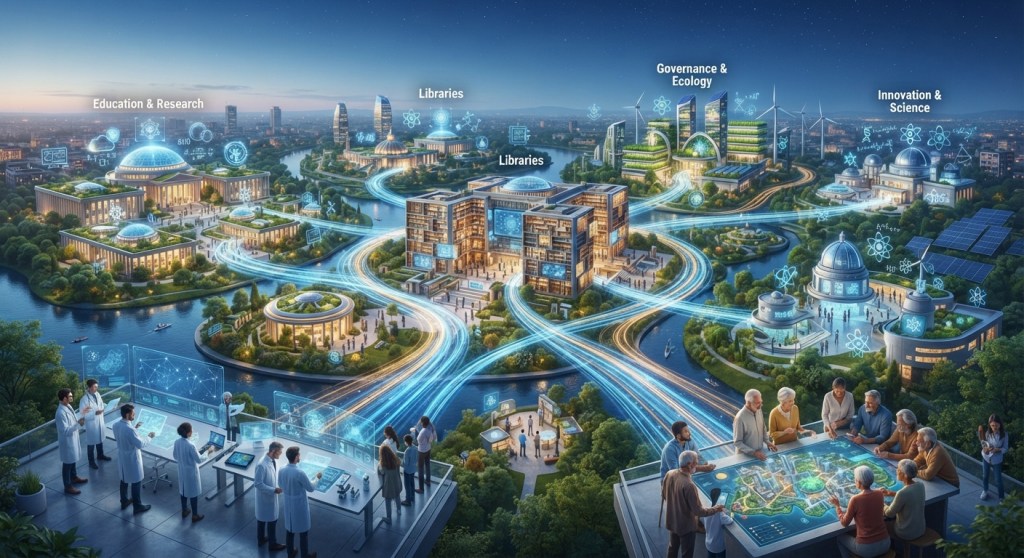
Beyond the AI Bubble: Why Our Real Crisis Is Institutional Lag, Not Artificial Intelligence
Market crashes never stop technological revolutions. As we shift from information abundance to knowledge abundance, the defining challenge of our era isn’t taming the machines—it’s upgrading our human systems.
Public conversations about artificial intelligence tend to get stuck in one of two grooves.
On one side, financial commentators warn of speculative excess, comparing today’s AI spending spree to the late-1990s Dot-com Bubble. On the other, critics sound the alarm over mass automation, algorithmic misinformation, and the urgent need to hit pause.
Both camps point to real issues. Yet both miss the deeper structural shift happening beneath our feet.
Financial bubbles and technological revolutions are two completely different things. When the Dot-com Bubble burst in 2000, it wiped out trillions in market value and bankrupted hundreds of startups—but it didn’t stop the Internet Revolution.
Whatever market corrections hit AI stocks next won’t stop the emergence of an autonomous civilisation defined by unprecedented knowledge abundance.
Humanity doesn’t have a technology problem. We have an institutional problem. The real question isn’t whether AI should exist, or whether valuations are too high—it’s whether our slow-moving institutions can evolve fast enough to govern systems capable of scaling human knowledge, creativity, and planetary problem-solving.
Bubbles Burst, Revolutions Compound
Whenever a transformative technology arrives, society rarely greets it with calm consensus. Instead, we get wild speculation, public anxiety, and institutional confusion.
Economist Joseph Schumpeter famously called this “creative destruction”—the messy process where radical innovation tears down old economic structures while building entirely new ones. Building on Schumpeter’s work, technology historian Carlota Perez showed that every major technological revolution follows a predictable rhythm:
- Irruption & Frenzy: Financial capital floods into the new technology, detaching valuations from immediate reality.
- The Crash: Speculative excess collapses, wiping out overhyped companies.
- Deployment: The surviving infrastructure quietly compounds, reshaping daily life and forcing institutions to adapt.
Think back to the late 1990s. The Dot-com crash was brutal for investors, yet the underlying fiber-optic cables, servers, and protocols kept expanding. Over the next two decades, e-commerce, cloud computing, and mobile networks fundamentally rewired how we work, communicate, and organize society.
We need to apply that same lens to AI. Whether certain AI companies are overvalued today is a financial question. Whether generative and autonomous systems represent a foundational shift in human capability is a civilisational one.
From Information Abundance to Knowledge Abundance
To understand why this shift is so profound, look at how the Internet changed the economics of information.
Before the web, distributing ideas required physical infrastructure—printing presses, libraries, broadcast towers. The Internet dismantled those bottlenecks, making raw data searchable and reproducible at near-zero cost. Economists Erik Brynjolfsson and Andrew McAfee described this as the dawn of information abundance.
AI takes us one massive step further: from information abundance to knowledge abundance.
- Information Abundance: Gave everyone access to raw data.
- Knowledge Abundance: Gives everyone the capacity to turn that data into usable, tailored outputs.
Earlier digital tools stored and moved information around. Modern AI systems actively synthesize, translate, summarize, model, simulate, write code, and reason through complex problems.
Consider what this means in practice. A single writer, researcher, or educator today can command an analytical toolkit—literature synthesis, statistical modeling, multilingual translation, software prototyping—that used to require an entire team of specialists.
Just as industrial machines amplified physical muscle, artificial intelligence amplifies intellectual labor. Knowledge production itself has become scalable.
The Real Bottleneck: Institutional Lag
Here is the catch: technology moves exponentially, while human institutions move incrementally.
Economic historian Douglass North spent his career showing that societies thrive not merely because they invent better tools, but because they build effective institutions—the laws, norms, governance models, and incentives that organize how people use those tools. Because institutions are deeply path-dependent, they almost always lag behind technological breakthroughs.
We are living through an acute bout of institutional lag.
Across major world capitals, public protests and policy proposals increasingly demand strict regulatory guardrails on AI. Those concerns are valid, yet many proposed solutions rely on a flawed assumption: that rules built for the 20th-century industrial or early-digital world can simply be stretched to govern autonomous, self-improving systems.
They can’t. As discussed in works like The Institutions of the Autonomous Civilisation, an economy defined by abundant knowledge and distributed machine intelligence requires purpose-built governance architectures.
Interestingly, inspiration for these new models doesn’t only have to come from Silicon Valley or Western legal theory. Frameworks like Quantum Gadaa look to indigenous democratic traditions—specifically the Oromo Gadaa system of cyclical, participatory, and intergenerational accountability—combining them with modern complexity science. Instead of rigid, top-down bureaucracy, it offers a blueprint for adaptive, multi-scale stewardship built for a fast-moving, decentralized world.
The defining policy question of our time isn’t how to cram AI into old regulatory boxes. It’s how to invent the new institutions our future actually requires.
“AI Slop” Isn’t Just a Machine Problem
One of the loudest criticisms of generative AI today is the flood of inaccurate, low-effort content clogging up the internet—commonly dubbed “AI slop.”
It’s an eyesore, and it threatens public trust. But blaming the machines alone misses the point.
AI models are probabilistic engines; they predict patterns rather than verify truth, which means they will always make mistakes. Yet when unverified AI output ends up in a legal brief, a news article, or a medical decision, that isn’t just a software bug—it’s a failure of human judgment and institutional verification.
As Nobel laureate Daniel Kahneman demonstrated in Thinking, Fast and Slow, human reasoning has always been riddled with cognitive biases and mental shortcuts. Pre-AI media and institutions were hardly immune to error. AI didn’t invent misinformation; it simply dropped the cost of generating plausible-sounding text to zero, exposing how fragile our verification habits really are.
In an age of infinite content generation, human judgment becomes more valuable, not less. Verification, interpretation, ethics, and accountability remain strictly human jobs. Our crisis isn’t an excess of automated generation—it’s a shortage of knowledge stewardship.
Collaboration Over Containment
Faced with these risks, some commentators suggest keeping AI on a short leash—restricting it to mundane chores like spell-checking, scheduling, or basic administrative work.
That’s the modern equivalent of insisting computers should only ever be used as fancy typewriters.
Transformative technologies never reach their potential through artificial containment. As economists David Autor, Erik Brynjolfsson, and Daniel Rock have shown, the biggest leaps in human prosperity happen when new technologies complement human skills rather than merely replacing them.
A clear division of labor is already emerging:
- What AI brings: High-speed synthesis, pattern recognition across massive datasets, formal simulation, translation, and rapid prototyping.
- What humans bring: Values, purpose, critical judgment, verification, ethical accountability, and strategic direction.
The future doesn’t belong to unchecked machines, nor does it belong to unaided human effort. It belongs to intelligent collaboration.
AI Literacy Is the New Civic Duty
If our future hinges on human-AI collaboration, then public education needs an urgent upgrade.
During the rise of the Internet, digital literacy became essential for modern citizenship. You needed to know how to use a search engine, spot a phishing link, and evaluate whether a website was credible.
In the autonomous era, AI literacy is the new baseline civic competence.
Everyone—not just software engineers—needs a practical grasp of how these systems actually work under the hood. Understanding concepts like tokens, context windows, temperature settings, hallucinations, and retrieval-augmented generation (RAG) shouldn’t be niche tech trivia. It’s basic self-defense in an information environment mediated by algorithms.
When citizens understand what AI can and cannot do, they stop treating it like an infallible oracle—and start using it as a powerful, verifiable tool.
The Choice Ahead
We can spend the next decade obsessing over whether AI stocks are in a bubble, or trying to legislate tomorrow’s capabilities using yesterday’s rulebooks.
Or we can recognize what this moment actually is.
The Dot-com crash didn’t stop the Internet, and market volatility won’t stop the rise of autonomous systems. Humanity is crossing a historic threshold—from a world where knowledge was scarce and expensive to one where it is abundant and scalable.
The technology will keep advancing. The only open question is whether our wisdom, our education systems, and our institutions will rise to meet it. Our task isn’t to out-compute the machines—it’s to build the stewardship required to guide them toward human flourishing.
Further Reading & References
- Autor, D., Brynjolfsson, E., & Rock, D. (2020). “The Fall of the Labor Share and the Rise of Superstar Firms.” Quarterly Journal of Economics.
- Brynjolfsson, E., & McAfee, A. (2014). The Second Machine Age. W. W. Norton.
- Kahneman, D. (2011). Thinking, Fast and Slow. Farrar, Straus and Giroux.
- Muleta-Erena, T. (2026a). The Institutions of the Autonomous Civilisation: Governance and Economics Beyond the Consumption World. TC Press.
- Muleta-Erena, T. (2026b). “The Quantum Gadaa System: Indigenous Governance for an Autonomous Civilisation.” The Oromian Economist.
- North, D. C. (1990). Institutions, Institutional Change and Economic Performance. Cambridge University Press.
- Perez, C. (2002). Technological Revolutions and Financial Capital. Edward Elgar.
- Schumpeter, J. A. (1942). Capitalism, Socialism and Democracy. Harper & Brothers.
Author: Temesgen Muleta-Erena
From Oromia to the World October 17, 2026
Posted by OromianEconomist in Uncategorized.Tags: Communication,, Cultural Diversity,, Cultural Exchange, Education, Global Citizenship,, Humanity,, language, Language Learning, Languages,, Multilingualism, Oromo Culture,, TC Press, technology, Temesgen Muleta-Erena,, writing
add a comment
How Language Learning Builds Bridges Between Culture

From Oromia to the World: How Language Learning Builds Bridges Between Cultures
Watch the Video:
https://youtu.be/j_UA_JlzCNs
Language is one of humanity’s most powerful tools. It allows people to exchange ideas, build friendships, preserve culture, and cooperate across borders. While geography, history, and tradition may shape different communities, language provides a pathway through which people can learn from one another.
The video From Oromia to the World explores this idea through a simple but meaningful interaction. Two young Oromo people meet in a beautiful rural setting, exchange greetings, and continue their conversation in multiple languages from different parts of the world.
Although the video begins in a specific cultural context, its message is universal: communication creates connection.
Language and Human Connection
Human societies have always depended on communication.
Before trade, diplomacy, education, or scientific collaboration can occur, people must find ways to understand one another. Languages differ in vocabulary, grammar, pronunciation, and history, yet they often serve similar purposes. People introduce themselves, ask about one another’s well-being, share knowledge, and build relationships.
A simple greeting is therefore more significant than it may appear.
When someone learns a greeting in another language, they demonstrate respect for another community and a willingness to communicate across cultural boundaries.
Cultural Confidence and Global Openness
An important feature of the video is that the participants remain connected to their cultural identity.
The setting is rural and natural.
The clothing reflects Oromo cultural traditions.
The conversation begins in Afaan Oromo.
Yet from that local foundation, the discussion expands to include numerous world languages.
This reflects an important principle:
Global engagement does not require cultural abandonment.
A person can celebrate their own heritage while learning from others.
A community can preserve its language while encouraging multilingual communication.
Identity and openness can coexist.
Speaking Together, Learning Together
The phrase Speaking Together, Learning Together captures the educational spirit of the project.
Every language contains:
- history,
- knowledge,
- traditions,
- literature,
- and unique ways of describing the world.
Learning another language therefore means more than learning words. It means gaining access to another perspective.
The exchange of greetings in Oromo, Sidama, English, German, Spanish, French, Arabic, Italian, Urdu, Chinese, and Hausa symbolises this broader process of mutual learning.
The video does not seek to promote one language over another. Instead, it highlights the value of linguistic diversity itself.
Technology and Cultural Exchange
Modern technology has transformed language learning.
A smartphone now provides access to translation tools, educational resources, cultural content, and speakers of different languages from around the world.
This creates opportunities that previous generations rarely enjoyed.
People can remain deeply connected to their communities while engaging with a global audience.
Educational and cultural projects can be produced and shared at very low cost.
Knowledge can travel across continents within seconds.
The result is a world in which learning becomes increasingly accessible.
Many Languages, One Humanity
Humanity speaks thousands of languages.
This diversity is sometimes viewed as a barrier.
Yet it can also be viewed as a source of cultural richness.
Every language contributes something unique to human civilisation.
Every language represents generations of experience, memory, and creativity.
The goal of multilingual communication is not to eliminate differences. It is to create understanding despite those differences.
When people learn one another’s languages, even at a basic level, they strengthen the foundations of cooperation and mutual respect.
Conclusion
From Oromia to the World uses a simple conversation to communicate a larger idea.
Languages do not separate humanity. They connect it.
The ability to learn, share, and communicate across cultures remains one of the most valuable skills in an increasingly interconnected world.
By remaining rooted in local identity while embracing global communication, people can preserve cultural heritage and expand human understanding at the same time.
In a world that often emphasises division, multilingual communication reminds us of something important:
Many Languages. One Humanity.
Author (Producer): Temesgen Muleta-Erena
Publisher: TC Press, London
Ideas, Culture, and Strategic Truth 🌍🗣️🌿✨
Leapfrogging the Industrial Sequence: Africa’s Digital‑First Development Path and the Elimination of Institutional Entropy September 10, 2026
Posted by OromianEconomist in Uncategorized.Tags: Africa, Development Economics, economics, Game theory, governance-micro-grids-mobile-money-industrial-policy, institutional-entropy, leapfrogging, Politics, renewable-energy, technology, temesgen-muleta-erena
1 comment so far
Leapfrogging the Industrial Sequence: Africa’s Digital‑First Development Path and the Elimination of Institutional Entropy
Temesgen Muleta-Erena (PhD) Economist, Sovereign Publisher, Epistemic Steward
Affiliation: TC Press / The Codex Press, London
Abstract
Africa’s development trajectory differs fundamentally from the historical industrial pathways of Europe and Asia. The continent’s limited legacy infrastructure, mobile‑first digital culture, and abundant renewable energy potential create conditions for industrial leapfrogging—the ability to bypass multiple generations of industrial development and transition directly into decentralized, digital, and sustainable systems. This paper integrates a literature review, expanded sectoral analysis, mathematical game‑theory modelling, and institutional analysis to examine how Africa can leapfrog traditional industrial stages while addressing its most significant barrier: institutional entropy, a human‑made, correctable form of systemic fragmentation. The paper concludes with a clear, accessible explanation of why entropy must be eliminated and how Africa can build coherent, future‑ready institutions.
Keywords: Leapfrogging; Institutional Entropy; Development Economics; Game Theory; Renewable Energy; Digital Industrialization; Africa; Governance; Micro‑grids; Mobile Money; Industrial Policy.
JEL Codes: O10; O14; O33; O55; D02; C72
1. Introduction
Africa’s industrial future is frequently evaluated through outdated assumptions suggesting the continent must replicate the sequential industrialization model of the West. Yet Africa’s structural conditions—low legacy infrastructure, high solar potential, and rapid digital adoption—mirror the telecommunication leapfrog of past decades, where the continent bypassed copper landlines entirely to adopt mobile cellular networks.
This paper argues that Africa can similarly bypass heavy industrial phases across energy, manufacturing, agriculture, logistics, and finance. However, this historic opportunity is constrained by institutional entropy, a correctable, human‑made problem rather than an inherent genetic or cultural limitation.
2. Literature Review
2.1 Leapfrogging Theory
Fagerberg (2005) and Perez (2010) argue that latecomer economies can adopt frontier technologies without incurring the heavy sunk costs of maintaining legacy systems. Aker and Mbiti (2010) demonstrate how mobile phones transformed African markets organically without traditional landline infrastructure. Ndulu (2007) emphasizes that Africa’s lack of legacy constraints can serve as a strategic advantage, provided that institutional coordination is optimized.
2.2 Institutional Constraints
North (1990) defines institutions as the “rules of the game” that shape long-term economic performance. Acemoglu and Robinson (2012) argue that inclusive institutions foster broad-based innovation, whereas extractive institutions suppress it. African institutional challenges—such as bureaucratic inertia, fragmentation, and regulatory unpredictability—are entirely human-made and correctable. Muleta‑Erena (2026) introduces Institutional Entropy as a diagnostic framework to explain how disorder accumulates within governance systems and how efficiency can be engineered through deliberate, coherent institutional design.
2.3 Digital Industrialization
The African Development Bank (2020) identifies renewable energy, mobile finance, and digital agriculture as the core pillars of Africa’s leapfrog economy. Concurrently, the World Bank (2022) highlights regulatory sandboxes and continental free trade initiatives (AfCFTA) as vital policy enablers.
3. Sectoral Leapfrogging Opportunities
3.1 Energy: Decentralized Solar Micro‑Grids
- What can be done: Deploy community‑level solar micro‑grids; distribute home solar kits; build local solar maintenance industries.
- What can be achieved: Universal electrification; lower household energy costs; creation of sustainable local employment.
- How it can be implemented: Harmonize regional solar standards under the AfCFTA; train local technicians; establish flexible regulatory sandboxes.
- Citizen‑friendly explanation: Villages can generate electricity immediately from sunlight, bypassing the decades-long wait for massive, centralized power plants and transmission lines.
3.2 Manufacturing: Additive and Modular Production
- What can be done: Establish decentralized micro‑factories; manufacture spare parts locally via 3D printing; train youth in digital fabrication.
- What can be achieved: Reduced import dependency; faster repair cycles for critical machinery; thriving local entrepreneurship ecosystems.
- How it can be implemented: Provide tax incentives for micro-manufacturing; integrate digital fabrication into technical colleges; build open-source digital design marketplaces.
- Citizen‑friendly explanation: Local communities can print needed tools and replacement parts in hours instead of waiting months for expensive imports to clear customs.
3.3 Agriculture: Precision Farming
- What can be done: Deploy agricultural drones; utilize IoT soil sensors; apply artificial intelligence for localized climate prediction.
- What can be achieved: Significantly higher crop yields; optimized water usage; drastically reduced post-harvest losses.
- How it can be implemented: Launch farmer training cooperatives; offer smart-farming subsidies; build unified national agricultural data platforms.
- Citizen‑friendly explanation: Farmers can use simple mobile apps to receive real-time advice on precisely when to water, fertilize, plant, or harvest their crops.
3.4 Logistics: Drones and Electric Mobility
- What can be done: Expand autonomous drone delivery networks; promote electric two‑wheelers; build decentralized logistics hubs.
- What can be achieved: Accelerated delivery times for critical goods; lower transport overhead; reduced urban and rural pollution.
- How it can be implemented: Establish unified drone air corridors; set up solar-powered charging stations; integrate digital tracking systems across supply chains.
- Citizen‑friendly explanation: Life-saving medicine and emergency medical supplies can reach remote villages in minutes via drone, rather than taking days over broken roads.
3.5 Finance: Mobile Money and Decentralized Finance (DeFi)
- What can be done: Expand mobile money cross-border interoperability; introduce digital national identities; promote accessible digital savings and credit tools.
- What can be achieved: Deep financial inclusion; explosive growth of digital micro-commerce; lower transaction costs for everyday citizens.
- How it can be implemented: Harmonize regional financial regulations; digitize secure national IDs; support homegrown fintech incubation hubs.
- Citizen‑friendly explanation: People can securely save, borrow, and pay for goods using basic mobile phones, eliminating the need to travel to physical brick-and-mortar banks.
4. Mathematical Game‑Theory Model of Leapfrogging
4.1 Model Setup
Let:
- G= Government
- F= Firms
- C= Citizens
Each actor chooses between:
- A (Legacy Path)
- B (Leapfrog Path)
Payoff Functions



Where:
E= institutional entropy
R= regulatory uncertainty
U= user level uncertainty
α,γ,θ= benefits of coordination
β,δ,λ= costs of uncertainty
Constraints



Nash Equilibrium
A Nash equilibrium occurs when:
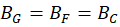
But this equilibrium is only stable when:

Thus:

4.2 Graphical Representation of the Leapfrogging Coordination Equilibrium
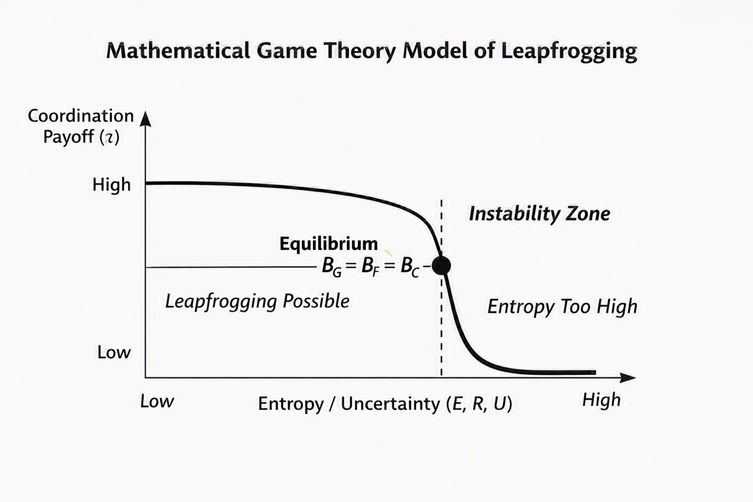
Figure 1*. Mathematical Game Theory Model of Leapfrogging. The diagram depicts the coordination payoff (π) as a function of institutional, regulatory, and user‑level entropy (E, R, U). The curve remains high and stable at low entropy but drops sharply beyond a critical threshold, marking the Nash equilibrium where BG=BF=BC. Leapfrogging is feasible only when entropy and uncertainty approach zero; beyond this point, the system enters an instability zone in which coordination collapses.
The figure titled Leapfrogging Coordination Equilibrium illustrates the relationship between institutional entropy (E) on the horizontal axis and leapfrog payoff (π) on the vertical axis. The curve remains flat at high payoff levels when entropy is low, then drops sharply after a critical threshold — representing the fragility of coordination under rising uncertainty.
This threshold curve captures the core intuition of the model: as institutional entropy increases, the payoff from leapfrogging collapses beyond a critical point. When institutions are coherent, predictable, and well‑coordinated, entropy is low and the payoff is high. When fragmentation and inconsistency rise, entropy crosses the equilibrium threshold and coordination fails.
The equilibrium point is marked where:
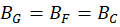
This represents the Nash equilibrium — the condition under which governments, firms, and citizens successfully coordinate on leapfrog strategies. The equilibrium is stable only when E, R, U → 0, meaning institutional, regulatory, and user‑level uncertainties are minimized.
To the right of the equilibrium threshold lies the Instability Zone, where entropy becomes too high for coordination. In this region:
- policy signals become inconsistent
- regulatory uncertainty increases
- firms hesitate to invest
- citizens lose confidence
- governments revert to legacy strategies
The graph therefore reinforces the central insight of the model: leapfrogging is not simply a technological choice — it is an institutional equilibrium. Africa’s ability to bypass traditional industrial stages depends on keeping entropy below the critical threshold.
5. Africa’s Institutional Limitations: Human‑Made, Not Genetic
Africa’s historical institutional weaknesses are not genetic, cultural, or geographical invariants. Instead, they are human‑made structural errors resulting from:
- Colonial administrative fragmentation that ignored organic local trade routes.
- Post‑independence replication of rigid, heavy bureaucratic models.
- Short-term political cycles that prioritize immediate optics over 20-year structural plans.
- Weak inter-ministerial coordination mechanisms.
- Fragmented and unpredictable regulatory environments.
Because these limitations are human-made, they are entirely correctable through deliberate, modern institutional design.
6. Institutional Entropy: Nature, Causes, and Elimination
6.1 What Institutional Entropy Is
Institutional entropy refers to the gradual, systemic loss of coherence, strategic direction, and operational coordination within public governance systems over time.
6.2 Why Entropy Must Be Eliminated
Unchecked institutional entropy directly destroys a nation’s capacity to leapfrog by:
- Exponentially increasing regulatory uncertainty for investors.
- Discouraging foreign and domestic capital investment.
- Fragmenting national and regional development strategies.
- Slowing down necessary regulatory innovations.
- Weakening the unifying potential of continental economic integration.
6.3 How Africa Can Eliminate Entropy
- Continental Integration (AfCFTA): Enforcing harmonized trade, digital, and technical standards across borders to eliminate market fragmentation.
- Regulatory Sandboxes: Creating safe, flexible legal spaces where innovators can test drones, fintech models, and micro-grids without bureaucratic penalties.
- Long‑Term Industrial Planning: Shifting governance frameworks away from short-term election-cycle planning toward binding 20-year national development visions.
- Digital Governance Systems: Digitize public procurement, business licensing, and regulatory filings to remove human friction and corruption.
- Incentive Realignment: Structuring civil service performance metrics to reward cross-ministerial cooperation rather than isolated bureaucratic silo-building.
7. Conclusion
Africa possesses a rare historical window to skip outdated, high-pollution industrial stages—much like it bypassed landlines to embrace mobile communications. However, achieving this requires governments to align their policies, establish transparent and predictable rules, and eliminate internal institutional friction.
When institutional systems are streamlined and organized, Africa can reliably generate clean power from sunlight, manufacture goods locally through digital fabrication, modernize farming with smart analytics, deliver critical healthcare via autonomous drones, and bank securely through mobile networks. Leapfrogging is entirely achievable; institutional entropy is the primary obstacle, and deliberate cross-sector coordination is the definitive solution.
References
- Acemoglu, Daron, and James Robinson. 2012. Why Nations Fail. New York: Crown.
- African Development Bank. 2020. African Economic Outlook. Abidjan: AfDB.
- Aker, Jenny, and Isaac Mbiti. 2010. “Mobile Phones and Economic Development in Africa.” Journal of Economic Perspectives 24(3): 207–232.
- Fagerberg, Jan. 2005. Innovation: A Guide to the Literature. Oxford: Oxford University Press.
- Muleta‑Erena, Temesgen. 2026. Institutional Entropy and the Thermodynamics of Governance: A Framework for Diagnosing Disorder and Engineering Efficiency. London: TC Press.
- Ndulu, Benno. 2007. The Political Economy of Economic Growth in Africa. Cambridge: Cambridge University Press.
- North, Douglass. 1990. Institutions, Institutional Change and Economic Performance. Cambridge: Cambridge University Press.
- Perez, Carlota. 2010. Technological Revolutions and Financial Capital. Cheltenham: Edward Elgar.
- World Bank. 2022. Digital Africa: Transforming Economies Through Technology. Washington, DC: World Bank.
About the Author
Temesgen Muleta-Erena, PhD (University of West London) and MA in Economics (University of East Anglia), is an independent economist, sovereign publisher, and epistemic steward based in London. He is the founder of TC Press (The Codex Press), a sovereign imprint dedicated to legacy-driven publishing, ceremonial documentation, and civilizational theorization. His works explore post-labour economics, value theory, planetary coordination, and the recursive architecture of knowledge. His books and essays are archived in global institutions including the British Library, Cambridge, Oxford, Berkeley, and UNAM, and distributed across federated platforms such as Kobo Plus, OverDrive, Smashwords and Hoopla. He publishes modular essays and republical scrolls to activate epistemic sovereignty and inspire coordinated futures.
Systemic Wellbeing and the Multi-node Stability Function: A Development Economics Model for Social, Ecological, and Institutional Stability July 21, 2026
Posted by OromianEconomist in Uncategorized.Tags: AI, artificial-intelligence, history, philosophy, technology
1 comment so far
Systemic Wellbeing and the Multi-node Stability Function:
A Development Economics Model for Social, Ecological, and Institutional Stability
📘 New SSRN Release: Systemic Wellbeing and the Multi‑Node Stability Function
TC Press is pleased to announce the SSRN distribution of Temesgen Muleta‑Erena’s seventh research essay, Systemic Wellbeing and the Multi‑Node Stability Function: A Development Economics Model for Social, Ecological, and Institutional Stability.
This work is now publicly available through SSRN’s global research network:
SSRN link:
https://ssrn.com/abstract=6981518
OSF link:
Oromian Economist link:
TC Press link:
Overview
Systemic Wellbeing introduces a unified development‑economics framework built on the Multi‑Node Stability Function (MNSF)—a mathematical model that treats social, ecological, and institutional wellbeing as interdependent components of a single systemic health condition. The paper challenges GDP‑centric and individual‑centric paradigms by demonstrating that development outcomes depend on the minimum stability across critical nodes, not the average performance of isolated sectors.
Drawing on the Oromo concept of nagaa—an indigenous systems‑health logic in which personal wellbeing is inseparable from the wellbeing of family, community, animals, land, and environment—the paper shows how pre‑scientific societies encoded interdependence as daily governance. The MNSF formalises this logic using weakest‑link dynamics, entropy minimisation, and threshold‑based stability conditions.
Divergence from systemic wellbeing is shown to generate:
- social inequality
- ecological degradation
- institutional entropy
The paper extends the model to the context of autonomous civilisation, arguing that modern intelligence systems enable humanity to operationalise interdependence at planetary scale. Integrating indigenous systems logic with complexity science provides a viable foundation for sustainable development in the twenty‑first century and beyond.
Citation
Muleta‑Erena, Temesgen. Systemic Wellbeing and the Multi‑Node Stability Function: A Development Economics Model for Social, Ecological, and Institutional Stability. TC Press/The Codex Press, June 23, 2026. SSRN: https://ssrn.com/abstract=6981518.
Keywords
Institutional Entropy; Systemic Wellbeing; Thermodynamics of Governance; Complex Systems; Resilience Theory; Weakest‑link Models; Institutional Design; Stability Thresholds; Interdependence; Governance Systems; Collective Action.


You must be logged in to post a comment.