Beyond the AI Bubble: Why Our Real Crisis Is Institutional Lag, Not Artificial Intelligence November 17, 2026
Posted by OromianEconomist in Uncategorized.Tags: AI, Artificial Intelligence, artificial-intelligence, Governance, Innovation, Knowledge, philosophy, TC Press, technology, Temesgen Muleta-Erena
add a comment
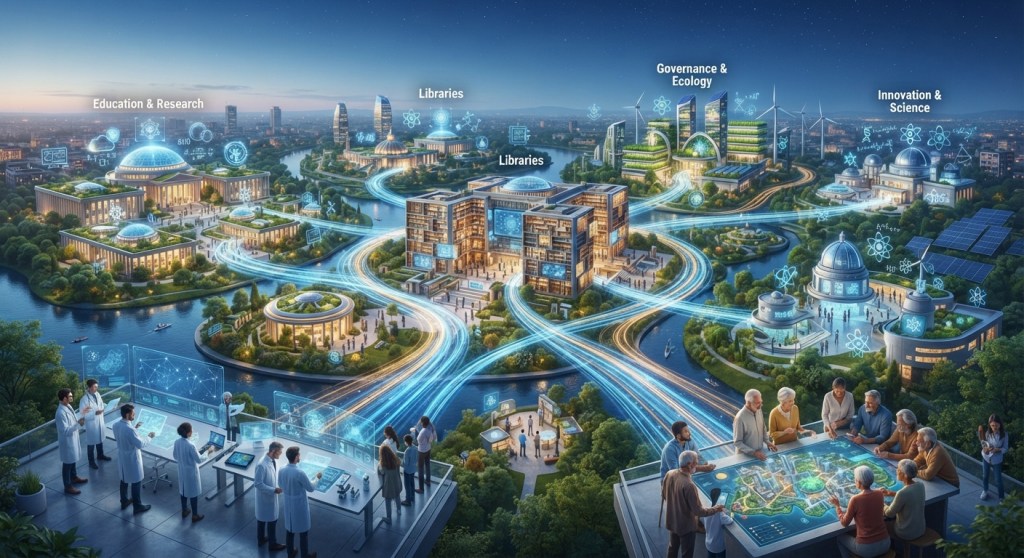
Beyond the AI Bubble: Why Our Real Crisis Is Institutional Lag, Not Artificial Intelligence
Market crashes never stop technological revolutions. As we shift from information abundance to knowledge abundance, the defining challenge of our era isn’t taming the machines—it’s upgrading our human systems.
Public conversations about artificial intelligence tend to get stuck in one of two grooves.
On one side, financial commentators warn of speculative excess, comparing today’s AI spending spree to the late-1990s Dot-com Bubble. On the other, critics sound the alarm over mass automation, algorithmic misinformation, and the urgent need to hit pause.
Both camps point to real issues. Yet both miss the deeper structural shift happening beneath our feet.
Financial bubbles and technological revolutions are two completely different things. When the Dot-com Bubble burst in 2000, it wiped out trillions in market value and bankrupted hundreds of startups—but it didn’t stop the Internet Revolution.
Whatever market corrections hit AI stocks next won’t stop the emergence of an autonomous civilisation defined by unprecedented knowledge abundance.
Humanity doesn’t have a technology problem. We have an institutional problem. The real question isn’t whether AI should exist, or whether valuations are too high—it’s whether our slow-moving institutions can evolve fast enough to govern systems capable of scaling human knowledge, creativity, and planetary problem-solving.
Bubbles Burst, Revolutions Compound
Whenever a transformative technology arrives, society rarely greets it with calm consensus. Instead, we get wild speculation, public anxiety, and institutional confusion.
Economist Joseph Schumpeter famously called this “creative destruction”—the messy process where radical innovation tears down old economic structures while building entirely new ones. Building on Schumpeter’s work, technology historian Carlota Perez showed that every major technological revolution follows a predictable rhythm:
- Irruption & Frenzy: Financial capital floods into the new technology, detaching valuations from immediate reality.
- The Crash: Speculative excess collapses, wiping out overhyped companies.
- Deployment: The surviving infrastructure quietly compounds, reshaping daily life and forcing institutions to adapt.
Think back to the late 1990s. The Dot-com crash was brutal for investors, yet the underlying fiber-optic cables, servers, and protocols kept expanding. Over the next two decades, e-commerce, cloud computing, and mobile networks fundamentally rewired how we work, communicate, and organize society.
We need to apply that same lens to AI. Whether certain AI companies are overvalued today is a financial question. Whether generative and autonomous systems represent a foundational shift in human capability is a civilisational one.
From Information Abundance to Knowledge Abundance
To understand why this shift is so profound, look at how the Internet changed the economics of information.
Before the web, distributing ideas required physical infrastructure—printing presses, libraries, broadcast towers. The Internet dismantled those bottlenecks, making raw data searchable and reproducible at near-zero cost. Economists Erik Brynjolfsson and Andrew McAfee described this as the dawn of information abundance.
AI takes us one massive step further: from information abundance to knowledge abundance.
- Information Abundance: Gave everyone access to raw data.
- Knowledge Abundance: Gives everyone the capacity to turn that data into usable, tailored outputs.
Earlier digital tools stored and moved information around. Modern AI systems actively synthesize, translate, summarize, model, simulate, write code, and reason through complex problems.
Consider what this means in practice. A single writer, researcher, or educator today can command an analytical toolkit—literature synthesis, statistical modeling, multilingual translation, software prototyping—that used to require an entire team of specialists.
Just as industrial machines amplified physical muscle, artificial intelligence amplifies intellectual labor. Knowledge production itself has become scalable.
The Real Bottleneck: Institutional Lag
Here is the catch: technology moves exponentially, while human institutions move incrementally.
Economic historian Douglass North spent his career showing that societies thrive not merely because they invent better tools, but because they build effective institutions—the laws, norms, governance models, and incentives that organize how people use those tools. Because institutions are deeply path-dependent, they almost always lag behind technological breakthroughs.
We are living through an acute bout of institutional lag.
Across major world capitals, public protests and policy proposals increasingly demand strict regulatory guardrails on AI. Those concerns are valid, yet many proposed solutions rely on a flawed assumption: that rules built for the 20th-century industrial or early-digital world can simply be stretched to govern autonomous, self-improving systems.
They can’t. As discussed in works like The Institutions of the Autonomous Civilisation, an economy defined by abundant knowledge and distributed machine intelligence requires purpose-built governance architectures.
Interestingly, inspiration for these new models doesn’t only have to come from Silicon Valley or Western legal theory. Frameworks like Quantum Gadaa look to indigenous democratic traditions—specifically the Oromo Gadaa system of cyclical, participatory, and intergenerational accountability—combining them with modern complexity science. Instead of rigid, top-down bureaucracy, it offers a blueprint for adaptive, multi-scale stewardship built for a fast-moving, decentralized world.
The defining policy question of our time isn’t how to cram AI into old regulatory boxes. It’s how to invent the new institutions our future actually requires.
“AI Slop” Isn’t Just a Machine Problem
One of the loudest criticisms of generative AI today is the flood of inaccurate, low-effort content clogging up the internet—commonly dubbed “AI slop.”
It’s an eyesore, and it threatens public trust. But blaming the machines alone misses the point.
AI models are probabilistic engines; they predict patterns rather than verify truth, which means they will always make mistakes. Yet when unverified AI output ends up in a legal brief, a news article, or a medical decision, that isn’t just a software bug—it’s a failure of human judgment and institutional verification.
As Nobel laureate Daniel Kahneman demonstrated in Thinking, Fast and Slow, human reasoning has always been riddled with cognitive biases and mental shortcuts. Pre-AI media and institutions were hardly immune to error. AI didn’t invent misinformation; it simply dropped the cost of generating plausible-sounding text to zero, exposing how fragile our verification habits really are.
In an age of infinite content generation, human judgment becomes more valuable, not less. Verification, interpretation, ethics, and accountability remain strictly human jobs. Our crisis isn’t an excess of automated generation—it’s a shortage of knowledge stewardship.
Collaboration Over Containment
Faced with these risks, some commentators suggest keeping AI on a short leash—restricting it to mundane chores like spell-checking, scheduling, or basic administrative work.
That’s the modern equivalent of insisting computers should only ever be used as fancy typewriters.
Transformative technologies never reach their potential through artificial containment. As economists David Autor, Erik Brynjolfsson, and Daniel Rock have shown, the biggest leaps in human prosperity happen when new technologies complement human skills rather than merely replacing them.
A clear division of labor is already emerging:
- What AI brings: High-speed synthesis, pattern recognition across massive datasets, formal simulation, translation, and rapid prototyping.
- What humans bring: Values, purpose, critical judgment, verification, ethical accountability, and strategic direction.
The future doesn’t belong to unchecked machines, nor does it belong to unaided human effort. It belongs to intelligent collaboration.
AI Literacy Is the New Civic Duty
If our future hinges on human-AI collaboration, then public education needs an urgent upgrade.
During the rise of the Internet, digital literacy became essential for modern citizenship. You needed to know how to use a search engine, spot a phishing link, and evaluate whether a website was credible.
In the autonomous era, AI literacy is the new baseline civic competence.
Everyone—not just software engineers—needs a practical grasp of how these systems actually work under the hood. Understanding concepts like tokens, context windows, temperature settings, hallucinations, and retrieval-augmented generation (RAG) shouldn’t be niche tech trivia. It’s basic self-defense in an information environment mediated by algorithms.
When citizens understand what AI can and cannot do, they stop treating it like an infallible oracle—and start using it as a powerful, verifiable tool.
The Choice Ahead
We can spend the next decade obsessing over whether AI stocks are in a bubble, or trying to legislate tomorrow’s capabilities using yesterday’s rulebooks.
Or we can recognize what this moment actually is.
The Dot-com crash didn’t stop the Internet, and market volatility won’t stop the rise of autonomous systems. Humanity is crossing a historic threshold—from a world where knowledge was scarce and expensive to one where it is abundant and scalable.
The technology will keep advancing. The only open question is whether our wisdom, our education systems, and our institutions will rise to meet it. Our task isn’t to out-compute the machines—it’s to build the stewardship required to guide them toward human flourishing.
Further Reading & References
- Autor, D., Brynjolfsson, E., & Rock, D. (2020). “The Fall of the Labor Share and the Rise of Superstar Firms.” Quarterly Journal of Economics.
- Brynjolfsson, E., & McAfee, A. (2014). The Second Machine Age. W. W. Norton.
- Kahneman, D. (2011). Thinking, Fast and Slow. Farrar, Straus and Giroux.
- Muleta-Erena, T. (2026a). The Institutions of the Autonomous Civilisation: Governance and Economics Beyond the Consumption World. TC Press.
- Muleta-Erena, T. (2026b). “The Quantum Gadaa System: Indigenous Governance for an Autonomous Civilisation.” The Oromian Economist.
- North, D. C. (1990). Institutions, Institutional Change and Economic Performance. Cambridge University Press.
- Perez, C. (2002). Technological Revolutions and Financial Capital. Edward Elgar.
- Schumpeter, J. A. (1942). Capitalism, Socialism and Democracy. Harper & Brothers.
Author: Temesgen Muleta-Erena
Flying Over Finfinnee October 27, 2026
Posted by OromianEconomist in Uncategorized.Tags: #Oromia, Afaan Oromo, African culture, Creative technology, Cultural Adaptation, Cultural Exchange, Cultural Heritage, Digital Creativity, Finfinnee, From Oromia to the World, Innovation, Music Video, Oromo Cultural Soundscapes, Oromo culture, Oromo Culture, Oromo Music, Finfinnee, Oromia, Cultural Exchange, Digital Creativity, Music Video, Afaan Oromo, Oromo Identity, Cultural Adaptation, Traditional Culture, Innovation, World Music, Afric, Oromo Identity, Oromo music, TC Press, Traditional Culture, world music
add a comment
Culture, Imagination, and Creative Adaptation in the Digital Age
Flying Over Finfinnee
Culture, Imagination, and Creative Adaptation in the Digital Age
Watch the Video
Modern culture is increasingly shaped by interactions between local traditions and global creative influences. Digital technologies now allow communities to reinterpret, remix, and share cultural expressions in ways that would have been difficult only a generation ago. The result is not necessarily cultural replacement. In many cases, it is cultural adaptation.
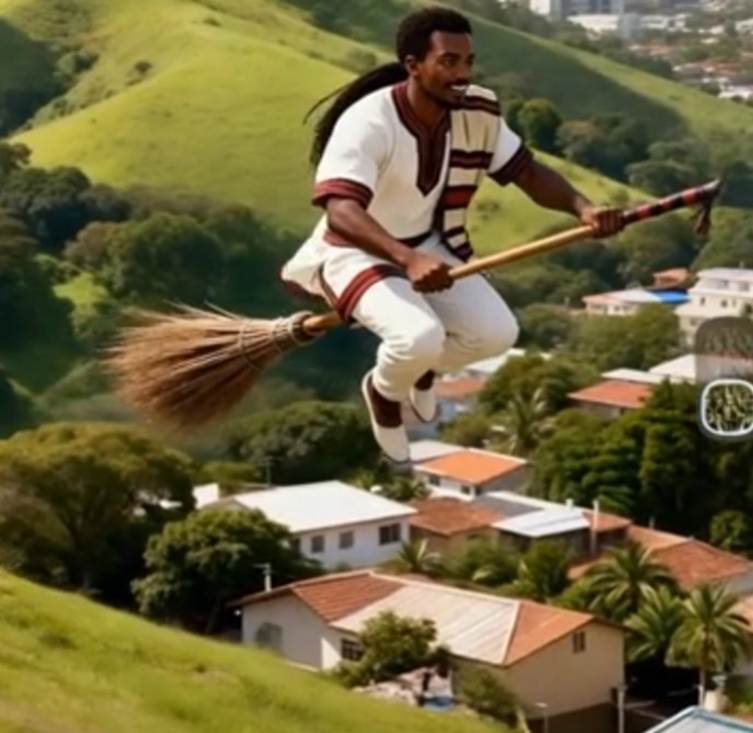
Flying Over Finfinnee: Oromo Dance Fantasy from Oromia to the World explores this process through music, imagination, and visual storytelling.
The project combines original Afaan Oromoo lyrics, an energetic Oromo-inspired vocal style, modern video technology, and a playful fantasy narrative. While the visual concept was inspired by a widely used global video template, the finished work developed its own cultural identity through language, music, and local references.
Full Lyrics
Karra si banaa,
Karra na banii,
Finfinnee balballi shanii.
Yaa shirri shirrii Boolee irraa,
Daalatti irra rooberaa.
Finfinnee biyya abbaa keenyaa,
Oromummaan qaama keenyaa.
Ni bashannanna akka boonnettii,
Anaa dhufu galama aadaa keenyatti.
Reimagining Familiar Visual Symbols
One of the interesting aspects of cultural creativity is the ability to reinterpret familiar symbols.
The original template that inspired the visual style of the video was associated with a seasonal fantasy theme. However, once Oromo characters, Afaan Oromoo lyrics, and Oromo-inspired music were introduced, the meaning shifted.
The visual no longer functioned primarily as a reference to its original setting.
Instead, it became a playful Oromo cultural fantasy.
The flying journey above Finfinnee transformed into a symbolic celebration of movement, imagination, and belonging.
Finfinnee as Cultural Space
The references to Finfinnee play an important role within the song.
Rather than describing the city in a literal or documentary way, the lyrics present it through imagination and celebration. The city becomes a cultural landscape viewed from above, a place connected to memory, identity, and everyday life.
This imaginative perspective allows music to create emotional connections with place while remaining joyful and accessible.
The song therefore uses fantasy as a creative device rather than as an escape from reality.
Tradition and Innovation Together
A common misunderstanding is that cultures must choose between preserving tradition and embracing innovation.
In practice, successful cultural traditions often do both.
They preserve continuity while remaining open to new forms of expression.
In this project:
- The language remains Afaan Oromoo.
- The cultural references remain Oromo.
- The musical inspiration draws upon Oromo vocal traditions.
- The creative tools are modern.
- The visual presentation is contemporary.
The result demonstrates that tradition and innovation can reinforce one another.
Cultural Exchange and Creativity
Many Oromos living outside Oromia encounter new customs, celebrations, technologies, and artistic styles throughout their lives.
Creative exchange naturally occurs when different cultural experiences meet.
The important question is not whether adaptation should occur, but how adaptation takes place.
When local language, memory, and identity remain present, new influences can become opportunities for creativity rather than threats to cultural continuity.
The video reflects this principle.
A familiar global visual concept becomes a distinctly Oromo artistic expression through reinterpretation rather than imitation.
Technology as a Cultural Tool
Technology increasingly allows individuals to create music, videos, essays, and cultural archives without large institutions or production teams.
The song emerged from original lyrics.
The music developed through AI-assisted composition.
The visuals were assembled using digital creative tools.
Together they demonstrate how technology can help people document, preserve, and expand cultural expression.
The creative process becomes more accessible while cultural identity remains visible.
From Oromia to the World
The subtitle From Oromia to the World reflects a broader theme that connects many TC Press projects.
Local cultures can participate in global conversations without losing their uniqueness.
A song written in Afaan Oromoo can reach audiences far beyond Oromia.
At the same time, global creative influences can be reinterpreted through local cultural perspectives.
This exchange enriches both sides.
It encourages curiosity, creativity, and cultural dialogue.
Conclusion
Flying Over Finfinnee is more than a music video.
It is an example of how cultures can remain dynamic while preserving their identity. Through language, music, imagination, and technology, the project demonstrates that new cultural expressions often emerge when tradition and innovation meet.
The result is neither entirely traditional nor entirely modern.
It is a creative conversation between the two.
From Finfinnee to the wider world, the journey continues through music, imagination, and cultural exchange.
Video
Author (Producer): Temesgen Muleta-Erena
Publisher: TC Press
Ideas, Culture, Ecology, and Strategic Truth
Culture Endures By Creating, Adapting, and Sharing.
Made in China: Once known for cheap knockoffs, Chinese companies are now the world’s innovators — Quartz October 30, 2016
Posted by OromianEconomist in 25 killer Websites that make you cleverer, Uncategorized.Tags: Business, China, economics, Innovation, Science and Technology
add a comment



Most of us use products made in China every day and are aware of its growing economic power as a factory to the world. But China intends to become a developed nation by mid-century, and integral to this ambition is its intense focus on innovation. In a few decades, Chinese companies have evolved from imitators…


You must be logged in to post a comment.