Economic and development analysis: Perspectives on economics, society, development, freedom & social justice. Leading issues in Oromo, Oromia, Africa & world affairs. Oromo News. African News. world News. Views. Formerly Oromia Quarterly
Ethiopia’s Crackdown on Dissent: Police Attack Oromo Protests
Protesters chant slogans during a demonstration over what they say is unfair distribution of wealth in the country at Meskel Square in Ethiopia’s capital Addis Ababa, Aug. 6, 2016. | Photo: Reuters
The protests have left hundreds dead and thousands jailed.
Hundreds of protesters clashed with police Saturday in Ethiopia’s capital Addis Ababa after campaigners called for nationwide protests due to what they say is an unfair distribution of wealth in the country.
Violence broke out as police tried to stop several hundred chanting protesters from accessing the historic Meskel square.
The demonstrations started as a small-scale student protest over the government’s plan to expand Addis Ababa into adjacent farm lands of Oromiya, Ethiopia’s largest constitutionally autonomous state.
Now they have evolved into a series of large and bloody demonstrations against the government, leaving hundreds dead and thousands jailed.
On Friday, two people were killed in similar clashes with police in Ethiopia’s ancient city of Gonder. The violence broke out when police brought one of the leaders of the land campaign movement to court.
Protestors chanting “Freedom!”
Chief administrator of the Amhara region, Gedu Andargachew, has declared the protests illegal and said security services will take measures against those who take part.
In a country known for cracking down on dissent, the public protests are rare.
But tensions over the status of Wolkayt — a stretch of land that protestors from the region of Amhara say were illegal incorporated in the neighbouring Tigray region — have been embroiling for at least the past 25 years.
The issue first resulted in violence two weeks ago when throngs of people in Gonder protested against an attempt to arrest Wolkayt campaigners.
Ethiopia: Dozens killed as police use excessive force against peaceful protesters
AImnesty International, 8 August 2016
At least 97 people were killed and hundreds more injured when Ethiopian security forces fired live bullets at peaceful protesters across Oromia region and in parts of Amhara over the weekend, according to credible sources who spoke to Amnesty International.
Thousands of protesters turned out in Oromia and Amhara calling for political reform, justice and the rule of law. The worst bloodshed – which may amount to extrajudicial killings – took place in the northern city of Bahir Dar where at least 30 people were killed in one day.
“The security forces’ response was heavy-handed, but unsurprising. Ethiopian forces have systematically used excessive force in their mistaken attempts to silence dissenting voices,” said Michelle Kagari, Amnesty International’s Deputy Regional Director for East Africa, the Horn and the Great Lakes.
“These crimes must be promptly, impartially and effectively investigated and all those suspected of criminal responsibility must be brought to justice in fair trials before ordinary civilian courts without recourse to death penalty.”
Information obtained by Amnesty International shows that police fired live bullets at protesters in Bahir Dar on 7 August, killing at least 30. Live fire was also used in Gondar on 6 August, claiming at least seven lives.
The security forces’ response was heavy-handed, but unsurprising. Ethiopian forces have systematically used excessive force in their mistaken attempts to silence dissenting voices
No deaths were reported from the Addis Ababa protests, but photos and videos seen by Amnesty International show police beating protesters with batons at Meskel Square, the capital’s main public space.
In Oromia and Amhara, hundreds were arrested and are being held at unofficial detention centres, including police and military training bases.
“We are extremely concerned that the use of unofficial detention facilities may expose victims to further human rights violations including torture and other forms of ill-treatment,” said Michelle Kagari.
“All those arrested during the protests must be immediately and unconditionally released as they are unjustly being held for exercising their right to freedom of opinion.”
Background
The protests in Oromia are a continuation of peaceful demonstrations that began in November 2015 against a government masterplan to integrate parts of Oromia into the capital Addis Ababa. Deaths were reported in multiple towns in the region, including Ambo, Adama, Asassa, Aweday, Gimbi, Haromaya, Neqemte, Robe and Shashemene.
The protests in Amhara began on 12 July 2016 when security forces attempted to arrest Colonel Demeka Zewdu, one of the leaders of the Wolqait Identity and Self-Determination Committee, for alleged terrorism offences.
Wolqait is an administrative district in Tigray Region that was part of Amhara Region before the ruling Ethiopian People’s Revolutionary Democratic Front (EPRDF) came to power 1991. It has been agitating for reintegration into Amhara for the last 25 years.
ADDIS ABABA, Aug 8 (Reuters) – More than 90 people were shot dead by security forces in protests across Ethiopia’s Oromiya and Amhara regions at the weekend, residents and opposition officials said on Monday.
Unrest flared in Oromiya for several months until early this year over plans to allocate farmland surrounding the regional capital for development. Authorities scrapped the scheme in January, but protests flared again over the continued detention of opposition demonstrators.
At the weekend, protesters chanted anti-government slogans and waved dissident flags. Some demanded the release of jailed opposition politicians.
“So far, we have compiled a list of 33 protesters killed by armed security forces that included police and soldiers but I am very sure the list will grow,” Mulatu Gemechu, deputy chairman of the opposition Oromo Federalist Congress, said.
The deaths were in at least 10 towns across Oromiya, he said, including Ambo, Dembi Dolo and Nekemt – areas that saw previous rounds of protest.
“Twenty-six people have been injured, while several have been detained,” Mulatu said, adding three members of his party were also being held.
Government officials were not immediately available for comment. The state-owned Ethiopian News Agency said “illegal protests” by “anti-peace forces” had been brought under control. It did not mention casualties.
DISPUTED TERRITORY
Oromiya is the second region to be hit by unrest in the past few days.
In Amhara, residents said police fired live bullets at demonstrators during protests over disputed territory that continued until early Monday in the city of Bahir Dar.
“Soldiers fired live rounds at protesters. Hospitals have been filled by dead and wounded victims,” one resident said, putting the number killed at 60.
Tensions have been rumbling for two decades over the status of Wolkayt district, a stretch of land that protesters from Amhara say was illegally incorporated into the neighbouring Tigray region to the north.
Nigusu Tilahun, spokesperson for the regional government, told state-affiliated news outlets that seven people died over the weekend.
Amnesty International said the bloodshed in Bahir Dar may amount to “extrajudicial killings” and that at least 30 people were killed in one day.
The United States said it was “deeply concerned” by the violence in both regions.
“We reaffirm our call to respect the constitutionally enshrined rights of all citizens, including those with opposition views, to gather peacefully and to express their opinions,” its embassy in Addis Ababa said in a statement.
Any sign of unrest is closely watched in Ethiopia, a Western ally against Islamist militants in neighbouring Somalia and an economic power seen as a centre of relative stability in a fragile region.
“Ethiopian forces have systematically used excessive force in their mistaken attempts to silence dissenting voices,” Michelle Kagari, Amnesty International’s Deputy Regional Director for East Africa, the Horn and the Great Lakes, said. (Reporting by Aaron Maasho; Editing by George Obulutsa and Janet Lawrence)
The total death toll from 6 & 7 August 2016, Saturday protest and Sundays attacks on funerals have surpassed 150. These are in addition to over 500 Oromo national killed by the same fascist TPLF.- Oromian Economist admin sources
News: Carnage as Ethiopia Forces Conduct Massive Crackdown Against Anti-Government Protesters in Multiple Places
August 8, 2016
(Addis Standard) — Addis Standard has so far received reports of the death of more than 50 Ethiopians in Oromia and Amhara regions of the country following massive anti-government protests over the weekend, during which the government entirely shut down internet connections throughout the country.
According to several tips received by Addis Standard from individuals who want to remain anonymous for fear of repercussions, death tolls were high in West Arsi (in Assasa, Adaba, Shashemene and Kofele cities), West Shewa in the city of Ambo and Ginchi town, east Hararge and east Wolega of the Oromia regional state. Accordingly more than 30 individuals were believed to have been shot dead by security forces on Saturday alone. Hundreds of protesters have also sustained gunshot wounds; hundreds detained by security forces while several people have disappeared without a trace.
A university student in Ambo who is originally from Dambi Dollo in Wolega called Addis Standard on Sundays with information that the police have abducted both his brother and his father “from their home on Saturday night. “
Further tips from northern Ethiopia also indicate that more than 20 individuals were killed on Friday and Saturday during protests in Gondar and Bahir Dar cities, ancient histories city home to thousands of tourists and the capital of the Amhara regional state respectively. It is believed that more than 20 individuals were killed by security forces. According to the government’s own account, seven people were killed in yesterday’s protest rally in Bahir Dar city, while five police officers were hospitalized. However, unconfirmed reports on social media claim the number to exceed 30.
The weekend protests in Bahir Dar followed a previous protest held between July 12th and 14th in which more than a dozen people were killed and a massive peaceful protest in the weekend of 30-31 July in Gonder city.
The protest in Amhara region followed a raid by heavily armed federal security forces, including the Anti-Terrorism special force, targeting members of the Wolkayit community who have been protesting against the federal government’s decision to incorporate the area where the community lives into the Tigray regional state. The Wolkayit community members also reject the idea of them being ethnically considered as Tigrayan and want to identify themselves as Amhara.
More causality feared
The death toll from both regions could reach as high as 80, according to online activists who post pictures of individuals who have died or have sustained severe wounds caused by gun shots.
The weekend region wide anti-government protests in Oromia regional state were called by online activists of the #OromoProtest, a persistent anti-government protest by Ethiopia’s largest ethnic group, the Oromo that lasted for the last nine months.
Accordingly, protests have happened in almost all major cities and small towns across the Oromia regional state, the largest of the nine regional states in Ethiopia home to close to 40 million of Ethiopia’s more than 100 million populations. Here in the capital Addis Abeba, a city originally belonging to the Oromo, police have quickly, and brutally dispersed protesters and have sealed roads leading up to Mesqel Square where online activists called for the protests to happen.
According to a recent report by Human Rights Watch (HRW), more than 400 Oromos were killed by security forces since the ongoing protest first flared up on November 12, 2015 in Ginchi, a small town some 80 Kms South West of the Capital Addis Abeba. In Addition to the report by the HRW, activists are also documenting the death, injuries and forced disappearances of individuals from areas where protests are taking place. Hundreds of University students have also been dismissed from several state universities located in the region.
Related News from other sources:
(Oromia Press, 7 August, 2016): Abduselam Ahmed businessman in Haramaya who was assassinated by TPLF fascist Ethiopia’s regime forces.
Abduselam Ahmed as known as Sheiko a renown businessman in Haramaya who was assassinated by TPLF gunmen. Sheiko a popular former soccer player and successful businessman with 9 kids and 2 grandkids. He was gunned down in his own home.
Ethiopia Protest August 2016: Amid Internet Ban, Rally Against Government Leaves At Least 33 Dead
August 8, 2016
(International Business Times) — The two largest ethnic groups in Ethiopia took part in a massive anti-government protest over the weekend that has claimed dozens of lives. The protesters demonstrated against alleged government discrimination and human rights violations.
In Ethiopia, majority of the general population is made up of the Oromo and Amhara ethnic groups. Protests first began last November when the government had plans to expand the capital into Oromia, which would in turn displace Oromo farmers in the region. After the government dropped their expansion plans, demonstrations continued to spotlight other issues impacting the community.
Dozens of protesters in the nation’s capital, Addis Ababa, were arrested on Saturday, BBC News reported. Things were far more violent in other parts of the country. According to the government, seven protesters died in Bahir Dar, a city located in the Amhara region. Demonstrations in the Oromia region reportedly claimed lives as well, with Oromo activists claiming at least 33 protestors were shot by police.
“So far, we have compiled a list of 33 protesters killed by armed security forces that included police and soldiers but I am very sure the list will grow,” Mulatu Gemechu, deputy chairman of the opposition Oromo Federalist Congress, told Reuters.
In light of the protests, the government has responded by banning unauthorized public demonstrations and blocking social media. Officials claimed online activists were responsible for the outcry. Prime Minister Haile Mariam Dessalegn announced Friday the internet ban stating they, “threaten national unity.”
“It has now become clear that people cannot hold peaceful protests in Ethiopia,” Seyoum Teshome, a blogger following the demonstrations, told The Associated Press. “Regional police forces are being replaced by the army, leaving many areas to be under the military’s control.”
The long Oromo nation’s protest against the TPLF/EPRDF- led dictatorial government, which has been going on for the past eight months, expanded its scope on August 6, 2016 when over 190 Oromia towns including the capital city of Addis Ababa participated in presenting their grievances and demanding their fundamental human rights.
In this region- wide August 6 protest , in which for the first time the residents of the capital city participated, over 70 Oromos were recklessly brutalized and beaten and over 800-1000 Oromos were taken to prison according to the HRLHA informants in Oromia Regional State.
During the eighth round of the protest on August 6, 2016 the most devastated zones of Oromia were Awaday and Haromaya in East Hararge, Asasa in West Arsi , Dodola and Robe in Bale, Ambo and Walso in West Showa,and Naqamte in East Walaga among others.
Since the protest started in November 2015, the government of Ethiopia has mercilessly killed over 670 Oromos and detained over 50,000. Among the dead, the majority are university and high school students, young children, pregnant women, and seniors. The killing squad Agazi force killed people not only on the streets, but in their homes during the night time by breaking down their doors. Many people were taken from their homes and arrested, then taken to police stations, military camps and concentration camps.
The Human Rights League of the Horn of Africa (HRLHA) and other human rights organizations have widely reported on the protests in Oromia in order to make the world community aware of the real scope of the protests.
However, the world communities have chosen to remain silent and a few government agencies have responded to the horrific human rights crisis in Oromia Regional State.
It was in such circumstances and with outcries from human rights organizations that Ethiopia was elected on June 28, 2016[4] to a UN Security Council member seat ” one of the six principal organs of the United Nations, responsible for the maintenance of International Peace”. The HRLHA expressed its disappointment at this election to the president of the UN General Assembly in its appeal on July 4, 2016 “ THE ETHIOPIAN GOVERNMENT SHOULD NOT BE REWARDED FOR MASSACRING ITS PEOPLE”[5]
From 2011 to the present, Ethiopia has been a member of the UN human rights council[6]with the responsibility of protecting and promoting human rights globally.
Backgrounds of the Oromo grievances:
Since the TPLF/EPRDF government came to power in 1991, several documents have been created, including the 1995 Constitution. These documents, however, are designed only for show, to make the government look good to foreign eyes. Here is the truth:
From day one when the TPLF/EPRDF assumed power, the Tigrigna People Liberation Front (TPLF) members have focused on diminishing the political capability of the nations and nationalities of Ethiopia, groups that the government regards as its political opponents.
The TPLF created PDOs (Peoples’ Democratic Organizations) such as Oromo Peoples’ Democratic Organization (OPDO) and present them as the representatives of the people of Ethiopia.
The TPLF, which represents only 5-6% of the total population of Ethiopia, monopolized political and economic power, ignoring the rights of the other 95% of the Ethiopian population.
The OPDO has no power, but serve as messengers and translators for the TPLF to penetrate into Oromia.
TPLF- owned companies such as the Endowment Fund for the Rehabilitation of Tigrai (EFFORT)[7] and Mesfin Engineering took all opportunities to control businesses in Oromia and other regions. This made the TPLF members, including the military commanders, millionaires while the area’s business community members were left powerless
The resources of Oromo, Gambela and Benshangule people have been exploited not only by the TPLF members, but also by TPLF partner foreign government. For example, for Hasen Guleid , the Djibouti president over 1000 hectares of Oromo land from Bale,Dodola has been granted for
Tens of thousands of hectares of Oromo, Gambela and Benshangule lands have been leased to foreign investors at cheap prices without consent and consultations with the land owners. Millions have been evicted from their livelihoods and became homeless, jobless and beggars.
Recommendations:
The UN Security Council member states- of which Ethiopia is one-should hold the Ethiopian government accountable for its arbitrary arrests, killings and tortures of Oromo’s peaceful protesters
The UN Human Rights Council, of which Ethiopia is a member, should hold the Ethiopian government accountable for its arbitrary arrests, killings and tortures of Oromo’s peaceful protesters
Both UN Councils, of which Ethiopia is a member, must ask Ethiopia to immediately allow a neutral body to enter Ethiopia and investigate the crimes against humanity that the Ethiopian Government is committing against Oromo
The HRLHA is a non-political organization that attempts to challenge abuses of human rights of the people of various nations and nationalities in the Horn of Africa. It works to defend fundamental human rights, including freedoms of thought, expression, movement and association. It also works to raise the awareness of individuals about their own basic human rights and those of others. It encourages respect for laws and due process. It promotes the growth and development of free and vigorous civil societies.
To:
Obbo Abbaa Duulaa Gemeda, Speaker of the House of Representatives, FDRE.
Obbo Muktar Kedir, President of the National Regional State of Oromia
Ibrahim Haji, Commissioner of Oromia Police
All City Councils in charge of Matters pertaining to Public Political meetings and Peaceful Demonstrations
CC.
Obbo Teshome MUlatu, President, FDRE
Ato Hailemariam Desalegn, Prime Minister, FDRE; Chair of the Command Post currently governing Oromia
General Samora Yunus, Chief of Staff of the Armed Forces, FDRE
Ato Asefa Abiyu, Commissioner of the Federal Police
Central Committee of EPRDF
Executive Committee of OPDO
Subject: Open Letter regarding the carnage in Oromia and possible next steps
Dear Sirs,
It is to be recalled that the Oromo people have been expressing their total and complete discontent with the administration over the last eight months and a half. This expression has taken the form of peaceful protest (#Oromoprotests) forcing the government to rethink the Addis Ababa Master Plan, amend the Oromia Urban Development Proclamation, reschedule the Ethiopian School leaving Exam and, more recently, to stop dumping waste in the Sandaafa area. Much to our disappointment and to the disappointment of the entire Oromo nation, this peaceful popular protest has been consistently met with overt violence from the Government’s security forces.
According to our estimates, over 6oo Oromos are killed. (It is to be noted that the Human Rights Watch had reported earlier that over 400 are murdered by government security officers arbitrarily. Even the regime has admitted that there were 173 killings and hundreds of incidents of injury to civilians, arbitrary arrests, and other forms of abuses, and yet there was no attempt on the part of the government to take political and legal responsibility for this.) Targeted killings have been going on even in the absence of any public demonstrations in Shashemene and the towns in the wider W Arsi district. The Government has so far not done its part to investigate the cause and bring the perpetrators to justice. Even as we write this letter today, the killing continues in Awaday. Few weeks ago, several arbitrary killing of children and other civilians was witnessed and burning of a building has also been observed while the local officials were watching the fire to the point of self-entertainment with the sight. Today, we have noticed the killing of protestors by snipers who targeted Oromo lives.
In the last eight months and a half, hundreds of peoples suffered wounds and other forms of bodily injury from shooting. Over 5000 Oromos were shot and injured by the Security Forces, mainly the Agazi. Tens of thousands have been victims of mass arrest and are suffering arbitrary detention and torture in prisons large and small in various parts of the country. Oromo leaders are detained and tortured as political prisoners. Hundreds are reported to be missing and are victims of forced disappearance. All this has been unaccounted for thus far as there was no independent commission of inquiry established to inquire into the matter. Nor has the government invited international investigators such as the UN’s Special Rapporteurs on Arbitrary Execution, Forced Disappearance, or the Committee of Experts.
The dispossession and displacement of Oromo farmers and residents including those in the suburbs of Addis Ababa) continues uninhibited so far. The civil administration of Oromia is still not restored in full. The Oromia National Regional State (ONRS) is still under the military rule that governs through a Task Force from a Command Post. Oromia is virtually under the rule of the Agazi. The fundamental demands of Oromo people remain unaddressed. Discrimination is rife. Economic disempowerment, political marginalization, total loss of voice is patent. Oromos are disproportionately represented in the statistics about the Ethiopian prison population. (It is reported that the prison population has risen from 86% to 95 % within the last nine months.) Oromo political leaders such as Bekele Gerba, Olbana Lelissa, Dejene Tafa, Addisu Bulala, and almost all of the OFC leadership are imprisoned for no legally justified reasons. They are subjected to abuses as political prisoners.
The state of basic social services is deteriorating from day to day. Health, road, and water services infrastructure have all collapsed to the point of crisis. There is virtually no semblance of governance in the region except the terrorizing of the civilian population through a heavy military presence across the region.
All these brutal killings, maimings, forced disappearances, and other forms of abuse were taken to be acts of a repressive dictatorial regime that is hateful of its peoples. Developments in recent days (especially those that transpired in the Amhara region) and the way the regime treated their demands presented a contrast that seemed to suggest to our people that these extraordinarily violent responses are reserved only for Oromos. In Oromia, when school children demonstrated unarmed and peacefully (to present their just demands for their rights), they were massacred in a torrent of bullets that rained on them from the Agazi Forces. Elsewhere, even people that are fully armed with guns stage a protest, present their demands, and come home safely. And that is as it should be. Few hours after the Gonder protest was peacefully concluded, the regime was conducting a campaign of sniper shooting in Awaday town (of West Hararghe Zone of Oromia) where 6 persons were killed and about 26 were shot and wounded. This shows that the regime have different modes of treatment to different peoples of the country. It sends a message that indicates that Oromos, unlike others, are enemies to be eliminated at every opportunity. It also sends the message that there is a difference between the Amhara and Oromo parties (i.e. ANDM and OPDO, which form the coalition of the EPRDF) operating in the respective regions. ANDM openly supports the protest in Amhara region while in contrast the OPDO in Oromia is nowhere to be seen around the people (except as informers and co-killers). The media in Oromia is busy denouncing and demonizing the Oromo Protest whereas in other regions, the media publicly announces its support for the people’s demands.
Consequently, it has become clear even to casual observers that Oromo lives don’t matter in Ethiopia. In this regard, the regime has continued in the tradition of devaluing and undervaluing Oromo lives starting from the days of imperial conquest of the Oromo nation.
We believe that you are acutely aware that this condition is unsustainable. We believe that the only way forward is to arrest the people’s unnecessary suffering and bringing this crisis to a positive end. We believe that the continued perpetuation of misery, targeting the Oromo people as a people, is forcing them to reach for desperate measures that this government can’t eventually manage to control.
We, as concerned children of Oromia, are writing to you to make this last call for you to wake up to this fast changing phase of the Oromo Protest. If the government does not properly respond to the peaceful demands of the people for their rights in a just social order, the Oromo people will be obliged to start taking drastic measures that have serious repercussions both for the regime and for the country.
Our people are asking what brought about this apparently endless tragedy to them, including this recent different valuation of peoples and their rights. The answer seems to be in the following:
1. The Oromo people had so far chosen to conduct their protest peacefully. Oromo political leaders, activists, and intellectuals have all been consistently advising against violence and encouraging people to avoid all forms of violence. This was in line with the principle of primacy of peace and wellbeing (nagaaf nageenya) in the Oromo tradition and their way of being in general. This choice has been viewed as weakness and cowardice. The TPLF regime seems to have chosen to utilize the Oromo commitment to peace as an instrument of perpetuating its repressive politics.
2. In the last nine months, our people have taken extraordinary care not to harm other people living among them, especially those who, being from Tigray, support, benefit from, and collude with the regime. This care seems to be mistaken for naiveté and weakness.
However, it should be clear to all that patience has its limits. Anger and resentment is overflowing among our people. Before patience completely runs out, it has now become necessary for the regime to be given a last chance to change the course of its behaviour. In order to ensure that the regime treats our people with the same respect it accords to other peoples of Ethiopia, it has become necessary to take the following measures:
1. On Saturday, 6 August 2016, there will be a grand protest demonstration across the Oromia region including in Addis Ababa and Dire Dawa. The Protest, like all other preceding protests shall be completely peaceful. Its demands include:
a. STOP KILLING OROMOS;
b. FREE ALL OROMO AND OTHER POLITICAL PRISONERS WITHOUT ANY PRECONDITION;
c. END THE AGAZI RULE IN OROMIA;
d. ALLOW OROMOS COMPLETE SELF-GOVERNANCE
e. And other similar demands.
2. There shall be no request for permit from the government. According to the constitution and the relevant law (Proclamation No 3/1991), people who seek to stage public political meetings and peaceful demonstrations have a mere duty of notification.
This letter shall have served as a letter of notice to the relevant State and Federal institutions.
If Oromia’s and Federal Security Forces try to prevent the protest rallies or to abuse people otherwise during and before the demonstrations, from that moment on, the Oromo Protest will immediately have entered a new phase with new mission and strategy.
It shall start taking measures commensurate to the needs of the times.
TPLF leaders and Oromo collaborators shall take full responsibility for any and all negative consequences.
Desperate times demand desperate measures.
We call upon the regime to end our people’s sufferings immediately.
We also call upon the Ethiopian people to pay attention to this notice, to bear witness, and to stand in solidarity with its Oromo brethren and sisters.
We call upon our people to understand this situation and stand with the usual resolve and determination as they stand in unison to demand their just and God-given rights in their own land.
Kind Regards,
#OromoProtests
RE: Political prisoners in Ethiopia, Bekele Gerba, et.al on tenth day of hunger strike
Dear Mr. Secretary:
On behalf of the Oromo Studies Association, the Board of Directors, Executive Committee and the membership of our scholarly organization, we are sending this urgent request that the U.S. Department of State, under your able leadership, use its significant influence with the government of Ethiopia to save the lives of Bekele Gerba, Deputy Chairman of Oromo Federalist Congress (OFC), other senior members of that organization and their fellow prisoners at Qilinto prison near Addis Ababa. These are entering the tenth day of a hunger strike joined to bring to light the deplorable conditions at the prison and the excruciating injustice inflicted upon the prisoners. Several of them including Bekele Gerba collapsed into unconsciousness on July 26, 2016. Today it is reported that those political prisoners, who were already in a very fragile condition are dangerously weak and deteriorating.
We ask that you use the good offices of the US State Department to gain access to Bekele and the others directly or through the Red Cross, to investigate the prisoners’ condition, interview them and to witness the conditions that have driven them to take this compelling coordinated action.
Bekele Gerba himself is highly respected and greatly loved among the Oromo and Ethiopian peoples as a humble man of courage and devotion to the plight of the oppressed. He is deeply committed to nonviolence and has translated the speeches of Martin Luther King, Jr. into the Oromo language. As keynote speaker at the last OSA conference, held at Howard University, August 1-2, 2015, Bekele Gerba left a lasting impression on our members with an inspiring and memorable message. A focus of the conference were the ongoing forms of resistance emerging in direct response to the ruling party’s policy of removing millions of Oromo farmers from their ancestral lands without their participation, agreement or compensation. Bekele Gerba urged the Oromo people to follow a course of nonviolence in response to the injustices they experience at the hands of the Ethiopian authorities. This address was the highlight of that event.
His presence and his message concerning the paths to peaceful democratic change in Ethiopia had an impact beyond our expectation and provided a historic and lasting contribution to our scholarly organization. We remain committed to find ways to sustain the development of knowledge that makes it possible to create understanding and ensure the wellbeing of the Oromo and other peoples in Ethiopia and the Horn of Africa. Bekele Gerba upheld his commitment to nonviolent peaceful protest and worked with members to open doors of cooperation between groups fully devoted to developing forms of mutual support in the region.
Upon the completion of the conference Bekele Gerba traveled to several US cities at the invitation of members of the Oromo and other Ethiopian diaspora and American communities. He inspired his audiences with a consistent message of nonviolent struggle for promoting respect for human rights and democratic governance in Ethiopia. He gave interviews in a wide range of media – in English, Amharic and Oromo languages. His interviews (including to Michele Keleman of National Public Radio and Periscope program of Al Jazeera American TV) stressed the importance of consolidating democratic governance in Ethiopia. It became clear that Bekele is loved and respected by millions of Oromo and other Ethiopians around the world as a man of vision, integrity and courage.
Many of us who admire Bekele Gerba’s leadership in advocating nonviolence in Ethiopia are deeply concerned about his well-being and the fate of others who are imprisoned there. OSA members are apprehensive about whether Bekele Gerba and his colleagues will receive adequate care either in prison or in a hospital, and horrified at the thought that harm might befall him and his colleagues.
Under the circumstance, we request you to take the following practical measures to spare the lives of political prisoners who have been on this hunger strike for ten days now.
· We request that the United States urge the leaders of the Ethiopia government to provide immediate relief for the conditions that drive them to this point and offer life-saving medical care for Bekele Gerba, his colleagues and the other prisoners at Qilinto.
· We ask that the U.S. Department of State under your leadership apply its enormous political, economic and diplomatic influence on Ethiopia to effect the release Bekele Gerba and his colleagues.
· We request that the State Department urge Ethiopian government leaders to respects their own constitution, release all political prisons currently in detention and bring an immediate halt to extrajudicial killings and arbitrary arrests of innocent people who face prolonged detention without trial.
Finally, we appeal to the US State Department to employ its considerable influence and diplomatic prowess to encourage a political environment conducive to respect for of the rule of law and inclusive government in Ethiopia. We earnestly believe that as America’s top diplomat and principal voice on international issues, you have an extraordinary opportunity to encourage policies that alleviate the incredible suffering of the Oromo and other people in Ethiopia in the long term. In the current moment, the most effective action to that end is to highlight the plight of Bekele Gerba, man of peace whose life and legacy is precious to us, and the plight of his fellow prisoners, and to intervene on their behalf with those who hold Bekele in custody. We appreciate your interest in their well-being.
Sincerely,
Henok Gabisa, President Bonnie Holcomb, Chair, Board of Directors
The Tigran fascism: Its State repression, violence and genocide in Oromiyaa
By Leenjiso Horo, July 29, 2016
Oromia: Under the brutal regime’s rule
Make the male lines like trees that have had their roots cut;
Make the female lines like rooks that have dried up in winter;
Make the children and grandchildren like eggs smashed against rooks;
Make the servants and followers like heaps of grass consumed by fire; ….
In short, annihilate any traces of them, even their names.
–The Fifth Dalai Lama’s instruction to repress Tibetan rebels in 1660.
The Tigran genocidal extremist political elites have learned the methods of committing genocide from the above instruction. This instruction has become for the Tigran political elites a political religious faith book. It adopted this instruction to implement in Oromiyaa against the Oromo people. One need to understand, the nature of Tigran culture from their successive political leaders like Ras Mikael Sehul, Emperor Yohannes IV and Meles Zenawi and his political collogues.
Tigran fascism has a long history. Its history of fascism extends back to Ras Mikael Sehul of the 18th century and Emperor Yohannes IV of the 19th century. Both men sowed seeds of fascism to which Meles Zenawi and his TPLF are the heirs. Indeed, todays Tigran genocidal elites are the products of their history. It is for this, the current Tigran elites have been continuously following the legacies of Ras Mikael Sehul and Emperor Yohannes IV.Ras Mikael Sehul was said to have killed Oromo and Amhara prisoners of war and then peeled their skins off; made the skins into sacks; then he filled those sacks with straws and displayed in public in Gondar to be seen. Emperor Yohannes IV was said to have used “force, fire, and sword” to eliminate Oromo Muslims and Waqeftaa in Wollo who were refused to be converted to Christianity. He mutilated the limbs of those who refused. That is, he cutoff the breasts of women and hands, ears, and tongues of men. It has been said he pulled out one eye from each of his victims. The purpose was to force them into accepting the religion of his choice and at the same time to teach the others the consequence of refusal to accept. Similarly, in 1991, Meles Zenawi, upon entering Finfinnee/Addis Ababa, ordered his army to set on fire Military depot (storage of chemical weapons) in the city. The explosion of the storage of chemical weapons terrorized residents, killed many of them and destroyed many homes. The toxic chemical that released into the air and water is still today causing serious harm to the residents of the city and its vicinities. With this, the brutality of TPLF accelerated with murder, violence, and terror, and the seeds of its plan for the extermination of the Oromo implemented Oromiyaa wide. And, the Oromo people are exposed to the ruthless slaughter. This consistent pattern of crime shows time and again that the Tigrans have inherently greater cultural propensity for hatred, violence and cruelty. Hence, it is clear that the Tigrans political elites have an insatiable propensity to commit crimes of genocide, ethnic cleansing, and crime against humanity.
Since 1991 to date, the Tigran political elites-led regime, its state, and its military and security forces have been committing genocide against the Oromo people. These genocidal fascist elites have already exterminated hundreds of thousands of the Oromo men, women and including pregnant women, children and elderly for no reasons than being Oromo. Not on this, millions have been evicted from their lands. Being an Oromo in and of itself is seen by the Tigran political elites as their enemy. Since Oromiyaa is placed under the administration of military Command Post, marshal law is declared. With this, mass murder, kidnapping, torture, and disappearances without trace have been carried out both in towns, villages, and rural areas. The Tigran army’s and security forces’ savagery, barbarism and ruthless cruelty in rural areas include the killing of the infants grabbing by the leg from mothers’ arms and dashing head on the ground and then shooting the mothers to death are common occurrence. In Oromiyaa, kidnappings, forced disappearances, eviction from homes and lands, arrest, torture and killings have been institutionalized. In addition to the annihilation of men, women, children and elderly, it has also targeted the Oromo political leaders, religious leaders, academics and intellectuals and business and communal leaders and journalists at all levels for annihilation. Its centrally planned, centrally organized and state-sponsored violence, killings and evictions of people from their land and homes have touch all nations and nationalities in Ethiopia. This annihilation is and has been undertaken by the centrally organized and government-directed forces.
The TPLF’s target of killing is not just only Oromo men who might organize themselves to fight back in order to defend their people and country, but it also targeted women and children. It targeted women because they are the bears of the next generation and the children are targeted because they are the next generation. The purpose of killing women and children is to destroying a nation “root and branch” of a targeted population. In this case, the targeted population is the Oromo people and the aim is to destroy the “root and branch” of the Oromo nation. This is a policy of exterminating current generation and the future generation of the Oromo nation. Furthermore, today the fascist TPLF’s murderous political repression, violence, genocide, ethnic cleansing and crime against humanity have plagued Ethiopian empire state. Hence, the nations and nationalities in Ethiopia are under the extremist genocidal elites’ state-organized physical extermination. No one is spared from this except the Tigran ethnic group. Particularly, the annihilation of the Oromo people has become the state policy in the Tigran extremist led Ethiopian state. As it is clear to all, State violence has been institutionalized in Oromiyaa. Genocide has become the ultimate expression of the Tigran led state’s aim to annihilate the Oromo population. This policy of repression, violence and genocide is not spontaneous but it is the outgrowth of the decisions made by the Tigran powerful political and economic elites who have access to the significant state resources-the judiciary, the army, the police force, the security, intelligence and the economy. In order to implement this policy, the institution of violence- the notorious Agazi Special Force has been created; military and concentration camps have been expanded; technique of torture have been refined and organizational criminal intelligence networks and killing squads have been established throughout the country whose purpose are to destroy nations and nationalities in Ethiopia.
Genocide, ethnic cleansing, crimes against humanity and war crime Genocide
The general framework for analysis on the question of genocide in Ethiopia is the following based on the UN Convention on Prevention and Punishment of crime of genocide Article II of 1948. It is oftentimes referred as crime of crimes. It states “genocide means any of the following acts Committed with intent to destroy, in whole or in part, a national, ethnical, racial or religious group, as such:
Killing members of the group;
Causing serious bodily or mental harm to members of the group;
Deliberately inflicting on the group conditions of life calculated to bring about its physical destruction in whole or in part;
Imposing measures intended to prevent births within the group;
Forcibly transferring children of the group to another group.”
On basis of this article, the two fundamental elements of the crime are the first is intention, and the second is the act committed include at least one of the five criteria cited above. Based on the Article II the UN Convention on the Prevention and Punishment of crimes of genocide, under the TPLF, the Oromo people have been intentionally killed (Article II a); the regime’s inhumane treatment of a serious bodily and mental harm have been inflicted upon the Oromo, Sidama, Somali, Gambella, Amhara and etc. (Article II b). Furthermore, this Tigran perpetrator regime has been subjecting the Oromo, Anuak and the Amhara to a systematic expulsion, eviction and forced removal from their homes and farmlands and subsequently settling its nationals on those lands. It has undertaken deprivation of means of livelihood by confiscating property, destruction of homes, looting and denial of housing that are tantamount to a deliberate act to inflict on the group conditions of life calculated to bring about its physical destruction (Article II c). Furthermore, land is the life of the people. Hence, expulsion of the people from their land is a deliberately inflicting on the people, conditions of life calculated to bring about their physical destruction in whole, or in part (Article II c). It is therefore clear according to Article II a, b, and c, genocide is clearly committed by the TPLF led-regime of Ethiopia.
Here it is important to understand the basic difference between crime against humanity, genocide and ethnic cleansing and crimes of war. Genocide is understood to be the state-organized, state-sponsored systematic mass murder of innocent and helpless men, women, and children with the purpose of eradicating a group from a territory and subsequently populating that territory by the nationals of the perpetrators. For this, it commonly describes campaigns of mass extermination. It is a form of annihilation. It includes physical disappearance (the body destruction) and symbolic disappearance (the destruction of the memory of their existence). For these, it is oftentimes said that the main objective of genocidal destruction is the transformation of the victims into “nothing” and the survival into “nobodies.”
Ethnic cleansing
Ethnic cleansing is defined as forcible removal, unlawful displacement, relocation, deportation, forced transfer and expulsion of an ethnic group from a given territory. It is a forced permanent removal of one group of people by another from a region or territory and the subsequent occupation of that territory by ethnic group of the perpetrator as though the target group had never existed there. It includes the removal of all physical reminders of the targeted group through the destruction of historical sites such as shrines, monuments, cemeteries, and houses of worship. With ethnic cleansing, the group’s attachment to the land and its environment will be destroyed through destruction of the group’s homes, social service centers, farms, institutions and the societal infrastructures. Methods for carrying out ethnic cleansing among other things include, such as:
forced expulsion, or voluntary evacuation through violence, intimidation, fear and genocide;
Murder;
Torture;
Arbitrary arrest and detention;
Extra‐judicial executions;
Rape and sexual assaults’ as well as deportation and military assaults against civilians and etc.
Ethnic cleansing is related to genocide. It is a form of genocide. If so, one may ask a question as to what makes genocide distinct from ethnic cleansing. One distinctive difference is ethnic cleansing is focused more closely than genocide on territory and on forced removal of ethnic groups from specific areas. The purpose is to create ethnically homogeneous geographic areas belonging to perpetrator ethnic group. Another difference between the two is the intent of genocide is to destroy the group, whereas the intent of ethnic cleansing is to displace the group. Hence, intent to displace is not intent to destroy. However, the overlap between ethnic cleansing and genocide takes place when forced removal of population leads to a group’s physical and symbolic destruction. In this case, ethnic cleansing becomes genocide. Genocide is the ultimate form of permanent removal.
Again another similarity is ethnic cleansing takes on extermination. At this stage mass killings begin. Killing becomes sport. At this time, the perpetrators dig up the mass graves, burn the bodies, cover up evidence, and intimidate witnesses. Leaders of the guilty regimes block investigations of crimes, and often remain free from punishment of their crimes. The question one may raise is as to causes for ethnic cleansing. The primary objective for ethnic cleansing are ethnic difference, pursuit of land-grab, economic goal and political power. It is the function of unchecked political power-the power that commits crime of ethnic cleansing to achieve its objective of land-grabbing, of capturing natural resources, economic wealth and consolidate its political power base. Not only these, the TPLF’s ethnic cleansing also based on its hate, prejudice, intolerance for other ethnic groups and on its complete disregard for the sanctity of human life. These are what the Tigran political elites have been doing in against the nations and nationalities in the Ethiopian empire state
Crime against humanity
Crime against humanity means atrocities and offences committed against any civilian population. It constitutes mass killings of large number of individuals. It is a crime committed as a part of a widespread or systematic attack directed against any civilian population. Methods of committing crime against humanity include:
Torture;
Murder;
Extermination;
mass systematic rape;
Enslavement;
enforced disappearance of persons;
Forcible transfer of population;
Persecution against collectivity on racial, national, ethnic, cultural, gender, religion, political
or other grounds;
Imprisonment or other severe deprivation of physical liberty and etc.
Arbitrary arrest and detention;
Extra‐judicial executions; and etc.
Here one may raise question as to what makes genocide distinct from crimes against humanity. The answer is this, contrary to the crime against humanity, genocide has different focus. It focuses not on killing of individuals, but on the physical destruction of the groups. This means the intent of genocide is to destroy, to annihilate the group. That is to deny a particular group of people the right to exist. Thus, the victims of genocide is the group, not individual. For instance, a single isolated act could be qualified as a genocide (e.g. Sidama massacre at Loque in 2002), whereas a single isolated act against a civilian does not qualify as a crime against humanity because the crime against humanity must be committed within the context of a widespread or systematic attack on any population. Sometimes, persecution is combined and intertwined with genocide. For instance, a charge with crime against humanity is attached to the individual who is charged. Whereas a charge with genocide is attached not only to that person who is charged but to his or her ethnic group as well. The legal definitional criteria for genocide is intent. That is, intent is what distinguishes genocide from crimes against humanity. For example, the late PM Meles Zenawi’s statement of the “Majority can be made minority” is the statement of intent to destroy the majority in whole, or in part. This statement was made in reference to the Oromo people. It is the intent to commit crimes of genocide to reduce the majority to a minority status. On the basis of this, his regime has been committing genocide against the Oromo people since 1991 to-date. It must, therefore, be clear that a charge of the Tigran political elites with genocide not only attaches with the elites themselves, but also to their ethnic group as well.
War crimes
War crimes are the wilful violations of the laws or customs of war, including:
Atrocities or offences against persons or property;
Murder, ill treatment of the civilian population in occupied territory;
Murder or ill treatment of prisoners of war;
killing of hostages;
Torture or inhumane treatment, including biological experiments;
maiming;
plunder of public or private property;
Wanton destruction of cities, towns or villages; and etc.
With the understanding of the fundamental distinctions between the types of these crimes, the question then remains as to under which type of crime the TPLF, its associates and allies be charged with upon the fall and demise of the TPLF fascist regime. Here, the associates include-among others, accomplices, aider and abettors, conspirators, crime facilitators, accessories, land-grabbers and etc. These are individuals with the actual and full knowledge of genocide, ethnic cleansing, crime against humanity and war crimes committed against Oromo and other peoples and yet choose to benefit or profit from such crimes. The fact is, such are individuals who have been involved in committing crimes against their own people in alliance or in association with the fascist TPLF colonial regime. For instance, if diaspora based individuals’ bought a piece of Oromo land or properties or received the land or property from the TPLF led fascist regime in the name of “investor”, they will be charged with either genocide, or ethnic cleansing or crime against humanity or with war crime depending upon the type of the crime committed. The fact is this, these individuals have been and are willingly and voluntarily engaged in the Oromo land-grab for selfish reasons with actual and full knowledge of crime being committed against the Oromo people. Consequently, these land-grabbers deprived our people life, liberty, land, and homes. These benefits or profits are made on the blood of the Oromo people. Under this condition, one thing must be clear that upon the demise of the TPLF led fascist regime, the people who were evicted from their lands or properties were taken from have full right to retake their lands or properties back.
The failure of International Community
The international community has a responsibility to use appropriate means to prevent genocide, ethnic cleansing, crimes against humanity and war crimes in Ethiopia. However, it has failed to stop the Tigran fascism. It knew the early warning for these crimes. It knew, the Tigrans are a minority that constitutes four and half percent of 102 million population. Despite this, this minority totally controls the government. Hundred percent of the leadership is concentrated in the hands of Tigran minority ethnic group with hostility toward other ethnic groups. This minority has a complete monopoly over the Army, police forces and security and intelligence. Furthermore, the parliament is hundred percent its party, no opposition. Judicial system services the state. The Foreign Service are populated with the Tigran ethnic group. This minority ethnic group has also a total control over the economy and finance. At the same time, there is no free press. In the light of all these, the international community has overlooked the factors that should have drawn its attention about the likelihood of genocide, ethnic cleaning, crimes against humanity and war crimes in Ethiopia. This failure of international community has encourage, the TPLF led-regime to commit crimes of genocide, ethnic cleansing, crimes against humanity and war crimes against the peoples in the Ethiopian empire.
In sum, the TPLF is a megamurder regime. It is a radical bloodthirsty regime. Since it militarily seized power in 1991, it has been committing genocide, crimes against humanity, ethnic cleansing and war crimes against the people. The cruelty, savagery and intensity of its crimes against the peoples are unparalleled in the history of Ethiopian state. Hence, it is not a mischaracterization to call it, the regime of death and destruction the Ethiopian empire has ever seen. As it is stated in the above paragraphs, genocide has been perpetrated by the Tigran genocidal elites against the Oromo people. It has planned, coordinated and executed a policy of violence, terror, and annihilation of the Oromo and other peoples, their supporters, and their sympathizers. Such crimes have been carried out both domestically and beyond national borders. It has failed to comply with the UN Convention on the Prevention and Punishment of the crime of genocide, crimes against humanity and other crimes to which the Ethiopian state is a signatory. At the same time, the Ethiopian judicial system is at the service of national security state. Consequently, it has also failed in Ethiopia with regard to human rights violations and crimes against humanity. Moreover, the international community is also not willing to confront the Tigran led-regime for its crimes against humanity, ethnic cleansing and genocide. This means it turned a blind eye and a deaf ear to the crimes that the Tigran fascist regime is and has been committing against the peoples. Consequently, it too has failed to defend the people against genocide, ethnic cleansing and crimes against humanity in the case of Ethiopia. The only way of bringing justice to the people of Ethiopian empire state regarding the crimes of genocide and crimes against humanity is through the establishment of Special International Tribunals. It is, therefore, time for the international community to confront head on and stop this genocidal violence against the people before it reaches catastrophic proportions.
However, one thing must be clear. No one will come to stop the genocide, crime against humanity and ethnic cleansing against the Oromo and other peoples. As history has shown time and again, no a nation ever came to save the Armenians from the Ottoman Empire committed genocide as one and half million were destroyed in three years; no a nation came to save the Jews from German committed genocide until after six million were perished; and no a nation came to save Tutsi from Hutu committed genocide until after one million were perished in three months. So, it is to be naive to expect the world community to come to the Oromo’s aid to stop genocide that the genocidal fascist Tigran elites are being committing against them. The genocide committed against the Jews, the Armenians and Tutsi were committed by the majority, whereas today the genocide against the Oromo people is being committed by the minority regime. The TPLF’s genocide against the Oromo people can only be stopped by the Oromo people alone. This demands organization, leadership, and a political will to act. For this, the Oromo people must be organized and armed in order to fight and removal this enemy and its horror of genocide from Oromiyaa. At the same time, it is incumbent upon the peoples of the Ethiopian empire state to join together in the fighting against this barbarous common enemy, to remove its horror of genocide, its crime against humanity and its ethnic cleansing and to bring it to justice. Here one has to be realistic that there is no help coming from external powers to stop the TPLF genocide against the Oromo and other peoples. Hence, it is time to take ones destiny into one’s own hands in order defend oneself, to fight and defeat this dangerous enemy-the TPLF. For this, it is time to organize, mobilize and army the population to fight in order to dismantle the TPLF led genocidal fascist regime, to remove its horror of genocide, ethnic cleansing and crimes against humanity, its laws and its institutions.
In medical terminology diagnostic means the act of identifying a disease, illness, or problem by examining someone or something. Diagnosis is a statement or conclusion that describes the reason for a disease, illness, or problem. Treatment is the remedie to cure the disease.
The Oromo people are the forefront champion of peace and nonviolent nation in Ethiopian empire. The powerful evidence of these fact is the way of life that Oromo people exercise: Oromo means peace, Oromo means love, Oromo means equality, Oromo means democracy, Oromo means generosity, Oromo means honesty, Oromo means transparency, Oromo means happiness, Oromo means OLF, OLF means Oromo. Despite all unhuman atrocities against the Oromo people by Ethiopian colonialist leaders, the Oromo nation committed to defend his qualities. The Oromo people paid/paying enormous sacrifice to be free in his own country and free from brutality of the colonizers to exercise his golden gifts (mentioned above).
To mention some of the Oromo people struggle to defend his qualities:
Raya and Azebo during 1928-30
Bale revolt led by hero of the Oromo people general Waqo Guutu in 1960th
Mecha-Tulema movement led by hero of the Oromo people general Tadesse Biru in 1965
OLF leadership with popular mass movement and imprinting Oromummaa
Qube generations supported by Qeerroo leadership with historic mobilization of the Oromo people.
This paper try to explore the current ongoing peace movement led by some Oromo political organization:
My question is who deny the peace?
Who reject the democracy?
Who promote hate?
Who is mother of greediness? ….the answer to all this question is the Ethiopian empire leaders. If really the Ethiopian empire elite try to implement the true peace for all oppressive nation they have to come to the Oromo people and other nations with reconciliation and peace plan (because they are the master of the disaster). But, the Oromo leaders has to concentrate further mobilization of Oromummaa to defend his qualities instead of touring around the western world to promote Ethiopianst agenda. So, the history teach Oromo people, the way of the Ethiopian empire approach brought us again and again death award before the war is started.
The Ethiopian empire (TPLF majesty) Constitution is theoretically sweat but in practice its bitterness is remarkable:
It says federalism: but act in a unitary fashion by brushing aside all the divisions of powers between different levels of federation.
Federation resource and power control is according to the constitution in the hand of regional state but in practice in the hand of TPLF junta.
Constitutionally respect of democracy. While most of Oromo’s support the principles of democracy such as the forming of government based on the will of the majority, respect for the rule of law, and respect for basic freedoms of citizens, the fact remains that in practice, we have tended to have TPLF military rule.
Sharing power at the different levels of government from all nations are constitutionally guaranteed, but in practice all key powers are in the hands of TPLF militia’s.
The essential difference between Ethiopian empire leaders and Oromo people is:
One of the greatest challenges of Ethiopian empire leaders is fail to understand the Oromo people. Oromo people is a nation who was created by God for good. A nation who believe in managing political and social disputes peacefully, without lapsing into conflict, or sustain economic growth without creating huge inequalities and respect the rule of law. To do that, setting the rules; hiring persons with the technical expertise and moral competence to interpret the rules or implement the goals of the organizations; and ensuring that the institutions inspire public confidence by being transparent, fair and consistent. But the Ethiopian elite assume this golden gift of Oromo people as ignorance and naïve. That is why the play dirty game always when the Oromo people struggle come to the boiling point.
The real question is why has the task of consensus-building been so difficult among Oromo leaders in order to build our nation. The Oromo people have enormous human and natural resources, patriotic aspirations, let us look at three critical areas:
1-Threats and challenges posed by colonizers and international force: Colonizers claim that there were no Oromo nations exist before and there is no future existence. International force acknowledge that Oromia is the heart of Ethiopia, so their fear is that, if the existence of Oromia become real the imminent death of Ethiopia is guaranteed.
2) The quality of leadership that has confronted these challenges: Our leaders are changed/changing their tactic and strategy time to time due to the enormous pressure by internal and external forces.
3) The fragility of the Oromo political organizations: Some of the Oromo political Organizations are structurally weak, historically poor, their determination is measured by their personal happiness, ego and pocket instead of promoting their people interest; vision less and guided by dormant leaders.
Nations are an important part of a modern society. Nations just don’t happen by historical accident; rather they are built by men and women with vision and resolve. Nation-building is therefore the product of conscious statecraft, not happenstance. Nation-building is always a work-in-progress; a dynamic process in constant need of nurturing and re-invention. Nation-building never stops and true nation-builder never rest because all nations are constantly facing up to new challenges. Nation-building is therefore about building the tangible and intangible threads that hold a political entity together and gives it a sense of purpose.
What is to be done?
Historical experience teaches us that a successful struggle against a colonial state depends on the linking of the socio-economic struggles that engage the attention of the masses with the pro-democracy, freedom fighters, intellectuals with diverse professionalism.
Yes I agree with respected hero of the Oromo people Mr Bekele Gerba who says we have to persistent in demanding and defending our right in our land and in our backyard. So dear brothers and sisters at this critical point instead of continuing this aspiration of our hero at this boiling point, touring in the western country in the name of peace, it seems to me ignoring historic quality of Oromummaa.
Here is my proposition:
-Call our mothers to take her cooking material and come to the Finfinnee palace
-Call our brothers and sisters to take their torture signs on their body and come to the Finfinnee palace
-Call our students to take their pen and paper to come to the Finfinnee palace
-Call our farmers to take their farming tools and come to the Finfinnee palace
-Call our doctors to take their white coat and come to the Finfinnee palace
-Call our lawyers to take the article of respect the rule of law and come to the finfinne palace
-Call our nurses to take the infusion material and come to the Finfinnee palace
-Call our politicians to take the truth of Oromo people and their deeds in defending
their people to Finfinnee palace
-Call our rich people to take their heart and mind and throw their fear in the garbage and come to the Finfinnee palace
-Call all defenders of human rights and peace lovers to take flag of peace and come to the Finfinnee palace.
-Call our elderly and sick people to lay down in front of their doors
If we are working to this end we will unify the fighting forces and peace movement and unity of our people to enhance our freedom and freedom of all oppressive nations.
I would like to end my letter by reiterating that nations are built by men and women who have the will and vision to accomplish greatness, not for themselves, their immediate families and friends, but for their country. I believe that if we can find the will to offer such a leadership, and support it by strong and dependable political and economic institutions, we will find a way to our national greatness.
Victory to the Oromo people!
Dr. Baaroo Keno Deressa is a medical doctor studied internal medicine. Specialized in gastro-hepatology disease. He can be reached: bkderessa@gmail.com
The fascist Ethiopia’s regime (TPLF) poising the Oromo people through rivers and water wells.
Recently it has been found and reported that in Qaachan district of Oromia’s Baalee zone, the fascist Ethiopia’s regime has poisoned the water well in the locality of Gola Qararrii. As a result, five Oromo nationals were died instantly after drinking water from the poisoned well.
Faashistootni TPLF waan mormii siyaasaa fi lola kamuu keessatti akkaan dhorkamaa fi heera mootumoota waltahannii keessatti yakka ool aanaan nama gaaffachiisuu hojjachuun ishii muranii TPLF kun murana faashistootaa itti gaafatamnii namoomaa itti hin dhagahamneen guutamuudha mirkanneessa. Waan ta’eefis, lageen, Horaa fi bishaan dhugaatti osoo hin dhugiin of irraa dhugaatiif toluu isaa mirkanneeffatuun dirqii ta’ee jira. Beekttootni Oromoo dhimma kanatti beekumsa qabanniis karaa danda’an hundaa bishaan dhugaatti ummata isaannii kana qulqulluu fi dhugaatiif toluu isaa jala deemuun ummata isaanniif bifa danda’annii fi isaaniif toluun beeksiisuun dirqama dhalootaa fi dirqama barnoota isaannii akka ta’ees ni hubatu. Mootummaan faashistoota TPLF dhimma kana irratti yeroo sadaffaaf yakka kana hojjachuu isaati. Darguun al tokko yakka kana hojjate. Loli Kaaba warra Habashaa gidduutti ta’ee hedduu dha. Hanga haraatti yakka bishaan summeesu kana wal irratti hin hojjanne. Oromoo irratti maaliif hojjatuuu gaafii jedhuuf deebbiin herreegu qabaadhuu illee ammaaf isinumaaf dhiisa.
The Record is a compilation of reports of victims of the Ethiopian government violence against its own citizens in general and the Oromo in particular for peacefully protesting lethal government policies or expressing a general political dissent.
The Record is prepared by compiling reports of victims from human rights organizations, reliable social media activists and media outlets.
The names of the Martyrs is taken from the June 2016 report of Human Rights Watch. And the source of most of the social media reports is the Facebook page of political activist Jawar Mohammed of Oromia Media Network and other activists.
The Record now has four pages: Martyrs, Injuries, Incarcerated and Political Trials.
Martyrs page lists the names [and pictures if available] of the Heroes and Heroines whose lives are cut short by the Ethiopian government forces.
Injuries page lists the names and pictures of a few selected victims who are ruthlessly beaten, tortured, bullet wounded or have lost their limbs.
Incarcerated page lists the names [and pictures if available] of a few people who are arbitrarily arrested and detained or whose whereabouts is unknown.
Political Trials page shows the detail of the political trials of a few incarcerated people who are charged by government prosecutors before their kangaroo court. [This page is under construction]
Unless specified, all the Heroes and Heroines in the above four categories are of Oromo national [ethnic] group or victims of the Oromo Cause, and are from Oromia Regional State of Ethiopia.
First of all, using this opportunity, let me Introduce to you the Human Rights League of the Horn of Africa (HRLHA)
“The Human Rights League of the Horn of Africa (HRLHA) was originally founded in Ethiopia in 1996 by the name “Human Rights League (HRL)”, it was silenced at the outset by the Country’s authoritarian regime. It was then re-launched from the Diaspora in 2007 by exiled founders and members of the HRL. It was then re-named the Human Rights League of the Horn of Africa (HRLHA), and registered as a non – profit and non – political organization in Ontario, Canada on the 14th of June 2007.
HRLHA aims to defend fundamental human rights, including freedoms of thought, expression and assembly or organization. It also works to raise the awareness of individuals regarding their own basic human rights and those of others. It insists on the observances of international and regional treaties, protocols, covenants, instruments, agreements, etc. on human rights as well as due processes of related laws. It promotes the growth and development of free and vigorous civil societies”.
The Human Rights League of the Horn of Africa wants to express its deep concern about what it regards as the wrong decision made by the members of UN General Assembly- headed by you- in electing Ethiopia on June 28, 2016 for the position of a non-permanent seat on the UN Security Council (UNSC) The government of Ethiopia makes a lot of noise about the flourishing of democracy in that country. The reality on the ground shows that the undemocratic behavior of the government has been overshadowed by the apparently “democratic” and anti-terrorism façade that the government has demonstrated for the past twenty-five years. During those years, thousands of citizens were killed, kidnapped, or imprisoned by this government because they simply tried to exercise their fundamental rights to free speech and expression, freedom of association and religion. University students, journalists, human rights activists, opposition political party members and their supporters, and farmers have been the major victims in Ethiopia.
Contrary to the EPRDF/TPLF’s promises when it seized power in 1991 and the constitution of the country, the current Ethiopian government is one of the most vicious human rights violators in the world. In the recent crackdowns in Oromia Regional State, which started in November 2015 and still continue, more than 550 peaceful protestors from age 7 to 80 have been cold- bloodedly dealt with. Over 30,000 were arrested and many thousands have been abducted, forcefully disappeared and tens of thousands forced to flee their country of birth because of persecution. The main reasons for the peaceful protests in Oromia Regional State are social exclusion or marginalization; the Oromo people have been systematically blocked by the TPLF/EPRDF government from: Mr. President Lykketoft, There are credible reports from independent human rights organizations and government agencies that show that brutal killings, torture, and disappearances are taking place in Oromia.
Awol K. Allo is a Fellow in Human Rights at the London School of Economics and Political Science.
So much for the “Ethiopia rising” meme which Ethiopian authorities ostentatiously promote to camouflage the repressive nature of the state.
A new report published by Human Rights Watch on the Oromo protests depicts a disturbing picture of a government that thrives on systematic repression and official violence.
The report, which puts the death toll from the seven-month-long protest at more than 400, exposes the “Ethiopia rising” narrative for what it is: a political Ponzi scheme.
Underneath the selective highlighting of Ethiopia’s story of renaissance and transformation lies a Janus-faced reality in which the triumph of some has meant the utter submission of others.
The Oromo protestsare exposing the senseless suffering and brutality that lies beneath Ethiopia’s rhetoric of development and revival.
After 25 years of absolute control over the country’s public life, the ruling party is facing its biggest political challenge yet: an unconventional and innovative resistance to its iron-fisted rule.
What is unfolding in the drama of this increasingly defiant and unprecedented protest is the subplot that producers and cheerleaders of the “Ethiopia rising” myth neither anticipated nor fully understood: the power of the indignant to wreak havoc and paralyse the state even as they were met with murderous official violence.
Though the protest was initially triggered by the threat of displacement by Ethiopia’s development policies – particularly the proposed expansion of the territorial limits of the capital, Addis Ababa, into neighbouring Oromo lands – this is not the sole reason and cannot provide an adequate explanation of the level of defiance on the streets of Oromia.
Rather, the protest is a manifestation of long-simmering ethnic discontent and deeper crisis of representation that pushed Oromos to the margin of the country’s political life.
Despite a rare concession by the authorities to cancel the “master plan”, the protest is still ongoing, demanding genuine political reforms aimed at an equitable reorganisation and overhauling of existing frameworks and arrangements of power in the country.
Protesters argue that the prevailing arrangements with the ethnically mixed morphology of the Ethiopian state, in which ethnic Tigray elites dominate all aspects of public life, are not only undemocratic, they are also an existential threat to the peaceful co-existence of communities in the future.
The Oromo question
As the single largest ethnic group in a multi-ethnic country in which ethnicity is the pre-eminent form of political organising and mobilisation, the prevailing arrangement presents a particularly unique and challenging problem for the Oromo.
According to the 2007 Ethiopian National Census, Oromos constitute34.49 percent of the population while Tigray, the politically dominant ethnic group, represents 6.07 percent of the total population. The real figure for the Oromo people is much higher.
The silence of the international community in the face of consistent reports raising alarms about systematic and widespread atrocities is deafening.
By virtue of being a majority ethnic group, Oromos represent an existential threat to the legitimacy of ethnic Tigrayan rule and therefore have to be policed and controlled to create an appearance of stability and inclusiveness.
In a landmark report titled “Because I am Oromo“, Amnesty International describes a widespread and systematic repression, astonishing in scope and scale, in which the conflagration of ethnic identity and political power gave rise to the unprecedented criminalisation and incarceration of Oromos over the past five years.
Oromos have been the victims of an indiscriminate and disproportionate attack in the hands of security forces. This, protesters argue, had a far deeper and more corrosive effect of rendering Oromo identity and culture invisible and unrecognisable to mainstream perspectives and frameworks.
The government’s response so far has been to dismiss the movement as misinformed, and besmirch it as anti-peace or anti-development elements controlled and directed by external forces – an old tactic used by the government to discredit and criminalise dissent. The most vocal and outspoken members of the movement are being tried for terrorism.
Western influence
The silence of the international community in the face of consistent reports raising alarms about systematic and widespread atrocities is deafening.
The obsessive focus of the West on the “war on terror” and the tendency to define human rights policythrough the lens of the war on terror means that those who abuse their citizens under the guise of the war on terror are impervious to criticism.
In the decade since 9/11, the West went beyond technical and financial support to providing diplomatic cover to abuses of human rights including by creating make-believe stories that Ethiopia is a democracy and an economic success story.
High-ranking government officials, including the United States President Barack Obama, praised the ruling party as “democratically elected“, providing much-needed endorsement and legitimisation to the government.
Ethiopia is a classic case of US counterterrorism policy inadvertently producing the very thing it seeks to prevent: helping to create an Orwellian surveillance state reminiscent of the Stasi in East Germany.
The “Ethiopia rising” narrative and its economic fiction is beginning to unravel. With the IMF significantly downgrading its economic forecast to 4.5 percent from 10.2 percent last year, the exodus of people fleeing its repression, and the droughts that made a fifth of its 100 million people dependent on food aid, Ethiopia’s economic miracle is being exposed for what it is: the benefit of the elite.
The Ethiopian government and its partners in the West are thinking that the outcry will die away, that the outrage will pass. We should lose no opportunity to prove them wrong.
Awol K Allo is Fellow in Human Rights at the London School of Economics and Political Science.
The views expressed in this article are the author’s own and do not necessarily reflect Al Jazeera’s editorial policy.
Oromo: HRW Report Highlights Ethiopian Government’s Excessive Use of Force in the Oromo Protests
UNPO, 16 June 2016
A report published by Human Rights Watch [June 2016] reveals that the Ethiopian security forces have killed more than 400 by using excessive and unnecessary lethal force in the peaceful protests in the Oromia region, since November 2015. Many have also been arrested and mistreated in prison, and have been restricted in access to information by the Ethiopian government in order to supress the protest movement. Human Rights Watch urges the Ethiopian government to immediately free those who have been wrongfully detained and to start an independent investigation to hold the security forces accountable for abuses.
(Nairobi) – Ethiopian security forces have killed more than 400 protesters and others, and arrested tens of thousands more during widespread protests in the Oromia region since November 2015. The Ethiopian government should urgently support a credible, independent investigation into the killings, arbitrary arrests, and other abuses.
The 61-page report. “‘Such a Brutal Crackdown’: Killings and Arrests in Response to Ethiopia’s Oromo Protests,” details the Ethiopian government’s use of excessive and unnecessary lethal force and mass arrests, mistreatment in detention, and restrictions on access to information to quash the protest movement. Human Rights Watch interviews in Ethiopia and abroad with more than 125 protesters, bystanders, and victims of abuse documented serious violations of the rights to free expression and peaceful assembly by security forces against protesters and others from the beginning of the protests in November 2015 through May 2016.
“Ethiopian security forces have fired on and killed hundreds of students, farmers, and other peaceful protesters with blatant disregard for human life,” said Leslie Lefkow, deputy Africa director at Human Rights Watch. “The government should immediately free those wrongfully detained, support a credible, independent investigation, and hold security force members accountable for abuses.”
Human Rights Watch found that security forces used live ammunition for crowd control repeatedly, killing one or more protesters at many of the hundreds of protests over several months. Human Rights Watch and other organizations have identified more than 300 of those killed by name and, in some cases, with photos.
The November protests were triggered by concerns about the government’s proposed expansion of the capital’s municipal boundary through the Addis Ababa Integrated Development Master Plan. Protesters feared that the Master Plan would displace Oromo farmers, as has increasingly occurred over the past decade, resulting in a negative impact on farm communities while benefiting a small elite.
As protests continued into December, the government deployed military forces for crowd-control throughout Oromia. Security forces repeatedly fired live ammunition into crowds with little or no warning or use of non-lethal crowd-control measures. Many of those killed have been students, including children under 18.
The federal police and military have also arrested tens of thousands of students, teachers, musicians, opposition politicians, health workers, and people who provided assistance or shelter to fleeing students. While many detainees have been released, an unknown number remain in detention without charge and without access to legal counsel or family members.
Witnesses described the scale of the arrests as unprecedented. Yoseph, 52, from the Wollega zone, said: “I’ve lived here for my whole life, and I’ve never seen such a brutal crackdown. There are regular arrests and killings of our people, but every family here has had at least one child arrested.”
Former detainees told Human Rights Watch that they were tortured or mistreated in detention, including in military camps, and several women alleged that they were raped or sexually assaulted. Some said they were hung by their ankles and beaten; others described having electric shocks applied to their feet, or weights tied to their testicles. Video footage shows students being beaten on university campuses. Despite the large number of arrests, the authorities have charged few individuals with any offenses. Several dozen opposition party members and journalists have been charged under Ethiopia’s draconian anti-terrorism law, while 20 students who protested in front of the United States embassy in Addis Ababa in March were charged with various offenses under the criminal code.
Access to education – from primary school to university – has been disrupted in many locations because of the presence of security forces in and around schools, the arrest of teachers and students, and many students’ fear of attending class. Authorities temporarily closed schools for weeks in some locations to deter protests. Many students told Human Rights Watch that the military and other security forces were occupying campuses and monitoring and harassing ethnic Oromo students.
There have been some credible reports of violence by protesters, including the destruction of foreign-owned farms, looting of government buildings, and other destruction of government property. However, the Human Rights Watch investigations into 62 of the more than 500 protests since November found that most have been peaceful.
The Ethiopian government’s pervasive restrictions on independent human rights investigations and media have meant that very little information is coming from affected areas. The Ethiopian government has also increased its efforts to restrict media freedom. Since mid-March [2016] it has restricted access to Facebook and other social media. It has also restricted access to diaspora television stations.
In January, the government announced the cancellation of the Master Plan. By then, however, protester grievances had widened due to the brutality of the government response.
While the protests have largely subsided since April, the government crackdown has continued, Human Rights Watch found. Many of those arrested over the past seven months remain in detention, and hundreds have not been located and are feared to have been forcibly disappeared. The government has not conducted a credible investigation into alleged abuses. Soldiers still occupy some university campuses and tensions remain high. The protests echo similar though smaller protests in Oromia in 2014, and the government’s response could be a catalyst for future dissent, Human Rights Watch said.
Ethiopia’s brutal crackdown warrants a much stronger, united response from concerned governments and intergovernmental organizations, including the United Nations Human Rights Council, Human Rights Watch said. While the European Parliament has passed a strong resolution condemning the crackdown and a resolution has been introduced in the United States Senate, these are exceptions in an otherwise severely muted international response to the crackdown in Oromia. The UN Human Rights Council should address these serious abuses, call for the release of those arbitrarily detained and support an independent investigation.
“Ethiopia’s foreign supporters have largely remained silent during the government’s bloody crackdown in Oromia,” Lefkow said. “Countries promoting Ethiopia’s development should press for progress in all areas, notably the right to free speech, and justice for victims of abuse.”
Ethiopian security forces have killed more than 400 protesters and others, and arrested tens of thousands more during widespread protests in the Oromia region since November 2015. Human Rights Watch interviews in Ethiopia and abroad with more than 125 protesters, bystanders, and victims of abuse documented serious violations of the rights to free expression and peaceful assembly by security forces against protesters and others from the beginning of the protests in November 2015 through May 2016.The Ethiopian government should urgently support a credible, independent investigation into the killings, arbitrary arrests, and other abuses. – By HRW, Jun 15, 2016
That the Ethiopian Human Rights Commission is not an independent institution and that it is incapable of doing human rights monitoring has long been admitted by the regime itself. So, no report it presents is a result of an independent inquiry. No statement it makes is an impartial statement. What we heard yesterday is not even close to the admission of guilt on the part of the regime made by the Prime Minister and the Spokesperson earlier in the year.
We have yet to see its report, the methods it used, and the personnel it mobilized to conduct its investigation. We have yet to see whom they identified as these “other forces who sought to take advantage of the people”. We have yet to see how “these other forces” are implicated. We have yet to see a full description of who did what so that we can make them responsible. To blame indefinite (and invisible) forces for the people killed (over 500 now), for the people injured (in thousands), and for the people arbitrarily arrested (estimated to be over 50,000), for the destruction of property (through vandalizing and burning of university campuses), for the suspension and dismissal of Oromia’s civil administration unconstitutionally (without even a semblance of legality that could be seen if there were an emergency declaration or a “federal intervention”) is a farce of incredible proportion. And we reject that completely, and we say NO!
Referring to “these other forces” as the responsible bodies without clearly identifying them and without establishing the mode of their involvement is only deflecting responsibility from the regime that acted completely lawlessly (illegally and unconstitutionally) to take “merciless and definitive measures” on protestors and to subject the entire region to military rule. This is simply unacceptable. And we say NO to impunity!
The report claims that the federal army, special forces, federal police, and the entire intelligence personnel was unleashed on Oromia to kill, injure, arrest, and terrorize the people [totally in accordance with the order of the Prime Minister to take “merciless and definitive measures”] on the invitation of the region. However, it doesn’t even care to tell us when was it requested, how it was requested, and according to which rules of procedure (apart from that put in place for a legitimate Federal Intervention in the regions). This is completely illegal and unacceptable. We reject this, and mercilessly and conclusively say NO to that, too!
The report claims that the crisis was caused, among other things, by a misunderstanding of the Master Plan. This suggests that the Master Plan is an appropriate plan. This is utterly unacceptable. We say NO!
By issuing this statement by the EHRC, the regime is now suppressing and displacing the truth of the atrocities it perpetrated on innocent protestors.
We say NO to this suppression of the truth, our truth, just as we say NO to the repression of the protest, and the wider systematic oppression of the Oromo and other peoples of Ethiopia by a regime that has rendered itself not just undemocratic but utterly anti-democratic.
The modest road we suggested from the start remains to be the only road the regime has to take in order to restore peace (and survive this crisis as a regime).
We state it to them again:
1. Rescind the Master Plan unequivocally (both in Addis and in the adjacent Oromia Zones). Take a clear, public stance by issuing a Parliamentary Resolution against the Master Plan.
2. Stop the violence and remove the Army, the Special Force, the Federal Police, and the intelligence personnel from all civilian life in Oromia.
3. Release all the political prisoners arrested in relation to the protest, including political dissidents arbitrarily taken captive in the wake of the re-eruption of the protest.
4. Set up a genuinely independent commission with members and/or observers from international organizations to conduct a proper investigation to the crisis and to make efforts to establish responsibility (political, administrative, legal, and moral) for the harm caused in the process.
5. Take political responsibility as a government, apologize to the public officially (with a clear statement written and delivered in a proper forum fully transparently to the media), and take all appropriate measures to restore the dignity of the victims and pay reparations to the same.
6. Remove all officials who are at the forefront of political and administrative responsibilities, for by being implicated in the bloodbath that they caused in the course of the crisis, they have totally lost the moral legitimacy, the legal competence, and the public credibility to govern.
7. Ensure that those who did and caused the killings, injuries, rapes, tortures, and arbitrary arrests be held legally accountable (in accordance with the criminal law of the country) before an independent court of law. Allow a forensic determination of guilt and punishment in proportion to the degree of their participation. Fail to do this, the regime will be haunted by the possibility of being brought before international justice institutions (or at least they will face the inconvenience of having to defend themselves).
8. The Government in Oromia has lost all the credibility and all the legitimacy (which it never had anyway!) to govern the region. It is imperative that the Caffee Oromia dismiss itself and call for an election before the next parliamentary year (leaving the day to day administration of matters to a care taker government of the old cabinet).
9. Stop all acts of eviction of farmers from their land which, to most of them, is their only means of livelihood. Work towards a better (possessory) tenure security over the plots of land they now have. Stop all activities of land grab and consequent displacement of people everywhere (in Oromia and beyond) even in the name of “development.” Work towards a more legally entrenched, fair, just, and consultative mode of development planning where necessary expropriation is done with due, effective, and adequate compensation.
10. Ensure that the ‘Special Interest’ clause of the constitution is implemented urgently. In the determination of the content of the Special Interest, Oromia’s voice must be properly listened to as well as that of the city government of Addis Ababa. Start a comprehensive, inclusive, open, and genuinely participatory discussion with all the peoples of Ethiopia about where to place the federal Capital city. In an act of bona fide cooperation, the Oromia government should take steps towards suggesting another options and modes for relocating the capital city within or outside of Oromia (and its own contribution, as the largest State in the Federation, towards building the new capital–if this be the option).
These things are doable things. These things are easier things to do for the regime. Anything short of this will only provoke a more vehement and persistent resistance. To do anything less, or anything other than these modest suggestions, is an invitation for further crisis.
We will do everything at our disposal to resist this. We keep saying NO!
We keep saying NO to justification and rationalization of State terror.
We keep saying NO to all forms of impunity for the gross violation of human rights in Oromia and beyond.
We keep saying NO to all forms of eviction from land including through the Master Plan.
The status of the Oromo students whose US Embassy protest in March was deemed unlawful by the Ethiopian authorities has remained unchanged due to a delay in proceedings. Their dire situation is seen by many as an example of the harsh treatment handed out to the Oromo ethnic minority within Ethiopia, as well as an attempt to crush resistance to damaging policies from the governing body in Addis Ababa, such as the Addis Ababa Master Plan. The protests in Oromia and the authorities’ violent repression attracted some international attention in the past few months and led, among others, to a European Parliament Resolution.
The 20 Oromo students of Addis Ababa University who were arrested for protesting in front of the US embassy last march were brought to court today. The court having been summoned to hear recorded testimonies of witnesses against the students was required to delay proceedings because of the clerk responsible for transcribing the recorded material is on vacation.
Dozens of Oromo students protested in front of the US Embassy in March denouncing the brutal actions of the Ethiopian government against the Oromo protesters who are demanding greater constitutional rights (self-rule, control over resources & democracy) for the last for months.
The students made the demonstrations to bring the situation in Oromia to the attention of the US government, the leading donor to the Ethiopian government. The students were, however, attacked by the security forces, and the demonstration was dispersed. In connection with the demonstrations, 11 Oromo students have been detained and their whereabouts are still not known.
The police failed to bring Tesema Regasa and 15 others in the same file to the court
Mahlet Fasil, addisstandard, 3 June 2016
The Addis Abeba prison administration Qilinto prison police have this morning brought prominent opposition figure Bekele Gerba and the 21 others in the same file for a hearing at a court all barefoot. The detainees were also wearing mere shorts and t-shirts when they appeared at the Federal High Court 19th Criminal Bench here in the capital.
Once inside the court room the detainees, through Bekele Gerba, first secretary general of the opposition Oromo Federalist Congress (OFC), told the judges that the police have come to their cells in Qilinto, a prison in the outskirt of south of Addis Abeba, yesterday and stripped them all of their clothes and shoes to prevent them from wearing black upon appearing in court this morning.
On May 11 the police have failed to bring the 22 detainees, all charged with Ethiopia’s infamous Anti-Terrorism Proclamation, ATP, to the court because all them were wearing black to protest their arrest. However, the police have told the court this morning that they didn’t bring defendants during the last hearing because they have not received a letter from the court. The judge told the police at the court this morning that the police officers on duty on May 11 must appear in court to explain the real reason.
Bekele also told the court that he and his co-defendants were subjected to torture and other forms of physical and psychological abuses inside the prison and requested the judge for a change of prison. But the judge denied the request.
The 22 defendants were all arrested between November and December 2015, shortly after the start (and in connection with) Oromo protests in November that gripped the nation for the next five months. Defendants include several members of OFC, students and civil servants who came from various parts of the Oromia regional state.
Prosecutors have charged the 22 with various articles of the ATP. The charges include, but not limited to, alleged membership of the banned Oromo Liberation Front (OLF), public incitement, encouraging violence, as well as causing the death of innocent civilians and property destructions in cities such as Ambo and Adama, 120km west and 100km east of Addis Abeba during the recent Oromo protests in Ethiopia. This morning all of the defendants have presented a written defense statement. The court adjourned the next hearing until June 27.
In a relateddevelopment, the police at Qilinto have failed to bring this morning 16 other individuals, all from the Oromia regional state and were detained in connection with the #OromoProtests, to the court. The 16 detainees, under the file name of Tesema Regasa were first brought to the court on April 26. They were subsequently charged with the ATP and have, last month, presented their defense statements to the court. Today’s court appearance was adjourned to hear prosecutors’ counter response for the defense statements. The court re-adjourned the next hearing until June 15.
Wondimu Ebbissa, who is representing Bekele Gerba et.al, said last month that more than 80 defendants, including Bekele Gerba et al, were held in Qilinto and a further 97 were believed to be either at the Ethiopian Federal Polcie Force Central Bureau of Criminal Investigation, known in Amharic as Ma’ekelawi, or the Addis Abeba police prison facility near it. All of them are detained in connection with #OromoProtests.
In a separate development, the Federal High Court 19th Criminal Bench yesterday adjourned the hearing for Yonatan Tesfaye, former spokesman of the opposition Semayawi (Blue) Party, until June 21. The court received Yonatan’s defense statement in its hearing and adjourned the next hearing to receive prosecutor’s counter statement.
Last month prosecutors have charged Yonatan with ATP and have presented as evidence the defendant’s Facebook status updates during the #OromoProtests. The charges against Yonatan allege that he was posting inciting message on his Facebook, encouraging protesters to loot and destruct properties. Charges also allege Yonatan was calling for regime change through violence.
Guyyaa har’aa Obboo Baqqalaa Garbaa Kaanaateeraa keessaa; Kofoo gabaabduu fi miila duwwaa mana murtiititti dhiyaatan;
” Gaggeessitoonni Bulchiinsa Manneen Sirreessaa hamma hin jijjiiramnetti jiruun keenna rakkoo guddaa keessa jira; beellama itti aanuf nabsedhaanuu argamuu keenna ni shakkina”
” Gara kutaa dukkanaatti fuudhanii nuun deeman. Nu keessaa gartokkee keenya akka malee nu tuman”
” Akka Lammii Biyyattiitti lakkaawwamaa hin jirru”
Obbboo Baqqalaa Garbaa
—————
” Beellama keenna isa dabre irratti uffata gurraacha mana murtiitti dhiyaachudhaaf uffanne baafadhaa nuun jedhan. Nutis hin baafannu jennee mormine. Uffata barbaanne kaawwachuun mirga heera biyyattiittiin nuuf kenname jenneen. Nuti uffata gurraacha kan uffanneef Lammileen Sabaan Oromoo ta’an Kuma 50 ol mana hidhaa keessatti kan argamaniifii dabalataan waggaa kana keessatti qofa lammiilen Oromoo 200 – 300 ajjeefamuu isaaniitiif gadda nutti dhagayame ibsuuf ture. Gochi nuti raawwanne hundi seera fi hojmaata mana sirreessaa haala hin tuqneen ture. Kuni gonkumaa hin ta’u jedhanii nu dhoowwan, nutti dallanan, nu sodaachisuudhaaf yaalan, nu arrabsan.
” Kaleessa sa’aa booda namoonni mana murtiitti dhiyaannu adda baafamne akka dhufnu godhamne. Eddoo jirruu uffata keenya qabannee akka baanu godhame. Uffata keenya keessaa uffata gurraacha barbaadanii fudhatan. Nutis ” uffata keenya hunda isaa nuuf deebisuu qabdu jennee gaafanne. Isaanis gara mana dukkanaa fuudhanii nuun deeman. Nu keessaayis namoota tokko tokko garmalee tumaadhaan dararan. Namootni tumamanis asuma waan jiraniif dhadacha fuulduratti waan irra ga’r kana ibsachuu ni danda’u. Uffatni keenya hundi isaa lafarratti waan bittinneeffameef hidhamtoonni biroo kan barbaadan keessaa fudhatan. Isa hafe fidanii kutaa keenya keessatti darban. Hanga har’aatti midhaan hin nyaanne. Harki keenya hamma ganamaatti Kaateenaadhaan hidhamee ture. Gochi suukaneessaan nurratti raawwatame hundi kan Oromummaa keenyarratii xiyyeffateedha. Lammiin sabaan Oromoo ta’e qofti filatamee garmalee tumamaa jira. Eddoon itti hidhamne kan ilmi namaa sababa sabummaa isaatif qofa itti adabamuudha. Anaanis ‘ Kan kana godhu sihi, si arganna’ naan jedhanii jiru.
Manni murtii eddoo turtii biraa akka nuuf mijeessu ni gaafanna. Ammas yoo gara mana hidhaa Qiliinxootti nu deebistan waan nurra ga’u hin beeknu. Sodaa guddaa qabna. Hoggantoonni mana sirreesichaa hamma hin jijjiiramnetti nabsee keennaaf ni sodaanna. Haala kanaan Beellama itti aanuf nabseedhaan argamuu danda’uu keenyas amantii hin qabnu. Maatin keenya akka nu hin daawwanne dhorgamaa jiru. Har’as erga dallaa mana murtii keessa seennee booda Namootni akka nu hin argine godhameera. Wanti akkanaa kuni mootummaadhaaf maal isaaf godhaa? Akka lammiitti lakkaawwamaa hin jirru.”
Submission to: Human Rights Council – 32nd Session UN,
13 June – 1 July 2016, Geneva, Switzerland
Item 4 – Human rights situations that require the Council’s attention
May 29, 2016
(HRLHA) – Ever since November of 2015 and still going on are serious human rights violations in Oromia Regional State of Ethiopia. Peaceful protestors against the so-called ” Addis Ababa Integrated Master Plan” came to the streets in Oromia in November to express their grievances about the “Addis Ababa Integrated Master plan” and were met with brutal crackdowns. An estimated 500 plus Oromos have been killed by the Ethiopian Government force. The Ethiopian Government deployed its military and applied excessive force against the unarmed civilians to quell the dissent. The Oromo nation protested against the “Addis Ababa Integrated Master Plan” because:
It is a plan which did not consult the stakeholders and aimed to annex 36 small towns in Oromia to the capital city to expand it by 20 fold, thereby evicting over two million farmers
In the past 15 years, over 150,000 Oromo farmers from suburban towns of Addis Ababa have been forcefully evicted from their livelihoods and their land has been sold to investors for a low price, and given to the government authorities for free. Land owners have become beggars on the street.
Many farmers in Oromia Regional Zones have been forcefully removed from their ancestral lands and their lands sold cheaply to investors for flower plantations.
The recent deadly violence against Oromo peaceful demonstrators staged against the so called “Addis Ababa Integrated Master Plan”- violence that has already claimed over 500 lives, including children and senior citizens along with more than 20,000 – 30,000 imprisoned and more disappeared- has also attracted the attention of many donor countries such as the USA whose Department of State has condemned the excessive military force against the peaceful demonstrators, (see in table 1)
Various organizations, including government agencies ( EU parliament, UN Experts), international, regional and domestic human rights organizations (HW, AI, HRLHA) and international mass media such as BBC, CNN, France 24 have reported on the recent violations in Oromia Regional State of Ethiopia, (see in Table 2)
Recalling that the Universal Declaration of Human Rights guarantees the right to life, liberty and security of person, freedom of opinion and expression, freedom of peaceful demonstration and assembly,
Recalling further that the Universal Declaration of Human Rights prohibits torture and cruel, inhuman or degrading treatment or punishment, arbitrary arrest and detention,
The HRLHA urges the United Nations Human Rights Council to raise concerns about the serious human rights abuses presently taking place in Oromia.
The HRLHA also calls upon the UN Human Rights Council:
To create an international commission of inquiry to investigate the recent serious violations of international customary law and international human rights law by the Ethiopian Government
To use its mandate to put pressure on the Ethiopian Government:
To immediately bring to justice those military members who cold-bloodedly attacked the peaceful demonstrators
To unconditionally free all Oromo prisoners of conscience and others arbitrarily detained, including those held before for no reason and during the peaceful protests of April-March 2014 and November – December 2015 against the ” Addis Ababa Integrated Master Plan “
To refrain from reprisals against aromos who have taken part in peaceful demonstrations
The Oromo people in Ethiopia have long complained of being marginalized. Addis Ababa expansion plans which sparked fresh protests have been scrapped but the conflict continues to simmer, as DW’s Merga Yonas explains.
New Report from State Department Details Widespread Human Rights Abuses in Ethiopia
Oakland Institute, 9 May 2016
Oakland, CA—The United States Department of State recently released its annual Country Reports on Human Rights Practices, including an in-depth account of the human rights situation in Ethiopia. The report confirmed many of the ongoing human rights violations that the Oakland Institute has detailed in Ethiopia, including: abuses associated with the Government’s villagization program; restrictions on basic freedoms of expression, assembly, association, movement, and religious affairs; restrictions on activities of civil society organizations; and more.
“The US State Department report confirms that countless human rights abuses are being perpetrated by the Ethiopian Government,” said Anuradha Mittal, Executive Director of the Oakland Institute. “It also highlights appalling issues associated with Ethiopia’s criminal system, such as the use of torture, a weak and politically influenced judiciary, life-threatening prison conditions, and the use of electric shocks and beatings to extract confessions.”
Caught in this horrific system are thousands of journalists, political opposition members, land rights defenders, students, and indigenous and religious leaders, who have been unlawfully detained and arrested under Ethiopia’s draconian Anti-Terrorism Proclamation.
Included in the State Department report are the cases of Ethiopian Muslim leaders, detained and charged under the Anti-Terrorism Proclamation for participating in protests for religious freedom; and of land rights defenders Omot Agway Okwoy, Ashinie Astin, and Jamal Oumar Hojele who were arrested en route to a food security conference in Nairobi and charged under the Anti-Terrorism law.
Countless more stories were not included in the report, including that of indigenous Anuak leader Okello Akway Ochalla, who was abducted in South Sudan and forcibly taken to Ethiopia, in complete violation of extradition treaties and international law, for speaking out about abuses perpetrated against the people of Gambella, Ethiopia. On April 27, 2016, after more than two years in jail, Mr. Okello was handed a nine year prison sentence.
“Over the past years, countless indigenous communities have been evicted from their land to make way for large-scale land grabs in Ethiopia,” commented Mittal. “These displacements are happening without the free, prior, and informed consent of the impacted populations, and when communities resist, they are forcibly removed by means of violence, rape, imprisonment, and the denial of humanitarian assistance, including food aid. To make matters worse, the people who stand up and fight for the rights of those communities – people like Mr. Okello and Pastor Omot – are being jailed. This must stop.”
“Ethiopia is the United States’ closest ally in Africa and the second largest recipient of US overseas development assistance in Africa,” she continued. “In these unique roles, the US has both the power and the moral responsibility to ensure that basic human rights and the rule of law are upheld in the country. Through its report, the United States acknowledges the widespread human rights violations taking place in Ethiopia. The question is: when will the US finally do something to address this egregious situation?”
Ethiopia: The TPLF Hidden Agenda of Reducing the Oromo Population Must be Stopped
HRLHA Appeal and Request for Immediate Action
Ethiopia: The TPLF Hidden Agenda of Reducing the Oromo Population Must be Stopped
HRLHA Appeal and Request for Immediate Action
For Immediate Release
April 17, 2016
Terrorist and Criminal attacks targeting Oromo youth, and children, and even pregnant women have continued unabated since the peaceful protest for justice and freedom began on 12th November 2015 In Oromia.The peaceful and legitimate protests against the injustices in Oromia, in which Oromo people of all walks of life have participated, had a simple and clear demand at the beginning: ” Stop Addis Ababa”s Integration of the Master Plan, and stop land grabbing in Oromia”.
Instead of responding justly to the protestors’ legitimate grievances and restoring their domestic and international rights, the Ethiopian government has chosen to deploy its special squad “Agiazi” and mercilessly crack down on the peaceful protesters. The ruthless Agiazi force used excessive force, killed many promos, beat and detained thousands to stop the protest, which spread to all corners of Oromia Regional State in a few weeks. Oromia towns and villages were turned into war zones as the special Agiazi force continued its random killings of students, children, men and women. During the first two months of the peaceful protests, more than two hundred (200) Oromos were murdered[1], including infants and pregnant women.
In violation of the “Convention on the Rights of the Child” and other international treaties [2]the current government of Ethiopia ratified on 14th May 1991,(see the other treaties ratified by the current of Ethiopian government from the link)[3]Oromo children, including non-schooled children, have been killed by the Agiazi force. Aliya,15 and her brother Nagassa, 8 (photo on right side) were shot in the leg on March 25, 2016[4] on the streets of Ambo town. Many minors/teenagers were killed and others wounded. by the Agiazi force in different parts of Oromia. Some are listed in the following table.
No
Name
Sex
Age
Place of Birth
1
Burte Badhadha Dabal
F
15
Jaldu district, West showa, Oromia
2
Tsegaye Abebe Imana
M
14
Jaldu District, West Showa, Oromia
3
Dereje Gadissa Taye
M
12
Chalia,District, East showa, Oromia
4
Dejene Chala
M
14
Gindeberet, West Showa, Oromia
These cruel and inhumane actions of the Agiazi force against Oromo did not stop the angry protesters from demanding their fundamental rights and freedoms.
Ethiopia Military Generls
The Oromia Regional State president Muktar Kedir and the TPLF security intelligence officer generals removed the civil administration and declared the unofficial martial law as of February 26, 2016. The Oromia Regional State has been subdivided into eight (8) military zones, each to be led by military generals
The merciless Agiazi force has been allowed officially to quell dissents in Oromia by force. On the day following the martial law declaration, the Agiazi squad started breaking into private homes and savagely started to kill and beat children, men and women, including pregnant women. On February 27, 2016 a seven- months pregnant mother of six, living in the West Arsi zone in Oromia state in Ethiopia, was shot down in her home by security forces who had come to her home looking for her husband. Another six- months pregnant woman Shashitu Mekonen was also killed and thrown into the bush in Horro Guduru Wallega, Oromia.
Schools and universities have served as military camps and battle grounds. The merciless Agiazi force broke into university dormitories, savagely killed, raped, beat and detained students (Wallaga University)
The Agiazi murderers intensified their repressions in all corners of Oromia. Since the November 2015 peaceful protest began, over 400 Oromo nationals have been killed, over fifty thousand (50,000) arrested and placed in different police stations, concentration camps, and military camps. Unknown numbers of students have been confined in the Xolay concentration camp where they are exposed to different diseases because of poor diets and sanitation. No medical attention has been given them and a number of prisoners are dying each day, according to information leaked from Xolay concentration camp. This represents the systematic elimination of the Oromo young generation. The late prime Minister Meles Zenawi, the architect of the current TPLF Empire, in 1992 vowed to destroy those he considered major threats to his rule, particularly the most populous nation in the country, the Oromo. He vowed to reduce Oromos to a minority and take over their natural resources.
Bedhadha Galchu
The longest protest (in terms of weeks and months) in the history of Ethiopia has been slowed down by the military crackdowns. When protestors returned home from the street, they started facing another form of atrocity. They were forced day and night to stay indoors, in a kind of house arrest. At night, the Agiazi force would walk into individual homes and pick up youth and kill them, leaving their dead bodies in front of their doors. On April 14, 2016, a university engineering department graduate from Gonder University was cold bloodedly murdered in the Oromia Gujii zone in Oddo Shakisso where he used to live with his parents.
Since Oromia is now under martial law, information, coming out of the Regional State of Oromia is restricted. All social media are being monitored by the military administration.
A number of cell phone users were arrested and their phones taken. Gross human rights abuses, killings, arbitrary arrests, torture and other human rights atrocities are happening in Oromia every day and night.
However, the information about these atrocities is not getting out, because the military has monitored almost all information outlets. The Ethiopian people hear only the well- crafted stories about Ethiopia being on the path to democracy. These stories come from the government mass media.
International and domestic human rights organizations have been reporting the atrocities, although their access to information in Ethiopia is very limited due to their researchers being banned from entering the country. But undercover investigative journalists still bring out the news of the genocide and ethnic cleansing committed in the name of development.
The current human rights atrocities in Oromia have been condemned by some western governments and government agencies, notably the EU and the USA, and UN experts/researchers. But still no meaningful action has been taken to stop the atrocities in Oromia.
When the regime has been pressured enough, they do make concessions and acknowledge the legitimacy of the protestors’ grievances. Indeed the Prime Minister, Hailemariam Dessalegn, has been known to apologize to the people. However, all this seems to be political posturing to deceive the world that is becoming increasingly aware of the atrocities. On the ground, there is no sign of the atrocities abating. There have been no gestures of conciliation. The regime’s force has actually stepped up its mass murders, mass incarcerations and mass rapes.
What is puzzling is that after all these tragedies, the world donor countries and organizations are still silent. It seems surreal. How many people must die before the world responds? How many millions must be jailed and tortured, how many must be gang- raped before this deafening silence is broken?
Can’t the world community learns from what happened in the past, in Rwanda in 1994, in Bosnia, in 1998 and what is happening in Syria ever since 2011? The genocidal act of armed force should not continue and must be stoped by someone, somewhere.
HRLHA is deeply concerned that if International Communities fail in responding to the merciless killings presently taking place in Oromia Regional State as soon as possible , this could lead to a genocide comparable to those in Rwanda (1994), in Yugoslavia (1998) and in Darfur, Sudan (2003).
Therefore, the HRLHA respectfully demands that governments of the west, especially who allies with the Ethiopian government to break their silence about the TPLF hidden agenda of promoting systematic genocide against the Oromo and other nations in Ethiopia and act swiftly as possible to halt the atrocity in Ethiopia.
Recommendations:
The World community must condemn the imposition of Martial Law in Oromia
The United Nations must intervene in Oromia to stop the unprecedented killings, torture and rape by the TPLF squad Agiazi force deployed under martial law
The US government, EU member states and UN must take meaningful measures against the Ethiopian government to stop it committing systematic genocide in Oromia, Ogaden, Gambela, and other southern Ethiopia regional states
Intervene to stop the killings in Oromia using the mandate of the three pillars of the responsibility to protect, as stipulated in the Outcome Document of the 2005 United Nations World Summit (A/RES/60/1, para. 138-140) and formulated in the Secretary – General’s 2009 Report (A/63/677) on implementing the responsibility to protect.
The State carries the primary responsibility for protecting populations from genocide, war crimes, crimes against humanity and ethnic cleansing, and their incitement;
The international community has a responsibility to encourage and assist States in fulfilling this responsibility;
The international community has a responsibility to use appropriate diplomatic, humanitarian and other means to protect populations from these crimes. If a State is manifestly failing to protect its populations, the international community must be prepared to take collective action to protect populations, in accordance with the Charter of the United Nations.
Copied To:
The US Department of State Secretary His Excellency Mr. John Kerry
WASHINGTON, D.C. HEADQUARTERS
(202) 895-3500
OFMInfo@state.gov
Office of Foreign Missions
2201 C Street NW
Room 2236
Washington, D.C. 20520
Customer Service Center
3507 International Place NW
Washington, D.C. 20522-3303
UK Secretary of State for Foreign and Commonwealth Affairs The Rt Hon Philip Hammond MP
Parliamentary
House of Commons, London, SW1A 0AA
Tel: 020 7219 4055
Fax: 020 7219 5851
Email: hammondp@parliament.ukDepartmental
Foreign and Commonwealth Office, King Charles
Street ,
London, SW1A 2AH
Tel: 020 7008 1500
Email: fcocorrespondence@fco.gov.uk
Minister of Foreign Affairs (Canada) His Excellency Stéphane Dion
Enquiries Service (BCI)
Global Affairs Canada
125 Sussex Drive
Ottawa, ON, Canada
K1A 0G2
Email: Enquiry Service – Online form
Minister for Foreign Affairs (Sweden) Her Excellency Margot Wallström
Switchboard: +46 8 405 10 00
Street address: Rosenbad 4
Postal address: SE 103 33 Stockholm
Minister of Foreign Affairs (Normway) His Excellency Børge Brende
Ministry of Foreign Affairs
E-mail: post@mfa.no
Phone: + 47 23 95 00 00
Address: 7. Juniplassen 1, N-0032 Oslo
UN Secretary – General His Excellency Mr. Ban Ki – Moon
Executive Office of the Secretary-General http://www.un.org/sg/
The UN Human Rights Commissioner Mr. Zeid Ra’ad Al Hussein
OHCHR address:
Office of the United Nations High Commissioner for Human Rights (OHCHR)
Palais Wilson
52 rue des Pâquis
CH-1201 Geneva, Switzerland.
Council of Europe Office of the Commissioner for Human Rights
67075 Strasbourg Cedex
FRANCE
+33 (0)3 88 41 34 21
+33 (0)3 90 21 50 53
African Commission on Human and Peoples’ Rights
31 Bijilo Annex Layout, Kombo North District
Western Region P.O. Box 673 Banjul
The Gambia
Tel: (220) 441 05 05, 441 05 06
Fax: (220) 441 05 04
E-mail: au-banjul@africa-union.org
Ethiopia joined theGlobal Depopulation Policyin 1995 and its total fertility rate has declinedfrom 7 to 3.8 children per woman. This decline was accomplished with naturally fluoridated water that is pumped into the cities from wells in the Rift Valley, where fluoride in water occurs naturally at endemic levels between 1.5 mg-F/L to 36 mg-F/L, which is why 14 million Ethiopians (12% of the population) suffer from skeletal and dental fluorosis, the same percentagethat has below replacement level fertility.
Das Berliner Missionswerk setzt sich seit den 1970er Jahren für Menschenrechte und Gerechtigkeit in Äthiopien ein. Was sich gegenwärtig in Oromia abspielt, dem Landesteil Äthiopiens, in dem das Missionswerk über langjährige Partner verfügt, wird durch die hiesigen Medien kaum berichtet und ist darum auch nur Wenigen bekannt.
Das hat den Beirat „Horn von Afrika“ der Berliner Mission, Anfang des Jahres dazu veranlasst Briefe an alle im Bundestag vertretenen Parteien zu schreiben. Worauf sie sehr zustimmende Antworten bekommen haben, mit Ausnahme vom Außenministerium und vom Ministerium für wirtschaftliche Zusammenarbeit und Entwicklung.
Als weiteren Schritt wenden Sie sich nun mit einer Petition an die Öffentlichkeit. Die darin enthaltene Erklärung des Europäischen Parlaments lässt an Deutlichkeit nichts zu wünschen übrig und hoffen mit dieser Aktion dazu beizutragen, dass die Resolution in praktische Politik umgesetzt wird.
Die äthiopische Regierung setzt die Armee gegen friedliche Demonstranten ein. Mehr als 250 Menschen, die gegen Enteignungen und Vertreibungen sowie für die Selbstbestimmung Oromias demonstrierten, wurden bereits getötet. Das Parlament der Europäischen Union hat die äthiopische Regierung aufgefordert, die von ihr unterzeichnete UN-Charta der Menschenrechte zu wahren.
Sehr verehrte Frau Bundeskanzlerin Dr. Angela Merkel, frieren Sie deshalb die Militär- und Budget-Hilfe für Äthiopien ein, bis die äthiopische Regierung die Menschenrechte, vor allem die Meinungs- und Versammlungsfreiheit respektiert.
Die äthiopische Regierung hat einen „Masterplan“ vorgelegt, der eine Ausweitung der Bundeshauptstadt Addis Abeba auf Kosten des Bundeslandes Oromia vorsieht. Er hat bereits zur gewaltsamen Vertreibung von Tausenden von Bauern und ihren Familien geführt und hätte bei konsequenter Umsetzung die faktische geographische Teilung Oromias zu Folge. Dieser Plan hat seit November 2015 in Oromia zu zahlreichen Protest-Demonstrationen geführt. Diese wurden von der äthiopischen Regierung unter Einsatz von Bundespolizei und Militär blutig niedergeschlagen. Mehr als 250 Menschen wurden getötet. Hunderte wurden verwundet, Tausende verhaftet – Jugendliche, Aktivisten, Journalisten, Intellektuelle, Oppositionspolitiker. Menschen riskieren ihr Leben, wenn sie gegen Vertreibungen, Enteignungen und gegen die gewaltsame Einschränkung der in der Verfassung verbrieften Versammlungs-, Demonstrations- und Meinungsfreiheit demonstrieren.
Das Europäische Parlament hat am 21. Januar 2016 in einer Resolution zur Lage in Äthiopien (2016/2520 RSP) die äthiopische Regierung dringend und unmissverständlich aufgefordert, die von ihr unterzeichneten Menschenrechtserklärungen und die eigene Verfassung der Demokratischen Bundesrepublik Äthiopien vom 8.Dezember 1994 zu respektieren und zu praktizieren, insbesondere die Grundrechte und Grundfreiheiten, die Menschenrechte und die demokratischen Rechte.
Stattdessen hat die äthiopische Bundesregierung am 24.Februar 2016 alle kommunalen und regionalen Regierungen im Bundesland Oromia abgesetzt und die zivile Verwaltung durch das Militär ersetzt. Die Regierung Oromias ist faktisch machtlos und die föderale Verfassung Äthiopiens vollends außer Kraft gesetzt. Immer mehr, vor allem gut ausgebildete junge Leute verlieren die Hoffnung und verlassen das Land.
Deutschland unterstützt Äthiopien mit Militärhilfe und mit Haushaltszuschüssen. Die deutsche Bundesregierung unterstützt damit direkt die Unterdrückung der Oromo, den Krieg der äthiopischen Regierung gegen das eigene Volk, die Missachtung der Verfassung Äthiopiens und die vollständige Einschränkung der politischen Freiheiten und der Menschenrechte.
Mit dem Einfrieren der Militär- und Budget-Hilfen aus Deutschland und anderen Geberstaaten könnten wir die äthiopische Regierung zum Einlenken bewegen.
Der Beirat des Berliner Missionswerkes für das Horn von Afrika
In recent months, Ethiopia has seen its worst unrest in a decade. Members of Ethiopia’s Oromo ethnic group, which feels left out of the country’s booming economy, have taken to the streets in protest.
Protesters are calling for equal rights and an end to what they call corruption, land grabs and government oppression. Some Oromo families have been forced off their land, and the government refuses to officially recognise the Oromo language. The government has cracked down on the protests, and activists and human rights groups say over 200 people have been killed. FRANCE 24’s reporter spoke to the families of several victims.
Click on the video player above to watch FRANCE 24’s full report from Ethiopia.
We are saddened to the wide spread killings and imprisonments in Oromia. The killings and imprisonments are unjust and we believe that you are also saddened to the actions of the Ethiopian government security forces. The petition is planned to reach international organizations such as the UN and EU as well as countries that are providing financial assistance to Ethiopia i.e. the U.S.A, UK, Germany, France, Italia, Canada, Australia, Sweden, Norway, Belgium, Holland and others. The message of the petition is: Stop the Ethiopian government from using the international financial aids to kill Oromo women & children. To make sure your voices are heard we encourage you to sign this petition.
What it takes to sign the petition?
It takes two easy steps. To sign the petition you simply go to the link below and click on the file. When you open the file, on the right corner you will see: SIGN THE PETITION. In the space provided you enter your name, email address and the country where you reside and hit enter. If other family members or friends want to sign the petition you have to wait until the first person is signed out from the link.
Anyone who disapproves the killing of Oromo women, children and others can sign. For this reason you need to share the information with your friends, family, community, church, mosque and Waqeefaata members. Make sure to share the link and the information among your coworkers, neighbors and school friends and ask them sign.
How many people need to sign?
We are thinking to collect 10,000 signatures. The bigger is the better.
The reasons for the petition are as follow:
Dear Global Citizens,
We are writing on behalf of Oromo women and children who are dying and suffering in the hands of the Ethiopian government security forces. The Ethiopian government led by the Tigray Peoples Liberation Front (TPLF), a former guerrilla army, only represents six percent of the Ethiopian population. However, Oromo people who are the single largest ethnic/national group and represent 45 to 50 percent of the people in Ethiopia are denied the right to freely determine their social, economic, political, cultural and environmental affairs. In the absence of Oromo leadership, the TPLF government implemented policies that evicted millions of Oromo farmers from their farms and left millions of women, and children in poverty and famine.
Oromo people are an egalitarian society.Before the incorporation of Oromia into the Ethiopian empire, the Oromo people were ruled by democratically elected leaders known asGada and Siiqee system. Siiqee is an Oromo women’s institution, organized to bring checks and balances in gender relations. Therefore, the Oromo people believe that under consecutive Ethiopian rulers, they have made backward social changes. Moving back from freely electing their leader (governed by democratically elected groups) and flourishing Siiqee institution (fostering gender equity) to languishing under dictatorial regimes that have no progressive social policy or agenda for women’s rights. When the Oromos demand for self-rule, they are demanding to freely develop their institutions i.e. Gadaa and Siiqee and using these institutions in solving their problems.
The consecutive Ethiopian minority rulers denied the Oromo people the right to freely determine their social, economic, political, cultural and environmental rights. Violation of such rights is responsible for the famine, poverty, child and maternal mortality, higher illiteracy, and lack of clean water in Oromia. At present, over 18 million Ethiopians, mainly Oromos, are facing starvation and dependence on food aid. Oromo women and children are dying prematurely from starvation and preventable diseases. Oromo women who witness this are determined to change the political system that is putting them at risk and they are actively participating in peaceful demonstrations.
More potent than the hunger, malnutrition and disease is the brutality of the TPLF government of Ethiopia. Since November 2015 the Ethiopian government security forces have been indiscriminately killing peaceful demonstrators. The Ethiopian government is stifling any news on its own brutality in the killing of peaceful Oromo demonstrators, women and children indiscriminately.
Although, the European Union, USA, Canada and many other humanitarian organizations have expressed concerns and condemned these acts of killing the Ethiopian government has upgraded its attack against the Oromo, taking it to the proportion to genocide. As of today, about 400 Oromos have been killed, including many children and pregnant women. Many thousands have been maimed and over 12, 000 are imprisoned and tortured. Women and children are among the maimed, imprisoned and tortured. In the meantime, the Ethiopian government is still benefiting from the financial and political supports provided to it by Western governments. Their tax payers’ money is used to support the government that kills women, children, elderly people, and peaceful Oromo citizens.
We are writing to ask you join us to stop the Ethiopian government from killing, imprisoning and torturing women, children and other sectors of the Oromo society. We ask you join us in signing this petition to make sure that the tax payers’ money sent to the Ethiopian government is not used to kill children and women. We are asking you to do so and further influence your respective governments on behalf of the defenseless Oromo children, women and elderly.
Sincerely
See for more details
Sirnee was shot dead merely for shielding her child from the shooting Ethiopian soldiers. She was an Oromo mother who died along with her child. Oromo women are taking the brunt of the brutal military repression against peaceful Oromo protestors demanding the respect of their constitutional rights. The Ethiopian totalitarian regime has turned its defense forces against its own citizens.
Soldiers are shooting indiscriminately, killing, maiming, imprisoning and torturing unarmed protestors. Since Oromo protests started in November 2015, over 400 peaceful protestors have been murdered, including many children and pregnant women. Oromia is a bloodbath. Four months into the protests, the brutal bestiality shows no sign of relenting.
Soldiers are breaking into homes and university dormitories, terrorizing and savagely raping women and students. They are gang raping girls as young as 12. Women are particularly targeted for rape to emasculate men and break the spirit of Oromo protestors. But you won’t hear much of this because the brutal regime has effectively stifled all voices of dissent. It is now muzzling journalists to shut down any news of its atrocity that could come out of that country.
We call on all global citizens with a passion for human rights and fundamental freedoms to help us stop this bestiality against Oromo women. Will you join us?
Students believed to have been injured during protests at Wallaga University Oromo activists
UK (International Business Times) — Hundreds of people from Oromia, Ethiopia’s largest state, are still protesting on the streets calling for self-rule. An activist who spoke to IBTimes UK on condition of anonymity explained that Oromopeople, Ethiopia’s biggest ethnic group, were also protesting against the alleged violence carried out by security forces against demonstrators.
The Oromo people are Ethiopia’s largest ethnic group and their population amounts to more than 25 million (around 35% of Ethiopia’s total population). They originated in the Horn of Africa, where they are believed to have lived for millennia.
Oromo people speak Afaan Oromoo, as well as Amharic, Tigrinya, Gurange and Omotic languages. They are mainly Christian and Muslim, while only 3% still follow the traditional religion based on the worshipping of the god, Waaq.
In 1973, Ethiopian Oromo created the Oromo Liberation Front (OLF), which stemmed from the discontent over a perceived marginalisation by the government and to fight the hegemony of theAmhara people, another large ethnic group in Ethiopia.
OLF – still active today – also calls for the self-determination of the Oromo people. It has been deemed as a terror organisation that carried out violent acts against people in Ethiopia, Somalia and Kenya. The group hasalways denied such allegations, claiming its mission is to terminate “a century of oppression” against the Oromos.
The Ethiopian government scrapped the master plan following increasing agitation which activists claimed led to the death of at least 200 people.
“The issue of the master plan was only an immediate cause,” a source close to the campaigners said. “The root causes are real demands for Oromo self-rule, democracy and rule of law, among others and the government has continued to respond violently.”
The activist also claimed that during student protests which occurred on 8 March, police allegedly arrested more than 50 people and injured many.
“Student protests occurred at some large universities including Addis Ababa University,Jima University and Wallaga University,” the source added.
“AtAddis Ababa , Oromo students demonstrated for the second round in front of the US embassy chanting ‘we are not terrorists, we are Oromo, stop the killings inOromia’. In Wallaga, government forces beat and injured many students. Hospital beds were overflowing with injured students and ambulances were prevented from taking victims to hospitals in other cities around that part of Oromia,” the source alleged.
Government dismisses allegations of violence
The Ethiopian embassy in London has not responded to a request for comment on the fresh allegations.
On 21 February, Human Rights Watch (HRW) released a report warning that at least 200 people had been killed with further arrests of Oromo protesters by security forces, including the military.
However, Ethiopia dismissed the allegations with an official telling IBTimes UK the HRW report was“abysmal propaganda.” The government claimed the death toll was much lower than 200 but did not give a specific figure. Protesters were also accused of trying to secede and create an independentOromia state.
An earlier statement by the Ethiopian embassy sent to IBTimes UK stated that the government engaged in public consultations which resulted in the decision to scrap the master plan. Authorities also launched an investigation to identify people behind “corrupt land acquisition practices”, loss of innocent lives and damage to private and public properties. The investigation has led to a number of arrests.
Ethiopia: Govt Accused of Bloody Crackdown On Protesters
By All Africa and Al Jazzera, 22 February 2016
Ethiopian security forces are carrying out a brutal crackdown on peaceful protests in the country’s Oromia region and thousands of people are being held without charge, a human rights group has said.
The demonstrations began in November due to a government plan to expand the boundaries of Addis Ababa into Oromia, which surrounds the capital, raising fears among Oromo people that their farms would be expropriated.
Addis Ababa, which has accused the protesters of having links with “terror groups”, dropped the plan on January 12 and announced the situation in Oromia was largely under control.
The New York-based Human Rights Watch (HRW), however, said the protests were continuing.
Ethiopia’s information minister, Getachew Reda, told Al Jazeera that he had not yet read the report and so could not comment on it.
HRW noted that researchers were unable to determine how many people have been killed or arrested because access to Oromia is restricted.
“[Ethiopian] activists allege that more than 200 people have been killed since November 12, 2015,” the rights group said.
In a previous document at the beginning of January, HRW reported at least 140 killings.
“Flooding Oromia with federal security forces shows the authorities’ broad disregard for peaceful protest by students, farmers, and other dissenters,” Leslie Lefkow, deputy Africa director at Human Rights Watch, said on Monday.
“The government needs to rein in the security forces, free anyone being held wrongfully, and hold accountable soldiers and police who used excessive force,” Lefkow added.
The rights group called on the Ethiopian government to end excessive use of force by its security forces, free everyone detained arbitrarily, and conduct an independent investigation into killings and other security force abuses.
The Oromos are the largest ethnic group in the horn of Africa country.
Ethiopia: Oromo protests will continue unless government ceases ‘killings and torture’
Oppressed and marginalized people have a shared experience: their oppressors invent a “mythical portrait” of the oppressed . Through this “mythical portrait”, the oppressed is depicted as uncivilized, savage, lacking self-control, irrational, unable to govern themselves, dangerous to themselves and to those in their midst, etc. On the other hand, the oppressor invents the opposite “mythical portrait” for itself.
This ugly portrait of the oppressed creates a mythical basis to keep the oppressed in perpetual misery. It creates a sense of fear that separates one oppressed group from another. This “mythical portraits” also helps garner support for the oppressive system from its base and outside the base as it makes the system as guarantor of the societiy’s well-being.
The successive Ethiopian government, particularly in the last 25 years, have created Oromo-phobia by inventing a mythical portrait of the Oromo. Consequently, the emancipation of the Oromo from their oppression is seen as destabilizing to Ethiopia and detrimental to the very existence of non-Oromo people in Ethiopia. Such a portrait has worked so well in the last 25 years that even those who are marginalized under the current government are unable to align their common interest with the Oromo people. The oppressive minority regime creates conflicts between oppressed groups and then portrays itself as the only rational and arbiter, thereby deserving to rule the “barbaric” others. This machination of the Ethiopian government, however, seems to be falling apart recently.
Since the eruption of the current Oromo revolution (#OromoProtests), the oppressive Ethiopian government left no stone unturned to further distort the “mythical portrait” of the Oromo people. The Communication Minister Getachew Reda called the peaceful #OromoProtests “devils” that must be dealt with , and the Prime Minister threatened to take “merciless action” labeling the unarmed and peaceful protesters “terrorists”. Once this “mythical portrait” is created, they not only justify their actions but leaves them with no choice but to intensify the repression. That is exactly what the regime has been doing since Novermber 12, 2015. What they did not manage to do this time around is to incite inter-ethnic and inter-religion conflict- despite their best effort.
Why is the Ethiopian oppressive minority regime failing to incite conflict between Oromo and others, and to incite inter-faith conflict in this time of revolt? A lot of credit should go to the tactics employed by the #OromoProtests movement, and their pre-emptive outreach to all Ethiopians and their transparent revolution.
True to the Oromo culture, the elders gathered the revolutionary youth to undertake an Oath taking ceremony during which they promulgated:
The minority groups living in Oromia should not be harmed/should be protected. They emphasized that no one but the regime is their enemy. They admonished the youth that if any one considers others as enemy because of their ethnicity, it will tarnish the good Oromo name and goes counter to the principle of Oromummaa (Oromoness)
No properties should be damaged
Any one who harms minorities and/or damage properties, is in violation of Oromo-norms and is considered enemy of the Oromo people and obstacle to the peaceful struggle against tyranny.
We have heard the same voice of reason during the early weeks of the protest in West Shewa. Obviously this expression of tolerance is not a culture that just emerged now; it’s centuries old culture that is simply captured on video at this historical time. I share this video with pride to other Ethiopians and I hope it gives them hope and understanding about the Oromo people.
The #OromoProtests movement is shattering the “mythical portrait” of the Oromo people and replacing it with a true portrait of the Oromo people that is loving, caring and welcoming. The time when the rest of Ethiopians and the Oromo people join hands in good faith is the beginning of the era for the true liberation of the multi-nation federation we call Ethiopia. There is hope and the #OromoProtests is the fountain of such hope.
Oromo Protesters’ funeral processions turn into protest as government carries violence to burial grounds
(Finfinne Tribune/ Gadaa.com, Muddee/December 15, 2015 ): The Oromo protests have expand in scope and size to stop, what protesters have put as decades-old marginalization, evictions, and politically-motivated killings and imprisonments of Oromos in Oromia, in addition to stopping the Addis Ababa Master Plan. As the Oromo protests grow in depth and size, Oromo students are joined, according to media reports, by Oromo farmers, teachers, factory workers, medical practitioners, athletes and other sectors of the society to wage the Oromo protests. In response to these Oromo civilian protests, the Ethiopian Federal government has mobilized its Special Paramilitary Police forces from other States, such as the Somali State and the Amhara State, in addition to dispatching mechanized army units to protest areas in Oromia. The government’s heavy-handed response to the escalating Oromo protests have led to the deaths of more than 50 Oromo civilians, as per the latest estimates.
While undertaking this paramilitary-police invasion of the State of Oromia, the Ethiopian government’s officials have taken to airwaves on state-owned media outlets to promise that the Master Plan ‘would be brought forward for public deliberations’ – the government has been promising this for the last year and half, but to no avail; rather, some parts of the Master Plan are said to be already underway. According to observers, this has exacerbated the situation since the Ethiopian government’s officials have blatantly continued to dismiss the ongoing peaceful Oromo protests as legitimate voices of the people saying “NO” to the Master Plan; having been given no other channel for protests, Oromo students in particular, and the Oromo public in general, are paying with their lives to say “NO” to the Master Plan. The government’s heavy-handed response emanates from its basic lack of understanding that the Oromo protests are legitimate broad-based people’s demands for rights; when protest movements reach such a point, no amount of military repression can stop them; rather, each death leads to more affected people to join and continue the protests.
According to new reports, the Ethiopian government has carried the violence into burial grounds: disrupting and harassing, and in some cases, shooting to maim and kill, mourners as they weep for and bury their loved ones. For this reason, funeral processions are no longer sober moments only, but moments to stage protests against the Master Plan and against the killings — and against the overall unjust system the Oromo have been subjected to for far too long — funeral processions have become moments to vow to continue the protests of the martyred. When the government refuses to bring forward those responsible for the killings of the unarmed peacefully-protesting Oromos and when the government refuses to take the ongoing Oromo protests as a “NO” say of the people against the Master Plan, justice becomes carrying the torches of the martyred and moving on the Oromo National protests to their final victory.
Saartuu, the daughter of the late Oromo artist Usmayyoo Muussaa in her debut music song ‘Abbaa koo’.
Selfless Oromo Artist Usmayyoo Muussaa was in jail for 8 years in a harsh Woyyaane prison. He sustained severe torture and contracted all deadly diseases in jail. He was released from prison only when the regime was sure that he won’t survive. Usmayyoo died on November 18, 2006 in Ciro town and his funeral took place on November 19, 2006 in Ciro with a large crowd with Oromo tradition.
Though an Oromo nationalist and artist Usmaayyoo Muusaa is rest in peace, his legacy is beyond his grave and he passed on the torch of freedom to be pursued by millions of Oromo, including his children.
Like Usmayo Oromo citizens have fallen as the result of victim of torture of TPLF; many are fallen silent in the hands of this murderer’s government agents.
Usmayo’s daughter, Artist Saartuu Usmayoo, has release the first song dedicated to her father, “Abaa Koo”.
Journalist Martin Schibbye who was imprisoned in Ethiopia together with his colleague Johan Persson heard strange noises.In the next cell was subjected dissident poet and his cellmate Chala Hailu Abata of torture. They got in touch and it was the start of a friendship that eventually took Martin and Chala to Färila in Hälsingland.
A word commonly associated with Ethiopian political prisoners, alias prisoners of conscience. The feeling is so different when you hear a personal account from the very person tortured in Makelawi. An Oromo gentleman tells me his bad experience in that torturing gulag of Ethiopia. He was imprisoned in 2004 on opposing the shift of the Capital City of Oromia from Shager/Addis to Adama. He was 20 years old and a second year of student at Addis Ababa University. In protest to the decision to change the Capital city, thousands of university and high school students demonstrated. In the process, more than 300 students were illegally—merely for political reasons–dismissed from the University. While they were detained at Kolfe Police Training Center for two days, they heard about their dismissal from their university studies from ETV news.
This gentleman remembers how federal police make them walk on their elbows and knees on crooked stone roads. After he was released, it was the Mecha and Tulema Association which rented rooms for the students who had nowhere else to go once they were dismissed from their university campuses. He was residing there for a while until he was rearrested and subsequently taken away to Makelawi. Prior to the re-arrest, while following the university administration’s decision over their case (as they had petitioned for a review of the decision!), he had in the meantime also gone to Ambo to help his relatives with work, intending also to make some money before going back to Addis. At that same time, there was turmoil in Ambo. People were opposing the government. His job in Ambo was to take and bring back his uncle’s children to and from school.
In Ambo, he remembered two high school boys, Jagama Bedane and Kebede Bedasa, shot and killed by a sniper. These students were known for taking active part in leading and organizing the opposition of the Ambo high school students. He told me, when they were killed selectively, they were on normal activity. They were not taking part in any mass protest. They were killed days after the mass protest. And at the time, the school was closed.
Hearing personal stories such as this, apart from learning about the injustice young people of my own generation live with, reminds me of the well-known story of Assefa Maru and the student leaders of the 1960s, who were deliberately aimed at to be killed on the street.
This young man was followed by securities that day. He was informed by an insider, someone who is also a member of the OPDO, that he would be shot by the sniper like the other two on that same day. But thankfully, he was going to the kindergarten to collect the children. But later in the day, the Ambo police called him for ‘interrogation’. And he was forced to spend the night in prison. Because of the insistence of his uncle, they convinced the police to release him the next day after which he immediately left for Addis. That evening, the federal police took him to Makelawi. The charge was that he organized people to initiate a conflict in his village when he was visiting his family. The usual…
In Maekelawi, he told me, there are three type of prison cells: Chelema, Tawila, and Sheraton. Prisoners that are just transferred from other prisons are often sent to Chelema cells. Chellema prison is a house that has smaller cells within. He doesn’t know the exact number of these cells. The cell has the size of a man which is not possible to sit in. He knows there are cells that fit merely the size of one man and those that fit the size of two. He was in both dark cells chained and standing for a 24 hours cycle. He was sharing two people size cell with a man named Guta. He doesn’t know what Guta looks like or who is he. The Chellema prison cellmates usually don’t share information about each other. This is because, they are afraid the cellmate might misinform during the torture interrogation or the cellmate might be a spy assigned by the inspectors. All that time in the dark they chose not to communicate, only sharing their name. He is allowed to go to the toilet only once in 24 hours. Throughout the day, but especially during the nights, he hears the wailing and screaming of other prisoners who cry in agony under the severity of the tortures. The agony is often expressed in Afaan Oromo. He was also taken to other rooms to be beaten every now and then.
In Maikelawi, his first prison was the Tawula room. Where he was summoned for interrogation that involves kicking and insults targeted to break the spirit. He told me, their beating in the middle of the interrogation is not intended to get what they want to hear, it’s simply targeted to hurt. His torturer, named Alemayehu, kicked him on the genitals for no reason. He also told me how Monie Mengesha kicked him on the sheen and left him unconscious. When he wakes up, he found out that he had made his pants wet with urine. Such an interview was conducted after standing for so long hours in the dark room and going back and forth in the cell. And when he feels about to sleep taking him back to the torture room. He told me, he was forced to watch a man of his hands and ankles tied together and hanged on a rod and kicked by different instruments every part of him specially the inside foot ( the style of hanging a sheep).
While they were doing that, the man named Nasser Abdo, hoisted like a sheep and kicked, was having a fluid coming out of his mouth. There was a prison director that was watching when Nasser Abdo was tortured. His name is Taddesse, now he is working as a national bank security and logistic director. There is another torturer named Reta, but his assigned investigator is Alemayehu. He told me, other than the known torturers, there were night time torturers that he couldn’t see their face. This same person Alemayehu was also his prosecutor in the court.
Nasser passed away a week after he was released from prison. The gentleman that I’m telling the story of was sharing a room in Sheraton with Nasser and others. He told me Nasser Abdo’s stamina was so strong. Nasser, whenever he got the time, he was keeping himself busy in studying for high school exam preparation hoping that when he gets released, he will finish his studies, which were interrupted by the arrest. He said when I think of it, this man knows the people that were torturing him, weren’t a human being to think and value what they said at all. At the time, Nasser was encouraging this gentleman not to be affected by the insult they foist upon him, though he couldn’t controls the physical damage the torturer caused. I’m just wondering how many people like Nasser Abdo was keeping their integrity and political stand in that dark suffering cell till the last day and not known by so many including people that share the same belief.
There were also old people that are also a victim of torture and still keep strong in terms of morale. Regarding this he especially remembers a man called Obbo Legese Deti. Obbo Legese Deti now lives in the US. The young man remembers Obbo Legese. On some mornings, he saw Obbo Legese chained, sitting outside in morning sun. This man knows someone in the Tawula room is looking at him from inside via small cracks, so the old man passes a strength and unity sign by making a two hand fist while in chain. He said, while I was in that Tawula room knowing I was noticed by another person gave me strength. He met Oromo individuals from different professions and backgrounds in Maikalawi. Shiferaw Ensamo and Dhabessa Wakjira (now in Australia) were journalists he met there. I wonder if anyone knows where journalist Shiferaw Ensamo is currently. I wonder if he is still in prison or has been released since.
When I asked him in general what he feels now, he said he is tired. And doesn’t care that much about things around him.
Friends, very capable and influential Oromo individuals are in Ethiopian prison! All our LOVE and RESPECT are extended to them. We know they are fighting for each of us and we stand in solidarity with them. Please share what you know about these heroes and heroines still alive or have paid for their cause by giving the ultimate. We thank so much, the gentleman who has shared his story with us!
Godina Baalee, Aanaa Gaasaratti, lafeeleen namoota dhiiba tokkoo olii argame. Skeletons of more than 100 human bodies found buried together in Bale, Gaasara district, Dambal locality, Oromia


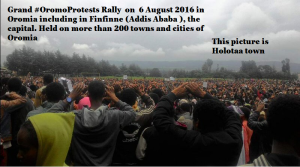



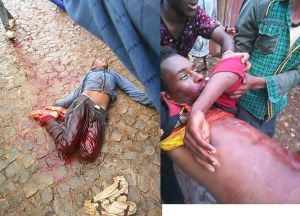
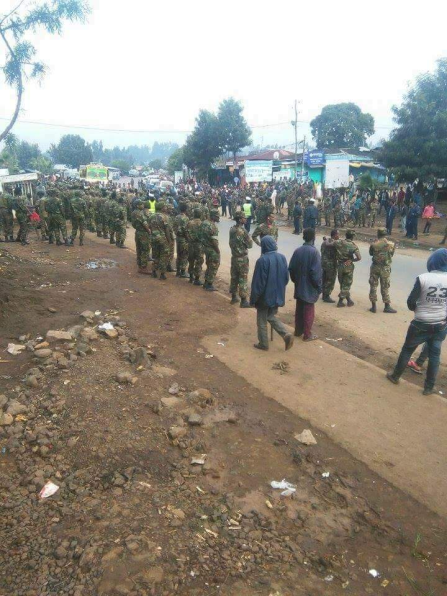

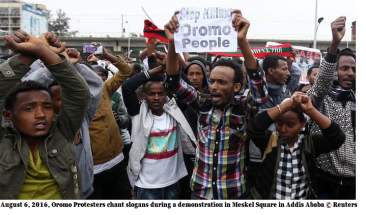
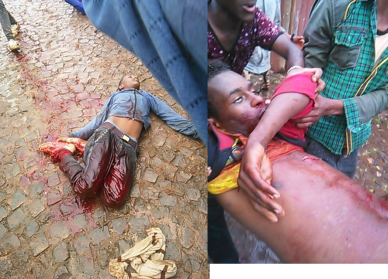

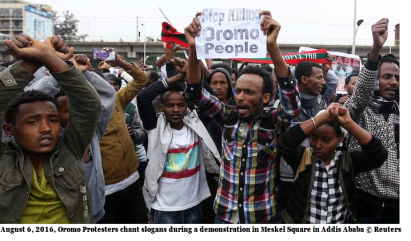
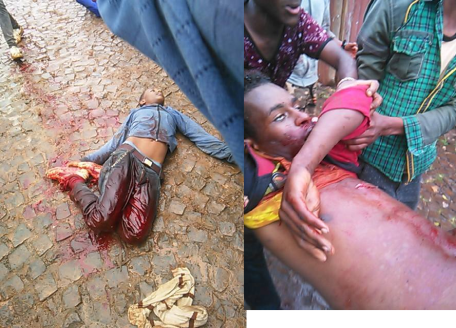
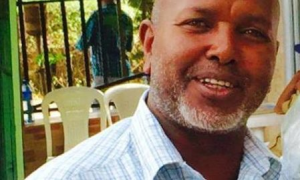
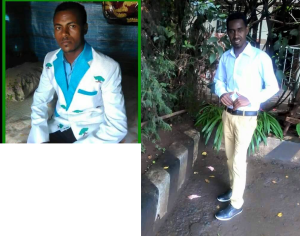
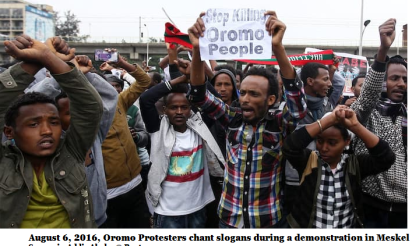



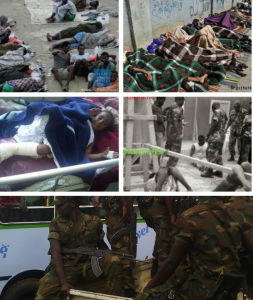
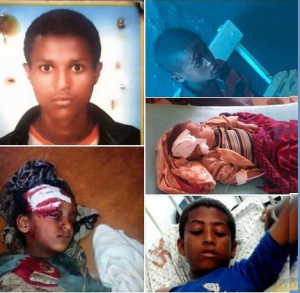




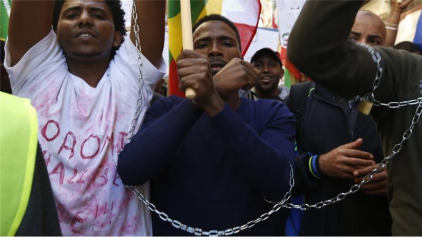


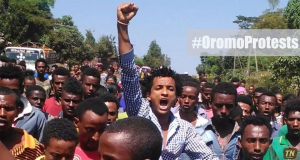
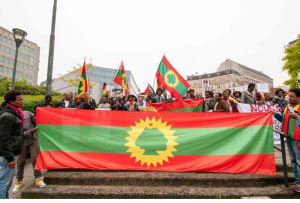
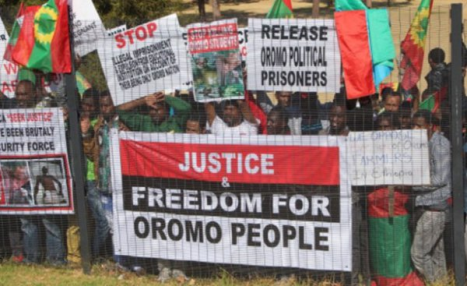

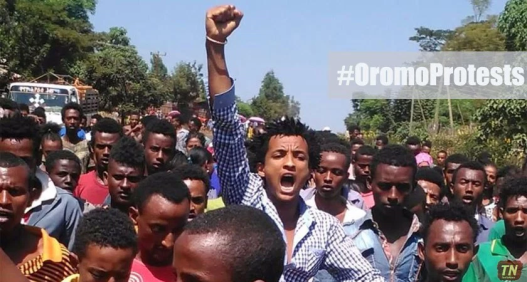
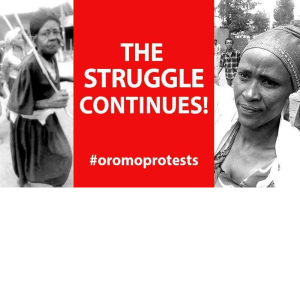

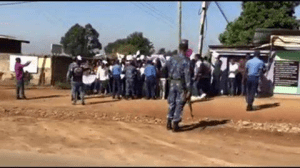
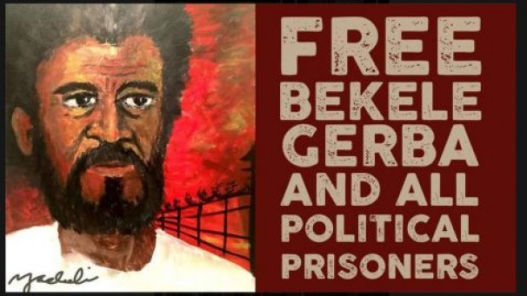

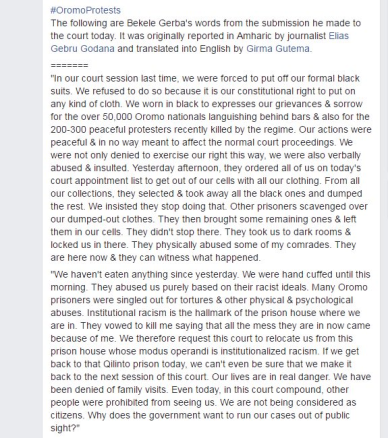

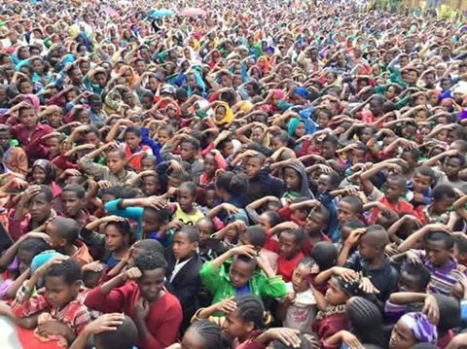

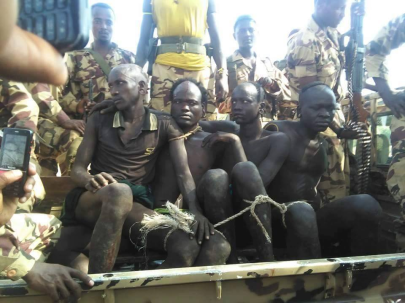
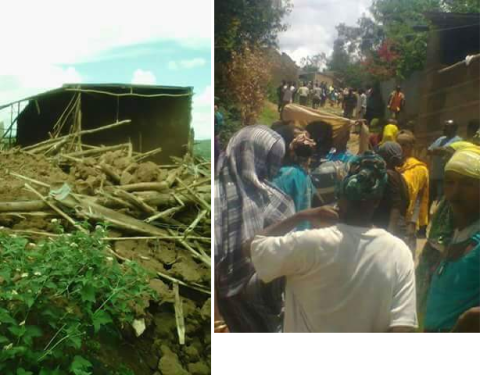

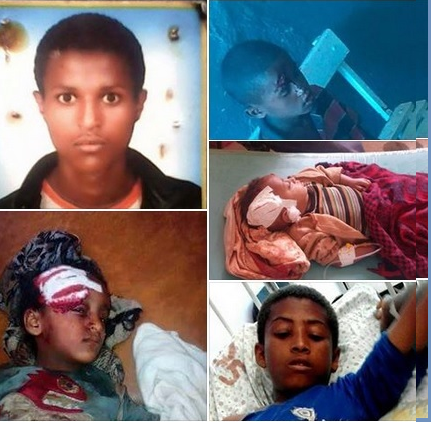
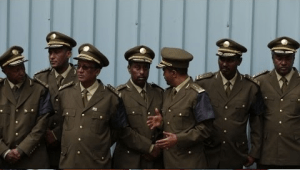


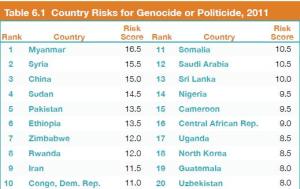



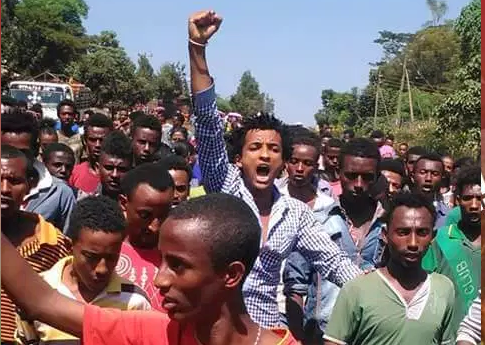
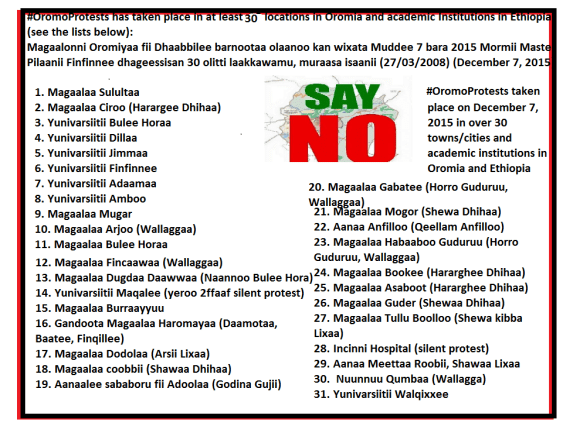
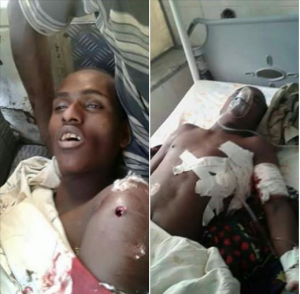

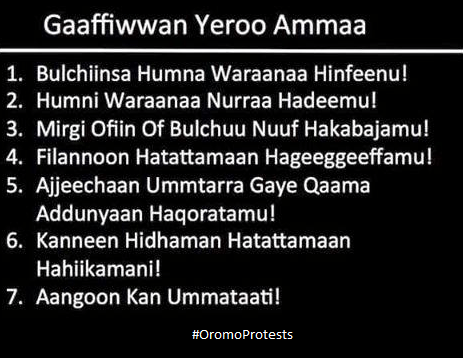
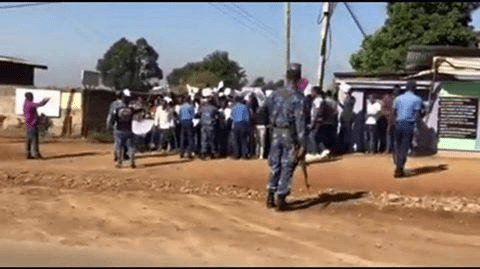
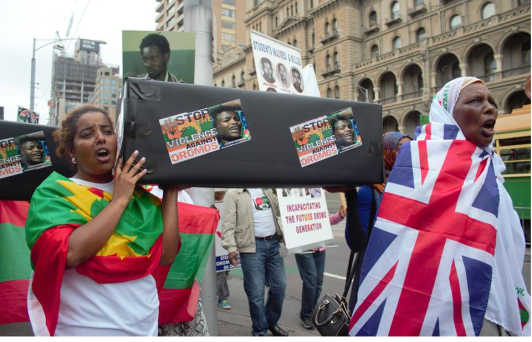
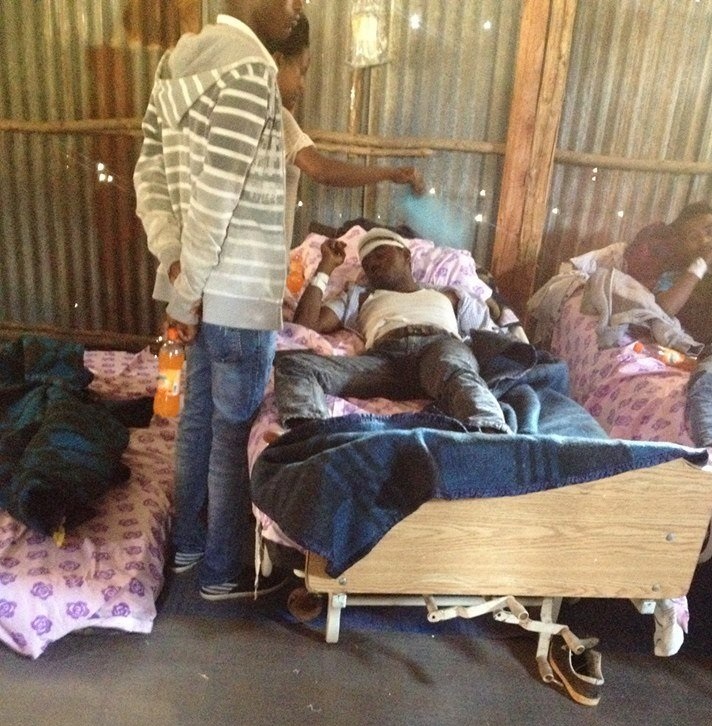

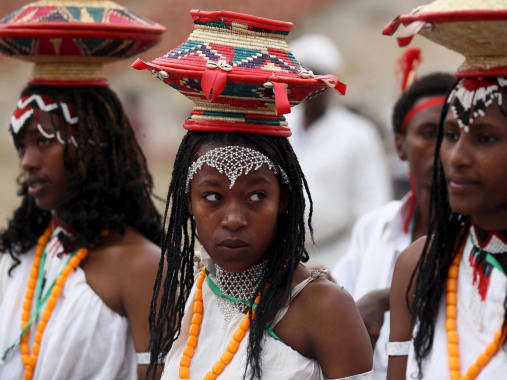


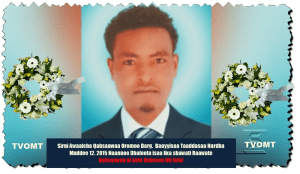

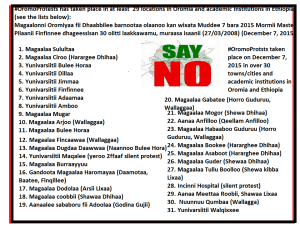
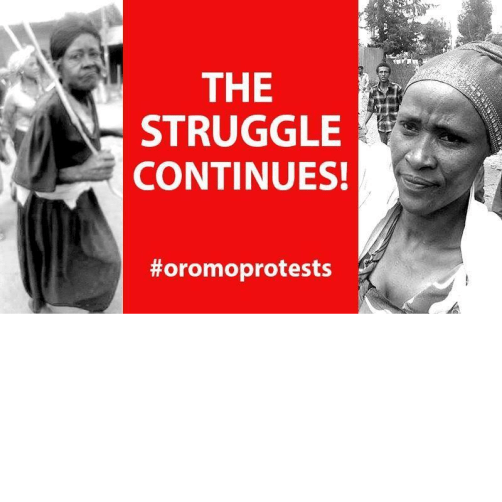
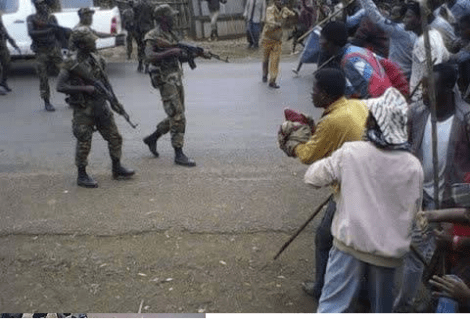
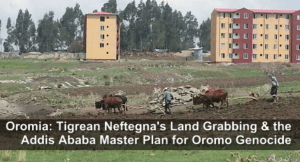
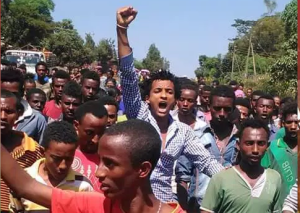
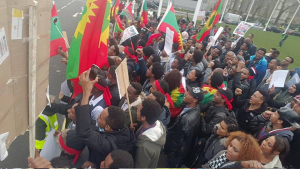





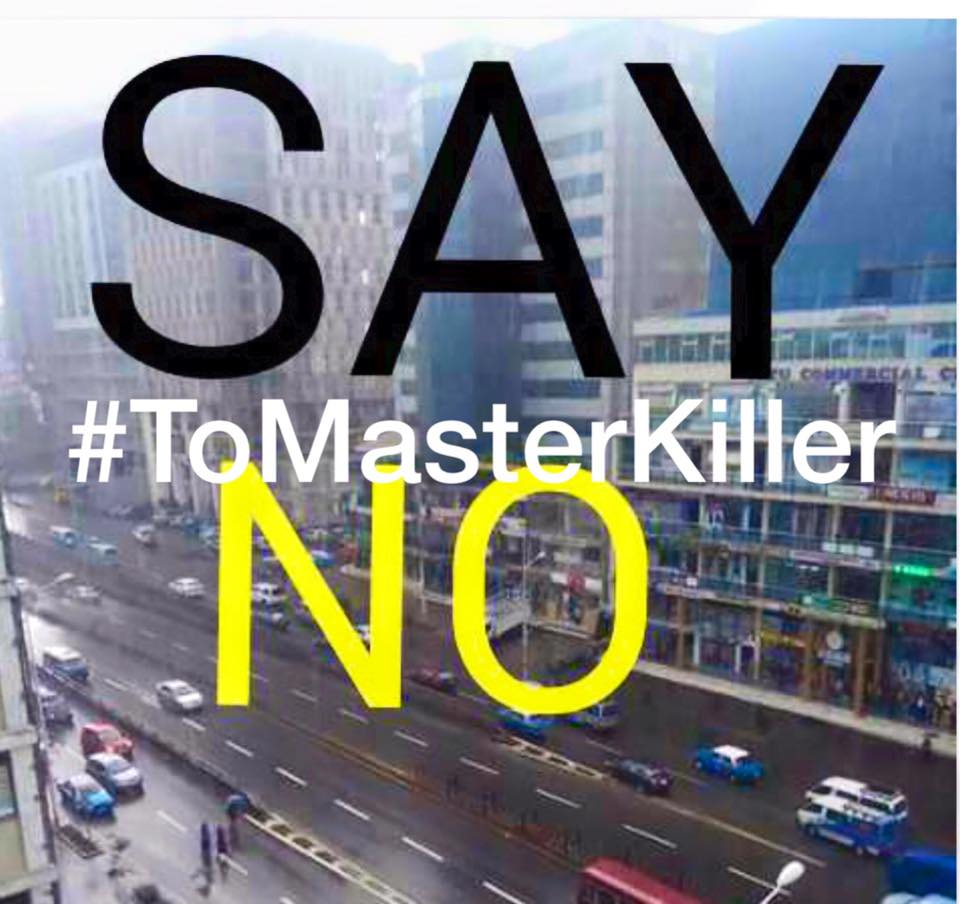


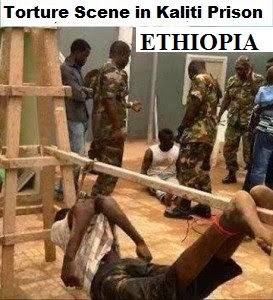


 Oromian Economist
You must be logged in to post a comment.