Economic and development analysis: Perspectives on economics, society, development, freedom & social justice. Leading issues in Oromo, Oromia, Africa & world affairs. Oromo News. African News. world News. Views. Formerly Oromia Quarterly
SUMMARY: REPRESSION OF DISSENT IN OROMIA “I was arrested for about eight months. Some school students had been arrested, so their classmates had a demonstration to ask where they were and for them to be released. I was accused of organising the demonstration because the government said my father supported the OLF so I did too and therefore I must be the one who is organising the students.” Young man from Dodola Woreda, Bale Zone1
The anticipation and repression of dissent in Oromia manifests in many ways. The below are some of the numerous and varied individual stories contained in this report: A student told Amnesty International how he was detained and tortured in Maikelawi Federal Police detention centre because a business plan he had prepared for a competition was alleged to be underpinned by political motivations. A singer told how he had been detained, tortured and forced to agree to only sing in praise of the government in the future. A school girl told Amnesty International how she was detained because she refused to give false testimony against someone else. A former teacher showed Amnesty International where he had been stabbed and blinded in one eye with a bayonet during torture in detention because he had refused to ‘teach’ his students propaganda about the achievements of the ruling political party as he had been ordered to do. A midwife was arrested for delivering the baby of a woman who was married to an alleged member of the Oromo Liberation Front. A young girl told Amnesty International how she had successively lost both parents and four brothers through death in detention, arrest or disappearance until, aged 16, she was left alone caring for two young siblings. An agricultural expert employed by the government told how he was arrested on the accusation he had incited a series of demonstrations staged by hundreds of farmers in his area, because his job involved presenting the grievances of the farmers to the government.
In April and May 2014, protests broke out across Oromia against a proposed ‘Integrated Master Plan’ to expand the capital, Addis Ababa, into Oromia regional territory. The protests were led by students, though many other people participated. Security services, comprised of federal police and the military special forces, responded to the protests with unnecessary and excessive force, firing live ammunition on peaceful protestors in a number of locations and beating hundreds of peaceful protestors and bystanders, resulting in dozens of deaths and scores of injuries. In the wake of the protests, thousands of people were arrested. These incidents were far from being unprecedented in Oromia. They were the latest and bloodiest in a long pattern of the suppression – sometimes pre-emptive and often brutal – of even suggestions of dissent in the region. The Government of Ethiopia is hostile to dissent, wherever and however it manifests, and also shows hostility to influential individuals or groups not affiliated to the ruling Ethiopian Peoples’ Revolutionary Democratic Front (EPRDF) political party. The government has used arbitrary arrest and detention, often without charge, to suppress suggestions of dissent in many parts of the country. But this hostility, and the resulting acts of suppression, have manifested often and at scale in Oromia. A number of former detainees, as well as former officials, have observed that Oromos make up a high proportion of the prison population in federal prisons and in the Federal Police Crime Investigation and Forensic Sector, commonly known as Maikelawi, in Addis Ababa, where prisoners of conscience and others subject to politically-motivated detention are often detained when first arrested. Oromos also constitute a high proportion of Ethiopian refugees. According to a 2012 Inter-Censal Population Survey, the Oromo constituted 35.3% of Ethiopia’s population. However, this numerical size alone does not account for the high proportion of Oromos in the country’s prisons, or the proportion of Oromos among Ethiopians fleeing the country. Oromia and the Oromo have long been subject to repression based on a widespread imputed opposition to the EPRDF which, in conjunction with the size of the population, is taken as posing a potential political threat to the government. Between 2011 and 2014, at least 5,000 Oromos have been arrested as a result of their actual or suspected peaceful opposition to the government, based on their manifestation of dissenting opinions, exercise of freedom of expression or their imputed political opinion. These included thousands of peaceful protestors and hundreds of political opposition members, but also hundreds of other individuals from all walks of life – students, pharmacists, civil servants, singers, business people and people expressing their Oromo cultural heritage – arrested based on the expression of dissenting opinions or their suspected opposition to the government. Due to restrictions on human rights reporting, independent journalism and information exchange in Ethiopia, as well as a lack of transparency on detention practices, it is possible there are many additional cases that have not been reported or documented. In the cases known to Amnesty International, the majority of those arrested were detained without charge or trial for some or all of their detention, for weeks, months or years – a system apparently intended to warn, punish punish or silence them, from which justice is often absent. Openly dissenting individuals have been arrested in large numbers. Thousands of Oromos have been arrested for participating in peaceful protests on a range of issues. Large-scale arrests were seen during the protests against the ‘Master Plan’ in 2014 and during a series of protests staged in 2012-13 by the Muslim community in Oromia and other parts of the country against alleged government interference in Islamic affairs. In addition, Oromos have been arrested for participation in peaceful protests over job opportunities, forced evictions, the price of fertilizer, students’ rights, the teaching of the Oromo language and the arrest or extra-judicial executions of farmers, students, children and others targeted for expressing dissent, participation in peaceful protests or based on their imputed political opinion. Between 2011 and 2014, peaceful protests have witnessed several incidents of the alleged use of unnecessary and excessive force by security services against unarmed protestors. Hundreds of members of legally-registered opposition political parties have also been arrested in large sweeps that took place in 2011 and in 2014, as well as in individual incidents.
In addition to targeting openly dissenting groups, the government also anticipates dissent amongst certain groups and individuals, and interprets certain actions as signs of dissent. Students in Oromia report that there are high levels of surveillance for signs of dissent or political activity among the student body in schools and universities. Students have been arrested based on their actual or suspected political opinion, for refusing to join the ruling party or their participation in student societies, which are treated with hostility on the suspicion that they are underpinned by political motivations. Hundreds of students have also been arrested for participation in peaceful protests.
Expressions of Oromo culture and heritage have been interpreted as manifestations of dissent, and the government has also shown signs of fearing cultural expression as a potential catalyst for opposition to the government. Oromo singers, writers and poets have been arrested for allegedly criticising the government and/or inciting people through their work. People wearing traditional Oromo clothing have been arrested on the accusation that this demonstrated a political agenda. Hundreds of people have been arrested at Oromo traditional festivals.
Members of these groups – opposition political parties, student groups, peaceful protestors, people promoting Oromo culture and people in positions the government believes could have influence on their communities – are treated with hostility not only due to their own actual or perceived dissenting behaviour, but also due to their perceived potential to act as a conduit or catalyst for further dissent. A number of people arrested for actual or suspected dissent told Amnesty International they were accused of the ‘incitement’ of others to oppose the government.
The majority of actual or suspected dissenters who had been arrested in Oromia interviewed by Amnesty International were accused of supporting the Oromo Liberation Front (OLF) – the armed group that has fought a long-term low-level insurgency in the region, which was proscribed as a terrorist organization by the Ethiopian parliament in June 2011. The accusation of OLF support has often been used as a pretext to silence individuals openly exercising dissenting behaviour such as membership of an opposition political party or participation in a peaceful protest. However, in addition to targeting demonstrators, students, members of opposition political parties and people celebrating Oromo culture based on their actual or imputed political opinion, the government frequently demonstrates that it anticipates dissenting political opinion widely among the population of Oromia. People from all walks of life are regularly arrested based only on their suspected political opinion – on the accusation they support the OLF. Amnesty International interviewed medical professionals, business owners, farmers, teachers, employees of international NGOs and many others who had been arrested based on this accusation in recent years. These arrests were often based on suspicion alone, with little or no supporting evidence.
Certain behaviour arouses suspicion, such as refusal to join the ruling political party or movement around or in and out of the region. Some people ‘inherit’ suspicion from their parents or other family members. Expressions of dissenting opinions within the Oromo party in the ruling coalition – the Oromo People’s Democratic Organization (OPDO) – have also been responded to with the accusation that the dissenter supports the OLF. Family members have also been arrested in lieu of somebody else wanted for actual or suspected dissenting behaviour, a form of collective punishment illegal under international law.
In some of these cases too, the accusation of OLF support and arrest on that basis appears to be a pretext used to warn, control or punish signs of ‘political disobedience’ and people who have influence over others and are not members of the ruling political party. But the constant repetition of the allegation suggests the government continues to anticipate a level of sympathy for the OLF amongst the Oromo population writ large. Further, the government appears to also believe that the OLF is behind many signs of peaceful dissent in the region.
However, in numerous cases, the accusation of supporting the OLF and the resulting arrest do not ever translate into a criminal charge. The majority of all people interviewed by Amnesty International who had been arrested for their actual or suspected dissenting behaviour or political opinion said that they were detained without being charged, tried or going to court to review the legality of their detention, in some cases for months or years. Frequently, therefore, the alleged support for the OLF remains unsubstantiated and unproven. Often, it is merely an informal allegation made during the course of interrogation. Further, questions asked of actual or suspected dissenters by interrogators in detention also suggest that the exercise of certain legal rights –for example, participation in a peaceful protest – is taken as evidence of OLF support. A number of people interviewed by Amnesty International had been subjected to repeated arrest on the same allegation of of being anti-government or of OLF support, without ever being charged.
Amnesty International interviewed around 150 Oromos who were targeted for actual or suspected dissent. Of those who were arrested on these bases, the majority said they were subjected to arbitrary detention without judicial review, charge or trial, for some or all of the period of their detention, for periods ranging from several days to several years. In the majority of those cases, the individual said they were arbitrarily detained for the entire duration of their detention. In fewer cases, though still reported by a notable number of interviewees, the detainee was held arbitrarily – without charge or being brought before a court – during an initial period that again ranged from a number of weeks to a number of years, before the detainee was eventually brought before a court.
A high proportion of people interviewed by Amnesty International were also held incommunicado – denied access to legal representation and family members and contact with the outside world – for some or all of their period of detention. In many of these cases, the detention amounted to enforced disappearance, such as where lack of access to legal counsel and family members and lack of information on the detainee’s fate or whereabouts placed a detainee outside the protection of the law. them again. The family continued to be ignorant of their fate and did not know whether they were alive or dead.Many people reported to Amnesty International that, after their family members had been arrested, they had never heard from.
Arrests of actual or suspected dissenters in Oromia reported to Amnesty International were made by local and federal police, the federal military and intelligence officers, often without a warrant. Detainees were held in Kebele, Woreda and Zonal3 detention centres, police stations, regional and federal prisons. However, a large proportion of former detainees interviewed by Amnesty International were detained in unofficial places of detention, mostly in military camps throughout the region. In some cases apparently considered more serious, detainees were transferred to Maikelawi in Addis Ababa. Arbitrary detention without charge or trial was reported in all of these places of detention.
Almost all people interviewed by Amnesty International who had been detained in military camps or other unofficial places of detention said their detention was not subject to any form of judicial review. All detainees in military camps in Oromia nterviewed by Amnesty International experienced some violations of the rights and protections of due process and a high proportion of all interviewees who had been detained in a military camp reported torture, including rape, and other ill-treatment. Actual or suspected dissenters have been subjected to torture in federal and regional detention centres and prisons, police stations, including Maikelawi, military camps and other unofficial places of detention. The majority of former detainees interviewed by Amnesty International, arrested based on their actual or imputed political opinion, reported that they had been subjected to treatment amounting to torture and other cruel, inhuman or degrading treatment, in most cases repeatedly, while in detention or had been subjected to treatment that amounts to torture or ill-treatment in and around their homes. Frequently reported methods of torture were beating, particularly with fists, rubber batons, wooden or metal sticks or gun butts, kicking, tying in contorted stress positions often in conjunction with beating on the soles of the feet, electric shocks, mock execution or death threats involving a gun, beating with electric wire, burning, including with heated metal or molten plastic, chaining or tying hands or ankles together for extended periods (up to several months), rape, including gang rape, and extended solitary confinement. Former detainees repeatedly said that they were coerced, in many cases under torture or the threat of torture, to provide a statement or confession or incriminating evidence against others. Accounts of former detainees interviewed by Amnesty International consistently demonstrate that conditions in detention in regional and federal police stations, regional and federal prisons, military camps and other unofficial places of detention, violate international law and national and international standards. Cases of death in detention were reported to Amnesty International by former fellow detainees or family members of detainees. These deaths were reported to result from torture, poor detention conditions and lack of medical assistance. Some of these cases may amount to extra-judicial executions, where the detainees died as a result of torture or the intentional deprivation of food or medical assistance.
There is no transparency or oversight of this system of arbitrary detention, and no independent investigation of allegations of torture and other violations in detention. No independent human rights organizations that monitor and publically document violations have access to detention centres in Ethiopia.
In numerous cases, former detainees interviewed by Amnesty International also said their release from arbitrary detention was premised on their agreement to a set of arbitrary conditions unlawfully imposed by their captors rather than by any judicial procedure, and many of which entailed foregoing the exercise of other human rights, such as those to the freedoms of expression, association and movement. Failure to uphold the conditions, detainees were told, could lead to re-arrest or worse. Regularly cited conditions included: not participating in demonstrations or other gatherings, political meetings or student activities; not meeting with more than two or three individuals at one time; not having any contact with certain people, including spouses or family members wanted by the authorities for alleged dissenting behaviour; or not leaving the area where they lived without seeking permission from local authorities. For a number of people interviewed by Amnesty International, it was the difficulty of complying with these conditions and the restricting impact they had on their lives, or fear of the consequences if they failed to comply, intentionally or unintentionally, that caused them to flee the country. The testimonies of people interviewed by Amnesty International, as well as information received from a number of other sources and legal documents seen by the organization, indicate a number of fair trial rights are regularly violated in cases of actual or suspected Oromo dissenters that have gone to court, including the rights to a public hearing, to not be compelled to incriminate oneself, to be tried without undue delay and the right to presumption of innocence. Amnesty International has also documented cases in which the lawful exercise of the right to freedom of expression, or other protected human rights, is cited as evidence of illegal support for the OLF in trials. Amnesty International also received dozens of reports of actual or suspected dissenters being killed by security services, in the context of security services’ response to protests, during the arrests of actual or suspected dissidents, and while in detention. Some of these killings may amount to extra-judicial executions. A multiplicity of both regional and federal actors are involved in committing human rights violations against actual or suspected dissenters in Oromia, including civilian administrative officials, local police, federal police, local militia, federal military and intelligence services, with cooperation between the different entities, including between the regional and federal levels. Because of the many restrictions on human rights organizations and on the freedoms of association and expression in Ethiopia, arrests and detentions are under-reported and almost no sources exist to assist detainees and their families in accessing justice and pressing for remedies and accountability for human rights violations.
The violations documented in this report take place in an environment of almost complete impunity for the perpetrators. Interviewees regularly told Amnesty International that it was either not possible or that there was no point in trying to complain, seek answers or seek justice in cases of enforced disappearance, torture, possible extra-judicial execution or other violations. Many feared repercussions for asking. Some were arrested when they did ask about a relative’s fate or whereabouts. As Ethiopia heads towards general elections in 2015, it is likely that the government’s efforts to suppress dissent, including through the use of arbitrary arrest and detention and other violations, will continue unabated and may even increase. The Ethiopian government must take a number of urgent and substantial measures to ensure no-one is arrested, detained, charged, tried, convicted or sentenced on account of the peaceful exercise of their rights to the freedoms of expression, association and assembly, including the right to peacefully assemble to protest, or based on their imputed political opinion; to end unlawful practices of arbitrary detention without charge or trial, incommunicado detention without access to the outside world, detention in unofficial detention centres, and enforced disappearance; and to address the prevalence of torture and other ill-treatment in Ethiopia’s detention centres. All allegations of torture, incidents involving allegations of the unnecessary or excessive use of force by security services against peaceful protestors, and all suspected cases of extra-judicial executions must be urgently and properly investigated. Access to all prisons and other places of detention and to all prisoners should be extended to appropriate independent, non-governmental bodies, including international human rights bodies. Donors with existing funding programmes working with federal and regional police, with the military or with the prison system, should carry out thorough and impartial investigations into allegations of human rights violations within those institutions, to ensure their funding is not contributing to the commission of human rights violations. Further, the international community should accord the situation in Ethiopia the highest possible level of scrutiny. Existing domestic investigative and accountability mechanisms have proved not capable of carrying out investigations that are independent, adequate, prompt, open to public scrutiny and which sufficiently involve victims. Therefore, due to the apparent existence of an entrenched pattern of violations in Ethiopia and due to concerns over the impartiality of established domestic investigative procedures, there is a substantial and urgent need for intervention by regional and international human rights bodies to conduct independent investigations into allegations of widespread human rights violations in Oromia, as well as the rest of Ethiopia. Investigations should be pursued through the establishment of an independent commission of inquiry, fact-finding mission or comparable procedure, comprised of independent international experts, under the auspices of the United Nations Human Rights Council or the African Commission on Human and Peoples’ Rights.
The Human Rights League of the Horn of Africa (HRLHA) would like to express its deepest concerns about the so-called “Border dispute” between Oromo and Ogadenia nationals which began at the beginning of this month- for the second time in four years- in eastern Hararge Zone of Oromia Regional State.
According to a report obtained by HRLHA from its local reporters in eastern Oromia, the border clash that has been going on since November 1, 2014 around the Qumbi, Midhaga Lolaa, and Mayuu Muluqee districts between Oromo and Ogadenia nationals, has already resulted in the deaths of seven Oromos, and the displacement of about 15,000 others. Large numbers of cattle and other valuable possessions are also reported to have been looted from Oromos by the invaders. .
The HRLHA reporter in the eastern Hararge Zone confirmed that this violence came from federal armed forces (the Federal Liyou/Special Police) from the Ogadenia side; the Oromos were simply defending themselves against this aggression- though without much success because the people were fully disarmed by the federal government force prior to the clash starting.
The names of the seven dead Oromos obtained from the HRLHA reporter are:
No
Name
Age
District
1
Mohamed Rashid Godobe
40
Qumbi, (Mino Town)
2
Yusuf Hasa Ibrahim
35
Qumbi (Mini Town)
3
Abdunasir Abdulahi
53
Mayyuu
4
Hasen Nuruye
42
Midhaga Lolaa
5
Yasin Adam
32
Midhaga Lolaa
6
Hasan Abdule
45
Midghaga Lolaa
77
Mohamed Dheeree
29
Mayyuu Muluqqee
The HRLHA reporter also confirmed that, in the invaded areas of Mayyuu Muluqqee, Midhagaa Lolaa, and Qumbii districts, the hundreds of thousands of people who have been displaced have fled to the highland areas in the eastern Hararge Zone in search of temporary shelters and other basic needs.
Meanwhile, the federal government forces in coordination with the Oromia regional state police are harassing the Community of Grawa in the district of east Hararge Zone of Oromia regional state, saying that they are clearing the community of risky weapons including “Mancaa” the traditional instrument the people of this zone use for cutting trees and other purposes. During this weapons disarming campaign, among those who resisted handing over their “Manca”, Shek Jemal Ahmed, 32 was beaten to death by the federal forces in Grawa district in October 2014.
The HRLHA has reported in May 2013, the government-backed violence against Oromo in the name of border dispute around the Anniya, Jarso and Mi’esso districts in eastern Hararge Zone between the Oromia and Ogaden regional states which had claimed the death of 37 Oromo nationals and the displacement of about 20,000 others
The Human Rights League of the Horn of Africa urges the Ethiopian Federal Government and the Regional Government of Oromia to discharge their responsibilities of ensuring the safety and stability of citizens by taking immediate actions to bring the violence to an end and facilitate the return of the displaced Oromos back to their homes. It also calls upon all local, regional and international diplomatic and human rights organizations to impose necessary pressures on both the federal and regional governments so that they refrain from committing irresponsible actions against their own citizens for the purpose of political gains.
RECOMMENDED ACTION: Please send appeals to the Ethiopian Government and its concerned officials as swiftly as possible, in English, Ahmaric, or your own language expressing:
Refrain from creating the so-called “border-dispute” between Oromo and Ogadenia nations by its “Liyyu Force” literary mean special force camped in Ogaden regional state
Respect the Responsibility to protect (R2P) which states, a state has a responsibility to protect its population from genocide, war crimes, crimes against humanity, and ethnic cleansing[2].
Bring the killers of innocent citizens to the court,
Send Your Concerns to:
His Excellency: Mr. Haila Mariam Dessalegn – Prime Minister of Ethiopia
P.O.Box – 1031 Addis Ababa
Telephone – +251 155 20 44; +251 111 32 41
Fax – +251 155 20 30 , +251 15520
Office of Oromiya National Regional State President Office
Office of the UN High Commissioner for Human Rights
United Nations Office at Geneva 1211 Geneva 10, Switzerland Fax: + 41 22 917 9022 (particularly for urgent matters) E-mail: tb-petitions@ohchr.org this e-mail address is being protected from spambots. You
need JavaScript enabled to view it
Office of the UNHCR
Telephone: 41 22 739 8111
Fax: 41 22 739 7377
Po Box: 2500
Geneva, Switzerland
African Commission on Human and Peoples‘ Rights (ACHPR)
48 Kairaba Avenue, P.O.Box 673, Banjul, The Gambia.
Since 1970, Africa has lost at least $854 billion through capital flight which is not only enough to wipe out the continent’s total external debt of $250 billion but leaving around $600 billion for poverty alleviation.
By Menelaos Agaloglou
October 21, 2014 (Open Democracy) — Illicit flows are difficult to measure due to lack of reliable data. Global Financial Integrity in 2008 reported that Africa has lost between $854 billion and $1.8 trillion in the last four decades.
The flows seeking higher returns are directed towards western financial institutions and the process is being facilitated by tax havens, trade mispricing (by overpricing imports and underpinning exports on customs documents, residents can illegally transfer money abroad), fake foundations and money-laundering techniques.
Sometimes it is a response to economic and political instability or to high taxes placed on international trade. Frequently it is a way of hiding the illegal accumulation of wealth owed to corruption or criminal activity. Additionally, massive illicit flows can also be a reaction to a defaulting government debt or to a lost confidence on the economic strength of the country.
These outflows of capital seriously harm the efforts for poverty alleviation and socio-economic development. In the first place, investment has decreased, yielding negative implications for job creation, improvement of infrastructure and industrialization.
Illicit flows of money harm economic growth by stifling private capital formation and causing the tax base to remain narrow. Since it drains hard currency reserves, it encourages poor countries to borrow money from abroad making their debt crisis worse and curtailing public investment further. This burden is paid more by the poor since high levels of unemployment and increased inflation affects them more. Illicit flows increase inequality that can lead to political tensions and further poverty.
Interestingly, Africa has become a net creditor to the world despite its global image as an inactive recipient of aid and loans. It has the highest share of private external assets among developing regions. Since 1970, Africa has lost at least $854 billion through capital flight which is not only enough to wipe out the continent’s total external debt of $250 billion but leaving around $600 billion for poverty alleviation and pro poor growth.
Africa is the largest recipient of aid in the world. Vast amount of resources are being spent every year with the task of achieving poverty reduction and meeting the Millennium Development Goals.
But what’s the point of sending money in the region if the region sends it back? For the region as a whole, illicit outflows outpaced official development assistance by a ratio of around 2:1. Taking other statistics into account, developing countries lose at least $10 through illegal flight for every $1 they receive via the aid regime. It is logical to conclude here that it would have been more beneficial to keep the locally produced wealth and invest it in the continent rather than waiting for aid from abroad to safeguard basic needs.
A serious inquiry that needs further investigation is what exactly this amount (between $1 trillion and $2 trillion) being lost means in terms of schools, hospitals and infrastructure. For example, the Education For All 2011 report stated that current aid levels fall short of the $16 billion required annually to close the external financing gap in low-income countries.
This crime kills the economic chances of the region. In 1970 it sent abroad 2% of Africa’s GDP, in 1987 it sent abroad 11% and 8% of its 2007 GDP. Illicit outflows from Africa grew at an average 12% a year over the four decades. To have a chance to meet the Millennium Development Goals, African countries must attack the illicit outflow and try to recover what is now held abroad. If the amount lost could be returned, then development can be achieved painlessly with local resources finally putting an end to aid dependency.
Economic growth without reform that can keep the wealth locally reinvested will lead to more illicit capital flight, and not to less. Sub Saharan Africa had high growth-rates over the last decade. Illicit outflows have also increased during this period. If the resources gained from growth cannot be invested locally then pro poor growth will not be achieved and the continent will continue suffering from extreme poverty. The region crucially needs diversification of its economy, research and development in relation to its agriculture and an expansion of its social services both in urban and rural areas. Only locally-led efforts, with local resources, can succeed in bringing prosperity.
Former South African president Mbeki blamed multinational companies for the flow of capital out of Africa, whereas other people are blaming the growing African elite for wanting higher returns for their money. The alternative view is that this economic problem of the outflow of money is just one of the consequences of the real problem that generates all others: in many African countries, governments (even the whole apparatus of the state) lack legitimacy, and their policies and actions do not represent the whole of society but special groups with economic and political power. In most African countries there is no bargain among groups; just the imposition of power by a small elite.
An effective state can tax its citizens with a political settlement, a rational consensus between state and citizens whereby taxes will be used to further guarantee and protect their interests. At this point we can start perceiving the problem of illicit flows more as a political problem and less an economic one. It is necessary for African societies to address their weak state legitimacy by becoming more open political units, which will integrate the different groups from the societies they supposedly lead. On the other hand businessmen, in order to keep their wealth inside their countries, need to be sure that they will profit with a positive real rate of interest. Serious macroeconomic policies, such as lower fiscal deficits, low inflation and reduced monetary expansion need to follow.
In conclusion, capital flight places the whole burden of solving the problem upon African countries. However one views the problem, either as an economic or a political one, the burden is placed on these societies to solve problems through their own efforts.
It is true that African financial institutions are the smallest and least developed in the world. It is also true that they are not transparent – probably a symptom of their connection with the political establishment which also lacks credibility among the locals. But credibility, transparency and legitimacy are central ideas to development. It would be wiser to start our development discussions from these basics rather than wasting more resources and time setting more and more millennium goals.
About the author
Menelaos Agaloglou is the Head of Geography in the International Division of the Greek Community School in Addis Ababa. He is a researcher of the Center of Middle Eastern and Islamic Studies (CEMMIS), part of the University of Peloponnese in Greece. He has taught Conflict Resolution and English in the University of Hargeisa in Somalia and Social Studies at the Ahmadiyya elementary school in Sierra Leone.
Read @ Open Democracy http://ayyaantuu.com/horn-of-africa-news/draining-development-illicit-flows-from-africa/
The ‘hidden hunger’ due to micronutrient deficiency does not produce hunger as we know it. You might not feel it in the belly, but it strikes at the core of your health and vitality.
– International Food Policy Research Institute
Ethiopia and its Hidden Hunger in the Shadows of Fastest Economic Growth Hype
Ethiopia is making the 7th worst country (marked alarming) in Global Hunger Index (GHI) 2014. It is the 70th of the 76 with GHI score of 24.4 and Proportion of undernourished in the population (%) 37.1. http://www.ifpri.org/tools/2014-ghi-map
The 10 worst countries in 2014 GHI Score are: Ethiopia, Chad, Sudan/South Sudan, East Timor-Leste, Comoros, Eritrea, Burundi, Haiti, Zambia and Yemen.
According to the IFPRS report 2014 which was released on 13th October, more than 2 billion people worldwide suffer from hidden hunger, more than double the 805 million people who do not have enough calories to eat (FAO, IFAD, and WFP 2014). Much of Africa South of the Sahara and South Asian subcontinent are hotspots where the prevalence of hidden hunger is high. The rate are relatively low in Latin America and the Caribbean where diets rely less on single staples and are more affected by widespread deployment of micronutrient interventions, nutrition education, and basic health services.
Definitions:
Hunger: distress related to lack of food
Malnutrition: an abnormal physiological condition, typically due to eating the wrong amount and/or kinds of foods; encompasses undernutrition and overnutrition
Undernutrition: deficiencies in energy, protein, and/or micronutrients Causes include poor diet, disease, or increased micronutrient needs not met during pregnancy and lactation
Undernourishment: chronic calorie deficiency, with consumption of less than 1,800 kilocalories a day, the minimum most people need to live a healthy, productive life
Overnutrition: excess intake of energy or micronutrients
Micronutrient deficiency (also known as hidden hunger): a form
of undernutrition that occurs when intake or absorption of vitamins and minerals is too low to sustain good health and development in children and normal physical and mental function in adults
Undernourishment: chronic calorie deficiency, with consumption of less than 1,800 kilocalories a day, the minimum most people need to live a healthy, productive life
Overnutrition: excess intake of energy or micronutrients
Ethiopia has been ranked 47th out of 52 countries in Africa by the Mo Ibrahim 2014 governance index on Human Rights. Ethiopia’s score in this category is 28.8/100. Ethiopia (28.8), CAR (27.9), Gambia (26.2), Equatorial Guinea (10.5), Eritrea (8.6) and Somalia (7.3) are the worst performing in this category. Ethiopia has been one of the most deteriorating trend for the last five years with score for change of -6.3. Top 5 performing countries in this category are: Cabo Verde (84.4), Mauritius (81.7), Ghana (78.1), Senegal (74.7), Namibia (73.3). Average African score for human rights category has been 49.4. The 2014 Ibrahim Index of African Governance, launched on 29 September 2014.
In accountability which includes corruption in government and public officials, Ethiopia has scored 38.9 and has been ranked 25th with deteriorating trends. The highest performing Botswana has scored 77.3. The average for all Africa is 38.9. See Chart @http://www.moibrahimfoundation.org/interact/#srl;root
Ethiopia ranks 32nd in over all Ibrahim Index of 2014 African Governance with score of 48.5/100. The top 5 scorers are Mauritius (81.7), Cabo Verde (76.6), Botswana (76.2), South Africa (73.3) and Seychelles (73.2).
According to the Index, governance is defined as:
“The provision of the political, social and economic goods that a citizen has the right to expect from his or her state, and that a state has the responsibility to deliver to its citizens.”
The foundation conducts its assessments with four main conceptual categories: Safety & rule of law, participation and human rights, sustainable economic opportunity and human development.
“The Ethiopian government is routinely using access to aid as a weapon to control people and crush dissent,” Rona Peligal, Africa director at Human Rights Watch, was quoted in a 2010 Globe and Mail article as saying: “If you don’t play the ruling party’s game, you get shut out. Yet foreign donors are rewarding this behaviour with ever-larger sums of development aid.”
The New Master Plan for Addis Ababa outlines a development scheme that would yet again push people off their land with the help of donor dollars.
Thousands of ethnic Oromo students in Ethiopia organized non-violent protests this spring, triggering a government reaction that has left an untold number dead and pushed hundreds of students underground.
The protests began in early April in response to The Integrated Development Master Plan, the municipal government’s strategy for the next 25 years of urban growth. Over the following week, the movement spread to eight universities and attracted as many as 25,000 protesters.
The Master Plan is contentious for a number of reasons. Addis Ababa is one of the fastest growing cities in Africa. The new Master Plan facilitates the extension of its boundaries into the Oromo Region, annexing towns that border the capital city. In Ethiopia, regional and administrative divisions are based on ethnic affiliation.; The protesters view this expansion of the Amharic city as a threat to Oromo culture and a precursor to a large-scale eviction of farmers. Some commentators have also noted that through the expansion of Addis Ababa, Oromia Region could itself become Balkanized.
In a country with a history of violent displacements under the auspices of development, the protesters have many grim precedents to justify their concerns. The history of government repression, mass disappearances and killings illustrates that those people willing to risk their lives by protesting understand what is at stake.
Photo courtesy of Erin Byrnes
Oromia Region and the other eight regional entities in Ethiopia were formed after the overthrow of the brutal Mengistu regime, which was responsible for the killing, torture and disappearances of tens of thousands of people, including many students. The transitional government instituted a system of ethnic federalism, creating nine ethnic-based regional states and two federally administered city-states, Addis Ababa and the eastern city of Dire Dawa. While this may have created a space for each group, it did not create the room for the type of dialogue that bridges larger divisions. These decentralization measures have included provisions for some degree of self-government for Addis Ababa. With the expansion of Addis, the historically marginalized Oromo people worry they would see their land and livelihood swallowed by the spread of the capital city.
The reaction to the student protests was swift and severe; Local and international media reported on the killing of unarmed students by government forces and images of the dead, detained, and tortured began to surface through social media platforms.
A government communiqué credits security forces with restoring peace and writes off any legitimate basis for the protests: “the forces behind the chaos were forces that have past violent history and which controlled through media inside and outside the country to manipulate the question of students for their evil purposes.”
In this statement, written in Amharic and linked by Al Jazeera, the government acknowledges that 11 people died and notes that at least 70 people were injured as a result of a bomb blast at one of the universities. However, witnesses reported that many more students had been killed, with one person telling BBC that in the early days of the protest, security forces had already killed 47 people, the majority in one brutal crackdown following a protest in late April.
Dissent can be a capital offense in Ethiopia. When protesters questioned the results of the 2005 election, security forces massacred 193 people and injured 763. The judge who filed the independent report fled to Europe after refusing to change the information and receiving death threats.
Photo courtesy of Erin Byrnes
Access to information and freedom of expression are restricted throughout state-owned and controlled media. In the 2014 World Press Freedom Index, Ethiopia comes in at a pitiful 143, followed closely by the Russian Federation, the Philippines and Iraq. There is systematic intimidation of journalists, a high degree of surveillance and it is not uncommon for those who question or criticize the government to be arrested and silenced. Nine bloggers arrested on April 25, and 26, were charged with terrorism in July.
“Ethiopia is not known to investigate politically motivated killings and torture of its critics carried out by the federal security forces. As such, there has been no official investigation into the killings, torture and unlawful detention of hundreds of Oromo students who were caught in the latest security dragnet,” said Mohammed Ademo, a journalist at Al Jazeera America and founder and editor of Oromo publication, OPride (Interviewed over email July 22, 2014). He said that with the limited access of independent NGOs, there may never be an inquiry into these incidents and that without any deviation from the practice of the past two decades, the federal security forces will continue to enjoy total impunity.
The Ethiopian constitution guarantees freedom of information and peaceful public assembly, but the reality is that anti-terrorism laws subsume any human rights protections and criminalize dissent. Any criticism of the state may be interpreted as an attempt to destabilize the country and a blog or the petty vandalism of government property can lead to terrorism charges which are punishable by death. Without a clear definition of what terrorism is, any dissent could be seen as a direct assault on the state and without restraints on security forces countering this undefined menace, the consequences have been all too predictable.
On May 6, 2014, during the second week of protests, the government of Ethiopia came before the United Nations Office of the High Commissioner for Human Rights (OHCHR) for the Universal Period Review (UPR) of their human rights record. The UPR is a peer-review process where member states can make corrective recommendations to the country under review. 119 governments made statements, many urging Ethiopia to address security forces abuses, the forced resettlement of farmers and pastoralists, restrictions on civil society and disappearances and torture in detention facilities. While it is at the discretion of the government to accept or reject recommendations, civil society groups can lobby for their implementation. The international community can also influence the Ethiopian government through its development aid. Annual revenues in Ethiopia topped $6.7 billion in 2013, but almost half of that came in the form of donor dollars. In 2012, the total official development assistance (ODA) received was 3,261,320,000.
In light of human rights abuses and the apparent politicization of aid, countries that provide development aid are being compelled to assess their own role in supporting Ethiopia. Often these abuses relate to displacement and government brutality. On July 14, the UK High Court ruled that the UK Department for International Development (DFID) was not compliant with its own human rights policy and that the case necessitated a full judicial review. The case originated with a farmer from Western Ethiopia now living as a refugee, who alleges that DFID didn’t properly investigate human rights abuses related to the government’s resettlement program. This version of villagization started in 2010. In 2012, Human Rights Watch released evidence of forced displacements without compensation, arbitrary detentions and mistreatment. International condemnation of Ethiopia, however, is tempered by international commendations. As the seat of the African Union, Addis Ababa is a diplomatic capital, enjoying significant economic growth. Ethiopia’s GDP ranks 24th in the world with 7% real growth, down slightly from 11.4 % in 2011 and 8.5% in 2012. But per capita GDP still remains pitifully low at $1,300 USD in 2013, placing the people of Ethiopia at the other end of the spectrum with a rank of 211. While the divisions of an authoritarian country may be cause for concern among donor countries, Ethiopian’s alliance with the West on security issues may further complicate the willingness of donor governments to criticize Ethiopia’s human rights record .
Photo courtesy of Erin Byrnes
In an Al Jazeera America article, Ademo notes that Ethiopia maintains a somewhat stable presence in a region torn apart by endemic conflicts and serves as “a key ally in the U.S. war on terror,” receiving “more than $400 million in annual bilateral aid from the US.” He goes on to highlight that, while the American State Department has documented atrocious human rights abuses, no measures have been taken by Washington to monitor or encourage human rights practice. The Christian Science Monitor also notes that no American aid cuts or formal censures have resulted from this shoddy record.
Canada is Ethiopia’s third largest bilateral country donor, supplying $207.64 million in 2011-2012 with aims to increase food security, agricultural growth and sustainable economic growth. In regard to development and humanitarian aid, the Canadian government notes, “Interventions also recognize the importance of advancing democracy and human rights to ensure that Ethiopia’s development progress is inclusive and sustainable.”
Ethiopia is also a Canadian Country of Focus, meaning that it made the cut when the development agency narrowed aid spending by selecting countries they decided would most benefit from foreign aid. Considering Ethiopia’s human rights record, some commentators have alleged that Canadian foreign aid to Ethiopia violates the principles of the Official Development Assistance Accountability Act by providing aid that is not “consistent with international human rights standards”. Some would argue that this is consistent with the history of Canadian aid to Ethiopia.
It has been 30 years since the famine that, televised by CBC news cameras, came to epitomize the myth of a continent, besieged by bad luck and in need of philanthropy and pop stars. Now most accounts place the blame not on a drought but on the military and social control policies of the ruling junta. During the reign of the Derg, food aid was channeled to the military to buy food and guns, while the domestic solution, a forced resettlement process, divided donor countries and prominent non-governmental organizations. Canada stood on the wrong side of history, providing support for a program in which as many as 100,000 people were killed in transit or due to disease and starvation in the resettlement camps.
The villagization scheme can be considered a new iteration of that resettlement program, as again researchers have documented that indigenous peoples were being forcibly expelled from their land, severing access to food and health care while subjecting people to security force abuses. The villigization scheme is being undertaken in the interest of leasing the land to foreign investors for large-scale farms. In 2012, Human Rights Watch encouraged Canada and other donor countries to use their influence to encourage Ethiopia to comply with international human rights law.
While the Canadian International Development Agency, now the Department of Foreign Affairs, Trade and Development (DFATD), did demand an inquiry and corrective measures, the Ethiopian Government continues to operate with impunity and maintain donor darling status. Human Rights Watch notes that development schemes, partially funded through foreign assistance, may displace indigenous communities whose consultation is not sought and who receive no compensation.
“The Ethiopian government is routinely using access to aid as a weapon to control people and crush dissent,” Rona Peligal, Africa director at Human Rights Watch, was quoted in a 2010 Globe and Mail article as saying: “If you don’t play the ruling party’s game, you get shut out. Yet foreign donors are rewarding this behaviour with ever-larger sums of development aid.”
The New Master Plan for Addis Ababa outlines a development scheme that would yet again push people off their land with the help of donor dollars. As Ethiopia’s students languish in prisons, as the allegations of torture and extrajudicial killings mount, and as restrictions on information continue to support government impunity, Canadians need to look closely at what counts as development and whether bricks or bullets are being used to achieve it.
*Erin Byrnes is a multimedia journalist based out of East Africa. She has reported from Uganda, Kenya, Tanzania, Ghana, and the Democratic Republic of Congo for publications such as Agence France-Presse, France24, New Internationalist Magazine, The Economist and TechPresident. She has a Masters degree in Journalism from Ryerson University, a B.A. Honours in Cultural Anthropology from Concordia University and a D.E.C. in North South studies. Get in touch via twitter at @mariebyrnes
The absolute number of hungry people—which takes into account both progress against hunger and population growth—fell in most regions. The exceptions were Sub-Saharan Africa, North Africa, and West Asia.
The 2014 FAO’s report which is published in September indicates that while Sub-Saharan Africa is the worst of all regions in prevalence of undernourishment and food insecurity, Ethiopia (ranking no.1) is the worst of all African countries as 32 .9 million people are suffering from chronic undernourishment and food insecurity. Which means Ethiopia has one of the highest levels of food insecurity in the world, in which more than 35% of its total population is chronically undernourished.
FAO in its key findings reports that: overall, the results confirm that developing countries have made significant progress in improving food security and nutrition, but that progress has been uneven across both regions and food security dimensions. Food availability remains a major element of food insecurity in the poorer regions of the world, notably sub-Saharan Africa and parts of Southern Asia, where progress has been relatively limited. Access to food has improved fast and significantly in countries that have experienced rapid overall economic progress, notably in Eastern and South-Eastern Asia.Access has also improved in Southern Asia and Latin America, but only in countries with adequate safety nets and other forms of social protection. By contrast, access is still a challenge in Sub Saharan Africa, where income growth has been sluggish, poverty rates have remained high and rural infrastructure remains limited and has often deteriorated.
According to the new report, many developing countries have made significant progress in improving food security and nutrition, but this progress has been uneven across both regions and dimensions of food security. Large challenges remain in the area of food utilization. Despite considerable improvements over the last two decades, stunting, underweight and micronutrient deficiencies remain stubbornly high, even where availability and access no longer pose problems. At the same time, access to food remains an important challenge for many developing countries, even if significant progress has been made over the last two decades, due to income growth and poverty reduction in many countries.Food availability has also improved considerably over the past two decades, with more food available than ever and international food price volatility before. This increase is reflected in the improved adequacy of dietary energy and higher average supplies of protein. Of the four dimensions, the least progress has been made in stability, reflecting the effects of growing political instability.Overall, the analyses reveal positive trends, but it also masks important divergences across various sub- regions. The two sub- regions that have made the least headway are sub-Saharan Africa and Southern Asia, with almost all indicators still pointing to low levels of food security.On the other hand, Eastern (including South Eastern) Asia and Latin America have made the most progress in improving food security, with Eastern Asia experiencing rapid progress on all four dimensions over the past two decades.The greatest food security challenges overall remain in sub-Saharan Africa, which has seen particularly slow progress in improving access to food, with sluggish income growth, high poverty rates and poor infrastructure, which hampers physical and distributional access. Food availability remains low, even though energy and protein supplies have improved. Food utilization remains a major concern, as indicated by the high anthropometric prevalence of stunted and underweight children under five years of age. Limited progress has been made in improving access to safe drinking-water and providing adequate sanitation facilities, while the region continues to face challenges in improving dietary quality and diversity, particularly for the poor. The stability of food supplies has deteriorated, mainly owing to political instability, war and civil strife.
Prevalence of undernourishment in Africa/ #Ethiopia
Summary of Africa Scorecard on Number of People in State of Undernourishment / Hunger Country Name and Number of People in State of Undernourishment / Hunger (2012-2014, Millions):-
1st Ethiopia ( 32.9 million)
2nd Tanzania (17.0)
3 Nigeria (11.2)
4 Kenya (10.8)
5 Uganda (9.7)
6 Mozambique (7.2)
7 Zambia (7.0)
8 Madagascar (7.0)
9 Chad (4.5)
10 Zimbabwe (4.5)
11 Rwanda (4.0)
12 Angola (3.9)
13 Malawi (3.6)
14 Burkina Faso (3.5)
15 Ivory Coast (3.0)
16 Senegal (2.4)
17 Cameroon (2.3)
18 Guinea (2.1)
19 Algeria (2.1)
20 Niger 2.0
21 Central Africa Republic (1.7)
22 Sierra Leone (1.6)
23 Morocco (1.5)
24 Benin (1.0)
25 Togo (1.0)
26 Namibia (.9)
27 Botswana (.05)
28 Guinea Bissau (.03)
29 Swaziland (.03)
30 Djibouti (.02)
31. Lesotho (.02)
Data for South Africa, Sao Tome and Principal, Gabon, Ghana, Mali, Tunisia, Mauritius and Egypt indicate that Prevalence of undernourishment is insignificant or under .01 million. There are no reported data for some countries such as Libya, Sudan, Eritrea, Somalia, Burundi and Gambia.
Read more @ The State of Food Insecurity in the World Strengthening the enabling environment for food security and nutritionhttp://www.fao.org/3/a-i4030e.pdf
September 2, 2014 (The baines report) — Poverty can easily be seen throughout the capital of Ethiopia, but nowhere is it more evident than when you pass a beggar on the street. Beggars are everywhere in Addis Ababa, and they represent a vast range of demographics. There are men, women, children of all ages and conditions– some with their mothers, some without, and the severely disabled.
Older children, rather than begging, try to sell you gum or clean your shoes, while the younger children walk in front of you asking for money or food, not leaving you until they spot another person to ask. The women are often with young children, sometimes babies, and usually with more than one. I was once walking down the street and a young child no older than 2 or 3 who was being held by his mother made the signal they all make to ask for food or money while calling me sister. I thought this child probably learned this signal before he even learned how to speak. Women are often seen grilling corn on the sidewalk on a small grill to sell to people passing by.
I have been told the severely disabled have most likely suffered from stunting, polio or the war. I have seen men with disfigured legs so mangled that they can not walk but instead drag themselves down the sidewalk. Others are in wheelchairs and unable to walk. And this city is not easy for the disabled. The sidewalks, where they exist, are not always flat and not always paved. There are also often giant holes in the middle of the sidewalk or loose concrete slabs covering gutters. On the main roads, near where I’m staying there are tarps and blankets off to the side of the road where the beggars must sleep or live.
It is a very difficult scene to walk through. You want to help them all and give everyone a little bit of money or food. But there are so many it would be nearly impossible to give to them all. We have been told to not give to beggars because once you give to one you will be surrounded by others. When people do give money to beggars it is often very small bills or coins that will not go very far.
I have often wondered how much money they actually receive. Perhaps it would be beneficial to do more in depth look at why these people became beggars and where they come from. After a cursory search for research and reports on beggars in Addis Ababa, I found very little. There is a study on the disabled beggars and a report focusing on children. There is a documentary that follows two women who come to the capital from a rural town and become beggars in order to raise money for their family when climate change creates a food shortage.
Both the government of Ethiopia and large NGO’s, like USAID and the UN, are working to stop the “cycle of poverty.” There are major health and nutrition projects being implemented all over the country, but these are long-term projects that do not address the immediate needs of people on the streets. Short term solutions such as creating shelters or centers for the disabled and homeless could allow beggars more opportunities for housing but could also generate income potential through workshops and other skill development programs.
‘Most of the time we simply do not know enough to assert accurate growth rates. There are also known biases and manipulations. Ethiopia, for example, is notable for having long-standing disagreements with the IMF regarding their growth rates. Whereas the official numbers have been quoted in double digits for the past decade, a thorough analysis suggested the actual growth rates were around 5 to 6 percent per annum. More generally, one study used satellite imaging of nighttime lights to calculate alternative growth rates, and found that authoritarian regimes overstate reported rates of growth by about 0.5 to 1.5 percentage points. Another recent study argues that inflation is systematically understated in African countries – which in turn means that growth and poverty reduction is overstated.’ http://africanarguments.org/2014/08/26/why-saying-seven-out-of-ten-fastest-growing-economies-are-in-africa-carries-no-real-meaning-by-morten-jerven/
Why saying ‘seven out of ten fastest growing economies are in Africa’ carries no real meaning
By Morten Jerven @ AfricanArguments
Before, during and after the US Africa summit one of the most frequently repeated factoids supporting the Africa Rising meme was that ‘seven out of ten fastest growing economies are in Africa.’ In reality this is both a far less accurate and much less impressive statistic than it sounds. More generally, narratives on African economic development tend to be loosely connected to facts, and instead are driven more by hype.
***
The ‘seven out of ten’ meme derives from a data exercise done in 2011 by The Economist. The exercise excluded countries with a population of less than 10 million and also the post-conflict booming Iraq and Afghanistan. This left 81 countries, 28 of them in Africa (more than 3 out of 10) and, if you take out the OECD countries from the sample, (which are unlikely to grow at more than 7 percent per annum), you find that every second economy in the sample is in Africa. It might not give the same rhetorical effect to say: ‘on average some African economies are expected to grow slightly faster than other non-OECD countries,’ but that would be more accurate.
And before we literally get ahead of ourselves (The Economist was reporting forecasts made for 2011 to 2015) there is a difference between forecasted and actually measured growth. According to John Kenneth Galbraith, the only function of economic forecasting is to make astrology look respectable. So how good is the IMF at forecasting growth in Low Income Countries?
According to their own evaluation, IMF forecasts “over-predicted GDP growth and under-predicted inflation.” Another study looked at the difference between the forecasts and the subsequent growth revisions in low income countries, and found that “output data revisions in low-income countries are, on average, larger than in other countries, and that they are much more optimistic.” Forecasts are systematically optimistic all over the world, but in Low Income Countries even more so.
***
Among those on the list of the fastest growers were countries like Nigeria, Ghana and Ethiopia. The news that both Nigerian and Ghanaian GDP doubled following the introduction of new benchmark years for estimating GDP in 2010 and 2014 should remind us that the pinpoint accuracy of these growth estimates is lacking. How confident should you be about a 7 percent growth rate when 50 percent of the economy is missing in the official baseline? Recent growth in countries with outdated base years is also overstated.
While Ghana has reportedly had the highest growth rates in the world over the past years, a peer review of the Ghana national accounts noted that “neither a national census of agriculture nor other surveys, such as a crop and live-stock survey, have been conducted…there is no survey to provide benchmark data for construction, domestic trade and services.” It was recently reported that an economic census is being planned for next year. What we do know is that Ghana (together with Zambia, another of the projected ‘top ten growers’) has returned to the IMF to seek assistance following their entry into international lending markets.
Most of the time we simply do not know enough to assert accurate growth rates. There are also known biases and manipulations. Ethiopia, for example, is notable for having long-standing disagreements with the IMF regarding their growth rates. Whereas the official numbers have been quoted in double digits for the past decade, a thorough analysis suggested the actual growth rates were around 5 to 6 percent per annum. More generally, one study used satellite imaging of nighttime lights to calculate alternative growth rates, and found that authoritarian regimes overstate reported rates of growth by about 0.5 to 1.5 percentage points. Another recent study argues that inflation is systematically understated in African countries – which in turn means that growth and poverty reduction is overstated.
***
Data bias is carried across from economic growth to other metrics. The pressure on scholars, journalists and other commentators to say something general about ‘Africa’ is relentless, and so the general rule is to oblige willingly. When talking about average trends in African politics and opinion, analysis is influence by the availability of survey data, such as Afrobarometer, and the data availability is biased. According to Kim Yi Donne, on The Washington Post’s ‘Monkey Cage’ blog, of the 15 African countries with the lowest Polity IV rankings, only seven have ever been included in the Afrobarometer, whereas all but one African country rated as a democracy by the same index is included.
Any quantitative study which says something about the relationship between growth and trends in inequality and poverty, relies on the availability of household survey data. One paper boldly stated that African Poverty is Falling…Much Faster than You Think! The data basis was very sparse and unevenly distributed. There were no data points for Angola, Congo, Comoros, Cape Verde, D.R. Congo, Eritrea, Equatorial Guinea, Seychelles, Togo, Sao Tome and Principe, Chad, Liberia, and Sudan. In addition, six countries only have one survey. The database included no observations since 2004 – so the trend in poverty was based entirely on conjecture. Famously you need at least two data points to draw a line. Yet the study included a graph of poverty lines in the Democratic Republic of Congo from 1970 to 2006 – based on zero data points.
A result of doubts about the accuracy of the official evidence, and a dearth of evidence on income distributions, scholars have turned to other measurements. Data on access to education and ownership of goods such as television sets from Demographic and Health Surveys were used to compile new asset indices. In turn, these data were used to proxy economic growth and in place of having a measure of the middle class. In both cases the data may paint a misleadingly positive picture. While claiming to describe all of Africa over the past two decades, these surveys are only available for some countries sometimes.
***
The statement ‘seven out of ten fastest growing economies are in Africa’ carries no real meaning. To utter it is merely stating that you subscribe to the hype. It is particularly frustrating, and it surely stands in way of objective evaluation, that the narratives in African Economic Development switches from one extreme to the other so swiftly. The truth lies somewhere between the ‘miracles’ and ‘tragedies’. It is nothing short of stunning that in a matter of 3-4 years the most famous phrase relating to African economies has turned from ‘Bottom Billion’ to ‘Africa Rising’.
Because of a lack of awareness on historical data on economic growth it was long claimed that Africa was suffering “a chronic failure of growth”, but growth is not new to the African economies, growth has been recurring. There is no doubt that there are more goods leaving and entering the African continent today than fifteen years ago. More roads and hotels are being built and more capital is flowing in and out of the African continent than before. But what is the real pace of economic growth? Does the increase in the volume of transaction result in a sustained increase in living standards? The evidence does not yet readily provide us with an answer. It is the job of scholars to give tempered assessments that navigate between what is make-believe and what passes as plausible evidence.
Morten Jerven is Associate Professor at the Simon Fraser University, School for International Studies. His book Poor Numbers: how we are misled by African development statistics and what to do about it is published by Cornell University Press. @MJerven
Since the term “data revolution” was introduced, there has been a flurry of activity to define, develop, and implement an agenda to transform the collection, use, and distribution of development statistics. That makes sense. Assessing the international community’s next development agenda, regardless of its details, will be impossible without accurate data.
Yet, in Sub-Saharan Africa – the region with the most potential for progress under the forthcoming Sustainable Development Goals – accurate data are severely lacking. From 1990 to 2009, only one Sub-Saharan country had data on all 12 indicators established in 2000 by the Millennium Development Goals. Indeed, of the 60 countries with complete vital statistics, not one is in Africa. While most African countries have likely experienced economic growth during the last decade, the accuracy of the data on which growth estimates are based – not to mention data on inflation, food production, education, and vaccination rates – remains far from adequate.
Inaccurate data can have serious consequences. Consider Nigeria’s experience earlier this year, when GDP rebasing showed that the economy was nearly 90% larger than previously thought. The distorted picture of Nigeria’s economy provided by the previous statistics likely led to misguided decisions regarding private investment, credit ratings, and taxation. Moreover, it meant that Nigeria was allocated more international aid than it merited – aid that could have gone to needier countries.
Contrary to popular belief, the constraints on the production and use of basic data stem not from a shortage of technical capacity and knowhow, but from underlying political and systemic challenges. For starters, national statistical offices often lack the institutional autonomy needed to protect the integrity of data, production of which thus tends to be influenced by political forces and special interest groups.
Poorly designed policies also undermine the accuracy of data. For example, governments and donors sometimes tie funding to self-reported measures, which creates incentives for recipients to over-report key data like vaccination or school-enrollment rates. Without effective oversight, these well-intentioned efforts to reward progress can go awry.
Despite these failings, national governments and international donors continue to devote far too few resources to ensuring the collection of adequate data. Only 2% of official development aid is earmarked for improving the quality of statistics – an amount wholly insufficient to assess accurately the impact of the other 98% of aid. And governments’ dependency on donors to fund and gather their core statistics is unsustainable.
In fact, stronger national statistical systems are the first step toward improving the accuracy, timeliness, and availability of the data that are essential to calculating almost any major economic or social-welfare indicator. These include statistics on births and deaths; growth and poverty; tax and trade; health, education, and safety; and land and the environment.
Developing such systems is an ambitious but achievable goal. All that is needed is a willingness to experiment with new approaches to collecting, using, and sharing data.
This is where the public comes in. If private firms, media, and civil-society organizations identify specific problems and call publicly for change, their governments will feel pressure to take the steps needed to produce accurate, unbiased data – for example, by enhancing the autonomy of national statistical offices or providing sufficient funds to hire more qualified personnel. While it may be tempting to bypass government and hope for an easy technology-based solution, sustainable, credible progress will be difficult without public-sector involvement.
The recognition by governments and external donors of the need for more – and more efficient – funding, particularly to national statistical systems, will be integral to such a shift. Establishing stronger incentives for agencies to produce good data – that is, data that are accurate, timely, relevant, and readily available – would also help, with clearly delineated metrics defining what qualifies as “good.” In fact, tying progress on those metrics to funding via pay-for-performance agreements could improve development outcomes considerably.
One concrete strategy to achieve these goals would be to create a country-donor compact for better data.
August 25, 2014 (African Executive) — It has never known political stability after the colonial conquest and subjugation by Abyssinia. It has never enjoyed real prosperity in spite of being one of the richest nations in natural resources in the horn of Africa with a population estimated at 33 million. It is Africa’s longest political conflict that appears to have been forgotten by the international community including IGAD and Africa Union among others. It has won the unenviable accolade of being the cradle of the world’s largest forced mass movement from one country in modern African history, namely the current exodus from Ethiopia. Welcome to Oromia, the country of the Oromo people (375,000 square miles).
In the last four decades, the Horn of Africa, with Ethiopia as an epicenter, has experienced an unprecedented wave of refugee flows, resulting in large concentrations of displaced persons. Nearly all these displaced persons are from Ethiopia. Today there are an estimated over 10 million refugees originating from Ethiopia, second only to those from Afghanistan and Iraq put together.
The influx of Ethiopians fleeing their country to Kenya has always hit headlines in the local and internal press. Ironically, most are apprehended by Kenyan authorities and handed back to the Ethiopian authorities or locked up in Kenyan prisons. Some of the refugees are said to be on transit to South Africa.
The Oromo Liberation Front has for decades been embroiled in a protracted war for the liberation of the Oromia. The most striking aspect to political pundits and academics is the manner in which the international community has accorded the conflict a blind eye, and regional governments, IGAD and AU cannot explain why Ethiopians are fleeing their country in droves.
Who will save the Oromo people from institutionalized oppression and blatant abuse of basic human rights by the Addis Ababa government? What is the IGAD and the Africa Union doing to resolve the conflict? The 140 years of continuous acts of cultural genocide by successive Ethiopian regimes is a remarkable testimony to the resilience of the Oromo cultural values and democratic heritage.
Even as the international community remain silent in the face of the conflict that has claimed lives of millions of people, it is is important to note that as a geo-cultural bridge between Europe, Africa and Asia, the Horn of Africa has always been embroiled in some world-historic events, since the times of the Roman empire. The Horn remains important in security considerations of the Middle East and the increasingly competitive global economy.
It is important to observe that the current Ethiopian regime is being sustained in power by foreign western powers for imperialistic reasons. Take the case of the Tigrean People’s Liberation Front (TPLF), also known as Wayyane, which was promoted in 1991 by foreign governments, particularly that of the US, to fill the power vacuum created by the downfall of the Dergue regime. As expected, this led to replacement of the Amhara regime by a Tigrean power as was evident to those familiar with the Ethiopian political landscape.
Under the pretext of opening the country for world market and democratization, traditional supporters and partners of the Ethiopian empire used the World Bank and the International Monetary Fund (IMF) to pump huge amounts of money into the coffer of TPLF. During the first four years of its rule, the regime received about US$3 billion in bilateral grants. The Paris Club member countries granted significant debt-cancellations and rescheduling. The TPLF regime used the multilateral and bilateral assistance to dismantle Amhara-centre state apparatus and to replace it by institutions that are nothing more than appendages of a tightly controlled party-apparatus of the Tigrean ruling class.
Today, there is no public institution, be it the military, the judiciary, the civil service, the regulatory agencies, and financial institutions outside the control of the TPLF and its surrogate parties. Thus, the regime cannot claim democratic legitimacy by any standard. Most disturbing are reports of Kenyan Borana Oromo near the border being harassed and imprisoned in Kenya. These incidents are violating international law regarding refugees. They could have been taken to Kenyan courts, if suspected of any crime.
The human rights crisis in Ethiopia is so worrying. No one seems to understand the scale of the violations. targeted and systematic tortures, disappearances and extrajudicial killings are common place in that country. There seems to be no hiding place for the victims of human rights violations under the current regime in Ethiopia. Peasants in certain areas are particularly targeted and expelled in broad day light from their farmlands for the sake of the officials and of TPLF-led government financial gains.
“The peoples of Oromia and Kenya share a longstanding cordial relationship. In particular, Kenya, as a democratic and stable country, continues to provide safety for a significant number of Oromo refugees fleeing from persecution by the Ethiopian state. However, it is of also of grave concern that recently, a large number of Oromo refugees have been handed over to the Ethiopian authorities by the Kenyan agents who have been recruited by the Addis Ababa spy network. More worrying is the fact that their operations are not sanctioned by the Kenyan government. These refugees are sent back to inhumane torture and certain death in the hands of the Ethiopian security agents,” says an OLF petition to Kenya’s President Mwai Kibaki.
The petition, copied to the country’s Prime Minister Raila Odinga further notes: “We believe Kenya could play a positive and constructive role in supporting a peaceful resolution of the conflict between Oromia and Ethiopia and that would make Kenya a legitimate player in the international arena. We respectfully urge you to appraise the situation and reconsider your policy and assure supporting the just cause of the oppressed Oromo people rather than assisting the bloodthirsty regime in Ethiopia.”
In the recent months, Kenyans authorities have been accused of illegal rendition of Oromo refugees and Kenyans to Ethiopia under the pretext of cracking down on the Oromo Liberation Front (OLP) militias. While in Ethiopia, the individuals are arraigned before special courts where they are handed heavy jail sentences ranging from death to life in prison. The ORA has accused the Ethiopian government and some elements within the Kenyan government of gross violation of the basic human rights of the Oromo refugees and Kenyans shipped to Ethiopia.
The Oromo Liberation Front (OLF) was established in 1973 by Oromo nationalists to promote the right to self-determination for the Oromo people against what they call “Ethiopia colonial rule.” There are reports that the OLF has increased its activity following the general elections of 2005 and has offices in Washington, D.C. and Berlin.
The international community particularly IGAD and the AU ought to appreciate the fact that the fundamental objective of the Oromo liberation movement is to exercise the Oromo peoples’ right to national self-determination and end centuries of oppression and exploitation by Ethiopian colonialism. The foreign policy of OLF stipulates that it respects the territorial integrity and national sovereignty of Kenya and all neighbouring countries. Kenya, the host state to the refugees has been accused of violating the 1951 UN Convention and 1967 Protocol on the status of the refugees for handing over the Oromos who have fled their homes to escape persecution.
It was through the initiative of IGAD, AU and the EU that a protracted peace deal was negotiated between SPLM and the Khartoum government, effectively putting an end to one of Africa’s longest conflict then. As the Southern Sudan people undertake a decision on the future of the nation through the referendum, it is important that the international community focus attention on the Oromo conflict to save the plight of the Oromia nation.
The Oromo people’s demand of self-determination is neither a question of secession from a country with whom they have willfully integrated nor a matter of a periphery struggling for decentralization or devolution of power from a central government. It is a demand by the Oromo people to restore the sovereignty taken away from them and to freely determine their own political status. This demand does not, therefore, violate the sovereignty and territorial integrity of the Khartoum government. The Oromo people have never been meaningfully represented in Ethiopian political process. There has never been a moment in the political history of the Ethiopian empire-state when the state possessed a government representing the “whole people.”
Moreso, the Oromo people’s demand for self-determination is not an internal affair of Ethiopia. Many nations in the world including Kenya are shouldering the burden of refugees from the Ethiopia. UNHCR is spending millions of dollars to sustain refugees from Ethiopia. Much more too is spent on relocating some of the refugees to friendly countries in Europe. This indeed, makes the conflict a matter of interest and concern to the international community including regional bodies like IGAD, AU and relevant UN agencies. In the same vein, the liberation struggle of the Oromo people against successive Ethiopian regimes cannot be characterized as “an internal civil strife, banditry, terrorism, or civil war.” It is a struggle of people under alien domination.
What the international community must realize is that TPLF regime constantly fabricates false accusations to criminalize and demonise Oromo political organisations as a smokescreen to conceal the regime’s acts of genocide against Oromo social and cultural life. An attempt by the regime to link the Oromo liberation movement with fundamentalism and international terrorism is a fabrication to discredit and garner international community’s sympathy. http://www.africanexecutive.com/modules/magazine/article_print.php?article=5663
Government media in Ethiopia vs Scholars view of development: A stand-off paradox
Ameyu Etana*
It has been more than a decade since DEVELOPMENT became a buzzword in Ethiopian Radio and Television Agency. As ERTA is a pro-government media and sponsored by the state, there is a strong probability to be under the guise of social responsibility theory when addressing issues. As it is common of using development journalism as an instrument in developmental states, likewise, the Ethiopian government is using media as a big power to making the public participating in development. Television Agency (ERTA) and other media that are pro-government but run under the auspices of private media. Regrettably, probably, it is the most abused and corrupted word beyond what one could imagine. A name developmentalist came to develop a negative connotation for a journalist in Ethiopia. Quite number of academic researches has been done on the single nationwide media in Ethiopia, however; very little of them adduced and proved the professional nature of political power house of Ethiopian government, ERTA.
Ethiopia, a nation came to be a laboratory of political economy is a dish for choose and pick philosophy of politics. The political economy of Ethiopia is democratic developmental state. By their nature such states are repressive. And there has never been a country both democratic and developmental at a time except Ethiopia. Nevertheless, it seems, what we are seeing is not in accord with the political economy.
The Ethiopian government adopted United Nations General Assembly Resolution 41/128:1986. Alike, the right to development is one of the bill rights that had been included in the federal constitution of Ethiopia. Article 43 of FDRE constitution could depict this. To the contrary, mostly, what has been written and what has been practiced seems contradict each other.
As we know, what Ethiopian Television, Ethiopian Radio, Ethiopian Herald, Addis Zemen, Bariisaa, Ethiopian News Agency, Walta Information Center and other government driven media and/or news agency in Ethiopia and other whose names called under the guise of private but pro-government media view development as econometric (statistics use to view development e.g. economic development) view of development. As a result, any report that put Ethiopian development in number presumed to have high political benefit and get the major attention as it makes a headline. Infrastructure, number of investors, their capital, the KM of a road built, export and import quantities, number of graduates, number of higher institutions, and others are mostly at the desk of those media institution. Hence, what is seen is not the human side but the growth side as it uses to be.
Since the philosophy of state media in Ethiopia is development journalism, though wrongly interpreted, the issue of development vastly and exhaustively reported in a form of news, program, documentary, and other types of reports. However, most news are just a report as they lack interpretation while the journalist acts as a conduit than the one who produce it. I.e. Ethiopia is amongst the fastest growing economy in the world though third of its population lives in absolute poverty. In addition, there is been a big unequal economic distribution in the country and unemployment is getting higher albeit it is repeatedly told it is non-oil economy. If so, what is the benefit of jobless growth? Moreover, indigenous knowledge is ignored at the same time modern technology is also getting little attention by farmers, which is discrepancy right now in the country. As the journalism model, those media were supposed to critically examine and meticulously analyze issue that matters most to the people than merely reporting it.
The people of the country have long experienced the use of development for propaganda. Owing to this, it is difficult to identify the real concept of development in the mind of citizens. This resembles the sedative nature of the media in the country. Recently, journalists of Oromia Radio and Television Journalists (ORTO) did a deliberation on the controversial master plan of Addis Ababa, however, regrettably, they got an axe for the mere fact they did speak their mind. Hence, we can say that development is like politics in Ethiopia as it is untouched area to be opened for deliberation.
After all what is development? What scholars say about development?
Several scholars held a debate for decades on what development is until they came to, probably; seems agree as it is all about human development. Lamentably, as Rita Abrahamsen puts it in her book called Disciplining Democracy: Development Discourse and Good Governance in Africa the issue of development became politicized, which is unfortunate as the world came to see help poor countries based on their political ideology they might have than favoring solely for being human.
The leading professor Amartya Sen in his book Development as Freedom which was published in 1999 argues development should be seen as a process of expanding the real freedoms that people enjoy. He contrasts the view of development with the widely prevalent concentration on the expansion of real income and on economic growth as the characteristics of successful development. Poverty, the flip side of development, means capability deprivation that inhibits citizen’s freedom to live, the reason they value most. As a result, development means an expansion of freedom.
For Amartya Sen Poverty is lack of choice, socioeconomic and political deprivation while development is a freedom or emancipation from poverty, empowerment of the people. Therefore, we simply understand us development is all about a people than merely numbers.
Similarly Michael Todaro in his book Economic Development argues that development must be seen as multidimensional process involving major changes in social structure, popular attitudes, and national institutions as well as the acceleration of economic growth, the reduction of inequality and the eradication of absolute poverty. And several scholars including Thomas Alan and others believed development is about empowering and emancipating people from the agony that make them suffer most than ignoring their existence.
Having looked at this, inopportunely we see the paradox in Ethiopia. In the name of development people has been ignored freedom; few are benefiting but millions are joining poverty if not struggling to survive. Rather than sensitizing them the media is pursuing sedative under the auspices of development as submissive people at large are being produced in the country seeing that the issue of development became not open for discussion and untouchable. Regrettably, in the name of investment and several projects, millions are being displaced from the land they presumes their only property they got from their forefathers but, are treated like ignorant who could serve nothing for the development. I.e. it is the residents of Addis Ababa that were deliberating over the contentious master plan for days on the lands of farmers surrounding Addis Ababa. How could this be the right way? By no means it is democratic or developmental? It is highly nonsense and absurd but not surprise as it uses to be in the country.
If development is for the people why do ignore them or why to treating them as against development? By its nature development is not merely road or building, it is about mind development. If the big asset for human, which is mind is not well set, how to manage the entire infrastructure? It seems everything is messed up in Ethiopia. Due to this, the wider public is feeling ignorant to the plans and strategies the government drafts each time.
Consequently, here in Ethiopia, under the guise of development thousands get prisoned, displaced, ignored, dehumanized, unnerved, denied capability, bottled in poverty, whereas, few get rich, empowered, emancipate in such a way to fasten andwiden the gap of living standards of citizens, which is shockingly inhuman. Inconveniently, for the development gained it is not the people but a party or officials get recognition as personal cult is common so far.
The other vital issue we should pay attention to is making the people the participant when the plan is drafted which mean making the people the source of development. If doing so, those who decide by themselves become responsible for the accomplishment, which is a big benefit for the ruled and for the ruler. However, this was not happening rather the people are assumed as ignorant mass that could have no role prior to drafting of the plan but after. http://mohiboni.blogspot.co.uk/2014/08/government-herd-media-in-ethiopia-and.html
*Ameyu Etana is a journalist in Ethiopia and by now he is a graduate student at Addis Ababa University. Can be reached at: ameyuetana@gmail.com You can follow and comment on his articles on mohiboni.blogspot.com and mohiboni.wordpress.com. All are encouraged to challenge. Any idea is welcomed as far as it has adduced.
The UN claims that its Millennium Development Campaign has reduced poverty globally, an assertion that is far from true.
The received wisdom comes to us from all directions: Poverty rates are declining and extreme poverty will soon be eradicated. The World Bank, the governments of wealthy countries, and – most importantly – the United Nations Millennium Campaign all agree on this narrative. Relax, they tell us. The world is getting better, thanks to the spread of free market capitalism and western aid. Development is working, and soon, one day in the very near future, poverty will be no more.
It is a comforting story, but unfortunately it is just not true. Poverty is not disappearing as quickly as they say. In fact, according to some measures, poverty has been getting significantly worse. If we are to be serious about eradicating poverty, we need to cut through the sugarcoating and face up to some hard facts.
False accounting
The most powerful expression of the poverty reduction narrative comes from the UN’s Millennium Campaign. Building on the Millennium Declaration of 2000, the Campaign’s main goal has been to reduce global poverty by half by 2015 – an objective that it proudly claims to have achieved ahead of schedule. But if we look beyond the celebratory rhetoric, it becomes clear that this assertion is deeply misleading.
The world’s governments first pledged to end extreme poverty during the World Food Summit in Rome in 1996. They committed to reducing the number of undernourished people by half before 2015, which, given the population at the time, meant slashing the poverty headcount by 836 million. Many critics claimed that this goal was inadequate given that, with the right redistributive policies, extreme poverty could be ended much more quickly.
But instead of making the goals more robust, global leaders surreptitiously diluted it. Yale professor and development watchdog Thomas Pogge points out that when the Millennium Declaration was signed, the goal was rewritten as “Millennium Developmental Goal 1” (MDG-1) and was altered to halve the proportion (as opposed to the absolute number) of the world’s people living on less than a dollar a day. By shifting the focus to income levels and switching from absolute numbers to proportional ones, the target became much easier to achieve. Given the rate of population growth, the new goal was effectively reduced by 167 million. And that was just the beginning.
After the UN General Assembly adopted MDG-1, the goal was diluted two more times. First, they changed it from halving the proportion of impoverished people in the world to halving the proportion of impoverished people in developing countries, thus taking advantage of an even faster-growing demographic denominator. Second, they moved the baseline of analysis from 2000 back to 1990, thus retroactively including all poverty reduction accomplished by China throughout the 1990s, due in no part whatsoever to the Millennium Campaign.
This statistical sleight-of-hand narrowed the target by a further 324 million. So what started as a goal to reduce the poverty headcount by 836 million has magically become only 345 million – less than half the original number. Having dramatically redefined the goal, the Millennium Campaign can claim that poverty has been halved when in fact it has not. The triumphalist narrative hailing the death of poverty rests on an illusion of deceitful accounting.
Poor numbers
But there’s more. Not only have the goalposts been moved, the definition of poverty itself has been massaged in a way that serves the poverty reduction narrative. What is considered the threshold for poverty – the “poverty line” – is normally calculated by each nation for itself, and is supposed to reflect what an average human adult needs to subsist. In 1990, Martin Ravallion, an Australian economist at the World Bank, noticed that the poverty lines of a group of the world’s poorest countries clustered around $1 per day. On Ravallion’s recommendation, the World Bank adopted this as the first-ever International Poverty Line (IPL).
But the IPL proved to be somewhat troublesome. Using this threshold, the World Bank announced in its 2000 annual report that “the absolute number of those living on $1 per day or less continues to increase. The worldwide total rose from 1.2 billion in 1987 to 1.5 billion today and, if recent trends persist, will reach 1.9 billion by 2015.” This was alarming news, especially because it suggested that the free-market reforms imposed by the World Bank and the IMF on Global South countries during the 1980s and 1990s in the name of “development” were actually making things worse.
This amounted to a PR nightmare for the World Bank. Not long after the report was released, however, their story changed dramatically and they announced the exact opposite news: While poverty had been increasing steadily for some two centuries, they said, the introduction of free-market policies had actually reduced the number of impoverished people by 400 million between 1981 and 2001.
This new story was possible because the Bank shifted the IPL from the original $1.02 (at 1985 PPP) to $1.08 (at 1993 PPP), which, given inflation, was lower in real terms. With this tiny change – a flick of an economist’s wrist – the world was magically getting better, and the Bank’s PR problem was instantly averted. This new IPL is the one that the Millennium Campaign chose to adopt.
The IPL was changed a second time in 2008, to $1.25 (at 2005 PPP). And once again the story improved overnight. The $1.08 IPL made it seem as though the poverty headcount had been reduced by 316 million people between 1990 and 2005. But the new IPL – even lower than the last, in real terms – inflated the number to 437 million, creating the illusion that an additional 121 million souls had been “saved” from the jaws of debilitating poverty. Not surprisingly, the Millennium Campaign adopted the new IPL, which allowed it to claim yet further chimerical gains.
A more honest view of poverty
We need to seriously rethink these poverty metrics. The dollar-a-day IPL is based on the national poverty lines of the 15 poorest countries, but these lines provide a poor foundation given that many are set by bureaucrats with very little data. More importantly, they tell us nothing about what poverty is like in wealthier countries. A 1990 survey in Sri Lanka found that 35 percent of the population fell under the national poverty line. But the World Bank, using the IPL, reported only 4 percent in the same year. In other words, the IPL makes poverty seem much less serious than it actually is.
The present IPL theoretically reflects what $1.25 could buy in the United States in 2005. But people who live in the US know it is impossible to survive on this amount. The prospect is laughable. In fact, the US government itself calculated that in 2005 the average person needed at least $4.50 per day simply to meet minimum nutritional requirements. The same story can be told in many other countries, where a dollar a day is inadequate for human existence. In India, for example, children living just above the IPL still have a 60 percent chance of being malnourished.
According to Peter Edwards of Newcastle University, if people are to achieve normal life expectancy, they need roughly double the current IPL, or a minimum of $2.50 per day. But adopting this higher standard would seriously undermine the poverty reduction narrative. An IPL of $2.50 shows a poverty headcount of around 3.1 billion, almost triple what the World Bank and the Millennium Campaign would have us believe. It also shows that poverty is getting worse, not better, with nearly 353 million more people impoverished today than in 1981. With China taken out of the equation, that number shoots up to 852 million.
Some economists go further and advocate for an IPL of $5 or even $10 – the upper boundary suggested by the World Bank. At this standard, we see that some 5.1 billion people – nearly 80 percent of the world’s population – are living in poverty today. And the number is rising.
These more accurate parameters suggest that the story of global poverty is much worse than the spin doctored versions we are accustomed to hearing. The $1.25 threshold is absurdly low, but it remains in favour because it is the only baseline that shows any progress in the fight against poverty, and therefore justifies the present economic order. Every other line tells the opposite story. In fact, even the $1.25 line shows that, without factoring China, the poverty headcount is worsening, with 108 million people added to the ranks of the poor since 1981. All of this calls the triumphalist narrative into question.
A call for change
This is a pressing concern; the UN is currently negotiating the new Sustainable Development Goals that will replace the Millennium Campaign in 2015, and they are set to use the same dishonest poverty metrics as before. They will leverage the “poverty reduction” story to argue for business as usual: stick with the status quo and things will keep getting better. We need to demand more. If the Sustainable Development Goals are to have any real value, they need to begin with a more honest poverty line – at least $2.50 per day – and instate rules to preclude the kind of deceit that the World Bank and the Millennium Campaign have practised to date.
Eradicating poverty in this more meaningful sense will require more than just using aid to tinker around the edges of the problem. It will require changing the rules of the global economy to make it fairer for the world’s majority. Rich country governments will resist such changes with all their might. But epic problems require courageous solutions, and, with 2015 fast approaching, the moment to act is now. Read more @original source http://www.aljazeera.com/indepth/opinion/2014/08/exposing-great-poverty-reductio-201481211590729809.html
*Dr Jason Hickel lectures at the London School of Economics and serves as an adviser to /The Rules.
Land grabbing increased in 2008, when price shocks in the food market alerted the world to the finite limits of food production. From this came a rush to acquire farmland all over the globe and a dramatic increase in the value of arable land. “Land acquisitions,” as they are termed by their proponents, are the latest weapon in the arsenal of conventional development. Although it is claimed that they alleviate poverty and increase technological transfer, employment, and food security, the “grabs” have a range of other motives. Some are politically driven, some provide new markets for corporations, others provide food security for far-off nations. The “grabbers” range from elite businessmen to governments to multinational corporations and are not defined by any one particular demographic.
In Tanzania, the wild Serengeti Desert, home to elephants, lions and a host of other magnificent wildlife, is being carved up as Middle Eastern businessmen purchase huge parcels of land for private hunting rights. The Serengeti is home to the pastoral Masai people, who are now restricted to smaller and smaller territories. As a result they are not only being criminalized for trespassing on their ancestral lands, they are accused of over-grazing and degrading ecosystems as their herds no longer have enough room to graze without impacting grasslands.
In nearby Ethiopia, the government of the Gambela region has enacted a “Villagization” program that promises new schools, wells, medical facilities, and general infrastructure to relocated communities. Unfortunately, these promises have rarely materialized and more often than not the “villagization” process has resembled the violent forcing of communities into state-designated camps, in a process that is clearing the way for foreign agribusiness. Those that stay put in their ancestral homes often find themselves surrounded by new plantations. Two concessions of 25,000 acres and 250,000 acres are currently under development by a Saudi oil billionaire and an Indian flower agribusiness for 60 and 50 years, respectively. The latter, Karuturi Global, is growing oil palm, corn, sorghum, rice, and sugarcane for export back to India, using a labor pool comprised primarily of Indians or Ethiopians from other regions. Karuturi Global pays a measly $2.50 per acre annually – little to none of which is seen by local residents. A few local tribespeople now work for the company, although this is usually because they were left with no choice, their own land having been taken or degraded. These tribespeople used to earn their livelihoods by hunting, fishing, and making honey. When the company began cutting down the forest the bees and the animals vanished; now that the company has started draining the wetlands, the fish will soon be gone too. http://theeconomicsofhappiness.wordpress.com/2014/08/17/land-grabbing-and-the-threat-to-local-land-rights/
Land Grabbing and the Threat to Local Land Rights
By Sophie Weiss*
In recent years, foreign governments and multinational corporations have bought or leased huge tracts of sovereign land in the developing world, converting much of it to industrialized agriculture for export. This “land grabbing” – now widespread across Africa and Asia – is most common in nations with the least secure land tenure systems. Usually the land transfers involve land occupied by indigenous communities; often they are not legally registered as landholders and can be easily evicted. In terms of both ecological and cultural impacts, land grabbing has emerged as one of the most painful manifestations of the globalized economy in the 21stCentury.
Land grabbing increased in 2008, when price shocks in the food market alerted the world to the finite limits of food production. From this came a rush to acquire farmland all over the globe and a dramatic increase in the value of arable land. “Land acquisitions,” as they are termed by their proponents, are the latest weapon in the arsenal of conventional development. Although it is claimed that they alleviate poverty and increase technological transfer, employment, and food security, the “grabs” have a range of other motives. Some are politically driven, some provide new markets for corporations, others provide food security for far-off nations. The “grabbers” range from elite businessmen to governments to multinational corporations and are not defined by any one particular demographic. Many organizations have attempted to estimate how many acres are involved, though there is no central registry and little transparency. The World Bank claimed 120 million acres were transferred in 2010, while Oxfam gave a figure of 560 million acres*.
In Tanzania, the wild Serengeti Desert, home to elephants, lions and a host of other magnificent wildlife, is being carved up as Middle Eastern businessmen purchase huge parcels of land for private hunting rights. The Serengeti is home to the pastoral Masai people, who are now restricted to smaller and smaller territories. As a result they are not only being criminalized for trespassing on their ancestral lands, they are accused of over-grazing and degrading ecosystems as their herds no longer have enough room to graze without impacting grasslands.
In nearby Ethiopia, the government of the Gambela region has enacted a “Villagization” program that promises new schools, wells, medical facilities, and general infrastructure to relocated communities. Unfortunately, these promises have rarely materialized and more often than not the “villagization” process has resembled the violent forcing of communities into state-designated camps, in a process that is clearing the way for foreign agribusiness. Those that stay put in their ancestral homes often find themselves surrounded by new plantations. Two concessions of 25,000 acres and 250,000 acres are currently under development by a Saudi oil billionaire and an Indian flower agribusiness for 60 and 50 years, respectively. The latter, Karuturi Global, is growing oil palm, corn, sorghum, rice, and sugarcane for export back to India, using a labor pool comprised primarily of Indians or Ethiopians from other regions. Karuturi Global pays a measly $2.50 per acre annually – little to none of which is seen by local residents. A few local tribespeople now work for the company, although this is usually because they were left with no choice, their own land having been taken or degraded. These tribespeople used to earn their livelihoods by hunting, fishing, and making honey. When the company began cutting down the forest the bees and the animals vanished; now that the company has started draining the wetlands, the fish will soon be gone too.
In Sri Lanka, instability has given land grabbers the advantage as the country transitions out of a bloody 30-year civil war. During the conflict, the Sinhala Buddhist government claimed several large pieces of land as High Security Zones (HSZ), conveniently located in Tamil territories. In these seizures, local families were evicted from their lands in the name of security. Now that the war is over, the validity of the HSZs has come into question, but instead of returning the land to its original tenders, the government is converting many of the HSZs into Economic Processing Zones and Special Economic Zones, commonly contracting them out to large Chinese and Vietnamese corporations. Meanwhile, hundreds of thousands of Sri Lankan Tamils are relegated to “displaced person camps” with little or no access to resources.
These are only a few of the heart-wrenching examples of land deals across the globe. Large-scale land transfers like these remove all human connection from land management. If the land grabbing trend continues, we could be witnessing the true end of the commons everywhere.
While proponents claim that these land acquisitions provide development to needy regions in the form of technology transfer and employment, these lofty claims require scrutiny. Is this kind of “employment” what is needed or desired among local people? How will technology transfer help them and what kind of technology is needed? In a region thriving on small-scale farming, are large tractors and bulldozers really of any benefit?
First and foremost, what local people need to prosper are secure land rights. Then they can make choices about the technologies they want to adopt, and about how their land can be managed for the benefit of the local communities, economies and ecosystems. To this end, we need an international legal framework that restricts and regulates the ability of foreign businesses to acquire land. Regulations need to limit the size of land deals, ensuring accountability and justice for the communities and ecosystems impacted.
It speaks to the disconnection between governments and indigenous/rural peoples that the land grabbing trend continues to grow; and it speaks to the cruelty of a deregulated global economy that it allows massive industrialized food production for export from the lands of those who are already hungry. Land grabbing may seem a distant problem for those of us outside the regions where it is taking place, but we also have a role to play. Often we don’t know what we are supporting when we buy mass-produced products from global corporations. By keeping our purchases within our local communities, we are keeping our money where we can see it – supporting businesses and communities in our own backyard, rather than enabling corporations to steal someone else’s on the other side of the world. This kind of localization – at the policy and grassroots levels – empowers communities everywhere to defend their relationship to their land, and honors the deep connection and intimate dialogue between cultures and ecosystems. Read more @http://theeconomicsofhappiness.wordpress.com/2014/08/17/land-grabbing-and-the-threat-to-local-land-rights/
____________________
*Sophie Weissis an intern with Local Futures. She graduated with a BA concentration in Geography/International Development Studies from Sarah Lawrence College. She is a printmaker, designer, and critical geography researcher, focusing on indigenous land rights and anti-land grab advocacy for the Oakland Institute, a policy think tank based in Oakland, California.
Africa’s economy may be booming, but this will do little to help unemployment and poverty if growth is jobless and its spoils are limited to the few.
“What we need in Africa is balanced development. Economic success cannot be a replacement for human rights or participation, or democracy … it doesn’t work…it worries us a lot when we don’t see the trickle-through factor, when gain goes to the top 1% or 2%, leaving the rest behind.” – Mo Ibrahim October 15, 2012
It did not come as a surprise to many when, on October 15, the Mo Ibrahim Foundation announced that there was no winner for its annual $5 million African leadership award – for the third time since its inception in 2006. What was surprising, however, was that the foundation’s chair, British-Sudanese billionaire Mo Ibrahim, alsoadmonished the much-celebrated recent economic ‘success’ of the African continent for largely failing to translate into better human rights and social development, and for essentially creating a few elitist winners at the top whilst the rest were left struggling at the very bottom.
Recent reports, forecasts and editorials of influential financial magazines are incredibly optimisticabout Africa – its booming economic growth, its investment opportunities and its growing middle-class. Sub-Saharan African countries are reportedly among the fastest growing in the world with six out of ten world’s fastest growing economies, and recording growth rates averaging 4.9%, higher than the developing country average and much higher than the developed country average.
The Economist’s December 2011 print issue was boldly titled ‘Africa Rises’ and in August 2012, it again boldly proclaimed that ‘A Continent Goes Shopping’, underscoring the voracious purchasing power of the African middle-class to buy consumer and even luxury goods. The current received wisdom in these sleek reports, glossy magazine pages and glass-panelled conference rooms is that sub-Saharan Africa really is the place to be and to invest in, with all its abundant opportunities.
Jobless growth
This much-trumpeted economic success is mostly true, until one looks at the other side. Then questions arise over to what extent growth is spread across sectors of the economy, and whether such economic growth is translating into corresponding improvements in human and social development.
It is common knowledge that this new dawn of booming economic growth is largely the consequence of the recent rise in the global commodity prices of natural resources, chiefly oil, while the vibrancy of other sectors of the economy such as banking, telecommunications and construction trail behind in terms of growth. Many African countries primarily depend on the exportation of natural resources – and industry which is highly capital- (and technology-) intensive, providing few jobs. Only five of Africa’s fifty-four countries are currently not “either producing or looking for oil”.
It is therefore no surprise that many African countries, especially the economic powerhouses of the continent, are bedevilled by high unemployment, particularly amongst young people – hovering at25% in Egypt, 48% in South Africa and 42% in Nigeria. Thus, growth in capital-intensive sectors – such as resource exports, banking, and telecommunications – is barely trickling down to create jobs and economic opportunities for the vast majority of the people – a phenomenon commonly known as ‘jobless growth’.
Many sub-Saharan African countries experiencing record-level economic growth still have low rankings in human development indices, despite marginal improvements in education enrolment and, with countrywide variations, maternal health. This contradiction is further reinforced by the growing inequality that characterises many of such African ‘powerhouses’. Luanda in Angola (thanks to flowing petro-dollars) and N’Djamena in Chad were, respectively, the second and eighth most expensive cities to live as an expatriate in 2012 – ahead of Sydney, London and New York according to Mercer’s Cost of Living Survey. Juba in the newly independent South Sudan is also gaining notoriety for its high cost of living, while the price of select real estate in Abuja and Lagos in Nigeria reportedly rivals that of some Western cities. These expensive cities are in countries grouped within the ‘Low Human Development’ category of the United Nation’s Human Development Index based on indicators such as health, income and education.
A tale of two cities
There has certainly been some improvement – for one, there is now an identifiable middle-class in Africa with money to splash around in the cinemas of Abuja and pricey hotels of Accra, the malls and retail outlets of Johannesburg and the exclusive residential estates of Lagos and Nairobi. However, once you step out of these glitzy inner cities and look to the outskirts, the glaring contrast between the shiny modernity and the urban deprivation in the slums hits you like the searing tropical sun.
The task thus remains for governments to devise sustainable development strategies that are tailored specifically to suit the African context. Such strategies must sustain the momentum of economic growth while ensuring that growth spreads to and strengthens sectors such as mechanised agriculture, light manufacturing and small-scale enterprises, which have a direct impact on the lives and incomes of citizens.
Such transformational policies should ensure that revenue windfalls are utilised wisely towards social and welfare policies, which will empower millions of Africans out of poverty, thereby creating a robust middle-class rather than just enriching an already existing sliver. It also means that such funds can be saved to help with later needs, as with the Sovereign Wealth Fund embarked on by countries such as Angola and the new oil-producer Ghana.
Importantly, the African youth bulge needs to be transformed into a demographic dividend by providing employment and economic opportunities to an increasingly educated African youth and by providing critically needed infrastructure so that abundant innovative ideas, which are capable of transforming lives and societies, can materialise into reality.
Ultimately, these are still governance challenges that Africa has a long way go to overcome, but the marginal improvements in some aspects of governance, especially women’s rights, as the Mo Ibrahim Foundation’s Index has shown, gives room for some cautious optimism. Mo Ibrahim’s admonishment could not have come at a better time.
*Zainab Usman is a Nigerian freelance writer. She is currently a DPhil candidate at the University of Oxford in Governance and Political Economy of Economic Diversification in Sub-Saharan Africa. She has a BSc in International Studies from Ahmadu Bello University Zaria and a Masters in International Political Economy and Development from the University of Birmingham. Zainab is an advocate of good governance, poverty reduction and women and youth empowerment. She regularly blogs atzainabusman.wordpress.com.
The term capital flight has been given many interpretations in the economic literature and in the press, leading to confusion and misinterpretations. In the popular press, capital flight is presented as illegal or illicit financial flows. It is housed in the same domain as money laundering, tax evasion, transfer pricing, underground trafficking. Yet, while these activities are illicit, not all of them amount to capital flight. At the same time, while most capital flight may be deemed illicit. Capital flight may be illicit in one of three ways: when it consists of money acquired illegally and transferred abroad; when funds are transferred abroad illicitly by violating capital account regulations; when capital is hidden abroad and therefore not being subject to taxation and other government regulations. It is not possible to make this determination a priori from the data that is used to calculate capital flight, which involves a reconciliation of recorded capital inflows (mainly external borrowing and foreign direct investment) and the use of these resources (to cover the current account deficit and accumulation of reserves). The term capital flight means capital flows from a country that are not recorded in the country’s Balance of Payments (BoP). If all the ransactions were correctly and systematically recorded, inflows would balance out with outflows, except for small and random statistical errors as recorded in the ‘net errors and omissions’ line of the BoP. Where large discrepancies are observed, in other words, where there is substantial ‘missing money’ in the BoP, this is taken as an indication of the presence of capital flight.
Ethiopia’s capital flight is estimated at US$24.9 billion or 83.8% of the GDP
(Source: Political Economy Research Institute, the University of Massachusetts).
August 17, 2014 (PERI Research) — Ethiopia’s capital flight is estimated at about US$24.9 billion which is 83.8% of the country’s Gross Domestic Product (GDP). Ethiopia is ranked 8th in the group of 33 countries for which data are available but it stands first when compared to non-oil and/or mineral exporting countries. Even the latter was considered to be substantially lower than the actual flows give that large stock of immigrants. The true figure could be as high as one billion dollars. If so, Ethiopian capital flight would be commensurately larger than the estimated.
Capital losses through trade misinvoicing and unrecorded remittance
Substantial export underinvoicning (net outflows) couple with import underinvoicing (net inflows), with the balance resulting in a net outflow, as in the case of Sudan or a net inflow, as in the cases of Ethiopia and Ghana.
Unrecoreded remittances also contribute substantially to estimated capital flight in some countries. In Ethiopia, the volume of remittances reported by the World Bank in 2010 was about half the amount reported by the Central Bank ($661 million).
The following figures are in millions
(Source: Political Economy Research Institute, the University of Massachusetts).
A Generation, Fearless of Death and Detention, Will Crumble Mountains
By Firehiwot Guluma Tezera*
There is an Ethiopian saying, “one would lose what one has in the hand while reaching for more from the upper shelf.” While this selfish individual tries to get hold of more, what one has already have will be scattered all over the place. Lately, in the Habesha camp, fear has spread, and uneasiness has increased likewise.
Soothing, warnings, rebuking, and many others had been tried. Unfortunately, they try to tell us that the source of their problem is the national struggle of the Oromo people. In reality, the aim and goal of the struggle of the Oromo people is to get rid of authoritarian rulers, and thus, to achieve the right to self-determination for the Oromo people – based on international regulations and laws. The importance of the struggle is not only for the Oromo people, but for all peoples of the empire who are suffering under the colonial rule. So, the Oromo people trust in the united struggle of the oppressed peoples. The Oromo national movement will wedge, and has been wedging, joint struggles with forces of similar aims. In other ways, the Oromo people demonstrate peace in their cultural and administrative structures, and support fair unity. Fair unity helps the weak and stands for the oppressed. A good demonstration is the exemplary unity of the different ethnic groups living in today’s Oromiyaa – despite the numerous attempts by anti-Oromo groups to create rifts between the Oromo people and the other ethnic groups.
As the Oromo people – in their social lives and national struggle – respect the rules of human rights, by any measure, they are not threats to neighboring and same-region peoples; the information, which has been disseminated by groups wanting to re-instate the old system and TPLF jointly and independently, has turned out to be fake and false time and again.
The truth has been illustrated at various times by different individuals. But as long as those Oromo-phobic individuals who could not understand it give in, we must show and teach them theoretically and by action how the Oromo struggle has matured. Accordingly, the Oromo struggle has come a long way and has reached a stage where it cannot be averted; even though they are not going to like it, I would like to demonstrate through credible facts:
• By the sacrifices paid by its dear children, the Oromo Nation has been able to show to the whole world its country’s boundaries and its true history. By blood and bones of her children, our country Oromiyaa will be respected till eternity. This is the reality.
• The language and culture of Oromo people has been developing on solid foundation. Today Afan oromo has its own alphabets. Millions study, teach and do research by it. Medias with International audience broadcast by it. It has become language of literature. As this indicates that the struggle is nearing the end, we must take note.
• The Oromo people’s struggle has arrived at the generation which does not fear death, and which is ready to sacrifice for its dignity and for the sovereignty of Oromiyaa. This confirms all. As this reality has already been seen on the ground, there is no need for further explanations.
• The international community has not only understood, but forced to look for solutions about the arbitrary killings of the Oromo people. This is the fruit of the relentless struggle. Even if you don’t like it, you know the exact gist.
• Today, we have arrived at a historical chapter where the Oromo people have demonstrated that they will not crack by propaganda of anti-Oromo elements, and that they have stood together in unison for a common goal. This cooperation among all segments of the Oromo people has started to shake your power base – giving you high blood pressure as demonstrated by the recent uprising.
• As the Oromo national struggle consists of all options, Oromiyaan mountains, valleys and forests are witnessing strong military preparations. Accordingly, in May 2014 the Oromo Liberation Army has attacked enemy soldiers, and more than 200 soldiers have been put out of action. It has also confiscated a number of military equipment.
Overall, the Oromo people have scored important victories, and are mobilizing their human and material resources to claim the rest of their rights. So, are you trying to stop this visionary generation by imprisonment? Or trying to fool them through rebuke and fake words? To tell you the truth, that era has passed. Let me help you realize the truth. You can’t stop them. This is because you can’t stop a generation with a cause. The better way is to drop the old eyeglasses, which has twisted the truth, and straighten your views and live together. May God help you.
Abstract: Colonialism is a practice of domination, which involves the subjugation of one people to another. The etymology of the term from Latin word colonus, meaning farmer. This root reminds us that the practice of colonialism usually involves the transfer of population to new territory, where the arrivals lived as permanent settlers while maintaining political allegiance to the country of origin. Colonialism is a characteristic of all known civilizations. Books on African history teaches us that Ethiopia and Liberia are the only countries, which were not colonized by West European states, but the paper argues that Ethiopia was created by Abyssinian state colonizing its neighbouring nations during the scramble for Africa. Using comparative colonial history of Africa, the paper tries to show that Abyssinian colonialism is the worst of conquest and colonial rule of all territories in Africa, according to the number of people killed during the conquest war, brutal colonial rule, political oppression, poverty, lack of education, diseases, and contemporary land grabbing only in the colonial territories. In its arguments, the paper discusses why the Oromo were defeated at the end of 19th century whereas we do have full historical documents starting from 13th century in which the Oromo defended their own territory against Abyssinian expansion. Finally the paper will elucidate the development of Oromo national struggle for regaining their lost independence.



 October 21, 2014 (Open Democracy) — Illicit flows are difficult to measure due to lack of reliable data. Global Financial Integrity in 2008 reported that Africa has lost between $854 billion and $1.8 trillion in the last four decades.


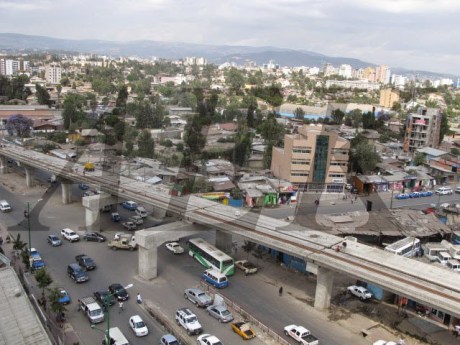
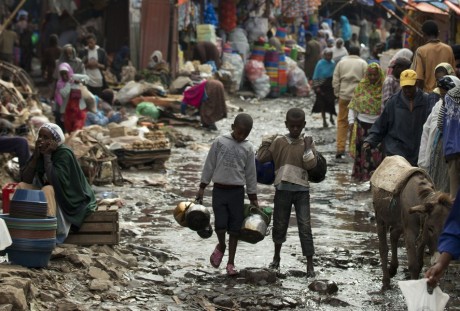


 Oromian Economist
You must be logged in to post a comment.