Economic and development analysis: Perspectives on economics, society, development, freedom & social justice. Leading issues in Oromo, Oromia, Africa & world affairs. Oromo News. African News. world News. Views. Formerly Oromia Quarterly
“We revolt simply because, for many reasons, we can no longer breathe.” In Ethiopia, the government’s actions have left many people with no other option but to fight.
Screen grab of a video of Irreechaa protest, published by Jawar Mohammed via France24.
Hundreds of Ethiopians have been killed by their government this year. Hundreds. You might not have known because casualty numbers have been played down; “evil forces” and accidents are blamed rather than the soldiers that fired the bullets; we are even deprived of the ability to fully grasp the situation because journalists are not allowed to report on it and the Internet is periodically shut down by the government. (In fact, last week Ethiopia finally admitted to the deaths of more than 500 anti-government protestors. Protesters insist that more people have died.) Whatever we make of the government’s prevarication, the Irreechaa Massacre that took place at the beginning of this month was a point of no return.
Irreechaa is a sacred holiday celebrated by the Oromo people, when several thousands gather annually at the banks of Lake Hora Arasadi in the town of Bishoftu to give thanks. At this year’s Irreechaa celebration, a peaceful protest broke out after government officials tried to control who was allowed to speak at the large gathering. What happened next is unpardonable.
Video footage shows government forces shooting tear gas and live ammunition into the crowd. Panic erupts. Women, children and men who had come to celebrate flee for safety but many are trampled on, drown and fall to their deaths. The government claims only 55 were killed in the incident. Non-governmental sources, however, put that figure at over 300. Mainstream media has conveniently portrayed the cause of the tragedy as a stampede yet simple logic refutes this. “When you fire on a crowd of 3 million close to a cliff and adjacent to a lake, causing mayhem, that is not a stampede. It is a massacre,” says Dr. Awol Allo, a law lecturer at Keele University in the United Kingdom.
Frustrations and grievances in Ethiopia have been growing for years. In 2014, protests began over the Master Plan to expand the capital Addis Ababa into Oromia Region. This was just the spark. Though the Master Plan has been abandoned for now, thousands of people across Oromia and more recently Amhara regions have continued to protest against the government. Their demands are fairly basic: human rights, an end to authoritarian rule, equal treatment of all ethnic groups, and restoration of ancestral lands that have been snatched and sold oftentimes under the guise of development.
The government’s brutal response has only added fuel to the fire. Irreechaa is the most recent example of this. Within days of the massacre a wave of anti-government protests erupted across the country, mostly in the Oromia Region. People are coming out in larger and larger numbers. Fear is dissipating and giving way to determination. Many activists believe it is too late for reconciliation — that “the opportunity for dialogue was closed with Ireechaa”.
No one is to blame for this but the government itself. The EPRDF government in Ethiopia has been tragically recalcitrant and short-sighted in dealing with the legitimate concerns of its citizens. Externally it has touted its success in maintaining stability and spurring double digit economic growth rates as a source of legitimacy, while internally it shoved itself into the seat of power by eradicating any form of real opposition. But anyone who has been to Ethiopia knows precisely well that the image of “Africa’s rising star” is only a façade, which tries to cover up deep rooted social and economic inequalities, abject poverty and human suffering, ethnic patronage and corruption, and a weak economy that is overly reliant on foreign investment. In short, the political, economic and social situation in Ethiopia today is not, by any stretch of the imagination, stable, despite what the EPRDF’s self-interested allies like the United States would like to believe.
Over the years, various groups that have tried many ways to peacefully seek change in Ethiopia. In 2005, opposition groups tried to compete in elections. When they almost won, they were arrested and exiled. In 2012 Muslims across the country peacefully demonstrated for more liberties and autonomy. As their movement gained momentum, many of their leaders were labeled as terrorists and sent to prison. In 2014, Oromos began to protest against the government’s ill-conceived Master Plan and are now paying the price. Throughout this period, countless activists, journalists and students have been arrested, numerous independent media outlets have been shut down, and the space for civil society groups has shrunk almost to the point of nonexistence.
The great Frantz Fanon explained that, “we revolt simply because, for many reasons, we can no longer breathe.” In Ethiopia, the government’s actions have left many people with no other option but to fight. It is a country that has experienced much civil violence in the past, and is reluctant to return to it. However, the people’s patience is limited. Already, protestors are beginning to take more desperate measures. Some have torched foreign companies to send a message to the government and its foreign investors that their concerns and frustrations can no longer be brushed aside. From Eritrea, Dr. Berhanu Nega — who once ran as part of an opposition party in the 2005 elections — is preparing for a full-fledged guerilla war.
At this point the EPRDF only has two options: cut its losses, gradually cede power and make way for meaningful elections or dig its boots deeper into the ground, like a stubborn child, and hold out for as long as it can. The consequences of the second option will be more bloodshed and in the end a much greater fall for the regime. History has shown that when Ethiopians have had enough, they have overthrown even an imperial monarchy dating back centuries. The old Ethiopian proverb should be a warning: “When spider webs unite, they can tie up a lion.”
A recent joint report by the Open Observatory for Network Interference and the Centre for Intellectual Property and Information Technology Law has concluded that there is sufficient evidence of recent internet shutdowns in Ethiopia, which pose restrictions on demonstrations and human rights generally. Consequently, Access Now has urged technology companies not to sell software used in supressing human rights.
“What’s happening in Ethiopia and how can we protect human rights?”
Ethiopia has issued a six-month state of emergency in the country following months of citizen protests. The state of emergency comes in an environment of increasing repression. Government forces have killed more than 500 people since November 2015and authorities have already shut down access to social media in the Oromia region four times this year…Internet shutdowns do not restore order. They hamper journalism, obscure the truth of what is happening on the ground, and stop people from getting the information they need to keep safe.
…In the U.N. statement last week, special rapporteurs Maina Kiai and Dr. Agnes Callamard said, “We are outraged at the alarming allegations of mass killings, thousands of injuries, tens of thousands of arrests and hundreds of enforced disappearances…We are also extremely concerned by numerous reports that those arrested had faced torture and ill-treatment in military detention centres.”…
[We urge] companies selling products or services in Ethiopia] to d]esist from selling or servicing technology that is used to infringe on human rights in the country. This includes technology used to surveil citizens or technology used to disrupt access to information online. Some of the companies with a record of bad practices in Ethiopia include Hacking Team and Gamma International.
Author: Moses Karanja (CIPIT), Maria Xynou & Arturo Filastò, in Open Observatory of Network Interference’s blog
“Ethiopia: Internet Shutdown Amidst Recent Protests?”
Nearly 100 deaths and thousands of arrests have been reported in Ethiopia over the last days, as part of protests against the marginalization and persecution of the Oromos and Amharas, Ethiopia’s two largest ethnic groups…Last weekend, the internet was reportedlyshut down in the country.
In an attempt to understand whether the internet was in fact shut down, we looked at some public sources of data that contain information about internet traffic. Such data provides strong indicators that the internet was most likely shut down during the Ethiopian protests last weekend, though it remains unclear if this occurred in all regions and/or on all types of networks across the country…
Internet shutdowns effectively pose restrictions on demonstrations and on human rights generally. In the recent case of Ethiopia, shutting down the internet in the middle of intense protests likely not only had an effect on the mobilization and coordination of protesters, but also on the communication between families and friends of victims. This also likely had an effect on journalists reporting on the protests in real-time on the ground, if they were using networks that were blocked.
CALAIS, France, Oct 24 (Thomson Reuters Foundation) – Deep in the Calais “Jungle” migrant camp in northern France, hundreds of Oromo Ethiopians set up their own school.
An Irish volunteer came to teach classes during the day, but at other times groups of Oromo men, and a few women, gathered to discuss the news from Ethiopia: this month’s announcement of a state of emergency, or the rising death toll in protests.
On the sides of makeshift wooden shelters they painted the crossed arms protest symbol of the Oromo struggle, publicised by Ethiopian marathon runner Feyisa Lilesa at the summer Olympics.
“Feyisa never give up,” was written on one wall, and “Stop killing Oromo students” was scrawled on another.
People from Oromiya, a region at the heart of Ethiopia’s industrialisation efforts, accuse the state of seizing their land and offering tiny compensation, before selling it on to companies, often foreign investors, at inflated prices.
“When we went to demonstrations they killed many people, they arrested many people, they put in jail many people. So we had to escape from the country,” said Solan, a 26-year-old from Addis Ababa.
An Oromo Ethiopian plays a video showing unrest and pictures of protesters who have been imprisoned or died during the unrest in Ethiopia, in Calais, France, November 20, 2016. Thomson Reuters Foundation/Sally Hayden
The former science student left Ethiopia in 2014 after his family was forcibly evicted from the land they had lived on for generations, he told the Thomson Reuters Foundation.
Now Solan and hundreds of his fellow Oromo in the Jungle face eviction once again.
On Monday, French authorities began clearing the sprawling, ramshackle camp outside the port town of Calais, in preparation for the demolition of the shanty-town that has become a symbol of Europe’s struggle to respond to an influx of migrants fleeing war and poverty.
Hundreds of migrants carrying suitcases lined up outside a hangar to be resettled in reception centres across France.
But most migrants in the camp have made their way to Calais because they want to reach Britain, and make regular attempts to sneak aboard trucks or trains bound for the UK.
Groups like the Oromo say they have a particular reason for doing so. They are worried France won’t grant them asylum because it doesn’t recognise them as persecuted, based on the experience of others who have been rejected.
ASYLUM
The U.N. refugee agency UNHCR said everyone in the Calais camp would be offered the chance to be transferred to a reception centre where they could apply for asylum.
“There will be no blanket decisions for certain nationalities,” spokeswoman Laura Padoan said.
French asylum chief Pascal Brice recently visited the Jungle and offered reassurances to the migrants and refugees, including the Oromo group, said Solan.
Brice was not available for comment when the Thomson Reuters Foundation contacted his office on Monday.
“If they accept us we want to stay here (in France),” said Solan, who did not want to give his full name. “We are not searching for a better country, we are here (in Calais) because England accepts Oromo people.”
An Oromo Ethiopian pictured with “Jungle News”, an information leaflet handed out to migrants, in Calais, France, November 20, 2016. Thomson Reuters Foundation/Sally Hayden
The latest unrest broke out last year in Oromiya, as people took to the streets accusing the state of seizing their land and handing it over to investors with minimal compensation.
Unrest spread to other areas, including parts of Amhara region north of the capital, over land rights and wider complaints over political freedoms.
Ethiopian authorities said on Thursday they had detained 1,645 people since declaring the state of emergency in a bid to quell mass protests and violence.
Rights groups report more than 500 have been killed in protests in Oromiya since last year, but the government denies using excessive force and says the death toll is exaggerated.
Solan has been moving back and forth between Calais and a makeshift migrant camp in Paris for the past year, he said. In that time many other Oromo have come and gone from Calais – some as young as 12 or as old as 65. Many lose hope of reaching Britain and instead go to the Netherlands or Germany, he said.
“I am asking for everybody to stay with us, to support us, to save our children, to save our home, to save our story, to save our land,” he said.
(Editing by Ros Russell; Please credit the Thomson Reuters Foundation, the charitable arm of Thomson Reuters, that covers humanitarian news, women’s rights, trafficking, corruption and climate change. Visit http://www.trust.org)
Related:-#OromoRevolution Oromo refugees protest against the regime that forced them into this life as they are being evicted from Calais refugee camp in France
Down
Down
Weyane
An Irish proverb says, “Put a silk on a goat and it is still a goat.” As whatever pretext, name they attest to themselves, portrayes and propagates, history has repeatedly proved that tyrants are always tyrants independent of time and place.
They possess contradictory behaviors of an anomaly, live with fear because they do know their deeds in thier life. They consistency lies, and posses the culture of denials, hypocrsy, nepotism, fabrications used to erect false edifices that must maintain at all costs till they cought red handed, captured and brought to justice or killed. Power for the tyarnt is a license to corruption, killing, torturing, incarcerating, burning, looting and lust for wealth. Tyrants held power by armed supression, grisly combination of maschine-gun and mysticism on down-trodden populations.
They generally moves with four M’s (Motivations, Muscles or Maschine-guns, Murder and Mysticism) in their lifetime. Their primary motivation sets on lust to acquire wealth, chauvinism, cynicism, greediness, and selfishness. To achieve their goal they implementes a grisly combination of muscle; machine-gun in holding, maintaining and clinging into political power as the main means to achieve their goal and solutions for ever challenges they face.
A year after the current regime led by Meles, the architect and the brain of the TPLF–gangster clan took power planned, calculated and systematically implemented Stalin style of power-holding and maintaining. The regime began the process of elimination of the genuine political parties and their political leaders with whom they drafted the charter of transition after the collapse of the military junta in 1991.
The regime began in overt and in covert operations against them, began targeted killing, jailing in mass, hunting closed all offices, facilites, pludrerd their properties and forced to exile. The overt and covert elimination was ordered against formidable political forces, personals and institutions and systematically and cold-blooded killings followed all form atrocities committed against their sympathizers, business mean artists, e.t.c. people from all sphere of life, indiscriminately, who said no to the tyrant WAYANE hegemony.
The regime operated and still do operates under the masks of Federalism, Democracy, Terrorism, Development, e.t.c., as a client stuck with the political west, mentored, financed, blessed as “good guys” by the same people who tells us today that the regimes stakeholders belongs to one clan, the very minority and tell us the statistics.
During his Stalinist-style of power consolidation and maintenance, the regime conducted the act of genocide, in Oromia, Ogaden, Gambel, the lists go on, and evicted millions of the indigenous people from the ancestral soil, incarceration in one of the poorest barbaric, predatory empire in the horn of Africa ruled iron-fisted until his death in the year 2012.
Haile Mariam Desalgn a perfect assimilate from the south was brought to the position from nowhere to avoid the internal clashes between the deep-rooted TPLF rival groups after his master, Legesse “Meles” Zenawi has physically gone that turned his back against his own people and becomes a marionette and a talking drum of the TPLF commanded and ruled regime. fabricated, cloned, branded by Meles as a good product, loyal servant during his iron-fisted rule.That is why people official says and continues saying that “Meles is ruling from his graveyard” and that does not come out of the vacuum, rather based on the facts on the ground of the commanding power of WEYANE. Once they brought him to the post, H. Mariam sworn to proceeds with his master’s project, plans, and preaches in the name of his master.
The famous anti-slavery hero of the African-American Frederick Douglass reminds us that:
Those who profess to favor freedom; and yet depreciate agitation, are men who want crops without plowing up the ground. They want rain without thunder and lightning. They want the ocean without the awful roar of its waters. This struggle may be a moral one ; or a physical one ; or it may be both moral and physical; but it must be a struggle. Power concedes nothing without demand. It never did, and it never will. Find out just what people will submit to, and you have found out the exact amount of injustice and wrong which will be imposed upon them;and this will continue till they are resisted with other words or blows, or with both. The limits of tyrants are prescribed by the endurance of those whom they oppress. He further said: Where justice is denied, where poverty is enforced, where ignorance prevails, and any one class is made to fill that society is an organized conspiracy to oppress, rob and degrade them, neither persons nor property will be safe.
Today while we thank our Heroes and Heroines of our people who sacrificed their life to preserve our culture and tradition that went through planned, calculated and implemented wars and waged to wipe out Oromummaa:, the Gada-Seeqqee System:the unique primordial pure African culture and holidays like Irrecha, the apex of Oromo cultural celebration among many others.
Oromummaa went through extremely genocide and ethnocide for centuries by aliens of the north, the Habeshas /Abyssinia to the very date. Never theless, whatever vilification was done and still do, It survived. Now more than every, our culture is found in renaissance (the revival of of anything which has longbeen in decay or extent), in the position of flowering, in each and every angle of Oromia and no one on the planet reverses it and furthermore gained global reckon. Let the pictures of Hora Sadii speak for itself.
Irreesa as the apex of the holidays of thanksgiving to Waaqa to all Oromo people, the Omnipotent, the creator of the universe according to Oromo philosophy, and Worldview. Irreessa has been celebrated two times annually, in Birraa (Spring) and Arfaasaa /Afraasa (Autumn) seasons before it suffered extreme ethnocide since the Occupation of Oromia. Irreessa a signature of the identity of the Oromo people (Orommumaa/ Oromonesss) part and parcel of the complex unique egalitarian system of Gada-Seeqee System of Oromos in the horn of Africa.
The Oromos celebrate their symbolical rituals of their Irrecha in the open air around their Waaqas (God) given beautiful natural lakes (Hora), Malkaa (Streams), Mountains, Hills, e.t.c. Water is primordial, a source and maintains of Life in Oromo philosophy and mythology. They prepare from one to the next Irrecha holiday celebration and show up with their beautiful cultural dressings and symbolical tools and express their personal and collective experiences of the past and their hopes for the future after the Rainy season (Gana) has passed.
Nothing is new, but there are new Ears!
The Declaration of a state of emergency by TPLF tyrant regime: Today, while we thank the heroes and heroines who sacrificed their life for freedom and liberation with empty hand crossed and to the technological advances of human endeavor, Internets, face books, youtubes, twitters, google etc, an era of flowering Oromo medias and global medias like Aljazira, the gruesome acts of the regime, at list can’t leave hidden to the world. It will not stay long as untold history buried in the empire whatever major the tyrants deploys.
The planned, calculated and systematically implemented massacre (ethnocide) committed by the regime on holy Ireessa celebration of 2016 Sunday, October the 2nd in Bishooftu at Hora Arsadii on Pilgrims was brought to the world at the spot to be watched and judged.
The world had witnessed fighter jets flying lower and lower to the Masses, again and again, spraying tear- and- burning gasses, dropping stones packed with paper right from the top tanks rolling and shooting on the ground, armed disguised surrogate killers intermingled within the crowd and shooting the person next to them
The atrocities committed by trained sniper-shooters with modern automatic rifles hidden in the bushes around Hora Arsadii hills began precise shot in the head and heart. As the military jet began spraying the gas and shooting began from all sides the masses of the pilgrims were turned into panic, Hora Sadii was turned to a death toll of the beautiful colored Oromo pilgrims.
The massacre what the world has destined to witness in Horsade, Bishooftu at an umbilical cord of Oromia on the day of IRREECHA PLIGRAMAGE on October 2, 2016 is nothing more than spilling more Benzine to the Ring of Fire and Flame of the Liberation Struggle people blowing toward the the heart of OROMIA, and to others with similar historical fates and victims of genocide and ethnocide to dismantle one of the most gruesome tyrant’s, TPLF-Fascist regimes that controlled the empire at gunpoint for the last solid 25 years and conducted genocide and annihilation policy.
The year 2016 was expected to be the final phase of Irreessa or Irrecha Oromo culture and Religion celebration in Bishooftu, Hora Arsadii to be registered as the UNESCO World Heritage in Human History. For this unique holiday, a conservative estimation of about two million people who succeed to arrive at Hora Sadii/Sadee, Bishoftu to their destiny for celebration by hook or crook, breaking down all hurdles and manipulations the regime has worked on it in every angle to block them once the Abba Gada had announced the Date of celebration of Irrecha festival of year 2016 on Sunday, October the 2nd.
Right know we are witnessing that the tyrant TPLF gangsters are acting like a dog infected by theRabies virus and do not know what come out of their stinging mouth and calcified Brain. They do sense that they are sitting on the epicenter of the HOT VOLCANO at the umbilical cord of OROMIA in Finfinne surrounded by the RING OF FIRE and FLAME blowing toward them in every direction with tempo and to melts them as a piece of butter droped in to flame the very soon.
Attribute to those Pilgrims who lost their life by TPLF-Bloodthirsty Ogres in Hora Sadii, Bishooftu;Oromia. one of my favor Poet, let her Soul RIP, Maya Angelou:
Recovery
A Last love, proper in conclusion, should snip the wings forbidding further flight. But I, now, reft of that confusion, am lifted up and speeding toward the light.
Hundreds of members of Ethiopia’s ethnic communities have marched in Perth to raise awareness of a government crackdown leading to the detention of thousands of people.
Authorities in Ethiopia have detained more than 2,000 people in recent weeks, amid large anti-government protests.
President of the Oromo Community in Perth Nuru Said has called on the Australian Government to put pressure on its Ethiopian counterpart.
“What we say is the Australian Government [should] not support this terrorist government who is killing [its] citizens and also to put pressure to abide human rights in Ethiopia,” he said.
“Australia is one of the leading democratic countries with respect for human rights.
“And this Government is violating the basic human rights and the constitutional rights of the people.
“So I think the Australian Government can play a major role on this.”
State of emergency
Human rights groups say hundreds of people have died over the past year as a result of clashes with authorities.
A state of emergency was declared a week after more than 50 people died on October 2, when an Oromo religious festival in the town of Bishoftu turned into a protest and a stampede ensued.
Ethiopia’s Prime Minister said the state of emergency was declared due to the “enormous” damage to property.
An Ethiopian Government statement last week said more than 1,600 people had been detained in the Oromia and Amhara regions, on top of 1,000 arrests near the capital.
#OromoProtests peaceful global solidarity rally was held on Friday, October 21, 2016 in Washington, DC., USA. The rally was jointly organized by Oromo Communities Association-North America (OCA-NA) and Oromo Community Association of Washington, DC (OCO). A large number of Oromos who came from different states of the US were gathered in front of the White House to express their opposition and anger against the Irreecha Massacre of Bishoftu, Oromia in which TPLF/Agazi military force have committed genocide on peaceful Oromo people who have been attending the nation’s only annual Thanks Giving festival on October 02, 2016.
The rally also protesting against fascist TPLF Ethiopia’s regime emergency and the going on mass arrests and killings.
The protesters were chanting slogans that denounce the Irreechaa Massacre and the on going killing, mass incarceration and all rounded crimes against the Oromo people in all corners of Oromia by the dictatorial and minority regime led by TPLF in Ethiopia.
The rally covered a march to World Bank head office here in Washington, DC up on which president of the Oromo Communities Association-North America, Dr. Gulumma Gammada presented a letter detailing the grave human right abuses, killings, torture, forceful evictions, displacements including the recent Irrecha Massacre that the TPLF led minority regime has been committing against the Oromo and other peoples in Ethiopia with the fund it get from the World Bank and other international financial institutions under the disguise of development.
The World Bank representative after receiving the appeal letter from Dr. Gulummaa, expressed that his organization is closely following the situation in Ethiopia & Oromia and also handed to Dr. Gulumma a press release issued by World Bank (WB) on October 18, 2016 regarding the situation in Ethiopia and the Banks activities in the country.
After a brief stay in front of the World Bank the Oromo protesters who were outraged by the brutality of the TPLF Agazi marched towards the US State Department chanting slogans that request the US government to stop financing and supporting the brutal TPLF led regime in Ethiopia that is on the verge of collapse and civil war that can lead to genocide at large.
In front of the State Department, the Oromo protesters were loudly asking the US government and State Department to support the Oromo just struggle and demanded US to stop financing the undemocratic & killer regime in Ethiopia that is committing all kinds of crimes against humanity by keeping the people in dark away from international media.
The Organizers of the rally submitted another appeal letter to the Ethiopian Desk Officer in State Department. The Officer then promised to examine the concerns and demands of the Oromo protesters.
By Charlotte Allan, , Lawyer, Blogger, Hyper-Activist, Huntington Post, 20 October 2016
(Huntington Post) — The athlete looked up at the sky when he crossed the finish line, and made an X shape above his head with his wrists. The stadium cheered, a new moment in history was made. Later when he took to the podium with ‘Ethiopia’ written across his top to collect a medal for the marathon he had run, he made the gesture again.
Two months after the 2016 Olympics, this protest salute made by runner Feyisa Lilesa before a TV audience of millions, is still the most audacious red flag on what was a largely ignored iceberg. The iceberg being the Ethiopian state’s deadly crackdown on its Oromo people. His protest was in support of the struggles of an estimated forty million Oromo in Ethiopia’s Oromia region against an authoritarian rule historically committed to keeping them in their place. In a month that has seen Ethiopia call a State of Emergency in an attempt to stop the massive Oromo protests from spreading, Lilesa’s daring stand and thewill he-or-won’t he question of whether he will return to Ethiopia continues to force the subject onto the global news agenda and encourages people to ask: who are the Oromo and why are they protesting?
The answers lie in the history of the Oromo. The Oromia region was once made up of autonomous sultanates with distinct cultural traditions. Its people lived on the land for over five hundred years before the Abyssinian Empire moved in and established its new capital of Addis Ababa in the centre of Oromia at the end of the 1800s. What followed was a mass eviction of the Oromo, and then a state waged campaign against them, continued to this day by the modern Ethiopian government, which has previously sought to extinguish Oromo traditions, ban the language of Oromiffa in schools, and prevent Oromo civil and political status.
For the last year, the Oromo have been protesting the Ethiopian government’s plans to extend the capital into Oromia further still, however in recent months the protests have turned into a broader call for a multi-ethnic government, justice and the application of the rule of law. The Amhara ethnic group, their number estimated at 20 million, have now begun their own protests in the Amhara region and voiced their concern at a repressive government made up of one ethnic group. However since the protests began, at least 500 deaths have been confirmed, reports of torture and forced disappearances are widespread and an additional one thousand people have been detained so far in October alone.
Media attention on the protests therefore couldn’t come at a more important time. Since Lilesa’s salute and following a horrific stampede at an Oromo thanksgiving festival at the start of October, killing between 52 and 300 people (concrete figures are difficult to come by in Ethiopia) after police used teargas, rubber bullets and batons on protesters, the Ethiopian government has ordered a six month state of emergency. It has also continued to blame the violence and deaths at protests on banded opposition groups and gangs funded by Ethiopia and Eritrea, the former of which has already denied the claim and the latter of which has maintained a frosty silence. Human Rights groups however implicate the security forces in the deaths.
As a result of the state of emergency, Ethiopia is on lock down. Foreign diplomats have been banned from travelling more than 40kms outside the capital, protests in schools, universities and other higher education institutions are forbidden, there are country-wide curfews, security services are barred from resigning, satellite TV, pro-opposition news and foreign news are banned and posting links on social media a criminal activity. In short, there is a total news black-out of anything that is not state sponsored.
On the African continent, condemnation of Ethiopia’s actions by African governments has been very quiet. However, the protests have been well covered by African media and civil society organizations particularly in Uganda, Kenya and South Africa, while protests supporting the Oromo have taken place in South Africa and Egypt.
Although it is disappointing that African governments have not spoken out, it is important that the Ethiopian diaspora, along with African and global civil society continue to call loudly for an independent investigation into the deaths and violence occurring and that wealthy Western governments continue to evaluate their support for the increasingly authoritarian Ethiopian state.
Indeed an independent investigation is key and not without precedent. The Burundian government vowed to cooperate with an African Union investigation into state abuses only this week. However, the Ethiopian government should also be pressed to pass inclusive multi-ethnic state reforms as quickly as possible before this crisis escalates. The Oromo and Amhara are 65% of the Ethiopian population so it is suggested the Ethiopian government tread more thoughtfully and less violently because as precedents on the continent show, mismanagement can lead to devastating losses in any numbers game.
Charlotte Allan is a lawyer and human rights activist from the UK. She has lived in Egypt, Switzerland, France and Tanzania, and is currently based in Johannesburg, South Africa as the Policy & Advocacy Officer for CIVICUS: World Alliance for Citizen Participation. She has previously worked as a Protection Advisor for UNHCR and as a Legal Advisor for African Middle Eastern Refugee Assistance (AMERA). Her specialisms are refugee law, women’s rights and global protest movements while her other passion is using pop culture to engage youth in politics and activism. You may tweet with Charlotte at twitter
In Ethiopian Empires’ political history, the year 1977-78 is remembered as the year when Mangistu Haile Mariam’s political power was absolutely threatened and his rule was shaken. The opponents to his power became so strong and lethal such that Mangistu was forced to declare “Red Terror” on its real or imagined enemies to its reign in Ethiopia between 1977-78. By this declaration of “Red Terror”(Mangistu’s state of emergency), Mangistu asserted that all “progressives” were given freedom of action in helping to root out enemies of his rule. Peasants, workers, public officials and even students loyal to the Mangistu regime were provided with arms to: assassinate, kill, imprison and loot as they wished. Militia attached to the Kebeles, the neighborhood watch committees were given freedom to train their gun on anyone with whom they have even personal but no ideological disagreement. All people allied to Mangistu went into killing spree and even children were not spared. During these years of “Red Terror”, Amnesty International estimated that up to 500, 000 to 2,000,000 people were butchered and thousands were left on the street for their body to decompose. In May 1977, the Swedish general secretary of Save the Children Fund estimated too that “1000 children have been killed and their bodies are left in the streets and being eaten by wild hyenas.” Parents of the deceased were asked to collect the bodies of their loved ones by paying money for the bullet wasted killing their children.
All this crimes against humanity and genocide were planned and executed under the watch of the United Nation, United State of America, Europe and African Union. However, all this horrendous decision and action by Mangistu Haile Mariam did not safe his regime from collapse but lead to the collapse of his terrorist regime and his demise from the political scene by running for his life to Zimbabwe were he was sentenced to death in absentia in the year2008.
Having got freedom to: kill, loot, rape, arrest, imprison, and torture Oromians from the Prime Minister of Ethiopian colonial and brutal rule in Oromia, Ethiopian: military, security and administrative organs have intensified their “Red Terror” on innocent Oromians since October 11, 2016. In Oromia, bodies of innocent Oromian killed on the :street, in the forest, in the mountain, urban, towns and country sides are decomposing and being eaten by wild hyenas and rogue dogs. On the top of big trees in Oromian forests today, you can see vultures who fed on the bodies of young Oromians butchered by wayyaanee under those trees. You can see young and innocent Oromian students riddled by Ethiopian soldiers bullet who got full lee way to do whatever they want on Oromians from: Haile Mariam Dessalegn, Abbay-Tsehaye, Saamoraa and Abbaa Duulaa Gamada. The entire Oromia is in prison today.All this crimes against humanity and genocide against Oromians have continued to be committed, still under the watch of : United Nations, European Union, the USA, African Union in Oromia and all foreign Ambassadors. As we witnessed the Ruwandan genocide of the 1994 under the watch of the United Nation then lead by Kofi Anan, we are witnessing genocide being committed on Oromians under the watch of the United Nation lead by Bank Moon. As Menelik, killed 5,000,000 Oromians and reduced Oromian population by half, the reign of “Red Terror” declared on Oromians today by Haile Mariam Dessalegn and his god fathers will definitely going to be existential threat to Oromia and Oromians. This “Red Terror”by Haile Mariam and his god fathers is involving poisoning: rivers, food, drugs, alcohol and beverages. Viruses (HIV/AIDS)and bacteria, as well as using poisonous gases (chemical weapon) are being used. Than more than any time in its history of slavery under Ethiopia, Oromians are under threat of extinction today.As the Oromians struggle for the right to self-determination for Oromia started to tie a rope around the neck of Ethiopia’s colonial and brutal rule in Oromia, on October 11, 2016, the government of Ethiopian Empire lead by Wayyaanee declared its so called state of emergency, Derg’s equivalent of “Red Terror.” According to this declaration of ‘Red Terror” on Oromians, Ethiopian colonial government in Oromia suspended all rights that have never been there after all. It declared that all human right laws provided for in its colonial constitution (that have never been there after all) have been suspended for six months. According to this declaration of “Red Terror” by the terrorist Ethiopian empire government in Oromia, all military, security and administrative agents loyal to the regime have the right to: kill, arrest, rape, imprison, confiscate properties of Oromians who Wayyaanee considers real or imagined enemy. No warrant of arrest or search are required from the court to : arrest, imprison, kill, torture Oromians and confiscate the properties they got by their sweat labeling them they belong to the Oromo LiberatinFront,the vanguard, the restorer and the savior of Oromian independence and the dignity of its citizen.
The national duties under such a circumstance is to rise up in unity to defend ourselves from Ethiopia and its puppets that is bent on securing its life only by exterminating us from the face of Oromia. If we think, we are going to be immune from this reign of horror by Ethiopian colonial rule lead by Haile Mariam, the 500,000 up to 2000000 people killed by Mangistu Haile Mariam is going to be like a Christmas gift. Before it is to late, the national call for all of us Oromians from all walks of life is to rise up and save ourselves from extinction. Today, we are witnessing “the harma muraa and harka muraa Annoolee”repeating itself by the order from Haile Mariam Dessalegn. Today, we are witnessing “the Calii Callanqoo and Watar Massacre” repeating itself. Today, we are witnessing the repeat of “Boruu Meda” massacre by Yonnis of Tigray. If we do not stand up for our survival today, the killing spree of 5,000,000 Oromians by Menelik is going to look like a Christmas movie.
Today, Oromia is in crisis of unparalleled magnitude ever seen since its birth. We are under the threat of the enemy that is determined to destroy us the same way aborgines were exterminated in the USA, Australia and Europe. If we are expecting any foreign power to save us, we are going to be like a sheep that is waiting to be slaughtered on the Christmas or Arafa .
The vehicle is already on the road and moving forward toward securing our survival and freedom from all threats in its all forms from Ethiopia and its colonial governor Haile Mariam Dessalegn. That vehicle is the Oromo Liberation Front, committed from its establishment to guarantee the survival and freedoms of Oromians by defeating Ethipian colonal rule in Oromia and declaring an Independent and Democratic Republic of Oromia, the surest way to save Oromians from extinction. The Oromoo Liberation Front is our insurance and guarantee for safety and security tomorrow and for posterity. The Oromoo Liberation Front lead by Chairman Daawwud Ibsaa isour: Spear, shield and sword. Our todays situation does not need any bickering but to be at the war front defending our people from extermination. At the war front, in the trenches of Oromia, defending our people and securing our future, we find our gallant sons and daughters of Oromoo Liberation Front, the Oromoo Liberation Army and its Youth wing Qeerroo Bilisummaa. From each one of us, big or small, old or young, female or male, rich or poor, educated or uneducated, from urban or countryside, from students or teachers, from employed or unemployed, the situation in which we find ourselves need unwavering and practical support for The Oromoo Liberation Front and its armed wing, the Oromoo Liberation Army and its youth wing, Qeerroo Bilisummaa.
Haile-mariam Desalegn
By all means at our disposal, lets sharpen its capability and strength over the enemy whose dream is only to eradicate us from our God given and blessed country, The Republic of Oromia. Let’s rise up and stop this enemy from achieving its dream of finishing Oromians and bring them to the court of free Oromia. We have to redouble our effort more than ever before. We have to mobilize all our savings and wealth for our survival through The Oromo Liberation Front.We have to witness the day Haile Mariam Dessalegn and his god fathers face justice in our life time. Lets give Ethiopian colonial rule in Oromia the last blow. Lets show to our enemy the miracle of the power of Oromians. Lets defeat this enemy and freely exercise our right to self determination for Oromia through free and internationaly observed referendum.Lets realize :free, united, peaceful, prosperous and happy life the pioneers of the struggle for Oromian independence envisaged for Oromians.
The U.S. Department of State warns U.S. citizens to defer all non-essential travel to Ethiopia due to ongoing unrest that has led to hundreds of deaths, thousands of arrests, as well as injuries and extensive property damage, especially in Amhara and Oromia States. The U.S. Embassy’s ability to provide consular services in many parts of the country is limited by the current security situation.
The Government of Ethiopia declared a State of Emergency effective October 8, 2016. An October 15 decree states that individuals may be arrested without a court order for activities they may otherwise consider routine, such as communication, consumption of media, attending gatherings, engaging with certain foreign governments or organizations, and violating curfews. The decree prohibits U.S. and other foreign diplomats from traveling farther than 40 kilometers outside of Addis Ababa without prior approval from the Government of Ethiopia, which severely affects the U.S. Embassy’s ability to assist U.S. citizens. The full text of the decree implementing the State of Emergency is available on the U.S. Embassy’s website.
Internet, cellular data, and phone services have been periodically restricted or shut down throughout the country, impeding the U.S. Embassy’s ability to communicate with U.S. citizens in Ethiopia. You should have alternate communication plans in place, and let your family and friends know this may be an issue while you are in Ethiopia. See the information below on how to register with the U.S. Embassy to receive security messages.
Avoid demonstrations and large gatherings, continuously assess your surroundings, and evaluate your personal level of safety. Remember that the government may use force and live fire in response to demonstrations, and that even gatherings intended to be peaceful can be met with a violent response or turn violent without warning. U.S. citizens in Ethiopia should monitor their security situation and have contingency plans in place in case you need to depart suddenly.
U.S. government personnel are restricted from personal travel to many regions in Ethiopia, including Oromia, Amhara, Somali and Gambella states, southern Ethiopia near the Ethiopian/Kenyan border, and the area near the Ethiopia/Eritrea border. Work-related travel is being approved on a case-by-case basis. U.S. government personnel may travel to and within Addis Ababa without restrictions. For additional information related to the regional al-Shabaab threat, banditry, and other security concerns, see the Safety and Security section of the Country Specific Information for Ethiopia.
Due to the unpredictability of communication in the country, the Department of State strongly advises U.S. citizens to register your mobile number with the U.S. Embassy to receive security information via text or SMS, in addition to enrolling in the Smart Traveler Enrollment Program (STEP).
Contact the U.S. Embassy in Ethiopia, located on Entoto Street in Addis Ababa, at +251-11-130-6000from 7:30 a.m.- 5:00 p.m. Monday-Thursday. After-hours emergency number for U.S. citizens is+251-11-130-6911 or 011-130-6000.
Call 1-888-407-4747 toll-free in the United States and Canada or 1-202-501-4444 from other countries from 8:00 a.m. to 8:00 p.m. Eastern Standard Time, Monday through Friday (except U.S. federal holidays).
WASHINGTON, Oct 21 (Reuters) – The U.S. State Department urged U.S. citizens on Friday to defer all non-essential travel to Ethiopia because of ongoing unrest that has killed hundreds of people, led to thousands of arrests and prompted restrictions on diplomatic travel.
The Ethiopian government declared a state of emergency on Oct. 8 and issued a decree on Oct. 15 that permitted the arrest of individuals without court order for some routine activities like attending gatherings and engaging with foreign organizations, the State Department said.
An American woman was killed when her car was stoned earlier this month and foreign-owned factories and equipment were damaged during a wave of protests over land and political rights.
(Reporting by David Alexander; Editing by Eric Beech)
The government of Ethiopia has responded to a groundswell of protests, which are calling for democracy and human rights for all, by imposing a six-month long state of emergency, effective October 8.
The list of measures curtailing freedoms through the emergency are far-reaching. They include bans on: social media; accessing news outlets such as the US-based ESAT and Oromo Media Network; participating in or organizing protests without government authorization; making gestures, including the infamous crossing of arms above your head; and visiting government, agriculture or industry facilities between 6pm and 6am. With Addis Ababa as the seat of several international organizations including the African Union, foreign diplomats are now only allowed to travel within a 25 miles radius of the capital. Security forces have been given greater powers, including the ability to search people and homes without a court order and the authority to use force, while due process is suspended. Finally, opposition groups are barred from issuing statements to the press, and Ethiopians are not allowed to discuss issues that could “incite violence” with foreigners. This includes speaking to the media or providing information to international civil society groups such as the Oakland Institute.
A poster of Olympic silver medallist Feyisa Lilesa at a protest in Oakland, California. Making the crossed arm gesture is now a criminal offense under Ethiopia’s state of emergency. Credit: Elizabeth Fraser.
These measures are appalling, especially given that a major cause of the protests was the prevailing lack of basic human rights, democracy, and freedoms of speech and assembly in the first place. Ethiopia has been under a de-facto state of emergency for a long time. These new draconian rules don’t address the situation in the country. Instead, they legalize and expand the authoritarian and repressive rule that the Ethiopian regime has maintained for years.
The international community must take swift action to denounce the state of emergency and the continuous repression of basic human rights in the country. If they do not, history will remember donor countries – including the US – as complicit, while hundreds have already been killed and thousands lie in jail for speaking out for democracy, human rights, and true development for all.
Ethiopia’s State of Emergency: Cracking Down on Basic Freedoms
The state of emergency in Ethiopia puts significant restrictions on basic freedoms of assembly and expression. But this is not new.
Numerous bloggers and journalists continue to suffer in Ethiopia’s prisons because of their vocal opposition to the government. On October 1, 2016, prominent blogger Seyoum Teshome was arrested after being quoted in a New York Times article about anti-government protests and announcing his plans to start a new blog. Seyoum is yet another addition to a long list in a country that is the third worst jailer of journalists in Africa.
Opposition parties have also experienced serious crackdowns on their ability to express themselves. Bekele Gerba, deputy chairman of one of the largest opposition parties, was arrested in August 2011 after meeting with Amnesty International. He was released prior to President Barak Obama’s visit to Ethiopia in July 2015, and re-arrested in December of the same year when protests started in Oromo. He continues to languish in jail.
Similarly, bans on social media and internet black outs are common, with numerousreports of internet shut downs this year.
This further crack down on social media and freedom of expression is an effort to shut out the international community, making it easier for the Ethiopian government to supress dissent. Repressing freedoms of expression and assembly have already created a highly volatile situation – these new measures will only worsen things.
Ruling with an Iron Fist
In early October 2016, Ethiopia’s Prime Minister admitted that 500 protesters had been killed by security forces in previous months, stating that the number of casualties was unimportant and threatening to deal with protesting groups forcefully. This declaration came a week after the Irreechaa tragedy, where between fifty-five and several hundred protesters were killed after security forces used tear gas, rubber bullets, and live ammunition on crowds at the country’s largest religious and cultural festival, triggering a stampede. It came a month after a fire in the Kilinto prison, which holds numerous political prisoners and anti-government protesters, left dozens of prisoners dead. And it came two months after the Prime Minister threatened that his government would use “its full forces to bring the rule of law” to protesting regions.
With the state of emergency, the government legalizes and legitimizes a long tradition of ruling by force. It has already had a significant impact. Between October 17 and 20, over 2,600 people were arrested under the new laws. This number will undoubtedly increase in the days, weeks, and months to come.
Due Process: A Farce in Ethiopia
Due process has long been a farce in Ethiopia. The country’s draconian Anti-Terrorism Proclamation (ATP), adopted in 2009, has been used to arbitrarily detain and arrest students, bloggers, land rights defenders, indigenous leaders, opposition politicians, religious leaders, and more for exercising basic freedoms. The law violates international human rights law, as well as modern criminal justice and due process standards.
Amongst the thousands who have been unlawfully detained under the ATP are Pastor Omot Agwa and Okello Akway Ochalla.
Pastor Omot, a former interpreter for the World Bank Inspection Panel, was arrested in March 2015 while attempting to travel to a food security conference, organized by Bread for All, in Nairobi. He was charged as a terrorist under the claim that the meeting he was attending was a terrorist meeting. He has been in jail since then, and is still waiting for a trial.
Okello Akway Ochalla was illegally kidnapped in South Sudan and renditioned to Ethiopia. His charge is based on his vocal opposition to the Ethiopian government, and its role in a massacre of indigenous Anuak people in December 2003. After two years of detention, during which Mr. Okello was forced to sign a false confession under duress, his sentence was lessened from terrorist to criminal charges. He was still given nine years in prison.
The suspension of due process under the state of emergency increases the likelihood of arbitrary detainments and unfair trials, two issues already endemic to Ethiopia and must be addressed immediately.
The Failure of the International Community
The mainstream media is finally waking up to the brutality of the Ethiopian regime. The Financial Times called this Ethiopia’s “Tiananmen Square moment.” Foreign governments are also taking notice, however, their statements remain very mild and fail to firmly condemn the violence and repression.
The US State Department declared that it was “troubled by the potential impact” of the state of emergency, reiterated its “longstanding call for the Government of Ethiopia to respect its citizens’ constitutionally-guaranteed freedoms,” and called for “peaceful dialogue” in the country. Statements by the United Nations, Canadian Minister of Foreign Affairs, andEuropean Union make similar calls for “inclusive dialogue” that are stunningly disconnected from the reality on the ground.
This toothless rhetoric fails to acknowledge the years of oppression and abuse that Ethiopians have faced under the current regime and that generated these protests. More importantly, it must be asked who can take part to the dialogue when so many political opponents and community leaders are in jail or in exile?
For years, the US, UK, and others have heralded Ethiopia as a blueprint for development, and provided massive financial support to their champion. But the model has failed. As our recent report shows, economic growth in Ethiopia has not lifted up the masses – it has happened alongside widespread hunger and poverty, forced displacements, and massive human rights abuses. This has led to the current tipping point, and tensions in the country are finally, understandably boiling over. The international community must recognize the failure of this model – and their role in it – and step in before more blood is shed.
Ten countries whose stability can’t be taken for granted (The Maldives, Mauritania, Algeria, Ethiopia, Nigeria, Turkey, Russia, Saudi Arabia, Jordan, China)
Ten countries whose stability can’t be taken for granted
Political science is heavy on the political and light on science.
As George W. Bush and Al Gore debated prior to the 2000 elections, neither Iraq nor Afghanistan merited serious mention. Eight years later, neither Barack Obama nor John McCain foresaw chaos in Syria and Libya. Political science is heavy on the political and light on science. Area studies specialists failed to predict the Islamic Revolution in Iran, the fall of the Soviet Union, or the Arab Spring. Policymakers are much more comfortable second-guessing what they saw in the rearview mirror than gazing over the horizon. Simply put, the world is unpredictable and the chief concerns for the next administration might be barely a blip on the radar today.
ProtestsEthiopia, October 2, 2016. REUTERS/Tiksa Negeri.
Putting aside existing conflicts in Libya, Syria, Yemen, the South China Sea, and Ukraine, what crises could blindside the White House in the next four years? Here are ten countries and potential crises that should certainly be on the next administration’s radar screen: The Maldives might be isolated and far from US shores but isn’t that what analysts once said of Afghanistan?
The Maldives. Let’s start small. Few Americans know the Maldives, but those who do likely think of the low-lying Indian Ocean archipelago as the archetypaltropical island paradise. Outside of the gated resorts, however, Islamist radicalism has been taking root. The Maldivian government has sought US assistance, but the 3 a.m. phone call has now been ringing unanswered for several years. Might the Islamic State seize Western tourists on the island? What would a radical government willing to accept arms and foreign jihadis mean for trans-Indian Ocean shipping? The Maldives might be isolated and far from US shores but isn’t that what analysts once said of Afghanistan?
Mauritania. Africa has largely been a success story over the past 20 years, but several countries put that progress at risk. Take Mauritania, for example. European terror analysts regularly list Mauritania as perhaps their top, under-the-radar concern. The impoverished country on the Atlantic coast of Africa has the population of Phoenix, Arizona, spread over an area twice the size of California. An Islamic Republic, it is one of the last countries to embrace slavery in practice if not in law. Its largely ungoverned interior has become the domain of smugglers and a safe-haven for terrorists. Loose weaponry from Libya has only poured fuel on the fire. In many ways, Mauritania has become pre-9/11 Afghanistan, just without the diplomatic attention.
Algeria. Africa’s largest country, Algeria should also be one of its wealthiest. But decades of military rule, statist economic policies, and a devastating civil war in the 1990s have taken their toll. Now, southern Algeria is a haven for Al Qaeda in the Islamic Maghreb. Ailing President Abdelaziz Bouteflika, Algeria’s long-time strongman, will likely not last out the next four years. There is no clear succession and, even if a president does consolidate political control, he will have to face down Islamic radicals who might seek to avenge their long suppression. One Libya has been destabilizing enough. Another so close to Europe could herald disaster.
Ethiopia. Two and a half times the size of California, Ethiopia is one of the world’s oldest countries but, despite an increasingly autocratic and repressive leadership projecting an aura of stability, it looks like it could be among the world’s most fragile states. While the economy has grown rapidly, poverty remains the rule as the population also booms. The agricultural basis of the economy makes Ethiopia susceptible to drought. State-dominated industries mean it competes poorly with the outside world. The country is incredibly diverse. In 1991, Eritrea successfully seceded after a decades-long civil war. While Eritrea had its own colonial heritage, many other ethnic groups are as resentful of Addis Ababa’s control and, specifically, ethnic Tigrean domination. Of greater concern, however, is Ethiopia’s sectarian division. Muslims already represent a third of the population and are growing at a faster rate than the Ethiopian Christian population. Should ethnic and sectarian divisions erupt into open conflict, the resulting insecurity could make Somalia look like Club Med.
Nigeria. Concerns about stability in Nigeria, Africa’s most populous country, hit international headlines in 2014 when Boko Haram kidnapped hundreds of school girls in order to convert them forcibly to Islam and marry them off to militants. But that’s only one of many problems Nigeria faces. Boko Haram has thrived against the backdrop of endemic corruption. By some estimates, Nigeria has lost $400 billion to embezzlement and corruption since 1960, more than total international aid to Africa during the same period. While the international community has largely eradicated piracy off the coast of Somalia, the problem hasskyrocketed in the Gulf of Guinea, and even that is underreported since states don’t always report seizures in their territorial waters. Like Ethiopia, Nigeria faces not only ethnic but sectarian divisions. Tensions between Muslims and Christians plunged the Ivory Coast into civil war in the last decade; Nigeria is far more volatile. If its fragile democracy fails, West Africa may see a conflict worse than any it has seen in decades.
Turkey. What would it mean if a NATO ally collapsed? Over the past decade, President Recep Tayyip Erdoğan has seized dictatorial power. He called the aborted July 15 coup “a gift from God” and used it as an excuse to declare a state of emergency and purge more than 100,000 military officers and civil servants. But there are indications that there could be more violence on the horizon. Doğu Perinçek, a former Maoist turned ultra-nationalist power-broker, leads a shadowy group Turks simply refer to as “the Perinçek group.” Some suggest that Perinçek is Turkey’s real defense minister, behind-the-scenes. In August, Erdoğan hired Adnan Tanriverdi, a former Special Forces trainer close to Perinçek, to be counsel for the president. The question is whether those Tanriverdi trains will be more loyal to Perinçek or Erdoğan when the next blow comes. Regardless, Erdoğan may be a marked man and even if he is killed or forcibly removed, he has so eviscerated the Turkish state that political chaos will likely follow his death.
Russia. Like Turkey, Russia is ruled by a strongman who has substituted the illusion of stability for its substance. When President Vladimir Putin dies, the Russian people will have to pay the price for his decades of corruption and mismanagement. Putin’s lasting legacy will be the vacuum of power underneath him. Beyond poor governance, however, Russia will soon face reverberation from its demographic crisis. Its Muslim population is growing as its ethnic Russian population shrinks. At the same time, it faces Islamist radicalism not only in Chechnya and Daghestan, but also increasingly among ethnic Tartars. Here’s the question: As Muslims make up a growing proportion of the conscript-age population, can Russia count on its own army in any sectarian conflict? (On all these issues, the writings of Leon Aron and Anna Borshchevskaya are must-reads).
Saudi Arabia. Saudi Arabia’s facing a perfect storm: US policy has empowered and re-resourced Iran. The price of oil has declined precipitously pushing the Saudi economy to the brink. Saudi Arabia is bogged down in a war in Yemen which seemingly has no end. All of this would be bad in the best of circumstances, but add into the mix a king that very well may have Alzheimer’s and the Kingdom may face a crisis unlike any it has faced in decades. Every US administration since Franklin Roosevelt’s has counted on a strong partnership with Saudi Arabia kingdom to bring stability to the Middle East and order to the world economy. If Riyadh is unable or unwilling to continue that partnership, can Washington find a substitute or fill the gap?
Jordan. Even more than Saudi Arabia, the United States has relied on Jordan for generations. The Hashemite Kingdom is perhaps America’s closest Arab ally. But Jordan is in crisis today, even if the Jordanian government will not admit it. With the influx of Syrians, Jordan has now absorbed its third major wave of refugees, putting tremendous strain on the economy. King Abdullah II is far more popular in Washington and London than he is in some corners of his own kingdom. And while Western journalists depict Queen Rania as a romantic and popularfigure, she is widely disliked inside Jordan for her profligate spending. All of this has created fertile ground for the Islamic State to infiltrate Jordan even if it keeps its presence low-key. Should he United States and its Iraqi and Kurdish allies push the Islamic State out of Iraq and Syria and lead more of its fighters to enter Jordan, then the assault on Mosul and Raqqa might truly be Pyrrhic.
China. Last but not least China, the world’s most populous country. Some pundits have watched China’s economic boom and sung its praises, even suggesting that the communist republic’s dictatorial ways might be superior to those of the United States. Economic development is uneven: coastal, urban incomes are exponentially higher than interior, rural incomes. The legacy of decades of China’s murderous one-child policy are still to come as China faces a demographic precipice. My colleagues Dan Blumenthal and Derek Scissors highlight the implications of stagnation in China. Simply put, future US administrations should worry less about the rise of China and more about its decline. Will a faltering China, for example, lash out militarily as a stagnating Russia has?
The world is a dangerous place. These scenarios may be too obscure for the 2016 presidential debates, but ensuring the ability of the United States to react to them should not be.
The Ethiopian government has declared a state of emergency in the country as it intensifies a crackdown on widespread anti-government protests born of frustration that’s been fomenting for decades. In the past two weeks alone, authorities have arrested thousands of protesters, overwhelmingly young people by some accounts.
In the unprecedented anti-government protests sweeping the country, this week alone has seen more than 2,600 people detained in the Oromia and Amhara regions, with 450 arrested in the capital Addis Ababa. Those detained include business owners who closed their shops and teachers who “abandoned their schools.” In June, Human Rights Watch reported that “tens of thousands” of protesters had been arrested since the unrest that began 11 months ago.
However, the number arrested is already likely much higher than the figure quoted by the government, according to Fisseha Tekle, the chief researcher for Amnesty International in Ethiopia. He told VICE News that arrests are ongoing and that the focus is on younger people.
“They must have some list, the security forces, because they are not arresting everyone, but they really target the youths, because it is the youths who have been protesting for the last year,” Tekle said. “They don’t arrest older people; students are the main target.”
The protests began last November, triggered by plans made by the government to extend the capital, Addis Ababa, into Oromia. That plan has since been shelved, but the protests have continued, with decades-old frustration and anger at the ruling Ethiopian People’s Revolutionary Democratic Front coalition coming to the surface.
“This coalition has been in power for 25 years now and a lot of people want to see something different,” Clementine de Montjoye, the head of advocacy atDefend Defenders, a group that protects human rights workers in Ethiopia, told VICE News.
Because the Ethiopian government limits the operations of human rights activists in the country, many are wary about speaking on the record. One source within a human rights group operating in Ethiopia, who spoke on the condition of anonymity, told VICE News that protesters had told them “we don’t have anything to lose anymore, we don’t care if we get killed.”
An Amnesty International report published this week says that in total 800 protesters have been killed by security forces in Ethiopia since these protests began last November.
The government declared a state of emergency on Oct. 9, giving them sweeping powers to crush any dissenting voices. They have also cut internet connectivity in most of the country — including the capital — for the last three weeks.
This has made it difficult to get accurate details of what is happening, especially outside of Addis. And even if a connection can be made, people are still afraid to talk. “People are suspicious because of online surveillance and also mobile phone surveillance, so people might not be [comfortable] talking over the phone about what is happening,” Tekle said.
VICE News contacted several activists on the ground in Ethiopia to talk about the current situation, but due to a combination of fear and lack of connectivity, we were unable to talk to them.
The declaration of a six-month state of emergency followed a high-profile incident at the beginning of the month when a stampede during Irreecha, an Oromo holiday festival, resulted in 55 people killed. As well as increasing the powers of the security forces in Ethiopia to arbitrarily arrest and detain people, the state of emergency aims to silence criticism of the regime. It is now illegal to contact those termed “outsiders” on social media like Twitter and Facebook. “The military command will take action on those watching and posting on these social media outlets,” Siraj Fegessa, Ethiopia’s minister for defense, said.
The UN High Commissioner for Human Rights has made two calls for access to conduct an international, independent, and impartial investigation into the alleged violations, both of which have been rejected by the Ethiopian government. The regime has also sought to limit the impact of human rights organizations in the country with the Charities and Societies Proclamation, which states that if you receive more than 10 percent of your funding from foreign sources, you can’t work on human rights issues in Ethiopia.
Tekle says that Amnesty is refraining from contacting the human rights workers left in the country to avoid revealing their location.
In a report to be launched late Thursday, Defend Defenders has documented at least 27 cases of journalists who have been charged with terrorism since the Anti-Terrorism Proclamation was enacted in 2009. “They have intimidated, arrested, chased away most of the independent media. So if people want to express their frustrations, the only way they have to do it is [by taking] to the streets,” de Montjoye said.
So why isn’t the West doing more to sanction the Ethiopian government?
One reason is Ethiopia’s strategic importance in Africa, helping stem the tide of migrants entering Europe and stopping the spread of Islamic extremism.
According to the European Union’s foreign affairs head Federica Mogherini, citing a report published this week, Ethiopia is among five key African countries that have achieved “better results” in the past four months as part of the EU’s efforts to better manage migration.
Ethiopia is also viewed as a strategic bulwark against the further spread of violent Islamic extremism in the horn of Africa, and it’s been the main military player in fighting the terrorist group al Shabaab in Somalia for years.
Ethiopia is a close ally of the U.S. and given that the political climate in neighbouring countries like Eritrea, Somalia, Sudan and Egypt is fairly shaky, keeping Ethiopia relatively stable is seen as key to preventing chaos in the region.
The athlete looked up at the sky when he crossed the finish line and made an X shape above his head with his wrists. The stadium cheered, a new moment in history was made. Later when he took to the podium with ‘Ethiopia’ written across his top to collect a medal for the marathon he had run, he made the gesture again.
Two months after the 2016 Olympics, this protest salute made by runner Feyisa Lilesa before a TV audience of millions is still the most audacious red flag on what was a largely ignored iceberg. The iceberg being the Ethiopian state’s deadly crackdown on its Oromo people. His protest was in support of the struggles of an estimated forty million Oromo in Ethiopia’s Oromia region against an authoritarian rule historically committed to keeping them in their place. In a month that has seen Ethiopia call a State of Emergency in an attempt to stop the massive Oromo protests from spreading, Lilesa’s daring stand and the will he-or-won’t he question of whether he will return to Ethiopia continues to force the subject onto the global news agenda and to encourage people to ask- who are the Oromo and why are they protesting?
The answers lie in the history of the Oromo. The Oromia region was once made up of autonomous sultanates with distinct cultural traditions. Its people lived on the land for over five hundred years before the Abyssinian Empire moved in and established its new capital of Addis Ababa in the centre of Oromia at the end of the 1800s. What followed was a mass eviction of the Oromo, and then a state waged a campaign against them, continued to this day by the modern Ethiopian government, which has previously sought to extinguish Oromo traditions, ban the language of Oromiffa in schools, and prevent Oromo civil and political status.
For the last year, the Oromo have been protesting the Ethiopian government’s plans to extend the capital into Oromia further still, however, in recent months the protests have turned into a broader call for a multi-ethnic government, justice and the application of the rule of law. The Amhara ethnic group, their number estimated at 20 million, have now begun their own protests in the Amhara region and voiced their concern at a repressive government made up of one ethnic group. However since the protests began, at least 500 deaths have been confirmed, reports of torture and forced disappearances are widespread and an additional one thousand people have been detained in October alone.
Media attention on the protests, therefore, couldn’t come at a more important time. Since Lilesa’s salute and following a horrific stampede at an Oromo thanksgiving festival at the start of October, killing between 52 and 300 people (concrete figures are difficult to come by in Ethiopia) after police used teargas, rubber bullets and batons on protesters, the Ethiopian government has ordered a six-month state of emergency. It has also continued to blame the violence and deaths at protests on banded opposition groups and gangs funded by Egypt and Eritrea, the former of which has already denied the claim and the latter of which has maintained a frosty silence. Human rights groups, however, implicate the security forces in the deaths.
As a result of the state of emergency, Ethiopia is on lock down. Foreign diplomats have been banned from travelling more than 40kms outside the capital, protests in schools, universities, and other higher education institutions are forbidden, there are country-wide curfews, security services are barred from resigning, satellite TV, pro-opposition news and foreign news are banned and posting links on social media a criminal activity. In short, there is a total news black-out of anything that is not state-sponsored.
On the African continent, condemnation of Ethiopia’s actions by African governments has been very quiet. However, the protests have been well covered by African media and civil society organisations particularly in Uganda, Kenya and South Africa, while protests supporting the Oromo have taken place in South Africa and Egypt.
Although it is disappointing that African governments have not spoken out, it is important that the Ethiopian diaspora, along with African and global civil society continue to call loudly for an independent investigation into the deaths and violence occurring and that wealthy Western governments continue to evaluate their support for the increasingly authoritarian Ethiopian state.
Indeed an independent investigation is key and not without precedent. The Burundian government vowed to cooperate with an African Union investigation into state abuses only this week . However, the Ethiopian government should also be pressed to pass inclusive multi-ethnic state reforms as quickly as possible before this crisis escalates. The Oromo and Amhara are 65% of the Ethiopian population so it is suggested the Ethiopian government tread more thoughtfully and less violently because as precedents on the continent show, mismanagement can lead to devastating losses in any numbers game.
“This is a typical textbook example of repression. You shut down media, you arrest dissidents and try to use propaganda to co-opt,” Chala told Quartz.
“Internet shutdowns do not restore order,” Ephraim Percy Kenyanito, the sub-Saharan Africa policy analyst at Access Now recently wrote. “They hamper journalism, obscure the truth or what is happening on the ground, and stop people from getting the information they need to keep safe.”
To a large extent, the government might be succeeding in muffling both the direct flow or the volume of information coming out of the country, Chala says. “But I am not sure if they will stop the movement [of protest] that is already out of their control,” he said.
The internet shutdown in Ethiopia will drain millions of dollars from the economy, besides undermining citizens’ rights to impart and seek information, observers of the current state of emergency say. Mobile internet remains down across the country since the government announced a six-month, nationwide emergency in early October. The government also this week banned the…
The latest rules guiding the state of emergency are items that amount to human rights violation that has been deliberately put together by Ethiopia and targeted against the Oromia people.
The Ethiopian government has announced the rules that will guide the 6-month state of emergency declared last week. The conditions bar diplomats from going beyond 40km outside the country’s capital city of Addis Ababa because of “their own safety”.
The government has also categorized posting about the country’s situation on Facebook and other social media as a criminal offence. Unfortunately, these deliberate human rights violations that should be a global concern are yet to be seriously condemned globally.
Other things outlawed during this period in Ethiopia include broadcast media. Ethiopians cannot watch the TV channels Ethiopian Satellite Television and Radio and Oromia Media Network, which are both based outside the country. The government says those media belong to “terrorist organisations”.
There are also reports that listening to other foreign media that have constantly reported the crisis in Ethiopia has also been banned and criminalized. Protests have also been banned in the country and a 6pm – 6am curfew imposed.
The Ethiopian government declared a state of emergency last week Sunday. Ventures Africa explained that a state of emergency may be less effective and the Ethiopian government will need more than this suppressive approach to restoring order to the country.
The latest rules guiding the state of emergency are items that amount to human rights violation that has been deliberately put together by Ethiopia and targeted against the Oromia people. The United States, a major ally to the East African country, has also refused to condemn this attack on human rights.
Since the protest in Ethiopia began about a year ago, the number of people killed has been put at no fewer than 500. If the silence from international stakeholders persists, the people of Ethiopia, particularly those with dissent voices to the government would be a subjected to the worst human rights violation ever witnessed in Ethiopia in recent times.
Heavy-handed measures by the Ethiopian government will only escalate a deepening crisis that has claimed the lives of more than 800 protesters since protests began in November 2015, said Amnesty International today after the government issued a directive imposing wide-ranging restrictions as part of a state of emergency.
The directive authorises arrests without warrants, as well as rehabilitation measures. When such measures have been used in the past, they have led to arbitrary detention of protesters at remote military facilities without access to their families and lawyers.
“These emergency measures are extremely severe and so broad that they threaten basic human rights that must not be curtailed even under a state of emergency,” said Muthoni Wanyeki, Amnesty International’s Regional Director for East Africa, the Horn and the Great Lakes.
“These measures will deepen, not mitigate, the underlying causes of the sustained protests we have seen throughout the year, which have been driven by deep-seated human rights grievances. These grievances must be properly addressed by the authorities. Further crackdowns and human rights violations will only make the situation worse.”
It is the government’s failure to constructively engage with the protesters that continues to fuel these protests. It must now change course
In a public statement issued today Amnesty International recommends that instead of further curtailing human rights, the government should seize the moment and recommit itself to respecting, protecting and fulfilling them, in line with its regional and international obligations.
“It is the government’s failure to constructively engage with the protesters that continues to fuel these protests. It must now change course,” said Muthoni Wanyeki.
“The government must ensure an end to excessive and arbitrary use of force by the security forces against demonstrators and release all protesters, opposition leaders and supporters, as well as journalists and bloggers, arrested for exercising their rights to freedom of expression, association and peaceful assembly.”
At least 600 protesters have been killed in Oromia and 200 in Amhara since November last year.
Background
Protests began in November 2015 when ethnic Oromos took to the streets fearing possible land seizures under the government’s Addis Ababa Masterplan, which aimed to expand the capital’s administrative control into Oromia. The protests continued even after the Addis Ababa Masterplan was scrapped, evolving into demands for accountability for human rights violations, ethnic equality and the release of political prisoners.
Protests later spread to Amhara, a region that has long complained of marginalization.
The worst incident involved the death of possibly hundreds of protesters in a stampede on 2 October at Bishoftu, about 45 kilometres southeast of Addis Ababa, during the Irrecha religious festival. Protest groups say the stampede was caused by the security forces’ unnecessary and excessive use of force. The government has denied this, instead blaming the deaths on “anti-peace forces.”
What’s happening in Ethiopia and how can we protect human rights?
17 OCTOBER 2016
Protests, internet shutdowns, deaths — and a new law that threatens digital rights when the people of Ethiopia need them most
Ethiopia has issued a six-month state of emergency in the country following months of citizen protests. The state of emergency comes in an environment of increasing repression. Government forces have killed more than 500 people since November 2015 and authorities have already shut down access to social media in the Oromia region four times this year: in January, July, August, September, and October. Now the situation is escalating, with the government cutting mobile internet in the capital Addis Ababa for more than a week (the previous shutdowns affected only the Oromia region).
Human rights advocates are taking action. On October 10th, seven U.N. human rights experts issued a statement calling on the Ethiopian government to allow an international investigation into allegations that it has violated the human rights of its citizens. Additionally, on October 12th, the African Commission on Human and Peoples’ Rights released a statementhighlighting the fact that it will investigate the Ethiopian situation with regard to human rights.
More atrocities to come?
Ethiopia began a series of shutdowns in January 2016 after activists shared a video online showing police brutality. The deaths during protests – and the government’s decision to disrupt the internet — underscore how shutting down the internet often precedes or is accompanied by atrocities. This new state of emergency could not have come at a worse time, because it will set a lower threshold for arresting and detaining citizens, just when more human rights protections are needed.
This is a dark time for human rights in Ethiopia. Shutting down communications networks, even during times of conflict, violates the human right to freedom of expression and access to information. Shutdowns also cause knock-on effects.
Internet shutdowns do not restore order. They hamper journalism, obscure the truth of what is happening on the ground, and stop people from getting the information they need to keep safe. Further, shutdowns harm the local economy; by June 2016,Ethiopia had already lost $8.5 million due to internet disruptions, according to a recent report by the Brookings Institution.
In the U.N. statement last week, special rapporteurs Maina Kiai and Dr. Agnes Callamard said, “We are outraged at the alarming allegations of mass killings, thousands of injuries, tens of thousands of arrests and hundreds of enforced disappearances…We are also extremely concerned by numerous reports that those arrested had faced torture and ill-treatment in military detention centres.”
This statement highlight dangers exacerbated by the ongoing internet shutdowns, which are happening concurrently with the state of emergency. As we have pointed out, research shows that internet shutdowns and state violence go hand-in-hand. We are deeply concerned that the casualties due to state actions will increase over the next six months.
New computer crime law threatens privacy, free expression
The shutdowns are not the only cause for worry when it comes to fundamental rights. There’s also a new computer crime law that legislators in Ethiopia have approved and have forwarded for presidential signature, the Computer Crime Proclamation of 2016 (draft text). It threatens people’s free speech and privacy just when they need it most.
Our analysis of this new law shows it would hobble digital rights. The proclamation aims “to prevent, control, investigate and prosecute computer crimes and facilitate the collection of electronic evidences.” However, the legislation would infringe human rights and chill cybersecurity research not only in Ethiopia but throughout the African continent.
The law goes against Ethiopia’s commitment to the International Covenant on Civil and Political Rights, among other international instruments, which support the right to privacy (Article 17, ICCPR), the right to freedom of expression (Article 19, ICCPR), and the right to freedom of association (Article 22, ICCPR). Ethiopia is also a party to the African Charter on Human and Peoples’ Rights (Banjul Charter), which establishes the rights to dignity (Article 5) and freedom of information and expression (Article 9), among other rights.
This proclamation hasn’t been signed into law yet, so there’s still time to strip out harmful provisions. This should take place as part of the electoral reforms that were announced last week by Ethiopia’s prime minister, Hailemariam Desalegn, after pressure from German Chancellor Angela Merkel.
How to promote human rights in Ethiopia now
It will take effort from many corners to restore Ethiopia from its human rights crisis, stop rights violations from happening, and protect privacy and free expression in the long term.
Our recommendations are:
For the government of Ethiopia and the federal Attorney General
Call on the Ethiopian government to immediately restore full internet access in the country.
Urge the government to safeguard human rights in the Computer Crime Proclamation 2016 and to recommend repealing or amending sections of the law that threaten human rights.
Advise the government on international best practices to protect democracy and free speech in the country. This includes acting on all recommendations accepted at the United Nations Universal Periodic Review process.
For donors and governments trading with Ethiopia
Push Ethiopia to fulfil its human rights obligations and reforms its practices impacting access to the free and open internet.
Hold corporations registered in Ethiopia responsible for any of their technology used to infringe on human rights in Ethiopia.
For companies selling products or services in Ethiopia
Desist from selling or servicing technology that is used to infringe on human rights in the country. This includes technology used to surveil citizens or technology used to disrupt access to information online. Some of the companies with a record of bad practices in Ethiopia include Hacking Team and Gamma International.
For civil society organizations and individuals who want to make a difference in Ethiopia
Request that your government question Ethiopia about human rights at its mid-term review for United Nations Universal Periodic Review, taking place in May 2017.
Right now, our thoughts are with the people of Ethiopia. We call on humanitarian and digital rights organizations globally to draw attention to what is happening and join us in our efforts to #KeepItOn so Ethiopians can exercise their rights and freedoms, and above all, stay safe from harm.
Ethiopia, home to the third largest number of diplomatic missions in the world, only after New York and Geneva—has limited foreign diplomats from traveling beyond a 40-kilometer radius (25 miles) out of the capital Addis Ababa.
It’s part of new stringent laws published in the wake of a nation-wide state emergency. The government said the diplomats shouldn’t travel without official permission for reasons related to “their own security,” as the country grapples with renewed protests and a security crackdown.
The new rules also prohibit making contacts with groups labeled as terrorists, posting updates about the current state of the country, and introduced a dusk-to-dawn curfew around farms, factories, and government institutions. The new directives are the government’s response to the protests that have engulfed the country since Nov. 2015, which have led to the death of more than 500 people, according to international human rights organizations.
Protests started over plans to expand the capital, Addis Ababa.(Reuters)
The new raft of measures has come as a surprise to many, who have viewed Ethiopia as an economic success and a bastion of stability in a turbulent region. As the continent’s oldest nation state, observers say the country cannot afford the current ethnic unrest to derail its economic progress.
“This is a state of emergency and we expect repressive measures,” a western diplomat told AFP on condition of anonymity on Monday. “But we also expect an opening of the political space for the opposition as stated by the president in front of the parliament. This is not what seems to be happening.”
The bustling capital of Addis Ababa is also known as the ‘political capital’ of Africa, and hosts the seat of the African Union. The body’s $200 million headquarters is also the tallest building that dominates the skyline of Addis Ababa. The city was first recognized s Africa’s ‘capital’ after Ethiopia’s then leader Emperor Haile Selassie, convened leaders from around the continent for an African Summit in May 1963.
Emperor Haile Selassie of Ethiopia, poses with African heads of state in Addis Ababa in May 1963 at the end of their “summit” conference. (AP Photo)
Ethiopia also hosts the United Nations Economic Commission for Africa and is home to more than 100 foreign embassies, according to Embassy Pages, which assembles a directory of foreign embassies and consulates.
The new wave of unrest has worried the AU, which has called for restraint from all parties and encouraged dialogue to address the socio-political and economic issues motivating the protests. Members of the Oromo and Amhara communities have been protesting economic and political marginalization from the Tigray-dominated government. The UN secretary general also expressed concern on Monday (Oct. 17) regarding the recent developments in the country, and urged authorities “to ensure the protection of fundamental human rights.”
As part of the emergency laws, political parties are also banned from issuing pressers that may incite any violence. Security forces are also not allowed to resign or go on holidays during the six-month emergency period. Those who break the terms of the state of emergencyrisk jail terms of three to five years.
Cell phone internet access has also been reportedly cut for weeks in most parts of the country.
(UNITED NATIONS) – U.N. Secretary-General Ban Ki-moon is urging the Ethiopian government to ensure “the protection of fundamental human rights” following its imposition of stringent rules under its state of emergency.
U.N. spokesman Stephane Dujarric said Monday that Ban has been following developments in Ethiopia “with concern” following the imposition of the state of emergency effective Oct. 8. The new rules announced late Saturday include a ban on any contact with groups that are labeled as “terrorist.”
Ethiopia’s largest ethnic group, the Oromo, began protesting almost a year ago. According to human rights groups and opposition activists, hundreds of people have been killed in the past year in protests demanding wider freedoms.
Dujarric said Ban “reiterates his call for calm and restraint and calls for inclusive dialogue to resolve all grievances.”
A protest in Bishoftu, Ethiopia, on Oct. 2. No place exposes the cracks in the narrative of Africa’s rising better than Ethiopia, which is one of the continent’s fastest-developing but most repressive nations. Credit Associated Press
NAIROBI, Kenya — For decades Africa was eager for a new narrative, and in recent years it got a snappy one.
The Economist published a cover story titled “Africa Rising.” A Texas business school professor published a book called “Africa Rising.” And in 2011, The Wall Street Journal ran a series of articles about economic growth on the continent, and guess what that series was called?
“Africa Rising.”
The rise seemed obvious: You could simply stroll around Nairobi, Kenya’s capital, or many other African capitals, and behold new shopping malls, new hotels, new solar-powered streetlights, sometimes even new Domino’s pizzerias, all buoyed by what appeared to be high economic growth rates sweeping the continent.
For so long Africa had been associated with despair and doom, and now the quality of life for many Africans was improving. Hundreds of thousands of Rwandans were getting clean water for the first time. In Kenya, enrollment in public universities more than doubled from 2007 to 2012. In many countries, life expectancy was increasing, infant mortality decreasing.
But in recent months, as turmoil has spread across the continent, and the red-hot economic growth has cooled, this optimistic narrative has taken a hit. Some analysts are now questioning how profound the growth actually was.
“Nothing has changed on the governance front, nothing has changed structurally,” said Grieve Chelwa, a Zambian economist who is a postdoctoral fellow at Harvard.
“Africa rising was really good for some crackpot dictators,” he added. “But in some ways, it was a myth.”
A cafe in Addis Ababa, Ethiopia’s capital, in October. Credit Mulugeta Ayene/Associated Press
No place exposes the cracks in the “Africa rising” narrative better than Ethiopia, which had been one of the fastest risers.
Ethiopia is now in flames. Hundreds have been killed during protests that have convulsed the country.
The government, whose stranglehold on the country is so complete that not a single opposition politician sits in the 547-seat Parliament, recently took the drastic step of imposing a state of emergency.
Many of the Ethiopia’s new engines of growth — sugar factories, textile mills, foreign-owned flower farms — now lie in ashes, burned down in a fury of anti-government rage.
At the same time, a report by the McKinsey Global Institute, an arm of the consulting firm McKinsey & Company, just listed Ethiopia as the fastest growing economy on the continent from 2010 to 2015. The Democratic Republic of Congo, which is also rapidly sliding toward chaos — again, was second.
Political turmoil on the one hand, rosy economic prospects on the other. Can both be true?
“It comes down to how sustained the turmoil is,” said Acha Leke, a senior partner at McKinsey.
In Ethiopia’s case, the unrest appears to be just beginning. Videos show demonstrations of hundreds of thousands of Ethiopians chanting antigovernment slogans, giving a sense of the depth of discontent. The protesters hail from Ethiopia’s two largest ethnic groups, a population of more than 60 million, leading many analysts to predict that this is no passing fad.
Video
Deadly Stampede at an Ethiopian Festival
Police fired on antigovernment demonstrators at a religious festival in Bishoftu earlier this month, triggering a stampede that killed more than 50 people.
It seems the continent as a whole is heading into a tough period. Nigeria, Africa’s most populous country, faces its gravest economic crisis in years because of low oil prices. At the same time, it is trying to fight off Boko Haram, one of the most bloodthirsty insurgent groups on the planet.
South Africa, the continent’s most developed nation, has been wracked by waves of unrest. Troops with assault rifles stomp around college campuses, trying to quell student protests. The country’s currency, the rand, hovers near a record low.
South Sudan, which topped The Economist’s list in 2013 of the world’s fastest-growing economies, is now a killing field, the site of one of Africa’s worst civil wars.
Mr. Leke, one of the authors of the McKinsey report, says that political turbulence can drag down any economy, and that the growth of recent years has not been shared among the people nearly as widely as it could have been. According to a recent report by the African Development Bank, unemployment in sub-Saharan Africa remains close to 50 percent and is a “threat to social cohesion.”
As Mr. Leke said, “You can’t eat growth.”
Still, he says, there have been fundamental — and positive — changes on the continent, like increases in disposable income for many African consumers.
Mr. Chelwa, the Zambian economist, has a different view. The fundamentals of African economies have not changed nearly as much as the “Africa rising” narrative implied, he said, with Africa still relying too heavily on the export of raw materials and not enough on industry.
“In Zambia, we import pencils,” he said.
He also points out that some of the fastest-growing economies, like Ethiopia, Angola and Rwanda, are among the most repressive. These governments can move ahead with big infrastructure projects that help drive growth, but at the same time, they leave out many people, creating dangerous resentments.
In Ethiopia, that resentment seems to be growing by the day.
The trouble started last year when members of Ethiopia’s largest ethnic group, the Oromo, began protesting government land policies. Soon Ethiopia’s second largest ethnic group, the Amhara, joined in, and the protests have now hardened into calls to overthrow the government, which is led by a small ethnic minority.
If you track the news coming out of Ethiopia, you would not be a fool to think it is two totally different countries. One day, there is a triumphant picture of a new electric train, with Chinese conductors standing next to shiny carriages (China remains a huge investor in Ethiopia.) The next, there are grisly images of dead bodies that witnesses said were people gunned down by police.
Photo
A light-rail station in Addis Ababa this month. A report by the McKinsey Global Institute, an arm of the consulting firm McKinsey & Company, recently listed Ethiopia as the fastest-growing economy in Africa from 2010 to 2015. Credit Mulugeta Ayene/Associated Press
Several witnesses said the security forces might be beginning to split, with some officers taking off their uniforms and joining the protests.
The most recent economic data shows Africa’s growth slowing because of political instability and a global slump in commodity prices. Morten Jerven, a Norwegian economic historian who has studied statistics from across Africa, argues that the growth was never as robust as had been believed.
He said that the economic indicators for many African economies in the 1990s and early 2000s were inaccurate, and that the economic progress in the last five to 10 years that appeared to have been sudden was, in fact, gradual.
In other cases, Mr. Jerven said, African governments made bold economic assumptions or simply used fake numbers to make themselves look good. “The narrative had been too rosy,” he said.
Africa Yearning or Africa Struggling might be a more apt characterization, but neither of these is especially new. Whatever narrative emerges should include what Mr. Chelwa calls the continent’s “ghastly inequality,” and the sharp increase in the number of people who are now better equipped with technology and information and are demanding more from their governments.
Of course, it is difficult to apply a sweeping narrative to all 54 countries in Africa, where analysts agree that the picture is mixed. For instance, Rwanda remains stable with new businesses and floods of tourists while its neighbor, Burundi, teeters on the edge of chaos.
Some of the same economic factors that investors cite as grounds for optimism, like Africa’s growing cities, cut both ways. According to Mr. Jerven, rapid urbanization in Africa often leads to sprawling slums, low wages and legions of disenfranchised youth.
“All the economic variables for turmoil are there,” he said.
The string of protests against the Ethiopian government among Canada-based runners continued on Sunday as Kindi Asefa crossed his arms above his head at the Scotiabank Toronto Waterfront Marathon. The Toronto Olympic Club athlete won the half-marathon in 1:08:34 and made an “X” above his head– a gesture in solidarity with the Oromo people.
The Oromo protests gained international attention at the Rio Olympics when Feyisa Lilesa famously crossed the finish line in second place in the men’s marathon while performing the protest. The Oromo people cross their arms above their head to imitate being handcuffed.
VIDEO
Lilesa is currently in the United States with a special skills visa and did not return home to Ethiopia because he feared for his life.
RELATED: Quebec City Marathon winner Ebisa Ejigu replicates Olympic medallist’s political protest.
According to Human Rights Watch, as many as 500 people have been killed in the protests between November 2015 and June 2016. The protests are occurring because the Ethiopian government is extending the capital city’s municipal boundary which is forcing the Oromo people away from their homes.
The boundary is extending into Oromia, home to much of the country’s Oromo people. The Oromo people are the largest ethnicity in the Horn of Africa. The Oromo people, according to BBC News, claim that the government is oppressive and that they have been marginalized.
After Lilesa’s political protest at the Olympics, Ebisa Ejigu made the gesture at the Quebec City Marathon. Soon after, Hajin Tola made an “X” with his arms at the CanKen 5K road race in Mississauga, Ont. Asefa, along with Tola and Ejigu, all train with the Toronto Olympic Club.
RELATED: Winner of Mississauga CanKen 5K race protests in support of Ethiopia’s Oromo people.
On Sunday, Asefa won by 10 seconds over Matthew McNeil. Erin McClure was the top woman in 1:20:40.
They are the biggest ethnic group in Ethiopia but they are rarely heard: For almost a year the Oromo people have been demanding their rights. The government has responded brutally and has now declared a state of emergency. Tesfalem Waldyes felt the harshness of the regime: he was jailed for more than a year.
[JURIST] The UN Office of the High Commissioner(OHCHR) [official website] on Wednesday urged[press release] Ethiopian authorities to end the violence against peaceful protesters. These attacks by Ethiopian authorities have reportedly led to over 600 deaths in the past year. In response to this violence, the UN has called for an international commission and have requested that the Ethiopian government allow for them to investigate the protests and the violent tactics used against the peaceful demonstrators. Experts claim that there have been numerous allegations of mass killings and disappearances, thousands of protesters injured and tens of thousands arrested. There is also concern that many of those arrested have faced torture and ill-treatment in military detention centers. Another main concern is the use of national security and counter-terrorism legislation to target individuals who are exercising their rights to peaceful assembly. Protests began a year ago [UN News Centre report] in response to the Government’s plan to expand certain boundaries displacing farmers, along with the annexation of Konso Wereda into the Segen Arae Peoples Zone.
The conflict between the Ethiopian government and protestors has been widespread. Tensions increased over the past week when at least 55 were killed in clashes between police and protesters at a festival. Last month Ethiopia’s opposition leader and leader of the Oromo ethnic group, Tiruneh Gamta, demanded the release of all political prisoners [JURIST report] “regardless of any political stand or religion or creed.” The Oromo ethnic group, representing the largest group among the protesters, is largely credited with starting the protests last November when the government announced its plan to expand the capital into the Oromia region. Although the Oromos initially started protesting against what they viewed as a plan to remove them from fertile land in the region, the protests started taking on a different theme even as the government dropped its plan to expand the capital—one calling for the release of political prisoners [Al Jazeera report]. According to rights groups, at least 500 people have been killed and thousands arrested since the unrest began. In January several Ethiopian rights groups called on the international community to address the killing [JURIST report] of protesters.
On October 9, the Ethiopian government declared a country-wide six-month state of emergency. It has been a bloody year for Ethiopia, and the past few weeks have been no different.
Scores of people – possibly hundreds – died in a stampede on October 2 in Bishoftu, Oromia region, fleeing security force gunfire and teargas during the annual Irreecha harvest festival, important for the country’s 40 million ethnic Oromos. This was the latest lethal crackdown by the government, which has suppressed hundreds of protests across Oromia that grew out of opposition to development plans around the capital, Addis Ababa, last November.
While the vast majority of those protests have been peaceful, anger boiled over last week after the deaths at Irreecha. In Oromia, protesters attacked government buildings and private businesses perceived to be close to the ruling party, setting some on fire.
Now, under the state of emergency – declared on state television – the army will be deployed country-wide. Intensifying the military’s role in responding to the protests is sure to fuel the escalating anger in Oromia.
From the hundreds of interviews Human Rights Watch has carried out with protesters, witnesses and victims since the protests began, it is clear that each act of brutality by the military – the same military now tasked with restoring law and order – further emboldens the protest movement.
The government’s announcement indicates that it does not intend to reverse course, away from the use of force and towards engagement with communities about their grievances. Instead it seems determined to use force to suppress free expression and peaceful assembly.
Until Ethiopians can voice their views about critical issues such as development and governance, anger and frustration will likely continue, plunging the country into further uncertainty and possibly toward an even more dire and irreversible human rights crisis.
Women carry water back to their makeshift homes in Aydora, Ethiopia, in February. (Aida Muluneh /For The Washington Post)
August 12
Regarding the Aug. 10 editorial “Ethiopia’s violent silencing”:It is true that, as the editorial board put it, “the United States has long relied on Ethiopia as a partner in the fight against al-Shabab’s terrorism in Somalia and sends the country tens of millions of dollars in development assistance.” But this characterization, which substantially underestimates the amount of aid we devote to propping up this tyranny, implies that we’re at least getting something in return for turning a blind eye to its crimes against humanity.
In fact, when one considers that the regime’s leaders are faking their claims of economic success, covering up the extent of the biggest famine in the country’s history, secretly trading with al-Shabab, embezzling $2 billion every year, enforcing policies that have killed millions of their citizens through neglect and malfeasance, and have perpetrated outright genocide, it becomes clear that we’ve gained nothing that could justify our shameful complicity in this holocaust. Our policy is a strategic failure and a moral stain that history will judge harshly.
David Steinman, New York
The writer is an adviser to
Ethiopia’s democracy movement.
The seizure of large tracts of land is a process of re-concentration and of the marginalization and disempowerment of Ethiopia’s (non-Tigray) ethnic groups.
The EPRDF’s governing ideology, “revolutionary democracy”—a curious concoction of Marxist, Maoist, and ethno-regionalist thought—demands Soviet-style submission to the Tigray-dominated state. It calls for communal collective participation and democratic centralism. Through gim gima, nationally publicized government evaluation sessions, the regime weeds out dissidents and indoctrinates citizens. Following the regime’s violent clampdown during the disputed 2005 elections, the EPRDF published a booklet entitled Democracy and Democratic Unity that it used nationwidegim gima to explain away its brutal response. The booklet gave Ethiopians a “clear choice between dependency and anti-democracy forces” (i.e. opposition parties) and “revolutionary democracy (peace and developmentalism).” Rather than participants in a liberal order, then, Ethiopian citizens are mobilizing apparatchiks for the vanguard party. And since 1991 they have been subject to the diktats of one ethnic (minority) group. Resistance has been met with imprisonment, or worse.
Since November 2015, Ethiopia has been beset by an unprecedented wave of protests. They began as a rebuke to a government plan to expand the municipal boundaries of the capital, Addis Ababa, into Oromia Region. They have since expanded to the neighboring Amhara Region, underscoring decades of grievances against ethnic marginalization and authoritarian rule by the governing Ethiopian People’s Revolutionary Democratic Front (EPRDF). The regime has responded aggressively. Human Rights Watch reports upwards of five hundred people have been so far killed in what the United States has decried as an “excessive use of force.” Tens of thousands more have been detained. An unexplained fire on September 3 in Kilinto prison in which hundreds of political prisoners are housed killed at least twenty-three. Rather than backing down, however, the protesters are gathering steam. The unrest has opened a pandora’s box of institutional and ideological contradictions that strike at the heart of contemporary Ethiopian statehood. Understanding these issues is essential for an understanding of the unrest now gripping the country.
“You cannot remove the ethnic issue from Ethiopian politics,” Eskinder Nega, a now-imprisoned Ethiopian journalist and democracy activist, told me in 2010. At the time I was an overeager doctoral student living in Addis Ababa and researching Chinese investments in the country. I had been introduced to Eskinder by a university professor, and he was kind enough to indulge (and endure) the inquisitive pepperings of a graduate student. Ethiopia is made up of nine dominant ethnic groups and approximately eighty others. Historically, the Amhara people—of which Eskinder is a member—were the country’s governing force. Emperor Haile Selassie, Emperor Menilek (1889–1913) before him, and Mengistu Haile Mariam’s Derg regime (1974–89) after him were all Amhara. Each sought to establish a unified Ethiopia with Amharic as the official language and the Amhara culture as the foundation of Ethiopian identity. All other identities were to be eliminated—either by way of assimilation, or by force. In this the Derg was especially merciless. It perceived ethnic diversity as a threat to state unity; through its Red Terror campaign, it brutally slaughtered over five hundred thousand people—all, in its eyes, enemies of the Amhara state. The policies of the Derg were especially damaging to the population of Tigray, a tiny region in the northernmost part of Ethiopia along the border with Eritrea. Today, the Tigray make up a mere six percent of the population. Government brutality, lack of economic opportunity, and prohibitions on labor migration left the Tigray ethnically and economically isolated.
Years of repression ultimately gave way to resentment of the Amhara and, by extension, the state. It also gave rise to what Ethiopian historian Gebru Tareke calls “dissent nationalism,” and the emergence of ethno-nationalist groups like the Tigray People’s Liberation Front (TPLF). For the TPLF, the state was an oppressive and colonizing force from which the country’s ethnicities had to be liberated. In 1975 the group waged what amounted to a secessionist struggle: its 1976 manifesto established “the first task of the national struggle will be the establishment of an independent democratic republic of Tigray.” When in 1989 the TPLF, then already under the direction of Meles Zenawi, successfully overthrew the Derg and in 1991 merged with three other political factions to form the EPRDF, Ethiopia was subdivided into nine mostly ethnic regions, each with the right to independent lawmaking, executive, and judicial powers. Enshrined in Article 39.3 of the constitution is the right of all ethnicities to “self-government.” Ethnic communities ostensibly inherited Ethiopia. The catch, of course, is that the EPRDF believes the only mechanism capable of ensuring sovereignty for each of the country’s ethnicities is the EPRDF itself. Relations between the central government and the regions have over the years become so centralized, and local authority so emasculated, that the de jurepremise of the modern Ethiopian state—ethnic federalism—is meaningless. Contemporary Ethiopia is a shining example of the ancient dictum, repeated throughout the ages, dīvide et īmpera—divide and rule. Further complicating the narrative is the fact that the EPRDF—in which the TPLF remains the dominant force—has never fully surrendered its vision of an independent Tigray. The 1976 manifesto has never been revised.
In this way, decades of Amhara control have given way to decades of Tigray control. The presidential office, the parliament, central government ministries and agencies—including public enterprises—and financial institutions have since 1991 all been controlled by the TPLF. So too the military. 99 percent of Ethiopian National Defense Force officers are from Tigray; 97 percent are from the same village. Only the prime minister, Hailemariam Desalegn, is not Tigray: he is Wolayta, an ethnic group that forms the majority of the population in the Southern Nations, Nationalities, and People’s Region (SNNPR). His historically close ties to Meles, first while President of SNNPR, then Deputy Prime Minister and Minister of Foreign Affairs, have, however, effectively rendered him Tigray by association.
The EPRDF’s governing ideology, “revolutionary democracy”—a curious concoction of Marxist, Maoist, and ethno-regionalist thought—demands Soviet-style submission to the Tigray-dominated state. It calls for communal collective participation and democratic centralism. Through gim gima, nationally publicized government evaluation sessions, the regime weeds out dissidents and indoctrinates citizens. Following the regime’s violent clampdown during the disputed 2005 elections, the EPRDF published a booklet entitled Democracy and Democratic Unity that it used nationwidegim gima to explain away its brutal response. The booklet gave Ethiopians a “clear choice between dependency and anti-democracy forces” (i.e. opposition parties) and “revolutionary democracy (peace and developmentalism).” Rather than participants in a liberal order, then, Ethiopian citizens are mobilizing apparatchiks for the vanguard party. And since 1991 they have been subject to the diktats of one ethnic (minority) group. Resistance has been met with imprisonment, or worse. If, as William Davidson writes, today’s protests “seem to be taking on a worrying ethnic tinge,” that is because they have been ethnic from the start. Politics in Ethiopia is inherently ethnic.
Of the EPRDF’s most beloved methods of centralizing control is through the centralization of land—land grabbing—which has become a rallying point in the current turmoil. While it is foreign firms in Ethiopia who are generally accused of expropriating land, the blame in fact lies with the EPRDF. A 2009 government regulation gives the EPRDF full control over all aspects of land investments over five thousand hectares (approximately 12,350 acres), including the right to expropriate land from the country’s regions and transfer it to investors. Under Ethiopian law all revenues, taxes, and associated infrastructure resulting from the investments now accrue to the EPRDF. Previously, real estate transactions had been handled by each of the country’s nine regional governments. As Chatham House, a London-based think tank, notes, “it is the state that stands to reap the most significant gains.” But the factors underpinning the government’s land grabs extend beyond simple economics: they are also a means for the TPLF-dominated EPRDF to realize some version of an independent Tigray. The seizure of large tracts of land is a process of re-concentration and of the marginalization and disempowerment of Ethiopia’s (non-Tigray) ethnic groups. Theoretically at least, it is intended to forge greater dependence on the central state and to render it increasingly difficult for rebel groups to emerge and operate in lowland areas. Most projects are concentrated in Benishangul-Gumuz, Gambella, SNNPR, and northern Amhara—remote regions of the country where government processes of assimilation and integration are ongoing. By commandeering the land, the EPRDF hopes to speed them up.
Violent attacks carried out by Ethiopian protesters on Dutch, Israeli, Indian and Belgian-owned farms in Amhara in early September therefore did not target foreign interests in the country per se, but EPRDF efforts to strip Ethiopians of land and identity. Foreign firms were the unfortunate middlemen.
For the better part of the last quarter century the EPRDF has attempted to whitewash its ethnic ambitions with its economic development agenda. Ethiopia is at the heart of the “Africa rising” narrative and has succeeded in lifting millions out of extreme poverty, cutting child mortality rates, and overseeing an impressive decline in HIV/AIDS-related deaths by 50 percent. Some argue that rather than ethnic tensions, the protests reflect mounting frustrations with an uneven distribution of the economic pie. This is undoubtedly part of the story. Yet as unrest engulfs places like the Amhara capital, Bahir Dar, and Adama, Oromia’s most vibrant city, which have benefitted from economic growth, it is clear that economic grievances are secondary. When in 2010 Eskinder told me, regrettably, that Ethiopia has become “the world’s star backslider,” he did not mean this economically. He meant in terms of governance and in terms of statehood. “Meles’ rule,” he said, “is not only that of the party but of the ethnicity. Meles’ relatives, friends, et cetera are putting pressure on him not to give up control because he would be giving up the control of the entire Tigray people.” This rings true of the TPLF today.
This is what makes the Ethiopian unrest so significant—and potentially dangerous. At the heart of the protests is the fundamental question of how to build a modern nation state on the back of ethnic fault lines that have been exploited over centuries. Through its formula of ethnic federalism and revolutionary democracy the EPRDF has merely succeeded in repeating the errors of its predecessors through different means. In many respects the state-building question has gone unresolved; Ethiopia’s crisis is largely an existential one. In the coming weeks Hailemariam Desalegn will likely attempt peace by announcing a redistribution of government investments. Most—if not all—political and economic power will remain vested in the TPLF. While this may quell the protests for a time, without genuine attention to the country’s conflicting institutional and ideological challenges—central to which is the dominance of the TPLF and the Tigray—the situation is likely to get worse before it gets better. All that is at stake, is everything.
Aleksandra W. Gadzala is an independent political-risk consultant based out of Boca Raton, FL and an Africa contributor with Oxford Analytica. She holds a PhD in Politics from the University of Oxford.
IT WAS meant to have been a time for celebration. When on October 5th the Ethiopian government unveiled the country’s new $3.4 billion railway line connecting the capital, Addis Ababa, to Djibouti, on the Red Sea, it was intended to be a shiny advertisement for the government’s ambitious strategy for development and infrastructure: state-led, Chinese-backed, with a large dollop of public cash. But instead foreign dignitaries found themselves in a country on edge.
Just three days earlier, a stampede at a religious festival in Bishoftu, a town south of the capital, had resulted in at least 52 deaths. Mass protests followed. Opposition leaders blamed the fatalities on federal security forces that arrived to police anti-government demonstrations accompanying the event. Some called the incident a “massacre”, claiming far higher numbers of dead than officials admitted. Unrest billowed across the country.
On October 8th, a week after the tragedy at Bishoftu, the ruling Ethiopian People’s Revolutionary Democratic Front (EPRDF) announced a six-month state of emergency, the first of its kind since the former rebel movement seized power in 1991. The trigger was not clear: violent clashes between police and armed gangs, and attacks on foreign-owned companies, had been flaring across the country for several days (and have occurred sporadically for months) but seemed to have plateaued by the weekend. On October 4th an American woman was killed while travelling outside the capital. Protesters have blockaded several roads leading in and out.
One factor in the government’s decision was a spate of attacks on holiday lodges at Lake Langano, and on Turkish textile factories in Sebeta, both in the restive Oromia region south of the capital, on October 5th. The attackers were well-organised and armed, some of them reportedly mounted on motorbikes. These acts, officials suggest, were the final straw.
The government is rattled by the prospect of capital flight. An American-owned flower farm recently pulled out, and it fears others may follow. After almost a week of silence, the state-of-emergency law was a belated attempt to reassure foreign investors, who have hitherto been impressed by the economy’s rapid growth, that the government has security under control.
A calm of sorts now prevails. On October 10th parliament, which since last year’s elections has been entirely populated by members of the EPRDF and its allies, heard details of the decree, which it is expected to formally approve. The bill provides for sweeping powers of arrest and a draconian ban on free assembly and expression. The prime minister, Hailemariam Desalegn, was confident enough to attend to diplomatic pleasantries. Germany’s chancellor, Angela Merkel, arrived in the capital the following day to talk about refugee flows from the region. Mobile internet access, which the government blocked in order to disrupt the protests, flickers occasionally and feebly back to life. The hustle and bustle of Addis Ababa continue as before, though an uneasy silence has settled across towns like Bahir Dar in the Amhara region where strikes have emptied the streets for weeks. In Addis Ababa, at least, a mood of resignation has taken hold. Better dictatorship than civil war, residents shrug.
Still, the future is troubling. Over 500 people have been killed since last November, and tens of thousands have been detained. What began nearly a year ago as an isolated incidence of popular mobilisation among the Oromo people, who make up at least a third of the population and opposed a since-shelved plan to expand Addis Ababa into their farmland, has spread. It is now a nationwide revolt against the authoritarianism of the EPRDF and the perceived favouritism shown to a capital whose breakneck development appears to be leaving the rest of the country behind.
The young are frustrated. They feel that growth has yet to bring the broader prosperity promised by the government in return for their political obedience. Thanks in large part to foreign aid, expansive public spending supported by Chinese loans and an uptick (from a very low base) in foreign investment, Ethiopia was Africa’s fastest growing economy in 2015—a remarkable feat for a still largely agrarian country. But the expectations of an increasingly educated population have grown even faster. Despite big strides, a third of Ethiopians, who now number nearly 100m, still live on less than $1.90 a day.
The Oromos are not the only ones with grievances. Many others have been driven off their land to make way for commercial farms and factories. And the Amharans, who have historically been Ethiopia’s dominant ethnic group, resent the leadership of the much smaller Tigrayan group (who make up around 6% of the population) at the heart of the ruling EPRDF. The comparative quiescence of Addis Ababa’s citizens has further fuelled resentment. Angry farmers in parts of the country have been choking the movement of goods towards the city. The opposition calls for political prisoners (who are reckoned to number in the thousands) to be freed, but the government is in no mood to oblige. However, on October 10th the president promised to introduce some form of proportional representation in elections, which would allow all groups a share of power.
Tinkering is unlikely to be enough. The EPRDF has weathered storms before. Civil strife after disputed elections in 2005 resulted in at least 193 deaths and many thousands of arrests. This time Ethiopians are calling just as fiercely for regime change, and not just reform. Ethiopia, until recently a darling of Western donors and security hawks alike, is edging closer to the brink.
This summer, when marathon runner Feyisa Lelisacrossed the Rio finish line with his hands crossed above his head, he expressed his solidarity with a protest movement in Ethiopia’s Oromia regional state.
The marathoner’s gesture comes from a nonviolent resistance movement that has organized demonstrations across Oromia — which includes the capital city, Addis Ababa — for the eight months leading up to the Rio Olympics. It also mourns the more than eight hundred Oromo citizens murdered by government security forces.
With a simple gesture, Lelisa highlighted the reality of life under a brutal dictatorship, where a few oligarchs have done well at the expense of the majority, who suffer from famine, rampant unemployment, land confiscation, personal insecurity, and the loss of basic human rights.
The Trigger
The Oromo protests began two years ago, when the Ethiopian government — led by the Tigrayan-majorityEthiopian People’s Revolutionary Democratic Front(EPRDF) — unveiled its urban master plan, called the Integrated Development Plan for Ethiopian Renaissance.
The plan designated a total area of 1.1 million hectares of land — extending in a forty-to-one-hundred-kilometer radius around Addis Ababa — part of the planning region. This area included seventeen rural districts and three dozen cities in the Oromia regional state. In effect, the plan would increase Addis Ababa’s size twenty-fold.
When the plan was presented to the Oromia state for approval in February 2014, the regional government members opposed it, arguing that it violated the principle of federalism, the human rights provisions, and the transparency clause of the Ethiopian constitution. That April, students took to the streets decrying the planned displacement of Oromo farmers and residents on the affected land. Above all, the protesters demanded respect for the autonomy of the Oromia regional government in deciding local issues, including land transfers.
Government security forces responded by firing live ammunition and violently beating peaceful protesters. They killed seventy-eight, injured hundreds, and sent thousands to concentration camps in the humid Afar region. The action was so egregious that the protests garnered international attention.
The government has strongly denied any wrongdoing, even as images of dead bodies and injured protesters were widely broadcast across social media. The demonstrations subsided without resolving the problem that incited them in the first place — but not for long.
In the May 2015 national elections, the EPRDF claimed 100 percent of the country’s parliamentary seats. It interpreted its alleged victory as a mandate to accelerate development projects, including the Integrated Development Plan for Ethiopian Renaissance.
In November 2015, government officials arrived in Ginchi, a small town west of Addis Ababa, to lease out a school playground and sacred forest area to an investor. Students and residents protested, and the movement quickly spread to all corners of Oromia. What started as resistance to land seizure quickly transformed into a sustained opposition to the governing party’s stranglehold on the political landscape, to ethnic discrimination in allocating national resources, and to the incessant use of violence to resolve political differences.
Historical Injustice
The issue of land founds the protests’ demands. In Ethiopia, land serves multiple purposes. For smallholder farmers, land marks their identity, organizes their social lives, and provides their means of survival as individuals and as members of a household and a kin group. For elites, land supports the state machinery and serves as an instrument of social control.
The struggle for political power and economic control often takes the form of struggle for land control. Indeed, throughout Ethiopian history, whoever controlled land also controlled the economic base and the infrastructure of domination.
In the nineteenth century, the southward march of imperial Ethiopia in search of arable land and natural export commodities culminated in the conquest of several independent Oromo states and other entities. In the 1880s, Emperor Menelik II annexed their territories and assigned conquering soldiers as administrators. The new rulers and their retinues drew no salaries, instead living off the land they confiscated and the evicted tenants’ labor.
Oromo farmers would lose more land for the next century. After the end of Italian occupation in 1941, Emperor Haile Selassie transferred large tracts to private holders, including members of the royal family and the nobility, individuals with connections to the imperial court, and loyalists who claimed to have fought the fascists.
At the same time, the imperial regime promoted private investments to develop commercial agriculture. Well-connected officials acquired thousands of hectares to grow coffee for export. Foreign firms — such as the Dutch HVA and the British Mitchell Cotts — were given land to grow sugar and cotton in the fertile southern and southwestern areas. The evicted Oromo farmers became day laborers for the commercial companies or seasonal laborers for the new landlords. Many migrated to towns in search of opportunities.
In 1974, this unresolved issue occasioned the imperial government’s collapse. In February 1975, the Derg, the military junta that took power, nationalized rural land, allowing farmers equal access and use rights, prohibiting private ownership, and outlawing hired farm labor. To retain their rights, farmers had to meet numerous demands including joining farmer-operated cooperatives and peasant communes.
In time, the Derg became the sole landlord, turning the cooperatives into its extractive arm and instrument of political control. The regime’s unending demand for surtaxes, fees, various charges, and recruits for the army rendered the gains of the revolution immaterial to the lives of the peasants.
Land to the Investor
The Derg fell in 1991 after almost two decades of struggle. The EPRDF, which largely consists of the Tigrayan People’s Liberation Front (TPLF), came to power. Its leaders argued that the land-ownership prohibition protected farmers against rapacious capitalist land-grabbers and affirmed state ownership in the 1995 constitution and several land administration proclamations.
This started to shift in 2002 when the late prime minister Meles Zenawi launched an antipoverty campaign. The program rested on increasing productivity in agriculture, which justified allocating land to private interests. At first, the government transferred small plots of land to domestic and foreign capitalists to grow flowers for export, but the practice grew: soon vast agricultural lands in Oromia and other states were being leased out.
In 2005, the EPRDF won highly controversial national elections. In the aftermath, the party leader declared that the country needed an activist government to ensure accelerated, sustained, and broad-based growth. In a surprise about-face, the land law that was supposed to protect rural owner-operators against wealthy capitalists instead facilitated land transfers to investors. The federal government replaced the law that recognized the regional states’ authority over land administration with one that granted that authority to the federal government. The regional states were forced to change their laws to conform to the federal proclamation.
Having passed the unconstitutional measure, the government opened farmlands for foreign and domestic capital owners with generous terms, minimum restrictions, and token capital requirements. Terry Allen sums up: “At a price ranging from cheap to stolen, investors lease vast tracts for as long as ninety-nine years and for as little as forty cents per acre per year.”
When the lease wasn’t cheap enough, corruption helped. One investor noted, “You get a bottle of Johnnie Walker, kneel down, clap three times, and make your offer of Johnnie Walker Whiskey.”
Investors flocked in. By 2011, about 3.6 million hectares of land had been awarded to foreign capitalists, and 4 million hectares more were still available.
To be sure, the federal government wasn’t supposed to get in the business of redistributing land. Under the cover of development, it used land with a view to short-term political goals rather than long-term economic processes. As a result, it fueled unbridled corruption that dispossessed millions and relegated them to destitution. Among the Oromo in particular, this meant not only lost property but also a breakdown in traditional social organization.
In 2015, these concerns converged around the Integrated Development Master Plan. Addis Ababa was originally built on the stolen ancestral land of the Oromo. As the city expanded, the surrounding people were evicted, and new settlers took over, changing the area’s demographic composition.
The new development plan evoked the Oromo’s bitter experiences of the predatory relationship between Addis Ababa and the surrounding area. The scale of the proposed plan and its potential to displace millions touched off the massive resistance that came to be known as the Oromo protests.
State Capture
The Tigrayan People’s Liberation Front — which played a central role in toppling the Derg in 1991 and now constitutes the major part of the EPRDF — hails from the northern part of Ethiopia. They initially argued that coercion, forced cultural assimilation, and political centralization cannot succeed as a state-building strategy.
To reconstruct the collapsed state, they devised a new constitution that instituted a federal arrangement among newly demarcated ethnic-based regional states. The approach recognized the unconditional right of every nationality in the country to self-determination, including secession. It was a novel response to the problem of national integration in light of the failure of past regimes.
However, TPLF leaders were never committed to either constitutional rule or their unique federal structure: neither would aid their political or economic interests. From the start of their rule, party leaders understood that the survival of Tigray depended on people migrating south and wealth migrating north. To enact this, the party had to dominate the political center. As John Young points out, the TPLF “did not seriously entertain the idea of building alliances with existing southern parties and instead drove them largely out of existence.”
After 1991, the TPLF-led coalition deployed various justifications for the one-party rule it envisaged, but never succeeded. It finally decided to simply make the institutions of the state subservient to the political will of a party. Elections were conducted, but only to confirm the ruling party in power and to ensure that its development programs were not disrupted by short electoral cycles.
The TPLF-dominated parliament passed draconian laws to consolidate its hold on power.
One measure, approved by parliament in July 2008, added to the numerous restrictions placed on the Ethiopian press. For example, it made journalists and editors potential accomplices in acts of terrorism if they published statements that the government classified as an act of sedition.
In January 2009, a civil society organizations law prohibited foreign non-governmental organizations from engaging in any human rights or governance work, rendering most independent human rights work virtually impossible and making all NGO work that the government declared illegal punishable as a criminal offense.
An antiterrorism law passed in July 2009 granted broad powers to the police and enacted harsh criminal penalties for political protests and nonviolent dissent. Together, the laws gave absolute power to the government to accuse, convict, and punish anyone by executive order. As the result, thousands of journalists, human rights advocates, and political dissidents have been sent to infamous federal prisons in the outskirts of the capital. They languish there without trials or visitation rights, at the mercy of prison guards.
As a direct consequence, human rights violations became more flagrant. International rights groups and other organizations have documented the government’s extrajudicial executions of political opponents, its degrading treatment of prisoners, and its rejection of court orders to free dissidents. As a former defense minister of the incumbent regime noted, the vast majority of the inmates at one of the most notorious prisons belong to the Oromo ethnic group.
Once the Tigrayan-majority party fully captured the state, economic benefits began to flow to political and military elites in exchange for loyalty. Millionaires emerged overnight, and current and former officials now own massive skyscrapers. Apart from these nouveaux riches, the party itself owns businesses that amount to two-thirds of the economy. Meanwhile, ordinary citizens suffer from double-digit unemployment, insufficient housing, rising inflation, and economic insecurity.
State capture requires full control of the coercive apparatus. After theDerg’s national military force was dismantled, TPLF commanders and political commissars created a new non-political military to support the new democratic state rather than to act as the ruling party’s private army.
They organized a new Ethiopian Defense Force, which was smaller in size and broader in its rank-and-file’s ethnic composition. But the military command-and-control structure remained under TPLF control: more than 95 percent of the general staff and commanders come from Tigray. While the military is ostensibly apolitical, it remains highly connected to the political apparatus.
The military is also deeply involved in the private sector. Active and retired military officers own their own businesses. Furthermore, the EPRDF government has increased the military’s stake in the economy through the Metal and Engineering Corporation (MetEC).
Created in 2010, MetEC is supposed to ensure technology transfer across the country. According to its establishing proclamation, the company is directly accountable to the prime minister and operated by the ministry of defense. It participates in all sectors of the economy — manufacturing, construction, energy, and transportation — and produces weapons for the country’s defense forces, including armored vehicles, explosives, ammunition, big guns, light weapons, and personal weapons. The military has become an economically powerful actor.
The TPLF coalition built a political system that has no space for dissenting voices. The architecture of power relations that was meant to ensure the interest of a minority group has now produced an unbridgeable political chasm that is growing thanks to economic inequality, political instability, and personal insecurity. The shortsighted arrangement designed to ensure minority rule in perpetuity has now come back in the TPLF’s face like a boomerang.
Impending Danger
John Markakis concluded his latest book, Ethiopia: The Last Two Frontiers, with a warning for the EPRDF:
At the end of the first decade of the twenty-first century, the incumbent regime in Addis Ababa is engaged in the same battles that exhausted its predecessors, impoverished the country, and blasted peoples’ hopes for peace, democracy, and an escape from dire poverty.
Indeed, previous governments were brought down because of their refusal to share power with the country’s diverse constituencies and interest groups.
To keep power, the incumbents have built a politically connected, heavily armed, and economically powerful military to protect its monopoly on political and economic power. Because the protesters threaten the party’s and its high-ranking officials’ interests, the military has used force with impunity, killing hundreds of innocent protesters who simply demand respect for their constitutionally guaranteed rights. But force will breed more instability and demand the use of more force.
The military has not succeeded in putting down the protests, and it’s hard to say whether they will.
But Ethiopia’s history shows that when structures fail, humans are capable of unimaginable cruelty not just for survival but in defense of their insatiable desire for comfort. Feyisa Lelissa gave the world fair warning.
Peaceful rally in solidarity with #OromoProtests and social movements in Ethiopia was held in London in front of the office of UK Prime Minster on 11 October 2016. In the joint rally were members of the communities of Oromo, Ogaden, Sidama, Amhara and more….
#OromoProtests Global Solidarity Rally in London on 11 October 2016.
#OromoProtests Global Solidarity Rally in London on 11 October 2016.
#OromoProtests Global Solidarity Rally in London on 11 October 2016.
#OromoProtests Global Solidarity Rally in London on 11 October 2016.
#OromoProtests Global Solidarity Rally in London on 11 October 2016.
Oromo lawyers group on #IrreechaMassacre, statement
International Oromo Lawyers Association (IOLA)
12711 Mankato Street NE Blaine, MN 55449 USA
Email: iola@oromolawyers.org
Website: http://www.oromolawyers.org
Phone: +1 571 331 83 30
UPDATE: IOLA Press Statement Regarding the Irreechaa Massacre of October 2016
October 7, 2016
On the 2nd of October 2016, Ethiopian security forces shot live ammunition into the massive crowd (estimated in millions) and fired tear gas during the Irreechaa Festival, the Oromo͛s thanks giving day. As we now understand, in a matter of 30 minutes, hundreds of unsuspecting celebrant͛s were killed and thousands have suffered severe injuries and mental trauma. According to the statement from the opposition political party, The Oromo Federalist Congress, up until the 3rd of October 2016, the death toll has passed 678. This figure has continued to increase and the number of those injured is not yet accounted for.
The Oromo͛s have been celebrating Irreechaa for many years peacefully, but it has never entertained such a tragedy. This year͛s festival was in fact different from the previous ones on several grounds. There was unusually massive security presence from the start. The hills behind the stage and surrounding lake were all occupied by heavily armed forces. Several armored vehicles were pointing their warheads at the crowd and gunship helicopter was deployed. As the Oromo Protest (#OromoProtests) and disagreement with the government continued, political cadres from the ruling party were assigned and took central stage at this event. Given the continued protest and ongoing killings, such gross disrespect of the revered Irreechaa ceremony by the government cadres further infuriated the mass who continued to chant slogans.
According to the information available to us, the Irreechaa celebration was going peacefully with a visible sign of protests, until the police started firing tear gas followed by live ammunition in the direction of the people. Gunship helicopter flew overhead simultaneously to create the deadly havoc, confusion and panic. According to eye witness account of Mr Milkessa Midega (Lecturer at Dire Dawa University), ͞When the gunfire started, and tear gases rained, everyone was shocked but the wave of crowd had little options to access the exit road. Even the narrow exit itself was near the gorge. To make an already bad situation worse, the deep gorge was covered by bushes, which means people could not even see the hole in front of them, and since the gunfire came from the opposite direction (left side of the stage), the festival goers had no choice but to run toward the cliff. This suggests that the military strategically devised the scheme knowing full well that those who run away to escape bullets being fired from behind would be finished in the gorge and ditches. This is why many in the country and those of us who were there believe the Irreechaa massacre was deliberately executed.”
According to Milkessa ͞The closing of the wider exit road on the left side and firing on a panicked crowd from the direction of the safest and more visible exit cannot be a simple case of recklessness. It was deliberately planned to absolve the government of responsibility and might have saved the military some bullets. It͛s a cold, calculated and inhumane military decision.͟ Several other eye witness account, intelligence reports, photo and video evidences also confirms similar pattern of events. According to some intelligence reports, the killing was conducted with the direct order of the higher Intelligence command officials.
This tragic event took place at a time of massive crackdown on peaceful Oromo protesters all over Oromia. The protest has claimed the lives of more than five hundred people, (according to some estimated the figures have passed over 1000) in less than eleven months. The protest is still going on. Being subjected to an unprecedented economic, political and social marginalization, and singled out for harsh systematic repression; the Oromo people have been peacefully demonstrating and demanding for the respect of their fundamental human, social, economic and political rights.
The protests and subsequent human rights violations is in fact not limited to the Oromo region. The Gambella, Sidama, Amhara, Somalia and Konso people͛s have peaceful protested to air their grievances and demand for respect of various legitimate rights. But almost in all occasions the government responded with mass killing, displacement and imprisonments.
In one out of thousands of recent incidents, one mother whose child was was killed by the ͚Agazi͛ forces were bitten for refusing to sit on her Childs dead body in town of Dambi Dollo (Oromiya region). The right to life as a core and one of the few non-derogable rights among the long list of human rights are enshrined in International Covenants to which the Ethiopian government is a party. As a signatory of these Covenants, it is bound to do all necessary steps to fulfill its obligations. The UN High Commissioner for Human Rights and the European Parliament demanded a neutral investigation in to the Oromo Protests killings but TPLF led EPRDF government has so far refused to fulfill by its obligations.
As the tense atmosphere remains and the cycle of violence continues, IOLA calls up on:
1) International community for the establishment of International investigating commission into the Irreechaa killings and these happened during the entire Oromo Protest, and bring those responsible to justice;
2) The Ethiopian government to immediately let the UN Special Rapporteur on the rights to freedom of association and peaceful assembly and other specialized UN human rights experts to visit Ethiopia to report on these situations. We respectfully ask the UN Security Council to ensure this step is carried out by the Ethiopian government.
3) The Government of Ethiopia to release all political prisoners and ensure the rule of law, in which Freedom, Equality and Justice are uncompromised;
4) The Government of Ethiopia to respect the Universal Declaration of Human Rights and the African Union Charter of Human and Peoples’ Rights, including the right to peaceful assembly, freedom of expression and association;
5) The Ethiopian government to stop suppressing the free flow of information, including by jamming media broadcasts, blocking of communication services and harassing media, including through intrusive surveillance programs, and facilitate access throughout Ethiopia for independent journalists and human rights monitors; IOLA would also like to reiterate its readiness to support any constructive initiatives in this regard. update-on-iola-press-statement-regarding-the-irreechaa-massacre-of-october-2016-click-here-to-read-pdf
The Executive Board of International Oromo Lawyers Association
Note:
International Oromo Lawyers Association (IOLA) is a non-profit, nonsectarian and non-politically professional association, registered in the United States.
“I would always argue for allowing people of a different political opinion … to engage with them and allow them to express their views because, after all, a democratic experience shows that out of these discussions good solutions usually come.” Angela Merkel
Angela Merkel refused a handshake when faced fascist Hailemariam Dessalegn (tyrant) in Finfinne, Oromia ( Ethiopia), October 11, 2016 Africa visit. There was no photo opportunity for the Ethiopia’s fascist.
Finfinnee, Oromia/ Ethiopia (AP) — German Chancellor Angela Merkel signaled support for protesters demanding wider freedoms in Ethiopia during a visit to the country on Tuesday, saying “a vibrant civil society is part and parcel of a developing country.”
After meeting with Prime Minister Hailemariam Desalegn, Merkel said Germany has offered to train Ethiopia’s police to deal with the sometimes deadly demonstrations that have caused one of Africa’s best-performing economies to declare its first state of emergency in 25 years.
Angela Merkel refused a handshake when faced fascist Hailemariam Dessalegn (tyrant) in Finfinne, Oromia ( Ethiopia), October 11, 2016 Africa visit. There was no photo opportunity for the Ethiopia’s fascist. she said, referring to the region where protests have simmered for nearly a year.
German Chancellor Angela Merkel, left, is welcomed by Ethiopia’s Prime Minister Hailemariam Desalegn, as she arrives at the national palace in Addis Ababa, Ethiopia Tuesday, Oct. 11, 2016. Merkel is visiting Ethiopia, where her meeting with Prime Minister Hailemariam Desalegn is expected to focus on the country’s newly declared state of emergency, after months of protests demanding wider freedoms, and other issues including migration. (AP Photo/Mulugeta Ayene)
“I would always argue for allowing people of a different political opinion … to engage with them and allow them to express their views because, after all, a democratic experience shows that out of these discussions good solutions usually come,” Merkel said.
The Ethiopian prime minister responded by suggesting his government may increase dialogue. “We have shortcomings in our fledgling democracy, so we want to go further in opening up the political space and engagement with different groups of the society,” he said, noting that the East African country’s huge youth population has created “dissatisfaction and desperation.”
But the prime minister also sounded a note of defiance. “Ethiopia is committed to have a multi-party democracy as per our constitution. And Ethiopia is committed to have human rights observed. … But Ethiopia is also against any violent extremist armed struggling groups,” he said.
Ethiopia declared a state of emergency Sunday, faced with widespread anti-government protests. More than 50 people died last week in a stampede after police tried to disperse protesters. The incident set off a week of demonstrations in which both foreign and local businesses with suspected government ties were burned, and one American was killed in a rock attack.
Merkel said the German business community has criticized the business climate in Ethiopia, and she expressed hope that the government will discuss the criticism openly.
At least 500 people have been killed in anti-government protests over the past year, according to Human Rights Watch. The protesters demand more freedoms from a government accused of being increasingly authoritarian.
The United States and others have called on the government to use restraint against protesters, and the U.N. human rights office has asked for access to allow independent observers into the troubled Oromia region.
On Monday, Ethiopia’s president announced during a Parliament session that the country’s election law would be amended to accommodate more political parties and opposing views.
But the country’s internet service continues to be largely blacked out after last week’s unrest.
Merkel’s African tour, with stops earlier this week in Mali and Niger, is also meant to highlight the global migration crisis and security issues. Ethiopia is one of the world’s largest hosts of refugees, with an estimated 780,000 from nearby Somalia, South Sudan and elsewhere.
Ethiopia’s prime minister appealed for German support.
Merkel also inaugurated the new African Union Peace and Security Council building in the capital, Addis Ababa, constructed with German funding of 27 million euros. It is expected to be the base for coordination of peacekeeping missions.
German Chancellor Angela Merkel, center-left, and Ethiopia’s Prime Minister Hailemariam Desalegn, center-right, inspect the honor guard at the national palace in Addis Ababa, Ethiopia Tuesday, Oct. 11, 2016. Merkel is visiting Ethiopia, where her meeting with Prime Minister Hailemariam Desalegn is expected to focus on the country’s newly declared state of emergency, after months of protests demanding wider freedoms, and other issues including migration. (AP Photo/Mulugeta Ayene)
German Chancellor Angela Merkel, center-right, inspects the honor guard at the national palace in Addis Ababa, Ethiopia Tuesday, Oct. 11, 2016. Merkel is visiting Ethiopia, where her meeting with Prime Minister Hailemariam Desalegn is expected to focus on the country’s newly declared state of emergency, after months of protests demanding wider freedoms, and other issues including migration. (AP Photo/Mulugeta Ayene)
German Chancellor Angela Merkel, center-left, and Ethiopia’s Prime Minister Hailemariam Desalegn, center-right, inspect the honor guard at the national palace in Addis Ababa, Ethiopia Tuesday, Oct. 11, 2016. Merkel is visiting Ethiopia, where her meeting with Prime Minister Hailemariam Desalegn is expected to focus on the country’s newly declared state of emergency, after months of protests demanding wider freedoms, and other issues including migration. (AP Photo/Mulugeta Ayene)
German Chancellor Angela Merkel, left, is welcomed by Ethiopia’s Prime Minister Hailemariam Desalegn, center-left, as she arrives at the national palace in Addis Ababa, Ethiopia Tuesday, Oct. 11, 2016. Merkel is visiting Ethiopia, where her meeting with Prime Minister Hailemariam Desalegn is expected to focus on the country’s newly declared state of emergency, after months of protests demanding wider freedoms, and other issues including migration. (AP Photo/ Mulugeta Ayene)
German Chancellor Angela Merkel, center, inspects the honor guard as she arrives at the national palace in Addis Ababa, Ethiopia Tuesday, Oct. 11, 2016. Merkel is visiting Ethiopia, where her meeting with Prime Minister Hailemariam Desalegn is expected to focus on the country’s newly declared state of emergency, after months of protests demanding wider freedoms, and other issues including migration. (AP Photo/Mulugeta Ayene)
German Chancellor Angela Merkel, center, and Ethiopia’s Prime Minister Hailemariam Desalegn, right, inspect the honor guard at the national palace in Addis Ababa, Ethiopia Tuesday, Oct. 11, 2016. Merkel is visiting Ethiopia, where her meeting with Prime Minister Hailemariam Desalegn is expected to focus on the country’s newly declared state of emergency, after months of protests demanding wider freedoms, and other issues including migration. (AP Photo/Mulugeta Ayene)
FILE – In this Sunday, Oct. 2, 2016 file photo, Ethiopian soldiers try to stop protesters in Bishoftu, in the Oromia region of Ethiopia. German Chancellor Angela Merkel is visiting Ethiopia on Tuesday, Oct. 11, 2016, where her meeting with Prime Minister Hailemariam Desalegn is expected to focus on the country’s newly declared state of emergency after months of protests demanding wider freedoms, and other issues including migration. (AP Photo, File)
FILE – In this Sunday, Oct. 2, 2016 file photo, protesters chant slogans against the government during a march in Bishoftu, in the Oromia region of Ethiopia. German Chancellor Angela Merkel is visiting Ethiopia on Tuesday, Oct. 11, 2016, where her meeting with Prime Minister Hailemariam Desalegn is expected to focus on the country’s newly declared state of emergency after months of protests demanding wider freedoms, and other issues including migration. (AP Photo, File)
“I made the case that you should have open talks with people who have problems,” Merkel told Hailemariam.
“In a democracy there always needs to be an opposition that has a voice – in the best case in parliament,” Merkel.
In another show of German discontent, a diplomat said Addis Ababa had proposed that Merkel address parliament, but Berlin refused because it lacked any opposition members.
The diplomat, who asked not to be named, said the message being sent was that there was “no business as usual”.
The German-based human rights group Gesellschaft fuer bedrohte Voelker said Merkel should have been even tougher.
“With more than 500 suspected dead, Merkel should have insisted on an independent United Nations investigation to make clear that the brutal oppression of government critics is turning the country into a powder keg and will force more people to flee,” said Ulrich Delius, the group’s African expert.
GENEVA (10 October 2016) –United Nations human rights experts today urged the Ethiopian authorities to end their violent crackdown on peaceful protests, which has reportedly led to the death of over 600 people since November 2015. They further called on the Government to allow an international commission of inquiry to investigate the protests and the violence used against peaceful demonstrators.
“We are outraged at the alarming allegations of mass killings, thousands of injuries, tens of thousands of arrests and hundreds of enforced disappearances,” said the UN Special Rapporteur on freedom of peaceful assembly and of association, Maina Kiai, the Working Group on enforced or involuntary disappearances and on extrajudicial, summary or arbitrary executions, Agnes Callamard. “We are also extremely concerned by numerous reports that those arrested had faced torture and ill-treatment in military detention centres.”
“In light of the lack of progress in investigating the systematic violence against protesters, we urge the Ethiopian Government to allow an international independent commission to assist in shedding light on these allegations,” they stated.
The human rights experts highlighted in particular the 2 October events in Oromia, where 55 people were killed in a stampede.
“The deaths in the Oromia region last weekend are only the latest in a long string of incidents where the authorities’ use of excessive force has led to mass deaths,” Mr. Kiai said noting that peaceful protests in the Ahmara and Konso Wereda regions have also been met with violence from authorities.
“The scale of this violence and the shocking number of deaths make it clear that this is a calculated campaign to eliminate opposition movements and silence dissenting voices,” he added.
The UN Special Rapporteurs voiced particular concern over the use of national security provisions and counterterrorism legislation – the Anti-Terrorism Proclamation 652/2009 – to target individuals exercising their rights to peaceful assembly.
“This law authorises the use of unrestrained force against suspects and pre-trial detention of up to four months,” Ms. Callamard noted while warning that many of the killings could amount to extrajudicial executions. “Whenever the principles of necessity and proportionality are not respected in the context of crowd control, any death caused by law enforcement officials is considered an extrajudicial execution,” she stressed.
The Working Group on enforced or involuntary disappearances urged the authorities to immediately disclose the whereabouts of those disappeared and emphasized that” all allegations of enforced disappearances must be thoroughly and independently investigated and perpetrators held accountable”.
Ethiopia’s current wave of mass protests began in the Oromia region in November 2015, in response to the Government’s ‘Master Plan’ to expand Addis Ababa’s boundaries, which would lead to the displacement of Oromo farmers. In Konso Wereda, the protests started in mid-December 2015 after the annexation of Konso into the Segen Area Peoples Zone. Protests later spread to other areas of the country, including the Ahmara region.
“Curtailing assembly and association rights is never the answer when there are disagreements in a society; rather, it is a sign of the State’s inability to deal with such disagreements,” Mr Kiai said. “Suffocating dissent only makes things worse, and is likely to lead to further social and political unrest.”
The experts underlined the urgent need to investigate and hold accountable those responsible for the violence. A group of UN experts made a similar call* in January 2016, which went unheeded, they noted.
Mr. Kiai, Ms. Callamard and the Working Group on enforced or involuntary disappearances call has been endorsed by the UN Special Rapporteur on the promotion and protection of the right to freedom of opinion and expression, David Kaye, the UN Special Rapporteur on the situation of human rights defenders, Michel Forst, Victoria Lucia Tauli-corpuz, Special Rapporteur on the rights of indigenous peoples, the UN Special Rapporteur on torture and other cruel, inhuman or degrading treatment or punishment, Juan E. Méndez and the Chair-Rapporteur of the UN Working Group on Arbitrary Detention, Roland Adjovi.
The Special Rapporteurs and Working Groups are part of what is known as the Special Procedures of the Human Rights Council. Special Procedures, the largest body of independent experts in the UN Human Rights system, is the general name of the Council’s independent fact-finding and monitoring mechanisms that address either specific country situations or thematic issues in all parts of the world. Special Procedures’ experts work on a voluntary basis; they are not UN staff and do not receive a salary for their work. They are independent from any government or organization and serve in their individual capacity. Learn more, log on to: http://www.ohchr.org/EN/HRBodies/SP/Pages/Welcomepage.aspx
Ethiopia: The TPLF/EPRDF Government has declared an official state of emergency in Oromia
HRLHA Urgent Action
October 9, 2016 The Ethiopian Prime Minister Hailamariam Dessalegn has informed the public through the state run TV that a six month state of emergency has been declared as of October 8, 2016 because “the current situation in the country posed a threat against the people of Ethiopia”
Prime Minister Hailemariam Dessalegn indicated in his emergency declaration that the Council of Ministers declared the state of emergency after they discussed the damage caused by protests across the country during the past week.
HRLHA reported in its “Ethiopia: The TPLF Hidden Agenda of Reducing the Oromo Population Must be Stopped” on April 17, 2016 that the Oromia regional State has fallen under the TPLF Security intelligence officer generals’ control when they removed the civil administration and declared unofficial martial law as of Febrary 26, 2016. The recent declaration is designed to legitimize the previuos military administration of TPLF government.
Background:
The protests in Oromia regional state, which have continued steadily since November 2015, escalated on October 2, 2016 after many Oromo people were killed by the Agazi force on the ground supported by helicopter gunships at the Irrecha Festival – which left reportedly at least 600 civilians dead and thousands wounded.
The Oromo nation has been under attack since November 2015 when Oromo protests restarted in West Showa, Ginchi town . The protests demanded that the Chilimo forest clearing by land buyers should stop. In response to the peaceful protest against the land grabs- which included the Addis Ababa Master plan- the TPLF/EPRDF deployed its Killing Squad Agazi force to quell the protests. In the past eleven protest months, including the October 2, 2016 Irrecha festival massacre, an estimated 2000 civilians have been killed and several thousands have been taken to detention centers.Despite the brutalities committed against Oromo civilians during the past eleven months, the international community has not made a concerted response to end the crisis in Oromia.The Human Rights League of the Horn of Africa has appealed several times to the world community , including the UN Human Rights Council, UN Security Council and Donor States such as USA, Canada, UK, Sweden and Norway to put pressure on the government of Ethiopia to respect the constitution of the country and International human rights standards to solve the political crisis in the country in general and in Oromia regional state in particular.HRLHA is deeply concerned that if International Communities fail in responding to the killings presently taking place in Oromia Regional State as soon as possible , this could lead to a genocide comparable to those in Rwanda (1994), in Yugoslavia (1998) and in Darfur, Sudan (2003).
Therefore, the HRLHA respectfully demands that the International community including the UN Security Council take concrete actions by:
Using its influence to put pressure on the Ethiopian government to respect international human rights, its own promised obligations, as well as domestic and International laws and refrain from its ethnic cleansing and respect the fundamental rights of Oromo Nation
Passing a decision to intervene to stop the killings in Oromia using the mandate of the three pillars of the responsibility to protect, as stipulated in the Outcome Document of the 2005 United Nations World Summit (A/RES/60/1, para. 138-140) and formulated in the Secretary – General’s 2009 Report (A/63/677) on implementing the responsibility to protect :
The State carries the primary responsibility for protecting populations from genocide, war crimes, crimes against humanity and ethnic cleansing, and their incitement;
The international community has a responsibility to encourage and assist States in fulfilling this responsibility;
The international community has a responsibility to use appropriate diplomatic, humanitarian and other means to protect populations from these crimes. If a State is manifestly failing to protect its populations, the international community must be prepared to take collective action to protect populations, in accordance with the Charter of the United Nations.
Copied To:
UN Security Council
Office of the Ombudsperson
Room DC2 2206
United Nations
New York, NY 10017
United States of America
Tel: +1 212 963 2671
E-mail: ombudsperson@un.org
UN Human Rights Council OHCHR address:
Office of the United Nations High Commissioner for Human Rights (OHCHR)
Palais Wilson
52 rue des Pâquis
CH-1201 Geneva, Switzerland.
Africa Union (AU)
African Union Headquarters
P.O. Box 3243 | Roosvelt Street (Old Airport Area) | W21K19 | Addis Ababa, Ethiopia
Tel: (251) 11 551 77 00 | Fax:(251) 11 551 78 44Webmaster: webmaster@africa-union.org
The US Department of State Secretarate Secretary
His Excellency Mr. John Kerry
WASHINGTON, D.C. HEADQUARTERS
(202) 895-3500
OFMInfo@state.gov
Office of Foreign Missions
2201 C Street NW
Room 2236
Washington, D.C. 20520
Customer Service Center
3507 International Place NW
Washington, D.C. 20522-3303
UK Secretary of State for Foreign and Commonwealth Affairs
The Rt Hon Philip Hammond MP
Parliamentary
House of Commons, London, SW1A 0AA
Tel: 020 7219 4055
Fax: 020 7219 5851
Email: hammondp@parliament.ukDepartmental
Street ,
London, SW1A 2AH
Tel: 020 7008 1500
Email: fcocorrespondence@fco.gov.uk
Minister of Forenien Affairs (Canada)
His Excellency Stéphane Dion
Write to:
Enquiries Service (BCI)
Global Affairs Canada
125 Sussex Drive
Ottawa, ON
K1A 0G2
Email: Enquiry Service – On line form
Canada
Minister for Foreign Affairs (Sweden)
Her Excellency Margot Wallström
Switchboard: +46 8 405 10 00
Street address: Rosenbad 4
Postal address: SE 103 33 Stockhol
Minister of Foreign Affairs (Normway)
His Excellency BørgeBrende
Ministry of Foreign Affairs
E-mail: post@mfa.no
Phone: + 47 23 95 00 00
Address: 7. juniplassen 1, N-0032 Oslo
In its total lawlessness, the regime had left no right unviolated be it bluntly or systematically. It is because of this that in terms of what rights it limits or what new power it confers on the executive, this declaration is inconsequential. There is nothing it changes on the ground. The resistance was happening while a full military rule organized by a Command Post chaired by the Commander-in-Chief himself was already in place. In the name of taking a “merciless and definitive” measure on protestors, the army and its Agazi Regiment, the Regional Special Forces, the Federal Police, the States’ Police Forces, Prison officials, and the Local Militia have all taken ultimate measures on civilians, children, mothers, and the elderly. They have applied the most barbaric methods of execution, massacre, torture, and abuse.
This morning, Ethiopians woke up to the news that the Council of Ministers of the Federal Government has passed an emergency decree that may last for the coming six months. The official text of the Decree is not yet published in the official legal communicator, the Negarit Gazetta. (As it has now become customary, it may never be published at all; the regime does what it wants to do nonetheless.) That it is so declared today is announced to journalists by the Prime Minister in Cabinet on the state television. The Prime Minister spoke in order to announce the decision to journalists as the primus inter pares, the first among equals, in the Cabinet. The reason given by the Prime Minister for issuing the declaration is that there is a breakdown of law and order that threatens the safety of citizens and the integrity of the constitutional order.
To the peoples of Ethiopia, especially to those who have been under military rule for the last one year and more (without any fact that necessitates it or any law that warrants it), the decree makes no practical difference in their ‘lives’. As such, the decree has little significance, if any.
The people have seen the worst face of repression. Killing, maiming, mass arrest, arbitrary detention, public torture, dispossession, eviction, dislocation (because of loss of houses and job and domicile), and much worse. They have seen burning of prisoners alive (in Qilinxo, Ambo, Gonder, Angereb, Debretabor, Zuway, etc). They have seen towns set on fire and razed down (in Konso). They have seen detainees poisoned (in Sabbataa). They have seen massacres on a sacred ground (Irrechaa) that was turned virtually into a killing field (Horaa Arsadii). They have seen children shot dead right in front of their moms (in Wallaggaa, in Arsi, in Harargee, and everywhere else).
Every day, those that are alive have lived under ‘the shadow of death.’ They have seen the regime mobilize one group of people against the other and lose loved ones and their means of livelihood as a result. They have seen snipers shoot young people in market places, in school compounds, and in the privacy of their homes. In short they have seen it all. So, what new thing they haven’t already seen is this emergency decree going to bring about? The answer given by almost everyone is a resounding “NOTHING!”
But while we are at it, it is important for us to ask what it means to declare a state of emergency in Ethiopia. What exactly is a state of emergency? When is it proper? Who declares emergency? What is the procedure? What is the implication for rights and for the exercise of power by the regime? Why is it declared now? What new thing is the regime planning to do under the guise of the emergency decree?
In what follows, I explore these questions in the light of the Ethiopian constitution (although no law, constitution or otherwise, has ever meant anything in Ethiopia). The key provision that regulates the mode, procedure, consequences, and implications of emergency declaration is article 93 of the Constitution.
What is emergency declaration? And when is it necessary?
Emergency decree is a decree of extraordinary situation. It is a law of abnormal times. It is a way of creating ‘legal illegality’ in a constitutional-political order invoking necessity on the ground of actual or impending war, crisis in law order, natural disasters, or break out of epidemics. It is a regime of exception-making through which the state is authorized to do what it cannot lawfully do under normal circumstances. Through emergency laws, a state is empowered to exercise special powers justified on the ground that the exigencies of political life has become so terrible that it demands a special set of measures.
According to the Ethiopian constitution (art 93(1)(a)), emergency is declared when there is:
a) external invasion;
b) a breakdown of law and order that cannot be managed through ordinary law-enforcement mechanisms;
c) natural disaster; or
d) epidemic.
One can see from the above that special measures that have to be effected through emergency decree are said to be necessary in times of war, crisis of public order, natural catastrophe, or the spread of contagious disease or plague that threatens the population.
According to the announcement of the Prime Minister, the cause of the emergency declaration today is the complete breakdown of law and order which has threatened the constitutional order. This is of course a concession on his part to the fact one can easily observe on the ground since the re-emergence of the #Oromoprotests on 12 November 2015.
Throughout the year Oromia—where military rule is imposed–has been completely ungovernable. Konso has also been ungovernable for the last eleven months. After July 2016, when the Amhara resistance broke out in Gonder, the Amhara region also became ungovernable by the regime thereby necessitating a military rule to be imposed there, too.
Who issues the Declaration of Emergency?
The necessity of such a decree is assessed and acted upon by the Council of Ministers (COM). But the COM is not the only institution that has a sole authority on the management of emergency situation. The power to declare emergency is shared between the Executive and the Legislature. According to art 93(2), owing to the urgency associated with emergency, the declaration may be issued unilaterally by the COM but it should be presented to the parliament within 48 hours if the parliament is in session. If the parliament refuses to approve it, the decree will be dead on arrival. If the parliament approves it by a 2/3rd majority vote, it becomes effective for up to six months from the date of declaration.
If the emergency happens in the season when the parliament is not in session—like it is the case now—the decree must be submitted to the parliament within fifteen days. This may necessitate calling a special or extraordinary meeting of the parliament. Without the approval of the parliament, no emergency decree can be effective. In other words, emergency power is shared between the two institutions, the executive (COM) and the legislature (HPR). The former has the power to generate the emergency bill and the latter has the power to approve or reject the decree submitted to it by the former.
The How of Emergency Declaration: Procedure
The process is activated when the COM decides to have such a decree after duly assessing the situation. If exceptional measures are found to be:
a) necessary; and
b) not preventable through any other measures.
Thus, the COM must demonstrate that there is a serious crisis in public order that it could not otherwise control through the activation of ordinary law-enforcement mechanisms. Once this is demonstrated, the decree is submitted to the Parliament for approval. On approval by parliament, it becomes the law of exceptional times. When it is duly approved by the parliament, the parliament establishes an Emergency Inquiry Board that supervises the humane treatment of all persons arrested in the course of enforcing the emergency (art 93(5)). The Board ensures the accountability of the executive for its measures taken during the emergency season.
What does Emergency entail? What are its consequences?
The declaration of emergency confers special powers on the executive. It empowers them to take measures necessary and proportional to avert the danger. Often, the executive is given latitude to suspend some constitutional rights as may be necessary to protect public peace and order. The usual candidates are rights such as freedom of assembly, demonstrations, movement, etc, which can be suspended for a limited period of time.
However, these powers are not open-ended. There is a limit to what the Executive can do. In particular, its actions are circumscribed by constitutional provisions that are non-derogable. The provisions relating to the right to life, freedom from torture and all forms of cruel, degrading and inhumane treatment or punishment, equality and non-discrimination, etc are often seen as universally inviolable under any circumstance. This emanates from the principle of sanctity of human life, human dignity, and fundamental equality in worth of all human beings.
In art 93 (4)(3)), these non-derogable provisions are five: art. 1 (the provision that has to do the nomenclature of the country and the system it denotes); art. 18 (the provision on the right to freedom from cruel, inhumane, and degrading punishment or treatment such as torture); art 25 (the provision on the right to equality and non-discrimination); art 39(1) (the provision on the right to self-determination including secession); and art 39(2) (the provision on the right to language, culture, and history). Curiously, the right to life (under arts 14 and 15) is not in the list of rights that cannot be suspended or limited during situations of emergency. Given the weight given to other structures such as the federal democratic republican structure and the name that denotes it; or to right of nations to self-determination; the absence of the right to life, the most fundamental of all human rights, in this list must be an oversight.
Why now? What Motivated the regime to Issue this declaration?
What is the point of this declaration? What new measures are to be taken other than those “merciless” measures that were being taken throughout the year? What rights are to be newly suspended and/or limited because they have been left unviolated thus far?
As we all know, the regime has virtually banned all forms of demonstrations, political meetings, associations, etc for a long time. We know that there is no press freedom in the country. Ethiopia is one of the top four jailers of journalists in the entire world. Arbitrary killing, mass arrests, detentions, tortures, discrimination, have been a matter of routine practice throughout the 25 years tenure of the regime, only exacerbated now in the context of the open mass revolt in the last couple of years.
The regime has always been confrontational with religious groups because it routinely and unscrupulously interferes with their freedom of religion.
Demanding the right to self-determination as per the constitution automatically renders one a terrorist because apparently, in EPRDF’s book, the right to self-determination is already exercised by all. As a result, identity is securitized, i.e., it is handled as a matter of threat to national security.
The right to one’s distinct language—e.g. the right to a choice of script—is routinely violated, a striking example being the regime’s denial of the right of the Erob people of Tigray Region to adopt a Latin script for their language.
In its total lawlessness, the regime had left no right unviolated be it bluntly or systematically. It is because of this that in terms of what rights it limits or what new power it confers on the executive, this declaration is inconsequential. There is nothing it changes on the ground. The resistance was happening while a full military rule organized by a Command Post chaired by the Commander-in-Chief himself was already in place. In the name of taking a “merciless and definitive” measure on protestors, the army and its Agazi Regiment, the Regional Special Forces, the Federal Police, the States’ Police Forces, Prison officials, and the Local Militia have all taken ultimate measures on civilians, children, mothers, and the elderly. They have applied the most barbaric methods of execution, massacre, torture, and abuse. Surely novelty will elude them in this regard. They have practised abuses that the world’s ghastliest torture centres and killing fields have witnessed in history.
The only question that remains now is why the regime issues this declaration now? What do they want to achieve? There are two possibilities: 1) to give a retrospective legal cover to atrocities they have been perpetrating so far and to exculpate the more extensive barbaric measures they are preparing to take in a last vindictive act just before they vacate power; and 2) to terrorize the public into temporary silence during which time they will dismantle major infrastructural facilities and move to the home base of the TPLF core of the regime. These possibilities are mere speculations, of course, but these are speculations that are hardly without reasons rooted in the conduct, words, and attitudes of the key figures in the regime.
There has been increasing unrest in several towns in the Oromia region, south east of Addis Ababa, since last Sunday when many people died after falling into ditches or into the Arsede lake while apparently fleeing security forces following a protest at a religious festival in the town of Bishoftu. The protests have apparently been fuelled in part by a lack of trust in the authorities’ account of events as well as wildly differing information about the death toll and the conduct of security forces. We call on the protestors to exercise restraint and to renounce the use of violence. Security forces must conduct themselves in line with international human rights laws and standards.
There is clearly a need for an independent investigation into what exactly transpired last Sunday, and to ensure accountability for this and several other incidents since last November involving protests that have ended violently.
Instead of cutting off access to mobile data services in parts of the country, including in Addis Ababa, we urge the Government to take concrete measures to address the increasing tensions, in particular by allowing independent observers to access the Oromia and Amhara regions to speak to all sides and assess the facts. In August this year, the UN High Commissioner for Human Rights requested access to the regions to enable the Office to provide assistance in line with Ethiopia’s human rights obligations. We again appeal to the Government to grant us access.
We are also concerned that two bloggers, Seyoum Teshoume and Natnael Feleke, the latter from the blogging collective Zone 9, were arrested this week. Feleke and a friend of his were reportedly arrested for loudly discussing the responsibility of the Government for the deaths at last Sunday’s Irrecha festival in Oromia. There have also been worrying reports of mass arrests in the Oromia and Amhara regions. We urge the Government to release those detained for exercising their rights to free expression and opinion. Silencing criticism will only deepen tensions.
Security officials watch as demonstrators chant slogans while flashing the protest gesture during Irreecha, the thanksgiving festival of the Oromo people, in Bishoftu town, Oromia region, Ethiopia, on October 2, 2016.
The following questions and answers are critical to understanding recent events inEthiopia. Responses are written by Felix Horne, senior Ethiopia researcher at Human Rights Watch. The Human Rights Watch analysis of the situation is informed by 15 interviews with people who witnessed and lived through the events of October 2, 2016, as well as hundreds of other interviews with people caught up in violent government responses to protests across Ethiopia in the past year.
What is Irreecha and what happened on Sunday, October 2 during Irreecha?
Irreecha is the most important cultural festival to Ethiopia’s 40 million ethnic Oromos who gather to celebrate the end of the rainy season and welcome the harvest season. Millions gather each year at Bishoftu, 40 kilometers southeast of Addis Ababa.
This week, people spoke of increased tension after year-long protests in Oromia. There was an increased presence of armed security forces in Bishoftu compared to previous years.
The government attempted to have a more visible role in the festivities this year. The government and the Abba Gadaas, the council of Oromo traditional leaders, held extensive negotiations about the arrangements for the festival. At the festival, tensions within the massive crowd built when government officials appeared on stage and even more so when the current Abba Gadaas were not present on stage. Instead, a retired Abba Gadaa who is perceived to be closely aligned with the government took to the stage.
A military helicopter flying low overhead increased public concern about the government’s intentions, according to witnesses. Eventually, a man went on stage and led the crowd in anti-government chants. The crowd grew more restless, more people went on stage, and then security forces fired teargas and people heard gunshots.
The security forces have used live ammunition while confronting and attempting to disperse numerous public gatherings in Oromia for almost a year. As Human Rights Watch has documented in many of those protests, teargas preceded live ammunition, so when the pattern seemed to be repeating itself at Irreecha, panic very quickly set in. People ran and fell into nearby ditches, while others were trampled in the ensuring chaos.
The Ethiopian government makes it extremely difficult to investigate these types of incidents. The government limits independent media and restricts nongovernmental organizations, both domestic and international, so that currently no one has had the access, expertise or impartiality necessary to determine a precise, credible death toll. Making things worse, over the last few days, the government has restricted internet access, as it has done intermittently throughout the protests.
Based on the information from witnesses and hospital staff Human Rights Watch has spoken to, it is clear that the number of dead is much higher than government estimates. But without access to morgues and families who lost loved ones, and with many people unwilling to speak for fear of reprisals, it is impossible to come up with a credible total. Anecdotal reports from some hospital staff indicate high numbers of dead, but they are also under pressure to keep silent. There are numerous reports of medical staff not being permitted to speak, or being pressured to underreport deaths. They may also have had limited access to the bodies. During the last 12 months, Human Rights Watch hasdocumented several arrests of medical staff for speaking out about killings and beatings by security forces, or in some cases for treating injured protesters.
All of this underscores the need for independent international investigation to document who died and how they died in Bishoftu on October 2.
Did security forces violate international laws or guidelines on the use of force in Irreecha?
As a crowd-control method, teargas should be used only when strictly necessary as a proportionate response to quell violence. International guidelines, such as the United Nations Principles on the Use of Force and Firearms, stipulate that the police are expected to use discretion in crowd control tactics to ensure a proportionate response to any threat of violence, and to avoid exacerbating the situation. Police should exercise restraint when using teargas in situations when its use could cause death or serious injury.
The witnesses all said the crowds were not violent, but they were clearly protesting against the government. Witnesses said they believed security forces fired guns into the crowd in addition to in the air but there is thus far no corroborated evidence of people hit by gunfire – but restrictions on access make it impossible to say for sure.
Based on the information Human Rights Watch has, it appears that the security forces’ use of force was disproportionate. To the extent that this force was used to disperse protests rather than in response to a perceived threat posed by the crowds, it may also have constituted a violation of the rights to free expression and assembly. The research leads us to the conclusion that the security forces’ disproportionate response triggered the stampede that resulted in so many deaths.
Why is an independent, international investigation important? Isn’t it the government’s responsibility to investigate?
Yes, ideally the Ethiopian government should investigate. In the past, it has conducted investigations into alleged abuses by security forces that were neither impartial nor credible. Ethiopia’s Human Rights Commission presented an oral report to parliament in June about the protests over the last year, saying the security force response was in all cases proportionate to a threat posed by demonstrators. That conclusion is contrary to the findings of Human Rights Watch and other independent groups that have looked into recent events. It is very clear that security forces consistently used live ammunition to disperse protests, killing hundreds of people. The government’s findings have further increased tensions, underscoring concerns protesters have voiced about lack of justice and accountability.
The lack of credibility of government investigations into the brutal crackdown and the scale of the crimes being committed are a compelling argument for the need for an independent, international investigation into those events and the events on October 2. Ethiopia’s international allies should be pushing hard for this.
Despite growing calls from the EU and from the UN’s most important human rights official, the government has strongly resisted the calls for international investigations. The government has a history of resisting outside scrutiny of its rights record. Access has been requested by 11 special procedures of the United Nations Human Rights Council since 2007, and all were refused except for the special rapporteur on Eritrea. On one hand the government wants to play a leadership role on the world stage, as seen in its membership on the Human Rights Council and the UN Security Council; but on the other it has resisted any international involvement in its own affairs.
How has the government responded to the deaths in Bishoftu?
The government has been blaming “anti-peace elements” for the deaths, which continues to increase the people’s anger throughout Oromia. The government should instead allow an independent investigation and then acknowledge and ensure accountability for any abuses committed by its security forces. It should also demonstrate a commitment to respecting human rights by creating a forum to listen to protesters’ grievances in Oromia and other parts of Ethiopia. The protesters say that this is about rights denied: security force killings, arrests and torture, economic marginalization, and decades of grievances. Recent protests and the ensuing violence are not about social media trouble makers, or interference from neighboring Eritrea, as the government often contends when abuses come to light.
What are protesters telling Human Rights Watch about the government response to the protests and about what they want now?
Over the last year, protesters have often told me that each killing by security forces increased their anger and determination. And the fear that was very present in Oromia and elsewhere in Ethiopia is dissipating. Some protesters say they feel they have nothing left to lose. I hear from one man each time he is released from detention. He has been arrested four times during the protests, including once when he was held in a military camp. He says he has never been charged with any crimes, has never seen a court room, and has been beaten each time he has been detained. He told me that in the military camp, soldiers stripped him down to his underwear, hung him upside down and whipped him. His brother was killed in a protest, his father arrested, and two of his closest friends have disappeared. I asked him why he keeps protesting despite the risks, and he said: “We have nothing else to lose. Better to go down standing up for our rights than end up dead, disappeared, or in jail.” I hear similar statements from many protesters, particularly the youth.
While the last year’s protests have been largely peaceful, more and more people are telling me that approach has run its course, that when you protest lawfully and peacefully and are met with bullets, arrests, and beatings, and little is said or done internationally, there is little incentive to continue that approach. Bekele Gerba, a staunch advocate for non-violence and deputy-chairman of the main registered opposition party in Oromia, is in detention and is on trial under the antiterrorism law. Treating those who advocate or engage in non-violent acts as criminals or terrorists sends a very dangerous message.
What should the government be doing?
It seems clear that force will not suppress the protesters’ movement and has in fact emboldened it. When the government is willing to tolerate the free expression of dissent, allow peaceful assemblies, and engage in a genuine dialogue with protesters, it will help to end this crisis.
Most of the several hundred protesters interviewed in depth over the past year have a lengthy list of people close to them who have been arrested, killed, or disappeared, in addition to their own trauma. Older people have similar lists going back many years. Ethiopia needs accountability to rebuild trust with its citizens. The government has had numerous chances to make concessions and address protesters’ concerns. At those times when it has done so, as in January when it cancelled the master plan that ignited the initial protests, the action was taken far too late and done in a way that protesters did not consider credible.
In terms of immediate steps, the government should permit peaceful protests, ensure that no protests are met with excessive force, release those arbitrarily detained, and address grievances including ensuring respect for freedom of assembly, expression and association. This is what we have heard from the hundreds of protesters we have interviewed in the last year.
What should Ethiopia’s key international allies, such as the US, UK and EU, do to help ensure improved human rights in Ethiopia?
For too long Ethiopia’s major international partners have not adequately raised serious concerns about the complete closure of political space in Ethiopia that has led to an inability to express dissent. At this point they need to take urgent action to ensure that the situation does not further spiral out of control. They should push for an independent international investigation. They should push for those arbitrarily detained to be released. And they should reiterate in the strongest way that lawful peaceful protests should be allowed to occur without the threat of bullets and mass arrests. They have leverage, and they should use it more effectively. For more background:
When public protest in a peaceful and democratic way, no warnings, no lotty charge, no water shelling, no tear gas, but directly shooting by the police of government on the chest or head of the public. I wonder how the government kills its own people?
It is certainly racist government or fascist government where TPLF police are brutally killing the Oromo people. Under the cover of so many hidden and pseudo reasons, the Ethiopia Government is misleading the entire international community, I believe.
When people were brutally killed by the Ethiopia government, like a Hitler govt, why the international Humanitarian organizations are keeping silent. The international community and Human right organisations must come forward to assess the facts without any prejudices.
Indian Professor in Ethiopia: An Appeal to the International Community about Human Rights Situation
An appeal to International community on the pathetic situation of human rights violation against Ethiopian Oromo people.
An appeal to International community on the pathetic situation of human rights violation against Ethiopian Oromo people.
I am an Indian, worked as a professor for about 5 years since 2011. All these days, I never felt that Ethiopia is a democratic country. I never saw any kind of freedom to the public in Ethiopia. The government is running against the principles of democracy. I felt it as totally dictatorship government with autocratic policies.
They conduct elections for name sake to elect their nominees only. For name sake that is for the sake of international funds from UN, UNDP, US and EU. They named their constitution as Democratic Republic of Ethiopia, but it is totally autocratic government. As senior professor, I was surprised to note that how the US, UN, EU and UNDP are kept silent where there is no freedom for the people, killing the people who ever raise their voice for freedom, no transparent news media, control over internet and telecom media and no support from the government to protect public against hunger and poverty, but brutal killings that to massacre killings. Public are living similar to the refugee camp of some other enemy country.
When public protest in a peaceful and democratic way, no warnings, no lotty charge, no water shelling, no tear gas, but directly shooting by the police of government on the chest or head of the public. I wonder how the government kills its own people?
It is certainly racist government or fascist government where TPLF police are brutally killing the Oromo people. Under the cover of so many hidden and pseudo reasons, the Ethiopia Government is misleading the entire international community, I believe.
When people were brutally killed by the Ethiopia government, like a Hitler govt, why the international Humanitarian organizations are keeping silent. The international community and Human right organisations must come forward to assess the facts without any prejudices. It is very hard to know that how the human beings are killed by other human beings on political revenge, that too how the government kills its own people brutally.
As an economist, well known to White House and Obama governance bureau, I have a question how the international community praises the growth of the GDP in Ethiopia, by ignoring the extent of free funds received by the Ethiopia from international community, that too when there is no transparent performance assessment of any kind at any level across the Ethiopian governance.
It is very clear that all the funds received from the international community are diverted to maintain the excessive police force rather than to the public welfare. I saw the people at rural areas who are suffering for piece of bread and piece of cloth, where there are no incidences of visiting to those areas by the government and its representatives.
I saw at several government offices in Ethiopia saying that ” Ethiopia need not answer to any foreign country”. I am surprised, how they can say like that when they are enjoying huge foreign funds for the development of their country. Definitely every foreign country giving funds to Ethiopia in any manner has a right to ask its performance on the development of people and related human rights.
I expect that an independent investigation is to be counseled immediately and all kinds of funds to Ethiopia government from international community must be stopped until the investigation reports are analyzed on the facts.



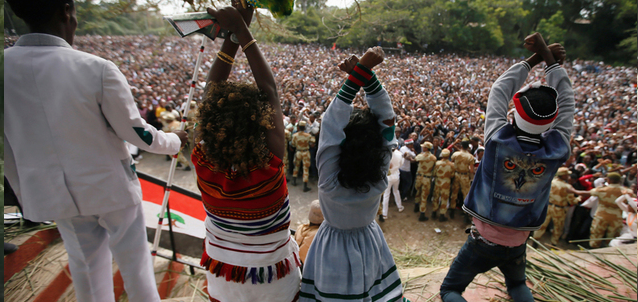


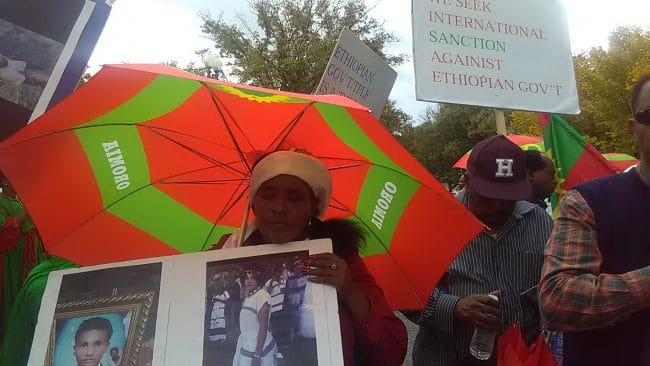
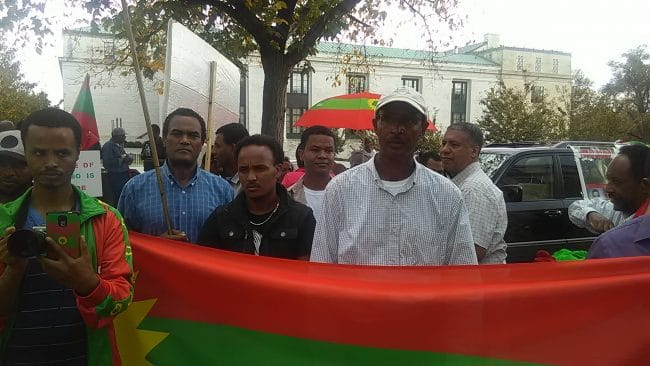
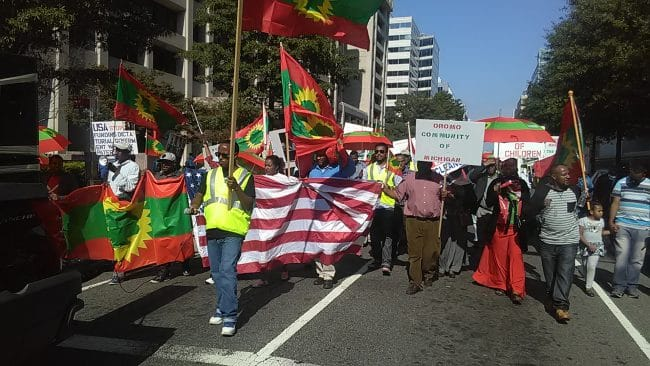


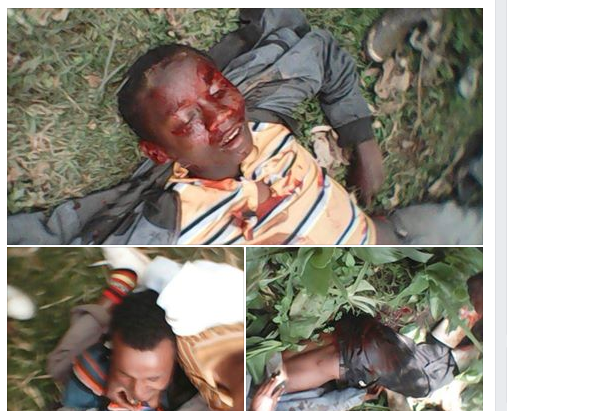


 e was shaken. The opponents to his power became so strong and lethal such that Mangistu was forced to declare “Red Terror” on its real or imagined enemies to its reign in Ethiopia between 1977-78. By this declaration of “Red Terror”(Mangistu’s state of emergency), Mangistu asserted that all “progressives” were given freedom of action in helping to root out enemies of his rule. Peasants, workers, public officials and even students loyal to the Mangistu regime were provided with arms to: assassinate, kill, imprison and loot as they wished. Militia attached to the Kebeles, the neighborhood watch committees were given freedom to train their gun on anyone with whom they have even personal but no ideological disagreement. All people allied to Mangistu went into killing spree and even children were not spared. During these years of “Red Terror”, Amnesty International estimated that up to 500, 000 to 2,000,000 people were butchered and thousands were left on the street for their body to decompose. In May 1977, the Swedish general secretary of Save the Children Fund estimated too that “1000 children have been killed and their bodies are left in the streets and being eaten by wild hyenas.” Parents of the deceased were asked to collect the bodies of their loved ones by paying money for the bullet wasted killing their children.


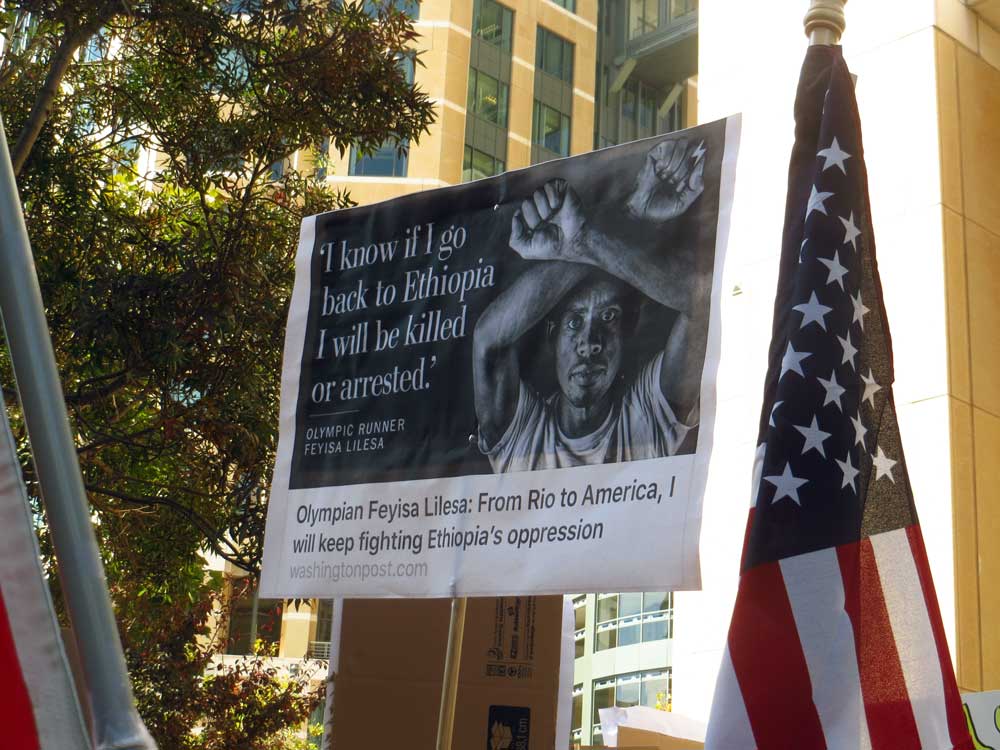


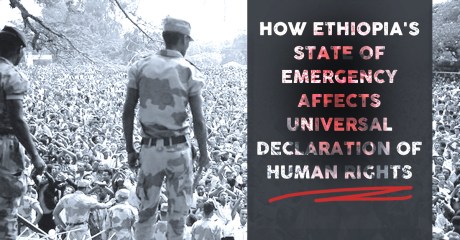
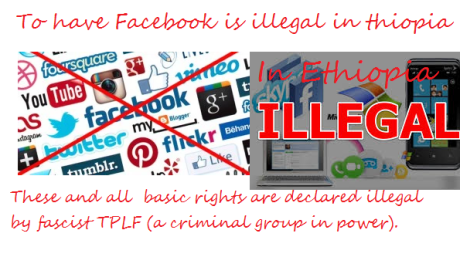
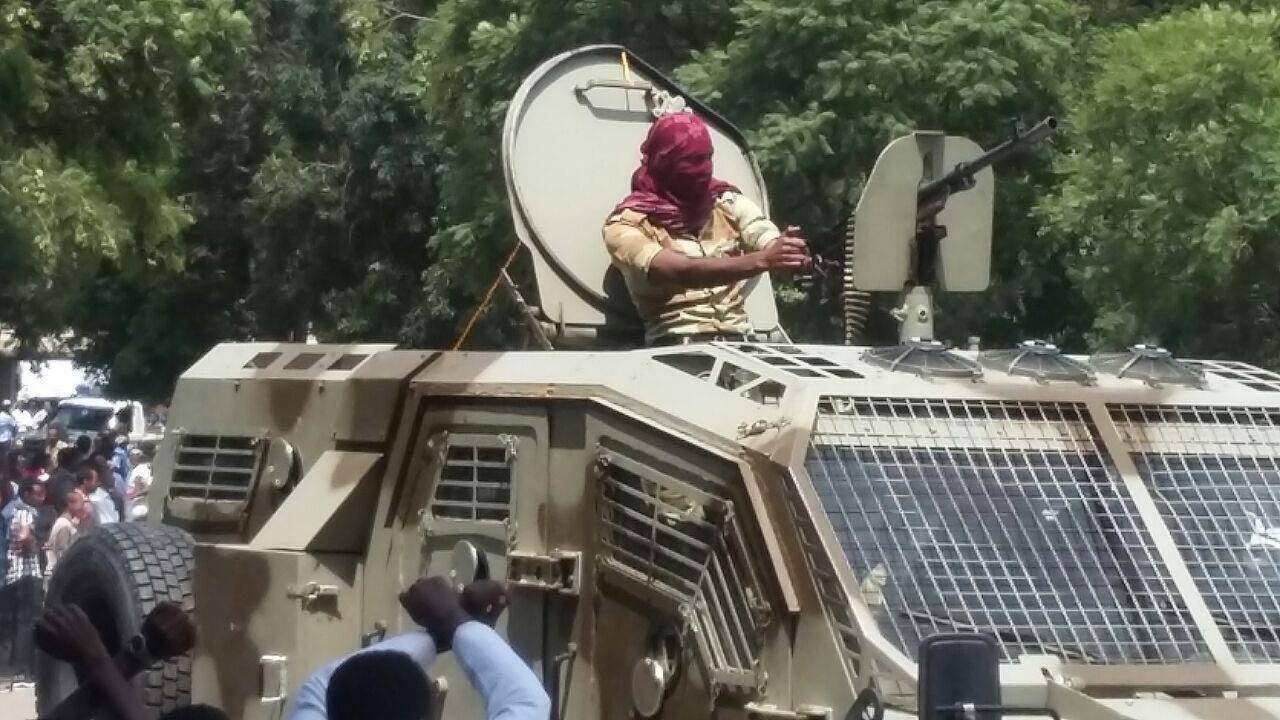


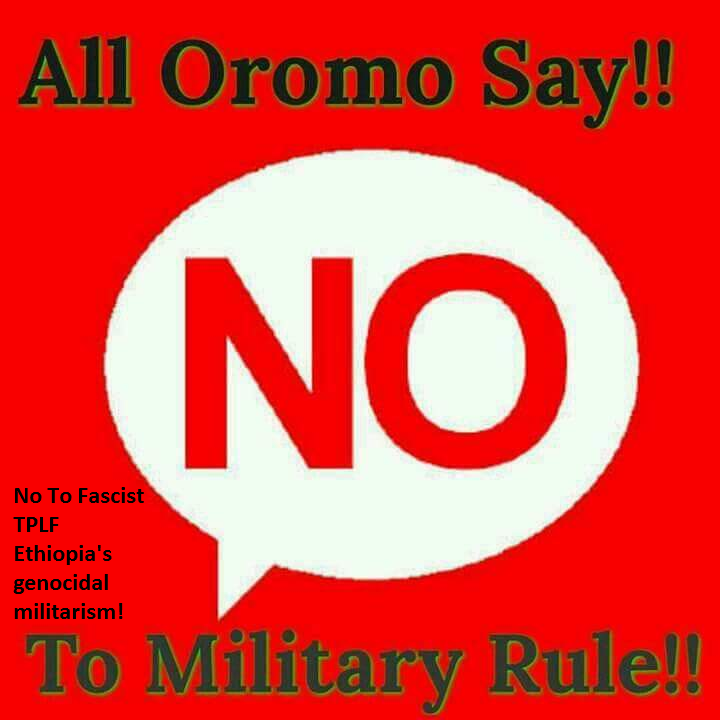









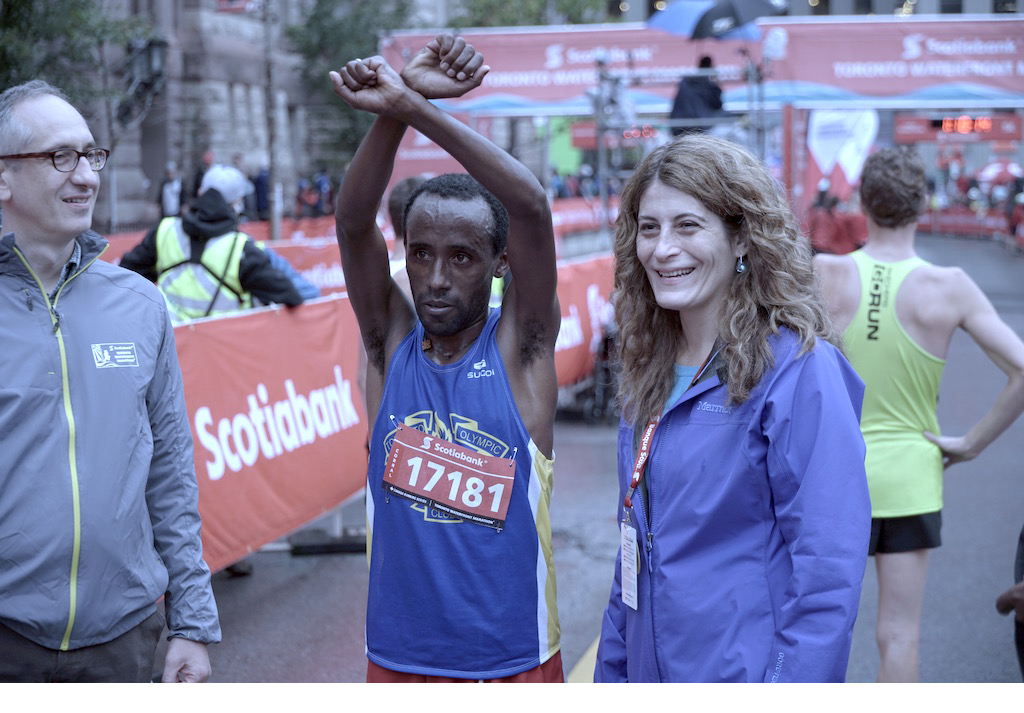

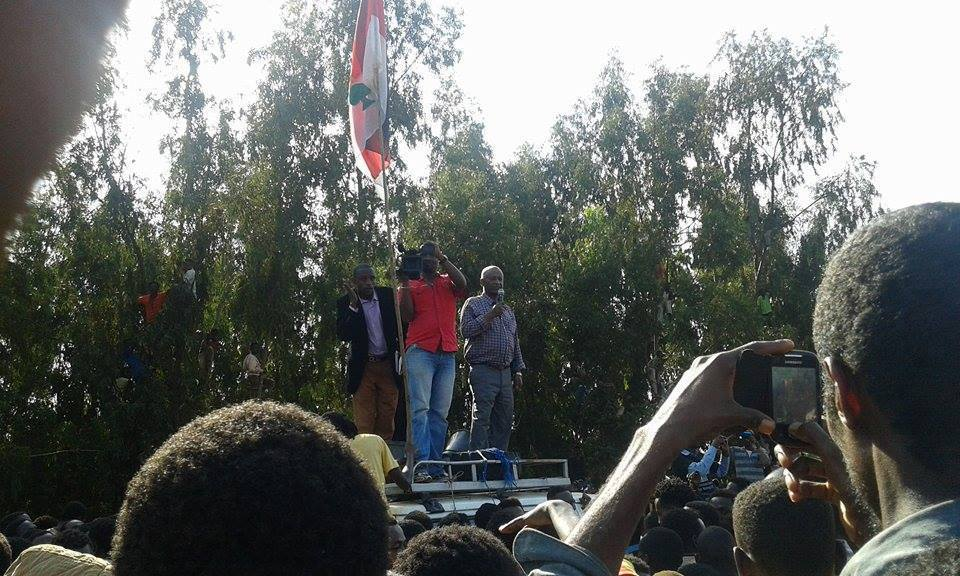





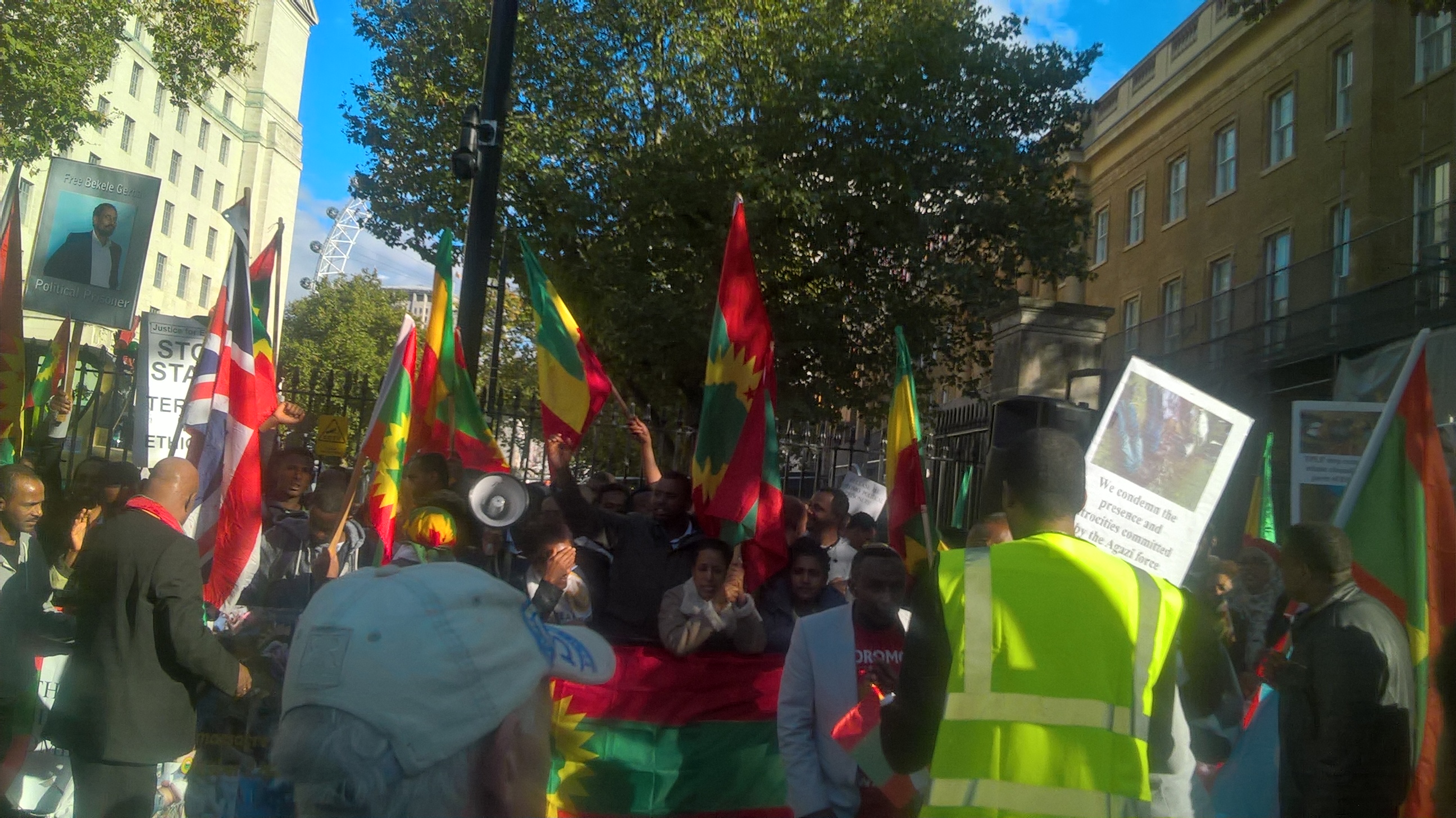
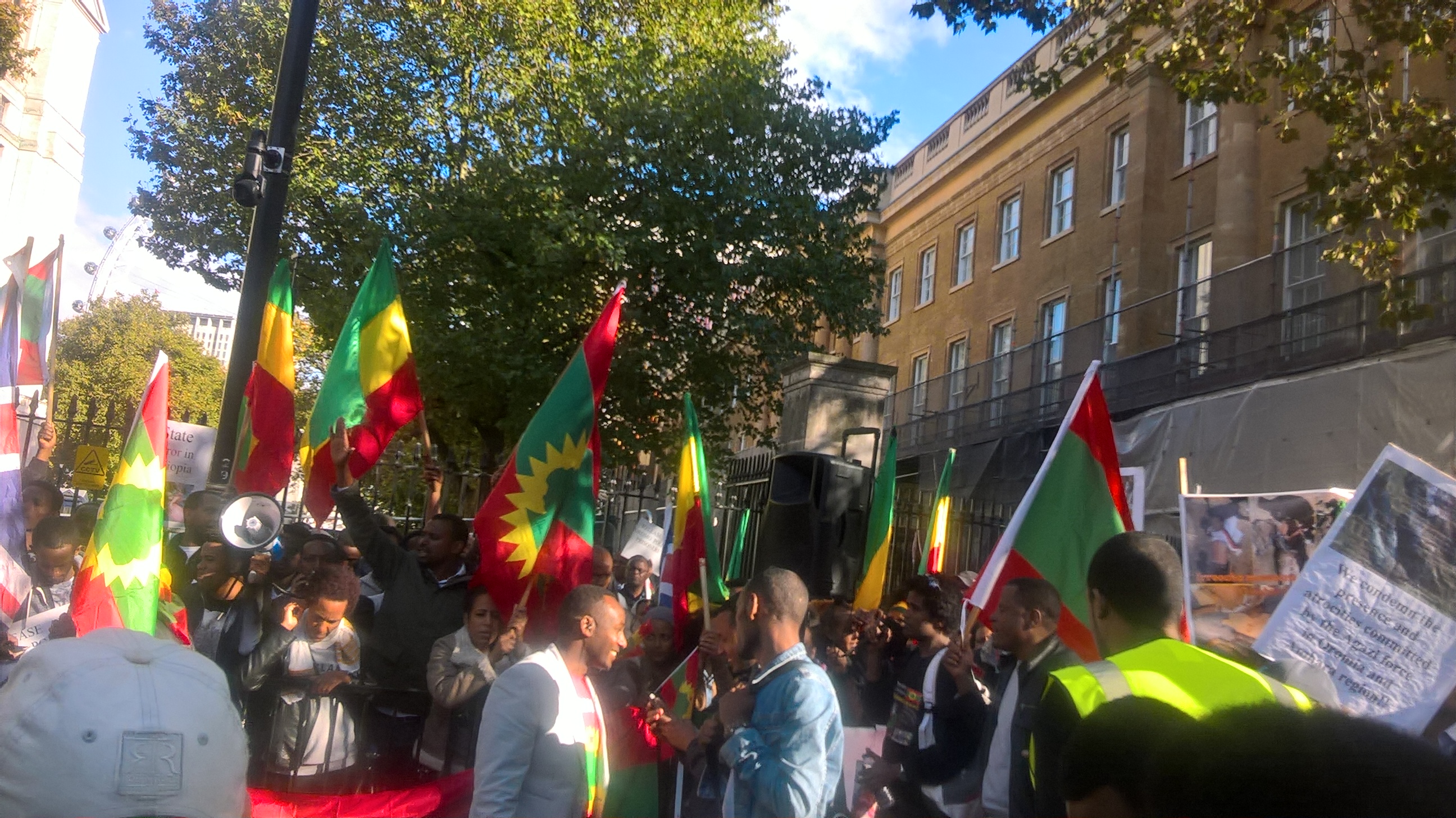
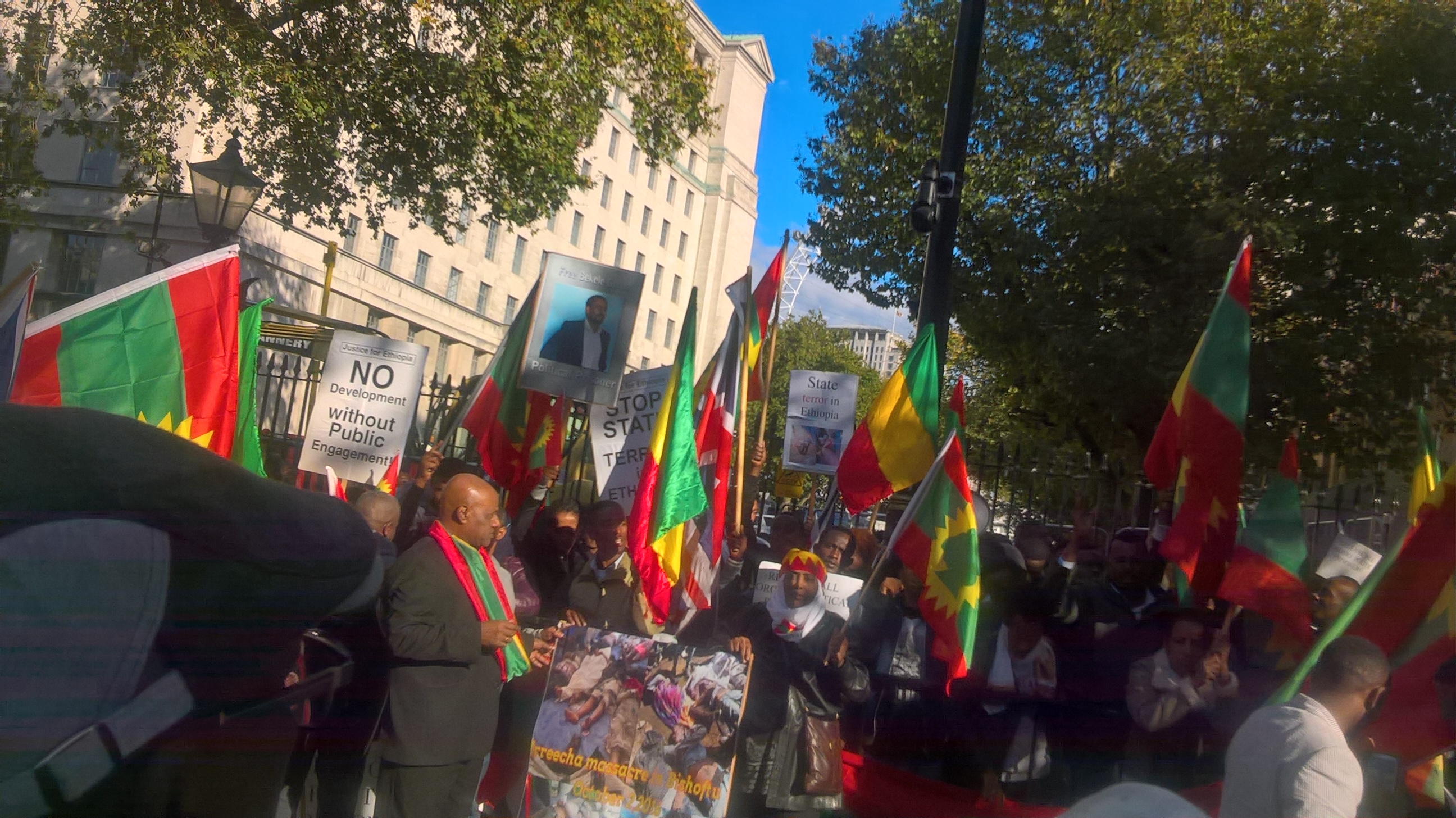
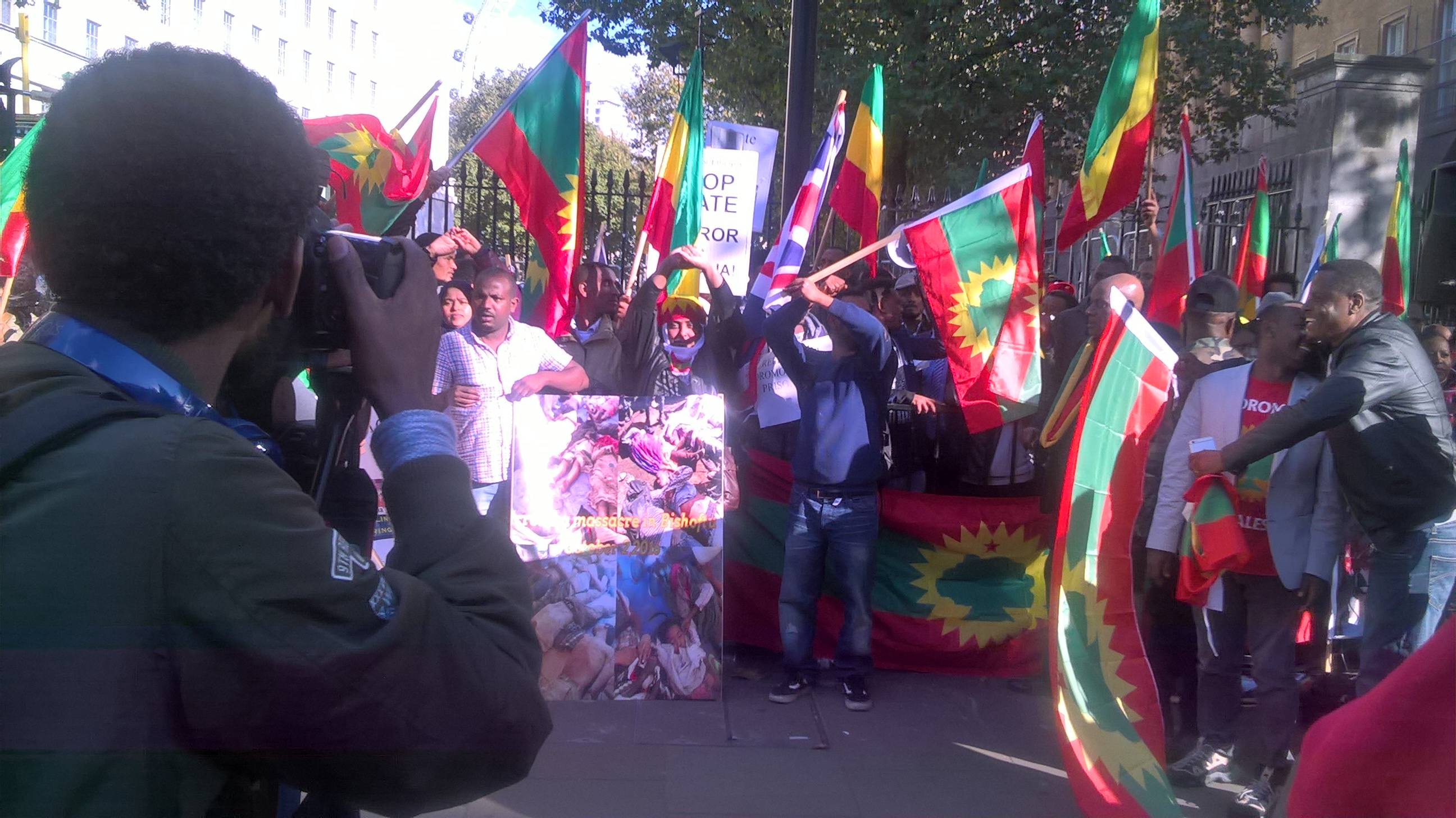
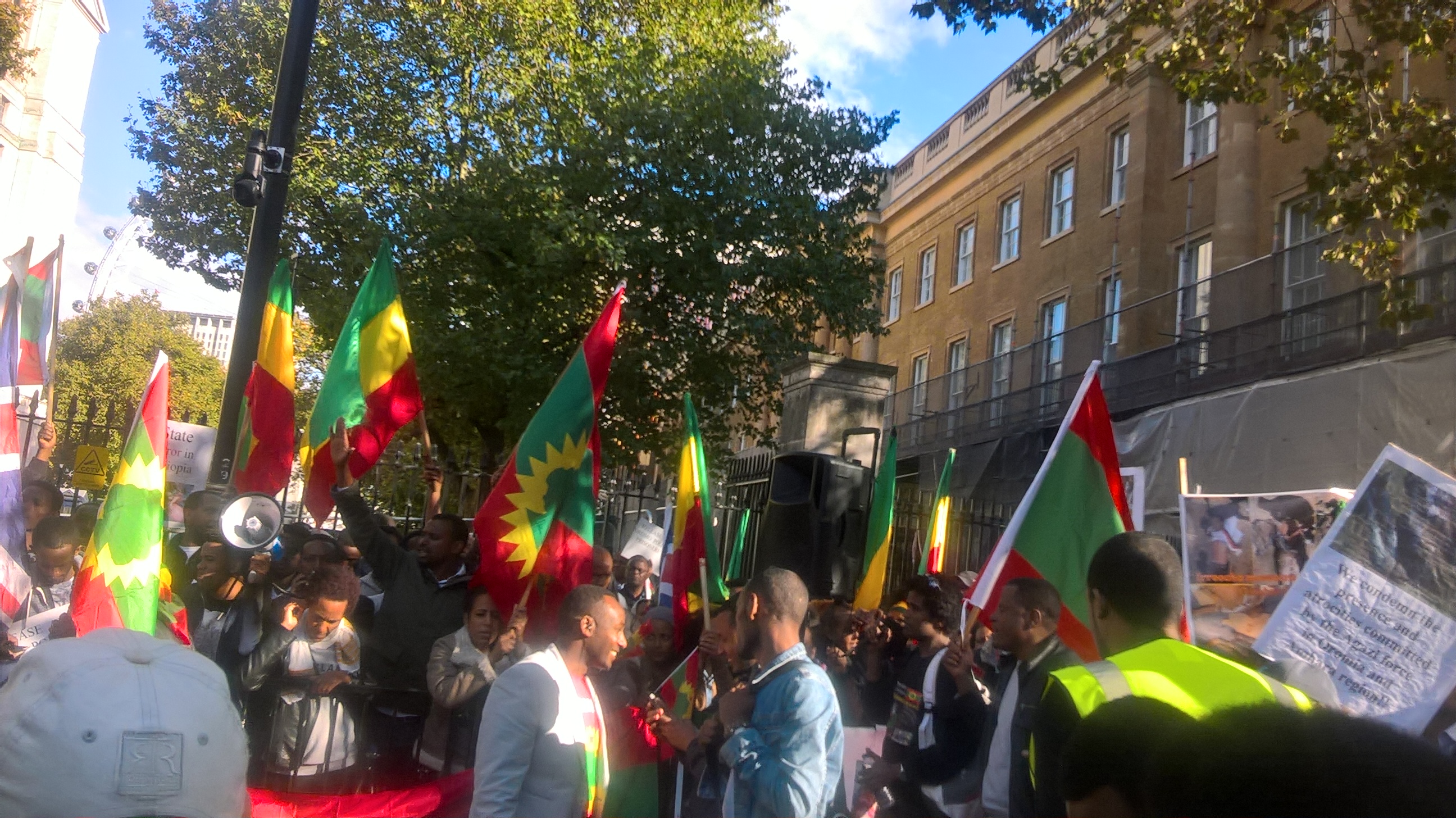

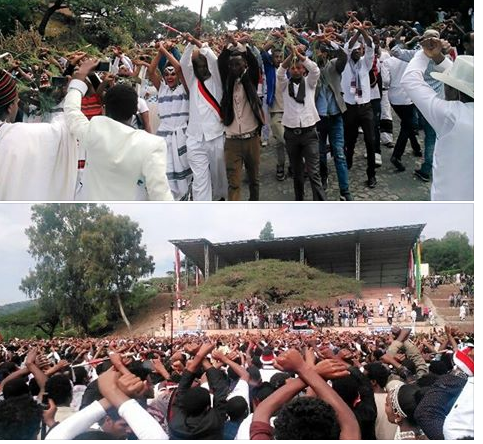
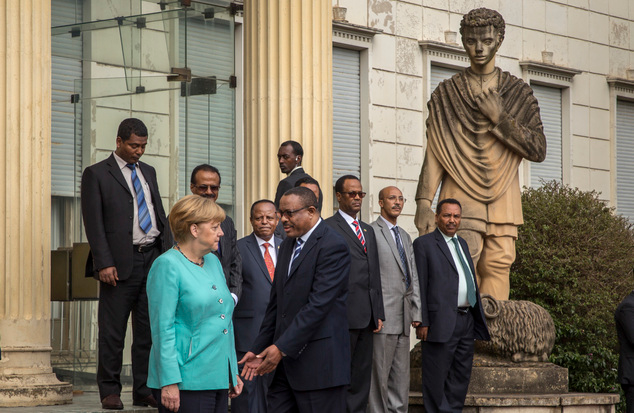


 This morning, Ethiopians woke up to the news that the Council of Ministers of the Federal Government has passed an emergency decree that may last for the coming six months. The official text of the Decree is not yet published in the official legal communicator, the Negarit Gazetta. (As it has now become customary, it may never be published at all; the regime does what it wants to do nonetheless.) That it is so declared today is announced to journalists by the Prime Minister in Cabinet on the state television. The Prime Minister spoke in order to announce the decision to journalists as the primus inter pares, the first among equals, in the Cabinet. The reason given by the Prime Minister for issuing the declaration is that there is a breakdown of law and order that threatens the safety of citizens and the integrity of the constitutional order.


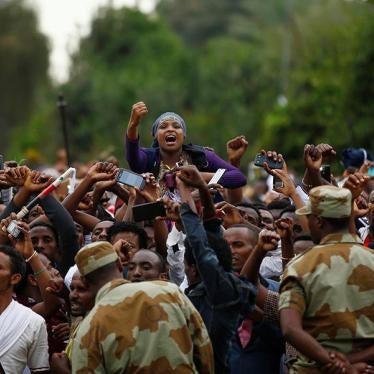


 Oromian Economist
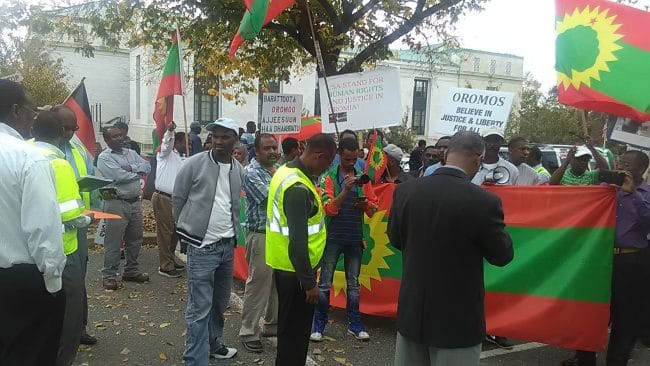

You must be logged in to post a comment.