Economic and development analysis: Perspectives on economics, society, development, freedom & social justice. Leading issues in Oromo, Oromia, Africa & world affairs. Oromo News. African News. world News. Views. Formerly Oromia Quarterly
RE: Continued Massacre in Oromia Regional State by the Tyrannical TPLF Government in Ethiopia
Dear Mr. Secretary General,
We, the Oromo Community of New York, the Oromo Community Organization (OCO) of Washington DC Metropolitan Area and the Oromo Community Association in North America (OCO_NA) write this urgent letter to bring to your attention and express our deepest concerns about the violent crackdown on the peaceful student protesters in Oromia and other regional states of Ethiopia.
The Oromo People constitute 40 percent of the Ethiopian population. But they are subjugated to political oppression, economic exploitation, human rights violation by the dictatorial minority regime of the Tigrian People’s Liberation Front (TPLF) which usurped power in 1991. The regime expropriated the total land of the nation, all economic resources, monopolized political power and subjected the whole nation to tenancy and denied all economic rights. When the degree of oppression and exploitation became unbearable the whole nation has begun to resist the excesses of the government.
In 2014, the Oromo society in general and students at different levels (Elementary, High School, and University) in particular protested the land grab policy. The land grab policy not only displaces millions of Oromo farmers from their ancestral land but also causes loss of Oromo culture, history and identity. The response by the dictatorial bloodthirsty minority government of the TPLF is shooting to kill, beating, imprisoning and torturing of the peaceful protestors .As it is to be recalled, in 2014 more than 70 students were gunned down for peacefully demanding to stop the implementation of the land grab plan. Despite the firm opposition to this plan from all Oromos, internal and external, and many losses of life and causalities, the government moved ahead in 2015 with its proposed plan, which was paused due to people’s resistance to the policy.
As a result during the last two months, Oromo students again came out to express their opposition peacefully to the Addis Ababa master plan and land grab policy implementation of the TPLF regime. However, again More than 150 Oromo nationals were shot dead, thousands wounded, beaten, more than 5000 were rounded up and thrown into jail. As the protests and killings are still on going, more causality is reported every day. Given the history of brutality of the current regime in Ethiopia, those in jail are feared to be tortured or even secretly murdered in the prison cells and others disappeared. Many corps of disappeared students is being recovered in forests, ponds, and rivers, deliberately dumped to hide traces of genocide. Mr. Bekele Gerba, vice chairman of the Oromo Federalist congress Party (OFC) is among the detained, and Mr. Bekele Naga, Secretary General of OFC is under house arrest. In General, a war of Genocide is being waged by the TPLF government against the Oromo people. The Oromia Region is now under military Command Post where all civil rights are violated, the army beats, arrests, tortures, kills at will. The army imposes curfew at any time and place. Normal life has been disrupted. Marshall Law is exercised in Oromia Region now
What is being perpetrated against peaceful demand and protest is the concern of the 40 million Oromos not students only. Accordingly, the Oromo community Organization of NY, the Oromo Community Organization (OCO) of the Washington DC Metropolitan Area and the Oromo Community Association in North America (OCO_NA) are writing this joint appeal letter to Your Excellency to express our deep concern and outrage about the current massacre of the Oromo people all over Oromia by the federal police and army of the TPLF/EPRDF Ethiopian government
The continued massacre of students and civilians is part of the grand scheme to annihilate the Oromo people and expropriate their land and resources. The late Prime Minister Meles Zenawi said a couple of years ago, while he was alive,” the majority will be diminished into a minority.” That remark reflects deep rooted objective of annihilating the Oromo, which the current TPLF leaders are bent to implement. Currently, about 90% of political prisoners in Ethiopia are Oromos. The former Defense minister stated that all prisoners speak Afaan Oromo (Oromo language) after released from prison indicating the huge number of Oromo prisoners. It is puzzling to fathom the strategy of reducing 40% of the Ethiopian population to minority unless one thinks of genocide. Generally, a war of attrition is being waged by the TPLF government against the Oromo people. The trend is dangerous. The Oromo demand deserves timely and appropriate response. Oppression leads to violent response.
Dear Mr. Secretary General,
It is so sad that such heinous crimes are repeatedly happening to the Oromo students and civilians in the 21st century without reaction from international organizations and Western democracies. Even the investigative reporters of big media are silent on the genocidal killings on going in Oromia. It was only the BBC that exposed the genocidal killings of 2014. The Oromo Diaspora has been alerting the world of the crimes of TPLF against the citizens. But nothing has been done. No member of the criminal regime has been brought to court of justice. We are observing criminal governments being brought to ICC from former Yugoslavia, Kenya, Congo Democratic Republic, Rwanda, Liberia and others. We don’t understand why the criminal TPLF government is allowed to move with impunity. Why double standard is applied when it comes to the Ethiopian dictators? Because of unrestrained criminal activity, the government has continued to massacre the Oromo people, grab their lands, plunder resources, harass and imprison. The consequence of the unabated killing of citizens with impunity by tyrannical governments will be regrettable as we can see in many countries facing similar situations today. Stitch in time avoids big crack. Oromo life matters!!
In response to the protests, the Ethiopian government has unleashed its armed forces throughout Oromia on unarmed students and citizens who are protesting peacefully against the Master Plan. Armed forces are firing live ammunition against unarmed people, killing and maiming them. Children as young as 8 year olds, pregnant women and elderly parents are among the murdered victims. Over 140 people have been killed so far and the number of casualties is rising. Thousands are being mercilessly beaten and herded into prisons. Federal armed forces are raiding university dormitories and private homes, and savagely beating and killing unarmed people. The Ethiopian government and its armed and security forces are committing the most heinous crimes against defenseless school children in all parts of Oromia and beyond. The peaceful protests involve elementary, high school and university students. Parents of the students—farmers, workers, elementary and school teachers, and university lecturers have joined youth protesters. The people are facing violent government crackdown every day. The heavy-handed, excessive use of force has resulted in the death of more than 140 victims and critical injuries of thousands of peaceful people. Thousands of students are taken into custody and facing torture and death. Because of the government’s draconian press laws and criminalization of independent media, it is difficult to account for all victims of this brutal crackdown at this moment.
The Oromo, peaceful and generous people—the creators of the gadaa system, a genuinely democratic system of government, a remarkable contribution to humanity—are dying in the hands of a brutal regime. These defenseless people need and deserve the support of the international community. We understand that what happens to the Oromo people in Ethiopia does not make the headline news in anywhere and in UN. But the Oromo are very important people. They occupy the largest region in Ethiopia, both in terms of population size and land mass. Their land is endowed with rich natural and mineral resources and serves as the backbone of the Ethiopian economy. The well-being of the Oromo society guarantees the stability and peace in the Horn of Africa. We humbly warn that there is a substantial risk in ignoring the sufferings of such a large population in the Horn of Africa, and its growing Diaspora communities. The situation in Ethiopia is getting worse every day. Neglecting them and destruction of the Oromo society will definitely contribute to larger political, economic, social and security crises that will threaten regional and global peace. Saving them saving peace in the region.
The TPLF minority regime is hoodwinking the West and international organizations including the UN, by wearing the veil of progress and development. But, the reality is the dirt under the veil. While the TPLF regime is boasting of 12% annual economic growth, 18 million Ethiopians are exposed to hunger as Your Excellency is aware, and yearning for handouts. This shows the growth propaganda is commercial. But they blame climate change. Climate change is not earthquake that happens abruptly and cause hunger and famine. The main cause of the famine is land policy and mal administration. Land is expropriated by the TPLF government which they distribute to the Chinese, Indians, Saudis, Turks, and others freely for hidden quad pro quo. TPLF is sole land lord in the country. We recall the infamous hanger of 1973 which dethroned Emperor Haile Selassie and abolished feudalism. The 2015 hunger also should have consequences.
The regime speaks of democratic process while rigging election and declaring 100% victory. In the absence of freedom of expression, press, gathering, protesting they speak of democratic prevalence. They accuse dissenters of corruption and rent seeking, while they stash billions of dollars in foreign banks by snatching from the hunger stricken Ethiopians. They snatch people’s houses and farmers land in the name of development by paying minimum or no compensation and stash away the market value. There is no guarantee of property ownership. Generally, government accountability is nil. Anger against this government is simmering. The tyrannical activity of the government is leading to volatile vent. They should be denied support unless they respect human rights, democratic principles and show transparency.
Dear Mr. Secretary General,
We earnestly request Your Excellency to use your office influence to urge the Ethiopian government to respect the right of the Oromo people, rule of law and stop killing and arresting Oromo students, implement democratic governance. If the regime doesn’t cooperate we request the UN to stop its support and impose sanctions. We specifically request that the UN:
Stop the Genocidal war being waged by the TPLF government against the Oromo people;
Stop the arbitrary arrests, kidnappings, tortures and killings of Oromo students and other civilians;
Establish a commission of inquiry to investigate the current violent crackdown and extrajudicial killings;
Bring those who committed extrajudicial killings to ICC court;
Demand an immediate stop to the unlawful so called “Integrated development master plan” implementation and the unlawful eviction of Oromo farmers and the illegal selling of Oromo land under the disguise of such “development”;
Demand the cancellation of the establishment of centralized Urban Development Corporation to be implemented by the federal government;
Demand that an independent commission be appointed to investigate the mass killing in Oromia regional state and look at the prison demography;
Demand the unconditional and immediate release of Oromo students who are jailed for exercising their constitutional right and all political prisoners;
Demand that the regime to commit itself to the respect of human rights and allow freedom of expression and assembly and making a peaceful protest;
Demand Ethiopian perpetrators of mass killing be brought to ICC similar to criminals in other countries;
Demand the Oromo plight be given equal weight to that of other nations under the yoke of dictatorial regimes.
In Ethiopia, anger over corruption and farmland development runs deep Despite the government ending plans to build on Oromo land around the capital, clashes continue, as lack of transparency and maladministration fuel dissent
William Davison, The Guardian, Global Development, 18 January 2016
Protesters block the road in Wolenkomi, in the Oromia region of Ethiopia
Protesters block the road in Wolenkomi, in the Oromia region of Ethiopia. All photographs by William Davison
Two years ago, on the edge of Chitu in Ethiopia’s unsettled Oromia region, local officials told Chamara Mamoye his farmland might be developed when the small town expanded. He hasn’t heard anything since.
“Losing the land would be a big problem for me, but if the government forces us, we can’t do anything,” the father-of-five says outside his compound.
Last month, Chamara, 45, saw the bodies of two protesters lying on the road after demonstrations rocked Chito. The dead were among up to 140 people killed by security forces during region-wide protests triggered by claims of injustice and marginalisation from the nation’s largest ethnic group, the Oromo.
Bolstered by US-based social media activists, the protest movement coalesced around opposition to a government plan to integrate the capital, Addis Ababa, with surrounding Oromo towns. After weeks of protests, the ruling coalition in the Oromia region said last week that it was cancelling the planned expansion.
Protests, however, go on, and the roots of popular unease and anger in Oromia run much deeper.
Dissatisfaction with corruption, maladministration and inadequate consultations on investments are fuelling dissent. This patchwork of grievances presents a fundamental challenge to an authoritarian government aiming to rapidly transform Ethiopia from an agrarian society to an industrial powerhouse. And the discontent is a national issue.
Urban expansion is causing clashes across the country as investors, officials and farmers protect their interests, says Seyoum Teshome, a lecturer at Ambo University.
“The villagers who have been asking for basic services and infrastructure rush to sell their farmland at market rate before it is expropriated at low rates of compensation,” he says.
As all land is state-owned in Ethiopia, houses are rapidly built on the edge of towns without official permission, to give plots value, Seyoum says. Investors may bribe corrupt officials to formalise illegal transfers, causing anger among dispossessed farmers, he adds.
Workers near Chitu in the Oromia region
Chamara was not among the mostly youthful protesters who took to the streets in Chitu, but he shares their concerns about an unresponsive ruling system. He’s frustrated by repeatedly broken official promises to tarmac the main road that runs through Chitu. Although the area has electricity and a mobile-phone signal, he is disappointed with the rate of progress since the government came to power 25 years ago. “There is no big development considering the time they had,” he says.
He is also upset by a lack of information and consultation over land policies, as well as concerned by suspicions of corruption – though officials do not flaunt ill-gotten gains. “The corruption is done in a secret way. It’s a silent killer,” he said.
In elections last May, Ethiopia’s ruling coalition and allied parties won all 547 seats in the federal parliament and 100% of legislative positions in nine regional councils. Despite the result, the government acknowledged widespread dissatisfaction with the quality of public administration and levels of corruption.
“In many areas, personnel said to be involved in massive corruption that led to sudden outbursts of anger are being dismissed,” government spokesman Getachew Reda said in an interview last week.
One of the deadliest incidents last month took place in Woliso town, about113km south-west of Addis Ababa. Six protesters were killed by security forces after thousands of people from surrounding villages took to the streets to protest over planned expansion of the town.
A group of young Oromo, who had gathered next to the Walga river a few miles from Woliso, spoke of community fears of evictions and poor compensation. But nobody seemed to know anything specific about government plans. “The government does not discuss in detail. They do not have consent,” one said.
Ethiopia has long been a darling of the international donor community, which has appeared willing to ignore its poor record on human rights because high growth rates over the past decade have delivered some development goals. But the Oromo protests illustrate the vulnerabilities of this strategy.
To the north of Chitu, at Wenchi, which boasts a spectacular crater lake popular with tourists, grievances are almost tangible. Soldiers are still in town and, as elsewhere, the authorities have arrested people suspected of involvement in the protests. While some seem cowed by the crackdown, Rabuma Terefa is not.
His friend was shot in the leg on the edge of Chitu as he marched with other protesters from Wenchi.
When an elite military unit told elders the protesters must turn back, the group refused, arguing they had a constitutional right to peacefully demonstrate, said Rabuma. Within minutes, soldiers opened fire, killing people, including Birhanu Dinka, who was leading the crowd at that moment.
“They did not say anything, they just pointed the guns at us. We were begging them not to kill us,” Rabuma, 27, says. While abuses may have occurred, security forces are told to protect civilian lives, according to Getachew.
It is not only lives at stake: around the time of the protests in Wenchi, the property of a Dutch agricultural company, Solagrow, was torched by hundreds of people. Rabuma says the investment angered locals as it fenced off 100 hectares of prime communal grazing land, leased by the government. Solagrow says community relations were healthy and the valley was waterlogged until they drained it.
A cow on Solagrow land near property burnt down in a protest in Chitu
The project was collateral damage of the political dispute, according to manager Jan van de Haar. “[The protesters] became angry and they said there was only one way to continue, and that’s our farm, because we’re the only investment in that place,” he says. The attack destroyed $300,000-worth of machinery and potato seeds.
Rabuma had no sympathy for Solagrow, which he says was complicit in the government’s oppression of the Oromo. He is instead focused on the struggle ahead.
In Chitu, Chamara speaks for many Oromo as he implores the government to better manage investments and urban sprawl. “No one is opposing the development of the city, but it should not be at the expense of farmers’ lives,” he says.
This article was amended on 18 January 2016 to correct the spelling of Chitu.
The Addis plan is one instance in which these two objectives came into direct conflict. Protests over the plan, which Oromo viewed as a land grab undertaken by an oppressive and unrepresentative central government, broke out in late 2015. The government responded witha crackdown that killed 140 people, marking perhaps the deadliest outburst of political violence in the country since its civil war ended in 1991.
The Oromo protests are “engendering an intensified ethnic awareness that has also revitalized calls for genuine self-rule in the region,” Smith writes.
Karuturi had taken over land that the Ethiopian state had sold off as part of a controversial program in which the government leased 3.3 million acres of farmland to foreign investors after allegedly displacing some of that land’s original tenants.
While Karuturi arguably stood to benefit from Ethiopia’s centralized single-party regime, it’s now learned the risk involved in pouring $100 million into an opaque authoritarian state.
According to Bloomberg, the Ethiopian government canceled a 2010 lease that Karuturi, an India-based agricultural company, had taken out on 100,000 acres of farmland.
Despite making an over $100 million investment in the country’s farming sector, Karuturi was accused of breaking its lease agreement in developing only 1,200 acres thus far. But the company claimed that it had received waivers from the Ethiopian government in the past, and said that it did not recognize the project’s cancellation.
According to Bloomberg, Karuturi had taken over land that the Ethiopian state had sold off as part of a controversial program in which the government leased 3.3 million acres of farmland to foreign investors after allegedly displacing some of that land’s original tenants.
While Karuturi arguably stood to benefit from Ethiopia’s centralized single-party regime, it’s now learned the risk involved in pouring $100 million into an opaque authoritarian state.
And Ethiopia’s leaders, who want both economic prosperity and total political control, might soon find that these objectives aren’t nearly as mutually reinforcing as they’d hoped.
Tiksa Negeri/ReutersWomen mourn during the funeral ceremony of Dinka Chala, a primary school teacher who family members said was shot dead by military forces during a recent demonstration, in Holonkomi town, in Oromiya region of Ethiopia on December 17, 2015.
Like Karuturi’s disappeared $100 million investment, the Addis Ababa expansion plan embodies the perils and contradictions of the Ethiopian regime’s long-term strategy of securing internal calm through economic growth and strong ties with foreign powers like the US and China.
As in past eras, the Ethiopian capital is being built up as a showpiece of the country’s modernity and development, and as a reflection of Ethiopia’s sense of its unique place in the world. Addis has one of Africa’s first light rails, a Chinese-built, 19.6-mile system that opened last year.
The city and the surrounding area are home to both of the country’s Chinese special economic zones, industrial parks where Chinese companies get tax breaks in exchange for operating in Ethiopia and hiring local employees. The Addis expansion plan would have incorporated neighboring areas into the capital district, enabling more holistic and centralized urban planning for a rapidly growing and economically vital capital city.
But the expansion plan also came at the expense of land in the Oromia Region — and it ended up exposing some of the deepest fractures in Ethiopian society.
In practice, the center still holds all of the power.
Google MapsLocation of Addis Ababa, capital of Ethiopia.
The current Ethiopian government, which is entirely run by the Ethiopian People’s Revolutionary Democratic Front, which is descended from the militia that overthrew the ruling communist state in 1991 after a protracted civil war, is among the most oppressive in Africa.
The EPRDF regime is dominated largely by elites from the Tigrayan and Amharic ethnic groups. But its rule depends on a baseline of inter-communal harmony — just as it depends on the appearance of progress and economic growth.
The Addis plan is one instance in which these two objectives came into direct conflict. Protests over the plan, which Oromo viewed as a land grab undertaken by an oppressive and unrepresentative central government, broke out in late 2015. The government responded witha crackdown that killed 140 people, marking perhaps the deadliest outburst of political violence in the country since its civil war ended in 1991.
Even if the plan has been suspended, the Addis Ababa expansion push is an extension of aggressive growth policies that are fundamental to the regime’s self-image and possibly its survival, policies enabled by strong arm tactics that a country might not accept accept.
But the protests showed that economic growth and authoritarianism can’t paper over a general sense of frustration.
As Jeffrey Smith, head of the RFK Center’s sub-Saharan Africa-related advocacy programs explained to Business Insider, the suspension of the plan will do little to reduce popular discontent towards the regime.
“If the government is trying to head off larger protests and discontent in the country, then it’s much too little and much too late,” Smith wrote in an email. “During the protests, an estimated 140 people were killed and thousands were injured, opposition leaders and journalists were jailed, and the constitution was shredded … there has been no accountability for the deaths of protesters and dissent continues to be criminalized and violently suppressed.”
Tiksa Negeri/ReutersA worker works on the electrified light rail transit construction site in Ethiopia’s capital Addis Ababa, on December 16, 2014.As with Karuturi’s apparent ejection from the country, the contradictions of trying to build a robust economy without genuine political freedom or basic transparency are manifesting themselves. But with the Addis plan, the stakes are much higher for the regime.
The Oromo protests are “engendering an intensified ethnic awareness that has also revitalized calls for genuine self-rule in the region,” Smith writes.
That’s a huge threat to a government that’s itself came to power following an ethnically fractious civil war. “I think leaders in Addis Ababa has gotten much more than they bargained for,” says Smith.
The theme of this extraordinary session of the Oromo Studies Association is Understanding Land Transfers and Political Crisis in Ethiopia. The symposium was prompted by the outbreak of massive protests in the Oromia region against a decision to lease community land in a small town west of the federal capital of Addis Ababa to a private investor. Protests quickly took on a form of resistance against the federal government scheme known as the Addis Ababa Integrated Development Master Plan and the whole program of land lease that allows eviction of farmers. Within days, demonstrators took to the streets in large numbers in cities and towns all over Oromia, voicing slogans that condemned the practice of transferring smallholder arable lands to private investors. Lately, the protestors’ calls have included the reinstatement of genuine self-rule at the local level. Government response was swift and brutal, killing many people, arresting hundreds of protesters, and taking into custody even Oromo political leaders who were not directly involved in the protests. For days, it seemed that the security forces had quieted down the protests. After brief lull, protests emerged in unexpected places as the Oromia enclave in the Amhara region and resumed in the eastern and western parts of Oromia. All told, the protests have now lasted for two months. Both the Master Plan and the protests are unprecedented in Ethiopia. The Master Plan is the most blatant form of state confiscation of arable rural land of indigenous Oromo people arguably since Menelik’s conquests. It is an integral part of the massive land transfers that have been taking place in the Oromia region for quite some time. The reaction it provoked has been demonstrably visceral and sustained in the face of a military force that had no qualms summarily executing child protestors as young as eight years old. The symposium is convened to begin addressing the question of why the Master Plan provoked such profound pan-Oromo reaction. The papers are expected to explore the constitutional, political, economic, cultural and environmental consequences of the Master Plan. They will be substantive, documented and clearly articulated to be accessible to specialists and the lay public. While it is the goal of the symposium to unpack the Master Plan, it would be a mistake to boil down the protest movement to the issue of urban planning. If the Master Plan were the main cause, it would be a technical problem that would be addressed by technocrats. The Master Plan was the trigger, not the ultimate cause. The main issues are structural and the protests reveal a crisis of the state. The papers also attempt to place the Master Plan in the context of a crisis of state which now seems to have entered an advanced stage of decomposition. At this moment, the protestors’ demands now include the end of EPRDF’s stranglehold on the political landscape, ethnic discrimination in allocating national resources, and the rule of violence in Ethiopia.
Students mourning at Haromaya University. Photo shared widely on social media.
Students in Ethiopia’s largest administrative region, Oromia, have been braving state-sponsored violence and censorship since November 2015 to protest a government development plan.
Human Rights Watch has reported that at least 140 peaceful protesters have died since the demonstrations began. Those killed include university and secondary school students, farmers and school teachers.
Despite mounting evidence to the contrary, Ethiopian authorities and pro-government commentators say the number of dead is around five people.
Why are people protesting?
The protesters are speaking out against the so-called “Master Plan” to expand the capital city, Addis Ababa, into Oromia, fearing that the proposed development will result in direct persecution of the Oromo ethnic group, including mass evictions of Oromo farmers from their land.
The government claims that the plan is only meant to facilitate the development of infrastructure such as transportation, utilities, and recreation centers.
The oppression of the Oromo people
Oromo people, who represent the largest ethnic group in Ethiopia, have experienced systematic marginalization and persecution over the last quarter century. Some estimates put the number of Oromo political prisoners in Ethiopia at 20,000 as of March 2014.
The country’s ruling elite are mostly from the Tigray region, which is located in the northern part of the country.
The students also demand, among other things, that Oromo, the language of the Oromo people, be made a federal language. Despite being the most widely spoken language in Ethiopia and the fourth largest African language, it is not the working language of the federal government.
This is the second wave of protests against the plan in less than two years. The development project was stalled following protests in May 2014, but also saw at least nine demonstrators killed and hundreds of ethnic Oromo students imprisoned. Officials decided to resume implementation of the project in November 2015, sparking renewed demonstrations.
The government’s crackdown on free expression
Social media and satellite TV channels have proven to be critical communication avenues for protesters, despite Ethiopian authorities’ often cutthroat efforts to silence their critics.
Participants have captured photos, audio and video of security forces’ brutal efforts to stop the peaceful protests, including using live ammunition to disperse crowds at universities in Oromia. The material has then frequently been shared on the Facebook pages of prominent activists or uploaded on Ethiopian online platforms such as EthioTube, a video platform run by Ethiopians living abroad.
In response, the government has launched a propaganda campaign against the use of the social media, with state-owned media organizations dedicating multiple programs to the argument that online platforms are being used by so-called “forces of harm” to instigate violence and tarnish Ethiopia’s image.
Given that less than four percent of Ethiopians have access to the Internet, documentation of protests does not exist solely online. Photos and video shared online by demonstrators are regularly picked up by diaspora satellite television news programs (such as ESAT and Oromia Media Network) that broadcast to tens of millions of Ethiopians in Amharic and Afan Oromo, two of Ethiopia’s major languages.
Executives from the two satellite channels have reported that Ethiopian authorities attempted to meddle with their broadcasting services. Citizens have written posts on Facebook indicating that security forces were attempting to remove satellite dish receivers from rooftops in the Oromia region.
Oromo protesters gather in Addis Ababa in May 2014. Flickr image uploaded by user Gadaa.com. CC BY-ND 2.0
Amid the crackdown, authorities also arrested two opposition politicians, two journalists, and summoned five bloggers from Zone9 collective, who were acquitted of baseless terrorism charges just two months ago.
The government censorship machine has extended to music, as well, with at least 17 Oromo singers being banned from airwaves since December 2015 for lyrics that the Ethiopian Broadcast Authority deemed to show “nationalistic tendencies.”
Ethnic Oromo singer Hawi Tezera was reportedly beaten, arrested, released and then rearrested in the space of just seven days by government security forces in connection with her song about the protests.
An estimated 140 people killed
Security forces have been ruthless in their attempts to disrupt the protests. Photo and video evidence suggests that most of these killings were done by bullets fired at close range.
At least 10 people died from torture inflicted while they were in prison, according to Oromo rights activists.
Global Voices author Endalk created an interactive map with help from Oromo activist Abiy Atomssa of 111 people who have died during the protests in recent months. We ask that any person who has evidence of the death or disappearance of protesters please contact us at editor@globalvoicesonline.org.
Many of the photos and videos that have circulated online have done so with little to no context included, making it difficult for independent observers to verify the content. There are simple steps that citizen reporters can take in order to remedy this, such as including a recognizable landmark in an image or video and showing a current newspaper with the date clearly displayed. The following guides offer more detail:
The brutality of fascist Ethiopian regime (TPLF) against Oromo people in 21st century, Jan. 2016 https://youtu.be/G9xe7aC7aIw
In interviews in villages across the Oromo region, young students and aging farmers said the unrest was because of the plan. But there is a deeper vein of dissatisfaction among the Oromo people, who make up some 40 percent of the country’s population of nearly 100 million.
Oromos feel they are treated like second-class citizens and complain that corrupt local officials demand bribes and make money off shady land deals that don’t give farmers enough compensation.
Despite the UN having offices in Addis Ababa, Ethiopia, it had nothing to say about the crackdown that has led to the killing, reportedly, of over 140 Oromo people, when Inner City Press on January 11 asked UN Secretary General Ban Ki-moon’ spokesman Stephane Dujarric. Video here.On January 15, there was a large Oromo demonstration across First Avenue from the UN. Inner City Press broadcast it live on Periscope, with interviews, putting it on YouTube, here.Then Inner City Press went in and asked UN Spokesman Dujarric
UNITED NATIONS, January 15 — Despite the UN having offices in Addis Ababa, Ethiopia, it had nothing to say about the crackdown that has led to the killing, reportedly, of over 140 Oromo people, when Inner City Press on January 11 asked UN Secretary General Ban Ki-moon’ spokesman Stephane Dujarric. Video here.
On January 15, there was a large Oromo demonstration across First Avenue from the UN. Inner City Press broadcast it live on Periscope, with interviews, putting it on YouTube, here.
Inner City Press: it seems inevitable to ask you. There’s a big protest in front of the building by Oromo people saying that more than 140 of them have been killed by Ethiopia. So I’d asked you about it on Monday. You said you don’t have anything but you’d check. What does the UN know given that it has an office in Addis about these killings?
Spokesman Dujarric: On the protests, we’re obviously very much aware of the protests not only going on outside but in Ethiopia itself. I think the Secretary-General would call on the Government and the groups concerned to hold a constructive and peaceful dialogue and also to ensure that all those who want to protest are able to express themselves freely and free of harassment as it is their right.
Spokesman Dujarric: soldiers from any nationality, as you know, for serving in DPKO, in peacekeeping missions, they go through a screening policy to ensure that the individuals and the units themselves are free of any human rights violations.
We’ll have more on this. For now, note that the UNSC’s upcoming trip, from which Inner City Press was Banned, goes through Addis Ababa. Will anything be said about Oromo?
The UN report on rapes in the Central African Republic, released on December 17, found that UN Peacekeeping’s Under Secretary General Herve Ladsous “illustrate[s] the UN’s failure to respond to allegations of serious human rights violations in the meaningful way.”
Ladsous has yet to take any questions about the report. Now the Office of the UN Spokesperson refuses Press questions on reports that “peacekeepers” from Burundi, France, Gabon and Morocco paid fifty cents for sex with children in CAR. On the morning of January 12, Inner City Press asked three separate UN spokespeople, in writing:
“In light of the Jan 11-12 Washington Post report that “ in interviews, U.N. officials said the peacekeepers were from Gabon, Morocco, Burundi and France. The prostitution ring they allegedly used was run by boys and young men who offered up girls ‘for anywhere from 50 cents to three dollars,’ according to one official,” please state the current status of these ‘peacekeepers’ from Morocco, Gabon, France and Burundi – and the status of the waiver USG Ladsous gave to the Burundian contingent.
Oromo Demonstration in Brussels Demands European Union to take a Firm Stand against Ethiopian Government
UNPO, January 15, 2016
On 14 January 2016, Oromo communities based in Belgium, Netherlands and Germany staged a demonstration in front of the European Parliament to protest against the brutal crackdown on dissent in Oromia. In light of the harshest repression waged by the Ethiopian regime in the region since 2005, protestors urged the European Union to withhold financial aid to Addis Ababa until the Ethiopian government complies with its human rights obligations.
Despite adverse weather conditions, more than a hundred demonstrators from the Oromo diaspora in Europe gathered at Place du Luxembourg, outside the European Parliament in Brussels, to express their condemnation of the most recent terror campaign launched by the Ethiopian regime against its own people. Since December 2015, massive anti-government peaceful demonstrations against the Addis Ababa Integrated Master Plan erupted in towns across Oromia. Fearing land grabbing and further repression, hundreds of thousands of ethnic Oromo took the streets to protest against the urban plan that allegedly would integrate infrastructure development in the capital with that of surrounding towns in Oromia. Notwithstanding the legitimate and non-violent nature of the manifestations, the Ethiopian security forces responded with heinous atrocities to punish unarmed civilians.
The demonstrations on 14 January 2016 in Brussels echoed the growing despair of the Oromo community towards the lack of a firmer stand of the EU against the Ethiopian government. A representative of the Oromo Liberation Front (OLF), member of the UNPO and one of organizations involved in the demonstration, expressed the need to raise awareness of the gross human rights violations committed by the Ethiopian regime. Despite facing merciless killings, massive imprisonments, severe beatings and torture, the Oromo community remains committed to a peaceful struggle to achieve the full exercise of self-determination, democratic rights and peace for all the nations and peoples in Ethiopia.
While the death toll reached 160 only in the last eight weeks, Ethiopian security forces remain shamelessly engaged in terrorizing the civilians. Against this challenging backdrop, demonstrators demanded that the EU withhold aid money to Addis Ababa and send a monitoring mission to Oromo to freely investigate the human rights situation.
UNPO strongly condemns the actions of the Ethiopian regime and calls upon the EU to ensure that Addis Ababa is held accountable for its crimes in accordance with international law. UNPO will continue to support the peaceful actions of the Oromo in their struggle to end decades of systemic and structural marginalization in Ethiopia.
Video: Oromo Demonstration in Brussels Demands European Union to take a Firm Stand against Ethiopian Government. #OromoProtests global rally in solidarity with Oromia. 14 January 2016
The United States Calls for Meaningful Dialogue About Oromo Community Concerns
Press Statement
John Kirby, Spokesperson, Bureau of Public Affairs, Washington, DC
January 14, 2016
The United States is increasingly concerned by the continued stifling of independent voices in Ethiopia, including the detention of Oromo political party leaders. These arrests have a chilling effect on much needed public consultations to resolve legitimate political grievances in Oromia.
We support the Government of Ethiopia’s December commitment to public consultation with affected communities. For these consultations to be meaningful, all interested parties must be able to express their views freely.
We reaffirm our call on the Ethiopian Government to refrain from silencing dissent and to protect the constitutionally enshrined rights of all citizens, including the right to gather peacefully, to write, and to speak freely as voices of a diverse nation. We call for the release of those imprisoned for exercising their rights, such as political party leaders and journalists.
CIVICUS: World Alliance for Citizen Participation, the East and Horn of Africa Human Rights Defenders Project (Defend Defenders) and Amnesty International urge Ethiopia’s development and international partners to address the killing of at least 140 protesters in the Oromia region since December 2015.
On 12 November 2015, peaceful protests started in the Oromia Region, southwest of the capital, Addis Ababa, in response to measures taken to transfer the ownership of a community school and portions of a local forest to private investors. The protests have since expanded in scope and size against wider grievances concerning the expansion of Addis Ababa into the Oromia Region under the government’s Integrated Development Master Plan. They have also turned violent, resulting in the killing of protesters, and arrests of protesters and opposition leaders.
The government announced on 12 January that it was cancelling the Master Plan, but protests continued the next day in parts of Western Hararghe, Ambo and Wellega where the police and the military used live bullets and beat protesters.
“Use of excessive and lethal force against protestors, coupled with mass arrests of peaceful demonstrators and human rights defenders represent a worrying escalation of the government’s on-going campaign to silence any form of dissent in the country,” said Mandeep Tiwana, Head of Policy and Research at CIVICUS. “The international community must take up the issue of accountability for these grave rights violations with the Ethiopian government.”
The police and the military responded with excessive force to the peaceful protests that began on 1 December 2015, including by use of live ammunition against protesters, among them children as young as 12. Estimates confirmed by international and national watchdog groups like Human Rights Watch indicate that at least 140 protesters have already been killed in the protests.
“The government’s labelling of the mostly peaceful protesters as “terrorists” on 15 December 2015 further escalated the response of the police, and the military and resulted in more violations, including killings, beatings and mass arrests of protesters, opposition party leaders and members, and journalists” says Muthoni Wanyeki, Regional Director of Amnesty International East Africa Office.
Scores of those arrested have been denied access to lawyers and family members. They are reportedly being held under the Anti-terrorism Proclamation and remain at risk of torture and other ill-treatment.
Journalists and opposition leaders, including Bekele Gerba (Deputy Chairman, Oromo Federalist Congress), Getachew Shiferaw (Editor-in-Chief of the online newspaper Negere Ethiopia) and Fikadu Mirkana (Oromia Radio and TV), have also been arrested while documenting or participating in the protests.
The violent response to the Oromo protests represents perhaps the most severe crackdown on the right to peaceful assembly since the contested 2005 elections in which nearly 200 protestors were killed in the capital,” said Hassan Shire, Executive Director of DefendDefenders. “The international community’s worrying silence on this matter may further embolden the authorities to crank up their campaign of repression.”
Amnesty International, Human Rights Watch and other organisations have also previously documented similar patterns of excessive use of force, mass arrests, torture and other forms of ill-treatment against demonstrators, political oppositions and activists. On 28 October 2014, Amnesty International published a report entitled “Because I am Oromo”: Sweeping Repression in the Oromia Region of Ethiopia (AFR 25/006/2014).
All those being held solely for exercising their rights to freedom of expression and assembly must be immediately and unconditionally released. The Ethiopian authorities must ensure that victims of human rights violations by law enforcement officials have access to an effective remedy and obtain adequate reparation, including compensation, rehabilitation, satisfaction, and guarantees of non-repetition.
CIVICUS, the East and Horn of Africa Human Rights Defenders Project and Amnesty International appeal to Ethiopia’s development and international partners to encourage the government to:
•immediately stop mass arrests, beatings and killing of protesters, journalists and opposition party leaders and members;
•ensure access to family members, lawyers and review of detention by a court of law for protesters, journalists and opposition party members and leaders in detention; and
•establish an independent inquiry into the use of excessive force during the protests. If the investigation finds that there has been excessive use of force, those responsible must be subject to criminal and disciplinary proceedings as appropriate.
IOLA Press Release on the Oromo Protest and the ongoing brutal crackdown in Oromia, Ethiopia
January 11, 2016
The International Oromo Lawyers Association, a non-profit Organization registered in the State of Minnesota with the objective of promoting the prevalence of the rule of law in Ethiopia, is saddened and shocked by the ongoing wanton mass killings and arrests of thousands of Oromo students, supporting parents and teachers in the State of Oromia, Ethiopia. According to information available to us from different sources including Amnesty International, Human Rights Watch and reputable media networks such as the BBC, CNN and Al Jazeera, the Ethiopian government has deployed a special armed unit (known as the death squad – Agazi) to forcefully suppress the ongoing peaceful demonstration of Oromo students who are simply exercising their fundamental and constitutionally guaranteed freedom of expression to oppose the so called Addis Ababa Master Plan. The Plan which is alleged to have been secretly designed by the order of few key Federal government officials is in fragrant violation of the Constitution which stipulates that any change in the affairs of the Regional States should be discussed at the parliament, the government and by the people of the respective Regional States.
We feel it is our duty to share the prevailing frustration because of past experiences, that the above mentioned “Master Plan” is nothing other than being a pretext to forcibly displace native Oromos from their ancestral land without or insignificant compensation whatsoever and to allocate the vacated land to foreign investors all under the name of development. We have already witnessed in the past ten years when the Federal Government forcibly removed ethnic Oromos from their land without any meaningful compensation and leased the vacated land to investors who converted the wheat producing land into massive production of flowers, at a time the country is facing massive food shortage. The result, as expected, did not bring development but misery to the displaced population and environmental degradation in the community. According to experts, the prevailing famine in Ethiopia, which has affected nearly 15 million people, is largely attributed to such facts of involuntary displacement of the farming population from their ancestral lands and detaching them from their traditional farming profession.
Protest against the ‘AA-Oromia Integrated Master Plan’ started within the ruling party in early 2014. When the federal government disregards these concerns, the issue turned out to be the issue of the public at large and resulted in street protest. However, the authorities preferred to subdue the dissent by force and do it quickly rather than engaging stakeholders in a genuine way and addressing the issues comprehensively. As a result, several lives were lost and properties were destroyed.
This round of protest started after the authorities reinitiated the implementation of plan. Still, the government followed similar violent crackdown and we are witnessing the killing of over hundreds of protesters, the arrest of thousands and uncalculated damages to bodily harm and property damages. There is credible evidence that the government is engaged in blank point killing of what it calls “anti-development” students and parents. Thousands of members and leaders of the well-known Oromo Federalist Congress party known for its advocacy for peaceful means of struggle, including its deputy leader Mr. Bekele Gerba, are now arrested and thrown into jails without due process of law and without any charge whatsoever. Mr Bekele was released few months ago after serving four years of politically motivated charges. Basically, the ongoing protest is far bigger than the master plan itself. While the master plan is an immediate cause; while several issue linked to corruption, dispossession, nepotism, selective justice and political marginalization of the Oromo’s under EPRDF government are the main causes.
It is a high time for the international community and key stakeholders in Ethiopia (USA, UK, EU, China, Russia and AU) to utilize their leverage to deter the crippling of the country in to a full blown civil war by the irresponsible move of the Ethiopian government. Specifically we urge you to push the government to:
Immediately stop the arbitrary mass killings and arrest of Oromos students,
Release ALL Oromo students and Opposition members (and its leaders) who are arrested and thrown into jail following the recent unrest in Oromia,
Bring to justice those who are responsible for the killing of hundreds of Oromo students and opposition members,
Repel the so-called “Addis Abeba Master Plan” and any other plan of eviction in Oromia, Gambella and other regions of Ethiopia
Implement a comprehensive reform to address the decades of marginalization, nepotism and corruption in the country
Call for a national reconciliation involving all stakeholders and fully implement the constitution of the country.
IOLA will always be more than glad to provide its time and resource to initiate any positive reform, peaceful coexistence, rule of law and help the implementation of the federal constitution in Ethiopia.
The Executive Board of International Oromo Lawyers Association (EB_IOLA)
EU asked to break silence on alleged killing of Oromo protesters in Ethiopia
Rights groups claim that Ethiopian security forces have killed at least 140 protesters. The Ethiopian foreign minister is in Brussels to answer questions by members of the European Parliament on the alleged offences.
Human Rights Watch (HRW) last week alleged that Ethiopian security forces had killed at least 140 protesters and injured many more. Opposition parties and activists asserted thousands of Oromo protesters had been arrested and injured since the protests started in mid-November.
In a surprise move on Wednesday (13.01.2016), the Oromo Peoples’ Democratic Organization (OPDO) party, which is part of the ruling coalition, announced that it wanted to halt the so-called “Addis Ababa Masterplan” which is at the root of the ongoing crisis. The plan involves the expansion of the capital into the surrounding Oromia region. Government spokesman Getachew Reda told reporters that the government would respect this decision, but that they would still prosecute those who had participated in the protests.
The plans to expand Addis Ababa were hotly contested by members of Ethiopia’s largest ethnic group. Universities across the country turned into battlefields, with police firing live bullets to disperse the crowds. On social media, Ethiopians united under the hashtag #OromoProtests and Ethiopians of all ethnic backgrounds staged vigils all around the world.
On the eve of the hearing of Foreign Minister Tedros Adhanom in Brussels, rights groups insisted that EU officials “should convey serious concerns about Ethiopian security forces against the Oromo protesters.”
Another topic on the Brussels agenda is the recurrent drought that has hit the country. Estimates say that as many as 15 million people could be threatened by hunger this year.
Watch video01:40
Fatal clashes in Ethiopia 19.12.2015
Donor darling Ethiopia
With Ethiopia ranking fifth on the table of aid recipients globally, raking in some $3.8 billion (3.5 billion euros) in 2014, donor countries have a responsibility to follow up on how the government handles human rights issues, Daniel Bekele, Executive Director with HRW’s Africa Division, told DW.
His concern is echoed by EU advocacy director at HRW, Lotte Leicht, who says “[the] European Union should break its silence and condemn Ethiopia’s brutal use of force to quell the Oromo protests.” Being the single largest donor, the EU “should press the Ethiopian government to respond with talks rather than gunfire to the protesters’ grievances.”
The US State Department earlier urged the Ethiopian government “to permit peaceful protest and commit to a constructive dialogue to address legitimate grievances.”
The Ethiopian government denies the alleged death toll of 140. Government spokesman Reda instead accused the Oromo protesters of “terrorizing civilians.”
Ethiopian legal expert Awol Kassim Allo said he would like to see a space for all Ethiopians to participate in the political arena. “Only with such an approach can there be a possibility of paving a way to move forward,” he told DW. In the last general elections in May 2105, Ethiopia’s ruling coalition, the Ethiopian People’s Revolutionary Democratic Front (EPRDF), won 100 percent of the seats in parliament.
In Berlin protesters demonstrated in front of the German chancellery in support of the #OromoProtests
‘Cultural genocide’
In a recent debate, Bekele Naga, Secretary General of the opposition Oromo Federalist Congress(OFC), told DW’s Amharic Service that “the constitution of the country proclaims that the land belongs to the people.” He added that the Ethiopian government “has been engaged in land-grabbing, leading to cultural genocide [of the Oromo people].” Another Ethiopian legal expert, Tsegaye Ararsa, complained that no government officials, including Prime Minister Hailemariam Desalegn, have publicly voiced regret over the loss of young protesters’ lives. He believes there should be an independent fact-finding committee to look into the case.
This statement was originally published by hrw.org on 12 January 2016.European Union officials should convey serious concerns about Ethiopian security forces’ use of excessive lethal force against protesters when meeting with Ethiopia’s foreign minister, Human Rights Watch said today. The foreign minister, Dr. Tedros Adhanom, will meet with EU officials on January 12 and13, 2016, in Brussels.
Ethiopian security forces have engaged in a violent crackdown against protesters in Ethiopia’s Oromia region, killing scores of protesters and arresting many others. The protests began in mid-November 2015, in response to plans to expand the capital, Addis Ababa, into Oromia farmland, but have expanded in response to other longstanding concerns as well as the crackdown on protesters.
“The European Union should break its silence and condemn Ethiopia’s brutal use of force to quell the Oromo protests,” said Lotte Leicht, EU advocacy director at Human Rights Watch. “The EU, which is among Ethiopia’s biggest donors, should press the Ethiopian government to respond with talks rather than gunfire to the protesters’ grievances.”
The Ethiopian government has frequently used arbitrary arrests and politically motivated prosecutions to silence journalists, bloggers, protesters, and political opponents.
(Brussels, January 12, 2016) – European Union officials should convey serious concerns about Ethiopian security forces’ use of excessive lethal force against protesters when meeting with Ethiopia’s foreign minister, Human Rights Watch said today. The foreign minister, Dr. Tedros Adhanom, will meet with EU officials on January 12 and13, 2016, in Brussels.
Ethiopian security forces have engaged in a violent crackdown against protesters in Ethiopia’s Oromia region, killing scores of protesters and arresting many others. The protests began in mid-November 2015, in response to plans to expand the capital, Addis Ababa, into Oromia farmland, but have expanded in response to other longstanding concerns as well as the crackdown on protesters.
“The European Union should break its silence and condemn Ethiopia’s brutal use of force to quell the Oromo protests,” said Lotte Leicht, EU advocacy director at Human Rights Watch. “The EU, which is among Ethiopia’s biggest donors, should press the Ethiopian government to respond with talks rather than gunfire to the protesters’ grievances.”
The Ethiopian government has frequently used arbitrary arrests and politically motivated prosecutions to silence journalists, bloggers, protesters, and political opponents.
TPLF/EPRDF Regime a Contra to a Developmental State
By Dr Barii Ayano, Economic Thinker
Introduction
One of the catchy phrases the TPLF/EPRDF regime leaders and their cadres often use to describe the regime is “limatawi mengist” or “developmental state”. However, the TPLF/EPRDF regime is not pursuing a development state economic model since the regime’s economic system does not meet standard features of a development state. Actually, the regime’s economy and its rhetoric are in contradiction with the conventional features of a developmental state enshrined in nation building and economic nationalism that unify a nation. There is difference between state-led developmental state and state-controlled and state-owned economy of TPLF-led regime. The regime’s rulers and bureaucrats have predatory and kleptocratic motives, which are fed by structural and institutional corruptions and rentseeking. Unlike a developmental state, which builds foundations for private entrepreneurship and innovative enterprises, Ethiopia’s monetized economy is dominated by interest groups affiliated or aligned with the regime such as REST. The regime marginalized and displaced most of the traditional entrepreneurial and business class. The foundation of Ethiopia’s economy under the current regime is not entrepreneurial or business skill but alliance with TPLF leaders. The leaders of the TPLF/EPRDF regime and interest groups aligned with them designed get-rich-quick schemes based on land grabs and cronyism, which have nothing to do with economic efficiency, entrepreneurship, innovative value adding, business acumens, etc. of a developmental state. Therefore, the regime’s leaders and their cadres use of the phrase ‘developmental state’ to the describe economy is similar to the regime’s leaders and their cadres use of the word ‘democracy’ to describe the current political system. It is also important to note that a developmental state is not always synonymous with authoritarianism and dictatorship, but many Asian states have been authoritarian to a degree, particularly at the earlier stages of development.
What is a Developmental State?
A developmental state is a term coined by Chalmers Johnson that is used to describe states which follow a particular model of economic planning and management. It was initially used to describe post World War II Japan and its rapid modernization and economic growth. It is the developmental state of Japan that led to innovative creation of world renowned Japanese brands such as Toyota, Honda, Mazda, Mitsubishi, Nisan, Sony, Toshiba, etc. Other examples often cited as developmental states include Singapore, Thailand, Taiwan, Malaysia, South Korea, and Indonesia. In terms of an economic jargon, a developmental state is a state where the government is intimately involved in the macro and micro economic planning in order to grow the economy whilst attempting to deploy its resources in developing better lives for the people. Developmental states invest and mobilize the majority of capital into the most promising sector of an economy that will have maximum spillover effect for the society and reduce the dislocations caused by shifts in investment and profits from old to new sectors. Such state plays the social engineering role to restructure the national economic system for promoting long-term (industrial) development. Thus it is based on combinations of nurturing innovative private enterprises as the key owners and the positive role of government via an ambition use of the interventionist power of the state and its fiscal and monetary policy to guide investment in a way that promotes economic solidarity of different interest groups based vision for national economy and its growth.
Key Features of a Developmental State
In order to understand the concept of a developmental state, it is important to highlight some of the characteristics of a developmental state. Although dictators pursuing developmental states generally believe that they will attain state legitimacy through delivery of services to citizens rather than through the ballot, they use economic nationalism to unify the nation based on a collective goal of economic development. Developmental states hugely invest in quality education, especially in technical fields in both domestic universities and overseas scholarship. This leads to the emergence of bureaucratic layers populated by extremely educated people, who have sufficient tools of analysis to be able to take economic leadership initiatives, based on sound scientific basis, at diverse levels of decision making within the government structure. Moreover, developmental states have been observed to be able to efficiently distribute and allocate resources and, therefore, invest optimally in critical areas that are the basis of growth such as education, research and development, infrastructure, etc. It is this ideology-structure nexus that distinguishes developmental states from other forms of states. Let me elaborate the ideology-structure nexus of a developmental state in two areas.
1. Economic Nationalism as an Ideology
The successful developmental states are based promoting economic nationalism as a unifying ideology. The state promotes economic nationalism as an essential keystone, which unifies different interest groups. A developmental state conceives economic development as its national mission and the mission of the country at large. Although a development state establishes its principle of legitimacy as its ability to promote sustained development, it does not alienate experts of diverse interest groups and political views in participating in economic nationalism since real development requires expertise for steady high rates of economic growth and structural change in the productive system, both domestically and in its comparative competition in the international economy. In spite of dictatorial development states control of political sphere, there is economic freedom where experts of diverse professions are able to establish an “ideological hegemony” based on economic nationalism to which key actors in the nation adhere voluntarily in order to contribute towards economic development for the benefits of their country. The main force behind the developmentalist ideology has usually been economic nationalism, inducing nations to seek to “catch up” with countries considered as more developed. It is essential to stress the ideological underpinnings of state policies knit together the ruling class and the ruled class of a country with economic nationalism as a unifying factor. In other words, the centrality of economic nationalism as an alternative ideology points to de-politicized national quest for economic development, which is driven by professional expertise with the help and support of a developmental state. The economy falls under some kind of technocratic governance of the best and the brightest a country can offer for economic development to carry out state policies that are good for the nation without focusing on cronyism and self-serving profiteering of politicians and their relatives. The TPLF-led regime does not function in this mindset. Economic development is not only a central preoccupation for political leaders but also by professional technocrats of a developmental state. Nationalist-cum-developmentalist ideology is used for both unifying nation building and economic development. Economic nationalism ideology is used to rally the masses for national unity and economic development. The centrality of economic development was such that it acquired the status of an ideology (“developmentalism”) national ideology, which seeks to subordinate the energy of the people behind a single national goal. Among others, the role of the government is maintaining public investment in infrastructure, research and development, and education to stimulate private investment, create skilled labor force and entrepreneurial class, etc. In the politics of nation building, the developmental state leadership focuses on the economics of nation building. In dictators-led developmental state leaders swear by economic growth and seem to view good growth indicators as the main source of their legitimacy. The developmental state is also committed to resolving conflicts in the on-going process of social restructuring as it tends to induce winners and losers in economic development. Conflict management in this regard involves ensuring that the benefits, expected benefits, of the growth process are widely shared and discussed among politicians, experts and the public. The developmental state is understood to be identified with its actual achievement of economic growth, since its legitimacy stems from the significant improvement in standards of living for a broad cross section of society. Thus economic nationalism can include political interest groups molded into a developmental coalition for a common goal.
2. Developmental State-Structure: Professional Capacity Building
The state-structure of a developmental state emphasizes building structural capacity to implement economic policies sensibly and effectively. The capacity is determined by structural, institutional, technical, administrative, and political engagements and professional bureaucrats. Undergirding all these layers is the autonomy of the state from social forces so that it can use these capacities to devise long-term economic policies unfettered by private interests of corrupt politicians and unprofessional bureaucrats. The quest for a “strong state” in the development process is aligned with building administrative capacity more than the political ability to push through its developmental project using political power. The developmental state has some social anchoring that prevents it from using its autonomy in a predatory manner and enables it to gain devotion of key social actors. It does not rely on asymmetric nature of centre-periphery power relations, which tend to produce various class structures. Rather, it focuses on building capacity for appropriate state structures and functions that effectively promote development as a national goal. (See “a” and “b” below) The foundation to building a developmental state is to develop an educated population and a knowledgeable society with high levels of scientific literacy in building a knowledge economy based on professional business people and entrepreneurship. Economic nationalism leads to a harmonious society with a strategic partnership amongst labor, government, industry and society, which leads to a society that efficiently allocates and distributes resources.
a. Competent and Efficient Bureaucracy
It goes without saying that cooperation between state and major industries is crucial for maintaining stable macroeconomy since policies decided at the top levels of government are administered by middle-level bureaucrats. One of the main characteristics of a successful developmental state capacity building is creating an extensive bureaucratic layer consisting of mainly professional technocrats with highly developed economic and innovative visions, who are able to plan in large cycles that extend over long time periods. The bureaucrats also pay special attention to reconfiguring the social sphere so that the culture of appreciating the value of education is entrenched since technical education is the driver of increasing developmental capacity. For instance, in East Asia, the developmental state’s bureaucracy has several important characteristics. There was an extensive discourse on ‘developmentalism,’ the necessity of industrialization and of state intervention to promote it. The professional bureaucracy in Asia has a powerful social group of highly educated bureaucrats with predictable and coherent national interests. Thus, the public-private cooperation between the bureaucracy and business sector has been developed and refined through institutional adaptation over time, and responds flexibly to changing new realities in the respective country and international economic conditions. By and large, the behavior of Asian bureaucrats has been bound to the pursuit of collective goals rather than individual opportunities presented by the market, allowing the state to act with autonomy from certain societal pressures. The fact that formal competence, as opposed to clientelistic ties or loyalties, is the chief requirement for entry into the bureaucratic network makes it all the more valued among people. A competent and efficient bureaucracy dedicated to devising and implementing a planned process of economic development is central role of a developmental state. Developmental states staff the bureaucracy by the respective countries best human resources, who are charged with the task of directing the course of their countries’ development. Thus the chance to join the state bureaucracy has a high degree of prestige and professional legitimacy. This allows a developmental state not only to continue recruiting outstanding personnel, but also to utilize policy tools that tend to give them additional authority. As a result, the developmental state economies have developed the greatest state capacity not only to formulate development policies but also to implement them effectively to promote economic development. The TPLF-led regime has never nurtured bureaucratic professionalism but bureaucratic clientelism of loyal servants.
b. Embedded Autonomy of Professional Bureaucrats and Entrepreneurs
A competent and efficient bureaucracy under a developmental state is able to maintain effective relationship, especially regarding the direction and funding of investment projects, with the domestic business sector without direct intervention of the central government. Thus, the professional bureaucrats, entrepreneurs and the business sector have “embedded autonomy” when it comes to the relationship between the developmental state and the business sector. A successful developmental state needs to be sufficiently embedded in society so that it can achieve its development objectives by acting through “social infrastructure”, but not so close to business sector that it risks ‘capture’ by particular interest groups, which tend to lead to entrenched corruptions and rent-seeking. This no demarcation between the TPLF-led regime’s politics and the economy since politics and economy, including dominating economic ownership, are meshed together in Ethiopia-politics is economy; economy is politics.
TPLF-led Regime: A Kleptocratic State
The TPLF/EPRDF regime vividly lacks an ideology of development anchored in some form of economic nationalism that unifies Ethiopia as a collective goal. The government has not attempted to build national consensus on economic development of different interest groups with the exception of the Grand Ethiopian Renaissance Dam (GERD). Some argue that the GERD campaign by the regime is more for finance and political expedience than unifying the people under a national project. Economic growth rhetoric is sold as the domain and monopoly of the regime whereas the general public is ridiculously divided into “pro-development” and “anti-development”. And the opposition groups, by and large, fall under the category of “anti-development”. Surely, this is anti-thesis to a developmental state’s theme of building economic nationalism, which binds different interest groups of a country so that they all accept and take part in it as a collective national goal. Abay Tsehaye, in one of his interviews, clearly stated the economic goal of the regime in the long run. He stated that the regime has the agenda of creating an economically empowered class, which will control the economy and lead politics. This agenda has nothing to do with a developmental state agenda founded on building national consensus and economic nationalism as an ideology. The regime’s economic agenda is aligned with “divide-and-rule” and long term goal to lord over Ethiopia. Like the political goal of the regime, the economic agenda is also inherently discriminatory in its nature. In the lack of nurturing national development ideology and intrinsic one-party rule, loyalty to the regime easily overrides societal development goals. Individuals aligned with the regime often hold highly idiosyncratic mindset that they flout with impunity and with no moral qualms in politics, the economy and their general interaction with the business sector and the society at large. Consequently, TPLF/EPRDF regime’s leaders have no moral basis on which they could demand enthusiastic and internalized compliance to whatever “national project” they launch due to the lack of ideology of development, which addresses the public demand and national economic interests shared by all interest groups. Unlike the developmental state, the central political stage and layers of bureaucracies of the regime are not occupied by well educated professionals, who are guided by the aspirations of nation building and economic development. Loyalty is the major factor in bureaucratic appointments from top to the bottom, and hence most of the regime’s bureaucrats are less merited to occupy their offices. Rather than being competent and efficient bureaucracy, the processes of appointing less qualified individuals based on loyalty has led to an inescapable “development of underdevelopment” in Ethiopia’s bureaucracy, which in turn produced a series of political and economic contradictions and bureaucratic cronyism. Moreover, unlike a development state, the TPLF/EPRDF regime portrays foreign dependence syndrome, with a significant part of the regime’s budget covered by international budgetary aid. Externally dependent growth is not conducive for dynamic capital accumulation, which builds basis for a development state economy. Thus, even accepted at face value, equating the regime’s claimed booming economy of Ethiopia with a developmental state becomes problematic since the economy heavily depends on external factors, such as export of primary products and aid inflows.
TPLF-led State Controlled and Owned Economy
The institutional and economic structures of the regime are reinforced and constructed by political power to control the economy rather than developing national economic ideology or creating discourses with interest groups. Structural aspects of the regime’s economy include mass dislocation of society without offering alternative settings or means of survival. This kind of economic structure resembles settler colonial economy much more than a development state. This is most apparent in land-grab and the privileging of elements of the regime, their families and supporters. Access to politicians paves way for getting rich much more than individuals’ entrepreneurial and business skills. Large chunk of renowned entrepreneurs and business people have been forced to leave Ethiopia and migrate to other countries. The economic system and its bureaucracy are structured as a predatory state, where top rulers and layers of bureaucracy have predatory motives, and hence less willing to part with corruptions and rent-seeking. The aim of regime is to exploit the physical, human, and economic resources for the benefit the leaders of the regime and few others aligned with them. The economic goals of regime are simple. It is to provide maximum economic benefit to the individuals in power at the expense of the majority. Like colonial settlers, the individual needs of their subjects are neither important nor part of their economic goals. The imposition of economic policy is often arbitrary and unrelated to any real need of the majority of the people. This led to inadequacy of the food entitlements and chronic malnutrition and famine. Unlike a development state’s national development driven by all-encompassing economic nationalism, the TPLF/EPRDF regime’s economic agenda is more about economic subjugation and about the regime’s ability to control of the economy. Improving the production methods and strengthening national economy for all people are not the priorities. It’s all about empowering the likes of REST to be unchallengeable economic giants of Ethiopia. There is a crystal clear lack of autonomy of the business sector due to the unholy relationship of state-society and state-business under the TPLF-EPRDF regime. There is bureaucratic malaise into both market and state structures and it has eaten into the very core of the edifice of modern administration rendering it both weak and incoherent, at best. Mired in clientelism, the state has not been able to provide the bureaucratic order and predictability that business sector and entrepreneurs need to engage in long-term investment and contribute to long-term national development. TPLF-led regime is literally driven interest groups and mired in state-clientelist relationships. And hence it is even lacking in “stateness” in a strict sense of the word. Self-interest groups which control the state adopt policies that generated rents for them. The TPLF/EPRDF state is essentially a rent generating institution that inhibited efficient allocation of resources. Rent seeking usually involves redistribution of income from one group to another, and in Ethiopia, it is redistribution from poor to the rich through corruptions and rent-seeking. Let alone being a development state, the regime cannot pursue the collective task of development in the long run. It has crushed most of the strategies and institutions that build a solid foundation for development. State-society relationships are inherent to national development, and mistrust runs both ways-the regime does not trust the people and the people don’t trust the regime.
Conclusion
The developmental state refers to the collective economic and human development via state’s essential role in harnessing national human, financial, etc. resources and directing incentives through a distinctive policy-making process. The foundation for building a developmental state is the ability to establish nationalist educated population by creating a harmonious society with strategic partnerships amongst labor, government, industry and society as well as efficiently allocating and distributing resources. The success of the developmental state also stems from the ‘embedded autonomy,’ in which the developmental state is linked intimately with the private sector but preserves sufficient distance for the renegotiation of goals and policies when capital interests are inconsistent with national development. The key government actors under the TPLF-led are irredeemably greedy, corrupt and captured by rent seekers and economies of personal wealth accumulation, and hence focus on promoting vested interests over national development. They don’t think creatively of modes of social organization at both macro and micro level that can extricate Ethiopia from poverty and lead it to the long term path of development. Appropriate institutional structures do not exist in Ethiopia to socially engineer a developmental state since a development state is a social construct consciously brought about by a state, its bureaucracy and societies. Economic nationalism of a developmental state cannot take root. We cannot draw parallels between TPLF-led regime and developmental states implemented in Asia. Unlike TPLF, Asian dictators were/are very nationalist with the goal to change the living standard of their people and promote their countries in the world. TPLF leaders have beef with most of the people in Ethiopia such as Oromos and Amaras. TPLF’s governance resembles settler colonialism of the apartheid system in South Africa and British land-grab system in Rhodesia (now Zimbabwe) much more than the developmental state systems in Asia. The regime does not pursue collective economic empowerment agenda. In dictatorial developmental states, even where was no political freedom but people had economic freedom. Under the TPLF/EPRDF regime, there is neither political nor economic freedom. Discriminatory economic policies, with enclave economy nature, are more aligned to colonial policies. TPLF governance is unequivocally becoming ethnic apartheid in political, economic, etc. fronts. Its policies are designed to marginalize dissenting people from economic benefits and then to impoverish them for long term political and economic control whereas the leaders and their relatives profiteering through deeply entrenched cronyism. Developmental state dictators in Asia were not consumed by self-enriching schemes via corruptions and rent-seeking. Actually, the Asian dictators were very tough on corrupted individuals, politicians, etc. Although they did not stop it, corruption leads to very long imprisonments. But people join the TPLF/EPRDF regime to get license to be corrupt and rent-seeker without any repercussion. The TPLF –led regime is structurally and institutionally corrupt, which was not the case under Asian developmental state system. Finally, the TPLF-led regime is weak, over-extended, and interfere with the smooth functioning of the markets with its repressive characters and draconian policies. It heavily depends on foreign powers for its existence. Therefore, it is not an example of a developmental state by any account. I think phrases like the “rentier state”, the “overextended state”, the “parasitical state”, the “predatory state”, the “crony state”, and the “kleptocratic state” better fit the TPLF/EPRDF regime. I think it is a kleptocratic state/autocracy (rule by thieves) made up of very greedy individuals addicted to personal wealth accumulation through structured and institutionalized corruptions and rent-seeking.
#OromoProtests: What You Need to Know About Ethiopia’s Crisis That No One Is Talking About
January 11, 2016 by David Love, Atlanta Black Star
(Atlanta Black Star) — The Oromo protests in Ethiopia. The issue has received little attention in global mainstream media, but it is one that demands our attention. The latest news coming out of the East African nation is troubling, with at least 140 protesters killed in the past few months, according to Human Rights Watch. This represents the greatest bloodshed facing the East African nation since 2005, when 200 people died in post-election violence. Moreover, based on data from #EthiopiaCrisis, 2,000 reportedly have been injured, 30,000 arrested and 800 disappeared.
As Al Jazeera reported, police were accused of opening fire and killing dozens of protesters in April and May of 2014.
With the largest population of any of the federal states in Ethiopia, Oromia has a population of about 27 million—40 percent of the country’s population. The nation’s largest ethnic group, Oromians have their own language, Oromo, which is separate from the official language, Amharic.
At issue in the current conflict is the convergence of ethnic strife, land and economics, beginning with the expansion of the Ethiopian capital, Addis Ababa. As NPR reported, the larger picture is that the world is growing, and there is a big demand for food and arable land. Africa has 60 percent of the usable farmland, and in Ethiopia, the government, which owns all of the nation’s land, has leased large parcels of land to foreign investors from China, India and the Mideast.
In November, protests were set off when a forest was being cleared for development, as part the “master plan” by the Ethiopian government to expand the capital city into surrounding farmland in Oromia. Supporters of greater urbanization, known as the Integrated Regional Development Plan for Addis Ababa, note that the nation faces a food shortage. They believe the nation is susceptible to famine because too many Ethiopians live in rural areas and depend on agriculture. However, people in Oromia claim they are being displaced from their ancestral lands.
As VOA reported, the government plans to develop the farmland outside Addis Ababa into a new business zone. Protesters claim the plan will result in marginalization and reduced autonomy for the Oromo people living outside the nation’s capital. Meanwhile, the Ethiopian government claims the development project on the farmland will lead to new business and benefits to all groups.
As the Washington Post recently reported, President Obama has expressed concern over the events in Ethiopia, while also saying the “United States has consistently applauded Ethiopia for being a model and a voice for development in Africa.”
The nation has been hailed by the U.S. for its economic growth and engaging in the war against al-Shabab, the Somali terrorist group. And Ethiopia has reportedly received substantial aid from the U.S. in this regard. At the same time, the Ethiopian People’s Revolutionary Democratic Front regime has been accused of silencing protest and dissent. For example, Bekele Gerba, deputy chairman of the Oromo Federalist Congress—Oromia’s largest registered political party—was arrested. In addition, the government also allegedly arrested and beat Oromo singer Hawi Tezera, who has a song about the protests.
Further, there are reports of the Ethiopian government clamping down on media outlets covering the protests. According to the Committee to Protect Journalists, the nation is one of the leading jailers of journalists. Authorities have reportedly arrested journalists such as Getachew Shiferaw, editor in chief of the Negere Ethiopia news site, under terrorism charges, and Fikadu Mirkana of Oromia Radio and TV. Further, according to the Post, the government jammed the broadcasting satellite of the U.S.-based television channel ESAT, which has been reporting on the demonstrations by students and farmers.
Although the most recent catalyst for recent protests is the development plan to expand Addis Ababa into Oromia—of which millions of farmers fear displacement—there have been tensions and grievances developing for quite some time. The Oromo have expressed a sense of marginalization and being pushed out of mainstream national life.
According to the group Global Voices, of the nearly 140 peaceful protesters killed in Ethiopia since November, most were killed at close range. More than 70 percent of the dead are reportedly male students, with male farmers accounting for around 20 percent of the deaths. Also among the victims are women and school teachers, including one seven-month pregnant woman and her sister-in-law, who were killed while attempting to escape arrest. Further, at least 10 people were reportedly tortured and killed while in prison, according to Global Voices.
Meanwhile, this round of protests is believed to be unprecedented because of broad-based support and participation—with inter-ethnic coalitions despite the ethnic lines marking the country, including a number of non-Oromo civic groups and political organizations. They are also employing tactics of civil disobedience such as lunch boycotts, sit-ins and roadblocks.
However, the Ethiopian government has characterized its response as being part of the war on terror. Authorities accuse protesters of having links to terrorist groups, according to the Sudan Tribune, and announced that the nation’s Anti-Terrorism Task Force would be leading the response.
“By treating both opposition politicians and peaceful protesters with an iron fist, the government is closing off ways for Ethiopians to nonviolently express legitimate grievances,” said Felix Horne of Human Rights Watch, according to Al Jazeera. “This is a dangerous trajectory that could put Ethiopia’s long-term stability at risk,” he warned.
#OromoProtests: Ethiopian Protesters Use Social Media to Bring Attention to Deadly Government Crackdown on Dissent
January 9, 2016 Posted by Zellie Imani, Atlanta Black Star
#OromoProtests: Ethiopian Protesters Use Social Media to Bring Attention to Deadly Government Crackdown on Dissent
Ethiopian security forces have killed at least 150 people taking part in mass anti-government demonstrations according to human rights and activists groups.
Demonstrators in Oromia, Ethiopia’s largest regional state, have been protesting since Novemeber against the government’s plans to extend the boundaries of the capital Addis Ababa. Protesters say the proposed urban plan, known as Addis Ababa Integrated Master Plan or the “Master Plan”, will displace local farmers through mass evictions.
Addis Ababa is one of the fastest growing populations in the world with a population of 3,384,569 according to the 2007 population census with annual growth rate of 3.8%. In the last 10 years, the capital has steadily encroached on Oromo farmlands. In the last 10-15 years, more than 150,000 Oromo farmers have been evicted from their ancestral lands without adequate notice, compensation and proper relocation.
“Sometimes the informal settlers are given only a few days’ notices before bulldozers arrive on the scene to tear down their shabby houses and lay foundations for new investors,” said Ermias Legesse, a high profile government defector.
The government rejected the accusation, claiming that the plan is intended only to facilitate the development of infrastructure such as transportation, utilities and recreation centers to remote areas.
Protesters say the plan threatens the sovereignty of Oromo communities. According to the Ethiopian constitution, Oromia is one of the nine politically autonomous regional states in the country. However, the constitution also says that the farmers do not own their land, the government does.
Land is a common property of the Nations, Nationalities and Peoples of Ethiopia and shall not be subject to sale or to other means of exchange.
Since November, university students clashed with anti-riot police resulting in between over 100 deaths according to human rights and activist groups. Over 4,000 have been arrested, including journalists, bloggers and Oromo singer Hawi Tezera. Although the government has initiated a media blackout in the capital, protestors have been able to send videos, photos and messages through social media of the state violence.
Warning: Interactive map contains graphic and disturbing images.
Since the beginning of November 2015, at least 140 peaceful protesters have been killed in Ethiopia according to Human Rights Watch. Photo and video evidence suggests that most of the people were killed by bullets fired at close range.
There are also reports by Oromo rights activists indicating that at least 10 individuals died from torture inflicted while they were in prisons.
University students, women, farmers and school teachers have all been victims of government violence.
Among the dead, more than 70% are male students. Male farmers account for about 20% of the deaths.
The remainder are women. A seven-month pregnant woman along with her sister-in-law were killed while they were running away to escape arrest.
It was reported their bodies were discovered in scrub-land days after their disappearance.
Below is an interactive map created by this author with help from Oromo activist Abiy Atomssa. The map lists 111 people that have died during the protests in recent months.
We ask anyone who has evidence of the deaths or disappearance of protesters to contact us via editor@globalvoicesonline.org.
Despite all evidence to the contrary, the Ethiopian government and pro-governmentcommentators say the number of dead is around five people.
In a radio interview, the head of a pro-government human rights commission, Addisu Gebregziabher said for the sake of security the government was forced to use violent measures against protesters.
The protests began when the government made plans for the expansion of the capital Addis Ababa into land inhabited by the Oromo ethnic group, which accounts for almost a third of Ethiopia’s population.
The decision compounded poor relations between the Oromo and the government dominated by members of the northern Tigrayan minority.
The culturally distinct Oromo people complain of a lack of economic opportunity in Ethiopia and regular state violence against Oromo communities.
The current situation in Ethiopia is no longer tenable and unless urgent measures are taken it will bring unmanage-able chaos in the Horn of Africa worse than the current situation in the Middle East.
In 1992 and 1994, the Ethiopian regime declared an all out war against the civilian population in many parts in Oromia, Ogaden and the rest of Ethiopia creating humanitarian and human rights Catastrophe, hundreds of thou-sands were killed, detained, tortured or forcefully dislocated from their lands.Today the Ethiopian regime is embarking on campaign to commit grave violation of human rights and suppression of all democratic rights it even recognizes in its nominal constitution. The Oromo people whose democratic rights were never respected and subjected to consistent human right violations massively are now being systematically uprooted from their ancestral lands around Addis Ababa under the pretext of development. Similar atrocities are being committed against the people in Sidama, Gambela, Beni-shangul, Amhara,and other states.Read more at:
(Addis Fortune) — Ethiopia’s foreign currency supply available for importers and travellers alike is increasingly facing chronic shortages, claims an importer engaged in trading of household appliances from Asian countries, while opting to speak to Fortune on conditions of anonymity. As the country’s foreign exchange provision plummets into a whirlpool, the parallel or black market for hard foreign currency (which has become a rare commodity), is thriving in the country.
The forex shortage is so critical that opening a Letter of Credit (LC) takes as long as one year or even more, and even then, there is no guarantee that the requested amount of foreign currency will be availed, the importer complained.
His is not the sole voice of concern with the increasing scarcity of foreign currency in Ethiopia, as his view is also shared by a senior executive of a private bank and an economics lecturer, who also chose to speak anonymously to Fortune. They argue that basic economic principles of supply and demand suffice to explain the ongoing critical shortfall of forex in Ethiopia.
Both the banker and economist posited three basic factors: global economic slowdown, Ethiopia’s mega projects consuming huge loads of hard currency and the country’s widening trade balance, as the genesis of the shortage.
As the world still reels from the financial meltdown of 2008 and the subsequent global economic slowdown, it has negatively affected and upset long term foreign investment in the country, the banker and economist argued. However, a recent study by the United Nations Conference on Trade & Development (UNCTAD) discovered that Ethiopia is actually the third largest recipient of Foreign Direct Investment (FDI) in Africa, with inflows of 953 million dollars in 2014 and 279 million dollars in 2013, highlighting a rapidly rising trend.
Ethiopia’s mega projects in hydroelectric generation, sugar production, and rail transport, continue to drain the country’s hard currency reserves, with high demand for public investment, the experts argued. Import of capital goods and construction-related services increased sharply in Ethiopia according to a June 2015 IMF report, utilising large sums of hard currency.
In line with the country’s development endeavours, the National Bank of Ethiopia (NBE) has a policy of prioritising provision of foreign exchange for selected goods and services based on a designated priority, which shuns other imports, the banker explained. The mega projects top the priority list and drain the country’s forex reserves.
In addition to the impact of the country’s mega projects taking a rather large chunk of the highly limited forex reserve, Ethiopia’s trade balance is also one of the major factors affecting the availability of hard currency.
Though Ethiopia’s exports have registered growth over the past years, the growth rate of its imports has been at a much faster pace, resulting in an ever widening gap in the overall trade balance of the country.
Reports by NBE indicate that though the country’s export trade has been registering steady growth in the recent past, with exports worth roughly two billion dollars in 2009/10, increased to 3.25 billion dollars in 2013/14 and more than 1.6 billion dollars in the first two quarters of the current fiscal year, the country’s imports have skyrocketed at an alarming rate.
NBE’s data show that Ethiopia’s imports have maintained a robust course of growth over the years as the country imported goods worth roughly 8.27 billion dollars in 2009/10, increased to 13.72 billion dollars in 2013/14 and well over eight billion dollars in the first two quarters of the current fiscal year.
The national bank’s data also highlight the distressingly widening trade imbalance which continues to haunt Ethiopia’s balance of trade. As such, the trade deficit was put at an estimated -6.27 billion dollars in 2009/10, -10.47 billion dollars in 2013/14 and roughly -6.6 billion dollars for only the first two quarters of 2015.
This imbalance has partly been caused as a result of slow-evolving export growth rates with falling commodity prices and lack of diversification in exports, loopholes underscored by the International Monetary Fund’s (IMF) report.
But beyond the basic economic principles of demand and supply used as tools to explain the shortage of forex, other variables are worth exploring to get the picture of the problem in its entirety.
One important aspect is the proliferation of the black market and shady business deals between businesspeople and bankers. As anxious importers are willing to pay whatever cost they are made to pay to avoid penalties during delivery of imported goods, and as some corrupt bank staff and managers take advantage of the situation, the forex shortage has worsened.
Fortune spoke to a dealer, who, on conditions of anonymity, explained some of the processes in which brokers, importers, exporters and bankers engage, to facilitate the provision of forex at a faster time interval than normal. He stated that the deals take place underground but strictly follow legal procedural steps. This makes the whole process virtually undetectable by regulations of the national bank.
At the current going rate, a person who wants to get forex ahead of the pack, has to pay as much as three Birr for every dollar they request in their LC, the dealer told Fortune. His job is to bring together the bankers and the importers and the deal will be done. He also explained a different, still illegal, mode of acquiring forex employed in the context of secret partnerships between corrupt importers, exporters and bankers.
In this case, the dealer negotiates a proposal between an exporter and an importer where the latter will make use of the export earnings of the former, by paying the current going rate for every dollar used. The dealer once again negotiates the proposed scheme with the bankers and once on board, they jointly facilitate the importers’ access to hard currency.
The lack of transparency in opening LCs has cast an ominous shadow on the industry, according to several importers and the banker who spoke with Fortune. NBE recently took a highly publicised measure against the Cooperative Bank of Oromia for alleged mishandling of forex involving LCs.
One importer noted that a growing number of suppliers in Asia are now rejecting LCs opened in certain banks from Ethiopia, due to unpaid credits, emboldening his opinion that unless the regulatory state apparatus takes a serious overhaul at the forex provision, darker days are yet to come.
Travellers are also feeling the brunt of the forex crunch. As one traveller put it, she considers herself lucky if she can get 500 dollars from banks for a travel visa. The chronic shortage, she adds, has fed the parallel market for forex and its proportions and ramifications on the country’s economy are growing daily.
The CIA’s Factbook showed Ethiopia’s reserve of foreign exchange and gold was 3.785 billion dollars at the end of 2014. International financial institutions such as IMF have stated that they support the national bank’s objective of having foreign exchange reserves to cover three months of imports – but the central bank has so far, failed to respond to any of the questions Fortune had regarding the overall forex shortage in the country, including the state of forex reserves.
In addition to racking up the reserves, NBE should proactively counter all the shady business deals now widespread in the banking sector to cut the business community and the overall economy of the country, some slack.
Related:-
Ethiopia: The chronic shortage economy: What is the price and utility of a kilo of Sugar in Finfinnee (Addis Ababa) in terms of never ending queue?
The dying African voices we must resurrect in 2016
By Abiud Onyach, Citizen Digital, 7 January 2016
Burundi, 2016
Kenya (Citizen Digital) — We have ushered in a New Year and we are all excited to live up to our New Year resolutions- including those who know they’ll abandon them this month.
This season has a way of renewing hope; sadly the same wind doesn’t blow in some African countries this time of the year.
Indeed there are those who expect little from this year. They lost loved ones, needlessly, in a horrifying fashion from the hands of a government that is supposed to protect them. From Burundi, South Sudan to Ethiopia a mood of distrust between a people and its government hangs in the air.
While the rest of us are grateful for the peace and the promises the New Year brings, we must not forget these voices, lest we lose what makes us Africans, lest we lose our hope for humanity.
As the Kiswahili proverb goes: “When you see your neighbor’s head shaved, pour water on yours.” The trouble in Burundi may not be as far and unrelated from us as we would like to think, and if leaders like Nkurunzinza have their way-they only serve to bolster the resolve of other leaders who are hell bent on violating human rights.
Hiding behind ‘sovereignty’
At no time in the history of independent Africa has the term sovereignty been misused and the non-interference policy used to protect a despot like we’ve seen in 2015.
Sovereignty loosely interpreted is the respect accorded any country as an independent nation capable of self-rule. Under this guise, leaders say that no country is expected to get involved in the internal affairs of another country, even if the said country is bleeding itself to extinction.
Politicians with dictatorial tendencies have thus abused their country’s sovereignty to prevent any form of accountability outside their spheres of influence. On the back bone of non-interference policy, they are denying their citizens basic human rights and brutally dealing with those who oppose them.
In 2015, President Nkurunziza, against popular opinion, insisted on running for a third term despite having already served his two terms as outlined in their constitution.
This selfish leader took advantage of a legal loophole over his first election because he was first elected president by Members of Parliament, who were acting as an electoral college.His argument is that the electorate did not vote in his first term, only in his second term hence the legitimacy of his third term.
Since April last year (2015), at least 400 people have died, scores left injured while 220, 000 people are now refugees in neighboring countries according to the official UN figures.
Already, Nkurunzinza has threatened to fight African Union (AU) peace keepers, following AU’s announcement to send troops to protect civilians.
I cannot wrap my head around the number of innocent children and women affected by this single act of selfishness. Take a moment to think about the lost dreams, the dashed hopes and the bitterness planted in people’s hearts.
This is why we can’t remain silent in 2016. All of us must make our voice heard. We cannot sit mum as another not another genocide takes place in Burundi.
Africa’s youngest failure
South Sudan is another African country with perhaps the most disappointing leaders in African history. After the 2011 secession from Sudan, the country plunged into civil war in 2013 displacing at least 2.2million people.
The great Garang must turn in his grave severally every time we mention Riek Machar or Salva Kirr.
After lengthy stays at luxurious hotels, the two leaders have made numerous peace-pacts in a bloody game they seemingly enjoy to play. One minute they are signing peace agreements, but before the ink dries they’ve already begun showing reservations, at times blatantly dishonoring these pact a mere 48 hours after they have been made,.
Meanwhile, South Sudanese citizens continue to die and with the luckier ones finding their way to refugee camps in other countries.
This too must stop in 2016. We should project the voice of the South Sudanese loud enough to make these two leaders realize South Sudan is bigger than their colossal egos.
The problem with this non-interference policy is that it easily oils the engine of dictatorship and gives license to leaders to kill and plunder their own with little or no consequences.
As we turn a new leaf in 2016, in Ethiopia the Oromo community remains anxious after the government designed an infrastructure development plan that appears malicious and bent on grabbing land from the largest ethnic group in the country.
Oromia, 2016
Scores have been killed and a lot others injured and displaced from their land all in the name of development.
While shiny new developments are the crowning jewel of any regime, infrastructural development is useless if humanity is not at the heart of it.
In 2016, we must raise the voice of the Oromo farmers who are driven away from their farmlands into poverty by their government.
In 2016, in addition to all those resolutions we’ve written down and hope to act on, let all Africans, especially, East Africans resolve to stand with the people of Burundi, South Sudan and Ethiopia.
Let us make our voices heard so that 2016 will not be another 2015 where fewer people made life unbearable for the majority over inexcusable selfish interests.
The writer is a Kenyan journalist and communication consultant based in Dar es Salaam.
The Oromo Lives Matter Youtube video was picked up by media in Africa.
Edmonton (Metro News) — A short documentary produced by Edmonton’s Oromo community is gaining attention online and worldwide.
The 11-minute documentary, which aims to bring awareness to human rights abuses in Ethiopia, has been viewed around 2,500 times on Youtube since it was released online about a week ago and has been picked up by media in Africa.
“We want to bring awareness to the Canadian government and public about what is going on back home in Ethiopia. There are people here, including in our association, who have relatives who were killed in these incidents,” says Bedri Mohammed, president of the Oromian Community Association of Northern Alberta.
According to Mohammed, last year, around 100 young Oromians — mainly students — were shot by the Ethiopian army. They were killed for protesting against the government’s plan to take land from Oromo farmers without consultation or compensation.
He says the Ethiopian government is notorious for using aid money from countries such as Canada to build up the army. “We need the Canadian government to understand that, and to stop unknowingly funding a government that kills its own people.”
The documentary, called “Oromo Lives Matter: The Oromo Popular Resistance Against the Infamous Addis Ababa Master Plan”, was created in partnership by Paula Kirman, an Edmonton filmmaker and human rights activist.
Kirman says she got involved after attending a rally organized by the Oromo Association in December last year.
“I found the project to be really fascinating. Prior to this, I was unaware of what was going on, so I hope the video is effective in terms of educating others about what’s happening,” Kirman says.
The Oromo people are an ethnic group based in Ethiopia, northern Kenya and parts of Somalia. An estimated 5000 to 8000 Oromians live in the Edmonton area.
“Within a system which denies the existence of basic human rights, fear tends to be the order of the day. Fear of imprisonment, fear of torture, fear of death, fear of losing friends, family, property or means of livelihood, fear of poverty, fear of isolation, fear of failure. A most insidious form of fear is that which masquerades as common sense or even wisdom, condemning as foolish, reckless, insignificant or futile the small, daily acts of courage which help to preserve man’s self-respect and inherent human dignity. It is not easy for a people conditioned by fear under the iron rule of the principle that might is right to free themselves from the enervating miasma of fear. Yet even under the most crushing state machinery courage rises up again and again, for fear is not the natural state of civilized man.” ― Aung San Suu Kyi, Freedom from Fear
Oromo students in particular, and the Oromo public in general, have been protesting against the Ethiopian Federal government’s Master Plan to evict millions of Oromo farmers around the Capital, Sheger, and other major towns in Oromia, and transfer the ownership of the land to investors affiliated with the government. The Ethiopian Federal government’s response to the demands of the Oromo protesters has been militaristic over the last two months; according to media estimates, more than 130 Oromo persons were killed, more than 2,000 Oromo persons were wounded, more than 35,000 Oromo persons have been imprisoned, and more than 800 Oromo persons have disappeared over the last months – all for peacefully protesting against the Master Plan (or for being suspecting of protesting against the Master Plan) – and this violence of the government has continued to date. In many of these cases, the government’s actions are random as it uses terrorizing the public into fear and submission as a means of ruling over them without their consent. The heavy violence that the Ethiopian Federal government has been willing to unleash on the Oromo civilian population, however, seems to turn the Oromo public into unshakable determination for the protests – rather than into fear and submission. No conscience mind can tolerate such level of violence – including those ordering these atrocities and those carrying them out; that is why – in recent days, some members of the Ethiopian government’s police and military apparatuses have joined the popular Oromo Protests against the Master Plan and against the violence of the Ethiopian government on the Oromo people
ETHIOPIA: PEACEFUL OROMO PROTESTERS MUST BE RELEASED
By Amnesty International, 6 January 2016, Index number: AFR 25/3148/2016
The Ethiopian authorities arbitrarily arrested a number of peaceful protesters, journalists and opposition party leaders in the context of a brutal crackdown on ongoing protests in the Oromia Region which started in November. Those arrested are at risk of torture and other ill-treatment and should be immediately and unconditionally released.
While journalists and bloggers remain the primary targets of state repression in Ethiopia, musicians that don’t jive with state propaganda also take the heat.
Hawi Tezera, an ethnic Oromo singer, was reportedly beaten, arrested, released and then rearrested in the space of just seven days by government security forces in connection with her song about ongoing protests in Oromia, a southern administrative region that is Ethiopia’s largest.
Two other Oromo singers, who asked to remain anonymous for fear of retribution, told this author over Facebook chat that they have been under intense surveillance since anti-government protests began in the region in November.
According to some estimates, over a hundred demonstrators have died in unrest that began after the government made plans for the expansion of the capital Addis Ababa into land inhabited by the Oromo ethnic group, which accounts for almost a third of Ethiopia’s population.
In the last two decades, Oromo singers who gravitate towards political and social activism have been subjected to intimidation, abductions and torture.
There are also more musicians-in-exiles among the culturally distinct Oromo group than any of Ethiopia’s other major groups.
One of the most recognisable victims of this slow purge was iconoclastic Oromo singer, Ebisa Adugna, who civic activists believe was killed by Ethiopian government forces in 1996.
Dawite Mekonen, widely known for streamlining Oromo traditional music with more contemporary styles in the 1990s, went into exile after refusing to perform for soldiers at war front during Ethio-Eritrean war in 1998.
Elefenesh Keno, arguably the most important female vocalist of Oromo language of all time was forced into exile in Norway around the same time, while vocalist Hirpa Ganfure also releases songs from the Scandanavian country having been forced to leave Ethiopia the same year as Dawite.
These are just few of the better-known examples of Ethiopia’s repression of Oromo musicians.
New wave of censorship?
Musicians of all backgrounds that go against the government line find it difficult to get a gig or airtime on Ethiopia’s radio stations.
One example of this trend is the last-minute cancellation last year of two concerts featuring Teddy Afro, a prominent Amharic singer and song writer.Teddy has a great popular appeal and is widely known as the most successful musician in Ethiopia.
Teddy, who was released from imprisonment on hit and run charges he always denied in 2009, said his team was refused permission to hold the concerts scheduled for last September, without speculating as to why.
It seems most likely the cancellations are part of a continuing government campaign against the musician since his release of songs critical of the regime in 2005, three years before he was imprisoned.
However, censorship is noticeably harsher as regards the Oromo, Ethiopia’s single largest ethnic group, which is viewed as a threat by a government packed with politicians from the northern Tigray minority.
According to reports at least 17 Oromo singers whose lyrics show “nationalistic tendencies” were banned from air waves in December 2015 by the Ethiopian Broadcast Authority.
Oromo singers often produce music that articulates strong pride in their national and cultural heritage, whether through lyrics or the incorporation of traditional instruments and melodies.
The latest ban has encompassed songs that appear to be far from overtly nationalistic, including the songs of the two musicians the author interviewed for this piece.
This signifies a clampdown on even moderate forms of cultural self-expression.
A counterproductive policy
According to academic Michael Shawn Mollenhauer, who wrote his doctoral dissertation on the topic of censorship of Oromo culture in Ethiopia, the current government uses Oromo musicians to present a facade of cultural diversity while systematically imprisoning and intimidating independent singers.
Hawi Tezera’s story is an indicator that the state’s grip on any form of freedom of expression is getting ever-tighter, with controls over music reaching a new low.
However, the crackdown is not having the desired effect.
In fact, Oromo songs with political undertones are actually seeing a resurgence, with this author tallying over 300+ songs on YouTube and Facebook alone since 2014, as the Internet provides an alternative space for musicians to defy the blanket of state censorship.
If anything, music censorship has helped strengthen Oromo nationalism.
The overwhelming majority of Oromos already felt that their identity was being attacked unjustly, and the intensification of state harassment against a background of growing political unrest is tipping them over the edge.
This story was commissioned by Freemuse, the leading defender of musicians worldwide, and Global Voices for Artsfreedom.org. The article may be republished by non-commercial media, crediting the author Endalk, Freemuse and Global Voices and linking to the origin
On the evening of Dec 23, 2015, Bekele Gerba, was at home, reading at his desk in the company of his wife and son when armed Ethiopian federal security forces surrounded his home, entered and searched his house against his will, and forcibly arrested him. His family and witnesses were told that he would be taken to Makalawi, an infamous high security prison where they could visit him in 24 hours. But they were not allowed to see him. The day he was scheduled to appear in court, he disappeared. Later, he was taken to a hospital where word got out that he had been beaten to unconsciousness during an interrogation at a military camp. He continues to be denied visitation. Right now, he is being held incommunicado, and we have grave concerns that his health is deteriorating.
Bekele Gerba is the Deputy Chairman of the Oromo Federalist Congress party and a widely respected peace advocate. He is a renowned voice for nonviolence, urging only peaceful forms of resistance to violent oppression in Ethiopia. He envisions peaceful struggle as the preferred means for attaining democracy, unity, and justice. He has become a significant voice of this generation.
His arrest late December was not his first. In August 2011, following a meeting with Amnesty International about Ethiopia’s human rights violations, Bekele was imprisoned, charged under the 2009 Anti-Terrorism proclamation and sentenced to eight years. Similarly trumped up charges are frequently used to silence any voice of opposition to the government. He was released in late March 2015 upon appeal, and upon his release, he was invited to the U.S. to deliver keynote remarksat an academic conference. He spent a week in Washington, meeting with members of the diplomatic community. He met with Congress members, State Department officials, media outlets and human rights groups. He gave an interview to NPR’s Michele Kelemen about the lack of political space in Ethiopia and to Al Jazeera’s The Stream.Recently, he spoke to Al Jazeera about the Ethiopian government’sviolent crackdown on widespread Oromo protests against proposed large-scale land takeovers that will displace millions of farmers.
For most of his life, Bekele was a professor of foreign languages. A few years ago, he declared that he could not simply witness the widespread and systematic oppression, ethnic persecution and grievances of his people, the Oromo, and the Ethiopian government’s merciless targeting and killing of the Oromo. Amnesty International reported, “between 2011 and 2014, at least 5000 Oromos have been arrested based on their actual or suspected peaceful opposition to the government.” Now thousands more are being rounded up and arrested by federal security for participating in peaceful protests.
Please stand with Bekele and join me in signing this petition calling for the immediate release of Bekele Gerba. And please send this petition to your Representatives and Senators.
“Our lives begin to end the day we become silent about things that matter.”- MLK
OYSU: A Call to Action in Ending the Crimes Against Humanity in Ethiopia
December 31, 2015
The Ogaden Youth and Student Union condemns the systematic genocidal massacres taking place in Oromia and Ogaden, and stands with student protesters fighting to end the authoritarian regimes policies of mass displacement against the Oromo and Ogaden people.
The current EPRDF regime in Ethiopia continues and has exacerbated the policies of successive authoritarian Ethiopian regimes in the past. The genocidal massacres taking place in the Ogaden is well documented by human rights organizations and has led to the displacement of hundreds of thousands of civilian populations since 2007. The Ethiopian government’s exploitation of natural resources in the Ogaden has led to a dire humanitarian crisis and a worsening armed conflict. The Ogaden region is currently facing the worst drought in history and international humanitarian organizations that have historically provided much needed assistance, such as Doctors Without Borders and the International Red Cross, have been denied access to operate in the region. Government-sponsored militias, known as the Liyuu Police, continue to commit rape, extrajudicial killings, mass arrests, and torture with impunity. Millions of people in the Ogaden are facing one of the worse famines in the world and the international community continues to turn a blind eye.
The gross human rights situation that has been taking place in the Ogaden has now spread all over Ethiopia, mainly in the Oromia and Amhara regions. The EPRDF regime, which is mainly controlled by the Tigrayan People’s Liberation Front (TPLF), is now committing mass genocidal campaigns against the Oromo people. We are receiving credible reports of mass arrests, kidnappings and extrajudicial killings taking place in different parts of Oromia. The Ethiopian regime’s current policy of displacing hundreds of thousands of Oromo farmers off their land has led to an uprising led by the Oromo youth. Protesters have spread all over the country and new armed opposition groups have emerged in parts of the Amhara, Afar, and Sidama regions. The Oromo people, who make up nearly half the population of Ethiopia, have been under repression and marginalization by successive Ethiopian regimes in the past. The Oromo people are essential to the future of Ethiopia and can play a fundamental role in the stability or instability of the Horn of Africa. The Ethiopian regime’s ill-advised policies and criminal behavior will lead to a humanitarian crisis in epic proportion if the international community does not intervene.
The Ogaden Youth and Student Union (OYSU) stands in solidarity with the Oromo youth and students who are leading the peaceful protests currently taking place in Ethiopian and have been the main target of rapes, mass arrests, killings, and kidnappings. The Ogaden and Oromo people, not only share a common struggle, but also share a common history of repression and marginalization by successive Ethiopian regimes. We are calling upon both people to unite against the Ethiopian regime, and reclaim freedom and justice for their respective people.
OYSU urges the international community, and mainly Western nations, to put an end to the funding and sponsoring of authoritarianism and genocide in Ethiopia. We urge Western powers, such as the United States and the United Kingdom, to pressure the Ethiopian government to end the gross human rights abuses taking place in Oromia, Ogaden and elsewhere in Ethiopia. We urge international human rights organizations to continue and further their commitment to exposing the genocidal massacres and displacements taking place in these regions. Lastly, we urge international media organizations to shed light on the acts of genocide and crimes against humanity the Ethiopian regime has been committed in the Ogaden, Oromia, and in other regions of the country.
Declaring war on its own citizens. Commandos shooting live bullets into unarmed crowds of mostly children and teens (See it to believe it – a short video by AJ+ (1 min) https://goo.gl/gbg9tf). That’s the current situation in Oromia, the largest and economically most important region in Ethiopia. School children, farmers and residents across Oromia, have been peacefully protesting for weeks against the government’s plan to expand the capital city by evicting millions of farmers and local residents.
However, instead of listening to their legitimate concerns, the government’s response to this mark of democracy was to gun down the peaceful protesters. More than 120 have been killed so far with hundreds injured and many more are currently being beaten and imprisoned. Even though major media outlets have not been able to cover the emerging crisis due to the government’s long standing policy of shutting down access to journalists and muzzling free press, citizen journalists are distributing information via videos and pictures on social media, some of which are included below. Please note that some are highly graphic and disturbing.
Unless the actions of the government are exposed, these horrific and violent attacks against civilians will continue and many more lives will be lost. Because of the fact that the current Ethiopian regime is minority led, much like that of Syria, we are fearful that similar bloodshed could occur and lead to the destabilization of the region.
These latest killings of unarmed protesters follows a similar massacre of students that happened in May of 2014. More than 70 students were estimated to have been killed by government forces and many more wounded or arrested without charges. Pictures below tell a similar story from 2014.
In mid-December of 2015, Oromos in the Diaspora demonstrated in their host countries to request their respective governments to stop supporting the Ethiopian regime by turning a blind eye to the human rights abuses.
The call by the diaspora community was also echoed by their respective state representatives.
…with all this going, the silence in major media outlets is deafening. Here are the few who broke from the norm and decided to speak up. Please join them…
Dispatches: Yet Again, a Bloody Crackdown on Protesters in Ethiopia “Student protests are spreading throughout Ethiopia’s Oromia region, as people demonstrate against the possibility that Oromo farmers and residents living near the capital, Addis Ababa, could be evicted from their lands without appropriate – or possibly any – compensation. Social media is filled with images of bloodied protesters; there are credible reports of injuries and arrests in a number of towns; and local police have publicly acknowledged that three students have died so far.” https://www.hrw.org/news/2015/12/05…
“Because I am Oromo” Amnesty International interviewed nine people arrested for actual or suspected participation in individual protests on a wide range of issues and received information from other sources about further protest-related arrests. Another 10 interviewees told Amnesty International their problems with the government had begun when they participated in a peaceful protest in previous years. https://www.amnesty.org/download/Do…
Ethiopia: Lethal Force Against Protesters “The Ethiopian government’s response to the Oromia protests has resulted in scores dead and a rapidly rising risk of greater bloodshed,” said Leslie Lefkow, deputy Africa director at Human Rights Watch. “The government’s labelling of largely peaceful protesters as ‘terrorists’ and deploying military forces is a very dangerous escalation of this volatile situation.” https://www.hrw.org/news/2015/12/18…
Crackdown Turns Deadly In Ethiopia As Government Turns Against Protesters “What’s at stake is the use of land in the Oromia region, home to the country’s largest ethnic group. They are disturbed by expansion plans for Addis Ababa, the capital. But in the last few days the protests have grown in size, and in grievance — and the government’s crackdown has become more violent.” http://www.npr.org/2015/12/19/46041…
What Is Behind the Oromo Rebellion in Ethiopia? “The Ethiopian government is now faced with unprecedented rebellion from the Oromo ethnic group, consisting 35% of the Ethiopia’s population, which it disingenuously claims is inspired by terrorism. The immediate pretext is the Addis Ababa Master Plan encroaching and displacing Oromo farmers, but this masks a deeper grievance which has been brewing for at least two decades under this regime, and for over a century under successive highland Ethiopian rulers.”http://www.huffingtonpost.com/yohan…
The sight of the protesters on the streets shouting “Stop the killings! This isn’t democracy!” is rare in the country.
People in Wolenkomi, some 60km west of Ethiopia’s capital Addis Ababa stand on December 15, 2015 near the body of a protester from Ethiopia’s Oromo group allegedly shot dead by security forces . (Photo/AFP).
TWO lifeless bodies lay on the ground as the terrified crowd, armed only with sticks against gun-toting Ethiopian security forces, fled the fierce crackdown on protesters.
Blood seeped through a sheet covering one of the bodies on the road outside Wolenkomi, a town just 60 kilometres (37 miles) from the capital Addis Ababa.
“That was my only son,” a woman sobbed. “They have killed me.”
Back at the family home of 20-year-old Kumsa Tafa, his younger sister Ababetch shook as she spoke. “He was a student. No one was violent. I do not understand why he is dead,” she said.
Human Rights Watch says at least 75 people have been killed in a bloody crackdown on protests by the Oromo people, Ethiopia’s largest ethnic group.
Bekele Gerba, deputy president of the Oromo Federal Congress, puts the toll at more than 80 while the government says only five have been killed.
The demonstrations have spread to several towns since November, when students spoke out against plans to expand the capital into Oromia territory—a move the Oromo consider a land grab.
The sight of the protesters on the streets of towns like Wolenkomi—shouting “Stop the killings! This isn’t democracy!”—is rare in a country with little tolerance for expressions of discontent with the government.
Tree trunks and stones are strewn on the asphalt on the road west from Addis to Shewa zone, in Oromia territory, barricading the route for several kilometres.
Chaos broke out on a bus on the road when it emerged that the police were again clashing with demonstrators in Wolenkomi.
“My husband just called me,” said a woman clutching her phone, as others screamed and children burst into tears.
“He’s taking refuge in a church. Police shot at the protesters,” she said.
The man next to her cried in despair: “They’re taking our land, killing our children. Why don’t they just kill everyone now?”
The army raided Wolenkomi again the next day, the rattle of gunfire lasting for more than an hour.
“They grabbed me by the face and they told me, ‘Go home! If you come back here, we’ll kill you’,” said Kafani, a shopkeeper.
Rights groups have repeatedly criticised Ethiopia’s use of anti-terrorism legislation to stifle peaceful dissent.
But Prime Minister Hailemariam Desalegn declared on television that the government would act “without mercy in the fight against forces which are trying to destabilise the region.”
‘Land is everything’
Oromo leaders have vowed to keep up their resistance against proposals to extend Addis, and Human Rights Watch has warned of “a rapidly rising risk of greater bloodshed”.
“The government can continue to send security forces and act with violence—we will never give up,” said Gerba.
Land is at the heart of the problem. Under Ethiopia’s constitution, all land belongs to the state, with owners legally considered tenants—raising fears amongst the Oromo that a wave of dispossession is on its way.
“For farmers in Oromia and elsewhere in the country, their land is everything,” said Felix Horne, a researcher at Human Rights Watch.
“It’s critical for their food supply, for their identity, for their culture,” he said.
“You cannot displace someone from their land with no consultation and then inadequately compensate them and not expect there to be any response,” Horne warned.
Some Oromo have already seen their lands confiscated.
Further west, in the town of Ambo, a woman named Turu was expropriated of her two hectares, receiving only 40,000 birr ($1,900) in compensation.
“We had a good life before,” she said.
Today she struggles to support her four children and her disabled husband with the 30 birr a day ($1.40) she earns working in a factory.
With their own language distinct from Ethiopia’s official Amharic tongue, the 27 million Oromo make up nearly 30% of the country’s population.
“The Oromos are seen as more of a threat by the government in part because they are by far the largest ethnic group,” said Horne.
The proposed expansion of Addis is part of a 25-year development plan to boost the city’s infrastructure and attract new investors.
It sparked demonstrations last year, but on a smaller scale.
Statement of Qeerroo Bilisummaa and Union of Oromo Students on the Ongoing ‘Revolution to Culminate Slavery’ (RCS)
December 31, 2015, Finfinne Oromia.
We the new Oromo generation living close to the civilized world are not willing to live in slavery in the 21st century. As we are the most conscious of our society, we cannot watch idly as our people are evicted from their ancestral land; we cannot accept the fact that our country is a place where human liberty, dignity, and democratic and human rights are violated. The minority TPLF-led Ethiopian government’s so called ‘Integrated Master Plan’ is a genocidal plan concocted to irradiate the Oromo race from the face of the earth and incorporate our forefather’s land, Oromia, into their own property. We are presenting our legitimate questions using our democratic rights in a peaceful manner and will not stop our non-violent struggle until all of our questions have been answered. Instead of answering our legitimate questions the government has dispatched the so called Agazi, Federal Police, and the regular army and committing a genocidal crime on Oromo students and the Oromo people in general. Over the past five or so weeks, the answer of the TPLF/EPRDF regime to our legitimate questions has been the following.
The government ordered its brutal forces and committed a mass massacre which is equivalent to genocide. So far 125 people have been confirmed killed, thousands severely wounded, and hundreds of thousands arrested from every corner of Oromia.
The government has declared war on the Oromo people who have peacefully opposed the Master Plan and the declaration of Oromian towns labelling the protesters as “terrorists” and ordered its armed forces to shoot and kill civilians and unarmed protesters.
The Master Plan which has been an immediate cause for our protests still stands. Although the government officials are deceiving the public indicating that “the Master Plan will not be implemented if the public opposes it”, there is no law or declaration officially cancelling the Master Plan. Nothing is mentioned about the so called “Proclamation of Oromian towns”.
The Oromo people do not have proportional power share and economic and political influence according to their population and the area of land they cover based on the rules of federalism.
The government continues distorting our legitimate questions of democracy, human rights issues, and justice by labelling peaceful protesters as “terrorists” and charging them using the “terrorism law” which it uses as a weapon to quash dissenting voices since it was declared in 2009.
#OromoProtests Continue – Bekele Nega under house arrest
ayyaantuu.net, December 31, 2015
Arsi University Asella Campus December 31, 2015
Mormii barattota Yunivarsitii Arsii Damee Asallaa
#OromoProtests soldiers firing on protesters in Machara town ( West Hararge) December 31, 2015
Seenaa Oromoo keessatti Onni Daaroo Labuu madda gootota Oromoo kan akka Raggaatuu Roobaa, Aslii Oromoo fa’aa tan biqilchite ta’uun beekkamti.
#OromoProtests 2nd round continues in Gidda Ayana High school December 31, 2015
In Burrayyu students walk out of school stating they will not attend class until their arrest classmates and teachers are released and soldiers vacate school compound
#OromoProtests message from Bekele Nega, OFC’s General Secretary who was placed under house arrest and his phone is confisticated. As you read this note, keep in mind that this is an elderly person who is put through such shameful abuse – December 31, 2015
================
When I was a kid growing up in Ethiopia, I used to closely watch how the man around me acted towards women. I followed their characters and tried to learn from them. See, for a young boy like me, there was nothing more important than emulating them. The older ones in my community did things in a respectful manner towards women and girls. They talked to them in different way they do to us boys. Even when we mess around and get in trouble, we were scolded differently. One night we were watching a TV, a younger lady walked in and the older gentleman wanted her to take his seat. I was a little taken a back by his action. Later that night I asked him why he did what he did and he told me “A women is a mother of all earth, everyone comes into the world from a mother’s womb. No one knows who the mother give birth to, a king or a Pop. You should always respect a women because that is a measure of a just man”
The quote sound much better in our language (apologize for the lack of good translation) but it thought me a very important lesson in my young age. A women is a mother of all earth!
I am sure you heard about the current situation in Ethiopia and Oromo protest against the illegal master plan to take the land from poor farmers to give it to private foreign companies and government cronies. I am sure you heard the government killed 100 plus, injured hundreds of protesters and imprisoned over a thousand activists. The images of dead students some at the ripe age of teens and some in college years are televised and broadcasted in diaspora TV stations. Every single one of them are sad and infuriating. Here is a story of one of the thousands that are detained and tourtured by Federal security forces in Ethiopia.
Meet artist Hawi Tefera. The famous Oromo female singer Hawi Tezera was detained and tortured by the Ethiopian Federal police for releasing an Afan Oromo single music that’s critical of the Ethiopian government’s affairs, i.e. the Master Plan and the killings following the protests against the Master Plan, in the Federal State of Oromia. The single, which was released on December 15, 2015, was produced using the traditional Oromo protest genre called Geerarsa.
Upon the intervention of the Oromian State police, Hawi was released from her ordeal only to be imprisoned again over the last few days. In that time interval, activists able to take a photo of her pain inflicted body and no one knows where she is and how she is doing.
Here is the song she released.
Her story really bothered me and pained me. Who are the federal police officers that tortured her. How does a government with a good standing with the world, be able to do this without consequences? when do the world fell this low to do nothing while artists, students and farmers summarily executed because they protested.
Yes, in Ethiopia, the government is above the law. But when we torture the mother of all earth, bad karma will torture as back very soon.
Oromo Community stage a protest outside the Foreign and Commonwealth Office (FCO) in London.
By Henry D Gombya
The Oromo Community in the United Kingdom have written to the British government urging it to halt with immediate effect, its assistance to the government of Ethiopia which they accuse of systematic repression that includes the torture, killing and harassment of school children in Oromia, a regional state of Ethiopia.
In a letter to Philip Hammond, the British Foreign Secretary, Amin Abdella, Chairman of the Oromo Community in the United Kingdom accused Ethiopian Prime Minister Hailemariam Desalegn’s security forces of carrying out a renewed crackdown inside the country against the Oromo people. The letter adds that more than 70 students were killed, many made to disappear, while others were jailed simply for taking part in a peaceful demonstration.
The letter informs the Foreign Secretary was told that over the past week, the same tragedy took place in Oromia high schools and universities as students protested against the continued eviction of the Oromo people from their livelihood without compensation and thereby driving them down to extreme poverty. It accused the Ethiopian government of continuing to push its policy of evicting the Oromo people from their livelihood on a wider scale. “This policy, coupled with the burning of a vast area of natural forests and the continued eviction of indigenous people, has been opposed in peaceful protest yet met at all times with brutal suppression in the forms of mass arrest, torture and killings,” the letter said..
Members of the East African community in Seattle planned a huge rally with regard to the “ongoing mass killings targeting ethnic Oromos in Ethiopia.”
“The Ethiopian regime is the largest U.S aid recipient in Africa and the protestors will be heading to the Federal Building to demand both Senators pressure the Ethiopian regime or cut the US aid to the dictatorial regime,” a news release said.
Protestors at Federal building say Ethiopian govt. is oppressing Oromo students. @DanKingImages gets the video.
They plan to send a letter to Sens. Patty Murray and Maria Cantwell.
“We, members of the Oromo community in Seattle and Metropolitan area, refugees and immigrants alike, arise in protest because we believe American aid is financing human and environmental atrocities directed against the Oromo people by the current Ethiopian regime,” a letter they wrote says in part.
About the killings in Ethiopia
An Ethiopian opposition party charged Wednesday that Ethiopian government forces have killed more than 80 people in the past four weeks in protests in the country’s Oromia region, according to The Associated Press.
Violent clashes between protesters and security forces have spread across Ethiopia’s Oromia Region, the biggest and most populous of Ethiopia’s federal states. Oromo students have led protests against the government’s plan which they charge will take lands from their region and displace thousands of farmers.
The government charges that the protesters are working with “terrorists.” It claims that only five protesters have been killed and that the development plan for the capital city, Addis Ababa, will not deprive farmers of land. Prime Minister Hailemariam Desalegn, speaking on Ethiopian state television, warned that the government “will take merciless legitimate action against any force bent on destabilizing the area.”
Protest had minimal traffic impacts
The Seattle Department of Transportation reported shortly after 11 a.m. that the demonstration started at 14th Avenue and Jackson Street near the Central District.
The demonstration went through Pioneer Square around noon, and it ended after the march to the Federal Building.
Protesters in the Ethiopia’s capital Addis Ababa demand TPLF stop killing Oromo students. Photo be Gadaa via Flickr (CC BY-ND 2.0)
The Ethiopian government is reportedly undertaking a massive clampdown on dissenting citizen voices in relation with the ongoing Oromo student protests in Oromia, Ethiopia’s largest administrative region.
The regional political party known as the Oromo Federalist Congress reports that upwards of 80 people have been killed over the past four weeks by government forces. The government has yet to release its own updated numbers, but said on December 15 that five people had died.
Alongside increasing tensions around protests, security forces have arrested two opposition politicians, two journalists, and summoned five bloggers — all members of the Zone9 collective, who were acquitted of baseless terrorism charges just two months ago — to appear in court on December 30.
The government has also reinforced censorship campaigns against US-based Ethiopian satellite TV channels as well as protest songs that were produced in solidarity with Oromo protesters.
Torture marks on musician Hawi Tezera after she was arrested for supporting Oromo student protesters with music. Photo shared on Facebook by Jawar Mohammed.
Protesters of the “Master Plan” to expand the capital city, Addis Ababa, into Oromia fear that the proposed development will displace large numbers of farmers mostly belonging to the Oromo ethnic group. Since demonstrations across the region began, the Ethiopian government has tried hard to stifle any kind of information about the outcry.
However, photos, videos and audio materials captured on mobile phones of the protests and of police brutality have made their way out of the country and are widely shared on the US-based satellite TV channels ESAT and Oromia Media Network (OMN).
These two channels reach tens of millions of Ethiopians who don’t have access to the Internet but who do have satellite dishes and depend on the two channels for news, analysis and views about the protest in Amharic and Afan Oromo, two of Ethiopia’s major languages.
Executives from the satellite channels report that Ethiopian authorities attempted to prohibit their broadcasting services. Jawar Mohammed, executive director of OMN, wrote on his Facebook page:
Notice: OMN is NOT back on satellite yet. It was NOT jammed either. Transmission was discontinued by the service provider under duress. The satellite we were on Eutelsat 8WB is still not jammable. Stay tune for details as soon as piece it together.And the promise remains the same; OMN will be back on air very soon one way or another!
Meanwhile, ESAT posted the following on their website:
The management of the Ethiopian Satellite Television and Radio (ESAT) said the regime in Ethiopia has jammed one of its two satellites, Eutelsat E8WB @ 8West starting the morning of Saturday December 19, 2015. .This latest move by the regime came at a time when ESAT has been widely covering the growing protest against the tyrannical regime in Ethiopia. Ethiopians rely on ESAT for news and information about their country. The regime, known for muzzling press freedom and one of the top jailers of journalists in the world, is spending millions of dollars on jamming equipment to deny people access to information.
Citizen reports on Facebook indicate that Ethiopian authorities have started to frantically send security forces around to remove satellite dish receivers from the rooftops of residents particularly in Oromia region.
Photo taken from Facebook page of Getachew Shiferaw
Getachew Shiferaw, editor-in-chief of the online newspaper Negere Ethiopia, wasarrested. Two days earlier, he had shared a photo showing satellite dish receivers on rooftops (above) with the following note on Facebook:
They [Ethiopian government] are wrong if they think all these satellite dish receivers are set up to watch their tired propaganda.
The War on Satellite Dishes Continue. If the regime thinks it can cut our audience off from receiving OMN news and programs, they are too dumb to understand what we are made off. Just as we beat them time and again during their 10 jamming in the last 18 months, we will beat them again by staying several steps a head of them. Even if they take down every dish in the country, we will still find a way to reach our audience. Time for them to give up and face up to the truth!
Both ESAT and OMN say that in the past, they have moved their signals to other satellites that are harder for the Ethiopian government to jam. They both frequently notify their audiences in Ethiopia and advise them to re-position their dishes accordingly.
The Ethiopian authorities see these channels as mouthpieces of outlawed oppositions groups engaged in destabilizing the country. Although the government usually denies jamming satellites services, media outlets such as France24, Deutsche Welle and BBC have all condemned Ethiopian authorities for interfering with their broadcasting abilities.
Ethiopian authorities’ satellite jamming is similar to Internet censorship, whereby the government blocks access to websites, blogs and online radios, which are mostly set up by journalists and activists living in exile. Ethiopia tops the list of countries forcing journalists to flee into exile for fear of persecution.
Last week TPLF /EPRDF soldiers killed a six months pregnant Shashitu Mekonnin and her sister in law Qanani Fikadu in Guduru . They threw their body of the cliff. Relatives thought they ran to other villages to escape but their bodies were found three days later.” A witness tells VOA Afaan Oromoo.
“The way the Agazi forces killed two women and a man is very brutal; bodies of the women were left in a trench in the forest after they were executed. Their bodies were found after two days,”Eyewitness source.
The 7 month pregnant victim was named Shashitu Mekonnen. She was 19 and has recently completed 10th grade. Another victim was Qeneni Fikadu, 17 years old. They were shot dead by Agazi forces,
according to the sources.
The victims were buried at Wakiyo Church, the witness said. “It was inhuman to murder women who have nothing to do with the protest,” the witness told. Another victim, Tolossa Lelisa was also killed by Ethiopian security forces in the area.
The source said that security forces kill anyone who trespass the 8:00 PM curfew and throw their bodies into the woods.
“The current situation is not good; schools are closed; government offices were closed; there is no transport service,” the witnesses said. People are grossly arrested, harassed, and killed everywhere in
our Wereda, he said.
The TPLF security forces massacred more than 150 people in Oromia since 12 November 2015.
Advertising and Media, Communications, PR and Journalism
Location:
Career Level:
Senior Level (5+ years experience)
Employment Type:
Contract
Salary:
Job Description
BBC Media Action is looking for an Afan Oromo-speaking Senior Producer to take overall lead in the launch and production of new radio dramas, facilitating the development of culturally and socially relevant innovations, style and approach to radio drama in Ethiopia which leads the industry.
Building the creative skills of our staff to help them grow into creative leaders in their own right is also a key responsibility of this job.
BBC Media Action
BBC Media Action uses media and communications to reduce poverty and promote human rights in developing countries. To achieve this, the BBC Media Action partners with civil society, local media and governments to:
Produce creative programmes in multi-media formats, based on robust research, which inform and engage audiences around key development issues.
Strengthen the media sector through building professional capacity and infrastructure.
BBC Media Action delivers a portfolio of media projects in Ethiopia. It seeks to expand this portfolio of work, but also ensure that existing projects are delivered to time, to budget and to the highest standards, and in accordance with BBC editorial values as well as Media Action methodologies.
Overall Purpose of Job
This is a senior role within the production and training department. The Senior Producer, Drama will use her/his strong enthusiasm for storytelling, extensive drama production experience, desire to build the skills and capacity of others and passion to positively impact lives to oversee the development, launch, and production of drama outputs.
The Senior Producer, Drama will take overall lead of the launch and production of radio dramas, facilitating the development of culturally and socially relevant innovations, style and approach to radio drama in Ethiopia which leads the industry.
Building the creative skills of our staff to help them grow into creative leaders in their own right is a key responsibility of this job.
Main Duties
Production
Take overall responsibility for the planning, production and delivery of drama outputs, and to develop and maintain systems to ensure we produce high-quality work on time and to budget.
Work closely with relevant international advisors to ensure that all drama production activities benefit from experience and learning outside of Ethiopia.
Provide creative leadership for the drama production staff, from researching storylines, planning the overarching themes for each series and overseeing the scriptwriting process through recording, post-production, final edit and delivery.
Supervise, train and mentor staff involved in drama production to enable them to hone the creative skills that will allow them to deliver engaging, high quality programs that appeal to audiences and meet BBC Media Action project objectives.
Working with staff across departments, ensure that resources (both human and material) are strategically allocated, scheduled, and shared between different teams to meet the demands of a busy production schedule.
Working with the Executive Editor, help identify, recruit, and retain staff and freelancers to enable us to maintain a creative edge in the industry while continually refreshing our talent pool.
Working with the Project Management team, ensure that our drama outputs meet overall project goals and objectives.
Working with the Executive Editor and others, help the office consider innovative platforms through which to distribute drama outputs.
Ensure drama outputs fully comply with BBC Editorial guidelines and values. Work with the Executive Editor to manage any editorial issues that may arise.
Explore collaborative opportunities with other parts of Ethiopian media as appropriate.
With the Executive Editor, ensure that BBC Health and Safety guidelines are observed on all drama productions, staff are trained and briefed to manage risk, and support is provided to others to take appropriate measures to minimize exposure to perceived risks. Advise and support the Executive Editor to manage risk related to production on all the projects.
Capacity building
Take an active role, in conjunction with the Project Manager, Executive Editor, and relevant Producer/Trainers, in designing and implementing capacity building strategies with media partners and relevant stakeholders.
Leadership
To deputize for the Executive Editor as required, managing Producer/Mentors, Assistant Producers and Sound Technician, ensuring they receive adequate guidance and supervision.
To delegate tasks clearly to the team, where appropriate, and ensure the team understands the importance of their role in attaining and having attained their goals.
Support the Project Manager and Executive Editor in ensuring the production expenditure keeps within budget.
Support the Executive Editor in ensuring that all necessary contracts, clearances or agreements under direct control are negotiated and completed.
Cooperation
To liaise closely with Senior Producers and production staff in other teams, and with contributors, media partners and government officials.
To work with Project Management to align project goals and outcomes.
Cooperate closely with cross-functional departments (eg. Finance, Administration, HR, Project Management, Outreach, Research and Learning)
All Senior Producers may be required to contribute to, or work with other programme teams or partner organizations and to have the ability to work across a range of skills and in a flexible manner, carrying out these responsibilities in accordance with the BBC’s overall standards and values
Duties include:
Take overall responsibility for the planning, production and delivery of drama outputs, and to develop and maintain systems to ensure we produce high-quality work on time and to budget.
Provide creative leadership for the drama production staff, from researching storylines, planning the overarching themes for each series and overseeing the scriptwriting process through recording, post-production, final edit and delivery.
Supervise, train and mentor staff involved in drama production to enable them to hone the creative skills that will allow them to deliver engaging, high quality programs that appeal to audiences and meet BBC Media Action project objectives.
Help consider innovative platforms through which to distribute drama outputs.
Ensure drama outputs fully comply with BBC Editorial guidelines and values.
Explore collaborative opportunities with other parts of Ethiopian media as appropriate.
Job Requirements
Essential:
Substantial experience in producing drama for radio, TV or other platforms.
Excellent interpersonal leadership and people management skills. Experience of leading and managing talent and production teams, as well as managing diverse teams.
Excellent knowledge of written and spoken Afan Oromo and Amharic, and very good command of English
An extensive knowledge of the needs of the Oromo audience
Required skills, knowledge and experience
Substantial experience in producing drama for radio, TV or other platforms.
Highly advanced storytelling and other creative drama skills and instincts, including the demonstrated ability to originate new ideas and see them through production or completion.
Strong editorial decision-making experience and judgement.
Excellent interpersonal leadership and people management skills. Experience of leading and managing talent and production teams, as well as managing diverse teams.
Demonstrated experience supporting the professional development of staff in creativity, editorial judgement, technical skills and decision-making.
Excellent knowledge of written and spoken Afan Oromo and Amharic, and very good command of English
Wide familiarity with Ethiopia and an in-depth understanding of the country’s health, social issues, mindsets and attitudes
An extensive knowledge of the media situation in the target area and the needs of the Oromo audience
Understanding of the latest production-related technology and techniques for radio, TV or digital platforms.
Production budget management experience.
Knowledge of, or ability to learn, BBC editorial values, aims and objectives.
Competencies
· Creative Thinking – able to transform creative ideas into practical reality. Can look at existing situations and problems in novel ways and come up with creative solutions.
· Strategic Thinking – can identify a vision along with the plans which need to be implemented to meet the end goal. Evaluates situations, decisions, issues etc. in the short, medium and longer-term.
· Decision Making – Is ready and able to take the initiative, originate action and be responsible for the consequences of the decision made.
· Planning and organisation – able to think ahead in order to establish an efficient and appropriate course of action for self and others. Prioritises and plans activities taking into account all the relevant issues and factors such as deadlines, staffing and resources.
· Communication – able to get one’s message understood clearly by adopting a range of styles, tools and techniques appropriate to the audience and the nature of the information.
· Influencing and persuading – able to present sound and well reasoned arguments to convince others. Can draw from a range of strategies to persuade people in a way that results in agreement or behaviour change.
· Managing relationships and team working – able to build and maintain effective working relationships with a range of people. Works co-operatively with others to be part of a team, as opposed to working separately or competitively.
· Leadership – able to create a vision and inspire others to realise it irrespective of circumstances
· Developing Others – is able to recognise the potential (managerial, professional, artistic or otherwise) and is willing to foster the development of that potential. Creates a climate in which potential can be realised.
· Resilience – manages personal effectiveness by managing emotions in the face of pressure, set backs or when dealing with provocative situations. Demonstrates an approach to work that is characterised by commitment, motivation and energy.
· Flexibility – adapts and works effectively with a variety of situations, individuals or groups. Able to understand and appreciate different and opposing perspectives on an issue, to adapt an approach as the requirements of a situation change, and to change or easily accept changes in one’s own organisation or job requirements.
This job description is not intended to be an exhaustive list of responsibilities and duties. The BBC is an equal opportunity employer.
DURATION: One-year fixed term with possible extension
CONTRACT: Local terms and conditions. Only eligible for Ethiopian
nationals or those legally able to work in Ethiopia
How to Apply
candidates should write a letter in English, explaining – in an engaging way – why they are the right person for the job. The letter should be sent, with attached C.V., to the following email address: ethiopia@bbcmediaaction.org(the job title should be in the subject field of your email).
Candidates will be long listed based largely on the quality of their covering letter.
Deadline for applications: January 17, 2016
NB: Candidates should have Ethiopian nationality or have a valid Ethiopian work permit. Please note that these are not international postings.
BBC Media Action is an international charity, which uses media and communications to reduce poverty and promote human rights in developing countries. For more information please see our website: http://www.bbc.co.uk/mediaaction/

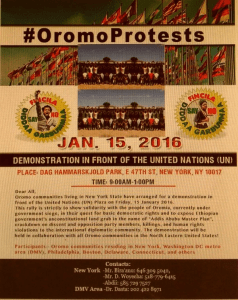
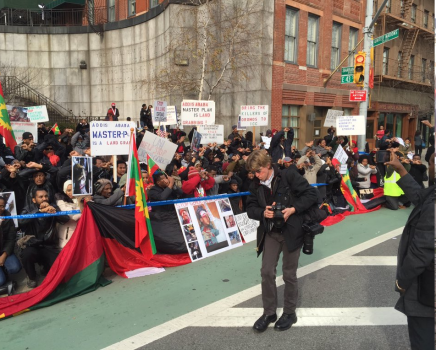

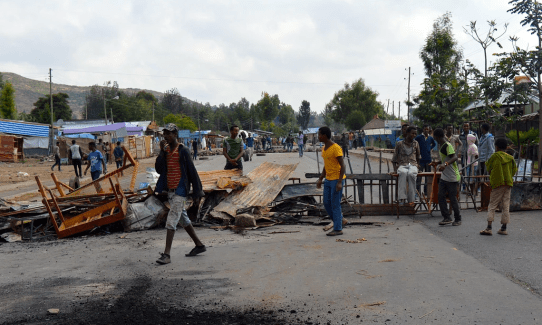
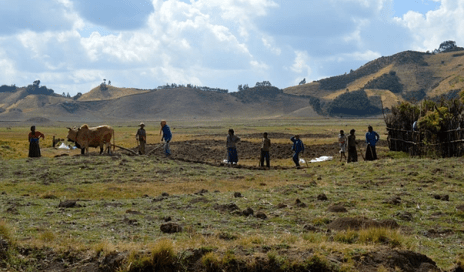
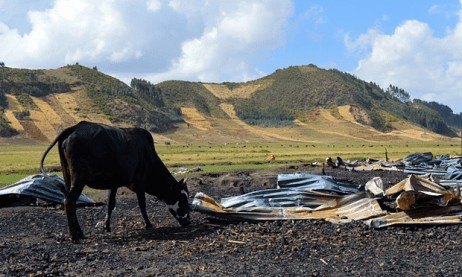

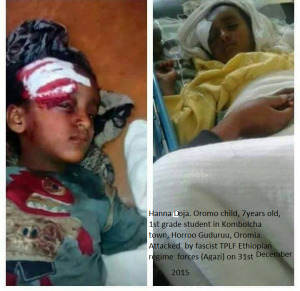



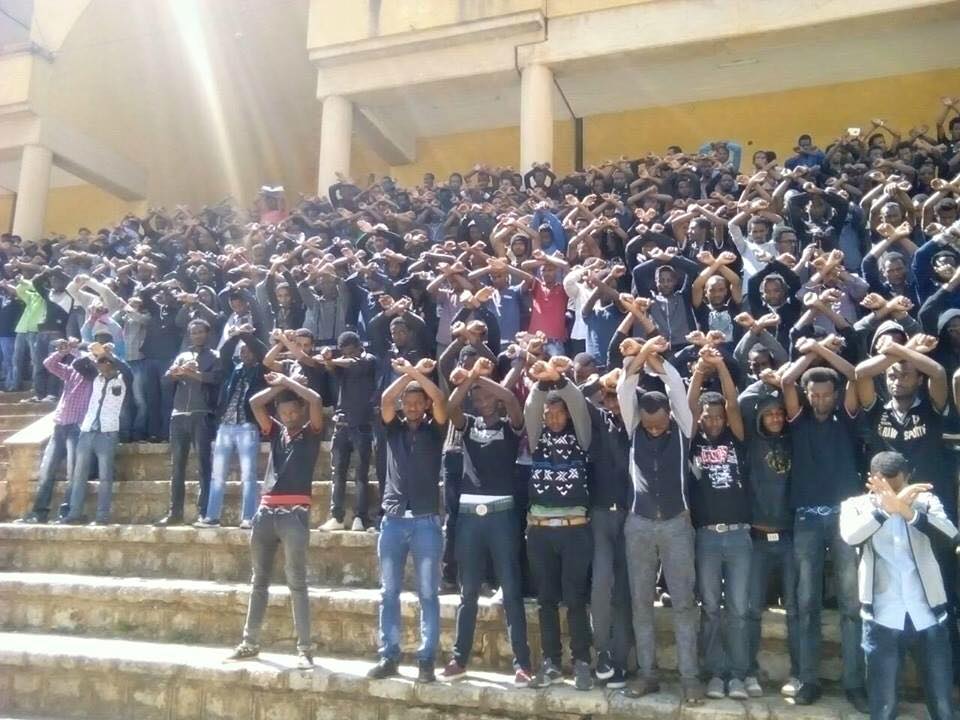
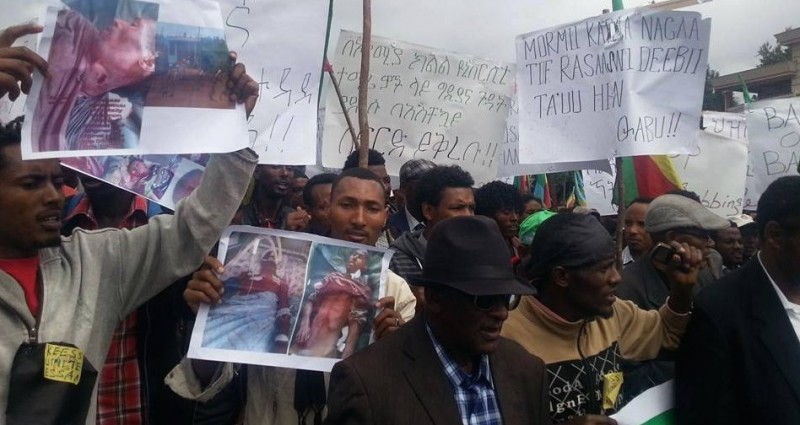

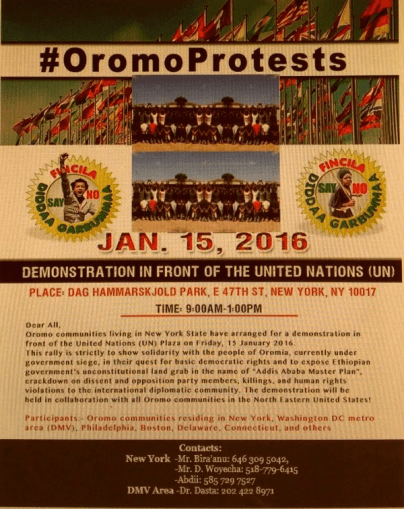
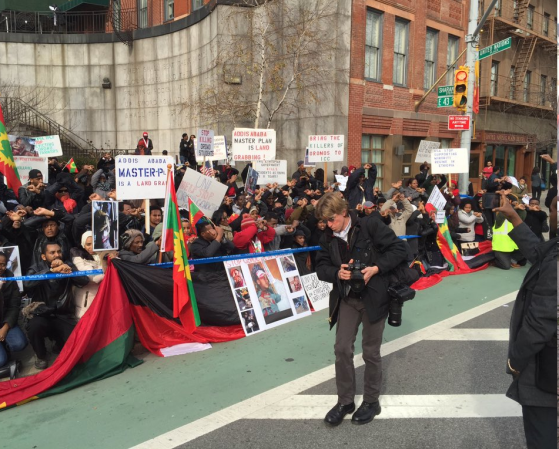


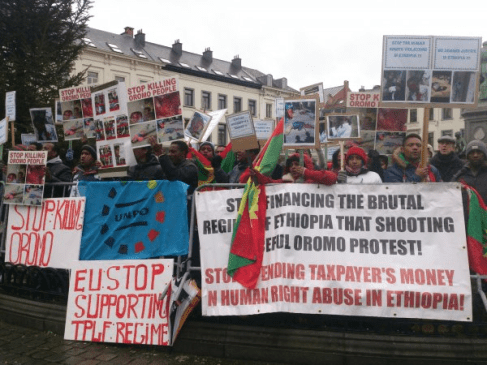
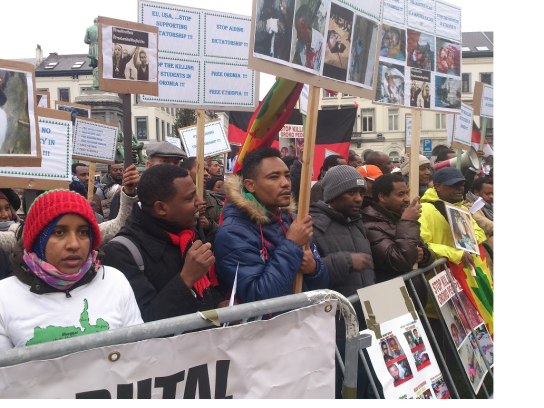
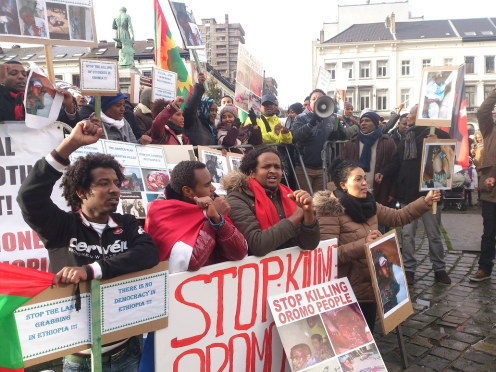

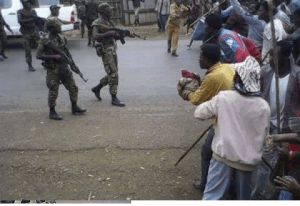





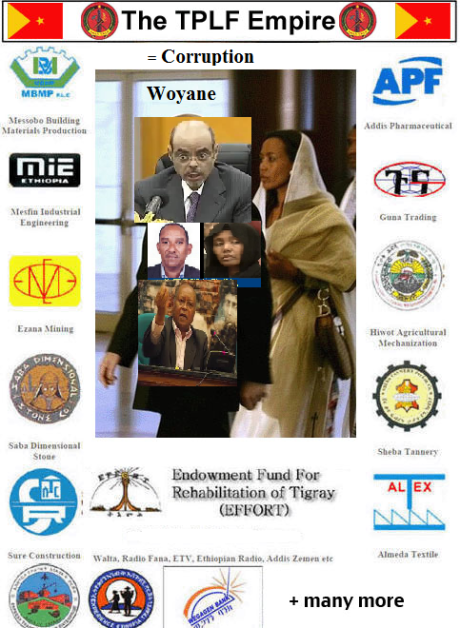
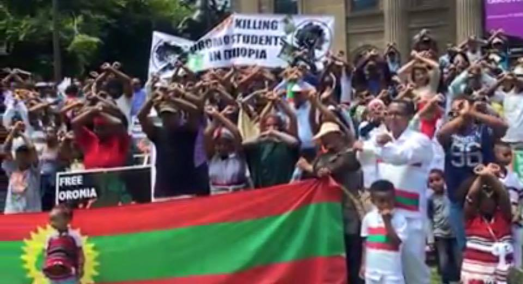
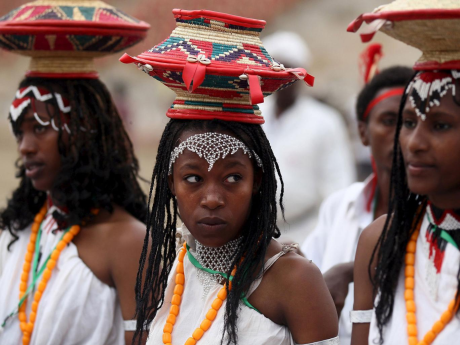
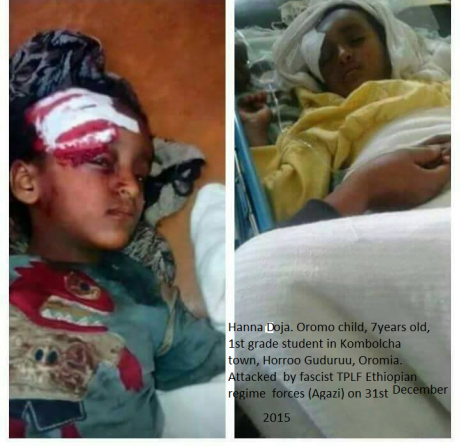
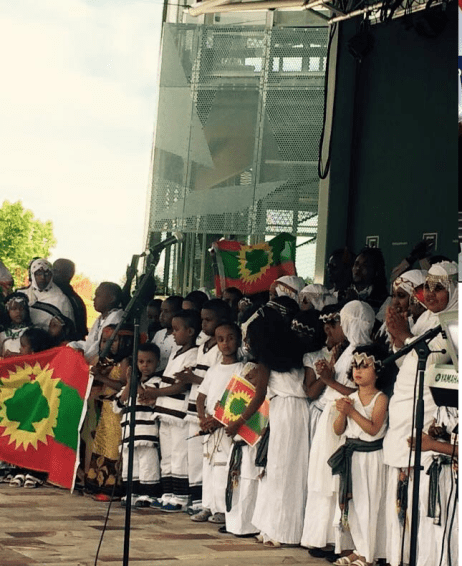
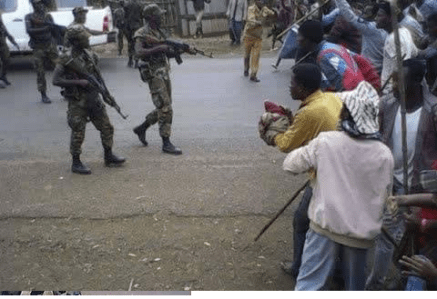
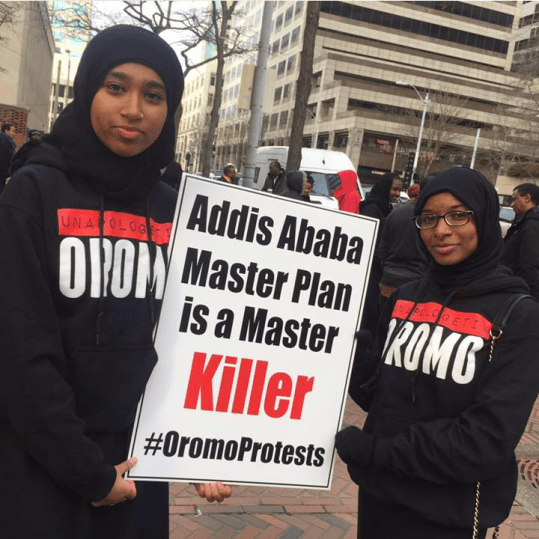
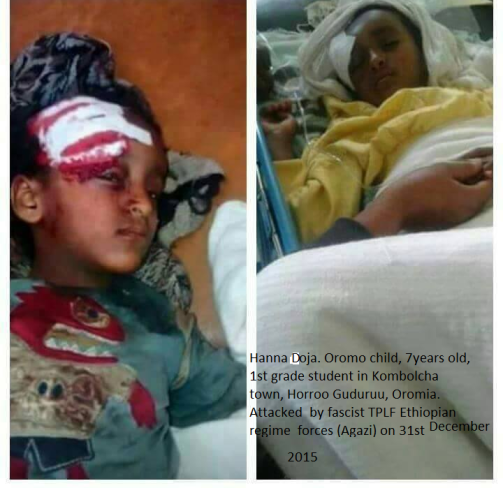
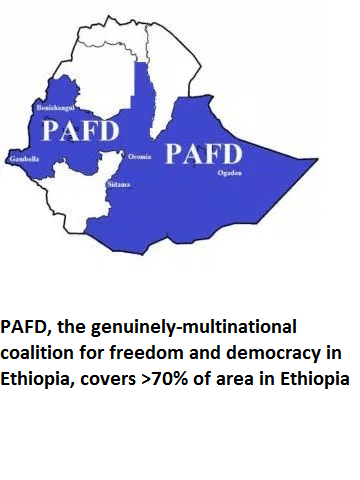


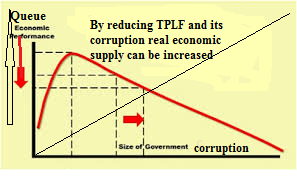
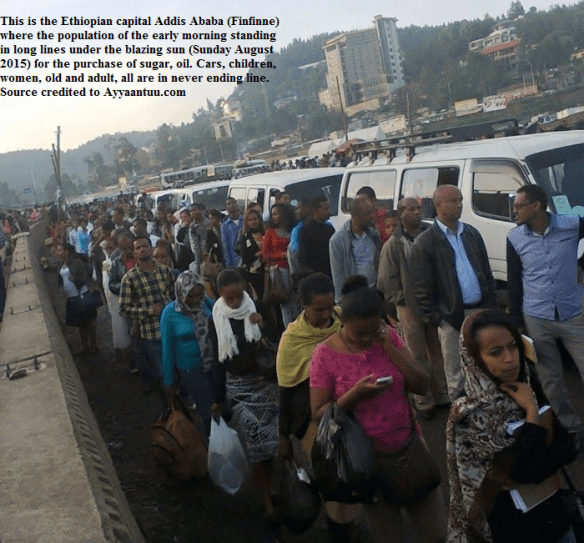

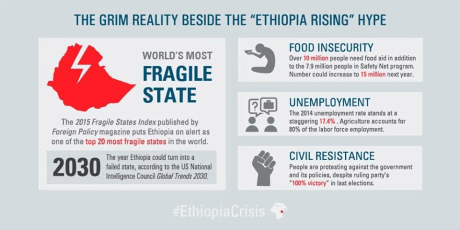
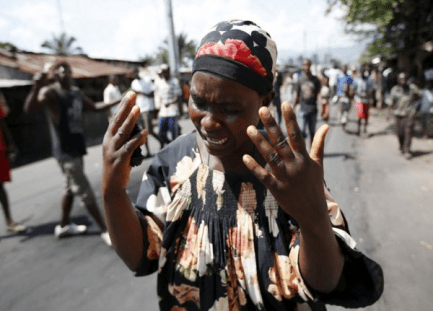
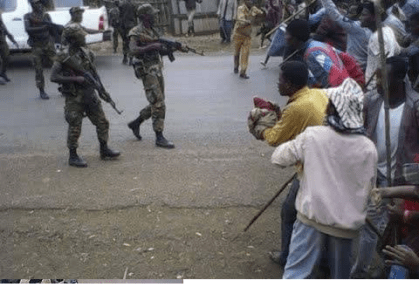

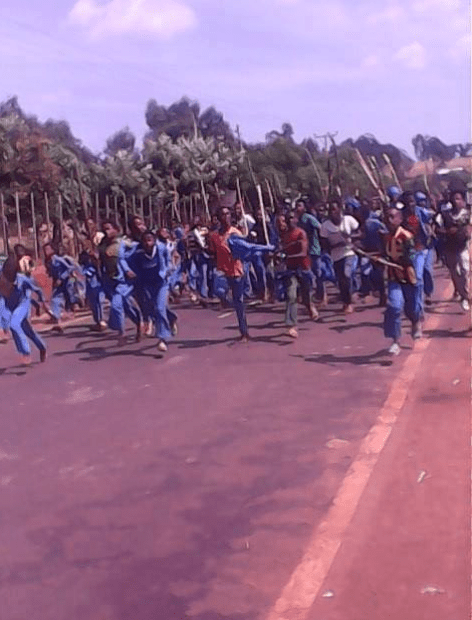
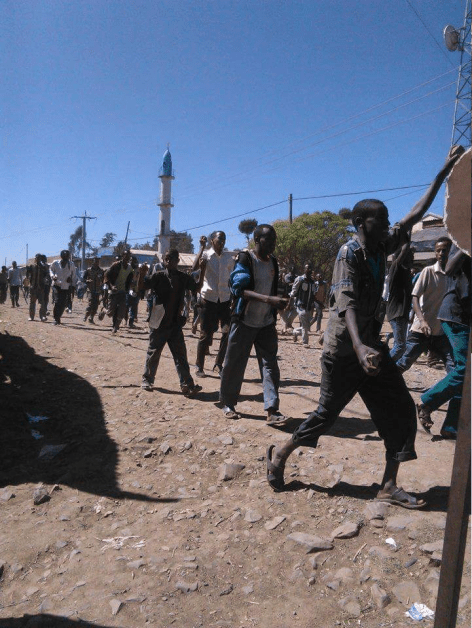
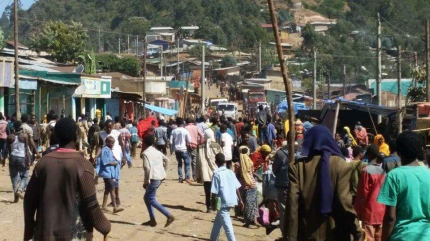
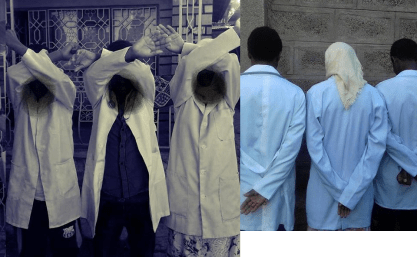
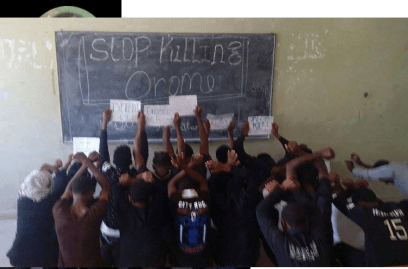
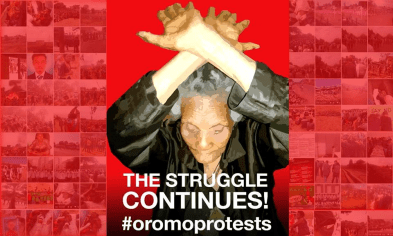


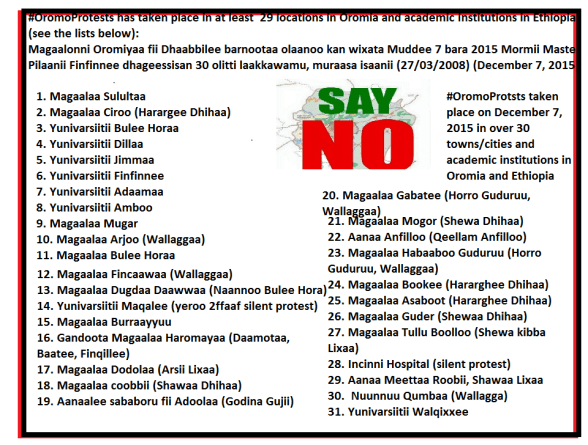
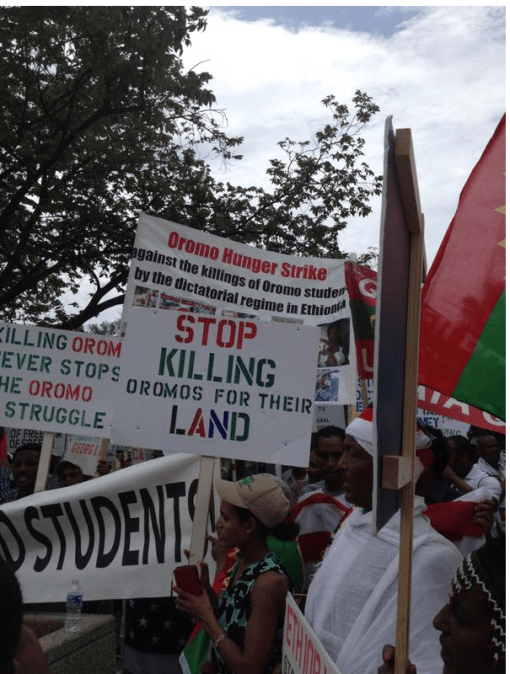

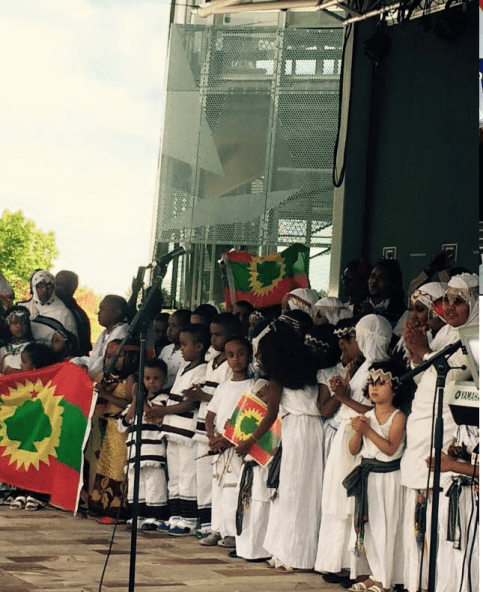
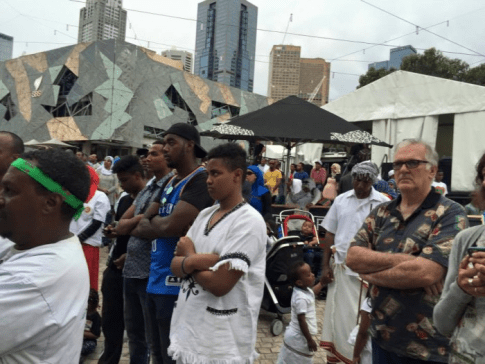
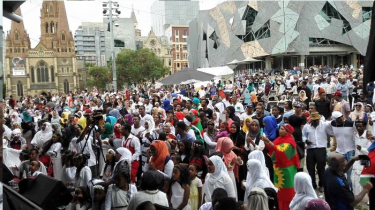
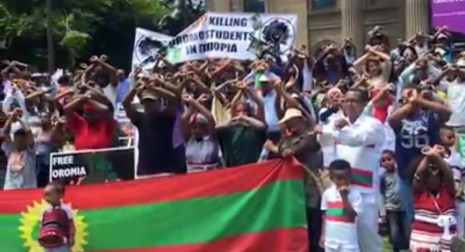
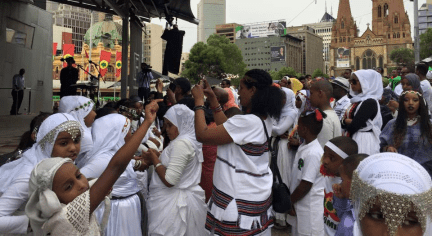
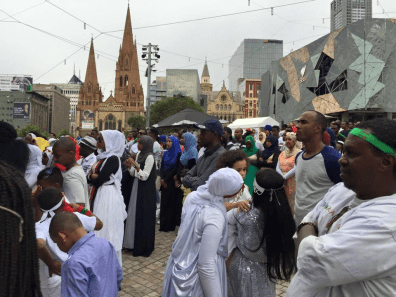
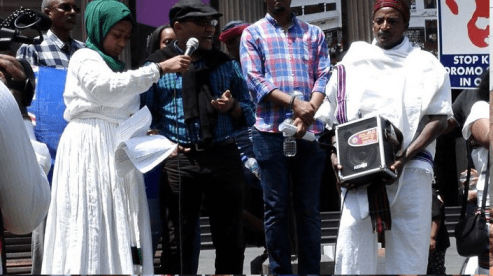


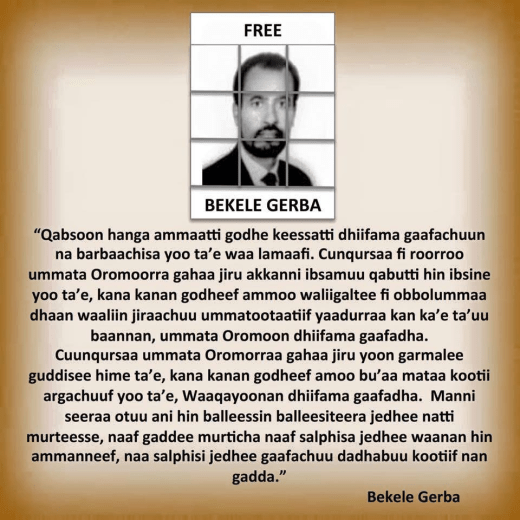
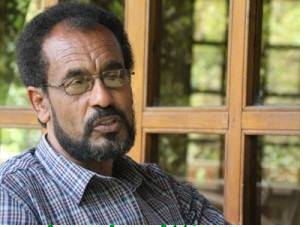
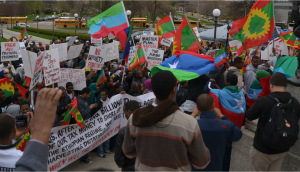
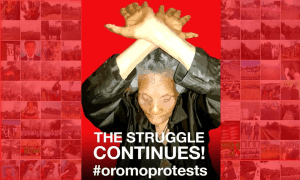
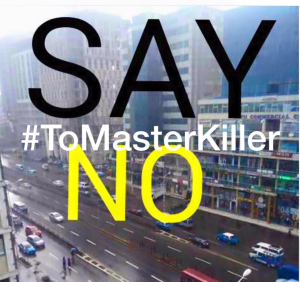
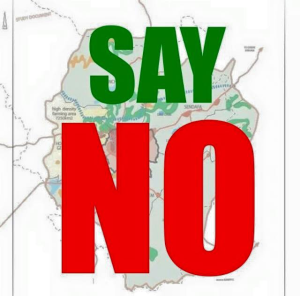
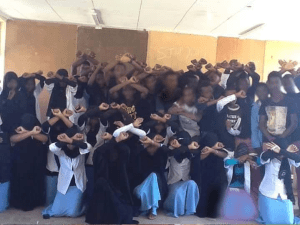
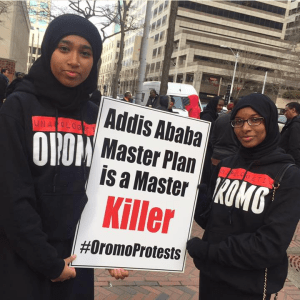
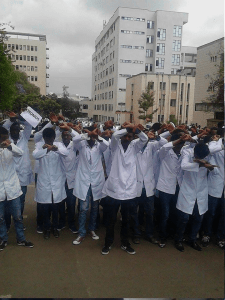
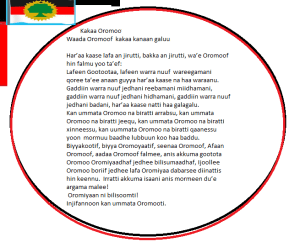
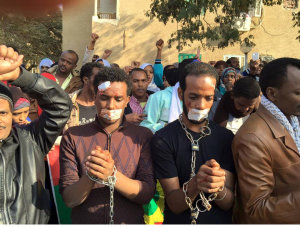

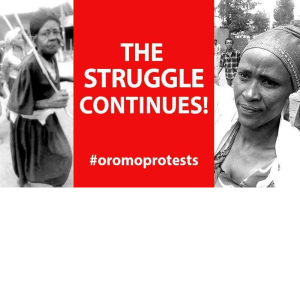
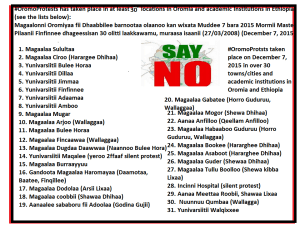
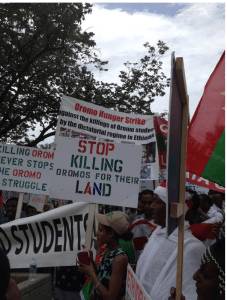
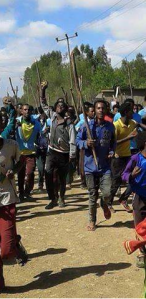
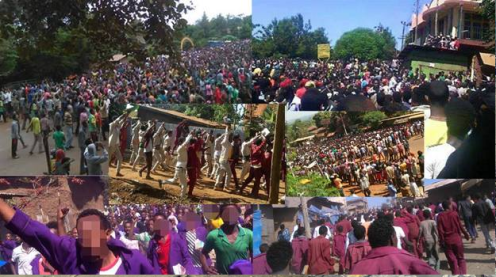
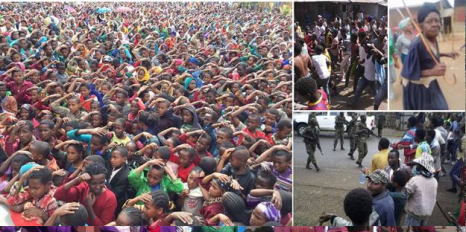
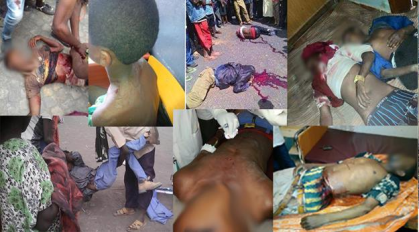
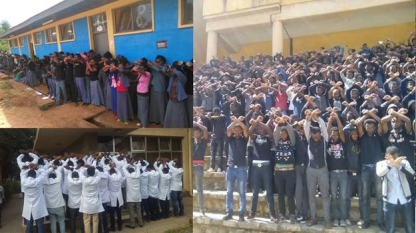
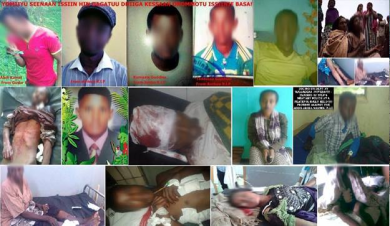
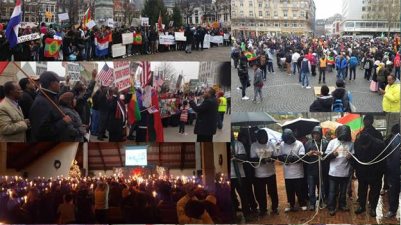
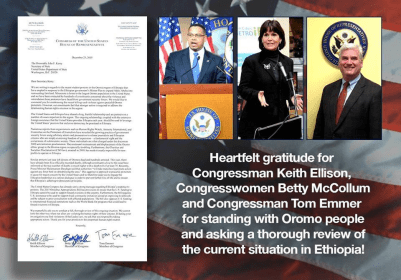


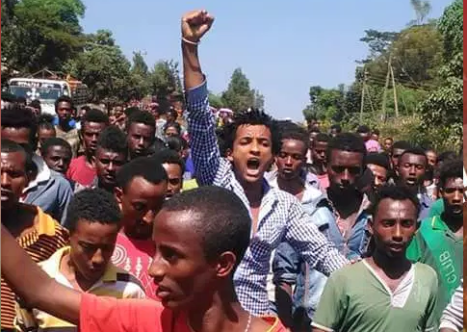
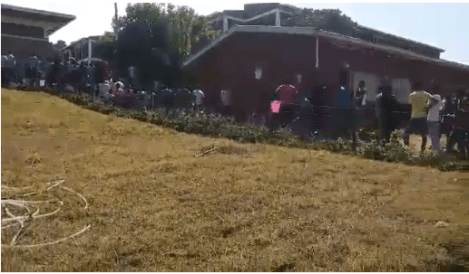


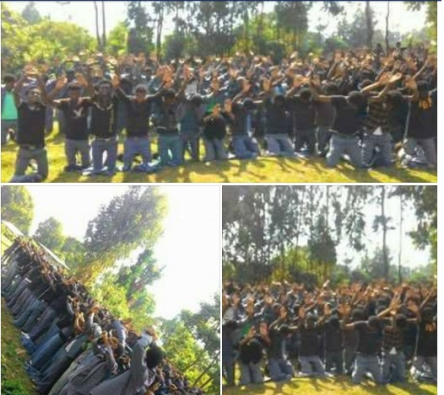
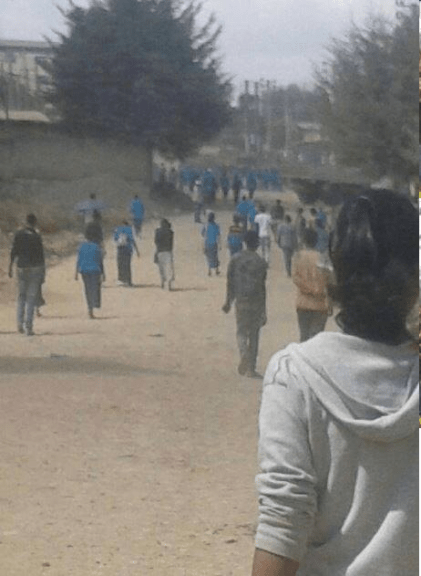

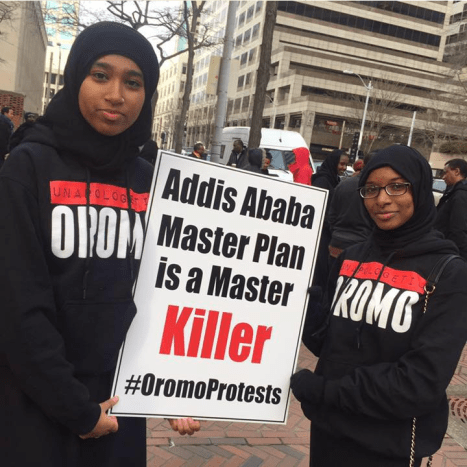






 Oromian Economist
You must be logged in to post a comment.