Economic and development analysis: Perspectives on economics, society, development, freedom & social justice. Leading issues in Oromo, Oromia, Africa & world affairs. Oromo News. African News. world News. Views. Formerly Oromia Quarterly
The Ethiopian government has allegedly carried out a spyware campaign targeting dissidents living abroad, including in the U.K., a report has claimed.
Canada-based research group Citizen Lab alleged that Ethiopian dissidents were targeted with emails containing “sophisticated commercial spyware posing as Adobe Flash updates and PDF plugins”.
The report further claimed that Ethiopia used a commercial spyware product manufactured by Israel-based Elbit Systems Ltd to spy on dissidents.
Those targeted included dissidents from the Oromo community, one of Ethiopia’s largest ethnic groups, the U.S.-based media outlet Oromo Media Network as well as one of the researchers conducting the investigation.
Etana Habte, an Oromo activist and PhD candidate and Senior Teaching Fellow at SOAS, University of London, was also targeted.
He believes the government allegedly targeted him to identify people behind protests in Ethiopia’s Oromia state, which was rocked by months-long demonstrations, some of which turned deadly.
“By spying over us they mainly want to identify a wide circle of people who communicate with us on the movement at home,” he told Newsweek.
“They wanted to break into our privacy, collect information from our communications with one another, because they believe the leadership of Oromo Protests communicates with us.
“The solution for Ethiopia is not in spying over political dissenters like us, it is in listening to the people and meeting their demands” Habte said.
The Ethiopian embassy in London has not responded to a request for a comment on the allegations.
Ethiopian Communications Minister Negeri Lencho declined to comment on the report, according to Reuters.
Researchers said their findings raised questions on Elbit’s human rights due diligence practices.
The company said in a statement: “The intelligence and defenses agencies that purchase these products are obligated to use them in accordance with the applicable law.” It added that it only sell products to defense, intelligence, national security and law enforcement agencies approved by the Israeli government.
Deadly protests explained
People mourn the death of Dinka Chala who was shot by Ethiopian forces in the Yubdo Village, about 100 kilometers from Addis Ababa in the Oromia region, on December 17, 2015. Dinka Chala was accused of protesting, but his family says he was not involved. Oromia was rocked by months-long protests, some of which turned deadly.ZACHARIAS ABUBEKER/AFP/GETTY IMAGES
Demonstrations started in Oromia in late 2015, where people initially protested over government plans to expand the territory of the capital Addis Ababa, with farmers raising concerns that increasing the size of the city would lead to forced evictions and loss of farming land.
The government later scrapped the plans, but protests continued. Oromo people argued for a greater inclusion in the political process and the release of political prisoners.
The protests, labelled as the biggest anti-government unrest the country has witnessed in recent history, later spread to Amhara and the Southern Nations, Nationalities, and Peoples’ Region (SNNPR) region.
The unrest continued throughout 2016.
Last October, the government implemented a six-month-long state of emergency, which was further extended by four months in March, to tackle the unrest.
Critics of the state of emergency claimed the government was trying to quell protests by, among other things, restricting freedoms and banning certain media outlets, including the Oromia Media Network. The government denied the allegations.
Rights groups have criticizied Ethiopia for the way it handled protests, accusing the military and the police of using excessive force to quell demonstrations.
The response to the unrest resulted in the death of at least 669 people, a figure the government confirmed in a report released in April.
While the country’s Human Rights Commission recommended prosecution of some police officers, it maintained that the overall response by security forces was adequate.
In this regard, two particularly serious events require investigation by an independent international body. The recent displacement of more than 150,000 and the killings of hundreds of members of the Oromo community might fall within the international legal definition of ethnic cleansing.[1] The other one is the extended displacement, population engineering and death of thousands of members of the Amhara community of Wolqait. This has all the traits and features of slow motion genocide.[2] These two, perhaps among many others, cannot be ignored by the international community as the usual ‘ethnic conflict’; they are atypical in scale, precision, latitude and nature of execution. To discount them is not only to implicitly condone these heinous acts, but also to buoy others to act with impunity. As all justice loving people applauded the recent conviction of the “the butcher of Srebrenica,” Ratko Mladić, former Bosnian Serb general, by the International Criminal Court (ICC) for his role in the Bosnian genocide, war crimes and crimes against humanity, the international community must also track other Mladic’s in various parts of the world and bring them to justice.
Even though more than eighty ethnic groups make-up the country’s hundred million population, key structural, administrative and command and control positions are overwhelmingly reserved for members of the Tigray Peopele’s Liberation Front (TPLF), that claims to represent less than 6% of the country’s multi-ethnic population. This lack of national character and national allegiance within the military and security apparatus lends itself to a conclusion that these institutions are subordinates of and only loyal to the minority ruling elites.
Conceivably, if there is a single most important question that requires in depth interrogation in the present political atmosphere of Ethiopia it is this one: was/is there ethnic conflict in Ethiopia? Though it seems straightforward enough, it is an enormous research question that necessitates proper scrutiny and systemic analysis. Moreover, to provide an honest and somehow adequate answer to this crucial question it is important that both the past and the present be examined without indulging in sensationalism and one-dimensional political melodrama. But why ask this question now? Expressly, it is now more than two decades since the current federal political configuration has ‘commendably resolved’ all the lingering issues associated with ‘nations and nationalities.’ Well, the concise answer is contrary to this claim of ‘achievement.’ There is a persistent political revolt across the country rebuffing the government’s assertion that the ‘ethnic question’ has been ‘put to rest’ through the federal constitution and delineation of boundaries on linguistic as well as ethnic lines.
Furthermore, in recent instances some senior government officials, both at a national and regional levels, political groups, media outlets and individual commentators are chillingly pronouncing the current political and security environment in the country as an apocalypse of ‘ethnic conflict,’ ‘ethnic cleansing’ and even ‘genocide.’ This message is communicated sometimes with implicit and other times explicit countenance of mass ethnic violence that has taken place. Often these terms are used interchangeably, as if they are one and the same. Indeed, these three different classifications of conflict and violence demand careful conflict analysis methods before reaching a conclusion as to whether or not they have occurred. Most importantly, those who claim they have occurred should know the seriousness of the matter and at least endeavor to present qualitative and quantitative evidence that supports their assertion. Additionally, if in fact these claims are true, they must be put in the right context and their dynamics and nature (who, when, what and where) should be mapped and considered judiciously.
What is more disconcerting is the casual and banal use of theses terms without providing any background analysis or supporting data. This is particularly troubling because it is emanating from those who should be more responsible, cautious and disciplined in their evaluation, deliberation and communication with the public. Unfortunately, they are evoking these words in a way one would comment on spectator sports matches. The misuse, misinterpretation and exploitation of terms such as ‘ethnic conflict’, ‘ethnic cleansing’ and ‘genocide’ for the purpose of inverted victim-hood narrative is repugnant and should not be tolerated. This reality reflects grave moral and ethical decay among the political class.
Meanwhile a different form of quandary lurks within academic circles in the study of ethnic conflict, ethnic violence and related inquiry. This is deeply ingrained assumption among academia, ‘experts’ and policy makers is the hypothesis that state ethnic groups are primordial entities who are inherently bound for conflict, animosity and violence against each other rather than coexistence and congruence. This presupposition remains entrenched within ethnic and ethnic conflict studies programs across universities and college campuses. This is not to say, however, that there are no conflicts and violence between and among different ethnic groups. Indeed, they occur on different scales and magnitude, sometimes with a devastating effect, other times with a mild skirmishes and sporadic confrontations.
The problem is the mindset and pre-concluded notion of the inevitability of ethnic groups engaging in ‘old rivalry,’ which finds its roots in the legacy of colonialism slavery and apartheid. Furthermore, there are more ethnic studies and ethnic conflict studies programs in the West (focused on Africa and the “third world”) than in the regions where the ‘problem’ exists. In fact, in the Western academic institutions these programs have exploded over the last twenty or so years. This has led to a ‘confirmation bias,’ which is the tendency to search for, interpret, favor, and evoke information in a way that validates one’s pre-existing beliefs or hypotheses while offering unreasonably less consideration to evidence that challenges or contradicts it. This is perhaps the most persistent mistake conflict studies professionals make during a conflict analysis process.
In an academic sense there are four school of thoughts in understanding of ethnic identity and its potential for conflict. The primordial school of thought explicates ethnicity as a fixed characteristic of individuals and communities. Additionally, for primordialists, ethnicity is embedded in inherited biological attributes, a long history of practicing cultural differences, or both. Ethnic identity is unique in its intensity and strength and as an existential feature defining individual self-identification and communal distinctiveness. The psychocultural orientation of ethnicity offers deep cultural and psychological roots which shape the groups’ shared world views. Hence, ethnic identity cannot be changed, only made more tolerant and open-minded. Promoters of a different school of thought, called as social constructivism, emphasize the social nature of ethnic identity. In their assessment, ethnicity is neither immovable nor entirely open. Thus, ethnic identity is created by social exchanges between individuals and groups and stays beyond a person’s choice. For instrumentalists, ethnicity is a product of personal choice and mostly neutral from the situational circumstances or the existence of cultural and biological traits.
The most potent ingredient in a politically motivated ethnic violence is the construction and promotion of hateful narratives against an ethnic group or more than one ethnic group. Stories, songs, literature mixed with myth, and history serve as a mobilizing propaganda campaign strategy as well as dehumanizing the ‘other’ to the point that justifies killing or harming. In the same way these stories of dehumanization are transmitted intergenerationally to keep the hate message alive. There are groups and individuals at the highest leadership positions involved in such a dangerous and divisive campaign against more than one ethnic group. In fact, this reckless venture continues to be employed as a political tactic and strategy to retain hold on power.
In this regard, two particularly serious events require investigation by an independent international body. The recent displacement of more than 150,000 and the killings of hundreds of members of the Oromo community might fall within the international legal definition of ethnic cleansing.[1] The other one is the extended displacement, population engineering and death of thousands of members of the Amhara community of Wolqait. This has all the traits and features of slow motion genocide.[2] These two, perhaps among many others, cannot be ignored by the international community as the usual ‘ethnic conflict’; they are atypical in scale, precision, latitude and nature of execution. To discount them is not only to implicitly condone these heinous acts, but also to buoy others to act with impunity. As all justice loving people applauded the recent conviction of the “the butcher of Srebrenica,” Ratko Mladić, former Bosnian Serb general, by the International Criminal Court (ICC) for his role in the Bosnian genocide, war crimes and crimes against humanity, the international community must also track other Mladic’s in various parts of the world and bring them to justice.
When analyzing the conflict and violence dynamics in Ethiopia, we encounter one incontrovertible detail which gives credence to the ‘ethnic conflict’ argument. That is the militarization of ethnicity and the ethnicization of the military. This is particularly factual for the ethnic party directly associated with the ruling elite. Reminiscence of the guerrilla years, all units of the army and security reflect ethnic hegemony. This way of structuring the military is the most troubling feature of the political dynamic in the country. Even though more than eighty ethnic groups make-up the country’s hundred million population, key structural, administrative and command and control positions are overwhelmingly reserved for members of the Tigray Peopele’s Liberation Front (TPLF), that claims to represent less than 6% of the country’s multi-ethnic population. This lack of national character and national allegiance within the military and security apparatus lends itself to a conclusion that these institutions are subordinates of and only loyal to the minority ruling elites.
In addition, the presence and involvement of federal and regional paramilitary groups with a sworn loyalty to their ethnic parties in quashing popular uprisings and revolts demanding change appears to be an affirmation that government backed institutional ethnic violence is taking place. Since these groups are organized by and report to their ethnic military and political power command, it is safe to say the violence contains an ethnic element. The conventional rationale for such violence is often the fear of a minority that the majority will abuse power to the disadvantage of the minority in the political arrangement. While this analysis is true for much of ethnic conflict/violence in various parts of the world, the minority-majority dynamics is set up in reverse in Ethiopia. In other words, the minority group controls the political and economic power, while the majority is marginalized.
As of late, non-conformist and independent leadership within the political landscape of the country is making an appearance. Inter-ethnic collaboration inside the country and within the diaspora both at a community and political party levels is gathering momentum. All in all, despite the weight of injustice and the pain of oppression, there is some modest wind of hope and optimism blowing on the majestic mountains, valleys and farmlands. Hope and optimism, the unbreakable spirit of the people that broke the back of European fascism, is once again ready to fight for its freedom, be it against external threat or homegrown transgressions.
It is clear that regional ethnic parties that make up the ruling EPRDF do suffer from authenticity and credibility deficits due to the original nature of their creations. Both the Oromo People’s Democratic Organization (OPDO) and the Amhara National Democratic Movement (ANDM) didn’t come to being through an organic process. They were formed by the Tigray People’s Liberation Front (TPLF) during the civil war. In recent months, these two groups have shown a very practical as well as psychological (symbolic) demonstration of unity and leadership to their constituencies and the entire country. Given the fact that trust between authority and citizenry is often absent in Ethiopian governance structure, ANDM and OPDO must travel a great length before they gain the full trust and support of the people. In return, the people of Ethiopia must offer them the benefit of the doubt and give them sometime to prove themselves.
Justifiably, the majority of the Ethiopian public views the military, the police and security apparatus as a threat rather than a protection. In addition, the lack of unifying symbols and expressions, such as a national flag or national anthem, have resulted in the use of competing symbols rather than commonly shared ones, further dividing the society not only on a substantive level but also at a symbolic level.
In an apparently leaked document entitled ‘Security situation analysis,’ a little-known body called the National Security Council derided that the country’s political, social and economic order is unraveling and inter-ethnic violence including genocide is “threatening” the country’s very existence. Unfortunately, this rather alarming assessment doesn’t substantiate, quantify or offer any background analysis about this gloomy situation. The reports claim that “genocide has taken place in the eastern part of the country” is obviously startling, but lack of further investigation by an independent international body is equally disturbing.
In contextualizing and analyzing the current dynamics in Ethiopia, it is safe to say that there is no mass inter-ethnic violence. However, there is unambiguous evidence that federal and state level institutions, such as the military, special units and regional police forces with an ethnic administrative and structural commands have been used to target ethnic groups. This should make the identification, investigation and prosecution of the responsible individuals much easier than mass ethnic conflict.
History’s pitfalls and blood stains are not unique to Ethiopia. They are the tragic scars and contours that mark the nation. Some of the terrains of our past show the blood-stained footprints of our ancestors. However, the prejudice and injustice of our past must not serve to engineer the suffering of our present. Thus, the study and honest interrogation of the past will obviously bring discomfort and pain. We must look at them, touch them, and feel them. This, all of us to face and do by unlocking our hearts and making it our collective tragedy. Most importantly these experiences, however painful, are sacred pages of our history and they should be treated as such. Any meditative calculation to use them as political stock to build division between groups and sustain a grip on power is not only dangerous, it also falls outside the moral decency and cultural norms of the people of this land. The seeds of division and hate, in spite of how deep they were planted and how loud they were propagated, they failed to sow permanent discord between communities with shared history and experience. For that we as people should be proud.
Despite the uncomfortable and at times painful chapters of the country’s history, people across this land have kept their decency and sanity. Never in this country’s history has an ethnic group mobilized to wage a war or terrorized another ethnic group. Yes, state armies and groups manipulated by elites past and present have executed the desire and agenda of the ruling class. But there was no deep rooted, hate-filled animosity that indented neighbor against neighbor, village against village or community against community. Not for lack of trying by the elites, but by people’s rejection of hate and division. Ultimately, the people must join together to build a shared future.
Disclaimer: The views and opinions expressed in this article are that of the writer’s and do not necessarily reflect the editorial of Addis Standard.
[1]A United Nations Commission of Experts mandated to look into violations of international humanitarian law committed in the former Yugoslavia defined ethnic cleansing in its interim report as “… rendering an area ethnically homogeneous by using force or intimidation to remove persons of given groups from the area.” In its final report, the same Commission described ethnic cleansing as “… a purposeful policy designed by one ethnic or religious group to remove by violent and terror-inspiring means the civilian population of another ethnic or religious group from certain geographic areas.”
OSA’S STATEMENT ON DISPLACED OROMOS: AN URGENT CALL TO THWART THE ESCALATING HUMANITARIAN CRISIS IN ETHIOPIA
Oromo Studies Association (OSA) | November 26, 2017
The Oromo Studies Association – a multi-disciplinary academic organization established to foster scholarly studies in all fields pertaining to the Oromo people – would like to bring to the attention of prominent political leaders and influential policy makers, the building humanitarian crisis in the Horn of Africa; with the so-called Liyu Police of the Somali region – a paramilitary force that has been organized, trained and armed by the Ethiopian government – waging an undeclared war against Oromo communities in eastern, southeastern and southern Ethiopia. While these undeclared wars have subjected the Oromo to crimes comparable in magnitude to the one the Rohingya of Myanmar are currently facing (the offensives have already claimed the lives of thousands, and caused the displacement of hundreds of thousands of Oromo civilians) ; they are not gaining the attention they deserve in the global centers of power and among the international media for reasons that are neither convincing nor clear.
But, for the social norms of tolerance and coexistence built over centuries of largely positive interactions, interdependence and intermingling among the brotherly peoples in Ethiopia , these aggressions could have conceivably plunged the country into chaos and bloodletting that would have surpassed the Rwandan genocide. There is no guarantee that these norms will hold indefinitely with the Somali regional government continuing to unleash its unaccountable force against Oromo communities in the border areas; committing all sorts of appalling crimes, likely with the intention of uprooting them from their ancestral lands (Qe’ee). OSA is deeply concerned that this will end in humanitarian catastrophe of epic proportions unless extreme interventions are undertaken immediately to stop these unprovoked and deadly aggressions.
Some are erroneously reporting these outrageous attacks by one side as inter-ethnic conflicts between Oromo and Somali forces , based on a glib observation that the former are naturally fighting back to defend themselves and their Qe’ee. The fact of the matter is that these conflicts are taking place with encouragement from, and an active participation of, the powerful group that currently dominates the Ethiopian government, aka the Tigray People’s Liberation Front (TPLF). Indeed, credible evidences suggest that these assaults are instigated by Ethiopian generals working in close concert with the enigmatic character Abdi Iley (the president of the Somali regional government) and his criminal enterprise known as the Liyu Police.
The Liyu Police – a Janjaweed-like paramilitary group – was instituted by the Ethiopian military in 2008 as a counter insurgency force against the Ogaden National Liberation Front(ONLF), an outfit that has been fighting for the rights to self-determination of the Somali people in Ethiopia. Even though this paramilitary group has been implicated in mass killings, kidnappings, rape, and other disturbing human rights abuses documented by respectable human rights organizations , it has never been held to account, largely because it is doing the dirty work of the Ethiopian central government. It should be noted here that numerous calls for independent investigations into the troubling activities of this group have always been rejected by the regime in Addis Ababa, with media organizations affiliated with the TPLF becoming reliable defenders of the Liyu Police. The deal is that Abdi Illey executes – through his clan-based militia – TPLF’s pernicious schemes, in return for being allowed to wield absolute political power over his captive population, while being protected by powerful forces in Addis and beyond.
Unable to stop the ever widening #Oromo Protests even after deploying its vicious army unit known as the Agazi (recall the Irreechaa Massacre of October 2, 2016 and the subsequent declaration of a state of emergency that lasted for ten months ), the TPLF appears to have chosen waging a proxy war with the Oromo people using the Liyu Police, with a hasty calculus that the strategy might weaken its arch-enemy, the Qeerroo Bilisummaa Oromo (QBO) – the youth group behind the ongoing #Oromo Protests. It is to be recalled that the QBO had forced the TPLF to abandon its secretly-hatched major policy initiative – the inaptly named ‘the Addis Ababa and the Nearby Oromia Towns Integrated Master Plan’ – a ploy that was meant to empower a few fat cats in Addis Ababa at the expense of millions of farmers in central Oromia.
Finding itself in unfamiliar territory because of #Oromo Protests – and quickly losing its carefully-crafted image of a ‘strong developmental-state’ capable of ‘delivering the goods’ and policing not just Ethiopia but the entire Horn-of-Africa – the TPLF appears to be in a desperate bid to regain some of its mojo, by activating the deadly Somali-region militia and unleashing it on innocent Oromo citizens. As some have pointed out, the key rationale behind this reckless and deadly move was to goad the Oromo to start fighting with the brotherly Somali people, with the aim of deflecting their attention from (and weakening their resolve of resisting) the tyrants in Addis Ababa. The TPLF has perfected this approach in its nearly three-decades-old rule, effectively using it to exploit the pre-existing fault-lines between the elites of the two major ethno-national groups in the country, the Oromo and the Amhara. With leaders from the two groups showing signs of rapprochement, the TPLF appears to be on a fishing expedition of orchestrating conflicts between the Oromo and the Somali populations to prolong its oppressive rule in the country.
As of yet, the Oromo have refused to take the bait, by and large keeping their focus on the real enemy that has been the cause of much of their misery. Despite being subjected, essentially because of their identity, to a myriad of atrocities by the heavily-armed tag team of the Ethiopian army and the Liyu Police, the Oromo have not taken any kind of retaliatory measures against innocent Somali citizens living in Oromia; instead, they are marshalling their limited resources in trying to rehabilitate the hundreds of thousands of their compatriots that were evicted from the Somali region and the border areas, practically keeping the situation from devolving into inter-ethnic conflicts that could have devastating implications in the region and beyond.
The question responsible people should ask under these circumstances ought to be: is this a sustainable state-of-affairs? Should leaders with a stake in World peace continue to count on the goodwill and the essential comity of the Oromo people and ordinary Ethiopians to justify their lack of focus and serious interest in the looming disaster in the Horn of Africa? OSA scholars – most of whom are serving in Western universities with distinction – believe that the call for liberty and justice in Oromia in particular and Ethiopia in general can no longer be muzzled by sheer force; nor can it be twisted with any amount of political machination. Therefore, we call upon influential and responsible political leaders and policy makers in the West to find creative ways (there are plenty, as they hold the purse strings) that will force the Ethiopian government to: 1) disband the Liyu Police, bringing to justice the principal players in the violence that uprooted close to half a million Oromo civilians from their homes and livelihood; 2) rehabilitate the displaced population, making sure they are properly compensated; 3) make a complete U-turn in how it deals with the predominantly peaceful #Oromo Protests; and, 4) address – without any delay – the legitimate political, economic and cultural demands of the Oromo people and the other ethno-national groups in the country. OSA believes strongly that the cost of doing nothing will be orders of magnitude higher than the cost of measures that may have to be taken immediately to induce the TPLF to change its behaviour.
Respectfully,
Teferi Mergo, PhD
President, Oromo Studies Association
Cc:
Donald Trump, President
The United States of America
Angela Merkel, Chancellor
Bundesrepublik Deutschland
Theresa May, Prime Minister
The United Kingdom
Justin Trudeau, Prime Minister
Canada
Emmanuel Macron, President
République Française
Xi Jinping, President
中华人民共和国
Paolo Gentloni, Prime Minister
Repubblica Italiana
Malcolm Turnbull, Prime Minister
The Commonwealth of Australia
Shinzō Abe, Prime Minister
大日本帝國
António Guterres, Secretary General
The United Nations
As over 610,000 Rohingya people have been displaced, the UN report details ‘devastating cruelty’ against Rohingya population http://www.un.org/apps/news/story.asp?NewsID=56103. While over 690,000 Oromo people have been displaced from Eastern Ethiopia by the coordinated TPLF Ethiopia’s regime’s cruel forces, the UN and the International Community are silent. Millions of Oromo people, children, women, elders, young and adults have been evicted from their homes through systematic land grabs, ethnic cleansing and direct wars declared on them. Thousands killed and over a quarter million are in Ethiopia’s regime’s torture camps. The genocide war against Oromo people is in its full swing and unstopped on daily basis.
The internally displaced Oromo people are suffering without food and shelter.
(OPride) — Emails between senior Ethiopian government officials, obtained exclusively by OPride, shed new lights on the state-run Ethio Telecom’s abrupt decision to halt the text-to-give campaign launched by Oromia State in September. The disclosures also pinpoint the key government officials behind the action.
“Help rehabilitate our people displaced from the Ethiopian Somali region by texting “O” to 700 to give 5 birr,” Addisu Arega, the spokesperson for Oromia State, announced on Sep. 28, 2017 via Facebook and Twitter. “We thank Ethio Telecom for their huge support in setting up the campaign free of charge.”
However, the campaign that was meant to raise relief funds for the more than half a million Oromos displaced from the Somali Regional State lasted a mere five hours.
Fascist TPLF Ethiopia’s regime Agazi forces continue with mass killings in Oromia (Ethiopia): At least 10 killed and 20 wounded in Ambo. #OromoProtests, read in Oromian Economist, October 28, 2017
The peaceful street protests in Oromia that shook Ethopia for over one year (November 2015-October 2016) turned violent after the reckless action by the government when its military attacked civilians and murdered over 700 at the Oromo Irrecha Festival on October 2, 2016.
The fascistic action of the Ethiopian government turned a peaceful protest into a violent one in which many people were killed and government property was destroyed by the angry protesters.
The TPLF/EPRDF government declared a six- month state of emergency- later extended to ten months- on October 8, 2016 with the pretext of calming the violence in Oromia. During the State of Emergency, the government killing squad members were deployed in all villages of the Oromia Regional state where they committed killings, kidnappings, and arrests during the ten months of the State of Emergency.
Under the State of Emergency, the TPLF/ EPRDF government- trained Liyu Police led by the killing Squad Agazi were deployed along the long border between Somali and Oromia regional states and occupied 32 districts of Oromo land from the south Borana zone to the northeast Hararge zone; many people were killed from both sides. During the six- month war between the federal government force backed Liyu Police and Oromo farmers over 500 people have been killed, and many other Oromos have been forcefully kidnapped and taken to Somali Region.
Despite the governments claims to the contrary, Ethiopia is essentially a one-party state in which power is monopolized by the EPRDF, which despite claiming to be a democratic coalition, is in fact a dictatorship ruled by men from Tigray under the TPLF banner. It is an illegitimate government supported by the West, – America, Britain and the European Union (EU) being the largest benefactors – politically and economically. With the exception of the EU, these powers not only remain silent in the face of State Terrorism, but also spread Ethiopian propaganda through the mainstream media and act in collusion with the EPRDF in relation for example, to the arrest of opposition party leaders. Instead of supporting the ruling party, donors should be applying pressure on it to respect human rights and adhere to the democratic principles laid out in the country’s constitution. Their silence and dishonesty makes them complicit in the crimes of the government, which are heinous and widespread.
Successive Ethiopian regimes have never displayed humanity or respect for Oromo and denied opportunities to build their social, economic, political, cultural and organizational infrastructures. In all spheres of life, discrimination, subjugation, repression and exploitation of all forms were applied. Everything possible was done to destroy Oromo identity – culture, language, custom, tradition, name and origin. In short, the leaders of Ethiopian empire maintained the general policy of genocide against the Oromo people.
Current state terrorism (by TPLF junta):
Reduction project of TPLF is on track with multiple fronts. Here is the TPLF slogan: We, TPLF or Tigrean sons and daughters, will reduce the number of Oromo from 40 million to the minority group without their awareness and knowledge of the world.”
Through Massacre and Displacement example recent action in Eastern Oromia, thousands of silent death across Oromia in the night, in detention camp and special torture branch in Meqelle (Tigrai).
Through targeted shootout on the street, by kidnapping and mutagenic process
Through indirect actions (denying well-functioning health care system and inhibiting economic empowerment).
Humiliation project of TPLF: Here is the TPLF Motto: We, TPLF- or Tigrean sons and daughters, have to show to the Ethiopian empire nations that we are unbeatable masters.
Through imprisoning and torturing
Through land grab
Through culturing puppets, traitors, servants and opportunistic individual
Powerless unity project of TPLF: Here is the TPLF plan: Especially to deny Oromo people the powerful unity and strong organization we TPLF-staff or Tigrean sons and daughters have to work tirelessly. Source: Ethiopian Empire Policies are Fecal Occult Blood, While Their Actions are Considerably Hemorrhagic, byDr. B. K. Deressa in Kichuu inf
The regime’s officials and armed forces engaged in systematic looting of Oromo resources, economic corruption, black markets in commodities and foreign exchanges. click here to read THE SOUR TASTE OF SUGAR IN ETHIOPIA
ERIN ADLER, STAR TRIBUNELeft to right: Amy Bergquist, Advocates for Human Rights staff attorney joins Husen Beriso, Endris Hundissa, Kathleen Seestadt, Nagessa Oddo Dube, Genemo Uka and Amsalu Mayessa, all members of the United Oromo Voices group. A panel discussion will focus on publicizing the plight of the Oromo people, including ongoing alleged human rights violations that some say the U.S. government ignores while continuing to support Ethioipia. Oromia is a region of Ethiopia and Oromos are an oppressed ethnic minority.
A new group dedicated to raising awareness of human rights violations in Ethiopia against the Oromo — an Ethiopian ethnic minority with a significant Minnesota presence — held its first event Sunday in Minneapolis.
More than 70 people crowded into Norway House to hear the “Ethiopia to Minnesota” speakers panel, sponsored by United Oromo Voices, a coalition formed about six months ago.
Panelists spoke about Ethiopia’s history and ethnic groups, its current government and ideas for how the country can change.
“We need Americans to understand us, to push their representatives to [be a] voice for the Oromos to stop the ongoing genocide,” said Nagessa Oddo Dube, a United Oromo Voices member.
Minnesota has the largest concentration of Oromos in the United States. The Oromos are Ethiopia’s largest ethnic group, making up between 33 and 50 percent of the country’s population.
The state demographer’s office says 8,500 Oromos live here, but the Oromo Cultural Institute of Minnesota believes the number is much higher. Oromos are often mistaken for Somalis in Minnesota and thus not very visible, Dube said.
Dube recounted how he survived years of persecution in Ethiopia as an Oromo activist, including repeated arrests, beatings, threats and a murder attempt.
Ethiopian security forces have killed more than 400 protesters and others and arrested tens of thousands more during widespread protests in the Oromia region since November 2015, according to Human Rights Watch.
United Oromo Voices aims to inform Americans that Ethiopia is the second-largest recipient of U.S. foreign aid among low-income countries, funds they say support a government that terrorizes the Oromos by unlawfully arresting them, imprisoning, torturing and even killing them.
The St. Paul-based Center for Victims of Torture sees more Oromos than any other ethnicity, said Curt Goering, the center’s executive director.
Staff there treat torture victims’ physical wounds — broken bones and perforated eardrums — and provide counseling for the psychological ones, Goering said.
“It gives you some sense of the magnitude of the severity of the human rights violations,” Goering said on the panel.
Sen. John Hoffman, DFL-Champlin, attended the discussion to show support for the Oromo, many of whom are his constituents, he said.
“My neighbors are Oromo, my best friends are Oromo,” said Hoffman, who authored a Minnesota Senate resolution in 2014 calling out Ethiopia for killing 85 college students.
Pending resolutions in the U.S. Senate and House of Representatives condemn the Ethiopian government’s human rights violations — including allegedly killing hundreds and arresting thousands of dissidents, journalists and other civilians — and demand political prisoners’ release.
Kathleen Seestadt, an event organizer and group member, has been working with the Oromo community since 2001. The night was a success, especially because many non-Oromos showed up, she said.
“The real challenge is to get people who don’t know the Oromos [to come],” Seestadt said.
The country’s federal system is facing imminent threat
Security breakdown contributing to rising public anxiety
Immeasurable human and material cost caused by recent conflicts
Absence of rule of law prevalent
Security crisis negatively impacting the economy
Diminishing foreign aid due to human rights related concerns
Crippling effect on the tourism industry as well as hurting the country’s image
Security crisis curtailing the ability of the security establishment to discharge its constitutional
Although It Mentions Egypt And Eritrea As Two Foreign Agitators, The Document Squarely Blames The Crisis On The “Internal Vulnerability” Of Current Leadership
It proposes the establishment of a joint command post/joint committee between the federal and regional security establishment
Addis Abeba, November 12/2017 – A document assessing the current security and political situation in Ethiopia and was presented at the National Security Council meeting, held on Friday Oct. 10/2017, revealed in detail that Ethiopia was currently confronted with alarming level of multi-front crisis.
The meeting was held at the office of PM Hailemariam Desalegn and was attended by Siraj Fegessa, minister of defense & head of the National Security Council, General Samora Yenus, chief of staff of the Ethiopian National Defense Forces and other high level federal intelligence and defense officials, presidents of regional states and their security officials, as well as federal and regional state senior members of the police and the militia.
The document, which was jointly prepared by the country’s intelligence and defense officials, and was viewed exclusively by Addis Standard, reveals that the current security crisis, which was exacerbated by the prevalent of “absence of rule law”, was the most serious of all threats the country was facing as of late. It blames that”lawlessness” and “dissent” were alarmingly taking national forms by expanding throughout the country, threatening the federal system. Such incidents, according to the document, were fueling public anxiety and loss of confidence in the government.
“Genocide”
But the most disturbing detail in the document was the part in which it discussed the recent violence in several towns and villages within the Ethio-Somali and Oromia regional states, which resulted in the death of unknown numbers of civilians and displacement of hundreds of thousands of Oromos from the Ethio-Somali regional state as well as hundreds of Ethio-Somalis from towns in Oromia regional state.
The document described the situation as having “resulted in genocide and mass displacement of people; witnessed inhuman and atrocious killings of civilians; and created a moral and psychological scar among the victims.” It further said that this incident revealed the presence and prevalence of an “unnamed terrorist organization which “has not taken responsibility” for the crimes committed. “The people have lost trust in their constitutional right to move freely and live peacefully.”
The document also mentioned the proliferation of arms within the country and its nature in changing hands among various ‘agent provocateurs’. The combined effect of this was crippling the country’s security apparatus to discharge its constitutional duty because it was engaged in “putting conflicts sprouting in several places under control”.
Economy & tourism
The economy is severely hurting, according the document, and the flow of foreign currency was drying. Foreign aid, too, was diminishing due to conditions attached to human rights abuses, and the country’s tourism was significantly affected and its image tainted. But most alarmingly, the document admitted that domestic investment was facing heavy challenges and unprecedented level of capital flight by those who have already invested in the country was seen recently. The economy was also affected by stockpiling of commodities as well as the proliferation of money laundering by increasing numbers of individuals; and it admitted that the country’s taxation system was unable to collect due taxes to help the economy, which was also hit by “illegal export of prohibited commodities” through organized illegal traders.
Blame on leadership
The document mentions Eritrea and Egypt as well as the presence of a coordinated cyber propaganda as fueling tensions within the country; but at the same time it puts the blame on the vulnerability of the political leadership and its inability to address public grievances in the last two and half years. It also points fingers at the direct involvement of the leadership in recent conflicts. Instead of guiding the public and the youth to productive ways of live, it says, the leadership was involved in guiding them to dissent and destruction, immersing itself in a zero sum game. “The problem is political”, it says, and “it can only be solved politically.”
Joint command post/joint committee
But its recommendation is an establishment of a joint command post (sometimes referred in the document as mere “joint committee”) between the federal and regional security establishments.
The immediate aim of this joint command post/joint committee was highlighted in eight different points. This include the work that needed to be done to secure the free movement of people from places to places; securing major roads throughout the country on 24 hour bases of patrolling; bringing to justice those who were involved in recent conflicts; prohibiting of illegal rallies; rehabilitation of displaced Ethiopians back to their homes; strict control of anti-public armed forces; control of the movement of illegal arms, human trafficking as well as contraband trades; as well as strengthening of the security apparatus at every level.
This joint command post/joint committee, would be organizing a monthly joint meeting between federal and regional security establishment after/on the second week of every month; and it would be submitting its reports directly to the Prime Minister’s office.
Speaking at a press conference after the meeting, which last for several hours, Siraj Fegessa said that a consensus between federal and regional states was reached to coordinate the security establishment of both to tackle the growing security crisis. “We have evaluated the security risk in the country which has been recurring since last year and we have prepared a detailed plan to control the situation,” Siraj was quoted by a local newspaper as saying . “We met with the stakeholders since we have to work together.”
Addis Standardreceived further information that there would be additional similar meetings to hammer out more details on the document, which was distributed as a working paper to everyone who participated in the meeting held at the PM’s office on Friday.
Despite the governments claims to the contrary, Ethiopia is essentially a one-party state in which power is monopolized by the EPRDF, which despite claiming to be a democratic coalition, is in fact a dictatorship ruled by men from Tigray under the TPLF banner. It is an illegitimate government supported by the West, – America, Britain and the European Union (EU) being the largest benefactors – politically and economically. With the exception of the EU, these powers not only remain silent in the face of State Terrorism, but also spread Ethiopian propaganda through the mainstream media and act in collusion with the EPRDF in relation for example, to the arrest of opposition party leaders. Instead of supporting the ruling party, donors should be applying pressure on it to respect human rights and adhere to the democratic principles laid out in the country’s constitution. Their silence and dishonesty makes them complicit in the crimes of the government, which are heinous and widespread.
In an attempt to distract attention from unprecedented protests and widespread discontent, the Ethiopian Government has engineered a series of violent ethnic conflicts in the country. The regime blames regional parliaments and historic territorial grievances for the unrest, but Ethiopians at home and abroad lay the responsibility firmly at the door of the ruling party who, it’s claimed, are manipulating events.
Ancient ethnic disputes and long-forgotten wounds are being inflamed: since August hundreds of innocent people have been killed, thousands are displaced, and are now homeless and afraid. The perpetrators of the violence as well as the victims are puppets in the Theatre of Division being orchestrated by the politicians in Addis Ababa and the military men.
The ruling party first tried to inflame relations between Christians and Muslims; now they have intensified their long-term plan to divide the country’s ethnic groups. In addition to turning attention away from activists’ and opposition parties demands, their aim appears to be drive a wedge of suspicion and anger between communities and present the demonstrations as local disputes rooted in ancient ethnic feuds.
Since late 2015 unprecedented numbers of people have taken to the streets in towns and cities across the two most populated regions – Oromia and Amhara. The government reacted with intolerance and violence to this democratic outrage; hundreds were killed by security forces, thousands arrested without charge.
Unable to stop the protests and unwilling to enter into discussions with opposition groups, in October 2016, the ruling party imposed a six-month State of Emergency. The directive, which contravened a range of International laws and human rights conventions was eventually lifted in August 2017. Protests resumed virtually immediately, and, not surprisingly have been met with the same unbridled violence as before. The paranoid politicians in Addis Ababa fail to realize that with every protestor they kill, beat and arrest, anger towards their brutal rule intensifies resolve hardens.
The democratic genie is well and truly out of the bottle of suppression in Ethiopia. The people sense that this is the time for change and they will no longer be silenced.
Regime Duplicity
Ethiopia is divided into 11 regions including the capital, Addis Ababa. The government, as well as senior members of the military and judiciary, is dominated by men from Tigray, a small area in the North-East of the country. In 1995, four years after taking power, the EPRDF initiated a policy of Ethnic Federalism. Compulsory ID cards were introduced in which family ethnicity is registered. By forcing individuals (many of whom have mixed heritage) to choose an ethnic group, the scheme strengthened ethnicity and with it social division; many believe this was the intention.
Although people from different ethnic groups commonly populate regions, Ethnic Federalist policy allows for minorities to rule their own regions, fuelling resentment amongst majority groups. Segregated schools based on ethnicity have developed, regional languages are encouraged, flags flown, separate court systems and police forces allowed to evolve.
It doesn’t’t take much to irritate historic ethnic wounds, and the ruling party is adept at it. They have employed the media to stir up trouble, reminding people of past ethnic conflicts, rubbing salt into old wounds. Members of the security forces have been utilized to carry out attacks masquerading as civilians, resulting in eruptions between various ethnic groups; principally ethnic Somalis living in the Ogaden region and people in Oromia, as well as between Oromos and Amharas.
The border between Oromia and the Ogaden region is the longest in the country. It has been the subject of tensions for years, tensions that have proved ripe for orchestrating conflict between the two groups. Soldiers from the Liyu Police, a quasi-paramilitary group that has carried out terrible atrocities (such as indiscriminate killings, gang rapes, arbitrary arrests and torture) within the Ogaden region for years, have been sent into neighboring Oromia towns (dressed as civilians) to murder Oromo people. Retaliation by armed Oromos on ethnic Somalis followed.
As well as dozens of deaths, The Guardian reports that, “Residents on the Oromo side [of the border with the Ogaden] also reported widespread rapes and said they had found ID cards belonging to members of the controversial Somali special police, known as the “Liyu”, among the remains of the dead.” The Liyu Police take their orders from the Ethiopian military in the Ogaden region, and the Regional president Abdi Mohamoud Omar controls the military. In another highly provocative act in August he announced that all Oromo people should leave the Ogaden; Liyu police rooted out Oromos and drove them from the area.
The violent incidents along the Oromia-Ogaden border as well as elsewhere in the country have resulted in thousands being displaced. In the area around Harar in Oromia the Economist relates that nearly 70,000 have sought shelter just “east of the city. Several thousand more are huddling in a makeshift camp in the West. Most are Oromos.”
The Prime-Minister, Hailemariam Desalegn has blamed the regional administrations for the conflicts, declaring The Guardian records, that, “The problems have no relation to ethnic conflicts. It is our lower political leadership that commands these actions,” and these bodies, he asks us to believe, are acting totally independently of their federal masters. This is something few local people accept; most, if not all believe that the EPRDF initiated the violence “to weaken Oromo resistance to the central government.” Resistance to the EPRDF is not limited to the Oromos: the majority of the population is desperate for change. People want the regime to step down, for ‘open and fair’ democratic elections to be held in which all parties can take part, for political prisoners to be freed, for human rights to be observed and for the constitution (a liberally worded dusty document the EPRDF drafted) to be adhered to.
The need for unity
Despite the governments claims to the contrary, Ethiopia is essentially a one-party state in which power is monopolized by the EPRDF, which despite claiming to be a democratic coalition, is in fact a dictatorship ruled by men from Tigray under the TPLF banner. It is an illegitimate government supported by the West, – America, Britain and the European Union (EU) being the largest benefactors – politically and economically. With the exception of the EU, these powers not only remain silent in the face of State Terrorism, but also spread Ethiopian propaganda through the mainstream media and act in collusion with the EPRDF in relation for example, to the arrest of opposition party leaders.
Instead of supporting the ruling party, donors should be applying pressure on it to respect human rights and adhere to the democratic principles laid out in the country’s constitution. Their silence and dishonesty makes them complicit in the crimes of the government, which are heinous and widespread.
The EPRDF regime is a life-sapping cancer at the heart of the Ethiopia; it has exercised a vicious grip on the country for the last 25 years, but now there are signs that their hold on power is weakening. In addition to huge demonstrations (that would have been unheard of just a few years ago), opposition parties based outside the country have been forming alliances and a number of high-level regime resignations have taken place.
While there are a few voices among opposition groups calling for an armed uprising, the majority recognizes that the most powerful weapon against the government is unity and collective action. When the people unite, there is nothing they cannot achieve; the ruling party knows and fears this, which is why they have enforced policies that cultivate division. In the face of recent ethnic conflicts the need for unity is greater than ever, and all efforts must be made to bring people together in the pursuit of freedom and democratic change.
U.S. Representative Mike Coffman (R-CO) urges his colleagues to vote on H.Res. 128 to address human rights abuses in Ethiopia on the House of Representatives floor on 1st November 2017.
Today, I urged my House colleagues to consider a vote on H.Res 128, a bill to stop human right abuses in #Ethiopia. https://t.co/aFrDq5MwD4
A United States legislator is again pressing for a vote on House Resolution 128, a measure calling for human rights protections and inclusive governance in Ethiopia that was supposed to be up for a vote last month. It was postponed by what supporters say is suppression by the Ethiopian government.
“It has been brought to my attention that the Ethiopian government has threatened to cut off security cooperation with the United States should we proceed with House Resolution 128,” said Representative Mike Coffman, R-CO, from the floor on Wednesday. “I am particularly dismayed that rather than solving their problems and moving towards becoming a more democratic country, the Ethiopian government has chosen instead to hire a D.C. lobbying firm at a cost of $150,000 a month.”
Coffman’s appeal follows a Human Rights Watch letter, signed by other human rights organizations, that was sent last month to U.S. House Speaker Paul Ryan and key elected representatives.
“The Ethiopian government vigorously fought all previous attempts to hold it accountable for abuses of human rights and democratic norms, and it has opposed the current measure from its inception,” said Yoseph Badwaza, a senior program officer for Africa at Freedom House. “In January 2017, it hired a Washington-based lobbying firm in an effort to kill H. Res. 128 and its companion resolution in the Senate.”
Coffman said the resolution “calls on the Government of Ethiopia to take clear decisive steps towards becoming more inclusive, more democratic and more respectful of the basic human rights of its own people.”
Specifically, it condemns the excessive use of force by Ethiopian security forces and the killing of peaceful protesters; the arrest and detention of journalists, students, activists and political leaders, and the Ethiopian government’s abuse of the anti-terrorism proclamation to stifle political and civil dissent. Coffman’s comments came as Ethiopia again denied the release of Oromo leader Bekele Gerba, despite a court ruling Monday that he was to be freed on bond.
The U.S. resolution also calls on Ethiopia to admit U.N. human rights observers and includes language to support targeted sanctions against Ethiopians responsible for gross human rights violations.
Coffman said that if the Ethiopian government wants to correct any negative perceptions about the country in the U.S., the solution isn’t a public affairs campaign but rather an end to the repression of the Ethiopian people.
Students in Oromia held a candlelight vigil in remembrance of the Oromos slain in Ambo on October 26, 2017. The killings of at least 10 Oromos came after the Ethiopia’s Woyane military invaded Ambo over an incident involving the fair distribution of sugar in Ambo and the surrounding region. Here are some photos from the event; we’ll bring you more photos of similar events in the future.
Photo of the Day: Last week, Woyane burned down houses of members of the Amhara community residing around Bedelle in the Oromia National Regional State of Ethiopia. Through its media outlet, ENN, Woyane broadcast that these houses were being burned down by Oromos to incite Oromians of different ethnic backgrounds against each other. To back up this false information, ENN and Woyane used a photo from a gas explosion incident in New Zealand*. Contrary to Woyane’s evil wishes, Oromos of the region have come out in “debo” (“collective partnership”) to rebuild the houses of the Amhara community in Bedelle this week.
This news of “debo” of love in Bedelle, Oromia, comes on the heels of the press conference by Woyane’s chief of state media. The very upset Zerai Asgedom, or the Director of the Ethiopian Broadcasting Authority, militantly rebuked state media outlets (OBN, EBC, Addis-TV, Amhara-TV, Walta, and others) for not carrying reports similar to ENN. The video of this press conference is attached below.
Woyane’s state media chief Zerai Asgedom’s militant rebuke of other media outlets for not reporting like ENN:
The following story is via Addis Standard; in related story, Oromo activists say the reason the Woyane government is creating such violence and instabilities in the Oromia National Regional State is to declare another State of Emergency, or dissolve the federal structure and take over Oromia for direct-rule by TPLF/Woyane military.
NEWS: SEVERAL PEOPLE KILLED IN ANOTHER COMMUNAL VIOLENCE IN WESTERN ETHIOPIA
Addis Abeba, Oct. 22/2017 – Several people were killed, many of them hacked to death, in yet another communal violence, this time in Illu Aba Bora (Illubabor) zone of the Oromia regional state in western Ethiopia, according to two sources who spoke to Addis Standard by phone. The news has been confirmed this morning by Addisu Arega Kitessa, head of the Oromia regional state communication affairs bureau.
According to one of the two sources who spoke to Addis Standard, violence began in Dega and Chora woredas in Buno Bedele zone as well as in Illu Aba Bora zone, about 330 kms west of the capital Addis Abeba, on Friday October 20/2017. It started as an anti-government protest called “via cell phone messages sent out to many receivers calling for a protest against the recent displacement of Oromos from the Somali regional state,” said one of our sources on conditions of anonymity. “The protest quickly degenerated into fighting, then some young people started to go around killing people and burning houses,” he said, adding that “many of those who were killed and whose houses were burned down were ethnic Amharas.”
However, in his message on Facebook, which was written in Amharic, Addisu said that “eight Oromos and three Amharas” were killed in Dega and Chora woredas in Buno Bedele zone as a result of a “deliberate attempt by some people who wanted to instigate ethnic violence between Amharas and Oromos.” Addisu also blamed the violence on forces “who want to destabilize the regional government.” Without giving further details, Addisu also said those responsible were placed under police custody.
For the last 26 years, Ethiopia has been suffering from a super centralized TPLF autocratic, barbaric and terroristic rule.
It is beyond dispute that the recent event witnessed in Eastern and Southern Oromia is nothing but TPLF’s last ditch futile effort at the triangulation and expansion of the conflict in the face of the ongoing broad based and persistent opposition to its repression. The Oromo, Amhara, Somali, Sidama, Gurage, Wolayita and the other Ethiopian peoples are saying NO, in one voice, to the decades of repressions, killings, incarcerations, humiliations, displacements and robberies of their resources by the TPLF junta. The Ethiopian people are rising in unison to break out of the shackles of slavery and fear the TPLF has put them in.
It is a well established fact TPLF’s longstanding strategy of diffusing bipolar conflicts between itself and the Oromo, Amhara, Somali, Sidama or Gurage people –just to mention the major heavy weights in Ethiopian politics in terms of shear demographic size – is triangulation of the conflict. For instance, the TPLF always attempts to add a front to the real conflict between itself and the Oromo people and between itself and the Amhara people by inciting (fabricating) conflict between the Oromo and Amhara peoples. Based on this strategy, the TPLF has been attempting incessantly for the last 26 years to incite conflicts mainly between the Oromo and Amhara peoples. Fortunately, the diabolical efforts by the TPLF has been rendered for the most part pre-emptively ineffective thanks to the long history of peaceful coexistence between the two peoples.
Moreover, the massive demonstrations held in Oromia and Amhara States over the recent years put, in no uncertain terms, the final nail to the coffin of this TPLF’s savage strategy triangulating the conflict as TPLF-Oromo-Amhara conflict. The dumb-founded TPLF was left with nothing but to whisk a few bribed Somali elders carrying a “10 million birr donation check” to Mekele instructing them to tell the people of Tigray that they are not alone in this and that the Somali people are by their side. This was intended not only to calm the Tigray people who have been growing increasingly isolated, nervous and uncomfortable by the latest cascades of erratic and impulsive reactions by the TPLF to suppress the popular demands but it was also to officially declare that the efforts to triangulate the conflict is moving East. It is obvious that since the strategy of triangulation of the TPLF-Oromo people bipolar conflict or TPLF-Amhara people bipolar conflict has been dealt a final blow, TPLF was forced to play what it thought was its next best card from the few diminishing cards left in its hands. In a very interesting twist of events, Seye Abraha, a rebel commander-turned-defense minister who was a member of the Politburo of the TPLF and who is believed to be one of the main authors and architects of the TPLF war doctrine went to the same place, Easter Ethiopia, in 1991 in relation to the TPLF-Oromo conflict and bragged something to the effect of “…TPLF can create a war let alone winning a war….” Fast forward – we are here today. Alas, terrorist TPLF is at it again – trying to transplant the vortex of conflict at Oromia-Somali border in order to open a new front on the Oromo people for being on the forefront of the struggle of the Ethiopian people for peace, freedom, justice and democracy. So it is evidently clear that what we are seeing unfolding right in front of our eyes in Eastern Oromia today is nothing but that strategy of the triangulation of conflict at work.
The current horrendous situation the barbaric and kleptomaniac dictatorial TPLF regime has put Ethiopian in has brought the debate on ethnic based federalism back into the spotlight. Nowadays, barely a minute goes by without hearing or seeing the opponents of the ethnic based form of federalism in Ethiopia attempting to pound on ethnic federalism to gain the maximum political capital possible out of the bad situations and the suffering of the innocent victims of the TPLF led state terrorism. The veteran as well as the newly minted opponents of ethnic federalism are shouting at the height of their voices using any platform they can find that the ongoing war perpetuated by the TPLF regime against the Oromo people, particularly in Eastern and Southeastern Oromia, is yet another irrefutable proof for the failure of ethnic federalism in Ethiopia. They even go as far as arguing that ethnic federalism has failed in Ethiopia in and of itself out of its own shear weight and inherent nature and not because of the failure of the TPLF to implement it whole-heartedly. The way the opponents are trying to frame the debate betrays their frantic jubilant mood as if their longstanding dream had come true.
Before I delve into the counter arguments made by the proponents of ethnic federalism, allow me to throw in a few sentences about the war the TPLF is waging against the Ethiopian people of Oromo origin in Eastern Oromia. It is beyond dispute that the recent event witnessed in Eastern and Southern Oromia is nothing but TPLF’s last ditch futile effort at the triangulation and expansion of the conflict in the face of the ongoing broad based and persistent opposition to its repression. The Oromo, Amhara, Somali, Sidama, Gurage, Wolayita and the other Ethiopian peoples are saying NO, in one voice, to the decades of repressions, killings, incarcerations, humiliations, displacements and robberies of their resources by the TPLF junta. The Ethiopian people are rising in unison to break out of the shackles of slavery and fear the TPLF has put them in.
It is a well established fact TPLF’s longstanding strategy of diffusing bipolar conflicts between itself and the Oromo, Amhara, Somali, Sidama or Gurage people –just to mention the major heavy weights in Ethiopian politics in terms of shear demographic size – is triangulation of the conflict. For instance, the TPLF always attempts to add a front to the real conflict between itself and the Oromo people and between itself and the Amhara people by inciting (fabricating) conflict between the Oromo and Amhara peoples. Based on this strategy, the TPLF has been attempting incessantly for the last 26 years to incite conflicts mainly between the Oromo and Amhara peoples. Fortunately, the diabolical efforts by the TPLF has been rendered for the most part pre-emptively ineffective thanks to the long history of peaceful coexistence between the two peoples.
Moreover, the massive demonstrations held in Oromia and Amhara States over the recent years put, in no uncertain terms, the final nail to the coffin of this TPLF’s savage strategy triangulating the conflict as TPLF-Oromo-Amhara conflict. The dumb-founded TPLF was left with nothing but to whisk a few bribed Somali elders carrying a “10 million birr donation check” to Mekele instructing them to tell the people of Tigray that they are not alone in this and that the Somali people are by their side. This was intended not only to calm the Tigray people who have been growing increasingly isolated, nervous and uncomfortable by the latest cascades of erratic and impulsive reactions by the TPLF to suppress the popular demands but it was also to officially declare that the efforts to triangulate the conflict is moving East. It is obvious that since the strategy of triangulation of the TPLF-Oromo people bipolar conflict or TPLF-Amhara people bipolar conflict has been dealt a final blow, TPLF was forced to play what it thought was its next best card from the few diminishing cards left in its hands. In a very interesting twist of events, Seye Abraha, a rebel commander-turned-defense minister who was a member of the Politburo of the TPLF and who is believed to be one of the main authors and architects of the TPLF war doctrine went to the same place, Easter Ethiopia, in 1991 in relation to the TPLF-Oromo conflict and bragged something to the effect of “…TPLF can create a war let alone winning a war….” Fast forward – we are here today. Alas, terrorist TPLF is at it again – trying to transplant the vortex of conflict at Oromia-Somali border in order to open a new front on the Oromo people for being on the forefront of the struggle of the Ethiopian people for peace, freedom, justice and democracy. So it is evidently clear that what we are seeing unfolding right in front of our eyes in Eastern Oromia today is nothing but that strategy of the triangulation of conflict at work.
Apologies for digressing more than I initially wanted. Going back to my main theme of this writing, the proponents of ethnic federalism are also making their point by arguing that what is certain to have failed in Ethiopia is not the ethnic federalism form of state but the absolute centralism that has bedeviled Ethiopia for over a century. They argue that the absolute unitary dictatorship (one language and one religion policy, among others) had been tried fiercely and in earnest (whole-heartedly with absolute commitment, giving it all they had and to the fullest extent possible) in Ethiopia from Menilik to Haile Selassie to Mengistu for over a century but it failed and failed miserably. The TPLF has continued the same old tired unitary militaristic dictatorship with a thinly veiled facade of federalism. If there is anything that makes the TPLF regime different from its predecessors, it is its pretension and con artistry to create an illusion of change by marginally changing the form without changing the substance an iota, none whatsoever.
Ethiopia has never tried federalism of any form nor democracy in its history. How can we conclude that something has failed when we have not tried it whole-heartedly in the first place? What type of experimentation is that? I believe the opponents of ethnic federalism know very well that what exists in today’s Ethiopia is not any form of federalism but an absolutely centralized TPLF dictatorship. They are blaming the form instead of the substance. They are attempting to use the current TPLF war on the Oromo people in Eastern and other parts of Oromia as an opportune moment and the casus belli for the war they have already declared anyway on ethnic federalism. It is hard to fathom but one dares to ponder that the opponents of ethnic federalism are so gullible that they would believe that Ethiopia’s multifaceted and multilayered complicated problems would vanish in one day were the TPLF take off its veil of fake federalism and come out naked for what it truly is; namely, the worst dictatorial centralist regime Ethiopia has ever known. The elaborate TPLF spy network that has been installed throughout Ethiopia spanning from the TPLF politburo all the way down to the infamous one-to-five (1-2-5) structure is an irrefutable testimony to the absolute dictatorial centralism under which the TPLF regime has been ruling and plundering the Ethiopian people since it controlled the state power in May 1991. This is the truth in the today’s Ethiopia.
However, the truth doesn’t matter for the opponents. They have the propensity to kick the truth aside if it is doesn’t serve their political purposes. Their untenable and feeble argument about the failure of federalism (whatever its form may be) in Ethiopia falls flat in the face of the reality on the ground in Ethiopia. The reality in Ethiopia has been out there for everyone to see with his/her naked eyes without any need for a visual aid. For the last 26 years, Ethiopia has been suffering from a super centralized TPLF autocratic, barbaric and terroristic rule.
The opponents’ argument makes sense if and only if we accept a hypothetical premise that Ethiopia has had a democratic system for the last 26 years. Otherwise, how can we blame ethnic federalism as the cause of the crises we are seeing unfolding in Ethiopia today or for the last 26 years for that matter because federalism never works without democracy? If we don’t accept the premise that Ethiopia is a democracy today, then blaming ethnic federalism for the country’s crises is not only absurd but it is also like indicting someone who has nothing to do with the crime. In fact, pointing finger to the ethnic federalism is in tune with what the terrorist TPLF propagandists are attempting in vain these days to hoodwink and make us believe with a vivid intent of deflecting the focus away from the real issue – themselves. In a nutshell, the opponents’ argument doesn’t stand to reason nor to any meaningful scrutiny. It is rather an intentional misrepresentation of the facts on the ground in order to divert our attention away from the real problems the country has been facing and their immediate and longstanding causes.
Just for the sake of argument, let us assume that what the opponents say is true and agree to abandon our efforts to institute a genuine ethnic federalism in Ethiopia. If that is the case, then it automatically begets that we have to also abandon our struggle for democracy because democracy has also failed in Ethiopia today. I hope the opponents would not argue with the same zeal as they do against ethnic federalism that democracy is flourishing in Ethiopia under the TPLF rule. If the opponents are arguing that the democratic experimentation has succeeded but it is only the ethnic federalism that has failed in Ethiopia today, then it is worth considering going to other forms of federal systems.
However, if the opponents of ethnic federalism agree that democracy has also failed in Ethiopia today, then there is a fallacy in their argument because true federalism (whatever its form may be) cannot be implemented without democracy. Democracy is an essential pre-requisite for any form of federalism. If the opponents of ethnic federalism accept the premise that democratization has failed in the TPLF ruled Ethiopia, are they also telling us with the same breath to forgo our struggle for democracy and leave Ethiopia and the Ethiopian people at the mercy of the barbaric, plunderous terrorist TPLF? Otherwise, if they accept the glaring truth that there is no democracy in Ethiopia, then they have to shift their accusing fingers to the failure of the democratization process and the TPLF instead of the non-existent ethnic federalism. There is an Amharic saying that goes something like ‘searching for dung where no cow has been”.
I would like to conclude by stating the obvious at the risk of sounding redundant and repetitive. The reality is that what have failed in Ethiopia over and over again for over a century are dictatorship and centralism. Ethnic federalism is the only realistic antidote not only for the birth defect and chronic ailments Ethiopia has been suffering from since its inception but for its unique multicultural nature and its recorded history of ethnic repression as well. We understand that the pre-TPLF Ethiopia for which the opponents of ethnic federalism in Ethiopia are nostalgic was a heaven for them but that doesn’t mean it was the same for everyone. The pre-TPLF and the TPLF Ethiopia is the same hell for the majority of the Ethiopian people. We, in the freedom camp, are striving to create an Ethiopia that is free, fair and just, an Ethiopia that treats all its citizens equal, an Ethiopia that is democratic, multicultural and ethnic federalist that we all call home and be proud of.
It is one year ago that the world witnessed the naked brutality of the TPLF-led Ethiopian regime, when it carried out a large scale massacre against the Oromo people gathered at the annual thanks-giving festival – Ireecha, in Bishoftu, some 45 kilometers, south of the capital.
According to reliable information, close to 1000 civilians were killed as a result of combination of stampede and use of life bullets as well as blockade of paths by the security forces. By all accounts, and conclusions by human rights experts, the tragedy was a well-designed and pre-planned government action against the Oromo people, who were already engaged in a year-long peaceful demonstration in the entire Oromia State region, demanding respect for their fundamental human rights.
Today, a year later, the government did not carry an investigation nor hold any official accountable for the death of the thousand civilians which resulted from the use of disproportionate use of force. To the contrary, it arrested and detained thousands of Oromo civilians for alleged instigation of disturbances.
This year, the festival is going to take place at the usual place following established rituals. What is now becoming everyone’s worry is that, participants of the festival may try to use the opportunity to express their dissatisfaction with the way the government addresses, or failed to address at all, their demand for respect for their fundamental rights, which may be used as a pretext by the security forces to react with a force which is disproportional to the demand and the civilian character of the demanding population.
That being the case, IOLA would like to join the international community in general and human rights institutes in particular in expressing its deepest concern regarding the possibility of unrest and subsequent harm to the civilian population during this year’s celebration of Ireecha.
It therefore demands that the government should:
Take advance measures to put in place all what is needed for the citizens to peacefully celebrate Ireecha as per established ritual and without disturbances by the security forces;
Ensure that security forces use proportionate force needed to maintain law and order;
Take all the necessary security measures to ensure that the physical safety and security of civilians festival-goers is not compromised;
Remind its security forces and give them clear guidance that Ethiopia is bound by the international Covenants and Conventions it had signed and that they should adhere and properly implement the United Nations Basic Principles on the use of Fire Arms.
Ethiopian government and security officials should act with restraint and take concrete steps to prevent injuries and deaths at this year’s Irreecha festival on October 1, 2017.
(Nairobi) – Ethiopian government and security officials should act with restraint and take concrete steps to prevent injuries and deaths at this year’s Irreecha festival on October 1, 2017, Human Rights Watch said in a report and video released today. Many people, likely hundreds, died in a stampede at last year’s festival, triggered by security forces’ use of teargas and obstruction of exits.
The 33-page report, “‘Fuel on the Fire’: Security Force Response to the 2016 Irreecha Cultural Festival,” details the Ethiopian government’s use of force in response to restive crowds at 2016’s Irreecha. The festival, attended by massive crowds, is the most important cultural festival to Ethiopia’s 40 million ethnic Oromos, who gather to celebrate the end of the rains and welcome the harvest. Human Rights Watch found evidence that security force personnel not only triggered the stampede that caused many deaths but subsequently shot and killed some members of the crowd.
“The security forces’ disastrous and disproportionate use of force should not be repeated this year,” said Felix Horne, senior Africa researcher at Human Rights Watch. “With longstanding grievances still unanswered, this year’s Irreecha could be fraught with tensions. The government and the security forces should take all steps necessary before and during the festival to protect human life and de-escalate tensions.”
Human Rights Watch carried out more than 50 interviews in Ethiopia and abroad with attendees, witnesses, health workers, and others, and analyzed dozens of videos. Dozens of witnesses said they believed this was an intentional planned massacre by the government. Human Rights Watch has seen no evidence of that, but the perception, coupled with the past two years of brutality and unaddressed grievances, makes this year’s Irreecha a potential flashpoint, Human Rights Watch said.Tensions were already high ahead of the 2016 festival – held every year at Bishoftu, 40 kilometers southeast of Addis Ababa – following a year of protests against the government and security force aggression that left more than 1,000 people dead and tens of thousands in detention. The government attempted to play a more central role in the management of the festival than in previous years, including imposing stringent security measures and flying military helicopters low overhead. A former traditional leader with close ties to the government appeared onstage.
All of this contributed to a tense and militarized air at a festival that had not in prior years had a significant security force presence. Shortly after the former traditional leader appeared, a man went on stage and shouted anti-government slogans. As the crowd grew more tense, security forces shot teargas, triggering a stampede, which left many dead.
Overview map of Bishoftu town and the Irreecha festival site.
Some people suffocated after falling into a nearby trench, while others were trampled in the ensuing chaos. Others fled toward nearby Lake Hora and drowned. Armed security forces were at the exits from the festival site, leaving those seeking to escape with few options. Numerous witnesses reported seeing dead bodies with bullet wounds in the stampede’s immediate aftermath. Two witnesses reported seeing plain clothes officers with pistols shooting at people during the stampede.There were numerous protests around Bishoftu in the hours after the event. Witnesses said that people were killed with gunfire during these protests. In the week that followed, many people who attended Irreecha were arrested back in their home communities. Anger at the Irreecha deaths triggered unrest across Oromia as mobs of youths destroyed or looted government buildings and private businesses. On October 9, the government announced a far-reaching state of emergency that codified vague and overly broad restrictions on basic rights. The state of emergency was only lifted in August 2017.
26-year old Gemechu told Human Right Watch, “The 2016 Irreecha was different from what we know. We were already angry with the government from a year of protests, and when they tried to control our sacred event the crowd grew very angry – but we were still peaceful. The same soldiers who had been killing us during the year of protests fired teargas and bullets at Irreecha, triggering the stampede. It is their fault all those people died.”No credible and independent investigation of the 2016 deaths has been carried out. The government has expressed condolences for the deaths but have stated that security forces were not armed, despite photographic and video evidence to the contrary. The prime minister congratulated security forces for their efforts to “maintain peace and order.” Government officials also have stated repeatedly that the situation was exacerbated by “anti-peace” elements in the crowd.
International guidelines, such as the United Nations Basic Principles on the Use of Force and Firearms, stipulate that security forces should seek to avoid the use of force and ensure that its use, where necessary, is strictly proportionate. Security forces should exercise restraint when using teargas in situations when its use could cause death or serious injury.
“Last year’s tragedy was triggered by the government’s botched effort to control the event,” Horne said. “This year, the government should consider whether a much lighter security force presence would best serve to minimize the potential for violence, and in any case, ensure that security force personnel minimize and seek to avoid any use of force.”
“Wako” fled Ethiopia for Kenya in 2012, after his release from prison. He had been locked up for two years after campaigning for the Oromo People’s Congress, an opposition party that has often been targeted by the government.
In Kenya, he hoped to be safe. But six months later Ethiopian officials kidnapped him in Nairobi and brought him to Ethiopia’s notorious Ziway prison, where he was mistreated and tortured, before being released. He fled to Kenya a second time.
When I spoke to him in Kenya, he said he planned to travel overland to South Africa. He hoped for better safety there.
Human Rights Watch has documented numerous cases of harassment and threats against Ethiopian asylum seekers in Kenya and elsewhere since 2010. In a recent letter to the Kenyan police, to which they have not responded, we describe how asylum seekers were assaulted, detained, and interrogated before Ethiopian officials in Nairobi, and forced to return to Ethiopia. Many also received threatening phone calls and text messages from Kenyan and Ethiopian phone numbers.
In private, some Kenyan police told us that Ethiopian Embassy officials in Nairobi have offered them cash to arrest Ethiopians. Ethiopian refugees said Ethiopian officials tried to recruit them to inform on others, promising land, protection, money, and resettlement to the US or elsewhere.
Threats to fleeing Ethiopians are not limited to Kenya. Community leaders, social media activists, opposition politicians, and refugee protection workers have been harassed in other countries. Human Rights Watch has documented abductions of Ethiopian refugees and asylum seekers from Uganda, Sudan, Djibouti, and elsewhere.
High-profile opposition figures with foreign citizenship have also been handed to Ethiopian authorities without a legal process, including a British citizen detained in Yemen, a Norwegian citizen in South Sudan, and a Somali national handed over last month by Somalia’s government.
In Somaliland, we recently spoke to 10 asylum seekers who were forced back to Ethiopia during one of the frequent roundups of Oromo in Somaliland. Eight said they were tortured upon their return to Ethiopia. Many described harassment from Ethiopian embassy officials and indifference from the UN refugee agency.
All this creates a climate of fear and mistrust amongst Ethiopian refugees, preventing them from living normal lives, going to working or even applying for asylum.
The UN refugee agency and host countries should work harder to ensure Ethiopians fleeing torture and persecution can safely access asylum processes and be safe from the long reach of Ethiopian officials.
Addis Ababa, September 19, 2017 :– We are disturbed by the troubling reports of ethnic violence and the large-scale displacement of people living along the border between the Oromia and Somali regions, particularly in Hararge, although the details of what is occurring remain unclear.
We urge the Ethiopian government to conduct a transparent investigation into all allegations of violence and to hold those responsible accountable. At the same time, on the local level, communities must be encouraged and given space to seek peaceful resolutions to the underlying conflicts.
We believe Ethiopia’s future as a strong, prosperous, and democratic nation depends on open and inclusive political dialogue for all Ethiopians, greater government transparency, and strengthening the institutions of democracy and justice. These recent events underscore the need to make more rapid and concrete progress on reform in these areas.
There should be no place for state-sponsored armed gangs terrorizing people in eastern Ethiopia, killing and displacing thousands – and we are asking for your help to try and stop it.
In today’s world we like to believe that governments don’t use mercenaries to wage covert wars against their own citizens. We like to think that ethnic cleansing does not happen because leaders cannot keep their evil deeds secret. Anyone with an iPhone can capture them and broadcast them around the world.
What we like to think is a bit passé is happening. The Ethiopian government, using a shadowy armed gang called Liyyu Hayil (Special Forces), has been terrorizing people in the Somali and Oromia regional state of Ethiopia.
The Liyyu Hayil has been terrorizing and killing Somali people within the Somali National Regional State of Ethiopia since 2008. It has extended its death mission to the Oromia Regional State, the largest and most populous in the Ethiopian federation. Nearly 500,000 Oromo residents of the Somali region have been forced to leave their homes and deported to the Oromia region.
Sign this petition urging the Ethiopian government to disband the Liyyu Hayil and stop the heinous atrocities immediately.
My colleagues and I have signed an open letter to raise awareness about the ethnic-cleansing in-the-making. This week, 55,000 have been rounded up, loaded on trucks and dumped off in the territory of the Oromia region.
Sign this petition to join us in urging the international community to prevent the deportation of Oromo that is already underway.
The Subcommittee on Human Rights of the European Parliament
Association for Human Rights in Ethiopia (AHRE) writes to draw your attention to the alarming conflict in the border areas of Oromia National Regional State and Ethiopia’s Somali Regional State that has led to grave violations of human rights; and to call for the establishment of an independent, impartial, and international investigation into the violations being committed in the aforementioned border areas of Ethiopia.
Ethiopia is currently in a highly volatile situation whereby a border dispute in borders of the regional states of Oromia and Ethiopia’s Somali has escalated and claimed the lives of several peaceful civilians. According to AHRE’s source, thousands of civilians are also displaced from the regions because of their ethnicity. A special police force, called Liyu Police, established by the current regional state of Somali is reportedly responsible for the killings of several civilians. Liyu police has a repulsive reputation of committing heinous crimes against civilians, including killings. This is not the first time where conflicts, mainly instigated by border and economic reasons have led to conflicts in the Nation states of Oromia and Ethio-Somali borders.
The Heads of the two regions recently gave conflicting accounts regarding the cause of the incident, one accusing the other. The Communication Minister of Ethiopia Dr. Negeri Lencho said the federal government has taken the situation under control; he admitted to the killings and also said that around 600 civilians are displaced from Jijiga (the capital of the Somali region) and Awoday (a town in Oromia region) and surroundings, but stated that situations are now calming and the displaced residents are now being relocated back to their homes.
However, AHRE has enough evidence that clearly indicates the seriousness of the conflicts; we believe that this could escalate into a violent full-fledged ethnic conflict which could spread to other regions in Ethiopia. We are already aware of similar sporadic ethnic disputes in other regions in Ethiopia. We have received disturbing images, and have been informed that, the police forces instigated and perpetrated the killings; however, it is deliberately being staged to appear as if civilians and anti-peace forces are responsible for the killings.
Therefore, we kindly urge your delegation to look into the situation with utmost consideration and caution; and to immediately set up and send an independent inquiry commission to Ethiopia that investigates the alarming situation and the alleged killings and displacement of innocent civilians.
We also call upon your delegation to urgently demand the government of Ethiopia to:
Call upon the Liyu police to immediately stop killing civilians and ensure that those responsible be brought to justice.
End the border dispute peacefully by bringing both regional offices to come to agreement.
Allow an independent, impartial and thorough inquiry into the alleged killings and displacement.
Collaborate with international institutions and other local stake holders to put an end to the highly alarming conditions in the area, and other regions that are currently facing sporadic ethnic conflicts.
TPLF regime has created deadly conflict between Somali and Oromo nations in Ethiopia. Hundreds of innocent civilians have been reported dead and many others have been displaced.
The cause of the conflict is not about land dispute as the regime and its puppet administrations claim.
The TPLF regime in Addis Ababa has been working to instigate violence and hostility between the two fraternal nations by using the puppet administrations in Somali and Oromo regions. The purpose of this action is to weaken the struggle of these nations and to divert them from their strategic goals.
The regime in Addis Ababa is well known for creating conflicts and hostilities between nations in order to redirect the attacks from freedom and democratic organisations and diminish the effects of the countrywide people’s uprising against the minority TPLF regime.
Somali and Oromo nations are under TPLF rule and they fight for their rights, they have a long history of cooperation and coexistence. Therefore, both nations are reminded to understand that this violence has been instigated by the TPLF regime to thwart their struggles to achieve their goals and thus, to sabotage the popular uprising in many parts of Ethiopia.
Therefore, ONLF calls upon Somali and Oromo nations to stop immediately this hostility between them and to respect each other and live peacefully side by side as they used to be for centuries.
ONLF also calls upon political organisations, civil society organisations and intellectuals of both nations which are against the divide and rule policy of TPLF to work hard toward easing of the fighting and the hostility.
ONLF strongly condemns the Ethiopian government for creating hostility between neighbourly nations and calls upon the international community to make the TPLF regime accountable for war crimes and the crimes against humanity.
Thousands of Oromo are displaced from their homes in eastern Ethiopia
Liyat Fekade
Addis Abeba, September 13/2017 – Increasing numbers of civilian casualties due to military actions in parts of east, south and south east Ethiopia over the last weeks has now led to fresh protests, more deaths and displacements in several places in eastern Ethiopia.
On the other hand, federal and regional authorities have gone from denial to pointing fingers at one another to explain the root cause of what is visibly becoming an alarming breach of peace and stability in many areas bordering the Oromia and Somali regional states.
In the past few months, Addis Standard has been reporting on several incidents of raids by armed men who casually cross from the Somali regional state to villages and towns under the administrative jurisdiction of the Oromia regional state.
Addis Standard interviewed local residents in several towns and villages, including Chinakson, Mieso, Deder and Gursum in east and west Hararghe; Moyale, Liben and Gumii Edelo in Guji Zone in southern Ethiopia; as well as in Sewena, Meda Wolabu and Dawe Serer woredas (district zones) in Bale, south east Ethiopia, on several occasions since March 2017. Almost all the people interviewed say armed men who are members of the “Liyu police” force were often the culprits of cross border raids that ends in the death of civilians.
Contentious border issues
The boundary between the two neighboring regional states has been a hotly contested affair since Ethiopia became a federal state in 1995. In Oct. 2004 the two regions have conducted a border referendum, which was held to determine the residents’ choice for administrative status of villages and towns located adjacent the two regional states.
The referendum was conducted in 420 Kebeles located in 12 different Woredas across five zones of the Somali Regional state. According to the official results of the referendum, residents in close to 80% of the disputed areas have voted to be under the administration of the Oromia regional state. But claims alleging voting irregularities persist. And subsequent ethnic conflicts have led to the displacement in late 2004 and early 2005 of more than 80,000 people on both sides.
Although clashes of various degrees, particularly between the Borana Oromo and the Garii communities (often triggered by meager resources, such as shortage of water and pasture where available,) have remained the hallmark between the two communities in Moyale and its environs, locals in various places claim cross border raids by armed men became much more frequent and have contributed in fueling these conflicts, especially after the establishment of the “Liyu Police” in April 2007.
In March 2017, as attacks against civilians intensified and were solely blamed on border disputes, Addisu Arega Kitessa, head of the Oromia government communication affairs office, said the result of the referendum were “final” and will not be altered. Addisu also blamed the “raids by armed men” as economic in nature. “After attacking the areas, these armed militiamen engage in looting of properties.”
And in April 2017 Abdi Mohamud Omar, a.k.a, Abdi Illey, and Lemma Megerssa, presidents of Somali and Oromia regional states respectively, have signed an agreement to end “border hostilities”. Three months later on August 19, the Oromia regional state said that as part of that agreement, of the 68 contested towns and villages between the two regions, 48 were returned to be under the administration of the Oromia regional state. And that “border issues were resolved and peace was restored.”
Recent escalation
As of late however, the somewhat sporadic military raids due to border and economic issues and have not only intensified but took a different shape.
Usman Omar, one of the eight local elders who traveled to Addis Abeba from East Hararghe Zone, Gursum Woreda to file complaints at the federal house of federation warned in an exclusive interview with Addis Standard that “the situation in the region [was] very bad…we have been under the Oromia Regional state since the 2004 border referendum [because] we [chose] to but we are forced to pay a heavy sacrifice for that.” By the time the elders were in Addis Abeba looking for answers, an attack by armed men has left seven civilians dead in Chinakson in east Hararghe and its environs. Chinakson has always been under the Oromia regional state and local residents do not believe the attack was motivated by a “non-existing border conflict.”
Blames, more deaths, displacement and protests
Residents in all these areas who either contacted or were interviewed by Addis Standard speak in unison and anger regarding the role of the “Liyu police” in fueling the conflict. However, despite growing pressures both from the residents and online Oromo activists, officials from the Oromia regional state have refrained from pointing fingers at this paramilitary elite force, until Tuesday September 12 that is.
On Monday September 11, Selama Mohammed, Gursum woreda administrator, and Mohammed Abdurahman, former security affairs deputy head of Deder town in east Hararghe, as well as a Tajudin Jamal, a member of the Oromia police in Harar, were taken from their car while en route to Harar from Jijiga, the capital of the Somali regional state. According to the locals, they were taken to a police station by members of the Somali police force together with “Liyu police”. Selama Mohammed and Tajudin Jamal were found dead in Bombas, half way between Harar and Jijiga, while Mohammed Abdurahman got hurt while escaping. He is now admitted to Dil Chora referral hospital in Dire Dawa.
The incident triggered mass protests in several cities on Tuesday, the sternest being in Deder and Gursum, the later where Selama Mohammed and Tajudin Jamal were known by the locals as “men of the people”, according to Abdi Dulee Mohammad, a resident of the town who spoke to Addis Standard by phone. Protesters were chanting “down, down Woyane,” the Tigriyna term used to refer to TPLF, the all too powerful member of Ethiopia’s ruling party EPRDF. “The young people who went out to the streets to protest know that “Liyu Police” is the creation of TPLF as a gift to Abdi Illey. We all know that,” Abdi Dulee said.
According to Abdi Dulee, the locals have increasingly become resentful of the extrajudicial stretch by members of the “Liyu Police.” “Sometimes girls as young as 12 are taken by these men even in peace times,” he said, “there is a lot of anger and no peace will come unless they are removed.”
The “Liyu police” was created in 2008 to operate in the Somali Regional State (SRS) which had its own regular police force of its own. Its creation preceded an attack in 2007 by the Ogaden National Liberation Army (ONLA), the armed wing of the Ogaden National Liberation Front (ONLF) in a Chinese oil field that killed 74 members of the federal army and nine Chinese engineers.
(ED’s Note: For more on the dynamics involving the role of “Liyu Police”, please read this analysis published on Addis Standard as part of our continuous coverage).
But, the role of the “Liyu police” came to another twist when online activists posted an ID card of a captured armed man called Shune Kherow Abdi, who is described on the ID as a member of the National Army of the neighboring Republic of Somalia. The information was later on confirmed by Addisu Arega Kitessa, head of the Oromia government communication affairs office, who posted the ID with short note saying that the person is indeed a member of the Somalia National Army.
“This incident not only complicates matters but also calls for a careful reading of the dynamics of the conflict in the area that involves more than 1000 km shared border between the two regional states in Ethiopia,” said a political science professor at the Addis Abeba University (AAU), who wants to remain anonymous. According to him, the creation of “Liyu Police” has “outlived its purpose, if there were any. It is time the federal government revisits the presence of such police force in the region not only because members of the “Liyu Police” are repeatedly accused of rights violations previously in Ogaden and now in Oromia, but also because of the regional dynamics and Ethiopia’s relationship with the neighboring Somalia.”
Blames and counter blames
Officials from the Somali regional state do not only loath allowing access to mainstream media but also maintain a habit of selectively granting access to pro-government journalists, bloggers and commentators to disseminate choreographed information. Our repeated attempt to get interviews in the past two weeks bore no result so far.
But on Tuesday Sep. 12, the VOA Amharic held a rare interview with Edris Ismael Abdi, head of the Somali regional state Communication Bureau. What he said during the interview gave many a chill.
Edris Ismael Abdi was not only willing to provide adequate response to the questions, but threw alarming accusations of mass killings and torching of villages orchestrated by what he claimed were members of the Oromo Liberation Front (OLF) in coordination with officials of the Oromia regional state and Oromo online activists, particularly Jawar Mohammed. Edris also personally criticized Addisu Arega Kitessa of partnering with OLF and Jawar to “destabilize Ethiopia”. He also accused Addisu of “forging evidence” in reference to the ID card; and went on to accuse the Oromia regional state of being staffed by “officials who sympathize with OLF’s ideology.”
However, Edris’s tirade fell flat when asked if he was willing to provide solid evidence. “I don’t have it compiled at the moment,” he said, but insisted “their deeds bear witness.” He also said he can provide evidence of captured rebels who were held under police custody.
Addisu on his part countered the statement from Edris and spoke about the “negative role” being played by members of the “Liyu Police.” This was the first time Addisu spoke of the involvement by the “Liyu police”. “What is happening is not what Edris said was happening. Members of the “Liyu police” are crossing over to villages under the administration of the Oromia regional state and are attacking civilians. The people are witnesses for this.” He also denied that there were areas where the OLF was active. “We are conducting investigations and are compiling a detailed report which will be released in the near future.”
Addisu further explained about the progress of redrawing contested areas, which were the sources of previous conflicts. Later on, he wrote on his Facebook page with a link to the VOA interview and said: “It’s surprising to hear my friend Edris Ismael Abdi…is trying to defend Shune Kherow Abdi, a soldier from Somalia Republic captured in Moyale while killing innocent people. I hope this irresponsible statement is not an official statement from Somali National Regional State Government. It rather seems Edris Ismael’s personal opinion.”
But on Wednesday September 13, the Somali Regional state communication affairs bureau proved Addisu wrong when they posted on their official Facebook page a contemptuous statement accusing the Oromia regional state of having direct links with the OLF, an organization labeled by the federal government as a terrorist organization.
“This is a troubling turn of event”, said our interviewee from the AAU, who has written several academic papers on the fault lines of Ethiopia’s federalism. “Whoever did that knows that this is an accusation the federal government will not take lightly given past experiences. They know that every Oromo dissenting voice within the country has been dealt a severe blow in the pretext of membership to OLF. So, if you are not concerned by this turn of event so far, you should now.”
Today afternoon, Addisu issued his response in his personal Facebook page in which he expressed his frustrations about, among others, the use of poor and inflammatory language in the statement from the Somali regional state, which “helps nothing but further fuel the situation.”
More death and displacement
Protests have taken place in several cities in eastern Hararghe yesterday and to a lesser extent today. Although reports indicate of heavy causalities, the exact numbers are hard to come by. According to Addisu, 18 people – 12 from Somali and 6 from the Oromo ethnic groups – were killed in just one day yesterday during a protest by angry local residents in Awoday, a commercial city in eastern Hararghe. The protesters took to the street after news of the killing of Selama Mohammed and Tajudin Jamal came out, according to Addisu. Some 200 suspects were placed under police custody.
On Friday September 01 residents of Mieso town, west Hararghe zone, took matters into their own hands and engaged in a daylong fighting with members of the “Liyu Police”. The clash left “more than 30 people”, including “more than a dozen army members”, dead and several others injured. “We couldn’t take the killings our men, the raping of our girls and the lootings of our cattle by bandits openly supported by the Liyu Police,” wrote Abdulatif Kererro, a resident of the town in a message sent to Addis Standard.
As chain of similar events followed, a fighting between local residents and what they continued insisting were members of the “Liyu police” quickly spread to the south and south eastern Ethiopia and has claimed unknown numbers of lives.
The youth in Moyale town of Guji zone, 795 km south of Addis Abeba, have come out en mass to fight against the taking of “our holy sites,” according to one resident. “For example, Gofa and Ia’ee are among our nine Tulas (deep wells) taken by the Garee community – a Somali pastoralist clan.” According to him, the taking over of these areas were not entirely driven by the Garee, “who lived alongside us for generations and, who, despite occasional competition for resource, never touched our sacred places,” rather, he says, it was “orchestrated and supported by the “Liyu police” and members of militia belonging to the Somali regional state for sheer reason of capitalizing on chaos.” Relative calm has returned since the last “three days,” he said.
But one cannot say the same about eastern Ethiopia. Yesterday, around 600 ethnic Oromo residents of Tog Wajale (Wachale) in eastern Ethiopia towards the border with the Republic of Somalia, as well as hundreds from Jijiga town, the capital of the Somali regional state, were forced to flee their homes. Some have made it to Harar while others are arriving in several places such as Gursum in east Hararghe to take refugee.
The displacement has continued throughout today with some of the displaced telling disturbing stories of mutilation and killing of a woman and detention of men, according to DW Amharic.
The federal government has deployed members of the federal army in parts of eastern and western Hararghe as well as Jijiga. But the displacement has continued with thousands more said to have already been on the road.
Our interviewee from the AAU concurs with the decision by the federal government to send federal army members, but he is critical of the “root cause of the problem, which is the presence of a special force in a fragile region and the hope that it will serve as checks and balances – it is delusional. You cannot maintain peace and stability by a proxy force which operates in impunity.”
Other Ethiopians have taken to Facebook to denounce the special elite force. “The Ethiopian government can no longer justify the continued existence of the paramilitary force called ‘Liyu Police,’” wrote Awol Kassim Allo, a lecturer of law at Keele University. “There can be no legitimate reason for a country that plays an active part in regional and global peacekeeping operations to keep its own peace with a notorious paramilitary force known for its lethal ferocity.”
Although many, including Abdi Dulee and the professor from AAU, agree that removing the “Liyu Polcie’ may be the solution, other critiques are skeptical of the federal government’s willingness to do just that. “The federal government instigated the conflict to compromise Lemma [Megerssa], divert attention and consolidate the minority coalition,” wrote one such critique in a message. “The escalation would legitimize the federal government’s intervention in the person of Samora Yenus, [the federal army chief]. This would discredit OPDO, emboldens the military and equates Oromia, the biggest and largest national state with an aspiration to be a mainstream political force with Ethiopian Somali state, Ethiopia’s Chechnya.” He said he believed the federal government was “behind the escalation and the calculated neglect of the crisis.”
On Friday September 08, during a New Year press conference, Dr. Negeri Lencho, head of the federal communication affairs bureau, admitted that “there were other forces” operating in some parts within the two regional states. “We have information that recently lives were lost in some areas due to fresh conflicts. These fresh conflicts have nothing to do with border issues between the two regional states. Our information is that officials from both regional states are working on implementing to resolve the border issues. However, there are some instigation by some forces assigned by unknown actors,” Dr. Negeri said. He also said the federal government has placed the situation “under control.” But events in eastern Ethiopia until the publishing of this article prove him wrong. AS
Liyu police-a paramilitary force trainer with British tax payers money waging war on civilians and creating turmoil in Ethiopia. @BBCAfricapic.twitter.com/1aNG65Bz9Y
The Dictatorial and Predatory Ethiopian TPLF Regime Will Never Succeed in Instigating Conflicts Between The Sisterly Oromo And Sidama Nations!
SNLF Press Release, 12 September 2017
The predatory Tigre Ethiopian Empire is crumbling from within and without. It is destroying itself from endemic economic and political corruption from within. The demise of the brutal regime is precipitated from without by the mass uprising of the majority Oromo nation who are demanding an end to the over a century of political and economic marginalization, and restoration of freedom, justice and self-rule in their vast Oromia land. The Oromo uprising has been continuing since 2015.
Instead of answering the legitimate question of the Oromo nation by granting them their inalienable democratic rights to self-determination, the TPLF regime embarked on desperate measures to cling onto illegitimate political power. It has also monopolised the economic aspects of the entire country. The political aspects in Oromia alone included, brutal massacre of over 1,500 peaceful Oromo protesters since 2015; mass imprisonment of over 60,000 Oromo civilians; imprisonments of the entire leadership of the Oromo Federalist Congress including the renowned Professor of Political Science, Marara Gudina and prominent politician, Bekele Gerba, as well as a dozen Sidama political activists including a prominent business person, Solomon Naayu, and Dawassa Daaka, most of whom are languishing in Qilinxo prison today.
When the regime realized its genocidal measures were insufficient to quell the mass uprising engulfing the entire country, it resorted to yet other barbaric measures of divide and rule among the sisterly oppressed nations. First, the TPLF trained, armed, aided and abetted the Somali militia to attack the innocent Oromo civilians causing death of hundreds of our Oromo brothers and sisters and destruction of properties since 2016. Using a mercenary puppet Ogadeni Somali regional renegade leader, the TPLF regime continues to relentlessly instigate conflicts between the two sisterly Ogadeni Somali and the Oromo nations as we speak. The TPLF regime is also perpetrating similar crime by mobilising a similarly downtrodden Gambella civilians to fight the Oromo nation.
Moreover, having failed to stir conflict between the Sidama and Oromo nations, the TPLF recently attempted to ignite instability in the border between the Sidama and Wolayita nations. The regime attempted to sow discord between the two nations over the 6 disputed villages (Kebeles) where the Sidama people lived for hundreds of years in peace with their Wolayita neighbours. The people on both sides understood and rejected the relentless attempt by the TPLF rogue empire to sow seeds of hatred and conflict among the two nations that lived side by side in peace for millennia.
The desperate and crumbling Tigre Ethiopian Empire seems to neither give in to the popular demands nor give up its genocidal acts of stirring conflicts among the various oppressed nations of the south. We also understand that the TPLF regime is instigating such conflicts in northern part of Ethiopia. In the past two months, the TPLF went deep into the eastern Sidama land where the people have lived together with their Oromo neighbours in peace and harmony for generations and attempted to ignite conflicts between the two peoples. TPLF’s attempts to ignite such conflicts between the Sidama and Oromo cousins have been foiled time and again, with wise and sensitive management of these attempts by the elders of both nations. Both nations have time and again rejected the plots of the TPLF regime as they wholly denounce its interference in their affairs.
However, in the past two months, the TPLF managed to cause unnecessary deaths and damage to the properties of the Sidama residents in eastern Sidama by aiding and abetting its local surrogates in Oromia as well as Sidama region to commit crimes against the will of the two sisterly peoples. Dozens of the Sidama citizens have been displaced from their homes.
The primary objective of the TPLF’s primitive divide and rule measures are sustaining the crumbling Tigre Empire by undermining the unity among the oppressed nations of the south. Therefore, the Sidama National Liberation Front (SNLF) understands that these measures are, further aimed specifically at weakening the Peoples’ Alliance for Freedom and Democracy (PAFD), the political movement that encompasses the Oromo, Sidama, Ogadeni Somali, Gambella and Banishangul and Gumuz nations that accounts for over 60% of the population and 70% of land mass of the empire. However, we assure the TPLF regime that the unity among the oppressed nations of the south is rock solid, thus will never be dented by its primitive tactics of divide and rule.
Finally, the SNLF unconditionally condemns in the strongest possible terms the barbaric and relentless attempts by the Ethiopian TPLF regime to aid and abet genocide among the oppressed nations of the south. The sisterly Sidama and the Oromo nations will conquer once again any attempt to divide them. Our wise elders will ensure peace, stability and harmony not only between the sisterly Sidama and Oromo nations but among all Cushitic and other oppressed nations of the south and work hand in hand to hasten the demise of the predatory TPLF regime that has been plundering their resources and massacring their peoples for far too long.
The peaceful street protests in Oromia that shook Ethopia for over one year (November 2015-October 2016) turned violent after the reckless action by the government when its military attacked civilians and murdered over 700 at the Oromo Irrecha Festival on October 2, 2016.
The fascistic action of the Ethiopian government turned a peaceful protest into a violent one in which many people were killed and government property was destroyed by the angry protesters.
The TPLF/EPRDF government declared a six- month state of emergency- later extended to ten months- on October 8, 2016 with the pretext of calming the violence in Oromia. During the State of Emergency, the government killing squad members were deployed in all villages of the Oromia Regional state where they committed killings, kidnappings, and arrests during the ten months of the State of Emergency.
Under the State of Emergency, the TPLF/ EPRDF government- trained Liyu Police led by the killing Squad Agazi were deployed along the long border between Somali and Oromia regional states and occupied 32 districts of Oromo land from the south Borana zone to the northeast Hararge zone; many people were killed from both sides. During the six- month war between the federal government force backed Liyu Police and Oromo farmers over 500 people have been killed, and many other Oromos have been forcefully kidnapped and taken to Somali Region.
The border crisis between Somali and Oromia regional states was settled as a result of negotiations between the Oromia and Somali state authorities by annexing 15 Oromia villages into the Somali regional state.
However, two months after the signing of the agreement between the two sides, the pre-planned and unprecedented war against the Oromo nation was re-aggravated along the borders of all sides of Oromia by the Ethiopian Federal government- sponsored regional militias. As a result, intense fighting has occurred from mid- August 2017 until this report was compiled in the Eastern Oromia, Gursum, East Hararge, Rayitu and Saweena, Bale zone, Chamug Borana zone, Wachile and Moyale Gujji zones- over 56 people have already been killed from both sides.
The HRLHA informant has also reported similar war is happening on the border of Benshangul in the west, Gambela in the southwest, Afar in the North. As a result, the Oromo people are currently essentially at war with the Federal government-backed regional militias in all directions.
The current Oromia Regional State Authorities could not protect their people from the aggression of neighbor states backed by the Federal Killing squads.
The Ethiopian Federal government, which in theory has a state duty and a responsibility to bring peace and harmony among the nations and nationalities in the country, actually instigated the conflict between Oromia and all its neighboring states. The TPLF/EPRDF government’s killing squad Agazi force collaborated with the invaders and continued its ruthless repression which will probably drive the country into a full-fledged civil war.The Oromo farmers, who were disarmed by the Oromo People’s Democratic Organization (OPDO) during the State of emergency, have no option other than to confront the attacks perpetrated against them from all directions.
To reverse the shadow of the looming civil war which could result in human tragedy, and atrocity in Ethiopia, the donor governments such as the USA, the UK, Canada, Swedin, Norway and government agencies like the UN, AU and EU and subsidiary organizations (African Commission on Human and Peoples’ Rights, EU Human Rights Commission and UN human rights council) have to express their concerns to the government of Ethiopia to stop backing small groups from fighting against the largest ethnic group- the Oromos- and instead act responsibly to stabilize the country.
This is a cosmopolitan ideal of protecting people inside states against mass atrocities as a matter of common obligation. The Responsibility to Protect (R2P), coined in 2001 under the leadership of the Canadian government and adopted by 150 heads of states and governments in 2005, obliges the international community to intervene to stop atrocities.
As a matter of principle, a state shoulders the primary responsibility to prevent and protect its own citizens against horrific acts, but if it is unable or unwilling to prevent and protect its population from genocide, war crimes, ethnic cleansing and crimes against humanity, the responsibility is thus shifted to the international community. The R2P states, “ when a state is unable or unwilling to protect its population from genocide, war crimes, crimes against humanity and ethnic cleansing, the international community has the responsibility to intervene”.
The UN Charter’s first and most essential aim is to “maintain international peace and security”. However, when the UN was first created, it was an enormous undertaking based on hope.
Today, one critical question on everyone’s lips is whether the United Nations is living up to its mandate, more particularly, of maintaining international peace and security. Amid ongoing human rights crises in Ethiopia it is hard to figure out what exactly the UN & AU have done to uphold their responsibilities. Nevertheless, it is not too late to act today.
Recommendation:
The international communities and agencies can play a decisive role to stop the looming civil war in Oromia/Ethiopia by::
Major donor governments, including the USA, the UK & Canada, Sweden, Norway and Australia should stop funding the authoritarian TPLF/EPRDF government
Putting pressure on the government of Ethiopia to respect the principle of R2P, and shoulder its primary responsibility to prevent and protect its own citizens against horrific acts
Putting pressure on the TPLF/EPRDF government to allow neutral investigators to probe into the political crisis in the country as the precursor to international community intervention
The HRLHA therefore calls, yet again, upon the international community to act collectively in a timely and decisive manner – through the UN Security Council and in accordance with the UN charter on a case-by – case basis to stop the looming Civil War in Oromia/Ethiopia
Copied To:
UN Security Council
Office of the Ombudsperson
Room DC2 2206
United Nations
New York, NY 10017
United States of America
Tel: +1 212 963 2671
E-mail: ombudsperson@un.org
UN Human Rights Council OHCHR address: Office of the United Nations High Commissioner for Human Rights (OHCHR)
Palais Wilson
52 rue des Pâquis
CH-1201 Geneva, Switzerland.
Africa Union (AU)
African Union Headquarters
P.O. Box 3243 | Roosevelt Street (Old Airport Area) | W21K19 | Addis Ababa, Ethiopia
Tel: (251) 11 551 77 00 | Fax: (251) 11 551 78 44Webmaster: webmaster@africa-union.org
The US Department of State WASHINGTON, D.C. HEADQUARTERS
(202) 895-3500
OFMInfo@state.gov
Office of Foreign Missions
2201 C Street NW
Room 2236
Washington, D.C. 20520
Customer Service Center
3507 International Place NW
Washington, D.C. 20522-3303
UK Secretary of State for Foreign and Commonwealth Affairs
Parliamentary
House of Commons, London, SW1A 0AA
Tel: 020 7219 4055
Fax: 020 7219 5851
Email: hammondp@parliament.uk
Departmental
Street,
London, SW1A 2AH
Tel: 020 7008 1500
Email: fcocorrespondence@fco.gov.uk
Minister of Foreign Affairs (Canada) Write to:
Enquiries Service (BCI)
Global Affairs Canada
125 Sussex Drive
Ottawa, ON
K1A 0G2
Email: Enquiry Service – On line form
Canada
Minister for Foreign Affairs (Sweden)
Her Excellency Margot Wallström
Switchboard: +46 8 405 10 00
Street address: Rosenbad 4
Postal address: SE 103 33 Stockhol
Minister of Foreign Affairs (Normway)
His Excellency BørgeBrende
Ministry of Foreign Affairs
E-mail: post@mfa.no
Phone: + 47 23 95 00 00
Address: 7. juniplassen 1, N-0032 Oslo
Addis Abeba, September 08/2017 – Residents of Ethiopia’s Moyale town, 795 km south of Addis Abeba, in Guji zone, Borena, say both local and regional government officials have “failed us repeatedly” in the face of renewed border incursions followed by attacks by what they described were members of the “Liyu Police”, a special paramilitary force operating within the Ethiopian Somali regional state.
The complaint from residents who talked to Addis Standard came following yesterday’s bloody fighting between the locals and what Addisu Arega, head of communications affairs bureau of the Oromia regional state, said were “armed men who crossed over to the border from the Ethiopian Somali regional state”.
Several people were reported to have been killed during the daylong fighting in Chamuqi woreda in the town of Moyale and its environs. Addisu told DW Amharic that yesterday’s fighting was a “serious conflict” and that causalities were reported, but he said the regional state was not able to verify the number of causalities and the extent of the damage as of yet due to the “ongoing conflict”.
Dube Qajelcha, a resident of Moyale town, told Addis Standard that several accounts from the people around put the number of causalities both from the members of the “Liyu Police” and the locals to more than 30. “Most of the causalities are from the members of the “Liyu police” who were met with resistance from the locals when they crossed to the Chamuqi village,” Dube said.
According to Addisu, the Somali regional state administration had in the past began a project in Chamuqi woreda, which is under the administrative boundaries of the Oromia regional state, but had to stop following negotiations. But armed men from the Somali regional state returned back and tried to waive the Somali regional state’s flag.
Dube Qajelcha said the local youth have taken matters into their own hands and “went to fight against members of the “Liyu Police” who then stared to indiscriminately fire at the locals.” “Officials of the Oromia regional government knew about this repeated incident in the past but have chosen to ignore it,” he said “they have failed us.”
Another resident of the town who wanted to remain anonymous expressed his anger at the “OPDO leadership who, just a few months ago, were seen shaking hands with officials from the Somali regional state pretending that the problems were resolved. We all know that the real problem is not a border issue. The real problem is the use of the “Liyu Polcie” by the Somali regional government to loot our cattle, rape our women and kill our men,” he said, “the Oromia regional state know this. We have been telling them since ten years now, but they are unable to deal with our plights.”
Several bodies of dead military men and civilians have littered Oromo social media activists throughout yesterday. And in late afternoon similar conflict erupted in Rayitu Gelbi woreda of Bale zone, south east Ethiopia. According to DW Amharic at least four people were killed in yesterday fighting and the federal army reserve from Ginir, Bale, were seen mobilizing toward the area, DW said quoting eye witnesses. However, reports indicate the conflict is still ongoing.
The incident is not an isolated one; it is an extension of a growing tension related to border and resource issues between the two regional states but one that is exacerbated by the persistent raid by the members of the “Liyu Police” into towns and villages of areas under the administrative border of the Oromia regional state.
The “Liyu police” is a special police force established in April 2007 following an attack by the Ogaden National Liberation Front (ONLF) rebel group on a Chinese oil exploration that killed 74 Ethiopians and nine Chinese workers. However, since its establishment the paramilitary force is repeatedly accused of committing atrocious crimes against civilians with pure impunity.
On Tuesday this week, Addisu Arega reported that four children were hurt when a hand grenade went off in in Mieso town eastern Ethiopia. He posted another report on the same day saying armed men who crossed from the Somali regional state have opened fire against civilians in the same town and have wounded two people. On Friday last week another intense fighting between the Ethiopian Somali and the Oromo ethnic groups in the same town and its environs has left “more than 30 people”, including “more than a dozen army members”, dead and several others injured, Addis Standard reported.
The elders who traveled from East Hararghe Zone
In August, a group of elders who traveled from East Hararghe Zone, Gursum Woreda of the Oromia Regional State to the capital Addis Abeba have called for an end to the “Liyu police anarchy” in areas bordering the Oromia and Somali regional states; and in march 2017 weeks-long cross border incursions by armed militiamen that local say were members of “Liyu Police” into many localities in eastern and southern part of the Oromia regional state, (bordering the Ethiopian Somali regional state in eastern and south eastern Ethiopia) had left more than 100 civilians dead. AS
The arrest and charge of seven artists in Ethiopia with terrorism in June 2017 constitutes yet another example of the Ethiopian government’s disregard for freedom of expression. Especially members of the Oromo community and artists criticising the government such as singer Teddy Afro have systematically been the victims of harassment by Ethiopian authorities, including being prevented from performing or even being arrested. The UNPO condemns these actions and calls for the charges against the seven artists currently held in custody to be dropped.
Ethiopian authorities charged seven artists – musicians and dancers – with terrorism in late June 2017 for producing and uploading “inciting” political songs and videos, according to media reports. Freemuse is concerned about the charges and the continued erosion of freedom of expression in Ethiopia, especially of the Oromo people, the largest ethnic group in the country.
Freemuse is also alarmed by the wide latitudes Ethiopian authorities have taken during the recently lifted ten-month-long state of emergency put in place in response to protests stemming from the government’s plan, announced in 2014, to expand capital city Addis Ababa into farm lands in the Oromia region, the country’s largest region and home to the Oromo people.
“What is happening in Ethiopia is not a spin off from the recent protests and uprising, but rather is about a government clampdown on the artistic community in general and of Oromo artists in particular. We call on national authorities to drop the charges on the seven artists and protect all peoples’ right to freedom of expression, including expressions critical of governments,” Freemuse Executive Director Dr Srirak Plipat said.
The seven artists – Seenaa Solomon, Elias Kiflu, Gemechis Abera, Oliyad Bekele, Ifa Gemechu, Tamiru Keneni and Moebul Misganu – were arrested in December 2016 and held in Maekelawi Prison, which Global Voices reports is notorious for its torture practices. Misganu had been arrested before in 2014 in connection to student protests in Oromia and was released in 2016.
More recently, the BBC reported that Ethiopian police stopped the formal launch of singer Tewodros Kassahun’s, who performs as Teddy Afro, latest album without any official reason, preventing event organisers from entering the venue and demanding a permit. His new album, released in May, has become Ethiopia’s fastest selling album and topped Billboard’s world album chart.
Additionally, his Ethiopian New Year’s Eve concert scheduled for 11 September this year was cancelled for the third consecutive year, according to non-profit Music in Africa Foundation.
Teddy Afro is no stranger to controversy as he first drew negative attention from authorities in 2005 when he released his third album which contained songs critical of the government that became anthems for protest movements.
In 2008, he was imprisoned for a hit-and-run accident in a case that he claims was politically motivated and was released in 2009, after serving 18 months of a two-year sentence.
Freemuse has registered over the years several attacks and forms of harassment on Oromo artists, including the imprisonment, beatings and forced exile of artists, as well as the banning of music and shutdown of studios.
Addis Abeba, September 01/2017 – Intense fighting between the Ethiopian Somali and the Oromo ethnic groups in the eastern Ethiopia has left “more than 30 people”, including “more than a dozen army members”, dead and several others injured, Addis Standard learned.
According to three residents of Mieso town, west Hararghe zone, who contacted Addis Standard late this evening, today’s fighting in and around the town was between several members of local residents and heavily armed members of the “Liyu Police”. “We couldn’t take the killings our men, the raping of our girls and the lootings of our cattle by bandits openly supported by the Liyu Police,” wrote Abdulatif Kererro, a resident of the town in his message. A similar attack has left seven civilians dead last week in Chinakson in east Hararghe and its environs.
The conflict has been going on for several months now. The local say it is aggravated by the presence of members of Ethiopia’s notorious police force, “Liyu Police,” a special paramilitary elite force accused of its close connection to Abdi Mohamoud Omar, president of the Somali regional state in eastern Ethiopia. Members of the “Liyu Police” are often accused of looting, rape and extrajudicial killings of civilians ever since their establishment in April 2007.
Last week, a group of elders who traveled from East Hararghe Zone, Gursum Woreda of the Oromia Regional State to the capital Addis Abeba have called for an end to the “Liyu police anarchy”.
In march 2017 weeks-long cross border incursions by armed militiamen that local say were members of “Liyu Police” into many localities in eastern and southern part of the Oromia regional state, (bordering the Ethiopian Somali regional state in eastern and south eastern Ethiopia) had left more than 100 civilians dead.
It is not clear what trigged the latest conflict. But the Oromia regional state bureau head Addisu blamed the reasons for March’s conflict as “border expansion” and “economic” in nature. The clashes happened after incursions by “armed men” from the Somali regional state into towns and villages administratively under the Oromia regional state.
In April 2017, following several attacks by Liyu police, Abdi Mohamud Omar and Lemma Megerssa, presidents of Somali and Oromia regional states respectively, have signed an agreement to end “border hostilities”. On August 19, the Oromia regional state said that as part of that agreement, of the 68 contested villages between the two regions, 48 have been returned to be under the administration of the Oromia regional state. But the deal doesn’t not seem to hold water.
Today’s heavy clash subsided late this afternoon after the “members of the federal army arrived in the scene”, according to Abdulatif, “but we are not going sit back and see this happen again,” he wrote. AS
Related:-
Oromian EConomist: Six Major National and Regional Unintended Policy Consequences of the Invasion of the Eastern and Southern Oromia by the Somali Liyu Police, i.e., the Somali Janjaweed Militia
Six Major National and Regional Unintended Policy Consequences of the Invasion of the Eastern and Southern Oromia by the Somali Liyu Police, i.e., the Somali Janjaweed Militia
1. The TPLF/EPRDF government’s arming and creation of well trained and well-armed local militias for smaller ethnic minorities groups like Afar, Somali, Benishangul and few others with the sole purpose of attacking the Oromo and the Amhara; and the disarming of the two major ethnic groups, the Oromo and the Amhara, will have lasting peace and security implication for Ethiopia and the rest of Horn of Africa. The TPLF/EPRDF government will come out of this war as weak, cunning, untrusted and very hated by all Ethiopians.
2. The invasion of Eastern and Southern Oromia by the Somali Liyu Police and the politically calculated passivity by other Ethiopians mainly in Addis Ababa and the Amhara region will send strong signal to the Oromo people that the Ethiopian nationalism and patriotism is dead and the country is on the verge of dismemberment; and the Oromo people will be unlikely to participate in any national self-defense effort under the Ethiopian umbrella from now on be it on the Eritrean front or the Sudan front or even invasion by country’s like Egypt.
3. The Somali Liyu Police invasion of Eastern and Southern Oromia orchestrated and aided by the TPLF/EPRDF and the so called Ethiopian defense force will lead to the breakup of the Ethiopian Defense force along ethnic lines or regiments that will not trust and coordinate with each other. No young Oromo who observe the present actions of those now leading the Ethiopian National Defense Force will ever trust and be loyal to the command structure of the Ethiopian Defense Force since it will be perceived as not having the best interests, mainly the peace and security, of the Oromo people.
4. The Somali Liyu Police invasion of in Eastern and Southern Oromia and its attack on unarmed civilians will lead to regional arms race within Ethiopia where every ethnic group will race to arm itself and establish its own popular self-defense forces against any potential attacks similar to the attack and invasion the Somali militias are conducting daily in Oromia.
5. The Somali Liyu Police invasion and the failure of the Ethiopian Federal government to do anything to defend the unarmed Oromo civilians from attack will send strong signal to the international businesses, development and security partners of Ethiopia that the country is unstable, ripe for sudden ethnic conflicts and civil war which will make it very high-risk country to do business in.
6. The creation of Somali Liyu Police in Ethiopia certainly will trigger Horn of Africa wide regional instability by encouraging the creation of similar armed Somali militia groups in Kenya and Djibouti with similar objectives to accomplish the greater Somalia agenda by seceding the Somali speaking part of Kenya and Djibouti.
Ethiopia’s Somali Region: Political Marketplace for Tigray Military Commanders
By Karamarda Group
Crime against humanity suspect, President of Ethiopian Somali Regional State Abdi Mohamud Omar
Alex De Waal, in his book titled, The Real Politics of the Horn of Africa, Money, War and the Business of Power describes; political market place is a contemporary system of government in which politics is conducted as the exchange of political services or loyalty for payment or license. The Horn of Africa is advanced and militarized political market place, characterized by pervasive rent-seeking and monetized patronage, with violence routinely used as a tool for extracting rent. This is absolutely true none other than the Somali region of Ethiopia.
Today, The Somali Region of Ethiopia is profitable market place for military commanders of the Ethiopian defense Force. Though, the monopoly of the Somali region political and economy was in the making for quite some time, yet the different branches of the federal government offices such as the federal affair’s, the Federal intelligence and ministry of defense used to compete to seek rent in the Somali Region. However, since the death of Meles, no one has absolute authority as Meles did to manage the day-to-day operations. Hence, various military and civilian Tigrai powerful political individuals have bargained and created a competitive political structure to govern different Regions. The prime minster, an otherwise a decent man is merely a symbolic figure put there to create the image of a non Tigrayan figurehead for political consumption. As such the Ethiopian defense forces under the leadership of General Samora has come out as a winner to seek rent and be a caretaker for the Somali Region. The General has mandated, the commander in Chief of the 4th Brigade, Let. General Abraha to be the de facto ruler of the Somali Region. General Abraha has in return supporting Abdi Mohamud Omer to serve as the political manager for the Somali Region.
Abdi Mohamud Omer is neither a Somali nationalist who bargain in the interest of the Somali people in the so-called ethnic federal system of Ethiopia nor a unionist with a vison of prompting centralized united Ethiopian ideology. He is an opportunist who is obsessed with reading and understanding the psyche and mood of the Tigrai military commanders and act upon what he considers will gain him sympathy and loyalty. He is also a ruthless paranoid and a cruel administrator who will do anything to get the coerced adulation of the entire Somali population in the region and beyond. In doing so, he managed to create a one-man state; he has absolute arbitrary power to kill, jail, invades any community or region and has offered in return for loyalty the entire Somali Region budget in the Ethiopian political market place.
The hallmark of Abdi Mohamed administration is to terrorize the Somali People; creating one of the biggest mass incarcerations in the Somali Region called “Jail Ogaden”. Killing thousands of innocent man, women and children in the name of supporting the rebels, forced an educated mass to migrated and abandon their homes, mascaraed family remembers of those who opposed him from far and could directly retaliate against them.
Abdi Mohamed Omer have auctioned out a number of policy gains by previous Somali region leaders and politicians that had huge sentimental value for the Somali people, though these changes did not made any difference for Tigrai military leader’s political capital, he used it to attest his allegiance, For example, he made a change to resemble the Somali region flag to that of Tigrai Region by totally removing the Somali identity, he changed Thursday and Friday being the holidays for the Somali region people, denying the Somali ordinary citizens to spent time with their families and opportunity to attend Friday prayers. Yet He traded the Somali people lands to Afar region without any due process as long as it is prolonging his tenure. However, the main and most significant plunder by Tigrai leaders under Abdi tutelage is the visible and hidden financial robbery of the Somali Region budget and revenue. The looting is well-designed scheme undertaking for quite some time to create a centralization economy and power. To illuminate this system that permitted the monopoly of power and economy, (one man –state), one has to look at how Abdi is tasked to cleverly organize the different administrative structures to make sure they serve him and his patronage.
Administration: Abdi Mohamed administration by design operates under strict kin (blood) and mirage arrangements. He has fired or jailed every Somali person with conscious and dignity and replaced them with his family members, the inexperienced youth and aficionado members of the society. He has recruited his clan and immediate family members from diaspora and the region to run the day today activities. Here is the list of family members in key positions;
* His First wife, Safiya Mohamed Mohamud is a Member of the federal Parliament from Jarar Zone
* Khadar Abdi , brother of the second wife and Abdi Ilay brother in-low, Minster of Trade and head of the Party ,the most powerful man next to Abdi
* Iliyas Abdi, brother of the second wife and Abdi Ilay brother in-low. Vice- minister of Water resources
* Sucad Ahmed, Vice president, Minster of natural resources and Chairman of ESDA board, Married to Abdi Ilay cousin and commander of Presidential security
* Yasiin Omer, minster of the revenue
* Deeq Labagole, an MP from Mersin and Minster of Labor
* Yasiin Abdiwaris an MP from Kabridahar and Minster of security
* Farhan Mahamud Minster of Information
* Nasradin Anab, Head of the design enterprise
* Mohamed Shugri head of the finance for Liyu police
* Mohamed Maki, Purchasing enterprise for the Liyu police
* Lubi Kariye head of PSNP
* Bashir Waal head of the Diaspora office
The Liyu police: is the pillar of Abdi’s administration and the most brutal and vicious force ever operated in the Somali Region. Initially, the TPLF formed the Liyu police as a counter insurgency force against the Ogaden National Liberation Front (ONLF), a group fighting for self-determination for the Somali region. These force estimated to be around 40, 000 have been terrorizing the civilian population in the Somali region and Somali Border towns without impunity since 2008.
As any Somali leader, he used the clan card to recruit and mobilize the force. Initially, the Liyu police leaders were hired from close and trusted other sub clans to makeup the gap and implement the project; currently all of the former leaders of Liyu police are in jail Ogaden replaced by his close family members. Some of the current Leaders of the force are ex-members of ONLF and family members of Abdi Ilay who shifted alliance when he came to power. The Liyu police are more than a militia force;
* It is an entry point for Abdi Ilay administration. Currently, all administrative and judicial leaders at all level (sub- district, district and zonal) are from Liyu police.
* A revenue collectors; income and asset tax is collected by Liyu police all over the Somali region.
* A business enterprise; the Liyu police have a number of enterprise organization that are contracting to build roads, houses and other services.
* Housing Development agency
* Water work construction Enterprise
* Construction & Procurement special police Enterprise
In the past two years, the Liyu police have extended their rent seeking violence in the Somali Republic regions of Puntland, Somaliland, Galmudug and now in the Oromo region to gain loyalty, payment and license to continue killing innocent people. ……… Here are the top Liyu police militia leaders that are close family members of Abdi;
* General Abdiraham Labagole , Commander in Chief of the Liyu Police
* General Abdi Adan Waris, second in Command of the Liyu police
* Colonel Deeq Bujo
* Colonel Sh Mukhtar Subane
* Colonel Nasradin Canab
* Colonel Sanyare
* Colonel farahmahad
* Colonel Deeg Jeri
* Colonel Yasiin Abdiwaris
* Colonel Nasra Hassan
Elder’s council: Elders in the Somali community play a crucial role in managing public affairs, perceptions and providing support and legitimacy for leaders and institutions. They are highly respected and viewed as guardians of peace, resources and Welfare of their perspective communities. In the Somali Region, there has always been established traditional elders leaders and council in every clan and sub clan. Yet, Abdi Mohamed had created his own elders council (known by locals as the Liyu police elders council) sidelining those traditional elders who are not in agreement with his way of doing things. This tension is very noticeable particularly in Jigjiga zone where Garad Kulmiye Gard Mohamed Gard Dool, suldan Abdirahman suldan Bade, Garad Abdimaalik (Janan) Garad Osman, in Shinle zone Ugaas Mustafa Mohamed and many others are homebound and nonfunctional. This new elder council is led by his uncle and counselor colonel Ciro.
Media: in Somali region, there is no independent media what so ever, print, radio or TV. The only Media enterprise is Abdi Ilay’s TV, Radio and website managed by Ilay’s cousin, the information minister. It is another important instrument in creating the one man state and the Abdi’s utopia propaganda. More often, his media is also used to convey messages of intimidation for diaspora decedents. In the midst of extreme and severe drought in the region, with cost of millions of Birr, the media enterprise in 2016 has summoned a huge number of Somali musicians from diaspora to stay for almost a year in Jigjiga and sing songs of prosperity, Abdi’s talent and leadership and security and safety of the Somali Region.
Economic and financial monopoly:
He also altered the entire revenue collection, budgetary planning and finical system to benefit him and the Tigrai military leaders. Currently, the budget is planned purely based on estimated amount of revenue collection. For example, when the budget is put together, the administration in Jigjiga without any consideration of resources or ability of a district to pay will assign a figure. Then the district administration will coerce the elders, small business and the handful government employees to contribute. If the district could not meet the revenue request, elders will gather their clan and sub-clan to collect, sheep, goat, camel etc. just like they are paying blood or dia. If the district could not meet the request, they will not receive the allocated food aid. Furthermore, for the first time in the history of Somali region routine tax is collected in rural area from owning livestock. For example, if of someone has a 100 camel, he will be required to pay random amount as tax without any documentation or knowledge how often the tax will be collected. All of the many collected as tax are used to bribe military commanders so that he stays in power.
Contracts and business Licenses: in order to be able to do a business in the Somali Region whether by acquiring license or to set up a company to bid in the contracts, one has to be able to be part of an association. These associations have to be approved by the administration and often managed by assigned individuals based on the value and importance of the association. Abdi and his family members are involved in every big business in the Somali region, to mention a few;
* The Oil Factory, Jigjiga
* The Meat Factory in Dhagxle
* Cement Factory in DiriDawa
* The Khat export, taken away from Zuhura
* The soft drink import, taken away from Zuhara and others
* The contract to build the new Kabri-Dahar airport
* The contract to build the new presidential Palace
Conclusions
The risk of empowering Abdi Mohamed without any checks and balances in the Somali region and beyond worries not only the Somali population, but also the bordering regions of Oromia, Somalia and the Ethiopian central intelligence. The increase in number and operations of the Liyu police beyond its original intent creates uneasiness within the intelligence community. As the Liyu police increase in number, their role in rent seeking in Somalia and now in Oromo region expands, Abdi Mohamed believes his bargaining power increases as well. He has positioned himself as indispensable and the intelligence community knows that the one clan militia with such a large amount of resources and weapons could instantly join the rebel group if Abdi feels threatened or they want to clampdown the power of his militia.
In the absence of strong Somali government, and the new and fragile South Sudan, the TPLF military commanders found themselves not only in international peacekeeping but also in high yield rent seeking operations and are making fortunes. Yet, for those commanders who did not join in the highly paid UN blue helmet, such as General Abarah and others, they expanded their share of rent seeking in the peripheral lands of Somali, Binshangul and Gambela. The income inequality, the Tigray domination of every sector, nepotism and lack of press and freedom of speech will lead to the escalation of the Oromo and Amara protests and shows signs of spreading to Somali and other regions.
Ali Abdi
Karamarda Group
Executive Committee
The Karamarda Group is a group of Somali Regional State citizens who are interested in promoting Democracy and Good Governance in the Somali Region of Ethiopia and could be reached at karamardagroup@gmail.com
Among the thousands facing criminal charges in the wake of the SoE are these group of women in Assela town.
Liyat Fekade
Addis Abeba, August 22/2017 – On Friday August 04, members of the Ethiopian parliament have reconvened after having been called off their summer recess. Of the three topics they reconvened to discuss was the lifting of the ten month old State of Emergency (SoE), first declared on Oct. 08 2016.
Briefing the members of parliament (MPs) on the need to lift the SoE, Defense Minister Siraj Fegessa, who is also the secretariat of the command post established to oversee the implementations of the SoE, said that the country was experiencing a return to normalcy as compared to the months and days prior to the declaration of the emergency decree, hence the need to lift the SoE.
However, almost as news besides the lifting of the SoE, Siraj Fegessa told the lawmakers that there were 7, 737 individuals who were facing legal actions in different courts in the country after having been charged with criminal offenses. According to Siraj, 4, 136 of these people were from the Oromia regional state, the epicenter of the 2016 yearlong anti-government protests; 1, 888 from the Amhara regional state, which followed suit six months into the protests in Oromia; 1, 166 from the less publicized protest-hit areas in the Southern Nations Nationalities and People’s Regional state (SNNPR); and 547 from the capital Addis Abeba.
It was a déjà vu
Ethiopians are acutely familiar with the government’s intuitive response of mass detention that quickly follows popular anti-government protests. Tens of thousands of Ethiopians from all walks of life had ended up in the country’s military camps, prisons wards and temporary detention facilities in the post 2005 general elections, in which close to 200 protesters were also gunned down in the streets of the capital by fully armed security forces.
These detainees include students, mothers and in some instances, government employees
Reminiscent of that recent past, 24,799 Ethiopians were detained in two rounds during in the first few weeks into the October SoE, according to the government’s own account. However, countless others were already detained in the lead up to October 2016, which brought the number of those detained to over 27, 000.
Grieving in Ethiopia’s politicized court rooms
It is worth mentioning here that the 7, 737 people who are now facing charges of serious criminal offenses, including but not limited to outrage against the constitutional order, is a number three times higher than the 2, 449 individuals that Siraj Fegessa said would be brought to face justice on Dec. 17, 2016.
In what could safely be considered as politically motivated act, the federal Supreme Court has “placed considerable pressures on courts and prisons authorities in Oromia, Amhara and Southern Nations, Nationalities and People’s regional states to bring thousands of detainees to Addis Abeba for them to be tried with terrorism offenses,” a senior judge in Adama, 100 km south of Addis Abeba, told Addis Standard.
A somewhat similar incident in post-2005 elections played a significant role in forcing the then president of the Oromia Regional State Supreme court, Teshale Aberra, into exile.
Judge Teshale Abera is now living in exile
Speaking from his exile in the UK, Teshale told Addis Standard that in 2005, the rift between him and the federal Supreme Court widened when the later requested him to facilitate the trials of some 18,000 detainees who were transported to several detention facilities in Oromia regional state after having been detained in the capital Addis Abeba. “Because the case concerned protesters who supported the opposition CUD, which won all the 23 seats allocated to the city of Addis Abeba in the federal parliament, and because many of the judges who were presiding in the federal courts in the capital were ethnic Amharas, authorities at the federal Supreme Court believed that the trial would lack judicial impartiality from the judges,” Teshale said. “This was a clear case of politically motivated decision, which I refused to accept.”
Teshale’s experience in 2005 remained a perpetual stain in judicial procedures in Ethiopia, leaving the fate of hundreds of Ethiopians detained during protest-crackdowns and subsequently prosecuted hanging in the country’s politicized court rooms.
For starters, detainees are often brought to the capital from all corners of the country to face terrorism charges. This practice often exposes detainees to extrajudicial brutalities, including torture, inside prison facilities in the capital, especially the notorious Ma’ekelawi prison, where hundreds are forced to spend months on end without any due legal process. It also leaves detainees isolated from family members, thereby denying them of adequate legal representations.
A data available on newly established tracking website documents the number of people brought from different parts of the country and are facing terrorism charges in the capital, which shows a recent sharp increase since Ethiopia first introduced the Anti-Terrorism Proclamation (ATP) in 2009.
The iconic picture of activist Nigist Yirga wearing a t-shirt with a text “The People of Amhara are not terrorists”
Of the close to 900 cases of terrorism (most of which is related to people who were brought from different parts of the country), a particular case in point is the case of six detainees who were brought to the capital after having been arrested in north Gonder and Bahir Dar of the Amhara Regional state. Activist Nigist Yirga, known by her iconic protest picture captured during last year’s protests in Amhara regional state with a text “The People of Amhara are not terrorists”, is facing terrorism charges along with Alemneh Wase Gebre Mariam, Tewdros Telay, Awoke Abate, Belayneh Alemneh, & Yared Girma in the federal high court 4th criminal bench here in the capital. A recent short animation video produced by the Ethiopia Human Rights Project (EHRP) sheds light on the disturbing abuse Nigist Yirga sustained while she was held in Ma’ekelawi.
However, Nigist’s case – neither her arrest nor the prison abuses she is subjected to – is by no means an isolated one. On July 25/2017, the families of Ayele Beyene, who died while in police custody at Qilinto prison, a maximum prison facility on the southern outskirt of Addis Abeba, have received and buried his body in his home town in Gidami, east Wallaga zone of western Ethiopia. After having spent months at Ma’ekelawi following their arrest in October 2016, Ayele and seven others with him were charged on May 10 with terror related as well as criminal offenses.
Ayele Beyene died while in police custody. He was detained in Oct. 2016 and was only charged in May 2017.
Delegation of federal courts jurisdiction
Perhaps beyond and above this disturbing practice is the constitutional legality of transferring detainees from other parts of the country to face terrorism charges in the capital Addis Abeba. The federal Constitution and the criminal justice policy (adopted in 2011) highly centralize criminal law, i.e. investigation and prosecution of crimes, under the federal government. It is a legal practice which relegates regional states in a federated Ethiopia to depend on the federal government concerning criminal matters that are political in nature, in particular terrorism related offenses.
Currently, there are two tiered courts both at the federal and state levels in Ethiopia: the Federal Supreme Court, (Federal High and First Instance Courts), and the State Supreme Court, (State High and First-Instance Courts). Article 80 of the federal constitution clearly stipulates that State Supreme Courts have the highest and final judicial power over State matters. Quote: “They shall also exercise the Jurisdiction of the Federal High Court [by delegation]. State High Courts shall, in addition to State jurisdiction, exercise the jurisdiction of the Federal First-Instance Court.” In other words, although the legislative criminal power has been centralized by the Federal Government in Ethiopia and has been ferociously applied to punish dissenting , it is, at the same time, decentralized in terms of its execution and adjudication by doctrine of delegation, at least on paper.
According to Yohannes Bekele (name changed), a former public prosecutor who is currently an attorney and counselor at law, there are two arguments to be made on the issue of criminal jurisdiction. The first is that all cases arising from the Federal Criminal Code should be the exclusive jurisdiction of the Federal Courts in line with Art. 3(1) of the Federal Court Proclamation No. 25/96. “This is the common argument the federal government criminal investigation and prosecution organs use when they want to investigate a crime of their interest”, Yohannes told Addis Standard.
The second argument is that the Regional State courts are empowered to hear cases other than the ones exhaustively reckoned under Article 4 of Federal Courts Proclamation. These are cases related to, among others, offenses against the constitutional order or against the internal security of the state; offenses against foreign states, against the law of nations, against the fiscal and economic interests of the Federal Government, as well as offenses regarding counterfeit currency, and forgery of instruments of the Federal Government.
Teshale on his part believes that if regional courts can take up cases as grave as these ones, “there should be no question about their ability to preside over terrorism cases.”
Terrorism related offenses
Despite the constitution however, Article 31 of the 2009 Anti-Terrorism Proclamation solely sanctioned the Federal High Court and the Federal Supreme Courts to have jurisdictions over terrorism related offenses. This proclamation does not incorporate a delegation clause to regional courts, giving federal courts the exclusive mandate to preside over terrorism cases brought against defendants who come from all parts of the country.
This, in and of itself, raises several concerns. The most alarming is the issues of access to justice. “Many of the suspects, especially those from Oromia and the southern regional state, do not have translation facilities during interrogations while in prison and during the hearing procedures,” said the senior judge in Adama, who wants to remain anonymous.
The issue of access to justice was one of the many concerns Addis Standard raised in its extensive coverage on Ma’ekelawi prison ward. To quote one of the interviewees then: “The fact that detainees come from afar disconnects them from their family and their support system thereof. But more importantly such distance from one’s place of residence becomes a barrier to access to justice. Physical distance, cultural distance, and linguistic distance are the three major barriers to access to justice.”
In a 2014 research paper submitted to the Addis Abeba University (AAU) titled Criminal Jurisdiction of State Court under FDRE Constitution, Abdi Gurmessa, a law graduate, stated that the current trend of centralization of criminal law and policy in the federal government is not effective when tested in light of the guiding principles of the distribution of powers, the principle of subsidiarity and the experiences of other federations. Centralized criminal law, according to Abdi, has an “adverse effect on the regional autonomy of the states”, and prohibits regional states from exercising the right to self-determination in the context of criminal laws.
This judicial overreach by the federal court was raised during a preliminary objection in one of the high profile terrorism charges in recent history of the country involving the Federal Attorney General vs. Gurmessa Ayano et al (including prominent politician Bekele Gerba). In a debate the later have since lost to the former, the defense team have argued on lack of jurisdiction of the federal court and said that the case could be tried by the Oromia Regional State Supreme court through delegation pursuant to the constitution. Their objection was dismissed by the federal court citing Article 31 of the Anti-Terrorism Proclamation; the case continued to be tried at the federal high court 4th criminal bench where it reached a curious stage.
‘Sharp departure’
However, in what is seen by many as a ‘sharp departure’ from what was expected, a complaint was lodged by the executive of the Oromia regional state sometime between November and December 2016 at the federal Supreme Court to block possible additional terrorism indictments against hundreds of individuals detained in the wake of the 2016 protest. (Gurmessa Ayano et.al were detained in the beginning of the protests in Dec. 2015, as are several others).
Subsequently, the federal Supreme Court has granted a rare delegation to the Oromia Supreme court to look into the cases involving the 4, 136 people who are now facing criminal charges in eleven different courts within the regional state, according to the judge in Adama. “It was a chance for these people to avoid terrorism indictments,” he said, “we are now working even in weekends to facilitate speedy trials.” Some of these courts where the hearings are taking place include courts in Dambi Dollo and Gimbi in western Ethiopia, Asella and Adama in south east, Batu (Ziway) and Shashemene in west Arsi, as well as Bale Robe and Yabello in south eastern Ethiopia, according to him.
Copy of a letter exclusively received by Addis Standard showing the federal Supreme court’s delegation
Too little too late?
Despite this positive turn of event, however, the lingering detention and trial not only of the 4, 136 in Oromia, but also the rest in Amhara, SNNPR and Addis Abeba after the state of emergency was declared over defies constitutionalism.
The federal constitution under Article 22 provides protection under “Non-Retroactivity of Criminal Law.’ Art.22/1: “No one shall be held guilty of any criminal offense on account of any act or omission which did not constitute a criminal offense at the time when it was committed. Nor shall a heavier penalty be imposed on any person than the one that was applicable at the time when the criminal offense was committed.” Art.22/2: “Notwithstanding the provisions of sub-Article 1 of this Article, a law promulgated subsequent to the commission of the offense shall apply if it is advantageous to the accused or convicted person.”
“If the newly enacted law [that ostensibly repealed the SoE] is advantageous to those people who are accused of violating a repealed law, the new law will be implemented,” wrote Zelalem Kibret, a lecturer of law before he was dismissed by the Ambo University following his arrest as part of the Zone9 blogging collective, from which he was later on acquitted. In a series of twitter post shortly after the SoE was declared over, Zelalem wrote, “The State of Emergency decree criminalizes many trivial things that thousands were convicted of [or] are currently accused of. However, the State lifted the [SoE] by another proclamation, hence since the subsequent repeal is obviously advantageous to the incarcerated, it [would] get precedence in its application. As a result, all the cases invoking the SoE decree must be dropped and all awaiting and convicted prisoners must be released,” Zelalem said.
It is an optimism that Nigist Yirga, 24, and her co-defendants, as well as hundreds of others facing similar fate, could use following the lifting of the SoE on Aug. 04. But Ethiopians know that it may be too little too late. On August 18th, the Federal High Court 4th criminal bench has once again, and after several protracted hearings, failed to deliver a key a verdict on whether Nigist Yirga et.al have a case to defend; like several other cases, the court adjourned the next hearing to October 31/2017 after its summer recess. AS
Ed’s Note: Kiya Tsegaye, Addis Standard’s legal affairs researcher, contributed to this story
TPLF Ethiopia’s Somali Liyu Police and the federal defence forces jointly invaded Oromia and currently conducting their ethnic cleansing in five Oromia Zones and 14 Districts. The following are some of the Oromia’s districts currently under attack:
i. Qumbi, Cinaksan, Midhaga Tola, Gursum, Mayu Muluqe and Babile in East Hararghe Zone;
ii. Bordode in West Hararghe Zone;
iii. Dawe Sarar, Sawena, Mada Walabu and Rayitu in Bale Zone;
iv. Gumi Eldelo and Liban in Guji Zone; and
v. Moyale in Borana
Profile of the Invading Somali Liyu Police that Invaded Five Oromia Zones and 14 Oromia Districts
1. Established in April 2007 as counter insurgency military group, the Somali Liyu police are estimated to have more than 40,000 well-armed and well-funded troops.
2. Who is providing the funding and training: Initially, it was funded and trained by the government of the United Kingdom. Now, the group is believed to have a wider network in the Middle East, in addition to the support it regularly receives from the TPLF/EPRDF government of Ethiopia….. Click here to read more …..
The Ogaden National Liberation Front (ONLF) says the regime in Addis Ababa is worsening clashes between the Somali and Oromo communities that share common borders.
The ONLF also accused the Liyou (special) police of the Somali regional government of committing rape, abduction and killings against the Oromo and even against their own Somali communities with backing of the brutal regime.
Hassan Abdulahi in an interview with ESAT said the main culprits were the TPLF generals who are behind the Somali special police that just takes orders from the generals.
Abdulahi says the Somali special police have since 2007 committed inconceivable crimes against Somali, Oromo and other communities.
He said there are over a million people who are internally displaced due to the brutal actions of the Liyou police under the auspices of regime generals.
Border clashes between the two communities resulted in the death of hundreds of people, abduction and cattle raiding, according to the ONLF and other Oromo political parties.
4. Furmaatni maali? Wayyaaneen yoo hinjirre, Liyyuu Poolisiin hinjirtu. Wayyaaneen yoo hinjirre, OPDOn hinjirtu. UUmmatni Oromo miliyoona 50 ta’u mormii biyya keessaa fi lola daangaa irratti itti baname ofirraa faccisuuf dandeettii qabaachuu qaba. Mirga uumamaa qaba. Of gurmeessee, walgurmeessee of hidhachiisuu, walhidhachiisuu qaba. The right to defend oneself from enemy is a God given right. Haallii Oromoiyaa yeroo ammaa kan duraanii irra adda.
This is Hayat Aliyi Ahmad age 17. This horrific attack said to have been committed against her by official of the Somali regional government in Jigjiga. She is currently at Hiwot Fana Hospital. She is originally from Malka Ball, East Hararge, Oromia. Click here for the image and detail of the attack.
Recently you might have noticed that TPLF is propagating ‘Somalis’ protesting against OLF, G7 etc. Its important to know that these are members of the TPLF’s puppet party in Somali region ( its like OPDO and ANDM members rallying in support of the regime). In fact many of the thugs are not from Somali regional state but from Djibouti, Somalia, Somaliland and even Kenya. Back home the psychopathic president of the region has forced residents of Jigjiga to stage a rally. Why all this? First it shows the regime have given up on its puppet parties in Oromia and Amhara regions. Pro-regime rallies planned in Oromia and Amhara were either cancelled due to fear of turning into protest or no one showed up.
But there is more sinister motive than just this. It is part of the minority card TPLF leaders are trying to play as they fight for survival. Two weeks ago Seyoum Mesfin and Abay Tsehaye gave interview where they repeatedly pulled the minority card. They have two objectives in doing so. First they want to mislead and gain sympathy of the liberal international community that their minority ethnic group (Tigreans) are facing genocide from alliance of the two largest ethnic groups Oromo and Amhara. They have been telling diplomats that it’s not just Tigreans facing existential threat but also other minorities. Second, they want to implement their long held plan of ‘minority coalition’ to withstand pressure from Amhara and Oromo forces. Since the days of their armed struggle, TPLF leaders believed that the best way to cope with being outnumbered is to forge alliance (under their domination) with other minorities. The controversial map that connects Tigray with Benishangul-Gumuz and all the way down to Gambela on the West, and Afar and Somali through the East is not some simple error or latest development. It has been on the works since 1980s. Although it failed due to economic competition with Tigrean businessmen, they have also tried to bring urban minorities to their side as well.
But is TPLF an ally of minorities in Ethiopia? Its records say NO!
– Its military carried out ethnic cleansing against Ethiopian Somalis as meticulously recorded by human rights organizations. Abdi Illey was their henchmen who was facilitating the massacre.
– It massacred the Agnuwak in Gambella region in 2003 and still continue to kill in the region.
– The Sidama were massacred at Loqe in 2002.
– Entire villages in Konso are being burned down as we speak.
– The Mursi are killed en mass and those captured alive are chained like animals as might have seen on pictures
– Silte and Gurage businessmen have been pushed out of the market and replaced by Tigreans.
– Afar land is all but taken over by Tigrean land grabbers.
– On and on and on……
Yet as it faces increasing resistance in Oromo and Amhara, TPLF will be aggressively using this ‘minority card’ in the up coming weeks and months. This will be done with action that will create rift between minority ethnic groups and Oromo/Amhara. We should henceforth expect the following:
– More rallies in diaspora and targeted regions in Ethiopia with participants holding slogans that offend Oromo/Amhara.
– Intensified campaign on media using languages that provoke debate and counter attack.
– Physical attack on Oromo/Amhara activists and institutions with the aim of provoking counter attack on Somalis.
– They will intensify instigating conflict on regional boarders. We are already hearing provocation on Benishangul-Amhara boarders, Somali -Oromia boarders.
If left unchallenged, these tactics could cause serious short and long term problem between various nations of the country. Therefore, the following steps should be taken to counter that:
– Oromos and Amharas shouldn’t fall for the provocative trap. Avoid debates and arguments against Somalis and others.
– Let activists, political leaders and organizations respond to debunk them.
– Beware that the regime’s agents will engage in nasty exchanges pretending to be Oromo, Amhara, Somali etc.
– Prominent activists, political leaders should be careful against attacks by hired thugs. Community and religious institutions should be protected. In case attacks occur, the situation must be wisely contained. No doubt the regime agents in Amhara and Oromo communities will try to instigate counter attack on Somali and others. Hence no matter the severity, the possible attack on Amhara/Oromo personalities, the response should never be communal; the individual who committed the crime should be singled out and brought to justice.
Such old and tired tactic of divide and rule cannot extend TPLF’s dictatorship.”
Military helicopters circled above a crowd of thousands during a festival in Ethiopia’s Oromia region in October last. “Down, down TPLF!” one of those who assembled at Bishoftu town in Oromia shouted into a microphone, referring to the Tigrayan People’s Liberation Front, the dominant wing of Ethiopia’s ruling party. Oromia has seen violent protests, which began two years ago after complaints about evictions of farmers to make way for development projects and a lack of autonomy in an authoritarian system. Security forces fired tear gas at the crowd, triggering a stampede in which scores were crushed. Some drowned in a lake. Prime Minister Hailemariam Desalegn declared emergency rule less than a week later. The same day, defence forces shot a 28-year-old Oromo farmer. Witnesses cited in a report by Ethiopia’s only rights NGO, Human Rights Council, said the farmer was shot because he protested. An Opposition party leader was arrested after he addressed the European Parliament.
Ten-months later, the ruling party has unexpectedly lifted the emergency. Most of the over 20,000 people arrested were released after “renewal training”, while over 7,000 are on trial, Defence Minister Siraj Fegessa told Parliament earlier this month. But Oromia is far from being calm. The U.S. Embassy in Addis Ababa has recommended avoiding an area where Oromia and Ethiopia’s Somali regions meet, where intense fighting is going on. Weeks earlier, Information Minister Negeri Lencho, an Oromo, told this reporter that almost 70,000 retailers lodged complaints over a new regional income tax law. “Most of the shops are closed where I live to protest” overvalued tax payments, said a resident of an Oromo town, 20 km from the capital.
‘Torture and murder’
The Human Rights Council published its 49-page report online, in Amharic, on May 29. A day later, the state telecom monopoly turned off internet access for almost a week. It documents 22,525 arrests, testimony from 28 former prisoners, six cases of “torture, beatings, and injuries” and 19 murders. Ex-inmates of a prison in the Amhara region, to where the protests spread, testified that prisoners were dunked in a cesspit full of urine; 250 youths were held without charge or trial; up to 100 prisoners were forced to sleep in a room of 10X4 meters; water was given only weekly; and contaminated water exposed them to contagious diseases.
In November, a 12-year-old girl from Ethiopia’s south was beaten and then taken from her house by government forces to a makeshift prison, her father testified. A heavy presence of government forces prevented the Council’s staff from moving freely, people were afraid to testify, and state organs, including police stations and federal prisons, remained deaf to the Council’s efforts at official corroboration, the report says.
The Council says what it documented violates the right to life contained in Ethiopia’s Constitution, as well as the UN’s International Covenant on Civil and Political Rights and Convention against Torture, to which Ethiopia has acceded. The report assumes the scope and types of violations are “more than presented. It asks the ruling party to give the UN permission to investigate without restriction. Addis Ababa, however, rejects this, citing “an issue of sovereignty”. Zadig Abraha, deputy government spokesperson, said the report is “politically-motivated”. He pointed to a government-sanctioned inquiry which found that security forces took “proportionate measures in most areas”, saying 669 people were killed last year alone. The government can investigate itself, he added.
Nizar Manek is a reporter based in Addis Ababa, covering African affairs
Cc: -The Global Fund Secretariat
– Global Fund’s Office of the Inspector General
Geneva, Switzerland
Greetings!
Global Fund, as the 21st century partnership-based financing organization designed to accelerate the end of HIV/AIDS, tuberculosis and malaria as epidemics, is indeed contributing its fair share for the global health and wellbeing of millions of people.
As Ethiopia is one of the top recipients of support from the Global Fund, there is no doubt that many poor patients have benefited irrespective of the level of corruption and misappropriation of funds on the part of the ruling regime.
The country has received over $2 billion from 2002 to 2016, as per the report of the Global Fund itself. But the regime in power misused and misappropriated much of this money by manipulating and taking advantage of Global Fund’s good-intentioned principle called ‘Country ownership’ — at the heart of which is the golden idea that people determine their own solutions in fighting the diseases affecting their health, and take full responsibility for them.
However, the regime in Ethiopia has effectively manipulated this principle to use global fund resources for its own political end goals. The 2015 audit report of the office of the general inspector of the Global Fund itself briefly touched up on these problems.
For the malaria grant for example, the report rightly identified the following problems:
• Inadequate Monitoring and Evaluation and Poor Data Quality;
• Theft or Diversion of Non-Financial Resources;
• Poor Financial Reporting;
• Treatment Disruption;
• Substandard Quality of Health Products;
• Inadequate Principal Recipient Reporting and Compliance.
To illustrate the report’s important point on diversion of resources for wrong purposes, there is no better example than drawing your kind attention to a recent case in the city of Ambo, where the regime deployed its brutal security forces using the vehicles obtained by the Ministry of Health using foreign funding such to crack down on anti-government protesters who were on the streets protesting a newly introduced tax hike.
As a result, the protesters have torched one of the vehicles in mid-June but the regime continued using these vehicles to transport its security agents. Several evidences show that these vehicles which the tyrant regime in Ethiopia is using to transport its security forces to kill protesters, were procured by the Global Fund grants.
The Global Fund secretariat should therefore reconsider and submit to rigorous scrutiny its partnership with the corrupt and repressive regime of Ethiopia.
Financial supports from the Global Fund should not be used to enable the repressive security structures of the regime that kills its own citizens but to help the needy people of the country. To this end, the Global Fund has not only the moral responsibility but also the legal duty to make sure that all its financial supports to the regime are used solely for their intended purposes.
We are therefore kindly requesting the Board Directors of the Global Fund to undertake the necessary investigations on the misuse, misappropriation and diversion of resources that the regime in Ethiopia receives as grants from the Global Fund.
News Item: Smith Resolution on Ethiopian Human Rights Advances From Committee
27 July 2017
Today, the full House Foreign Affairs Committee voted to advance a resolution, authored by Rep. Chris Smith (R-NJ), highlighting the human rights violations of the Ethiopian government, and offering a blueprint to create a government better designed to serve the interests of the Ethiopian people.
The resolution, which passed without objection, also calls on the U.S. government to implement Magnitsky Act sanctions, targeting the individuals within the Ethiopian government who are the cause of the horrific abuses.
The State Department’s current human rights report on Ethiopia notes, “[t]he most significant human rights problems were security forces’ use of excessive force and arbitrary arrest in response to the protests, politically motivated prosecutions, and continued restrictions on activities of civil society and NGOs.”
“H. Res. 128, is like a mirror held up to the Government of Ethiopia on how others see them, and it is intended to encourage them to move on the reforms they agree they need to enact,” said Smith, Chair of the House panel on Africa. “For the past 12 years, my staff and I have visited Ethiopia, spoken with Ethiopian officials, talked to a wide variety of members of the Ethiopia Diaspora and discussed the situation in Ethiopia with advocates and victims of government human rights violations. Our efforts are not a response merely to government critics, but rather a realistic assessment of the urgent need to end very damaging and in some cases inexcusable actions by the government or those who act as their agents.”
end the use of excessive force by security forces;
investigate the killings and excessive use of force that took place as a result of protests in the Oromia and Amhara regions;
release dissidents, activists, and journalists who have been imprisoned for exercising constitutional rights;
respect the right to peaceful assembly and guarantee freedom of the press;
engage in open consultations with citizens regarding its development strategy;
allow a United Nations rapporteur to conduct an independent examination of the state of human rights in Ethiopia;
address the grievances brought forward by representatives of registered opposition parties;
hold accountable those responsible for killing, torturing and detaining innocent civilians who exercised their constitutional rights; and
investigate and report on the circumstances surrounding the September 3, 2016, shootings and fire at Qilinto Prison, the deaths of persons in attendance at the annual Irreecha festivities at Lake Hora near Bishoftu on October 2, 2016, and the ongoing killings of civilians over several years in the Somali Regional State by police.
“It is important to note that this resolution does not call for sanctions on the Government of Ethiopia, but it does call for the use of existing mechanisms to sanction individuals who torture or otherwise deny their countrymen their human and civil rights,” said Smith.
Seenaa Solomon is a talented musician, actor and journalist. She is one of the most adored in Oromo (indigenous) cultural music with her inspirational and beautiful songs and lyrics. Because she is an Oromo woman, promotes Oromo culture and music, and advocates for the rights of people under tyrannical regime, she has been kidnapped by TPLF Ethiopia’s fascist forces and thrown into Ma’ekelawi torture camp.
As massive protests swept across Ethiopia last year, the dire human rights situation in the country made headlines around the world. The Financial Times described it as Ethiopia’s “Tiananmen Square moment,” and then-US Assistant Secretary for Democracy, Human Rights, and Labor, Tom Malinowski called the government’s crackdowns on dissent “self-defeating tactics.”
A poster of Olympic silver medallist Feyisa Lilesa at a protest in Oakland, California. Making the crossed arm gesture is now a criminal offense under Ethiopia’s state of emergency. Credit: Elizabeth Fraser.
The protests that brought this unprecedented attention to the country were rooted in land grabs. Starting in November 2015, Ethiopians took to the streets to oppose a “Master Plan” to expand the borders of Ethiopia’s capital, Addis Ababa, which would have displaced Oromian farmers from their homes and land. The plan was eventually canceled, but the protests struck a nerve and became more widespread, calling for human rights and democracy in the country.
After failed attempts to quell the increasing dissent with force, the Ethiopian government imposed a country-wide state of emergency in October 2016. Since then, the news out of Ethiopia has waned, but problems remain.
The State of Emergency: A Veil to Hide Political Turmoil
In late July 2016, as protests spread from Oromia to the Amhara region, the country’s two largest ethnic groups – who together make up over 60 percent of the population – joined together. Despite being faced with violence from the security forces, citizens refused to back down and took to innovative means, like shaving their heads in solidarity with political prisoner Bekele Gerba and launching city-wide stay-at-home protests. In August, when Olympic silver medallist Feyisa Lilesa crossed his hands above his head in solidarity with the protests as he crossed the finish line at the Rio Olympics, the plight of his people was brought to the TV screens of millions around the world. And in October, the political situation in Ethiopia further unravelled as dozens if not hundreds were killed at an annual Irreechaa celebration in Oromia, when the police response to protests triggered a stampede.
To curb this mounting dissent, a state of emergency was imposed in October 2016, including a long list of draconian measures curtailing freedoms across the country. Security forces were given greater powers, social media and diaspora news outlets were banned, curfews and travel restrictions were imposed, and more. Over 26,000 people were arrested, most of whom were sent to “rehabilitation camps,” where detainees reportedly endured physical violence, degrading conditions, and were forced to take part in a training program to ensure allegiance to the ruling party.
In March 2017, while some of the restrictions were lifted, the state of emergency was extended for another four months.
An oral report from one internal investigation, provided by the Ethiopian Human Rights Commission (EHRC) in April 2017, concluded that nearly 670 people lost their lives in last year’s violence, over 600 of whom were civilians. The commission, however, went on to blame much of the violence on opposition groups, as well as diaspora-based media outlets such as the Oromo Media Network and the television station ESAT. Worse still, the commission deemed that the use of force by security officials in many instances was “proportionate.”
Several observers have challenged these findings and question the EHRC’s independence. The Commission is both funded and overseen by the parliament and is led by Dr. Addisu Gebregziabher, who took the appointment after finishing his term as deputy chairman of the National Electoral Board of Ethiopia – the agency under which the current government won 100 percent of the seats in parliament in the last election.
A few weeks after the EHRC’s oral report was heard, UN High Commissioner for Human Rights Zeid Ra’ad Al Hussein traveled to Ethiopia where he met with numerous government officials, as well as political prisoners at the notorious Kilinto jail.
In a press conference, High Commissioner Zeid brought attention to several issues plaguing Ethiopia, including the need for more “substantive, stable and open democratic space.” Zeid also noted that laws such as the Anti-Terrorism and Charities of Societies Proclamations are not aligned with international legal norms. High Commissioner Zeid did not, however, corroborate the EHRC’s findings, as his delegation was not granted permission to travel to areas affected by recent protests. Calls for an international investigation thus remain.
“I am also concerned that an excessively broad definition of terrorism may be misused against journalists, bloggers, and members of opposition parties … if the fight against terrorism is misused as a pretext to attack perceived dissent, this only feeds grievance and will weaken the State.”
UN High Commissioner for Human Rights, Zeid Ra’ad Al Hussein, May 2017
Simmering Discontent
While the state of emergency may have taken Ethiopia out of the international spotlight, it has failed to address the issues that fueled protests.
Political dissent continues to be a criminal offense. For instance, in a “further blow to press freedom in the country,” the editor of the newspaper Negere Ethiopia, Getachew Shifteraw, was sentenced to 18 months in prison for “inciting subversion.” Yonatan Tesfaye – the former spokesperson for the opposition “Blue Party” – was found guilty of encouraging “terrorism” because of his Facebook posts and sentenced to six-and-a-half years in prison. And indigenous land rights defender, Mr. Okello Akway Ochalla, is serving a nine-year sentence for speaking out about human rights abuses in his home region of Gambella.
Opposition party members likewise continue to be detained. Bekele Gerba, deputy chairman of the Oromo Federalist Congress (OFC) has been in jail since December 2015. The evidence used against Gerba includes a video in which he advocates for non-violent struggle. Merera Gudina, the chairman of the OFC, was arrested after returning from a trip to Brussels in November 2016, where he spoke to the European parliament about the current state of emergency.
The government’s second Growth and Transformation Plan (GTP II) continues to advocate for foreign investment in large-scale commercial farming operations, which raises concerns about further land grabbing, forced displacement, and loss of livelihoods.
Unsurprisingly, given these circumstances, many expect that protests will resume once the emergency measures are lifted, with one Oromo-based judge calling the situation a “fire under ashes.”
International Complacency
At the same time, the international community has been complacent about ongoing crisis in Ethiopia. Sure, after the state of emergency was enacted, visits by some foreign dignitaries took place, including calls for democracy and fundamental freedoms. And yes, the EU recently passed a resolution on the situation in the country. But Ethiopia continues to be celebrated for its economic growth and enjoys extensive financial backing from Western and non-Western donors alike. This includes billions of dollars in multilateral and bilateral funding, as well as significant foreign investments from countries like India and China.
While millions of Ethiopians continue to be denied basic human rights, this international support sends the message that the Ethiopian government can continue its crack down on democracy and people without consequences. International complacency towards the regime may well stem from concerns around maintaining stability in an unstable region. But this short-sighted approach ignores the fact that continued repression could lead to more loss of lives and a region spiralling out of control.
Ethiopia: The Charade of Democracy, Rule of Law, and Justice in the Oromo Nation In Ethiopia
__________________________________
The OPDO is primarily accountable for the human misery against the Oromo Nation
When the current Ethiopian government seized power in 1991, the suffering of nations and nationalities that had happened for over a century in Ethiopia hoped for its end, and freedom, justice, and equality under genuine democracy- as promised and put on paper by the Transitional Government of Ethiopia (TGE)- would prevail.
The TGE’s “Transitional Period Chapter of Ethiopia, 1991” was a period of hopefulness, the beginning of a democratic and accountable system in which the people would be empowered and able to hold their leaders to account. The Transitional Period Chapter allowed all nations and nationalities have equal rights and be allowed to send their political organizations to take part in the transitional government’s parliament.
However, following the broad and multi dimensional promises declared in the Transitional Period Chapter, hopes of progressing along a reformist democratic path appear to be slipping back and promises have receded.
Members and supporters of political organizations assumed in the TGE including members and supporters of Oromo political organizations have been taken to prisons, killed, abducted and human rights violations have become rampant all over Oromia under the so called “Peaceful and Democratic Transitional Government of Ethiopia”
a new democratic system of Ethiopia.
At the beginning of 1992, genuine Oromo political organizations which had been part of the formation of the so-called Peaceful and Transitional Government of Ethiopia (TGE) have been forced to leave the TGE without preconditions. As the genuine Oromo political organizations left the TGE, their members and supporters have been targeted and many have been killed, abducted, and forcefully disappeared and other thousands have been arrested by TPLF militias using the surrogate organization OPDO as a finger pointing to their fellow Oromos.
The Tigray People Liberation Front (TPLF) formed the surrogate Oromo Organization in 1991 when they realized that the military government was failing to use them to penetrate into Oromia (south) from their homeland Tigray (North). The OPDO was created and programmed to serve its master (TPLF) by a remote operation. Over time, the TPLF leaders have strengthened their hold on power, entrenched themselves and built up enough confidence in walk freely into the invaded nations and nationalities’ territories. In doing this, the TPLF showed to the world community that peace and justice had been secured in all corners of the country. Western states, including the UK & US governments who were the leading supporters of the TPLF, backed it to silence citizens who demanded peace and equality in the country.
The TPLF led TGE have been able to play on Western funding governments and organizations’ security concerns in the Horn of Africa, especially as the civil war in the neighboring country Somalia became a threat to the security of the Horn of Africa Region.
After The US Embassies bombing on August 7, 1998 in Nairobi, Kenya and Dar es Salaam, Tanzania,
( make it “ US Embassy’s” in the link) and the September 11, 2001, Terrorist attack on the New York World Trade Center Towers, the “War on Terror” and fear of instability became greater drivers of Western policy than encouraging the rule of law and democratic freedoms around the Horn. The EPRDF government claimed that it is the strongest military force in the region and continued, as a result, to garner substantial budgetary and military support especially from the US government.
The financial aid the EPRDF collected from the Western states, including big financial support from the US government, enabled it to entrench power at home to dehumanize its citizens who tried to exercise their constitutional rights of assembly, free speech, and peaceful protests. The Oromo, the largest nation in Ethiopia who could not detach itself from subjugation by its northern neighbor rulers for over 1.5 centuries, again became victims under the EPRDF regime.
As history repeated itself, the TPLF came to Oromia under the cover of the surrogate Oromo organization, the OPDO. This surrogate group, most of whose members were non-Oromos, opened the door to the TPLF militias who have killed thousands, abducted many, forcefully kidnapped and arrested millions of Oromos in the past twenty plus years.
The OPDO helped the TPLF not only to incarcerate Oromo nationalists, but also collaborated with the invaders in killing, abducting, and forcefully disappearing thousand of thousands of Oromos who demanded democracy and self-determination in the past twenty-six years, demands that turned into the Oromo social movement of 2015-2016. The Oromo nation’s social movement was the continuation of the Oromo youth revolt against subjugation (Qabsoo Didda Gabrummaa) was created in 2005.
The Oromo student movement against the regime was officially started in 2005 in Ambo town, West Shewa, in November 09, 2005 by students of the Ambo High School who staged a peaceful demonstration against inequality and injustice in Oromia. At least five students were reported killed, including students Jagama Badhane and Kabbada Badhassa, and a younger female student, and the police killed at least two more) at a protest rally in response to Jagama’s death.
The struggle of Oromo youth spread to all high schools, colleges and universities in Oromia and Oromo students expressed their grievances in different schools in different days with peaceful demonstrations, demanding non-discrimination at school, and the rights of free speech and assembly.
Since the Oromo youth revolt against subjugation was officially started, until the great Oromo social movement broke out in 2015, several high school, college and university Oromo students have been killed, incarcerated, and forcefully disappeared.
The inspiring news from Ginch town, the small town in the south-west Showa zone, and its courageous action and struggle for real democracy and respect for the rule of law and human rights attracted the attention of million Oromos to continue with their demands despite the fact that several students were killed during the students’ peaceful protest in 2014 all over Oromia Regional State schools and universities.
The Oromo nation’s peaceful demonstration started in 2015 and spread all over Oromia and received the attention of the world community and was reported widely. During the continued demonstration in Oromia between November 2015-Octber 2016, over 2000 Oromos have been killed, hundreds of thousands have been incarcerated and other thousands have been forcefully disappeared in different places at different times,.
The protests continued vigorously until the October 2, 2016 tragedy in which over 700 innocent Oromos in one day were massacred by the TPLF killing squads at the Oromo Irrecha festival /Oromo Thanksgiving day celebration. The Federal government of Ethiopia had demonstrated its cruelty against the Oromo nation by shooting into the crowds. The inhuman and terrorist acts of the government escalated the tension between the government and the protesting Oromos, government and government-linked properties were destroyed, and around 600 more Oromos were killed and others were taken to prisons including to military camps.
The government of Ethiopia was forced to declare a state of emergency to silence the Oromos’ anger; on October 8, 2016, a state of emergency was declared for six months.The six month state of emergency was used for more killings, imprisonments, raping and forceful abductions of Oromos from their homes or villages.
Irrecha Festival /Oromo Thanksgiving Day Massacre (October 2, 2016), The Unforgoten Day in Oromo History
For example, on November 6, 2016 at 5:00 am, three brothers- Marabu Jamalo, Abdissa Jamalo and Tola Jamalo- were killed in cold blood by the TPLF killing squad Agazi force in their home in Eastern Arsi Zone in Shirka district. Their father Mr. Jamalo Hussein said “my children have been killed by the fascist government killing squad, Agazi, not because they stole or did anything wrong, but only because they are Oromos”.
Hailu Ephrem , a sixteen- year old boy and Ibsa Runde, a seventeen year old boy were killed while playing in their area.They have been killed for no apparent reason- except perhaps that the psychopathic killing machines called Agazi have to kill Oromos to satisfy their masters’ orders. The mother of Hailu Ephrem, Mrs Tadelu Tamama, a mother from Dembidolo, Welega (Oromia region of Ethiopia) told VOA Afaan Oromo service radio “After the soldiers shot and killed my son in front of me “They told me to sit down on my dead son’s body”.
To continue with its crimes against humanity, the Ethiopian government extended the state of emergency for more four months until August 2017.
Due to this multi-phase reality of institutionalized violence and impunity in Ethiopia, the numbers of Oromos fleeing their homeland, (at least 100,000 per year) and trying to cross from neighboring countries into Europe are increasing from year to year. This has resulted in many drowning deaths in the Mediterranean and Gulf of Aden repeatedly.
Perpetuating Injustice Against the Oromo nation Under the Guise of Democracy
The Oromo People Democratic Organization (OPDO) is primarily accountable for the human miseries in Oromia in the past quarter century.
As history repeats itself behind the multi-generational reality of institutionalized acts of repression, killings, discrimination, and evictions from livelihoods committed against the Oromo nation, Oromo individuals and groups were/are the major role players collaborating with the invaders.
These Oromo groups who were created by non-Oromo political organization to collaborate with them are powerless and used simply as an instrument to harass supporters and members of independent political organizations, and nationals in Oromo community. The OPDO members repeatedly claim they are representing their people in one or another.
OPDO, the surrogate of the TPLF, claimed that it represented the Oromo nation from its first day of creation as a part of a multinational political organization, the Ethiopian People Revolutionary Democratic Front (EPRDF). However, in the past twenty-six years of federalism, the Oromo people have witnessed when the OPDO served the TPLF, acts of repression, torture and crime against the Oromo nationalists followed. In Oromia, the OPDO collaborated with TPLF securities to spy on the people.
The Federalist system in Ethiopia is a nominal designed system to influence the world community that Ethiopia is moving towards democracy and rule of law.
Both the Ethiopian Constitution of 1995 article 8 (1) and the Constitution of the Regional State of Oromia 1995 article 8 (a) declared simultaneously;
“ All sovereign power resides in the Nations, Nationalities and Peoples of Ethiopia”,.
and “sovereign power in the Regional State of Oromia resides in the people of
Oromo Nation”
As the nations and nationalities in Ethiopia know, the nations and nationalities’ constitutional rights which have been enshirined in Federal and Regional States Constitutions were only meant for the political consumption for the Tigrian People Liberation Front (TPLF). In the past twenty- six years, all regional government and different department offices, including the regional administration head offices, have been controlled by the TPLF direct assigned members.
The OPDO, who are loudly voicing the sovereignty of their government under the guise of democracy, could not save the lives of thousands of Oromo from killings, abductions and forceful disappearances over the past twenty- six years.The domination of the TPLF in Oromia Regional state and their committing crimes against humanity in the Oromo nation in the past twenty six years could not make OPDO free from the atrocities committed in Oromia. The OPDO authorities have been collaborating with the TPLF security agents to assassinate Oromo nationalists, to dismantle Oromo independent political organizations, to disable Oromo independent institutions,and etc. OPDO officials from top to bottom in the past and present, Oromia members of parliament in the past and present are all primarily accountable for those who have been killed, disappeared, tortured, whose lands have been taken and whose families have been scattered – for all the miseries impacts the Oromo people have faced and are still facing.
A man at a funeral holds up the portrait of Tesfu Tadese Biru, 32, a construction engineer who died during a stampede after police fired warning shots at an anti-government protest in Bishoftu during Irreecha, the thanksgiving festival of the Oromo people, in Denkaka Kebele, Ethiopia, October 3, 2016. REUTERS/Tiksa Negeri/File Photo
Academic Endalk Chala has been mapping the deaths of men and women killed in Ethiopia’s Oromia region, since violence erupted in November 2015By Sally Hayden
LONDON, June 29 (Thomson Reuters Foundation) – It was late 2015 when Endalk Chala began documenting deaths in his home country of Ethiopia, scouring Facebook, Twitter, and blogs to piece together who had died and where.
Chala comes from Ginchi, a town 72 km (45 miles) from Addis Ababa where protests began in November 2015, initially over a government plan to allocate large swathes of farmland to the capital city for urban development.
The plan would have displaced thousands of Oromo farmers, the largest ethnic group in Ethiopia.
“There were reports that people were killed in the protests and no one was reporting about it. No one cared who these people are,” Chala told the Thomson Reuters Foundation by phone.
“The information was all over the internet, not well organised. I just wanted to give perspective.”
While the land re-allocation project was officially scrapped by authorities, protests and conflict reignited over the continued arrest and jailing of opposition demonstrators with full-scale protests over everything from Facebook to economics.
Several hundred protesters were killed in the 11 months to October 2016 when the government declared a state of emergency and shut down communications, including the internet.
More than 50 people died at a single demonstration that month, after a stampede was triggered by police use of teargas to disperse anti-government protesters at a religious festival.
Watch: the map-maker’s mission
Witnesses also reported security forces firing live rounds into crowds of protesters at multiple locations.
A government report presented to parliament in April acknowledged a death toll 669 people – 33 of them security personnel – although activists believe it could be much higher.
For the government shutting off the internet for periods all but ended online contact across Ethiopia, leaving it to the Ethiopian diasporas to pull together the facts.
DIASPORA’S DATABASE
Enter Chala, a PhD student in Oregon, the United States, who decided to log every death he could on an interactive map, inspired by a similar Palestinian project.
“I started to collect the information from the internet: Facebook, Twitter and blogs. And I started to contact the people who had put that information out,” he said.
Once word spread that Chala was collating the deaths, Ethiopian friends and activists began to send details, including photographs of those injured and killed. They contacted Chala via social media and instant messaging applications like Viber.
Chala learned that Ethiopians in rural areas were driving miles to put evidence of the killings online, but he still feared there were information black holes.
In its report of 669 deaths presented to parliament, the Ethiopian Human Rights Commission – which works for the government – blamed protesters for damaging land and property.
In the report, seen by the Thomson Reuters Foundation, the Commission said the disturbances had damaged public services, private property and government institutions. It also cited harm to investment and development infrastructure.
However the United Nations High Commissioner for Human Rights, Zeid Ra’ad Al Hussein, criticised the government for a lack of accountability and called for access to protest sites.
Neither the Ethiopian Human Rights Commission nor the Ethiopian government responded to requests for comment.
FACEBOOK LEADS TO JAIL
In a country where fear of reprisals is common place, it is easier for those living outside Ethiopia to speak out, said Felix Horne, Ethiopia researcher at Human Rights Watch.
“Any time victims of human rights abuses share information with outside groups, with journalists – either domestic or international – there’s often repercussions, quite often from local security officials,” he said.
Protesters run from tear gas being fired by police during Irreecha, the thanks giving festival of the Oromo people in Bishoftu town of Oromia region, Ethiopia, October 2, 2016. REUTERS/Tiksa Negeri – RTSQE9N
Horne said Facebook was a key source of information in the early stages of the protests but this was quickly seized on by the government and security officials checked students’ phones.
Last month, an opposition politician was sentenced to 6-1/2 years in prison because of comments he wrote on Facebook.
Horne, whose organisation also attempted to document the deaths, agreed that numbers are important for accountability, but said a focus on the death toll alone can be de-humanising.
“We’ve talked to so many people who were shot by security forces. Many of them children. Many of them students. The numbers sort of dehumanises these individuals.”
COST OF FREE THINKING
Benta, a 29-year-old veterinarian and former government employee who took part in the protests, saw nine people shot.
Speaking to the Thomson Reuters Foundation by phone from Kenya, his new home, he recalled how a soldier fired directly on a car in Aje town, West Arsi on Feb. 15 last year. Five people were shot, two died and three were wounded, he said.
Olympic silver medallist Feyisa Lilesa makes a gesture while crossing the finish line at the Rio Olympics to protest Ethiopia’s treatment of his ethnic group, the Oromo people on August 21, 2016. REUTERS/Athit Perawongmetha
Six months later, on Aug. 6, Benta was participating in another protest in Shashamane in the Oromia region, when he saw four people shot. He says he was detained and tortured for nearly two months and has now made a new life in Nairobi.
“If you’re expressing your freedom, you’ll be shot, and if you’re asking for your rights, you’ll be detained,” he said.
Chala said bullet wounds were the most common injuries visible on the photos that flooded in to him from Ethiopia and the brutality he witnessed has stayed with him.
“It really hit me very hard,” he said.
“People will forget. They’ll bottleneck their emotions and grievances and the government will just extend and buy some time, and there will be another bubble sometime in the future. That’s a vicious circle.”
In a tragedy akin to the Treaty of Wichale of May 2, 1889, the Ethiopian federal government is repudiating the self-governance rights of the Oromo people of themselves and their territory by trying to separate Addis Ababa from Oromia.
This is very problematic and evil by design which will undermine social harmony and peaceful coexistence among Ethiopians, and maybe even might lead to Ethiopia’s disintegration as a nation.
The issue is very simple for every living human being to understand. If Oromo lands where other Ethiopian ethnic groups settle in large number and live are snatched and taken away from the Oromo people under the pretext of Oromos have become minority in their own city or land or Oromos cannot govern other Ethiopian ethnic groups (which comes only out of the heart of a group who has extreme hatred and disrespect for the Oromo people), then, why on Earth will the Oromos allow for other ethnic groups to come and live among them in the first place?
This malicious and evil policy driven by shortsighted land grab agenda by few will force the Oromo people to adopt xenophobic attitude or not to allow anymore for other Ethiopian ethnic groups to live anywhere among the Oromo people. That is natural human instinct particularly when it is clear that the policy is not to live together with the Oromo people but to slowly take Oromo people’s land by eliminating the Oromo.
This is not nuclear science. All Ethiopians who really care about Ethiopia and harmony among Ethiopians should just close their eyes for a minute and think about it. It is a nightmarish situation. I don’t understand why EPRDF is doing this against the Oromo people and the Ethiopian people unless the intention is something evil and sinister.
I strongly advise EPRDF and the Ethiopian government to immediately restore the status of Addis Ababa as one of the Oromia cities under Oromia jurisdiction, and decide upon the special interest of the federal government in Addis Ababa.
Imagine what will happen if the same situation is contemplated on Gonder, Bahir Dar, Mekele or Awassa? Will the Amhara or Tigray people sit idle?
How long could the EPRDF continue disrespecting the Oromo people and for what end?! If the EPRDF as a group thinks the Oromo people will not assert their rights in their own country and on their own land? Then, the EPRDF has little understanding of the Oromo people and the Ethiopian history! I don’t know why this policy of mutual self-destruction become a top priority for the EPRDF when there are many other policy options available to it?




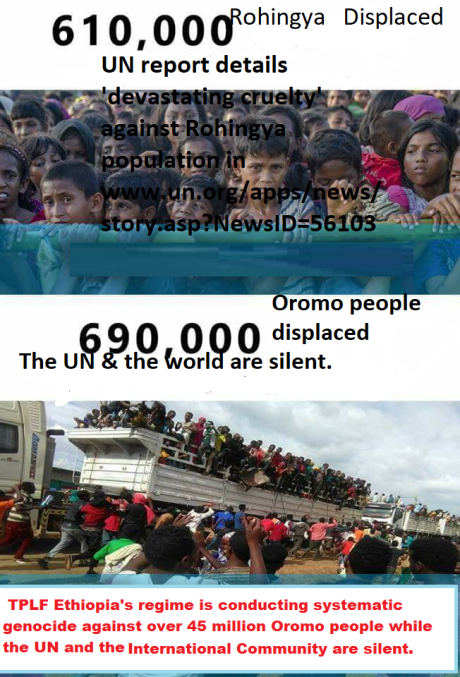


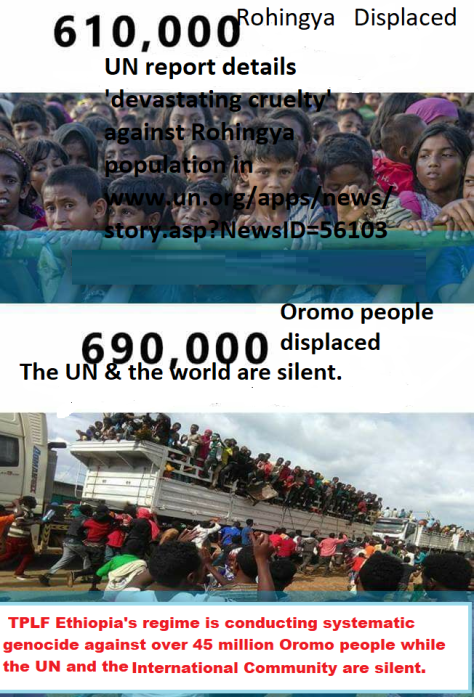


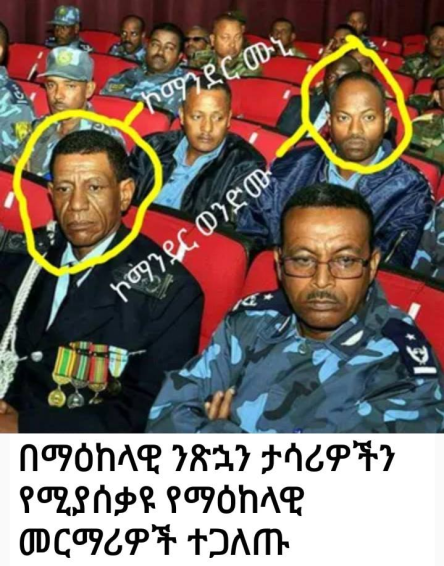


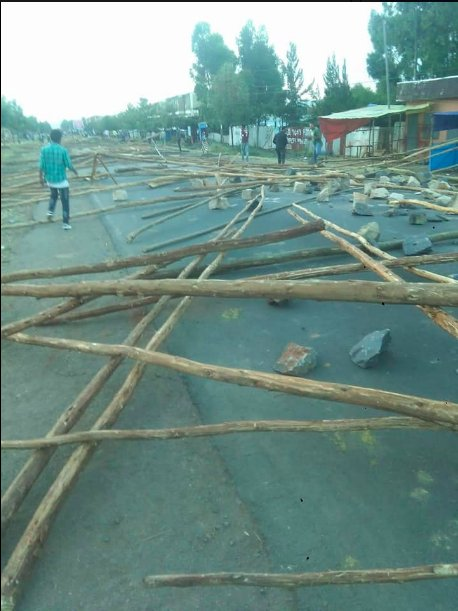


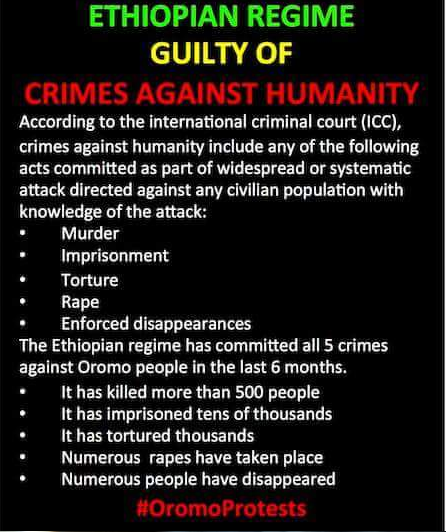
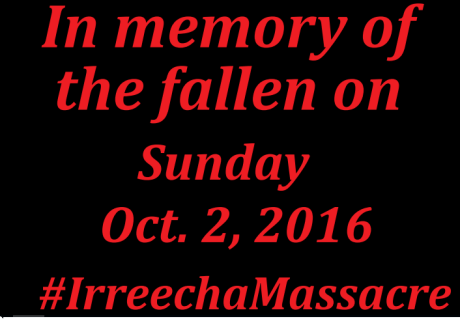


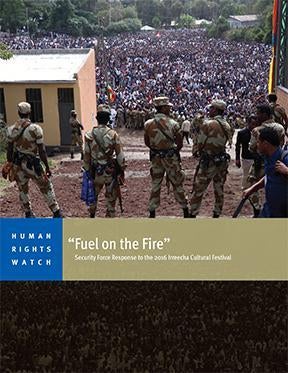



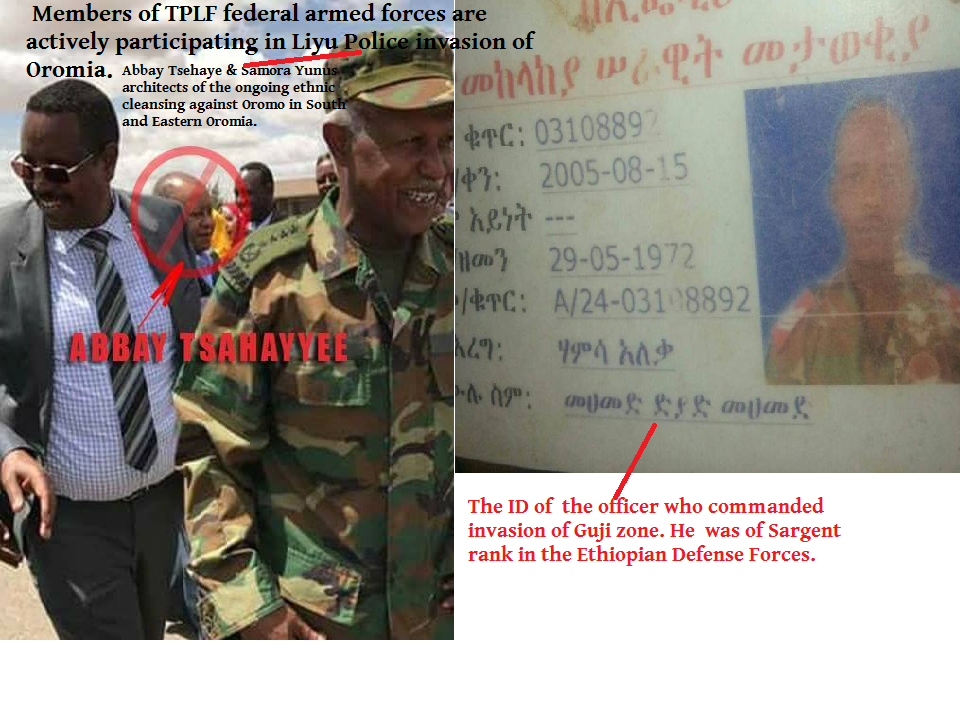





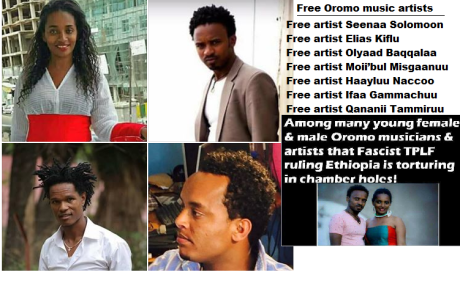
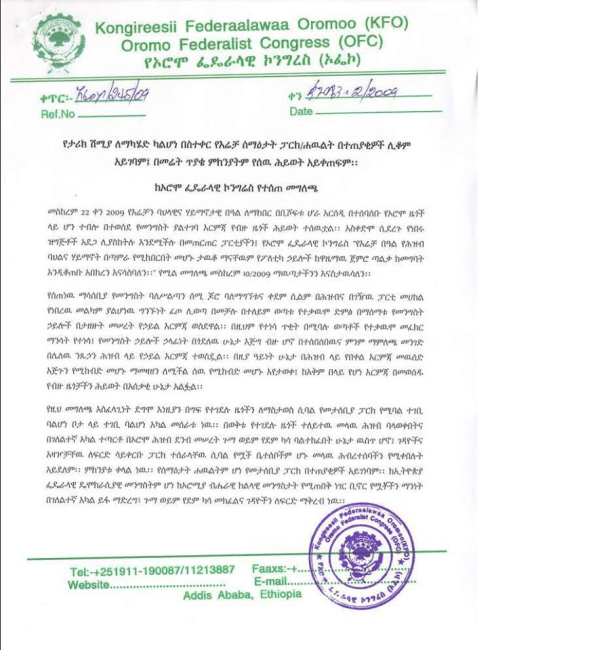
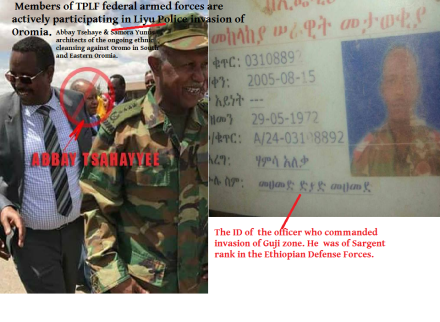


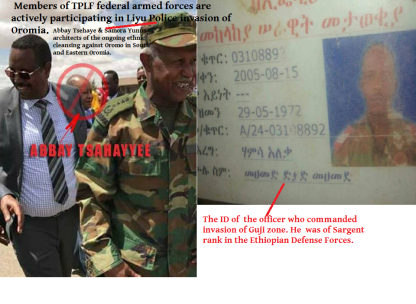
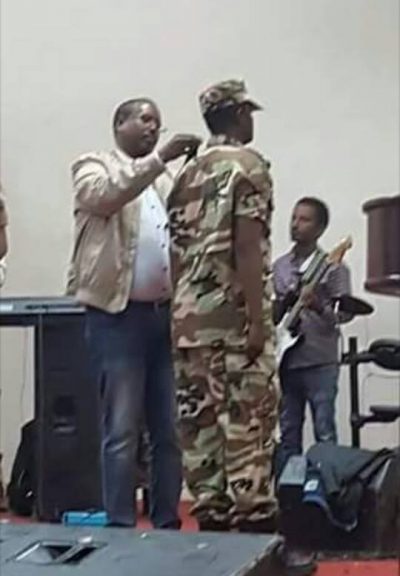


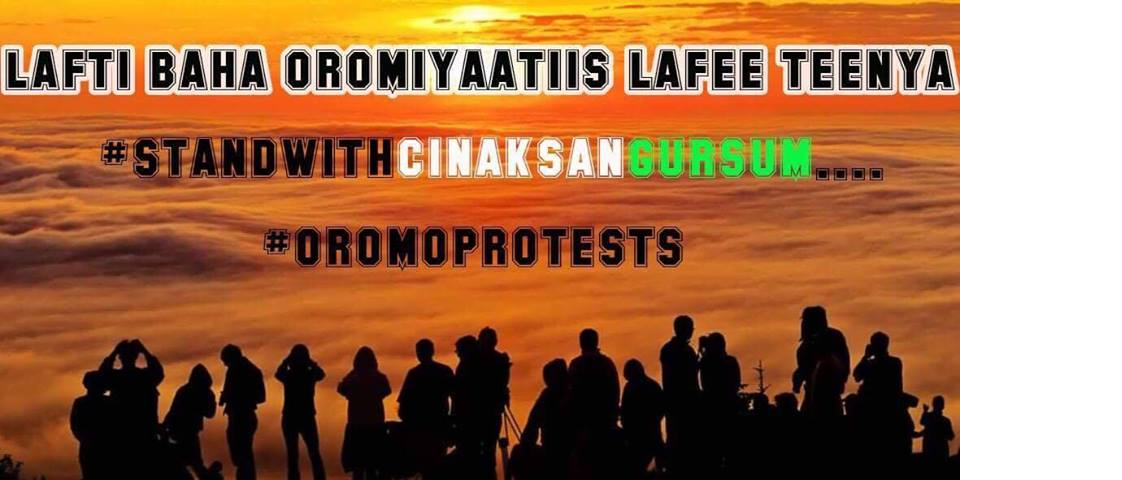



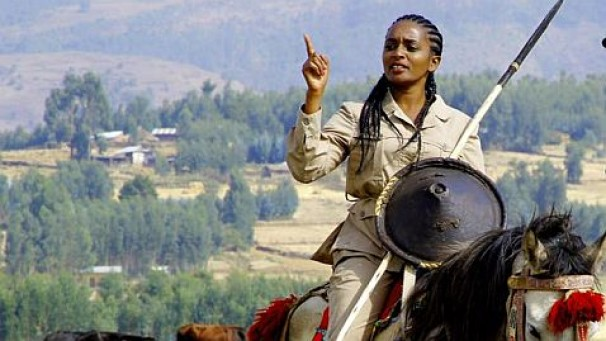
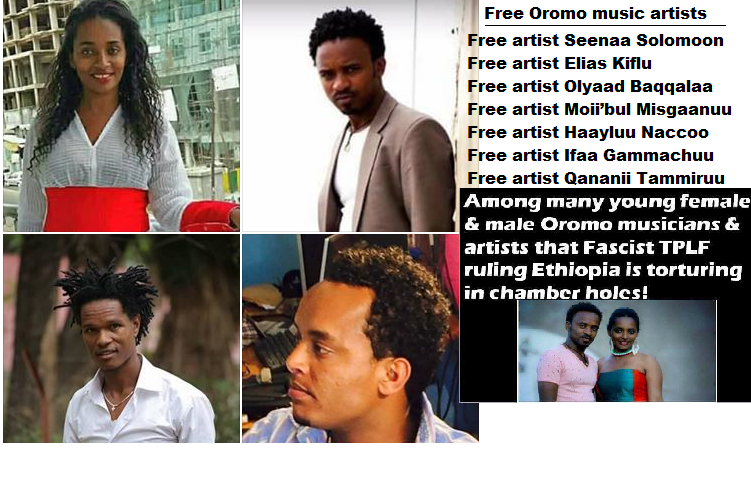

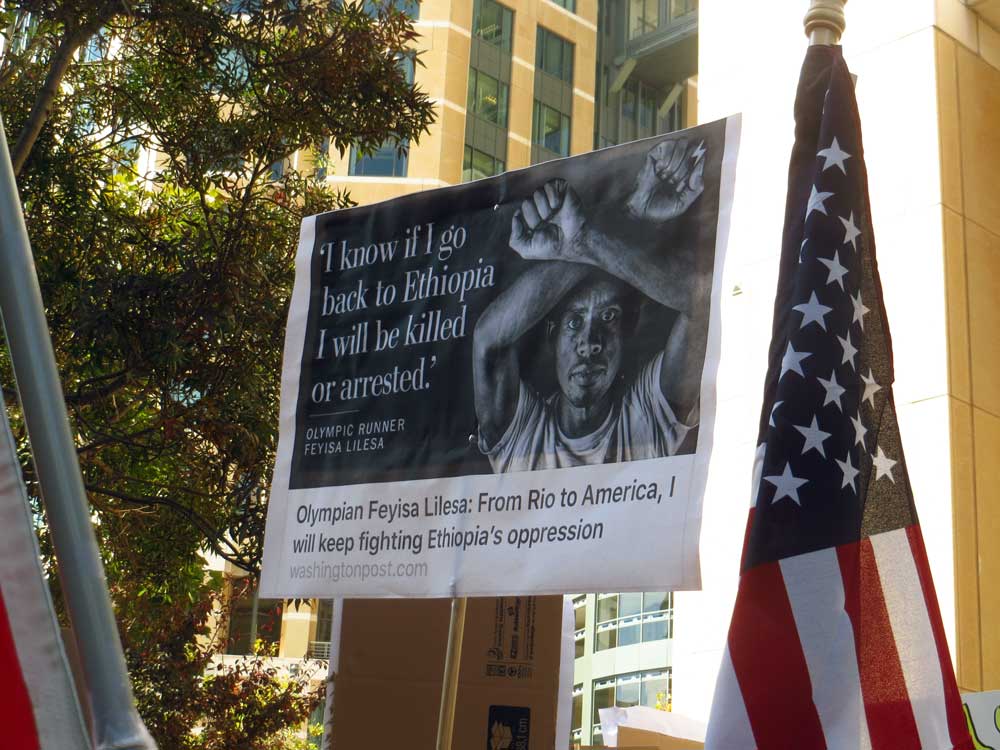

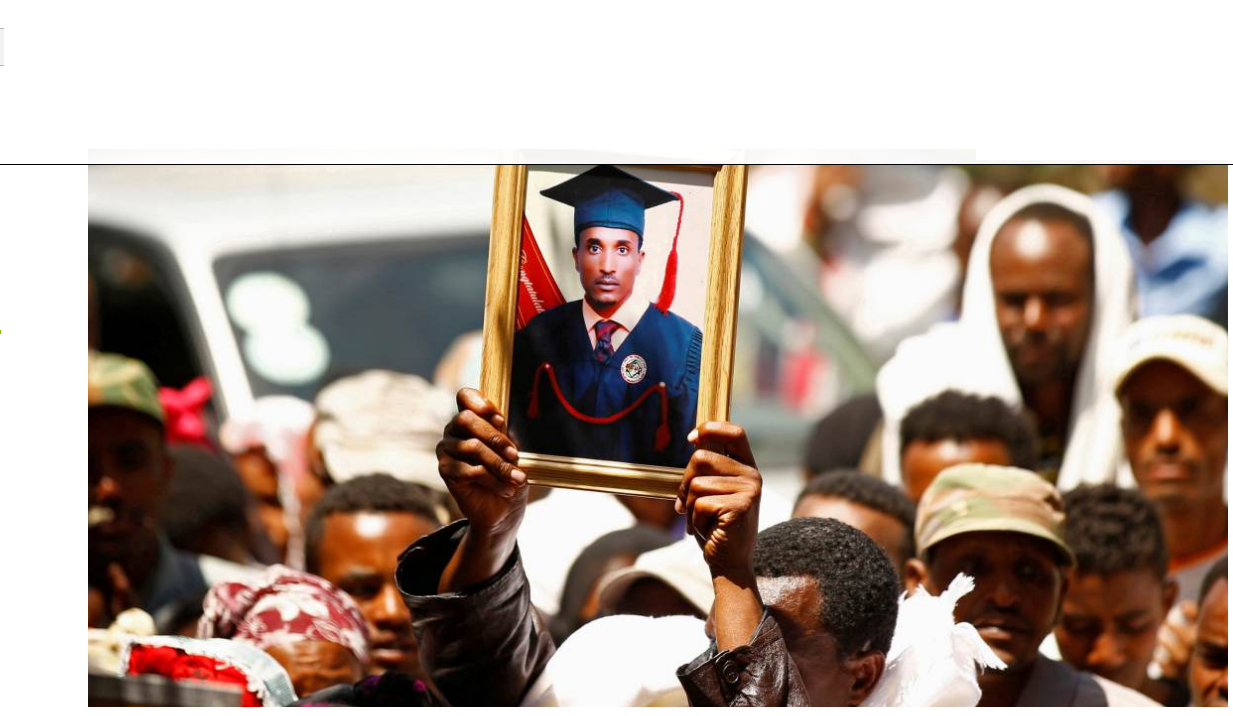


 Oromian Economist
You must be logged in to post a comment.