Enemies of Human Development: Structural Injustices, the Lack of Social Competence and Human Insecurity March 15, 2013
Posted by OromianEconomist in Uncategorized.Tags: Activism, Cape Town, Development, Development and Change, Economic, Economic and Social Freedom, Economic development, Economic efficiency, empowerment, Horn of Africa, human, Human development Index, Human Rights and Liberties, India, Institution, John Maynard Keynes, Kolkata, micro finance, Multidimensional Poverty Index, Non-governmental organization, Oromia, Oromo, Oromo people, Oromummaa, poverty, Qubee Afaan Oromo, social competence, social development, Social justice, Social safety net, Universal Declaration of Human Rights, World Bank
add a comment


http://en.wikipedia.org/wiki/List_of_countries_by_Human_Development_Index#Africa
‘The political problem of mankind is to combine three things: Economic Efficiency, Social Justice and Individual Liberty.’ John Maynard Keynes
‘The traditional agendas for reducing poverty recognize but inadequately address its structural sources. Contemporary interventions to promote inclusive growth have tended to focus on the outcomes of development through expanding and strengthening social safety nets. While such public initiatives are to be encouraged, they address the symptoms of poverty, not its sources. The results of such restrictive interventions are reduction of income poverty to varying degrees and some improvement in human development. But across much of the South, income inequalities have increased, social disparities have widened and injustice remains pervasive, while the structural sources of poverty remain intact. Any credible agenda to end poverty must correct the structural injustices that perpetuate it. Inequitable access to wealth and knowledge disempowers the excluded from competing in the marketplace. Rural poverty, for example, originates in insufficient access to land and water for less privileged segments of rural society. Land ownership has been not only a source of economic privilege, but also a source of social and political authority. The prevailing structures of land ownership remain inimical to a functioning democratic order. Similarly, lack of access to capital and property perpetuates urban poverty. Unequal participation in the market With the prevailing property structures of society, the resource-poor remain excluded from more-dynamic market sectors. The main agents of production tend to be the urban elite, who own the corporate assets that power faster growing economic sectors. By contrast, the excluded partake only as primary producers and wage earners, at the lowest end of the production and marketing chains, leaving them with little opportunity to share in market economy opportunities for adding value to their labour. Capital markets have failed to provide sufficient credit to the excluded, even though they have demonstrated their creditworthiness through low default rates in the micro credit market. And formal capital markets have not provided financial instruments to attract the savings of the excluded and transform them into investment assets in the faster growing corporate sector.
Unjust governance:This inequitable and unjust social and economic universe can be compounded by unjust governance. Often the excluded remain voiceless in the institutions of governance and thus underserved by public institutions. The institutions of democracy remain unresponsive to the needs of the excluded, both in the design of policy agendas and in the selection of electoral candidates. Representative institutions thus tend to be monopolized by the affluent and socially powerful, who then use office to enhance their wealth and perpetuate their hold over power. Promoting structural change to correct these structural injustices, policy agendas need to be made more inclusive by strengthening the capacity of the excluded to participate on more equitable terms in the market economy and the democratic polity. Such agendas should reposition the excluded within the processes of production, distribution and governance. The production process needs to graduate the excluded from living out their lives exclusively as wage earners and tenant farmers by investing them with the capacity to become owners of productive assets. The distribution process must elevate the excluded beyond their inherited role as primary producers by enabling them to move upmarket through greater opportunities to share in adding value through collective action. Access to assets and markets must be backed by equitable access to quality health care and education, integral to empowering the excluded. The governance process must increase the active participation of the excluded in representative institutions, which is crucial to enhancing their voice in decision making and providing access to the institutions of governance.
Social competencies, human development beyond the individual: Individuals cannot flourish alone; indeed, they cannot function alone. The human development approach, however, has been essentially individualistic, assuming that development is the expansion of individuals’ capabilities or freedoms. Yet there are aspects of societies that affect individuals but cannot be assessed at the individual level because they are based on relationships, such as how well families or communities function, summarized for society as a whole in the ideas of social cohesion and social inclusion. Individuals are bound up with others. Social institutions affect individuals’ identities and choices. Being a member of a healthy society is an essential part of a thriving existence. So one task of the human development approach is to explore the nature of social institutions that are favourable for human flourishing. Development then has to be assessed not only for the short-run impact on individual capabilities, but also for whether society evolves in a way that supports human flourishing. Social conditions affect not only the outcomes of individuals in a particular society today, but also those of future generations. Social institutions are all institutions in which people act collectively (that is, they involve more than one person), other than profit-making market institutions and the state. They include formal non-governmental organizations, informal associations, cooperatives, producer associations, neighbourhood associations, sports clubs, savings associations and many more. They also consist of norms and rules of behaviour affecting human development outcomes. For example, attitudes towards employment affect material well-being, and norms of hierarchy and discrimination affect inequality, discrimination, empowerment, political freedom and so on. To describe what those institutions can be and do, and to understand how they affect individuals, we can use the term social competencies.Central to the human development perspective is that societal norms affect people’s choices and behaviours towards others, thus influencing outcomes in the whole community. Community norms and behaviours can constrain choice in deleterious ways from a human development perspective—for example, ostracizing, or in extreme cases killing, those who make choices that contravene social rules. Families trapped in poverty by informal norms that support early marriage and dowry requirements might reject changes to such entrenched social norms. Social institutions change over time, and those changes may be accompanied by social tension if they hamper the interests of some groups while favouring others. Policy change is the outcome of a political struggle in which different groups (and individuals) support or oppose particular changes. In this struggle, unorganized individuals are generally powerless, but by joining together they can acquire power collectively. Social action favouring human development (such as policies to extend education, progressive taxation and minimum wages) happens not spontaneously, but because of groups that are effective in supporting change, such as producer groups, worker associations, social movements and political parties. These organizations are especially crucial for poorer people, as demonstrated by a group of sex workers in Kolkata, India, and women in a squatter community in Cape Town, South Africa, who improved their conditions and self-respect by joining together and exerting collective pressure. Societies vary widely in the number, functions, effectiveness and consequences of their social competencies. Institutions and norms can be classified as human development–promoting, human development–neutral and human development–undermining. It is fundamental to identify and encourage those that promote valuable capabilities and relationships among and between individuals and institutions. Some social institutions (including norms) can support human development in some respects but not in others: for example, strong family bonds can provide individuals with support during upheavals, but may constrain individual choices and opportunities. Broadly speaking, institutions that promote social cohesion and human development show low levels of disparity across groups (for example, ethnic, religious or gender groups) and high levels of interaction and trust among people and across groups, which results in solidarity and the absence of violent conflict. It is not a coincidence that 5 of the 10 most peaceful countries in the world in 2012, according to the Global Peace Index, are also among the most equal societies as measured by loss in Human Development Index value due to inequality. They are also characterized by the absence of discrimination and low levels of marginalization. In some instances antidiscriminatory measures can ease the burden of marginalization and partially mitigate the worst effects of exclusion. For instance, US law mandating that hospital emergency rooms offer treatment to all patients regardless of their ability to pay partly mitigates the impact of an expensive health care system with limited coverage, while affirmative action in a range of countries (including Brazil, Malaysia, South Africa and the United States) has improved the situation of deprived groups and contributed to social stability. The study of social institutions and social competencies must form an essential part of the human development approach—including the formation of groups; interactions between groups and individuals; incentives and constraints to collective action; the relationship among groups, politics and policy outcomes; the role of norms in influencing behaviours; and how norms are formed and changed.
The 1994 Human Development Report argued that the concept of security must shift from the idea of a militaristic safeguarding of state borders to the reduction of insecurity in people’s daily lives (or human insecurity). In every society, human security is undermined by a variety of threats, including hunger, disease, crime, unemployment, human rights violations and environmental challenges. The intensity of these threats differs across the world, but human security remains a universal quest for freedom from want and fear.Consider economic insecurity. In the countries of the North, millions of young people are now unable to find work. And in the South, millions of farmers have been unable to earn a decent livelihood and forced to migrate, with many adverse effects, particularly for women. Closely related to insecurity in livelihoods is insecurity in food and nutrition. Many developing country households faced with high food prices cannot afford two square meals a day, undermining progress in child nutrition. Another major cause of impoverishment in many countries, rich and poor, is unequal access to affordable health care. Ill health in the household (especially of the head of the household) is one of the most common sources of impoverishment, as earnings are lost and medical expenses are incurred. Perspectives on security need to shift from a misplaced emphasis on military strength to a well rounded, people-centred view. Progress in this shift can be gleaned in part from statistics on crime, particularly homicides, and military spending.’
According to the United Nations Development, despite the much exaggerated recent economic growth data, Ethiopia is still near the bottom of in its Human Development Index 2013.Ethiopia ranks 173 out of 187 countries in the Human Development Index 2013 compiled by UNDP. The Index is part of the Human Development Report that is presented annually and measures life expectancy, income and education in countries around the world. Since 2000, Ethiopia has registered greater gains than all but two other countries in the world – Afghanistan and Sierra Leone. But it still ranks close to the bottom of the Index. Ethiopia is one of the countries that are known in human rights violations, government waging war against its people, marginalizing communities, political and social discrimination and where the system of structural injustices are the norms than exceptions.
Click to access HDR_2013_EN_complete.pdf
Click to access HDR_2013_EN_complete.pdf
hdr.undp.org
Click to access HDR_2013_EN_complete.pdf
http://www.thisisafrica.me/opinion/detail/19841/the-oromo-and-the-ethiopian-
http://thinkafricapress.com/ethiopia/business-usual-after-meles-human-rights-gambella-world-bank
Copyright © Oromianeconomist 2013 and Oromia Quarterly 1997-2013. All rights reserved. Disclaimer.
Related articles
- Capitalism and Poverty: A Socialist Analysis (hearheller.wordpress.com)
- Poverty; our greatest shame. (danieloliech.wordpress.com)
- Institutions and Sustainability (vaibhavgnnugupta.wordpress.com)
- Book Review: Poverty and Insecurity: Life in Low-Pay, No Pay Britain (blogs.lse.ac.uk)
Recent Popular Reports about Africa’s Explosive Growth are Highly Exaggerated January 4, 2013
Posted by OromianEconomist in Africa, Corruption, Development, Economics, Uncategorized.Tags: Africa, Asia, Economic and Social Freedom, Economic development, Economic growth, Economist, Four Asian Tigers, Gross domestic product, Human rights, Manufacturing industries, Market value added, Oromia, Oromo people, Oromummaa, Sub-Saharan Africa
add a comment
“Recent high growth rates and increased foreign investment in Africa have given rise to the popular idea that the continent may well be on track to become the next global economic powerhouse. This “Africa Rising” narrative has been most prominently presented in recent cover stories by Time Magazine and The Economist. Yet both publications are wrong in their analysis of Africa’s developmental prospects — and the reasons they’re wrong speak volumes about the problematic way national economic development has come to be understood in the age of globalization.Both articles use unhelpful indicators to gauge Africa’s development. They looked to Africa’s recent high GDP growth rates, rising per capita incomes, and the explosive growth of mobile phones and mobile phone banking as evidence that Africa is “developing.” Time referred to the growth in sectors such as tourism, retail, and banking, and also cited countries with new discoveries of oil and gas reserves. The Economist pointed to the growth in the number of African billionaires and the increase in Africa’s trade with the rest of the world. But these indicators only give a partial picture of how well development is going — at least as the term has been understood over the last few centuries. From late 15th century England all the way up to the East Asian Tigers of recent renown, development has generally been taken as a synonym for “industrialization.” Rich countries figured out long ago, if economies are not moving out of dead-end activities that only provide diminishing returns over time (primary agriculture and extractive activities such as mining, logging, and fisheries), and into activities that provide increasing returns over time (manufacturing and services), then you can’t really say they are developing. despite some improvements in a few countries, the bulk of African countries are either stagnating or moving backwards when it comes to industrialization. The share of MVA in Africa’s GDP fell from 12.8 percent in 2000 to 10.5 percent in 2008, while in developing Asia it rose from 22 percent to 35 percent over the same period. There has also been a decline in the importance of manufacturing in Africa’s exports, with the share of manufactures in Africa’s total exports having fallen from 43 percent in 2000 to 39 percent in 2008. In terms of manufacturing growth, while most have stagnated, 23 African countries had negative MVA per capita growth during the period 1990 – 2010, and only five countries achieved an MVA per capita growth above 4 percent.”
http://www.foreignpolicy.com/articles/2013/01/04/the_myth_of_africa_s_rise?page=0,1
http://www.vice.com/read/is-this-the-century-of-africas-rise-1
http://www.wider.unu.edu/publications/newsletter/articles/en_GB/05-09-Szirmai/
http://thinkafricapress.com/development/africa-rising-myth-bring-authoritarian-capitalism-instead
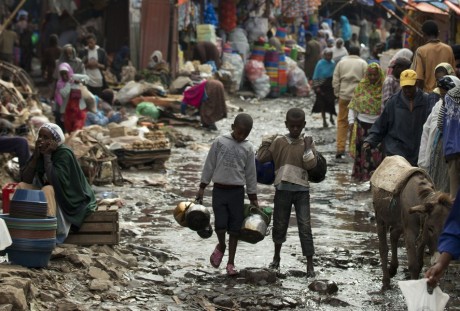
http://www.forbes.com/pictures/mef45jgim/10-saddest-ethiopia/
Copyright © Oromianeconomist 2013 and Oromia Quarterly 1997-2013. All rights reserved. Disclaimer.
Related articles
- The biggest challenges facing Africa have little to do with religion, per se, and less with global terrorism.http://www.foreignpolicy.com/articles/2013/10/02/demography_is_destiny_africa_al_shabab#.Uk3ZTTT2_xA.twitter …
- “Re-Branding Africa” and “Africa Rising”: Whose #Africa? Whose Rise? http://aconerlycoleman.wordpress.com/2013/10/03/re-branding-africa-and-africa-rising-whose-africa-whose-rise/
- Africa is not rising, survey shows that ”the boom” only benefits a narrow elite http://www.theguardian.com/world/2013/oct/02/africa-not-rising-survey?CMP=twt_gu
- A skeptical perspective on African development (marginalrevolution.com)
-
http://transitions.foreignpolicy.com/posts/2013/09/30/the_african_statistics_smackdown_continued
How an Economy Grows and Why It Doesn’t October 9, 2012
Posted by OromianEconomist in Uncategorized.Tags: Applied economics, Economic and Social Freedom, Economic developm ent, economics
add a comment
Copyright © Oromianeconomist 2012 and Oromia Quarterly 1997-2012. All rights reserved. Disclaimer.
Gadaa Oromo Democracy: Three Approaches to the Study of African Society September 27, 2012
Posted by OromianEconomist in Africa, Ancient African Direct Democracy, Culture, Finfinnee, Gadaa System, Humanity and Social Civilization, Irreecha, Kemetic Ancient African Culture, Oromo, Oromo Culture, Oromo First, Oromo Identity, Oromo Nation, Oromo Social System, Oromummaa, Self determination, Sirna Gadaa, State of Oromia, The Oromo Democratic system, The Oromo Governance System, Uncategorized.Tags: Africa, African culture, African Studies, Ancient African Direct Democracy, Ancient Black People, Ancient Egyptian people, Democracy, Economic and Social Freedom, From, Gadaa System, Governance issues, Horn of Africa, Kemet, Kushitic people, National Self Determination, Oromia, Oromiyaa, Oromo, Oromo culture, Oromo people, Oromummaa, Politics, Siqqee, Siqqee Oromo Women Institution, Sirna Gadaa, Social Sciences, State and Development, Sub-Saharan Africa, United Nations, Universal Declaration of Human Rights, World Bank
3 comments
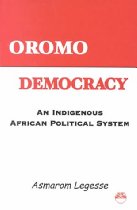

These closely related books reveal the many creative solutions an African society found for problems that people encounter when they try to establish a democratic system of governing their affairs. In much of what has been written about Africa, the common image is that of people governed by primitive customs and practices, in which only feudal roles of elders, kings, chiefs, sultans, and emirs have been acknowledged by Western observers. Little is ever shown of indigenous African democratic systems, under which there is distribution of authority and responsibility across various strata of society, and where warriors are subordinated to deliberative assemblies, customary laws are revised periodically by a national convention, and elected leaders are limited to a single eight-year terms of office and subjected to public review in the middle of their term. All these ideals and more are enshrined in the five-century old constitution of the Oromo of Ethiopia, which is the subject matter of these books.
In these books, Legesse brings into sharp focus the polycephalous or “multi-headed” system of government of the Oromo, which is based on clearly defined division of labor and checks and balances between different institutions. Revealing the inherent dynamism and sophistication of this indigenous African political system, Legasse also shows in clear and lucid language that the system has had a long and distinguished history, during which the institutions changed by deliberate legislation, and evolved and adapted with time.’ Amazon Books &
Related articles
Introduction
http://oromopress.blogspot.co.uk/2011/12/review-of-oromo-democracy-indigenous.html?m=1
http://www.readperiodicals.com/201203/2672718591.html
- Gadaa: An Oromo Democracy and the Symbol of Oromo Civilization (odaakoo.wordpress.com)
- Contours of the Emergent & Ancient Oromo Nation (oromianeconomist.wordpress.com)
- http://www.iwmi.cgiar.org/publications/CABI_Publications/CA_CABI_Series/Community_Law/protected/Ch%2009.pdf
- Oromia of Dhaqabo Ebba: The Cradle of Mankind Is Also A Home of The Oldest Living person On Earth (oromianeconomist.wordpress.com)
Copyright © Oromianeconomist 2012 and Oromia Quarterly 1997-2012. All rights reserved. Disclaimer.
Ethiopia: The Last Two Frontiers May 3, 2012
Posted by OromianEconomist in Uncategorized.Tags: Africa, Developing country, Economic, Economic and Social Freedom, Economic development, Ethiopia, Gadaa System, https://oromianeconomist.wordpress.com/wp-admin/post-new.php#, Oromia, Oromo people, Social Sciences, World Bank
add a comment

ISBN-10: 1847010334 | ISBN-13: 978-1847010339
The International Bill of Human Rights: The Covenants June 14, 2011
Posted by OromianEconomist in Uncategorized.Tags: Economic and Social Freedom, Universal Declaration of Human Rights
add a comment



 Oromian Economist
You must be logged in to post a comment.