Economic and development analysis: Perspectives on economics, society, development, freedom & social justice. Leading issues in Oromo, Oromia, Africa & world affairs. Oromo News. African News. world News. Views. Formerly Oromia Quarterly
Fascist TPLF Ethiopia’s federal defence army, Abbay Tsehaye & Samora Yunus are architects of the ongoing genocidal ethnic cleansing against Oromo people in South and Eastern Oromia.
Several members of Ethiopia’s Somali region’s Liyu special police were reportedly killed by armed locals on 14 February in Gursum district, Oromia region, allegedly in response to recent raids into the area by these security forces, according to Ethiopian opposition media. Locals also seized unspecified amounts of police ammunition and weapons during the violence.
Earlier in February, both an Oromia government official and an Oromo opposition party had claimed Somali regional police involvement in recent cattle raids, looting, and killings in Oromia’s East Haraghe (which includes Gursum), Bale, Guji, and Borena zones.
Complicity by the Ethiopian government, dominated by its Tigrayan People’s Liberation Front (TPLF) wing, in these raids would most likely be part of a strategy designed to prevent the formation of a cross-ethnic domestic opposition and marginalise the ethnic-Oromo opposition ahead of the scheduled end of the state of emergency in April.
About Jane’s
Jane’s Defence Weekly (abbreviated as JDW) is a weekly magazine reporting on military and corporate affairs, edited by Peter Felstead. It is one of a number of military-related publications named after John F. T. Jane, an Englishman who first published Jane’s All the World’s Fighting Ships in 1898. It is a unit of Jane’s Information Group, which was purchased by IHS in 2007. The magazine has a large circulation and is frequently cited in publications worldwide
In the weeks since Donald Trump was elected, many have focused on the need to not normalize the man, his words, or his actions.1
This call is vital. We cannot normalize having someone in the White House who has become the very face of bigotry, islamophobia, white supremacy, misogyny, and contempt for the environment.
Ethiopian army soldiers monitoring Suri people during a festival in Kibish. Credit: Oakland Institute.
This call has also got me thinking about the many times and ways that normalization gets in the way of real change. One country that comes to mind is Ethiopia.
One Year Anniversary of Oromo Protests Against Land Grabs
November marked the one year anniversary of the start of mass protests in Ethiopia’s Oromo region. The protests began in reaction to a proposed land grab by the government in order to expand the borders of Ethiopia’s capital, Addis Ababa. Land grabbing in the name of “development” is not new to Ethiopia, and previous grabs have involved widespread human rights abuses. So, it was a major victory when this particular land grab was successfully defeated. But the protests didn’t stop. Instead, they expanded into calls for human rights, democracy, and justice, and spread across the country.
These protests are a reaction to an authoritarian state that has oppressed people for years; a state that has cracked down on freedoms of speech, assembly, and religion; a state that has jailed students, political opposition members, land rights defenders, religious leaders, journalists and more for raising their voices; a state that received 100 percent of the seats in a supposedly “democratic” election; and much more.2
Ethiopian Government’s Response: Bloodshed and Brutality
Sadly, the protests have been met with bloodshed and brutality. In early October 2016, Prime Minister Hailemariam Desalegn admitted that 500 protesters had been killed by security forces in previous months. This came one week after the Irreechaa tragedy which took between fifty-two and several hundred lives and one month after a fire at the Kilinto prisonleft dozens dead. Days later, the Ethiopian government declared a state of emergency that included a laundry list of curtailed freedoms.
For a few weeks around the state of emergency, it felt as if all eyes were finally on Ethiopia. US Assistant Secretary for Democracy, Human Rights, and Labor Tom Malinowski penned a scathing op-ed that called the abuses perpetrated by the Ethiopian government “self-defeating tactics.” Social media exploded with images, videos, and reports from the ground. A Human Rights Resolution was put before the US Congress, one of Ethiopia’s largest donors.
But in recent days the international outrage appears to have shifted.
While the Ethiopian government continues to crackdown, Germany has lifted its travel ban to the country. Diplomats are allowed to travel outside of Addis Ababa. The World Bank has gone back to publishing articles on so-called climate smart agriculture. Civil society groups are organizing a conference on changing food systems in Africa later this month. The list goes on.
Trump, Ethiopia: Not the Time to Normalize
“Not normal” is happening all over the world, and looking away is not an option.
There has been nothing normal about the political, social and economic situation in Ethiopia for years. But this past year has seen things get far worse, with increasing state violence and restrictions on basic human rights.
The world is calling on us to stand up for a lot of things right now. As we work to keep from normalizing Trump, let us extend this standard to all of our work. “Not normal” is happening all over the world, and looking away is not an option.
Human rights situations that require the Council’s attention
Human Rights League of Horn of Africa
(HRLHA)
Written Statement Submitted to United Nations Human Rights Council,
34th Session, 27 February – 24 March, 2017
Item 4:Human rights situations that require the Council’s attention
(Country- Ethiopia)
Geneva, 12 February, 2017
ETHIOPIA:
ETHIOPIAN GOVERNMENT CRIMES AGAINST HUMANITY IN OROMIA ESCALATE AFTER THE STATE OF EMERGENCY IS DECLARED
ETHIOPIA:
How Many Shoulddie Before the Internatioanl Community intervenes to save lives?
HRLHA Calls for Intervention by the international community
to end Human Tragedy in Ethiopia
1. The Ethiopian government has targeted the Oromo people in general and the youth in particular, since the 2005 beginning of the mass, but the peaceful uprising of the Oromo people led by Orom students demanding their freedom and the halt of systematic violations of their fundamental rights. The response from the government to the legitimate and peaceful demands of the people] was massive arrests, torture, disappearances and summary executions of the civilian population. However, the heavy hand of the government forces didn’t stop the demands of the Oromo people and the protest has continued for over ten years. From November 2015, the mass movement- in which Oromos from all walks of life have participated- has continued on a daily basis until the government declared a State of Emergency on October 8, 2016.<
The government also targeted prominent political leaders of Oromo parties that are registered and functioning peacefully in Ethiopia. Deputy Chairman of the Oromo Federalist Congress – OFC, Mr. Bekele Gerba- has been in jail for some years now, with his case still pending in the court of justice under the pretext that the prosecutor is unable to gather witnesses to testify against the accused. The number of Oromo political prisoners has reached an unbearable level and so disproportionate that, using the words of one senior government official who spend few years in prison, “Afaan Oromo (the language of the Oromos) has now become the official language of Ethiopian prisons”.
2. Ethiopian prisons, as far as the rights of the political prisoners to a reasonable space/room for sleeping, access to daylights, to proper sanitation, to family visits and meeting with their respective lawyers is concerned, are that they are among the worst correctional facilities in the world. The level of torture, as reported by the families who were granted rare visits, is unbearable. The government continues to deny access to international organizations, the UN Human Rights Special Rapporteurs and the ICRC, whose report could have shed more light on the situations in the prisons.
3. The Ethiopian government boldly demonstrated its dedication to continue violating the fundamental human rights of its citizens, when it arrested Dr. Merera Guddina, chairman of the Oromo Federalist Congress – OFC, on November 30, 2016 upon his return to Ethiopia after briefing the European Union officials on the situation in Ethiopia. The arrest, according to the government, was justified because of an alleged meeting of Dr. Merera with the other opposition leader, Prof. Berhanu Nega, chairman of the outlawed political party, Ginbot – 7 (a.k.a G7). Dr. Merera Guddina and Professor Berhanu Nega, the G7 Leaders, had been invited by the EU parliament to Brussels to attend an EU organized Conference on the Ethiopian current political crisis. According to reliable sources, Dr. Merera Gudina was taken to the infamous Maikelawi interrogation center, with the other two of his friends, Taye Negera and Kumala, both of whom were in his house during the arrest.
4. The peacful protests that have rocked Ethiopia over one year (November 2015- October 2016) led by “Qeerroo Bilissummaa” literally, youth for freedom against subjugation, dramatically changed the peaceful protests into violence after the tyrannical government mercilessly massacred over 700 Oromos, from the ground and the air, at the Irrecha Festival, Oromo Thanksgiving Day on October 2, 2016. This dramatically changed the peaceful protests into violent ones all over the country.
Photo courtesy of Minasse Wondimu Hailu/Anadolu Agency/Getty Images
Despite punitive suppression, Oromo people continue to gather in protest of the state of affairs in Ethiopia. Through the current state of emergency, the government is attempting to solidify central power and quash opposition groups, which results in the heightened marginalisation of already-disadvantaged communities. Voices in these communities express distrust in small democratic concessions, and call instead for a total overhaul of the political system to ensure inclusivity. With no opportunities for opposition to engage politically, and with the often-violent suppression of peaceful protests, the options for the Oromo are severely limited. For now, legitimate grievances fuel continued unrest, and the ruling party coalition maintains a chokehold on every pathway to power.
In a muted show of defiance near Ethiopia’s capital city, a tall farmer glanced around before furtively crossing his arms below his waist to make the Oromo people’s resistance symbol.
Ethiopia’s government outlawed the gesture made famous by Olympic men’s marathon silver medalist Feyisa Lilesa – who formed the “X” above his head at last year’s Rio games – when it enacted a draconian state of emergency in October in an attempt to stem 11 months of protests. Although that decree has suppressed unrest, the farmer thinks demonstrations will start anew.
“The solution is the government has to come with true democracy. The people are waiting until the state of emergency is over and then people are ready to begin to protest,” he said.
While the emergency has led to at least 25,000 people being detained, security forces aren’t visible on roads flanked by fields with workers wielding curved sickles to harvest crops. Beyond that seeming normality, there is pervasive discontent with authorities accused of responding to claims of ethnic marginalisation by intensifying repression.
“The protests will come again because the government is not responding to the demands of the people in the right way,” said another young Oromo man in Ejere town. Like others, he answered via a translator in the Oromo language, and asked for his views to be kept anonymous.
Farmers in the restive West Shewa district of Oromia dismissed the political response so far, which has amounted to replacing regional leaders. Despite positive noises from the new Oromia president, many seek a wholesale change of government. “People need new faces and a new system,” the Ejere man said.
The problem for activists is how to translate popular anger stemming from grievances into political change. The security apparatus has shown it can quell protests and a de facto one-party state offers few opportunities for opposition activities.
Longstanding complaints by the Oromo about state exploitation coalesced around opposition to a metropolitan development plan in November 2015. In January the government suspended the blueprint for the integrated development of Addis Ababa with surrounding Oromo areas, but that didn’t stem the revolt. Some demonstrations were peaceful; others involved torching investments and government offices. Security forces gunned down as many as 600 protesters, according to the Association for Human Rights in Ethiopia.
Now the demands are less policy-oriented due to outrage over repression. Allegations of ethnic bias are prevalent, though it is Oromo officials who are culpable for local failings. The claims centre on a view that the Tigrayan ethnic group benefit disproportionately from a system said to be controlled by the Tigrayan People’s Liberation Front (TPLF), which founded a coalition that has ruled the country since 1991. Activists, many of whom are based abroad, also allege that Ethiopia’s territorial expansion in the late 19th century dispossessed Oromo, who at roughly 35 million people-strong nonetheless remain Ethiopia’s largest community.
Under a multinational federal system introduced in 1995, the Oromo group runs its own region, but people complain the resource-rich state is economically exploited, and their leaders subservient to the TPLF in the Ethiopian People’s Revolutionary Democratic Front (EPRDF). “There’s an Oromo saying: what the husband says, the wife cannot change,” said another opponent apropos of the political dynamic.
Land, which is state-owned in Ethiopia, is a particularly emotive issue. An aggressive, government-driven approach to development, combined with corrupt officials and investors, led to Oromo families losing farmland without receiving adequate compensation over the past two decades, particularly on the sought-after fringes of the capital.
Around Guder town, 80 miles (130km) west of Addis Ababa, farmers believe Oromo officials enriched themselves by selling plots on the edge of town to developers and using the proceeds to build houses near the capital. One man interviewed can’t give a specific example of an unfair eviction near Guder, but he’s worried about the trend. “People have a fear about what happened in the Addis Ababa area,” he said.
Other common concerns are mundane, and acknowledged as legitimate by officials: people want an improved road, or better supplies of water and electricity. Despite evident progress, Ethiopia, where the population of close to 100 million is Africa’s second largest, still lies 174th out of 188 countries on the UN’s 2015 human development index, below South Sudan and Afghanistan.
The evolving and multi-layered grievances are an acute test for the government, as well as a conundrum for major donors, such as the UK’s Department for International Development, which remains silent on the EPRDF’s repression as it lauds its development record. While efforts to improve public services, create jobs and reduce corruption may make headway, there’s little chance of the desired systemic reform.
That was reinforced by the arrest in November of Merera Gudina, the most high-profile Oromo opposition leader not in jail or abroad. He was accused of breaking emergency rules by communicating with a banned nationalist opposition leader at a European parliament hearing in Brussels.
Across West Shewa, locals said there had not yet been any changes in community leaders and the government hadn’t reached out to discuss the problems with them. Some said they were no longer interested in what officials had to say.
In Addis Ababa, the federal communications minister, Negeri Lencho, an Oromo professor of journalism, offers a different view. “The change belongs to the people. The reform belongs to the people. The reform includes increasing awareness of people to defend their interests,” he said.
Despite this gulf between officials and public, serious dialogue is unlikely, according to Zelalem Kibret, an Ethiopian blogger who was arrested in 2014 and is currently a visiting scholar at the Center for Human Rights and Global Justice at New York University.
“The government will not go for any type of concession while the opposing force is weak. The activists also seem unwilling, since they are aimed at ousting the regime. I think the brutality that was unleashed by the regime for the last 12 months pushed every moderate voice to the fringe,” he said.
If the movement were to opt for incremental gains through the ballot box, opposition parties would have to compete in local elections scheduled for 2018, but that presents formidable political and logistical obstacles. As well as holding all seats in the federal parliament and regional chambers, the four-party EPRDF and allied organisations occupy all of up to 100 seats on each one of more than 18,000 village councils, and also on roughly 750 larger administrations, said Zelalem. With opposition leaders and activists exiled, imprisoned, or fearing arrest, already weak parties are in no shape to loosen the coalition’s hold.
“The EPRDF is still the only strong political force in Ethiopia. I doubt the protesters have any solid bargaining power other than sporadic demonstrations that are likely to be quashed easily. It is an impasse. Most probably the regime will stay in power for many years,” Zelalem said.
A state crackdown has silenced ethnic Oromo people in Ethiopia, but grievances over land and rights, and a lack of political options, could reignite protests
Oromo people stage a protest against the government near the Hora Lake at Bishoftuu ( Debre Zeyit). Photograph: Minasse Wondimu Hailu/Anadolu Agency/Getty Images
In a muted show of defiance near Ethiopia’s capital city, a tall farmer glanced around before furtively crossing his arms below his waist to make the Oromo people’s resistance symbol.
Ethiopia’s government outlawed the gesture made famous by Olympic men’s marathon silver medalist Feyisa Lilesa – who formed the “X” above his head at last year’s Rio games – when it enacted a draconian state of emergency in Octoberin an attempt to stem 11 months of protests. Although that decree has suppressed unrest, the farmer thinks demonstrations will start anew.
“The solution is the government has to come with true democracy. The people are waiting until the state of emergency is over and then people are ready to begin to protest,” he said.
While the emergency has led to at least 25,000 people being detained, security forces aren’t visible on roads flanked by fields with workers wielding curved sickles to harvest crops. Beyond that seeming normality, there is pervasive discontent with authorities accused of responding to claims of ethnic marginalisation by intensifying repression.
“The protests will come again because the government is not responding to the demands of the people in the right way,” said another young Oromo man in Ejere town. Like others, he answered via a translator in the Oromo language, and asked for his views to be kept anonymous.
Farmers in the restive West Shewa district of Oromia dismissed the political response so far, which has amounted to replacing regional leaders. Despite positive noises from the new Oromia president, many seek a wholesale change of government. “People need new faces and a new system,” the Ejere man said.
The problem for activists is how to translate popular anger stemming from grievances into political change. The security apparatus has shown it can quell protests and a de facto one-party state offers few opportunities for opposition activities.
Under a multinational federal system introduced in 1995, the Oromo group runs its own region, but people complain the resource-rich state is economically exploited, and their leaders subservient to the TPLF in the Ethiopian People’s Revolutionary Democratic Front (EPRDF). “There’s an Oromo saying: what the husband says, the wife cannot change,” said another opponent apropos of the political dynamic.
Land, which is state-owned in Ethiopia, is a particularly emotive issue. An aggressive, government-driven approach to development, combined with corrupt officials and investors, led to Oromo families losing farmland without receiving adequate compensation over the past two decades, particularly on the sought-after fringes of the capital.
Around Guder town, 80 miles (130km) west of Addis Ababa, farmers believe Oromo officials enriched themselves by selling plots on the edge of town to developers and using the proceeds to build houses near the capital. One man interviewed can’t give a specific example of an unfair eviction near Guder, but he’s worried about the trend. “People have a fear about what happened in the Addis Ababa area,” he said.
Other common concerns are mundane, and acknowledged as legitimate by officials: people want an improved road, or better supplies of water and electricity. Despite evident progress, Ethiopia, where the population of close to 100 million is Africa’s second largest, still lies 174th out of 188 countries on the UN’s 2015 human development index, below South Sudan and Afghanistan.
The evolving and multi-layered grievances are an acute test for the government, as well as a conundrum for major donors, such as the UK’s Department for International Development, which remains silent on the EPRDF’s repression as it lauds its development record. While efforts to improve public services, create jobs and reduce corruption may make headway, there’s little chance of the desired systemic reform.
That was reinforced by the arrest in November of Merera Gudina, the most high-profile Oromo opposition leader not in jail or abroad. He was accused of breaking emergency rules by communicating with a banned nationalist opposition leader at a European parliament hearing in Brussels.
Across West Shewa, locals said there had not yet been any changes in community leaders and the government hadn’t reached out to discuss the problems with them. Some said they were no longer interested in what officials had to say.
In Addis Ababa, the federal communications minister, Negeri Lencho, an Oromo professor of journalism, offers a different view. “The change belongs to the people. The reform belongs to the people. The reform includes increasing awareness of people to defend their interests,” he said.
Despite this gulf between officials and public, serious dialogue is unlikely, according to Zelalem Kibret, an Ethiopian blogger who was arrested in 2014 and is currently a visiting scholar at the Center for Human Rights and Global Justice at New York University.
“The government will not go for any type of concession while the opposing force is weak. The activists also seem unwilling, since they are aimed at ousting the regime. I think the brutality that was unleashed by the regime for the last 12 months pushed every moderate voice to the fringe,” he said.
If the movement were to opt for incremental gains through the ballot box, opposition parties would have to compete in local elections scheduled for 2018, but that presents formidable political and logistical obstacles. As well as holding all seats in the federal parliament and regional chambers, the four-party EPRDF and allied organisations occupy all of up to 100 seats on each one of more than 18,000 village councils, and also on roughly 750 larger administrations, said Zelalem. With opposition leaders and activists exiled, imprisoned, or fearing arrest, already weak parties are in no shape to loosen the coalition’s hold.
“The EPRDF is still the only strong political force in Ethiopia. I doubt the protesters have any solid bargaining power other than sporadic demonstrations that are likely to be quashed easily. It is an impasse. Most probably the regime will stay in power for many years,” Zelalem said.
Four months after declaring a state of emergency in a crackdown on protests, Ethiopia’s government claims the country has returned to normal. Critics says the emergency decree remains an instrument of repression.
This coming April marks three years since protests broke out in Ethiopia. They were triggered by students in Ambo town, some 120 kilometers (74 miles) west of the capital Addis Ababa. The students were protesting against a controversial government plan dubbed “Addis Ababa and Oromia Special Zone Integrated Master Plan”.
The Ethiopian government maintained that the purpose of the plan was to amalgamate eight towns in Oromia Special Zone with Addis Ababa. The scheme would promote development.
However, residents in the eight towns were resentful of a plan they said had been devised behind closed doors. They were also worried that the plan, under the guise of development, would deprive farmers of their land, and have an unfavorable impact on local language and culture.
The protests which started in Ambo then spread to other towns in Oromia Regional State. On January 12, 2016, the Oromo People’s Democratic Organization (OPDO), which is the local ally in the country’s ruling coalition, the Ethiopian People’s Revolutionary Democratic Front (EPRDF), revoked the plan.
Negeri Lencho claims the government was forced into declaring a state of emergency
But although the OPDO nominally represents regionally interests, the real power in the EPRDF is in the hands of the Tigray People’s Liberation Front (TPLF).
This sense of underrepresentation helped drive the protests in Oromia Regional State, which soon reached Amhara Regional State.
The response by the security forces to these protests, which had a strong following among young Ethiopians, was harsh. Hundreds were killed, thousands were injured, hundreds ‘disappeared’ and others went into exile.
But the protests conituned despite this lethal crackdown. In October 2016, the government responded by declaring a state of emergency for six months. .
Political crisis
Negeri Lencho, the minister who heads the government’s communications office, told DW that the government had announced the state of emergency “not because it wanted to do it, rather it was forced to do it” because of the political crisis.
The administration of Prime Minister Hailemariam Dessalegn claims that the state of emergency has already brought peace back to the country. Critics could therefore agrue that it would be possible for the government to lift the decree even before the six months have expired. However, Lencho says that no timeframe has been declared so far either for the repeal or for the extension of the decree.
Opposition figures and members of the public DW spoke to dispute the claim that the state of emergency has restored peace to Ethiopia. The protests and the gunfire may have ceased, but the arbitrary arrests and human right violations continue.
Protests were initially triggered by anger over a development scheme for the capital Addis Ababa that demonstrators said would force farmers off their land
One Ambo resident, who asked to remain anonymous as he took part in the protests, said that the state of emergency had “unsettled the public’s inner repose”.
Repression was still in place, he said, despite the government “falsely” claiming that life was returning to normal.
“You cannot go out after curfew. You cannot stand anywhere with a few people. People are filled with fear. They fear the Command Post.” The Command Post is the government body charged with implementing the state of emergency.
The town of Sabata, located 20 kilometers southwest of Addis Ababa, was part of the “Master Plan.” One local resident said calm appears to have been restored to the town which was heavily affected by the protests, However the arrests and repression under the state of emergency continue, he said. “For example, there are youths who got arrested without a warrant and have been in prison for over three months on the charge that they have listened to music,” he told Deutsche Welle. “The state of emergency is being used by the state to take revenge against youth,” he said.
Mulatu Gamachu, deputy chairman of the oppostion Oromo Federalist Congress, says state security must avoid repression
Mulatu Gemechu, deputy chairperson of the oppostion Oromo Federalist Congress (OFC), said a de facto state of emergency had been in force in Oromia fo some time, but by making it public the government had acquired a legal shield for further acts of repression. Gemechu added that the country can become peaceful only when the state security forces with their firearms keep their distance from ordinary citizens and stop arresting people.
“If government claims peace is returning because of soldiers’ presence, then it isn’t peace,” Gemechu told DW.
Thousands of people were arrested following the declaration of the state of emergency. Although the Ethiopian parliament set up an inquiry board to investigate human right violations in the wake of the state of emergency, it has yet to submit its first report. Lencho says he has no knowledge of any such report.
Uncertainty over number of arrests
Government and opposition parties differ over the number of people who have been detained during the state of emergency. The government says 20,000 people have been arrested in Oromia, but Gemechu puts the figure closer to 70,000.
The government has said it will release more than 22,000 people. More than 11,000 were set free last Friday (03.02.2017)
The authorities said the prisoners were given “training in the constitution of the country and promised not to repeat their actions”.
But prisoners said that the government, in bringing together people from different areas to one location, had give them an opportunity to get to know each other and “strengthen their struggle and learn more about politics of the country”.
The Ongoing Massacre of Oromo Civilians Never Resolve EPRDF/TPLF’s Inherent Malice!
Press Statement by Sidama National Liberation Front (SNLF)
February 2, 2017
Since capturing the state power a quarter of a century ago, the TPLF/EPRDF dictatorial regime has monopolized the political governance and embarked on a project of fear, dehumanization, depersonalization, exploitation of peoples’ lands and wealth for its benefit, and systematic enslavement of the citizens of the country. Often changing its color like Chameleons, TPLF/EPRDF has proved its expertise in cheating, deceiving, stealing and more importantly brutalizing its subjects at an unprecedented scale. The regime has maintained its grip on power with barrel of gun terrorizing its subjects day and night. During TPLF/EPRDF 26 years of tenure, it became clear that the grotesque nature of the regime is multilayered and deeper than any person can comprehend. When it wishes, it sows the seeds of hatred between two or three sisterly nations whose peoples have peacefully coexisted with deep-rooted spirit of fraternity and cooperation for centuries. At the same time, the regime pretends to intervene to appear to be a provider of peace for the conflict it has meticulously masterminded. When it wishes, it massacres civilians who demand their constitutional rights in the name of defending the constitution which it persistently violates. Massacre, executions and incarceration of civilians have become a daily routine for the oppressed nations under the TPLF’s brutal regime.
The TPLF/EPRDF regime remains in power by terrorizing the nations and peoples of the country it claims to govern. As we speak, it is terrorizing the citizens under the ‘State of Emergency’ with the intensity of cataclysmic proportion. The current State of Emergency began since October 2016. One of its key objectives is quelling the Oromo and Amhara revolutions that began in November 2015 in Oromia and July/August 2016 in Amhara region. The two largest nations of the country are demanding freedom, democracy and self-rule in their respective regions.
To quell the Oromo national demand, for the last three months, the regime embarked on deploying Ogaden Somali Liyu militia to kill Oromo civilians, on its behalf in the entire areas neighboring Oromia with Ogaden Somali. The Oromo people are massacred by TPLF armed and commanded ‘Ogadeni Liyu Militia’ day and night, from Borana Zone to Harar and beyond. It orchestrated and instigated such conflicts between the two down trodden sisterly nations to secure a breathing space from the intense Oromo struggle for freedom and emancipation. The Amhara struggle for the same cause is also putting the regime’s position in precarious situation. The aim of the brutal regime is to shatter the dream and aspirations of the Oromo nation and other oppressed nations by setting them up against one another employing a typical colonial divide and rule strategy copied from the West. Together with the likeminded oppressed nations and peoples, the Oromo nation will never surrender its fight to the last drop of blood. The Oromo nation as well as Ogadenia, Amhara, Sidama, Konso, Benshangul-Gumuz, and other oppressed nations of the country are determined to liberate themselves from the TPLF’s tyranny now than ever before. The popular demand couldn’t be easily silenced by the power of weapon and military might, and draconian State of Emergency laws that stifle basic human freedom.
Acting unlawfully, the regime has proved its vicious nature time and again. Impoverishing the target subjects and most of the regions, it has indescribably enriched its region and people, who are exponentially multiplying their wealth and assets day by day. The TPLF elites, who were penniless apart from rifles and ammunitions when they occupied Addis Ababa in May 1991; turned to multi-millionaires by expropriating the resources of Oromia, Sidama, Gambella, Benshangul, Amhara, Konso, Ogadenia and the rest of Ethiopians. In the past 26 years, tens of millions have been displaced from their lands to vacate it for Tigreans and TPLF’s business empires and for those whom the TPLF regime recruits from abroad under the pretext of international investment.
The regime has time and again shown its blatant disregard for a peaceful settlement of political differences. Instead it answers all constitutionally guaranteed demands for freedom with live bullets. In the past 16 month alone, the TPLF/EPRDF regime has executed over 1,700 Oromo civilians and unlawfully arrested over 170,000 who have demanded their constitutional rights in Oromia alone. The Amhara people are also similarity targeted as are in Ogaden, Konso, Sidama, Gambella, Benshangul and elsewhere in the country. Ethiopia is under an act of state terrorism! Under this regime, children and elderly, women and men alike have been increasingly subjected to ongoing massacre and state terrorism.
The ongoing massacre of the Oromo people by Ogaden Liyu Militia, armed and coordinated by TPLF generals behind the scene is deplorable, thus it must be unconditionally stopped. It is wholly loathsome for the regime that calls itself a government to play such barbaric games on human lives. The Oromo and Ogaden Somali nations fully understand the vicious attempts by the TPLF to divide and sow seeds of conflict between them, must foil this heinous plot and stand together in denouncing these criminal actions. We must show the regime that it can’t ‘divide and conquer us’ by standing shoulder to shoulder more than ever until we get rid of the barbaric regime. The ongoing massacre of the Oromo people in the entire militarized Oromia must be unconditionally stopped and the region must be immediately de-militarized. The Oromo and Ogadeni Somali nations must focus on targeting the regime which has denied them their dignity, identity and pride. The Ogandeni Liyu Militia are also urged to reject the TPLF and its sinister agenda of sowing seeds of belligerence between the two sisterly nations to prolong its rule.
Finally, the Sidama National Liberation Front calls up on all the oppressed nations and the entire peoples in Ethiopia, to stand in unison to denounce the TPLF fascism and forge a united front for freedom, democracy and genuine self-rule.
Mr Mohamed Ademo, editor of the OPride news platform, shares his perspective on the importance of the mobilization of Oromo youth, or the “Qubee generation”, as he prefers to call it. Over the past year, Olympic athlete Feyisa Lilesa has been an important example of this generation, but he does not stand alone. Members of the Qubee generation were the first able to study in their native language and therefore developed a strong and resilient sense of identity. In the context of the state of emergency which turned Ethiopia into “a violent, repressive surveillance society” over the course of 2016, it is important to support and enable this generation of young Oromos to keep faith in the face of repression.
Mohammed Ademo, an Ethiopian journalist and editor of the OPride news platform, had a difficult time choosing the 2016 Oromo Person of the Year. In fact, Ademo admits in his end-of-year essay that he originally planned to write about Olympic athlete Feyisa Lilesa’s courage, and how Feyisa’s protest at the Olympic Games made visible the oppression of Oromo people that the world didn’t yet know it ignored.
Feyisa made the year-end lists of changemakers at Foreign Policy, Deutsche Welle and Huffington Post, Ademo wrote. But the more the Washington-based journalist thought about it, the more he realized that Feyisa is emblematic of a more powerful cultural shift. Feyisa represents an entire generation of young Oromo in Ethiopia – the Qubee, who were the first Oromo permitted to learn in their native language and thus described by an alphabetical feature associated with Afaan Oromo.
Essentially, they’re Oromo millennials.
“The Qubee generation appears ready to fight on until, in the words of Oromo leader Bekele Gerba, either all Oromos are jailed, killed and exiled, or until everyone is free,” Ademo writes. Even as Bekele Gerba, Merera Gudina and others remain imprisoned, the youth represent inevitable change.
Yet that change is coming at a cost that should shame the Ethiopian government as it strangles its own future under a violent, repressive surveillance society – and shame international leaders for their complicity. Because the Oromo are Ethiopia’s largest ethnic group, numbering more than 35 million, and one that has historically felt marginalized and severely discriminated against by successive governments. The Ethiopian Peoples’ Revolutionary Democratic Front (EPRDF) has held power for decades and has awarded power to elites from the minority Tigrayan ethnic group.
Last month, Human Rights Watch (HRW) praised the release of 9,800 prisoners participating in anti-government protests, many of them in the Oromia region. But they remain less than half of the 24,000 people who have been detained since Ethiopia announced a state of emergency in October. That decision followed the Irreecha massacre, in which the Oromo Federalist Congress puts the death toll at nearly 700, a number wildly at odds with official counts of just 52. OFC leader Mualtu Gemechu says there were up to 70,000 people who had been detained in recent months, not necessarily all Oromo protesters.
Their youth is emphasized in the December HRW report, which describes the harrowing experience of a 16-year-old girl from Hararghe whose father was killed, her brothers imprisoned and other family members disabled. She was banned from school after the military found a protest song, one of many recorded by Oromo’s young generation, on her mobile phone.
The Ethiopian teen told HRW that security agents went through her community “arresting every young person they could find,” and she refuses to return until the violence stops and the Oromo are heard.
“Many other young people have told me the same thing,” writes Felix Horne, author of the HRW report.
To say “young Ethiopians” is almost redundant, because one third of the population is under 25 years old. In 2014, almost half of all Ethiopians – 45 percent – were less than 15 years old. So it’s not that a new generation of Oromo don’t know the history or the sacrifices made by their elders, especially those active in organized political resistance that’s designed specifically for them. The reality is that they know that history all too well, and in an era of connectivity and engagement, they demand a different future.
Ethiopia is, in theory, governed under autonomous regional authorities aligned with ethnicity and historical homelands, although in practice that governance and self-determination are rarely true for some groups, including the Oromo. Although they are the largest ethnic group, and along with the Amhara account for a 60 percent majority among Ethiopia’s 100 million people, both groups are ruled by a coalition that’s dominated by the Tigray People’s Liberation Front (TPLF).
Through the Tigray minority, that Ethiopian People’s Revolutionary Democratic Front (EPRDF) coalition has retained power for decades that have seen Oromo excluded from opportunity in government, the economy and other avenues. Protests that began in November 2015 over land annexation in Addis Ababa, plans that would adversely affect Oromo interests, reflected decades of anger and frustration.
The leader of an Ethiopian Somali rebel group, Abdirahman Mahdi of Ogaden National Liberation Front, warned last May that tensions were about to boil over in the manner of the 2011 Arab Spring uprisings – and his assessment was accurate. Yet Ethiopian officials rarely pay more than lip service to promises of change.
This week, Prime Minister Hailemariam Desalegn again professed his support for “deep reforms” in government and society that he believes will be successful through public participation. His words are as hollow as those of Western leaders who profess their concern for Ethiopian human rights and the democratic process, while failing to insist that any reforms be implemented. That’s especially true of the United States and the need to protect an Ethiopian ally in combatting terrorism in the Horn of Africa.
While Hailemariam speaks of public engagement, the detentions continue and the disappearances remain unexplained. The trials and lengthy sentences of high-profile journalists, political activists and opposition leaders make more headlines. The draconian control of media and independent reporting has yet to see its well-deserved demise. Ethiopia’s promises are broken, but the world now sees the Oromo, whether through media outlets based in the diaspora like Ademo’s, or thanks to solidarity protests in Europe and America.
What Ethiopian officials must accept – and the world must ensure – is that in this young nation, this race toward freedom and equality is not a sprint but a marathon. Feyisa Lilesa understands this well, but he is not running alone. The Qubee generation runs behind and beyond him, and they will not be deterred.
Emergency fails to protect regime from biggest threat to 26-year grip on power
The Ethiopian regime has acted on its threat to crush any threat to its economic model.
Six soldiers burst into Beckham’s dormitory at Gondar university in northern Ethiopiaone evening without pausing to question the student.
“They grabbed me and beat me so hard, I’d have preferred it if they had killed me,” the undergraduate says of the November raid.
Beckham’s crime was to share with the world, via a diaspora network, how 104 other Ethiopian students had been detained for complaining about conditions on campus.
Despite the beating, the smiling Ethiopian, who is studying applied science, considers himself lucky because he is still alive.
Beckham was held in a police station rather than a military camp, unlike many of the tens of thousands of people detained under a state of emergency imposed last October to contain anti-government protests.
“After a few weeks the police let me go. They seemed to sympathise with our cause,” says Beckham, who asked to use the name of his favourite footballer for fear of reprisals.
Beckham is among hundreds of thousands who joined protests over the past two years in the biggest threat to the ruling Ethiopian Peoples’ Revolutionary Democratic Frontsince it seized power 26 years ago. The autocratic government has responded with force, sending troops and police to break up protests, in which more than 500 people have been killed, imposing the state of emergency and rounding up tens of thousands.
It has vowed to crush any threat to its economic model, which has been lauded by development experts and helped lure billions of dollars to one of Africa’s best-performing economies. Yet the protests have underlined the fragility of the economic success. They spread from Oromia region in the centre to the northern highlands around Gondar, for generations the seat of imperial power, drawing in Ethiopia’s biggest ethnic groups, the Oromo and Amhara.
Human rights groups, domestic and foreign, have documented repeated and widespread abuses by the security forces. They also reported increasing use of violence by the opposition, particularly before the emergency was imposed.
Protesters’ grievances include a lack of democracy, repressive rule, limited job opportunities and the dominance of the Tigrayan ethnic group, which accounts for 6 per cent of the population, in the state and ruling coalition.
“We have no freedom and no prospects unless we join a party in the EPRDF,” Beckham says. “We need change and so we have to fight for it however we can.”
Raised in the city of Ambo, 120km west of Addis Ababa in Oromia, Beckham, who is in his 20s, has experienced the manner in which the EPRDF crushes dissent.
The unrest began in early 2014 when the government announced it wanted to extend the capital Addis Ababa into Oromia. Locals considered it a land grab and protested.
“In Ambo 72 people were killed on one day,” Beckham says of a demonstration in April 2014. “I was there and saw them shot [by soldiers].”
The authorities say the highest number of fatalities in Ambo on any day during that period was eight.
Stung by the level of anger, the government offered to negotiate with the Oromo over the Addis Ababa master plan. No deal was reached and 18 months later, in November 2015, protesters took to the streets again.
Beckham was then studying in Gondar, 730km north of Addis Ababa, but rushed back to Ambo after his 16-year-old brother was killed by soldiers in one of the first protests.
“He had been shot once in the heart and hit on the head with a stick,” he says. “It was difficult to identify if it was him or someone else because he was beaten so badly.”
The capital expansion was scrapped but the protests morphed into a wider anti-government movement and spread north.
A further source of discontent was the annexation of Welkait, once part of Amhara, into Tigray more than two decades ago. Protests flared in Gondar in July after Tigrayan police tried to arrest Demeke Zewdu, a former colonel and leader of the self-styled Welkait Committee, which has agitated for the area’s return to Amhara.
“About 300,000 people took to the streets of Gondar when they tried to arrest Colonel Demeke and everything went from there,” says a university lecturer who asked to be called Sufi Seid. “For about 20 days shops did not open as a sign of protest and demonstrations continued.”
“In Gondar and a couple of other towns that I know of about 120 people were killed and many many were arrested,” says a café owner.
Hailemariam Desalegn, the prime minister, said in November the death toll since November 2015 might be 500. His ministers admit that more than 20,000 have been detained. Activists say those are huge underestimates.
The emergency has brought a semblance of calm to Gondar, although grenade blasts rocked two hotels last month and violence has been reported in nearby towns.
“The protests have not gone away. People are just waiting because they don’t want to get into trouble,” Beckham says. “And nothing is being done to address the roots of the problem. So some people are now fighting back with weapons.”
Ethiopia is 12 months in to a political crisis which has seen at least 1,000 people killed. But unless the government introduces significant reforms, it will get worse.
An unprecedented wave of protests has shaken Ethiopia since November 2015. These protests have revealed the fragility of the social contract regulating Ethiopia’s political life since 1991, when the Ethiopian People’s Revolutionary Democratic Front coalition (EPRDF) overthrew the Derg and assumed power. This tacit agreement between the ruling coalition and the Ethiopian people offered state-sponsored development in exchange for limited political liberalisation. After twenty-five years of EPRDF rule, frustrated with widespread corruption, a political system increasingly perceived as unjust and the unequal gains of economic development, hundreds of thousands of Ethiopians have now descended into the streets, triggering a violent reaction from the state.
As we enter the twelfth month of the uprising, violence shows no sign of decreasing in Ethiopia. In its efforts to put down unrest, the government has allowed the security forces to use lethal violence against the protesters. According to the Armed Conflict Location and Event Data Project, more than one thousand people are estimated to have died as a result of violent state repression since last November. Thousands of people, including prominent opposition leaders and journalists, have been arrested and are currently detained in prison.
International concern
International institutions and non-governmental organisations have expressed major concerns about the deteriorating human rights situation in the country. The UN Human Rights Council called for “international, independent, thorough, impartial and transparent investigations” over the repression in Ethiopia, a request that was swiftly rejected by the government. Ethiopia’s Information Minister instead blamed “foreign elements” linked with the Egyptian and the Eritrean political establishments for instigating the rebellion and arming the opposition.
Rather than stifling dissent, state repression has contributed to escalating protests. Violent riots have increased after the events in Bishoftu on October 2, when a stampede caused by police firing on a protesting crowd killed at least 55 people. In the following days, demonstrators have vandalised factories and flower farms – including many under foreign ownership – accused of profiting from the government’s contested development agenda. An American researcher also died when her vehicle came under attack near Addis Ababa. Although protesters have largely remained peaceful and resorted to non-violent tactics, these episodes of violence raise concerns over escalating trends in the protest movement.
This map shows the number of reported fatalities in Ethiopia, November 2015 – October 2016. Image credit: Armed Conflict Location and Event Dataset.
Unrest and repression
The geography of unrest is also telling of the evolving protest cycle in Ethiopia. The protests originated last November in the Oromia region, where the local population mobilised to oppose a government-backed developmental plan which would displace many farmers. The Oromo people, who constitute Ethiopia’s single largest ethnic group, accuse the EPRDF of discriminating against their community, and its local ally, the Oromo People’s Democratic Organisation (OPDO), as being a puppet in the hands of the Tigray-dominated ruling coalition.
Until mid-July, the unrest had largely remained confined to Oromia’s towns and villages. Local tensions around the northern city of Gondar inaugurated a new round of protests in the Amhara region, where regionalist demands joined the widespread discontent with state repression. In the following weeks, protests spread further into the Southern Nations, Nationalities, and Peoples’, the native region of Prime Minister Hailemariam Desalegn, as local communities began to stage anti-government protests. Episodes of communal violence and attacks against churches have been reported in Oromia as well as in other ethnically mixed areas of the country.
Despite increasing dissent, the government seems unwilling to mitigate its repressive measures. Internet access was allegedly shut down in an attempt to hamper the protest movement, which uses online media and social networks to disseminate anti-government information. On October 9, the government introduced a six-month state of emergency, the first time since the ruling EPRDF came to power in 1991. At least 1,600 people are reported to have been detained since the state of emergency was declared, while the Addis Standard, a newspaper critical of the government, was forced to stop publications due to the new restrictions on the press.
Polarised politics: government and opposition
These decisions notwithstanding, it is unclear how the EPRDF can manage to restore the government’s authority and preserve investor confidence by adopting measures that continue to feed resistance. After pressure from German Chancellor Angela Merkel, Hailemariam pledged to reform Ethiopia’s electoral system, which currently allows the EPRDF to control 500 of the 547 seats in Parliament. These limited political concessions are unlikely to satisfy the protesters’ demand for immediate and substantial change, since the proposed reform would only produce effects after the 2020 general elections.
According to the opposition, this is the evidence that the Tigray minority, which dominates the upper echelons of the government and the security apparatus, is unwilling to make any significant concessions in the short term. By labelling the opposition’s demands as racist and even denying their domestic nature, the government is leaving little room for negotiation and compromise and risks contributing to the escalation of the protests.
For over a decade, Ethiopia has been one of the fastest growing economies in Africa. Foreign investments – most notably from China – have funded large-scale infrastructure projects, including the recently inaugurated railway to the port of Djibouti.
The on-going unrest is likely to have a negative impact on Ethiopia’s economy, reducing the country’s considerable appeal among foreign investors and tourists. The demonstrations have revealed the growing discontent of the Ethiopian people, and especially of its disenfranchised youth, over the EPRDF’s authoritarian and unequal rule. The EPRDF therefore needs to implement far-reaching reforms and embrace dialogue with the opposition to prevent the current unrest from deteriorating.
Andrea Carboni is a Research Analyst at ACLED and PhD student at Sussex University.
This article was originally published by Insight on Conflict and is available by clicking here. The views expressed in this article do not necessarily reflect the views of TransConflict.
Ethiopia is an authoritarian state ruled by the Ethiopian People’s Revolutionary Democratic Front (EPRDF), which has been in power since 1991 and currently holds every seat in Parliament. Multiple flawed elections, including most recently in 2015, showcased the government’s willingness to brutally repress the opposition and its supporters, journalists, and activists. Muslims and members of the Oromo ethnic group have been specifically singled out. Perceived political opponents are regularly harassed, detained, and prosecuted—often under the guise of Ethiopia’s deeply flawed Anti-Terrorism Proclamation. The 2009 Charities and Societies Proclamation drastically impeded the activities of civil society groups.
Key Developments:
Hundreds of people were killed in a crackdown on antigovernment protests that took place primarily in the Oromia and Amhara regions throughout much of the year. The Ethiopian government admitted to at least 500 deaths since the protests began in November 2015, while some human rights organizations report up to 800.
Thousands of people have been detained in connection with the protests, and reports of mistreatment, including torture, while in custody are rife.
In early October, Prime Minister Hailemariam Desalegn announced a six-month state of emergency that gives the government sweeping powers to deploy the military, further restrict speech and the media, impose curfews and movement restrictions, and monitor communications.
Throughout the year, the authorities disrupted internet and mobile phone networks, and temporarily blocked social-media platforms and certain news websites, in an effort to prevent people from organizing and communicating about the protests.
Executive Summary:
Ethiopia was wracked by protests throughout much of 2016, a result of widespread and growing discontent with ethnic and political marginalization and repressive rule by EPRDF. The largely peaceful protests were frequently put down violently by the security forces. The protests had begun over ethnic and land rights in November 2015 in the Oromia region, and intensified in 2016, with significant additional protests in Addis Ababa and the Amhara region.
In January, the government withdrew the contentious Addis Ababa Master Plan, which had been the rallying point for Oromo protesters who alleged that thousands of farmers would be displaced from their ancestral lands to make way for the capital’s expansion. However, the announcement did little to staunch larger discontent with the EPRDF, and demonstrations took on broader antigovernment dimensions and appealed to Ethiopians across ethnic lines. The protests were regularly met with excessive force by the police and the military, including the use of live ammunition and tear gas against crowds. Tens of thousands of people were detained in police sweeps, and reports of mistreatment, including beatings and torture while in custody, were widespread. Among those arrested or charged were leaders of the opposition Oromo Federalist Congress, including party chairman Merera Gudina and deputy chairman Bekele Gerba. In October, the government admitted that more than 500 people had been killed in connection with the protests since November 2015, though some rights organizations reported that the true figure is at least 800.
In early October, the government announced a nationwide six-month state of emergency, enacting sweeping powers to deploy the military, restrict speech and the media, impose curfews and movement restrictions, and monitor communications. According to some estimates, nearly 24,000 Ethiopians were detained under the state of emergency, although about 10,000 were released in December. The demonstrations subsided in the wake of the emergency decree, but the government has taken little action to address the grievances of the protesters.
In September, the government pardoned some 700 prisoners in its annual gesture, including 135 Muslims who had been convicted on terrorism charges. However, key religious, ethnic, and political leaders, as well as at least 16 journalists, remained behind bars, and a number of new arrests occurred in 2016; countless other political dissidents are still facing terrorism charges in lengthy and ongoing trials.
Tensions between Ethiopia and Eritrea reached a boiling point in June, when the two militaries skirmished at the northern border town of Tsorona before returning to an uneasy peace.
ETHIOPIA HAS BEEN in lockdown for months. There has been a state of emergency declared and there is little news coming in and out of the country. Social media and the internet have been outlawed, religious and cultural events banned, curfews imposed. Thousands of soldiers are roaming the streets.
It escalated after security services started killing people at the annual Irreechaa festival for the Oromos in Bishoftu in October 2016 This thanksgiving celebration of the Oromos is attended by millions from across Ethiopia and the diaspora. They wear traditional clothes and sing songs of resistance. As Ethiopia declares a state of emergency, Ismail Einashe explains some of the history to the current situation
For Oromos, Irreechaa is their most significant cultural event, and even though they are evenly split between Christians and Muslims, they all share ties to the original Oromo faith, Waaqefanna.
But at this year’s festival there was a stampede and attack by the Ethiopian police. The numbers killed are disputed – the government said 52 were killed, but activists from the Oromo Federalist Congress claim 678 people died.
And since pictures of the festival goers who were killed were published internationally, the state has shut down all access to the outside world. Behind the tragedy at Irreechaa is a long history of the Ethiopian state repressing Oromos, said Dr Awol Kassim Allo, an Ethiopian lecturer at the UK’s Keele University. “What is going on now in Oromia is a massacre in the name of emergency, terrorising civilian populations to force them into capitulation,” he said.
What is going on now in Oromia is a massacre in the name of emergency, terrorising civilian populations
He added: “The massacre at Irreechaa occurred before the state of emergency, although Ethiopia has always been under a state of emergency, the official declaration of emergency was a conclusive evidence that the state was losing control and that a large segment of the society has rejected the government’s authority to govern”.
Celebrating their traditions and wearing traditional dress, as the Oromos were doing at Irreechaa, has historically been part of the resistance to the government in Ethiopia, according to Mohammed Ademo, founder and editor of OPride.com, a multimedia news site focused on Ethiopia’s Oromo community, and now based in the USA.
Recently, many Oromos have begun to eschew Western attire completely and wear Oromo clothes. Oromo clothing has been more visible on the streets. This way of dressing is becoming a cornerstone of their identity and self- expression.
Traditional Oromo clothes consist of woya for men, which are toga-like robes, usually white, and a skirt called a wandabo for women. Oromo women also wear qollo and sadetta, cotton cloths traditionally hand-spun and hand-woven, and sometimes other garments are worn such as leather or animal skin robes.
On Facebook there are numerous groups now dedicated to dissecting the latest fashion styles of Oromo dress and there are popular style blogs that enjoy a huge following. Latest pop hits by Oromo artists heavily feature Oromo clothes – along with dances.
Peri Klemm, a professor in African history of art at the University of California at San Diego and expert on Oromo dress, said: “At times when identity is threatened, dress, particularly that of Oromo women who have always been the carriers of culture, becomes a way in which the Oromo maintain a sense of who they are.”
It is well known that areas in eastern and southern Oromia are already hit by drought and weakened. The people are deprived of water and food by the government and there is no adequate humanitarian assistance in the region. Using this opportunity, the paramilitary forces of the fascist Tigray People’s Liberation Front (TPLF) regime, Agazi and Liyu Police, are deployed alongside the border of Oromia and Ogaden region committing massacres. In the past four weeks alone, the Liyu Police slaughtered more than 200 innocent Oromo people. These paramilitary forces are engaged in ethnic cleansing through armed attacks against unarmed Oromo civilians, women and children. The barbaric Agazi and Liyu Police are burning down villages, displacing thousands of people from their ancestral land, and carry out pillage in several districts of Oromia, for instance Qumbii, Cinaaksan, Gursum, Mayyuu Mulluqqee, Miidhagaa Lolaa, Odaa Diimaa, and Hara Funaanni. It is to be remembered that, since 2008, the Liyu Police have committed similar massacres in villages in Hararge province of eastern Oromia repeatedly. These are undertaken by the Somali regional state Liyu Police under the Tigrayan fascist regime’s direction and instruction. The Liyu Police has been committing attacks on civilians in several villages in Ogaden region itself. The TPLF, spearheaded by the Liyu Police, had already committed genocide in Ogaden region, which is well documented by international human rights groups, including Genocide Watch. Now, the TPLF has unleashed the abusive force on Oromia with the pretext of the state of emergency it declared to crash a peaceful protest.
The situation in Ethiopia has been declared by some bloggers (see for instance Prof Chris Blattman) as the most under-reported conflict in the world right now. This is rather true. Though some media outlets reported on the recent political turmoil in Ethiopia, such as some German press in the context of the recent visit of Chancellor Merkel to Addis Ababa, generally very little has been reported on the unrest.
Already in November 2015, the first protests against the Ethiopian Government unfolded in the Oromia region when the government wanted to expand the margins of the city of Addis. As this implied the resettlement of the local Oromo population -the largest ethnic group in the country- this was seen as a further expression of political and economic marginalisation.
The situation calmed down a little over spring 2016 and erupted again in the summer when the Amhara people in the North started anti-government protests. The military was deployed and further unrest unfolded again in the Oromia region – and for the first time an alliance between the Oromo and the Amhara was built. Since November 2015, at least 500 people have been killed by security forces and tens of thousands have been arrested, according to Human Rights Watch. What started as a protest against the expansion of Addis turned into an expression of general dissatisfaction with the government’s authoritarianism and lack of political and economic participation for more than two and a half decades.
On 9th October, the Ethiopian Government declared the state of emergency for the first time in 25 years. This was after more than fifty people died at a religious festival of the Oromo people close to Addis. A week after, further details on the state of emergency were made public. Now, the government can arrest and detain for six months (the duration of the emergency state) any person breaching emergency laws and conduct searches without a court warrant. There are now severe restrictions to the freedom of assembly and protest, and any communication with foreign governments or foreign NGOs “that is likely to harm sovereignty, security, and constitutional order” (translation provided by Horn Affairs) as well as any communication with “anti-peace groups” is prohibited. Moreover, the Government can monitor and restrict “messages transmitted” through different sorts of media outlets. This is reflected in cutting off the internet via the mobile network for two months – a major internet access route in Ethiopia – as well as the similar disconnections for social media.
Shortly after declaring the state of emergency (on 15th October), the Ethiopian Government also announced reforms, including changes to the electoral system from ‘first past the post’ to a proportional system. A change of cabinet has already taken place and tackling corruption has been declared a priority.
So why are these developments in Ethiopia the most under-reported conflict of the world, to stay with the initial phrase?
To reiterate: Ethiopia is experiencing political unrest over an extended period of time and the state of emergency has been declared for the first time in 25 years. This should be reason enough to report on the situation, but there is more: Ethiopia has the second largest population in Africa with nearly 100million inhabitants, only topped by Nigeria. Secondly, Ethiopia’s GDP grew rapidly over the last few years at a rate of 9.6% in 2015. Thirdly, Ethiopia is considered as a bulwark against Jihadist Islamist movements in the Horn of Africa. Despite recently retreating some forces, Ethiopia has sent it troops to fight al-Shabab – the official al-Qaeda branch in Somalia.
These economic and security features of Ethiopia are at the same time a factor, if not the main reason why the West reports so little on the current political situation. Though the low coverage of Ethiopia is also related to the fact that other issues happen in the world and dominate Western media, the situation in Syria and Trump’s election to name a few. It is likely that Ethiopia’s importance to the West heavily contributed to the lack of coverage. Looking at the ever increasing Official Development Assistance (ODA) levels to Ethiopia by Western states, most notably the US and the UK, it seems as if the West buys into two arguments of the Ethiopian Government: political participation and democratic rights are less important than Ethiopia’s economic development and regional stability in the fight against terrorism. This is also reflected in the US and UK’s national focus on the ‘war on terror’ and their own balancing of national security in relation to human rights. A similar dynamic exists with regard to the World Banks and other donor priorities of poverty reduction over issues of political governance when they decide on Ethiopia’s ODA levels.
Though it has to be mentioned that the US, amongst others, expressed that they were ‘deeply concerned’ over the situation in Ethiopia, actions speak louder than words. It needs to be seen whether or not Western ODA levels continue to grow. And in the same manner, we should report on whether or not the Ethiopian Government will really deliver on its reform promises.
Ethiopia: War Crimes Against the Oromo Nation in Ethiopia
HRLHA Urgent Action 22nd January 2017
The Oromo nation is under severe coordinated internal and external attacks by TPLF/EPRDF- sponsored mechanized killing squads. In the past three months, since the state of emergency was declared on October 8, 2016, the Ethiopian TPLF/EPRDF government has deployed its killing squad Agazi force all over Oromia and massacred over 1200 Oromo youths, mothers and fathers in their homes and in the streets, imprisoned tens of thousands, committed rape, and disappeared other thousands . Over seventy thousand Oromos from all walks of life have been arbitrarily detained- under the pre-text of rehabilitation (Tehadiso)- picked up from their homes, workplaces, streets and taken to concentration Camps of Xolya, Huriso, Diddessa and also to unidentified concentration camps. In these concentration camps, tens of thousands Oromos have suffered and died from torture, communicable diseases, and malnutrition without receiving medical treatment.
The external attacks have been perpetuated against Oromos by TPLF/EPRDF trained special force (Liyu Police) from the Somali regional state in the eastern boundary. The Liyu Police is a special killing squad of the TPLF/EPRDF government in the Ogaden Region, a group established in 2008 under the pretext of protecting the people of the region from the opposition political organization, the Ogaden National Liberation Front (ONLF) fighting for the self determination of Somali people in Ethiopia.
The Liyu police has routinely conducted heinous massacres in Ogaden villages ever since its formation and committed genocide against its own family members in the past eight years.
According to The Guardian, published Thursday, 10 January 2013 , millions of pounds of Britain’s foreign aid budget were spent on training an Ethiopian paramilitary security force that stands accused of numerous human rights abuses and summary executions. The Guardian has also mentioned in its news that an internal Department for International Development document formed part of a tender to train security forces in the Somali region of Ogaden, as part of a five-year £13m–15m “peace-building” program has recently been discovered.
In its Urgent Action on May 2013 HRLHA reported that the Liyu Police had illegally crossed into Oromia in 2013 and attacked the defenceless people; 700 different types of cattle and other valuable possessions were reported to have been looted and over 20,000 Oromos from Rasa Harre, Marfata, Qillee, Mulqee, Dirraa, Waldayyaa, Biqqoo and Libee community fled to the highland areas in Eastern Hararge Zone.
Since then, the TPLF/EPRDF- sponsored Liyu Police periodically has repeatedly attacked the neighboring Oromia districts in Bale, in Eastern Harge zones. The attack of the Liyu police has escalated into invasions all over Oromia’s neighboring districts multiple times in the past one and half months.
According to the HRLHA informants, this is the part of internal and external coordinated plan of TPLF /EPRDF government to totally eliminate the Oromo nation by using paramilitary Liyu Police. (synonym for Janjaweed militia which loosely translates to ‘devils on horseback’) . Janjaweed militia were group of killers deployed by Sudan government against the Darfur people in 2003 in which over 480,000 people were massacared and over 2.8 million have been displace)
Acording to the report we received from our informants, overr 150 Oromos have been killed and many wounded during the war between Liyu Police and the Oromo civilian in Gursum, Qunbi, Babile, Chiksan, Gursum, and Jarso (Eastern Hararge), Seweyena, Meda Welabu, Dawe Sarariti and Raytu (Bale Zone), Liban and Laga Dawa (Guji Zone), Funanagrsu and Elele (Borana Zone) of Oromia.
The TPLF/EPRDF is committing war crimes against the Oromo nation by deploying its highly trained killing squads from the internal Agazi Force and by the external Liyu Police funded by foreign governments. The World Community should not remain silent and witness when such systematic war crimes are taking place against the Oromo Nation in Ethiopia, crimes that are similar to those committed in Rwanda and Darfur.
The TPLF government and the TPLF surrogate and the so- called Oromo People’s Democratic Organization (OPDO) must be held accountable by the world community for their systematic war crimes against the Oromos.
The 2003/2004 Genocide against Darfur in Sudan is a striking lesson; the people there were killed indiscriminately and, more sadly, the perpetrators would go unpunished until it culminated in a full genocide. What is happening in Oromia regional state today resembles more or less what happened at the embryonic stage of the Darfur genocide in Sudan.
Even the AU, whose headquarters is in the center of Oromia/Addis Ababa, remain actionless after thousands of Oromo children, seniors, men and women have been massacred by the TPLF/EPRDF killing squads in the past year. The donor governments such as the USA, the UK, Canada, Sweden, Norway, Australia and government agencies (African Commission on Human and Peoples’ Rights, EU Human Rights Commission and UN Human Rights Council) have not found the courage to take concrete action, other than expressing their concerns. Such inaction doesn’t reflect the AU’s and the UN’s obligation under their own Constitutive Act, which provides for intervention inside a member state against genocide, crimes against humanity, and war crimes.
This is a cosmopolitan ideal of protecting people inside states against mass atrocities as a matter of common obligation. The Responsibility to Protect (R2P), coined in 2001 under the leadership of the Canadian government and adopted by 150 heads of states and governments in 2005, obliges the international community to intervene to stop atrocities.
As a matter of principle, a state shoulders the primary responsibility to prevent and protect its own citizens against horrific acts, but if it is unable or unwilling to prevent and protect its population from genocide, war crimes, ethnic cleansing and crimes against humanity, the responsibility is thus shifted to the international community. The R2P states, “ when a state is unable or unwilling to protect its population from genocide, war crimes, crimes against humanity and ethnic cleansing, the international community has the responsibility to intervene”.
The UN Charter’s first and most essential aim is to “maintain international peace and security”. However, when the UN was first created, it was an enormous undertaking based on hope.
Today, one critical question on everyone’s lips is whether the United Nations is living up to its mandate, more particularly, of maintaining international peace and security. Amid ongoing human rights crises in Ethiopia it is hard to figure out what exactly the UN & AU have done to uphold their responsibilities. Nevertheless, it is not too late to act today.
Recommendation:
For the Ethiopian human rights crisis, two ways can be helpful in restoring peace and stability. In this, the international communities and agencies (AU, EU & UN) can play a decisive role:
Major donor governments, including the USA, the UK & Canada, Sweden, Norway and Australia should stop funding the authoritarian TPLF/EPRDF government
Put pressure on the TPLF/EPRDF government to allow neutral investigators to probe into the human rights crisis in the country as the precursor to international community intervention
The HRLHA therefore calls, yet again, upon the international community to act collectively in a timely and decisive manner – through the UN Security Council and in accordance with the UN charter on a case-by – case basis to stop the human tragedy in Oromia.
Copied To:
UN Security Council
Office of the Ombudsperson
Room DC2 2206
United Nations
New York, NY 10017
United States of America
Tel: +1 212 963 2671
E-mail: ombudsperson@un.org
UN Human Rights Council
OHCHR address:
Office of the United Nations High Commissioner for Human Rights (OHCHR)
Palais Wilson
52 rue des Pâquis
CH-1201 Geneva, Switzerland.
Africa Union (AU)
African Union Headquarters
P.O. Box 3243 | Roosevelt Street (Old Airport Area) | W21K19 | Addis Ababa, Ethiopia
Tel: (251) 11 551 77 00 | Fax: (251) 11 551 78 44
Webmaster: webmaster@africa-union.org
The US Department of State WASHINGTON, D.C. HEADQUARTERS
(202) 895-3500
OFMInfo@state.gov
Office of Foreign Missions
2201 C Street NW
Room 2236
Washington, D.C. 20520
Customer Service Center
3507 International Place NW
Washington, D.C. 20522-3303
UK Secretary of State for Foreign and Commonwealth Affairs
Parliamentary
House of Commons, London, SW1A 0AA
Tel: 020 7219 4055
Fax: 020 7219 5851
Email: hammondp@parliament.ukDepartmental
Street,
London, SW1A 2AH
Tel: 020 7008 1500
Email: fcocorrespondence@fco.gov.uk
Minister of Foreign Affairs (Canada) Write to: Enquiries Service (BCI)
Global Affairs Canada
125 Sussex Drive
Ottawa, ON
K1A 0G2
Email: Enquiry Service – On line form
Canada
Minister for Foreign Affairs (Sweden)
Her Excellency Margot Wallström
Switchboard: +46 8 405 10 00
Street address: Rosenbad 4
Postal address: SE 103 33 Stockholm
Minister of Foreign Affairs (Normway)
His Excellency BørgeBrende
Ministry of Foreign Affairs
E-mail: post@mfa.no
Phone: + 47 23 95 00 00
Address: 7. juniplassen 1, N-0032 Oslo
The Ethiopian empire was founded not based on the will of its nations and nationalities. It was formed by force by elites from the north with help of the European powers. Since its formation, Ethiopia has never respected the interests of other nationalities in the empire. Today, as in the past, the empire is serving only elites from the Tigray, particularly TPLF and members of its pseudo organizations, while majority of ordinary people from other nationalities, particularly the Oromos, are languishing under its tyranny. Subsequently, the economic, socio-cultural and political exploitations have continued unabated. Tired of such tyranny, the Oromo revolutionaries and the youth has stepped up an uprising that has engulfed the entire nation since 2014. Though the responses of the TPLF security forces were brutal, killing hundreds of peaceful protesters and detaining tens of thousands, the protest has continued and even expanded to the Amhara regional state and to the southern Nations and Nationalities regional state.
Desperate to control the people’s uprising, TPLF first declared a command post rule and then a state of emergency. However, neither of the command post nor the state of emergency has stopped the protest as TPLF hopes. Today, there is no political order in the country especially in Oromia and Amhara regional states. Failed to control the situation in the country, TPLF and its pseudo allies used various strategies to silence people’s quest for freedom and democracy. Since clinch on power, TPLF has been instigating a conflict along national and religion lines. Interestingly, after selfinstigating conflict using its undercover security agents, often it presents itself as a mediator while supporting one group with all sorts of logistics up to militarization. Subsequently, TPLF uses this self-instigated conflict as a propaganda on its statecontrol media to tell the people that TPLF is the best, perhaps the only, remedy for the state to continue as a nation. These are among the strategies that this minority group uses to stay on power. Contrary to this fact the TPLF and its dictatorial rule that are destroying the integrity of the country it claims to maintain.
In Oromia, there are countless instances where TPLF intentionally created a conflict between Oromos and other ethnic groups such as Somali. The current “Oromo -Somali conflict” in East and west Hararge, Bale, Borena and Guji zones seem unique in its nature from previous incidents. A well-trained special police forces (aka Liyu police) solely composed of ethnic Somalis are the fore front of the conflict. This conflict, perhaps a war, has been going on for now three weeks and hundreds of innocent Oromo people have been killed by this special police forces.
Although these special forces are composed of carefully selected ethnic Somalis, it is commanded by a TPLF general Abrhaa Qurater and is also enforced by TPLF Agazi Special Force. The Ethiopian government, as usual, is trying to divert this war as if it is just a conflict between Oromo and Somali farmers. Unlike previous conflicts, this is a large-scale war encompassing East and West Hararge, Bale, Borena and Gujii zones. It is also worth noting here that this Somali special forces are trained by Britain for a so called counter insurgency. The UK- and US-governments also finance the training and supported with all the logistics, which are now murdering innocent Oromo farmers in the East, south-east and southern Oromia bordering the Somali regional state. The TPLF government is using this special police forces, trained supposedly for counter insurgency, to raid just unarmed Oromo farmers. It not a simple conflict to ransack cattle and camels, as TPLF tried to present, however, it a war of ethnic cleansing by a well-trained police forces. Not only those directly involved in the war but also those who trained and armed them will be responsible for such atrocity on hundreds of innocent people.
Our people are fighting back with what they have, but one should note that these are a well-trained and armed forces. Thus, they need support from all Oromos in Oromia and across the globe. This is the time that we standup for the right cause, and show our support for those in dire need, putting aside our little differences. Thus, we call upon all Oromo in Oromia and in diaspora to stand with those who are facing the TPLF special forces with bare hand. The only ever lasting solution we have at stake now is to remove TPLF from power for once and for all. This is possible only when we all united and act as one people for one goal, remove TPLF, the killer of our people. We also call upon all Oromos who are currently serving at various posts in police and military camps of the TPLF to turn their weapons against the enemy of your people.
Those who supported the TPLF killing machinery financially as well as in logistics will not escape from accountability. Thus, we call upon the Western governments, specially the government of USA and UK who financially sponsored the training of such killing machinery should immediately withdraw their support and held the TPLF government accountable for all the killings and destruction. Finally, we would like to call upon all people in Ethiopian to stand together to bring an end to the TPLF tyranny.
Victory to the Oromo people!
Oromo Liberation Front
January 21, 2017
(Ayyaantuu News):There has been frequent, but in fact subsequent, attacks launched by what is called the Liyu Police Force of the Somali Regional State on different districts of Oromia along the South, South east and east particularly along the Hararghe, Bale and Borana lowlands. More than 200 people are estimated to have been killed so far. The Liyu Police, as commanded by the psychopath Abdi Illey did repeatedly commit war crimes and crimes against humanity on civilians in the Ogaden region. Most of the units of the Liyu police are said to have been recruited from Illey’s own clan. After he established the murderous militia group and took the command and control of it, Mr. Illey has literally turned himself into a war lord. He never gives sh* about what the officials at the federal gov’t had to say. It’s even with in the public domain that he spitted on the face of the puppet prime minister HMD in Jigjiga while he was there as a ‘guest of honor’ during the celebration day of what they call “nations and nationalities day” in 2013. While even most of the cabinet ministers of the federal government go on the routine per diem scales on trips to foreign countries, Abdi Illy makes it so differently. The man even contracts and commissions top security guards while reserving hotel rooms in some of the top hotels of the cities he goes for trip to.
It has been a matter of generic knowledge among the public that the Afar-Issa-Somali conflict over land was the cause for the dismissal for three-fourth of government cabinet members in the Somali regional State a couple of years back. At the heart of the conflict lies, as the Afar diaspora network claims, the Somali-Issa militia forces did expand their control into the heart of the Afar land reaching to the banks of the Awash River and the strategic highway linking Addis Ababa to the port cities of Assab and Djibouti. Apparently, the dispute was halted by TPLF’s interventionist deal that favored the position of the Afar. But insider informants had it that the TPLF-imposed decision to seal the deal favoring the position of the Afar asymmetrically divided the 12-membered cabinet of the Somali Regional State into a fiercely fighting group of 4 to 8 members. Accordingly, 8 of the 12 cabinet members including the then vice-president did reject the decision while 4 of them (including the president Abdi Illey) accepted the TPLF-imposed decision. But the whole saga then went astray so much so that the 8 cabinet members in the Somali Regional State who opposed the move had to be all fired out to implement the land dispute deal proposed by the TPLF, at the end of the day. Abdi Illey’s 4-membered group in the cabinet, a minority by any democratic sense, had to turn victorious by firing all the 8 others (including the vice-president) because Abdi Illey & co had the keen supported from TPLF Generals. What is more??
Why the TPLF wanted to favor the Afar in the tribal land dispute/conflict?
For the TPLF, the Afar region is just part of the greater Tigray it envisions. If article 39 of Ethiopia’s facade federalism is to be first invoked by the TPLF (the maker and its breaker) any time it reads greater risk in the wider Ethiopian politics, Tigreay will secede taking Afar along with it — we all know it and they all know it too. Tigreans have not only political and economic supremacy in the Afar areas but they even dominate the urban culture in there – much like the Amhara do in Oromia due to the lingering legacy of the imperial era and that of the derg. Most businesses in the Afar towns are owned by business men of Tigray origin who are affiliates of the TPLF, more often than not. So, for the TPLF, it’s a natural instinct choice for any land dispute deal between the Afar and the Somali being sealed in favor of the former. But more importantly, the TPLF can make sure that the later won’t lose the land it claimed or at least be compensated for it by what could possibly be paid by a party that had no involvement either in the conflict or in the deal to seal it at the end of the day. Here is where Abdi Illey’s attack on Oromia, as supported by the TPLF Generals comes in. He has already been declared as “the best person of the year” by the TPLF’s mouth piece called “Tigraionline.com”. Sooner or later, we will be told that some remote territories disputed among some tribal pastoralists of the Oromo and Somali have been given to the later. And that seals the backdoor deal between Abdi Illey and the TPLF Generals.
It’s conceivable that the OPDO are neither aware of it nor capable of stopping this deal. They are created to contradict the Oromo in the very first place. While the Liyu police not only raids Oromo villages crossing borders but also killing their cadre sitting in office, the OPDO did nothing other than dialing on the old digits of the Arat kilo palace. The response was loud and clear though: ‘the number you calling doesn’t exist’. But they are still calling….so amazing…….
.
So, the public should defend itself against these TPLF’s mercenary group called Liyu police by all means possible. We believe semi-organic bodies like the Oromia Police shall stand by the side of the public. We will overcome this dirty war of the TPLF too!
Addis Abeba, Jan. 18/2017 – When Prime Minister Hailemariam Desalegn indicated last week that a draft law was prepared on the “special interest” of Oromia in Finfinnee (aka Addis Abeba), discussions have resurfaced on the issue of the status of the city and its relations with Oromia. Last week, I had the privilege of discussing the matter in a couple of radio interviews where, inter alia, I was asked what the content of the special interest is, what I anticipate the content of the draft law will be, and whether passing the law would address the concerns raised in the Oromo protests that has rocked the country for over two years now. What follows is a set of reflections on some of these issues.[1]
This announcement about the draft being prepared on the ‘special interest’ comes at a time when the country is under a state of emergency the end of which is indefinite even according to the Prime Minister.[2] The announcement comes at a time when, in the wake of the Oromo protests against the Master Plan, at least over 700 people are killed by the regime and thousands more are injured. In particular, it comes after key Oromo political leaders—such as Bekele Gerba and Dr Merera Gudina–and tens of thousands of protestors have been sent to jail and military detention centers, respectively, for demanding the right to ownership of their Oromo land including Addis Abeba. The announcement comes at a time when the Oromia and Amhara regions are chiefly being administered by the Command Post in charge of implementing the state of emergency law. The Master Plan, which was once said to be repealed, is reportedly being implemented within Addis Abeba. The boundary between the city and its Oromo suburbs that are still within the administrative jurisdiction of Oromia is not delimited. The repression of all forms of dissent continues. This immediate political context is not without a precedent. In fact, one can say that it is only the continuation of a long-drawn historical context.
Before the advent of Art 49(5)…
Historically, it is now a well-known fact that the notion of Oromia’s ‘Special Interest’ entered the Ethiopian legal universe in 1992 through the instrumentality of the Proclamation that established National/Regional Self Governments (Proclamation No. 7/ 1992). This is the proclamation that set the blue-print for what came later to be the constituent units of the Ethiopian Federation. Adopted to give effect to the decentralization that was envisaged in the Transitional Charter – and to valorize the right of ethno-national groups to self-determination – it established 14 self-governing national regions. Accordingly, Oromia became one of the 14 self-governing States. Addis Abeba, like the City of Harar, was also a region in its own right. Oromia’s ‘special interest’ over both cities was first recognized in this piece of legislation (1).In Article 3 (4), it is provided that:
“The special interest and political right of the Oromo over Region Thirteen [Harari] and Region Fourteen [Addis Abeba] are reserved. These Regions shall be accountable to the Central Transitional Government and the relations of these Self-Governments with the Central Transitional Government shall be prescribed in detail by a special law.”
Very much like the provision in Art 49 (5) of the Constitution that came later, it envisaged a ‘special law’ (meant to clarify the relation of accountability to the Central Government), but such a law was never promulgated. It is interesting to observe that, unlike in the constitution, in this transitional period law, the Oromo has not just a “special interest” but also a political right over the two self-government regions. It is also important to observe that there is no attempt to delimit the boundary of the city. As a result, it was not clear as to where exactly the jurisdiction of the government of Addis Abeba ends and that of Oromia commences.
While it looked like a city-state in a federation, Addis Abeba was also seen as a city within a larger state, i.e., Oromia. In other words, administratively, it was an enclave falling outside of Oromia while also housing the Government of Oromia as its capital. In a sense, Addis Abeba is in Oromia, but not of Oromia. Oromia was a State governing from Addis Abeba without, however, governing Addis Abeba itself. While the meaning of ‘special interest’ was understood to mean much more than having a seat for the Oromia government in the city, for the entire period of the transitional times, this remained to be the only ‘interest’ Oromia could obtain.
The concept of Oromia’s special interest was thus injected into the language of public law in the country accompanying the shift away from a formerly unitary state to what was subsequently to become a ‘multinational federation’. Acutely sensitive to the rights of sub-national groups (called ‘Nations, Nationalities, and Peoples’) in Ethiopia, this ‘ethno-federalization’ was a reaction, and a push back, to the goings-on in history. We can thus see its immense historical import in its potency to speak both to the past and to the future. The ‘special’ in the ‘special interest’ phrase hails not only from the mere fact of geographic location of Addis Abeba in Oromia but also from the implicit recognition of the essentially Oromo identity of the city. Historians have routinely described the fact that, until it was violently raided and occupied by the forces of the Shoan Kingdom in the 19th century, the city was inhabited by the Oromo.
When it was ‘founded’ as the capital of the modern Ethiopian Empire in 1886, it was set as a launching pad for the campaigns of imperial conquest on the peoples of the Southern, South-Eastern, and South-Western peripheries. With a violent beginning marked by conquest and occupation of the land; raid, massacre, and displacement of the population; and transformation of the cultural and environmental terrain by the soldiers, it started as a garrison town. A cursory glance at writings by William Harris[3], Alexander Bulatovich[4], and even Evelyn Waugh[5], indicates that the State operated in Addis Abeba as an occupying force of settler colonialists bent on pushing out and displacing the indigenous Oromo peoples. Because the settlers generally spoke Amharic and confessed the Ethiopian Orthodox faith and because of the disproportionate concentration of modern urban facilities in Addis Abeba, it became increasingly different culturally from its surroundings.
Consequently, it projected a cultural life that is different from that of the Oromo. The culture, identity, and language of the Oromo became the constitutive outside of the cultural life in the city. In time, the Oromo were effectively marginalized and otherized. For most of the 20th century, the Oromo, although historically the host, was forced to live like the alien and the guest in what was their own homeland. Informed by this memory and propelled by years of national liberation struggles, the politicians that negotiated the Transitional Charter (Proc. 1/1991) and made the law (Proc. 7/1992) sought to emphasize the need to acknowledge the Oromo presence in the city’s affair through the ‘special interest’. The ‘special interest’ package was thus a way of making up for the artificial (created or intentionally produced) absence of the Oromo. In other words, it was a method of presenting the absent, a way of bringing back the Oromo to its own.
What does the Law Say about the Special Interest?: The Legal Context
When the constitution of FDRE was finally adopted in 1995, the ‘special interest’ clause was more or less carried over into art 49(5). To understand the full textual context of the special interest package in art 49 (5), it is important for us to reproduce the entirety of article 49 in full. Accordingly, the provision in art 49 reads as follows:
Addis Abeba shall be the capital city of the Federal State.
The residents of Addis Abeba shall have a full measure of self-government. Particulars shall be determined by law.
The Administration of Addis Abeba shall be responsible for the Federal Government.
Residents of Addis Abeba shall in accordance with the provisions of this constitution, be represented in the House of Peoples’ Representative.
The special interest of the state of Oromia in Addis Abeba regarding the provision of social services, or the utilization of natural resources and other similar matters, as well as joint administrative matters arising from the location of Addis Abeba within the State of Oromia, shall be respected. Particulars shall be determined by law.
Owing to the unclarity of the clause in art 49 (5), coupled with the lack, to date, of the law constitutionally envisaged to enunciate the content, it became imperative for people to ask “just what is the ‘special interest’?” And what is so special about it? In this section, we make a close reading of the provision to explore what could be in the package.
Developments: Toward Articulating the Content of the ‘Special Interest’
It is important at the outset to underscore that Addis Abeba is a Federal capital city within a State. In this, it is more like Berne (of Switzerland) or Ottawa (of Canada). It is not a city-state (in the style of Berlin or Brussels). Nor is it a federal capital territory or a federal district (in the style of Abuja, or Canberra, or Washington DC). Once that is recognized, i.e., that Addis Abeba is a city in Oromia, one should have an explicit discussion and mutual understanding about what it means to be a federal capital because that automatically indicates that the Federal Government does not have a ‘natural’ right to be in the city. Unfortunately, that discussion did not happen. That was a historical blunder about a city mired in several historical misdeeds and mistakes.
That it was made accountable solely to the Federal Government was the second big blunder committed at the time of adopting the constitution. Given the fact that the city is Oromia and that it is also a ‘natural’ capital of the government of Oromia, it should have been made accountable to Oromia. Or, at the very least, it should have dual accountability to both the Federal and Oromia Governments. That did not happen. Commanding exclusive say on the administration of the city (in the name of ultimate accountability), the federal government ‘banished’ the Oromia government at will in 2003 and allowed it back into the city in 2005. In this, the federal government expanded and re-enacted the original violence of dispossession and displacement of Oromos from the city thereby perpetrating a new wound before the historical wounds could heal. Had it not been for this contemporary constitutive mistake, this ‘original sin’ of constitutional drafting in 1995, there wouldn’t have been anything special about the special interest of Oromia. If there would be ‘special interest’, it would have been that of the Federal Government or the non-Oromo residents of the city. These twin mistakes of recent history led to events of dire consequence that continue to claim lives and limbs to date.
The Host made a Guest
Having made a guest out of the host through the legal fiction of excision, i.e., by excising the city out of the political and administrative jurisdiction of Oromia, it became necessary for Ethiopia, almost as an afterthought, to ‘concede’ a lame ‘special interest’ to Oromia in Art 49(5). Over the years, the government of Oromia and Oromos in general hung on this provision more as a symbolic rallying point to interrogate Ethiopia for what is actually beyond the specific content of the Oromo interest in the city.
To the Oromo public, the city became the metaphor for what Ethiopia has made of the Oromo in general: an invisible, non-speaking, non-acting other who inhabits the interior of the territory but the exterior of the polity. It became the concentrated expression of the ‘life’ and the agony of the Oromo in the Ethiopian polity: their present-absence and their absent presence at a time.
Today, the Federal State presided over the coalition of four parties that make up the EPRDF became the new empire in a federal form, and the leaders became the new emperors in a democratic-republican garb. This forced the quip from many commentators that in Ethiopia ‘plus ca change, plus c’est la meme chose’ (‘the more it changes, the more it remains the same’).
Hence, the wide Oromo discontent over the whole arrangement with regard to Addis Abeba. Taking advantage of the historic asymmetry in power, the city administration, mostly prompted by the federal government, has consistently acted in complete neglect or wilful defiance of the interests of Oromia and Oromos.
Legal Silence Exploited
Taking advantage of the undefined territorial boundary of the city, the administration continued to expand its competence over the suburbs surrounding Addis Abeba. Routinely, the Federal and the City Governments exploited the legal silence on the matter of special interest. Thus, the Addis Abeba Land Administration office often acted as the authority in charge of land administration in areas such as Labbuu, the Laga Xaafo-Marii continuum, Bole-Bulbula, Buraayyuu, Sabbata, Sululta, and districts beyond the Aqaqii-Qaallittii corridor (such as Galaan, Dukam, etc). The Federal Government continued to implement its industrialization policy by reserving Industrial Zones, Recreation Parks, and designated investment sites (much like Special Economic Zones). In doing all these things, the Federal Government and the city never took the trouble to consult with Oromia, much less the Oromo people. Evictions of farmers with little or no compensation became a routine practice.
Pollutions, Waste, Deforestation, Evictions
Pollutions from industrial emissions were sustained with no sense of accountability from the part of the city. Waste was dumped recklessly causing massive health risks. Deforestation and soil degradation was intensified in the neighboring districts, especially after the rise of investment in flower farms, dairy farms, and poultry farms. Homelessness of the evicted farmers and residents started to be felt among the people.
Oromia and Oromos Respond Resentfully: #Oromorprotests Emerges
The response from the Government of Oromia was late, but it did come in the form of a 2009 Caffee Oromia proclamation that established a Special Zone of 17 districts and 36 towns in the area. Its attempt at legislative articulation of the ‘Constitutional Special Interest of Oromia over Addis Ababa’ remained a draft to date. Its demand for enunciation of the content of the ‘special interest’ by the Constitutional Inquiry Council (CIC) was rejected on the ground that the CIC and the House of Federation do not give an advisory opinion in the absence of litigation.
Also, Oromo residents of the inner city resented the absence of Schools and cultural centers that operate in Afaan Oromo. The fact that the city has become anything but Oromo over the years made Oromo residents lament the complete cultural insensitivity to the needs of the Oromo in the city. Increasingly, the demand for schools in Afaan Oromo and cultural centers began to be vocally expressed in the last decade or two (resulting in efforts to construct an Oromo Cultural Centre and to open public schools that operate in Afaan Oromo)[6].
While such demands were gaining momentum steadily over the years, the Integrated Regional Development Plan (alias the Master Plan) was announced to the public in 2014. Immediately, it provoked a resistance in all corners of the Oromia region.
The day-to-day encroachment of Oromia’s jurisdiction with the informal expansion of the city; the general spill over effects of the city; its becoming the dumping ground for Addis Abeba waste for no gain; the pollution of the rivers, the soil, and the general environment of the surrounding districts and towns; the evictions with ‘compensations’ whose lower limits are legally left unregulated; the insensitivity to the cultural and linguistic needs of Oromo residents; the temperamental behaviour the Federal Government showed vis-à-vis Oromia’s claim to Addis Abeba as its capital city; these and other resentments fed the anger that emerged in the wake of the revelation of the Master Plan.
Apart from its violation of the principles of federalism and a healthy intergovernmental relation that should exist in a working federation, one of the reasons given for resisting the Master Plan was that it liquidates the ‘special interest’ of Oromia. As was noted above, the particulars envisaged to ‘be determined by law’ were never determined.
Giving Content to the ‘Special Interest’
According to art 49 (5), the articulation of the content of the ‘special interest’ is hoped to revolve around the meaning of four broad phrases:
‘Provision of social services’
‘Utilization of natural resources’
‘Joint administrative matters’
‘Other matters’ similar to provision of social services or utilization of natural resources.
In the endeavor to give content to the special interest clause, one is expected to interpret these phrases in a judicious manner that can also satisfy the popular discontent that was ignited into full manifestation in the protest to the Master Plan.
Social Services
In particular, we must identify the kind of social services that Addis Abeba should provide to Oromia. Normally, ‘social services’ connote services such as access to housing, education, health, water, transport, and other matters needed for achieving adequate living standards. From experience, we know that one of the unmet needs of Oromia in Addis Abeba is access to public buildings and properties for their offices and residential places for their officials and civil servants. And the need for designated plots of land on which to build houses for the employees of the state.
Organizing public schools that operate in Afaan Oromo is another kind of social service seen as a pressing need. Related but not often articulated is the need for building or making spaces for public libraries run in Afaan Oromo, exhibition centres, concert halls, theatres, museums, galleries, cinema halls, printing presses dedicated to the nurture and development of Oromo cultural lives, shows, performances, plays, memories, arts/paintings, movies, books, etc. This need to give attention to culture also requires the need for memorializing personalities and historical moments of the Oromo through naming streets, places, squares; and erecting statues. In addition, subsidizing Oromo arts and printing and publications as part of making the Oromo presence felt to anyone who comes to and inhabits the city is an important aspect of social service. In other words, the provision of social services also extends to the cultural representation of the Oromo in the life of the wider city.
Similarly, health facilities and other utilities such as public transport services that operate in Afaan Oromo should be considered part of the social services to be provided to Oromos. One way of addressing this could be making Afaan Oromo the co-equal working language of the City Government. The move to make Afaan Oromo and other languages to become working languages of the Federal Government will also help curb part of the problem of access to social services and facilities such as public transport, celebration and registration of vital events (birth, marriage, death, certification, authentication, licensing, etc).
Natural Resources
The proposed law must also clarify the type of ‘natural resources’ Addis Abeba has, resources that Oromia uses, and identify the modes in which it continues to use them. The effort to give content to this phrase becomes confounding when we note the fact that there is hardly any natural resource that the city offers to Oromia. Anything ‘natural’ in the city is ipso facto that of Oromia because the city itself is of Oromia anyway. The city actually is dependent on the natural resources of Oromia. Water, forest products, hydroelectric supply, minerals, sand, cement products, precious stones, food products, and everything else that Ethiopia (beyond and above Addis Abeba) needs come from outside of the city, Oromia and the other regions.
In the course of articulating this interest, one needs to consider the benefits Oromia should get from the delivery of these resources. One way of doing this is to agree on the percentage of income that should go back to Oromia’s revenue based on what is often called the principle of derivation in federal countries. If the federalism was properly functioning, this would have been handled through a negotiated channel of financial intergovernmental relations.
Joint Administration
The proposed law to be prepared must determine the scope and method of exercise of the envisaged ‘joint administration’. For this, we will first need to identify what tasks are matters for joint administration. Secondly, we need to decide who is responsible for what aspect of the administration. In the area of inter-jurisdictional roads (say maintenance); border management; managing trans-boundary forests, rivers, etc.; inter-jurisdictional legal cooperation (whose police takes responsibility for cross-border criminal activities); these and some such activities need to be spelt out.
One obvious area of joint administration is management of land. Because legislative power over land issues is a matter for the federal government and administration is for the States, issues such as town planning, mapping, cadastre, land redistribution among residents, designing construction regulations, etc should have been a matter for states, districts, and local/municipality governments. And in these areas, local governments of Oromia and the city administration (i.e., sub-cities and districts) could find some collaboration. Accordingly, the government of the state of Oromia and the government of the Addis Abeba City could coordinate their activities as they have overlapping jurisdictions (i.e., Oromia has a territorial jurisdiction while the city has a self-administrative jurisdiction) because the city is also the capital city of Oromia.
Ideally, ‘joint administration’ could have happened if the city was made accountable to the Government of Oromia rather than to the Federal Government. At the very least, joint administration could have been achieved through making the City government accountable to both the Federal and the Oromia governments. Settling on one of these options would mitigate the injustice of the original constitutional arrangement that: a) made Addis Abeba the capital city of the Federal government without the consent of Oromia and Oromos; and b) made the city’s self-government accountable exclusively to the Federal Government.
‘Other issues’
The meaning of the ‘other issues’ over which Oromia has a special interest is to be decided contextually on the basis of issues that rear their head in the course of day-to-day life experience. One cannot be definitive about the list of things to be included in this category.
However, twenty years of experience should have brought forth several such issues that may need to be specified while leaving others to the discretion of administrators subject to judicial review.
Who Takes Initiative?
Even assuming that the content of the ‘Special interest’ is clear, there is another issue left for us to determine: who comes up with the law that “determines” the “particulars”? Is it the Federal Government, the City Government, or the Government of Oromia? So far, the federal government had hesitated to legislate on the matter even in the face of a repeated demand by the government of the state of Oromia. That is of course because the federal government wants to exploit the ambiguity that remains because of the legal vacuum.
Legal silence is strategically deployed by the Federal and Addis Abeba Council to avoid their part of the obligation and to continue to enjoy what doesn’t rightfully belong to them in the absence of a law that proscribes it. Oromia’s attempt in the past (2006) to legislate on the matter could produce only a draft piece of legislation that couldn’t ultimately be presented to and passed by the Caffee Oromia.
Beyond the Content: Reconciled Relationship between the City, the Region, and the Country-Redemption via Relocation?
If there was an inclusive participatory constitutional moment that acknowledges the presence of the Oromo in the polis-to-be between 1992 and 1994, one or more of the following scenarios might have been negotiated:
a) Find a (new) site that is commonly agreed upon by all the constituent members of the Federation to be the Federal District Territory;
b) Designate another city in another State or in Oromia as the seat of the federal government accountable to that state;
c) Designate different cities that can serve as seats for the different branches of the Federal Government;
d) Agree to have a roving capital city for the federal government every decade or so;
e) Designate Addis Abeba as the capital city with a self-governing council ultimately accountable to Oromia—an essentially Oromo city in which the federal government may have some form of ‘special interest’
f) Designate Addis Abeba as a federal capital city whose self-governing council will be accountable to both the federal and the Oromia governments.
Towards a Redemptive Discourse
We all know that the constitution-making process was less ideal than one would hope for. It was marked by lack of legitimacy on procedural and substantive accounts.[7] The work required now, while attending to the immediate needs of giving content to the ‘joint administrative issues’, is to identify potential areas of constitutional amendments that would overcome the problems caused by original flaws in the constitution. This will force us to engage in—and engage the public with–what I called, elsewhere, a ‘redemptive constitutional discourse,’ a discourse that overcomes the deficits in original legitimacy, a discourse that ‘corrects’ the imperfect beginnings of the constitution by also attending to the trauma caused by inaugural violence with which the city was incorporated into, and made the capital of, the modern imperial Ethiopian state.
Relocating the Capital
While that is being done, the search for a lasting solution to the violent Ethio-Oromia relations, especially regarding Addis Abeba needs to begin and continue. In particular, it is imperative that we consider the possibility of relocating the Federal Government elsewhere. Removing the Federal government will help undo the trauma of the violent occupation at the moment of ‘founding’ and subsequent displacement of the Oromo through the ‘settlement’ of others. Relocation has the advantage of:
Dissolving the altercation over ownership of the city;
Securing the socio-cultural interests of the Oromo in the city;
Restoring full jurisdiction of Oromia over its territory;
Rescinding the legal excision of the city from the administrative jurisdiction of Oromia through the provision of article 49;
Enhancing the Oromo’s right to exercise of ultimate political power in the city;
Restoring the host, the Oromo, to its rightful position and securing the rights of the guests, the non-Oromo inhabitants, in a context of mutual recognition;
Arresting the continued lawless expansion of the city and the concomitant land grab, eviction, and ethnocide thereof;
Responding to, and thereby dissolving, the question of the so-called ‘special interests’ within the context of Oromia and Oromia alone;
Comprehensively responding to the demands of the #Oromoprotests whose rallying cry has been “Finfinnee belongs to Oromo” (“Finfinneen kan Oromooti!”).
The legal relocation of the Federal capital has more transformative potential for the entire polity than the obvious advantages outlined above. It is a restoration of Oromo agency and authority over the decision on what matters to their life in their land and in the wider country. The issue of choosing a negotiated site for a federal capital city is an opportunity to help the wider country to agonize over its history, its state system, its capacity to deal with historical injustice, and its hope of re-building the state on a fairer, more just, and more plural foundation. In short, it allows for a redemptive constitutional discourse to emerge.
It has to be explicitly stated however that to remove the Federal Government is not synonymous with removing the inhabitants of the city. The inhabitants will be part of Oromia and like all other people living in the wider Oromia, their rights shall be respected. Yes, there may be some people who work for the federal government institutions that may have to commute to and from work if they choose to continue living in Addis Abeba after the relocation of the capital. Yes, there will also be people who might move to the new capital altogether. But they don’t have to. No one has to. It is important to remember, incidentally, that not all the inhabitants of the city are employees of the Federal Government as such. The federal Government is merely its institutions, agencies, and its workers. That is not the (entire) population of the city.
Pending Redemption…Shift Accountability
Until that is done through constitutional revision or amendment, it may be necessary to consider the shift of accountability of the city government from the Federal to the Oromia government. It may be imperative for the Federal Government to start paying rent to the Oromia government as a token of acknowledgement to their being hosted by Oromia.
The quest for a lasting solution should start with identifying unconstitutional laws and policies that violate Oromia’s rights and special interests. Laws such as the one that promulgated the Addis Abeba Charter of 2003 (Proc. 361/2003, especially its article 5), the Investment Amendment Proclamation of 2014 (Proc. 849/2014, especially its provisions regarding ‘Industrial Development Zones), and projects like the World Bank sponsored Industrial Zone Projects (such as the Resettlement Action Plan [of] the Qilinxo Industrial Zone (April 2015) should all be rescinded.
New laws may need to be issued. An example is a proclamation that governs the lowest threshold for rates and modes of compensation awarded to a farmer in the event of eviction from her/his land. To be sure, there was a 2005 Proclamation (Proc. 455/2005) that provides for expropriation of land holdings and compensation. However, this proclamation, apart from enhancing the dispossessive regulatory and police powers of the Ministry of Federal Affairs, federal and local governments, and of several other agencies, it says little about the substance of the compensation, especially for collective landholdings (about which it says nothing). Needless, to say, as the actual practice of expropriation has routinely demonstrated, even the normative gesture in the law of providing a replacement remains to be more a legal rhetoric than an actual reality, more a juridical promise than a political practice.
Not so Special
Recognition of special interest is exception-making. Through a ‘special interest’ package, a rightful entity extends some rights, as part of underserved acts of grace, to another that cannot lay claim to these rights. To Oromia and Oromos, there is hardly anything special about the ‘special interest’. The city is naturally and intrinsically part of Oromia. As such, Oromos and Oromia have pre-eminence over the city. They lay claim over the city as their own natural territory. Oromo interests are not supposed to be granted to them by others as some kind of favor. They have the more fundamental right of an owner. As such, they do not need others to make exception in their favor in order to guarantee the protection of the interest of the Oromo in the city. If anything, it is the Oromo that should make exception to the other inhabitants in granting them, for instance, the right of self-government at the municipal level. In other words, if anything was to be ‘special’, it was the ‘interest’ of other peoples who live in the city that should have been so designated as to constitute the ‘special interest’ of non-Oromos in this inherently and primarily Oromo city.
However, owing to the legacy of imperial conquest and violent occupation of the city and the consequent dispossession and displacement of the Oromo from the city, it is now the guests that are extending (and so far denying) the ‘special interest’ of the hosts. This is a testament to the total lack of self-awareness on the part of the Federal and City Governments about the land they stand on. It is a testament to their moral blindness and (and the consequent incapacity) to pay attention, to see the original owners of the land, and to recognize their natural rights thereof. The result is the failure to understand the pain of dispossession and relentless quest of the Oromo for restoration.
The more consequential result is that this moral blindness is blocking the redemption of the relationship between the city (Addis Abeba), the Region (Oromia), and the Country (Ethiopia). That is why it comes as no surprise that the contestation over the city is pivotal to the making or breaking of the Ethiopian state in our own time. AS
ED’s Note: Tsegaye R Ararssa, Melbourne Law School. Email: tsegayer@gmail.com.
[1] The substance of most of these reflections were extensively discussed elsewhere. Here, in most sections, I present a rehash of those reflections. See Tsegaye Ararssa, “The Special Interest in Addis Ababa: The Affirmation of Denial,” Addis Standard (Jan 18, 2016) available at http://addisstandard.com/the-special-interest-the-affirmation-of-denial/.
[2] Technically speaking, this government which needed a special—emergency–measures to secure peace and stability, does not have a legal mandate to enact a law before repealing the emergency declaration and calling the army back to its barracks. Nor does it command a moral authority to make a legislation for the people it killed, maimed, arrested, detained, and tortured unaccountably only because they protested.
[3]William Harris, The Highlands of Ethiopia (1844).
[4] Alexander Bulatovic, Ethiopia through Russian Eyes: A Country in Transition, 1896-1898 (Richard Seltzer, Tr), (2000).
ADDIS ABABA, Ethiopia — Ethiopia said Monday it will not release a leading opposition figure detained under the country’s state of emergency after meeting with European lawmakers in Belgium.
Prime Minister Hailemariam Desalegn told reporters that Merara Gudina of the Oromo Federalist Congress party instead will face justice.
“Individuals in the European Parliament who are harboring anti-peace elements cannot save those who trespass the law of the country,” the prime minister said.
Merara is one of 22,000 people the prime minister said were detained under the state of emergency declared in October after widespread, sometimes deadly anti-government protests. The government has said several thousand have since been released.
Merara was arrested immediately after he returned from Belgium, where he met with the lawmakers about the state of emergency. He was accused of meeting with members of an armed Ethiopian opposition group in Brussels, an act banned under the emergency law.
Photos posted on social media show him sitting next to Birhanu Nega, leader of the armed opposition group called Ginbot 7 that mainly operates from Eritrea, and Feyisa Lilesa, the Ethiopian marathon runner who crossed his wrists in a sign of protest while crossing the finish line at the Rio Olympic Games.
The Association for Human Rights in Ethiopia said the state of emergency’s wide-ranging restrictions have severely affected freedoms of expression and assembly. “Tens of thousands of individuals have been arrested arbitrarily” and dissent and independent reporting have been quashed, it said.
The state of emergency is set to end in May. The prime minister did not indicate it would be extended, but he told reporters that “as far as the date of lifting the state of emergency is concerned, it should be seen in the perspective that we have to consolidate the gains that we have made so far.”
ADDIS ABABA, Ethiopia – Ethiopia says it will not release a leading opposition figure detained under the country’s state of emergency after meeting with European lawmakers in Belgium.
Prime Minister Hailemariam Desalegn told reporters on Monday that Merara Gudina of the Oromo Federalist Congress party instead will face justice.
The prime minister says “individuals in the European Parliament who are harboring anti-peace elements cannot save those who trespass the law of the country.”
Merara is one of 22,000 people the prime minister says were detained under the state of emergency declared in October after widespread anti-government protests.
Merara was arrested immediately after he returned from Belgium. He was accused of meeting with members of an armed Ethiopian opposition group in Brussels, an act banned under the emergency law.
Nearly three months into the state of emergency declared by Ethiopia, the atmosphere on the streets of its bustling and impressively modern metropolis and capital, Addis Ababa, feels tense.
At 2 355m above sea level, the climate is pleasantly mild most of the year. Its broad thoroughfares are studded with magnificent cultural attractions. These are infused with the glow of an ancient yet resilient civilisation that could withstand both Jesuit and Wahhabi encroachment.
Yet, at present, tourists are understandably few and far between. There have been reports of hundreds of deaths in districts surrounding the capital in recent weeks. But these have been played down as an exaggeration by Prime Minister Heilemariam Desalegn.
Violence broke out during an Oromo religious festival, and in some instances foreigners seem to have been targeted. In response, the predominantly ethnic-Tigrean government clamped down on social media, took a few TV channels off the air, and restricted the movement of the opposition leader and foreign observers.
For the past few years, Ethiopia has been able to partly shed its association with abject poverty and famine. Arguably inspired by China, the country became a developmental success story and one of the fastest-growing countries in the world. At much the same time, Addis Ababa was able to capitalise on being the gateway to the politics of the African continent and foreign aid.
It is evident just how rapidly China’s stakes here have grown over the past few years. Just as evident is China’s different approach to development as compared with the West. It is also easy to see why the recent instability in Ethiopia is a real test to China’s approach.
Behind the veneer of Ethiopia’s parliamentary federalism lies an authoritarian system of state-led development that is preferred by Beijing over the country’s ragtag opposition forces. The question is whether the fruits of fast economic growth can be distributed sufficiently effectively in Ethiopia so as to forestall ethnic rural unrest.
Showcase infrastructural projects
Rather than providing grants directly aimed at poverty alleviation or promoting civil society, Chinese state-owned enterprises have been busy erecting showcase infrastructural projects. The aim is to attract further private business investment and to boost tourism.
The new sparkling African Union conference centre in Addis was fully funded by China. A new six-lane 87km highway to Adama has cut travel time from three hours to just one hour. And the international arm of China State Construction will soon give the capital a state-of-the-art stadium and upgrade its airport.
But perhaps a more persuasive productivity-booster is Addis Ababa’s new light-rail network completed in 2015 by China Railway Engineering Corporation. Often, the Chinese developmental approach is portrayed as construction frenzy ahead of genuine consumer demand.
Yet, far from being at risk of becoming a white elephant, it is already heavily used by local commuters just over a year after inauguration. In a city where taxi fares are exorbitant and buses are often in bad repair, the network is making a real difference to ordinary people’s lives.
But Beijing also runs a real risk here. In 2007, for example, 65 Ethiopians and nine Chinese expatriates were murdered by Somali separatists in an attack on a Sinopec-run oilfield in the east of the country. There is clearly a strong case for Heilemariam to broaden his government’s ethnic support base and heed various regional and rural concerns about disenfranchisement as a result of foreign investment.
No zero-sum game between the US and China
Unlike the Chinese Foreign Affairs ministry, the US State Department has expressed concern over the imposition of the state of emergency.
But the Ethiopian government is likely to remain in the US’s good books. This is primarily because of its role in countering the spread of fundamentalist terrorism in the Horn of Africa. In fact, it is that role that has helped endear Ethiopia to the world, and facilitated Western relief aid.
On the other hand, it would be a mistake to conclude China’s growing stakes in Ethiopia immediately offset Western interests. For one thing, Ethiopia’s recent troubled history suggests the enemies of government often denounce oppression. But they do not necessarily champion human rights when they seize power themselves.
In addition, Western aid is still far greater and more vital to the running of the country than anything China provides. For all the speculation about the Chinese currency replacing the US dollar as global reserve currency soon, most hotels here do not seem to readily exchange China’s currency for Birr yet.
There is, in short, no zero-sum game between the US and China over Ethiopia, at times quite to the contrary. Neither power is interested in Ethiopia purely for exploitative colonial-style mineral extraction, or is purely motivated by altruism. The budding, somewhat desultory Chinatown in Addis Ababa’s Rwanda Vegetable Market hardly comes across as an insular colonial outpost. And the Chinese embassy compound is vastly outsized by the American one.
What plays out instead are perhaps different approaches to the low-income world where the US has prized the diffusion of individual freedoms and human-rights norms and China has prized collective economic betterment. And both the US and China are set to lose out if chaos spreads in the Horn of Africa.
China’s approach may be benefiting Ethiopia
Amid capital scarcity, China’s different approach seems to benefit Ethiopia. Put simply, it opens up another avenue for development where the World Bank and IMF doctrines have until recently been the only show in town.
In concrete terms, it means Chinese companies nowadays bid for projects often with concessional terms – where, in the past, only Western companies had the technological capacity to deliver.
Hydro-electricity is perhaps the best example for that: a healthy competition seems to be building up between Italy’s Salini Impregilo and Sinohydro when it comes to damming Ethiopia’s rivers. Local and foreign NGO oversight would still be vital in order to minimise the dislocation and environmental degradation that both companies can cause.
But, at the same time, with better planning, the untapped potential of hydro-power might mean cleaner and lower-cost energy in a part of the world where power cuts are all too common.
Violence Against Free Media and Knowledge Dissemination in Ethiopia: An Analysis of the Mechanisms of Restrictions on Information Flow
By Habtamu Dugo, Visiting Professor of Communications,
University of the District of Columbia
hab.dugo@gmail.com
Abstract
This article examines multiple mechanisms the Ethiopian state has been using to implement information blackout throughout the country in order to distort, misrepresent, hide and deny massive human rights infractions perpetrated by the military against citizens demanding self-government, basic rights and justice across Oromia state and Ethiopia. The data for this research were obtained through multiple research approaches, which included reviewing three relevant Ethiopian laws that justify information blackout; reviewing reports by human rights organizations; reviewing news stories on the topic in multiple languages; and reviewing audio-visual materials containing press releases from Ethiopian authorities. The study finds that the Ethiopian government has used a mixture of mechanisms to restrict the free flow of information by: introducing a slew of draconian proclamations, resorting to suppressing and removing communications applications and hardware and engaging in robust local and global misinformation and denial campaigns in times of unprecedented domestic political upheavals.
Key words: press freedom, freedom of speech, media control, social media control, information blackout, state-led violence, Oromo, Ethiopia, East Africa, Horn of Africa.
Introduction
In the summer of 2014 Ethiopian government police, security forces and commando units shot live ammunitions into crowds of peaceful protesters killing at least 100 (OP, 2014). The protesters were opposed to a city planning scheme known as the Addis Ababa Integrated Development Master Plan (IDMP). By the time this plan was released, Addis Ababa’s expansion had already displaced 150, 000 families of Oromo farmers and was set to displace millions more across Oromia (Legesse, 2014).
Demonstrators demanded that the IDMP be halted immediately and the Oromo people’s constitutional right to self-rule be respected. The Ethiopian government did not respond to the popular demands. Instead, authorities promised massive violence against civilians in an attempt to continue the implementation of the draconian plan (Biyyaa, 2014), characterized by the Oromo as “master killer.”
In a compressive study released in 2014, Amnesty International (2014) reported that between 2011 and 2015, “at least 5000 Oromos have been arrested based on their actual or suspected peaceful opposition to the government.” The popular understanding of the IDRP among the Oromo is that it will continue to uproot millions of Oromo farmers from their land and lead to the eventual splitting of Oromia into two halves—the east and the west. This will separate the Oromo people who share the same language, identity and a regional state from each other. Even families would be separated as they have been in North and South Korea.
None of the perpetrators of the April and May 2014 massacres were brought to justice nor was there an independent investigation into the mass killings by government security. Instead,some government officials such as Abay Tsehaye, the former Minister of Federal Affairs, threatened to take more actions against anyone who is opposed to the plan (OMN, 2014).
Oromia-wide protests against the IDMP recurred in mid-November 2015 in small town west of the capital city “when the government transferred the ownership of a school playground and a stadium to private investors, in addition to clearing the Chilimo natural forest to also make way for investors,” (AI, 2015). In just over a few weeks, the protests spread to all parts of Oromia, involving people from all walks of life. The government responded with lethal force which resulted in the death of more than 200 people, including children, women and the elderly (HRLHA, 2015). Thousands of Oromos were wholesale labeled as “terrorists”, giving a blank check to government officials and commanders of the security forces to act with impunity. Hundreds were killed, thousands maimed and several thousand imprisoned. The government placed a ban on domestic and international human rights organizations, media, journalists, bloggers and citizen journalists to cover up the use of lethal force to suppress the protests and the staggering number of casualties.
Human Rights Watch noted the government’s tight chokehold on information as follows: “Ethiopia’s pervasive restrictions on independent civil society and media mean that very little information is coming from affected areas although social media are filled with photos and videos of the protests,” (HRW, 2016). This has left the global community in the dark about the real magnitude of the crimes security forces have committed. This paper analyzes the different facets of the Ethiopian government’s restrictions on information flow focusing on actions taken during the Oromo protests of 2015-16.
I contend that the government’s endeavors to create an information blackout was designed to avoid responsibility for the mass killings, maiming, detentions, rape and other crimes that the federal police, the Agazi Special Forces, and other state security units have committed against unarmed Oromo civilians. The study also reveals that the government has used a number of ‘legal’ and coercive strategies and tactics to exercise monopolistic control over information.
Disinformation
One of the ways in which the government uses to conceal its atrocities is the state-controlled media and crackdown on alternative media. With near monopoly on media outlets in the country, top government officials appear on state-controlled television (formerly ETV) and make statements that cannot stand to simply scrutiny. On December 15, 2015, for instance, Prime Minister Hailemariam Desalegn threatened to take “merciless actions” against Oromo protestors whom he labeled “terrorists,” “anti-peace forces” and “destabilizing “forces”. He indicated that the government’s Anti-Terror Task Force will take swift measures to restore order. While the security forces have indeed carried out the orders, the purpose of the threats was to cow people into submission. In other words, the media is used to carry out disinformation battles that parallel the real actions.
Currently, the TPLF led regime in Ethiopia is undertaking a mass arrest of Oromos under their draconian law of state of emergency. Recently they jailed the last voice of the Oromo in Ethiopia, Dr Merera Gudina, leading to the imprisonment of almost all leadership of Oromo Federalist Congress (OFC). The allegation for his imprisonment was for giving testimony to the European Parliament about the current violation of human right in Ethiopia. Furthermore, the regime jailed one of Dr. Merera’s lawyers at Ambo prison. So, there is no single opposition political party in Ethiopia that represent the Oromo, a single largest ethnic group in the country.
OFC-ISG, Friends and supporters of Dr Merera Gudina organized an Ad Hoc Committee with motto “Free Dr Merera Gudina And All Politica Prisnors In Ethiopia” to provide international level support for his Lawyers and also to bring this issue to the attention of International Community. Hence, the following Bank Account is a special account opened to help Dr. Merera Gudina finacially. We (OFC-ISG, Freinds, and supporters of Dr. Merera Gudina) kindly request your support for the cause by donating.
Wire Transfer:
Bank Name: Chase Bank
Account Name: Oromo Federalist Congress International Support Group(OFC-ISG)
Account Number: 432572902
Routing Number: 122100024
International Number or code: CHASUS33 OR CHASUS33XXX
Check
Payable to: Oromo Federalist Congress International Support Group
Memo: FREE DR. MERERA
Address: 10314 West Superior Ave
TOLLESON, AZ 85353
For More Information Contact:
Public Relation Officer: Alemayehu Feyera
Phone: 3012734205
Email: afayera@gmail.com
The construction cranes towering above the building sites on Ras Abebe Aragay Street in central Addis Ababa are tangible evidence of Ethiopia’s lofty ambitions to transform its capital into a modern hub.
In two years’ time this should become a boulevard of gleaming skyscrapers, home to leading banks and others attracted by Ethiopia’s state-led development model. And with sub-Saharan Africa’s only electric light rail network outside South Africa passing nearby, Addis Ababa will be able to project a much more developed image than any of its regional rivals.
Foreign investors, notably from China, have this year ploughed $2.5bn into an economy that has experienced double-digit annual growth over most of the past decade. But behind the façade, cracks are appearing in the model that helped Ethiopia become one of Africa’s star economic performers.
The consequence for the authoritarian government, which derives much of its legitimacy since taking power 25 years ago from delivering development in the absence of many basic freedoms, is unprecedented uncertainty, analysts say.
Ethiopia is in the third month of a state of emergency imposed to quell demonstrations against the regime, with hundreds of people killed in a brutal crackdown on protests that began more than a year ago. Foreign-owned businesses, particularly in textiles and flower farming, have been targeted in attacks that have caused tens of millions of dollars of damage.
By sacrificing rule-of-law and predictability to achieve short-term stability, the Ethiopian government has damaged its reputation
A few companies have left while others have put expansion plans on hold. Government promises of compensation for the damage have been extremely slow to materialise, adding to investors’ wariness.
Diplomats warn that the government, dominated by the Tigray ethnic group which comprise just 6 per cent of the population, is not addressing the protesters’ underlying grievances of inequitable growth, lack of democracy and perceived rampant nepotism.
“By sacrificing rule-of-law and predictability to achieve short-term stability, the Ethiopian government has damaged its reputation by reinforcing the perception that it is more authoritarian than democratic,” said a western diplomat who engages with foreign companies.
For visitors to Addis Ababa, the most noticeable impact of the crackdown is the complete lack of mobile internet and severe disruption to online services. Deloitte, the global advisory firm, has estimated the shutdown is costing the economy $500,000 a day.
“It has become more than annoying, my business is suffering,” says an engine oil salesman in Addis Ababa, who asked not to be named because of his criticisms of the government. “I like to do a lot of sales on the move, but it’s now very inconvenient. Does the government realise the effect of what it’s doing?”
The country’s growing tourism industry has also been hit, with tour operators reporting lost earnings of $7m in the weeks after the state of emergency was imposed in October. Western governments have lifted travel advisories for most of the country but people in the hospitality industry predict it will take time for visitors to return.
“We have some foreign tourists staying but far fewer than usual,” says the manager at an Addis Ababa hotel who asked not to be named. “And there are practically no western business travellers. The Chinese are still coming though.”
Roger Lee, chief executive of TAL, a Hong Kong-based company which produces clothes for brands such as Banana Republic, says despite the unrest, he would not be reversing the decision to open a factory in Hawassa, 275km south of Addis Ababa.
“It’s not the first time it’s happened in a country we work in,” he says, adding: “It’s very hard to find a developing country with no issues.”
The Ethiopian economy is still growing strongly — by 8 per cent this financial year according to official data. Although three percentage points lower than previously forecast it has come against the backdrop of a bad drought.
The International Monetary Fund also predicts continued robust growth, driven by an industrial base that is set to expand as more infrastructure and low-cost manufacturing, much of it financed by China, come on stream.
But there are also myriad worrying signs. The IMF warned in October that Ethiopia’s current account deficit, the amount by which imports exceed exports, “is not sustainable” at more than 10 per cent of gross domestic product for a second successive year. The resulting pressure on foreign exchange availability is adding to investors’ concerns.
David Cowan, Citi’s chief Africa economist, believes the reality is worse and questions an IMF prediction that foreign direct investment will be $4.45bn in 2016-17, nearly $1bn more than its previous estimate.
“I don’t see where the increase in FDI is going to come from,” he says. “I don’t see it from the multinationals, many of which are in a consolidating mode.”
Many are also pessimistic about how the country can create enough jobs when non-Ethiopians continue to be banned from investing in the banking, telecom and retail sectors.
“Successful economies have deep and diverse private sectors and Ethiopia’s just isn’t there,” said one investor, who asked not to be named. “It’s doing some things well but the gaps in its strategy — both economic and political — are glaring and I don’t see any inclination to address them.”
Merera Gudina is a professor and politician in Ethiopia. He is the leader of the Oromo Federalist Congress (OFC) and opposition coalition – Dr. Merera was arrested on October 30 upon his return from a trip to Brussels where he spoke to members of the European parliament about the situation in Ethiopia. Since his arrest, Merera has not been brought to court or officially charged. We demand the immediate and unconditional release of the good professor.
Merera Gudina is a professor and politician in Ethiopia. He is the leader of the Oromo Federalist Congress (OFC), and an opposition coalition Medrek.
Merera began his college education at Addis Ababa University (AAU), but was imprisoned for seven years due to participating in protests against the dictatorship of Mengistu Haile Mariam. After his release, Merera went to Egypt to complete his education at the American University in Cairo.[1] Merera received his PhD in Political Science July 2002 from the Institute of Social Studies, at the Hague in the Netherlands
Merera founded the Oromo National Congress (ONC) in 1996, which became the largest Oromo opposition group by parliament seats after the 2005 national elections. His OFC had allied with several other parties to form the United Ethiopian Democratic Forces. Due to a court decision in 2007 which awarded the name of the ONC to a splinter group, the original ONC assumed a new name, the Oromo Federalist Congress (OFC) .
Leading opposition leader Merera Gudina after he returned from a trip to Europe. Gurdina was arrested upon his arrival at the airport in the capital Addis Ababa, according to the English private magazine Addis Standard. Gudina had travelled to Brussels where he alleged, during a hearing at the European Parliament, that Ethiopian security forces had committed human rights violations during recent unrest in the country.
Verfolgt, geflohen und aufgenommen. In Oberkotzau trifft sich regelmäßig eine Gruppe junger Menschen der Oromo-Ethnie aus Äthiopien.
Junge Oromo mit der verbotenen Flagge ihres Oromo-Landes: Sie sehnen sich nach einem friedlichen Leben.
Oberkotzau– Eine große, bunte Gruppe junger Menschen ist diese Woche Gast im Bürgertreff Oberkotzau gewesen. Leiter Peter Braun hatte erfahren, dass sich in Hof die Gruppe Oromo Family unter der Obhut von Monika Lauterbach zusammengefunden hat. Seit etwa einem Jahr und beginnend mit einem Sprachkurs begleitet die Hoferin Monika Lauterbach die jungen Leute auf ihrem Weg der Integration in eine für sie völlig neue Welt.
In Oberkotzau wurde vor einigen interessierten Jugendlichen und Erwachsenen eingangs die geografische Lage Äthiopiens und der Hochebene Oromo gezeigt; ergänzend dazu berichteten die jungen Oromo von der politischen Situation. Das berichteten sie: Das fruchtbare Ackerland auf der Hochebene ist begehrt, die Rechte der dort ansässigen Bauern und Arbeiter spielen keine Rolle mehr. Es soll an ausländische Investoren verkauft werden, manches ist schon verkauft. Es werden lieber Blumen und Ölsaaten angebaut und keine Grundnahrungsmittel und Kaffee. Wer sich gegen Übergriffe wehrt, wird erbarmungslos verfolgt, eingesperrt, gefoltert und verprügelt. Viele Menschen verschwinden einfach. Dagegen gehen die Menschen auf die Straße und halten Demonstrationen ab, die aber blutig niedergeschlagen werden.
Die äthiopische Regierung achtet die Rechte der Bevölkerung nicht, so der Bericht, und verfolgt die Ethnie der Oromo, sie setzt mit Gewalt und Willkür ihre Ansprüche durch. Das sind die Gründe, warum viele junge Menschen ihre Heimat verlassen müssen, wenn sie überleben wollen. Wenn sie an Demonstrationen teilgenommen, sich gegen die Wegnahme ihrer Farmen gewehrt haben, werden sie gesucht, eingesperrt, getötet. Die Farmen haben die Menschen von ihren Eltern übernommen oder geerbt, das Land, das sie bebauen, gehört dem äthiopischen Staat.
Auf abenteuerlichen und gefährlichen Wegen sind die Oromo vielfältigen Gefahren ausgesetzt, ehe sie in Europa ankommen. Unterwegs haben sie viele Menschen sterben sehen. “Deutschland – das bedeutete für uns Gerechtigkeit, Demokratie und Freiheit”, berichtete einer der Oromo-Jungen. Wir sind von Land zu Land geflohen auf der Suche nach Sicherheit und Leben.
“Erst in Deutschland haben wir eine menschenwürdige Behandlung erfahren. Selbst in Italien mussten wir – Jungen wie Mädchen wie Kinder – auf der Straße schlafen, ohne Decke, ohne Essen und Trinken. Wir wollen hier lernen, und wenn es möglich ist, zurückkehren in unsere Heimat, um unser Wissen weiterzugeben.” Für die Frauen allerdings bedeutete Italien einen ebenfalls schwierigen Teil der Reise – sie waren allen Angriffen schutzlos ausgeliefert und hatten kaum eine ruhige Nacht.
Monika Lauterbach lernte die Gruppe als “freundlich, wohlerzogen und sehr höflich” kennen. Einmal wöchentlich trifft man sich. Als Dolmetscher hilft ein Landsmann, der schon länger in Hof ist und die deutsche Sprache gut beherrscht.
Inzwischen begleitet Lauterbach die jungen Menschen auch zu den Anhörungen nach Zirndorf. “Es ist gut, wenn jemand dabei ist, der Beistand leistet und bestimmte Dinge erklären und klären kann,” betont sie. Wie kann man erklären, dass ein Oromo keinen Pass besitzt? “Nicht viele Menschen in Äthiopien besitzen Pässe, Oromos bekommen Pässe zu den gleichen Bedingungen wie Ausländer – sie werden diskriminiert. Sie erhalten Pässe erst nach dem 18. Geburtstag, Geburtsurkunden gibt es in den seltensten Fällen.”
Gute Erfahrungen macht Lauterbach in der Zusammenarbeit mit der Stadt Hof, der Arbeitsagentur und der Volkshochschule in Hof. Vereinbarungen auf Regierungsebene zwischen Deutschland und Äthiopien sind ihrer Meinung nach höchst gefährlich, weil nicht mit offenen Karten gespielt wird. Die äthiopische Regierung hat nicht vor, die Rückkehrer beziehungsweise die ausgewiesenen Landsleute freizulassen und ihnen ihr Land zurückzugeben. Sie würden in Gefängnissen verschwinden.
Fast alle in der Gruppe haben in Äthiopien die Schule besucht. “Aber es reichte, dass ein Familienmitglied an einer Demonstration teilgenommen hat oder in der Freiheitsbewegung war, schon wurde die ganze Familie verfolgt”, berichtet einer der jungen Männer. Nun sind bereits zwei Kinder in Deutschland geboren. Eines besucht in Hof einen Kindergarten, das zweite ist noch ganz klein. Einige Gruppenmitglieder absolvieren Praktika, sind in der Berufsschule, manche haben bereits feste Arbeitsplätze, sie spielen Fußball in Vereinen. Sie sprechen Deutsch und sind auf der Suche nach Frieden und Normalität, wollen arbeiten und lernen und in Handwerksberufen Lehren machen.
People from the Oromo group block a road in Ethiopia after protesters were shot dead by security forces in Wolenkomi, about 35 miles west of Addis Ababa in December 2015. (AFP/Getty Images)
METI, Ethiopia — Earlier this month, hundreds of high school students in the small Ethiopian town of Meti gathered for a demonstration.They were supposed to be celebrating the country’s Nations and Nationalities day, which commemorates the much-vaunted equality of Ethiopia’s 80 ethnic groups. Instead, they defied a two-month-old state of emergency to voice their anger over stalled political reforms and endemic corruption.
The protest was quickly dispersed and arrests were made, locals said, and calm returned to the village. But the incident is a sign of the simmering resentment that threatens to shatter Ethiopia’s enforced quiet.
The United States, one of Ethiopia’s biggest backers, is urging the government to address the widespread dissatisfaction and open up the country’s politics before it is too late.
“We feel it has reached an inflection point where some hard decisions are going to have to be made,” said Tom Malinowski, the assistant secretary of state for human rights, in an interview during a recent visit to the capital, Addis Ababa. “Otherwise, a lot of the achievements could be jeopardized, and we know from the country’s history what a true crisis could look like.”
It is difficult to overstate the importance of Ethiopia to Africa’s stability. It has the continent’s second-largest population — nearly 100 million people — one of its fastest growing economies and a powerful military that helps stabilize a string of troubled countries around it.
The United States — and many other countries — have invested extensively in aid programs to help the Ethiopian government wrest the country out of poverty and bring it to middle-income status. If it succeeds — and becomes a democracy as well — it could be a model for developing nations everywhere.
Ethiopia has witnessed double-digit growth in the past decade. But this rapid economic expansion has resulted in strains, especially when new factories and commercial farms are being built on land taken from farmers. The central Oromo region, which has historically felt marginalized — despite having the largest segment of the population and some of the richest farmland — has been particularly hard hit.
Protests erupted there in November 2015 over the land grabs, corruption in the local government and lack of services such as running water, electricity and roads. The demonstrations later spread to the northern Amhara region, which has grievances of its own with a government that residents maintain is dominated by the Tigrayan minority group.
It has been the worst unrest in Ethiopia since Tigrayan-led rebels overthrew the Marxist government in 1991. Amnesty International estimates at least 800 people have died in the suppression of protests over the past year.
People have also increasingly singled out Tigrayans for their woes, accusing them of getting the best jobs and dominating the economy. There have been cases of attacks on Tigrayans in the north of the country, and there are fears the unrest could take on a more ethnic dimension.
After dozens were killed during a botched attempt to disperse a crowd at an Oromo religious festival in October, mobs attacked factories and commercial farms across the country and the government declared a state of emergency. Violence has since dropped off, and the government has said it is addressing grievances and has already made significant progress, especially in the Oromo region.
“The reform in Oromia has been far ahead when compared to other regions,” insisted government spokesman Negeri Lencho in a recent news conference. “Ethiopia is in a state of reform — the reform began at the cabinet level . . . and is now continuing at other government levels to the lowest levels.”
But a dozen people interviewed by The Washington Post in the Oromo region said there have been no changes.
“The previous officials are still in office,” complained an old man walking with a cane from a weekend market in the town of Ejere. Like everyone else interviewed, he spoke on the condition of anonymity because of concerns for his safety.
He paused under an acacia tree overlooking his village to complain how nothing had improved. There had been no effort to address calls for paved roads and the installation of electricity, he said.
“The people are resentful of the local officials and don’t want to discuss things with them,” he said. The local administrator also had not shown much interest in talking to the people, he said, although he admitted a potential reason: Villagers burned down his house last year.
A middle-aged woman dressed in a floral print dress and white shawl interrupted. “We need the government to respond to the demands of the people,” she said, her voice rising. “What we need is for the killings and imprisonments to stop.”
Villagers described a climate of fear, with late-night raids targeting young people who had been accused of protesting. Few doubted that demonstrations will resume once the state of emergency is lifted. The government has promised a new electoral system with proportional representation so that opposition politicians have a chance to be elected. Currently, the opposition has no seats in the parliament or on local councils.
“What the government says is simply astonishing, what they are saying is totally different from what we see on the ground,” a young Oromo said in a village not far from the capital.
“On one hand, they talk about a dialogue with the opposition. But on the other hand, they are arresting the head of the main opposition party,” he added, referring to the Dec. 1 arrest of the country’s most prominent Oromo opposition leader, Merera Gudina.
Most of his party’s top and midlevel leaders have also been imprisoned over the past year despite the government’s talk of the need for dialogue with all political parties.
“The effect of the state of emergency counteracts the aspirations they have articulated,” Malinowski noted. He acknowledged that while the Ethiopian government is suggesting reforms, little has materialized. “The problem is they haven’t done any of it yet, and even with unqualified commitment and speed, these things are going to take quite some time to achieve.”
As the countryside seethes, time is not on the government’s side. The United States has urged a number of confidence-building measures such as releasing opposition figures.
The government may be starting to respond. Following Malinowski’s visit in mid-December, it released 9,800 of the nearly 25,000 people detained during the state of emergency.
But years of overwhelming election victories by the ruling party and its allies have left people deeply cynical about the possibility of change.
“During the past elections, those that came to power were not the ones chosen by the people,” said a 32-year-old farmer standing by the side of the highway near the town of Ambo. “We don’t know where the ballots of the people go.”
With opposition groups in the Ethiopian diaspora often preaching violence, Malinowski said the people must be shown that peaceful change within the political system is still possible.
“If they lose faith in that, they are not going to stop asking for change; they will just be more likely to listen to people who seek more extreme goals by more extreme means,” he warned.
By Amy Braunschweiger, Senior Web Communications Manager, Human Rights Watch, 14 December 2016
The gunning down of peaceful protesters in Ethiopia. Animations depicting the devastation of Saudi Arabia’s male ‘guardianship’ system on women’s lives. From these to child brides and LGBT rights, here are the year’s most-watched videos on Human Rights Watch’s YouTube Channel.
1. When we pieced together cell phone footage showing the deaths of peaceful protesters in Ethiopia, it became by far our most-watched video this year – both in English and Amharic.
Ethiopian security forces have killed more than 400 protesters and others, and arrested tens of thousands more during widespread protests in the Oromia region since November 2015.
2. Under Saudi Arabia’s guardianship system, women need a male guardian’s permission to marry, go to school, work, or even undergo certain medical procedures. This holds true even if a guardian – a father, husband, or even son – is abusive.
Saudi Arabia’s male guardianship system remains the most significant impediment to women’s rights in the country despite limited reforms over the last decade.
3. People who don’t conform to traditional ideas of gender in Sri Lanka face discrimination and abuse.
Transgender people and others who don’t conform to social expectations about gender face discrimination and abuse in Sri Lanka, including arbitrary detention, mistreatment, and discrimination accessing employment, housing, and health care. These abuses take place within a broader legal landscape that fails to recognize the gender identity of transgender people without abusive requirements; makes same-sex relations between consenting adults a criminal offense; and enables a range of abuses against LGBTI people by state officials and private individuals. The Sri Lankan government should protect the rights of transgender people and others who face similar discrimination.
4. Thirty-seven percent of girls in Nepal marry before age 18, and 10 percent are married by age 15.
Many children in Nepal are seeing their futures stolen from them by child marriage. Nepal’s government promises reform, but in towns and villages across the country, nothing has changed.
5. In Saudi Arabia, the permission of male guardians is required for women to be released from prison.
Saudi Arabia’s male guardianship system remains the most significant impediment to women’s rights in the country despite limited reforms over the last decade.
6. … and to travel.
Saudi Arabia’s male guardianship system remains the most significant impediment to women’s rights in the country despite limited reforms over the last decade.
7. How LGBT students are bullied in Japan…
The Japanese government has failed to protect lesbian, gay, bisexual, and transgender (LGBT) students from school bullying.
8. A victim shares how he escaped Boko Haram, and talks of those who couldn’t…
9. This man tells how he was tortured in a CIA-run detention center.
A Tunisian man formerly held in secret United States Central Intelligence Agency custody have described previously unreported methods of torture that shed new light on the earliest days of the CIA program. Lotfi al-Arabi El Gherissi, 52, recounted being severely beaten with batons, threatened with an electric chair, subjected to various forms of water torture, and being chained by his arms to the ceiling of his cell for a long period.
10. And at number 10, how tobacco companies make money off the backs — and health — of Indonesian child workers.
Thousands of children in Indonesia, some just 8 years old, are working in hazardous conditions on tobacco farms.
The irresponsible and minority regime in Finfinnee/Addis Ababa that had declared the scrapping of the so-called ‘Addis Ababa Integrated Master Plan’ a year ago is again doing its best to test the strength of the Oromo people by making another systematic move to implement the deadly ‘Master Plan’ that has caused the death of more than 2,000 Oromo protesters in all over Oromia since Nov. 2015.
TPLF and its puppet OPDO, had been forced to scrap the plan months after the outbreak of Oromia wide protest against the ‘Master Plan’ and the mufti-faceted subjugation against the Oromo people for over a century. The Oromia wide protest that was the first in its kind in Africa, had a profound and shaking impact on the failing Ethiopian empire as it was a revolution that originated from rural grass root Oromo farmers that have been highly affected by the corrupt TPLF led regime.
Even if the Master Plan was declared scrapped a year ago, the Oromo protest has been going on opposing the systemic political, economic, social and cultural marginalization of the Oromo people by the successive Ethiopian rulers.
Due to the indiscriminate and disproportionate attack by Agazi force against the Oromo protesters simply because they have been requesting legitimate and basic rights, more than 2, 000 Oromos have been killed, more than 10, 000 injured, and close to 250, 000 are detained and are being tortured by the TPLF security forces in different detention centers in Oromia.
The current move by TPLF is another round of attempt to implement the ‘Master Paln’ to displace Oromo from their ancestral land with the help of a UN agency called UN – Habitat; However, this must be the last call for all Oromo to renew their resolve to get ride of this brutal minority regime once and for all.
On Saturday Dec. 17, Siraj Fegessa, Ethiopia’s minister of defense and the secretariat of the command post tasked to implement the country’s sweeping six-month state of emergency (SOE), had news that should have come as a relief to tens of thousands of Ethiopians. Minister Siraj, a civilian, told journalists mostly drawn from state-controlled and state-affiliated media houses that some 9, 800 individuals who were detained under the SoE will be released by Wednesday Dec. 21 while 2, 449 others “will be brought to justice.”
But the mood among Ethiopians following the announcement is not that of a celebration; for many, the damage their loved ones have sustained while held at one of the half dozen detention facilities (referred to by many as ‘concentration camps’) is too deep to have been undone by the announcement of their release, and rightly so.
By the government’s account, a total of 24,799 individuals were arrested in two rounds under the SoE since October this year. However, this figure doesn’t mention whether those who were detained prior to the decreeing of the SoE on October 9 are accounted for. And, informed by previous brutalities of the security apparatus, Ethiopians are under no illusion that this figure is much higher than what’s being admitted by the government.
Even one is to take the government’s figures to account, it simply means that thousands of university students have missed this academic year’s attendance; thousands others who were the breadwinners of their families and extended family members have failed to deliver on their promises; and thousands have lost their jobs.
But for some, the cost is too personal to recover from. One such Ethiopian is Alemayehu Merga, (name changed upon request), a former clerk at a private Bank in Awash town some 91 km south east of the capital Addis Abeba.
In a letter sent to Addis Standard a few weeks ago, Alemayehu says when he was arrested from his hotel room (name of the hotel withheld) in Merkato, an open market hailed as the largest in Africa, he was preparing for his wedding scheduled to take place on Sunday September 16 in Adama, 100k south east of Addis Abeba.
The intense crackdown by the police that led to Alemayehu’s arrest followed a massive anti-government protest on August 06, 2016. The weekend protest was called by online activists of the #OromoProtest and was dubbed “Grand Oromo Rally”. It ended when regional and federal police have brutally suppressed the protesters, killing hundreds and detaining thousands. But instead of receding, thousands more of protesters raged through the Special Zone of the Oromia Regional State, eight neighboring towns mostly located within 25k radius from the capital Addis Abeba.
The bedrock of these protests was a 10 month persistent anti-government protest that began in Oromia regional state, the largest regional states in federated Ethiopia, in November 2015; it was followed, several months later, by another anti-government protest in Amhara regional state in the north.
The protests in these two regional states have quickly escalated into a large scale anti-government protest that posed the ultimate challenge to the hitherto unchallenged quarter century reign of the ruling TPLF-dominated EPRDF regime in Ethiopia.
A pre-wedding trip gone dreadful
Almayehu’s arrest happened at a time when, reeling from uncontrollable protest flare ups in most parts of the country, the federal and city police began conducting random stop and search and have arrested unknown numbers of individuals from the city. Low-cost hotels throughout Addis Abeba have also received letters from their respective Kebele administrations ordering them to declare the identities of their guests who come from the countryside.
“I came to Addis Abeba from Awash to buy some household materials and pick my wedding suit which was ready at a tailor’s shop in Piassa. But I was arrested on September 10,” his letter narrates.
Alemayehu was then held at a police station commonly known in Addis Abeba as “Sidistegna” Police station located in the heart of the city. He was kept there incommunicado for about a month. No one from his family knew what happened to him. And he missed his wedding.
“I kept telling the police officers that I was only in town to prepare for my wedding, but they kept telling me I was in town to organize young people to protest. I had a few invitation cards that I was planning to give out to my friends and relatives living in the city. I never managed to give them as I was arrested the very next day after I arrived in the city. And even if I kept showing my wedding invitation cards to the police officers, no one wanted to believe me.”
Alemayehu joined hundreds of others detained under similar circumstances. Most of them are young Ethiopians and all of them were held incommunicado at several police stations in the city.
On October 02, the unthinkable happened when police fired shots at a gathering of millions of Oromo who came to celebrate the annual Ireechaa festival in Bishoftu town, 40 km south of the capital.
For many, the death by stamped of yet unverified numbers of Ethiopians at this sacred, otherwise peaceful festival was the turning point of the almost year-long anti-government protests that gripped the nation. A ‘five-day rage’ was called by online activists of the Oromo protests following what was quickly hashtaged as “IreechaaMassacre. It resulted in protesters attacking foreign owned businesses in several parts of the country. It also led to the near collapse of the country’s tourism industry, forced the government to declare the current SoE and to reshuffle the Prime Minister’s cabinet only a year after it was sworn in to the office.
But for Alemayehu and thousands of others detained pre and post the SoE, the ordeal has just began.
Three days after the decreeing on Oct. 9 of the sweeping SoE, which practically suspended most parts of the constitution, Alemayehu and “roughly 2000 others” held in police stations in Addis Abeba were transported to Awash Abra Military camp, not far away from Alemayehu’s birth place in Awash.
The military camp is one of the dozen camps throughout the country where tens of thousands of Ethiopians detained under the SoE are currently held.
The 2013 country report by the US Bureau of Democracy, Human Rights, and Labor describes these camps as “unofficial detention centers throughout the country, including in Dedessa, Bir Sheleko, Tolay, Hormat, Blate, Tatek, Jijiga, Holeta, and Senkele. Most were located at military camps.”
“None of my family members, including my bride-to-be, knew I was there,” Alemayehu’s 3-pages letter recounts. All of them were told they were arrested by the “orders of the command post”, after they were transported to the camp. By now, the government announced that the command post was led by defense minister Siraj and was comprised of other unnamed senior officials.
“Hell breaks loose”
“Once inside the military camp, we were told we would undergo an ideological training on the current federal arrangement and we will be taught about the illegalities of the protests.”
According to Alemayehu’s letter, in the beginning, there were about 3,000 detains who came from the Oromia regional state. “But after a week, and the weeks that followed our numbers grew, in my estimate, to about 6000. We were told we would only be there for two weeks’ training and be released afterwards.”
Describing the situation inside the military camp, Alemayehu wrote: “It was the moment I experienced how hell breaks loose.”
“The heat is unbearable during day time, and at night the temperature drops to a freezing cold. There was only one meal a day (often bread) and the temporary corrugated iron shacks we were held inside had no running water, no toilets no sleeping places. Sometime in mid-October what looked like a cholera outbreak spread. We have seen many dead bodies being transferred out of the camp at night times.”
“I never wanted to see tomorrow”
The said training didn’t begin during the first week, Alemayehu’s letter further said, “but every night dozens of us would be called for investigations. I was lucky to not have been called for the night time investigations, but many of those who did often come back limping after being tortured beyond words.”
When the training began, it involved hours-long lectures given mostly by military officials on the legacy the late Prime Minister Meles Zenawi, the history of the party he co-founded, TPLF, and the 17 years sacrifices its members had paid to overthrow the military Derg in 1991. It also included the ruling party’s economic ideology of building a developmental state, the concept of federalism and multi-party democracy, according to the letter.
“But most of the time, we would just sit there in the blazing sun, hungry and thirsty, waiting for the officials to arrive. Sometimes, nobody shows up and we would be told to return to the barracks and come back tomorrow morning. But I never wanted to see tomorrow. All I wanted was to die and end my misery.”
Two weeks into his ordeal at the military camp, Almayehu was released after a “police officer who knew who I was and what I did for living in Awash spotted me there.” “After what I think was this police officer’s attempt to help me, I was called one morning and told to pack up and be ready. There will be a car ready to transport me to Adama. That was it; no one to ask for justice; no one to ask for a letter to my employees, nothing.”
Alemayehu is back in Awash, from where he e-mailed us his letter. He is unemployed after the bank he was working for refused to take him back on “administrative grounds. I am now looking for a job.”
And he has since learned the devastating news of the disappearance of his fiancé. “Like me, no one knows where she is at now. I was told that after my mysterious disappearance she was struggling to face the possibilities that I may have simply deserted her. The last time she was seen in the town, where she was living with family members, was on Oct. 13, after that she has simply vanished; it is like she never existed.”
Alemayehu’s story of families torn apart and the hopelessness that follows resonates with hundreds and thousands of others who have been detained and still remain in one of the seven temporary detention facilities throughout the country.
A brief report released yesterday by the Ethiopia Human Right Project sampled 24 individuals, mainly opposition party members, bloggers, and journalists, who are currently detained under the SoE.
The three salient circumstances all the 24 detainees share in common are, according to the report: almost all remained detained without due court process; some have been informed of the reasons for their arrests after they were taken to the detention facilities; and some have not even been informed of the reason for their detention.
By all accounts, it is a story of the human cost in a country under a sweeping State of Emergency; a country where the news of the release of thousands would come too little too late to restore the hopes that were dashed, for some, forever. AS
The African Union has expressed concern about Ethiopia’s current State of Emergency against the upcoming Heads of State Summit in the capital Addis Ababa in January 2017.
The concerns were raised by the Chairperson Dr. Nkosazana Dlamini Zuma who met with the newly appointed Ethiopian Minister of Foreign Affairs at the AU Headquarters on Tuesday.
The minister Dr. Workneh Gebeyehu allayed the fears of the AU chairperson by assuring that “the situation had now calmed down substantially and nothing untoward was anticipated to occur that could disrupt the Summit proceedings”.
“The Government was fully engaging the people, with a view to find solutions to the teething issues, such as the persistent problem of youth unemployment which gives way to the exploitation of idle hands,” a statement from the AU quoted the minister.
He also expressed hope that the relationship between Ethiopia and the African Union to remain solid and assume its position as the capital of Africa.
Dlamini Zuma praised the cooperation of the Ethiopian government.
Ethiopia declared a state of emergency on October 9 to curb the unrest which turned violent leading to damage of properties including those of local and international businesses.
Before the State of Emergency was imposed, over 50 people died on October 2 in a stampede at a festival in Bishoftu after police fired teargas and warning shots to disperse protesters at the event.
At least 500 people have been killed and thousands arrested in the wave of anti-government protests in the Amhara and Oromia regions over the past months.
International bodies including the United Nations and the European Union have called on the Ethiopian government to exercise restraint against protesters.
The European Parliament (EP) has officially written to the Ethiopian government seeking clarification on the arrest of an opposition leader, Dr. Merera Gudina.
The EP President, Martin Schulz, in a letter to President Mulatu Teshome said they were disturbed about the arrest of the Chairman of the Oromo Federalist Congress (OFC) leader. The EP also reiterated its call for the charges against Gudina to be made known.
‘‘It appears that Dr Gudina was arrested by Ethiopian authorities upon his return from a short stay in Brussels in early November, during which he also met with Members of the European Parliament,’‘ the letter read.
I would like to remind you, that the European Parliament is a House of democracy, where different voices can be heard, from foreign governments as well as representatives of opposition groups.
The letter stated that the Ethiopian ambassador in Brussels had said the Gudina’s detention was connected with contacts he had with individuals Addis Ababa deemed as ‘terrorists.’ It added that it was ‘rather unfortunate that his arrest is linked to meetings he had with the European parliament.
‘‘I would like to remind you, that the European Parliament is a House of democracy, where different voices can be heard, from foreign governments as well as representatives of opposition groups,’‘ the letter added.
Late last month, Ethiopian security forces arrested the academician who is the chairman of the OFC, shortly after his arrival in the capital Addis Ababa.
Prof. Merera was returning from Brussels where – together with other Ethiopian activists and the Olympian athlete Feyisa Lellisa – he had had a meeting with Members of the European Parliament on 9 November 2016.
The state-affiliated FANA broadcasting corporate however quoted authorities as saying that Gudina was arrested because he had flouted the State Of Emergency currently being enforced nationwide.
According to FANA, the Secretariat of the Command Post said Gudina violated an article of the law which prohibited any communication with banned terrorist organizations and anti-peace groups. “He is under investigation for violating this article,” the Command Post said.
The European Parliament adopted an urgency resolution on the violent crackdown on protesters in January 2016, which requested that the Ethiopian authorities stop using anti-terrorism legislation to repress political opponents, dissidents, human rights defenders, other civil society actors and independent journalists.
Since January 2016 the human rights situation in Ethiopia has not improved at all. Human Rights Watch reports that security forces have killed more than 500 people during protests over the course of 2016.
Google transparency report shows dramatic drop in internet traffic out of Ethiopia on two days when at least 100 people were killed by security forces during protest
16 news sites and access to WhatsApp blocked between June and October
“As far as the Ethiopian government is concerned, social media is a tool for extremists… The reality, though, is very different” – Michelle Kagari
The Ethiopian government systematically and illegally blocked access to social media and news websites in its efforts to crush dissent and prevent reporting of attacks on protesters by security forces during a wave of protests over the last year, a new report released today shows.
Research conducted by Amnesty International and the Open Observatory of Network Interference shows that between June and October this year during times of heightened tension and protests, access to WhatsApp and at least 16 news outlets was blocked, especially in the Oromia region.
Since November last year, thousands of people from Oromia have taken to the streets to protest against possible land seizures under the government’s Addis Ababa Masterplan, which aims to expand the capital’s administrative control into the region. The government declared a six-month state of emergency in October this year in response to the protests.
The study was conducted to investigate whether and to what extent internet censorship was actually taking place after contacts of Amnesty and the Open Observatory of Network Interference in Ethiopia consistently reported unusually slow internet connections and inability to access social media websites.
Testimonies gathered by Amnesty from different parts of Oromia found that social media mobile applications such as Facebook, WhatsApp, and Twitter, have been largely inaccessible since early March this year, especially in the Oromia region where residents were waging protests against the government since last November.
The Ethiopian government is also reported to have blocked access to Facebook, Instagram, Twitter and Viber during the National University Exam week (9 – 14 July 2016) so as “to prevent students being distracted from studying during the exam period”.
Amnesty contacts also reported that internet access on mobile devices had been completely blocked in Amhara, Addis Ababa and Oromia in the lead up to protests in the three regions on 6 and 7 August.
This was confirmed in Google’s transparency reports for the period between July and November this year, which showed a dramatic drop in internet traffic out of Ethiopia on the two days when at least 100 people were killed by security forces during the protests.
Amnesty International’s Deputy East Africa, the Horn and Great Lakes Director Michelle Kagari said:
“It’s clear that as far as the Ethiopian government is concerned, social media is a tool for extremists peddling bigotry and hate and therefore they are fully justified in blocking internet access. The reality, though, is very different. The widespread censorship has closed another space for Ethiopian’s to air the grievances that fuelled the protests.
“The internet blocking had no basis in law, and was another disproportionate and excessive response to the protests. This raises serious concerns that overly broad censorship will become institutionalised under the state of emergency.
“Rather than closing off all spaces for people to express their concerns, the authorities need to actively engage with, and address the underlying human rights violations that have fuelled the protests over the last year. “We urge the government to refrain from blocking access to internet sites and instead commit its resources to addressing its citizens’ legitimate grievances.”
Deep Packet Inspection (DPI) technology used to filter websites
The report also found that the Ethiopian government uses Deep Packet Inspection (DPI) technology to filter access to websites. DPI is a technology that can be bought and deployed on any network. Though it has many legitimate functions, it can also enable monitoring and filtering of internet traffic.
The Open Observatory of Network Interference’s Maria Xynou said:
“Our findings provide incontrovertible evidence of systematic interference with access to numerous websites belonging to independent news organisations and political opposition groups, as well as sites supporting freedom of expression and lesbian, gay, bisexual, transgender and intersex rights.
“Tor Metrics data illustrate that more and more people were trying to access censorship circumvention tools, such as TOR, which indicated that the internet was inaccessible through the normal routes. This all paints a picture of a government intent on stifling expression and free exchange of information.”
Background
Ethiopia has been hit by a wave of protests since November 2015 when ethnic Oromos took to the streets to protest against possible land seizures under the government’s Addis Ababa Masterplan, which aimed to expand the capital’s administrative control into Oromia.
The protests later spread to Amhara, with demands for an end to arbitrary arrests, as well as respect for regional autonomy rights enshrined in the constitution.
Most of the protests were met with excessive force from the security forces. The worst incident involved the death of possibly hundreds of protesters in a stampede on 2 October at Bishoftu.
Protest groups say the stampede was caused by the security forces’ unnecessary and excessive use of force. The government has denied this, instead blaming the deaths on “anti-peace forces.”
60 Evil Days In Oromia: Two Months of Everyday Murders, Tortures, Abductions, and imprisonments under the State of Emergency in Ethiopia
HRLHA Press Release, December 11, 2016
The TPLF/EPRDF’s hidden agenda, under a democratic facade in the past quarter century, has been challenged by Oromo youth for freedom against subjugation “Qeerro Bilisuma” ever since March 2014. The Oromo youth for freedom against subjugation has been supported by Oromos from all walks of life; the cause was reignited in November 2015 up until the TPLF/EPRDF declared the State of Emergency on October 8, 2016.
Since the State of Emergency was declared, human rights violations in Oromia have intensified on a daily basis, specifically targeting Oromo youths and elites. In the past sixty days since the State of Emergency was declared, several Oromo youths, students of universities, colleges and high schools were targeted and oppressed. The HRLHA monitored the TPLF/EPRDF atrocities against humanity through its reporters and will continue to share them with the world.
According to these reports, the TPLF/EPRDF government killing squad Agazi force has committed all sorts of human rights violations, including killings, rapes, abducting and detaining of Oromos on a daily basis.
Among the eight students who were abducted from Wollaga University in Nekemt Town in the first week of December 2016 are Sabona Chalshisa (4th year Civil Engineering) , Keraji Motima (2nd year Civil Engineering), and Nabuli Misgana Workneh (2nd year Accounting) from Rift Valley University. In the same way, an economics teacher Abebe Angassa was abducted from Hibrest school in the Tulu Bollo District, South West Showa Zone on December 1, 2016.
The HRLHA also received from its informants in south Oromia, Bale zone, in Adabba district, Gadedo community and Daraba Town information that a number of Oromo youths and elites had been picked up on December 6, 2016 at night and had been taken to an unknown destination
The following are among the many Oromos in Adabba district who have been abducted by TPLF forces
In the same month-December 2016- over 53 Oromos were taken from the southern Oromia Guji Zone,Saba Boru district. Their names are below:
The TPLF/EPRDF has turned Oromia Regional State into a state of mourning every day. Citizens are crying, no one appears to be helping, even though the world community is aware of what is happening. The world community is in a state of silence and is refusing to take concrete actions to stop the crimes against humanity taking place in the country. How many people have to be murdered before there is an intervention?
The HRLHA again expresses its deep concerns and calls on the world community to show solidarity with the Oromo people by taking concrete action against the TPLF/EPRDF dictatorial government.
Background:
Under remembering from the past, the HRLHA highlights the human rights violations reported by HRLHA and other human rights organizations against Oromo youths in the past ten years which continue to the present.
The TPLF/EPRDF government has targeted Oromo youth since the Oromo youth peaceful revolt against subjugation started in Oromia in 2005. The following is a summary of Oromo students killed, imprisoned, and disappeared by TPLF/EPRDF security forces in different universities in school year 2007
. January 1, 2007, Dembi Dollo, W. Wollega: Two Students KilledOne Oromo student, and perhaps two, died as a direct result of police beatings, and other students were severely injured and hospitalized in Dembi Dollo. Between 30 and 50 have been detained and remain detained without charge in the central Dembi Dollo jail and in two district police stations. (Human Rights Watch, February 20, 2007)· January 4, 2007, Ghmbi Wollega: Two Brothers Murdered
Two cousins, Gemechu Benesa Bula and Lelisa Waqgari Bula, were killed by members of the militia and police officers. On the evening of January 4, police and militia members were on patrol near Guyi High School when they came upon several students walking together. Unlike previous incidents, where security force patrols had been used to break up student demonstrations, there was no demonstration, but several students fled as the police and militia members approached. The patrol shot at the fleeing students, severely wounding Gemechu. Lelsa returned and covered the fallen Gemechu with his body. The patrol ordered Lelsa to leave. When he refused, he, too, was shot. Both cousins died shortly after. (Human Rights Watch, February 20, 2007
· January 18, 2007, Ghmbi, W. Wollega: Two Students Died Due to Severe Beating
In its appeal Letter to Ethiopian Ministers on Human Rights Violations Against Students, February 20, 2007, the Human Rights Watch stated “as students were gathering at school to march to the zonal administration headquarters to present a petition to the zonal administrators concerning the arrests and beatings, a squad of police broke into the school and beat yet more students and arrested others. According to reports from credible sources, dozens of students and some adults were injured in these two incidents. Eight students were hospitalized. A tenth-grade student was beaten so severely that he died a few days later. Human Rights Watch received an unconfirmed report that a second student also died as a result of the beatings.” (emphasis mine)
· January 18, 2007, Dembi Dollo, W. Wollega: at Least 27 Detained and Tortured
OSG report No. 43 stated that the following students have been detained without charge and beaten in Dembi Dollo jail : Mitiku Abdisa; 2. Mezgebu Bekele; 3. Dawit Warati;m 4. Binyamin Zerihun; 5. Amana Ayale; 6. Amanuel Magarsa; 7. Cali Kebede;8. Worku Tamrat; 9. Amanuel Degefu; 10. Gamachu Ligaba; 11. Waqgarri Habte 12. Bacha Yadesa; 13. Ashenafi Degefa; 14. Ishetu Getaneh; 15. Amanuel Aklilu; 16. Kedir Suleiman; 17. Wakshira Jabessa; 18. Geremew Mitiku; 19. Abraham Hora Gusa …
· January 25, 2007, Ganalle, Bale: at Least 11 Students Detained
OSG report No. 43 stated that the following students from Bale, most of whom were reportedly associated with Ganelle Secondary School, were detained. 1. Adan Mohammed, 2. Abdulahi Anajo
3. Ahmed Aliyi, 4. Ahmed Yaqub, 5. Aliyi Mohammed, 6. Hamza Mohammed, 7. Ibrahim Mohammed
8. Jamal Hussein, 9. Kalil Sheik Hassan, 10. Mohammed Abdulahi, 11. Tajudin Badru
. February 21, 2007, Gaara Suufi, Hararge: Ayisha Ali, 14, Murdered and Her Body was Eaten by Hyenas
A 14 year-old girl, Ayisha Aliyi, was taken by security forces at night in February, wearing only her nightgown. Local police later denied knowledge of her whereabouts, but government officials announced that dissidents would be killed on nearby Mount Sufi. When the news that some 20 people had been killed and thrown into a mountainous area known as Gaara Sufi, Ayisha’s mother, along with local people, went to the jungle and found some of Ayisha’s hair, clothes and body parts among the remains of 19 people who had been taken to Mt. Sufi and shot. Their bodies had been left there to be consumed by hyenas – leaving few remains for grieving relatives to bury. Even then, mourners were interrogated and funerals interrupted by security forces challenging relatives who had collected remains from Mt. Sufi “without authorisation.” (OSG report No. 43, VOA Afan Oromo. (2007 report will continue)
As the state of emergency in Ethiopia continues, the East African country remains a powder keg and unrest is brewing, particularly in Oromia, where the central government crushed down most brutally on anyone who dares voicing dissent. Some of the failures of the government to respect and integrate minorities are historical, while others are linked to the current leaders’ refusal to accept dissenting voices. Despite a positive economic and development track record – at least on paper – Ethiopia shuns diversity in political opinion by cracking down on opposition parties and jailing it members. The 2015 election, for instance, produced a parliament without any opposition, partly due to freedom of expression being strictly curtailed, leaving opposition groups hardly any room for manoeuvre.
No longer are bands of young men marauding on the outskirts of the Ethiopian capital, Addis Ababa, trying to set fire to foreign-owned factories. Nearly two months into Ethiopia’s six-month state of emergency, it appears to be having the desired effect: protests rocking its two most populous regions have subsided.
It remains to be seen, though, whether this is the beginning of a sustained period of calm or a temporary break in the most persistent and widespread protests this country has seen since the Ethiopian People’s Revolutionary Democratic Front (EPRDF) ruling party came to power following a revolution in 1991.
At that crucial juncture Ethiopia embarked hopefully on a struggle to emerge in the modern world on its own terms. It succeeded in doing so by employing a unique political model that is “an alloy of revolutionary theories, pragmatic neoliberalism and intrinsically Ethiopian customary practices”, says historian and long-term Horn of Africa expert Gérard Prunier.
While that political experiment has brought significant economic growth to the country, many claim it has failed the Ethiopian people, who are now voicing that fact.
“This government came into being with the support of the rural poor,” says Abebe Hailu, a human rights lawyer who was in college during the student movement that precipitated the 1974 downfall of emperor Haile Selassie, and who lived through the ensuing military dictatorship that eventually fell in 1991 to the rebel-founders of the EPRDF. “Now it is the rural poor that is against them – this is the irony,” he says.
When Ethiopian marathon runner Feyisa Lilesa crossed the finishing line in the Rio Olympics in August he crossed his forearms above his head in a widely adopted gesture to protest his government’s violent crackdown on ethnic protests seething since November 2015, leaving upwards of 600 dead, according to rights groups.
Those protests went against the grain of Ethiopia’s hermetic history, which has long seen numerous uprisings dealt with internally, away from prying eyes.
Ethiopia has long been a land of contradictions. On the one hand, the EPRDF has the most impressive economic and development-driven track record of any Ethiopian government in modern history.
But set against that, during the past two decades it has shunned diversity of political opinion, repeatedly cracking down on opposition parties, putting their politicians in jail or forcing them into exile. The 2015 election produced a parliament without a single opposition representative. Freedom of expression in Ethiopia is strictly curtailed, and as a result an independent civil society no longer exists.
At the same time, Ethiopia’s citizenry is increasingly angry at seemingly never-ending government corruption, while a mushrooming youthful population means the number of young unemployed men across the country irrevocably rises. Many sit idly on streets, their thoughts and frustrations turning toward the centre of power that is Addis Ababa.
“The immediate causes for the various groups protesting are different but they have the same demands: deliver the right kind of leadership,” says Yilikal Getenet, chairman of the opposition Blue Party.
Initially months of protests remained largely within the Oromia region, home to Ethiopia’s largest ethnic group, the Oromo, constituting about 35 percent of the country’s nearly 100 million population.
But then in August [2016] violence broke out among the Amhara – at 27 per cent, Ethiopia’s second largest ethnic group – in northern Ethiopia’s famed city of Gondar, a popular tourist attraction because of its ancient castles.
Violence even came to the usually serene lakeside Amhara town of Bahir Dar, another popular tourist destination and weekend getaway known for its palm-lined avenues and island monasteries. An initially peaceful anti-government demonstration there on August 7th escalated to violence after a security guard fire into a crowd, leaving at least 30 gunned down by security forces.
At the same time as the Amhara protests, co-ordinated demonstrations occurred in more than nine towns in Oromia, resulting in about 100 deaths, according to Human Rights Watch.
The most recent tragedy came a week before the state-of-emergency declaration on October 9th [2016], when more than 100 people drowned or were crushed to death during a stampede following clashes between police and protesters at a traditional annual Oromo festival at the volcanic lake town of Bishoftu, about 50km southeast of the capital.
Together the Oromo and Amhara represent more than 60 per cent of Ethiopia’s population, hence their resentment of an EPRDF perceived as having been usurped for 25 years by one of its key founding entities, the Tigrayan People’s Liberation Front (TPLF), which is drawn from an ethnic group that makes up only 6 per cent of the population, and which in addition to government dominates business and the security services.
“The TPLF has manipulated the multi-ethnic federation to divide and rule forever,” says Birhanu Lenjiso, an Ethiopian research fellow at Radboud University in the Netherlands. “The people are now asking for genuine multi-ethnic federation in the country.”
Addis Ababa, the hub of political power and the engine of Ethiopia’s economy, which exists as an autonomous city state within the federation, is surrounded by Oromia. Overall, the city has remained relatively cocooned from the tumult. But that hasn’t stopped some talking of its iconic Meskal Square in the heart of the city waiting to serve as its Tiananmen Square.
Ethiopia has long been a development darling in the eyes of the international body politic. After the world was shaken by images of Ethiopian famine in 1984, the country turned around its fiscal fortunes and it now has one of the fastest growing economies in the world.
Against the abject failure of international assistance in Somalia, Ethiopia is often held up as a heartening example of indigenous government and international partners succeeding in reducing poverty and mortality rates.
But many critics say the statistics that have wowed the international community have hidden the more complex reality in which most Ethiopians, while not as susceptible as in the past to famine and disease, are still utterly stifled in their lives’ endeavours.
“The oppressed stay silent but eventually you reach a critical mass and then it boils over,” Yilikal says. “Hundreds have been killed but they keep protesting. They go to protests knowing the risks. So what does that tell you?”
Ethiopia, famously described by historian Edward Gibbon as the country that slept a thousand years while the world ignored it, has now firmly plugged itself into the global network. Satellite dishes dotted all over residential areas in towns and cities beam in news from around the world – including from Ethiopian diaspora news channels that are potently anti-government – while mobile phone ownership and access to the internet follow a steep upward curve.
“More than 50 per cent of the Ethiopian population was born under this government,” says Robert Wiren, a French journalist writing about the Horn of Africa for the last 15 years. “This young population does not compare the present system with its predecessors but receives news from abroad which contradicts the governmental rhetoric. People in the street know that journalists and opponents are jailed, that the security forces kill demonstrators. There is a real danger of ethnic hatred against the Tigrayans.”
Matters aren’t helped by the fact that wealth from the surging economic numbers has failed to trickle down to the vast majority of Ethiopians, who eke out the daily grind while wages stagnate, and inflation and living costs rise.
All the while, rank corruption results in a select few monopolising lucrative deals in the economy, to be then observed splashing out on oversized shiny pick-up trucks and drinking bottles of Black Label whiskey in the capital’s swanky new hotels, which seem to pop up daily.
“Since Ethiopia’s economic growth is due to a centralised driven process, a lot of non-Tigray people suspect the Tigray elite to be the only beneficiary of the economic boom,” Wiren says.
History always matters, but especially in Ethiopia, where people take the long view. Ethiopians cherish their history – one of the world’s oldest Christian traditions; the only African country that wasn’t colonised – and recall and tell the associated stories spanning the centuries; at the same time they remember the tragedies and atrocities committed among the country’s various ethnic groups, all of which exerts a powerful influence on the present.
“What’s happening [now] is a combination of everything: historical marginalisation and present marginalisation,” says Merera Gudina, chairman of the opposition Oromo Federalist Congress Party. “It’s a revolt against minority rule and its policies.”
The EPRDF was preceded by two authoritarian centralised regimes: emperor Haile Selassie and then military dictator Mengistu Haile Mariam. Both were viewed as Amhara-centric, and the federal constitution created by the EPRDF in 1991– and held by many, including critics of the government, as an effective fit for Ethiopia’s more than 80 ethnic groups – was meant to mitigate that fact, accommodating Ethiopia’s diversity and competing claims.
But from the start, the EPRDF has been criticised for allowing the TPLF to hog the limelight and power in the new Ethiopia that has existed since 1991.
“The TPLF has trapped itself by ethnicising political life without accepting a real autonomy for every regional state,” Wiren says. “It is an open secret that behind each regional state leader there is a kind of unofficial political supervisor.”
This style of governance has alienated especially the Amhara (who recall when they used to call the shots) and the Oromo (who feel they have always been excluded, first by the Amhara, and then by the Tigrayans).
“They only know how to talk, they never listen,” says one Addis Ababa resident. “You have a group of Tigrayans in government deciding the fate of 100 million people who aren’t allowed to say anything.”
A major problem for the country’s protest movement is the lack of an organising body to guide it and of a central leadership to engage on its behalf with the EPRDF.
The political opposition in Ethiopia is in disarray. It has suffered and been weakened through government harassment, but has also been criticised for not matching its anti-government rhetoric with discussions of effective policy.
“What does the Ethiopian public want? Firstly peace, secondly stability, thirdly prosperity,” says one Addis Ababa-based foreign politico. “In most cases the Ethiopian opposition have conflated opposition with opposite. When asked for details of the programme for achieving those three needs they revert to type and complain about how difficult it is to be in opposition.”
To compound matters, ever since opposition MPs squabbled in the aftermath of Ethiopia’s crucial 2005 election – the country’s first genuine contest – with some choosing not to take their seats due to allegations of vote rigging, the opposition has remained split among myriad parties that appear unable and unwilling to coalesce into a single effective voice for today’s protests.
At the same time all sides, from government to opposition, whether in Ethiopia or acting overseas, appear hobbled by how the vocabulary of Amharic, the lingua franca of Ethiopia, doesn’t lend itself to terms such as negotiation and compromise. The polarisation of US politics pales in comparison to the mire found in Ethiopia: here you are either with the government or against, there can be no middle ground.
Nevertheless, many point out that it is the EPRDF, as the holders of power, who need break the deadlock.
“They must bring all concerned Ethiopian opposition political groups both home and abroad to the negotiation table,” says Endalk Chala, a prominent Ethiopian blogger studying in the US, who is unable to return to Ethiopia following the arrest in Addis Ababa of his fellow Zone 9 bloggers. “That is what I call a reform and all the rest is nonsense.”
Geopolitical considerations mean Ethiopia is held by the likes of the UK and US to be an important peace and security bulwark in the Horn of Africa, a region troubled by failing states.
Ethiopia also provides large numbers of troops to the internationally funded African force battling al-Qaeda-linked militants in Somalia, as well as to peacekeeping forces in South Sudan and Sudan. Then there’s Ethiopia’s crucial economic role in the region.
“Ethiopia is the region’s locomotive,” says Dawit Gebre-Ab, senior director of strategic planning for the neighbouring Djibouti Ports and Free Zones Authority. “With its expansion in manufacturing, Ethiopia could become the China of Africa.”
Djibouti, another key part of the West’s anti-terrorism apparatus in the region, in addition to guarding one of the world’s busiest shipping lanes between the Red Sea and Gulf of Aden, relies for a significant proportion of its GDP on business with Ethiopia.
To Djibouti’s south, Somaliland is banking on a €400 million refurbishment of its underused and underdeveloped Berbera port to alleviate its economic woes, with the next-door market of Ethiopia’s continually growing population – Africa’s second largest, and set to reach 130 million by 2025 – forming a key part of its ambitions to keep it safe from the fate of Somalia to its south.
Were Ethiopia’s internal fissures to worsen, its hitherto economic juggernaut might well be impeded – unsettling the region’s hitherto stabilising process of economic integration – or even derailed.
“Ethiopia has been the only reliable country in the Horn of Africa,” says Lidetu Ayele, founder of the opposition Ethiopia Democratic Party. “If Ethiopia is not strong, other countries will suffer. This government has used the threat of regional terrorism to its own advantage, but that threat is very real.”
“People need to be calm and patient,” Abebe says. “And we need acceptance by the government about making real reforms.”
The government conducted a significant cabinet reshuffle at the end of October, bringing in non-party-affiliated technocrats to deliver change, while promising reforms. But for a country with millennia of centralised, autocratic rule, that’s much easier said than done.
Since 1991 western observers and governments have been calling on the Ethiopian government to deepen its commitment to democratic reforms, but it hasn’t previously shown much interest in listening. Hence many aren’t convinced of either the government’s sincerity or ability to make this happen.
“This government has failed the people not once but 1,000 times, and they’ve broken promise after promise,” says Merera, who, like many others, notes the left-wing revolutionary genesis of the EPRDF. The prevailing accusation is that this ideology still guides the party, which as a result remains fundamentally anti-democratic, believing in a Leninist single-party approach, and is thereby unable to countenance reform.
Opinions about where Ethiopia is heading cover a range of scenarios. It is feasible that a renewed uprising could prove successful, or its attendant pressures result in the internal disintegration of the EPRDF. Both appear unlikely, however, certainly in the short-term. Honed by decades of experience fending off rebellions, Ethiopia’s security apparatus is ruthlessly effective – hence the apparent success of the state of emergency. If judged necessary, an even more blistering government crackdown can’t be ruled out.
Ethiopia doesn’t have to fear, according to observers, a military coup: the army is professional, well trained and its higher echelons respect the constitution and harbour no ambitions to rule. But how they might react to some of the worst-case scenarios predicted – Ethiopia descending into civil war or a failed state torn by ethnic strife – is another matter.
Most observers suggest the best way to avoid the worst case scenarios would be to, at a minimum, release all political prisoners, unshackle the media and allow freedom of expression, and begin reforming key institutions that have been found wanting, such as Ethiopia’s judicial system.
When it comes to the EPRDF’s future role in all this, opinions vary. Some say it has lost every shred of legitimacy and must immediate make way for a transitional government. Others say is not feasible nor in Ethiopia’s best interests. Rather, the EPRDF should, in addition to carrying out meaningful reforms, establish a new electoral commission that would guarantee the next local elections in 2018 and national elections in 2020 were freely contested.
“That is the best course of action as it would provide a solution that isn’t orchestrated by the government but which is chosen by the Ethiopian people,” Lidetu says.
It is now more than a year since the Oromo Protest for justice and democracy began in Ethiopia. It reverberated throughout Oromia and exposed the regime’s use of brutality to suppress and silence dissenting voices. But instead of waning, the struggle gained momentum when the Amhara youth in Gondar and Bahir Dar came out not only to demand justice for themselves but also carrying slogans asking the regime to stop the killings, arbitrary imprisonments, the torture and forced disappearances of innocent Oromo civilians.
Such protest is not only the first of its kind to vehemently challenge the quarter century uncontested rule of the TPLF dominated EPRDF in Ethiopia, but also has significantly shifted the overall power balance, mindsets and political dynamics in the country. It also inspired other peoples of Ethiopia to rise up for their rights and engaged all Oromo from east to west and from south to north irrespective of age, gender or religion. (The streets in Oromia were overwhelmed by hundreds of thousands of protesters including a 77-year-old grandmother who went out with her stick in a brave act of defiance against the regime’s brutality.)
Because the protest has, beyond its initial call against land dispossession, evolved into a struggle for freedom, a resistance against injustice, and a longing for a dignified life, no amount of force or of coercion was able to suppress it, let alone stop it. A year on, it is now safe to conclude that this nationwide protest has already planted itself in the hearts and minds of millions of oppressed people as the most significant event of the year.
The protests and the public debates that followed have also impacted others’ views on the long-standing plights of the Oromo and the Amhara, the two largest ethnic groups in Ethiopia. Prior to these protests hardly anyone understood, much less publicly recognized, the sacrifices paid by the Oromo and the Amhara to live a dignified life in their own country. Above all, it exposed how successive regimes in Ethiopia have marginalized, denied and robbed these two groups of their ability to develop and flourish as human beings in their own country.
What a demanding public exposed
Inspired by these protests, currently, Ethiopians all over the country are asking their government to protect and respect their economic, social and cultural rights as well as their civil and political rights. But at the same time, the government’s response is helping the people of Ethiopia to realize that it has almost no leadership capacity to respond to their demands. Ethiopians now see that their government is dysfunctional and its leadership in crisis; what exists and functions is a dissonant leadership that exacerbates conflict, driving the society into a downward spiral from frustration to resentment, and perpetuates antagonism and hostility.
Throughout the year, the ruling party has demonstrated no notable leadership capacity; not one political leader has spoken authentically to the hearts and the minds of the people in order to solve the common problem amicably. Instead of making an effort to lead through this crisis and face the challenge by creating an accommodating environment for all Ethiopians, the ruling party cliques have remained empty demagogues who keep on sending divisive messages and wielding their power by fear-mongering techniques.
Beyond the call for freedom and justice, the Oromo and Amhara protests, as well as the defiance in various parts of the country including from the people of Konso in the south and Tigray in the north, have exposed the truth about EPRDF’s leadership capacity, which was mystified by ‘*seventeen years of relentless struggle and tested leadership to defeat the largest military in Africa*’. It is now clear that it is nothing more than an empty ideological rhetoric and a means to frighten, belittle and silence people who ask difficult questions and challenge the system. But that doesn not mean than the rest of Ethiopians do not recognize and appreciate the sacrifices and the agony the Tigray people have paid for seventeen years to oust the military dictatorship. However, it is not hard to see that the TPLF, which was born out of this struggle and had led this protracted war to victory, and the regime it dominates, have turned out to be an authoritarian regime.
There for good or bad
Although the yearlong nationwide protests led by the Oromo and the Amhara, as well as others to various degrees, have exposed the regime’s inability to bring in meaningful political leadership, for good or bad, the TPLF dominated EPRDF is the government in power which, for now, will determine the course of actions to respond to the current struggle for justice and democracy.
There is a possibility that the TPLF dominated EPRDF might take one of the following two courses of actions. Both have a potential to direct or misdirect the current call for democracy and justice in two mutually exclusive directions.
First course of action: road to democratization and peace
The first direction and course of action the TPLF dominated EPRDF may consider is the road to democracy and sustainable peace. However, reversing the current dire political condition and responding to the needs of the people requires it to recognize and understand the need for change; it requires embracing the change and transformation the people want to realize through a democratic process.
Hard as it may be, the following course of actions should precede any other course of action to start the democratization process.
Restore the constitution – build trust and confidence of citizens around the constitution by making it a practical document. Arguably, this means the regime itself should begin respecting the constitution and lead by example.
Scrap laws and policies which are against the constitution and which prevent citizens from exercising their democratic rights enshrined in the constitution. These include, but not limited to, scrapping the Anti-Terrorism Law, which is so far mainly used to silence citizens and violate their rights than persecute suspected terrorists; amending the draconian press law, which is so far used to violate citizens’ right to freedom of expression and access to information; scrapping the Civil Society and Charities Law, which is prohibiting the growth of independent civil society organizations which are the pillars of non-state actors in the development of democracy and human rights in the country.
Release all political prisoners unconditionally. Obviously, once the laws and procedures, which often undermine the constitution, are lifted there is no reason to keep people in prison.
Reform, among others, the justice system, the police, security forces and prison administrations as well as the election board, the anti-corruption commission, the human rights commission, and the state-controlled media.
Possible impact
The ruling party would lose nothing for taking this revolutionary action. In fact, it would help it to breath; to objectively address its current leadership crisis and reemerge as a legitimate political force. It would also provide it with the opportunity to think strategically.
Change is a natural state, which we cannot completely control or make predictable. It is overwhelming and chaotic, but rewarding at the end. The most important step to start the process of change is by being bold, letting go of the old and rigid ways of thinking and governing. The regime in Ethiopia has to come out of its fear of change and see the bigger picture; it should relax its grips on old practices, which did not contribute to its own growth or to that of the rest of the country for the last 25 years.
There is no question that by taking such bold actions, the TPLF dominated EPRDF has a comparative advantage over other political groupings currently operating in the country. As it has shown in the past it can rehabilitate itself quicker than others and appear as a viable political organization in the years to come.
Above all, this action ensures the continuity of the democratization processes by engaging citizens to determine their own future and relieves the existing state-citizen tensions. If this is done, the healing process, as well as the peace and reconciliation process will be relatively easier. Ultimately, this approach also guarantees the existence and continuity of Ethiopia as a nation home to all its citizens.
Implications for a protesting nation
This peaceful democratization process can bring change and transformation to the people of Ethiopia in general and the Oromo in particular, who are the largest ethnic group in the country and have been the driving force of the nationwide protests. As a result, the Oromo struggle for democracy and justice might fall under one of the following two scenarios.
First is the scenario in which Oromo elites, by the virtue of being a middle class, by affiliation to any Oromo-related organization, or by their prior personal experience come together and create a consortium, a democratic front, or a party to lead a meaningful struggle. This may, in turn, render irrelevant disorganized struggles, which often hamper or even take hostage the Oromo struggle for freedom and justice.
The physical and emotional separation and distance of the Oromo elites from the struggle on the ground may at times prevent them from sensing and living the struggle itself. Unless the democratic process on the ground creates room to accommodate all dissenting voices both from within and abroad, those who have the leadership capacity and the necessary political know-how cannot provide adaptive leadership or have the empathetic capacity to connect to the mass, particularly with the young generation that is both leading and shouldering the brunt of the struggle.
The second is a scenario in which the need to phase out the old and replace it with the new thinking and political organization both within the country and abroad takes precedence. The Oromo Protest and the current awakening is a painful form of labor to give birth to a new dynamic and profound political organization fit for the 21st century.
For this new Oromo organization to be born and to become the vanguard of the struggle, all old Oromo organizations, which were and still are trying to contribute under different names and ideologies, have to die a natural death and give way to new thinking and new possibilities. The new will have the energy and capacity to unify and transform the Oromo to a higher level and lead the struggle to victory. Like the TPLF, all Oromo organizations which existed for decades and have tried to contribute, albeit less successfully, have reached their maximum limit and are in need of reform.
The struggle between the old and the new is natural – even our cells are continually dying and being reborn. The Safuvalue, which is unique to Oromo culture and psyche, reaffirms this natural process, which urges the old to peacefully pass the scepter to the new.
Qeerro, the emboldened youth (as the name implies) is currently filling the leadership gap and taking the responsibility of leading the resistance against the current government, even as they are met with brutal responses. The Qeerro is successful in amplifying the struggle to all corners of Oromia and beyond, as well as inspiring all Oromos irrespective of age, religion, gender, class and locality. It has also unified the Oromo under the motto of ‘Tokkummaa’ (oneness or unity) and the ‘Say No’ or ‘Diidnee’ slogan.
Above all, by flying the resistance flag (not the OLF flag) the Qeerro demonstrated that the flag is the sign of freedom for which all revolutionary Oromos sacrificed their lives even long before OLF was created. It has raised this flag because it embodies hope and reminds all Oromos about those beautiful young people who died flying it. Therefore, to lead the struggle to its final destination, the current Qeerro movement is in the stage of development to come out with the new leadership and organization from within its rank and file. Many think that Qeerro is just the network of youth from colleges, high schools, and elementary schools who are just driven by social media. But the fact is there are engineers, professors, medical doctors, businesspeople, and other professionals who are part of the rank and file of the Qeerro.
When the situation is ripe and there is a favorable political environment, the Qeerro can easily transform into a political organization. It is this organization and leadership of the Oromo which can navigate the ship towards freedom through the storm and onto its final destination. It is time this passion gets a new leadership it deserves.
Status quo: The second course of action for TPLF/EPRDF
The above scenario is in the event that the ruling party takes the course to democratize through reform. The second course of action is about maintaining the status quo. But it is a dangerous choice; a choice of war. It is about TPLF/EPRDF refusing to bring change from within itself and the country as a whole.
This is also a choice that looks for easy answers; but it is not the easy way out of the current quagmire. It is easy because it does not require critical thinking and having difficult conversations. This course of action is a decision to repress and silence the current cry for democracy and human rights through the barrel of the gun. It is about war and involving its armed force, intelligence, federal police and militia in the internal issues of the country to brutally suppress the uprising. By doing so, it will only intensify the conflict to a higher level and bring human and property losses to the level the country and the people of Ethiopia can no longer endure.
Unfortunately, this is what we are witnessing today; military forces killing, arresting and torturing citizens on behalf of a regime in power. The impending consequence is that they will never be regarded as a national army delegated to protect the constitution, and will be labeled only as the enemy of the people.
In addition to its military solution to the conflict, TPLF/EPRDF is getting into its age-old habit of manipulating and drawing other nations and nationalities into a civil war; perpetuate religious conflict in different places by pitting one religion against the other; and create conflicts between rural people/farmers and urban dwellers. But it should be known that this will benefit no one, including the ruling party itself.
What is next?
Inspired by the yearlong Oromo and Amhara protests the rest of Ethiopians have made it loud and clear that they need a fundamental change; they have been saying so for 25 years, too. Ethiopians have tried with all their might and used every means possible to make their voices heard and have time and again proclaimed a moment of reckoning for a paradigm shift. Alas, instead of objectively and purposefully responding to this popular demand, the government is stuck into its old tactics of blaming, accusing, and intimidating people.
Now in a frantic act to quell and pacify the protests and silence the voices of the oppressed, in October this year the government declared a state of emergency for six months. However, the state of emergency is doing more harm than good and its implementation is driving millions to the edge of bitterness. The sooner the ruling party realizes that such techniques are only good to temporarily pacify rising public demands, the better. The only road to bring lasting solution is the road that begins by protecting the constitution and striving to build a democratic country with respect for human rights and the rule of law. This is also true for opposition political organizations, which are operating both in the country and abroad.
The underlying cause for the current protest and uprising is the struggle between the old and the new. The old is trying to do everything in its capacity to extend its life while the new is striving to shape and realize the new world it is envisioning.
For the good of all, the old (self and system) has to be courageous enough to accept and let go of its old organization, thinking, and power; it has to accept the inevitable.
The people of Ethiopia in general and the Oromo youth in particular, are determined to leave the past behind and move forward. They don’t want to be chained to and distracted by the past, which contributes less for the wellbeing of today and humanity of tomorrow.
Only when the old gives way to the new do citizens develop trust and confidence in a political system and themselves to take the responsibility of contributing to a democratic society and prosperous nation.
A painting of Silver Olympian Feyisa Lelisa crossing the finish line at Rio Olympics showing the symbol with crossed arms.It’s symbolizes the oppression of the Oromo people showing how their hands are tied without the need of handcuffs. This courageous act done by Lelisa has brought attention to the protest that is going on in Ethiopia by the Oromo and Amhara people. This painting was by the Oromo Student Union at the University of Minnesota Twin Cities Washington Avenue Bridge. Photo: Asanti Bekele
Oromo and Ethiopian Oromo South students are in grief and sadness over the government corruption that is going on back home. Some have migrated here only a few years ago and some have been born here, but the impact breaks the heart either way. It’s a devastating time in the history of Ethiopia, as the long time hidden oppression has been revealed to the world.
It was November of 2015, and the Oromo people of Ethiopia said enough and started to protest. Oromo people are the biggest ethnic group in Ethiopia and they have been the oppressed region over land, politics and even language since the start of the current government. According to BBC News, as of August 2016, over 500 people have been killed by the government and more than 10,000 have been arrested.
Ethiopia is a country located in the horn of Africa with 9 different regional states and with over 80 different ethnic groups. The main participants in this protest are in the Tigray and Oromia region. Tigray is located in the northern part of Ethiopia and is the 5th most populated region with over 5,000,000 people. This region has a government party named Tigray Peoples Liberation Front.
Oromia is located in the west and central part of Ethiopia. The capital city of Ethiopia which is called Addis Ababa is located in the heart of Oromia. The land of the city is owned and controlled by the government of Ethiopia. Although it’s the biggest ethnic group in the country, the people don’t have much say in the government actions.
As an Oromo student in America that lived in Ethiopia for more than half of my life, I have not been able to voice my opinions about the government until I came here. Part of the problem was that I never knew that the government was corrupt until I was 12 years old. In school, my classmates and I were always taught about the constitution, what rights we have and how we were free to practice them.
The things I learned in school and the things I saw in my community didn’t correspond. I used to go to a k-8 school and the high school students were protesting and the security forces were beating and nearly killing the students. I was taught that people can protest about anything and were free to address their worries about the government, but when I asked why isn’t anybody protesting or voicing their worries the response I got from my teacher was “because the people don’t see any wrong in the system, they are happy,” and I believed it.
I was taught to believe that the system was perfect but there was no way to find out if it’s really true. Every time there would be an anti-government event going on, the news would report that the civilians were the one who did wrong. The government controls anything and everything that is released to the public. Among other things, the government controlled any opposing parties too.
Oromia also has a government party named Oromo Liberation Front. This party was banned in 1992 by the government, to prevent and discourage the voices of the Oromo people in the parliament. The government then created a different party called the Oromo People’s Democratic Organization. Although this party was supposed to represent the Oromo people, events show that they have not been successful.
The anti-government demonstrations started when the government announced that the so-called “Master Plan”. This “Master Plan” concept was to expand the capital city, without the consideration of the Oromo people’s lands. This plan could have displaced many people and would have taken the farm lands that are essential to the people’s survival. According to The Guardian, in January 2016, two months after the protest, the government called the plan off after talking with representatives and stated that they have “huge respect” for the protesters who were opposed to the plan.
“They have a constitutional right to protest but the government started shooting at these people,” said Sophomore Ayantu Hundessa.
Hundessa is an Oromo student at South. She was born and raised in Ethiopia and only came to America in middle school. Hundessa has been interested in the problems back home and has tried acting on it by creating a humanities project focused on this topic to inform her peers and teachers and to bring attention to this injustice.
The violence in Ethiopia has had a strong impact on Hundessa and her family.
“There are times when we watch little 5-year-old kids covered with blood on the news and cry,” said Hundessa.“I mean looking at any kid, no matter his identity covered with blood is very disturbing. My family would give up their life to stop this genocide.”
Although the “Master Plan” was called off, there were bigger problems that were the root cause of the protests. There was still questions about the actions the government took while the protests against the plan. Before they called it off they had already killed and arrested over 140 people. They didn’t address that in the statement they made when canceling the plan. After a while, the second ethnic group, the Amhara joined the demonstration.
The bigger problem in the country of Ethiopia is that the same government party called Ethiopian People’s Revolutionary Democratic Front has been in power for over 20 years. This particular party is the second edition of the Tigrayan People’s Liberation Front party, so that makes the majority of the government officials, the Tigray people. With the Oromo people making up 34.4% of the population and the Amhara people making up 27%, the Tigray people are still in power of the whole country despite only making up 6% of the population.
Although Ethiopia is recognized as a country which has democracy, the actions of the government says otherwise. Every time a civilian has tried to practice their human rights that are also written in the country’s constitution, they face unacceptable consequences.
According to a Humans Rights Watch report, since 1992 the security forces have arrested 10,000 of Oromo people accusing them of supporting or being a member of the Oromo Liberation Front. These prisoners are now known as terrorists, since the former Prime Minister passed the draconian anti-terrorism law in 2011.
Most of the world has only been hearing about this issues since the summer of this year during the summer Olympics in Rio. After crossing the finish line in 2nd place, an Ethiopian marathon runner Feyisa Lilesa held his hands in a crossed sign. Crossed hand signs have been the symbol that is used for the Oromo protest. Lilesa is considered a hero to speak about this topic while knowing what kind danger he’s in.
Lilesa has stated in various interviews that he will not plan to go back to Ethiopia because people like him who speak out, get killed or arrested. “I know I can’t go back to Ethiopia after this,” said Lilesa in a Washington Post interview. “The government has said I would be safe if I return, but I know I will be killed, arrested, or blocked from leaving the country ever again.”
The family and friends of the South students are still living in Ethiopia and are being killed in their fight for survival. “I’m so worried for the people. I’m so sad that protesting is costing people their lives,” said Senior Tinsae Mekonnen. “The government has such little respect for their people and are willing to be reckless with lives. It also makes me mad that they can’t exercise their rights to speak freely on issues that concern their own homes and families.”
Mekonnen is a first generation immigrant, meaning her parents have come to America before she was born here. Mekonnen identifies as Amhara, and Ethiopian. She has visited Ethiopia several times.
Although the reasons to for the government to act this way toward its own people is complicated, some experts think that the government will do anything to not lose the power they once won over. The opinions of the South students deliver much deeper reasons.
In my opinion, the reason to why the government keeps acting this way is because they have been bloodthirsty for power before and still are. They think they are somehow superior to the people of other tribes than Tigray. They think if they won once, they deserve to be entitled to win each time. They have set their goal once will never stop until they reach it. Whether they have to destroy every single body in front of them or even destroy a whole group.
The killings in Ethiopia have been just an everyday occurrence to the government. “It’s become dirtier and I feel like they’ve become desensitized to the killings and serious damage they’ve done to their people,” said Mekonnen.
The government has been using the resource found in the Oromia region and have not given any kind of benefits to the Oromo people. Even before the protest “the government has been using resources found in the Oromo region and [the] Tigray Liberation Front has been leading for 25 years, so the Oromo people didn’t really have a voice in the government,” said Hundessa. “After this happened I think abusing their power and their actions are very cruel and brutal.”
Recently, according to Al Jazeera, nearly 100 people were killed in the Oromia and Amhara region in a recent three-day protest by security forces and over 50 people killed at a religious celebration in Oromia on October 2. Over 20 prisons, were dead because of a fire accident as reported by the government. Critics say it’s just a cover up for the actual group responsible, security forces.
The biggest platform for the movement in Ethiopia has been social media, especially Facebook. Many participants in the protest who are currently living in and outside Ethiopia have used the #oromoprotest to spread awareness. As of August,2016 another ethnic group has joined the protest and has been known with the #amharaprotest.
Ethiopia declared a state of emergency on October 9, 2016. Since then, internet access has been banned, people cannot watch certain TV channels, especially the ones that are about Ethiopia but are created in another country. The government has also has banned most forms of protest, and people are not allowed to show a political gesture as Lelisa did at the Olympic finish line, along many other restrictions.
Having these restrictions has made it harder now to shine attention on the genocide in Ethiopia.This historical event in Ethiopia has just begun and there still is much to do before it’s resolved.
This topic at South has not been discussed nor brought up in anyway. Having nobody noticing what is going on back home, what our families back home are dealing with is sad. Hopefully after this article, the student body and the staff can take time to recognize that their classmates are grieving inside while showing a normal face in class.
“Our social media outlets are a big tool, when I talk about it out loud, I see that not really that many people care,” said Mekonnen.
“It feels like such an ignored topic and since it doesn’t concern America, it’s been put on the burner. We need to let our friends know then let those friends talk about it more and spread our ideas through that way.”
The State Department continues to warn U.S. citizens of the risks of travel to Ethiopia due to the potential for civil unrest related to sporadic and unpredictable anti-government protests that began in November 2015. The U.S. Embassy’s ability to provide consular services in many parts of the country may be limited without warning due to the government’s restrictions on mobile and internet communications and the unpredictable nature of the current security situation. This replaces the Travel Warning of October 21, 2016.
The Government of Ethiopia declared a State of Emergency effective October 8, 2016 that includes provisions allowing for the arrest of individuals without a court order for activities they may otherwise consider routine, such as communication, consumption of media, attending gatherings, engaging with certain foreign governments or organizations, and violating curfews. Additionally, the Government of Ethiopia routinely does not inform the U.S. Embassy of detentions of U.S. citizens in Ethiopia. The full text of the decreeimplementing the State of Emergency is available on the U.S. Embassy’s website.
Internet, cellular data, and phone services have been periodically restricted or shut down without warning throughout the country, impeding the U.S. Embassy’s ability to communicate with U.S. citizens in Ethiopia. You should have alternate communication plans in place, and let your family and friends know this may be an issue while you are in Ethiopia. See the information below on how to register with the U.S. Embassy to receive security messages.
Avoid demonstrations and large gatherings, continuously assess your surroundings, and evaluate your personal level of safety. Remember that the government may use force and live fire in response to demonstrations, and that even gatherings intended to be peaceful can be met with a violent response or turn violent without warning. U.S. citizens in Ethiopia should monitor their security situation and have contingency plans in place in case you need to depart suddenly.
If you are living in or intending to travel to Ethiopia, please refer to the Safety and Security section of the Country Specific Information for Ethiopiafor additional useful information.
Due to the unpredictability of communication in the country, the Department of State strongly advises U.S. citizens to register your mobile number with the U.S. Embassy to receive security information via text or SMS, in addition to enrolling in the Smart Traveler Enrollment Program (STEP).
Contact the U.S. Embassy in Ethiopia, located on Entoto Street in Addis Ababa, at +251-11-130-6000 from 7:30 a.m. – 5:00 p.m. Monday-Thursday. After-hours emergency number for U.S. citizens is+251-11-130-6911 or 011-130-6000.
Call 1-888-407-4747 toll-free in the United States and Canada or 1-202-501-4444 from other countries from 8:00 a.m. to 8:00 p.m. Eastern Standard Time, Monday through Friday (except U.S. federal holidays).

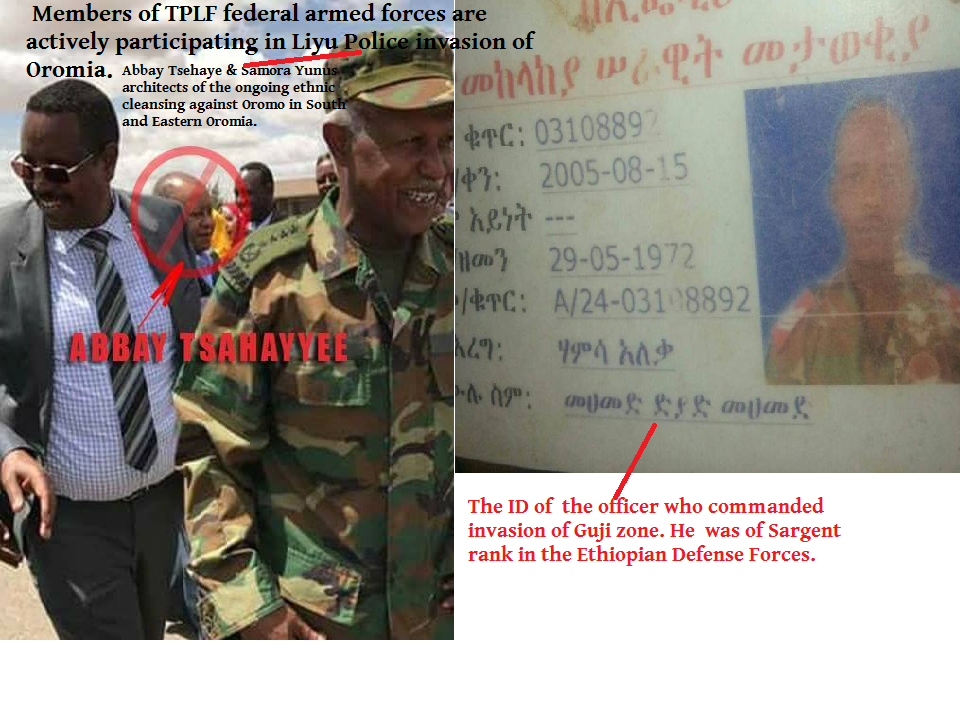


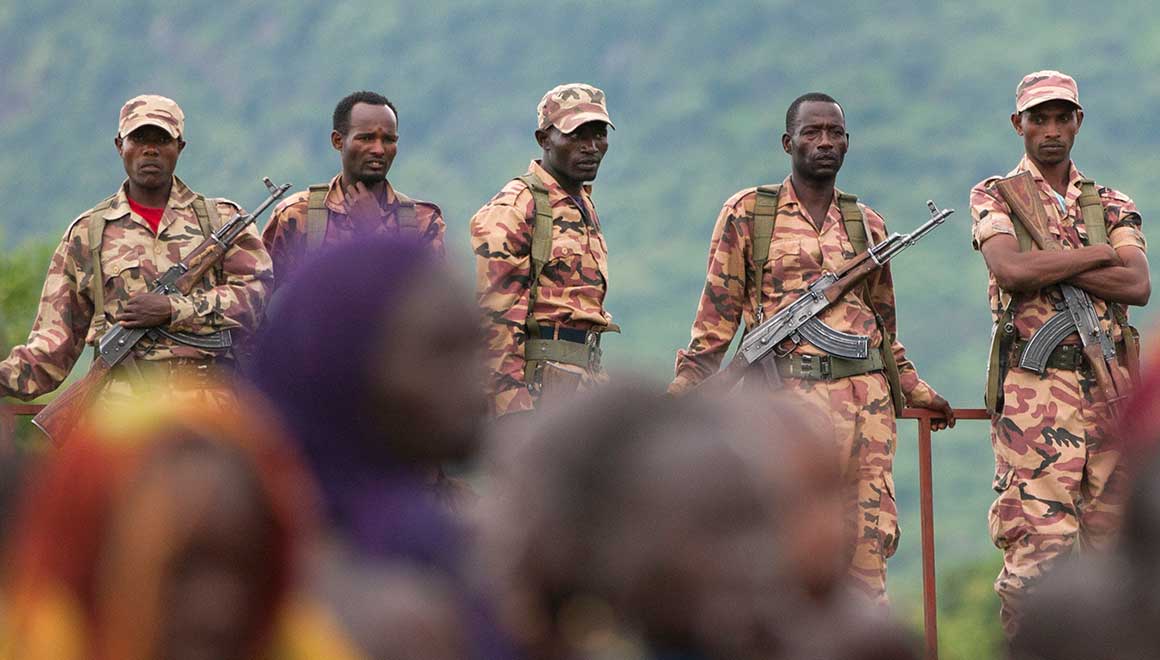
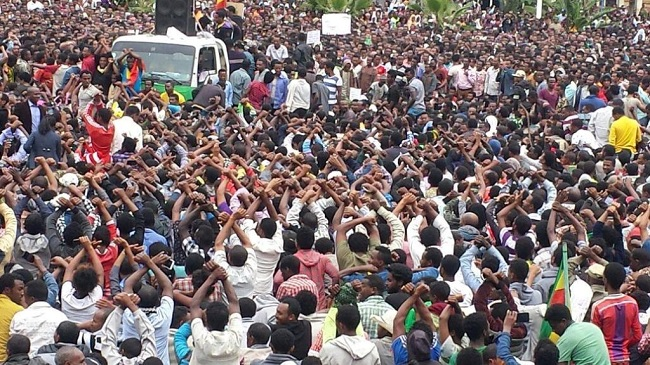


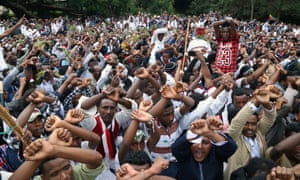


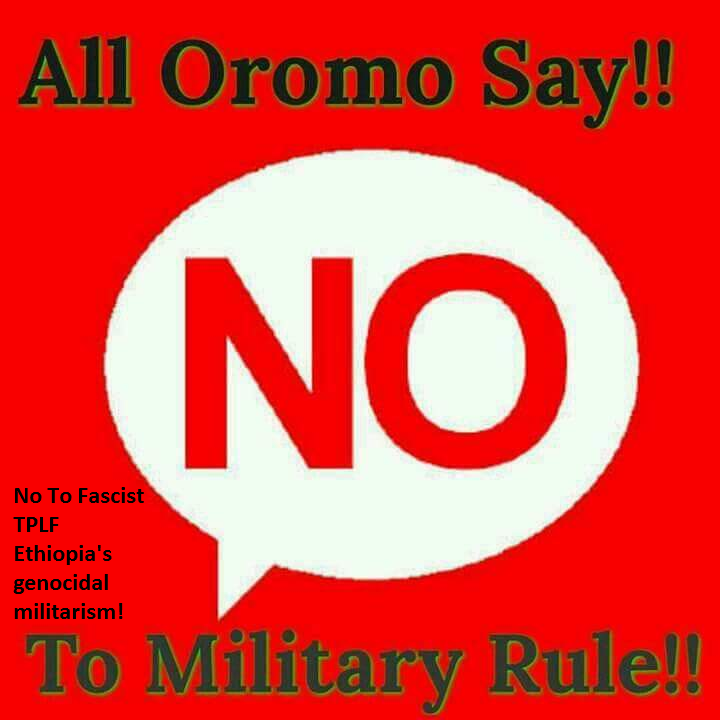
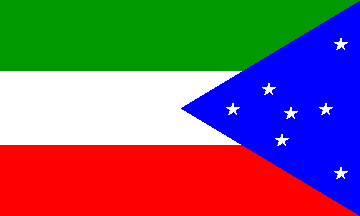


 Hundreds were killed, and thousands were detained in #Ethiopia’s crackdown on antigovernment protests #FreedomReport http://freedomhou.se/fiw17eth
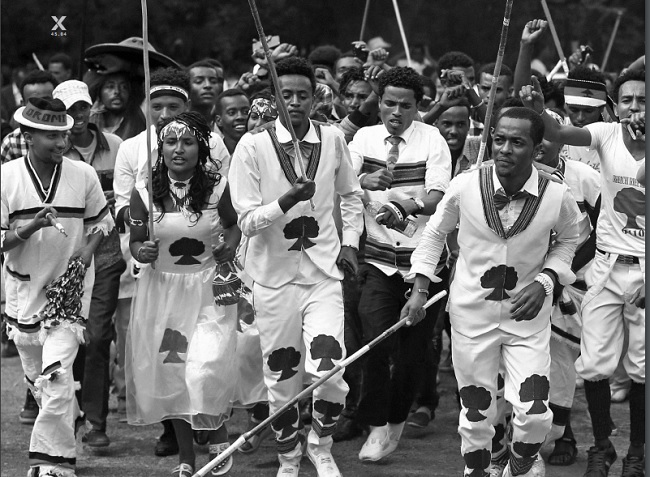
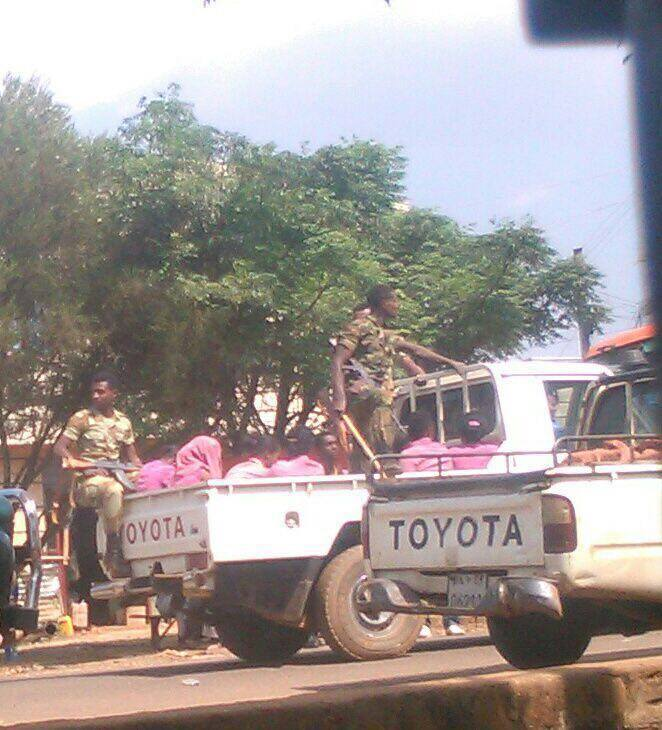




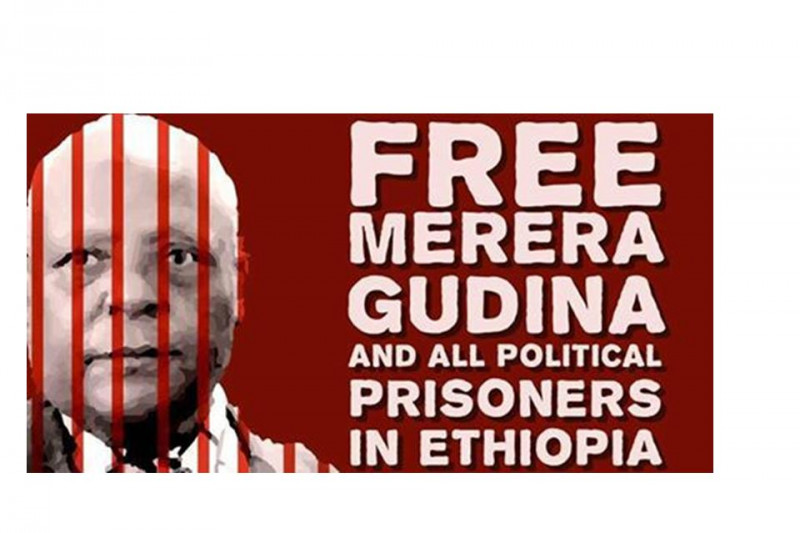



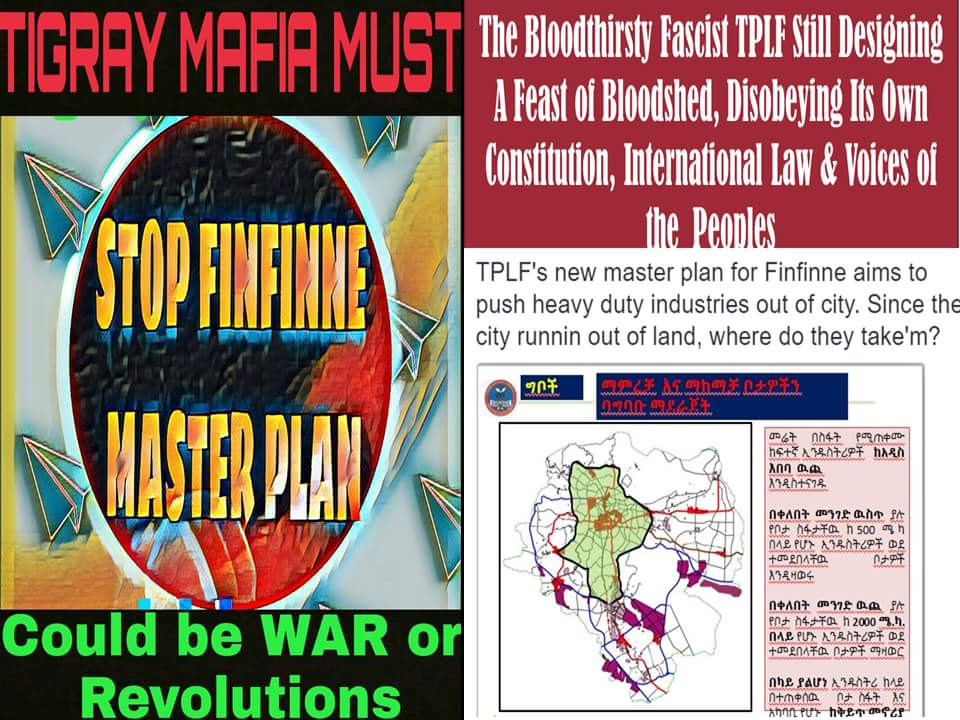


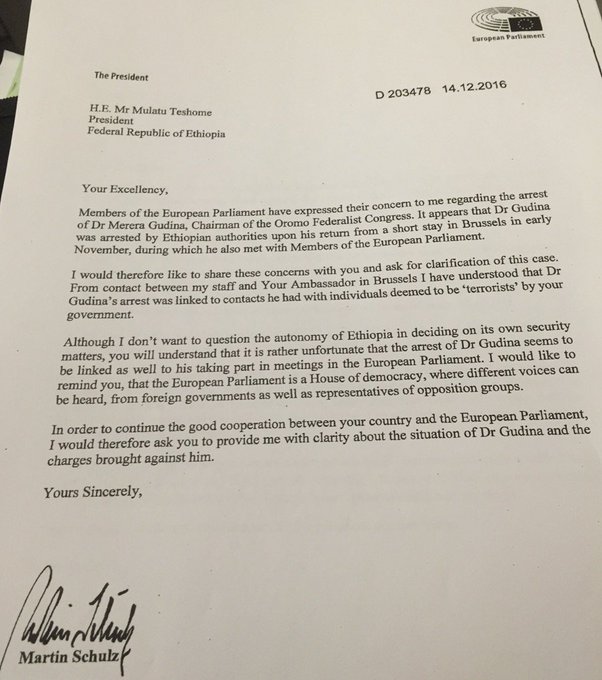


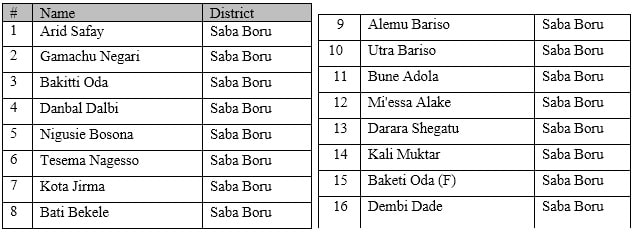
 Under remembering from the past, the HRLHA highlights the human rights violations reported by HRLHA and other human rights organizations against Oromo youths in the past ten years which continue to the present.


 Oromian Economist
You must be logged in to post a comment.