Economic and development analysis: Perspectives on economics, society, development, freedom & social justice. Leading issues in Oromo, Oromia, Africa & world affairs. Oromo News. African News. world News. Views. Formerly Oromia Quarterly
(Nairobi) – Ethiopia plunged into a human rights crisis in 2016, increasing restrictions on basic rights during a state of emergency and continuing a bloody crackdown against largely peaceful protesters, Human Rights Watch said today in its World Report 2017. The state of emergency permits arbitrary detention, restricts access to social media, and bans communications with foreign groups.
Ethiopian security hold back demonstrators chanting slogans during Irreecha, the thanksgiving festival of the Oromo people, in Bishoftu town, Oromia region, Ethiopia, October 2, 2016.
Security forces killed hundreds and detained tens of thousands of protesters in Ethiopia’s Oromia and Amhara regions during the year. Many of those who were released reported that they were tortured in detention, a longstanding problem in Ethiopia. The government has failed to meaningfully investigate security forces abuses or respond to calls for an international investigation into the crackdown.
“Instead of addressing the numerous calls for reform in 2016, the Ethiopian government used excessive and unnecessary lethal force to suppress largely peaceful protests,” said Felix Horne, senior Africa researcher at Human Rights Watch. “Vague promises of reform are not enough. The government needs to restore basic rights and engage in meaningful dialogue instead of responding to criticism with more abuses.”
In the 687-page World Report, its 27th edition, Human Rights Watch reviews human rights practices in more than 90 countries. In his introductory essay, Executive Director Kenneth Roth writes that a new generation of authoritarian populists seeks to overturn the concept of human rights protections, treating rights as an impediment to the majority will. For those who feel left behind by the global economy and increasingly fear violent crime, civil society groups, the media, and the public have key roles to play in reaffirming the values on which rights-respecting democracy has been built.
Government limitations on free expression and access to information undermine the potential for the inclusive political dialogue needed to understand protesters’ grievances, let alone address them, Human Rights Watch said.
The tens of thousands of people detained in 2016 include journalists, bloggers, musicians, teachers, and health workers. Moderates like the opposition leader Bekele Gerba have been charged with terrorism and remain behind bars, education has been disrupted, and thousands have fled the country.
The Liyu police, a paramilitary force, committed numerous abuses against residents of the Somali region in 2016, and displacement from Ethiopia’s development projects continued, including in the Omo valley.
The crackdown during 2016 followed years of systematic attacks against opposition parties, nongovernmental organizations, and independent media, effectively closing political space and providing little room for dissenting voices.
Fears Of War Increase As South Sudan Replaces Vice President
Like much of the world, 2016 has been a struggle for sub-Saharan Africa.
The region recorded its slowest overall growth in more than two decades, as low commodity prices and political uncertainty elsewhere put the brakes on economic progress. Civil conflicts have continued raging in countries including South Sudan and the Central African Republic, while extremist and Islamist groups have posed significant threats in nations including Nigeria, Somalia.
As 2017 approaches, Newsweek looks ahead to six stories that could shape the next year on the continent.
The Risk of Genocide in South Sudan
“The stage is being set for a repeat of what happened in Rwanda.” That was the stark warning from Yasmin Sooka, the head of a U.N. human rights commission that reported at the end of a 10-day fact-finding mission to South Sudan in November. Sooka was, of course, referring to the 1994 genocide in Rwanda, when extremists from the Hutu ethnic majority killed more than 800,000 members of the Tutsi minority and moderate Hutus.
Since fighting broke out between President Salva Kiir and former vice-president Riek Machar’s forces in December 2013, South Sudan’s civil war has had a devastating impact on the world’s youngest nation. Thousands have been killed; 3 million have been displaced; the economy has gone into freefall. The signing of a peace agreement in August 2015, and the return of rebel leader Machar to the capital Juba in April, provided tantalizing glimmers of hope. But these were washed away as fresh blood was spilled in July; Machar and his troops fled, and the country reverted to a situation of war, alleged human rights abuses and large-scale displacement.
South Sudanese government soldiers celebrate while standing in trenches in Lelo, outside Malakal, South Sudan, October 16. Tens of thousands of people have been killed since civil war broke out in the country in December 2013, and U.N. Secretary-General Ban Ki-moon has urged the country’s leaders to avoid a possible genocide.ALBERT GONZALEZ FARRAN/AFP/GETTY IMAGES
In Rwanda in 1994, the international community looked on as extremist Hutus carried out ethnic cleansing on a scale not seen before in Africa. The outgoing U.N. Secretary-General Ban Ki-moon, writing in Newsweek, urged the world not to let the same thing happen in South Sudan. “Time is running out as the warring parties ready themselves for another vicious cycle of violence,” said Ban. “If [the South Sudanese leaders] fail [to restart an inclusive dialogue], the international community, the region, and the Security Council in particular, must impose penalties on the leadership on both sides. We owe this to the people of South Sudan, who have suffered far too much, for far too long.”
The African National Congress Reinvents Itself
Nelson Mandela, South Africa’s first black president, was vigilant about putting party loyalty to his African National Congress (ANC) ahead of justice for South Africa’s people. “If the ANC does to you what the apartheid government did to you, then you must do to the ANC what you did to the apartheid government,” Mandela told a trade union congress in 1993.
It has been 22 years since the ANC came to power, bringing to an end decades of racial segregation and heralding a liberated South Africa. 2016 must rank as one of the party’s worst years since that pivotal moment. South African students have risen up against the party, accusing it of marginalizing them with expensive tuition fees; the party leader, Jacob Zuma, has been dogged by seemingly endless scandals; and in August’s local elections, the ANC lost control of key metropolitan areas, including the commercial hub Johannesburg, as urban voters made clear their disillusionment with the party.
Those results gave rise to factional infighting within the party and calls for Zuma to resign before the expiration of his second, and final, presidential term in 2019. The ANC is due to hold its elective conference in December 2017; if he survives until then, Zuma is expected to bow out at the conference. There are several prominent candidates to succeed him—his deputy Cyril Ramaphosa, and outgoing African Union chief Nkosazana Dlamini-Zuma, who happens to be Zuma’s ex-wife, seem the most likely.
South African President Jacob Zuma attends a luncheon at the U.N. General Assembly, New York, September 20. A series of scandals and poor election results have heaped pressure on Zuma to step down as ANC leader.PETER FOLEY – POOL/GETTY IMAGES
The ANC is far from being on the brink of defeat: it still took 53.9 percent of the national vote in August, way ahead of the Democratic Alliance (DA) on 26.9 percent. But the choice of its next leader, and how the party negotiates a difficult economic climate and deals with tense protesters, will be important ahead of 2019. Both the DA and left-wing Economic Freedom Fighters are fronted by charismatic, if diametrically-opposed, leaders—Mmusi Maimane and Julius Malema—who will be keen to pounce on any further mistakes South Africa’s liberation party makes.
Leaving a Dictator Behind in Gambia
2016 was a year of shock results in elections and referenda. While Brexit and Donald Trump’s victory grabbed the headlines, perhaps just as astounding was the presidential election held on December 1 in the smallest country on the African mainland.
After 22 years of authoritarian rule by Yahya Jammeh—or His Excellency Sheikh Professor Alhaji Dr Yahya A. J. J. Jammeh Babili Mansa, as he prefers to be known—Gambians threw off their shackles and voted for Adama Barrow, a property developer with next to no political experience.
But now comes the hard part. After graciously accepting the result on December 2—“this is the will of Allah,” Jammeh said—the outgoing president pivoted a week later and announced he was annulling the result. Regional and international leaders went into uproar, demanding Jammeh immediately step aside.
But the former army officer, surrounded by a military whose loyalty he has cultivated for more than two decades, dug himself in. “I am not a coward. My right cannot be intimidated and violated. This is my position, Nobody can deprive me of my victory except the Almighty Allah,” he said.
Gambian President-elect Adama Barrow (C) arrives at a hotel in Banjul for a meeting with four African heads of state, December 13. Gambia’s outgoing president Yahya Jammeh is refusing to leave his post despite losing an election to Barrow.SEYLLOU/AFP/GETTY
What happens next is somewhat unclear. Jammeh has submitted a petition to Gambia’s Supreme Court, which hasn’t sat in over a year and would need to be reconstituted before hearing the appeal. The president of regional body ECOWAS has threatened military intervention if Jammeh refuses to relinquish power. The region and the international community seems set on making an example of Jammeh, an archetypal African strongman leader, but he appears unlikely to go without a struggle.
Ethiopia’s State of Emergency
Ethiopia has been one of sub-Saharan Africa’s economic success stories in recent years; the Horn of Africa state has averaged 10.8 percent growth between 2003/04 and 2014/15, double the regional average of 5.4 percent. But such rapid expansion has masked a delicate situation in a country with clear ethnic divisions and where much of the population still lives in poverty.
Tensions exploded in November 2015 with the outbreak of the so-called Oromo protests—led by members of the majority Oromo ethnic group—against government plans to expand the capital, Addis Ababa, which protesters said would result in forced evictions of Oromo farmers. The government abandoned the plans in January, but the fuse had been lit: security forces were heavy-handed in dealing with the protests, killing and injuring demonstrators, while the government accused protesters of damaging private property and outside forces, including Eritrea, of fueling the discontent. Amnesty International estimates that at least 800 people have been killed since the protests began, thousands have been detained, and authorities have cracked down on media freedom.
Demonstrators chant slogans while making the Oromo protest gesture during Irreecha, the thanksgiving festival of the Oromo people, in Bishoftu town, Oromia region, Ethiopia, October 2. Hundreds of people have been killed since November 2015 and Ethiopia’s government has implemented a restrictive state of emergency.TIKSA NEGERI/REUTERS
Ethiopian Prime Minister Hailemariam Desalegn imposed a six-month nationwide state of emergency on October 9, hoping to defuse the protest movement. The government has began releasing thousands of detained protesters, but this may simply be a way of papering over the cracks in the country. The ruling Ethiopian People’s Revolutionary Democratic Front (EPRDF), in power since 1991, is dominated by the Tigrayan ethnic minority; Oromos and other ethnic groups have complained of being discriminated against and deprived of socioeconomic opportunities. The country’s parliament is also 100 percent-controlled by the EPRDF and a coalition partner, leaving little room for opposition voices. The state of emergency may be simply a sticking plaster, rather than an antidote, for the country’s problems.
Burundi’s Increasing Isolation
A tiny, landlocked country with the lowest GDP per capita in the world, it’d be reasonable to think that Burundi would want all the friends it could get. But since President Pierre Nkurunziza’s controversial decision in April 2015 to run for a third term in office, Burundi has increasingly withdrawn from international organizations and severed regional ties.
The country has rejected attempted interventions by the United Nations, including the sending of an almost-300 strong police force; the European Union has suspended aid worth 432 million euros ($451 million) over six years to the country; and Nkurunziza announced in October that he was pulling Burundi out of the International Criminal Court, despite the court’s chief prosecutor Fatou Bensouda opening a preliminary investigation into the country’s situation in April.
Closer to home, Burundi has consistently accused neighboring Rwanda of arming refugees—83,000 of the almost 330,000 Burundians who have fled the country have gone to Rwanda—in a bid to topple Nkurunziza. Rwanda has denied these allegations and expelled some Burundian refugees.
Members of Burundi’s National Assembly vote to withdraw from the International Criminal Court, Bujumbura, October 12. Burundi, under the leadership of President Pierre Nkurunziza, has increasingly withdrawn from international organizations.ONESPHORE NIBIGIRA/AFP/GETTY IMAGES
According to the United Nations, almost 500 people have been killed in clashes between security forces and anti-Nkurunziza protesters since April 2015. Burundi has been accused of muzzling its media and cracking down on free speech: pupils have been sent home from school for allegedly defacing pictures of Nkurunziza. The concern for Africa and the international community is, as Burundi withdraws further within itself, the conflict and human rights abuses may continue without any independent observers to record them.
Holding Things Together in Nigeria
Things are never quiet in Nigeria. But 2016 has been a busy year even by its hectic standards: the country has made huge gains in fighting Boko Haram, but a seemingly endless whack-a-mole of insurgencies and protest movements have arisen elsewhere.
Militants in the Niger Delta decimated oil production, a major factor that pushed the country into recession; government forces continued clashing with a Shiite group in northern Nigeria; roaming Fulani herdsmen have clashed with settled farmers in the Middle Belt; and separatists in the southeast kept up their campaign for an independent republic of Biafra.
At present, Muhammadu Buhari and his government seem to have a tentative grip on some of the crises. Nigeria’s military is pressing into Boko Haram’s dark heartland of the Sambisa Forest; the Niger Delta Avengers, the main aggressors in the oil-rich Delta, have not claimed an attack on oil pipelines since November. But there are still big challenges. Various states have banned the country’s main Shiite group, the Islamic Movement in Nigeria (IMN), an action that could force it underground; and human rights groups have demanded investigations into the killing of pro-Biafra activists.
Nigerian soldiers prepare a heavily armed convoy in Maiduguri, northeast Nigeria, March 25. The Nigerian military has made big gains against Boko Haram in 2016, but threats have emerged elsewhere in the country.STEFAN HEUNIS/AFP/GETTY IMAGES
While one of the richest countries in Africa, its resources are also limited: the military has been stretched in recent months after having to deploy to the Niger Delta while keeping up the tempo against Boko Haram. One false move by the security forces—take the clashes with the IMN in December 2015, in which almost 350 people were killed—can open up a new frontier that may push the administration beyond its limits.
And in a country with a melting pot of often-competing ethnicities, religions and political groups, things can quickly fall apart.
Nearly three months into the state of emergency declared by Ethiopia, the atmosphere on the streets of its bustling and impressively modern metropolis and capital, Addis Ababa, feels tense.
At 2 355m above sea level, the climate is pleasantly mild most of the year. Its broad thoroughfares are studded with magnificent cultural attractions. These are infused with the glow of an ancient yet resilient civilisation that could withstand both Jesuit and Wahhabi encroachment.
Yet, at present, tourists are understandably few and far between. There have been reports of hundreds of deaths in districts surrounding the capital in recent weeks. But these have been played down as an exaggeration by Prime Minister Heilemariam Desalegn.
Violence broke out during an Oromo religious festival, and in some instances foreigners seem to have been targeted. In response, the predominantly ethnic-Tigrean government clamped down on social media, took a few TV channels off the air, and restricted the movement of the opposition leader and foreign observers.
For the past few years, Ethiopia has been able to partly shed its association with abject poverty and famine. Arguably inspired by China, the country became a developmental success story and one of the fastest-growing countries in the world. At much the same time, Addis Ababa was able to capitalise on being the gateway to the politics of the African continent and foreign aid.
It is evident just how rapidly China’s stakes here have grown over the past few years. Just as evident is China’s different approach to development as compared with the West. It is also easy to see why the recent instability in Ethiopia is a real test to China’s approach.
Behind the veneer of Ethiopia’s parliamentary federalism lies an authoritarian system of state-led development that is preferred by Beijing over the country’s ragtag opposition forces. The question is whether the fruits of fast economic growth can be distributed sufficiently effectively in Ethiopia so as to forestall ethnic rural unrest.
Showcase infrastructural projects
Rather than providing grants directly aimed at poverty alleviation or promoting civil society, Chinese state-owned enterprises have been busy erecting showcase infrastructural projects. The aim is to attract further private business investment and to boost tourism.
The new sparkling African Union conference centre in Addis was fully funded by China. A new six-lane 87km highway to Adama has cut travel time from three hours to just one hour. And the international arm of China State Construction will soon give the capital a state-of-the-art stadium and upgrade its airport.
But perhaps a more persuasive productivity-booster is Addis Ababa’s new light-rail network completed in 2015 by China Railway Engineering Corporation. Often, the Chinese developmental approach is portrayed as construction frenzy ahead of genuine consumer demand.
Yet, far from being at risk of becoming a white elephant, it is already heavily used by local commuters just over a year after inauguration. In a city where taxi fares are exorbitant and buses are often in bad repair, the network is making a real difference to ordinary people’s lives.
But Beijing also runs a real risk here. In 2007, for example, 65 Ethiopians and nine Chinese expatriates were murdered by Somali separatists in an attack on a Sinopec-run oilfield in the east of the country. There is clearly a strong case for Heilemariam to broaden his government’s ethnic support base and heed various regional and rural concerns about disenfranchisement as a result of foreign investment.
No zero-sum game between the US and China
Unlike the Chinese Foreign Affairs ministry, the US State Department has expressed concern over the imposition of the state of emergency.
But the Ethiopian government is likely to remain in the US’s good books. This is primarily because of its role in countering the spread of fundamentalist terrorism in the Horn of Africa. In fact, it is that role that has helped endear Ethiopia to the world, and facilitated Western relief aid.
On the other hand, it would be a mistake to conclude China’s growing stakes in Ethiopia immediately offset Western interests. For one thing, Ethiopia’s recent troubled history suggests the enemies of government often denounce oppression. But they do not necessarily champion human rights when they seize power themselves.
In addition, Western aid is still far greater and more vital to the running of the country than anything China provides. For all the speculation about the Chinese currency replacing the US dollar as global reserve currency soon, most hotels here do not seem to readily exchange China’s currency for Birr yet.
There is, in short, no zero-sum game between the US and China over Ethiopia, at times quite to the contrary. Neither power is interested in Ethiopia purely for exploitative colonial-style mineral extraction, or is purely motivated by altruism. The budding, somewhat desultory Chinatown in Addis Ababa’s Rwanda Vegetable Market hardly comes across as an insular colonial outpost. And the Chinese embassy compound is vastly outsized by the American one.
What plays out instead are perhaps different approaches to the low-income world where the US has prized the diffusion of individual freedoms and human-rights norms and China has prized collective economic betterment. And both the US and China are set to lose out if chaos spreads in the Horn of Africa.
China’s approach may be benefiting Ethiopia
Amid capital scarcity, China’s different approach seems to benefit Ethiopia. Put simply, it opens up another avenue for development where the World Bank and IMF doctrines have until recently been the only show in town.
In concrete terms, it means Chinese companies nowadays bid for projects often with concessional terms – where, in the past, only Western companies had the technological capacity to deliver.
Hydro-electricity is perhaps the best example for that: a healthy competition seems to be building up between Italy’s Salini Impregilo and Sinohydro when it comes to damming Ethiopia’s rivers. Local and foreign NGO oversight would still be vital in order to minimise the dislocation and environmental degradation that both companies can cause.
But, at the same time, with better planning, the untapped potential of hydro-power might mean cleaner and lower-cost energy in a part of the world where power cuts are all too common.
Merera Gudina is a professor and politician in Ethiopia. He is the leader of the Oromo Federalist Congress (OFC) and opposition coalition – Dr. Merera was arrested on October 30 upon his return from a trip to Brussels where he spoke to members of the European parliament about the situation in Ethiopia. Since his arrest, Merera has not been brought to court or officially charged. We demand the immediate and unconditional release of the good professor.
Merera Gudina is a professor and politician in Ethiopia. He is the leader of the Oromo Federalist Congress (OFC), and an opposition coalition Medrek.
Merera began his college education at Addis Ababa University (AAU), but was imprisoned for seven years due to participating in protests against the dictatorship of Mengistu Haile Mariam. After his release, Merera went to Egypt to complete his education at the American University in Cairo.[1] Merera received his PhD in Political Science July 2002 from the Institute of Social Studies, at the Hague in the Netherlands
Merera founded the Oromo National Congress (ONC) in 1996, which became the largest Oromo opposition group by parliament seats after the 2005 national elections. His OFC had allied with several other parties to form the United Ethiopian Democratic Forces. Due to a court decision in 2007 which awarded the name of the ONC to a splinter group, the original ONC assumed a new name, the Oromo Federalist Congress (OFC) .
Leading opposition leader Merera Gudina after he returned from a trip to Europe. Gurdina was arrested upon his arrival at the airport in the capital Addis Ababa, according to the English private magazine Addis Standard. Gudina had travelled to Brussels where he alleged, during a hearing at the European Parliament, that Ethiopian security forces had committed human rights violations during recent unrest in the country.
The African Commission on Human and Peoples’ Rights (the Commission), meeting at its 59thOrdinary Session held from 21 October to 4 November 2016 in Banjul, Islamic Republic of the Gambia;
Recalling its mandate to promote and protect human and peoples’ rights in Africa under the African Charter on Human and Peoples’ Rights (the African Charter);
Mindful of the obligations of the Federal Democratic Republic of Ethiopia as a Member State of the African Union, and State Party to the African Charter and the African Charter on Democracy, Elections and Governance as well as other regional human rights instruments;
Recalling that one of the objectives of the African Union is to promote and protect human and peoples’ rights in accordance with the African Charter, and to promote democratic principles and institutions, popular participation and good governance;
Reaffirming the provisions of Articles 2, 3, 4, 5, 6, 7, 9, 11, 13 and 19 of the African Charter which guarantee the right to be protected from discrimination, the right to equal protection of the law, the right to life, the right not to be subjected to torture and other ill-treatment, the right to personal liberty and protection from arbitrary arrest, the right to a fair trial, the right to receive information and to freedom of expression, the right of assembly, the right to participate freely in government and the right to equality of all peoples;
Further reaffirming the standards and principles stipulated in the Guidelines and Measures for the Prohibition and Prevention of Torture, Cruel, Inhuman or Degrading Treatment or Punishment in Africa, the Guidelines on the Conditions of Arrest, Police Custody and Pre-Trial Detention in Africa, General Comment No. 3 on the African Charter on Human and Peoples’ Rights on the Right to Life, the Declaration of Principles on Freedom of Expression in Africa, and the Report of the African Commission on Human and Peoples’ Rights Study Group on Freedom of Association and Assembly in Africa;
Deeply concerned by the deterioration of the human rights situation in the Federal Democratic Republic of Ethiopia following the protests which began in November 2015;
Concerned by the use of excessive and disproportionate force to disperse protests, resulting in the deaths and injuries of several protestors, as well as the arbitrary arrest and detention of many others;
Alarmed by reports of a fire outbreak in Qilinto Prison in Addis Ababa, on 4 September 2016, leading to the deaths and injuries of a number of inmates, including detainees;
Deeply concerned by reports that more than fifty-five people were killed and several hundreds injured in a stampede, following police attempt to disperse the crowd in a break-out protest, at a religious festival on 2 October 2016;
Concerned by allegations relating to the arbitrary arrest and detention of members of opposition parties and human rights defenders;
Alarmed by the loss of lives and the destruction of property resulting from violence perpetrated by some protestors;
Concerned by the declaration of a state of emergency on 9 October 2016, which restricts fundamental human rights and freedoms;
Further concerned by restrictions on movement, assembly, media access, internet services as well as the arbitrary arrest and detention of many people following the state of emergency declaration;
Noting reports of the release of 2, 000 persons who were detained on suspicion of engaging in protests;
The Commission:
Condemns the deteriorating human rights situation in the Federal Democratic Republic of Ethiopia, in particular the undue restrictions on fundamental human rights and freedoms resulting from the state of emergency.
Calls on the Government of the Federal Democratic Republic of Ethiopia to:
ensure that fundamental human rights and freedoms are respected and upheld during the state of emergency;
lift the ban on movement, assembly, media access, and internet services;
ensure due process of law for persons arrested and detained in connection with protests, in accordance with regional and international standards, and release persons arrested and detained without charge;
refrain from the use of excessive and disproportionate force against protestors and, more generally, take the necessary measures to guarantee the security and safety of its population;
initiate prompt and impartial investigations into these alleged human rights violations and ensure that the perpetrators of these violations are held accountable and subjected to appropriate sanctions reflecting the gravity of the offences, in accordance with relevant international and regional standards;
comply with the letter and spirit of the African Charter and other regional and international human rights instruments to which it is a party and, more particularly, the instruments referred to in this Resolution;
ensure that victims of the above violations and their families obtain full and adequate redress, including restitution, compensation, rehabilitation, satisfaction and guarantees of non-repetition; and
authorise the Commission to undertake a fact-finding mission to Ethiopia.
Calls on protestors to exercise their rights with due regard to the law and the rights of others;
Calls on all actors, particularly leaders and members of opposition parties, other stakeholders and the population in general, to refrain from any form of incitement and all other acts of violence.
Done in Banjul, Islamic Republic of the Gambia, on 4 November 2016
Artist Teferi Mekonen was kidnaped on 15 November 2016. Since then his where about is unknown.
Wallisaa jalatama fi kabajama kan tahe Tafari Mokonnin guyyaa har’a, Sadasaa 15 bara 2016 humnaa nama nyaata wayyaaneettin ukkafamun isaa beekame.
Artist Nafisaa Abdulhakim was bitten and arrested on 12 November 2016 from her home in midnight in Burayyuu town, Oromia. She is being tortured at the hands of cruel fascist Ethiopia’s TPLF Agazi forces. Both Artist Teferi Mekonen and Nafisaa Abdulhakim are open to the same dangers as other Oromo nationals in TPLF’s torture chambers.
Wallistuun Oromoo jallatamtuu fi beekamtuunNafiisaa Abdulhakiim humnoota tikaa fashistii wayyaaneetiin ukkaamfamte. Mana jireenyaa ishii Buraayuu irraa Sadaasa 12 bara 2016 butanii wayita ammaa mana hidhaa hinbeekamne keessatti hiraarfamaa jirti.
EXCLUSIVE/ Ethiopia – one of the EU’s largest recipients of development aid and a key partner in the new Emergency Trust Fund for Africa for halting the flow of migrants – garnered unwelcome headlines last summer, when Olympic athlete Feyisa Lilesa raised his arms in protest at the treatment of the Oromia and Amhara peoples.
He talked to EurActiv.com’s development correspondent, Matthew Tempest.
Since then, the government has declared a state of emergency, as – according to Human Rights Watch and Amnesty International – at least 500 people have died at the hands of the security services.
Interview by EurActiv last month, the Ethiopian Ambassador to the EU refused to put an official figure on the death toll. But speaking to EurActiv today, Feyisa said that the real death toll was over 1,000 and his home country – from which he is now about to seek political asylum – could end up in a Libya-style civil war.
[This interview was conducted via a translator]
When I spoke to the Ethiopian ambassador to the EU last month, he made a public assurance that you and your family would be safe. Do you trust that?
This is what they always say. I might be killed or imprisoned if I return home.
Ethiopia is a secure, stable country in the Horn of Africa, says Ethiopia’s Ambassador to the EU, Teshome Toga. However, he admits “gaps” in governance have fuelled year-long protests that have left hundreds dead.
The symbol that the TV cameras at the Olympics caught you doing with your arms in Rio, is that supposed to symbolise the ‘X’ of a voting ballot paper? Because Ethiopia is, at least technically, a democracy.
No. It is a sign my people make above their heads to show the police they are unarmed. If we had our hands in our pockets, we might be shot. It is to show our protests are unarmed and peaceful, and to represent the fact that we are all in a prison [Ethiopia].
And why are you here today in Brussels?
To meet with MEPs from the European Parliament to discuss our situation in Ethiopia, and with the head of cabinet for the Parliament President. It was very successful.
And what is your personal situation at the moment?
I have not sought political asylum yet. I have been in the USA long-term since two weeks after the Rio Olympics.
Have your family and relatives back in Ethiopia had any threats from the authorities there?
I am very, very concernced about my family. We live around 60 miles from Addis Ababa, west of the capital, in the Oromia region.
They might attack us in different ways, indirectly. Only 1% of my family actually have jobs. Yet the wife of my brother, who is a journalist, was fired from her job two weeks ago. With no reason given.
They are advancing on us with other measures.
The crux of the issue in Ethiopia seems to be that whilst it is a democracy in theory, the Tigray people have disproportionate power as opposed to the Omoria and Amhara peoples?
Yes – as you say, it is a “democracy”. But the key government and military and defence and police and economic positions are dominated by them [the Tigray].
The Ethiopian government on Sunday (10 October) declared a state of emergency, following a year-long spate of unrest which spiked in a week of deaths and attacks on buildings and foreign companies.
Based on what you hear from people on the ground, what do you think the death toll from protests over the last year to 18 months would be?
Oromia is a very large region – probably as big as two or three European countries. It has no big road network and very little infrastructure, so it is difficult to get numbers.
But I would say 500 is a very, very small estimate. I would say it is at least 1,000.
And as a voice and a face of the Oromia people now, what would your ideal solution be to the question of representation?
The demand from the public is really not all that complicated at all. It is a demand for equality, for basic human rights, and for an equal share of resources.
And are you optimistic that can happen without further bloodshed?
I am concerned. It is very difficult to be optimistic. At the beginning of the protests [in late 2015], for the first week or two, I was optimistic. But the government crackdown soon came, and this situation has continued.
Ethiopia could become like Libya.
Is that your worst nightmare?
I am very much concerned at this kind of conflict could emerge because they [the authorities] are trying to create tensions between the Amhara and Tigray and others, and because of that, things could get worse in the region.
All though my school life, we had this. In Grade 9, three of my friends were killed by the regime. It continued in 2014. The epicentre was to the west of Addis Ababa. There were other major incidents, killing, repression, and exile.
Repression in the past year was very intensive, even as I was training [for the Olympics]. I have no other job, I was just training. Three months before Rio, they asked me to participate [in the Olympic team], and it was at that point I decided to make my gesture.
And what is your life like currently?
I am now in Arizona. I have permission to stay in the US. Running is my job, and it is my survival. I had much help from the Ethiopian diaspora of exiles, with people helping to facilitate my visa, and fundraising there for me.
FURTHER READING
The Ethiopian embassy to the EU offered an official response to this interview, which EurActiv.com is happy to publish (15/11/2016):
Though Feyisa Lilesa has the right to share his opinion about the situation in Ethiopia, it is important to give a nuanced view of the reality in the country.
The exact number of demonstrators who died during the protests is still investigated by the Ethiopian Human Rights Commission (EHRC). A previous report by EHRC in June 2016 on the unrests that started in November 2015 established that the measures taken by the defense forces and the federal police in collaboration with the public to control the situation were proportionate, though in some specific cases security forces used excessive force to control the violence. According to this report, 173 people died including 14 members of the security forces and another 14 public administrators. Following this report, the Ethiopian Prime Minister H.E. Hailemariam Desalegn has shared the regrets of the government for the avoidable deaths which occurred despite the professional conduct of security forces.
Furthermore, the claim that the Ethiopian authorities are «trying to create tensions between the Amhara and Tigray» is not grounded in reality. Each region is self-administrated, and the national Parliament, the government cabinets and other institutions are representing the different peoples according to their size. With more than 80 ethnic groups in the country, the authorities have no better option than insuring peaceful coexistence between the different communities and exercising democracy, which has yet a very young history in the country − merely 25 years.
Finally, Feyisa Lilesa is implying that Ethiopia could become «another Libya», probably thereby meaning that the country could fall into chaos and instability. This might in fact precisely be the agenda of extreme anti-peace forces trying to divide the country and take advantage of a situation of chaos which would suit their hidden agendas. Widespread attacks encouraged by some extreme diaspora elements targeting public and private properties, including several foreign investments providing thousands of jobs to local communities testify of this agenda of destruction and chaos. However, the government is fully committed to restore order in the country for the benefit of the citizens and development of the country. The Prime Minister has, in accordance with the Constitution and with the approval of the House of People’s Representatives, announced a State of Emergency beginning of October. Since then, peace and order have been restored throughout the country, and some of the measures have been eased in the meantime, including lifting of travel restrictions for diplomats.
It is to be hoped that the commitment of the authorities and the public will further improve the situation in the country. However, unbalanced and biased comments in the media such as this interview are not helping to advance in this direction.
Brief account on the Oromo protest from Nov. 2015 – Nov. 2016
By Tarekegn Chimdi (PhD)
Background
The Oromo people constitute over 40% of the total population and a single largest national group in Ethiopia. Since the date of colonization by the Abyssinians at the end of 19th century, their political, economic, social and cultural life was undermined. Historians noted that after more than three decades of fierce wars of resistance their demographics were reduced from 10 million to 5 million. They were faced with cruel subjugation, exploitation, discrimination and marginalization; forced to slavery and servitude. Their egalitarian and democratic system of governance known as Gadaa was abolished. Successive regimes in Ethiopia had been furthering their subjugation and repression through heavy-handed cruel, inhumane policies (be it under the guise of democracy or socialism). The current Tigrean People’s Liberation Front (TPLF) led totalitarian regime is the worst the Oromo people witnessed.
The TPLF dominated authoritarian regime ruled for a quarter of century with complete control on political, economic and social life in Ethiopia after toppling over a century old Amhara hegemony in 1991. Currently, it controls 80% of the economy through its conglomerate the Endowment Fund For the Rehabilitation of Tigray (EFFORT), 98% of the military and security leadership controlled by the TPLF membership, 100% of the parliament controlled by the TPLF and its puppet People’s Democratic Organisation (PDO)s remotely operated. As a result, the TPLF elites and PDO operatives amassed billions of dollars from trading on the natural resources under their control; restricting the ownership of businesses and industries, sprawling real estates and mansions in big cities; foreign direct investment, aid and leasing millions of hectares of lands to foreign investors. The TPLF operatives benefitted from the illicitly maintained economic, political and security power without observance of the rule of law.
On the other hand, the Oromo people were faced with rampant human rights abuses and systematic repressions that were repeatedly reported by international human rights organizations and yet largely ignored. Untold sufferings and systematic repressions in the last 25 years include extrajudicial killings, enforced disappearances, arbitrary detentions, raping and torture. However, the Ethiopian government champions itself for being the fastest growing economy and key ally in the fight against terrorism to hide its genocidal character against the Oromo people. The reality on the ground shows that the Oromo people are targeted on the basis of their racial origin. As a result, over 95% of the prison cells in Ethiopia are filled with the Oromos and Afan Oromo has become the official language in prisons.
LandgrabbingasatriggertopeacefulprotestinOromia
Land grabbing negatively affected the livelihood of millions of farmers and forcibly evicted from small subsistence farming, pastoral and grazing areas. Forced eviction and relocation in the name of investment that was orchestrated by internal and foreign actors, has evicted over 1.5 million Oromo farmers without their consent and compensation from around Finfinne (Addis Ababa) in the past ten years. Millions of hectares of arable land was confiscated mainly by agribusinesses from foreign multinational companies and the ruling regime (TPLF) cadres and their operatives resulted in the uprooting and destitution of the millions that led in part to further the starvation of the ten millions of peoples in Ethiopia. Such unethical and inequitable investment had been observed to yield abysmal poverty, food insecurity, broken communities, loss of identity and culture and aggravated environmental degradation. Above all the Oromo people in and around Finfinne (Addis Ababa) became the epicenter of the episode and in a way it reflects the way the Oromo people were conquered, robbed off their land and properties, reduced to serfs and slaves, and kept under inhumane subjugation.
The dynamics of the land grabbing that was aimed to expand Finfinne (Addis Ababa) by ~2000% from the current 54,000 ha to 1.1 million ha started with the horticulture industry, mainly the cut flower plantations. In less than a decade, several dozens of cut flower investments from within and abroad mushroomed within the radius of 80km surrounding Finfinne (Addis Ababa) to takeover the land from subsistence farmers that fed millions before the change of ownership. The establishment of these plantations and the expansion of real estate within the peripheries were the stepping stone to establish the boundary of Finfinne Special Zone of Oromia which later to be incorporated into the infamous “Addis Ababa and the Surrounding Oromia Special Zone Integrated Development Plan” or shortly “Master Plan”, in 2014. Similarly, Midroc’s and Karturi’s farms were meant to benefit and export crop produces into their countries of origin; jatropha, castor oil and sugar cane plantations were not established on non-arable terranulis land, but on small subsistence farms whose owners were forcibly evicted without (with small) compensation and the security to their livelihood deprived. In general, the Oromo people are deprived of their livelihood by the Ethiopian successive regimes. As a result of deep historical and current grievances, suffering from oppression, exploitation and persecution for years, the students staged peaceful protests over Oromia for years and the response were being quelled heavy-handedly by the security forces of the Ethiopian government. The announcement of the infamous “master plan” further triggered the already deep-rooted grievances to explode. The plan was opposed by the Oromos from all walks of life: Oromo political parties, civic organisations, students, farmers, etc. for several reasons as it was unconstitutional, not inclusive and without the consent of the people. Moreover, it was deliberated to destroy the identity, livelihood, culture and language of the Oromo people.
WaronUnarmedOromoProtesters
In May 2014, the Oromo students from different universities, secondary schools and the general public from all over Oromia engaged the Ethiopian government in a peaceful protest in tens of thousands to denounce the “master plan” and voice their legitimate concerns. In the demonstration that started at Ambo, 100km from the capital, more than 50 civilians were shot and killed by the Ethiopian government security forces. In total over 80 unarmed civilians were killed in different parts of Oromia the same momth. Several hundreds of unarmed civilians were injured and thousands were arrested. The Ethiopian government shelved the implementation for a while until it issued final version of its master plan in the last quarter of 2015.
On November 12, 2015, peaceful student protest broke at the town of Ginchi, 80km from the capital to the West of Addis Ababa, against the sale of Ginchi stadium to an investor and the clearing of Chilimo forest. The government security forces killed two students and the population were angered. As a result, peaceful protests engulfed all parts of Oromia within two weeks. In order to legitimize its discriminatory policies, the Ethiopian Government issued a decree for Oromia to be ruled under martial law from the end of December 2015. Over 50,000 regular and special army was deployed under the command post led by the Prime Minister, Head of Army, Police and Security Chief to stop the protest mercilessly.
In Figure 1, the maps in the years 2015 (upper) and 2016 (bottom) show the distribution of protests from November 2015 – November 2016. In the last one year, peaceful demonstrations were staged mainly by the students and farmers across almost all Oromia districts at least once. They were all peaceful until turned violent by the heavy-handed measures of the Ethiopian security forces. As shown in Figure 1, 2015 (upper) in the last quarter of 2015, there were sporadic protests in Oromia that matured to cover all parts of Oromia intensively, some parts of Amhara and other southern regional states after July 2016.
Table1 below shows the scale of fatalities over one year period across the states in Ethiopia. The total number of fatalities from November 12, 2015 to December 31, 2015 was 137 in total, with Oromia at 102. In the year 2016, violent crackdown from the Ethiopian security forces spread all over Oromia and a total of 1855 persons were killed in the last ten months. The security forces also reacted violently against protesters in Finfinne (Addis Ababa), Amhara, Dire Dawa, Somali and Southern Nations and Nationalities (SNNP). In the Amhara state, the protests that started in July 2016, in Gondar, was triggered by the opposition of the inclusion of Welkait district into the Tigray state. Over 233 persons were killed in this state in the last five months in Gondar, Bahir Dar etc in relation to peaceful protests. Similarly, in Konso and Gedeo districts of the Southern Nation and Nationalities and Peoples (SNNP) state dozens of protesters were killed. The data shows the cause of fatalities in the Gambela, Somali, Harari and Tigray different from peaceful protests. In general, the scale and distribution of the protests and fatalities in Oromia over the other states indicate the degree of harshness and discriminatory measures carried out by the Ethiopian government and the genocide is in the making against the Oromo people.
By definition the killings of over 1000 people from the same social group in a year qualifies the term “genocide” and killings of unarmed civilians in mass also refers to “massacre”. The graph in figure 2 shown below covers the daily fatalities across Oromia and Finfinne (Addis Ababa) where those killed are from the Oromo national group. In the graph the killing from the beginning of August 2016 to the end of October 2016 was covered. The first peak corresponds to the killings on the Oromia grand protest staged all over Oromia on the 6th of August 2016 and over 188 people were killed by the Ethiopian security forces. On this particular day, peaceful protests were held in over 200 towns and cities across Oromia and Finfinne (Addis Ababa) (see figure 3) and tens of thousands were arrested from all over Oromia and Finfinne in inhospitable remote malaria infested Tolay, Awash Arba, Huriso and Dhedhessa military camps.
The second peak corresponds to the killings at Qilinto maximum-security prison located in the southern part of Finfinne (Addis Ababa) on September 3, 2016. A local newspaper Addis Fortune reported that the government security forces indiscriminately shot at the prisoners after fire broke on the premises. The government sources report 23 prisoners died of suffocation from fire. However, the Ethiopian Human Rights Project (EHRP) put the figure to 67 and the Oromia Media Network also reported additional two killings. Local sources alleged the Ethiopian government sources for starting the fire and indiscriminately shooting the prisoners.
The third peak in Figure 2 corresponds to the Irreechaa massacre at Hora Arsadi of Bishoftu town, 40km to the East of the capital that occurred on October 2, 2016. On the Irreechaa annual thanksgiving festival, over 2 million Oromos from all over Oromia were gathered to celebrate. The Ethiopian government agitated and provoked the festival by installing its close operatives and cadres to takeover the stage from the legitimate leader of Gadaa (Abba Gadaa) who is in charge of the event. The celebrants were angered and started chanting slogans and crossing wrists above head – the popular sign of Oromo protest. The security forces deliberately started roaring Humvee in the crowd, hovering helicopter in the sky, firing the tear gas and bullets to suffocate the people on a narrow space. Most of the people perished in the ditch and the lake. Some sources put the death toll at 55 and above citing the cause of death simply as a deadly stampede. However, local and opposition sources put the figure of the death toll to at least 678. It is the responsibility of the government to protect the people away from the ditch through fencing and/or soil filling; avoiding any provocative acts, unblocking the safe exit and panicking the population on narrow space unless it deliberated and planned to cause massacre.
After the Irreechaa massacre, the Oromo people reacted with deep sorrow and responded through difference means of peaceful resistance against the Ethiopian government. The roads to different parts of the Oromia and Ethiopia were blocked, the economic boom of the TPLF elites was devastated. In a week to Irreechaa massacre, the Ethiopian government declared state of emergency that applies to the other states as well. The security forces reportedly killed more that 283 people (see figure 2, the fourth peak) in one week of the state of emergency.
Summary
The Ethiopian security forces continued their unparalleled genocidal crimes of torturing, raping and killings, largely hidden from the eyes and ears of the international observers, embassies and the media. Records show that over two thousand Oromo civilians (students, farmers, teachers, civil servants, elders, leaders and members of the Oromo opposition party) were killed in the last one year from live bullets of the Ethiopian security forces. Witnesses out of Oromia show exceptional heinous crimes of killing that includes children from age 1 to the old men to the age of 80, pregnant women and mothers, a mother killed with her two sons, three siblings from the same parent. There are evidences of mothers and siblings ordered to sit on the dead body of their loved ones after being killed by the security forces. Wives and daughters were gang raped in front their husbands, loved ones and parents. Moreover, every independent Oromo person is routinely subjected to harassment, extrajudicial killings, imprisonment, rape and torture. Several thousands were wounded from live bullets and estimated over 50,000 were arrested in different detention camps in remote areas labeled as “terrorists” without convictions and/or rare trials.
The TPLF/EPRDF is still acting with impunity despite continued call for investigation into the genocidal crimes it commit by the renowned international human rights organizations, the UN Human Rights Council, African Commission for Human and Peoples’ Rights in the last several months. The western governments such as US, UK, Canada, Australia and others issued the statements of concern and travel warnings which may not be enough to curb the looming dangerous situation. The Ethiopian government had been major recipient of direct investment and economic aid earnings mainly from the World Bank, International Monetary Fund (IMF), the US, UK and the EU used to further human sufferings. Western governments are requested to sanction, use their diplomatic leverage to pressure the Ethiopian government to allow an independent UN and African Commission investigations over the massacres, completely halt the state of emergency and remove command posts from the villages, unconditional release of Oromo politicians and civilians from detention camps. Furthermore, the perpetuators of the massacres must be brought before international tribune to curb the genocide in the making in Oromia.
References
The data for this analysis was extracted from the Armed Conflict Location and Event Data Project (ACLED) database http://www.acleddata.com/
Tarekegn Chimdi “Systematic repression and rampant human rights abuses against the Oromo People in Ethiopia (2008) ” presented at AFSAAP conference, “The Oromo People and Finfinne (2004) ” intervention at the UN office of High Commission for Human Rights http://www.ohchr.org/Documents/Issues/IPeoples/WG/IGFM1-oromo-4b.doc
Addis Fortune newspaper on Qilinto prison indiscriminate killings 4. Human Rights Watch, Society for Threatened Peoples and Amnesty
International reports in 2015 and 2016
Press releases from the UN Human Rights Council, African Commission for Human and Peoples’ Rights, foreign offices and governments
News from Oromia Media Network, Al Jazeera, VOA, DW and others
Ethiopian government command post raping and killing times and tactics ,and the story of two ladies raped by TPLF soldiers.
We never forget our victims
The time was nearly around 7:00pm when the girl was walking to shop. The command post stopped, slapped her for no reason and asked where she is going. Next one of the command post members forcefully grabbed her cell phone and asked her if she has husband. The girl told them that she is a high school student living in a rented room. Then the soldier who grabbed her cell phone put her under gun point and asked her to walk to her rented room. He entered into the girl’s room following her. Then he beat and raped her to unconscious. At 12:00pm when she become conscious, he was not around but all of usable and portable properties of her were taken and all other properties like books, water glass, coffee cup, electronics etc were broken and dismantled. Exactly the same thing happened to another woman who were living alone in a rented room and were running to shop after work. The student girl was Oromo and the other woman was Amhara living in Oromia and was there for job. From which ethnic group this soldier could be?
As you can understand from the above story, almost all the rapping, killings, tortures and kidnappings made by the so called Ethiopian command post are happening during the night. Regarding their manner of operation, they usually break and enter into any house they want in the midnight where people are sleeping. Once they entered, there is no any form of dialogue, instead they just start beating, raping, kidnapping and sometimes shooting. The soldiers are either racially motivated or instructed to do so that they are so hateful to the people.
In conclusion, Ethiopian command post operation time is during dark night (to hide their harshly crime.) and the tactic is they put you under gun point beat you badly to unconscious. Only after beating one to unconscious, they either rape, robe or kidnap by throwing the victim to their vehicle. Sometimes people are dying of the beatings.
Question 1: Is this the time, operation, and manner of operation (tactic) that Ethiopian parliament approved to be applied to the people?
Question 2: Can anyone, who feels the sufferings of the people, write open letter to Hailemariyam Dessalegn with copy to Oromia and Amhara regional governments to control the time and operation of these racially acting soldiers and police?
Finally, however, the night is long, the day will come!
Ethiopia is 12 months in to a political crisis which has seen at least 1,000 people killed. But unless the government introduces significant reforms, it will get worse, says Andrea Carboni.
An unprecedented wave of protests has shaken Ethiopia since November last year. These protests have revealed the fragility of the social contract regulating Ethiopia’s political life since 1991, when the Ethiopian People’s Revolutionary Democratic Front coalition (EPRDF) overthrew the Derg and assumed power. This tacit agreement between the ruling coalition and the Ethiopian people offered state-sponsored development in exchange for limited political liberalisation. After twenty-five years of EPRDF rule, frustrated with widespread corruption, a political system increasingly perceived as unjust and the unequal gains of economic development, hundreds of thousands of Ethiopians have now descended into the streets, triggering a violent reaction from the state.
As we enter the twelfth month of the uprising, violence shows no sign of decreasing in Ethiopia. In its efforts to put down unrest, the government has allowed the security forces to use lethal violence against the protesters. According to the Armed Conflict Location and Event Data Project, more than one thousand people are estimated to have died as a result of violent state repression since last November. Thousands of people, including prominent opposition leaders and journalists, have been arrested and are currently detained in prison.
International concern
International institutions and non-governmental organisations have expressed major concerns about the deteriorating human rights situation in the country. The UN Human Rights Council called for “international, independent, thorough, impartial and transparent investigations” over the repression in Ethiopia, a request that was swiftly rejected by the government. Ethiopia’s Information Minister instead blamed “foreign elements” linked with the Egyptian and the Eritrean political establishments for instigating the rebellion and arming the opposition.
Rather than stifling dissent, state repression has contributed to escalating protests. Violent riots have increased after the events in Bishoftu on October 2, when a stampede caused by police firing on a protesting crowd killed at least 55 people. In the following days, demonstrators have vandalised factories and flower farms – including many under foreign ownership – accused of profiting from the government’s contested development agenda. An American researcher also died when her vehicle came under attack near Addis Ababa. Although protesters have largely remained peaceful and resorted to non-violent tactics, these episodes of violence raise concerns over escalating trends in the protest movement.
Unrest and repression
The geography of unrest is also telling of the evolving protest cycle in Ethiopia. The protests originated last November in the Oromia region, where the local population mobilised to oppose a government-backed developmental plan which would displace many farmers. The Oromo people, who constitute Ethiopia’s single largest ethnic group,accuse the EPRDF of discriminating against their community, and its local ally, the Oromo People’s Democratic Organisation (OPDO), as being a puppet in the hands of the Tigray-dominated ruling coalition.
Until mid-July, the unrest had largely remained confined to Oromia’s towns and villages. Local tensions around the northern city of Gondar inaugurated a new round of protestsin the Amhara region, where regionalist demands joined the widespread discontent with state repression. In the following weeks, protests spread further into the Southern Nations, Nationalities, and Peoples’, the native region of Prime Minister Hailemariam Desalegn, as local communities began to stage anti-government protests. Episodes of communal violence and attacks against churches have been reported in Oromia as well as in other ethnically mixed areas of the country.
Despite increasing dissent, the government seems unwilling to mitigate its repressive measures. Internet access was allegedly shut down in an attempt to hamper the protest movement, which uses online media and social networks to disseminate anti-government information. On October 9, the government introduced a six-month state of emergency, the first time since the ruling EPRDF came to power in 1991. At least 1,600 people are reported to have been detained since the state of emergency was declared, while the Addis Standard, a newspaper critical of the government, was forced to stop publications due to the new restrictions on the press.
Polarised politics: government and opposition
These decisions notwithstanding, it is unclear how the EPRDF can manage to restore the government’s authority and preserve investor confidence by adopting measures that continue to feed resistance. After pressure from German Chancellor Angela Merkel, Hailemariam pledged to reform Ethiopia’s electoral system, which currently allows the EPRDF to control 500 of the 547 seats in Parliament. These limited political concessions are unlikely to satisfy the protesters’ demand for immediate and substantial change, since the proposed reform would only produce effects after the 2020 general elections.
According to the opposition, this is the evidence that the Tigray minority, which dominates the upper echelons of the government and the security apparatus, is unwilling to make any significant concessions in the short term. By labelling the opposition’s demands as racist and even denying their domestic nature, the government is leaving little room for negotiation and compromise and risks contributing to the escalation of the protests.
For over a decade, Ethiopia has been one of the fastest growing economies in Africa. Foreign investments – most notably from China – have funded large-scale infrastructure projects, including the recently inaugurated railway to the port of Djibouti.
The on-going unrest is likely to have a negative impact on Ethiopia’s economy, reducing the country’s considerable appeal among foreign investors and tourists. The demonstrations have revealed the growing discontent of the Ethiopian people, and especially of its disenfranchised youth, over the EPRDF’s authoritarian and unequal rule. The EPRDF therefore needs to implement far-reaching reforms and embrace dialogue with the opposition to prevent the current unrest from deteriorating.
Ethiopia: TPLF/EPRDF Crimes Against Humanity in Oromia Escalate After the State Of Emergency is Declared
HRLHA’s Appeal to the International Community
October 30, 2016
Crimes against humanity against the Oromo nation have escalated after the State of Emergency was declared on October 8, 2016 by the TPLF. The Tigray People’s Liberation Front blocked all means of communication in order to hide the heinous crimes it perpetrated all over the Oromo and Amhara regions. According to the unconfirmed information obtained in Oromia regional state, over 1000 Oromos have been killed and about 40,000 Oromos detained in different places from October 8 – 30, 2016. The HRLHA has received a partial list of those killed and detained in the South Oromia Zone in West and Arsi Zones. According to our informants, from October 8 – 30, 2016 , 248 have been killed and 3706 were detained. Most of these were youths.
The following are the names of Oromos among the detainees in Munessa and Digalu districts of Arsii Zone , Oromia
International attention on Ethiopia has been in a continuous ebb and flow since the outbreak of the mass movement that began in November 2015 in Oromia Regional State. Lethal force has been used against the protestors. The Human Rights League of the Horn of Africa and other international human rights agencies such as Human Rights Watch and Amnesty International have repeatedly reminded the International community to stop the vicious human rights abuses in Ethiopia. However the world community has abstained from taking concrete action.
The HRLHA again calls upon the international community to act collectively in a timely and decisive manner – through the UN Security Council and in accordance with the UN charter on a case-by – case basis to stop the Ethiopian government’s assaults on its own citizens before it is too late.The International community has a responsibility to use appropriate diplomatic,humanitarian and other means to protect populations from crimes. If a State is manifestly failing to protect its population, the international community must be prepared to take collective action to protect populations,in accordance with the UN Charter.
Copied To:
UN Security Council
Office of the Ombudsperson
Room DC2 2206
United Nations
New York, NY 10017
United States of America
Tel: +1 212 963 2671
E-mail: ombudsperson@un.org
UN Human Rights Council OHCHR address:
Office of the United Nations High Commissioner for Human Rights (OHCHR)
Palais Wilson
52 rue des Pâquis
CH-1201 Geneva, Switzerland.
Africa Union (AU)
African Union Headquarters
P.O. Box 3243 | Roosvelt Street (Old Airport Area) | W21K19 | Addis Ababa, Ethiopia
Tel: (251) 11 551 77 00 | Fax:(251) 11 551 78 44
Webmaster: webmaster@africa-union.org
African Commission on Human and Peoples’ Rights
31 Bijilo Annex Layout, Kombo North District
Western Region P.O. Box 673 Banjul
The Gambia
Tel: (220) 441 05 05, 441 05 06
The US Department of State Secretarate Secretary
His Excellency Mr. John Kerry
WASHINGTON, D.C. HEADQUARTERS
(202) 895-3500
OFMInfo@state.gov
Office of Foreign Missions
2201 C Street NW
Room 2236
Washington, D.C. 20520
Customer Service Center
3507 International Place NW
Washington, D.C. 20522-3303
UK Secretary of State for Foreign and Commonwealth Affairs
The Rt Hon Philip Hammond MP
Parliamentary
House of Commons, London, SW1A 0AA
Tel: 020 7219 4055
Fax: 020 7219 5851
Email: hammondp@parliament.ukDepartmental
Street ,
London, SW1A 2AH
Tel: 020 7008 1500
Email: fcocorrespondence@fco.gov.uk
Minister of Forenien Affairs (Canada)
His Excellency Stéphane Dion
Write to:
Enquiries Service (BCI)
Global Affairs Canada
125 Sussex Drive
Ottawa, ON
K1A 0G2
Email: Enquiry Service – On line form
Canada
Minister for Foreign Affairs (Sweden)
Her Excellency Margot Wallström
Switchboard: +46 8 405 10 00
Street address: Rosenbad 4
Postal address: SE 103 33 Stockhol
Minister of Foreign Affairs (Normway)
His Excellency BørgeBrende
Ministry of Foreign Affairs
E-mail: post@mfa.no
Phone: + 47 23 95 00 00
Address: 7. juniplassen 1, N-0032 Oslo
Ethiopia has “ruthlessly targeted” and tortured thousands of people belonging to its largest ethnic group for perceived opposition to the government, rights group Amnesty International said in a report released Tuesday.
The report, based on over 200 testimonies, said at least 5,000 members of the Oromo ethnic group, which has a distinct language and accounts for over 30 percent of the country’s population, had been arrested between 2011 and 2014 for their “actual or suspected peaceful opposition to the government.”
“The Ethiopian government’s relentless crackdown on real or imagined dissent among the Oromo is sweeping in its scale and often shocking in its brutality,” said Amnesty International researcher Claire Beston.
The rights group said those arrested included students and civil servants. They were detained based on their expression of cultural heritage such as wearing clothes in colors considered to be symbols of Oromo resistance – red and green – or alleged chanting of political slogans.
Oromia, the largest state in Ethiopia, has long had a difficult relationship with the central government in Addis Ababa. A movement has been growing there for independence. And the government has outlawed a secessionist group, the Oromo Liberation Front (OLF), which has fought for self-determination for over 40 years.
Since 1992, the OLF has waged a low-level armed struggle against the Ethiopian government, which has accused the group of carrying out a series of bombings throughout the country.
Amnesty said that the majority of Oromo people targeted are accused of supporting the OLF, but that the “allegation is frequently unproven” and that it is “merely a pretext to silence critical voices and justify repression.”
“The report tends to confirm the claims that diaspora-based Oromo activists have been making for some time now,” Michael Woldemariam, a professor of international relations and political science at Boston University, told Al Jazeera. “What it does do, however, is provide a wealth of detail and empirical material that lends credibility to claims we have heard before.”
Missing fingers, ears, teeth
Former detainees – who fled the country and were interviewed by Amnesty in neighboring Kenya, Somaliland and Uganda – described torture, “including beatings, electric shocks, mock execution, burning with heated metal or molten plastic, and rape, including gang rape,” Amnesty said.
Although the majority of former detainees interviewed said they never went to court, many alleged they were tortured to extract a confession.
“We interviewed former detainees with missing fingers, ears and teeth, damaged eyes and scars on every part of their body due to beating, burning and stabbing – all of which they said were the result of torture,” said Beston.
Redwan Hussein, Ethiopia’s government spokesman, “categorically denied” the report’s findings. He accused Amnesty of having an ulterior agenda and of repeating old allegations.
“It (Amnesty) has been hell-bent on tarnishing Ethiopia’s image again and again,” he told Agence France-Press.
The report also documented protests that erupted in April and May over a plan to expand the capital Addis Abba into Oromia territory. It said that protests were met with “unnecessary and excessive force,” which included “firing live ammunition on peaceful protestors” and “beating hundreds of peaceful protesters and bystanders,” resulting in “dozens of deaths and scores of injuries.”
Oromo singers, writers and poets have been arrested for allegedly criticizing the government or inciting people through their work. Amnesty said they, along with student groups, protesters and people promoting Oromo culture, are treated with hostility because of their “perceived potential to act as a conduit or catalyst for further dissent.”
Al Jazeera and wire services. Philip J. Victor contributed to this report.
The government of Ethiopia has responded to a groundswell of protests, which are calling for democracy and human rights for all, by imposing a six-month long state of emergency, effective October 8.
The list of measures curtailing freedoms through the emergency are far-reaching. They include bans on: social media; accessing news outlets such as the US-based ESAT and Oromo Media Network; participating in or organizing protests without government authorization; making gestures, including the infamous crossing of arms above your head; and visiting government, agriculture or industry facilities between 6pm and 6am. With Addis Ababa as the seat of several international organizations including the African Union, foreign diplomats are now only allowed to travel within a 25 miles radius of the capital. Security forces have been given greater powers, including the ability to search people and homes without a court order and the authority to use force, while due process is suspended. Finally, opposition groups are barred from issuing statements to the press, and Ethiopians are not allowed to discuss issues that could “incite violence” with foreigners. This includes speaking to the media or providing information to international civil society groups such as the Oakland Institute.
A poster of Olympic silver medallist Feyisa Lilesa at a protest in Oakland, California. Making the crossed arm gesture is now a criminal offense under Ethiopia’s state of emergency. Credit: Elizabeth Fraser.
These measures are appalling, especially given that a major cause of the protests was the prevailing lack of basic human rights, democracy, and freedoms of speech and assembly in the first place. Ethiopia has been under a de-facto state of emergency for a long time. These new draconian rules don’t address the situation in the country. Instead, they legalize and expand the authoritarian and repressive rule that the Ethiopian regime has maintained for years.
The international community must take swift action to denounce the state of emergency and the continuous repression of basic human rights in the country. If they do not, history will remember donor countries – including the US – as complicit, while hundreds have already been killed and thousands lie in jail for speaking out for democracy, human rights, and true development for all.
Ethiopia’s State of Emergency: Cracking Down on Basic Freedoms
The state of emergency in Ethiopia puts significant restrictions on basic freedoms of assembly and expression. But this is not new.
Numerous bloggers and journalists continue to suffer in Ethiopia’s prisons because of their vocal opposition to the government. On October 1, 2016, prominent blogger Seyoum Teshome was arrested after being quoted in a New York Times article about anti-government protests and announcing his plans to start a new blog. Seyoum is yet another addition to a long list in a country that is the third worst jailer of journalists in Africa.
Opposition parties have also experienced serious crackdowns on their ability to express themselves. Bekele Gerba, deputy chairman of one of the largest opposition parties, was arrested in August 2011 after meeting with Amnesty International. He was released prior to President Barak Obama’s visit to Ethiopia in July 2015, and re-arrested in December of the same year when protests started in Oromo. He continues to languish in jail.
Similarly, bans on social media and internet black outs are common, with numerousreports of internet shut downs this year.
This further crack down on social media and freedom of expression is an effort to shut out the international community, making it easier for the Ethiopian government to supress dissent. Repressing freedoms of expression and assembly have already created a highly volatile situation – these new measures will only worsen things.
Ruling with an Iron Fist
In early October 2016, Ethiopia’s Prime Minister admitted that 500 protesters had been killed by security forces in previous months, stating that the number of casualties was unimportant and threatening to deal with protesting groups forcefully. This declaration came a week after the Irreechaa tragedy, where between fifty-five and several hundred protesters were killed after security forces used tear gas, rubber bullets, and live ammunition on crowds at the country’s largest religious and cultural festival, triggering a stampede. It came a month after a fire in the Kilinto prison, which holds numerous political prisoners and anti-government protesters, left dozens of prisoners dead. And it came two months after the Prime Minister threatened that his government would use “its full forces to bring the rule of law” to protesting regions.
With the state of emergency, the government legalizes and legitimizes a long tradition of ruling by force. It has already had a significant impact. Between October 17 and 20, over 2,600 people were arrested under the new laws. This number will undoubtedly increase in the days, weeks, and months to come.
Due Process: A Farce in Ethiopia
Due process has long been a farce in Ethiopia. The country’s draconian Anti-Terrorism Proclamation (ATP), adopted in 2009, has been used to arbitrarily detain and arrest students, bloggers, land rights defenders, indigenous leaders, opposition politicians, religious leaders, and more for exercising basic freedoms. The law violates international human rights law, as well as modern criminal justice and due process standards.
Amongst the thousands who have been unlawfully detained under the ATP are Pastor Omot Agwa and Okello Akway Ochalla.
Pastor Omot, a former interpreter for the World Bank Inspection Panel, was arrested in March 2015 while attempting to travel to a food security conference, organized by Bread for All, in Nairobi. He was charged as a terrorist under the claim that the meeting he was attending was a terrorist meeting. He has been in jail since then, and is still waiting for a trial.
Okello Akway Ochalla was illegally kidnapped in South Sudan and renditioned to Ethiopia. His charge is based on his vocal opposition to the Ethiopian government, and its role in a massacre of indigenous Anuak people in December 2003. After two years of detention, during which Mr. Okello was forced to sign a false confession under duress, his sentence was lessened from terrorist to criminal charges. He was still given nine years in prison.
The suspension of due process under the state of emergency increases the likelihood of arbitrary detainments and unfair trials, two issues already endemic to Ethiopia and must be addressed immediately.
The Failure of the International Community
The mainstream media is finally waking up to the brutality of the Ethiopian regime. The Financial Times called this Ethiopia’s “Tiananmen Square moment.” Foreign governments are also taking notice, however, their statements remain very mild and fail to firmly condemn the violence and repression.
The US State Department declared that it was “troubled by the potential impact” of the state of emergency, reiterated its “longstanding call for the Government of Ethiopia to respect its citizens’ constitutionally-guaranteed freedoms,” and called for “peaceful dialogue” in the country. Statements by the United Nations, Canadian Minister of Foreign Affairs, andEuropean Union make similar calls for “inclusive dialogue” that are stunningly disconnected from the reality on the ground.
This toothless rhetoric fails to acknowledge the years of oppression and abuse that Ethiopians have faced under the current regime and that generated these protests. More importantly, it must be asked who can take part to the dialogue when so many political opponents and community leaders are in jail or in exile?
For years, the US, UK, and others have heralded Ethiopia as a blueprint for development, and provided massive financial support to their champion. But the model has failed. As our recent report shows, economic growth in Ethiopia has not lifted up the masses – it has happened alongside widespread hunger and poverty, forced displacements, and massive human rights abuses. This has led to the current tipping point, and tensions in the country are finally, understandably boiling over. The international community must recognize the failure of this model – and their role in it – and step in before more blood is shed.
Heavy-handed measures by the Ethiopian government will only escalate a deepening crisis that has claimed the lives of more than 800 protesters since protests began in November 2015, said Amnesty International today after the government issued a directive imposing wide-ranging restrictions as part of a state of emergency.
The directive authorises arrests without warrants, as well as rehabilitation measures. When such measures have been used in the past, they have led to arbitrary detention of protesters at remote military facilities without access to their families and lawyers.
“These emergency measures are extremely severe and so broad that they threaten basic human rights that must not be curtailed even under a state of emergency,” said Muthoni Wanyeki, Amnesty International’s Regional Director for East Africa, the Horn and the Great Lakes.
“These measures will deepen, not mitigate, the underlying causes of the sustained protests we have seen throughout the year, which have been driven by deep-seated human rights grievances. These grievances must be properly addressed by the authorities. Further crackdowns and human rights violations will only make the situation worse.”
It is the government’s failure to constructively engage with the protesters that continues to fuel these protests. It must now change course
In a public statement issued today Amnesty International recommends that instead of further curtailing human rights, the government should seize the moment and recommit itself to respecting, protecting and fulfilling them, in line with its regional and international obligations.
“It is the government’s failure to constructively engage with the protesters that continues to fuel these protests. It must now change course,” said Muthoni Wanyeki.
“The government must ensure an end to excessive and arbitrary use of force by the security forces against demonstrators and release all protesters, opposition leaders and supporters, as well as journalists and bloggers, arrested for exercising their rights to freedom of expression, association and peaceful assembly.”
At least 600 protesters have been killed in Oromia and 200 in Amhara since November last year.
Background
Protests began in November 2015 when ethnic Oromos took to the streets fearing possible land seizures under the government’s Addis Ababa Masterplan, which aimed to expand the capital’s administrative control into Oromia. The protests continued even after the Addis Ababa Masterplan was scrapped, evolving into demands for accountability for human rights violations, ethnic equality and the release of political prisoners.
Protests later spread to Amhara, a region that has long complained of marginalization.
The worst incident involved the death of possibly hundreds of protesters in a stampede on 2 October at Bishoftu, about 45 kilometres southeast of Addis Ababa, during the Irrecha religious festival. Protest groups say the stampede was caused by the security forces’ unnecessary and excessive use of force. The government has denied this, instead blaming the deaths on “anti-peace forces.”
What’s happening in Ethiopia and how can we protect human rights?
17 OCTOBER 2016
Protests, internet shutdowns, deaths — and a new law that threatens digital rights when the people of Ethiopia need them most
Ethiopia has issued a six-month state of emergency in the country following months of citizen protests. The state of emergency comes in an environment of increasing repression. Government forces have killed more than 500 people since November 2015 and authorities have already shut down access to social media in the Oromia region four times this year: in January, July, August, September, and October. Now the situation is escalating, with the government cutting mobile internet in the capital Addis Ababa for more than a week (the previous shutdowns affected only the Oromia region).
Human rights advocates are taking action. On October 10th, seven U.N. human rights experts issued a statement calling on the Ethiopian government to allow an international investigation into allegations that it has violated the human rights of its citizens. Additionally, on October 12th, the African Commission on Human and Peoples’ Rights released a statementhighlighting the fact that it will investigate the Ethiopian situation with regard to human rights.
More atrocities to come?
Ethiopia began a series of shutdowns in January 2016 after activists shared a video online showing police brutality. The deaths during protests – and the government’s decision to disrupt the internet — underscore how shutting down the internet often precedes or is accompanied by atrocities. This new state of emergency could not have come at a worse time, because it will set a lower threshold for arresting and detaining citizens, just when more human rights protections are needed.
This is a dark time for human rights in Ethiopia. Shutting down communications networks, even during times of conflict, violates the human right to freedom of expression and access to information. Shutdowns also cause knock-on effects.
Internet shutdowns do not restore order. They hamper journalism, obscure the truth of what is happening on the ground, and stop people from getting the information they need to keep safe. Further, shutdowns harm the local economy; by June 2016,Ethiopia had already lost $8.5 million due to internet disruptions, according to a recent report by the Brookings Institution.
In the U.N. statement last week, special rapporteurs Maina Kiai and Dr. Agnes Callamard said, “We are outraged at the alarming allegations of mass killings, thousands of injuries, tens of thousands of arrests and hundreds of enforced disappearances…We are also extremely concerned by numerous reports that those arrested had faced torture and ill-treatment in military detention centres.”
This statement highlight dangers exacerbated by the ongoing internet shutdowns, which are happening concurrently with the state of emergency. As we have pointed out, research shows that internet shutdowns and state violence go hand-in-hand. We are deeply concerned that the casualties due to state actions will increase over the next six months.
New computer crime law threatens privacy, free expression
The shutdowns are not the only cause for worry when it comes to fundamental rights. There’s also a new computer crime law that legislators in Ethiopia have approved and have forwarded for presidential signature, the Computer Crime Proclamation of 2016 (draft text). It threatens people’s free speech and privacy just when they need it most.
Our analysis of this new law shows it would hobble digital rights. The proclamation aims “to prevent, control, investigate and prosecute computer crimes and facilitate the collection of electronic evidences.” However, the legislation would infringe human rights and chill cybersecurity research not only in Ethiopia but throughout the African continent.
The law goes against Ethiopia’s commitment to the International Covenant on Civil and Political Rights, among other international instruments, which support the right to privacy (Article 17, ICCPR), the right to freedom of expression (Article 19, ICCPR), and the right to freedom of association (Article 22, ICCPR). Ethiopia is also a party to the African Charter on Human and Peoples’ Rights (Banjul Charter), which establishes the rights to dignity (Article 5) and freedom of information and expression (Article 9), among other rights.
This proclamation hasn’t been signed into law yet, so there’s still time to strip out harmful provisions. This should take place as part of the electoral reforms that were announced last week by Ethiopia’s prime minister, Hailemariam Desalegn, after pressure from German Chancellor Angela Merkel.
How to promote human rights in Ethiopia now
It will take effort from many corners to restore Ethiopia from its human rights crisis, stop rights violations from happening, and protect privacy and free expression in the long term.
Our recommendations are:
For the government of Ethiopia and the federal Attorney General
Call on the Ethiopian government to immediately restore full internet access in the country.
Urge the government to safeguard human rights in the Computer Crime Proclamation 2016 and to recommend repealing or amending sections of the law that threaten human rights.
Advise the government on international best practices to protect democracy and free speech in the country. This includes acting on all recommendations accepted at the United Nations Universal Periodic Review process.
For donors and governments trading with Ethiopia
Push Ethiopia to fulfil its human rights obligations and reforms its practices impacting access to the free and open internet.
Hold corporations registered in Ethiopia responsible for any of their technology used to infringe on human rights in Ethiopia.
For companies selling products or services in Ethiopia
Desist from selling or servicing technology that is used to infringe on human rights in the country. This includes technology used to surveil citizens or technology used to disrupt access to information online. Some of the companies with a record of bad practices in Ethiopia include Hacking Team and Gamma International.
For civil society organizations and individuals who want to make a difference in Ethiopia
Request that your government question Ethiopia about human rights at its mid-term review for United Nations Universal Periodic Review, taking place in May 2017.
Right now, our thoughts are with the people of Ethiopia. We call on humanitarian and digital rights organizations globally to draw attention to what is happening and join us in our efforts to #KeepItOn so Ethiopians can exercise their rights and freedoms, and above all, stay safe from harm.
An Oromo just shot and killed in Bishoftu at an area called ‘Circle’. His body still there as soldiers prevented medical personnel and civilians from picking him up.
Shoes of Oromo people killed by fascist Ethiopia’s regime forces (TPLF, Agazi) during Irreecha 2016 in Bishoftu. Genocide is gooing on. 2nd October 2016.
UUUUUUUUU Genocide against Oromo people by TPLF. This is at Hora Harsadii while millions of Oromo People at Irreecha, 2nd October 2016.
As social media more accurately reports from the field and hospitals, more than 800 people were massacred and thousands were jured by TPLF while more than 4 million people celebrating the most popular African based Oromo Thanksgiving season on 2nd October 2016. The number of people killed by Agazi on 2nd October on Irreecha day may be increased. The genocide has been going on over 25 years particularly since November 12, 2015 as the world community has been watching.
Hundreds of people fell into this deep ditch as bullets tear gas fell on millions from helicopter and ground soldiers
Ergaa kana naaf dabarsi Beekan.. ANi ogeessa fayyaa Hospiitaala Bishooftuuti. Namoota du’aniifi gaggaban adda baafachuu hamma dadhabnetti jirra. AKka warra lubuun keessa jiru hinyaallannettis nama jala erganii nudanqaa jiru. Dawwaanillee dhumee waan ittiin madaa isaani qoorsinu fixneerra. Warri akkanumaan gar aFinfinneetti refer’ gochaa jirrus utuu achi hingahiin du’uuti malu. Nama gaddisiisa. Har’an ogeessa fayyaa ta’uukoo of abaare. Jarri saba keenyaa lafarra daguuguuf murteeffatteetti. Ani kanin lakkaa’ee qofti dhibba sadii ol ta’a…maaloo warri sagalenkeessan dhaga’amu, sabni kun ciisee du’uurra ajjeesee akka du’uuf dhamsa nuuf dabarsa. Namoota naannoo Bishooftu jiraniin adaraa dhiigaa nobboleeyyan keessaniif nuuf arjoomaa naajedhiin. kana boda abbaatu ofmara jedhe bofti.ani dhukkuba uumamaa sabnikoo ittiin miidhamu yaaluufan baradhen se’e amma garuu ajjeechaa Wayyaaneen lammiikoorratti gootu ..yeroon siif katabu kana office ‘ koo balbala cufadhee imimmaan ofirra lolaasaadha. Gaafa haatikoo duute akkas boo’ee hinbeeku. Adaraa tokkummaan ka’aa naa jedhiin.
(OPride) — At least 250 feared dead in Bishoftu, Ethiopia, after police used tear gas and opened fire on people gathered to mark Irreechaa, the Oromo thanksgiving festival, according to activists and eyewitness reports. The Irreechaa holiday at Hora Arsadi, the crater lake near the site of Sunday’s massacre, is considered the biggest cultural and spiritual celebration in Africa.
On this day, October 2, which will be entered into history books as the Irreechaa Massacre, the sacred grounds of Arsadi were littered with dead bodies, according to reports. The mass arrests began a day early. Tensions run high all day as military helicopters flew above the crowd at lower altitude, in what was seen as an effort to intimidate the gathering crowd. At the city entrances, security checkpoints stretched for hours as festival goers arrived from across Oromia. But despite the heavy security presence, Irreechaa goers still expected to partake in a peaceful celebration of the arrival of Birraa, as the holiday marks a seasonal change from dark and rainy winter months to a bountiful Spring.
But chaos, confusion and stampede broke out in the early afternoon when the youth booed the newly elected chairman of the ruling Oromo People’s Democratic Organization, OPDO, off the stage. The protests began as soon as the crowd filed into the malka, the river bank, close to the stage where politicians hoped to make political statements – statements that are often unheard and unheeded even on a “normal” year. It’s clear that the youth were ready to make a statement of their own to the local officialdom – in an unusual in your face type of way. But their protests were peaceful. They crossed arms, forming an X, popularized by Oromo marathon runner Feyisa Lilesa, to say no to the killings, beatings and arrests. It is an incident like no other. A turning point for the 11-month old Oromo protests, a popular uprising against the Oromo people’s continued social, economic and political marginalization by the central government in Ethiopia.
Irreechaa has emerged at the most important event among the Oromo. It is officially a celebration of the bountiful harvest of Birra but a celebration of Oromummaa itself. It is the most unifying event for the Oromo, who constitute at least half of Ethiopia’s 100 million people.
This wasn’t an ordinary year for Oromo and for Ethiopians as a whole. More than 1,000 people have been killed, mostly in Oromia, but also in the Amhara state in the last 11 months.
Opposition party says stampede kills at least 50 people in chaotic scenes in restive Oromiya region
Protesters run from teargas during the Irreecha festival of thanksgiving in Bishoftu. Photograph: Tiksa Negeri/Reuters
Reuters in Addis Ababa Sunday 2 October 2016
Police in Ethiopia’s Oromiya region fired teargas and warning shots to disperse anti-government protesters at a religious festival, triggering a stampede the opposition party said killed at least 50 people.
Note: Dr Merera told The guardian about 50 casualties several hours ago right after the news first emerged. Current estimate stands over 350. Also note, they are still waiting for bulldozers to dig people who feel deep into the ditch and waiting for divers for those who fell into the lake. Jawar Mohammed
Thousands of people gathered for the annual Irreecha festival in Bishoftu, about 40km south of the capital.
Protesters chanted slogans against the Oromo People’s Democratic Organisation, one of four regional parties that make up the Ethiopian Peoples’ Revolutionary Democratic Front, which has ruled the nation for quarter of a century.
Despite the country’s constitution professing the equality of ‘all the peoples of Ethiopia’, for the past 25 years ‘equality’ has been a factor of who has the most firepower among the rebel groups that toppled the former military regime in 1991. As a result of the political atmosphere in the country, wherethe best armed takes all, all aspects of the federal government (i.e. intelligence, military, police, state banks, airlines and core sectors of the country’s economy) are now dominated by an elite from a Tigray People’s Liberation Front (TPLF) that represents only 6% of the general population.
Divide and rule: For 25 years, the TPLF elite has guaranteed its grip on state power through the divide-and–rule tactic of festering ethnic animosity. The Amhara and the Oromo are their prime targets. Hate speech against the Amhara (the second–largest ethnic group in the country)was broadcast on state– and party–owned mass media outlets, denigrating millions of people by referring to them as ‘timkehetegna’, which means ‘the conceited’ The killing and jailing of the Oromo (the largest ethnic group in the country) has been normalised, thereby creating an entire generation of people who feel like second-class citizens in their own country.
Ethiopia is seeing an increasing number of civilian protests, which are brutally suppressed by the government. It seems that the elite in power needs to heed the lessons taught by the Rwandan genocide: Do not play with ethnic hatred.
Oromo Liberation Front fighters. Photo: Jonathan Alpeyrie/ Wikimedia Commons
The year-long, nationwide and unceasing popular anti-government revolt in Ethiopia has brought the country’s ‘ethnolinguistic federalism’experiment to a dead end. Despite the country’s constitution professing the equality of ‘all the peoples of Ethiopia’, for the past 25 years ‘equality’ has been a factor of who has the most firepower among the rebel groups that toppled the former military regime in 1991. As a result of the political atmosphere in the country, where the best armed takes all, all aspects of the federal government (i.e. intelligence, military, police, state banks, airlines and core sectors of the country’s economy) are now dominated by an elite from a Tigray People’s Liberation Front (TPLF) that represents only 6% of the general population.
Divide and rule
For 25 years, the TPLF elite has guaranteed its grip on state power through the divide-and–rule tactic of festering ethnic animosity. The Amhara and the Oromo are their prime targets. Hate speech against the Amhara (the second–largest ethnic group in the country)was broadcast on state– and party–owned mass media outlets, denigrating millions of people by referring to them as ‘timkehetegna’, which means ‘the conceited’ The killing and jailing of the Oromo (the largest ethnic group in the country) has been normalised, thereby creating an entire generation of people who feel like second-class citizens in their own country.
There is a lesson to be learned from the Rwandan genocide: Do not to play with ethnic hatred.
Threatening the country they lead
Unlike the former military regime, which relied on force to crush any opposition but never compromised on the sovereignty of the nation, the current TPLF–led dictatorship is unprecedented in its threat to wreak havoc if its absolute power is contested. The late Meles Zenawi was often seen using this tactic of bullying the country whenever his party’s reckless corruption and unconstitutional dominance over the federal government was questioned.
One aspect of the mayhem that Meles designed and his colleagues now desire to unleash isthat of instilling hatred among the people of Tigray and other ethnic groups by turning anycriticism of them as leaders of the country into an attack on the Tigray people. This hate–mongering is evidence that the elite does not have the Ethiopian people at heart, onlypower. The Tigray people have not only been betrayed by the TPLF elite but they are alsobeing manipulated as the party tries to hide its many failing. Tigray deserves peace and development as much as the other parts of Ethiopia, not to be taken hostage by the corrupt and power-hungry TPLF, which is terrorising them.
For the first time in the 25 years of minority control of the federal government, the people of the two major ethnic groups, the Amhara and the Oromo, have come together to create a common front of the oppressed. This unexpected show of unity has sent a shockwave throughthe TPLF elite, who is frantic and has sent in the military, armed with tanks, helicopters and missiles, against civilians – as if people who are simply demanding their rights and equalitywere foreign invaders.
Country at a crossroads
The current popular opposition in the Oromia and Amhara regional states is a great opportunity for the government to re–examine its divisive policies, admit to its failings and design a reconciliatory road map that would save the nation from descending further into conflict. The elite, however, still chooses to use special killing squads, military force, burning prisons and killing prisoners in custody.
For the past 25 years, ‘equality’ has been a factor of who has the most firepower among the rebel groups that toppled the former military regime in 1991.
In addition, it is now spending taxpayers’ money and foreign aid on the launching of media campaigns to derail the unity of the Amhara and the Oromo people.
A silent coup
Following the first wave of uprising by the Oromo last year, the Ethiopian military, controlled by the TPLF, has made official its unequivocal allegiance to the ‘Revolutionary Democracy’ policy, which is the governing policy of the ruling party. This act of merging party and government into one practically re-mandated the defence force of Ethiopia into being a mere protector of the minority elite and, by implication, declared the country’s constitution obsolete.
This is a silent coup. This fact becomes evident when one considers the supposed industrialisation of Ethiopia, which is to be led by the military, under the Metals and Engineering Corporation (METEC). This is a corporation under the Ethiopian National Defence Force that is fully controlled by generals who were former TPLF rebel leaders. They were tasked by the late Meles Zenawi with the industrialisation of the country. This dangerous disregard for the constitution amounts to running a government inside a government and is pushing Ethiopia towards being an ethnic apartheid state. This can only lead to more violence.
Embracing real democracy
Just a few months ago, the government won 100% of the seats in parliament seats. Voterigging is suspected. The whole country erupted in opposition, showing the real danger of authoritarianism.
Sending in an army, equipped with tanks and missiles, against civilians – as the government has done against the people of Amhara – for no reason other than the fact that they exercisedtheir democratic rights, is not how democracy works. Such a display of power is the most cowardly and desperate exhibition of despotism.
It is incumbent on the people of Ethiopia not to fall for the traps set by the elite, who seem more determined than ever to encourage ethnic conflict and hatred through their media propaganda.
The path of national reconciliation
Unfortunately, due to the divide-and–rule policy of the government over the past 25 years,Ethiopians have been targeted for their ethnicity: The Amhara, Oromo, Anuak, Somali, Tigray, Kembata, Konso and many other ethnic groups have been targeted at different times. This is a sad reality and testifies to the policy of hate–mongering that is practised by the elite.
The government of Ethiopia needs to stop encouraging further division and animosity. No Ethiopian should be targeted for his or her ethnicity. There is a lesson to be learned from the Rwandan genocide: Do not to play with ethnic hatred.
However, it is incumbent on the people of Ethiopia not to fall for the traps set by the elite who now, more than ever, seem determined to encourage ethnic conflict and hatred through their media propaganda. Our silence today will not save us sorrow tomorrow. We should say no to the machetes of hatred that the country’s leaders are selling in their media. We should say no to the use of our name to justify the killing of any Ethiopian.
The martyrdom of our time is saying no to hatred and ethnic conflict while calling for equality and justice for all.
Dr. Tedros sits in EPRDF’s central committee responsible for the killings of peaceful protesters (of not only the more than 200 killed during the aftermath of the May 2005 elections) but also for the more than 600 peaceful protesters killed in the ongoing nationwide protests, as per the Human Rights Watch’s latest report.
(Addis Standard) — As a matter of historical coincidence, both Ethiopia’s Ministry of Health and the World Health Organization (WHO) were established in 1948. Dr. Tedros Adhanom became the former’s first unqualified but politically appointed minister in history and he now wants to take over the later, in a similar and unjustifiable trajectory.
First, it has to be established as to how such a man with all sorts of personal shortcomings, including but not limited to, professionalism, integrity, leadership quality and even humanity made atop Ethiopia’s political hierarchy. Dr. Tedros is the executive member of the TPLF, a party constituting the core of the lofty ruling coalition, EPRDF, which ruled Ethiopia for over quarter a century with an iron fist. TPLF elites hail from the minority Tigrean ethnicity in the north who played a significant role in ousting Ethiopia’s communist dictator, Derg, in 1991 only to appear yet as another version of it under the leadership of the late Meles Zenawi. By effectively annihilating the country’s capable political elites, the late Meles created an amorphous political buffer around himself where opportunist elites such as Dr. Tedros were to be welcomed. The promotion of Dr Tedros from a mere malaria desk expert at the regional health department of Tigray to the ministerial portfolio of Ethiopia in 2005 was part of this trajectory. Accordingly, the biologist-turned malaria entomologist became the first health minister with non-health background in the history of the Ethiopian state.
Following the death of his late mentor Meles Zenawi, the malaria expert even astonished the whole world by becoming, all of a sudden, the minister of foreign affairs in a country home to some of the most experienced career diplomats. In a nutshell, both his shortcomings in professional competence and the typically opportunist twists of the political pathway for his ascendancy to power proves the modes operandi of his party TPLF and how such people like him benefited from that.
It’s true that under his tenure as a minister of health, there were some progresses registered in the country’s health sector. But, the narrative that Ethiopia registered miracles, as even wrongly propagated by few western media, should be filtered so carefully. Ethiopia’s health sector is still categorized by the WHO itself among those “in critical crisis”. Nevertheless, because of the politically motivated decisions made by the regime to crackdown on international NGOs working on human rights (especially after the 2005 elections fallout) thereby channeling some huge international funds only into the health sector, there were progresses made during his tenure as a health minister. This is particularly true in the areas of health facilities expansion and the globally politicized care involving maternity and child health. But below, I outline examples of Dr. Tedros’ grim failures even in these allegedly modest gains.
Corruption: As huge international funds pumped by NGOs & philanthropists to strengthen Ethiopia’s health sector, mismanagement of funds and corruption were the hallmark of Dr. Tedros’ tenure as a minister of health between 2005-2012. This was brought to public attention as some media went on meticulously reporting it. Even the US government was obliged to cut funds for HIV/AIDS by 79% because of such financial mismanagement and corruption.
Inequality in health: Ethiopia has been praised for its achievements in the areas of maternity and child health. While there could exist some elements of truth in this intentionally hyped story, taking it as such would amount to a gross distortion of the country’s reality. In fact, the progresses made were achieved only for the wealthier class in the health quintiles. According to the latest report by the “Count Down” project, a US-funded project established in 2005 with the aim of assisting countries to generate and utilize empirical evidences in order to track progress towards health-related MDGs – particularly in areas of Reproductive, Maternal, Newborn and Child Health (RMNCH) – the disparity across wealth quintiles – between the poorest 20% and the richest 20% of the population – is extremely high in several indicators. For instance, the under-5 mortality rate, though declined overall, has actually increased among the poorest 20% of the population, from 130 in 2005 to 137 per 1,000 in 2011. Disparities in coverage also remain large across Ethiopia’s administrative regions, and between residents of urban and rural areas. According to this report, not only in remote regions like Afar and Somali, but also in the largest & central region of Oromia, from where 60% of Ethiopia’s GDP comes, a significant majority receive two or less out of eight essential RMNCH interventions; while in Addis Abeba & Dr. Tedros’ homeland of Tigray in the remote north, a vast majority of children receive at least six out of the eight.
Politicization of health: Dr. Tedros left the Ethiopian health sector very much politicized and crippled, which has to be yet depoliticized if it has to function properly. The more than 35,000 female health extension workers trained for six months and deployed across Ethiopia during his tenure, which many praise him for, are more of political cadres who are deployed in rural household families to serve the TPLF than helping health workers. This has been verified by their own internal memos and reports on various occasions.
In addition to these, under Dr. Tedros’ tenure, Ethiopia experienced outbreaks of many rudimentary diseases, like the cholera outbreak in 2006, 2008 and 2011 among others. Even though the Ethiopian law stipulates cholera to be a “mandatory notifiable disease”, Dr. Tedros left the legacy of keeping disease outbreaks “secrete”. Today that legacy remains as cholera ravages the whole country including the capital Addis Abeba.
Even worse, Dr. Tedros sits in EPRDF’s central committee responsible for the killings of peaceful protesters (of not only the more than 200 killed during the aftermath of the May 2005 elections) but also for the more than 600 peaceful protesters killed in the ongoing nationwide protests, as per the Human Rights Watch’s latest report.
In my view, Dr. Tedros doesn’t deserve to represent the face of such a prestigious global organization as the WHO, which is much regarded as an utmost humane. Ethiopia has many talents and capable leaders both in the health sector and beyond to offer to the WHO if professional competence, integrity and leadership quality are to be considered. Dr. Tedros Adhanom is not one of them.
“They killed my son, and they forced me to sit on his dead body while they were beating me.”
If there is any doubt in one’s mind that the regime in Addis Ababa would come to its senses and respect the dignity and sanctity of human life, what happened this week in a western town of Dembi Dolo should put that doubt to rest. An act so cruel, so abhorrent, not just humans, it makes the rocks weep. A mother finds her sixteen-year-old son’s lifeless body covered with blood in the middle of the street, shot by forces loyal to the regime. Arriving at the scene, a mother, as all mothers do, began wailing while holding her son’s body. What followed next was hard to describe and painful to comprehend to any one with a minimum degree of decency. The same forces loyal to the regime ordered the mother to sit on her sixteen-year old son’s dead body as they mercilessly hit her.
It is an act so savage, so devoid of any norms and values cultural or otherwise, it reflects the psychopathic behavior of forces that do the killings in Ethiopia. Ephrem Hailu, the sixteen- year old boy, was simply in his daily routine like any other sixteen-year-old, playing and doing what sixteen-year-olds do. His life was cut short for no apparent reason except the psychopathic killing machines called Agazi have to kill someone to satisfy their addiction of killing.
The regime in Addis Ababa is at war with the Ethiopian people, young and old, men and women are being terrorized and murdered in broad daylight for simply demanding freedom of expression, assembly and respect to the rule of law.
“I was in my house knowing that my son was out playing with his friends,” said Ephrem’s mother. “Upon hearing gunshots downtown the boys, including my son, began running and that is when they shot and killed my son.” She said sobbing “He wasn’t just my son; he was looking after me like a father; he did manual labour work to support me. He was my only hope, my only lifeline. I didn’t have money for his funeral; my neighbors raised money for the funeral. I sat holding his body with my little girl by my side worried they might shoot my little girl, too.”
This is the dark and horrifying reality in the four corners of Ethiopia. Mothers are terrified to send their children to school because they have no guarantee they would return home safe. If they escape from the bullets they might not avoid the concentration camps where they are tortured and exposed to malaria infection without any proper medical service. The suffering of the Ethiopian people, particularly the young has reached an intolerable climax. While all peace and freedom loving people in Ethiopia and around the world mourn with Ephrem Hailu’s mother, it is also a reminder that the only way to have safety and security is by ridding the country from a brutal authoritarian rule once and for all.
Recently, I posted a piece titled “Refusing to be adversaries.” In this piece I was given a short poem which was written by a young man who lost his best friend to forces loyal to regime. I was moved by the poem because it describes the sorrow and pain of a mother whose child was gunned down. I have re-posted the same poem (below). It was originally written in Amharic. I translated it to English.
Tears of the moon
Gripped with an overwhelming sorrow
A mother says “I have no tears left
I have cried until I no longer see
I have wailed until I have no voice left
What is sight for, if I cannot see my child?
What is a voice for, if he cannot come to me when I call his name?
Here we have run out of tears.
Instead, our rocks, trees and fields are crying for us,
Here the birds no longer sing,
As they are mourning with us in silence.
The sun, too, weeps as we languish in the burning shadows of oppression,
And the moon sheds tears with us at night, as we hide in our blood stained forest.
When will this end?”
She asks,
“When will we relearn to laugh again?
When will peace reign?
When will the true spirit of humanity return to this land of our ancestors again?
We are collectively tired of oppressionWe are people of an exhausted nation.”
#OromoProtests Alert! Mass torture and killings are going on against Oromo people in Ethiopia. Oromo children are subjected to torture and mass killings by fascsist Ethiopia’s regime (TPLF/Agazi force.
The New York Times was able to picture in video camera while fascist cruel Ethiopia’s regime (TPLF/Agazi) was attacking peaceful Oromo Protesters in Finfinnee (Addis Ababa), Oromia on 6 August 2016, Grand #OromoProtests.
Genocide is going on against Oromo people. On 6 August 2016 Protests held over 200 towns and cities in Oromia state wide. All over, Oromo demonstrators demanding political change in Ethiopia have been met with violent resistance by the fascist TPLF Ethiopia’s regime.It has been reported that over 283 innocent Oromo have been gunned down by cruel fascist TPLF Ethiopia’s regime ( https://oromianeconomist.com/2016/08/13/oromia-dhiigi-mucaa-kootii-dhangalaee-hin-hafu-oromiyaan-ni-bilisoomti-akeeka-ummatni-oromoo-bakkaan-gahuuf-murteeffate/ ). These are in addition to over 600 people the regime has murdered since November 2015. Since 6 August 2016, over 4000 people are being tortured in Awash Arba concentration camp alone. This figure does not include thousands and thousands in thousands TPLF torture camps.
Fascist Ethiopia’s regime’s detaining and torturing Oromo children. This photo was taken at Iyasu IV prison in Gara Mulata, East Hararge, Oromia. 13 August 2016
This is picture is a photo of martyred birght Oromo teenager school girl Mamiituu Hirphaa who was killed by cruel fascist Ethiopia’s regime Agazi forces in Ambo town, West Shawa, Oromia on 6 August 2016.
Fascist Ethiopia’s regime forces attacking 80 years Oromo elder in Arsi, Oromia state, captured by citizen journalist camera and social media.
A full scale military massacre has-been conducted by ethiopias fascsit regime in Naqamte East Wallaggaa, Oromia. The is picture is a young Oromo gunned down by the regime forces. 6 August 2016. Grand #OromoProtests.
These are tips of the iceberg of genocidal crimes of Fascist (TPLF) Ethiopia’s regime.
This is one of the modern Industrial Parks, dubbed as Light Industrial City, to be built in Ethiopia as part of the larger plan for industrialization. It is situated at the southern outskirts of Addis Ababa, known as Jamo area. The local farmers were involuntarily removed. Now, it is turned into a Killing Park.
Credible reports indicate that the security forces are detaining a large number of people in large business storehouses affiliated with the regime and factory buildings built by the regime under the guise of “Industrial Park Development Corporation” around the cities of Addis Ababa, Bushoftu, Adama and Dire Dawa.
Reports also indicate that these parks are becoming killing parks where Oromos are killed and buried in mass graves in the compound of these parks.
It is to be noted that the so-called “Industrial Park Development Corporation” is one of the institutions of land grab that is evicting tens of thousands of Oromo farmers from around these cities and many parts of the country.
Similarly, reports indicate that victims of the government brutality are being denied medical assistance in government run healthcare facilities. In Addis Ababa, hundreds of the participants of the Grand #OromoProtests on Saturday, August 6, 2016, who were seriously injured but not detained were denied access to medical services at the order of the regime’s security forces across the city.
In cases where the victims get admitted to hospitals, the regime’s security forces are removing the medical files of the victims, particularly of the dead, from Hospital records in many Hospitals across Addis Ababa in an attempt to hide the identity of the victims and absolve the perpetrators of the crime from future persecution.
Reports coming from Zewditu Memorial Hospital in Addis Ababa indicates that the medical file of an Oromo Protester by the name Tarekegn Deressa who died at the Hospital of brain concussion after being seriously beaten by the security forces in Meskel Square on Saturday, August 6, 2016, was deleted from the hospital computers and hard copy paper files taken from the Hospital records to hide any trace of what happened to this brave man.
Hospital sources indicate that deleting and hiding the medical files of those killed from hospital records are becoming the operating procedure the regime security forces are using to hide the identity of the victims and absolve the perpetrators of these crimes from future persecution.
Ethiopia is in a serious national crisis. It needs a national solution. An alternative political solution must be immediately thought-out. The government must immediately stop this state of terror and the killing sprees across the country by reigning over the security and military forces carrying out this brutality and heinous crimes.
The international community, particularly the United States, the United Kingdom, European Union, Japan, India, China, World Bank and IMF must immediately take concrete measures to halt the bloodshed and prevent the country from descending into further crisis by lending diplomatic, financial and technical supports for an all-inclusive national political solution. #OromoProstes + #AmharaProtests =#EthiopiaProtests!
ADDIS ABABA, Aug 8 (Reuters) – More than 90 people were shot dead by security forces in protests across Ethiopia’s Oromiya and Amhara regions at the weekend, residents and opposition officials said on Monday.
Unrest flared in Oromiya for several months until early this year over plans to allocate farmland surrounding the regional capital for development. Authorities scrapped the scheme in January, but protests flared again over the continued detention of opposition demonstrators.
At the weekend, protesters chanted anti-government slogans and waved dissident flags. Some demanded the release of jailed opposition politicians.
“So far, we have compiled a list of 33 protesters killed by armed security forces that included police and soldiers but I am very sure the list will grow,” Mulatu Gemechu, deputy chairman of the opposition Oromo Federalist Congress, said.
The deaths were in at least 10 towns across Oromiya, he said, including Ambo, Dembi Dolo and Nekemt – areas that saw previous rounds of protest.
“Twenty-six people have been injured, while several have been detained,” Mulatu said, adding three members of his party were also being held.
Government officials were not immediately available for comment. The state-owned Ethiopian News Agency said “illegal protests” by “anti-peace forces” had been brought under control. It did not mention casualties.
DISPUTED TERRITORY
Oromiya is the second region to be hit by unrest in the past few days.
In Amhara, residents said police fired live bullets at demonstrators during protests over disputed territory that continued until early Monday in the city of Bahir Dar.
“Soldiers fired live rounds at protesters. Hospitals have been filled by dead and wounded victims,” one resident said, putting the number killed at 60.
Tensions have been rumbling for two decades over the status of Wolkayt district, a stretch of land that protesters from Amhara say was illegally incorporated into the neighbouring Tigray region to the north.
Nigusu Tilahun, spokesperson for the regional government, told state-affiliated news outlets that seven people died over the weekend.
Amnesty International said the bloodshed in Bahir Dar may amount to “extrajudicial killings” and that at least 30 people were killed in one day.
The United States said it was “deeply concerned” by the violence in both regions.
“We reaffirm our call to respect the constitutionally enshrined rights of all citizens, including those with opposition views, to gather peacefully and to express their opinions,” its embassy in Addis Ababa said in a statement.
Any sign of unrest is closely watched in Ethiopia, a Western ally against Islamist militants in neighbouring Somalia and an economic power seen as a centre of relative stability in a fragile region.
“Ethiopian forces have systematically used excessive force in their mistaken attempts to silence dissenting voices,” Michelle Kagari, Amnesty International’s Deputy Regional Director for East Africa, the Horn and the Great Lakes, said. (Reporting by Aaron Maasho; Editing by George Obulutsa and Janet Lawrence)
The total death toll from 6 & 7 August 2016, Saturday protest and Sundays attacks on funerals have surpassed 150. These are in addition to over 500 Oromo national killed by the same fascist TPLF.- Oromian Economist admin sources
News: Carnage as Ethiopia Forces Conduct Massive Crackdown Against Anti-Government Protesters in Multiple Places
August 8, 2016
(Addis Standard) — Addis Standard has so far received reports of the death of more than 50 Ethiopians in Oromia and Amhara regions of the country following massive anti-government protests over the weekend, during which the government entirely shut down internet connections throughout the country.
According to several tips received by Addis Standard from individuals who want to remain anonymous for fear of repercussions, death tolls were high in West Arsi (in Assasa, Adaba, Shashemene and Kofele cities), West Shewa in the city of Ambo and Ginchi town, east Hararge and east Wolega of the Oromia regional state. Accordingly more than 30 individuals were believed to have been shot dead by security forces on Saturday alone. Hundreds of protesters have also sustained gunshot wounds; hundreds detained by security forces while several people have disappeared without a trace.
A university student in Ambo who is originally from Dambi Dollo in Wolega called Addis Standard on Sundays with information that the police have abducted both his brother and his father “from their home on Saturday night. “
Further tips from northern Ethiopia also indicate that more than 20 individuals were killed on Friday and Saturday during protests in Gondar and Bahir Dar cities, ancient histories city home to thousands of tourists and the capital of the Amhara regional state respectively. It is believed that more than 20 individuals were killed by security forces. According to the government’s own account, seven people were killed in yesterday’s protest rally in Bahir Dar city, while five police officers were hospitalized. However, unconfirmed reports on social media claim the number to exceed 30.
The weekend protests in Bahir Dar followed a previous protest held between July 12th and 14th in which more than a dozen people were killed and a massive peaceful protest in the weekend of 30-31 July in Gonder city.
The protest in Amhara region followed a raid by heavily armed federal security forces, including the Anti-Terrorism special force, targeting members of the Wolkayit community who have been protesting against the federal government’s decision to incorporate the area where the community lives into the Tigray regional state. The Wolkayit community members also reject the idea of them being ethnically considered as Tigrayan and want to identify themselves as Amhara.
More causality feared
The death toll from both regions could reach as high as 80, according to online activists who post pictures of individuals who have died or have sustained severe wounds caused by gun shots.
The weekend region wide anti-government protests in Oromia regional state were called by online activists of the #OromoProtest, a persistent anti-government protest by Ethiopia’s largest ethnic group, the Oromo that lasted for the last nine months.
Accordingly, protests have happened in almost all major cities and small towns across the Oromia regional state, the largest of the nine regional states in Ethiopia home to close to 40 million of Ethiopia’s more than 100 million populations. Here in the capital Addis Abeba, a city originally belonging to the Oromo, police have quickly, and brutally dispersed protesters and have sealed roads leading up to Mesqel Square where online activists called for the protests to happen.
According to a recent report by Human Rights Watch (HRW), more than 400 Oromos were killed by security forces since the ongoing protest first flared up on November 12, 2015 in Ginchi, a small town some 80 Kms South West of the Capital Addis Abeba. In Addition to the report by the HRW, activists are also documenting the death, injuries and forced disappearances of individuals from areas where protests are taking place. Hundreds of University students have also been dismissed from several state universities located in the region.
Related News from other sources:
(Oromia Press, 7 August, 2016): Abduselam Ahmed businessman in Haramaya who was assassinated by TPLF fascist Ethiopia’s regime forces.
Abduselam Ahmed as known as Sheiko a renown businessman in Haramaya who was assassinated by TPLF gunmen. Sheiko a popular former soccer player and successful businessman with 9 kids and 2 grandkids. He was gunned down in his own home.
Ethiopia Protest August 2016: Amid Internet Ban, Rally Against Government Leaves At Least 33 Dead
August 8, 2016
(International Business Times) — The two largest ethnic groups in Ethiopia took part in a massive anti-government protest over the weekend that has claimed dozens of lives. The protesters demonstrated against alleged government discrimination and human rights violations.
In Ethiopia, majority of the general population is made up of the Oromo and Amhara ethnic groups. Protests first began last November when the government had plans to expand the capital into Oromia, which would in turn displace Oromo farmers in the region. After the government dropped their expansion plans, demonstrations continued to spotlight other issues impacting the community.
Dozens of protesters in the nation’s capital, Addis Ababa, were arrested on Saturday, BBC News reported. Things were far more violent in other parts of the country. According to the government, seven protesters died in Bahir Dar, a city located in the Amhara region. Demonstrations in the Oromia region reportedly claimed lives as well, with Oromo activists claiming at least 33 protestors were shot by police.
“So far, we have compiled a list of 33 protesters killed by armed security forces that included police and soldiers but I am very sure the list will grow,” Mulatu Gemechu, deputy chairman of the opposition Oromo Federalist Congress, told Reuters.
In light of the protests, the government has responded by banning unauthorized public demonstrations and blocking social media. Officials claimed online activists were responsible for the outcry. Prime Minister Haile Mariam Dessalegn announced Friday the internet ban stating they, “threaten national unity.”
“It has now become clear that people cannot hold peaceful protests in Ethiopia,” Seyoum Teshome, a blogger following the demonstrations, told The Associated Press. “Regional police forces are being replaced by the army, leaving many areas to be under the military’s control.”
The long Oromo nation’s protest against the TPLF/EPRDF- led dictatorial government, which has been going on for the past eight months, expanded its scope on August 6, 2016 when over 190 Oromia towns including the capital city of Addis Ababa participated in presenting their grievances and demanding their fundamental human rights.
In this region- wide August 6 protest , in which for the first time the residents of the capital city participated, over 70 Oromos were recklessly brutalized and beaten and over 800-1000 Oromos were taken to prison according to the HRLHA informants in Oromia Regional State.
During the eighth round of the protest on August 6, 2016 the most devastated zones of Oromia were Awaday and Haromaya in East Hararge, Asasa in West Arsi , Dodola and Robe in Bale, Ambo and Walso in West Showa,and Naqamte in East Walaga among others.
Since the protest started in November 2015, the government of Ethiopia has mercilessly killed over 670 Oromos and detained over 50,000. Among the dead, the majority are university and high school students, young children, pregnant women, and seniors. The killing squad Agazi force killed people not only on the streets, but in their homes during the night time by breaking down their doors. Many people were taken from their homes and arrested, then taken to police stations, military camps and concentration camps.
The Human Rights League of the Horn of Africa (HRLHA) and other human rights organizations have widely reported on the protests in Oromia in order to make the world community aware of the real scope of the protests.
However, the world communities have chosen to remain silent and a few government agencies have responded to the horrific human rights crisis in Oromia Regional State.
It was in such circumstances and with outcries from human rights organizations that Ethiopia was elected on June 28, 2016[4] to a UN Security Council member seat ” one of the six principal organs of the United Nations, responsible for the maintenance of International Peace”. The HRLHA expressed its disappointment at this election to the president of the UN General Assembly in its appeal on July 4, 2016 “ THE ETHIOPIAN GOVERNMENT SHOULD NOT BE REWARDED FOR MASSACRING ITS PEOPLE”[5]
From 2011 to the present, Ethiopia has been a member of the UN human rights council[6]with the responsibility of protecting and promoting human rights globally.
Backgrounds of the Oromo grievances:
Since the TPLF/EPRDF government came to power in 1991, several documents have been created, including the 1995 Constitution. These documents, however, are designed only for show, to make the government look good to foreign eyes. Here is the truth:
From day one when the TPLF/EPRDF assumed power, the Tigrigna People Liberation Front (TPLF) members have focused on diminishing the political capability of the nations and nationalities of Ethiopia, groups that the government regards as its political opponents.
The TPLF created PDOs (Peoples’ Democratic Organizations) such as Oromo Peoples’ Democratic Organization (OPDO) and present them as the representatives of the people of Ethiopia.
The TPLF, which represents only 5-6% of the total population of Ethiopia, monopolized political and economic power, ignoring the rights of the other 95% of the Ethiopian population.
The OPDO has no power, but serve as messengers and translators for the TPLF to penetrate into Oromia.
TPLF- owned companies such as the Endowment Fund for the Rehabilitation of Tigrai (EFFORT)[7] and Mesfin Engineering took all opportunities to control businesses in Oromia and other regions. This made the TPLF members, including the military commanders, millionaires while the area’s business community members were left powerless
The resources of Oromo, Gambela and Benshangule people have been exploited not only by the TPLF members, but also by TPLF partner foreign government. For example, for Hasen Guleid , the Djibouti president over 1000 hectares of Oromo land from Bale,Dodola has been granted for
Tens of thousands of hectares of Oromo, Gambela and Benshangule lands have been leased to foreign investors at cheap prices without consent and consultations with the land owners. Millions have been evicted from their livelihoods and became homeless, jobless and beggars.
Recommendations:
The UN Security Council member states- of which Ethiopia is one-should hold the Ethiopian government accountable for its arbitrary arrests, killings and tortures of Oromo’s peaceful protesters
The UN Human Rights Council, of which Ethiopia is a member, should hold the Ethiopian government accountable for its arbitrary arrests, killings and tortures of Oromo’s peaceful protesters
Both UN Councils, of which Ethiopia is a member, must ask Ethiopia to immediately allow a neutral body to enter Ethiopia and investigate the crimes against humanity that the Ethiopian Government is committing against Oromo
The HRLHA is a non-political organization that attempts to challenge abuses of human rights of the people of various nations and nationalities in the Horn of Africa. It works to defend fundamental human rights, including freedoms of thought, expression, movement and association. It also works to raise the awareness of individuals about their own basic human rights and those of others. It encourages respect for laws and due process. It promotes the growth and development of free and vigorous civil societies.
To:
Obbo Abbaa Duulaa Gemeda, Speaker of the House of Representatives, FDRE.
Obbo Muktar Kedir, President of the National Regional State of Oromia
Ibrahim Haji, Commissioner of Oromia Police
All City Councils in charge of Matters pertaining to Public Political meetings and Peaceful Demonstrations
CC.
Obbo Teshome MUlatu, President, FDRE
Ato Hailemariam Desalegn, Prime Minister, FDRE; Chair of the Command Post currently governing Oromia
General Samora Yunus, Chief of Staff of the Armed Forces, FDRE
Ato Asefa Abiyu, Commissioner of the Federal Police
Central Committee of EPRDF
Executive Committee of OPDO
Subject: Open Letter regarding the carnage in Oromia and possible next steps
Dear Sirs,
It is to be recalled that the Oromo people have been expressing their total and complete discontent with the administration over the last eight months and a half. This expression has taken the form of peaceful protest (#Oromoprotests) forcing the government to rethink the Addis Ababa Master Plan, amend the Oromia Urban Development Proclamation, reschedule the Ethiopian School leaving Exam and, more recently, to stop dumping waste in the Sandaafa area. Much to our disappointment and to the disappointment of the entire Oromo nation, this peaceful popular protest has been consistently met with overt violence from the Government’s security forces.
According to our estimates, over 6oo Oromos are killed. (It is to be noted that the Human Rights Watch had reported earlier that over 400 are murdered by government security officers arbitrarily. Even the regime has admitted that there were 173 killings and hundreds of incidents of injury to civilians, arbitrary arrests, and other forms of abuses, and yet there was no attempt on the part of the government to take political and legal responsibility for this.) Targeted killings have been going on even in the absence of any public demonstrations in Shashemene and the towns in the wider W Arsi district. The Government has so far not done its part to investigate the cause and bring the perpetrators to justice. Even as we write this letter today, the killing continues in Awaday. Few weeks ago, several arbitrary killing of children and other civilians was witnessed and burning of a building has also been observed while the local officials were watching the fire to the point of self-entertainment with the sight. Today, we have noticed the killing of protestors by snipers who targeted Oromo lives.
In the last eight months and a half, hundreds of peoples suffered wounds and other forms of bodily injury from shooting. Over 5000 Oromos were shot and injured by the Security Forces, mainly the Agazi. Tens of thousands have been victims of mass arrest and are suffering arbitrary detention and torture in prisons large and small in various parts of the country. Oromo leaders are detained and tortured as political prisoners. Hundreds are reported to be missing and are victims of forced disappearance. All this has been unaccounted for thus far as there was no independent commission of inquiry established to inquire into the matter. Nor has the government invited international investigators such as the UN’s Special Rapporteurs on Arbitrary Execution, Forced Disappearance, or the Committee of Experts.
The dispossession and displacement of Oromo farmers and residents including those in the suburbs of Addis Ababa) continues uninhibited so far. The civil administration of Oromia is still not restored in full. The Oromia National Regional State (ONRS) is still under the military rule that governs through a Task Force from a Command Post. Oromia is virtually under the rule of the Agazi. The fundamental demands of Oromo people remain unaddressed. Discrimination is rife. Economic disempowerment, political marginalization, total loss of voice is patent. Oromos are disproportionately represented in the statistics about the Ethiopian prison population. (It is reported that the prison population has risen from 86% to 95 % within the last nine months.) Oromo political leaders such as Bekele Gerba, Olbana Lelissa, Dejene Tafa, Addisu Bulala, and almost all of the OFC leadership are imprisoned for no legally justified reasons. They are subjected to abuses as political prisoners.
The state of basic social services is deteriorating from day to day. Health, road, and water services infrastructure have all collapsed to the point of crisis. There is virtually no semblance of governance in the region except the terrorizing of the civilian population through a heavy military presence across the region.
All these brutal killings, maimings, forced disappearances, and other forms of abuse were taken to be acts of a repressive dictatorial regime that is hateful of its peoples. Developments in recent days (especially those that transpired in the Amhara region) and the way the regime treated their demands presented a contrast that seemed to suggest to our people that these extraordinarily violent responses are reserved only for Oromos. In Oromia, when school children demonstrated unarmed and peacefully (to present their just demands for their rights), they were massacred in a torrent of bullets that rained on them from the Agazi Forces. Elsewhere, even people that are fully armed with guns stage a protest, present their demands, and come home safely. And that is as it should be. Few hours after the Gonder protest was peacefully concluded, the regime was conducting a campaign of sniper shooting in Awaday town (of West Hararghe Zone of Oromia) where 6 persons were killed and about 26 were shot and wounded. This shows that the regime have different modes of treatment to different peoples of the country. It sends a message that indicates that Oromos, unlike others, are enemies to be eliminated at every opportunity. It also sends the message that there is a difference between the Amhara and Oromo parties (i.e. ANDM and OPDO, which form the coalition of the EPRDF) operating in the respective regions. ANDM openly supports the protest in Amhara region while in contrast the OPDO in Oromia is nowhere to be seen around the people (except as informers and co-killers). The media in Oromia is busy denouncing and demonizing the Oromo Protest whereas in other regions, the media publicly announces its support for the people’s demands.
Consequently, it has become clear even to casual observers that Oromo lives don’t matter in Ethiopia. In this regard, the regime has continued in the tradition of devaluing and undervaluing Oromo lives starting from the days of imperial conquest of the Oromo nation.
We believe that you are acutely aware that this condition is unsustainable. We believe that the only way forward is to arrest the people’s unnecessary suffering and bringing this crisis to a positive end. We believe that the continued perpetuation of misery, targeting the Oromo people as a people, is forcing them to reach for desperate measures that this government can’t eventually manage to control.
We, as concerned children of Oromia, are writing to you to make this last call for you to wake up to this fast changing phase of the Oromo Protest. If the government does not properly respond to the peaceful demands of the people for their rights in a just social order, the Oromo people will be obliged to start taking drastic measures that have serious repercussions both for the regime and for the country.
Our people are asking what brought about this apparently endless tragedy to them, including this recent different valuation of peoples and their rights. The answer seems to be in the following:
1. The Oromo people had so far chosen to conduct their protest peacefully. Oromo political leaders, activists, and intellectuals have all been consistently advising against violence and encouraging people to avoid all forms of violence. This was in line with the principle of primacy of peace and wellbeing (nagaaf nageenya) in the Oromo tradition and their way of being in general. This choice has been viewed as weakness and cowardice. The TPLF regime seems to have chosen to utilize the Oromo commitment to peace as an instrument of perpetuating its repressive politics.
2. In the last nine months, our people have taken extraordinary care not to harm other people living among them, especially those who, being from Tigray, support, benefit from, and collude with the regime. This care seems to be mistaken for naiveté and weakness.
However, it should be clear to all that patience has its limits. Anger and resentment is overflowing among our people. Before patience completely runs out, it has now become necessary for the regime to be given a last chance to change the course of its behaviour. In order to ensure that the regime treats our people with the same respect it accords to other peoples of Ethiopia, it has become necessary to take the following measures:
1. On Saturday, 6 August 2016, there will be a grand protest demonstration across the Oromia region including in Addis Ababa and Dire Dawa. The Protest, like all other preceding protests shall be completely peaceful. Its demands include:
a. STOP KILLING OROMOS;
b. FREE ALL OROMO AND OTHER POLITICAL PRISONERS WITHOUT ANY PRECONDITION;
c. END THE AGAZI RULE IN OROMIA;
d. ALLOW OROMOS COMPLETE SELF-GOVERNANCE
e. And other similar demands.
2. There shall be no request for permit from the government. According to the constitution and the relevant law (Proclamation No 3/1991), people who seek to stage public political meetings and peaceful demonstrations have a mere duty of notification.
This letter shall have served as a letter of notice to the relevant State and Federal institutions.
If Oromia’s and Federal Security Forces try to prevent the protest rallies or to abuse people otherwise during and before the demonstrations, from that moment on, the Oromo Protest will immediately have entered a new phase with new mission and strategy.
It shall start taking measures commensurate to the needs of the times.
TPLF leaders and Oromo collaborators shall take full responsibility for any and all negative consequences.
Desperate times demand desperate measures.
We call upon the regime to end our people’s sufferings immediately.
We also call upon the Ethiopian people to pay attention to this notice, to bear witness, and to stand in solidarity with its Oromo brethren and sisters.
We call upon our people to understand this situation and stand with the usual resolve and determination as they stand in unison to demand their just and God-given rights in their own land.
Kind Regards,
#OromoProtests
The Tigran fascism: Its State repression, violence and genocide in Oromiyaa
By Leenjiso Horo, July 29, 2016
Oromia: Under the brutal regime’s rule
Make the male lines like trees that have had their roots cut;
Make the female lines like rooks that have dried up in winter;
Make the children and grandchildren like eggs smashed against rooks;
Make the servants and followers like heaps of grass consumed by fire; ….
In short, annihilate any traces of them, even their names.
–The Fifth Dalai Lama’s instruction to repress Tibetan rebels in 1660.
The Tigran genocidal extremist political elites have learned the methods of committing genocide from the above instruction. This instruction has become for the Tigran political elites a political religious faith book. It adopted this instruction to implement in Oromiyaa against the Oromo people. One need to understand, the nature of Tigran culture from their successive political leaders like Ras Mikael Sehul, Emperor Yohannes IV and Meles Zenawi and his political collogues.
Tigran fascism has a long history. Its history of fascism extends back to Ras Mikael Sehul of the 18th century and Emperor Yohannes IV of the 19th century. Both men sowed seeds of fascism to which Meles Zenawi and his TPLF are the heirs. Indeed, todays Tigran genocidal elites are the products of their history. It is for this, the current Tigran elites have been continuously following the legacies of Ras Mikael Sehul and Emperor Yohannes IV.Ras Mikael Sehul was said to have killed Oromo and Amhara prisoners of war and then peeled their skins off; made the skins into sacks; then he filled those sacks with straws and displayed in public in Gondar to be seen. Emperor Yohannes IV was said to have used “force, fire, and sword” to eliminate Oromo Muslims and Waqeftaa in Wollo who were refused to be converted to Christianity. He mutilated the limbs of those who refused. That is, he cutoff the breasts of women and hands, ears, and tongues of men. It has been said he pulled out one eye from each of his victims. The purpose was to force them into accepting the religion of his choice and at the same time to teach the others the consequence of refusal to accept. Similarly, in 1991, Meles Zenawi, upon entering Finfinnee/Addis Ababa, ordered his army to set on fire Military depot (storage of chemical weapons) in the city. The explosion of the storage of chemical weapons terrorized residents, killed many of them and destroyed many homes. The toxic chemical that released into the air and water is still today causing serious harm to the residents of the city and its vicinities. With this, the brutality of TPLF accelerated with murder, violence, and terror, and the seeds of its plan for the extermination of the Oromo implemented Oromiyaa wide. And, the Oromo people are exposed to the ruthless slaughter. This consistent pattern of crime shows time and again that the Tigrans have inherently greater cultural propensity for hatred, violence and cruelty. Hence, it is clear that the Tigrans political elites have an insatiable propensity to commit crimes of genocide, ethnic cleansing, and crime against humanity.
Since 1991 to date, the Tigran political elites-led regime, its state, and its military and security forces have been committing genocide against the Oromo people. These genocidal fascist elites have already exterminated hundreds of thousands of the Oromo men, women and including pregnant women, children and elderly for no reasons than being Oromo. Not on this, millions have been evicted from their lands. Being an Oromo in and of itself is seen by the Tigran political elites as their enemy. Since Oromiyaa is placed under the administration of military Command Post, marshal law is declared. With this, mass murder, kidnapping, torture, and disappearances without trace have been carried out both in towns, villages, and rural areas. The Tigran army’s and security forces’ savagery, barbarism and ruthless cruelty in rural areas include the killing of the infants grabbing by the leg from mothers’ arms and dashing head on the ground and then shooting the mothers to death are common occurrence. In Oromiyaa, kidnappings, forced disappearances, eviction from homes and lands, arrest, torture and killings have been institutionalized. In addition to the annihilation of men, women, children and elderly, it has also targeted the Oromo political leaders, religious leaders, academics and intellectuals and business and communal leaders and journalists at all levels for annihilation. Its centrally planned, centrally organized and state-sponsored violence, killings and evictions of people from their land and homes have touch all nations and nationalities in Ethiopia. This annihilation is and has been undertaken by the centrally organized and government-directed forces.
The TPLF’s target of killing is not just only Oromo men who might organize themselves to fight back in order to defend their people and country, but it also targeted women and children. It targeted women because they are the bears of the next generation and the children are targeted because they are the next generation. The purpose of killing women and children is to destroying a nation “root and branch” of a targeted population. In this case, the targeted population is the Oromo people and the aim is to destroy the “root and branch” of the Oromo nation. This is a policy of exterminating current generation and the future generation of the Oromo nation. Furthermore, today the fascist TPLF’s murderous political repression, violence, genocide, ethnic cleansing and crime against humanity have plagued Ethiopian empire state. Hence, the nations and nationalities in Ethiopia are under the extremist genocidal elites’ state-organized physical extermination. No one is spared from this except the Tigran ethnic group. Particularly, the annihilation of the Oromo people has become the state policy in the Tigran extremist led Ethiopian state. As it is clear to all, State violence has been institutionalized in Oromiyaa. Genocide has become the ultimate expression of the Tigran led state’s aim to annihilate the Oromo population. This policy of repression, violence and genocide is not spontaneous but it is the outgrowth of the decisions made by the Tigran powerful political and economic elites who have access to the significant state resources-the judiciary, the army, the police force, the security, intelligence and the economy. In order to implement this policy, the institution of violence- the notorious Agazi Special Force has been created; military and concentration camps have been expanded; technique of torture have been refined and organizational criminal intelligence networks and killing squads have been established throughout the country whose purpose are to destroy nations and nationalities in Ethiopia.
Genocide, ethnic cleansing, crimes against humanity and war crime Genocide
The general framework for analysis on the question of genocide in Ethiopia is the following based on the UN Convention on Prevention and Punishment of crime of genocide Article II of 1948. It is oftentimes referred as crime of crimes. It states “genocide means any of the following acts Committed with intent to destroy, in whole or in part, a national, ethnical, racial or religious group, as such:
Killing members of the group;
Causing serious bodily or mental harm to members of the group;
Deliberately inflicting on the group conditions of life calculated to bring about its physical destruction in whole or in part;
Imposing measures intended to prevent births within the group;
Forcibly transferring children of the group to another group.”
On basis of this article, the two fundamental elements of the crime are the first is intention, and the second is the act committed include at least one of the five criteria cited above. Based on the Article II the UN Convention on the Prevention and Punishment of crimes of genocide, under the TPLF, the Oromo people have been intentionally killed (Article II a); the regime’s inhumane treatment of a serious bodily and mental harm have been inflicted upon the Oromo, Sidama, Somali, Gambella, Amhara and etc. (Article II b). Furthermore, this Tigran perpetrator regime has been subjecting the Oromo, Anuak and the Amhara to a systematic expulsion, eviction and forced removal from their homes and farmlands and subsequently settling its nationals on those lands. It has undertaken deprivation of means of livelihood by confiscating property, destruction of homes, looting and denial of housing that are tantamount to a deliberate act to inflict on the group conditions of life calculated to bring about its physical destruction (Article II c). Furthermore, land is the life of the people. Hence, expulsion of the people from their land is a deliberately inflicting on the people, conditions of life calculated to bring about their physical destruction in whole, or in part (Article II c). It is therefore clear according to Article II a, b, and c, genocide is clearly committed by the TPLF led-regime of Ethiopia.
Here it is important to understand the basic difference between crime against humanity, genocide and ethnic cleansing and crimes of war. Genocide is understood to be the state-organized, state-sponsored systematic mass murder of innocent and helpless men, women, and children with the purpose of eradicating a group from a territory and subsequently populating that territory by the nationals of the perpetrators. For this, it commonly describes campaigns of mass extermination. It is a form of annihilation. It includes physical disappearance (the body destruction) and symbolic disappearance (the destruction of the memory of their existence). For these, it is oftentimes said that the main objective of genocidal destruction is the transformation of the victims into “nothing” and the survival into “nobodies.”
Ethnic cleansing
Ethnic cleansing is defined as forcible removal, unlawful displacement, relocation, deportation, forced transfer and expulsion of an ethnic group from a given territory. It is a forced permanent removal of one group of people by another from a region or territory and the subsequent occupation of that territory by ethnic group of the perpetrator as though the target group had never existed there. It includes the removal of all physical reminders of the targeted group through the destruction of historical sites such as shrines, monuments, cemeteries, and houses of worship. With ethnic cleansing, the group’s attachment to the land and its environment will be destroyed through destruction of the group’s homes, social service centers, farms, institutions and the societal infrastructures. Methods for carrying out ethnic cleansing among other things include, such as:
forced expulsion, or voluntary evacuation through violence, intimidation, fear and genocide;
Murder;
Torture;
Arbitrary arrest and detention;
Extra‐judicial executions;
Rape and sexual assaults’ as well as deportation and military assaults against civilians and etc.
Ethnic cleansing is related to genocide. It is a form of genocide. If so, one may ask a question as to what makes genocide distinct from ethnic cleansing. One distinctive difference is ethnic cleansing is focused more closely than genocide on territory and on forced removal of ethnic groups from specific areas. The purpose is to create ethnically homogeneous geographic areas belonging to perpetrator ethnic group. Another difference between the two is the intent of genocide is to destroy the group, whereas the intent of ethnic cleansing is to displace the group. Hence, intent to displace is not intent to destroy. However, the overlap between ethnic cleansing and genocide takes place when forced removal of population leads to a group’s physical and symbolic destruction. In this case, ethnic cleansing becomes genocide. Genocide is the ultimate form of permanent removal.
Again another similarity is ethnic cleansing takes on extermination. At this stage mass killings begin. Killing becomes sport. At this time, the perpetrators dig up the mass graves, burn the bodies, cover up evidence, and intimidate witnesses. Leaders of the guilty regimes block investigations of crimes, and often remain free from punishment of their crimes. The question one may raise is as to causes for ethnic cleansing. The primary objective for ethnic cleansing are ethnic difference, pursuit of land-grab, economic goal and political power. It is the function of unchecked political power-the power that commits crime of ethnic cleansing to achieve its objective of land-grabbing, of capturing natural resources, economic wealth and consolidate its political power base. Not only these, the TPLF’s ethnic cleansing also based on its hate, prejudice, intolerance for other ethnic groups and on its complete disregard for the sanctity of human life. These are what the Tigran political elites have been doing in against the nations and nationalities in the Ethiopian empire state
Crime against humanity
Crime against humanity means atrocities and offences committed against any civilian population. It constitutes mass killings of large number of individuals. It is a crime committed as a part of a widespread or systematic attack directed against any civilian population. Methods of committing crime against humanity include:
Torture;
Murder;
Extermination;
mass systematic rape;
Enslavement;
enforced disappearance of persons;
Forcible transfer of population;
Persecution against collectivity on racial, national, ethnic, cultural, gender, religion, political
or other grounds;
Imprisonment or other severe deprivation of physical liberty and etc.
Arbitrary arrest and detention;
Extra‐judicial executions; and etc.
Here one may raise question as to what makes genocide distinct from crimes against humanity. The answer is this, contrary to the crime against humanity, genocide has different focus. It focuses not on killing of individuals, but on the physical destruction of the groups. This means the intent of genocide is to destroy, to annihilate the group. That is to deny a particular group of people the right to exist. Thus, the victims of genocide is the group, not individual. For instance, a single isolated act could be qualified as a genocide (e.g. Sidama massacre at Loque in 2002), whereas a single isolated act against a civilian does not qualify as a crime against humanity because the crime against humanity must be committed within the context of a widespread or systematic attack on any population. Sometimes, persecution is combined and intertwined with genocide. For instance, a charge with crime against humanity is attached to the individual who is charged. Whereas a charge with genocide is attached not only to that person who is charged but to his or her ethnic group as well. The legal definitional criteria for genocide is intent. That is, intent is what distinguishes genocide from crimes against humanity. For example, the late PM Meles Zenawi’s statement of the “Majority can be made minority” is the statement of intent to destroy the majority in whole, or in part. This statement was made in reference to the Oromo people. It is the intent to commit crimes of genocide to reduce the majority to a minority status. On the basis of this, his regime has been committing genocide against the Oromo people since 1991 to-date. It must, therefore, be clear that a charge of the Tigran political elites with genocide not only attaches with the elites themselves, but also to their ethnic group as well.
War crimes
War crimes are the wilful violations of the laws or customs of war, including:
Atrocities or offences against persons or property;
Murder, ill treatment of the civilian population in occupied territory;
Murder or ill treatment of prisoners of war;
killing of hostages;
Torture or inhumane treatment, including biological experiments;
maiming;
plunder of public or private property;
Wanton destruction of cities, towns or villages; and etc.
With the understanding of the fundamental distinctions between the types of these crimes, the question then remains as to under which type of crime the TPLF, its associates and allies be charged with upon the fall and demise of the TPLF fascist regime. Here, the associates include-among others, accomplices, aider and abettors, conspirators, crime facilitators, accessories, land-grabbers and etc. These are individuals with the actual and full knowledge of genocide, ethnic cleansing, crime against humanity and war crimes committed against Oromo and other peoples and yet choose to benefit or profit from such crimes. The fact is, such are individuals who have been involved in committing crimes against their own people in alliance or in association with the fascist TPLF colonial regime. For instance, if diaspora based individuals’ bought a piece of Oromo land or properties or received the land or property from the TPLF led fascist regime in the name of “investor”, they will be charged with either genocide, or ethnic cleansing or crime against humanity or with war crime depending upon the type of the crime committed. The fact is this, these individuals have been and are willingly and voluntarily engaged in the Oromo land-grab for selfish reasons with actual and full knowledge of crime being committed against the Oromo people. Consequently, these land-grabbers deprived our people life, liberty, land, and homes. These benefits or profits are made on the blood of the Oromo people. Under this condition, one thing must be clear that upon the demise of the TPLF led fascist regime, the people who were evicted from their lands or properties were taken from have full right to retake their lands or properties back.
The failure of International Community
The international community has a responsibility to use appropriate means to prevent genocide, ethnic cleansing, crimes against humanity and war crimes in Ethiopia. However, it has failed to stop the Tigran fascism. It knew the early warning for these crimes. It knew, the Tigrans are a minority that constitutes four and half percent of 102 million population. Despite this, this minority totally controls the government. Hundred percent of the leadership is concentrated in the hands of Tigran minority ethnic group with hostility toward other ethnic groups. This minority has a complete monopoly over the Army, police forces and security and intelligence. Furthermore, the parliament is hundred percent its party, no opposition. Judicial system services the state. The Foreign Service are populated with the Tigran ethnic group. This minority ethnic group has also a total control over the economy and finance. At the same time, there is no free press. In the light of all these, the international community has overlooked the factors that should have drawn its attention about the likelihood of genocide, ethnic cleaning, crimes against humanity and war crimes in Ethiopia. This failure of international community has encourage, the TPLF led-regime to commit crimes of genocide, ethnic cleansing, crimes against humanity and war crimes against the peoples in the Ethiopian empire.
In sum, the TPLF is a megamurder regime. It is a radical bloodthirsty regime. Since it militarily seized power in 1991, it has been committing genocide, crimes against humanity, ethnic cleansing and war crimes against the people. The cruelty, savagery and intensity of its crimes against the peoples are unparalleled in the history of Ethiopian state. Hence, it is not a mischaracterization to call it, the regime of death and destruction the Ethiopian empire has ever seen. As it is stated in the above paragraphs, genocide has been perpetrated by the Tigran genocidal elites against the Oromo people. It has planned, coordinated and executed a policy of violence, terror, and annihilation of the Oromo and other peoples, their supporters, and their sympathizers. Such crimes have been carried out both domestically and beyond national borders. It has failed to comply with the UN Convention on the Prevention and Punishment of the crime of genocide, crimes against humanity and other crimes to which the Ethiopian state is a signatory. At the same time, the Ethiopian judicial system is at the service of national security state. Consequently, it has also failed in Ethiopia with regard to human rights violations and crimes against humanity. Moreover, the international community is also not willing to confront the Tigran led-regime for its crimes against humanity, ethnic cleansing and genocide. This means it turned a blind eye and a deaf ear to the crimes that the Tigran fascist regime is and has been committing against the peoples. Consequently, it too has failed to defend the people against genocide, ethnic cleansing and crimes against humanity in the case of Ethiopia. The only way of bringing justice to the people of Ethiopian empire state regarding the crimes of genocide and crimes against humanity is through the establishment of Special International Tribunals. It is, therefore, time for the international community to confront head on and stop this genocidal violence against the people before it reaches catastrophic proportions.
However, one thing must be clear. No one will come to stop the genocide, crime against humanity and ethnic cleansing against the Oromo and other peoples. As history has shown time and again, no a nation ever came to save the Armenians from the Ottoman Empire committed genocide as one and half million were destroyed in three years; no a nation came to save the Jews from German committed genocide until after six million were perished; and no a nation came to save Tutsi from Hutu committed genocide until after one million were perished in three months. So, it is to be naive to expect the world community to come to the Oromo’s aid to stop genocide that the genocidal fascist Tigran elites are being committing against them. The genocide committed against the Jews, the Armenians and Tutsi were committed by the majority, whereas today the genocide against the Oromo people is being committed by the minority regime. The TPLF’s genocide against the Oromo people can only be stopped by the Oromo people alone. This demands organization, leadership, and a political will to act. For this, the Oromo people must be organized and armed in order to fight and removal this enemy and its horror of genocide from Oromiyaa. At the same time, it is incumbent upon the peoples of the Ethiopian empire state to join together in the fighting against this barbarous common enemy, to remove its horror of genocide, its crime against humanity and its ethnic cleansing and to bring it to justice. Here one has to be realistic that there is no help coming from external powers to stop the TPLF genocide against the Oromo and other peoples. Hence, it is time to take ones destiny into one’s own hands in order defend oneself, to fight and defeat this dangerous enemy-the TPLF. For this, it is time to organize, mobilize and army the population to fight in order to dismantle the TPLF led genocidal fascist regime, to remove its horror of genocide, ethnic cleansing and crimes against humanity, its laws and its institutions.
The Record is a compilation of reports of victims of the Ethiopian government violence against its own citizens in general and the Oromo in particular for peacefully protesting lethal government policies or expressing a general political dissent.
The Record is prepared by compiling reports of victims from human rights organizations, reliable social media activists and media outlets.
The names of the Martyrs is taken from the June 2016 report of Human Rights Watch. And the source of most of the social media reports is the Facebook page of political activist Jawar Mohammed of Oromia Media Network and other activists.
The Record now has four pages: Martyrs, Injuries, Incarcerated and Political Trials.
Martyrs page lists the names [and pictures if available] of the Heroes and Heroines whose lives are cut short by the Ethiopian government forces.
Injuries page lists the names and pictures of a few selected victims who are ruthlessly beaten, tortured, bullet wounded or have lost their limbs.
Incarcerated page lists the names [and pictures if available] of a few people who are arbitrarily arrested and detained or whose whereabouts is unknown.
Political Trials page shows the detail of the political trials of a few incarcerated people who are charged by government prosecutors before their kangaroo court. [This page is under construction]
Unless specified, all the Heroes and Heroines in the above four categories are of Oromo national [ethnic] group or victims of the Oromo Cause, and are from Oromia Regional State of Ethiopia.
UNPO Side-Events at UN Human Rights Council Raise Awareness of Gross Human Rights Violations in Ethiopia
UNPO, 24 June 2016
Aiming to raise awareness of the gross human rights violations perpetrated by the Ethiopian government against its own citizens, the Unrepresented Nations and Peoples Organization (UNPO), in cooperation with the Nonviolent Radical Party (PRNTT), the Human Rights League of the Horn of Africa and the Ogaden People’s Rights Organization, convened two side-events to the XXXII Regular Session of the UN Human Rights Council in Geneva, on 22 and 23 June 2016, respectively.
On 22 June 2016, a conference entitled ‘Business and Human Rights in Ethiopia: Double-Digit Growth at What Cost?’ looked at the systematic and large-scale violations of human rights committed hand-in-hand by transnational corporations and the Ethiopian government, with particular focus on the Ogaden region.Mr Abdirahman Mahdi, Chairman of the Ogaden People’s Rights Organization (OPRO), provided the audience – comprised of human rights defenders, diplomats, politicians, journalists and academics from all over the world – with an introductory overview of the Ogaden, a region that has recently seen its territory divided into 22 blocks to be then assigned to transnational corporations, with no regard whatsoever to the local inhabitants, who are being forcefully displaced and denied access to their grazing lands. Mr Mahdi reminded the audience that, although the Ethiopian constitution stipulates that the land is owned by the state and the people of Ethiopia, “the Somali people in Ogaden have no say or right in deciding the fate of their land and are never consulted”.
In a region where aid is severely restricted and international NGOs are denied access or operate under direct supervision, “detention, rape, summery execution and torture are rampant”, Mr Mahdi explained. Even the International Committee of the Red Cross has been banned from working in the Ogaden since 2007, while it is allowed in other parts of Ethiopia. Only during the last six months, several civilians in 69 localities were rounded, detained, beaten, looted or killed. On 6 June 2016, 51 people were killed in Jama Dubad, in the Gashamo District On 15 June, more than 400 civilians, relatives of Ogaden diaspora members were detained and tortured in Qabridahar, Dhanaan, Wardheer, Godey and Dhagahbur, after some demonstrations against the regional president had taken place in Australia.
Following Mr Mahdi’s presentation, journalist and director Mr Graham Peebles screened for the first time his recent short documentary “Ogaden: Ethiopia’s Hidden Shame”. The film is based on interviews conducted in Dadaab Refugee camp in Kenya in October 2014 and reveals the state-sponsored terrorism taking place in the Somali Ogaden region of Ethiopia, showing related stories of extreme violence, torture and rape at the hands of the security forces. After the screening of his poignant film, Mr Peebles shared with the audience the experience of shooting and producing the piece. Mr Peebles remarked that, in addition to Ethiopian military and paramilitary being engaged in killings to clear the area for resource exploration, the Ogaden has also been severely affected by drought and famine. “Although the WFP is providing emergency food aid in the Ogaden, the relief programme has been forced to recruit locals who are said to be working for the Ethiopian security services”, he explained. As a result, food aid is increasingly being diverted from WFP warehouses to local agencies, “who reportedly transfer it to the army or government regional administrators, who then divide the food amongst themselves with the purpose of being sold on the black market or given to groups that support the ruling party”.
Scene of the film “Ogaden: Ethiopia’s HIdden Shame’ by Graham Peebles, screened at the UN in Geneva
Followed by a debate, this first conference sought to address the complex relationship between business and human rights in Ethiopia, where the most basic rights of the local population are sacrificed on the altar of major economic interests and so-called ‘development’.
On 23 June 2016, the second side-event, in collaboration the Human Rights League of the Horn of Africa (HRLHA), shifted the focus to the Oromo region of Ethiopia where, in November 2015, national security forces responded to largely peaceful protests with excessive and lethal force. The roundtable was entitled “Violations of Freedom of Assembly and Demonstration: Brutal Crackdown on Peaceful Oromo Protests”.
Mr Garoma Wakessa, Director of the Human Rights League of the Horn of Africa, opened his presentation by offering a comprehensive overview of the situation of the Oromo, who despite being the largest ethinic group, are largely socially and politically marginalized. Mr Wakessa presented the origins of the protests that broke out across Oromia, in 2015, when civilians took to the streets to protest against the so-called ‘Integrated Master Plan’, the central government’s intention to expand Addis Ababa’s municipal boundary into Oromia regional territory. Mr Wakessa emphasized that the demonstrations were mainly led by Oromo students and while the protests started as an opposition to the ‘Master Plan’, they gradually evolved into a wider Oromo movement levelled against the central authorities.
Mr Felix Horne, Ethiopia Researcher for Human Rights Watch, offered with his most recent report, “‘Such a Brutal Crackdown’: Killings and Arrests in Response to Ethiopia’s Oromo Protests,”, further details of the Ethiopian government’s use of excessive and unnecessary lethal force and mass arrests, mistreatment in detention, and restrictions on access to information to quash the protest movement. His publication was based on interviews with more than 125 protesters, bystanders and victims of abuse, who documented serious violations of the rights to free expression and peaceful assembly by security forces against protesters and others, between the very beginning of these protests in November 2015 and up until May 2016. Moreover, Mr Horne explained that Ethiopian government’s pervasive restrictions on independent human rights investigations and media have meant that very little information has been coming from affected areas. Since mid-March [2016], the Ethiopian government has restricted access to Facebook and other social media, as well as restricted access to diaspora television stations.
The well-achieved goal of convening two side-events to the XXXII Regular Session of the UN Human Rights Council was to raise awareness of the dangerous misconception that Ethiopia is ‘an African democracy on the make’ and ‘a beacon of stability in an otherwise troubled region’. Both events informed human rights defenders, diplomats, politicians, journalists and academics from all over the world about the dire human rights’ situation in Ethiopia, firstly by shedding a light on the damage caused by large-scale business operations, notably in areas inhabited by ethnic groups who are already being systematically marginalized and suppressed by the central government. Secondly, by looking at how an authoritarian regime uses brutal and lethal force against peaceful protestors, such as the case of Oromia. The international community clearly has an active role to play in ensuring investigations into the mass atrocities taking place in Ethiopia, to hold perpetrators of crimes responsible and to end the enduring impunity.
——————————————————————————————————————————
Speakers:
Mr Abdirahman Mahdi, Chairman of the Ogaden People’s Rights Organization (OPRO)
Mr Graham Peebles, Journalist and Film Director
Mr Garoma Wakessa, Director of the Human Rights League of the Horn of Africa
Mr Felix Horne, Ethiopia Researcher Human Rights Watch
Ethiopia is often hailed as an African role model and a beacon of stability and hope in an otherwise troubled region. The developmental community is smitten by the country’s alleged progress in areas such as GDP growth, school attendance and provision of public healthcare. As British journalist and filmmaker Graham Peebles points out in his documentary, however, the reality for most of the people in the Ogaden region of Ethiopia is radically different from the sugar-coated image put forth by the Ethiopian government. Scores of Ogadenis flee their home region to escape state-sponsored violence and abuse, while the international community turns a blind eye to their plight.
Ethiopia is regularly cited as an African success story by donor nations; the economy is growing they cry, more children are attending school and health care is improving. Well GDP figures and millennium development statistics reveal only a tiny fraction of the corrupt and violent picture.
What development there is depends, the Oakland Institute relate, on “state force and the denial of human and civil rights”; the country remains 173rd out of 187 countries in the UN Human Development Index and around 40% of the population live below the extremely low poverty line of US-$1.25 a day, – the World Bank worldwide poverty line is $2 a day.
The ruling party, the EPRDF, uses violence and fear to suppress the people and governs in a highly centralised manner. Human rights are ignored and a methodology of murder, false imprisonment, torture and rape is followed.
The ethnic Somali population of the Ogaden, in the southeast part of the country, has been the victim of extreme government brutality since 1992. It is a familiar story of a region with a strong identity seeking autonomy from central government, and the regime denying them that democratic right.
In 2013 and again in 2014 I visited Dadaab refugee camp in Kenya and met a number of people who had fled state persecution in the Ogaden. Men and women told of false imprisonment, murder and torture. All the women I spoke with relayed accounts of multiple rape, and sexual abuse; defected military men confessed to carrying out such appalling crimes.
We filmed the meetings and put together a short documentary, Ogaden: Ethiopia’s Hidden Shame. Most people have never heard of the region and know nothing of what is happening there.
The purpose of the film is to raise awareness, of what human rights groups describe as a genocidal campaign, and to put pressure on the primary donors – America, Britain and the European Union. Countries that collectively give around half of Ethiopia’s federal budget in various aid packages, and whose neglect and indifference amounts to complicity.
The film records the distressing stories of three extraordinary young women, Anab, Maryama and Fatuma.
Awol K. Allo is a Fellow in Human Rights at the London School of Economics and Political Science.
So much for the “Ethiopia rising” meme which Ethiopian authorities ostentatiously promote to camouflage the repressive nature of the state.
A new report published by Human Rights Watch on the Oromo protests depicts a disturbing picture of a government that thrives on systematic repression and official violence.
The report, which puts the death toll from the seven-month-long protest at more than 400, exposes the “Ethiopia rising” narrative for what it is: a political Ponzi scheme.
Underneath the selective highlighting of Ethiopia’s story of renaissance and transformation lies a Janus-faced reality in which the triumph of some has meant the utter submission of others.
The Oromo protestsare exposing the senseless suffering and brutality that lies beneath Ethiopia’s rhetoric of development and revival.
After 25 years of absolute control over the country’s public life, the ruling party is facing its biggest political challenge yet: an unconventional and innovative resistance to its iron-fisted rule.
What is unfolding in the drama of this increasingly defiant and unprecedented protest is the subplot that producers and cheerleaders of the “Ethiopia rising” myth neither anticipated nor fully understood: the power of the indignant to wreak havoc and paralyse the state even as they were met with murderous official violence.
Though the protest was initially triggered by the threat of displacement by Ethiopia’s development policies – particularly the proposed expansion of the territorial limits of the capital, Addis Ababa, into neighbouring Oromo lands – this is not the sole reason and cannot provide an adequate explanation of the level of defiance on the streets of Oromia.
Rather, the protest is a manifestation of long-simmering ethnic discontent and deeper crisis of representation that pushed Oromos to the margin of the country’s political life.
Despite a rare concession by the authorities to cancel the “master plan”, the protest is still ongoing, demanding genuine political reforms aimed at an equitable reorganisation and overhauling of existing frameworks and arrangements of power in the country.
Protesters argue that the prevailing arrangements with the ethnically mixed morphology of the Ethiopian state, in which ethnic Tigray elites dominate all aspects of public life, are not only undemocratic, they are also an existential threat to the peaceful co-existence of communities in the future.
The Oromo question
As the single largest ethnic group in a multi-ethnic country in which ethnicity is the pre-eminent form of political organising and mobilisation, the prevailing arrangement presents a particularly unique and challenging problem for the Oromo.
According to the 2007 Ethiopian National Census, Oromos constitute34.49 percent of the population while Tigray, the politically dominant ethnic group, represents 6.07 percent of the total population. The real figure for the Oromo people is much higher.
The silence of the international community in the face of consistent reports raising alarms about systematic and widespread atrocities is deafening.
By virtue of being a majority ethnic group, Oromos represent an existential threat to the legitimacy of ethnic Tigrayan rule and therefore have to be policed and controlled to create an appearance of stability and inclusiveness.
In a landmark report titled “Because I am Oromo“, Amnesty International describes a widespread and systematic repression, astonishing in scope and scale, in which the conflagration of ethnic identity and political power gave rise to the unprecedented criminalisation and incarceration of Oromos over the past five years.
Oromos have been the victims of an indiscriminate and disproportionate attack in the hands of security forces. This, protesters argue, had a far deeper and more corrosive effect of rendering Oromo identity and culture invisible and unrecognisable to mainstream perspectives and frameworks.
The government’s response so far has been to dismiss the movement as misinformed, and besmirch it as anti-peace or anti-development elements controlled and directed by external forces – an old tactic used by the government to discredit and criminalise dissent. The most vocal and outspoken members of the movement are being tried for terrorism.
Western influence
The silence of the international community in the face of consistent reports raising alarms about systematic and widespread atrocities is deafening.
The obsessive focus of the West on the “war on terror” and the tendency to define human rights policythrough the lens of the war on terror means that those who abuse their citizens under the guise of the war on terror are impervious to criticism.
In the decade since 9/11, the West went beyond technical and financial support to providing diplomatic cover to abuses of human rights including by creating make-believe stories that Ethiopia is a democracy and an economic success story.
High-ranking government officials, including the United States President Barack Obama, praised the ruling party as “democratically elected“, providing much-needed endorsement and legitimisation to the government.
Ethiopia is a classic case of US counterterrorism policy inadvertently producing the very thing it seeks to prevent: helping to create an Orwellian surveillance state reminiscent of the Stasi in East Germany.
The “Ethiopia rising” narrative and its economic fiction is beginning to unravel. With the IMF significantly downgrading its economic forecast to 4.5 percent from 10.2 percent last year, the exodus of people fleeing its repression, and the droughts that made a fifth of its 100 million people dependent on food aid, Ethiopia’s economic miracle is being exposed for what it is: the benefit of the elite.
The Ethiopian government and its partners in the West are thinking that the outcry will die away, that the outrage will pass. We should lose no opportunity to prove them wrong.
Awol K Allo is Fellow in Human Rights at the London School of Economics and Political Science.
The views expressed in this article are the author’s own and do not necessarily reflect Al Jazeera’s editorial policy.
Oromo: HRW Report Highlights Ethiopian Government’s Excessive Use of Force in the Oromo Protests
UNPO, 16 June 2016
A report published by Human Rights Watch [June 2016] reveals that the Ethiopian security forces have killed more than 400 by using excessive and unnecessary lethal force in the peaceful protests in the Oromia region, since November 2015. Many have also been arrested and mistreated in prison, and have been restricted in access to information by the Ethiopian government in order to supress the protest movement. Human Rights Watch urges the Ethiopian government to immediately free those who have been wrongfully detained and to start an independent investigation to hold the security forces accountable for abuses.
(Nairobi) – Ethiopian security forces have killed more than 400 protesters and others, and arrested tens of thousands more during widespread protests in the Oromia region since November 2015. The Ethiopian government should urgently support a credible, independent investigation into the killings, arbitrary arrests, and other abuses.
The 61-page report. “‘Such a Brutal Crackdown’: Killings and Arrests in Response to Ethiopia’s Oromo Protests,” details the Ethiopian government’s use of excessive and unnecessary lethal force and mass arrests, mistreatment in detention, and restrictions on access to information to quash the protest movement. Human Rights Watch interviews in Ethiopia and abroad with more than 125 protesters, bystanders, and victims of abuse documented serious violations of the rights to free expression and peaceful assembly by security forces against protesters and others from the beginning of the protests in November 2015 through May 2016.
“Ethiopian security forces have fired on and killed hundreds of students, farmers, and other peaceful protesters with blatant disregard for human life,” said Leslie Lefkow, deputy Africa director at Human Rights Watch. “The government should immediately free those wrongfully detained, support a credible, independent investigation, and hold security force members accountable for abuses.”
Human Rights Watch found that security forces used live ammunition for crowd control repeatedly, killing one or more protesters at many of the hundreds of protests over several months. Human Rights Watch and other organizations have identified more than 300 of those killed by name and, in some cases, with photos.
The November protests were triggered by concerns about the government’s proposed expansion of the capital’s municipal boundary through the Addis Ababa Integrated Development Master Plan. Protesters feared that the Master Plan would displace Oromo farmers, as has increasingly occurred over the past decade, resulting in a negative impact on farm communities while benefiting a small elite.
As protests continued into December, the government deployed military forces for crowd-control throughout Oromia. Security forces repeatedly fired live ammunition into crowds with little or no warning or use of non-lethal crowd-control measures. Many of those killed have been students, including children under 18.
The federal police and military have also arrested tens of thousands of students, teachers, musicians, opposition politicians, health workers, and people who provided assistance or shelter to fleeing students. While many detainees have been released, an unknown number remain in detention without charge and without access to legal counsel or family members.
Witnesses described the scale of the arrests as unprecedented. Yoseph, 52, from the Wollega zone, said: “I’ve lived here for my whole life, and I’ve never seen such a brutal crackdown. There are regular arrests and killings of our people, but every family here has had at least one child arrested.”
Former detainees told Human Rights Watch that they were tortured or mistreated in detention, including in military camps, and several women alleged that they were raped or sexually assaulted. Some said they were hung by their ankles and beaten; others described having electric shocks applied to their feet, or weights tied to their testicles. Video footage shows students being beaten on university campuses. Despite the large number of arrests, the authorities have charged few individuals with any offenses. Several dozen opposition party members and journalists have been charged under Ethiopia’s draconian anti-terrorism law, while 20 students who protested in front of the United States embassy in Addis Ababa in March were charged with various offenses under the criminal code.
Access to education – from primary school to university – has been disrupted in many locations because of the presence of security forces in and around schools, the arrest of teachers and students, and many students’ fear of attending class. Authorities temporarily closed schools for weeks in some locations to deter protests. Many students told Human Rights Watch that the military and other security forces were occupying campuses and monitoring and harassing ethnic Oromo students.
There have been some credible reports of violence by protesters, including the destruction of foreign-owned farms, looting of government buildings, and other destruction of government property. However, the Human Rights Watch investigations into 62 of the more than 500 protests since November found that most have been peaceful.
The Ethiopian government’s pervasive restrictions on independent human rights investigations and media have meant that very little information is coming from affected areas. The Ethiopian government has also increased its efforts to restrict media freedom. Since mid-March [2016] it has restricted access to Facebook and other social media. It has also restricted access to diaspora television stations.
In January, the government announced the cancellation of the Master Plan. By then, however, protester grievances had widened due to the brutality of the government response.
While the protests have largely subsided since April, the government crackdown has continued, Human Rights Watch found. Many of those arrested over the past seven months remain in detention, and hundreds have not been located and are feared to have been forcibly disappeared. The government has not conducted a credible investigation into alleged abuses. Soldiers still occupy some university campuses and tensions remain high. The protests echo similar though smaller protests in Oromia in 2014, and the government’s response could be a catalyst for future dissent, Human Rights Watch said.
Ethiopia’s brutal crackdown warrants a much stronger, united response from concerned governments and intergovernmental organizations, including the United Nations Human Rights Council, Human Rights Watch said. While the European Parliament has passed a strong resolution condemning the crackdown and a resolution has been introduced in the United States Senate, these are exceptions in an otherwise severely muted international response to the crackdown in Oromia. The UN Human Rights Council should address these serious abuses, call for the release of those arbitrarily detained and support an independent investigation.
“Ethiopia’s foreign supporters have largely remained silent during the government’s bloody crackdown in Oromia,” Lefkow said. “Countries promoting Ethiopia’s development should press for progress in all areas, notably the right to free speech, and justice for victims of abuse.”
Namoonni 51 ol Ogaden keessattii wayyaaneen ajjesamuuni gabaafame. Kan ajjeefamani keessa baayyeen dubartoota fi daa’imman ta’uun beekame.
(ONLF, 8 June 2016) — The Ethiopian Army wantonly massacred 51 civilians in Jama’ Dubad village near Gashamo town on June 5, 2016. The army indiscriminately opened fire on unarmed civilians in the village centre, shooting everybody in sight, not sparing women, children or the elderly. After the army started the massacre, many villagers run to the local mosque, hoping that they may be spared there. However, the Ethiopian army followed them there, shooting and killing them all. Then, the army torched the village, destroying all property, food and the water supplies of the village.
Many wounded civilians who managed to run away to the fields, are scattered and hiding in the fields. Some of the villages and many children are still unaccounted for. In addition, the Ethiopian army has abducted more than ten elders whose whereabouts are still unknown. The Ethiopian army has sent reinforcements and are currently occuppying villages along the border. This is an indication that the army intends to commit more massacres in order to create fear and stem any reaction from the local communities.
Just two months ago, the Ethiopian army massacred civilians in Dhaacdheer and Gaxandhaale villages near Galadi town in Wardheer region, killing scores of civilians. In Febraury 2016, the Ethiopian army and the Liyu Police militia destroyed Lababar village near Shilabo, killing more than 300 civilains and destroying the whole community in order to clear areas near the Jeexdin (Calub) Gas fields. In similar aggression the Ethiopian army killed many civilians near Bur-Ukur, Ferfer, Beledwayne and Hudur areas at the end of last year.
After committing crimes intended to extinguish the spirit and the humanity in Ogaden, Oromia and all communities in Ethiopia, the regime is now increasingly targeting other peoples along its borders and other neighbouring countries, specially those along the Somalia and Kenyan borders.
The Ogaden National Liberation Front categorically condemns the action of the Ethiopian regime and calls upon all peoples and parties in the Horn of Africa and the international community to condemn this heinous act and come to the aid of the affected innocent civilians.
Submission to: Human Rights Council – 32nd Session UN,
13 June – 1 July 2016, Geneva, Switzerland
Item 4 – Human rights situations that require the Council’s attention
May 29, 2016
(HRLHA) – Ever since November of 2015 and still going on are serious human rights violations in Oromia Regional State of Ethiopia. Peaceful protestors against the so-called ” Addis Ababa Integrated Master Plan” came to the streets in Oromia in November to express their grievances about the “Addis Ababa Integrated Master plan” and were met with brutal crackdowns. An estimated 500 plus Oromos have been killed by the Ethiopian Government force. The Ethiopian Government deployed its military and applied excessive force against the unarmed civilians to quell the dissent. The Oromo nation protested against the “Addis Ababa Integrated Master Plan” because:
It is a plan which did not consult the stakeholders and aimed to annex 36 small towns in Oromia to the capital city to expand it by 20 fold, thereby evicting over two million farmers
In the past 15 years, over 150,000 Oromo farmers from suburban towns of Addis Ababa have been forcefully evicted from their livelihoods and their land has been sold to investors for a low price, and given to the government authorities for free. Land owners have become beggars on the street.
Many farmers in Oromia Regional Zones have been forcefully removed from their ancestral lands and their lands sold cheaply to investors for flower plantations.
The recent deadly violence against Oromo peaceful demonstrators staged against the so called “Addis Ababa Integrated Master Plan”- violence that has already claimed over 500 lives, including children and senior citizens along with more than 20,000 – 30,000 imprisoned and more disappeared- has also attracted the attention of many donor countries such as the USA whose Department of State has condemned the excessive military force against the peaceful demonstrators, (see in table 1)
Various organizations, including government agencies ( EU parliament, UN Experts), international, regional and domestic human rights organizations (HW, AI, HRLHA) and international mass media such as BBC, CNN, France 24 have reported on the recent violations in Oromia Regional State of Ethiopia, (see in Table 2)
Recalling that the Universal Declaration of Human Rights guarantees the right to life, liberty and security of person, freedom of opinion and expression, freedom of peaceful demonstration and assembly,
Recalling further that the Universal Declaration of Human Rights prohibits torture and cruel, inhuman or degrading treatment or punishment, arbitrary arrest and detention,
The HRLHA urges the United Nations Human Rights Council to raise concerns about the serious human rights abuses presently taking place in Oromia.
The HRLHA also calls upon the UN Human Rights Council:
To create an international commission of inquiry to investigate the recent serious violations of international customary law and international human rights law by the Ethiopian Government
To use its mandate to put pressure on the Ethiopian Government:
To immediately bring to justice those military members who cold-bloodedly attacked the peaceful demonstrators
To unconditionally free all Oromo prisoners of conscience and others arbitrarily detained, including those held before for no reason and during the peaceful protests of April-March 2014 and November – December 2015 against the ” Addis Ababa Integrated Master Plan “
To refrain from reprisals against aromos who have taken part in peaceful demonstrations
Ethiopia: Endless Injustices against Oromo Nation in the Name of Law Enforcement
HRLHA Press Release
May 3, 2016
The Human Rights League of the Horn of Africa (HRLHA) strongly condemns the TPLF/EPRDF Government’s endless manipulations of the justice system to its own political ends, which was once again manifested in the fully fabricated allegations and charges filed against 22 (twenty-two) Oromo nationals. It surprised no one that the TPLF/EPRDF Government, as usual, used the infamous legal tool of the Anti-Terrorism Law, as a result of which thousands of innocent Oromos and other nationals have been victimized, to arrest, detain and take to court another batch of Oromo activists. These newest allegations and attempts of abusing the justice system are taking place following the months-long and region-wide public protests in Oromia; and are, undoubtedly, parts of the heavy-handed crackdown, which included the imposition of martial law in the Regional State in an effort to suppress the public anger and demands for change.
As described by some international legal analysts, the Ethiopian Anti-Terrorism Law “… criminalizes basic human rights, especially freedom of speech and assembly. The law defines terrorism in an extremely broad and vague way so as to give the government enormous leeway to punish words and acts that would be perfectly legal in a democracy”. This is the reality that came into play in the case of these newly made allegations against 22 Oromo nationals.
According to documents obtained by HRLHA, the 22 Oromo nationals, including top political leaders of the opposition Oromo Federalist Congress party, such as Mr. Bekele Gerba (Deputy Chairman) and Mr. DejeneTafa (Deputy Secretary General), Addisu Bulala and others have been charged with allegedly conspiring to overthrow the government by means of instigating a public revolt and protests as well as collaborating with other political organization called Oromo Liberation Front. The new creation in this case is that attempts were made to associate the officially registered and legally operating political parties like the OFC with opposition political organizations that were deemed outlaw by the Ethiopian Government in order to criminalize their legitimate existence and activities.
From left to right, Bekele Gerba, Djene Tafa, Addisu Bulala & others
It is so unfortunate that Mr. Bekele Gerba is being subjected to such politically and racially motivated injustice and the resultant sufferings in Ethiopian substandard jails for the second time in a matter of two years.
The HRLHA has ample documents that hundreds of thousands of innocent Oromos and members of other nationalities have already fallen victims of such injustices and dictatorship committed particularly using this Anti-Terrorism Law, described by some as “a tool to stifle dissent”, as a legal weapon.
Local, regional and international communities have repeatedly witnessed over the past twenty-five years that the TPLF/EPRDF Government of Ethiopia misuses the political power, the justice system, and other public resources to silence and/or eliminate all forms of oppositions and political descents, despite the constitutionally declared democracy, in order to ensure monopoly and lasting partisan political goals. But, no tangible and effective actions are taken so far to make the Ethiopian Government refrain from punishing its own citizens just for exercising or attempting to exercise some of their basic and constitutionally provided democratic rights.
The HRLHA, first of all, calls upon the Ethiopian Government to unconditionally release these Oromo nationals detained and charges for allegedly committing acts of terrorism; as their words and/or acts are undoubtedly legal and, above all, constitutional. HRLHA also calls upon the international community’s so that they condemn the Ethiopian Government, acts of injustices against innocent citizens, and request that these unjustly detained and falsely charged Oromos are freed unconditionally.
RECOMMENDED ACTION: Please send appeals to the Ethiopian Government and its concerned officials as swiftly as possible, in English, Amharic, or your own language expressing:
For the immediate and unconditional release of prisoners illegally detained
Urging the Ethiopian authorities to ensure that these detainees would be treated in accordance with the regional and international standards on the treatment of prisoners,
Copied To:
TheUS Department of State Secretary
His Excellency Mr. John Kerry
WASHINGTON, D.C. HEADQUARTERS
(202) 895-3500 OFMInfo@state.gov
Office of Foreign Missions2201 C Street NW
Room 2236
Washington, D.C. 20520
Customer Service Center
3507 International Place NW
Washington, D.C. 20522-3303
UK Secretary of State for Foreign and Commonwealth Affairs The Rt Hon Philip Hammond MP Parliamentary
House of Commons, London, SW1A 0AA
Tel: 020 7219 4055
Fax: 020 7219 5851
Email: hammondp@parliament.ukDepartmental
Foreign and Commonwealth Office,
King Charles Street ,
London, SW1A 2AH
Tel: 020 7008 1500
Email: fcocorrespondence@fco.gov.uk
Minister of Foreign Affairs (Canada) His Excellency Stéphane Dion
Enquiries Service (BCI)
Global Affairs Canada
125 Sussex Drive
Ottawa, ON, Canada
K1A 0G2 Email:Enquiry Service – Online form
Minister for Foreign Affairs (Sweden) Her Excellency Margot Wallström
Switchboard: +46 8 405 10 00
Street address: Rosenbad 4
Postal address: SE 103 33 Stockholm
Minister of Foreign Affairs (Normway)
His Excellency BørgeBrende Ministry of Foreign Affairs
E-mail: post@mfa.no
Phone: + 47 23 95 00 00
Address: 7. Juniplassen 1, N-0032 Oslo
The UN Human Rights Commissioner
Mr. Zeid Ra’ad Al Hussein
OHCHR address:
Office of the United Nations High Commissioner for Human Rights (OHCHR)
Palais Wilson
52 rue des Pâquis
CH-1201 Geneva, Switzerland.
Council of Europe
Office of the Commissioner for Human Rights
67075 Strasbourg Cedex
FRANCE+33 (0)3 88 41 34 21
+33 (0)3 90 21 50 53
African Commission on Human and Peoples’ Rights
31 Bijilo Annex Layout, Kombo North District
Western Region P.O. Box 673 Banjul
The Gambia
Tel: (220) 441 05 05, 441 05 06
Fax: (220) 441 05 04
E-mail: au-banjul@africa-union.org
Ethiopia: The TPLF Hidden Agenda of Reducing the Oromo Population Must be Stopped
HRLHA Appeal and Request for Immediate Action
Ethiopia: The TPLF Hidden Agenda of Reducing the Oromo Population Must be Stopped
HRLHA Appeal and Request for Immediate Action
For Immediate Release
April 17, 2016
Terrorist and Criminal attacks targeting Oromo youth, and children, and even pregnant women have continued unabated since the peaceful protest for justice and freedom began on 12th November 2015 In Oromia.The peaceful and legitimate protests against the injustices in Oromia, in which Oromo people of all walks of life have participated, had a simple and clear demand at the beginning: ” Stop Addis Ababa”s Integration of the Master Plan, and stop land grabbing in Oromia”.
Instead of responding justly to the protestors’ legitimate grievances and restoring their domestic and international rights, the Ethiopian government has chosen to deploy its special squad “Agiazi” and mercilessly crack down on the peaceful protesters. The ruthless Agiazi force used excessive force, killed many promos, beat and detained thousands to stop the protest, which spread to all corners of Oromia Regional State in a few weeks. Oromia towns and villages were turned into war zones as the special Agiazi force continued its random killings of students, children, men and women. During the first two months of the peaceful protests, more than two hundred (200) Oromos were murdered[1], including infants and pregnant women.
In violation of the “Convention on the Rights of the Child” and other international treaties [2]the current government of Ethiopia ratified on 14th May 1991,(see the other treaties ratified by the current of Ethiopian government from the link)[3]Oromo children, including non-schooled children, have been killed by the Agiazi force. Aliya,15 and her brother Nagassa, 8 (photo on right side) were shot in the leg on March 25, 2016[4] on the streets of Ambo town. Many minors/teenagers were killed and others wounded. by the Agiazi force in different parts of Oromia. Some are listed in the following table.
No
Name
Sex
Age
Place of Birth
1
Burte Badhadha Dabal
F
15
Jaldu district, West showa, Oromia
2
Tsegaye Abebe Imana
M
14
Jaldu District, West Showa, Oromia
3
Dereje Gadissa Taye
M
12
Chalia,District, East showa, Oromia
4
Dejene Chala
M
14
Gindeberet, West Showa, Oromia
These cruel and inhumane actions of the Agiazi force against Oromo did not stop the angry protesters from demanding their fundamental rights and freedoms.
Ethiopia Military Generls
The Oromia Regional State president Muktar Kedir and the TPLF security intelligence officer generals removed the civil administration and declared the unofficial martial law as of February 26, 2016. The Oromia Regional State has been subdivided into eight (8) military zones, each to be led by military generals
The merciless Agiazi force has been allowed officially to quell dissents in Oromia by force. On the day following the martial law declaration, the Agiazi squad started breaking into private homes and savagely started to kill and beat children, men and women, including pregnant women. On February 27, 2016 a seven- months pregnant mother of six, living in the West Arsi zone in Oromia state in Ethiopia, was shot down in her home by security forces who had come to her home looking for her husband. Another six- months pregnant woman Shashitu Mekonen was also killed and thrown into the bush in Horro Guduru Wallega, Oromia.
Schools and universities have served as military camps and battle grounds. The merciless Agiazi force broke into university dormitories, savagely killed, raped, beat and detained students (Wallaga University)
The Agiazi murderers intensified their repressions in all corners of Oromia. Since the November 2015 peaceful protest began, over 400 Oromo nationals have been killed, over fifty thousand (50,000) arrested and placed in different police stations, concentration camps, and military camps. Unknown numbers of students have been confined in the Xolay concentration camp where they are exposed to different diseases because of poor diets and sanitation. No medical attention has been given them and a number of prisoners are dying each day, according to information leaked from Xolay concentration camp. This represents the systematic elimination of the Oromo young generation. The late prime Minister Meles Zenawi, the architect of the current TPLF Empire, in 1992 vowed to destroy those he considered major threats to his rule, particularly the most populous nation in the country, the Oromo. He vowed to reduce Oromos to a minority and take over their natural resources.
Bedhadha Galchu
The longest protest (in terms of weeks and months) in the history of Ethiopia has been slowed down by the military crackdowns. When protestors returned home from the street, they started facing another form of atrocity. They were forced day and night to stay indoors, in a kind of house arrest. At night, the Agiazi force would walk into individual homes and pick up youth and kill them, leaving their dead bodies in front of their doors. On April 14, 2016, a university engineering department graduate from Gonder University was cold bloodedly murdered in the Oromia Gujii zone in Oddo Shakisso where he used to live with his parents.
Since Oromia is now under martial law, information, coming out of the Regional State of Oromia is restricted. All social media are being monitored by the military administration.
A number of cell phone users were arrested and their phones taken. Gross human rights abuses, killings, arbitrary arrests, torture and other human rights atrocities are happening in Oromia every day and night.
However, the information about these atrocities is not getting out, because the military has monitored almost all information outlets. The Ethiopian people hear only the well- crafted stories about Ethiopia being on the path to democracy. These stories come from the government mass media.
International and domestic human rights organizations have been reporting the atrocities, although their access to information in Ethiopia is very limited due to their researchers being banned from entering the country. But undercover investigative journalists still bring out the news of the genocide and ethnic cleansing committed in the name of development.
The current human rights atrocities in Oromia have been condemned by some western governments and government agencies, notably the EU and the USA, and UN experts/researchers. But still no meaningful action has been taken to stop the atrocities in Oromia.
When the regime has been pressured enough, they do make concessions and acknowledge the legitimacy of the protestors’ grievances. Indeed the Prime Minister, Hailemariam Dessalegn, has been known to apologize to the people. However, all this seems to be political posturing to deceive the world that is becoming increasingly aware of the atrocities. On the ground, there is no sign of the atrocities abating. There have been no gestures of conciliation. The regime’s force has actually stepped up its mass murders, mass incarcerations and mass rapes.
What is puzzling is that after all these tragedies, the world donor countries and organizations are still silent. It seems surreal. How many people must die before the world responds? How many millions must be jailed and tortured, how many must be gang- raped before this deafening silence is broken?
Can’t the world community learns from what happened in the past, in Rwanda in 1994, in Bosnia, in 1998 and what is happening in Syria ever since 2011? The genocidal act of armed force should not continue and must be stoped by someone, somewhere.
HRLHA is deeply concerned that if International Communities fail in responding to the merciless killings presently taking place in Oromia Regional State as soon as possible , this could lead to a genocide comparable to those in Rwanda (1994), in Yugoslavia (1998) and in Darfur, Sudan (2003).
Therefore, the HRLHA respectfully demands that governments of the west, especially who allies with the Ethiopian government to break their silence about the TPLF hidden agenda of promoting systematic genocide against the Oromo and other nations in Ethiopia and act swiftly as possible to halt the atrocity in Ethiopia.
Recommendations:
The World community must condemn the imposition of Martial Law in Oromia
The United Nations must intervene in Oromia to stop the unprecedented killings, torture and rape by the TPLF squad Agiazi force deployed under martial law
The US government, EU member states and UN must take meaningful measures against the Ethiopian government to stop it committing systematic genocide in Oromia, Ogaden, Gambela, and other southern Ethiopia regional states
Intervene to stop the killings in Oromia using the mandate of the three pillars of the responsibility to protect, as stipulated in the Outcome Document of the 2005 United Nations World Summit (A/RES/60/1, para. 138-140) and formulated in the Secretary – General’s 2009 Report (A/63/677) on implementing the responsibility to protect.
The State carries the primary responsibility for protecting populations from genocide, war crimes, crimes against humanity and ethnic cleansing, and their incitement;
The international community has a responsibility to encourage and assist States in fulfilling this responsibility;
The international community has a responsibility to use appropriate diplomatic, humanitarian and other means to protect populations from these crimes. If a State is manifestly failing to protect its populations, the international community must be prepared to take collective action to protect populations, in accordance with the Charter of the United Nations.
Copied To:
The US Department of State Secretary His Excellency Mr. John Kerry
WASHINGTON, D.C. HEADQUARTERS
(202) 895-3500
OFMInfo@state.gov
Office of Foreign Missions
2201 C Street NW
Room 2236
Washington, D.C. 20520
Customer Service Center
3507 International Place NW
Washington, D.C. 20522-3303
UK Secretary of State for Foreign and Commonwealth Affairs The Rt Hon Philip Hammond MP
Parliamentary
House of Commons, London, SW1A 0AA
Tel: 020 7219 4055
Fax: 020 7219 5851
Email: hammondp@parliament.ukDepartmental
Foreign and Commonwealth Office, King Charles
Street ,
London, SW1A 2AH
Tel: 020 7008 1500
Email: fcocorrespondence@fco.gov.uk
Minister of Foreign Affairs (Canada) His Excellency Stéphane Dion
Enquiries Service (BCI)
Global Affairs Canada
125 Sussex Drive
Ottawa, ON, Canada
K1A 0G2
Email: Enquiry Service – Online form
Minister for Foreign Affairs (Sweden) Her Excellency Margot Wallström
Switchboard: +46 8 405 10 00
Street address: Rosenbad 4
Postal address: SE 103 33 Stockholm
Minister of Foreign Affairs (Normway) His Excellency Børge Brende
Ministry of Foreign Affairs
E-mail: post@mfa.no
Phone: + 47 23 95 00 00
Address: 7. Juniplassen 1, N-0032 Oslo
UN Secretary – General His Excellency Mr. Ban Ki – Moon
Executive Office of the Secretary-General http://www.un.org/sg/
The UN Human Rights Commissioner Mr. Zeid Ra’ad Al Hussein
OHCHR address:
Office of the United Nations High Commissioner for Human Rights (OHCHR)
Palais Wilson
52 rue des Pâquis
CH-1201 Geneva, Switzerland.
Council of Europe Office of the Commissioner for Human Rights
67075 Strasbourg Cedex
FRANCE
+33 (0)3 88 41 34 21
+33 (0)3 90 21 50 53
African Commission on Human and Peoples’ Rights
31 Bijilo Annex Layout, Kombo North District
Western Region P.O. Box 673 Banjul
The Gambia
Tel: (220) 441 05 05, 441 05 06
Fax: (220) 441 05 04
E-mail: au-banjul@africa-union.org
Ethiopia joined theGlobal Depopulation Policyin 1995 and its total fertility rate has declinedfrom 7 to 3.8 children per woman. This decline was accomplished with naturally fluoridated water that is pumped into the cities from wells in the Rift Valley, where fluoride in water occurs naturally at endemic levels between 1.5 mg-F/L to 36 mg-F/L, which is why 14 million Ethiopians (12% of the population) suffer from skeletal and dental fluorosis, the same percentagethat has below replacement level fertility.
Partial list of Oromos mainly students that have been killed by Ethiopian regime police, security agents, Special and armed force during peaceful demonstration of last three months (updated stand. March. 2016)
Partial list of Oromos mainly students that have been killed by Ethiopian regime police, security agents, Special and armed force during peaceful demonstration of last three months (updated stand. March. 2016)
ABC News: Right Group:Oromia: #OromoProtests: Ethiopia’s security forces carrying out serious rights abuses, killings and rapes in clashes with protesters in Oromia
(HRW 15 March 2016) — A human rights crisis is taking place in Ethiopia. It has received little attention internationally but is the biggest political crisis to hit Ethiopia since the 2005 elections.
Protesters in Oromia region, Ethiopia, December 2015.
Since November 12, 2015, protesters across Ethiopia’s Oromia region have been risking their lives and liberty in the face of a brutal—and sometimes lethal–response from security forces. Soldiers and police have used deadly force and killed several hundred peaceful protesters. We understand that thousands of people have been detained in official and secret detention facilities. While there have been some incidents of violent clashes and some members of the security forces have also been killed, the vast majority of the protests have been peaceful.
The protests were triggered by the so-called Addis Ababa Master Plan, which envisioned expansion of Addis Ababa’s municipal boundary 20-fold. Protesters raised concerns that ethnic Oromos living in the area of that boundary expansion would be displaced from their farms. Ethnic Oromos, who make up approximately 35 percent of Ethiopia’s population, have long felt politically marginalized and culturally discriminated against by successive governments.
The government’s cancellation of the master plan in January came weeks too late for many protesters, who have seen too many killed and arbitrarily arrested. Over the four months of the protests, Human Rights Watch has documented security forces firing into crowds of protesters with little or no warning, the arrests of students as young as 8, and the torture of protesters in detention. Security forces have also arrested teachers, artists, political opposition leaders, and other influential Oromos who they believe are mobilizing protesters.
Since 2009, the Ethiopian government has systematically restricted independent media and civil society groups, both domestic and international. As a result, there has been limited reporting on the crackdown and inadequate international attention to this ongoing crisis. These restrictions make it difficult to verify the death toll and scale of the crackdown. It is clear, however, that the crackdown is putting Ethiopia on a very dangerous trajectory that could endanger its long term stability and progress.
Human Rights Watch urges the Council to raise concerns over the serious abuses taking place in Oromia. The Council should call on the Ethiopian government to cease using excessive force against protesters and release everyone arbitrarily detained. The Council should also support an independent investigation into the killings and other abuses. Any investigation should include sufficient levels of international involvement to ensure it is independent, credible, and impartial. Thank you.
Group: Ethiopia Forces Kill, Rape in Clashes With Protesters
By THE ASSOCIATED PRESS, March 14, 2016,
A rights group is accusing Ethiopia’s security forces of carrying out serious rights abuses during recent protests in the country’s Oromia region.
The Ethiopia-based Human Rights Council said Monday that it found evidence of extrajudicial killings, tortures, beatings, illegal detentions, forced disappearances and arson attacks during and after the protests.
In November, protests erupted in the Oromia region over a proposed plan to expand the municipal boundary of the capital, Addis Ababa, which some believed would lead to the displacement of farmers.
Authorities have since abandoned the plan but clashes continue. The Human Right Council said at least 103 people have been killed.
Ethiopian Prime Minister Hailemariam Desalegn recently told lawmakers he is “apologetic for the death and destruction” that happened during the protests.


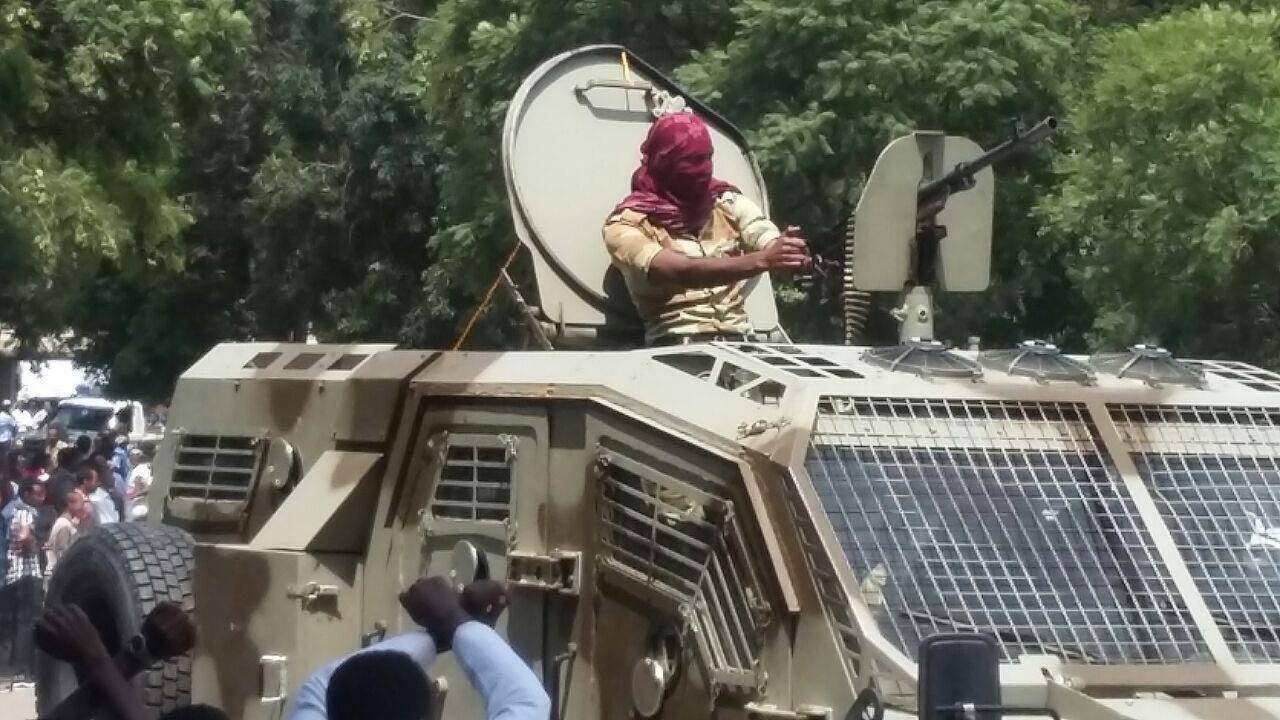





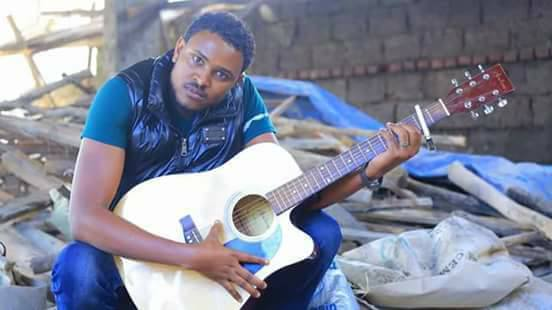




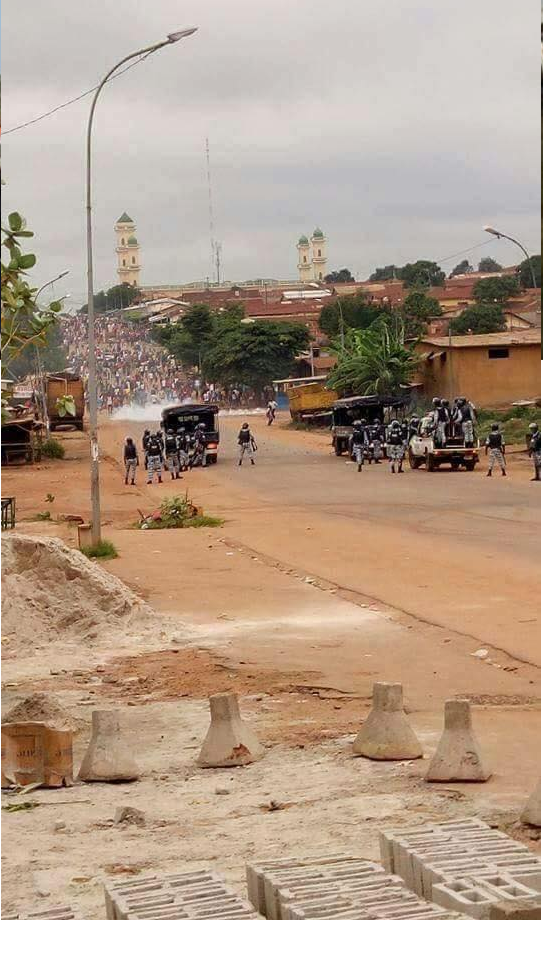
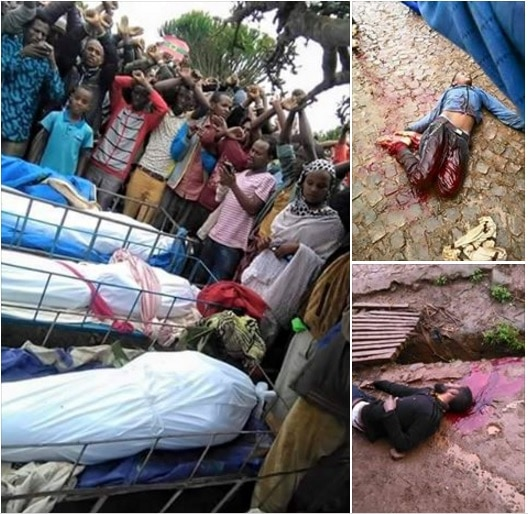
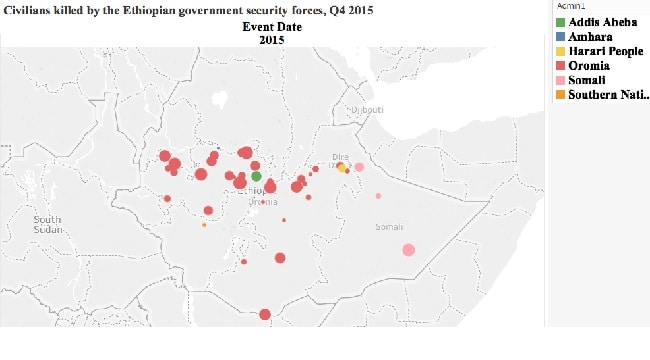
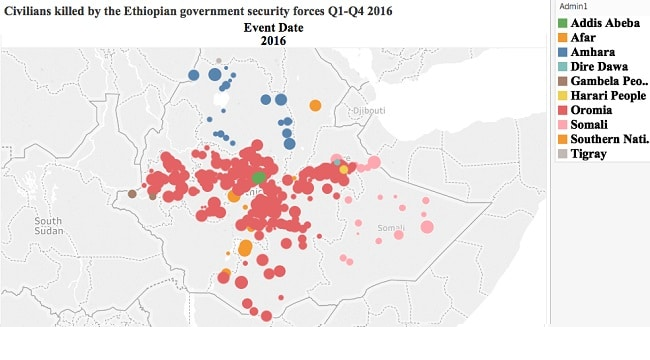
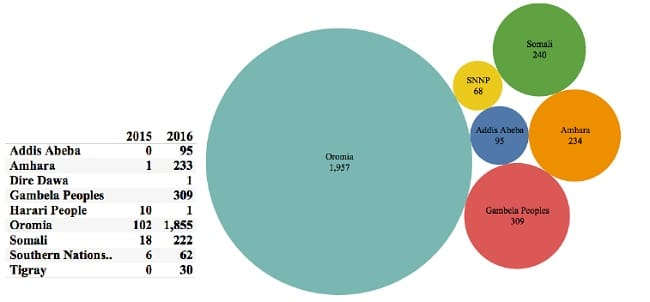
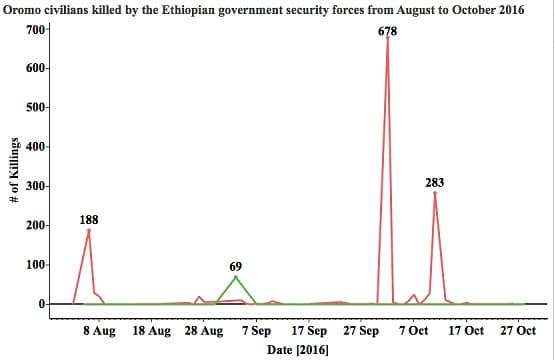
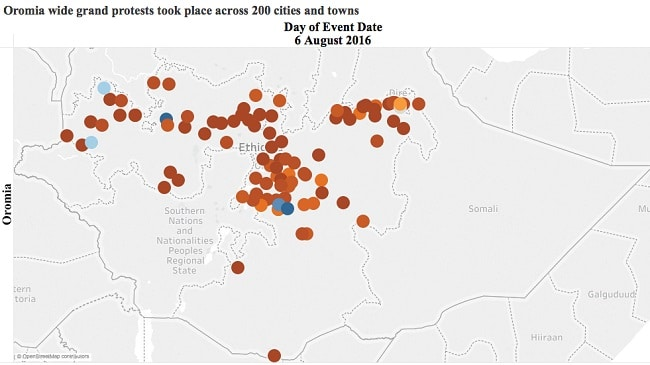


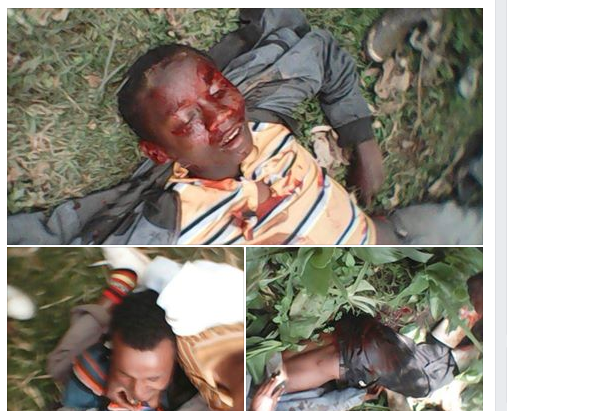

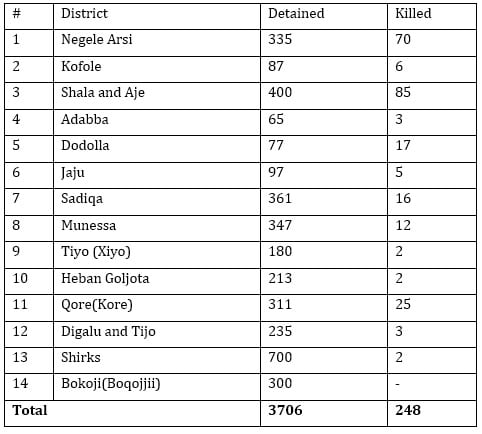
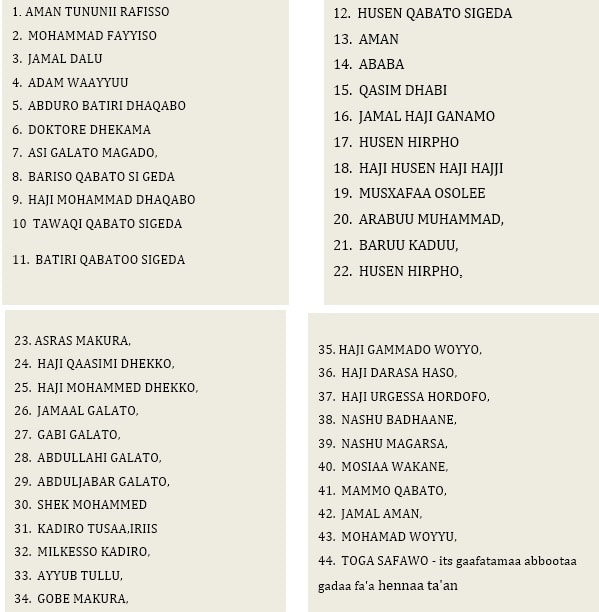
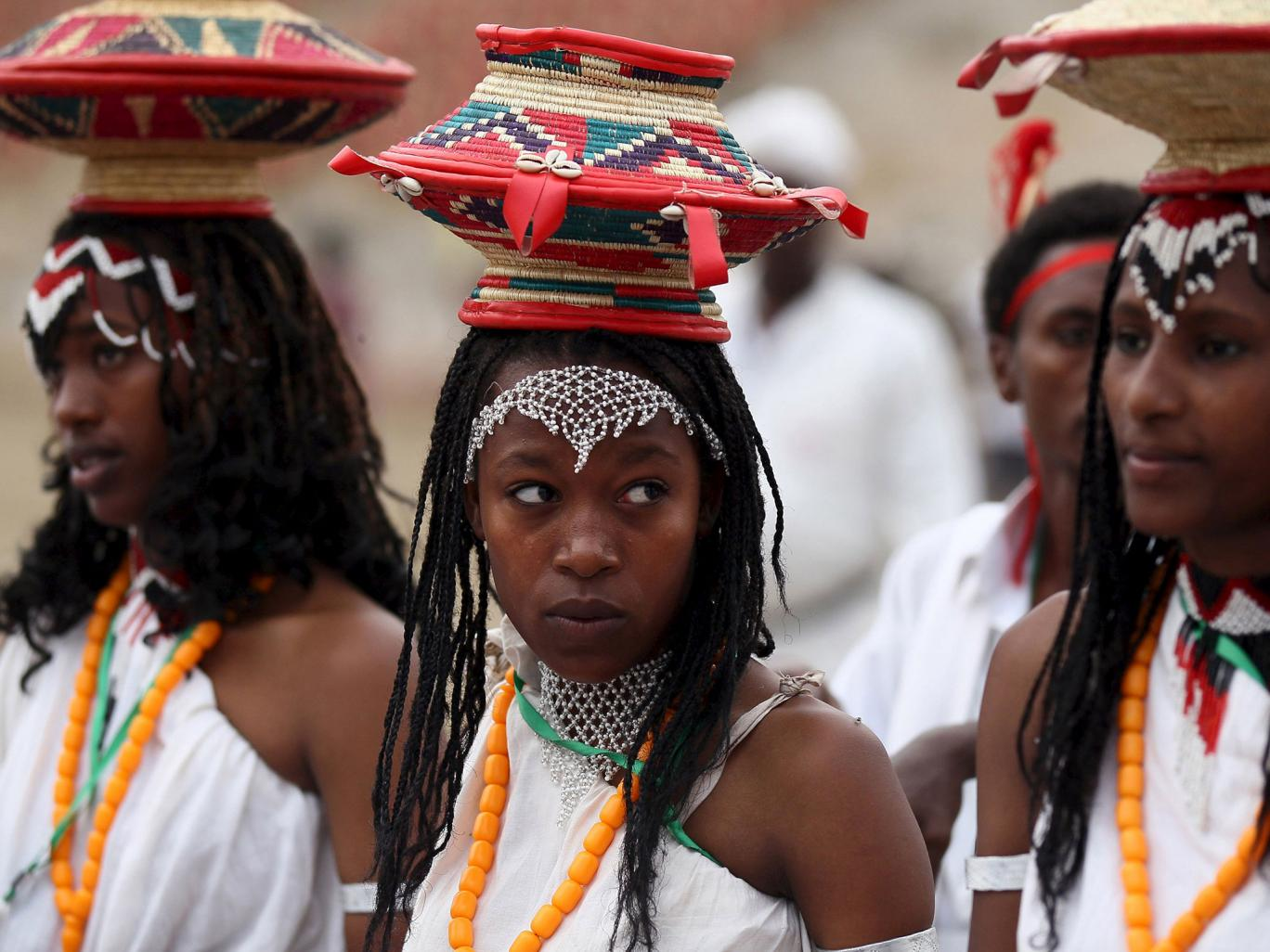


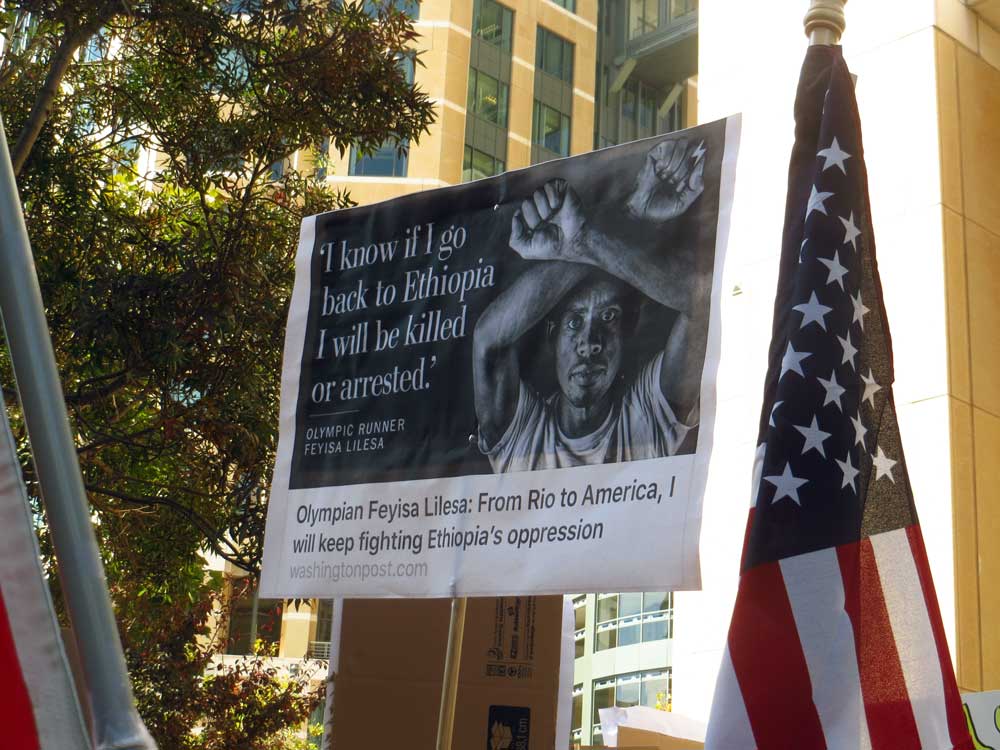

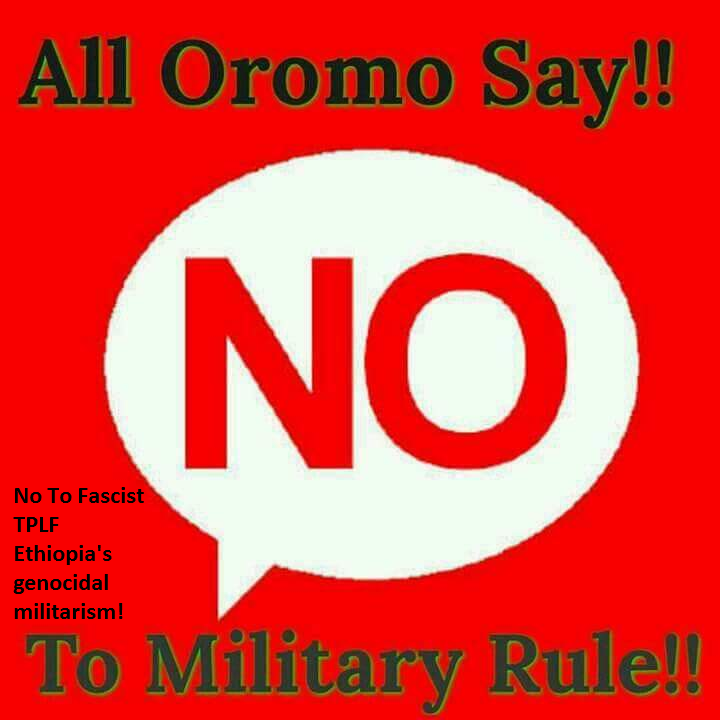
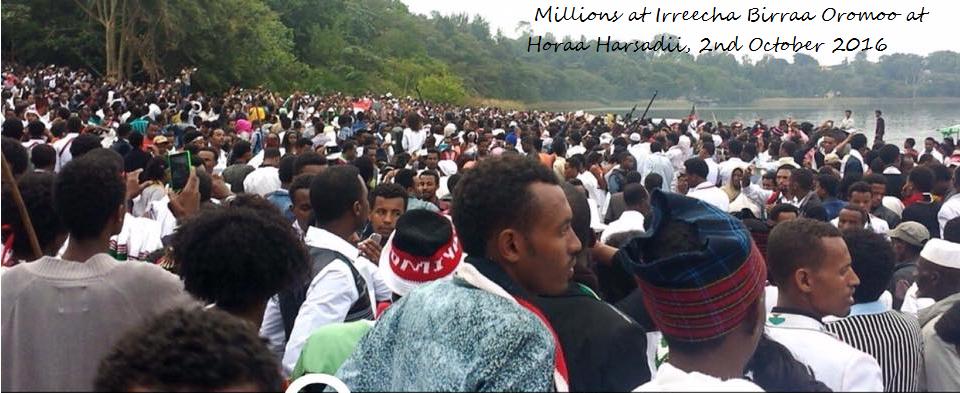


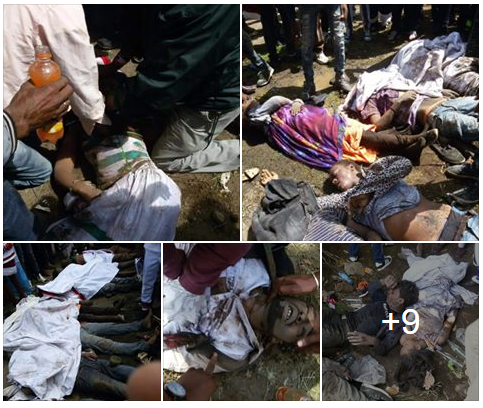


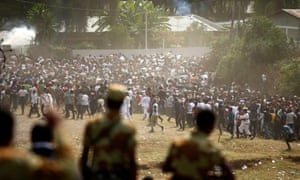
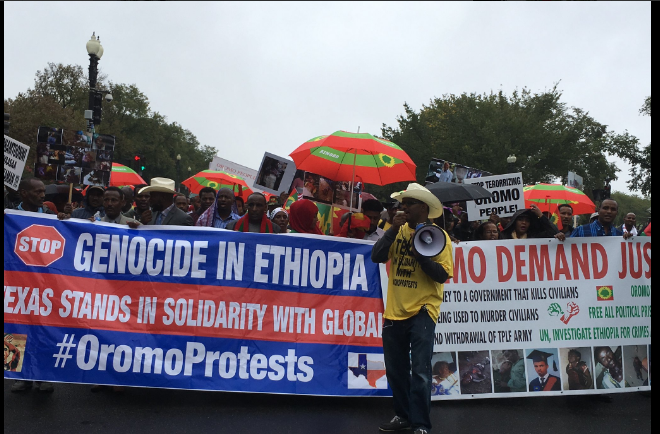


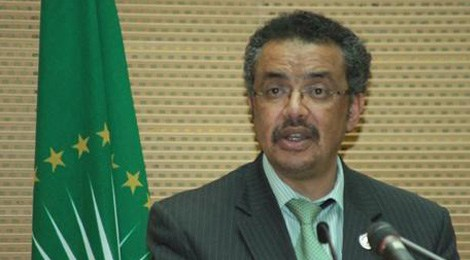
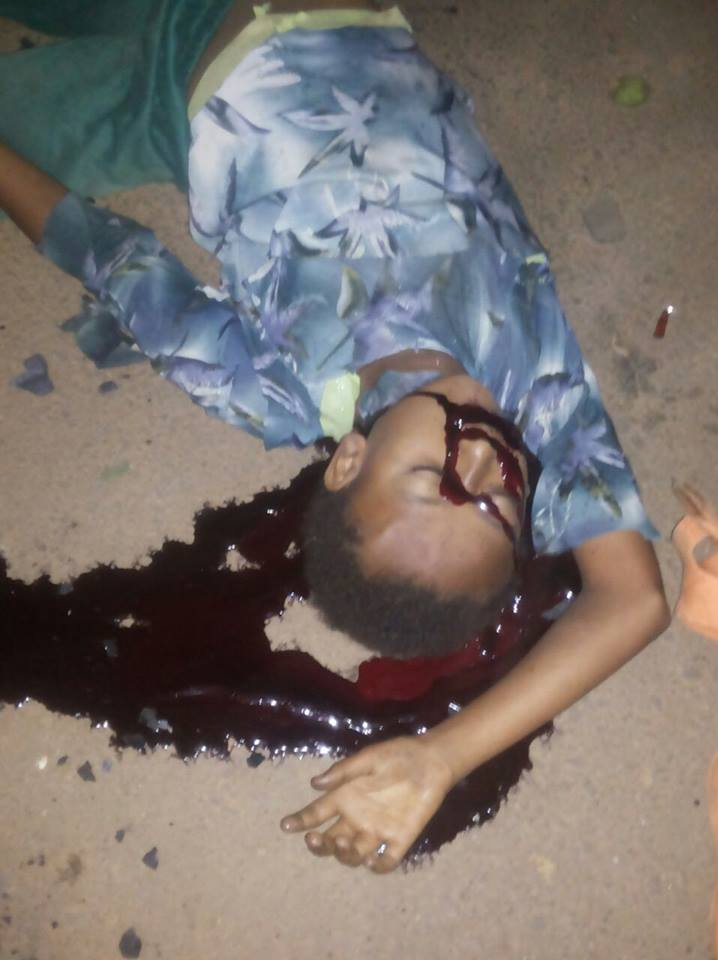
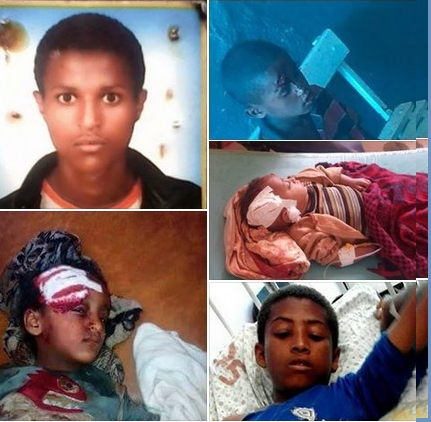
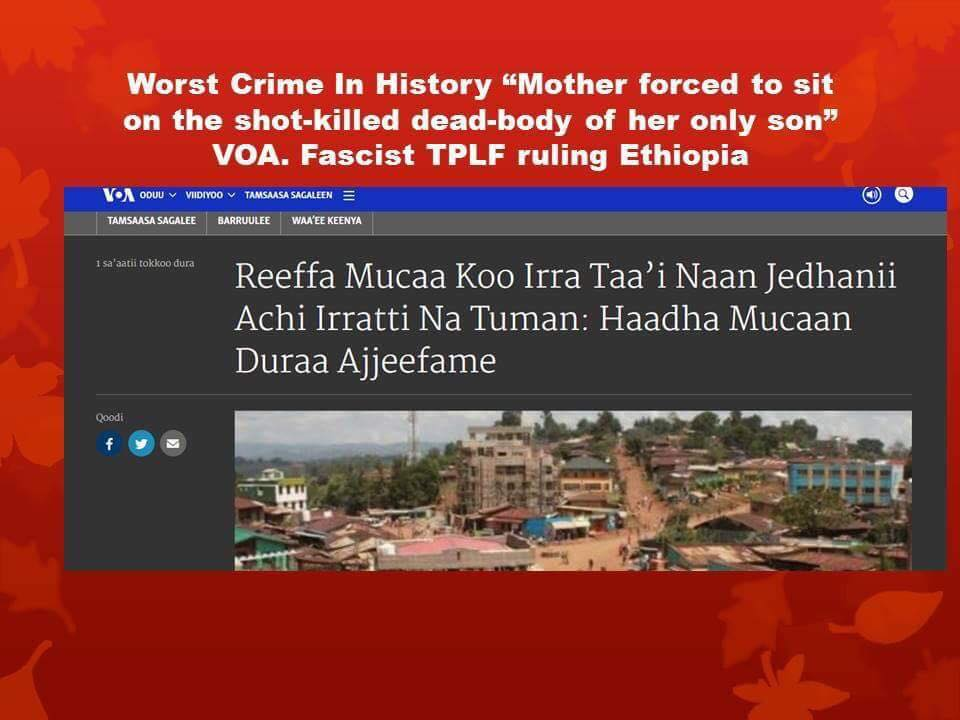
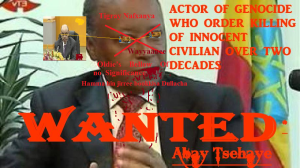



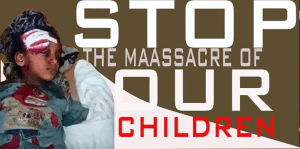

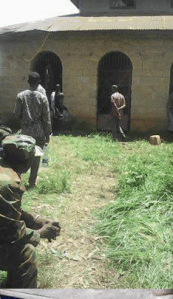
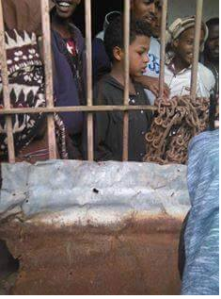
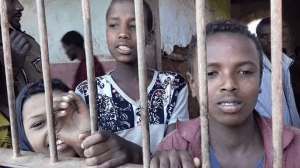
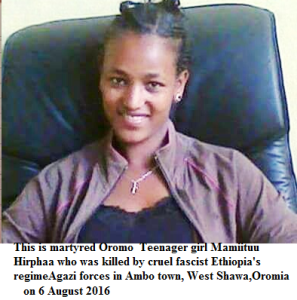
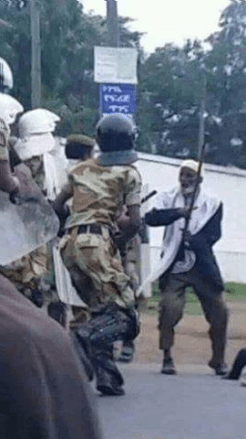
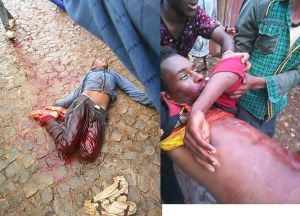


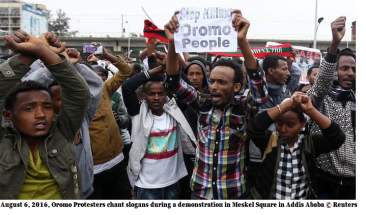
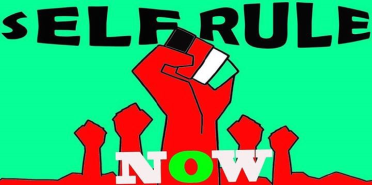
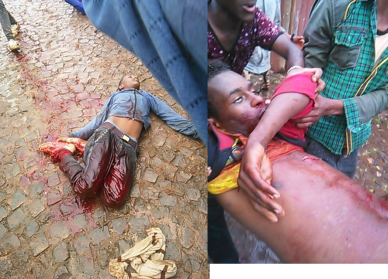

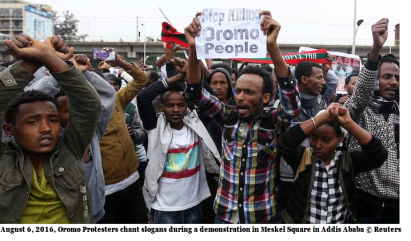
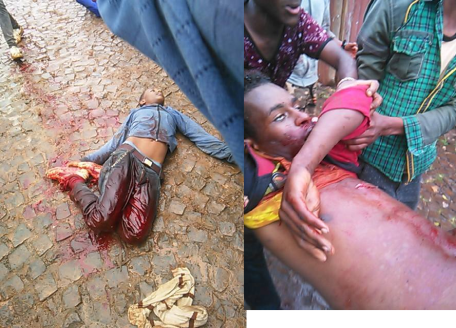
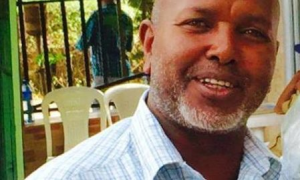
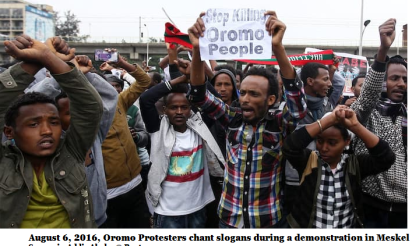


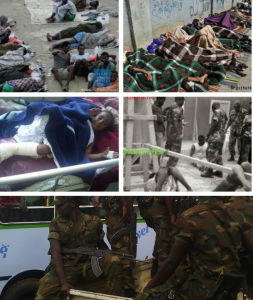
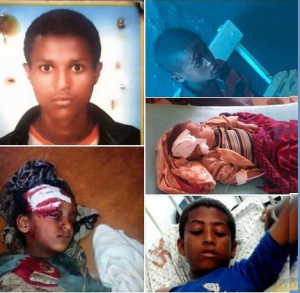





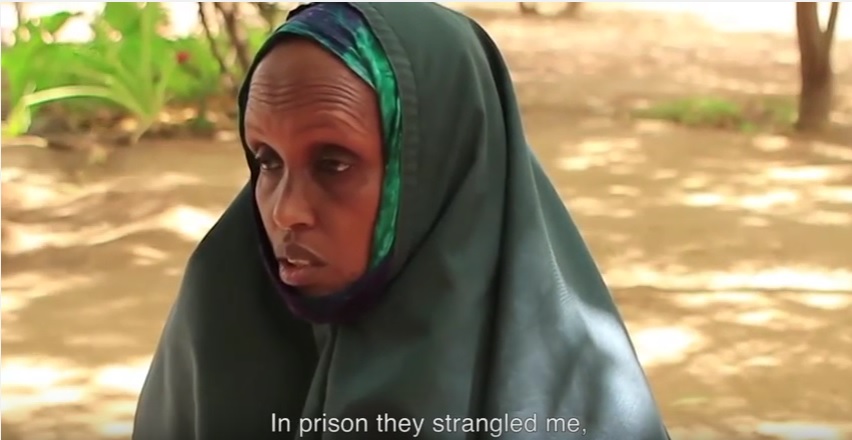

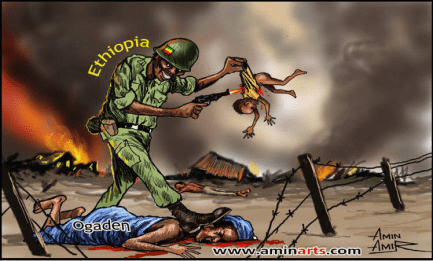

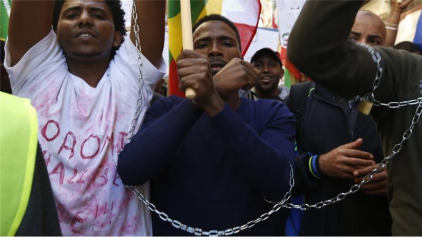

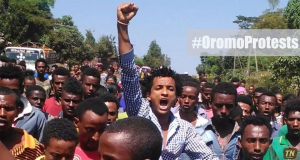
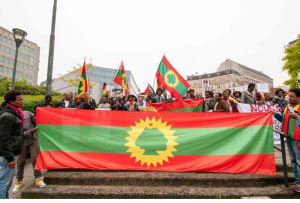
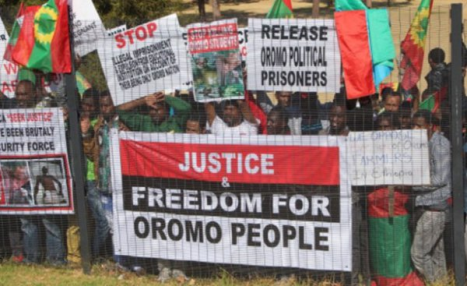


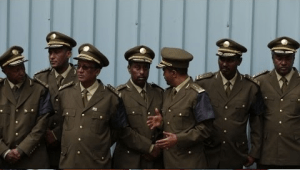


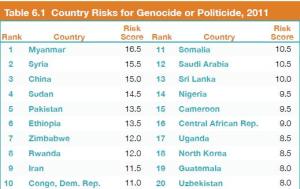

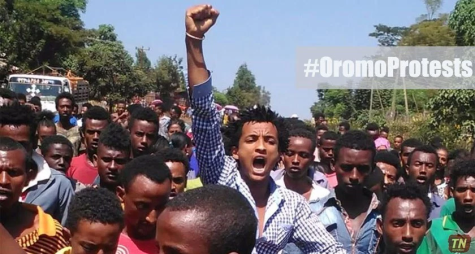
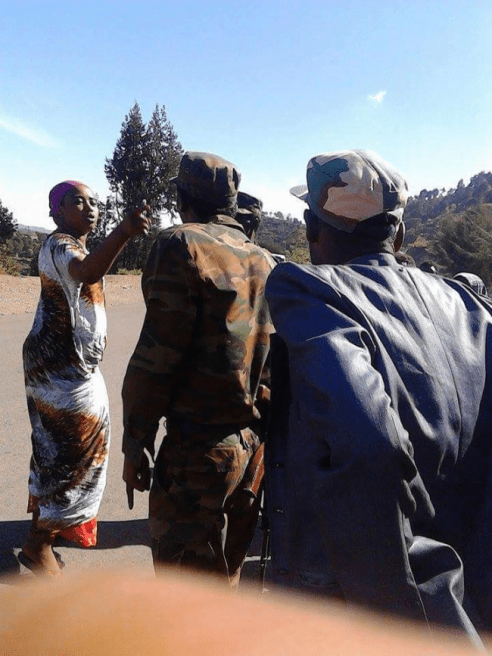
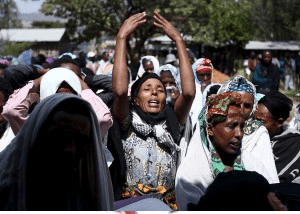



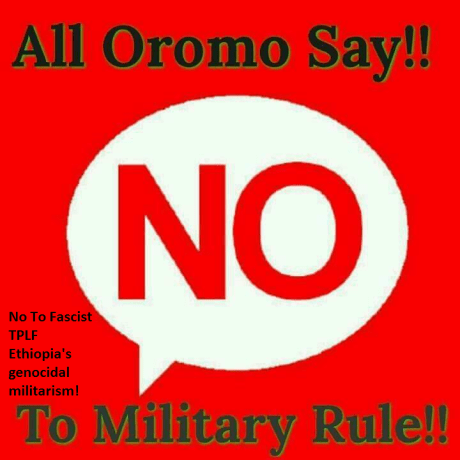


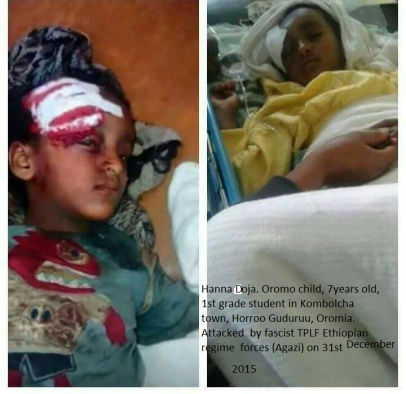
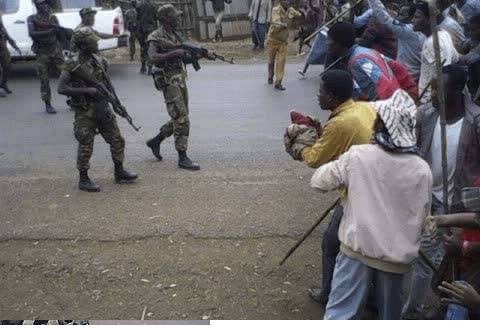
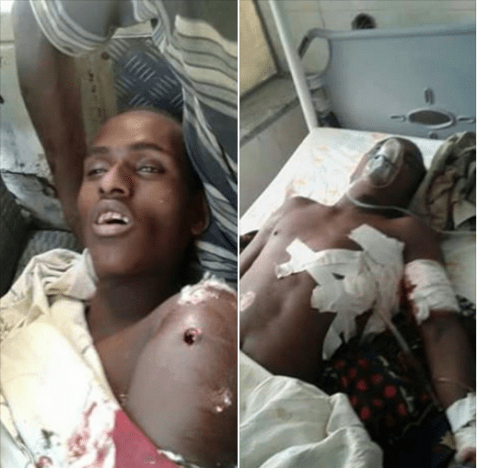



 Oromian Economist