

By Gachana Oromiya, Oromo Press, 2nd March 2016
#OromoProtests: Oromo Refugees in South Africa letter to President Zuma of South Africa March 5, 2016
Posted by OromianEconomist in #OromoProtests, Africa, Africa Union, Oromia, Oromo.Tags: #OromoProtests, Ethiopia, Global rally in solidarity with #Oromo students in Oromia, Nelson Mandela and Taddasaa Birruu, Oromia, Oromo, Oromo Refugees in South Africa write letter to President Zuma of South Africa
add a comment

March 3, 2016
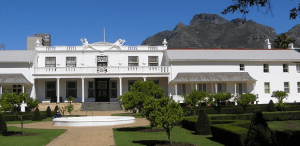
President Jacob Zuma
President of South Africa
Union Buildings
Private Bag X1000, Pretoria 0001
South Africa
Dear Honorable President Zuma:
On behalf of many Oromo refugees in South Africa, Oromo refugees all over the world and Oromos in Ethiopia who are experiencing severe and violent oppression under the Ethiopian People Revolutionary Democratic Front, I congratulate the African National Congress, the People of South Africa and you on the 104th anniversary of the ANC.
Oromo is one of the largest and indigenous African groups on the continent and the largest single ethnic group in Ethiopia. During the nineteenth century, the country of Abyssinia was never colonized by any European power as happened to nations and regions across the rest of Africa. However, at that time, there was a struggle for power in Abyssinia. The King of Shewa (later Emperor Menelik II), in his pursuit of the imperial crown, saw an opportunity to augment his wealth, military power, and territorial domination by expropriating the lands of the Oromo people lying to the south of Abyssinia and directly or indirectly enslaving many Oromo children. He also imposed taxes on all Oromo slaves (almost all children) taken through his kingdom en route to the Arab slave markets across the Red Sea. In this way, Menelik II managed to bring the Oromo people to their knees by breaking their resistance, taking away their land, their livelihoods, and their children. The fall of the Oromo nation paved the way for the conquering of all the southern nations and nationalities including the expropriation of their lands to create the territory defined and known today as Ethiopia.
Since colonization by Menelik II, Oromo have suffered at the hands of successive Ethiopian rulers. A recent historical study has shown that a group of sixty-four liberated Oromo slave children arrived at Lovedale Institution in 1890 where they were cared for and educated. By 1910, one-third had returned home, one-third had died and one-third (23) chose to remain in South Africa. Among these was Bisho Jarsa, the grandmother of the late Dr. Alexander Neville, the renowned intellectual, educationalist, human rights activist and struggle hero.
When Menelik II was succeeded by Emperor Haile Selassie, conditions became even worse for the Oromo people and the other colonized nations and nationalities. It was under this regime that Oromos and others started to organize themselves clandestinely. The first Oromo civil organization called the Macha-Tullama Welfare Association was founded in 1960 by General Tadesse Biru and other Oromo nationals from a different part of the Oromia regions. The objective of the Macha-Tullama Welfare Association was to create awareness and lay the foundation for the Oromo liberation struggle. This civil organization was later banned by the regime of Hailie Selassie and General Tadesse Biru and others were jailed. Many members were killed and others forced to leave the country.
General Tadesse Biru was not only the founder of the Macha-Tullama Welfare Association but was also among the founding members of the Oromo Liberation Front (OLF). When the late President Nelson Mandela arrived in Ethiopia in 1962, General Tadesse Biru personally trained him in guerilla warfare.
The death of Haile Selassie and the rise of Mengistu Haile Mariam failed to bring about desired change, the change that the oppressed people had hoped for. Instead, the Soviet-backed group proved even worse, creating a one-party Communist state in 1975 under the name of Derg.Opposition political parties and civil organizations came under attack. The “red terror” under the Mengistu regime crushed all organizations and people who sought freedom, peace and democracy. Many people were treated in the barbaric and brutal manner (including the jailed General Tadesse Biru). Many Oromo sons and daughters were mercilessly murdered, their bodies tied to cars and dragged on the streets of Addis Ababa and other cities. Parents were forced to buy the bodies of their loved ones bodies in order to bury them.
Under the regime’s program of villagization, Oromo land was once again taken from them and given to settlers from the northern part of the Ethiopian empire, especially to the Amharas and Tigreans. The regime tried to stamp out the identity, language and culture of the Oromo people, replacing these, through a National Literacy Campaign, with the language and culture of the Habesha (the Amhara, Tigray and Gurage people).
After 17 years of iron-fist rule, the Derg regime was overthrown by three organizations namely the Oromo Liberation Front (OLF), the Ethiopian People Revolutionary Democratic Front (ERDF) and the Eritrean People Liberation Front (EPLF).The above mentioned three main organizations formed the Transitional Government of Ethiopia under a Transitional Charter.
There was great of hope for the people of Ethiopia in general and the Oromo nation and other colonized nationalities in particular. The oppressed people of the empire envisaged that they would soon enjoy full democracy and that all human rights would be safe-guarded in terms of the right to self-determination as recognized internationally and enshrined in the UN charter. Article 39 of the Ethiopian Constitution, adopted in 1991, clearly indicates the right of self-determination up to secession: “Every nation, nationality or people in Ethiopia shall have the unrestricted right to self-determination up to secession.”
The EPRDF is presently in power and has enjoyed the support of the USA and western governments since the collapse Mengistu regime. The idea of democracy, the rule of law and constitutionalism never materialized as promised. The Article only worked for Eritreans and Oromo and others again subjected to the same inhuman treatment under this new Abyssinian ruler. The subjugation, marginalization and all kinds of oppression have been perpetuated systematically. The suffering of the oppressed people increased more than ever before. The non-functioning, ethnic-based federal system was instituted to deceive both international communities and people of the country. The EPRDF-TPLF, led by the late Prime Minister Meles Zenawi, dominated political and economic power in the empire. Eventually, the hopes of the oppressed people evaporated and peoples’ organizations like the OLF were forced to abandon their support for the Transitional Charter. With the support of western powers, the EPRDF cemented its domination. OLF members, sympathizers and Oromo people from all walks of life have been jailed, tortured, raped, dehumanized and killed. Even the lives of those who fled, seeking refuge in neighboring countries, were not spared. They have been hunted down by EPRDF agents with the co-operation of Ethiopian embassies in these territories. These embassies have played a huge role in assassinating Oromo refugees, as well as hijacking and secretly (or openly) taken back to Ethiopia. Those who were returned to Ethiopia in this way were either killed, are languishing in jail or have simply disappeared. This happened in Djibouti, Sudan, Somalia and especially Kenya. In Kenya, not only Oromo from Oromia were faced with cruelty but also, the indigenous Kenyan citizens of Oromo origin suffered equally. The co-operation between Ethiopian and Kenya security agencies has been very strong in destroying Oromo opposition and refugees. However, the above-mentioned inhumanities have never deterred the Oromo people from demanding their birth rights. On different occasions, the people have risen against the colonizers and have continued with their resistance.
Besides organized Oromo resistance and political activities among the Oromo in the diaspora, the people residing within the empire have risen against the brutal regime of Ethiopia since the 1995 election. The system imposed at that time was marred by irregularities and the people showed their dissatisfaction and disobedience to the TPLF regime. The Ethiopian security forces and the military responded with brutality in their attempts to crush these popular uprisings.
Elections in Ethiopia are not free and fair; they are held just for formality. Post-election, many have been killed, maimed and jailed. The irregularities of these so-called elections in the empire have raised concern inside and outside the country. Many human right organizations like Human Rights Watch and Amnesty International have voiced their concern but these have only landed on deaf ears in the Ethiopian ruling party and among the international governments. Instead of pressuring the regime to desist from these irregularities, international donors have increased their material aid and support. Western funding has not been used for the purposes the donations were made. Instead of being used to support intended development programs, western aid has been used to crush opposition groups, inside the country and in the diaspora. Mostly, this external funding has been used to equip the regime’s security and military forces. The recent “election,” which reflected 100% support for the EPRDF, was another indication of dictatorship and undemocratic nature of TPLF regime. Currently, there is no one single elected opposition member of the Ethiopian Parliament. Surprisingly, this regime is enjoying legitimacy according to international countries and other African countries in general.
The most powerful tool that the EPRDF regime is using is self-crafted anti-terror law. This law overrides all laws in the country—including all human rights laws. The law is designed to silence all opposition parties, especially the Oromo Liberation Front (OLF) and the Ogaden National Liberation Front (ONLF).
Currently, the Ethiopian regime is busy changing its system of oppression. In the long and arduous struggle for freedom and democracy, Oromos and other colonized nations and nationalities have regained certain rights. These rights include the development of their culture and the right to use their languages, regaining of their geographical boundaries etc. When people try to hang on to the fragments of rights(which are the fruits of many sacrifices and struggling for more to the extent of self-determination), the EPRDF regime, on the contrary, is busy reversing these hard-won rights. This pull and push situation make Ethiopia hell on earth and the situation is worst of all in the Oromia region. Current action by the brutal EPRDF regime in the Oromia region includes:
- From the period of Transition, Oromos have been locked out of any powerful political positions, including surrogate organizations like the Oromo Peoples’ Democratic Organization (OPDO). Under the EPRDF, no Oromo nationals are allowed to hold any important portfolio. All key political positions are deliberately reserved for members of the TPLF.
- After war after devastating war with Mengistu H. Mariam, all regions ought to have experienced programs of rebuilding and development. However, development programs mainly focused on the Tigray region while other regions remained to suffer.
- Business opportunities have been given 100% to Tigray nationals. Other businessmen and women were totally illegalized, and imports and exports were reserved to Tigray son and daughters at the expense of others.
- The education system was modified to accommodate the children of the current regime, scholarships being based on proven loyalty to the regime. When it comes to job opportunities, getting a decent job is not done on merit but dependent on loyalty to the EPRDF. In order for one to get a job, he or she must be a member of the EPRDF. Oromo nationals must be members of the surrogate organization, the OPDO, to be considered for a position.
- In addition, to the above-mentioned marginalization and exploitation, basic human rights—like freedom of speech, freedom of association, freedom of assembly and freedom of expression—of all the colonized peoples were nullified. The ruling regime will not tolerate any individual or group of individuals speaking out against the regime unless these individuals or organizations support the mighty EPRDF forces. The only speech allowed is praise of the ruling regime and of the individuals within these circles. Those fundamental freedoms put on paper only to deceive western donor countries and international communities.
- Land-grabbing had its roots under Menelik II. The current regime is even more brutal. EPRDF is openly putting Oromo land on sale. Under the pretext of land for investors, land-grabbing reached an alarming level. Oromo farmers are losing their lands to the so-called investors, EPRDF officials are busy selling and sharing Oromo land. The farmers have not only lost their land but also their livelihood and have been reduced to begging on the streets of Addis Ababa.
- As if the already existing marginalization and exploitation were not enough, the current Addis Ababa Master Plan was introduced to expropriate more Oromo land and, once and for all, to disintegrate Oromia regional boundaries. The intention was not to develop Addis Ababa but to break Oromo national unity and put down the claim of Oromo to Addis Ababa (Finfinne)—the cities surrounded by the Oromia Region—as their capital.
- The current wave of Oromo resistance is to stop these unacceptable moves by Ethiopian colonizers which have targeted the very existence of the Oromo people and the Oromia Region. Many students (from primary school to university level), farmers and Oromo from all other walks of life in Oromia and in the diaspora have been openly objecting and demanding the cancelation of the Addis Ababa Master Plan. The ultimate goal is for the total freedom of Oromia from all kinds of subjugation. Oromos will continue to face unimaginable, inhumane, violent suppression and death at the hands of these colonizers unless some peace loving international communities act in time. Our nation is bleeding.
At this darkest moment, we humbly request you and your government to take timely action to save the Oromo nation and the other colonized nations and nationalities:
- The Oromo people stood by the ANC and the people of South Africa during your long and difficult struggle against the illegal and unjust apartheid regime.
- The Oromo people were part and parcel in fighting against the apartheid regime by giving material and technical support. In 1962, when Nelson Rolihlahla Mandela fled to Ethiopia, his personal trainer was patriot-martyr General Tadesse Biru. General Biru was the founding father of Oromo Liberation Front. While the late President Mandela lived to realize some of his dreams, General Tadesse was killed by the brutal Derg regime without seeing a free Oromia. Our humble request to you and your ANC-led government is to give attention to ending the suffering of the Oromo people.
- The ANC and the South African government have significant power and influence on the African political economy. Utilizing these influences through an organization like the African Union (AU), you and your government can put pressure on the current Ethiopian regime to stop all the atrocities they are currently committing against the unarmed Oromo masses. For the sake of peace, the Article 2 of AU charter should be by-passed. According to this particular article another African country cannot interfere in another country internal matter. What is happening in Ethiopia transcends being simply an internal matter.
- The current uprising of Oromo students is very similar to the 1976 Soweto Uprising. Unarmed Oromo students are falling like leaves by bullets fired by the EPRDF security forces. Primary school children as young as 8 years old have been killed. Mass arrest, torture, disappearance and rape have become daily occurrences. The current death toll has reached 178. This figure only indicates a smaller portion of the actual number of deaths. The number can be tripled but the absence of media freedom prevents such reporting. All educational institutions have become military camps and the teaching and learning process have been interrupted. While children of colonizers enjoy a normal learning environment, Oromo educational institutions have become a war front. We fear the Oromo people will be forced to produce an ignorant generation in the 21st Not only the Oromo people but the entire African continent cannot afford this. Your government can save us from this happening.
- It seems the international communities have turned their backs on the African continent in generally, and on the Oromo nation in particular. The west acts according to their own interest and we have many instances indicating how their self-interest comes first rather than human suffering. Many civil wars result from neglect such as this. If the current situation Ethiopia is neglected it will lead to fully-fledged civil war which will not only destabilize the empire but the entire region as well. We have no doubt that you and your government have the power to stop this from happening.
- You and the ANC-led government have experienced how failed governments eventually become the breeding ground for extremist groups and make life hell for all residents of that particular region. Refugees from these failed nations have fled as far as Europe and South Africa and have become a burden on the limited economic system. The stress on the economic system has brought about many xenophobic attacks. Solving the problem at source is preferable. This can only happen when a powerful government like South Africa can act.
- There are, at long last, some signs that the international community is beginning to listen and is taking note of the ongoing human rights violations being perpetrated by the Ethiopian authorities. For example, the mainstream international media are beginning to report on the most recent uprisings starting in November in which at 178 Oromo people have been killed.
- In addition, the US Department of State issued a statement on 14 January 2016 calling on the Ethiopian Government “to refrain from silencing dissent and to protect the constitutionally enshrined rights of all citizens, including the right to gather peacefully, to write, and to speak freely as voices of a diverse nation. We call for the release of those imprisoned for exercising their rights, such as political party leaders and journalists.”
- And, as recently as21 January 2016, the European Parliament approved an Official Resolution of the EU on the Situation in Ethiopia which “Strongly condemns the recent use of excessive force by the security forces in Oromia and in all Ethiopian regions and the increased number of cases of human rights violations; expresses its condolences to the families of the victims and urges the immediate release of all those jailed for exercising their rights to peaceful assembly and freedom of expression …The EU, as the single largest donor, should ensure that EU development assistance is not contributing to human rights violations in Ethiopia.”
We call on you, your South African government, African heads of states and the international community, local and international right organizations that can play positive roles to act before it is too late.
Thank you
Denge Garse (Oromo People Association)
Copies to:
- Amnesty International (South Africa)
3 Glenhove Street
Rosebank
2196 JOHANNESBURG
Phone: +27 011 2836000
Fax: +27 011 4471734 - ACTION SUPPORT CENTRE
Physical Address:
12 Clamart Street Corner Menton Street
Clamart House Lower Level 4,
Richmond, JohannesburgPostal Address:
Postnet Suite #145,
Private Bag X9, Melville, 2109
South Africa
Tel :011 482 2453/7442
Fax:011 482 2484
Blog: www.actionsupportcentre.co.za - Consortium For Refugees And Migrants In South Africa (CORMSA)
For all general information, please contact us: info@cormsa.org.za
501 Heerengracht
87 De Korte Street
Braamfontein
Johanneburg 2001
2001, South Africa.Tel: +27 11 403 7560
Fax: +27 11 403 7559
Email address: info@fhr.org.za
Telephone numbers: + 27 (0) 11-484-0390 - Foundation for Human Rights
Physical Address:
Old Trafford 3 Building
Isle of Houghton
36 Boundary Road
Parktown, JohannesburgPostal Address:
Private Bag X124
Braamfontein 2017
Johannesburg
South Africa - Human Rights Information and Documentation Systems
Email: info@huridocs.org
Phone: +41 22 755 52 52
Address: 3, rue de Varembé, 1202 Geneva (4th floor) - Pan African Parliament
19 Richards Drive, Gallagher Estate
Midrand, Johannesburg
South Africa
T: +27 (011)5455000
E: info@panafricanparliament.org - Muslim Judicial Council
Headquarters
20 Cashel Ave, Zwartdam, Cape Town, 7760Postal Address
P.O. BOX 38311, Gatesville, 7766
Republic of South Africa
Tel: + 27 (21) 684 4600
Fax: + 27 (21) 696 5154
E-mail: idaarah@mjc.org.za - South African Council of Churches
Contact details
Telephone: +27 (0) 11 241 7800
Fax: +27 (0)11 492 1448
Email: support@sacc.org.za
National Head Office
Khotso House
62 Marshall Street
Johannesburg
South Africa - South Africa Forum for International Solidarity
CONTACT US
4th floor Elephant House,
105 Market Street,
Johannesburg
Tel: 011 333 1730
Fax: 011 333 1735
Website: www.safis.org.za - South African Catholic Bishops Conference
Contact:
Fr Grant Emmanuel
SACBC
399 Paul Kruger Street
PO BOX 941
Pretoria
0001
Tel: +27 12 323 6458
Fax: +27 12 326 6218 - South African Human Rights Commission (SAHRC)
Contacts
Ramadimeja Legodi: rlegodi@sahrc.org.za
Nomfundo Khulu: nkhulu@sahrc.org.za
Mpho Tshimane: mtshimane@sahrc.org.za
Private Bag X2700
Houghton
2041
Tel: 011 877 3803
Fax: 011 403 0625 - The Human Rights Institute of South Africa (HURISA)
Contact Us
Head Office:
31 Quinn Street,
Newtown,
Johannesburg, 2001
SOUTH AFRICA
Tel: 011 492 1103
Fax: 011 492 0552
Website: www.hurisa.org.za - The Thabo Mbeki Foundation
6-10 Riviera office park
Riviera Road
Block D
Killarney
2193, Gauteng - Economic Freedom Fighters
78 De Korte,
Braamfontein,
Johannesburg
Name: Godrich Gardee
Cell: 082 370 8402
Email: ggardee@effighters.org.za
Rank: Secretary General - DA Leader’s Office
Tel: +27 (0) 21 465 1431
Fax: +27 (0) 21 466 8394
Email: leader@da.org.za Postal Address:
The Democratic Alliance
P.O. Box 15
Cape Town
8000Physical Address:
Marks Building (2nd and 3rd Floor)
Parliament
Plein Street
Cape Town - Institute For Security Studies (ISS)
ISS Pretoria
Block C, Brooklyn Court
361 Veale Street
New Muckleneuk
Pretoria 0181P.O. Box 1787
Brooklyn Square
Pretoria 0075
Tel +27 12 346 9500/2
Fax +27 12 460 0998
Email: pretoria@issafrica.org
Oromia: Ibsa Walgahii Gumii Sabaa Adda Bilisummaa Oromoo March 4, 2016
Posted by OromianEconomist in ABO, OLF, Oromia.Tags: ABO, Africa, Ibsa Walgahii Gumii Sabaa Adda Bilisummaa Oromoo, National Self Determination, OLF, Oromia, Oromo
add a comment
Ibsa Walgahii Gumii Sabaa Adda Bilisummaa Oromoo
Gumiin Sabaa Adda Bilisummaa Oromoo haala Dhaaba ABO fi waliigala Qabsoo Bilisummaa Oromoo yeroo ammaa irratti kan xiyyeeffate walgahii hatattamaa Gurraandhala 27, 2016 gaggeeffatee milkiidhaan xumuratee jira. Walgahii kana irrattis dhimmotni fardiin adda addaa dhihaatanii irratti mari’atamuudhaan tarkaanfiileen fudhatamuu qabanis qajeelfamanii jiru. Akka kanaanis: Haala Ummata Oromoo kan yeroo ammaa ilaalchisee Itti-fufa Qabsoo Diddaa Gabrummaa fi falmaa mirga Bilisummaa fi Abbaa-biyyummaa Saba Oromoo waggoota dheeraadhaaf gaggeeffamaa dhufee kan tahe falmaan hadhaawaa fi seena-qabeessi Ummatni keenya baatiilee afran dabraniif osoo addaan hin citin walitti fufiinsaan belbelchaa jiru (Fincilli Xumura Gabrummaa) akeekaa fi galiin isaa Bilisummaa Sabichaa mirkaneessuu dha. Ummatni Oromoo sochii kana kan gaggeessaa jiru harka qullaa karaa nagaa osoo mirga Ummata biraa tokko illee hin tuqin roorroo fi hacuuccaa mootummaa Itoophiyaatiin isa irra gahaa turee fi jiru mormuudhaan mirga ofii gaafachuudhaani. Mootummaan Itoophiyaa gaaffii haqaa fi sochii karaa nagayaa Ummatni keenya gochaa jiru akka weerara alagaatti ilaaluudhaan humna waraanaa maqaa Ittisa Biyyaatiin ijaarrate itti bobbaasuudhaan afaan qawweetiin dura dhaabbatee Ummata karaa nagaa mirga isaa gaafatu fixaa jira. Tarkaanfii faashistummaa Wayyaanee kanaan baatiilee afaran dabran keessatti qofa lubbuun ummata nagaa dhibbootaan lakkaawaman galaafatamee kanneen kumootaan lakkaawaman madaawuu fi kuma kudhanootaan kan lakkaawaman hidhaatti guuramanii jiru. Gochaan suukanneessaan kun ammas akkuma itti fufetti jira. Haa tahu malee Ummatni keenya ajjeecha fi hidhaa dabalatee miidhaa bifa kamiinuu Wayyaaneen irraan gahuuf osoo duubatti hin jedhin murannoo ol’aanaadhaan wareegama bifa hundaa baasee mirga isaa kabajsiifachuuf guutuu Oromiyaa keessatti tokkummaadhaan sochii isaa finiinsaa jira. ibsa-gumii-sabaa-abo
Oromia (#OromoProtests):The missing Oromo protesters join a long list of disappearances March 4, 2016
Posted by OromianEconomist in #OromoProtests, Africa, Oromia.Tags: Africa, Ethiopia, Ethnic cleansing Against Oromo People, Genocide, Oromia, Oromo, OromoProtests2016, The missing Oromo protesters join a long list of disappearances
add a comment



The missing Oromo protesters join a long list of disappearances
By Hassen Hussein*, OPride
(Opride.com): Last week, I read an angry, anguished and daringly eloquent letter from ijoollee Jalduu, a young Oromo from the flashpoint town of Gindo in southwest Shawa, the epicenter of the still-ongoing popular resistance against the Ethiopian state.
Addressed to his countrymen — at home and abroad — the 25-page chronicle captures the depth of grievance animating today’s Oromo youth to revolt.
To a large extent, the writer dwelled on the transformation of the quarter-a-century-long indirect Tigrean rule to the current military occupation and the accompanying injustices. He also drew parallels between today’s events and emperor Menelik’s foray into the heartland of Oromo territory in the 1880s and the Italian occupation of Abyssinia in the 1930s.
There are many ways in which armies of occupation leave behind indelible marks. One is by their routine practice of snatching away — at night or broad daylight — young able-bodied men and women, some unconnected with the conflict, from their families. The luckiest of these families find their loved ones in some dingy prison or detention center. They may not have them back home again. But they take solace in their ability, however limited, to at least visit them. And the chances to sue, entreat, or pray for their release. Hearing about them, even in the form of rumors and urban legends, is a boon.
The luckier accidentally stumble upon or be alerted by neighbors or passerby to the dead, charred, mangled, mutilated, disfigured or leftover pieces and bits of the once healthy and beautiful bodies of their loved ones in the adjoining or distant ditches, forests, ravine, creek or parts sticking out from a mass grave. Lucky, because at least they get to bury them and get some closure. This does not mean the loss is any less tragic and painful as a mother wailing for her young son killed by the security forces in Olankomi chillingly stated, “they did not kill him. They have killed me.”
The unluckiest are those forever left in the dark, those who have to carry the heavy weight of the missing’s uncertain fate; those who are left with the overwhelming voids that no anguished memory can fill. Haunted by the forever wandering souls of the disappeared, future generations experience the loss—whether the story is told or the window into them is slammed shut.
Like a broken piece of glass, stories of the missing lodge themselves into the psyche stoking our historical memory. With every movement, the piece of glass shifts as if to remind us its presence. The families hold no public memorials and nurse the wound privately, allowing a void to live within them and sometimes it feels as if we also live within it—especially in times of distress such as the one we currently inhabit.
The trauma is the greatest when the missing happens to be a female relation. Growing up, I kept hearing the story of a great aunt snatched away by an unknown soldier in the service of Menelik’s army as it was making its way possibly from Anole and Azule to Calanqo through my mother’s birth village. Such stories are never complete and neither is mine. For example, I do not even know her name—having not asked. However, their incompleteness does not make such stories any less potent.
“Was she a fighter?” we would ask. “No, she was a young girl herding cattle ” my mother intoned.
“Where was her father?” we would ask. “A warrior, he believed a warrior’s code disallowed harming or taking children after an active battle is over” she would say.
“Did he try to get her back?” He did but unsuccessfully.
“Why did her mother not plead with the captors?” My mother answered, “She did, to no avail. The captors did not speak her language and nor she theirs.”
“Where did they take her?” “Nobody knew.”
“Nothing heard from her or about her ever since?”
“You ask too many questions, none,” which signaled it was time to move on to a different story or household or outdoor chore.
Ijoollee Jalduu’s haunting story prompted me to share a poem I wrote at a writers’ retreat in the thick of Minnesota’s famed winter in 2013. It is an ode to this great aunt and to my mother, an angel of a woman whose protective shield wards off dangers and unconditional love sustains, nourishes and keeps me alive to this day, a mother who experienced her share of the tragedies afflicting all mothers in times of civil unrest.
Today’s Oromo youth have more guts in responding to the cries of their mothers who have to deal with such unexplained and unexplainable losses, mothers who would forever be torn between whether to tell the story of their disappeared loved ones to their younger children and grandchildren.
I share this poem now in an attempt to situate the gushing new wounds of the Oromo in the context of our tortured history. The river of innocent young productive men and women disappearing in the hands of armies sent to quell civilians opposing unjust rule and occupation stubbornly continues to flow unbroken. And if we are to talk of a common future, we need to break the silence and end this vicious cycle of violence.
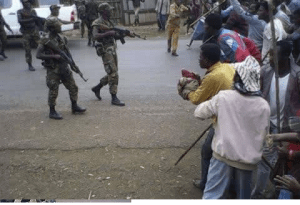
The notorious Agazi special forces unit is wreaking havoc throughout Oromia turning happy and peaceful rural villages into ghost towns. In its footsteps, it is condemning many mothers to lives of eternal anguish by taking away their precious young men and women to unknown destinations never to be seen or heard from again. The brutality is such that no self-respecting Ethiopian of any ideological bent, political orientation or ethnic background can and should remain unmoved. No organized state army should be allowed to terrorize anyone, let alone a huge chunk of society at will and with impunity, and hope to rule the vanquished talking as if its divine right to rule is affronted by our mere show of dissent. Silence towards such doubly insulting injustice is morally indefensible.
This is a human story of conflict. Many Ethiopian mothers have suffered the same unwarranted grief decade after decade. Most often than not, the perpetrators and their victims spoke no one language, literally and figuratively. The stories are told and retold not to open new wounds but to keep the memory of the disappeared alive and for some closure, which had eluded many a grieving Ethiopian mother, Oromo or otherwise, for generations.
An Ode to my Great Aunt
You stole my great aunt, so I know her only in fragments
In late night stories from my mother
When you dragged her away, after pillaging the village
Was it for a wife?
Or a lifelong joy toy, eternal symbol for your oomph and triumph over my forebears
Tell me; did you sap her youth and ditch her on the road to Calanqo?
Or smother her in a fit of martial anger to avenge a buddy’s passage to the underworld
A fart boasting to hide his fortuitous escape from Lenjiso’s righteous wrath in Anole
Only to be sent over the hill standing on great grandpa’s cliff path
Before he abandoned her doomed rescue; tell me soldier, I am speaking to you.
Or was it to desecrate the sacred land that resented your booted feet?
Tell me, I need to understand,
Did you hurl her off as war booty to your homeland, I know not where?
Or did you hand her over along with the loot to your emperor?
Tell me, how long before her spirit ceased to kick and scream against your unrelenting clutch?
Before it too slid below your iron-fitted feet soothing her into becoming one of them creatures
Falling in love with their captors dying from within to stay alive from outside
Or dead defiant to the bitter end.
Tell me, did you make her one of your many concubines to nurse and cure your manly wounds?
Please do tell me, with no language shared, did you sign or gesture to make her forget her folks or accept her forlorn fate?
Do tell me, did she bear you children, nephews and nieces I had not known?
Please tell me, did you baptize her into your religion?
To be welcomed as your captive companion into heaven
I hope you flame in hell, forever forsaken.
Then again, the fruits of your aggression
Might have been my transgressed kin
The open wound in my mother’s heart that hurt to day’s end.
—-
* Hassen Hussein teaches Leadership and Management courses at the Saint Mary’s University of Minnesota, and can be reached at hxhuss10@smumn.edu
#OromoProtests: Liberty or Death: Oromos’ Determination to Fight for Freedom and Self-government March 3, 2016
Posted by OromianEconomist in #OromoProtests, Africa, Oromia.Tags: #OromoProtests, Africa, Ethiopia, Genocide, Liberty or Death: Oromos’ Determination to Fight for Freedom and Self-government, Oromia, Oromo, Oromo Press
add a comment
Tigrean elites in charge of the Ethiopian regime fear us because they cannot defeat us. In equal measure, they fear that foreign donors will withdraw the aid that makes up half the country’s budget and pays for the slow genocide that we suffer.
Genocide need not manifest only in the bloody rapid mass murders of civilians as was seen in Rwanda. Genocide scholars acknowledge that genocide might masquerade as a slow elimination of a group by attrition. One dictionary defines attrition as, “a gradual process of wearing down, weakening or destroying something.” That is what the TPLF elites are doing to us.
Although the TPLF elites would like to get rid of the Oromo and other peoples of the South, they cannot achieve that goal quickly without global awareness of the international crime of genocide, the certain embarrassment, and the ensuing possible punishment. Concealed genocide by attrition provides sufficient cover so that foreign donors need not act on their dislike of the regime’s savagery.
So governing Tigrean elites cleverly camouflage their intent to destroy us, a key element of genocide, and whitewash the destructive acts themselves to imitate the poverty we suffer. The attempted theft of Finfinee by the pretext of government policy is only one more example of the theft of our land, our food and our heritage, and with it comes the kind of poverty that is close to death.
We have been so deprived of the basic needs of life that we have become one with the soil that covers our ancestors. We touch their bones with our kisses and weep for our children. We are close to heaven and our souls burn with the touch of God.
We say to the world, “We are not the cause of our own poverty. Open your eyes to the truth. Please stop funding our genocide.”
That time may be soon to come. In 2013 economics Professor William Easterly charged that the US and the UK were sending aid for foreign policy reasons and that, “The aid donors had to respond to the public embarrassment of supporting a ruler who shot down demonstrators and jailed the opposition.”
And in December of 2015, the UK Guardian reported that peaceful demonstrations against the master plan are being met with “excessive force and live ammunition.”
But although we suffer oppression, we will no longer accept the murders of our children. We no longer accept the military occupation of Oromia by TPLF Ethiopia regime. We received a report by an anonymous Oromo who told us, “We are sorry about the recent deaths of Oromo children, but as a result we are seeing the birth of freedom. Bloodied towns in … are now liberated from the enemy. This is a proud moment in our struggle”
He continued, “In the town of … government cabinet offices were burned down by the people.” Our people were brave in the and the contact is brave in the communication. Our comrades, unarmed, untrained and with families nearby are uniting and fighting for the stolen Oromo lands and stolen Oromo lives.
Our hero finishes, “Please, if we die, don’t be sorry for us. At this time, everyone has accepted that there will be spilled blood and deaths among us so that future generations of us will live in freedom. Be in peace. Oromiyaa shall be free.”
These words demanding freedom echo through the centuries from the American Founding Fathers. Patrick Henry asked in 1775, “What is it that gentlemen wish? What would they have? Is life so dear or peace so sweet, as to be purchased at the price of chains and slavery? Almighty God, I know not what course others may take, but as for me, give me liberty or give me death!”
But the British army sent by the King of England had a very long journey for supplies and soldiers who were needed win a rebellion of colonists who were armed. Our genocidaires are armed, well supplied and funded by their foreign friends.
It’s our job, we of the diaspora, to keep the plight of our people visible to the global public, and to fund the demonstrators. When asked, we must give more than we can afford. We should remember that although we may not be shedding our Oromo blood, we must support our hero kin with Oromo treasure. We must teach our children about those who have fallen and about the country about to be born.
The time is here to act. Our homeland is burning. Our people are perishing. We are all joined in the knowledge of our history. Few of us would have left Oromiyaa of our own desire and we should never forget those we left behind.
Having suffered as a Nation for so long, we have God weeping with us. We need not watch quietly as the regime continues to commit genocide on our people. . The time is now.
Oromia (WBO): Gootichi WBO Godina Bahaa Lotoota diinaa namoota 31 ajeesudhan nama 133 boji’amuu hubataame March 2, 2016
Posted by OromianEconomist in Oromia (WBO).Tags: Gootichi WBO Godina Bahaa Lotoota diinaa namoota 31 ajeesudhan nama 133 boji’amuu hubataame, Oduu Tarkaanfii WBO, Oromia, WBO
add a comment
(SBO/VOL – Bitootessa 01,2016) Tarkaanfii Waraanaa Gootichi WBO Godina Bahaa Gurraandhala 29,2016 Lixa Harargee Keessatti Waraana Wayyaanee Irratti Fudhateen Injifannoo Cululuqaa Galmeesse.
Abdii fi Gaachanni Ummata Oromoo WBOn falmaa diina waliin godhu finiinsaa kan jiru oggaa ta’u, Godina Baha Oromiyaa Lixa Harargee keessatti injifannoo boonsaa galmeessee jira.
Haaluma kanaan gootichi WBO Godina Bahaa keessa sossohu Gurraandhala 29,2016 guyyaa kaleessaa Lixa Harargee Ona D…aaroo-Labuu bakka Halloo-Goobaa jedhamutti humna diinaa weeraruun tarkaanfii haleellaa irratti fudhateen loltoota diinaa 18 ajjeesee, 133 ol booji’amuu Ajaji WBO Godina Baha Oromiyaa beeksiseera.
Waraanni Bilisummaa Oromoo (WBO)n haleellaa weeraraa kanaan qawwee AK 14 hidhannoo waliin, akkasumas mi’oota waraanaa gara garaa diina irraa booji’uu Ajaji WBO Godina Bahaa dabalee hubachiisa.
Mootummaan faashistii fi goolessituu wayyaanee humna waraana isaa haleelame kanaaf dirmatuu fi haala diddaa ummataa naannoo san jiru dhuunfatuuf humna dabalataa konkolaataa 14 olii fi helekopteroota 4n bakkichatti sossoosus sochii WBO fi diddaa ummataa geggeeffamaa jiru dhaabuu akka hin dandeenye gabaafameera.
Gurraandhala 27,2016tti ammoo Gartuun Humna Addaa WBO Baha Harargee magaalaa Laangeey keessatti diina dhahee 3 yeroo irraa ajjeesu, konkolaataa bulchiinsaa tokko daaressee, Pistoola tokko booji’eera.
Tarkaanfii WBO Godina Bahaa kan biraan, WBOn Godina Bahaa Gurraandhala 25,2016 Lixa Harargee Ona Gammachiis naannoo Qun’ee araddaa Mayra-beekaa jedhamutti loltoota diinaa ummata gooluuf sossohaa turan rukutee 3 ajjeesuun, 5 madeessee jira.
Gama biraan Humni Addaa WBO Gurraandhala 25,2016 Lixa Harargee naannoo magaalaa Hirnaatti hidhattoota diinaa kanneen gufuu ta’an to’atnaa isaa jala oolchuun qawwee kilaashii 2 irraa hiikkatee farrummaa itti jiran irraa yeroon akka dhaabbatan gorsee gadi dhiisee jira.
Diinni torban tokkoon dura irraa eegalee sochii WBO danquu fi FXG dura dhaabbachuuf Godina Baha Oromiyaa keessatti humna waraana isaa lafoo fi helekopterootaan guuruun bakkoota hedduutti qubsuma waraanaa tolfatuun kan beekame oggaa ta’u, kanaan alattis humna poolisaa kan “Liyyuu Haayil” jedhaman Ogaaden keessaa qabus gara Baha Oromiyaatti akka sossoose ifa ta’eera.


 Oromian Economist
You must be logged in to post a comment.