From Oromia to the World October 17, 2026
Posted by OromianEconomist in Uncategorized.Tags: Communication,, Cultural Diversity,, Cultural Exchange, Education, Global Citizenship,, Humanity,, language, Language Learning, Languages,, Multilingualism, Oromo Culture,, TC Press, technology, Temesgen Muleta-Erena,, writing
trackback
How Language Learning Builds Bridges Between Culture
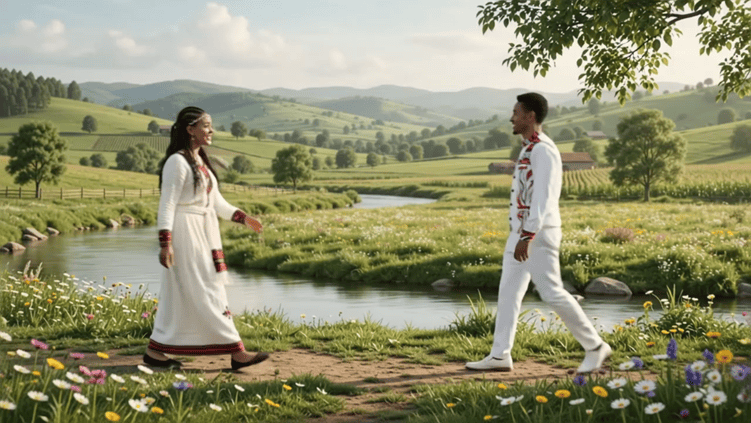
From Oromia to the World: How Language Learning Builds Bridges Between Cultures
Watch the Video:
https://youtu.be/j_UA_JlzCNs
Language is one of humanity’s most powerful tools. It allows people to exchange ideas, build friendships, preserve culture, and cooperate across borders. While geography, history, and tradition may shape different communities, language provides a pathway through which people can learn from one another.
The video From Oromia to the World explores this idea through a simple but meaningful interaction. Two young Oromo people meet in a beautiful rural setting, exchange greetings, and continue their conversation in multiple languages from different parts of the world.
Although the video begins in a specific cultural context, its message is universal: communication creates connection.
Language and Human Connection
Human societies have always depended on communication.
Before trade, diplomacy, education, or scientific collaboration can occur, people must find ways to understand one another. Languages differ in vocabulary, grammar, pronunciation, and history, yet they often serve similar purposes. People introduce themselves, ask about one another’s well-being, share knowledge, and build relationships.
A simple greeting is therefore more significant than it may appear.
When someone learns a greeting in another language, they demonstrate respect for another community and a willingness to communicate across cultural boundaries.
Cultural Confidence and Global Openness
An important feature of the video is that the participants remain connected to their cultural identity.
The setting is rural and natural.
The clothing reflects Oromo cultural traditions.
The conversation begins in Afaan Oromo.
Yet from that local foundation, the discussion expands to include numerous world languages.
This reflects an important principle:
Global engagement does not require cultural abandonment.
A person can celebrate their own heritage while learning from others.
A community can preserve its language while encouraging multilingual communication.
Identity and openness can coexist.
Speaking Together, Learning Together
The phrase Speaking Together, Learning Together captures the educational spirit of the project.
Every language contains:
- history,
- knowledge,
- traditions,
- literature,
- and unique ways of describing the world.
Learning another language therefore means more than learning words. It means gaining access to another perspective.
The exchange of greetings in Oromo, Sidama, English, German, Spanish, French, Arabic, Italian, Urdu, Chinese, and Hausa symbolises this broader process of mutual learning.
The video does not seek to promote one language over another. Instead, it highlights the value of linguistic diversity itself.
Technology and Cultural Exchange
Modern technology has transformed language learning.
A smartphone now provides access to translation tools, educational resources, cultural content, and speakers of different languages from around the world.
This creates opportunities that previous generations rarely enjoyed.
People can remain deeply connected to their communities while engaging with a global audience.
Educational and cultural projects can be produced and shared at very low cost.
Knowledge can travel across continents within seconds.
The result is a world in which learning becomes increasingly accessible.
Many Languages, One Humanity
Humanity speaks thousands of languages.
This diversity is sometimes viewed as a barrier.
Yet it can also be viewed as a source of cultural richness.
Every language contributes something unique to human civilisation.
Every language represents generations of experience, memory, and creativity.
The goal of multilingual communication is not to eliminate differences. It is to create understanding despite those differences.
When people learn one another’s languages, even at a basic level, they strengthen the foundations of cooperation and mutual respect.
Conclusion
From Oromia to the World uses a simple conversation to communicate a larger idea.
Languages do not separate humanity. They connect it.
The ability to learn, share, and communicate across cultures remains one of the most valuable skills in an increasingly interconnected world.
By remaining rooted in local identity while embracing global communication, people can preserve cultural heritage and expand human understanding at the same time.
In a world that often emphasises division, multilingual communication reminds us of something important:
Many Languages. One Humanity.
Author (Producer): Temesgen Muleta-Erena
Publisher: TC Press, London
Ideas, Culture, and Strategic Truth 🌍🗣️🌿✨


Comments»
No comments yet — be the first.