Economic and development analysis: Perspectives on economics, society, development, freedom & social justice. Leading issues in Oromo, Oromia, Africa & world affairs. Oromo News. African News. world News. Views. Formerly Oromia Quarterly
This week, Wole Soyinka, the first African to win the Nobel prize in literature, said he wanted another award: The Grammy. Speaking at Oxford University, Soyinka was responding to Bob Dylan’s recent crowning as the winner of the prestigious literature prize, when he said: “Since I’ve written quite a number of songs for my plays,…
Expression of Strong Opposition to the Candidacy of Dr. Tedros Adhanom, Ethiopian Foreign Minister, to Lead the World Health Organization
October 30, 2016
Dr. Margaret Chan
Executive Director,
Office of the Director General, World Health Organization (WHO)
From: Oromo Studies Association (OSA)
Re: Expression of Strong Opposition to the Candidacy of Dr. Tedros Adhanom, Ethiopian Foreign Minister, to Lead the World Health Organization
Dear Dr. Chan,
On behalf of the Oromo Studies Association Board of Directors, the Executive Committee and its membership, we are writing to express strong opposition to the candidacy of Dr. Tedros Adhanom to serve as Director General of the World Health Organization. OSA members have been studying health issues along with other matters which affect the well-being of the populations in the Horn of Africa for thirty years, since our founding in 1986. OSA’s opposition to Tedros Adhanom’s candidacy to the top WHO post is based on four principal points:
Dr. Adhanom is unqualified in terms of medical training and professional experience for the position for which he has been put forward.
Dr. Tedros Adhanom politicized Ethiopia’s Ministry of Public Health while in office and the corruption under his leadership became legendary. He failed to ensure fair distribution of resources to all regions and peoples; his tenure was marked by episodes of denial of care to tens of thousands who deserved treatment during a cholera outbreak.
Adhanom has been complicit in crimes against humanity committed by the Ethiopian regime since he assumed Politburo membership. While he has served on its Executive Committee, the TPLF has been charged with genocide, ethnic cleansing and widespread human rights violations. He cannot be absolved from responsibility. He was complicit in violation of international laws and conventions while serving as the Foreign Minister of Ethiopia when hundreds who were victims of orchestrated security force brutality against protesters, starting in 2014 and continuing until the current day, October 2016.
Tedros Adhanom’s negligence and lack of responsibility while serving both as Federal Minister of Public Health and as the top diplomat in Ethiopia disqualifies him from assuming moral leadership as WHO Director General. His policies and practices while serving in Ethiopia have been contrary to the very principles enshrined in the WHO conventions.
Regarding lack of the professional experience required to serve the World Health Organization, please note that as soon as Dr. Tedros Adhanom received his degree in community heath in 2000, he was appointed as the Director of the Health Bureau of the regional state of Tigray. Very shortly afterward, he was appointed as the Deputy to the Federal Ministry of Health. By 2005 he was appointed as the Federal Minister of Health. His rapid rise to power was based, rather than on a proven record of competency, on his membership in the Tigrayan Liberation Front (TPLF), the party that has dominated Ethiopian politics since 1991. In 2012 he was moved into the Foreign Ministry, the position he still holds.
The World Health Organization champions the connection between human rights and health. Achieving the highest attainable standard of health (health being defined as “a state of complete physical, social and mental well-being…”) is a fundamental right possible to ensure only if people are free from torture, from inhumane and degrading treatment, from discrimination or exclusion and able to freely participate in identifying their social problems and finding solutions. To the contrary the TPLF/Adhanom government exposes the peoples in Ethiopia to poverty, homelessness and disease and torture or killing of those who oppose their policies, through massive farmer evictions, confiscation of land and resources and withholding services which severely limit the choices in life of the dispossessed.
Since Ethiopia was also signatory to WHO’s 2005 “International Health Regulations” Ethiopia’s Ministry of Public Health was obligated to report to WHO any sign of a cholera epidemic. Dr. Adhanom’s failure to declare the cholera outbreak in Oromia demonstrates his disregard for the kind of responsibility required by WHO from member states. Appointing such an official to serve as Director General of WHO will be adding insult to the injury already suffered by thousands of Oromo families who lost their loved ones due to his dereliction of duty in the position of Ethiopian Minister of Public Health. Whether Dr. Adhanom’s refusal to declare a cholera outbreak was out of utter negligence of responsibility or was a politically motivated inaction, he violated his main duty and highest moral responsibility of a minister of heath, which is to save lives. With this malfeasance in his record, it would be scandalous to select him as the Director General of WHO.
Again in 2016, as occurred in 2008, a cholera outbreak is building in Oromia with the same result that the Ethiopian government is failing to report it. This move to hide the extent of the problem reveals a pattern that gives support to the belief of many residents of Oromia that it is the intent of this regime to reduce the Oromo population in Ethiopia. We urge the WHO to give attention to this pattern. Oromo are reminded that the former Prime Minister Meles Zenawi boldly asserted “the majority can become minority.” Such politicized mishandling of public responsibility is beyond malfeasance. And a key member of the regime responsible should not be advanced to an even more elevated level of international public trust.
Our second objection to Dr. Adhanom’s candidacy concerns corruption and politicization of the health services. Regarding corruption, when Dr. Adhanom was Ethiopian Federal Minister of Health his office was characterized by widespread misappropriation of aid funds. For example, “the Global Fund to fight AIDS Tuberculosis and Malaria,” was used to carry out politically motivated programs. In 2010 unacceptable allocation of funds led to a 79 percent cut in United States’ financial assistance that was desperately needed for the treating HIV/AIDS patients across the country. Adhanom’s record in office indicates that he would not meet the minimal requirements for the WHO Code of Conduct in conducting the work of the office of Director-General.
Our third objection to Dr. Adhanom’s candidacy pertains to his complicity as Foreign Minister in the violation of international conventions. Exploiting the ‘opportunity’ provided by the international war on terrorism, the leaders of the TPLF regime have deliberately characterized all independent Oromo activists and Oromo political organizations as “terrorist” and prosecuted them under the so-called “Anti-Terrorism Proclamation of 2009.” The Ethiopian regime has sent security agents across international borders to kidnap, deport or kill those it suspects of opposition. Back in Ethiopia the deportees are imprisoned, tortured and many are killed without mercy.
The crime of crossing international borders and kidnapping asylum seekers has been intensified and extended to other Ethiopian refugees under Dr. Adhanom’s tenure as Ethiopia’s Foreign Minister. Of particular concern to OSA is the disappearance of an iconic figure who is the holder of Oromo sacred knowledge. Kidnapped by Ethiopian security agents abroad in the last two years is Dabbasaa Guyyoo, a highly respected 88-year-old, Gadaa historian, cultural guru and thinker. Mr. Guyyoo, who is considered by many as the Dalai Lama of the Horn of Africa, was kidnapped on September 27, 2015. He lived under the protection of the UNHCR for 35 years in Kenya and travelled extensively internationally to teach about Oromo traditional knowledge. It is believed that he has been deported to Ethiopia as Tedros presided in the responsible role in government. Also among Adhanom’s government’s well-known victims are Andargachew Tsige of Ginbot 7, an Ethiopian opposition party in exile, who was kidnapped on 23, June 2014 while in transit at Sana’a Airport in Yemen and deported to Ethiopia. David Ojulu, an Anuak refugee from Gambella, was kidnapped on December 17, 2013 in Juba, South Sudan, and deported to Ethiopia. Both Andargachew and Ojulu remain in prison in Ethiopia. Dr. Adhanom’s candidacy should be obviated by his complicity in such human rights violations in Ethiopia that have been extensively documented among others by Amnesty International (AI), Ethiopian Human Rights League (EHRL), Human Rights League of the Horn of Africa (HRLHA), the Oromia Support Group (OSG) and Human Rights Watch (HRW).
Since 2010, the Ethiopian regime, has been involved in large scale rural and urban land transfers which have evicted hundreds of thousands of Oromos and others exposing them to homelessness, poverty and disease. The most infamous of such actions of the regime was the Addis Ababa Master Plan (AAMP) exposed in 2014, whose design was launched to expand Finfinnee/Addis Ababa to twenty times its current size evicting millions from their homes and impacting over six million Oromo in the vicinity. By 2014, while Tedros Adhanom served as active leader in the ruling party structure, the AAMP had already caused the destruction of the livelihood of over 30,000 Oromo households or 150,000 men women and children when it caught public attention. This act of “ethnic cleansing” was openly referred to as such by inside participants. The design called for denial of livelihood to Oromo farmers in the vicinity of Addis Ababa, but also the suppression of Oromo culture, language and identity in its path.
When its enormous threat against the Oromo people was exposed in April 2014, the AAMP was met by peaceful protests with massive turnout from Oromo students and farmers across the region of Oromia. The response of the TPLF regime to peaceful demands to stop the project were to send government security forces to fire live ammunition into groups of peaceful Oromo student demonstrators, killing 70 innocent individuals, including an 8-year-old boy, wounding around one thousand unarmed civilians while detaining nearly 50,000. By the end of 2014 the protest abated in the wake of assurances that the program would not proceed.
The student protest against the Master Plan was re-ignited, however, in November 2015 by an incident in Ginchi, a small town 80 km west of Addis Ababa, which revealed that the Master Plan was indeed proceeding apace despite assurances. The news and the protest spread rapidly across Oromia, becoming a national uprising. The response from the government was brutal everywhere, ushering in destruction across the country. On January 21, 2016 the European Union condemned the brutal crackdown by Ethiopian security forces in Oromia. By June 16, 2016 Human Rights Watch reported that over 400 Oromo nationals had been killed by government forces and that thousands wounded and tens of thousands had been detained without trial or charge. At the time these events were known to be unfolding in Ethiopia, its Foreign Minister, Tedros Adhanom was put forward as a candidate for Director General of WHO! It is an outrage. Since his nomination, the killing has escalated while Tedros Adhanom continued to preside actively as Ethiopia’s top diplomat, its Foreign Minister, intensifying brutality in the implementation of these policies. He cannot be absolved from responsibility for their lethal impact.
The peaceful resistance which persisted for months in the Oromia region, even in the face of deadly retaliation, spread to other regions by mid-summer. In July 2016 protests were mounted in the second largest and second most populous Amhara region. On August 6-7th, 2016 protests in the Amhara and Oromia region were met with a brutal crackdown by the regime’s forces, killing at least 100 in the Oromia region and 70 in the Amhara region. The death toll was likely much higher.
Circumstances have deteriorated under Adhanom’s recent tenure. On September 3, 2016, gunfire broke out at the Kilinto Prison in the capital city Addis Ababa where around three thousand five hundred prisoners had been detained in connection to the Oromo protests. Within hours the facility erupted in flames. The wrapped bodies of about two dozen prisoners were delivered to the local hospitals. Deliberately causing the death of prisoners is an obvious crime against humanity, for which Dr. Adhanom shares responsibility as a leading member of the group who set this policy.
Dr. Adhanom’s comment on events that culminated in a massacre were to defend his government’s worsening brutality. Last week he shamefully blamed the victims of the Irreecha Massacre and the media who reported the events for what had happened (see Africa News, Oct. 24, 2016). The massacre took place at the Irreecha Oromo cultural and spiritual festival which was attended by over two million persons on October 2, 2016 at sacred Hora (Lake) Arsadi in the town of Bishoftu, Oromia, about 50 km south of Addis Ababa. Taking anti-government slogans shouted by festival goers as an excuse, Ethiopian government forces fired barges of teargas and bullets from the ground and charged the massive crowds of celebrants using an Ethiopian government helicopter gunship. If the purpose was to create pandemonium and cause the highest possible number of causalities, then the Ethiopian government authorities were not disappointed at what they achieved. Hundreds of men, women and children were killed. There are many more individuals who are still missing and hundreds who were wounded without recovery.
Following the horrors of the Irreecha massacre, on October 9, 2016, the Ethiopian government declared a state of emergency over the entire country, shutting down internet, communications via social and telecom media. In an attempt to make it impossible to count their victims or to track their arrests, the government has created conditions where they pursue perceived enemies with impunity. The Ethiopian blackout is complete and the people more desperate than in any previous condition described above.
Dr. Adhanom should not be allowed to escape from accountability for these crimes committed by the government in which he holds a central responsible position, by finding refuge in one of the United Nations most revered bodies. To elect him would be a travesty. He does not deserve this honor and he is not qualified professionally or morally to assume this office.
Dr. Adhanom’s tenure as head of the Ethiopian Federal Ministry of Health revealed a disturbing lack of ethics. He should be barred from assuming moral and administrative responsibility for leading the WHO. In fact, we see his consideration for appointment to serve as Director General of WHO to be a disservice to the purposes for which WHO was established. Ignoring such a record could bring damage to the reputation of the UN, and injury to the morale of those who work under the auspices of WHO to improve the health all people across the globe.
We call upon the member states of the United Nations to investigate the information provided here and reject the candidacy of Dr. Adhanom for this high office. To do so will provide .
We urge all who are committed to safeguarding the integrity of the WHO to oppose Dr. Tedros Adhanom for the position of Director General of the World Health Organization.
Sincerely,
Professor Mekuria Bulcha
Chair, OSA Board of Directors
C.C:
Fadéla Chaib, WHO Spokesperson, WHO Department of Communication,
The Oromo Studies Association (OSA) is an independent international scholarly organization, which holds not-for-profit status in the United States. The main objectives of OSA include (but are not limited to): (1) to serve as an umbrella organization in guiding, developing and promoting scholarship on the history, economy, health, education, politics and welfare of the Oromo and other people in Ethiopia, and (2) to foster understanding between the Oromo and other people in Ethiopia and globally. OSA members include Oromo, other Ethiopians, Africans, Americans, Australians, Canadians, Europeans, Japanese and many other nationals.
Well, Ethiopia’s man who pretends to represent Africa can not even understand the very simple questions asked by the audience after his presentation. Dr. Adhanom plans to reduce the WHO down to a regulatory enterprise and a security agency (the violent & repressive concept that he learned from his TPLF bosses) rather than making it a prestigious standard setting body for the global health. Alas! Amboo Ilma Arsee #VoteNo4Adhanom
#CluelessTedros was used to get praise from international community by presenting cooked numbers to show case false expansion of healthcare in Ethiopia. But when he was faced with group of experts vetting candidates for for WHO directorship, he could not understand or answer very elementary questions. This guy was so intoxicated with his own propaganda, he decided to run for WHO directorship and expose his own incompetence the lies of his regime. Jawar Mohammed
Tedros Adhanom, a politburo member of the Tigray People’s Liberation Front (TPLF) that has been ruling Ethiopia for the last 25 years is in the inner circle of the regime well known for its systematic patterns of political repression and egregious human rights violations against Ethiopian citizens. The abysmal human rights record of the Ethiopian regime is very well documented by all the major international rights groups (Human Rights Watch, Amnesty International and Freedom House) as well as by the U.S. State Department in its annual human rights report.
In 2008, under his watch at the Federal Ministry of Health (2005-2012) there was a major cholera outbreak in Ethiopia’s Oromia Region. As a result of the deliberate inaction of Dr. Adhanom, the preventable and treatable outbreak tragically claimed many lives. Dr. Adhanom’s tenure as head of the Federal Ministry of Health was fraught with mismanagement and gross incompetence particularly as it relates to the monies (USD 1,306,035,989) granted from the Global Fund to Fight AIDS Tuberculosis and Malaria (GFATM).
The audit by the Office of the Inspector General into the USD 1,306,035,989 allocated to Ethiopia found: 1) misappropriation of funds and use of donor funds for unsound and politically motivated programs, 2) substandard quality of constructed health facilities and 3) ineligible expenditures. It was the recommendation of the OIG that the Ethiopian government should refund USD 7,026,929 to the Global Fund. To this day, no action has been taken by the Ethiopian government to refund the money.
The candidate for Director General of a prestigious organization such as the WHO should not only be a person of high personal achievement but should also embody the highest adherence to internationally recognized human rights standards. Dr. Adhanom’s record as one of the leaders of the ruling party in Ethiopia and specifically his record as Minister of Health does not meet the exceedingly high standards required for a Director General of the WHO.
Ethiopia: How Many More Must Die Before there is an Intervention?
HRLHA Calls for International Intervention to end Human Tragedy in Ethiopia
November 6, 2016
As is well known, the current state of volatility in Ethiopia was sparked off when the Killing squad “Agazi special force” started shooting directly at the Oromo high school students peacefully protesting in Ginchi town in Oromia on November 12, 2015.
The crisis that followed has been characterized by senseless killings, torture, abduction and unwarranted imprisonments in concentration camps of those who vehemently opposed the actions of the government force against peaceful protests by those demanding that the government of Ethiopia stop its injustices against the Oromo people and respect their fundamental rights.
This reckless action of TPLF/EPRDF against protestors reignited the grievances of injustice and inequality the Oromo population has faced for over two decades from minority Tigrian elites. In the next few days, the protest quickly spread all over the Oromia regional state. Since then, the protests have included Oromos from all walks of life. After nine months of protests in Oromia Regional State, the Amhara Regional State joined the protest. Meanwhile, the special force Agazi has continued killing indiscriminately the people of both regional states.
International and regional human rights organizations have continued to shed light on the killings, torture, detentions and abductions in Oromia and Amhar Regional States while the world community has remained silent.
The massacre on October 2, 2016 at Irecha,an Oromo Thanksgiving festival where over 1000 Oromos were massacred and thousands wounded- on the ground and from gunships in the air- has changed the situation dramatically. The peaceful protests have turned violent and several government owned properties have been destroyed and more killings and detentions have followed.
On October 8, 2016, the TPLF/EPRDF government declared a State of Emergency to cool down the situation. As the actions of the government show, the State of Emergency was introduced as a cover to continue the killings, torture and detain in concentration camps more Oromos and Ahmaras instead of cooling down the situation. After the State of Emergency was declared, thousands of Oromos and Amharas have been killed and tens of thousands arrested.
The HRLHA has received from its informants a partial list of those picked up from different showa zones (centeral Oromia) from October 8 – November 2, 2016 and held in Tolai Military camp .
The following are the numbers of abducted Oromo youths detained in Tolai Military Camp presently.
The following are the names of Oromos, mostly youths among the abducted and their whereabouts are unknown
The 2003/2004 Genocide against Darfur in Sudan is a striking lesson; the people there were killed indiscriminately and, more sadly, the perpetrators would go unpunished until it culminated in a full genocide. What is happening in Oromia and Ahmara regional states today resembles more or less what happened at the embryonic stage of the Darfur genocide in Sudan.
Even the AU, whose headquarters is in the center of Oromia/Addis Ababa, gave late voice after thousands of Oromo children, seniors, men and women had been massacred by the TPLF/EPRDF killing squads.
The donor governments such as USA, UK, Canada and government agencies (African Commission on Human and Peoples’ Rights, EU Human Rights Commission and UN human rights council) have expressed their concerns without taking any concrete actions. Such inaction doesn’t reflect the AU’s and the UN’s obligation under their own Constitutive Act, which provides for intervention inside a member state against genocide, crimes against humanity, and war crimes.
This is a cosmopolitan ideal of protecting people inside states against mass atrocities as a matter of common obligation. The Responsibility to Protect (R2P), coined in 2001 under the leadership of the Canadian government and adopted by 150 heads of states and governments in 2005, obliged the international community to intervene to stop atrocities.
As a matter of principle, a state shoulders the primary responsibility to prevent and protect its own citizens against horrific acts, but if it is unable or unwilling to prevent and protect its population from genocide, war crimes, ethnic cleansing and crimes against humanity, the responsibility is thus shifted to the international community. It states, “ when a state is unable or unwilling to protect its population from genocide, war crimes, crime against humanity and ethnic cleansing, the international community has the responsibility to intervene”.
The UN Charter’s first and most essential aim is to “maintain international peace and security”. However, when the UN was first created, it was an enormous undertaking based on hope.
The most immediate motivation for the creation of the UN was to save succeeding generations from the scourge of war, just the kind of war in which Allied powers were then embroiled, and to reaffirm faith in fundamental human rights which were being so fragrantly and brutally violated by the Axis powers.
Today, one critical question on everyone’s lips is whether the United Nations is living up to its mandate, more particularly, of maintaining international peace and security. Amid ongoing human rights crises in Ethiopia it is hard to figure out what exactly the UN & AU have done to uphold their responsibilities. Nevertheless, it is not too late to act today.
For the Ethiopian human rights crisis, two ways can be helpful in restoring peace and stability. In this, the international communities and agencies (AU, EU & UN) can play a decisive role:
Major donor governments, including USA, UK & Canada, should stop funding the authoritarian TPLF/EPRDF government
Put pressure on the TPLF/EPRDF government to allow neutral investigators to probe into the human rights crisis in the country as the precursor to international community intervention
Therefore, the HRLHA again calls upon the international community to act collectively in a timely and decisive manner – through the UN Security Council and in accordance with the UN charter on a case-by – case basis to stop the human tragedy in thiopian.
Copied To:
International Committee of the Red Cross
19 Avenue de la paix
1202 Geneva
Switzerland
Tel: +41 22 734 60 01
Fax: +41 22 733 20 57
UN Security Council
Office of the Ombudsperson
Room DC2 2206
United Nations
New York, NY 10017
United States of America
Tel: +1 212 963 2671
E-mail: ombudsperson@un.org
UN Human Rights Council
OHCHR address:
Office of the United Nations High Commissioner for Human Rights (OHCHR)
Palais Wilson
52 rue des Pâquis
CH-1201 Geneva, Switzerland.
Africa Union (AU)
African Union Headquarters
P.O. Box 3243
Roosevelt Street (Old Airport Area) | W21K19
Addis Ababa, Ethiopia
Tel: (251) 11 551 77 00 | Fax: (251) 11 551 78 44
Webmaster: webmaster@africa-union.org
African Commission on Human and Peoples’ Rights
31 Bijilo Annex Layout, Kombo North District
Western Region,
P.O. Box 673 Banjul, The Gambia
Tel: (220) 441 0505, 441 0506
E-mail: au-banjul@africa-union.org
The US Department of State Secretarate Secretary His Excellency Mr. John Kerry
WASHINGTON, D.C. HEADQUARTERS
(202) 895-3500
OFMInfo@state.gov
Office of Foreign Missions
2201 C Street NW
Room 2236
Washington, D.C. 20520Customer Service Center
3507 International Place NW
Washington, D.C. 20522-3303
UK Secretary of State for Foreign and Commonwealth Affairs
The Rt Hon Philip Hammond MP
Parliamentary
House of Commons, London, SW1A 0AA
Tel: 020 7219 4055
Fax: 020 7219 5851
Email: hammondp@parliament.ukDepartmental
Street,
London, SW1A 2AH
Tel: 020 7008 1500
Email: fcocorrespondence@fco.gov.uk
Minister of Foreign Affairs (Canada) His Excellency Stéphane Dion
Write to:
Enquiries Service (BCI)
Global Affairs Canada
125 Sussex Drive
Ottawa, ON
K1A 0G2
Email: Enquiry Service – On line form
Canada
Minister for Foreign Affairs (Sweden)
Her Excellency Margot Wallström
Switchboard: +46 8 405 10 00
Street address: Rosenbad 4
Postal address: SE 103 33 Stockholm
Minister of Foreign Affairs (Normway)
His Excellency BørgeBrende
Ministry of Foreign Affairs
E-mail: post@mfa.no
Phone: + 47 23 95 00 00
Address: 7. juniplassen 1, N-0032 Oslo
Hamilton’s Oromo community may be small, but they want it known they are standing with their brothers and sisters back home.
A group of about 20 members of the Oromo Community of Hamilton stood outside City Hall Friday, holding signs with photos of struggles faced by people in Ethiopia’s largest region, Oromia.
Canada is known for its tradition of peacekeeping and contributing to the United Nations, said Abraham Turem, 51.
“I hope this government will follow that line of thinking to advocate for peace in that country.”
The gathering commemorated the first anniversary of the “climax” of peaceful demonstrations in the region, which is home to most of Ethiopia’s estimated 40 million Oromo, said Solomon Germossa. The Oromo are the country’s largest ethnic group.
Since November 2015, the government has used “excessive and lethal” force against what is largely peaceful unrest started mainly by students, says a Human Rights Watch report.
The demonstration was initially a response to authorities’ decision to clear an environmental area for a development project, the report says. Protesters feared the plan would further displace Oromo farmers, many of whom already lost land for similar projects over the past decade, it says.
The plan was cancelled in January, but the unrest has continued and now reflects broader concerns shared by many Oromo, the report says. As of June, it was estimated more than 400 people had been killed, thousands injured, tens of thousands arrested and hundreds — “likely more” — taken from their families.
Friday’s group said thousands of people have been killed and tens of thousand are in prison.
Germossa, a registered nurse, said he hasn’t been able to reach his 11 brothers and sisters in Ethiopia since last month.
“We are extremely worried about our family at this point,” he said. “Even when we go to work, our mind is always there.”
The Ethiopian government restricted use of social media so connecting with family members has been impossible, he said.
“We don’t know if our mothers, our brothers, our sisters are alive or in jail,” Germossa said. “We are almost in the dark.”
There are about 50 to 60 Oromo families in the Hamilton area, he noted.
As marathon runner Feyisa Lilesa crossed the finish line to win the silver medal at the Olympics this summer, he raised his arms over his head in an X to defiantly protest the Ethiopian government’s treatment of his fellow Oromo people. Three months later, unable to go home or see his family, he contemplates the price of being a world-class athlete speaking out.
As 26-year-old Ethiopian Olympic marathoner Feyisa Lilesa neared the finish line at the 2016 Rio Olympics with what would be a blazing time of 2:09:54, fast enough to win a silver medal in the men’s marathon, he felt no sudden wave of euphoria.
Instead, Lilesa took a deep breath and carried out the plan he’d dreamed about from the moment he was selected to compete in Rio: He crossed his arms above his head in an X. Putting them down for a quick moment and raising them again, he held the gesture as he ran through the finish line with his country’s strife running through his head.
“I knew by all accounts I was supposed to feel happiness in that moment, but all I could think about was the people dying back home,” the long-distance runner told me in Amharic when we spoke in Washington, DC, in September.
Lilesa’s gesture was unfamiliar to most international viewers, but Ethiopian audiences around the world recognized it immediately as the sign associated with anti-government protests stemming from Lilesa’s home region of Oromia, which have been growing in breadth and intensity since November 2015. The #OromoProtests contend that the country’s current government represses its largest ethnic population both culturally and economically.
Later, after flowers were placed around his neck at the end of the race, Lilesa prepared to make a second statement — this time at the post-race press conference. Stepping up to the conference-area podium with his official jacket unzipped — to disrupt the block text bearing Ethiopia’s name — he raised his arms once again and crossed his wrists above his head, spotlighting a wristband in Oromo colors: black, white, and red. If the first gesture could have been interpreted as spontaneous, Lilesa used this second one to make evident his long-held plan to speak out.
Feyisa Lilesa crosses the finish line to win silver during the men’s marathon. Matthias Hangst / Getty Images
Despite government spokesman Getachew Reda’s insistence that Lilesa would receive a “hero’s welcome” if he returned to Ethiopia, Lilesa told reporters in Rio he knew he could not go home without either being either jailed or killed for his actions. In fact, subsequent airings of the Olympics in Ethiopia did not show his gesture, and few state-run print publications covered that or even his win — at all.
Lilesa told journalists he’d seen the government’s duplicity with his own eyes: “The state-run Oromia TV posted on Facebook after I won saying, ‘Feyisa Lilesa successfully sent the terrorists’ message to the international community,’ but they immediately took down that message and changed their narrative” to a more positive one echoing spokesman Reda’s statement.
Rule 50 of the Olympic Charter forbids explicit political activity, decreeing that “No kind of demonstration or political, religious, or racial propaganda is permitted in any Olympic sites, venues, or other areas.” But sports — and the Olympics in particular — have long played host to protests both quiet and overt, a stage for the world’s greatest to express both physical rigor and patriotic dissent.
In 1968, American gold and bronze medalists Tommie Smith and John Carlos were sent home from the Summer Olympics in Mexico City and suspended from the US team for raising a fist in the air as they stood on the podium during the national anthem. In the aftermath of the protest, they lost their medals, their reputations, their friends, and in Carlos’s case, a marriage. Lilesa had never heard of John Carlos and Tommie Smith before he protested, and Colin Kaepernick’s national anthem protest had not yet garnered headlines. Becoming a hero or entering historical record was never part of Lilesa’s plan.
But online, Ethiopians around the world were discussing his historic show of solidarity. All over Facebook, Viber, and WhatsApp, Oromo people were changing their avatars to pictures of Lilesa with hands raised and wrists crossed in front of him. At the end of his race, he’d emerged a hero to Oromos everywhere, even with his own future uncertain.
Days later, Lilesa saw rumors on social media that his friend Kebede Fayissa was among the countless dead after a fire — and officers’ bullets — erupted at a prison just outside Addis Ababa. He called home from his Rio hotel; confirmation of the news strengthened his resolve to continue speaking out.
American athletes Tommie Smith (center) and John Carlos (right), protest with the Black Power salute at the Summer Olympic Games, Mexico City, October 1968. John Dominis / Getty Images
For Lilesa, the choice to protest came at tremendous personal cost. His wife and two young children, whom he did not inform of his plan to protest, live in the nation’s capital. He kept the decision from them, afraid they might compel him to change his mind. As an athlete, he supported them and his extended family, living a fairly comfortable life compared with those around him: He had his own house, a car, and an athletic career that had been thriving since he’d won the Dublin Marathon at only 19. Athletes are among the most respected public figures in the country, and remaining publicly apolitical — or even performing gratitude to the Ethiopian Athletics Federation — would have eased Lilesa into a simpler life. But amid the chaos that ensued after his protest, Lilesa lost valuable training time; his diet changed in transit, and the stress of impending exile wore on him.
The resultant series of setbacks will keep him from competing in this year’s New York City Marathon. Afraid to return home amid worsening political unrest, Lilesa is now training in Arizona for April’s London Marathon. Nine thousand miles away from his wife, his children, and the community he holds closest, he contemplates the personal cost of his protest.
To stay silent with the world’s eyes trained on him would have been a wasted opportunity to attract the media and political attention Lilesa believes is necessary to bring about change in Ethiopia. Progress in the region has not been linear, but Lilesa’s actions marked a catalyst: In the months since his protest, Western media coverage of the country’s political affairs has both increased and taken on a more widespread critical lens. “The little happiness I feel now is because I was able to show the world our desire for peace and it’s reached the world’s media,” he said.
But Lilesa himself lives in fear despite being one of the world’s most celebrated and talented elite athletes, the course of his life and career effectively derailed by the decision to speak out. At the apex of his career, one of the best runners in the world is now running for his life.
Feyisa Lilesa, photographed on September 13, 2016. T.J. Kirkpatrick for BuzzFeed News
The Oromo account for almost 40% of Ethiopia’s population — an estimated 39 million people — and a disproportionate amount of the nation’s elite runners. Born in 1990, Feyisa Lilesa grew up in Jaldu, a district in the West Shewa region of Oromia. The child of farmers, he was the second of seven children raised in a farming community about 75 miles west of Addis Ababa. Like many children in the surrounding area, Lilesa grew up thinking of running as a way to get to his classes — or as fellow runner Biruk Regassa told me, “When school is far, everyone is a runner.”
Since November 2015, protests in the region have sprung up in response to what the government called its “Addis Ababa Integrated Regional Development Plan,” or “Master Plan.” The plan outlined the method by which the federal government would integrate the capital city, Addis Ababa, with surrounding towns in Oromia.
“When school is far, everyone is a runner.”
Concerns over the proposed expansion were raised in 2014 by farmers who feared the government’s ongoing takeover of their land would expand under the plan. Uniting under the hashtag #OromoProtests, citizens of the region organized to make their concerns known: The re-zoning plan would constitute an effective government takeover of their land, yet another blow to their autonomy and livelihood after years of ongoing repression.
In January, however, the Ethiopian government announced it would abandon the Master Plan following the deaths of an estimated 140 protesters in clashes with federal security forces. The televised government statement, which has since been removed from the state media where it was originally aired, cited a “lack of transparency” and “huge respect” for the Oromo people as reasons for the decision to scrap the widely opposed plan. But activists — and Lilesa himself — contend the plan was just one flash point in Oromos’ ongoing struggle for equal rights.
The presiding political coalition, the Ethiopian People’s Revolutionary Democratic Front (EPRDF), rose to power in May 1991. Before the May 2015 elections, the EPRDF, led by Prime Minister Hailemariam Desalegn, held all but one seat in the nation’s 546-seat parliament. Amid widespread claims of intimidation and suppression of media, the coalition secured a landslide victory, claiming every single seat. Many opposition leaders contend that the Tigrayan People’s Liberation Front party, which represents Ethiopia’s Tigrayan minority (approximately 6% of the population), holds all the power within the ruling EPRDF coalition — and by extension, within the country. The Oromo People’s Democratic Organization, another one of the EPRDF coalition’s four parties, is viewed by many as a comparatively toothless group.
The Oromos have found an unlikely ally in the Amhara, the nation’s second-largest ethnic group. The Amhara comprise about 27% of the population; together, the groups account for about 62% of Ethiopia’s estimated 100 million people. After over a century of oscillating tensions, the two ethnic groups are coming together to protest what they say is shared repression under a Tigrayan-led government and the #AmharaProtests movementhas been rapidly gaining steam. Many people, Lilesa included, note that the groups’ unprecedented union against the EPRDF could portend “Rwanda-like” ethnic conflict in the country.
Lilesa said he has been bearing witness to ongoing discontent in Oromia since well before this round of protests. Born just a year before the EPRDF came into power, he grew up seeing the repression of his people — so helping protesters came as second nature to him.
“People are being exiled from the place I was born, so I tried to do what little I can to help; sometimes I give them my shoes or a little money,” he said. “But after I started doing that, people told me the government had become suspicious of me. Because I trained in the countryside, I feared they could come at any moment and just snatch me.”
Lilesa during the men’s marathon post-race press conference. Lucy Nicholson / Reuters
It’s part of what made him take his protest to the Olympic stage, pushed by a growing sense that only international intervention would change the situation in Ethiopia for the better. Protesters and opposition forces had been agitating for so long and facing only violence in return because their pleas were not heard by international press, he insisted.
“I would have regretted it for the rest of my life if I didn’t make that gesture,” he said. “I knew that the media would be watching, and the world will finally see and hear the cry of my people.”
“We just want peace, we just want equality,” Lilesa said. “That’s why people are still protesting. Even if [the government] says there is no Master Plan anymore, they are still killing us.”
Human rights organizations estimate state forces have killed over 500 protesters in the last year, with elections taking place against a backdrop of “restrictions on civil society, the media and the political opposition, including excessive use of force against peaceful demonstrators, the disruption of opposition campaigns, and the harassment of election observers from the opposition.”
From the minute Lilesa crossed his wrists as he crossed the finish line in Rio, things moved quickly. He says the moments immediately following his gesture still feel like a blur of cameras and rapid-fire questions from journalists, but he remembers his fellow Ethiopian athletes’ embrace as he left the Olympic Village vividly.
“The athletes cried. They sent me off with tears,” he said. “I’m usually not the kind of person that cries, but they actually made me cry, saying goodbye.”
“The federation officials knew that they would get in trouble if they spoke with me or if they helped me,” he continued. “They gave me some signs and gestures but that was really it because they could not really do much because they presumably had concerns for their safety.”
T-shirts made for Lilesa’s welcoming ceremonyHannah Giorgis / BuzzFeed News
Within hours of his protest, a GoFundMe page to support Lilesa and his family was launched and exceeded both its initial $10,000 goal and the subsequent $40,000 goal. It has since raised a total of over $160,000, much of which has been set aside for Lilesa’s legal expenses. Oromo friends like Bayissa Gemechu, a sports agent who had just left Rio after his wife Tigist Tufa competed in the women’s marathon a week earlier, raced back to his side. By the time Gemechu arrived back in Rio to meet Lilesa, the US embassy had already heard of his case — and made the decision to allow him to apply for a special skills visa into the country from Rio instead of insisting he return to Ethiopia to do so.
Bonnie Holcomb, an American anthropologist who has been closely involved with the Oromo community since living in Oromia during the last years of Emperor Haile Selassie’s reign in the early ’70s, also played an integral role in supporting Lilesa from the US and facilitating his contact with Brazilians who would ensure his safety. Holcomb, the co-author of a book investigating Ethiopia’s political history, reached out to Brazilian friends who helped shepherd Lilesa’s visa application process.
The Brazilian couple contacted their local friends, who then worked quickly to support Lilesa, sending officials from the foreign ministry to take him to the airport and begin his temporary visa application to stay in Brazil. Fearing he would be sought by Ethiopian authorities, Lilesa had left the Olympic Village immediately. Alone in his hotel, he was terrified when the Brazilian officials knocked on his door.
But when the Brazilian officials entered the room, they greeted him with smiles instead of the violence or the detainment he’d feared — and took him for coffee. On the car ride to the airport, he called friends in the US to inform them he was safe. By the time he made it to the US embassy after securing his temporary Brazilian visa, Lilesa was surprised by his newfound celebrity among Brazilians and how excited people were to see his medal.
Fearing he would be sought by Ethiopian authorities, Lilesa had left the Olympic Village immediately.
“People were fascinated and they wanted to touch it and they wanted to look at it,” he said. “There was a moment when everybody stopped working and they were just lining up to look at the medal and that sort of made me realize that this is a big deal.”
Gemechu saw the warm reception firsthand when he walked around Rio with Lilesa: “Most of the time we were outside around the beach, and a lot of people there, they watched [him] on the TV and media, so we had fun. They said ‘Oromo!’” he recalled while raising his hands above his head to replicate the now-famous gesture. Stopping to high-five Lilesa periodically on the street, they heralded him as a champion of resistance whose symbolic act spoke to communities well beyond his own people. This support didn’t make up for being away from his wife and two young children, but it helped sustain him for the long, lonely journey ahead.
Lilesa at a press conference in Washington, DC, on Sept. 13, 2016. T.J. Kirkpatrick for BuzzFeed News
A conference at Washington, DC’s Phoenix Park Hotel on September 13 was an opportunity for Lilesa to keep attention on the issue he’d brought to the world stage at Rio and his second big hurdle after arriving in the United States. Earlier in the day he had held his first news conference outside the US Capitol, where he implored Congress members to intervene on behalf of the Ethiopian people. Congressman Chris Smith later announced the introduction of House Resolution 861, “Supporting respect for human rights and encouraging inclusive governance in Ethiopia.”
Stepping up to the podium, Lilesa immediately thanked the journalists in the DC hotel’s conference room, noting that freedom of speech is not a right he takes lightly. The urgency of the protests had been suppressed by state-run Ethiopian media and largely ignored by the West — until, of course, Lilesa.
“We Oromo have not had access to you in the media,” he told journalists through an interpreter, OPride.com founder and editor Mohammed Ademo. “We have been cut off from you. We have not had a free press in our country.”
Ethiopia has come under fire for restricting journalists’ freedoms in recent years. Ahead of the May 2015 elections, government forces had tamped down on dissidents, most notably charging nine bloggers and journalists with terrorism and arresting eight of them under the guise of the 2009 anti-terrorism law (one member residing in the US was charged in absentia).
Lilesa’s first language, like many other Oromo people, is Afaan Oromo. He speaks Amharic in a soft, self-conscious cadence. Lilesa is at his most vibrant when he speaks in Afaan Oromo, especially with the runners who approached him after the press conference. They came to him with beaming smiles, ushering him into hugs to thank him for his gesture. He was visibly relieved to be alongside people who are almost family. Among them was Demssew Tsega, a marathoner who has been in the US for seven months now. Tsega also testified at the news conference announcing House Resolution 861 on Capitol Hill.
One day last December, Tsega wound up amid a crowd of peaceful protesters on his way home from training for the marathon in Sululta, a city 20 miles north of Addis Ababa. Along with four other athletes, Tsega joined the protest. When government security forces came to apprehend protesters, three runners got away — but Tsega and another teammate didn’t.
“Because I’m a runner and the security forces recognized me since they’d seen me on TV before, they were especially keen on capturing me,” he told me in Amharic in October. “They jailed me for two days and tortured me on my feet so I couldn’t run anymore.”
Lilesa with runners Ketema Amensisa and Demssew Tsega, advocate Obang Metho, and runner Bilisuma Shugi Courtesy of Andrea Barron
Upon his release, Tsega did not seek treatment for his injuries at the local hospital because it’s run by the government.
“I was afraid they would arrest me again if I went to the hospital,” he said. “Before I lived with my family in Addis Ababa, but after [my arrest and torture] I hid in the countryside.”
When the notice that Tsega had met the minimum qualification to compete in the marathon arrived, he was conflicted. With injured feet, he had no hope of racing, and it seemed all his training had been for nothing. But he took the opportunity to secure a visa and came to the United States, knowing it was his only shot at accessing treatment for his injuries and one day racing again.
“They’re still looking for me now,” he said. “[The government] still harasses my father; they took our land.”
Sitting next to Tsega at a downtown Silver Spring restaurant, fellow long distance runner Ketema Amensisa sighs. Before the government took 75% of their land, Amensisa’s family had 20 cows in Gebre Guracha, a central Ethiopian town in the North Shewa region of Oromia. Stripped of their primary means of income, the family of subsistence farmers has been struggling to survive since.
“We miss our country,” Amensisa said. “When we don’t have any other options as a people, we stand beside the government because we fear for our safety if we say otherwise.”
The two runners paused their stories intermittently to check in on Momina Aman, a teammate who arrived later in our conversation. Tsega mentioned repeatedly that he wants to take her to TASSC, the Torture Abolition and Survivors Support Coalition, the organization that’s been helping him access medical care for his foot, immigration support, and psychological care.
“I came to this country because Ethiopia’s government killed my father, stepmother, my sisters, and my brothers.”
“I came to this country because Ethiopia’s government killed my father, stepmother, my sisters, and my brothers,” Aman said through tears. “The rest of my brothers and I were only spared because we were in Addis Ababa.”
“We were in Addis Ababa when we got the call that our family had been killed,” she continued. “Recently another one of my brothers was beaten and left to die by government security forces.”
Aman’s brother was one of the 2 million attendees of this year’s Irreecha celebration the first weekend of October. Irreecha, the annual thanksgiving holiday that marks the shift from Ethiopia’s rainy season to the warmth and bounty of the dry months at the end of September, draws crowds of up to 4 million from across Ethiopia to the town of Bishoftu, about 25 miles southeast of Addis Ababa, to pray and sing alongside the crater lake Hora Arsadi. The festivities are filled with color and calm, an opportunity to reflect on the changing seasons and their attendant harvests.
But this year’s Irreecha took place against the backdrop of heightened police presence in Oromia. State forces encircled festivalgoers, eventually firing a mixture of tear gas and bullets into the crowd after attendees began reciting chants associated with the #OromoProtests movement that has grown in the region in the last year. Some reportsestimate up to 678 people were killed between authorities’ violence and the resultant stampede.
When reports first emerged that the festival had turned violent, Aman stayed up all night trying to call her brother. She reached him in the morning, relieved to hear he was shaken but safe.
The festival’s deadly turn was coveredwidely in international press, despite the Ethiopian government’s control of state-run media in the country. Questions about Ethiopia’s future as beacon of the once-promising “Africa rising” narrative surfaced again in the West, pointing not only to the massacre but also to the simple gesture that put enough attention on Ethiopia for its people’s suffering to even matter outside the continent.
Immediately after the bloodshed at Irreecha, the government declared a three-day period of mourning. One week later, it announced a six-month “state of emergency,” under which the army was deployed nationwide and access to social media and mobile internet indefinitely suspended. In three weeks, over 2,000 people were detained for participating in anti-government protests, which government officials blamed on “foreign anti-peace forces” from neighboring Eritrea and Egypt.
“They laid their actions bare,” Lilesa said of the state of emergency. “But there’s nothing new here.”
A celebration of Irreecha held in Maryland the morning after the bloodshed in Ethiopia. Hannah Giorgis / BuzzFeed News
Even amid the uncertainty of the government’s state of emergency, Lilesa remains a beacon of hope for runners like Tsega, Amensisa, and Aman — and for Oromo people around the world.
In the time between Lilesa’s protest and his arrival in the US, two more Ethiopian runners had repeated the gesture as they crossed finish lines around the world. On August 29, Ebisa Ejigu won the Quebec City Marathon and followed in Lilesa’s footsteps. On September 11 — Ethiopian New Year — Tamiru Demisse did the same as he claimed the silver medal in the men’s 1,500-meter T-13 race at the Paralympics in Rio.
Even those who have not protested themselves see Lilesa’s actions as a path forward, an opportunity to rally around one another especially as Ethiopia’s government continues its crackdown. It’s an act they see as fundamentally patriotic: If he didn’t love his country, he wouldn’t want it to be better.
For Tsega, Lilesa’s action and the ensuing media attention was a matter of life and death: “I know sports and politics don’t always go together, but when situations are this urgent, it’s something you have to do even if it kills you. Leaving his children, wife, and all his possessions behind, he… I don’t even have the words. He did all that for his country, for his people.”
“I know it was hard to say that,” Amensisa added. “But after Feyisa did it, he opened up a new path for us.”
All of them are hopeful for the potential of Lilesa’s spotlight on the issue to attract more international intervention in the area — especially from the US, long a military ally of Ethiopia. In the weekend following his arrival in the US alone, there were over 60 news stories on Lilesa and the Oromo protests.
Many of them called for the US government to halt aid to Ethiopia until the totalitarian nature of security measures in the country are addressed. Some of the sanctions being sought by the community are reflected in Congressman Smith’s House Resolution 861 and the identical 21-cosponsor Senate resolution introduced in April.
But Lilesa’s impact reverberates far beyond runners’ circles, community events, and the dense Ethiopian population of the DC metro area. As conversations about athletes’ political voices continue to gain steam following Kaepernick’s silent protest of the American national anthem, Lilesa remains a lightning rod for a community divided by both politics and geography.
On Twitter, the hashtag bearing his name is most often used to share updates on news regarding the community at large. Facebook and Viber — when not being axed by the government — remain digital organizing hubs. And on Snapchat, a massively popular channel for Ethiopian and Eritrean youth held a discussion about Oromo politics earlier this month while one of its hosts wore a shirt printed with Lilesa’s name and face.
“How could I feel the same comfort I did before? How could I feel happiness?”
“BunaTime” (taken from the Amharic word for coffee) draws an average of 15,000 views per Snapchat story, and Ethiopian and Eritrean youth from around the diaspora take turns hosting it for several hours at a time. Its attendant Twitter and Instagram channels boast almost 10,000 and 37,000 followers respectively.
The Oromo-led Snapchat teach-in drew both excitement and ire from young viewers. But hosts were clear: Lilesa, and the #OromoProtests, are the future — not just for the Oromo community, but for all of Ethiopia.
And Lilesa is committed to keeping his career going, despite the complications. He has been training in Arizona since last month. The choice to head west was made partly because of the state’s altitude, and partly, Gemechu joked, because “he don’t like snow.” Lilesa had briefly considered Kenya as another training location, but fears that the Kenyan government’s close relationship with Ethiopia’s would lead to his extradition kept him from pursuing that option. He would’ve been closer to his family, but recent developments in Ethiopia reinforce his decision to stay away from the region.
“The crisis puts [runners] in a position where we can’t focus on our training,” he said. “If this continues without any change, Ethiopia may not win as many medals as it used to.”
Lilesa won’t be running in the New York City Marathon in November, but he has plans to run in both December’s Honololu Marathon and next April’s race in London. The return to the sport he loves has left him energized, but tensions flaring up back home — and his own distance — continue to sap him of energy.
“I left my country and I live in a strange country,” he said when we spoke recently. “How could I feel the same comfort I did before? How could I feel happiness?”
Lilesa photographed on September 13, 2016. T.J. Kirkpatrick for BuzzFeed News
Both his own future and that of his country feel tenuous at the moment, a heavy sense of both revolutionary excitement and dread hanging over both. Lilesa speaks to his wife and children regularly, but hasn’t seen any of them since August 17. “I don’t feel weight on myself since I did what I did, because I believed in it,” he said. “But I do worry about my family back home.”
He was careful and exacting when speaking of his 5-year-old daughter and 3-year-old son in hushed tones: “I don’t want to look at my children any differently from others in my country who are being killed,” Lilesa said. “They face the same fate and the same destiny like all other children in Ethiopia.”
He knows he cannot return to them until the political situation changes, but hopes now that he will one day be able to see them in the US if it doesn’t. The decision to live here for now — even and especially in exile — weighs on him, a sense of guilt pervading his words as he responds to the fact that Oromos around the world now consider him a hero.
“The one who leaves isn’t a hero,” he said recently. “Heroes are the ones who go and fight alongside the people.”
Until recently, Ethiopia has been hailed as an African success story. After a decade of strong economic growth, the country has begun to shed its image as a famine-struck wasteland.
But repression by Ethiopia’s authoritarian government has sparked demonstrations that have led to the deaths of hundreds of protesters this year.
The movement gained worldwide attention at the Rio Olympics when the country’s silver medal-winning marathon runner Feyisa Lilesa crossed his wrists above his head at the finish line in a symbol of the protest movement.
On this edition of Global Journalist, we explore the dangerous ethnic tensions fueling the unrest and the government’s effort to silence its critics after declaring a state of emergency.
Global Journalist: Ethiopia’s State of Emergency
Joining the program:
Tsedale Lemma, editor of the Addis Standard magazine, an Ethiopian magazine forced to stop publication in October
Minister of Foreign Affairs
Ministry of Foreign Affairs
P.O. Box 393
Addis Ababa
Ethiopia
Re: Human Rights Watch Reporting on Ethiopia
Dear Minister,
Human Rights Watch notes the October 22, 2016 blog post of Dr. Tedros Adhanom, then minister of foreign affairs, on the Ministry’s website about our recent presentation to the European Parliament’s subcommittee on human rights and committee on development and concerns for our research into security force abuses.
Human Rights Watch’s research and recommendations are grounded in international human rights law, including regional human rights treaties. This applies to our research on Ethiopia and the other 90 countries where we work globally. As with all countries, we welcome engaging with Ethiopian government officials regarding our research and recommendations prior to and after we publish findings. Before any major report on Ethiopia is published, we provide a summary of our findings to the government for comment and seek to meet to discuss our findings and recommendations. Our letters and responses received are included in the report or on our website. To date there has rarely been a direct response from the Ethiopian government to our communications.
Because we have not received a response to our research queries or requests for meetings, we cannot exchange information that may illuminate our conclusions, or explain to government officials how we reached our conclusions.
We go to great lengths to corroborate victim accounts and other research findings. As a general practice we make corrections to our reporting when clear and corroborated information contravening our findings comes to light. For your information, our corrections page is at: https://www.hrw.org/corrections.
In most of the contexts in which Human Rights Watch works, we do not make our sources public or reveal identifying details, because those interviewed have genuine fear of reprisals or other security concerns. The safety of those we interview is a primary consideration in everything we do.
In Ethiopia, the government’s harassment and arbitrary detention of individuals providing information to civil society has effectively been codified in the state of emergency directive, underscoring the need for those sources to remain confidential. Detention of individuals providing information to journalists, both domestic and international, has also been previously documented by Human Rights Watch and others.
The decreasing space available for independent voices to express a range of views and to have those voices be heard by the government has contributed to the current human rights crisis in Ethiopia. Recent statements directed toward international organizations who conduct independent, corroborated research is illustrative of this growing intolerance for divergent opinions and perspectives. Nevertheless, Human Rights Watch will continue to encourage the government’s feedback on the substance of our research.
Need for an independent investigation
Recent calls for an international investigation reflect the gravity of human rights violations that we and others have documented, but also the lack of a credible, transparent, and impartial national investigation into the abuses that have occurred since November 2015. The June 2016 Human Rights Commission oral report to parliament that largely exonerated the state security forces did not meet basic international standards. No one, including several parliamentarians who have spoken to Human Rights Watch, has seen a written version of the report, which reaches conclusions very different from those of all other organizations who have documented abuses. If a written version of this report exists we urge you to publicly release it. We remain concerned that an impartial international investigation is needed and those implicated in serious abuses be held to account. We have called for such investigations in other contexts, most recently Burundi, South Sudan, and Eritrea – some of which your government was quick to support. The thousands of victims of human rights violations deserve justice and accountability.
The inquiry board set up by parliament to monitor abuses under the state of emergency provides another opportunity to demonstrate impartiality. While the lack of opposition voices on that board raises concerns, it still presents an opportunity to willfully monitor abuses and show that those responsible for serious abuses will be held to account.
We reiterate our desire to meet with representatives of the government in Ethiopia or elsewhere to discuss our research findings, and welcome specific information on your efforts to meaningfully investigate allegations of abuses, hold perpetrators to account, and provide redress for victims.
People are demanding a new democratic government elected by the people. To really meet protesters’ demands, the government should release political prisoners, they should remove the military from villages, towns and universities and start a dialogue on a transition to a more democratic government.
IB Times Exclusive interview with executive director of Oromia Media Network
The Ethiopian government recently reshuffled its cabinet in a move seen by some as a result of months of anti-government protests. The parliament approved the list of 21 ministers proposed by Prime Minister Hailemariam Desalegn, who said the appointments were based on people’s skills rather than their political affiliations.
As some key posts were given to ethnic Oromo, some claimed the reshuffle was part of measures the government said it would take to reduce grievances expressed by some ethnic groups.
In October, Ethiopia declared a six-month-long state of emergency following unrest in Oromia, and occasionally in Amhara.
The response to the protests, labelled as the biggest anti-government unrest Ethiopia has witnessed in recent history, has resulted in the death of more than 500 people since November 2015, a figure the government later confirmed.
In Oromia, people demonstrated against perceived disenfranchisement and lack of inclusion in the political process as the government is dominated by the Tigray minority. They also called for an end to land grabbing, claiming Oromo farmers are forcibly evicted from their farms.
Government reshuffle ‘no meaning for Oromos’
Jawar Mohammed, executive director of Oromia Media Network (OMN), banned under the state of emergency, explained Oromo people are calling for a radical regime change, not a government reshuffle.
“People are demanding a new democratic government elected by the people. To really meet protesters’ demands, the government should release political prisoners, they should remove the military from villages, towns and universities and start a dialogue on a transition to a more democratic government,” he told IBTimes UK.
Mohammed, who lives in the US, also claimed Ethiopians have not been affected by the state of emergency , with the exception of a restriction on internet access.
“Oromia has been under a state of emergency for the last 12 months, the military is there, all the civil and political rights have been suspended, people have been arrested,” he alleged.
“Yes, some media outlets have been banned, but this is nothing new. OMN has been jammed some 20 times since March 2014. Even before the state of emergency, they were already arresting people, breaking down satellite dishes and jamming our transmission, what they did now was to officially admit what they were already doing and reassure investors that they are taking measures, beefing up security.”
People walk near a burnt-out truck in the compound of a textile factory in the town of SebetaTiksa Negeri/Reuters
Attacks on foreign-owned companies
During anti-government protests, Oromo people attacked foreign-owned factories in Oromia, acts of violence that could result in a reduction in investments in the country.
Ethiopia strongly condemned the attacks, which it blamed on “anti-peace forces who aim to destabilise the country.” The government also claimed the situation in the country has gone back to normal since the state of emergency was implemented.
However, Mohammed claimed protests have halted only because it is harvesting season and rallies are bound to restart. He also said people will, once again, attack foreign-owned factories as they were allegedly “built on lands that were illegally taken from farmers or lands owned by the ruling party.”
“These are not xenophobic attacks. In fact, protesters have not touched a single investor physically,” he said. “The targets are strategically chosen because people need to now that investments in Ethiopia, until a democratic system is in place, is not safe. Click here to read more….
Several UK holiday firms have cancelled forthcoming holidays to the East African nation of Ethiopia. The decision by the likes of Saga and Kuoni comes in the wake of a UK Foreign and Commonwealth Office (FCO) warning that many regions and towns in the country are now unsafe.
The travel companies say people with pre-booked Ethiopian holidays can choose alternate destinations or apply for refunds. The Foreign Office updated its Ethiopian travel advisory last month.
In the revision, the FCO noted that it was advising against all but necessary travel to a huge swath in the centre of the country. This stretches down from the nation’s northern frontier with Sudan to Awasa and roughly corresponds to the states of Amhara and Oromia.
This area covers the country’s capital, Addis Ababa, plus popular tourist sights and destinations such as the Debre Birhan Selassie Church to the north of Lake Lana and the Simien Mountains. The Foreign Office advice also states that Britons should avoid certain areas in the northeast, southeast and west of the country altogether.
The FCO did explain that while it was generally advisable to stay away from most of the regions close to the border with Eritrea, certain locations were reasonably safe. These include the Debre Damo mountain monastery and the town of Yeha and its renowned 2,700-year-old tower.
Following months of civil unrest and violent clashes, the government of Ethiopia declared a state of emergency on 9 October 2016. The FCO says this is expected to last for a minimum of six months. The advice added that the emergency decree empowers government security personnel to carry out random searches, break up oversized gatherings of people and enforce curfews.
Ethiopia is 12 months in to a political crisis which has seen at least 1,000 people killed. But unless the government introduces significant reforms, it will get worse, says Andrea Carboni.
An unprecedented wave of protests has shaken Ethiopia since November last year. These protests have revealed the fragility of the social contract regulating Ethiopia’s political life since 1991, when the Ethiopian People’s Revolutionary Democratic Front coalition (EPRDF) overthrew the Derg and assumed power. This tacit agreement between the ruling coalition and the Ethiopian people offered state-sponsored development in exchange for limited political liberalisation. After twenty-five years of EPRDF rule, frustrated with widespread corruption, a political system increasingly perceived as unjust and the unequal gains of economic development, hundreds of thousands of Ethiopians have now descended into the streets, triggering a violent reaction from the state.
As we enter the twelfth month of the uprising, violence shows no sign of decreasing in Ethiopia. In its efforts to put down unrest, the government has allowed the security forces to use lethal violence against the protesters. According to the Armed Conflict Location and Event Data Project, more than one thousand people are estimated to have died as a result of violent state repression since last November. Thousands of people, including prominent opposition leaders and journalists, have been arrested and are currently detained in prison.
International concern
International institutions and non-governmental organisations have expressed major concerns about the deteriorating human rights situation in the country. The UN Human Rights Council called for “international, independent, thorough, impartial and transparent investigations” over the repression in Ethiopia, a request that was swiftly rejected by the government. Ethiopia’s Information Minister instead blamed “foreign elements” linked with the Egyptian and the Eritrean political establishments for instigating the rebellion and arming the opposition.
Rather than stifling dissent, state repression has contributed to escalating protests. Violent riots have increased after the events in Bishoftu on October 2, when a stampede caused by police firing on a protesting crowd killed at least 55 people. In the following days, demonstrators have vandalised factories and flower farms – including many under foreign ownership – accused of profiting from the government’s contested development agenda. An American researcher also died when her vehicle came under attack near Addis Ababa. Although protesters have largely remained peaceful and resorted to non-violent tactics, these episodes of violence raise concerns over escalating trends in the protest movement.
Unrest and repression
The geography of unrest is also telling of the evolving protest cycle in Ethiopia. The protests originated last November in the Oromia region, where the local population mobilised to oppose a government-backed developmental plan which would displace many farmers. The Oromo people, who constitute Ethiopia’s single largest ethnic group,accuse the EPRDF of discriminating against their community, and its local ally, the Oromo People’s Democratic Organisation (OPDO), as being a puppet in the hands of the Tigray-dominated ruling coalition.
Until mid-July, the unrest had largely remained confined to Oromia’s towns and villages. Local tensions around the northern city of Gondar inaugurated a new round of protestsin the Amhara region, where regionalist demands joined the widespread discontent with state repression. In the following weeks, protests spread further into the Southern Nations, Nationalities, and Peoples’, the native region of Prime Minister Hailemariam Desalegn, as local communities began to stage anti-government protests. Episodes of communal violence and attacks against churches have been reported in Oromia as well as in other ethnically mixed areas of the country.
Despite increasing dissent, the government seems unwilling to mitigate its repressive measures. Internet access was allegedly shut down in an attempt to hamper the protest movement, which uses online media and social networks to disseminate anti-government information. On October 9, the government introduced a six-month state of emergency, the first time since the ruling EPRDF came to power in 1991. At least 1,600 people are reported to have been detained since the state of emergency was declared, while the Addis Standard, a newspaper critical of the government, was forced to stop publications due to the new restrictions on the press.
Polarised politics: government and opposition
These decisions notwithstanding, it is unclear how the EPRDF can manage to restore the government’s authority and preserve investor confidence by adopting measures that continue to feed resistance. After pressure from German Chancellor Angela Merkel, Hailemariam pledged to reform Ethiopia’s electoral system, which currently allows the EPRDF to control 500 of the 547 seats in Parliament. These limited political concessions are unlikely to satisfy the protesters’ demand for immediate and substantial change, since the proposed reform would only produce effects after the 2020 general elections.
According to the opposition, this is the evidence that the Tigray minority, which dominates the upper echelons of the government and the security apparatus, is unwilling to make any significant concessions in the short term. By labelling the opposition’s demands as racist and even denying their domestic nature, the government is leaving little room for negotiation and compromise and risks contributing to the escalation of the protests.
For over a decade, Ethiopia has been one of the fastest growing economies in Africa. Foreign investments – most notably from China – have funded large-scale infrastructure projects, including the recently inaugurated railway to the port of Djibouti.
The on-going unrest is likely to have a negative impact on Ethiopia’s economy, reducing the country’s considerable appeal among foreign investors and tourists. The demonstrations have revealed the growing discontent of the Ethiopian people, and especially of its disenfranchised youth, over the EPRDF’s authoritarian and unequal rule. The EPRDF therefore needs to implement far-reaching reforms and embrace dialogue with the opposition to prevent the current unrest from deteriorating.
Since October 6th, Ethiopia has been in a nationwide state of emergency. To help understand the situation, the Daily Vox spoke to members of the Ogaden National Liberation Front (ONLF) – vice chairperson Muhamad Ismail Omar, and chairman of the National Intelligence Bureau, Hassan Muhammad Moalin.
What’s up with this crisis in Ethiopia?
Well, the government has recently declared a state of emergency and are going full authoritarian-dictator on their citizens for the anti-government protests that started November last year. It’s pretty lit – but not in a good way. Since the start of the protests, the death toll is said to be over 500, and the military is on a national crackdown – soldiers have even been pulled out from Somalia and are deployed in high-tension areas.
the travel of diplomats more than 40km out of the capital, and
watching foreign-based television stations, Ethiopia Satellite Television and Oromia Media Network – which are being referred to as “terrorist” media by the state.
But why are Ethiopians protesting in the first place?
It started when the current regime started seizing land from the ancestral home of the Oromo people for a “development” project to expand Ethiopia’s capital city, Addis Ababa – ominously referred to as “the master plan”. After over 100 people died protesting this land grabbing, things snowballed into a nationwide anti-government uprising based on a number of issues relating to ethnic tensions, social inequality, the state’s repression and lasting political grudges for historic injustices.
To understand the dynamics at play then, we need to go back a bit.
Since before its national borders were drawn, the area now known as Ethiopia was always divided regionally along ethnolinguistic lines.
Those from the northern highland region – the Amhara people and Tigrayans – have enjoyed occupying positions of power and privilege. However, the Oromo, for example, who make up the majority population in modern-day Ethiopia, are severely underrepresented in terms of political, economic and social power. Another region worthwhile noting is the Ogaden region which was originally part of Somalia, and thus most its inhabitants are ethnically Somali – some from the Ogaden region have been militantly pushing for self-determination.
“Historically what we call Ethiopia was called Abyssinia. The Abyssinian highland and the Abyssinian people, ancestors to the Amhara and Tigrayan people, dominated other oppressed peoples. So actually I would say they have occupied this land – the land of the Oromos have been occupied by the Abyssinians,” said Omar.
Ethiopia has a long history of being ruled by minorities. Until 1991, it was the Amhara people in power under the rule of the Communist Derg government, led by Mengistu Haile Mariam. Since his overthrow, led by the Tigrayan People’s Liberation Front, Ethiopia has been ruled by the coalition party, Ethiopian People’s Revolutionary Democratic Front (EPRDF). This is the ruling party which the current protests are targeting – partly because the EPRDF is made up predominantly by Tigrayan people, but mostly because the regime is considered entirely oppressive. So there’s a long history of Ethiopian ethnic tension, as well as struggle against minority rule.
“So regardless of the master plan, even in the Amhara region they are fighting. Not only the Oromos, who people are saying to mislead the international community that they are uprising because of the masterplan, the master plan is only the most recent of the oppression which is centuries-old,” said Moalin.
Then what are people demanding in the protests?
It’s not clear at this point, since there is no strict sense of unity across the various regions that are uprising.
“The Amharas, they are fighting for democracy, whereas we are fighting for self-determination of the Ogaden region. Unless these rights have been obtained, the uprising which has paralysed the economy, and which has paralysed the unity of the Ethiopian people, [will continue]. The Ethiopian people are not united, the Oromo are fighting on their own, as are other regions,” said Omar.
What’s the way forward for the Ethiopian people then? Is there a need for international intervention?
Well, hopefully it doesn’t come to that. Despite the region’s disunity across historically drawn ethnic and regional lines, the current government has provided a common enemy for the people of Ethiopia.
“Yet there is hope for we do have one common aim, an enemy to overthrow and get rid of this despotic regime and its tyranny. We have now been forced to understand each other. We are now aware of each other and have created the People’s Alliance for Freedom and Democracy (PFD). This is an alliance that incorporates most of the groupings and created an umbrella organisation to reinforce each other economically politically – even media wise we have to collaborate,” said Omar.
(HRW, Nairobi, 31 October 2016) –An Ethiopian government directive under a state of emergency contains overly broad and vague provisions that risk triggering a human rights crisis, Human Rights Watch said today in a legal analysis. The government should promptly repeal or revise all elements of the directive that are contrary to international law.
A woman cries as she attends a prayer session at Biftu Bole Lutheran Church during a prayer and candle ceremony for those who died in the town of Bishoftu during Ireecha, the thanksgiving festival for the Oromo people, Addis Ababa, Ethiopia, October 9, 2016.
On October 9, 2016, the government announced a six-month state of emergencyfollowing the destruction of some government buildings and private property by demonstrators. Over the past year, security forces have killed hundreds of protesters and detained tens of thousands in two regions where there have been numerous protests over government policies.“Ethiopia’s state of emergency bans nearly all speech that the government disagrees with anywhere in the country for at least six months,” said Felix Horne, senior Africa researcher at Human Rights Watch. “The state of emergency hands the army new sweeping powers to crack down on demonstrators, further limiting the space for peaceful dissent.”
Under the new state of emergency, the army can be deployed country-wide for at least six months. The implementing directive prescribes draconian restrictions on freedom of expression, association, and assembly that go far beyond what is permissible under international law and signal an increased militarized response to the situation. The directive effectively codifies many of the security forces’ abusive tactics that Human Rights Watch has documented since the protests began.
The directive includes far-reaching restrictions on sharing information on social media, watching diaspora television stations, and closing businesses as a gesture of protest, as well as curtailing opposition parties’ ability to communicate with the media. It specifically bans writing or sharing material via any platform that “could create misunderstanding between people or unrest.”
It bans all protests without government permission and permits arrest without court order in “a place assigned by the command post until the end of the state of emergency.” It also permits “rehabilitation” – a euphemism for short-term detention often involving physical punishment. Many of these restrictions are country-wide and not limited to the two of Ethiopia’s nine regions where most of the unrest took place.
Under international law, during a state of emergency a government may only suspend certain rights to the extent permitted by the “exigencies of the situation.” Many of the measures, including the restrictions on freedom of expression, assembly, and association go far beyond what is permitted under international law.
The government reports that since the state of emergency began, 1,600 people have been arrested, including about 50 for closing their businesses. Human Rights Watch also has received unconfirmed reports of unlawful killings, mass arrests, and looting of houses and businesses by the security forces. There have been some armed clashes between security forces and unidentified groups. Mobile phone access to the internet has been blocked since October 5. Addis Standard, a monthly English language magazine and one of the few independent publications left in Ethiopia, announced on October 25 that it was halting publication of its print edition due to state-of-emergency restrictions.
Large-scale, and mainly peaceful anti-government protests have been sweeping through Oromia, Ethiopia’s largest region, since November 2015, and the Amhara region since July 2016. Ethiopian security forces have killed more than 500 people during protests over the last year. These protests occurred in a context of the near-total closure of political space.
Protesters have voiced a variety of concerns, including issues related to development, the lack of political space, the brutality of the security forces, and domination of economic and political affairs by people affiliated with the ruling party. The emergency measures send a strong and chilling message that rather than dealing with expressed grievances and ensuring accountability for violence by both government forces and protesters, the government will continue and probably escalate the militarized response.
On October 2, in Bishoftu, a town 40 kilometers southeast of the capital, Addis Ababa, tensions ignited at the annual Irreecha festival – an important Oromo cultural event that draws millions of people each year. Security forces confronted huge crowds with tear gas and fired shots and scores of people then died during a stampede. Since then, alleged demonstrators have damaged a number of government buildings and private businesses perceived to be close to the ruling party, setting some on fire.
The government has in part blamed human rights groups seeking to document violations of international law for the recent unrest. Human Rights Watch has repeatedly called for an independent and credible investigation into the security force response to the protests and to the deaths in Bishoftu.
“Many of the abuses committed by security forces since November 2015 have now been codified under the state of emergency,” Horne said. “Trying to use the legal cover of a state of emergency as a pretext for the widespread suspension of rights not only violates the government’s international legal obligations, but will exacerbate tensions and long-term grievances, and risks plunging Ethiopia into a greater crisis.”
The Ethiopian government’s recently imposed state of emergency, which followed months of clashes between political protesters and security forces, has imposed new curfews, limited the movement of civilians and diplomats and outlawed opposition media.
It has also largely silenced the extensive international aid community operating in the country from speaking about what effect the current political dynamic is having on their work.
The quiet itself is telling of the fear NGOs and agencies are operating under. More than a dozen agencies working in a variety of humanitarian and development fields — including the United Nations’ resident humanitarian coordinator — either did not respond to interview requests or declined to speak to Devex for this story, most citing concerns about the potential risk to staff operating in Ethiopia.
Meanwhile, some development projects have been slowed by the government’s reaction to the protests, according to NGO officials. Security forces have fired tear gas and bullets into crowds and temporarily shut down some channels of communication. Transportation restrictions threaten to wreak havoc with the ongoing efforts to address food shortages following monthslong droughts. If violence broadens, it could precipitate a larger humanitarian crisis.
International officials — including from U.N. agencies — appear reluctant to speak candidly on the situation for fear it could cost them access to the communities they are trying to assist or even result in their agencies being expelled from the country. That could be devastating in a country where 9.7 million people are estimated to need food relief before the end of the year.
In Ethiopia, the U.S. Agency for International Development has a “crucial window of time” to use disaster response tools to prevent the very worst impacts of drought.
Yet if not aid agencies, human rights activists wonder who is going to speak up about the situation in Ethiopia. They say the state of emergency has presaged a crackdown on local journalists and civil rights groups. Most diplomats have been wary about offending a key regional partner, even as the situation looks set to worsen.
“Right now the general intolerance the government is demonstrating toward criticism is only fueling people’s frustrations,” said Clementine de Montjoye, the advocacy and research manager for the East and Horn of Africa Human Rights Defenders Project. With the violence looking to continue, aid agencies will remain in the precarious position of calibrating how — or whether — to respond.
Roots of discontent
The current protests date to November 2015 and began in Oromia, the region that extends over much of the country’s south and east like a sideways “V”. Demonstrators initially reacted to a government plan to take land from Oromia to expand the capital, Addis Ababa, which falls inside the region. The proposal stoked long-simmering feelings of marginalization among the Oromo ethnic group — the country’s largest, accounting for more than a third of Ethiopia’s 100 million people.
Clashes recently spread to the Amhara region in the country’s north, home of the country’s second-largest ethnic group. Though the demonstrations are unrelated, they are both rooted in feelings of exclusion from the government, which is dominated by the Tigray — a community that makes up only 6 percent of the population. The government has acknowledged that more than 500 people may have died because of the security force’s response to the protests or in stampedes that have followed, as people have tried to escape.
The roots of the discontent extend beyond political marginalization, said Yared Hailemariam, the executive director of the Association for Human Rights in Ethiopia. Cyclical humanitarian crises — including periodic food shortages — and the slow pace of infrastructural development have deepened frustration. Despite the country’s rapid economic growth over the past decade, progress has come unevenly and left some regions lagging behind.
Oromia and Amhara, in part because they are the largest regions, have the largest numbers of people in need of food assistance, according to a midyear review by the government and aid agencies. After a failed rainy season in 2015 and a drought so far in 2016, three times more people are in need of aid this year, according to the review.
Many areas in these regions rely on domestic and international agencies for support. If the state of emergency interferes with humanitarian relief efforts or development projects, Yare said it could push more people onto the streets. The declaration includes not just a ban on protests, but also a 6 p.m. curfew and a prohibition on foreign diplomats traveling more than 40 kilometers from Addis Ababa without approval.
“Some of the embassies have development projects, for example,” he said. “If they can’t visit those areas and can’t communicate with the staff on the ground, they won’t know what’s going on. Maybe it ignites another round of protests. It’s ridiculous.”
Impact on aid work
The few NGO officials willing to talk told Devex that they are still waiting to find out how the state of emergency will impact their work. Location seems to be the most critical determinant of whether aid projects are directly affected.
Most of Mercy Corps’ projects, for example, are far from the areas where the clashes have taken place, and their services have not been interrupted, said Christine Nyirjesy Bragale, the director of media relations. The organization works on emergency responses to the droughts as well as long-term climate change and other environmental adaptation.
Some of WaterAid’s projects, have been forced to slow down as contractors have refused to show up for work if there are nearby protests, said Lydia Zigomo, the organization’s head for the East Africa region.
Focusing on access to water and raising hygiene and sanitation standards, the organization has funded more than 50 projects in Ethiopia, including ongoing sites in Oromia and Amhara.
Officials and activists also said aid projects experience some overarching challenges in communication as the government regularly shutting down the internet and phone lines.
WaterAid’s Zigomo said the organization has been helped by the perception of the water and sanitation sector as nonpolitical. “We tend not to be in the first line of any problems that are going on.”
The danger of being viewed as political is something the international community is very attuned to, and their caution is likely warranted. The government maintains acute oversight of the international community, including through a 2009 law regulating the activities of nongovernmental organizations. That alone already makes it difficult for groups to even do their work, Yared said.
His own experience is telling of the challenges: Though he operates out of Brussels after escaping into exile in 2005, he said he still gets calls from international aid agencies asking him if he has reports from communities outside Addis Ababa he can share. Relief organizations “can’t get information,” he said. “The government restricts them from moving in these conflict areas.”
Yared said he understands international agencies are in a difficult position. Even the perception of commenting on the effect of the government’s policies could prove devastating for their programs. But he also wonders who will tell the world what is happening in Ethiopia.
An Ethiopian government directive under a state of emergency contains overly broad and vague provisions that risk triggering a human rights crisis, Human Rights Watch said in a legal analysis. The government should promptly repeal or revise all elements of the directive that are contrary to international law. 31 October 2016.
“Internet mobile irrati fayadamuuf mali argameera… akkas agodhani qeeroon Setting..more network….mobile network… access network name…. harka mirgara + kan jedhu tuqu… name kanjedhu … et.wap… APN… et.wap…. proxy…10.204.189.211… port…9028…. authentication… PAP or CHAP kan jedhu guutu… kana booda qeerroon mirgaan galte Mobile jam Tplf irraa hanu… sanan fayadama jira amaan kana.” #OromoRevolution.
Akki itti jirru,akkataan itti jirrus kan wal nama gaafachiisu miti! Kan wal gaafatanis miti!.Haa ta’u malee, dhimma sirni garboomfataa afaan faajjiiuummata keenya taasisuuf yaalu irratti barreessuuf,afaan kobbee kootii saaqe!
Sirni garboomfataa kun salphina hin beeku,qaanii hin beeku,Gadaa hin beeku,caaccuu,bokkuu,siiqqee,dhaabata,alangaa hoodaa,meedhichaaf moggaasas hin beeku! Waraanni wayyaanee kun wanbadee badduu akka taate,murna kana keechaa qaamni ergamtuu dhalatte OPDOn illee xurree wanbadee kanaaf haala aanjessaa,mijeessaa ilmaan Oromoof qilee dhiphinaa qotuun Oromoon gaaga’ama hammana hin jedhamne keessa bu’eera!
Yeroo ammaa kana Oromoon diinaaf akka hin jilbeenfanne,biyyasaa akka hin saamsifneefi eenyummaa isaaf eegumsa fi jaalala guddaa akka qabu hubachuun diinaayyuu diina Uummata Oromoo boqonnaa dhoorgee jira!.Kanaaf Oromoon ammas waan isa barbaachisu mijeeffatee itti fufuu….biyya isaaf Bilisummaa,dachee isaaf walabummaa labata isaaf birmadummaa gonfachuun kanaafimmoo wareega hanga dhumaatti baaasuun dirqama
Haala qabsoo Oromoon amma irra ga’e kana gara fuuladuraatti nu tarkanfaachisuu danda’an irratti jabaachuun egeree Oromiyaa milkeessiif wantoota nu barbaachisan! Continue reading →
Waraanni Wayyanee guyyaa hundaa Oromoota sammuu qaban adamsee ukkaamsuu, ajjeessuu fi mana hidhaati dararuu irraa darbee uummata Oromoo nagaa dhowwachuudhaan akka goolaa jiru gabaasaa Qeerroo irraa hubachaa jirra. Keessattuu hammeenyi bartootaa Oromoo irra gahaa jiruu dhaga’uunu garaa nama hammeessa. Warri ukkamaman yaroo dhumasana akka ajjefaman mamii qabaachuu hin qabnu. Qoteebulaa, hojjetaa, barataa fi artistiin Oromoo uukkaman duba kan quba itti qabutu jira. Qubni cituu malee fala biraa hin qabu.
Qeerroon nagaa eegduu TPLF tokko shan diigee of ijaaree warra quba ilamaan Oromoo itti qabanii ficcisisaa jiran kana hubachuu ni dadhaba jedhee hin yaadu. Warra garaa malee sammuu hin qabnee kanaan ilmaan Oromoo dhumuu fi biyyi Oromoo saamamuun fudhatama hin qabu. Tooftaan TPLF inni duraa Oromoota qara tahan fixxuu dha. Warri qara tahan yoo dhuman isa hafe gowwosaniis tahe dorsiisudhaan hin bitna abdii jedhuu qabu. Kunis kan madduu tuffii fi oftulummaa Wayyaannee irraa akkeeka ka’e akka tahe ifa jira. Akka amma deemaa jiru kanatti yoo qabsoon kun kan itti fufu tahe humni injifachuuf deemu gara kamitti akka madaalaa deemu hubachuun rakkisaa miti. Continue reading →
Central Oromia, in the county of Jarso, Selale zone, the Ethiopian government forces (Agazi) have been raiding homes asking residents to hand in their guns, residents informed the government forces that they have no guns to surrender. The government forces have used this as an excuse to continue harassment, arresting and killings in this area. The residents when attacked have defended themselves and in result one military representative has been killed.
Family members have witnessed horrific abuses againts the prisoners in Kilinto Prison. This notorious prison is well known to imprison innocent Oromo and other political prisoners.
West Hararge in the county of Tullo, in the city of Hirna Agazi militants have targetted Oromo nationalists and have raided and exploited individual homes. The targeted individuals have been taken by the Agazi militants and there whereabouts are not known.
The Oromo community in Perth, Western Australia organised a rally to condemn the killings and human rights abuses conducted by the Ethiopian government. The Oromo community liased with other ethnic groups to hold a successful rally.
Genocide: The person killed in Badessa, West Hararge this morning (19 October 2016) is identified as Koome. He is a businessman. He was arrested by Agazi this morning, forced to withdraw 900,000 birr from his bank account and executed him in the afternoon. Three more people who tried to lift his body were shot.
Most of us use products made in China every day and are aware of its growing economic power as a factory to the world. But China intends to become a developed nation by mid-century, and integral to this ambition is its intense focus on innovation. In a few decades, Chinese companies have evolved from imitators…
Ethiopia: TPLF/EPRDF Crimes Against Humanity in Oromia Escalate After the State Of Emergency is Declared
HRLHA’s Appeal to the International Community
October 30, 2016
Crimes against humanity against the Oromo nation have escalated after the State of Emergency was declared on October 8, 2016 by the TPLF. The Tigray People’s Liberation Front blocked all means of communication in order to hide the heinous crimes it perpetrated all over the Oromo and Amhara regions. According to the unconfirmed information obtained in Oromia regional state, over 1000 Oromos have been killed and about 40,000 Oromos detained in different places from October 8 – 30, 2016. The HRLHA has received a partial list of those killed and detained in the South Oromia Zone in West and Arsi Zones. According to our informants, from October 8 – 30, 2016 , 248 have been killed and 3706 were detained. Most of these were youths.
The following are the names of Oromos among the detainees in Munessa and Digalu districts of Arsii Zone , Oromia
International attention on Ethiopia has been in a continuous ebb and flow since the outbreak of the mass movement that began in November 2015 in Oromia Regional State. Lethal force has been used against the protestors. The Human Rights League of the Horn of Africa and other international human rights agencies such as Human Rights Watch and Amnesty International have repeatedly reminded the International community to stop the vicious human rights abuses in Ethiopia. However the world community has abstained from taking concrete action.
The HRLHA again calls upon the international community to act collectively in a timely and decisive manner – through the UN Security Council and in accordance with the UN charter on a case-by – case basis to stop the Ethiopian government’s assaults on its own citizens before it is too late.The International community has a responsibility to use appropriate diplomatic,humanitarian and other means to protect populations from crimes. If a State is manifestly failing to protect its population, the international community must be prepared to take collective action to protect populations,in accordance with the UN Charter.
Copied To:
UN Security Council
Office of the Ombudsperson
Room DC2 2206
United Nations
New York, NY 10017
United States of America
Tel: +1 212 963 2671
E-mail: ombudsperson@un.org
UN Human Rights Council OHCHR address:
Office of the United Nations High Commissioner for Human Rights (OHCHR)
Palais Wilson
52 rue des Pâquis
CH-1201 Geneva, Switzerland.
Africa Union (AU)
African Union Headquarters
P.O. Box 3243 | Roosvelt Street (Old Airport Area) | W21K19 | Addis Ababa, Ethiopia
Tel: (251) 11 551 77 00 | Fax:(251) 11 551 78 44
Webmaster: webmaster@africa-union.org
African Commission on Human and Peoples’ Rights
31 Bijilo Annex Layout, Kombo North District
Western Region P.O. Box 673 Banjul
The Gambia
Tel: (220) 441 05 05, 441 05 06
The US Department of State Secretarate Secretary
His Excellency Mr. John Kerry
WASHINGTON, D.C. HEADQUARTERS
(202) 895-3500
OFMInfo@state.gov
Office of Foreign Missions
2201 C Street NW
Room 2236
Washington, D.C. 20520
Customer Service Center
3507 International Place NW
Washington, D.C. 20522-3303
UK Secretary of State for Foreign and Commonwealth Affairs
The Rt Hon Philip Hammond MP
Parliamentary
House of Commons, London, SW1A 0AA
Tel: 020 7219 4055
Fax: 020 7219 5851
Email: hammondp@parliament.ukDepartmental
Street ,
London, SW1A 2AH
Tel: 020 7008 1500
Email: fcocorrespondence@fco.gov.uk
Minister of Forenien Affairs (Canada)
His Excellency Stéphane Dion
Write to:
Enquiries Service (BCI)
Global Affairs Canada
125 Sussex Drive
Ottawa, ON
K1A 0G2
Email: Enquiry Service – On line form
Canada
Minister for Foreign Affairs (Sweden)
Her Excellency Margot Wallström
Switchboard: +46 8 405 10 00
Street address: Rosenbad 4
Postal address: SE 103 33 Stockhol
Minister of Foreign Affairs (Normway)
His Excellency BørgeBrende
Ministry of Foreign Affairs
E-mail: post@mfa.no
Phone: + 47 23 95 00 00
Address: 7. juniplassen 1, N-0032 Oslo
The current situation is based on the build up of years of frustration from ethnic groups who have felt marginalized by the government. Ethiopia is made up of about 80 different ethnolinguistic groups with the Oromo nation comprising the largest ethnic group in the country. The communist regime was overthrown in 1991 and the current government, which acts essentially as a single-party, has been ruling as an authoritarian regime since that time.Throughout the years, there have been varying degrees of unrest and protest, the biggest and until now occurring in 2005 during the country’s heavily contested elections. The results of that election, which sustained the ruling party’s power (the Ethiopian People’s Revolutionary Democratic Front (EPRDF)), was considered fraudulent by both the opposition as well as outside observers. Now, the country’s two largest regions – Oromia
Ethiopia has “ruthlessly targeted” and tortured thousands of people belonging to its largest ethnic group for perceived opposition to the government, rights group Amnesty International said in a report released Tuesday.
The report, based on over 200 testimonies, said at least 5,000 members of the Oromo ethnic group, which has a distinct language and accounts for over 30 percent of the country’s population, had been arrested between 2011 and 2014 for their “actual or suspected peaceful opposition to the government.”
“The Ethiopian government’s relentless crackdown on real or imagined dissent among the Oromo is sweeping in its scale and often shocking in its brutality,” said Amnesty International researcher Claire Beston.
The rights group said those arrested included students and civil servants. They were detained based on their expression of cultural heritage such as wearing clothes in colors considered to be symbols of Oromo resistance – red and green – or alleged chanting of political slogans.
Oromia, the largest state in Ethiopia, has long had a difficult relationship with the central government in Addis Ababa. A movement has been growing there for independence. And the government has outlawed a secessionist group, the Oromo Liberation Front (OLF), which has fought for self-determination for over 40 years.
Since 1992, the OLF has waged a low-level armed struggle against the Ethiopian government, which has accused the group of carrying out a series of bombings throughout the country.
Amnesty said that the majority of Oromo people targeted are accused of supporting the OLF, but that the “allegation is frequently unproven” and that it is “merely a pretext to silence critical voices and justify repression.”
“The report tends to confirm the claims that diaspora-based Oromo activists have been making for some time now,” Michael Woldemariam, a professor of international relations and political science at Boston University, told Al Jazeera. “What it does do, however, is provide a wealth of detail and empirical material that lends credibility to claims we have heard before.”
Missing fingers, ears, teeth
Former detainees – who fled the country and were interviewed by Amnesty in neighboring Kenya, Somaliland and Uganda – described torture, “including beatings, electric shocks, mock execution, burning with heated metal or molten plastic, and rape, including gang rape,” Amnesty said.
Although the majority of former detainees interviewed said they never went to court, many alleged they were tortured to extract a confession.
“We interviewed former detainees with missing fingers, ears and teeth, damaged eyes and scars on every part of their body due to beating, burning and stabbing – all of which they said were the result of torture,” said Beston.
Redwan Hussein, Ethiopia’s government spokesman, “categorically denied” the report’s findings. He accused Amnesty of having an ulterior agenda and of repeating old allegations.
“It (Amnesty) has been hell-bent on tarnishing Ethiopia’s image again and again,” he told Agence France-Press.
The report also documented protests that erupted in April and May over a plan to expand the capital Addis Abba into Oromia territory. It said that protests were met with “unnecessary and excessive force,” which included “firing live ammunition on peaceful protestors” and “beating hundreds of peaceful protesters and bystanders,” resulting in “dozens of deaths and scores of injuries.”
Oromo singers, writers and poets have been arrested for allegedly criticizing the government or inciting people through their work. Amnesty said they, along with student groups, protesters and people promoting Oromo culture, are treated with hostility because of their “perceived potential to act as a conduit or catalyst for further dissent.”
Al Jazeera and wire services. Philip J. Victor contributed to this report.
The beloved and one of the greatest Oromo musicians, actors and poets, Dabalaa Damee died on 29 October 2016. He was highly talented and gifted artist and selfless. He dedicated all his life to develop the suppressed Oromo art music and culture. He was very incredible. He lived a life as an artist, activist and selfless human being. he was advocating for equality, peace, justice and freedom for Oromo people and all oppressed people.
Remembering his wonderful and gentle soul will forever remain in our hearts. May he rest in peace!
Artist Dabalaa Damee Onkoloolessa 29 bara 2016 du’aan addunyaa kana irraa Boqote.
Dabalaa Damee nama walleef artii Afaan Oromoo keessatti bakka guddaa qabudha.
Jireenya isaa guutuu artii saba kanaaf hanga dhumaatti nama cichaa turedha. Kuusaa artii Oromoo nama jabaa tokko dhabneerra har’a. Biyyoon isatti haa salphatu. Maatii saaf Oromo maraaf immoo rabbi jajjabina haa kennu.
A man attends a prayer session at Biftu Bole Lutheran Church during a prayer and candle ceremony for protesters who died in the town of Bishoftu two weeks ago during Irreecha, the thanksgiving festival of the Oromo people, in Addis Ababa, Ethiopia, October 16, 2016.
Ethiopian human rights activists, members of opposition parties and those working in the media say their freedom of movement has been severely limited since the government declared a state of emergency three weeks ago. Many are afraid to speak out while others had to stop working.
Ethiopia’s government has insisted the six-month state of emergency — declared so authorities can deal with protests in the Oromia and Amhara regions — does not affect the constitutional rights of citizens.
FILE – In this Sunday, Oct. 2, 2016 file photo, protesters chant slogans against the government during a march in Bishoftu, in the Oromia region of Ethiopia.
But while things might seem calm in the streets of Addis Ababa, those perceived as challenging the government’s views say they are often blocked from carrying out their activities.
Assefa Habtewold is the chairman of the opposition All Ethiopian Unity Party. He says it has become almost impossible for his party members to operate.
“We cannot go from region to region and visit our members,” said Habtewold. “We cannot conduct meetings with our members at different districts. All this is prohibited. All in all we cannot make a meeting of more than two persons. Totally our movement is halted. Until the end of the state of emergency we cannot do anything.”
The party, like other opposition parties, says dozens of its members have been detained or are being harassed.
Addis Standard, a weekly independent magazine, announced last week it is suspending its print edition. No printing house is willing to print their magazine following the state of emergency, says editor-in-chief Tsedale Lemma.
“It makes everybody hung onto this unspecified fear of what’s going to happen if this material is published,” said Lemma. “Will it be misunderstood, will it be used against me? So this has a huge impact on doing journalism for us. As we have seen it now with Addis Standard, it even extends to vendors, and printers, and pretty much everyone involved in making a print product.”
Tsedale says the magazine will continue online, despite the country’s internet being mostly switched off.
Ethiopia’s largest ethnic group, the Oromo, has been demonstrating for nearly a year demanding more freedom, economic inclusiveness and proper compensation for land disputes. Hundreds have been killed during clashes with police.
Ethiopia, an important security partner and ally, is heading for crisis. The country is suffering its worst unrest in years in response to the government’s intensifying abuses and restrictions on freedoms, as documented by Freedom House.When Congress adjourned in September, it had failed to vote on resolutions on Ethiopia (S.Res. 432/H.Res. 861).
When it returns, it should pass them without delay.
On Oct. 8, for the first time in the ruling government’s 25-year history, a state of emergency was declared. Thousands of people have since been detained.
The pending resolutions condemn the killing and arrests of protestors and journalists by security forces and call on the U.S. government to review security assistance and democracy strategies for Ethiopia. They are an important first step in addressing the crisis in Ethiopia, and a needed pivot from current inaction by the U.S. government.They should be passed for these reasons.
1. Tensions are worsening.
Unrest began in November 2015, sparked by the government’s plan to expand the capital by seizing land from farmers in Oromia.
This region produces most of the nation’s wealth and is home to the Oromo, Ethiopia’s largest ethnic group — and one of its most marginalized.
After security forces brutally responded to peaceful demonstrations, protests expanded, encompassing abuses and restrictions on freedoms and the dominance of Tigrayan elites in the country’s political and economic structures.
The ruling political coalition, the Ethiopian People’s Revolutionary Democratic Front (EPRDF), is led primarily by members of the Tigray ethnic group, which comprises about 6 percent of the population. Ethiopia’s constitution commits the EPRDF to uniting Ethiopia’s more than 80 ethnic groups.
Instead, the EPRDF’s policies have fueled ethnic divisions and distributed economic wealth and political power to the Tigrayan People’s Liberation Front (TPLF) and political loyalists.
Following the 2005 elections, when the opposition won a third of the seats in parliament, the EPRDF clamped down violently, jailing opposition and enacting laws effectively eliminating independent media and civil society work on human rights, governance and elections issues. The EPRDF has continued to consolidate power, “winning” all 547 seats in parliament in 2015.
The state of emergency — the full text of which is still not public — makes tensions worse. It imposes a strict curfew, travel restrictions on foreign diplomats, limitations on social media, and prohibitions on protests and opposition-supported television channels.
Security forces are going house-to-house searching for violators.
2. U.S. policy hasn’t worked.
The severity of the situation is not disputed, but some policymakers argue private pressure would be better than public resolutions.
Unfortunately, private pressure for the last decade has yielded few results.
Instead of relaxing restrictions to allow critical voices, Ethiopia has tightened them.
The Obama administration’s shifting positions on Ethiopia have proved ineffective. The State Department’s human rights reports document intimidation of political opposition, but last year Undersecretary for Political Affairs Wendy Sherman praised Ethiopia as a democracy with free and fair elections.
Since then, the State Department has expressed “concern about recent clashes,” called for dialogue with the Oromo community and was “troubled” by the recent state of emergency, but has remained silent at other key moments.
The State Department’s inconsistency and frequent public silence seem to embolden the EPRDF.
In September, the government’s spokesperson bragged, “We will not hire any lobbyists to kill the draft resolution. We have many USG officials that support our government, so we do not need additional lobbyists.”
He dismissed the resolutions as “a seasonal flu that comes every now and then,” and said he would “rather US officials not put out statements about the protests [or] the loss of lives and destruction of property in connection thereof.”
3. Passage of resolutions provides clear direction for U.S. policy.
The resolutions are mild given the severity of the situation.
But they provide key elements currently missing from our Ethiopia policy: a consistent position on the violence and how to address it; clear direction for specific actions by the executive branch; and a call for the Ethiopian government to allow a “full, credible, and transparent investigation,” the results of which can be used to inform a more robust U.S. response.
The Ethiopian government’s current repression is destructive, not only for the EPRDF, but for Ethiopia’s long-term economic growth and effectiveness as a security partner. In order to thrive, it must uphold the rights enshrined in its international commitments and its own constitution.
Passage of these resolutions will send this message and will provide much-needed direction for addressing the worsening crisis after years of inaction and inconsistency from the U.S.
Saga Holidays is among a number of major UK tour operators to cancel trips to Ethiopia as a wave of unrest spreads across the African country.
The Foreign Office (FCO) is advising against all travel to some regions in the east and all but essential travel to central parts that include places such as Lalibela, popular with tourists for its rock-cut churches.
Saga, Kuoni and Cox and Kings are among those to have cancelled tours for this year, offering refunds or alternatives to customers.
The Ethiopian government this month declared a six-month state of emergency and arrested more than 1,600 people as the FCO warned of clashes between protesters and security forces. Protests have been most fervent in the Amhara and Oromia regions.
In August, some 90 people were believed to have been killed after police used live bullets on protesters chanting anti-government slogans and waving dissident flags.
The Foreign Office has different advice for different parts of the countryCREDIT: FOREIGN OFFICE
“Demonstrations have been taking place in the Oromia and Amhara regions in 2016 and further protests are likely,” the Foreign Office said.
“Tensions in Oromia have significantly risen since October 2 when up to 100 people died during a stampede at the Irreechaa religious festival.
“There has been widespread disruption to road travel across Ethiopia. Unauthorised and official roadblocks can appear with little or no warning.”
The country had recently been experiencing a boom in its tourism industry, thanks to its unique mix of history, wildlife and culture. Last year, the country was praised by the European Council on Tourism and Trade for its “excellent preservation of humanity landmarks”.
Beside the rock-hewn churches of Lalibela, other draws include the Simien Mountains National Park, Lake Langano, and the Danakil Depression, one of the hottest places on earth.
A spokesperson for Kuoni, which offers a tour of the highlights of Northern Ethiopia, said it had stopped selling the trip and would be monitoring the situation.
A spokesperson for Saga, too, said all 2016 departures had been cancelled, adding: “The initial change to FCO advice was that some areas should be avoided. As a result tours were amended to ensure that our holidaymakers were nowhere near those areas. However… the advice changed again and advised against all but essential travel to certain regions of Ethiopia. As a result we took the decision to cancel all 2016 departures.”
Cox and Kings said it would only be able to resume its trips should the FCO advice change.
Responsible Travel, which hosts a number of tour operators on its website running trips in Ethiopia, said some of its clients are continuing to offer tours.
“Several of the holidays we market in Ethiopia are run by local tour operators, who will continue to offer and run the same trips as they always have done,” said marketing manager Sarah Faith.
“It is then up to each individual traveller to consider the FCO advice and to purchase insurance that will cover them given the FCO warnings.
“Our local operators in Ethiopia are extremely well-placed to understand the day-to-day situation on the ground in the country.”
Due to the convergence of climatic, conflict, and economic shocks, the number of food insecure people in the region facing Crisis and Emergency (IPC 3 and 4) levels, has doubled in the last 12 months from 11.0 million in September 2015 to 23.4 million people today. The worst affected countries are Ethiopia (9.7 million people), South Sudan (4.79 million people), and Sudan (4.42 million people).
In Ethiopia, anti-government protests by the Oromo and Amhara ethnic groups continued with reports of casualties among protesters and security forces. OHCHR has called upon the Ethiopian government to permit the deployment of independent observers into the country to access the human rights situation.
Drought exacerbated by El Niño, combined with extensive flooding, disease outbreaks and the disruption of basic public services, continue to have a negative impact on the lives and livelihoods of 9.7 million Ethiopians. Overall food security and agricultural production remain severely affected, with cascading effects on livelihoods, nutrition, health, water, sanitation, education and other sectors.
Number of children reached by nutrition screening dropped in Amhara and Oromia
The number of children reached by nutrition screening reduced significantly since July in Amhara and Oromia, coinciding with the increased unrest in the two regions. The drop was most significant in Oromia, where the number of children screened went down from an average of 3 million between January and June to 2.1 million in August. In Amhara screenings reduced from an average of 920,000 in the first half of the year to some 380,000 in August. In contrast, the Afar region has maintained an 80 per cent screening coverage on a monthly basis, according to the Nutrition Cluster. read-more-at-humanitarian_bulletin_24_october_2016
Internally displaced persons in Babile and Kubi need urgent humanitarian assistance
Some 5,100 internally displaced families in Babile and Kubi woredas of the Somali region need urgent humanitarian assistance. According to recent multi-sectoral assessment, priority needs include some 650 metric tons of food per month for the next four months as well as supplementary feeding for children and pregnant and lactating mothers, clean water, and emergency shelter and non-food items. The new displacement is the result of resource-based conflict that started in June-July 2015 in East and West Hararge zones of the Oromia region. The Oromia and Somali region officials are discussing on a possible return of the IDPs to their areas of origin. read-more-at-humanitarian_bulletin_24_october_2016
Ethiopia:“Things are effectively on hold,” said Jim Louth, owner of Undiscovered Destinations, a UK travel company. “If anyone inquires, our policy is to say people are being advised not to go.” Financial Times
#OromoProtests: “Strikes, ‘ghost town days’ and non-violent protests are more common now because they’re so much harder to police, even under the state of emergency.” Financial Times
Protests and state of emergency see bookings to historic sites grind to a halt
A wave of anti-government protests has caused a collapse in tourist bookings to Ethiopia
A wave of anti-government protests and the imposition of a state of emergency has triggered a collapse in tourism bookings in Ethiopia, underlining the effect the unrest is having on one of Africa’s best-performing economies.
As the demonstrations spread across the country, governments, including the US, UK, Australia, Canada and Ireland, have advised their citizens against all non-essential travel to the country or Amhara and Oromia regions at the centre of the instability.
Hailemariam Desalegn, Ethiopia’s prime minister, has said the death toll from the demonstrations, which began last November and have been exacerbated by the authoritarian regime’s brutal crackdown on protesters, could be as high as 500. Thousands of people have been arrested and the government imposed a state of emergency as it grapples with the biggest threat to the Horn of Africa nation’s stability in years. The protests originally began over land disputes, but the state’s harsh response caused them to spiral into broader protests against the government.
An American woman was killed after being caught up in a protest on the outskirts of Addis Ababa, the capital, this month.
Travel companies said bookings to the country — home to ancient Christian sites and spectacular highlands — have virtually ground to halt as the unrest and travel warnings keep visitors away.
“Things are effectively on hold,” said Jim Louth, owner of Undiscovered Destinations, a UK travel company. “If anyone inquires, our policy is to say people are being advised not to go.”
Tourism has become an important part of the economy, which has been growing at an annual average of about 10 per cent over the past decade as Ethiopia has attracted increasing levels of foreign investment.
The government estimates the sector contributes about 4.5 per cent of gross domestic product, or $2.9bn. The indirect contribution, through investment, is the same, while about 1.5m people are thought to earn their living from the industry.
More than 750,000 foreign tourists visited Ethiopia last year, with the US by far the largest country of origin, followed by China, Britain and Germany, according to government data.
The blow to tourism comes amid rising investor uncertainty as foreign companies, particularly flower farms and textile factories, have been targeted in a string of attacks that have caused tens of millions of dollars of damage.
The International Monetary Fund warned just before the state of emergency was imposed this month that attracting foreign investment will be crucial to sustaining the high growth rates.
Some travel companies said one problem is that while some of Ethiopia’s most popular sites — such as the city of Aksum — are not located in Amhara or Oromia, people have to travel through those regions to reach them.
“People on their first visit will want to go to the main sites and not be stressed,” said the UK-based Ultimate Travel Company. “More adventurous travellers might still go to places like the Omo valley that haven’t been affected, but most people will simply wait.”
The Ethiopian Tourism Organisation, a government body, insisted that “all tourist areas of the country are safe”.
“It is as safe now for tourists and business visitors to travel in Ethiopia as it has been for the last 22 years since the new constitution has been introduced,” it said in a statement.
Kiros Mahari, the general manager of the Ethiopian Tour Operators Association, said that “while there has been some unrest for a while, the situation has been restored back to normal”.
Emma Gordon, an analyst at Verisk Maplecroft, a risk consultancy, said such statements “come across as unbelievable”.
“The situation is quieter now than a few weeks ago, but the protests have not stopped,” she said. “Strikes, ‘ghost town days’ and non-violent protests are more common now because they’re so much harder to police, even under the state of emergency.”
Ms Gordon predicted that once the protesters had worked out how to cope with the state of emergency, which bans all protests, political communication on social media, and political gatherings, “there will be an upsurge in unrest”.
A story told all too often, especially in Africa. Tear gas, rubber bullets, police charges: the State’s answer to public protest. Nor has the latest wave of murders come suddenly or unexpectedly; it is simply the latest in a catalogue of incidents stretching back to last November, when the Ethiopian government first made public its plans to expand the capital, Addis Ababa, into the surrounding countryside, displacing a significant number of farmers. While those plans appear to have been shelved temporarily, the danger is far from over.
On Sunday in Bishoftu, in the Oromia region, just 40km south-east of the capital, the protests grew out of the traditional Irrecha religious festival, where an estimated two million people were gathered. Community elders seen as being allied to the government were prevented from speaking, and the police responded violently, causing a stampede which saw dozens of protestors fall to their deaths from cliffs.
While in many media outlets, the focus is on ethnic tensions between the Oromo people (the single largest ethnicity in the country) and the Tigrayan minority, this doesn’t give us the full picture. The reality in Ethiopia is one of extreme food insecurity, which has been made worse this year by failed rains, with between 50 and 90 per cent of crops lost in some regions. The government itself estimated that 4.5 million people were in need of emergency food assistance in August, while UNICEF puts the total figure of people in need of humanitarian assistance in the country at over 10 million.
The importance of agriculture to the Ethiopian economy cannot be underestimated: over 80% of the workforce are directly employed in it, and it account for a similar amount of the country’s exports. The desire to increase the latter at the expense of the former threatens to make matters much worse. The government would particularly like to increase sugar production, and has announced its desire to be one of the top-ten sugar producers in the world by 2023. Such plans could mean more mass displacement of indigenous peoples, further exacerbate interethnic tensions and cause further migration out of the country.
One of the drivers in this new direction for the Ethiopian government is Chinese investment, which totals more than $20 billion since 2005. The Chinese-built railway linking the capital to the port of Dijibouti has been built for freight, not passengers: it’s for taking Ethiopian exports out of the country. Making a profit from industrial agriculture will require a large-scale shift in the economy (read: land grabbing), as 95% of agriculture in the country is still run by small-scale family farms, though this figure is being slowly eroded over time as the government seeks to sell off land to foreign investors. As part of its so-called development program, the government has earmarked more than 11 million hectares of land for foreign investment, talking of it as “potential land” as if it were not being currently used by pastoralists.
The government’s official line is that foreign investment will lift the population out of poverty, but the truth is that many will be denied access to their ancestral lands, and forced to work for the new owners in order to stay there. The Ethiopian government has the backing of the UK, the European Union and the World Bank in this endeavor, which the BBC reports will create “100,000 jobs” on two new industrial parks. But at what cost?
At the men’s marathon in the Olympic games in Brazil, the silver medallist Feyisa Lilesa crossed his arms above his head both as he crossed the finish line and again at the medal ceremony, in protest at the government’s actions. “The Ethiopian government are killing the Oromo people and taking their land and resources so the Oromo people are protesting and I support the protest as I am Oromo. My relatives are in prison and if they talk about democratic rights they are killed. I raised my hands to support with the Oromo protest.” After the games, Lilesa did not return to Ethiopia, and is seeking political asylum in the United States.
Slow Food believes that the land belongs to the people who work it with love and care. We will continue our work to support small-scale farmers in Ethiopia through our Presidia in the country and 129 gardens helping people to grow their own food, and speak out in support of people who are fighting for their right to live and work the land in peace.
One of Ethiopia’s few independent magazines has suspended its print edition after the government imposed a restrictive state of emergency in the country.
The editor-in-chief of the Addis Standard, Tsedale Lemma, told AFP that printers and vendors were afraid to be involved in producing the monthly publication in case the government interpreted it as dissent. “We have tried to convince them that the state of emergency only targets ‘inciteful material’ but they fear this can be interpreted and abused,” said Lemma.
Around half of the Standard’s 23 full-time staff are expected to lose their jobs. While the print edition is suspended indefinitely, Lemma said that the digital edition would continue and that new podcasts were in the pipeline. The English-language magazine had been in print continuously since February 2011.
Ethiopian people read newspapers a day before the country’s general election, Addis Ababa, May 22, 2015. Most of Ethiopia’s press is state-controlled.TIKSA NEGERI/REUTERS
Ethiopia’s press is largely controlled by the government. The country is ranked 142 out of 180 nations in the 2016 World Press Freedom Index, compiled by international NGO Reporters Without Borders. Ethiopia arrested ten journalists in 2015, according to the Committee to Protect Journalists.
Ethiopian Prime Minister Hailemariam Desalegn brought in the six-month state of emergency on October 9 following months of deadly clashes between security forces and anti-government protesters.
The clashes had intensified after at least 50 people died in a stampede during the Irreecha festival, an annual religious gathering held by members of the Oromo ethnic group. Protesters said that security forces provoked the stampede by firing tear gas and rubber bullets at the crowd.
Under the state of emergency, Ethiopians are barred from using social media to contact so-called “outside forces” and are not allowed to watch certain television channels that are based outside the country. The government is also cracking down on gestures of dissent, including crossed arms above the head, which has become associated with the Oromo protests and was demonstrated at the Rio 2016 Olympics by Ethiopian marathon runner Feyisa Lilesa.
Protests begun among the Oromo, Ethiopia’s largest ethnic group, in November 2015 against government plans to expand the capital Addis Ababa. The government abandoned the plans in January, but demonstrations have continued and spread to the Amhara, the country’s second-largest ethnicity.
Human Rights Watch said in June that 400 people had been killed in the course of the demonstrations, and there have been several incidents since—including the Irreecha stampede and clashes in the Amhara region in August, in which almost 100 people reportedly died. The Ethiopian government has denied that the death toll is as high as rights groups say.
The self-defeating tactics adopted by the Ethiopian government to address genuine cries against lack of job opportunities, more political inclusion and more space to enjoy freedoms and rights in the Oromo and Amhara regions may scare away investors, according to theEmbassy of the US.
Nearly a year since the Oromia protests began, and despite efforts by the Ethiopian government to hide the ugly suppression on its own citizens from the rest of the world, it has culminated into a state of emergency for the next six months to restore order in restive Oromia and Amhara regions.
The decision to put one of Africa’s fastest growing nation on lock-down came after three incidents that are likely to redefine one of the continent’s silent massacres where economic and political marginalization has for months been met with brutal force and resulted in the deaths of hundreds of people.
In September, Dutch-owned florist, Esmeralda Farms BV shut down operations in the horn of Africa nation after protesters attacked its farm in Bahir Dar, causing at least $7.8 million of destruction. Last week, the protesters attacked a Dangote Cement plant in the Amhara region.
The government linked the two attacks to the Oromia protests that have rocked the country since November last year.
Prior to the attack on Dangote Cement plant, dozens of people died in a stampede in Bishoftu after helicopter gunship fired on nearly two million celebrants attending the Irreecha festival, an annual thanksgiving ceremony by the Oromo tribe.
The stampede is so far the darkest moment in the clashes. At least 250 people died in the melee, according to social activists quoted byTesfaNews.
Two weeks after the massacre, the government decreed a state of emergency, an uncomfortable admission that state machinery has failed to suppress protests by the two biggest tribes.
Foreign investors are already developing cold feet in a nation where cheap labor and electricity has wooed manufacturers to set up operations. Ethiopia is on course to become the continent’s manufacturing hub in coming years.
The authoritarian regime under Hailemariam Desalegn accused some foreign eyes of inciting the Oromo and Amhara people to the violence. It branded opposition politicians terrorists and dissidents.
This decision follows an all-too familiar tact by African governments that cannot tolerate objective opposition, choosing to label those involved as enemies of the state.
It accused neighboring Eritrea, Egypt and other countries of arming and training the groups that attacked the two plants in the months-long violence that is threatening to undo the nation’s economic gains, The Guardian reported.
Economic and political marginalization became the fire behind the protests that have seen investors leave the nation and others incur losses running into billions of dollars. The government can no longer hide it.
The declaration came days after Ethiopia opened Africa’s first electric railway linking it to Djibouti which will boost Ethiopia’s economy by reducing the transport of imports from the port of Djibouti from three days by road to about 12 hours.
It will handle nearly 90 percent of the nation’s imports currently transported by road, BBCreported.
The government however chose economic growth over the economic inclusion of its people, despite their persistent protests and now it is paying the price through the state of emergency.
After hundreds of deaths ignored by the international community and trampled upon by the government’s security forces, the next six-months are set to be key to the country.
It will be a testing period for the nation to maintain investor confidence on the back of the Oromia protests.
The self-defeating tactics adopted by the Ethiopian government to address genuine cries against lack of job opportunities, more political inclusion and more space to enjoy freedoms and rights in the Oromo and Amhara regions may scare away investors, according to theEmbassy of the US.
(Financial Times, 25 October 2016): A wave of anti-government protests and the imposition of a state of emergency has triggered a collapse in tourism bookings in Ethiopia.
“We revolt simply because, for many reasons, we can no longer breathe.” In Ethiopia, the government’s actions have left many people with no other option but to fight.
Screen grab of a video of Irreechaa protest, published by Jawar Mohammed via France24.
Hundreds of Ethiopians have been killed by their government this year. Hundreds. You might not have known because casualty numbers have been played down; “evil forces” and accidents are blamed rather than the soldiers that fired the bullets; we are even deprived of the ability to fully grasp the situation because journalists are not allowed to report on it and the Internet is periodically shut down by the government. (In fact, last week Ethiopia finally admitted to the deaths of more than 500 anti-government protestors. Protesters insist that more people have died.) Whatever we make of the government’s prevarication, the Irreechaa Massacre that took place at the beginning of this month was a point of no return.
Irreechaa is a sacred holiday celebrated by the Oromo people, when several thousands gather annually at the banks of Lake Hora Arasadi in the town of Bishoftu to give thanks. At this year’s Irreechaa celebration, a peaceful protest broke out after government officials tried to control who was allowed to speak at the large gathering. What happened next is unpardonable.
Video footage shows government forces shooting tear gas and live ammunition into the crowd. Panic erupts. Women, children and men who had come to celebrate flee for safety but many are trampled on, drown and fall to their deaths. The government claims only 55 were killed in the incident. Non-governmental sources, however, put that figure at over 300. Mainstream media has conveniently portrayed the cause of the tragedy as a stampede yet simple logic refutes this. “When you fire on a crowd of 3 million close to a cliff and adjacent to a lake, causing mayhem, that is not a stampede. It is a massacre,” says Dr. Awol Allo, a law lecturer at Keele University in the United Kingdom.
Frustrations and grievances in Ethiopia have been growing for years. In 2014, protests began over the Master Plan to expand the capital Addis Ababa into Oromia Region. This was just the spark. Though the Master Plan has been abandoned for now, thousands of people across Oromia and more recently Amhara regions have continued to protest against the government. Their demands are fairly basic: human rights, an end to authoritarian rule, equal treatment of all ethnic groups, and restoration of ancestral lands that have been snatched and sold oftentimes under the guise of development.
The government’s brutal response has only added fuel to the fire. Irreechaa is the most recent example of this. Within days of the massacre a wave of anti-government protests erupted across the country, mostly in the Oromia Region. People are coming out in larger and larger numbers. Fear is dissipating and giving way to determination. Many activists believe it is too late for reconciliation — that “the opportunity for dialogue was closed with Ireechaa”.
No one is to blame for this but the government itself. The EPRDF government in Ethiopia has been tragically recalcitrant and short-sighted in dealing with the legitimate concerns of its citizens. Externally it has touted its success in maintaining stability and spurring double digit economic growth rates as a source of legitimacy, while internally it shoved itself into the seat of power by eradicating any form of real opposition. But anyone who has been to Ethiopia knows precisely well that the image of “Africa’s rising star” is only a façade, which tries to cover up deep rooted social and economic inequalities, abject poverty and human suffering, ethnic patronage and corruption, and a weak economy that is overly reliant on foreign investment. In short, the political, economic and social situation in Ethiopia today is not, by any stretch of the imagination, stable, despite what the EPRDF’s self-interested allies like the United States would like to believe.
Over the years, various groups that have tried many ways to peacefully seek change in Ethiopia. In 2005, opposition groups tried to compete in elections. When they almost won, they were arrested and exiled. In 2012 Muslims across the country peacefully demonstrated for more liberties and autonomy. As their movement gained momentum, many of their leaders were labeled as terrorists and sent to prison. In 2014, Oromos began to protest against the government’s ill-conceived Master Plan and are now paying the price. Throughout this period, countless activists, journalists and students have been arrested, numerous independent media outlets have been shut down, and the space for civil society groups has shrunk almost to the point of nonexistence.
The great Frantz Fanon explained that, “we revolt simply because, for many reasons, we can no longer breathe.” In Ethiopia, the government’s actions have left many people with no other option but to fight. It is a country that has experienced much civil violence in the past, and is reluctant to return to it. However, the people’s patience is limited. Already, protestors are beginning to take more desperate measures. Some have torched foreign companies to send a message to the government and its foreign investors that their concerns and frustrations can no longer be brushed aside. From Eritrea, Dr. Berhanu Nega — who once ran as part of an opposition party in the 2005 elections — is preparing for a full-fledged guerilla war.
At this point the EPRDF only has two options: cut its losses, gradually cede power and make way for meaningful elections or dig its boots deeper into the ground, like a stubborn child, and hold out for as long as it can. The consequences of the second option will be more bloodshed and in the end a much greater fall for the regime. History has shown that when Ethiopians have had enough, they have overthrown even an imperial monarchy dating back centuries. The old Ethiopian proverb should be a warning: “When spider webs unite, they can tie up a lion.”
A recent joint report by the Open Observatory for Network Interference and the Centre for Intellectual Property and Information Technology Law has concluded that there is sufficient evidence of recent internet shutdowns in Ethiopia, which pose restrictions on demonstrations and human rights generally. Consequently, Access Now has urged technology companies not to sell software used in supressing human rights.
“What’s happening in Ethiopia and how can we protect human rights?”
Ethiopia has issued a six-month state of emergency in the country following months of citizen protests. The state of emergency comes in an environment of increasing repression. Government forces have killed more than 500 people since November 2015and authorities have already shut down access to social media in the Oromia region four times this year…Internet shutdowns do not restore order. They hamper journalism, obscure the truth of what is happening on the ground, and stop people from getting the information they need to keep safe.
…In the U.N. statement last week, special rapporteurs Maina Kiai and Dr. Agnes Callamard said, “We are outraged at the alarming allegations of mass killings, thousands of injuries, tens of thousands of arrests and hundreds of enforced disappearances…We are also extremely concerned by numerous reports that those arrested had faced torture and ill-treatment in military detention centres.”…
[We urge] companies selling products or services in Ethiopia] to d]esist from selling or servicing technology that is used to infringe on human rights in the country. This includes technology used to surveil citizens or technology used to disrupt access to information online. Some of the companies with a record of bad practices in Ethiopia include Hacking Team and Gamma International.
Author: Moses Karanja (CIPIT), Maria Xynou & Arturo Filastò, in Open Observatory of Network Interference’s blog
“Ethiopia: Internet Shutdown Amidst Recent Protests?”
Nearly 100 deaths and thousands of arrests have been reported in Ethiopia over the last days, as part of protests against the marginalization and persecution of the Oromos and Amharas, Ethiopia’s two largest ethnic groups…Last weekend, the internet was reportedlyshut down in the country.
In an attempt to understand whether the internet was in fact shut down, we looked at some public sources of data that contain information about internet traffic. Such data provides strong indicators that the internet was most likely shut down during the Ethiopian protests last weekend, though it remains unclear if this occurred in all regions and/or on all types of networks across the country…
Internet shutdowns effectively pose restrictions on demonstrations and on human rights generally. In the recent case of Ethiopia, shutting down the internet in the middle of intense protests likely not only had an effect on the mobilization and coordination of protesters, but also on the communication between families and friends of victims. This also likely had an effect on journalists reporting on the protests in real-time on the ground, if they were using networks that were blocked.
CALAIS, France, Oct 24 (Thomson Reuters Foundation) – Deep in the Calais “Jungle” migrant camp in northern France, hundreds of Oromo Ethiopians set up their own school.
An Irish volunteer came to teach classes during the day, but at other times groups of Oromo men, and a few women, gathered to discuss the news from Ethiopia: this month’s announcement of a state of emergency, or the rising death toll in protests.
On the sides of makeshift wooden shelters they painted the crossed arms protest symbol of the Oromo struggle, publicised by Ethiopian marathon runner Feyisa Lilesa at the summer Olympics.
“Feyisa never give up,” was written on one wall, and “Stop killing Oromo students” was scrawled on another.
People from Oromiya, a region at the heart of Ethiopia’s industrialisation efforts, accuse the state of seizing their land and offering tiny compensation, before selling it on to companies, often foreign investors, at inflated prices.
“When we went to demonstrations they killed many people, they arrested many people, they put in jail many people. So we had to escape from the country,” said Solan, a 26-year-old from Addis Ababa.
An Oromo Ethiopian plays a video showing unrest and pictures of protesters who have been imprisoned or died during the unrest in Ethiopia, in Calais, France, November 20, 2016. Thomson Reuters Foundation/Sally Hayden
The former science student left Ethiopia in 2014 after his family was forcibly evicted from the land they had lived on for generations, he told the Thomson Reuters Foundation.
Now Solan and hundreds of his fellow Oromo in the Jungle face eviction once again.
On Monday, French authorities began clearing the sprawling, ramshackle camp outside the port town of Calais, in preparation for the demolition of the shanty-town that has become a symbol of Europe’s struggle to respond to an influx of migrants fleeing war and poverty.
Hundreds of migrants carrying suitcases lined up outside a hangar to be resettled in reception centres across France.
But most migrants in the camp have made their way to Calais because they want to reach Britain, and make regular attempts to sneak aboard trucks or trains bound for the UK.
Groups like the Oromo say they have a particular reason for doing so. They are worried France won’t grant them asylum because it doesn’t recognise them as persecuted, based on the experience of others who have been rejected.
ASYLUM
The U.N. refugee agency UNHCR said everyone in the Calais camp would be offered the chance to be transferred to a reception centre where they could apply for asylum.
“There will be no blanket decisions for certain nationalities,” spokeswoman Laura Padoan said.
French asylum chief Pascal Brice recently visited the Jungle and offered reassurances to the migrants and refugees, including the Oromo group, said Solan.
Brice was not available for comment when the Thomson Reuters Foundation contacted his office on Monday.
“If they accept us we want to stay here (in France),” said Solan, who did not want to give his full name. “We are not searching for a better country, we are here (in Calais) because England accepts Oromo people.”
An Oromo Ethiopian pictured with “Jungle News”, an information leaflet handed out to migrants, in Calais, France, November 20, 2016. Thomson Reuters Foundation/Sally Hayden
The latest unrest broke out last year in Oromiya, as people took to the streets accusing the state of seizing their land and handing it over to investors with minimal compensation.
Unrest spread to other areas, including parts of Amhara region north of the capital, over land rights and wider complaints over political freedoms.
Ethiopian authorities said on Thursday they had detained 1,645 people since declaring the state of emergency in a bid to quell mass protests and violence.
Rights groups report more than 500 have been killed in protests in Oromiya since last year, but the government denies using excessive force and says the death toll is exaggerated.
Solan has been moving back and forth between Calais and a makeshift migrant camp in Paris for the past year, he said. In that time many other Oromo have come and gone from Calais – some as young as 12 or as old as 65. Many lose hope of reaching Britain and instead go to the Netherlands or Germany, he said.
“I am asking for everybody to stay with us, to support us, to save our children, to save our home, to save our story, to save our land,” he said.
(Editing by Ros Russell; Please credit the Thomson Reuters Foundation, the charitable arm of Thomson Reuters, that covers humanitarian news, women’s rights, trafficking, corruption and climate change. Visit http://www.trust.org)
Related:-#OromoRevolution Oromo refugees protest against the regime that forced them into this life as they are being evicted from Calais refugee camp in France
Down
Down
Weyane
An Irish proverb says, “Put a silk on a goat and it is still a goat.” As whatever pretext, name they attest to themselves, portrayes and propagates, history has repeatedly proved that tyrants are always tyrants independent of time and place.
They possess contradictory behaviors of an anomaly, live with fear because they do know their deeds in thier life. They consistency lies, and posses the culture of denials, hypocrsy, nepotism, fabrications used to erect false edifices that must maintain at all costs till they cought red handed, captured and brought to justice or killed. Power for the tyarnt is a license to corruption, killing, torturing, incarcerating, burning, looting and lust for wealth. Tyrants held power by armed supression, grisly combination of maschine-gun and mysticism on down-trodden populations.
They generally moves with four M’s (Motivations, Muscles or Maschine-guns, Murder and Mysticism) in their lifetime. Their primary motivation sets on lust to acquire wealth, chauvinism, cynicism, greediness, and selfishness. To achieve their goal they implementes a grisly combination of muscle; machine-gun in holding, maintaining and clinging into political power as the main means to achieve their goal and solutions for ever challenges they face.
A year after the current regime led by Meles, the architect and the brain of the TPLF–gangster clan took power planned, calculated and systematically implemented Stalin style of power-holding and maintaining. The regime began the process of elimination of the genuine political parties and their political leaders with whom they drafted the charter of transition after the collapse of the military junta in 1991.
The regime began in overt and in covert operations against them, began targeted killing, jailing in mass, hunting closed all offices, facilites, pludrerd their properties and forced to exile. The overt and covert elimination was ordered against formidable political forces, personals and institutions and systematically and cold-blooded killings followed all form atrocities committed against their sympathizers, business mean artists, e.t.c. people from all sphere of life, indiscriminately, who said no to the tyrant WAYANE hegemony.
The regime operated and still do operates under the masks of Federalism, Democracy, Terrorism, Development, e.t.c., as a client stuck with the political west, mentored, financed, blessed as “good guys” by the same people who tells us today that the regimes stakeholders belongs to one clan, the very minority and tell us the statistics.
During his Stalinist-style of power consolidation and maintenance, the regime conducted the act of genocide, in Oromia, Ogaden, Gambel, the lists go on, and evicted millions of the indigenous people from the ancestral soil, incarceration in one of the poorest barbaric, predatory empire in the horn of Africa ruled iron-fisted until his death in the year 2012.
Haile Mariam Desalgn a perfect assimilate from the south was brought to the position from nowhere to avoid the internal clashes between the deep-rooted TPLF rival groups after his master, Legesse “Meles” Zenawi has physically gone that turned his back against his own people and becomes a marionette and a talking drum of the TPLF commanded and ruled regime. fabricated, cloned, branded by Meles as a good product, loyal servant during his iron-fisted rule.That is why people official says and continues saying that “Meles is ruling from his graveyard” and that does not come out of the vacuum, rather based on the facts on the ground of the commanding power of WEYANE. Once they brought him to the post, H. Mariam sworn to proceeds with his master’s project, plans, and preaches in the name of his master.
The famous anti-slavery hero of the African-American Frederick Douglass reminds us that:
Those who profess to favor freedom; and yet depreciate agitation, are men who want crops without plowing up the ground. They want rain without thunder and lightning. They want the ocean without the awful roar of its waters. This struggle may be a moral one ; or a physical one ; or it may be both moral and physical; but it must be a struggle. Power concedes nothing without demand. It never did, and it never will. Find out just what people will submit to, and you have found out the exact amount of injustice and wrong which will be imposed upon them;and this will continue till they are resisted with other words or blows, or with both. The limits of tyrants are prescribed by the endurance of those whom they oppress. He further said: Where justice is denied, where poverty is enforced, where ignorance prevails, and any one class is made to fill that society is an organized conspiracy to oppress, rob and degrade them, neither persons nor property will be safe.
Today while we thank our Heroes and Heroines of our people who sacrificed their life to preserve our culture and tradition that went through planned, calculated and implemented wars and waged to wipe out Oromummaa:, the Gada-Seeqqee System:the unique primordial pure African culture and holidays like Irrecha, the apex of Oromo cultural celebration among many others.
Oromummaa went through extremely genocide and ethnocide for centuries by aliens of the north, the Habeshas /Abyssinia to the very date. Never theless, whatever vilification was done and still do, It survived. Now more than every, our culture is found in renaissance (the revival of of anything which has longbeen in decay or extent), in the position of flowering, in each and every angle of Oromia and no one on the planet reverses it and furthermore gained global reckon. Let the pictures of Hora Sadii speak for itself.
Irreesa as the apex of the holidays of thanksgiving to Waaqa to all Oromo people, the Omnipotent, the creator of the universe according to Oromo philosophy, and Worldview. Irreessa has been celebrated two times annually, in Birraa (Spring) and Arfaasaa /Afraasa (Autumn) seasons before it suffered extreme ethnocide since the Occupation of Oromia. Irreessa a signature of the identity of the Oromo people (Orommumaa/ Oromonesss) part and parcel of the complex unique egalitarian system of Gada-Seeqee System of Oromos in the horn of Africa.
The Oromos celebrate their symbolical rituals of their Irrecha in the open air around their Waaqas (God) given beautiful natural lakes (Hora), Malkaa (Streams), Mountains, Hills, e.t.c. Water is primordial, a source and maintains of Life in Oromo philosophy and mythology. They prepare from one to the next Irrecha holiday celebration and show up with their beautiful cultural dressings and symbolical tools and express their personal and collective experiences of the past and their hopes for the future after the Rainy season (Gana) has passed.
Nothing is new, but there are new Ears!
The Declaration of a state of emergency by TPLF tyrant regime: Today, while we thank the heroes and heroines who sacrificed their life for freedom and liberation with empty hand crossed and to the technological advances of human endeavor, Internets, face books, youtubes, twitters, google etc, an era of flowering Oromo medias and global medias like Aljazira, the gruesome acts of the regime, at list can’t leave hidden to the world. It will not stay long as untold history buried in the empire whatever major the tyrants deploys.
The planned, calculated and systematically implemented massacre (ethnocide) committed by the regime on holy Ireessa celebration of 2016 Sunday, October the 2nd in Bishooftu at Hora Arsadii on Pilgrims was brought to the world at the spot to be watched and judged.
The world had witnessed fighter jets flying lower and lower to the Masses, again and again, spraying tear- and- burning gasses, dropping stones packed with paper right from the top tanks rolling and shooting on the ground, armed disguised surrogate killers intermingled within the crowd and shooting the person next to them
The atrocities committed by trained sniper-shooters with modern automatic rifles hidden in the bushes around Hora Arsadii hills began precise shot in the head and heart. As the military jet began spraying the gas and shooting began from all sides the masses of the pilgrims were turned into panic, Hora Sadii was turned to a death toll of the beautiful colored Oromo pilgrims.
The massacre what the world has destined to witness in Horsade, Bishooftu at an umbilical cord of Oromia on the day of IRREECHA PLIGRAMAGE on October 2, 2016 is nothing more than spilling more Benzine to the Ring of Fire and Flame of the Liberation Struggle people blowing toward the the heart of OROMIA, and to others with similar historical fates and victims of genocide and ethnocide to dismantle one of the most gruesome tyrant’s, TPLF-Fascist regimes that controlled the empire at gunpoint for the last solid 25 years and conducted genocide and annihilation policy.
The year 2016 was expected to be the final phase of Irreessa or Irrecha Oromo culture and Religion celebration in Bishooftu, Hora Arsadii to be registered as the UNESCO World Heritage in Human History. For this unique holiday, a conservative estimation of about two million people who succeed to arrive at Hora Sadii/Sadee, Bishoftu to their destiny for celebration by hook or crook, breaking down all hurdles and manipulations the regime has worked on it in every angle to block them once the Abba Gada had announced the Date of celebration of Irrecha festival of year 2016 on Sunday, October the 2nd.
Right know we are witnessing that the tyrant TPLF gangsters are acting like a dog infected by theRabies virus and do not know what come out of their stinging mouth and calcified Brain. They do sense that they are sitting on the epicenter of the HOT VOLCANO at the umbilical cord of OROMIA in Finfinne surrounded by the RING OF FIRE and FLAME blowing toward them in every direction with tempo and to melts them as a piece of butter droped in to flame the very soon.
Attribute to those Pilgrims who lost their life by TPLF-Bloodthirsty Ogres in Hora Sadii, Bishooftu;Oromia. one of my favor Poet, let her Soul RIP, Maya Angelou:
Recovery
A Last love, proper in conclusion, should snip the wings forbidding further flight. But I, now, reft of that confusion, am lifted up and speeding toward the light.
Hundreds of members of Ethiopia’s ethnic communities have marched in Perth to raise awareness of a government crackdown leading to the detention of thousands of people.
Authorities in Ethiopia have detained more than 2,000 people in recent weeks, amid large anti-government protests.
President of the Oromo Community in Perth Nuru Said has called on the Australian Government to put pressure on its Ethiopian counterpart.
“What we say is the Australian Government [should] not support this terrorist government who is killing [its] citizens and also to put pressure to abide human rights in Ethiopia,” he said.
“Australia is one of the leading democratic countries with respect for human rights.
“And this Government is violating the basic human rights and the constitutional rights of the people.
“So I think the Australian Government can play a major role on this.”
State of emergency
Human rights groups say hundreds of people have died over the past year as a result of clashes with authorities.
A state of emergency was declared a week after more than 50 people died on October 2, when an Oromo religious festival in the town of Bishoftu turned into a protest and a stampede ensued.
Ethiopia’s Prime Minister said the state of emergency was declared due to the “enormous” damage to property.
An Ethiopian Government statement last week said more than 1,600 people had been detained in the Oromia and Amhara regions, on top of 1,000 arrests near the capital.
#OromoProtests peaceful global solidarity rally was held on Friday, October 21, 2016 in Washington, DC., USA. The rally was jointly organized by Oromo Communities Association-North America (OCA-NA) and Oromo Community Association of Washington, DC (OCO). A large number of Oromos who came from different states of the US were gathered in front of the White House to express their opposition and anger against the Irreecha Massacre of Bishoftu, Oromia in which TPLF/Agazi military force have committed genocide on peaceful Oromo people who have been attending the nation’s only annual Thanks Giving festival on October 02, 2016.
The rally also protesting against fascist TPLF Ethiopia’s regime emergency and the going on mass arrests and killings.
The protesters were chanting slogans that denounce the Irreechaa Massacre and the on going killing, mass incarceration and all rounded crimes against the Oromo people in all corners of Oromia by the dictatorial and minority regime led by TPLF in Ethiopia.
The rally covered a march to World Bank head office here in Washington, DC up on which president of the Oromo Communities Association-North America, Dr. Gulumma Gammada presented a letter detailing the grave human right abuses, killings, torture, forceful evictions, displacements including the recent Irrecha Massacre that the TPLF led minority regime has been committing against the Oromo and other peoples in Ethiopia with the fund it get from the World Bank and other international financial institutions under the disguise of development.
The World Bank representative after receiving the appeal letter from Dr. Gulummaa, expressed that his organization is closely following the situation in Ethiopia & Oromia and also handed to Dr. Gulumma a press release issued by World Bank (WB) on October 18, 2016 regarding the situation in Ethiopia and the Banks activities in the country.
After a brief stay in front of the World Bank the Oromo protesters who were outraged by the brutality of the TPLF Agazi marched towards the US State Department chanting slogans that request the US government to stop financing and supporting the brutal TPLF led regime in Ethiopia that is on the verge of collapse and civil war that can lead to genocide at large.
In front of the State Department, the Oromo protesters were loudly asking the US government and State Department to support the Oromo just struggle and demanded US to stop financing the undemocratic & killer regime in Ethiopia that is committing all kinds of crimes against humanity by keeping the people in dark away from international media.
The Organizers of the rally submitted another appeal letter to the Ethiopian Desk Officer in State Department. The Officer then promised to examine the concerns and demands of the Oromo protesters.
By Charlotte Allan, , Lawyer, Blogger, Hyper-Activist, Huntington Post, 20 October 2016
(Huntington Post) — The athlete looked up at the sky when he crossed the finish line, and made an X shape above his head with his wrists. The stadium cheered, a new moment in history was made. Later when he took to the podium with ‘Ethiopia’ written across his top to collect a medal for the marathon he had run, he made the gesture again.
Two months after the 2016 Olympics, this protest salute made by runner Feyisa Lilesa before a TV audience of millions, is still the most audacious red flag on what was a largely ignored iceberg. The iceberg being the Ethiopian state’s deadly crackdown on its Oromo people. His protest was in support of the struggles of an estimated forty million Oromo in Ethiopia’s Oromia region against an authoritarian rule historically committed to keeping them in their place. In a month that has seen Ethiopia call a State of Emergency in an attempt to stop the massive Oromo protests from spreading, Lilesa’s daring stand and thewill he-or-won’t he question of whether he will return to Ethiopia continues to force the subject onto the global news agenda and encourages people to ask: who are the Oromo and why are they protesting?
The answers lie in the history of the Oromo. The Oromia region was once made up of autonomous sultanates with distinct cultural traditions. Its people lived on the land for over five hundred years before the Abyssinian Empire moved in and established its new capital of Addis Ababa in the centre of Oromia at the end of the 1800s. What followed was a mass eviction of the Oromo, and then a state waged campaign against them, continued to this day by the modern Ethiopian government, which has previously sought to extinguish Oromo traditions, ban the language of Oromiffa in schools, and prevent Oromo civil and political status.
For the last year, the Oromo have been protesting the Ethiopian government’s plans to extend the capital into Oromia further still, however in recent months the protests have turned into a broader call for a multi-ethnic government, justice and the application of the rule of law. The Amhara ethnic group, their number estimated at 20 million, have now begun their own protests in the Amhara region and voiced their concern at a repressive government made up of one ethnic group. However since the protests began, at least 500 deaths have been confirmed, reports of torture and forced disappearances are widespread and an additional one thousand people have been detained so far in October alone.
Media attention on the protests therefore couldn’t come at a more important time. Since Lilesa’s salute and following a horrific stampede at an Oromo thanksgiving festival at the start of October, killing between 52 and 300 people (concrete figures are difficult to come by in Ethiopia) after police used teargas, rubber bullets and batons on protesters, the Ethiopian government has ordered a six month state of emergency. It has also continued to blame the violence and deaths at protests on banded opposition groups and gangs funded by Ethiopia and Eritrea, the former of which has already denied the claim and the latter of which has maintained a frosty silence. Human Rights groups however implicate the security forces in the deaths.
As a result of the state of emergency, Ethiopia is on lock down. Foreign diplomats have been banned from travelling more than 40kms outside the capital, protests in schools, universities and other higher education institutions are forbidden, there are country-wide curfews, security services are barred from resigning, satellite TV, pro-opposition news and foreign news are banned and posting links on social media a criminal activity. In short, there is a total news black-out of anything that is not state sponsored.
On the African continent, condemnation of Ethiopia’s actions by African governments has been very quiet. However, the protests have been well covered by African media and civil society organizations particularly in Uganda, Kenya and South Africa, while protests supporting the Oromo have taken place in South Africa and Egypt.
Although it is disappointing that African governments have not spoken out, it is important that the Ethiopian diaspora, along with African and global civil society continue to call loudly for an independent investigation into the deaths and violence occurring and that wealthy Western governments continue to evaluate their support for the increasingly authoritarian Ethiopian state.
Indeed an independent investigation is key and not without precedent. The Burundian government vowed to cooperate with an African Union investigation into state abuses only this week. However, the Ethiopian government should also be pressed to pass inclusive multi-ethnic state reforms as quickly as possible before this crisis escalates. The Oromo and Amhara are 65% of the Ethiopian population so it is suggested the Ethiopian government tread more thoughtfully and less violently because as precedents on the continent show, mismanagement can lead to devastating losses in any numbers game.
Charlotte Allan is a lawyer and human rights activist from the UK. She has lived in Egypt, Switzerland, France and Tanzania, and is currently based in Johannesburg, South Africa as the Policy & Advocacy Officer for CIVICUS: World Alliance for Citizen Participation. She has previously worked as a Protection Advisor for UNHCR and as a Legal Advisor for African Middle Eastern Refugee Assistance (AMERA). Her specialisms are refugee law, women’s rights and global protest movements while her other passion is using pop culture to engage youth in politics and activism. You may tweet with Charlotte at twitter
In Ethiopian Empires’ political history, the year 1977-78 is remembered as the year when Mangistu Haile Mariam’s political power was absolutely threatened and his rule was shaken. The opponents to his power became so strong and lethal such that Mangistu was forced to declare “Red Terror” on its real or imagined enemies to its reign in Ethiopia between 1977-78. By this declaration of “Red Terror”(Mangistu’s state of emergency), Mangistu asserted that all “progressives” were given freedom of action in helping to root out enemies of his rule. Peasants, workers, public officials and even students loyal to the Mangistu regime were provided with arms to: assassinate, kill, imprison and loot as they wished. Militia attached to the Kebeles, the neighborhood watch committees were given freedom to train their gun on anyone with whom they have even personal but no ideological disagreement. All people allied to Mangistu went into killing spree and even children were not spared. During these years of “Red Terror”, Amnesty International estimated that up to 500, 000 to 2,000,000 people were butchered and thousands were left on the street for their body to decompose. In May 1977, the Swedish general secretary of Save the Children Fund estimated too that “1000 children have been killed and their bodies are left in the streets and being eaten by wild hyenas.” Parents of the deceased were asked to collect the bodies of their loved ones by paying money for the bullet wasted killing their children.
All this crimes against humanity and genocide were planned and executed under the watch of the United Nation, United State of America, Europe and African Union. However, all this horrendous decision and action by Mangistu Haile Mariam did not safe his regime from collapse but lead to the collapse of his terrorist regime and his demise from the political scene by running for his life to Zimbabwe were he was sentenced to death in absentia in the year2008.
Having got freedom to: kill, loot, rape, arrest, imprison, and torture Oromians from the Prime Minister of Ethiopian colonial and brutal rule in Oromia, Ethiopian: military, security and administrative organs have intensified their “Red Terror” on innocent Oromians since October 11, 2016. In Oromia, bodies of innocent Oromian killed on the :street, in the forest, in the mountain, urban, towns and country sides are decomposing and being eaten by wild hyenas and rogue dogs. On the top of big trees in Oromian forests today, you can see vultures who fed on the bodies of young Oromians butchered by wayyaanee under those trees. You can see young and innocent Oromian students riddled by Ethiopian soldiers bullet who got full lee way to do whatever they want on Oromians from: Haile Mariam Dessalegn, Abbay-Tsehaye, Saamoraa and Abbaa Duulaa Gamada. The entire Oromia is in prison today.All this crimes against humanity and genocide against Oromians have continued to be committed, still under the watch of : United Nations, European Union, the USA, African Union in Oromia and all foreign Ambassadors. As we witnessed the Ruwandan genocide of the 1994 under the watch of the United Nation then lead by Kofi Anan, we are witnessing genocide being committed on Oromians under the watch of the United Nation lead by Bank Moon. As Menelik, killed 5,000,000 Oromians and reduced Oromian population by half, the reign of “Red Terror” declared on Oromians today by Haile Mariam Dessalegn and his god fathers will definitely going to be existential threat to Oromia and Oromians. This “Red Terror”by Haile Mariam and his god fathers is involving poisoning: rivers, food, drugs, alcohol and beverages. Viruses (HIV/AIDS)and bacteria, as well as using poisonous gases (chemical weapon) are being used. Than more than any time in its history of slavery under Ethiopia, Oromians are under threat of extinction today.As the Oromians struggle for the right to self-determination for Oromia started to tie a rope around the neck of Ethiopia’s colonial and brutal rule in Oromia, on October 11, 2016, the government of Ethiopian Empire lead by Wayyaanee declared its so called state of emergency, Derg’s equivalent of “Red Terror.” According to this declaration of ‘Red Terror” on Oromians, Ethiopian colonial government in Oromia suspended all rights that have never been there after all. It declared that all human right laws provided for in its colonial constitution (that have never been there after all) have been suspended for six months. According to this declaration of “Red Terror” by the terrorist Ethiopian empire government in Oromia, all military, security and administrative agents loyal to the regime have the right to: kill, arrest, rape, imprison, confiscate properties of Oromians who Wayyaanee considers real or imagined enemy. No warrant of arrest or search are required from the court to : arrest, imprison, kill, torture Oromians and confiscate the properties they got by their sweat labeling them they belong to the Oromo LiberatinFront,the vanguard, the restorer and the savior of Oromian independence and the dignity of its citizen.
The national duties under such a circumstance is to rise up in unity to defend ourselves from Ethiopia and its puppets that is bent on securing its life only by exterminating us from the face of Oromia. If we think, we are going to be immune from this reign of horror by Ethiopian colonial rule lead by Haile Mariam, the 500,000 up to 2000000 people killed by Mangistu Haile Mariam is going to be like a Christmas gift. Before it is to late, the national call for all of us Oromians from all walks of life is to rise up and save ourselves from extinction. Today, we are witnessing “the harma muraa and harka muraa Annoolee”repeating itself by the order from Haile Mariam Dessalegn. Today, we are witnessing “the Calii Callanqoo and Watar Massacre” repeating itself. Today, we are witnessing the repeat of “Boruu Meda” massacre by Yonnis of Tigray. If we do not stand up for our survival today, the killing spree of 5,000,000 Oromians by Menelik is going to look like a Christmas movie.
Today, Oromia is in crisis of unparalleled magnitude ever seen since its birth. We are under the threat of the enemy that is determined to destroy us the same way aborgines were exterminated in the USA, Australia and Europe. If we are expecting any foreign power to save us, we are going to be like a sheep that is waiting to be slaughtered on the Christmas or Arafa .
The vehicle is already on the road and moving forward toward securing our survival and freedom from all threats in its all forms from Ethiopia and its colonial governor Haile Mariam Dessalegn. That vehicle is the Oromo Liberation Front, committed from its establishment to guarantee the survival and freedoms of Oromians by defeating Ethipian colonal rule in Oromia and declaring an Independent and Democratic Republic of Oromia, the surest way to save Oromians from extinction. The Oromoo Liberation Front is our insurance and guarantee for safety and security tomorrow and for posterity. The Oromoo Liberation Front lead by Chairman Daawwud Ibsaa isour: Spear, shield and sword. Our todays situation does not need any bickering but to be at the war front defending our people from extermination. At the war front, in the trenches of Oromia, defending our people and securing our future, we find our gallant sons and daughters of Oromoo Liberation Front, the Oromoo Liberation Army and its Youth wing Qeerroo Bilisummaa. From each one of us, big or small, old or young, female or male, rich or poor, educated or uneducated, from urban or countryside, from students or teachers, from employed or unemployed, the situation in which we find ourselves need unwavering and practical support for The Oromoo Liberation Front and its armed wing, the Oromoo Liberation Army and its youth wing, Qeerroo Bilisummaa.
Haile-mariam Desalegn
By all means at our disposal, lets sharpen its capability and strength over the enemy whose dream is only to eradicate us from our God given and blessed country, The Republic of Oromia. Let’s rise up and stop this enemy from achieving its dream of finishing Oromians and bring them to the court of free Oromia. We have to redouble our effort more than ever before. We have to mobilize all our savings and wealth for our survival through The Oromo Liberation Front.We have to witness the day Haile Mariam Dessalegn and his god fathers face justice in our life time. Lets give Ethiopian colonial rule in Oromia the last blow. Lets show to our enemy the miracle of the power of Oromians. Lets defeat this enemy and freely exercise our right to self determination for Oromia through free and internationaly observed referendum.Lets realize :free, united, peaceful, prosperous and happy life the pioneers of the struggle for Oromian independence envisaged for Oromians.
The U.S. Department of State warns U.S. citizens to defer all non-essential travel to Ethiopia due to ongoing unrest that has led to hundreds of deaths, thousands of arrests, as well as injuries and extensive property damage, especially in Amhara and Oromia States. The U.S. Embassy’s ability to provide consular services in many parts of the country is limited by the current security situation.
The Government of Ethiopia declared a State of Emergency effective October 8, 2016. An October 15 decree states that individuals may be arrested without a court order for activities they may otherwise consider routine, such as communication, consumption of media, attending gatherings, engaging with certain foreign governments or organizations, and violating curfews. The decree prohibits U.S. and other foreign diplomats from traveling farther than 40 kilometers outside of Addis Ababa without prior approval from the Government of Ethiopia, which severely affects the U.S. Embassy’s ability to assist U.S. citizens. The full text of the decree implementing the State of Emergency is available on the U.S. Embassy’s website.
Internet, cellular data, and phone services have been periodically restricted or shut down throughout the country, impeding the U.S. Embassy’s ability to communicate with U.S. citizens in Ethiopia. You should have alternate communication plans in place, and let your family and friends know this may be an issue while you are in Ethiopia. See the information below on how to register with the U.S. Embassy to receive security messages.
Avoid demonstrations and large gatherings, continuously assess your surroundings, and evaluate your personal level of safety. Remember that the government may use force and live fire in response to demonstrations, and that even gatherings intended to be peaceful can be met with a violent response or turn violent without warning. U.S. citizens in Ethiopia should monitor their security situation and have contingency plans in place in case you need to depart suddenly.
U.S. government personnel are restricted from personal travel to many regions in Ethiopia, including Oromia, Amhara, Somali and Gambella states, southern Ethiopia near the Ethiopian/Kenyan border, and the area near the Ethiopia/Eritrea border. Work-related travel is being approved on a case-by-case basis. U.S. government personnel may travel to and within Addis Ababa without restrictions. For additional information related to the regional al-Shabaab threat, banditry, and other security concerns, see the Safety and Security section of the Country Specific Information for Ethiopia.
Due to the unpredictability of communication in the country, the Department of State strongly advises U.S. citizens to register your mobile number with the U.S. Embassy to receive security information via text or SMS, in addition to enrolling in the Smart Traveler Enrollment Program (STEP).
Contact the U.S. Embassy in Ethiopia, located on Entoto Street in Addis Ababa, at +251-11-130-6000from 7:30 a.m.- 5:00 p.m. Monday-Thursday. After-hours emergency number for U.S. citizens is+251-11-130-6911 or 011-130-6000.
Call 1-888-407-4747 toll-free in the United States and Canada or 1-202-501-4444 from other countries from 8:00 a.m. to 8:00 p.m. Eastern Standard Time, Monday through Friday (except U.S. federal holidays).
WASHINGTON, Oct 21 (Reuters) – The U.S. State Department urged U.S. citizens on Friday to defer all non-essential travel to Ethiopia because of ongoing unrest that has killed hundreds of people, led to thousands of arrests and prompted restrictions on diplomatic travel.
The Ethiopian government declared a state of emergency on Oct. 8 and issued a decree on Oct. 15 that permitted the arrest of individuals without court order for some routine activities like attending gatherings and engaging with foreign organizations, the State Department said.
An American woman was killed when her car was stoned earlier this month and foreign-owned factories and equipment were damaged during a wave of protests over land and political rights.
(Reporting by David Alexander; Editing by Eric Beech)
The government of Ethiopia has responded to a groundswell of protests, which are calling for democracy and human rights for all, by imposing a six-month long state of emergency, effective October 8.
The list of measures curtailing freedoms through the emergency are far-reaching. They include bans on: social media; accessing news outlets such as the US-based ESAT and Oromo Media Network; participating in or organizing protests without government authorization; making gestures, including the infamous crossing of arms above your head; and visiting government, agriculture or industry facilities between 6pm and 6am. With Addis Ababa as the seat of several international organizations including the African Union, foreign diplomats are now only allowed to travel within a 25 miles radius of the capital. Security forces have been given greater powers, including the ability to search people and homes without a court order and the authority to use force, while due process is suspended. Finally, opposition groups are barred from issuing statements to the press, and Ethiopians are not allowed to discuss issues that could “incite violence” with foreigners. This includes speaking to the media or providing information to international civil society groups such as the Oakland Institute.
A poster of Olympic silver medallist Feyisa Lilesa at a protest in Oakland, California. Making the crossed arm gesture is now a criminal offense under Ethiopia’s state of emergency. Credit: Elizabeth Fraser.
These measures are appalling, especially given that a major cause of the protests was the prevailing lack of basic human rights, democracy, and freedoms of speech and assembly in the first place. Ethiopia has been under a de-facto state of emergency for a long time. These new draconian rules don’t address the situation in the country. Instead, they legalize and expand the authoritarian and repressive rule that the Ethiopian regime has maintained for years.
The international community must take swift action to denounce the state of emergency and the continuous repression of basic human rights in the country. If they do not, history will remember donor countries – including the US – as complicit, while hundreds have already been killed and thousands lie in jail for speaking out for democracy, human rights, and true development for all.
Ethiopia’s State of Emergency: Cracking Down on Basic Freedoms
The state of emergency in Ethiopia puts significant restrictions on basic freedoms of assembly and expression. But this is not new.
Numerous bloggers and journalists continue to suffer in Ethiopia’s prisons because of their vocal opposition to the government. On October 1, 2016, prominent blogger Seyoum Teshome was arrested after being quoted in a New York Times article about anti-government protests and announcing his plans to start a new blog. Seyoum is yet another addition to a long list in a country that is the third worst jailer of journalists in Africa.
Opposition parties have also experienced serious crackdowns on their ability to express themselves. Bekele Gerba, deputy chairman of one of the largest opposition parties, was arrested in August 2011 after meeting with Amnesty International. He was released prior to President Barak Obama’s visit to Ethiopia in July 2015, and re-arrested in December of the same year when protests started in Oromo. He continues to languish in jail.
Similarly, bans on social media and internet black outs are common, with numerousreports of internet shut downs this year.
This further crack down on social media and freedom of expression is an effort to shut out the international community, making it easier for the Ethiopian government to supress dissent. Repressing freedoms of expression and assembly have already created a highly volatile situation – these new measures will only worsen things.
Ruling with an Iron Fist
In early October 2016, Ethiopia’s Prime Minister admitted that 500 protesters had been killed by security forces in previous months, stating that the number of casualties was unimportant and threatening to deal with protesting groups forcefully. This declaration came a week after the Irreechaa tragedy, where between fifty-five and several hundred protesters were killed after security forces used tear gas, rubber bullets, and live ammunition on crowds at the country’s largest religious and cultural festival, triggering a stampede. It came a month after a fire in the Kilinto prison, which holds numerous political prisoners and anti-government protesters, left dozens of prisoners dead. And it came two months after the Prime Minister threatened that his government would use “its full forces to bring the rule of law” to protesting regions.
With the state of emergency, the government legalizes and legitimizes a long tradition of ruling by force. It has already had a significant impact. Between October 17 and 20, over 2,600 people were arrested under the new laws. This number will undoubtedly increase in the days, weeks, and months to come.
Due Process: A Farce in Ethiopia
Due process has long been a farce in Ethiopia. The country’s draconian Anti-Terrorism Proclamation (ATP), adopted in 2009, has been used to arbitrarily detain and arrest students, bloggers, land rights defenders, indigenous leaders, opposition politicians, religious leaders, and more for exercising basic freedoms. The law violates international human rights law, as well as modern criminal justice and due process standards.
Amongst the thousands who have been unlawfully detained under the ATP are Pastor Omot Agwa and Okello Akway Ochalla.
Pastor Omot, a former interpreter for the World Bank Inspection Panel, was arrested in March 2015 while attempting to travel to a food security conference, organized by Bread for All, in Nairobi. He was charged as a terrorist under the claim that the meeting he was attending was a terrorist meeting. He has been in jail since then, and is still waiting for a trial.
Okello Akway Ochalla was illegally kidnapped in South Sudan and renditioned to Ethiopia. His charge is based on his vocal opposition to the Ethiopian government, and its role in a massacre of indigenous Anuak people in December 2003. After two years of detention, during which Mr. Okello was forced to sign a false confession under duress, his sentence was lessened from terrorist to criminal charges. He was still given nine years in prison.
The suspension of due process under the state of emergency increases the likelihood of arbitrary detainments and unfair trials, two issues already endemic to Ethiopia and must be addressed immediately.
The Failure of the International Community
The mainstream media is finally waking up to the brutality of the Ethiopian regime. The Financial Times called this Ethiopia’s “Tiananmen Square moment.” Foreign governments are also taking notice, however, their statements remain very mild and fail to firmly condemn the violence and repression.
The US State Department declared that it was “troubled by the potential impact” of the state of emergency, reiterated its “longstanding call for the Government of Ethiopia to respect its citizens’ constitutionally-guaranteed freedoms,” and called for “peaceful dialogue” in the country. Statements by the United Nations, Canadian Minister of Foreign Affairs, andEuropean Union make similar calls for “inclusive dialogue” that are stunningly disconnected from the reality on the ground.
This toothless rhetoric fails to acknowledge the years of oppression and abuse that Ethiopians have faced under the current regime and that generated these protests. More importantly, it must be asked who can take part to the dialogue when so many political opponents and community leaders are in jail or in exile?
For years, the US, UK, and others have heralded Ethiopia as a blueprint for development, and provided massive financial support to their champion. But the model has failed. As our recent report shows, economic growth in Ethiopia has not lifted up the masses – it has happened alongside widespread hunger and poverty, forced displacements, and massive human rights abuses. This has led to the current tipping point, and tensions in the country are finally, understandably boiling over. The international community must recognize the failure of this model – and their role in it – and step in before more blood is shed.
Ten countries whose stability can’t be taken for granted (The Maldives, Mauritania, Algeria, Ethiopia, Nigeria, Turkey, Russia, Saudi Arabia, Jordan, China)
Ten countries whose stability can’t be taken for granted
Political science is heavy on the political and light on science.
As George W. Bush and Al Gore debated prior to the 2000 elections, neither Iraq nor Afghanistan merited serious mention. Eight years later, neither Barack Obama nor John McCain foresaw chaos in Syria and Libya. Political science is heavy on the political and light on science. Area studies specialists failed to predict the Islamic Revolution in Iran, the fall of the Soviet Union, or the Arab Spring. Policymakers are much more comfortable second-guessing what they saw in the rearview mirror than gazing over the horizon. Simply put, the world is unpredictable and the chief concerns for the next administration might be barely a blip on the radar today.
ProtestsEthiopia, October 2, 2016. REUTERS/Tiksa Negeri.
Putting aside existing conflicts in Libya, Syria, Yemen, the South China Sea, and Ukraine, what crises could blindside the White House in the next four years? Here are ten countries and potential crises that should certainly be on the next administration’s radar screen: The Maldives might be isolated and far from US shores but isn’t that what analysts once said of Afghanistan?
The Maldives. Let’s start small. Few Americans know the Maldives, but those who do likely think of the low-lying Indian Ocean archipelago as the archetypaltropical island paradise. Outside of the gated resorts, however, Islamist radicalism has been taking root. The Maldivian government has sought US assistance, but the 3 a.m. phone call has now been ringing unanswered for several years. Might the Islamic State seize Western tourists on the island? What would a radical government willing to accept arms and foreign jihadis mean for trans-Indian Ocean shipping? The Maldives might be isolated and far from US shores but isn’t that what analysts once said of Afghanistan?
Mauritania. Africa has largely been a success story over the past 20 years, but several countries put that progress at risk. Take Mauritania, for example. European terror analysts regularly list Mauritania as perhaps their top, under-the-radar concern. The impoverished country on the Atlantic coast of Africa has the population of Phoenix, Arizona, spread over an area twice the size of California. An Islamic Republic, it is one of the last countries to embrace slavery in practice if not in law. Its largely ungoverned interior has become the domain of smugglers and a safe-haven for terrorists. Loose weaponry from Libya has only poured fuel on the fire. In many ways, Mauritania has become pre-9/11 Afghanistan, just without the diplomatic attention.
Algeria. Africa’s largest country, Algeria should also be one of its wealthiest. But decades of military rule, statist economic policies, and a devastating civil war in the 1990s have taken their toll. Now, southern Algeria is a haven for Al Qaeda in the Islamic Maghreb. Ailing President Abdelaziz Bouteflika, Algeria’s long-time strongman, will likely not last out the next four years. There is no clear succession and, even if a president does consolidate political control, he will have to face down Islamic radicals who might seek to avenge their long suppression. One Libya has been destabilizing enough. Another so close to Europe could herald disaster.
Ethiopia. Two and a half times the size of California, Ethiopia is one of the world’s oldest countries but, despite an increasingly autocratic and repressive leadership projecting an aura of stability, it looks like it could be among the world’s most fragile states. While the economy has grown rapidly, poverty remains the rule as the population also booms. The agricultural basis of the economy makes Ethiopia susceptible to drought. State-dominated industries mean it competes poorly with the outside world. The country is incredibly diverse. In 1991, Eritrea successfully seceded after a decades-long civil war. While Eritrea had its own colonial heritage, many other ethnic groups are as resentful of Addis Ababa’s control and, specifically, ethnic Tigrean domination. Of greater concern, however, is Ethiopia’s sectarian division. Muslims already represent a third of the population and are growing at a faster rate than the Ethiopian Christian population. Should ethnic and sectarian divisions erupt into open conflict, the resulting insecurity could make Somalia look like Club Med.
Nigeria. Concerns about stability in Nigeria, Africa’s most populous country, hit international headlines in 2014 when Boko Haram kidnapped hundreds of school girls in order to convert them forcibly to Islam and marry them off to militants. But that’s only one of many problems Nigeria faces. Boko Haram has thrived against the backdrop of endemic corruption. By some estimates, Nigeria has lost $400 billion to embezzlement and corruption since 1960, more than total international aid to Africa during the same period. While the international community has largely eradicated piracy off the coast of Somalia, the problem hasskyrocketed in the Gulf of Guinea, and even that is underreported since states don’t always report seizures in their territorial waters. Like Ethiopia, Nigeria faces not only ethnic but sectarian divisions. Tensions between Muslims and Christians plunged the Ivory Coast into civil war in the last decade; Nigeria is far more volatile. If its fragile democracy fails, West Africa may see a conflict worse than any it has seen in decades.
Turkey. What would it mean if a NATO ally collapsed? Over the past decade, President Recep Tayyip Erdoğan has seized dictatorial power. He called the aborted July 15 coup “a gift from God” and used it as an excuse to declare a state of emergency and purge more than 100,000 military officers and civil servants. But there are indications that there could be more violence on the horizon. Doğu Perinçek, a former Maoist turned ultra-nationalist power-broker, leads a shadowy group Turks simply refer to as “the Perinçek group.” Some suggest that Perinçek is Turkey’s real defense minister, behind-the-scenes. In August, Erdoğan hired Adnan Tanriverdi, a former Special Forces trainer close to Perinçek, to be counsel for the president. The question is whether those Tanriverdi trains will be more loyal to Perinçek or Erdoğan when the next blow comes. Regardless, Erdoğan may be a marked man and even if he is killed or forcibly removed, he has so eviscerated the Turkish state that political chaos will likely follow his death.
Russia. Like Turkey, Russia is ruled by a strongman who has substituted the illusion of stability for its substance. When President Vladimir Putin dies, the Russian people will have to pay the price for his decades of corruption and mismanagement. Putin’s lasting legacy will be the vacuum of power underneath him. Beyond poor governance, however, Russia will soon face reverberation from its demographic crisis. Its Muslim population is growing as its ethnic Russian population shrinks. At the same time, it faces Islamist radicalism not only in Chechnya and Daghestan, but also increasingly among ethnic Tartars. Here’s the question: As Muslims make up a growing proportion of the conscript-age population, can Russia count on its own army in any sectarian conflict? (On all these issues, the writings of Leon Aron and Anna Borshchevskaya are must-reads).
Saudi Arabia. Saudi Arabia’s facing a perfect storm: US policy has empowered and re-resourced Iran. The price of oil has declined precipitously pushing the Saudi economy to the brink. Saudi Arabia is bogged down in a war in Yemen which seemingly has no end. All of this would be bad in the best of circumstances, but add into the mix a king that very well may have Alzheimer’s and the Kingdom may face a crisis unlike any it has faced in decades. Every US administration since Franklin Roosevelt’s has counted on a strong partnership with Saudi Arabia kingdom to bring stability to the Middle East and order to the world economy. If Riyadh is unable or unwilling to continue that partnership, can Washington find a substitute or fill the gap?
Jordan. Even more than Saudi Arabia, the United States has relied on Jordan for generations. The Hashemite Kingdom is perhaps America’s closest Arab ally. But Jordan is in crisis today, even if the Jordanian government will not admit it. With the influx of Syrians, Jordan has now absorbed its third major wave of refugees, putting tremendous strain on the economy. King Abdullah II is far more popular in Washington and London than he is in some corners of his own kingdom. And while Western journalists depict Queen Rania as a romantic and popularfigure, she is widely disliked inside Jordan for her profligate spending. All of this has created fertile ground for the Islamic State to infiltrate Jordan even if it keeps its presence low-key. Should he United States and its Iraqi and Kurdish allies push the Islamic State out of Iraq and Syria and lead more of its fighters to enter Jordan, then the assault on Mosul and Raqqa might truly be Pyrrhic.
China. Last but not least China, the world’s most populous country. Some pundits have watched China’s economic boom and sung its praises, even suggesting that the communist republic’s dictatorial ways might be superior to those of the United States. Economic development is uneven: coastal, urban incomes are exponentially higher than interior, rural incomes. The legacy of decades of China’s murderous one-child policy are still to come as China faces a demographic precipice. My colleagues Dan Blumenthal and Derek Scissors highlight the implications of stagnation in China. Simply put, future US administrations should worry less about the rise of China and more about its decline. Will a faltering China, for example, lash out militarily as a stagnating Russia has?
The world is a dangerous place. These scenarios may be too obscure for the 2016 presidential debates, but ensuring the ability of the United States to react to them should not be.



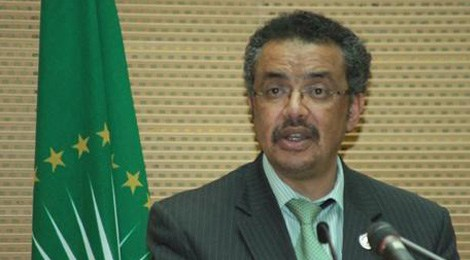

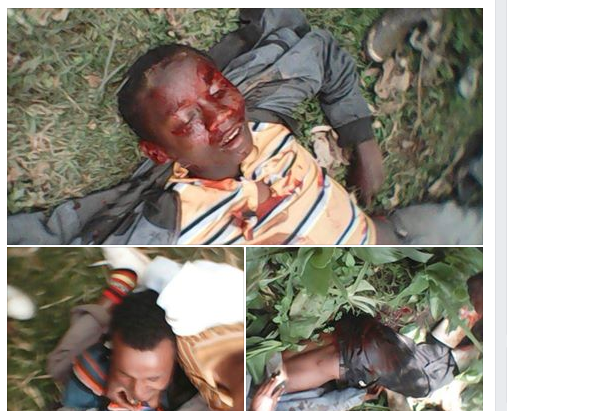
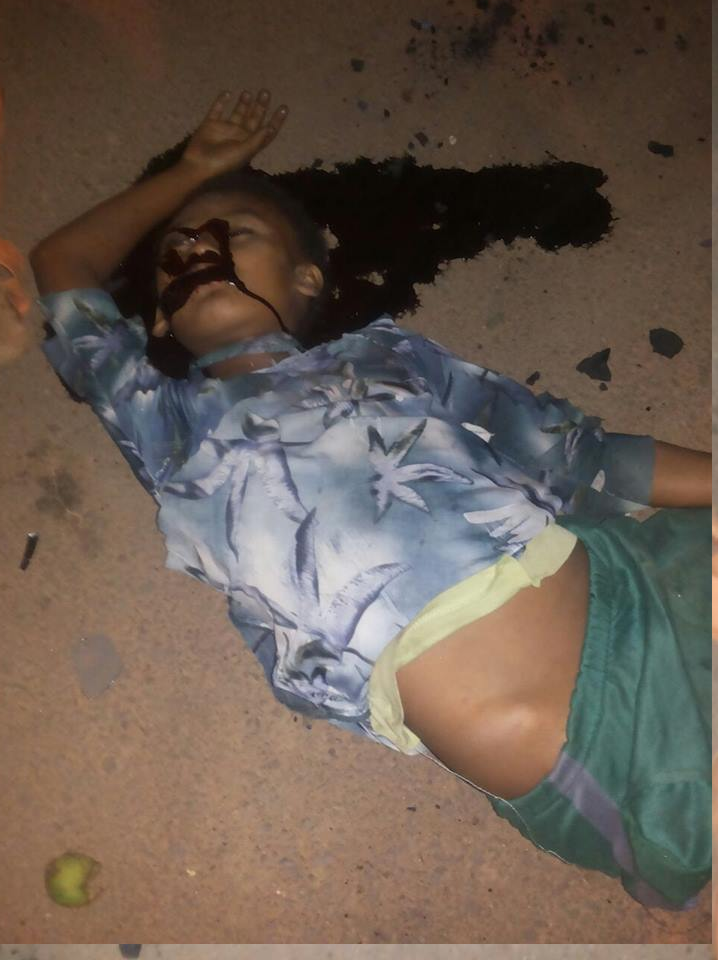
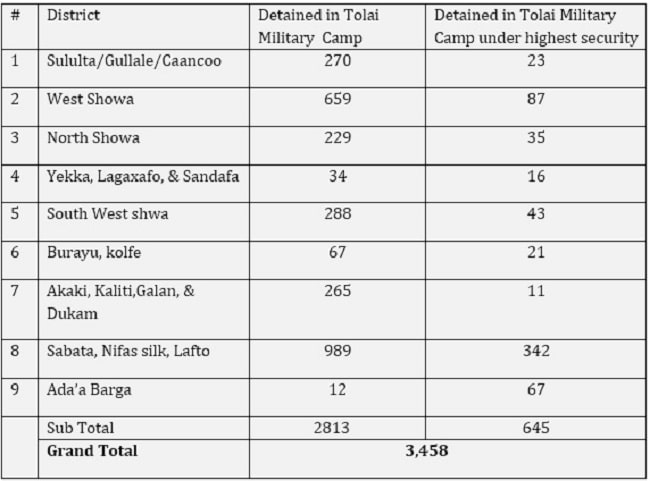
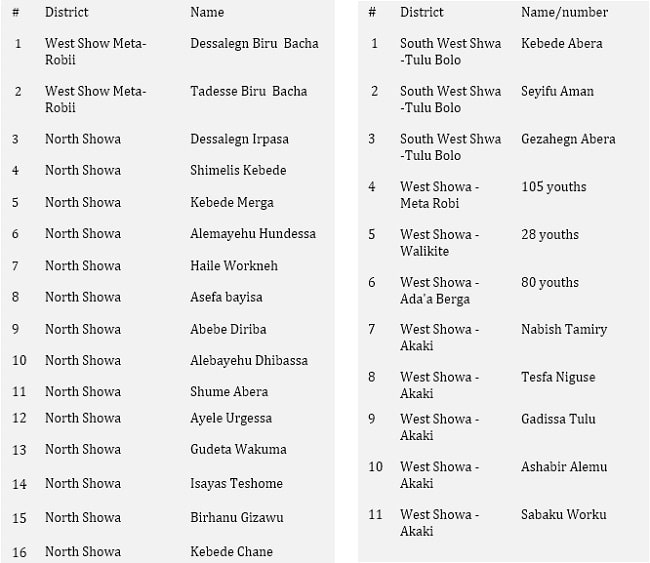
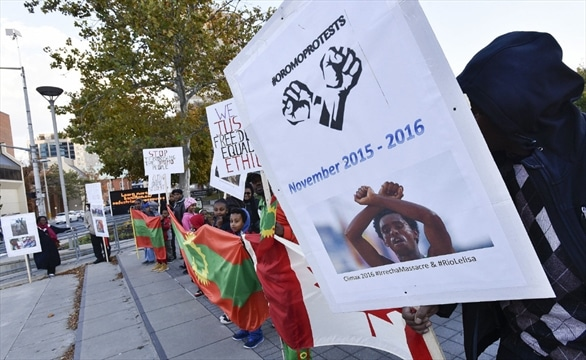
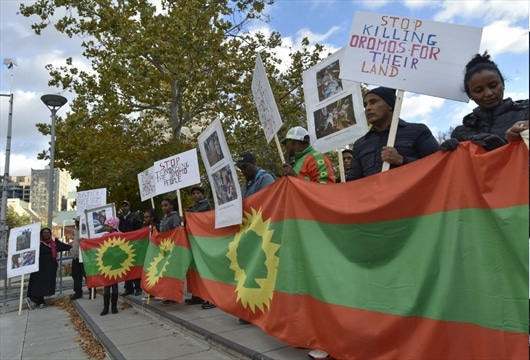


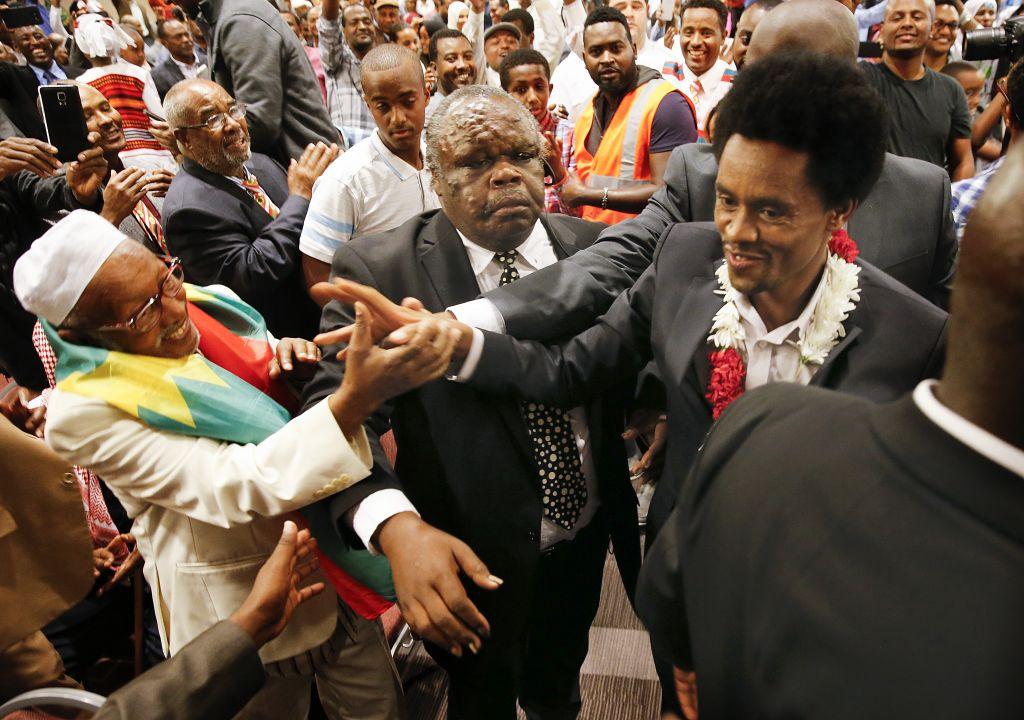

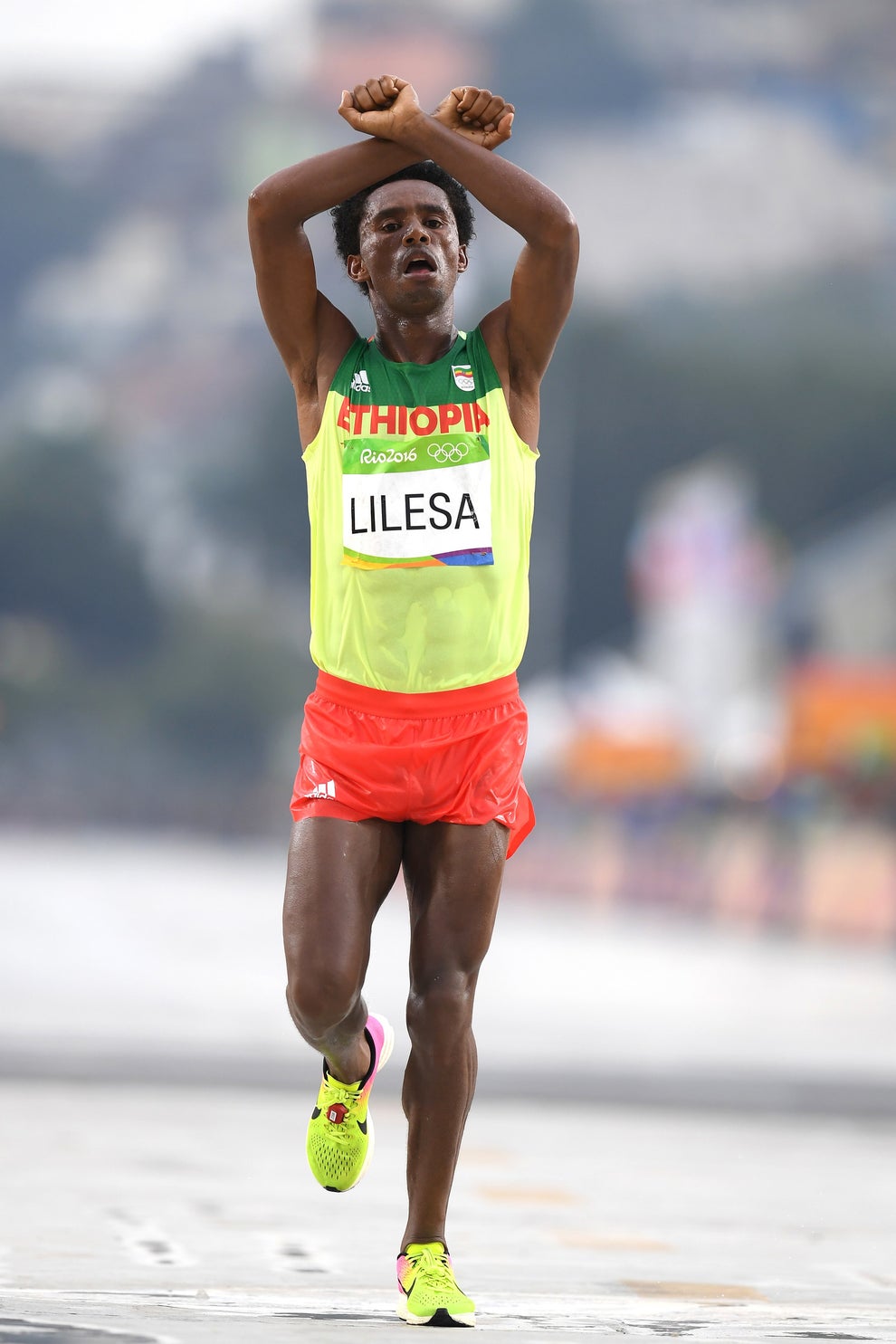


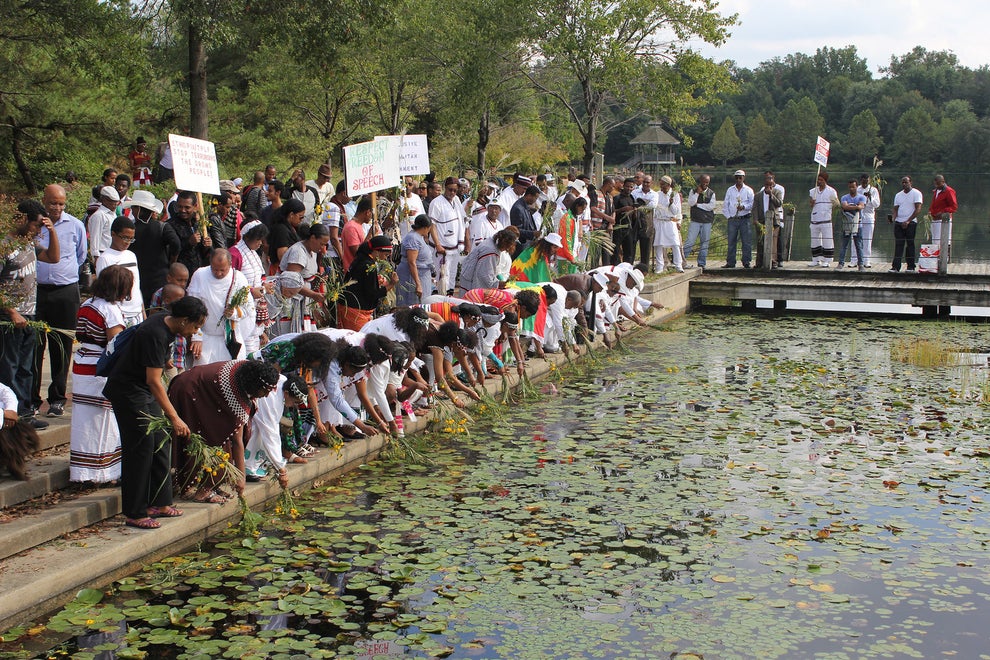

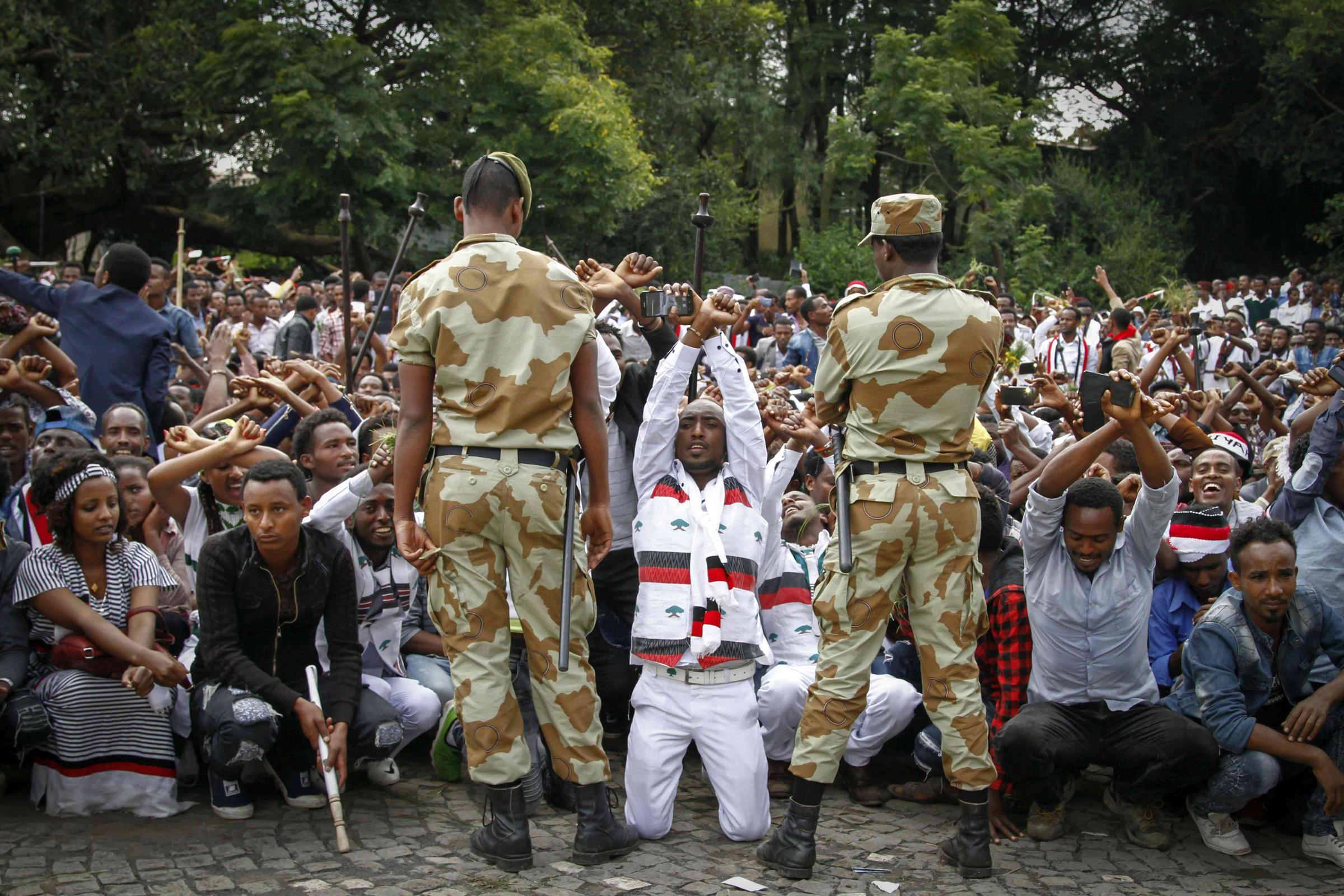
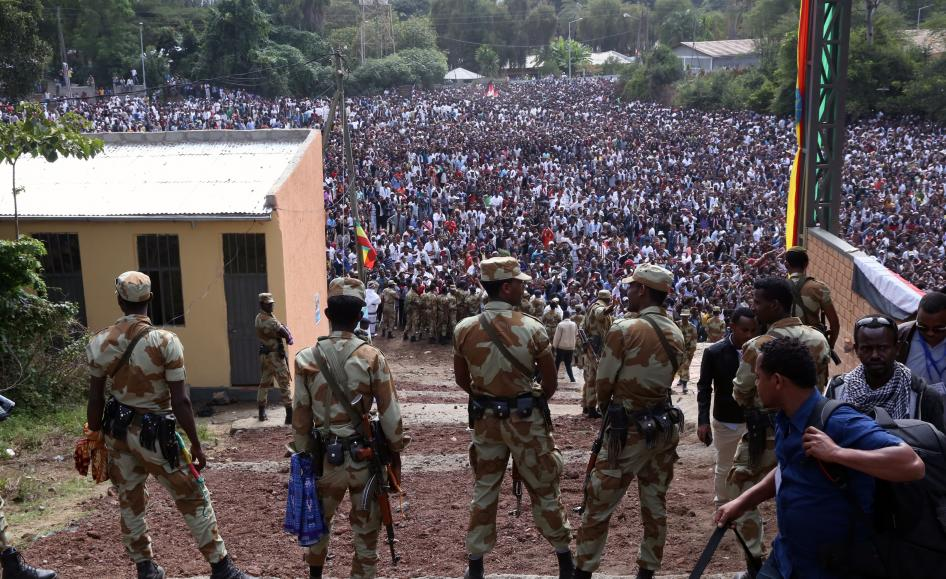

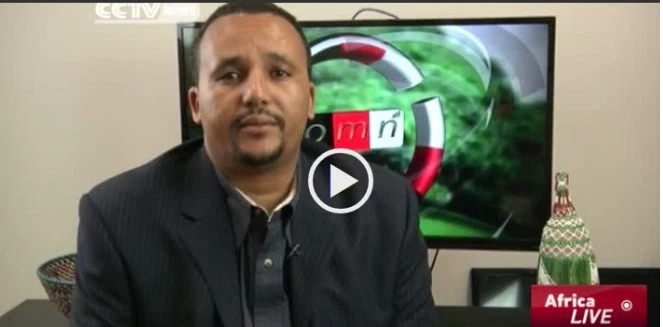
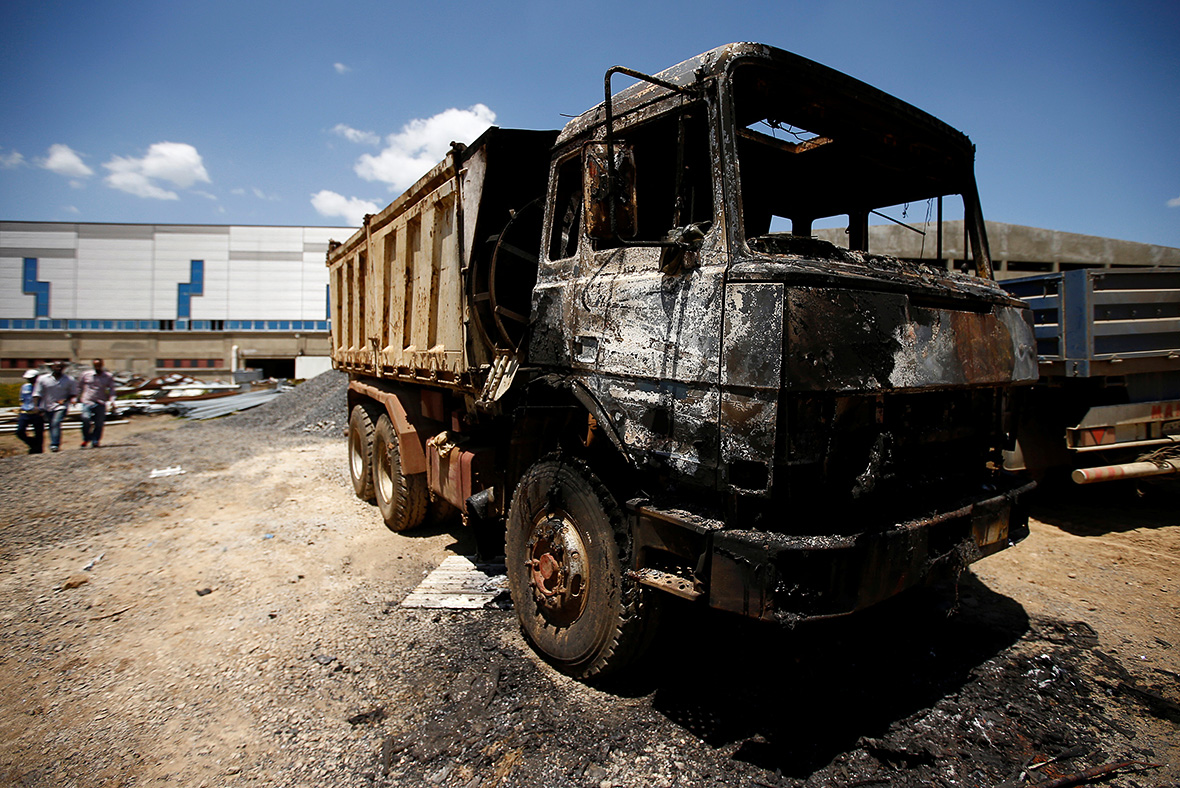

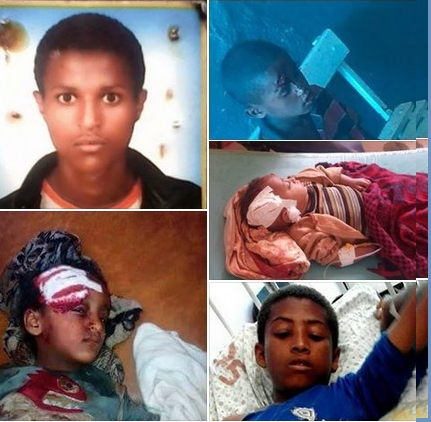


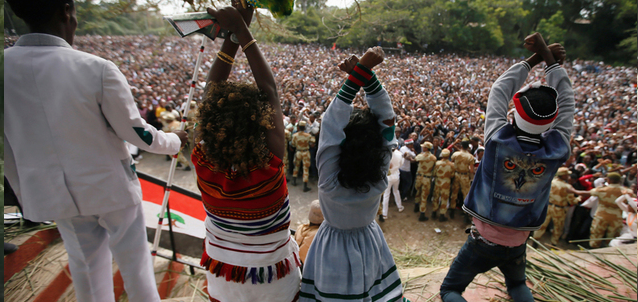


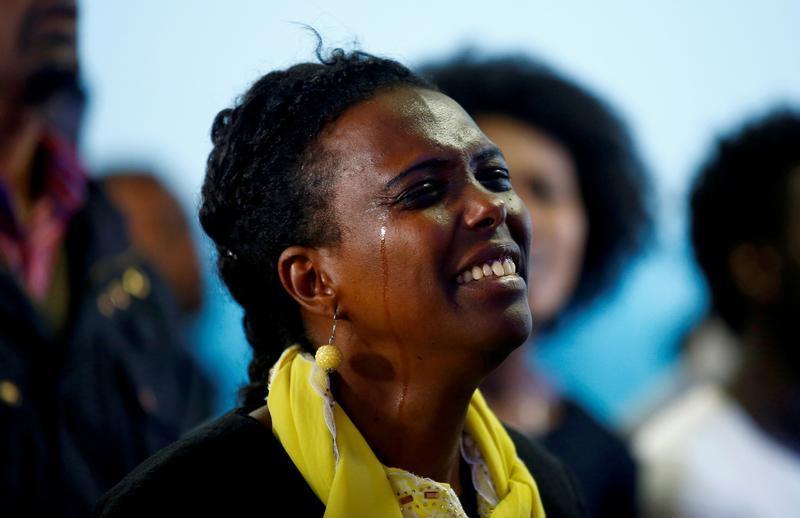





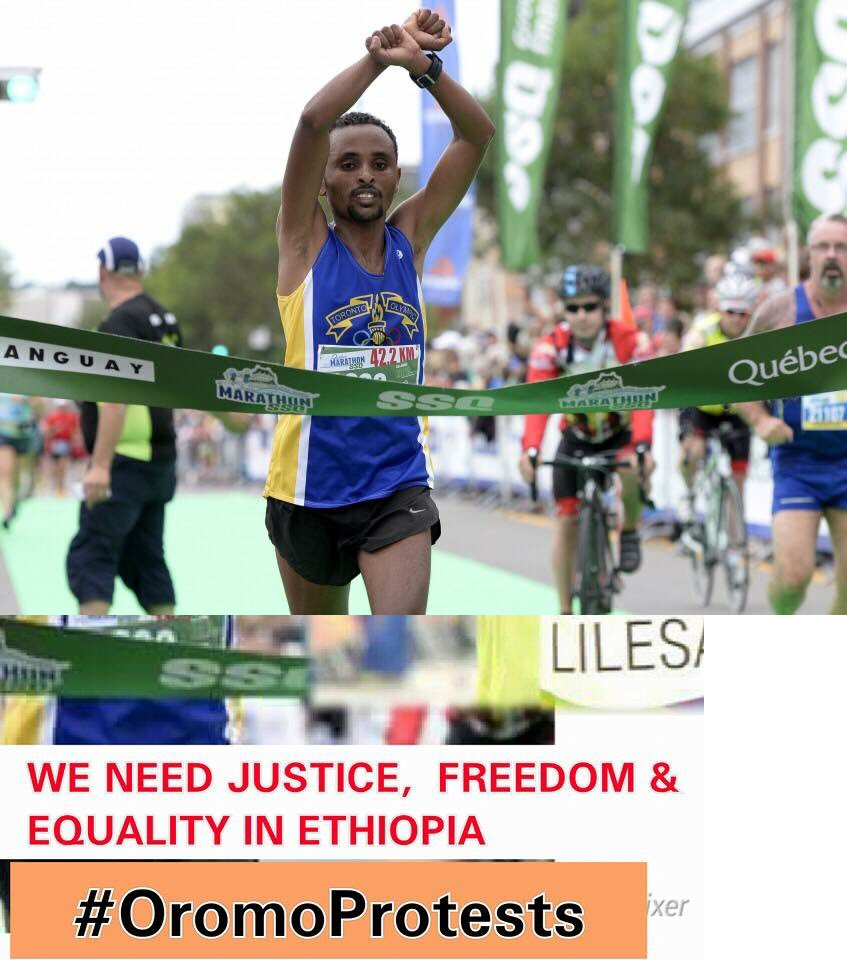


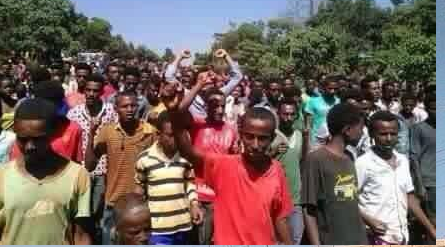


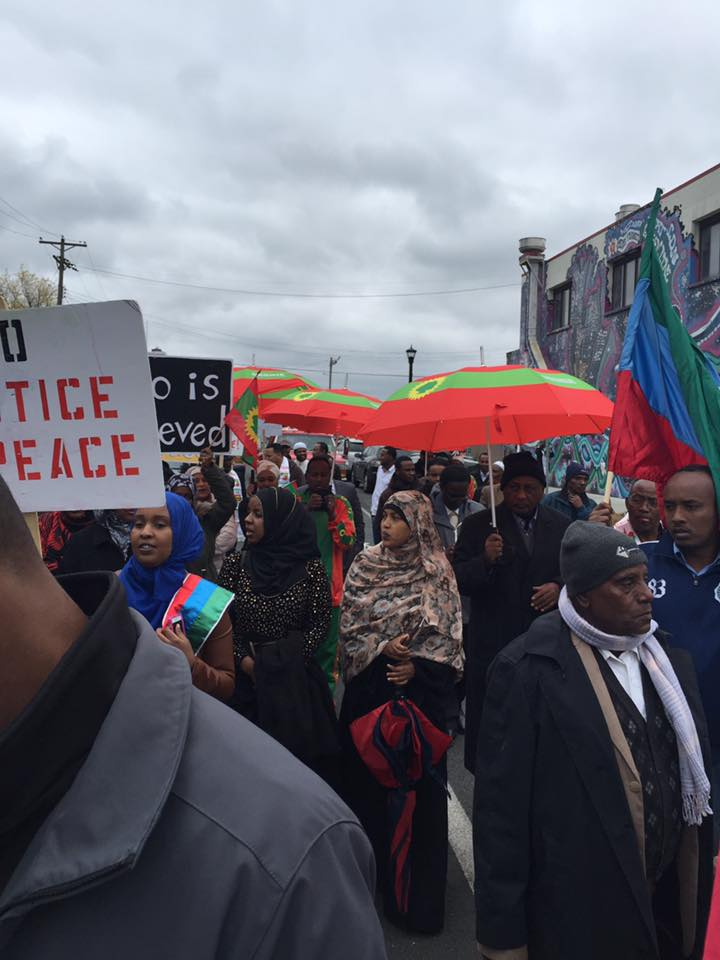
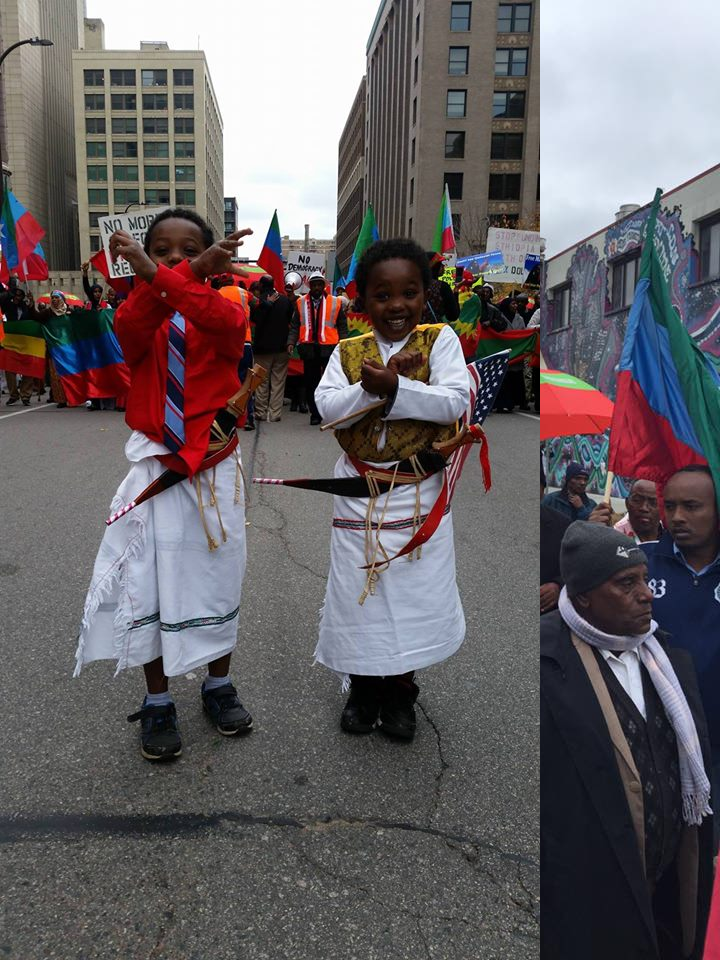
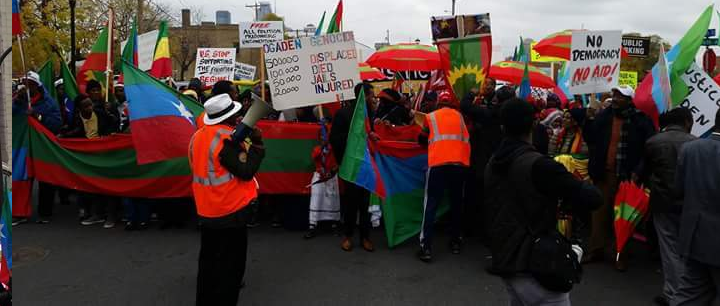





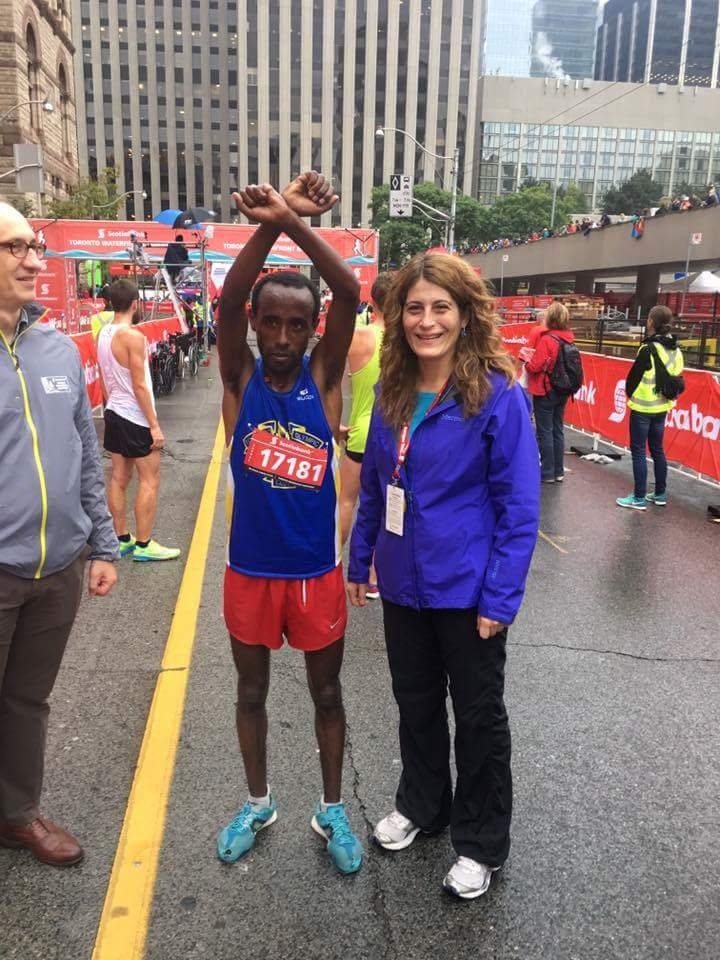
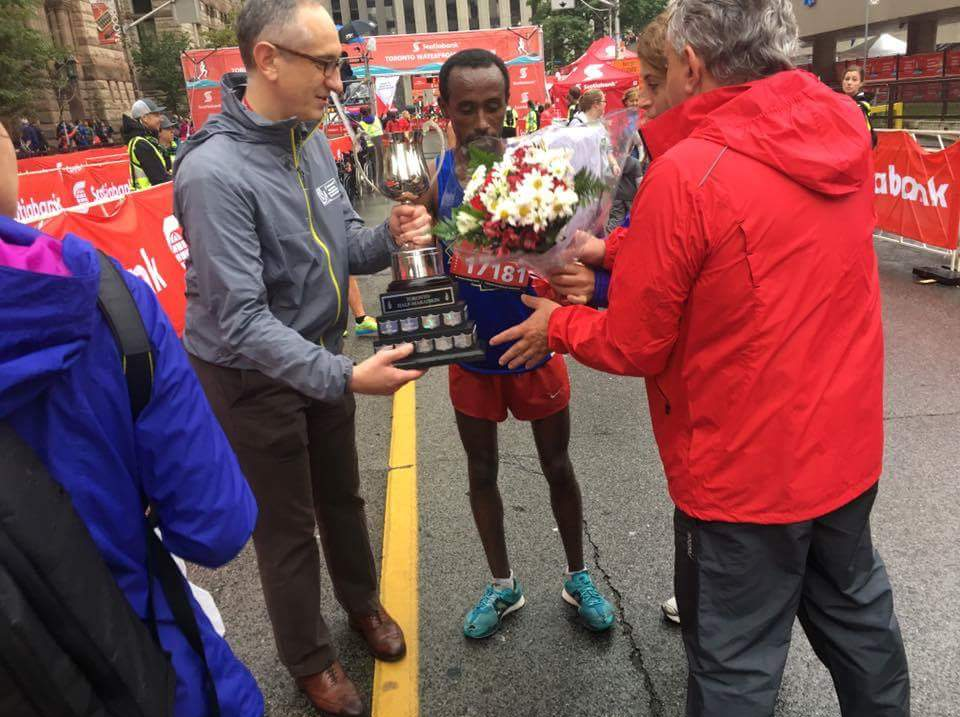

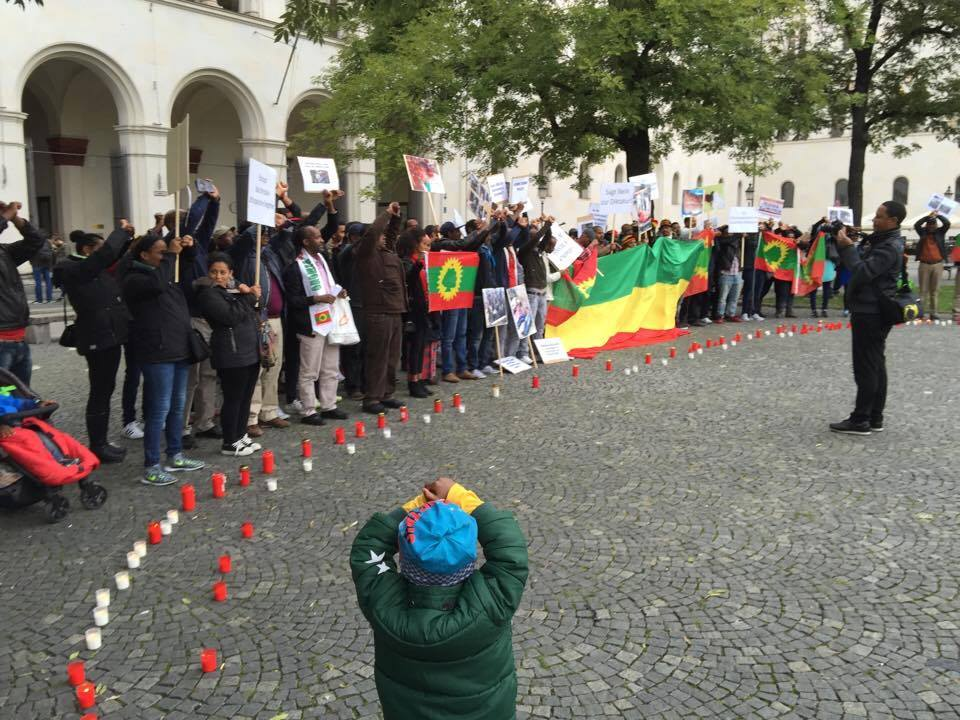
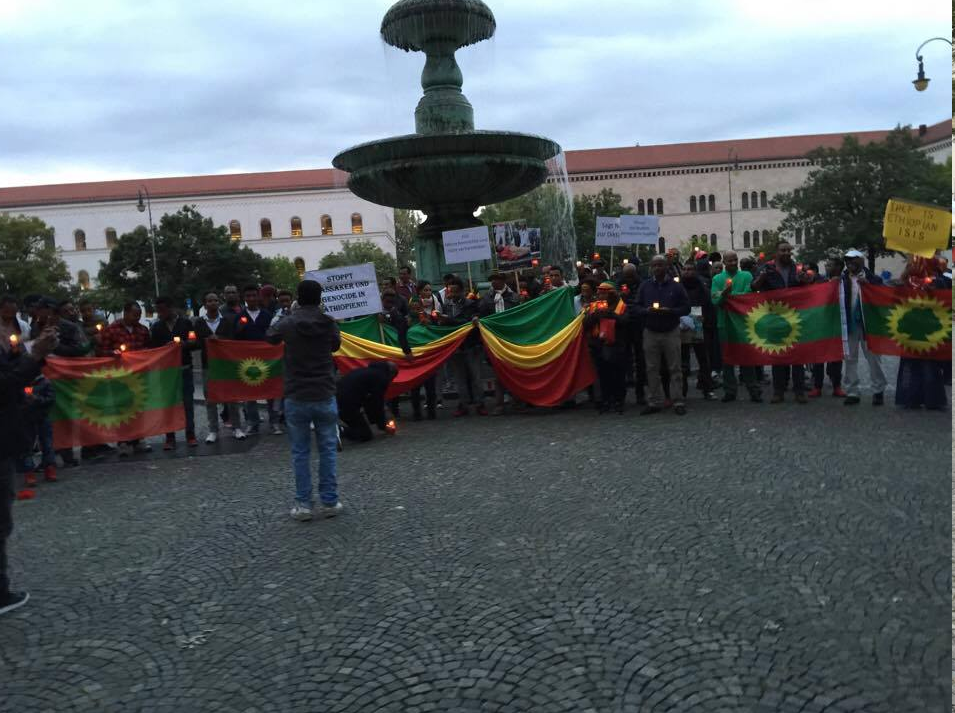

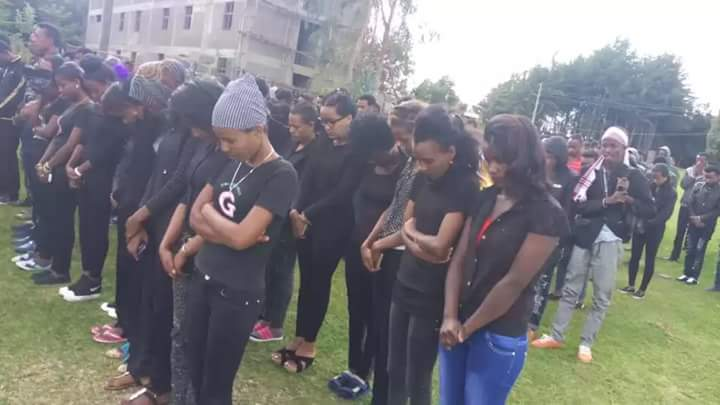
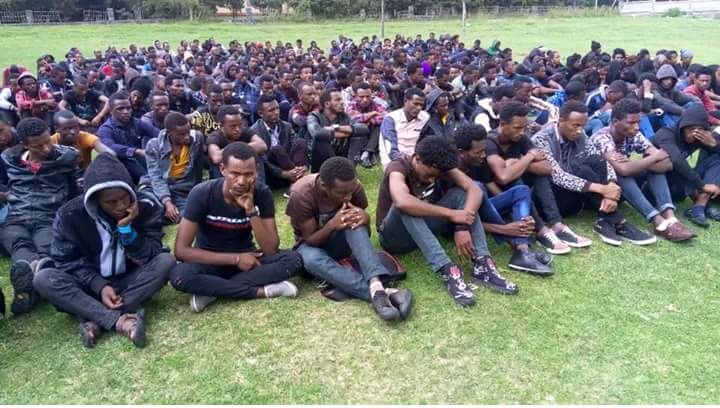


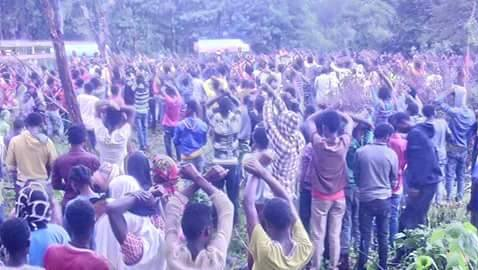

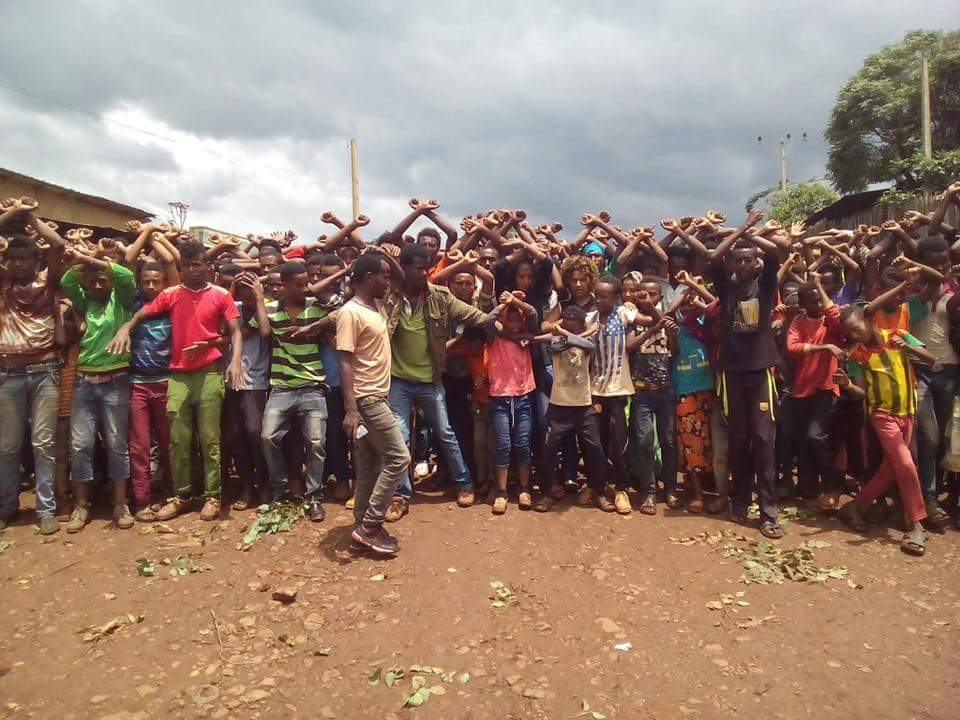


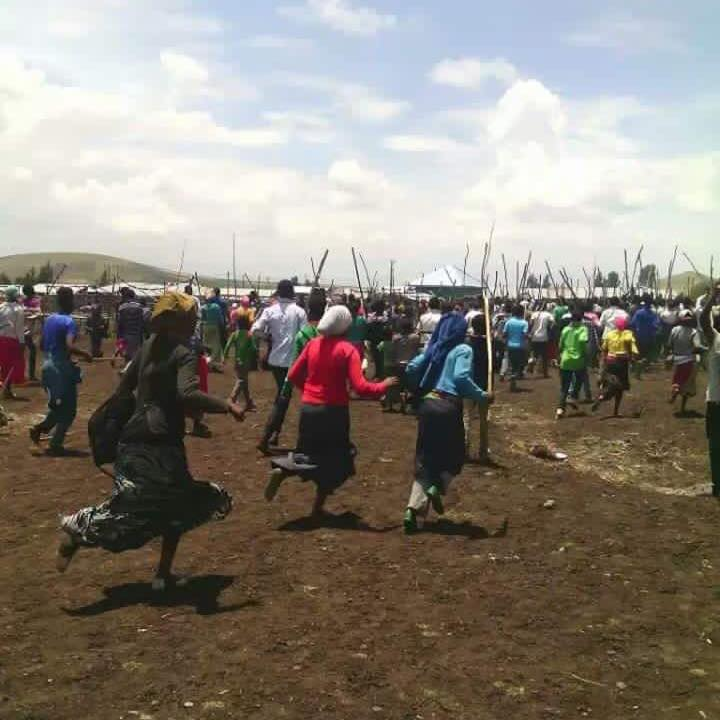


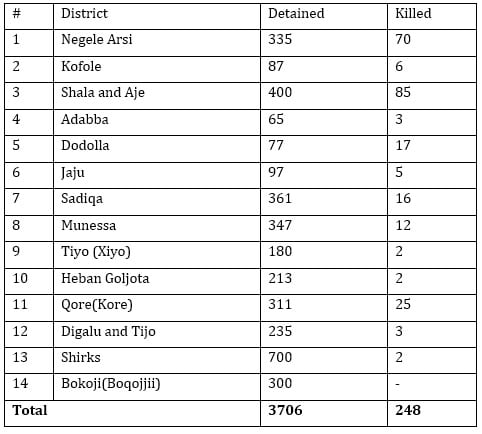
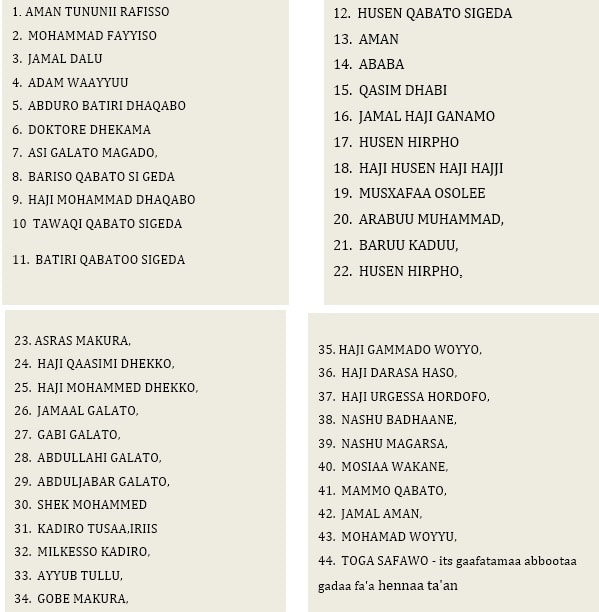
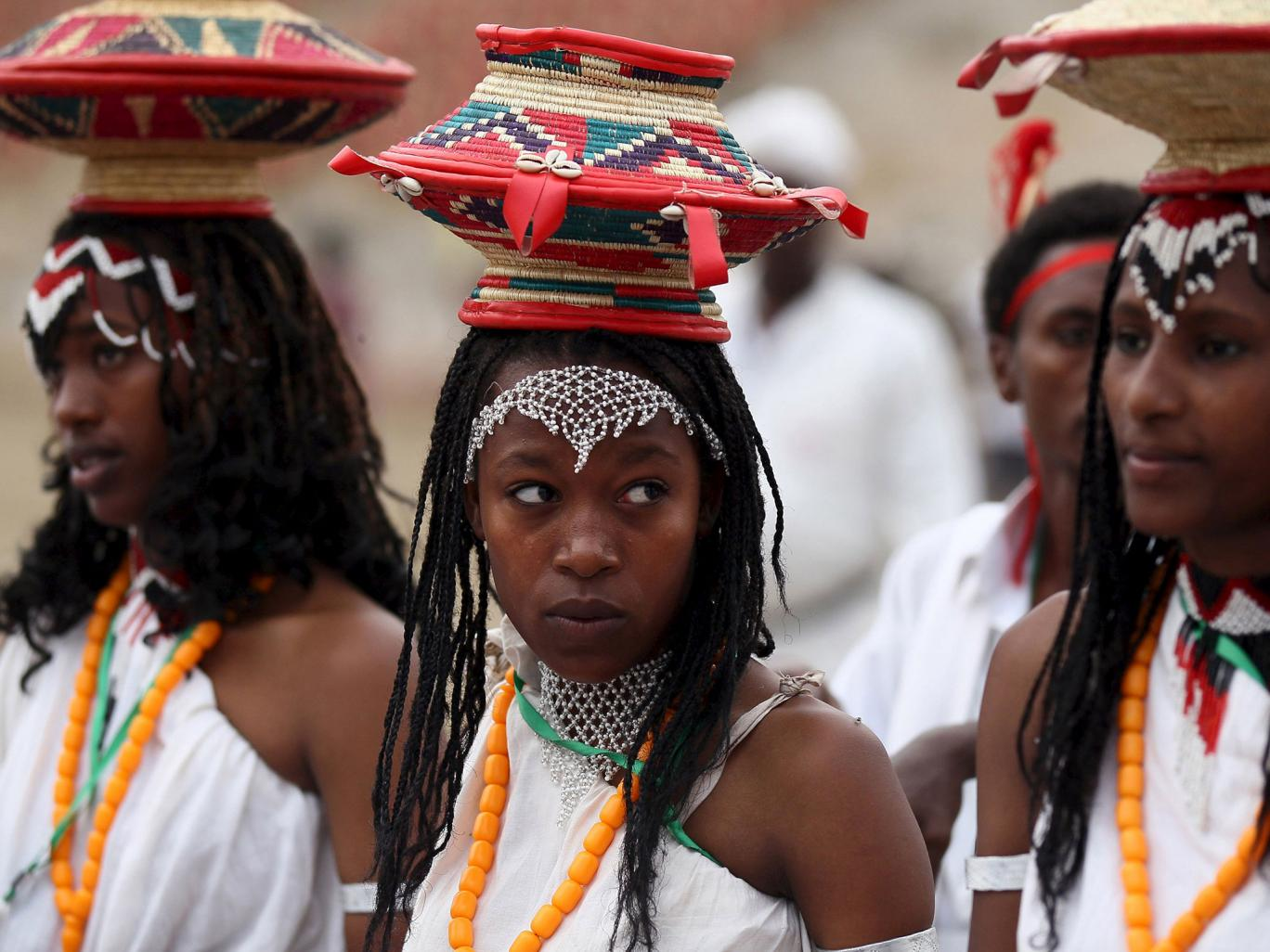





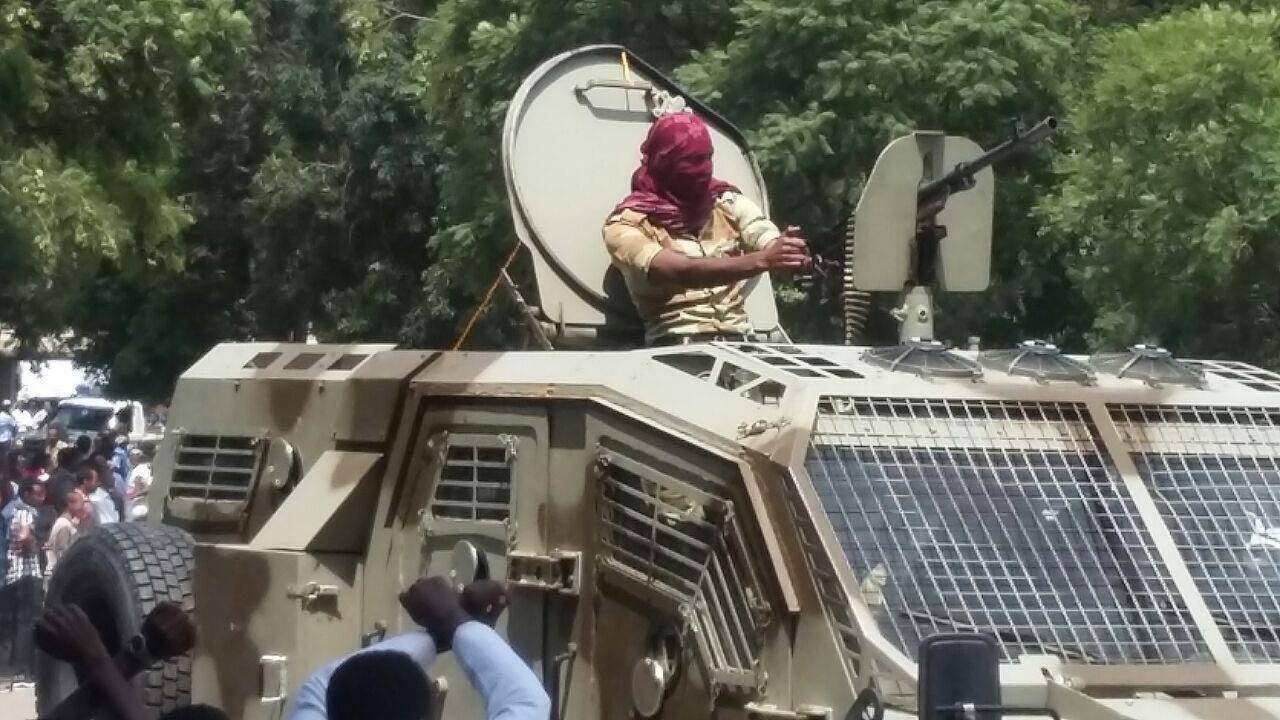


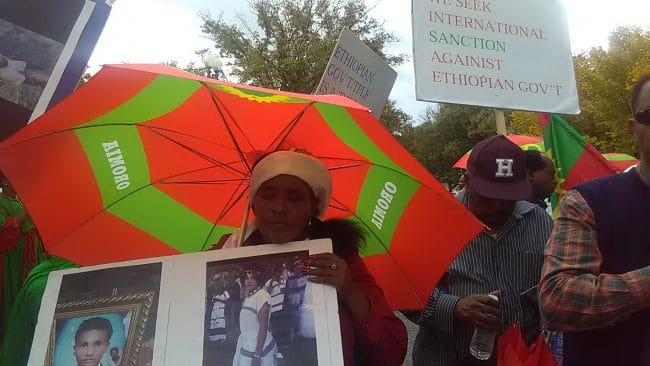
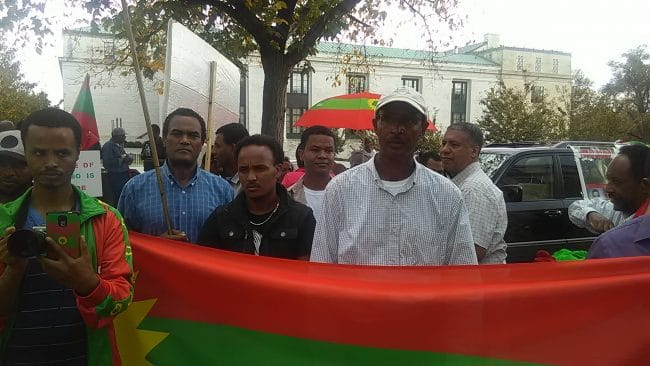
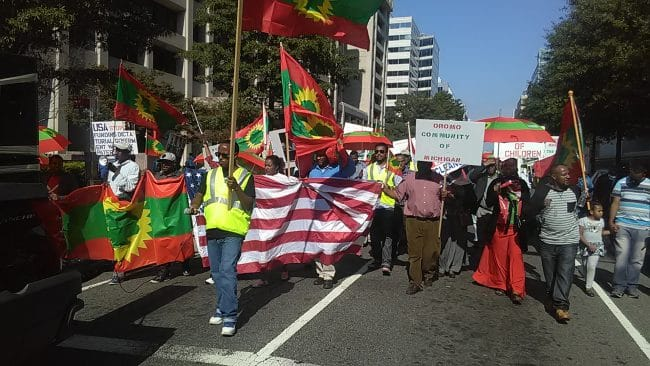


 e was shaken. The opponents to his power became so strong and lethal such that Mangistu was forced to declare “Red Terror” on its real or imagined enemies to its reign in Ethiopia between 1977-78. By this declaration of “Red Terror”(Mangistu’s state of emergency), Mangistu asserted that all “progressives” were given freedom of action in helping to root out enemies of his rule. Peasants, workers, public officials and even students loyal to the Mangistu regime were provided with arms to: assassinate, kill, imprison and loot as they wished. Militia attached to the Kebeles, the neighborhood watch committees were given freedom to train their gun on anyone with whom they have even personal but no ideological disagreement. All people allied to Mangistu went into killing spree and even children were not spared. During these years of “Red Terror”, Amnesty International estimated that up to 500, 000 to 2,000,000 people were butchered and thousands were left on the street for their body to decompose. In May 1977, the Swedish general secretary of Save the Children Fund estimated too that “1000 children have been killed and their bodies are left in the streets and being eaten by wild hyenas.” Parents of the deceased were asked to collect the bodies of their loved ones by paying money for the bullet wasted killing their children.

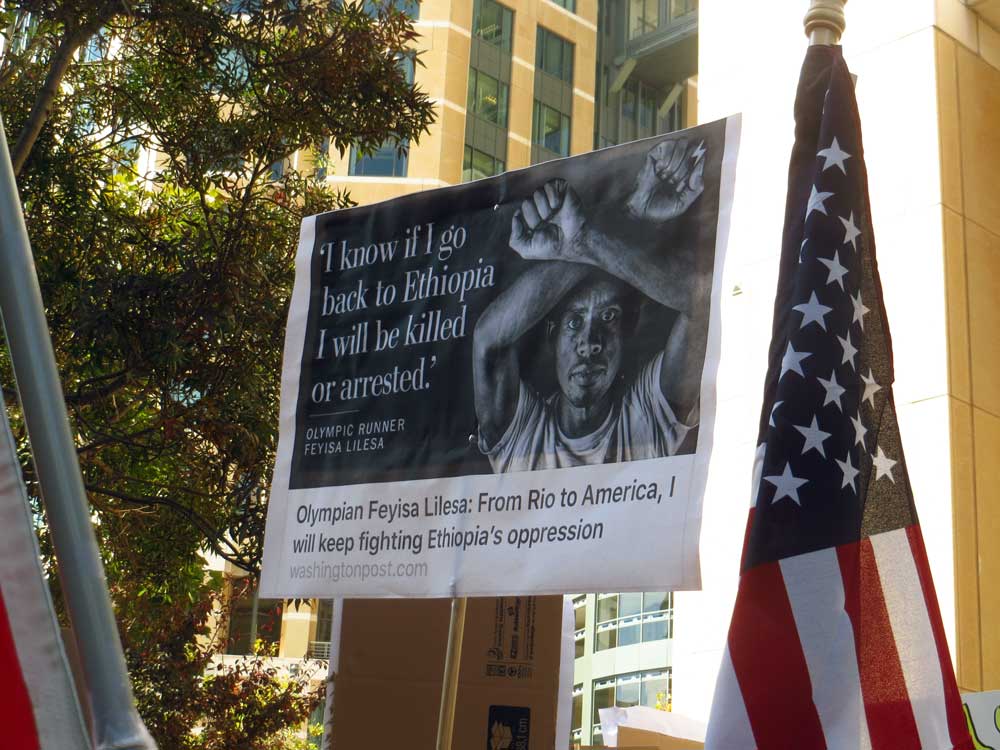


 Oromian Economist
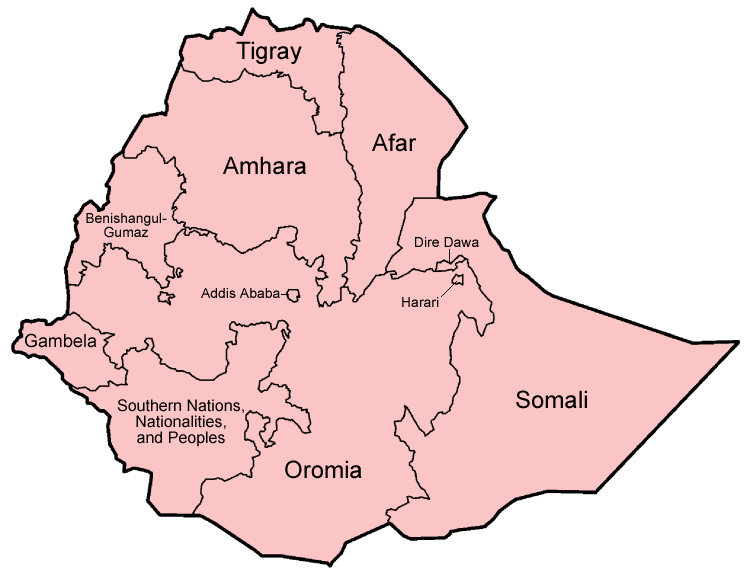
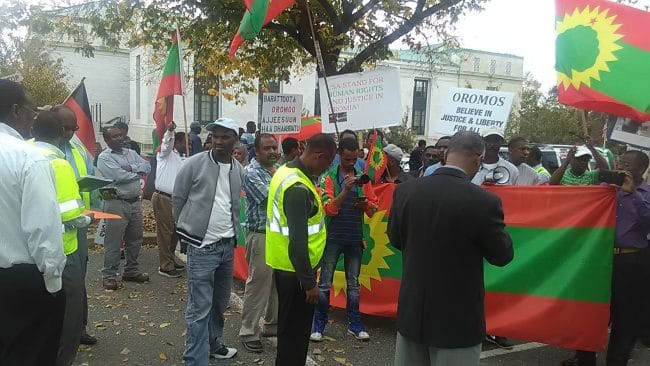

You must be logged in to post a comment.