jump to navigation

Oakland Institute: Ethiopia’s State of Emergency: Authorizing Oppression. #Oromoprotests #OromoRevolution October 22, 2016

Posted by OromianEconomist in #OromoProtests.
Tags: , , , , , , , ,
add a comment

Odaa OromooOromianEconomistOakland Institute


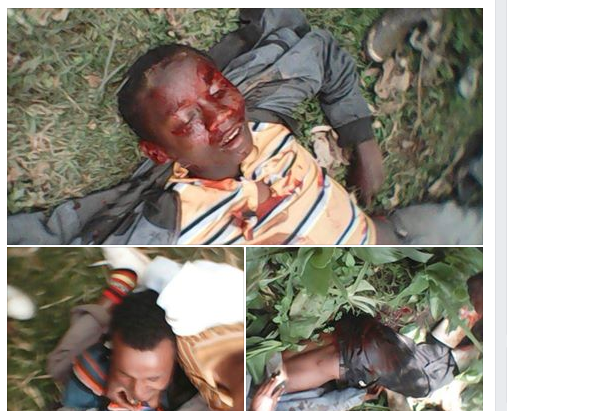
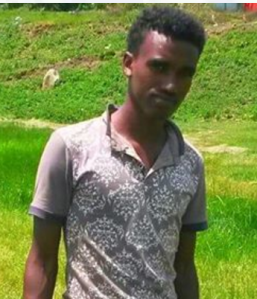
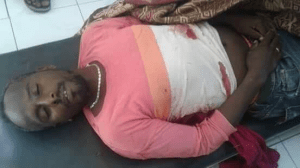
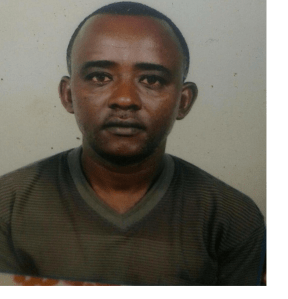
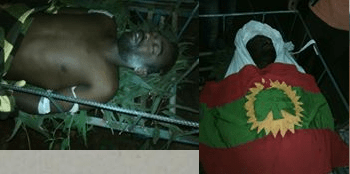
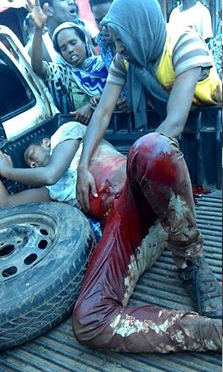
un-copyoromo-youth-murdered-by-fascist-ethiopias-agaziforces-in-arsi-kokosaa-dstrict-on-17-october-2016to-have-facebook-is-illegal-in-ethiopia


orompoprotests-picture-from-the-economist-13-october-2016

Ethiopia’s State of Emergency: Authorizing Oppression


The government of Ethiopia has responded to a groundswell of protests, which are calling for democracy and human rights for all, by imposing a six-month long state of emergency, effective October 8.

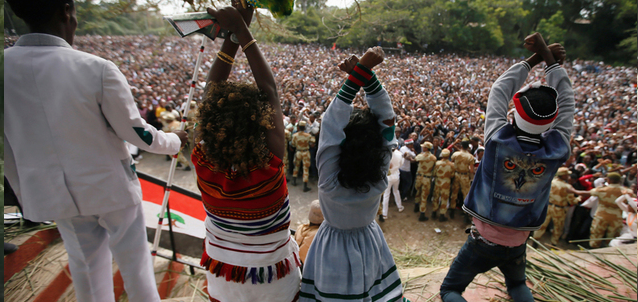
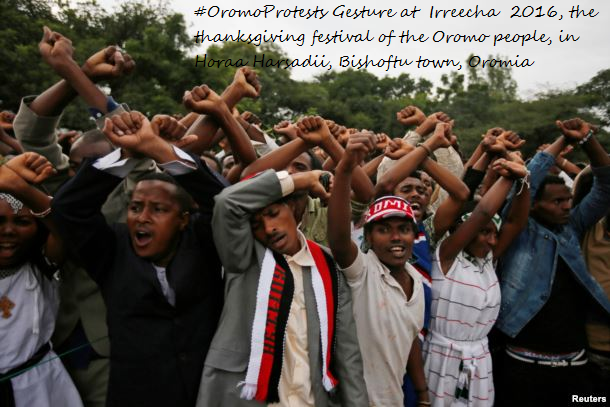
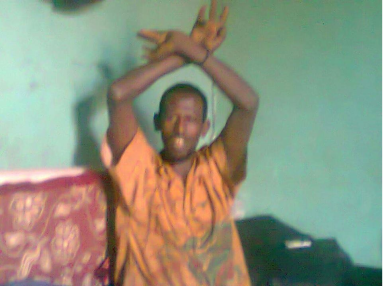
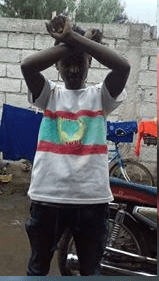
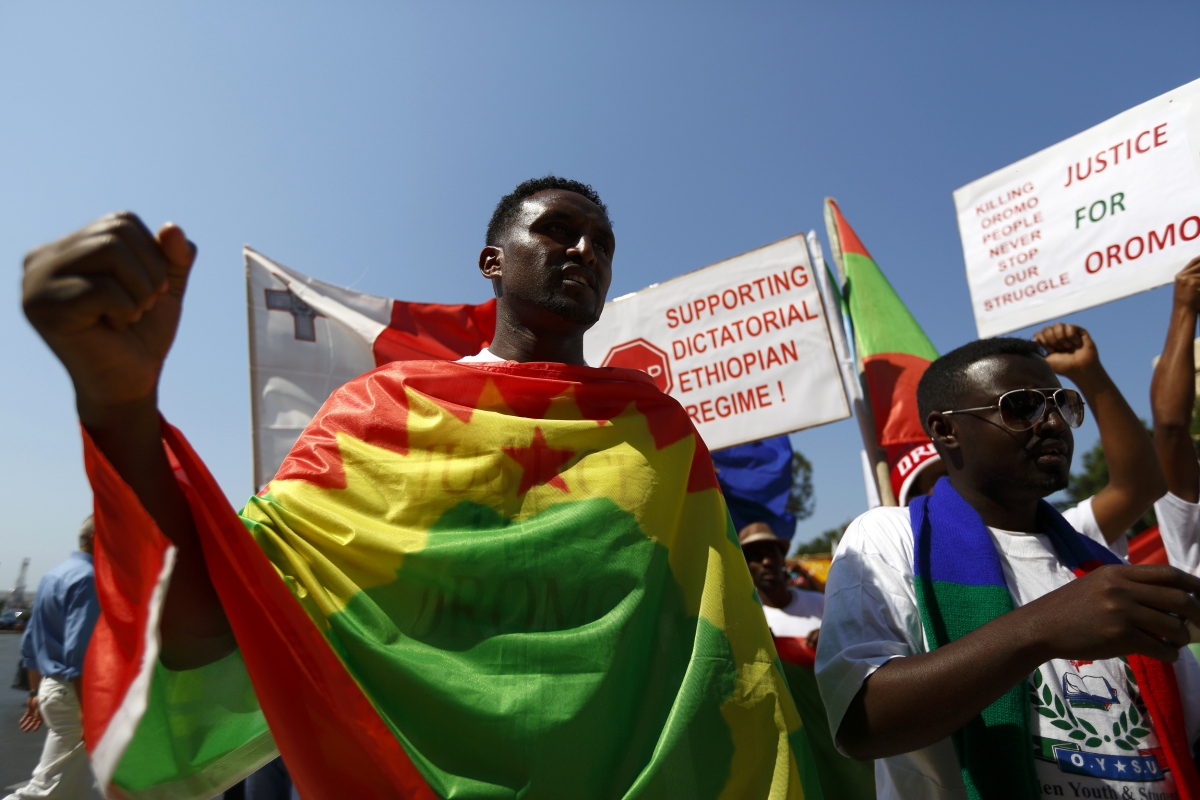
The list of measures curtailing freedoms through the emergency are far-reaching. They include bans on: social media; accessing news outlets such as the US-based ESAT and Oromo Media Network; participating in or organizing protests without government authorization; making gestures, including the infamous crossing of arms above your head; and visiting government, agriculture or industry facilities between 6pm and 6am. With Addis Ababa as the seat of several international organizations including the African Union, foreign diplomats are now only allowed to travel within a 25 miles radius of the capital. Security forces have been given greater powers, including the ability to search people and homes without a court order and the authority to use force, while due process is suspended. Finally, opposition groups are barred from issuing statements to the press, and Ethiopians are not allowed to discuss issues that could “incite violence” with foreigners. This includes speaking to the media or providing information to international civil society groups such as the Oakland Institute.

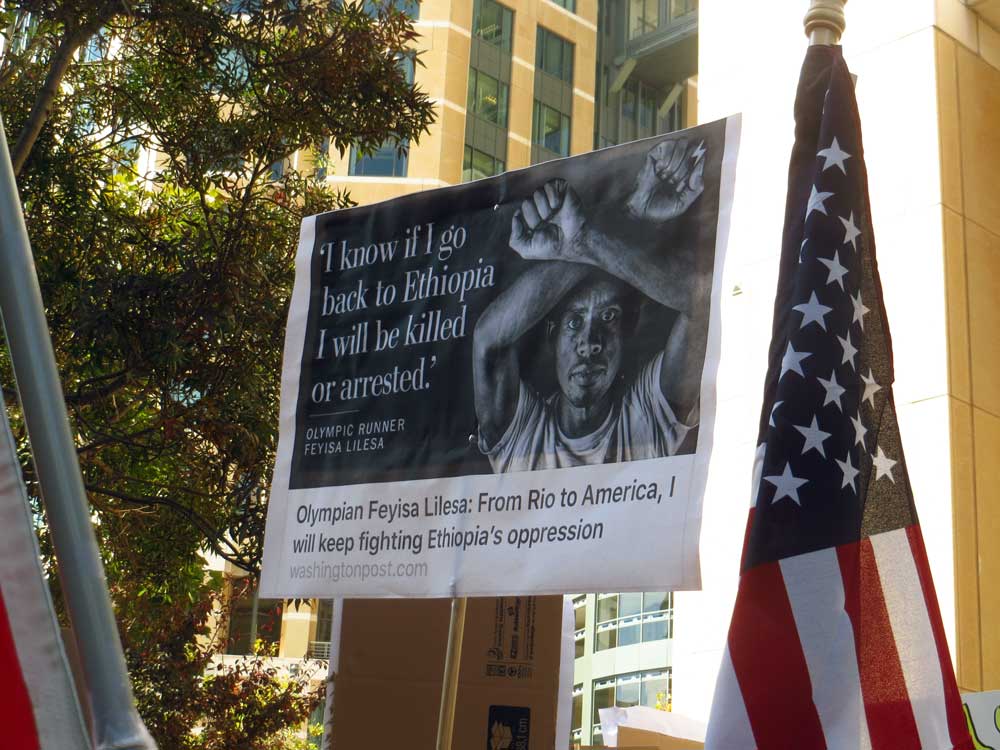
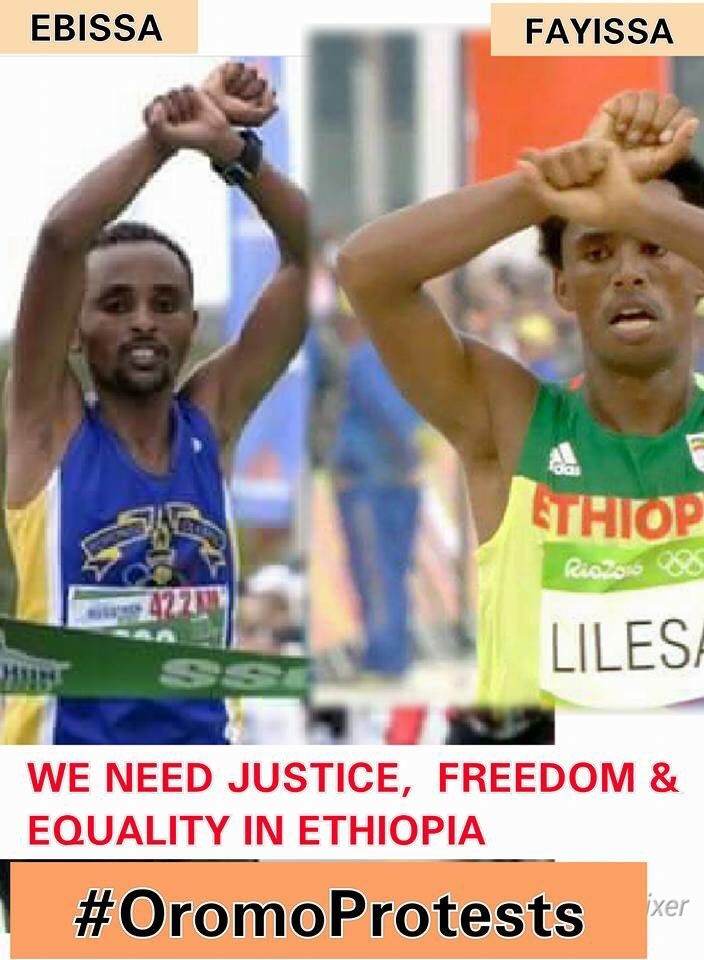
A poster of Olympic silver medallist Feyisa Lilesa at a protest in Oakland, California. Making the crossed arm gesture is now a criminal offense under Ethiopia’s state of emergency. Credit: Elizabeth Fraser
A poster of Olympic silver medallist Feyisa Lilesa at a protest in Oakland, California. Making the crossed arm gesture is now a criminal offense under Ethiopia’s state of emergency. Credit: Elizabeth Fraser.

These measures are appalling, especially given that a major cause of the protests was the prevailing lack of basic human rights, democracy, and freedoms of speech and assembly in the first place. Ethiopia has been under a de-facto state of emergency for a long time. These new draconian rules don’t address the situation in the country. Instead, they legalize and expand the authoritarian and repressive rule that the Ethiopian regime has maintained for years.

The international community must take swift action to denounce the state of emergency and the continuous repression of basic human rights in the country. If they do not, history will remember donor countries – including the US – as complicit, while hundreds have already been killed and thousands lie in jail for speaking out for democracy, human rights, and true development for all.

Ethiopia’s State of Emergency: Cracking Down on Basic Freedoms

The state of emergency in Ethiopia puts significant restrictions on basic freedoms of assembly and expression. But this is not new.

Numerous bloggers and journalists continue to suffer in Ethiopia’s prisons because of their vocal opposition to the government. On October 1, 2016, prominent blogger Seyoum Teshome was arrested after being quoted in a New York Times article about anti-government protests and announcing his plans to start a new blog. Seyoum is yet another addition to a long list in a country that is the third worst jailer of journalists in Africa.

Opposition parties have also experienced serious crackdowns on their ability to express themselves. Bekele Gerba, deputy chairman of one of the largest opposition parties, was arrested in August 2011 after meeting with Amnesty International. He was released prior to President Barak Obama’s visit to Ethiopia in July 2015, and re-arrested in December of the same year when protests started in Oromo. He continues to languish in jail.

Similarly, bans on social media and internet black outs are common, with numerous reports of internet shut downs this year.

This further crack down on social media and freedom of expression is an effort to shut out the international community, making it easier for the Ethiopian government to supress dissent. Repressing freedoms of expression and assembly have already created a highly volatile situation – these new measures will only worsen things.

Ruling with an Iron Fist

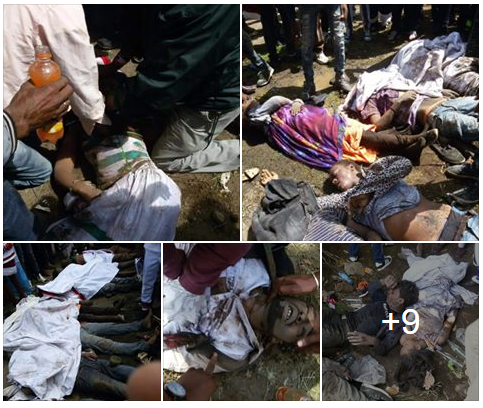
In early October 2016, Ethiopia’s Prime Minister admitted that 500 protesters had been killed by security forces in previous months, stating that the number of casualties was unimportant and threatening to deal with protesting groups forcefully. This declaration came a week after the Irreechaa tragedy, where between fifty-five and several hundred protesters were killed after security forces used tear gas, rubber bullets, and live ammunition on crowds at the country’s largest religious and cultural festival, triggering a stampede. It came a month after a fire in the Kilinto prison, which holds numerous political prisoners and anti-government protesters, left dozens of prisoners dead.  And it came two months after the Prime Minister threatened that his government would use “its full forces to bring the rule of law” to protesting regions.

With the state of emergency, the government legalizes and legitimizes a long tradition of ruling by force. It has already had a significant impact. Between October 17 and 20, over 2,600 people were arrested under the new laws. This number will undoubtedly increase in the days, weeks, and months to come.

Due Process: A Farce in Ethiopia

Due process has long been a farce in Ethiopia. The country’s draconian Anti-Terrorism Proclamation (ATP), adopted in 2009, has been used to arbitrarily detain and arrest students, bloggers, land rights defenders, indigenous leaders, opposition politicians, religious leaders, and more for exercising basic freedoms. The law violates international human rights law, as well as modern criminal justice and due process standards.

Amongst the thousands who have been unlawfully detained under the ATP are Pastor Omot Agwa and Okello Akway Ochalla.

Pastor Omot, a former interpreter for the World Bank Inspection Panel, was arrested in March 2015 while attempting to travel to a food security conference, organized by Bread for All, in Nairobi. He was charged as a terrorist under the claim that the meeting he was attending was a terrorist meeting. He has been in jail since then, and is still waiting for a trial.

Okello Akway Ochalla was illegally kidnapped in South Sudan and renditioned to Ethiopia. His charge is based on his vocal opposition to the Ethiopian government, and its role in a massacre of indigenous Anuak people in December 2003.  After two years of detention, during which Mr. Okello was forced to sign a false confession under duress, his sentence was lessened from terrorist to criminal charges. He was still given nine years in prison.

The suspension of due process under the state of emergency increases the likelihood of arbitrary detainments and unfair trials, two issues already endemic to Ethiopia and must be addressed immediately.

The Failure of the International Community

The mainstream media is finally waking up to the brutality of the Ethiopian regime. The Financial Times called this Ethiopia’s “Tiananmen Square moment.” Foreign governments are also taking notice, however, their statements remain very mild and fail to firmly condemn the violence and repression.

The US State Department declared that it was “troubled by the potential impact” of the state of emergency, reiterated its “longstanding call for the Government of Ethiopia to respect its citizens’ constitutionally-guaranteed freedoms,” and called for “peaceful dialogue” in the country. Statements by the United Nations, Canadian Minister of Foreign Affairs, andEuropean Union make similar calls for “inclusive dialogue” that are stunningly disconnected from the reality on the ground.

This toothless rhetoric fails to acknowledge the years of oppression and abuse that Ethiopians have faced under the current regime and that generated these protests. More importantly, it must be asked who can take part to the dialogue when so many political opponents and community leaders are in jail or in exile?

For years, the US, UK, and others have heralded Ethiopia as a blueprint for development, and provided massive financial support to their champion. But the model has failed. As our recent report shows, economic growth in Ethiopia has not lifted up the masses – it has happened alongside widespread hunger and poverty, forced displacements, and massive human rights abuses. This has led to the current tipping point, and tensions in the country are finally, understandably boiling over. The international community must recognize the failure of this model – and their role in it – and step in before more blood is shed.


Vice News: #OromoProtests: Ethiopia’s massive protests are getting desperate – and dangerous October 21, 2016

Posted by OromianEconomist in #OromoProtests.
Tags: , , , , , , , ,
1 comment so far

Odaa OromooOromianEconomist

“We don’t care if we get killed”

 irreecha-malkaa-2016-bishoftu-horaa-harsadi-oromia-oromoprotests
https://youtu.be/dtKA_RQY8QI

Ethiopia’s massive protests are getting desperate – and dangerous

The Ethiopian government has declared a state of emergency in the country as it intensifies a crackdown on widespread anti-government protests born of frustration that’s been fomenting for decades. In the past two weeks alone, authorities have arrested thousands of protesters, overwhelmingly young people by some accounts.

In the unprecedented anti-government protests sweeping the country, this week alone has seen more than 2,600 people detained in the Oromia and Amhara regions, with 450 arrested in the capital Addis Ababa. Those detained include business owners who closed their shops and teachers who “abandoned their schools.” In June, Human Rights Watch reported that “tens of thousands” of protesters had been arrested since the unrest that began 11 months ago.

However, the number arrested is already likely much higher than the figure quoted by the government, according to Fisseha Tekle, the chief researcher for Amnesty International in Ethiopia. He told VICE News that arrests are ongoing and that the focus is on younger people.

“They must have some list, the security forces, because they are not arresting everyone, but they really target the youths, because it is the youths who have been protesting for the last year,” Tekle said. “They don’t arrest older people; students are the main target.”

The protests began last November, triggered by plans made by the government to extend the capital, Addis Ababa, into Oromia. That plan has since been shelved, but the protests have continued, with decades-old frustration and anger at the ruling Ethiopian People’s Revolutionary Democratic Front coalition coming to the surface.

“This coalition has been in power for 25 years now and a lot of people want to see something different,” Clementine de Montjoye, the head of advocacy atDefend Defenders, a group that protects human rights workers in Ethiopia, told VICE News.

Because the Ethiopian government limits the operations of human rights activists in the country, many are wary about speaking on the record. One source within a human rights group operating in Ethiopia, who spoke on the condition of anonymity, told VICE News that protesters had told them “we don’t have anything to lose anymore, we don’t care if we get killed.”

An Amnesty International report published this week says that in total 800 protesters have been killed by security forces in Ethiopia since these protests began last November.

The government declared a state of emergency on Oct. 9, giving them sweeping powers to crush any dissenting voices. They have also cut internet connectivity in most of the country — including the capital — for the last three weeks.

This has made it difficult to get accurate details of what is happening, especially outside of Addis. And even if a connection can be made, people are still afraid to talk. “People are suspicious because of online surveillance and also mobile phone surveillance, so people might not be [comfortable] talking over the phone about what is happening,” Tekle said.

VICE News contacted several activists on the ground in Ethiopia to talk about the current situation, but due to a combination of fear and lack of connectivity, we were unable to talk to them.

The declaration of a six-month state of emergency followed a high-profile incident at the beginning of the month when a stampede during Irreecha, an Oromo holiday festival, resulted in 55 people killed. As well as increasing the powers of the security forces in Ethiopia to arbitrarily arrest and detain people, the state of emergency aims to silence criticism of the regime. It is now illegal to contact those termed “outsiders” on social media like Twitter and Facebook. “The military command will take action on those watching and posting on these social media outlets,” Siraj Fegessa, Ethiopia’s minister for defense, said.

The UN High Commissioner for Human Rights has made two calls for access to conduct an international, independent, and impartial investigation into the alleged violations, both of which have been rejected by the Ethiopian government. The regime has also sought to limit the impact of human rights organizations in the country with the Charities and Societies Proclamation, which states that if you receive more than 10 percent of your funding from foreign sources, you can’t work on human rights issues in Ethiopia.

Tekle says that Amnesty is refraining from contacting the human rights workers left in the country to avoid revealing their location.

In a report to be launched late Thursday, Defend Defenders has documented at least 27 cases of journalists who have been charged with terrorism since the Anti-Terrorism Proclamation was enacted in 2009. “They have intimidated, arrested, chased away most of the independent media. So if people want to express their frustrations, the only way they have to do it is [by taking] to the streets,” de Montjoye said.

So why isn’t the West doing more to sanction the Ethiopian government?

One reason is Ethiopia’s strategic importance in Africa, helping stem the tide of migrants entering Europe and stopping the spread of Islamic extremism.

According to the European Union’s foreign affairs head Federica Mogherini, citing a report published this week, Ethiopia is among five key African countries that have achieved “better results” in the past four months as part of the EU’s efforts to better manage migration.

Ethiopia is also viewed as a strategic bulwark against the further spread of violent Islamic extremism in the horn of Africa, and it’s been the main military player in fighting the terrorist group al Shabaab in Somalia for years.

Ethiopia is a close ally of the U.S. and given that the political climate in neighbouring countries like Eritrea, Somalia, Sudan and Egypt is fairly shaky, keeping Ethiopia relatively stable is seen as key to preventing chaos in the region.


#OromoProtests: An African salute to fight continued marginalisation and suppression. #OromoRevolution October 20, 2016

Posted by OromianEconomist in #OromoProtests.
Tags: , , , , , ,
2 comments

Odaa OromooOromianEconomist

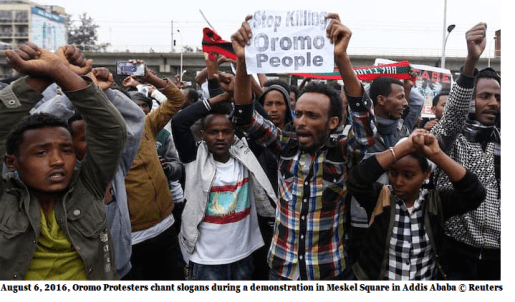
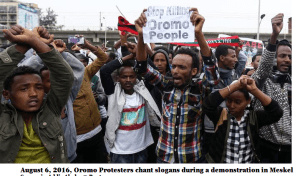
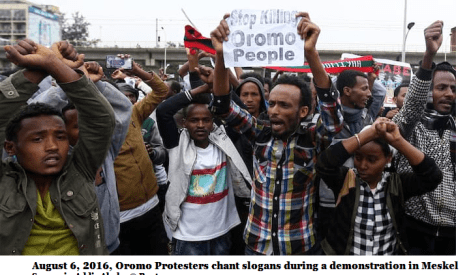
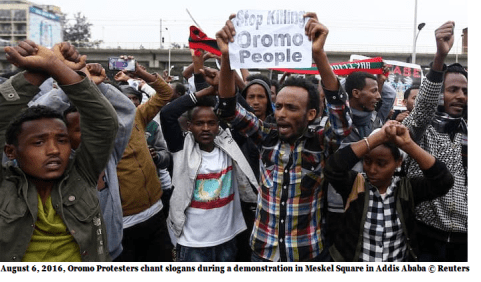
#OromoProtests against the Ethiopian regime fascist tyranny. Join the peaceful movement for justice, democracy, development and freedom of Oromo and other oppressed people in Ethiopia#GrandOromoProtests 6 August 2016, in Oromia including  in Finfinnee (Addis Ababa), the capital.

#OromoProtests: An African salute to fight continued marginalisation and suppression


 By CHARLOTTE E. ALLAN , Mail  & Guardian Africa,  20 OCTOBER  2016


The Oromia region was once made up of autonomous sultanates with distinct cultural traditions.

On the African continent, condemnation of Ethiopia’s actions by African governments has been very quiet. Tiksa Negeri/Reuters

The athlete looked up at the sky when he crossed the finish line and made an X shape above his head with his wrists. The stadium cheered, a new moment in history was made. Later when he took to the podium with ‘Ethiopia’ written across his top to collect a medal for the marathon he had run, he made the gesture again.

Two months after the 2016 Olympics, this protest salute made by runner Feyisa Lilesa before a TV audience of millions is still the most audacious red flag on what was a largely ignored iceberg. The iceberg being the Ethiopian state’s deadly crackdown on its Oromo people. His protest was in support of the struggles of an estimated forty million Oromo in Ethiopia’s Oromia region against an authoritarian rule historically committed to keeping them in their place. In a month that has seen Ethiopia call a State of Emergency in an attempt to stop the massive Oromo protests from spreading, Lilesa’s daring stand and the will he-or-won’t he question of whether he will return to Ethiopia continues to force the subject onto the global news agenda and to encourage people to ask- who are the Oromo and why are they protesting?

The answers lie in the history of the Oromo. The Oromia region was once made up of autonomous sultanates with distinct cultural traditions. Its people lived on the land for over five hundred years before the Abyssinian Empire moved in and established its new capital of Addis Ababa in the centre of Oromia at the end of the 1800s. What followed was a mass eviction of the Oromo, and then a state waged a campaign against them, continued to this day by the modern Ethiopian government, which has previously sought to extinguish Oromo traditions, ban the language of Oromiffa in schools, and prevent Oromo civil and political status.

For the last year, the Oromo have been protesting the Ethiopian government’s plans to extend the capital into Oromia further still, however, in recent months the protests have turned into a broader call for a multi-ethnic government, justice and the application of the rule of law. The Amhara ethnic group, their number estimated at 20 million, have now begun their own protests in the Amhara region and voiced their concern at a repressive government made up of one ethnic group. However since the protests began, at least 500 deaths have been confirmed, reports of torture and forced disappearances are widespread and an additional one thousand people have been detained in October alone.

Media attention on the protests, therefore, couldn’t come at a more important time. Since Lilesa’s salute and following a horrific stampede at an Oromo thanksgiving festival at the start of October, killing between 52 and 300 people (concrete figures are difficult to come by in Ethiopia) after police used teargas, rubber bullets and batons on protesters, the Ethiopian government has ordered a six-month state of emergency. It has also continued to blame the violence and deaths at protests on banded opposition groups and gangs funded by Egypt and Eritrea, the former of which has already denied the claim and the latter of which has maintained a frosty silence. Human rights groups, however, implicate the security forces in the deaths.

As a result of the state of emergency, Ethiopia is on lock down. Foreign diplomats have been banned from travelling more than 40kms outside the capital, protests in schools, universities, and other higher education institutions are forbidden, there are country-wide curfews, security services are barred from resigning, satellite TV, pro-opposition news and foreign news are banned and posting links on social media a criminal activity. In short, there is a total news black-out of anything that is not state-sponsored.

On the African continent, condemnation of Ethiopia’s actions by African governments has been very quiet. However, the protests have been well covered by African media and civil society organisations particularly in Uganda, Kenya and South Africa, while protests supporting the Oromo have taken place in South Africa and Egypt.

Although it is disappointing that African governments have not spoken out, it is important that the Ethiopian diaspora, along with African and global civil society continue to call loudly for an independent investigation into the deaths and violence occurring and that wealthy Western governments continue to evaluate their support for the increasingly authoritarian Ethiopian state.

Indeed an independent investigation is key and not without precedent. The Burundian government vowed to cooperate with an African Union investigation into state abuses only this week . However, the Ethiopian government should also be pressed to pass inclusive multi-ethnic state reforms as quickly as possible before this crisis escalates. The Oromo and Amhara are 65% of the Ethiopian population so it is suggested the Ethiopian government tread more thoughtfully and less violently because as precedents on the continent show, mismanagement can lead to devastating losses in any numbers game.

This article was published on Democracy Works. To view the original article visit their website.


Venture Africa: WHY THE ‘PLANNED’ HUMAN RIGHTS VIOLATION IN ETHIOPIA SHOULD BE A GLOBAL CONCERN. #OromoProtests October 19, 2016

Posted by OromianEconomist in #OromoProtests.
Tags: , , , , , , , ,
8 comments
orompoprotests-picture-from-the-economist-13-october-2016

The Ethiopian government has announced the rules that will guide the 6-month state of emergency declared last week. The conditions bar diplomats from going beyond 40km outside the country’s capital city of Addis Ababa because of “their own safety”.

The government has also categorized posting about the country’s situation on Facebook and other social media as a criminal offence. Unfortunately, these deliberate human rights violations that should be a global concern are yet to be seriously condemned globally.

Other things outlawed during this period in Ethiopia include broadcast media. Ethiopians cannot watch the TV channels Ethiopian Satellite Television and Radio and Oromia Media Network, which are both based outside the country. The government says those media belong to “terrorist organisations”.

There are also reports that listening to other foreign media that have constantly reported the crisis in Ethiopia has also been banned and criminalized. Protests have also been banned in the country and a 6pm – 6am curfew imposed.

The Ethiopian government declared a state of emergency last week Sunday. Ventures Africa explained that a state of emergency may be less effective and the Ethiopian government will need more than this suppressive approach to restoring order to the country.

The latest rules guiding the state of emergency are items that amount to human rights violation that has been deliberately put together by Ethiopia and targeted against the Oromia people. The United States, a major ally to the East African country, has also refused to condemn this attack on human rights.

Since the protest in Ethiopia began about a year ago, the number of people killed has been put at no fewer than 500. If the silence from international stakeholders persists, the people of Ethiopia, particularly those with dissent voices to the government would be a subjected to the worst human rights violation ever witnessed in Ethiopia in recent times.

QZ: Ethiopia: LOCKED IN:One of the world’s most important diplomatic hubs is restricting the movement of diplomats October 19, 2016

Posted by OromianEconomist in #OromoProtests.
Tags: , , , , , , ,
add a comment

Odaa OromooOromianEconomist


LOCKED IN:One of the world’s most important diplomatic hubs is restricting the movement of diplomats

Ethiopia, home to the third largest number of diplomatic missions in the world, only after New York and Geneva—has limited foreign diplomats from traveling beyond a 40-kilometer radius (25 miles) out of the capital Addis Ababa.

It’s part of new stringent laws published in the wake of a nation-wide state emergency. The government said the diplomats shouldn’t travel without official permission for reasons related to “their own security,” as the country grapples with renewed protests and a security crackdown.

The new rules also prohibit making contacts with groups labeled as terrorists, posting updates about the current state of the country, and introduced a dusk-to-dawn curfew around farms, factories, and government institutions. The new directives are the government’s response to the protests that have engulfed the country since Nov. 2015, which have led to the death of more than 500 people, according to international human rights organizations.

Protests started over plans to expand the capital, Addis Ababa.
Protests started over plans to expand the capital, Addis Ababa.(Reuters)

The new raft of measures has come as a surprise to many, who have viewed Ethiopia as an economic success and a bastion of stability in a turbulent region. As the continent’s oldest nation state, observers say the country cannot afford the current ethnic unrest to derail its economic progress.

“This is a state of emergency and we expect repressive measures,” a western diplomat told AFP on condition of anonymity on Monday. “But we also expect an opening of the political space for the opposition as stated by the president in front of the parliament. This is not what seems to be happening.”

The bustling capital of Addis Ababa is also known as the ‘political capital’ of Africa, and hosts the seat of the African Union. The body’s $200 million headquarters is also the tallest building that dominates the skyline of Addis Ababa. The city was first recognized s Africa’s ‘capital’ after Ethiopia’s then leader Emperor Haile Selassie, convened leaders from around the continent for an African Summit in May 1963.

Emperor Haile Selassie of Ethiopia, poses with African heads of state in Addis Ababa in May 1963 at the end of their “summit” conference. (AP Photo)

Ethiopia also hosts the United Nations Economic Commission for Africa and is home to more than 100 foreign embassies, according to Embassy Pages, which assembles a directory of foreign embassies and consulates.

The new wave of unrest has worried the AU, which has called for restraint from all parties and encouraged dialogue to address the socio-political and economic issues motivating the protests. Members of the Oromo and Amhara communities have been protesting economic and political marginalization from the Tigray-dominated government. The UN secretary general also expressed concern on Monday (Oct. 17) regarding the recent developments in the country, and urged authorities “to ensure the protection of fundamental human rights.”

As part of the emergency laws, political parties are also banned from issuing pressers that may incite any violence. Security forces are also not allowed to resign or go on holidays during the six-month emergency period. Those who break the terms of the state of emergencyrisk jail terms of three to five years.

Cell phone internet access has also been reportedly cut for weeks in most parts of the country.


 Related:

CNN: Ethiopia’s list of banned activities

The World Today: Ethiopian Politics Beyond the Vanguard?

UN chief urges Ethiopia to protect rights during emergency. #OromoProtests #OromoRevolution October 18, 2016

Posted by OromianEconomist in #OromoProtests.
Tags: , , , , , , , , ,
add a comment

Odaa OromooOromianEconomist


united-nations


orompoprotests-picture-from-the-economist-13-october-2016

UN chief urges Ethiopia to protect rights during emergency

U.N. Secretary-General Ban Ki-moon is urging the Ethiopian government to ensure “the protection of fundamental human rights” following its imposition of stringent rules under its state of emergency.

U.N. spokesman Stephane Dujarric said Monday that Ban has been following developments in Ethiopia “with concern” following the imposition of the state of emergency effective Oct. 8. The new rules announced late Saturday include a ban on any contact with groups that are labeled as “terrorist.”

Ethiopia’s largest ethnic group, the Oromo, began protesting almost a year ago. According to human rights groups and opposition activists, hundreds of people have been killed in the past year in protests demanding wider freedoms.

Dujarric said Ban “reiterates his call for calm and restraint and calls for inclusive dialogue to resolve all grievances.”


DW: TOP STORIES: My picture of the week | State of emergency in Ethiopia – a license to oppression. #OromoProtests #OromoRevolution October 16, 2016

Posted by OromianEconomist in #OromoProtests.
Tags: , , , , , , ,
add a comment

Odaa OromooOromianEconomist


orompoprotests-picture-from-the-economist-13-october-2016

TOP STORIES: My picture of the week | State of emergency in Ethiopia – a license to oppression

They are the biggest ethnic group in Ethiopia but they are rarely heard: For almost a year the Oromo people have been demanding their rights. The government has responded brutally and has now declared a state of emergency. Tesfalem Waldyes felt the harshness of the regime: he was jailed for more than a year.


Paper Chase: JURIST: UN urges Ethiopia to end violence against peaceful protesters October 15, 2016

Posted by OromianEconomist in #OromoProtests.
Tags: , , , , , ,
add a comment

Odaa OromooOromianEconomist

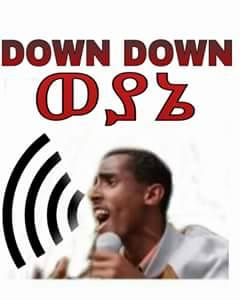
the-heroes-said-down-down-wayyane-down-on-2nd-october-2016-at-irreecha-bishoftu-to-protests-mass-killings-p2irreecha-malkaa-birraa-2016-at-horaa-harsadii-bishoftuu-oromia-this-brave-oromo-woman-is-one-of-the-murdered-by-fascist-tplf-ethiopia-2nd-october-2016irreecha-malkaa-2016-bishoftu-horaa-harsadi-oromia-oromoprotests
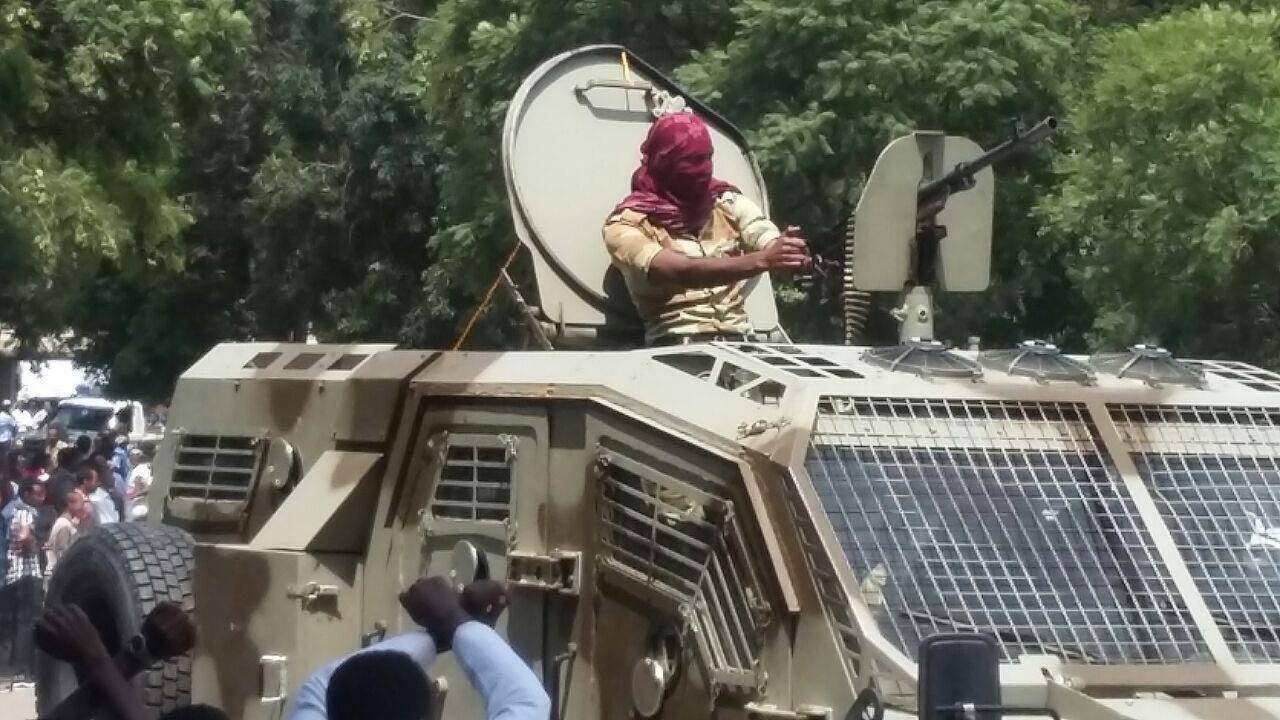
military-grade-humvee-inside-the-civilian-perimeter-at-the-2nd-october-2016-irreecha-festivalin-bishoftu-why-was-the-soldieed-against-oromo-irreecha-participants-on-2nd-october-2016-bishoftu-massacroromoprotests-and-fascist-tplfs-human-rights-violations-anaginst-civilians-2016-bbc-sources

UN urges Ethiopia to end violence against peaceful protesters

[JURIST] The UN Office of the High Commissioner(OHCHR) [official website] on Wednesday urged[press release] Ethiopian authorities to end the violence against peaceful protesters. These attacks by Ethiopian authorities have reportedly led to over 600 deaths in the past year. In response to this violence, the UN has called for an international commission and have requested that the Ethiopian government allow for them to investigate the protests and the violent tactics used against the peaceful demonstrators. Experts claim that there have been numerous allegations of mass killings and disappearances, thousands of protesters injured and tens of thousands arrested. There is also concern that many of those arrested have faced torture and ill-treatment in military detention centers. Another main concern is the use of national security and counter-terrorism legislation to target individuals who are exercising their rights to peaceful assembly. Protests began a year ago [UN News Centre report] in response to the Government’s plan to expand certain boundaries displacing farmers, along with the annexation of Konso Wereda into the Segen Arae Peoples Zone.

The conflict between the Ethiopian government and protestors has been widespread. Tensions increased over the past week when at least 55 were killed in clashes between police and protesters at a festival. Last month Ethiopia’s opposition leader and leader of the Oromo ethnic group, Tiruneh Gamta, demanded the release of all political prisoners [JURIST report] “regardless of any political stand or religion or creed.” The Oromo ethnic group, representing the largest group among the protesters, is largely credited with starting the protests last November when the government announced its plan to expand the capital into the Oromia region. Although the Oromos initially started protesting against what they viewed as a plan to remove them from fertile land in the region, the protests started taking on a different theme even as the government dropped its plan to expand the capital—one calling for the release of political prisoners [Al Jazeera report]. According to rights groups, at least 500 people have been killed and thousands arrested since the unrest began. In January several Ethiopian rights groups called on the international community to address the killing [JURIST report] of protesters.

Human Rights Watch: Anger Boiling Over in Ethiopia Declaration of State of Emergency Risks Further Abuses. #OromoProtests October 15, 2016

Posted by OromianEconomist in #OromoProtests.
Tags: , , , , , , , ,
add a comment

Odaa OromooOromianEconomistHRW

oromorevolution-thefinalmarchforfreedom

Anger Boiling Over in Ethiopia


Declaration of State of Emergency Risks Further Abuses

Felix HorneSenior Researcher, Horn of Africa,   Human Rights Watch, 11  October 2016,


On October 9, the Ethiopian government declared a country-wide six-month state of emergency. It has been a bloody year for Ethiopia, and the past few weeks have been no different.

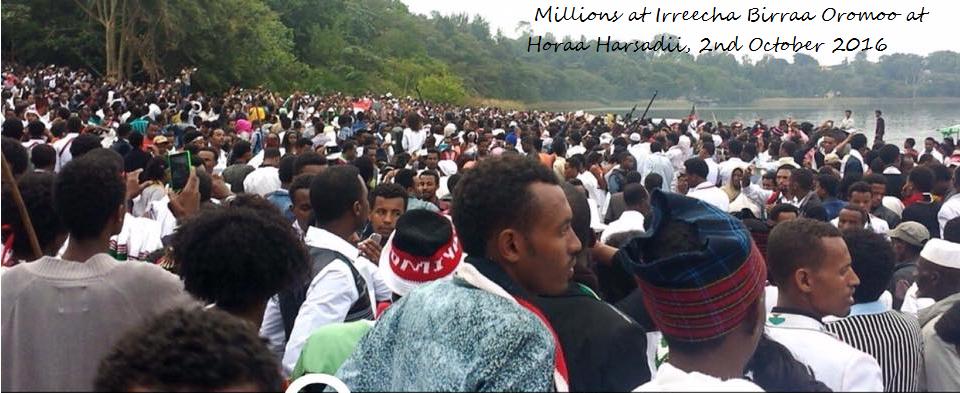
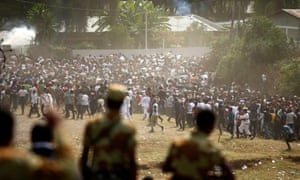
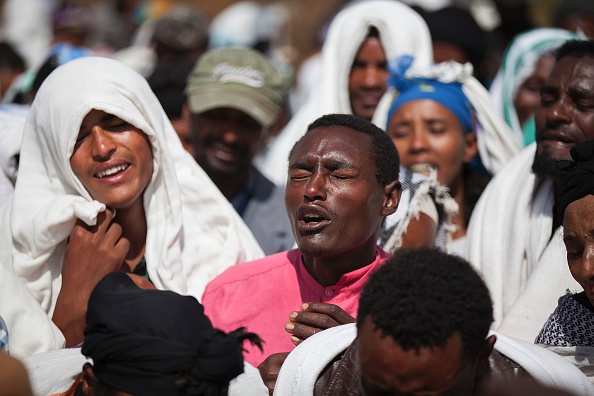
Scores of people – possibly hundreds – died in a stampede on October 2 in Bishoftu, Oromia region, fleeing security force gunfire and teargas during the annual Irreecha harvest festival, important for the country’s 40 million ethnic Oromos. This was the latest lethal crackdown by the government, which has suppressed hundreds of protests across Oromia that grew out of opposition to development plans around the capital, Addis Ababa, last November.

Protestors run from tear gas launched by security personnel during the Irecha, the thanks giving festival of the Oromo people in Bishoftu town of Oromia region, Ethiopia, October 2, 2016.

Protestors run from tear gas launched by security personnel during the Irecha, the thanks giving festival of the Oromo people in Bishoftu town of Oromia region, Ethiopia, October 2, 2016. © 2016 Reuters

While the vast majority of those protests have been peaceful, anger boiled over last week after the deaths at Irreecha. In Oromia, protesters attacked government buildings and private businesses perceived to be close to the ruling party, setting some on fire.

Now, under the state of emergency – declared on state television – the army will be deployed country-wide. Intensifying the military’s role in responding to the protests is sure to fuel the escalating anger in Oromia.

From the hundreds of interviews Human Rights Watch has carried out with protesters, witnesses and victims since the protests began, it is clear that each act of brutality by the military – the same military now tasked with restoring law and order – further emboldens the protest movement.

The government’s announcement indicates that it does not intend to reverse course, away from the use of force and towards engagement with communities about their grievances. Instead it seems determined to use force to suppress free expression and peaceful assembly.

Until Ethiopians can voice their views about critical issues such as development and governance, anger and frustration will likely continue, plunging the country into further uncertainty and possibly toward an even more dire and irreversible human rights crisis.


WP: Letter to the Editor: America’s complicity in Ethiopia’s horrors October 15, 2016

Posted by OromianEconomist in #OromoProtests.
Tags: , , , , , ,
add a comment
August 12
Regarding the Aug. 10 editorial “Ethiopia’s violent silencing”:It is true that, as the editorial board put it, “the United States has long relied on Ethiopia as a partner in the fight against al-Shabab’s terrorism in Somalia and sends the country tens of millions of dollars in development assistance.” But this characterization, which substantially underestimates the amount of aid we devote to propping up this tyranny, implies that we’re at least getting something in return for turning a blind eye to its crimes against humanity.

In fact, when one considers that the regime’s leaders are faking their claims of economic success, covering up the extent of the biggest famine in the country’s history, secretly trading with al-Shabab, embezzling $2 billion every year, enforcing policies that have killed millions of their citizens through neglect and malfeasance, and have perpetrated outright genocide, it becomes clear that we’ve gained nothing that could justify our shameful complicity in this holocaust. Our policy is a strategic failure and a moral stain that history will judge harshly.

David Steinman, New York

 The writer is an adviser to
Ethiopia’s democracy movement.

The National Interest: Ethiopia Opens a Pandora’s Box of Ethnic Tensions October 13, 2016

Posted by OromianEconomist in #OromoProtests.
Tags: , , , , , , ,
add a comment


Odaa OromooOromianEconomist


The seizure of large tracts of land is a process of re-concentration and of the marginalization and disempowerment of Ethiopia’s (non-Tigray) ethnic groups.

The EPRDF’s governing ideology, “revolutionary democracy”—a curious concoction of Marxist, Maoist, and ethno-regionalist thought—demands Soviet-style submission to the Tigray-dominated state. It calls for communal collective participation and democratic centralism. Through gim gima, nationally publicized government evaluation sessions, the regime weeds out dissidents and indoctrinates citizens. Following the regime’s violent clampdown during the disputed 2005 elections, the EPRDF published a booklet entitled Democracy and Democratic Unity that it used nationwidegim gima to explain away its brutal response. The booklet gave Ethiopians a “clear choice between dependency and anti-democracy forces” (i.e. opposition parties) and “revolutionary democracy (peace and developmentalism).” Rather than participants in a liberal order, then, Ethiopian citizens are mobilizing apparatchiks for the vanguard party. And since 1991 they have been subject to the diktats of one ethnic (minority) group. Resistance has been met with imprisonment, or worse.


Ethiopia Opens a Pandora’s Box of Ethnic Tensions

At the heart of the protests is the fundamental question of how to build a modern nation-state on the back of ethnic fault lines that have been exploited over centuries.


Since November 2015, Ethiopia has been beset by an unprecedented wave of protests. They began as a rebuke to a government plan to expand the municipal boundaries of the capital, Addis Ababa, into Oromia Region. They have since expanded to the neighboring Amhara Region, underscoring decades of grievances against ethnic marginalization and authoritarian rule by the governing Ethiopian People’s Revolutionary Democratic Front (EPRDF). The regime has responded aggressively. Human Rights Watch reports upwards of five hundred people have been so far killed in what the United States has decried as an “excessive use of force.” Tens of thousands more have been detained. An unexplained fire on September 3 in Kilinto prison in which hundreds of political prisoners are housed killed at least twenty-three. Rather than backing down, however, the protesters are gathering steam. The unrest has opened a pandora’s box of institutional and ideological contradictions that strike at the heart of contemporary Ethiopian statehood. Understanding these issues is essential for an understanding of the unrest now gripping the country.

“You cannot remove the ethnic issue from Ethiopian politics,” Eskinder Nega, a now-imprisoned Ethiopian journalist and democracy activist, told me in 2010. At the time I was an overeager doctoral student living in Addis Ababa and researching Chinese investments in the country. I had been introduced to Eskinder by a university professor, and he was kind enough to indulge (and endure) the inquisitive pepperings of a graduate student. Ethiopia is made up of nine dominant ethnic groups and approximately eighty others. Historically, the Amhara people—of which Eskinder is a member—were the country’s governing force. Emperor Haile Selassie, Emperor Menilek (1889–1913) before him, and Mengistu Haile Mariam’s Derg regime (1974–89) after him were all Amhara. Each sought to establish a unified Ethiopia with Amharic as the official language and the Amhara culture as the foundation of Ethiopian identity. All other identities were to be eliminated—either by way of assimilation, or by force. In this the Derg was especially merciless. It perceived ethnic diversity as a threat to state unity; through its Red Terror campaign, it brutally slaughtered over five hundred thousand people—all, in its eyes, enemies of the Amhara state. The policies of the Derg were especially damaging to the population of Tigray, a tiny region in the northernmost part of Ethiopia along the border with Eritrea. Today, the Tigray make up a mere six percent of the population. Government brutality, lack of economic opportunity, and prohibitions on labor migration left the Tigray ethnically and economically isolated.

Years of repression ultimately gave way to resentment of the Amhara and, by extension, the state. It also gave rise to what Ethiopian historian Gebru Tareke calls “dissent nationalism,” and the emergence of ethno-nationalist groups like the Tigray People’s Liberation Front (TPLF). For the TPLF, the state was an oppressive and colonizing force from which the country’s ethnicities had to be liberated. In 1975 the group waged what amounted to a secessionist struggle: its 1976 manifesto established “the first task of the national struggle will be the establishment of an independent democratic republic of Tigray.” When in 1989 the TPLF, then already under the direction of Meles Zenawi, successfully overthrew the Derg and in 1991 merged with three other political factions to form the EPRDF, Ethiopia was subdivided into nine mostly ethnic regions, each with the right to independent lawmaking, executive, and judicial powers. Enshrined in Article 39.3 of the constitution is the right of all ethnicities to “self-government.” Ethnic communities ostensibly inherited Ethiopia. The catch, of course, is that the EPRDF believes the only mechanism capable of ensuring sovereignty for each of the country’s ethnicities is the EPRDF itself. Relations between the central government and the regions have over the years become so centralized, and local authority so emasculated, that the de jurepremise of the modern Ethiopian state—ethnic federalism—is meaningless. Contemporary Ethiopia is a shining example of the ancient dictum, repeated throughout the ages, dīvide et īmpera—divide and rule. Further complicating the narrative is the fact that the EPRDF—in which the TPLF remains the dominant force—has never fully surrendered its vision of an independent Tigray. The 1976 manifesto has never been revised.

In this way, decades of Amhara control have given way to decades of Tigray control. The presidential office, the parliament, central government ministries and agencies—including public enterprises—and financial institutions have since 1991 all been controlled by the TPLF. So too the military. 99 percent of Ethiopian National Defense Force officers are from Tigray; 97 percent are from the same village. Only the prime minister, Hailemariam Desalegn, is not Tigray: he is Wolayta, an ethnic group that forms the majority of the population in the Southern Nations, Nationalities, and People’s Region (SNNPR). His historically close ties to Meles, first while President of SNNPR, then Deputy Prime Minister and Minister of Foreign Affairs, have, however, effectively rendered him Tigray by association.

The EPRDF’s governing ideology, “revolutionary democracy”—a curious concoction of Marxist, Maoist, and ethno-regionalist thought—demands Soviet-style submission to the Tigray-dominated state. It calls for communal collective participation and democratic centralism. Through gim gima, nationally publicized government evaluation sessions, the regime weeds out dissidents and indoctrinates citizens. Following the regime’s violent clampdown during the disputed 2005 elections, the EPRDF published a booklet entitled Democracy and Democratic Unity that it used nationwidegim gima to explain away its brutal response. The booklet gave Ethiopians a “clear choice between dependency and anti-democracy forces” (i.e. opposition parties) and “revolutionary democracy (peace and developmentalism).” Rather than participants in a liberal order, then, Ethiopian citizens are mobilizing apparatchiks for the vanguard party. And since 1991 they have been subject to the diktats of one ethnic (minority) group. Resistance has been met with imprisonment, or worse. If, as William Davidson writes, today’s protests “seem to be taking on a worrying ethnic tinge,” that is because they have been ethnic from the start. Politics in Ethiopia is inherently ethnic.

Of the EPRDF’s most beloved methods of centralizing control is through the centralization of land—land grabbing—which has become a rallying point in the current turmoil. While it is foreign firms in Ethiopia who are generally accused of expropriating land, the blame in fact lies with the EPRDF. A 2009 government regulation gives the EPRDF full control over all aspects of land investments over five thousand hectares (approximately 12,350 acres), including the right to expropriate land from the country’s regions and transfer it to investors. Under Ethiopian law all revenues, taxes, and associated infrastructure resulting from the investments now accrue to the EPRDF. Previously, real estate transactions had been handled by each of the country’s nine regional governments. As Chatham House, a London-based think tank, notes, “it is the state that stands to reap the most significant gains.” But the factors underpinning the government’s land grabs extend beyond simple economics: they are also a means for the TPLF-dominated EPRDF to realize some version of an independent Tigray. The seizure of large tracts of land is a process of re-concentration and of the marginalization and disempowerment of Ethiopia’s (non-Tigray) ethnic groups. Theoretically at least, it is intended to forge greater dependence on the central state and to render it increasingly difficult for rebel groups to emerge and operate in lowland areas. Most projects are concentrated in Benishangul-Gumuz, Gambella, SNNPR, and northern Amhara—remote regions of the country where government processes of assimilation and integration are ongoing. By commandeering the land, the EPRDF hopes to speed them up.

Violent attacks carried out by Ethiopian protesters on Dutch, Israeli, Indian and Belgian-owned farms in Amhara in early September therefore did not target foreign interests in the country per se, but EPRDF efforts to strip Ethiopians of land and identity. Foreign firms were the unfortunate middlemen.

For the better part of the last quarter century the EPRDF has attempted to whitewash its ethnic ambitions with its economic development agenda. Ethiopia is at the heart of the “Africa rising” narrative and has succeeded in lifting millions out of extreme poverty, cutting child mortality rates, and overseeing an impressive decline in HIV/AIDS-related deaths by 50 percent. Some argue that rather than ethnic tensions, the protests reflect mounting frustrations with an uneven distribution of the economic pie. This is undoubtedly part of the story. Yet as unrest engulfs places like the Amhara capital, Bahir Dar, and Adama, Oromia’s most vibrant city, which have benefitted from economic growth, it is clear that economic grievances are secondary. When in 2010 Eskinder told me, regrettably, that Ethiopia has become “the world’s star backslider,” he did not mean this economically. He meant in terms of governance and in terms of statehood. “Meles’ rule,” he said, “is not only that of the party but of the ethnicity. Meles’ relatives, friends, et cetera are putting pressure on him not to give up control because he would be giving up the control of the entire Tigray people.” This rings true of the TPLF today.

This is what makes the Ethiopian unrest so significant—and potentially dangerous. At the heart of the protests is the fundamental question of how to build a modern nation state on the back of ethnic fault lines that have been exploited over centuries. Through its formula of ethnic federalism and revolutionary democracy the EPRDF has merely succeeded in repeating the errors of its predecessors through different means. In many respects the state-building question has gone unresolved; Ethiopia’s crisis is largely an existential one. In the coming weeks Hailemariam Desalegn will likely attempt peace by announcing a redistribution of government investments. Most—if not all—political and economic power will remain vested in the TPLF. While this may quell the protests for a time, without genuine attention to the country’s conflicting institutional and ideological challenges—central to which is the dominance of the TPLF and the Tigray—the situation is likely to get worse before it gets better. All that is at stake, is everything.

Aleksandra W. Gadzala is an independent political-risk consultant based out of Boca Raton, FL and an Africa contributor with Oxford Analytica. She holds a PhD in Politics from the University of Oxford.

The Economist: The downside of authoritarian development: Ethiopia cracks down on protest: Once a darling of investors and development economists, repressive Ethiopia is sliding towards chaos October 13, 2016

Posted by OromianEconomist in #OromoProtests.
Tags: , , , , , , , ,
7 comments

Odaa OromooOromianEconomist

irreecha-malkaa-2016-bishoftu-horaa-harsadi-oromia-oromoprotests


ethiopia-regime-conducted-mass-killing-at-irreecha-cultural-festival-2nd-october-2016-bishoftu-oromia-irreeechamassacrephoto-of-the-aerial-force-deployed-against-oromo-irreecha-participants-on-2nd-october-2016-bishoftu-massacre


The downside of authoritarian development
Ethiopia cracks down on protest

Once a darling of investors and development economists, repressive Ethiopia is sliding towards chaos


The Economist, Oct 15th 2016

orompoprotests-picture-from-the-economist-13-october-2016

IT WAS meant to have been a time for celebration. When on October 5th the Ethiopian government unveiled the country’s new $3.4 billion railway line connecting the capital, Addis Ababa, to Djibouti, on the Red Sea, it was intended to be a shiny advertisement for the government’s ambitious strategy for development and infrastructure: state-led, Chinese-backed, with a large dollop of public cash. But instead foreign dignitaries found themselves in a country on edge.

Just three days earlier, a stampede at a religious festival in Bishoftu, a town south of the capital, had resulted in at least 52 deaths. Mass protests followed. Opposition leaders blamed the fatalities on federal security forces that arrived to police anti-government demonstrations accompanying the event. Some called the incident a “massacre”, claiming far higher numbers of dead than officials admitted. Unrest billowed across the country.
On October 8th, a week after the tragedy at Bishoftu, the ruling Ethiopian People’s Revolutionary Democratic Front (EPRDF) announced a six-month state of emergency, the first of its kind since the former rebel movement seized power in 1991. The trigger was not clear: violent clashes between police and armed gangs, and attacks on foreign-owned companies, had been flaring across the country for several days (and have occurred sporadically for months) but seemed to have plateaued by the weekend. On October 4th an American woman was killed while travelling outside the capital. Protesters have blockaded several roads leading in and out.
One factor in the government’s decision was a spate of attacks on holiday lodges at Lake Langano, and on Turkish textile factories in Sebeta, both in the restive Oromia region south of the capital, on October 5th. The attackers were well-organised and armed, some of them reportedly mounted on motorbikes. These acts, officials suggest, were the final straw.

The government is rattled by the prospect of capital flight. An American-owned flower farm recently pulled out, and it fears others may follow. After almost a week of silence, the state-of-emergency law was a belated attempt to reassure foreign investors, who have hitherto been impressed by the economy’s rapid growth, that the government has security under control.

A calm of sorts now prevails. On October 10th parliament, which since last year’s elections has been entirely populated by members of the EPRDF and its allies, heard details of the decree, which it is expected to formally approve. The bill provides for sweeping powers of arrest and a draconian ban on free assembly and expression. The prime minister, Hailemariam Desalegn, was confident enough to attend to diplomatic pleasantries. Germany’s chancellor, Angela Merkel, arrived in the capital the following day to talk about refugee flows from the region. Mobile internet access, which the government blocked in order to disrupt the protests, flickers occasionally and feebly back to life. The hustle and bustle of Addis Ababa continue as before, though an uneasy silence has settled across towns like Bahir Dar in the Amhara region where strikes have emptied the streets for weeks. In Addis Ababa, at least, a mood of resignation has taken hold. Better dictatorship than civil war, residents shrug.

Still, the future is troubling. Over 500 people have been killed since last November, and tens of thousands have been detained. What began nearly a year ago as an isolated incidence of popular mobilisation among the Oromo people, who make up at least a third of the population and opposed a since-shelved plan to expand Addis Ababa into their farmland, has spread. It is now a nationwide revolt against the authoritarianism of the EPRDF and the perceived favouritism shown to a capital whose breakneck development appears to be leaving the rest of the country behind.
The young are frustrated. They feel that growth has yet to bring the broader prosperity promised by the government in return for their political obedience. Thanks in large part to foreign aid, expansive public spending supported by Chinese loans and an uptick (from a very low base) in foreign investment, Ethiopia was Africa’s fastest growing economy in 2015—a remarkable feat for a still largely agrarian country. But the expectations of an increasingly educated population have grown even faster. Despite big strides, a third of Ethiopians, who now number nearly 100m, still live on less than $1.90 a day.

The Oromos are not the only ones with grievances. Many others have been driven off their land to make way for commercial farms and factories. And the Amharans, who have historically been Ethiopia’s dominant ethnic group, resent the leadership of the much smaller Tigrayan group (who make up around 6% of the population) at the heart of the ruling EPRDF. The comparative quiescence of Addis Ababa’s citizens has further fuelled resentment. Angry farmers in parts of the country have been choking the movement of goods towards the city. The opposition calls for political prisoners (who are reckoned to number in the thousands) to be freed, but the government is in no mood to oblige. However, on October 10th the president promised to introduce some form of proportional representation in elections, which would allow all groups a share of power.

Tinkering is unlikely to be enough. The EPRDF has weathered storms before. Civil strife after disputed elections in 2005 resulted in at least 193 deaths and many thousands of arrests. This time Ethiopians are calling just as fiercely for regime change, and not just reform. Ethiopia, until recently a darling of Western donors and security hawks alike, is edging closer to the brink.

Correction (October 13th): The original version of this article said that parliament had rubber-stamped the state-of-emergency law; it had not. This has been corrected.

This article appeared in the Print Edition with the headline: The downside of authoritarian development
From the print edition: Middle East and Africa


Lelisa’s Message: #OromoProtests October 13, 2016

Posted by OromianEconomist in #OromoProtests.
Tags: , , , , , , ,
add a comment

Odaa OromooOromianEconomist

Lelisa’s Message

A wave of protest in Ethiopia highlights the country’s history of exploitation and dispossession.

Geeska Afrika


This summer, when marathon runner Feyisa Lelisacrossed the Rio finish line with his hands crossed above his head, he expressed his solidarity with a protest movement in Ethiopia’s Oromia regional state.

The marathoner’s gesture comes from a nonviolent resistance movement that has organized demonstrations across Oromia — which includes the capital city, Addis Ababa — for the eight months leading up to the Rio Olympics. It also mourns the more than eight hundred Oromo citizens murdered by government security forces.

With a simple gesture, Lelisa highlighted the reality of life under a brutal dictatorship, where a few oligarchs have done well at the expense of the majority, who suffer from famine, rampant unemployment, land confiscation, personal insecurity, and the loss of basic human rights.

The Trigger

The Oromo protests began two years ago, when the Ethiopian government — led by the Tigrayan-majorityEthiopian People’s Revolutionary Democratic Front(EPRDF) — unveiled its urban master plan, called the Integrated Development Plan for Ethiopian Renaissance.

The plan designated a total area of 1.1 million hectares of land — extending in a forty-to-one-hundred-kilometer radius around Addis Ababa — part of the planning region. This area included seventeen rural districts and three dozen cities in the Oromia regional state. In effect, the plan would increase Addis Ababa’s size twenty-fold.

When the plan was presented to the Oromia state for approval in February 2014, the regional government members opposed it, arguing that it violated the principle of federalism, the human rights provisions, and the transparency clause of the Ethiopian constitution. That April, students took to the streets decrying the planned displacement of Oromo farmers and residents on the affected land. Above all, the protesters demanded respect for the autonomy of the Oromia regional government in deciding local issues, including land transfers.

Government security forces responded by firing live ammunition and violently beating peaceful protesters. They killed seventy-eight, injured hundreds, and sent thousands to concentration camps in the humid Afar region. The action was so egregious that the protests garnered international attention.

The government has strongly denied any wrongdoing, even as images of dead bodies and injured protesters were widely broadcast across social media. The demonstrations subsided without resolving the problem that incited them in the first place — but not for long.

In the May 2015 national elections, the EPRDF claimed 100 percent of the country’s parliamentary seats. It interpreted its alleged victory as a mandate to accelerate development projects, including the Integrated Development Plan for Ethiopian Renaissance.

In November 2015, government officials arrived in Ginchi, a small town west of Addis Ababa, to lease out a school playground and sacred forest area to an investor. Students and residents protested, and the movement quickly spread to all corners of Oromia. What started as resistance to land seizure quickly transformed into a sustained opposition to the governing party’s stranglehold on the political landscape, to ethnic discrimination in allocating national resources, and to the incessant use of violence to resolve political differences.

Historical Injustice

The issue of land founds the protests’ demands. In Ethiopia, land serves multiple purposes. For smallholder farmers, land marks their identity, organizes their social lives, and provides their means of survival as individuals and as members of a household and a kin group. For elites, land supports the state machinery and serves as an instrument of social control.

The struggle for political power and economic control often takes the form of struggle for land control. Indeed, throughout Ethiopian history, whoever controlled land also controlled the economic base and the infrastructure of domination.

In the nineteenth century, the southward march of imperial Ethiopia in search of arable land and natural export commodities culminated in the conquest of several independent Oromo states and other entities. In the 1880s, Emperor Menelik II annexed their territories and assigned conquering soldiers as administrators. The new rulers and their retinues drew no salaries, instead living off the land they confiscated and the evicted tenants’ labor.

Oromo farmers would lose more land for the next century. After the end of Italian occupation in 1941, Emperor Haile Selassie transferred large tracts to private holders, including members of the royal family and the nobility, individuals with connections to the imperial court, and loyalists who claimed to have fought the fascists.

At the same time, the imperial regime promoted private investments to develop commercial agriculture. Well-connected officials acquired thousands of hectares to grow coffee for export. Foreign firms — such as the Dutch HVA and the British Mitchell Cotts — were given land to grow sugar and cotton in the fertile southern and southwestern areas. The evicted Oromo farmers became day laborers for the commercial companies or seasonal laborers for the new landlords. Many migrated to towns in search of opportunities.

In 1974, this unresolved issue occasioned the imperial government’s collapse. In February 1975, the Derg, the military junta that took power, nationalized rural land, allowing farmers equal access and use rights, prohibiting private ownership, and outlawing hired farm labor. To retain their rights, farmers had to meet numerous demands including joining farmer-operated cooperatives and peasant communes.

In time, the Derg became the sole landlord, turning the cooperatives into its extractive arm and instrument of political control. The regime’s unending demand for surtaxes, fees, various charges, and recruits for the army rendered the gains of the revolution immaterial to the lives of the peasants.

Land to the Investor

The Derg fell in 1991 after almost two decades of struggle. The EPRDF, which largely consists of the Tigrayan People’s Liberation Front (TPLF), came to power. Its leaders argued that the land-ownership prohibition protected farmers against rapacious capitalist land-grabbers and affirmed state ownership in the 1995 constitution and several land administration proclamations.

This started to shift in 2002 when the late prime minister Meles Zenawi launched an antipoverty campaign. The program rested on increasing productivity in agriculture, which justified allocating land to private interests. At first, the government transferred small plots of land to domestic and foreign capitalists to grow flowers for export, but the practice grew: soon vast agricultural lands in Oromia and other states were being leased out.

In 2005, the EPRDF won highly controversial national elections. In the aftermath, the party leader declared that the country needed an activist government to ensure accelerated, sustained, and broad-based growth. In a surprise about-face, the land law that was supposed to protect rural owner-operators against wealthy capitalists instead facilitated land transfers to investors. The federal government replaced the law that recognized the regional states’ authority over land administration with one that granted that authority to the federal government. The regional states were forced to change their laws to conform to the federal proclamation.

Having passed the unconstitutional measure, the government opened farmlands for foreign and domestic capital owners with generous terms, minimum restrictions, and token capital requirements. Terry Allen sums up: “At a price ranging from cheap to stolen, investors lease vast tracts for as long as ninety-nine years and for as little as forty cents per acre per year.”

When the lease wasn’t cheap enough, corruption helped. One investor noted, “You get a bottle of Johnnie Walker, kneel down, clap three times, and make your offer of Johnnie Walker Whiskey.”

Investors flocked in. By 2011, about 3.6 million hectares of land had been awarded to foreign capitalists, and 4 million hectares more were still available.

To be sure, the federal government wasn’t supposed to get in the business of redistributing land. Under the cover of development, it used land with a view to short-term political goals rather than long-term economic processes. As a result, it fueled unbridled corruption that dispossessed millions and relegated them to destitution. Among the Oromo in particular, this meant not only lost property but also a breakdown in traditional social organization.

In 2015, these concerns converged around the Integrated Development Master Plan. Addis Ababa was originally built on the stolen ancestral land of the Oromo. As the city expanded, the surrounding people were evicted, and new settlers took over, changing the area’s demographic composition.

The new development plan evoked the Oromo’s bitter experiences of the predatory relationship between Addis Ababa and the surrounding area. The scale of the proposed plan and its potential to displace millions touched off the massive resistance that came to be known as the Oromo protests.

State Capture

The Tigrayan People’s Liberation Front — which played a central role in toppling the Derg in 1991 and now constitutes the major part of the EPRDF — hails from the northern part of Ethiopia. They initially argued that coercion, forced cultural assimilation, and political centralization cannot succeed as a state-building strategy.

To reconstruct the collapsed state, they devised a new constitution that instituted a federal arrangement among newly demarcated ethnic-based regional states. The approach recognized the unconditional right of every nationality in the country to self-determination, including secession. It was a novel response to the problem of national integration in light of the failure of past regimes.

However, TPLF leaders were never committed to either constitutional rule or their unique federal structure: neither would aid their political or economic interests. From the start of their rule, party leaders understood that the survival of Tigray depended on people migrating south and wealth migrating north. To enact this, the party had to dominate the political center. As John Young points out, the TPLF “did not seriously entertain the idea of building alliances with existing southern parties and instead drove them largely out of existence.”

After 1991, the TPLF-led coalition deployed various justifications for the one-party rule it envisaged, but never succeeded. It finally decided to simply make the institutions of the state subservient to the political will of a party. Elections were conducted, but only to confirm the ruling party in power and to ensure that its development programs were not disrupted by short electoral cycles.

The TPLF-dominated parliament passed draconian laws to consolidate its hold on power.

One measure, approved by parliament in July 2008, added to the numerous restrictions placed on the Ethiopian press. For example, it made journalists and editors potential accomplices in acts of terrorism if they published statements that the government classified as an act of sedition.

In January 2009, a civil society organizations law prohibited foreign non-governmental organizations from engaging in any human rights or governance work, rendering most independent human rights work virtually impossible and making all NGO work that the government declared illegal punishable as a criminal offense.

An antiterrorism law passed in July 2009 granted broad powers to the police and enacted harsh criminal penalties for political protests and nonviolent dissent. Together, the laws gave absolute power to the government to accuse, convict, and punish anyone by executive order. As the result, thousands of journalists, human rights advocates, and political dissidents have been sent to infamous federal prisons in the outskirts of the capital. They languish there without trials or visitation rights, at the mercy of prison guards.

As a direct consequence, human rights violations became more flagrant. International rights groups and other organizations have documented the government’s extrajudicial executions of political opponents, its degrading treatment of prisoners, and its rejection of court orders to free dissidents. As a former defense minister of the incumbent regime noted, the vast majority of the inmates at one of the most notorious prisons belong to the Oromo ethnic group.

Once the Tigrayan-majority party fully captured the state, economic benefits began to flow to political and military elites in exchange for loyalty. Millionaires emerged overnight, and current and former officials now own massive skyscrapers. Apart from these nouveaux riches, the party itself owns businesses that amount to two-thirds of the economy. Meanwhile, ordinary citizens suffer from double-digit unemployment, insufficient housing, rising inflation, and economic insecurity.

State capture requires full control of the coercive apparatus. After theDerg’s national military force was dismantled, TPLF commanders and political commissars created a new non-political military to support the new democratic state rather than to act as the ruling party’s private army.

They organized a new Ethiopian Defense Force, which was smaller in size and broader in its rank-and-file’s ethnic composition. But the military command-and-control structure remained under TPLF control: more than 95 percent of the general staff and commanders come from Tigray. While the military is ostensibly apolitical, it remains highly connected to the political apparatus.

The military is also deeply involved in the private sector. Active and retired military officers own their own businesses. Furthermore, the EPRDF government has increased the military’s stake in the economy through the Metal and Engineering Corporation (MetEC).

Created in 2010, MetEC is supposed to ensure technology transfer across the country. According to its establishing proclamation, the company is directly accountable to the prime minister and operated by the ministry of defense. It participates in all sectors of the economy — manufacturing, construction, energy, and transportation — and produces weapons for the country’s defense forces, including armored vehicles, explosives, ammunition, big guns, light weapons, and personal weapons. The military has become an economically powerful actor.

The TPLF coalition built a political system that has no space for dissenting voices. The architecture of power relations that was meant to ensure the interest of a minority group has now produced an unbridgeable political chasm that is growing thanks to economic inequality, political instability, and personal insecurity. The shortsighted arrangement designed to ensure minority rule in perpetuity has now come back in the TPLF’s face like a boomerang.

Impending Danger

John Markakis concluded his latest book, Ethiopia: The Last Two Frontiers, with a warning for the EPRDF:

At the end of the first decade of the twenty-first century, the incumbent regime in Addis Ababa is engaged in the same battles that exhausted its predecessors, impoverished the country, and blasted peoples’ hopes for peace, democracy, and an escape from dire poverty.

Indeed, previous governments were brought down because of their refusal to share power with the country’s diverse constituencies and interest groups.

To keep power, the incumbents have built a politically connected, heavily armed, and economically powerful military to protect its monopoly on political and economic power. Because the protesters threaten the party’s and its high-ranking officials’ interests, the military has used force with impunity, killing hundreds of innocent protesters who simply demand respect for their constitutionally guaranteed rights. But force will breed more instability and demand the use of more force.

The military has not succeeded in putting down the protests, and it’s hard to say whether they will.

But Ethiopia’s history shows that when structures fail, humans are capable of unimaginable cruelty not just for survival but in defense of their insatiable desire for comfort. Feyisa Lelissa gave the world fair warning.

UN: Ethiopia: UN experts call for international commission to help investigate systematic violence against protesters. #OromoProtests October 10, 2016

Posted by OromianEconomist in #OromoProtests.
Tags: , , , , , , , ,
1 comment so far

Odaa OromooOromianEconomistbishoftu-mascare-2nd-october-2016-fascist-ethiopias-regime-tplf-conducted-masskillings-against-oromo-people-at-irreecha-celebration

military-grade-humvee-inside-the-civilian-perimeter-at-the-2nd-october-2016-irreecha-festivalin-bishoftu-why-was-the-soldieed-against-oromo-irreecha-participants-on-2nd-october-2016-bishoftu-massacrphoto-of-the-aerial-force-deployed-against-oromo-irreecha-participants-on-2nd-october-2016-bishoftu-massacreoromorevolution-thefinalmarchforfreedom


Ethiopia: UN experts call for international commission to help investigate systematic violence against protesters

GENEVA (10 October 2016) –United Nations human rights experts today urged the Ethiopian authorities to end their violent crackdown on peaceful protests, which has reportedly led to the death of over 600 people since November 2015. They further called on the Government to allow an international commission of inquiry to investigate the protests and the violence used against peaceful demonstrators.

“We are outraged at the alarming allegations of mass killings, thousands of injuries, tens of thousands of arrests and hundreds of enforced disappearances,” said the UN Special Rapporteur on freedom of peaceful assembly and of association, Maina Kiai, the Working Group on enforced or involuntary disappearances and on extrajudicial, summary or arbitrary executions, Agnes Callamard. “We are also extremely concerned by numerous reports that those arrested had faced torture and ill-treatment in military detention centres.”

“In light of the lack of progress in investigating the systematic violence against protesters, we urge the Ethiopian Government to allow an international independent commission to assist in shedding light on these allegations,” they stated.

The human rights experts highlighted in particular the 2 October events in Oromia, where 55 people were killed in a stampede.

“The deaths in the Oromia region last weekend are only the latest in a long string of incidents where the authorities’ use of excessive force has led to mass deaths,” Mr. Kiai said noting that peaceful protests in the Ahmara and Konso Wereda regions have also been met with violence from authorities.

“The scale of this violence and the shocking number of deaths make it clear that this is a calculated campaign to eliminate opposition movements and silence dissenting voices,” he added.

The UN Special Rapporteurs voiced particular concern over the use of national security provisions and counterterrorism legislation – the Anti-Terrorism Proclamation 652/2009 – to target individuals exercising their rights to peaceful assembly.

“This law authorises the use of unrestrained force against suspects and pre-trial detention of up to four months,” Ms. Callamard noted while warning that many of the killings could amount to extrajudicial executions. “Whenever the principles of necessity and proportionality are not respected in the context of crowd control, any death caused by law enforcement officials is considered an extrajudicial execution,” she stressed.

The Working Group on enforced or involuntary disappearances urged the authorities to immediately disclose the whereabouts of those disappeared and emphasized that” all allegations of enforced disappearances must be thoroughly and independently investigated and perpetrators held accountable”.

Ethiopia’s current wave of mass protests began in the Oromia region in November 2015, in response to the Government’s ‘Master Plan’ to expand Addis Ababa’s boundaries, which would lead to the displacement of Oromo farmers. In Konso Wereda, the protests started in mid-December 2015 after the annexation of Konso into the Segen Area Peoples Zone. Protests later spread to other areas of the country, including the Ahmara region.

“Curtailing assembly and association rights is never the answer when there are disagreements in a society; rather, it is a sign of the State’s inability to deal with such disagreements,” Mr Kiai said. “Suffocating dissent only makes things worse, and is likely to lead to further social and political unrest.”

The experts underlined the urgent need to investigate and hold accountable those responsible for the violence. A group of UN experts made a similar call* in January 2016, which went unheeded, they noted.

Mr. Kiai, Ms. Callamard and the Working Group on enforced or involuntary disappearances call has been endorsed by the UN Special Rapporteur on the promotion and protection of the right to freedom of opinion and expression, David Kaye, the UN Special Rapporteur on the situation of human rights defenders, Michel Forst, Victoria Lucia Tauli-corpuz, Special Rapporteur on the rights of indigenous peoples, the UN Special Rapporteur on torture and other cruel, inhuman or degrading treatment or punishment, Juan E. Méndez and the Chair-Rapporteur of the UN Working Group on Arbitrary Detention, Roland Adjovi.

(*) Check the experts’ January statement: http://www.ohchr.org/en/NewsEvents/Pages/DisplayNews.aspx?NewsID=16977&LangID=E

ENDS

The Special Rapporteurs and Working Groups are part of what is known as the Special Procedures of the Human Rights Council. Special Procedures, the largest body of independent experts in the UN Human Rights system, is the general name of the Council’s independent fact-finding and monitoring mechanisms that address either specific country situations or thematic issues in all parts of the world. Special Procedures’ experts work on a voluntary basis; they are not UN staff and do not receive a salary for their work. They are independent from any government or organization and serve in their individual capacity. Learn more, log on to: http://www.ohchr.org/EN/HRBodies/SP/Pages/Welcomepage.aspx

UN Human Rights, Country Page – Ethiopia:http://www.ohchr.org/EN/Countries/AfricaRegion/Pages/ETIndex.aspx

For more information and media requests, please contact Ms. Marion Mondain (+41 22 91 79 540 /freeassembly@ohchr.org).

To view this press release online, visit:http://www.ohchr.org/EN/NewsEvents/Pages/DisplayNews.aspx?NewsID=20663&LangID=E


Human Rights League: Ethiopia: The TPLF/EPRDF Government has declared an official state of emergency in Oromia October 10, 2016

Posted by OromianEconomist in #OromoProtests.
Tags: , , , , , , , , ,
add a comment

Odaa OromooOromianEconomist

Genocide: The TPLF Hidden Agenda of Reducing the Oromo Population Must be Stoppedbishoftu-mascare-2nd-october-2016-fascist-ethiopias-regime-tplf-conducted-masskillings-against-oromo-people-at-irreecha-celebrationmilitary-grade-humvee-inside-the-civilian-perimeter-at-the-2nd-october-2016-irreecha-festivalin-bishoftu-why-was-the-soldieed-against-oromo-irreecha-participants-on-2nd-october-2016-bishoftu-massacrphoto-of-the-aerial-force-deployed-against-oromo-irreecha-participants-on-2nd-october-2016-bishoftu-massacreirreecha-malkaa-2016-bishoftu-horaa-harsadi-oromia-oromoprotests


Ethiopia: The TPLF/EPRDF Government has declared an official state of emergency in  Oromia 


HRLHA Urgent Action

October 9, 2016
Human rights League of the Horn of AfricaThe Ethiopian Prime Minister Hailamariam Dessalegn has informed the public  through the state run TV that a six month state of emergency has been declared as of October 8, 2016 because “the current situation in the country posed a threat against the people of Ethiopia”

Prime Minister Hailemariam Dessalegn indicated in  his emergency declaration that the Council of  Ministers  declared the state of  emergency after they discussed the damage caused by protests across the country during the past week.

HRLHA reported in its “Ethiopia: The TPLF Hidden Agenda of Reducing the Oromo Population Must be Stopped” on April 17, 2016 that the Oromia regional State has fallen under the TPLF Security intelligence officer generals’ control when they removed the civil administration and declared unofficial martial law as of Febrary 26, 2016. The recent declaration is designed to legitimize the previuos military administration of TPLF government.

Background:

The protests in Oromia regional state, which have continued steadily  since November 2015,   escalated  on October 2, 2016 after many Oromo people were killed by the Agazi force  on the ground supported by helicopter gunships at the Irrecha Festival – which left reportedly at least  600 civilians dead and thousands  wounded.


The Oromo nation  has been under attack since November 2015 when  Oromo protests restarted in West Showa, Ginchi town . The protests  demanded that the Chilimo  forest clearing by land buyers should stop. In response to the peaceful protest against  the land grabs- which included the Addis Ababa Master plan- the TPLF/EPRDF deployed its Killing Squad Agazi force to quell the protests.   In the past   eleven protest months, including the October 2, 2016 Irrecha festival massacre, an estimated 2000 civilians have been killed and several  thousands have been taken to  detention centers.Despite the brutalities committed  against Oromo civilians during the past  eleven months, the international community has not made a concerted response to end the crisis in Oromia.The Human Rights League of the Horn of Africa has appealed several  times to the world community , including the UN Human Rights Council, UN Security Council and Donor States such as USA, Canada, UK, Sweden and Norway to put pressure on the government of Ethiopia  to respect the constitution of the country and International human rights standards to solve the political crisis in the country in general and in Oromia regional state in particular.HRLHA is deeply concerned that if International Communities fail in responding to the killings presently taking place in Oromia Regional State as soon as possible , this could lead to a genocide comparable to those in Rwanda (1994), in Yugoslavia (1998) and in Darfur, Sudan (2003).
Therefore, the HRLHA respectfully demands that the International community including the UN Security Council take concrete actions by:

  1. Using its influence to put pressure on the Ethiopian government to respect international human rights, its own promised obligations, as well as domestic and International laws and refrain from its ethnic cleansing and respect the fundamental rights of Oromo Nation
  2. Passing a decision to intervene to stop the killings in Oromia using the mandate of the three pillars of the responsibility to protect, as stipulated in the Outcome Document of the 2005 United Nations World Summit (A/RES/60/1, para. 138-140) and formulated in the Secretary – General’s 2009 Report (A/63/677) on implementing the responsibility to protect :
    1. The State carries the primary responsibility for protecting populations from genocide, war crimes, crimes against humanity and ethnic cleansing, and their incitement;
    2. The international community has a responsibility to encourage and assist States in fulfilling this responsibility;
    3. The international community has a responsibility to use appropriate diplomatic, humanitarian and other means to protect populations from these crimes. If a State is manifestly failing to protect its populations, the international community must be prepared to take collective action to protect populations, in accordance with the Charter of the United Nations.

Copied To:

  • UN Security Council
    Office of the Ombudsperson
    Room DC2 2206
    United Nations
    New York, NY 10017
    United States of America
    Tel: +1 212 963 2671
    E-mail: ombudsperson@un.org
  • UN Human Rights Council
    OHCHR  address: 
    Office of the United Nations High Commissioner for Human Rights (OHCHR)
    Palais Wilson
    52 rue des Pâquis
    CH-1201 Geneva, Switzerland.
  • Africa Union (AU)
    African Union Headquarters
    P.O. Box 3243 | Roosvelt Street (Old Airport Area) | W21K19 | Addis Ababa, Ethiopia
    Tel: (251) 11 551 77 00 | Fax:(251) 11 551 78 44Webmaster: webmaster@africa-union.org
  • The US Department of State Secretarate Secretary
    His Excellency Mr. John Kerry
    WASHINGTON, D.C. HEADQUARTERS
    (202) 895-3500
    OFMInfo@state.gov
    Office of Foreign Missions
    2201 C Street NW
    Room 2236
    Washington, D.C. 20520
    Customer Service Center
    3507 International Place NW
    Washington, D.C. 20522-3303
  • UK Secretary of State for Foreign and Commonwealth Affairs
    The Rt Hon Philip Hammond MP
    Parliamentary
    House of Commons, London, SW1A 0AA
    Tel: 020 7219 4055
    Fax: 020 7219 5851
    Email: hammondp@parliament.ukDepartmental
    Street ,
    London, SW1A 2AH
    Tel: 020 7008 1500
    Email: fcocorrespondence@fco.gov.uk
  • Minister of Forenien Affairs (Canada)
    His Excellency Stéphane Dion
    Write to:
    Enquiries Service (BCI)
    Global Affairs Canada
    125 Sussex Drive
    Ottawa, ON
    K1A 0G2
    Email: Enquiry Service – On line form
    Canada
  • Minister for Foreign Affairs (Sweden)
    Her Excellency Margot Wallström
    Switchboard: +46 8 405 10 00
    Street address: Rosenbad 4
    Postal address: SE 103 33 Stockhol
  • Minister of Foreign Affairs (Normway)
    His Excellency BørgeBrende
    Ministry of Foreign Affairs
    E-mail: post@mfa.no
    Phone: + 47 23 95 00 00
    Address: 7. juniplassen 1, N-0032 Oslo

Emergency Declared in Ethiopia but the decree means nothing to those who have lived with inhumanity worse than death. October 9, 2016

Posted by OromianEconomist in #OromoProtests.
Tags: , , , , , , , ,
9 comments

Odaa OromooOromianEconomist

an-oromo-youth-hero-shanted-down-down-woyane-on-the-face-of-mass-killers-tplf-agazi-at-bishoftu-2nd-october-2016-oromoproteststhe-heroes-said-down-down-wayyane-down-on-2nd-october-2016-at-irreecha-bishoftu-to-protests-mass-killings-p2oromorevolution-thefinalmarchforfreedom

oromoprotests-and-fascist-tplfs-human-rights-violations-anaginst-civilians-2016-bbc-sources

In its total lawlessness, the regime had left no right unviolated be it bluntly or systematically. It is because of this that in terms of what rights it limits or what new power it confers on the executive, this declaration is inconsequential. There is nothing it changes on the ground. The resistance was happening while a full military rule organized by a Command Post chaired by the Commander-in-Chief himself was already in place. In the name of taking a “merciless and definitive” measure on protestors, the army and its Agazi Regiment, the Regional Special Forces, the Federal Police, the States’ Police Forces, Prison officials, and the Local Militia have all taken ultimate measures on civilians, children, mothers, and the elderly. They have applied the most barbaric methods of execution, massacre, torture, and abuse.


Emergency Declared in Ethiopia but the decree means nothing to those who have lived with inhumanity worse than death.

Tsegaye R Ararssa
9 October 2016.

14516615_1704863616502865_4754458393033099742_nThis morning, Ethiopians woke up to the news that the Council of Ministers of the Federal Government has passed an emergency decree that may last for the coming six months. The official text of the Decree is not yet published in the official legal communicator, the Negarit Gazetta. (As it has now become customary, it may never be published at all; the regime does what it wants to do nonetheless.) That it is so declared today is announced to journalists by the Prime Minister in Cabinet on the state television. The Prime Minister spoke in order to announce the decision to journalists as the primus inter pares, the first among equals, in the Cabinet. The reason given by the Prime Minister for issuing the declaration is that there is a breakdown of law and order that threatens the safety of citizens and the integrity of the constitutional order.

To the peoples of Ethiopia, especially to those who have been under military rule for the last one year and more (without any fact that necessitates it or any law that warrants it), the decree makes no practical difference in their ‘lives’. As such, the decree has little significance, if any.

The people have seen the worst face of repression. Killing, maiming, mass arrest, arbitrary detention, public torture, dispossession, eviction, dislocation (because of loss of houses and job and domicile), and much worse. They have seen burning of prisoners alive (in Qilinxo, Ambo, Gonder, Angereb, Debretabor, Zuway, etc). They have seen towns set on fire and razed down (in Konso). They have seen detainees poisoned (in Sabbataa). They have seen massacres on a sacred ground (Irrechaa) that was turned virtually into a killing field (Horaa Arsadii). They have seen children shot dead right in front of their moms (in Wallaggaa, in Arsi, in Harargee, and everywhere else).

Every day, those that are alive have lived under ‘the shadow of death.’ They have seen the regime mobilize one group of people against the other and lose loved ones and their means of livelihood as a result. They have seen snipers shoot young people in market places, in school compounds, and in the privacy of their homes. In short they have seen it all. So, what new thing they haven’t already seen is this emergency decree going to bring about? The answer given by almost everyone is a resounding “NOTHING!”

But while we are at it, it is important for us to ask what it means to declare a state of emergency in Ethiopia. What exactly is a state of emergency? When is it proper? Who declares emergency? What is the procedure? What is the implication for rights and for the exercise of power by the regime? Why is it declared now? What new thing is the regime planning to do under the guise of the emergency decree?

In what follows, I explore these questions in the light of the Ethiopian constitution (although no law, constitution or otherwise, has ever meant anything in Ethiopia). The key provision that regulates the mode, procedure, consequences, and implications of emergency declaration is article 93 of the Constitution.


What is emergency declaration? And when is it necessary?

Emergency decree is a decree of extraordinary situation. It is a law of abnormal times. It is a way of creating ‘legal illegality’ in a constitutional-political order invoking necessity on the ground of actual or impending war, crisis in law order, natural disasters, or break out of epidemics. It is a regime of exception-making through which the state is authorized to do what it cannot lawfully do under normal circumstances. Through emergency laws, a state is empowered to exercise special powers justified on the ground that the exigencies of political life has become so terrible that it demands a special set of measures.

According to the Ethiopian constitution (art 93(1)(a)), emergency is declared when there is:

  1. a) external invasion;
  2. b) a breakdown of law and order that cannot be managed through ordinary law-enforcement mechanisms;
  3. c) natural disaster; or
  4. d) epidemic.

One can see from the above that special measures that have to be effected through emergency decree are said to be necessary in times of war, crisis of public order, natural catastrophe, or the spread of contagious disease or plague that threatens the population.

According to the announcement of the Prime Minister, the cause of the emergency declaration today is the complete breakdown of law and order which has threatened the constitutional order. This is of course a concession on his part to the fact one can easily observe on the ground since the re-emergence of the #Oromoprotests on 12 November 2015.
Throughout the year Oromia—where military rule is imposed–has been completely ungovernable. Konso has also been ungovernable for the last eleven months. After July 2016, when the Amhara resistance broke out in Gonder, the Amhara region also became ungovernable by the regime thereby necessitating a military rule to be imposed there, too.

Who issues the Declaration of Emergency?

The necessity of such a decree is assessed and acted upon by the Council of Ministers (COM). But the COM is not the only institution that has a sole authority on the management of emergency situation. The power to declare emergency is shared between the Executive and the Legislature. According to art 93(2), owing to the urgency associated with emergency, the declaration may be issued unilaterally by the COM but it should be presented to the parliament within 48 hours if the parliament is in session. If the parliament refuses to approve it, the decree will be dead on arrival. If the parliament approves it by a 2/3rd majority vote, it becomes effective for up to six months from the date of declaration.

If the emergency happens in the season when the parliament is not in session—like it is the case now—the decree must be submitted to the parliament within fifteen days. This may necessitate calling a special or extraordinary meeting of the parliament. Without the approval of the parliament, no emergency decree can be effective. In other words, emergency power is shared between the two institutions, the executive (COM) and the legislature (HPR). The former has the power to generate the emergency bill and the latter has the power to approve or reject the decree submitted to it by the former.

The How of Emergency Declaration: Procedure

The process is activated when the COM decides to have such a decree after duly assessing the situation. If exceptional measures are found to be:

  1. a) necessary; and
  2. b) not preventable through any other measures.

Thus, the COM must demonstrate that there is a serious crisis in public order that it could not otherwise control through the activation of ordinary law-enforcement mechanisms. Once this is demonstrated, the decree is submitted to the Parliament for approval. On approval by parliament, it becomes the law of exceptional times. When it is duly approved by the parliament, the parliament establishes an Emergency Inquiry Board that supervises the humane treatment of all persons arrested in the course of enforcing the emergency (art 93(5)). The Board ensures the accountability of the executive for its measures taken during the emergency season.

What does Emergency entail? What are its consequences?

The declaration of emergency confers special powers on the executive. It empowers them to take measures necessary and proportional to avert the danger. Often, the executive is given latitude to suspend some constitutional rights as may be necessary to protect public peace and order. The usual candidates are rights such as freedom of assembly, demonstrations, movement, etc, which can be suspended for a limited period of time.
However, these powers are not open-ended. There is a limit to what the Executive can do. In particular, its actions are circumscribed by constitutional provisions that are non-derogable. The provisions relating to the right to life, freedom from torture and all forms of cruel, degrading and inhumane treatment or punishment, equality and non-discrimination, etc are often seen as universally inviolable under any circumstance. This emanates from the principle of sanctity of human life, human dignity, and fundamental equality in worth of all human beings.

In art 93 (4)(3)), these non-derogable provisions are five: art. 1 (the provision that has to do the nomenclature of the country and the system it denotes); art. 18 (the provision on the right to freedom from cruel, inhumane, and degrading punishment or treatment such as torture); art 25 (the provision on the right to equality and non-discrimination); art 39(1) (the provision on the right to self-determination including secession); and art 39(2) (the provision on the right to language, culture, and history). Curiously, the right to life (under arts 14 and 15) is not in the list of rights that cannot be suspended or limited during situations of emergency. Given the weight given to other structures such as the federal democratic republican structure and the name that denotes it; or to right of nations to self-determination; the absence of the right to life, the most fundamental of all human rights, in this list must be an oversight.

Why now? What Motivated the regime to Issue this declaration?

What is the point of this declaration? What new measures are to be taken other than those “merciless” measures that were being taken throughout the year? What rights are to be newly suspended and/or limited because they have been left unviolated thus far?

As we all know, the regime has virtually banned all forms of demonstrations, political meetings, associations, etc for a long time. We know that there is no press freedom in the country. Ethiopia is one of the top four jailers of journalists in the entire world. Arbitrary killing, mass arrests, detentions, tortures, discrimination, have been a matter of routine practice throughout the 25 years tenure of the regime, only exacerbated now in the context of the open mass revolt in the last couple of years.

The regime has always been confrontational with religious groups because it routinely and unscrupulously interferes with their freedom of religion.

Demanding the right to self-determination as per the constitution automatically renders one a terrorist because apparently, in EPRDF’s book, the right to self-determination is already exercised by all. As a result, identity is securitized, i.e., it is handled as a matter of threat to national security.

The right to one’s distinct language—e.g. the right to a choice of script—is routinely violated, a striking example being the regime’s denial of the right of the Erob people of Tigray Region to adopt a Latin script for their language.

In its total lawlessness, the regime had left no right unviolated be it bluntly or systematically. It is because of this that in terms of what rights it limits or what new power it confers on the executive, this declaration is inconsequential. There is nothing it changes on the ground. The resistance was happening while a full military rule organized by a Command Post chaired by the Commander-in-Chief himself was already in place. In the name of taking a “merciless and definitive” measure on protestors, the army and its Agazi Regiment, the Regional Special Forces, the Federal Police, the States’ Police Forces, Prison officials, and the Local Militia have all taken ultimate measures on civilians, children, mothers, and the elderly. They have applied the most barbaric methods of execution, massacre, torture, and abuse. Surely novelty will elude them in this regard. They have practised abuses that the world’s ghastliest torture centres and killing fields have witnessed in history.

The only question that remains now is why the regime issues this declaration now? What do they want to achieve? There are two possibilities: 1) to give a retrospective legal cover to atrocities they have been perpetrating so far and to exculpate the more extensive barbaric measures they are preparing to take in a last vindictive act just before they vacate power; and 2) to terrorize the public into temporary silence during which time they will dismantle major infrastructural facilities and move to the home base of the TPLF core of the regime. These possibilities are mere speculations, of course, but these are speculations that are hardly without reasons rooted in the conduct, words, and attitudes of the key figures in the regime.


UN Human Rights Briefing Note on Ethiopia October 8, 2016

Posted by OromianEconomist in #OromoProtests.
Tags: , , , , , , ,
8 comments

Odaa OromooOromianEconomistUN Human Rights

UN Human Rights Briefing Note on Ethiopia

Spokesperson for the UN High Commissioner for Human Rights: Rupert Colville
Geneva,    7 October 2016

UN Human Rights Office of the High Commission

There has been increasing unrest in several towns in the Oromia region, south east of Addis Ababa, since last Sunday when many people died after falling into ditches or into the Arsede lake while apparently fleeing security forces following a protest at a religious festival in the town of Bishoftu. The protests have apparently been fuelled in part by a lack of trust in the authorities’ account of events as well as wildly differing information about the death toll and the conduct of security forces. We call on the protestors to exercise restraint and to renounce the use of violence. Security forces must conduct themselves in line with international human rights laws and standards.

There is clearly a need for an independent investigation into what exactly transpired last Sunday, and to ensure accountability for this and several other incidents since last November involving protests that have ended violently.

Instead of cutting off access to mobile data services in parts of the country, including in Addis Ababa, we urge the Government to take concrete measures to address the increasing tensions, in particular by allowing independent observers to access the Oromia and Amhara regions to speak to all sides and assess the facts. In August this year, the UN High Commissioner for Human Rights requested access to the regions to enable the Office to provide assistance in line with Ethiopia’s human rights obligations. We again appeal to the Government to grant us access.

We are also concerned that two bloggers, Seyoum Teshoume and Natnael Feleke, the latter from the blogging collective Zone 9, were arrested this week. Feleke and a friend of his were reportedly arrested for loudly discussing the responsibility of the Government for the deaths at last Sunday’s Irrecha festival in Oromia. There have also been worrying reports of mass arrests in the Oromia and Amhara regions. We urge the Government to release those detained for exercising their rights to free expression and opinion. Silencing criticism will only deepen tensions.


Human Rights Watch: Q&A: Recent Events and Deaths at the Irreecha Festival in Ethiopia October 8, 2016

Posted by OromianEconomist in #OromoProtests.
Tags: , , , , , , , , ,
8 comments

Odaa OromooOromianEconomistHRW

bishoftu-mascare-2nd-october-2016-fascist-ethiopias-regime-tplf-conducted-masskillings-against-oromo-people-at-irreecha-celebration


military-grade-humvee-inside-the-civilian-perimeter-at-the-2nd-october-2016-irreecha-festivalin-bishoftu-why-was-the-soldieed-against-oromo-irreecha-participants-on-2nd-october-2016-bishoftu-massacrphoto-of-the-aerial-force-deployed-against-oromo-irreecha-participants-on-2nd-october-2016-bishoftu-massacreoromoprotests-gesture-at-irreecha-2016-the-thanksgiving-festival-of-the-oromo-people-in-horaa-harsadii-bishoftu-town-oromia-p2


Q&A: Recent Events and Deaths at the Irreecha Festival in Ethiopia

Security officials watch as demonstrators chant slogans while flashing the protest gesture during Irreecha, the thanksgiving festival of the Oromo people, in Bishoftu town, Oromia region, Ethiopia, on October 2, 2016.

Security officials watch as demonstrators chant slogans while flashing the protest gesture during Irreecha, the thanksgiving festival of the Oromo people, in Bishoftu town, Oromia region, Ethiopia, on October 2, 2016.

The following questions and answers are critical to understanding recent events inEthiopia. Responses are written by Felix Horne, senior Ethiopia researcher at Human Rights Watch. The Human Rights Watch analysis of the situation is informed by 15 interviews with people who witnessed and lived through the events of October 2, 2016, as well as hundreds of other interviews with people caught up in violent government responses to protests across Ethiopia in the past year.

  1. What is Irreecha and what happened on Sunday, October 2 during Irreecha?
  2. The government said 50 people died, while the opposition says 678. Why is there such a disparity in the numbers?
  3. Did security forces violate international laws or guidelines on the use of force in Irreecha?
  4. Why is an independent, international investigation important? Isn’t it the government’s responsibility to investigate?
  5. How has the government responded to the October 2 deaths in Bishoftu?
  6. What are protesters telling Human Rights Watch about the government response to the protests and about what they want now?
  7. What should the government be doing?
  8. What should Ethiopia’s key international allies, such as the US, UK and EU, do to help ensure improved human rights in Ethiopia?
  1. What is Irreecha and what happened on Sunday, October 2 during Irreecha?

Irreecha is the most important cultural festival to Ethiopia’s 40 million ethnic Oromos who gather to celebrate the end of the rainy season and welcome the harvest season. Millions gather each year at Bishoftu, 40 kilometers southeast of Addis Ababa.

This week, people spoke of increased tension after year-long protests in Oromia. There was an increased presence of armed security forces in Bishoftu compared to previous years.

The government attempted to have a more visible role in the festivities this year. The government and the Abba Gadaas, the council of Oromo traditional leaders, held extensive negotiations about the arrangements for the festival. At the festival, tensions within the massive crowd built when government officials appeared on stage and even more so when the current Abba Gadaas were not present on stage. Instead, a retired Abba Gadaa who is perceived to be closely aligned with the government took to the stage.

A military helicopter flying low overhead increased public concern about the government’s intentions, according to witnesses. Eventually, a man went on stage and led the crowd in anti-government chants. The crowd grew more restless, more people went on stage, and then security forces fired teargas and people heard gunshots.

The security forces have used live ammunition while confronting and attempting to disperse numerous public gatherings in Oromia for almost a year. As Human Rights Watch has  documented in many of those protests, teargas preceded live ammunition, so when the pattern seemed to be repeating itself at Irreecha, panic very quickly set in. People ran and fell into nearby ditches, while others were trampled in the ensuring chaos.

  1. The government said 50 people died, while the opposition says 678. Why is there such a disparity in the numbers?

The Ethiopian government makes it extremely difficult to investigate these types of incidents. The government limits independent media and restricts nongovernmental organizations, both domestic and international, so that currently no one has had the access, expertise or impartiality necessary to determine a precise, credible death toll. Making things worse, over the last few days, the government has restricted internet access, as it has done intermittently throughout the protests.

Based on the information from witnesses and hospital staff Human Rights Watch has spoken to, it is clear that the number of dead is much higher than government estimates. But without access to morgues and families who lost loved ones, and with many people unwilling to speak for fear of reprisals, it is impossible to come up with a credible total. Anecdotal reports from some hospital staff indicate high numbers of dead, but they are also under pressure to keep silent. There are numerous reports of medical staff not being permitted to speak, or being pressured to underreport deaths. They may also have had limited access to the bodies. During the last 12 months, Human Rights Watch hasdocumented several arrests of medical staff for speaking out about killings and beatings by security forces, or in some cases for treating injured protesters.

All of this underscores the need for independent international investigation to document who died and how they died in Bishoftu on October 2.

  1. Did security forces violate international laws or guidelines on the use of force in Irreecha?

As a crowd-control method, teargas should be used only when strictly necessary as a proportionate response to quell violence. International guidelines, such as the United Nations Principles on the Use of Force and Firearms, stipulate that the police are expected to use discretion in crowd control tactics to ensure a proportionate response to any threat of violence, and to avoid exacerbating the situation. Police should exercise restraint when using teargas in situations when its use could cause death or serious injury.

The witnesses all said the crowds were not violent, but they were clearly protesting against the government. Witnesses said they believed security forces fired guns into the crowd in addition to in the air but there is thus far no corroborated evidence of people hit by gunfire – but restrictions on access make it impossible to say for sure.

Based on the information Human Rights Watch has, it appears that the security forces’ use of force was disproportionate. To the extent that this force was used to disperse protests rather than in response to a perceived threat posed by the crowds, it may also have constituted a violation of the rights to free expression and assembly. The research leads us to the conclusion that the security forces’ disproportionate response triggered the stampede that resulted in so many deaths.

  1. Why is an independent, international investigation important? Isn’t it the government’s responsibility to investigate?

Yes, ideally the Ethiopian government should investigate. In the past, it has conducted investigations into alleged abuses by security forces that were neither impartial nor credible. Ethiopia’s Human Rights Commission presented an oral report to parliament in June about the protests over the last year, saying the security force response was in all cases proportionate to a threat posed by demonstrators. That conclusion is contrary to the findings of Human Rights Watch and other independent groups that have looked into recent events. It is very clear that security forces consistently used live ammunition to disperse protests, killing hundreds of people. The government’s findings have further increased tensions, underscoring concerns protesters have voiced about lack of justice and accountability.

The lack of credibility of government investigations into the brutal crackdown and the scale of the crimes being committed are a compelling argument for the need for an independent, international investigation into those events and the events on October 2. Ethiopia’s international allies should be pushing hard for this.

Despite growing calls from the EU and from the UN’s most important human rights official, the government has strongly resisted the calls for international investigations. The government has a history of resisting outside scrutiny of its rights record. Access has been requested by 11 special procedures of the United Nations Human Rights Council since 2007, and all were refused except for the special rapporteur on Eritrea. On one hand the government wants to play a leadership role on the world stage, as seen in its membership on the Human Rights Council and the UN Security Council; but on the other it has resisted any international involvement in its own affairs.

  1. How has the government responded to the deaths in Bishoftu?

The government has been blaming “anti-peace elements” for the deaths, which continues to increase the people’s anger throughout Oromia. The government should instead allow an independent investigation and then acknowledge and ensure accountability for any abuses committed by its security forces. It should also demonstrate a commitment to respecting human rights by creating a forum to listen to protesters’ grievances in Oromia and other parts of Ethiopia. The protesters say that this is about rights denied: security force killings, arrests and torture, economic marginalization, and decades of grievances. Recent protests and the ensuing violence are not about social media trouble makers, or interference from neighboring Eritrea, as the government often contends when abuses come to light.

  1. What are protesters telling Human Rights Watch about the government response to the protests and about what they want now?

Over the last year, protesters have often told me that each killing by security forces increased their anger and determination. And the fear that was very present in Oromia and elsewhere in Ethiopia is dissipating. Some protesters say they feel they have nothing left to lose. I hear from one man each time he is released from detention. He has been arrested four times during the protests, including once when he was held in a military camp. He says he has never been charged with any crimes, has never seen a court room, and has been beaten each time he has been detained. He told me that in the military camp, soldiers stripped him down to his underwear, hung him upside down and whipped him. His brother was killed in a protest, his father arrested, and two of his closest friends have disappeared. I asked him why he keeps protesting despite the risks, and he said: “We have nothing else to lose. Better to go down standing up for our rights than end up dead, disappeared, or in jail.” I hear similar statements from many protesters, particularly the youth.

While the last year’s protests have been largely peaceful, more and more people are telling me that approach has run its course, that when you protest lawfully and peacefully and are met with bullets, arrests, and beatings, and little is said or done internationally, there is little incentive to continue that approach. Bekele Gerba, a staunch advocate for non-violence and deputy-chairman of the main registered opposition party in Oromia, is in detention and is on trial under the antiterrorism law. Treating those who advocate or engage in non-violent acts as criminals or terrorists sends a very dangerous message.

  1. What should the government be doing?

It seems clear that force will not suppress the protesters’ movement and has in fact emboldened it. When the government is willing to tolerate the free expression of dissent, allow peaceful assemblies, and engage in a genuine dialogue with protesters, it will help to end this crisis.

Most of the several hundred protesters interviewed in depth over the past year have a lengthy list of people close to them who have been arrested, killed, or disappeared, in addition to their own trauma. Older people have similar lists going back many years. Ethiopia needs accountability to rebuild trust with its citizens. The government has had numerous chances to make concessions and address protesters’ concerns. At those times when it has done so, as in January when it cancelled the master plan that ignited the initial protests, the action was taken far too late and done in a way that protesters did not consider credible.

In terms of immediate steps, the government should permit peaceful protests, ensure that no protests are met with excessive force, release those arbitrarily detained, and address grievances including ensuring respect for freedom of assembly, expression and association. This is what we have heard from the hundreds of protesters we have interviewed in the last year.

  1. What should Ethiopia’s key international allies, such as the US, UK and EU, do to help ensure improved human rights in Ethiopia?

For too long Ethiopia’s major international partners have not adequately raised serious concerns about the complete closure of political space in Ethiopia that has led to an inability to express dissent. At this point they need to take urgent action to ensure that the situation does not further spiral out of control. They should push for an independent international investigation. They should push for those arbitrarily detained to be released. And they should reiterate in the strongest way that lawful peaceful protests should be allowed to occur without the threat of bullets and mass arrests. They have leverage, and they should use it more effectively.
For more background:

On Ethiopia’s general human rights situation, see 2016 World Report on Ethiopia

On the human rights abuses during the Oromo protest, see “Such a Brutal Crackdown”(2016)

On Ethiopia’s repressive media environment, see “Journalism is Not a Crime” (2015)

On the history of abuses in Oromia, see “Suppressing Dissent, Human Rights Abuses and Political repression in Ethiopia’s Oromia Region” (2005) and Amnesty International’s 2014 report

On torture in Ethiopia, see “They Want a Confession”

On the need for an international investigation into the crackdowns, see “Ethiopia’s Bloody Crackdown: The Case for International Justice”

More Reading

Indian Professor in Ethiopia: An Appeal to the International Community about Human Rights Situation. #OromoProtests #OromoRevolution October 8, 2016

Posted by OromianEconomist in #OromoProtests.
Tags: , , ,
7 comments

Odaa OromooOromianEconomist


When public protest in a peaceful and democratic way, no warnings, no lotty charge, no water shelling, no tear gas, but directly shooting by the police of government on the chest or head of the public. I wonder how the government kills its own people?

It is certainly racist government or fascist government where TPLF police are brutally killing the Oromo people. Under the cover of so many hidden and pseudo reasons, the Ethiopia Government is misleading the entire international community, I believe.

When people were brutally killed by the Ethiopia government, like a Hitler govt, why the international Humanitarian organizations are keeping silent. The international community and Human right organisations must come forward to assess the facts without any prejudices.


bishoftu-mascare-2nd-october-2016-fascist-ethiopias-regime-tplf-conducted-masskillings-against-oromo-people-at-irreecha-celebrationmilitary-grade-humvee-inside-the-civilian-perimeter-at-the-2nd-october-2016-irreecha-festivalin-bishoftu-why-was-the-soldieed-against-oromo-irreecha-participants-on-2nd-october-2016-bishoftu-massacrphoto-of-the-aerial-force-deployed-against-oromo-irreecha-participants-on-2nd-october-2016-bishoftu-massacreirreechamassacre-2nd-october-2016-fascist-tplf-ethiopias-regime-conducted-mass-killings-against-peaceful-oromo-people-celebrating-irreecha-thanksgiving-at-bishoftu-horaa-harsadii-oromiaethiopia-regime-conducted-mass-killing-at-irreecha-cultural-festival-2nd-october-2016-bishoftu-oromia-irreeechamassacre-p1


Indian Professor in Ethiopia: An Appeal to the International Community about Human Rights Situation

oromoprotests-and-fascist-tplfs-human-rights-violations-anaginst-civilians-2016-bbc-sources

An appeal to International community on the pathetic situation of human rights violation against Ethiopian Oromo people.


An appeal to International community on the pathetic situation of human rights violation against Ethiopian Oromo people.

I am an Indian, worked as a professor for about 5 years since 2011. All these days, I never felt that Ethiopia is a democratic country. I never saw any kind of freedom to the public in Ethiopia. The government is running against the principles of democracy. I felt it as totally dictatorship government with autocratic policies.

They conduct elections for name sake to elect their nominees only. For name sake that is for the sake of international funds from UN, UNDP, US and EU.  They named their constitution as Democratic Republic of Ethiopia, but it is totally autocratic government. As senior professor, I was surprised to note that how the US, UN, EU and UNDP are kept silent where there is no freedom for the people, killing the people who ever raise their voice for freedom, no transparent news media, control over internet and telecom media and no support from the government to protect public against hunger and poverty, but brutal killings that to massacre killings. Public are living similar to the refugee camp of some other enemy country.

When public protest in a peaceful and democratic way, no warnings, no lotty charge, no water shelling, no tear gas, but directly shooting by the police of government on the chest or head of the public. I wonder how the government kills its own people?

It is certainly racist government or fascist government where TPLF police are brutally killing the Oromo people. Under the cover of so many hidden and pseudo reasons, the Ethiopia Government is misleading the entire international community, I believe.

When people were brutally killed by the Ethiopia government, like a Hitler govt, why the international Humanitarian organizations are keeping silent. The international community and Human right organisations must come forward to assess the facts without any prejudices. It is very hard to know that how the human beings are killed by other human beings on political revenge, that too how the government kills its own people brutally.

As an economist, well known to White House and Obama governance bureau, I have a question how the international community praises the growth of the GDP in Ethiopia, by ignoring the extent of free funds received by the Ethiopia from international community, that too when there is no transparent performance assessment of any kind at any level across the Ethiopian governance.

It is very clear that all the funds received from the international community are diverted to maintain the excessive police force rather than to the public welfare. I saw the people at rural areas who are suffering for piece of bread and piece of cloth, where there are no incidences of visiting to those areas by the government and its representatives.

I saw at several government offices in Ethiopia saying that ” Ethiopia need not answer to any foreign country”. I am surprised, how they can say like that when they are enjoying huge foreign funds for the development of their country. Definitely every foreign country giving funds to Ethiopia in any manner has a right to ask its performance on the development of people and related human rights.

I expect that an independent investigation is to be counseled immediately and all kinds of funds to Ethiopia government from international community must be stopped until the investigation reports are analyzed on the facts.

BBC: Are Ethiopian protests a game changer? #OromoProtests October 7, 2016

Posted by OromianEconomist in #OromoProtests.
Tags: , , , , , , ,
7 comments

Odaa OromooOromianEconomist

the-heroes-said-down-down-wayyane-down-on-2nd-october-2016-at-irreecha-bishoftu-to-protests-mass-killings-p2irreecha-malkaa-2016-bishoftu-horaa-harsadi-oromia-oromoprotests


Are Ethiopian protests a game changer?

Demonstrators chant slogans while flashing the Oromo protest gesture during Irreecha in Ethiopia - 5 October 2016Image copyrightREUTERS

Political protests which have swept through Ethiopia are a major threat to the country’s secretive government, writes former BBC Ethiopia correspondent Elizabeth Blunt.

For the past five years Ethiopia has been hit by waves of protest, not only by formal opposition groups but also Muslims unhappy at the imposition of government-approved leaders, farmers displaced to make way for commercial agriculture, Amhara communities opposed at their inclusion in Tigre rather than the Amhara region and, above all, by groups in various parts of the vast Oromia region.

In the most recent unrest in Oromia, at least 55 people died when security forces intervened over the weekend during the annual Ireecha celebrations – a traditional Oromo seasonal festival.

The Oromo protests have continued long after plans to expand the capital Addis Ababa’s boundaries to take in more of the region were abandoned earlier this year. And in the last few months groups which were previously separate have made common cause.

Map of protests and violence in Ethiopia in 2016

In particular, Amhara and Oromo opposition has coalesced, with both adopting the latest opposition symbol – arms raised and wrists crossed as if handcuffed together.

The picture of Olympic silver medallist Feyisa Lilesa making this gesture while crossing the finish line at the Rio 2016 went round the world, and photographs from the Ireecha celebrations in Bishoftu show the crowd standing with their arms crossed above their heads before police intervention triggered the deadly panic.

Ethiopian runner Feyisa Lilesa making a Oromo protest gesture at the OlympicsImage copyrightAFP
Demonstrators chant slogans during Irreecha, the thanksgiving festival of the Oromo people, in Bishoftu town, Oromia region, Ethiopia, October 2, 2016
Image copyrightREUTERS
Image captionHis style of protest was also seen at the festival

The ruling coalition, the Ethiopian People’s Revolutionary Democratic Front (EPRDF), has some solid achievements to show for its 25 years in power, in terms of economic development and improved health and education, especially for the rural poor.

But what it has not been able to do is manage the transition from being a centralised, secretive revolutionary movement to running a more open, democratic and sustainable government.

‘Inflaming anger’

In theory, Ethiopia has embraced parliamentary democracy, but such hurdles are put in the way of potential rival parties that there are currently no opposition members of parliament.

Police fire tear gas to disperse protesters during Irreecha, the thanks giving festival of the Oromo people in Bishoftu town of Oromia region, Ethiopia, October 2Image copyrightREUTERS
Image captionThe security forces have been accused of using excessive force to quell unrest

The EPRDF has in theory devolved a good deal of power to the country’s ethnically based regions, but time and again regional leaders have been changed by central government.

Ethiopia’s constitution allows freedom of speech and association but draconian anti-terrorism laws have been used against those who have tried to use those freedoms to criticise the government.

It is now clear that these attempts to hold on to control in a changing world have misfired.

Just as attempts to dictate who should lead the Muslim community led to earlier protests, reports from Bishoftu town, where the 55 died, say that anger spilled over on Sunday because of official attempts to control which Oromo leaders were allowed to speak at the event.

The overreaction of the security forces then turned a protest that might have gone largely unnoticed into a major catastrophe, inflaming anger in Ethiopia itself and causing growing concern abroad.

And so the cycle continues, and every time protests are badly handled they create more grievances, and generate more anger and more demonstrations.

Photo taken on February 20, 2014 shows a farmer winnowing a dried teff crop to separate seeds from stalks at Ada village in Bishoftu town, Oromia region of Ethiopia.Image copyrightAFP
Image captionMany Ethiopians rely on agriculture for their livelihood
A woman from the Hamar tribe makes traditional coffee in Ethiopia's southern Omo Valley region near Turmi on September 20, 2016.Image copyrightAFP
Image captionCoffee is a major export earner

The US government is among those who have expressed concern at the deteriorating situation. Its Assistant Secretary of State for African Affairs, Linda Thomas-Greenfield, met Ethiopia’s Prime Minister Hailemariam Dessalegn during the UN General Assembly last month.

She urged him to be more open to dialogue, to accept greater press freedom, to release political prisoners and to allow civil society organisations to operate.


Ethiopia’s ethnic make-up

  • Oromo – 34.4%
  • Amhara – 27%
  • Somali – 6.2%
  • Tigray – 6.1%
  • Sidama – 4%
  • Gurage – 2.5%
  • Others – 19.8%

Source: CIA World Factbook estimates from 2007


“We have encouraged him to look at how the government is addressing this situation,” she said after the meeting.

“We think it could get worse if it’s not addressed – sooner rather than later.”

Oromo PM hopes dashed

The latest reports from Ethiopia show why concerted opposition from Oromia is such a potential problem for the government.

The Oromos are the largest ethnic group in Ethiopia, and they have a long-standing grievance about the fact that despite this they have never controlled the political leadership.


More on Ethiopia’s unrest:

Oromo mourners in Ethiopia - December 2015Image copyrightAFP

Amhara domination, under Ethiopia’s former military government and emperors, was replaced by Tigrean leadership following the overthrow of long-serving ruler Mengistu Haile Mariam in 1991.

Meles Zenawi, who played a key role in the rebellion to overthrow the Mengistu regime, took power, serving as president and later as prime minister.

When he died in 2012, the Oromo hoped it would be their turn to rule, but his chosen replacement, Mr Hailemariam, came from the small Welayta ethnic group in the south.

Meles Zenawi (C) greets supporters as he arrives on May 23,2010 to cast his vote at a polling station in Adwa, 900 kms north of the capital Addis Ababa.Image copyrightAFP
Image captionMeles Zenawi was in power from 1991 until his death in 2012

Not only are the Oromo numerous, their region is large and more productive than the densely populated highlands.

It produces a lot of Ethiopia’s food, and most of its coffee, normally the biggest export earner.

The sprawling region encircles Addis Ababa, controlling transport routes in and out of the city.

For a government so worried about loss of control, big Oromo protests are a serious threat indeed.

Oromo protests: Ethiopia arrests blogger Seyoum Teshome October 7, 2016

Posted by OromianEconomist in #OromoProtests.
Tags: , , , , , , ,
add a comment

Odaa OromooOromianEconomist

Oromo protests: Ethiopia arrests blogger Seyoum Teshome

Mail & Guardian   AL JAZEERA   06 OCT 2016


The world’s third worst jailer of journalists detains notable critic after days of deadly protests in Oromia and Amhara.

irreecha-malkaa-2016-bishoftu-horaa-harsadi-oromia-oromoprotests
Protests started among the Oromo – Ethiopia’s biggest ethnic group – in November. They later spread to the Amhara, the second-most largest in the country. REUTERS/Tiksa Negeri

Ethiopian police have arrested a blogger who criticised the government, especially its handling of the ongoing protests in the Oromia and Amhara regions.

Seyoum Teshome, an outspoken university lecturer who has been quoted frequently by foreign media outlets about the anti-government protests, was detained on October 1 at his home in Wolisso town in the Oromia region.

Ethiopia’s government spokesman, Getachew Reda, told The Associated Press news agency on Tuesday that he heard about Seyoum’s arrest and is investigating the reasons why.

Days before his arrest, Seyoum told the AP that he was planning to start his doctoral studies at Addis Ababa University and was starting his own blogging website, Ethiothinkthank. He wrote about Ethiopia’s anti-government protests on his blogging site and Facebook page.

“This arrest of a prominent writer and commentator is deeply disturbing as it comes against a backdrop of government moves to stifle protests and criticism,” said Robert Mahoney, deputy director of the New York-based Committee to Protect Journalists. “Seyoum Teshome should be released without delay and without condition.”

Ethiopia is the third worst jailer of journalists in Africa, and a number of journalists are serving jail terms for writing critical pieces about the government, said the journalists’ group.

The arrest came a day before dozens of people were killed in the Oromia region.

They were crushed in a stampede after government forces fired tear gas and bullets to disperse protesters during the annual Irrecha thanksgiving celebration of the Oromo people.

The government has said 55 have died, but online activists and opposition groups outside Ethiopia claim the death toll is much higher.

The incident has sparked renewed protests in many towns across Oromia, where over the past year anti-government protests have called for respect for human rights, wider freedoms and the release of detained opposition figures and journalists.

Witnesses said many people were crushed to death and others fell into ditches as they tried desperately to escape police. Shoes and clothing littered the scene of the disaster as a small group of angry residents dug for bodies in a deep ditch.

On Monday, Human Rights Watch called for an independent investigation and said the government should “end the use of deadly force to quell largely peaceful protests that began nearly a year ago”.

Protests started among the Oromo – Ethiopia’s biggest ethnic group – in November. They later spread to the Amhara, the second-most largest in the country.

Both groups say a ruling multi-ethnic coalition is dominated by the Tigray ethnic group, which makes up about six percent of the population. –  Al Jazeera

Oromo religious organizations on the Irreecha Massacre October 6, 2016

Posted by OromianEconomist in #OromoProtests.
Tags: , , , , , , , , , , , ,
add a comment


Odaa OromooOromianEconomist

#OromoLivesMatters!bishoftu-mascare-2nd-october-2016-fascist-ethiopias-regime-tplf-conducted-masskillings-against-oromo-people-at-irreecha-celebration


The following is a statement from Oromo religious organizations: Oromo Evangelical Lutheran Mission Society, Oromo Muslim Association of North America, Oromo Seventh-Day Adventist Church of Minnesota and United Oromo Evangelical Churches (UOEC).


Public statement of Oromo religious organizations on the killing and injuries that took place at the Irreecha festival in Bishoftu on October 2, 2016

Dear my Friend,

Peace of the Lord be with you.

In repose to the tragic events unfolding in Ethiopia, the Oromo religious organizations: Oromo Evangelical Lutheran Mission Society, Oromo Muslim Association of North America, Oromo Seventh-Day Adventist Church of Minnesota and United Oromo Evangelical Churches (UOEC), have issued the attached public statement to express our grave sadness by the irresponsible killing and injuries that took place at the Irreecha festival in Bishoftu over the weekend, where thousands of people gathered here for the annual thanksgiving. The report that government’s troops and a helicopter gunship had opened fire, driving people off a cliff and into a lake, for entirely peaceful expression opinion, is beyond our comprehension.

We mourn the loss of precious lives and express our deep condolences to the families of the deceased.

In this Association, we have also made it clear that Ethiopia is heading toward unrecoverable human tragedy, only because of the irresponsible action of the Ethiopian government and absolute disregard for human life and dignity. We call on the Ethiopian government for an immediate corrective action, and the international community to take tangible direct involvement to save the nation from further loss of the human life, and serious national and regional destabilization, which is not in the interest of all concerned.

I want to encourage and comfort you all with a quote from Martin Luther King, and the scripture, that we should not lose sight with this tragic event, and not to be swept up into simple bitterness, but only work for a united action.

“Violence is impractical because it is a descending spiral ending in destruction for all … Violence ends up defeating itself.” Martin Luther King

“Whoever sows injustice will reap calamity, and the rod of his fury will fail.” Prov. 22:8

This evil government is paving a way for its demise, but we should be united and resolved more than ever to endure with the powerless majority, with one voice: advocating for justice, freedom, liberty, democracy now or never!

Peace and many blessings,

Rev. Gemechu Olana


Related:

EU needs new approach on Ethiopia. #OromoProtests #IrreechaMassacre October 6, 2016

Posted by OromianEconomist in #OromoProtests.
Tags: , , , , , , ,
add a comment

Odaa OromooOromianEconomist

bishoftu-mascare-2nd-october-2016-fascist-ethiopias-regime-tplf-conducted-masskillings-against-oromo-people-at-irreecha-celebrationethiopia-regime-conducted-mass-killing-at-irreecha-cultural-festival-2nd-october-2016-bishoftu-oromia-irreeechamassacreethiopia-regime-conducted-mass-killing-at-irreecha-cultural-festival-2nd-october-2016-bishoftu-oromia-irreeechamassacre-p1

EU needs new approach on Ethiopia

By FELIX HORNE,  6 October 2016


  • Addis Abeba. As a valuable friend, the EU needs to push Ethiopia to respect divergent views, and rein in forces who rapidly turn to bullets, beatings, and mass arrests. (Photo: Henrik Berger Jorgensen)

(EU Observer) — In January, the European Parliament passed a 19-point resolution condemning the Ethiopian government’s brutal crackdown on protests that had left more than a hundred dead. Many Ethiopians rejoiced at the resolution. I read it to some Ethiopian friends, who cried.

They had assumed Ethiopia was part of an international order in which no Western institution would dare criticise a trusted ally despite the government’s brutal repression.  They hoped the resolution would be a watershed in Europe’s relationship with Ethiopia.

But in the nine months since, the European Parliament’s outrage has not been matched by the European Union or its member countries. This despite the hundreds more Ethiopians killed throughout the country, the detention of tens of thousands, and widespread torture in detention, as we have documented.

Instead, on the sidelines of EU Development Days in June, High Representative Frederica Mogherini and Ethiopian Prime Minister Hailemariam Desalegn worked on a joint declaration “Towards an EU-Ethiopia Strategic Engagement” that proclaimed business as usual. While demonstrators were being shot, journalists and opposition members locked up, and peaceful activists punished, the EU was silently signing the cheques.

EU officials are quick to point to rare but tepid statements expressing concern for Ethiopia’s human rights situation but it’s not enough. The October 12 European parliamentary hearing on Ethiopia could be the catalyst for much stronger action —built on a willingness to use the considerable leverage that comes with providing various forms of support to the Ethiopian government, including €745 million in European aid for 2014-2020.

Ethiopia’s protests began last November in the largest region, Oromia, over the government’s development plans. Protests soon spread to the Amhara region where grievances focused on complex questions of ethnic identity and the dominance in economic and political affairs of people with ties to the ruling party.

Perfect storm

Security forces have shown no intention of changing their heavy-handed tactics, and the government hasn’t been willing to discuss the issues. The cycle of demonstrations and brutal government responses is feeding Ethiopia’s biggest political and human rights crisis in decades.

How this plays out could jeopardise Europe’s long-term interests in the Horn of Africa.

Ethiopia’s current crisis came as a surprise to many European policymakers, but it follows years of systematic government attacks on fundamental rights and freedoms, cutting off dissent.

Despite widespread frustration with the government, the ruling party is able to hold every one of the seats in the federal and regional parliaments.  The courts have shown little independence on politically sensitive cases, misusing  an anti-terrorism law to punish peaceful dissent.

There is little scrutiny of abusive security forces in part because of restrictions on independent media and NGOs. All of this has contributed to the complete closure of political space, creating the perfect storm.

An international investigation is needed

The EU is among many donors that have historically been silent about Ethiopia’s human rights abuses, afraid to risk strategic partnerships on development, migration, peacekeeping, and security.

Foreign diplomats and development organisations working in Ethiopia understand that you limit public criticism in exchange for access. The EU claims that “quiet diplomacy” is the most effective way to push Ethiopia in the right direction.

But given the dramatic deterioration in Ethiopia’s human rights record it’s hard to argue that this approach works.

Offering government benefits in exchange for silence is something many Ethiopians, particularly in rural areas, have known for years.

Ethiopia’s government carefully controls access to the benefits of development– including seeds, fertilisers, food aid, and jobs, much of it funded by the EU and its members.

To their credit, some African institutions have broken rank and expressed concern over the killings, including the African Commission on Human and Peoples’ Rights and the African Union. And the United States, a key ally of Ethiopia, has been stronger than usual in condemning the use of lethal force, with forceful resolutions introduced in the US House and Senate.

Last month the UN’s top human rights official, Zeid Ra’ad Al Hussein, said an international investigation is needed. A recent EU statement at the UN Human Rights Council in Geneva echoed his call for an investigation, an important step that needs follow-up.

Investigate the killings

The EU needs a new approach to Ethiopia. Strategic relationships will become obsolete if Ethiopia plunges further into crisis, and all the signs are there.  As a valuable friend, the EU needs to push Ethiopia to respect divergent views, and rein in forces who rapidly turn to bullets, beatings, and mass arrests.

Ethiopia’s current approach to dissent guarantees future unrest and makes it less likely that the government will be able to find a way back to gain the trust of its citizens, all of which jeopardises the EU’s long term interests in the Horn.

The EU and its member states should continue to push for an international investigation into the killings, press the government to grant the UN access to investigate, and urge the government to hold to account security force members responsible for abuses.

By taking these steps, the EU and its member states can improve the potential for Ethiopians to be stable long-term partners.

Felix Horne is the senior Ethiopia researcher at Human Rights Watch.

The genocidal massacres of Oromos at the Irreechaa Fesival: The lies of the Tigre-led Ethiopian government October 6, 2016

Posted by OromianEconomist in #OromoProtests.
Tags: , , , , , , , ,
8 comments

Odaa OromooOromianEconomistover-4-million-oromo-people-attended-irreecha-birraa-2016-celebration-at-bishoftu-town-horaa-harsadii-oromia-on-october-2016

bishoftu-mascare-2nd-october-2016-fascist-ethiopias-regime-tplf-conducted-masskillings-against-oromo-people-at-irreecha-celebration

The genocidal massacres of Oromos at the Irreechaa Fesival: The lies of the Tigre-led Ethiopian government


The University of Tennessee


photo-of-the-aerial-force-deployed-against-oromo-irreecha-participants-on-2nd-october-2016-bishoftu-massacremilitary-grade-humvee-inside-the-civilian-perimeter-at-the-2nd-october-2016-irreecha-festivalin-bishoftu-why-was-the-soldieed-against-oromo-irreecha-participants-on-2nd-october-2016-bishoftu-massacr

On October 2, 2016, the Tigre-led Ethiopian regime massacred more than seven hundred Oromos and injured hundreds more at Irreechaa, the Oromo national holiday of thanksgiving held in Bishoftu in which millions had gathered. During the Irreecha festival, Ethiopian security forces shot live ammunition into the crowd and fired tear gas, although they claimed that the lives lost were due to a stampede. Western media have joined in this claim, spreading inaccurate information about the tragic events of this day. However, Oromo victims know what happened to them and they are telling their truth. They have used videos, pictures, and social media to release accurate information.

The victims say that the Tigre-led government used live bullets, tear gas, helicopter gunships, armored cars, and snipers to terrify and kill Oromo children, elderly, women and other sectors of the Oromo society that had gathered to celebrate Irreecha. During the holiday, many young Oromos had chanted anti-government slogans to show support for Oromo Protests, a protest movement that has been taking place since November 2015. Although the holiday festival had this political moment, the massacre of hundreds of people on this day was an inhumane violation of one of the most sacred rituals of the Oromo.Irrechaa is a sacred holiday of peace and a celebration of culture, and the Ethiopian regime continues to push the limits of its inhumane violent practices.

For a quarter of a century, the Tigre-led regime has targeted Oromo mosques, churches and Galma (the house of Oromo indigenous religion) and killed hundreds of Oromo religious leaders who have expressed their Oromummaa (Oromo identity, culture, and ideology) through their religions, language, clothing, and other activities. The regime, mainly representing the interests of the Tigre, 6% of the Ethiopian population, has been committing heinous abuses and violence against the Oromo people, the largest ethno-national group in Ethiopia, and others, since its coming to power. Furthermore, in the process of transferring Oromo land and other resources to Tigre colonial elites and their collaborators, the regime has also targeted Oromo activists, politicians, students, and farmers who oppose its discriminatory and terrorist policies.

It is estimated that more than one million Oromos have been killed and thousands of Oromos have been suffering in prisons and secret concentration camps. Oromos who have been released from these prisons and concentration camps have exposed how Oromos are tortured, castrated, blinded, incapacitated, killed, and infected with HIV in various prisons and concentration camps. Also, hundreds of prisoners have perished due to the lack of adequate food, clothing, healthcare and other essential services. All these criminal acts have been committed on the brightest and conscious elements of the Oromo society. Unfortunately, the financial, military and diplomatic support of big powers has contributed to these genocidal and terrorist policies and practices for twenty-five years.  Still these big powers refuse to take practical actions to stop the regime from its criminal acts. While giving lip service, these powers have continued to provide material support to the regime.

Currently, the Oromo people are determined more than ever to establish their political destiny. Despite continuous violent crackdowns and heinous massacres such as that at Irreecha, they continue to protest peacefully and raise their voices to challenge the Ethiopian regime’s oppressive anti-Oromo policies. Tigre colonial elites and their collaborators have somehow convinced themselves that continuing and escalating violence against unarmed and peaceful civilians is their answer to controlling and quieting a people who are determined to struggle for their rights, sovereignty, and freedoms. The reaction from the Oromo has instead been more protests and more outrage at the Ethiopian regime’s inhumanity.

The Oromo, the Amhara, the Somali, the Konso, the Sidama, the Gambella and others need to join the Oromo protest movement to remove the Tigre-led terrorist and genocidal regime. Learning from the failures of the last two decades, the Oromo movement must rebuild its national organizational capacity and form an alliance with all peoples that are suffering from Ethiopian state terrorism, genocide, and war on the principles of national self-determination and an egalitarian multinational democracy.


Ethiopia: Moments Before & Aftermath of the Irreechaa Massacre in Bishoftu Against Oromos October 6, 2016

Posted by OromianEconomist in #OromoProtests.
Tags: , , , , , , ,
add a comment

Odaa OromooOromianEconomist

bishoftu-mascare-2nd-october-2016-fascist-ethiopias-regime-tplf-conducted-masskillings-against-oromo-people-at-irreecha-celebration

Ethiopia: Moments Before & Aftermath of the Irreechaa Massacre in Bishoftu Against Oromos

By Finfinne Tribune and Gadaa.com  Onkoloolessa/October 4, 2016

The following video shows two segments: one is the moment immediately before the Ethiopian government’s security forces opened fire at the Oromo Irreecha participants who gathered around the main stage in millions – some voicing their protests peacefully; the stage is situated in front of Hora (Lake) Arsadi, which is the sacred ground where millions of Oromos come to every year to pay tribute to Waaqa, the Supreme spiritual power equivalent to God.

Secondly, immediately after the gunshots, the area around the stage is seen to have been evacuated massively and swiftly as millions run away from the gunshots — as a consequence, hundreds ran into their untimely deaths as they slipped into ravines around the lake. The government’s sniper gunshots were accompanied aerially with military helicopters (not shown on the video, but see photo below) – which entered the civilian perimeter to further escalate the situation. And, on the ground, military-grade Humvees were deployed (seen on the video) straight into the main stage area to drive Oromo Irreechaparticipants into the ravines.

These remain unanswered:
1) who gave the order to deploy the military as a response to the peaceful protest at the Irreecha festival;
2) the swiftness (fastness) with which the military responded (within minutes of the breakout of the peaceful protests) does initiate the question: was this a pre-planned massacre? Why was the military staged near the civilian festival?

Photo of the aerial force deployed against Oromo Irreecha participants:
photo-of-the-aerial-force-deployed-against-oromo-irreecha-participants-on-2nd-october-2016-bishoftu-massacre

Military-grade Humvee inside the civilian perimeter at the 2016 Irreecha festival (why was the soldier’s face covered with a bandanna?):
military-grade-humvee-inside-the-civilian-perimeter-at-the-2nd-october-2016-irreecha-festivalin-bishoftu-why-was-the-soldieed-against-oromo-irreecha-participants-on-2nd-october-2016-bishoftu-massacr


VOA: Ethiopia Protests Continue Despite Call for Calm. #OromoProtests #Bishoftu Massacre October 6, 2016

Posted by OromianEconomist in #OromoProtests.
Tags: , , , , , , , ,
7 comments

Odaa OromooOromianEconomist

#OromoProtests: “We want our own government and those in the current government don’t represent us. They are incompetent to administer us and we want them to leave power.”

Ethiopia Protests Continue Despite Call for Calm

 VOA, October 05, 2016  By Salem Solomon

oromoprotests-gesture-at-irreecha-2016-the-thanksgiving-festival-of-the-oromo-people-in-horaa-harsadii-bishoftu-town-oromia-p2

FILE — Demonstrators chant slogans and flash the Oromo protest gesture during Irreecha, the thanksgiving festival of the Oromo people, in Bishoftu town, Oromia region, Ethiopia.


Ethiopia is observing an official mourning period for more than 50 people killed during a crackdown and stampede at an ethnic cultural festival in the Oromia region Sunday.At the same time, the country is seeing a continuation, possibly an escalation, of the anti-government protests that sparked the violence.

Hundetu Biratu took part in a protest that turned deadly Monday in Dembidolo, a town in southwestern Ethiopia. She told VOA that her brother was shot and killed during the demonstration.

“We were taking my brother to the hospital. A bullet pierced his neck and exited through his ears. They fired tear gas and I fell. When I got up they shot me on my thighs and I fell,” she said.

Mulatu Gemechu, assistant deputy chairman of the opposition Oromo Federalist Congress, said other protests took place Monday and Tuesday across eastern and western Oromia. He said clashes broke out in Sendefa, a town in central Ethiopia, as mourners returned from a funeral for a mother and a child who died in Sunday’s pandemonium.

The Oromia Police Commission deputy commissioner, Sori Dinqa, told reporters that protesters in the region are destroying property, burning cars and targeting government offices.

oromoprotests-gesture-at-irreecha-2016-the-thanksgiving-festival-of-the-oromo-people-in-horaa-harsadii-bishoftu-town-oromia

Demonstrators protest gesture during Irreecha, the thanksgiving festival of the Oromo people, in Bishoftu town, Oromia region, Ethiopia. More than 50 people were killed in the violence.

“There are continued and sporadic efforts to block streets, disturb the peace and burn administrative buildings. Our police are continuing to prevent that. We want the people to condemn the uprising and discourage people from taking part in these acts,” he said.

But few people appear to be heeding his call.

A witness in Alem Gena, a town in central Ethiopia, said a funeral service for victims turned into an anti-government demonstration. He said no one was killed but anger in his area is running high.

“We want our own government and those in the current government don’t represent us. They are incompetent to administer us and we want them to leave power,” said the man, who asked not to be identified for safety reasons.

Questions about the stampede

Official tallies put the death toll from Monday’s violence at 52, while Desalegn Bayisa, general manager of the Bishoftu Hospital, told reporters 55 people had been killed. Opposition members and activists, however, place the number of people who died in the hundreds.

Bayisa said the hospital also treated more than 100 injured people.

Advocacy groups such as Freedom House blamed some of the deaths on security forces firing tear gas and live ammunition at festival attendees.

Questions about safety precautions are also being asked of the organizers of the festival, which drew hundreds of thousands of people to a location that includes a lake and deep ditches.

FILE -- People assist an injured protester during Irrechaa, the thanksgiving festival of the Oromo people in Bishoftu town of Oromia region, Ethiopia.

FILE — People assist an injured protester during Irrechaa, the thanksgiving festival of the Oromo people in Bishoftu town of Oromia region, Ethiopia.

“It’s amazing really. There seemed to be no preparation or planning about how to manage the flows of people,” said William Davison, a reporter for Bloomberg News who attended the event and said there were no barriers between the people and the ditches.

“To make those mistakes given the high likelihood of a protest and a government response just seems sort of criminally negligent to me,” Davison added.

Stifling dissent and criticism

Free speech advocates say the government was attempting to silence critical voices even before the festival.

Seyoum Teshome, a prominent Oromo blogger and lecturer at Ambo University, was arrested on October 1 in Wolisso, 110 kilometers from the capital of Addis Ababa. His house was searched and the police confiscated his computer according to local reports.

“My attempts to reach him via his phone ended unsuccessfully. May he stay safe,” wrote Befekadu Hailu, another blogger, on his Facebook page.

The Committee to Protect Journalists (CPJ), a group advocating for the safety of journalists, condemned the arrest and called on the government to release Teshome without delay or conditions.

It is “deeply disturbing as it comes against a backdrop of government moves to stifle protests and criticism,” CPJ’s deputy director Robert Mahoney said.

“We want to see any pending charges or charges they might try to pursue dropped,” Kerry Paterson, the senior advocacy officer for CPJ’s Africa program told VOA. “The chilling effect that occurs as a result of arresting people doesn’t just hurt the individual journalist who gets arrested. It hurts all Ethiopia.”

What’s next?

Analysts see no end in sight to the ethnic tensions roiling Ethiopia.

Jeffrey Smith, executive director of Vanguard Africa Movement, a group that advocates for good governance, said protesters do not feel the promise of Ethiopian federalism, in which all regions are supposed to have a degree of self-governance, has been realized.

“I don’t see it ending anytime soon,” he said of the widespread anger. “I think a lot of this resentment and a lot of this discord that we are seeing is because the highly intrusive, highly repressive central government has not allowed those basic democratic avenues to be opened up. They have not allowed the Oromo people in particular to exercise and to demonstrate their basic rights that are enshrined in the country’s own constitution.”

Adane Tilahun, the chairman of the opposition All Ethiopian Unity Party, said that to begin the healing process from this week’s events, the government needs to recognize the killings were unjustified, apologize, and offer compensation to the families of the victims.

Tilahun also called on international actors and human rights groups to put pressure on the Ethiopian government in order to establish an independent investigation into the deaths.

VOA reporters Tujube Hora and Solomon Kifle contributed to this report.


Aljazeera: Oromo protests: Ethiopia unrest resurges after stampede October 6, 2016

Posted by OromianEconomist in #OromoProtests.
Tags: , , , , , , , , ,
8 comments

Odaa OromooOromianEconomist

bishoftu-mascare-2nd-october-2016-fascist-ethiopias-regime-tplf-conducted-masskillings-against-oromo-people-at-irreecha-celebrationethiopia-regime-conducted-mass-killing-at-irreecha-cultural-festival-2nd-october-2016-bishoftu-oromia-irreeechamassacremilitary-helicopter-has-been-used-by-ethiopias-fascist-regime-tplf-agazi-on-irreechaa-2016-more-than-300-people-killed-as-a-result-2nd-october-2016

Oromo protests: Ethiopia unrest resurges after stampede

Bloggers arrested, internet shut down periodically, and foreign firms attacked as anti-government protests continue.

File: A man at a funeral holds up the portrait of Tesfu Tadese Biru, a construction engineer killed in Bishoftu [Tiksa Negeri/Reuters]

Often violent protests in which rights groups say hundreds of people have been killed by security forces have flared again in Ethiopia, with a US citizen among the latest deaths.

Protests reignited in the Oromia region – the main focus of a recent wave of demonstrations – after at least 55 people were killed in a stampede at the weekend, which was sparked by police firing tear gas and warning shots at a huge crowd of protesters attending a religious festival.

Fifty-five is the official death toll given by the government, though opposition activists and rights groups say they believe more than 100 people died as they fled security forces, falling into ditches that dotted the area. Ethiopian radio said excavators had to be used to remove some of the bodies.

 Are Ethiopia’s Oromo being repressed?

The anti-government demonstrations started in November among the Oromo, Ethiopia’s biggest ethnic group, and later spread to the Amhara, the second most populous group. Though they initially began over land rights they later broadened into calls for more political, economic and cultural rights.

Both groups say that a multi-ethnic ruling coalition and the security forces are dominated by the Tigray ethnic group, which makes up about six percent of the population.

The government, though, blames rebel groups and foreign-based dissidents for stoking the violence.

Staff at the California-based UC Davis university  confirmed the identity of the US citizen as Sharon Gray, a postdoctoral researcher of biology, who had been in the Horn of Africa nation to attend a meeting.

The US embassy said she was killed on Tuesday when stones were hurled at her vehicle on the outskirts of Addis Ababa, where residents said crowds have attacked other vehicles since the stampede.

The embassy did not give further details or a precise location for the incident.

Foreign firms attacked

News of Gray’s death came as foreign-owned factories and equipment were damaged in the protests. Demonstrators in Oromia say farmland has been seized to build foreign factories and housing blocks.

On Tuesday, crowds damaged a factory run by Turkish textile firm Saygin Dima and the BMET Energy cable plant, which also has Turkish investors, officials from firms in the area said. Both plants are in the Oromia area.


READ MORE: The ‘Ethiopia rising’ narrative and the Oromo protests


A third of the Saygin Dima plant in Sebeta, 35 km (20 miles) southwest of Addis Ababa, was destroyed by fire, General Manager Fatih Mehmet Yangin said.

“A large crowd attacked the factory,” he said, adding three vehicles were also destroyed.

Yangin said a flower farm nearby was also attacked. The Oromia Regional Administration said vehicles and some machinery at a plant owned by Nigeria’s Dangote Cement were vandalised.

Oromia has been a focus for industrial development that has fuelled Ethiopia’s economic growth, but locals say they receive little compensation when land is taken by the government.

The death toll from unrest and clashes between police and demonstrators over the past year or more runs into several hundred, according to opposition and rights group estimates. The US-based Human Rights Watch says at least 500 people have been killed by security forces.

The government says such figures are inflated.

Ethiopia criticised over lack of press freedom

The attacks will cast a shadow over Ethiopia’s ambition to draw in more investment to industrialise a nation where most people rely on subsistence farming, and have been struggling with a severe drought in the past two years or so.

The government has been building new infrastructure, including an electrified railway connecting the capital of the landlocked nation with a port in neighbouring Djibouti, which was inaugurated on Wednesday.

At least seven foreign-owned flower farms in Ethiopia’s Amhara region, another area where protests have flared, were damaged in political violence at the start of September.

Bloggers arrested

Rights groups and opposition politicians accuse the government of excessive force in dealing with demonstrations, crushing opponents and stifling free speech.

WATCH: What is triggering Ethiopia’s unrest?

The Committee for the Protection of Journalists (CPJ) called on authorities on Tuesday to free Seyoum Teshoume , a blogger critical of the government, who writes for the website Ethiothinktank.com. CPJ said he was reported detained on October 1.

Another blogger who has expressed support for the protests, Natnael Feleke, was arrested on Tuesday, according to a blogging collective of which he is a member. Natnael was previously arrested in 2014 and released after more than a year in prison when charges against him were dropped.

There were also reports that the internet had been shutdown periodically over the last two days.

Officials could not immediately be reached for comment, but the government says it only detains people who threaten national security and says it guarantees free speech.

The opposition failed to win a single seat in a 547-seat parliament in a 2015 election and had just one in the previous parliament.

Source: Al Jazeera News And Agencies


Related Article from Financial Times 


Ethiopians chant slogans against the government during a march in Bishoftu © AP

Ethiopian anti-government protesters are escalating attacks on foreign investors as anger grows over the regime’s crackdown on demonstrations, in which hundreds of people have been killed.

Activists torched a Turkish textile factory and attacked a mine owned by Aliko Dangote, Africa’s richest man, damaging trucks and machinery on Tuesday, days after more than 50 people were killed when police fired tear gas and rubber bullets to disperse protests at a religious festival. The US embassy in Addis Ababa said an American woman died on Tuesday when her vehicle was struck by rocks thrown by Ethiopians on the outskirts of the capital.

The violence comes after a wave of protests this year that were originally triggered over a land dispute in the Oromia region of central and southern Ethiopia. They have since escalated into broader demonstrations against the autocratic government and spread to other regions, threatening the stability of one of Africa’s best-performing economies.

Addis Ababa has responded with force — activists accuse security forces of firing live ammunition on unarmed demonstrators and say hundreds have been killed in the protests.

Washington has called the government’s approach to the unrest “self-defeating,” while the EU on Wednesday called for the authorities to address the “wider aspects of the grievances”.

Activists and analysts say the attacks on foreign companies are becoming increasingly co-ordinated.

More than two dozen foreign companies, including flower farms and other agribusinesses have suffered millions of dollars in damage in recent weeks, according to Verisk Maplecroft, a UK-based consultancy.

Juan Carlos Vallejo, co-owner of Esmeralda Farms, pulled out of the country after his business was attacked several weeks ago.

“Right now, everyone is really scared,” he said. “We never expected something like this to happen. I don’t think anyone is going to want to invest here any more.”

Ethiopia has been one of Africa’s star performers, recording 10 per cent annual growth and attracting tens of billions of dollars in foreign investment over the past decade thanks to a carefully planned, state-led development and industrialisation policies.

But it is also a tightly controlled society, with the Ethiopian People’s Revolutionary Democratic Front — which has governed with an iron grip since 1991 — and its allies controlling all the seats in parliament.

Dissent is swiftly repressed and the political opposition was severely weakened by a government crackdown — during which scores of people were also killed — after disputed 2005 elections.

“We have made clear that Ethiopia’s prosperity depends on the ability of its government to maintain a stable and predictable investment climate and to expand political space,” a western diplomat said.

The current protests began in Oromia region last November over plans to expand Addis Ababa into Oromo lands. The initiative was shelved but the government’s aggressive response to the protests saw them spread to northern areas, which are dominated by the Amhara ethnic group.

Both the Amhara and Oromo are frustrated by the political dominance of the Tigray minority, which makes up 6 per cent of the 100m population, analysts say. The Oromo and Amhara comprise some two-thirds of Ethiopians.

Awol Allo, an Ethiopian law lecturer at Keele University, said foreign investors were being targeted because “they are seen as the source of legitimacy for the government”.

“The government has to attract foreign investment to keep the economy growing and has to provide land and services cheaply,” he said. “People are taking out their anger on investments by foreigners to undermine the government.”

The government has sought to play down the protests, blaming overseas agitators and criminal elements.

Analysts say the Tigray-dominated regime has maintained its grip in part by keeping the larger ethnic groups divided. But they add that now the Oromo and Amhara have united in their opposition to the government, it will be hard for the authorities to appease them without making significant concessions.

However, Rashid Abdi, an analyst at the International Crisis Group, said some ministers, and the Tigray-controlled military, are loath to do this.

“The protests have now reached a serious level, a different scale,” he said. “We should not exaggerate and say the government is going to keel over tomorrow, but it portends future trouble unless they get a grip. What’s worrying is that so far they haven’t.”

Bishoftu Massacre: Ana Gomez, MEP, Statement at European Union regarding the mass killings conducted by fascist Ethiopia’s regime (TPLF) at Irreecha Oromo National Cultural celebration event in Bishoftu, Oromia where over 4 million people congregate on 2nd October 2016 October 5, 2016

Posted by OromianEconomist in #OromoProtests.
Tags: , , , , , , , , ,
8 comments

Odaa OromooOromianEconomistEU

over-4-million-oromo-people-attended-irreecha-birraa-2016-celebration-at-bishoftu-town-horaa-harsadii-oromia-on-october-2016

bishoftu-mascare-2nd-october-2016-fascist-ethiopias-regime-tplf-conducted-masskillings-against-oromo-people-at-irreecha-celebration

Oromia: Ibsa ABO: Dhiigni dhangala’e fi lubbuun harcaate galaana tahee diina fuudha October 2, 2016

Posted by OromianEconomist in #OromoProtests.
Tags: , , , , , , , ,
9 comments

Odaa OromooOromianEconomist

OLF logo

Adda Bilisummaa Oromoo (ABO)
Oromo Liberation Front (OLF)
Lakk/NO. ABO/006/2016
Guyyaa: 010/2/2016


Dhiigni dhangala’e fi lubbuun harcaate galaana tahee diina fuudha


Ayyaan Irreechaa 10, 2016 Haroo Arsadee bushooftuutti bara baraan tahu, Aayyaan Africaa keessaa guddichaa fi sadarkaa addunyaattiis lakkooysa nama Miiliyoona hedduu hirmaachisuun beekamuudha. Kan bara 2016 kuni ammoo dirree murriqii ilmaan Oromoo idda takkatte tahee ummata Oromoo fi ummata dhala namaaf naatota addunyaa hunda biratti guyyaa dukkanawaa tahee jira.

Aayyaanni arraa kuni kan durii caalaa Oromoota miliyoonata hedduu hirmaachise, Bushooftuun yoo xirracha darban lafa hin bu’u. Humni Faashiftiin TPLF/wayyaaneen ummata sirbaa fi dhiichisaan gidiraa, gadadoo, hidhaa fi ajjeechaa dhala Oromoo irratti ji’oota 11 darbe kana tahaa turte anaanataa, yeroo Haroo Arsadee itti deeman Rabbii ifii kadhachaa uffata aadaa fi caffee qofa qabatee ayyaanichaaf bahe loltuu lafaa fi xayyuura/hilicopter sammiirran rasaasa itti roobse akka baala mukaa lubbuu dhibba hedduu murruq godhee jira.

Warraa fi Maatiin tiruun biruqxe, Saba guutuutti guyyaa dukkanaa tahe, Ilmi, Intalti,Abbaan yokaan Haati teessan wareega ulfaataa kabajaa Biyyaa fi Sabatiif wareegaman. Jabaadhaa, gumaa baafna malee hin nyaannu. Wareegni, Lafee fi dhiigni haga firii xaafii osoo hin hafne kafallanna. Kumaantamaan dhiiga dhiigaan baasuuf tarree galee jira. Onnee keessaan rabbiin jajjabina isiinii haa kennu, Abbaa keenya, Ilma keenya, Intala teenya fi Haadha teenya ulfina Rabbin/waaqa biratti wareegamtoonni Saba fi biyyaaf of kennan qaban rabbiin haa badhasu.

Ilmaan Oromoo biyya ambaa jirtan

gatii bilisummaan gaafattu Sabni keenya kafalaa jiru harka duwwaa duguuggaa shanyummaa Saba keenya irratti tahaa jirtu laallee garra, guyyaan dirqama Sabummaa bahunnu, kan wareega sadarkaa kamiittuu kafallu amma dirmachuuf Sabaaf uwwaadhaa.

Jaarmayni Oromo

Guyyaan maqaan qabsaawummaa fi Jaarmayummaa itti salphatuu fi itti kabajaa Saba Oromoo biratti argatu yeroon geesse. Lubbuu Saba keenya guyyaa kabajamaa irratti, Oromiyaa irratti murriqiin bu’aa jirtu gaafii qabsaawaa dhugaa, kan waan jedhe hujjitti hiiku, Kan lubbuu ifii Sabaaf rakoo godhu, kan irbuu seene itti dhugoomsu gahee jira. Guyaan dhiiga ilkee liqimsanii irbuu Sabaaf seename guutamee, gochaan muldhifamu amma. Humnaa fi beekumsa moora mooraa jiru mara qindeessuun qabsoo Sabni Oromo daraarse firiif wareega baasa jiru kanaaf gummaacha Sabummaa akka baanu dhaamna. Kuni ammoo, boodaa miti amma, Boruu mitiis arra.

Ummata Oromoo Niimota!!

Oromiyaa Irratti Abbaa Biyyaa Nitaata!

Adda Bilisummaa Oromo


Onkoloolessa 02,2016 Ayyaanni Oromoo Guddichi Irreechi Tarkaanfii Diinaa Dhiiga Ilmaan Oromoo Dhibbaa ol Dhangalaaseen Boora’e, Oromoof Sanbata Gurraacha!

(Ibsa ABO)

Ummatni Oromoo Ayyaana uumaa isaaf galata itti galchu wagga waggaan Oromiyaa keessatti kabaja. Ayyaanni kun addatti ammoo lammiilee Oromoo Oromiyaa mara keessaa walitti dhufuun Har-Sadee Bishooftuutti kabajamu isa ol aanaa dha. Irreecha wagga waggaan kabajamu kana mootummaan Wayyaanee/TPLF danda’ame hanqisuuf dadhabame ammoo karaa jalee isaa OPDO, tikoota siivilii uffatanii fi humna waraanaan hanqisuuf karoora itti baafatuun yeroo dheeraaf sosso’aa akka ture ni yaadatama.

Ayyaana Irreeffannaa kana waltajjii siyaasaa mootummaa farra-ummatootaa godhatuun fedhii siyaasaa ofii ittiin guuttatuufis, deggertoota mootummaa gandoota Oromiyaa keessaa Har-Sadeetti akka argaman gochuu, akkasumas, bakka Irreeffannaatti baandii muuziqaa qopheessuu fi jalbultii ayyaana kanaa fiigichoo gosa adda addaa qopheessuun fuula mootummaa ittiin miidhagsuuf maallaqni irratti dhangalaafame hedduu dha. Kana malees ummatni Oromoo Ayyaana Irreechaa irratti baay’inaan akka hin argamneef karaa cufuutti dabalee geejjibni akka hin sossoone taasifamuun ummata jalaa dhokataa miti. Kanneen hundi Ayyaana Irreechaa tohannoo mootummaa jala galchuuf yaadamee hojjataman.

Ummatni Oromoo gochaa diinaa kana jabinaan dura dhaabbatuun Har –Sadeen bakka uumaa itti galateeffatan malee waltajjii siyaasaa mootummaa itti faarsan ykn eebbisan akka hin tahiin hubachiisuun, mootummaan gochaa kana irraa akka dhaabbatu hubachiisaa fi yaadachiisaa ture. Haa tahu malee mootummaan humnatti amanu kun akkuma bare humnaan to’achuun waltajjii ofii godhatuuf yaalii godheen mormii dhalateen ummata meesha maleeyyii ayyaana kabajataa jiru irratti boombii harkaa darbatuun lubbuu gaaga’ee, waraana lafoo fi helikooptara waraanaan marsee dhukaasa baneen lammiilee fayyaaleyyii Oromoo dhibbaa ol ajjeesuu dhaan diinummaa isaa caalaatti ifa godhee jira. Guyyaan kun Oromoof Sanbata Gurraacha seenaa keessatti hin dagatamne tahee jira.

Kanneen aadaa fi safuu ummataaf kabajaa hin qabne ajjechaa jumlaa fi tarkaanfii sanyii duguggii kana kan rawwatan bakka Irreeffannaatti tahuun ammoo mootummaan kun Ayyaana ummata Oromoof kan kabajaa hin qabne tahuu kan durii caalaa mirkaneesse. Waan taheef tarkaanfii diinummaa kana ABOn gadi jabeessee balaaleffata.

Hawaasni addunyaa, nagaa jaallattootni, dhabbattootni mirga namoomaa gochaa gara jabinaa fi faashistummaa mootummaa Wayyaanee kana akka balaaleffatan ABOn jabeessee gaafata. Addatti ammoo mootummootni mootummaa kanaaf waahela tahan ajjechaan jumlaa haa gahu jechuun callisa isaanii irra aanuun tarkaanfii barbaachisuu fi quubsaa yeroon itti fudhatan amma tahuu irra deebi’ee yaadachiisa.

Ummatni Oromoo mootummaa Wayyaanee ummatoota hunda irratti roorrisaa jiru kun akka gatiittii ummatoota irraa bu’uuf qabsoo gaggeessuun durummaan kaafama. Qabsoo ummatni Oromoo itti jiru fakkeenya godhatuun kan qabsoo mirgaa fi eenyummaa kaasuun falmaa seenanis hedduu dha. Ummatootni qabsoo eenyummaa fi mirgaatti jiran martis gochaa kana akka balaaleffatanii fi qabsoo mirgaa fi dimokraasii ummatni Oromoo itti jiru cinaa hiriiruu fi wal tumsuun falmaa isaanii akka finiinsan ABOn gaafata.

Tarkaanfiin fashistummaa guyyaa har’aa Onkoloolessa 2, 2016 ummata Oromoo irratti fudhatame hariiroon mootummaa Wayyaanee fi ummata Oromoo gidduu kan diinummaa tahuu waan daran caalaatti mirkaneesseef, ummatni Oromoo mootummaa kana irraa ajjeechaa fi hidhaa, xiqqeenyaa fi salphina malee kan argatu homaatuu akka hin jirre hubatee, qabsoo bilisummaa itti jiru bifa hundaan akka finiinsu ABOn dhaamsa dabarsa.

Dhaabotni bilisummaa fi mirga waliigalaaf qabsaawan hundi fi ummatootni marti akka qabsoo hadhaawaa kana finiinsanii umrii mootummaa fashistii kana gabaabsuu irratti akka fuulleeffatan waamicha keenya dabarsina.

Sanbatni kun Oromoof Sanbata Gurraacha Seenaan hin dagatamne dha.

Injifannoo Ummata Oromoof!

Adda Bilisummaa Oromoo

Onkoloolessa 2, 2016


ከመቶ በላይ የኦሮሞ ዜጎች ደም በጠላት እርምጃ ፈስሶበት የታወከው ታላቁ የኦሮሞ ባህል፡ ኢሬቻ፡ ለኦሮሞ ጥቁር ሰንበት ሆኗል

(የኦነግ መግለጫ)

የኦሮሞ ህዝብ ለፈጣሪው ምስጋና የሚያቀርብበትን በዓል በየዓመቱ በኦሮሚያ ውስጥ ያከብራል። በተለይ ደግሞ ከመላው ኦሮሚያ ቢሾፍቱ ሀር-ሰዴ ላይ በሚሰባሰቡት የኦሮሞ ዜጎች የሚከበረው በዓል ታላቁ ነው። የወያኔ/ሕወሃት መንግስት ይህንን ዓመታዊ በዓል ከተቻለለት እንዳይከበር ለማድረግ ካልቻለ ደግሞ በጀሌው ኦፒዲኦ፣ ሲቪል ልብስ በለበሱ የደህንነት ሃይሎቹና በጦር ሃይሉ ኣማካይነት ለማደናቀፍ እቅድ በማውጣት ለረዥም ጊዜ ሲንቀሳቀስ እንደነበር ይታወሳል።

የኢሬፈና በዓል የሚከበርበትን መድረክ የህዝቦች ጠላት የሆነው መንግስት ለፖለቲካ መደስኮሪያነት ለመጠቀም የስርዓቱን ደጋፊዎች ከኦሮሚያ ቀበሌዎች በሀር-ሰዴ ላይ እንዲገኙ በማድረግ፣ በኢሬፈና ቦታ ላይ የሙዚቃ ባንድ በማዘጋጀትና በበዓሉ ዋዜማ በተለያዩ ርቀቶች የሩጫ ውድድር በማዘጋጀት የመንግስትን ገጽታ ለማሳመር ከፍተኛ ገንዘብ ኣፍስሶበታል። ከዚህም በተጨማሪ የኦሮሞ ህዝብ በኢሬቻ በዓል ላይ በብዛት እንዳይገኝ መንገድ መዝጋትን ጨምሮ የመጓጓዣ ኣገልግሎትን በማቋረጥ ህዝቡን እንዳይንቀሳቀስ ማድረጉ የተሰወረ ኣይደለም። ይህ ሁሉ የኢሬቻ በዓልን በመንግስት ቁጥጥር ስር ለማስገባት ታስቦ የተሰራ ደባ ነው።

የኦሮሞ ህዝብ ይህንን የጠላት ድርጊት በቆራጥነት በመጋፈጥ ሀር-ሰዴ ፈጣሪን የሚያመሰግኑበት ቦታ እንጂ መንግስት የሚወደስብት የፖለቲካ መድረክ እንዳልሆነ በማስገንዘብ መንግስት ከዚህ ድርጊቱ እንዲታቀብ ሲያሳስብ ቆይቷል። ይሁን እንጂ ይህ በሃይል የሚያምነው ኣምባገነኑ መንግስት እንደልማዱ በሃይል በመቆጣጠር ኢሬቻን የራሱ መድረክ ለማድረግ ባደረገው ጥረት በተፈጠረ ተቃውሞ በዓሉን እያከበረ ባለው መሳሪያ-ኣልባ ህዝብ ላይ የእጅ ቦምብ በመወርወር፣ በእግረኛ ጦርና በጦር ሄሊኮፕተር ከብቦ በከፈተው ተኩስ ከኣንድ መቶ በላይ የሚሆኑ ንጹሃን የኦሮሞ ዜጎችን በመግደል ጠላትነቱን ይበልጥ ኣረጋግጧል። ይህ ዕለት ለኦሮሞ በታሪክ የማይረሳ ጥቁር ሰንበት ሆኗል።

ለህዝብ ባህልና ወግ ክብር የሌላቸው ይህንን የጅምላ ግድያና የዘር-ማጥፋት እርምጃ የፈጸሙት በኢሬፈና ቦታ መሆኑ ደግሞ ይህ መንግስት ለኦሮሞ ህዝብ በዓል ክብር የሌለው መሆኑን ይበልጥ ኣስመሰክሯል። ስለሆነም የኦሮሞ ነጻነት ግንባር ይህንን ጠላታዊ እርምጃ በጥብቅ ያወግዛል።

የዓለም ማህበርሰብ፣ ሰላም ወዳዶች፣ የሰብዓዊ መብት ተቋማት ይህንን ኣረመኔያዊና ፋሽስታዊ የወያኔ መንግስት እርምጃ እንዲያወግዙ ኦነግ ኣጥብቆ ይጠይቃል። በተለይ ደግሞ ለዚህ መንግስት ኣጋር የሆኑ መንግስታት የጅምላ ግድያ ይብቃ በማለት ዝምታቸውን በመስበር ኣስፈላጊውንና ኣጥጋቢ እርምጃ የሚወስዱበት ጊዜ ኣሁን መሆኑን በድጋሚ ያሳስባል።

የኦሮሞ ህዝብ በሁሉም የሃገሪቷ ህዝቦች ላይ ጭቆና እየፈጸመ ያለው የወያኔ መንግስት ከህዝቦች ጫንቃ ላይ እንዲወገድ ትግል በመካሄድ በግንባር ቀደምትነት ይጠቀሳል። የኦሮሞ ህዝብ እያካሄደ ያለውን ትግል እንደኣብነት በመውሰድ ለመብቶቻቸውና ለማንነታቸው ወደ ፍልሚያ የገቡትም በርካቶች ናቸው። ለመብታቸውና ለማንነታቸው በመታገል ላይ ያሉት ሁሉም ህዝቦችም ይህንን ኣረመኔያዊ የዘር-ማጥፋት ድርጊት እንዲያወግዙና የኦሮሞ ህዝብ እያካሄደ ካለው የመብትና የዲሞክራሲ ትግል ጎን በመሰለፍና በመተባበር ትግላቸውን እንዲያፋፍሙ ኦነግ ጥሪውን ያቀርባል።

በዛሬው ዕለት፡ ጥቅምት 2, 2016ዓም በኦሮሞ ህዝብ ላይ የተወሰደው ፋሽስታዊ እርምጃ በወያኔ መንግስትና በኦሮሞ ህዝብ መካከል ያለው ግንኙነት የጠላትነት መሆኑን በድጋሚ ይበልጥ ስላረጋገጠ የኦሮሞ ህዝብ ከዚህ መንግስት ግድያና እስራት፣ ውርደትና ሃፍረት እንጂ ኣንዳች የሚያገኘው ነገር እንደሌለ ተገንዝቦ እያካሄደ ያለውን የነጻነት ትግል በሁሉም መልክ እንዲያፋፍም ኦነግ መልዕክቱን ያስተላልፋል። ለነጻነትና ለኣጠቃላይ መብት የሚታገሉ ድርጅቶች እንዲሁም ሁሉም ህዝቦች ይህንን መራር ትግል ኣፋፍመው የፋሽስቱን መንግስት እድሜ ለማሳጠር ተግተው እንዲታገሉ ጥሪያችንን እናስተላልፋለን።

ይህ ሰንበት ለኦሮሞ በታሪክ የማይረሳ ጥቁር ሰንበት ነው።

ድል ለኦሮሞ ህዝብ!
የኦሮሞ ነጻነት ግንባር
ጥቅምት 2, 2016ዓም

Irreecha Massacre: Bishoftu Massacre: Fascist Ethiopia’s regime (TPLF) has committed war crimes and crimes against humanity in Oromia (Ethiopia) on the peaceful Irreecha ceremony- Oromo thanksgiving day, 2nd October 2016 where over 4 million celebrating the Oromo National Cultural Day at Horaa Harsadii, Bishoftu, Oromia. October 2, 2016

Posted by OromianEconomist in #OromoProtests.
Tags: , , , , , , , , , ,
13 comments

Odaa OromooOromianEconomist


over-4-million-oromo-people-attended-irreecha-birraa-2016-celebration-at-bishoftu-town-horaa-harsadii-oromia-on-october-2016


https://www.youtube.com/watch?v=UhePpkX_Jp8

Ethiopia’s regime’s ( TPLF) mass killing at Irreecha Makaa 2016 in Bishoftuu. #Irreechamassacre

bishoftu-mascare-2nd-october-2016-fascist-ethiopias-regime-tplf-conducted-masskillings-against-oromo-people-at-irreecha-celebration

irreechamassacre-2nd-october-2016-fascist-tplf-ethiopias-regime-conducted-mass-killings-against-peaceful-oromo-people-celebrating-irreecha-thanksgiving-at-bishoftu-horaa-harsadii-oromia

ABO: Dhiigni dhangala’e fi lubbuun harcaate galaana tahee diina fuudha.

VOA: Ayyaana Irreechaa Har’aa Irratti Walitti Bu’iinsa Uumameen Kanneen Dhibbaan Lakkaa’aman Dhuman Jedhama


TPLF soldiers (Agazi) opened fire from ground by snipers and commandos  and helicopter on these people celebrating Ireecha Birraa at Harsadii  Lake in Bishoftu, Oromia.

military-helicopter-has-been-used-by-ethiopias-fascist-regime-tplf-agazi-on-irreechaa-2016-more-than-300-people-killed-as-a-result-2nd-october-2016

#IrreechaMassacre

fascist-ethiopias-regime-tplf-is-conducting-genocide-against-oromo-people-at-irreecha-2016-bishoftu-2nd-october-2016

An Oromo just shot and killed in Bishoftu at an area called ‘Circle’. His body still there as soldiers prevented medical personnel and civilians from picking him up.

an-oromo-just-shot-and-killed-by-tlf-in-bishoftu-at-an-area-called-circle-his-body-still-there-as-soldiers-prevented-medical-personnel-and-civilians-from-picking-him-up-2nd-october-2016

Shoes of Oromo people killed by fascist Ethiopia’s regime forces (TPLF, Agazi) during Irreecha 2016 in Bishoftu. Genocide is gooing on. 2nd October 2016.

shoes-of-oromo-people-killed-by-fascist-ethiopias-regime-forces-tplf-agazi-during-irreecha-2016-in-bishoftu-genocide-is-gooing-on

UUUUUUUUU Genocide against Oromo people by TPLF. This is at Hora Harsadii while millions of Oromo People at Irreecha, 2nd October 2016.


As social media more accurately reports from the field and hospitals,  more than 800 people were massacred and thousands were jured   by TPLF while more than 4 million people  celebrating the most popular  African based Oromo Thanksgiving season on 2nd October 2016. The number of people killed by Agazi on 2nd October on Irreecha day may be increased. The genocide has been going on  over 25 years particularly since November 12, 2015 as the world community has been watching.

Hundreds of people fell into this deep ditch as bullets tear gas fell on millions from helicopter and ground soldiers


Ergaa kana naaf dabarsi Beekan.. ANi ogeessa fayyaa Hospiitaala Bishooftuuti. Namoota du’aniifi gaggaban adda baafachuu hamma dadhabnetti jirra. AKka warra lubuun keessa jiru hinyaallannettis nama jala erganii nudanqaa jiru. Dawwaanillee dhumee waan ittiin madaa isaani qoorsinu fixneerra. Warri akkanumaan gar aFinfinneetti refer’ gochaa jirrus utuu achi hingahiin du’uuti malu. Nama gaddisiisa. Har’an ogeessa fayyaa ta’uukoo of abaare. Jarri saba keenyaa lafarra daguuguuf murteeffatteetti. Ani kanin lakkaa’ee qofti dhibba sadii ol ta’a…maaloo warri sagalenkeessan dhaga’amu, sabni kun ciisee du’uurra ajjeesee akka du’uuf dhamsa nuuf dabarsa. Namoota naannoo Bishooftu jiraniin adaraa dhiigaa nobboleeyyan keessaniif nuuf arjoomaa naajedhiin. kana boda abbaatu ofmara jedhe bofti.ani dhukkuba uumamaa sabnikoo ittiin miidhamu yaaluufan baradhen se’e amma garuu ajjeechaa Wayyaaneen lammiikoorratti gootu ..yeroon siif katabu kana office ‘ koo balbala cufadhee imimmaan ofirra lolaasaadha. Gaafa haatikoo duute akkas boo’ee hinbeeku. Adaraa tokkummaan ka’aa naa jedhiin.


Video lee Irreecha Bishooftuu Guyyaa Har’aa Toora Kana Keessaa Argattu.

Haala Irreecha guyyaa har’aa irratti  ture Video lee hedduu kana keessa saaqachuun argattu


https://www.youtube.com/watch?v=dAmRNWoS_Vk


OPRIDE:The Irreecha massacre: Hundreds feared dead in Bishoftu

irrechaamassacre

(OPride) — At least 250 feared dead in Bishoftu, Ethiopia, after police used tear gas and opened fire on people gathered to mark Irreechaa, the Oromo thanksgiving festival, according to activists and eyewitness reports. The Irreechaa holiday at Hora Arsadi, the crater lake near the site of Sunday’s massacre, is considered the biggest cultural and spiritual celebration in Africa.


 TN: Irreecha Massacre: Hundreds of Oromo Festival Goers Feared Dead in Bishoftu

On this day, October 2, which will be entered into history books as the Irreechaa Massacre, the sacred grounds of Arsadi were littered with dead bodies, according to reports. The mass arrests began a day early. Tensions run high all day as military helicopters flew above the crowd at lower altitude, in what was seen as an effort to intimidate the gathering crowd. At the city entrances, security checkpoints stretched for hours as festival goers arrived from across Oromia. But despite the heavy security presence, Irreechaa goers still expected to partake in a peaceful celebration of the arrival of Birraa, as the holiday marks a seasonal change from dark and rainy winter months to a bountiful Spring.

But chaos, confusion and stampede broke out in the early afternoon when the youth booed the newly elected chairman of the ruling Oromo People’s Democratic Organization, OPDO, off the stage. The protests began as soon as the crowd filed into the malka, the river bank, close to the stage where politicians hoped to make political statements – statements that are often unheard and unheeded even on a “normal” year. It’s clear that the youth were ready to make a statement of their own to the local officialdom – in an unusual in your face type of way. But their protests were peaceful. They crossed arms, forming an X, popularized by Oromo marathon runner Feyisa Lilesa, to say no to the killings, beatings and arrests. It is an incident like no other. A turning point for the 11-month old Oromo protests, a popular uprising against the Oromo people’s continued social, economic and political marginalization by the central government in Ethiopia.

Irreechaa has emerged at the most important event among the Oromo. It is officially a celebration of the bountiful harvest of Birra but a celebration of Oromummaa itself. It is the most unifying event for the Oromo, who constitute at least half of Ethiopia’s 100 million people.

This wasn’t an ordinary year for Oromo and for Ethiopians as a whole. More than 1,000 people have been killed, mostly in Oromia, but also in the Amhara state in the last 11 months.


Opposition party says stampede kills at least 50 people in chaotic scenes in restive Oromiya region

Protesters run from teargas during the Irreecha festival of thanksgiving in Bishoftu.
Protesters run from teargas during the Irreecha festival of thanksgiving in Bishoftu. Photograph: Tiksa Negeri/Reuters

Police in Ethiopia’s Oromiya region fired teargas and warning shots to disperse anti-government protesters at a religious festival, triggering a stampede the opposition party said killed at least 50 people.

Note: Dr Merera told The guardian about 50 casualties several hours ago right after the news first emerged. Current estimate stands over 350. Also note, they are still waiting for bulldozers to dig people who feel deep into the ditch and waiting for divers for those who fell into the lake. Jawar Mohammed


WP: Dozens of deaths during stampede at Ethiopia religious event


IOL: Ethiopia religious festival ends in stampede  / 2 October 2016


Africa News: Oromia festival disrupted as Ethiopian police fire teargas to disperse protesters


Oromia: Protest at Irrecha Celebration 2016


BBC:Oromia: Several dead in Ethiopia festival stampede

Several people have been killed in a stampede in Ethiopia’s Oromia region after police fired tear gas and warning shots to disperse a protest.


ALJAZEERA: Ethiopia: ‘Several’ killed in Oromia festival stampede

Police fire tear gas at protesters during Oromia religious festival, reportedly instigating deadly stampede in Bishoftu.


Thousands of people gathered for the annual Irreecha festival in Bishoftu, about 40km south of the capital.

Protesters chanted slogans against the Oromo People’s Democratic Organisation, one of four regional parties that make up the Ethiopian Peoples’ Revolutionary Democratic Front, which has ruled the nation for quarter of a century.


Oromia: Kenyan Government is Held Accountable for Supporting Ethiopia TPLF Dictatorship and Hunting Freedom Fighters September 21, 2016

Posted by OromianEconomist in Uncategorized.
Tags: , , , , , , ,
add a comment

Odaa OromooOromianEconomist

OLF logo


Kenyan Government is Held Accountable for Supporting Ethiopia TPLF Dictatorship and Hunting Freedom Fighters


OLF Press Release

Foreign assistance from foreign countries near and far has helped the Tigirean People’s Liberation Front (TPLF) government of Ethiopia to stay in power unjustly for the last 25 years. Unintentional or intentional, foreign assistance provided to Ethiopia, has made it difficult for the peoples of Ethiopia to free themselves from the imposed orders of the anti-democracy and anti-human rights TPLF regime of Ethiopia.Because of the current popular uprisings in many parts of the country, the TPLF Ethiopian regime is hysterically paranoid, desperate and callous. In the same way the regime has been protecting its power by force and by begging for foreign support. Now the regime is attempting to enlist the help of neighboring and distant states to save itself from collapsing or to prolong its life. The TPLF regime is using its experience of begging for food handouts also plan to stay in power by soliciting foreign assistance in order to weaken domestic protests, armed and unarmed oppositions. By responding to the sinister invitation from the Ethiopian regime, the Kenyan government has agreed to provide military support and has ordered a joint military operation against the Oromo Liberation Army of Southern Zone.Holding Kenya and the sovereignty of Kenya in contempt, the TPLF regime of Ethiopia has crossed borders into Kenya several times and has been inflicting massive damage on Kenyan citizens under the pretext of searching for OLF/OLA. The crimes Ethiopia’s TPLF army is committing in Kenya include, massacre of the Turkana people, abduction and refoulement of Oromo refugees by interfering and infiltrating Kenyan policy and security operatives. Some Kenyan police fulfilled the wishes of Ethiopian government by letting it avoid responsibility for engaging in wanton criminal activities. The fact that the Kenyan government is entering into alliance once again with the Ethiopian regime by ignoring Ethiopia recurrent attacks against Kenyan civilians will make Kenyan people lose their respect and trust for their own government, which is continuously being treated as a puppet for Ethiopia dictatorship. Fulfilling the interests of the Ethiopian government at the expense of Kenyan interest amounts to complicity in the crimes against humanity being committed by TPLF regime inside Ethiopia and in Kenya’s own territory.

By enlisting the assistance of the Kenyan government, the TPLF regime and the Kenyan government have finalized plans to launch a campaign of attacks against the OLA operating in the south. It has been known that Kenya is planning to participate in this anti-OLA campaign by mobilizing its Special Forces unit GSU (General Service Unit), and its infantry (Kenyan Defense Force) and specially KA1 to take action in Moyale area across the border. There is no doubt that Kenyans citizens opposing the action of Ethiopia totalitarian regime and Oromo refugees are going to be the groups that are going to be the most hurt by Kenya’s blind support for TPLF. This military action by the two forces is not new.
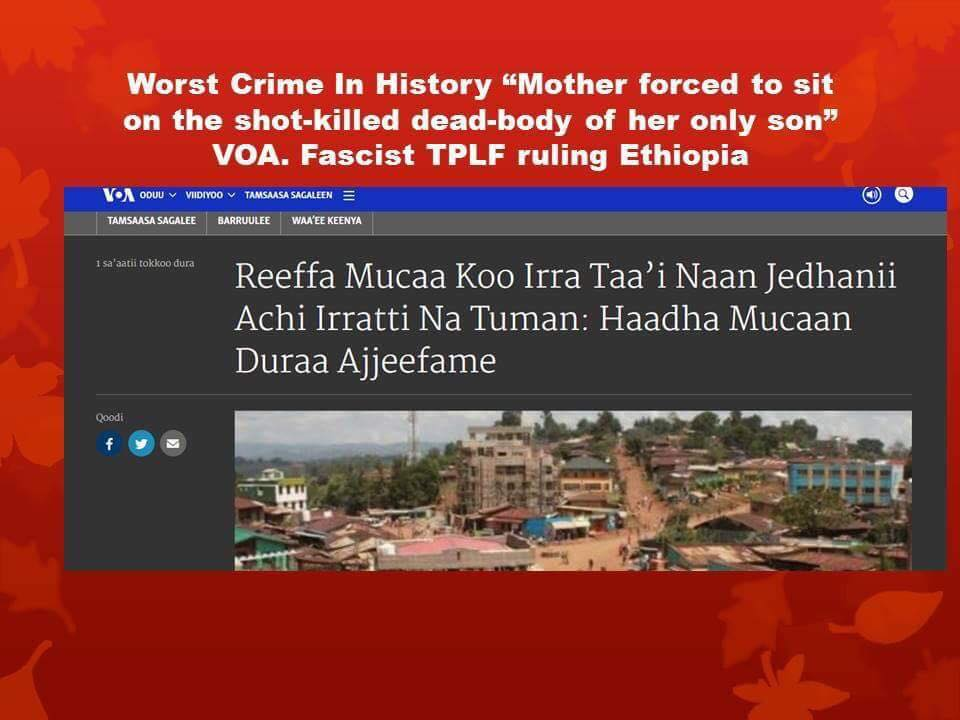
Despite the search and joint operation conducted by Kenyan army and Ethiopia regime military repeatedly before, it has been impossible to stop OLF activities in the south. And it is meaningless if it is thought to reverse the ongoing Oromia wide struggle to uproot the TPLF brutal regime once for all.

Like many failed joint past campaigns, there is no doubt that this campaign is also going to fail again. We believe that it’s clear to everyone at this juncture that as long as the Oromo questions ofbilisummaa (freedom) are not answered, the Oromo liberation struggle will not be contained.

The OLF strongly condemns military, security and other forms of assistance the Kenyan government provides to Ethiopia’s tyrannical regime. Because these acts target freedom fighters struggling for the just cause of their people and because it will contribute to depriving the Oromo of freedom and to perpetuating dictatorship and slavery for the majority, the OLF again strongly asks the Kenyan government to stop providing assistance to the Ethiopian regime. Kenya should not be fighting a proxy war in which it has no stakes just to prolong the life of a dictatorial regime of Ethiopia.

Kenya’s government’s participation in wars planned by Ethiopia has no use except expanding the conflict into a regional conflict. It is possible to learn from the long history of the Oromo people that the Oromo have practiced peaceful relations, respect, love and mutual co-existence with neighboring peoples. Violating this long history/code of brotherhood/ good neighborliness, the role of the Kenyan government should not be one of being a proxy war monger on behalf of the TPLF regime that is staggering to collapse because of concerted and unstoppable popular movements at home. The OLF would like to remind Kenya that it will be responsible for perpetuating dictatorship and injustice and slavery against the Oromo people in Oromia and Ethiopia if it proceeds with this an unwelcome alliance and proxy effort with the fragile military regime of Ethiopia. Kenya will be responsible for all the damages this unholy alliance will inflict on the Oromo people and the Oromo national liberation struggle. Kenya should not interfere in the domestic political affairs of Ethiopia by picking Ethiopia’s regime’s side against the will of the Kenyan people who would want a respected and sovereign Kenya.

We call on the Kenyan people to confront and protest repeated unjust and illegal actions by their government, which will negatively impact the relationships between the peoples of Kenya and the Oromo people and others fighting for freedom from military dictatorship in Ethiopia. Kenyan people have the obligation to hold the Kenyan government accountable; they have the responsibility to object to continued Kenyan interference in the domestic affairs of its neighboring country. This actions will harm Kenyan people, Kenyan history and the relationship of Kenyans with their neighbors.

Beyond silently watching the Ethiopian government shed the bloods of the peoples of the Horn of Africa who struggle for their freedom every day, if the Horn of African countries silently watch the military support Kenya gives to Ethiopia regime, history will judge these governments. We appeal to regional governments to stop the Kenyan government for acting as a proxy warrior for Ethiopia in a conflict that does not concern Kenya and its peoples altogether.

Victory to the Oromo People!
Oromo Liberation Front
September 20, 2016

The Huffington Post: The Ethiopian Intifada is a Response to extreme Internal Repression September 10, 2016

Posted by OromianEconomist in #OromoProtests.
Tags: , , , , , , ,
add a comment


Odaa OromooOromianEconomist


Quebec City Marathon winner, Oromo athlete, Ebisa Ejigu,   replicates Rio Olympic medallist’s #OromoProtests. p2Athlete Fraol Ebissa Won the Germany 10Km race and shows his solidarity with #OromoProtests. 4 September 2016. p2#OromoProtests iconic picture

Boycott the  fascist TPLF and its business. #OromoProtests  at  Naqamte  6 September 2016


The Ethiopian Intifada is a Response to extreme Internal Repression


By Yohannes Woldemariam  The Huffington Post, 15 August 2016


Ethiopians cite disputes over land, ethnicity and indiscriminate killings of protestors as the real causes of the Ethiopian “intifada”. But if one believes the Ethiopian spokesman, Mr.Getachew Reda, the protests in Gondar and Oromia are somehow remotely orchestrated and stage managed from Eritrea. Mr. Reda, with his outrageous claims, is increasingly sounding as clownish as the late Saddam’s information minister, comical Ali. He rarely addresses the real causes of the protests: the forceful incorporation of Wolkayt region into Tigray or the daylight land robbery in Oromia― all in the name of “development”. The government spokesman attributes the Oromo, Muslim, and the Wolkayt protests to infiltration from Eritrea, Saudi Arabia or Egypt. This false claim is another example of utter contempt and disrespect for the people by an arrogant government official who is out of touch with the heartbeat of the people.

It is true that there is no love lost between the ruling regimes in Eritrea and Ethiopia but it is absurd to believe that Eritrea, even it so desires can stir up the kind of uprising occurring in Ethiopia. It simply has no such power to do so. The border between the two countries is one of the most militarized borders in the world and one under heavy surveillance. An uprising of this scale cannot be initiated by an outside force. Such a claim is an insult to the pride and intelligence of the Ethiopian people.

The overwhelming narrative in the Western media portrays Ethiopia as a source of stability in a troubled region, as an economic powerhouse with a potential to surpass Kenya and join the club of countries like South Africa as well as a pacifying regional force and a bulwark against terrorism. There is little critical reporting on the country which means international readers have a skewed and partial picture at best. Unless one has the time and the motivation to dig deeper, one would not know that the Tigrean Peoples Liberation Front (TPLF), the dominant group within the ruling coalition, has in fact destabilized the region, rules over a deeply divided and aggrieved populace, which in actual fact is responsible for worsening terrorism in Somalia. The core of the TPLF is an ideological group which behaves like a chameleon depending on the audience and responsible for the atmosphere of tension and the expensive militarization of the region.

The TPLF has carried out egregious human rights violations; the regime has become even more repressive with each year by systematically limiting political space, taking 100% parliamentary seats in the lower house, detaining members, discrimination and harassment of Amharas, Muslims and the Oromo; it has all but blocked legal political participation for these groups.

Ethiopians of all stripes and not just the Oromo, are sick and tired of the regime in Ethiopia and the suffering they must endure challenging it while Ethiopia enjoys impunity and protection from the powers that be. The ongoing protests in different parts of the country are not connected or coordinated and appear to be spontaneous protests. Participants in the protests embody resistance to their increasing marginalization, which are ongoing and spreading. More recently, the protesters in Gondar proclaimed solidarity with the Oromo uprising in the South. For a regime that thrives on divide and rule, this solidarity is a worrisome sign and perhaps signals the beginning of its dissolution.

It also seems the tired scapegoating of Eritrea for its own domestic woes is increasingly ineffective. Imaginary scapegoats and bogeymen had served the regime well but there are now indications that ordinary Ethiopians are beginning to see that Eritreans are not natural enemies of Ethiopians, as the regime has depicted. This is a good sign that the populations are beginning to recognize the essential brotherhood of all the peoples of the region: this could be the leap of faith which was missing due to the influence of intensive propaganda by dictatorial rulers for the last six plus decades. Recent headlines also give hope that the era of impunity may end sooner than later. Headlines like these from major newspapers:

(1) Ethiopia must allow in International observers after Killings

(2) Ethiopia’s regime has killed hundreds. Why is the West still giving it aid?

(3) ‘A Generation Is Protesting’ in Ethiopia, Long a U.S. Ally

(4) America’s complicity in Ethiopia’s horrors

are new. The massacre that occurred over the first weekend of August may have jarred the radar of the international media but their overall failure to register the pattern of it has been the norm for almost as long as the TPLF has been in power. The genocidal policies towards the Anuak in the Gambella region received little international publicity. Rioting Muslims were effectively and brutally silenced. The TPLF marginalized both the legal and the extra-legal opposition arresting prominent leaders like Professor Bekele Gerba, a prominent Oromo intellectual and human rights activist. Professor Bekele Gerba and other prominent leaders are protesting their treatment in detention by staging a hunger strike.

Resentment to TPLF rule extends to the movement’s home base of Tigray, where most of the population feel left out by the TPLF elites interested only in making money and investing it in the capital or abroad.

Despite a dishonest attempt to externalize the issue, Ethiopian Muslims, who number anywhere from 40% to 50% of the population, and the Oromo have historically been marginalized, and the protest is very much homegrown and rooted in a long list of grievances. When it comes to the thugs running Ethiopia today, whatever happened to the doctrine of the Responsibility to Protect? Rewarding the TPLF with a non-permanent membership in both the Security Council and the UN Human Rights Council, despite its dismal human rights record, is cruel and cynical.

This tribalist regime must go and the criminals at the helm must answer for their crimes. A first step is investigation by aindependent observers as recommended by the UN Human Rights Chief Zeid Ra’ad al-Hussein. Predictably and true to character, the TPLF regime is refusing to allow in neutral outside UN observers. The regime has a pattern of ignoring international norms and laws, when it doesn’t suit it.

The Ethiopian people desperately need relief and healing. The region needs to be spared from this dangerous and fanatical warmongers. Ethiopia deserves imaginative leaders who can prevent fragmentation and are cognizant of the complexity of the society, who can see beyond tribe, and discern and appreciate the mosaic of ethnicities that make the country beautiful and rich. The West should stop enabling this murderous thugs. China should stop bailing out this regime and other African dictators and begin to care about the human rights of Africans!

The regime in Ethiopia (Fascist TPLF) has lost any semblance of humanity September 10, 2016

Posted by OromianEconomist in #OromoProtests.
Tags: , , , , , , , , ,
1 comment so far

Odaa Oromoo

OromianEconomistethiopias-regime-tplfs-crime-against-humanity-a-mother-was-forced-to-sit-on-a-dead-body-of-her-child-killed-by-tplf-forces-and-tortured-7-september-2016-in-dambi-doollo

 It is an act so savage, so devoid of any norms and values cultural or otherwise, it reflects the psychopathic behavior of forces that do the killings in Ethiopia.Tgiray Nafxanya Abaye Tsehaye DulachaThe TPLF Corruption network

The regime in Ethiopia has lost any semblance of humanity

By Alem Mamo, Nazret.com, 9 September 2016


Prime Minister Hailemariam Desalegn. Flickr photo


“They killed my son, and they forced me to sit on his dead body while they were beating me.”

If there is any doubt in one’s mind that the regime in Addis Ababa would come to its senses and respect the dignity and sanctity of human life, what happened this week in a western town of Dembi Dolo should put that doubt to rest. An act so cruel, so abhorrent, not just humans, it makes the rocks weep. A mother finds her sixteen-year-old son’s lifeless body covered with blood in the middle of the street, shot by forces loyal to the regime. Arriving at the scene, a mother, as all mothers do, began wailing while holding her son’s body. What followed next was hard to describe and painful to comprehend to any one with a minimum degree of decency. The same forces loyal to the regime ordered the mother to sit on her sixteen-year old son’s dead body as they mercilessly hit her.

It is an act so savage, so devoid of any norms and values cultural or otherwise, it reflects the psychopathic behavior of forces that do the killings in Ethiopia. Ephrem Hailu, the sixteen- year old boy, was simply in his daily routine like any other sixteen-year-old, playing and doing what sixteen-year-olds do. His life was cut short for no apparent reason except the psychopathic killing machines called Agazi have to kill someone to satisfy their addiction of killing.

The regime in Addis Ababa is at war with the Ethiopian people, young and old, men and women are being terrorized and murdered in broad daylight for simply demanding freedom of expression, assembly and respect to the rule of law.

“I was in my house knowing that my son was out playing with his friends,” said Ephrem’s mother. “Upon hearing gunshots downtown the boys, including my son, began running and that is when they shot and killed my son.” She said sobbing “He wasn’t just my son; he was looking after me like a father; he did manual labour work to support me. He was my only hope, my only lifeline. I didn’t have money for his funeral; my neighbors raised money for the funeral. I sat holding his body with my little girl by my side worried they might shoot my little girl, too.”

This is the dark and horrifying reality in the four corners of Ethiopia. Mothers are terrified to send their children to school because they have no guarantee they would return home safe. If they escape from the bullets they might not avoid the concentration camps where they are tortured and exposed to malaria infection without any proper medical service.  The suffering of the Ethiopian people, particularly the young has reached an intolerable climax. While all peace and freedom loving people in Ethiopia and around the world mourn with Ephrem Hailu’s mother, it is also a reminder that the only way to have safety and security is by ridding the country from a brutal authoritarian rule once and for all.

Recently, I posted a piece titled “Refusing to be adversaries.” In this piece I was given a short poem which was written by a young man who lost his best friend to forces loyal to regime. I was moved by the poem because it describes the sorrow and pain of a mother whose child was gunned down. I have re-posted the same poem (below). It was originally written in Amharic. I translated it to English.

Tears of the moon

Gripped with an overwhelming sorrow

A mother says “I have no tears left

I have cried until I no longer see

I have wailed until I have no voice left

What is sight for, if I cannot see my child?

What is a voice for, if he cannot come to me when I call his name?

Here we have run out of tears.

Instead, our rocks, trees and fields are crying for us,

Here the birds no longer sing,

As they are mourning with us in silence.

The sun, too, weeps as we languish in the burning shadows of oppression,

And the moon sheds tears with us at night, as we hide in our blood stained forest.

When will this end?”

She asks,

“When will we relearn to laugh again?

When will peace reign?

When will the true spirit of humanity return to this land of our ancestors again?

We are collectively tired of oppressionWe are people of an exhausted nation.”


Alem6711@gmail.com


Seeker Daily: Ethiopia Is On The Brink Of Collapse. Here’s Why September 2, 2016

Posted by OromianEconomist in #OromoProtests, Ethiopia's Colonizing Structure and the Development Problems of People of Oromia, Afar, Ogaden, Sidama, Southern Ethiopia and the Omo Valley.
Tags: , , , ,
add a comment


Odaa OromooOromianEconomist

Ethiopian regime guilty of crime against humanity


https://www.youtube.com/watch?v=pUrEqYHOQ1k

Oromia: #OromoProtests Alerts! Crimes Against humanity: Fascist Ethiopia’s regime has continued with mass killings of Oromo children, mass arrests and genocide against Oromo people August 20, 2016

Posted by OromianEconomist in #OromoProtests.
Tags: , , , , , , , , , , ,
4 comments

Odaa OromooOromianEconomist


stop killing Oromo People


The cruel Fascist Ethiopia’s regime (TPLF) is killing Oromo children on daily basis. Since 6 August 2016, over 25,000 Oromo nationals of all walks of life have been  in military concentrations/torture camps. The figure is rising daily. This figure does not include the over 50,000 detained before 6 August 2016.

Targeted killing continues across Oromia. This is  Galataa Admaasuu, a young man of age 19. He was returning home after watching a soccer game at a cafe in the evening of August  19, 2016 when the regime’s force with  sniper bullets hit him 3 times and killing him on spot in front of Dambi Dollo Hospital, in Qelam Wallaggaa. In the past few days we have been receiving several such targeted killing using snipers or by staging night time raid to homes.


Kun Galataa Admaasuu  dargaggeessa umri 19 kan galgala kaleessaa osoo kubbaa laalee galaa jiruu loltuun Wayyaanee rasaasan dhahee fuuldura Hospitaal Dambi Doollootti ajjeeseedha.


The body of Galataa Admaasuu

fascsit Ethiopia's regime security forces gunned down Galataa Adimaasuu, an 18 years old Oromo boy with three bullet in Oromia, Dembi Dollo town, Dhanqaa area.Cruel and fascsit Oromo regime discrimnates and killing Oromo people, children, men, women, old and young just because they are Oromo

‘Because I am Oromo’: Sweeping repression in the Oromia 


16 years old from Fantaallee kidnapped by Ethiopia’s regime fascist forces on 17 August 2016 his whereabouts is unkown


Kun barataa kutaa sagal Marraa Hawaas kan hiriira Hagayya 6 bara 2016 Aanaa Fantaallee magaalaa Mataa-Haaraatti geggeeffame irratti nama 29 waliin qabamee mana hidhaa Mataa-Haaraatti dararamaa ture. Barataan kun kaleessa mana murtitti dhiyaannan umrii 16 waan ta’eef akka bayu manni murtii murteesse. Garuu, warri seeruma ofii baafattettuu hin bulle, ukkaamsitee bakka hin beekamne geessitee turte. Odeessi nu gahe akka ibsutti, yeroo ammaa mana hidhaa Martitti dararaan irra gayaa jira.

Oromo boy, 16 year old from Fantaallee kidnapped by Ethiopia's regime fascist forces on 17 August 2016


Dr Alamuu Taaddasaa, medical doctor at incinnii hospital in Oromia kidnapped by Ethiopia’s regime fascist forces on 16 August 2016 and his whereabout is unknown

kun Dr Alamuu Taaddasaa jedhama. Hojjetaa hospitaala Incinnitii, Hagayya 16 bara 2016 waree booda lukkulee wayyanetiin qabamee essa akka isa buusaan dhabnee jirra jedhan.

Dr Alamuu Taaddasaa, medical doctor at incinnii hospital in Oromia kidnapped by Ethiopia's regime fascist forces on 16 August 2016


Obsineet Baqalee, young Oromo woman, worker of Ethio telecom. Kidnapped on the Grand #OromoProtest, 06 August 2016 demonstration inFinfinnee, her whereabouts and health is unknown.

Obsineet Baqalee, young Oromo woman, worker of Ethio telecom. Kidnapped on the Grand #OromoProtest, 06 August 2016 demonstration inFinfinnee, her whereabouts and health still remains mystery


Jamaal Abdalla Aadam, Oromo boy, star student, from Calanqoo kidnapped by Ethiopia’s regime fascist forces on 6 August 2016

Barataa Jamaal Abdalla Aadam jedhama. Jiraataa Harargee Bahaa Aanaa Meettaa magaala Calaanqooti. Barataan kun qoruumsa kutaa 12ffaa qaphxii 467 kan fide yoo ta’uu, qaphxii isaa ille arkuu hin dandenye. Eega gaafa hiriira guddicha hagayya 6 irraa qabamee qeerroo baayyee waliin gara magaalaa qullubbii geeffame, achitti rakkisa jiran.

Jamaal Abdalla Aadam, Oromo boy, star student, from Calanqoo kidnapped by Ethiopia's regime fascist forces on 6 August 2016


KADIR MOHAMMAD ABDULLAA , Oromo national from East Haraghe, Gursum, Funyaan Hujubaa town in Oromia state kidnapped by Ethiopia’s regime fascist forces on 15 August 2016. His whereabuts is unknown.


Godina harargee bahaa Aanaa gursum magaalaa Funyaan Hujubaa keessatti hiriira siitu kakaase jechuudhaan guyyaa Hagayya  15 bara  2016tti  irraa kaasee hanga ammaatti achi buutee dhabneera maqaan isaa KADIR MOHAMMAD ABDULLAA jedhama.

KADIR MOHAMMAD ABDULLAA , Oromo national from East Haraghe, Gursum, Funyaan Hujubaa town in Oromia state kidnapped by Ethiopia's regime fascist forces on 15 August 2016. His whereabuts is unknown


Mallicha Guyo, former lecturer at Dire Dawa University and currently a graduate student of Constitutional & Public Law at AAU is among the many peaceful demonstrators unlawfully detained during the Grand #OromoProtests,  6th of Augus 2016 in Finfinnee and still kept in regime’s secrete detention centres.

Akkuma beekamufu hiiriiraa guddicha sanbata xiqqaa sani irratii namoota kumatamat lakkawaamu achii buute dhaban hamami hin jedhamu…namni maqaan isaa Malicha Guyyoo jedhamu kan barsiisa university Dire dawa tii damee seeraa barsiisuu amma MA university finfinnet constitutional and public law baracha Jiru achii buute isaa dhaban…..mee nama qoonqoo isaa qabu faa yoo argate inbox na godhii.


Godina Wallaggaa Lixaa Anaa Baaboo Gambeel keessatti gaafa 06 /07/2016 hirirraa guutu Oromiyaattii ta’e irraattii anaan Baaboos hirmachuun mormii jabaa dhageessisanii tura sanan wal qabatee namoonnii hedduun hiidhamuufi manii hiidhalee hankakee mana barumsaatii uummattaa hiidha akka turan gabaasun keenya ni yaada tamaa ammaas namoonnii hedduun hiidhaatii dararamaa yoo jirata dargagoo lamaa
1 Jafar Caaliif
2 Jafar Qawwee kan
jedhaman immoo mana hiidhaatii basanii essa akka isaan geessan hin beekamu! Uummanniis dararraa guddaa keessa jira!


An Oromo national Taagal Daaqaa Waaqgaarii is among thousands of peaceful protesters who have been unlawfully detained by the TPLF security agents during the Grand #OromoProtests rally in the capital Finfinnee, on the 6th of Aug, 2016. It’s believed that Mr. Tagal & thousands of others unlawfully detained during these peaceful protests are currently being tortured at a Military Camp called Awash Arba, in the remote Afar regional state. The regime is torturing thousands to death in such a remote military barricades across the country.

Taagal Daaqaa Waaqgaarii, is among thousands of peaceful protesters who have been unlawfully detained by the TPLF security agents during the #GrandOromiaRally in the capital Finfinnee, on the 6th of Aug, 2016.


Oromo youth, Yaasiin Xaahaa, original from Jimma, kidnaped by fascist Ethiopia’s regime forces on August 6, 2016, Grand #OromoProtests Rally in Finfinnee. His whereabouts unknown.

Suuraan asii gadii kun Yaasiin Xaahaa jedhama. bakki dhaloota isaa Jimmaa dha hiriira guutuu Oromiyaa gaafa sanbataa xiqaa 6/8/2016 tahe irratti ganama Finfinnee nannawa istediyomatti diinaan qabamee tumamaa achi buteen isaa hanga ammaatti hin dhagahamne, oduu isaa wanta dhagahamee hin jiruu.

Oromo youth, Yaasiin Xaahaa, original from Jimma, kidnaped by fascist Ethiopia's regime forces on August 6, 2016, Grand #OromoProtests Rally in Finfinnee. His whereabouts unknown


Young Oromo woman, Doii Itanaa, kidnaped by Agazi forces  on 6 August 2016, Grand #OromoProtests, her whereabouts unknown

Mucaayoon kun Doii Itana jedhamti, Hiriira guddicha Gaafa Sanbata tikka 6-8-2016ti Guutuu Oromiyaa irratti yeroo godaame akaa oduu naagayeeti Obboloyota isheefii hiriyoyota ishee wajjin hirmaattee,gaafaasuuma obboloyashee biraa qabamtee humnaa waraana wayyaneen (Agazi ) jedaamuun Ukkaafamtee eessa akka buutee hinbeekaamu.

Young Oromo woman, Doii Itanaa, kidnaped on 6 August 2016, Grand #OromoProtests, her whereabouts unknown


Giddiisaa Kuufataa, Oromo national from Dandi, Oromia, kidnapped by Agazi forces and his where about is unknown.

Maqaan isaa Giddiisaa Kuufataa jedhama, hojjetta waajjira Dhimma Dubartoota fi Daa’immanii aanaa Dandii , yoo ta’u FDG yeroo jalqabaaf magaalaa Giinciitti jalqabee irratti torban muraasaaf mana hidha aanaa dandii ture, manni murtii walaabaan gadi lakkiise, gaafa guyyaa 10/13/2008 (ALH) halkan keessa naannoo sa’aatii 5:00 mana jireenya isaa keessa loltuu wayyaaneetiin fudhatame

Giddiisaa Kuufataa, Oromo national from Dandi, Oromia, kidnapped by Agazi forces and his where about is unknown


Mo’iboon Baqqalaa was kidnapped by Fascist Ethiopia’s regime from Jimma University in 2014 and suffering in Qilinxoo torture camp.

Kan suura armaan gadiitti argitan kun Mo’iboon Baqqalaa jedhama dhalootaan Wallagga bahaa aanaa Kiiramuu dha. bara 2014 mormii master pilaanii gaggeeffameen shakkamee Jimma university Qilinxootti dabarfame….murtii malees waggaa lama kan tahu erga hidhamee booda barana ji’a sadaasaa keessa lakkifame bahee beellama deddeebi’aa jira Finfinneetti. Achumaan alana beellama wiixata darbeef deemnaan Roobii darbetti dabarsan, ammas roobiirraa gara Jimaata har’aatti dabarsan. har’a dhaddacharratti yakkamaa dha jedhanii achumaan Qilinxootti dabarsan!
Haadhoo ofii waaqni si waliin haa ta’u oromummaan yakka taate erga ta’ee!

Mo'iboon Baqqalaa was kidnapped by Fascist Ethiopia's regime from Jimma University in 2014 and suffering in torture camp

Oromo elder, kidnaped by Ethiopia’s fascist security forces after 6 August 2016 and his whereabout is unknown.

Obbo Maammoo Gadaa eega guyyaa Hiriirri Magaala Adaamaatti godhamee booda wayyaaneen qabamee as buuteen isaa dhabame jedha odeeffannoon.


Oromo elder, kidnaped by Ethiopia's fascist security forces after 6 August 2016 and his whereabout is unknown


Young Oromo national Akaaluu Mulugeetaa Olaanii, kidnaped by fascist Ethiopia’s regime forces on 6 August 2016 (Grand #OromoProtest) his whereabouts is unknown.

Akaaluu Mulugeetaa Olaanii jedhama. Dargaggoo Oromoo hiriira Finfinnee Sanbata darbee (06/08/16) irratti warra achi buuteen isaanii dhabame keessaa tokko.

Oromo national Akaaluu Mulugeetaa Olaanii, kidnaped by fascist Ethiopia's regime forces on 6 August 2016 (Grand #OromoProtest) his whereabouts is unknown


This is Kebede Gemeda, a 70 year elder. He was arrested at the Grand Rally in Finfinne. He was beaten so badly that he lost one of his eye sight completely. They thought he was dying so they took him out of the military camp and threw up near his house.

Kebede Gemeda, 70 years old Oromo man. He was arrested at the Grand Rally in Finfinne. He was beaten so badly that he lost one of his eye sight completely.


Oromo national Jibriil Mohaammad, from Jimmaa Arjo shot four times at gun point by Agazi on 6 August 2016 at Grand #OromoProtests.

Maqaan isaa Jibriil Mohaammad jedhama.Kaninni itti dhalatee guddate godina Wallagga bahaa aanaa Jimmaa Arjoo bakka gabaa Efrem jedhamu yemmuu ta’u ,hiriira yeroo darbee guutummaa oromiyaa keessatti finiinaa ooleen wal qabatee sababa gaaffii mirgaa gaafateef jecha rasaasaan qaama isaarraa bakka afur rukutamee yeroo ammaa kana hoospitaala naqamtee keessatti wallaanamaa akka jiru maddeen keenya ifa godhu.

Oromo national Jibriil Mohaammad, from Jimmaa Arjo shot four times at gun point by Agazi on 6 August at Grand #OromoProtests


#Oromoprotests alert: The regime now using collage campus as concentration camp in addition to several military camps. For instance some 25000 protesters arrested in Hararge have been taken to Kombolcha Agricultural College. Their head has been shaved and they are crammed into classrooms in hundreds.
NOTE: These colleges are mostly built and run by money donated from American and European tax payers. So tell your representatives. Jawar Mohammed, OMN reports, 20 August 2016.


VOA Afaan Oromoo reports how fascist  TPLF Ethiopia’s regime soldiers killed a man named Hora Wajiso in his own home and then imprisoned his wife with her infant child.

Abbaa Warraa Ajjeesanii Haadha Warraa Immoo Daa’ima xiqqoo Waliin Hidhan.

VOA Afaan Oromo Reports Hagayya (August) 18, 2016


Adama Tulluu map


Dr Gabayyoo Jaallataa medical specialist in Naqamte, Oromia gunned down by fascist Ethiopia’s regime forces.

Dr.Gabayyoo Jaallataa Waraana Wayyaanee Agaaziin Rukutamuun Wareegaman.

Maqaan isaa Dr.Gabayyoo Jaallataa jedhama.
13912905_10102477986247493_4426160628839170158_n13932770_10102477993473013_1430970379927856315_nKaninni itti dhalatee guddate godina Wallaggaa lixaa aanaa Gullusoo jedhamtu keessatti.
Ga’een hojii isaa Dookteerummaadhaan kilinika Abdii kan jedhamu magaalaa naqamtee keessaa naannoo Hoospitaala naqamteetti kan argamu keessatti ramadamee hojjechaa nama tureedha. Dr.Gabayyoo jaalataa xinnummaa isaa irraa ka’uun nama diinaaf harka hin laanne nama oromummaa isaatti boonee jiraatuu fi nama ilmaan oromoo akka lubbuu isaatti jaallatu keessaa nama tokko ture.20160815143921
Haata’u malee yeroo darbe hiriira guddicha magaalaa naqamtee keessatti akka abidda saafaa belbelaa ooleen wal qabatee sababii inni oromummaa isaa jaallatuuf  jecha akkasumallee ati dhoksaadhaan qeerroo mana hojii itti ramadamtee hojjettu keessatti ol seensistee walla’aansa gochaafii jirta maqaa jedhuun humni agaazii guyyuma hiriira guddichaa sana  bakkuma hojiisaatii deemanii rasaasa itti roobsanii deemanii jiru.
Haa ta’u malee dr  Gabayyoon yeroo sanaaf rukutamee hatattamaan gara hoospitaala naqamteetti ergamee yaaliin deddeebiin torban tokkoo oliif osooma godhamaafii jiruu hoomaayyuu fayyuu hin dadhabuurraan kan ka’e guyyaa har’aa jechuun Hagayya 15/08/2016 du’aan addunyaa kanarraa boqotee jira. Reeffi isaas gara bakka dhaloota isaa kan taate godina wallagga lixaa  magaalaa gullusootti ergamee jira.
Qabsa’aan du’us qabsoon itti fufa.


on 15 August 2016 night, fascist Ethiopia’s regime Agazi soldiers broke into home of Hora Fajiso, and killed him on spot in Batu town, East Shawa.

Bulchiinsa magaalaa Baatuu guyyaa 09/12/2008 halkaan sa’aati 10:00 ti Dargaggoo Hora Fajjisoo sababii meeshaa woraan qabda jedhuun marsaanii warranaa mana jirenyaa isaati itti banuun kan ajeesaan yoo ta’u akka ajeefamu kan haala mijessee obbo Kadir Gammada I/g W/ra Bulchiinsa fi Nagenyaa Magaalaa Baatuu ta’u bekkame jira ,dhukaasa godhameen Poolisii tokkoo yoo Ajefamuu tokko rukkutame jira.


Agazi soldiers broke into home of Hora Fajiso, and killed him on spot in Batu town, East Shawa.


This is martyred Ahmadoo who was killed by TPLF Ethiopia’s regime fascist Agazi forces in Haramaayaa town, East Hararge on 6 August 2016, Grand #OromoProtests. May his soul rest in Peace!

Kun wareegamaa keenya barataa Ahmadoo, kan hiriira guddaa Oromoo godina Harargee Bahaa, magaalaa Haramaayaa, keessatti Hagayya 6 bara 2016 waraana Wayyaaneen wareegame.
Gootota Oromoo kumaatamaa wajjin nagaan nuuf boqodhu!
Qabsoon hanga bilisummaatti itti fufa!!
Rabbi lubbuu isaa haa qananiisu.


This is martyred Ahmadoo who was killed by fascist Ethiopia's Agazi forces in Haramaayaa town, East Hararge on 6 August 2016. #OromoProtests


Abduselam  Ahmed, a succesful  Oromo businessman in haramaya was assassinated by tplf fascit Ethiopias regime on 7 August 2016.

Abduselam Ahmed oromo businessman in Haramaya was assassinated by TPLF fascit Ethiopia's regime. 7 August 2016


The other victim on the protest held in Robe, Bale on the Grand #OromoProtests  on 6 August 2016 was Zubeyr Kadir as you can see on the picture bellow! May he join Oromo martyrs in heaven!!!


Zubeyr Kadir gunned down by Ethiopia’s regime fascist forces on 6 August 2016 in Robe Bale, Oromia.


Namni lammaffaan hiriira guddicha magaalaa Roobee-Baaletti wareegame maqaan isaa Zubeyir Kadiir jedhama. Rabbi warra jannataa isaan haa taasisu!

Zubeyr Kadir gunned down by Ethiopia's regime fascist forces on 6 August 2016 in Robe Bale, Oromia

#OromoProtests, Must watch Al Jazeera new video News of August 20, 2016, Hundreds have been killed by agazi police forces during a peaceful demonstration across the country (Oromia, Ethiopia).


Darajee Birbirsaa, Oromo national, civil engineering graduate kidnapped by fascist forces on 19 August 2016 and his where about is unknown.

kuni darajee birbirsaa jedhama. bara 2015 wallaga university irra civil engineering dhan eebifame kan turee yoo tauu dalagaa male hanga ammaatti magaala Itayya godina arsi keessa turee haa tauu malee akka lakkobsa Habashaatti Hagayya 12 bara 2008  poolisi feedaralattin ergaa fudhatame booda eessa akka dhaqee hin beekamuana sirreessa aanaa fi goodinaa keesattis hin argamnee.isaa walii is namooni abdalla dasee jedhamuu fi muktar abdoo jedhamuu dhabanni jiraan.

Darajee Birbirsaa, Oromo national, civil engineering graduate kidnapped on 19 August 2016 and his whereabout is unknown

Jundii Abboomsaa Badhaasoo, Oromo business man from Arsi, Martii district  kidnapped on 17 August 2016 and his whereabout is unknown


GodinaArsii Bahaa Aanaa Martii ganda Golagotaa keessaa nama Jundii Abboomsaa Badhaasoo jedhamu guyyaa dheengaddaa mana murtii irraa waraqaa fidanii mana isaatti seeraan sir barbaanna jedhaniinii ani Wayyaaneetti hin bulu reeffa kiyya malee jiraa kiyya asii na hin fuutan jedheenii gootummaan dura dhaabbate. Achii jaarsoliin fuudhanii magaalaa geessanii halkan kalee namoota 16 waliin halkan saa’aa 9 makiinaa lamaan fe’anii achi buuteen hin beekamne. obbo Jundii Abboomsaa Badhaasoo abbaa qabeenyaa lafa bishaan hektaara hedduu yoo ta’u, akkasumas eessuma wallisaa Ibroo Ibsaa; kan akka abbaatti guddisee asiin gahee hanga har’aatti gargaaree sirboota hedduu hojjisiise.

Jundii Abboomsaa Badhaasoo, Oromo business man kidnapped on 17 August 2016 and his whereabout is unknown


Aman Aliyii Xaha, Oromo national was shot at gun point by fascsist Ethiopia’s regime forces on 6 August Grand #OromoProtests in  Haramayaa and died on 20 August 2016.
Godina Haragee Bahaa Haramayaa keessatti Hirira guddicha Hagayya 6, 2016 irrati dhahamee harra lubbuun isaa dabarte.”

Aman Aliyii Xaha, Oromo national was shot at gun point by fascsit Ethiopia's regime forces on 6 August Grand #OromoProtests and died on 20 August 2016


‪#‎OromoProtests‬ ALERT: We are hearing ongoing mass killing including assassination of prominent businessmen in Awaday and other Oromo towns. It is very hard to fully verify what we hear via telephone as internet is completely shut off in Ethiopia, and electricity is cut off from most towns in Oromia. The whereabout of hundreds of university lecturers, doctors and businessmen is unknown by their parents. A prominent businessman named Sheko was assassinated by the military in his own home in Aawaday. If the influx of information is confirmed, a systematic ethnic cleansing, if not genocide is being committed against the Oromo. The Oromo around the world must be prepared to hear the worst and respond in kind.


For more click here  at: Oromia: Alert! Crimes against humanity: Mass torture and killings are going on against Oromo people in Ethiopia.


Click here to read:- Widespread brutalities of Ethiopia’s Regime (Fascist TPLF) against the Oromo people in different parts of the State of Oromia July 3, 2016


OSG’s letter to United Nations Human Right Council : Ignoring a wave of unlawful killings and enforced disappearances in Oromia is fueling further catastrophic in the region. osg-call-for-urgnet-action


HRLHA Urgent Action


Human rights League of the Horn of AfricaEthiopia: State – Sponsored Terrorism and Military Brutality in Oromia HRLHA Urgent Action

August 17, 2016

Ethiopia, a UN Human Rights Council member since 2011, and an elected member of the UN Security Council as of 2017 is committing state- sponsored terror against the Oromo nation in violation of the UN Human Rights Council responsibility for the promotion and protection of all human rights and the UN Security Council responsiblities for maintaining international peace and security as well as the human rights treaties it has signed and ratified. The government- trained and highly funded Agazi force shot Gebeyehu Jalata, a medical doctor, several times at his personal clinic in East Wallaga Nekemt town on August 6, 2016 while he was allegedly treating wounded protestors at his clinic. Dr. Gebehu Jalata was taken to the Nekemt hospital for treatment and died on August 15, 2016 . The Agazi killing squad also invaded Mr. Hora Fajisso’s home- he is a farmer in East Showa Zone Adami Tulu district, Batu town- and murdered him in his bed in front of his three children and his wife at 5:00 am on August 16, 2016. During the grand nationwide Oromo nation protests on August 6,2016, the Agazi force killed at least 70 people and arrested tens of thousands of others in Oromia Regional State.  1-ethiopia-government-sponsered-terrorism
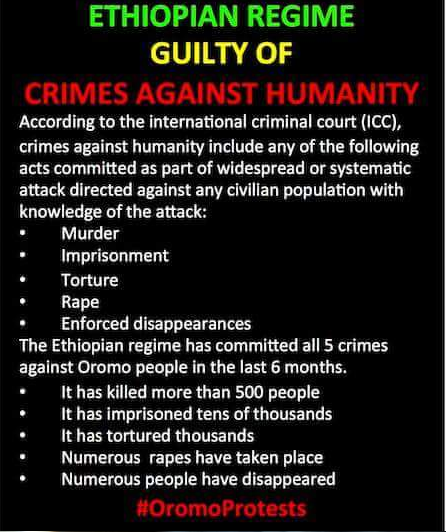

Among Oromo nationals killed on August 06, 2016 the Human Rights League (HRLHA) reporters managed to get the names of the following 65 people:-

Among Oromo nationals killed on August 06, 2016 the Human Rights League (HRLHA) reporters managed to get the names of the following 65 peopleRead more at:-  1-ethiopia-government-sponsered-terrorism

Al Jazeera Inside Story – What is triggering Ethiopia’s unrest? #OromoProtests August 15, 2016

Posted by OromianEconomist in #OromoProtests.
Tags: , , , , , ,
add a comment


Odaa OromooOromianEconomist


stop killing Oromo People#OromoProtests, #GrandOromiaProtests, 6 August 2016, all over Oromia. Dhaadannoo. p2


Calls for an international investigation in Ethiopia have surfaced after more than 100 people were killed in demonstrations.It is a conflict that has led to 400 deaths since November, 100 of them in the last week alone, according to human rights groups.The Ethiopian government is cracking down on ethnic Oromos and Amharas, who are calling for political reforms.Human rights groups have called the reponse ruthless. And the United Nations wants to send international observers to investigate.Ethiopia has denied that request, saying it alone is responsible for the security of its citizens. But what can be done to ensure the Ethiopian government respects human rights?Presenter: Folly Bah ThibaultGuests:Getachew Reda – Ethiopian communications affairs minister.Felix Horne – Ethiopia reseracher for Human Rights Watch.Ezekiel Gebissa – Profesor of History and African studies at Kettering University.- Subscribe to our channel: http://aje.io/AJSubscribe– Follow us on Twitter: https://twitter.com/AJEnglish– Find us on Facebook: https://www.facebook.com/aljazeera– Check our website: http://www.aljazeera.com/

Oromia: Alert! Crimes against humanity: Mass torture and killings are going on against Oromo people in Ethiopia. August 14, 2016

Posted by OromianEconomist in #OromoProtests.
Tags: , , , , , , ,
2 comments

Odaa OromooOromianEconomist


stop killing Oromo People#OromoProtests, #GrandOromiaProtests, 6 August 2016, all over Oromia. Dhaadannoo. p124#OromoProtests, #GrandOromiaMarch 6 August 2016, all over Oromia. Dhaadannoo. p9


#OromoProtests Alert! Mass torture and killings are  going on against Oromo people in Ethiopia. Oromo children are subjected to torture and mass killings by fascsist Ethiopia’s regime (TPLF/Agazi force.

The  New York Times  was able to picture in video camera while fascist cruel Ethiopia’s regime (TPLF/Agazi) was  attacking peaceful Oromo Protesters in Finfinnee (Addis Ababa), Oromia on 6 August 2016, Grand #OromoProtests.  

Genocide is going on against Oromo people. On 6 August 2016 Protests held over 200 towns and cities in Oromia state wide. All over, Oromo demonstrators demanding political change in Ethiopia have been met with violent resistance by the fascist TPLF Ethiopia’s regime.It has been reported that over 283 innocent Oromo have been gunned down by cruel fascist TPLF Ethiopia’s regime ( https://oromianeconomist.com/2016/08/13/oromia-dhiigi-mucaa-kootii-dhangalaee-hin-hafu-oromiyaan-ni-bilisoomti-akeeka-ummatni-oromoo-bakkaan-gahuuf-murteeffate/  ). These are in addition to over 600 people the regime has murdered since November 2015. Since  6 August 2016, over 4000  people are being tortured in Awash Arba concentration camp alone. This figure does not include thousands and thousands in thousands TPLF torture camps.

Alert, mass killings and torture is going on against Oromo people in Ethiopia.

Fascist Ethiopia’s regime’s detaining and torturing Oromo children. This photo was taken at Iyasu IV prison in Gara Mulata, East Hararge, Oromia. 13 August 2016


Fascist Ethiopia's  regime's  detaining and torturing Oromo children. This photo was taken at Iyasu IV prison in Gara Mulata, East Hararge, Oromia. 13 August 2016. p2Fascist Ethiopia's  regime's  detaining and torturing Oromo children. This photo was taken at Iyasu IV prison in Gara Mulata, East Hararge, Oromia. 13 August 2016Fascist Ethiopia's  regime's  detaining and torturing Oromo children. This photo was taken at Iyasu IV prison in Gara Mulata, East Hararge, Oromia. 13 August 2016. p1

This is picture is a photo of martyred birght Oromo teenager school girl Mamiituu Hirphaa who was killed by cruel fascist Ethiopia’s regime Agazi forces in Ambo town, West Shawa, Oromia on 6 August 2016.

This is martyred Oromo teenager girl  Mamiituu Hirphaa who was killed by cruel fascist Ethiopia's regime Agazi forces in Ambo town, West Shawa, Oromia on 6 August 2016


Fascist Ethiopia’s regime forces attacking 80 years Oromo elder in Arsi, Oromia state, captured by citizen journalist camera and social media.

#OromoProtests, an Oromo man, 80 years old confronting fascist Ethiopia's regime, Agazi forces, Arsi, Oromia, 12 August 2016

A full scale military massacre has-been conducted by ethiopias fascsit regime in Naqamte East Wallaggaa, Oromia. The is picture is a young Oromo gunned down by the regime forces. 6 August 2016. Grand #OromoProtests.

Grand #OromoProtests, Grand ‪#‎OromoProtests‬ full scale Military massacre  has been conducted by Ethiopia's fascsit regimei n Naqamte, East Walaga. 6 August 2016 pcture

These  are tips of the iceberg of  genocidal crimes of Fascist (TPLF) Ethiopia’s regime.


Hagayya 6 bara 2016 qabee gidiraa lammiin Oromoo  Finfinnee keessaa guramaani hidhaman keessa jiraan: Warra hidhamee gidramaa turee  bahe kessaa tokko akka dubbatetti:-


Hiriirra Guddicha Finfinneetti geggeeffame irratti ilmaan Oromoo 4000 tahan qabamanii Awash Sebat Kiilo kaampii jedhamutti hidhamanii jiru. Akkamitti qabaman, eenyutu qabeen, balaa akkamiitu irra gaheen, yoom Awash geeffaman? Yaadannoo namni jara qabame san keessaa tokko tahe naa erge armaan gadii obsaan dubbisaa.
“Jalqaba gafaa hirirra finfineetii banuu waan isaan godhan media iratti argitaanitu. guyyaa sana namaa heduutu qabamee namni qabame immoo kaan hirirra irraatti kaan daandii utuu deemaa jiruu kan immoo kutaa magaala finfinee garagaraa keessaatii ergaa qabamanii seera jala galaan bodaa garuu reebichaa ilmoo namaaf hin maaletuu irraatti rawwaate. fkn anii nama guyyaa sana qabamee keessaa nama tokkon ture. ergan nama baayee dukaa qabamee boodaa tilmaaman nama 30 kan tanuu nuu fudhaan mana dhunfaa tokko nu geessanii baayee nu reebaan, reebuu qofa mitii araabsoo garaa garan nu araabsaan fkn “nuuti bilisumaa siiniif lanee akkas tatu. Esaatti democracy argitaani beetuu?, oromoon angoon isaaf hin maluu …. ”
Garuu wantaan ijaakoon argee tokko yeeroo mana dhuunfaa sana keessaatti reebaama turee irraa caalaa kan nuu reebee namaa lammii tigire tahedha. kan bira immoo tigire tahee namaa hucuu military hin hufaane sababa tigiree tahee qofaaf nuu reebee mata nama heduu babaaqaaqsee . ergaa reebaan quufan boodaa gara kutaa finfinee keessaa bakka kasanchis ( sidistegn police station ) jedhamuu nuu dhaqataan. haga guyya keessaa sa’a 12tti achii ture. Sa’a 12 boodaa nufuudhaani bayaanii bakka lagahar jedhamu ykn ground tennis / diree tennis irraa nuu kayaan isaa boodaa bookkaan hedduun nutii roobe sa’a afurii oliif bokkaa keessaa nuu tursiisaan.
namnii hundii maali maalii goonee bokkaan nu ajeesuuf maalo bineesii illee yoo bokkaan roobuu bollaa ykn hoolqa jalati baqaata maliif isaan garuu bokkaa keessaati nu ajeestu jenaan cal jedhaa taahaa ykn achi keessaa bultuu nuun jedhaan.kun hundii ergaa rawwaatee boodee garu nama qabamee hundaa achii fudhaani gara kutaa magaala finfine iddoo police station jiruu hunda jirutti rabsaan achiitti nu hidhaan. achii booda gafa sanbaata guddaa galgaala halkaan keessa sa’a sadiiti nuufuudhaan gara Awash sebat kilo camp nu geesaan. achii bodaa achii keessaatii isporti ilmoon namaa hojeechuu hin dandeenya nuu hojeechisaan kaan reebaan lukaa irraa cabsaan kaan harkaa irraa cabsaan kaan kalee hojii ala gochisiisaan,
waa nyaata irraatti immoo ganama dabboo tokko guyyaa dabboo tokko galgaala dabboo tokko nuuf keenaa turaan bishaan immoo guyaatii walaaka letter tokko gadii nuuf kenaa tura. ijoolee shamaara isporti isaan hojechuu hin dandeenya hojechisee shamaara baayeetuu midhaan gudaan irraa gahee waluuma galaa namnii achii jiruu tilmaaman naannoo 4000 taha. achii kessaa gaafaa jimmaata namnii 66 keessaa baneera. kan keessaa dhalan nama18 ,dhiri 48tu bahe. ijoolee dhiraa irraa rifeensa mataa hadaaniruu namnii tokkoyyuu kan rifensaa mata qabu hin jiruu.”

Grand #OromoProtests: Amhara and Oromia unrests: Why are Ethiopia’s largest ethnic groups protesting? August 11, 2016

Posted by OromianEconomist in #OromoProtests.
Tags: , , , , ,
add a comment

Odaa OromooOromianEconomist

stop killing Oromo People#OromoProtests, #GrandOromiaProtests, 6 August 2016, all over Oromia. Dhaadannoo. p131

Amhara and Oromia unrests: Why are Ethiopia’s largest ethnic groups protesting?


Dozens feared dead during protests over disputed territories and human rights issues.

By , IBT, August 8, 2016

Ethiopia has witnessed a rise in protests in the north-western region of Amhara and in Oromia state, in the country’s south. Reports claim that clashes between police and protesters in both regions have resulted in alleged deaths and dozens of arrests.

Anti-government protests erupted in Amhara earlier in August, when thousands took to the streets of Gondar and Bahir Dar to protest over the administration of disputed territories. Members of the Welkait Tegede community are demanding their lands be administered by theAmhara region, instead of the Tigray state.

These territories used to be part of Amhara, until the political coalition known as theEthiopian People’s Revolutionary Democratic Front (EPRDF) introduced a federal system and restructured the region including the areas into the Tigray region.

Protesters, who identify themselves as ethnic Ahmara – Ethiopia’s second largest group – clashed with police during the demonstrations, labelled as the biggest anti-government unrest Ethiopia has witnessed in recent history.

Police fired tear gas and shot in the air to disperse thousands of people who shouted anti-government slogans.Authorities accused protesters of attacking public properties and saidat least seven people died during the unrest, which entered its third day on Sunday (7 August).

However, both witnesses and Amnesty International claimed at least 30 people were killed in Bahir Dar.

Ethiopia unrest
People mourn the death of Dinka Chala who was shot dead by Ethiopian forces in Yubdo Village, about 100km from Addis AbabaZACHARIAS ABUBEKER/AFP/Getty Images)

Oromo protests

Oromo activists, opposition members and Amnesty have claimed that at least 67 people were killed across Oromia, Ethiopia’s largest state,during anti-government protests at the weekend (6-7 August). The demonstrations were the culmination of a wave of unrest that has rocked Oromiain recent months.

Deadly protests erupted in November 2015 againsta government draft plan − later scrapped − that aimed to expand the boundaries of the capital Addis Ababa. Oromo people feared the plan would result in the confiscation of land owned by farmers, who would become impoverished as a result.

Demonstrations are still occurring today, although less frequently, with people calling for self-rule, the liberation of political prisoners, the end of what they perceive as “military regime” in the region and the cessation of an alleged crackdown by security forces on “peaceful and unarmed” demonstrators, mainly students and farmers.

Activists and human rights organisation have accused authorities of killing some 400 people since the protest started. The government has always denied the allegations of violence and claimed that legitimate protests had been infiltrated by people who aimed to destabilise the country.

“Having been tired of only counting the dead, Oromo activists called a grand Oromia wide public demonstration, dubbed #GrandOromiaRally, last Saturday, to call on the government to stop the killings and release the thousands it arrested,” an Omoro activist told IBTimes UK.

“The rallies were a great success. People came out in their thousands each in over 200 towns and cities across Oromia including the capital Addis Ababa and other major regional cities like Adama and Dire Dawa,” the activist, who spoke on condition of anonymty, continued.

There is no apparent connection between the two waves of demonstrations, but members of both communities have shown support for each other’s causes.

“Demonstrators in Grand Oromia Rally hailed slogans that show solidarity to theAmhara Protests, and those who came out on Amhara Protests hailed slogans that show solidarity with the #Oromo Protests,” the activist explained.

Government’s response

Reports claimed the government blocked internet access during the demonstrations that occurred at the weekend.

The Ethiopian embassy in London has not responded to a request for comment on the allegations.However, the state-affiliated Fana Broadcasting Corporation (FBC) reported authorities as blaming foreign enemies for the recent unrest anddeemed the recent protests as illegal.

“The government is aware that the ideas and slogans reflected in the demonstrations do not represent the people of Oromo or Gondar,” Prime Minister Hailemariam Desalegn said in a statement.


http://www.ibtimes.co.uk/amhara-oromia-unrests-why-are-ethiopias-largest-ethnic-groups-protesting-1574938

UN calls for probe into Ethiopia protesters killings. #OromoProtests #Africa August 10, 2016

Posted by OromianEconomist in #OromoProtests.
Tags: , , , , , , , ,
2 comments

UN calls for probe into Ethiopia protesters killings


90 deaths in Oromia and Amhara regions must be investigated by international observers, UN human rights chief says.

stop killing Oromo People#OromoProtests, #GrandOromiaProtests, 6 August 2016, all over Oromia. Dhaadannoo. p6#OromoProtests, Awaday, Oromia 31 July 2016. Fascist Ethiopia's regime forces killed 6 people and injured 26.#OromoProtests, #GrandOromiaProtests, 6 August 2016, all over Oromia. Dhaadannoo. p131

(Aljazeera) — The UN human rights chief has urged Ethiopia to allow international observers to investigate the killings of 90 protesters in restive regions at the weekend.

Zeid Raad Al Hussein, UN High Commissioner for Human Rights, said on Wednesday that allegations of excessive use of force across the Oromia and Amhara regions must be probed and that his office was in discussions with Ethiopian authorities.

“The use of live ammunition against protesters in Oromia and Amhara, the towns there of course would be a very serious concern for us,” Zeid told the Reuters news agency in an interview in Geneva.

He also said that his office had “not seen any genuine attempt at investigation and accountability” since January when the killings of protesters first began.

READ MORE: The ‘Ethiopia rising’ narrative and the Oromo protests

Unrest continued in Oromia for several months until early this year over plans to allocate farmland surrounding the regional capital for development.

Authorities in the Horn of Africa state scrapped the scheme in January, but protests flared again over the continued detention of opposition demonstrators.

At the weekend, protesters chanted anti-government slogans and waved dissident flags.

Some demanded the release of jailed opposition politicians. Information on the reported killings has been difficult to obtain, Zeid said.

Zeid said that any detainee, who had been peacefully protesting, should be released promptly.

The state-run Ethiopian News Agency said on Monday that “illegal protests” by “anti-peace forces” had been brought under control. It did not mention casualties.


Ethiopia must allow in observers after killings: U.N. rights boss

United Nations High Commissioner for Human Rights Zeid Ra’ad Al Hussein

United Nations High Commissioner for Human Rights Zeid Ra’ad Al Hussein gestures during an interview with Reuters in Geneva, Switzerland, August 10, 2016. REUTERS/Pierre Albouy

(Reuters) — The U.N. human rights chief urged Ethiopia on Wednesday to allow international observers into restive regions where residents and opposition officials say 90 protesters were shot dead by security forces at the weekend.

In his first comments on the incident, Zeid Ra’ad Al Hussein, U.N. High Commissioner for Human Rights, said that allegations of excessive use of force across the Oromiya and Amhara regions must be investigated and that his office was in discussions with Ethiopian authorities.

Since January, when he said the killings of protesters first began, his office had “not seen seen any genuine attempt at investigation and accountability”.

“The use of live ammunition against protesters in Oromiya and Amhara, the towns there of course would be a very serious concern for us,” Zeid told Reuters in an interview in Geneva.

Unrest flared in Oromiya for several months until early this year over plans to allocate farmland surrounding the regional capital for development. Authorities in the Horn of Africa state scrapped the scheme in January, but protests flared again over the continued detention of opposition demonstrators.

At the weekend, protesters chanted anti-government slogans and waved dissident flags. Some demanded the release of jailed opposition politicians. Information on the reported killings has been difficult to obtain, Zeid said.

“So I do urge the government to allow access for international observers into the Amhara and Oromiya regions so that we can establish what has happened and that the security forces, if it is the case that they have been using excessive force, that they do not do so and promptly investigate of course these allegations.”

Zeid said that any detainee who had been peacefully protesting should be released promptly.

The state-run Ethiopian News Agency said on Monday that “illegal protests” by “anti-peace forces” had been brought under control. It did not mention casualties.

As in the Democratic Republic of the Congo, which Zeid visited last month, it is vital that security forces employ non-lethal means during peaceful protests, he said.

(Reporting by Stephanie Nebehay; editing by Mark Heinrich)

UN Dispatch: A MASSACRE IN ETHIOPIA

There was also a blanket ban on the internet over the weekend. “At least 97 people were killed and hundreds more injured when Ethiopian security forces fired live bullets at peaceful protesters across Oromia region and in parts of Amhara over the weekend, according to credible sources who spoke to Amnesty International. Thousands of protesters turned out in Oromia and Amhara calling for political reform, justice and the rule of law. The worst bloodshed – which may amount to extrajudicial killings – took place in the northern city of Bahir Dar where at least 30 people were killed in one day. ‘The security forces’ response was heavy-handed, but unsurprising. Ethiopian forces have systematically used excessive force in their mistaken attempts to silence dissenting voices,’ said Michelle Kagari, Amnesty International’s Deputy Regional Director for East Africa, the Horn and the Great Lakes.”  (Amnesty http://bit.ly/2b96dcg)


 http://www.undispatch.com/a-massacre-in-ethiopia/?utm_campaign=shareaholic&utm_medium=facebook&utm_source=socialnetwork

Killing Parks in Ethiopia: The so called “Industrial Parks” are reportedly turning into “killing and Mass Grave Parks” around Addis Ababa, Bushoftu, Adama and Dire Dawa August 9, 2016

Posted by OromianEconomist in Uncategorized.
Tags: , , , , , , ,
add a comment

Odaa OromooOromianEconomist


The so called “Industrial Parks” are reportedly turning into “killing and Mass Grave Parks” around Addis Ababa, Bushoftu, Adama and Dire Dawa

This is one of the modern Industrial Parks, dubbed as Light Industrial City, to be built in Ethiopia as part of the larger plan for industrialization. It is situated at the southern outskirts of Addis Ababa, known as Jamo area. The local farmers were involuntarily removed. Now, it is turned into a Killing Park.

Credible reports indicate that the security forces are detaining a large number of people in large business storehouses affiliated with the regime and factory buildings built by the regime under the guise of “Industrial Park Development Corporation” around the cities of Addis Ababa, Bushoftu, Adama and Dire Dawa.

Reports also indicate that these parks are becoming killing parks where Oromos are killed and buried in mass graves in the compound of these parks.

It is to be noted that the so-called “Industrial Park Development Corporation” is one of the institutions of land grab that is evicting tens of thousands of Oromo farmers from around these cities and many parts of the country.

Similarly, reports indicate that victims of the government brutality are being denied medical assistance in government run healthcare facilities. In Addis Ababa, hundreds of the participants of the Grand ‪#‎OromoProtests‬ on Saturday, August 6, 2016, who were seriously injured but not detained were denied access to medical services at the order of the regime’s security forces across the city.

In cases where the victims get admitted to hospitals, the regime’s security forces are removing the medical files of the victims, particularly of the dead, from Hospital records in many Hospitals across Addis Ababa in an attempt to hide the identity of the victims and absolve the perpetrators of the crime from future persecution.

Reports coming from Zewditu Memorial Hospital in Addis Ababa indicates that the medical file of an Oromo Protester by the name Tarekegn Deressa who died at the Hospital of brain concussion after being seriously beaten by the security forces in Meskel Square on Saturday, August 6, 2016, was deleted from the hospital computers and hard copy paper files taken from the Hospital records to hide any trace of what happened to this brave man.

Hospital sources indicate that deleting and hiding the medical files of those killed from hospital records are becoming the operating procedure the regime security forces are using to hide the identity of the victims and absolve the perpetrators of these crimes from future persecution.

Ethiopia is in a serious national crisis. It needs a national solution. An alternative political solution must be immediately thought-out. The government must immediately stop this state of terror and the killing sprees across the country by reigning over the security and military forces carrying out this brutality and heinous crimes.

The international community, particularly the United States, the United Kingdom, European Union, Japan, India, China, World Bank and IMF must immediately take concrete measures to halt the bloodshed and prevent the country from descending into further crisis by lending diplomatic, financial and technical supports for an all-inclusive national political solution. ‪#‎OromoProstes‬ + ‪#‎AmharaProtests‬ =‪#‎EthiopiaProtests‬!