Africa Rising: So What? March 27, 2014
Posted by OromianEconomist in Africa Rising, African Poor, Agriculture, Aid to Africa, Colonizing Structure, Comparative Advantage, Corruption, Development, Economics: Development Theory and Policy applications, Food Production, Free development vs authoritarian model, Janjaweed Style Liyu Police of Ethiopia, Land and Water Grabs in Oromia, Nubia, Ogaden, Omo Valley, Oromia, Oromia Support Group Australia, Oromiyaa, Oromo, Self determination, The Colonizing Structure & The Development Problems of Oromia, The Tyranny of Ethiopia, Tweets and Africa, Tyranny, Uncategorized, Youth Unemployment.Tags: African Studies, Developing country, Development, Economic and Social Freedom, Economic growth, Genocide, Governance issues, Human rights violations, Land grabbing, National Self Determination, Oromia, Oromo people, Oromummaa, poverty, Social Sciences, State and Development, Sub-Saharan Africa, Tyranny, United Nations, Universal Declaration of Human Rights, World Bank
add a comment

This study critically discuses the “Africa rising” story and the sub-narratives it carries, including the rise of the African woman, the rise of the African middle class and the power of innovation. The articles included inform that, in too many cases, it is not the wider population but small segments and interested parties, such as the local political elite and foreign investors, who are benefiting from economic growth and resource wealth. Social cohesion, political freedom and environmental protection carry little importance in the comforting world of impressive growth statistics. The glamorous images of Africa’s prominent women and rising middle class produced and re-produced in the media prevent the less attractive and more complex stories about ordinary people’s daily struggles from being heard.
GDP tells us nothing about health of an economy, let alone its sustainability and the overall impact on GDP is simply a measure of market consumption, which has been improperly adopted to assess economic performance. Rebuilding Libya after the civil war has been a blessing for its GDP. But does that mean that Libya is on an enviable growth path? When there is only one brick left in a country devastated by war or other disasters, then just making another brick means doubling the economy (100 percent growth). Another problem is the reliability of GDP statistics in Africa. Economic growth figures for most African countries are incomplete, thus undermining any generalisation about overall economic performance in the continent. Besides statistical problems, there are important structural reasons why one should be suspicious of the ‘Africa rising’ mantra. Most fast- growing Africa economies are heavily dependent on exports of commodities.
Read the full articles @:
Click to access perspectives_feb_2014_web1.pdf
“About 30% of sub-Saharan Africa’s annual GDP has been moved to secretive tax havens.”
http://www.fairobserver.com/article/africa-illicit-outflow-84931
Copyright © OromianEconomist 2014 & Oromia Quarterly 1997-2014, all rights are reserved. Disclaimer.
Ethiopia: Silence, Pain, Lies and Abductions March 20, 2014
Posted by OromianEconomist in Aannolee and Calanqo, Africa, Africa Rising, African Poor, Colonizing Structure, Dictatorship, Ethnic Cleansing, Finfinnee, Free development vs authoritarian model, Human Rights, Human Traffickings, Janjaweed Style Liyu Police of Ethiopia, Kambata, Land and Water Grabs in Oromia, Nubia, Ogaden, Omo, Omo Valley, Oromia, Oromia Support Group Australia, Oromiyaa, Oromo, Oromo Nation, Oromo the Largest Nation of Africa. Human Rights violations and Genocide against the Oromo people in Ethiopia, Oromummaa, Self determination, Sidama, Slavery, The Colonizing Structure & The Development Problems of Oromia, The Tyranny of Ethiopia, Theory of Development, Uncategorized, Youth Unemployment.Tags: Africa, Development, Economic and Social Freedom, Genocide against the Oromo, Governance issues, Horn of Africa, Human Rights and Liberties, Human rights violations, Land grabs in Africa, National Self Determination, Oromia, Oromo people, Oromummaa, Politics of Ethiopia, State and Development, Sub-Saharan Africa, Tyranny, World Bank
add a comment
https://www.youtube.com/watch?v=-c592hhWlc8
‘This is a regime whose character has the potential to confuse even Jeane J. Kirkpatrick, former Reagan foreign policy advisor, who made a distinction between “authoritarian” and “totalitarian” regimes. In her essay “Dictatorship and Double Standards,” she describes authoritarian dictators as “pragmatic rulers who care about their power and wealth and are indifferent toward ideological issues, even if they pay lip service to some big cause”; while, in contrast, totalitarian leaders are “selfless fanatics who believe in their ideology and are ready to put everything at stake for their ideals”.’

This assessment of the reaction to the article I published on this blog: “Silence and Pain,” is interesting for its exploration of the relationship between the Ethiopian government and the media, even though it overestimates any influence I may have.
Martin
Source: Muktar M. Omer
Ethiopia: Silence, Pain, Lies and Abductions
March 16, 2014
By Muktar M. Omer
Template denials
The Ethiopian Government, through its foreign ministry, responded to Martin Plaut’s article “Silence and Pain: Ethiopia’s human rights record in the Ogaden” with the usual feigned shock and template denial that has long characterized the regime’s political personality. It is the established behavior of aggressive and autocratic regimes to discount well-founded reports of human right violations as propaganda constructs of the ‘enemy’. The response from the Foreign Ministry was thus nothing more than a well memorized and rehearsed Ethiopian way of disregarding documented depravities committed by the regime. As usual…
View original post 2,632 more words
Africa’s youth and the self-seeking repressive elites March 15, 2014
Posted by OromianEconomist in Africa, Africa Rising, African Beat, African Poor, Agriculture, Aid to Africa, Ancient African Direct Democracy, Colonizing Structure, Comparative Advantage, Corruption, Development, Dictatorship, Economics: Development Theory and Policy applications, Environment, Ethnic Cleansing, Facebook and Africa, Finfinnee, Food Production, Human Rights, International Economics, International Trade, Janjaweed Style Liyu Police of Ethiopia, Land and Water Grabs in Oromia, Nubia, Ogaden, OMN, Omo, Omo Valley, Opportunity Cost, Oromia, Oromia Support Group, Oromiyaa, Oromo, Oromo Culture, Oromo Identity, Oromo Media Network, Oromo Nation, Oromo Social System, Oromummaa, Poverty, Saudi Arabia, Self determination, Slavery, South Sudan, Specialization, State of Oromia, The Tyranny of Ethiopia, Tweets and Africa, Tyranny, Uncategorized, Youth Unemployment.Tags: Africa, Africa's repressive elites, African culture, African Studies, Developing country, Development and Change, Economic, Economic and Social Freedom, Economic development, Economic growth, Genocide, Genocide against the Oromo, Governance issues, Horn of Africa, Human rights, Human Rights and Liberties, Human rights violations, Land grabbing, Land grabs in Africa, National Self Determination, Oromia, State and Development, Universal Declaration of Human Rights
add a comment


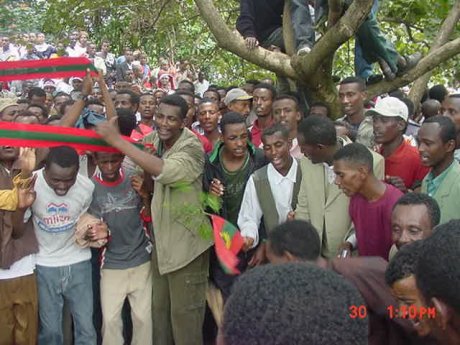
Africa’s youth will protest to remove self-seeking and repressive elites
“Some examples: authoritarian regimes, as in Ethiopia and Rwanda, are consolidating their positions. In Zambia, Angola and Mozambique, the press, civil society organisations and the opposition are under threat for demanding that the proceeds from raw material exports and billion dollar multinational corporate investments should benefit everyone. ….Short-term greed is, once again, depriving the African populations of the right to share in the continent’s immense riches. No-one can predict the future, but what can be said with certainty is that the possibility of a sustainable long-term and fair development that is currently at hand in Africa is being put at risk. The frustration that is fuelled among populations that are hungry and feel ignored by their rulers will bring about increasingly strident and potentially violent protest. In the near future, this will change the political climate, not least in urban areas. Utilising the internet and their mobile phones, Africa’s youth and forgotten people will mobilise and act together to remove self-seeking and repressive elites. But the situation is not hopeless, on the contrary. Civil society is growing stronger in many places in Africa. The internet makes it possible for people to access and disseminate information in an unprecedented way. However, I get really disappointed when I hear all the ingenuous talk about the possibilities to invest and make quick profits in the ‘New Africa’. What is in reality new in the ‘New Africa’? Today, a worker in a Chinese-owned factory in Ethiopia earns one-tenth of the wage of an employee in China. Unless African governments and investors act more responsibly and ensure long-term sustainable construction for people and the environment ‒ which is currently not the case ‒ we must all ask ourselves if we should not use the consumer power we all possess to exert pressure. There are no excuses for letting African populations and their environment once again pay for the global demand for its raw materials and cheap consumer goods.” – Marika Griehsel, journalist, film-maker and lecturer
“Thousands of people are demonstrating on the streets to protest against low salaries, the highcost of living and an insufficient state safety net. A reaction to austerity measures in Greece? Or a follow-up to the Arab Spring? No, these are protests for greater equality in Sub-Saharan Africa, most recently in Burkina Faso. The widening gap between rich and poor is as troubling in Africa as in the rest of the world. In fact, many Africans believe that inequalities are becoming more marked: A tiny minority is getting richer while the lines of poor people grow out the door. The contrast is all the more striking in Africa since the poverty level has been at a consistently high level for decades, despite the continent’s significant average GDP growth. Some take a plane to get treated for hay fever, while others are pushing up daisies because they can’t afford basic malaria treatment.”
– Global Voices: http://globalvoicesonline.org/2014/03/11/reducing-the-gap-between-africas-rich-and-poor/
It is now evident that the African ‘lion economies’ have hardly even begun the economic and democratic transformation that is absolutely necessary for the future of the continent.
The largest movement ever in Africa of people from rural to urban areas is now taking place. Lagos, Nigeria, and Nairobi, Kenya, are among the world’s fastest growing cities.
The frustration that is fuelled among populations that are hungry and feel ignored by their rulers will bring about increasingly strident and potentially violent protest.
Soon, this will change the political climate, not least in urban areas. Utilising the internet and their phones, Africa’s youth and forgotten people will mobilise to remove self-seeking and repressive elites.
This piece was written in Namibia, where I was leading a tour around one of Africa’s more stable nations. There are several signs confirming the World Bank’s reclassification of Namibia as a middle-income country, which in turn means that many aid donors, including Sweden, have ended their bilateral cooperation.
I see newly constructed, subsidised single-family homes accessible for low-income families. I drive on good roads and meet many tourists, although this is off-season. I hear about a growing mining sector, new discoveries of natural gas and oil deposits. I read about irregularities committed by people in power, in a reasonably free press whose editors are not thrown into jail. There is free primary level schooling and almost free health care.
Most people I talk to are optimistic. A better future for a majority of Namibians is being envisaged. This is in all probability the result of the country having a small population ‒ just above 2 million ‒ and a functioning infrastructure despite its large area.
In Namibia, economic growth can hopefully be matched by implementing policies for long-term, sustainable social and economic development that will benefit more than the élite.
But Namibia is an exception. Because it is now evident that the African ‘lion economies’ have hardly even begun the economic and democratic transformation that is absolutely necessary for the future of the continent.
Some examples: authoritarian regimes, as in Ethiopia and Rwanda, are consolidating their positions. In Zambia, Angola and Mozambique, the press, civil society organisations and the opposition are under threat for demanding that the proceeds from raw material exports and billion dollar multinational corporate investments should benefit everyone.
The International Monetary Fund, IMF, predicts continued high growth rates across Africa with an average of over 6 per cent in 2014. That is of course good news for the continent. Perhaps the best, from a macroeconomic viewpoint, since the 1960s, when many of the former colonies became independent. This growth is mainly driven by the raw material needs of China, India and Brazil.
Meanwhile, the largest movement ever in Africa of people from rural to urban areas is now taking place. Lagos, Nigeria, and Nairobi, Kenya, are among the world’s fastest growing cities. But, in contrast with China, where the migrants from the rural areas get employment in the manufacturing industry, the urban migrants in Africa end up in the growing slums of the big cities.
In a few places, notably in Ethiopia, manufacturing is beginning to take off. But the wages in the Chinese-owned factories are even lower than in China, while the corporations pay minimal taxes to the Ethiopian state.
Short-term greed is, once again, depriving the African populations of the right to share in the continent’s immense riches. No-one can predict the future, but what can be said with certainty is that the possibility of a sustainable long-term and fair development that is currently at hand in Africa is being put at risk.
The frustration that is fuelled among populations that are hungry and feel ignored by their rulers will bring about increasingly strident and potentially violent protest. In the near future, this will change the political climate, not least in urban areas. Utilising the internet and their mobile phones, Africa’s youth and forgotten people will mobilise and act together to remove self-seeking and repressive elites.
But the situation is not hopeless, on the contrary. Civil society is growing stronger in many places in Africa. The internet makes it possible for people to access and disseminate information in an unprecedented way. However, I get really disappointed when I hear all the ingenuous talk about the possibilities to invest and make quick profits in the ‘New Africa’.
What is in reality new in the ‘New Africa’?
Today, a worker in a Chinese-owned factory in Ethiopia earns one-tenth of the wage of an employee in China. Unless African governments and investors act more responsibly and ensure long-term sustainable construction for people and the environment ‒ which is currently not the case ‒ we must all ask ourselves if we should not use the consumer power we all possess to exert pressure.
There are no excuses for letting African populations and their environment once again pay for the global demand for its raw materials and cheap consumer goods.
Some examples: authoritarian regimes, as in Ethiopia and Rwanda, are consolidating their positions. In Zambia, Angola and Mozambique, the press, civil society organisations and the opposition are under threat for demanding that the proceeds from raw material exports and billion dollar multinational corporate investments should benefit everyone.
http://naiforum.org/2014/03/africas-youth-will-protest/
The World Bank paints an optimistic picture of African potential, but warns against persistently high inequalities:
Economic growth in Sub-Saharan Africa (SSA) remains strong with growth forecasted to be 4.9% in 2013. Almost a third of countries in the region are growing at 6% and more, and African countries are now routinely among the fastest-growing countries in the world […] [however the report] notes that poverty and inequality remain “unacceptably high and the pace of reduction unacceptably slow.” Almost one out of every two Africans lives in extreme poverty today.
 http://globalvoicesonline.org/2014/03/11/reducing-the-gap-between-africas-rich-and-poor/
Africa: Legacy of Pre-colonial Empires and Colonialism March 13, 2014
Posted by OromianEconomist in Aannolee and Calanqo, Afaan Publication, Africa, Africa Rising, African Beat, African Poor, Agriculture, Aid to Africa, Ancient African Direct Democracy, Colonizing Structure, Comparative Advantage, Corruption, Culture, Development, Dhaqaba Ebba, Dictatorship, Domestic Workers, Economics, Economics: Development Theory and Policy applications, Environment, Ethnic Cleansing, Finfinnee, Haacaaluu Hundeessaa, Hadiya, Hadiya and the Omo Valley, Haile Fida, Human Rights, Human Traffickings, Humanity and Social Civilization, ICC, Janjaweed Style Liyu Police of Ethiopia, Kemetic Ancient African Culture, Knowledge and the Colonizing Structure., Land and Water Grabs in Oromia, Language and Development, Nubia, Ogaden, OMN, Omo, Omo Valley, Oromia, Oromia Support Group, Oromiyaa, Oromo, Oromo Artists, Oromo Culture, Oromo First, Oromo Identity, Oromo Nation, Oromo Social System, Oromo Sport, Oromo the Largest Nation of Africa. Human Rights violations and Genocide against the Oromo people in Ethiopia, Oromummaa, Poverty, Self determination, Sidama, Sirna Gadaa, South Sudan, Specialization, State of Oromia, The Colonizing Structure & The Development Problems of Oromia, The Oldest Living Person Known to Mankind, The Tyranny of Ethiopia, Tweets and Africa, Tyranny, Youth Unemployment.Tags: Africa, African Studies, Development, Economic and Social Freedom, Economic development, economics, Ethiopia, Gadaa System, Genocide against the Oromo, Human Rights and Liberties, Human rights violations, Land grabs in Africa, National Self Determination, Oromia, Oromiyaa, Oromo, Oromo culture, Oromo people, Oromummaa, Politics of Ethiopia, poverty, Social Sciences, State and Development, Sub-Saharan Africa, Tyranny, United Nations, Universal Declaration of Human Rights, World Bank
add a comment
‘Our knowledge of the nature of identity relations in pre-colonial Africa is less than complete. However, there is little doubt that many parts of the continent were torn apart by various wars, during that era. Many of the pre-colonial wars revolved around state formation, empire building, slave raids, and control over resources and trade routs. The slave raiding and looting empires and kingdoms, including those of the 19th century, left behind complex scars in inter-identity relations. It is beyond the scope of this paper to discuss in detail the nature of pre-colonial empires in Africa. The examples of the Abyssinian Empire and the Mahdiyya state in Sudan provide a glimpse of the impacts of pre-colonial empires on the prevailing problems in inter-identity relations. The Abyssinian Empire, for example, is credited for creating the modern Ethiopian state during the second half of the 19th century and defending it from European colonialism. However, it also left behind a deeply divided country where the populations in the newly incorporated southern parts of the country were ravaged by slave raids and lootings and, in many cases, reduced into landless tenants, who tilled the land for northern landlords (Pankhurst, 1968). The Empire also established a hierarchy of cultures where the non-Abyssinian cultures in the newly incorporated territories were placed in a subordinate position. There are claims, for instance, that it was not permissible to publish, preach, teach or broadcast in Oromiya [Afaan Oromo] (language of the Oromo people) in Ethiopia until the end of the reign of Emperor Haile Selassie (Baxter, 1978, 228). It requires a great deal of sensitivity to teach Ethiopian history in the country’s schools, since the empire-builders of the 19th century are heroes to some identities while they are viewed as villains who brought destruction and oppression by others. Similarly, Sudan’s Mahdiyya state, which professed Arab identity and was supported by slave raiding communities, left behind complex scars in inter-identity relations, which still plague the country (Francis Deng, 2010).’ pp 10-12
Diversity Management in Africa: Findings from the African Peer Review Mechanism
and a Framework for Analysis and Policy-Making , 2011.
http://www.uneca.org/sites/default/files/publications/3-diversity-management.pdf
Click to access 3-diversity-management.pdf
Related articles:
A country is not about its leaders but of its people. It goes without saying that the people are the symbolic mirror of their nation. That is exactly why foreigners particularly the development partners assess and evaluate a nation through its people. In other words, a happy people are citizen of not only a peaceful and happy nation but one which accepts the principles of democracy, rule of law and human and people’s right. On the contrast, heartbroken, timid and unhappy people are subjects of dictatorial, callous and brutal regimes. Such people are robbed of their humanity and identity through systematic harassment, intimidation, unlawful detention, extra judicial killing and disappearances by the leaders who transformed themselves into creators of human life or lords. The largest oromo nation in Ethiopia through the 22years of TPLF/EPRDF repressive leadership has turned into a nation sobbing in the dark. One does not need to be a rocket scientist to figure this out. All it takes is a closer look at any Oromos in the face. The story is the same on all the faces: fear, uncertainty, and an unquenchable thirst for freedom. The disturbing melody of the sobs in the dark echo the rhythmic desire to break free from TPLF dictatorial shackles.
The Horn African region of the Ethiopia is home to just 90 million people, it is also home to one of the world’s most ruthless, and eccentric, tyrannical regime .TPLF/EPRDF is ruling the nation particularly the Oromos with an iron fist for the past two decades and yet moving on. Today dissents in Oromia are frequently harassed, arrested, tortured, murdered and put through sham trials, while the people are kept in a constant state of terror through tight media control, as repeatedly reported by several human rights groups. It has been long time since the Woyane government bans most foreign journalists and human rights organizations and NGOs from operating in the country for the aim of hiding its brutal governance from the world. While the people in Ethiopia are being in terrorized by TPLF gangs, the western powers are yet looking at the country as a very strategic place to fight the so called terrorism in horn African region. But In today’s Ethiopia; as an Oromo, No one can speak out against the dictatorship in that country. You can be killed. You can be arrested. You can be kept in prison for a long time. Or you can disappear in thin air. Nobody will help. Intimidations, looting Oromo resources and evicting Oromos from their farm lands have become the order of the day everywhere across Oromia.
No Oromo has constitutional or legal protection from the killing machinery of the TPLF securities. The recent murdering of Tesfahun Chemeda in kallitti prison is a case book of the current Circumstance.
The So called EPRDF constitution, as all Ethiopian constitutions had always been under the previous Ethiopian regimes, is prepared not to give legal protections to the Oromo people, but to be used against the Oromo people. Prisons in the Ethiopia have become the last home to Oromo nationalists, human right activists or political opponent of the regime. Yet the international community is either not interested or have ignored the numerous Human Right abuses in Ethiopia simply because, they think there is stability in the country. Is there no stability in North Korea? I don’t understand why the international community playing double standard with dining and wining with Ethiopian brutal dictators while trying to internationally isolate other dictators. For crying out loud, all dictators are dangerous to humanity and shaking their hands is even taboo much more doing business with them.
Without the support of the USA and EU, major pillars of the regime would have collapsed. Because one reason why TPLF is sustaining in power is through the budgetary support and development funding of the EU, the United States and offered diplomatic validation by the corrupted African Union. Foremost, the US and EU as the largest partners are responsible for funding the regime’s sustainability and its senseless brutality against ordinary citizens. They would have the capacity to disrupt the economic might of this regime without negatively impacting ordinary citizens, and their failure to do so is directly responsible for the loss of many innocent lives, the torture of many and other grievous human rights abuses. Helping dictators while they butcher our people is what I cannot understand. What I want to notify here is, on the way of struggling for freedom it is very essential to call on the western powers to stop the support they are rendering to dictators in the name of fighting the so called terrorism in Horn Africa, otherwise it will remain an obstacle for the struggle.
Holding elections alone does not make a country democratic. Where there is no an independent media, an independent judiciary (for the rule of law), an independent central bank, an independent electoral commission (for a free and fair vote); neutral and professional security forces; and an autonomous (not a rubber stamp) parliament, no one should expect that the pseudo election will remove TPLF from power. The so-called “Ethiopian constitution” is a façade that is not worth the paper which it is written on. It does not impose the rule of law; and does not effectively limit governmental power. No form of dissent is tolerated in the country.
As my understanding and as we have observed for more than two decades, it is unthinkable to remove TPLF regime without a military struggle or without popular Uprisings. They are staying, staying, and staying in power – 10, 20, 22 and may be 30 or 40 years. They have developed the mentality of staying on power as their own family and ethnic property. So that they are grooming their clans, their wives, sons, cats, dogs and even goats to succeed them. They are simply the worst mafia regime and the most politically intolerant in the Africa. It is impossible to remove them electorally because we have been witnessing that the electoral system is fundamentally flawed and indomitably skewed in favor them. Every gesture and every words coming from TPLF gangs in the last several years have confirmed that to remove them by election is nothing but like to dream in daylight.
The late dictator “Meles Zenawi” had once said that TPLF “shall rule for a thousand years”, asserting that elections SHALL NOT remove his government. He also said: “the group who want the power must go the forest and fight to achieve power”. Therefore, taking part in Pseudo election will have no impact on reducing the pain of the oppressed people. Evidently, the opposition and civil societies have been rendered severely impotent, as any form of dissent attracts the ultimate penalty in Ethiopia. Furthermore, we are watching that this regime is intensifying its repression of democracy each day, and ruling strictly through the instrument of paralyzing fear and the practice of brutality against ordinary citizens.
As we are learning from history, Dictators are not in a business of allowing election that could remove them from their thrones. The only way to remove this TPLF dictatorship is through a military force, popular uprising, or a rebel insurgency: Egypt (2011), Ivory Coast (2011), Tunisia (2011), Libya (2011), Rwanda (1994), Somalia (1991), Liberia (1999), etc. A high time to fire up resistance to the TPLF killings and resource plundering in Oromia, is now. To overthrow this brutal TPLF dictatorship and to end the 22 years of our pain, it is a must to begin the resistance with a nationwide show of defiance including distributing postures of resistance against their brutality across Oromia and the country. Once a national campaign of defiance begins, it will be easy to see how the TPLF regime will crumble like a sand castle. Besides, we the Oromo Diaspora need to work on strengthening the struggle by any means we can. It is the responsibility of the Diaspora to advance the Oromo cause, and at the same time to determine how our efforts can be aided by the international community. As well, it is a time for every freedom thirsty Oromo to take part in supporting our organization Oromo liberation Front by any means we can.
These days, TPLF regime is standing on one foot and removing it is easier than it appears. Let all oppressed nations organize for the final push to liberty. The biggest fear of Woyane regime is people being organized and armed with weapons of unity, knowledge, courage, vigilance, and justice. What is needed is a unified, dedicated struggle for justice and sincerity. Oromo’s are tired of the dying, the arrests, the detentions, the torture, the brutality and the forced disappearances. This should come to an end! DEATH FOR TPLF LEADERES ,.long live FOR OROMIYA
_____________________________________
The author, ROBA PAWELOS, can be reached by bora1273@yahoo.com
Africa’s spin doctors (mostly American and European) deliberately choose to represent what the Free Africa Foundation’s George Ayittey so refreshingly describes as “Swiss-bank socialists”, “crocodile liberators”, “quack revolutionaries”, and “briefcase bandits”. Mr Ayittey – a former political prisoner from Ghana – pulls us a lot closer to the truth.
If the mainstream media adopts Mr Ayittey’s language, the free governments of the world would be forced to face the truth and take necessary steps to tie their aid and trade deals to democratic reform for the benefit of Africa’s population. Sunlight is the best disinfectant, and we must combat the work of firms that provide “reputation management” to oppressive states by exposing their role in abetting injustice.
Those firms may want to consider atoning by volunteering for the civil society groups, human rights’ defenders and economic opportunity organisations working to make Africa free and prosperous.’…………………………………………………
A number of African governments accused of human rights abuses have turned to public relations companies to salvage the image of their countries.
The BBC’s Focus on Africa magazine asked two experts whether “reputation management” is mostly a cover-up for bad governance.
NO: Thor Halvorssen is president of the New York-based Human Rights Foundation and founder of the Oslo Freedom Forum.
Thor Halvorssen has published extensively on the subject of lobbying
For Public Relations (PR) companies and their government clients, “reputation management” can be a euphemism of the worst sort. In many cases across Africa, it often means whitewashing the human rights violations of despotic regimes with fluff journalism and, just as easily, serving as personal PR agents for rulers and their corrupt family members.
But they also help governments drown out criticism, often branding dissidents, democratic opponents and critics as criminals, terrorists or extremists.
Today, with the preponderance of social media, anyone with an opinion, a smart phone and a Facebook account can present their views to an audience potentially as large as any major political campaign can attract.
This has raised citizen journalism to a level of influence unknown previously. Yet, this communication revolution has also resulted in despotic governments smearing not just human rights advocates, but individuals with blogs as well as Twitter, YouTube and Facebook accounts. This undermines the power and integrity of social media.
And as PR firms help regimes “astroturf” with fake social media accounts, they do more damage than just muddling legitimate criticism with false comments and tweets linking back to positive content – they also make the general public sceptical about social media.
It is no surprise that ruthless governments that deny their citizens basic freedoms would wish to whitewash their reputations. But PR professionals who spin for them should be exposed as amoral.
It is no surprise that ruthless governments that deny their citizens basic freedoms would wish to whitewash their reputations”
For instance, Qorvis Communications, a PR and lobbying firm in the United States, represents Equatorial Guinea – among other allegedly repressive governments – for a reported $55,000 a month. The firm is said to have amassed more than $100 million by helping their clients with “reputation management”.
By burying opposing public opinions or spinning false, positive stories of stability and economic growth on behalf of President Teodoro Obiang Nguema’s brutal regime, the firm is seriously hampering the progress of human rights in the country.
In response, Qorvis says that customers with troublesome human rights records are a very small part of its client base, and that these governments are using Qorvis as a means to be heard in the “court of public opinion”.
Washington Media Group, another American PR firm, was hired in 2010 by the Tunisian government. The autocracy was subsequently described in various media outlets as a “stable democracy” and a “peaceful, Islamic country with a terrific story to share with the world”. Only after the regime’s snipers began picking off protesters did Washington Media Group end its $420,000 contract.
‘Limited engagement’
When a PR firm spins a dictator’s story, it does not just present a different viewpoint, as the firm might want you to believe; rather, it undermines the resources from which people can draw opinions. If a website or magazine commends the government, how is an average citizen to know for certain if the information is accurate or true?
President Teodoro Obiang Nguema
Teodoro Obiang Nguema is accused of leading a brutal regime in Equatorial Guinea
Many firms that operate, or have done, on behalf of kleptocracies in Africa are based not only in the US but also in the United Kingdom. They include Bell Pottinger (Hosni Mubarak’s Egypt), Brown Lloyd James (Muammar Gaddafi’s Libya) and Hill & Knowlton (Yoweri Museveni’s Uganda).
There are likely many more that continue to do this work under the cover of corporate secrecy. When firms get caught or criticised for their activities many say it is “limited engagement” for only a few months or that the task only involved “tourism” or “economic progress”.
If, for instance, a firm served the questionable government in the Democratic Republic of the Congo they would probably insist they are “consultants” helping to create “economic opportunity” and, no doubt, providing a “guiding hand” to the current president as he improves the lot of the Congolese poor.
Yet the spin doctors most probably ignore the fact that President Joseph Kabila’s security forces killed Floribert Chebeya, arguably the DR Congo’s leading human rights defender, and likely “disappeared” his driver (he is still missing). Only after an international uproar were the policemen directly responsible for the killing brought to justice.
Meanwhile, political opponents routinely disappear, journalists are arrested for criticising the government and any comprehensive human rights report contains appalling anecdotes and painful analysis about a country with little judicial independence and respect for the rule of law.
PR agents do not create “economic opportunities” – they alter reality so that certain deals and foreign aid can flow faster and in larger quantities – all the while being rewarded handsomely.
‘Briefcase bandits’
Africa’s spin doctors (mostly American and European) deliberately choose to represent what the Free Africa Foundation’s George Ayittey so refreshingly describes as “Swiss-bank socialists”, “crocodile liberators”, “quack revolutionaries”, and “briefcase bandits”.
Mr Ayittey – a former political prisoner from Ghana – pulls us a lot closer to the truth.
If the mainstream media adopts Mr Ayittey’s language, the free governments of the world would be forced to face the truth and take necessary steps to tie their aid and trade deals to democratic reform for the benefit of Africa’s population.
Sunlight is the best disinfectant, and we must combat the work of firms that provide “reputation management” to oppressive states by exposing their role in abetting injustice.
Those firms may want to consider atoning by volunteering for the civil society groups, human rights’ defenders and economic opportunity organisations working to make Africa free and prosperous.

The Universal Declaration of Human Rights March 13, 2014
Posted by OromianEconomist in Aannolee and Calanqo, Africa, Development, Ethnic Cleansing, Human Rights, Human Traffickings, Humanity and Social Civilization, ICC, Janjaweed Style Liyu Police of Ethiopia, Land and Water Grabs in Oromia, Nubia, Ogaden, Omo, Oromia, Oromia Support Group Australia, Oromiyaa, Oromo, Oromo Culture, Oromo Nation, Oromo Social System, Oromo the Largest Nation of Africa. Human Rights violations and Genocide against the Oromo people in Ethiopia, Self determination, Sidama, Slavery, State of Oromia, The Tyranny of Ethiopia, Tweets and Africa, Tyranny, Uncategorized, Youth Unemployment.Tags: Africa, African Studies, Development and Change, Economic and Social Freedom, Economic development, Genocide against the Oromo, Governance issues, Horn of Africa, Human Rights and Liberties, Human rights violations, Human Rights Violations in oromia, Land grabs in Africa, National Self Determination, Oromia, Oromiyaa, Oromummaa, State of Oromia, Sub-Saharan Africa, Tyranny, United Nations, Universal Declaration of Human Rights, World Bank
add a comment
The Universal Declaration of Human Rights: What is it? Who uses it? Why was it created?
The Universal Declaration of Human Rights, which was adopted by the UN General Assembly on 10 December 1948, was the result of the experience of the Second World War. With the end of that war, and the creation of the United Nations, the international community vowed never again to allow atrocities like those of that conflict happen again. World leaders decided to complement the UN Charter with a road map to guarantee the rights of every individual everywhere.(http://www.un.org/en/documents/udhr/history.shtml)
http://www.un.org/en/documents/udhr/index.shtml
http://oneworldrights.wordpress.com/2014/02/26/udhr-article-2/
The tyranny of experts vs the real cause of poverty:The unchecked power of the state against poor people without rights March 11, 2014
Posted by OromianEconomist in Africa, Africa Rising, Agriculture, Aid to Africa, Development, Dictatorship, Domestic Workers, Economics, Economics: Development Theory and Policy applications, Environment, Ethiopia's Colonizing Structure and the Development Problems of People of Oromia, Afar, Ogaden, Sidama, Southern Ethiopia and the Omo Valley, Ethnic Cleansing, Janjaweed Style Liyu Police of Ethiopia, Knowledge and the Colonizing Structure., Land and Water Grabs in Oromia, Oromiyaa, Oromo, Oromo Culture, Poverty, Self determination, The Colonizing Structure & The Development Problems of Oromia, The Tyranny of Ethiopia, Uncategorized.Tags: Africa, African Studies, Aid, Developing country, Development, Development and Change, Economic and Social Freedom, Economic development, Economic growth, economics, Ethiopia, Genocide against the Oromo, Horn of Africa, Human rights, Human Rights and Liberties, Human rights violations, Land grabs in Africa, National Self Determination, Oromia Region, Oromiyaa, Oromo, Oromummaa, Sub-Saharan Africa, Tyranny, Universal Declaration of Human Rights, World Bank
add a comment


How development experts have empowered dictators and helped to trap millions and millions of people in poverty
“Ethiopia, for example, reaps money and plaudits from development giants such as the Gates Foundation while remaining a bastion of authoritarian rule. Economic growth and other positive development outcomes in such states are a mirage, the author argues. His central claim is that no matter how much international aid is poured in, the lives of citizens won’t durably improve without freedom.” -SARAH CHAYES, Book Review, Wall Street Journal
‘The international professionals perpetrate an illusion that poverty is purely a technical problem, distracting attention away from the real cause: the unchecked power of the state against poor people without rights. The dictators whom experts are advising are not the solution — they are the problem. The individual economic and political rights crucial to development include all those we take for granted at home, such as the right to your own property, the right to trade with whomever you wish, the right to protest bad government actions (don’t burn down our houses!), and the right to vote for politicians who do beneficial actions (clean our water!). Technical experts in development sometimes concede some rights and deny others, which disrespects rights for what they are: unalienable. The Uganda story shows the Mubende farmers’ lack of both economic rights (rights to their own property) and political rights (prevented at gunpoint from protesting). The tyranny of experts that neglects rights is first of all a moral tragedy. It reflects a double standard in which we respect rights for the world’s rich — is it conceivable that we would forget these farmers if the story had happened in Ohio? — but not for the poor.
The technocratic approach of dictators advised by experts is also a pragmatic tragedy, because it does not actually work to end poverty. New research by economists on history and modern experience suggest that free individuals with political and economic rights make up remarkably successful problem-solving systems. Such systems based on rights reward a decentralized array of people: Economic entrepreneurs with property rights get to keep the rewards of solving the problems of their consumers. Political entrepreneurs at many government levels and in many departments get rewarded with a longer tenure in office if they solve the citizens’ problems, and they are driven out of office if they don’t. …Focusing on rights yields two perspectives on how development success happens. First, societies that have already attained individual freedom are likely to have already escaped poverty. Economists have gone back deep into our own history to confirm this widely-accepted story for how we in the West escaped our own poverty, but we seem unwilling to consider that the same story could play out in the rest of the world. Second, societies in which there is a positive change in in freedom will likely see a positive change in prosperity (ergo, rapid economic growth and fall in poverty). So what should we do about rights for the poor? Possible starting places for Western policy changes are to not fund dictators, to not support projects that torch farms, to not break promises to investigate rights abuses, and to not let us forget such abuses and missing investigations. But obsessing too much on the “what should we do?” question should not hand the agenda back to the same technical experts who have showed so little interest in the rights of the poor in the first place. The danger of such a tyranny of experts is illustrated by a long history of politicians using technical poverty debates as an excuse to avoid debating rights for the poor. The danger of such a tyranny of experts is illustrated by a long history of politicians using technical poverty debates as an excuse to avoid debating rights for the poor.’ – Read the details and analysis at the original source: http://www.foreignpolicy.com/articles/2014/03/10/the_new_tyranny
Book Review: ‘The Tyranny of Experts: Economists, Dictators, and the Forgotten Rights of the Poor’ by William Easterly
 The notion of development assistance was born in a period of unabashed racism.
By SARAH CHAYES
March 7, 2014 (The Wall Street Journal) — Why does poverty persist across so much of the world, despite billions of dollars in international aid and the efforts of armies of development professionals? That is the question that William Easterly explores in “The Tyranny of Experts: Economists, Dictators, and the Forgotten Rights of the Poor.” His answer: a lack of respect for liberty—not just on the part of governments of impoverished countries but also, more provocatively, on the part of the would-be developers themselves.
Mr. Easterly, an economics professor at New York University, joins other students of international aid in decrying the preference for technical fixes when the political structures of recipient states are built to deny political participation and economic opportunity to most of their citizens. “The technocratic illusion,” he writes, “is that poverty results from a shortage of expertise, whereas poverty is really about a shortage of rights.”
Ethiopia, for example, reaps money and plaudits from development giants such as the Gates Foundation while remaining a bastion of authoritarian rule. Economic growth and other positive development outcomes in such states are a mirage, the author argues. His central claim is that no matter how much international aid is poured in, the lives of citizens won’t durably improve without freedom.
Mr. Easterly recalls that the very notion of development assistance was born in a period of unabashed racism, out of a conjunction of two opposing demands. One was the need for late colonial empires to provide a different rationale than racial superiority for their continued domination of the Third World. The other was the desire of Third World leaders to legitimize seizing authoritarian power themselves.
Touting the virtues of development designed by “experts” and delivered by autocrats proved to be a useful strategy for both camps. “Sun Yat-sen,” writes Mr. Easterly of China in 1924, “suggested the idea of technocratic development to resist European imperialism in China, while at the same time in Versailles, the Allies suggested technocratic development to expand European imperialism in Africa.” And, a few decades later, “the new African leaders found state-led technocratic development to be a justification for their own aspirations to unchecked power.”
This marriage of convenience may have sabotaged democracy’s chances of emerging from the rubble of empire, Mr. Easterly suggests, drawing on evidence from China, Colombia and West Africa. The bias in favor of technocratic fixes, and against fundamental political reform, has certainly helped enable autocratic regimes, which, now as then, capture development aid like any other rent. In Yemen, for example, before counterterrorism security cooperation grew to its current scale, aid was a key source of funding for the Ali Abdullah Saleh regime.
Mr. Easterly’s alternative to the autocrat-driven, technocratic model of development is simple: Apply abroad what we know has worked at home—bottom-up solutions, a free flow of ideas leading to innovative experiments and democratic politics. His positive examples aren’t drawn from the international-assistance realm but rather from the organic emergence of economic prosperity in such environments as 12th-century Italian city-states or the Korean auto industry. Hyundai’s rise is presented as an example of an efficient division of labor engineered almost as a matter of course by free-market forces. Unable to farm his infertile land, Chung Ju Yung, who liked tinkering with cars, set up as a mechanic, thereby exchanging “his problem-solving talents . . . for the problem-solving talents of others in producing food for him.” He would go on to found Hyundai.
Mr. Easterly is hardly the first to criticize the international-development community for its avoidance of politics and fixation on technical solutions. But his belabored insistence that freedom and democracy are the only reliable paths to economic prosperity is too general and thus not very helpful for anyone thinking seriously about how to reform development assistance. While he is right to castigate the many aid efforts undertaken in autocratic contexts, few serious Western development professionals today actively promote dictatorship. Indeed, acceptance of much of Mr. Easterly’s reasoning has driven, from the 1990s on, a sharp increase in support for grass-roots development and democratization efforts.
But Mr. Easterly fails to acknowledge such evolutions. And he thereby misses an opportunity to highlight the obstacles that this approach, in turn, has encountered: the tendency of such grass-roots organizations to respond to the desires of donors rather than their own constituencies, their inability to live up to outsize expectations or, when successful, their tendency to suffer repression at the hands of authoritarian states. Nor does Mr. Easterly contend in detail with the fundamental question raised by his book: What explains the persistence of such a “momentous double standard on rights for the West and not for the Rest?”
Some explanations do emerge in passing. Geostrategic priorities, for example, have impelled the U.S. to use foreign aid to reward autocratic allies in the fights against Communism and terrorism. Racism, blatant or otherwise, has made Westerners doubt non-white non-Westerners’ desire for rights and ability to handle them. The desire to self-perpetuate has also been a powerful motive to stick to the status quo for an industry as large as international assistance—a motive Mr. Easterly doesn’t emphasize. Challenging entrenched power structures is a good way to get thrown out of a country, as a number of democracy-promotion organizations recently learned in Egypt.
Apart from these gaps, and the book’s lack of explicit recommendations, its analysis raises some philosophical problems. It draws too sharp an opposition between individualism and collective values. By depicting a global “East” caught in a feedback loop of autocracy and “collectivist values,” Mr. Easterly falls into Samuel Huntingtonesque generalizations. Similarly, he seems to suggest that geography and climate predisposed the Southern Hemisphere to slave-based or extractive economies.
The generalizations, moreover, evade a lot of contrary nuance. The Nordic countries are widely seen as more respectful of community values than the U.S. or Britain. And many of their health and development outcomes outstrip ours. Some might argue that these are smaller, more homogeneous societies, but so are some of the negative examples of “collectivist values” that Mr. Easterly cites, such as the “Maghribi” network, a 10th-century Cairo-based Jewish trading community. And the world economic meltdown of 2008, with devastating development effects for tens of millions, was the result not of excessively collectivist values but the reverse. Poor development outcomes, in other words, aren’t only a matter of rights, as Mr. Easterly argues. At issue is also the distribution of power—justice as well as liberty.
The book’s argument about the power of freedom and democracy to beget development is made by way of a vast historical tableau. From the 12th-century Italian city-states, the narrative winds past the slave trade, expounds the virtues of migration, explores the ideas of Adam Smith and ruminates on the structure of technological innovation. Supporting anecdotes include a Senegalese religious trading community, the Korean automotive industry and an evolving Manhattan neighborhood.
It is hard to trust an author to command such a welter of detail. And indeed, the result is too often haphazard, self-contradictory or erroneous. For example, while the Maghribi traders are said to demonstrate self-sabotaging collectivist values, the Mourides, a modern Somali religious brotherhood that is organized along nearly the same principles, is cited to illustrate the virtues of migration. The Korean auto industry, depicted as embodying “the amazing potentials of specialization and trade,” emerged under an autocratic government applying protectionist laws.
By my count, finally, about 15% of Mr. Easterly’s text recaps what was just said or announces items from later chapters. Subheadings like “Another Key Moment in This Book” suggest an argument that isn’t tight enough to convince on its own merits. And that’s too bad. Mr. Easterly calls for a profound overhaul of the way powerful nations conceive of and implement aid—and, more important, of the broader foreign-policy decision-making of which aid is a component. That change is needed. It’s just not clear this book is crisp or cogent enough to help advance it.
—Ms. Chayes is a senior associate at the Carnegie Endowment for International Peace
To buy this book Click Here
Ethiopia is one of the poorest countries in the world and has the second largest population in Africa: Poverty means the health system is weak March 9, 2014
Posted by OromianEconomist in Africa, Africa Rising, Climate Change, Colonizing Structure, Comparative Advantage, Corruption, Development, Dictatorship, Domestic Workers, Economics, Economics: Development Theory and Policy applications, Environment, Ethnic Cleansing, Human Rights, Land and Water Grabs in Oromia, Oromiyaa, Oromo, Oromo the Largest Nation of Africa. Human Rights violations and Genocide against the Oromo people in Ethiopia, Poverty, The Colonizing Structure & The Development Problems of Oromia, Theory of Development, Uncategorized, Youth Unemployment.Tags: Africa, Economic and Social Freedom, Economic development, Economic growth, Land grabbing, Land grabs in Africa, Oromia, Sub-Saharan Africa, Tyranny, United Nations, Universal Declaration of Human Rights, World Bank
1 comment so far
“In the early 80′s, Bob Geldof of the band called The Boomtown Rats saw in the news the massive famine engulfing the African country of Ethiopia. He felt guilty because he couldn’t believe that while the Western world was suffering from an abundance of wealth and food, a continent just below them were a people that did not have anything at all. He organized Band Aid, enlisting the help of other stars like Bono, George Michael and Sting, to raise funds for Africa through a song entitled “Do They Know It’s Christmas?” Their counterparts in the United States followed suit, with Michael Jackson and Lionel Richie writing a song called “We are the World.” They then banded together for Live Aid, that added stars like Madonna, Paul McCartney and Elton John in a two-continent concert. Yet, almost three decades after, Africa remains a veritable wasteland. Out of the 20 poorest countries in the world, 17 comes from the continent, including nine out of the top 10. Based on the different countries’ gross domestic product purchasing power parity, here are the 20 poorest countries in the world in 2013.”
‘Ethiopia is one of the poorest countries in the world and has the second largest population in Africa. Poverty means the health system is weak, which means:
The average life expectancy is just 59
Out of every 40 women that go in to labour, one dies
Over a third of children are malnourished
90% of Ethiopians have poor health, a low level of education, and inadequate living conditions
Only 200 doctors are trained per year to serve a country with a population of over 80 million.
Ethiopia has suffered periodic droughts and famines, a long civil conflict in the 20th century, and a border war with Eritrea. This brought millions to the brink of starvation in the 1970s and 1980s.’
http://www.healthpovertyaction.org/where-we-work/africa/ethiopia/
About 29 per cent of the population lives below the national poverty line. Ethiopia ranks 174th out of 187 countries on the United Nations Development Programme’s human development index, and average per capita incomes are less than half the current sub-Saharan average.
Ethiopia has enormous potential for agricultural development. At present only about 25 per cent of its arable land is cultivated, and agriculture is dominated by subsistence rain fed farming, using few inputs and characterized by low productivity. The vast majority of farmers are smallholders. About 12.7 million smallholders produce 95 per cent of agricultural GDP. These farmers are extremely vulnerable to external shocks such as volatile global markets and drought and other natural disasters.
Smallholder farmers form the largest group of poor people in Ethiopia. More than half cultivate plots of 1 hectare or less and struggle to produce enough food to feed their households. A large number of poor households face a prolonged hunger season during the pre-harvest period. Herders, like farmers, are vulnerable to increasingly frequent drought, which can wipe out their livestock and assets and bring on severe poverty.
The persistent lack of rainfall is a major factor in rural poverty. Drought has become more frequent and severe throughout the country over the past decade, and the trend shows signs of worsening. The impact of drought is most severe for vulnerable households living in the pastoral areas of lowlands and the high-density parts of highlands.
In addition to their vulnerability to climatic conditions, poor rural people lack basic social and economic infrastructure such as health and education facilities, veterinary services and access to safe drinking water. Among the more specific causes of rural poverty in Ethiopia are:
• An ineffective and inefficient agricultural marketing system;
• Underdeveloped transport and communications networks;
• Underdeveloped production technologies;
• Limited access of rural households to support services;
• Environmental degradation;
• Lack of participation by rural poor people in decisions that affect their livelihoods.
The intensity of poverty varies at the household level in relation to the land’s size, quality and productivity, climate conditions and production technologies. Households headed by women are particularly vulnerable. Women are much less likely than men to receive an education or health benefits, or to have a voice in decisions affecting their lives. For women, poverty means more infant deaths, undernourished families, lack of education for children and other deprivations.
Ethiopia has an estimated 1.3 million people living with HIV and AIDS. Rural areas have low prevalence rates, but available data suggest that the incidence could increase in these areas. With the support of development partners, the government has embarked on major programmes to combat the spread of HIV and AIDS, and assist poor rural households in coping with the social and economic consequences of living with the disease.- IFAD
http://www.ruralpovertyportal.org/country/home/tags/ethiopia
‘A Unicef report states that in Ethiopia there are at this moment 4.5 million orphans on a population of some 90 million. The 4.5 million means that 5 percent of the total population is an orphan. Orphans are in Ethiopia defined as children under 18 whose both parents died. They died of AIDS, untreated illnesses, hunger, draught and war.’
A Calculation: The ‘Orphan Crisis’ in Ethiopia
Copyright © Oromianeconomist 2014 and Oromia Quarterly 1997-2014. All rights reserved. Disclaimer.
Ethiopia’s Land & Water Grabs Devastate Communities: New Satellite Imagery Shows Extensive Clearance of Land Used By Indigenous People to Make Way for State-Run Sugar Plantations February 25, 2014
Posted by OromianEconomist in Africa Rising, African Poor, Agriculture, Aid to Africa, Development, Dictatorship, Domestic Workers, Environment, Ethiopia's Colonizing Structure and the Development Problems of People of Oromia, Afar, Ogaden, Sidama, Southern Ethiopia and the Omo Valley, Ethnic Cleansing, Food Production, Hadiya, Human Traffickings, ICC, Janjaweed Style Liyu Police of Ethiopia, Kambata, Knowledge and the Colonizing Structure. African Heritage. The Genocide Against Oromo Nation, Land and Water Grabs in Oromia, Land Grabs in Africa, Ogaden, Omo, Omo Valley, Oromia, Oromiyaa, Oromo, Oromo Nation, Oromo the Largest Nation of Africa. Human Rights violations and Genocide against the Oromo people in Ethiopia, Self determination, Sidama, The Colonizing Structure & The Development Problems of Oromia, The Tyranny of Ethiopia, Uncategorized.Tags: Africa, African culture, African Studies, Developing country, Development, Economic and Social Freedom, Economic development, Economic growth, economics, Ethiopia, Gambella and Omo Valley, Genocide against the Oromo, Human rights, Human Rights and Liberties, Land grabbing, Land grabs in Africa, National Self Determination, Oromia, Oromia Region, Oromiyaa, Oromo, Oromo culture, Oromo people, Sub-Saharan Africa, Tyranny, United Nations, Universal Declaration of Human Rights, Water and Land Grabs in Ormia, World Bank
1 comment so far


‘Ethiopia’s Lower Omo Valley, a UNESCO World Heritage site and home to 200,000 agro-pastoralists, is under development for sugar plantations and processing. The early stages of the development have resulted in the loss of land and livelihoods for thousands of Ethiopia’s most vulnerable citizens. The future of 500,000 agro-pastoralists in Ethiopia and Kenya is at risk.’ – Human Rights Watch
http://www.hrw.org/node/123131
http://www.huffingtonpost.com/lori-pottinger/ethiopia-pushes-river-bas_b_4811584.html
(Nairobi) – New satellite imagery shows extensive clearance of land used by indigenous groups to make way for state-run sugar plantations in Ethiopia’s Lower Omo Valley, Human Rights Watch and International Rivers said today. Virtually all of the traditional lands of the 7,000-member Bodi indigenous group have been cleared in the last 15 months, without adequate consultation or compensation. Human Rights Watch has also documented the forced resettlement of some indigenous people in the area.
The land clearing is part of a broader Ethiopian government development scheme in the Omo Valley, a United National Educational, Scientific and Cultural Organization (UNESCO) World Heritage Site, including dam construction, sugar plantations, and commercial agriculture. The project will consume the vast majority of the water in the Omo River basin, potentially devastating the livelihoods of the 500,000 indigenous people in Ethiopia and neighboring Kenya who directly or indirectly rely on the Omo’s waters for their livelihoods.
“Ethiopia can develop its land and resources but it shouldn’t run roughshod over the rights of its indigenous communities,” said Leslie Lefkow, deputy Africa director at Human Rights Watch. “The people who rely on the land for their livelihoods have the right to compensation and the right to reject plans that will completely transform their lives.”
A prerequisite to the government’s development plans for the Lower Omo Valley is the relocation of 150,000 indigenous people who live in the vicinity of the sugar plantations into permanent sedentary villages under the government’s deeply unpopular “villagization” program. Under this program, people are to be moved into sedentary villages and provided with schools, clinics, and other infrastructure. As has been seen in other parts of Ethiopia, these movements are not all voluntary.
Satellite images analyzed by Human Rights Watch show devastating changes to the Lower Omo Valley between November 2010 and January 2013, with large areas originally used for grazing cleared of all vegetation and new roads and irrigation canals crisscrossing the valley. Lands critical for the livelihoods of the agro-pastoralist Bodi and Mursi peoples have been cleared for the sugar plantations. These changes are happening without their consent or compensation, local people told Human Rights Watch. Governments have a duty to consult and cooperate with indigenous people to obtain their free and informed consent prior to the approval of any project affecting their lands or territories and other resources.
The imagery also shows the impact of a rudimentary dam built in July 2012 that diverted the waters of the Omo River into the sugar plantations. Water rapidly built up behind the shoddily built mud structure before breaking it twice. The reservoir created behind the dam forced approximately 200 Bodi families to flee to high ground, leaving behind their crops and their homes.
In a 2012 report Human Rights Watchwarned of the risk to livelihoods and potential for increased conflict and food insecurity if the government continued to clear the land. The report also documented how government security forces used violence and intimidation to make communities in the Lower Omo Valley relocate from their traditional lands, threatening their entire way of life with no compensation or choice of alternative livelihoods.
The development in the Lower Omo Valley depends on the construction upstream of a much larger hydropower dam – the Gibe III, which will regulate river flows to support year-round commercial agriculture.
A new film produced by International Rivers, “A Cascade of Development on the Omo River,” reveals how and why the Gibe III will cause hydrological havoc on both sides of the Kenya-Ethiopia border. Most significantly, the changes in river flow caused by the dam and associated irrigated plantations could cause a huge drop in the water levels of Lake Turkana, the world’s largest desert lake and another UNESCO World Heritage site.
Lake Turkana receives 90 percent of its water from the Omo River and is projected to drop by about two meters during the initial filling of the dam, which is estimated to begin around May 2014. If current plans to create new plantations continue to move forward, the lake could drop as much as 16 to 22 meters. The average depth of the lake is just 31 meters.
The river flow past the Gibe III will be almost completely blocked beginning in 2014. According to government documents, it will take up to three years to fill the reservoir, during which the Omo River’s annual flow could drop by as much as 70 percent. After this initial shock, regular dam operations will further devastate ecosystems and local livelihoods. Changes to the river’s flooding regime will harm agricultural yields, prevent the replenishment of important grazing areas, and reduce fish populations, all critical resources for livelihoods of certain indigenous groups.
The government of Ethiopia should halt development of the sugar plantations and the water offtakes until affected indigenous communities have been properly consulted and give their free, prior, and informed consent to the developments, Human Rights Watch and International Rivers said. The impact of all planned developments in the Omo/Turkana basin on indigenous people’s livelihoods should be assessed through a transparent, independent impact assessment process.
“If Ethiopia continues to bulldoze ahead with these developments, it will devastate the livelihoods of half a million people who depend on the Omo River,” said Lori Pottinger, head of International Rivers’ Ethiopia program. “It doesn’t have to be this way – Ethiopia has options for managing this river more sustainably, and pursuing developments that won’t harm the people who call this watershed home.”
Background
Ethiopia’s Lower Omo Valley is one of the most isolated and underdeveloped areas in East Africa. At least eight different groups call the Omo River Valley home and the livelihood of each of these groups is intimately tied to the Omo River and the surrounding lands. Many of the indigenous people that inhabit the valley are agro-pastoralist, growing crops along the Omo River and grazing cattle.
In 2010, Ethiopia announced plans for the construction of Africa’s tallest dam, the 1,870 megawatt Gibe III dam on the Omo River. Controversy has dogged the Gibe III dam ever since. Of all the major funders who considered the dam, only China’s Industrial and Commercial Bank of China (ICBC) provided financing (the World Bank, African Development Bank, and European Investment Bank all declined to fund it, though the World Bank and African Development Bank have financed related power lines).
The Ethiopian government announced even more ambitious plans for the region in 2011, including the development of at least 245,000 hectares of irrigated state-run sugar plantations. Downstream, the water-intensive sugar plantations, will depend on irrigation canals. Although there have been some independent assessments of the Gibe dam project and its impact on river flow and Lake Turkana, to date the Ethiopian government has not published any environmental or social impact assessments for the sugar plantations and other commercial agricultural developments in the Omo valley.
According to the regional government plan for villagization in Lower Omo, the World Bank-supported Pastoral Community Development Project (PCDP) is funding some of the infrastructure in the new villages. Despite concerns over human rights abuses associated with the villagization program that were communicated to Bank management, in December 2013 the World Bank Board approved funding of the third phase of the PCDP III. PCDP III ostensibly provides much-needed services to pastoral communities throughout Ethiopia, but according to government documents PCDP also pays for infrastructure being used in the sedentary villages that pastoralists are being moved to.
The United States Congress in January included language in the 2014 Appropriations Act that puts conditions on US development assistance in the Lower Omo Valley requiring that there should be consultation with local communities; that the assistance “supports initiatives of local communities to improve their livelihoods”; and that no activities should be supported that directly or indirectly involve forced evictions.
However other donors have not publicly raised concerns about Ethiopia’s Lower Omo development plans. Justine Greening, the British Secretary of State for International Development, in 2012 stated that her Department for International Development (DFID) was not able to “substantiate the human rights concerns” in the Lower Omo Valley despite DFID officials hearing these concerns directly from impacted communities in January 2012.
Ethiopia: Land, Water Grabs Devastate Communities | Human Rights Watch
http://www.hrw.org/news/2014/02/18/ethiopia-land-water-grabs-devastate-communities
The ‘Africa Rising’ Narrative: A Single Optimist Narrative Masks Growing Inequality in the Continent February 24, 2014
Posted by OromianEconomist in Africa, Africa Rising, Colonizing Structure, Corruption, Development, Dictatorship, Economics, Ethnic Cleansing, Food Production, Human Rights, International Economics, Land and Water Grabs in Oromia, Land Grabs in Africa, Ogaden, Omo, Omo Valley, Oromia, Oromiyaa, Oromo Identity, Oromo the Largest Nation of Africa. Human Rights violations and Genocide against the Oromo people in Ethiopia, Poverty, South Sudan, The Colonizing Structure & The Development Problems of Oromia, Tyranny, Uncategorized, Youth Unemployment.Tags: Africa, African Studies, Developing country, Development, Development and Change, Economic and Social Freedom, Economic growth, economics, Ethiopia, Gadaa System, Genocide against the Oromo, Governance issues, Horn of Africa, Human Rights and Liberties, Human rights violations, Land grabs in Africa, National Self Determination, Oromia, Oromo culture, State and Development, Sub-Saharan Africa, Tyranny, Universal Declaration of Human Rights, World Bank
add a comment

“Compare that with the mean wealth of a South African at $11,310, Libyan ($11,040) and Namibian ($10,500). While the average Ethiopian has his asset base standing at a mere $260 despite years of economic growth and foreign investment – wealth has not filtered through to the people. With this kind of glaring inequality between and within countries, the “Africa Rising” narrative risks masking the realities of millions of Africans struggling to get by in continent said to be on the move.” http://www.africareview.com//Blogs/Africa-is-rising-but-not-everywhere/-/979192/2219854/-/12at0a8/-/index.html?relative=true
………………………………………………………………………………………………………………………………………………..
“Africa Rising” is now a very popular story – a near-universal belief that the continent is the next investment frontier after more than a decade of sustained high growth rates and increased foreign direct investment.
We even now have memes for this new narrative.
But some people have their doubts about this whole “Afro-optimism” talk – they say Africa isn’t really rising.
They argue that Africa’s low levels of manufacturing and industrialisation discredit the continent’s “growth miracle”. Its share of world trade is remains very small compared to Asia.
Well, Africa cannot be reduced to a single narrative. We have been victims of this before – for hundreds of years the continent has always been seen in a kind of Hobbesian way – where life is poor, nasty, brutish and short.
Now, there is a minority global elite working round the clock trying to turn this long-held view of a continent.
While I do not begrudge them for their PR efforts – we cannot mask the glaring inequality in Africa by developing a new optimist narrative about the continent.
There are many stories about Africa. Not just one.
Genocide
While the sun shines bright in Namibia, not the same can be said of Malawi where the government is bankrupt or the Central African Republic (CAR) where sectarian violence is increasingly becoming genocidal.
Pretty much everyone else in the world seems accustomed to the living hell that is Somalia.
But we have also come to a consensus that Botswana and Ghana are the model countries in Africa.
South Africa is a member of the BRICS. While the petro-dollars are changing the fortunes of Angola – it has grown its wealth per capita by 527 per cent since the end of the civil war in 2002.
Not much can be said of South Sudan. Oil has not done anything despite pronouncements by the liberation leaders that independence holds much promise for the young nation’s prosperity.
The country imploded barely three years into into its independence.
This is the problem of a single narrative – it is indifferent to the growing and glaring inequality in Africa and its various political contexts.
Many Africans still have no access to the basic necessities of life. Millions go to bed without food and die from preventable diseases.
Others live in war-ravaged countries in constant fear for their lives. You can bet the last thing on their mind is not a blanket “rising” narrative about Africa and the promise it holds. That is not their Africa, its someone else’s.
Yes. “Africa Rising” may be real. But only to a small minority.
Wealth distribution
A report by New World Wealth highlights the variations in wealth distribution across the continent’s 19 wealthiest countries.
Africa’s total wealth stood at $2.7 trillion last year down from $3 trillion in 2007 after taking a hit from the global financial crisis.
These 19 countries control 76 per cent while the remaining 35 scrape over $648 billion. And most of this wealth is concentrated in northern and southern Africa.
The western, central and eastern regions have some of the poorest individuals on the continent with the highest per capita wealth from this group – with the exception of Angola – coming from Nigeria at $1,350.
Compare that with the mean wealth of a South African at $11,310, Libyan ($11,040) and Namibian ($10,500).
While the average Ethiopian has his asset base standing at a mere $260 despite years of economic growth and foreign investment – wealth has not filtered through to the people.
With this kind of glaring inequality between and within countries, the “Africa Rising” narrative risks masking the realities of millions of Africans struggling to get by in continent said to be on the move.
The sun may be shining bright in Africa – but only in favoured parts of it.
Read further @:
How to end poverty? February 22, 2014
Posted by OromianEconomist in Africa, Africa Rising, Colonizing Structure, Corruption, Development, Economics, Economics: Development Theory and Policy applications, Environment, Ethiopia's Colonizing Structure and the Development Problems of People of Oromia, Afar, Ogaden, Sidama, Southern Ethiopia and the Omo Valley, Ethnic Cleansing, Food Production, Janjaweed Style Liyu Police of Ethiopia, Land and Water Grabs in Oromia, Nubia, Ogaden, Omo, Omo Valley, Oromia, Oromia Support Group, Oromia Support Group Australia, Oromiyaa, Oromo, Oromo Culture, Oromo the Largest Nation of Africa. Human Rights violations and Genocide against the Oromo people in Ethiopia, Poverty, Self determination, Slavery, The Colonizing Structure & The Development Problems of Oromia, The Tyranny of Ethiopia, Tyranny, Uncategorized, Youth Unemployment.Tags: Africa, African Studies, Development, Development and Change, Economic and Social Freedom, Economic growth, Governance issues, Horn of Africa, Human Rights and Liberties, Human rights violations, Land grabs in Africa, National Self Determination, Oromia, Oromo people, Parliament, Politics of Ethiopia, poverty, Sub-Saharan Africa, Tyranny, United Nations, Universal Declaration of Human Rights, World Bank
1 comment so far
“Nations fail economically because of extractive institutions. These institutions keep poor countries poor and prevent them from embarking on a path to economic growth. This is true today in Africa, in South America, in Asia, in the Middle East and in some ex-Soviet Union nations. While having very different histories, languages and cultures, poor countries in these regions have similar extractive institutions designed by their elites for enriching themselves and perpetuating their power at the expense of the vast majority of the people on those societies. No meaningful change can be expected in those places until the exclusive extractive institutions, causing the problems in the first place, will become more inclusive.” http://otrazhenie.wordpress.com/2014/02/16/how-to-end-poverty/#
“If we are to build grassroots respect for the institutions and processes that constitute democracy,” Mo Ibrahim writes for Project Syndicate, “the state must treat its citizens as real citizens, rather than as subjects. We cannot expect loyalty to an unjust regime. The state and its elites must be subject, in theory and in practice, to the same laws that its poorest citizens are.” http://www.huffingtonpost.com/dr-mo-ibrahim/africa-needs-rule-of-law_b_4810286.html?utm_hp_ref=tw


I was always wondering about the most effective way to help move billions of people from the rut of poverty to prosperity. More philanthropy from the wealthy nations of the West? As J.W. Smith points it, with the record of corruption within impoverished countries, people will question giving them money as such ‘donations’ rarely ‘reach the target’. Building industries instead? While that approach seems to provide better results (see few examples described by Ray Avery in his book ‘Rabel with a cause‘), it still did not provide a silver bullet solution, as it does not address the roots of poverty and prosperity.
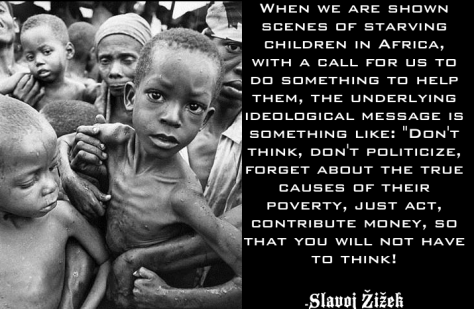
From Christian Bowe
In their book ‘Why nations fail?‘, that examines the origin of poverty and prosperity, Daron Acemoglu and James Robinson conclusively show that it is man-made political and economic institutions that underlie economic success (or the lack of it). Therefore only the development of inclusive…
View original post 844 more words
A Cascade of Development on the Omo River:Lake Turkana at Risk from Dams and Plantations February 20, 2014
Posted by OromianEconomist in Africa, Africa Rising, African Poor, Agriculture, Aid to Africa, Climate Change, Colonizing Structure, Corruption, Culture, Development, Economics, Environment, Ethnic Cleansing, Food Production, Human Rights, Land and Water Grabs in Oromia, Land Grabs in Africa, Omo, Omo Valley, Oromia, Oromiyaa, Oromo, Self determination, The Colonizing Structure & The Development Problems of Oromia, Uncategorized.Tags: Africa, African Studies, Development and Change, Economic and Social Freedom, Gambella and Omo Valley, Gibe III Dam, Gibee River, Human Rights and Liberties, Human rights violations, Lake Turkana, Land grabbing, Land grabs in Africa, National Self Determination, Omo River, Oromia, Oromiyaa, Oromo, State and Development, Universal Declaration of Human Rights
1 comment so far

Omo River, Lake Turkana at Risk from Dams and Plantations
http://www.huffingtonpost.com/lori-pottinger/ethiopia-pushes-river-bas_b_4811584.html
Dams and irrigated plantations being built in Ethiopia will bring major changes to the flow of the Lower Omo River, which in turn will harm ecosystem functions and local livelihoods all the way to the river’s terminus at Lake Turkana in Kenya. More dams are planned for the basin that would compound the damages.
Here we outline some of the basic changes that can be expected as a result of these developments, and include resources on where to get more information.
The Gibe III reservoir is expected to start filling at the beginning of the next Kiremt rainy season (approximately May 2014); filling the reservoir will take up to three years. During this time, the river’s yearly flow will drop as much as 70%.
The Gibe III will provide stable flows year-round that will enable the growth of large commercial agricultural plantations in the Lower Omo. The Kuraz sugar plantation and additional areas identified for cultivation could eventually take almost half of the Omo River inflow to Lake Turkana.
These projects will cause a decrease in river flow and the size, length, and number of floods, which will be disastrous for downstream users. This is the first year in which runoff from the Kiremt season, which is vital for flood-recession agriculture, restoration of grazing areas, and fisheries production, will be almost completely blocked.
Changes to the flooding regime will disrupt fish spawning cues and decrease productive habitat for fish in Lake Turkana and the river. Lake fish catches may decrease.
Because the Omo River contributes almost all of Lake Turkana’s inflows each year, these developments could cause a big drop in lake water levels. Lake Turkana is projected to drop by about two meters during the initial filling of the dam. If current plans to create new plantations move forward, the lake could drop from 16 to 22 meters. The average depth of the lake is just 31 meters.
Climate change could worsen the water situation in the Omo. More extreme droughts and unpredictable precipitation patterns, combined with higher temperatures (which increase evaporation), could cause further stress to a region that already experiences extreme precipitation variability. There is evidence that there will be a drying trend and warmer temperatures.
The Gibe III and associated irrigation projects will limit people’s mobility and ability to practice diverse livelihoods, which are important ways people in the region have adapted to climate variability in the past.
The primary means of livelihood for about 500,000 people will be dismantled by the Gibe III and large-scale commercial agriculture. Conflicts over scarce resources are expected to increase.
http://www.internationalrivers.org/resources/omo-river-lake-turkana-at-risk-from-dams-and-plantations-8199
http://www.internationalrivers.org/blogs/258/human-rights-must-come-first


 Oromian Economist
You must be logged in to post a comment.