The Scramble For Africa, Big Agriculture & The Industrial Farm Land: At What Cost? December 19, 2013
Posted by OromianEconomist in Africa, Colonizing Structure, Corruption, Dhaqaba Ebba, Dictatorship, Oromia, Oromiyaa, Oromo, Oromo Culture, Oromo Identity, Oromo Nation, Oromo the Largest Nation of Africa. Human Rights violations and Genocide against the Oromo people in Ethiopia, Self determination, The Colonizing Structure & The Development Problems of Oromia, Tyranny, Uncategorized.Tags: Africa, African Studies, Developing country, Development, Development and Change, Economic and Social Freedom, Genocide against the Oromo, Horn of Africa, Human rights, Human Rights and Liberties, Human rights violations, Land grabbing, Land grabs in Africa, National Self Determination, Oromia, Oromo, Oromo people, Sub-Saharan Africa, Tyranny, Universal Declaration of Human Rights
comments closed
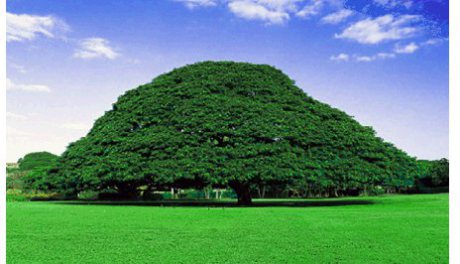 ‘
‘


Picture source : Gadaa.com

Green Rush In Africa
Picture Source: FP

‘There is a gold rush happening in Ethiopia, but it’s not a hunt for the yellow metal. It’s a quest for the green gold of fertile farmland. A nation more associated with periodic famine and acute childhood malnutrition than with agricultural bounty is leasing millions of hectares -an area the size of Belgium – to foreign companies, who want to grow and export food to places like Saudi Arabia, China, India, and Europe. One-third of the fertile Gambella area in western Ethiopia, for example, is being leased for the next 50 years by the Bangalore-based food company Karuturi Global. Forests are being clear-cut, swamps drained, rivers diverted, and whole villages moved to make way for flower farms and palm-oil and rice plantations. “It is very good land. It is quite cheap…. We have no land like this in India,” effused Karuturi’s project manager Karmjeet Shekhon to the Guardian soon after the lease was settled in 2011. The government in Addis Ababa says it needs foreign companies like Karuturi Global to help create jobs, raise Ethiopia’s income from food exports, and develop the agricultural technology and infrastructure that can bring the impoverished country into the mainstream of the global market economy. It has enticed investors with tax breaks alongside rock-bottom lease rates (as little as $1 per hectare per year). But at what cost — to land rights, to human health, to the environment, to national stability?’
– See more at original source: http://www.foreignpolicy.com/articles/2013/12/17/green_rush_industrial_farmland_africa#sthash.lq1Wlefk.dpuf
Copyright © OromianEconomist 2013 & Oromia Quarterly 1997-2013, all rights are reserved. Disclaimer.
Global Poverty & Development Agendas: Dead Aid, Ethiopia & The West December 17, 2013
Posted by OromianEconomist in Africa, Aid to Africa, Colonizing Structure, Development, Economics: Development Theory and Policy applications, Knowledge and the Colonizing Structure. Africa Heritage. The Genocide Against Oromo Nation, Land Grabs in Africa, Oromia, Oromiyaa, Oromo, Oromo Culture, Oromo Identity, Oromo Nation, Oromo the Largest Nation of Africa. Human Rights violations and Genocide against the Oromo people in Ethiopia, Oromummaa, Self determination, The Colonizing Structure & The Development Problems of Oromia, Theory of Development, Uncategorized.Tags: Africa, African Studies, Dead Aid, Development and Change, Economic and Social Freedom, Genocide against the Oromo, Governance issues, Horn of Africa, Human rights, Human Rights and Liberties, Human rights violations, Land grabbing, National Self Determination, Oromia, Oromiyaa, Oromo, Oromo people, Oromummaa, State and Development, Sub-Saharan Africa, Tyranny, Universal Declaration of Human Rights
add a comment
In excess of 35 million Ethiopians still live in abject poverty subsisting on less that $2 a day while a tiny fraction of the country’s 85 million people has become excessively rich. As more and more ODA is pumped into the country Ethiopia’s HDI rank hasn’t improved (in fact it has gone from 169th in the world to 173rd in the last decade), journalists, academics and opposition figures are still jailed for speaking out against the regime, ethnic minorities such as the Oromo are discriminated against and forced off their lands, corruption and human rights abuses are still rife. Less people may be dying but are ordinary peoples’ lives improving at a rate that warrants the West to turn a blind eye to the crimes of those in power? It may suit certain agendas to do so but it does a massive disservice to ordinary Ethiopians. Read the full text at: http://www.transcend.org/tms/2013/12/global-poverty-and-post-colonial-development-agendas-ethiopia-and-the-west/


http://en.wikipedia.org/wiki/List_of_countries_by_percentage_of_population_living_in_poverty
Related articles
The Oromo, Gadaa/Siqqee Democracy and The Liberation Of Ethiopia Colonial Subjects December 5, 2013
Posted by OromianEconomist in Africa, Development, Gadaa System, Human Rights, Humanity and Social Civilization, Knowledge and the Colonizing Structure. African Heritage. The Genocide Against Oromo Nation, Oromia, Oromiyaa, Oromo, Oromo Culture, Oromo Identity, Oromo Nation, Oromo Social System, Oromummaa, Self determination, Sirna Gadaa, The Oromo Governance System, Theory of Development, Uncategorized.Tags: Africa, African culture, African Studies, Economic and Social Freedom, Gadaa System, Governance issues, Human Rights and Liberties, Human rights violations, National Self Determination, Oromia, Oromo, Oromo people, Siqqee, Sub-Saharan Africa, Universal Declaration of Human Rights
comments closed

This paper explores the potential role of the Gadaa/Siqqee system of Oromo democracy in the development of a democratic multinational liberation movement of the colonized nations within the Ethiopian Empire in order to dismantle the Tigrayan- led Ethiopian terrorist government and replace it with a sovereign multinational democratic state in the Horn of Africa based on the principles of indigenous democracy. After a brief introduction, this study describes the presence of a democratic, Siqqee/Gadaa administration among the Oromo in the Horn of Africa in the
16th and 17th centuries and the subsequent changes that made them vulnerable to colonization. It further examines the essence and main characteristics of Gadaa/Siqqee, showing that it provides a contrasting political philosophy to the authoritarian rule of the Ethiopian Empire. The study shows that in the face of oppression and exploitation the Oromo people have struggled to preserve and redevelop their indigenous democracy, written records of which go back to the 16th century, long before European nations embraced the principles of democratic governance. It also explains how it can be adapted to the current condition of the colonized nations within the Ethiopian Empire in order to revitalize the quest for national self- determination and democracy and to build a sovereign democratic state in a multinational context. Furthermore, the piece asserts that this struggle is truly a diffi cult one in the 21st century as the process of globalization is intensifi ed and regional and local cultures are being suppressed under the pressure of dominating cultures.
Asafa Jalata, Professor, Department of Sociology, The University of Tennessee, Knoxville, Tennessee
Harwood Schaffer, Research Assistant Professor, Agricultural Policy Analysis Centre, The University of Tennessee
Read the full article from the following:
http://works.bepress.com/cgi/viewcontent.cgi?article=1104&context=asafa_jalata
http://works.bepress.com/asafa_jalata/63/
Copyright © 2013 & Oromia Quarterly 1997-2013, all rights are reserved. Disclaimer.
Culture, Identity and the roles of Women in Oromo Society November 28, 2013
Posted by OromianEconomist in Culture, Humanity and Social Civilization, Kemetic Ancient African Culture, Oromia, Oromiyaa, Oromo, Oromo Culture, Oromo Identity, Oromo Nation, Oromo Social System, Uncategorized.Tags: African culture, African Studies, Ancient time, Democratic African institution, Development and Change, Gadaa System
1 comment so far
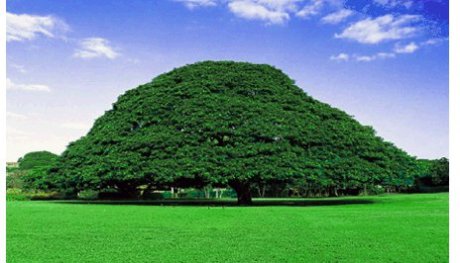
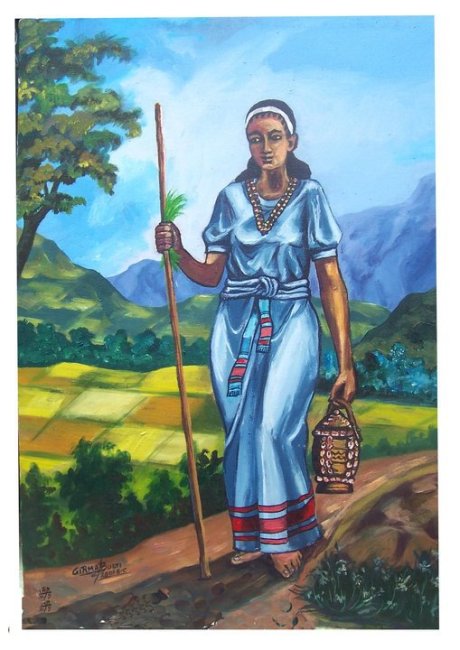
‘Oromo society views women as the dominant creators and assimilators of cultural symbols. At this time, women were independently creating their own material expressions based on the emerging nationalist consciousness sweeping the Oromo countryside, and these practices continue today through the manipulation of new materials in the production of upper torso body art. Oromo women’s dress is most closely associated with the lower body and its association with procreation.’
http://www.creative8studios.com/oromia/
Copyright © Oromianeconomist 2013 and Oromia Quarterly 1997-2013. All rights reserved. Disclaimer.
Saudi Arabia’s Extreme Brutality Against Migrants From Oromia And Other East African Nationals November 28, 2013
Posted by OromianEconomist in Africa, Colonizing Structure, Corruption, Domestic Workers, Human Traffickings, Oromo, Oromo Nation, Saudi Arabia, Slavery, The Colonizing Structure & The Development Problems of Oromia, Tyranny, Uncategorized.Tags: Africa, Domestic Workers, economics, Genocide against the Oromo, Human rights violations, Human Traffickings, Land grabs in Africa, Migrant Workers, Migrants in the Gulf States, Oromia, Oromo, Oromo people, Saudi Arabia, Tyranny
add a comment


HRLHA Appeal and Urgent Action
November 13, 2013
For Immediate Release
Honorable ABDULLAH bin Abdulaziz Al Saud, King of Saudi Arabia;
Custodian of the Two Holy Mosques
Riyadh, Royal Court: 1-488-2222, Jeddah: 2-665-4233
Taif: 2-736-5200, Makkah: 2-823-4111, Madinah: 4-857-2500
His Majesty King Abdullah bin Abdulaziz,
Upon the expiration of the three months extended deadline for migrant workers to renew their
residency and employment status ( November 4, 2013), thousands of migrant workers in Saudi Arabia
most of whom believed to be from Ethiopia were apprehended in various regions of the Kingdom by
Ministry of Labor inspection squads formed for this purpose under the pretext of flushing out workers
who violate rules regarding work and residency permits.
The most victimized of the raids to flush out illegal workers were the free visa holder migrant
workers of Ethiopian Origins. ‘Free visa’ holders are considered among the most exploited, lowest paid
and abused workforce in Saudi Arabia. The sponsor, who keeps the worker’s passport and other travel
documents with him/her, plays a crucial role in the worker’s life. All dealings with the government such
as renewal of ‘iqama’ or residency permit are through the sponsor. Sources from the capital city, Riyadh,
reported that among the total of 28000 surrounded migrants , authorities detained around 16,500 migrant
workers in the first four days (November 5 – 9, 2013) in a nationwide crackdown across seven provinces
The Saudi officials confirmed that among the seven provinces nearly half of the migrants were arrested near the southern border with Yemen and in Mecca where some Muslims stay on illegally after their pilgrimage.
Though the police officials in the capital city claim that the security forces killed the African
migrant worker in el-Manhoufa because he and others tried to resist arrest, the information from the
migrants and from the publicly released video confirmed that the three Ethiopians killed were murdered
by the brutal action of police. Among the victims was Umere Abdurahiman Ali , 24 an Oromo national
from Ethiopia who was gunned down on November 5.
After the crackdown resumed, more than 10 Ethiopians were killed and thrown into the bush and eaten by
hyenas. Your Majesty, the government of Saudi Arabia has an international obligation to treat a person
who finds him/herself inside the borders of Saudi Arabia according to International law. The Universal
declaration of Human Rights and International conventions on the protection of the rights of all migrant
workers and members of their families Article 9 & 10, states “The right to life of migrant workers and
members of their families shall be protected by law”, “no migrant worker or member of his or her family
shall be subjected to torture or to cruel, inhuman or degrading treatment or punishment” respectively. In case these migrant workers are illegal, they should be treated as human beings with human dignity and deported in a civilized manner to the destination of their choice.
The Human Rights League of the Horn of Africa calls upon all world community, UN member
states, International Civic and humanitarian Organizations and diplomatic communities and agencies to
exert pressure on the Saudi Arabian government so that it discloses the whereabouts and the current
situations of the confined migrant workers, and compensates the victims for their loss and renews their
status. The HRLHA also calls on the Saudi Arabian government to sign all international covenants and
treaties that it hasn’t yet signed.
RECOMMENDED ACTION: Please send appeals to
The Honorable ABDULLAH bin Abdulaziz Al Saud, King of Saudi Arabia and other concerned Saudi
Arabian government officials and to diplomatic representatives of Saudi Arabia who are accredited to
your country as swiftly as possible, in English, Arabic, or your own language expressing:
Your concern regarding the apprehension and possible torture of the citizens who are being held in
different detention centers; and calling for their immediate and unconditional release;
urging the Saudi Government authorities to ensure that these detainees are treated in accordance with
the regional and international standards on the treatment of prisoners,
Adhere to international conventions on the protection of the rights of all migrant workers and
members of their families to bring to justice those Police and Security agents who committed crimes against innocent
civilians by using excessive force.
To:
HRH Crown Prince Salman bin Abdulaziz Al-Saud:
Deputy Prime Minister and Ministry of Defense
Airport Road, Riyadh 11165
TEL : 1-478-5900/1-477-7313 FAX: 1-401-1336
Jeddah Office TEL: 2-665-2400
Web site: http://www.moda.gov.sa/
SAUD al-Faysal bin Abd al-Aziz Al Saud :
Ministry of Foreign Affairs
Nasseriya Street, Riyadh 11124
TEL: 1-406-7777/1-441-6836 FAX: 1-403-0159
Jeddah Office TEL: 2-669-0900
web site http://www.mofa.gov.sa/
AHMAD bin Abd al-Aziz Al Saud:
Ministry of Interior
PO Box 2933, Riyadh 11134
TEL : 1-401-1944 FAX : 1-403-1185
Jeddah Office TEL: 2-687-232
web site: http://www.moi.gov.sa/
Muhammad bin Abd al-Karim bin Abd al-Aziz al-ISA :
Ministry of Justice
University Street, Riyadh 11137
TEL : 1-405-7777/1-405-5399
Jeddah Office TEL: 2-665-0857
web site: http://www.moj.gov.sa/
Copied To
League of Arab States Headquarters
His Excellency Dr. Nabil El Araby, Secretary Genral
Egypt Cairo – Secretariat –Tahrir Square
Telephone: 5752966 – 5750511
Fax: 5740331 – 5761017
PO. Box: 11642
• Office of the High Commissioner for Human Rights
United Nations Office at Geneva 1211 Geneva 10, Switzerland
Fax: + 41 22 917 9022 (particularly for urgent matters) E-mail: tb-petitions@ohchr.org
• African Commission on Human and Peoples’ Rights (ACHPR)
48 Kairaba Avenue, P.O.Box 673, Banjul, Gambia
Tel: (220) 4392 962 , 4372070, 4377721 – 23 Fax: (220) 4390 764
E-mail: achpr@achpr.org
• U.S. Department of State
Laura Hruby
Ethiopia Desk Officer
Tel: (202) 647-6473, HrubyLP@state.gov
Foreign Affairs, Trade and Development Canada
125 Sussex Drive
Ottawa, ON
K1A 0G2
Tel: 1-800-267-8376 (toll-free in Canada), 613-944-4000
• Amnesty International – London
Clairy Beston ( Clairy or Claire?)
Telephone: +44-20-74135500
Fax number: +44-20-79561157
HRLHA is a non-political organization (with the UN Economic and Social Council – (ECOSOC) Consultative Status) which attempts to
challenge abuses of human rights of the people of various nations and nationalities in the Horn of Africa.
Tel: (647) 280 7062, E-Mail: hrldirector@mail.org, Web site: http://www.humanrightsleague.com
Click to access grnovSaudi-HRLHA-UA.pdf
The following is a letter from Ob. Mardaasa Addisu, Secretary of the Macha Tulama Cooperative and Development Association, USA.
——————
November 11, 2013
Dear Prince Naif Ibn Abdul Aziz Al-Saud
Ministry of Interior
Kingdom of Saudi Arabia
Minister of Agriculture
Kingdom of Saudi Arabia
My name is Mardaasa Addisu, an Oromo American, who is part of an international group advocating for Oromo rights. The Oromo people are an ethnic group that makes up 50% of the population in Ethiopia, but are being persecuted by the Tigrayan dictatorship. The Abyssinians (Tigray and Amhara) have committed genocide on all Cushitic people to acquire resources and reduce the indigenous populations. As a result, Oromo (and all other Cushitic people) are displaced in mass numbers around the World. More than 40% of Oromo are Muslim, with some seeking refugee in the Middle East, particularly Saudi Arabia. Many flee persecution in Ethiopia in hopes of finding refuge whereby they can practice their faith without government interference. We are aware that a large number of people are also using the Ethiopian domestic labor agencies to reach Saudi Arabia. Recently, Oromo advocates learned of your government ending the Kafala System of sponsorship for labor, which is believed to bypass Saudi Labor laws. Human Rights Watch has been critical of the Kafala System in recent times stating: “Saudi Arabia should get serious about regularizing the status of its workers and do away with an abusive labour systems that force migrants into illegal employment .” http://gadaa.com/oduu/22981/2013/11/12/macha-tulama-cooperative-and-development-association-usa-letter-on-attack-on-refugees-and-laborers-including-oromo-in-the-kingdom-of-saudi-arabia/
Ob. Jawar Mohammed on the ongoing assaults on immigrants in the Gulf State and how to end the Oromo national homelessness:
‘The savage mobocratic attack on our people in Saudi Arabia is the culmination of the horrific stories of abuses we have been hearing over the last several years. From Alem Dachasa’s heartwrenching death in Lebanon in 2012 to the weekly news of maids killed by their employers in almost all Gulf countries to the mass-scale attacks perpetrated by the Saudi police and mobs, we are observing a worsening of the situation for our people in the region. There appears to be three factors at play leading to this escalation. First, particularly in the Saudi case, instead of taking responsibilities for the extravagant waste of resources and unproductive economic policies that have resulted in the growing rate of unemployment, the Saudi government and media have been spreading blames on migrants taking away jobs. Consequently, the Saudi public has come to associate their economic hardship with ‘invasion of foreigners’ as their media like to frame the issue. Second, due to oppressive regimes that rule through exclusivist and exploitative economic conditions, the number of our refugees crossing the Red Sea has skyrocketed. The UNCHR reports show that between 100,000-120,000 refugees enter Yemen every year. Most, if not all, of these refugees aim their final destination to be Saudi Arabia. Third, that part of the world is still stuck in medieval racist views. Even before the latest xenophobic campaigns, they have been known for being cruel towards African migrants, particularly. I have heard endless tales of horrific racist rants and physical attacks against maids and laborers by their employers, the police and ordinary folks on the street. In fact, I can attest from experience that even the ‘most enlightened’ of them: diplomats, businessmen, students and princes still have a shockingly Darwinian view of humanity. The racism in that part of the world cannot be denied or excused. Its ugly face and nasty brutality are out there in full display. The latest racist outburst is nothing but a public display of what they have been subjecting our brothers and sisters in seclusion in their houses. I anticipate each of these three factors to get worse in the near future. The social and political upheaval in the region following the Arab Spring, and the expected downward spiral of the economy are likely to further fuel xenophobia as regimes will continue to rely on externalizing internal these problems to remain in power. Sadly, I cannot foresee lots of practical solutions. For instance, the humanitarian approach (advocacy and refugee service type) is unlikely to work because the Saudis just do not have room for civil societies. A person I know tried to set up a shelter for the battered maids, but he spent over a year trying to get some sort of permit to no avail. One official actually told him in plain language that they had no law for such a permit. He then decided to host some of the worst affected in house he rented. An employer of one of the battered women, the very person who brutalized her, found out the place after extracting confession by torturing her friend. He then brought the police, which raided the place, arrested the Good Samaritan, returned some of the women to their tormenting employers and deported the rest. Even during the latest crisis, an elderly person who has lived there for over 40 years and supposedly well known to the authorities, went to appeal to the government to stop the violence. Instead of heeding to his plea, he was beaten up by the officials, arrested and awaiting deportation (despite having all the legal papers). The other alternative, and perhaps more effective way, of helping them would have been the diplomatic channel. After the beheading of an Indonesian woman few years back, Jakarta responded strongly by threatening to severe economic and political ties. The Saudis gave in to the pressure, releasing hundreds of Indonesians from detentions. During the recent attack on migrants, Indonesians are said to be the least affected. However, when we come to the Ethiopian government, we are observing a reaction that borders endorsing the Saudi policy of mass violence. The foreign ministry and its diplomats downplayed the severity by blaming on social media’s exaggeration; they even tried to justify the crackdown saying the targets are only illegal immigrants. Notwithstanding the fact that the attack did not make such differentiation, whether they went there legally or illegally, a government has a solemn duty to stand up and defend its citizens, particularly when they come under attack by foreigners. Then, why is the Ethiopian government cozying up to the Saudis instead of siding with the victims? This could be attributed to multitude of factors. First, over last year, the relationship between the Ethiopian regime and the Saudi-based immigrants has deteriorated. Triggered by the protest over violations of religious freedom, the immigrant community stood firm against the regime – refusing to buy and disrupting the so-called Abbay Bond sell. Hence, it’s understandable that the regime has little love for them. In fact, the regime stands to benefit from destabilization of such resourceful and near-to-home Diaspora that is increasingly falling into the opposition’s side. This is what’s consular officers have been signaling to elders who went to speak with them. Second, we shall recall the report that the Ethiopian rulers have reached an agreement with the Saudi government to send 45,000 maids ‘legally.’ Hence, the displacement of the rebellious ‘illegals’ will make room for the new ones who – because they will be recruited, vetted monitored by the regime’s agencies while in Saudi – are less likely to stand against it. Finally, the vast majority of these brutalized refugees are Oromos (it is estimated that over half a million Oromo refugees reside in the Gulf States). The severity of the refugee crisis the Oromo nation is facing — from North Africa to South Africa, Kenya and the Middle East — is indicative of the severity of the repression and exploitation going on in our country. The past colonizers reduced our people to servitude. Back then, our people at least remained on their land even though they were robbed of most of their production. Today, our people are dispossessed of even that plot of land as the occupiers are giving it to their own and selling it to foreigners. Millions are internally displaced and have become urban squatters. Hundreds of thousands flee every year to escape political persecution and save their family from starvation by risking certain death while crossing the Red Sea and the African deserts. Put simply, as a nation, we have become homeless. No amount of humanitarian outreach and lobbying foreign charity can solve this problem for us. We could ask foreign powers and do-gooders to throw us blankets to survive the cold, and leftover food to get by. But, we will still be back to the same destitution the next day or the one after. The only and lasting solution to this humiliating national homelessness is to take back our homeland. This fact must sink.’ Ob. Jawar Mohammed
http://gadaa.com/oduu/22990/2013/11/14/ob-jawar-mohammed-on-the-ongoing-assaults-on-immigrants-in-the-gulf-states-we-must-take-back-our-homeland-to-end-the-oromo-national-homelessness/
http://gadaa.com/oduu/22984/2013/11/13/lubbuun-biyyatti-galuu-qofa-feena/
‘Despite the hullabaloo about its miraculous economic growth, Ethiopia’s pervasive youth unemployment , lack of economic and political freedom, differential access togovernment jobs, and the promise of a better life overseas are forcing hundreds of young people to take dangerous trips to the Gulf region every year. This has especially affected Oromos and other minority ethnic groups in Ethiopia. Half of the migrants in Saudi Arabia are believed to be Oromos.
Two of the three women who were stranded at the Muscat Airport for more than 48 hours in February were Oromos. One of them, a young girl from Assela said she was 20 but looked much younger. These women make up approximately 20,000 “Ethiopians” in Oman. On my return flight last April, over a hundred women were being returned to Ethiopia. A few that I approached spoke fluent Oromo.’ http://www.opride.com/oromsis/news/horn-of-africa/3719-from-one-hell-to-the-next-and-back-the-plight-of-ethiopian-migrants-in-gulf-states
“The entire system by which Saudi Arabia regulates foreign labor is failing.”
“These people have worked in this country and their blood is in the stones and buildings….You cannot just, like that, force them out.”
Garbage is piling up on streets around the mosque housing the burial site of the Prophet Muhammad. Grocery stores have shut their doors and almost half of Saudi Arabia’s small construction firms have stopped working on projects.
The mess is because foreign workers on which many businesses rely are fleeing, have gone into hiding or are under arrest amid a crackdown launched Nov. 4 targeting the kingdom’s 9 million migrant laborers. Decades of lax immigration enforcement allowed migrants to take low-wage manual, clerical and service jobs that the kingdom’s own citizens shunned for better paying, more comfortable work.
Now, authorities say booting out migrant workers will open more jobs for citizens, at a time when unemployment among Saudis is running at 12.1 percent as of the end of last year, according to the International Monetary Fund. But the nationalist fervor driving the crackdown risks making migrant workers vulnerable to vigilante attacks by Saudis fed up with the seemingly endless stream of foreigners in their country.
Since the Saudi government began issuing warnings earlier this year, hundreds of thousands of foreign workers have been deported, though some were able to avoid arrest by getting proper visas in an amnesty program. That amnesty ended last week, and some 33,000 people have since been placed behind bars. Others have gone into hiding.
With fewer people to do the job, the state-backed Saudi Gazette reported that 20,000 schools are without janitors. Others are without school bus drivers. Garbage became so noticeable around the mosque housing the Prophet Muhammad’s tomb that a top city official in Medina helped sweep the streets, the state-backed Arab News website reported.
About 40 percent of small construction firms in the kingdom also have stopped work because their foreign workers couldn’t get proper visas in time, Khalaf al-Otaibi, president of the World Federation of Trade, Industry and Economics in the Middle East, told Arab News.
Saudis say dozens of businesses like bakeries, supermarkets, gas stations and cafes are now closed. They say prices have also soared for services from mechanics, plumbers and electricians.
Adam Coogle, a Middle East researcher for Human Rights Watch, told The Associated Press that if the kingdom wants to be serious about the problem, authorities should look at the labor laws and not at the workers. Saudi Arabia’s sponsorship system, under which foreign laborers work in the kingdom, gives employers say over whether or not a foreigner can leave the country or change jobs, forcing many into illegal employment.
“The entire system by which Saudi Arabia regulates foreign labor is failing,” he said.
The owner of a multi-million dollar construction company in the Saudi capital, Riyadh, said he had to halt all of his projects. He told the AP he was not the legal sponsor of most of his laborers but that they made more money working as freelance hires.
“These people have worked in this country and their blood is in the stones and buildings,” he said, speaking anonymously for fear of government reprisal. “You cannot just, like that, force them out.”
Despite feeling the loss of the everyday work the foreign laborers provided, Saudis largely have cheered on the police. Residents have taken matters into their own hands on several occasions, despite police calling on the public not to make citizen arrests.
http://abcnews.go.com/International/wireStory/saudi-migrant-crackdown-closes-shops-raises-fears-20884516?page=2

MAAF GARAA JABAATTA??
Giddu gala bahaa dachii arabootaa
Ilmaan oromootti maaf garaa jabaattaa?
Nuun dhiiga qulqulluu hameenya hin qabnu
Biyya ormaa dhufnee biyya keenya hin jennu
Carraaqachuu dhufne biyya irraa godaannee
Mirga dhabne malee nuti biyya hin dhabnee
Osoo biyya qabnuu dirqiin manaa baanee
Gammoojjii jibuutii keessatti gubannee
Beelaa fi dhukkubaan hedduu gaagaa’amnee
Gariin bishaan nyaatee kaan qurxummiin quufee
Kaan cirracha yaman gubbaarratti kufee
Hambaa waa xiqqootu bineensa iraa hafee
Oromoo xiqqootu carraaqachuuf dhufee
Maarree ati maalif garaan si jabaataa?
Hiyyeessa lammii koo maalif galaafattaa?
Nuti sirra hin teenyu sirraa galuu yaanna
Waan cacarraaqanne guduunfannee baana
Lakkii nu qusadhu yaa dachii nageenyaa
Carraaqachuu qofa nuti kaayyoon keenyaa
Mee suuta jedhiitii addaan nu baafadhu
Eenyu akka taane sirriitti hubadhu
Duraanuu beekamna nuti hammeenya hin qabnu
Quba afaan nu ka’an tasuma hin ciniinnu
Kana miti beeka saudii seenaan kee
Nageenya jaallatta jechuuttin si beekee
Harra eessaa fiddee jijjiirte amala kee
Kun waa kan kee miti,kan biraa si booda jiraachuusaan shakkee!!!
Nu fe’adhaa jennee nu fe’achaa jirtu
Teenyee nyaachaa hn jirru ijaan ni agartu
Naamusaan bobbaanee galaa jirra nuti
Maalif lubbuun keenya badii malee baati
Warra dhalootumaan badii malee hin beekne
Warreen hiddi isaanii shira malee hin qabne
Maalif isaan waliin wal nu fakkeesitan
Nuti oromoo dha!! Habashoota waliin maaf waliin nu maktan?
Badii nam tokkootiif hunda maaf yakkitan
Habashoonni duruu qa’ee namaa dhaquun
Aadaa isaaniiti biyya namaa jeequun
Nuti oromoodha nu hubachuu qabdu
Jennee osoo himnuu maaf waliin nu dhiibdu?
Erga “nurraa ba’aa” afaaniin jettanii
Saba badii hin qabne erga yakkitanii
Nagaadhaan nuuf ergi oromoo hin miidhinii
Cal,cal,jennaan nuti sodaa hin fakkaatinii
Adaba godhadhaa yoo nagaa feetanii!!!!!!!
Seena Abdiissaa, on Facebook
Ethiopian police crackdown on anti-Saudi Arabia protest following migrant worker attacks

Foreign workers wait before boarding police buses transferring them to an assembly centre prior to their deportation on November 14, 2013 in Riyadh (AFP, Fayez Nureldine)
November 15, 2013, ADDIS ABABA, ETHIOPIA (AP) – Ethiopian police have used force to disperse hundreds of people protesting against targeted attacks on Ethiopians in Saudi Arabia. Police units Friday blocked roads to prevent the protest at Saudi Arabia Embassy from growing. Some two dozen people were detained. The police forced some journalists to delete photos. The government’s spokesman, Shimelis Kemal, wasn’t immediately available for comment.
One protester, Asfaw Michael, who was beaten, said he didn’t understand why Ethiopia wanted to shield Saudi Arabia from the protest.Many foreign workers in Saudi Arabia are fleeing or are under arrest amid a crackdown on the kingdom’s 9 million migrant laborers. Close to 500 Ethiopians have been repatriated. Last weekend, Saudi residents fought with Ethiopians. Video emerged of a crowd dragging an Ethiopian from his house and beating him. http://ayyaantuu.com/horn-of-africa-news/ethiopia/ethiopian-police-crackdown-anti-saudi-arabia-protest-following-migrant-worker-attacks/

Photo: at Finfinnee (Addis Ababa), Oromia
Arrests at anti-Saudi protest in Ethiopia |
Police crackdown on demonstrations against targetedattacks on Ethiopian migrant workers in Saudi Arabia.http://www.aljazeera.com/news/africa/2013/11/arrests-at-anti-saudi-protest-ethiopia-201311151464025832.html#.UoZ3WGaXZwg.twitter |
“It is rare to come across any other nationality groups like the Oromo from the Horn of Africa who are as subjected to overwhelming abuses at home under subjugation and occupation and overseas as refugees with no safe haven. From destructiveevents developing at unprecedented rate in Oromia and in countries of exile, we can observe that the Oromo people are facing a greater danger to their survival as a group and as individuals from Ethiopia to Saudi Arabia, Yemen to Libya, Somaliland to Kenya and everywhere in between. We hear of increasingly darker and gorier circumstances our people find themselves in every passing day. The recent crackdown in Saudi Arabia on immigrants and refugees from Oromia and Ethiopia and this Qeerroo report on massive rights abuses inside Oromia from 2012-2013 demonstrate just how much fragile, weak and endangered the Oromo species has become everywhere. The suffering is obviously enormous, but the local and global voices conveying these sufferings are tragically dwindled or hijacked. It behooves every concerned Oromo to pause and think: where are we headed as a people? And it is necessary that every Oromo political and economic organization rethinks home-based, Oromia, approaches to preventing the slow extinction of this species from the face of the earth. “
Joint Statement of OSA and Oromo Community Associations in NA
Regarding Situation of Oromo Migrant Workers, and Refugees in KSA
Dear Oromo People in Oromiya /Ethiopia, KSA and all the Oromo Diaspora Communities:
The Oromo Studies Association released this joint statement with Oromo Community Associations in North America regarding the situation of Oromo and other Ethiopian Refugees, Asylum Seekers and and Migrant Workers from Ethiopia. We heard and observed with disbelief and a profound sense of grief the awful news coming from Saudi Arabia. The graphic images and videos of indiscriminate beatings of defenseless immigrant workers, ostensibly at the hands of Saudi Arabian law enforcement officials and vigilantes, has clearly shocked and enraged us. Law enforcement officials have randomly rounded up, kept tens of thousands of the immigrants in concentration camp-type facilities, and deported many thousands more to Ethiopia without regard to individual cases and needs. Read more
OSA Letter Requesting the Correction of Erroneous Oromo Language Classifications Published on Citizenship and Immigration Canada (CIC) Website
“All along the successive Ethiopian regimes, including the current regime, have embarked on deliberate and systematic campaigns of misinformation about the Oromo people, its language and culture in order to sustain the subjugation of the Oromo people. Volumes of propaganda literatures have been written that are designed to de-humanize the people, ridicule its culture and deliberately fabricate artificial linguistic classifications among inhabitants of the various regions of Oromiya. The ultimate goal of such campaigns is to create false stories designed to weaken the unity of the Oromo people and to misinform the international community who would rely on these propaganda literatures for information on Oromo issues. We suspect the sources for the CIC’s Oromo language classification is directly based on such literatures or it is based on some genuine independent works that might have been influenced by the former. For instance, the World Languages, a Virginia-based language organization that provides information on world languages to government agencies and businesses, erroneously classifies Afaan Oromo (Oromo language) into three regions; Western, Eastern and Southern Oromo languages.” Read more
http://www.ethiotube.net/video/28483/Must-Watch
Copyright © Oromianeconomist 2013 and Oromia Quarterly 1997-2013. All rights reserved. Disclaimer.
Relaunching Africa: The Call For Pro-Poor Growth November 17, 2013
Posted by OromianEconomist in Africa, Development, Economics, Economics: Development Theory and Policy applications, Oromia, Oromiyaa, Oromo, Oromo Nation, Oromo Social System, Self determination, The Colonizing Structure & The Development Problems of Oromia, The Oromo Governance System, Theory of Development, Uncategorized.Tags: Africa, African Studies, Developing country, Development, Development and Change, Economic and Social Freedom, economics, Governance issues, Leading Issues In African Development, Oromia, Oromiyaa, Oromo, Oromo the ancient African Society, Social Sciences, State and Development, World Bank
1 comment so far
“Policies aimed at enhancing agricultural productivity and increasing food availability, especially when smallholders are targeted, can achieve hunger reduction even where poverty is widespread. When they are combined with social protection and other measures that increase the incomes of poor families, they can have an even more positive effect and spur rural development, by creating vibrant markets and employment opportunities, resulting in equitable economic growth.” F.A.O.
“Poor people feeding their babies better and sending their children to school, while also building a new chicken coop. Let governments ensure that there are teachers there to actually teach the children, and you could be on to a really promising combination. It may look less impressive than a new oil platform or a shiny airport, but it will reduce poverty just the same, if not more!”
The new Deputy Chief Economist for the World Bank in Africa in his call for evidence based debate in pursuit of African development states the following arguments and calls for pro-poor development policies:
In 1990, poverty incidence (with respect to a poverty line of $1.25) was almost exactly the same in sub-Saharan Africa and in East Asia: about 57%. Twenty years on, East Asia has shed 44 percentage points (to 13%) whereas Africa has only lost 8 points (to 49%). And this is not only about China: poverty has also fallen much faster in South Asia than in Africa. These differences in performance are partly explained by differences in growth rates during the 1990s, when emerging Asia was already on the move, and Africa was still in the doldrums. But even in the 2000s, when Africa’s GDP growth picked up to 4.6% or thereabouts, and a number of countries in the region were amongst the fastest-growing nations in the world, still poverty fell more slowly in Africa than in other regions. Why is that? Part of the answer is that Africa’s population growth rates are still very high: 2.7% per year, versus 0.7% in East Asia. So a 4.6% growth rate for GDP translates into a much more modest sounding 1.9% growth in per capita GDP – less than the developing country average in 1999-2012. But an even bigger part is that Africa just seems less efficient at transforming economic growth into poverty reduction. That conversion is measured by what economists call the “growth elasticity of poverty”, a number that tells us by how much poverty falls for each percentage point in economic growth. According to a recent (and as yet unpublished) estimate by my colleagues Luc Christiaensen, Punam Chuhan-Pole and Aly Sanoh, that elasticity was about 2.0 in the developing world as a whole (excluding China) during the 2000s, but only 0.7 in Africa. At this rate, even if countries in Africa continue to grow at the same rates as in the 2000s – a period when the external environment was particularly benign, with rising commodity prices and abundant liquidity – poverty in 2030 would be in the 26%-30% range (assuming constant inequality). Under similar assumptions for other countries, somewhere between 60% – 80% of the world’s poor would live in Africa. Why is growth in Africa apparently less pro-poor than elsewhere? And what can be done about it? At first blush, at least part of the answer (beyond rapid population growth) has to do with both levels and changes in inequality. Inequality is relatively high in Africa: seven of the world’s 10 most unequal countries in the latest data in Povcalnet are in the region – despite the fact that African inequality is almost invariably measured for consumption, rather than income, while the opposite is true in Latin America. In addition, inequality has actually been rising in a number of countries. (Although the truth is that infrequent household surveys and changing methodologies are so common that we actually know relatively little about real changes in inequality in Africa – despite the impression you may get from various sources…)This clearly reflects a growth pattern that is less inclusive than we might like. In our latest Africa’s Pulse and in our recent presentation on the State of the Africa Region to the Annual Meetings of the Bank and the Fund in Washington, we reviewed some of these data, and suggested a four-part strategy for better sharing Africa’s growth in the future:
• First, preserve macroeconomic stability. Africa’s growth success in the 2000s reflects policy improvements, but also a benign external environment. During this period, fiscal deficits and current account deficits grew in most countries (Figure 1). While that is understandable, given plentiful capital flows, the risk is that those capital flows cease – or reverse – precisely at a time when commodity prices have stopped rising and are, in many cases, falling. Countries with large fiscal and current account deficits are inevitably more vulnerable to those risks.
• Second, build more – but mostly better – human and physical capital. Of course, alongside increases in total factor productivity – this is what drives economic growth everywhere. Despite progress, the needs in Africa are enormous, in everything from health and education to transport and energy. Our emphasis here is on quality: there have been real gains in access, but children won’t learn unless the teachers show up at school and, in addition, actually teach! Similarly, the costs of power, water, transport and communications remain excessively high. That is partly due to sheer scarcity, and partly to geographic fragmentation, but not only. The way contracts are designed, the way competition is (or isn’t) promoted, and the way subsidies interact with firm incentives all need looking at as well.
• Third, promote growth in the places and sectors where the poor live and work. For most of Africa, that means in rural areas – both by finding better ways to promote higher yields in agriculture, and by strengthening the off-farm economy. Linkages to small and medium-sized towns seem to be an important ingredient. This suggests that “local investments” – in rural roads and electrification, for example – is likely to be as important as big flagship projects. Even if the political economy tends to favor the latter.
• Fourth, harness the power of growth that takes place elsewhere for investments near – or in – the poor. That is particularly pertinent for (the large and growing group of) countries with large natural resource sectors. Oil and mining are not intensive in unskilled labor and could, if left alone, develop almost as “enclave sectors”. The main policy concern with these resources is to invest as much as possible of the rents they generate into other forms of capital, to replace the natural capital being depleted. But countries should be imaginative and comprehensive in their choice of investment portfolio. The portfolio should obviously include infrastructure, health and education projects, to build physical and human capital. But it may also include foreign assets, to help with the risk of exchange-rate appreciation and “Dutch disease”.
And it should also include some cash transfers made directly to poor people. The prevailing evidence is that poor households tend to use the resources from small cash transfers rather wisely. They buy more and better food. They send their kids to school more often. And they even invest some of it in their own (very) small businesses: they buy chickens in Mexico, or goats in Tanzania.
That’s pro-poor growth for you! Poor people feeding their babies better and sending their children to school, while also building a new chicken coop. Let governments ensure that there are teachers there to actually teach the children, and you could be on to a really promising combination. It may look less impressive than a new oil platform or a shiny airport, but it will reduce poverty just the same, if not more!
For more details refer to: http://blogs.worldbank.org/africacan/sharing-africa-s-growth?cid=EXT_TWBN_D_EXT
Related Articles:
African rule of law declines despite economic gains, Ibrahim index shows
http://ethiofreespeech.blogspot.no/2013/10/african-rule-of-law-declines-despite.html
Global hunger down, but millions still chronically hungry
‘Despite the progress made worldwide, marked differences in hunger reduction persist. Sub-Saharan Africa has made only modest progress in recent years and remains the region with the highest prevalence of undernourishment, with one in four people (24.8 per cent) estimated to be hungry. No recent progress is observed in Western Asia, while Southern Asia and Northern Africa witnessed slow progress. More substantial reductions in both the number of hungry and prevalence of undernourishment have occurred in most countries of East Asia, Southeastern Asia, and in Latin America.’
https://oromianeconomist.wordpress.com/2013/08/30/poverty-deprivation-capability-and-economics/
“Terms like ‘peasant farming’ or ‘traditional farming’ evoke for many people the notion of subsistence agriculture, and peasants living in blissful harmony with nature. The truth is that many peasant farmers struggle, many are poor and ironically constitute the majority of the undernourished in the world. Smallholder farmers need what other businesses need—access to finance, markets, infrastructure, technology, the tools and knowledge to grow their businesses, get their product to market and increase their incomes. That is their route out of poverty. It’s important to avoid black-and-white dichotomies between ‘big ag’ and ‘little ag’, industrial or traditional etc. Agricultural research, for example, can be of benefit to small farms as much as large. Small farmers need new technologies, adapted to their farming circumstances. Smallholder farming needs support; the question remains of who’s going to provide that support. There are critical roles for government, the private sector, development agencies and consumers. Integration of smallholders into higher-value market chains calls for a proactive role by national governments in terms of food safety standards, building infrastructure, and making the policy and legal environment conducive. That includes protecting the rights of small farmers—a large proportion of whom are women who face inequality and barriers to access to land, credit, education and advice. Strong producers’ associations managed and owned by small farmers can make working with small farmers more attractive to the private sector and also help safeguard their interests. And the private sector has to come equipped not only with finance but also with respect for rural people and the local context. To achieve food security, a sustained increase in agricultural productivity is required, with more focus on those small farmers who tend to be the most neglected: youth, women, other disadvantaged social groups and indigenous peoples. ”
http://ifad-un.blogspot.it/2013/10/how-to-feed-world_24.html
‘The continent’s burgeoning middle class has driven much of that discourse. Stories about its growth, increasing wealth and expanding expenditure have contributed to portray an Africa on the ascent. Prospects are so promising that Mthuli Ncube, chief economist of the African Development Bank (AfDB), suggested that we recalibrate our development priorities: [Aid and development strategy] will have to concentrate less on the bottom of the pyramid and move to the middle, which means it has to be supportive of private sector initiatives, which then are the way middle class people conduct their lives.This sentiment is echoed regularly by development institutions. Never mind that the middle class is a precarious and expansive category lumping together people spending $2 to $20 a day. Let’s also ignore that the so-called ‘floating class’ at the bottom end of the spectrum represent almost 40% of said middle class, people who contend with questions like affording school fees and medical treatment on a regular basis. If we cherry pick the middle, what happens to the rest? It is one thing to use the middle class to unpack singular depictions of the continent, it is another to pivot all development policies and priorities towards them. On the continent, despite improvements in national economies, technology, and certain human development indicators, almost 2 Africans out of 3 remain affected by poverty. The number of poor people has doubled since 1980s and among the world’s 10 most unequal countries, six are in Africa. In a recent survey of more than 50,000 people in 34 African countries about current economic conditions, half say they struggle to meet daily needs like food, clear water, and medicine.’ http://naiforum.org/2013/11/against-the-gospel-of-africa-rising/
Copyright © Oromianeconomist 2013 and Oromia Quarterly 1997-2013. All rights reserved. Disclaimer.
Irreecha: The Oromo National And Cultural Holiday Has Been Celebrated With Over 3 million Oromians In The Blessing Festival October 13, 2013
Posted by OromianEconomist in Africa, Culture, Development, Humanity and Social Civilization, Irreecha, Kemetic Ancient African Culture, Oromia, Oromiyaa, Oromo, Oromo Culture, Oromo Identity, Oromo Nation, Oromo Social System, Oromummaa, Self determination, Sirna Gadaa, The Oromo Democratic system, The Oromo Governance System, Theory of Development, Wisdom.Tags: Africa, African culture, African Studies, Democratic African institution, Development, Development and Change, Gadaa, Gadaa System, Horn of Africa, Irreecha, National Self Determination, Oromia, Oromia Region, Oromiyaa, Oromo, Oromo culture, Oromo Identity, Oromo National Day and Ancient Africa Connections, Oromo people, Oromo Thanksgiving, Oromummaa, Social Sciences
add a comment

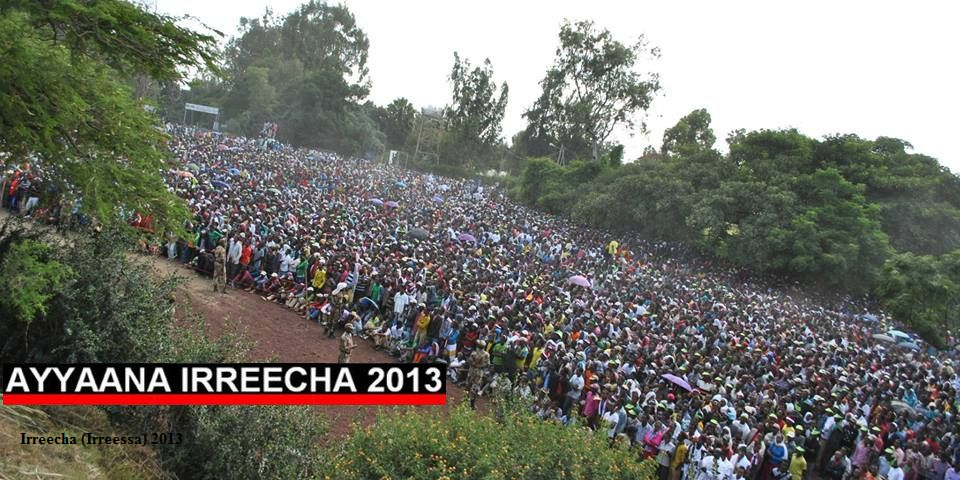
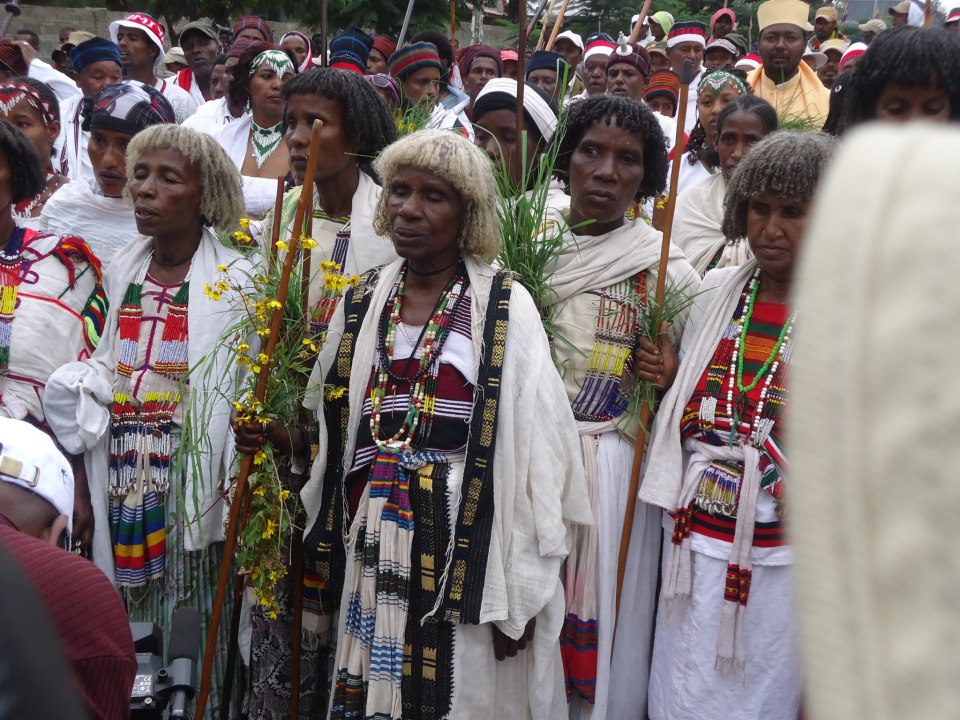
Oromo culture from ancient to present, Irrechaa time
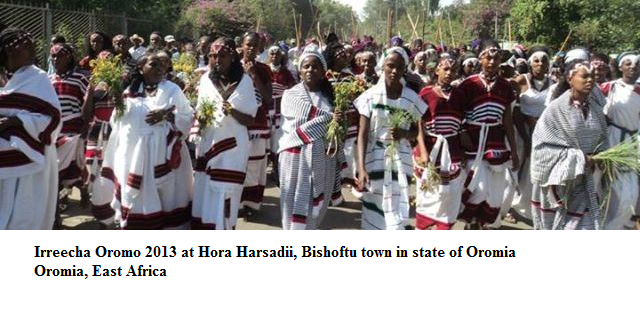

Baga ganna nagaan baatanii booqaa birraa argitan. Good that the rainy season is over for you and that you came to see the spot of the sunny flowering season. The expression signifies the end of one season and the beginning of another season, which incidentally is the beginning of a new year according to Oromo time reckoning. This is not the only expression in Irreecha festival as the event is characterized by vast and varieties of expressions, stories and sequences of cultural displays. Irreecha is the biggest and very beautiful public displays of ancient culture that Africa has performed and continue to perform. Holding the green grass and yellow flower (umama), it is the celebration of the season of blessing and love Oromians experience as Thanksgivings to God (Waaqa) the creator (Uumaa).
Irreecha celebration at Malkaa Ateetee, Burayyuu, Oromia, 6th October 2013
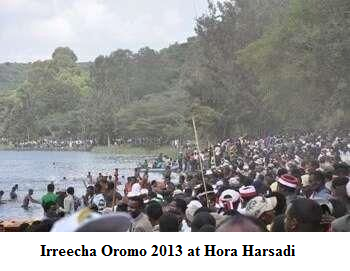
Irreecha is one of the most colorful and beautiful Oromo national cultural events that has been celebrated through out since the last week of August and the entire September and also in October in Oromia and globally where Oromians have been residing (Africa, Australia, Europe and North America). The main Irreecha day was celebrated at Lake Hora Harsadii, Bishoftu, Central Oromia, nearer to the capital Finfinnee on 29th September 2013. According to local news sources from Bishoftuu, over 3 million people attended this year’s Irreecha Malka celebration at Hora Harsadii. “Traditionally, the Oromo practiced Irreecha ritual as a thanksgiving celebration twice a year (in autumn and spring) to praise Waaqa (God) for peace, health, fertility and abundance they were given with regards to the people, livestock, harvest and the entire Oromo land. Irreecha is celebrated as a sign of reciprocating Waaqa in the form of providing praise for what they got in the past, and is also a forum ofprayer for the future. In such rituals, the Oromo gather in places with symbolic meanings, such as hilltops, river side and shades of big sacred trees. …These physical landscapes are chosen for their representations in the Oromo worldview, for example, green is symbolized with fertility, peace, abundance and rain. In Oromia, the core center of Irreecha celebration has been around Hora Arsadi in Bishoftu town, some 25kms to the south of Finfinne, the capital city. Annually, particularly during the Irreecha birraa (the Autumn Irreecha) in September or October, the Oromo from different parts of the country come together and celebrate the ritual. In the past few decades, Irreecha celebrations have been expanded both in content as well as geographical and demographic representations. This short commentary deals with such historical trajectories by contextualizing the changes within political discourses in Ethiopia vis-à-vis Oromo nationalism.”http://gadaa.com/oduu/21320/2013/08/24/irreecha-from-thanksgiving-ritual-to-strong-symbol-of-oromo-identity/ ”
http://gadaa.com/Irreechaa.html
Aadaa fi Duudhaa sirna Waaqeffannaa keessaa inni tokko Ayyaana irreeffannaa ykn irreechati. Sirni Duudhaa irreechaa gosa hedduutti qoodama. Kunis, Irreessa Malkaa, Irreessa Tulluu, Irreessa Galmaa / Gimbii, Irreessa Ujubaa, Irreessa Dakkii, Irreessa Jilaa fi Irreessa Eebbaa ykn Galataa fi kkf. Akkaa fi akkaataan irreeffannaas akkuma sirna isaatti addaa adda. Ammatti kan bal’inaan irraa dubbannu Irreecha yeroo ammaatti biyya keessaa fi alatti beekamee fi kabajamaa jiru, Irreecha Malkaati. Irreechi Malkaa kan kabajamu, ganni yeroon rakkinaa fi dukkanaa dabree birraan yeroo bari’u, sirni Gubaa erga raawwatee booda, ummanni gamtaan Malkaa bu’uun irreeffatee Waaqa galateeffata. Ammaaf Irreecha Malkaa isa biyya keessaa fi alatti bal’inaan beekamaa fi kabajamaa jiru irraa hanga tokko waa addeessuu yaalla. Ayyaanni irreechaa osoo hin gahiin dura waanti raawwataman hedduutu jiran. Kunis seera yayyaba shananii hordofuudhan torban shan dura eegala jechuudha. Ji’a hagayyaa torban sadaffaa keessa birraan bari’uu ykn seenuu isaa kan ibsu, sirna Muka ( korma) dhaabaa kan jedhamutu raawwata. Bakki mukti dhaabaa kun dhaabatu Mijirii jedhama. Mijiriin kun bakka Gubaan itti gubamu ykn bakka ayyaanni ibsaa gubaa raawwatudha. Mukti dhaabbatu 9 ykn 5 ta’an. Kunis hiika mataa ofii qaba. Guyyaa muka dhaabaa irraa eegalee hanga gaafa Gubaatti torban torbaniin waanti godhamu ni jira. Gaafa torban shanaffaa ykn Fulbaana ji’aa dhumaa yeroo ta’u sirna Gubaatu raawwata. Masqala jechuudha. Ayyaana masqalaa kana warri amantii Ortodoksii gara amantii isaaniitti harkisuuf haa yaalan malee gochaa fi seenaan wanti isaan deeggaru hin jiru. aadaa Oromoo fudhatan. Guyyaa gubaa kana ollaan maatii waliin walitti dhufee bakka Mijirii sanatti erga ibsaa gubee dhibaafatee, eebbifateen booda dubartoonni Qunnii (Ingiccaa) guban, dargaggoonni sirba ” Hiyyooko ykn Ya habaab yaa daree ko” jedhamu sirbaa ollaarra naannawanii kennaa fudhatan. Torban isaatti ammoo sirna Ayyaana Irreechaatu raawwata. Gubaan kan dhuunfaa fi ollaati. Irreechi ammoo ayyaana ummanni gamtaan Malkaa bu’ee, dukkana gannaa keessaa gara Booqaa Birraatti nagaan cehuu isaaf kan galateeffatu Guyyaa Galatoo ( Thanksgivings day) jechuudha. Sirni gamtaan Irreeffannaa kun osoo dhiibbaa amantii fi sirna bulchiinsa alagaatiin hin dhorkamiin dura Oromoon naannoo qubatee jiru maratti ni irreeffata ture. Keessumattuu bara mootummaa Dargii sana aadaa ” duubatti hafaa” jedhamee Galma Qaalluu gubuu fi waan Oromoon aadaadhaan raawwatu mara dhorkuun dhabamsiisuuf yaalan. Sababa kanaa fi babal’ina amantii Isilaamaa fi Protestantiin walqabatee bakka hedduutti sirni irreeffannaa fi amantiin Waaqeffannaa ni dhorkame. Dhiibbaa kana irraa damdamtee kan hafe keessaa tokko Ayyaana Irreechaa Hora Arsadii Magaalaa Bishooftuutti kabajamudha. Ayyaanni Irreecha Hora Arsadee qindoominaa fi hirmaannaa ummata bal’aan kabajamuu kan eegale bara 1997 irraa kaaseetu. Isa dura ummatuma naannoo sanaa fi keessattuu warra aadaa Waaqeffannaa hordofaniin ture. Bara 1997 keessa koreen tokko maqaa Guddinaa fi Dagaagina Aadaa Oromoo jedhuun WMT jalatti ijaaramtee Ayyaana Irreecha Bishooftuu kana ummata beeksisuu, barsiisuu fi qindoominaan guyyaa ayyaana kanaa bakka sanatti argamuun qalbii namaa harkisuu jalqabde. Ergasii waggaa waggaan achitti argamuun barumsaa fi dammaqiinsa kennameen sadarkaa har’a ummanni kumaa fi kitilaan kan herreegamu irratti argamee kabaju irraan gahe. Kana malees Oromiyaa gara dhihaatti bakka hedduutti akka kabajamuu fi babal’atuuf karaa saaqe. Baroota hedduu dura jalqabee ammoo biyya alatti walduraa duubaan, USA, Germany, Norway, Canada, Australia, Keenya, Uganda fi Ertriatti kabajamuu jalqabe. Guddinni fi babal’inni kabajaa Ayyaana Irreechaa kun qaama duula Oromoon Aadaa, Eenyumaa fi Oromummaa isaa guddisuuf gochaa jiru keessaa isa tokkoo fi guddicha ta’uu mal’isa. Fuula durallee daran akka guddatuu fi babal’atu Waaqa wajjin abdii qabna.Kabajaa ayyaana irreechaa biyya keessaa fi alatti raawwate ilaalchisee kanaan dura marsaa adda addaatti bahaa turuun ni yaadatama. Dabalataan yaadachiisuu fi bal’inaan kan hin gabaafamiin dabalatee akka armaan gadiitti kan biyyaa keessaa fi biyya alaa bakka adda addaatti kabajamaa ture laalla.”http://waaqeffannaa.org/irreecha/


http://oromoassociationvic.org/2013/10/03/oromians-seek-blessings-and-love-at-annual-oromo-festival/

Irreecha Oromo 2013 Celebration, in Sydney, Australia

Irreecha Oromo, event in London, 12 October 2013
Gubaa fi Irreecha @Galma Calalaqii, Miidaaqenyii

Related references:
https://oromianeconomist.wordpress.com/?s=twisted&searchbutton=go%21
Oromo: The Kushitic People of Africa

| ErechaThe story of Erecha – the celebration of the first harvest of the Ethiopian Spring in September – is a story better told by who else but the late Poet Laureate himself, Blattten Geta Tsegaye G/Medhin.
“….12,000 years ago, ASRA the God of sun and sky of KUSH PHARAOH begotten SETE, the older son ORA the younger of the first and daughter named as ASIS (ATETORADBAR). The older SETE killed his younger brother ORA, and ASIS (ATET OR ADBAR) planted a tree (ODA) for the memorial of her deceased brother ORA at the bank of Nile, Egypt where the murder had taken place, and requested her father who was the god of Sun to make peace among the families of SETE and ORA. Them rain was come and the tree (ODA) got grown. It symbolizes that taken place. Later, at the Stone Age, the tree that had been planted for the memorial of the killed, ORA was substituted by statue of stone that was erected 8000 years ago. This festival has been celebrated in September of every year and when Nile is flow full in NUBLA and BLACK EGYPT. In Ethiopia during the AXUMITE and PRE-AXUMITE period a great festival has been held around the sun’s statue that planted by ASIS (ATET OR ADBAR) the sister of ORA for the memorial of the later, ORA the son of god of sun, who waked up from death (ORA OMO or OR OMO) for the purpost of celebrating the peace made between the two brothers, the great herald, in thanking the good of sun and the sky with CHIBO. Then EYO KA ABEBAYE (the traditional and popular song performed at DEMERA events and new year in Ethiopia) has been started being performed since then. “KA” is the first name of God. The name of God that our KUSH Fathers have inherited to us before the old period, Christianity, and Islam is “KA”. Since then, therefore, especially the OROMO, GURAGIE and the SOUTHERN people of Ethiopia have been calling God as “WAKA or WAQA”. “or WAQA”. WAKA” or WAQA” God When we song EYOKA or EYOHA in New Year, we are praising “KA” of God. “GEDA” or KA ADA” is the law or rule of God. “GEDA” (KA ADA) is the festival by which the laws and orders of God are executed Japan, China, and India are now reached to the current civilization through making the basic traditions and cultures they received from their forefathers (HINDU, SHINTO and MAHIBERATA) be kept and receiving Islam, Christianity, and others especially Democracy and free believes. They are not here through undermining the culture and tradition of their forefathers. Culture is the collection of many CHIBOs or DEMERA. “ERCHA” or “ERESA” one of the part and parcel of GEDA (KA ADA) system is the comer stone and turning point to the new year for which ASIS (ATET OR ADBAR) has put up the dead body of her brother, ORA who was killed by his older brother like ABEL from the place he died at the river bank of NILE on and planted statue“. The Oromo people of beautiful Ethiopia believe in one God since time memorial. Their religion is called “WAKEFENA” which means believing in one God that is the creator of the whole universe. ERECHA means a celebration where people get together and perform their prayers and thanking God. WAKEFENA, the faith being in the GEDA SYSTEM is a religions ceremony that is free from any thing. The fathers of Oromo religion and the people, keeping fresh grass and flowers, perform their prayers and thank their God going to mountains, the sea or a river bank. They move to the top of mountains or bank of seas or rivers not to worship the mountains or rivers and seas; rather to distract themselves from any noise and to worship their God (WAQA) with concentration. And they go to sea and rivers because they believe that green is holy and peaceful where the spirit of God is found. In the Oromo culture, the rainy season is considered as the symbol of darkness. At the beginning of September, the darkness is gone, rivers run shallower and cleaner, and the mud is gone. As sunshine rules the land, the OROMO people of Ethiopia go out to celebrate this great natural cycle with the spirit of worshiping God (WAQA). |
http://www.ethiopians.com/photoessay/Photo_Essay_Eretcha_06.htm
Copyright © Oromianeconomist 2013 and Oromia Quarterly 1997-2013. All rights reserved. Disclaimer.
Interview With Oromo Youth President, Iftu Kassim, Africa Media Australia September 7, 2013
Posted by OromianEconomist in Development, Gadaa System, Language and Development, Oromia, Oromo, Oromo Identity, Oromo Nation, The Oromo Governance System, Uncategorized.Tags: Africa Media AUstralia, Amnesty International, Development, empowerment, Freedom, Human rights, Iftu Kassim, Melbourne, Oromia, Oromo culture, Oromo people, Oromo Youth
add a comment

Melbourne Youth Oromo Association’s president Iftu Kassim speaks to AMA about her organisation and a recent event organised in Melbourne
Copyright © Oromianeconomist 2013 and Oromia Quarterly 1997-2013. All rights reserved. Disclaimer.
Related articles
- The Oromo People Need Freedom and Justice:Oromians Gathered in Front of the White House to Protest Against Ethiopia’s Human Rights Violations and Land-Grabbing (oromianeconomist.wordpress.com)
- Irrecha: From Thanksgiving Ritual to Strong Symbol of Oromo Identity (oromoassociationvic.org)
- Letter of gratitude from Oromo Youth Self-help Association (OYSA/WWDO) (oromostruggleforfreedom.wordpress.com)
- We are Oromos First! (freedomfororomo.wordpress.com)
- Oromo farmer from Ethiopia may be the oldest living person (hornaffairs.wordpress.com)
- Al Jazeera The Stream/English: We Appreciate Al Jazeera for Airing Oromo’s Persecution in Ethiopia (orofreedom.wordpress.com)
The Unravelling of a Colonized Mind by Jana-Rae Yerxa March 24, 2013
Posted by OromianEconomist in Africa, Colonizing Structure, Development, Humanity and Social Civilization, Ideas, Irreecha, Kemetic Ancient African Culture, Knowledge and the Colonizing Structure., Knowledge and the Colonizing Structure. Africa Heritage. The Genocide Against Oromo Nation, Knowledge and the Colonizing Structure. African Heritage. The Genocide Against Oromo Nation, Oromia, Oromiyaa, Oromo, Oromo Culture, Oromo First, Oromo Identity, Oromo Nation, Oromo the Largest Nation of Africa. Human Rights violations and Genocide against the Oromo people in Ethiopia, Oromummaa, Qubee Afaan Oromo, Self determination, Sirna Gadaa, Slavery, Uncategorized.Tags: Anishinaabe, Colonialism, Colony, Couchiching First Nation, Human rights violations, Little Eagle, Oromia, Oromia Region, Oromiyaa, Oromo, Oromo culture, Oromo First, Oromo people, Oromummaa, Self determination, Social work, Sub-Saharan Africa, Tyranny, Universal Declaration of Human Rights, University of Victoria
1 comment so far
The Unravelling of a Colonized Mind by Jana-Rae Yerxa.
Sure everybody struggles. But to be born an Indigenous person, you are born into struggle. My struggle. Your struggle. Our struggle. The colonial struggle. There are many layers to this struggle. For the longest time, I didn’t even know what the true struggle was about yet I couldn’t escape it. It consumed me. Colonialism, as I have been forced to discover, is like a cancer. But instead of the cells in your body betraying itself, the thoughts in your mind work against you and eat you up from the inside out. You’re like the walking dead and you don’t even know it because you are so blinded. You can’t see the truth.
Here are some of the perverted ways colonialism infects the mind:
• With a colonized mind, I hate being Indian.
• With a colonized mind, I accept that I am Indian because that’s who the colonizer told me I am.
• With a colonized mind, I don’t understand that I am Anishinaabe.
• With a colonized mind, I believe I am inferior to the white race.
• With a colonized mind, I wish I was white.
• With a colonized mind, I draw pictures of my family with peach coloured skin, blonde hair and blue eyes because I’ve internalized that this is the ideal, what looks good and what is beautiful.
• With a colonized mind, I keep my feelings of inferiority to white people a secret from others and even from myself.
• With a colonized mind, I try diligently to mirror white people as closely as I possibly can.
• With a colonized mind, I desperately want to be accepted by white people.
• With a colonized mind, to gain the acceptance of white people, I will detach myself from all that does not mirror acceptable “white” standards, whether it is how one dresses, one speaks, or one looks.
• With a colonized mind, I feel as though I am swearing when I say “white people” in front of white people.
• With a colonized mind, I believe there is no racism.
• With a colonized mind, I believe that racism does not impact me.
• With a colonized mind, I deny my heritage and proudly say, “We are all just people.”
• With a colonized mind, when discussing issues pertaining to race, I try desperately not to offend white people.
• With a colonized mind, I do not know who I am.
• With a colonized mind, I believe I know who I am and do not understand that this isn’t so because I’ve become the distorted image of who the colonizer wants me to be and remain unaware of this reality.
• With a colonized mind, I could care less about history and think that our history don’t matter.
• With a colonized mind, I do not understand how the history created the present.
• With a colonized mind, I do not see how I have been brainwashed to be an active participant in my own dehumanization and the dehumanization of my people.
• With a colonized mind, I do not recognize how others dehumanize me and my people.
• With a colonized mind, I devalue the ways of my people- their ways of seeing, their ways of knowing, their ways of living, their ways of being.
• With a colonized mind, I cannot speak the language of my ancestors and do not care that this is so.
• With a colonized mind, I am unaware of how colonization has impacted my ancestors, my community, my family, and myself.
• With a colonized mind, I think that my people are a bunch of lazy, drunk, stupid Indians.
• With a colonized mind, I discredit my own people.
• With a colonized mind, I think that I am better than ‘those Indians’.
• With a colonized mind, I will silently watch my people be victimized.
• With a colonized mind, I will victimize my own people.
• With a colonized mind, I will defend those that perpetrate against my people.
• With a colonized mind, I will hide behind false notions of tradition entrenched with Euro-western shame and shame my own people re-creating more barriers amongst us.
• With a colonized mind, I tolerate our women being raped and beaten.
• With a colonized mind, I tolerate our children being raised without their fathers.
• With a colonized mind, I feel threatened when someone else, who is Anishinaabe, achieves something great because I feel jealous and wish it was me.
• With a colonized mind, when I see an Anishinaabe person working towards bettering their life, because my of my own insecurities, I accuse them of thinking they are ‘so good now’.
• With a colonized mind, I am unaware that I was set up to hate myself.
• With a colonized mind, I do not think critically about the world.
• With a colonized mind, I believe in merit and do not recognize unearned colonial privilege.
• With a colonized mind, I ignorantly believe that my ways of seeing, living and believing were all decided by me when in reality everything was and is decided for me.
• With a colonized mind, I am lost.
• With a colonized mind, I do not care about the land.
• With a colonized mind, I believe that freedom is a gift that can be bestowed upon me by the colonizer.
• With a colonized mind, I believe that I am powerless and act accordingly.
• With a colonized mind, I do not have a true, authentic voice.
• With a colonized mind, I live defeat.
• With a colonized mind, I will remain a victim of history.
• With a colonized mind, I will pass self-hatred on to my children.
• With a colonized mind, I do not understand the term “self-responsibility.”
• With a colonized mind, I do not recognize that I have choice and do not have to fatalistically accept oppressive, colonial realities.
• With a colonized mind, I do not see that I am a person of worth.
• With a colonized mind, I do not know I am powerful.
The colonial struggle, as I said earlier, has many layers. I am no longer being eaten from the inside. Yet it is no less painful. What is different today is that I am connected to a true source of power that was always there. It’s like my friend once said, “I come from a distinguished people whose legacy shines on me like the sun.” I now understand this and it is because of this understanding that my mind and my soul are freer than they have ever been. It is because of that gift- that awakening which came through struggle- that I will proudly continue to struggle for freedom. My freedom. Your freedom. Our freedom.
Jana-Rae Yerxa, is Anishinaabe from Little Eagle and Couchiching First Nation and belongs to the Sturgeon clan. Activist. Social Worker. Former professor. Current student. She is committed to furthering her understanding of Anishinaabe identity and resurgence as well as deconstructing Indigenous/settler relations in the contexts of colonization and decolonization. Jana-Rae is currently enrolled in the Indigenous Governance Program at University of Victoria.
http://lateralloveaustralia.com/2013/03/14/the-unravelling-of-a-colonized-mind-by-jana-rae-yerxa/
Copyright © Oromianeconomist 2014 and Oromia Quarterly 1997-2014. All rights reserved. Disclaimer.
Related articles
- The Unravelling of a Colonized Mind by Jana-Rae Yerxa (lateralloveaustralia.com)
- Colonization And Apartheid (deliberation.info)
- When Things Fall Apart (connexicon.wordpress.com)
- Op Ed: Anti Violence Against Indigenous Women and Resurgence (blackcoffeepoet.com)
Gadaa Oromo Democracy: Three Approaches to the Study of African Society September 27, 2012
Posted by OromianEconomist in Africa, Ancient African Direct Democracy, Culture, Finfinnee, Gadaa System, Humanity and Social Civilization, Irreecha, Kemetic Ancient African Culture, Oromo, Oromo Culture, Oromo First, Oromo Identity, Oromo Nation, Oromo Social System, Oromummaa, Self determination, Sirna Gadaa, State of Oromia, The Oromo Democratic system, The Oromo Governance System, Uncategorized.Tags: Africa, African culture, African Studies, Ancient African Direct Democracy, Ancient Black People, Ancient Egyptian people, Democracy, Economic and Social Freedom, From, Gadaa System, Governance issues, Horn of Africa, Kemet, Kushitic people, National Self Determination, Oromia, Oromiyaa, Oromo, Oromo culture, Oromo people, Oromummaa, Politics, Siqqee, Siqqee Oromo Women Institution, Sirna Gadaa, Social Sciences, State and Development, Sub-Saharan Africa, United Nations, Universal Declaration of Human Rights, World Bank
3 comments
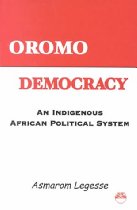
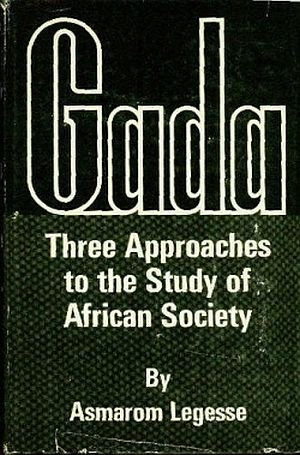
These closely related books reveal the many creative solutions an African society found for problems that people encounter when they try to establish a democratic system of governing their affairs. In much of what has been written about Africa, the common image is that of people governed by primitive customs and practices, in which only feudal roles of elders, kings, chiefs, sultans, and emirs have been acknowledged by Western observers. Little is ever shown of indigenous African democratic systems, under which there is distribution of authority and responsibility across various strata of society, and where warriors are subordinated to deliberative assemblies, customary laws are revised periodically by a national convention, and elected leaders are limited to a single eight-year terms of office and subjected to public review in the middle of their term. All these ideals and more are enshrined in the five-century old constitution of the Oromo of Ethiopia, which is the subject matter of these books.
In these books, Legesse brings into sharp focus the polycephalous or “multi-headed” system of government of the Oromo, which is based on clearly defined division of labor and checks and balances between different institutions. Revealing the inherent dynamism and sophistication of this indigenous African political system, Legasse also shows in clear and lucid language that the system has had a long and distinguished history, during which the institutions changed by deliberate legislation, and evolved and adapted with time.’ Amazon Books &
Related articles
Introduction
http://oromopress.blogspot.co.uk/2011/12/review-of-oromo-democracy-indigenous.html?m=1
http://www.readperiodicals.com/201203/2672718591.html
- Gadaa: An Oromo Democracy and the Symbol of Oromo Civilization (odaakoo.wordpress.com)
- Contours of the Emergent & Ancient Oromo Nation (oromianeconomist.wordpress.com)
- http://www.iwmi.cgiar.org/publications/CABI_Publications/CA_CABI_Series/Community_Law/protected/Ch%2009.pdf
- Oromia of Dhaqabo Ebba: The Cradle of Mankind Is Also A Home of The Oldest Living person On Earth (oromianeconomist.wordpress.com)
Copyright © Oromianeconomist 2012 and Oromia Quarterly 1997-2012. All rights reserved. Disclaimer.


 Oromian Economist
You must be logged in to post a comment.