Repression of the Oromo and the State of Freedom in Ethiopia: Freedom House’s Annual 2013 Survey January 23, 2014
Posted by OromianEconomist in Africa, Aid to Africa, Colonizing Structure, Corruption, Development, Dictatorship, Domestic Workers, Economics, Economics: Development Theory and Policy applications, Environment, Ethnic Cleansing, Human Rights, Human Traffickings, ICC, Janjaweed Style Liyu Police of Ethiopia, Land Grabs in Africa, Oromia, Oromiyaa, Oromo, Oromo Identity, Oromo the Largest Nation of Africa. Human Rights violations and Genocide against the Oromo people in Ethiopia, Oromummaa, Self determination, Slavery, The Colonizing Structure & The Development Problems of Oromia, Tyranny, Uncategorized.Tags: Africa, African culture, African Studies, Developing country, Development, Development and Change, Economic and Social Freedom, Economic development, Economic growth, economics, Genocide, Genocide against the Oromo, Governance issues, Human rights, Human Rights and Liberties, Human rights violations, Land grabbing, Land grabs in Africa, National Self Determination, Oromia, Oromo, Oromo people, Oromummaa, Sub-Saharan Africa, Tyranny, Universal Declaration of Human Rights, World Bank
add a comment


Ethiopia’s 2013 SCORES
STATUS:
FREEDOM RATING : 6.0
CIVIL LIBERTIES: 6.0
POLITICAL RIGHTS: 6.0
“The government tends to favor Tigrayan ethnic interests in economic and political matters, and the EPRDF is dominated by the Tigrayan People’s Liberation Front. Repression of the Oromo and ethnic Somalis, and government attempts to co-opt their parties into subsidiaries of the EPRDF, have fueled nationalism in both the Oromia and Ogaden regions.” -Freedom House
Ethiopia is not an electoral democracy. Parliament is made up of a 108-seat upper house, the House of Federation, and a 547-seat lower house, the House of People’s Representatives. The lower house is filled through popular elections, while the upper chamber is selected by the state legislatures, with both serving five-year terms. The lower house selects the prime minister, who holds most executive power, and the president, a largely ceremonial figure who serves up to two six-year terms. All of these institutions are dominated by the EPRDF, which tightly controlled the 2010 elections and the succession process following the death of Prime Minister Meles Zenawi in 2012. While the 1995 constitution grants the right of secession to ethnically-based states, the government acquired powers in 2003 to intervene in states’ affairs on issues of public security.
Corruption is a significant problem in Ethiopia. EPRDF officials reportedly receive preferential access to credit, land leases, and jobs. Petty corruption extends to lower level officials, who allegedly solicit bribes in return for processing documents. In a survey of 1,000 people conducted by Transparency International (TI) in 2011, 64 percent of respondents reported having had to pay a bribe to customs officials, and 55 percent to a member of the judiciary. Ethiopia was ranked 113 out of 176 countries surveyed in TI’s 2012 Corruption Perceptions Index.
The media are dominated by state-owned broadcasters and government-oriented newspapers. One of the few independent papers in the capital, Addis Neger, closed in 2009, claiming harassment by the authorities. Privately-owned papers tend to steer clear of political issues and have low circulations. A 2008 media law criminalizes defamation and allows prosecutors to seize material before publication in the name of national security.
Journalists reporting on opposition activities face serious harassment and the threat of prosecution under the country’s sweeping 2009 Antiterrorism Proclamation. In July 2012, six journalists were convicted of terrorism. While five were convicted in absentia, the sixth, Eskinder Nega, received 18 years in prison. The judge said that he had consorted with the political group, Ginbot 7, a designated terrorist entity in Ethiopia. The United States, European Union and the UN High Commissioner for Human Rights expressed dismay at the verdicts. In other cases, the courts reduced sentences handed out to journalists convicted of terrorism. In August, a columnist with the Feteh weekly newspaper had her 14-year sentence reduced to 5 years; while in September, two Swedish journalists who had received 11-year sentences in 2011 for assisting the ONLF were pardoned.
Due to the risks of operating inside Ethiopia, many of the country’s journalists work in exile. The Committee to Protect Journalists says that Ethiopia has driven 79 journalists into exile in the past decade, more than any other nation. The authorities use high-tech jamming equipment to filter and block news websites seen as pro-opposition. Legislation adopted in May criminalizes the use of telecommunications devices to transmit any “terrorizing message.” Critics said the vaguely worded law also effectively banned the use of Skype and other voice-over-internet protocol services that cannot be closely monitored by the government.
The constitution guarantees religious freedom, but the government has increasingly harassed the Muslim community, which has grown to rival the Ethiopian Orthodox Church as the country’s largest religious group. Muslim groups accuse the government of trying to impose the beliefs of an obscure Islamic sect, al-Ahbash, at the expense of the dominant Sufi-influenced strain of Islam. Before his death, Meles said the Muslim community was a source of extremism, claiming it had links to Al-Qaeda.
Academic freedom is restricted. The government has accused universities of being pro-opposition and prohibits political activities on campuses. There have been reports of students being pressured into joining the EPRDF in order to secure places at universities.
The presence of the EPRDF at all levels of society inhibits free private discussion. Many people are wary of speaking against the government for fear of being overheard by party officials. The EPRDF maintains a network of paid informants, and opposition politicians have accused the government of tapping their telephones.
Freedoms of assembly and association are guaranteed by the constitution but limited in practice. Organizers of large public meetings must request permission from the authorities 48 hours in advance. Applications by opposition groups are routinely denied. Peaceful demonstrations were held outside mosques in July 2012, but the security forces responded violently, detaining protestors, including several prominent Muslim leaders. A total of 29 Muslims were eventually charged with offences under the antiterrorism law. They were awaiting trial at year’s end.
The 2009 Charities and Societies Proclamation restricts the activities of foreign NGOs by prohibiting work on political and human rights issues. Foreign NGOs are defined as groups receiving more than 10 percent of their funding from abroad, a classification that captures most domestic organizations as well. NGOs have struggled to maintain operations as a result of the law, which also requires them to reregister with the authorities. According to Justice Ministry figures, there were 3,522 registered NGOs before the law was passed and 1,655 afterward. In 2010, the Human Rights Council (HRCO) and the Ethiopian Women Lawyers’ Association had their bank accounts frozen for violating the rules on receiving foreign funds. An appeal against the ruling by the HRCO was rejected by the Supreme Court in October 2012.
Trade union rights are tightly restricted. All unions must be registered, and the government retains the authority to cancel registration. Two-thirds of union members belong to organizations affiliated with the Confederation of Ethiopian Trade Unions, which is under government influence. Independent unions face harassment. There has not been a legal strike since 1993.
The judiciary is officially independent, but its judgments rarely deviate from government policy. The Antiterrorism Proclamation gives great discretion to the security forces, allowing the detention of suspects for up to four months without charge. It was used in 2011 to detain more than 100 members of opposition parties; terrorist suspects were denied legal assistance while they awaited trial. A total of 31 people have been convicted under the law, 12 of them journalists. Conditions in Ethiopia’s prisons are harsh, and detainees frequently report abuse.
The government tends to favor Tigrayan ethnic interests in economic and political matters, and the EPRDF is dominated by the Tigrayan People’s Liberation Front. Repression of the Oromo and ethnic Somalis, and government attempts to co-opt their parties into subsidiaries of the EPRDF, have fueled nationalism in both the Oromia and Ogaden regions. Persistent claims that war crimes have been committed by government troops in the Ogaden are difficult to verify, as independent media are barred from the region. However, Human Rights Watch accused government paramilitaries of executing 10 men during an operation in the Gashaamo district in March 2012.
Private business opportunities are limited by rigid state control of economic life and the prevalence of state-owned enterprises. All land must be leased from the state. The government has evicted indigenous groups from various areas to make way for projects such as hydroelectric dams. It has also leased large tracts of land to foreign governments and investors for agricultural development in opaque deals. Up to 70,000 people have been forced to move from the western Gambella region, although the government denies the resettlement plans are connected to land investments. Journalists and international organizations have persistently alleged that the government has withheld development assistance from villages perceived as being unfriendly to the ruling party.
Women are relatively well represented in Parliament, having won 152 seats in the lower house in the 2010 elections. Legislation protects women’s rights, but they are routinely violated in practice. Enforcement of the law against rape and domestic abuse is patchy, with cases routinely stalling in the courts. Forced child labor is a significant problem, particularly in the agricultural sector. Same-sex sexual activity is prohibited by law and punishable with imprisonment.
The state of freedom declined for the eighth consecutive year in 2013, according to the latest edition of Freedom House’s annual survey, ‘Freedom in the World.’
Read Further @:
Report Link: http://freedomhouse.org/report/freedom-world/2013/ethiopia#.UuFm1tLFLf8
http://freedomhouse.org/report/freedom-world/freedom-world-2014
High quality version of the map: http://www.freedomhouse.org/sites/default/files/MapofFreedom2014.pdf
Country ratings: http://freedomhouse.org/sites/default/files/FIW%202014%20Scores%20-%20Countries%20and%20Territories.pdf
Copyright © Oromianeconomist 2014 and Oromia Quarterly 1997-2014. All rights reserved. Disclaimer
The genocidal Ethiopia and Its Janjaweed Style Liyu Police: The Killings of 59 Oromo Men, Women and Children, The Wounding of 42 Others, the Confiscation of Property and the Forcible Removal of People from Their Ancestral Land in Eastern Oromia January 19, 2014
Posted by OromianEconomist in Africa, Colonizing Structure, Corruption, Dictatorship, Domestic Workers, Environment, Ethnic Cleansing, Food Production, Human Rights, Human Traffickings, ICC, Janjaweed Style Liyu Police of Ethiopia, Knowledge and the Colonizing Structure., Knowledge and the Colonizing Structure. African Heritage. The Genocide Against Oromo Nation, Land Grabs in Africa, Nelson Mandela, Oromia, Oromiyaa, Oromo, Oromo Identity, Oromo Nation, Oromo Social System, Oromo the Largest Nation of Africa. Human Rights violations and Genocide against the Oromo people in Ethiopia, Oromummaa, Self determination, Slavery, South Sudan, The Colonizing Structure & The Development Problems of Oromia, Tyranny, Uncategorized, Warlords.Tags: African culture, African Studies, Aid, Developing country, Development, Development and Change, Economic and Social Freedom, economics, Ethiopia, Ethnic Cleansing, Gadaa System, Genocide, Genocide against the Oromo, Governance issues, Horn of Africa, Human rights, Human Rights and Liberties, Human rights violations, ICC, Janjaweed in Darfur Liyu Police in Oromia, Land grabbing, Land grabs in Africa, Mass killings, Oromia, Oromiyaa, Oromo, Oromo culture, Oromo people, Oromo Studies Association, Oromummaa, Politics of Ethiopia, poverty, Social Sciences, State and Development, Sub-Saharan Africa, Tyranny, United Nations, Universal Declaration of Human Rights
5 comments

Oromo Studies Association’s (OSA’s) Letter to U.S. Secretary of State on the Killings of 59 and Wounding of 42 Oromos in Eastern Oromia by Ethiopian-Trained “Liyu Police”:
January 17, 2014
The Honorable John F. Kerry
Secretary of State
U.S. Department of State
2201 C Street N.W.
Washington, DC20520
Subject: The killings of 59 Oromo men, women and children, the wounding of 42 others, the confiscation of property and the forcible removal of people from their ancestral land in eastern Ethiopia
Dear Mr. Secretary,
I am writing this letter on behalf of the Oromo Studies Association, an independent scholarly, multi-disciplinary, non-profit organization based in North American. My purpose is to bring to your attention and to protest on behalf of the members of OSA a crime committed against the Oromo in Eastern Ethiopia, that is, the killings of 59 Oromo men, women and children, the wounding of 42 others and the confiscation/destruction of property with an estimated value of Eth$14,726,000 in the eastern Oromia zone of Ethiopia. These acts of extreme and unprovoked violence, killings, violent wounding, burning of houses and confiscation of cattle and other property of the Oromo citizens in eastern Oromia zone, were committed by Ethiopian government-trained special Somali militia forces known as “Liyu Police” (translation: Special Police Force). The Ethiopian regime arms Somali in that region while disarming Oromo farmers. These actions of deliberately arming one people while equally deliberately disarming the other and, thus, by creating conflict between formerly closely related people – groups who have lived peacefully as neighbors for centuries – goes beyond abdicating governmental responsibility. It is a heinous crime that this government commits against peoples within its jurisdictional borders. The world regards these victims as citizens of Ethiopia, but they are being seriously mistreated with no proper defense available.
In the past several months, there has been a new wave of killing of Oromo nationals in particular who reside in the eastern Oromia zone of Ethiopia. Targeted Oromo victims suffer also the confiscation of their property and removal by the thousand of residents from their ancestral lands. This is a miserable new policy which constitutes nothing less than a strategy for creating a blood feud between the two culturally related people, namely, the Oromo and Somali in eastern Oromia zone of Ethiopia. In the sacred land of their birth, Oromo children, women and unarmed men are killed systematically by Ethiopian government Special Police forces. Once the slaughter is completed, these government-equipped forces then callously deny their victims even decent burial, which, in itself, is a crime against humanity.
The Ethiopian government is responsible for inflicting a great deal of harm and damage on defenseless Oromo peasants through this practice of arming Somali against disarmed Oromo farmers by building special police force comprised of Somalis. This appears to be a continuation of the callously inhuman policy of the Ethiopian regime that led to the removal of Oromo peasants from seven major ancestral regions covering extensive territories in the eastern Oromia zone of Ethiopia. Most OSA members are Oromo Americans, who closely follow events in the region and whose findings are confirmed by the reports of pain and suffering of their families – mothers, fathers, sisters, brothers, relatives and friends – who were killed, wounded and displaced, and whose livelihood was destroyed by Ethiopian government Special Police forces made up of Somali armed by the regime.
The Oromo Studies Association, OSA, was established 26 years ago by international scholars from around the globe to promote studies related and relevant to the Oromo and other peoples in the Horn of Africa. In its attempt to create academic forums where ideas and research findings about the Oromo and other people of Ethiopia and the Horn of Africa are freely discussed, OSA has established a peer-reviewed Journal of Oromo Studies, other periodic publications, as well as organizing regular mid-year and annual conferences. OSA has been involved in building a knowledge base for creating a democratic future for the peoples of Ethiopia and the Horn of Africa. In our scholarly organization Somali and Oromo scholars work together. The Journal of Oromo Studies publishes research papers on Somali studies. Our goal is to strengthen historical relations between the two related peoples.
You may be surprised to learn that Oromia, the Oromo regional state in Ethiopia, is the largest, the richest and the most densely populated regional state in Ethiopia. Because the Oromo constitute the single largest national group in Ethiopia – and in the entire region – they are regarded as the greatest threat to the ruling minority group, dominated by members historically affiliated with the Tigrayan Liberation Front (TPLF). The current government is dominated by Tigrayans persons whose ethnicity represents less than seven percent of the population of Ethiopia. Current Ethiopian government policies, which target populations on the basis of ethnicity, are best understood in light of a history of ethnic politics and ethnic discrimination. Arming Somalis to destroy Oromo in order to confiscate their lands and other resources continues ethnic politics in its most brutal form.
Oromo do not have powerful friends in the western world who bring the injustices that they suffer to the attention of international community. The Oromo Studies Association requests that you respond to our voice as a voice of conscience uttered to the international community. We urge that you immediately put pressure on the Ethiopian regime to desist from driving Oromo out their ancestral land in eastern Oromia zone of Ethiopia. We request that the State Department under your able leadership look into this critical matter take effective action while there is time to reverse a criminal policy and save the lives and livelihood of vulnerable populations in Eastern Ethiopia.
In the light of the issue raised which is only the most recent of an ongoing series of violent attacks on Oromo farmers in eastern Oromia zone during 2013, the Oromo Studies Association (OSA) urgently requests that the State Department utilize its good offices to seek justice by putting pressure on the Ethiopian government to:
• Stop immediately the Liyu Police attacks on Oromo farmers in the eastern Oromia zone of Ethiopia.
• Return, without delay, those who were forcibly driven from their ancestral lands in eastern Oromia zone of Ethiopia.
• Bring to speedy trial those who ordered the Liyu Police force to attack, killing 59 defenseless Oromo children, men and women and wounding 42 others while confiscating or destroying property estimated at Eth$14,726,000.
• Pay compensation for the lives lost and the property confiscated from those defenseless Oromo farmers in eastern Oromia zone of Ethiopia.
• Urge the Ethiopian government officials to stop the forcible removal of thousands of Oromo farmers from their ancestral lands in eastern Oromia zone of Ethiopia and make sure that such measures will never be repeated in Oromia or other parts of Ethiopia.
• Advise the leaders of the Ethiopian government to abandon the cruel and crude policy of disarming Oromo while unleashing the special police force on defenseless children, men and women.
• Strongly urge the leaders of the Ethiopian government to respect and implement the provisions in their own Constitution, which officially guarantees respect for human rights and democratic governance.
The Oromo Studies Association requests that the State Department, under your leadership, set an example by taking the above measures in a timely fashion.
You have an extraordinary opportunity to make a difference in the lives of millions of Oromo and other people in Ethiopia. Our scholarly association appreciates your good efforts in this regard.
Sincerely,
Ibrahim Elemo, President
Oromo Studies Association
P.O.Box: 6541
Minneapolis, MN 55406-0541
E-mail: ielemo@weisshospital.com
CC:
Ambassador Girma Birru
Embassy of FDRE, Washington, D.C
3506 International Drive, N.W.
Washington, D.C. 20008
Mr. Ban Ki-moon, Secretary-General
Office of the Secretary General of United Nations
885 Second Avenue
New York, NY 10017, USA
Mr. David Cameron, Prime Minister of UK
10 Downing Street, London, UK
The Hon. Tony Abbott, MP
Prime Minister
Parliament House
CANBERRA ACT 2600
Liyu Police is Ethiopia’s (TPLF’s) style of Janjaweed to conduct genocide against the Oromo people.
http://www.britannica.com/EBchecked/topic/1003597/Janjaweed
Copyright © Oromianeconomist 2014 and Oromia Quarterly 1997-2014. All rights reserved. Disclaimer
Rivalry: Japan, China & the Scramble for Africa January 14, 2014
Posted by OromianEconomist in Africa, Aid to Africa, Colonizing Structure, Economics: Development Theory and Policy applications, Land Grabs in Africa, Oromia, Oromiyaa, Oromo, Oromo Nation, The Colonizing Structure & The Development Problems of Oromia, Theory of Development, Tyranny, Uncategorized.Tags: Abebe Bikila, Africa, African culture, African Studies, Aid, China, Developing country, Development, Economic and Social Freedom, Economic development, Economic growth, Horn of Africa, Human rights, Human Rights and Liberties, Human rights violations, Japan, Japan and Africa, Land grabbing, Land grabs in Africa, National Self Determination, Oromia, Oromo, Oromo Athlets, Oromo people, Sub-Saharan Africa, Tade, Tikki Galana, Tyranny, Universal Declaration of Human Rights
add a comment


Abe (Japanese PM) recalls Abe (the legend Oromo Olympian, Abebe Bikila)
Japanese premier, Mr. Abe, received a gift from the son of the late Oromo barefoot marathon legend Abebe Bikila, winner of the Tokyo Olympic marathon 50 years ago.
Japan’s rivalry with China is going global. After years of jousting over obscure islands in the East China Sea and competing for Asian influence, the two countries are now battling for power in a new arena: Africa.
It’s a region that Tokyo has long ceded to the Chinese, allowing Beijing to pile up massive economic and political capital across Africa. But on Friday, in a major shift in strategy, Japanese Prime Minister Shinzo Abe arrived in Ivory Coast to begin his first tour of sub-Saharan Africa – and the first by any Japanese prime minister in eight years.
As he has finished a three-nation tour of Africa on Monday in which he offered aid and development projects potentially worth billions of dollars to help his nation catch up with China’s enormous footprint on the continent, the prime minister, Shinzo Abe, has said he wants to expand Japan’s presence in Africa, and tap a region that can serve as both a source of minerals and energy for Japan’s industrial economy and a new market for Japanese goods.
Mr. Abe has made Africa one of the centerpieces of a diplomatic push to complement his domestic growth policies, known as Abenomics, which aim to end Japan’s long economic decline.
By placing more emphasis on Africa, Mr. Abe is throwing Japan into a scramble for resources there that also involves companies from China, the United States and other Western countries. Japan is particularly keen to find new sources of so-called rare earths and metals, raw material used in electronics and cellphones that it currently imports mostly from China.
But Japan also finds itself lagging far behind its rival China, which has been investing heavily in Africa for a decade. As if to underscore that great rivalry, at the same time that Mr. Abe was in Africa, China’s foreign minister, Wang Yi, was on a four-nation visit to the region. Japan will find it difficult to catch up to China’s political influence here. China’s leaders are frequent visitors to the continent. Chinese President Xi Jinping visited Africa last year on his first overseas trip as President. Beijing has cultivated close relationships with Africa’s ruling parties, routinely inviting their officials on junkets to China.
China’s state media were quick to portray Mr. Abe’s visit as an attempt to challenge Beijing in the African arena. Quoting several Japanese sources, state-owned China Daily said the Japanese leader is seeking to “contain” China’s influence in Africa.
Another Chinese newspaper, Global Times, quoted Japan analyst Geng Xin as saying that Tokyo was “cozying up” to Africa to try to dispel Japan’s image as an “economic giant and political dwarf.” He said Japan is wooing the votes of African countries for its bid to become a permanent member of the United Nations Security Council.
A spokeswoman for the Chinese Foreign Ministry, Hua Chunying, issued a veiled warning to Japan. “If there is any country out there that attempts to make use of Africa for rivalry, the country is making a wrong decision, which is doomed to fail,” she told a press conference this week.
Japanese officials have said that while they cannot match the $75 billion indevelopment aid that China has poured into Africa since 2000, they hope to close the gap in other ways. One is to use Japanese aid to train African engineers and technicians, in order to differentiate Japanese efforts from Chinese projects that have been criticized for employing mainly Chinese workers while offering few jobs to Africans. Japan, he said, prefers to “aid the human capital of Africa.”
The visit also brought an unusual amount of showmanship to Japan’s often drab style of diplomacy. On Friday, Mr. Abe traded jokes and even exchanged soccer jerseys with the president of Ivory Coast, Alassane Ouattara. The next day, Mr. Abe attended a tournament of the Japanese sport of judo in Abidjan.
Japan criticizes Beijing for its tendency to build lavish headquarters and office towers as donations for African politicians – including, most famously, the new $200-million headquarters of the African Union in Finfinnee (Addis Ababa), where Mr. Abe is scheduled to give a policy speech next week.
“Countries like Japan … cannot provide African leaders with beautiful houses or beautiful ministerial buildings,” Mr. Abe’s spokesman, Tomohiko Taniguchi, told the BBC.
But while the two countries take verbal shots at each other, the reality is that China has adopted a far more aggressive strategy in Africa, and has been enormously successful so far. China’s investment in Africa was reported to be about seven times that of Japan in 2011, and its exports to Africa were about five times greater.
China has become the top trading partner, or second-biggest trading partner, of about half of Africa’s countries. It is a major investor in Africa’s resources sector, and the biggest buyer of oil and minerals from many African countries. Its construction companies are building roads, highways, railway lines, sports stadiums, transit systems and hospitals across Africa.
Japan has lagged far behind in this race. Most of its engagement with Africa is as an aid donor. Last year it promised up to $32-billion in public and private assistance to Africa over the next five years, but this only confirmed its reputation as a donor, rather than a business partner.
Only a handful of Japanese investors are active in Ivory Coast, Ethiopia and Mozambique According to a fact sheet by the Japanese government, there are only two Japanese companies in Ivory Coast and only one in Ethiopia.
http://www.japantimes.co.jp/news/2014/01/14/national/abe-recalls-abebe-meets-ethiopias-running-heroes/#.UtcsptJdXbh
http://www.globalpost.com/dispatch/news/regions/africa/south-africa/140110/japan-china-lord-voldemort-africa
http://www.nytimes.com/2014/01/14/world/asia/japans-leader-pledges-aid-on-africa-tour.html?ref=world
Incarnating Abyssinian Genocidal Hitlers through music January 13, 2014
Posted by OromianEconomist in Africa, Colonizing Structure, Knowledge and the Colonizing Structure. African Heritage. The Genocide Against Oromo Nation, Oromia, Oromiyaa, Oromo, Oromo the Largest Nation of Africa. Human Rights violations and Genocide against the Oromo people in Ethiopia, Self determination, Slavery, The Colonizing Structure & The Development Problems of Oromia, Tyranny, Uncategorized.Tags: Africa, African Studies, Development and Change, Economic and Social Freedom, Genocide, Genocide against the Oromo, Hitler, Human rights violations, Menelik II, National Self Determination, Oromia, Oromo, Oromo people, Oromummaa, Sub-Saharan Africa, Tyranny, Universal Declaration of Human Rights
6 comments
http://www.youtube.com/watch?feature=player_embedded&v=v6pGDr5ryfc
http://www.youtube.com/watch?feature=player_embedded&v=v6pGDr5ryfc
‘Tedy Afro, for the past few years, has been deliberately resurrecting some dead zombies, and he is making money and fame out of such dirty and unethical work. The two great Zombies that he resurrected so far are Emperor Menelik and King Hailesilassie. Anytime some one resurrect the dead, a lot of questions crop up; from political to ethical. Is there any moral guide that stops musicians from reanimating worst dictators and mercenaries? What is the political significance of reincarnating a barbaric mass killer like Menelik for Ethiopian people at this time? As a matter of fact, Tedy started his career from the very beginning by glorifying King Hailessilassie. This is the same king who watched in silence as millions of Ethiopians perish during the 1973 famine. …The musical piece Tedy composed for the late monarch seems to have rallied the majority of feudal elements who during the reign of king Hailessilassie lived on the bloods and sweats of the Ethiopian poor. Now that Tedy wrote lyrics and composed music for the great zombie of all time (Menelik), he qualify to be recognized as an entrepreneur who lives on the fame of dead monarchies. He is making himself name and money off the dead dictators. By doing so he successfully milked those Abyssinians who always dreamt the second coming of Hailesilassie and Menelik, but immensely disrespected millions Ethiopians who suffered in the hand of these dictators.
One may ask him/herself what objective the young artist might have on his mind when he composed the Tikur Sew lyrics for Menelik. We know that Menelik is not Tikur. That is to say he is not Tikur by choice, by his own preference. Menelik is not a ‘black man’ because he rejected his blackness. You don’t need any other witness other than Menelik himself to prove that he wasn’t black. Shame on you Tedy; you tried your best to twist history just in the same way many Debteras did in the past Ethiopian history. Unfortunately, what you tried to reverse is irreversible. Historians have documented it very well. You cannot make Menelik to be proud of his blackness. Menelik dismissed it in public. He told the whole world that he is Caucasian, not black. ‘I am not a Negro at all; I am a Caucasian’ , Emperor Menelik told the West Indian pan-Africanist Benito Sylvian who had come to Addis Ababa to solicit the Emperor’s leadership in a society for the ‘Amelioration of the Negro race.’ Haile Sellassie confirmed that view in a declaration to Chief H. O. Davis, a well-known Nigerian nationalist, stating that the Ethiopians did not regard themselves as Africans, but as ‘a mixed Hamito-Semitic people.(See John H. Spencer, Ethiopia at Bay (1984), p. 306.) With regard to the great purpose that music plays to bring people together and minimize tension among ethnic lines, Tedy’s recent Album played the exact opposite. Oromo youth around the world have taken to facebook and other Medias to boycott the album which glorifies a mercenary who butchered our forefathers and mothers. This album is more dividing than healing Ethiopian people. In particular it is an insult to Oromo nation and Southern Nations and Nationalities. It is a complete disregard to the lives of those who were massacred by the invading army of Menelik. It is an insult to the entire Oromo nation and South Nations who survived the genocide Abyssinian Army perpetrated against us. It is an outrageous act of praising a criminal who inhumanly butchered millions of children, women and innocent men.’
http://shagarindex.wordpress.com/2013/12/16/reincarnating-menilik-just-one-step-away-from-repeating-genocide/
Reincarnating Menilik? Just one step away from repeating genocide.
Posted on December 16, 2013As hardliner Abyssinian commemorate centennial of Emperor Menilik II, the conquered Nations and Nationalities mark 100 years of colonial subjugation under successive Abyssinian rulers.
Abyssinian commemorate the epoch when their beloved emperor( Emiye Menelik – literally translated as ‘mother Menilik’)annexed free people into his Empire. Towards the end of 19 century, Emperor Menilik led Abyssinian’s murderous colonial army into the lands of Oromo, Somali, Sidama, Kambata, Walayita,Gambella and other Nations and Nationalities. Armed to the teeth with latest European arms, the army of Menelik annihilated millions of natives who were armed only with wooden spears. In over a decade of armed resistance, most nations and nationals outside Abyssinia proper fall under the army of Menilik. In this colonial campaign Menilik army killed more than 5 million innocent civilians in Oromo land alone. Those who survived death were taken into captivity and sold into slavery. The remaining population were dispossessed of their lands and reduced into serfs to labor on the lands distributed to Menelik’s nobility, army and priests- until freed by death.
AANOLEE MARTYS MEMORIAL MONUMENT
The brutalities of Emperor Menilik and his army were unseen and have no parallel in the African continent. The Harma Muraa( breast cutting) and Harka Mura( arms chopping) at Aanolee in Arsi region of Oromia epitomize the cruelty and barbarity of Menilik’s army, while it also captures the greatest human tragedy that Empire builder had carried out in expanding their empire. Today, in Oromia region, monuments are being built in memory of millions of innocent civilians murdered by Menilik and his Army. (Aanole Martyrs memorial monument and cultural center)
This very week, those who share the legacy of Menilik commemorated 100 year anniversary of Menilik in the heart of Oromia, SHAGGAR( Addis Ababa as colonialists call it). This very land where they celebrate the event is the land confiscated by Menilik from Oromo peasants and distributed to Abyssinian Orthodox church. ( click here to watch the commemoration event). Traditionally, Orthodox Church priests were/are legitimisers of the Abyssinian throne. The Tabot( tablet) followed the army of Menilik everywhere they fought the conquered people. As such, after the conquest of free nation was completed, the Orthodox Church was granted 1/3 of every inch of the conquered land as it’s fiefdom along with the conquered peasantry as its own property. The Orthodox priest also played essential role as ideologues of the colonial undertaking of Abyssinia. (Follow this link to read more about the role of Orthodox Church in Abyssinian politics).
For Oromo Nation and other conquered people who survived the brutalities of Menilik and his army, this hardliner Abyssinian are opening our wounds afresh. They are boldly telling us that they have no respect for the millions killed brutally during Minilk’s colonial campaign. They are re-victimizing and insulting those who survived the heinous genocide carried out by Menilik and his army. There seems nothing will stop them from repeating Menilik’s heinous crime if they get the chance.
Regardless of this evil forces shameless attempt to reincarnate Africa’s Hitler as a benevolent Emperor, for Oromo Nation and other conquered Nation and Nationality in the Ethiopian Empire, Menilik will remain a BULGU, a murderer, a villain , a butcher, and a genocidal Emperor.
I summarized my comment by this African proverb. “Until the lions have their historians, tales of the hunt shall always glorify the hunter”. Jailers will continue to criminalize the innocent until free people stand up against them. The conquerors will continue to tell their glory until the conquered stands up and stop them. Free Nation Shall Prevail. Oromia Shall Be Free!
http://ayyaantuu.com/horn-of-africa-news/oromia/duguuggaan-sanyii-minilik-oromoorratti-oofe-waraana-qulqulluudha/
Oromo as a victim of hate crime at homeland and abroad
By Hara Olani
In its broad meaning, hate crime is a category of crime used to describe bias-motivated violence: “assault, injury and murder on the basis of certain personal or group characteristics that include different appearance, different color, different religion, different nationality, different identity, etc.
For more than a century, the Oromo in Ethiopian empire specifically targeted and injured, killed, forced to flee their homeland, and even continuously abused verbally abroad by Ethiopian politicians, media, activists, and individuals that think being a true Ethiopian is being denying oneself’s identity.
Since the Oromo nation failed under Abyssinian oppression, the hate towards Oromo are planned, politically motivated and kept in place by the successive regimes that ruled that empire and including the current TPLF lead killer regime.
In a meaning to hate crime, Oromo are targeted and still a target of hate crime in a meaning more than their personal characteristics, appearance, color, nationality, language and religion. Oromo are a victim of hate crime in a Ethiopian related identity just because of what they are. This showed again and again openly and the fresh “I am Oromo first” sentence created anger and violence from narrow minded Ethiopians who used to disrespect Oromo.
As racist anti-black bias was the most frequently reported hate crime motivation in the USA even in 2011 for example, for more than a century long time frame being an Oromo is just away to be abused verbally by non-disciplined Ethiopians and to the worst killed, tortured, and disappeared by regimes that ruled the empire one after the other including the current once.
A serious hate crime against oromo in Ethiopia is clearly motivated by racial and it is involving violence. It is happening for long and continued today with out certain limits. It is more sad that the Oromo nation that is a back bone of that old empire but yet the identity of the Oromo people’s identity kept denied by narrow minded Ethiopians who deny the truth behind Oromo nation and the make up of the Ethiopian Empire. The hate crime against innocent Oromo caused social unrest, and a significant and wide-ranging psychological consequences on Oromo, not only upon the direct victim but also on other oppressed people in that uncivilized empire.
The hate crime that victimized millions over the century and continued today, is clearly planned. It is a politically motivated act and violence by oppressors, and organized officially and non-officially, measured its success and changes its form based on different factors. That is why today we can see the hate crime towards Oromo by narrow minded Ethiopians, made its way all long and continued even in the western democratic society member Ethiopians. There for, it can be taken as a crime that is organized by hate group that attacks Oromo and Oromummaa in every way possible in the Empire or out side. But is is really funny that even these groups that have common interest in attacking Oromo and Oromummaa are enemies to each other and made common bed when comes to such matter.
A hate group is an organized group or movement that advocates and practices hatred, hostility, or violence towards members of others that are targeted. Accordingly, the hate group which currently targeted Oromo and Oromummaa at home and abroad, took a primary purpose of promoting animosity, hostility, and malice against oromo identity, language, culture, political organizations, associations, intellectuals, etc.
Like before currently, any thing that promote Oromo nation became a victim of these hate groups that includes the current killer regime in Ethiopia, those oppositions calling themselves they struggle for freedom and democracy in Ethiopia, opposition groups calling them selves freedom fighters of Ethiopian people, the so called activists, politicians, journalists, media, PC desk top heroes and heroine. Even though they have some thing to struggle for against each other but they showed unity in hating Oromo and Oromummaa. They cooperate successfully in advertising the hate towards Oromo nation in all costs of their activity.
If we try to see at least few examples that shows how Oromo are targeted inside that Empire, Oromo students are targeted and imprisoned, tortured, disappeared, killed and dismissed from their study at different levels, just because of they born Oromo and showed respect to their own identity than the identity others dreaming fro them. Many Oromo business men and women ended up in Prison from their own business as one of the hate crime objective towards Oromo, is to weaken the economy to the root level. Due to such police, it became clear that today others controlled all the business going inside Oromia. The Oromo farmers missed and continuously missing their piece of land under the so called investment with out any sufficient compensation. Oromo intellectuals lead a life in prison as the government planned it purposely to discourage the Oromo young generation. Even those Oromo politicians who are trying the way they think they can solve the problem of that empire, ended up in prison for the crime they never planned and did, even never thought.
Oromia as one of the state in the federal government that seems another way to strength the exploitation of oromia, Oromia contributed the largest GDP to the economy of that empire. But one can clearly see that most of the cities and villages in Oromia purposefully denied basic infrastructures and lagging behind of time. According to the new report from Oromo Liberation Front (OLF), out of a list of 528 political prisoners, the Oromo constituted almost 90% of the new statistics.
One can say only the lucky once has made away to escape the hate crime showering on Oromo in Ethiopia and just the luckiest once to westerns since many are still suffering in East African countries and Arab countries. But In reality, even those who made to westerns, faced another front line of hate crime from narrow minded Ethiopians who continued to deny Oromo’s self identity and never wants to hear about Oromo and Oromia. But wants to impose their own identity on others.
The hate group that is a fruit of century long hate towards Oromo in Ethiopian empire, continued to victimize Oromo even in western society. They wanted the Oromo to deny themselves and they condemn Oromo when the Oromo say what they are in public or private. But this is just a selfish dream that will never be fulfilled because Oromo can’t deny themselves.
From activist and journalist Jawar Mohammed’s “I am Oromo first” to “we are oromo we are not ethiopians” of the protesters against violence against Oromo refugees in different countries, the anger, insult and verbal abuse that came out of habesha related media, politician, activists, journalists and individuals was clearly showed what does it mean being an Ethiopian according to them and also showed the future of that empire . The reality is that, the Ethiopia they dream of such character is good for nobody including for themselves. All this confirm that the hate crime involved killing, imprisoning, torturing of Oromo in Ethiopia took another form in dyaspora. It involves verbal violence.
Verbal violence is often a substitute for real violence and that the verbalization of hate has the potential to incite people who are incapable of distinguishing between real and verbal violence to engage in actual violence. These hate crimes against Oromo and Oromummaa have been conducted by internate hate groups and few Ethiopian media which are infected by Oromophobia.
Internate hate groups are hate groups that spread their messages by word of mouth or through the distribution of flyers and pamphlets in addition to electronic transmissions of sounds and images. The internet has been a boom for hate groups in general but specifically the narrow minded Ethiopian dyasporas have effectively used and using the internet targeting Oromo and Oromummaa and interms of organizing the hate crime against Oromo refugees. The plan was to silence the Oromo refugees about their identity but the failed plan doubled their anger and hate towards Oromo nation in general.
Today hate websites, social network groups, blogs, news groups, you tube, video sites, and TV under the arm band of “Emiye Ethiopia” became common and actively participating in advocating the hate groups organized to attack the Oromo people and nation verbally.
As the use of internet continues to grow among the Ethiopian dyaspora society, the narrow minded ethiopians have found “effective” and new ways to seek validation for their hateful agendas towards Oromo and oromo nation.
As the great African leader, the most inspiring leader for equality and justice, Nelson Mandela said “….people learn to hate, and if they can learn to hate, they can be taught to love, for love comes from naturally to the human heart than its opposite”, thus let us work together to stop the hate crimes against the Oromo people in their own country and outside. The Oromo people respect their own identity and they respect identity of others too.
http://ayyaantuu.com/horn-of-africa-news/oromia/oromo-victim-hate-crime-homeland-abroad/
https://www.youtube.com/watch?feature=player_embedded&v=BPTO71EGHgA
“Wa’ee Finfinnen Menelikiin qabamuu, Oromoo tokko ‘Inxooxxoo dhaabatani’ jedhee kan aarii isaa geerarsaan dhageessise dhaloota dhalootatti darbee jira. Geerarsisaa akkas jedha:
Inxooxxo dhaabatanii
Caffee gadi ilaaluun hafe
Finifinnee loon geesaani
Hora obaasuun hafe
Tulluu Daalattii irraatti
Yaaiin Gullallee hafe
Gafarsattii darbanii
Qoraan cabsachuun hafe
Hurufa Boombii irraatti
Jabbiilee yaasuun hafe
Bara jarrii dhufani
Loon keenyas indhumani
Eddaa Mashashaan dhufee
Birmadummaanis hafe! ”
http://www.voicefinfinne.org/AfaanOromo/Seenaa/mb_ao.htmlhttps://www.youtube.com/watch?feature=player_embedded&v=EPADB9Uq0hI
https://www.youtube.com/watch?feature=player_embedded&v=mHL5IxTEI5o
“Members of Ethiopia’s largest ethnic group are celebrating online after the Heineken beer company announced that its Ethiopian franchise would cancel sponsorship of pop star Teddy Afro.
The Bedele beer company dropped its support for Teddy Afro’s upcoming national tour on Thursday, though it did not give a reason. Ethiopian Oromos have been campaigning to boycott the beer over controversial statements allegedly made by the entertainer. Oromos were outraged after he allegedly praised Emperor Menelik II, a 19th-century ruler who some see as a unifier and who placed territories belonging to Oromo and other groups under centralised rule. The magazine quoted Teddy Afro as saying, “For me, Menelik’s unification campaign was a holy war”. The artist’s most recent album also has a song dedicated to the emperor, among other popular historical leaders. Teddy Afro says the quote was falsely attributed to him, writing on Facebook, “Under circumstances unbeknownst to me and due to the error of the magazine, my photo was printed along side a different quote which is not in line with my belief or journey…. The magazine has issued a correction and apologized to us for its error.” Some expressed doubt that the comment was an error. Many celebrated the news from Heineken online, while some said they would not be satisfied without an apology from the singer.”
http://stream.aljazeera.com/story/201401032207-0023290
The sources suggest that more than 90 percent of the Maji or Dizi, about 80 percent of the Gimira, between third thirds and three quarter of the Kaficho and about half of the Oromo population had lost their lives as the consequence of the conquest and colonisation The small kingdom of Walaita also lost a large proportion of its inhabitants. An Abyssinian expedition in 1894 slaughtered about 119,000 men,women and children (Prouty, 1986:115) in less than two weeks.
Secondly, to spread terror among real and potential enemies, the Abyssinian forces committed acts of mass murder and mutilation against the different peoples they conquered. Here, unlike in the north, mutilation included even women. In that respect the best-known case was the mass mutilation of the Arsi Oromo during the wars of conquest fought from 1882 to 1886. What was remarkable here is that mutilation did not stop with Abyssinian victory at the battle of Azule in 1886 that cost the lives over 12,000 Oromo fighters (Haji, 1995; Zewde, 1991: 63). Weeks after the Arsi were defeated at battle of Azule, the commander of the conquering forces, Ras Darge Sahle Selassie, ordered thousands of Oromos to gather at a place called Anole. Thousands came obeying the order and were killed or mutilated – the men of their hands and the women of their breasts (Haji, 1995: 15-16).
According to (De Salviac, 1901:349-354 During the protracted war of conquest and the pacification that lasted for several decades, vast amounts of property belonging to the conquered peoples was confiscated or destroyed, and millions of head of livestock were looted. Tens of thousands of captives were deported and sold into slavery. The conduct of Abyssinian armies invading a land is simply barbaric. As the fire begins, surprised men in the huts or in the fields are three quarter massacred and horribly mutilated; the women, the children and many men are reduced to captivity. General Walde Gabriel was for a long time held in check, he had cut the right wrist of 400 notable Oromo in one day alone. In these great expeditions (war), the generals have right to be preceded by eight drummers (negarit); the Nugus has 24 of them. The number is trumpets is unlimited, Menelik brought back 10,000 oxen, and several thousands of slaves form just one campaign, not including the booty of subordinate officers. The number of heads of cattle captured in one expedition sometimes rises to 100,000; we have seen our eyes some of these glorious ones mutilated. In his hours of reflexion the general, almost a centenarian, believed seeing the specter of these 400 heroes, pursuing him with their reproach. The Nugus, whom I had asked the number of dead, had his guard of the seal make an inventory; each chief told how many victims their men had. Finally I had a total of 96,000 men killed and taken prisoners. I have seen Abyssinians escort string of prisoners; women, and children, making them carry the bloody stripped skins of their husbands or their fathers. I have seen, and the Nugus (Menelik) had to make an edict to prevent the atrocities, Abyssinian solders pull away infant from the breast and throw them in the field, in order to unload off the mother the weight which would have obstructed her from continuing on the road all the way to the country. Page 354.
It was reported that in 1912, about 40,000 of the Gimira were rounded up and taken to the north, and that half of them died on the way while the rest were sold as slaves and scattered within and outside the Ethiopian empire (Pankhurst, 1968: 107).
While, in the case of the Arsi Oromo, both resistance and surrender to the conquering forces led to mass murder and mutilation, the initial passive incorporation of the Gimira and Maji/Dizi expedited their enslavement and mass deportation from their land (Hodson, 1927: 02). Writing about the Maji/Dizi, the German anthropologist Eike Haberland (1984: 47) notes that before the arrival of the Amhara troops in the 1890s and the subsequent forced incorporation of the Dizi into the Ethiopian empire, the Dizi probably numbered between 50,000 and 100,000.
Bulatovich referred to the one-sidedness of the killing he had witnessed. An expedition which would have cost any European power millions, was carried out by the Abyssinians almost free, if you don’t count several hundred men killed and several thou sands cartridges shot ([1898], 2000: 381). .Bulatovich,the Menelik punishments against Oromo even peace time.
Judicial System and Procedure
The exercise of judicial functions rests partly in the emperor and commanders of regions and districts, and partly in the people itself.
Each leader has the right to judge and punish his subordinates, and each individual person has the same right over his servants.
In the forty-fourth chapter, it talks about imperial power. The time of appearance of this book coincides with the apogee of imperial power.
Crimes and punishments are as follows:
1) State crime — capital punishment (in very rare cases); cutting off the right hand and left leg; most often, putting inchains and life imprisonment.
2) Insulting majesty — cutting out the tongue.
3) Murder — the murderer is given to the family of the person killed, who kill him in the same manner that he killed.
4) Robbery — capital punishment (in this way, Emperor Menelik eliminated robbery, which formerly was very widespread).
5) Insulting a personality by action or word 104 — monetary fine.
6) Fraud — monetary fine.
7) Accidental manslaughter — monetary fine from 50 to 1,000 talers.
8) Non-performance of instruction of the government — monetary fine and flogging.
9) Criminal breach of trust — removal from job, putting into chains, monetary fine, confiscation of property. The imposition of punishments by separate individuals goes in the following steps:
1) Each private individual in relationship to servants and minor commanders have the right to throw someone into chains for an indeterminate time and to impose 25 lashes by birch rods (kurbach).
2) The commander of a marketplace can impose monetary fines and flogging with whip (jiraf) up to 8 lashes.
3) The commander of an area — cutting off hands, up to 50 lashes (jiraf), and monetary fine.
4) Afa-negus — cutting off hands, up to 75 lashes (jiraf), and monetary fine.
5) The emperor — capital punishment, up to 100 lashes (jiraf), monetary fine, and life imprisonment. Capital punishment is carried out by hanging, or, in case of murder, it is carried out by relatives in the same manner in which the murderer killed. When the murderer is sentenced, he is given over to the relatives, who take him outside town and kill him. Very often, this task is entrusted to a child. Bulatovich,
http://oromiatimes.org/2014/01/04/evidence-meneliks-genocide-against-oromo-and-other-nations/
http://www.youtube.com/watch?v=yr_ZV6m6SlM
https://www.youtube.com/watch?feature=player_embedded&v=UExBPP2cMo0
http://www.youtube.com/watch?v=yr_ZV6m6SlM&feature=share
Koreen bakka bu’oota dhaabbilee barnoota ol’aanoo Bulchiinsa Mootummaa Naannoo Oromiyaatii fi Obbo Johan Doyer,General Manager of Heineken Ethiopiaf xalayaa barreesse. Guyyaa Mudde 30,bara 2013. barreefame Bulchiinsa Mootummaa Naannoo Oromiyaatiif/BMNOf/. Finfinnee Dhimmi Isaa:-Faarfannaa waggaa dhibbaffaa Miniliik Oromoo fi Oromiyaa irratti gaggeeffamuuf deemu ittisuuf. – Nuti kanneen maqaa fi mallatoon keenya armaan gaditti eerame dhimma atattamaa kana bakkaan ga’uuf bakka buutota dhaabbilee barnoota ol’aanoo irraa koree ariifachiisaa ta’uun muudamnee jirra. -Iyyannoon kun ariifachiisaa ta’uu irra darbee qaama dhimmi isaa ilaallatu hundaan furmaata yeroo hin kennine kan barbaadu ta’uu dursnee jabinaan hubachiisuu barbaanna. Dhimmi harma muraa ayyolee Oromoo fi harka muraa abbootii Oromoo namticha mootii ofiin jedhu Miniliik 2ffaan gochi gara jabinaa Oromoota irratti gaggeeffamaa ture seenaa yeroo dhiyoo fi Oromoota biratti yoomuu kan hin dagatamne ta’uu isaa duubatti deebinee seenaa wal barsiisuu otoo hin ta’iin wal yaadachiisuun qofti ga’aa fakkaata. Kun ammo kan akka Oromoottiis ta’ee akka namaatti boqonnaa nama hin kennine ta’uu isaa namni akka namaatti yaadu hubachuu dhiba jennee hin amannu. Egaa dabni yeroo dheeraaf gaggeeffamaa ture kun akkanaan otoo jiru Oromoota biratti waan dagatame fi dhokate fakkeessuun namoonni hawwii bulchiinsa namticha kanaa qabanii figochaa isaa kanaaf deeggarsa fi gammachuu qaban har’a kabaja ykn faarfannaa waggaa dhibbaffaa mootii Miniliik jechuun Oromoo fi Oromiyaa irra naanna’uun maqaa konsertiin ispoonsarummaa waarshaa biiraa baddalleen wal ta’uun faarfachuuf qophii xumuranii akka jiran kan eenyu jalaa iyyuu hin dhokannee fi ifatti hubatamaa jiru dha. Kun immoo uummata miidhame isaa kana seenaaf jedhee qabatee obsaan taa’e kana madaa isaa yeroo irratti gammachuun faarfatan callisee obsaan dhaggeeffata jedhanii yaaduun ykn eeguun gara laafina irra tufii ta’uu hunda keenya jalaa waan dhokatu hin fakkaatu. Tarii gochaan maal dhibdiin ykn maaltu dhufaan gaggeeffamuuf jiru kun mootummaa ykn sirni biyya bulchaa jiru addattu mootummaan naannoo Oromiyaa akkamiin irraa callisee ilaala? kan jedhu gaaffii uummata Oromoo ta’uus, gochaan kun uummata Oromoo saboota kaan waliin kabajaa fi obsaan jiraachaa jiru seenaa badaa kana myeroo irratti faarfamu of irraa ittisuun waan dirquuf kallattii hin barbaachisne qabachuun dirqama ta’uun hundi keenya hubachuu feesisa. Kanaaf,qaamni dhimmi isaa ilaallatu hundi addatti mootummaan naannoo Oromiyaa gaaffii keenya kaanf deebii kennuu qofaa otoo hin ta’iin, akka abbaa dhimmaattiis hal dureen fuula dura dhaabbachuun gochaan kun Oromiyaa irratti gonkumaa akka hin dandahamiin jabinaan ittisuun akka irraa eeggamu hubachiifna.Gaaffiin karaa seera qabeessaan eegale kun gama qaama dhimmi ilaallatu hundaatti marsaa marsaan haga bulchiinsa aanaatti itti fufuun deebii akka argatu qabsoon ykn gaaffiin keenya akka itti fufuus gamanumaa hubachiisuu irra dabree gaaffiin karaa seeraa fi mirgaan gaafatamaa jiru kun atattamaan furmaata argatee warri gochaa kanaaf tirtiraniis addatti weellisaa Teedii Afroo fi waarshaa biiraa Baddallee gochaa isaanii kana irraa dhaabbatanii seera fuula duratti yoo hin dhiyaannee fi gochaa isaanii tuffiin itti fufanii argaman Oromoon kamuu kanaa ol obsa kan hin qabne ta’uu hubatamee miidhama ga’u kamiifuu gaafatamaan sirna biyya bulchaa jiru addatti mootummaan bulchiinsa naannoo Oromiyaa,Waarshaa biiraa Baddallee fi weellisaa Teedii Afroo akkasumaas kanneen duubaan deeggarsa gochaa jiran hundaa akka ta’e jabeessinee hubachiifna.
Maqaa fi Mallattoo………..
Mudde,bara 2013. Koree bakka bu’oota dhaabbilee barnoota ol’aanoo Bulchiinsa naannoo Oromiyaaf
(OPride) – A recent social media campaignagainst Ethiopia’s Heineken-owned Bedele Brewery, over its planned sponsorship of a yearlong musical tour for controversial Amharic singer Tewdros Kassahun, has forced the premium beer maker to drop the agreement.
In a span of two weeks, the campaign rallied more than 42,000 supporters on Facebook pressuring Heineken NV to issue a statement saying, “we are not going to pursue the sponsorship contract” with Kassahun.
Kassahun’s unexamined adoration and immortalization of past Ethiopian rulers is popularly seen as offensive and deluded among the Oromo and other nations in Ethiopia’s south. As such, Heineken’s sponsorship of Kassahun, who is better known as Teddy Afro, was widely viewed as a complicit attempt to revive a historical injury among those forcibly incorporated into Abyssinia during Menelik’s 19th century southward imperial expansion.The anger against Teddy reached fever pitch mid-December after a local magazine published, but later retracted, Teddy’s comments condoning Menelik’s war of conquest as a “holy war.” The social media-based activists said the music tour which was scheduled to start on Jan. 11 in Oromia, the Oromo homeland, amounted to inviting victims of Menelik’s deadly campaign to a dance-party on their ancestors’ graveyard.
Teddy’s crude comments were not surprising per se, but the tour served as a reminder of his scurrilous behavior and bold insolence toward Oromo history. In a statement celebrating the group’s triumph, the #BoycottBedele campaign noted,Dire Dawa, where the tour was scheduled to taper off, is “only miles away from the grave at Calanqo” where according to eyewitness accounts “the blood of Oromos (killed at the battle) gushed like a river.”
After stopping the multi-million sponsorship, the campaigners posed a series of questions that are likely linger in the minds of this generation: what does Teddy’s tour got to do with love? How does lionizing and glorifying someone of Menilik’s statue ever meet the minimum threshold for a tour meant to promote love? Has Teddy ever thought of honoring the victims over the killer?
Beyond its momentous victory, the swift social mobilization and reverberation of the campaign offers a menu of lessons. First, notwithstanding the schism of diaspora politics, it proved how vociferously and in unison the Oromo people could stand together against a brick wall of historical injustice. The novelized assumption of political disunity among the Oromo saw its self-rectification which was inimical to a flaw in speculation.
The Oromo youth, who came together and stood up to powerful political and business interests, passed a “litmus taste” by turning Teddy’s ostentatious “journey of love” into a “walk of shame.” Menilik’s brutal campaign epitomizes one of the most callous acts of pain in Oromo history and the history of Ethiopia’s southern nations and nationalities. While much of Menelik’s brutality is obscured by the battle of Adwa, in which Ethiopian forces defeated Italy in 1896, no other Ethiopian ruler represents such a savage face of repression for the Oromo.
In one of the first acts of acknowledgement, the Oromia Regional Government erected a memorial statue in 2009 to honor victims of Menelik’s genocidal campaign at Anole and Calanqo. In 1886, at the Anole gathering called to make peace with Arsi Oromos after a deadly battle at Azule, Menelik’s forces cut off Oromo women’s breasts and men’s hands amputated. One of the harshest chapters in Ethiopia’s tortuous history, Anole stands as a single most traumatic event for the Oromo.
Which road to love: denial or repentance?
Now that the euphoria and disappointment over #BoycottBedele’s victory is over, in order to move the conversation beyond individuals and historical figures, it is important to take up the underlying issues at the core of the debate.
As hopeless as it looks given the current political climate, there’s a greater need for reconciliation and healing. However, it’s even more important to note that such an endeavor presupposes not a stingy denial, but an active repentance and acknowledgement from those who were historically privileged.
The events of last two weeks offer ominous prospects. Posing as academics, journalists and historians, revivalists of Menilik’s vision offered a wide range of views in different forums. On the face of it, the diversity of perspectives and robust discussions of issues is crucial. However, much of the commentary focused on downplaying or outright denial of Menilik’s murderous expansion and the consequent extermination of the Oromo and other southern people.
In addition, using their media establishments and vocal presence on social media, they sought to control the direction of the discourse by portraying all debates on past injustices as a fair game. Even more appalling, they tried to draw a false parallel between Menelik’s colonial project and a phenomenon known as the Oromo expansion. The later historical event refers to a period in 16th century described by historians as a return of Cushitic Oromos to their roots.
As sober and at times poignant as some of the denials get, much has also been uncovered from a group whose basis of reaction was a simple ignorance and emotional ambition to keep the phantom of the “highland kingdom” alive, even in this century.
Tabling the issue of past injustices for debate does great disservice to the millions of victims. Nonetheless, this benign question begs for a sober consideration by Menilikian revivalists: which road takes to reconciliation in Ethiopia – denial or acknowledgement of historical injustice?
Freedom of speech and customary laws against heinous crimesOne form of denial was disguised and masqueraded under the posture of “freedom of speech.” Teddy’s fans were quick to point out that the cancellation of his contract sat a dangerous precedent on free speech. But the reactionary gate keepers and vanguards of hallow Ethiopianism didn’t wait too long to accuse Oromo activists as separatists, secessionists and other labels, essentially for exercising their inalienable freedom of speech.
Alarming hate speeches, some only marginally short of a declaration of war, were hurled at Oromo activists under the camouflage of free expression. Some liberal Ethiopianists even sought to turn Teddy and his fans into martyrs for freedom of speech. Freedom of speech is a universal right for all but why did a simple act of campaigning to stop the continuation of historical injustices warrant so many tantrums and whining?
Let us examine similar cases and interpretations elsewhere with regards to the denial of historical injustices.
The nature and degree of atrocities committed by Menilik, even if not of similar proportion, in some ways resembles the Jewish holocaust that took place in Germany. Absent a robust media spotlight, the inherent socio-political fragility and efforts to obfuscate the facts by varnishing rosy layers over traumatic events make the former far less glaring. Notwithstanding the ongoing bid to contain the bad publicity generated by the campaign, the grief stands, the wound itches and the trauma resonates across Oromos from all walks of life.
Across continental Europe, the denial of the holocaust constitutes a legal and moral offense penalized by applicable criminal laws. For instance, in Austria, under the 1945 criminal statute, which was amended in 1992, the denial of the Holocaust is punishable by a prison term of up to ten years. In 2006, in one of the most publicized cases, an Austrian court convicted David Irving, a British writer, for Holocaust denial and sentenced him to three years in prison.
Similarly, in France, Robert Faurisson a professor of literature) was convicted in 1991 for contesting that holocaust doesn’t constitute a crime against humanity under a French criminal law.
Faurisson subsequently appealed his case before the UN Human Rights Committee (a quasi- judicial body with the mandate to monitor international human rights) by contending that the law curtails his right to freedom of expression and academic freedom. The Committee upheld the legality of the French legislation by noting that France’s introduction of the law was intended to serve the struggle against racism. From Spain to Germany there are simply a plethora of examples to prove that laws criminalizing the denial of historical injustice are not in violation of the normative framework of freedom of expression.
Jurisprudentially speaking, freedom of speech is not and has never been an absolute right. It has a number of justifiable and legitimate exceptions. Article 8(2) of the European Convention on Human Rights, one of the most progressive protection instruments, stipulates similar kinds of grounds limiting the bounds of freedom of speech. Article 29(6) of Ethiopian constitution, in theory, sets a fine limit on freedom of speech to protect against injury to others’ human dignity. In the eyes of most Oromos, nothing is more injurious and offensive than the denial of historical injustice perpetrated by Menilik and his successors.
In fact, Menilik’s atrocities could easily be placed under crimes against humanity and war crimes. For those who argue that violence during Menelik’s time was the order of the day, it is enough to note that several international customary laws that regulate heinous crimes were fully operational dating back a century ago. In addition, no law bars the retroactive regulation of these crimes. For example, after WWII, at the Nuremberg Trials for German war criminals the terms laid down in the 1907 Hague Convention were retroactively used in sync with other laws and customs of war.
Ultimately, whether justice is administered or not, Menilik’s atrocities in the south cannot be cherry-picked for expedient political goals. Efforts to disassociate Menilik’s brutal war from the normative framework of customary rules of crimes against humanity and war crimes are shallow and obloquies.
In a specific reference to the non-limitation statute regarding crimes against humanity, article 28 of the current the Ethiopian Constitution gives a weighty tone to the intolerance of the law toward past perpetrators and their current idolizers.
Besides these legal regulations, the recognition of Menilik’s brutality by Oromia regional government itself speaks volume. The inference is clear: honoring the Oromo martyrdom at Anole and Calanqo with a memorial statue is a first important step in the establishment of a historical and legal truth.
The ramification is that any act of idolizing and glorifying the past injustice is offensive to the Oromo people. If justice was administered as per applicable local and international laws, Teddy and the Menilikians have no legitimate right to glorify these injustices.
Yet, much more remains for young generation of Oromos to continue to deconstruct Ethiopia’s fictionalized history and reconstruct Oromo historical narratives in order to reclaim their agency.
The Imbroglio of Ethiopian Emperor and Theory of State-Formation
In response to the campaign, in sync with Teddy’s hagiography, several pundits tried to cast Ethiopian emperors as unifiers and state builders. Some even went so far as to equate Menelik with American unionists. They alleged that state-formation normally exhibits and comes at the cost of violence and war. And that Ethiopia’s was no exception to this rule. A quick glance at the theory of state-building might help these pseudo scholars out of their confusion. Hobbes’s and Locke’s “social contract theory” presupposes the existence of “State of Nature”, where individuals are entitled to an absolute right, including even the right to kill each other over fulfillments of their interests.
According to Hobbe’s, in this state of nature which solemnly favors the most powerful group only the strongest survives. The society has to come together under a “covenant” and agree to voluntarily pass over their authority to a sovereign body, which is duly authorized to look over all members of a society pursuant to “the contract or the agreement.”
Here, such a covenant presupposes a voluntary and consensual agreement as opposed to a brutal and targeted massacre of specific groups in the society. This is how a supposedly unorganized society (living in a state of nature) is legitimately and sanely metamorphosed into a modern polity or nation-state. Seen through this lens, the glorification of Menilik as a nation builder – as often shamelessly claimed by neo-feudalists – is utterly ridiculous and a gross distortion of reality.
Instead, Menilik’s brutal killings and imperialistic expansion illustrates the gloomy shadow of the “State of Nature.” Menelik and his successors never tried to create a polity based on a social contract. In many respects, Ethiopia is still a continuation of its imperial past – stuck in Hobbe’s state of nature.
That is why pro-Menilik activists and those with unexamined and superfluous knowledge of history continue to suppress efforts to reform and redefine the notion of home and national state in Ethiopia.
Dream as they might, the era of monopoly over historical facts is long gone, never to return. Oromo people have reclaimed much that has been lost and now own their narratives. The successful execution of #BoycottBedele campaign is but a dramatic example of a resurgent voice that no amount of hullabaloo can dwarf.
—
*Henok G.Gabisa is a Visiting International Law Fellow at Washington and Lee University School of Law, Lexington Virginia. He can be reached atGabisaH@wlu.edu
The real Hero
Inni kunis ilma Geexeen deesse akkuma Asaffaa Sharoo Lammii.
Minilik and Hayile Sellassee did never fought Italians, as dictators just claimed the credit.Here is the real man, the real hero, Who made real fight and defeated Italians at Adowa in 1896.
Mohammed Ali (King Mika’el, 1850- 1918), an Oromo, was born in Wollo. His father was Imam Ali Abba Bula and his mother was aadde Geexee. Mohammed Ali was a relative of Queen Worqitu of Wollo. He was the father of Iyasu. Mohammed Ali Abba Bula (Ras/King Mika’el) led the feared Oromo cavalry against the invading Italians at the Battle of Adowa. An Italian brigade began a fighting retreat towards the main Italian positions. However, the brigade inadvertently marched into a narrow valley where Ras Mika’el’s cavalry slaughtered them while shouting “Reap! Reap!” (Ebalgume! Ebalgume!). The remains of the brigade’s commander were never found. ‘Negus Mikael (Ali) of Wollo—-father of Lij Iyasu V—-lead a fearless and feared Oromo cavalry of fighters in the Battle of Adwa in 1896, wiping out an entire Italian brigade.)’ http://diasporicroots.tumblr.com/post/12623441087/zulu-rose-ras-mikael-ali-of-wollo-and-the
George Fitz-Hardinge Berkeley, Campaign of Adowa (1902), quoted in Lewis, Fashoda, p. 118.
He was the founder of Dessie (Deessee) as his Oromo capital.
http://diasporicroots.tumblr.com/post/12623441087/zulu-rose-ras-mikael-ali-of-wollo-and-the
Copyright © OromianEconomist 2013 & Oromia Quarterly 1997-2013, all rights are reserved. Disclaimer.
Related articles
‘For history students, the coagulation of Menelikites, with their core extreme ideology of “Galla Geday” (Oromo Killer) is identical to the formation of the Ku Klux Klan (KKK) in the USA. Following the Civil War, the US Congress directed reconstruction of the war torn states and the society. In the South, the policies of Reconstruction aimed at extending the rights of blacks. However, the policy also injured the moral of the slave-owners, giving rise to the KKK, which immediately began organizing to perpetrate systematic violence in opposition to the new social order. KKK unleashed terror against former slaves, but also Northern teachers, judges, and politicians. Historians see the creation of KKK as a true sign of the death of slavery. The “Galla Geday” of Ethiopia, with a minute scale and unlikely chance to grow to any capacity of treat, also marks the beginning of the end of Amhara supremacy. This unheard of celebration of a death instead of a birth of an emperor has become a new motto, a new uniting slogan of Menelik’s ethnic tribe that suffered great defeats economically and politically over the last few decades, just like the KKK advocated a wave of dogma to affirm the existence and interest of slave owners. The profligate claim to greatness by way of a brutal emperor fails to serve good for Ethiopia simply because the wounds of Menelik’s barbaric expansion are not allowed to heal for good. It also cultivates and grows hate among peoples.’http://ayyaantuu.com/horn-of-africa-news/new-statue-for-menelik/
Nuding Ethiopian History and the Naked Political Reply from Right Wingers
http ://birhanumegersalenjiso.blogspot.co.uk/2014/01/nuding-ethiopian-history-and-naked.html?spref=fb
The Strange Twist in Amhara Politics: Rehabilitating Past Tyrants
- #BoycottBedele – Teddy Afro is a Modern Menelik II’s Weapon to Wage Genocide against Oromo (dhaamsaogeetti13.wordpress.com)
- The dark side of Teddy Afro’s fame and fortune (autonomousoromia.wordpress.com)
- A Letter Sent Directly to Mr. Doyer – General Manager of Heineken Ethiopia (dhaamsaogeetti13.wordpress.com)
- IN PICTURES: #BoycottBedele Campaign to Stop Teddy Afro’s Glorification of the Mass Murderer Menelik II (dhaamsaogeetti13.wordpress.com)


 There are people who thrive on the fame of the dead. Indeed there are people who thrive on the noxious fumes of dead zombies. One such person is Tedy Afro who continued living on the dead spirit of Abyssinian worst dictators. This article is in response to Teddy Afro’s latest Album, the album which Tedy wrongly labeled Tikur Sew. My intention is not to educate Tedy or any other Habesha musician. The objective of this article is to indicate how Tedy abused music and also how he wronged the late Emperor Menelik II by mislabelling the Caucasian Emperor as a black man.
Purpose of music
Humanity employed music for several purposes, positive as well as negative. Music has been part of human experience in every culture and society since time immemorial. From the earliest cultures of humankind until now music has been used to express a wide range of human…
View original post 2,708 more words
A Call for an End to Ethiopia’s Endless Violence Against Oromo Nation January 13, 2014
Posted by OromianEconomist in Africa, Colonizing Structure, Human Rights, Humanity and Social Civilization, Knowledge and the Colonizing Structure. African Heritage. The Genocide Against Oromo Nation, Oromia, Oromiyaa, Oromo, Oromo Identity, Oromo Nation, Oromo the Largest Nation of Africa. Human Rights violations and Genocide against the Oromo people in Ethiopia, Oromummaa, Self determination, Sirna Gadaa, The Colonizing Structure & The Development Problems of Oromia, Tyranny, Uncategorized, Warlords.Tags: Africa, African culture, African Studies, Development, Development and Change, Genocide, Genocide against the Oromo, Governance issues, Horn of Africa, Human rights, Human Rights and Liberties, Human rights violations, Land grabbing, Land grabs in Africa, National Self Determination, Oromia, Oromiyaa, Oromo, Oromo culture, Oromo people, Oromummaa, State and Development, Sub-Saharan Africa, Tyranny, Universal Declaration of Human Rights
add a comment



The following is an Urgent Action statement from the Human Rights League of the Horn of Africa (HRLHA). HRLHA is a nonpolitical organization (with the UN Economic and Social Council – (ECOSOC) Consultative Status), which attempts to challenge abuses of human rights of the people of various nations and nationalities in the Horn of Africa. January 12, 2014. Press Release.
http://gadaa.com/oduu/23826/2014/01/13/ethiopia-a-call-for-an-end-to-the-endless-violence-against-oromo-nationals/
In the past twenty-two years, the peoples of Ethiopia and the outside world have witnessed the EPRDF Government’s incarceration of hundreds of thousands of Oromo Nationals from all walks of life in jails, unofficial detention centers and concentration camps simply for allegedly being members or supporters of the Oromo Liberation Front (OLF), and some other opposition political organizations. Due to the inappropriate and inhuman treatments by the government security members, hundreds of Oromos have died, suffered from physical disabilities resulting from tortures, and most of those who were taken to court were given harsh sentences, including life in prison and capital punishments or death penalty. Oromo intellectuals, businessmen, and the members of legally operating Oromo parties (for example, the Oromo People’s Congress (OPC) and the Oromo Federalist Democratic Movement (OFDM)) have been among the victims of the EPRDF/TPLF Government’s suppressive political system. The most worrisome is that the Oromo youth, who were even born after the EPRDF/TPLF government came to power, have become the major victims of the Government’s brutalities under the same allegations of supporting and/or sympathizing with Oromo opposition political organizations. In the past decade or so, thousands of young Oromo students of universities, colleges, high schools and intermediate academic institutions have been criminalized for allegedly being member or sympathizers of the Oromo Liberation Front. A lot of them have killed and tortured, and thousands are still languishing behind bars, while thousands others have been banned from being part of any level of educational opportunities; and, as a result, they have become jobless, homeless, etc. Tenth of thousands have fled their homeland and become refugees in neighboring countries.
In the same manner and for the same reasons, the most recent cases of arrests and imprisonments have taken place in Gujjii Zone of Oromia State. According to the HRLHA’s informant in Gujii, more than 45 Oromo nationals have been arrested by the Federal police forces without court warrant at different times since August 25, 2013 to December 2013. This was mainly in the districts of Gorodolo, Girja and Bore of the Gujjii Zone. Most of the victims of these most recent extrajudicial actions have reportedly been taken a detention centre in Negele Town. Victims of this particular operation include members of the legally operating opposition Oromo political party of the Federalist Congress (OFC), as well as high school teachers, students of elementary and high schools, college and university students in various parts of the Gujjii Zone.
According to reports obtained by HRLHA, on August 25, 2013, the federal police arrested 8 college students from Harekello town in Goro-Dola district; and on the following day, police searched houses of many residents of the town without court warrant, and arrested another 3 more people. Among them was a high school teacher called Gobena Gemeda. The alleged reason for the arrest, detention, and search of homes in this particular campaign was the distribution and posting of leaflets in the town with contents condemning the discrimination of the government against the Gujjii Oromos. Among those who were arrested and detained, 6 people, including kedir A/ Bundha, Gobena Gemeda and Shako Bura, were released after a week; while the following five students are still in detention center in Negele Prison, according to the information HRLHA has obtained.
Imprisoned Oromo Nationals
Imprisoned Oromo Nationals
The legally registered Oromo Federalist Congress (OFC) officials and cadres, who were genuinely working for their people on behalf of their party, were also accused of allegedly being sympathizers of the Oromo Liberation Front (OLF) and arrested in Adolla town in Gujjii and in Bule Hora district of Borana Zone. Among them was Mr. Borama Jano, elected parliament member from the districts of Bore and Anna-Sorra. He was arrested on November 15, 2013, and is still detained at Adolla Police Station. Two OFC organizing cadres – Mr. Hirbaayyee Galgalo and Uturaa Adulaa – were arrested in Bulehora Wereda of Borena Zone in December 2013.
The Human Rights League of the Horn of Africa (HRLHA) expresses its deep concern over the safety and well-being of these Oromo nationals who have been picked up arbitrarily from different places at different times and are being held at various detention centers. The Ethiopian government has a well-documented record of gross and flagrant violations of human rights, including the torturing of its own citizens, who were suspected of supporting, sympathizing with and/or being members of the opposition political organizations. There have been credible reports of physical and psychological abuses committed against individuals in Ethiopian official prisons and other secret detention centers.
The HRLHA calls upon the Ethiopia Government to refrain from systematically eliminating the young generation of Oromo nationals and respect all international human rights standards in general, and of civil and political rights of the citizens it has signed in particular. HRLHA demands that the Ethiopian Government unconditionally release those arrested most recently as well as all other political detainees.
HRLHA also calls upon governments of the West, all local, regional and international human rights agencies to join hands and demand the immediate halt of such kinds of extra-judicial actions against one’s own citizens, and release the detainees without any preconditions.
RECOMMENDED ACTION: Please send appeals to the Ethiopian Government and its concerned government ministries and/or officials as swiftly as possible, both in English and Amharic, or your own language:
Gadaa.comExpressing concerns regarding the apprehension and fear of torture of the citizens who are being held in different detention centers, including the infamous Ma’ikelawi Central Investigation Office; and calling for their immediate and unconditional release;
Gadaa.comRequesting to refrain from detaining, harassing, discriminating against Oromo Nationals;
Gadaa.comUrging the Ethiopian authorities to ensure that these detainees would be treated in accordance with the regional and international standards on the treatment of prisoners;
Gadaa.comAlso, send your concerns to diplomatic representatives in Ethiopia – who are accredited to your country.
• Office of Prime Minister of Ethiopia
P.O. Box – 1031, Addis Ababa
Telephone – +251 155 20 44; +251 111 32 41
Fax – +251 155 20 30; +251 155 20 20
• Office of Min. of Justice
P.O. Box 1370, Addis Ababa, Ethiopia
Fax: +251 11 551 77 75; +251 11 552 08 74
Email: ministry-justice@telecom.net.et
——-
Cc:
Office of the High Commissioner for Human Rights
United Nations Office at Geneva
1211 Geneva 10, Switzerland
Fax: + 41 22 917 9022
(particularly for urgent matters) E-mail: tb-petitions@ohchr.org
African Commission on Human and Peoples’ Rights (ACHPR)
48 Kairaba Avenue
P.O. Box 673
Banjul, The Gambia
Tel: (220) 4392 962, 4372070, 4377721 – 23
Fax: (220) 4390 764
E-mail: achpr@achpr.org
Office of the Commissioner for Human Rights
Council of Europe
F-67075 Strasbourg Cedex, FRANCE
Tel: + 33 (0)3 88 41 34 21
Fax: + 33 (0)3 90 21 50 53
U.S. Department of State
Tom Fcansky – Foreign Affairs Officer
Washington, D.C. 20037
Tel: +1-202-261-8009
Fax: +1-202-261-8197
Email: TOfcansky@aol.com
Amnesty International – London
Tom Gibson
Telephone: +44-20-74135500
Fax number: +44-20-79561157
Email: TGibson@amnesty.org
Human Rights Watch – New York
Leslie Lefkow
lefkowl@hrw.org; rawlenb@hrw.org
Tel: +1-212-290-4700
Fax:+1-212-736-1300
Email: hrwnyc@hrw.org
http://www.unpo.org/article/16742
http://www.amnestyusa.org/sites/default/files/afr250112011en.pdf
OUTCOME OF PERSECUTION IN ETHIOPIA: 3,000 TO 5,000 OROMO HOMELESS KIDS IN HARGEISA
Outside downtown Hargeisa’s central market
No matter how prosperous Somaliland might become, it’s doubtful that any of that good fortune will trickle down to Hargeisa’s homeless children—young outcasts living completely on their own who are at best ignored and at worst abused and treated like vermin. They are a near-constant presence, crawling around the shadows of alleys and squares in a city where poverty and wealth butt heads on nearly every street corner: shiny new office blocks sit beside ancient shacks, currency traders have set up open-air stands where they display piles of cash, Hyundais brush past donkeys down the city’s sole paved street.
Behind that street is a café that serves up coffee and soup to midmorning breakfasters. This is where I first met Mohamed. “Salam,” he said quietly after I introduced myself.
Mohamed told me that if he sleeps too close to the skyscraper that shields him from the light of dawn, a security guard beats him with an acacia branch until he bleeds. I noticed that he had an old lemonade bottle tucked under his filthy sweatshirt. It was filled with glue, perhaps the only escape he has from his harsh existence. He took huffs every few minutes as he spoke to me: “I could stop. I could definitely stop. But it’s hard… And why?”
According to the Hargeisa Child Protection Network, there are 3,000 to 5,000 homeless youth in the city, most of whom are Oromo migrants from Ethiopia. Around 200 a year complete the voyage through Somaliland and across the Gulf of Aden into Yemen, where they attempt to cross the border to Saudi Arabia and find work; many more don’t make it.
For more than four decades the Oromo have been fleeing persecution in Ethiopia, where they have long been politically marginalized. Mohamed arrived in Somaliland as part of this ongoing migration. Five years ago, he told me, his family made the 500-mile trek from Addis Ababa, Ethiopia’s capital, to Hargeisa. The Somaliland government claims up to 80,000 illegal immigrants—mostly Ethiopians—reside in its territory. Many of them trickled in through the giant border of Ogaden, a vast, dusty outback on the edge of Ethiopia’s Somali Region (the easternmost of the country’s nine ethnic divisions, which, as the name implies, is mostly populated by ethnic Somalis). Some travel in cars arranged by fixers. Others make the long journey on foot. Almost all won’t make it past the border without a bribe. Given their options, a few bucks for freedom seemed liked the best deal for Mohamed’s family. But after their migration, things only got worse.
A short time after his family arrived in Somaliland—he’s not sure exactly when—Mohamed’s father died of tuberculosis. Quickly running out of options, he left his mother in a border town called Borama to try to eke out a living, working whatever job was available some 90 miles away in Hargeisa.
Instead Mohamed ended up where he is now, wandering around the city with his friends and fellow Ethiopian migrants Mukhtar and Hamza (all three have adopted Muslim-sounding names to better blend into the local population). Their days mostly consist of shining shoes for 500 Somaliland shillings (seven cents) a pop and taking many breaks in between jobs to sniff glue.
On a good day, the boys will combine their meager earnings and pay to sleep on the floors of migrant camps on the outskirts of town, where persecuted people from all over East Africa live in corrugated shanties in the desert. If they don’t shine enough shoes, it’s back to the storm drain. “I live in the walls,” Mukhtar said. “No one knows me.”
Though they fled Ethiopia to escape persecution, the Oromo migrants often endure even worse treatment in Hargeisa. The first time I met Mohamed’s friend Hamza he was plodding through the crowd at an outdoor restaurant, offering shoe shines in the midday sun. An older man dressed in a cream apparatchik suit like a James Bond villain sitting next to me shouted at the child, who cowered, turned, and ran away. “Fucking kids,” he said to me in perfect English. “God can provide for them.”

Mohamed poses for the camera while Ibrahim takes a hit from a glue bottle behind him.
Reports by the local press on Hargeisa’s growing homeless- youth population have done nothing to help the kids’ reputation. The authorities have told journalists that street kids are the city’s gravest security threat amid a backdrop of tables covered with gruesome shivs, shanks, and machetes supposedly confiscated from the wily urchins. “The grown-up street children have become the new gangsters,” local police chief Mohamed Ismail Hirsi told the IRIN news agency in 2009.
Officials are similarly apathetic to the notion of helping the young migrants get out of their rut, likely because Somaliland and Somalia are already dealing with enough horrific humanitarian crises without having to worry about another country’s displaced people—in 2012, the number of Somalis fleeing their own country topped a million.
Somaliland boasts “a vibrant traditional social-welfare support system,” according to its National Vision 2030 plan—a grand scheme unveiled in 2012 that aims to continue to improve the region’s standard of living. The plan also acknowledges that “there are, however, times when vulnerable groups such as street children, displaced people, young children, and mothers are excluded from traditional social safety nets [and] the government… has a responsibility to intervene.” So far, the only evidence that the government intends to follow through with the plan is a struggling 400-capacity orphanage in Hargeisa. Unsurprisingly, government officials in Somaliland refused repeated requests for comment on this issue or any other issues pertaining to this article.
At the Somaliland government’s last count, in 2008, the region’s population was 3.5 million, but with so many people flooding in from the south and Ethiopia each year, it’s impossible to say how many hundreds of thousands more live there now. It’s hard to assign all the blame to the burgeoning nation’s embattled and overwhelmed authorities; there’s simply no room and too few resources to think too deeply about glue-addicted kids roaming the streets.
One claim that the government can’t make is that these kids have chosen to live in squalor; for them, there are no viable alternatives. Somaliland offers no government-funded public education—schools are generally run by NGOs, and other private groups rarely accept Oromo children as students. Even if they did, enrollment would be a nightmare because the vast majority of these kids are without identification, homes, or relatives living nearby. They’re often left on their own to scratch out an existence in a city that hates them and offers them next to nothing.
Ismail Yahye, who works for the Save the Children campaign, used to be a Somaliland street kid himself. He despairs at the pipe dreams they are fed before relocating from Ethiopia—many leave home believing the rumors about how life is so much better in Somaliland.
“The main reasons they come here are for economic prosperity and job opportunities,” he said. “They pay bribes at the border and come by foot. They can’t return. They’re trapped.”
The Hargeisa Child Protection Network reports that 88 percent of the city’s homeless children have suffered some form of sexual abuse or harassment. All of the boys I met denied having been raped or abused during their time on the streets, but my fixer told me he strongly believed that they were too ashamed and scared to admit to any such incidents.
In this very unfriendly and inhospitable city, a Somali American named Shafi is one of the few residents who goes out of his way to help the kids. In another life, Shafi was a drug dealer in Buffalo, New York, a job that landed him in prison before he cleaned up his act and decided to return to the city of his birth to do good. Now he provides Hargeisa’s street urchins with the occasional meal, helps them organize games of soccer or basketball, and finds safe places where they can stay at night. But he is only one man and knows he can’t save them all. Most still end up sleeping in the drains, left to die of starvation or diseases like tuberculosis and typhoid fever. “I’ve carried quite a few dead children through these streets,” he told me.
Many kids earn small amounts of cash doing menial tasks like shoe-shining and washing cars. Others find work running alcohol, which is illegal in the Muslim state. If you ever find yourself at a party in one of Hargeisa’s sprawling, plush villas, chances are the gin in your gimlet was smuggled into the country by a kid who sleeps in a gutter.
It was with Shafi’s help that I was first able to meet Hargeisa’s Oromo children. He told me the best place to find them was around the convenience stores they visit daily to buy fresh glue. On our first attempt and without much searching, Shafi and I found a couple of kids who appeared to be homeless hanging out in an alley near a school. We spoke with them for a bit, and when I felt that everyone was comfortable I pulled out my camera. Before I could take their photos, a guy who said he was an off-duty cop appeared out of nowhere. He approached us, shouting at me in gravelly Somali and quickly confiscating the bottles of glue from the kids.
“He called you a pedophile,” Shafi translated, adding that it would benefit me to reimburse the boys for their stolen solvents.
After the cop left, one of the boys grew somber. “I hope I stop using,” he said. As he spoke I noticed the painful sores etched across his face. “I just miss my family. I haven’t seen them in years. I’m alone and no one helps me.”
The stigma that surrounds these children is such that even those trying to help them are treated with suspicion—as are reporters hoping to tell their story, as I found out the hard way one night while Shafi and I were trying to track down Mohamed and his friends.
It was a typical breezy fall evening, full of the usual scenes: men sipping tea and debating loudly, women and children hustling soup and camel meat, a mess of car horns cleaving the air. Shafi was sure the kids were nearby, but that didn’t mean much because they usually try to remain hidden so as not to cause a scene.
It didn’t take much time to spot Hamza’s tattered bootleg Barcelona soccer jersey peeking out from behind the edge of a wall. As we approached, more kids appeared from behind parked cars and emerged from alleys, and some even popped out of a nearby storm drain. Within minutes more than two dozen homeless children had surrounded us, clamoring for cash and posing for pictures. An empty square in the middle of town had suddenly transformed into a glue-sniffers’ agora.
Our time with the kids didn’t last long. A couple minutes later an old man who was lounging outside a nearby café decided he’d had enough, sprung to his feet, walked over to us, and began hitting me and the kids with his walking stick.
Some of the children scattered. Others stayed, presumably with the hope that holding out for the payout from the Western journalist would be worth the licks. In a surreal moment, as the old man continued to swing his stick and scream, one boy, who said his name was Hussein, walked over and, huffing on his glue pot, told me about his hopes and dreams. “I want to be a doctor,” he said, staggering about and staring straight through me. “Sometimes I dream when I get hungry. But there’s no food here, no help. I expected a better life. I don’t now. But sometimes, I wish.”
Just then, a scuffle broke out—the old man had lured a couple of his friends into the argument, and they came to the collective decision to grab me and smash my camera. Shafi and my driver, Mohammed, struggled to hold them back.
Two cops arrived on the scene soon after the scuffle. Instead of punishing the old man for attacking the kids and trying to destroy my camera, they dragged me off to a festering cinder-block carcass covered in graffiti that serves as the local jail.
“You cannot photograph the children without their permission,” the more senior cop said, pointing to my camera. “They do not want you to photograph them.”
Shafi translated as I tried to explain to the policeman that that the kids were clearly desperate forsomeone to be interested in their plight, and that they were even posing for pictures. That’s when I stopped, realizing that the subject wasn’t up for debate. It was clear that writing about or photographing these street children was taboo.
In the end, I compromised by deleting most of the photos I had taken and then sat in a corner of the jail while my driver, Mohammed, and my captors read one another’s horoscopes outside the gates.
A couple hours later I was released. Mohammed was waiting for me outside, and he immediately pulled me aside to tell me something that I had already accepted the moment I entered the jail: my reporting on the children had come to an end.
Mohammed looked unnerved. “We can leave now, Insha’Allah… The kids thing is over. They are invisible.” http://danieltadesse.wordpress.com/2014/01/14/outcome-of-persecution-in-ethiopia-3000-to-5000-oromo-homeless-kids-in-hargeisa/
In its January 6, 2014 Urgent Action and Appeale, the Human Rights League of the Horn of Africa (HRLHA) has also expresses its deep concern about the safety of civilians in South Sudan – who have been trapped in the conflict zone between the government troops and the opposition group militia led by former Vice President Riek Machar- since mid-December 2013. The original conflict broke out between President Salva Kiir’s SPLA government forces and rebels loyal to former Vice President Riek Machar around the strategically located town of Bor on December 15, 2013; it quickly spread out from Bor to the north to Unity State and south to the Central Equatoria State, where the capital city, Juba, is located.
Since the conflict broke out, more than 1,000 civilians have been killed and more than 300,000 displaced according to reports by HRLHA’s informants in Juba. Social services and basic necessity supplies for communities are almost paralyzed while tribal tensions and localized conflicts are on the rise.
The Human Rights League of the Horn of Africa calls upon the United Nations (UN), African Unity (AU) and sub-regional organizations to work together to halt the current crisis and rescue the youngest country before it escalates into an uncontrollable civil war. The HRLHA also calls upon the two opponents to resume immediate direct talks to resolve their differences thorough negotiation. http://gadaa.com/oduu/23816/2014/01/12/hrlha-on-south-sudan-immediate-action-needed-to-rescue-the-youngest-country-from-collapse/
Copyright © Oromianeconomist 2014 and Oromia Quarterly 1997-2014. All rights reserved. Disclaimer.
The People Of South Sudan Deserve Better: Warlords Unfit To Mediate In South Sudan January 7, 2014
Posted by OromianEconomist in Africa, Aid to Africa, Colonizing Structure, Corruption, Development, Dictatorship, Economics: Development Theory and Policy applications, ICC, Knowledge and the Colonizing Structure., Knowledge and the Colonizing Structure. Africa Heritage. The Genocide Against Oromo Nation, Land Grabs in Africa, Oromia, Oromiyaa, Oromo, South Sudan, Uncategorized, Warlords.Tags: Africa, African Studies, Developing country, Development, Development and Change, Economic and Social Freedom, Genocide, Genocide against the Oromo, Governance issues, Horn of Africa, Human rights, Human Rights and Liberties, Human rights violations, ICC, Land grabbing, Land grabs in Africa, National Self Determination, Oromia, Oromiyaa, Oromo, Oromo culture, Oromo people, Oromummaa, Social Sciences, State and Development, Sub-Saharan Africa, Tyranny, Universal Declaration of Human Rights, Warlords, World Bank
add a comment
‘Ethiopia, like Uganda and the CAR, has a government that came to power through the use of military force. For over twenty years Ethiopia’s ruling party has used the army to suppress the political opposition while periodically rigging elections to remain in power.President Museveni and the IGAD leaders are not only supporting President Kiir, they are supporting themselves. The undemocratic way in which President Kiir runs the state and the SPLM is no different from how President Omar al Bashir runs Sudan, President Museveni rules Uganda, President Kabila stumbles along in the DRC and Prime Minister Hailemariam Desalegn controls Ethiopia. They are not the right people to act as mediators.’ -Alex Obote-Odora, Consultant in International Criminal Law and Policy, Stockholm.
…………………………………………………………………………………………………………………………………
The world’s newest nation, lies in a dangerous neighbourhood. It is surrounded by countries with leaders who are warlords, dictators and/or indicted for war crimes by the ICC.
These leaders have regrouped under the regional body IGAD. They blindly support President Kiir without first examining the root causes of the conflict and determining which party is at fault.
South Sudan needs honest brokers from amongst past and present leaders with high moral standing who respect human values—not the current tainted IGAD leaders.
The international community must not allow leaders investigated by the ICC for violations of serious international crimes to pretend to act like peace brokers. The people of South Sudan deserve better.
South Sudan, the world’s newest nation, lies in a dangerous neighbourhood. The ‘old’ Sudan, its most important and strategic neighbour, is headed by General Omar al-Bashir, an indicted war criminal at the International Criminal Court (ICC). He is busy pursuing his brand of peace with President Salva Kiir Mayardit.
South Sudan is one of the few countries he can visit without fear of arrest and transfer to the ICC. The Darfur conflict remains unresolved as women and children continue to be killed by his army and proxy militias.
The Democratic Republic of Congo (DRC) is another unstable neighbour. The state is kept afloat by the United Nations peace-keeping force.
President Kabila faces a plethora of armed opposition groups; he used the ICC to get rid of his political opponents while protecting his soldiers and political allies from investigations and prosecutions. Since 1996, over five millions Congolese are believed killed by his army and by proxy militias of the governments of neighbouring Uganda and Rwanda.
The ICC is currently investigating situations in the DRC. Only a few weeks ago, one of the armed militias attempted, without success, to seize power by force in Kinshasa. In the process, many civilians were killed.
President Museveni, who seized political power in Uganda in 1986, has supervised the slaughter of more than 500,000 civilians in the various wars he has fought from Luwero, through eastern to northern Uganda. Outside Uganda, commanding the Uganda Peoples Defence Force (UPDF), President Museveni is responsible for many more civilians murders carried out by his soldiers and proxy militias in the DRC, South Sudan and the CAR.
Like General Kabila of DRC, General Museveni has also used the ICC to solve some of his political problems while fiercely defending members of the UPDF from investigation and prosecution by the ICC.
South Sudan’s other neighbour, the Central African Republic (CAR), is currently being ‘ruled’ by a war lord who cannot provide security even in the country’s capital, Bangui. The French and AU soldiers are responsible for keeping him in power.
Ethiopia, like Uganda and the CAR, has a government that came to power through the use of military force. For over twenty years Ethiopia’s ruling party has used the army to suppress the political opposition while periodically rigging elections to remain in power.
Like South Sudan, the so-called ‘liberation armies’ in Uganda, DRC and Ethiopia have transformed into ruling political parties without discarding their undemocratic and dictatorial tendencies.
The Kenyan situation is different from the traditional military regimes, but their leaders are currently facing charges of crimes against humanity at the ICC for the mass murders that took place after the 2007 presidential elections.
These leaders have regrouped under the Inter-Government Authority on Development (IGAD), a regional body in Eastern Africa. On 27 December 2013, at a meeting in Nairobi, primarily because of their track record, the IGAD leaders squandered an opportunity to demonstrate neutrality when they blindly supported President Kiir against Dr Riech Machar without first examining the root causes of the conflict and determining which party is at fault.
By issuing threats and taking sides with the principal antagonists, the IGAD leaders demonstrated their common dictatorial credentials and democratic deficit.
There is still a way out of the South Sudan political crisis which unfortunately is being addressed by military means. For a credible and lasting peace in South Sudan, individuals with high moral standing who respect human values from amongst past and present leaders need to be considered for appointment as mediators by the AU or the UN. South Sudan needs honest brokers and not the current tainted IGAD leaders.
One of the persons who enjoys respect from the antagonists is Kenya’s former foreign minister Mr Kilonzo Musyoka. He was a key player in the negotiations leading to the Comprehensive Peace Agreement (CAP) that led to the creation of the Republic of South Sudan. Similarly, General Daniel Opande, another impartial participant at the negotiations leading to the CAP, is neutral and generally respected by the antagonists.
Former OAU Secretary General, Salim A Salim is another suitable candidate He has an excellent track record for tackling difficult problems during his tenure. Ghana’s former President Kuffor is yet another candidate with respectable democratic credentials.
Africa is not short of talented mediators. It is unreasonable for the AU to send war mongers to negotiate peace. What the AU and the UN can do for South Sudan is to look at stable countries with democratic credentials like Botswana, Ghana, Namibia, Senegal or Tanzania and tap mediators from any of those countries.
On the other hand, it is neither shameful nor un-African to go outside the African continent and seek the best peace mediators from any part of the world. There are many competent and credible mediators in the Nordic region with excellent track record. They can provide the much needed neutrality in the Great Lakes Region in peace-making.
Occasionally mistakes are made and it is only natural to correct past mistakes. It was, for example, an error for the UN to request President Museveni to mediate in the South Sudan conflict. Uganda is already too involved in South Sudan going back to the mysterious death of John Garang. Uganda should be kept out of the South Sudan conflict.
President Museveni is neither an honest broker nor does he have democratic credentials. He is simply one of the many war lords on the Africa continent who has used force to achieve and retain political power. Over the years, he has tried to re-brand himself as a statesman but deep down, he remains a war lord.
Both his NRM and the SPLM are ‘liberation’ armies that failed to successfully transition to multi-party politics which accepts the separation of party and state. The NRM and the SPLM have remained undemocratic, dictatorial and has continued to use force, rig elections and retain power.
What Dr Machar demands in South Sudan is similar to demands made by Dr Kizza Besigye in Uganda: seeking reform of the electoral commission, an establishment of an impartial police force and an army with a national outlook. Instead, President Museveni has consistently threatened, arrested, tortured and detained Dr Besigye and other national politicians opposed to his regime. President Kiir is following his many bad examples.
President Museveni and the IGAD leaders are not only supporting President Kiir, they are supporting themselves. The undemocratic way in which President Kiir runs the state and the SPLM is no different from how President Omar al Bashir runs Sudan, President Museveni rules Uganda, President Kabila stumbles along in the DRC and Prime Minister Hailemariam Desalegn controls Ethiopia. They are not the right people to act as mediators.
The international community must not allow leaders from the ‘ICC states’ that is, Uganda, Kenya, DRC, CAR, Sudan—countries that are currently being investigated by the ICC for violations of serious international crimes—to pretend to act like peaceful leaders seeking peace in that troubled country. The people of South Sudan deserve better.
Read more at the original text @ http://naiforum.org/2014/01/warlords-unfit-to-mediate-in-south-sudan/
Copyright © OromianEconomist 2014 & Oromia Quarterly 1997-2014, all rights are reserved. Disclaimer.
Nubia and Oromia January 4, 2014
Posted by OromianEconomist in Africa, Colonizing Structure, Corruption, Culture, Development, Human Rights, Humanity and Social Civilization, Nubia, Oromia, Oromiyaa, Oromo, Oromo Culture, Oromo Identity, Oromo Social System, Oromo the Largest Nation of Africa. Human Rights violations and Genocide against the Oromo people in Ethiopia, Oromummaa, Self determination, The Colonizing Structure & The Development Problems of Oromia, The Oromo Democratic system, Tyranny, Uncategorized.Tags: Africa, African culture, African Studies, Democratic African institution, Developing country, Development, Development and Change, Economic and Social Freedom, Genocide, Genocide against the Oromo, National Self Determination, Nubia, Oromia, Oromia Region, Oromiyaa, Oromo, Oromo culture, Oromo people, Oromummaa, State and Development, Sub-Saharan Africa, Tyranny, Universal Declaration of Human Rights
add a comment
Brownie: Spending an evening with Oromos

Today was such a pleseant day, i was invited to the Oromo community celebration of the beginning of the new Georgian year 2013. Oromo are the Koshian people of the State of Ethiopia. they are part of the Koshian civilization which Nubians belong to. So they are my cousins.
I have been introduced to the Oromo struggle in 2009, through my work in refugees’ issue in Egypt. One of my colleagues is a great man and he is from Oromo. He taught me about the struggle of his people against the central State in Ethiopia, actually they are sharing some problems with us, as Nubians, the suppression, neglection from the central government and cultural war to omit their deep rooted culture.
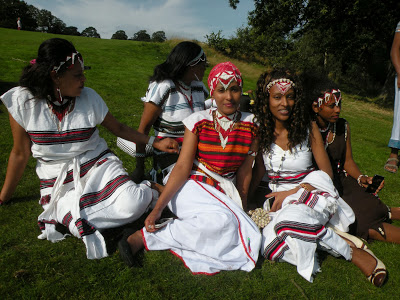
Oromo like many ethincities in Africa suffered specially after the colonization, because the colonizers built a wicked conflict in the African context which is the supremacy of a certain people or culture on the rest of the inhabitants of each country, after drawing unnatural borders.That was the case of Rwanda for example and that what lead to the genocide.
This wicked idea was entrenched through all means, political, social, economic and developmental.
Being in the trench of the unprivileged part means suffering by all means, no education, no health care, no development, complicated economic situation and for sure political prosecution if you dared to talk about your people suffering.
It is very problematic that the newly established states in Africa had hard time with the notion of nationalism, that they tried to embrace just one identity, and by that they completely deviated from the African tradition of respecting multiplicity. Africans suffered from the unnatural borders which cut some ethicities into pieces like the Nubian comminty when British cut Nubia into two part by the line of 22 north, which made some Nubians Sudanese and other Egyptians. even in the same states, some governments adopted very selective attitude in applying the notion of nationality, they made a check list and if you do not fit, you will suffer.
and Oromo do not fit, they are simply different.

That what happened to my Oromo-ian friend, he left the homeland, and he is a refugee here in Egypt, suffering from hardship of being a refugee in unwelcoming state like Egypt. but when you see him talking about his struggle you will only see the pride, that black pride which never vanishes.
Oromo people are struggling hard to be recognized and to have their human rights respected.
the Ethiopian state must stop its suppression to the Oromo people.

Respecting different people is essential, multiculturalism and persevering multiplicity is the pillar of any state.
Finally sometimes it is important to see Adhoc, this is a video showing how Oromo raised their flag in the last African cup for football:
Know more about the Oromo struggle (http://www.oromoliberationfront.org/index.htm)
See the details at original source:
http://atbrownies.blogspot.co.uk/2014/01/spending-evening-with-oromos.html
By Fatma Emam: http://www.blogger.com/profile/17426809504085760083
Copyright © OromianEconomist 2014 & Oromia Quarterly 1997-2014, all rights are reserved. Disclaimer.
Maaf Adamfamee Maaliif Dhaaname January 3, 2014
Posted by OromianEconomist in Africa, Colonizing Structure, Corruption, Culture, Development, Dictatorship, Human Rights, Knowledge and the Colonizing Structure. African Heritage. The Genocide Against Oromo Nation, Oromia, Oromiyaa, Oromo, Oromo Culture, Oromo Identity, Oromo Nation, Oromo the Largest Nation of Africa. Human Rights violations and Genocide against the Oromo people in Ethiopia, Self determination, Slavery, The Colonizing Structure & The Development Problems of Oromia, Tyranny, Uncategorized.Tags: African Studies, Economic and Social Freedom, Genocide, Genocide against the Oromo, Human rights violations, National Self Determination, Oromia, Oromo, Oromo people, Sub-Saharan Africa, Tyranny, Universal Declaration of Human Rights
add a comment
Copyright © OromianEconomist 2014 & Oromia Quarterly 1997-2014, all rights are reserved. Disclaimer.
The Scramble For Africa, Big Agriculture & The Industrial Farm Land: At What Cost? December 19, 2013
Posted by OromianEconomist in Africa, Colonizing Structure, Corruption, Dhaqaba Ebba, Dictatorship, Oromia, Oromiyaa, Oromo, Oromo Culture, Oromo Identity, Oromo Nation, Oromo the Largest Nation of Africa. Human Rights violations and Genocide against the Oromo people in Ethiopia, Self determination, The Colonizing Structure & The Development Problems of Oromia, Tyranny, Uncategorized.Tags: Africa, African Studies, Developing country, Development, Development and Change, Economic and Social Freedom, Genocide against the Oromo, Horn of Africa, Human rights, Human Rights and Liberties, Human rights violations, Land grabbing, Land grabs in Africa, National Self Determination, Oromia, Oromo, Oromo people, Sub-Saharan Africa, Tyranny, Universal Declaration of Human Rights
comments closed
‘


Picture source : Gadaa.com

Green Rush In Africa
Picture Source: FP

‘There is a gold rush happening in Ethiopia, but it’s not a hunt for the yellow metal. It’s a quest for the green gold of fertile farmland. A nation more associated with periodic famine and acute childhood malnutrition than with agricultural bounty is leasing millions of hectares -an area the size of Belgium – to foreign companies, who want to grow and export food to places like Saudi Arabia, China, India, and Europe. One-third of the fertile Gambella area in western Ethiopia, for example, is being leased for the next 50 years by the Bangalore-based food company Karuturi Global. Forests are being clear-cut, swamps drained, rivers diverted, and whole villages moved to make way for flower farms and palm-oil and rice plantations. “It is very good land. It is quite cheap…. We have no land like this in India,” effused Karuturi’s project manager Karmjeet Shekhon to the Guardian soon after the lease was settled in 2011. The government in Addis Ababa says it needs foreign companies like Karuturi Global to help create jobs, raise Ethiopia’s income from food exports, and develop the agricultural technology and infrastructure that can bring the impoverished country into the mainstream of the global market economy. It has enticed investors with tax breaks alongside rock-bottom lease rates (as little as $1 per hectare per year). But at what cost — to land rights, to human health, to the environment, to national stability?’
– See more at original source: http://www.foreignpolicy.com/articles/2013/12/17/green_rush_industrial_farmland_africa#sthash.lq1Wlefk.dpuf
Copyright © OromianEconomist 2013 & Oromia Quarterly 1997-2013, all rights are reserved. Disclaimer.
Global Poverty & Development Agendas: Dead Aid, Ethiopia & The West December 17, 2013
Posted by OromianEconomist in Africa, Aid to Africa, Colonizing Structure, Development, Economics: Development Theory and Policy applications, Knowledge and the Colonizing Structure. Africa Heritage. The Genocide Against Oromo Nation, Land Grabs in Africa, Oromia, Oromiyaa, Oromo, Oromo Culture, Oromo Identity, Oromo Nation, Oromo the Largest Nation of Africa. Human Rights violations and Genocide against the Oromo people in Ethiopia, Oromummaa, Self determination, The Colonizing Structure & The Development Problems of Oromia, Theory of Development, Uncategorized.Tags: Africa, African Studies, Dead Aid, Development and Change, Economic and Social Freedom, Genocide against the Oromo, Governance issues, Horn of Africa, Human rights, Human Rights and Liberties, Human rights violations, Land grabbing, National Self Determination, Oromia, Oromiyaa, Oromo, Oromo people, Oromummaa, State and Development, Sub-Saharan Africa, Tyranny, Universal Declaration of Human Rights
add a comment
In excess of 35 million Ethiopians still live in abject poverty subsisting on less that $2 a day while a tiny fraction of the country’s 85 million people has become excessively rich. As more and more ODA is pumped into the country Ethiopia’s HDI rank hasn’t improved (in fact it has gone from 169th in the world to 173rd in the last decade), journalists, academics and opposition figures are still jailed for speaking out against the regime, ethnic minorities such as the Oromo are discriminated against and forced off their lands, corruption and human rights abuses are still rife. Less people may be dying but are ordinary peoples’ lives improving at a rate that warrants the West to turn a blind eye to the crimes of those in power? It may suit certain agendas to do so but it does a massive disservice to ordinary Ethiopians. Read the full text at: http://www.transcend.org/tms/2013/12/global-poverty-and-post-colonial-development-agendas-ethiopia-and-the-west/


http://en.wikipedia.org/wiki/List_of_countries_by_percentage_of_population_living_in_poverty
Related articles
Oromo Displacement Past & Present December 12, 2013
Posted by OromianEconomist in Africa, Colonizing Structure, Dictatorship, Domestic Workers, Human Rights, Human Traffickings, Knowledge and the Colonizing Structure., Knowledge and the Colonizing Structure. African Heritage. The Genocide Against Oromo Nation, Oromia, Oromiyaa, Oromo, Oromo Culture, Oromo Identity, Oromo the Largest Nation of Africa. Human Rights violations and Genocide against the Oromo people in Ethiopia, Oromummaa, Qubee Afaan Oromo, The Colonizing Structure & The Development Problems of Oromia, Tyranny, Uncategorized.Tags: Africa, African Studies, Economic and Social Freedom, Horn of Africa, Human rights violations, Oromia, Oromo, Sub-Saharan Africa, Tyranny, Universal Declaration of Human Rights
comments closed

From slavery to freedom:the Oromo slave children of Lovedale, prosopography and profiles
Sandra Carolyn Teresa Rowoldt Shell
Student number: RWLSAN002
A dissertation submitted in fulfilment of the requirements for the award of the degree of Doctor of Philosophy in Historical Studies
Faculty of the Humanities
University of Cape Town
2013
https://www.academia.edu/3760219/From_slavery_to_freedom_the_Oromo_slave_children_of_Lovedale_prosopography_and_profiles
http://www.bbc.co.uk/news/world-africa-14357121?SThisFB

http://oromocommentary.files.wordpress.com/2010/07/machbuba-an-oromo-slave-girl-who-won-the-heart-of-a-german-prince.pdf
Related Articles:
During Ethiopian colonial expansion, Oromia, “the charming Oromo land, [would] be ploughed by the iron and the fire; flooded with blood and the orgy of pillage” (de Salviac, 2005 [1901]: 349). Calling this event as “the theatre of a great massacre,” Martial De Salviac (2005 [1901]: 349) states, “The conduct of Abyssinian armies invading a land is simply barbaric. They contrive a sudden irruption, more often at night. At daybreak, the fire begins; surprised men in the huts or in the fields are three quarter massacred and horribly mutilated; the women and the children and many men are reduced to captivity; the soldiers lead the frightened herds toward the camp, take away the grain and the flour which they load on the shoulders of their prisoners spurred on by blows of the whip, destroy the harvest, then, glutted with booty and intoxicated with blood, go to walk a bit further from the devastation. That is what they call ‘civilizing a land.'” The Oromo oral history also testifies that Ethiopians/Abyssinians destroyed and looted the resources of Oromia, and committed genocide on the Oromo people through massacre, slavery, depopulation, cutting hands, famine, and diseases during and after the colonization of Oromia.
According to Martial de Salviac (2005 [1901]: 350), “With equal arms, the Abyssinia [would] never [conquer] an inch of land. With the power of firearms imported from Europe, Menelik [Abyssinian warlord] began a murderous revenge.” The colonization of Oromia involved human tragedy and destruction: “The Abyssinian, in bloody raids, operated by surprise, mowed down without pity, in the country of the Oromo population, a mournful harvest of slaves for which the Muslims were thirsty and whom they bought at very high price. An Oromo child [boy] would cost up to 800 francs in Cairo; an Oromo girl would well be worth two thousand francs in Constantinople” (de Salviac, 2005 [1901]: 28). The Ethiopian/Abyssinian government massacred half of the Oromo population (five million out of ten million) and their leadership during its colonial expansion (de Salviac, 2005 [1901]: 608, 278; Bulatovich, 2000: 66-68). According to Alexander Bulatovich (2000: 68-69), “The dreadful annihilation of more than half of the population during the conquest took away from the [Oromo] all possibilities of thinking about any sort of uprising . . . Without a doubt, the [Oromo], with their least five million population, occupying the best land, all speaking one language, could represent a tremendous force if united.” The destruction of Oromo lives and institutions…
See the full content of this document
http://law-journals-books.vlex.com/vid/oromo-democracy-classical-civilization-411848362
‘The study confirms that there is clear nexus between authoritarian rule,
man-made famines, and genocide in Ethiopia.’
http://www.codesria.org/IMG/pdf/Mekuria_Bulcha.pdf
Copyright © OromianEconomist 2013 & Oromia Quarterly 1997-2013, all rights are reserved. Disclaimer.
Saudi Arabia’s Extreme Brutality Against Migrants From Oromia And Other East African Nationals November 28, 2013
Posted by OromianEconomist in Africa, Colonizing Structure, Corruption, Domestic Workers, Human Traffickings, Oromo, Oromo Nation, Saudi Arabia, Slavery, The Colonizing Structure & The Development Problems of Oromia, Tyranny, Uncategorized.Tags: Africa, Domestic Workers, economics, Genocide against the Oromo, Human rights violations, Human Traffickings, Land grabs in Africa, Migrant Workers, Migrants in the Gulf States, Oromia, Oromo, Oromo people, Saudi Arabia, Tyranny
add a comment



HRLHA Appeal and Urgent Action
November 13, 2013
For Immediate Release
Honorable ABDULLAH bin Abdulaziz Al Saud, King of Saudi Arabia;
Custodian of the Two Holy Mosques
Riyadh, Royal Court: 1-488-2222, Jeddah: 2-665-4233
Taif: 2-736-5200, Makkah: 2-823-4111, Madinah: 4-857-2500
His Majesty King Abdullah bin Abdulaziz,
Upon the expiration of the three months extended deadline for migrant workers to renew their
residency and employment status ( November 4, 2013), thousands of migrant workers in Saudi Arabia
most of whom believed to be from Ethiopia were apprehended in various regions of the Kingdom by
Ministry of Labor inspection squads formed for this purpose under the pretext of flushing out workers
who violate rules regarding work and residency permits.
The most victimized of the raids to flush out illegal workers were the free visa holder migrant
workers of Ethiopian Origins. ‘Free visa’ holders are considered among the most exploited, lowest paid
and abused workforce in Saudi Arabia. The sponsor, who keeps the worker’s passport and other travel
documents with him/her, plays a crucial role in the worker’s life. All dealings with the government such
as renewal of ‘iqama’ or residency permit are through the sponsor. Sources from the capital city, Riyadh,
reported that among the total of 28000 surrounded migrants , authorities detained around 16,500 migrant
workers in the first four days (November 5 – 9, 2013) in a nationwide crackdown across seven provinces
The Saudi officials confirmed that among the seven provinces nearly half of the migrants were arrested near the southern border with Yemen and in Mecca where some Muslims stay on illegally after their pilgrimage.
Though the police officials in the capital city claim that the security forces killed the African
migrant worker in el-Manhoufa because he and others tried to resist arrest, the information from the
migrants and from the publicly released video confirmed that the three Ethiopians killed were murdered
by the brutal action of police. Among the victims was Umere Abdurahiman Ali , 24 an Oromo national
from Ethiopia who was gunned down on November 5.
After the crackdown resumed, more than 10 Ethiopians were killed and thrown into the bush and eaten by
hyenas. Your Majesty, the government of Saudi Arabia has an international obligation to treat a person
who finds him/herself inside the borders of Saudi Arabia according to International law. The Universal
declaration of Human Rights and International conventions on the protection of the rights of all migrant
workers and members of their families Article 9 & 10, states “The right to life of migrant workers and
members of their families shall be protected by law”, “no migrant worker or member of his or her family
shall be subjected to torture or to cruel, inhuman or degrading treatment or punishment” respectively. In case these migrant workers are illegal, they should be treated as human beings with human dignity and deported in a civilized manner to the destination of their choice.
The Human Rights League of the Horn of Africa calls upon all world community, UN member
states, International Civic and humanitarian Organizations and diplomatic communities and agencies to
exert pressure on the Saudi Arabian government so that it discloses the whereabouts and the current
situations of the confined migrant workers, and compensates the victims for their loss and renews their
status. The HRLHA also calls on the Saudi Arabian government to sign all international covenants and
treaties that it hasn’t yet signed.
RECOMMENDED ACTION: Please send appeals to
The Honorable ABDULLAH bin Abdulaziz Al Saud, King of Saudi Arabia and other concerned Saudi
Arabian government officials and to diplomatic representatives of Saudi Arabia who are accredited to
your country as swiftly as possible, in English, Arabic, or your own language expressing:
Your concern regarding the apprehension and possible torture of the citizens who are being held in
different detention centers; and calling for their immediate and unconditional release;
urging the Saudi Government authorities to ensure that these detainees are treated in accordance with
the regional and international standards on the treatment of prisoners,
Adhere to international conventions on the protection of the rights of all migrant workers and
members of their families to bring to justice those Police and Security agents who committed crimes against innocent
civilians by using excessive force.
To:
HRH Crown Prince Salman bin Abdulaziz Al-Saud:
Deputy Prime Minister and Ministry of Defense
Airport Road, Riyadh 11165
TEL : 1-478-5900/1-477-7313 FAX: 1-401-1336
Jeddah Office TEL: 2-665-2400
Web site: http://www.moda.gov.sa/
SAUD al-Faysal bin Abd al-Aziz Al Saud :
Ministry of Foreign Affairs
Nasseriya Street, Riyadh 11124
TEL: 1-406-7777/1-441-6836 FAX: 1-403-0159
Jeddah Office TEL: 2-669-0900
web site http://www.mofa.gov.sa/
AHMAD bin Abd al-Aziz Al Saud:
Ministry of Interior
PO Box 2933, Riyadh 11134
TEL : 1-401-1944 FAX : 1-403-1185
Jeddah Office TEL: 2-687-232
web site: http://www.moi.gov.sa/
Muhammad bin Abd al-Karim bin Abd al-Aziz al-ISA :
Ministry of Justice
University Street, Riyadh 11137
TEL : 1-405-7777/1-405-5399
Jeddah Office TEL: 2-665-0857
web site: http://www.moj.gov.sa/
Copied To
League of Arab States Headquarters
His Excellency Dr. Nabil El Araby, Secretary Genral
Egypt Cairo – Secretariat –Tahrir Square
Telephone: 5752966 – 5750511
Fax: 5740331 – 5761017
PO. Box: 11642
• Office of the High Commissioner for Human Rights
United Nations Office at Geneva 1211 Geneva 10, Switzerland
Fax: + 41 22 917 9022 (particularly for urgent matters) E-mail: tb-petitions@ohchr.org
• African Commission on Human and Peoples’ Rights (ACHPR)
48 Kairaba Avenue, P.O.Box 673, Banjul, Gambia
Tel: (220) 4392 962 , 4372070, 4377721 – 23 Fax: (220) 4390 764
E-mail: achpr@achpr.org
• U.S. Department of State
Laura Hruby
Ethiopia Desk Officer
Tel: (202) 647-6473, HrubyLP@state.gov
Foreign Affairs, Trade and Development Canada
125 Sussex Drive
Ottawa, ON
K1A 0G2
Tel: 1-800-267-8376 (toll-free in Canada), 613-944-4000
• Amnesty International – London
Clairy Beston ( Clairy or Claire?)
Telephone: +44-20-74135500
Fax number: +44-20-79561157
HRLHA is a non-political organization (with the UN Economic and Social Council – (ECOSOC) Consultative Status) which attempts to
challenge abuses of human rights of the people of various nations and nationalities in the Horn of Africa.
Tel: (647) 280 7062, E-Mail: hrldirector@mail.org, Web site: http://www.humanrightsleague.com
Click to access grnovSaudi-HRLHA-UA.pdf
The following is a letter from Ob. Mardaasa Addisu, Secretary of the Macha Tulama Cooperative and Development Association, USA.
——————
November 11, 2013
Dear Prince Naif Ibn Abdul Aziz Al-Saud
Ministry of Interior
Kingdom of Saudi Arabia
Minister of Agriculture
Kingdom of Saudi Arabia
My name is Mardaasa Addisu, an Oromo American, who is part of an international group advocating for Oromo rights. The Oromo people are an ethnic group that makes up 50% of the population in Ethiopia, but are being persecuted by the Tigrayan dictatorship. The Abyssinians (Tigray and Amhara) have committed genocide on all Cushitic people to acquire resources and reduce the indigenous populations. As a result, Oromo (and all other Cushitic people) are displaced in mass numbers around the World. More than 40% of Oromo are Muslim, with some seeking refugee in the Middle East, particularly Saudi Arabia. Many flee persecution in Ethiopia in hopes of finding refuge whereby they can practice their faith without government interference. We are aware that a large number of people are also using the Ethiopian domestic labor agencies to reach Saudi Arabia. Recently, Oromo advocates learned of your government ending the Kafala System of sponsorship for labor, which is believed to bypass Saudi Labor laws. Human Rights Watch has been critical of the Kafala System in recent times stating: “Saudi Arabia should get serious about regularizing the status of its workers and do away with an abusive labour systems that force migrants into illegal employment .” http://gadaa.com/oduu/22981/2013/11/12/macha-tulama-cooperative-and-development-association-usa-letter-on-attack-on-refugees-and-laborers-including-oromo-in-the-kingdom-of-saudi-arabia/
Ob. Jawar Mohammed on the ongoing assaults on immigrants in the Gulf State and how to end the Oromo national homelessness:
‘The savage mobocratic attack on our people in Saudi Arabia is the culmination of the horrific stories of abuses we have been hearing over the last several years. From Alem Dachasa’s heartwrenching death in Lebanon in 2012 to the weekly news of maids killed by their employers in almost all Gulf countries to the mass-scale attacks perpetrated by the Saudi police and mobs, we are observing a worsening of the situation for our people in the region. There appears to be three factors at play leading to this escalation. First, particularly in the Saudi case, instead of taking responsibilities for the extravagant waste of resources and unproductive economic policies that have resulted in the growing rate of unemployment, the Saudi government and media have been spreading blames on migrants taking away jobs. Consequently, the Saudi public has come to associate their economic hardship with ‘invasion of foreigners’ as their media like to frame the issue. Second, due to oppressive regimes that rule through exclusivist and exploitative economic conditions, the number of our refugees crossing the Red Sea has skyrocketed. The UNCHR reports show that between 100,000-120,000 refugees enter Yemen every year. Most, if not all, of these refugees aim their final destination to be Saudi Arabia. Third, that part of the world is still stuck in medieval racist views. Even before the latest xenophobic campaigns, they have been known for being cruel towards African migrants, particularly. I have heard endless tales of horrific racist rants and physical attacks against maids and laborers by their employers, the police and ordinary folks on the street. In fact, I can attest from experience that even the ‘most enlightened’ of them: diplomats, businessmen, students and princes still have a shockingly Darwinian view of humanity. The racism in that part of the world cannot be denied or excused. Its ugly face and nasty brutality are out there in full display. The latest racist outburst is nothing but a public display of what they have been subjecting our brothers and sisters in seclusion in their houses. I anticipate each of these three factors to get worse in the near future. The social and political upheaval in the region following the Arab Spring, and the expected downward spiral of the economy are likely to further fuel xenophobia as regimes will continue to rely on externalizing internal these problems to remain in power. Sadly, I cannot foresee lots of practical solutions. For instance, the humanitarian approach (advocacy and refugee service type) is unlikely to work because the Saudis just do not have room for civil societies. A person I know tried to set up a shelter for the battered maids, but he spent over a year trying to get some sort of permit to no avail. One official actually told him in plain language that they had no law for such a permit. He then decided to host some of the worst affected in house he rented. An employer of one of the battered women, the very person who brutalized her, found out the place after extracting confession by torturing her friend. He then brought the police, which raided the place, arrested the Good Samaritan, returned some of the women to their tormenting employers and deported the rest. Even during the latest crisis, an elderly person who has lived there for over 40 years and supposedly well known to the authorities, went to appeal to the government to stop the violence. Instead of heeding to his plea, he was beaten up by the officials, arrested and awaiting deportation (despite having all the legal papers). The other alternative, and perhaps more effective way, of helping them would have been the diplomatic channel. After the beheading of an Indonesian woman few years back, Jakarta responded strongly by threatening to severe economic and political ties. The Saudis gave in to the pressure, releasing hundreds of Indonesians from detentions. During the recent attack on migrants, Indonesians are said to be the least affected. However, when we come to the Ethiopian government, we are observing a reaction that borders endorsing the Saudi policy of mass violence. The foreign ministry and its diplomats downplayed the severity by blaming on social media’s exaggeration; they even tried to justify the crackdown saying the targets are only illegal immigrants. Notwithstanding the fact that the attack did not make such differentiation, whether they went there legally or illegally, a government has a solemn duty to stand up and defend its citizens, particularly when they come under attack by foreigners. Then, why is the Ethiopian government cozying up to the Saudis instead of siding with the victims? This could be attributed to multitude of factors. First, over last year, the relationship between the Ethiopian regime and the Saudi-based immigrants has deteriorated. Triggered by the protest over violations of religious freedom, the immigrant community stood firm against the regime – refusing to buy and disrupting the so-called Abbay Bond sell. Hence, it’s understandable that the regime has little love for them. In fact, the regime stands to benefit from destabilization of such resourceful and near-to-home Diaspora that is increasingly falling into the opposition’s side. This is what’s consular officers have been signaling to elders who went to speak with them. Second, we shall recall the report that the Ethiopian rulers have reached an agreement with the Saudi government to send 45,000 maids ‘legally.’ Hence, the displacement of the rebellious ‘illegals’ will make room for the new ones who – because they will be recruited, vetted monitored by the regime’s agencies while in Saudi – are less likely to stand against it. Finally, the vast majority of these brutalized refugees are Oromos (it is estimated that over half a million Oromo refugees reside in the Gulf States). The severity of the refugee crisis the Oromo nation is facing — from North Africa to South Africa, Kenya and the Middle East — is indicative of the severity of the repression and exploitation going on in our country. The past colonizers reduced our people to servitude. Back then, our people at least remained on their land even though they were robbed of most of their production. Today, our people are dispossessed of even that plot of land as the occupiers are giving it to their own and selling it to foreigners. Millions are internally displaced and have become urban squatters. Hundreds of thousands flee every year to escape political persecution and save their family from starvation by risking certain death while crossing the Red Sea and the African deserts. Put simply, as a nation, we have become homeless. No amount of humanitarian outreach and lobbying foreign charity can solve this problem for us. We could ask foreign powers and do-gooders to throw us blankets to survive the cold, and leftover food to get by. But, we will still be back to the same destitution the next day or the one after. The only and lasting solution to this humiliating national homelessness is to take back our homeland. This fact must sink.’ Ob. Jawar Mohammed
http://gadaa.com/oduu/22990/2013/11/14/ob-jawar-mohammed-on-the-ongoing-assaults-on-immigrants-in-the-gulf-states-we-must-take-back-our-homeland-to-end-the-oromo-national-homelessness/
http://gadaa.com/oduu/22984/2013/11/13/lubbuun-biyyatti-galuu-qofa-feena/
‘Despite the hullabaloo about its miraculous economic growth, Ethiopia’s pervasive youth unemployment , lack of economic and political freedom, differential access togovernment jobs, and the promise of a better life overseas are forcing hundreds of young people to take dangerous trips to the Gulf region every year. This has especially affected Oromos and other minority ethnic groups in Ethiopia. Half of the migrants in Saudi Arabia are believed to be Oromos.
Two of the three women who were stranded at the Muscat Airport for more than 48 hours in February were Oromos. One of them, a young girl from Assela said she was 20 but looked much younger. These women make up approximately 20,000 “Ethiopians” in Oman. On my return flight last April, over a hundred women were being returned to Ethiopia. A few that I approached spoke fluent Oromo.’ http://www.opride.com/oromsis/news/horn-of-africa/3719-from-one-hell-to-the-next-and-back-the-plight-of-ethiopian-migrants-in-gulf-states
“The entire system by which Saudi Arabia regulates foreign labor is failing.”
“These people have worked in this country and their blood is in the stones and buildings….You cannot just, like that, force them out.”
Garbage is piling up on streets around the mosque housing the burial site of the Prophet Muhammad. Grocery stores have shut their doors and almost half of Saudi Arabia’s small construction firms have stopped working on projects.
The mess is because foreign workers on which many businesses rely are fleeing, have gone into hiding or are under arrest amid a crackdown launched Nov. 4 targeting the kingdom’s 9 million migrant laborers. Decades of lax immigration enforcement allowed migrants to take low-wage manual, clerical and service jobs that the kingdom’s own citizens shunned for better paying, more comfortable work.
Now, authorities say booting out migrant workers will open more jobs for citizens, at a time when unemployment among Saudis is running at 12.1 percent as of the end of last year, according to the International Monetary Fund. But the nationalist fervor driving the crackdown risks making migrant workers vulnerable to vigilante attacks by Saudis fed up with the seemingly endless stream of foreigners in their country.
Since the Saudi government began issuing warnings earlier this year, hundreds of thousands of foreign workers have been deported, though some were able to avoid arrest by getting proper visas in an amnesty program. That amnesty ended last week, and some 33,000 people have since been placed behind bars. Others have gone into hiding.
With fewer people to do the job, the state-backed Saudi Gazette reported that 20,000 schools are without janitors. Others are without school bus drivers. Garbage became so noticeable around the mosque housing the Prophet Muhammad’s tomb that a top city official in Medina helped sweep the streets, the state-backed Arab News website reported.
About 40 percent of small construction firms in the kingdom also have stopped work because their foreign workers couldn’t get proper visas in time, Khalaf al-Otaibi, president of the World Federation of Trade, Industry and Economics in the Middle East, told Arab News.
Saudis say dozens of businesses like bakeries, supermarkets, gas stations and cafes are now closed. They say prices have also soared for services from mechanics, plumbers and electricians.
Adam Coogle, a Middle East researcher for Human Rights Watch, told The Associated Press that if the kingdom wants to be serious about the problem, authorities should look at the labor laws and not at the workers. Saudi Arabia’s sponsorship system, under which foreign laborers work in the kingdom, gives employers say over whether or not a foreigner can leave the country or change jobs, forcing many into illegal employment.
“The entire system by which Saudi Arabia regulates foreign labor is failing,” he said.
The owner of a multi-million dollar construction company in the Saudi capital, Riyadh, said he had to halt all of his projects. He told the AP he was not the legal sponsor of most of his laborers but that they made more money working as freelance hires.
“These people have worked in this country and their blood is in the stones and buildings,” he said, speaking anonymously for fear of government reprisal. “You cannot just, like that, force them out.”
Despite feeling the loss of the everyday work the foreign laborers provided, Saudis largely have cheered on the police. Residents have taken matters into their own hands on several occasions, despite police calling on the public not to make citizen arrests.
http://abcnews.go.com/International/wireStory/saudi-migrant-crackdown-closes-shops-raises-fears-20884516?page=2

MAAF GARAA JABAATTA??
Giddu gala bahaa dachii arabootaa
Ilmaan oromootti maaf garaa jabaattaa?
Nuun dhiiga qulqulluu hameenya hin qabnu
Biyya ormaa dhufnee biyya keenya hin jennu
Carraaqachuu dhufne biyya irraa godaannee
Mirga dhabne malee nuti biyya hin dhabnee
Osoo biyya qabnuu dirqiin manaa baanee
Gammoojjii jibuutii keessatti gubannee
Beelaa fi dhukkubaan hedduu gaagaa’amnee
Gariin bishaan nyaatee kaan qurxummiin quufee
Kaan cirracha yaman gubbaarratti kufee
Hambaa waa xiqqootu bineensa iraa hafee
Oromoo xiqqootu carraaqachuuf dhufee
Maarree ati maalif garaan si jabaataa?
Hiyyeessa lammii koo maalif galaafattaa?
Nuti sirra hin teenyu sirraa galuu yaanna
Waan cacarraaqanne guduunfannee baana
Lakkii nu qusadhu yaa dachii nageenyaa
Carraaqachuu qofa nuti kaayyoon keenyaa
Mee suuta jedhiitii addaan nu baafadhu
Eenyu akka taane sirriitti hubadhu
Duraanuu beekamna nuti hammeenya hin qabnu
Quba afaan nu ka’an tasuma hin ciniinnu
Kana miti beeka saudii seenaan kee
Nageenya jaallatta jechuuttin si beekee
Harra eessaa fiddee jijjiirte amala kee
Kun waa kan kee miti,kan biraa si booda jiraachuusaan shakkee!!!
Nu fe’adhaa jennee nu fe’achaa jirtu
Teenyee nyaachaa hn jirru ijaan ni agartu
Naamusaan bobbaanee galaa jirra nuti
Maalif lubbuun keenya badii malee baati
Warra dhalootumaan badii malee hin beekne
Warreen hiddi isaanii shira malee hin qabne
Maalif isaan waliin wal nu fakkeesitan
Nuti oromoo dha!! Habashoota waliin maaf waliin nu maktan?
Badii nam tokkootiif hunda maaf yakkitan
Habashoonni duruu qa’ee namaa dhaquun
Aadaa isaaniiti biyya namaa jeequun
Nuti oromoodha nu hubachuu qabdu
Jennee osoo himnuu maaf waliin nu dhiibdu?
Erga “nurraa ba’aa” afaaniin jettanii
Saba badii hin qabne erga yakkitanii
Nagaadhaan nuuf ergi oromoo hin miidhinii
Cal,cal,jennaan nuti sodaa hin fakkaatinii
Adaba godhadhaa yoo nagaa feetanii!!!!!!!
Seena Abdiissaa, on Facebook
Ethiopian police crackdown on anti-Saudi Arabia protest following migrant worker attacks

Foreign workers wait before boarding police buses transferring them to an assembly centre prior to their deportation on November 14, 2013 in Riyadh (AFP, Fayez Nureldine)
November 15, 2013, ADDIS ABABA, ETHIOPIA (AP) – Ethiopian police have used force to disperse hundreds of people protesting against targeted attacks on Ethiopians in Saudi Arabia. Police units Friday blocked roads to prevent the protest at Saudi Arabia Embassy from growing. Some two dozen people were detained. The police forced some journalists to delete photos. The government’s spokesman, Shimelis Kemal, wasn’t immediately available for comment.
One protester, Asfaw Michael, who was beaten, said he didn’t understand why Ethiopia wanted to shield Saudi Arabia from the protest.Many foreign workers in Saudi Arabia are fleeing or are under arrest amid a crackdown on the kingdom’s 9 million migrant laborers. Close to 500 Ethiopians have been repatriated. Last weekend, Saudi residents fought with Ethiopians. Video emerged of a crowd dragging an Ethiopian from his house and beating him. http://ayyaantuu.com/horn-of-africa-news/ethiopia/ethiopian-police-crackdown-anti-saudi-arabia-protest-following-migrant-worker-attacks/

Photo: at Finfinnee (Addis Ababa), Oromia
Arrests at anti-Saudi protest in Ethiopia |
Police crackdown on demonstrations against targetedattacks on Ethiopian migrant workers in Saudi Arabia.http://www.aljazeera.com/news/africa/2013/11/arrests-at-anti-saudi-protest-ethiopia-201311151464025832.html#.UoZ3WGaXZwg.twitter |
“It is rare to come across any other nationality groups like the Oromo from the Horn of Africa who are as subjected to overwhelming abuses at home under subjugation and occupation and overseas as refugees with no safe haven. From destructiveevents developing at unprecedented rate in Oromia and in countries of exile, we can observe that the Oromo people are facing a greater danger to their survival as a group and as individuals from Ethiopia to Saudi Arabia, Yemen to Libya, Somaliland to Kenya and everywhere in between. We hear of increasingly darker and gorier circumstances our people find themselves in every passing day. The recent crackdown in Saudi Arabia on immigrants and refugees from Oromia and Ethiopia and this Qeerroo report on massive rights abuses inside Oromia from 2012-2013 demonstrate just how much fragile, weak and endangered the Oromo species has become everywhere. The suffering is obviously enormous, but the local and global voices conveying these sufferings are tragically dwindled or hijacked. It behooves every concerned Oromo to pause and think: where are we headed as a people? And it is necessary that every Oromo political and economic organization rethinks home-based, Oromia, approaches to preventing the slow extinction of this species from the face of the earth. “
Joint Statement of OSA and Oromo Community Associations in NA
Regarding Situation of Oromo Migrant Workers, and Refugees in KSA
Dear Oromo People in Oromiya /Ethiopia, KSA and all the Oromo Diaspora Communities:
The Oromo Studies Association released this joint statement with Oromo Community Associations in North America regarding the situation of Oromo and other Ethiopian Refugees, Asylum Seekers and and Migrant Workers from Ethiopia. We heard and observed with disbelief and a profound sense of grief the awful news coming from Saudi Arabia. The graphic images and videos of indiscriminate beatings of defenseless immigrant workers, ostensibly at the hands of Saudi Arabian law enforcement officials and vigilantes, has clearly shocked and enraged us. Law enforcement officials have randomly rounded up, kept tens of thousands of the immigrants in concentration camp-type facilities, and deported many thousands more to Ethiopia without regard to individual cases and needs. Read more
OSA Letter Requesting the Correction of Erroneous Oromo Language Classifications Published on Citizenship and Immigration Canada (CIC) Website
“All along the successive Ethiopian regimes, including the current regime, have embarked on deliberate and systematic campaigns of misinformation about the Oromo people, its language and culture in order to sustain the subjugation of the Oromo people. Volumes of propaganda literatures have been written that are designed to de-humanize the people, ridicule its culture and deliberately fabricate artificial linguistic classifications among inhabitants of the various regions of Oromiya. The ultimate goal of such campaigns is to create false stories designed to weaken the unity of the Oromo people and to misinform the international community who would rely on these propaganda literatures for information on Oromo issues. We suspect the sources for the CIC’s Oromo language classification is directly based on such literatures or it is based on some genuine independent works that might have been influenced by the former. For instance, the World Languages, a Virginia-based language organization that provides information on world languages to government agencies and businesses, erroneously classifies Afaan Oromo (Oromo language) into three regions; Western, Eastern and Southern Oromo languages.” Read more
http://www.ethiotube.net/video/28483/Must-Watch
Copyright © Oromianeconomist 2013 and Oromia Quarterly 1997-2013. All rights reserved. Disclaimer.
Oromo Political Detainees Tortured: Human Rights Watch’s Latest Document on Ethiopia October 19, 2013
Posted by OromianEconomist in Africa, Colonizing Structure, Corruption, Dictatorship, Human Rights, Oromia, Oromiyaa, Oromo, Oromo the Largest Nation of Africa. Human Rights violations and Genocide against the Oromo people in Ethiopia, The Colonizing Structure & The Development Problems of Oromia, Tyranny, Uncategorized.Tags: Africa, East Africa, Economic and Social Freedom, Genocide, Genocide against the Oromo, Governance issues, Horn of Africa, Human rights, Human rights violations, National Self Determination, Oromiyaa, Oromo, Oromo people, Oromummaa, Tyranny, Universal Declaration of Human Rights
1 comment so far


The report documents human rights abuses, unlawful investigation tactics, and detention conditions in Maekelawi between 2010 and 2013. Human Rights Watch in this latest document reports that Ethiopian authorities have subjected political detainees to torture and other ill-treatment at the main detention center in Finfinnee (Addis Ababa). The report also calls for the Ethiopian government to take urgent steps to curb illegal practices in the Federal Police Crime Investigation Sector, known as Maekelawi, impartially investigate allegations of abuse, and hold those responsible to account.
The 70-page report, “‘They Want a Confession’: Torture and Ill-Treatment in Ethiopia’s Maekelawi Police Station,” documents serious human rights abuses, unlawful interrogation tactics, and poor detention conditions in Maekelawi since 2010. Those detained in Maekelawi include scores of opposition politicians, journalists, protest organizers, and alleged supporters of ethnic insurgencies. Human Rights Watch interviewed more than 35 former Maekelawi detainees and their relatives who described how officials had denied their basic needs, tortured, and otherwise mistreated them to extract information and confessions, and refused them access to legal counsel and their relatives.
“Ethiopian authorities right in the heart of the capital regularly use abuse to gather information,” said Leslie Lefkow, deputy Africa director. “Beatings, torture, and coerced confessions are no way to deal with journalists or the political opposition.”
Since the disputed elections of 2005, Ethiopia has intensified its clampdown on peaceful dissent. Arbitrary arrest and political prosecutions, including under the country’s restrictive anti-terrorism law, have frequently been used against perceived opponents of the government who have been detained and interrogated at Maekelawi.
‘One [police officer] hit me on the back of my head with a long black stick and blindfolded me. They took me to their office. These were interrogators. They slapped me on the cheeks repeatedly…. But these interrogators are not in a position to listen to what I tell them. They beat me again with the black stick and slapped me again. I stayed in that room until midnight. I was exhausted. They took me back to the cell and then took another guy. On the second day of interrogations—the beating was worse. What they want is a confession.’—Journalist held in Maekelawi in mid-2011, Nairobi, April 2012, p. 6.
“Oromo student held in Maekelawi in 2012, said his hand was broken when he was beaten on his hand while being held in this position and that over a year later his hand continues to hurt:’In the interrogation room there was small piece of metal on the wall. They put me on it and locked my left hand to the wall and then my legs didn’t touch the ground. They beat me on my left hand. I think I was there one hour, but I don’t know as I lost my memory,’ ” p. 34.
Read further more from the following sites:
Click to access ethiopia1013_ForUpload.pdf
http://www.hrw.org/news/2013/10/18/ethiopia-political-detainees-tortured
Are Oromos Singled Out and Disproportionately Tortured in Ethiopia?
http://oromopress.blogspot.co.uk/2013/10/are-oromos-singled-out-and.html
Torture in the heart of Finfinnee (Addis), even as leaders gather in gleaming AU building
“Getachew,” a 22-year-old ethnic Oromo, was snatched from his university dorm, driven hundreds of kilometres to Addis Ababa, and locked up for eight months in Maekelawi. His parents were never informed of his whereabouts; he was never charged or given access to a lawyer; and never appeared before court. He was ultimately released on condition that he would work for the government.Like Getachew, many of the people detained in Maekelawi over the past decade are political prisoners — arrested because of their ethnicity, their real or perceived political opinions and actions, or journalism work. Voicing peaceful dissent or criticism of government policy is increasingly risky.
Copy right © Oromianeconomist 2013 and Oromia Quarterly 1997-2013. All rights reserved. Disclaimer.
Tyrannic Ethiopia Bans Access To Student’s Critical Articles And Has Watchers In Class Rooms September 27, 2013
Posted by OromianEconomist in Colonizing Structure, Corruption, Dictatorship, Ideas, Knowledge and the Colonizing Structure. Africa Heritage. The Genocide Against Oromo Nation, Oromia, Oromo, The Colonizing Structure & The Development Problems of Oromia, Tyranny, Uncategorized.Tags: Africa, Ethiopia–United States relations, Human rights, Oromia, Oromo, Politics of Ethiopia, Tyranny, University of Pittsburgh Graduate School of Public and International Affairs
1 comment so far

‘Disguising human rights violations and oppression with positive terminology is not new to Ethiopian legislators, who passed the Freedom of the Mass Media and Access to Information Proclamation No. 590 in 2008. This idealistic-sounding law’s title belies its contents, because it enables the government to bring charges against “any person who is suspected of committing an offence through the mass media.” Such offenses include the publication of statements critical of the legislative, executive or judicial authorities that are deemed false or defamatory. It is up to the attorney general to decide if the accused journalist should be detained on remand.’ http://jurist.org/forum/2011/08/abigail-salisbury-ethiopia-terror.php#
‘Ethiopian education also differs from Western education because, Salisbury said, there could be “watchers” present at any time, in any classroom. Watchers are government representatives on the lookout for those speaking out against the government.’
Cristina Holtzer of Pitt News reports that Abigail Salisbury is an enemy of the state of Ethiopia because of an op-ed column she published online. Salisbury, a student in the Graduate School of Public and International Affairs, spoke about her article to an audience of about 10 in a “Let’s Talk Africa” lecture on Wednesday in 4130 Posvar Hall from 1:30 to 3 p.m. The Ethiopian government blocked her article, titled “Human Rights and the War on Terror in Ethiopia,” one day after she published it online. While in Ethiopia, Salisbury noticed an extreme lack of freedom of speech and press for Ethiopian people and decided to write the piece, which criticizes the Ethiopian government. Salisbury was working as an assistant professor at Mekelle University Law School, a small college outside of Addis Ababa, the capital of Ethiopia, when she published the article. After the university administration discovered her article, Salisbury said the university “basically asked [her] not to work there anymore.”
“I was told that, based on what I wrote, that if I had been an Ethiopian person, I would have been put in prison,” Salisbury said. “I don’t think they want me back.” Ironically enough, Salisbury said, she was in the country teaching international human-rights law, a class required for graduation from law school in Ethiopia. Anna-Maria Karnes, a representative of the Africana studies department, also attended the lecture and interjected throughout. Karnes, whose parents live in Ethiopia, has a thorough grasp of the political climate in the country.
“Skype was outlawed two years ago in Ethiopia,” Karnes said. “There were people jailed for using Skype.” When Karnes first discovered the Skype law, she worried that she would not be able to get in touch with her parents because that was their primary source of communication. But Skype was illegal only for Ethiopians, not for foreigners. “As a Westerner, you are treated differently,” Salisbury said. “Better.”
Ethiopians subscribe to a different race and caste system than many Americans are used to. Salisbury said that when African-Americans traveled to Ethiopia, they were treated the same as whites. Ethiopians believe that everyone else in Africa is black but that they, themselves, are red skinned. Salisbury recounted a story of when someone in the street approached her and asked, “Have you seen any black women today?”
Salisbury said she was surprised by the scale of differences between the learning environments in Ethiopia and the U.S.
Because of the country’s limited resources, students learn to memorize verbatim what professors say in lecture. Salisbury said she’s seen students reproduce a lecture right down to the “ums” and “likes.” Ethiopian education also differs from Western education because, Salisbury said, there could be “watchers” present at any time, in any classroom. Watchers are government representatives on the lookout for those speaking out against the government. “What would creep me out if I were in that class?” Salisbury said. “I don’t know if I would be raising my hand with opinions.” In addition to an extreme lack of freedom of speech, Salisbury said Ethiopians also struggle with tough racial tensions and “ethnic federalism,” or preferential treatment for one ethnic group that is officially recognized by the government. With Ethiopia located in a contentious part of the world, Salisbury said U.S.-Ethiopia relations are crucial. “Ethiopia is really instrumental in the U.S. agenda and the global war on terror that we’re engaged in,” she said. Salisbury and Karnes opened the presentation with an activity about African knowledge. They divided the audience into small groups and asked them to label a map of Africa with the names of as many countries as they could. Even with several African students and faculty in the audience, no one was able to label the entire map. “You can’t know the whole of Africa,” Director of Africana Studies Macrina Lelei said. “That’s part of why we have African studies here at Pitt … to share those experiences.”
http://www.pittnews.com/news/article_090b538c-266a-11e3-8d05-0019bb30f31a.html#.UkV1PQONt0w.facebook
http://www.ethiomedia.com/abai/ethiomedia_interviews_abigail_salisbury.html
http://www.zoominfo.com/p/Abigail-Salisbury/1255943349
Copyright © Oromianeconomist 2013 and Oromia Quarterly 1997-2013. All rights reserved. Disclaimer.
Related articles
- Abigail Salisbury is an enemy of the state of Ethiopia (daniboy8935.wordpress.com)
- Ethiopia bans access to student’s critical article (bilisummaaa.wordpress.com)
-
Ethiopia’s Leaders Misinform the World
- http://ayyaantuu.com/horn-of-africa-news/ethiopia/growing-anxiety-ethiopian-university-students-case-students-twisted-mind/
- The Tyrannic Ethiopian Regime is Accountable for the Death of a Political Prisoner And Prisoner of Conscience, Oromo National, Engineer Tesfahun Chemeda (oromianeconomist.wordpress.com)
- http://dhaamsaogeetti13.wordpress.com/2013/10/03/ethiopia-most-restrictive-sub-sahara-country-freedom-house-reports/
ETHIOPIA: IS TPLF GOVERNING OR EXPANDING IT’S CORRUPTIONS EMPIRE? September 5, 2013
Posted by OromianEconomist in Colonizing Structure, Corruption, Dictatorship, Economics.Tags: Africa, Colonizing Structure, Corruption, Dictator, Ethiopia, Ethiopian Government, Oromia, Oromo, Politics of Ethiopia, Tigrayan People's Liberation Front, Tyranny
2 comments
The tyrannic TPLF group since seized power in 1991 has clearly engaged in massive corruption and unethical business practices without any constraints by national or international business rules. As a ruling force, it not only owns strategic sectors of the economy and engages in commercial and trading activities, it also puts private sectors those are outside its space of armed robbery in a hopeless no-win situation. The muscled economic dominance through such massive scale corruptions and brute forces has also been used as a political weapon to harass, incarcerate, dominate, weaken and control its political opponents to maintain its corruption empire for ever. The TPLF, the core corruption force in the present Ethiopian government, has transformed the economy from State ownership of the pre- 1991 to TPLF & Tigrayan elite private ownership by buying investment assets formerly owned by the government of Ethiopia. ‘At the same time, the TPLF has also started a huge investment program of its own through sham corporate structures.For example, the TPLF controlled Endowment Fund of Rehabilitation of Tygrai (EFFORT) is a conglomerate with an asset estimated well over a billion Ethiopian Birr involved in business investment in all aspect of the Ethiopian economy.’
Related articles
- We All Oromos Need Freedom (oromostruggleforfreedom.wordpress.com)

Firehiwot Guluma | Sept 4, 2013
 Since the dictator TPLF seized power, it has been clearly engaged in massive corruption and unethical business practices by national or international business rules. As a ruling party, it not only owns strategic sectors of the economy and engages in commercial and trading activities, it also puts competing private sectors in a hopeless no-win situation. This preponderant economic dominance is also used as a political weapon to harass, incarcerate, dominate, weaken and control opposition forces in order to stay in power indefinitely.
The TPLF, the core political power of Ethiopian government, has transformed the Ethiopian economy from State ownership to the private ownership by political parties, mainly the TPLF, by buying investment assets formerly owned by the government of Ethiopia, as prescribed by the World Bank Report and political coercion by the United States Government. At the same time, the TPLF has also started…
View original post 51 more words
The Tyrannic Ethiopian Regime is Accountable for the Death of a Political Prisoner And Prisoner of Conscience, Oromo National, Engineer Tesfahun Chemeda August 27, 2013
Posted by OromianEconomist in Uncategorized.Tags: Africa, Barack Obama, Development Problems, Engineer Tesfahum Chemeda, Ethiopia, Fascist system, Genocide, Horn of Africa, Human rights, Human rights violations, Kenya, National Self Determination, Oromia, Oromo, Oromo people, poverty, Racism, The genocide against Oromo People, Tyranny
3 comments


The tyrannic and minority rule of TPLF Ethiopian government has been conducting genocidal killings against the majority (the Oromo people), nations and nationalities in Southern and Eastern Ethiopia. In its policies and strategies of Nazi and Apartheid style, it has mainly targeting the Oromo who make more than 40% of the population of the Horn of Africa. Engineer Tesfahun Chemada Gurmeessaa is the latest victim of TPLF’s planned and systematic genocide going on. Ethiopian empire (Horn of African) is one of the least developed, economically very impoverished and marginalized in the world. It is the most world food aid dependent region. The tyrannic and corrupt regime in its statistical lies and paper growth has reported that it has registered the fastest economic growth in Africa. Practical observation on the ground indicates the opposite (it is poverty alone that is growing). The politically motivated sectarian regime actually destroys the very scarce and rare resources the region holds and the dynamics of the society (Oromo and other non-Tigrayan) that it has put under its genocidal target : engineers, teachers, graduate students, the writers, the farmers, business men and women, the natural forest (the ecosystem) and the ancient human culture of the region.
The followings are republications among the latest petitions initiated and open letters made by concerned citizens and Oromo human rights advocates in the calls for the reversal of the ongoing crime against humanity. For further details and actions please refer to the original sources as they are acknowledged in this page.
Dear President Barack Obama,
The #Oromo People < http://www.oromo.org/enocide-against-the-oromo-people-of-thiopia.html> are the single largest Nation in the Horn of Africa under the brutal rule of successive Ethiopian rulers nearly for a century & half now. At this very moment, the current EPRDF regime, which controls Ethiopia for the last 22 years, has intensified the killing, detaining, displacing, expelling our people from every sectors of our society, from all corners of our country for no tangible reasons, but simply due to politics of fear and an excuse for extension of its ruling terms under various pretext.
Dear Mr. President,
In history, our people have never had such tactical gross abhorrent human rights violations of the highest order in any past Ethiopian successive governments that parallel to the current EPRDF tyrannical regime in part due to the shielding effect of present day Geopolitical dynamics.
Time and again, many peasants, students, skilled professionals, journalists, Artists, prominent nationalists, even Government ministers, and local and International activists have tried to demonstrate, petition and stage worldwide rallies to the Whitehouse and other Government and NGO institutions in various occasions in several countries to demand on Ethiopian Govt. to stop atrocities, but no concrete response was achieved yet.
There is no particular crime that our people have committed to suffer from such purposefully calculated heinous crimes by the ruling party against innocent civilians. Despite out loud preaches of Modern Democracy all over the world, our people are still well silenced and voiceless under gunpoint not to demand or petition their Govt. and no words from independent major world media outlets to expose these crimes and brutalities committed by this regime.Our people have been denied the right to collect and rest the bodies of their family members, relatives or friends who are victims of the Ethiopian Govt. The very recent cases in point among many others, are the refusal by the Govt. of the bodies of victims of Kofale Massacre & that of Engineer Tesfahun Chemeda, who was subjected to refoulement from Kenya to Ethiopia in few years back and killed this August 2013 in the notorious Kaliti Prison. Instead of allowing the family burry their son, the Govt. agents took his sister to jail accusing her of publicising Engineer Chemeda’s news of death at their hands.
Dear Obama,
We hereby so kindly seeking your urgent support in voicing our strongest objection & hold the Ethiopian ruling EPRDF accountable for all its inhuman actions and atrocities being committed under various excuses and urge this regime to respect the rule of law, human rights & Democracy in Ethiopia. There will be no time that our people seek urgent help from USG and International communities than right now! Enough is better than over, justice, peace and democracy for the Oromo & other nationalities in the Horn of Africa shall prevail.
Therefore; we, the undersigned individuals, would like to request your highest Office and all whom this may concern to influence the Ethiopian Govt. to respect the basic human & constitutional rights, stop genocide on peaceful people & obey rule of law to eventually transition itself from absolute Dictatorship to Democratic form of Government.
Thanks for your precious Mr. President,
Thanks everyone for taking your time to sign, share (on social media) & forwarding to friends.
Sincerely,
http://www.thepetitionsite.com/202/786/158/stop-atrocities-in-ethiopia/?taf_id=9925175&cid=fb_na
The HRLHA Statement
The Human Rights League of the Horn of Africa strongly condemns the atrocious torture and inhuman treatment by the Ethiopian government against its citizens and hold it accountable for the death of a political prisoner and prisoner of conscience Engineer Tesfahun Chemeda on August 24, 2013 in Kaliti prison.
HRLHA informants confirmed that Engineer Chemed died in Kaliti Penitentiary due to the severe torture inflicted on him while he was in different detentions centers from 2007 until the day he died. We also protest the fact that he was denied medical treatment by the government.
Engineer Tesfahun Chemeda, an Oromo national, was handed over by Kenyan authorities to Ethiopian Security agents in April 2007 from where he had granted a refugee status from UNHCR in Kenya after he had fled to Kenya to escape persecution by the EPRDF government of Ethiopia.
Engineer Tasfahun Chemeda was one of the 15 Oromo nationals who was sentenced to life in prison in 2010 by the Ethiopian court http://humanrightsleague.com/2010/07/a-call-for-the-reversal-of-the-racial-politically-motivated-and-discriminatory-sentence-by-a-court-in-ethiopia/ for his activism and political beliefs that were different from the ruling EPRDF government of Ethiopia.The Ethiopian Government is accountable for Torturing Mr. Chemeda in prison, thereby violating the 1984 Convention against Torture and Other Cruel, Inhuman or Degrading Treatment or Punishment, an agreement which Ethiopia signed and ratified in 1994 For denying Engineer Tesfahun medical treatment, violating the rights of prisoners which are clearly stated in international law and International covenants on civil and political rights article 10(1) “. All persons deprived of their liberty shall be treated with humanity and with respect for the inherent dignity of the human person”. and Constitution of the Federal Democratic Republic of Ethiopia, the Rights of Persons Held in Custody and Convicted Prisoners article 21 (1) “All persons held in custody and persons imprisoned upon conviction and sentencing have the right to treatments respecting their human dignity”.
By handing over the Oromo refugees and others, the Kenyan Government is also breaching its obligations under international treaties as well as customary laws.
Under the Convention against Torture and Other Cruel, Inhuman or Degrading Treatment or Punishment (1465 U.N.T.S. 185,) the Kenyan Government has the obligation not to return a person to a place where they will face torture or ill-treatment.
Article 3 of the Convention against Torture provides: No state party shall expel, return (“refouler”) or extradite a person to another state where there are substantial grounds to believe that they would be in danger of being subjected to torture.
The Human Rights League of the Horn of Africa calls upon the Ethiopian authorities to immediately carry out an independent investigation into Engineer Tesfahun’s death, including whether torture played a part in his death, and disclose to the public anyone found responsible and bring that person to justice. The HRLHA also calls upon the Western political allies of the TPLF/EPRDF Government of Ethiopia to exert pressures so that it is forced to turn around and start working on the genuine democratization of the country, halting the systematic elimination of citizens who demand basic rights and fundamental freedoms,
Finally we extend our condolences to Tesfahun’s family and friends in their time of grief as well as all Ethiopians who have been falsely accused, illegally detained or wrongly killed at the hands of a brutal and hypocritical regime. Engineer Tesfahun is just one of thousands of victims of the EPRDF government’s campaign of violence, repression and efforts to curtail basic freedoms and fundamental rights of Ethiopians at all costs.
http://ayyaantuu.com/horn-of-africa-news/ethiopia/ethiopia-the-government-is-accountable-for-the-death-of-a-political-prisoner-at-an-ethiopian-jail/
The following is an open letter of the Oromia Support Group in Australia (OSGA) to Hon. Kevin Rudd, Australian PM, on the death in Ethiopian custody of Engineer Tesfahun Chemeda, after refoulement from Kenya.
——————-
Oromia Support Group in Australia
P.O. Box 38
Noble Park, 3174, Vic
E-mail: info@osgaustralia.com
Date: August 26th 2013
Open letter
Death in Ethiopian custody of Engineer Tesfahun Chemeda, after refoulement from Kenya
To: Honourable Kevin Rudd,
Australian Prime Minister
It is with sadness and anger that Oromia Support Australia Inc. OSGA reports the death of a young Oromo in Kaliti prison, Ethiopia, on 24 August, 2013. Tesfahun Chemeda was a student activist in Ethiopia and a political asylum seeker among refugees in Kenya, where he was granted refugee status by UNHCR. He was arrested with a colleague, Mesfin Abebe, by Kenyan ‘anti-terrorist police’ on 2 April 2007.
Although cleared by the anti-terrorist unit and by the FBI, the men were subject to refoulement to Ethiopia at the request of the Ethiopian authorities. UNHCR, the Refugee Consortium of Kenya and the Kenyan Human Rights Commission were told in court, after their application for habeas corpus that the men had been returned to Ethiopia, whereas they remained in custody in Kenya for at least two more days after the court hearing.
Tesfahun and Mesfin disappeared in detention in Ethiopia until charged with terrorist offences in December 2008. They were sentenced to life imprisonment in March 2010. [1] (Mesfin’s death sentence was later commuted.)
Tesfahun was transferred from Zeway prison to Kaliti, where he had been held in solitary confinement for nearly two years before he was killed. [2]
This is not the first time young Oromo men and women have been killed in detention. For example, Alemayehu Garba, partially paralysed with polio, was shot dead with 18 others in Kaliti prison in November 2005. [3]
Refoulement of UNHCR-recognised refugees from Sudan, Djibouti and Somaliland continues. [4]
How long must we wait for Australian Government and other western governments to stop maintaining the Ethiopian People’s Revolutionary Democratic Front (EPRDF) in power? Over one third of Ethiopia’s budget is in foreign aid. Ethiopia receives more aid from the Australia than any other country in the Africa.
It is a shocking state of affairs and an appalling way to spend Australian taxpayers’ money. Oromia Support Group in Australia Inc. tired of hearing from officials that they take every opportunity to engage with representatives of the Ethiopian government at the highest level to express their serious concerns about human rights abuses and lack of democratic progress in Ethiopia.
We have been hearing this for years. When are we going to see an effective response by those who control Ethiopia’s purse strings?
If Australia is so committed to providing aid to Ethiopia, than at least we should insist on it being contingent on real, measurable benchmarks of human rights and democratisation and not the desk-based studies of government-controlled data which support the status quo in Ethiopia.
This should be backed by effective sanctions so that members of the Ethiopian government are prevented from travelling to Australia and other western countries and investing in property and businesses outside of Ethiopia.
Unless meaningful sanctions are applied, growing disaffection with the west, previously noted by former US Ambassador Yamamoto, is likely to mature further. Under the oppression of the Ethiopian regime, opposition voices are becoming more likely to find expression in the very movements which the support of Ethiopia, because of its cooperation in the ‘war on terror’, is meant to avoid.
The authoritarian regime in Ethiopia is a major cause of instability affecting the whole of the Horn of Africa. Supporting it and investing in it is a short-sighted policy.
Yours sincerely,
Marama F. Qufi
Chairperson,Oromia Support Group in Australia Inc.
(For Dr Trevor Trueman, Chair, Oromia Support Group)
——-
[1] http://www.oromo.org/osg/Report_46.pdf, pp.43-44.
[3] http://www.oromo.org/osg/Report_43.pdf, p.22
[4] For example, Badassa Geleta was among 18 refugees returned to Ethiopia from Djibouti on 31 December 2012 and detained in Dire Dawa. He was awaiting resettlement in Canada. Riyana Abdurahman, a 23 year-old teacher, was abducted from Hargeisa on 23 Novermber 2012 and imprisoned in Jigjiga, Somali Region, Ethiopia.
……………………………………………………………………………………………………………………………………………………………………………………………………………………………………………..
Dr. Trueman’s Letter to the British Government
Mark Simmonds MP
Parliamentary Under Secretary of State for Foreign and Commonwealth
Affairs (Africa)
Foreign and Commonwealth Office
King Charles Street
London SW1A 2AH
25 August 2013
Open letter
Death in Ethiopian custody of Tesfahun Chemeda, after refoulement from Kenya
Dear Minister,
It is with sadness and anger that I report the death of a young Oromo in Kaliti prison, Ethiopia, on 24 August, yesterday. Tesfahun Chemeda was a student activist in Ethiopia and a political activist among refugees in Kenya, where he was granted refugee status by UNHCR. He was arrested with a colleague, Mesfin Abebe, by Kenyan anti-terrorist police on 2 April 2007.
Although cleared by the anti-terrorist unit and by the FBI, the men were subject to refoulement to Ethiopia at the request of the
Ethiopian authorities. UNHCR, the Refugee Consortium of Kenya and the KenyanHuman Rights Commission were told in court, after their application for habeas corpus, that the men had been returned to thiopia, whereas they remained in custody in Kenya for at least two more days after the court hearing.
Tesfahun and Mesfin disappeared in detention in Ethiopia until charged with terrorist offences in December 2008. They were sentenced to lifebimprisonment in March 2010. [1] (Mesfin’s death sentence was later
commuted.)
Tesfahun was transferred from Zeway prison to Kaliti, where he had been held in solitary confinement for nearly two years before he was killed.[2]
This is not the first time young Oromo men have been killed in detention. For example, Alemayehu Garba, partially paralysed with
polio, was shot dead with 18 others in Kaliti prison in November 2005.[3] Refoulement of UNHCR-recognised refugees from Djibouti and Somaliland continues.[4]
How long must we wait for Her Majesty’s Government and other western governments to stop maintaining the EPRDF in power? Over one third of Ethiopia’s budget is in foreign aid. Ethiopia receives more aid from the UK than any other country in the world.
It is a shocking state of affairs and an appalling way to spend UK taxpayers’ money. I am tired of hearing from Ministers and officials
that they take every opportunity to engage with representatives of the Ethiopian government at the highest level to express their serious concerns about human rights abuses and lack of democratic progress in Ethiopia.
I have been hearing this for over twenty years. When are we going to see an effective response by those who control Ethiopia’s purse strings?
If the UK is so wedded to providing aid to Ethiopia, than at least we should insist on it being contingent on real, measurable benchmarks of human rights and democratisation and not the desk-based studies of government-controlled data which support the status quo in Ethiopia.
This should be backed by effective sanctions so that members of the Ethiopian government are prevented from travelling to the UK and America and investing in property and businesses outside of Ethiopia.
Unless meaningful sanctions are applied, growing disaffection with the west, previously noted by former US Ambassador Yamamoto, is likely to mature further. Under the oppression of the Ethiopian regime, opposition voices are becoming more likely to find expression in the very movements which the support of Ethiopia, because of its cooperation in the ‘war on terror’, is meant to avoid.
The authoritarian regime in Ethiopia is a major cause of instability affecting the whole of the Horn of Africa. Supporting it and investing in it is a short-sighted policy.
Yours sincerely,
Dr Trevor Trueman, Chair, Oromia Support Group.
1 http://www.oromo.org/osg/Report_46.pdf, pp.43-44.
2 http://www.opride.com/oromsis/news/horn-of-africa/3701-oromo-activist-tesfahun-chemeda-dies-in-prison-while-serving-life-sentence
3 http://www.oromo.org/osg/Report_43.pdf, p.22
4 For example, Badassa Geleta was among 18 refugees returned to Ethiopia from Djibouti on 31 December 2012 and detained in Dire Dawa. He was awaiting resettlement in Canada. Riyana Abdurahman, a 23 year-old teacher, was abducted from Hargeisa on 23 Novermber 2012 and imprisoned in Jigjiga, Somali Region, Ethiopia. Tesfahun-chemeda-dies-in-prison-while-serving-life-sentence
[3] http://www.oromo.org/osg/Report_43.pdf, p.22
[4] For example, Badassa Geleta was among 18 refugees returned to Ethiopia from Djibouti on 31 December 2012 and detained i Dire Dawa. He was awaiting resettlement in Canada. Riyana Abdurahman, a 23 year-old teacher, was abducted from Somali Land. http://qeerroo.org/2013/08/26/death-in-ethiopian-custody-of-tesfahun-chemeda-after-refoulement-from-kenya-open-letter-of-dr-trevor-trueman-of-osg-to-uks-parliamentary-under-secretary-of-state-for-foreign-and-co/
OLF Statement on the death of Engineer Tesfahun Chemeda and His Short Biography
Engineer Tesfahun was born in 1976 from his father Mr. Chemeda Gurmessa and his mother Mrs. Giddinesh Benya at Harbu village, Guduru district, eastern Wallaga, western Oromia. He was lucky enough to get the slim chance of going to school for his likes under the occupation. He completed his school starting at Looyaa, then Fincha’aa and at Shambo in 1996. His remarkably high scoreenabled him to join the university in Finfinne (Addis Abeba) where he graduated with BSc in Civil Engineering in 2001. Subsequently:
1. Sept. 2004–Jan 2005 – he worked as unit manager for the maintenance of Arsi-Bale road project run by Oromia Rural Road Maintenance Authority and Ethio-Italian Company.
2. Worked at Degele-Birbirsa RR50 project in Salle-Nonno District in extreme South-west of Ilu-Abba-Bore Zone
3. Worked on four simultaneous road projects for settlements; Kone-Chawwaqaa, Baddallee-Kolosirri, Gachi-Chate and Yanfa-Ballattii
4. Worked as a project manager for Chawwaqa district head office construction in Ilu-Harari.
5. Oct. 2001–July 2003 site engineer for Siree-Nunu-Arjo Rural Road of Wallaga district.
Because of the policy of persecution andsurveillance imposed on him, like any educated and entrepreneurial Oromo class as per TPLF’s standing policy, he decided to flee to Kenya for his safety. He sought protection from the UNHCR office in Nairobi explaining his position, and got accepted and recognized as a refugee. However, for unknown reasons, he and his colleague in skill and refugee life, Mesfin Abebe Abdisa, were arrested and eventually handed over to the Ethiopian authorities by the Kenyan counterpart on April 27, 2007, due to the agreement between the two countries.
Ethiopia, being a member of the Joint Anti-Terrorism Task Force (JATT), formed under the auspices U.S. that includes Uganda and Kenya as well, continues to abduct Oromo refugees from the neighbouring countries where they sought UN protection, under the pretext of anti-terrorism. The two innocent victims Tesfahun and Mesfin were handed over to the Ethiopian authorities who took them handcuffed and blindfolded at 2:00AM local time on May 12, 2007, purportedly to have them investigated for terrorism at the JATT Main Investigation Branch in Finfinne (Addis Abeba).
From Apr. 27 to May 12, 2007, before handing them over, they were interrogated at the Kenyan National Bureau of Investigation near Tirm Valley by American agents and Kenyan Anti-Terror Police Unit. The Kenyan officer Mr Francis, who led the investigation, concluded the innocence of these two victims and requested the Kenyan authority to immediately let them free. However, another Kenyan CID agent Ms. Lelian, who is suspected of having close connection with the Ethiopian agents, opposed the decision and facilitated the handing over of these two innocent victims.
Once in the hands of the Ethiopian agents, they were taken to the notorious dark Central Investigation compound, known as Ma’ikelawii, where they were interrogated under severe torture for a year and a quarter.
Engineer Tesfahun was then presented before a court of magistrates of all Tigrian nationals in Jul. 2008, who passed the life sentence on him on March 31, 2010. The two were subsequently moved from the maximum security prison to an unknown destination for the pretext of planning to escape. They were taken for further torture in another underground location by a squad directly commanded by the late Prime Minister Meles Zenawi. It was only since last three months that they were returned to Qallitti main prison. The beating was so severe that the engineer repeatedly requested and needed medical treatment which he was of course denied and eventually succumbed to the torture impact yesterday Aug. 24, 2013. He became the latest victim of the vicious systematic genocide against the Oromo.
Regarding the fate of these two engineers, the OLF strongly believes that the way Kenyan authorities have been handing over innocent Oromo refugees to the anti-Oromo Ethiopian criminal regime is against the relevant international conventions. We strongly request the Kenyan government to desist from this practice of the last 22 years of handing over innocent Oromo victims who seek refuge in their country. The Kenyan government cannot avoid sharing the responsibility of such murders of innocent people who they hand over to the notorious regime that is well known for its anti Oromo campaign.
The OLF extends its heartfelt condolence to the family relatives and friends of Engineer Tefahun and calls on the Oromo people to double the struggle for freedom as the only way to be free of such persecutions.
Oromia Times
Godina Dhihaa Oromiyaa bakkotaa gara garaatti sabboontotni ilmaan Oromoo ajjeechaa suukkaaneessaa mootuummaan Wayyaanee EPRDF hayyuu Oromoo Injinner Tasfahun Camadaa irratti raawwatamettii gadda guddaa itti dhaga’amee, ibsachuun
Anotaa gara garaa keessatti Hagaayyaa 25/2013 irraa egaluun reeffaa gooticha Injiner Tasfahun Camadaa eegaa turan. Keessaattuu Magaalaa Amboo, Gudarii , Geedoo fi Hanga Godina Horroo Guduruu Wallaaggaa Anaa Guduruutti sabboontotni Oromoo
reeffaa gootichaa Oromoo walqindeessuun simmannaaf egaa kan turan ta’uu gabaasi Qeerroo naannicha irraa beeksisa.
Awwaalchaa gooticha Oromoo Injineer Tafahun Camadaan walqabatee mootummaan Wayyaanee humna waaraanaa bobbaasuun uummata sodaachisuuf yaaluun, reeffii isaas guyyaa uummataan simatamuuf waan eegamaa tureef mootummaan Wayyaanee ta’e jedhee halkan akka darbuu fi maatii isaan akka dhaqabu taasise.Haalli kunis bakkaa hundatti sammuu uummataa keessaatti hadhaa kana hin jedhamne fi kulkkulfannaa uumee jira.
Sirni gaggeessaa awwaalcha hayyuu fi goota Oromoo Injiiner Tasfaahuu Camadaa Hagayya 26,2014 godina dhalotaa isaa Onaa Guduruu keessaatti ganda Harbuu iddoo jedhamu itti bakkaa hiriyoonnii isaa , sabboontotni Oromoo,Qeerroowwaan,dargaggoonnii Oromoo, Baratootni Oromoo dhaabbiilee barnotaa garaagaraa irraa boqonnaaf galanii jiran bakkoota garaagaraa irraa walitti dhammaachuun sirna awwaalcha gooticha Oromoo Enjineer Tasfahuun Camadaa irraatti argamuun marartoo fi jaalala goota kanaaf qaban agarsiisuun kabajaan aduunyaa kana irraa gaggefame.
Sirna sana irrattis haala sagalee jabaan fi dhadhannoon hangana hin jedhamneen Ummaannii fi sabboontotni dargaggoonnii Oromoo dhadannoowwaan argaman gadii dhageesisan.
1.Tasfaahuun hin dunee ummataa Oromoof jedhetu wareegame,
2. Wareegama hayyuu keenyaan bilisummaan uummataa keenyaa ni mirkana’a!!
3, Qabsoo hayyuun Oromoo Tasfahuun Camadaa irraatti, wareegamee fiixaan ni baafna.
4, Wayyaaneen diinaa uummataa keenyaati!!
5, Gumaan Hayyuu Oromoo Tasfahuun Camadaa irree qeerrootiin ni baafama!!
6, Diinni goota keenyaa qabsaa’aa kuffisuus qabsoon inni egalee hin kufuu itti fufaa kan jedhuu fi Walaloo fi seenaan Hayyuu Oromoo Injiineer Tasfahuun Camadaa uummataaf dubbifamuun haala aja’inbsiisaa ta’een sirni awwaalchaa isaa rawwate.
Walumaa galattii sirna awwaalchaa enjiiner Tasfahuun Camadaa irraatti kutaalee Oromiyaa gara dhihaa fi magaalota Finfinnee Adaamaa dabalatee Uummaannii Oromoo tilmaamaan 10,000 olitti lakkaa’amani tu irraatti kan argamee fi dargaggoonnii hedduun waraanaa Wayyaaneetiin utuu achii hin ga’iin karaattii kan dhorkamuun deebifaman ta’uu odeessii nu qaqqabee jiruu ifaa godhee jira.
Kana malees, Caasaaleen Qeerroo kan Godinotaa Lixaa Shawaa, Jimmaa, Iluu Abbaa Booraa , fi Godina kibbaa lixaa Shawaa erga gootichi Oromoo hayyuun ija uummataa ta’ee kun wareegamuu dhaga’anii gaddaa guddaa isaanitti dhaga’ame ibsachaa guyyaa sirni awwaalcha isaa rawwatamee bakkuma jiranitti maadheewwan walitti dhufuun dungoo qabsiifachuun sirna awwalchaa kana hirmaachuun gadda isaanii waliif ibsuun qabsoo gootni Oromoo kun irraatti wareegamee galmaan ga’uuf waadaa isaanii haaromsan.
Sirna Awwalchaa Gooticha Oromoo Injiineer Tasfahuun Camadaa ilaalchisuun gabaasni Qeerroo Oromiyaa gara gara irraa itti fufa.
Qbasa’an Kufus Qabsoon ittii Fufa!.
VOA Afaan Oromoo News
http://www.voaafaanoromoo.com/audio/audio/319438.html
Copyright © Oromianeconomist 2013 and Oromia Quarterly 1997-2013. All rights reserved. Disclaimer.
Related articles
- Ethiopia: The Government is accountable for the death of a political prisoner at an Ethiopian Jail (daniboy8935.wordpress.com)
- Oromo activist, Tesfahun Chemeda, dies in prison while serving life sentence (ireport.cnn.com)
- Oromo activist, Tesfahun Chemeda, dies in prison while serving life sentence (freedomfororomo.wordpress.com)
- The murder of Engineer Tesfahun Chemeda will not be a solution to the pressing problem of the Ethiopian Empire. (olfsupporterinuk.wordpress.com)
- Death in Ethiopian custody of Tesfahun Chemeda, after refoulement from Kenya (advocacy4oromia.org)
- Oromo rights activist dies in Kaliti jail (daniboy8935.wordpress.com)
- OSA’s Letter to Mr. Ban Ki-moon on the death of Engineer Tesfahun Chemeda (wiirtuuprees.wordpress.com)
- Oromo activist, Tesfahun Chemeda, dies in prison while serving life sentence (oromostruggleforfreedom.wordpress.com)
21 Century Social and Economic Apartheid: In the TPLF variant of Apartheid System of Ethiopia, the Oromo are making the Majority of the Prisoners April 6, 2013
Posted by OromianEconomist in Uncategorized.Tags: Abusive power, Aphartheid, Corruption, Development, Dictators, Economic Aphartheid, economic sabotage, economy, Ethiopian People's Revolutionary Democratic Front, Gadaa System, Human rights violations, Meles Zenawi, Oromia, Oromia Region, Oromo, Oromoo, Politics, Poor Goveranance, racial discrimination, Tigray Region, Tigrayan People's Liberation Front, TPLF, Tyranny, Undemocratic System, Underdvelopment
6 comments

From the outset TPLF defines itself as a liberator for one specifically racially defined group. And still after two decades on power, irrespective of its ostensible claim that it is under the umbrella of EPRDF, people of the same origin monopolistically has held the whip-hand; and the whole country has been cash cowed by one specific racial group while the majority is being treated as impediments.
The apartheid nature and characteristics of TPLF’s policies and behavior is as covert as possible to throw the majority into total muddle until it is too late. To put it bluntly, the fledgling apartheid system of TPLF is emerging through a frog boiling tactic.
The TPLF’s apartheid system can be described as a subtle state action designed to secure and maintain the Tigrian domination by furthering their Economic and Political interests through control over the majority Non-Tigrian population.
The following categories make the necessary, sufficient, and defining characteristics of the emerging tender-plant apartheid system in Ethiopia:
1. Economic Interest
Furthering the Tigrean economic dominance is mainly achieved through a threefold economic sabotage: i.e.,
Through the creation of Tigrian tycoons in every facet of the economy;
By building extractive business empire;
Through emasculation of Non-Tigrian business firms.
Let’s see each of the above points in detail.
1.1 The incubation of the Tigrian Racketeers: Unlike the loosely dispersed and individualistic Non-Tigrian business men, the Tigrian racketeers are a highly organized kleptomaniacs that are exclusively nurtured by the under-table action of the government in a way that:
– Favoring to get loan from state-owned banks with least or no collateral;
– Facilitating the bureaucratic process in the Custom office with least search procedure while this government office intentionally delays the items that belonged to the Non-Tigrian business men.
– Government toleration for their criminal act of tax evasion.
– For the Tigrian importers, letter of credit will be processed easily and access to hard currency is almost unlimited; whereas the Non-Tigrians must wait a minimum of 4 to 6 months since their application.
– The government has granted them key business sites under low bid.
– The government conducts special training programs and video conferences to create situational awareness among them and update them with first hand information. At this point, we must not forget that nowadays information is equivalent to money.
On top of that, they have been informed /’’trained’’/ and equipped with the following racketeering tactics.
1. Insider Trading: Obviously all key governmental positions are occupied by the Tigrian; which means any policy or information particularly related with business reaches to the Tigrian racketeers before the crowd gets it so they adjust everything in advance to suit to the new condition. And due to such a prior knowledge they net millions from insider trading.
They also have foreknowledge on every government auction however the Non-Tigrians get it lately from news papers. For insider information equals ‘’money’’ in a modern market economy, it is a great power in the hands of people who are the most cohesive and organized criminal group like the Tigrian racketeers. As a matter of fact, insider information is illegal both from moral and law perspective.
2. Dual Set of Ethics: In fact, the Tigrian racketeers have been informed directly or indirectly to practice a dual set of ethics:
I. An altruistic set of ethics for themselves and
II. A predatory one for the rest of Ethiopian people.
– They don’t compete with one another for a single niche of market;
– They don’t interfere with the monopoly controlled by other Tigrian racketeer;
– They are barred from underbidding fellow Tigrian racketeer.
– They are always cooperate with one another so as “not to lose the money of Tigray”
3. Team Strategy: Before we go to how they act in team, let’s see the psychological set up of the Tigrian racketeers and the Non-Tigrian business men.
The Non-Tigrian have been conditioned to think that everyone must be judged on his or her merits and that it would be immoral to be biased for his own race. The Tigrian racketeers, on the other hand, have been conditioned from early time of TPLF to think in terms of the good of their race.
Keeping this fact in mind, what they are practicing is through “Infect to insolvency and then wait to takeover” approach. For example, if they need to monopolize certain business sector they allocate a calculated sum of money to under bid the price of item which certainly makes the Non-Tigrian competitor unable to fight with irrationally low price then put the competitor company into insolvency and finally buy the company itself with a giveaway price and will apply “the abuse of dominance” once they control the sector.
In general, a cohesive and powerful team effort, dual set of ethics along with insider information consistently amasses collective power to the Tigrian racketeers over a scattered and individualistic Non-Tigrian.
1.2 By Establishing Extractive Trade Empire: An acronym EFFORT stands for the TPLF’s multi-billionaire trade empire called Endowment Fund for the Rehabilitation of Tigray. It was established by expropriating capital equipments from different parts of the country and by the infamous defaulted bank debts. Currently there is no business sector that is free from the involvement of EFFORT. It stretched from production to distribution, from finance to insurance, from wholesale to retail, from real-estate to horticulture, from mining to IT. Peculiarly, this trade empire hasn’t ever been audited by external auditor nor repays the loan it borrowed periodically.
Similar to the Tigrian private companies, EFFORT is also privileged in the following manner:
– It is awarded government auctions of big projects;
– Favored to borrow in billions without collateral and it is not subject to repayment;
– Equipped with insider information;
– Granted fertile land at a giveaway price by displacing tens of thousands of indigenous people from their ancestral land;
– Granted key mining sites without open bid;
– Market opportunity will be arranged for it by forcing regional and federal offices to buy products which haven’t a relevant importance or in an exaggerated quantity.
Surprisingly, almost 99.9% of the employees in these innumerable companies of EFFORT are Tigrian; which means that majority of the economy is occupied by either the Tigrian private companies or by the extractive trade empire called EFFORT; and they primarily privileged job opportunity for Tigrians. As the complete cycle of economic dominance and privileged labor market portrays, we are under a severe economic genocide.
1.3 Stifling of Non-Tigrians’ Business Firms: Obviously the playing ground is not level; and the whole situation is an uphill battle for Non-Tigrians’ business firms to survive all the barriers that they faced from the government bureaucracy and from economic sabotage of the highly privileged EFFORT companies and the cohesive Tigrian racketeers. Consequently, especially after election-2005 we have seen that many Non-Tigrian businesses have been either liquidated or down-sized.
2. Political Interest
The foremost plan of TPLF was to secede the Tigray region from the rest of the country and to establish a sovereign republic, as plainly stated in Manifesto-68 which was formulated by the triumvirate of Abay Tsehaye, Sebhat Nega and Meles Zenawi. However, through time they inferred that a sovereign republic of Tigray would be a weak and failed state. Then they changed their program to live together as a state-within-a state and TPLF’s role as a Quasi-Occupying Force.
Similar to the case for economic dominance, TPLF and Tigrians maintain their political dominance using racial solidarity as weapon against the Non-Tigrian Ethiopians in the following manner:
2.1. Surrogate Colonization /Repopulation/: The TPLF apartheid system has also been featured with Depopulation andPopulation-Transfer. The annexation of arable lands of the Amhara region like Humera, Welkayt, Tsegede, Alamata, Korem and so on, to Tigray province and depopulating the indigenous Amharas from those places and then replacing with Tigrians is a case in point of the surrogate colonization of the TPLF regime. The expansion of Tigrians is also continuing in west and north Gondar to annex the North Mountains after they learned that the North Heights are fields of Gold and other Precious metals.
2.2. Expropriation of Land /Landed Property/ Belonging to A Racial Group: As a matter of the truth, the people of Gambella have been denied its natural right of living on its ancestral land. And clearly we know that more than quarter of arable land of the region has been awarded to land grabbers at a giveaway price by TPLF megalomaniacs. But beside to this, more than 2/3 of the remaining arable land has been expropriated by Tigrian Mechanized-Farm owners in which it left more than 70,000 indigenous people for forcible relocation to the place where the soil is dry with poor quality and with no infrastructure. What worsened the situation was that the deployment of the TPLF mechanized army upon the unprotected civilians to enforce forcible relocation of the indigenous people. As a result, they became victim of genocide, rape and conflagration of their villages by TPLF militias.
2.3. Deliberate Denigration of Living Conditions of Non-Tigrian Racial Groups: This includes:
– Demolishing of business areas under cover story of investment which are mainly occupied by Gurage business men in the capital city of Addis Ababa. Particularly after election-2005, the Gurages have been profiled as “Accomplice of Neftegna” and currently as “Ginbot-7 Sympathizers”; and consequently, they are paying the expensive price ever for the alleged charge.
– Internal deportation and expulsion of hundreds of thousands of the Amhara people from different parts of the country by confiscation of their tenure and property is also one of the cruelest repressions of the racist regime of TPLF in order to break the potential resistance from this group by throwing them into absolute destitution and instability.
2.4. Infliction of Serious Bodily and Mental Harm upon Certain Racial Members: Tens of thousands of political and Conscience prisoners are concentrated in three federal and 120 regional major prisons. They are also found in an unofficial detention centers in military camps including in Dedessa, Bir Sheleqo, Tolay, Hormat, Blate, Tatek, Jijiga, Holeta, and Senqele. Majority of the prisoners are racially Oromo; and their alleged charge is “Sympathizers of OLF”. The number of Amhara, Gambella and Ogadenese political and conscience prisoners are also significant.
The condition of these political prisoners is extremely harsh, overcrowded and life threatening. Besides, the TPLF henchmen often use a series of torture and brutal interrogation to extract confessions including whipping on the soles of feet, over stretching of limbs, slow dripping of water on the head, slandering of their race, pulling out of nails, forcible extraction of teeth, weights suspended on testicles, plunging into spoiled water, solitary confinement in dark cell for long period of time, signing a confession, forced self-incrimination, threatening with injection of HIV infected blood, forcing to denounce others, burning with cigarette, insertion of bottle and hot candle into prisoners’ rectum, drowning into ice cold water for long period of time and beating with rifle butt, stick, whip, belt etc.
2.5. Access: No matter how the Non-Tigrians have the qualification for the high post in the army or the security apparatus or for key government offices, they have already been denied by the unwritten law of TPLF. Access to government-sponsored scholarship at the overseas is also highly secured for Tigrians.
In conclusion, Ethiopia is a country of nations and nationalities. So there must not be room for the socio-political and economic dominance of single race. All the people of Ethiopia must be treated as an empowered citizen. The fledgling Tigrian apartheid system must be nipped in the bud before it sparks the bloody genocide.
As a universal truth, no one ever negotiated successfully from weakness, but from strength. It must be our primary target to be strong. And, I do personally believe that awakening to the truth will make us strong. We are now in the middle of life-or-death struggle; if we fail to break the yoke of TPLF’s apartheid system the future of our people, the continuity of our race and the stability of our country will be at stake.
We have left nothing with TPLF; we have been cornered, humiliated, persecuted, harassed, assaulted, exiled, locked-in jail, tortured, expelled, impoverished by design, confiscated and decimated. We must not have room for the source of all these evil, TPLF, anymore!!! We must fight it by all possible means until we regain our freedom!!! We must struggle desperately until we tear apart the reins of the Quasi-Occupiers!!!
On the other hand, the Tigrians must also do their own homework before they are being treated as:
– Accomplice of Criminally guilty TPLF officials;
– Politically guilty as TPLF Supporters;
– Morally guilty as Tigrians;
– And perhaps, metaphysically guilty as Ethiopians.
Facts about Tigree Domination in the Military
High Ranking Military Officials , see http://ayyaantuu.com/horn-of-africa-news/ethiopia/the-tplf-variant-on-apartheid-majority-of-the-prisoners-are-racially-oromo/
By Dawit Fanta
Copyright © Oromianeconomist 2013 and Oromia Quarterly 1997-2013. All rights reserved. Disclaimer.
Related articles
- Tplf’s Genocidal Killings Continued on Oromoo in Ethiopia (odaakoo.wordpress.com)
- Tigray Economics and Ethiopian Politics: by Teklu Abate (ethioinfo.wordpress.com)
- The Same System, the Same Techniques, and Different Targets by TPLF (bilisummaaa.wordpress.com)
- Graziani and the TPLF, an Ethiopian saga. (yourfreedomvoice.wordpress.com)
The Unravelling of a Colonized Mind by Jana-Rae Yerxa March 24, 2013
Posted by OromianEconomist in Africa, Colonizing Structure, Development, Humanity and Social Civilization, Ideas, Irreecha, Kemetic Ancient African Culture, Knowledge and the Colonizing Structure., Knowledge and the Colonizing Structure. Africa Heritage. The Genocide Against Oromo Nation, Knowledge and the Colonizing Structure. African Heritage. The Genocide Against Oromo Nation, Oromia, Oromiyaa, Oromo, Oromo Culture, Oromo First, Oromo Identity, Oromo Nation, Oromo the Largest Nation of Africa. Human Rights violations and Genocide against the Oromo people in Ethiopia, Oromummaa, Qubee Afaan Oromo, Self determination, Sirna Gadaa, Slavery, Uncategorized.Tags: Anishinaabe, Colonialism, Colony, Couchiching First Nation, Human rights violations, Little Eagle, Oromia, Oromia Region, Oromiyaa, Oromo, Oromo culture, Oromo First, Oromo people, Oromummaa, Self determination, Social work, Sub-Saharan Africa, Tyranny, Universal Declaration of Human Rights, University of Victoria
1 comment so far
The Unravelling of a Colonized Mind by Jana-Rae Yerxa.
Sure everybody struggles. But to be born an Indigenous person, you are born into struggle. My struggle. Your struggle. Our struggle. The colonial struggle. There are many layers to this struggle. For the longest time, I didn’t even know what the true struggle was about yet I couldn’t escape it. It consumed me. Colonialism, as I have been forced to discover, is like a cancer. But instead of the cells in your body betraying itself, the thoughts in your mind work against you and eat you up from the inside out. You’re like the walking dead and you don’t even know it because you are so blinded. You can’t see the truth.
Here are some of the perverted ways colonialism infects the mind:
• With a colonized mind, I hate being Indian.
• With a colonized mind, I accept that I am Indian because that’s who the colonizer told me I am.
• With a colonized mind, I don’t understand that I am Anishinaabe.
• With a colonized mind, I believe I am inferior to the white race.
• With a colonized mind, I wish I was white.
• With a colonized mind, I draw pictures of my family with peach coloured skin, blonde hair and blue eyes because I’ve internalized that this is the ideal, what looks good and what is beautiful.
• With a colonized mind, I keep my feelings of inferiority to white people a secret from others and even from myself.
• With a colonized mind, I try diligently to mirror white people as closely as I possibly can.
• With a colonized mind, I desperately want to be accepted by white people.
• With a colonized mind, to gain the acceptance of white people, I will detach myself from all that does not mirror acceptable “white” standards, whether it is how one dresses, one speaks, or one looks.
• With a colonized mind, I feel as though I am swearing when I say “white people” in front of white people.
• With a colonized mind, I believe there is no racism.
• With a colonized mind, I believe that racism does not impact me.
• With a colonized mind, I deny my heritage and proudly say, “We are all just people.”
• With a colonized mind, when discussing issues pertaining to race, I try desperately not to offend white people.
• With a colonized mind, I do not know who I am.
• With a colonized mind, I believe I know who I am and do not understand that this isn’t so because I’ve become the distorted image of who the colonizer wants me to be and remain unaware of this reality.
• With a colonized mind, I could care less about history and think that our history don’t matter.
• With a colonized mind, I do not understand how the history created the present.
• With a colonized mind, I do not see how I have been brainwashed to be an active participant in my own dehumanization and the dehumanization of my people.
• With a colonized mind, I do not recognize how others dehumanize me and my people.
• With a colonized mind, I devalue the ways of my people- their ways of seeing, their ways of knowing, their ways of living, their ways of being.
• With a colonized mind, I cannot speak the language of my ancestors and do not care that this is so.
• With a colonized mind, I am unaware of how colonization has impacted my ancestors, my community, my family, and myself.
• With a colonized mind, I think that my people are a bunch of lazy, drunk, stupid Indians.
• With a colonized mind, I discredit my own people.
• With a colonized mind, I think that I am better than ‘those Indians’.
• With a colonized mind, I will silently watch my people be victimized.
• With a colonized mind, I will victimize my own people.
• With a colonized mind, I will defend those that perpetrate against my people.
• With a colonized mind, I will hide behind false notions of tradition entrenched with Euro-western shame and shame my own people re-creating more barriers amongst us.
• With a colonized mind, I tolerate our women being raped and beaten.
• With a colonized mind, I tolerate our children being raised without their fathers.
• With a colonized mind, I feel threatened when someone else, who is Anishinaabe, achieves something great because I feel jealous and wish it was me.
• With a colonized mind, when I see an Anishinaabe person working towards bettering their life, because my of my own insecurities, I accuse them of thinking they are ‘so good now’.
• With a colonized mind, I am unaware that I was set up to hate myself.
• With a colonized mind, I do not think critically about the world.
• With a colonized mind, I believe in merit and do not recognize unearned colonial privilege.
• With a colonized mind, I ignorantly believe that my ways of seeing, living and believing were all decided by me when in reality everything was and is decided for me.
• With a colonized mind, I am lost.
• With a colonized mind, I do not care about the land.
• With a colonized mind, I believe that freedom is a gift that can be bestowed upon me by the colonizer.
• With a colonized mind, I believe that I am powerless and act accordingly.
• With a colonized mind, I do not have a true, authentic voice.
• With a colonized mind, I live defeat.
• With a colonized mind, I will remain a victim of history.
• With a colonized mind, I will pass self-hatred on to my children.
• With a colonized mind, I do not understand the term “self-responsibility.”
• With a colonized mind, I do not recognize that I have choice and do not have to fatalistically accept oppressive, colonial realities.
• With a colonized mind, I do not see that I am a person of worth.
• With a colonized mind, I do not know I am powerful.
The colonial struggle, as I said earlier, has many layers. I am no longer being eaten from the inside. Yet it is no less painful. What is different today is that I am connected to a true source of power that was always there. It’s like my friend once said, “I come from a distinguished people whose legacy shines on me like the sun.” I now understand this and it is because of this understanding that my mind and my soul are freer than they have ever been. It is because of that gift- that awakening which came through struggle- that I will proudly continue to struggle for freedom. My freedom. Your freedom. Our freedom.
Jana-Rae Yerxa, is Anishinaabe from Little Eagle and Couchiching First Nation and belongs to the Sturgeon clan. Activist. Social Worker. Former professor. Current student. She is committed to furthering her understanding of Anishinaabe identity and resurgence as well as deconstructing Indigenous/settler relations in the contexts of colonization and decolonization. Jana-Rae is currently enrolled in the Indigenous Governance Program at University of Victoria.
http://lateralloveaustralia.com/2013/03/14/the-unravelling-of-a-colonized-mind-by-jana-rae-yerxa/
Copyright © Oromianeconomist 2014 and Oromia Quarterly 1997-2014. All rights reserved. Disclaimer.
Related articles
- The Unravelling of a Colonized Mind by Jana-Rae Yerxa (lateralloveaustralia.com)
- Colonization And Apartheid (deliberation.info)
- When Things Fall Apart (connexicon.wordpress.com)
- Op Ed: Anti Violence Against Indigenous Women and Resurgence (blackcoffeepoet.com)


 Oromian Economist
You must be logged in to post a comment.