We Appreciate Al Jazeera for Airing Oromo’s Persecution in Ethiopia July 7, 2013
Posted by OromianEconomist in Uncategorized.Tags: Africa, Al Jazeera, Economic and Social Freedom, Genocide, Genocide against the Oromo, Human rights, Human rights violations, Oromia, Oromia Region, Oromo, Oromo people, United Nations, Universal Declaration of Human Rights
add a comment

Petitioning Al Jazeera The Stream/English http://stream.aljazeera.com/
Al Jazeera The Stream/English: We Appreciate Al Jazeera for Airing Oromo’s Persecution in Ethiopia
Dawaa Oromoo
Oromo, a single largest [over 40 million population] ethnic group in Ethiopia, is under repression of successive Ethiopian regimes for more than a century. Generally speaking, Ethiopia is a prison of Oromo people. Over the last 130 years, in Ethiopia, the power is under two minority ethnic groups [namely, the Amhara and Tigre]. The Oromo and other southern nations (Ogaden, Gambela, Afar, Sidama, etc) repressed by the northern, better known as Abyssinian [Amhara and Tigre] regimes. The Oromo people are uniquely targeted by consecutive Ethiopian regimes because of its resources, geographic strategy, and fear from its majority in number.
Oromos are languishing countless human right abuses and yet untold stories of persecution. As human right activists, we are advocating for the God’s given right to human being and its dignity as the United Nations identified in its The Universal Declaration of Human Rights :
“Whereas recognition of the inherent dignity and of the equal and inalienable rights of all members of the human family is the foundation of freedom, justice and peace in the world,
Whereas disregard and contempt for human rights have resulted in barbarous acts which have outraged the conscience of mankind, and the advent of a world in which human beings shall enjoy freedom of speech and belief and freedom from fear and want has been proclaimed as the highest aspiration of the common people,
Whereas it is essential, if man is not to be compelled to have recourse, as a last resort, to rebellion against tyranny and oppression, that human rights should be protected by the rule of law,”
We are witnessing the fate of Oromo under the successive Ethiopian regimes since it becomes our crucial concern. True media like Al Jazeera should be appreciated to show the countless untold stories committed against Oromo people. In Ethiopia, there are more than 25,000 political prisoners, of which 90% are Oromo prisoners.
According to Oromo Support Group (OSG), a non-political organization which attempts to raise awareness of human rights abuses in Ethiopia, as of May 2012, it has reported 4,407 extra-judicial killings and 992 disappearances of civilians suspected of supporting groups opposing the government where most of these are Oromo.
The current regime has sold out more than 3 million hectares of fertile land to the foreigner investors after forcedly displacing Oromo farmers from their ancestral land. These grabbing of land ended the indigenous people without shelter and foods. This displacement of the Oromo people accompanied by limitless human right violations set the Oromo to be the vast number of immigrants in the horn of Africa.
Currently, there are situations that engaged in genocidal cleansing in East Hararge zone of Oromia by the armed forces of the Ethiopian regime. In Central Oromia, thousands of people and their livestock died due to the industrial pollution directly released to rivers and lakes. Forests including a UNESCO’s registered and privileged as diversity of living habitat located in Ilu Aba Bora zone of Oromia are dismantled by the TPLF’s company (EFFERT).
Successive Ethiopian regimes developed lofty discriminations that mainly targeted Oromo people. This trend apparently observed among, both the past and current, Ethiopian regimes and affiliates. Since the current regime is reassuring the subjugation, marginalization and repression policy of the old regime, both systems are incorporate and consent among each other on the Oromo cause.
We very appreciated your recently casted story “Oromo Seek Justice in Ethiopia” on June 25th, 2013.
There are countless human right abuses completed against Oromo. We urge all media like Al Jazeera to dig out and show to the world. We believe Al Jazeera Stream will continue to be the voice of voice less people. We thank all the Al Jazeera teams.
Please, click here to sign the petition:
Copyright © Oromianeconomist 2013 and Oromia Quarterly 1997-2013. All rights reserved. Disclaimer.
Related articles
The Unravelling of a Colonized Mind by Jana-Rae Yerxa March 24, 2013
Posted by OromianEconomist in Africa, Colonizing Structure, Development, Humanity and Social Civilization, Ideas, Irreecha, Kemetic Ancient African Culture, Knowledge and the Colonizing Structure., Knowledge and the Colonizing Structure. Africa Heritage. The Genocide Against Oromo Nation, Knowledge and the Colonizing Structure. African Heritage. The Genocide Against Oromo Nation, Oromia, Oromiyaa, Oromo, Oromo Culture, Oromo First, Oromo Identity, Oromo Nation, Oromo the Largest Nation of Africa. Human Rights violations and Genocide against the Oromo people in Ethiopia, Oromummaa, Qubee Afaan Oromo, Self determination, Sirna Gadaa, Slavery, Uncategorized.Tags: Anishinaabe, Colonialism, Colony, Couchiching First Nation, Human rights violations, Little Eagle, Oromia, Oromia Region, Oromiyaa, Oromo, Oromo culture, Oromo First, Oromo people, Oromummaa, Self determination, Social work, Sub-Saharan Africa, Tyranny, Universal Declaration of Human Rights, University of Victoria
1 comment so far

The Unravelling of a Colonized Mind by Jana-Rae Yerxa.
Sure everybody struggles. But to be born an Indigenous person, you are born into struggle. My struggle. Your struggle. Our struggle. The colonial struggle. There are many layers to this struggle. For the longest time, I didn’t even know what the true struggle was about yet I couldn’t escape it. It consumed me. Colonialism, as I have been forced to discover, is like a cancer. But instead of the cells in your body betraying itself, the thoughts in your mind work against you and eat you up from the inside out. You’re like the walking dead and you don’t even know it because you are so blinded. You can’t see the truth.
Here are some of the perverted ways colonialism infects the mind:
• With a colonized mind, I hate being Indian.
• With a colonized mind, I accept that I am Indian because that’s who the colonizer told me I am.
• With a colonized mind, I don’t understand that I am Anishinaabe.
• With a colonized mind, I believe I am inferior to the white race.
• With a colonized mind, I wish I was white.
• With a colonized mind, I draw pictures of my family with peach coloured skin, blonde hair and blue eyes because I’ve internalized that this is the ideal, what looks good and what is beautiful.
• With a colonized mind, I keep my feelings of inferiority to white people a secret from others and even from myself.
• With a colonized mind, I try diligently to mirror white people as closely as I possibly can.
• With a colonized mind, I desperately want to be accepted by white people.
• With a colonized mind, to gain the acceptance of white people, I will detach myself from all that does not mirror acceptable “white” standards, whether it is how one dresses, one speaks, or one looks.
• With a colonized mind, I feel as though I am swearing when I say “white people” in front of white people.
• With a colonized mind, I believe there is no racism.
• With a colonized mind, I believe that racism does not impact me.
• With a colonized mind, I deny my heritage and proudly say, “We are all just people.”
• With a colonized mind, when discussing issues pertaining to race, I try desperately not to offend white people.
• With a colonized mind, I do not know who I am.
• With a colonized mind, I believe I know who I am and do not understand that this isn’t so because I’ve become the distorted image of who the colonizer wants me to be and remain unaware of this reality.
• With a colonized mind, I could care less about history and think that our history don’t matter.
• With a colonized mind, I do not understand how the history created the present.
• With a colonized mind, I do not see how I have been brainwashed to be an active participant in my own dehumanization and the dehumanization of my people.
• With a colonized mind, I do not recognize how others dehumanize me and my people.
• With a colonized mind, I devalue the ways of my people- their ways of seeing, their ways of knowing, their ways of living, their ways of being.
• With a colonized mind, I cannot speak the language of my ancestors and do not care that this is so.
• With a colonized mind, I am unaware of how colonization has impacted my ancestors, my community, my family, and myself.
• With a colonized mind, I think that my people are a bunch of lazy, drunk, stupid Indians.
• With a colonized mind, I discredit my own people.
• With a colonized mind, I think that I am better than ‘those Indians’.
• With a colonized mind, I will silently watch my people be victimized.
• With a colonized mind, I will victimize my own people.
• With a colonized mind, I will defend those that perpetrate against my people.
• With a colonized mind, I will hide behind false notions of tradition entrenched with Euro-western shame and shame my own people re-creating more barriers amongst us.
• With a colonized mind, I tolerate our women being raped and beaten.
• With a colonized mind, I tolerate our children being raised without their fathers.
• With a colonized mind, I feel threatened when someone else, who is Anishinaabe, achieves something great because I feel jealous and wish it was me.
• With a colonized mind, when I see an Anishinaabe person working towards bettering their life, because my of my own insecurities, I accuse them of thinking they are ‘so good now’.
• With a colonized mind, I am unaware that I was set up to hate myself.
• With a colonized mind, I do not think critically about the world.
• With a colonized mind, I believe in merit and do not recognize unearned colonial privilege.
• With a colonized mind, I ignorantly believe that my ways of seeing, living and believing were all decided by me when in reality everything was and is decided for me.
• With a colonized mind, I am lost.
• With a colonized mind, I do not care about the land.
• With a colonized mind, I believe that freedom is a gift that can be bestowed upon me by the colonizer.
• With a colonized mind, I believe that I am powerless and act accordingly.
• With a colonized mind, I do not have a true, authentic voice.
• With a colonized mind, I live defeat.
• With a colonized mind, I will remain a victim of history.
• With a colonized mind, I will pass self-hatred on to my children.
• With a colonized mind, I do not understand the term “self-responsibility.”
• With a colonized mind, I do not recognize that I have choice and do not have to fatalistically accept oppressive, colonial realities.
• With a colonized mind, I do not see that I am a person of worth.
• With a colonized mind, I do not know I am powerful.
The colonial struggle, as I said earlier, has many layers. I am no longer being eaten from the inside. Yet it is no less painful. What is different today is that I am connected to a true source of power that was always there. It’s like my friend once said, “I come from a distinguished people whose legacy shines on me like the sun.” I now understand this and it is because of this understanding that my mind and my soul are freer than they have ever been. It is because of that gift- that awakening which came through struggle- that I will proudly continue to struggle for freedom. My freedom. Your freedom. Our freedom.
Jana-Rae Yerxa, is Anishinaabe from Little Eagle and Couchiching First Nation and belongs to the Sturgeon clan. Activist. Social Worker. Former professor. Current student. She is committed to furthering her understanding of Anishinaabe identity and resurgence as well as deconstructing Indigenous/settler relations in the contexts of colonization and decolonization. Jana-Rae is currently enrolled in the Indigenous Governance Program at University of Victoria.
http://lateralloveaustralia.com/2013/03/14/the-unravelling-of-a-colonized-mind-by-jana-rae-yerxa/
Copyright © Oromianeconomist 2014 and Oromia Quarterly 1997-2014. All rights reserved. Disclaimer.
Related articles
- The Unravelling of a Colonized Mind by Jana-Rae Yerxa (lateralloveaustralia.com)
- Colonization And Apartheid (deliberation.info)
- When Things Fall Apart (connexicon.wordpress.com)
- Op Ed: Anti Violence Against Indigenous Women and Resurgence (blackcoffeepoet.com)
Enemies of Human Development: Structural Injustices, the Lack of Social Competence and Human Insecurity March 15, 2013
Posted by OromianEconomist in Uncategorized.Tags: Activism, Cape Town, Development, Development and Change, Economic, Economic and Social Freedom, Economic development, Economic efficiency, empowerment, Horn of Africa, human, Human development Index, Human Rights and Liberties, India, Institution, John Maynard Keynes, Kolkata, micro finance, Multidimensional Poverty Index, Non-governmental organization, Oromia, Oromo, Oromo people, Oromummaa, poverty, Qubee Afaan Oromo, social competence, social development, Social justice, Social safety net, Universal Declaration of Human Rights, World Bank
add a comment

http://en.wikipedia.org/wiki/List_of_countries_by_Human_Development_Index#Africa
‘The political problem of mankind is to combine three things: Economic Efficiency, Social Justice and Individual Liberty.’ John Maynard Keynes
‘The traditional agendas for reducing poverty recognize but inadequately address its structural sources. Contemporary interventions to promote inclusive growth have tended to focus on the outcomes of development through expanding and strengthening social safety nets. While such public initiatives are to be encouraged, they address the symptoms of poverty, not its sources. The results of such restrictive interventions are reduction of income poverty to varying degrees and some improvement in human development. But across much of the South, income inequalities have increased, social disparities have widened and injustice remains pervasive, while the structural sources of poverty remain intact. Any credible agenda to end poverty must correct the structural injustices that perpetuate it. Inequitable access to wealth and knowledge disempowers the excluded from competing in the marketplace. Rural poverty, for example, originates in insufficient access to land and water for less privileged segments of rural society. Land ownership has been not only a source of economic privilege, but also a source of social and political authority. The prevailing structures of land ownership remain inimical to a functioning democratic order. Similarly, lack of access to capital and property perpetuates urban poverty. Unequal participation in the market With the prevailing property structures of society, the resource-poor remain excluded from more-dynamic market sectors. The main agents of production tend to be the urban elite, who own the corporate assets that power faster growing economic sectors. By contrast, the excluded partake only as primary producers and wage earners, at the lowest end of the production and marketing chains, leaving them with little opportunity to share in market economy opportunities for adding value to their labour. Capital markets have failed to provide sufficient credit to the excluded, even though they have demonstrated their creditworthiness through low default rates in the micro credit market. And formal capital markets have not provided financial instruments to attract the savings of the excluded and transform them into investment assets in the faster growing corporate sector.
Unjust governance:This inequitable and unjust social and economic universe can be compounded by unjust governance. Often the excluded remain voiceless in the institutions of governance and thus underserved by public institutions. The institutions of democracy remain unresponsive to the needs of the excluded, both in the design of policy agendas and in the selection of electoral candidates. Representative institutions thus tend to be monopolized by the affluent and socially powerful, who then use office to enhance their wealth and perpetuate their hold over power. Promoting structural change to correct these structural injustices, policy agendas need to be made more inclusive by strengthening the capacity of the excluded to participate on more equitable terms in the market economy and the democratic polity. Such agendas should reposition the excluded within the processes of production, distribution and governance. The production process needs to graduate the excluded from living out their lives exclusively as wage earners and tenant farmers by investing them with the capacity to become owners of productive assets. The distribution process must elevate the excluded beyond their inherited role as primary producers by enabling them to move upmarket through greater opportunities to share in adding value through collective action. Access to assets and markets must be backed by equitable access to quality health care and education, integral to empowering the excluded. The governance process must increase the active participation of the excluded in representative institutions, which is crucial to enhancing their voice in decision making and providing access to the institutions of governance.
Social competencies, human development beyond the individual: Individuals cannot flourish alone; indeed, they cannot function alone. The human development approach, however, has been essentially individualistic, assuming that development is the expansion of individuals’ capabilities or freedoms. Yet there are aspects of societies that affect individuals but cannot be assessed at the individual level because they are based on relationships, such as how well families or communities function, summarized for society as a whole in the ideas of social cohesion and social inclusion. Individuals are bound up with others. Social institutions affect individuals’ identities and choices. Being a member of a healthy society is an essential part of a thriving existence. So one task of the human development approach is to explore the nature of social institutions that are favourable for human flourishing. Development then has to be assessed not only for the short-run impact on individual capabilities, but also for whether society evolves in a way that supports human flourishing. Social conditions affect not only the outcomes of individuals in a particular society today, but also those of future generations. Social institutions are all institutions in which people act collectively (that is, they involve more than one person), other than profit-making market institutions and the state. They include formal non-governmental organizations, informal associations, cooperatives, producer associations, neighbourhood associations, sports clubs, savings associations and many more. They also consist of norms and rules of behaviour affecting human development outcomes. For example, attitudes towards employment affect material well-being, and norms of hierarchy and discrimination affect inequality, discrimination, empowerment, political freedom and so on. To describe what those institutions can be and do, and to understand how they affect individuals, we can use the term social competencies.Central to the human development perspective is that societal norms affect people’s choices and behaviours towards others, thus influencing outcomes in the whole community. Community norms and behaviours can constrain choice in deleterious ways from a human development perspective—for example, ostracizing, or in extreme cases killing, those who make choices that contravene social rules. Families trapped in poverty by informal norms that support early marriage and dowry requirements might reject changes to such entrenched social norms. Social institutions change over time, and those changes may be accompanied by social tension if they hamper the interests of some groups while favouring others. Policy change is the outcome of a political struggle in which different groups (and individuals) support or oppose particular changes. In this struggle, unorganized individuals are generally powerless, but by joining together they can acquire power collectively. Social action favouring human development (such as policies to extend education, progressive taxation and minimum wages) happens not spontaneously, but because of groups that are effective in supporting change, such as producer groups, worker associations, social movements and political parties. These organizations are especially crucial for poorer people, as demonstrated by a group of sex workers in Kolkata, India, and women in a squatter community in Cape Town, South Africa, who improved their conditions and self-respect by joining together and exerting collective pressure. Societies vary widely in the number, functions, effectiveness and consequences of their social competencies. Institutions and norms can be classified as human development–promoting, human development–neutral and human development–undermining. It is fundamental to identify and encourage those that promote valuable capabilities and relationships among and between individuals and institutions. Some social institutions (including norms) can support human development in some respects but not in others: for example, strong family bonds can provide individuals with support during upheavals, but may constrain individual choices and opportunities. Broadly speaking, institutions that promote social cohesion and human development show low levels of disparity across groups (for example, ethnic, religious or gender groups) and high levels of interaction and trust among people and across groups, which results in solidarity and the absence of violent conflict. It is not a coincidence that 5 of the 10 most peaceful countries in the world in 2012, according to the Global Peace Index, are also among the most equal societies as measured by loss in Human Development Index value due to inequality. They are also characterized by the absence of discrimination and low levels of marginalization. In some instances antidiscriminatory measures can ease the burden of marginalization and partially mitigate the worst effects of exclusion. For instance, US law mandating that hospital emergency rooms offer treatment to all patients regardless of their ability to pay partly mitigates the impact of an expensive health care system with limited coverage, while affirmative action in a range of countries (including Brazil, Malaysia, South Africa and the United States) has improved the situation of deprived groups and contributed to social stability. The study of social institutions and social competencies must form an essential part of the human development approach—including the formation of groups; interactions between groups and individuals; incentives and constraints to collective action; the relationship among groups, politics and policy outcomes; the role of norms in influencing behaviours; and how norms are formed and changed.
The 1994 Human Development Report argued that the concept of security must shift from the idea of a militaristic safeguarding of state borders to the reduction of insecurity in people’s daily lives (or human insecurity). In every society, human security is undermined by a variety of threats, including hunger, disease, crime, unemployment, human rights violations and environmental challenges. The intensity of these threats differs across the world, but human security remains a universal quest for freedom from want and fear.Consider economic insecurity. In the countries of the North, millions of young people are now unable to find work. And in the South, millions of farmers have been unable to earn a decent livelihood and forced to migrate, with many adverse effects, particularly for women. Closely related to insecurity in livelihoods is insecurity in food and nutrition. Many developing country households faced with high food prices cannot afford two square meals a day, undermining progress in child nutrition. Another major cause of impoverishment in many countries, rich and poor, is unequal access to affordable health care. Ill health in the household (especially of the head of the household) is one of the most common sources of impoverishment, as earnings are lost and medical expenses are incurred. Perspectives on security need to shift from a misplaced emphasis on military strength to a well rounded, people-centred view. Progress in this shift can be gleaned in part from statistics on crime, particularly homicides, and military spending.’
According to the United Nations Development, despite the much exaggerated recent economic growth data, Ethiopia is still near the bottom of in its Human Development Index 2013.Ethiopia ranks 173 out of 187 countries in the Human Development Index 2013 compiled by UNDP. The Index is part of the Human Development Report that is presented annually and measures life expectancy, income and education in countries around the world. Since 2000, Ethiopia has registered greater gains than all but two other countries in the world – Afghanistan and Sierra Leone. But it still ranks close to the bottom of the Index. Ethiopia is one of the countries that are known in human rights violations, government waging war against its people, marginalizing communities, political and social discrimination and where the system of structural injustices are the norms than exceptions.
Click to access HDR_2013_EN_complete.pdf
Click to access HDR_2013_EN_complete.pdf
hdr.undp.org
Click to access HDR_2013_EN_complete.pdf
http://www.thisisafrica.me/opinion/detail/19841/the-oromo-and-the-ethiopian-
http://thinkafricapress.com/ethiopia/business-usual-after-meles-human-rights-gambella-world-bank
Copyright © Oromianeconomist 2013 and Oromia Quarterly 1997-2013. All rights reserved. Disclaimer.
Related articles
- Capitalism and Poverty: A Socialist Analysis (hearheller.wordpress.com)
- Poverty; our greatest shame. (danieloliech.wordpress.com)
- Institutions and Sustainability (vaibhavgnnugupta.wordpress.com)
- Book Review: Poverty and Insecurity: Life in Low-Pay, No Pay Britain (blogs.lse.ac.uk)
The South – South Occupation February 25, 2013
Posted by OromianEconomist in Uncategorized.Tags: Africa, Colonialism, Cooperation, Developing country, Development and Change, Human rights, Human rights violations, Land run, Oromia, Oromia Region, poverty, South -south cooperation, State and Development, State and society, The Oromo theory of development, Universal Declaration of Human Rights
2 comments
‘The idea of south-south co-operation evokes a positive image of solidarity between developing countries through the exchange of resources, technology, and knowledge. It’s an attractive proposition, intended to shift the international balance of power and help developing nations break away from aid dependence and achieve true emancipation from former colonial powers. However, the discourse of south-south co-operation has become a cover for human rights violations involving southern governments and companies. A case in point is the land grab by Indian corporations in Ethiopia, facilitated by the governments of both countries, which use development rhetoric while further marginalising the indigenous communities that bear the pain of the resulting social, economic and environmental devastation. It is against this scenario that international solidarity between communities affected by the insanity of a development model that prefers profits over people is reclaiming the principles of south-south co-operation.’http://www.guardian.co.uk/global-development/poverty-matters/2013/feb/25/indian-land-grabs-ethiopia
http://ayyaantuu.com/horn-of-africa-news/ethiopia/indian-land-grabs-in-ethiopia-show-dark-side-of-south-south-co-operation/
Copyright © Oromianeconomist 2013 and Oromia Quarterly 1997-2013. All rights reserved. Disclaimer.
Related articles
- Indian land grabs in Ethiopia show dark side of south-south co-operation (ourcommonfutureblog.wordpress.com)
- Indian land grabs in Ethiopia show dark side of south-south co-operation | Anuradha Mittal (guardian.co.uk)
- How Ethiopians are being pushed off their land: it is not a land-grab, it is a life-grab (dandi4130.wordpress.com)
Gadaa Oromo Democracy: Three Approaches to the Study of African Society September 27, 2012
Posted by OromianEconomist in Africa, Ancient African Direct Democracy, Culture, Finfinnee, Gadaa System, Humanity and Social Civilization, Irreecha, Kemetic Ancient African Culture, Oromo, Oromo Culture, Oromo First, Oromo Identity, Oromo Nation, Oromo Social System, Oromummaa, Self determination, Sirna Gadaa, State of Oromia, The Oromo Democratic system, The Oromo Governance System, Uncategorized.Tags: Africa, African culture, African Studies, Ancient African Direct Democracy, Ancient Black People, Ancient Egyptian people, Democracy, Economic and Social Freedom, From, Gadaa System, Governance issues, Horn of Africa, Kemet, Kushitic people, National Self Determination, Oromia, Oromiyaa, Oromo, Oromo culture, Oromo people, Oromummaa, Politics, Siqqee, Siqqee Oromo Women Institution, Sirna Gadaa, Social Sciences, State and Development, Sub-Saharan Africa, United Nations, Universal Declaration of Human Rights, World Bank
3 comments
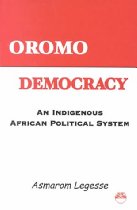
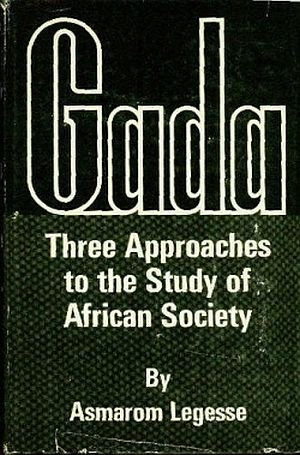
These closely related books reveal the many creative solutions an African society found for problems that people encounter when they try to establish a democratic system of governing their affairs. In much of what has been written about Africa, the common image is that of people governed by primitive customs and practices, in which only feudal roles of elders, kings, chiefs, sultans, and emirs have been acknowledged by Western observers. Little is ever shown of indigenous African democratic systems, under which there is distribution of authority and responsibility across various strata of society, and where warriors are subordinated to deliberative assemblies, customary laws are revised periodically by a national convention, and elected leaders are limited to a single eight-year terms of office and subjected to public review in the middle of their term. All these ideals and more are enshrined in the five-century old constitution of the Oromo of Ethiopia, which is the subject matter of these books.
In these books, Legesse brings into sharp focus the polycephalous or “multi-headed” system of government of the Oromo, which is based on clearly defined division of labor and checks and balances between different institutions. Revealing the inherent dynamism and sophistication of this indigenous African political system, Legasse also shows in clear and lucid language that the system has had a long and distinguished history, during which the institutions changed by deliberate legislation, and evolved and adapted with time.’ Amazon Books &
Related articles
Introduction
http://oromopress.blogspot.co.uk/2011/12/review-of-oromo-democracy-indigenous.html?m=1
http://www.readperiodicals.com/201203/2672718591.html
- Gadaa: An Oromo Democracy and the Symbol of Oromo Civilization (odaakoo.wordpress.com)
- Contours of the Emergent & Ancient Oromo Nation (oromianeconomist.wordpress.com)
- http://www.iwmi.cgiar.org/publications/CABI_Publications/CA_CABI_Series/Community_Law/protected/Ch%2009.pdf
- Oromia of Dhaqabo Ebba: The Cradle of Mankind Is Also A Home of The Oldest Living person On Earth (oromianeconomist.wordpress.com)
Copyright © Oromianeconomist 2012 and Oromia Quarterly 1997-2012. All rights reserved. Disclaimer.
CONTOURS OF THE EMERGENT & ANCIENT OROMO NATION September 25, 2012
Posted by OromianEconomist in Uncategorized.Tags: African Studies, Ancient time, Berlin Conference, Civilization, Democratic African institution, Democratisation, Developing country, Economic growth, economics, Freedom, Gadaa System, Governance issues, Land grabs in Africa, New Africa, Old Egypt, Oromia, Oromia Region, Oromo people, Oromummaa, Parliament, Social Sciences, State and Development, Tokkummaa Oromo, Universal Declaration of Human Rights
3 comments

This book is an important contribution to the study of identity politics, a subject hotly contested by many Africanists. Bulcha’s discussion the state-centered bias in the much of academic work on Ethiopia and its denial of the history and pre-colonial autonomy of indigenous non-Abyssinian peoples aught to lead to some serious debate. (Kajsa Ekholm Friedman, Professor Emeritus, Lund University, Sweden).
This work by Mekuria Bulcha is the most comprehensive and innovative work on the Oromo of Ethiopia ever to be written. Identity politics, he argues can be a positive challenge to the development of the state. As it has been the case of Southern Sudan states can also evolve, disappear and change. This work outlines the history, the traditions and politics of the Oromo people summarized and critically assessing all scholarly work done previously. It will remain a seminal work for scholars of Africa and the Oromo for many years to come. It is master peace and sets new challenge for all of us researching on the Oromo nation and people. (Mario I. Aguilar, Professor, Chair of Religion and Politics & Director of the Center for the Study of Religion and Politics (CSRP), University of St. Andrew, Scotland, UK).
Based on empirical evidence and relevant theories of nationalism Bulcha convincingly argues that the pre-colonial Oromo were a pre-modern nation. He revisits the representation of the Oromo identity in Ethiopian history and proposes the innovative and stimulating thesis that the 16th century Oromo ‘invasion’ of the Ethiopian highlands was the result of a conscious effort to regain control of a territory that was lost and contended since the 14th century Abyssinian expansion into the region. Mekuria Bulcha’s presentation of new evidence of the Oromo resistance to the 19th century conquest, his description of the international appeals by the Oromo elite in the colonial phase, his analysis of the activities of the Oromo social movements for the cultural and linguistic rights in the 1960s, and his account of the history of rebellion and armed struggle from the 60s, up to the current ethnic federalism are likely to make this book a classic reference for the studies on ethno-nationalism. (Marco Bassi, Ph.D. Research Associate, African Centre, University of Oxford, UK).
In his important and interesting discussions on the Gadaa System Mekurian Bulcha argues that:
The Oromo People created Gadaa, and Gadaa created the Oromo nation (Legesse, 2000 as quoted in Bulcha 2012)
The Gadaa system is the matrix of the Oromo culture and society: in the past it stood for several related ideas and practices encompassing cultural, political, economic and religious elements. Many of the basic elements of traditional Oromo culture that are anchored in the Gadaa system have withstood the exigencies of time and still today influence the values, attitudes, and social practices of Oromo people irrespective of, region, religion and social class. Oromo worldview and way of life was shaped by Gadaa system (Bulcha,, 2012 & Legesse, 2006).
The unity of the Oromos that is crystallized in the Gadaa culture is not a nostalgic memory of a glorious past or illusory of vision of the future paradise. Gadaa is a reality embedded in the Oromo psyche that constitutes what is to be Oromo as an individual and as a nation. Gadaa underpins the cohesive or corporate Oromo history that scholars who have not studied the Oromo fail to recognize (Gebissa, 2008).
The most important organ of the Gadaa system is the federal assembly known as Gumii Gayoo in Borana and Caffee in other places. These assemblies were very large and attended by councillors called hayyuu, drawn from different sections of the society. These assemblies made laws which defined the essence of Oromo democracy. In short, the specificity and similarity of the myriads of norms, rituals and political practices around which it was organized throughout the Oromo country make Gadaa a unique pan- Oromo institution of great historical depth (Bulcha, 2012, Legesse, 2000).
http://www.casas.co.za/Publications.aspx?PID=316
Copyright © Oromianeconomist 2012 and Oromia Quarterly 1997-2012. All rights reserved. Disclaimer.
The International Bill of Human Rights: The Covenants June 14, 2011
Posted by OromianEconomist in Uncategorized.Tags: Economic and Social Freedom, Universal Declaration of Human Rights
add a comment



 Oromian Economist
You must be logged in to post a comment.