Economic and development analysis: Perspectives on economics, society, development, freedom & social justice. Leading issues in Oromo, Oromia, Africa & world affairs. Oromo News. African News. world News. Views. Formerly Oromia Quarterly
‘These are not achievements of which IGAD can be too proud. The peace process is at a particularly perilous juncture. The last round of talks in December 2014 went nowhere.’
(African Arguments, 6th January 2015) Predicting conflict in South Sudan is easy. Those who warn that the coming of the dry season means further bloodshed are not being especially astute; they are stating the obvious. What to do about this likelihood is a much harder question.
Almost as obvious is to observe that the peace process is weakened by continued fighting. Is the sequence of a comprehensive cessation of hostilities first, then productive peace talks second, necessary? Desirable, yes, but necessary?
Almost paradoxically, limited, ongoing violence has not so far been the main obstacle to progress in the peace process: more of a problem is the inability of the parties to demonstrate goodwill and genuinely commit to finding a solution. Since the Bahir Dar talks in September 2014, violence certainly hasn’t prevented both warring parties from continuing to talk – in the earlier months of 2014 this was not always the case.
Today, more consequential to the environment for talks are the rhetoric and antagonism of preparations for escalating the conflict, rather than any individual episode of conflict itself; the increasing authoritarianism and paranoia of the government in Juba; provocative declarations that national elections will be held on schedule (all too similar to the strategy of the NCP in Sudan, unfortunately); and on both sides, prevaricating leaders who care more about their own interests than that of their so-called constituencies.
Which returns South Sudan to external intervention: the formal, IGAD peace process. For all its flaws, without the peace process, the war would be completely unconstrained.
Neighbouring states would have privileged their narrow, bilateral interests even more than they have done already. A full-fledged proxy war between Sudan and Uganda could have developed months ago – there is still a real risk that it might.
These are not achievements of which IGAD can be too proud. The peace process is at a particularly perilous juncture. The last round of talks in December 2014 went nowhere.
The consultations of the government in Juba, and the SPLM/A (In Opposition) in Pagak, have widened rather than narrowed the gaps between the parties. The participation of political parties other than the SPLM remains contested, with other political parties having had no effective presence since Bahir Dar.
The Tanzania hosted intra-SPLM dialogue in Arusha has opened a parallel process that further detracts from the IGAD effort. Arusha, only in its second round of talks, is still in a honeymoon phase, compared to the relative bitterness now felt in almost a year of talks in Ethiopia.
(An aside: Finland and Switzerland, the donors supporting the Arusha process, should have been far more cognizant of the risks of encouraging forum shopping; this failure of understanding, particularly in the case of Switzerland, so long-engaged in South Sudan, is inexcusable.)
Having effectively exhausted the classical mode of negotiations, the mediation has turned again to that unwieldy but potentially transformative option: a summit of IGAD heads of state and government, to be held sometime later this month in Addis Ababa. This will be the seventh IGAD summit on South Sudan since December 2013, and it is unclear whether the lesson of past meetings – particularly that of the August summit – have been fully learned.
This is probably IGAD’s last chance – another summit failure and the organization’s credibility and political capital will be almost spent. The need to demonstrate ‘success’ may be counterproductive: IGAD may be tempted to spin any summit outcome positively, or threaten the parties to sign up to an agreement they are not ready to believe in.
In the limited time IGAD has left to achieve meaningful progress in resolving the South Sudan crisis, it is vital that the mistakes made in the past year are not repeated. Avoiding these errors will not be sufficient for resolution – that depends on the South Sudanese (and of course, there are plenty of other pitfalls); it will, however, make the prospect of success more likely.
Here are four tasks the IGAD mediators should urgently undertake:
Adequately prepare for the next summit.
Most events involving heads of state are so tightly choreographed and well planned they might as well be ballet performances. Recent IGAD summits have suffered from a total lack of choreography.
There needs to be a clear game plan for the summit, and strategies in place to ensure traps and detours do not ensnare the meeting. Summit meetings are not wellsuited to details and can’t get bogged down on minutiae.
It is critical that heads of state are adequately prepped and briefed before they arrive in Addis. Otherwise the summit will, at best, make little tangible progress, and at worst, go backward
Make real efforts to reach out to more South Sudanese.
At this stage, the occasional press release or press conference is not enough. The mediation needs to marshal the full force of South Sudanese society towards an irreversible peace.
Most South Sudanese – even those nominally aligned to one side or the other – have little idea what their representatives are doing in their name. The parties to the talks have proven to be intransigent and stubborn; most people don’t know enough about these machinations to express their own outrage and demand change.
Individual church leaders have demonstrated a willingness to stand up and state the uncompromised truth: IGAD should more actively compliment these efforts, and itself campaign for peace in towns and communities across South Sudan. Building a constituency for peace and pressure from below may help change the behavior of those too arrogant to otherwise work for peace
Resolve the representation of political parties, and challenge civil society delegates to be useful.
No peace process outcome will be fully legitimate if it excludes the diversity of political actors in South Sudan. Feeble though most political parties are, the exclusion of the official opposition is an open sore in the process. An exclusive, SPLM stitch-up serves the narrowest of elites, and must be avoided.
Much has been said about civil society’s participation in the IGAD peace process. Regrettably, the most useful contributions from civil society have come from those outside of the peace process: the work of David Deng and the South Sudan Law Society, the Development Policy Forum and the Sudd Institute.
Unfortunately, the cogent work of such individuals and institutions has not been espoused by their civil society colleagues present in Addis Ababa. Civil society needs to raise its game.
The mediation needs to be blunt with civil society delegates: merely showing up to eat lunch and silently attend meetings is not good enough. Civil society delegates can still advance ideas, offer innovation and identify political hypocrisy; but they cannot do so if they are mostly silent.
Abandon the CPA model as the template for the mediation.
The CPA should not be understood outside of its context of time and place. It still offers useful elements for South Sudan in 2015.
But, far too often, the IGAD mediation, and most prominently the CPA’s chief mediator and his staff, have let the CPA model imprison their thinking and their tactics.
I do not wish to critique the CPA at length here: it is only necessary to point out that in so many ways, and not necessarily as the fault of the mediation of the time, the CPA failed or was inadequate. Consequently, it should be a cautionary guide for the current process, but not the only guide.
Similar advice would be well heeded by the parties, who themselves all too often refer to what happened in Machakos or Naivasha. Considering alternatives, being creative, and acknowledging past failure – rather than romanticizing the history of the CPA mediation effort in South Sudan as one of unmitigated success – would be far more illuminating.
As I wrote earlier, none of these actions are guarantees for success. But the mediators must understand where they have gone wrong, and quickly take corrective action.
Ultimately, should this incarnation of the IGAD mediation fail, the primary blame and responsibility must fall on those negotiating, no matter the deficiencies of the mediators. But the mediators can improve the odds.
Not every mediation can succeed. Witness the innumerable attempts (and innumerable mediators) who have tried to resolve the conflict in Palestine; more recently, the failure of both Kofi Annan and Lakhdar Brahimi to resolve the Syrian crisis.
There is no shame in accepting that this process, too, has its limitations. To fail to do so would be to a further disservice to the people of South Sudan.
January 6, 2015 (Dazeinfo) — Amid all those talks of an overwhelmingly large majority of people (83%) wanting to make the right to access the internet at affordable prices a basic human right, most of us do not bother to look beyond getting connected to the net. Without undermining the importance of being connected to the internet, there is no doubting the need to ensure freedom over the internet.
Sadly enough, internet freedom has fallen for the fourth consecutive year in wake of more and more countries introducing belligerent and often offensive online censorship measures while others tightened the noose and made their existing measures in regard to the same more rigorous.
The fifth annual Freedom on the Net 2014 report released by Freedom House, an independent watchdog organization, tracks the developments between May 2013 and May 2014 and observed that out of the 65 assessed countries, 36 have shown a negative trajectory in 2014.
Key Findings of the Freedom on the Net 2014 Report
It has been observed that an increasing number of countries are now giving legal sanction to laws that curb internet freedom, in total contrast with the previous government policy of controlling the internet using invisible strings.
Expressing dissent with the government policy or not toeing their line in the online space can invite legal action now, due to which more and more individuals and media outlets are under pressure to either censor their online behavior or face legal action and, in extreme cases, even arrest.
That is in addition to blocking and filtering of content which are among the most common means of online censorship. Imprisoning those who put up ‘undesirable’ content is being seen by governments as a deterrent and, according to them, encourages self-censorship.
At the same time, the use of physical violence against internet users ‘appears to have decreased in scope,’ says the report.
Of the 65 countries being assessed, 36 showed a decline in the degree of Internet freedom since May 2013.
Five countries with the most and least internet freedom were depicted in the form of a chart by the online statistics portal, Statista:
Iran, Syria and China were confirmed as the worst abusers of internet freedom in the world- a dubious honor for them! Countries wishing to impose more restrictions (like Iran, Belarus and Uzbekistan) often cite China as an example!
Iceland was ranked as the country with the highest degree of internet freedom. Five more countries which were appreciated in this regard are Estonia, Canada, Australia, Germany and the United States.
41 countries passed or proposed new laws to penalize expressing of views over the internet, to increase the surveillance capabilities of the governments or to increase the powers of the government to control the content which get published online.
Very few countries recorded an improvement in the degree of freedom over the internet.
India and Brazil were among those few nations where some curbs were taken off. Belarus also eased some restrictions.
Concern was shown over both democratic and authoritarian governments seeking to curb the freedom of the internet.
Penalty for online expression in some countries is worse than for similar expression off the internet.
19 countries passed new laws to increase surveillance or to restrict user anonymity.
The number of people detained or prosecuted for their online behavior touched a record high, surpassing all previous figures.
Among those prosecuted, online journalists and bloggers covering anti-government demonstrations were among the prime targets.
Women all over the world “face immense cultural and socio-economic barriers to ICT access, resulting in significant gender gap in ICT use.
The LGBTI community also faces great threats and harassment over the internet.
With more and more internet users beginning to guard their online privacy, “malware attacks against government critics and human rights organizations have evolved to take on a more personalized character.”
Shocking Instances of Curbs on Internet Freedom across the World!
There have been many instances of internet freedom being curbed all over the world. And it is not only surprising but also shocking that even the so-called ‘democratic’ countries have not been liberal with their internet access policy. Some incidents which sent shock waves across everyone’s spines during the period covered by the report are:
The Russian government enacted a law to crack down on all online media which criticized the Vladimir Putin’s policy toward Kremlin without any judicial oversight. Three major news sites were blocked within six weeks as a result of this law.
One of the worst offenders, Iran, does not allow its citizens to access social networking sites like Facebook, Instagram, YouTube and Twitter. Those promoting Sufism online were made to serve long prison sentences. Six Iranians who recorded a video of them dancing to Pharrell’s song “Happy” and posted it on YouTube (the video later went viral) were punished with 91 lashes each and six months of imprisonment. The director was ‘awarded’ a full year.
A new law in Ethiopia allows the government to snoop into computers, networks, internet sites, social media platforms, television and radio stations “for any possible damage to the country’s social, economic, political and psychological well-being”, citing that blogs, social media sites and other digital media have the potential to “instigate war, to damage the country’s image and create havoc in the economic atmosphere of the country.”
Governments in Turkey, Thailand, Russia, Kazakhstan and Italy allow agencies controlled by them to block content with no judicial oversight and with little or no transparency at all.
Uzbekistan passed a law requiring owners of cybercafés to record browsing history of customers for three months.
The draconian ‘bloggers law’ passed by the Russian government in May 2014 increased government surveillance of social media users by making it mandatory for anyone having sites or pages which draw more than 3,000 daily views to register with the telecommunications regulator.
A blogger in Ethiopia was sentenced to an 18 year term while six more await a trial for expressing dissent over government policies or actions over the internet.
News site editors in Azerbaijan were arrested and implicated under charges of hooliganism or drug possession.
Kavita Krishnan, a women’s rights activist in India, was harassed online by someone using the handle @RAPIST.
Mukhlif al-Shammari who posted a YouTube video about mistreatment of females in Saudi Arabia was jailed for five years.
Egyptian government used an application called Grindr to track and prosecute men belonging to the homosexual community. Russian and Ugandan governments also usedonline tools and malware to lure people belonging to this community and then harassed them.
In June 2013, a woman in Pakistan was stoned to death by local men after she was found guilty of possessing a mobile phone by the tribal court!
Iceland, which boasts of a 97% internet access, has no restrictions over the use of social sites and the government does not block any content was presented as a noteworthy example.
Sanja Kelly, Freedom House’s project director for Freedom on the Net, explained that governments are finding new and less detectable manners to control free speech online
“As authoritarian rulers see that blocked websites and high-profile arrests draw local and international condemnation, they are turning to murkier – but no less dangerous – methods for controlling online conversations”, says Sanjay.
Though it is important to ensure that the internet becomes accessible for a larger number of people, mere access to it will be no good if the government makes it an additional channel for snooping over its citizens or the users are threatened, harassed, discredited, punished or imprisoned for not bowing to the rulers’ diktats.
Read more @ http://ayyaantuu.com/horn-of-africa-news/36-out-of-65-assessed-countries-show-decline-in-internet-freedom-41-passed-or-proposed-new-laws-to-curb-it/
The people pushed out of Ethiopia’s fertile farmland
By Matthew Newsome
January 6, 2015 (BBC) — The construction of a huge dam in Ethiopia and the introduction of large-scale agricultural businesses has been controversial – finding out what local people think can be hard, but with the help of a bottle of rum nothing is impossible.
After waiting several weeks for letters of permission from various Ethiopian ministries, I begin my road trip into the country’s southern lowlands.
I want to investigate the government’s controversial plan to take over vast swathes of ancestral land, home to around 100,000 indigenous pastoralists, and turn it into a major centre for commercial agriculture, where foreign agribusinesses and government plantations would raise cash crops such as sugar and palm oil.
After driving 800km (497 miles) over two days through Ethiopia’s lush highlands I begin my descent into the lower Omo valley. Here, where palaeontologists have discovered some of the oldest human remains on earth, some ancient ways of life cling on.
Some tourists can be found here seeking a glimpse of an Africa that lives in their imagination. But the government’s plan to “modernise” this so-called “backward” area has made it inaccessible for journalists.
As my jeep bounces down into the valley, I watch as people decorated in white body paint and clad in elaborate jewellery made from feathers and cow horn herd their cows down the dusty track.
I arrive late in the afternoon at a village I won’t name, hoping to speak to some Mursi people – a group of around 7,000 famous for wearing huge ornamental clay lip plates.
The Mursi way of life is in jeopardy. They are being resettled to make way for a major sugar plantation on their ancestral land – so ending their tradition of cattle herding.
Meanwhile, a massive new dam upstream will reduce the Omo River, ending its seasonal flood – and the food crops they grow on its banks.
It is without doubt one of the most sensitive stories in Ethiopia and one the government is keen to suppress.
Human rights groups have repeatedly criticised schemes like this, alleging that locals are being abused and coerced into compliance.
I’d spoken to local senior officials in the provincial capital of Jinka, before travelling into the remote savannah.
The suspicion is palpable as the chief of the south Omo zone lectures me. Local people and the area’s reputation have been greatly harmed by the negative reports by foreigners, he says.
Eventually a frank exchange takes place and I secure verbal permission to report on the changes taking place in the valley.
Situated approximately 300km south-west of the capital Addis Ababa, the dam is 246m high
Work started in July 2006 and was estimated to take 118 months (nearly 10 years)
The government says it will provide much needed-power and help develop the country’s economy
Authorities say no-one has been forced from their home
It seems prudent to let the Mursi tribe and attendant police warm to my presence before I start asking questions. After all, I have the whole evening.
But a brief chat with the tribe ends abruptly with the entrance of a police officer, wearing a replica Manchester United football shirt, vehemently waving a dog-eared copy of the country’s constitution.
I am prohibited from talking to anyone and must immediately climb back into my jeep, drive back up the mountain and return to Jinka, he says.
As often in Ethiopia, he doesn’t explain exactly why.
I object to driving through the wilderness at dusk on safety grounds and so a compromise is reached: I will pitch my hammock outside the police station, a short stroll away from the village, with armed guards watching my every move.
The political boss of the zone comes on the two-way radio. “This is house arrest,” I protest. “No, just a misunderstanding,” he replies.
The prospect of returning home without interviews is unthinkable. My ruse is to distract my captors.
I sit them down for a meal of pasta and vegetables – and brimming beakers of spiced rum – in front of my laptop, which is playing an Ethiopian comedy.
After saying good night I strike out through the scrubland.
I run without sense of direction through bush and bog, crawl under fences, and negotiate large herds of noisy cattle. I have to find a village elder I met earlier, and interview him before policemen and their flashlights turn up.
So I am relieved to stumble on two boys milking their cows in the moonlight. They lead me to the elder’s hut. The sound of so many rudely-awakened animals in our wake fills me with dread that searchlights are heading our way.
The moment arrives. I squat in front of the elder inside his mud dwelling, surrounded by his sleeping companions: several cows, a goat and a cat. My dictaphone is poised to record truths heard by few journalists in this media-muzzled region.
I ask him in broken Amharic what is going on. He tells me: “The government is telling us to sell our cattle and modernise like townspeople – they say our land is the property of the sugar corporation. We have not been asked what we want or need.
“If we do not accept the resettlement plans, we’ll be taken to jail. How can we survive if we have no access to land, cattle or water?”
I promptly thank the elder for his time, apologise for disrupting his evening and head back to my open-air jail.
On reaching my hammock I find several dozing policemen and an empty bottle of rum. Mission accomplished.
The Mursi people
About 10,000 Mursi people live in Ethiopia
Traditionally insert pottery plates known as debhinya in the lower lips of young women
They live in an area surrounded by the rivers Mara, Omo and Mago, which flow into Lake Turkana
Mursi territory was incorporated into Ethiopia during the reign of King Menelik II in the 19th Century
British journalist Caroline Knowles writes that Addis Ababa’s city dump (aka Koshe) as the main source of survival for many poor Ethiopians. But, Why the Ethiopian government allow its people to live like this? Is it because they don’t know or because they don’t care?
MY first sight of Koshe, Addis Ababa’s giant 50-year-old landfill site, is from the highway. It runs alongside it, and away from the road as far as the eye can see: a giant, murky, grey-brown raised area of partially decomposed rubbish, with occasional bright specks of colour. As my hopes rise from having found it, my heart sinks as I try to take it in.
The interpreter I have engaged for this mission through my contacts, a junior academic at Addis Ababa University, is not keen on going ahead. Leaving the taxi and crossing the highway by the bridge, I try to absorb the panoramic view afforded by this elevated viewpoint over the highway.
This 36-hectare site – shrinking as the city attempts to regulate it – is patrolled from the air by large vultures, diving into the rubbish. Motley crews of wild dogs gambolling and snatching at the soft ground patrol it at ground level. Smoke rises in several places, adding a layer of haze to the murky colour scheme. Yellow bulldozers nose the heap and shift and level it; municipal rubbish trucks and flatbed trucks with skips arrive from all over the city and discharge their contents.
Between the dogs, the birds and the machines there was something else, something I could only slowly take in: 200 to 300 people, dressed in the same murky hues as the rubbish dump, backs bent, hooks in hand, were working on its surface.
Feeling queasy I walk towards the end of the bridge. In order to reach the steps and the rubbish, I must walk past three young men who are using the vantage point of the bridge for surveillance and information gathering. In an unspoken negotiation I don’t understand, they take in my camera, and my shoulder bag containing digital recorders and money, and let me pass. This silent confrontation, between the comforts of my world and the difficulties of theirs, only further develops my anxieties.
Descending the steps, I walk to the edge of the dump where I am met by the site supervisor and his aides. They want a stamped authorisation of my visit from the relevant municipal department. What looks like a vast area, open to the surrounding countryside, is as closed to me as a Korean petrochemical plant. I turn back and head into the city to secure the relevant authorisation.
TRASH TALKS
The city dump is an inventory, of a kind, of its material life. Addis in rubbish is not London or Moscow in rubbish. Rubbish provides a crude and deeply flawed account of cities and their social, political and economic contexts. Rubbish displays social, material and income differences.
Indeed, some people’s rubbish provides others with the fabric of their everyday life. Maybe this is the best way to think about Koshe – as a redistribution centre which indexes the differences between people’s life-journeys, refracted through material cultures at their point of disposal.
Not just the content, the handling of rubbish displays cities too. How cities deal with their rubbish reveals them. It is a major challenge for municipal authorities in Addis, who are only able to deal with two-thirds of the rubbish, distributed in collection points all over a city that is fast expanding – leaving the rest to private contractors and the age-old informal dumping practices on streets and in rivers. Thus rubbish provides a visual commentary on urban citizens’ behaviour as well as the efficacy of municipal governance.
SCRATCHING A LIVING
Getting myself into the rubbish is a story of municipal offices cluttered with old computers, fans, desks, officials and permissions. It is about writing a letter in Amharic explaining what I want to do and why. It is about waiting until the electricity comes back on and we can photocopy my university ID. There are phone calls to the landfill site and arrangements are made. Everybody is charming. I’ve come from London to take a look at the rubbish. Why? I am following a piece of plastic around the world. Really! First world problems!
I go back to Koshe – which means ‘dirty’ in Amharic – and hand over the necessary papers to the site supervisor, in his makeshift office at the roadside of the dump. Minutes later, I am scrambling after him, out on to the rubbish heap, navigating around the dogs which I fear, and the areas where it is soft underfoot and I sink up to my knees. My stomach is churning with fear. My interpreter and I are using Olbas oil to mask the smell.
– – – – – –
– – – – – –
We stop north of the main road, where it is firmer underfoot, in the area where the activity is concentrated. This is the place to which the municipal authorities and the site supervisor direct the trucks to dump their loads. A single white towelling slipper, with the Hilton Hotel logo on it, stands out in the grey-brown mush.
This area is a hive of activity that peaks to a frenetic pace with the arrival of new loads, and then falls away, leaving a more continuous stream of slower activity, and a legacy of dust and smoke that gets in everyone’s eyes.
As rubbish trucks turn off the main road on to the edge of the site, a group of five or six young men jump on the back and ride to the dumping area with it. This puts them at an advantage for grabbing the best items as the truck discharges its load onto the tip, but not without risk. The mechanism that crushes the rubbish occasionally catches a young man in its deadly and disfiguring grasp.
As the young men jump off with the rubbish and begin picking items that catch the eye, the line of men and women, that has formed along both sides of the truck, spring into action, grabbing items and stashing them in woven plastic sacks. These are held tightly in one hand; in the other a homemade metal hook with a white handle, used to grab and dig into the grey-brown surface of the heap, is held. This hooked instrument earns the pickers – sometimes referred to as scavengers – the name ‘scratchers’.
The moment of discharge unleashes a tense scramble for the most valuable items; a competition in which masculine physical strength prevails, and young, agile, women put up a good fight. Scratchers then go on searching, or rest until the next truck arrives, or regroup around the bulldozers unearthing new bounty. The social and material relationships of the dump demand skilled navigation.
From the vantage point of the dump, the scratchers rework the geographies and hierarchies of the city. The tensest flurries of competitive scratching accompany the arrival of trucks from the most affluent areas, with the best rubbish. The Bole area, with its upscale detached housing, mall, hotels and the international airport, sends the most prized items, the cast-offs of affluence, including waste airline food in large green plastic bags, to the dump. Scratchers collect the food discarded by airline passengers for themselves, leaving a large pool of bright green plastic bags, which attracts a herd of goats.
Rubbish from the central part of the city, from international hotels, the African Union HQ buildings and the embassies, is similarly sought after, and monopolised by the fittest young men. Scratchers recognise the sources of rubbish from the colours and types of trucks used by the different sub-cities and private contractors. And they recognise the drivers and their helpers, who regularly work the same areas. The discarded traces of the city’s more affluent lives, especially foreign residents and visitors, most animate the dump. Rubbish logs social inequalities in cities and provides a minimal redress.
The dump has temporal rhythms. Scratchers know what time the trucks arrive from different parts of the city. From 8am through the morning is the busiest time. The dump is geared to municipal collection and transportation. By 5pm things are dying down as the trucks stop for the night, and the scratching continues with fewer scratchers at a slower pace. Bulldozers moving stuff around and digging into the surface of the dump also provide new scratching opportunities, and a lively crowd gathers around them. Scratching is a 24-hour activity, with people arriving after their working day is over. Some scratchers work throughout the night wearing torches attached to headbands. Scratching it seems is a (stigmatised) way of life as much as a way of getting by.
Within the urban geographies of affluence, materials establish another set of hierarchies. Scratchers search for anything they can use for themselves, or resell. Materials have a value in recycling, providing an afterlife for discarded objects. Metals, including nails, are the most valuable booty, and men dominate this, although a few women have ventured into metals too. Wood has value as firewood. Tourist clothes and shoes can be cashed in at the Mercato salvage section. Some scratchers just come to eat.
But plastics are the most ubiquitous material on the dump, and among plastics, water bottles the scratchers refer to as ‘highland’, after a popular brand of bottled water, dominate, and in this niche women prevail.
Scratchers specialise in particular materials. Specialisms result from advice from experienced scratchers, from serendipity, or from knowledge of shifting recycling prices, gathered at the edge of the dump. Here materials are counted or weighed, and turned into cash, with the agents from factories using recycled materials.
A pile of white dusty material arrives from the leather factory. The dogs take up residence. They are ejected by a group of men, who have decided that this is a good place to sit, while waiting for the next truck.
In their working clothes – they scrub up outside of work and look completely different – scratchers are dressed similarly and grimily, making them the same colour as the rubbish heap. Men wear trousers, shirts and tee shirts, baseball caps and sometimes hoodies to protect their heads from the sun. Women wear scarves and baseball caps, skirts, trousers, t-shirts and blouses. Some carry infants on their backs. All wear sturdy shoes, often trainers.
The scratching population numbers 200–300, but expands after holidays with casual pickers. More women than men do it by a ratio of about three to one, and, while people in their 20s and 30s predominate, ages range from teens to seniors. Most live in the villages around the dump in simple, rusted, corrugated iron dwellings, sometimes with satellite dishes. Rubbish has provided a source of local employment and subsistence for generations over its 50-year history, and is firmly embedded in local calculations of subsistence and accumulation.
About 50 scratchers live in cardboard and plastic makeshift shelters off the edge of the dump, safely away from passing vehicles and next to a pen full of pigs. The rubbish sustains rural arrivals, for whom it works as a gateway to the city, as well as long-term residents, whose rural routes have settled into the past, making them locals.
The ministry and its field agents say that the rubbish dump is a source of dangerous working practices by people who, like the rubbish they sort, are consigned to live beyond the limits of civic life. A litany of accidents, deaths and disfigurements as scratchers take risks to recover value, are recited by the site supervisor:
“Food comes from some place and a guy is going into the truck and he is injured and they take him to hospital but he died. Also someone else lost their legs in an encounter with a bulldozer. Two months ago a man who jumped in the truck dropped off when it broke. In recent accidents, two were women. The bulldozer operator has a lot to do to push the garbage. If they see something they want when the bulldozer moves the garbage, they don’t think about their life.”
In living beyond formal systems of governance, this city suburb of rubbish is more like the Somali borderlands, patrolled by contrabandists and gunrunners, than a part of the city. There is a police station nearby, and policing and the justice system are slowly taking back the dump from a parallel system of authority, a mafia of five ‘big men’. The big men control access by scratchers in exchange for fees, making themselves wealthy in the process. But recently, some of them have been imprisoned, shifting the balance of power towards the authorities.
Once far away, a place outside of the city, outside systems of formal employment, taxation, law and municipal governance, Koshe is now on the edge of a city that has grown to meet it in what are fast becoming its upscale southern suburbs. A new development of large detached houses nearby anticipates this future – new housing for those in a position to benefit from rising prosperity, and a consequent shrinkage and rehabilitation of the landfill site. These changes have far-reaching consequences for the scratchers of Koshe.
– – – – – NOTE: The above article was first published on The Guardian Newspaper under the title “Inside Addis Ababa’s Koshe Rubbish Tip Where Hundreds Literally Scratch a Living”. It is an extract from the new book Flip-Flop: A Journey Through Globalisation’s Backroads by Caroline Knowles. (Pluto Press, £18.99).
Decolonising Development:The Political and Cultural Locations of Nationalism and National Self-determination (the Case of Oromia)
Several scholars have argued that national self-determination is a claim for cultural independence and that nationalism in general is based on the right to cultural autonomy, right to a culture. In the Oromo context, national self-determination is about the representation of collective identity and dignity. It is the demand of the Oromo people to govern themselves. Practically, this can be interpreted as let us be governed by people who are like us, people of our nationality or people who accept and respect our value system. For the last hundred years and so, the Oromo nation has suffered from Abyssinian expansionism, social, ecological and economic destruction and continuous and intensive cultural and physical genocide. The Abyssinians and Oromians connections have been the coloniser (refers to the former) and the colonised (refers to the latter) relationships. Contrary to the Ethiopianist discourse, they have not developed a common unifying identity, social and political system. While the Abyssinians feel a sense of glory of their kings, warlords and dictators, the Oromians feel victimisation to these rulers, so they have not emerged a common ancestry, culture and collective memory, which can result in common ‘Ethiopian’ identity. From the perspective of Oromo social construction, the present Ethiopian domination over Oromia is a continuation of what pervious generations of Oromo nation had experienced. Thus, the Oromo people, sees the present political arrangement as illegitimate because it is a rule by the people who have engaged in destroying them. So, they claim not only cultural but also political independence. Oromo nationalism is also very democratic. It follows the UN principles of self-determination for the citizens of Oromia, claiming independence from the tyranny of Ethiopian Empire. The latter has been constructed based on Amhara-Tigre nationalism. The Oromo nationalism also offers democratic solutions to the ethnic minorities in the Ethiopian Empire. Scholars of Oromo studies claim that there is fundamental behavioural, linguistic, ethnic and cultural differences between the Abyssinians (northern) and their subjects (Southern). The Oromo, Sidama, Afar and the Ogaden (Ogaden Somalians) nations, beyond their common Cushitic progeny, they have common experiences of victimisation and illegitimately absorbed by Abyssinian southward expansion. Their collective memory of past experiences and present victimisation are making common identity. This identity is a key to understand politics there and to work together for self-determination, to recover their lost humanity.
For the early version of this article, see Temesgen M. Erena, The Political and Cultural Locations National Self – Determination, Oromia Quarterly, Vol. II, No.2, March 1999; Temesgen, M. Erena, Oromia: The Nation and the Politics of National Self – Determination, Oromia Quarterly, Vol. I, No.2, December 1997, ISSN 1460-1346.
Man knows himself only insofar as he knows the world, and becomes aware of the world only in himself, and of himself only in it. Every new object, well observed, opens a new organ in ourselves.
-Goethe, Maximen und Reflexionen, VI Build therefore your own world. -Ralph Waldo Emerson, Nature
Introduction
The passions of national freedom and national interest are probably the strongest in the whole political spectrum that characterises the present world. Kellas (1998) holds that it is stronger than the passions aroused by religion, class, individual or group interest. This passion is not all futile, either. In Gellener’s (1983) understanding, nationalism has been considered as essential to the establishment of a modern industrial society. According to Smith (1991), it is ‘the sole vision and rationale of political solidarity.’ For Kellas (1998), it provides legitimacy to the state, and inspires its citizens to feel an emotional attachment towards it. It can be a source of creativity in the arts, and enterprise in the economy. Its power to mobilise political engagement is unrivalled, particularly in the vital activity of nation building. It is intimately linked with the operation of popular democracy. Indeed, the global pattern is a mosaic of political drives, economic interests, linguistic pride, cultural imperatives, psychological needs and nations seeking identity. These factors are manifesting as a powerful staying power in a modern Africa, either. As European colonialism and socialism melted away, the perpetual existence of the backlash against ‘neo-colonial’ colony colonialism and the reviving of national selfdom become more and more significant in social and political dynamics of contemporary multi-ethno-nation African societies. The African experience is motivated by the same aspirations as that of elsewhere. At its root is a need for freedom, dignity, for the right of people of distinct social communities to function freely and independently. In this regard, Oromia represents the case of rejuvenating claim for national freedom and the struggle against more than a century old Abyssinian Empire colonialism in Africa. Oromia is a homeland for an Oromo nation, a group of people with a common culture and value system (seera fi aadaa), language ( Afaan Oromo), political institutions (Gadaa), and historical memories and experiences. Oromia is the single largest, homogeneous and endogenous nation in Africa with a population of 40 to 45 million. Both in terms of territorial and population size, more than two-third’s today’s sovereign states that are making members of UN (United Nations) are smaller than Oromia. The Cushite (see Demie, 1998) Oromo people have inhibited their homeland, Oromia, since pre-history and in antiquity were the agents of humanity’s documented Cushitic civilisation in terms of science, technology, art, political and moral philosophy. The links between the Oromo and the ancient civilisations of Babylon, Cush and Egypt has been discussed in Asfaw Beyene (1992) and John Sorenson (1998) scholarly works. Utilising prodigious evidence from history, philosophy, archaeology and linguistics, Diop (1974 and 1991) confirms that the Cushite Egyptian civilisation was emerged from the Cushite civilisations of North East Africa, particularly, the present day Western Sudan and upper Nile Oromia (also known as Cush or Punt). Indeed, except the name of places, saints and prophets, many of the Old Testament and the Holy Koran moral texts are copies of the Oromo moral codes. The formers are written documents while the latter are orally transmitted. Since the late 1880s the Oromo people have disowned their sovereignty. They disowned their autonomous institutions of governance, culture, education, creativity, business, commerce, etc. Thus, they have been claiming for national self-determination, national-self government and the right to their own state and resist the Abyssinian Empire saver (supremacist’s) nationalism. The Oromians are not only against the quality of Ethiopian Empire governance but also against the philosophy on which it is based: domination, dehumanisation, inequality, double standard, hypocrisy, deceit, exclusion, chauvinism, war institution, rent-seeking, extractive state, conservatism, feudalism, Aste fundamentalism (Aste Tewodros, Aste Yohannis, Aste Menelik, Aste Haile Sellasie), etc. The political goal of national self-determination (national self-government) is asserted in the outlook and attitudes of the Oromo political and social organisations. Of course, the Oromo nationalism, which supports the interests and identity of the Oromo people, is a more subtle, complex and widespread phenomenon than common understanding and observation. It is within this context that we are going to discuss the Oromos’ politics of national self-determination and the search for the national homeland, the demand for reinventing a state of their own in the following sections.
Defining Nation, Nationalism and Self- determination
To define nation and nationalism is as Benjamin Akzin (1964, pp. 7-10) discussed five decades ago, to enter into a terminological jungle in which one easily gets lost. Different scholarly disciplines have their own more or less established and more or less peculiar ways of dealing with nation and nationalism. Ideally, our definition of nation and nationalism should be induced of elements of nationalist ideology. Getting at such a definition has confirmed phenomenally strenuous. Hugh Seton-Watson, an authority in this domain, has deduced that ‘no scientific definition’ of a nation can be concocted. All that we can find to say is that a nation exists when significant number of people in a community consider themselves to form a nation, or behave as if they formed one (Seton-Watson, 1982, p.5).Van den Berghe (1981) defines a nation as a politically conscious ethnic group. Several attempts have been made at making a cardinalist definition of the term, pointing out one or more key cultural variables as defining variables. Among those tried are language, religion, common history/descent, ethnicity/race, statehood and common territory (homeland). For a group of people to be termed a nation, its members typically have to share several of these characteristics, although historically, one criterion may have been predominant (for example, language in Germany, or culture and history in France). In the case of Oromo, common language (Afaan Oromo), common territory (Biyya Oromo, dangaa Oromiyaa or Oromia), common historical experiences (victimisation to Ethiopian Empire rules or Abyssinocracy) are particularly very significant. Stalin made his undertaking in 1913. His definition includes four criteria: the members of a nation live under the same economic conditions, on the same territory, speak the same language, and have similar culture and national character (Seton-Watson, 1982, p.14). Neither Ernest Gellner nor Eric Hobsbawn, two influencials, gave definite definitions of the nation in their major achievements. Indeed, they are very hostile towards what they define as nationalism. ‘…For ever single nationalism which has so far raised its ugly head…’ (Gellner, 1983, p.45), this is a Gellner’s conception and sees the world as naturally divided into nations, each with its own individuality. This implies an acceptance of the nationalist self-perception. There are also other conceptualisations. A social anthropologist, Thomas Hylland Eriksen (1992, p. 220) says ‘a nation is an ethnic group whose leaders have either achieved, or aspire to achieve, a state where its cultural group is hegemonic’, Anthony H. Birch (1989, p.6) considers that a nation is best defined as ‘a society which either governs itself today, or has done so in the past, or has a credible claim to do so in the not-too- distant future. Kellas (1998) defines the nation as a group of people who feel themselves to be a community bound together by ties of history, culture and common ancestry. Nations have ‘objective’ characteristics, which may include a territory, a language, a religion, or common descent, and ‘subjective’ characteristics, essentially a people’s awareness of its nationality and affection for it. In the last resort it is ‘the supreme loyalty’ for people who are prepared to die for their nation. The definition of ‘nation’ which we will make use of in the following is one suggested by Anthony D. Smith (1983,pp. 27-109, 1991, p. 14; 1995); a definition mastering well the ‘sounding board’ dimension. Smith here defines a nation as ‘a named human population sharing a historic territory, common myths and historical memories, a mass, public culture, a common economy and common legal rights and duties for all members. A recent definition of Smith holds nationalism, one manifestation of national-self-determination, as ‘an ideological movement for attaining and maintaining autonomy, unity and identity on behalf of a population deemed by some of its members to constitute an actual or potential ‘nation’ (Smith, 1991, p. 73; 1995). For Smith nationalism has a deep ethnic roots and rejuvenates itself in response to global and domestic impulses. While the phenomenon of globalisation and technocratic culture are there, nationalism is an eternal nature and nourishes and propels itself on technocratic innovations. In this context, national self-determination may be defined as many part aspirations of a nation: To be free to freely determine one’s own national identity, culture, including language, education, religion, and form of government, to be free of rule by another ‘nation’, that is to overcome social and political systems of domination and exclusion in which nations other than one’s own wield predominant power. To be free to select its own form of government; and those governed within it have the right of unflagging consent.
Culture and the Politics of Self-determination
Nation, nationalism and national self-determination are commanding attentions. One of the perennial issues within nationalism is whether national self-determination can stand alone, or whether it requires a ‘qualifier’ from within cultural or political ideas or both to clarify its precise cultural and political location. Several scholars have argued that national self-determination is a claim for cultural independence and that nationalism in general is based on the right to cultural independence and that nationalism is based on the right to a culture. Nielson, for example, peers a nation as groups of people whom ‘perceive themselves as having a distinct culture and traditions’, and Tamir presents that a nation is a community in which individuals develop their culture, and they therefore regard their place within a nation as membership in a cultural group. Indeed, she argues that ‘the right to national-self determination stakes a cultural rather than a political claim, namely, it is the right to preserve the existence of a nation as a distinct cultural entity.’ Will the people who demand national self-determination be satisfied with such an arrangement? Tamir gives credence to that the idea of basing the right to self-determination on the right to a culture is the one that has best conformity with a liberal internationalist viewpoint. That is thinkable, but international liberalism is incompetent on this particular matter. A nationalism, which is based on culture and cultural distinctions, was not very long a go. It is a concept that characteristic the thesis of right wing, or romantic theorists such as Herder. Indeed, Herder’s nationalism was not political, and it distrusted a state as something external, mechanical, not emerging spontaneously from the life of the people. Nevertheless, in the Oromo context the claim for national self-determination is a political rather than a cultural one. If we look at the distinction between the two, it would seem that the claim for national self-determination involves more than a demand to be tolerated while the cultural question is. For example, the Catalan’s and Quebecois’ culture and identity have been tolerated and respected to some extent, and yet many of them thought that this did not reflect a situation of self-determination. Indeed, meeting their claim would involve legislation and redefinition of institutions within the state, and perhaps even a new state. In the Oromo case the demand is actually the claim to have control over their lives. This does not mean over every individual’s private life, but over the public aspect of one’s existence, i.e. the system of mutual relationships, which reflect and sustain one’s membership of a certain collective. Here the self is conceptualised within the context of community, but one that has to be real, actual, and functioning and performing. Otherwise these communal ties are too abstract, which makes it impossible for the self to be defined by them. The statement of Cohen has to be recalled: ‘A person does not only need to develop and enjoy his powers. He needs to know who he is, and how his identity connects him with particular others. He must… find something outside himself which he did not create… He must be able to identify himself with some part of objective social reality’ (Cohen, 1988). Moreover, self-realisation, however, cannot be merely a mental situation; thus this community cannot be only cultural. It must be a political situation at least so that, in order for the Oromo people to realise themselves, they must not be dependent on the goodwill of a second party. They then must be certain that their self-realisation in all spheres of life will not be prevented by the Abyssinian government, the TPLF, the Orthodox Church, and so forth. They should therefore be politically active and watch such institutions carefully. In addition, they must participate in politics in order to decide collectively upon public matters, which influence their self-realisation. So the Oromos claim for national-self determination is about the realisation of their potential status, ability and collective character, which may be achieved only through participation in autonomous political institutions. But for more than a century Oromos have been denied access to these institutions, either officially or in practice. In other words, if Oromos as a nation achieve self-determination they will better able to participate, better represented, better able to deliberate, gain much more control over their life than formerly and more autonomous. The Oromos demand for national self-determination thus, aims at establishing those institutions, which are needed for the realisation of the self-determination. When an Oromo demands national self-determination, he/she is not asserting that he/she would like to control his/her private life, e.g. his/her job, his/her shopping activities, his/her love affairs. Many Oromos do not control these aspects of their lives and yet nevertheless demand national self-determination. But the same principle also applies to cultural life. The Oromos may be allowed more-or-less to use their language, have their own newspapers and theatre, and the freedom of worship, etc. which are making cultural freedom. Actually, these rights are hardly exist at present. But when they claim national self-determination they are not only referring to these aspects of life, as political community: they want to be able to form and choose among and vote for the Oromo political parties, to observe the Oromo constitutional laws, to pay taxes to an Oromo authority, and to have a history (and indeed, myth) of independent Oromo state, from which their identity and self-determination can derive. Thus, the Oromo’s Declaration for Independence will emphasise parliamentary participation and the need to form a constitution, rather than cultural activities. In general the Oromos demand for national self-determination entails that the individuals in this nation should be citizens, engaged in politics as members of a community committed to the realisation of certain (their own) common goods, rather than participating as individuals who seek their self-interests, as it is implied by the right- to- culture school of thought and Liberal Internationalists. Perhaps for this reason Margalit and Halbertal revise the right-to- culture argument, arguing that the right is to a certain culture rather than to culture. A certain culture, then, becomes a common good. And yet, this is not enough, because they still regard the common good in cultural rather than political terms: ‘shared values and symbols… are meant to serve as the focus for citizens’ identification with the state, as well as the sources of their willingness to defend it even at the risk of their lives (Margalit and Halbertal, 1994). Why, then, do theories adhere to the culture discourse? Of course, for most of the Western theorists, the term national self-determination is affiliated to the strive to become part of humanity, to regain the human condition of autonomy; it is adjoined to the struggle to be part of the free world, of the more progressive forces; it is seen as decolonisation, as civilisation, as an attempt made to become part of the world of liberty, rights, and justice. But, it is seen as part of centrifugal forces, from the centre to the global, universalism or what Lane (1974) calls as ‘total situation’ or citizenship based on individual freedom and social justice. These theorists, therefore, universalise the notion of national self-determination: they make it part of liberalism. The liberals’ universal approach tends to be uniformist. This makes a society rootless and a citizen far removed from those who control his/her destiny. On the other hand, the notion as it is put forward and used by the Oromos that the demand for national self-determination is also centripetal, from the global and the greater units to the smaller ones. These groups demand the disengagement from the ‘other’, the global, the colonist, even from other humanity, by asserting that ‘we are not merely the essential equal and part of humanity, but rather we are also different and distinct: we have our own political identity, which we want to preserve, sustain, and establish institutionally, like the Scottish vision in multi-nation state Europe. This is the language of liberation from colonisation. It is also the language of particularisation within the universal or the global, and it seems that the uniformist approach is not sensitive enough to the real Oromos problems. Thus, the Oromos quest for self-determination involves the ultimate goal of particularism (its own unique space), reinventing the Oromia State, owning the national homeland. Of course, in a heterogeneous society of the Ethiopian Empire, though uniformity may simplify system of control, social justice will not be attained in one vast monolithic block of oppressed by colonial legislation, bureaucrats and its armies. An important work of Professor Asafa Jalata, an authority in the study of Oromo nationalism kindly quoted as’ The Oromo question involves both colonialism and ethno nationalism. Ethiopian colonialism has been imposed by global capitalism on the Oromo nation. Ethiopians, both Amharas and Tigrayans, through establishing settler colonialism in Oromia, have systematically killed millions of Oromo and expropriated their lands and other resources from the last decades of the nineteenth century until today. Ethiopian colonialists already destroyed the people called Agaw by taking their lands, systematically killing them, and assimilating the survivors. They attempt to do the same thing to the Oromo by destroying the Oromo national movement, confiscating Oromo lands, and forcing the remaining Oromo into ‘settlement villages’ or (reservations). Many times, some Oromo organisations attempted to democratize Ethiopia so that the Oromo would achieve equal citizenship rights and maintain their ethno cultural identity. Determined to maintain their colonial domination and to destroy the Oromo cultural personality through ethnocide or assimilation, Ethiopian colonialists destroyed or suppressed those Oromo political forces that attempted to transform Ethiopia into a multinational democratic society. Therefore, most Oromos are convinced that their rights and freedom cannot be obtained and respected without creating their own state, or state that they can create as equal partners with other ethno national groups interested in forming a multinational democratic society to promote ethno cultural diversity and human freedom. Hence, Oromo nationalism is an ideology of the subjugated Oromo who seek human rights, freedom, justice, and democracy’ (Jalata, 1997). In fact social justice can be attained when and only when the oppressed majority able to rule its homeland. The Oromos work for national self-determination is the great humanist and historical task in terms of Freire (1993) argument ‘To liberate themselves and their oppressors as well. The oppressors, who oppress, exploit, and rape by virtue of their power, cannot find in this power the strength to liberate either the oppressed or themselves. Only power that springs from the weakness of the oppressed will be sufficiently strong to free both. Any ‘attempt to soften the power of the oppressor in difference to the weakness of the oppressed almost always manifest itself in the form of false generosity; indeed, the attempt never goes beyond this.’ In this context, for Oromos in order to have the continued opportunity to express their ‘generosity,’ the Habasha colonist must perpetuate injustice, too. Tyranny is the permanent fount of this ‘generosity,’ that sustains at the price of death, dehumanisation, despair and poverty. ‘True generosity consists precisely in fighting to destroy the causes which nourish false charity.’ (Freire, 1993). For further discussions on Oromo nationalism, universalism, globalism, Ethiopianist discourses and Oromo Nationalism, see Sorenson (1998) and Sisai Ibssa (1998).
Concluding Thoughts
Man as a social animal always seeks his own territory and belongings to a social group in which his identity and sense of community is observed and respected. In the defence of the cause for social justice and social ecology, these are basic tenets to backlash against the danger of the rhetoric of universalism, polyarchy and false perspectives of social uniformity, which appear to appreciate the social problems from a single privileged point. Georg Hegel, The Phenomenology of Mind ( New York, 1967 edition), in his famous philosophical discussion of the relationship between ‘lordship and bondage’ maintained that a single consciousness could know itself only through another, even in a condition of totally unequal power relationship. According to this philosophical model, the lord (the oppressor) is lord only through the relationship with a bondservant (the oppressed, the one whose humanity is stolen). In the relationship, however, the other is annulled. The self of the mastery, the lord, derives from the conquest and negation of the servant, the bond. Only recognition of the selfhood of the other permits for its annulations. Thus, lordship covertly recognises the separate identity of the dominated. They are normally equal selves locked into unequal hierarchy. Metaphorically, Hegel’s dialectics of lordship and bondage is very important to understand the Ethiopian domination over Oromia. However, in the Ethiopianist discourse, the essential equality of the selves has been escaped totally. Rather, the persisting hierarchy has taken for granted. According to Sorenson (1998), Ethiopianist scholars like Clapham, Sven Rubenson and Levine because of their attachment to one version of the Ethiopian past and present make them either or unwilling to engage with the full complexity of the problem. From this point of view, to accept the unchanging polarity of Ethiopia and Oromia in the lordship-bondage relationship is to succumb to a structure of Ethiopian aggression and colonialism. The Oromians demand for national self-determination is, however, the civilised step out of the polarity upon which the coercive hierarchy relies, it is the collective political demand, as its main purpose is to achieve the good of the social whole, humanisation, the essential liberation of the Oromo national identity, dignity and the reinvention of Oromia as a sovereign state. The Abyssinian occupation of Oromia, the existence of the Abyssinian Rule, war-lordism and their armies in Oromia and the making of Finfinnee their garrison station, the centre of their crowds is not only an act of conquest, aggression and colonialism but also, from Oromo perspective, such elements are symbols of bondage and slavery that negate the Oromo selfhood as equal essential. For the last over hundred years, the Oromo nation has disowned selfhood, its own state or administration, and lived as a bondage of Abyssinia. The Abyssinian administration which has undermined the Oromo national traditions, exploited it economically, and maintained order through mechanical and repressive means- such a nation actually must seek national self-determination to foster within its politics, to bring dignity, justice, freedom and democracy and to survival as essential equal, as a nation and as part of humanity and its civilisation. It is necessary for Oromians to build the world of their own, a world which make them capable to sustain as a group of human people. They must able to liberate themselves and the violent, the oppressor too. In this context, the Oromo issue is a test case to the deceptive ‘democracy world-wide’ which is being advocated in the USA foreign policy and manipulated by the neo-nafxanyas (see Ibssa, 1998). It is a challenge to contemporary theories of democracy and polyarchy (Robinson, 1997) and actors of post cold war Ethiopian politics who simply take for granted that the boundaries and powers of political community in the ‘Horn’ have already been settled. Thanks to the dedicated works of human rights activists, particularly the OSG (the Oromia Support Group) and its UK based publication, Sagalee Haaraa, we have been well informed on plights of human population and their environment in the entire region. We are interested to recommend this publication to all actors of the region. In this context, we are confident to say that Ethiopian democracy rhetoric or federalism sham politics is nothing more than a fig leaf, covering up the continuation of an extraction of the ‘politics of the belly’, in terms of Bayart (1993) from ‘prudish eye of the West.’ Its democratic rhetoric is a new type of rent seeking (extracting economic rent). By making believe, it enables the collection of international aid that includes diplomatic, military and humanitarian. It enables the seizure of the resources of the modern economy for the benefit of the Tigrayan elites. The situation is not in democracy’s favour, rather it is a situation that the Tyranny is retaining control over the security forces, economic rents and the support of the West. Such manipulation is not new for Africa. Menilik, Haile sellassie, Mengistu, Mobutu, Biya, Senghor and Diouf did the same thing either in Ethiopia or elsewhere in the continent at one time or another. The Quote from Bayart’s (1993) African analyis comes to our mind ‘…The support of western powers and multilateral institutions of Bretton Woods and the Vatcan, who despite having waved the flag of democratic conditionality and respect for human rights, have not dared to pursue such sentiments to their logical conclusion and have continued to think in terms of ‘Mobutu or Chaos’ where Gorbachev given up saying ‘Ceaucescu or chaos’…’. Indeed, very recently, we have read the deceptive descriptions to neo-Mobutu, neo-Mengistu, etc.: democratic, new generation, confident and pragmatic, etc. Sadly, everything changes so that everything stays the same. Nevertheless, the oppressed Oromos are not passive objects, either. They have not allowed themselves to be ‘captured’, as in the past they have demonstrated their historical ability to resist dehumanisation, despair and poverty, and predictably will continue to resist until the justice will come to them. An everyday Oromo coins the following: ‘Victory to the Oromo people! Oromia shall be free!’ We feel moral and social responsibility to support the just cause of fellow humanity.
Listen to Oromo Voice Radio (OVR) Broadcast Afaan Oromo interviews with Dr. Almayayyoo Birru on topic of Self-determination:
‘External self-determination, in particular, seems to carry dual meaning. On the one hand it is taken to mean full independent statehood, while on the other hand it is taken to mean external recognition by other states within the
international community.’
Madda Walaabuu Media Foundation (MWMF) will start English program
Oromo Voice Radio (OVR) English Service will be launched on 5 January 2015, every Monday for 15 Minutes from 7:15-7:30 pm Oromia Local time. For the start OVR English Service program will be aired once a week, and with time it hopes to increase the time length and scope of the program.
MWMF is a non-governmental, non-partisan and non-profit organization, incorporated in Washington, D. C. (USA) and Melbourne Australia.Founded in 2013 by a broad based collective of human rights advocates, civic society leaders, journalists and community members who are committed to the principles of democracy, human rights, freedom and justice, the MWMF provides an independent voice for the Oromo people and other voiceless communities of the Horn of Africa, including the Diaspora communities from the region.
The MWMF envisions that providing public education through its media outlets will enhance knowledge and appreciation about the true nature of the Oromo society and also the interest and its neighbours. MWMF’s pride is our common bond, aspirations, achievements and the desire to be a positive voice in the global society.
The OVR English Service program is designed to address issues that impact on the daily life of Oromo people and its neighbours in the Horn of Africa. It broadcasts 15 minutes English Program every Mondays at 7:15 PM local time at 16 MB or 17850 kHz.
For further information please call Mr. Aliye Geleto Anota on 61422602204 or email mwmfdirector@gmail.com
Saudi Star Agricultural Development plans to pump $100 million into a rice export project in Gambella region of Ethiopia despite allegations of human rights violations surrounding the “villagization” program under which the land has been taken from indigenous Anuak pastoralists to lease to foreign investors.
The company is owned by Mohamed al-Amoudi, who was born in Ethiopia to a Saudi father and an Ethiopian mother. Al-Amoudi made a fortune from construction contracts to build Saudi Arabia’s national underground oil storage complex. Now a billionaire many times over, al-Amoudi has invested heavily in Ethiopia where he owns a gold mine and a majority stake in the national oil company.
Al-Amoudi was one of the first to invest in a new scheme under which president Meles Zenawi offered to lease four million hectares of agricultural land to foreign investors and his company was also one of the first to become the subject of controversy. After Saudi Star was awarded a 10,000 hectare (24,700 acres) lease in 2008, a dozen aggrieved Anuak villagers attacked Saudi Star’s compound in Gambella in 2010 and killed several employees.
Saudi Star abandoned work at the time but this past November the company announced that it would return to invest millions to grow rice using new large-scale flood irrigation techniques. Saudi Star hopes to sell its produce to Saudi Arabia under King Abdullah’s Food Security Program.
“We know we’re creating job opportunities, transforming skills, training local indigenous Anuak,” Jemal Ahmed, Saudi Star CEO told Bloomberg. “The government wants the project to be a success and see more Gambella people able to work and produce more, that’s the big hope.”
But activists say that Saudi Star’s newly invigorated project in Gambella is likely to have a detrimental impact on the local population, notably pastoralist groups like the Anuak as well as the Nuer.
“Sadly, right now, the Anuak, nearly all small subsistence farmers, are becoming refugees in their own land as they are internally displaced from indigenous land their ancestors have possessed for centuries,” Obang Metho, Executive Director of Solidarity Movement for a New Ethiopia, told the Africa Congress on Effective Cooperation for a Green Africa.
“They have become ‘discardable’ by a regime that wants their land, but not for them, in order to lease it to foreigners and regime-cronies for commercial farms,” he added.
All told as many as 1.5 million subsistence farmers are expected to be offered voluntary relocation to new settlements where the government has told them that they will be given housing, social services and support infrastructure under the villagization program.
However, activists like Human Rights Watch and the Oakland Institute say that the relocation process has been plagued by violence and broken promises.
Instead of getting housing, villagers are forced to build their own tukols – traditional huts – and risk beatings if they speak out, says Human Rights Watch, which conducted interviews of 100 residents during the first round of villagization that occurred in 2010.
The majority of resettlements did not have a school, health clinic or even water wells, says the Oakland Institute. Lack of agricultural assistance such as seeds, fertilizers, tools and trainings, have further exacerbated the risk of hunger and starvation among families.
The traditional pastoralist communities also say that they are having a hard time adapting to sedentary farming practices in the new settlements. “We want you to be clear the government brought us here…to die…right here,” an Anuak elder in Abobo district told Human Rights Watch. “They brought us no food, they gave away our land to foreigners so we can’t even move back. On all sides the land is given away, so we will die here in one place.”
HRLHA Holds Public Meetings with Oromo Community Members
The Human Rights League of the Horn of Africa (HRLHA) held, over the past three weeks, public meetings with members of Oromo Communities in four cities of Canada and discussed human rights issues in the Horn of Africa in general and in Ethiopia in Particular. The Oromo communities involved were those of Toronto/Ontario, Edmonton & Calgary/Alberta and Winnipeg/Manitoba; and the major topic of discussion at all the four public meetings was the unabated gross human rights violations by the different regimes of the Ethiopian Government for over a century, with particular focus on what have been happening in the past twenty years under the current TPLF/EPRDF government.
Toronto:
The public gathering in Toronto was held on December 13, 2014 at the office of Oromo Canadian community Association. At the gathering, HRLHA Executive Director Mr. Garoma B. Wakessa explained in his presentation “the gross and Systematic violations of human rights against Oromo nation and other nationals in Ethiopia in the past and at present”by different governments that ruled the country. Extra judicial killings, mass arrests and detentions, kidnappings and disappearances, and tortures under the present government in particular have been discussed in details.
Besides, Mr. Tesfaye Dheressa Kumsa, Director of Investigations and Dissemination with HRLHA, who did a presentation on “Land Grabs and Evictions as a Cultural Genocide”, explained how forced displacements of the Oromos and others from their farm lands and the resultant detachments and disconnections from traditional rural lives have been causing destructions of precious cultural assets, values, and wisdoms from which the societies have been benefiting generation after generation.
The HRLHA presenters explained that they are working with other civil society organizations to bring the perpetrators to justice and urged all human rights advocates to stand together in this regard.
Edmonton and Calgary:
On December 20 and 21, 2014, similar public meetings were held in Edmonton and Calgary/Alberta respectively, and many Oroms participated and discussed human rights violation issues in Oromia and Other regions in Ethiopia.
At the gathering, HRLHA Executive Director Mr. Garoma B. Wakessa presented “the gross and Systematic violations of human rights against Oromo nation and other nationals in Ethiopia in the past and at present” by different governments that ruled the country.
Extra judicial killings, mass arrests and detentions, kidnappings and disappearances, and tortures under the present government in particular have been discussed in details. The participants have actively participated in discussion by giving their perspectives on the continuous gross human right violations by EPRDF government of Ethiopia against Oromo young generation in particular. At the end of the meeting, the consensus has been reached that the perpetrators should be brought to justice for genocide they had committed and also Oromos must pay all necessary sacrifices to resist the evil action of the EPRDF Government to save Oromo nation from more victimizing.
Winnipeg/Manitoba:
On Dec 27, similar meeting was held in Winnipeg/Manitoba and many Oromos participated and discussed human rights violation issues in Oromia and Other regions in Ethiopia.
Winnipeg
Extra judicial killings, mass arrests and detentions, kidnappings and disappearances, and tortures under the present government in particular have been discussed in details. After many hours’ explanations and discussions on genocide the EPRDF government has committed against Oromo nationals and others, the consensus has been reached that the perpetrators should be brought to justice for genocide they had committed and also Oromos must pay all necessary sacrifices to resist the evil action of the EPRDF Government to save Oromo nation from more victimizing.
During the discussions at four meetings held, it has been concluded that, by committing such well documented human atrocity, the Ethiopian government has violated the constitution of the land, regional, and International human rights treaties it has signed and ratified. The continued gross human right violations in Oromia, Ogadenian and Gambela regions in the past twenty three years by the EPRDF Government were/are intentionally committed genocides and crimes against humanity. For its deliberate actions of killings, torturing and disappearing its citizens, the EPRDF Government should be accountable. For the heinous human atrocity of EPRDF government against Oromo, Ogaden and Gambela people there are credible documents and proofs to hold the EPRDF Government accountable for its criminal actions and to bring the perpetrators to justice. The participants raised several questions on the possibilities of bringing the government to justice and all possibilities were explained by the presenters.
Finally Oromo participants of the four meetings thanked all HRLHA members for their commitment of defending human rights and promised to support HRLHA financially to make the organization stronger. HRLHA chapter organization was created during the meetings to help the organization’s more involvement in the communities.
(OPride) — For energizing and unifying the Oromo public both at home and in the Diaspora, for keeping the beacon of liberty from being extinguished, for selfless sacrifice to advance Oromo rights and for bringing international media attention to the plight of Oromo people, Oromo Student Protesters are OPride’s Oromo Person of the Year.
The Master Plan
In March 2014, the Addis Ababa and Surrounding Oromia Special Zone Integrated Development Plan Project Office organized a workshop for journalists and civil servants in Adama, 90 kms east of Ethiopia’s capital, Addis Ababa. The training, conducted by officials from the Oromia regional state and representatives of the Addis Ababa city administration, continued through mid-April. It was intended to generate momentum before “a joint master plan,” which would ostensibly facilitate efficient resource use, eliminate existing contradictions and link the city’s developmental activities with the Oromia Special Zone, is unveiled.
Established in 2008, the Oromia Special Zone is comprised of eight towns (Dukam, Lagatafo-Lagadadhi, Sandafa Buke, Sululta, Holota, Burayu, Sabata and Galan) and six districts (Walmara, Sabata Hawas, Akaki, Sululta, Mulo and Barak). The zone has a total area of 4,800 square kms and 15 townships.
The special zone was established in response to local concerns over lack of attention and proper planning in the hinterland and the unchecked, horizontal urban sprawl around the capital. The renewed interest in the area, which ironically coincided with rampant land speculation and a chaotic industrial construction boom, was further strengthened by Oromia’s local development plan crafted in 2010.
Founded in 1886 by emperor Menelik II and his wife Taytu Betul on conquered Oromo land, Addis Ababa, which Oromos call Finfinne, has “complete powers of self- administration” with its own police, city council, budget and other public functions overseen by a mayor (appointed by the ruling party). Regardless of the reasons for the creation of the Oromia special zone, the city’s unique place as both a state capital and federal capital— the constitution granting special interest in the provision of services or the utilization of resources to Oromia — has been at the center of the debate over the city’s horizontal spread over the years.Oromo activists have been calling for clarification of the Ethiopian constitution’s special status clause, as well as language instruction and other services for the city’s Afaan Oromo speakers. In theory, the creation in 2011 of a joint project office tasked with fashioning a joint strategy and a master plan was meant to assuage these grievances.
However, as noted by workshop participants in April, the project office not only took an arrogantly top-down approach in crafting the master plan but also expanded the city’s territorial jurisdiction by a whopping 1.1 million hectares, an area more than 20 times the capital’s current size, according toleaked documents. The proposed plan would put 36 Oromia towns under Addis Ababa’s — thereby federal government’s — direct control.
In a rare report by the state-run Oromiyaa TV (OTV), journalists and officials from the Oromo People’s Democratic Organization (OPDO), the Oromo elements in Ethiopia’s ruling coalition, sounded-off about the lack of public consultation and potential violation of Oromia’s autonomy and territorial integrity, as well as threats to the livelihood of Oromo farmers in the areas covered by the proposed plan. The planning office apparently did not even bother to consult with mayors of the affected municipalities and other regional and Oromia Special Zone officials. Moreover, the state’s rubberstamp legislative chamber, Chaffee Oromia, did not deliberate on it, leaving rank-and-file OPDO members deeply disgruntled.
“The issue of Addis Ababa and surrounding Oromia towns is not a question of towns; it is a question of identity,” one speaker said at the workshop in Adama. “When we speak of identity, there are fundamental steps we ought to take to ensure that the plan would incorporate and develop the surrounding towns while also protecting Oromo’s economic, political and historical rights.”
The speaker added: “we are keenly aware of the city’s past spatial growth. We don’t want a city that pushes out farmers and their children but one that accepts and develops with them…more importantly we don’t want a master plan developed by one party and pushed down to us.”
OTV’s segment on the opposition to the master plan came as a shocker to many. Established in 2006, the network has been serving as an unabashed government mouthpiece, giving only lip service to issues of concern to the Oromo other than scant cultural programming. Within days after OTV’s report, thousands of Oromo students at all regional universities in Oromia took to the streetsopposing the master plan (starting at Jimma University and quickly spreading to Haramaya, Ambo, Wollaga, Matu, Bule Hora, Addis Ababa, Adama and Madawalabu universities). In one instance, on April 29, an estimated 25,000 people partook in a citywide demonstration in the flashpoint town of Ambo, 80 miles west of Finfinne. Federal security forces responded as usual, firing live ammunition at unarmed protesters, killing at least 50 people and injuring many others while hundreds were arrested, according to eyewitness reports.
Authorities saw OTV’s report on the master plan as an indirect rebuke of its campaign to unveil the plan. TVO then went mute, apparently per orders from federal authorities, keeping eerie silence as protests spread across Oromia and received significant coverage in the international press. Shortly thereafter, an indoctrination campaign was organized for the OTV journalists, which according to a number of participants, ended without any breakthrough in the form of agreement.This was followed by mass firing of journalists seen as agent provocateurs, including Bira Lagasse, who presented the April OTV report on the master plan.
Marketed as the megacity of the future — complete with a new railway system courtesy of the Export-Import Bank of China — Ethiopia’s sprawling capital faces increased pressures to meet international standards and ongoing urbanization challenges. Half of Ethiopian population, roughly 67 million, is projected to reside in towns and cities by 2040, up from only 18 percent in 2013. Addis Ababa hopes to lead the charge in urbanization and become one of the top ten tourist destinations in Africa by 2025. Even as they insist that the controversial master plan offers a win-win solution for all stakeholders, Addis Ababa city officials say high economic integration and uniform land use and development strategies with surrounding Oromia towns is key to that effort.
Ethiopia’s GenQ: A lethal threat?
Student protests have been a fixture in the contemporary Oromo history. Students have been demonstrating in Oromia since the mid-1990s. The budding Oromo student activism can be likened to the cactus. You cut it down and it would grow back even more luxuriant as if in vengeance. You depopulate it in one place and it would mushroom elsewhere. It is in no need of a nourishing climate or soil; it thrives in the lowlands, the highlands, and anywhere in between. Seeing it as a lethal threat to its continued grip on power, the ruling party has been cracking down hard. However, the protesters grew more and more strident rather than abate. Resilient as they have been over the years, Oromo students have paid hefty prices for their dissent against the regime in Finfinne. That is why the repression by the authorities could hardly dampen the spirit of an increasingly assertive generation of Oromo youth that is just coming of age.
To be sure, one of the positive developments under the current regime is the adoption in 1991 of the country’s federalism, which carved Ethiopia into nine federated and theoretically autonomous states. However, for all its promises of maintaining Ethiopia’s territorial integrity, the constitutional guarantees for decentralization of authority have rarely been applied. Final decision-making power still rests with the central government, with supposedly semi-autonomous states enjoying only a semblance of self-rule. Consequently, EPRDF’s failure to abide by its own constitution, frequent top-down changes in education policy, denial of academic freedom and the government’s misguided development policies have been among the most contentious issues for Oromo students over the last two decades.
Dubbed the Qubee generation, today’s college and high school students in Oromia are like a new species of Oromo. Studied in their mother tongue, Afaan Oromo, and keenly aware of their state’s boundaries and the Oromo people’s longstanding misgivings about the Ethiopian state, the average Oromo protester personifies the indomitable spirit of Oromo nationalism and a steely determination to see to it that the injustice against the Oromo becomes a thing of the past. Such open national consciousness was hitherto unthinkable in Ethiopia, which remained a unitary state in large part by harshly suppressing Oromo self-expressions.
Oromo student protests through the years
The heightened Oromo student activism of the late ‘90s and early 2000s coincided with widespreadhuman rights violations and mass expulsions of student leaders from various universities and colleges. Based on available record, from 1999 to 2004 alone, more than 1,000 Oromo students were dismissed from Addis Ababa, Jimma, Adama and Haramaya universities. Tens of students disappeared without trace while hundreds have been forced into exile — some still languishing in refugee camps across neighboring East African countries.
After a brief lull, sustained protests began in early 2000 in response to massive forest fires in Bale and Borana zones of Oromia. Amid apparent neglect and allegations of federal government’s involvement in setting the forests ablaze, students across Oromia took to the streets demanding swift action. Authorities responded by rounding up the students, firing live ammunition at peaceful protesters and detaining those suspected of organizing the protests.
In early 2001, Oromo students at Addis Ababa University began protesting after authorities blocked their efforts to publish a student newspaper and organize a student union. The students also opposed the stationing of uniformed police and undercover security agents on college and university campuses. High school and university students around the country joined the strike calling for academic freedom. Protesters were further angered by the killing in Tigray of Oromo student Simee Tafara by unidentified security agents. More than 3,000 Oromo students were arrested. “Government forces responded to the protests with extreme brutality, killing more than thirty people, wounding some four hundred, and arresting thousands,” the Human Rights Watch reported at the time. “Academic life ground to a halt for one month around the country, and most AAU students who participated in the strike did not return to class for one year. About 250 students fled to Kenya; others went to Djibouti or Sudan.”
Again in early 2002, following sustained Oromo student protests over economic depression and rising cost of fertilizers, the federal Rapid Deployment Forces killed at least 10 students and injured many others in Shambu, Naqamte, Gedo, Ambo, Gimbi, Najo, Dembi Dolo, Guder, Robe and Kofele towns. In May 2002, authorities arrested more than 320 students from various institutions of higher learning in and around Addis Ababa. Tens of students were dismissed from Adama, Haramaya and Addis Ababa universities.
Following a year of tensions, in 2004, Oromo student protests returned in response to the government’s attempt to relocate Oromia’s capital from Finfinne to Adama. More than 350 Oromo students were expelled from Addis Ababa University alone. Hundreds of students, teachers and Oromo intellectuals were arrested throughout Oromia in a move seen as an effort to eliminate educated and politically conscious members of the society. Schools across Oromia were closed for most of the year. “In some places, police used live ammunition to disperse demonstrators, killing several school students,” according to Amnesty International’s report. “Demonstrators were detained for several months; some were beaten and made to do strenuous physical exercises while in custody.” Thousands of protesters, including leaders of the Oromo welfare organization, the Macha Tulama Association, remain in prison or are serving lengthy sentences under trumped up charges.
Oromo students took to the streets once again in 2006 following disputed parliamentary elections. In fact, as UC Berkeley’s Leonardo Arriola rightly noted, while international media reports focused almost exclusively on the opposition protests in Finfinne, post-election “protests in Oromia resulted in more than 15,000 detentions and 80 reported deaths.” The trend continued in the year with yet another killing of innocent Oromo student, Shibiru Demissie, at Mekelle University. While there have been sporadic protests over the last half decade, the 2014 #OromoProtests were a watershed — not just in their size and duration but also in the participation of other sectors of society, urban dwellers, bureaucrats and rural folk, including members of the ruling party.
All in all, since 2000, Ethiopian security and military forces have killed hundreds of peaceful protesters. Despite the recurring and perennial protests the storyline remains the same: Peaceful protesters shot at close ranges; significant numbers injured; hundreds dismissed from high schools and universities and many more fleeing the country to seek safety.
Implications for Ethiopia’s future
The names of some of those indiscriminately gunned down by security forces such as Diribe Jifar, Getu Diriba, Jagama Badhane, Gammachu Hirphaasa, Alsan Hassan and many others or those who died in prison from torture such as Alemayehu Gerba and Tesfahun Chemeda, have become household names, their struggles forever ingrained in the consciousness of the ever vibrant Qubee generation as well as the wider Oromo public. Still, these are but few whose names entered the public domain. Many more perished without due recognition or remain unjustly imprisoned with their fates and future hanging in balance. One thing is certain: Killing, imprisonment and forced exile have thus far failed to discourage or undermine Oromo student activism.
Ethiopia continues to be haunted by an age-old problem: the unaddressed Oromo question. Despite making up close to half of the country’s 96 million population, the Oromo continue to face political repression, social marginalization and social alienation. Instead of addressing Oromo grievances, controlling Oromia’s resources and the suppression of Oromo dissent has been a constant preoccupation for successive Ethiopian rulers.
It doesn’t take a political scientist to realize that addressing the Oromo question is tantamount to removing the albatross from Ethiopia’s neck. As the Horn of Africa country prepares for yet another sham election in May, calls to democratically address gapping deficits in governance, rule of law and respect for human rights would grow louder. The specter of more student protests and violent suppression would continue to sour state-society relations. Despite the rising risk on Ethiopia’s stability, the authorities lack the will to heed calls for any sensible reform and accommodation of dissent.
The Addis Ababa and Surrounding Oromia Special Zone Integrated Development Plan Project Office is reportedly forging ahead with the controversial master plan. Any attempt to impose a widely unpopular proposal on the Oromo guarantees the return of yet another protest by Oromo students—even before the hundreds and thousands of young students rounded up during the 2014 protests were released from incarceration. But if history is any guide, the threat of arrest, beating, torture and exile alone will not quell the protests.
Ethiopia has recently been named to the top ten leading jailers of journalists in the world. While the media blackout has aided the regime to keep the lid on the plight of Oromo prisoners, in 2015, amid growing social media use inside the country, it would be impossible to suppress another anti-government protest. Even by the government’s own admission, tensions are expected to run high in Ethiopia ahead of the 2015 elections. The ruling party’s standoff with the urban opposition is at its peak. Rural support has all but evaporated. Ethiopia’s stability could be put to a severe test should the various grievance-fueled protests link up across ethnic, political and religious cleavages that have emasculated the potency of challenges to the ruling party.
Buoyed by past success at suppression, the authorities have every reason to underestimate the power of the Oromo Student Protester. With a radical shift in strategic thinking on the part of protest organizers, a new round of protests would not stop at simply re-energizing and unifying the Oromo public. It can become a catalyst for a countrywide pro-democracy movement. The selfless sacrifices of the Oromo Protester cannot forever remain fruitless. It has already drawn international media attention to the plight of Oromo people. The Oromo Student Protester, OPride’s Person of the Year, through sheer determination in the face of mortal and physical danger, through its capacity to rebound, and its irrepressible yearning for freedom is destined to write and right not only Oromia’s but also Ethiopia’s history.
Read more @ http://www.opride.com/oromsis/news/3783-opride-s-oromo-person-of-the-year-2014-oromo-student-protesters
The Ethiopian Government land owner¬ship right has created it easier for flower growers to get land easily. Abiy Mezgebu, 28 has lost his piece of land because of the government influence and pressure. The government paid him a small amount of money – “I had to take the small amount of money that the government offered me and they threatened me to take away my land if I would refuse to take the offer,” says Abiy. Now Abiy is a laborer in the Menagesha Farms. He has lost his land – his means of living for ages.
Aduna Workneh, father of five, lives across bunches of flower farms near Addis Ababa. Officials from the government and flower farms came and talked to him in person. They told me I will benefit better if I take the offer from the government and leave my land. Initially, I refused the offer – because they money would feed my family for a few years, but my land will feed till the ages of my grandchildren and even beyond.” However, Aduna was forced to take the offer and he is now a landless man. He is not sure about his future.
These flower farms benefit us nothing; at least they were expected to provides employment opportunity, says Aduna. Only a few members of our community got employed; as for the majority are not from this area. Showing across the valley, Aduna says – this whole valley was covered by indigenous trees – now is cut down and green houses have been constructed on them. We were able to collect firewood from leftovers and foliage in the forest – the flower farms have taken away everything from us.
This is a teenage girl working in Dugda Flower Farm. This was owned by her father in Dugda area…and taken away by the Ethiopian governemnt and given to a TPLF affiliate businessman…now she works as a labourer in this farm being paid under half a dollar a day…
The Ethiopian Government land owner¬ship right has created it easier for flower growers to get land easily. Abiy Mezgebu, 28 has lost his piece of land because of the government influence and pressure. The government paid him a small amount of money – “I had to take the small amount of money that the government offered me and they threatened me to take away my land if I would refuse to take the offer,” says Abiy. Now Abiy is a laborer in the Menagesha Farms. He has lost his land – his means of living for ages.
The WordPress.com stats helper monkeys prepared a 2014 annual report for this blog.
Here’s an excerpt:
The concert hall at the Sydney Opera House holds 2,700 people. This blog was viewed about 42,000 times in 2014. If it were a concert at Sydney Opera House, it would take about 16 sold-out performances for that many people to see it.
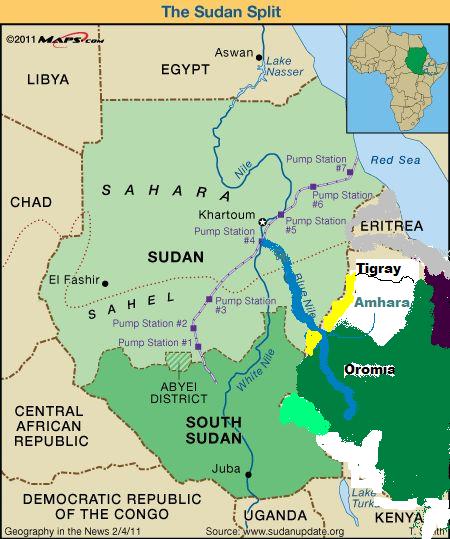

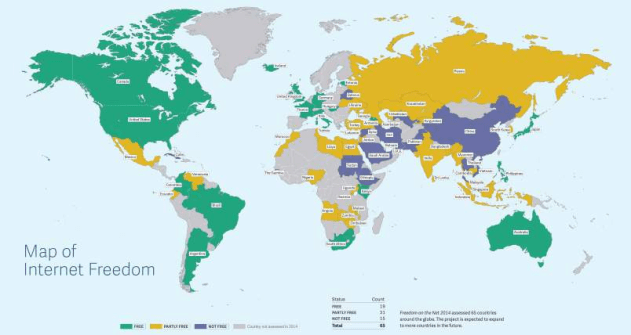
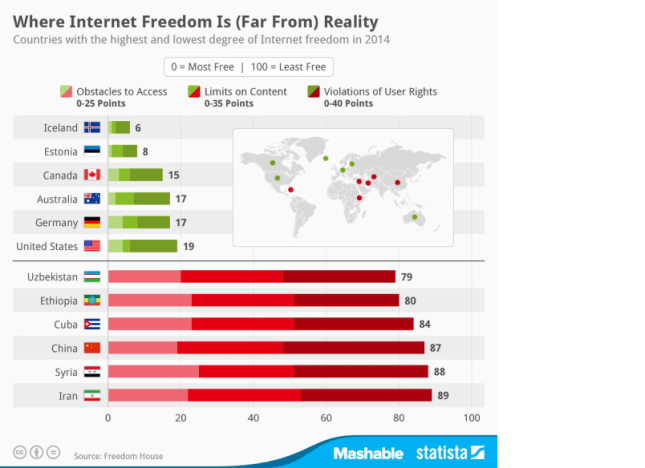
 January 6, 2015 (BBC) — The construction of a huge dam in Ethiopia and the introduction of large-scale agricultural businesses has been controversial – finding out what local people think can be hard, but with the help of a bottle of rum nothing is impossible.

 The prospect of returning home without interviews is unthinkable. My ruse is to distract my captors.



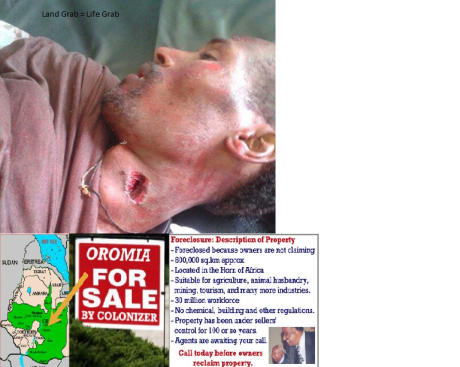
 The Human Rights League of the Horn of Africa (HRLHA) held, over the past three weeks, public meetings with members of Oromo Communities in four cities of Canada and discussed human rights issues in the Horn of Africa in general and in Ethiopia in Particular. The Oromo communities involved were those of Toronto/Ontario, Edmonton & Calgary/Alberta and Winnipeg/Manitoba; and the major topic of discussion at all the four public meetings was the unabated gross human rights violations by the different regimes of the Ethiopian Government for over a century, with particular focus on what have been happening in the past twenty years under the current TPLF/EPRDF government.
 The public gathering in Toronto was held on December 13, 2014 at the office of Oromo Canadian community Association. At the gathering, HRLHA Executive Director Mr. Garoma B. Wakessa explained in his presentation “the gross and Systematic violations of human rights against Oromo nation and other nationals in Ethiopia in the past and at present” by different governments that ruled the country. Extra judicial killings, mass arrests and detentions, kidnappings and disappearances, and tortures under the present government in particular have been discussed in details.
 Besides, Mr. Tesfaye Dheressa Kumsa, Director of Investigations and Dissemination with HRLHA, who did a presentation on “Land Grabs and Evictions as a Cultural Genocide”, explained how forced displacements of the Oromos and others from their farm lands and the resultant detachments and disconnections from traditional rural lives have been causing destructions of precious cultural assets, values, and wisdoms from which the societies have been benefiting generation after generation.
 At the gathering, HRLHA Executive Director Mr. Garoma B. Wakessa presented “the gross and Systematic violations of human rights against Oromo nation and other nationals in Ethiopia in the past and at present” by different governments that ruled the country.
 Amajjii 1, 2015







 Oromian Economist
You must be logged in to post a comment.