Economic and development analysis: Perspectives on economics, society, development, freedom & social justice. Leading issues in Oromo, Oromia, Africa & world affairs. Oromo News. African News. world News. Views. Formerly Oromia Quarterly
” The benefits of trade have been well documented throughout history. The economic case is quite straightforward. Opening up to trade allows countries to shift their patterns of production, exporting goods that they are relatively efficient at producing and importing goods at a lower price that they can’t produce resourcefully at home. This lets resources to be allocated more efficiently allowing a nation’s economy to grow. Fruits of trade can be seen in many countries. In the last 30 years, trade has grown around 7% per year on average (WTO, 2013). During this time period, developing nations have seen their share in world export increase from 34% to 47% (WTO, 2013) which at first glance seem incredible. However if we dig a little deeper, it is quickly apparent that China is the key reason for the majority of the growth and that a bulk of these developing countries aren’t benefiting fully from international trade. Why is this? Many developing countries depend on the export of a few primary products and in some cases a single primary commodity for the majority of their export earnings. In fact, 95 of the 141 developing countries rely of the export of commodities for at least 50% of their export income (Brown, 2008). This is where the problem starts. Prices in the primary good’s market tend to be highly volatile sometimes varying up to 50% in a single year (South Centre, 2005). Often, the fluctuation of these products are out of the hands of the developing countries as they individually have only a small portion of the world supply which is not enough to affect world prices. At the same time, some shocks (ie. Weather) are unpredictable. The unstable commodity price brings uncertainty, instability and often negative economic consequences for the developing countries. This also affects the policymaking in the country as it is hard to implement a sustainable development scheme or a fiscal expansionary policy with uncertain revenue. Positive shocks do increase income in the short run however a study by Dehn (2000) found that there are no permanent effect on the increase on income in the long run. Furthermore, there is often very little scope to growth through primary products as it is very hard to increase volumes of sale. This is due to the demand being inelastic. The over dependence on the export of primary products also causes another problem – a risk of a large trade deficit. Several studies (Olukoshi, 1989, Mundell, 1989) have shown that primary commodity prices are the main cause for the debt problems in many developing countries. In an empirical research done by Swaray (2005), he shows the main reason behind this is the deteriorating terms of trade, developing countries face. Terms of Trade is equal to the value of export over the value of import. Over time there has been a general trend of primary products falling in value. 41 of 46 leading commodities fell in real value over the last 30 years with an average decline of 47% in real prices, according to the World Bank (cited in CFC, 2005). This has occurs due to inelastic demand for commodities and lack of differentiation among producers hence making it a competitive market. The creation of synthetic substitutes has also suppressed prices. At the same time, manufacturing products (which generally developing countries tend to import) see a general rise in prices. Put these trends together, over time, developing countries have seen their terms of trade worsen. A study by CFC (2005), shows that the terms of trade have declined as much as 20% since the 1980s. This, alongside the difficulty to increase volumes of sales has meant many developing countries have a trade deficit. According Bhagwati (1958), it is possible that this decline in the terms of trade could result in diminished welfare. In other words, growth from trade can be negative rather than positive. ”
The benefits of trade have been well documented throughout history. The economic case is quite straightforward. Opening up to trade allows countries to shift their patterns of production, exporting goods that they are relatively efficient at producing and importing goods at a lower price that they can’t produce resourcefully at home. This lets resources to be allocated more efficiently allowing a nation’s economy to grow. Fruits of trade can be seen in many countries. In the last 30 years, trade has grown around 7% per year on average (WTO, 2013). During this time period, developing nations have seen their share in world export increase from 34% to 47% (WTO, 2013) which at first glance seem incredible. However if we dig a little deeper, it is quickly apparent that China is the key reason for the majority of the growth and that a bulk of these developing countries aren’t benefiting fully…
This list is naturally a subjective endeavor, so readers are welcome to fault me for selecting one of my own articles for the list. Many of these articles are from the Miscellany section in the Journal of Political Economy from the days when George Stigler was the editor, or a similar section in Economic Inquiry., which I oversee. Many of them are in the compendium of economics humor that I maintain on my website or in Caroline Postelle Clotfelter’s 1997 bookOn the Third Hand: Wit and Humor in the Dismal Science. Clotfelter is one of the few women engaged in the field of economics humor, and I have high hopes that women will be more prominently features in future Top Ten lists of economics humor.
1. “Life among the Econ” (1973) by Axel Leijonhufvud
I have hopes that Economic Inquiry will republish this article on the 40th or 50th anniversary of its original publication.
[S]tatus is tied to the manufacture of certain types of implements called “modls.” The status of the adult male is determined by his skill at making the “modl” of his “field.” The facts (a) that the Econ are highly status-motivated, (b) that status is only to be achieved by making “modls,” and (c) that most of these “modls” seem to be of little or no practical use, probably accounts for the backwardness and abject cultural poverty of the tribe.
The dominant role of “modl” is perhaps best illustrated by the (unfortunately very incomplete) accounts we have of relationships between the two largest of the Econ castes, the “Micro” and the “Macro”… If a Micro-Econ is asked why the Micro do not intermarry with the Macro, he will answer “They make a different modl,” or “They do not know the Micro modl.”
It would be to fail in one’s responsibility to the Econ people to end this brief sketch of life in their society without a few words about their future. The prospect for the Econ is bleak. Their social structure and culture should be studied now before it is gone forever.
2. “The theory of interstellar trade” (1978/2010) by Paul Krugman
The paper might have disappeared had it not been for Joshua Gans. Gans told me that he was Krugman’s TA in 1993 and ended up with a paper copy of the article, which came up “in 2008, [when] a discussion arose on the Internet about interstellar trade.” Gans sent Krugman a scanned version of the article, which Krugman posted online, noting that “Thirty years ago I was an oppressed assistant professor, caught up in the academic rat race. To cheer myself up I wrote — well, see for yourself.”
This article extends interplanetary trade theory to an interstellar setting. It is chiefly concerned with the following question: how should interest charges on goods in transit be computed when the goods travel at close to the speed of light? This is a problem because the time taken in transit will appear less to an observer traveling with the goods than to a stationary observer. A solution is derived from economic theory, and two useless but true theorems are proved.
Many critics of conventional economics have argued, with considerable justification, that the assumptions underlying neoclassical theory bear little resemblance to the world we know. These critics have, however, been too quick to assert that this shows that mainstream economics can never be of any use. Recent progress in the technology of space travel… make this assertion doubtful; for they raise the distinct possibility that we may eventually discover or construct a world to which orthodox economic theory applies.
3. “The effect of prayer on God’s attitude toward mankind” (1980/2010) by James Heckman
Heckman wrote this paper in 1980 was not published until2010. (It is unknown if Heckman ever submitted it for publication in 1980.)
This article uses data available from the National Opinion Research Center’s survey on religious attitudes and powerful statistical methods to evaluate the effect of prayer on the attitude of God toward human beings.
The technique—due to Singh (1977)—is briefly described here. Let Y be God’s attitude arrayed on a scale ranging from 0 to 1. This is an unobserved variable. Let X be the intensity of prayer in the population. It too is scaled between 0 and 1. The population density of prayer is summarized by a univariate density f(X), which has been estimated by Father Greeley (1972).
The empirical conclusion from this analysis is important. A little prayer does no good and may make things worse. Much prayer helps a lot.
4. “The conference handbook” (1982) by George Stigler
There is an ancient joke about the two traveling salesmen in the age of the train. The younger drummer was being initiated into the social life of the traveler by the older. They proceeded to the smoking parlor on the train, where a group of drummers were congregated. One said, “87,” and a wave of laughter went through the group. The older drummer explained to the younger that they traveled together so often that they had numbered their jokes. The younger drummer wished to participate in the event and diffidently ventured to say, “36.” He was greeted by cool silence. The older drummer took him aside and explained that they had already heard that joke. (In another version, the younger drummer was told that he had told the joke badly.)
Economists travel together a great deal, and there is no reason why the discussions which follow the presentation of papers should not utilize a handbook of commentary. The following is a preliminary list of numbered comments, which itself will cover a large share of the comments elicited in most conferences.
I can be very sympathetic with the author; until 2 years ago I was thinking along similar lines.
This paper contains much that is new and much that is good.
Theorizing is not fruitful at this stage: we need a series of case studies.
Case studies are a clue, but no real progress can be made until a model of the process is constructed.
The conclusions change if you introduce uncertainty.
The central argument is not only a tautology, it is false.
5. “Macroeconomic policy and the optimal destruction of vampires” (1982) by Dennis Snower
Although human beings have endured the recurring ravages of vampires for centuries, scarcely any attempts have been made to analyze the macroeconomic implications of this problem and to devise socially optimal policy responses.
Over the past few centuries, a number of prominent investigators… have suggested that all vampires should be destroyed… [We show that] such a policy would not be socially optimal.
6. “American economic growth and the voyage of Columbus” (1983) by Preston McAfee
Since the imaginative, pathbreaking, inventive analysis of Robert Fogel (1962), the counterfactual analysis has intrigued and scintillated a generation of economists. Fogel considered the state of the American economy in 1890, had the railroads never been invented. He found that less than 10 percent of the American output could be attributed to the single innovation of railroads, thus demonstrating irrevocably that the loss of trains would not derail the American economic juggernaut.
In order to perform a valid test of the invincibility of the American economic cornucopia, the counterfactual must predate the development of the celebrated entrepreneur and the waves of immigrants whose sweat was an important input into the production process. Consequently, it is hypothesized that, rather than stumble upon the two American continents, Columbus fell off the edge of the earth. Certainly this is a valid test, for if America were to be virtually unchanged, despite not being discovered, certainly the “American century” was inevitable. I choose the year 2000 as a target date, and compare America as it will be in the year 2000 to the way it would have been then, had Columbus fallen off the edge.
7. “Mankiw’s ten principles of economics, translated” (2003) by Yoram Bauman
This paper, which launched my own career as “the world’s first and only stand-up economist”, was written during my graduate school days at the University of Washington in Seattle and eventually published in AIR. (Also available on YouTube.)
The second table below summarizes my attempt to translate [Gregory] Mankiw’s Ten Principles into plain English, and in doing so to provide the uninitiated with an invaluable glimpse of the economic mind at work. Explanations and details can be found in the pages that follow, but the average reader is advised to simply cut out the table below and carry it around for assistance in the (hereafter unlikely) event of confusion about the basic Principles of Economics.
8. “Can financial innovation help to explain the reduced volatility of economic activity?” (2006) by Karen E. Dynan et al.
This paper was not meant to be humorous. But given how financial innovation has increased economic volatility since the Great Depression, it arguably deserves a place in this list. It is a modern equivalent of Irving Fischer’s proclamation three days before the 1929 stock market crash that “Stock prices have reached what looks like a permanently high plateau.”
The stabilization of economic activity in the mid-1980s has received considerable attention. Research has focused primarily on the role played by milder economic shocks, improved inventory management, and better monetary policy. This paper explores another potential explanation: financial innovation. Examples of such innovation include developments in lending practices and loan markets that have enhanced the ability of households and firms to borrow and changes in government policy such as the demise of Regulation Q. We employ a variety of simple empirical techniques to identify links between the observed moderation in economic activity and the influence of financial innovation on consumer spending, housing investment, and business fixed investment. Our results suggest that financial innovation should be added to the list of likely contributors to the mid-1980s stabilization.
9. “Japan’s Phillips Curve looks like Japan” (2008) by Gregor Smith
Smith’s webpage used to link to a version of the paper with this note: “The title is also the abstract and, frankly, most of the text.”
Japan’s Phillips Curve is shown in the right-hand panel of Figure 1. The data are monthly from January 1980 to August 2005.
For ease of viewing, the left-hand panel of Figure 1 rotates the Phillips Curve around the vertical axis so that minus the unemployment rate now is on the horizontal axis. Clearly visible are the islands of Hokkaido and Honshu, though it is somewhat difficult to separately distinguish the southern islands of Kyushu and Shikoku. The Noto-Hanto Penninsula is evident to the north of the southern end of the main island of Honshu. Tokyo Bay is also visible. The data point to the far left in Figure 1 is the island of Fukue-Jima.
10. “On the efficiency of AC/DC? Bon Scott versus Brian Johnson” (2009) by Robert Oxoby
Unfortunately, Steven Levitt failed to get the joke, prompting him to post on the Freakonomics blog that “This is what happens to people who listen to too much AC/DC… I hope for this guy’s sake he has tenure.” Oxoby wrote in the comments that “I have tenure” and added some details on the paper: “The paper was written using old data from a grad student studying the effects of different genres of music on behavior (following previous research identifying the effect of different genres on heart rate, etc.; her original interest was on the use of music in behavior therapy). She abandoned the project and has since disappeared from her program. The AC/DC spin was due to a mistake in the protocols: different songs were played in two sessions.” The next day Levittacknowledged that “There is hope for economics: The AC/DC paper was a joke”:
Abstract: We use tools from experimental economics to address the age-old debate regarding who was a better singer in the band AC/DC. Our results suggest that (using wealth maximization as a measure of “better”) listening to Brian Johnson (relative to listening to Bon Scott) resulted in “better” outcomes in an ultimatum game. These results may have important implications for settling drunken music debates and environmental design issues in organizations.
Acknowledgments: We thank Steven Levitt for his support and popularization of this research (see, for example, Levitt 2007). We thank Nathan Berg, Gary Charness, Bill Harbaugh, and Kendra McLeish for valuable suggestions and comments. We also thank a delayed Air Canada flight and a bar in the Vancouver airport for providing the time, space, and resources necessary to pursue this research. All errors are attributable to Air Canada.
11. “An option value problem from Seinfeld” (2011) by Avinash Dixit
Abstract: This is a paper about nothing.
In an episode of the sitcom Seinfeld (Season 7, Episode 9, original air date December 7, 1995), Elaine Benes uses a contraceptive sponge that gets taken off the market. She scours pharmacies in the neighborhood to stock a large supply, but it is finite. So she must “re-evaluate her whole screening process.” Every time she dates a new man, which happens very frequently, she has to consider a new issue: Is he spongeworthy”? The purpose of this article is to quantify this concept of spongeworthiness.
When Elaine uses up a sponge, she is giving up the option to have it available when an even better man comes along. Therefore using the sponge amounts to exercising a real option to wait and spongeworthiness is an option value. It can be calculated using standard option-pricing techniques. However, unlike the standard theory of financial or many real options, there are no complete markets and no replicating portfolios. Stochastic dynamic programming methods must be used.
Change is variation, impermanence, acceleration, flux. Heraclitus, an ancient Greek philosopher, said: “Change, the state of flux, is a permanent feature of nature”. Greeks philosophers were fond of paradoxes. Another ancient Greek philosopher, Parmenides disagreed: “Change is ephemeral and things truly staid the same”. Greek philosophers were fond of disagreement. The dictionary says it’s the process of becoming different. Men have lamented the constancy of Change and decried the lack of Change. Barack Obama won a presidency promising Change.
The interesting thing about Change is that many, if not all, equations describing change look about the same. Let’s say Change is C, some driving force prompting the change is DF, and resistance to change is R. Then the generic form for most equations describing change is:
C = DF * 1/R
If this Universal Law of Change applies to many different Changes, perhaps it also applies to the economic and social Changes? For example:
Influx of Mexican immigrants to the United States, driven by the difference in hourly wages, and resisted by the high “coyote fees”, border patrol and vast deserts.
A flood of Central American children to the Texas border, driven by fear of death or injury from the local gangsters and resisted by the distance, and other resistances mentioned above.
Implementation of green energy generation driven by the fears of climate change, but resisted by the high cost of the green energy.
Etc., etc.
As mentioned, there are many laws describing change is physical systems that look about the same. For example, here’s Newton’s famous law as it is commonly written:
F = m a
Or force is mass times acceleration. In this case, acceleration, “a”, represents change. Acceleration occurs when something is at rest or traveling at a constant speed, and then it accelerates (positive acceleration) or decelerates (negative acceleration). Rearranging the equation:
a = F * 1/ m
So change, a, is equal to a force F driving for a change, acting on the object with the mass m. A heavy bowling ball has more mass, so it’s harder to make it accelerate than, let’s say a tennis ball. So m is resistance to change. Given the same driving force, the bigger m, the less change there is. Broadly interpreted, Newton’s law is a mathematical representation of change:
Change = (Driving Force) * (1/Resistance to Change)
In fluid dynamics, a science describing fluid flow, there’s a famous equation called the Bernoulli’s equation:
V12/2g + P1/ρg + Z1 = V22/2g + P2/ρg + Z2
Looks complicated, but rearranged into the Change = (Driving Force) * (1/Resistance to Change) it looks like:
Change is variation, impermanence, acceleration, flux. Heraclitus, an ancient Greek philosopher, said: “Change, the state of flux, is a permanent feature of nature”. Greeks philosophers were fond of paradoxes. Another ancient Greek philosopher, Parmenides disagreed: “Change is ephemeral and things truly staid the same”. Greek philosophers were fond of disagreement. The dictionary says it’s the process of becoming different. Men have lamented the constancy of Change and decried the lack of Change. Barack Obama won a presidency promising Change.
The interesting thing about Change is that many, if not all, equations describing change look about the same. Let’s say Change is C, some driving force prompting the change is DF, and resistance to change is R. Then the generic form for most equations describing change is:
(Washington Post, 26th June 2014), There’s a lot of recent scholarship suggesting that non-democratic regimes grow faster than democratic regimes. This has led some people not only to admire the Chinese model of growth focused authoritarianism, but to suggest that it may be a better economic model for developing countries than democracy. However, this research tends to assume that both democracies and non-democracies are telling the truth about their growth rates, when they report them to multilateral organizations such as the World Bank. Is this assumption safe? The answer is no, according to aforthcoming article (temporarily ungated) by Christopher S. P. Magee and John A. Doces in International Studies Quarterly.
The problem that Magee and Doces tackle is that it’s hard to figure out when regimes are being honest or dishonest about their rates of economic growth, since it’s the regimes themselves that are compiling the statistics. It’s hard to measure how honest or dishonest they are, if all you have to go on are their own numbers. This means that researchers need to find some kind of independent indicator of economic growth, which governments will either be less inclined or unable to manipulate. Magee and Doces argue that one such indicator is satellite images of nighttime lights. As the economy grows, you may expect to see more lights at night (e.g. as cities expand etc). And indeed, research suggests that there’s a very strong correlation between economic growth and nighttime lights, meaning that the latter is a good indicator of the former. Furthermore, it’s an indicator that is unlikely to be manipulated by governments.
Magee and Doces look at the relationship between reported growth and nights at light and find a very clear pattern. The graph below shows this relationship for different countries – autocracies are the big red dots. Most of the dots are above the regression line, which means that most autocracies report higher growth levels to the World Bank than you’d expect given the intensity of lights at night. This suggests that they’re exaggerating their growth numbers.
The two countries with the biggest difference between their reported growth and their actual growth (as best as you can tell from the intensity of nighttime lights) are China (although the discrepancy was considerably larger in the mid-1990s than now) and Myanmar. More broadly:
If democracies report their GDP growth rates truthfully, then dictatorships overstate their yearly growth rate by about 1.5 percentage points on average. If democracies also overstate their true growth rates, then dictatorships exaggerate their yearly growth statistics by about 1.5 percentage points more than do democracies.
The authors conclude:
the existing literature on economic growth overestimates the impact of dictatorships because it relies on statistics that are reported to international organizations, and as we show, dictatorships tend to exaggerate their growth. Accounting for the fact that authoritarian regimes overstate growth slightly diminishes the effect of these regimes on long-run economic growth. In light of this point, much of the evidence showing growth benefits associated with authoritarian regimes is less compelling and the case for democracy looks better than before. See more @ http://www.washingtonpost.com/blogs/monkey-cage/wp/2014/06/26/dictators-lie-about-economic-growth?Post+generic=%3Ftid%3Dsm_twitter_washingtonpost
Related Article:
What if everything we know about poor countries’ economies is totally wrong?
(OPride) – Over the last decade, Ethiopia has been hailed as the fastest growing non-oil economies in Africa, maintaining a double-digit annual economic growth rate. The Ethiopian government says the country will join the middle-income bracketby 2025.
Despite this, however, as indicated by a recent Oxford University report, some 90 percent of Ethiopians still live in poverty, second only after Niger from 104 countries measured by the Oxford Multidimensional Poverty Index. The most recent data shows an estimated 71.1 percent of Ethiopia’s population lives in severe poverty.
This is baffling: how can such conflicting claims be made about the same country? The main source of this inconsistent story is the existence of crony businesses and the government’s inflated growth figures. While several multinational corporations are now eyeing Ethiopia’s cheap labor market, two main crony conglomerates dominate the country’s economy.
Meet EFFORT, TPLF’s business empire
The seeds of Ethiopia’s economic mismanagement were sown at the very outset. We are familiar with rich people organizing themselves, entering politics and protecting their group interests. But something that defies our knowledge of interactions between politics and business happened in 1991 when the current regime took power.
Ethiopia’s ruling party, the EPRDF, came to power by ousting the communist regime in a dramatic coup. A handful of extremely poor people organized themselves exceptionally well that they quickly took control of the country’s entire political and military machinery.
In a way, this is analogous to a gang of thieves becoming brutally efficient at organizing themselves to the extent of forming a government. Once in power, the ruling Tigrean elites expropriated properties from other businesses, looted national assets and began creating wealth exclusively for themselves.
This plan first manifested itself in the form of party affiliated business conglomerate known as the Endowment Fund for Rehabilitation of Tigray (EFFORT). EFFORT has its origin in the relief and rehabilitation arm of the Tigrean People Liberation Front (TPLF) and the country’s infamous 1984 famine.
As reported by BBC’s Martin Plaut and others, the TPLF financed its guerilla warfare against the Dergue in part by converting aid money into weapons and cash. That was not all. On their way to Addis Ababa from their bases in Tigray, the TPLF confiscated any liquid or easily moveable assetsthey could lay their hands on. For instance, a substantial amount of cash was amassed by breaking into safe deposits of banks all over Ethiopia. Those funds were kept in EFFORT’s bank accounts. TPLF leaders vowed to use the loot to rehabilitate and reconstruct Tigray, which they insisted was disproportionately affected by the struggle to “free Ethiopia.”
Intoxicated by its military victory, the TPLF then turned to building a business empire. EFFORT epitomizes that unholy marriage between business and politics in a way not seen before in Ethiopian history. According to a research by Sarah Vaughan and Mesfin Gebremichael, EFFORT, which is led by senior TPLF officials, currently owns 16 companies across various sectors of the economy.
This figure grossly understates the number of EPRDF affiliated companies. For example, the above list does not include the real money-spinners that EFFORT owns: Wegagen Bank, Africa Insurance, Mega Publishing, Walta Information Center and the Fana Broadcasting Corporate. The number of companies under EFFORT is estimated to be more than 66 business entities. Suffice to say, EFFORT controls the commanding heights of the Ethiopian economy.
While it is no secret that EFFORT is owned by and run exclusively to benefit ethnic Tigrean elites, it is a misnomer to still retain the phrase “rehabilitation of Tigray.” Perhaps it should instead be renamed as the Endowment Fund for Rendering Tigrean Supremacy (EFFORTS).
MIDROC Ethiopia, EPRDF’s joker card
In Ethiopia’s weak domestic private environment, EFFORT is an exception to the rule. Similarly, while Ethiopia suffers from lack of foreign direct investment, MIDROC Ethiopia enjoys unparalleled access to Ethiopia’s key economic sectors. Owned by Ethiopian-born Saudi business tycoon, Sheik Mohammed Al Amoudi, MIDROC has been used by the EPRDF as a joker card in a mutually advantageous ways. The Sheik was given a privilege no less than the status of a domestic private investor but the EPRDF can also count it as a foreign investor. For instance, the United Nations Conference on Trade and Development reported that about 60 per cent of the overall FDI approved in Ethiopia was related to MIDROC.
MIDROC stands for Mohammed International DevelopmentResearch and Organization Companies. Despite reference to development and research in its name, however, there is no real relationship between what the crony business says and what it actually does. Ironically, as with EFFORT, MIDROC Ethiopia also owns 16 companies. But this too is a gross underestimation given the vast sphere of influence and wealth MIDROC commands in that country.
Like EFFORT, Al-Amoudi’s future was also sealed long before the TPLF took power. He literally entered Addis Ababa with the EPRDF army, fixing his eyes firmly on Oromia’s natural resources. Shortly after the TPLF took the capital, Al-Amoudi allegedly donated a huge sum of money to the Oromo People’s Democratic Organization.
Why the rush?
The calculative Sheik sensed an eminent threat to his business interests from the Oromo Liberation Front (OLF), a groups that was also a partner in the transitional government at the time. In return for its “donation,” MIDROC acquired massive lands in Oromia – gold mines, extensive state farms and other agricultural lands. In a recent article entitled, “The man who stole the Nile,” journalist Frederick Kaufman aptly described Al Amoudi’s role in the ongoing land grab in Ethiopia as follows:
In this precarious world-historic moment, food has become the most valuable asset of them all — and a billionaire from Ethiopia named Mohammed Hussein Al Amoudi is getting his hands on as much of it as possible, flying it over the heads of his starving countrymen, and selling the treasure to Saudi Arabia. Last year, Al Amoudi, whom most Ethiopians call the Sheikh, exported a million tons of rice, about seventy pounds for every Saudi citizen. The scene of the great grain robbery was Gambella, a bog the size of Belgium in Ethiopia’s southwest whose rivers feed the Nile.
It is little wonder then that Al-Amoudi said, “I lost my right hand,” when Ethiopia’s strongman of two decades Meles Zenawi died in 2012. If EFFORT is a curse to the Ethiopian economy, MIRDOC is EPRDF’s poisoned drink given to the Ethiopian people.
Mutual Distrust
The marriage between politics and business has had damaging effects on the country’s economy. One of its most far-reaching consequences is the total breakdown of trust between the EPRDF and the Ethiopian people. In economic policy, trust between private investors and the government is paramount. The deficit of trust is one of the hallmarks of Ethiopia’s much-touted development.
After all youth unemployment hovers around 50 percent. Every year, hundreds of young Ethiopians risk their lives trying to reach Europe or the Middle East, often walking across the Sahara desert or paying smugglers to cross the Red Sea or Indian Ocean aboard crowded boats. The desperation is a result of the lack of confidence in the government’s ability to provide them with the kind of future they were promised.
Ironically, aside from their crony businesses, the EPRDF does not have any confidence in Ethiopian entrepreneurs either. It is this mutual distrust that culminated in the prevalence of an extremely hostile environment for domestic private investment.
This is not a speculative claim but a well-documented fact. The World Bank’s annual survey, which measures the ease with which private investors can do business, ranks Ethiopia near the bottom. In the 2014 survey, Ethiopia came in 166th out of 189 countries in terms of difficulties in starting new business or trading across borders. Moreover, year on year comparison shows that the investment climate in Ethiopia is actually getting worse, sliding down the ranking both in the ease of doing business and trading across borders.
Farms but no firms
The TPLF cronies do not engage in competitive business according to market rules but act as predators bent on killing existing and emerging businesses owned by non-Tigrean nationals. However, the ruling party, which largely maintains its grip on power using bilateral and multilateral aid, is required to report its economic progress to donors (the regime does not care about accountability to the people). In this regard, the lack of foreign direct investment (FDI) has been a thorn in the throat of the EPRDF. Donors have repeatedly questioned and pressured the EPRDF to attract more FDI. The inflow of FDI is often seen as a good indicator of the confidence in countries stability and sound governance. Despite widespread belief in the West, the EPRDF regime cannot deliver on these two fronts.
To cover up these blind spots, the regime has persuaded a handful of foreigners to invest in Ethiopia, but until recently few investors considered any serious manufacturing venture in the country. Besides, considered “cash cows” for the government, banks, the Ethiopian Airlines, telecommunication and energy sectors remain under exclusive monopoly of the state. They provide almost free service to the crony businesses. Any firm looking to invest in manufacturing and financial sectors have to overcome insurmountable bureaucratic red tape and other barriers.
One sector that stands as exception to this rule is agriculture. Since the 2008 financial crisis and the rise in the global price of food, the regime opened the door widely for foreigners who wanted to acquire large-scale farms. These farms do not hurt their crony businesses but they do harm poor subsistence farmers. Vast tracts of lands have been sold to foreigners at ridiculously cheap prices, often displacing locals and their way of life.
Contrary to the government rhetoric, the motivation for opening up the agricultural sector has nothing to do with economic growth but everything to do with politics – to silence critics, particularly in the donor community who persistently question EPRDF’s credibility in attracting FDI. In essence, hundreds of thousands of poor farmers were evicted to make way for flower growers and shore up the government’s image abroad. This tactic seems to be working so far. Earlier this year, Ethiopia received its first credit rating from Moody’s Investors Service. In the last few years, in part due to rising labor costs in China and East Asia, several manufacturers have relocated to Ethiopia.
Addis’ construction boom as a smokescreen
Crony businesses and flower growers may have created some heat but certainly no light in Ethiopian economy. EFFORT and MIDROC were in action for much of the 1990s and early 2000s but GDP growth was not satisfactory during that time. In fact, since other private businesses were in dismal conditions (and hence domestic market size is very limited), even the crony businesses encountered challenges in getting new business deals.
The setbacks in political front during the 2005 election shifted EPRDF’s strategies to economic front to urgently register some noticeable growth. This partly explains the motives behind the ongoing construction rush in and around Addis Ababa. In several rounds of interviews on ESAT TV, former Minister d’etat of Communications Affairs, Ermias Legesse, provided interesting accounts of cronyism surrounding Addis’ explosive growth and its tragic consequences for Oromo farmers.
It is important to understand the types of construction that is taking place around or near Addis. First, private property developments by crony estate agents mushroomed overnight. A lion’s share of land expropriated from Oromo farmers were allocated to these regime affiliates through dishonest bids. Luxury houses are built on such sites and sold at prices no average Ethiopian could afford, except maybe those in the diaspora. The latter group is being targeted lately due to shortages of hard currencies.
Second, EPRDF politicians and high ranking military officers own multi-storey office buildings, particularly aimed at renting to NGOs and residential villas for foreign diplomats who can afford to pay a few thousand dollars per month. It is a known fact that the monthly salary cap for Ethiopian civil servants is around 6000 birr (about $300). As such, that these individuals could invest in such expensive properties underscores the extent of the daylight robbery that is taking place in Ethiopia.
Third, the government was engaged in massive public housing construction but under extremely chaotic circumstances. The condominium rush in Addis is akin to the Dergue regime’s villagization schemes in rural Ethiopia. Families are uprooted from their homes without any due consideration for their social and economic well-being.
Most households that once occupied the demolished homes in Addis Ababa’s shantytowns made a living through informal home businesses such as brewing local drinks and preparing and selling food at prices affordable to the poor. It was clear that the condominiums were not suitable for them to continue doing such businesses. The construction of the public houses was financed by soft loans from various donor agencies to be sold to target households at affordable prices. However, the government often priced them at the going market rates for condos.
As a result, the poor households simply rented out the properties to those who could afford, while struggling to find affordable houses for themselves. Solving the public housing crisis was never the government’s intention in the first place, as they were only interested in creating business opportunities for their crony construction companies.
Fourth, roads and railway networks are by far the most important large-scale public sector construction projects taking place in Addis. There is no doubt that Addis Ababa’s crowded roads, equally shared by humans, animals and cars, need revamping. But, what is happening in the name of building roads and railways simply defies belief. First, the sheer scale and magnitude as well as the obsession with construction makes the whole undertaking look suspicious. Every time I travelled to Addis, I witness the same roads being constructed and then dug up to be reconstructed over and over again.
The ulterior motive behind these projects is nothing more than expanding TPLF’s business empire and benefit crony allies. Having exhausted opportunities within the existing perimeter of Addis, the so-called master plan had to be crafted to enlarge the size of “the construction site” by a factor of 20 to ensure that the cronies will stay in business in the foreseeable future. In effect, the large-scale construction projects are being used to siphon off public funds. And there seems to be no priority or accountability in the whole process from the project inception, planning to implementation.
Lies and damn lies
The construction boom in Addis serves as a two edged sward. On the one hand, the funds generated from selling Oromo lands to private property developers adds to the ever-expanding business empire of Tigrean political and military elites. On the other hand, the appearances of several high-rise buildings and complex road networks give the impression that Ethiopia is witnessing an economic boom. The target audience for the latter scenario is foreign journalists and the diplomatic community in Addis Ababa, some of whom are so gullible that they fall in love with ERDF’s economic “miracle” from the first aerial view even before landing at the Bole airport.
The fact remains however: no such economic miracle is actually happening in Ethiopia. A pile of concrete slabs cannot transform the economy in any meaningful way. After all, buildings and roads are only intermediaries for doing other businesses. For instance, it is not enough to build highways and rural roads – a proportionate effort is required to enhance production of goods and services to move them on the newly built roads in such a way that the roads will get utilized and investments made on them get recovered. Otherwise, the roads and buildings can deteriorate without giving any service, and hence more public money would soon be required to maintain them. This is exactly what is happening in Ethiopia.
Meanwhile, the EPRDF has been engaged in a frantic effort to generate lies and damn lies to fill the gap between the rhetoric and the reality of Ethiopia’s economy. The government-controlled media has been used for extensive propaganda campaign to create a “positive image” in the eyes of ordinary citizens. They literally compel viewers or listeners to see or feel things that do not exist on the ground. The Ethiopian television zooms onto any spot of land with a colony of green grass or lush crop fields to “prove” the kinds of wonders the government is engineering.
Barring rain failures, much of Ethiopia’s lush-green countryside has a decent climate for agriculture. But the EPRDF regime tries to convince the public that anything positive that occurs in the Ethiopia is because of its economic policies. But, as evidenced in ongoing multifaceted grievances around the country, the government is fooling no one else but itself (and perhaps a few gullible individuals in the diplomatic community).
Its lies also come in the form of dubious economic statistics, which are generated in such a way that EPRDF could report double-digit economic growth year after year. The story of the double digit economic growth rate in Ethiopia has been such that a lie told hundreds of times, no matter how shambolic the numbers are, is becoming part of the western vernacular. Donors often point to the abundance of high-rise buildings and impressive road networks in Addis Ababa in regime’s defense.
In a brief conversation, it is not possible to take such casual observers through details of the kind I have attempted to narrate in the preceding paragraphs. And, unfortunately for millions of Ethiopia’s poor, in the short run the government’s lies and crony capitalism may continue to ravage the country’s economy until it begins to combust from within.
*The writer, J. Bonsa, is a researcher-based in Asia.
“Compare free development in Botswana with authoritarian development in Ethiopia. In Ethiopia in 2010, Human Rights Watch documented how the autocrat Meles Zenawi selectively withheld aid-financed famine relief from everyone except ruling-party members. Meanwhile democratic Botswana, although drought-prone like Ethiopia, has enjoyed decades of success in preventing famine. Government relief directed by local activists goes wherever drought strikes.”- http://time.com/23075/william-easterly-stop-sending-aid-to-dictators/
Traditional foreign aid often props up tyrants more than it helps the poor. It’s time for a new model.
Too much of America’s foreign aid funds what I call authoritarian development. That’s when the international community–experts from the U.N. and other bodies–swoop into third-world countries and offer purely technical assistance to dictatorships like Uganda or Ethiopia on how to solve poverty.
Unfortunately, dictators’ sole motivation is to stay in power. So the development experts may get some roads built, but they are not maintained. Experts may sink boreholes for clean water, but the wells break down. Individuals do not have the political rights to protest disastrous public services, so they never improve. Meanwhile, dictators are left with cash and services to prop themselves up–while punishing their enemies.
But there is another model: free development, in which poor individuals, asserting their political and economic rights, motivate government and private actors to solve their problems or to give them the means to solve their own problems.
Compare free development in Botswana with authoritarian development in Ethiopia. In Ethiopia in 2010, Human Rights Watch documented how the autocrat Meles Zenawi selectively withheld aid-financed famine relief from everyone except ruling-party members. Meanwhile democratic Botswana, although drought-prone like Ethiopia, has enjoyed decades of success in preventing famine. Government relief directed by local activists goes wherever drought strikes. In the postwar period, countries such as Chile, Japan, South Korea and Taiwan have successfully followed the path of free development–often in spite of international aid, not because of it. While foreign policy concerns have often led America to prop up dictatorial regimes, we need a new rule: no democracy, no aid. If we truly want to help the poor, we can’t accept the dictators’ false bargain: ignore our rights abuses, and meet the material needs of those we oppress. Instead, we must advocate that the poor have the same rights as the rich everywhere, so they can aid themselves.
Easterly is the co-director of New York University’s Development Research Institute and author of The Tyranny of Experts: Economists, Dictators, and the Forgotten Rights of the Poor.
As protestors from Kiev to Khartoum to Caracas take to the streets against autocracy, a new book from economist William Easterly reminds us that Western aid is too often on the wrong side of the battle for freedom and democracy. In The Tyranny of Experts: Economists, Dictators, and the Forgotten Rights of the Poor, Easterly slams thedevelopment community for supporting autocrats, not democrats, in the name of helping the world’s poorest. Ignoring human rights abuses and giving aid to oppressive regimes, he maintains, harms those in need and in many ways “un-develops” countries.
The Tyranny of Experts takes on the notion that autocracies deliver stronger economic growth than freer societies. Easterly argues that when economic growth occurs under autocratic regimes, it is more often achieved at the local level in spite of the regime’s efforts. In some instances, growth under autocracies can be attributed to relative increases in freedoms. He points to China as an example of this, attributing the country’s phenomenal growth to its adoption of greater personal and economic freedoms, especially compared to the crippling Maoist policies of the past.
Easterly also rejects the myth that dictators are dependable and that a certain level of oppression should be overlooked for the sake of economic growth and overall prosperity. Most recently, the violence and chaos following the 2011 Arab uprisings has made some nostalgic for the stable, if undemocratic, governments that kept civil unrest in check, allowing for a measure of economic development to take hold. Easterly stresses that instability and tumult in the wake of ousting a dictator is not the fault of an emerging democracy, but instead an understandable result of years of autocratic rule. The answer is not to continue to support autocrats in the name of stability, but rather to start the inevitably messy process of democratization sooner.
Still, the hard questions remain: how to help those without economic and political freedoms? And when should donors walk away from desperately poor people because their government is undemocratic? Easterly argues that the donor community should draw the line with far more scrutiny than it does today – not just at the obvious cases, such as North Korea, but with other undemocratic countries, such as Ethiopia, where human rights abuses are rampant. He debunks the notion that aid can be “apolitical,” arguing that it is inherently political: giving resources to a government allows it to control and allocate (or withhold) resources as it sees fit. The aid community should focus on ways to help oppressed populations without helping their oppressors. For example, scholarship programs, trade, and other people-to-people exchanges can give opportunities to people in need. At the very least, Easterly argues, development actors should not praise oppressive regimes or congratulate them on economic growth they did not create.
Rather than being seduced by “benevolent dictators,” Easterly urges donors to focus their energy on “freedom loving” governments that need help. The Millennium Challenge Corporation is a step in the right direction but, as Easterly pointed out during the CFR meeting, MCC’s approach is undermined by other U.S. aid agencies, such as USAID, that continue to assist countries even when they don’t meet certain good governance and human rights standards.
March 26, 2014 (The Seattle Times) — SOMEHOW — probably my own fault — I have wound up on Bill Gates’ list of the world’s most misguided economists. Gates singled me out by name in his annual 2014 letter to his foundation as an “aid critic” spreading harmful myths about ineffective aid programs.
I actually admire Gates for his generosity and advocacy for the fight againstglobal poverty through the Bill & Melinda Gates Foundation in Seattle. We just disagree about how to end poverty throughout the world.
Gates believes poverty will end by identifying technical solutions. My research shows that the first step is not identifying technical solutions, but ensuring poor people’s rights.
Gates concentrates his foundation’s efforts on finding the right fixes to the problems of the world’s poor, such as bed nets to prevent malarial mosquito bites or drought-tolerant varieties of corn to prevent famine. Along with official aid donors, such as USAID and the World Bank, the foundation works together with local, generally autocratic, governments on these technical solutions.
Last year, Gates cited Ethiopia in a Wall Street Journal guest column as an example, a country where he described the donors and government as setting “clear goals, choosing an approach, measuring results, and then using those measurements to continually refine our approach.”
This approach, Gates said, “helps us to deliver tools and services to everybody who will benefit.” Gates then gives credit for progress to the rulers. When the tragically high death rates of Ethiopian children fell from 2005 to 2010, Gates said this was “in large part thanks to” such a measurement-driven program by Ethiopia’s autocrat Meles Zenawi, who had ruled since 1991. Gates later said Meles’ death in August 2012 was “a great loss for Ethiopia.”
Do autocratic rulers like Meles really deserve the credit?
Gates’ technocratic approach to poverty, combining expert advice and cooperative local rulers, is a view that has appealed for decades to foundations and aid agencies. But if technical solutions to poverty are so straightforward, why had these rulers not already used them?
The technical solutions have been missing for so long in Ethiopia and other poor countries because autocrats are more motivated to stay in power than to fix the problems of poverty. Autocracy itself perpetuates poverty.
Meles violently suppressed demonstrations after rigged elections in 2005. He even manipulated donor-financed famine relief in 2010 to go only to his own ruling party’s supporters. The donors failed to investigate this abuse after its exposure by Human Rights Watch, continuing a long technocratic tradition of silence on poor people’s rights.
Rulers only reliably become benevolent when citizens can force them to be so — when citizens exert their democratic rights.
Our own history in the U.S. shows how we can protest bad government actions and reward good actions with our rights to protest and to vote. We won’t even let New Jersey Gov. Chris Christie get away with a traffic jam on a bridge.
Such democratic rights make technical fixes happen, and produce a far better long-run record onreducing poverty, disease and hunger than autocracies. We saw this first in the now-rich countries, which are often unfairly excluded from the evidence base.
Some developing countries such as Botswana had high economic growth through big increases in democratic rights after independence. Botswana’s democrats prevented famines during droughts, unlike the regular famines during droughts under Ethiopia’s autocrats.
Worldwide, the impressive number of developing countries that have shifted to democracy includes successes such as Brazil, Chile, Ghana, South Korea and Taiwan, as well as former Soviet Bloc countries such as the Czech Republic, Poland and Slovenia.
If the democratic view of development is correct, the lessons for Gates are clear: Don’t give undeserved credit and praise to autocrats. Don’t campaign for more official aid to autocrats. Redirect aid to democrats. If the democratic view is wrong, I do deserve to be on Gates’ list of the world’s most misguided economists.
The UK government is providing financial aid to human rights abusers in Ethiopia through funding training paramilitaries, who perpetrate summary killings, rape and torture in the impoverished African country, local media reported.
Through its foreign aid budget, the UK government provides financial support to an Ethiopian government security force known as the “special police” as part of its “peace and development programme”, which would cost up to £15 million in five years, The Guardian reported.
The Department for International Development warned in a leaked document of the “reputational risks” of working with organizations that are “frequently cited in human rights violationallegations”, according to the report.
The Ethiopian government’s counter-insurgency campaign in Ogaden, a troubled region largely populated by ethnic Somalis is being enforced by the 14,000-strong special police.
This is while police forces are repeatedly accused by Human Rights Watch of serious human rights abuses.
Claire Beston, the Amnesty International’s Ethiopia researcher, said it was highly concerning that Britain was planning to work with the paramilitary force.
There are over 870 million people in the world who are hungry right now. I’m not talking about could use a snack before lunch hungry, not even didn’t have time for breakfast hungry, but truly, continually, hungry. Of these 870 million people, it’s been estimated by the World Food Programme that 98% live in developing countries, countries that perversely produce most of the world’s food stocks. So why is this the case?
In Ethiopia an alarming 40.2% of population are undernourished.The 2011 Horn of Africa drought left 4.5 million people in Ethiopia in need of emergency food assistance. Pastoralist areas in southern and south-eastern Ethiopia were most severely affected by the drought. At the same time, cereal markets experienced a supply shock, and food prices rose substantially, resulting in high food insecurity among poor people. By the beginning of 2012, the overall food security situation had stabilized thanks to the start of the Meher harvest after the June-to-September rains resulting in improved market supply — and to sustained humanitarian assistance. While the number of new arrivals in refugee camps has decreased significantly since the height of the Horn of Africa crisis, Ethiopia still continues to receive refugees from Somalia, Sudan and South Sudan. The Humanitarian Requirements Document issued by the government and humanitarian partners in September 2012 estimates that 3.76 million people require relief food assistance from August to December 2012. The total net emergency food and non-food requirement amounts to US$189,433,303. Ethiopia remains one of the world’s least developed countries, ranked 174 out of 187 in the 2011 UNDP Human Development Index.
‘Our knowledge of the nature of identity relations in pre-colonial Africa is less than complete. However, there is little doubt that many parts of the continent were torn apart by various wars, during that era. Many of the pre-colonial wars revolved around state formation, empire building, slave raids, and control over resources and trade routs. The slave raiding and looting empires and kingdoms, including those of the 19th century, left behind complex scars in inter-identity relations. It is beyond the scope of this paper to discuss in detail the nature of pre-colonial empires in Africa. The examples of the Abyssinian Empire and the Mahdiyya state in Sudan provide a glimpse of the impacts of pre-colonial empires on the prevailing problems in inter-identity relations. The Abyssinian Empire, for example, is credited for creating the modern Ethiopian state during the second half of the 19th century and defending it from European colonialism. However, it also left behind a deeply divided country where the populations in the newly incorporated southern parts of the country were ravaged by slave raids and lootings and, in many cases, reduced into landless tenants, who tilled the land for northern landlords (Pankhurst, 1968). The Empire also established a hierarchy of cultures where the non-Abyssinian cultures in the newly incorporated territories were placed in a subordinate position. There are claims, for instance, that it was not permissible to publish, preach, teach or broadcast in Oromiya [Afaan Oromo] (language of the Oromo people) in Ethiopia until the end of the reign of Emperor Haile Selassie (Baxter, 1978, 228). It requires a great deal of sensitivity to teach Ethiopian history in the country’s schools, since the empire-builders of the 19th century are heroes to some identities while they are viewed as villains who brought destruction and oppression by others. Similarly, Sudan’s Mahdiyya state, which professed Arab identity and was supported by slave raiding communities, left behind complex scars in inter-identity relations, which still plague the country (Francis Deng, 2010).’ pp 10-12
Diversity Management in Africa: Findings from the African Peer Review Mechanism
and a Framework for Analysis and Policy-Making , 2011.
No Oromo has constitutional or legal protection from the cruelty of the TPLF/EPRDF regime.
A country is not about its leaders but of its people. It goes without saying that the people are the symbolic mirror of their nation. That is exactly why foreigners particularly the development partners assess and evaluate a nation through its people. In other words, a happy people are citizen of not only a peaceful and happy nation but one which accepts the principles of democracy, rule of law and human and people’s right. On the contrast, heartbroken, timid and unhappy people are subjects of dictatorial, callous and brutal regimes. Such people are robbed of their humanity and identity through systematic harassment, intimidation, unlawful detention, extra judicial killing and disappearances by the leaders who transformed themselves into creators of human life or lords. The largest oromo nation in Ethiopia through the 22years of TPLF/EPRDF repressive leadership has turned into a nation sobbing in the dark. One does not need to be a rocket scientist to figure this out. All it takes is a closer look at any Oromos in the face. The story is the same on all the faces: fear, uncertainty, and an unquenchable thirst for freedom. The disturbing melody of the sobs in the dark echo the rhythmic desire to break free from TPLF dictatorial shackles.
The Horn African region of the Ethiopia is home to just 90 million people, it is also home to one of the world’s most ruthless, and eccentric, tyrannical regime .TPLF/EPRDF is ruling the nation particularly the Oromos with an iron fist for the past two decades and yet moving on. Today dissents in Oromia are frequently harassed, arrested, tortured, murdered and put through sham trials, while the people are kept in a constant state of terror through tight media control, as repeatedly reported by several human rights groups. It has been long time since the Woyane government bans most foreign journalists and human rights organizations and NGOs from operating in the country for the aim of hiding its brutal governance from the world. While the people in Ethiopia are being in terrorized by TPLF gangs, the western powers are yet looking at the country as a very strategic place to fight the so called terrorism in horn African region. But In today’s Ethiopia; as an Oromo, No one can speak out against the dictatorship in that country. You can be killed. You can be arrested. You can be kept in prison for a long time. Or you can disappear in thin air. Nobody will help. Intimidations, looting Oromo resources and evicting Oromos from their farm lands have become the order of the day everywhere across Oromia.
No Oromo has constitutional or legal protection from the killing machinery of the TPLF securities. The recent murdering of Tesfahun Chemeda in kallitti prison is a case book of the current Circumstance.
The So called EPRDF constitution, as all Ethiopian constitutions had always been under the previous Ethiopian regimes, is prepared not to give legal protections to the Oromo people, but to be used against the Oromo people. Prisons in the Ethiopia have become the last home to Oromo nationalists, human right activists or political opponent of the regime. Yet the international community is either not interested or have ignored the numerous Human Right abuses in Ethiopia simply because, they think there is stability in the country. Is there no stability in North Korea? I don’t understand why the international community playing double standard with dining and wining with Ethiopian brutal dictators while trying to internationally isolate other dictators. For crying out loud, all dictators are dangerous to humanity and shaking their hands is even taboo much more doing business with them.
Without the support of the USA and EU, major pillars of the regime would have collapsed. Because one reason why TPLF is sustaining in power is through the budgetary support and development funding of the EU, the United States and offered diplomatic validation by the corrupted African Union. Foremost, the US and EU as the largest partners are responsible for funding the regime’s sustainability and its senseless brutality against ordinary citizens. They would have the capacity to disrupt the economic might of this regime without negatively impacting ordinary citizens, and their failure to do so is directly responsible for the loss of many innocent lives, the torture of many and other grievous human rights abuses. Helping dictators while they butcher our people is what I cannot understand. What I want to notify here is, on the way of struggling for freedom it is very essential to call on the western powers to stop the support they are rendering to dictators in the name of fighting the so called terrorism in Horn Africa, otherwise it will remain an obstacle for the struggle.
Holding elections alone does not make a country democratic. Where there is no an independent media, an independent judiciary (for the rule of law), an independent central bank, an independent electoral commission (for a free and fair vote); neutral and professional security forces; and an autonomous (not a rubber stamp) parliament, no one should expect that the pseudo election will remove TPLF from power. The so-called “Ethiopian constitution” is a façade that is not worth the paper which it is written on. It does not impose the rule of law; and does not effectively limit governmental power. No form of dissent is tolerated in the country.
As my understanding and as we have observed for more than two decades, it is unthinkable to remove TPLF regime without a military struggle or without popular Uprisings. They are staying, staying, and staying in power – 10, 20, 22 and may be 30 or 40 years. They have developed the mentality of staying on power as their own family and ethnic property. So that they are grooming their clans, their wives, sons, cats, dogs and even goats to succeed them. They are simply the worst mafia regime and the most politically intolerant in the Africa. It is impossible to remove them electorally because we have been witnessing that the electoral system is fundamentally flawed and indomitably skewed in favor them. Every gesture and every words coming from TPLF gangs in the last several years have confirmed that to remove them by election is nothing but like to dream in daylight.
The late dictator “Meles Zenawi” had once said that TPLF “shall rule for a thousand years”, asserting that elections SHALL NOT remove his government. He also said: “the group who want the power must go the forest and fight to achieve power”. Therefore, taking part in Pseudo election will have no impact on reducing the pain of the oppressed people. Evidently, the opposition and civil societies have been rendered severely impotent, as any form of dissent attracts the ultimate penalty in Ethiopia. Furthermore, we are watching that this regime is intensifying its repression of democracy each day, and ruling strictly through the instrument of paralyzing fear and the practice of brutality against ordinary citizens.
As we are learning from history, Dictators are not in a business of allowing election that could remove them from their thrones. The only way to remove this TPLF dictatorship is through a military force, popular uprising, or a rebel insurgency: Egypt (2011), Ivory Coast (2011), Tunisia (2011), Libya (2011), Rwanda (1994), Somalia (1991), Liberia (1999), etc. A high time to fire up resistance to the TPLF killings and resource plundering in Oromia, is now. To overthrow this brutal TPLF dictatorship and to end the 22 years of our pain, it is a must to begin the resistance with a nationwide show of defiance including distributing postures of resistance against their brutality across Oromia and the country. Once a national campaign of defiance begins, it will be easy to see how the TPLF regime will crumble like a sand castle. Besides, we the Oromo Diaspora need to work on strengthening the struggle by any means we can. It is the responsibility of the Diaspora to advance the Oromo cause, and at the same time to determine how our efforts can be aided by the international community. As well, it is a time for every freedom thirsty Oromo to take part in supporting our organization Oromo liberation Front by any means we can.
These days, TPLF regime is standing on one foot and removing it is easier than it appears. Let all oppressed nations organize for the final push to liberty. The biggest fear of Woyane regime is people being organized and armed with weapons of unity, knowledge, courage, vigilance, and justice. What is needed is a unified, dedicated struggle for justice and sincerity. Oromo’s are tired of the dying, the arrests, the detentions, the torture, the brutality and the forced disappearances. This should come to an end! DEATH FOR TPLF LEADERES ,.long live FOR OROMIYA
_____________________________________
The author, ROBA PAWELOS, can be reached by bora1273@yahoo.com
‘Briefcase bandits’
Africa’s spin doctors (mostly American and European) deliberately choose to represent what the Free Africa Foundation’s George Ayittey so refreshingly describes as “Swiss-bank socialists”, “crocodile liberators”, “quack revolutionaries”, and “briefcase bandits”. Mr Ayittey – a former political prisoner from Ghana – pulls us a lot closer to the truth.
If the mainstream media adopts Mr Ayittey’s language, the free governments of the world would be forced to face the truth and take necessary steps to tie their aid and trade deals to democratic reform for the benefit of Africa’s population. Sunlight is the best disinfectant, and we must combat the work of firms that provide “reputation management” to oppressive states by exposing their role in abetting injustice.
Those firms may want to consider atoning by volunteering for the civil society groups, human rights’ defenders and economic opportunity organisations working to make Africa free and prosperous.’…………………………………………………
A number of African governments accused of human rights abuses have turned to public relations companies to salvage the image of their countries.
The BBC’s Focus on Africa magazine asked two experts whether “reputation management” is mostly a cover-up for bad governance.
NO: Thor Halvorssen is president of the New York-based Human Rights Foundation and founder of the Oslo Freedom Forum.
Thor Halvorssen has published extensively on the subject of lobbying
For Public Relations (PR) companies and their government clients, “reputation management” can be a euphemism of the worst sort. In many cases across Africa, it often means whitewashing the human rights violations of despotic regimes with fluff journalism and, just as easily, serving as personal PR agents for rulers and their corrupt family members.
But they also help governments drown out criticism, often branding dissidents, democratic opponents and critics as criminals, terrorists or extremists.
Today, with the preponderance of social media, anyone with an opinion, a smart phone and a Facebook account can present their views to an audience potentially as large as any major political campaign can attract.
This has raised citizen journalism to a level of influence unknown previously. Yet, this communication revolution has also resulted in despotic governments smearing not just human rights advocates, but individuals with blogs as well as Twitter, YouTube and Facebook accounts. This undermines the power and integrity of social media.
And as PR firms help regimes “astroturf” with fake social media accounts, they do more damage than just muddling legitimate criticism with false comments and tweets linking back to positive content – they also make the general public sceptical about social media.
It is no surprise that ruthless governments that deny their citizens basic freedoms would wish to whitewash their reputations. But PR professionals who spin for them should be exposed as amoral.
It is no surprise that ruthless governments that deny their citizens basic freedoms would wish to whitewash their reputations”
For instance, Qorvis Communications, a PR and lobbying firm in the United States, represents Equatorial Guinea – among other allegedly repressive governments – for a reported $55,000 a month. The firm is said to have amassed more than $100 million by helping their clients with “reputation management”.
By burying opposing public opinions or spinning false, positive stories of stability and economic growth on behalf of President Teodoro Obiang Nguema’s brutal regime, the firm is seriously hampering the progress of human rights in the country.
In response, Qorvis says that customers with troublesome human rights records are a very small part of its client base, and that these governments are using Qorvis as a means to be heard in the “court of public opinion”.
Washington Media Group, another American PR firm, was hired in 2010 by the Tunisian government. The autocracy was subsequently described in various media outlets as a “stable democracy” and a “peaceful, Islamic country with a terrific story to share with the world”. Only after the regime’s snipers began picking off protesters did Washington Media Group end its $420,000 contract.
‘Limited engagement’
When a PR firm spins a dictator’s story, it does not just present a different viewpoint, as the firm might want you to believe; rather, it undermines the resources from which people can draw opinions. If a website or magazine commends the government, how is an average citizen to know for certain if the information is accurate or true?
President Teodoro Obiang Nguema
Teodoro Obiang Nguema is accused of leading a brutal regime in Equatorial Guinea
Many firms that operate, or have done, on behalf of kleptocracies in Africa are based not only in the US but also in the United Kingdom. They include Bell Pottinger (Hosni Mubarak’s Egypt), Brown Lloyd James (Muammar Gaddafi’s Libya) and Hill & Knowlton (Yoweri Museveni’s Uganda).
There are likely many more that continue to do this work under the cover of corporate secrecy. When firms get caught or criticised for their activities many say it is “limited engagement” for only a few months or that the task only involved “tourism” or “economic progress”.
If, for instance, a firm served the questionable government in the Democratic Republic of the Congo they would probably insist they are “consultants” helping to create “economic opportunity” and, no doubt, providing a “guiding hand” to the current president as he improves the lot of the Congolese poor.
Yet the spin doctors most probably ignore the fact that President Joseph Kabila’s security forces killed Floribert Chebeya, arguably the DR Congo’s leading human rights defender, and likely “disappeared” his driver (he is still missing). Only after an international uproar were the policemen directly responsible for the killing brought to justice.
Meanwhile, political opponents routinely disappear, journalists are arrested for criticising the government and any comprehensive human rights report contains appalling anecdotes and painful analysis about a country with little judicial independence and respect for the rule of law.
PR agents do not create “economic opportunities” – they alter reality so that certain deals and foreign aid can flow faster and in larger quantities – all the while being rewarded handsomely.
‘Briefcase bandits’
Africa’s spin doctors (mostly American and European) deliberately choose to represent what the Free Africa Foundation’s George Ayittey so refreshingly describes as “Swiss-bank socialists”, “crocodile liberators”, “quack revolutionaries”, and “briefcase bandits”.
Mr Ayittey – a former political prisoner from Ghana – pulls us a lot closer to the truth.
If the mainstream media adopts Mr Ayittey’s language, the free governments of the world would be forced to face the truth and take necessary steps to tie their aid and trade deals to democratic reform for the benefit of Africa’s population.
Sunlight is the best disinfectant, and we must combat the work of firms that provide “reputation management” to oppressive states by exposing their role in abetting injustice.
Those firms may want to consider atoning by volunteering for the civil society groups, human rights’ defenders and economic opportunity organisations working to make Africa free and prosperous.
How development experts have empowered dictators and helped to trap millions and millions of people in poverty
“Ethiopia, for example, reaps money and plaudits from development giants such as the Gates Foundation while remaining a bastion of authoritarian rule. Economic growth and other positive development outcomes in such states are a mirage, the author argues. His central claim is that no matter how much international aid is poured in, the lives of citizens won’t durably improve without freedom.” -SARAH CHAYES, Book Review, Wall Street Journal
‘The international professionals perpetrate an illusion that poverty is purely a technical problem, distracting attention away from the real cause: the unchecked power of the state against poor people without rights. The dictators whom experts are advising are not the solution — they are the problem. The individual economic and political rights crucial to development include all those we take for granted at home, such as the right to your own property, the right to trade with whomever you wish, the right to protest bad government actions (don’t burn down our houses!), and the right to vote for politicians who do beneficial actions (clean our water!). Technical experts in development sometimes concede some rights and deny others, which disrespects rights for what they are: unalienable. The Uganda story shows the Mubende farmers’ lack of both economic rights (rights to their own property) and political rights (prevented at gunpoint from protesting). The tyranny of experts that neglects rights is first of all a moral tragedy. It reflects a double standard in which we respect rights for the world’s rich — is it conceivable that we would forget these farmers if the story had happened in Ohio? — but not for the poor.
The technocratic approach of dictators advised by experts is also a pragmatic tragedy, because it does not actually work to end poverty. New research by economists on history and modern experience suggest that free individuals with political and economic rights make up remarkably successful problem-solving systems. Such systems based on rights reward a decentralized array of people: Economic entrepreneurs with property rights get to keep the rewards of solving the problems of their consumers. Political entrepreneurs at many government levels and in many departments get rewarded with a longer tenure in office if they solve the citizens’ problems, and they are driven out of office if they don’t. …Focusing on rights yields two perspectives on how development success happens. First, societies that have already attained individual freedom are likely to have already escaped poverty. Economists have gone back deep into our own history to confirm this widely-accepted story for how we in the West escaped our own poverty, but we seem unwilling to consider that the same story could play out in the rest of the world. Second, societies in which there is a positive change in in freedom will likely see a positive change in prosperity (ergo, rapid economic growth and fall in poverty). So what should we do about rights for the poor? Possible starting places for Western policy changes are to not fund dictators, to not support projects that torch farms, to not break promises to investigate rights abuses, and to not let us forget such abuses and missing investigations. But obsessing too much on the “what should we do?” question should not hand the agenda back to the same technical experts who have showed so little interest in the rights of the poor in the first place. The danger of such a tyranny of experts is illustrated by a long history of politicians using technical poverty debates as an excuse to avoid debating rights for the poor. The danger of such a tyranny of experts is illustrated by a long history of politicians using technical poverty debates as an excuse to avoid debating rights for the poor.’ – Read the details and analysis at the original source: http://www.foreignpolicy.com/articles/2014/03/10/the_new_tyranny
Book Review: ‘The Tyranny of Experts: Economists, Dictators, and the Forgotten Rights of the Poor’ by William Easterly
The notion of development assistance was born in a period of unabashed racism.
By SARAH CHAYES
March 7, 2014 (The Wall Street Journal) — Why does poverty persist across so much of the world, despite billions of dollars in international aid and the efforts of armies of development professionals? That is the question that William Easterly explores in “The Tyranny of Experts: Economists, Dictators, and the Forgotten Rights of the Poor.” His answer: a lack of respect for liberty—not just on the part of governments of impoverished countries but also, more provocatively, on the part of the would-be developers themselves.
Mr. Easterly, an economics professor at New York University, joins other students of international aid in decrying the preference for technical fixes when the political structures of recipient states are built to deny political participation and economic opportunity to most of their citizens. “The technocratic illusion,” he writes, “is that poverty results from a shortage of expertise, whereas poverty is really about a shortage of rights.”
Ethiopia, for example, reaps money and plaudits from development giants such as the Gates Foundation while remaining a bastion of authoritarian rule. Economic growth and other positive development outcomes in such states are a mirage, the author argues. His central claim is that no matter how much international aid is poured in, the lives of citizens won’t durably improve without freedom.
Mr. Easterly recalls that the very notion of development assistance was born in a period of unabashed racism, out of a conjunction of two opposing demands. One was the need for late colonial empires to provide a different rationale than racial superiority for their continued domination of the Third World. The other was the desire of Third World leaders to legitimize seizing authoritarian power themselves.
Touting the virtues of development designed by “experts” and delivered by autocrats proved to be a useful strategy for both camps. “Sun Yat-sen,” writes Mr. Easterly of China in 1924, “suggested the idea of technocratic development to resist European imperialism in China, while at the same time in Versailles, the Allies suggested technocratic development to expand European imperialism in Africa.” And, a few decades later, “the new African leaders found state-led technocratic development to be a justification for their own aspirations to unchecked power.”
This marriage of convenience may have sabotaged democracy’s chances of emerging from the rubble of empire, Mr. Easterly suggests, drawing on evidence from China, Colombia and West Africa. The bias in favor of technocratic fixes, and against fundamental political reform, has certainly helped enable autocratic regimes, which, now as then, capture development aid like any other rent. In Yemen, for example, before counterterrorism security cooperation grew to its current scale, aid was a key source of funding for the Ali Abdullah Saleh regime.
Mr. Easterly’s alternative to the autocrat-driven, technocratic model of development is simple: Apply abroad what we know has worked at home—bottom-up solutions, a free flow of ideas leading to innovative experiments and democratic politics. His positive examples aren’t drawn from the international-assistance realm but rather from the organic emergence of economic prosperity in such environments as 12th-century Italian city-states or the Korean auto industry. Hyundai’s rise is presented as an example of an efficient division of labor engineered almost as a matter of course by free-market forces. Unable to farm his infertile land, Chung Ju Yung, who liked tinkering with cars, set up as a mechanic, thereby exchanging “his problem-solving talents . . . for the problem-solving talents of others in producing food for him.” He would go on to found Hyundai.
Mr. Easterly is hardly the first to criticize the international-development community for its avoidance of politics and fixation on technical solutions. But his belabored insistence that freedom and democracy are the only reliable paths to economic prosperity is too general and thus not very helpful for anyone thinking seriously about how to reform development assistance. While he is right to castigate the many aid efforts undertaken in autocratic contexts, few serious Western development professionals today actively promote dictatorship. Indeed, acceptance of much of Mr. Easterly’s reasoning has driven, from the 1990s on, a sharp increase in support for grass-roots development and democratization efforts.
But Mr. Easterly fails to acknowledge such evolutions. And he thereby misses an opportunity to highlight the obstacles that this approach, in turn, has encountered: the tendency of such grass-roots organizations to respond to the desires of donors rather than their own constituencies, their inability to live up to outsize expectations or, when successful, their tendency to suffer repression at the hands of authoritarian states. Nor does Mr. Easterly contend in detail with the fundamental question raised by his book: What explains the persistence of such a “momentous double standard on rights for the West and not for the Rest?”
Some explanations do emerge in passing. Geostrategic priorities, for example, have impelled the U.S. to use foreign aid to reward autocratic allies in the fights against Communism and terrorism. Racism, blatant or otherwise, has made Westerners doubt non-white non-Westerners’ desire for rights and ability to handle them. The desire to self-perpetuate has also been a powerful motive to stick to the status quo for an industry as large as international assistance—a motive Mr. Easterly doesn’t emphasize. Challenging entrenched power structures is a good way to get thrown out of a country, as a number of democracy-promotion organizations recently learned in Egypt.
Apart from these gaps, and the book’s lack of explicit recommendations, its analysis raises some philosophical problems. It draws too sharp an opposition between individualism and collective values. By depicting a global “East” caught in a feedback loop of autocracy and “collectivist values,” Mr. Easterly falls into Samuel Huntingtonesque generalizations. Similarly, he seems to suggest that geography and climate predisposed the Southern Hemisphere to slave-based or extractive economies.
The generalizations, moreover, evade a lot of contrary nuance. The Nordic countries are widely seen as more respectful of community values than the U.S. or Britain. And many of their health and development outcomes outstrip ours. Some might argue that these are smaller, more homogeneous societies, but so are some of the negative examples of “collectivist values” that Mr. Easterly cites, such as the “Maghribi” network, a 10th-century Cairo-based Jewish trading community. And the world economic meltdown of 2008, with devastating development effects for tens of millions, was the result not of excessively collectivist values but the reverse. Poor development outcomes, in other words, aren’t only a matter of rights, as Mr. Easterly argues. At issue is also the distribution of power—justice as well as liberty.
The book’s argument about the power of freedom and democracy to beget development is made by way of a vast historical tableau. From the 12th-century Italian city-states, the narrative winds past the slave trade, expounds the virtues of migration, explores the ideas of Adam Smith and ruminates on the structure of technological innovation. Supporting anecdotes include a Senegalese religious trading community, the Korean automotive industry and an evolving Manhattan neighborhood.
It is hard to trust an author to command such a welter of detail. And indeed, the result is too often haphazard, self-contradictory or erroneous. For example, while the Maghribi traders are said to demonstrate self-sabotaging collectivist values, the Mourides, a modern Somali religious brotherhood that is organized along nearly the same principles, is cited to illustrate the virtues of migration. The Korean auto industry, depicted as embodying “the amazing potentials of specialization and trade,” emerged under an autocratic government applying protectionist laws.
By my count, finally, about 15% of Mr. Easterly’s text recaps what was just said or announces items from later chapters. Subheadings like “Another Key Moment in This Book” suggest an argument that isn’t tight enough to convince on its own merits. And that’s too bad. Mr. Easterly calls for a profound overhaul of the way powerful nations conceive of and implement aid—and, more important, of the broader foreign-policy decision-making of which aid is a component. That change is needed. It’s just not clear this book is crisp or cogent enough to help advance it.
—Ms. Chayes is a senior associate at the Carnegie Endowment for International Peace
“In the early 80′s, Bob Geldof of the band called The Boomtown Rats saw in the news the massive famine engulfing the African country of Ethiopia. He felt guilty because he couldn’t believe that while the Western world was suffering from an abundance of wealth and food, a continent just below them were a people that did not have anything at all. He organized Band Aid, enlisting the help of other stars like Bono, George Michael and Sting, to raise funds for Africa through a song entitled “Do They Know It’s Christmas?” Their counterparts in the United States followed suit, with Michael Jackson and Lionel Richie writing a song called “We are the World.” They then banded together for Live Aid, that added stars like Madonna, Paul McCartney and Elton John in a two-continent concert. Yet, almost three decades after, Africa remains a veritable wasteland. Out of the 20 poorest countries in the world, 17 comes from the continent, including nine out of the top 10. Based on the different countries’ gross domestic product purchasing power parity, here are the 20 poorest countries in the world in 2013.”
‘Ethiopia is one of the poorest countries in the world and has the second largest population in Africa. Poverty means the health system is weak, which means:
The average life expectancy is just 59
Out of every 40 women that go in to labour, one dies
Over a third of children are malnourished
90% of Ethiopians have poor health, a low level of education, and inadequate living conditions
Only 200 doctors are trained per year to serve a country with a population of over 80 million.
Ethiopia has suffered periodic droughts and famines, a long civil conflict in the 20th century, and a border war with Eritrea. This brought millions to the brink of starvation in the 1970s and 1980s.’ http://www.healthpovertyaction.org/where-we-work/africa/ethiopia/
About 29 per cent of the population lives below the national poverty line. Ethiopia ranks 174th out of 187 countries on the United Nations Development Programme’s human development index, and average per capita incomes are less than half the current sub-Saharan average.
Ethiopia has enormous potential for agricultural development. At present only about 25 per cent of its arable land is cultivated, and agriculture is dominated by subsistence rain fed farming, using few inputs and characterized by low productivity. The vast majority of farmers are smallholders. About 12.7 million smallholders produce 95 per cent of agricultural GDP. These farmers are extremely vulnerable to external shocks such as volatile global markets and drought and other natural disasters.
Smallholder farmers form the largest group of poor people in Ethiopia. More than half cultivate plots of 1 hectare or less and struggle to produce enough food to feed their households. A large number of poor households face a prolonged hunger season during the pre-harvest period. Herders, like farmers, are vulnerable to increasingly frequent drought, which can wipe out their livestock and assets and bring on severe poverty.
The persistent lack of rainfall is a major factor in rural poverty. Drought has become more frequent and severe throughout the country over the past decade, and the trend shows signs of worsening. The impact of drought is most severe for vulnerable households living in the pastoral areas of lowlands and the high-density parts of highlands.
In addition to their vulnerability to climatic conditions, poor rural people lack basic social and economic infrastructure such as health and education facilities, veterinary services and access to safe drinking water. Among the more specific causes of rural poverty in Ethiopia are:
• An ineffective and inefficient agricultural marketing system;
• Underdeveloped transport and communications networks;
• Underdeveloped production technologies;
• Limited access of rural households to support services;
• Environmental degradation;
• Lack of participation by rural poor people in decisions that affect their livelihoods.
The intensity of poverty varies at the household level in relation to the land’s size, quality and productivity, climate conditions and production technologies. Households headed by women are particularly vulnerable. Women are much less likely than men to receive an education or health benefits, or to have a voice in decisions affecting their lives. For women, poverty means more infant deaths, undernourished families, lack of education for children and other deprivations.
Ethiopia has an estimated 1.3 million people living with HIV and AIDS. Rural areas have low prevalence rates, but available data suggest that the incidence could increase in these areas. With the support of development partners, the government has embarked on major programmes to combat the spread of HIV and AIDS, and assist poor rural households in coping with the social and economic consequences of living with the disease.- IFAD
‘A Unicef report states that in Ethiopia there are at this moment 4.5 million orphans on a population of some 90 million. The 4.5 million means that 5 percent of the total population is an orphan. Orphans are in Ethiopia defined as children under 18 whose both parents died. They died of AIDS, untreated illnesses, hunger, draught and war.’
Poverty-as-rule-not -exception is difficult to bend our minds around because we tend to base our views about the world on direct experience. If people around us seem mostly well-fed and content, then why shouldn’t everybody else be? We still don’t know as much as we should about poverty and we try to ignore poor people. Most people’s experience of the global poor is the waiter at their table or the pool attendant, the ones lucky enough to have jobs. Only by direct experience and immersion in local circumstances is it possible to have a vague inkling of what it might be like to be genuinely destitute. There’s no obligation on holidaymakers to go wandering around in slums, but anybody who claims knowledge about deprivation should experience or observe it first-hand for themselves, ideally for a long time.
Which undermines my first four points. As Morten Jerven says in his book Poor Numbers: How We Are Misled By African Development Statistics And What To Do About It, “the most basic metric of development, GDP, should not be treated as an objective number but rather as a number that is a product of a process in which a range of arbitrary and controversial assumptions are made.” Jerven finds that the discrepancy between different GDP estimates is up to a half in some cases. This supports my experience from working in the least developed countries, where statistics offices are usually underfunded and don’t have the resources to collect data often or well enough.
There’s a kind of false scientism: foreign academic economists spend ages refining complicated econometric models despite the raw material being rubbish. In the absence of good numbers, the only immediate alternative is to live in a country, to use good theory and to rely where necessary on case studies and even anecdote.
A report from Oxfam last month pointed out that 85 people, about as many as would fit on a double-decker bus, own as much wealth as the bottom half of the world’s population.
The Spirit Level by Kate Pickett and Richard Wilkinson shows that equality is good for everyone. Redistribution reduces poverty and makes life better for the rich in the form of less crime, better education and a more cohesive society. Global inequality is getting worse, not better. If we don’t radically reduce inequality the poor will eat us, so aid isn’t an option, and it’s not about the rich world “saving” the poor. It’s essential for everyone.
Although things are improving, a huge chunk of the world’s population remain poor. Over a fifth of humans, 1.29 billion, are considered extremely poor . In effect the equivalent of every man, woman and child in Europe, the United States and the Middle East scrape by on 75 British pence a day adjusted for the cost of living in each country. About a third of the world lives on less than $2 a day. The poorest half of the world – 3.5 billion people – own only 0.71% of the world’s wealth between them.
A billion people live in chronic hunger. Nearly a third of all children are chronically malnourished, which unless addressed before the age of two often leaves them stunted and mentally impaired. A sixth of the world’s adults can’t read or write and many more have only rudimentary literacy. Sub-Saharan Africa has only two doctors for every 10,000 people, which is partly why on average its inhabitants live to an average age of 56.
Rather than a term like “developing” to describe these people and countries, the travel writer Dervla Murphy’s phrase “majority world” is more accurate.
“The four basic needs: food, housing, clothes and medicine must be cheap and easy for everybody. That’s civilisation”, says Jon Jandai, a farmer from northeast Thailand. I’d add primary, secondary and tertiary education, too.
Lower income countries have leapfrogged some technologies. For example many will never install fixed telephone lines because mobile coverage is so good. Vast numbers of people will never touch a PC, doing all their computing on a smartphone or tablet.
The governments of poor countries should be more adventurous, leapfrogging ideologies too. Some proponents of economic growth argue that environmental sustainability and a focus on happiness will handicap poverty reduction. But it could enable some countries to prioritise the important things in life. Endless growth is impossible and undesirable.
Beyond a certain point rich inefficiency is the real problem. Why do developing countries ape the development paths and economic structures of the West? We are wage slaves who perform bullshit jobs so that we can service our mortgages. The advance of the car ruined everyone’s quality of life so that a minority can sit in air-conditioned metal boxes in jams. Clever though-leadership in the majority world could lead the way for the rich. Bhutan’s idea of Gross National Happiness is an example.
There’s plenty of food to go round. World agriculture produces 17% more calories per person today than it did 30 years ago despite a 70% population increase, due to rising yields, higher farming intensity and more use of land. The real problems are the system of distribution and energy use. If the rich world didn’t hog all the food and produce it inefficiently there’d be enough for everyone.
The amount officially spent on each poor person globally is US$20 a year, according to the World Bank. The amount has doubled in the last decade following a dip in the late 1990s. But several opinion polls show that rich country inhabitants think they’re much more generous than they really are. Americans think that their government spends 28% of the budget on aid when it’s really about 1%. Brits are almost as bad. The result of this widespread overestimation of generosity is that many people in rich countries want to cut aid.
Prompted by Bill Gates’s annual letter and the response from the Overseas Development Institute I thought I’d list some of the things that in my experience seem to be less understood about poor countries. (I wanted to list 23 things like Ha-Joon Chang on capitalism but I couldn’t think of another two). I use the word poor on purpose because although the word risks sounding patronising or dismissive, euphemisms like developing and less-developed can be worse. Thoughts are welcome.
1. Poverty is the rule, not the exception.For most people life just isn’t as good as it is for you and I, the comfortable people from a country rich enough to allow us the literacy, time and Internet access to read blogs written by well-meaning left liberals. Poverty-as-rule-not -exception is difficult to bend our minds around because we tend to base our views about the world on direct experience. If…
“Compare that with the mean wealth of a South African at $11,310, Libyan ($11,040) and Namibian ($10,500). While the average Ethiopian has his asset base standing at a mere $260 despite years of economic growth and foreign investment – wealth has not filtered through to the people. With this kind of glaring inequality between and within countries, the “Africa Rising” narrative risks masking the realities of millions of Africans struggling to get by in continent said to be on the move.” http://www.africareview.com//Blogs/Africa-is-rising-but-not-everywhere/-/979192/2219854/-/12at0a8/-/index.html?relative=true
“Africa Rising” is now a very popular story – a near-universal belief that the continent is the next investment frontier after more than a decade of sustained high growth rates and increased foreign direct investment.
We even now have memes for this new narrative.
But some people have their doubts about this whole “Afro-optimism” talk – they say Africa isn’t really rising.
They argue that Africa’s low levels of manufacturing and industrialisation discredit the continent’s “growth miracle”. Its share of world trade is remains very small compared to Asia.
Well, Africa cannot be reduced to a single narrative. We have been victims of this before – for hundreds of years the continent has always been seen in a kind of Hobbesian way – where life is poor, nasty, brutish and short.
Now, there is a minority global elite working round the clock trying to turn this long-held view of a continent.
While I do not begrudge them for their PR efforts – we cannot mask the glaring inequality in Africa by developing a new optimist narrative about the continent.
There are many stories about Africa. Not just one.
Genocide
While the sun shines bright in Namibia, not the same can be said of Malawi where the government is bankrupt or the Central African Republic (CAR) where sectarian violence is increasingly becoming genocidal.
Pretty much everyone else in the world seems accustomed to the living hell that is Somalia.
But we have also come to a consensus that Botswana and Ghana are the model countries in Africa.
South Africa is a member of the BRICS. While the petro-dollars are changing the fortunes of Angola – it has grown its wealth per capita by 527 per cent since the end of the civil war in 2002.
Not much can be said of South Sudan. Oil has not done anything despite pronouncements by the liberation leaders that independence holds much promise for the young nation’s prosperity.
The country imploded barely three years into into its independence.
This is the problem of a single narrative – it is indifferent to the growing and glaring inequality in Africa and its various political contexts.
Many Africans still have no access to the basic necessities of life. Millions go to bed without food and die from preventable diseases.
Others live in war-ravaged countries in constant fear for their lives. You can bet the last thing on their mind is not a blanket “rising” narrative about Africa and the promise it holds. That is not their Africa, its someone else’s.
Yes. “Africa Rising” may be real. But only to a small minority.
Wealth distribution
A report by New World Wealth highlights the variations in wealth distribution across the continent’s 19 wealthiest countries.
Africa’s total wealth stood at $2.7 trillion last year down from $3 trillion in 2007 after taking a hit from the global financial crisis.
These 19 countries control 76 per cent while the remaining 35 scrape over $648 billion. And most of this wealth is concentrated in northern and southern Africa.
The western, central and eastern regions have some of the poorest individuals on the continent with the highest per capita wealth from this group – with the exception of Angola – coming from Nigeria at $1,350.
Compare that with the mean wealth of a South African at $11,310, Libyan ($11,040) and Namibian ($10,500).
While the average Ethiopian has his asset base standing at a mere $260 despite years of economic growth and foreign investment – wealth has not filtered through to the people.
With this kind of glaring inequality between and within countries, the “Africa Rising” narrative risks masking the realities of millions of Africans struggling to get by in continent said to be on the move.
The sun may be shining bright in Africa – but only in favoured parts of it.
“Nations fail economically because of extractive institutions. These institutions keep poor countries poor and prevent them from embarking on a path to economic growth. This is true today in Africa, in South America, in Asia, in the Middle East and in some ex-Soviet Union nations. While having very different histories, languages and cultures, poor countries in these regions have similar extractive institutions designed by their elites for enriching themselves and perpetuating their power at the expense of the vast majority of the people on those societies. No meaningful change can be expected in those places until the exclusive extractive institutions, causing the problems in the first place, will become more inclusive.” http://otrazhenie.wordpress.com/2014/02/16/how-to-end-poverty/#
“If we are to build grassroots respect for the institutions and processes that constitute democracy,” Mo Ibrahim writes for Project Syndicate, “the state must treat its citizens as real citizens, rather than as subjects. We cannot expect loyalty to an unjust regime. The state and its elites must be subject, in theory and in practice, to the same laws that its poorest citizens are.” http://www.huffingtonpost.com/dr-mo-ibrahim/africa-needs-rule-of-law_b_4810286.html?utm_hp_ref=tw
I was always wondering about the most effective way to help move billions of people from the rut of poverty to prosperity. More philanthropy from the wealthy nations of the West? As J.W. Smith points it, with the record of corruption within impoverished countries, people will question giving them money as such ‘donations’ rarely ‘reach the target’. Building industries instead? While that approach seems to provide better results (see few examples described by Ray Avery in his book ‘Rabel with a cause‘), it still did not provide a silver bullet solution, as it does not address the roots of poverty and prosperity.
In their book ‘Why nations fail?‘, that examines the origin of poverty and prosperity, Daron Acemoglu and James Robinson conclusively show that it is man-made political and economic institutions that underlie economic success (or the lack of it). Therefore only the development of inclusive…
Omo River, Lake Turkana at Risk from Dams and Plantations
http://www.huffingtonpost.com/lori-pottinger/ethiopia-pushes-river-bas_b_4811584.html
Dams and irrigated plantations being built in Ethiopia will bring major changes to the flow of the Lower Omo River, which in turn will harm ecosystem functions and local livelihoods all the way to the river’s terminus at Lake Turkana in Kenya. More dams are planned for the basin that would compound the damages.
Here we outline some of the basic changes that can be expected as a result of these developments, and include resources on where to get more information.
The Gibe III reservoir is expected to start filling at the beginning of the next Kiremt rainy season (approximately May 2014); filling the reservoir will take up to three years. During this time, the river’s yearly flow will drop as much as 70%.
The Gibe III will provide stable flows year-round that will enable the growth of large commercial agricultural plantations in the Lower Omo. The Kuraz sugar plantation and additional areas identified for cultivation could eventually take almost half of the Omo River inflow to Lake Turkana.
These projects will cause a decrease in river flow and the size, length, and number of floods, which will be disastrous for downstream users. This is the first year in which runoff from the Kiremt season, which is vital for flood-recession agriculture, restoration of grazing areas, and fisheries production, will be almost completely blocked.
Changes to the flooding regime will disrupt fish spawning cues and decrease productive habitat for fish in Lake Turkana and the river. Lake fish catches may decrease.
Because the Omo River contributes almost all of Lake Turkana’s inflows each year, these developments could cause a big drop in lake water levels. Lake Turkana is projected to drop by about two meters during the initial filling of the dam. If current plans to create new plantations move forward, the lake could drop from 16 to 22 meters. The average depth of the lake is just 31 meters.
Climate change could worsen the water situation in the Omo. More extreme droughts and unpredictable precipitation patterns, combined with higher temperatures (which increase evaporation), could cause further stress to a region that already experiences extreme precipitation variability. There is evidence that there will be a drying trend and warmer temperatures.
The Gibe III and associated irrigation projects will limit people’s mobility and ability to practice diverse livelihoods, which are important ways people in the region have adapted to climate variability in the past.
The primary means of livelihood for about 500,000 people will be dismantled by the Gibe III and large-scale commercial agriculture. Conflicts over scarce resources are expected to increase. http://www.internationalrivers.org/resources/omo-river-lake-turkana-at-risk-from-dams-and-plantations-8199
As the current economic growth did not result from value addition and increased manufacturing, but instead from increases in world commodity prices, it makes the region susceptible to commodity price volatility. If commodity prices fall, Africa’s impressive economic growth might grind to a halt — thus, the dire need for diversification through industrialization. Even if commodity prices stay high, natural resources are not infinite and they must be managed with sagacity.
As recommended by the 2013 Africa Progress report, it is advantageous for African governments to fully implement the Accelerated Industrial Development for Africa (AIDA) plan, signed in 2008 in Addis-Ababa. The AIDA is a comprehensive framework for achieving the industrialization of the continent. If Africa can successfully steward its natural resource wealth, investing it wisely and using some to industrialize, then whether the resources run out or not or whether commodity prices fall, Africa would be on a good economic footing.
Moreover, not only will industrialization create the environment for adding value to Africa’s natural resources, but it will also provide much needed employment at various stages of the value adding chain for Africa’s 1.1 billion people — leading to wealth creation.
Industrialization will address many development gaps in sub-Saharan Africa. Some of these gaps, as noted in a UNECA Southern Africa Office Expert Group Meeting Report, include:
Africa’s high dependence on primary products
Low value addition to commodities before exports
High infrastructure deficit
High exposure to commodity price volatility
Limited linkage of the commodities sector to the local economy
Poorly developed private sector, which is highly undercapitalized
Limited commitment to implement industrial policies
Limited investment in R&D, science, innovation and technology
Low intra-Africa trade
Slow progress towards strengthening regional integration
The Time is Now
Is Africa ready? The answer is an emphatic yes. The phenomenal growth is one reason why Africa is ready, but growth on its own is not enough. Other conditions need to be considered: Does the continent have access to enough raw materials for production? What is the proximity of these natural resources to the continent? Is there adequate land, labor, and capital? These are the traditional factors of production or inputs to the production process.
Yes, Africa has access to the raw materials necessary for production. Unlike already industrialized nations who have to import raw materials from Africa and elsewhere over long distances, Africa enjoys close proximity to these resources.
With regards to the factors of production, Africa is the world’s second largest continent and therefore is home to plenty of land — most of which is arable.
Africa is also the world’s second most populous continent. The average age of an African in Africa is under 19 years. This means Africa has enough manpower or labor to industrialize.
Capital refers to man-made products used in the production process such as buildings, machinery and tools. Africa does have a measure of this, but instead needs to do more in this area — hence the need for greater infrastructural and skills development. In fact, African policymakers as well as their counterparts in the developed world should realize that it is high time for a shift in the nature of aid to the continent — from primarily monetary aid to the type of capital aid needed for industrialization.
Finally, when Africa successfully undergoes industrial development, its huge populace will serve as a market for the outputs of its production processes; any excess supply can be exported and swapped for foreign exchange. Africa is ready and the time for it to industrialize is now.
The views expressed in this article are the author’s own and do not necessarily reflect Fair Observer’s editorial policy.
read more@
Against the dysfunctional dependency foreign assistance, Clare Lockhart in World Affairs argues for cheaper, smarter and stronger aid that creates self-sufficiency.
‘Commerce [and] entrepreneurial capitalism take more people out of poverty than aid . . . . It’s not just aid, it’s trade, investment, social enterprise. It’s working with the citizenry so that they can unlock their own domestic resources so that they can do it for themselves. Think anyone in Africa likes aid? Come on.’
Putting these “Fish for a Lifetime” approaches into effect will require some major shifts. It will involve looking not to how much money was disbursed, or how many schools were built, but to value for money and return on investment. And instead of propping up a vast technical assistance industry of varying and often indifferent quality, a higher priority will be placed on conducting a “skills audit” of key personnel—from doctors and teachers to engineers and agronomists—who can be trained internally rather than importing more costly and less invested technical assistance from abroad.
‘It is also important under this new paradigm to distinguish between “aid” (such as life-saving humanitarian assistance and the financial or material donations it requires) and “development engagement,” which is something quite different. Development engagement can be low-budget, and should be designed to move a needy country toward self-sufficiency—so that the state can collect its own revenues and the people can support their own livelihoods—as soon as possible. Many recipient countries have enormous untapped domestic resources, and with some effort devoted to increasing those revenues and building the systems to spend them, could assume much more of the responsibility of meeting their citizens’ needs.’
But a strategy is only as good as its execution. Implementing development policies and programs correctly will require a clear-eyed look at the way programs are designed and implemented, and a re-examination of the reliance on contractors. There is no substitute in the long term for unleashing a society’s domestic potential of human, institutional, and natural capital through a well governed country.
‘Having judged the development programs of the last decade to be failures, many in the US now call for development budget cuts and wearily espouse isolationism. But it is a classic example of throwing the baby out with the bathwater. Failed methods do not mean that the goal of international development must be abandoned. Development needn’t be an indulgent venture in charity, or risky business, or a road to nowhere paved with good intentions. A more hardheaded approach, one that creates self-sufficiency rather than dependency, is the new beginning that the development world has been waiting for.’ – http://www.worldaffairsjournal.org/article/fixing-us-foreign-assistance-cheaper-smarter-stronger
In 2002, during the early stages of Afghanistan’s reconstruction process, I sat in a remote part of Bamiyan Province with a group of villagers who told me how excited they had been several months before, when a $150 million housing program from a UN agency had been announced on the radio. They felt the program, which promised to bring shelter to their communities, would transform their lives. They were shocked, however, to discover soon after that this program had already come and gone—with very little change to their lives. Indignant, as well as curious, they decided to track the money and find out what had happened to the program that, as far as they were concerned, had never been. Becoming forensic accountants, they went over the files and figures and found that the original amount granted by the UN had first gone through an aid agency in Geneva that took twenty percent off the top before sub-contracting to a Washington-based agency that took another twenty percent. The funds were passed like a parcel from agency to agency, NGO to NGO, until they limped to their final destination—Afghanistan itself. The few remaining funds went to buy wood from Iran, shipped via a trucking cartel at above-market rates. Eventually some wooden beams did reach the village, but they were too heavy for the mud walls used in construction there. All the villagers said they could do was cut up the wood for firewood, sending $150 million literally up in smoke.
With examples like this, it’s really no surprise that a growing chorus of commentators claims that foreign development is expensive, ineffective, and often resented by the intended beneficiaries. In The White Man’s Burden, for instance, William Easterly provides a searing critique of this do-good mentality, which he shows often causes more harm than help. In The Crisis Caravan, Linda Polman documents the unintended consequences of humanitarian assistance. In Dead Aid, Dambisa Moyo argues that aid serves to fuel corruption and lack of accountability among elites.
Critics of US assistance build on this narrative to paint a picture of an America overstretched and in decline, wasting money abroad in a futile effort to serve its uncertain foreign policy objectives, and call for cutbacks and disengagement.
The US has spent $100 billion in nonmilitary funds to rebuild Afghanistan. Yet, after a decade of mind-bending mismanagement and unaccountability, it seems all for naught.
Some of America’s recent engagements abroad have indeed been marked by extraordinary waste and poor design. As Joel Brinkley described in an article in this publication one year ago (“Money Pit,” January/February 2013), American aid to Afghanistan has at times been extravagantly wasteful, as when a contractor overbilled the US government by $500 million. Brinkley also points to the general practice of outsourcing aid projects to contractors with little oversight. Such failures undermine confidence in the very notion of US efforts in confronting poverty and call into question our ability to deal with conflict through “soft power.”
But this criticism misses an important distinction: it is not the principle of engagement, but the way many development projects work that has led to failure. There is, in fact, an alternative way of engaging abroad to promote stability and prosperity with more lasting effect and at a far lower cost than what has become a discredited status quo.
This alternative approach recognizes that there is no shortcut to development that circumvents the citizens and governing institutions of the country. It recognizes the prominent role of entrepreneurial and civic activity. It demonstrates an understanding that institutional change requires years, not months. It has been practiced by a number of farsighted development programs that have reinforced principles of partnership and local ownership of the policy agenda. This “Learn to Fish for a Lifetime” model seeks to build up local institutions that provide security, good governance, and other elements of self-sustaining economic growth. It takes advantage of the things that America knows how to do well: mobilizing investors, firms, universities, and other potent but underused tools that leverage private capital to deliver a kind of development that far outlasts the initial intervention. Many of the activities undertaken with this model actually generate enough revenue to pay back the initial investment, meaning that foreign development projects could someday operate at or close to “net zero” expenditure to the US taxpayer, a particularly appealing prescription in an era of harsh fiscal realities.
Putting “Fish for a Lifetime” approaches into practice, however, requires rejecting the prevailing approach, which makes for a complicated and ultimately self-defeating operation, in favor of one that emphasizes return on investment, both financially and in terms of improved conditions on the ground.
My own wake-up call to the yawning gap between the intentions and impact of major development programs came in that remote part of Afghanistan, soon after the Taliban had fled. Stories similar to the one I heard have been documented by the US special inspectors general for Iraq and Afghanistan reconstruction. But it is not just in combat zones where billions of taxpayers’ funds have created disappointment. After Haiti’s tragic earthquake in January 2010, world powers promised to “build back better” and citizens internationally joined them in committing billions of dollars to that country’s reconstruction. Aid programs in Haiti were notoriously dysfunctional even before the earthquake, but in the scramble to provide help after the catastrophe, funds and opportunities were squandered on an even grander scale. More than three years on, results have fallen far short of the promise. It is what one commentator and Haiti expert, Jonathan Katz, bleakly referred to in the title of his book on the aftermath of the earthquake: The Big Truck That Went By: How the World Came to Save Haiti and Left Behind a Disaster.
Haitian President Michel Martelly has been vocal in his criticisms of the effort, too: “Where has the money given to Haiti after the earthquake gone? . . . Most of the aid was used by nongovernmental organizations for emergency operations, not for the reconstruction of Haiti . . . . Let’s look this square in the eye so we can implement a better system that yields results.”
As Mark Schuller documents in his book Killing with Kindness, foreign donors directed the money to a network of NGOs that bypassed the Haitian government’s policy framework and the implementation capacity of its private sector, and thereby failed to meet the priorities of its citizens. Haitian organizations saw very little of the investment they needed to rebuild their society, but instead were overwhelmed by a vast aid machinery that parachuted down upon them with its own rules and priorities and complex bureaucracy.
Failure, as Haiti showed, does not come from a shortage of money or goodwill. Rather, the aid business has been afflicted by a set of institutional pathologies that almost guarantee failure. Projects designed in national capitals and foreign embassies are often divorced from the realities of the local lives of the people they intend to help, while the long time frames and rigidity of design mean that by the time a project rolls out, it is often irrelevant, even if money actually arrives after the overhead is paid to the food chain of delivery organizations. Multiple contractual layers mean too much of the original project money never even leaves international capital regions—especially Washington.
In Banda Aceh, Indonesia, analysts report how an NGO spent nearly $1 million of European Commission money on a project to construct eleven boatyards intended to stimulate the livelihoods of local fishermen, but in the end only created ten boats, none of them seaworthy.
Somewhere along the way, incentives have become skewed. Project managers and contractors alike are monitored mainly for whether the money in their charge can be tracked, rather than for whether aid activities have any transformational power. For many aid agencies, moreover, running projects has become the goal, rather than seeking to foster institutions and build productive partnerships among governments, firms, and communities. The metrics track whether a project was completed and the money disbursed, not whether sustainable institutions were left after the money had come and gone.
Finally, much of what has become standard procedure in the development business distorts local markets and displaces market activity. Every time a wheat consignment is distributed for free, for instance, local farmers see the market price for their locally grown wheat decrease. In Afghanistan in 2003, after a large-scale World Food Program wheat distribution, farmers threw up their hands and simply let their crops rot because aid had collapsed the market. Nor is it only farmers who are affected by thoughtless charity. Every time solar panels, water pumps, tractors, or cell phones are handed out for free, a local supplier can no longer sell and install his inventory, and a small business that might have long-range prospects for hiring and supporting several people is smothered.
The perversity of incentives operating in the aid and development field is no longer a trade secret. It has caught the attention of even some of the founders of the modern aid movement. “Aid is just a stopgap,” the pop star Bono, one of the forces behind putting charity to Africa on the map through the Live Aid concerts, told an audience at Georgetown University in November 2012. “Commerce [and] entrepreneurial capitalism take more people out of poverty than aid . . . . It’s not just aid, it’s trade, investment, social enterprise. It’s working with the citizenry so that they can unlock their own domestic resources so that they can do it for themselves. Think anyone in Africa likes aid? Come on.”
In an apparent one-eighty from his earlier focus on simply mobilizing aid donations, Bono’s Live Aid partner, Sir Bob Geldof, has followed suit by launching an infrastructure investment firm for Africa, proclaiming, “I want to leave behind me firms, farms, and factories.”
While the stories of what didn’t work in Afghanistan have grabbed the headlines, there have also been several examples of successful development engagement there. The National Solidarity Program in Afghanistan, for example, has directly reached more than thirty-eight thousand villages since 2003. Under its approach, a block grant, ranging from $20,000 to $60,000, goes directly to a bank account held by the village council, or Community Development Council. The village doesn’t have to apply for the funds, but if it wants to, it must follow three simple rules: elect or appoint the council, ensure a quorum of residents attend meetings to choose projects, and post the accounts in a public place. To date, the program has disbursed more than $1.6 billion, and the village councils have completed more than seventy thousand projects—roads to the local markets, water canals, and generators and microhydro systems that electrify the area.
In one case, thirty-seven villages trying to combat the loss of women in childbirth got together and pooled their money to build a maternity hospital. In another case, one hundred and eighty-five villages pooled their money to create a watershed management system, vastly expanding the land they could cultivate. NGOs are involved in these projects as facilitators who support the village through the complex transactions that it must undertake, but unlike in the traditional model of development, they don’t hold the purse strings or oversee the implementation of projects. The US Agency for International Development is now part of an international consortium that contributes to the program costs.
Similar projects exist at even greater scale in Indonesia and Pakistan. In Indonesia, the National Program for Community Empowerment (PNPM) works in more than eighty thousand villages across the nation. The program formed in 1998, in the wake of the Asian financial crisis, with the imperative to benefit communities directly with cash. Neither the government’s social safety nets nor the NGOs could do this alone, and so a partnership between governments and communities was established. Over time, the program has evolved to include micro-finance and other investment facilities, barefoot lawyers programs, and the construction of schools—all managed directly by the villages themselves.
According to official numbers, one of the PNPM programs, PNPM Mandiri Rural, reached four thousand three hundred and seventy-one sub-districts by 2009, and saw the construction or rehabilitation of ten thousand kilometers of road, two thousand and six bridges, two thousand nine hundred and eighty-six health facilities, and three thousand three hundred and seventy-two schools, in addition to the construction of public sanitation facilities and irrigation systems. These projects increased per capita consumption gains by eleven percent and reduced unemployment by one and a half percent. PNPM can accomplish all of this because of an open planning process by which projects are targeted to meet demand as expressed by the community rather than by officials thousands of miles away.
In a similar operation in Pakistan, the Rural Support Programs Network (RSPN) partners with three hundred and twenty thousand community organizations, covering five million households and thirty-three million people. These organizations have led responses to the earthquakes and floods, organized micro-finance and health insurance schemes, and built and operated schools, clinics, roads, and hydropower schemes.
This family of homegrown programs in Afghanistan, Indonesia, and Pakistan, and similar ones in Colombia, Mexico, and India, have proven it is possible to reach communities directly and at scale, cutting out the layers of contractors and NGOs that function as middlemen, while making communities the implementers of their own development in projects that achieve real results.
We really don’t need to look far afield to find approaches that work. There are a number of distinctly American approaches to development that have delivered in the past but have fallen unaccountably into disuse. Take the Economic Cooperation Act of 1948, a framework that for a while worked exceptionally well, but whose practices have been strangely forgotten in recent decades. At its core was the idea of facilitating “the achievement by the countries . . . of a healthy economy independent of extraordinary outside assistance.” The act’s programs, including the tremendously successful Marshall Plan, were geared toward the institutional and economic self-sufficiency of the recipients, with a central premise that the program could be judged a success only if it reduced the need for aid, rather than perpetuating it.
The Marshall Plan worked for the countries it sought to benefit and worked for the donor as well, paying the US back dividends both economically and in security terms far above its costs. This did not happen by chance. One of the participants in this plan, the political scientist Herbert Simon, describes in Administrative Behavior the painstaking organizational design that went into fine-tuning its approach. George Kennan, in a now-declassified memo from 1947, argued that “it is absolutely essential that people in Europe should make the effort to think out their problems and should have forced upon them a sense of direct responsibility for the way the funds are expended. Similarly, it is important that people in this country should feel that a genuine effort has been made to achieve soundness of concept in the way United States funds are to be spent.”
Other lesser-known US development programs similarly brought impressive results with moderate or no cost to the US taxpayer.
In the aftermath of the Korean War, South Korea had one of the lowest GDPs on earth, but between 1966 and 1989, it raised its GDP by an average of eight percent per year. Behind this story lies a dedicated effort to foster local capacity and industrial-led growth, backed by a US partnership. In 1966, President Lyndon Johnson agreed with President Park Chung-hee of South Korea to help establish the Korea Institute of Science and Technology (KIST) and assembled a team of leading scientists and technical experts to form and plan the institute. KIST aimed to nurture Korea’s own technical and managerial capacity to lay the basis for its economic transformation, rather than remain dependent on foreign management and input for its projects and companies. Korea is now one of a handful of nations that combine GDP per capita in excess of $20,000 with a population of more than fifty million people.
The South Korean government and the US government each contributed $10 million to KIST at its founding, and Washington used a similar model when it helped establish the Saudi Arabian National Center for Science and Technology (SANCST) in 1977. Saudi funds went to the US Treasury, which in turn paid for the technical assistance required for the center and a range of other initiatives.
Many of the best development initiatives are not directed by governments, but by the private sector and its use of market mechanisms. One example is the involvement of the Overseas Private Investment Corporation (OPIC) in the Afghan telecom sector. In 2002, Afghanistan had sparse telephone coverage, with access only either through a small number of fixed lines or very expensive satellite coverage. The UN proposed that the telecom sector should be addressed through an aid-driven approach, whereby funds would be used to contract with a major cell phone provider to set up services that would provide coverage to key embassies and aid agencies, at an estimated cost in the tens of millions of dollars. But, in line with how cell phone services are organized in any developed country, it was decided instead that rather than being paid by the government or aid agencies, the telephone company would bid for the license to operate a commercial service, with the proviso that services include a certain level of coverage and standard of quality.
The tender process went ahead. Several international companies registered their interest, but many expressed reservations about the level of risk they would be undertaking. This is where OPIC stepped in to draw up a risk guarantee for possible political and security problems. With an expenditure of just $20 million, this agreement provided sufficient confidence in the telecom sector for investment to proceed. By now, several billion dollars have been invested, more than sixteen million phones purchased, significant revenues generated via taxes to the Afghan government—and the $20 million guarantee was never called upon because the risks feared by the private companies never materialized. In this case, a risk instrument was able to pave the way for new market opportunities and to provide an essential service. Contrast that with the typical aid approach, which would have distorted the market, squandered money, and likely produced, at best, ambiguous results.
A similar example came out of the Caribbean. Before 2007, individual insurance companies were reluctant to insure Caribbean islands for hurricane and earthquake damage, the liability being considered commercially too risky. But then the World Bank’s Caribbean Catastrophe Risk Insurance Facility (CCRIF) was created, pooling risk to enable governments in the area to purchase affordable insurance. CCRIF was designed to protect Caribbean countries from the financial fallout of a natural disaster, offering each country timely and flexible payouts. The group can respond more quickly and more efficiently to a member country in need than can the sort of chaos of good intentions that descended on Haiti, as was demonstrated in its response to Hurricane Tomas in 2010. Barbados, St. Lucia, and St. Vincent and the Grenadines received fifty percent of their payouts within days.
In contrast to a top-down, statist aid paradigm, these “Fish for a Lifetime” approaches are all designed to unlock and leverage the value from within the society, state, and market. They all start with the operating principle of co-designing programs with the citizens and leaders from the country concerned. Where there is a market, they do not seek to use grant capital. Once the initial intervention is over, success is judged by whether or not the innovations designed for the crisis are sustainable. This approach is geared toward increasing the self-sufficiency of the country concerned, and in particular boosting its economy and generating its own revenue and tax base.
While the treasuries of most Western countries may be afflicted by the constraints of austerity budgeting, there are vast amounts of private investment capital looking for opportunities. Many of the countries that are seen as the neediest destinations for aid are also considered by emerging market investors as the fastest-growing in the world—Rwanda, Nepal, Indonesia, and India. Infrastructure projects from power to roads and ports can and do attract private capital, and public funds can be used for risk guarantees or as co-investments rather than grant aid for these projects. Rather than seeking to maximize aid, such an approach seeks to maximize the return on investment to the society concerned.
Putting these “Fish for a Lifetime” approaches into effect will require some major shifts. It will involve looking not to how much money was disbursed, or how many schools were built, but to value for money and return on investment. And instead of propping up a vast technical assistance industry of varying and often indifferent quality, a higher priority will be placed on conducting a “skills audit” of key personnel—from doctors and teachers to engineers and agronomists—who can be trained internally rather than importing more costly and less invested technical assistance from abroad.
It is also important under this new paradigm to distinguish between “aid” (such as life-saving humanitarian assistance and the financial or material donations it requires) and “development engagement,” which is something quite different. Development engagement can be low-budget, and should be designed to move a needy country toward self-sufficiency—so that the state can collect its own revenues and the people can support their own livelihoods—as soon as possible. Many recipient countries have enormous untapped domestic resources, and with some effort devoted to increasing those revenues and building the systems to spend them, could assume much more of the responsibility of meeting their citizens’ needs. Getting the toolbox right requires instruments that can best support this approach: the OPIC, enterprise funds, chambers of commerce, public diplomacy, scholarships, international financial institutions, trade measures, and the National Academies, among others.
But a strategy is only as good as its execution. Implementing development policies and programs correctly will require a clear-eyed look at the way programs are designed and implemented, and a re-examination of the reliance on contractors. There is no substitute in the long term for unleashing a society’s domestic potential of human, institutional, and natural capital through a well governed country.
Having judged the development programs of the last decade to be failures, many in the US now call for development budget cuts and wearily espouse isolationism. But it is a classic example of throwing the baby out with the bathwater. Failed methods do not mean that the goal of international development must be abandoned. Development needn’t be an indulgent venture in charity, or risky business, or a road to nowhere paved with good intentions. A more hardheaded approach, one that creates self-sufficiency rather than dependency, is the new beginning that the development world has been waiting for.
‘Much of the “Africa Rising” narrative is based on the cyclical growth in income revenues from commodities. But who knows how long this will last? Dr Moghalu wants African governments to grasp hold of their future by creating industrial manufacturing so that Africans can consume what they produce. If that could be achieved, the continent will have moved away from being an import-driven consumer-driven economy. It is only then, he argues, that we can say Africa has truly risen.’
The term “Africa Rising” is on the lips of many these days particularly as seven of the world’s fastest growing economies are believed to be African. But can this current wave of Afro-optimism bring genuine prosperity to the African continent? Dr Kingsley Chiedu Moghalu, the Deputy Governor of the Central Bank of Nigeria thinks not.
“Hope is good,” he says. “But hope must be based on concrete substantive strategy going forward, so I pour a little bit of cold water of the Africa Rising phenomenon. I think it could lead to illusionary thinking. I recall that when African countries became independent that there was a huge sense of euphoria around the continent that independence guaranteed economic growth, political development and stability. But this did not happen in the following 30 to 40 years.”
In his latest book, Emerging Africa: How the Global Economy’s ‘Last Frontier’ can prosper and matter, Dr Moghalu presents his own ideas on how Africa can become truly prosperous. He describes it as “a vision for Africa’s future based on a fundamental analysis of why Africa has fallen behind in the world economy”.
In doing so, the LSE alumnus discusses some fundamental misunderstandings about which African states need to revise their assumptions.
The first is the idea that globalisation is automatically good. Rather, Dr Moghalu describes it as a huge and influential reality which Africans must engage with a sense of sophistication and self-interest. It is important to find a way to break that stranglehold because globalisation is neither benign in its intention nor agnostic in its belief. It is driven by an agenda and there are people who drive it.
Economist Dambisa Moyo caused controversy with her first book, Dead Aid: Why foreign aid isn’t working and how there is another way for Africa. Dr Moghalu echoes some of her arguments describing foreign aid as one of the leading reasons why Africa is impoverished. “It has removed the incentive of many African nations to seek solutions for their economic challenges and create wealth for their citizens,” he argues. “Instead it has perpetuated poverty because they are simply content to survive from one day to the next.”
Foreign aid does have its place, Dr Moghalu admits, but “it should always be within a limited time frame and it should focus on economic wealth creation activities rather than just helping people survive”. On the day we meet, the UK Secretary of State for International Development Justine Greening is in the news revealing that there will be a radical shift in future UK aid into economic development, concentrating on economic growth and jobs. Dr Moghalu expressed great pleasure at this announcement remarking that “it is very interesting that British policy is catching up with the recommendations in my book”.
Another fundamental understanding that the central banker develops in his book is the importance of understanding the four different kinds of capitalism and the implications they have for Africa’s growth. The first is state capitalism which is not very common, although it is practised by China. It is, in fact, an oxymoron. Many African states do not have the capacity to run state capitalism because you need an all-knowing state with a huge reserve of strategic thinking capacity to be able to direct wealth creation for the purposes defined by the state. There is also oligarchic or crony capitalism in Russia and some African states. This can be turned into strategic activity if cronyism is not rampant. South Korea did that by creating the Chaebols, the family-held businesses which today dominate the South Korea economy. Welfare capitalism is the norm is Europe. Some African states have practised welfare capitalism without generating the type of revenue that will sustain it into the future. Now it is out of favour. Entrepreneurial capitalism is what made America wealthy and this is what Dr Moghalu recommends for most African economies because it suits the African culture. Along with a certain amount of oligarchic and welfare capitalism, it would do Africa a world of good, he adds.
Much of the “Africa Rising” narrative is based on the cyclical growth in income revenues from commodities. But who knows how long this will last? Dr Moghalu wants African governments to grasp hold of their future by creating industrial manufacturing so that Africans can consume what they produce. If that could be achieved, the continent will have moved away from being an import-driven consumer-driven economy. It is only then, he argues, that we can say Africa has truly risen. http://blogs.lse.ac.uk/africaatlse/2014/02/12/afro-optimism-will-not-transform-africa/
It is to be recalled that Finfinnee (Addis Ababa) was founded as the present capital city the so called Ethiopian in 1886 by a man called Minilik II. During this time, the area was inhabited by the Oromo people and the area was almost covered with natural forest. Initially the Shawa government made it seat at Ankober. Hence, before the founding of Finfinee as a political and economic capital of the king, all the areas within the present Finfinnee and the surround areas was free like any other Oromia lands. However, after 1886 the Semitic people from the northern segments and others had taken the land and the Oromo people who were used to live in these areas were forced lost their land through time.
For example, according to Central Statistics Agency of Ethiopia (2007) Out of the 2,738,248 100% total population living in Finfinnee, the total number of the Oromo people living in the city was only 534,255 (19.51%). Since its founding as a capital, Finfinnee remained the capital city for the successive Ethiopian regimes (Menilik II, Lij Eyassu, Zawuditu, Hailesillasse I, Mengistu, Melles and HaileMariam). Through time, the number of inhabitants increased and urbanization expanded greatly. The deliberate and implicitly planned mission and decision of the Semitic people to erase any sign of Oromo history from Finfinnee was started during the forcefully integration of Oromo people into Ethiopia as second-class citizens and the process has continued in the present government.
Different people mostly from the northern part of the so called Ethiopia have come from the various ethnic groups come and settled in the capital owing to its supper suitable agro-climatic and exploit the natural within the outside today’s Finfinne from the near distance in the name of work and investment. Where did those Oromo farmers go when Finfinnee became the property of new invaders? Be in mind that the Oromo’s are pushed to the peripheral areas of the capital and the number of Oromo people inhabitants decreased from time to time, as the above data depicts. The indigenous people of the land were pushed out one after the other and were replaced by the invaders from the north. What is happening to the Oromo people living on the outskirt of Finfinne today? It is simply the continuation of a process, which had resulted in a massive displacement of an indigenous Oromo people.
B. The New Master Plan of Fifinnee and Areas to be Incorporated
For the last 100 or so years the Master Plan of Finfinnee city was revised several times. The recent proposal of preparing new Master Plan for City administration that planned to incorporates all the towns and districts lying within the range of 1 hour commuting distance from the Finfinnee, justifies the blatant violation of the constitution and their voracious appetite to systematically replacing resource and land deficient people to these fertile lands owned by the Oromo people. According to the proposed plan of established the “Integrated Regional Development Plan”, an additional 36 towns and 17 districts currently administered by the Oromia regional State will be merged with Finfinnee so that the right of the land use will be determined by the central mayor .
The new Master Plan was intended to incorporate Oromia’s land locating in 100kms around the Finfinnee city. According to Ethiopia Government preparation, the following 36 Towns and 17 Districts are included in the newly planned Master plan. (See the figure 1.)
Some of the Towns are: Adama, Sodere, Mojo, Wenji Adama, Ejere, Alem Tena, Koka, Adulala, Bushoftu, Dukem, Gelen, Akaki Beseka, Godino, Chefe Donsa, Sebeta , Sendafa, Milkewa, Wendoda, Sirti, Duber,Gorfo, Chancho, Mulo, Debra,Muger , Ulo, Adis Alem, Holota, Burayu,Debre Genet, Illu Teji, Tefki, Sebeta, Boneya, Melka Kunture and etc.
Some of the Districts areas are: Adama, Dodota, Bora, Lome, Liben chukala, Adea (around Bushoftu), Akaki, Gimbichu, Bereh(around Sebeta), Aleltu, Jida, Sulultu, Ejere, Welmera, Illu, Sebeta Hawas and etc.
Today, when the world is concerned about preserving ecology and wild life in their natural habitat, it is an Ethiopian Government that is clearing an indigenous Oromo people from their home Land in the name of inequitable Economic Development. Hence, who should stand and speak for these innocent people and argue to preserve the right of the extremely vulnerable Oromo people living in the proposed territories and to preserve the indigenous Oromo people, culture, Languages and etc. Otherwise sooner than latter these great people will be marginalized and lost their identities.
Figure 1: The newly Developed and proposed Master Plan of the tomorrow’s Finfinne over the coming 25 years
C. The Agenda behind the “Integrated Regional Development Plan (IRDP)”
An office called “Addis Ababa and the surrounding Oromia Integrated Development Plan” prepared an International and National Conference on June 2013 at Adama Town, Galma Abba Gadaa. The Objective of organizing the conference of the top ranking government cadres (mostly OPDO’s) was to work on the manifesting of the proposed Integrated Regional Development Plan (IRDP) and prepare the cadre’s to work on the people.
On the Conference, it was stated that, the Purposes of the “IRDP” are:
Instrumental to unleashing Regional Development Potentials
Enables localities addressing their mutual development challenges
Enables localities addressing their mutual development challenges
Strengthens complementarities and interconnection of localities
These purposes can be the explicit or clear objectives of the plan. However, the plan have hidden or implicit agenda. Systematically bringing the land under their custody so that, it will sooner or later scramble among their impoverished people in their region. For example, the Finfinnee City Administration and Finfinnee Special Zone can address their mutual development challenges without being incorporated into one master plan. However, the Master plan is not prepared on mutual benefit as the plan is solely prepared by Finfinnee City Administration, despite the name of the office. Hence, though development is boldly emphasized, the main purpose seems to clear the Oromo farmers from their lands in the name of unfair Economic Development.
It was also stated that the Pillars of the Integrated Regional Development Plan are:
Regional Infrastructure Networks
Natural Resource and Environment Stewardship
Cross – Boundary Investments/ e.g FDI)
Joint Regional Projects
However, there seem hidden agenda behind these pillars. For example, in the name of cross-Boundary Investments, local Oromo farmers are going to lose their land for the so-called “investors” and under the pretext of promoting national economy through FDI initiatives In addition, if the plan is going to be realized natural and environmental degradation is inevitable.
In addition, the Basic Principles of the Integrated Regional Development Plan are:
Ensuring Mutual Benefits
A joint development Framework – not a substitute for local plans
An Integrated Regional Plan voluntarily accepted by participating partners
Differences resolved through negotiation and under in-win scenario
Nevertheless, the plan will not ensure a mutual benefit at it is largely intended to displace Oromo farmers from their land. In additions, the populations of the two areas are not homogenous. Hence, they have no common interest. Even though it is said the “IRDP’ will be voluntarily accepted by participating partners, the top cadres in Oromia themselves have strongly opposed the plan on the conference. Beside, the implicit objective of the plan is to remove/avoid the differences in language and culture there by to plant “Ethiopianism or Tigreans” on Oromo land. The plan is intended to say good bye to Oromo Culture and language. The other thing is that the differences between Oromo and others cannot be resolved as it is intended to eradicate Oromo identity, culture and language. As we know from history, Oromo’s never compromised on these issues. Hence, if the plan is to be implemented, peaceful co-existence may not be there.
D. Problems that may come because of the Integrated Regional Development Plan
As different sources shown, many Oromo’s living in Special Zone has already lost their land in the name of foreign direct investment and land grasping. This is because of several fa3ctories are constructed in the special zone by taking the Lands from local Oromo farmers. It is not new to see Oromo labor workers or guards in their own land. Family members are highly displaced by this measure. Many went to street. Not only the displaced Oromos damaged by this. It is said chemical coming out of the factories are also hurting the health of the remaining Oromos. It is said that “In Central Oromia, thousands of people and their livestock died due to the industrial pollution directly released to rivers and lakes.”
Taking the above as an experience, there also different reasons why the newly Master plan of Finfinne should not be implemented on Oromo people. Some of the reasons are:
1. It will bring Extreme Poverty: It is inevitable that the local Oromo farmers lost their land in the name of investment and urbanization. This means that the Oromos are systematically cleaned from their own land, as they were cleaned from Finfinnee in earlier days. Hence, the local farmers lose their land which is part of their permanent asset. After the lose their land, the farmers will going to work for 300 birrr in the factory or serve as house servant or home guard, which is already started. By doing so, the farmers face extreme poverty. In addition, the gap between rich and poor will very high. For example, one writer described the impact of “investment” saying:
“The current regime has sold out more than 3 million hectares of fertile land to the foreigner investors after forcefully displacing Oromo farmers from their ancestral land. The grabbing of land ended the indigenous people without shelter and foods. This displacement of the Oromo people accompanied by limitless human rights violations set the Oromo to be the vast number of immigrants in the Horn of Africa.”
2. Family displacement and disintegration: Members of a family will be displaced and disintegrated as a result of loosing their land. In addition, the workers of Finfinnee special zone will be displaced as they are working in Afan Oromo.
3. Abuse of constitutional rights: After long year of struggle and sacrifice of thousands of Life, Afan Oromo given constitution right to be used in administration, school and other sectors in Oromia region. This is one of the basic objectives that Oromos has been struggling. However, if the master plan is going to be implemented, working language of Finfinnee City, Amharic, is going to be used in the areas. By doing so, the local people will be forced to learn new language to use it for different purpose. The measure will take back Oromo to the “Atse” region. The Federal Constitution states “Every people, nation and nationality have the right to speak, to write and to develop their own language, as well as to express, to develop and to promote their culture and history.Article 39” will be clearly violated. The Oromo living in Finfinnee Special Zone will lose the rights that the FDRE constitution guarantees them.
4. Academic and psychological impacts on Oromo students: If the newly proposed master plan of Finfinnee City is going to be implemented, Oromo students living in the surrounding area will attend their education in Amharic, which is second language to the students. It is strongly argued that using the native languages of students as a medium of instruction is a decisive factor for effective learning However, this situation, failure to give a role to native languages and largely depending on second/foreign language instruction, brought various difficulties to students. The students are expected to entangle not only with learning the subject matters but also the language itself. It also creates difficulty to students in expressing themselves and as a result it limits their classroom participation as there is fear of making mistakes. In addition, it is a barrier to smooth classroom communication. It is also argued that use of a second/foreign language in education negatively affects the ability and the ease with which knowledge is acquired by students. It also affects the performance of students and creates difficulties in developing their cognitive skills. Moreover, giving low status to native languages of students in educational setting leads to marginalization of majority of the citizens from active engagement in the development arena. In general, the master plan will have negative impacts on Oromo students in various academic aspects.
5. Impact on Identity and Culture of Local Oromo People: The new plan will make Oromos to lose their identity and culture, like the previous regimes did. This is because people having different identity and culture are going to settle on Oromo land. The settlers will push out the Oromo identity and replace by their own. The Oromo’s will have very limited opportunity to exercise their cultural value and linguistic form. The language and cultural development will be also hampered by the new plan.
6. Economic impact: If the master plan is going to be realized, the Finfinnee City Adminstration will control all economic aspects of the areas. The income that is collected from different factories will be taken. The Oromiya government will loose great income to Finfinnee city administration.
7. Impact on Natural Resource and Environment: As the result of the plan, there will be overspread ground and surface water pollution. In addition, there will be severe deforestation and natural resource depletion.
8. Cutting Oromia into East and West Regions: The new Master Plan of Finfinne city will cut the current Oromia into two parts i.e. Eastern and Western. This is because the Central and great part of Oromia is proposed to be taken and incorporated into Finfinnee. Hence, the Central part that joins East and West will be taken.
D. What Should be done to Save the Oromo People around Finfinnee
As shown above, the master plan is so disadvantage for Oromia. In general, if we see the plan, it will affect local Oromo people in various aspects. However, the government who is supposed to represent the Oromo people is unable to see the danger. So we kindly ask the Oromos at home and Diaspora and other concerned bodies to forward ways and mechanisms to stop the intended plan. We ask the Oromo people and international communities, who will stand for the Oromo’s living around Finfinnee??
If we read an honest history of the present and past Governments of Ethiopia, we would conclude that the present Government is truly facing a difficult dilemma. At the dawn of the 21st century, we can neither run away from ourselves nor hide our realities. We have to face our generation and the historical realities of our time. It is undeniable that today, people demand respect for their human and national rights. Above all, people will not rest until their identity and their sovereignty over what is theirs is ensured. These are the peoples’ most burning issues. They realize that they have to make utmost effort of their own. It is within the context of the above-mentioned framework that the Oromo people resolutely demand their rights and freedom. It is to those who want to deny the rights and freedoms of the people that we are most bitterly opposed. It is a crime to deny the national identity and sovereignty of a people no matter how sophisticated the tactics used to do so. It is equally wrong to see the national desire of a people from a selfish perspective. It is based on the above concepts and precepts that the Oromo people continue their unceasing and bitter struggle against being treated as second class citizens. We know that our struggle is just for it is motivated by our desire to preserve our dignity and identity as a people.
We, the sons and daughters of the Oromo people, strenuously oppose the implementation of new Master Plan for Finfinne administration because we fully understand the historical development of the desire of other people to displace the Oromo people in order to benefit the non-Oromo new comers and their lackeys in this country. This highly orchestrated conspiracy, the present Oromo generation shall not tolerate at any cost. It will steadfastly and resolutely resist the conspiracy.
We also request international communities to put pressure on FDRE/TPLF Government and Finfinnee City Administration to stop the proposed Master Plan, which directly or indirectly harm the Oromo people.
We call on the Federal Government of Ethiopia, House of Peoples’ Representatives, the Federation Council, the Oromia Council to stop clearing Oromo people from their home Land in the name of inequitable Development and replacing others on their land.
Please generate comments as many as possible on what should be done about the plan.
May Waaq Gurraacha help us!
From: Sabbontoota Oromoo, Oromia.
We are always Oromo First!!!!
Sabbontoota Oromo can be reached at sabboontotaaoromo@yahoo.in
by Teumay Debesay | February 13, 2014 Raya refers a tract of land stretching from Ala wuha in the south to Alaje in the north. That is bigger than Adwa and Axum awrajas combined. Historically, this is where the Weyane rebellion started in 1928 as a spontaneous reaction to a repressive system of the time. Originating in their present day Kobo wereda, the revolt would quickly spread to cover the entire Raya and Wejerat provinces. Later, the inhabitants of Enderta joined the revolt and a sort of quasi-organized alliance was formed after a decade of Raya and Wejerat rebellion. This alliance, Weyane, would emerge so potent that by its heyday it practically liberated the provinces of Raya, Wejerat and Enderta. The imperial government with the support of British Air force resorted to aerial bombardment of the rebel held areas which caused a wide-spread damage, including complete erasure of villages. However, the most detrimental factor that actually caused the demise of Weyane was to come from none other than Adwa people. In 1943, Dejazmach Gebrehiwot Meshesha along with a dozen of Adwans exploited the trust vested on them to assassinate the leaders of the Weyane movement. This is significant for in the Ethiopian tradition, at least until then, if one manages to kill the leader one will win the battle. Meshesha and co. breach of the traditional trust and value was so venomous that even to this date mistrust and resentment runs high in Raya. It is to be noted that if not for Meshesha of Adwa, the people were in a very strong bargaining position and if one has to look how similar revolts in Bale and other regions were resolved, the rebels demand for better governance was within reach. As a thank you for their contribution, Meshesha and his fellow Adwans were rewarded heavily by Haileselasse while a series of punitive attacks continued on the ‘originators’ of Weyane and ultimately Raya was divided between Wollo and Tigray.
When the TPLF started the armed insurrection in Ethiopia, it took little time to transform itself as an Adwa-only club by the same inherited act of treachery. The legacy of resentment that Meshesha and co. left means TPLF-Adwa had hard time to set foot in Raya. Hence, they needed to come up with a trick and did it so by cosmetically inserting the word Weyane in the Tigrigna version of its name. Taken with the harsher realities under DERG, Rayans reluctantly sided with TPLF on the principle of the lesser devil. Soon, tens of thousands of Raya youth joined the TPLF, including forming the majority and the backbone of Hadush “Hayelom” Ariaya’s fighting force that brought the little known“Hayelom” into prominence. However, if the experience of my village is anything, it is fair to conclude that almost all the Raya recruits ended up as cannon fodders. Those who survived, especially the independent and rational ones, would have never escaped the Meles-Sebhat death squad. In Raya, for example, it is not uncommon to talk to your relative TPLF fighter over the phone in the morning only to be notified of his death of “natural” consequences on the same day. I will say more on the motives next time. But for now, I want to draw your attention to the following Table, which is taken from the 1994 and 2007 population census of Ethiopia. I think this illustrates how the Raya and Adwa are faring under the TPLF-Adwa administration.
Clearly, 7 towns (Robit, Gobiye, Waja, Mersa, Korem, Wedisemro, Chelena) of Raya from the total 11, i.e., 64% of the town that existed in the 1994 Census Ethiopia have died or are dying. Well, with Adwa awraja towns the figures show a hard-to-believe growth registering as ridiculous as 1033% for Gerhusenay, Idegaarbi(377%), Nebelet(266%); even noticeable is the emergence of a novel city (Diobdibo) in the 2007 census, attesting to the developmental and modernization campaigns in Adwa rural areas as well. The bar graph of the rate at which towns are expanding (Adwa) or shrinking (Raya) shown below can only be a proof that in the so-called Tigray “killil” both, depending on the area, de-constructive and constructive policies are in operation. To the unsuspecting, it may occur that this might have to do with the pre-1991 TPLF bandit caused civil war. However, it is not quite so for, for instance, there was no single bomb that was dropped on Adwa towns nor was a confrontation in populated areas in the entire Adwa awraja. There was insignificant causality as far as the civilian population of Adwa is concerned for the TPLF military engagement tactic in Adwa/Axum area was totally different from the rest awrajas. For example, Korem town alone might have received far more arial bombardment than the entire Adwa awraja. From SehulMikael (the Godfather of Ethiopia’s disintegration), to Meshesha-Sebhat-Meles-Sebhat(again), there exist very little dissimilarity.Right now, Alamata, the only remaining city not to die fast enough as Adwans would have liked to see, is under open destruction. The residents never complained on the absence of developmental activity but never expected that the Adwa administration of the city will come-up with a destruction agenda. Surprised by the revelation, the unsuspecting residents went to Mekelle to air their grievances in the hope that the big men there might be rational and take proper action. However, Abay Woldu’s administration did not give it a second to listen; just ordered more Bulldozers, armored tanks and a battalion to effectively carry out the planned destruction. Worse, those who complained the demolishing of their belonging are rounded-up and now languish in Adwa operated secret Tigrayan jails Reference:
Central Statistical Authority Ethiopia: The 1994 populaion and Housing Census of Ethiopia. Results for Tigray region, Volume 1, Statistical report.Table 2.2, Page 11
Central Statistical Authority Ethiopia: The 1994 populaion and Housing Census of Ethiopia. Results for Amhara Region, Volume 1, Statistical report.Table 2.2, Page 13
The 2007 Population and Housing Census of Ethiopia: Statistical Report for Tigray Region, Table 2.1, page 7
The 2007 Population and Housing Census of Ethiopia: Statistical Report for Amhara Region, Table 2.2, page 11
‘The second poorest country in the world according to the United Nations Development Programme (UNDP) Multidimensional Poverty Index, [2] Ethiopia consistently ranks extremely low upon a variety of socioeconomic, development and human rights indicators. [3] Recently, however, Ethiopia has experienced economic growth – making it amongst ‘Africa’s best performing economies.’ [4] This development reiterates the Ethiopian government’s lofty ambitions to attain ‘middle-income status by 2020.’ [5] The validity, sustainability, and possible ramifications of Ethiopia’s purported and ambitious economic transformation in the near future – which could prove beneficial domestically and regionally – merits closer analysis.’ – http://pambazuka.org/en/category/features/90435
To begin with, it is important that Ethiopia’s economic growth translate into broad scale development. While Ethiopia has reportedly witnessed tangible progress on the UN’s Millennium Development Goals (MDGs), [7] the International Monetary Fund (IMF) has noted that there still remains ‘a pressing need for policies to translate positive growth outcomes into stronger employment gains and further reduction in poverty and set off a dynamic, virtuous cycle of self sustaining and broad-based growth.’ Further challenges include high levels of youth and female unemployment, greater efforts being required to identify and address the needs of those in severe and chronic poverty (approximately 25 million or 27 percent of Ethiopians live in extreme poverty), and pervasive malnutrition. [8]
Ethiopia’s economic growth also arouses questions of equitable growth and redistribution. Handley et al. (2009) outline that, although essential, economic growth is not always wholly sufficient to reduce poverty or inequality. Rather, an assortment of measures must be undertaken to ensure that poorer strata of society are incorporated into national economic growth. [9] Even with Ethiopia’s past reduction of much national inequality, dramatic inequities in education and employment – and broad discrimination – along rural-urban, gender, and ethno-religious lines are starkly apparent. [10]
Another critical issue emanating from Ethiopia’s economic growth and general developmental efforts is the manner in which they have been pursued. For example, a vital component of Ethiopia’s agricultural development strategy is the ‘villagization’ program that entails the relocation of millions of people from locations reserved for industrial plantations. [11] Ethiopia is an agrarian-based society in which more than 80 percent of Ethiopians depend on agriculture and pastoralism for subsistence. Issues arising from the program have led to greater food insecurity, a destruction of livelihoods and the loss of cultural heritage. Additionally, the program, which frequently utilizes forced evictions, has been plagued by a plethora of human rights violations. A variety of human rights groups have documented beatings, killings, rapes, imprisonment, intimidation and political coercion by the government and authorities. [12]
While Ethiopia has suggested that leasing land to foreign investors is necessary to modernize farming, enhance domestic food production and generate employment, [13] it continues to struggle mightily with hunger, under-nutrition and stunting. [14] Further, a UN report has even suggested that such investment deals negatively impact local populations. [15]
Importantly, projections of Ethiopia’s forthcoming evolution into a middle-income country must address the fact that Ethiopia remains overwhelmingly dependent on foreign aid. Long unable to produce enough food for its population, the nation has been dependent on foreign food aid for decades; [16] recent World Food Programme data illustrates that the country remains one of the largest recipients of food aid in the world. [17]
Siyoum, Hilhorst, and Van Uffelen (2012) also note that more than 8 million Ethiopians rely on food aid. Furthermore, the authors find that Ethiopia’s food insecurity stems from government failures in addressing major structural problems including poor soil fertility, environmental degradation, population pressure, fragmented landholdings and a severe lack of income-generating opportunities outside of agriculture. [19]
In addition to its reliance on food aid, Ethiopia is highly dependent on external economic assistance. In 2011, Ethiopia was the world’s fifth largest recipient of official humanitarian aid and received $3.6 billion in total assistance, [20] the latter figure representing between 50-60 percent of its total budget. [21] Additionally, Ethiopia’s 2011 share of total official development assistance – approximately 4 percent – placed it behind only Afghanistan.
According to Finland’s Country Strategy for Development Cooperation in Ethiopia, published by the Finnish Ministry of Foreign Affairs, Ethiopia’s dependency challenges include the fact that its ‘…humanitarian support programmes are fragmented,’ [22] an outcome likely influenced by the expansive network of foreign development, religious, and charity organizations (2000-4000 in total). [23] The Finnish report also notes that ‘a large proportion of the Ethiopian people have limited coping mechanisms at their disposal.’ Furthermore, the country is faced with ‘an immediate need [to] transition from humanitarian aid to development [and]…without a range of dynamic and comprehensive activities to promote effective private sector development, particularly in agriculture, it will be very difficult to achieve the anticipated growth rates under the [growth and transformation plan].’ [24]
In fact, recent years have seen Ethiopia’s vaunted annual GDP growth rate decrease. [25] Utilizing World Bank data, which reports Ethiopia’s 2012 GNI per capita as $380 (current US$), [26] Ethiopia’s transition to lower middle-income status (between $1,036 – $4,085) [27] would require an annual growth rate of approximately 20 percent. This would appear to be highly unlikely, even if overlooking its recent descending economic trend or the negative effects of inflation.
These issues may be exacerbated by an array of financial risks. According to the IMF, Ethiopia faces growing external debt, [28] even though it was the beneficiary of debt cancellation in 2005 via the Heavily Indebted Poor Countries (HIPC) and Multilateral Debt Relief Initiatives (MDRI) programs. [29] Additionally, it is has experienced a worsening of its foreign exchange shortage, and a lack of sufficient financing for its growth and transformation plan. [30]
Beyond the aforementioned developmental challenges, issues of aid dependency and financial risks, domestic governance and external geopolitical factors represent critical concerns for Ethiopia. A multicultural, ethnically-diverse country with a state-structure built along institutionalized ethnic entrenchment in a nominal federal arrangement dominated by a single minority group; rising tensions with a resilient, large and historically repressed Islamic constituency; and troubled ties with neighbours are both challenges and possible impediments to Ethiopia’s projected economic growth unless adequately addressed.
Currently, political oppression, ethnic discrimination, extrajudicial executions, torture and other abuses in detention, [31] in addition to economic factors, have led hundreds of thousands of Ethiopians to flee the country. Many fall prey to human smugglers and traffickers who engage in a variety of the most depraved forms of abuse or exploitation. [32]
Additionally, Ethiopia has been at the forefront of a variety of conflicts. The separatist Ogaden National Liberation Front (ONLF) continues to wage an insurgency against the central government, [33] while terrorism – largely arising from Ethiopia’s policies and interventions in neighbouring regions – has been a constant threat. According to Global Humanitarian Assistance, in each of the years from 2002-2011 Ethiopia was engaged in some form of active conflict. [34] Prior, the 1998-2000 period saw Ethiopia wage a costly war against Eritrea. Since then, Ethiopia has failed to abide by its obligations as ruled by the international Eritrea-Ethiopia Boundary Commission, [35] and instead continues to occupy sovereign Eritrean territories – thus posing an unnecessary problem to both countries and the surrounding region. [36] Ethiopia’s recent tension with Egypt regarding the construction of Ethiopia’s Renaissance Dam is an additional dimension that complicates an already tenuous regional political landscape. [37]
Last, a potential crisis within or outright collapse of the Ethiopian state calls into question any projections of Ethiopia’s impending transition to middle-income status. Since 2006, Ethiopia has experienced a downward trend in the Fund for Peace (FFP) Failed States Index, while for 2013 it received amongst the lowest rankings. [38] This outcome is buttressed by Marshall and Cole’s (2011) State Fragility Index and Matrix which classifies Ethiopia as one of the eight ‘most fragile’ states in the world. State fragility is reported as an aggregate score of an array of governance categories including state effectiveness, legitimacy, security, armed conflict and other socio-economic and political factors. [39] Finally, the National Intelligence Council’s Global Trends 2030: Alternative Worlds (2012) suggests that Ethiopia is among the top 15 ‘high risk’ nations slated for state failure by 2030. [40]
In conclusion, Ethiopia’s recent economic growth and developmental progress are respectable achievements, particularly within a region long plagued by a variety of ailments. However, suggestions of Ethiopia’s socioeconomic transformation may prove fanciful if they fail to consider and address a variety of significant concerns.
The interactive snapshot of 125 countries showing the best and worst places in the world to eat, and the challenges people face getting enough of the right food.
Around the world, one in eight people go to bed hungry every night, even though there is enough food for everyone.
Ethiopia ranks 123 (worst) in over all food availability.
“The government tends to favor Tigrayan ethnic interests in economic and political matters, and the EPRDF is dominated by the Tigrayan People’s Liberation Front. Repression of the Oromo and ethnic Somalis, and government attempts to co-opt their parties into subsidiaries of the EPRDF, have fueled nationalism in both the Oromia and Ogaden regions.” -Freedom House
Ethiopia is not an electoral democracy. Parliament is made up of a 108-seat upper house, the House of Federation, and a 547-seat lower house, the House of People’s Representatives. The lower house is filled through popular elections, while the upper chamber is selected by the state legislatures, with both serving five-year terms. The lower house selects the prime minister, who holds most executive power, and the president, a largely ceremonial figure who serves up to two six-year terms. All of these institutions are dominated by the EPRDF, which tightly controlled the 2010 elections and the succession process following the death of Prime Minister Meles Zenawi in 2012. While the 1995 constitution grants the right of secession to ethnically-based states, the government acquired powers in 2003 to intervene in states’ affairs on issues of public security.
Corruption is a significant problem in Ethiopia. EPRDF officials reportedly receive preferential access to credit, land leases, and jobs. Petty corruption extends to lower level officials, who allegedly solicit bribes in return for processing documents. In a survey of 1,000 people conducted by Transparency International (TI) in 2011, 64 percent of respondents reported having had to pay a bribe to customs officials, and 55 percent to a member of the judiciary. Ethiopia was ranked 113 out of 176 countries surveyed in TI’s 2012 Corruption Perceptions Index.
The media are dominated by state-owned broadcasters and government-oriented newspapers. One of the few independent papers in the capital, Addis Neger, closed in 2009, claiming harassment by the authorities. Privately-owned papers tend to steer clear of political issues and have low circulations. A 2008 media law criminalizes defamation and allows prosecutors to seize material before publication in the name of national security.
Journalists reporting on opposition activities face serious harassment and the threat of prosecution under the country’s sweeping 2009 Antiterrorism Proclamation. In July 2012, six journalists were convicted of terrorism. While five were convicted in absentia, the sixth, Eskinder Nega, received 18 years in prison. The judge said that he had consorted with the political group, Ginbot 7, a designated terrorist entity in Ethiopia. The United States, European Union and the UN High Commissioner for Human Rights expressed dismay at the verdicts. In other cases, the courts reduced sentences handed out to journalists convicted of terrorism. In August, a columnist with the Feteh weekly newspaper had her 14-year sentence reduced to 5 years; while in September, two Swedish journalists who had received 11-year sentences in 2011 for assisting the ONLF were pardoned.
Due to the risks of operating inside Ethiopia, many of the country’s journalists work in exile. The Committee to Protect Journalists says that Ethiopia has driven 79 journalists into exile in the past decade, more than any other nation. The authorities use high-tech jamming equipment to filter and block news websites seen as pro-opposition. Legislation adopted in May criminalizes the use of telecommunications devices to transmit any “terrorizing message.” Critics said the vaguely worded law also effectively banned the use of Skype and other voice-over-internet protocol services that cannot be closely monitored by the government.
The constitution guarantees religious freedom, but the government has increasingly harassed the Muslim community, which has grown to rival the Ethiopian Orthodox Church as the country’s largest religious group. Muslim groups accuse the government of trying to impose the beliefs of an obscure Islamic sect, al-Ahbash, at the expense of the dominant Sufi-influenced strain of Islam. Before his death, Meles said the Muslim community was a source of extremism, claiming it had links to Al-Qaeda.
Academic freedom is restricted. The government has accused universities of being pro-opposition and prohibits political activities on campuses. There have been reports of students being pressured into joining the EPRDF in order to secure places at universities.
The presence of the EPRDF at all levels of society inhibits free private discussion. Many people are wary of speaking against the government for fear of being overheard by party officials. The EPRDF maintains a network of paid informants, and opposition politicians have accused the government of tapping their telephones.
Freedoms of assembly and association are guaranteed by the constitution but limited in practice. Organizers of large public meetings must request permission from the authorities 48 hours in advance. Applications by opposition groups are routinely denied. Peaceful demonstrations were held outside mosques in July 2012, but the security forces responded violently, detaining protestors, including several prominent Muslim leaders. A total of 29 Muslims were eventually charged with offences under the antiterrorism law. They were awaiting trial at year’s end.
The 2009 Charities and Societies Proclamation restricts the activities of foreign NGOs by prohibiting work on political and human rights issues. Foreign NGOs are defined as groups receiving more than 10 percent of their funding from abroad, a classification that captures most domestic organizations as well. NGOs have struggled to maintain operations as a result of the law, which also requires them to reregister with the authorities. According to Justice Ministry figures, there were 3,522 registered NGOs before the law was passed and 1,655 afterward. In 2010, the Human Rights Council (HRCO) and the Ethiopian Women Lawyers’ Association had their bank accounts frozen for violating the rules on receiving foreign funds. An appeal against the ruling by the HRCO was rejected by the Supreme Court in October 2012.
Trade union rights are tightly restricted. All unions must be registered, and the government retains the authority to cancel registration. Two-thirds of union members belong to organizations affiliated with the Confederation of Ethiopian Trade Unions, which is under government influence. Independent unions face harassment. There has not been a legal strike since 1993.
The judiciary is officially independent, but its judgments rarely deviate from government policy. The Antiterrorism Proclamation gives great discretion to the security forces, allowing the detention of suspects for up to four months without charge. It was used in 2011 to detain more than 100 members of opposition parties; terrorist suspects were denied legal assistance while they awaited trial. A total of 31 people have been convicted under the law, 12 of them journalists. Conditions in Ethiopia’s prisons are harsh, and detainees frequently report abuse.
The government tends to favor Tigrayan ethnic interests in economic and political matters, and the EPRDF is dominated by the Tigrayan People’s Liberation Front. Repression of the Oromo and ethnic Somalis, and government attempts to co-opt their parties into subsidiaries of the EPRDF, have fueled nationalism in both the Oromia and Ogaden regions. Persistent claims that war crimes have been committed by government troops in the Ogaden are difficult to verify, as independent media are barred from the region. However, Human Rights Watch accused government paramilitaries of executing 10 men during an operation in the Gashaamo district in March 2012.
Private business opportunities are limited by rigid state control of economic life and the prevalence of state-owned enterprises. All land must be leased from the state. The government has evicted indigenous groups from various areas to make way for projects such as hydroelectric dams. It has also leased large tracts of land to foreign governments and investors for agricultural development in opaque deals. Up to 70,000 people have been forced to move from the western Gambella region, although the government denies the resettlement plans are connected to land investments. Journalists and international organizations have persistently alleged that the government has withheld development assistance from villages perceived as being unfriendly to the ruling party.
Women are relatively well represented in Parliament, having won 152 seats in the lower house in the 2010 elections. Legislation protects women’s rights, but they are routinely violated in practice. Enforcement of the law against rape and domestic abuse is patchy, with cases routinely stalling in the courts. Forced child labor is a significant problem, particularly in the agricultural sector. Same-sex sexual activity is prohibited by law and punishable with imprisonment.
The state of freedom declined for the eighth consecutive year in 2013, according to the latest edition of Freedom House’s annual survey, ‘Freedom in the World.’
Due to climate change the world has quietly transitioned into a situation where water, not land, has emerged as the principal ‘Constraint on expanding food supplies. As water tables fall and as wells go dry, world food prices are rising creating conflict.’
‘Today some 18 countries, containing half the world’s people, are overpumping their aquifers. Among these are the big three grain producers—China, India, and the United States—and several other populous countries, including Iran, Pakistan and Mexico. Dr. Peter Gleick is a world-class expert in climate and hydrology, a winner of the MacArthur Genius Award and co-founder of The Pacific Institute. His expertise is in water and climate and above he talks about the challenges we face as the effects of climate change influence the water available for our current needs in energy, agriculture and municipal use. The Pacific Institute has done research into more efficient use of our planet’s water including a major studyinto desalination of sea water. The results show that the environmental impacts of desalination may at this time exclude its use as the silver bullet to our freshwater needs. And the economic costs are prohibited; as production of desalinated water costs 2.1 times more than fresh groundwater and 70 percent more thansurface water.’
Peak water is here and unlike peak oil, there is no substitution for water. But like peak oil the low-hanging fruit of our fresh water supply has been picked and what is left requires costly environmental and financial impacts to extract. Peak water is about reaching physical, economic, and environmental limits on meeting human demands for water and the subsequent decline of water availability and use. There is a vast amount of water on the planet but sustainably managed water is becoming scarce.
.
Today some 18 countries, containing half the world’s people, are overpumping their aquifers. Among these are the big three grain producers—China, India, and the United States—and several other populous countries, including Iran, Pakistan and Mexico.
Dr. Peter Gleick is a world-class expert in climate and hydrology, a winner…
Ethiopian is among the poorest in Africa, while South Africa tops the continent’s list of wealth per capita, a new survey released on Tuesday showed.
South Africa’s wealth per person last year was $11,310, according to research by consultancy New World Wealth, which has offices in the UK and South Africa. South Africa’s wealth per person grew 169% from $4,200 in 2000. Ethiopia’s wealth per capita last year stood at $260.
This was very far lower than that of Zimbabwe ($570), Tanzania ($450), Mozambique ($430) and Uganda ($360).
Wealth per capita is a measure of the net assets held by individuals including real estate, shares, business interests and intangibles, while excluding primary residences, according to the research released on Tuesday.
Libya ($11,040 wealth per capita), Tunisia ($8,400), Algeria ($6,250), Morocco ($5,780) and Egypt ($4,350) rank high on the list. Namibia, with per capita wealth of $10,500, and Botswana at $6,580 were among the top-ranked countries in Africa last year. This was, however, well below the global average of $27,600 and a fraction of that of the top-ranked countries such as Switzerland and Australia with wealth per capita of more than $250,000. When it comes to fastest-growing countries by economic growth per capita from 2000 to 2012, Angola tops the continental list, followed by Ghana and Zambia.
“The elites inherited vast natural wealth and boundless international good will following the historic referendum, but they squandered both. They lapsed into a culture of corruption, conspicuous personal consumption and tribalistic political machinations. They have not been serious about democratization, institution-building or even the most basic service delivery, which they have preferred to outsource to foreign relief agencies. African leaders — backed by the United States and United Nations — have taken key steps toward pressuring South Sudan’s leaders to stop the war. But the deeper responsibility for creating a South Sudanese nation at peace with itself lies with the country’s own leaders.” -Abdul Mohammed and Alex de Waal, WP Opinions.
There is an opportunity to halt South Sudan’s slide into war and state failure, but it must be seized within days or it will be lost. This requires the leaders of South Sudan to rise above narrow, tribalistic, zero-sum politics and develop a national program. President Salva Kiir and other members of the country’s political elite — in government and in opposition, inside South Sudan and in the diaspora — must respond to this challenge now or go down in history as having betrayed their people.
Nine years ago, on Jan. 9, 2005, the Sudanese government and the southern-based Sudan People’s Liberation Movement (SPLM) signed a historic peace accord that brought an end to more than 20 years of war between northern and southern Sudan. That agreement culminated in a referendum, held from Jan. 9 to Jan. 15, 2011, in which the southern Sudanese voted overwhelmingly for independence. Africa and the international community welcomed the new Republic of South Sudan, hopeful that it would put this history of strife and suffering behind it.
But the peace agreement and the show of unity around independence masked many unhealed wounds. During those long years of civil war, the South Sudanese weren’t united, and their divisions exploded into a bloody internecine conflict in 1991 after SPLM officers challenged the leadership of Col. John Garang . The strife became a tribal war, mainly between ethnic Dinka and ethnic Nuer , involving massacres of civilians on both sides and mass starvation. The atrocities left deep scars.
For the following decade, leaders of churches and civil society and friends from abroad, including U.S. representatives, undertook a painstaking effort at “people-to-people peace” among South Sudanese communities. This task was incomplete when the 2005 north-south peace agreement was signed. Amid the euphoria of that peace and the work of reconstructing a war-ravaged land, President Kiir, who took over after Garang died in a helicopter crash in July 2005 , neglected to continue the necessary work of reconciliation. Instead, the wait for independence and plentiful oil revenues maintained a semblance of unity.
It is those unhealed wounds that are tearing South Sudan apart today.
Two years after achieving independence, a political dispute between President Kiir and Vice President Riek Machar erupted into the open. Kiir dismissed Machar and most of his cabinet. Two weeks ago, this dispute suddenly mutated from a contest over votes in the ruling bodies of the SPLM into a terrifyingly violent tribal conflict. The speed and vigor of ethnic mobilization not only threatens a widening war but also jeopardizes the very viability of the South Sudanese state.
African and international mediators are in a race against time to stem this tide. Once the political dispute descends completely into a fight for communal survival, foreign leverage disappears. Ethiopia and Kenya, acting on behalf of African nations, took key steps at a summit in Nairobi Friday to try to stop further violence. They called for a cease-fire and for the rights of 11 high-level political leaders arrested by the government to be respected. (Two were released on Saturday.) They affirmed the core African principles: no unconstitutional change in government and South Sudan must build a viable state. President Kiir stays, but he must negotiate.
Stopping the shooting is the immediate priority. But the mediators should not be content with patching together a ruling coalition and returning to business as usual in advance of scheduled elections in 2015. A power-sharing formula could become just another division of the spoils, and elections could become another exercise in ethnic division.
For too long, South Sudan’s leaders evaded their responsibilities by blaming their woes on the war and oppressive policies of the government in Khartoum. Now, having joined the club of nations, they must play by its rules. The United States, having given South Sudan the benefit of many doubts, is threatening to withhold aid if power is seized or held by force. That is quite correct. Any political process must take into account South Sudan’s unique and painful history. The biggest task is an all-inclusive national discussion on what it means to be a nation. The political elites should listen to the wisdom of pastors and civil society leaders, who are insisting that the politicians return to the path of dialogue and healing. The road to a viable state lies in national reconciliation.
The elites inherited vast natural wealth and boundless international good will following the historic referendum, but they squandered both. They lapsed into a culture of corruption, conspicuous personal consumption and tribalistic political machinations. They have not been serious about democratization, institution-building or even the most basic service delivery, which they have preferred to outsource to foreign relief agencies. Read the details in the following site:
Two weeks ago fighting broke out in Juba, the capital of the east African country that won independence from Sudan hardly two years ago. The violence quickly spread across the country, leaving at least 1,000 people dead. More than 100,000 are reportedly displaced, many seeking refuge in UN camps.High winds could slow Toronto’s ice storm recoveryVideo: High winds could slow Toronto’s ice storm recovery Toronto doing its best to restore power: Rob FordVideo: Toronto doing its best to restore power: Rob Ford It has also raised fears of an all-out civil war between the main Dinka and Nuer ethnic groups. “Political issues and tribalism are being used to pit South Sudanese against each other as our leaders fight for power,” Jal says. “Our country’s leadership hangs in the balance and ordinary citizens are paying for it with their lives.” “This is how genocide begins,” he adds. http://www.thestar.com/news/gta/2013/12/29/torontos_south_sudanese_community_urges_end_to_killing.html
Most South Sudanese interviewed for this project assert that the most obvious impediment to national cohesion is exclusion from the national platform, especially exclusion along ethnic lines. Corruption, nepotism, and exclusion from access to government jobs were also raised as issues that the government will need to address directly for citizens to have pride in their nation.
There is a widespread sense of worry about the viability of South Sudan as a nation due to insecurity, especially insecurity rooted in the current ethnic conflicts occurring in seven out of the ten states.
Both political leaders and ordinary citizens recognize the importance of national unity and the equitable display and celebration of cultural diversity as a national asset; representation of all ethnic nationalities and creation of a broad-based government is central to South Sudan’s transition to nationhood. The immediate challenge involves creating programs that promote citizenship in the nation over ethnic citizenship. The opaque climate of the transitional constitutional review process has not earned the government much trust from all sectors of society, and this has made for a bad start toward national consensus.
As a multiethnic society, South Sudan also is confronted with the question of a language policy. To speed up the process of nation building, the government will need to transform current discussions on language into practical decisions regarding the development of anational language. Identifying five national languages that represent the three greater regions of the country would be one way to approach it.
Most South Sudanese interviewed for this project assert that the most obvious impediment to national cohesion is exclusion from the national platform, especially exclusion along ethnic lines. Corruption, nepotism, and exclusion from access to government jobs were also raised as issues that the government will need to address directly for citizens to have pride in their nation.
There is a widespread sense of worry about the viability of South Sudan as a nation due to insecurity, especially insecurity rooted in the current ethnic conflicts occurring in seven out of the ten states.
Both political leaders and ordinary citizens recognize the importance of national unity and the equitable display and celebration of cultural diversity as a national asset; representation of all ethnic nationalities and creation of a broad-based government is central to South Sudan’s transition to nationhood. The immediate challenge involves creating programs that promote citizenship in the nation over ethnic citizenship. The opaque climate of the transitional constitutional review process has not earned the government much trust from all sectors of society, and this has made for a bad start toward national consensus.
As a multiethnic society, South Sudan also is confronted with the question of a language policy. To speed up the process of nation building, the government will need to transform current discussions on language into practical decisions regarding the development of anational language. Identifying five national languages that represent the three greater regions of the country would be one way to approach it. http://www.usip.org/publications/diversity-unity-and-nation-building-in-south-sudan
“If a region as rich as the euro zone has struggled to cope with such pressures, the likelihood that the poorer and less well-governed places hoping to adopt the eco could is tiny.”
‘Under the proposal an initial group of six countries will adopt the eco by 2015 (see map). Five years later the members of the West African Economic and Monetary Union (known as UEMOA, its French acronym), which currently share a currency called the West African CFA franc, are to adopt the eco too, creating a currency union of over 300m people. West African politicians are pushing for further integration because they, like most economists, argue that the single currency for UEMOA has been a qualified success. UEMOA member states are more fiscally disciplined than their neighbours outside the currency zone, says Cécile Couharde of the University of Paris Ouest Nanterre La Défense. The French government currently underwrites the West African CFA franc by guaranteeing to convert it to euros at a ratio of one to 0.0015. That has provided a stability rare in African currencies. Monetary unions also simplify trade: UEMOA has more intraregional trade than any other region in Africa, according to an IMF paper. But the currency union has downsides. UEMOA economies move at different speeds. According to research by Romain Houssa, at the Catholic University of Leuven in Belgium, economic changes are poorly correlated between member states. From 2007 to 2012, the IMF found, the correlation between the business cycle of Senegal, a country with strong trade links outside the zone, and the other countries in UEMOA was almost zero. Consequently, a UEMOA-wide interest rate is not ideal: as in the euro zone, some countries end up with the wrong rate. And an inflexible exchange rate makes economic adjustment difficult. From 2000 to 2012 average annual growth in output in UEMOA countries was about half that of comparable sub-Saharan economies, according to Gianluigi Giorgioni of Liverpool University. Whereas UEMOA’s currency union has drawbacks, the proposed eco zone may have fatal flaws. It would encompass even more economic diversity. Nigeria in particular stands out. Its economy is huge by its neighbours’ standards. UEMOA’s GDP is about $75 billion; Nigeria’s is about $260 billion. The GDP of the next-biggest economy in the region, Ghana, is about $40 billion. And the Nigerian economy is unusual. Unlike most other West African countries it is heavily dependent on oil, which accounts for over a third of output, according to data from the OECD, a club of mostly rich countries. IMF research shows that Nigeria’s balance of trade tends to move in the opposite direction to its neighbours’—they are largely importers of oil. During periods of high oil prices Nigeria may push for interest-rate rises. That would be disastrous for other eco-zone economies, which are likely to be gasping for lower rates. To make matters worse the eco might be vulnerable to speculative attack. France would be unlikely to guarantee it, reckons Mr Giorgioni, as the liabilities would be large and the countries involved are not former French colonies. Without such support, investors would be nervous. Any fiscal laxity would be punished. If a region as rich as the euro zone has struggled to cope with such pressures, the likelihood that the poorer and less well-governed places hoping to adopt the eco could is tiny.’
“In the run-up to achieving a common currency, the East African Community (EAC) nations aim to harmonise monetary and fiscal policies and establish a common central bank. Kenya, Uganda, Tanzania and Rwanda already present their budgets simultaneously every June. The plan by the region of about 135 million people, a new frontier for oil and gas exploration, is also meant to draw foreign investment and wean EAC countries off external aid. “The promise of economic development and prosperity hinges on our integration,” said Kenya’s President Uhuru Kenyatta. “Businesses will find more freedom to trade and invest more widely, and foreign investors will find additional, irresistible reasons to pitch tent in our region,” said Kenyatta, leader of the biggest economy in east Africa.Kenyatta, who is due to face trial at the International Criminal Court on crimes against humanity charges in February, took over the chairmanship of the bloc from Ugandan President Yoweri Museveni, hosting the summit.Kenya has launched a $13.8 billion Chinese-built railway that aims to cut transport costs, part of regional plans that also include building new ports and railways. Landlocked Uganda and Kenya have discovered oil, while Tanzania has vast natural gas reserves, which require improved infrastructure and foreign investment so they can be exploited. Tanzania, where the bloc’s secretariat is based, has complained that it has been sidelined in discussions to plan these projects, but Kenyatta said the EAC was still united. Kenneth Kitariko, chief executive officer at African Alliance Uganda, an investment advisory firm, said the monetary union would boost efficiency in the region’s economy estimated at about $85 billion in combined gross domestic product.”In a monetary union, the absence of currency risk provides a greater incentive to trade,” he said.Kitariko said, however, that achieving a successful monetary union would require convergence of the union’s economies, hinting that some challenges lay ahead.”Adjusting to a single monetary and exchange rate policy is an inescapable feature of monetary union … but this will take time and may be painful for some,” he said, referring to the fact that some countries may struggle to meet agreed benchmarks.” http://www.aljazeera.com/news/africa/2013/11/east-african-nations-agree-monetary-union-20131130175336476127.html
“Never mind that Africa receives roughly $50 billion in aid annually from foreign governments, and perhaps $13 billion more from private philanthropic institutions, according to Penta’s estimate. Never mind that Angola’s oil revenues are around $72 billion, and Nigeria’s $95 billion; that Africa boasts at least 55 verified and somewhat detached billionaires. I can testify that Africa is much worse off than when I first went there 50 years ago to teach English: poorer, sicker, less educated, and more badly governed. It seems that much of the aid has made things worse.”
Here is in the following the renowned author Paul Theroux discusses why Africa’s aid industry is in a mess. For the details and original source please refer to:
‘In its naked reality, Africa, the greenest continent, is still the most beautiful, the least developed, the wildest on earth. Vast plains, big animals, hospitable people, who have been enslaved, sidelined, colonized, and converted willy-nilly either to Christianity or Islam. This receptive amphitheater of goodwill and big game, inspires megalomania among its foreign visitors who strut upon it — it has always done so, for those who seek the singularity of a little excitement and glory. I sometimes think that if the poorer counties of America’s Deep South had rhinos and elephants, instead of raccoons and possums, the philanthropists might direct their attentions to those parts, too.A rich white donor in black Africa is a study in high contrast that puts one in mind of the gallery of role models: Tarzan, Mr. Kurtz, King Leopold, Cecil Rhodes, Livingstone, Mrs. Jellyby, Albert Schweitzer, Hemingway, Henderson the Rain King: the overlords, the opportunists, the exploiters, the visionaries, the hunters, the care-givers, the baptizers, the saviors, all of them preaching the gospel of reform and seeking a kingdom of their own, if not an empire.Henry David Thoreau, the 19th-century American author, believed that all such outgoing people had something discreditable in their past that through giving they aimed to expiate. And all are characterized by the rather touching innocence of a billionaire faced with the brutal truth that the relative simplicity of acquiring wealth is nothing compared to the extreme difficulty of giving money away, for the common good.’
‘The real helpers are not the schemers and grandstanders of the eponymous family foundations or charities; they are nameless ill-paid volunteers who spend years in the bush, learning the language and helping in small-scale manageable projects, digging wells, training mid-wives, teaching villagers that unprotected sex spreads HIV; and among these stalwarts are the long-serving teachers who have liberated Africans by simply teaching them English, and are still doing so, even as they make the local governments lazier. The so-called White Fathers (the Society of Missionaries of Africa) I met in Malawi who ran upcountry clinics used to say, “I guess I’ll be buried here.” No one ever says that now, and significantly none of the people I spoke with for this piece ever expressed a wish to spend any serious length of time in Africa. None speaks an African language. To the detriment of their aims, they are on better terms with the African politicians than the common ruck of African people. Years living simply on the ground in Africa convinced me that there was more for me to learn from Africans than to teach. I saw there were many satisfactions in the lives of people who were apparently poor; many deficits in the lives of the very wealthy. I saw that African families were large and complex and interdependent; that old age was revered, that Africa’s link to the distant past — to the dawn of the world — was something marvelous and still intact in many places. Most of all, I was impressed by the self-sufficiency of ordinary people. Without much in the way of outside help, the people in the countries I knew managed to endure, usually through the simplest traditional means, and finally to prevail. Africa has the schools, the money and the resources to fix its own problems; it’s appalling to think of donors telling them otherwise, of the whole continent terminally indebted and living on handouts.’
‘Never mind that Africa receives roughly $50 billion in aid annually from foreign governments, and perhaps $13 billion more from private philanthropic institutions, according to Penta’s estimate. Never mind that Angola’s oil revenues are around $72 billion, and Nigeria’s $95 billion; that Africa boasts at least 55 verified and somewhat detached billionaires. I can testify that Africa is much worse off than when I first went there 50 years ago to teach English: poorer, sicker, less educated, and more badly governed. It seems that much of the aid has made things worse. I am not alone observing this fact. In his new book, The Great Escape: Health, Wealth, and the Origins of Inequality, economist Angus Deaton questions the usefulness of all aid, and describes how the greater proportion of the world’s poor are found not in Africa but in the booming, yet radically unequal, economies of China and India. Zambian-born economist Dambisa Moyo calls aid a “debilitating drug,” arguing that “real per-capita income [in Africa] today is lower than it was in the 1970s, and more than 50% of the population — over 350 million people — live on less than a dollar a day, a figure that has nearly doubled in two decades.” The Kenyan economist James Shikwati takes this same line on aid, famously telling the German magazine Der Spiegel, “For God’s sake, please stop.” There have, of course, been a few successes. For all his faults, Bill Clinton’s strong-arming of pharmaceutical companies to lower the price of one-a-day AIDS medications, to less than a dollar per pill, has delivered real relief to Africa’s most vulnerable. But we also need to be honest about such grandiose ambitions: Most fail. (For lessons on what to avoid and what to do in order to execute effective philanthropy in Africa, see the box at end of story.) The most recent example of a Westerner running amok in Africa appears to be the celebrity-economist Jeffrey Sachs and his $120 million effort to end extreme poverty there. Nina Munk documents in her book The Idealist (see Penta Sept. 12) how, among other things, Sachs’ Millennium Villages Project poured $2.5 million over three years into a sparsely populated community of nomadic camel herders in Dertu, Kenya, and trumpeted its success. In actual fact, the charity’s paid-for latrines became clogged and overflowing, the dormitories it erected quickly fell into disrepair, and the livestock market it built ignored local nomadic customs and was closed within a few months. An incensed Dertu citizen filed a 15-point written complaint against Sachs’s operation, claiming it “created dependence” and that “the project is supposed to be bottom top approached but it is visa [sic] versa.” ‘
African Philanthropy Done Right
Foundation Source is the philanthropic advisor and partner to over 1,100 family foundations. Penta asked the organization’s chief philanthropic officer, Page Snow, to provide some basic guidelines on how to successfully execute philanthropic projects in Africa. Her advice:
“Beware the panacea. Millions of dollars are wasted on overly ambitious projects claiming to be a ‘killer app.” Projects that employ tried-and-true interventions, narrower in scope, usually have far greater impact. Demand responsible management. Ask tough questions if money is flowing into a charity, but isn’t flowing out to charitable causes. Avoid duplication. Be aware of other efforts already on the ground and make sure that your program isn’t a wasteful repeat but, preferably, leverages off what’s there. Support local, sustainable solutions. Avoid short term fixes by always seeking input from locals; plan for them to run the project on their own in the long-run. Beware of poor infrastructure projects. Make sure wells are dug where they’re actually needed, that the bridges and roads are integrated into existing plans by government or other NGOs.Use technology intelligently. Over 90% of households across sub-Saharan Africa don’t have access to electricity for their everyday needs, let alone power for laptops. Make sure locals have the skills, resources, and necessary tools to keep tech-dependent elements of your philanthropic project running. Be prepared to face corruption. Even when a project has been granted governmental approvals, there’s no guarantee of official cooperation; corruption and regional conflicts pose considerable challenges. Be culturally appropriate. Put on your anthropologist’s hat. Africans have their own process for dealing with grief and loss; Western-style grief counselors following a natural disaster or war aren’t appropriate.”
“Free market works only if there is no asymmetry. For there to be a free market and pure capitalist growth, there must be a powerful judicial system, corruption must be minimal, competition must be protected and preserved and oligopolies, banned. With these pre-conditions being scarcely present, will it be reasonable to promote capitalism in flagrantly corrupt, oppressive and deprivation riddled Africa?” –Dr. Peregrino Brimah
“Typically, narratives about Africa have been shaped by non-Africans and not been particularly complimentary. Whether through images of emaciated children fending off flies from their faces or stories of wild-eyed assault-rifle toting warlords, Africa for many has become synonymous with poverty, helplessness, and hopelessness.But in recent years, these stereotypes have been increasingly challenged by proponents of new narratives, ones that seek to reclaim Africans’ agency and emphasise the continent’s positive trends. Evangelists of these new discourses are often Africans themselves and aim to articulate the visions, histories, philosophies and aspirations of Africans, that have for so long been suppressed and misrepresented on the global stage. …One feature of many African economies which continues to define Africa’s relationship with the global economy is its continuing dependence on foreign aid. While Ethiopia is heralded as one the continent’s rising stars, for example, some estimate that 90% of its annual budget is derived from donor funding. Meanwhile Malawi, another aid darling, gets40% of its national budget from foreign benefactors.” Think Africa Press
The following is interesting and timely debate on issues of Africpitalism and whether free market system is working in African environment of flagrant corruption, absence of rule of law, minimal competition and oppressive politics.
‘Africapitalism sounds exciting, but before capitalism can be approached, there are prerequisites. The United States sells bonds and these are purchased based on “trust”. Trust is key in a successful capitalist society. Can we say that Africa has gotten to a stage where trust exists? Many will disagree. Can there be a free market where there is no middle class? This is the reason why the United States gives monthly employment records. There are two factors that predict the success and viability of capital societies—the employment report, which indicates purchase power; and the tax system.Nigeria was recently reported as the only country in the world where illicit cash flows were more than taxes paid. The rest of Africa shares these parameters. What is the suitability of capitalism in such societies? How does it benefit society and government? With unemployment levels in high double digits in sub-Saharan Africa, is capitalism the next best venture for such economies? Who will buy non essentials? This is where the bordering-on-insensitive reality of today’s Africapitalists features. As, in reality there are no jobs and no middle class, capitalists in Africa focus on investment and maximizing profits in essential utilities and not unessential/luxury items as obtains in Europe and America.“Utilities” like power, water, construction materials-cement, communication and even roads are the sole ventures the Africapitalists have invested in, knowing well that only in these areas can they secure sure sales and tasty returns on investment. It takes a certain amount of innovativeness and skill to develop a “luxury” non-utility product, market it, compete in a free economy, sell it, and to provide customer service and support for it. Africapitalists do not venture there. They simply work with their friends in the government to handle essentials of existence: Transportation, communication, power and construction. They have no marketing skills or plans. They lack innovative skill and intent. Thanks to government enforced monopolies; they have a simple secret of success and market schema—construct or die. Drive or die. Communicate or die. Eat and drink or die. Power your property or die. Their success is enforced by the government in top-down policies, banning all small business and middle men competition. In the Africapitalist expert, Elemelu, CON’s report, he mentions that he believes government should enable private sector growth with equity and transparency, without top-down management. The question to the Guru’s theory is—will he and other Africapitalists venture into any of their recent investments, like cement, mobile communication and power if they were not assured by the government of a dissolute top-down, authority enforced oligopoly to disable competition and enforce purchase at their rather, ridiculously inflated prices? Here we detect possible untruth and hypocrisy. The recent (November 13th, 2013) Afrobarometer report, surveying 51,000 Africans found that over half felt their governments did a shoddy job of controlling corruption. Currently at 54%, this was an increase from 46% 10 years ago. In contrast to the wealthy, poorer status was not surprisingly linked with greater reports of corruption and distrust. Apparently, Africa’s rich are invested, beneficial and insulated partners in the corruption. What will a campaign of ravenous capitalism predict for the future of the people with the present corruption parameters? Is there a safety-net for the poor of the continent?Publishing on a so-called Africapitalism is the bold promotion of a personal interest and brand. This is expected in the interest of self-preservation, but is clearly not honest and reflective of reality and not in the best interest of the continent, at this point in time. What is beautifully branded and offered is get-rich-quick, risky but equally rewarding, exploitative investment opportunities in naked Africa. The growing gap between the rich and poor in Africa only promises to be expanded as capitalist development is culturing underdevelopment in the continent by reinforcing exploitative dependence. The greed and selfishness of capital accumulation and market profit-seeking have been at the root of divisionism, ethnic chauvinism, tribalism and dissension in Africa. With this new Africapitalist push to divert Aid funding and foreign investment, the money that is touted as supporting the continent’s poor, is now being incriminated in financing bloody political divisionist and ethno-fractioning campaigns that the private big business sector is historically credited with in Africa’s struggling and prone democracies. An important question to ask when considering Africapitalism is; where does the Africapitalist want to take Africa to? It is important to define what the expected outcome of Afrocapitalism is, as with any other mantra, venture or policy. This end direction is hard to deduce reading through all the current material on Africapitalism. Is it all about ensuring profit for business? Is the goal the provision of jobs to Africans? Is the goal, the development of Africa?Most perturbedly: Is there a single Africapitalist product, solid and competitive enough that it has/is/can be marketed outside Africa? Is the goal of the Africapitalist, global export or rather a closed exploitative marketing to Africa, like the historic “Robber Barons” of 19th century USA?The Afrocapitalism agenda appears to be marketed toward foreigners, in soliciting foreign investment in Africa, or actually, the diversion of Aid money into African big corp. One must agree it is a great pitch for diverting the foreign Aid money through the cabal. A really super pitch! We must thank Dambisa Moyo’s “Dead Aid” –for rightly criticizing Aid—and the Nigerian “sharper” mind for this latest cabal “hustle.” That Aid money must not be lost, right?Why is democratic Africa suddenly appealingly marketed to foreign investors by its Africapitalists —with evidence— as promising quadruple the return on capital investment and bonds? The answer is simple. It is the result of the “trust,” not of African governments or clime, but of the mutually beneficial, co-dependent relationship between the political leadership and their private sector sponsors. Government radical support for oligopolies and total lack of regulation of private-sector provided utilities creates an atmosphere for frank exploitation of the masses. End utility-essential products are sold at terribly inflated, quadruple global prices to the poor who have no protection and are allowed no alternative.Talking about protection and dependency: If/when we open our doors to foreign Africapitalists, the so-called “philathrocapitalists,” are we going to encourage our farmers to sign-up for the “Golden rice,” and “WEMA,” genetically modified, patented seeds from Monsanto and the Bill Gates foundation, which will make them loan dependent in order to purchase new modified, dangerous seeds every year, eventually further crippling and destroying the farming sector? Haitians burning donated Monsanto seeds despite their post-quake hunger, comes to mind. Will the cabal protect us from hurt and extortion? This has not really been the strong point of Africa’s rich men, has it?We ask earnestly; what system exists for the protection of the masses? Even the United States, the capitalism capital of the world is being shut-down due to capitalisms shortfalls. The Occupy Wall street protests which were brutally quieted, which exhibited 99% protesting against 1% who virtually control 99% of US income, is a pure demonstration of the result of capitalism; and this in a society that has some regulations.In the US, corporate bodies, aka, Wall Street virtually controls the government. The least Africa can do is learn from the tribulations of others, which have led to a global recession that continues to cause massive unemployment, austerity and suffering in European nations , than utilize and advertise Africa as the next and last frontier of capitalist invasion.There is no food on the continent. There is stark corruption. There is poor governance. There is marked inequality. Purely capitalist ventures have been proven to never alleviate these issues, but to only foster greater deprivation, corruption and poverty while in the job-creation regard, they only provide transient slavery-like employment status for a few, while for the majority, they cripple small businesses and lead to greater job insecurity and financial dependence. Are we thinking about environmental economics? Economics of the poor? What is the sense in manufacturing cars, while we import rice? (Both ending up at more expensive prices than if we did it the other way around.)There are different types of economies. There is the China model, which is a manufacturing economy. In China, the government has supported millions of cottage industries which compete freely and are protected by the government and assisted in exportation of their products around the world. China today is one of the strongest economies in the world.A focused Dubai has a thriving trade and tourism economy. The state runs a “centrally-planned free-market capitalism” system, and this government controlled system has fostered growth with only 3% revenue from oil. A responsible government which monitors and ensures a favorable and stable society for foreigners, has sustained Dubai among the UAE states. Dubai did these things in less than 5 years. Can we not likewise develop systems tailored around our competitive and progressive advantages, without selling the people?What is in the best interest of African nations? There is great land, there is great resource, and most of all, there is the invaluable human capital. Is it to maximally exploit the continent in capitalistic ventures? Or to develop the human potential, to exploit the land and resource while ensuring the proper appraisal of Agricultural and mineral produce to promote individual and communal wealth that can now, while protected by the government, foster small-business growth and national growth? Or is it to empower a handful of super-rich Africans and their foreign invited investors to operate “toxic” industrial monopolies which will employ a percent of the population in perpetual bondage, and then maximize profits by government enforced oligopolies—marketing essential utility goods to the large catchment African population? Evidently, Africapitalism should be seriously reconsidered and debated. Before we fight to put Africa’s Aid into the hands of the Cabal and put “capital” and “profiteering” first, how about we put, “eradicating corruption,” “people,” “land,” “small business” and “Innovation” first? Trade was not invented yesterday. Common, we are all businessmen. Yes, the government must support industrialism, but not in discriminatory fashion, with advantage given to the Oilgarchs. My challenge to the Africaptalists: Let us see you produce and successfully market a single non-essential product or service within the environment of a free market to Africa and abroad. Generate power and sell it competitively, without first buying the nations grids and inhibiting state and populace power generation and sale. Manufacture cars and compete in their sale, without first banning the importation of “tokunbo” vehicles. Then we will agree that you are truly and honesty engaged in “powering Africa.” And to us commoners, we can’t sit and keep blaming the Cabal for coming up with these master schemes, each and every time. The Cabal can only think the way they know how. We the people need to rise up fight and challenge and chart our own course. Africa does need its founding fathers to develop its “strategic vision,” but not of these crop. For now, when it comes to a choice between being a slave for a white master—through Aid— or slave for an African Cabal, I think we humbly choose neither. If you want, you can keep the Aid, but please, never use it to empower those that got us and keep us “here,” any further.’
‘According to Dambisa Moyo, Zambian economist and author of Dead Aid: Why aid is not working and how there is a better way for Africa, Africa has received at least $1 trillion of development-related aid from developed countries over the past 60 years, and this has not only flattered prognoses of African development, but fostered dependency and perpetuated poor governance. Although aid may be beneficial in the short-term, so long as African nations are dependent on overseas aid for public services and development, buoyant Africa rising narratives seem premature. Economic growth so heavily bolstered by overseas aid cannot be organic, stable growth. Furthermore, this ongoing dependency perpetuates a global power imbalance between North and South. Too often, African leaders attend international conferences not in the hope of contributing to discussions, but to ask for aid. And as long as external donors have such sway over national budgets, Africa will not be able to stand on an equal footing with the rich world….But Africa’s finances are not only undermined by where they come from, but where they go. With regards to both development aid and finances generated from Africa’s vast minerals resources, money is often illicitly siphoned off to lubricate patronage networks rather than going to the most needy. A study released this May by the African Development Bank and Global Financial Integrity revealed that from 1980-2009, Africa lost up to $1.4 trillion in illicit financial outflows – whether through corruption, tax evasion, bribes or other criminal activities. This figure, as Obadia Ndabapoints out, is more than three times the total amount of foreign aid received over the same period. Nigeria is reported to have lost over $400 billion to oil corruption alone since independence in 1960. These figures are particularly staggering when one considers the majority of sub-Saharan Africa’s population live on around $2/day.’ http://thinkafricapress.com/development/lessons-africa-rising?utm_content=bufferae09b&utm_source=buffer&utm_medium=twitter&utm_campaign=Buffer
“Policies aimed at enhancing agricultural productivity and increasing food availability, especially when smallholders are targeted, can achieve hunger reduction even where poverty is widespread. When they are combined with social protection and other measures that increase the incomes of poor families, they can have an even more positive effect and spur rural development, by creating vibrant markets and employment opportunities, resulting in equitable economic growth.” F.A.O.
“Poor people feeding their babies better and sending their children to school, while also building a new chicken coop. Let governments ensure that there are teachers there to actually teach the children, and you could be on to a really promising combination. It may look less impressive than a new oil platform or a shiny airport, but it will reduce poverty just the same, if not more!”
The new Deputy Chief Economist for the World Bank in Africa in his call for evidence based debate in pursuit of African development states the following arguments and calls for pro-poor development policies:
In 1990, poverty incidence (with respect to a poverty line of $1.25) was almost exactly the same in sub-Saharan Africa and in East Asia: about 57%. Twenty years on, East Asia has shed 44 percentage points (to 13%) whereas Africa has only lost 8 points (to 49%). And this is not only about China: poverty has also fallen much faster in South Asia than in Africa. These differences in performance are partly explained by differences in growth rates during the 1990s, when emerging Asia was already on the move, and Africa was still in the doldrums. But even in the 2000s, when Africa’s GDP growth picked up to 4.6% or thereabouts, and a number of countries in the region were amongst the fastest-growing nations in the world, still poverty fell more slowly in Africa than in other regions. Why is that? Part of the answer is that Africa’s population growth rates are still very high: 2.7% per year, versus 0.7% in East Asia. So a 4.6% growth rate for GDP translates into a much more modest sounding 1.9% growth in per capita GDP – less than the developing country average in 1999-2012. But an even bigger part is that Africa just seems less efficient at transforming economic growth into poverty reduction. That conversion is measured by what economists call the “growth elasticity of poverty”, a number that tells us by how much poverty falls for each percentage point in economic growth. According to a recent (and as yet unpublished) estimate by my colleagues Luc Christiaensen, Punam Chuhan-Pole and Aly Sanoh, that elasticity was about 2.0 in the developing world as a whole (excluding China) during the 2000s, but only 0.7 in Africa. At this rate, even if countries in Africa continue to grow at the same rates as in the 2000s – a period when the external environment was particularly benign, with rising commodity prices and abundant liquidity – poverty in 2030 would be in the 26%-30% range (assuming constant inequality). Under similar assumptions for other countries, somewhere between 60% – 80% of the world’s poor would live in Africa. Why is growth in Africa apparently less pro-poor than elsewhere? And what can be done about it? At first blush, at least part of the answer (beyond rapid population growth) has to do with both levels and changes in inequality. Inequality is relatively high in Africa: seven of the world’s 10 most unequal countries in the latest data in Povcalnet are in the region – despite the fact that African inequality is almost invariably measured for consumption, rather than income, while the opposite is true in Latin America. In addition, inequality has actually been rising in a number of countries. (Although the truth is that infrequent household surveys and changing methodologies are so common that we actually know relatively little about real changes in inequality in Africa – despite the impression you may get from various sources…)This clearly reflects a growth pattern that is less inclusive than we might like. In our latest Africa’s Pulse and in our recent presentation on the State of the Africa Region to the Annual Meetings of the Bank and the Fund in Washington, we reviewed some of these data, and suggested a four-part strategy for better sharing Africa’s growth in the future:
• First, preserve macroeconomic stability. Africa’s growth success in the 2000s reflects policy improvements, but also a benign external environment. During this period, fiscal deficits and current account deficits grew in most countries (Figure 1). While that is understandable, given plentiful capital flows, the risk is that those capital flows cease – or reverse – precisely at a time when commodity prices have stopped rising and are, in many cases, falling. Countries with large fiscal and current account deficits are inevitably more vulnerable to those risks.
• Second, build more – but mostly better – human and physical capital. Of course, alongside increases in total factor productivity – this is what drives economic growth everywhere. Despite progress, the needs in Africa are enormous, in everything from health and education to transport and energy. Our emphasis here is on quality: there have been real gains in access, but children won’t learn unless the teachers show up at school and, in addition, actually teach! Similarly, the costs of power, water, transport and communications remain excessively high. That is partly due to sheer scarcity, and partly to geographic fragmentation, but not only. The way contracts are designed, the way competition is (or isn’t) promoted, and the way subsidies interact with firm incentives all need looking at as well.
• Third, promote growth in the places and sectors where the poor live and work. For most of Africa, that means in rural areas – both by finding better ways to promote higher yields in agriculture, and by strengthening the off-farm economy. Linkages to small and medium-sized towns seem to be an important ingredient. This suggests that “local investments” – in rural roads and electrification, for example – is likely to be as important as big flagship projects. Even if the political economy tends to favor the latter.
• Fourth, harness the power of growth that takes place elsewhere for investments near – or in – the poor. That is particularly pertinent for (the large and growing group of) countries with large natural resource sectors. Oil and mining are not intensive in unskilled labor and could, if left alone, develop almost as “enclave sectors”. The main policy concern with these resources is to invest as much as possible of the rents they generate into other forms of capital, to replace the natural capital being depleted. But countries should be imaginative and comprehensive in their choice of investment portfolio. The portfolio should obviously include infrastructure, health and education projects, to build physical and human capital. But it may also include foreign assets, to help with the risk of exchange-rate appreciation and “Dutch disease”. And it should also include some cash transfers made directly to poor people. The prevailing evidence is that poor households tend to use the resources from small cash transfers rather wisely. They buy more and better food. They send their kids to school more often. And they even invest some of it in their own (very) small businesses: they buy chickens in Mexico, or goats in Tanzania.
That’s pro-poor growth for you! Poor people feeding their babies better and sending their children to school, while also building a new chicken coop. Let governments ensure that there are teachers there to actually teach the children, and you could be on to a really promising combination. It may look less impressive than a new oil platform or a shiny airport, but it will reduce poverty just the same, if not more!
Global hunger down, but millions still chronically hungry
‘Despite the progress made worldwide, marked differences in hunger reduction persist. Sub-Saharan Africa has made only modest progress in recent years and remains the region with the highest prevalence of undernourishment, with one in four people (24.8 per cent) estimated to be hungry. No recent progress is observed in Western Asia, while Southern Asia and Northern Africa witnessed slow progress. More substantial reductions in both the number of hungry and prevalence of undernourishment have occurred in most countries of East Asia, Southeastern Asia, and in Latin America.’
“Terms like ‘peasant farming’ or ‘traditional farming’ evoke for many people the notion of subsistence agriculture, and peasants living in blissful harmony with nature. The truth is that many peasant farmers struggle, many are poor and ironically constitute the majority of the undernourished in the world. Smallholder farmers need what other businesses need—access to finance, markets, infrastructure, technology, the tools and knowledge to grow their businesses, get their product to market and increase their incomes. That is their route out of poverty. It’s important to avoid black-and-white dichotomies between ‘big ag’ and ‘little ag’, industrial or traditional etc. Agricultural research, for example, can be of benefit to small farms as much as large. Small farmers need new technologies, adapted to their farming circumstances. Smallholder farming needs support; the question remains of who’s going to provide that support. There are critical roles for government, the private sector, development agencies and consumers. Integration of smallholders into higher-value market chains calls for a proactive role by national governments in terms of food safety standards, building infrastructure, and making the policy and legal environment conducive. That includes protecting the rights of small farmers—a large proportion of whom are women who face inequality and barriers to access to land, credit, education and advice. Strong producers’ associations managed and owned by small farmers can make working with small farmers more attractive to the private sector and also help safeguard their interests. And the private sector has to come equipped not only with finance but also with respect for rural people and the local context. To achieve food security, a sustained increase in agricultural productivity is required, with more focus on those small farmers who tend to be the most neglected: youth, women, other disadvantaged social groups and indigenous peoples. ”
‘The continent’s burgeoning middle class has driven much of that discourse. Stories about its growth, increasing wealth and expanding expenditure have contributed to portray an Africa on the ascent. Prospects are so promising that Mthuli Ncube, chief economist of the African Development Bank (AfDB), suggested that we recalibrate our development priorities: [Aid and development strategy] will have to concentrate less on the bottom of the pyramid and move to the middle, which means it has to be supportive of private sector initiatives, which then are the way middle class people conduct their lives.This sentiment is echoed regularly by development institutions. Never mind that the middle class is a precarious and expansive category lumping together people spending $2 to $20 a day. Let’s also ignore that the so-called ‘floating class’ at the bottom end of the spectrum represent almost 40% of said middle class, people who contend with questions like affording school fees and medical treatment on a regular basis. If we cherry pick the middle, what happens to the rest? It is one thing to use the middle class to unpack singular depictions of the continent, it is another to pivot all development policies and priorities towards them. On the continent, despite improvements in national economies, technology, and certain human development indicators, almost 2 Africans out of 3 remain affected by poverty. The number of poor people has doubled since 1980s and among the world’s 10 most unequal countries, six are in Africa. In a recent survey of more than 50,000 people in 34 African countries about current economic conditions, half say they struggle to meet daily needs like food, clear water, and medicine.’ http://naiforum.org/2013/11/against-the-gospel-of-africa-rising/
‘The myth of the greater productivity of larger farms stems in part from the confusing use of the term “yield” to measure productivity. Yield is how much of a single crop you can get per unit area — for example, bushels of
soy beans per acre. That’s a measure that’s only relevant to monocultures. A monoculture is when a single crop is grown in a field, rather than the kind of mixtures of crops and animals that small farmers have. When you grow one crop all by itself, you may get a lot of that one crop, but you’re not using the ecological space — the land and water — very efficiently. In monocultures, you have rows of one crop with bare dirt between them. In
ecological terms, that bare dirt is empty niche space. It’s going to be invaded and taken advantage of by some species in the ecosystem, and generally we call those species weeds. So if that bare dirt is invaded, the farmer has to invest labor or spray herbicides or pull a tractor through to deal with those weeds. Large farmers generally have onocultures
because they are easier to fully mechanize.Smaller farmers tend to have crop mixtures. Between the rows of one crop
there will be another crop, or several other crops, so that ecological niche space — that potential — is producing something of use to the farmer rather than requiring an investment of more labor, money or herbicides. What that means is that the smaller farm with the more complex farming system gets more total production per unit area, because they’re using more of the available niche space.’
The Corrupt Empire is uncompetitive: Ethiopia Is Amongst World’s Least Competitive Countries
Despite its damn statistics of massive long term paper growth of TPLF Ethiopia’s economy, the country is still ranked among the worst performing in the Global Competitive Index (GCI) 2013 -2014, recently released by the World Economic Forum. (see page 163 for the detail summary of the report). According to the report, Ethiopia dropped 15 places from last year’s 106th position to 121st among the 144 countries profiled.
The Global Competitive Index , which was introduced in 2004, measures how the combinations of institutions, policies, and other factors determine the level of productivity of a country. The GCI scores is calculated by putting together the 12 pillars of competitiveness, such as: institutions, infrastructure, macroeconomic environment, health and primary education, higher education and training, goods market efficiency, labour market efficiency, financial market development, technological readiness, market size, business sophistication and innovation.
According to the ranking, Ethiopia is placed in the poorest pool of economic development possible (see, the following graphics). Ethiopia ranked as a “factor driven” economy which includes Nigeria, Liberia, Lao, Mali and Yemen.There are four stages of development with innovation-driven economies being the best pool of economies.
Ethiopian economic productivity is one of the poorest despite clear advantages of its internal market and economies of scale with population over 85 million compared to other African countries. Due to its population, it has a large internal market size (66 position), only next to Nigeria (the largest internal market size in Africa, also performing poor).
GCI has identified weak basic institutional requirements (118) of Ethiopia that account 60% of the index ranking: corruption, poor infrastructure, poor primary education, poor macroeconomic environment, efficiency enhancers and technological readiness.
The GCI has noticed with Ethiopia’s economy the following among the most problematic factors for doing business:
Access to finance, corruption, inefficient government bureaucracy, inflation, policy instability, tax regulations and inadequate supply of infrastructure. Technological readiness is also the worst performance:
Availability of latest technologies (132)
Firm-level technology absorption (139)
FDI and technology transfer (128)
Individuals using Internet, % (142)
Broadband Internet subscriptions/100 pop (131)
Mobile broadband subscriptions/100 pop (120)
Ethiopia with a population of over 85 million only produces $31.7 billion GDP with per capita income of $1 per day.
Key indicators, 2011
Population (millions) ……………………………………….85.1
GDP (US$ billions)* ……………………………….. ………31.7
GDP per capita (US$) ……………………………….. …365.2
GDP (PPP) as share (%) of world total …………..0.12
Sectoral value-added (% GDP), 2011
Agriculture …………………………………………………. ..41.9
Industry ……………………………………………………… .12.6
Services ……………………………………………………. ..45.5 Human Development Index, 2011
Score, (0–1) best ………………………………………. ….0.36
Rank (out of 187 economies) ……………………………174
Sources: IMF; UNFPA; UNDP; World Bank and GCI
The report noted that Mauritius has replaced South Africa (53rd) as the most competitive country in Sub-Saharan Africa. Ranked 45th position the country moved up nine places this year.The country’s best performance has supported by “transparent public institutions (ranked at 39th) with clear property rights and strong judicial independence and an efficient government (29th).”
Switzerland, ranked at number one is the most competitive country in the world. For top ten Sab Saharan African countries See:
Prosperity Index 2013
Ethiopian: 126/142.
75.6% say gov’t is corrupt.
Satisfaction with gov’t efforts to address poverty: 21.2%. The Governance sub-index dropped two places, to 118th, because of decreases in political rights, political constraints, the rule of law, and regulatory quality. http://www.prosperity.com/#!/country/ETH
“Yes, economics is a science”, says Harvard Professor, Raj Chetty.
The point is said Paul Krugman “while Chetty is right that economics can be and sometimes is a scientific field in the sense that theories are testable and there are researchers doing the testing, all too many economists treat their field as a form of theology instead.” and he coined: ” May be economics is a science, but many economists are not scientists.’
Of course, not every science is experiment based. According to Prof. William Easterly of NYU: “Evolution is an example of a non-experimental science; don’t need experiments to defend economics.”
In Chetty’s economics: ‘It is true that the answers to many “big picture” macroeconomic questions — like the causes of recessions or the determinants of growth — remain elusive. But in this respect, the challenges faced by economists are no different from those encountered in medicine and public health. Health researchers have worked for more than a century to understand the “big picture” questions of how diet and lifestyle affect health and aging, yet they still do not have a full scientific understanding of these connections. Some studies tell us to consume more coffee, wine and chocolate; others recommend the opposite. But few people would argue that medicine should not be approached as a science or that doctors should not make decisions based on the best available evidence. As is the case with epidemiologists, the fundamental challenge faced by economists — and a root cause of many disagreements in the field — is our limited ability to run experiments. If we could randomize policy decisions and then observe what happens to the economy and people’s lives, we would be able to get a precise understanding of how the economy works and how to improve policy. But the practical and ethical costs of such experiments preclude this sort of approach. (Surely we don’t want to create more financial crises just to understand how they work.) Nonetheless, economists have recently begun to overcome these challenges by developing tools that approximate scientific experiments to obtain compelling answers to specific policy questions. In previous decades the most prominent economists were typically theorists like Paul Krugman and Janet L. Yellen, whose models continue to guide economic thinking. Today, the most prominent economists are often empiricists like David Card of the University of California, Berkeley, and Esther Duflo of the Massachusetts Institute of Technology, who focus on testing old theories and formulating new ones that fit the evidence. This kind of empirical work in economics might be compared to the “micro” advances in medicine (like research on therapies for heart disease) that have contributed enormously to increasing longevity and quality of life, even as the “macro” questions of the determinants of health remain contested.’ Read the interesting argument on the subject further at:
‘From hopeless continent to investment darling of the world – are land investments in Africa an answer to worldwide food insecurity or a dangerous new form of colonialism?’ Aljazeera, on its South2North talks to former Mozambican President Joaquim Chissano, Nigerian politician and Oxfam trustee Nkoyo Toyo and Philippe Heilberg, a land investor from the US. Here is the the details of interesting debates and the video:
‘Escalating energy and food prices have triggered a global scramble for Africa’s land and water resources. Eager to feed their growing populations, countries are buying up prime farmland in Africa at rock bottom prices. Land eight times the size of the UK has already been bought up by hungry investors.Redi asks Chissano if this investment is a new scramble for Africa.”‘The scramble for Africa is never good. We have known that since Berlin and we fought against it. But investment is welcomed if it is done in a win-win situation when people benefit from this investment.” Toyo explains that the trend towards buying land in Africa has come from the 2008 spike in food prices, a concern about global food security as well as an impending energy crisis. However, she warns that investments might not be as good as they seem, and that UN records show alarmingly rapid sales of African land.”The problem with this type of investment is not that we do not want to see investment. It’s that we see investments that are increasingly not addressing the needs of the continent. We hear that at least 33 million square hectares of land are lands which have been acquired in just less than 10 years.”Heilberg argues that the statistics from the UN are highly distorted because they are not closed or officialdeals. He says that his own figures have been doubled in some accounts.”Land is cheap in Africa, but there are many reasons why it’s cheap. In many parts of the continent there is little to no infrastructure whatsoever …. The frontier markets offer incredible risk-reward opportunities. Because when the growth happens it’s exponential.” Toyo disagrees that these deals have always been above-board and that they benefit local communities.’
The world OutLine states Africa is going to spend over $20bn on defence projects over the coming decade. ‘As the European defence market becomes ever more bereft of big spenders and Asian markets face strong competition from China, Africa’s 54 states will make the last major geopolitical frontier for defence companies.’ It has been reported that whilst for various reasons there is undoubtedly significant demand for the latest weaponry in the region, large-scale arms contracts do raise questions over the future of a continent already stricken with poverty and permanent violence. It is well known Africa is run by dictators and human rights abusers. Defence contractors with out doubt are always looking to maximize profits and increase their trade, however, it is not clear whether ethical considerations will be in place in providing such weapons in the continent run by unaccountable politicians and unelected tyrants engaging in militarism, e.g Ethiopia, Rwanda and Sudan. It is worrying that scarce public money will continue to be diverted from social and economic investment and wasted into arms deals. ‘The UN has warned that 22 of the 24 lowest Human Development Index nations are in Sub-Saharan Africa, and in some instances GDP per capita is less than $200 a year. However, pumping aid into the region is not necessarily the answer. A 2005 report suggested that a staggering proportion of the $500bn of aid sent to Africa over the last forty years has been embezzled through corrupt institutions; the so-called ‘leaky begging bowl’. It would be interesting to know how much of this will fund armaments over the next decade.’ http://theworldoutline.com/2013/09/africa/
The tyrannic TPLF group since seized power in 1991 has clearly engaged in massive corruption and unethical business practices without any constraints by national or international business rules. As a ruling force, it not only owns strategic sectors of the economy and engages in commercial and trading activities, it also puts private sectors those are outside its space of armed robbery in a hopeless no-win situation. The muscled economic dominance through such massive scale corruptions and brute forces has also been used as a political weapon to harass, incarcerate, dominate, weaken and control its political opponents to maintain its corruption empire for ever. The TPLF, the core corruption force in the present Ethiopian government, has transformed the economy from State ownership of the pre- 1991 to TPLF & Tigrayan elite private ownership by buying investment assets formerly owned by the government of Ethiopia. ‘At the same time, the TPLF has also started a huge investment program of its own through sham corporate structures.For example, the TPLF controlled Endowment Fund of Rehabilitation of Tygrai (EFFORT) is a conglomerate with an asset estimated well over a billion Ethiopian Birr involved in business investment in all aspect of the Ethiopian economy.’
Since the dictator TPLF seized power, it has been clearly engaged in massive corruption and unethical business practices by national or international business rules. As a ruling party, it not only owns strategic sectors of the economy and engages in commercial and trading activities, it also puts competing private sectors in a hopeless no-win situation. This preponderant economic dominance is also used as a political weapon to harass, incarcerate, dominate, weaken and control opposition forces in order to stay in power indefinitely.
The TPLF, the core political power of Ethiopian government, has transformed the Ethiopian economy from State ownership to the private ownership by political parties, mainly the TPLF, by buying investment assets formerly owned by the government of Ethiopia, as prescribed by the World Bank Report and political coercion by the United States Government. At the same time, the TPLF has also started…
“Recent high growth rates and increased foreign investment in Africa have given rise to the popular idea that the continent may well be on track to become the next global economic powerhouse. This “Africa Rising” narrative has been most prominently presented in recent cover stories by Time Magazine and The Economist. Yet both publications are wrong in their analysis of Africa’s developmental prospects — and the reasons they’re wrong speak volumes about the problematic way national economic development has come to be understood in the age of globalization.Both articles use unhelpful indicators to gauge Africa’s development. They looked to Africa’s recent high GDP growth rates, rising per capita incomes, and the explosive growth of mobile phones and mobile phone banking as evidence that Africa is “developing.” Time referred to the growth in sectors such as tourism, retail, and banking, and also cited countries with new discoveries of oil and gas reserves. The Economist pointed to the growth in the number of African billionaires and the increase in Africa’s trade with the rest of the world. But these indicators only give a partial picture of how well development is going — at least as the term has been understood over the last few centuries. From late 15th century England all the way up to the East Asian Tigers of recent renown, development has generally been taken as a synonym for “industrialization.” Rich countries figured out long ago, if economies are not moving out of dead-end activities that only provide diminishing returns over time (primary agriculture and extractive activities such as mining, logging, and fisheries), and into activities that provide increasing returns over time (manufacturing and services), then you can’t really say they are developing. despite some improvements in a few countries, the bulk of African countries are either stagnating or moving backwards when it comes to industrialization. The share of MVA in Africa’s GDP fell from 12.8 percent in 2000 to 10.5 percent in 2008, while in developing Asia it rose from 22 percent to 35 percent over the same period. There has also been a decline in the importance of manufacturing in Africa’s exports, with the share of manufactures in Africa’s total exports having fallen from 43 percent in 2000 to 39 percent in 2008. In terms of manufacturing growth, while most have stagnated, 23 African countries had negative MVA per capita growth during the period 1990 – 2010, and only five countries achieved an MVA per capita growth above 4 percent.” http://www.foreignpolicy.com/articles/2013/01/04/the_myth_of_africa_s_rise?page=0,1











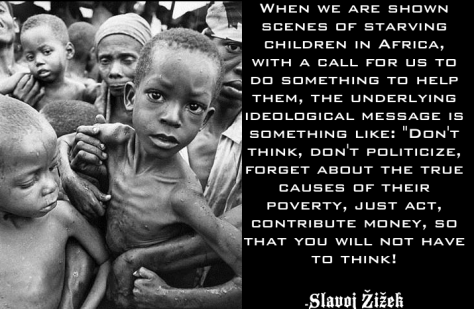





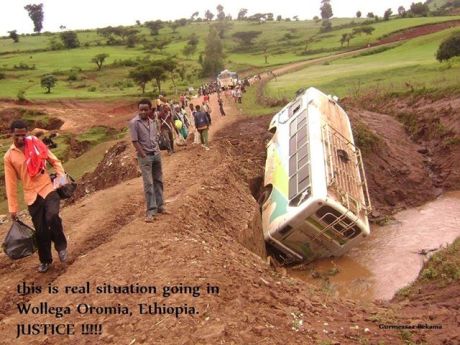

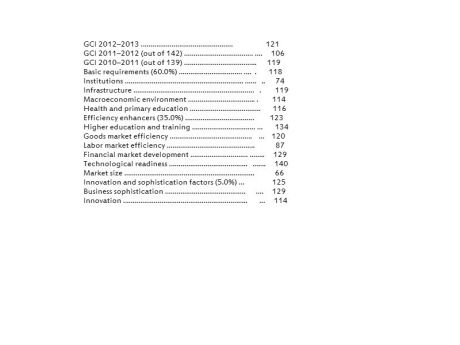


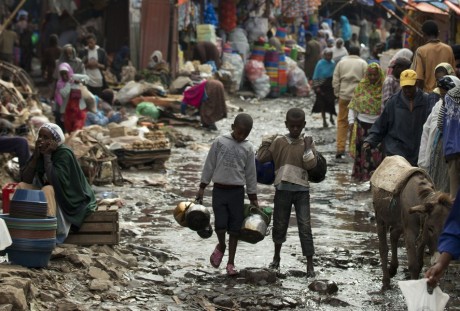


 Oromian Economist
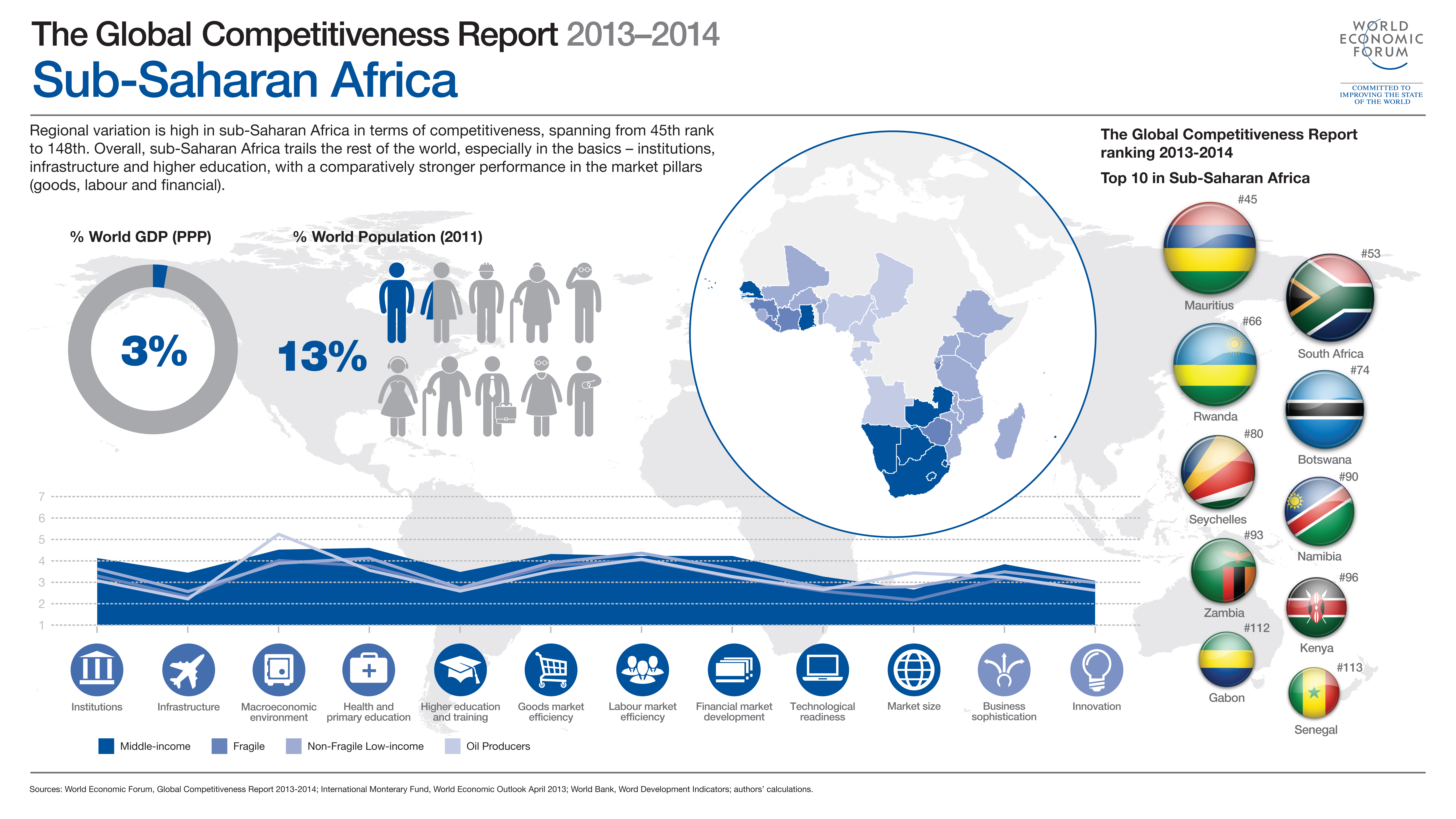
You must be logged in to post a comment.