Economic and development analysis: Perspectives on economics, society, development, freedom & social justice. Leading issues in Oromo, Oromia, Africa & world affairs. Oromo News. African News. world News. Views. Formerly Oromia Quarterly
Kenyan Government is Held Accountable for Supporting Ethiopia TPLF Dictatorship and Hunting Freedom Fighters
OLF Press ReleaseForeign assistance from foreign countries near and far has helped the Tigirean People’s Liberation Front (TPLF) government of Ethiopia to stay in power unjustly for the last 25 years. Unintentional or intentional, foreign assistance provided to Ethiopia, has made it difficult for the peoples of Ethiopia to free themselves from the imposed orders of the anti-democracy and anti-human rights TPLF regime of Ethiopia.Because of the current popular uprisings in many parts of the country, the TPLF Ethiopian regime is hysterically paranoid, desperate and callous. In the same way the regime has been protecting its power by force and by begging for foreign support. Now the regime is attempting to enlist the help of neighboring and distant states to save itself from collapsing or to prolong its life. The TPLF regime is using its experience of begging for food handouts also plan to stay in power by soliciting foreign assistance in order to weaken domestic protests, armed and unarmed oppositions. By responding to the sinister invitation from the Ethiopian regime, the Kenyan government has agreed to provide military support and has ordered a joint military operation against the Oromo Liberation Army of Southern Zone.Holding Kenya and the sovereignty of Kenya in contempt, the TPLF regime of Ethiopia has crossed borders into Kenya several times and has been inflicting massive damage on Kenyan citizens under the pretext of searching for OLF/OLA. The crimes Ethiopia’s TPLF army is committing in Kenya include, massacre of the Turkana people, abduction and refoulement of Oromo refugees by interfering and infiltrating Kenyan policy and security operatives. Some Kenyan police fulfilled the wishes of Ethiopian government by letting it avoid responsibility for engaging in wanton criminal activities. The fact that the Kenyan government is entering into alliance once again with the Ethiopian regime by ignoring Ethiopia recurrent attacks against Kenyan civilians will make Kenyan people lose their respect and trust for their own government, which is continuously being treated as a puppet for Ethiopia dictatorship. Fulfilling the interests of the Ethiopian government at the expense of Kenyan interest amounts to complicity in the crimes against humanity being committed by TPLF regime inside Ethiopia and in Kenya’s own territory.
By enlisting the assistance of the Kenyan government, the TPLF regime and the Kenyan government have finalized plans to launch a campaign of attacks against the OLA operating in the south. It has been known that Kenya is planning to participate in this anti-OLA campaign by mobilizing its Special Forces unit GSU (General Service Unit), and its infantry (Kenyan Defense Force) and specially KA1 to take action in Moyale area across the border. There is no doubt that Kenyans citizens opposing the action of Ethiopia totalitarian regime and Oromo refugees are going to be the groups that are going to be the most hurt by Kenya’s blind support for TPLF. This military action by the two forces is not new.
Despite the search and joint operation conducted by Kenyan army and Ethiopia regime military repeatedly before, it has been impossible to stop OLF activities in the south. And it is meaningless if it is thought to reverse the ongoing Oromia wide struggle to uproot the TPLF brutal regime once for all.
Like many failed joint past campaigns, there is no doubt that this campaign is also going to fail again. We believe that it’s clear to everyone at this juncture that as long as the Oromo questions ofbilisummaa (freedom) are not answered, the Oromo liberation struggle will not be contained.
The OLF strongly condemns military, security and other forms of assistance the Kenyan government provides to Ethiopia’s tyrannical regime. Because these acts target freedom fighters struggling for the just cause of their people and because it will contribute to depriving the Oromo of freedom and to perpetuating dictatorship and slavery for the majority, the OLF again strongly asks the Kenyan government to stop providing assistance to the Ethiopian regime. Kenya should not be fighting a proxy war in which it has no stakes just to prolong the life of a dictatorial regime of Ethiopia.
Kenya’s government’s participation in wars planned by Ethiopia has no use except expanding the conflict into a regional conflict. It is possible to learn from the long history of the Oromo people that the Oromo have practiced peaceful relations, respect, love and mutual co-existence with neighboring peoples. Violating this long history/code of brotherhood/ good neighborliness, the role of the Kenyan government should not be one of being a proxy war monger on behalf of the TPLF regime that is staggering to collapse because of concerted and unstoppable popular movements at home. The OLF would like to remind Kenya that it will be responsible for perpetuating dictatorship and injustice and slavery against the Oromo people in Oromia and Ethiopia if it proceeds with this an unwelcome alliance and proxy effort with the fragile military regime of Ethiopia. Kenya will be responsible for all the damages this unholy alliance will inflict on the Oromo people and the Oromo national liberation struggle. Kenya should not interfere in the domestic political affairs of Ethiopia by picking Ethiopia’s regime’s side against the will of the Kenyan people who would want a respected and sovereign Kenya.
We call on the Kenyan people to confront and protest repeated unjust and illegal actions by their government, which will negatively impact the relationships between the peoples of Kenya and the Oromo people and others fighting for freedom from military dictatorship in Ethiopia. Kenyan people have the obligation to hold the Kenyan government accountable; they have the responsibility to object to continued Kenyan interference in the domestic affairs of its neighboring country. This actions will harm Kenyan people, Kenyan history and the relationship of Kenyans with their neighbors.
Beyond silently watching the Ethiopian government shed the bloods of the peoples of the Horn of Africa who struggle for their freedom every day, if the Horn of African countries silently watch the military support Kenya gives to Ethiopia regime, history will judge these governments. We appeal to regional governments to stop the Kenyan government for acting as a proxy warrior for Ethiopia in a conflict that does not concern Kenya and its peoples altogether.
Victory to the Oromo People!
Oromo Liberation Front
September 20, 2016
Billionaire businessman and philanthropist George Soros announced on Tuesday his intention to invest $500 million in startups, existing businesses and initiatives founded by migrants and refugees. In an essay for the Wall Street Journal, Soros criticized the “collective failure to develop and implement effective policies” to address the global migration crisis, and argued that although…
At night, Feyisa Lilesa and his friends hid in the farms to evade the security forces who were arresting people across the country. As a 15-year-old growing up in Oromia region, Lilesa says he was always aware that many of his fellow citizens didn’t approve of the government’s treatment. But the moment of awakening for…
The platonic ideal “Coming together is a beginning; keeping together is progress; working together is success.” —Henry Ford The practice In a lab in Dearborn, Michigan, Ford researchers, led by Mike Whitens and Ellen Lee, spend their days trying to determine whether the future of cars and trucks will be more like things grown in…
This is just sickening to hear what is coming out of Ethiopia. 16 years old Hailu Efram working as daily laborer in Dambi Dollo, Wallega, Oromia. He was shot by security forces. Kids run to his mom with bad news. She runs to see his lifeless body. She was carrying her daughter crying on her only son lifeless body.
He was working daily bringing home what he gets to feed his mother and younger sister. Security forces came and told this mother to stand on her sons dead body. They pointed gun at her daughter. She kneeled down crying not to shoot her daughter. She was beaten in her back with back of the their guns? She was on her knees begging this barbaric forces to spare her daughter.
The following are Oromo youths (Mohamamd Usmaan, Eebbaa Waaqjiraa, Kabbadaa Fayyisaa, Hailu Ephrem fi Ibsa Rundee) who were murdered by fascist Ethiopia’s regime in the 1st week of September 2016.
Our police sources said they witnessed 60 unidentified bodies in the compound. Hospital sources also confirmed that they have received over 60 bodies from Qilinto prison on Saturday.
All of the victims died from gunshot wounds. Their bodies were riddled with bullets.
Fire broke out at the Qilinto prison outside the capital Addis Ababa on Saturday sending a shockwave to the entire nation on the safety of several political prisoners held at the notorious dungeon. Prison sources said the fire was started as a cover up for the extrajudicial killings at the prison.
The majority were shot dead by snipers from the rooftop as they run away from the engulfing flames to save their lives. Some actually were shot and killed as they try to dowse the fire that broke out in one quarter of the maximum security prison
A visit by families of hundreds of prisoners at the various other prisons where the remaining prisoners were reportedly transferred were to no avail as security forces would not tell them if their loved ones were in those prisons.
A total of 50 bodies were reported at the Abiyot Hospital and the Defence Hospital. Some bodies were transferred from Abiyot Hospital to undisclosed location.
Some families of prisoners who went to the Qaliti prison on Monday run into the guards who work at Qilinto and asked them if their loved ones were alive and transferred there. The guards told them to come back after five days.
An estimated 3000 prisoners of conscience, mostly Oromo opposition figures and Ethiopian Muslims who demanded political and religious freedoms were being held at the notorious dungeon when fire broke out on Saturday and most of them are the political prisoners.
This is the third time in a span of short period when a prison filled with political prisoners catches fire. A prison in Gondar and Debretabor caught fire as the brutal forces of the TPLF shot at inmates who were trying to run away from the fire.
A fire that broke out at the Qaliti prison nine years ago killed at least 150 prisoners in November 2005.
Qilinto Prison Massacre Update: The death toll continue to raise. In addition to 22 bodies taken to Paulos hoospital, 13 death reported at Tor Hahloch Hospital and 14 at Police Hospital. Death reported among those taken to Turunesh Beijig hospital as well.
3 September 2016, fascist Ethiopia’s regime set Qilinto Prison on fire.
Partial list of Oromos that have been killed as a result of Excessive force by Ethiopian Government armed forces during Peacful demonstration on August 6,2016, Oromia, Ethiopia
Several people are reported to have been killed in various parts of the Amhara regional state in Northern Ethiopia, where an ongoing protest by the people is intensifying. The VOA Amharic service quoted a resident in Debarq yesterday that four people were killed when security officers fired live bullets at protesting civilians.
Over the last few days several reports on social media indicated a rising death toll following security crackdown against a stay-at-home protests in Bahir Dar and Gonder, the region’s capital and a historic city visited by thousands of tourists respectively. Pictures coming from many cities and towns in the region also show protesting citizens, burning tyres and roadblocks. Reports also indicate that up to 50 civilians were killed in the past one week only.
Tensions are on the rise following a statement given to state owned media by Prime Minister Hailemariam Desalegn in which he announced that he has ordered the Ethiopian National Defense Force (ENDF) to intervene to control the situation in the region, home to the second largest ethnic group in the country. In his speech PM Hailemariam blamed Ethiopia’s “outside enemies” for being the instigators to disrupt the country by providing “radicals with sacks full of money.” He further stated that the government will use “its full forces to bring the rule of law” into the region.
A day prior to PM Hailemariam’s statement, Sheger FM, a private radio based in Addis Abeba, reported that the regional state has requested a military intervention by the Federal government. Talking to the station, Nigusu Tilahun, the regional government’s Chief spokesperson, conceded that lives were lost in the recent protests but declined to give numbers. As a result of intensifying protests, the regional government requested the intervention of the federal army, Sheger FM quoted the spokesperson.
Pictures circulating around social media show heavy artillery moving towards the state capital Bahir Dar, 550 North of Addis Abeba, and the nearby town of Gondar where the recent wave of #Amharaprotests originated late last month. Addis Standard could not independently verify the authenticity of those pictures. Internet is shut off in the whole region while locals fear government sanctioned phone call monitoring.
In the last few days tens of thousands of citizens in several cities and towns in Gojam and Gonder areas of the region have come out to the streets to protest the government. In what many see as the ultimate test of the ruling EPRDF protesters are also showing solidarity with the #Oromoprotests which began in Nov. 2015.
In the weekend of 6-7 August region wide protests both in Amhara and Oromia regions were met by violent crackdown by security forces. It’s reported that more than 100 civilians were killed in that weekend only, according to Amnesty International. In Bahir Dar only, more than 30 people were killed when a security guard opened fire at protesters. The government disputes that number. The stay-at-home protests in Bahir and Gonder followed the deadliest weekend, however in the last few days that too turned violent when security forces began breaking into houses in an attempt to force citizens and businesses to stop the stay-at-home protests.
Roadblock in Bahir Dar. Photo: Social Media
Some reports claim that attacks against government institutions and party owned and affiliated businesses were witnessed in some cities and towns. There are also reports that young men and women are being arrested en mass by security forces.
#OromoProtests 30 August 2016: Arsi,Dodola, Gannata Haaraa, Oromia, 30 August 2016
Hagayya 30/8 bara 2016 Godina Arsii lixaa Aanaa dodolaa Qeerroon Ganda Gannata Haaraa bifa kanaan gaddaa ilmaan Oromoo dhumaniif kanneen mana hidhaa jiraniif gaddaa fi finxilaan dabarsan.
Motummaan nama nyaata wayyaneefi jala deemtu wayyanee Opdofi yoomillee hin jilbifannuu mirga kenyaaf ni falmanna haqa qabna ni moona injifannoon kan ummaata Oromoti jedhan.
#KonsoProtests 31 August 2016: The Konso people have maintained their protests against fascist TPLF Ethiopia’s regime.
Uuummanni saba koonsoo kan naannoo uummattoota kibbaatti argamu wayyaanee waliin walitti bu’aa jiru. Barana kan wayyaanee hin jibbine hin jiru.
RUELTY of TPLF
#OromoProtests 31 August 2016: You might recall the report about killing of 15 farmers in West Hararge, masala District Choma village over the last four days. You also remember reading how the military prevented people from burying the dead and helping the wounded. Today they are dressing body of dead civilians in military uniform and video taping it. They want to make fake documentary claiming they killed armed combatants.
Guyyaa hardhaa ilmaan Oromoo 15 Harargee Lixaa Aanaa Masalaa Araddaa Coommaa keessatti ajjeefaman san reeffa isaanii huccuu waraanaa offisuun fiilmii sobaatiif viidiyoo waraabaa jiran. Source: Jawar Mohammed
Frankfurter Allgemeine, Germany’s No 1 well respected newspaper, published a big feature story about Ethiopia and Oromo Protest. It is an in-depth reporting & published on page 3 of the newspaper.
Afar people protests, #AfarProtests 29 August 2016 and solidarty with #OromoProtests
De senaste månaderna har otaliga kvinnor, män och barn dött i Etiopien. Ännu fler har fängslats. Detta för att de valde att inte blunda för de orättvisor som pågår. Detta för att de valde att säga ifrån när människor behandlas illa. De senaste dagarna har Facebook fyllts av bilder som denna, människor som visar sin heder för alla de som inte längre är bland oss. Vi fotograferas med händerna korsade, en symbol för att om några av oss fängslas för att ha krävt att mänskliga rättigheter respekteras, är vi alla fängslade med dem! Vi måste säga ifrån när människor mister livet för att helt enkelt ha brytt sig om varandra! Låt oss fylla internet med bilder som denna. Tagga dem med #OromoProtestsoch #AmharaRistance. Det visar att du står med Oromofolket, Amharafolket och alla etiopiens folk som i årtionden förtryckts av den etiopiska regimen. Visa att du bryr dig. Om vi alla gör något litet blir det tillsammans något stort. Tack! By Melody Sundberg
#Amhara Protests in Gojjam, 28 August 2016, Road closure in action in Kosobar, Gojam and also they are in solidarity with #OromoProtests. More anti TPLF protests are going on in various cities and towns in Gojjam and Gonder.
Ethiotelecom has lost at least 30 million birr in potential revenue as a result of yesterday’s hacking that enabled customers to make free call domestically and international. The company is now trying to recover its loss by billing customers although it mostly provides prepaid service. Looking at the bills it is been sending, the loss could be way higher than the above estimate.
Oromia: Athletic nation Report: Short poem (Rio) about Oromo Olympian Fayyisaa Lalisaa, the world icon of #OromoProtests (the call for social justice). Oromian EconomistAugust 23, 2016
Oromia: Athletic Nation Reports: Crowdfunding campaign for #OromoProtests world icon, Rio 2016 Olympian, Fayyisaa Lalisaa has been exceeding the target. Dirmannan Goota Oromoo Fayyisaa Lalisaaf ta’aa jiru hamma abdatamee oli ta’aa jira. Oromian EconomistAugust 22, 2016
Oromia: Athletic Nation Report: #Rio2016 Olympic Marathon: Oromo athlete Fayyisaa Lalisaa has demonstrated his Solidarity to #OromoProtests as he wins silver medal. Oromian Economist August 21, 2016
(Yahoo Sports) — With the eyes of the world upon him, Ethiopian marathonerFeyisa Lilesaused the stage of Sunday’s Olympic marathon to daringly protest his own government back home.
As he neared the finish line and a silver medal, Lilesa raised his arms to form an ‘X’. The gesture is a peaceful protest made by the Oromo people, the largest ethnic group in Ethiopia and one that is facing a brutal response to widespread protests that began late last year.
Human Rights Watch estimated in June that 400 people have been killed and thousands more injured as the government attempted to stop the estimated 500 protests that the Oromo people staged to draw attention to systemic persecution by the govermnent.
Lilesa is from Oromia, which is home to a large majority of the country’s 35 million Oromo. He didn’t back down from the protest after the race either, flashing the sign for cameras as a press conference and pledging to do it again during Sunday night’s closing ceremony.
Rule 50 of the Olympic charter bans political displays or protests and the American duo of Tommie Smith and John Carlos was famously stripped of its medals after the pair flashed the black power salute on the medal stand at the 1968 Summer Games.
Lilesa, however, has bigger things to worry about than just losing a medal as such dissent puts his life in real danger if he returns to Ethiopia.
Columbia University students in USA are in solidarity with #OromoProtests
The U.S. State Department issued a travel alert for Ethiopia on Friday 19 August 2016 over anti-government protests.
“Protests are likely to continue, and could spread to other parts of the country, including the capital, Addis Ababa,” the State Department said in a statement. The embassy said disruptions and internet services have hampered its ability to communicate with American citizens.
Hagayya 19,2016 Gguyyoota lamaa asitti godinaalee Oromiyaa hundarraa Qeerroon hidhamaa jiru. Sababa addaa hin qabu gochi addaas hin jiru garuu Bilisummaan waan dhiyateef wayyaaneen kufaatii ishees waan mirkaneessiteef jecha uummata oromoo hidhaatti guuruu murteesse. Kaan tarkaanfii ajjechaan diinni uummata oromoo irratti aggaamee jiru biraa deebihaa kan hin jirrree fi bakka uummanni fi iji namaas hin arginetti ilmaan Oromoo ajjeessuunis Oromiyaa keessa magaalota tokko tokkotti kan mul’ataa jiru tahuunis Qeerroon gabaasaa jira. kun uummata Oromoof haaraa tahuu baatus FXG oromiyaa keessatti isa xumuraa itti fufuu irraan amma hidhaan daran jabaatee jira.
Godina Qellem ona garagaraa irraa Qeerroon gabaasaa jiruun fakkeenyaaf Anfilloo irraa namotni 15 ol tahan kaleessuma ukkaamfamuu akkasuma
Jimmaa Horroo irraa
– Dargaggoo Hasan Jamaal
– Dargaggoo Bulchaa Qalbeessaa
– Dargaggoo Tizaazuu Akkattii fi
– Dargaggoo Qalbeessaa Tolasaa kan jedhaman ukkaamfamuun gabaafamee jira.
Dabalataan onuma kana manneen jireenya namoota 4 WBO jiraachisu jechuun humna waraana Wayyaaneen sakatta’amuu irraa eegamaa jiraachuun kan gabaafame
– Mana jireenyaa Lataa Wiirtuu
– Mana jireenyaa Caalii Ganjoosaa
– Mana jireenyaa Yaadasaa Danuu fi
– Mana jireeenyaa Solomoon Gurichoo
Kan jedhaman humna agaaziitiin eegamaa jira. Akkasuma ona Gaa’oo Qeebbee, Gidaamii fi Begii keessaa ijoolleen dargaggeyyiin hidhaatti guuramaa jiru. Kun godina oromiyaa maratti akka tahes Qeerroon gabaasaa jira.
Godina Shaggar kaabaa, shagger Bahaa fi shaggar Lixaa Qeerroon hidhamuun daran jabaatee jira. uummannis hidhaanii fi ajjechan Bilisummaa nun dhorku nu doorsisuun FXG hin hambisu jechuun dhaadannoo isaa itti fufee jira. Hidhamtootni hedduun bakka itti hidhaman irraa bakka biroottis jijjiiramuudhaan hedduun namootaan bakka buuteen isaanii dhabamaa jira. Kanuma keessatti FXG ammas yeroo dhumaa kanaaf kan wayyaanee aangoo isheetti xumura taasisu itti fufuun uummannis gibira diduun, walgahiin wayyaaneen oromiyaa magaalotaa fi godinaalee adda addaatti gaggeessuuf uummata mariisisuuf deemtus bakka hundatti gara FXGtti jijjiramuu fi feshelatuun Wayyaanee isa dhumaa abdii kutachiisuudhaan bifa naasuutiin uummata hidhaatti guuruu murteeffachuun beekameera.
#OromoProtests, Black Lion Medical school students in Finfinnee, the capital, Oromia, protesting fascist Ethiopia’s regime mass killings on 18 August 2016.
Hagayya 14,2016 Sochiin Warraaqsaa Biyyoolessaa Oromiyaa FXG daran jabaachuun Walqabatee Addaatti Magaalootni Gurguddoo Oromiyaa fi Magaalotni Oromiyaa naannawaa Finfinneetti argaman homaa waraana wayyaaneen shororkeeffaama jiru.
Sochiin warraaqsaa biyyoolessaa Oromiyaa utuu wal irraa hin citiin ji’oota 8 guutuu gaggeeffamaa jiruun motummaan abbaa irree raafama ulfaata keessa seenuun kasaaraa Siyaasaa , Dinagdee fi hawaasummaa ulfaataa keessa seenee kan jiru abbaan Irree Wayyaanee EPRDF/TPLF ummata Oromoo Uummata Sivilii mirgaa fi haqa dhugaa isaaf falmatu irratti hoomaa waraanaa bobbaasuun uummata shororkeessuu ittuma fufe jira . Magaalootni Oromiyaa Naannawaa Finfinnee Sulultaa, Burraayyuu, Sabbataa, Holotaa, Aqaaqii Qaallittii, Duukkam, Galaan bishooftuu, Moojoo, Adaamaa, Laga Xaafoo laga daadhii fi Sandaafaa Hoomoo waraanaan shororkeeffamaa kan jiran Yoota’uu, Oromiyaan Bulchiinsa Waraana Wayyaanee Komand post ifatti labsiin jala erga galfamtee ji’oota 8 oli lakkoofsisaa kan jiru. Uummatni Oromoo fi goototni dargaggootni Qeerroon Oromoo soda waraanaa gabrummaaf harka akka hin kennineefi hanga gaaffiin mirga abbaa Biyyummaa uummata Oromoo deebii argatutti warraaqsaa irraa duubatti akka hin deebine diinaaf mirkaneessan.
Warraaqsii Biyyoolessaa Oromiyaa FXG Gaaffiin mirga abbaa biyyummaa haalaa caalatti mootummaa wayyaanee kasaaraa guddaa keessa galchuu danda’uu fi aangoo irraa qaarisuu danda’uun jabaatee rogaa hundaan kan itti fufu malee shororkeessa waraana wayyaanee fi hidhaa jumlaa, ajjeechaa duguginsa sanyii wayyaaneen rawwachaa jirtuun kan hin dhaabbatne ta’uu Qeerroon bilisummaa Oromoo hubachiisa.
A massive deployment of police in Ethiopia’s restive Oromo and Amhara regions prevented fresh anti-government protests over the weekend, an opposition leader said Monday. #OromoProtests 15 August 2016.
Aljazeera Inside Story – What is triggering Ethiopia’s unrest?
August 14, 2016 in
Calls for an international investigation in Ethiopia have surfaced after more than 100 people were killed in demonstrations.It is a conflict that has led to 400 deaths since November, 100 of them in the last week alone, according to human rights groups.The Ethiopian government is cracking down on ethnic Oromos and Amharas, who are calling for political reforms.Human rights groups have called the reponse ruthless. And the United Nations wants to send international observers to investigate.Ethiopia has denied that request, saying it alone is responsible for the security of its citizens. But what can be done to ensure the Ethiopian government respects human rights?Presenter: Folly Bah ThibaultGuests:Getachew Reda – Ethiopian communications affairs minister.Felix Horne – Ethiopia reseracher for Human Rights Watch.Ezekiel Gebissa – Profesor of History and African studies at Kettering University.- Subscribe to our channel: http://aje.io/AJSubscribe– Follow us on Twitter:https://twitter.com/AJEnglish– Find us on Facebook:https://www.facebook.com/aljazeera– Check our website: http://www.aljazeera.com
#OromOroprotests 14 August 2016: Walfalmii mooraa OPDO keessatti deemaa jiru kam miliiqee saba gahe:
#OromoProtests: A candlelight vigil in in front of The White House in honor of innocent peaceful protesters -brutally gunned down in cold blood by Ethiopian government. 12 August 2016
“DHIIGI MUCAA KOOTII DHANGALA’EE HIN HAFU. OROMIYAAN NI BILISOOMTI!” :AKEEKA UMMATNI OROMOO BAKKAAN GAHUUF MURTEEFFATE.
Fascist Ethiopia’s regime’s detaining and torturing Oromo children.
#OromoProtests 13 August 2016: Children make up a third of the protesters jailed in connection with Grand #OromoProtests. This photo was taken at Iyasu IV prison in Gara Mulata, East Hararge. (The former emperor was jailed there after loosing power to Hailesilassie)
Ijoollee Oromoo kan Waajjira poolisii magaala Burrayyuutti hidhamanii darara hamaan irra ga’aa jiru irraa dhaamsa nu gahe. I#OromoProtests 12 August 2016.
This is martyred Oromo teenager girl Mamiituu Hirphaa who was killed by cruel fascist Ethiopia’s regime Agazi forces in Ambo town, West Shawa, Oromia on 6 August 2016, Grand #OromoProtests
Kun wareegamtuu keenya Maammituu Hirphaa, kan godina Shawaa Lixaa, magaalaa Amboo keessatti hiriira guddaa Oromoo irratti Hagayya 6 bara 2016 wararana Wayyaaneen wareegamte.
Mammituu intala sabboontuu otuu mirga saba Oromoof falmituu wareegamte. Gootota Oromoo kumaatamaa wajjin nagaan nuuf boqodhu!
Qabsoon hanga bilisummaatti itti fufa!!
Rabbi lubbuu ishii haa qananiisu.
#OromoProtests, a determination of an Oromo man, 80 years old confronting fascist Ethiopia’s regime, Agazi forces, Arsi, Oromia, 12 August 2016
Grand#OromoProtests: POWERFUL!! A woman takes the stage during saturday protest in Dallo Manna ( Bale) moves the crowd to a higher spirit of resistance.
Hidhamuun nu gaya
Ajjeefamuun nu gaya
Oromiyaa waraanni hin bulhu
oromiyaan bulchiinsa ofiitin bulti
Grand #OromoProtests 7 August 2016 in Amboo Continues:Guyyaa 07,08,2016 Oduu oromiyaa magaalaa Amboo irraa
Magaalii Amboo kaleessaa irraa kaassee hangaa ammaatti raafama guddaa keessaa jirtii ,finciili uummaata har’as itti fufee oole jedhu jirraatoon ,poolisiin oromiyaa fi poolisiin fedderaala magaalaa keessaa hin muldhatani, magaalaa kan dhunfatee jiruu raayyaa ittisaa biyyaa(agaaze) yoo ta’uu isaannis irraa caalii saba Tigiree afaan Tigirfaa dubbatani,nama argani hundaa daa’ima,jarsaa fi jartii osoo hin jedhiini mana cabsanii reeba fi hidhaa jiruu .
hangaa ammaatti sagaleen dhukaasa magaalaa keessaa dhaga’amaa jiraa ,kan hidhaa jiruuf kan du’ee addaan baafachuun hin danda’aminee jedhuu.
Finicilaa kaleessaa keessaatti magaaluma ambootti mucaa waggaa kudha sadii (13) hin caalee alaabaa abo qofaa waan qabatee deema tureef Agaazen konkolaatan ari’anii irraa baasuun gara jabbinaan ajjeesaniiru jedhuu warrii ijaan argan.
Grand #OromoProtests, Grand #OromoProtests full scale Military massacre has been conducted by Ethiopia’s fascsit regimei n Naqamte, East Walaga. 6 August 2016 pcture.
Similar genocidal mass killings all over Oromia (in town and rurals of Hararghe, Shaggar, Finfinnee, Arsi, Baalee, Boranaa, Gujii, Walloo, Wambaraa, Jimmaa and Eluu Abbaa Booraa).
Grand #OromoProtests on August 6, 2016, Norwegian Embassy in Finfinnee, travel restrictions
BBC: Oromo community calls for more protests in Ethiopia
Emmanuel Igunza
BBC Africa, Nairobi
Posted at11:43
Activists from Ethiopia’s largest ethnic group, the Oromo, have called for more anti-government protests this weekend, days after thousands of demonstrators took to the streets in the northern city of Gondar.
Activists say that hundreds have been killed in a security crackdown
They say they will hold countrywide protests against what they describe as continued killings and other abuses by the authorities.
In the latest incident earlier this week, at least six people were allegedly shot dead by police in the eastern town of Awaday.
Prime minister Hailemariam Desalegn warned on Tuesday that Ethiopia was sliding towards ethnic conflict similar to that in neighbouring countries.
Ethiopia’s second largest ethnic group, the Amhara, held a large demonstration last Sunday in Gondar.
The ruling Ethiopian People’s Revolutionary Democratic Front has been in power since 1991 and won all seats in parliament in last year’s elections.
#OromoProtests, Australian Oromo Community solidarity rally in front of Austerelian Parliament, 17 March 2016
Canberra delegate, Australian Oromo Communities leaders and Oromo activists
#OromoProtests, South Africa, Oromo global solidarity rally, 14 March 2016
#OromoProtests – Global Solidarity Rally, March 11, 2016
March 11, 2016In North America, protest rallies took place in Washington, DC., Maryland and Virginia; Utah; USA Los Angeles, California; Minneapolis/St. Paul, Minnesota; Lansing, Michigan; Seattle, Washington; Sioux Falls, South Dakota; Syracuse, New York; Phoenix, Arizona; Raleigh, North Carolina; Saskatoon, Calgary, Toronto, Canada and other cities.In Europe, rallies took place in Berlin, Germany; Brussels, Belgium; Rome, Italy; Oslo, Norway; Stockholm, Sweden; Paris, France; London, United Kingdom; and Berne, Switzerland.
Worship at San Francisco Theological Seminary in Solidarity with OromoProtests. Most of people you see here are local church leaders, Pastor and Professors. 10 March 2016.
#OromoProtests global solidarity rally organised by the Australian Oromo community in Melbourne, 10 March 2016
#OromoProtests Global solidarity rally in Oslo, Norway, 11 March 2016.
#OromoProtests Global solidarity rally in Winnipeg, Canada , 11 March 2016.
#OromoProtests: The Oromo Solidarity Project Concordia University, Montreal ( Canada) March 3, 2016
Star Tribune: Minnesota’s Oromo community rallied at the State Capitol to protest treatment at the hands of the Ethiopian government. February 29, 2016
News Fulton County (#OromoProtests Global Rally) : Oromians in SA protest in Pretoria over killings at home. Demonstrators say government scheme to expand capital Addis Ababa endangers farmers
Thousands of Oromo in North America Gathered in New York in front of the UN to Protest against the Brutal & Fascist TPLF Regime in Ethiopia
Ayyaantuu.net | January 15, 2016
Thousands of Oromo protesters and supporters of Oromo struggle turned out in masse, in front of the United Nations (UN) building in New York, to oppose the brutal repression in Ethiopia. The protesters demanded an immediate investigation into the indiscriminate killing of peaceful demonstrators in Oromia region of Ethiopia. The brutal repression by the authority against the Oromo demonstrators has resulted in the killing of well over 140 people and wounding thousands of others.
Seattle: Protests over civil rights abuses in Ethiopia: The protesters, many of them members of the East African community — want Washington senators to pressure Ethiopian leaders or cut U.S. aid in the wake of the ongoing mass killings that they say are targeting ethnic Oromos in Ethiopia. #OromoProtests 29 December 2015
(Times of Malta) — Members of the Oromo community in Malta this morning held a protest in Valletta over the treatment of Oromo people in Ethiopia.
The group of about 30, holding placards and many with chains around their arms and hands, walked up Republic Street to the new Parliament, calling on the Ethiopian government to treat their people better.
According to international media, some 75 protesters were killed and hundreds injured in month-long protests across Ethiopia.
Diaspora continues to expose crimes of Ethiopian government on Oromo protesters
#OromoProtests in Little Oromia (St Paul) in solidarity with #Oromo students in Oromia against TPLF Ethiopian tyrannic regime’s ethnic cleansing (master plan).
December 10, 2015
Yaa Oromo dhageefadhaa Oromo student being killed by Ethiopian dictator protest in St Paul(1)
Yaa Oromo dhageefadhaa Oromo student bing killed by Ethiopian dictator Protest in St Paul(2)
#OromoProtests in London in solidarity with #Oromo students in Oromia against TPLF Ethiopian tyrannic regime’s ethnic cleansing (master plan). Hiriira magaalaa Londonitti ta’e, Muddee 10 bara 2015.
Nairobi, Oromo Peaceful rally in solidarity with #OromoProtests in Oromia against TPLF Ethiopian regime’s ethnic cleansing (Master plan), December 10, 2015
TVOMT: Oromo Protest Saartuu Roraas fii Hiriira Toronto
#OromoProtests global solidarity rally, South Africa (Johannesburg), 10 Dec. 2015
Egypt: Oromo Peaceful rally in solidarity with #OromoProtests in Oromia against TPLF Ethiopian regime’s ethnic cleansing (Master plan), December 10, 2015
Sweden, Oromo Peaceful rally in solidarity with #OromoProtests in Oromia against TPLF Ethiopian regime’s ethnic cleansing (Master plan), December 10, 2015
Germany, Oromo Peaceful rally in solidarity with #OromoProtests in Oromia against TPLF Ethiopian regime’s ethnic cleansing (Master plan), December 10, 2015
Join the global demonstration to stand with the Oromo Students and denounce the violent actions of the Ethiopian government on innocent and peaceful protesters who simply oppose the displacement of millions of Oromo farmers. We call on the international media to break the silence on the massive crackdown on the protesters, its unjust to keep quiet while scores are being killed on school grounds and university campuses across Oromia by Ethiopian security forces, the same regime that receives millions of dollars from UK, US and the EU. #OromoProtests, #Justice for Oromo students#NO Democracy No AID!
CITY: BERLIN, GERMANY, EU DATE/TIME: December 16, 2015 | STARTING at 9am VENUE: At Willy-Brandt-Straße 1, 10557 Berlin, Germany LINK TO FLYER – http://goo.gl/WAbICA
—–
—–
UPCOMING SOLIDARITY RALLIES FOR DECEMBER 17, 2015
—–
—–
CITY: ATLANTA, GEORGIA, U.S.A. DATE/TIME: December 17, 2015 | STARTING at 11am VENUE: In Front of the Georgia State Capitol Building (Capitol Avenue SW) LINK TO FLYER – http://goo.gl/OIbNqr
—–
CITY: BOSTON, MASSACHUSETTS, U.S.A. DATE/TIME: December 17, 2015 | STARTING at 9am VENUE: In Front of the Massachusetts State House LINK TO FLYER – N/A
—–
CITY: CHICAGO, ILLINOIS, U.S.A. DATE/TIME: December 17, 2015 | STARTING at 9am VENUE: In Front of the John C. Kluczynski Federal Building (230 S Dearborn St, Chicago, IL 60604) LINK TO FLYER – N/A
—–
CITY: COLUMBUS/CINCINNATI, OHIO, U.S.A. DATE/TIME: December 17, 2015 | STARTING at 12pm VENUE: In Front of the Ohio State House in Columbus, Ohio LINK TO FLYER – N/A
—–
CITY: DENVER, COLORADO, U.S.A. DATE/TIME: December 17, 2015 | STARTING at 7am VENUE: In Front of the Colorado State Capitol Building (City Park; 2001 Colorado Blvd – West Steps) LINK TO FLYER – http://goo.gl/xL4Ffm
—–
CITY: LANSING, MICHIGAN, U.S.A. DATE/TIME: December 17, 2015 | STARTING at 9:30am VENUE: In Front of the Michigan State Capitol Building LINK TO FLYER – N/A
—–
CITY: OAKLAND CITY, CALIFORNIA, U.S.A. DATE/TIME: December 17, 2015 | STARTING at 9am VENUE: In Front of the Federal Government Building/Office LINK TO FLYER – N/A
—–
CITY: PHOENIX, ARIZONA, U.S.A. DATE/TIME: December 17, 2015 | STARTING at 9am VENUE: In Front of the Arizona State Capitol Building LINK TO FLYER – http://goo.gl/fPFOJk
—–
—–
UPCOMING SOLIDARITY RALLIES FOR DECEMBER 18, 2015
—–
—–
CITY: BERLIN, GERMANY, EU DATE/TIME: December 18, 2015 | STARTING at 10am VENUE: At Willy-Brandt-Straße 1, 10557 Berlin, Germany [and Berlin Ethiopian Embassy at 11am – Boothstraße 20A, 12207 Berlin] LINK TO FLYER – http://goo.gl/WAbICA
—–
—–
UPCOMING SOLIDARITY RALLIES FOR DECEMBER 19, 2015
—–
—–
CITY: BERGEN, NORWAY, EU DATE/TIME: December 19, 2015 | STARTING at 1pm VENUE: ? LINK TO FLYER – http://goo.gl/t3apt4
—–
CITY: TROMSØ, NORWAY, EU DATE/TIME: December 19, 2015 | STARTING at 12pm VENUE: Torgsenteret, Storgata 9008 Tromsø LINK TO FLYER – http://goo.gl/urzmPi
The following is the schedule of the Oromo Diaspora Solidarity Rallies; Oromo Diaspora stands with Oromo protests against the Addis Ababa Master Plan; this schedule will be frequently updated to include all rallies as much as possible.
—–
UPCOMING SOLIDARITY RALLIES FOR DECEMBER 10, 2015
—–
CITY: SEATTLE, WASHINGTON, U.S.A. DATE/TIME: December 10, 2015 | 10am VENUE: To be announced later LINK TO FLYER – N/A
—–
CITY: FRANKFURT, GERMANY DATE/TIME: December 10, 2015 | FROM 9am to 3pm VENUE: Frankfurt Hauptbahnhof LINK TO FLYER – http://goo.gl/k434KG
—–
CITY: OSLO, NORWAY DATE/TIME: December 10, 2015 | FROM 10am to 2pm VENUE: Oslo Central Station LINK TO FLYER – http://goo.gl/KY9R7b
—–
CITY: LONDON, UNITED KINGDOM DATE/TIME: December 10, 2015 | FROM 12pm to 4:30pm VENUE: UK Parliament Square (SW1P 3BD) LINK TO FLYER – http://goo.gl/S8pc6U
—–
CITY: ST. PAUL, MINNESOTA, U.S.A. DATE/TIME: December 10, 2015 | FROM 12pm VENUE: Minnesota State Capitol Building LINK TO FLYER – http://goo.gl/xuygli
—–
INSPIRING SPEECHES FROM THE MAY-2014’s OROMO DIASPORA SOLIDARITY RALLY IN SEATTLE | #OromoProtests
The following is a statement from the Oromo Communities’ Association of North America (OCA-NA).
—-
Dear Oromo Communities and Friends:
The Board and Executive Committee of the Oromo Communities’ Association of North America (OCA-NA) are extremely concerned about the current Ethiopian government’s attempt to implement the controversial Master Plan at any cost, with aggressive crackdown on student demonstrators and peaceful protesters. We believe that we have a collective obligation to support the students who are brutally attacked, and Oromo farmers who are being evicted from their lands in the name development and urban planning. We know that many of you and your communities are planning to stage demonstrations, and organizing for sustained action in support of our people.
To facilitate this effort, we recommend that that each community chooses one of the following days for their demonstrations.
– Thursday, December 10, 2015
– Thursday, December 17, 2015
– Wednesday, December 23, 2015
– Wednesday, December 30, 2015
– Thursday, January 7, 2016
If necessary, additional dates will be announced later.
In your planning, please use the following suggestions:
1. Set your rally in your area or coordinate with nearby communities;
2. Contact your Congressional Representatives’ and Senators’ Offices (both State and U.S.) and alert them about the Oromo rallies ahead of the scheduled event;
3. Send press releases to all media;
4. Create, if you do not have already, fundraising committees to support Oromo students;
5. After the event, assess your activities and provide us with feedback for future improvement.
Remember, a one-time activity alone will not solve our historic problems, or deter a determined and brutal government from displacing peaceful people and destroying great nations like the Oromia. Organization, careful planning and sustained actions are vital for the ultimate success of our people. So, let us put our minor differences aside and focus on the great danger that we are all facing.
OCA-NA calls on all Oromo communities, civic and professional organizations in Diaspora to participate in the scheduled demonstrations. We also call on all Oromo political organizations to put their tactical and other differences aside and join Oromo communities in protest. We expect all Oromo political leaders to provide collective leadership and avert the looming danger for the Oromo people.
Our nation will rise again in victory.
History will be our witness.
Oromo Communities’ Association of North America (OCA-NA)
Support the victims of the Addis Ababa “Master Plan”
December 5, 2015Many of us have been following the Oromo students who have been demonstrating in all parts of Oromia, unequivocally rejecting the Addis Ababa (Finfinnee) “Master Plan”. As usual, the Ethiopian government opted to shed blood instead of responding the demands of the students that have been demonstrating peacefully.Based on our culture of helping fellow Oromos in thier time of sorrow, Macha-Tulama Association (MTA) hereby launches an online fund raising drive to support the families of those students who are killed by Ethiopian security forces across Oromia while peacefully protesting the “Master Plan”. We would like also to announce that MTA has allocated $1,000.00 U.S. dollars to support the victims and their families, and also to lead the fund raising effort.The fund will also be used to support students in their needs who are incarcerated for months in notorious gulags because of again protesting the Addis Ababa “Master Plan”. Please click on the“Donate“ button on our website – machatulama.org – and follow the instructions to contribute.It’s our plan that if sufficient funds are collected, MTA will reach out to the victims of the 2014 violence of the government.In the mean time, we would like to request for your help in gathering the following information and sending them to us via our Facebook message or our email – contact@machatulama.org:
Names of the students killed by the Ethiopian government security forces,
School grade or academic year and field of study if s/he is a university student,
Name of family members (at least two) to whom money can be sent and their telephone number,
Picture of the deceased student (if available), and
Age, place of birth, brief life history of the deceased if known
Please do not hesitate to contribute as much as you can. Every penny adds up and makes a difference in the lives of the victims!
Respectfully,
Macha-Tulama Association
Washington, D.C.
Related:-
Oromo Diaspora Mobilizes to Shine Spotlight on Protests in Oromia – Ethiopia
Ethiopians wait to fill water cans in February during the recent drought. With the return of the rains, however, have come flooding and disease — something the government is reluctant to discuss. (Aida Muluneh for The Washington Post)
ADDIS ABABA, ETHIOPIA — After going through its worst drought in 50 years, Ethiopia is again seeing rain. In fact, in some places, it’s falling too hard and has set off floods.
So while the number of people requiring food aid has dropped slightly from 10.2 million in January to 9.7 million, according to the latest figures, there is a new threat of disease in a population weakened by drought.
Measles, meningitis, malaria and scabies are on the rise. And most seriously, there has been an outbreak of something mysteriously called “AWD,” according to the Humanitarian Requirements Document, issued by the government and humanitarian agencies on Aug. 13.
“There is a high risk that AWD can spread to all regions with high speed as there is a frequent population movement between Addis Ababa and other regions,” it warned.
The letters stand for acute watery diarrhea. It is a potentially fatal condition caused by water infected with the vibrio cholera bacterium. Everywhere else in the world it is simply called cholera.
But not in Ethiopia, where international humanitarian organizations privately admit that they are only allowed to call it AWD and are not permitted to publish the number of people affected.
The government is apparently concerned about the international impact if news of a significant cholera outbreak were to get out, even though the disease is not unusual in East Africa.
This means that, hypothetically, when refugees from South Sudan with cholera flee across the border into Ethiopia, they suddenly have AWD instead.
In a similar manner, exactly one year ago, when aid organizations started sounding the alarm bells over the failed rains, government officials were divided over whether they would call it a drought and appeal for international aid.
Police break up anti-government protest in Ethiopian capital
Play Video0:57
Hundreds of protesters on Saturday clashed with police in Ethiopia’s capital Addis Ababa after campaigners called for nationwide protests due to what they say is an unfair distribution of wealth in the country. (Reuters)
The narrative for Ethiopia in 2015 was a successful nation with double-digit growth, and the government did not want to bring back memories of the 1980s drought that killed hundreds of thousands and left the country forever associated with famine.
“We don’t use the f-word,” explained an aid worker to me back in September, referring to famine.
Like many of its neighbors in the region, Ethiopia has some issues with freedom of expression and is very keen about how it is perceived abroad. While the country has many developmental successes to celebrate, its current sensitivity suggests it will be some time before this close U.S. ally resembles the democracy it has long claimed to be.
Ultimately, the government recognized there was a drought and made an international appeal for aid. The systems put into place over the years prevented the drought from turning into a humanitarian catastrophe — for which the country has earned praise from its international partners.
In the same manner, even though it doesn’t call it cholera, the government is still waging a vigorous campaign to educate people on how to avoid AWD, by boiling water and washing their hands.
Yet this sensitivity to bad news extends to the economic realm as well. Critics have often criticized Ethiopia’s decade of reported strong growth as being the product of cooked numbers. The government does seem to produce rosier figures than international institutions.
After the drought, the International Monetary Fund predicted in Aprilthat growth would drop from 10.2 percent in 2015 to just 4.5 percent in 2016.
Prime Minister Hailemariam Desalegn, maintained, however, that growth would be a robust 8.5 percent, despite the falling agriculture productivity and decreased export earnings.
In the political realm, news of unrest and protests is suppressed. During a weekend of demonstrations on Aug. 6 and 7, the Internet was cut, making it difficult to find out what happened.
Human rights organizations, opposition parties and media tried to piece together the toll from the deadly demonstrations, which according to Amnesty International may have been up to 100.
The United Nations has called for international observers to carry out an investigation in the affected regions, which the government has strongly rejected even as it has dismissed estimates of casualties without providing any of its own.
“That is one of the factors we are struggling against with this government, the blockade of information,” complained Beyene Petros, the chairman of a coalition of opposition parties. “Journalists cannot go and verify. We cannot do that.”
Local journalists are heavily constrained, and as Felix Horne of Human Rights Watch points out, Ethiopia is one of the biggest jailers of journalists on the continent.
“Limitations on independent media, jamming of television and radio signals, and recent blocking of social media all point to a government afraid to allow its citizens access to independent information,” he said.
Foreign journalists do not fare much better, especially if they attempt to venture out of the capital to do their reporting.
In March, the New York Times and Bloomberg correspondents were detained by police while trying to report on the disturbances in the Oromo Region.
They were sent back to Addis Ababa and held overnight in a local prison before being interrogated and released.
In a similar fashion, a television crew with American Public Broadcasting Service was detained on Aug. 8 south of the capital trying to do a story on the drought conditions.
They and their Ethiopian fixer — an accredited journalist in her own right — were released after 24 hours, and they were told not to do any reporting outside of Addis.
In both cases the journalists were all accredited by the Government Communication Affairs Office, with credentials that are supposed to extend the breadth of the country but in practice are widely ignored by local officials.
The government spokesman, Getachew Reda, has dismissed the allegations about the information crackdown in the country and in recent appearances on the Al Jazeera network he maintained that there are no obstacles to information in Ethiopia.
“This country is open for business, it’s open for the international community, people have every right to collect whatever information they want,” he said.
How the Ethiopia protests were stifled by a coordinated internet shutdown
Guartz, 14 August 2016
Nearly 100 deaths and thousands of arrests have been reported in Ethiopia over the week, as part of protests against the marginalization and persecution of the Oromos and Amharas, Ethiopia’s two largest ethnic groups. But the attacks and arrests may not have been the only forms of retribution carried out by the Ethiopian government in its crackdown against protesters.
Last weekend, the internet was reportedly shut down in the country.
In an attempt to understand whether the internet was in fact shut down, we looked at some public sources of data that contain information about internet traffic. Such data provides strong indicators that the internet was most likely shut down during the Ethiopian protests last weekend, though it remains unclear if this occurred in all regions and/or on all types of networks across the country.
Ethiopian protests
Ongoing protests have been carried out by Ethiopia’s Oromo people since November, marking one of the most significant political developments in Ethiopia in recent years. These protests were sparked by the introduction of the Addis Ababa City Integrated Master Plan, which aims to expand the territorial limits of the country’s capital into neighboring Oromo towns, threatening to displace millions of Oromo farmers and bring the Oromo-dominated region under the Tigray-led federal government.
The unprecedented wave of protests has resulted in more than 400 deaths since November, according to a recent Human Rights Watch report.
Protesters relied on the internet to plan and mobilize so this may have prompted the Ethiopian government to pull the plug.
More protests sprung up in the Amhara regional state, with protesters requesting political reforms and specifically, the Welkait community demanding that ancestral land currently administered by the Tigray regional state be moved into the neighboring Amhara region.
The new-found unity between the two historically antagonistic communities of the Oromo and Amharas against a common adversary, the TPLF-led government, seems to have raised the tension in the country. The security forces response has been extreme, with observers comparing it to the 2005 post-election violence where nearly 200 people were killed. This time though, at least 30 people were reportedly killed in the Amhara region in one day alone.
Internet shutdown
Protesters relied on the internet to plan, mobilize and coordinate with each other and this may have prompted the Ethiopian government to pull the plug on the internet even before the planned protests started.
But this is not the first time that the Ethiopian government appears to be restricting access to the internet this year.
Last month, the government reportedly blocked social media platforms across the country after university entrance exams were leaked on Facebook by an Oromo activist, as a form of protest against the government.
Public data from last weekend indicates that the internet was shut down in Ethiopia during the heat of the protests, but it remains unclear if this occurred nationwide.
The graphs below illustrate that while internet traffic appeared to be originating from Ethiopia up until Aug. 5, such traffic was suddenly terminated until August 8th, indicating that the internet was probably shut down.
Read more at:-
A former refugee from Somalia made history this week in Minnesota when she knocked off a long-serving legislator in the state’s primary election. Ilhan Omar, 33, handily defeated incumbent Phyllis Kahn, who had served as a state representative for 44 years, on Tuesday. The historic victory made Omar the first Muslim American woman of Somali descent to ever win a state primary and it puts her on the cusp of becoming the country’s first Somali-American legislator. Omar, a Democrat, is the favorite in the November election, and her opponent is also an immigrant from Somali. “Tonight we made history,” Omar told supporters following her big win on Tuesday night. “Tonight marks the beginning of the future of our district, a new era of representation.” She delivered her victory speech in both English and Somali.
It’s been a long road for Omar, a community activist and mother of three. As a child, her parents fled Somalia and she lived with them for four years in a Kenyan refugee camp. Eventually, the family was granted the opportunity to become U.S. citizens when Omar was 8. After a brief stay in Virginia, the family settled in Minneapolis, Minnesota, where they began a new life. Nowadays, the Somali immigrant population has exploded to the point where her neighborhood is known as Little Mogadishu. Constituents there were largely overjoyed with her ascent. In Minneapolis, Somali immigrants have had recent successes being elected to local government posts, but Omar’s election on November would be a real breakthrough. Her grandfather, she said in her nomination acceptance speech, instilled in her what has become a deep interest in local politics. She also discussed some of the challenges including sexism and misogyny that she encountered through her campaign. Some community leaders, she said, “bought into the narrative of misogyny” and told her it was impossible for a Somali woman to win the nomination for that seat. She was happy to prove those skeptics wrong, she told supporters.
Omar is hopeful in her outlook toward the November election, where the opportunity to make history again awaits. “I hope our story is an inspirational story to many people,” she told The Associated Press in an interview. She went on to list “closing the opportunity gap in our educational system, working on criminal justice reform, taking on policing reform,” as some of her top priorities. Watch her emotional victory speech below.
Dictators are in a constant battle of gaining meaning to their existence by denying meaningful life to others. Through its atrocious actions and inactions, the TPLF/EPRDF has taken the animosity between itself and the people of Ethiopia to another threshold. It has completely lost the shred of legitimacy it had in few quarters when assuming power in 1991.
It is incumbent on us – the people – to struggle for the restoration of our humanity and dignity. Although the primary responsibility to liberate ourselves rests upon us, we should not underestimate the role of the international community in this life-and-death situation. Since November 2015, over 600 people have been killed, thousands wounded, and tens of thousands imprisoned in Oromia, by government forces, while protesting peacefully. Over 100 people have been killed in Oromia and Amhara regions only during the last weekend.
Most of the financial aid is given in the name of development and social services. While the dictators in Ethiopia are busy killing and detaining innocent people across Oromia and Amhara regions – not doing development or running social services – the World Bank is busy processing 1.2 billion USD in new aid for the regime.
It should be noted that, following the bloody 2005 elections during which about 200 people were killed by government forces, the Bank introduced a slightly tightened control system, which it has progressively loosened. Through the Program-for-Results Financing (PforR), it is currently implementing a scheme that is consequentially similar to the direct budget support it used to run before the 2005 elections. The “Results” in the “PforR” is to be confirmed by a mere report by the government, and the World Bank has no verification system of its own. The effect is that the regime will be able to divert the fund away from the intended purposes, including using it for enforcing tyranny.
To aid the government of Ethiopia in this time, when it is perpetrating a brutal crackdown against peaceful protesters, is an antithesis of development/public service and painful for the people suffering under the current regime. Remember, actions become eventful not only in themselves but also in relation to the context in which they take place. On both sides of the actions, there are human beings – those who stand with the authoritarian regime to enforce repression and those who suffer the consequences.
It is unfortunate and outrageous that the international donor community has refused to seriously consider the plight of the oppressed and continued to offer diplomatic, financial, and military aid to the oppressor. By doing so, the donor community supported dictatorship and serious human rights violations and deferred the dawn of freedom against the oppressed. They chose to support an authoritarian, minority regime in contradiction with the values they ostensibly advocate for – hypocrisy can only start to explain this blatant contradiction. It is unfortunate that the people of Ethiopia will have to put up with this agonizing reality.
It has been repeatedly said that dictators do not learn from history and, I add, hypocrites do not learn from history either. Allies of the TPLF/EPRDF regime are in a moral bankruptcy, with alarming consequences. We hold them morally responsible for sustained repression of the people of Ethiopia. Those who continue to directly and indirectly support a regime that kills, maims, and tortures innocent people will be held responsible in the court of public opinion and leave a bloody history for generations to come.
The delay of freedom and justice is very costly to all the oppressed people of Ethiopia, the cohorts of the regime, and the world at large. However, the quest for these virtuous goals will continue and, no matter how long it takes, will ultimately hit its desired destination. Then comes a time when redressing current moral bankruptcy of the international community becomes impossible. Nonetheless, today has offered non-ignorable options for all to consider seriously.
Out of faith in the inner sincerity of human beings and humanity’s united yearning for liberty and justice, I appeal to the citizens and tax payers of Western donor countries to hold their governments accountable and demand an end to financial, diplomatic, and military support to the authoritarian regime of Ethiopia, which is turning the country into war zone. Behold donors and Western allies of the minority regime, the struggle in Ethiopia may soon enter a massively new phase.
Dictators are in a constant battle of gaining meaning to their existence by denying meaningful life to others. Through its atrocious actions and inactions, the TPLF/EPRDF has taken the animosity between itself and the people of Ethiopia to another threshold. It has completely lost the shred of legitimacy it had in few quarters when assuming power in 1991.
It is incumbent on us – the people – to struggle for the restoration of our humanity and dignity. Although the primary responsibility to liberate ourselves rests upon us, we should not underestimate the role of the international community in this life-and-death situation. Since November 2015, over 600 people have been killed, thousands wounded, and tens of thousands imprisoned in Oromia, by government forces, while protesting peacefully. Over 100 people have been killed in Oromia and Amhara regions only during the last weekend.
Oromo protests: Why US must stop enabling Ethiopia
Awol Allo, Special to CNN August 9, 2016
Photos:What’s behind the Oromo protests?
Eidtor’s Note: Awol K. Allo is LSE Fellow in Human Rights at the Centre for the Study of Human Rights. He writes on the issues behind several months of protests by Ethiopia’s largest ethnic group, the Oromos. Around 100 people died following clashes with security forces and demonstrators at the weekend, according to Amnesty International.
The opinions shared below are solely that of the author’s.
LONDON (CNN) —Ethiopia is facing a crisis of unprecedented magnitude, yet its government and Western enablers refuse to acknowledge and recognize the depth of the crisis.
The nationwide protest held on Saturday by the Oromo people, the single largest ethnic group both in Ethiopia and the Horn of Africa, is clear evidence of a crisis that is threatening to degenerate into a full-scale social explosion.
The protests are the most unprecedented and absolutely extraordinary display of defiance by the Oromo people and it is by far the most significant political developments in the country since the death of Prime Minister Meles Zenawi, the strongman who ruled the country for over two decades.
The protests took place in more than 200 towns and villages across Oromia, Ethiopia’s largest region, and were attended by hundreds of thousands of people. According to Oromia media Network, security forces used live bullets against peaceful protestors, killing over 100 protestors.
Annexation
Oromos have been staging protest rallies across the country since April of 2014 against systematic marginalization and persecution of ethnic Oromos. The immediate trigger of the protest was a development plan that sought to expand the territorial limits of Ethiopia’s capital, Addis Ababa, into neighbouring Oromo villages and towns.
Dr. Awol Allo
Oromos saw the proposed master plan as a blueprint for annexation which would further accelerate the eviction of Oromo farmers from their ancestral lands.
When the protest resumed in November of 2015, the government dismissed the protestors as anti-peace elements and accused them of acting in unison with terrorist groups — a common tactic used by the government to crackdown on dissent and opposition.
The government used overwhelming force to crush the protest, killing hundreds of protestors and arresting thousands. In its recent report titled “Such a Brutal Crack Down”, Human Rights Watch criticized the “excessive and lethal force” used by security forces against “largely peaceful protestors” and puts the number of deaths at over 400.
The figure from the activist group is considerably higher.
Historic Injustices
The Oromo make up well over a third of Ethiopia’s 100 million people. Historically, Oromos have been pushed to the margin of the country’s political and social life and rendered unworthy of respect and consideration.
Oromo culture and language have been banned and their identity stigmatized, becoming invisible and unnoticeable within mainstream perspectives.
Ethiopians from Oromo group marching a road after protesters were shot dead by security forces in Wolenkomi, Addis Ababa, December 15, 2015
Oromos saw themselves as parts of no part — those who belong to the country but have no say in it, those who can speak but whose voices are heard as a noise, not a discourse.
When the current government came into power a quarter of a century ago, it pursued a strategy of divide and rule in which the Oromos and Amharas, the two largest ethnic groups in the country, are presented as eternal adversaries.
Oromos are blamed as secessionists to justify the continued monitoring, control, and policing of Oromo intellectuals, politicians, artists and activists.
By depicting Oromo demands for equal representation and autonomy as extremist and exclusionary, it tried to drive a wedge between them and other ethnic groups, particularly the Amharas.
This allowed the ruling Ethiopian People’s Revolutionary Democratic Front and Tigrayan elites to present themselves as the only political movement in the country that could provide the stability and continuity sought by regional and global powers with vested interest in the region.
Although these protests are triggered by more recent events, they are microcosms [of] a more enduring and deeper crisis of political representation and systematic marginalization suffered by the Oromo people.
In its 2015 comprehensive country report titled “Because I am Oromo”, Amnesty International found evidence of systematic and widespread patterns of indiscriminate and disproportionate attack against the Oromo simply because they are Oromos.
US Influence
The United States see the Ethiopian government as a critical partner on the Global War on Terror.
This led administration officials to go out of their way to create fantasy stories which cast Ethiopia as democratic and its leaders as progressive. In 2012, then US Ambassador to the UN, Susan Rice, described Meles Zenawi, the architect of the current system, as “uncommonly wise” and someone “able to see the big picture and the long game, even when others would allow immediate pressures to overwhelm sound judgment.”
In 2015, Undersecretary of State for Political Affairs Wendy Sherman praised Ethiopia as “a democracy that is moving forward in an election that we expect to be free, fair, credible, open and inclusive.” She further added, “”Every time there is an election, it gets better and better.” That election ended with the ruling party winning 100% of the seats in parliament by wiping out the one opposition in the previous parliament.
In 2016, President Obama became the first sitting American president to visit Ethiopia amid widespread opposition by human rights groups. Obama doubled down on previous endorsements by administration officials by describing the government as ‘democratically-elected.”
A police state
However, consistent reports by the US government itself and other human rights organizations depict an image of a police state whose apparatus of surveillance and control permeates the entire society down to household levels.
The US led ‘war on terror’, started by President George Bush, provided the government with a political and legal instrument with which the government justified severe restrictions on freedom of expression, assembly, and association.
The 2009 Anti-Terrorism Proclamation, one of the most draconian pieces of anti-terrorism legislations in the world, enabled the government to stretch its power of prosecution and punishment beyond what is permissible under standard criminal and constitutional law rules.
In recent years, terrorism trials have become the most significant legal instrument frequently used by the authorities to secure and consolidate the prevailing relationship of power between the ruling ethnic Tigrayan elites and other ethnic groups in the country.
Under the pretext of ‘fighting terrorism’, the regime exiled, prosecuted and convicted several opposition leaders, community leaders, journalists, bloggers, and activists; paralyzing criticisms of any type.
In its 2015 report titled Ethiopia’s Anti-Terrorism Law: A Tool to Stifle Dissent, the Oakland Institute details the ways in which Ethiopian authorities systematically appropriate the anti-terrorism law to annihilate dissent and opposition to the policies of the ruling party.
Denial
As of July, the protests have been spreading into the Amhara region, home to the second largest ethnic group in the country.
The Amharas and Oromos, which constitute well over two-third of the country’s population, are seen as ‘historical antagonists’. The ruling party transformed this antagonism between the two ethnic groups into a productive political tool.
According to the governing narrative, Oromos are narrow-minded and exclusionary people who seek to disintegrate Ethiopia into smaller republics while Amharas are chauvinists who seek to restore the old feudal order, leaving the ruling party as the only political force that can rescue Ethiopia from both threats.
These governing narratives are being exposed as the two groups begun to see how these narratives were crafted and are expressing solidarity towards each other as victims of the same system.
The Ethiopian government is in denial and making the same promises of restoring ‘law and order’ through further repression and crackdown.
However, this can only exacerbate the situation and throws the country into chaos in an already volatile region.
The opinions shared below are solely that of the author’s.
(NPR) — The videos trickled out slowly on social media — slowly, because those posting them had to use special software to get around what seemed to be a government-imposed internet block.
This video showed thousands of people in the streets of the northern Ethiopian town of Gondar. The size of the crowd was significant in a country where civil protests are usually banned.
Even more significant? The location o f this anti-government protest.
For the last nine months, protests have erupted further south, in Oromiya, home to Ethiopia’s largest but historically marginalized ethnic group, the Oromo. But now the protests have spread north to a second region, the Amhara.
The different protesters have different grievances, but they share a growing frustration with the rule of a third, minority ethnic group — the Tigrayans. They say the Tigrayan elite has a cartel-like grip on the government, military and the fast-growing economy.
The response by the Ethiopian military to the protesters was swift and brutal. Amnesty International says that nearly 100 people were killed over the weekend when soldiers fired directly on demonstrators.
Even after those weekend confrontations, witness reports were still filtering back to Addis Ababa, the capital. “We’re hearing who’s been wounded, who’s in hospital, who’s been killed, not to mention those who’ve disappeared without a trace,” said Tsedale Lemma, editor in chief of Addis Standard, one of the few Ethiopian magazines that risks open critiques of the government.
She described an Orwellian spectacle on state-run television, with “ferocious PR work” to discredit the protests. “People are being paraded in the TV, being made to denounce the protests. People denouncing even the use of Facebook.”
For years, Ethiopia’s government has warned against a social media-fueled uprising like the one that happened just north, in Egypt, in 2011.
If you watch Ethiopia’s state TV broadcasts, what you’ll be told is that the country’s protests are fueled by ethnic separatists — or even ethnic terrorists.
Tsedale disputes this explanation, saying the protesters’ beef is with the government, not with any particular ethnic group. “I don’t see that people are deliberately orchestrating ethnic violence in the country,” she says. “Of course, the government is eager to identify it as such.”
In Ethiopia, politics is ethnicity, and ethnicity is geography. The country is formally divided into autonomous ethnic states, each with its own ethnic government. It’s a controversial system called “ethnic federalism” that was instituted by the current regime. Political parties are organized along ethnic lines. Thus any critique of the central government will automatically take on ethnic dimensions.
The protesters impugn the Tigrayan elite — the government officials and army generals — who, they say, have a choke-hold on the country. The government accuses the protesters of fomenting ethnic war on all Tigrayans, rich and poor. And in the fragile ethnic balance that is Ethiopia, the battle to claim the narrative is just as important as the battle in the streets.
A Somali-American woman is making history, securing the primary election in the State Representative race in Minnesota’s District 60 B.
In the Democratic Primary on Tuesday, Ilhan Omar won 40.95 percent of the vote.
Mohamud Noor secured 29.63 percent and long-time incumbent Phyllis Kahn received 29.42 percent.
If Omar wins the election in November, she becomes the first Somali-American State Representative as well as the first Somali-American woman in the Minnesota legislature.
Abdimalik Askar ran unopposed in the Republican primary. Omar will go up against Askar on the ballot in November
MINNEAPOLIS (KMSP) – A Somali-American woman is making history, securing the primary election in the State Representative race in Minnesota’s District 60 B.
In the Democratic Primary on Tuesday, Ilhan Omar won 40.95 percent of the vote.
Mohamud Noor secured 29.63 percent and long-time incumbent Phyllis Kahn received 29.42 percent.
If Omar wins the election in November, she becomes the first Somali-American State Representative as well as the first Somali-American woman in the Minnesota legislature.
Abdimalik Askar ran unopposed in the Republican primary. Omar will go up against Askar on the ballot in November – Fox9
A year after Obama’s visit, Ethiopia is in turmoil
Protesters’ shoes lie scattered on a sidewalk in Addis Ababa, Ethiopia, on Aug. 6 after demonstrators were arrested and taken away by police. (Paul Schemm/The Washington Post)
By Paul Schemm August 9, 2016
ADDIS ABABA, Ethiopia — The shoes lay scattered on the sidewalk as the detained protesters walked barefoot through the rain, escorted by grim-faced police officers who casually beat them with batons to keep them moving.
In nearby Meskel Square here in the heart of the Ethiopian capital, police kicked around the remnants of protest signs. Just 10 minutes earlier, 500 people had gathered at the site, shouting slogans against the government — before being beaten, rounded up and carted off by police.
In Ethiopia’s countryside, however, it was a bloodier story. Rights groups and opposition figures estimate that dozens were killed in a weekend of protests that shook this key U.S. ally in the Horn of Africa.
The government had switched off the Internet over the weekend, apparently to prevent demonstrators from organizing, so it was only by Monday that word spread of the extent of the violence across the Oromia and Amhara regions.
[Ethiopia confronts its worst violence in years]
Police break up anti-government protest in Ethiopian capital Play Video0:57
Hundreds of protesters on Saturday clashed with police in Ethiopia’s capital Addis Ababa after campaigners called for nationwide protests due to what they say is an unfair distribution of wealth in the country. (Reuters)
Just a year ago, Ethiopia was basking in the world’s spotlight after a visit from President Obama and global accolades for its decade of double-digit growth and enviable stability in a dangerous region.
Since then, however, this country of nearly 100 million has been hit by a widespread drought that has halved growth, and anti-government protests have spread across two of its most populous regions.
The local weekly Addis Standard estimated that at least 50 people were killed over the weekend — based on phone calls to protest hot spots. Amnesty International put the toll at about 100, citing sources across the country.
On Monday, the government announced that the situation was under control and that “the attempted demonstrations were orchestrated by foreign enemies from near and far in partnership with local forces.”
Merera Gudina, chairman of the opposition Oromo Federalist Congress, told The Washington Post that an estimated 50 people died in the Oromia region Saturday and 27 were killed Sunday in Bahir Dar, the capital of the Amhara region and a major tourist destination.
“The government is responding in the same way it has responded to such incidents for the last quarter of the century,” he said by phone from Washington during a visit with the Ethiopian community there. “They want to rule in the old way, and people are refusing to be ruled in the old way.”
[History repeats itself in Ethiopia]
Protests began in November in the Oromia region, a sprawling state the size of Nevada that is home to the Oromos, the largest ethnic group in the country. It is also home to the capital.
As a booming Addis Ababa expanded and Ethiopia brought in foreign investors, more and more land from the surrounding Oromia region was confiscated. People also complained of corrupt administrators and, with little recourse to justice, began to stage demonstrations.
The government response was harsh. Human Rights Watch estimated that at least 400 people were killed in protests over the next several months. The official Ethiopian human rights council put the figure at 173.
In the face of the repression, the protests slowly quieted in Oromia, only to erupt last month in the neighboring region of Amhara, the historical ethnic center of the Ethiopian state and home to spectacular rock-cut churches and medieval castles that attract tourists.
A botched government attempt to arrest activists in the northern city of Gondar in mid-July led to two days of rioting that left 11 members of the security forces and five civilians dead. Two weeks later, tens of thousands held a peaceful demonstration over land issues and government repression.
Protesters in Amhara declared solidarity with the Oromo people and their opposition to the government, which many say is dominated by the minority Tigrayan ethnic group.
Activists abroad then called for demonstrations across the two regions this past weekend — a call to which thousands responded despite the Internet shutdown.
“It is clear Ethiopia has a potentially serious and destabilizing unrest on its hands,” said Rashid Abdi, the Horn of Africa project director at the International Crisis Group. “What started off as isolated and localized protests in the Oromia and Amhara regions has now morphed into a much broader movement covering a large swath of the country.”
He said the government has to move swiftly to defuse the crisis by engaging in talks with the communities and addressing the root causes of the dissatisfaction. Despite Ethiopia’s impressive economic gains, the growth has not been enough to “keep pace with rising social inequality” and unemployment, he said.
Opening these lines of communication, however, may be difficult because of a lack of leadership. Opposition parties have been repressed — the ruling coalition won 100 percent of the parliamentary seats in elections last year — and local officials are often mistrusted or viewed as corrupt.
Seyoum Teshome, a university lecturer in Woliso, a town in Oromia where protests also occurred, said people have taken to the streets because they do not feel they have any other choice.
“They have no other option other than protests to explain their grievances,” he said. “They have nothing.”
Gudina, the opposition leader, said his party has been so curtailed by authorities that it has little control over what has been happening in Oromia. Most of the party’s leadership was imprisoned when the protests began last year.
He said that unless the government eased its repression, the violence would worsen.
“These protests are at the level of an intifada — people in their own ways are resisting the government pressure and demanding their rights,” he said, using an Arabic term that means uprising. “I don’t think it’s going to die down.”
This is one of the modern Industrial Parks, dubbed as Light Industrial City, to be built in Ethiopia as part of the larger plan for industrialization. It is situated at the southern outskirts of Addis Ababa, known as Jamo area. The local farmers were involuntarily removed. Now, it is turned into a Killing Park.
Credible reports indicate that the security forces are detaining a large number of people in large business storehouses affiliated with the regime and factory buildings built by the regime under the guise of “Industrial Park Development Corporation” around the cities of Addis Ababa, Bushoftu, Adama and Dire Dawa.
Reports also indicate that these parks are becoming killing parks where Oromos are killed and buried in mass graves in the compound of these parks.
It is to be noted that the so-called “Industrial Park Development Corporation” is one of the institutions of land grab that is evicting tens of thousands of Oromo farmers from around these cities and many parts of the country.
Similarly, reports indicate that victims of the government brutality are being denied medical assistance in government run healthcare facilities. In Addis Ababa, hundreds of the participants of the Grand #OromoProtests on Saturday, August 6, 2016, who were seriously injured but not detained were denied access to medical services at the order of the regime’s security forces across the city.
In cases where the victims get admitted to hospitals, the regime’s security forces are removing the medical files of the victims, particularly of the dead, from Hospital records in many Hospitals across Addis Ababa in an attempt to hide the identity of the victims and absolve the perpetrators of the crime from future persecution.
Reports coming from Zewditu Memorial Hospital in Addis Ababa indicates that the medical file of an Oromo Protester by the name Tarekegn Deressa who died at the Hospital of brain concussion after being seriously beaten by the security forces in Meskel Square on Saturday, August 6, 2016, was deleted from the hospital computers and hard copy paper files taken from the Hospital records to hide any trace of what happened to this brave man.
Hospital sources indicate that deleting and hiding the medical files of those killed from hospital records are becoming the operating procedure the regime security forces are using to hide the identity of the victims and absolve the perpetrators of these crimes from future persecution.
Ethiopia is in a serious national crisis. It needs a national solution. An alternative political solution must be immediately thought-out. The government must immediately stop this state of terror and the killing sprees across the country by reigning over the security and military forces carrying out this brutality and heinous crimes.
The international community, particularly the United States, the United Kingdom, European Union, Japan, India, China, World Bank and IMF must immediately take concrete measures to halt the bloodshed and prevent the country from descending into further crisis by lending diplomatic, financial and technical supports for an all-inclusive national political solution. #OromoProstes + #AmharaProtests =#EthiopiaProtests!
(ADDIS ABABA, Ethiopia) — Ethiopian security forces shot dead several dozen people in weekend protests across the country as frustration with the government grows, an opposition leader and Amnesty International said Monday, while hundreds staged a rare demonstration in the capital after calls via social media. The government again blocked the internet over the weekend,…
Ethiopian migrants, all members of the Oromo community of Ethiopia living in Malta, protest against the Ethiopian regime in Valletta, 21 December 2015
REUTERS/Darrin Zammit Lupi
This statement was originally published on freedomhouse.org on 8 August 2016.
In response to Ethiopian security forces killing dozens of protesters in the Amhara and Oromia regions during protests on August 6-7, Freedom House issued the following statement:
“The government of Ethiopia should immediately end its murderous violence targeting citizens demanding equitable distribution of resources and open government,” said Vukasin Petrovic, director for Africa programs. “Authorities should respect citizens’ constitutional right to peacefully assemble and express their views, and should meet their demands for greater democracy.”
Background:
Ethiopia security forces have detained thousands of demonstrators and killed hundreds of citizens in the clashes that occurred between November 2015 and July 2016, in response to protests in Oromia that began late last year. In July 2016, the protests spread to the Amhara region, where dozens of protestors have died.
Detailed, independently-verified information remains difficult to obtain due to the government’s suppression of independent media and rights monitoring groups. In recent days, the government blocked social media message applications, including Facebook, Twitter, Viber and WhatsApp.
Ethiopia: Dozens killed as police use excessive force against peaceful protesters
AImnesty International, 8 August 2016
At least 97 people were killed and hundreds more injured when Ethiopian security forces fired live bullets at peaceful protesters across Oromia region and in parts of Amhara over the weekend, according to credible sources who spoke to Amnesty International.
Thousands of protesters turned out in Oromia and Amhara calling for political reform, justice and the rule of law. The worst bloodshed – which may amount to extrajudicial killings – took place in the northern city of Bahir Dar where at least 30 people were killed in one day.
“The security forces’ response was heavy-handed, but unsurprising. Ethiopian forces have systematically used excessive force in their mistaken attempts to silence dissenting voices,” said Michelle Kagari, Amnesty International’s Deputy Regional Director for East Africa, the Horn and the Great Lakes.
“These crimes must be promptly, impartially and effectively investigated and all those suspected of criminal responsibility must be brought to justice in fair trials before ordinary civilian courts without recourse to death penalty.”
Information obtained by Amnesty International shows that police fired live bullets at protesters in Bahir Dar on 7 August, killing at least 30. Live fire was also used in Gondar on 6 August, claiming at least seven lives.
The security forces’ response was heavy-handed, but unsurprising. Ethiopian forces have systematically used excessive force in their mistaken attempts to silence dissenting voices
No deaths were reported from the Addis Ababa protests, but photos and videos seen by Amnesty International show police beating protesters with batons at Meskel Square, the capital’s main public space.
In Oromia and Amhara, hundreds were arrested and are being held at unofficial detention centres, including police and military training bases.
“We are extremely concerned that the use of unofficial detention facilities may expose victims to further human rights violations including torture and other forms of ill-treatment,” said Michelle Kagari.
“All those arrested during the protests must be immediately and unconditionally released as they are unjustly being held for exercising their right to freedom of opinion.”
Background
The protests in Oromia are a continuation of peaceful demonstrations that began in November 2015 against a government masterplan to integrate parts of Oromia into the capital Addis Ababa. Deaths were reported in multiple towns in the region, including Ambo, Adama, Asassa, Aweday, Gimbi, Haromaya, Neqemte, Robe and Shashemene.
The protests in Amhara began on 12 July 2016 when security forces attempted to arrest Colonel Demeka Zewdu, one of the leaders of the Wolqait Identity and Self-Determination Committee, for alleged terrorism offences.
Wolqait is an administrative district in Tigray Region that was part of Amhara Region before the ruling Ethiopian People’s Revolutionary Democratic Front (EPRDF) came to power 1991. It has been agitating for reintegration into Amhara for the last 25 years.
The total death toll from 6 & 7 August 2016, Saturday protest and Sundays attacks on funerals have surpassed 150. These are in addition to over 500 Oromo national killed by the same fascist TPLF.- Oromian Economist admin sources
News: Carnage as Ethiopia Forces Conduct Massive Crackdown Against Anti-Government Protesters in Multiple Places
August 8, 2016
(Addis Standard) — Addis Standard has so far received reports of the death of more than 50 Ethiopians in Oromia and Amhara regions of the country following massive anti-government protests over the weekend, during which the government entirely shut down internet connections throughout the country.
According to several tips received by Addis Standard from individuals who want to remain anonymous for fear of repercussions, death tolls were high in West Arsi (in Assasa, Adaba, Shashemene and Kofele cities), West Shewa in the city of Ambo and Ginchi town, east Hararge and east Wolega of the Oromia regional state. Accordingly more than 30 individuals were believed to have been shot dead by security forces on Saturday alone. Hundreds of protesters have also sustained gunshot wounds; hundreds detained by security forces while several people have disappeared without a trace.
A university student in Ambo who is originally from Dambi Dollo in Wolega called Addis Standard on Sundays with information that the police have abducted both his brother and his father “from their home on Saturday night. “
Further tips from northern Ethiopia also indicate that more than 20 individuals were killed on Friday and Saturday during protests in Gondar and Bahir Dar cities, ancient histories city home to thousands of tourists and the capital of the Amhara regional state respectively. It is believed that more than 20 individuals were killed by security forces. According to the government’s own account, seven people were killed in yesterday’s protest rally in Bahir Dar city, while five police officers were hospitalized. However, unconfirmed reports on social media claim the number to exceed 30.
The weekend protests in Bahir Dar followed a previous protest held between July 12th and 14th in which more than a dozen people were killed and a massive peaceful protest in the weekend of 30-31 July in Gonder city.
The protest in Amhara region followed a raid by heavily armed federal security forces, including the Anti-Terrorism special force, targeting members of the Wolkayit community who have been protesting against the federal government’s decision to incorporate the area where the community lives into the Tigray regional state. The Wolkayit community members also reject the idea of them being ethnically considered as Tigrayan and want to identify themselves as Amhara.
More causality feared
The death toll from both regions could reach as high as 80, according to online activists who post pictures of individuals who have died or have sustained severe wounds caused by gun shots.
The weekend region wide anti-government protests in Oromia regional state were called by online activists of the #OromoProtest, a persistent anti-government protest by Ethiopia’s largest ethnic group, the Oromo that lasted for the last nine months.
Accordingly, protests have happened in almost all major cities and small towns across the Oromia regional state, the largest of the nine regional states in Ethiopia home to close to 40 million of Ethiopia’s more than 100 million populations. Here in the capital Addis Abeba, a city originally belonging to the Oromo, police have quickly, and brutally dispersed protesters and have sealed roads leading up to Mesqel Square where online activists called for the protests to happen.
According to a recent report by Human Rights Watch (HRW), more than 400 Oromos were killed by security forces since the ongoing protest first flared up on November 12, 2015 in Ginchi, a small town some 80 Kms South West of the Capital Addis Abeba. In Addition to the report by the HRW, activists are also documenting the death, injuries and forced disappearances of individuals from areas where protests are taking place. Hundreds of University students have also been dismissed from several state universities located in the region.
Related News from other sources:
(Oromia Press, 7 August, 2016): Abduselam Ahmed businessman in Haramaya who was assassinated by TPLF fascist Ethiopia’s regime forces.
Abduselam Ahmed as known as Sheiko a renown businessman in Haramaya who was assassinated by TPLF gunmen. Sheiko a popular former soccer player and successful businessman with 9 kids and 2 grandkids. He was gunned down in his own home.
Ethiopia Protest August 2016: Amid Internet Ban, Rally Against Government Leaves At Least 33 Dead
August 8, 2016
(International Business Times) — The two largest ethnic groups in Ethiopia took part in a massive anti-government protest over the weekend that has claimed dozens of lives. The protesters demonstrated against alleged government discrimination and human rights violations.
In Ethiopia, majority of the general population is made up of the Oromo and Amhara ethnic groups. Protests first began last November when the government had plans to expand the capital into Oromia, which would in turn displace Oromo farmers in the region. After the government dropped their expansion plans, demonstrations continued to spotlight other issues impacting the community.
Dozens of protesters in the nation’s capital, Addis Ababa, were arrested on Saturday, BBC News reported. Things were far more violent in other parts of the country. According to the government, seven protesters died in Bahir Dar, a city located in the Amhara region. Demonstrations in the Oromia region reportedly claimed lives as well, with Oromo activists claiming at least 33 protestors were shot by police.
“So far, we have compiled a list of 33 protesters killed by armed security forces that included police and soldiers but I am very sure the list will grow,” Mulatu Gemechu, deputy chairman of the opposition Oromo Federalist Congress, told Reuters.
In light of the protests, the government has responded by banning unauthorized public demonstrations and blocking social media. Officials claimed online activists were responsible for the outcry. Prime Minister Haile Mariam Dessalegn announced Friday the internet ban stating they, “threaten national unity.”
“It has now become clear that people cannot hold peaceful protests in Ethiopia,” Seyoum Teshome, a blogger following the demonstrations, told The Associated Press. “Regional police forces are being replaced by the army, leaving many areas to be under the military’s control.”
A massive Oromia wide Oromo protest was called by activists in Oromia and those in diaspora to take place on August 6, 2016 and it swept the country with millions of protesters marching through towns and cities including Finfine(Addis Ababa) across Oromia, Ethiopia. The mass rallied waving the Oromo liberation flag which is red green red with sycamore surrounded by sun and a star at the top which is outlawed by the Tigrean People Liberation Front dominated Ethiopian government. The demands included stop killing Oromos, free all political prisoners, stop evicting Oromo farmers, make Afaan Oromo an official federal language, justice for the victims of government force killings, remove military out of Oromia, respect the right to self rule in Oromia to name a few. The demonstration was planned to be peaceful as the coordinators advised the Oromo mass to refrain from violence and to avoid attacking government officials and the police.
However, the government deployed forces violently reacted to the protest by brutally beating the protesters and shooting at point blank killing over 60 in different Oromia cities and towns. Citizens report that several participants were killed cold blooded by ethnic Tigray Agazi forces, and federal forces killing 13 in Asaasaa Arsi zone, 8 in Aawwadaay Hararghe, 5 in Dodolaa Arsi zone, 4 in Addelee East Hararghe, 5 in Haramaya East Hararghe, 4 in Ambo West Shawa, 4 in Naqamte East Wallaga, 2 in Mandi West Wallaga, 1 in Ghimbi West Wallaga, 1 in Shashimanne Arsi, 2 in Eddoo and 1 in Hirna Hararghe. The social media news indicates the government forces have continued to assassinate Oromo business men across different cities alleging them for funding the protests.
Since the government responded to the peaceful protests with violence the citizens and the organizers have finally decided to respond to the violence by the government by arming the civilians and warning that everyone has to be ready for self-defense. Organizers are planning to hold all Oromo organizations meeting in diaspora to chart the future roadmap for the Oromo’s struggle for independence. It is expected that the meeting will be focused on how to empower the Oromo nation for self-defense and to mobilize resources to achieve it.
The Oromo political prisoners including the Oromo Federalist Congress secretary general Beqale Garba have called on the Oromo nation to intensify the struggle. The Oromo Liberation Front chairman Dawud Ibsa also issued a statement calling for an intensified struggle and soliciting more support for OLA.
A massive Oromia wide Oromo protest was called by activists in Oromia and those in diaspora to take place on August 6, 2016 and it swept the country with millions of protesters marching through towns and cities including Finfine(Addis Ababa) across Oromia, Ethiopia. The mass rallied waving the Oromo liberation flag which is red green red with sycamore surrounded by sun and a star at the top which is outlawed by the Tigrean People Liberation Front dominated Ethiopian government. The demands included stop killing Oromos, free all political prisoners, stop evicting Oromo farmers, make Afaan Oromo an official federal language, justice for the victims of government force killings, remove military out of Oromia, respect the right to self rule in Oromia to name a few. The demonstration was planned to be peaceful as the coordinators advised the Oromo mass to refrain from violence and to avoid attacking government officials and the police.However, the government deployed forces violently reacted to the protest by brutally beating the protesters and shooting at point blank killing over 60 in different Oromia cities and towns. Citizens report that several participants were killed cold blooded by ethnic Tigray Agazi forces, and federal forces killing 13 in Asaasaa Arsi zone, 8 in Aawwadaay Hararghe, 5 in Dodolaa Arsi zone, 4 in Addelee East Hararghe, 5 in Haramaya East Hararghe, 4 in Ambo West Shawa, 4 in Naqamte East Wallaga, 2 in Mandi West Wallaga, 1 in Ghimbi West Wallaga, 1 in Shashimanne Arsi, 2 in Eddoo and 1 in Hirna Hararghe. The social media news indicates the government forces have continued to assassinate Oromo business men across different cities alleging them for funding the protests.Since the government responded to the peaceful protests with violence the citizens and the organizers have finally decided to respond to the violence by the government by arming the civilians and warning that everyone has to be ready for self-defense. Organizers are planning to hold all Oromo organizations meeting in diaspora to chart the future roadmap for the Oromo’s struggle for independence. It is expected that the meeting will be focused on how to empower the Oromo nation for self-defense and to mobilize resources to achieve it.The Oromo political prisoners including the Oromo Federalist Congress secretary general Beqale Garba have called on the Oromo nation to intensify the struggle. The Oromo Liberation Front chairman Dawud Ibsa also issued a statement calling for an intensified struggle and soliciting more support for OLA.We will continue to follow up and update as the news unfold back in Oromia.
Gaafin garaa nama hundaa keessa yeroo ammaa jiru kanaan booda ‘maaltu itti aana’ kan jedhu akka ta’e shakkin hin jiru. Yaadni amma booda qabsoon nagayaa hin deemsisuu gara hidhannootti dabruu qabna jedhu jabaatee dhufaa jira. Kun yaada sirriiti. Garuu ummata hanqina hidhannoo qabu, kan tarsiimoofi caasaa waraanaatin hin ijaaraminiin al tokkoon ol ka’aatii mootummaadhaan walwaraanaa jechuun gaaga’ama bu’aa hin qabneef saba saaxiluu ta’a. Kanaafu cehuumsa tarsiimoo hanga ammaa irraa gara kan biraatti godhamuuf akka ka’uumsaatti yaadota armaan gadii kana dhiheessina;
The long Oromo nation’s protest against the TPLF/EPRDF- led dictatorial government, which has been going on for the past eight months, expanded its scope on August 6, 2016 when over 190 Oromia towns including the capital city of Addis Ababa participated in presenting their grievances and demanding their fundamental human rights.
In this region- wide August 6 protest , in which for the first time the residents of the capital city participated, over 70 Oromos were recklessly brutalized and beaten and over 800-1000 Oromos were taken to prison according to the HRLHA informants in Oromia Regional State.
During the eighth round of the protest on August 6, 2016 the most devastated zones of Oromia were Awaday and Haromaya in East Hararge, Asasa in West Arsi , Dodola and Robe in Bale, Ambo and Walso in West Showa,and Naqamte in East Walaga among others.
Since the protest started in November 2015, the government of Ethiopia has mercilessly killed over 670 Oromos and detained over 50,000. Among the dead, the majority are university and high school students, young children, pregnant women, and seniors. The killing squad Agazi force killed people not only on the streets, but in their homes during the night time by breaking down their doors. Many people were taken from their homes and arrested, then taken to police stations, military camps and concentration camps.
The Human Rights League of the Horn of Africa (HRLHA) and other human rights organizations have widely reported on the protests in Oromia in order to make the world community aware of the real scope of the protests.
However, the world communities have chosen to remain silent and a few government agencies have responded to the horrific human rights crisis in Oromia Regional State.
It was in such circumstances and with outcries from human rights organizations that Ethiopia was elected on June 28, 2016[4] to a UN Security Council member seat ” one of the six principal organs of the United Nations, responsible for the maintenance of International Peace”. The HRLHA expressed its disappointment at this election to the president of the UN General Assembly in its appeal on July 4, 2016 “ THE ETHIOPIAN GOVERNMENT SHOULD NOT BE REWARDED FOR MASSACRING ITS PEOPLE”[5]
From 2011 to the present, Ethiopia has been a member of the UN human rights council[6]with the responsibility of protecting and promoting human rights globally.
Backgrounds of the Oromo grievances:
Since the TPLF/EPRDF government came to power in 1991, several documents have been created, including the 1995 Constitution. These documents, however, are designed only for show, to make the government look good to foreign eyes. Here is the truth:
From day one when the TPLF/EPRDF assumed power, the Tigrigna People Liberation Front (TPLF) members have focused on diminishing the political capability of the nations and nationalities of Ethiopia, groups that the government regards as its political opponents.
The TPLF created PDOs (Peoples’ Democratic Organizations) such as Oromo Peoples’ Democratic Organization (OPDO) and present them as the representatives of the people of Ethiopia.
The TPLF, which represents only 5-6% of the total population of Ethiopia, monopolized political and economic power, ignoring the rights of the other 95% of the Ethiopian population.
The OPDO has no power, but serve as messengers and translators for the TPLF to penetrate into Oromia.
TPLF- owned companies such as the Endowment Fund for the Rehabilitation of Tigrai (EFFORT)[7] and Mesfin Engineering took all opportunities to control businesses in Oromia and other regions. This made the TPLF members, including the military commanders, millionaires while the area’s business community members were left powerless
The resources of Oromo, Gambela and Benshangule people have been exploited not only by the TPLF members, but also by TPLF partner foreign government. For example, for Hasen Guleid , the Djibouti president over 1000 hectares of Oromo land from Bale,Dodola has been granted for
Tens of thousands of hectares of Oromo, Gambela and Benshangule lands have been leased to foreign investors at cheap prices without consent and consultations with the land owners. Millions have been evicted from their livelihoods and became homeless, jobless and beggars.
Recommendations:
The UN Security Council member states- of which Ethiopia is one-should hold the Ethiopian government accountable for its arbitrary arrests, killings and tortures of Oromo’s peaceful protesters
The UN Human Rights Council, of which Ethiopia is a member, should hold the Ethiopian government accountable for its arbitrary arrests, killings and tortures of Oromo’s peaceful protesters
Both UN Councils, of which Ethiopia is a member, must ask Ethiopia to immediately allow a neutral body to enter Ethiopia and investigate the crimes against humanity that the Ethiopian Government is committing against Oromo
The HRLHA is a non-political organization that attempts to challenge abuses of human rights of the people of various nations and nationalities in the Horn of Africa. It works to defend fundamental human rights, including freedoms of thought, expression, movement and association. It also works to raise the awareness of individuals about their own basic human rights and those of others. It encourages respect for laws and due process. It promotes the growth and development of free and vigorous civil societies.
Images posted on social media showed huge demonstrations in the capital and other cities. Activists said the protests could mark a possible turning point in the nine month campaign against the government.
“The dynamic had shifted and people are now calling for the downfall of the government,” said Jawar Mohammed, who runs the Oromo Media Network in the US state of Minnesota and said he was in regular contact with protesters in multiple cities. “This is by far the biggest demonstration that Ethiopia has seen in terms of size and co-ordination across Oromia.” FT
(FT) — Scores of people were arrested in Ethiopia on Saturday in a wave of anti-government protests that rocked the capital Addis Ababa and dozens of other towns in the restless region of Oromia.
Images posted on social media showed huge demonstrations in the capital and other cities. Activists said the protests could mark a possible turning point in the nine month campaign against the government.
“The dynamic had shifted and people are now calling for the downfall of the government,” said Jawar Mohammed, who runs the Oromo Media Network in the US state of Minnesota and said he was in regular contact with protesters in multiple cities. “This is by far the biggest demonstration that Ethiopia has seen in terms of size and co-ordination across Oromia.”
Fisseha Tekle, an Amnesty International researcher who is based in Kenya, said the police and the army were using live bullets to disperse the protesters.
The demonstrations were sparked last November in protest against a move to extend the municipal boundaries of Addis Ababa into Oromia, which straddles much of the centre and south of the country and includes the capital. But they have grown in intensity in response to a fierce government crackdown.
The Oromo make up about 40 per cent of Ethiopia’s 90m people but they believe they are marginalised by the Tigrayan ethnic group, which dominates federal institutions despite comprising only about 6 per cent of the population.
In a report released in June, Human Rights Watch said that at least 400 people had been killed and thousands more injured since the protests began.
However, Ethiopia’s communications minister Getachew Reda said that Saturday’s protests were “illegal” and that “scores” of people had been arrested in the restless region.
Mr Reda denied suggestions that security personnel had used live gunfire, but said armed protesters were “trying to arm-twist the security forces into shooting” and “destroying private and public property.”
Independent efforts to reach protesters in Ethiopia were unsuccessful. The Ethiopian government has severely restricted access to the internet and social media in the Oromia region, making it hard to verify reports of protests.
But images showing bloodied bodies of protesters were circulated on social media using the hashtag #oromoprotests.
A massive demonstration was held in Gondar last Sunday, a city in the northern region of Amhara, to express solidarity with the Oromo and to express other grievances. It was the first time a major protest had broken out in another part of the country.
#Grand #OromoProtests 6 August 2016: Massive #OromoProtests rally held all over the State of Oromia including in Finfinnee (Addis Ababa), the capital. Held in more than 200 cities/towns.
Hagayya 6 Bara 2016 OromiyaaGuutuuKeessattiFicilliXumuraGabrummaaSeenaQabeessattiIttiFufee Jira.
Police break up anti-government protest in Ethiopian capital
Hundreds of protesters today clashed with police in Ethiopia’s capital Addis Ababa after campaigners called for nationwide protests due to what they say is an unfair distribution of wealth in the country.
Violence broke out as police tried to stop several hundred chanting protesters from accessing the historic Meskel square.
The demonstrations started as a small-scale student protest over the government’s plan to expand Addis Ababa into adjacent farm lands of Oromiya, Ethiopia’s largest constitutionally autonomous state.
Now they have evolved into a series of large and bloody demonstrations against the government, leaving hundreds dead and thousands jailed.
Yesterday, two people were killed in similar clashes with police in Ethiopia’s ancient city of Gonder.
Leading opposition party, #OFC leaders call for the grand #OromoProtests.
BREAKING: Here is the hand written letter of Bekele Gerba and other political prisoners
Dhaadannoo Slogans)
#OROMO PROTEST #FREE BEKELE GERBA
#FREE ALL PLOTICAL PRISONERS WITH OUT ANY PRECONDITIONS
#FREE LIIBAN DABASA GUYO
#FREE COLONEL DEMEKE ZEWDE AND WELKAYITE COMMITEE
#FREE ABUBAKAR AHMED
#FREE YONATAN TERESA REGASA #OROMIA IS NOT FOR SALE #WE NEED FREEDOM #NO DUMPING WASTE IN OROMIA #STOP LAND GRAB IN OROMIA
#STOP EVICTING OROMO FARMERS
#STOP KILLING OROMO PEOPLE
#WE ARE NOT A TERRORIST #HUMAN RIGHTS MUST BE RESPECTED #DOWN TPLF DOWN
#FREE OROMIA FROM MILITARY
#WE STAND WITH WELKAYITE PEOPLE
#STOP KILLING AMAHARA PEOPLE
#STOP KILLING OGADEN PEOPLE
#NO TO MILITARY RULE IN OROMIA #CHILD KILLERS MUST BE ARRESTED # ENOUGH IS ENOUGH
#END MILITARY RULE IN OROMIA
#OROMIA SHALL BE FREE #BRING OROMO PEOPLE KILLERS TO BOOK #ABAY TSEHAYE TO THE COURT #SAMORA YUNUS TO THE COURT
#WE NEED EQUALITY
#AFAAN OROMO FOR FEDERAL LANGUAGE
#WE NEED JUSTICE
#FREE MUSLIM COMMITEE
#TPLF MUST GO
#EPRDF MUST GO
#STOP ECONOMIC MONOPOLY OF TIGREANS
#NO WATER NO ELETCRICTY NO NETWORK IN ETHIOPIA
#11%GROWTH IS A LIE
#OROMIA IS BLEEDING
#PEOPLE POWER IS BIGGER THAN THOSE ON POWER
#FREE DHAQABA WARIYOO……..
ETHIOPIA BRACES FOR MASSIVE PROTEST RALLY CALLED BY ONLINE OROMO PROTEST ACTIVISTS
A keynote speech of Dr. Merera Gudina, chairman of the Oromo Federalist Congress (OFC), at the 2016 Oromo Studies Association (OSA) annual conference, Howard University, 30 July 2016.
Introduction
I am here today to talk more about ourselves than the regime in power about whom I have been talking for a quarter of a century. I want to share my thoughts with you openly and honestly because I believe we have reached a stage where open, frank and honest discussion are necessary to lead our people towards the ultimate goal of liberation in our long journey to freedom. As we march forward, we should be honest to ourselves and to our people.
Exactly twenty two years ago, I presented a paper on how to democratize multi-ethnic polities like Ethiopia at the International Conference on Ethiopian Studies held at Michigan State University.
I then argued that “Oromos are the best candidate and centrally placed in terms of history, geography and demography to lead the country’s democratization drive. I even further argued that “Oromos can better claim that they are nearer to the Menilek palace at Arat kilo than those who came from Menez yesterday and Adwa today”. Some Oromo nationalists who found my ideas infuriating painted me as if I am playing the role of Gobana of the 19th century. In fact, they accused me of treason against the interest of our people. Undeterred, I continued to do what expected of me as much as I have understood the trends of Oromo politics, Ethiopian politics, African politics and global politics – all of which I had taught at Addis Ababa University for twenty eight years before I was pushed out because of my involvement in national politics.
Over the last quarter century, Oromo activists have grown matured politically. I have also outgrown my views. All of us have transcended our limitations. We find ourselvesin the same boat in the rising tide of Oromo nationalism. Today, Oromo nationalism a rising boat that is able to accommodate all of us. Without going to details many Oromos including Gadaa (Tesfaye) Gebreab have started to write about Merera’s way. It is with this new spirit that I am addressing OSA as a Keynote speaker twenty two years later.
The rise of modern Oromo nationalism
Let me say few things regarding the rise of modern Oromo nationalism and the major turning points thereof. As you might aware, the conjuncture of two episodes: the creation of Matcha and Tulama Association at the centre and the Bale uprising have immensely contributed to the birth of modern Oromo nationalism. They served as the first turning point and/or a great awakening for the Oromos.
To be sure, the Bale uprising has had a major impact not only on the rise of modern Oromo nationalism but also it had an important influence on the Ethiopian Student Movement that brought down Ethiopia’s ancien regime in 1974. I remember in the heydays of the Ethiopian Student Movement abroad: which way to the revolution: the Bale way or the Bole way had been an important question of tactics. The Bale way symbolized the determined militants’ way while the Bole way symbolized the way of softer revolutionaries. EPRP was the best example of the Bale way as it tried to come through Asimba – the replacement for Bale while MEISON represented the softer Bole way. In short the Bale uprising captured the imagination of the militant generation that brought about the 1974 popular revolution.
The second turning point in Oromo nationalism came with the revolution of 1974, which answered the most popular demand of the generation: “land to the tiller” in which Oromos and the rest of the southern peoples benefited most as serfdom and/tenancy was abolished. In fact, without exaggeration the radical land reform of 1975 was what made the Ethiopian revolution a revolution and the single most important victory for the Oromos and the rest of the southern peoples in the last 150 years. In a nutshell, it broke the economic backbone of the Neftegna system –rule by the gun.
Oromo intellectuals of the generation fully supported and implemented the historic “land to the tiller” proclamation. The end of tenancy and Oromos reclaiming of their ancestral land was historic in the sense that it marked the end of the Neftegnasystem – a great leap forward in our people’s march for freedom. It was the answer to the land question, which made the Ethiopian revolution of 1974 a revolution that moved millions of people into making a new history. Sadly, this is the historic gainthat the TPLF is bent on reversing under the guise of development. Under the current drive of land grab – the slogan “land to the tiller” is turned into ‘land to the investors’. That is why the Oromo youth are dying under the slogan “stop the land grab, lafti keenya, lafee keenya”.
Oromo intellectuals of the revolutionary generation failed to use wisely the opportune moment created by the revolution and the land reform. In other words, the second turning point in the history of modern Oromo nationalism had a negative dimension. To be more precise, the division which is still with us today started with the revolution of 1974. The inexperienced Oromo revolutionaries were seriously divided on the way forward. Some opted for socialism, i.e. transformation of Ethiopia as whole while others were attracted to the more radical version of Oromo nationalism and started to fight for the creation of Oromia republic. MEISON symbolized the socialist project while ECHAT – later OLF symbolized the more radical form of Oromo nationalism. Two contradictory slogans subsequently emerged: ‘red Gobena’ ,referring to the Oromo socialists within MEISON and ‘narrow nationalists’, referring to ECHAT and OLF members. The division consigned Oromo revolutionaries of the day into different camps. ECHAT and OLF members had extravagantly used the ‘red Gobana’ tag against the MEISON members while the MEISON members used the same extravagancy in calling ECHAT and OLF members ‘narrow nationalists’. The cost was too high for all of us. Consequently, the cream of that radical generation was decimated in the crisis that followed while some of us who escaped death passed our best years in prison cells – probably more horrible than the present ones.
The third turning point in modern Oromo nationalism came in 1991 when the OLF joined the transitional government controlled by the TPLF and EPRDF. The OLF despite its military weakness was able to mobilize people across Oromia. Millions of people were rallied behind the OLF and it suddenly became a major political force. Moreover, the Oromia region was created and Oromiffa has become a working language in Oromia. In fact, for a brief period of time OLF had become a government within a government in Oromia. And people thought total freedom was around the corner. The TPLF, which was watching the dramatic rise of the OLF very quickly moved to use its OPDO surrogates to crush the OLF. Despite its far less impressive military performance, the OLF has survived the TPLF’s military machine and has become the spirit of Oromo nationalism. I don’t remember how many times the EPRDF regime declared the OLF is dead in the last twenty five years and accuse the next day the OLF is being behind this or that incident and round up many young Oromos as terrorists. In other words, although militarily less effective, the OLF has shown a remarkable capacity to survive.
All along the EPRDF has been using its illegitimate child (Diqala) to rule the Oromia region by the use of sheer force and the consequent confrontation between the OLF and the Ethiopian regime has been too costly for the OLF and the Oromo people at large. However, a good thing here is that the rising tide of Oromo nationalism has persisted with its ups and downs and the regime could not fully suppress it.
In the meantime as Oromo resistance has continued, the Oromo National Congress was created in 1996. It made a good showing in the 2005 elections. Moreover, it has become yet another alternative in the Oromo people’s quest for freedom and democracy. It also opened yet another front in the struggle by using the legal platform created by the regime for donors’ consumption. It also survived the regime’s political surgery following the 2005 elections and five years later merged with another Oromo legal organization – the Oromo Federalist Democratic Movement (OFDM) and formed the Oromo Federalist Congress (OFC). The merger helped the unity of our people and enhanced our capacity to lead the struggle at home. Needless to add the rise of ONC/OFC brought back the Oromo dilemma: which way to the liberation of the Oromos? Needless to add the resolution of this dilemma is extremely important for the future of our people in its quest for freedom & democracy. We are yet to learn how to work with each other and our neighbors for a common national interest.
The Oromo Protest
The fourth turning point in the history of modern Oromo nationalism is the Oromo protest. To be sure, the 2014 Oromo protest in which about 78 people, mostly young people were killed, has been a precursor for the current protest, which is much more strong, wide spread and a mortal threat to the regime. Several factors contributed to the outbreak of the protest. Here, it is important to note that although it is difficult to apportion credits – as most Oromo organizations including the OPDO have contributed at different levels and arguably for different interest.interest. The OMN has done marvelous job in bringing the protest to the world stage. Oromo artists have also been at the forefront of the struggle – people like Haachaaluu Hundeesa, ChalaBultum, MuluBekele, Gelana, JamboJotie, etc. moved millions for the struggle by their appealing songs.
As you all know, the causes of the protests are many: chief of which are the historical marginalization of the Oromos as well as the continued marginalization, the dangerously growing corruption, maladministration and the discrimination thereof, the existence of the OPDO as a wound in Oromo nationalism, youth unemployment, etc; while the extensive land grab and the displacement thereof is a triggering factor. In a nutshell, the Oromo people as a whole and the youth in particular have been fed up with regime that successfully failed to promise them a better future.
Without minimizing the role of other Oromo organizations let me briefly tell you the contribution of the Oromo Federalist Congress to the on-going struggle. Our most important contribution has been the most effective campaign we were able to conduct during the 2015 elections. And thanks to the support of the Oromo Diaspora, we were able to organize a campaign that moved millions across Oromia. We could field more than ten land cruisers armed with loud speakers more for than two months. We were able to conduct street to street campaigns, organize mass rallies as high as 80 – 100,000 and distributed more than 3 million fliers containing clear messages to the youth, the farmers, the OPDOs as well as the security personnel in Oromia. I recall a police man who wept at our rally in Ambo when I said “you were born to an Oromo family, brought up by Oromo’s milk, when you die it is Oromo’s who will give you a decent burial, don’t kill your brothers and sisters to serve the interest of others”.
The inspiring mass rallies we had in Arsi, especially in Shashamane, Dodolla, Karsa and Shalla; the public meetings we had in Adama and Ciro stadiums; the rallies of fearless youth in KarsaMalima, South-west Shewa; the rallies we had in Hollota, Ginchi, Jaldu and Gindeberet, the turnout we got in Ambo, Guder, Gedo, MedaKegn, Bako, Shamboo, Nekempt, Gimhbi and Dembi Dollo, our rally in Bule Hora and finally the horses of Tikur-Inchini were all memorable rallies which taken together moved millions, especially the Oromo youth. In the 3 million fliers we distributed and in the mass rallies we organized our messages were loud and clear: they include “stop land grab, stop robbing the resources of our people, stop repression, stop discrimination, etc.”
We also promised lower taxation, lower fertilizer price and selected seeds and above all equal opportunity for employment and making Oromiffa the national language of the country alongside Amharic. Of course the creation of true federalism and democratic governance –i.e. genuine shared-rule and self-rule were at the centre of our campaign messages. In fact, the OPDOs were carrying bags of money to buy the votes of our people while our strategy was to mobilize people to the maximum of our capacity. By doing so we were able to expose the crimes of the TPLF/EPRDF regime to the full. I think, millions of Oromo youth we moved during the elections have taken their lessons seriously and applied their knowledge in the on-going struggle.
Moreover, after the elections when the OPDO brought back the Master Plan through the back door– we immediately called a public meeting at our office – under the slogan “stop the land grab and/or laftikenya, lafekenya”. And We called all Oromos to oppose the new land grab after the land reform of 1975. In fact, we compared the new land grab to the imperial days of land grab. I think, this immensely contributed to the resistance that followed.
Without exaggeration, the protest not only has become the fourth turning point in modern Oromo nationalism, it helped Oromos to make a great leap forward to the ultimate goal of liberation. Furthermore, it brought respect for Oromos both from their neighbors and the international community. Western diplomats and journalists most of whom might have never heard about Oromos crisscrossed Oromia to gauge the level and depth of Oromo protest. Oromos are suddenly recognized “Ethiopia’s largest ethnic group”. The protest has become the reminiscent of the Gada warriors of the 16th century and Oromos suddenly found new faith in themselves and started to believe that liberation is in their owns hands and within reach. I myself who have seen the revolutionary upheaval of 1974 and the overthrow of the military regime in 1991 was surprised when millions moved into action across the vast land of Oromia in a very short period of time.
As I said earlier, for the first time in Oromo history foreign diplomats, parliamentarians and journalists roamed the Oromo streets to understand the cause and the depth of Oromo protests. I remember what one day a young Dutch scholar asked me. She said to me “I am going to Ginchi and should I take a tablet for malaria?”. I told her “Ginchi is in a high land area and no need for it and asked her what you do there?”. With force she said “I want to see with my own eyes, the birth place of Oromo protest”. In summary, the Oromo youth have shown us the path to liberation with their blood by crossing the organizational divides and acting in unity as a result of which both our neighbors and the international community started to respect us as a people. Furthermore, it has opened a new chapter in the Oromo people’s struggle for freedom and democracy, which is a great leap forward – at that a new turning point. I dare say, Ethiopia will never be the same again. The protest has shown us what a united & determined people can achieve in the face of various challenges.
Every media outlet from American presses to BBC – to French Radio International and Aljazeera talked to us and covered the protests that were taking place even in the remote Oromia villages. Every western diplomat based in Addis talked to us. I remember American. British, Dutch, Swedish, German, Norway as well as the European Union parliamentarians discussing with us regarding the dimension and direction of the Oromo protest. The Oromos, who have been forgotten by the world powers, suddenly become the centre of their attention.
Reasons as to why non-Oromos are not attracted to join the Oromo protest until now may be many, but we can single out two main factors: one is what all of you know – fear of the Oromo separation agenda from many quarters. The other is what many people have not fully grasped – Oromos now have two political forces that have real life among the Oromo people – the OLF and OFC There are no comparable political groups in other regional states. Despite its weakness as an organization, the OLF has always been there to inspire the Oromo youth. Since 2005 the ONC – now the OFC has been using to the extent possible the legal platform.
Thanks to the support of the Diaspora including OMN, OFC was able to move millions of Oromo youth across the vast land of Oromia. In a nutshell, there is no political party that could capture the imagination of the youth in other regions of Ethiopia. To make my points clearer, if they had the capacity to do it, more than the solidarity, they could have joined the struggle with their own demands as they have plenty of them from Walkeit to the sale of land to the Sudan – to political repression and youth unemployment. To me understanding such differences is very important to plan for the future struggle.
The third important difference is that Oromo nationalism has passed the stage where Oromo quislings or traitors could not easily control. Surprisingly, more than three million OPDO members could not resist the rising tide of Oromo nationalism: some quickly gave in; some joined the popular uprising while some die-hards tried to stop the forward march of history. The Amhara youth have not reached that stage and the hodam Amharas still in control of the situation. To be sure, the Amhara mobilization is much stronger in the Diaspora while in the case of the Oromo – mobilization in the home front – especially that of the youth is much more united and stronger than abroad. The fourth difference is – the Diaspora Oromo activists are more connected to the grass root in the home front and hence have got much more influence over the youth at home. For all practical purposes the youth at home look at people like Jawar as their commander in-chief in their war against the regime. I don’t see comparable influence in the case of Amhara youth.
The dilemma over the road map to liberation and Our Chronic Division
The Arab world’s most known journalist, Mohammad Hykal, who had been very angry at the division of the Arab leaders once said “the Arab leaders met, agreed to disagree”. This is what has become the culture of Oromo political leaders for more than a generation. Let us admit that Oromo political parties are yet to learn how to aggregate their interest to work for a win – win situation by developing the art of compromise in our politics. The same applies to the larger Ethiopia. In addition to learning the art of compromise – to reach our ultimate goal, unity of purpose and action should be our guiding principle. We should be able to differentiate between the role of liberation movements and political parties struggling for power in a normal situation. We need to talk to each other, not over each other; we should stop dialogue of the deaf and listen to each other. Especially, we should know the consequences of our actions.
One of the most serious setbacks/we even can call it a disease of Oromo movements and/or political leadership is their failure to handle political differences and easily jumping to character assassinations of all kinds, especially when old friends take different political positions. Far worse, the blind followers easily follow the words of their superiors and jump to attack the new enemy they have created. I think the solution for this is to openly and honestly debate over our differences as well as on the way forward without demonizing each other. I believe internal democracy is necessary to tackle real political differences. Yet another serious problem in Oromo political organizations is lack of political dynamism both in our thinking and actions. And because of fear of each other, it takes years for Oromo political leaders to adopt new policies even when the reality on the ground demand quick action and moving fast.
Frankly speaking, because of our weakness, we could not produce a strong leader like the Eritreans or a collective leadership like the TPLF until Meles pushed aside the rest of his comrades to emerge as a sole dictator. We are also not good at establishing better cooperation with our neighbors and minimize our enemies. We really need to create real alliances that help us to move forward. I hope we understand even the mighty America creates both tactical and strategic alliances across the globe to promote its interests.
Sadly and surprisingly, the war over the internet has continued among Oromo political forces even at a point in time when the Oromo youth is writing a new history with their blood. No less surprising, I heard some even suggesting that there is no need for political organizations and the dispersed movement alone could do the job. To be sure, as much as I have understood both national and global politics – beyond a shadow of doubt, more than any point in time in the history of Oromo people’s struggle, our people need organization/organizations that can lead them across the finishing line to victory. To suggest otherwise is disarming our people and sabotaging their victory. Probably the suggestion may come out of political naiveties or frustration with existing organizations.
Whatever its sources, it is a self-defeating suggestion for which Oromos may pay very dearly. In this regard, all Oromos cannot be policy makers and while we reserve our right to oppose or support any Oromo organization, we should be careful in innocently selling the strategy of the enemy to our people as no people succeeded without leadership in modern history.
In our division, the worst and costly division is which came to us through the OPDOs. Originally the OPDOs were forced to join the wrong side of history as prisoners of war. Later most of them joined the wrong side of history willingly for their stomachs. Surprisingly, when OPDOs recruit members, they never, never, never talk about the cause of the Oromo people as they fully know they are not there to promote the cause of their people. In the Diaspora they always say “come and get the land for free” while at home they say “you get land, employment and/ or become an official to live good life”. Here, let me narrate to you my own experience.
A friend of mine, the elder brother of Hassan Ali (former president of the Oromia region), who then just joined the government asked me to join the OPDO. He told me that the OPDO was ordered to nominate nine Muslims and nine Christians as a quota to high office. I think they could not do that easily as many Oromo intellectuals were then supporters of the OLF. When he understood, I was not attracted to the lucrative high office, he said to me that “manas, makinashinargetajedheni” (i.e. I thought you can get a house, a car). This is the way millions of Oromos have joined the OPDOs and to use the words of Walter Rodney – the West Indies historian – “removed from history”. I think, we have a real challenge to bring them back to history these lost children of Oromia – by liberating them both from their stomachs and their masters.
The good thing is the Oromo protest has shown us is that the more than three million OPDO members – either because of their isolation, confusion or some level of Oromo nationalism retained in them – they could not stop the protest and the government had to send in its Agazi force and the federal police known for their notoriety to suppress the protest by sheer force.
The Challenges to our Intellectuals
Oromo intellectuals have developed a very bad culture of criticizing others by expecting from them miracles than taking practical actions themselves. Far worse, jealously (masanuma) has become a whole mark of our political culture. Oromo youth at home have broken it with their blood and it is high time that Oromo intellectuals and political leaders do the same to move forward. And whatever the source of the problem, this is yet our common disease we should overcome as quickly as possible.
Furthermore, the main challenge to Oromo intellectuals at home and abroad is how to participate in the struggle in a more meaningful way. The decisive moment has come when our intellectuals stop tailing the people’s struggle and start to contribute to the struggle in their brains and resources. Frankly speaking, what I hate to hear from our intellectuals is that they always say we are with you, but do nothing or very little in terms of contribution. I know Oromo intellectuals live in fear at home. I do not know how many of you in the Diaspora fully contributing to the struggle both in your brains and resources. What I generally hear is lamentations after lamentations about the weakness of this or that Oromo political organization. Who else is leading a better way, if our intellectuals are not joining the struggle in numbers and lead Oromo organizations more effectively?
I strongly urge you, if you wish success of the common struggle to join any organization of your choice and improve the quality of leadership for Oromo organizations. Some of you may tell me you are tired of supporting organizations that could not bring quick success. I remind you that success depends on the contribution of all of us to make our organizations and our struggle strong. For instance, intellectuals can better create think tanks for political organizations and help them perform better. Intellectuals can bring in the experiences of other successful nations. They can easily identify problems through empirical study and suggest viable solutions. They can invest their resources in the struggle while the Oromo youth invest their blood. What I am saying is that if we have the will, there are several ways to contribute.
I challenge Oromo intellectuals while the Oromo youth is writing a new history with its blood they should come out to honestly debate on the way forward so as help us to reach a national consensus. And as we fight to make our history, we also should be able to read the reality on the ground – and make hard choices based on facts – not on our wishes. I strongly believe compared to other groups in Ethiopia – Oromos should have very little worry about their future if they know how to play their game. What they should resolve as quickly as possible is their own little dilemma: which way to go forward and overcome the chronic division between Oromo political forces. Now the world has started to know us and understand us, we should do our homework as we claim our future so that we be people worthy of support. We should be able to learn the lessons of the lost opportunities in 1974; 1991 and 2005.
Oromo movements should be informed by current developments in global politics and listen to each other. To be frank with you Oromo artists have made more contribution to the protests than oromo intellectuals. One day – I met an Oromo artist from Ambo and asked him whether he is still around with his fiery songs. He boldly and confidently told me that “should we go to the bush even to sing?”. I haven’t seen comparable courage and confidence in my intellectual colleagues. In fact, what I always get when I meet them is an advice – “ofegi – becareful”.
Furthermore, the younger artists have really replaced the legendary singers: Ali Birra, Tsegaye Dandena, Kemer Yousef, ect; with their moving songs. I really wish Oromo intellectuals have the same courage.
Yet another main challenge to Oromo intellectuals is to go beyond driving expensive cars and buying good houses. I am not opposing doing that, if you are committed intellectuals, you can still have more resources to contribute to the liberation of our people. Honestly speaking I know a lot of Oromo friends in the Diaspora complaining, complaining and complaining about the cost of living in America to contribute for our organization 100 USD, but minutes later when we take more beer start to ask me about investment opportunities in Ethiopia.
Problems related to Resource Mobilization
I don’t know about other Oromo political organizations, the budget of our party is less than 10% of the price of a car a government spy or a TPLF businessman drives. In the 21st century we can only compete with enough resources and technology. We should not expect our organizations to deliver what we want unless we help them to develop the capacity to deliver.
If we know how to do it and the commitment to do it, there are several ways to do it. If the statistics I heard in Mennisota is correct, Oromos in the Diaspora from the America’s to Europe, the Middle East to Australia are more than 100,000. And if we have 100,000 Oromos in the Diaspora and they contribute One-Dollar –A Day as some say, I,.e. pay a tip of one dollar for the cause as you give a tip when you eat, we can raise 100,000 USD per day, 3,000,000 USD per month and 36,500,000 USD per year, i.e nearly one billion Ethiopian Birr. Even if this is less than an annual income of one TPLF businessman, this is a huge money for a political party like ours and we don’t even have to go to the bush to do the job. With that much of resource at our disposal we can become a real force and able to turn Oromo cities and towns to our bush.
Just imagine what can be done if all of you sponsor the struggle back home in the village you were born, woreda or zone. In this regard, even if I am extremely glad our Diaspora brothers and sisters have made a great leap forward in supporting our struggle at home, the older faces I know are still in their old politics. The best example is Minnesota, where almost all the older faces I know, did not show up even when we opened our first office in the western world. It appears, they have continued to be loyal to their old habits of doing things. As the saying goes – you cannot teach old dogs new tricks. They are yet to learn the success of one Oromo organization is the success for others too. I strongly advise them to engage in soul searching to transform themselves before they are discarded by history.
Yet another problem connected to our use of even the meager resources we mobilize is that Oromos are better at giving support for the victims/funerals than supporting political organizations that supposed to lead the struggle. Far worse, very often the money sent home end in the hands of OPDO spies. In this regard, a person I know well told me he gave 160,000 Birr to a spy in Ambo. I don’t know how much resources have been lost and being lost in such a way – which could have been used for the liberation of our people. In other words, we are not mobilizing enough resources for the struggle while which is raised is not properly and effectively used. Be sure that from this side of the planet, you cannot know who is who? Quislings of all sorts can easily get access to resource and divert it. I advise you to double check and recheck resources you send home – as it can be wasted like foreign aid to African dictators. In fact, I don’t know how much money the Diaspora sends that reach the needy. Taken as a whole, the message I want to pass is that we are not properly using even the resources we have mobilized.
Lack of Organizational Skill
One thing we should admit and overcome as quickly as possible is our organizational weakness. Organizations are central for any struggle to succeed. I still remember a slogan most popularized by EshetuChole, one of the most radical intellectuals of our generation at Addis Ababa University. He shouted a slogan:
One organize
Two organize;
Three organize
at the inauguration of the last leadership of the University Students Union of Addis Ababa, the famous USUAA, which was supported by the roaring sound of thousands of university staff and students. In this regard, there is a clear gap we should fill. As to my observation, Oromos never had an organization that matches their numerical strength for the last 500 years – i.e. since the Gada warriors of the 16th century. We need new skills to organize ourselves and back it up with the necessary resources. Our main problem is the failure to understand our potential and use it effectively in a way it makes a real difference. To be sure, the game of the 21st century is that of technology and resources for any organization to succeed.
As I raised above, another serious problem I see regarding Oromo organizations is that everybody is a policy maker. We have a right to oppose or support our leaders but, forty million Oromos cannot make their own individual policies for this or that party. We need leaders to lead us. To me, the best way forward is to build an organization/organizations that can lead the people for liberation and able to negotiate with force when necessary. To be sure, the real gap in our people’s struggle is the failure to build such organizations. Here , we should know a divided elite cannot lead a united nation. Don’t also forget that we succeed as a people and fall as a people. Hence, we should fight for our freedom as a people by overcoming our petty organizational and other differences.
Our People’s Struggle and the Disturbing American Foreign Policy
Let me raise the issue you all know well, American foreign policy troubles us. American diplomats have had the culture of working with the powers that be and winning and dinning with dictators. During the Cold War dictators from Chile’s Pinochet to Africa’s Mobutu – to Mubarak’s Egypt – to Philippines Marcos had wined and dined with successive American presidents. In our own situation, successive American leaders supported Emperor Haile Sellassie until the end came to his rotting regime.
As sometimes history is repeating itself, now they are doing the same for the EPRDF regime and may continue to do until the end. In one of my encounters with American officials after Obama’s shameful speech in Addis Ababa where he delighted his host by saying “you were elected by the people of Ethiopia,” I almost quarreled with the officials. I think the officials came to rebuild Obama’s damaged image. I told the officials “you are propping up the Ethiopian regime and consciously look away from its crimes”. He got angry and said “American foreign policy has three legs: humanitarian aid, development and security” and added “are you questioning our security arrangement with the Ethiopian regime”? I responded “whose security?- the security of the Ethiopian dictators or the security of the Ethiopian people?” A good thing is that about a month later, the Oromo protest, which surprised the Americans came. His lieutenant came back and at least visited Ambo.
Obviously the EPRDF regime is propped up by Western Governments, especially the big brothers. Even after I came here I visited some offices and their usual question is America’s security arrangement with the Ethiopian regime, which has always been at a standby and ready to serve them when they need it for peace keeping across Africa, especially in the Horn of Africa. It is such a story the American Embassy in Ethiopia is telling us. The real challenge to us is to draw a strategy that can move the West to go beyond their myopic security interest that led them to support the minority regime in Ethiopia. Mass rallies in front of the White House or the State Department are good and one of the options in our hands. I support them. But I always say both God and the Americans help those who help themselves.
Therefore, it is far better to build an organization/organizations that can speak to the Western governments and the EPRDF regime at home. Without backing up our diplomacy with force and building giant organizations that can talk and walk their talk, I don’t think we can move far. The real challenge is how to do our homework first before we beg others to help us.
In sum, in the last 20 years, I don’t remember how many times I visited the State Department, talked to senators and the congressmen & women. We could win-over only Donald Paine, who shifted his support to the opposition after the 2005 elections. As far as I can Judge from several of my encounters with American diplomats and my professional experience as a student of political science – you can influence American foreign policy-makers, in one of two ways: when you can become a force and they think you can bring down the regime in power or when the regime in power start to work against their interest like Mugabe of Zimbabwe. Therefore, to win the heart of the American leaders, we should become a force – a force that can speak to the Americans and the Ethiopian dictators. I think, we can do that if we can put aside our petty differences and invest in a real way to build organizations with committed leadership that make a difference. Know that the liberation of our people is in our own hands and while we seek the support of the Americans – we should do our homework as I earlier said, both God and the Americans help those who help themselves.
The Way Forward
Some say the Oromos came to present day Ethiopia in the 16th century while others take back this to the 10th century. Whatever that meant, beyond the shadow of doubt,Oromos constitute the largest nation in Ethiopia and/or the Horn of Africa. That bestows centrality on Oromos in the remaking of Ethiopia along democratic lines. Look for a moment at the history, geography and demography of Ethiopia. If the heart of Ethiopia is out with the Oromos, imagine what would happen to the remaining pieces. In all probability, the country may turn to a house of mad people where everybody throws stones against the other. If the turn to a mad house, because of their resources and their geography, in the end Oromos may be a net-loser.
I think, Oromos have to make a historic choice between assuming a central position in the remaking of Ethiopia or taking all the peoples of that country down together to the unknown world. To be sure, a minority regime cannot sponsor a democratic transformation, except in the South African way. Without claiming a copy right that is why I always say, Oromos should assume their rightful place of the remaking of Ethiopia in the interest of all the peoples of Ethiopia by ensuring a democratic transition that is fair to us and to our neighbors. I believe this is the best strategy to move forward in the re-writing of new history for our common home.
I have argued all along that the best strategy for the Oromos is to struggle for the taking-over of Menilek’s palace by championing democracy and sharing power based on one person-one vote. I still say Oromos should develop both the wisdom and capacity to end minority rule in Ethiopia. To do just that Oromos should able to create meaningful & strong democratic alliances with their neighbors based on trust and a fair game to both of us. If the country’s largest group is not ready to do that, who else is expected to do that can do that?.Oromos should not send fear to their neighbors, a very fact the minority regime has been always exploiting but security guarantees in a new democratic Ethiopia. These are the lessons we should learn from the Oromo protests, which moved millions of Oromos across the vast Oromia land while our neighbors are watching the drama from the side lines without showing any solidarity. Frankly speaking, many non-Oromo saw the Oromo protest as a threat, not as a liberator. This is a dilemma of our neighbors and yet another challenge of ours as we look into the future of our people’s struggle.
We should understand history, but should not be a prisoner of it. We should not forget our history, but not be its prisoners. We should operate dynamically in the fast changing dynamic world without losing ourselves in the game. We should embrace and work with those who want to work with us for a common goal while standing firm against those who aspire to give us the certificate to be Ethiopians. We should not allow the Oromo protest to be repressed by isolating it while the EPRDF regime is working day in and day out to mobilize our neighbors against us.
All of us should be ready to contribute our share by joining the call of history. There is an urgent need to resolve our own dilemma. I have been always arguing in terms of history, geography and demography Oromos are the best candidate to lead the democratization of Ethiopia. We should be aware of the fact that clashes of dreams and visions unless managed well can hurt all of us. In other words, Oromos should contribute to overcome the country’s political dead-end by making their contribution to overcome the clashes of dreams that has led to the political impasse for decades. Attracting our neighbors to a democratic game, i.e. a common middle road is a sine quanon for moving forwardthe country’s politics so as to save us from paying unnecessary cost.
At this historical juncture – we should be able to reassess our failures and successes to revitalize our movement by better strategizing our way of doing things. And as we fight for the freedom of our people, we should be able to use Oromos full potential with hope and confidence to engage our neighbors.
Lastly, let me say few things about OSA:
OSA is celebrating thirty years of its existence. I hope those who know it from birth to maturity can tell better the contours of its development, its ups and downs, i.e. give a better balance sheet. From a perspective of a distance onlooker, let me say the following: OSA has fought a thirty-year war in promoting Oromo nationalism with commitment and endurance in the world of academia. All of us should salute OSA for a good job done. We should encourage it, to take its work more aggressively with commitment and determination. Having said this, I want to raise some points regarding OSA based on my attendance of OSA meetings few times. First is time budgeting. Some programs are given much more time than others. I think, OSA time allocators should be serious in adhering to the original time. Time adjustments should be made if necessary with fairness. Secondly, some critical presentations are pushed to the end after many people are left or tired. I think, OSA would lose its central mission when real political issues that are critical to the survival of our nation arenot well covered or well attended. I understand OSA organizers do that to hold down people from leaving. I myself was not happy, for instance to make a speech in Chicago after the veterans of the Bale movement left or travailing several thousand kilometers to talk for few minutes at that after half of the meeting hall became empty. Thirdly circulation of OSA publications is limited, especially for the young readers at home. Even the universities in Oromia are not getting them. If not legally allowed, it can be done through some scholars. Lastly and more importantly, OSA should be able to find sponsors from Oromo communities and other organizations to enable the participation of more scholars from home as it is very important to create a better human link between the home-based intellectual community and those of you who are here.
Conclusion
Taking this opportunity I call upon all Oromo and Ethiopian political forces to unite and push the same democratic agenda.
I want to call upon the TPLF/EPRDF leaders to stop its repression and negotiate a fair democratic game with the genuine representatives of the various peoples of the country.
I also want to call upon the American government to stop supporting dictators who are terrorizing millions of their citizens in the name of fighting international terrorism.
Finally, let me conclude my presentation by repeating the immortal words of Kwame Nkrumah: Divided we fall, united we stand.
An Oromo asylum seeker died in Cairo last week after attempting to help two men who set themselves on fire during a protest in front of a United Nations office.
The protest outside the UNHCR’s office in 6th of October City called for the UN refugee agency to end its alleged discriminatory treatment of Oromo refugees.
Most Oromo refugees in Egypt come from Ethiopia, where they make up the largest ethnic group. The Ethiopian government responded to Oromo protests with violence late last year, intensifying an ongoing crackdown against them. Human Rights Watch estimated in June that over 400 Oromo have been killed since November 2015, with thousands injured, tens of thousands arrested and hundreds forcibly disappeared.
Mohamed Ademo, a Washington DC-based Oromo journalist, who has been following the case closely, told Mada Masr that Asli Nure was injured while trying to help two men who were later hospitalized, whose identities remain unknown.
Video footage of the incident was shared on social media, showing large amounts of smoke and people screaming.
The UNHCR released a statement saying it, “deeply regrets the tragic passing of an Ethiopian Oromo asylum-seeker on 26 July 2016, following a violent incident outside UNHCR office in Cairo.” The statement made no reference to the protest.
The UNHCR office will be closed until next week. The UN agency’s spokesperson Tarik Argaz told Mada Masr the closure is a temporary measure to guarantee the safety of staff members and asylum seekers coming to the offices.
Argaz says UNHCR security staff helped extinguish the fire and transported the injured to hospital. The office is working closely with hospital staff and the authorities in relation to the incident, he adds.
But Ademo claims the response from the UNHCR was lacking.
“It is even more tragic that the UNHCR’s response to all of this is to close its office. The appropriate course of action should have been to thoroughly investigate protesters’ grievances and what led to this deadly episode,” he says.
When asked about how the UNHCR is addressing Oromo concerns they are being discriminated against, with their applications for refugee status commonly either ignored or denied, Argaz says the agency is in touch with Oromo community figures concerning their grievances, but would not disclose any details.
Argaz and the UNHCR as a whole categorically deny Oromo refugees face any discriminatory treatment. “We process every claim according to UNHCR standard procedures. I want to stress that it’s an individual process and not a group-based approach,” says Argaz.
But Oromo community leaders have been saying for months that they face unfair treatment. Abdul Kadir, the secretary general of Oromo Refugees Egypt, a community organizing center for Oromo refugees, first spoke to Mada Masr in April about Oromo protests at the UNHCR office in Cairo, which continued for a couple of weeks. At the time Kadir and his organization had just begun negotiations with the UNHCR and they have since taken a step back from active protests. But he says palpable anger against the UNHCR remains.
“Many Oromo are rejected. Every week it’s 40 to 50 people who are rejected. More than 99 percent have been rejected, so people are angry, they are not happy with the UNHCR,” he claims.
Kadir says many Oromo refugees in Cairo have been accused by the Ethiopian government of belonging to the Oromo Liberation Front (OLF). The OLF is an armed group that was designated a terrorist organization by Ethiopia’s parliament in 2011. According to HRW, while the group has minimal military capacity, its existence is often used by the Ethiopian government to justify the repression of Oromo.
Many Oromo refugees in Cairo are either connected to the OLF or accused of connections, Kadir says, meaning they are unable to return to Ethiopia amid the ongoing crackdown.
He attributes the large number of rejected applications from Oromo for refugee status to the similar stories they tell, which he says makes UNHCR officials suspicious. However, he adds that many Oromo refugees wait years for a response after their initial status determination interviews with the UNHCR, in comparison to the average 20 months the UNHCR promises.
Feven Basada has been waiting for almost three years for the result of her refugee status interview. She says the stress of not knowing has caused her to become sick and unable to work, and that she is only able to survive because of the support of her church.
Basada left Ethiopia because her family was being targeted by the government. “I don’t know if anyone is alive or not,” she says. “You don’t have anyone. You don’t have a country, you don’t have anything. That’s why I have this sickness,” she adds. Basada lives alone, and often, when she calls the UNHCR office, no one answers. “I want to live like a human being, it is very hard … very difficult for women especially.”
Marwa Hashem, assistant public information officer for the UNHCR in Cairo, told Mada Masr that each refugee application has to be evaluated on an individual basis and the agency works with over 181,000 asylum seekers and refugees, which may explain the long wait. Hashem adds that staff shortages and increasing numbers of asylum seekers have made agency efforts to reduce the wait time difficult.
“Cases of asylum seekers with specific vulnerabilities may be adjudicated faster than others under certain circumstances, based on identified needs in each case,” Hashem explained, adding that the UNHCR does not discriminate against groups of people based on affiliation or ethnicity.
But others who work in the field disagree. A source from an international refugee organization told Mada Masr anonymously that he often sees Syrian refugees take priority over other groups.
“It’s been my experience that pretty much all refugee organizations right now have a dual focus — one for Syrian refugees and one for non-Syrian refugees. People will look at meeting a quota for non-Syrians, and they will dedicate half of their resources to Syrians,” he explains.
He says that the reason for this is a combination of the large influx of Syrian refugees into Egypt and funding priorities. In a world of tight funding, he explains, organizations have to make choices in order to cover their costs.
Whether or not this is the case, Oromo refugees are beginning to feel hopeless, according to Ademo.
“The depth of their frustration and grievance with lengthy procedures that keep ending in rejection is heartbreaking. The desperation has already led dozens to perish in the Mediterranean while attempting to reach Europe,” he says. A boat crossing the Mediterranean Sea from Egypt to Europe capsized in April and at least 400 refugees, largely from Somalia, Eritrea and Ethiopia, drowned.
Ademo says many Oromo still in Cairo feel hopeless and “some have publicly suggested they have nothing left to lose, and may set themselves alight.”
To:
Obbo Abbaa Duulaa Gemeda, Speaker of the House of Representatives, FDRE.
Obbo Muktar Kedir, President of the National Regional State of Oromia
Ibrahim Haji, Commissioner of Oromia Police
All City Councils in charge of Matters pertaining to Public Political meetings and Peaceful Demonstrations
CC.
Obbo Teshome MUlatu, President, FDRE
Ato Hailemariam Desalegn, Prime Minister, FDRE; Chair of the Command Post currently governing Oromia
General Samora Yunus, Chief of Staff of the Armed Forces, FDRE
Ato Asefa Abiyu, Commissioner of the Federal Police
Central Committee of EPRDF
Executive Committee of OPDO
Subject: Open Letter regarding the carnage in Oromia and possible next steps
Dear Sirs,
It is to be recalled that the Oromo people have been expressing their total and complete discontent with the administration over the last eight months and a half. This expression has taken the form of peaceful protest (#Oromoprotests) forcing the government to rethink the Addis Ababa Master Plan, amend the Oromia Urban Development Proclamation, reschedule the Ethiopian School leaving Exam and, more recently, to stop dumping waste in the Sandaafa area. Much to our disappointment and to the disappointment of the entire Oromo nation, this peaceful popular protest has been consistently met with overt violence from the Government’s security forces.
According to our estimates, over 6oo Oromos are killed. (It is to be noted that the Human Rights Watch had reported earlier that over 400 are murdered by government security officers arbitrarily. Even the regime has admitted that there were 173 killings and hundreds of incidents of injury to civilians, arbitrary arrests, and other forms of abuses, and yet there was no attempt on the part of the government to take political and legal responsibility for this.) Targeted killings have been going on even in the absence of any public demonstrations in Shashemene and the towns in the wider W Arsi district. The Government has so far not done its part to investigate the cause and bring the perpetrators to justice. Even as we write this letter today, the killing continues in Awaday. Few weeks ago, several arbitrary killing of children and other civilians was witnessed and burning of a building has also been observed while the local officials were watching the fire to the point of self-entertainment with the sight. Today, we have noticed the killing of protestors by snipers who targeted Oromo lives.
In the last eight months and a half, hundreds of peoples suffered wounds and other forms of bodily injury from shooting. Over 5000 Oromos were shot and injured by the Security Forces, mainly the Agazi. Tens of thousands have been victims of mass arrest and are suffering arbitrary detention and torture in prisons large and small in various parts of the country. Oromo leaders are detained and tortured as political prisoners. Hundreds are reported to be missing and are victims of forced disappearance. All this has been unaccounted for thus far as there was no independent commission of inquiry established to inquire into the matter. Nor has the government invited international investigators such as the UN’s Special Rapporteurs on Arbitrary Execution, Forced Disappearance, or the Committee of Experts.
The dispossession and displacement of Oromo farmers and residents including those in the suburbs of Addis Ababa) continues uninhibited so far. The civil administration of Oromia is still not restored in full. The Oromia National Regional State (ONRS) is still under the military rule that governs through a Task Force from a Command Post. Oromia is virtually under the rule of the Agazi. The fundamental demands of Oromo people remain unaddressed. Discrimination is rife. Economic disempowerment, political marginalization, total loss of voice is patent. Oromos are disproportionately represented in the statistics about the Ethiopian prison population. (It is reported that the prison population has risen from 86% to 95 % within the last nine months.) Oromo political leaders such as Bekele Gerba, Olbana Lelissa, Dejene Tafa, Addisu Bulala, and almost all of the OFC leadership are imprisoned for no legally justified reasons. They are subjected to abuses as political prisoners.
The state of basic social services is deteriorating from day to day. Health, road, and water services infrastructure have all collapsed to the point of crisis. There is virtually no semblance of governance in the region except the terrorizing of the civilian population through a heavy military presence across the region.
All these brutal killings, maimings, forced disappearances, and other forms of abuse were taken to be acts of a repressive dictatorial regime that is hateful of its peoples. Developments in recent days (especially those that transpired in the Amhara region) and the way the regime treated their demands presented a contrast that seemed to suggest to our people that these extraordinarily violent responses are reserved only for Oromos. In Oromia, when school children demonstrated unarmed and peacefully (to present their just demands for their rights), they were massacred in a torrent of bullets that rained on them from the Agazi Forces. Elsewhere, even people that are fully armed with guns stage a protest, present their demands, and come home safely. And that is as it should be. Few hours after the Gonder protest was peacefully concluded, the regime was conducting a campaign of sniper shooting in Awaday town (of West Hararghe Zone of Oromia) where 6 persons were killed and about 26 were shot and wounded. This shows that the regime have different modes of treatment to different peoples of the country. It sends a message that indicates that Oromos, unlike others, are enemies to be eliminated at every opportunity. It also sends the message that there is a difference between the Amhara and Oromo parties (i.e. ANDM and OPDO, which form the coalition of the EPRDF) operating in the respective regions. ANDM openly supports the protest in Amhara region while in contrast the OPDO in Oromia is nowhere to be seen around the people (except as informers and co-killers). The media in Oromia is busy denouncing and demonizing the Oromo Protest whereas in other regions, the media publicly announces its support for the people’s demands.
Consequently, it has become clear even to casual observers that Oromo lives don’t matter in Ethiopia. In this regard, the regime has continued in the tradition of devaluing and undervaluing Oromo lives starting from the days of imperial conquest of the Oromo nation.
We believe that you are acutely aware that this condition is unsustainable. We believe that the only way forward is to arrest the people’s unnecessary suffering and bringing this crisis to a positive end. We believe that the continued perpetuation of misery, targeting the Oromo people as a people, is forcing them to reach for desperate measures that this government can’t eventually manage to control.
We, as concerned children of Oromia, are writing to you to make this last call for you to wake up to this fast changing phase of the Oromo Protest. If the government does not properly respond to the peaceful demands of the people for their rights in a just social order, the Oromo people will be obliged to start taking drastic measures that have serious repercussions both for the regime and for the country.
Our people are asking what brought about this apparently endless tragedy to them, including this recent different valuation of peoples and their rights. The answer seems to be in the following:
1. The Oromo people had so far chosen to conduct their protest peacefully. Oromo political leaders, activists, and intellectuals have all been consistently advising against violence and encouraging people to avoid all forms of violence. This was in line with the principle of primacy of peace and wellbeing (nagaaf nageenya) in the Oromo tradition and their way of being in general. This choice has been viewed as weakness and cowardice. The TPLF regime seems to have chosen to utilize the Oromo commitment to peace as an instrument of perpetuating its repressive politics.
2. In the last nine months, our people have taken extraordinary care not to harm other people living among them, especially those who, being from Tigray, support, benefit from, and collude with the regime. This care seems to be mistaken for naiveté and weakness.
However, it should be clear to all that patience has its limits. Anger and resentment is overflowing among our people. Before patience completely runs out, it has now become necessary for the regime to be given a last chance to change the course of its behaviour. In order to ensure that the regime treats our people with the same respect it accords to other peoples of Ethiopia, it has become necessary to take the following measures:
1. On Saturday, 6 August 2016, there will be a grand protest demonstration across the Oromia region including in Addis Ababa and Dire Dawa. The Protest, like all other preceding protests shall be completely peaceful. Its demands include:
a. STOP KILLING OROMOS;
b. FREE ALL OROMO AND OTHER POLITICAL PRISONERS WITHOUT ANY PRECONDITION;
c. END THE AGAZI RULE IN OROMIA;
d. ALLOW OROMOS COMPLETE SELF-GOVERNANCE
e. And other similar demands.
2. There shall be no request for permit from the government. According to the constitution and the relevant law (Proclamation No 3/1991), people who seek to stage public political meetings and peaceful demonstrations have a mere duty of notification.
This letter shall have served as a letter of notice to the relevant State and Federal institutions.
If Oromia’s and Federal Security Forces try to prevent the protest rallies or to abuse people otherwise during and before the demonstrations, from that moment on, the Oromo Protest will immediately have entered a new phase with new mission and strategy.
It shall start taking measures commensurate to the needs of the times.
TPLF leaders and Oromo collaborators shall take full responsibility for any and all negative consequences.
Desperate times demand desperate measures.
We call upon the regime to end our people’s sufferings immediately.
We also call upon the Ethiopian people to pay attention to this notice, to bear witness, and to stand in solidarity with its Oromo brethren and sisters.
We call upon our people to understand this situation and stand with the usual resolve and determination as they stand in unison to demand their just and God-given rights in their own land.
Kind Regards,
#OromoProtests
When you think of the industries that allow a person to acquire a massive fortune—the kind that makes them the wealthiest person in a country, or continent—your mind probably goes to fields such as technology, or oil. But clothes, and especially cheap clothes have turned out to be a surprisingly good route for many of…





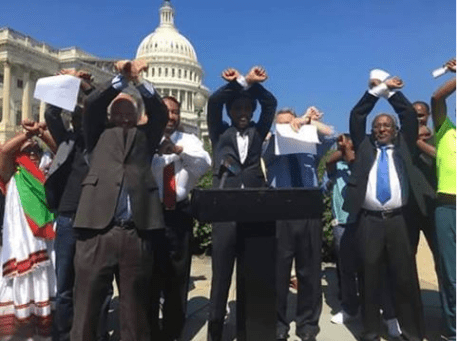

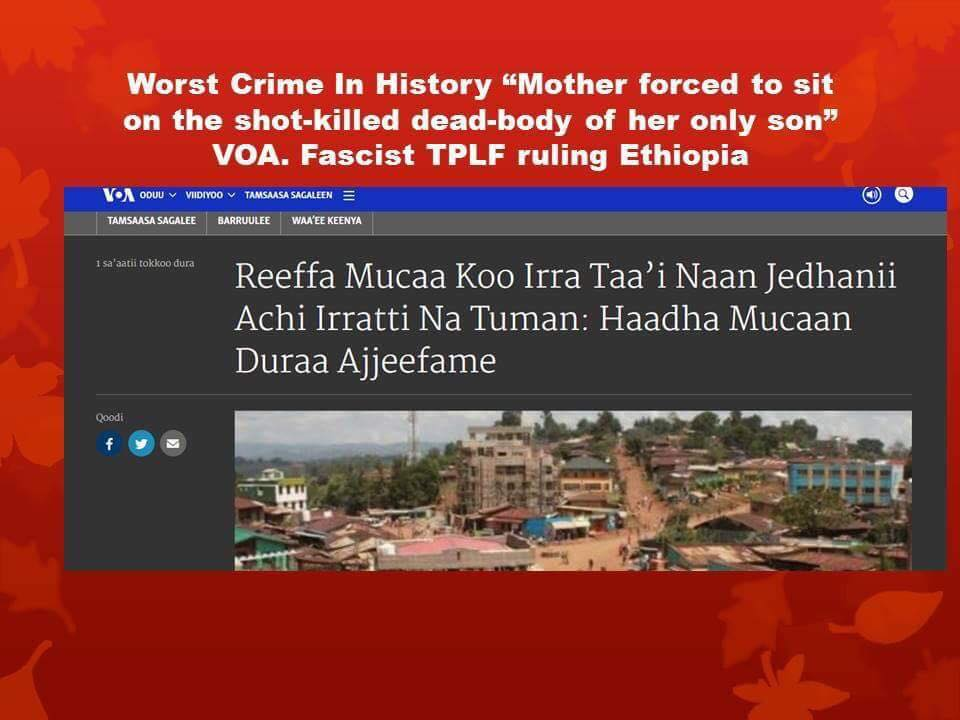
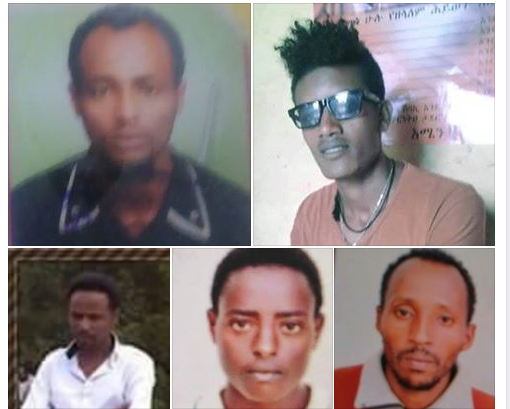


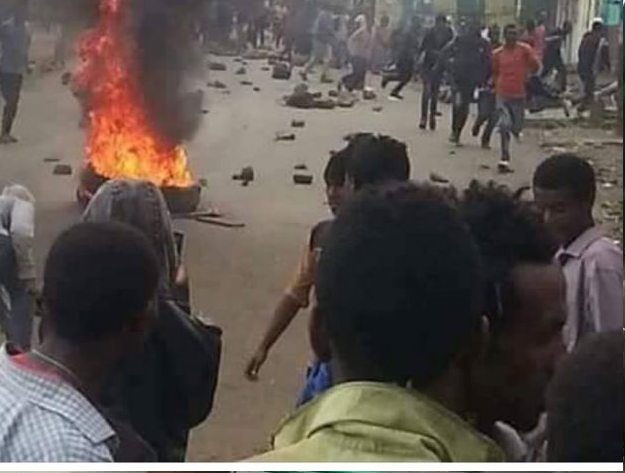
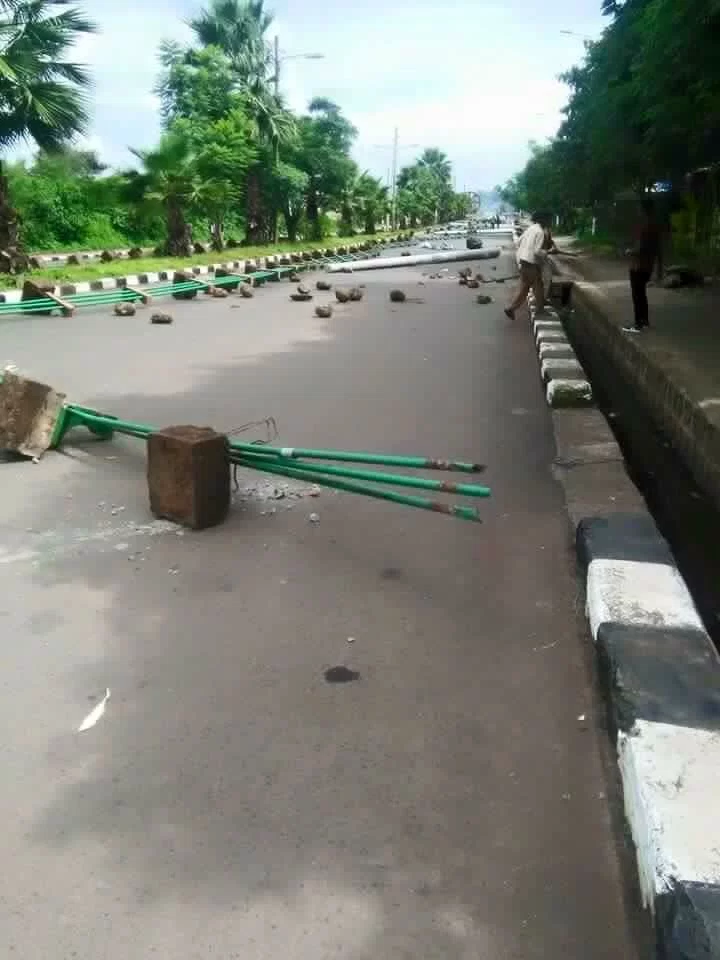




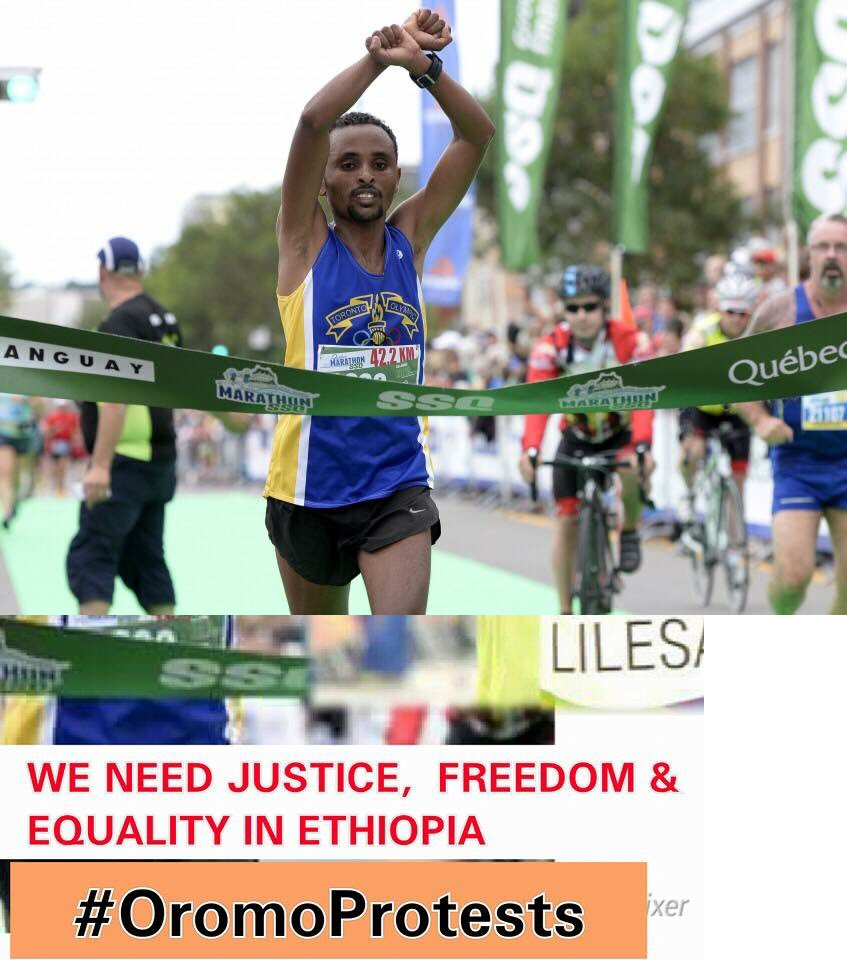

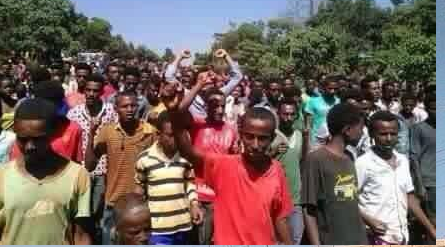


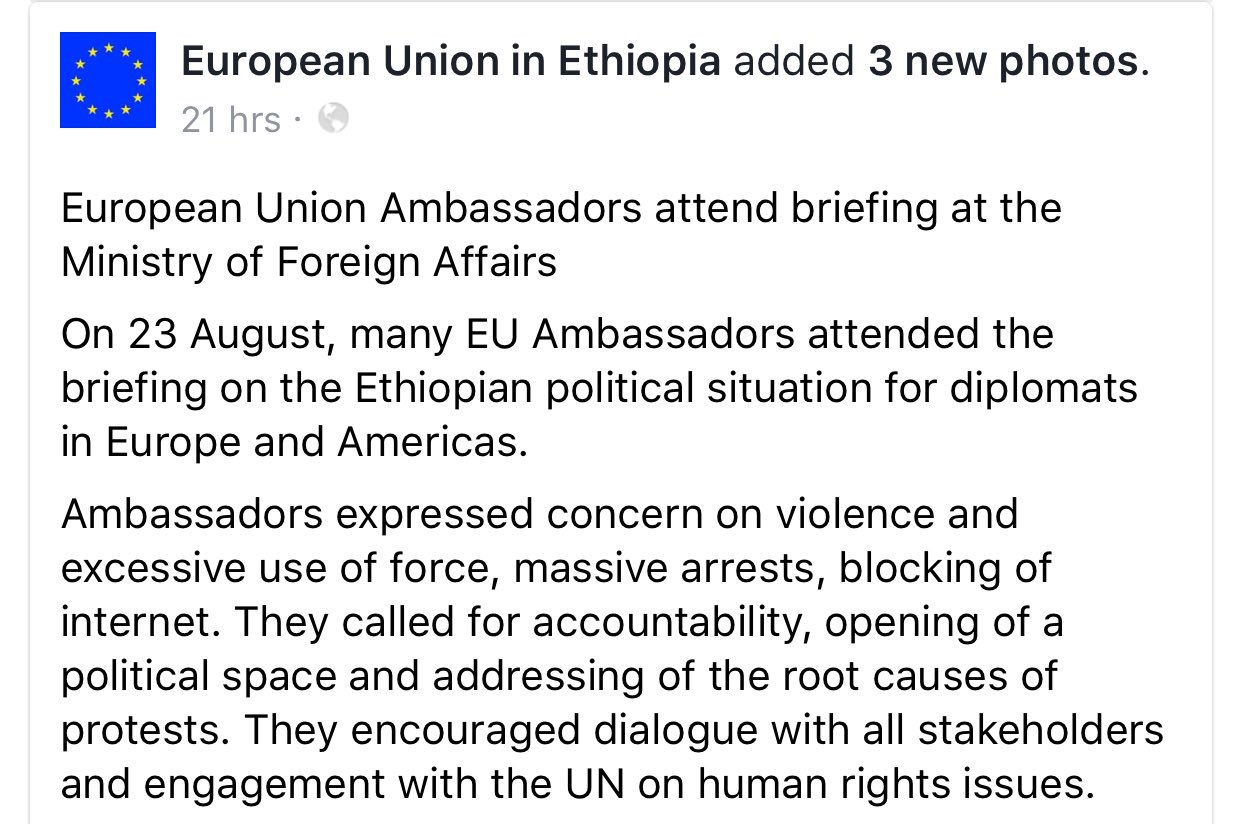
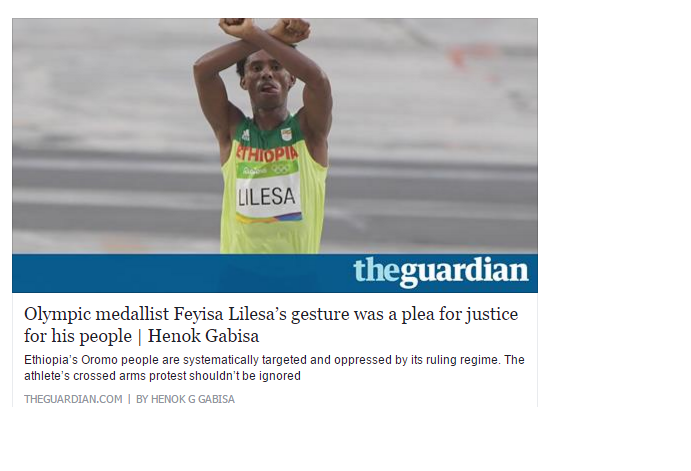


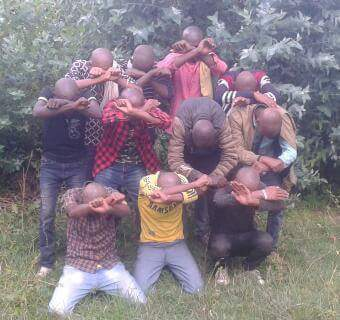
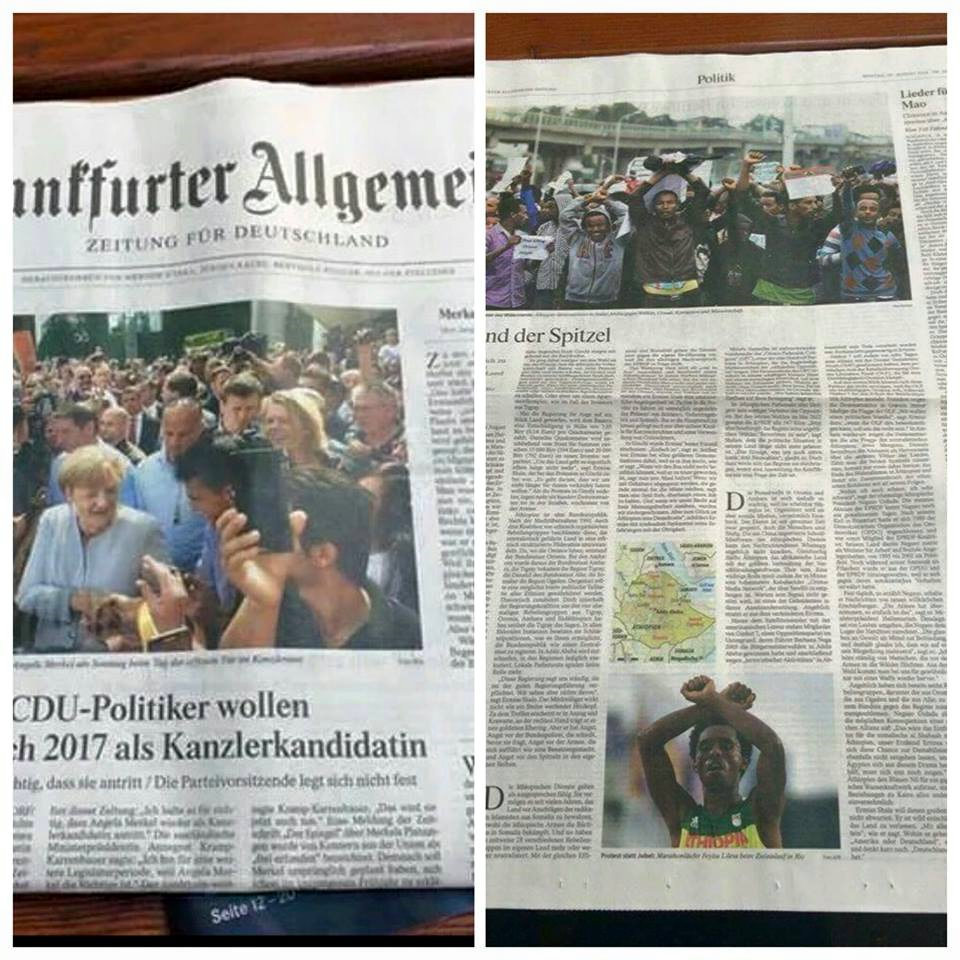
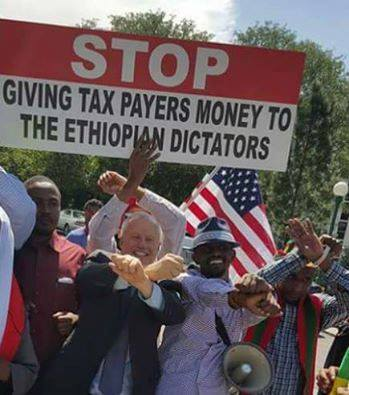

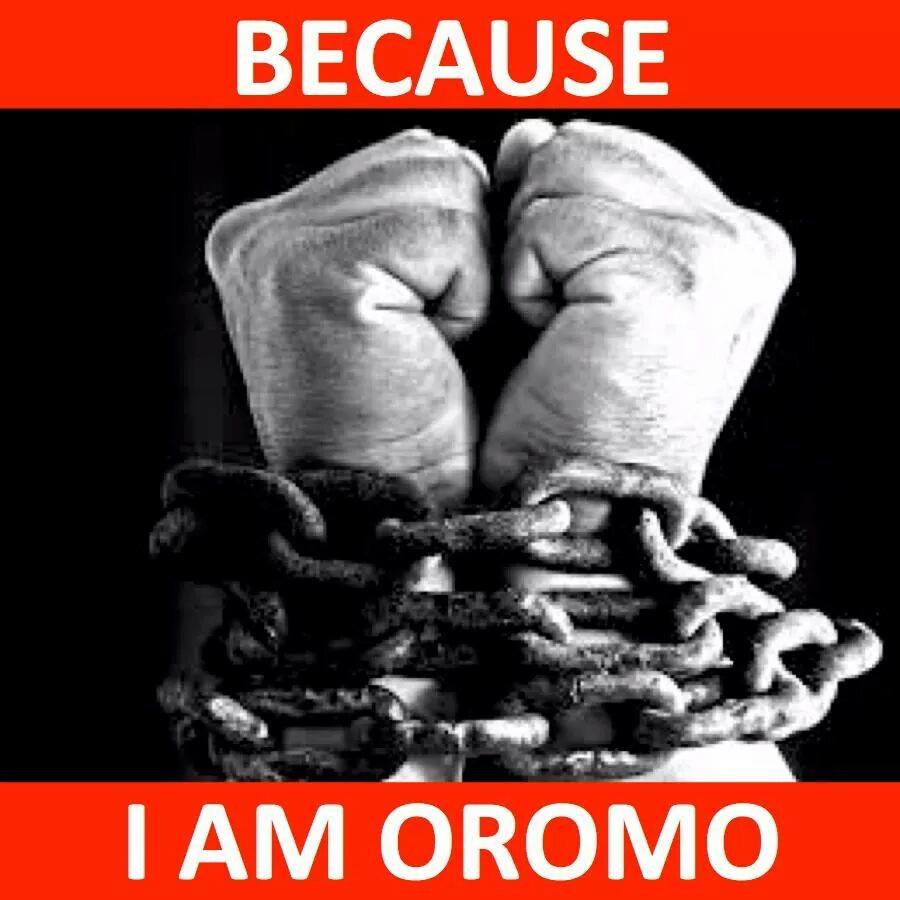
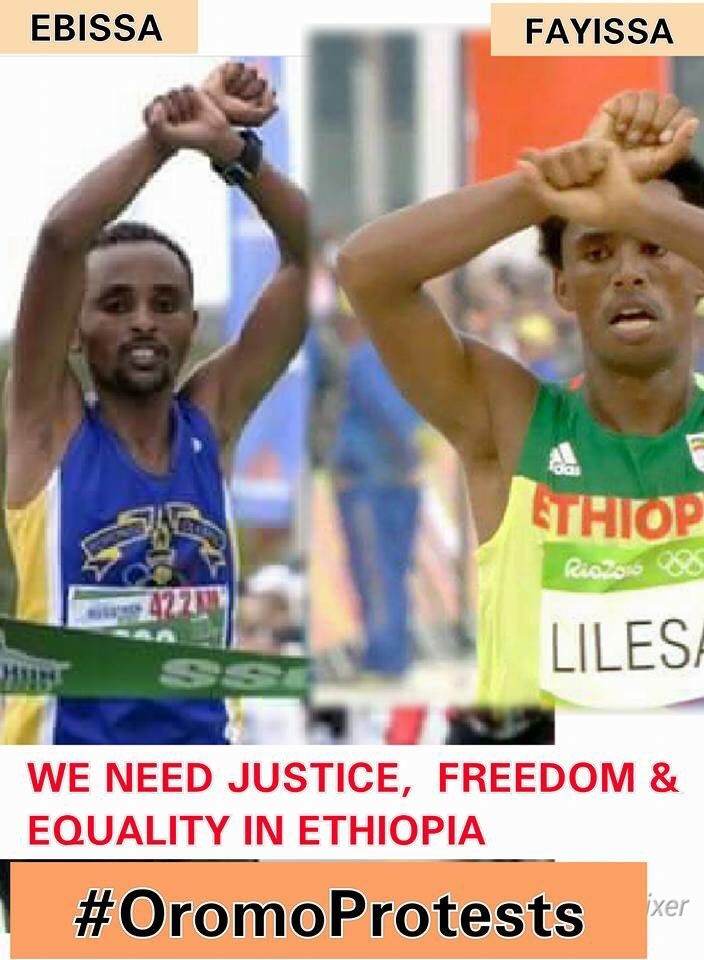
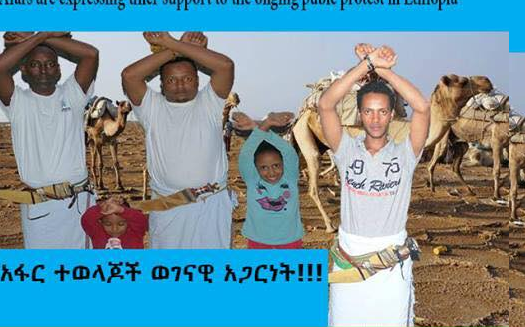


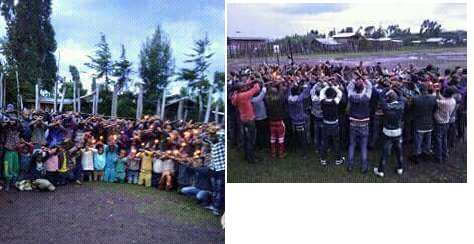

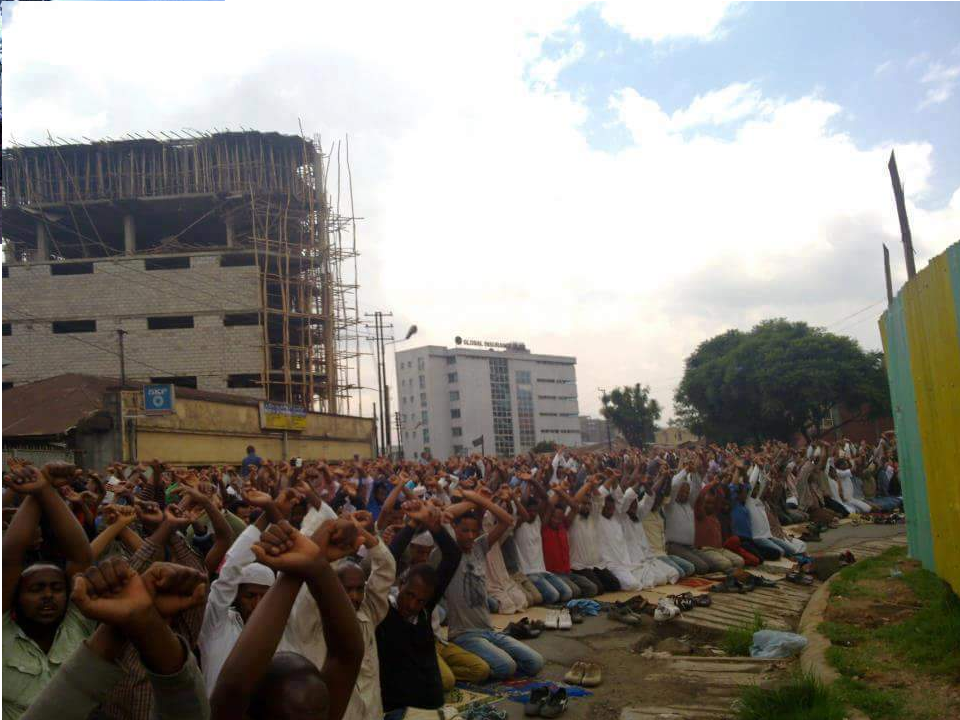
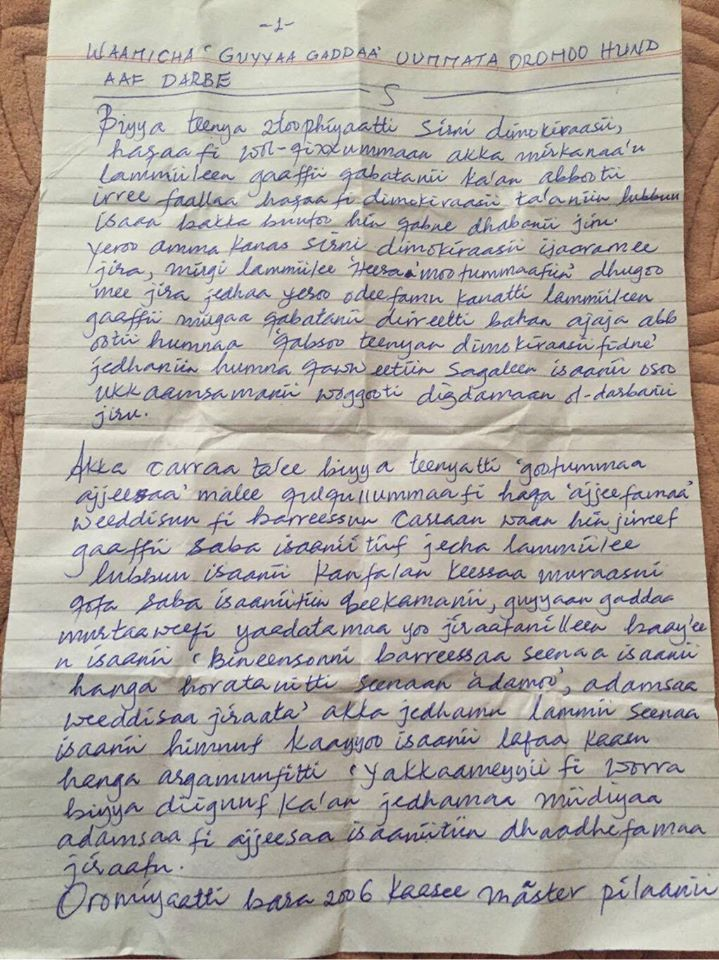


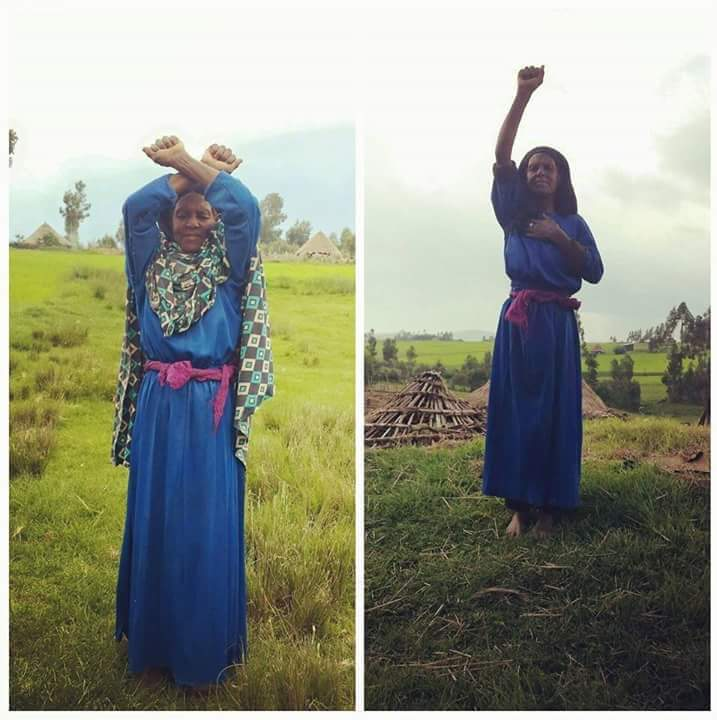

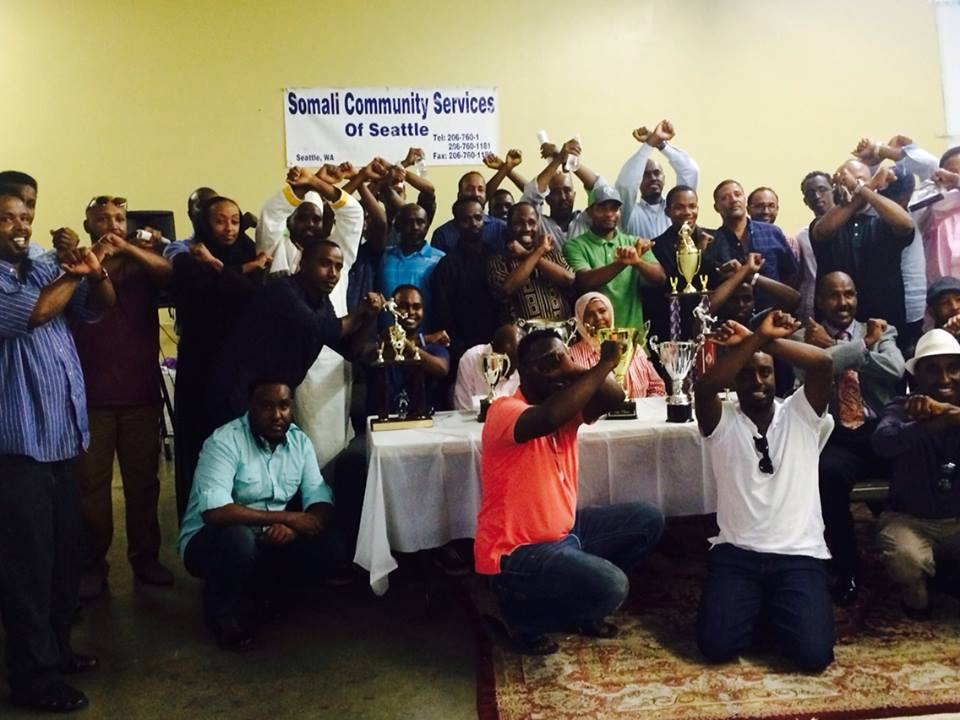


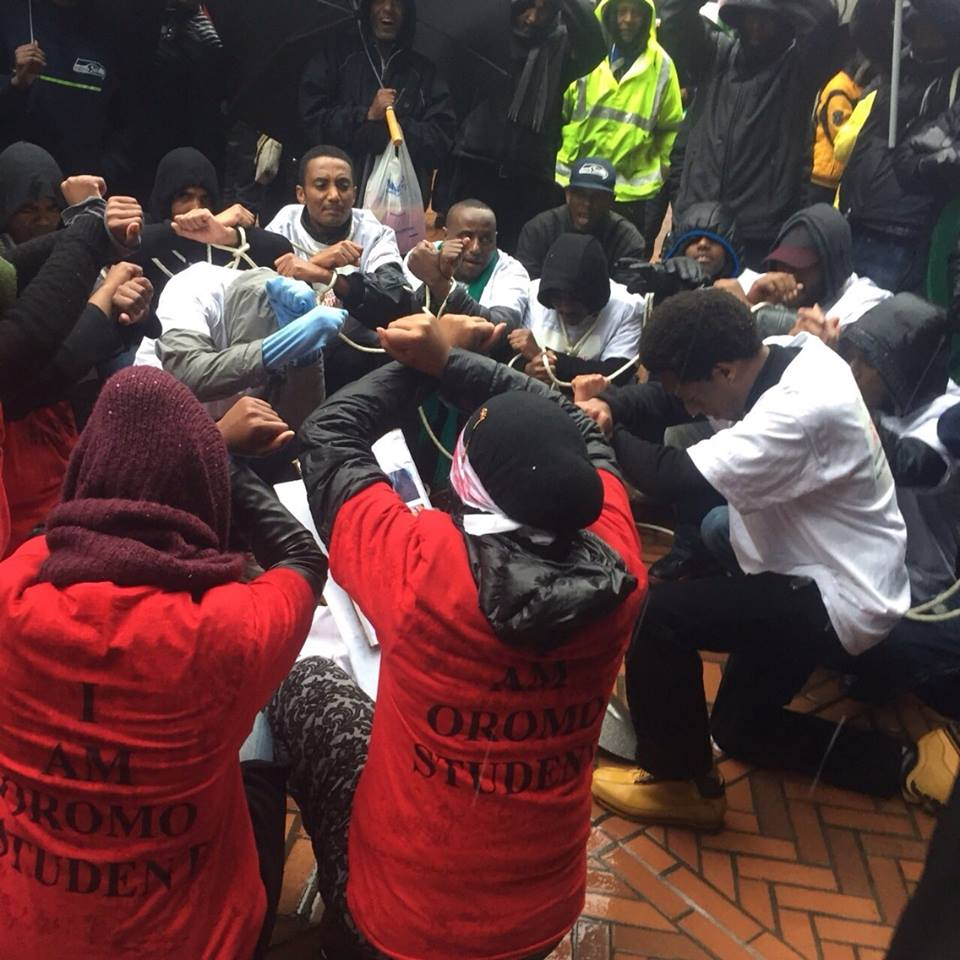
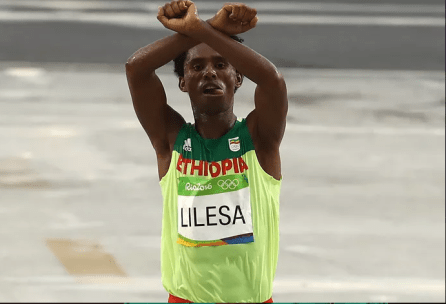
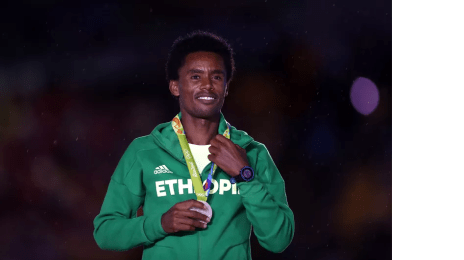
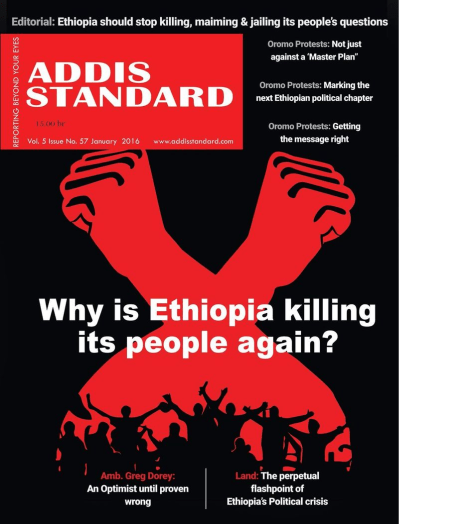
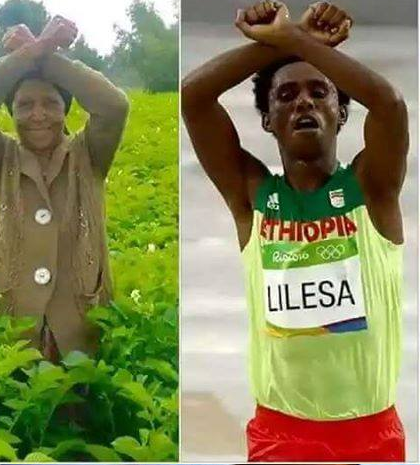
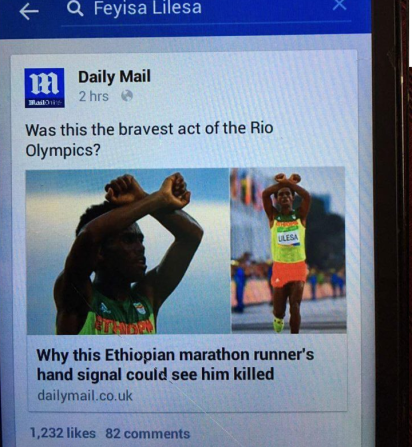
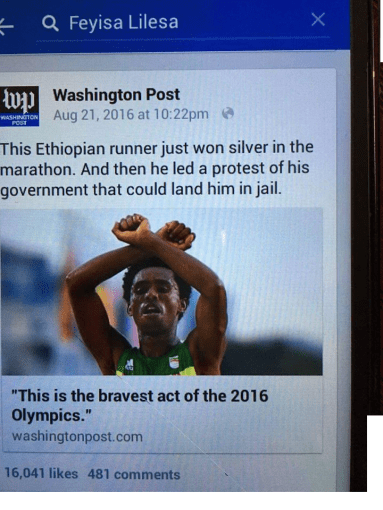
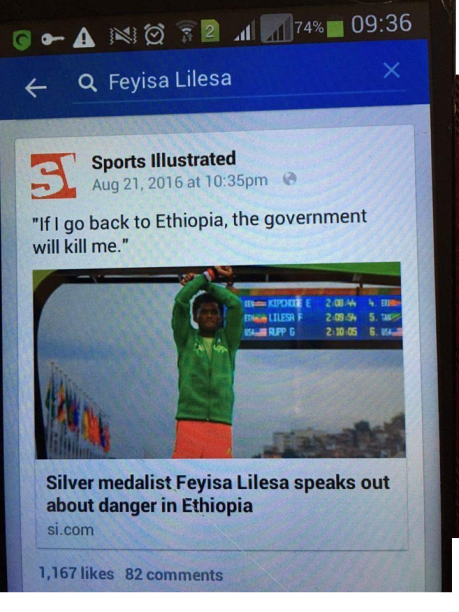
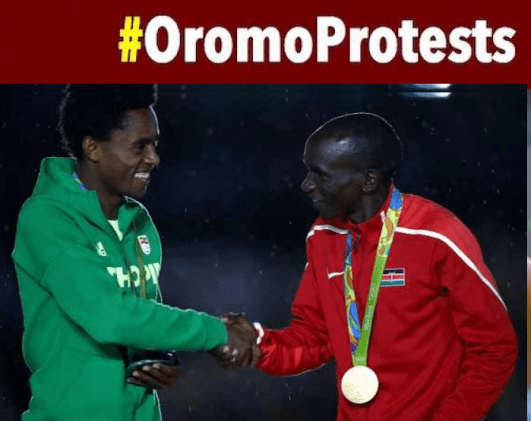

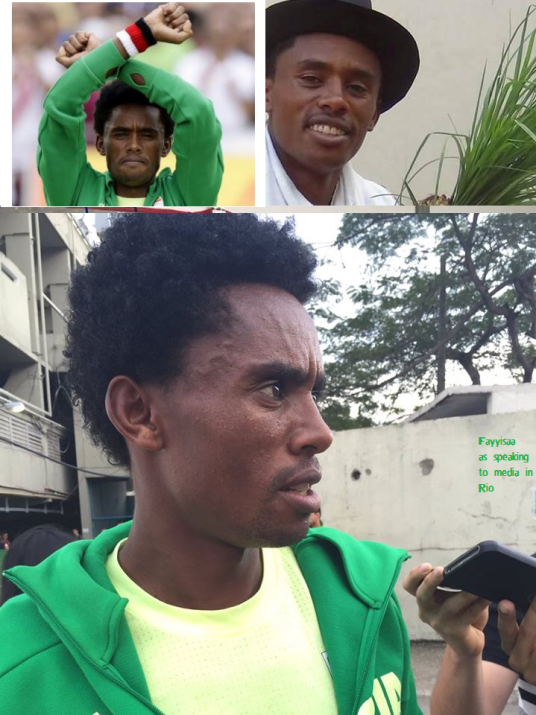
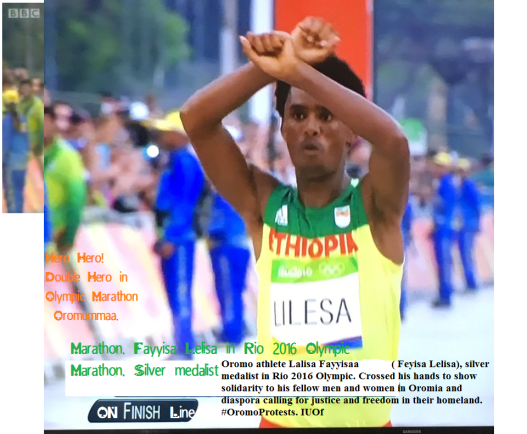

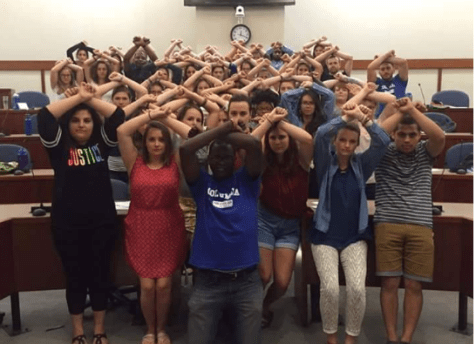
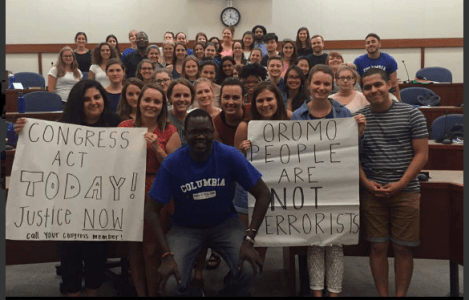
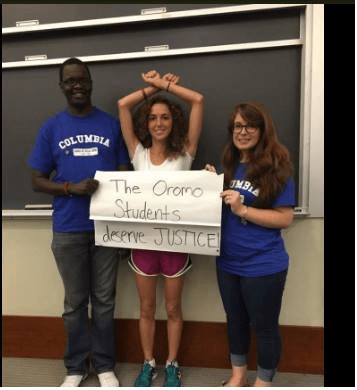


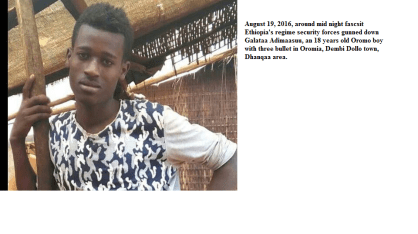
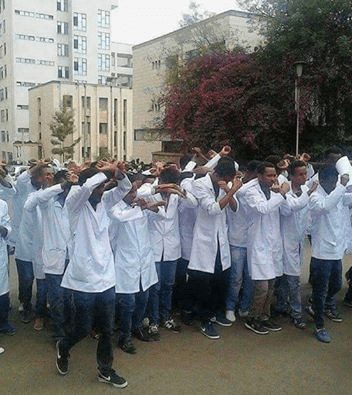


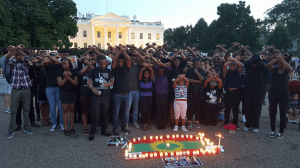
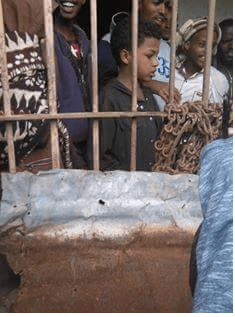
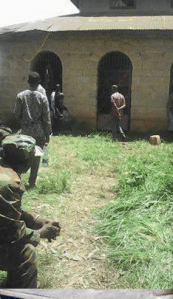
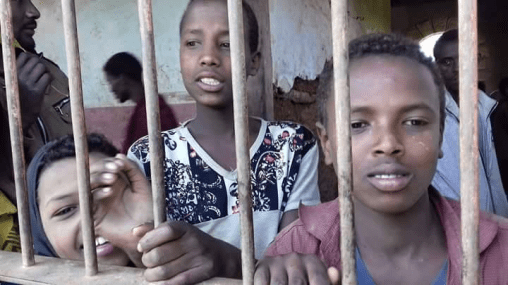
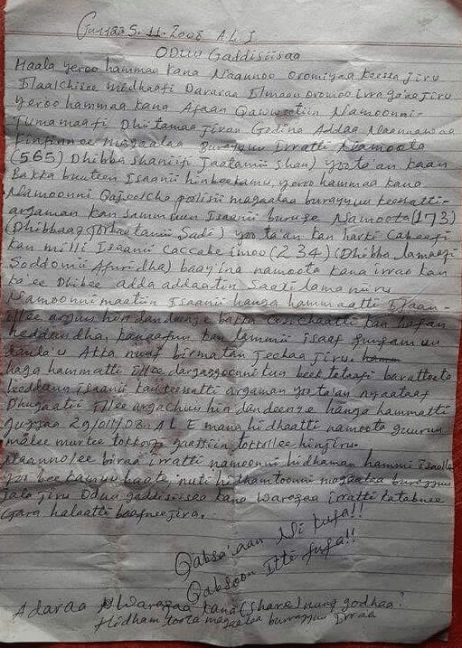
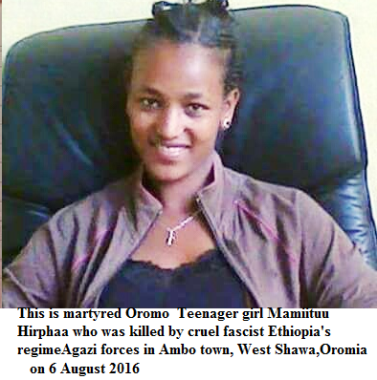
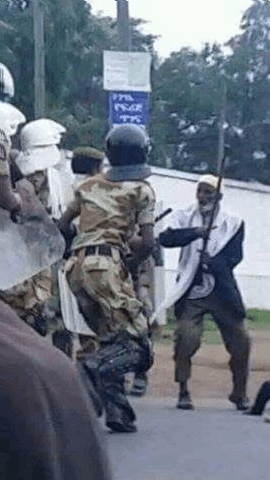

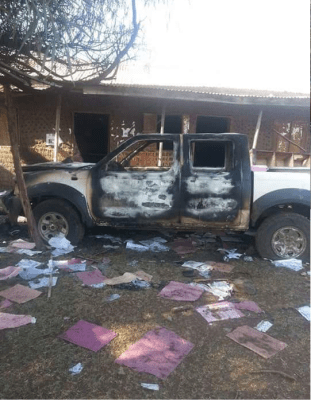
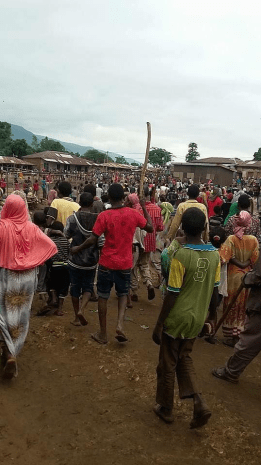
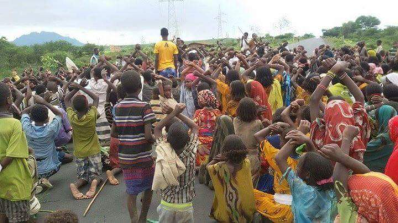
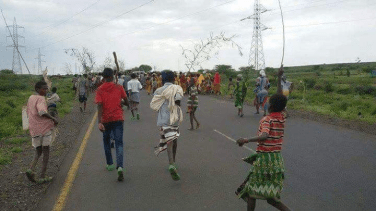
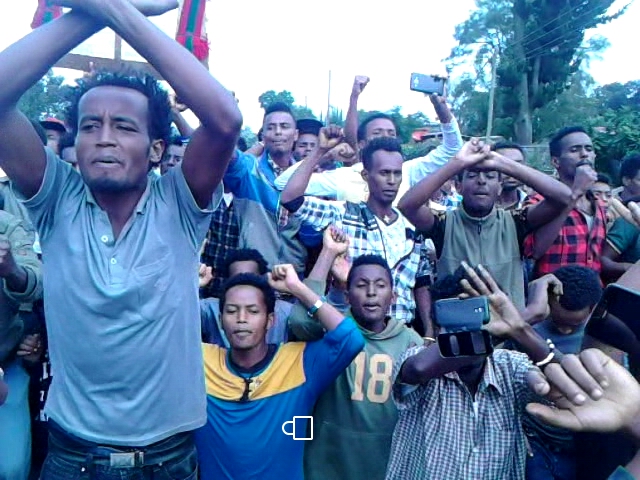
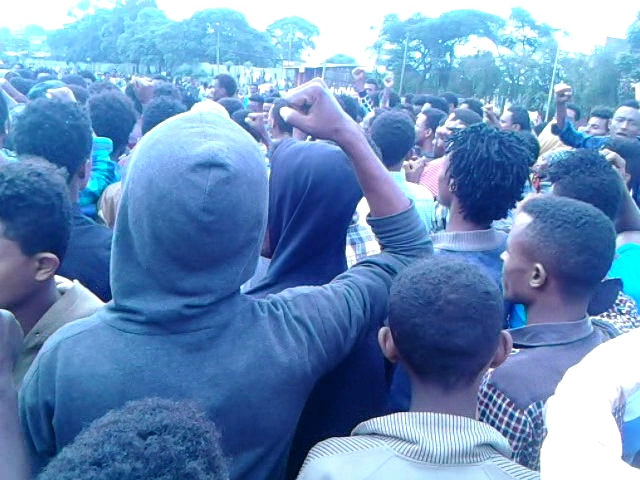
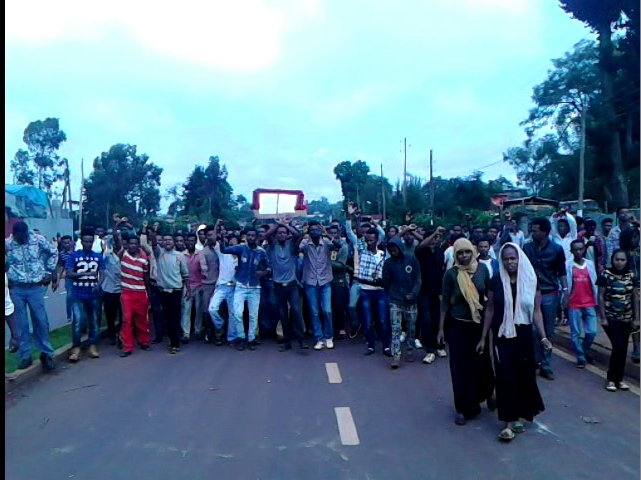

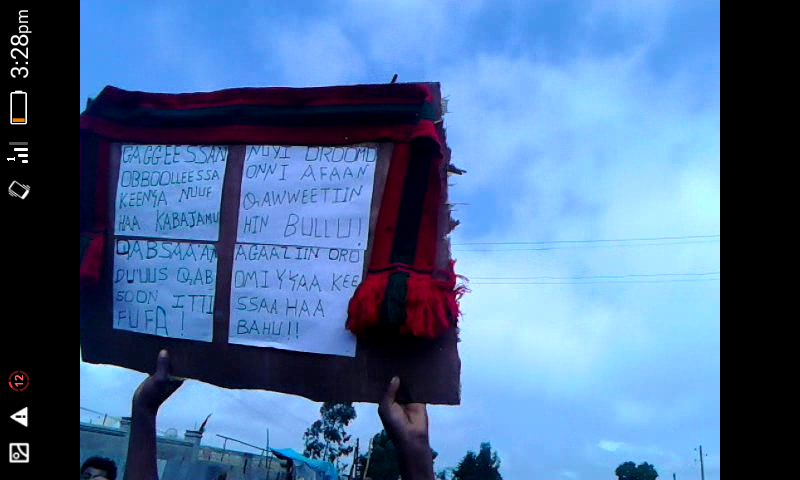
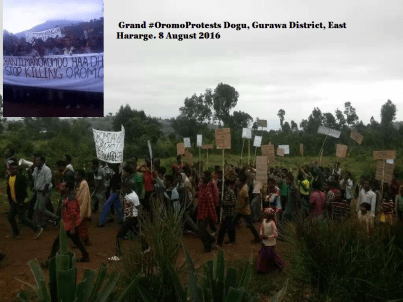
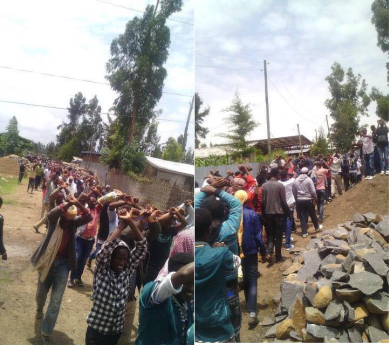
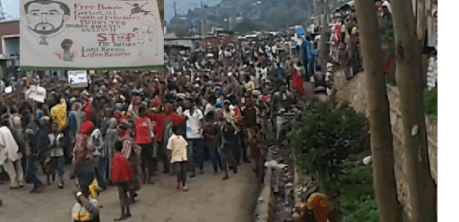
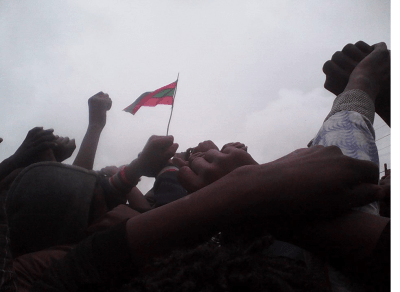
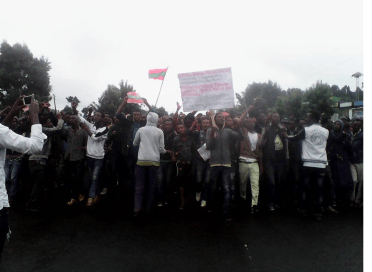
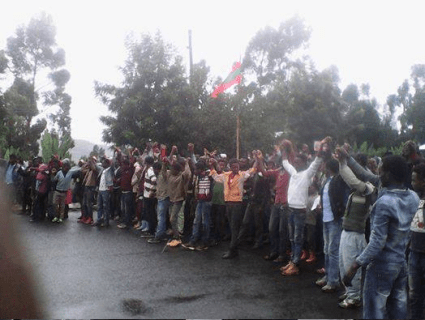
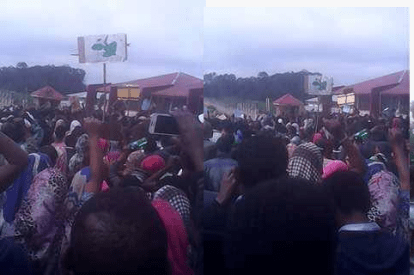

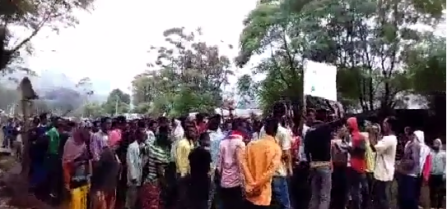


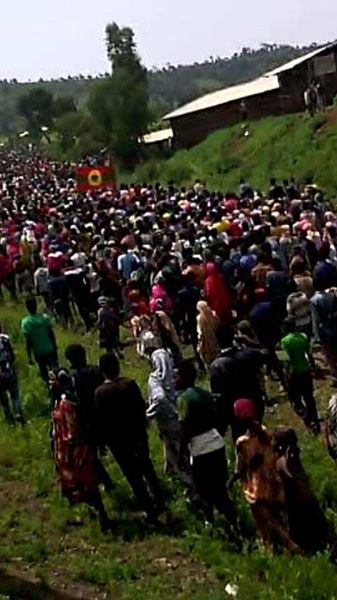

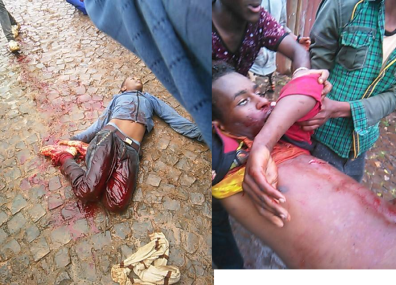
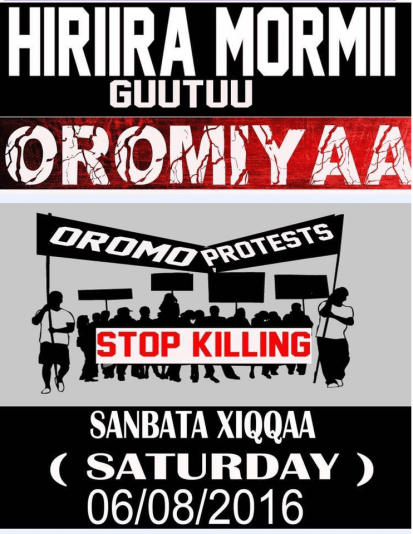
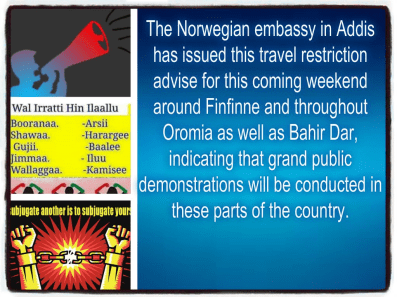
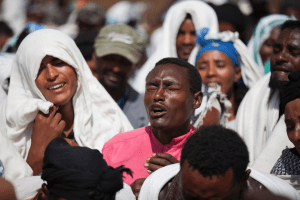


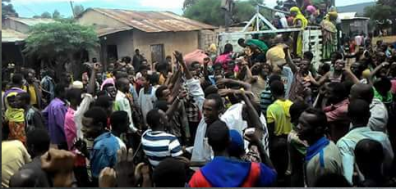

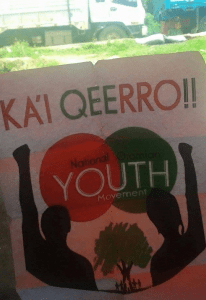
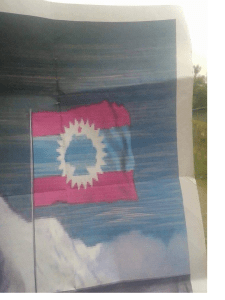
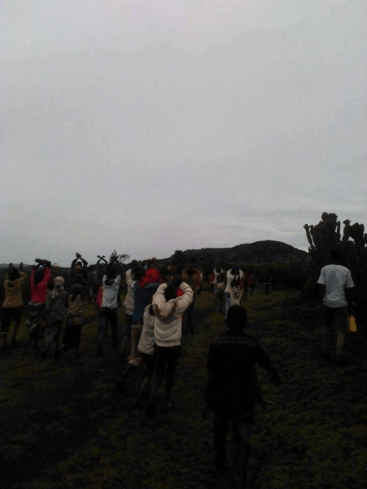

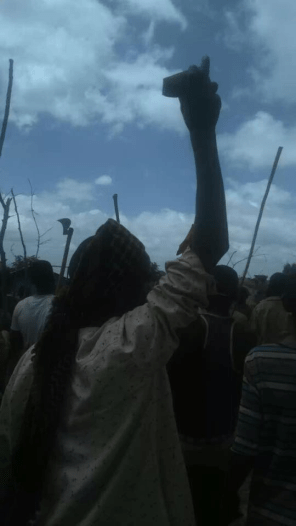
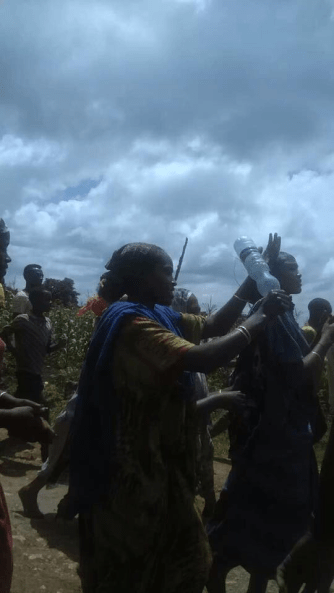
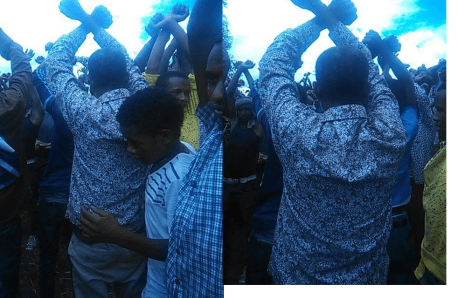
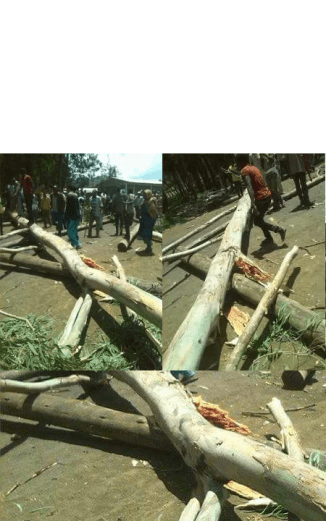
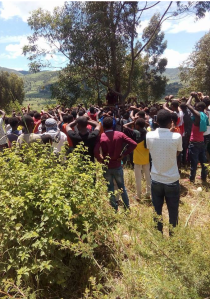
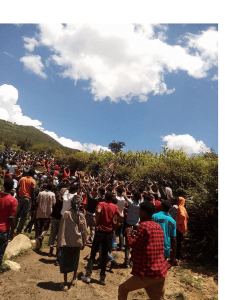
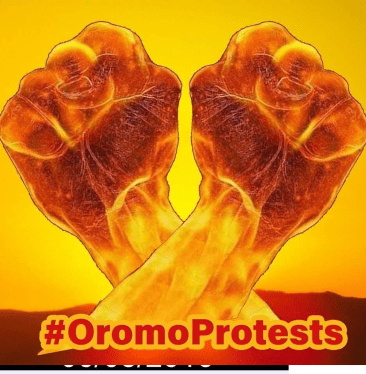


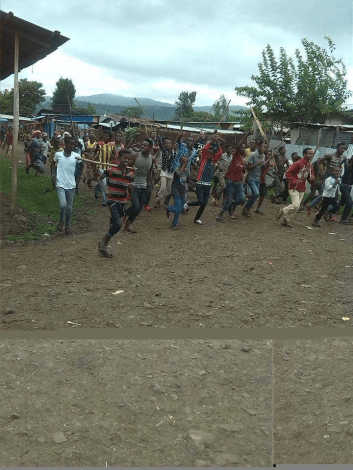
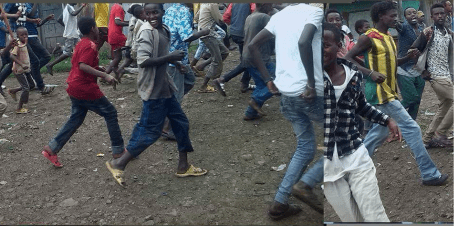
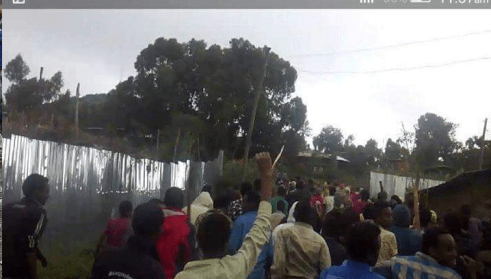
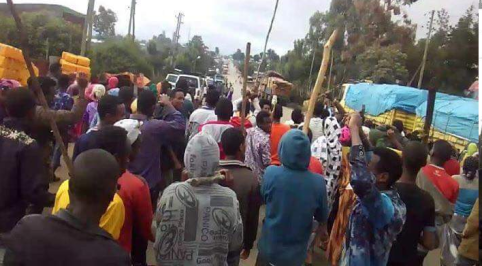


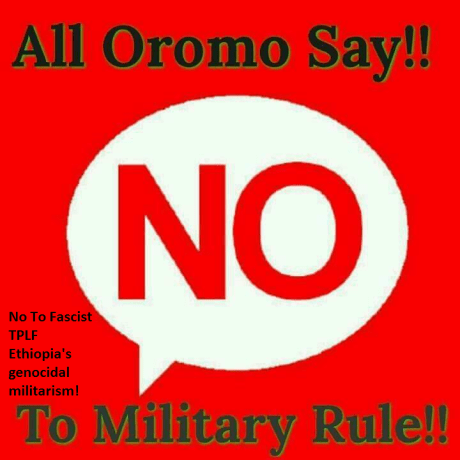

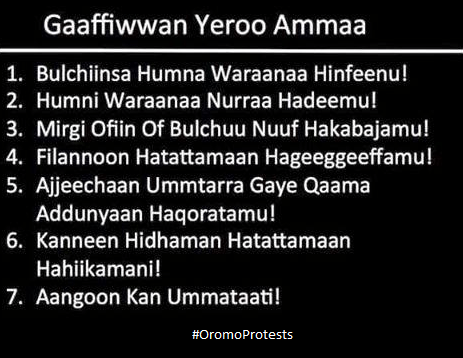


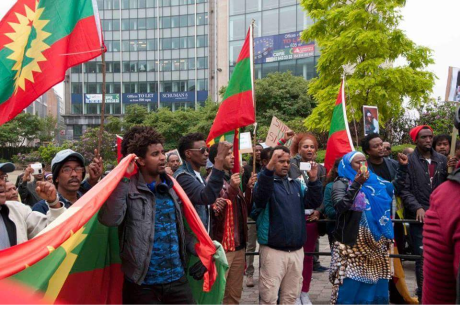
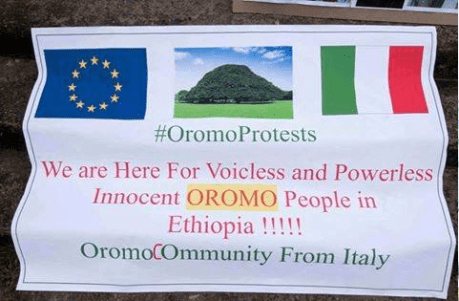
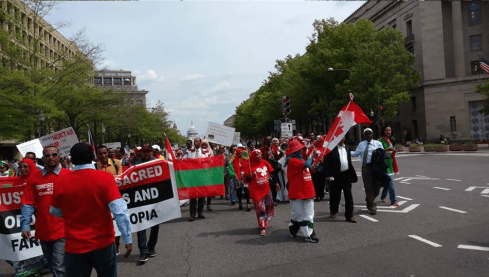
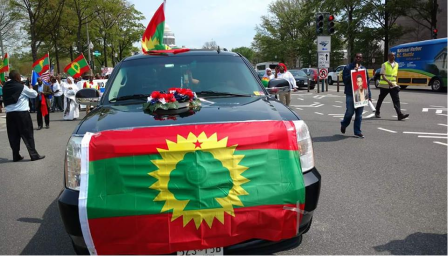
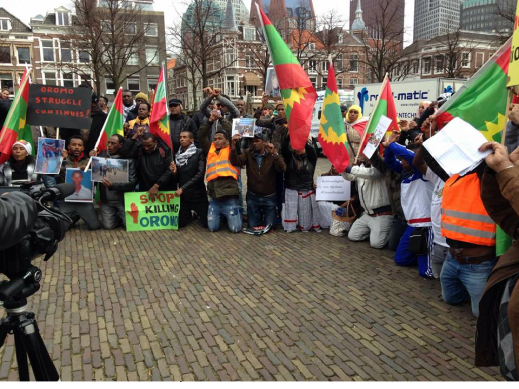
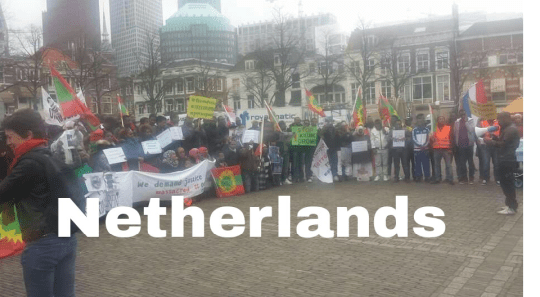
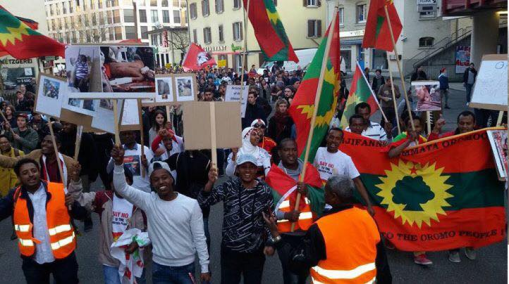

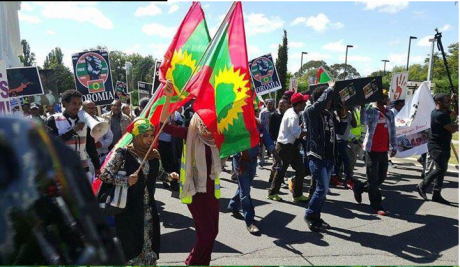


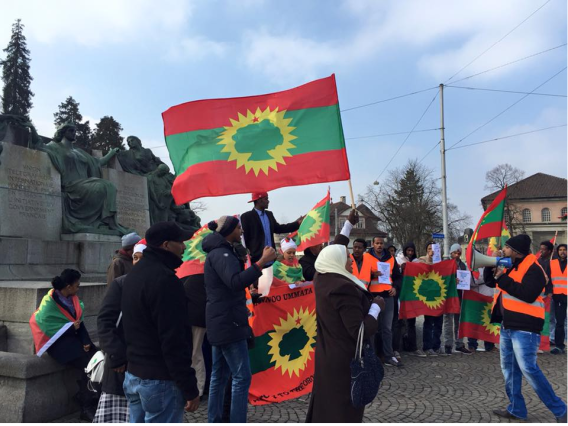
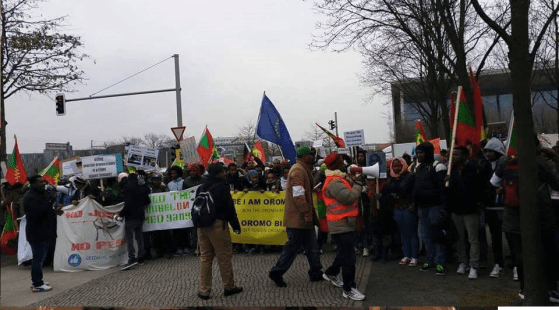


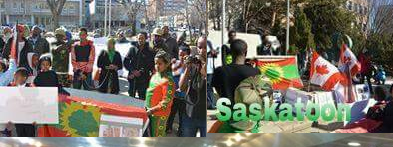

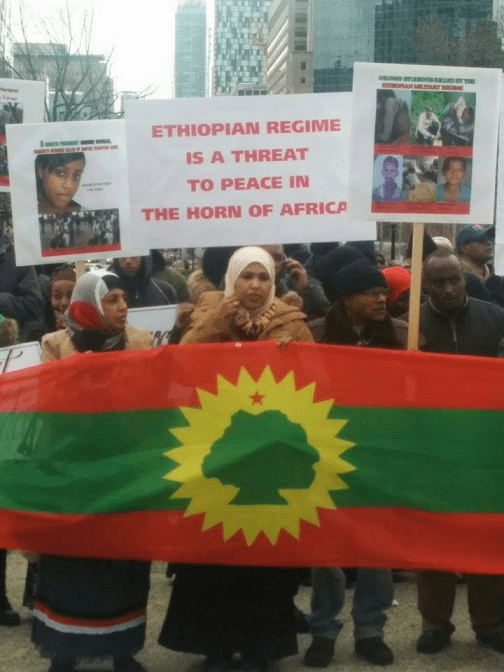

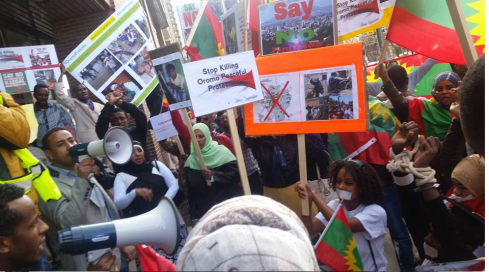
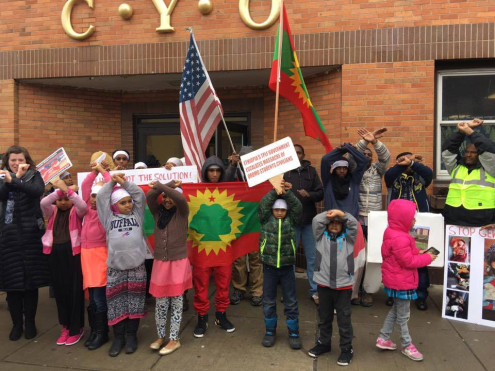
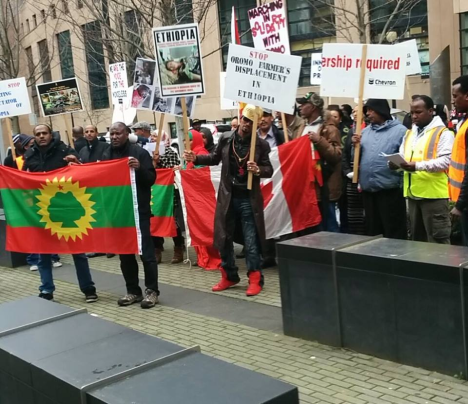
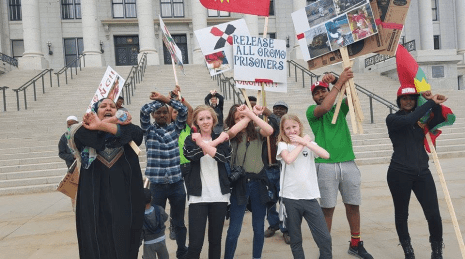

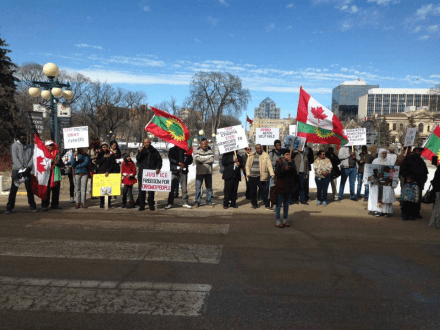
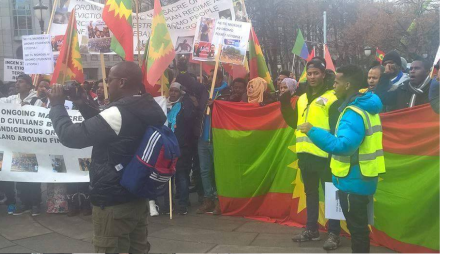


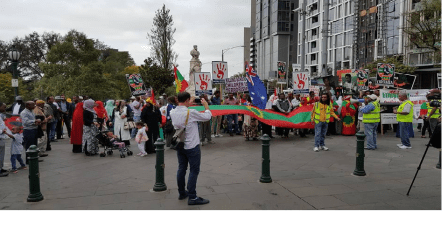

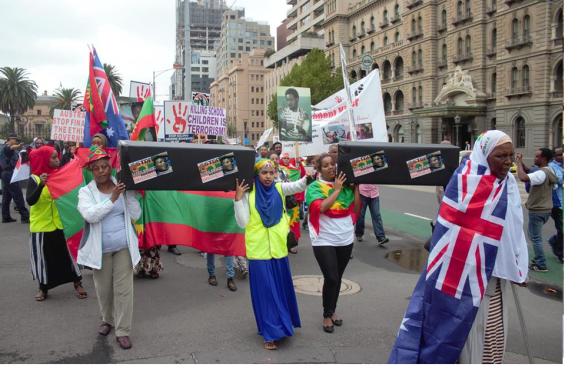
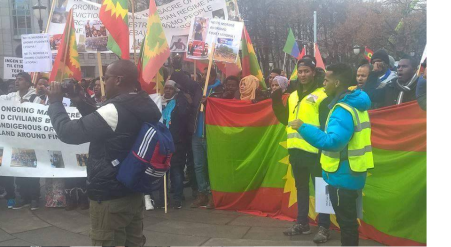
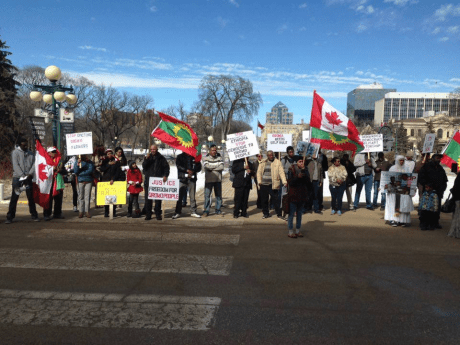

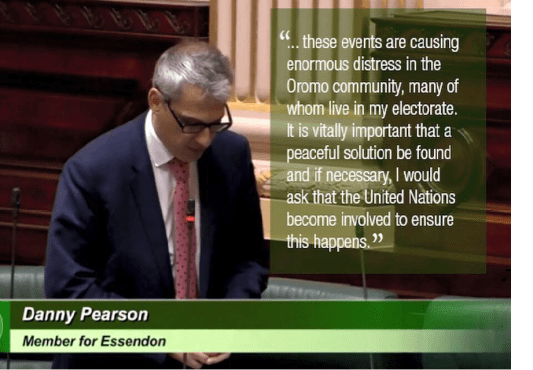

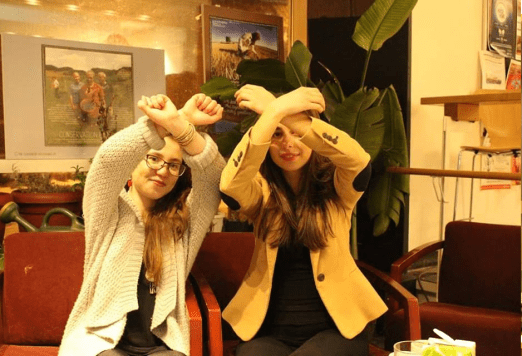
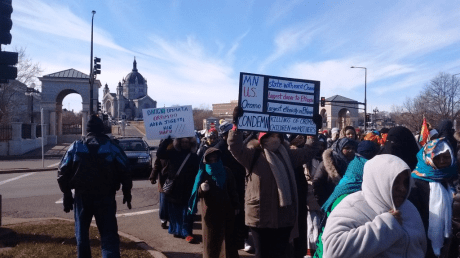


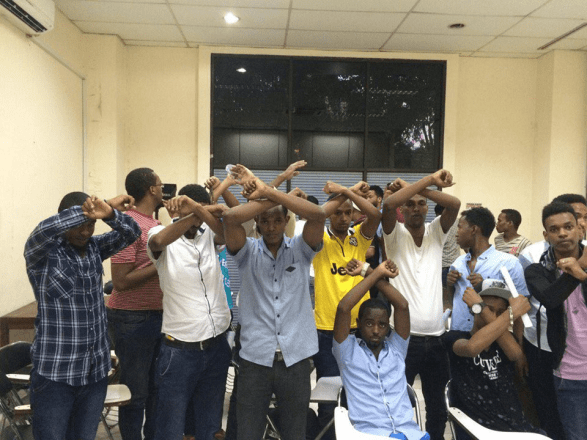

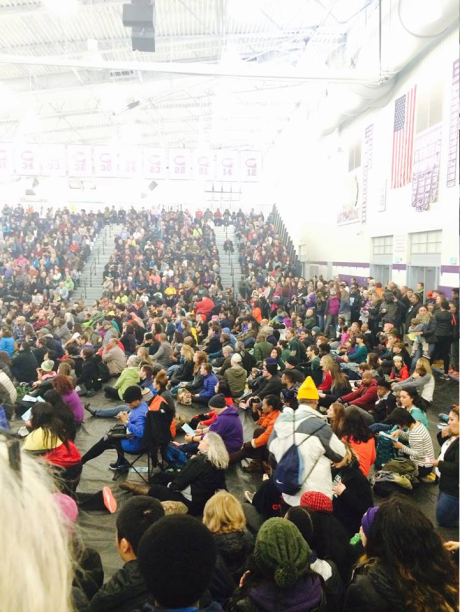


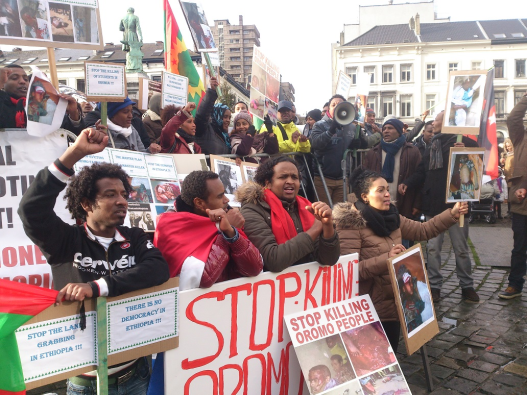
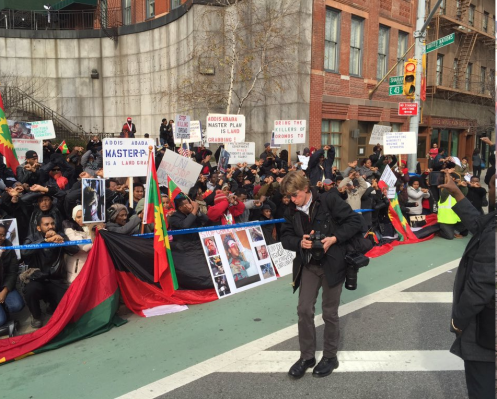

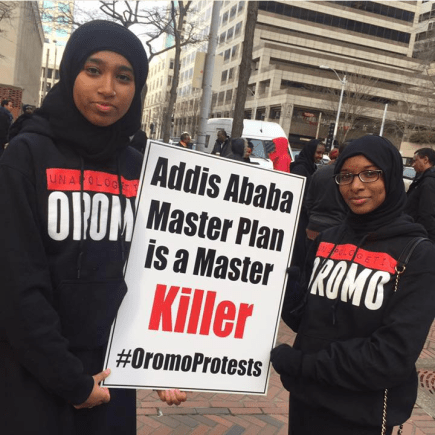
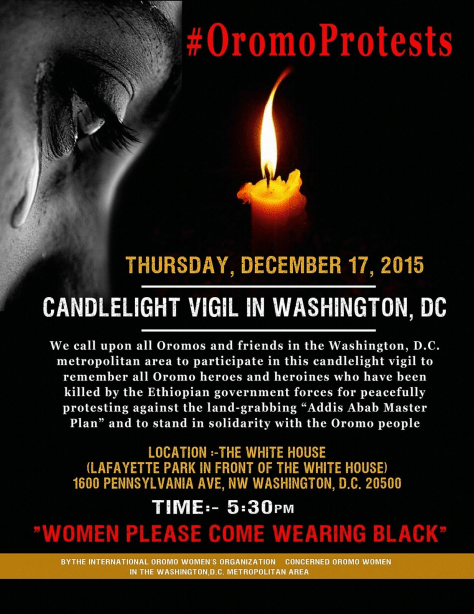
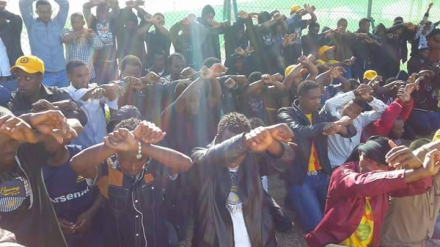
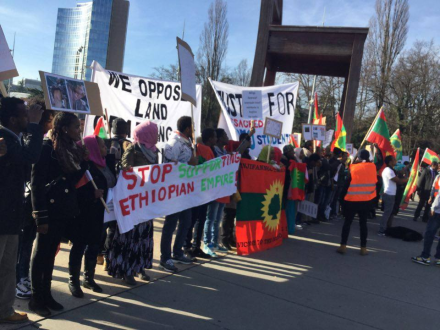
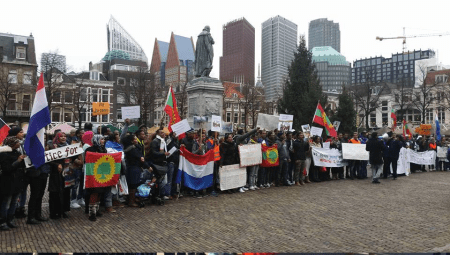


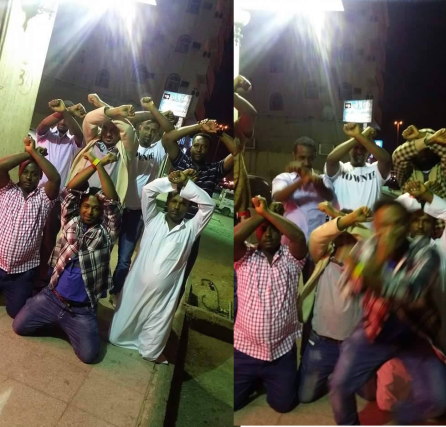
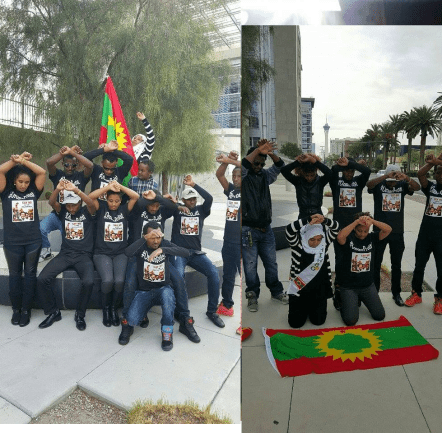


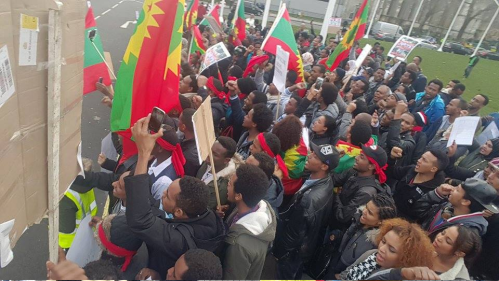


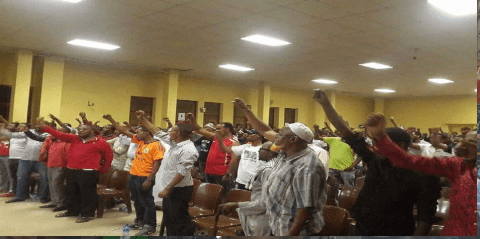
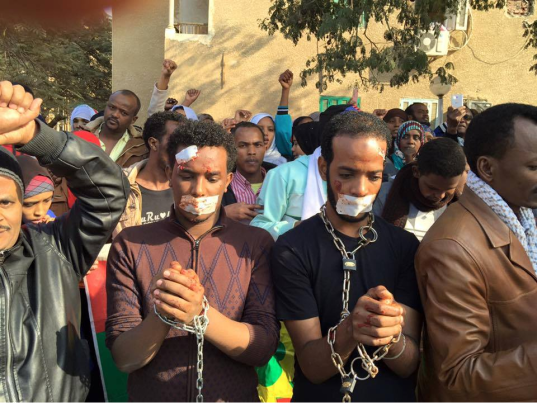
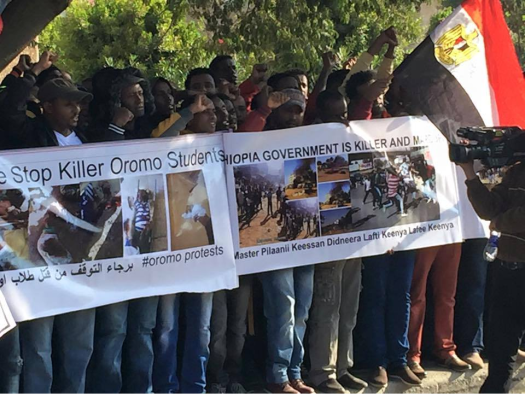

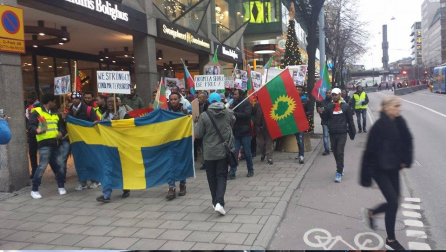

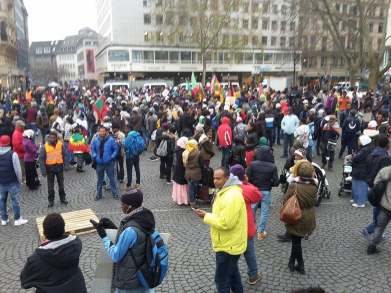
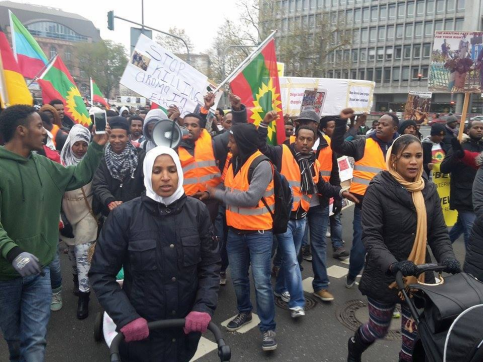
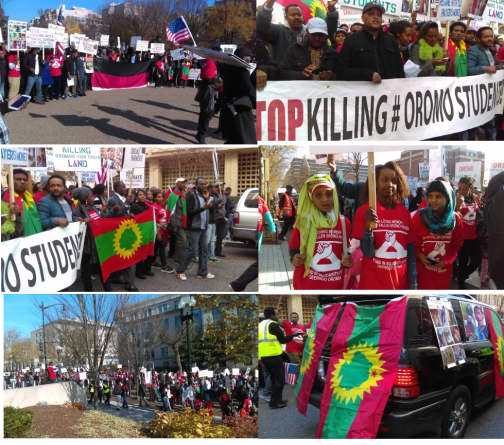
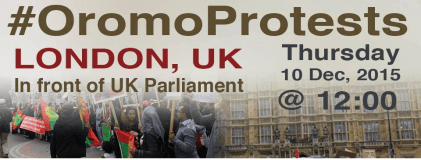


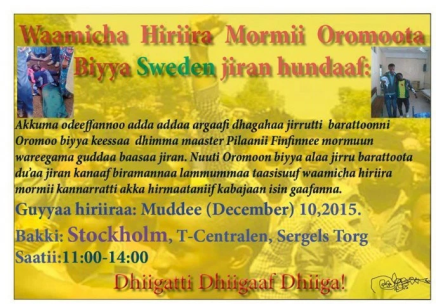


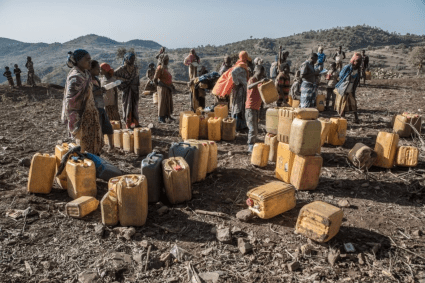

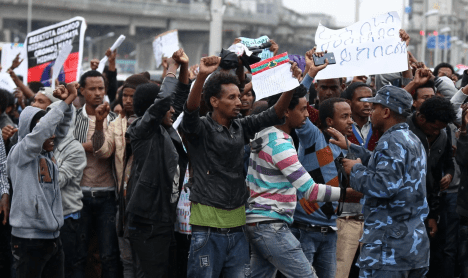
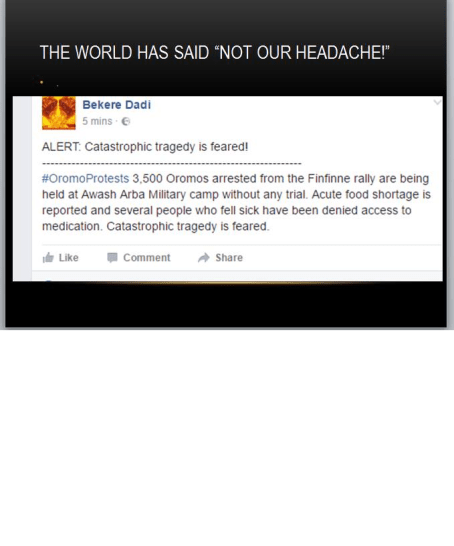



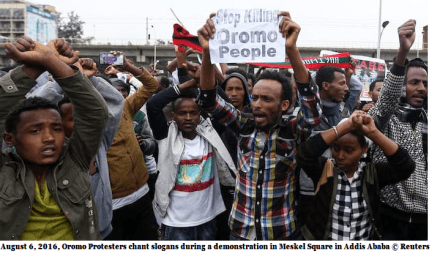




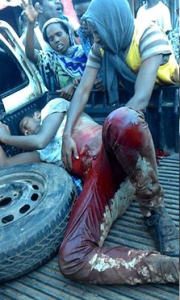
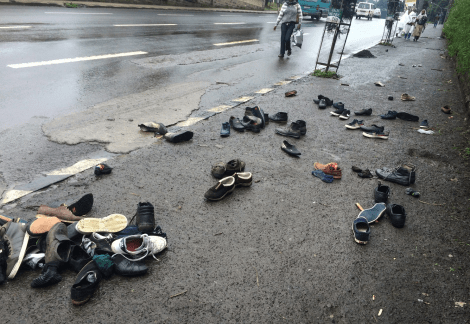


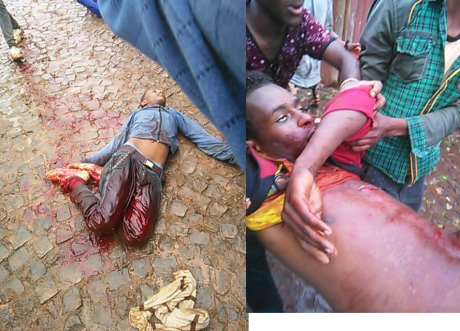
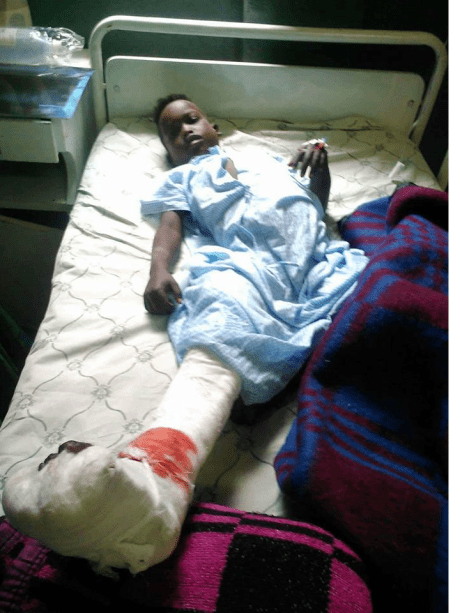
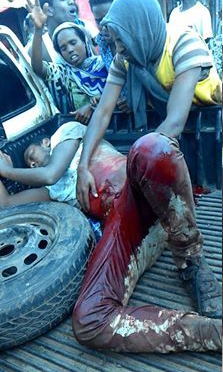




 REUTERS/Darrin Zammit Lupi

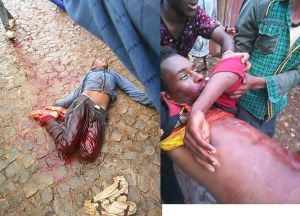
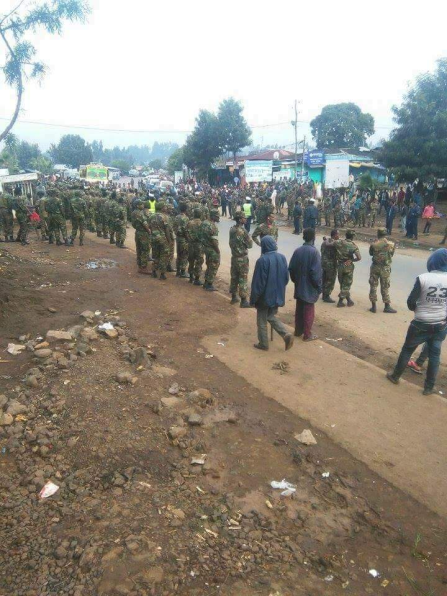

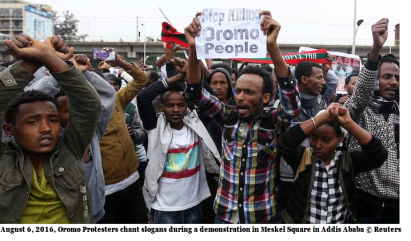
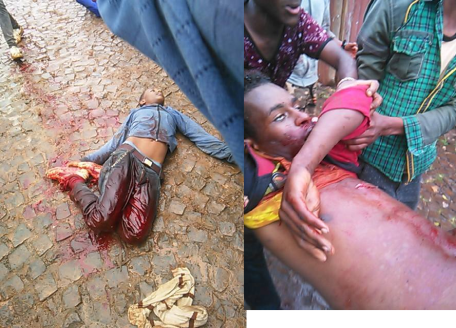
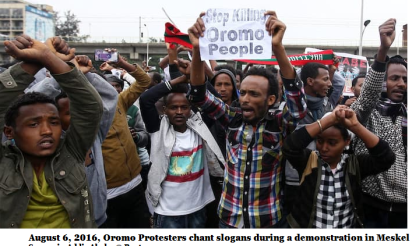

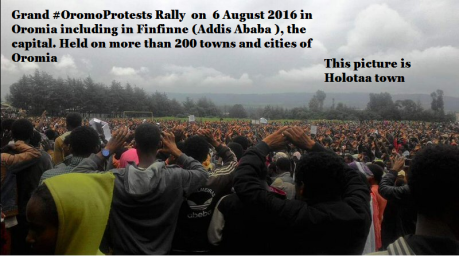

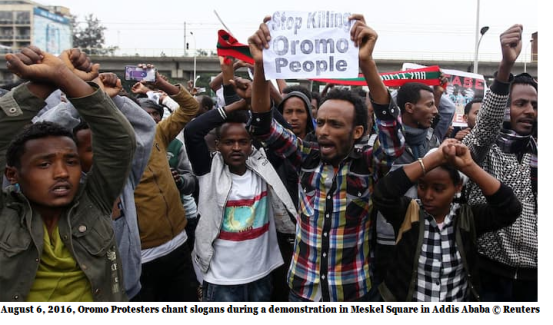
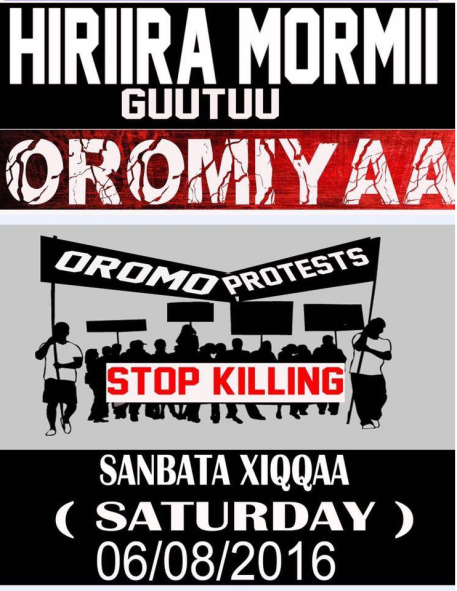
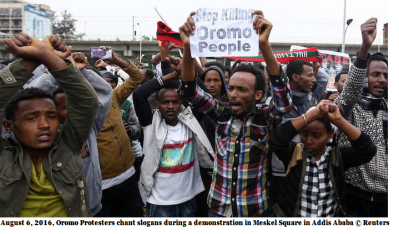


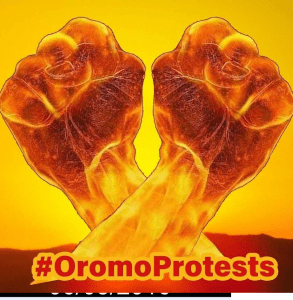
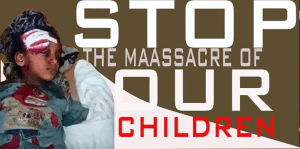
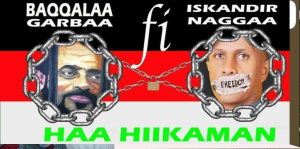

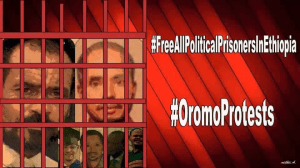



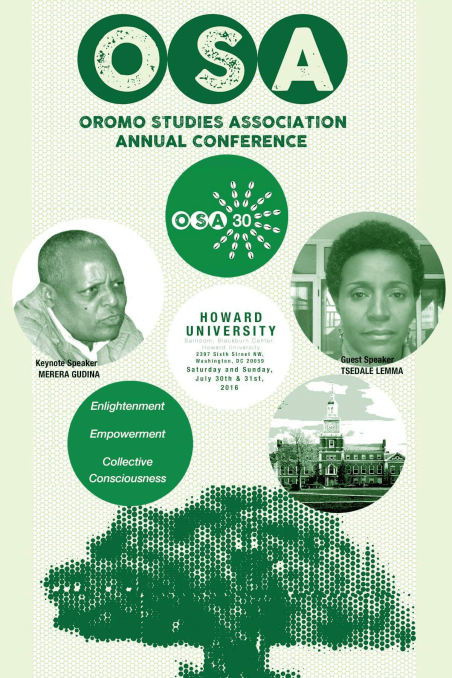
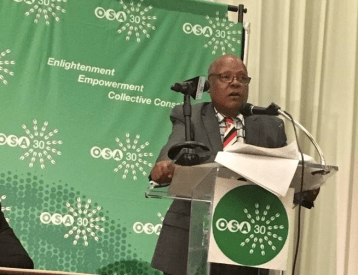
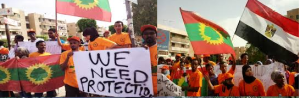





 Oromian Economist
You must be logged in to post a comment.