Economic and development analysis: Perspectives on economics, society, development, freedom & social justice. Leading issues in Oromo, Oromia, Africa & world affairs. Oromo News. African News. world News. Views. Formerly Oromia Quarterly
We have all used oral forms of communication to tell our stories for as long as we have been able to form words and create sounds, but every new form of communication since then, whether in written…
For farmers, farmland is a basis of their livelihood and the basic agricultural resource and is now becoming a constraint in agricultural production. This study was carried out in Kombolcha district of Oromia National Regional State. The specific objectives of the study were to identify the factors affecting size of landholding and to analyze the effects of land size variation on farm income. To address these objectives a two-stage random sampling procedure was used to select 5 peasant associations and 110 sample respondents from a total of 19 peasant associations found in the district. Multiple linear regression and Cobb-Douglass production functions were used for analyzing the cause of land size variation and effects of land size variation on farm income respectively. Accordingly, age of the household head, agro ecology, family size and land availability in PA were found to be the significant factors in causing variation in size of land holding in the study area. The regression coefficients of the Cobb-Douglass production function indicate that the size of cultivated land, average land productivity, livestock owned and non-farm income were statistically significant factors in explaining variation in farm income among farmers. Therefore, there should be urgency of devising means and ways to improve the farm income through strengthening the production of cash crops. Besides this, productivity of land should be increased through the introduction of high yielding varieties of crops. And there should be strategy to create non-farm income sources for the smallholder farmers.
Cite this paperDoti, A. G. (2017). Causes and Effects of Land Size Variation on Smallholder’s Farm-Income: The Case of Kombolcha District of East Hararghe, Oromia, Ethiopia. Open Access Library Journal, 4, e3312. doi: http://dx.doi.org/10.4236/oalib.1103312.
MOFED (Ministry of Finance and Economic Development) (2003) Challenges and Prospects of Food Security in Ethiopia. Proceedings of Food Security Conference2003, Professional Associations Joint Secretariat, Addis Ababa.
Kebede, B. (1998) Agricultural Credit and Factors Impeding Loan Repayment Performance of Small-Holders in Central Highlands of Ethiopia: The Case of Alemgena District. Unpublished M.Sc. Thesis, AUA, Ethiopia.
Joshi, M.R. (1990) Status and Agro Forestry Opportunities. In: Agro Forestry in the Taria. Seminar Proceedings. U.N, Food and Agricultural Organization and the Department of Forestry and Government of Nepal, Nepal, 5-11.
Tesso, G. (2003) Variation in Land Size and Its Effects on Farmers’ Income. The Case of Qarsa Qondaltiti District. Unpublished M.Sc. Thesis, AUA, Alemaya Ethiopia.
Adnew, B. (1992) Analysis of Land Size Variation and Its effects: The Case of Smallholder Farmers in the Hararghe High Land. Unpublished M.Sc. Thesis, Alemaya University.
Gambia’s former president Yahya Jammeh finally left the country on Saturday evening local time after several days of negotiations with West African leaders and Gambia’s incoming government over the terms of his exit from office.
Locals were relieved that his departure managed to take place without a violent resolution as tension had built up while the protracted negotiations carried on. The erratic former leader left from capital city Banjul on a plane headed to Conakry, Guinea, and is expected to leave there to spend his time in exile in Equatorial Guinea.
Many Gambians believe that had Jammeh stayed in the country, he would never have actually relinquished power to the incoming government of president Adama Barrow. Jammeh’s departure brought an end to 22 years of eccentric and repressive rule over a small country which has not made much economic progress under his leadership. Instead, a disproportionately high number of young Gambians have left home to risk their lives crossing the Mediterranean in an attempt to reach Europe.
Jammeh, 51, had agreed 24 hours earlier to step down nearly two months after losing a general election to Adama Barrow. Jammeh initially agreed to hand over peacefully soon after the elections only to change his mind. His final agreement to step down and leave the country only came after soldiers from neighbor Senegal crossed the border under the auspices of the Economic Community of the West African States (ECOWAS).
The focus for Gambians has now turned to calling Jammeh to account for some of his alleged human rights abuses. A joint declaration issued on Saturday by ECOWAS, the African Union, and the United Nations sparked controversy among Gambians because it seemed to prevent Gambia’s new government leadership from seizing assets and property from Jammeh that he acquired while president, and to allow Jammeh return to the country whenever it suits him:
ECOWAS, the AU and the UN will work with the Government of The Gambia to ensure that former President Jammeh is at liberty to return to The Gambia at any time of his choosing in accordance with international human rights law and his rights as a citizen of the Gambia and a former head of state.
Though the joint declaration is not likely to be legally binding, responding to it will still be a tough early test for president Barrow, who was sworn in on Jan. 19 at the Gambian embassy in Dakar, Senegal, after Jammeh refused to step down.
While many ordinary Gambians welcome the country’s first peaceful transition of power since independence in 1965, they also hope Barrow will investigate some of the claims against Jammeh, particularly human rights abuses. In an interview on Saturday with the BBC, Barrow said he was looking into creating a truth and reconciliation commission similar to one established in South Africa after the abolition of apartheid in 1994.
Gambia’s former president Yahya Jammeh finally left the country on Saturday evening local time after several days of negotiations with West African leaders and Gambia’s incoming government over the terms of his exit from office. Locals were relieved that his departure managed to take place without a violent resolution as tension had built up while…
The newly re-elected Chairman of the Oromo Liberation Front (OLF), Mr. Galasa Dilbo, addressed the Oromo nation in a statement issued upon the New Year 2017.
ADDA BILISUMMAA OROMOO
OROMO LIBERATION FRONT
2017 New Year Message from OLF Chairman Galasa Dilbo
Comrades and Compatriots,
Happy new year to you all! I hope you will celebrate the start of 2017 in good spirit with comrades, family and friends. As the new year is approaching, it is good to look ahead and think about what this year may bring us.
But, first a quick look back. 2016 was quite a year for all of us. We have been through many challenges; and the circumstances being most unfavourable for our nation. As the year ushered in, Oromia was in the midst of popular uprising spearheaded by our gallant youth. As the year progressed, our countrymen and women joined the peaceful resistance against the Tigrayan People’s Liberation Front (TPLF) occupying forces in masses in every part of our country. The response of the TPLF was brutal culminating in the October 2, 2016 massacre at the Irrechaa celebration in Bishoftu.
How we track our economy influences everything from government spending and taxes to home lending and business investment. In our series The Way We Measure, we’re taking a close look at economic indicators to better understand what’s going on.
Ever since 1944, Gross Domestic Product (GDP) has been a primary measure of economic growth. It’s in the news regularly and, even though few can define what it means, there is general acceptance that when GDP is growing, things are good.
There are problems with this simplistic formulation.
This narrow focus distorts our perception of progress. It guides our representatives to focus only on certain things – what is measured – and allows them to ignore what isn’t quantified and regularly reported.
But a new set of measures is slowly being established, which aims to capture a wider range of human experiences and reset our idea of “success”. Called the UN Sustainable Development Goals (SDGs), these aim to include all the main pillars of a progressive society, from physical safety through to economic opportunity and good health.
SDGs will force action by highlighting what is currently covered up by the narrow measures of how our economy and society are faring.
5.6 Million Ethiopians are in need of emergency food assistance in 2017. Failed rains from late September to November caused a new drought in Oromia, Somali and SNNP regions. Pastoralist and agro pastoralist communities in Borena, Guji, Bale and East Hararge zones of Oromia region, all the nine zones of Somali region and Omo, Gamo Gofa and Segen zones of SNNP region are the most affected.
Source: SBO SBO (OLF Radio) status update from Adami Tulu, E Shoa Jan. 5, 2016:
An agriculture complex owned by a TPLF higher official is destroyed by “Special Force” on Dec. 31, 2015 in Adami Tulu District [Woreda], E Shoa. Among destroyed are:
– 5 water tanker trucks,
– 1 tractor,
– 1 corn peeling machine,
– 5 iron (qorqoorroo) houses
Abdii fi Gaachanni Ummata Oromoo WBOn gartuun Humna Addaa Godina Bahaa Amajjii 03, 2016 magaalaa Harar keessaa bakka Dakkar jedhamutti basaasaa fi tika olaanaa gartuu abbaa irree wayyaanee kan ta’e Haayluu G. Tsaadiq kan lammummaan Tigree ta’e irratti tarkaanfii xumuraa fudhateen ajjeesuu Ajaji WBO Godina Baha Oromiyaa beeksise.
Tiki wayyaanee kun waraqaa eenyummaa (ID) kan Itophiyaa, Jibuutii, Somalilandii fi Puntland kan qabu oggaa ta’u, biyya keessa dabalatee biyyoota kanneen keessa naanna’uudhaan ilmaan Oromoo Oromummaan ykn miseensota ykn deggertoota ABO ti jechuun akka hidhaman, ukkaamfamanii fi ajjeefamaniif yakka hiriyaa hin qabne kan raawwataa ture ta’uun beekameera.
Humni Addaa WBO Godina Bahaa tika olaanaa wayyaanee Haayluu G. Tsaadiq irratti kan tarkaanfii fudhate konkolaataa inni ittiin deemaa ture dhaabsisuun oggaa ta’u, shugguxii tokkoo fi maallaqa Itophiyaa 9000s irraa booji’uu Ajaji WBO Godina Bahaa dabalee beeksiseera.
Qabeenyi qondaala wayyaanee tokko barbadaa’uun gabaafame.
Naannoo magaalaa alamganaatti kan argamu warshaan oomishaa meeshaalee ijaarsaa kan obboo Gabruu walda amaanu’el kan jedhamu barbadaa’uun isaa oduun amma as bahe ni hima. Kan hafes haa gubatu
Gootichi WBO Godina Bahaa Amajjii 05, 2016 Har’a Ganama Ona Xuulloo Keessatti Lola Waraana Gabroomfattuu Wayyaanee Waliin Taasise Irratti Loltoota Diinaa 13 Ol Hojiin Ala Godhe.
Mirga Abbaa Biyyummaa fi Bilisummaa Oromoo deebisuuf falmaa hadhawaa gochuu irratti kan argamu gootichi WBO, Amajjii 05,2016 guyyaa har’aa ganama Lixa Harargee Ona Xuulloo naannoo Masalaatti waraana gabroomfattuu wayyaanee kan ummata keenya gaaffii mirgaa finiinsaa jirutti roorrisaa ture haleeluun 8 yeroo irraa ajjeesu, 5 ol ammoo akka madeesse Ajaji WBO Godina Bahaa ifa godheera.
Humni WBO lola kana geggeesse diina irraa meeshaalee gara garaa akka booji’es gabaafameera.
Tarkaanfiin diinaa fi farreen QBO ta’an irratti fudhatamu karaa hundaan haala kennate mara keessatti ciminaan kan itti fufu ta’uu Ajaji WBO Godina Bahaa mirkaneesseera.
Premier international competition in Africa will be taking place in January 2017 which is widely known as “African Cup of Nations”. Gabon will be hosting the 21 day competition starting from 14th January 2017 and will be played through 05 February 2017. Many top African players will be leaving their club sides in Europe to be part of the premier African competition. There will be 16 teams participating in the tournament which starts with group stage of 4 groups with 4 teams each. Top two qualify for the knockout stages and the final takes places on Sunday, 05 February 2017 at Stade de l’Amitié, Libreville.
This will be the 31th ediction of African Continents premier football competition. It was started back in 1957 when only three teams competed in a tri-nation competition but with the passage of time football has evolved in africa and now 16 teams take part in what is a very competitive competition. So far 18 nations in Africa has hosted the competition and 2017 African cup of nations will be taking place in Gabon who are hosting it for the very first time.
Ivory Coast will be defending their title which they won back in 2015. They will be favourites alongside Egypt and Cameroon.
14 nations have won the competition so far with Egypt being the most successful team in the competition having won it 7 times while Ghana and Cameroon has won it 4 times each. Samuel Eto’o of Cameroon has the all time leading goal scorer in African cup of nations and he will be part of Cameroon squad.
African Cup of Nations 2017 – Match Schedule:
The competition will start with the opening game between hosts Gabon and Guinea-Bissau on 14th January while the final match will be played 5th February 2017. here is the complete match schedule of the tournament.
Chelsea Shirt Sponsorship Deal With Turkish Airlines
Feyisa Lilesa caught the world’s attention when he raised his arms in solidarity with the Oromo people as he crossed the finishing line at the Rio Olympic games. He tells Julian Keane what the gesture has cost him.
Drought exacerbated by El Niño, combined with extensive flooding, disease outbreaks and the disruption of basic public services, continue to have a negative impact on the lives and livelihoods of 9.7 million Ethiopians. Urgent funding gaps for the response remain across multiple sectors to the end of 2016, notably for response to Acute Watery Diarrhoea (AWD), for interventions in animal health and food assistance. Major funding requirements are already anticipated for early 2017, as there are concerning indications that the current negative Indian Ocean Dipole, may affect water availability, livestock body condition and Meher harvest performance in southern and eastern Ethiopia.
Some 2,000,000 pastoralists and agro pastoralists need emergency food assistance; serious water shortage continues to affect the regions
Currently, the TPLF led regime in Ethiopia is undertaking a mass arrest of Oromos under their draconian law of state of emergency. Recently they jailed the last voice of the Oromo in Ethiopia, Dr Merera Gudina, leading to the imprisonment of almost all leadership of Oromo Federalist Congress (OFC). The allegation for his imprisonment was for giving testimony to the European Parliament about the current violation of human right in Ethiopia. Furthermore, the regime jailed one of Dr. Merera’s lawyers at Ambo prison. So, there is no single opposition political party in Ethiopia that represent the Oromo, a single largest ethnic group in the country.
OFC-ISG, Friends and supporters of Dr Merera Gudina organized an Ad Hoc Committee with motto “Free Dr Merera Gudina And All Politica Prisnors In Ethiopia” to provide international level support for his Lawyers and also to bring this issue to the attention of International Community. Hence, the following Bank Account is a special account opened to help Dr. Merera Gudina finacially. We (OFC-ISG, Freinds, and supporters of Dr. Merera Gudina) kindly request your support for the cause by donating.
Wire Transfer:
Bank Name: Chase Bank
Account Name: Oromo Federalist Congress International Support Group(OFC-ISG)
Account Number: 432572902
Routing Number: 122100024
International Number or code: CHASUS33 OR CHASUS33XXX
Check
Payable to: Oromo Federalist Congress International Support Group
Memo: FREE DR. MERERA
Address: 10314 West Superior Ave
TOLLESON, AZ 85353
For More Information Contact:
Public Relation Officer: Alemayehu Feyera
Phone: 3012734205
Email: afayera@gmail.com
Nearly 400 of the 623 investors who took land for development in the Gambella region, western Ethiopia, have reportedly taken multiple loans on a single plot of land. Most of the so-called “investors” have reportedly been from Tigray region.
A report issued by a team to probe into the case concluded that 381 investors have taken multiple loans on 45,000 hectares of land. The Development Bank of Ethiopia also said it is investigating cases where multiple loans were issued on a single plot of land.
The report did not say how much money was squandered in the scheme but data shows about 200 investors have taken over 50 million dollars in loans from the Development bank of Ethiopia.
Only about 300 of the close to 600 tractors imported duty free were actually seen on the location of the development.
The report also said 29 investors who took loans to develop land have not reported yet. The team said in a report that it actually could not put faces on the files of the said 29 investors.
The government sponsored study also revealed that only 15% of the 630,000 hectares of land has been developed as of this year.
Last week, over one thousand Tigrayan businessmen who took land for agriculture in Gambella, displacing the locals, complain of lack of additional loans from the Development Bank of Ethiopia.
Critics say the complaint by the Tigrayan businessmen only revealed that they were actually favored by the ethnocentric government and that they were the only ones with access to land and loans.
Several local and Indian investors have disappeared after taking millions of dollars in land loans in Gambella, Benishangul and other naturally endowed regions of Ethiopia.
The Kurds have organized and risen to the point where it is impossible for Western powers to ignore them. As Kurdish aspirations rise, many regional powers would like to see a 21st century equivalent of the Treaty of Lausanne, sacrificing Kurdish interests to those of other regional powers. The Kurds, however, are more organized and more powerful than they have ever been. It is unlikely that they can be betrayed without consequence.
Still, it is essential that the Kurds not wait for a hand-out from the United States, European Union, or other entities. Western assistance is no substitute for Kurdish leaders getting their own house in order. The simple fact is that Kurds remain divided. In Iraqi Kurdistan, family interests trump nationalism. The Iraqi Kurdish peshmerga remain as divided today as they were a decade ago. Masoud Barzani, the de facto regional president, speaks of an independence referendum only when grumbling about economic mismanagement and unpaid salaries gets too great.
Turkey’s Kurdish organizations face a crisis given the information and military campaigns waged against them. Many Turkish Kurdish leaders assume that they stand on the side of justice and popular aspirations, but they have done little to bring that message to the non-Kurdish audience in the West.
Too many politically-active Kurds write for Kurdish websites or portals and debate with fellow Kurds in coffee shops and restaurants catering to a Kurdish clientele. They must write for the Washington Post, New York Times, Le Monde, and Der Spiegel, rather than for Kurdish outlets of which few congressmen, parliamentarians, or ministers have heard. Unfortunately, Kurdish leaders make little effort to reach out to the broader policymaking community whose decision-making may not be based upon a Kurdish consensus about social justice and morality. If Kurds want Western countries to offer support, they must first inform non-Kurdish audiences. If Kurds march under flags bearing the hammer-and-sickle, the symbol of an ideology that contributed to the deaths of tens of millions of people during the 20th century, they risk losing sympathy from mainstream officials in the West. Ditto any embrace of Che Guevara, a man responsible for the murder of hundreds of innocents. Simply put, Kurdish movements must decide whether they want to cultivate support only from the left, or from the right as well. Unless they win the support of both, Kurds will likely fail to achieve broad Western support for their political aims and national aspirations….
St. Paul, Minn. – Hawi Tilahune ’16, of Minneapolis, Minn., was awarded a 2017 Charles B. Rangel International Affairs Fellowship following a highly competitive nationwide contest. The Rangel Fellowship, funded by the U.S. Department of State and managed by Howard University, supports extraordinary individuals who want to pursue a career as a Foreign Service Officer in the U.S. Department of State. The Rangel Fellowship will provide Tilahune with approximately $95,000 in benefits over a two year period, and give her the opportunity to represent her country overseas. She was one of only 30 fellows selected nationwide.
Tilahune graduated cum laude with a bachelor’s degree in international studies (with honors) and political science with a concentration in African studies. She was also the recipient of one of Macalester’s top prizes for seniors, the Global Citizenship award.
As an undergraduate, she worked as a Bonner Community Scholar with the Red Cross, interned with the African Diaspora Policy Centre as a peace-building intern and at Catholic Charities as a social justice intern. She also had the opportunity to study abroad in The Hague, Netherlands, where she conducted research on Oromo diaspora discourse in The Netherlands. In the summer of 2015, Tilahune participated in the Junior Summer Institute at Carnegie Mellon University with the Public Policy International Affairs (PPIA) program. In addition to being active on her campus serving as the co-chair of the AfriKa! Student Organization and student liaison to the Macalester College Board of Trustees, Tilahune received a Mellon Mays Undergraduate Research Fellowship. Through this fellowship, she traveled to Cape Town, South Africa, in January 2016 to learn more about the challenges of inequality there.
As a diplomat, Tilahune would like to create positive change by assuming leadership in policy discussions on U.S.-Africa relations.
“Through my service as a political officer, I wantto support America’s partnership and collaboration with the next generation of Africa’s leaders,” said Tilahune. “Whether through providing training on key issues such as conflict resolution or through offeringmentorship opportunities to anchor their ambition, I hope to create positive change in allying with the dreams of young people on the continent. I specifically plan to reinforce the work of U.S. embassies across Sub-Saharan Africa in their youth engagement and help bolster the impact of Embassy Youth Councils for greater dialogue and collaboration.”
Tilahune also wants to make significant change through public diplomacy. She anticipates establishing various artistic platforms by which young people can encounter different cultures and identities and build areas of mutual understanding.
“My involvement with the Afrikan! Chorus during my undergraduate career, performing a traditional Swazi wedding song or a Soweto-style gospel melody, has opened my eyes to the dynamic power of music in building bridges among divided communities,” she said.
Tilahune plans to pursue a graduate degree in international affairs or public policy, with an interest in conflict resolution and public diplomacy.
As part of the Rangel Program, Tilahune will work for a member of congress on international issues this summer. In summer 2018, the U.S. Department of State will send her overseas to work in a U.S. Embassy to get hands-on experience with U.S. foreign policy and the work of the Foreign Service.
The Rangel Program is a joint initiative between the U.S. State Department and Howard University that aims to enhance the excellence and diversity of the U.S. Foreign Service. Begun in 2003, the Rangel Fellowship Program selects outstanding young people each year from around the country who exhibit the ideal qualities of a Foreign Service Officer. Managed by the Ralph J. Bunche Center at Howard University, the Rangel Fellowship supports those selected through graduate school and professional development activities that prepare them for their careers as Foreign Service Officers. With the academic, professional and financial support from the program, Fellows now serve as diplomats around the world, contributing to a more diverse representation and effective execution of U.S. foreign policy.
By David H. Shinn, Adjunct Professor, Elliott School of International Affairs
George Washington University
The Ethiopian People’s Revolutionary Democratic Front (EPRDF) is experiencing its most serious governance and security challenge since it took power in 1991. It dealt successfully with the Eritrean-Ethiopian war from 1998 to 2000, managed to avoid destruction during an internal party schism at the beginning of this century, and papered over a serious political crisis in the aftermath of the 2005 national elections.
The current situation is different. It is a grassroots protest movement centered in Oromia but with manifestations in other parts of the country. Unlike the 2005 post-election crisis, the protests are not being driven by opposition political parties but mostly by individuals with local grievances and, in some cases, long-standing concerns that the EPRDF does not allow sufficient space to express dissent. Today, there is less freedom of the press and openness in Ethiopia’s political system than when I served as ambassador from 1996 to 1999.
The protests in 2016 have occurred in spite of impressive economic growth and infrastructure improvements orchestrated by the EPRDF over the past fifteen years. However, this raises the question whether these achievements in the economy are benefiting the peasant farmer and urban laborer. Part of the problem is that any government, irrespective of its success in managing the economy, begins to wear out its welcome after 25 years in power. There is also the perception of growing corruption in the political system, another common characteristic of parties that remain in power for so many years.
Ethiopia’s high population growth rate, which adds each year to the population between one and two million people, also creates strains in society. The massive expansion of primary, secondary, and, especially, tertiary education, which should be considered an EPRDF success story, has led at the same time to significant youth unemployment or under employment. Even the rapidly growing economy has not been able to employ many of these young people. Each year, an estimated 600,000 Ethiopians enter the work force. That is more than the population of Luxembourg and not a whole lot less than the population of Djibouti.
The diversity and size of Ethiopia add to the governance challenges. The second most populous country in Africa, Ethiopia has some 85 ethnic groups and important religious divisions among Orthodox, Protestants, and Muslims. While religion does not seem to be a significant factor in the 2016 protests, it has contributed to outbreaks of violence in recent years. In the minds of some, ethnic federalism has played a role in the protests, although others argue that ethnic federalism is a positive force. At a minimum, it is clear that ethnic identity continues to be important in Ethiopia’s political process.
You can add to these challenges the fact that Ethiopia is undergoing a generational shift. This development has a potential positive side because the younger generation appears to be less influenced by the prejudices and shibboleths of the older generation. The question is, however, whether enough new blood can move into positions of power before the political system unravels.
The EPRDF response to the crisis so far has been largely the historical Ethiopian response of repressive security measures. The EPRDF announced in January that it would scrap the Addis Ababa master plan that called for expanding the capital into surrounding farms. This was one of the demands of the Oromo protesters but was seen by many as too little, too late. As the protests expanded, the EPRDF increased the number of detentions and arrests, announced a state of emergency in October, and then released 2,000 detainees at the end of October. A cabinet reshuffle took place at the beginning of November.
In mid-November the EPRDF acknowledged that it was still holding 11,000 persons while one of the opposition political parties claimed the number of detainees was 60,000 and deaths had reached 1,500 over the past year. The response to the protests by the EPRDF has been piecemeal, erratic, and disjointed.
All of these issues are exacerbated by several cultural characteristics that I believe are common in the Ethiopian highlands. The concept of compromise appears to be nearly anathema to highlanders. There is a tendency to believe that you must be 100 percent for a position and, if not, you are by definition against it. There is little or no middle ground. This makes it exceedingly difficult to resolve differences. The EPRDF leadership also operates under a high degree of secrecy. There is little transparency in the decision-making process. This contributes to miscalculations by those who mistakenly interpret what the EPRDF is doing.
The question is where does the EPRDF go from here. This is obviously a question for Ethiopians to answer. The EPRDF says it is ready to reform the electoral process. As an outside observer and friend of Ethiopia, I would encourage both supporters and detractors of the EPRDF to take the EPRDF at its word and pursue vigorously electoral reform. A place to start is the municipal elections in 2018. A completely revamped political process that levels the political playing field would, I believe, go a long way to defuse the current crisis. While accommodating the concerns of the large Oromo and Amhara populations, it is also imperative to take into account the fears of the eighty plus smaller ethnic groups in Ethiopia.
(EP) DROI, Elena Valenciano (S&D, ES), made the following statement:
“On 30 November Ethiopian security forces detained the chairman of the Ethiopian opposition party ‘Oromo Federalist Congress’ (OFC), Professor Merera Gudina, shortly after his arrival in
Addis Ababa.
Prof. Merera was returning from Brussels where – together with other Ethiopian activists and the Olympian athlete Feyisa Lellisa – he had had a meeting with MEPs on 9 November 2016.
I urge the Ethiopian Government to make public any charges it has brought against Prof. Merera and I will continue to follow his case very closely.
The European Parliament adopted an urgency resolution on the violent crackdown on protesters in January 2016, which requested that the Ethiopian authorities stop using anti-terrorism legislation to repress political opponents, dissidents, human rights defenders, other civil society actors and independent journalists.
Since January 2016 the human rights situation in Ethiopia has not improved at all. Human Rights Watch reports that security forces have killed more than 500 people during protests over the course of 2016. Moreover the state of emergency has led to further significant restrictions on freedom of expression, association, and assembly. I therefore reiterate Parliament’s demands as set out in its resolution.
The European Parliament is aware of the difficult situation in Ethiopia and stresses the need to continue to support the Ethiopian people.”
(Advocacy4Oromia, 04 December 2016) Oromia Support Group Australia (OSGA) has received UN special consultative status, a significant achievement for the NGO. The status allows the organisation to attend UN conferences and circulate statements at the Economic and Social Council (ECOSOC).
“It’s very exciting for us because we were just dreaming of getting at this stage and it has been our wish for almost 10 years,” Marama Kufi, leader of OSGA, told Diaspora Action Australia (DAA) in a recent interview.
It wasn’t an easy path for the Oromia community in Australia to get the highest status granted by the United Nations to NGOs.
The road to consultative status was a long one. OSGA first sent the application in 2009, the decision for which was postponed twice. It persevered through long silences and continued requests for updates.
Marama recalls DAA’s constant encouragement through those tough times: “DAA invested a lot of energy, advice and consultation without hesitating. When we sometimes didn’t hear anything from the UN about our application, DAA would give us encouragement and motivation.”
It was not until July of this year that the organisation received the ECOSOC’s final decision.
With its special consultative status, OSGA can now participate in the work of the United Nations, such as attending the meetings of the United Nations Economic and Social Council on human rights issues. “Any time when we have human rights concerns in Ethiopia, we can report them to different bodies of the UN. Also, we get UN official invitation when there is a conference on human rights issues. We can also send a delegation when there is consultation time, as well as accessing in the periodic reviews every three years, where we can sit down and listen and then answer the questions,” Marama explains.
OSGA aims to raise awareness of human rights abuses in Ethiopia, particularly on Oromo people. It advocates against abuses and violations, based on the International Human Rights Law. Its efforts are focused on ensuring human rights and self-determination for all the people of Ethiopia.
Linking the organisation’s aim and its new UN special consultative status, OSGA’s next step will be to work hand in hand with the UN body in order to have a close connection and a way of reporting the human rights abuses in Ethiopia. OSGA’s members are still discussing the best manner to work with this recognised international body.
Despite being only one branch of a larger Oromo community network spanning many countries such as the USA, Canada and Europe, Oromia Support Group Australia is the only Oromo organisation in the world that holds this UN consultative status.
At the end of the interview, Marama reflected on the importance of OSGA’s achievement for other groups: “This new access to the UN will benefit others who work on the same human rights issue, such as Ogaden and Sidama communities. This achievement is not only for OSGA, but the entire region. We are helping others. We became a channel for global voices.”
(Advocacy4Oromia, 04 December 2016) Oromia Support Group Australia (OSGA) has received UN special consultative status, a significant achievement for the NGO. The status allows the organisation to attend UN conferences and circulate statements at the Economic and Social Council (ECOSOC).“It’s very exciting for us because we were just dreaming of getting at this stage and it has been our wish for almost 10 years,” Marama Kufi, leader of OSGA, told Diaspora Action Australia (DAA) in a recent interview.It wasn’t an easy path for the Oromia community in Australia to get the highest status granted by the United Nations to NGOs.The road to consultative status was a long one. OSGA first sent the application in 2009, the decision for which was postponed twice. It persevered through long silences and continued requests for updates.Marama recalls DAA’s constant encouragement through those tough times: “DAA invested a lot of energy, advice and consultation without hesitating. When we sometimes didn’t hear anything from the UN about our application, DAA would give us encouragement and motivation.”It was not until July of this year that the organisation received the ECOSOC’s final decision.With its special consultative status, OSGA can now participate in the work of the United Nations, such as attending the meetings of the United Nations Economic and Social Council on human rights issues. “Any time when we have human rights concerns in Ethiopia, we can report them to different bodies of the UN. Also, we get UN official invitation when there is a conference on human rights issues. We can also send a delegation when there is consultation time, as well as accessing in the periodic reviews every three years, where we can sit down and listen and then answer the questions,” Marama explains.OSGA aims to raise awareness of human rights abuses in Ethiopia, particularly on Oromo people. It advocates against abuses and violations, based on the International Human Rights Law. Its efforts are focused on ensuring human rights and self-determination for all the people of Ethiopia.Linking the organisation’s aim and its new UN special consultative status, OSGA’s next step will be to work hand in hand with the UN body in order to have a close connection and a way of reporting the human rights abuses in Ethiopia. OSGA’s members are still discussing the best manner to work with this recognised international body.Despite being only one branch of a larger Oromo community network spanning many countries such as the USA, Canada and Europe, Oromia Support Group Australia is the only Oromo organisation in the world that holds this UN consultative status.At the end of the interview, Marama reflected on the importance of OSGA’s achievement for other groups: “This new access to the UN will benefit others who work on the same human rights issue, such as Ogaden and Sidama communities. This achievement is not only for OSGA, but the entire region. We are helping others. We became a channel for global voices.”Source: http://diasporaaction.org.au/united-nations-grants-oromia-support-group-australia-the-un-special-consultative-status/
Angola’s President Jose Eduardo Dos Santos waits for the arrival of his French counterpart at the presidential palace in Luanda in July 2015 (AFP Photo/Alain Jocard)
Johannesburg (AFP) – Angolans endured a bloody civil war and extreme poverty as for nearly 40 years power rested solely in the hands of autocratic President Jose Eduardo dos Santos.
State radio’s announcement on Friday that he will stand down next year appears to be the beginning of the end of one of Africa’s longest reigns, and could open a new chapter for a country largely closed off to the outside world.
When Dos Santos, now 74, became president in 1979, war was already raging between the MPLA government and UNITA rebels, four years after independence from Portugal.
Today, Angola has been at peace only since 2002, and is still deeply scarred by a conflict that became a vicious proxy battleground in the Cold War rivalry of the United States and the Soviet Union.
After fighting eventually ceased, a frenetic oil boom saw skyscrapers sprout up in the centre of the capital Luanda and paid for nationwide infrastructure improvements.
But it left millions of ordinary Angolans living in dire slums, and the collapse in oil prices has triggered a full-scale national economic crisis since 2013.
“In some ways he is the father figure of the nation, widely seen — rightly or wrongly — as the man who ended the war,” Soren Kirk Jensen, an Angola specialist at the London-based Chatham House think tank, told AFP.
“It wasn’t a negotiated peace, it was brutal, but it is hard to see there was any other way.
“There is growing discontent among the educated middle class, who see him as an autocrat, and as a failure due to the economy.
“But in large parts of Angola and especially rural areas, a generation that suffered during the war still view him in a positive light.
“That is his powerful legacy — very long and very mixed.”
– ‘Ruthless oppression’ –
Leading Angolan writer and opposition activist Rafael Marques is scathing in his criticism of Dos Santos and dismisses any suggestion of the president being held in affection.
Marques himself felt the sharp edge of the regime’s intolerance, standing trial twice on defamation charges and given suspended sentences.
“Dos Santos didn’t lead his country out of war — he was a warmonger who ruined his country and ransacked it for his family’s profit,” Marques said, speaking from Luanda.
“He has now run out of money to maintain his patronage system, so he became far more vulnerable to pressure by his party (to stand down).
“After 37 years of power, and after all the oil money, all you see in Angola is a few flash buildings, the misery of the people, corruption, repression and no freedom of expression.
“The most positive thing to happen would be to bring him to justice, but his departure won’t mean the end of the regime.”
Life after Dos Santos is hard to imagine for many Angolans if — as announced — he does not stand in next year’s election.
Though seldom seen in public, he has been a looming presence through the decades, exercising almost total authority over politics, the courts, the security forces, media and business.
His picture often appears on the front page of newspapers, as well as on countless billboards and framed photographs in every office.
“Looking back, he has been an extraordinary, substantial figure who was involved in ruthless oppression of opponents, including within his own party,” Martin Plaut, African analyst and fellow of the Institute of Commonwealth Studies, told AFP.
“In some ways, he did bring stability to his country and he is viewed as an ’eminence grise’ by some other African leaders. But he ruled with an iron rod.“
Artist Teferi Mekonen was kidnaped on 15 November 2016. Since then his where about is unknown.
Wallisaa jalatama fi kabajama kan tahe Tafari Mokonnin guyyaa har’a, Sadasaa 15 bara 2016 humnaa nama nyaata wayyaaneettin ukkafamun isaa beekame.
Artist Nafisaa Abdulhakim was bitten and arrested on 12 November 2016 from her home in midnight in Burayyuu town, Oromia. She is being tortured at the hands of cruel fascist Ethiopia’s TPLF Agazi forces. Both Artist Teferi Mekonen and Nafisaa Abdulhakim are open to the same dangers as other Oromo nationals in TPLF’s torture chambers.
Wallistuun Oromoo jallatamtuu fi beekamtuunNafiisaa Abdulhakiim humnoota tikaa fashistii wayyaaneetiin ukkaamfamte. Mana jireenyaa ishii Buraayuu irraa Sadaasa 12 bara 2016 butanii wayita ammaa mana hidhaa hinbeekamne keessatti hiraarfamaa jirti.
This is a video made by Swedish students in Skara about the protests going on in Ethiopia that have been going on for more than a year. Share the message and you definitely don’t need to be oromo to support this!
SHARE! SHARE! SHARE!
Deeggartoota oromoo biyya Sweden kan magaalaa Skaratti baratan. Kani oromoon fira godhatte. Qabsoo teenyaaf akkanatti fira horachuun barbaachisaadha.
Det här är en video gjord av svenska elever i Skara om oroligheterna i Etiopien som har pågått ett helt år. Dela videon och budskapet. För man behöver definitivt inte vara oromo för att stå i solidaritet med oromo folket!
DELA! DELA! DELA
Thanks to Aseel Ajaj, Asma Tribis, Avura Omorojor, Hanna Berg, Julia Andersson, Klara Mäkitalo, Martynas Valkiunas, Omar Tribis and Sam Boekelman. And Elin Abelsson for recording!
Under the false impression that the TPLF/EPRDF are adequately democratic entities, the global community continues to uphold support and offer aid to the government. In the 2015 general elections, the ERPDF won one hundred percent of parliamentary seats. in the previous election the party won 99.6%. Election results like this one reveal that the government is, in all reality, authoritarian, masking their lack of democratic principles with elections as well as the elimination of rivaling civil society groups and independent media.
Crossing Arms: The Plight and Protest of the Oromo in Ethiopia
Equity statement: Accurate information on African politics and culture is extremely difficult to attain. Western countries routinely delegitimize African professionals and news outlets by sharing biased accounts of issues occurring in African countries to African people. I have done my absolute best to adequately research and interview in order to offer the most accurate account of the political situation in Ethiopia and plight of the Oromo people. If you or a loved one is affected by the current situation in Ethiopia or Oromia, and/or you feel that any information is not accurate, please feel free to comment and discuss below.
The Oromo community makes up nearly fourty million people, mainly residing within the borders of Ethiopia. The Horn of Africa, a pastoral hub, is continuously marred by its colonial history; one of the main factors creating ethnic, economic, political, and social instability today. Their colonization and fusion into Ethiopian society disrupted the established and independent, political structure of the Oromos while also placing a massive ethnic group in a subordinate position to two other smaller ethnic groups, the Amhara and Tigray.
The current political group in power, The Ethiopian People’s Revolutionary Democratic Front (EPRDF), is facing scrutiny for its treatment of minority groups. Following the establishment of the 1994 Constitution, after Eretria’s secession and independence, local and international sources began to suspect that the members of the Tigray People’s Liberation Front (TPLF), later reorganizing into the EPRDF, manipulated the country’s constitution for its own aims: “The TPLF-dominated EPRDF intentionally included Article 39 [The right to secession] in Ethiopia’s 1994 Constitution so that the Tigray region could loot Ethiopia of its resources, use the Ethiopian military to expand the borders of Tigray, and then secede from Ethiopia”.
Under the false impression that the TPLF/EPRDF are adequately democratic entities, the global community continues to uphold support and offer aid to the government. In the 2015 general elections, the ERPDF won one hundred percent of parliamentary seats. in the previous election the party won 99.6%. Election results like this one reveal that the government is, in all reality, authoritarian, masking their lack of democratic principles with elections as well as the elimination of rivaling civil society groups and independent media. Peaceful, anti-government protests erupted across the Amhara and Oromia regions following the election results. Between November 2015 and August 2016, at least 500 protesters were killed by security forces and thousands detained under terrorism charges.
10,000 people march for Oromo demonstration in Seattle Washington. Credits: https://biturl.io/VRsTq4
Successive government leaders have been cited by Human Rights Watch and Non-Governmental Organizations (NGOs) for human rights abuses as well as non-democratic and severe “iron-fistedness” against dissension; such as, “the Charities and Societies Proclamation of 2008. This restricts Ethiopian non-governmental organizations from embarking on any human rights-related work if they receive their funding from foreign source” according to Adeyinka Makinde of Global Research. The EPRDF has the capacity to stamp down any and all forms of dissension due to its “full control of the security apparatus, the military, the police force and the intelligence services, dominated by ethnic Tigrayans”. EPRDF also legitimizes the use of extreme force under its “vaguely drafted counter-terrorism laws”.
Why Now?
The most recent protests and government crackdown have entered international focus with figures such as Olympic silver-medalist Feyisa Lilesa crossing his arms in solidarity with the Oromo people during the Rio 2016 Olympics.
Feyisa Lilesa crosses his arms in solidarity with the Oromo people when finishing 2nd in the 2016 Rio Olympics Marathon Race. Credits: https://flic.kr/p/LgPMgh
The Oromo people endured oppression for the past century; the question remains as to why, finally, the Oromo peoples’ protests have gained traction.
In an interview with Gemechu Mekonnen, an undergraduate student studying at the University of Minnesota Twin Cities, an Ethiopian, and an Oromo, he explained that the oppression of the Oromo people reached a tipping point around a year ago when the government planned to enact what is coined “The Master Plan” to seize Oromia land. Farmers around the capital would in turn, lose their source of income with little to no compensation while the government sold their property, arguably for some the most fertile land in Africa, to foreign investors such as China.
Man holds sign in protest of Ethiopian government Master Plan to seize Oromo property. Credits: http://bit.ly/2fqlO5B
The lack of representation, subjugation and oppression of the Oromo group by ethnic groups such as the Ahmara and Tigray resulted in an “unsurprising amount of frustration and resentment”. the Ethiopian government had, “already taken the dignity, voice, and lives of so many, [that] the Oromo people finally said ‘enough is enough’ to the government’s unjust actions”.
Understanding a country’s history and human rights record, while necessary, is not sufficient to comprehend the opinions, needs, and future of an ethnic group. Mekonnen’s insight offers a rare and intimate perspective on the plight of the Oromo people, their tenacity, and their unwavering battle for self-determination:
“The ‘why now’ really comes rooted in many different now. Whether it’s the influence of globalization revealing more of the world to Ethiopians [and to] Oromos, the emboldened and educated students and youth [who] question the status quo, or the blatant lack of respect for the land and life of their people, all these [factors] were important in catalyzing the active voices for change that now exist. The more the government tries to arrest journalist, suppress independent media, and kill opposition leaders, the more the people protest”.
The more pressure the international and domestic community puts on the government, the greater the voice the Oromo people have to advocate or their rights domestically and on a global stage. However, signs of progress are small and incremental. On October 2nd 2016, an estimated 678 civilians were killed and countless injured by government forces in what is now infamously known as The Irreecha Massacre. Nearly two million people from across Oromia assembled to celebrate Irreecha, a festival marking the changing of seasons. Irreecha, for many Oromo, is a setting for “resistance and reaffirmation of identity” where attendees sing revolutionary songs and denounce human rights abuses. Following what the attendees considered a politicization of the festival, an individual openly defied the organizers (who were affiliated with the government) and spoke out against the EPRDF. Security forces responded by firing bullets and tear gas on the unarmed participants. Repeatedly hearing news about the tragic loss of life of his people leaves Mekonnen feeling “a sense of hopelessness”. He describes “a recurring feeling dread, not for what could happen to me, but for what is most likely happening to the family I have in Ethiopia”.
The situation in Ethiopia reaches far beyond its borders. The Oromo peoples’ struggle, while inadequately understood by the rest of the world, is catalyzing what will be true, grass-roots changes. There remains much reform that needs to be done regarding Oromo self-determination and within the Ethiopian government itself, but the process has begun. It is important for the international community to recognize the atrocities occurring within Ethiopia as well as stand in solidarity with the Oromo people and the victims of violence and human rights abuses.
This week, Wole Soyinka, the first African to win the Nobel prize in literature, said he wanted another award: The Grammy. Speaking at Oxford University, Soyinka was responding to Bob Dylan’s recent crowning as the winner of the prestigious literature prize, when he said: “Since I’ve written quite a number of songs for my plays,…
Expression of Strong Opposition to the Candidacy of Dr. Tedros Adhanom, Ethiopian Foreign Minister, to Lead the World Health Organization
October 30, 2016
Dr. Margaret Chan
Executive Director,
Office of the Director General, World Health Organization (WHO)
From: Oromo Studies Association (OSA)
Re: Expression of Strong Opposition to the Candidacy of Dr. Tedros Adhanom, Ethiopian Foreign Minister, to Lead the World Health Organization
Dear Dr. Chan,
On behalf of the Oromo Studies Association Board of Directors, the Executive Committee and its membership, we are writing to express strong opposition to the candidacy of Dr. Tedros Adhanom to serve as Director General of the World Health Organization. OSA members have been studying health issues along with other matters which affect the well-being of the populations in the Horn of Africa for thirty years, since our founding in 1986. OSA’s opposition to Tedros Adhanom’s candidacy to the top WHO post is based on four principal points:
Dr. Adhanom is unqualified in terms of medical training and professional experience for the position for which he has been put forward.
Dr. Tedros Adhanom politicized Ethiopia’s Ministry of Public Health while in office and the corruption under his leadership became legendary. He failed to ensure fair distribution of resources to all regions and peoples; his tenure was marked by episodes of denial of care to tens of thousands who deserved treatment during a cholera outbreak.
Adhanom has been complicit in crimes against humanity committed by the Ethiopian regime since he assumed Politburo membership. While he has served on its Executive Committee, the TPLF has been charged with genocide, ethnic cleansing and widespread human rights violations. He cannot be absolved from responsibility. He was complicit in violation of international laws and conventions while serving as the Foreign Minister of Ethiopia when hundreds who were victims of orchestrated security force brutality against protesters, starting in 2014 and continuing until the current day, October 2016.
Tedros Adhanom’s negligence and lack of responsibility while serving both as Federal Minister of Public Health and as the top diplomat in Ethiopia disqualifies him from assuming moral leadership as WHO Director General. His policies and practices while serving in Ethiopia have been contrary to the very principles enshrined in the WHO conventions.
Regarding lack of the professional experience required to serve the World Health Organization, please note that as soon as Dr. Tedros Adhanom received his degree in community heath in 2000, he was appointed as the Director of the Health Bureau of the regional state of Tigray. Very shortly afterward, he was appointed as the Deputy to the Federal Ministry of Health. By 2005 he was appointed as the Federal Minister of Health. His rapid rise to power was based, rather than on a proven record of competency, on his membership in the Tigrayan Liberation Front (TPLF), the party that has dominated Ethiopian politics since 1991. In 2012 he was moved into the Foreign Ministry, the position he still holds.
The World Health Organization champions the connection between human rights and health. Achieving the highest attainable standard of health (health being defined as “a state of complete physical, social and mental well-being…”) is a fundamental right possible to ensure only if people are free from torture, from inhumane and degrading treatment, from discrimination or exclusion and able to freely participate in identifying their social problems and finding solutions. To the contrary the TPLF/Adhanom government exposes the peoples in Ethiopia to poverty, homelessness and disease and torture or killing of those who oppose their policies, through massive farmer evictions, confiscation of land and resources and withholding services which severely limit the choices in life of the dispossessed.
Since Ethiopia was also signatory to WHO’s 2005 “International Health Regulations” Ethiopia’s Ministry of Public Health was obligated to report to WHO any sign of a cholera epidemic. Dr. Adhanom’s failure to declare the cholera outbreak in Oromia demonstrates his disregard for the kind of responsibility required by WHO from member states. Appointing such an official to serve as Director General of WHO will be adding insult to the injury already suffered by thousands of Oromo families who lost their loved ones due to his dereliction of duty in the position of Ethiopian Minister of Public Health. Whether Dr. Adhanom’s refusal to declare a cholera outbreak was out of utter negligence of responsibility or was a politically motivated inaction, he violated his main duty and highest moral responsibility of a minister of heath, which is to save lives. With this malfeasance in his record, it would be scandalous to select him as the Director General of WHO.
Again in 2016, as occurred in 2008, a cholera outbreak is building in Oromia with the same result that the Ethiopian government is failing to report it. This move to hide the extent of the problem reveals a pattern that gives support to the belief of many residents of Oromia that it is the intent of this regime to reduce the Oromo population in Ethiopia. We urge the WHO to give attention to this pattern. Oromo are reminded that the former Prime Minister Meles Zenawi boldly asserted “the majority can become minority.” Such politicized mishandling of public responsibility is beyond malfeasance. And a key member of the regime responsible should not be advanced to an even more elevated level of international public trust.
Our second objection to Dr. Adhanom’s candidacy concerns corruption and politicization of the health services. Regarding corruption, when Dr. Adhanom was Ethiopian Federal Minister of Health his office was characterized by widespread misappropriation of aid funds. For example, “the Global Fund to fight AIDS Tuberculosis and Malaria,” was used to carry out politically motivated programs. In 2010 unacceptable allocation of funds led to a 79 percent cut in United States’ financial assistance that was desperately needed for the treating HIV/AIDS patients across the country. Adhanom’s record in office indicates that he would not meet the minimal requirements for the WHO Code of Conduct in conducting the work of the office of Director-General.
Our third objection to Dr. Adhanom’s candidacy pertains to his complicity as Foreign Minister in the violation of international conventions. Exploiting the ‘opportunity’ provided by the international war on terrorism, the leaders of the TPLF regime have deliberately characterized all independent Oromo activists and Oromo political organizations as “terrorist” and prosecuted them under the so-called “Anti-Terrorism Proclamation of 2009.” The Ethiopian regime has sent security agents across international borders to kidnap, deport or kill those it suspects of opposition. Back in Ethiopia the deportees are imprisoned, tortured and many are killed without mercy.
The crime of crossing international borders and kidnapping asylum seekers has been intensified and extended to other Ethiopian refugees under Dr. Adhanom’s tenure as Ethiopia’s Foreign Minister. Of particular concern to OSA is the disappearance of an iconic figure who is the holder of Oromo sacred knowledge. Kidnapped by Ethiopian security agents abroad in the last two years is Dabbasaa Guyyoo, a highly respected 88-year-old, Gadaa historian, cultural guru and thinker. Mr. Guyyoo, who is considered by many as the Dalai Lama of the Horn of Africa, was kidnapped on September 27, 2015. He lived under the protection of the UNHCR for 35 years in Kenya and travelled extensively internationally to teach about Oromo traditional knowledge. It is believed that he has been deported to Ethiopia as Tedros presided in the responsible role in government. Also among Adhanom’s government’s well-known victims are Andargachew Tsige of Ginbot 7, an Ethiopian opposition party in exile, who was kidnapped on 23, June 2014 while in transit at Sana’a Airport in Yemen and deported to Ethiopia. David Ojulu, an Anuak refugee from Gambella, was kidnapped on December 17, 2013 in Juba, South Sudan, and deported to Ethiopia. Both Andargachew and Ojulu remain in prison in Ethiopia. Dr. Adhanom’s candidacy should be obviated by his complicity in such human rights violations in Ethiopia that have been extensively documented among others by Amnesty International (AI), Ethiopian Human Rights League (EHRL), Human Rights League of the Horn of Africa (HRLHA), the Oromia Support Group (OSG) and Human Rights Watch (HRW).
Since 2010, the Ethiopian regime, has been involved in large scale rural and urban land transfers which have evicted hundreds of thousands of Oromos and others exposing them to homelessness, poverty and disease. The most infamous of such actions of the regime was the Addis Ababa Master Plan (AAMP) exposed in 2014, whose design was launched to expand Finfinnee/Addis Ababa to twenty times its current size evicting millions from their homes and impacting over six million Oromo in the vicinity. By 2014, while Tedros Adhanom served as active leader in the ruling party structure, the AAMP had already caused the destruction of the livelihood of over 30,000 Oromo households or 150,000 men women and children when it caught public attention. This act of “ethnic cleansing” was openly referred to as such by inside participants. The design called for denial of livelihood to Oromo farmers in the vicinity of Addis Ababa, but also the suppression of Oromo culture, language and identity in its path.
When its enormous threat against the Oromo people was exposed in April 2014, the AAMP was met by peaceful protests with massive turnout from Oromo students and farmers across the region of Oromia. The response of the TPLF regime to peaceful demands to stop the project were to send government security forces to fire live ammunition into groups of peaceful Oromo student demonstrators, killing 70 innocent individuals, including an 8-year-old boy, wounding around one thousand unarmed civilians while detaining nearly 50,000. By the end of 2014 the protest abated in the wake of assurances that the program would not proceed.
The student protest against the Master Plan was re-ignited, however, in November 2015 by an incident in Ginchi, a small town 80 km west of Addis Ababa, which revealed that the Master Plan was indeed proceeding apace despite assurances. The news and the protest spread rapidly across Oromia, becoming a national uprising. The response from the government was brutal everywhere, ushering in destruction across the country. On January 21, 2016 the European Union condemned the brutal crackdown by Ethiopian security forces in Oromia. By June 16, 2016 Human Rights Watch reported that over 400 Oromo nationals had been killed by government forces and that thousands wounded and tens of thousands had been detained without trial or charge. At the time these events were known to be unfolding in Ethiopia, its Foreign Minister, Tedros Adhanom was put forward as a candidate for Director General of WHO! It is an outrage. Since his nomination, the killing has escalated while Tedros Adhanom continued to preside actively as Ethiopia’s top diplomat, its Foreign Minister, intensifying brutality in the implementation of these policies. He cannot be absolved from responsibility for their lethal impact.
The peaceful resistance which persisted for months in the Oromia region, even in the face of deadly retaliation, spread to other regions by mid-summer. In July 2016 protests were mounted in the second largest and second most populous Amhara region. On August 6-7th, 2016 protests in the Amhara and Oromia region were met with a brutal crackdown by the regime’s forces, killing at least 100 in the Oromia region and 70 in the Amhara region. The death toll was likely much higher.
Circumstances have deteriorated under Adhanom’s recent tenure. On September 3, 2016, gunfire broke out at the Kilinto Prison in the capital city Addis Ababa where around three thousand five hundred prisoners had been detained in connection to the Oromo protests. Within hours the facility erupted in flames. The wrapped bodies of about two dozen prisoners were delivered to the local hospitals. Deliberately causing the death of prisoners is an obvious crime against humanity, for which Dr. Adhanom shares responsibility as a leading member of the group who set this policy.
Dr. Adhanom’s comment on events that culminated in a massacre were to defend his government’s worsening brutality. Last week he shamefully blamed the victims of the Irreecha Massacre and the media who reported the events for what had happened (see Africa News, Oct. 24, 2016). The massacre took place at the Irreecha Oromo cultural and spiritual festival which was attended by over two million persons on October 2, 2016 at sacred Hora (Lake) Arsadi in the town of Bishoftu, Oromia, about 50 km south of Addis Ababa. Taking anti-government slogans shouted by festival goers as an excuse, Ethiopian government forces fired barges of teargas and bullets from the ground and charged the massive crowds of celebrants using an Ethiopian government helicopter gunship. If the purpose was to create pandemonium and cause the highest possible number of causalities, then the Ethiopian government authorities were not disappointed at what they achieved. Hundreds of men, women and children were killed. There are many more individuals who are still missing and hundreds who were wounded without recovery.
Following the horrors of the Irreecha massacre, on October 9, 2016, the Ethiopian government declared a state of emergency over the entire country, shutting down internet, communications via social and telecom media. In an attempt to make it impossible to count their victims or to track their arrests, the government has created conditions where they pursue perceived enemies with impunity. The Ethiopian blackout is complete and the people more desperate than in any previous condition described above.
Dr. Adhanom should not be allowed to escape from accountability for these crimes committed by the government in which he holds a central responsible position, by finding refuge in one of the United Nations most revered bodies. To elect him would be a travesty. He does not deserve this honor and he is not qualified professionally or morally to assume this office.
Dr. Adhanom’s tenure as head of the Ethiopian Federal Ministry of Health revealed a disturbing lack of ethics. He should be barred from assuming moral and administrative responsibility for leading the WHO. In fact, we see his consideration for appointment to serve as Director General of WHO to be a disservice to the purposes for which WHO was established. Ignoring such a record could bring damage to the reputation of the UN, and injury to the morale of those who work under the auspices of WHO to improve the health all people across the globe.
We call upon the member states of the United Nations to investigate the information provided here and reject the candidacy of Dr. Adhanom for this high office. To do so will provide .
We urge all who are committed to safeguarding the integrity of the WHO to oppose Dr. Tedros Adhanom for the position of Director General of the World Health Organization.
Sincerely,
Professor Mekuria Bulcha
Chair, OSA Board of Directors
C.C:
Fadéla Chaib, WHO Spokesperson, WHO Department of Communication,
The Oromo Studies Association (OSA) is an independent international scholarly organization, which holds not-for-profit status in the United States. The main objectives of OSA include (but are not limited to): (1) to serve as an umbrella organization in guiding, developing and promoting scholarship on the history, economy, health, education, politics and welfare of the Oromo and other people in Ethiopia, and (2) to foster understanding between the Oromo and other people in Ethiopia and globally. OSA members include Oromo, other Ethiopians, Africans, Americans, Australians, Canadians, Europeans, Japanese and many other nationals.
Well, Ethiopia’s man who pretends to represent Africa can not even understand the very simple questions asked by the audience after his presentation. Dr. Adhanom plans to reduce the WHO down to a regulatory enterprise and a security agency (the violent & repressive concept that he learned from his TPLF bosses) rather than making it a prestigious standard setting body for the global health. Alas! Amboo Ilma Arsee #VoteNo4Adhanom
#CluelessTedros was used to get praise from international community by presenting cooked numbers to show case false expansion of healthcare in Ethiopia. But when he was faced with group of experts vetting candidates for for WHO directorship, he could not understand or answer very elementary questions. This guy was so intoxicated with his own propaganda, he decided to run for WHO directorship and expose his own incompetence the lies of his regime. Jawar Mohammed
Tedros Adhanom, a politburo member of the Tigray People’s Liberation Front (TPLF) that has been ruling Ethiopia for the last 25 years is in the inner circle of the regime well known for its systematic patterns of political repression and egregious human rights violations against Ethiopian citizens. The abysmal human rights record of the Ethiopian regime is very well documented by all the major international rights groups (Human Rights Watch, Amnesty International and Freedom House) as well as by the U.S. State Department in its annual human rights report.
In 2008, under his watch at the Federal Ministry of Health (2005-2012) there was a major cholera outbreak in Ethiopia’s Oromia Region. As a result of the deliberate inaction of Dr. Adhanom, the preventable and treatable outbreak tragically claimed many lives. Dr. Adhanom’s tenure as head of the Federal Ministry of Health was fraught with mismanagement and gross incompetence particularly as it relates to the monies (USD 1,306,035,989) granted from the Global Fund to Fight AIDS Tuberculosis and Malaria (GFATM).
The audit by the Office of the Inspector General into the USD 1,306,035,989 allocated to Ethiopia found: 1) misappropriation of funds and use of donor funds for unsound and politically motivated programs, 2) substandard quality of constructed health facilities and 3) ineligible expenditures. It was the recommendation of the OIG that the Ethiopian government should refund USD 7,026,929 to the Global Fund. To this day, no action has been taken by the Ethiopian government to refund the money.
The candidate for Director General of a prestigious organization such as the WHO should not only be a person of high personal achievement but should also embody the highest adherence to internationally recognized human rights standards. Dr. Adhanom’s record as one of the leaders of the ruling party in Ethiopia and specifically his record as Minister of Health does not meet the exceedingly high standards required for a Director General of the WHO.
The Ethiopian government’s recently imposed state of emergency, which followed months of clashes between political protesters and security forces, has imposed new curfews, limited the movement of civilians and diplomats and outlawed opposition media.
It has also largely silenced the extensive international aid community operating in the country from speaking about what effect the current political dynamic is having on their work.
The quiet itself is telling of the fear NGOs and agencies are operating under. More than a dozen agencies working in a variety of humanitarian and development fields — including the United Nations’ resident humanitarian coordinator — either did not respond to interview requests or declined to speak to Devex for this story, most citing concerns about the potential risk to staff operating in Ethiopia.
Meanwhile, some development projects have been slowed by the government’s reaction to the protests, according to NGO officials. Security forces have fired tear gas and bullets into crowds and temporarily shut down some channels of communication. Transportation restrictions threaten to wreak havoc with the ongoing efforts to address food shortages following monthslong droughts. If violence broadens, it could precipitate a larger humanitarian crisis.
International officials — including from U.N. agencies — appear reluctant to speak candidly on the situation for fear it could cost them access to the communities they are trying to assist or even result in their agencies being expelled from the country. That could be devastating in a country where 9.7 million people are estimated to need food relief before the end of the year.
In Ethiopia, the U.S. Agency for International Development has a “crucial window of time” to use disaster response tools to prevent the very worst impacts of drought.
Yet if not aid agencies, human rights activists wonder who is going to speak up about the situation in Ethiopia. They say the state of emergency has presaged a crackdown on local journalists and civil rights groups. Most diplomats have been wary about offending a key regional partner, even as the situation looks set to worsen.
“Right now the general intolerance the government is demonstrating toward criticism is only fueling people’s frustrations,” said Clementine de Montjoye, the advocacy and research manager for the East and Horn of Africa Human Rights Defenders Project. With the violence looking to continue, aid agencies will remain in the precarious position of calibrating how — or whether — to respond.
Roots of discontent
The current protests date to November 2015 and began in Oromia, the region that extends over much of the country’s south and east like a sideways “V”. Demonstrators initially reacted to a government plan to take land from Oromia to expand the capital, Addis Ababa, which falls inside the region. The proposal stoked long-simmering feelings of marginalization among the Oromo ethnic group — the country’s largest, accounting for more than a third of Ethiopia’s 100 million people.
Clashes recently spread to the Amhara region in the country’s north, home of the country’s second-largest ethnic group. Though the demonstrations are unrelated, they are both rooted in feelings of exclusion from the government, which is dominated by the Tigray — a community that makes up only 6 percent of the population. The government has acknowledged that more than 500 people may have died because of the security force’s response to the protests or in stampedes that have followed, as people have tried to escape.
The roots of the discontent extend beyond political marginalization, said Yared Hailemariam, the executive director of the Association for Human Rights in Ethiopia. Cyclical humanitarian crises — including periodic food shortages — and the slow pace of infrastructural development have deepened frustration. Despite the country’s rapid economic growth over the past decade, progress has come unevenly and left some regions lagging behind.
Oromia and Amhara, in part because they are the largest regions, have the largest numbers of people in need of food assistance, according to a midyear review by the government and aid agencies. After a failed rainy season in 2015 and a drought so far in 2016, three times more people are in need of aid this year, according to the review.
Many areas in these regions rely on domestic and international agencies for support. If the state of emergency interferes with humanitarian relief efforts or development projects, Yare said it could push more people onto the streets. The declaration includes not just a ban on protests, but also a 6 p.m. curfew and a prohibition on foreign diplomats traveling more than 40 kilometers from Addis Ababa without approval.
“Some of the embassies have development projects, for example,” he said. “If they can’t visit those areas and can’t communicate with the staff on the ground, they won’t know what’s going on. Maybe it ignites another round of protests. It’s ridiculous.”
Impact on aid work
The few NGO officials willing to talk told Devex that they are still waiting to find out how the state of emergency will impact their work. Location seems to be the most critical determinant of whether aid projects are directly affected.
Most of Mercy Corps’ projects, for example, are far from the areas where the clashes have taken place, and their services have not been interrupted, said Christine Nyirjesy Bragale, the director of media relations. The organization works on emergency responses to the droughts as well as long-term climate change and other environmental adaptation.
Some of WaterAid’s projects, have been forced to slow down as contractors have refused to show up for work if there are nearby protests, said Lydia Zigomo, the organization’s head for the East Africa region.
Focusing on access to water and raising hygiene and sanitation standards, the organization has funded more than 50 projects in Ethiopia, including ongoing sites in Oromia and Amhara.
Officials and activists also said aid projects experience some overarching challenges in communication as the government regularly shutting down the internet and phone lines.
WaterAid’s Zigomo said the organization has been helped by the perception of the water and sanitation sector as nonpolitical. “We tend not to be in the first line of any problems that are going on.”
The danger of being viewed as political is something the international community is very attuned to, and their caution is likely warranted. The government maintains acute oversight of the international community, including through a 2009 law regulating the activities of nongovernmental organizations. That alone already makes it difficult for groups to even do their work, Yared said.
His own experience is telling of the challenges: Though he operates out of Brussels after escaping into exile in 2005, he said he still gets calls from international aid agencies asking him if he has reports from communities outside Addis Ababa he can share. Relief organizations “can’t get information,” he said. “The government restricts them from moving in these conflict areas.”
Yared said he understands international agencies are in a difficult position. Even the perception of commenting on the effect of the government’s policies could prove devastating for their programs. But he also wonders who will tell the world what is happening in Ethiopia.
Most of us use products made in China every day and are aware of its growing economic power as a factory to the world. But China intends to become a developed nation by mid-century, and integral to this ambition is its intense focus on innovation. In a few decades, Chinese companies have evolved from imitators…
The current situation is based on the build up of years of frustration from ethnic groups who have felt marginalized by the government. Ethiopia is made up of about 80 different ethnolinguistic groups with the Oromo nation comprising the largest ethnic group in the country. The communist regime was overthrown in 1991 and the current government, which acts essentially as a single-party, has been ruling as an authoritarian regime since that time.Throughout the years, there have been varying degrees of unrest and protest, the biggest and until now occurring in 2005 during the country’s heavily contested elections. The results of that election, which sustained the ruling party’s power (the Ethiopian People’s Revolutionary Democratic Front (EPRDF)), was considered fraudulent by both the opposition as well as outside observers. Now, the country’s two largest regions – Oromia
One of Ethiopia’s few independent magazines has suspended its print edition after the government imposed a restrictive state of emergency in the country.
The editor-in-chief of the Addis Standard, Tsedale Lemma, told AFP that printers and vendors were afraid to be involved in producing the monthly publication in case the government interpreted it as dissent. “We have tried to convince them that the state of emergency only targets ‘inciteful material’ but they fear this can be interpreted and abused,” said Lemma.
Around half of the Standard’s 23 full-time staff are expected to lose their jobs. While the print edition is suspended indefinitely, Lemma said that the digital edition would continue and that new podcasts were in the pipeline. The English-language magazine had been in print continuously since February 2011.
Ethiopian people read newspapers a day before the country’s general election, Addis Ababa, May 22, 2015. Most of Ethiopia’s press is state-controlled.TIKSA NEGERI/REUTERS
Ethiopia’s press is largely controlled by the government. The country is ranked 142 out of 180 nations in the 2016 World Press Freedom Index, compiled by international NGO Reporters Without Borders. Ethiopia arrested ten journalists in 2015, according to the Committee to Protect Journalists.
Ethiopian Prime Minister Hailemariam Desalegn brought in the six-month state of emergency on October 9 following months of deadly clashes between security forces and anti-government protesters.
The clashes had intensified after at least 50 people died in a stampede during the Irreecha festival, an annual religious gathering held by members of the Oromo ethnic group. Protesters said that security forces provoked the stampede by firing tear gas and rubber bullets at the crowd.
Under the state of emergency, Ethiopians are barred from using social media to contact so-called “outside forces” and are not allowed to watch certain television channels that are based outside the country. The government is also cracking down on gestures of dissent, including crossed arms above the head, which has become associated with the Oromo protests and was demonstrated at the Rio 2016 Olympics by Ethiopian marathon runner Feyisa Lilesa.
Protests begun among the Oromo, Ethiopia’s largest ethnic group, in November 2015 against government plans to expand the capital Addis Ababa. The government abandoned the plans in January, but demonstrations have continued and spread to the Amhara, the country’s second-largest ethnicity.
Human Rights Watch said in June that 400 people had been killed in the course of the demonstrations, and there have been several incidents since—including the Irreecha stampede and clashes in the Amhara region in August, in which almost 100 people reportedly died. The Ethiopian government has denied that the death toll is as high as rights groups say.
“This is a typical textbook example of repression. You shut down media, you arrest dissidents and try to use propaganda to co-opt,” Chala told Quartz.
“Internet shutdowns do not restore order,” Ephraim Percy Kenyanito, the sub-Saharan Africa policy analyst at Access Now recently wrote. “They hamper journalism, obscure the truth or what is happening on the ground, and stop people from getting the information they need to keep safe.”
To a large extent, the government might be succeeding in muffling both the direct flow or the volume of information coming out of the country, Chala says. “But I am not sure if they will stop the movement [of protest] that is already out of their control,” he said.
The internet shutdown in Ethiopia will drain millions of dollars from the economy, besides undermining citizens’ rights to impart and seek information, observers of the current state of emergency say. Mobile internet remains down across the country since the government announced a six-month, nationwide emergency in early October. The government also this week banned the…
“I would always argue for allowing people of a different political opinion … to engage with them and allow them to express their views because, after all, a democratic experience shows that out of these discussions good solutions usually come.” Angela Merkel
Angela Merkel refused a handshake when faced fascist Hailemariam Dessalegn (tyrant) in Finfinne, Oromia ( Ethiopia), October 11, 2016 Africa visit. There was no photo opportunity for the Ethiopia’s fascist.
Finfinnee, Oromia/ Ethiopia (AP) — German Chancellor Angela Merkel signaled support for protesters demanding wider freedoms in Ethiopia during a visit to the country on Tuesday, saying “a vibrant civil society is part and parcel of a developing country.”
After meeting with Prime Minister Hailemariam Desalegn, Merkel said Germany has offered to train Ethiopia’s police to deal with the sometimes deadly demonstrations that have caused one of Africa’s best-performing economies to declare its first state of emergency in 25 years.
Angela Merkel refused a handshake when faced fascist Hailemariam Dessalegn (tyrant) in Finfinne, Oromia ( Ethiopia), October 11, 2016 Africa visit. There was no photo opportunity for the Ethiopia’s fascist. she said, referring to the region where protests have simmered for nearly a year.
German Chancellor Angela Merkel, left, is welcomed by Ethiopia’s Prime Minister Hailemariam Desalegn, as she arrives at the national palace in Addis Ababa, Ethiopia Tuesday, Oct. 11, 2016. Merkel is visiting Ethiopia, where her meeting with Prime Minister Hailemariam Desalegn is expected to focus on the country’s newly declared state of emergency, after months of protests demanding wider freedoms, and other issues including migration. (AP Photo/Mulugeta Ayene)
“I would always argue for allowing people of a different political opinion … to engage with them and allow them to express their views because, after all, a democratic experience shows that out of these discussions good solutions usually come,” Merkel said.
The Ethiopian prime minister responded by suggesting his government may increase dialogue. “We have shortcomings in our fledgling democracy, so we want to go further in opening up the political space and engagement with different groups of the society,” he said, noting that the East African country’s huge youth population has created “dissatisfaction and desperation.”
But the prime minister also sounded a note of defiance. “Ethiopia is committed to have a multi-party democracy as per our constitution. And Ethiopia is committed to have human rights observed. … But Ethiopia is also against any violent extremist armed struggling groups,” he said.
Ethiopia declared a state of emergency Sunday, faced with widespread anti-government protests. More than 50 people died last week in a stampede after police tried to disperse protesters. The incident set off a week of demonstrations in which both foreign and local businesses with suspected government ties were burned, and one American was killed in a rock attack.
Merkel said the German business community has criticized the business climate in Ethiopia, and she expressed hope that the government will discuss the criticism openly.
At least 500 people have been killed in anti-government protests over the past year, according to Human Rights Watch. The protesters demand more freedoms from a government accused of being increasingly authoritarian.
The United States and others have called on the government to use restraint against protesters, and the U.N. human rights office has asked for access to allow independent observers into the troubled Oromia region.
On Monday, Ethiopia’s president announced during a Parliament session that the country’s election law would be amended to accommodate more political parties and opposing views.
But the country’s internet service continues to be largely blacked out after last week’s unrest.
Merkel’s African tour, with stops earlier this week in Mali and Niger, is also meant to highlight the global migration crisis and security issues. Ethiopia is one of the world’s largest hosts of refugees, with an estimated 780,000 from nearby Somalia, South Sudan and elsewhere.
Ethiopia’s prime minister appealed for German support.
Merkel also inaugurated the new African Union Peace and Security Council building in the capital, Addis Ababa, constructed with German funding of 27 million euros. It is expected to be the base for coordination of peacekeeping missions.
German Chancellor Angela Merkel, center-left, and Ethiopia’s Prime Minister Hailemariam Desalegn, center-right, inspect the honor guard at the national palace in Addis Ababa, Ethiopia Tuesday, Oct. 11, 2016. Merkel is visiting Ethiopia, where her meeting with Prime Minister Hailemariam Desalegn is expected to focus on the country’s newly declared state of emergency, after months of protests demanding wider freedoms, and other issues including migration. (AP Photo/Mulugeta Ayene)
German Chancellor Angela Merkel, center-right, inspects the honor guard at the national palace in Addis Ababa, Ethiopia Tuesday, Oct. 11, 2016. Merkel is visiting Ethiopia, where her meeting with Prime Minister Hailemariam Desalegn is expected to focus on the country’s newly declared state of emergency, after months of protests demanding wider freedoms, and other issues including migration. (AP Photo/Mulugeta Ayene)
German Chancellor Angela Merkel, center-left, and Ethiopia’s Prime Minister Hailemariam Desalegn, center-right, inspect the honor guard at the national palace in Addis Ababa, Ethiopia Tuesday, Oct. 11, 2016. Merkel is visiting Ethiopia, where her meeting with Prime Minister Hailemariam Desalegn is expected to focus on the country’s newly declared state of emergency, after months of protests demanding wider freedoms, and other issues including migration. (AP Photo/Mulugeta Ayene)
German Chancellor Angela Merkel, left, is welcomed by Ethiopia’s Prime Minister Hailemariam Desalegn, center-left, as she arrives at the national palace in Addis Ababa, Ethiopia Tuesday, Oct. 11, 2016. Merkel is visiting Ethiopia, where her meeting with Prime Minister Hailemariam Desalegn is expected to focus on the country’s newly declared state of emergency, after months of protests demanding wider freedoms, and other issues including migration. (AP Photo/ Mulugeta Ayene)
German Chancellor Angela Merkel, center, inspects the honor guard as she arrives at the national palace in Addis Ababa, Ethiopia Tuesday, Oct. 11, 2016. Merkel is visiting Ethiopia, where her meeting with Prime Minister Hailemariam Desalegn is expected to focus on the country’s newly declared state of emergency, after months of protests demanding wider freedoms, and other issues including migration. (AP Photo/Mulugeta Ayene)
German Chancellor Angela Merkel, center, and Ethiopia’s Prime Minister Hailemariam Desalegn, right, inspect the honor guard at the national palace in Addis Ababa, Ethiopia Tuesday, Oct. 11, 2016. Merkel is visiting Ethiopia, where her meeting with Prime Minister Hailemariam Desalegn is expected to focus on the country’s newly declared state of emergency, after months of protests demanding wider freedoms, and other issues including migration. (AP Photo/Mulugeta Ayene)
FILE – In this Sunday, Oct. 2, 2016 file photo, Ethiopian soldiers try to stop protesters in Bishoftu, in the Oromia region of Ethiopia. German Chancellor Angela Merkel is visiting Ethiopia on Tuesday, Oct. 11, 2016, where her meeting with Prime Minister Hailemariam Desalegn is expected to focus on the country’s newly declared state of emergency after months of protests demanding wider freedoms, and other issues including migration. (AP Photo, File)
FILE – In this Sunday, Oct. 2, 2016 file photo, protesters chant slogans against the government during a march in Bishoftu, in the Oromia region of Ethiopia. German Chancellor Angela Merkel is visiting Ethiopia on Tuesday, Oct. 11, 2016, where her meeting with Prime Minister Hailemariam Desalegn is expected to focus on the country’s newly declared state of emergency after months of protests demanding wider freedoms, and other issues including migration. (AP Photo, File)
“I made the case that you should have open talks with people who have problems,” Merkel told Hailemariam.
“In a democracy there always needs to be an opposition that has a voice – in the best case in parliament,” Merkel.
In another show of German discontent, a diplomat said Addis Ababa had proposed that Merkel address parliament, but Berlin refused because it lacked any opposition members.
The diplomat, who asked not to be named, said the message being sent was that there was “no business as usual”.
The German-based human rights group Gesellschaft fuer bedrohte Voelker said Merkel should have been even tougher.
“With more than 500 suspected dead, Merkel should have insisted on an independent United Nations investigation to make clear that the brutal oppression of government critics is turning the country into a powder keg and will force more people to flee,” said Ulrich Delius, the group’s African expert.
Afar People’s Party is dismayed by the mass killing of our Oromo brothers in Bishoftu, while celebrating the Irrecha seasonal holyday. This act of state-terror and coward action on civilian population is a testimony for that the Woyane regime is falling apart and the situation is getting out of its control. It’s time to make sense of the causes, the causes that people are scarifying their lives for all over the country. Many heroic Ethiopians have been killed, prisoned, tortured and driven from their homes because they merely voiced their grievances and saidNo to social injustice and said Yes for human dignity.
In this trying time our hearts are bleeding and our souls are mourning with all families who lost their beloved ones. Afar People’s Party would like to express its solidarity with all Ethiopian people in general and with our Oromo brothers in particular.
Since its control of power, the EPRDF/TPLF regime has been systematically dismantling every aspects of societal institutions to create fertile ground for its divide and rule policies. The paradox is that those who have been killed repeatedly are civilians not armed opposition groups.
For instance, since 2005 Ethiopian have been massacred when they protested to protect their votes from being snatched;
Our Muslim brothers were killed and prisoned and tortured when they say “listen to our voices” and respect our religious freedom and demanded to restrict state interference in religious affairs;
Ethiopians were massacred in Gambela to give land for foreign investors;
Ethiopians were massacred and villages were burned in Ogaden when people asked for full-fledged federal arrangement;
Ethiopians were massacred in Gonder/ Wolkait/ Bahirdar/ Konso/ Sidama/ Konnaba/ Sawne/ Gawani etc., when they demanded that one’s identity should be determined by a group or individual but not by the state;
Ethiopians are massacred, prisoned and displaced in Afar because of they protested against land grabbing, territorial claims and marginalization;
Ethiopians were massacred in every corner of Oromia and now while celebrating the traditional ceremony of Errecha; and the list can continue…
The question is now, how long shall we wait and see while such gross human rights violations and crime against humanity are committed in daily basis? We believe that it’s our responsibility to accomplish the dreams and aspiration of many fallen brothers and sisters and we can only achieve that when we are united against the tyrannical regime.
We condemn all forms of barbaric acts and convey our condolences to those families who lost their beloved ones.
We call up on all Ethiopians to unite for lasting peace, justice, freedom and peaceful coexistence among Ethiopian.
Following the death of at least 55 people in the weekend, Ethiopia is coming out of a three-day national mourning with a complete internet shutdown and more protests engulfing the country. Anti-government protests have broken both in the outskirts of the capital Addis Ababa, with reports of closed roads, a heavy presence of riot police…
When we think of land grabbing in Africa, all too often we think of China or the Gulf States as being the principal actors, but this is far from the truth. “Development agencies, universities, pension funds, Norwegian churches, banks and private equity funds are all involved.” There is also a common perception that the lands grabbed are then turned over to monoculture production of soy, corn or palm oil, products which sustain unhealthy Western diets with lots of sugar and meat. But in fact, a lot of the time something even worse happens. The lands are not used to grow any food at all, but left completely fallow. “This is true for the majority of the hundreds of land contracts we have studied,” Mittal tells us. “They grow nothing at all, but simply speculate on the land in order to sell it at a profit later.” The consequences for the previous residents of these lands are internal displacement, hunger, and violence if they try to resist. In cases, where lands are used for agricultural production, furthermore, the nature of social relations is changed, as the new owners create seasonal jobs, meaning the people who once farmed the land freely are reduced to being sharecroppers, inevitably increasing profits for the new owners.
On September 24th, we were joined by activists from six countries as well as Victoria Tauli-Corpuz, the UN Special Rapporteur on the rights of Indigenous Peoples and Anuradha Mittal, the founder of the Oakland Institute, who moderated the Terra Madre Forum on land grabbing, “Take Your Hands Off The Earth”.
As Mittal pointed out in her opening speech, food prices have risen both in nominal terms and as a percentage of spending for people in the developing world since 2008, with the amount of household expenditure on food up by as much as 50%. The capacity of poor people in developing countries to grow their own food and feed themselves without reliance on imports or supermarkets is more important than ever, insofar as it represents people’s ability to withstand the whims of the free market. When we think of land grabbing in Africa, all too often we think of China or the Gulf States as being the principal actors, but this is far from the truth. “Development agencies, universities, pension funds, Norwegian churches, banks and private equity funds are all involved.” There is also a common perception that the lands grabbed are then turned over to monoculture production of soy, corn or palm oil, products which sustain unhealthy Western diets with lots of sugar and meat. But in fact, a lot of the time something even worse happens. The lands are not used to grow any food at all, but left completely fallow. “This is true for the majority of the hundreds of land contracts we have studied,” Mittal tells us. “They grow nothing at all, but simply speculate on the land in order to sell it at a profit later.” The consequences for the previous residents of these lands are internal displacement, hunger, and violence if they try to resist. In cases, where lands are used for agricultural production, furthermore, the nature of social relations is changed, as the new owners create seasonal jobs, meaning the people who once farmed the land freely are reduced to being sharecroppers, inevitably increasing profits for the new owners.
There are harrowing stories of lands being bought at unbelievable prices, Mittal continues, citing the example of South Sudan, which gained statehood in 2011. Though for the Western media, the creation of the new country signaled a settlement to a decade-long civil war, the problems are far from over. “In South Sudan, the country with the most transnational land acquisitions, land has been sold for as little as US$0.025 cents per hectare.”
Nyikaw Ochalla of the Anywaa Survival Organization in Ethiopia told us of the country’s vague anti-terrorism laws which allow the government to arrest and imprison anyone who dissents from the State’s policy. There activists such as Yonatan Tesfaye who are facing the death penalty in Ethiopia simply for criticizing the government’s crackdown on anti-landgrabbing protests on Facebook.
Mamy Rakotondrainibe, a key activist in the Collectif pour la Défense des Terres Malgaches in Madagascar, told us how the South Korean company Daewoo had bought over a million hectares of land there in 2009 to create an enormous palm oil plantation, the product of which would have been exported back to South Korea. The deal represented half the country’s arable land, and the Collectif pour la Défense des Terres Malgaches petitioned the government to stop it. At first the government ignored the petition, and it was only after violent protests which left over 100 people dead that country’s President Ravalomanana fled to South Africa, and his replacement stopped the deal. Nonetheless, smaller but less-publicized deals continue to go ahead in Madagascar, slowly stripping the population of their ancestral lands, in a country where 65% of the population live from agriculture.
Andrew Orina from Kenya told us how the construction of hydroelectric dams on Lake Turkana (the fourth largest in Africa, and the world’s largest alkaline lake) threaten its very existence, and it will likely be split it in two. This will force massive migrations, loss of arable land, destruction of fisheries, and an ecological disaster.
Edward Loure, a Goldman Prize winner from Tanzania, is pioneering a fightback against land grabbing in his country through deeds which recognize indigenous communities’ collective right to their ancestral lands, rather than and instead of any one individual’s propriety. Despite this, Tanzania continues to be a prime target for foreign direct investment in land, and it will require a sustained struggle against the investors to secure the rights of these indigenous peoples.
Helpme Hamkhein Mohrmen of Northeast India told us how in that region, it is a change in thinking about land brought about through modern legal structures which is to blame for tensions over land. In the past, the indigenous clans saw themselves as “custodians” of the land, that is, not having inherited the land from their ancestors, but borrowing them from their children. This idea of custodianship is dying out, replaced by ideas of propriety, which has mainly been exacerbated by the recognition of the value of the region’s mineral resources (including Uranium) which were once irrelevant.
Néstor Joaquín Mendieta Cruz of Colombia, who is also a Slow Food convivium leader, recounted how since 1990, the amount of land available for agricultural production in Colombia was 2.5 million hectares, which has now been reduced to 1.5 million. Half of this land, 500,000 hectares, is now used for the production of palm oil, and despite Colombia already being the number one producer of palm oil in South America, the government plans to increase the amount of land dedicated to its production to a million hectares. In some regions of the country, private security forms create checkpoints along the roads to stop local people from occupying their lands.
Victoria Tauli-Corpuz brought a message of hope to the audience, and clearly conveyed her conviction that the fight for indigenous peoples’ land rights is an essential part of the struggle for global food security. As UN Special Rapporteur for the rights of Indigenous Peoples, she wants to see laws still in force from the colonial era which consider indigenous lands to be empty (as happened in Australia and the Philippines) revoked, and is leading the charge by tackling governments directly, around the world. Though many of the large industrialized countries, particularly the United States, Australia and New Zealand ignore or deny her reports, progress is being made. We need a concerted, collaborative effort, which Slow Food can proudly take part in, in order to reverse these trends and shift government policy around the world in recognition of land rights, and against land grabbing.
Despite the country’s constitution professing the equality of ‘all the peoples of Ethiopia’, for the past 25 years ‘equality’ has been a factor of who has the most firepower among the rebel groups that toppled the former military regime in 1991. As a result of the political atmosphere in the country, wherethe best armed takes all, all aspects of the federal government (i.e. intelligence, military, police, state banks, airlines and core sectors of the country’s economy) are now dominated by an elite from a Tigray People’s Liberation Front (TPLF) that represents only 6% of the general population.
Divide and rule: For 25 years, the TPLF elite has guaranteed its grip on state power through the divide-and–rule tactic of festering ethnic animosity. The Amhara and the Oromo are their prime targets. Hate speech against the Amhara (the second–largest ethnic group in the country)was broadcast on state– and party–owned mass media outlets, denigrating millions of people by referring to them as ‘timkehetegna’, which means ‘the conceited’ The killing and jailing of the Oromo (the largest ethnic group in the country) has been normalised, thereby creating an entire generation of people who feel like second-class citizens in their own country.
Ethiopia is seeing an increasing number of civilian protests, which are brutally suppressed by the government. It seems that the elite in power needs to heed the lessons taught by the Rwandan genocide: Do not play with ethnic hatred.
Oromo Liberation Front fighters. Photo: Jonathan Alpeyrie/ Wikimedia Commons
The year-long, nationwide and unceasing popular anti-government revolt in Ethiopia has brought the country’s ‘ethnolinguistic federalism’experiment to a dead end. Despite the country’s constitution professing the equality of ‘all the peoples of Ethiopia’, for the past 25 years ‘equality’ has been a factor of who has the most firepower among the rebel groups that toppled the former military regime in 1991. As a result of the political atmosphere in the country, where the best armed takes all, all aspects of the federal government (i.e. intelligence, military, police, state banks, airlines and core sectors of the country’s economy) are now dominated by an elite from a Tigray People’s Liberation Front (TPLF) that represents only 6% of the general population.
Divide and rule
For 25 years, the TPLF elite has guaranteed its grip on state power through the divide-and–rule tactic of festering ethnic animosity. The Amhara and the Oromo are their prime targets. Hate speech against the Amhara (the second–largest ethnic group in the country)was broadcast on state– and party–owned mass media outlets, denigrating millions of people by referring to them as ‘timkehetegna’, which means ‘the conceited’ The killing and jailing of the Oromo (the largest ethnic group in the country) has been normalised, thereby creating an entire generation of people who feel like second-class citizens in their own country.
There is a lesson to be learned from the Rwandan genocide: Do not to play with ethnic hatred.
Threatening the country they lead
Unlike the former military regime, which relied on force to crush any opposition but never compromised on the sovereignty of the nation, the current TPLF–led dictatorship is unprecedented in its threat to wreak havoc if its absolute power is contested. The late Meles Zenawi was often seen using this tactic of bullying the country whenever his party’s reckless corruption and unconstitutional dominance over the federal government was questioned.
One aspect of the mayhem that Meles designed and his colleagues now desire to unleash isthat of instilling hatred among the people of Tigray and other ethnic groups by turning anycriticism of them as leaders of the country into an attack on the Tigray people. This hate–mongering is evidence that the elite does not have the Ethiopian people at heart, onlypower. The Tigray people have not only been betrayed by the TPLF elite but they are alsobeing manipulated as the party tries to hide its many failing. Tigray deserves peace and development as much as the other parts of Ethiopia, not to be taken hostage by the corrupt and power-hungry TPLF, which is terrorising them.
For the first time in the 25 years of minority control of the federal government, the people of the two major ethnic groups, the Amhara and the Oromo, have come together to create a common front of the oppressed. This unexpected show of unity has sent a shockwave throughthe TPLF elite, who is frantic and has sent in the military, armed with tanks, helicopters and missiles, against civilians – as if people who are simply demanding their rights and equalitywere foreign invaders.
Country at a crossroads
The current popular opposition in the Oromia and Amhara regional states is a great opportunity for the government to re–examine its divisive policies, admit to its failings and design a reconciliatory road map that would save the nation from descending further into conflict. The elite, however, still chooses to use special killing squads, military force, burning prisons and killing prisoners in custody.
For the past 25 years, ‘equality’ has been a factor of who has the most firepower among the rebel groups that toppled the former military regime in 1991.
In addition, it is now spending taxpayers’ money and foreign aid on the launching of media campaigns to derail the unity of the Amhara and the Oromo people.
A silent coup
Following the first wave of uprising by the Oromo last year, the Ethiopian military, controlled by the TPLF, has made official its unequivocal allegiance to the ‘Revolutionary Democracy’ policy, which is the governing policy of the ruling party. This act of merging party and government into one practically re-mandated the defence force of Ethiopia into being a mere protector of the minority elite and, by implication, declared the country’s constitution obsolete.
This is a silent coup. This fact becomes evident when one considers the supposed industrialisation of Ethiopia, which is to be led by the military, under the Metals and Engineering Corporation (METEC). This is a corporation under the Ethiopian National Defence Force that is fully controlled by generals who were former TPLF rebel leaders. They were tasked by the late Meles Zenawi with the industrialisation of the country. This dangerous disregard for the constitution amounts to running a government inside a government and is pushing Ethiopia towards being an ethnic apartheid state. This can only lead to more violence.
Embracing real democracy
Just a few months ago, the government won 100% of the seats in parliament seats. Voterigging is suspected. The whole country erupted in opposition, showing the real danger of authoritarianism.
Sending in an army, equipped with tanks and missiles, against civilians – as the government has done against the people of Amhara – for no reason other than the fact that they exercisedtheir democratic rights, is not how democracy works. Such a display of power is the most cowardly and desperate exhibition of despotism.
It is incumbent on the people of Ethiopia not to fall for the traps set by the elite, who seem more determined than ever to encourage ethnic conflict and hatred through their media propaganda.
The path of national reconciliation
Unfortunately, due to the divide-and–rule policy of the government over the past 25 years,Ethiopians have been targeted for their ethnicity: The Amhara, Oromo, Anuak, Somali, Tigray, Kembata, Konso and many other ethnic groups have been targeted at different times. This is a sad reality and testifies to the policy of hate–mongering that is practised by the elite.
The government of Ethiopia needs to stop encouraging further division and animosity. No Ethiopian should be targeted for his or her ethnicity. There is a lesson to be learned from the Rwandan genocide: Do not to play with ethnic hatred.
However, it is incumbent on the people of Ethiopia not to fall for the traps set by the elite who now, more than ever, seem determined to encourage ethnic conflict and hatred through their media propaganda. Our silence today will not save us sorrow tomorrow. We should say no to the machetes of hatred that the country’s leaders are selling in their media. We should say no to the use of our name to justify the killing of any Ethiopian.
The martyrdom of our time is saying no to hatred and ethnic conflict while calling for equality and justice for all.
Slave trade existed in the African sub-region for a very long time. On the Arabian slave trade there has been divergent views depending on the background of the scholar who writes. This brief piece therefore makes use of where these scholars share same or similar views/opinions.
While Europeans in their trade of slaves majorly targeted men in West Africa, the ‘Arab’ trade primarily targeted the women of East Africa to serve as domestic slaves, wet nannies and sex-slaves in the infamous harems (This is not to say men were not captured). Their children were born free to Arab fathers, and thus would have been heirs to wealth and status, fully and equally assimilated into the population (good for Arabia, bad for African identity). Their mothers received the title of “umm walad”, which was an improvement in their status as they could no longer be sold. Among Sunnis, they were automatically freed upon their master’s death, however for Shi’a, mothers were only freed so long as their children were still alive; a mother’s value is then deducted from this child’s share of the inheritance. These umm walad, attained “an intermediate position between slave and free” pending their freedom, although they would sometimes be nominally freed as soon as they gave birth.
However, Besteman, 1999 reveals that not all African women were raped or used for sex slavery. The Bantu (Hudwick) were less frequently used for sex-slavery as they were not seen as attractive as Habesha (Ethiopian) slaves. The Somali slavers avoided all sexual contact with Bantu slaves due to perceived racial superiority.
Arab enslavement of Africans was radically different from its European counterpart. It was more complex and varied depending on time and place.
NB:‘Arab’ is not a racial group, but an overarching term hugging Arabs who are African and some who are White and Jewish. (Mizrahi, which includes Syrian, Iraqi, Persian, Kurdish, Egyptian, Moroccan, and Tunisian Jews). This makes any discussion of the Arab slave trade problematic using 21st century identity models.
Scope of the trade
Salt was profitable, gold was more profitable still, but no commodity was more abundant and profitable than slaves. There had always been slavery in Africa, but the Arabs brought to the trade a new thoroughness and energy, unsurpassed in its rapaciousness until the mercantilist economies of the West turned their attention to Africa.
The trade of slaves across the Sahara and across the Indian Ocean also has a long history, beginning with the control of sea routes by Arab and Swahili traders on the Swahili Coast during the ninth century. These traders captured Bantus (Zanj) from the interior in present-day Kenya, Mozambique and Tanzania and brought them to the littoral. The captives were sold throughout the Middle East. This trade accelerated as superior ships led to more trade and greater demand for labour on plantations in the region. Eventually, tens of thousands of captives were being taken every year. The Zanj were for centuries shipped as slaves by Arab traders to all the countries bordering the Indian Ocean. The Umayyad and Abbasid caliphs recruited many Zanj slaves as soldiers and, as early as 696 AD, there were slave revolts of the Zanj called the Zanj Rebellion against their Arab enslavers in Iraq.
Zanj slave gang in Zanzibar – 1889
During the 19th century, the Arab slave trade took a brutal turn. The Portuguese had destroyed the Swahili coast and Zanzibar emerged as the hub of wealth for the Arabian state of Muscat. By 1839, slaving became the prime Arab enterprise. The demand for slaves in Arabia, Egypt, Persia and India, but more notably by the Portuguese who occupied Mozambique and created a wave of destruction on Eastern Africa. 45,000 slaves were passing through Zanzibar every year.
It’s worth stating that in April 1998, Elikia M’bokolo, wrote in Le Monde diplomatique. “The African continent was bled of its human resources via all possible routes. Across the Sahara, through the Red Sea, from the Indian Ocean ports and across the Atlantic. At least ten centuries of slavery for the benefit of the Muslim countries (from the ninth to the nineteenth).” He continues: “Four million slaves exported via the Red Sea, another four million through the Swahili ports of the Indian Ocean, perhaps as many as nine million along the trans-Saharan caravan route, and eleven to twenty million (depending on the author) across the Atlantic Ocean”.
The most expensive enslaved group in Arabian societies were the eunuchs who were castrated men drawn from Europe but also Darfur, Abyssinia, Korodofan and other African nations. Ironically because of their lack of sexual function they obtained great privileges while African female slaves privileges were due to their sexuality. Young boys, victims from raids and wars were subjected to the horrid monstrous inhumane process of castration without anaesthesia which had a 60% mortality. To stop the bleeding hot coals were cast into the naked wound, which was followed by the most blood curdling alien scream a human could make. If the child survived this brutal act there was to be a life of influence and luxury; silk garments, Arabian thoroughbreds, jewels, were bestowed on them to reflect the wealth of their masters.(Hunwick) Strangely eunuchs were both distinguished and greatly revered as elites in Arab society, despite being enslaved. They served as guards and caretakers of mosques as well as administrators.
One of the biggest differences between Arab slaving and European slaving was that slaves were drawn from all racial groups and they were rarely used as a means of crop production; slaves were not the economic engine behind Arab economies. Social mobility was possible “from slave to Sultan” (Mamluks and Najahid dynasty), many Africans were used in the armies of Moroccan sultan (17th century) and also in the Egyptian forces during the early days of Islamic expansion.
Unlike the European trade in enslaved Africans, the physical remnants of this trade are very hard to measure. No one has detailed records of numbers lost, or a full chronology of events.
Slavery, mild or otherwise, is a crime against a human being.






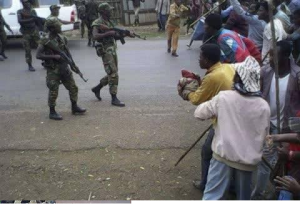


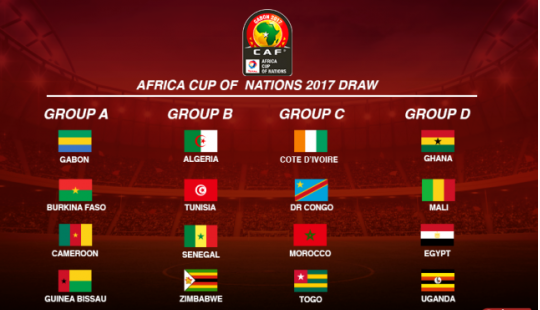


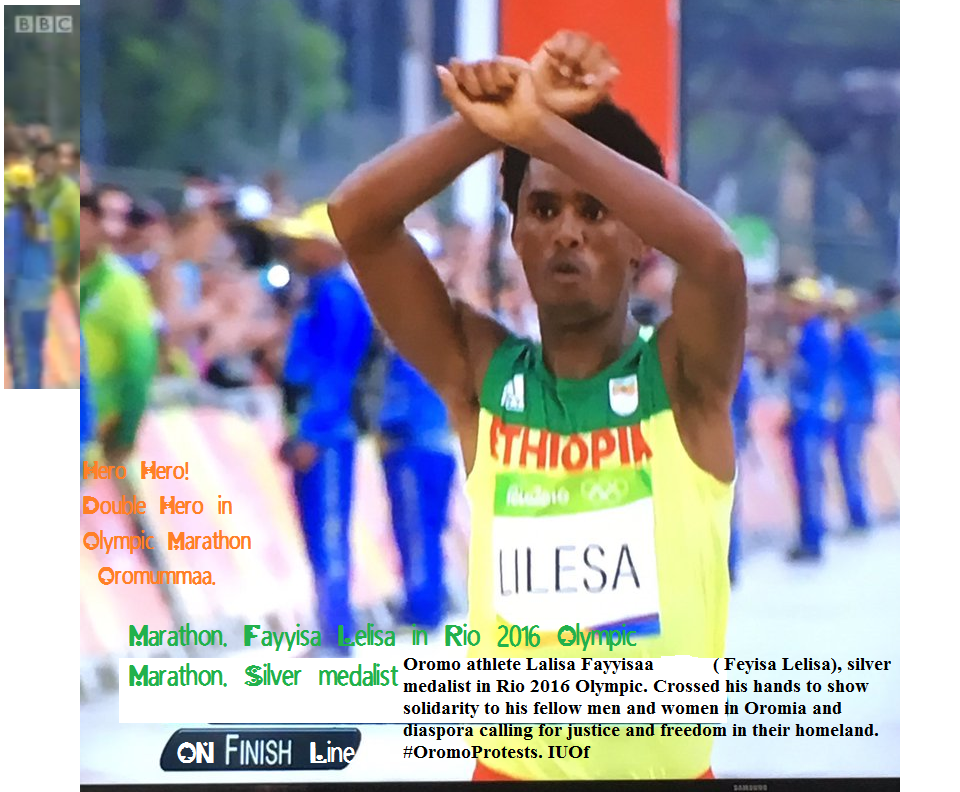
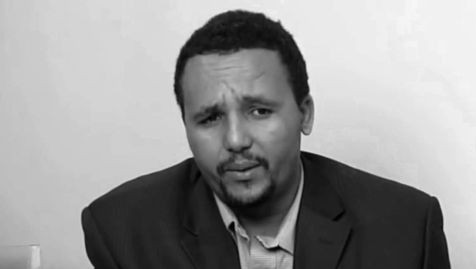


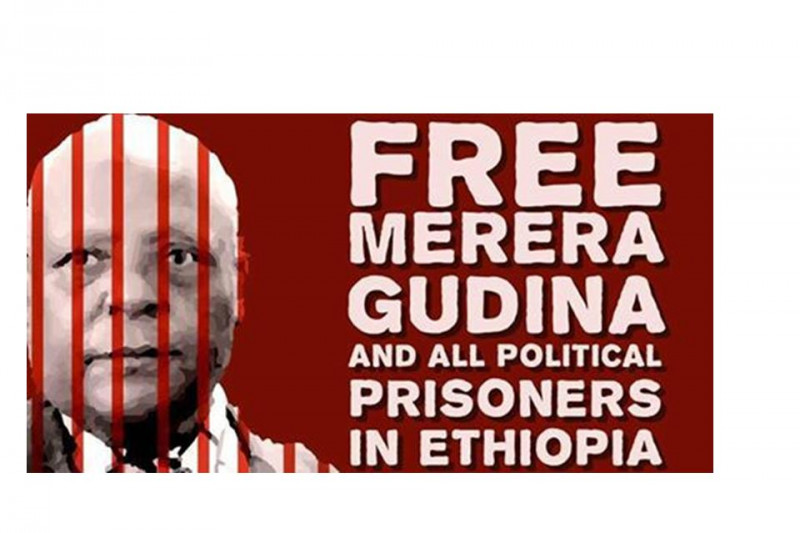







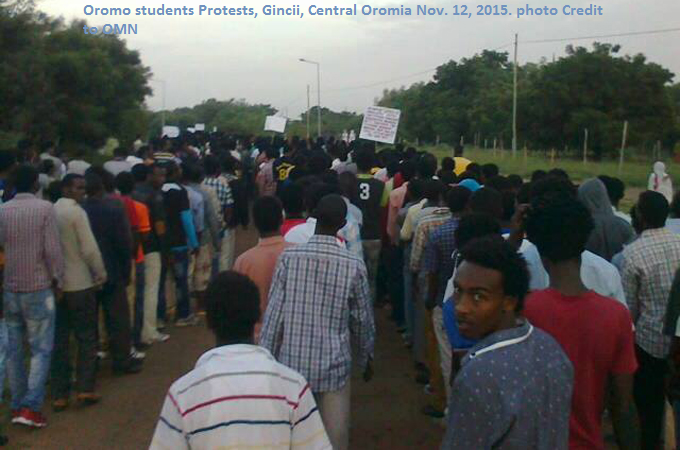
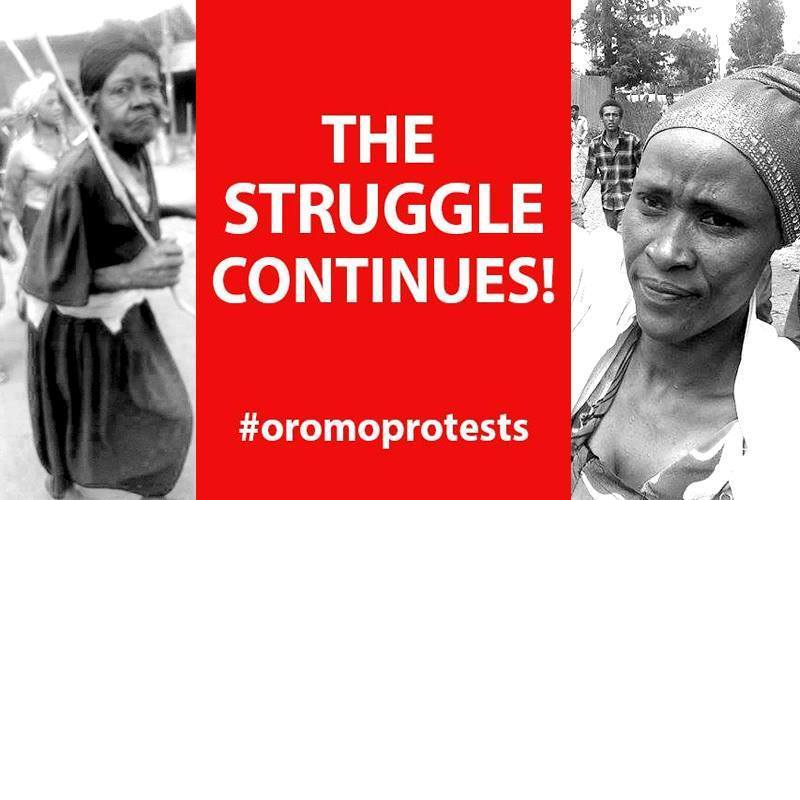


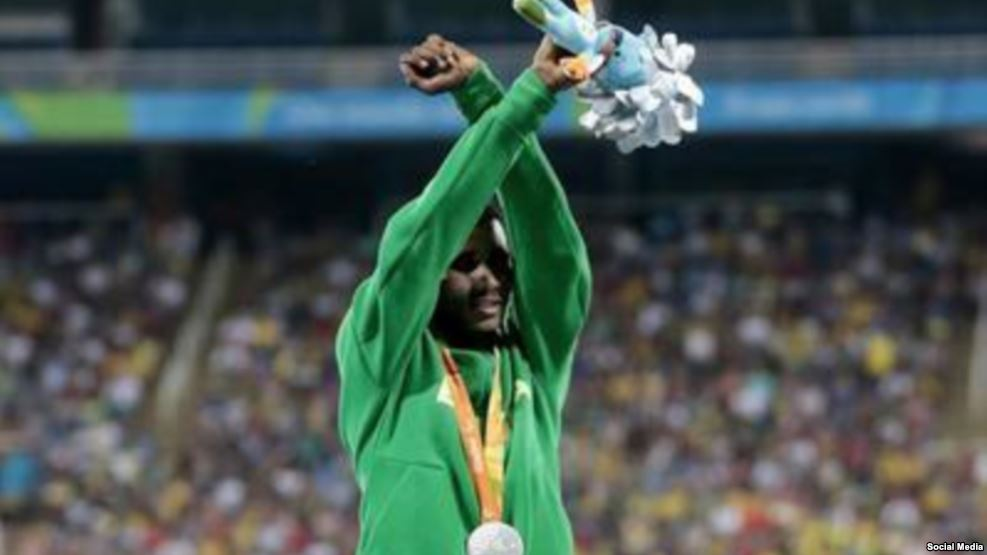
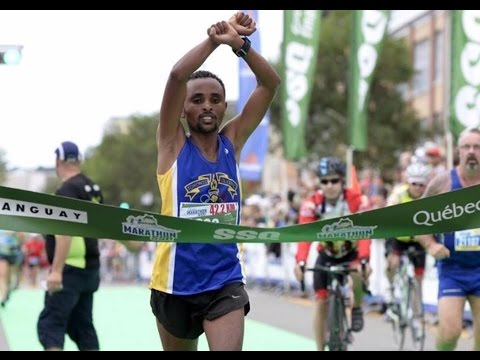

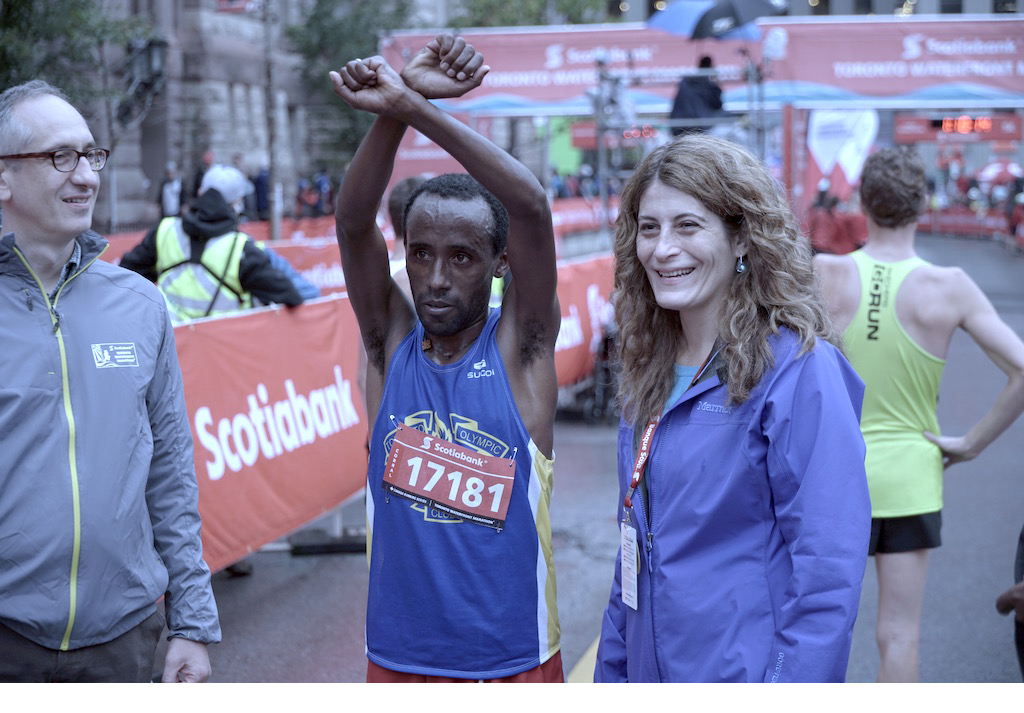





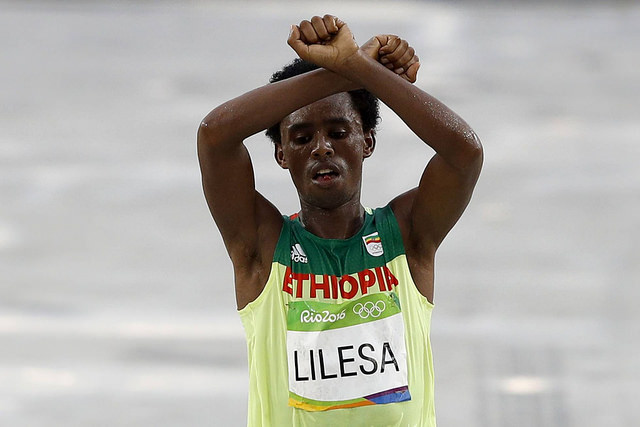


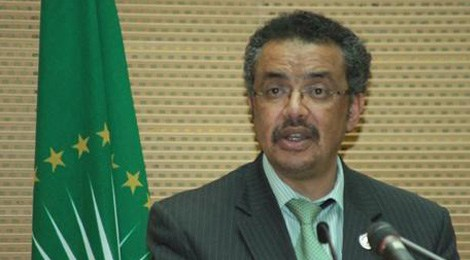


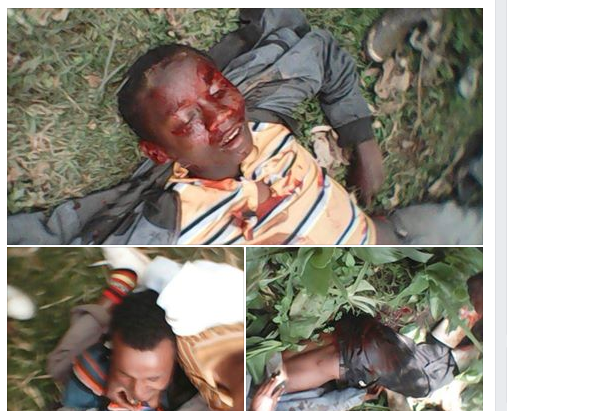


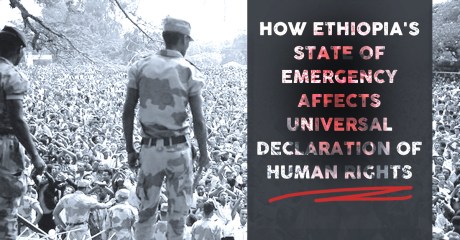
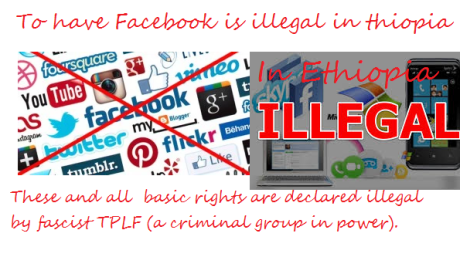
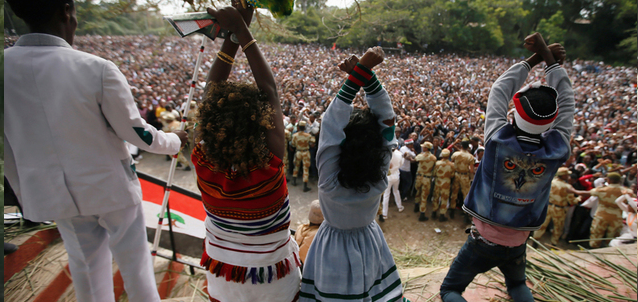
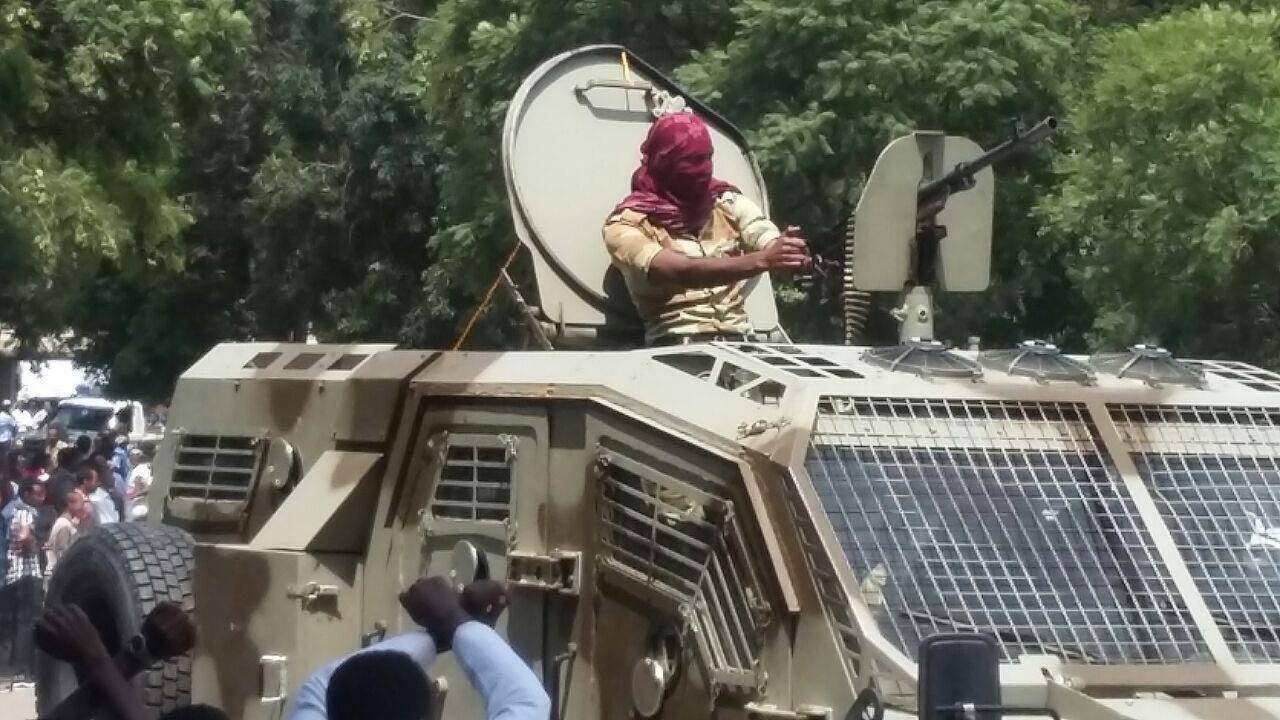
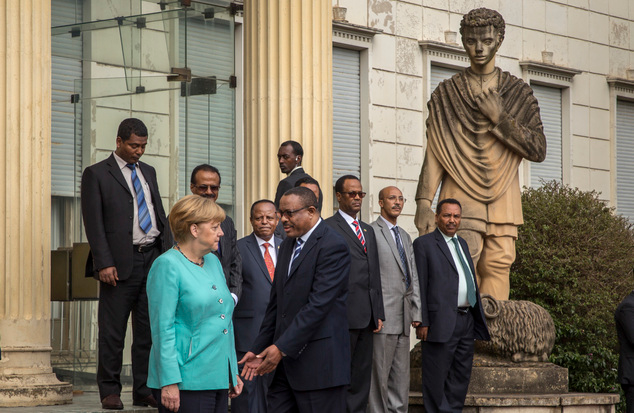



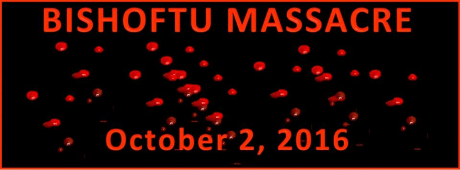




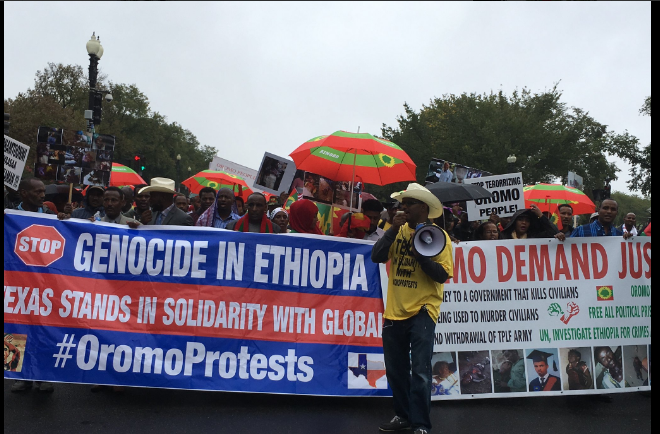


 Oromian Economist
You must be logged in to post a comment.