Economic and development analysis: Perspectives on economics, society, development, freedom & social justice. Leading issues in Oromo, Oromia, Africa & world affairs. Oromo News. African News. world News. Views. Formerly Oromia Quarterly
Demonstrators chant slogans while flashing the Oromo protest gesture during Irreecha, the thanksgiving festival of the Oromo people, in Bishoftu town, Oromia region, Ethiopia [Tiksa Negeri/Reuters]
On January 3, the Ethiopian Prime Minister Hailemariam Desalegn made two major announcements: his government will release political prisoners and close down a notorious detention centre at the heart of Ethiopia’s capital,widely known as a torture chamber for dissidents and government opponents. Desalegn announced the decision as part of a wider package of reforms aimed at fostering national reconciliation and widening the democratic space.
Rights groups welcomed the announcement as “an important step toward ending long-standing political repression and human rights abuse in the country” while others saw the move as a significant concession to the relentless protests of the last two years by the Oromos and Amharas – the two largest ethnic groups in the country.
As local and international media began to scrutinise the rationale, implications and consequences of the announcement, most of the commentary focused on Ethiopia’s perceived admission that there are political prisoners in the country. US House Foreign Affairs Committee Chairman Ed Royce even issued a statement praising Ethiopia for “finally acknowledg[ing] that it holds political prisoners.”
Shortly after the announcement, however, the government distanced itself from this interpretation by emphasising the fact that the prime minister never used the term “political prisoners” in his initial statement.
Indeed, Desalegn only referred to “political leaders and individuals whose crimes have resulted in court convictions or have resulted in their ongoing prosecution under the country’s law,” in his statement and never gave a clear indication as to which prisoners will be eligible for release.
Ethiopia’s political prisoners
The Ethiopian government has always denied consistent and widespread reports by human rights groups that it holds political prisoners. Like his predecessor, the late Meles Zenawi, who adamantly denied politicising the legal system to stifle dissent and opposition, Desalegn has also repeatedly dismissed the suggestion that Ethiopia is holding political prisoners.
Shortly after he took power in 2012, Al Jazeera’s Jane Dutton asked Desalegn if he intends to “confront” the legacy of political repression he inherited from Zenawi and take steps to release the “thousands of [political opposition] languishing in jail”. Desalegn said, “There are no political opposition that are languishing in prison.”
In May 2015, shortly before the country’s national election in which the ruling party won 100 percent of seats both at the national and regional levels, Al Jazeera’s Martine Dennisasked Desalegnabout the imprisonment of “record number of journalists” to which he replied “these are not journalists …The moment you join a terrorist group, you become a blogger”.
There can be no justification to hold some political prisoners or journalists, bloggers and scholars while releasing high-profile leaders of political parties.
No sitting government would publicly admit to holding political prisoners, and – even after last week’s announcement – Ethiopian government still appears to be refusing to do so. But evidence suggests that very few governments in the world today hold more political prisoners than Ethiopia.
Since assuming power, the government frequently used the legal system to lock up members and leaders of the opposition. Indeed, the courts served as potent instruments of repression and power consolidation second only to the military-security apparatus.
Since the early days of the regime and particularly following the adoption of the country’s notorious anti-terrorism law in 2009, there has been a frightening politicisation of the legal system and the administration of justice. With or without disguise, Ethiopia used its courts and other institutions of justice to harass, intimidate, and eliminate political opposition from the political space.
In the early days of the regime, several members of opposition parties have been held in detention centres throughout the country without charges, particularly in the Oromia regional state. Actual or suspected members of the Oromo Liberation Front have been arrested in mass and detained without charges. More than two decades later, the whereabouts of several individuals including prominent Oromo politicians such as Nadhi Gamada and Bekele Dawano are still unknown.
Following the contested election in 2005, the government rounded up leaders of the Coalition for Unity and Democracy (CUD) who made significant electoral gains that denied the incumbent its majority. Since the government adopted its notorious anti-terror legislation, more than 1,000 people including opposition political leaders, journalists, bloggers, activists, scholars, and religious figures, have been charged with terror-related crimes. It is estimated that tens of thousands of individuals are currently in jail because of the government’s intolerance to dissenting views.
What makes these individuals political prisoners is not their innocence or guilt but the fact that their arrest, prosecution, and conviction were purely motivated by political ambitions as opposed to normative concerns with the rule of law and justice. In other words, the legal process is set in motion not for the determination of guilt and innocence but for political expedience, to pursue the dual goal of delegitimising political foes and physically eliminating them from the political space.
While the Ethiopian government still appears to be refusing the mere existence of thousands of political prisoners in the country, last week’s announcement, however incomplete, is a step in the right direction.
The closure of the infamous torture chamber commonly known as Maikalawi is another welcome development that signals a departure from the repressive practices of the past. But it needs to be noted that the prime minister did not admit that his government used the prison as a torture centre. He instead noted that the prison will be closed and turned in to a museum as result of its role in past atrocities.
Yet there are many credible reports (pdf) showing that opposition politicians, protest organisers, journalists, suspected dissenters and other voices critical of the government are taken to Maikalawi and subjected to torture or other forms of inhuman and degrading treatment under the rule of the current regime.
The real reasons behind the announcement
The decision to release political prisoners and close down the detention centre is a compromise between the four political parties that make up the ruling Ethiopian People’s Revolutionary Democratic Front (EPRDF) coalition. But understanding the political considerations behind the announcement requires a proper understanding and appreciation of the two central issues: the constitutive and operational logic of the EPRDF and the nature of the crisis destabilising the country for well over two years.
EPRDF is the brainchild of the Tigrayan People’s Liberation Front (TPLF), a Marxist-Leninist movement that fought to liberate the Tigray ethnic group, which comprise six percent of Ethiopia’s more than 100 million people. In the final days of Ethiopia’s civil war, the TPLF orchestrated the creation of three satellite parties – Oromo People’s Democratic Organization (OPDO), the Amhara National Democratic Movement (ANDM), and the Southern Ethiopian People’s Democratic Movement (SEPDM) – that ostensibly represent their respective ethnic groups.
The TPLF assembled these puppet organisations to consolidate its grip on power. They helped broaden TPLF’s appeal beyond Tigray and bolster its political legitimacy while also enabling it to smother real opposition from autonomous parties such as the Oromo Liberation Front (OLF) and the All Amhara Peoples Organization (AAPO).
For 26 years, TPLF used this vassal configuration to dominate all aspects of the country’s political life, while mercilessly muzzling dissenting voices both from within and outside the party. The discontent and suffering that have been simmering underground for decades exploded into the open in November of 2015 when Oromos, the largest ethnic group in the country, took to the streets in protest.
In July of 2016, the Amharas, the second-largest ethnic group in the country, joined the protest, creating a nationwide protest movement that reconfigured the political landscape and brought the government to its knees.
The protests not only exposed the structural anomalies at the heart of Ethiopia’s political system, but also brought about a significant reconfiguration of the asymmetric relationship between the four parties that make up the EPRDF. TPLF lost its absolute power within the coalition as its junior partners began to reinvent themselves and side with their respective people.
This is particularly evident in Oromia, where the new leadership of the region refused to play second fiddle. OPDO began to flex its muscles, knowing full well that as the party with the most seats in parliament, and the largest population, it can cripple the government. In a major break, the new leaders of OPDO began protesting the disproportionate and indiscriminate policing, harassment, imprisonment, and torture of Oromos by security forces.
In a joint press statement of the four parties that make up the ruling coalition, Lemma Megersa, the leader of OPDO and the president of Oromia regional state, characterised Maikalawi as “a site in which our citizens have been castrated for years“. Megersa, a transformational figure with a distinct ability to appeal to people across competing nationalist narratives and fault lines that divide Ethiopian politics, went on to argue that “while it is one thing to close it down, it is important that we look at the justice sector more broadly, from investigation to prosecution, trial, and sentencing.”
While the proposed package of reforms are in the interests of the OPDO and ANDM, it is not clear to what extent the other parties, particularly the TPLF, which still controls the intelligence, the military and the federal police, is genuinely committed to enforcing measures, which, if fully implemented, would ultimately reduce its influence within the coalition, the government and the state more generally.
TPLF’s hegemonic status depends on fostering hostility and division, not national reconciliation and democratisation. Indeed, just three days after the announcement, the Federal Police announced a “deep investigation” into “Qeerroo Oromo” (Oromo youth) movement, a decision which collides head-on with the party’s stated goals of national reconciliation and democratisation.
The government acknowledges the unprecedented nature of the crisis facing the country and rightly identifies national reconciliation and widening the democratic space as two of the most significant policy objectives necessary to save the country from plunging into the abyss. However, the government cannot pursue these goals while at the same time proposing measures in conflict with these imperatives.
The government must come to terms with the transformations of the last two years and open up the political process for all voices that seek a hearing and bodies that seek visibility. This means adopting the broadest possible definition of political prisoners and releasing all those whose arrest, detention, prosecution, and conviction have been driven by political considerations.
There can be no justification to hold some political prisoners or journalists, bloggers and scholars while releasing high-profile leaders of political parties. If there is any lesson the government can learn from the protests of the last two years, it is that more repression will only escalate the crisis, not contain or avert it.
The views expressed in this article are the author’s own and do not necessarily reflect Al Jazeera’s editorial policy.
The Ethiopian born Saudi tycoon, Mohammed Hussein Al-Amoudi and all the remaining detainees that were held at the Ritz-Carlton hotel have been transferred to Al-Ha’ir prison, a maximum security prison south of Riyadh.
The Middle East Monitor quoted the Arabic Al-Araby Al-Jadeed news site as saying authorities have transferred the remaining detainees being held at the Ritz-Carlton hotel to Al-Ha’ir prison because they have refused to pay large payments, 70% of their wealth, to secure their freedom.
The report said nearly 60 detainees were transferred to the most high security prison in the Kingdom. The prisoners include Prince Al-Waleed Bin Talal as Prince Turki Bin Abdullah and a number of government officials who refused to make the large financial payments for their release.
Among those transferred to the maximum security prison is Mohammed Hussein Al-Amoudi whose worth is 10.6 Billion dollars and owns businesses in hundreds of millions of dollars in Ethiopia. He works works closely with the TPLF oligarchy that granted him thousands of hectares of agricultural land and several prime plots in the capital Addis Ababa. He hit jackpot with gold in Ethiopia and has been mining gold for over two decades. His agricultural and construction projects stretch all across the country.
Early in November Crown Prince Mohammed Bin Salman ordered the arrest of about 200 princes and businessman accused of high level corruption.
But the purge was also seen as a move to raise money for the cash strapped Kingdom’s treasury. Authorities aimed at raising 100 billion dollars in return for the release of the suspects.
Prince Miteb bin Abdullah had been released after paying more than $1 billion for his release. And a few others had reportedly reached settlement for their freedom.
The Ritz-Carlton hotel is now available for booking starting next month, according to its website.
Real reform unlikely as it would mean self-destruction for government, critics say
After anti-government protests erupted two years ago, Ethiopia’s government adopted its traditional approach to dealing with dissent: hundreds of people were killed in clashes with security forces, tens of thousands were detained and a state of emergency was imposed. But the unrest continued to fester and has escalated in the five months since emergency rule was lifted, once more threatening the stability of the nation and the prospects of one of Africa’s best-performing economies. Now the rattled government is trying a different tactic — making conciliatory gestures to those who oppose its autocratic rule. Hailemariam Desalegn, the prime minister, announced last week that the government would release political prisoners and close a notorious prison as the first steps in a process to “foster national reconciliation”. Analysts say the highly unusual measure was prompted by a belated realisation in the Ethiopian People’s Revolutionary Democratic Front that the unrest posed a serious threat to its 26-year hold on power. But the way the crisis has been handled also exposes unprecedented cracks in the unity of the four-party ruling coalition. “[While] on the one hand . . . the situation of our country is delightful, the conflicts . . . pose serious danger to our national survival Regime executive committee press release “The EPRDF has always had divisions but it’s been very insular and everything has been contained,” says Ahmed Salim, an analyst at Teneo Intelligence. “For the first time we’re seeing some of these machinations play out publicly because of the anti-government protests.” The decision to release prisoners, which has yet to be implemented, was taken by the EPRDF’s 36-member executive committee at a 17-day retreat last month. In a rare bout of self-criticism, the executive committee blamed the crisis on poor leadership at all levels of the coalition and a lack of democracy. The EPRDF controls all the seats in parliament and all the main opposition parties have been outlawed or emasculated, the country has few independent civil society organisations and the media is muzzled. The committee concluded that while “on the one hand . . . the situation of our country is delightful”, according to an official translation of a press release, “the conflicts being ensued in different parts of the country . . . posed serious danger to our national survival”. The “conflicts” erupted in 2015 over opposition to government plans to expand the capital, Addis Ababa. They escalated into a more general anti-government movement as discontent rose, particularly in the Oromia and Amhara regions, where people complain about decades of marginalisation by the ruling Tigrayan elite. Ethiopia’s prime minister Hailemariam Desalegn said the move to free prisoners would ‘foster national reconciliation’.
More recently, the protests have centred on clashes between people in Oromia and the Somali federal state, prompting fears among analysts that the unrest could become increasingly ethnic. “It’s a realisation by the [EPRDF], perhaps a little too late, that they need to shift course in their approach to the growing anti-government sentiment,” Mr Salim says. “It’s a tacit acceptance they’ve got it all wrong.” After its meeting, the EPRDF committee expressed “its earnest remorse for putting the ongoing quarter century [of] development in jeopardy”. Over the past decade, Ethiopia, an impoverished nation of 100m, has recorded average economic growth of more than 8 per cent, while attracting billions of dollars in foreign investment as it positioned itself as a centre of low-cost manufacturing. Awol Allo, an Ethiopian political analyst at Keele University in the UK, describes the prisoner announcement as a “major step in the right direction for the EPRDF”. However, activists’ long-held scepticism of the regime’s reform promises would remain until there was tangible progress, he says. Arguably the greater threat to the coalition’s survival comes not from the streets but from within its ranks, he says, particularly the Oromo Peoples’ Democratic Organisation and Amhara National Democratic Movement parties. “These parties are becoming increasingly vocal and demanding greater democracy,” he says. The Oromo and Amhara ethnic groups account for more than 60 per cent of the population, but the EPRDF is dominated by the Tigrayan People’s Liberation Front. Tigrayans comprise only 6 per cent of the population but the TPLF led the armed struggle that in 1991 toppled Mengistu Haile Mariam’s dictatorship. The fourth party in the EPRDF is the Southern Ethiopian People’s Democratic Movement, which is led by Mr Hailemariam, the prime minister Mr Salim says the EPRDF is “clearly not united” but that it is premature to predict what will happen. “Complete collapse is the most unlikely scenario but they’re experiencing threats that are existential,” he says. The coalition’s challenge is to find a balance between survival and satisfying demands for change, says Befeqadu Hailu, a prominent Ethiopian blogger. “If the EPRDF does real reform and introduces proper democracy it will perish, because it’s reated so many grievances in every citizen’s head it will either split or be voted out,” he says. “But if it doesn’t do reform, the crisis will get worse.”
“For years, while donor countries like the US have turned a blind eye, thousands of Ethiopians have languished behind bars simply for speaking up against so-called development policies and related human rights abuses, all perpetrated by the Ethiopian regime. The acknowledgement of these political prisoners, their release, and the closure of the horrific Maekelawi police station, if actually carried through, are all long overdue, but not enough.”
Oakland, CA—Until yesterday, the Ethiopian government refused to even acknowledge the presence of scores of political prisoners in the country. Then on January 3, 2018, the government announced that it would release all of its political prisoners and close the notorious Maekelawi police station. The surprise announcement came after years of political suppression that saw the deaths of over 1,000 people and the arrest of over 26,000 in 2016-2017 alone, as well as the imposition of a 10-month state of emergency.
According to Anuradha Mittal, Executive Director of the Oakland Institute, “For years, while donor countries like the US have turned a blind eye, thousands of Ethiopians have languished behind bars simply for speaking up against so-called development policies and related human rights abuses, all perpetrated by the Ethiopian regime. The acknowledgement of these political prisoners, their release, and the closure of the horrific Maekelawi police station, if actually carried through, are all long overdue, but not enough.”
The Oakland Institute has exposed human rights abuses linked to land grabs and failed development policies across Ethiopia for over a decade. This has included forced displacement, unlawful arrest, the stifling of basic human rights, and more. Journalists, opposition party members, religious and indigenous leaders, students, and land rights defenders have been imprisoned simply for speaking out against injustice in the country. The Institute has been closely involved in the cases of various land rights defenders and political prisoners, and has campaigned against Ethiopia’s draconian Anti-Terrorism Proclamation.
“For years, the Ethiopian government has used its anti-terrorism law to criminalize basic human rights, stifle dissent, and lock up anyone who critiques its policies and actions,” explained Lewis Gordon, Executive Director of the Environmental Defender Law Center and editor of a joint report with the Oakland Institute about the law. “While today’s announcement has the potential to be a positive step forward for many in Ethiopia, it is also imperative that the government repeal the use of this repressive piece of legislation.”
While yesterday’s news has been heralded by many, questions remain about how the government intends to enact these sweeping changes.
“Who is considered a political prisoner? How and when will these releases take place and under what conditions? Going forward, what kinds of political freedoms will be allowed? The right to peaceful assembly, freedom of speech and expression, freedom of the media? How will the perpetrators of crimes that have been committed against Ethiopian citizens be held accountable? These are all details that have not yet been released,” Mittal stated. “In the absence of these details, we remain cautious about this announcement. We will remain vigilant in the days and weeks to come, and hold the Ethiopian government accountable to swiftly and fully follow through on its promises.”
#Ethiopia-AS's editor @tselemma spoke to the BBC Focus on Africa about yesterday's statement by the gov. She highlighted the specific case of Ethiopians currently facing terrorism charges who are largely considered as political prisoners See Full interview https://t.co/NLw8CX4Hmupic.twitter.com/ijvV28KsfM
#Ethiopia: Closure of “torture chamber” could signal new chapter for human rights https://t.co/KbWMBgFnnM “While plans to close the notorious Maekelawi detention centre are welcome, the closure must not be used to whitewash the horrifying events that have taken place there."
Lots of unanswered questions about scale of prisoner release after prime minister’s welcome announcement today in #Ethiopia. New @HRW dispatch below https://t.co/v3DHls1ezB
An economy in free fall, ever-deepening repression, a deteriorating security, inter-ethnic violence, and a vicious infighting within the ruling party – Ethiopia is on the cusp of political explosion.
Addis Abeba, December 31/2017 – The Executive Committee of the ruling Ethiopian People’s Revolutionary Democratic Front (EPRDF) just concluded a high stakes meeting widely expected to offer a pathway out of the current crisis. The press release put out by the party after the 18-days long meeting is full of invectives, outrageous falsehoods, and deliberate reversal of historical facts designed to give an appearance of coherence and solidity to a regime in complete shambles.
Ethiopia has largely been seen in Western capitals as “an Island of stability in a troubled region”. The inability and unwillingness of the government to address the popular demands of the protests of the last three years degenerated into a far more complex and dangerous turmoil, morphing into a wholesale political crisis.
According to the 2017 Fragile States Index by the US think thank Fund for Peace, Ethiopia is the 15th most fragile state in the world, down from 24th in 2016. And also according to the forthcoming 2018 Bertelsmann Stiftung’s Transformation Index (BTI), which evaluates and analyses the political, economic, and governance transformations of 129 developing countries, Ethiopia is on a downward trend. It ranks 113th on the state of political and economic transformation, down from 111th in 2016. The country is teetering on the brink of a bottomless abyss. But what are the key reasons and how can this sharp increase in the vulnerability of the state to collapse reversed?
Since the sudden demise of its all too powerful Prime Minister, Meles Zenawi, in 2012, the country has been in tumult, unable to deal with the political crisis generated by escalating levels of ethnic discontent, violent political repression, and crippling economic conditions. A strategic thinker known for being duplicitous, savage, and decisive, Meles was a master manipulator with an absolute grip on the country’s political and economic policies. His successor, Prime Minister Hailemariam Desalegn, had neither the adept strategic maneuver nor the far-reaching control Meles had over the party, the state, as well as the military and security apparatus.
Rupture in the Ruling Coalition
The ruling party, EPRDF, a coalition of four unequal ethnic based parties, is on the brink of unraveling. Alarmed by the pace of changes sweeping the political landscape and the central government’s increasing strategic and tactical incompetence, some of its members are beginning to publicly contradict each other, a rupture that marked a make or break moment for the party and the government. EPRDF is a vassal configuration held together through ideological machinations and a range of repressive tactics. Its members are: The Tigray People’s Liberation Front (TPLF), The Oromo People’s Democratic Organization (OPDO), The Amhara National Democratic Movement, and The Southern Ethiopian People’s Democratic Movement.
The most dominant mother party, TPLF, used the vassals to bolster its legitimacy and squelch opposition from autonomous parties. While the vassal parties were allowed a measure of autonomy on internal matters, the mother party ensured the durability of the vassal configuration by ensuring that vassal parties do not build a social capital and internal party infrastructure that will one day allow it to free itself from this titular arrangement.
Since the death of Meles Zenawi, the vassal configuration has been in tatters, as former vassals began to assert themselves and demand a fair and equal distribution of political power within the party and the state. This is particularly evident within the Oromia regional state, where the region’s governing party, the OPDO, has been publicly expressing its disenchantment with the status quo.
The Violence on the Eastern Front
Elements within the TPLF who saw the OPDO as the greatest threat to their power turned to sabotage to reassert control of the vassal that is abandoning them to side with their sizable constituency. According to several sources, the violence along the border between Oromia and Ethiopian Somali regional state, while executed by Liyu Police, a paramilitary force with a dubious mandate, was indeed, instigated by TPLF generals. The border conflict has claimed the lives of hundreds and displaced more than half a million people.
For over a decade now, the government has been hiding behind the rhetoric of national security and narrative of development to shut down critical conversations of considerable political significance. These narratives have run out of steam and no longer provide the cement capable of holding together the crumbling social and political fabric in the country.
Nation-wide protests
As years of pain and suffering turned into rage, Ethiopians poured into the streets to demand that the government respects its own Constitution, and political repression. The Muslim community began protesting in December 2011 demanding religious freedom and an end to the government’s intervention in the affairs of their religion. In November 2015, the Oromos, the largest ethnic group in the country who make up around a third of the population, started one of the most consequential protests, essentially redefining the terms of engagement between the state and society. In July 2016, the Amharas, the second largest ethnic group in the country, joined the protest, intensifying the pressure against the government.
Although the nature of the grievances and the demands of these protest movements are not exactly the same, these protests were essentially reflections of decades of humiliation and hopelessness by their respective communities, exacerbated by the government’s contempt to long overdue questions of representation, autonomy, equality, and justice.
The government’s brutal response – complete with a show of force – was to securitize the demands and denigrate protesters as terrorists and anti-peace elements – a common tactic used by the Ethiopian government to justify violent suppression of peaceful opposition. As a consequence the tone and substance of the conversations on the Ethiopian streets suddenly shifted, with protesters demanding a radical transformation of the system. The ruling party has become the symbol of national decay and bankrupt hopes. Shaken to its core, it declared a state of emergency on October 8, 2016, to reassert control. By the time the emergency was lifted, in August 2017, hundreds of people were killed and tens of thousands were detained.
The Executive Committee Meeting
The highly anticipated Executive Committee meeting was widely expected to pass major decisions on the future direction of the party and the country by offering credible and tangible pathways for democratizing the party and the state. If the press statement is to be taken as an accurate reflection of what has been agreed in the meeting and where the party is headed, the status quo seems to have won the day. The substance and tone of the statement is in direct contradiction to the expressed will of the Ethiopian people who have staged relentless protests for more than three years and paid a considerable price.
The country is on the verge of explosion and the government has now reached a turning point. It faces a choice between opening up the political process and tumbling into the abyss.
The West also faces a choice between supporting an all-inclusive transition or the complete unraveling of a geopolitically significant state with a colossal repercussion for its people and the region. Indeed, some diplomats with extensive experience of the country and the region have been moving away from the morally and politically questionable position they supported and defended for over two decades. Ambassador Herman J. Cohen, former US Assistant Secretary of States, who played a key part in the last political transition in Ethiopia, recently called on the government to “seriously consider requesting US Government mediation to organize a conference among all parties that will produce new democratic dispensation – before law and order collapse completely”.
Western governments who have been criticizing the government in private and behind closed-doors must take their criticisms a step further and demand concrete action. Most of all, they must demand that the government stops instigating inter-ethnic violence, release all political prisoners, listen to the plight of its people, and take radical steps to halt the race to the bottom.
ED’s Note: Awol Allo, is Lecturer in Law at Keele University, Great Britain. He tweets at @awol_allo and can be reached at a.k.allo@keele.ac.uk
While a small number of government-connected oligarchs are accumulating more and more wealth, most Ethiopians are not experiencing the so-called economic miracle, with nearly six million people dependent on food aid.
Unrest has plagued Ethiopia for the past two years. So what’s going on? The reasons are complicated.
Journalist Martin Plaut considers this to be the beginning of the problems facing modern Ethiopia. “The TPLF and Meles Zenawi were never prepared to allow democracy and real federalism,” he told DW. But the focus on ethnic differences in the constitution has not been without consequence:“As soon as you increase the focus on ethnicity and make ethnicity the basis of the state, you basically stoke up ethnic tensions,” said Plaut.
Ethiopia’s economy is booming with car assemblies like this one (pictured above) but many still live below the poverty line
Unequal distribution of economic resources
For some observers, the deadly clashes over the past few weeks would appear to be harbingers of an ethnically-motivated civil war. It seems like ethnic tensions are being expressed with increasing intensity. But the causes are complex.
Over the past few years, one issue in particular has repeatedly exacerbated the ethnic tensions in Ethiopia: the side effects of rapid economic growth. Since 2000, gross domestic product has increased almost tenfold, raising questions over who actually benefits from this increase in prosperity.
For example, the violent expropriation of many Oromo people following the spread of the economic boom in the capital Addis Ababa is considered one of the triggers for the ongoing unrest. While a small number of government-connected oligarchs are accumulating more and more wealth, most Ethiopians are not experiencing the so-called economic miracle, with nearly six million people dependent on food aid.
Although the economic boom has led to the emergence of a small, but growing, middle class, this hardly diffuses the situation. On the contrary, economic success and access to better education only increase the desire for political participation, which so far has been denied to those who wish to work their way up in the authoritarian system.
The consequence of these upheavals is conflict at all levels: civil society pushes back against the authoritarianism of national, regional and local rulers; regional populations want more independence from Addis Ababa and at the center of power, reformers fight against those who wish to defend the status quo. The military and regional police forces are becoming increasingly involved in political decisions.
At the peak of protests, Ethiopians world over including those living in Germany called for political reforms back home
Pursing federalism as a solution
Is Ethiopia at risk of state collapse? Plaut thinks this kind of speculation is premature, because there is a clear solution available: “There is a way of solving it, which would be to genuinely allow a federal state.” For this to occur, however, the TPLF must be willing to give up their absolute hold on power and make way for a true multi-party system.
The vice-chairman of the Medrek coalition, Beyene Petros, also doesn’t think Ethiopia is likely to fall apart any time soon. “I am fully confident that Ethiopia will remain intact; this is by the desire and choice of the Ethiopian population,” he told DW. What is needed, however, is an overhaul of the political system: “The EPRDF regime is simply not compatible with the cultural and political situation in Ethiopia.”
Ethiopia’s new employment plan more politics than jobs
The Ethiopian government has been trumping the country’s recent economic success. But a new plan to employ young people appears to be more about quelling protests than providing employment. (21.02.2017)
Quest to extradite Ethiopia’s dictator Mengistu as Mugabe departs
Zimbabwe’s ex-President Robert Mugabe gave refuge to Col. Mengistu Haile Mariam, convicted of genocide in Ethiopia. Mugabe’s departure has raised hopes that Haile Mariam could be extradited, but this is all uncertain. (11.12.2017)
‘Ethiopia needs to open up civic space’: UN rights chief
UN human rights chief Zeid Ra’ad Al Hussein tells DW that despite Ethiopia’s tremendous economic and sociocultural advances, the government there should allow the opposition, free media and rights council to thrive. (06.05.2017)
Ethiopia: East Africa’s new economic power
Ethiopia’s economy is growing so rapidly it may soon replace Kenya as the largest economic power in the region. But a large number of people in the country still live in poverty and many challenges remain. (26.06.2017)
Ethnic violence in Ethiopia leaves deep wounds
Ethiopia has experienced one of its worst population displacements due to violence in recent times. Now stuck in camps, displaced Ethiopians are trying to come to terms with what their future may hold. (05.12.2017)
Ethiopian children study in a classroom. (AP Photo/Sayyid Azim)
Thomas Yilma didn’t last a day as a teacher in an Ethiopian government school. After graduating from university he was packed off to a small village in a remote corner of the Ethiopian highlands with scant electricity or phone signal, let alone internet connection, where he was to begin his career. “I felt like I was being abandoned in the middle of nowhere,” he says now. After one restless night he turned around and headed back to the Ethiopian capital, Addis Ababa, leaving the country’s state education sector behind him.
Thomas’s story—extreme though it is—sheds some light on the troubles plaguing Ethiopia’s rapidly expanding school system. Though he eventually found a job in an American-owned private school, this too proved only temporary. After six years he did what many of his colleagues—and thousands of teachers across Ethiopia—so often end up doing, and quit the profession entirely. “I never had any desire to become a teacher,” he says. “You could guess what their lives were like. I wanted to be a doctor or an engineer—like everybody else.”
Few governments in Africa spend as much of their revenues on education as that of Ethiopia.At first sight this is surprising. Education in Ethiopia over the past decade is in some senses a success story. Government statistics are not wholly reliable—the ruling party does a good job of steering clear of most international surveys, making regional comparison difficult—but many of the headline figures are impressive regardless. Few governments in Africa—or elsewhere, for that matter—spend as much of their revenues on education as that of Ethiopia. In a continent which today directs a higher proportion of government expenditure towards the sector than any other—18.4%—Ethiopia has consistently been in the top rank for the past decade. Between 2000 and 2013 it almost doubled the share of its budget allocated to education, from 15% to 27%.
Measured in terms of access to primary education (which is now free), the results are striking. Ethiopia now has one of the highest enrollment rates in Africa, up from the nadir in the early 1990s when it had one of the world’s lowest. The number of primary schools almost tripled from 1996 to 2015, while student enrollment grew from less than 3 million to over 18 million within the same period—almost universal. Youth literacy meanwhile jumped from 34% in 2000 to 52% in 2011.
According to the UN’s Education For All Development Index, which provides a snapshot of the overall progress of national education systems, Ethiopia came second only to Mozambique in terms of size of the improvement over the previous decade, and made fastest progress in terms of expanding universal primary enrolment. Between 2001 and 2008, the number of out-of-school children fell by more than 60%.Compare this to Nigeria, which at the same moment experienced a lost decade: the percentage of children out of school showed no improvement whatsoever by the end of it.
Teacher status
But all this masks a deep-seated malaise. According to the government’s own figures, for every 1,000 children who begin school, around one-half will pass uninterrupted to Grade 5 and only one-fifth to completion of Grade 8. Soaring enrolment at secondary level in Addis Ababa—statistical quirks mean the figure here is actually over 100%—contrasts with less than a tenth in the sparsely populated, largely pastoralist region of Afar, which stretches eastwards towards Eritrea and Djibouti.
Those who do manage to stick it out struggle, consistently under-performing what the curriculum expects of them. According to Belay Hagos, director of educational research at Addis Ababa University, students at various grades are learning on average only 40% of the material they are supposed to master. National Learning Assessments, conducted every four years, reveal a stubborn lack of progress. The average score for a Grade 4 student, for instance, dipped from 41% to 40% between 2010 and 2014, and remains stuck below 50% in all regions except Addis Ababa. Comparing 15-year-old children who correctly answered comparable maths questions in 2009 and 2016, Young Lives, a British charity, also found no overall improvement. “I think the education system is in crisis,” says Alula Pankhurst, the charity’s country director.
Why? Part of the answer lies in Thomas’s story. Ethiopia’s brightest and best don’t want to be teachers, and those that do rarely last long. The country’s teachers were once high status: in the northern region of Tigray, the word itself is a title, used to indicate social respect. But this respect has “declined over time,” says Hagos. The profession has been progressively been de-professionalized, ever since the days of the Marxist regime known as the Derg, during which teachers were either co-opted or purged.
Today, teachers are mostly selected from poor-performing students: those who graduate Grade 10 in the top 30% or so go on to Grade 11; those in the tier below join the police; the rest who pass can go to teacher training college. “This is not a good strategy,” says Hagos. “They can’t be good teachers because weren’t good students in the first place.” His latest research has uncovered what he calls a “professional identity crisis”. 70% of those surveyed reported feeling bad about the profession, while 98% said the pay was too low. “They are teachers but they don’t want to be called teachers,” he says. “They are ashamed of it.”
Language problem
Other problems specific to Ethiopia—beyond the obvious lack of financial resources—are compounding its teaching troubles. An especially tricky one is the country’s federal constitution, which devolves a great deal of education policy to the nine regional governments, in particular language of instruction.
“The transition to English in some regions can be a very, very steep curve.” Even at university level standards can be shockingly poor.Regions tend to choose to educate their children at primary level in the local language, but after that instruction suddenly switches to English—a treacherous passage that few sail through easily. “It’s very worrying,” says Pankhurst. “The transition to English in some regions can be a very, very steep curve.” Even at university level standards can be shockingly poor.
The government knows it has itself in a bind: expanding educational access at such a fast pace was always bound to lead to a dilution in standards. “Ethiopia judiciously picked one route, which was students in rooms and bums on seats,” says Ravi Shankar of Accelerated, a company based in Addis Ababa that is working to improve teaching standards in Ethiopia and elsewhere on the continent. Now the government is making efforts to correct this: teachers wages, for instance, were increased sharply last year, and it has embarked on a large-scale program of skills training for teachers.
But whether it can ever follow in the footsteps of a country like Vietnam—whose single-minded focus on education the government has long sought to emulate—is uncertain. And what if it fails? “A crisis of expectation is a recipe for unrest,” says Pankhurst, noting that the anti-government protests which have swept across much of the country since 2014 were led by students with few prospects and even less hope.
• OCHA Director of Operations, Mr. John Ging, visited Ethiopia to review the status of the Government-led international humanitarian response to drought and conflictaffected communities, including internally displaced people.
• Humanitarian operators receive emergency logistics induction training to equip national emergency management authorities, staff from different agencies and humanitarian actors, with emergency logistics skills to ensure timely and efficient humanitarian response.
• Regional reports of the November-December national humanitarian needs assessment are currently being compiled. The humanitarian requirements for Ethiopia in 2018 will be determined once the compilation of all the regional reports is completed.
On 12-14 December 2017, Mr. John Ging, OCHA Director of Operations, visited Ethiopia to first-hand review the status of the Government-led international humanitarian response to drought and conflict-affected communities, including internally displaced people. The director met and discussed with the federal and regional Government of Ethiopia, donors, humanitarian agencies and communities affected by drought and conflict. Mr.Ging acknowledged the strong partnership the Government of Ethiopia has established over the years with the Humanitarian Country Team. He said that his visit is “a reflection of the importance of that partnership.”
The director visited Hamaressa IDP camp with over 4,000 people internally displaced by the Oromo-Somali inter-communal disputes. Following a briefing by the East Hararge zone administration about the scale of the crisis, Mr.Ging reassured authorities that he is committed to advocating for appropriate response to the crisis. The zonal authorities requested for urgent food and non-food assistance to IDPs East Hararge zone.
Meanwhile subsequent intercommunal clashes were reported in West Hararge zone of Oromia region on the 12, 15 and 16 December resulting in more than 60 deaths. OCHA will continue to work with Government to verify access conditions and impact on humanitarian operations. Conflict has left close to 857,000 people displaced throughout the country.
Visit to Somali region
During the meeting with the Somali Regional Government authorities, the region requested Mr.Ging’s advocacy support to scale up the ongoing response, particularly amidst the growing IDP needs and called for development investment in durable solutions for predictable pastoralist needs. The region also asked for the speedy implementation of cashbased assistance in all targeted woredas/districts. Mr. Ging and the Somali regional authorities discussed the need to improve accountability mechanisms, including quality needs assessment and information management.
WHAT DOES UNREST IN OROMIA SIGNIFY?
By Dr. Stephanie M. Burchard*, The Institute for Defense Analyses , Africa Watch
In mid-December, a series of violent clashes between ethnic Oromo and ethnic Somalis in the Oromia region of Ethiopia resulted in at least 61 fatalities. This outbreak of violence followed the deaths
of 16 protesters who were shot by state security forces on December 12 in Chelenko, located east of Mulu in [Eastern] Oromia. Ethiopia was previously under a state of emergency from October 2016 to August
2017 in response to waves of protest that originated in Oromia and swept the country beginning in 2014. What is driving the recent spate of violence in Oromia, and is it indicative of potential larger unrest?
Origins of Unrest
Despite commonalities in language, religion, and culture, Oromo and ethnic Somalis have experienced
intermittent conflict for at least the past 25 years. Their two regional states, Oromia and Somali, share a border that is poorly demarcated. Much of the conflict between the Oromo and Somali groups has historically centered on access to resources and land.
Both ethnic groups complain about being marginalized by the Ethiopian government, which has been
dominated by the Tigray ethnic group. Ethiopia is ethnically heterogeneous, with more than 80 recognized ethnic groups. The Tigray are one of Ethiopia’s smaller ethnic groups, representing about 6 percent of the total population.
The members of the country’s largest ethnic group, the Oromo, which comprises an estimated 35 percent to 40 percent of the population, feel particularly underrepresented by the ruling Ethiopian People’s Revolutionary Democratic Front.
Although tensions between the Oromo and ethnic Somalis are long-standing, the most recent conflict needs to be contextualized against the backdrop of previous unrest in Oromia that began in 2014. After the announcement of a development scheme in 2014 (detailed in the August 25, 2016, issue of Africa Watch) that would have enabled the government to incorporate parts of Oromia into the capital city, Addis Ababa, protests broke out across Oromia.
During the initial phases of the project, Oromo leaders accused the government of taking over land and forcibly evicting families. Protests continued and the grievances expanded to include concerns over human rights abuses, political representation, and limitations placed on freedom of expression. The government ultimately abandoned its expansion plan in January 2016 in response to the unrest, but anti-government protests continued to spread to the Amhara community, Ethiopia’s second largest ethnic group, and the capital. The government imposed a state of emergency in October 2016.
Current Conflict Details are sparse about the most recent clashes, but reports indicate that members from the Oromo ethnic group were killed first, which then triggered reprisal killings of ethnic Somalis. The clashes are alleged to involve the Somali Special Police, the Liyu. The Liyu are a paramilitary group created by the government in the mid-2000s to deal with a previous secessionist group located in the Somali region, the Ogaden National Liberation Front. The Liyu have been accused of using excessive force and engaging in extrajudicial killings. Coincidentally, in October, government forces
were accused of killing four people in Oromia who were protesting the delivery of a shipment of arms to the Liyu.
While some are attempting to define the recent clashes as primarily ethnic in nature, activists in Oromia claim that the involvement of the Liyu indicates that it is actually state-sponsored violence.
The opinions expressed in these commentaries are those of the authors and should not be viewed
as representing the official position of the Institute for Defense Analyses or its sponsors.
Links to web sites are for informational purposes only and not an endorsement.
The December 2017 clashes appear to be part of an escalation of violence and protest in the region. From
October 1 to November 30, around 118 violent events took place in Oromia, almost 50 percent of which were protests.
An estimated 200 fatalities occurred and tens of thousands are believed to have been displaced. This increase in violence follows a lull from April to July. Roughly 30 percent of all conflict activity in 2017 has involved the Liyu in some capacity; almost 50 percent has involved state security forces
(military or police).
Government Response to Unrest
The Ethiopian government responded to the 2014 Oromia security situation with a heavy hand. Ethiopian police were responsible for hundreds of deaths during protests from 2014 to 2016. In 2016, at the height of the conflict, more than 1,000 fatalities were reported in Oromia. The government arrested protesters en masse and attempted to control the flow of information into and out of Oromia. During the state of emergency, at least 29,000 persons were arrested, many of whom are still awaiting trial. The government arrested scores of journalists and frequently jammed nonstate news sources to prevent them from broadcasting. According to Human Rights Watch, the government also routinely cut cell phone service in areas where the military was deployed, presumably to prevent information about the military’s actions from being publicized widely.
Conclusion
The Ethiopian government announced in August 2017 that it was lifting the state of emergency due to an
improved security situation, but recent events suggest a resurgence of violence and protest in Oromia. The uptick in violence may signal the beginning of renewed unrest in Ethiopia. This should serve as a reminder that the core issues underlying the previous unrest, namely state repression and political representation, were never adequately addressed.
Genocide in plain sight: TPLF’s (mass-) red-terror against the Oromo people
By Aba Orma
The Ethiopian Somali state liyuu police force well trained by TPLF to kill Ogaden and Oromo civilians
The TPLF/EPRDF government has orchestrated genocide against the Oromo people with the help of TPLF’s Janjaweed, the Somali para-commando known as the “Liyu Police”. Even the ruling party admitted to that. Then why is the world community silent and allowed the regime to commit genocide after genocide against the peoples in Ethiopia? Are they afraid that declaring such will collapse the TPLF/EPRDF government and that in turn will bring chaos to the country like that of South Sudan? America is once again knowingly or unknowingly failing to stop genocide in Ethiopia. The alternative to America’s inaction is even much costly in human lives and stability of the Horn of Africa. Whether they like it or not, it is paramount to address and redress the Oromo quest for self-determination to bring peace and stability in the region.
TPLF spokpersons and representatives always represented the Oromo killings and genocide in simplistic terms as ethnic/border conflicts whereas the truth is they are the instigators. Under normal circumstances, governments spin and twist facts to fit their narratives. Medias and observers seek facts and correct spins toward justice. In the Oromo case, the TPLF government spins and the West accepts that as facts and spread it further and provides financial and military supports.
“Genocide is the deliberate and systematic extermination of a national, racial, political, or cultural group”. The violence in Oromia meets the criteria of genocide because it is racially based. The Liyu Police that TPLF generals trained, armed and advised from Somali ethnic group massacred, burned houses, confiscated properties, and displaced more than 700,000 Oromos from their homes in an ethnic cleansing. The West has spoken for much less scale of displacement and massacre as genocide.
The Oromos should not expect Colin Powel of South Sudan to rise for them or actor George Cooney to speak up on behalf of Oromos. They have only themselves and heroes like athlete Feyisa Lelisa and artist Hachalu Megersa amongst us who are willing to risk everything and speak up heroes.
If the Oromo activism we see today had started five years ago, it would have matured, crystalized and would have made a larger impact today. But we are where we are and the time is short. Without any more delay the Oromo activists put aside their difference must come together and have a unified voice to speak up for their brothers and sisters in peril.
The Oromo people had had enough and are rising up in Unisom from all corners of Oromia. From East Oromia to West Oromia, from South Oromia to North Oromia to central Oromia to change this rotten system and replace it with a bright, tolerant, and democratic system. The OPDO seems to have discovered its voice and forced by people’s fundamental human rights question started to challenge the TPLF supremacy. We should all applaud for the courage they have shown us so far and at the same time make it clear to them that the relative support they are getting from their people is not here to stay if they don’t continue to stand up for the people and stop the genocide against their people, stop the exploitation of Oromia to build and rebuild Tigray, and restore the fundamental rights of the Oromo people: the right to self-determination.
The usual TPLF machination is not acceptable. Any cosmetics changes are not acceptable to the Oromo people. Expelling and courting few corrupted TPLF members in the name of reform is not acceptable. The acceptable outcome is a total and complete accountability for each and every innocent life taken away under their command, complete and total surrender of Oromia to the Oromo people.
Any short-hand settlement with the TPLF group will not solve the problem except exposes the inferiority of OPDO to the minority Tigray group with super-size power over the Federal government. It will ignite intensified resistance to the regime and OPDO. The rank-and-file of OPDO who witnessed the horror against their people closely are echoing the Oromo people’s question. Lemma and his young team of leaders have only one choice, to stand with their people to the end. Capitulating to this group with the push of the old guards that spoiled TPLF brats and got them to where they are today is a gigantic mistake of historical proportion.
The Oromo people expect to the minimum, in order of importance, the following condition to be met before any kind of arrangement or agreement with the TPLF group:
Prime Minster H/Mariam Desalegne is incompetent and no more viable to lead the federal government and must resign from his post immediately. He failed the Oromo people when he intentionally chose to ignore the genocide against them and choose to speak selectively on the wrongful death of 31 Somali. The Parliament appoints a new prime minster with its full power.
Every non-Oromo TPLF/Agazi army should leave Oromia and the internal security must be left to the Oromia police. The Oromo members of the army are organized under the command of Oromo generals. Agazi and its TPLF generals led genocide against the Oromo people.
Immediate resettlement of the more than 700,000 Oromos displaced by the “Liyu Police”.
Oromia state government must form an independent commission to investigate and bring to justice the people responsible for the Irreechaa Massacre, the Cheelenko Massacre, and TPLF’s Janjaweed, the Liyu Police.
The composition of the country’s army and its leaders must be proportional to the population
All illegally appropriated lands in the name of investment back to the people.
All political prisoners must be released without any precondition
The Oromia state must take charge of all prisons in Oromia. No Oromo should go to prison outside Oromia.
Any machination and hand twisting will only expose the true power of OPDO as a representative of the largest people in the country and consolidates the struggle in one and only one direction. The independence of Oromia!
#Ethiopia – Addisu Arega, Oromia state communic'n head, says the Oromo people should ask to postpone the 'public hearing' called by parliament for today to discuss the thorny constitutional issue of #Oromia's special interest over #AddisAbeba. The timing is stressful, he said. pic.twitter.com/zATmoEboVA
The Ethiopian People’s Revolutionary Defence Front (EPRDF), the country’s ruling coalition is facing an internal crisis which has led to Members of Parliament (MPs) belonging to two main blocs – the Amhara and Oromia, boycotting parliament, the BBC Africa Live page has reported.
The coalition in a statement released on Wednesday admitted that it was facing gradual ‘mistrust and suspicion’ among the four main blocs. OPDO, ANDM, TPLFand SEPDM.
Twenty four later, members of the Oromo People’s Democratic Organization (OPDO) and the Amhara National Democratic Movement (ANDM) boycotted parliament calling for Prime Minister Hailemariam Desalegn to give an explanation on escalation in recent deadly violence.
The statement according to local media sources went on to assert that a weakness of the executive arm was responsible for the current state of affairs. It said the ‘weakness of the executive’ had contributed significantly to the deteriorating security across the country.
The other two EPRDF parties are the Tigrayan People’s Liberation Front (TPLF) and the Southern Ethiopian People’s Democratic Movement (SEPDM). The coalition holds 100% seats of the parliament.
Ethiopia speaker of parliament quits over govt handling of recent clashes http://bit.ly/2wESpfi
Ethiopia speaker of parliament quits over govt handling of recent clashes
The government deployed Federal security forces to bring the deadly situation under control, a decision that is said to have led to Gemeda’s …
The security situation in Ethiopia is a mix of anti-government sentiment on one hand, ethnic clashes affecting two major regions and a deadly turn of events across some universities in the Horn of Africa country.
Most universities affected by serial deaths of students have closed down due to a lack of conducive atmosphere for studies. The government has said that the deaths were politically inclined and that it was doing everything possible to remedy the situation.
Then last week, sixteen people were reportedly shot in the town of Chelenko in the Oromia region. The regional communications chief blamed it on federal security forces who opened fire on protesters unhappy about the killing of a resident. The government says it has opened a probe.
Then there is the border tensions between the Oromia and Ethiopia-Somali regional states. An escalation in the age-long tension late last week led to the deaths of 61 people on both sides. Scores were also reported to have been injured, houses burnt and hundreds internally displaced.
ONLF and OLF Holds the Ethiopian government and its ruling Coalition Parties as solely responsible for the mass killings of Oromo and Somali peoples
Joint Statement by Oromo Liberation Front (OLF) and Ogaden National Liberation Front (ONLF)
December 21, 2017
The Ethiopian government has been systematically instigating conflict between and within nations in Ethiopia to divert the attention of the stakeholders from its failing rule for the last two years. Although, the Ethiopian government has continually employed divide-and-rule tactics across the country by systematically instigating and promoting civil war among the nations; such war is specifically orchestrated between the Ogaden Somali and the Oromo nations, under the stage management of both Federal government security apparatus, and agents of both regional states.
Such Machiavellian policies of the ruling regime and its regional collaborators has costed both communities, countless lives, and it is affecting not only Oromo people and Somali people in Ethiopia, but also spreading across borders in the Horn of Africa, from Djibouti to Somalia and Kenya. Today, the situation is rapidly deteriorating as hundreds of civilians are massacred. Left unaddressed, the conflict will undoubtedly lead the two fraternal communities to a horrific civil war. Furthermore, if the
Ethiopian regime is left to succeed, such a war inevitably will cost millions of lives with dire consequences for both communities and the communities of wider Horn of Africa.
Cognizant of the fact that, the unfolding tragedies are meticulously masterminded and implemented under the leadership of the regime with the objective of staying in power, employing divide and rule methods as means of governance; the ONLF and OLF holds the Ethiopian regime and the ruling EPRDF party as solely responsible for the crimes committed against both peoples and the wider peoples of Ethiopia. Therefore, we urge the regime to unconditionally and immediately stop such criminal practices.
Furthermore, both fronts request the AU, EU the UN and the international community to urgently start an independent international investigation into the unfolding tragic and continuous massacres of civilians in both sides; that is to date worsening in the entire Somali-Oromia borders including, the other parts of Ethiopia; to be able to bring those responsible for such abhorring crimes to an international tribunal.
The OLF and ONLF call upon the Somali and Oromo people, to stop being used as agents of EPRDF regime to aide it to commit crimes against each other. ONLF and OLF further call upon the traditional elders, civil society, religious leaders, political organisations and intellectuals of both communities to come together and fight this menace against the wellbeing of both nations. ONLF and OLF also call upon all organisations, civil societies and communities in Ethiopia to condemn the current barbarous acts and desist from talking part in it.
OLF and ONLF also call upon media sources to both locally and internationally to expose this heinous crime and avoid fanning the conflict further and report responsibly.
The Oromo, Somalis and the other nations of the Horn of Africa will always remain neighbours; hence those who want to destroy the centuries old fraternal relationships between all communities in the Horn of Africa and Ethiopia are doomed to fail.
Finally, instigating ghastly killings and decapitation of the Civilians in Ogaden Somali and Oromia will never compromise our fraternity and never deviate us from our struggle for Freedom and Self-Determination.
Peace shall prevail!
Issued by The OLF and ONLF on December 21, 2017
Related:-
Ethiopian government’s attempt to blame the victims (the Oromo people) unravels TPLF’s war plans on Oromo people
It has now been more than a year since the Ethiopian government, controlled by the Tigrai People Liberation Front (TPLF), clearly and openly declared a war on Oromo people. In addition, the TPLF government has also promoted conflict between the Oromo people and its neighbors, which have lived together in peace, love and mutual respect for decades.
This TPLF orchestrated conflicts has caused a huge crisis on the life, property and overall wellbeing of hundreds-of-thousandth of Oromo people. In fact, the Ethiopian military generals and leaders have planned, trained and deployed the Somali special forces (aka Liyu Police) to carry-out the killings of the Oromo people and destruction of their homes. As a result of this war, hundredthof-thousandth of Oromos were either killed, wounded, their homes and properties were completely destroyed or displaced. While these all heinous acts have been taking place on Oromo farmers, the TPLF government has never had any saying.
The war currently declared on the Oromo people by TPLF and the Somali regional government is a well-researched and planned war for a long time. To make sure that their plans are being executed, first, they disarmed the Oromo farmers and made them defenseless. After they disarmed the Oromo farmers, TPLF ordered their well-trained and armed Liyu police to carry-out the killings, including kids and women, destroying their homes and confiscating their properties.
As one might recall that Oromo Liberation Front (OLF) has exposed the secret plan of TPLF to open war on Oromos from Eastern to all the way to the Southern Oromia border, which covers a
distance of over 1000km. Not only OLF exposed TPLF’s plan, it has also warned those who were playing political games to stop their evil act before it resulted in such a tremendous crisis. We have also pre-informed the secret plan of TPLF to the world community as well as to the Ethiopian people.
The main purpose of TPLF’s current war is to weaken the Oromo, stop the Oromo Youth-led movement for freedom and overall the Oromo people’s struggle for Freedom and justice. In addition, this is a strategy to divert the real demand of the people and maintain their power and continue their exploitation. Therefore, TPLF and their agents are the main actors of these conflicts. Nonetheless, TPLF’s strategy of promoting conflict between the regions will neither bring a shortterm nor a long-term peace to the country as well as to the region.
While conflicts were taking place in the Eastern, South Eastern and Southern Oromia for over a year, the Ethiopian government has never taken any action to resolve the issue. Contrary to this, TPLF government has trained, armed and deployed the Somali region special forces to perpetrate havoc on the Oromo farmers along the border. Though the Oromo People living along the border have requested the government to secure their peace and defend them against the perpetrators, the Ethiopian government instead continues to support Liyu police with military equipment as well as logistics. As a result, over 700,000 Oromos were displaced from their lands and their homes were burned down. The Ethiopian government did not offer any support to these displaced people.
Perhaps, the burden was left to the Oromo people themselves. Similarly, when many Oromo were massacred at Calanqo, Daaroo Labuu at a place called Hawwii Guddinaa and in many more places, we haven’t heard any press release or any condemnation of the perpetrators from the Ethiopian government, further confirming that the life of the Oromo people worth nothing for the Ethiopian government.
Contrary to these war crimes taking place on Oromo people, we have observed when the Ethiopian prime minister, Hailemariya Dessalegn in his December 17, 2017 press statement, trying to make the Oromo people accountable for the crimes that their military force and Liyu police have done. The Prime minister’s attempt to blame the victims here instead of the killer, Liyu police and military forces, is rather disgraceful. The prime minister would have asked himself, before reading his shameful statement, questions such as who started this war? Where was the war started and why? and try to get the answers.
As head of a state, the prime minister should have rather admitted the crisis and assure the people that the perpetrators will be brought to justice. At the same time, he should have also assured the Oromo people that his government will maintain their peace. But the prime minister’s statement was completely the opposite, trying hard to make the Oromo people accountable for the heinous crime done by the Liyu Police. Such Ethiopian government’s betrayal of the Oromo people has been observed on multiple occasions and thus, we should expect neither any justice nor any support from the Ethiopian government.
Therefore; The Oromo people must understand that it is their right to defend themselves from the war currently declared on them from multiple fronts by TPLF government and its agents. While admiring the generous support that the Oromo mass was giving to its fellow citizens, OLF wants to stress that there is no one for Oromo other than Oromo and nothing is more evident for this than what is currently happening in Oromia. Therefore, such support for our people must be strengthened and continue.
OLF also call upon all Oromo in diaspora to feel the pains and the crisis that the Oromo people are going through in Oromia and work hard to expose the evil acts of TPLF to the international community, and also continue to support our people. It is equally important to make sure that the support that you contribute is in fact reaches the people in need.
The Oromo people and the Somali people have lived together for so long without any issues. However, now the Liyu police and the TPLFgovernment are orchestrating a conflict between these people. We want to renew our call to our brotherly Somali people to let work together to thwart the TPLF’s evil plan.
Lastly, trying to blame the Oromo people, victims of the Liyu police, instead of the perpetrators will never solve the problems. Furthermore, the heinous killings and displacement taking place on Oromo people will not stop by simply blaming on the so-called corruption and illegal trading (contraband) that is taking place in the country. These excuses will never let the Ethiopian government be free from accountability. OLF strongly condemns those who are involved in planning, organizing, and commanding the military and Liyu police forces to open war on Oromo people, those who involved in the killings and displacement of peaceful Oromo and the Somali people.
In addition, the international community should know that ethnic cleaning is taking place in Oromia by the Ethiopian government and its surrogate Somali National government. Keeping silent, in another term, is giving a license for the Ethiopian government to continue killing and displacement of the Oromo people. Thus, OLF call upon the international community to immediately take appropriate action to stop the ethnic cleaning, establish independent enquiry to the killings and attacks that is taking place right now in Oromia-Ethiopia before it is too late.
In a statement by spokesperson released this afternoon regarding the current situation in Ethiopia, the European Union (EU) said it was “essential that independent investigations on all acts of violence are conducted.”
The statement from the EU came in the wake of increasing numbers of violence, including ethnic-based in nature, seen in various parts of Ethiopia as a result of which at least eighty people were killed in just one week
Residents of Nekemte, western Ethiopia, staging peaceful protest against the Killing in Chelenko last week.
“Recurring reports of violence in several universities and clashes in different parts of Ethiopia are deeply worrying” said the statement, adding, “in particular as regards their increasingly ethnic nature. This includes the recent incidents in Oromia-Somali regions, causing many casualties and the destruction of properties. The European Union extends its condolences to the families of the victims.”
Teaching learning processes in many universities have been disrupted following ethnic clashes in universities located in Oromia, Amhara and Tigrai regional states in which at least a dozen students were killed. Some universities are gearing up to open while other remain closed.
According to a local newspaper, Ethiopian ruling party dominated members of parliament have requested PM Hailemariam Desalegn to appear in parliament to give explanations on current pressing issues related to ethnic based violence & growing political crisis. Representatives of OPDO & ANDM, the two parties representing Oromia and Amhara regional states and are members of the ruling EPRDF were at the forefront of the request, according to the report.
“The setting up by Ethiopian Prime Minister Hailemariam Desalegne of a task force to investigate the most recent killings is a welcome step. All sides, including regional and federal police forces, should show restraint to ensure full protection and safety of all citizens,” the EU said in the statement.
It also said that the conflict resolution mechanisms enshrined in the Constitution “should be activated swiftly in order to allow for a peaceful settlement of the issues” and called for inclusive political dialogue. “We remain convinced that only an inclusive political dialogue with all stakeholders will address the grievances of the population in a peaceful and constructive manner.”
Protests have continued in various places as residents and students keep taking to the streets denouncing these killings. AS
An influential news portal in Ethiopia, Addis Standard, has shared photos of students in Oromia region’s town of Nekemte, staging what has been described as “a mass mourning” and silent protest over recent civilian deaths.
The nature of the protest which took place late last week, was of the students marching with their hands up, photos showed then also kneeling with their heads bowed and at a point sitting on streets of the town of Nekemte located in western Ethiopia.
Addis Standard said that the protest was directly linked to the deaths in Chelenko located in the country’s East Hararghe zone. Federal security forces are said to have opened fire on protesters leading to about 16 deaths.
Oromia region communications Bureau chief, Addisu Arega Kitessa, said members of the the national defense force were responsible for the deaths, adding that a probe was underway to ascertain how peaceful civilians had been killed.
Adissu Arega said people in the region’s east Hararghe zone had hit the streets to protest the killing of an individual leading to the latest clashes that have claimed more lives.
The Oromia region was the heartbeat of anti-government protests that hit Ethiopia in late 2015 through the better part of 2016. The protests spread to the Amhara region leading to deaths after a violent security crackdown.
The widening protests led to the imposition of a six-month state of emergency in October 2016. It, however, lasted 10 months after the parliament voted an extension after the initial expiration in April this year. It was eventually lifted in August 2017.
#OromoProtests (students and the public) in Haawaa Galan, Malkaa Roobii town, Oromia, 18 December 2017. Aanaa Haawwaa Galaan magaalaa gabaa roobii hiriira guyyaa har’aa barattootaaf uummata.
The TPLF regime’s military in addition to being killers they are also looters! They are looting the entire country in especial Oromia, which is the richest and largest region of Ethiopia.
TPLF’s military is deeply involved in contraband trades of wood charcoal, particularly in Oromia. They use military vehicles to transport charcoal. This military is responsible for the deforestation and environmental degradation in #Ethiopia. This was apprehended in Adama today.
At least 15 people were killed on December 11, 2017, when members of the Ethiopian Defense Force fired on peaceful protesters. The demonstration was prompted by the killing of an individual by members of security forces of Ethiopia’s Somali Region, in the latest chapter of a longstanding border dispute between Ethiopia’s two largest states — Oromia and Ethiopian Somali in Eastern Ethiopia.
According to reports from local authorities, one person died after being transferred to the hospital following the attack, and more than 12 were injured in the violence which began in Chelenko, a district town in eastern Oromia:
As journalists managed to get more details, this news from the BBC Afaan Oromoo says five people of the same family were among the #Chelenko victims in east Hararghe of #Oromia region who were shot dead by members of the national defense forces on Monday http://www.bbc.com/afaanoromoo/42348773 …
Reports on social media said that members of the Ethiopian Defense Force fired live bullets on peaceful demonstrators. The Ethiopian government has released a belated statement on the incident, but in an unusual move, the party governing Oromia — the Oromo People Democratic Organization (OPDO), a member of Ethiopia’s governing coalition, the Ethiopian People Revolutionary Democratic Front (EPRDF) — released a strong statement accusing members of the Ethiopian Defense Force of violating the Ethiopian Constitution and vowing to investigate the killing of peaceful protesters:
In a single presser, Oromia regional communication bureau slams PM Hailemariam and defense force for causing Chelenqo massacre. The bureau has called the Oromia region’s security forces to prepare for any kind of sacrifice. #Ethiopia#OromoProtests
Some suggested that the statement is merely a symbolic initiative. Others considered it as a signal of the power struggle raging within the multi-ethnic governing coalition, the EPRDF, which comprises four ethnic-based parties: the Tigrayan People Liberation Front (TPLF), the Oromo People Democratic Organization (OPDO), the Amhara National Democratic Movement (ANDM) and the Southern Ethiopian People’s Democratic Movement (SEPDM):
TPLF’s sham coalition EPRDF in disarray—OPDO walked out of the CC meeting, ANDM also followed today. This TPLF machination has certainly run out of steam. TPLF must go! The country needs orderly transition before it’s too late. #OromoProtests#OromoRevolution#Ethiopia
The power struggle involving the four EPRDF parties has been simmering since last summer. The row between the Oromo People’s Democratic Organization (OPDO) and the Tigrayan People’s Liberation Front (TPLF), was exposed when Abdula, the speaker of the Ethiopian Parliament and a prominent member of the OPDO, resigned from his position in October:
The TPLF apartheid like regime propagandist redefines the English definition of a ‘minority’. To misquote the famous saying, “two things are infinite: the universe and TPLF’S stupidity; and I’m not sure about the universe.”
Power is heavily concentrated among members of the TPLF. However, there is some fear that if the OPDO continues down this road, it will be looking to defend itself using weapons, which could plunge Ethiopia into a civil war that will make the current conflict seem like just fisticuffs:
#Ethiopia‘s TPLF leadership should seriously consider requesting US Government mediation to organize a conference among all parties that will produce new democratic dispensation – before law and order collapse completely.
Despite the fact that the Oromo and Somali people who live along the border of Oromia and the Ethiopian Somali regions share close familial, religious and cultural ties, tensions are high along most of the disputed 1,000 km border. A brutal crackdown on the Oromo community living in Ethiopia’s Somali region has triggered a massive humanitarian catastrophe in eastern Ethiopia. By now, roughly 50,000 Oromos have fled into Ethiopia’s historical town, Harar, since last August.
Protests raged elsewhere in Ethiopia as well. A clash between followers of two football clubs from Ethiopia’s northern states, Amhara and Tigray, led to the death of a football fan from Tigray, which in turn caused episodes of violence in three universities located in the Amhara, Oromia and Tigray regional states. Last week saw one particularly violent night at Adigrat University (situated in the Tigray region), where a student from the Amhara region was killed. Gruesome images of the victim subsequently went viral on social media:
Political uncertainty in #Ethiopia amid fresh Amhara, #OromoProtests
Mohammed Ademo@OPride
Over a dozen civilians, including a 10-year-old boy, and a father and son, killed by Ethiopian Defense Forces and many wounded across Oromia and in parts of Amhara state. Renewed protests reportedly…
In what appears to be reprisals, two students from Tigray were reportedly killed at Welega University, located in the Oromia region. The number of incidents and casualties, as well as the number of people involved and the ethnic tone of the conflict over the past few days, has raised the prospect of even greater violence in Ethiopia, according to analysts. The Ethiopian government grudgingly characterizes the recent unrest as ethnic conflict, but also points the finger at diaspora-based activists and social media. However, opposition groups argue that Tigrayan politicians instigatedthe violence as a tool to maintain the status quo:
He also said that the national security council will be investigating the killings and “appropriate measures will be taken.” The public should also not reflect on such incidents emotionally. He added that legal measures will be taken based on the findings of the security council pic.twitter.com/TuYYYJ3xvJ
Commenting on the recent clashes inside univ. campuses he said they were different from previous demands of univ students that were attended to by the gov. The recent clashes have taken a clear ethnic dynamics & have resulted in the killings of students, Dr. Negeri further said. pic.twitter.com/GCtAeQiNJs
On December 13, mobile internet services and social media services were cut off in most parts of the country in an attempt to avert the deepening crisis.
‘The TPLF is playing with the souls of Oromo and Somali civilians to ensure its grip onto power. Killing of civilians by any force must be condemned in the strongest of terms possible. As TPLF has pulled its last card of instigating a civil war among different ethnic groups, authorities in all regional states’ in Ethiopia must beef of their internal security to protect all communities. Oromia regional government in particularly must step up protecting of the diverse communities under its jurisdiction. It must continue to set an example by investigating, apprehending and punishing any and all who are involved in instigating and attacking civilians of any background.’
The TPLF army continues to cause death and destruction in Oromia
A few weeks ago, a contingent of the TPLF military were deployed in Hawi Gudina District of West Hararge without the knowledge of the local administration or providing an explanation on the purpose of the deployment to any of the local authorities. Upon their arrival clashes erupted between the Oromo and Somali armed local militia along the border villages of the Hawi Gudina district. The newly deployed military then arrested several officials of the local administration and businessmen. They also forced the Oromia police contingent stationed there to leave the district. They then gathered Somali residents of Gadulo town ( district capital) and instructed them that they were in danger and forcefully placed them in a warehouse facility.
Two days ago, the newly deployed army members have left unannounced, leaving the Somali civilians in the warehouse where they instructed…
Ethiopia: Crimes Against Humanity in Oromia Needs Urgent World Community Action
HRLHA Urgent Action
Dec 13, 2017
For Immediate Release
The Human Rights League of the Horn of Africa (HRLHA) strongly condemns the brutality of the Tigray People’s Liberation Front / Ethiopian People’s Revolutionary Democratic Front (TPLF/EPRDF) Government’s military force who massacred 15 Oromo farmers who were harvesting their crops on 10 Dec, 2017 in Chalanko district, EasternHararge zone. This comes after two weeks of the TPLF/EPRDF commanders restarting fresh attacks on Oromos living in border areas near Somali State in which over sixty Oromos were killed in two weeks- since the last week of Nov 2017 to the present- in Arero district (Borana zone), Cinakseen (Easter Hararge zone) ,and Bordode(Western Hararge zone). Currently the TPLF/EPRDF led Ethiopian government has deployed thousands of heavily armed military forces all over Oromia regional, state zones and committed extrajudicial killings, and detentions in Kelem and HoroGuduru, western Oromia zone, in Bale, Arsi, Guji and Borana in southern Oromia zones and in Ambo, Walisso, and Yaya Gullale Central Oromia, Shewa zones.
Among the recent Victimsof theTPLF/EPRDF military forces:
#
Name
Zone/District
Date of Attack
Status
1
TajuYasy
East Hararge/Chalanko
Dec 10, 2017
Killed
2
AbdiSaliIbro
Hararge/Chalanko
Dec 10, 2017
Killed
3
Mhamed Abdela
Hararge/Chalanko
Dec 10, 2017
Killed
4
SaniYuya
Hararge/Chalanko
Dec 10, 2017
Killed
5
AbdelaYisak
Hararge/Chalanko
Dec 10, 2017
Killed
6
Abdumalik Uso
Hararge/Chalanko
Dec 10, 2017
Killed
7
Haru Hasen
Hararge/Chalanko
Dec 10, 2017
Killed
8
Fesal Yisak
Hararge/Chalanko
Dec 10, 2017
Killed
9
Michael Abdo
Hararge/Chalanko
Dec 10, 2017
Killed
10
Mumeadam Hasen
Hararge/Chalanko
Dec 10, 2017
Killed
11
Tofik Abdo
Hararge/Chalanko
Dec 10, 2017
Killed
12
Sali Hasen
Hararge/Chalanko
Dec 10, 2017
Killed
13
Sabaoy Haji Sani, (7th grde student)
West Harage/ Hawigudina district
Dec 7, 2017
Killed
14
Jamal Hasan (Milicia)
West Harage/ Hawigudina district
Dec 7, 2017
Killed
15
three people, no names
Borana/Moyale
Dec 7, 2017
Killed
16
Hasan Basaa
Guji/BuleHora
Dec 6, 2017
Killed
17
Kadiro Geda
Guji/BuleHora
Killed
18
13 people
Borana/Arero
Nov. 24, 2017
Killed
19
Dejen Belachew
Shewa/Yayagullale
Nov, 23, 2017
Killed
20
Dirriba Hailu
Shewa/YayaGullale
Nov, 23, 2017
Killed
21
Girma Shifera
Shewa/Yayagullale
Nov, 23, 2017
Injured
22
Adane Tibabu
Shewa/Yayaullale
Nov, 23, 2017
Injured
23
Insa Megersa
Shewa/Yayagullale
Nov, 23, 2017
Injured
HRLHA has expressed its concerns several times to the world community in general, to Western donor governments (the USA, the UK, Canada, Norway, Sweden), governmental agencies (UN, EU & AU) in particular regarding the systematic and planned killings targeting educated Oromo men and women, outstanding university students, Oromo nationalists by the Ethiopian government killing squad, Agazi force which has been deployed by the government deep into community villages of Oromia.
Advancing its plan of systematic killings of Oromos, the TPLF/EPRDF government trained another group of killers, the Liyu Police in Somali Regional State, Eastern neighbor state of Oromia and deployed them along the border between Oromia and Somali State where they have killed thousands of innocent Oromo farmers-since 2011 to the present- invading the border Oromo areas. The well trained and armed Liyu Police led by TPLF/EPRDF commanders entered into the OromiaState territory from East and West Hararge, Bale, Borana, Guji Zones and killed, evicted, abducted Oromos and occupied some areas in Bale, Hararge, Borana and Guji areas permanently. Oromos and Somali are, respectively, the two largest regions in the country by area size, sharing a border of over 1,400 km (870 miles). The attacks of the Liyu Police on Oromos took place not only across the border, they also killed many Oromos living in Somali Regional State towns of Jigjiga, Wuchale, Gode, forcefully disappeared over two hundred Oromo business men and women and displaced over seven hundred thousand (700,000) others including women, children and seniors.
The 700,000 evicted Oromos from the Somali Regional Statepushed out by the government of Somali state have been deported to Oromiaand are currently suffering in different concentration camps, including in Hamaressain Harar town, Dirredawa and other areas. They are mostly without shelter, and food and are in poor health.
Sadly enough, these displaced Oromos did not get the attention of the TPLF/EPRDF government and did not receive any humanitarian aid from the federal government of Ethiopia and other sister federal states or from international donor governments and organizations in the past over six months. They depended only on their fellow Oromo brothers and sisters. The Federal Government of Ethiopia which highly depends on Oromia resources (about 70%) for its annual income has failed to provide even emergency funding to Oromos who have been displaced and chased from Somali Regional State leaving behind their all belongings. The TPLF/EPRDF government and the Oromo People’s Democratic Organization (OPDO), the member of ruling party, the EPRDF deliberately hides the suffering of 700,000 displaced Oromos from the world society, a move equal to genocide.
Based on the violations against the Oromo nation by the Ethiopian government over the past twenty-five tears, the HRLHAhas found that the serious gross human rights violations committed by the Ethiopia Government against the Oromo nation since 1991 to the present constitute crimes against humanity under international law. Crimes against humanity are certain acts that are deliberately committed as part of a widespread or systematic attack or individual attacks directed against any civilian or an identifiable part of a civilian population. The crimes against humanity act include: a) forced population transfers and deportation, b) murder, c) rape and other sexual violence, and d) persecution as defined by the Rome Statute article 7 of the International Criminal Court (ICC) and the ad hoc international criminal courts.
Background:
The World community has witnessed in the past four or more years, since the Oromo mass movement had begun in 2014 to the present,that the Ethiopian people in general and the Oromo people in particular have suffered or are still suffering under the EPRDF government:
Over4500 Oromos, from young to old, have been brutalized, tens of thousands have been incarcerated and other thousands have been forcefully disappeared during the Oromo protests and over 700 hundred were massacred on October 2, 2016 at the Irrecha Oromo thanksgiving Festival
For the past 26 years, the world has seen that this Ethiopian government does not believe in finding peaceful and sustainable solutions through negotiations with opposition political organizations or in finding solutions for the grievances of the people.
The EPRDF government pretends in front of the world community it is practicing democracy, while the facts on the ground show that the Ethiopian government is committing a crime, a systematic campaign against Oromos that causes human suffering, or death on a large scale-a crime against humanity.
Therefore, the HRLHA urges the international community to act collectively in a timely and decisive manner – through the UN Security Council and in accordance with the UN charter on a case-by – case basis to stop the human tragedy in Oromia, Ethiopia.
The international communities and agencies (AU, EU & UN) can play a decisive role by doing the following:
Provide humanitarian aid to the displaced 700,000Oromos immediately to save the life of the people before it is too late
Put pressure on the TPLF/EPRDF government to allow neutral investigators to probe into the human rights crisis in the country as a precursor to international community intervention
Put pressure on the Ethiopian government to release all political prisoners in the country
Intervene to stop crimes against humanity by the Ethiopian military force using the principles of R2P adopted in 2005 by the UN General Assembly
Demand thatthe Ethiopian government return its military forces back to their camps from Oromia villages and towns
Copied To:
UN Security Council
Office of the Ombudsperson
Room DC2 2206
United Nations
New York, NY 10017
United States of America
Tel: +1 212 963 2671
E-mail: ombudsperson@un.org
UN Human Rights Council OHCHR address: Office of the United Nations High Commissioner for Human Rights (OHCHR)
Palais Wilson
52 rue des Pâquis
CH-1201 Geneva, Switzerland.
Africa Union (AU)
African Union Headquarters
P.O. Box 3243 | Roosevelt Street (Old Airport Area) | W21K19 | Addis Ababa, Ethiopia
Tel: (251) 11 551 77 00 | Fax: (251) 11 551 78 44Webmaster: webmaster@africa-union.org
The US Department of State WASHINGTON, D.C. HEADQUARTERS
(202) 895-3500
OFMInfo@state.gov
Office of Foreign Missions
2201 C Street NW
Room 2236
Washington, D.C. 20520
Customer Service Center
3507 International Place NW
Washington, D.C. 20522-3303
UK Secretary of State for Foreign and Commonwealth Affairs
Parliamentary
House of Commons, London, SW1A 0AA
Tel: 020 7219 4055
Fax: 020 7219 5851
Email: hammondp@parliament.ukDepartmentalStreet,(DepartmentalStreet???)
London, SW1A 2AH
Tel: 020 7008 1500
Email: fcocorrespondence@fco.gov.uk
Minister of Foreign Affairs (Canada) Write to:
Enquiries Service (BCI)
Global Affairs Canada
125 Sussex Drive
Ottawa, ON
K1A 0G2
Email: Enquiry Service – Online form
Canada
Minister for Foreign Affairs (Sweden)
Her Excellency Margot Wallström
Switchboard: +46 8 405 10 00
Street address: Rosenbad 4
Postal address: SE 103 33 Stockhol
Minister of Foreign Affairs (Norway)
His Excellency BørgeBrende
Ministry of Foreign Affairs
E-mail: post@mfa.no
Phone: + 47 23 95 00 00
Address: 7. juniplassen 1, N-0032 Oslo
#Ethiopia government's use of deadly force to deal with civilian opposition is first step to national disintegration. Nation-wide reconciliation exercise is urgently needed.
Disturbing reports coming out Chalanko in eastern Oromia say that over 50 unarmed students and civilian Oromos were massacred& tens wounded by Ethiopian military controlled by Tigirean elites. Chalanko is also a site of historic genocide against Oromo in 19th century.
It’s never been easier for governments to keep track and spy on dissidents, but now that spyware software can be bought virtually off-the-shelf, any country can get in the game. (Kacper Pempel/Reuters)
In October 2016 at the Irreecha religious festival in Bishoftu, Ethiopia, at least 55 people were killed in a stampede after police fired tear gas into the crowds.
The deaths sparked nationwide protests and within days, a different kind of countermeasure got underway: cyberattacks.
Festival goers flee during a deadly stampede in Bishoftu. Several thousand people had gathered at a sacred lake to take part in the Irreecha ceremony, in which the Oromo community marks the end of the rainy season. (Zacharias Abubeker/AFP/Getty Images)
‘The government was very nervous, the population was angry. So it was this time that they tried to hack me.’– Oromo activist Jawar Mohammed
Given the work activist Jawar Mohammed does with the Oromia Media Network (OMN) and his profile online, he figured he’d be an obvious target, but it was how he was targeted that surprised him.
“When this suspicious email came, I did not open it. I passed it to our IT department. They looked at it, and they suspected it might be spyware,” he tells The Current’s Anna Maria Tremonti
“We in the media were providing the domestic and international community with updated information from every village. So the situation was extremely intense. The government was very nervous, the population was angry. So it was this time that they tried to hack me.”
Residents of Bishoftu crossed their wrists above their heads as a symbol for the Oromo anti-government protesting movement during the Oromo new year holiday Irreechaa in Bishoftu, October 2, 2016. (Zacharias Abubeker/AFP/Getty Images)
Even before the protests, Mohammed says the government was using different hackers from Russia and China to get into his email and attack OMN’s website. What made the email suspicious?
Mohammed says the email looked like it came from people he knew. There was also a link provided and when clicked, prompted an Adobe software download.
“That was quite strange so I stopped there and contacted our IT people,” he says.
Then the University of Toronto’s Citizen Lab that studies surveillance and content filtering on the internet was contacted to investigate this email.
Bill Marczak at the University of Toronto’s Citizen Lab says rules and oversight regarding lawful intercept are lacking. (Getty Images)
Bill Marczak, senior research fellow at the facility, says upon looking at Mohammed’s email, a link that looked like it was going to a website called EastAfro.com, which is an Eritrean online video portal, was not what it seemed.
“When we looked at the link, it actually appeared that someone had registered a website to look like EastAfro.com which was called EastAfro.net. So it was a lookalike website which was our immediate clue that something was suspicious,” Marczak tells Tremonti.
A virtual machine in the lab determined that when the link in Mohammed’s email was clicked and the software downloaded and installed, “it would have started sending information from the computer back to a server on the internet which is a telltale sign of spyware,” Marczak says. Is this illegal?
While it’s typically illegal for a private individual to use spyware against someone else, Marczak says when it’s a government following this procedure, they can often use local law as a defence.
“But the problem is that governments like Ethiopia and other places, the rules and oversight regarding lawful intercept are lacking,” he says.
‘We found an IP address traced to Ethiopia.’– Bill Marczak
Marczak says the lab was able to trace a sample of the spyware from Mohammed’s email to a fake Adobe Flash update used by computer security researchers who investigate suspicious files.
“We noticed the second sample was signed by this company Cyberbit. And from there we looked at its website and found out that this is the company that claims to sell exclusively to governments,” he explains.
The spyware was traced to Ethiopia because the server attached to it had a publicly accessible log file, according to Marczak.
“This is not typically something that you want to have on your spyware server if you’re running a secret operation,” Marczak says, adding that the company probably forgot that this feature existed.
“The log file showed who was logging in to check the results of the spyware. In other words, who was logging in to download the data that was being uploaded by infected computers, and we found an IP address traced to Ethiopia.”
The Current did contact Canada’s privacy commissioner, Daniel Therrien, for comment on this story. A spokesperson replied that online surveillance by foreign governments is outside the commission’s jurisdiction, and directed The Current’s producers to Global Affairs. We contacted that department, but no one got back to us.
The Current also contacted the Ethiopian embassy in Ottawa. A spokeswoman there said no one was available to speak to this issue today.
Listen to the full conversation above — including Dmitri Vitaliev, co-founder and director of eQualit.ie, a Montreal-based nonprofit that provides support, training, and digital protection for journalists activists and civil society workers worldwide.
This segment was produced by The Current’s John Chipman and Susana Ferriera.
Two students were also killed last night at Shambu campus of Wolega university as student protests continued in several universities
By Addis Standard staffs
December 12/2017 – The number of civilians killed by security forces in Chelenko town, Meta woreda in east Haraghe zone of the oromia regional state has risen to 15; more than a dozen were also wounded, many of whom are in critical condition.
According to Addisu Arega Kitessa, head of the Oromia region communication bureau, authorities at the highest level in Oromia region were investigating why and how these killings were “taken against peaceful civilians”. Addisu implicated the role of members of the national defense force but the locals say the killings were also committed by members of the Liyu Police operating in Ethio-Somali regional state and is accused of committing perpetual violence against civilians. According to Abdulatif, a nurse in Dire Dawa hospital who only wanted to be identified by his first name, many of the wounded who are currently being treated at the hospital have “are being treated for gun shots, some of which were from a close range,” he told Addis Standard by phone.
According to Addisu Arega, the protesters in the city have went out to the streets yesterday to denounce the killing of an individual called Ahimaddinnn Ahimad Asaasaa, by members of the Liyu Police. Ahimaddinnn died on the way to a hospital, which led the town’s people to come out to the streets to protest.
Abdulatif told Addis Standard quoting “some of” the family members of the victims that the “protests were happening with the people of the town chanting ‘enough with the killings by [the] Liyu police’ when all of a sudden shots began to be fired.” According to him, protesters in other parts of the city have then begun blocking roads “to prevent the security forces access to protest areas, but the security forces have dismantled the road blocks using heavy military vehicles while at the same time shooting at the protesting civilians.”
Six people killed on the spot yesterday, according to Addisu. But that number has now risen to fifteen. Abdulatif said many of the wounded admitted at the hospital “may not survive due to the severity of their wounds.” Among them were women and children. Abdulatif couldn’t tell the exact number of civilians admitted to the hospital, but Addisu said yesterday that 14 people were wounded, six of whom seriously. On December 09/2017 residents of Babile and Moyale towns in east Hararghe and southern Ethiopia respectively have told the VOA Amharic that there were everyday killings committed by members of the Liyu police. Several pictures showing wounds of gun shots and dead bodies are circulating in Ethiopia’s social media space.
The burial of those who were killed yesterday is expected to take place today and security in the area remain tense.
University students protesting
Meanwhile, two university students were killed last night at Shambu campus of the Wolega University, 305 km west of Addis Abeba, following “fights between the students,” according to Addisu Arega. He said several suspects were detained and were under investigation. Addisu provided no further detail but said he would release further information is due course.
The news comes as students in universities of Gonder & Woldiya in Amhara regional state and Ambo and Haremaya in Oromia regional state began protesting since yesterday in the wake of the killing of a student in Adigrat University in Tigrai regional state over the past weekend as a result of a fight between two students. Officials have not released adequate information surrounding the clear circumstances of the killing of student Habtamu Yalew Sinashaw, a second year management student who was from West Gojam Zone, Dega Damot Woreda, Dikul Kana Kebele of the Amhara regional state. But the news has stirred ethnic tensions in several university campuses. Protesting students also claim that the number of casualties is more than what is admitted by authorities. A video allegedly showing the protest by Gonder university students has also surfaced.
The protests have continued until today and security forces are being dispatched to the university campuses.
#Ethiopia -a 10 year old child who was "shot in the head' & a father & a son among civilians killed by security forces in #Chelenko, east Hararghe yesterday https://t.co/5awTfAswt6 an eye witness also tells BBC Afaan Oromoo of counting 20 bodies, raising fears of more causalities
#Ethiopia– access to regular #Internet without a VPN is disrupted in many areas, including in the capital. It came amidst increasing reports of student protests in various university campuses against the killing of a student in #Adigrat Univ & at least 15 civilians in Chelenko. pic.twitter.com/Cwwk8RqY06
After having been blocked by TPLF military as they march to take part on mass funeral of those massacred yesterday at Calanqo, students from Malkaa Balloo in E. Hararge demanding the complete withdrawal of wayyaane's military from Oromia. AGAZI OUT OF OROMIA!! #OromoRevolutionpic.twitter.com/ajn4fzvU26
The Ethiopian government has allegedly carried out a spyware campaign targeting dissidents living abroad, including in the U.K., a report has claimed.
Canada-based research group Citizen Lab alleged that Ethiopian dissidents were targeted with emails containing “sophisticated commercial spyware posing as Adobe Flash updates and PDF plugins”.
The report further claimed that Ethiopia used a commercial spyware product manufactured by Israel-based Elbit Systems Ltd to spy on dissidents.
Those targeted included dissidents from the Oromo community, one of Ethiopia’s largest ethnic groups, the U.S.-based media outlet Oromo Media Network as well as one of the researchers conducting the investigation.
Etana Habte, an Oromo activist and PhD candidate and Senior Teaching Fellow at SOAS, University of London, was also targeted.
He believes the government allegedly targeted him to identify people behind protests in Ethiopia’s Oromia state, which was rocked by months-long demonstrations, some of which turned deadly.
“By spying over us they mainly want to identify a wide circle of people who communicate with us on the movement at home,” he told Newsweek.
“They wanted to break into our privacy, collect information from our communications with one another, because they believe the leadership of Oromo Protests communicates with us.
“The solution for Ethiopia is not in spying over political dissenters like us, it is in listening to the people and meeting their demands” Habte said.
The Ethiopian embassy in London has not responded to a request for a comment on the allegations.
Ethiopian Communications Minister Negeri Lencho declined to comment on the report, according to Reuters.
Researchers said their findings raised questions on Elbit’s human rights due diligence practices.
The company said in a statement: “The intelligence and defenses agencies that purchase these products are obligated to use them in accordance with the applicable law.” It added that it only sell products to defense, intelligence, national security and law enforcement agencies approved by the Israeli government.
Deadly protests explained
People mourn the death of Dinka Chala who was shot by Ethiopian forces in the Yubdo Village, about 100 kilometers from Addis Ababa in the Oromia region, on December 17, 2015. Dinka Chala was accused of protesting, but his family says he was not involved. Oromia was rocked by months-long protests, some of which turned deadly.ZACHARIAS ABUBEKER/AFP/GETTY IMAGES
Demonstrations started in Oromia in late 2015, where people initially protested over government plans to expand the territory of the capital Addis Ababa, with farmers raising concerns that increasing the size of the city would lead to forced evictions and loss of farming land.
The government later scrapped the plans, but protests continued. Oromo people argued for a greater inclusion in the political process and the release of political prisoners.
The protests, labelled as the biggest anti-government unrest the country has witnessed in recent history, later spread to Amhara and the Southern Nations, Nationalities, and Peoples’ Region (SNNPR) region.
The unrest continued throughout 2016.
Last October, the government implemented a six-month-long state of emergency, which was further extended by four months in March, to tackle the unrest.
Critics of the state of emergency claimed the government was trying to quell protests by, among other things, restricting freedoms and banning certain media outlets, including the Oromia Media Network. The government denied the allegations.
Rights groups have criticizied Ethiopia for the way it handled protests, accusing the military and the police of using excessive force to quell demonstrations.
The response to the unrest resulted in the death of at least 669 people, a figure the government confirmed in a report released in April.
While the country’s Human Rights Commission recommended prosecution of some police officers, it maintained that the overall response by security forces was adequate.
The Third Oromo Leadership Convention was held in the City of Houston, Texas December 1-3, 2017. The delegates participated in extensive discussions concerning the situation in Ethiopia based on analyses presented by several scholars. The delegates established that the Oromo Protest that started in 2014 has opened new possibilities for transformative change in Ethiopia. They also recognized that, because of the protests, the historic Oromo struggle has advanced from resistance against oppression to reconstruction in preparation for the imminent political transition in Ethiopia.
The country is in throes of deepening multidimensional crises. This is the conclusion of an assessment jointly prepared by Ethiopian intelligence and defence officials otherwise known as the National Security Council. There is a historic opportunity for transition to a genuinely participatory democracy that emerges from below. There is also the danger that the opportunity could be squandered. To protect the gains made and to soldier on towards ultimate victory, we urge all Oromo nationalists to do their part to deny the forces of reaction the chance to launch a counterrevolutionary offensive against the Oromo struggle.
We issue this statement as the consensus of the delegates to the Third Oromo Leadership Convention calling on all those who support the longstanding goals of the Oromo national movement to facilitate a peaceful transition to a new political dispensation of a participatory democracy.
IMMEDIATE MEASURES
Immediate steps need to be taken to reverse the deepening crisis by asserting the legitimacy of any existing constitutional body. A peaceful and democratic transition addresses the current crisis of legitimacy and sets the stage for the restoration of democratic-constitutional state. The following can be taken as steps for action.
Legislative Authority
Reasserting authority. The Tigray People’s Liberation Front (TPLF), the core of the governing party, now admits that it is responsible for the deepening political and economic crises in Ethiopia. Because of its culpability in precipitating the crisis, the TPLF incapable of addressing the profound problem of lacking of a visible, authoritative, and widely acceptable leadership that has paralyzed the country for some time must be addressed. The federal legislature is the only body where the voices of all constituencies are said to be represented on a proportional basis. It must reassert its authority to prevent harmful laws from passing. This would constitute a major step towards a smooth transition to a genuine participatory democracy.
Transparent Debate: Responding to demands of the people should be the focus of the elected representatives of the people. Parliament should debate the ongoing crisis and take steps to restore order based on the wishes of all constituencies. The parliamentary deliberations should be done publicly in order to win the support to all constituencies.
Critical First Steps: The federal parliament can institute the following confidence-building measures to give chance to an orderly transition.a. Repeal unconstitutional laws: The Anti-Terrorist Law, the Press Law and the Civil Society and Charities Law are designed expressly to prevent citizens from exercising the human rights enshrined in the constitution. They are unconstitutional and should be repealed. The law for registration of political parties, the electoral law and the various regulations and directives issued under it, and the law on public political meeting and peaceful demonstration must be revisited with a view to allowing the people maximum freedom to associate, organize, assemble, demonstrate, and express their political views, interests, and petition for their rights within the ambit of their constitutional human rights.
b. Release all political prisoners: Opposition leaders who now languish in prison are victims of these unconstitutional laws. With the repeal of these laws, it then follows that they should be released unconditionally.
c. Reform the System: The instruments of “dominant-party rule” are: a justice system that is subservient to the will of the ruling party; a security system that operates to eliminate opposition and resistance; and a national election commission whose reason for existence is to declare the ruling party’s election victories without counting the votes. Parliament must engage in a genuine and sustained justice sector reforms, security sector reforms, electoral system reform, reform of all democratic institutions of representation (House People’s Representatives), inclusion (House of Federation), human rights (Ethiopian Human Rights Commission and the Institute of the Ombudsman), and accountability (Auditor general and Anti-corruption Commission).
Outlawing Illegitimate Authority: There is widespread perception that there is a private source of power behind the public institutions. Decisions are first hammered out in private and then forwarded to the public legislature for enactment. Rendering the parliament functional can obviate the dangers that the private centres of power are likely to pose to protect their ill-gained power and privilege.
Executive Authority
There is only one way out of the present crises: the legislature should act as the true and supreme source of power [as per art 50(3) cum 54(4) of the Constitution] and stop waiting for somebody to give it direction. The incumbent executive entity has no credibility or legitimacy. Parliament must institute a governing structure that observes the rule of law.
Reformed Executive: Parliament must do everything to resuscitate the civilian governing bodies and end rule by the security organs of the state. To do this, Parliament must form a new, more inclusive, more credible, more functional, and more representative government in such a way that expresses the wishes of the people as manifested in the protests.
Marshall Support: Following the adoption of this process of peaceful and systematic transition, the legislatures of the regional states should pass resolutions in support of the reform agenda. And the residents of these administrations should be mobilized to support the actions of their legislatures.
Re-establish Security: There is increasing reliance on coercive means and institutions, which is eroding the effectiveness and legitimacy of civilian institutions. We believe the Ethiopian Defence Force (EDF) is responsible for the deteriorating security situation characterized by a “breakdown of the rule law,” “apparent lawlessness” and “episodic conflicts” and it at least complicit in the death and mayhem that is still creating havoc throughout Oromia. The legislature must assert civilian control over the EDF and arrest the deepening political and economic crises.
Internally Displaced Persons: We condemn the massive displacement of Oromo from the Somali regional state. The deliberate act of organizing the eviction of a group of people because of their identity is crime that must be investigated and the perpetrators of the crime brought to justice. The president of the Somali regional state, Abid Mohammed Omer aka Abdi Illey, should be brought to justice for the crime against humanity his forces committed against innocent Oromos. Parliament must immediately conduct inquiry into the source of funding and the legal basis for its operation. Parliament should also work towards disarming and disbanding this unruly paramilitary forces such as the Liyu Police that the regional president uses to advance his egregious agenda of ethnic cleansingand replace it with a properly recruited and trained State Police.
Reassuring stakeholders: Interested foreign powers need to be reassured that their interests would not be negatively affected. In particular, legitimate foreign investors should be reassured that their outlay is safe. It should be made abundantly clear to these parties that a sort of internal stability drawing on democratic legitimacy would render it a better guarantor of regional stability than an order that is internally challenged. This should in fact make the donor countries evaluate their uncritical support for the regime and push for a transition to a democratic order.
OROMO POLITICAL COMMUNITY
We affirm our ultimate national objective is belief stated in the OLC Charter, An Oromo Covenant, that the Oromo people shall always draw inspiration from their gadaa democratic heritage and shall remain a self-governing, participatory democracy founded on respect for fundamental human rights.
In this Convention, we concluded that a true democratic transition in Ethiopia can only be viable if it addresses the long standing demands of the Oromo national movement as expressed in our time by the Oromo protests. While they are expressed in multiple ways, the Oromo demands are captured in the all-encompassing expression, abbaa biyyummaa, which is the demand for sovereignty over the governance, the resources and the ownership of our homesteads, land and country.
As we anticipate ushering in this new political dispensation, we urge all Oromo political parties to deliberate on the current situation carefully and systematically and offer a clear roadmap for what will be implemented in the wake of the inevitable collapse of the regime in power.
CIVIL SOCIETY FORCES
The revival of the Abba Gadaa institutions is evidence of Oromo cultural renaissance and revitalization of Oromo indigenous political heritage. The Abba Gadaa councils are a genuine Oromo institution that must be strengthened. In this respect, we support the councils’ work and express our wishes for the following.
The Union of the Oromo Gadaa Council is urged to call the Oromia gadaa assembly to consider national issues once a year.
The different regional gadaa councils established at the many former gadaa assemblies should begin to legislate rules that will strengthen the functions of the gadaa institutions.
The regional gadaa councils should take measures to create institutions that take account of their adaptability to the present generation’s needs and demands.
The councils must continue to build civil society institutions, particularly the inclusion of women into gadaa structures.
Oromo communities and other peoples find the indigenous institutions of conflict resolution more expeditious and judicious than the lengthy litigation handled by formal institutions. We urge the regional gadaa councils to begin to take measures to relaunch alternative dispute resolution processes and institutions to complement the functions of formal institutions.
DONE IN HOUSTON, TEXAS, ON THIS 3rd DAY DECEMBER 2017.
The first Oromo Leadership Convention (OCL) held in Atlanta, Georgia, November 11 – 13, 2016, took place at a time of heightened risks for the Oromo protests. There was pent-up anger in the country over the Ireecha Massacre and deep apprehension concerning the just declared state of emergency in Ethiopia. The second was held in an atmosphere profound uncertainty with many Oromos wondering whether the protests movement had atrophied. There was concern that Command Post, the military unit in charge of the state of emergency had succeeded in arresting the momentum of change the Oromo protests had unleashed.
The situation today is very different. We can be more confident that the struggle has moved on to a more hopeful stage. We are on the cusp of becoming free but that outcome is not assured. It is a critical period in the history of our nation and out longstanding struggle. At this stage, the OLC needs to aim to address current challenges continue to assist the struggle at home and complete the struggle with triumph.
To contribute our part to the current phase of the Oromo national movement, the OLC Coordinating Committee to affirm the decision that was made at the Washington Convention and announce that the third convention will be held in the City of Houston from December 1-3, 2017.
AGENDA
We believe that the Oromo national movement has entered a decisive, if uncertain, stage. The OLC was organized to nudge the Oromo struggle forward, affirm the unity of the nation and organize its national politics. At this stage of the struggle, we maintain that Oromo nationalism has moved from a defensive posture to an assertive model. The delegates will evaluate the road we have traveled and chart course for the future of our nation.
1. Envisioning a Pluralistic Society: Oromo is a unified nation with a social organization that recognizes differences of age, kinship, gender, religion and region. Historically, these differences have served the purpose of organizing the society into unity. In our time, we must begin to recognize that the unified Oromo nation contains diverse groupings and must take steps to begin to live as a free, open and pluralistic society and practice a cultural of pluralism which contains the values of diversity, tolerance, commitment and communication. The Houston Convention envisages kicking off a national convention on pluralism in the Oromo context.
2. Forging of political solidarity: At this stage, the Oromo movement has overcome the distractive political divisions within the Oromo society while deepening a culture of pluralism. The Oromo movement needs to overcome divisions that obstruct cooperation and strengthen solidarity with other groups. OLC will invite Oromo scholars to discuss ways of strengthening internal diversity and external solidarity with non-Oromo groups.
3. Recognize the contribution of artists: Throughout the Oromo struggle, artists have helped inform the larger Oromo society about social issues, harmonize social activists within the movement; informed the movement ideals and goals to people outside the movement; dramatized movement goals directly to historicize, tell and retell the history of the Oromo movement. The OLC will highlight these contributions and encourage artistic expressions to advance the struggle across the finish line.
OUTCOME
The Houston convention will issue a manifesto that will reaffirm that Oromo unity is built around gadaa principles and Oromo aspirations are shaped by gadaa values; declares the principle of living together in a pluralistic society; and underscores the importance of solidarity calling for cooperation based on common purpose and common interest and establishing ways of resolving differences.
Egyptian MP, Abdel Hamid Kamal, along with 18 other MPs submitted an urgent memorandum to the Parliamentary Speaker, Ali Abdelaal, rejecting the scheduled visit of the Prime Minister of Ethiopia to the Egyptian Parliament, in order to discuss the potential dangers of the Grand Ethiopian Renaissance Dam.
“Due to the seriousness of the anticipated visit of the Ethiopian Prime Minister to the House of Representatives, which he [plans] in the month of December, we have reservations against the visit.”
The MPs’ memorandum went on explaining their reservations and concern about the Ethiopian PM piling pressure against Egypt, claiming he will “spare no effort against Egypt in all international forums,” in pursuit of gaining support and continuing construction of the Grand Ethiopian Renaissance Dam.
The memorandum then explicitly warned that Ethiopian pressure will involve spreading “legal, political, and economic lies that negatively affect our national cause of the Nile waters.”
The water of the River Nile is an integral part of Egypt’s national security, labeling it a “red line,” before asserting “we announce our rejection to the [Ethiopian PM’s] visit.”
Additionally, the memorandum called for meetings between MPs and ministers for agriculture, irrigation, and foreign affairs, as well as national experts, to discuss the ongoing issue of the dam.
It is clear who has been orchestrating and and abusing the land and resource of Oromia so far. It has been done in the name of investment, development corners and mining, all being incepted out of ignoble and greedy motives of the thieves and robbers.
Obbo Lemma Megersa also asserts that after his administration has started against this illegal land grab and illicit trades that drained the land resources of Oromia, “those thieves and robbers launched war against Oromia and and his administration“.
The Famine Early Warning Systems Network says some families in southeastern Ethiopia face a potential ‘catastrophe’ after large-scale livestock die-offs in the past year.
The USAID-funded watchdog writes in its latest November update that some populations of Ethiopia are forecasted to reach levels 4 to 5 on the five-point scale used to measure food security and famine.
“A major food security emergency is expected to continue in southeastern Ethiopia into mid-2018. Worst-affected areas include Dollo, Korahe, and Jarar zones, along with parts of Afder and Liben, which will be in Emergency (IPC Phase 4) through May 2018, while some households will be in Catastrophe (IPC Phase 5),” the watchdog group says.
FEWS NET works with agricultural, market, and weather data to forecast gaps that could lead to widespread hunger or famine.
Recently, southeast Ethiopia’s ongoing Deyr/Hagaya season (which runs from October to December) has performed better than other recent seasons. However, the report questions whether this improvement is enough to keep pastoral and agropastoral families in the region from falling into hunger.
“Substantial time and favorable performance in upcoming seasons is needed for households to reconstitute livestock herds and recover their key livelihood activities, following very high excess livestock deaths and sales due to drought in 2016/17,” reads the report.
Food security is also expected to be ‘stressed’ in parts of the Southern Nations Region from February to June next year, due to poor harvests this year, but humanitarian needs there will not be as bad as the Somali region.
FEWS NET recommends “large-scale, sustained assistance… in order to mitigate food consumption gaps and limited increases in acute malnutrition and the risk of excess mortality.”
The severe food insecurity in southeastern Ethiopia is similar to that experienced in neighboring Somalia, which has been suffering from a bad drought as well as an ongoing civil war.
It is rare to see political parties commit suicide. The TPLF just did that. The regimes that came before the TPLF died trying to save themselves. The Derg Regime declared mixed economic policy on the verge of its collapse. The Regime of Emperor Haile Selassie established new cabinet to deal with the grievances of the people. Both failed to implement their initiatives or their measures were too little too late and couldn’t prevent their ultimate collapse.
The TPLF is not even trying. The abysmal and disastrous failure of the TPLF to come up with no new policy, transformative idea or even a new face at the helm of its leadership positions to meet the challenges of a country at crossroad after three months of marathon meeting proved that the TPLF is the 1960s organization with no vision and purpose to exist in 21st century Ethiopia. In fact, the TPLF before this meeting was way better than the TPLF that come out after this disastrous meeting mortally wounded.
The only purpose the TPLF served in this meeting is unifying all the political forces in Ethiopia against itself. By this meeting, the TPLF ended any glimpse of hope and expectation that one may have that the TPLF might be part of the solution to the problem it created over the last 26 years. It proved that TPLF has no vision and mission that serves the national interests of the Ethiopian people except its failing attempt to hold onto political power through repression, violence and divide and rule.
By this meeting, the TPLF proved that it has no respect for the Ethiopian people. All the people it nominated and appointed to its leadership positions are the same people who created the mess and the disastrous policies and structural problems the Ethiopian people are fighting to change. It is also important to mention the elevation of Mr. Getachew Reda, the man who called the Oromo people devils and vowed to turn the relationship between the Oromo and Amhara people into that of hay and fire. It is highly irresponsible for the TPLF to elect this man to the Executive Committee of the TPLF. It shows the disrespect TPLF has for the Amhara and Oromo people.
Right now the political spaces in Ethiopia are dominated by three political forces. The TPLF by failing to heed to any of the three groups unified each and every one of them against itself. The first and the most important political actor and political force that presently occupied the top tier of the political movement in Ethiopia are the Ethiopian people. The Ethiopian people, led by the Oromo Protests, are mobilized to restore back political power into the hands of the Ethiopian people from groups like TPLF and individual dictatorship based politics of the 20th century. The Ethiopian people want to own and lead their country by exercising full and unhindered political power by eliminating group and individual dictatorship.
The end goal and objectives of the current political movement of the Ethiopian people are to establish the government of the people by the people from the people under the rule of law where justice, equality, and fairness are the rule, not the exception. The TPLF is the primary enemy of this agenda of the Ethiopian people to restore political power back into the hands of the Ethiopian people. TPLF is struggling to continue its agenda of a group and individual dictatorship to control the Ethiopian political, economic and security space by its members and few strong personality against the will of the Ethiopian people.
The outcome of the TPLF meeting will put the TPLF in a direct collision course with the Ethiopian people’s agenda and unify all the Ethiopian people against the TPLF. There is no ifs and buts here. TPLF is the obvious loser of this political war between the TPLF and the Ethiopian people. The recent meeting of the TPLF and its decision to keep the status quo simply delimits the political battle lines between the TPLF and the Ethiopian as black and white with no ambiguity.
The second political forces that presently occupied the Ethiopian political space is the political struggle by member parties of the EPRDF to liberate themselves from the TPLF dictatorship. All member parties of the EPRDF are struggling to liberate themselves from the slave and master like relationship between the TPLF and the other three groups: namely the OPDO, the ANDM and the SEPDM. TPLF has no friends here except opportunists. All three of these parties want some form of liberation from the TPLF repressive, violent and divide and rule policies. All these parties want the EPRDF either to be democratized where TPLF will become the junior partner of all the three but the EPRDF survives. Absent this change, it is very likely that the OPDO, the ANDM, and the SEPDM will form a unified front and vote the TPLF out of office or end up dismantling the EPRDF where each group will go its own way for self-preservation. None of the options will keep the TPLF in dominant positions.
In the last 26 years, with less than 6% population base, the TPLF controlled full political, economic and security power with undisputed and uncontested veto power on everything and anything over these satellite parties, who don’t want to remain satellites anymore, who theoretically represents the rest of the Ethiopian people. None of the EPRDF members want that status quo to continue. The OPDO and the ANDM are already at the forefront of this power struggle, with the SEPDM not that far behind. With the fierce and popular wave of resistance behind them, it is more than likely that the three members of the EPRDF will liberate themselves and their members from TPLF medieval and most brute rule or end up dismantling the EPRDF.
All the TPLF is left to do is to try to buy some members of these political parties with money and false political positions, a method the TPLF used well in the past but now completely unthinkable in the face of the fierce popular opposition and resistance against such parasitic and scavenger members which will cost them their life.
The third political force that the TPLF unified against itself is the Ethiopian political opposition of all shreds. Thanks to the TPLF repression, machination, and sabotage, the Ethiopian political oppositions are poorly organized with no clearly defined political vision for the country. Yet, even here, the TPLF has little allies with whom it could make backdoor deals. Even if the TPLF attempts to deal with some urban-based political opposition groups for face-saving as the failed so-called “opposition groups meeting of over the last one year”, they have no popular support to wield to the save the TPLF. That will lead even the weakest and opportunist Ethiopian oppositions to be unified and resist the TPLF.
The TPLF may attempt to use the following six self-defeating strategies to outmaneuver all of the three political forces it lined up against itself.
1. Using the Ethiopian military, the national security and the law enforcement. Over the last 26 years, the TPLF used and abused these three government institutions against the Ethiopian people, the EPRDF members who resented its rule and the Ethiopian oppositions. It may try to use these three entities again. But, the time has changed. Ethiopian people have said enough is enough. Any further attempt to use the Ethiopian military, the Ethiopian intelligence and law enforcement institutions including courts for further killing, torture, and repression will completely dismantle these institutions. The reason is simple. Every other Ethiopian working in these institutions will pull back and side with the Ethiopian people. The division within the EPRDF will not take any time to manifest in the division within the military, the national intelligence, and the law enforcement institutions. The TPLF dominated chain of command in these institutions have no power to prevent this from happening. The signs are abundant already that Oromo and Amhara military, security and law enforcement officers are resisting TPLF commanders and officials. If the TPLF intends to continue this deadly routes of using these three institutions to hold onto power and repress others, it is more than likely that these institutions will be dismantled in a very short time.
2. Rebuilding TPLF and EPLF alliance to counter Oromo-Amhara Rapprochement. This tactical strategy to counter the Oromo-Amhara rapprochement by building what the TPLF calls the “Union of the Agazians” if the EPLF fails for it, could potentially help the TPLF in one of the following ways. 1) It will help the TPLF by easing the tension with the EPLF at a time when most Ethiopians may not aid the TPLF if a conflict arises between the two groups. 2) The TPLF might try to package this tribal alliance between two Tigrigna speaking groups for dubious purpose as a peace effort and the effort to normalize relations between Eritrea and Ethiopia by implementing the Algiers agreement to win the support of the West. 3) It may also help Eritrea in getting the territories it lost in war, including Bademe, if the EPLF subscribes to the TPLF political power gamble in Ethiopia. 4) Last but not least the strategy may also help the TPLF to mobilize its security and intelligence resources to Oromia and Amhara to attack and cause more harm than it is causing now. Unfortunately, this strategy is self-defeating for at least couple of reasons. One, the TPLF strategy to find alliance with Eritreans to attack other Ethiopians will not find national support in Ethiopia. Second, Eritreans will not be played again by the TPLF after the bitter 1998-2000 war and the strategic blunder and lose it sustained at the end of the country’s civil war in 1991 which lead to the emergence of the TPLF as a dominant force in the region. Third, the chance of TPLF staying in power in Ethiopia is hugely diminished after the Oromo protests and Amhara resistance making any deal the Eritrean side might reach with the TPLF unsustainable and with no future. Fourth, any territorial transfer to Eritrea in the name of implementing the Algiers agreement will cause popular fury and fire that will consolidate the popular movement against the TPLF and ultimately deposing it from power.
3. Consolidating the Somali Janjaweed Militias attack on the Oromo and creating more Janjaweed style Militias everywhere else. This is one of the most disastrous policy the TPLF chose in order to maintain its divide and rule policy to stay in power in Addis Ababa. Here, the TPLF is assuming that the TPLF will always be the ultimate power broker while everybody else is a weapon of war in the hand of the TPLF waiting to be used anytime the TPLF wants to use it. Over the last two to three years, the Somali Janjaweed Militia served the interests of the TPLF very well. The criminal militia that now stands at over 68,000 thousand according to multiple internal sources, displaced over 600,000 Oromo civilians inside Oromia and evicted over 70,000 Oromo civilians from the Somali Region using TPLF adopted ethnic cleansing models copied for Darfur. Still, the Somali Janjaweed Militia continued to attack the Oromo people at the direction and pleasure of the TPLF commanders in order to divert the people’s attention from the TPLF crimes at the center. This policy appears to have run its course now. Poor Oromo and Somali militias will not continue to kill each other to serve the interests of the TPLF over the land and territory each group knows will be restored back in the hand of the Oromo people once the TPLF is removed from power. Instead, it is very likely that both the Oromo and the Somali groups will soon return back to attacking the economic and security interests of the TPLF which will effectively end any meaningful presence of the TPLF either in Oromia, Somali or other Regions of Ethiopia where such strategies will be attempted. This self-defeating strategy of the TPLF to incite violence among various ethnic groups everywhere else will soon fire back by producing nationwide hatred and attack on anyone affiliated with the TPLF including attacks on the economic interests of the TPLF, the Ethiopian military, the federal police and intelligence officers who are being used by malicious TPLF commanders and political leaders. It is also very unlikely that the West will continue to finance and support such criminal enterprise. If the TPLF continue this avenue, it is likely that the Ethiopian military will collapse and the federal government is likely to disintegrate within a very short period of time.
4. Increasing the Urban-Rural Divide: This is one of the strategies of the TPLF is using to contain the ongoing popular movement to take power from the TPFL and restore back into the hands of the Ethiopian people. Except for few cities in Oromia and Amhara regions, most cities in Ethiopia were passive over the last three years of the Oromo protests and the Amhara resistance. The TPLF want the situation to continue that way. It believes it is the dividend and the pay off of the TPLF silo economy dominated by TPLF affiliated local and international benefactors in urban areas by transferring land and natural resources of the Ethiopian people to these TPLF affiliated groups. The Addis Ababa Masterplan and the recently tabled National Urban Planning Proclamation (the Addis Ababa Masterplan in a different name) is meant to play the urban-rural divide to contain the popular movement. This is another self-defeating strategy for a number of reasons. One, noticing the so-called Urban and rural divide as a divide between the TPLF affiliated economic monopolies in the cities and the surrounding Ethiopian poor is very easy. The TPLF silo economy only benefited very few urban dwellers at the expense of the impoverished millions. Every interest group in the urban area including small businesses, civil servants, the youth and the political class will soon turn up the heat on the TPLF. Second, every urban dweller has relatives in the rural Ethiopia and shares the suffering of the rest of the Ethiopian people. Third, as the resistance in the rural areas mounts, the life in the urban areas will collapse and the urban dwellers will join the Ethiopian people to preserve themselves. Fourth, the division within the EPRDF will soon trickle down to the ranks and files of the EPRDF which will soon transfer itself to urban movement. Fifth, the large student population in urban areas will soon build bridges with the urban dwellers to join the popular movement.
5. Faking Individual liberties narratives at the expense of group rights narratives: The TPLF ruled through fake group rights narratives for the last 26 years. It used the Oromo and Southern elites in the name of group rights narratives against the urban-based Amharic speaking elites who mostly were against group rights narratives. After the Oromo and Amhara people started asserting their group rights through the Oromo protests and the Amhara resistance, the TPLF now changed tactic by buying into the urban Amharic speaking elite’s narratives of individual rights and liberties narratives. It might even establish fake individual rights based political party. Theoretically, there is no difference between individual rights and groups rights. These are not mutually exclusive rights. They are mutual complementary rights. One does not exist without the other. But, the TPLF might attempt to venture into this route to buy time and continue its policy of divide and rule if it finds shortsighted urban Amharic speaking elites who will fail for this. Unfortunately, the Ethiopian people are not demanding for the selective implementation of this right or that right. The people are demanding for the transfer of political power into the hands of the people to establish a government of the people by the people for the people where equality, justice and fairness reigns. No group or individual rights will be respected and protected unless the political power is restored back in the hand of the Ethiopian people. Even the dullest of political groups in the country are taking note of this fact and understanding the essence of the Ethiopian peoples’ demand. That leaves no room for the TPLF to manipulate and maneuver.
6. Expanding the EPRDF to dilute the resistance of EPRDF members against the TPLF. The TPLF might attempt to expand the membership in the EPRDF if the resistance from the OPDO, the ANDM, and SEPDM increases. At face value, this might seem a plausible option. One might think TPLF can add the Somali Janjaweed Militia and other groups as EPRDF members to dilute the power balance in its favor within the EPRDF. There are many reasons why this strategy will not work. One, if the TPLF touches the current structure of EPRDF, it is very likely that all the three members of the EPRDF(the OPDO, the ANDM, and the SEPDM) will demand population size based representation within the EPRDF the same way it is in the parliament. If that scenario happens, there is no option out there that will save the TPLF from its minority position. More than 85% of the political power will be in the orbit of other members of the EPRDF. Furthermore, it is very unlikely any ethnic minority group will choose to ally itself with the TPLF against any Amhara and Oromo groups which will hurt them down the line when the TPLF will be removed from power.
Therefore, the TPLF suicidal decision not to reform let alone to transform and adopt new policies, structures and strategies to meet and address the demands of the Ethiopian people will strengthen the popular movement and resistance of the Ethiopian people to take political power and permanently end group and individual dictatorship in Ethiopia.
In this regard, two particularly serious events require investigation by an independent international body. The recent displacement of more than 150,000 and the killings of hundreds of members of the Oromo community might fall within the international legal definition of ethnic cleansing.[1] The other one is the extended displacement, population engineering and death of thousands of members of the Amhara community of Wolqait. This has all the traits and features of slow motion genocide.[2] These two, perhaps among many others, cannot be ignored by the international community as the usual ‘ethnic conflict’; they are atypical in scale, precision, latitude and nature of execution. To discount them is not only to implicitly condone these heinous acts, but also to buoy others to act with impunity. As all justice loving people applauded the recent conviction of the “the butcher of Srebrenica,” Ratko Mladić, former Bosnian Serb general, by the International Criminal Court (ICC) for his role in the Bosnian genocide, war crimes and crimes against humanity, the international community must also track other Mladic’s in various parts of the world and bring them to justice.
Even though more than eighty ethnic groups make-up the country’s hundred million population, key structural, administrative and command and control positions are overwhelmingly reserved for members of the Tigray Peopele’s Liberation Front (TPLF), that claims to represent less than 6% of the country’s multi-ethnic population. This lack of national character and national allegiance within the military and security apparatus lends itself to a conclusion that these institutions are subordinates of and only loyal to the minority ruling elites.
Conceivably, if there is a single most important question that requires in depth interrogation in the present political atmosphere of Ethiopia it is this one: was/is there ethnic conflict in Ethiopia? Though it seems straightforward enough, it is an enormous research question that necessitates proper scrutiny and systemic analysis. Moreover, to provide an honest and somehow adequate answer to this crucial question it is important that both the past and the present be examined without indulging in sensationalism and one-dimensional political melodrama. But why ask this question now? Expressly, it is now more than two decades since the current federal political configuration has ‘commendably resolved’ all the lingering issues associated with ‘nations and nationalities.’ Well, the concise answer is contrary to this claim of ‘achievement.’ There is a persistent political revolt across the country rebuffing the government’s assertion that the ‘ethnic question’ has been ‘put to rest’ through the federal constitution and delineation of boundaries on linguistic as well as ethnic lines.
Furthermore, in recent instances some senior government officials, both at a national and regional levels, political groups, media outlets and individual commentators are chillingly pronouncing the current political and security environment in the country as an apocalypse of ‘ethnic conflict,’ ‘ethnic cleansing’ and even ‘genocide.’ This message is communicated sometimes with implicit and other times explicit countenance of mass ethnic violence that has taken place. Often these terms are used interchangeably, as if they are one and the same. Indeed, these three different classifications of conflict and violence demand careful conflict analysis methods before reaching a conclusion as to whether or not they have occurred. Most importantly, those who claim they have occurred should know the seriousness of the matter and at least endeavor to present qualitative and quantitative evidence that supports their assertion. Additionally, if in fact these claims are true, they must be put in the right context and their dynamics and nature (who, when, what and where) should be mapped and considered judiciously.
What is more disconcerting is the casual and banal use of theses terms without providing any background analysis or supporting data. This is particularly troubling because it is emanating from those who should be more responsible, cautious and disciplined in their evaluation, deliberation and communication with the public. Unfortunately, they are evoking these words in a way one would comment on spectator sports matches. The misuse, misinterpretation and exploitation of terms such as ‘ethnic conflict’, ‘ethnic cleansing’ and ‘genocide’ for the purpose of inverted victim-hood narrative is repugnant and should not be tolerated. This reality reflects grave moral and ethical decay among the political class.
Meanwhile a different form of quandary lurks within academic circles in the study of ethnic conflict, ethnic violence and related inquiry. This is deeply ingrained assumption among academia, ‘experts’ and policy makers is the hypothesis that state ethnic groups are primordial entities who are inherently bound for conflict, animosity and violence against each other rather than coexistence and congruence. This presupposition remains entrenched within ethnic and ethnic conflict studies programs across universities and college campuses. This is not to say, however, that there are no conflicts and violence between and among different ethnic groups. Indeed, they occur on different scales and magnitude, sometimes with a devastating effect, other times with a mild skirmishes and sporadic confrontations.
The problem is the mindset and pre-concluded notion of the inevitability of ethnic groups engaging in ‘old rivalry,’ which finds its roots in the legacy of colonialism slavery and apartheid. Furthermore, there are more ethnic studies and ethnic conflict studies programs in the West (focused on Africa and the “third world”) than in the regions where the ‘problem’ exists. In fact, in the Western academic institutions these programs have exploded over the last twenty or so years. This has led to a ‘confirmation bias,’ which is the tendency to search for, interpret, favor, and evoke information in a way that validates one’s pre-existing beliefs or hypotheses while offering unreasonably less consideration to evidence that challenges or contradicts it. This is perhaps the most persistent mistake conflict studies professionals make during a conflict analysis process.
In an academic sense there are four school of thoughts in understanding of ethnic identity and its potential for conflict. The primordial school of thought explicates ethnicity as a fixed characteristic of individuals and communities. Additionally, for primordialists, ethnicity is embedded in inherited biological attributes, a long history of practicing cultural differences, or both. Ethnic identity is unique in its intensity and strength and as an existential feature defining individual self-identification and communal distinctiveness. The psychocultural orientation of ethnicity offers deep cultural and psychological roots which shape the groups’ shared world views. Hence, ethnic identity cannot be changed, only made more tolerant and open-minded. Promoters of a different school of thought, called as social constructivism, emphasize the social nature of ethnic identity. In their assessment, ethnicity is neither immovable nor entirely open. Thus, ethnic identity is created by social exchanges between individuals and groups and stays beyond a person’s choice. For instrumentalists, ethnicity is a product of personal choice and mostly neutral from the situational circumstances or the existence of cultural and biological traits.
The most potent ingredient in a politically motivated ethnic violence is the construction and promotion of hateful narratives against an ethnic group or more than one ethnic group. Stories, songs, literature mixed with myth, and history serve as a mobilizing propaganda campaign strategy as well as dehumanizing the ‘other’ to the point that justifies killing or harming. In the same way these stories of dehumanization are transmitted intergenerationally to keep the hate message alive. There are groups and individuals at the highest leadership positions involved in such a dangerous and divisive campaign against more than one ethnic group. In fact, this reckless venture continues to be employed as a political tactic and strategy to retain hold on power.
In this regard, two particularly serious events require investigation by an independent international body. The recent displacement of more than 150,000 and the killings of hundreds of members of the Oromo community might fall within the international legal definition of ethnic cleansing.[1] The other one is the extended displacement, population engineering and death of thousands of members of the Amhara community of Wolqait. This has all the traits and features of slow motion genocide.[2] These two, perhaps among many others, cannot be ignored by the international community as the usual ‘ethnic conflict’; they are atypical in scale, precision, latitude and nature of execution. To discount them is not only to implicitly condone these heinous acts, but also to buoy others to act with impunity. As all justice loving people applauded the recent conviction of the “the butcher of Srebrenica,” Ratko Mladić, former Bosnian Serb general, by the International Criminal Court (ICC) for his role in the Bosnian genocide, war crimes and crimes against humanity, the international community must also track other Mladic’s in various parts of the world and bring them to justice.
When analyzing the conflict and violence dynamics in Ethiopia, we encounter one incontrovertible detail which gives credence to the ‘ethnic conflict’ argument. That is the militarization of ethnicity and the ethnicization of the military. This is particularly factual for the ethnic party directly associated with the ruling elite. Reminiscence of the guerrilla years, all units of the army and security reflect ethnic hegemony. This way of structuring the military is the most troubling feature of the political dynamic in the country. Even though more than eighty ethnic groups make-up the country’s hundred million population, key structural, administrative and command and control positions are overwhelmingly reserved for members of the Tigray Peopele’s Liberation Front (TPLF), that claims to represent less than 6% of the country’s multi-ethnic population. This lack of national character and national allegiance within the military and security apparatus lends itself to a conclusion that these institutions are subordinates of and only loyal to the minority ruling elites.
In addition, the presence and involvement of federal and regional paramilitary groups with a sworn loyalty to their ethnic parties in quashing popular uprisings and revolts demanding change appears to be an affirmation that government backed institutional ethnic violence is taking place. Since these groups are organized by and report to their ethnic military and political power command, it is safe to say the violence contains an ethnic element. The conventional rationale for such violence is often the fear of a minority that the majority will abuse power to the disadvantage of the minority in the political arrangement. While this analysis is true for much of ethnic conflict/violence in various parts of the world, the minority-majority dynamics is set up in reverse in Ethiopia. In other words, the minority group controls the political and economic power, while the majority is marginalized.
As of late, non-conformist and independent leadership within the political landscape of the country is making an appearance. Inter-ethnic collaboration inside the country and within the diaspora both at a community and political party levels is gathering momentum. All in all, despite the weight of injustice and the pain of oppression, there is some modest wind of hope and optimism blowing on the majestic mountains, valleys and farmlands. Hope and optimism, the unbreakable spirit of the people that broke the back of European fascism, is once again ready to fight for its freedom, be it against external threat or homegrown transgressions.
It is clear that regional ethnic parties that make up the ruling EPRDF do suffer from authenticity and credibility deficits due to the original nature of their creations. Both the Oromo People’s Democratic Organization (OPDO) and the Amhara National Democratic Movement (ANDM) didn’t come to being through an organic process. They were formed by the Tigray People’s Liberation Front (TPLF) during the civil war. In recent months, these two groups have shown a very practical as well as psychological (symbolic) demonstration of unity and leadership to their constituencies and the entire country. Given the fact that trust between authority and citizenry is often absent in Ethiopian governance structure, ANDM and OPDO must travel a great length before they gain the full trust and support of the people. In return, the people of Ethiopia must offer them the benefit of the doubt and give them sometime to prove themselves.
Justifiably, the majority of the Ethiopian public views the military, the police and security apparatus as a threat rather than a protection. In addition, the lack of unifying symbols and expressions, such as a national flag or national anthem, have resulted in the use of competing symbols rather than commonly shared ones, further dividing the society not only on a substantive level but also at a symbolic level.
In an apparently leaked document entitled ‘Security situation analysis,’ a little-known body called the National Security Council derided that the country’s political, social and economic order is unraveling and inter-ethnic violence including genocide is “threatening” the country’s very existence. Unfortunately, this rather alarming assessment doesn’t substantiate, quantify or offer any background analysis about this gloomy situation. The reports claim that “genocide has taken place in the eastern part of the country” is obviously startling, but lack of further investigation by an independent international body is equally disturbing.
In contextualizing and analyzing the current dynamics in Ethiopia, it is safe to say that there is no mass inter-ethnic violence. However, there is unambiguous evidence that federal and state level institutions, such as the military, special units and regional police forces with an ethnic administrative and structural commands have been used to target ethnic groups. This should make the identification, investigation and prosecution of the responsible individuals much easier than mass ethnic conflict.
History’s pitfalls and blood stains are not unique to Ethiopia. They are the tragic scars and contours that mark the nation. Some of the terrains of our past show the blood-stained footprints of our ancestors. However, the prejudice and injustice of our past must not serve to engineer the suffering of our present. Thus, the study and honest interrogation of the past will obviously bring discomfort and pain. We must look at them, touch them, and feel them. This, all of us to face and do by unlocking our hearts and making it our collective tragedy. Most importantly these experiences, however painful, are sacred pages of our history and they should be treated as such. Any meditative calculation to use them as political stock to build division between groups and sustain a grip on power is not only dangerous, it also falls outside the moral decency and cultural norms of the people of this land. The seeds of division and hate, in spite of how deep they were planted and how loud they were propagated, they failed to sow permanent discord between communities with shared history and experience. For that we as people should be proud.
Despite the uncomfortable and at times painful chapters of the country’s history, people across this land have kept their decency and sanity. Never in this country’s history has an ethnic group mobilized to wage a war or terrorized another ethnic group. Yes, state armies and groups manipulated by elites past and present have executed the desire and agenda of the ruling class. But there was no deep rooted, hate-filled animosity that indented neighbor against neighbor, village against village or community against community. Not for lack of trying by the elites, but by people’s rejection of hate and division. Ultimately, the people must join together to build a shared future.
Disclaimer: The views and opinions expressed in this article are that of the writer’s and do not necessarily reflect the editorial of Addis Standard.
[1]A United Nations Commission of Experts mandated to look into violations of international humanitarian law committed in the former Yugoslavia defined ethnic cleansing in its interim report as “… rendering an area ethnically homogeneous by using force or intimidation to remove persons of given groups from the area.” In its final report, the same Commission described ethnic cleansing as “… a purposeful policy designed by one ethnic or religious group to remove by violent and terror-inspiring means the civilian population of another ethnic or religious group from certain geographic areas.”
OSA’S STATEMENT ON DISPLACED OROMOS: AN URGENT CALL TO THWART THE ESCALATING HUMANITARIAN CRISIS IN ETHIOPIA
Oromo Studies Association (OSA) | November 26, 2017
The Oromo Studies Association – a multi-disciplinary academic organization established to foster scholarly studies in all fields pertaining to the Oromo people – would like to bring to the attention of prominent political leaders and influential policy makers, the building humanitarian crisis in the Horn of Africa; with the so-called Liyu Police of the Somali region – a paramilitary force that has been organized, trained and armed by the Ethiopian government – waging an undeclared war against Oromo communities in eastern, southeastern and southern Ethiopia. While these undeclared wars have subjected the Oromo to crimes comparable in magnitude to the one the Rohingya of Myanmar are currently facing (the offensives have already claimed the lives of thousands, and caused the displacement of hundreds of thousands of Oromo civilians) ; they are not gaining the attention they deserve in the global centers of power and among the international media for reasons that are neither convincing nor clear.
But, for the social norms of tolerance and coexistence built over centuries of largely positive interactions, interdependence and intermingling among the brotherly peoples in Ethiopia , these aggressions could have conceivably plunged the country into chaos and bloodletting that would have surpassed the Rwandan genocide. There is no guarantee that these norms will hold indefinitely with the Somali regional government continuing to unleash its unaccountable force against Oromo communities in the border areas; committing all sorts of appalling crimes, likely with the intention of uprooting them from their ancestral lands (Qe’ee). OSA is deeply concerned that this will end in humanitarian catastrophe of epic proportions unless extreme interventions are undertaken immediately to stop these unprovoked and deadly aggressions.
Some are erroneously reporting these outrageous attacks by one side as inter-ethnic conflicts between Oromo and Somali forces , based on a glib observation that the former are naturally fighting back to defend themselves and their Qe’ee. The fact of the matter is that these conflicts are taking place with encouragement from, and an active participation of, the powerful group that currently dominates the Ethiopian government, aka the Tigray People’s Liberation Front (TPLF). Indeed, credible evidences suggest that these assaults are instigated by Ethiopian generals working in close concert with the enigmatic character Abdi Iley (the president of the Somali regional government) and his criminal enterprise known as the Liyu Police.
The Liyu Police – a Janjaweed-like paramilitary group – was instituted by the Ethiopian military in 2008 as a counter insurgency force against the Ogaden National Liberation Front(ONLF), an outfit that has been fighting for the rights to self-determination of the Somali people in Ethiopia. Even though this paramilitary group has been implicated in mass killings, kidnappings, rape, and other disturbing human rights abuses documented by respectable human rights organizations , it has never been held to account, largely because it is doing the dirty work of the Ethiopian central government. It should be noted here that numerous calls for independent investigations into the troubling activities of this group have always been rejected by the regime in Addis Ababa, with media organizations affiliated with the TPLF becoming reliable defenders of the Liyu Police. The deal is that Abdi Illey executes – through his clan-based militia – TPLF’s pernicious schemes, in return for being allowed to wield absolute political power over his captive population, while being protected by powerful forces in Addis and beyond.
Unable to stop the ever widening #Oromo Protests even after deploying its vicious army unit known as the Agazi (recall the Irreechaa Massacre of October 2, 2016 and the subsequent declaration of a state of emergency that lasted for ten months ), the TPLF appears to have chosen waging a proxy war with the Oromo people using the Liyu Police, with a hasty calculus that the strategy might weaken its arch-enemy, the Qeerroo Bilisummaa Oromo (QBO) – the youth group behind the ongoing #Oromo Protests. It is to be recalled that the QBO had forced the TPLF to abandon its secretly-hatched major policy initiative – the inaptly named ‘the Addis Ababa and the Nearby Oromia Towns Integrated Master Plan’ – a ploy that was meant to empower a few fat cats in Addis Ababa at the expense of millions of farmers in central Oromia.
Finding itself in unfamiliar territory because of #Oromo Protests – and quickly losing its carefully-crafted image of a ‘strong developmental-state’ capable of ‘delivering the goods’ and policing not just Ethiopia but the entire Horn-of-Africa – the TPLF appears to be in a desperate bid to regain some of its mojo, by activating the deadly Somali-region militia and unleashing it on innocent Oromo citizens. As some have pointed out, the key rationale behind this reckless and deadly move was to goad the Oromo to start fighting with the brotherly Somali people, with the aim of deflecting their attention from (and weakening their resolve of resisting) the tyrants in Addis Ababa. The TPLF has perfected this approach in its nearly three-decades-old rule, effectively using it to exploit the pre-existing fault-lines between the elites of the two major ethno-national groups in the country, the Oromo and the Amhara. With leaders from the two groups showing signs of rapprochement, the TPLF appears to be on a fishing expedition of orchestrating conflicts between the Oromo and the Somali populations to prolong its oppressive rule in the country.
As of yet, the Oromo have refused to take the bait, by and large keeping their focus on the real enemy that has been the cause of much of their misery. Despite being subjected, essentially because of their identity, to a myriad of atrocities by the heavily-armed tag team of the Ethiopian army and the Liyu Police, the Oromo have not taken any kind of retaliatory measures against innocent Somali citizens living in Oromia; instead, they are marshalling their limited resources in trying to rehabilitate the hundreds of thousands of their compatriots that were evicted from the Somali region and the border areas, practically keeping the situation from devolving into inter-ethnic conflicts that could have devastating implications in the region and beyond.
The question responsible people should ask under these circumstances ought to be: is this a sustainable state-of-affairs? Should leaders with a stake in World peace continue to count on the goodwill and the essential comity of the Oromo people and ordinary Ethiopians to justify their lack of focus and serious interest in the looming disaster in the Horn of Africa? OSA scholars – most of whom are serving in Western universities with distinction – believe that the call for liberty and justice in Oromia in particular and Ethiopia in general can no longer be muzzled by sheer force; nor can it be twisted with any amount of political machination. Therefore, we call upon influential and responsible political leaders and policy makers in the West to find creative ways (there are plenty, as they hold the purse strings) that will force the Ethiopian government to: 1) disband the Liyu Police, bringing to justice the principal players in the violence that uprooted close to half a million Oromo civilians from their homes and livelihood; 2) rehabilitate the displaced population, making sure they are properly compensated; 3) make a complete U-turn in how it deals with the predominantly peaceful #Oromo Protests; and, 4) address – without any delay – the legitimate political, economic and cultural demands of the Oromo people and the other ethno-national groups in the country. OSA believes strongly that the cost of doing nothing will be orders of magnitude higher than the cost of measures that may have to be taken immediately to induce the TPLF to change its behaviour.
Respectfully,
Teferi Mergo, PhD
President, Oromo Studies Association
Cc:
Donald Trump, President
The United States of America
Angela Merkel, Chancellor
Bundesrepublik Deutschland
Theresa May, Prime Minister
The United Kingdom
Justin Trudeau, Prime Minister
Canada
Emmanuel Macron, President
République Française
Xi Jinping, President
中华人民共和国
Paolo Gentloni, Prime Minister
Repubblica Italiana
Malcolm Turnbull, Prime Minister
The Commonwealth of Australia
Shinzō Abe, Prime Minister
大日本帝國
António Guterres, Secretary General
The United Nations
In Ethiopia alone, 700,000 people are on the verge of starvation. It is estimated that 8.5 million people are hungry in the country.
A prolonged drought has caused crops to fail and livestock to die in huge numbers.
The situation could get much worse between now and September and likely to continue until April 2018, if people cannot get the help they need, as food stocks are low before the next harvest.
Across the Lake Chad Basin, some 7 million people struggling with food insecurity need asistance.
“Famine does not arrive suddenly or unexpectedly, it comes after months of procrastination and ignored warnings. It is a slow agonizing process, driven by callous national politics and international indifference.” By Nigel Timmins, Oxfam
Today, the world stands on the brink of unprecedented famines. About 30 million people are experiencing alarming hunger, severe levels of food insecurity and malnutrition in north-eastern Nigeria, South Sudan, Somalia, and Yemen. 10 million of them are facing emergency and famine conditions. Famine is already likely happening in parts of northern Nigeria, while Yemen and Somalia are on the brink. Thanks to aid efforts, it has been pushed back in South Sudan but the food crisis continues to spread across the country.
These are just four of the many countries that are facing high levels of food insecurity this year. In Malawi, Sudan, Afghanistan, DRC or Syria millions of people do not have enough food to feed their families. The situation in some of these countries could worsen if the international community do not address urgent needs and resolve the root causes.
What is famine?
Famine represents the most serious food insecurity situation in terms of both scale and severity.
It occurs when a substantial number of people are dying due to a lack of food or because of a combination of lack of food and disease. When more than 20% of households cannot eat, acute malnutrition exceeds 30% and death and starvation are evident we cannot talk about a humanitarian “emergency” situation anymore but a “famine”. Learn more about the language of food crises.
Famine threat on the map
What are the main causes of famine?
There is not a single root cause that just explains all famines – each context has its unique aspects. However, there is always a fatal combination of various factors that can include conflict, insecurity, access, chronic poverty, lack of trade and severe weather events such as persistent drought.
For example, ongoing war and conflict are the primary drivers of the situation in north-eastern Nigeria, South Sudan and Yemen, and for Somalia it is drought and weak governance after years of conflict. In some parts of Ethiopia and Kenya, communities are also suffering from a catastrophic drought which makes it incredibly hard for them to buy food locally or have any source of income.
What is sure is that we always have the power to prevent and end famine, but we always let it happen. A declaration of famine is effectively an admission that the international community has failed to organize and act in time and that national governments have been unable or unwilling to respond.
As over 610,000 Rohingya people have been displaced, the UN report details ‘devastating cruelty’ against Rohingya population http://www.un.org/apps/news/story.asp?NewsID=56103. While over 690,000 Oromo people have been displaced from Eastern Ethiopia by the coordinated TPLF Ethiopia’s regime’s cruel forces, the UN and the International Community are silent. Millions of Oromo people, children, women, elders, young and adults have been evicted from their homes through systematic land grabs, ethnic cleansing and direct wars declared on them. Thousands killed and over a quarter million are in Ethiopia’s regime’s torture camps. The genocide war against Oromo people is in its full swing and unstopped on daily basis.
The internally displaced Oromo people are suffering without food and shelter.
(OPride) — Emails between senior Ethiopian government officials, obtained exclusively by OPride, shed new lights on the state-run Ethio Telecom’s abrupt decision to halt the text-to-give campaign launched by Oromia State in September. The disclosures also pinpoint the key government officials behind the action.
“Help rehabilitate our people displaced from the Ethiopian Somali region by texting “O” to 700 to give 5 birr,” Addisu Arega, the spokesperson for Oromia State, announced on Sep. 28, 2017 via Facebook and Twitter. “We thank Ethio Telecom for their huge support in setting up the campaign free of charge.”
However, the campaign that was meant to raise relief funds for the more than half a million Oromos displaced from the Somali Regional State lasted a mere five hours.
Fascist TPLF Ethiopia’s regime Agazi forces continue with mass killings in Oromia (Ethiopia): At least 10 killed and 20 wounded in Ambo. #OromoProtests, read in Oromian Economist, October 28, 2017
The peaceful street protests in Oromia that shook Ethopia for over one year (November 2015-October 2016) turned violent after the reckless action by the government when its military attacked civilians and murdered over 700 at the Oromo Irrecha Festival on October 2, 2016.
The fascistic action of the Ethiopian government turned a peaceful protest into a violent one in which many people were killed and government property was destroyed by the angry protesters.
The TPLF/EPRDF government declared a six- month state of emergency- later extended to ten months- on October 8, 2016 with the pretext of calming the violence in Oromia. During the State of Emergency, the government killing squad members were deployed in all villages of the Oromia Regional state where they committed killings, kidnappings, and arrests during the ten months of the State of Emergency.
Under the State of Emergency, the TPLF/ EPRDF government- trained Liyu Police led by the killing Squad Agazi were deployed along the long border between Somali and Oromia regional states and occupied 32 districts of Oromo land from the south Borana zone to the northeast Hararge zone; many people were killed from both sides. During the six- month war between the federal government force backed Liyu Police and Oromo farmers over 500 people have been killed, and many other Oromos have been forcefully kidnapped and taken to Somali Region.
Despite the governments claims to the contrary, Ethiopia is essentially a one-party state in which power is monopolized by the EPRDF, which despite claiming to be a democratic coalition, is in fact a dictatorship ruled by men from Tigray under the TPLF banner. It is an illegitimate government supported by the West, – America, Britain and the European Union (EU) being the largest benefactors – politically and economically. With the exception of the EU, these powers not only remain silent in the face of State Terrorism, but also spread Ethiopian propaganda through the mainstream media and act in collusion with the EPRDF in relation for example, to the arrest of opposition party leaders. Instead of supporting the ruling party, donors should be applying pressure on it to respect human rights and adhere to the democratic principles laid out in the country’s constitution. Their silence and dishonesty makes them complicit in the crimes of the government, which are heinous and widespread.
Successive Ethiopian regimes have never displayed humanity or respect for Oromo and denied opportunities to build their social, economic, political, cultural and organizational infrastructures. In all spheres of life, discrimination, subjugation, repression and exploitation of all forms were applied. Everything possible was done to destroy Oromo identity – culture, language, custom, tradition, name and origin. In short, the leaders of Ethiopian empire maintained the general policy of genocide against the Oromo people.
Current state terrorism (by TPLF junta):
Reduction project of TPLF is on track with multiple fronts. Here is the TPLF slogan: We, TPLF or Tigrean sons and daughters, will reduce the number of Oromo from 40 million to the minority group without their awareness and knowledge of the world.”
Through Massacre and Displacement example recent action in Eastern Oromia, thousands of silent death across Oromia in the night, in detention camp and special torture branch in Meqelle (Tigrai).
Through targeted shootout on the street, by kidnapping and mutagenic process
Through indirect actions (denying well-functioning health care system and inhibiting economic empowerment).
Humiliation project of TPLF: Here is the TPLF Motto: We, TPLF- or Tigrean sons and daughters, have to show to the Ethiopian empire nations that we are unbeatable masters.
Through imprisoning and torturing
Through land grab
Through culturing puppets, traitors, servants and opportunistic individual
Powerless unity project of TPLF: Here is the TPLF plan: Especially to deny Oromo people the powerful unity and strong organization we TPLF-staff or Tigrean sons and daughters have to work tirelessly. Source: Ethiopian Empire Policies are Fecal Occult Blood, While Their Actions are Considerably Hemorrhagic, byDr. B. K. Deressa in Kichuu inf
The regime’s officials and armed forces engaged in systematic looting of Oromo resources, economic corruption, black markets in commodities and foreign exchanges. click here to read THE SOUR TASTE OF SUGAR IN ETHIOPIA
In what seems to be an unprecedented state of affairs, the House of People’s Representatives (HPR) is conducting its regular session in visibly low attendance. On Thursday the House barely met the required quorum of 50 percent plus one or the 275 threshold in the 547-member Ethiopian parliament.
Protesters in Aagaa Waayyuu district, Haya Diimaa town in Guji zone denounced Ali Mudin's gold exploitation and plundering in the area. Down Down Wayyane was also their running slogan. #Oromiapic.twitter.com/scyVUojCn6
Gebisa Ejeta, a distinguished professor in the Department of Agronomy at Purdue University and the 2009 World Food Prize laureate, received a $5 million grant from the Bill & Melinda Gates Foundation to further his team’s research on stronger varieties of sorghum.
WEST LAFAYETTE, Ind. – Purdue University scientists will develop stronger, more versatile varieties of sorghum that have the potential to reach millions of African farmers, thanks to a $5 million, five-year grant from the Bill & Melinda Gates Foundation.
The foundation’s grant is the second for Gebisa Ejeta, a distinguished professor in the Department of Agronomy and director of the Purdue Center for Global Food Security. Ejeta, the 2009 World Food Prize laureate, was recognized for his work in developing and distributing high-yielding varieties of sorghum that are also drought-tolerant and resistant to striga, a parasitic weed that robs maize, sorghum, rice, pearl millet and sugarcane of necessary nutrients. Striga can devastate a crop and impacts more than 100 million people in Africa.
Over the last four years, Ejeta, along with his students and research collaborators, uncovered the basic genetic and biological processes that control striga resistance in sorghum. They identified a gene involved with the release of a chemical from sorghum roots that signals striga seed to germinate and attach to those roots.
That has led to the creation of new sorghum varieties that combine striga- and drought-resistance more readily using molecular technology. So far, 961 tons of seed have been distributed to more than 400,000 farmers in Ethiopia and Tanzania.
“With more high-throughput phenotyping and the ability to sequence a large slate of genotypes, we identified an important gene that is foundational for imparting striga resistance,” Ejeta said. “It helps to move that gene with confidence and consider new ways of exploiting that gene. Some of that we’ve already been working on.”
This next phase of the program will focus on advancements in biological research, specifically identifying more genes involved in imparting broad-based and durable striga resistance in sorghum and other crops.
“We would have multiple genes that we can move around and pyramid together, so there is no risk of one gene breaking down in the future,” Ejeta said.
The new project will expand to support researchers in Tanzania, Kenya, Rwanda, Sudan, Niger, Nigeria, Burkina Faso and Mali to develop a breeding pipeline for more high-yielding, nutritious, disease-resistant and drought-tolerant varieties of crops. The project plans to support private seed systems that will distribute high-quality hybrid sorghum seeds more effectively in those countries.
“This creates opportunities for farmers and small businesses to engage in gainful employment and develop the agricultural industry in these countries,” Ejeta said.
Berhanu Legese and Almaz Ayana win 2017 Airtel Delhi Half Marathon
ByBalbir Singh, Punjab New Express, NEW DELHI, November 20, 2017
Berhanu Legese and Almaz Ayana won the 2017 edition of the Airtel Delhi Half Marathon which lived up to its legacy of being the World’s most prestigious half marathon, with Procam International announcing and delivering a slew of initiatives to be able to provide athletes with a better running environment.
The race turned out to be a bag full of surprises as favourites made way for new champions. The Indians had a fabulous race with Indian elites Nitendra Singh Rawat and L Suriya smashing the course records in their respective categories.
Winner of 2015 Airtel Delhi Half Marathon Berhanu Legese repeated his feat on Sunday winning the Men’s Elite Category in 59:46. Making her half marathon debut, reigning 10,000m world champion and world record holder Almaz Ayana beat the women’s field with 1:07:11.
Legese led Ethiopia’s 1-2 placing with compatriot Andamlak Belihu coming in five seconds later on his debut over the distance and American Leonard Korir came third clocking 59:52. 2017 IAAF World Championships Marathon gold medalist Geoffrey Kirui finished a disappointing sixth with a timing of1:00:04.
Delighted at his repeat feat, Legese said the weather conditions were perfect to go for the kill. “The weather was great, there was no issue at all. In fact the weather was favourable for a run like this. I would love to come back to Delhi to participate in the event again,” said Legese, who clocked 59:20 to win the 2015 Airtel Delhi Half Marathon.
Minister of State (IC) – Youth Affairs and Sports Col (Retd.) Rajyavardhan Singh Rathore flagged off the race. Airtel Delhi Half Marathon International Event Ambassador Anthony Ervin, PUMA legend Anthony Ervin and Honourable Minister of State in the Ministry of Parliamentary Affairs and Ministry of Statistics and Programme Implementation Vijay Goel were present at the event.
Nitendra Singh Rawat took home the Indian Elite Men’s title beating defending champion G Lakshmanan in a thrilling photo finish (1:03:53). Rawat and Lakshmanan were neck-to-neck through the entire course. It was the last 100 metres when the real battle started as Lakshmanan and Rawat sprinted to the finish line. In what looked like Lakshmanan would go on and defend his title, Rawat pipped him at the post as his foot touched the finishing line before the defending champions. Avinash Sable came third with 1:03:58.
Heading to the podium, Rawat, Lakshmanan and Sable also beat the course record set by Deepchand Saharan in 2009 of 1:04:00. Rawat said he had a point to prove by winning the race here. “I wanted to prove myself by winning this race so my strategy was to not take lead but keep going on until end. This win will prove that I belong to the national camp,” said Rawat while speaking to media.
Reigning world 10,000m champion Ayana was making her debut over the half marathon distance but hardly looked like a novice as she led home an Ethiopian clean sweep of the podium positions in the women’s race.
The outcome was decided in the final kilometre as she pulled away from her rivals. Ababel Yeshaneh was second again, as she was in 2016, and set a personal best for the second consecutive year as well, crossing the line in 1:07:19 to slice 33 seconds from her personal best. Completing the all-Ethiopian top three, Netsanet Gudeta also set a personal best of 1:07:24 to improve her best by seven seconds.
Asked how she felt to win on her half marathon debut, Ayana said, “There were not many good track competitions so I decided to participate in this event. I always run to win, and this race too wasn’t different,” said Ayana. When asked if she would come back to Delhi after making a winning debut, “Yes, I will come back next year,” Ayana said at her post race interview.
The Indian Elite Women’s category saw L Suriya clinching the top spot. “My coach Surendra sir told me to run my own race and maintain the pace throughout. I just did that but this wasn’t my best honestly,” said Suriya, who won the race by a minute. In the process, the 27-year old from Tamil Nadu set a course record with 1:10:31, beating Lalita Babar’s 2015 record at the event of 1:10:52. Her performance should be good enough to secure her a place on the start line of the IAAF World Half Marathon Championships in the Spanish city of Valencia next March, which would be her first global championship outing.
Veteran Sudha Singh came second with 1:11:30 followed by Parul Chaudhary at 1:13:09.
The winners got richer by US$27000 while runners-up got US$20000 and third-placed runners earned US$13000. First placed Indian Elite athletes earned Rs. 3,00,000 with runners up getting Rs. 2,50,000 and third placed runners winning Rs. 1,75,000.
A course record jackpot of Rs. 2,00,000 will be shared amongst all three Indian Elite Men’s winners Rawat, Lakshmanan and Sable while L Suriya will have the entire sum to herself.
The mega event with a participation of over 34,000 would not have been possible without complete coordination and cooperation with the authorities.


![Demonstrators chant slogans while flashing the Oromo protest gesture during Irreecha, the thanksgiving festival of the Oromo people, in Bishoftu town, Oromia region, Ethiopia [Tiksa Negeri/Reuters]](https://i0.wp.com/www.aljazeera.com/mritems/imagecache/mbdxxlarge/mritems/Images/2017/5/25/4712f0ab84fd472ba8f10f3c09ede279_18.jpg "Ethiopia's decision on 'political prisoners' in context")





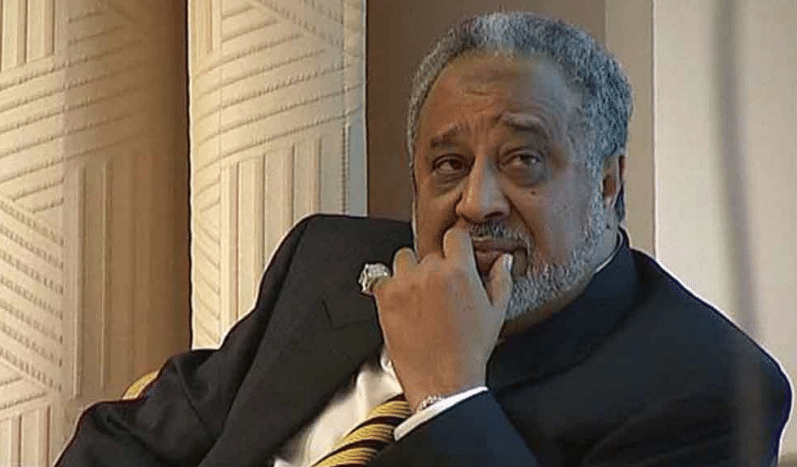
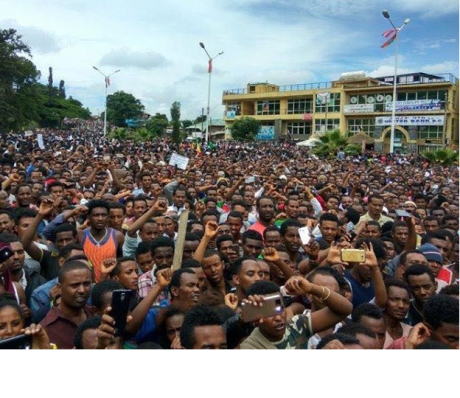

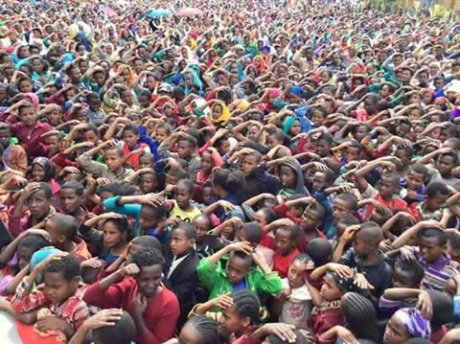




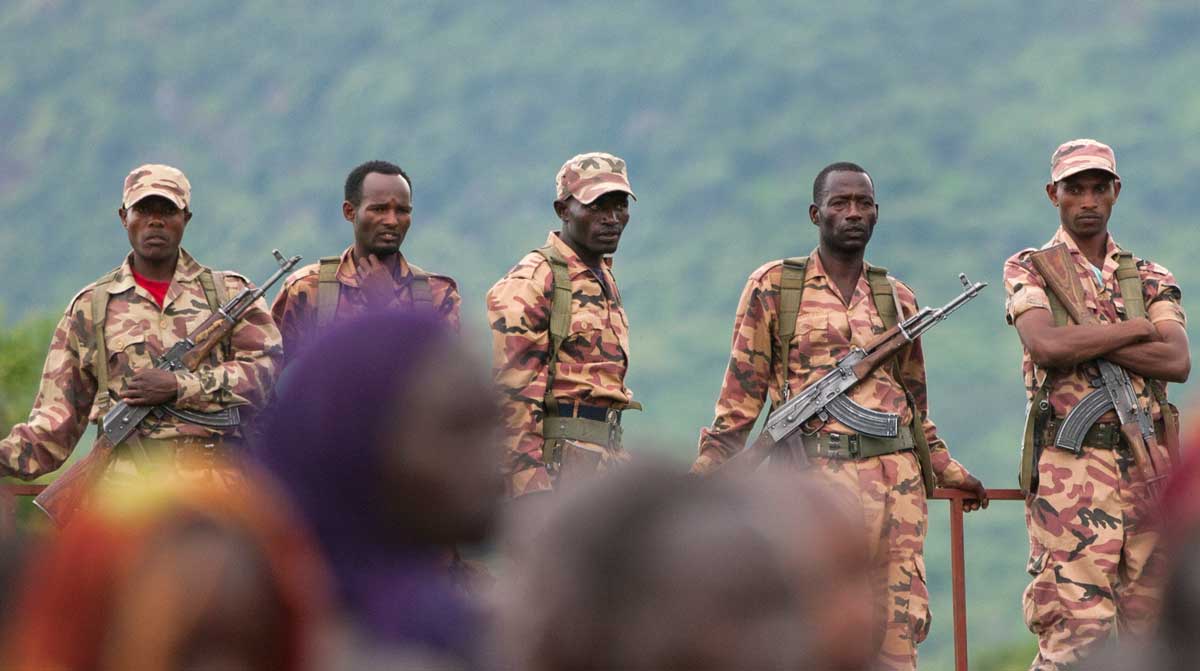


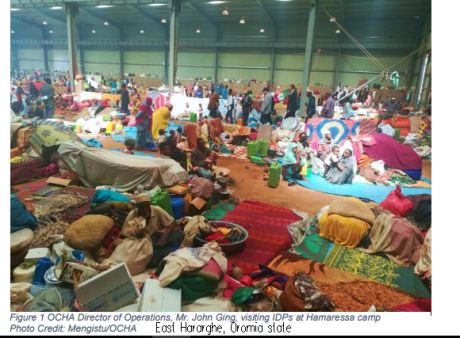
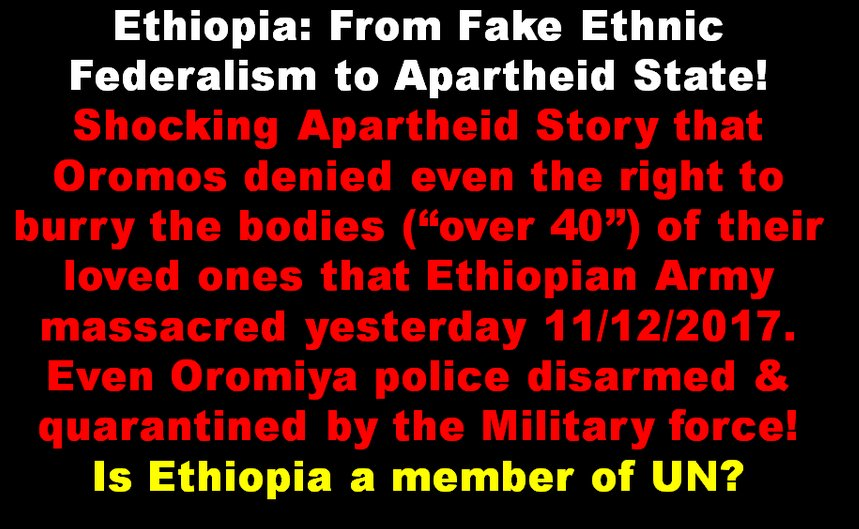
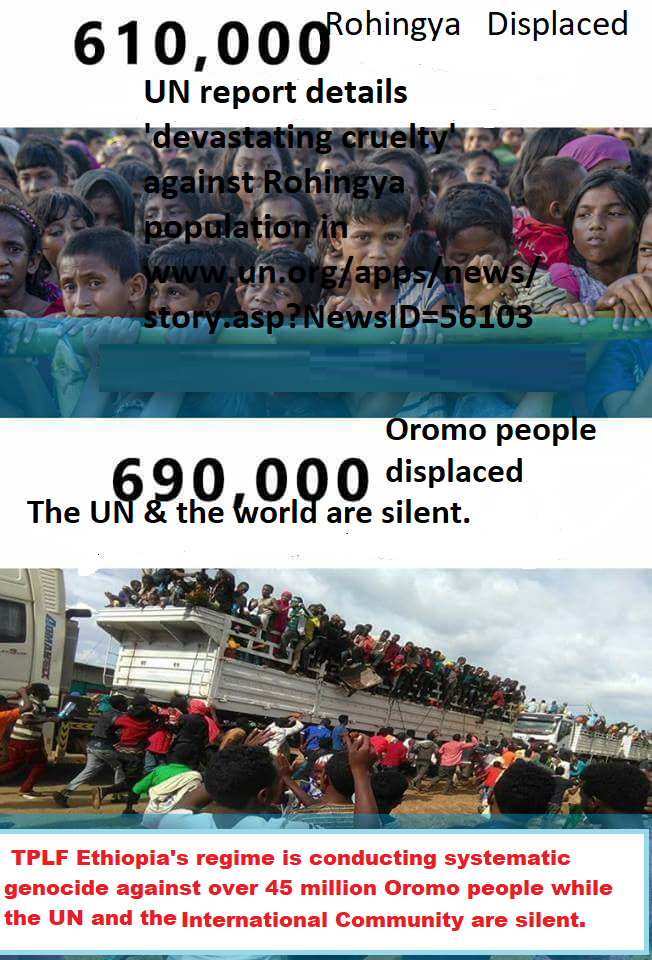

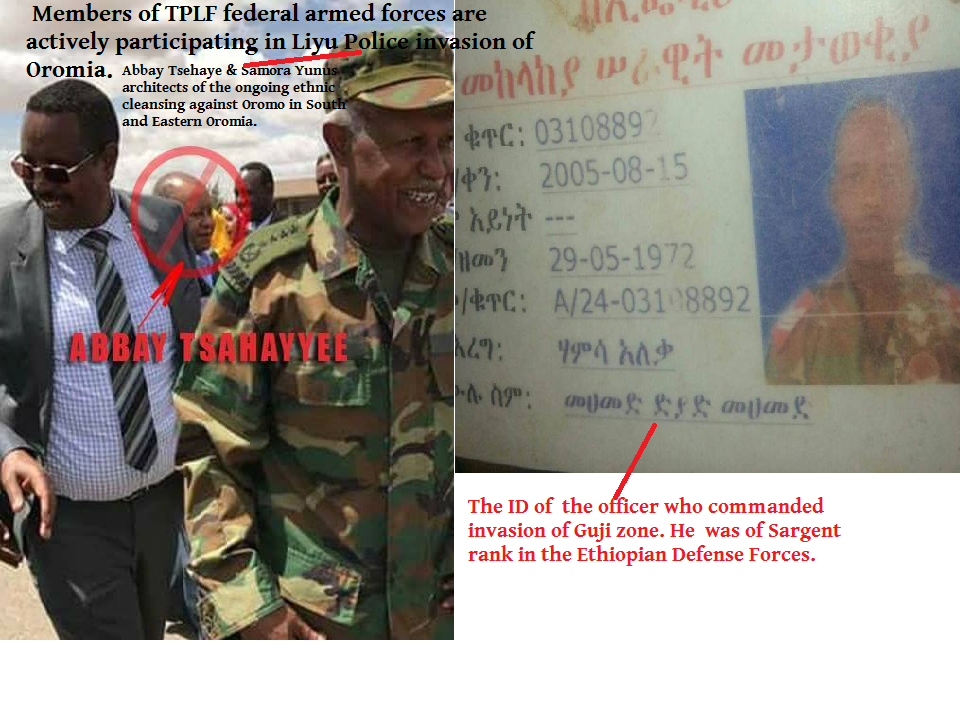

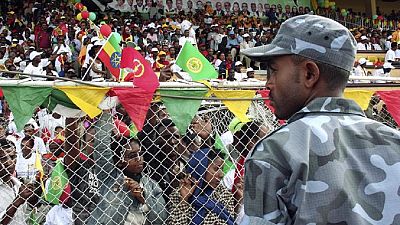





 #OromoProtests continues with protests against fascist TPLF regimes’s mass killings and demanding immediate withdrawal of armed forces.
![[Photos] Ethiopia students stage peaceful protest over Oromia deaths](https://static.euronews.com/articles/415201/400x225_415201.jpg?1513552800)

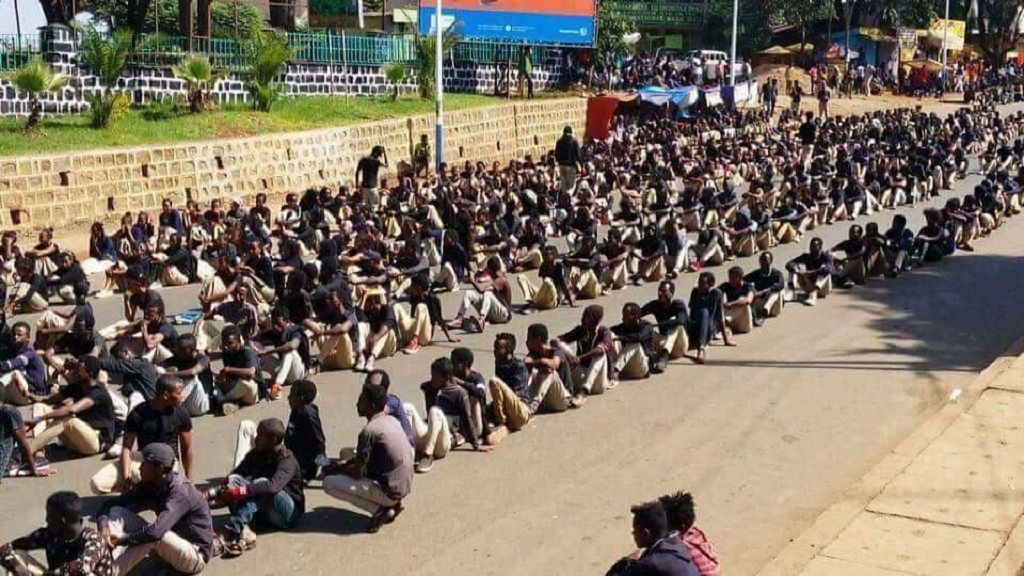
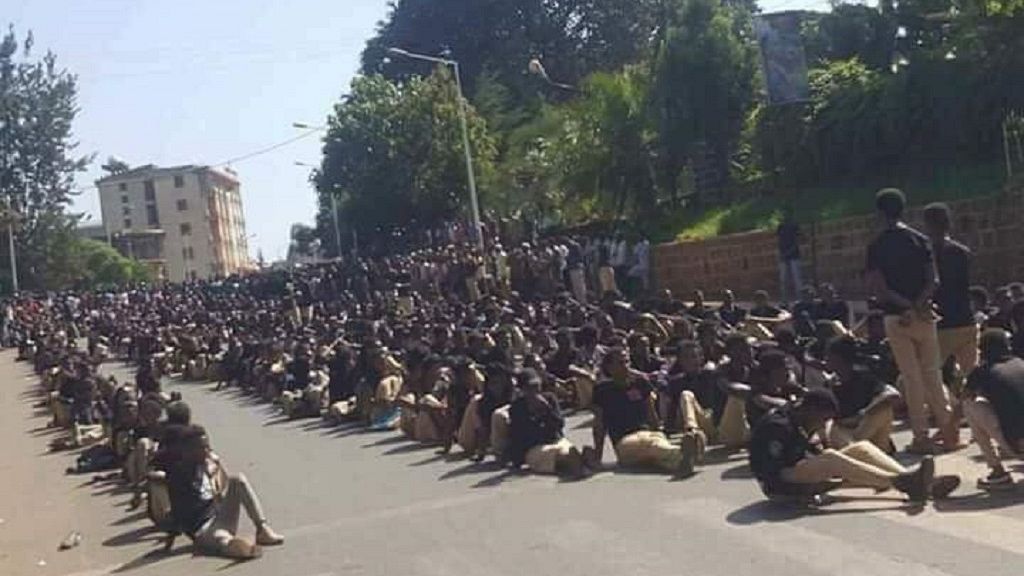
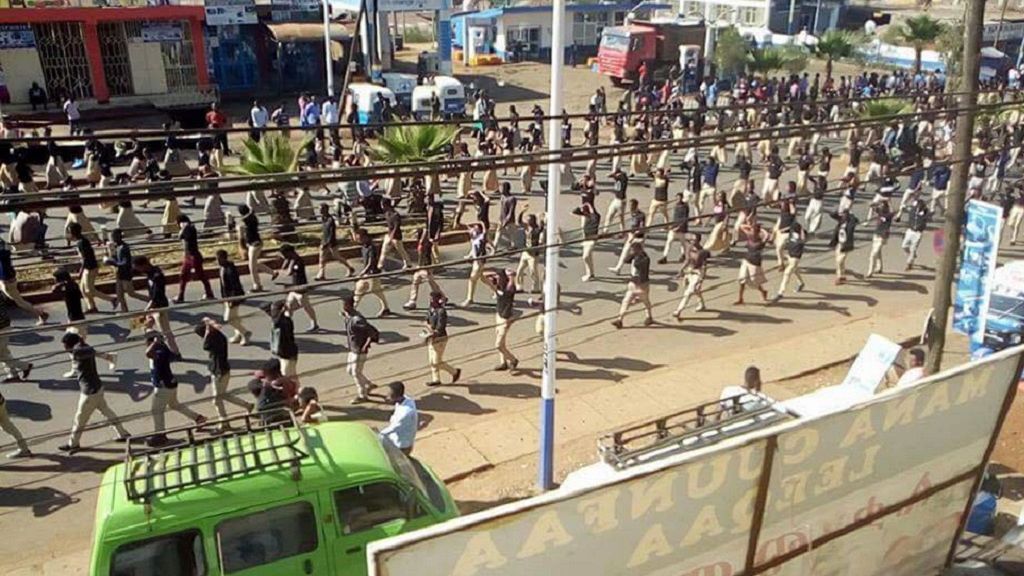
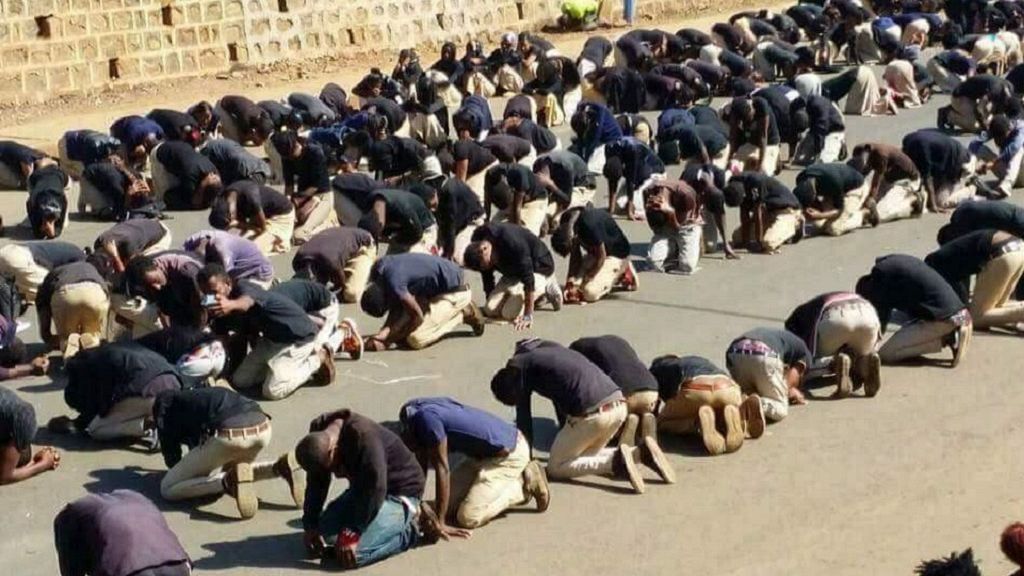
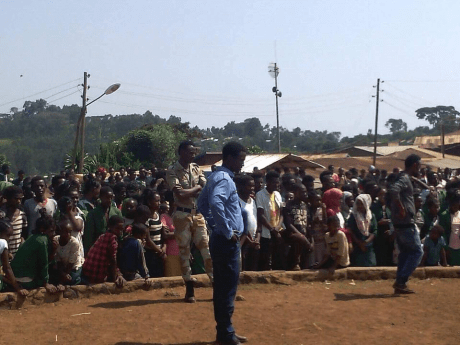
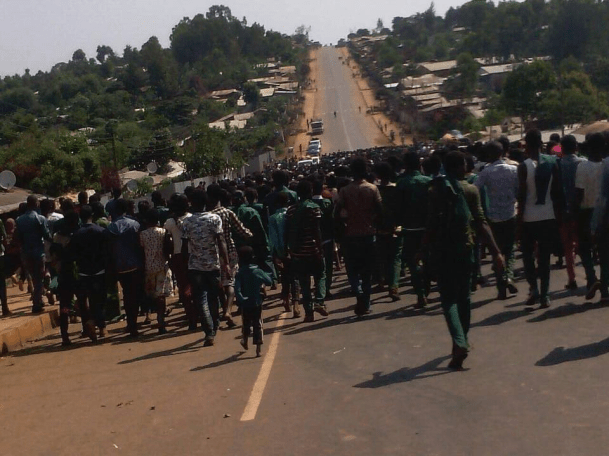



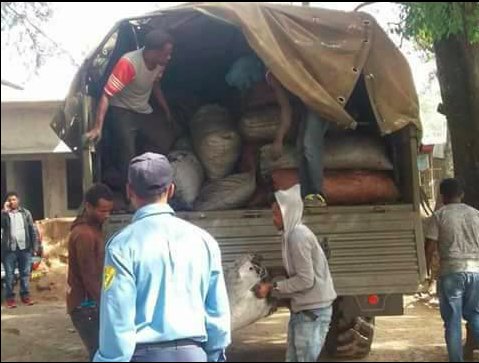


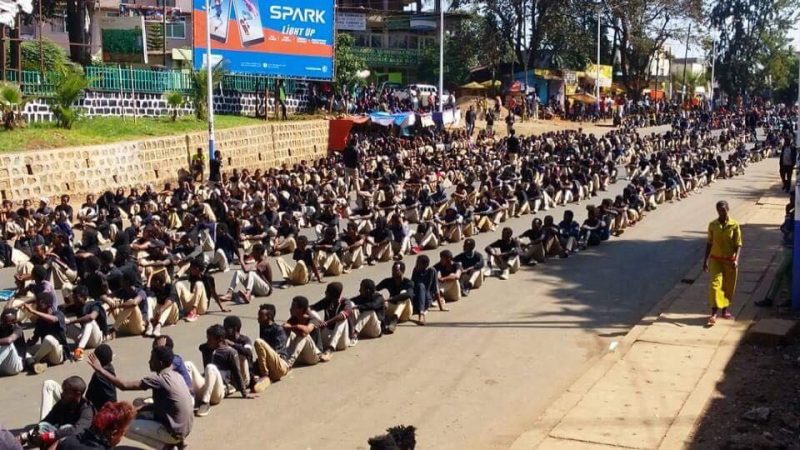
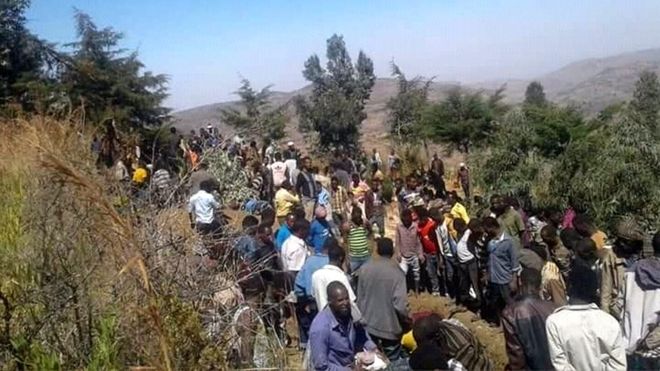


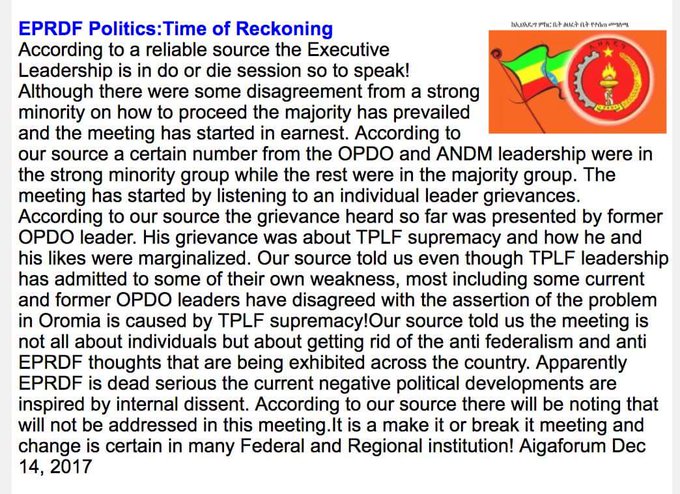


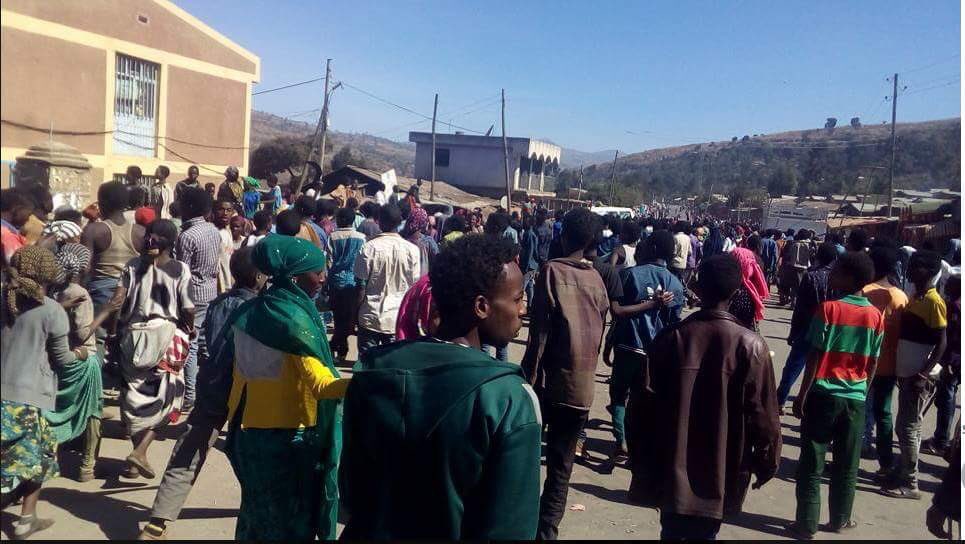
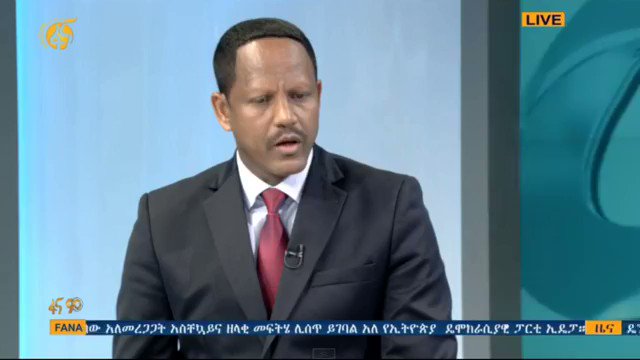




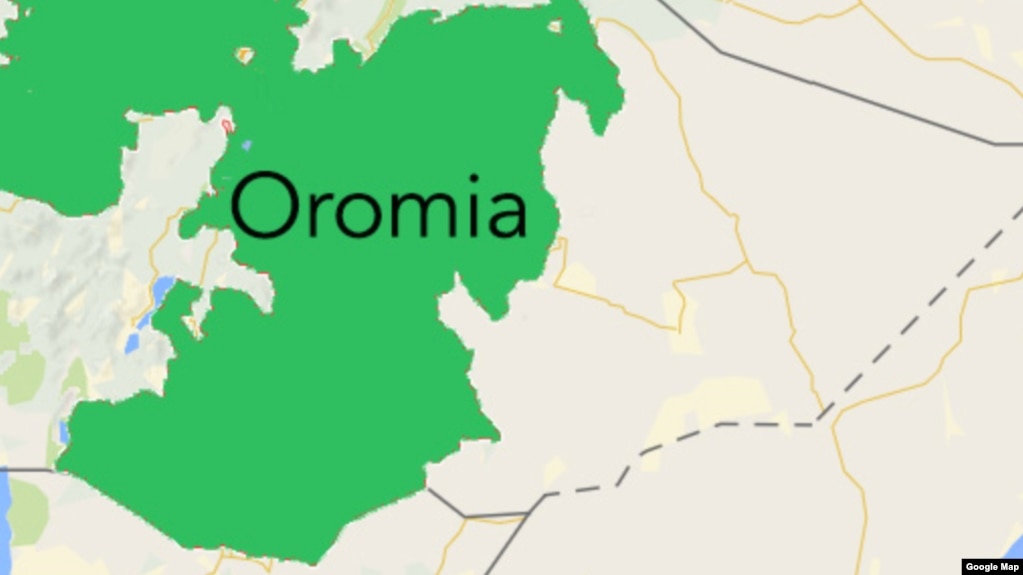




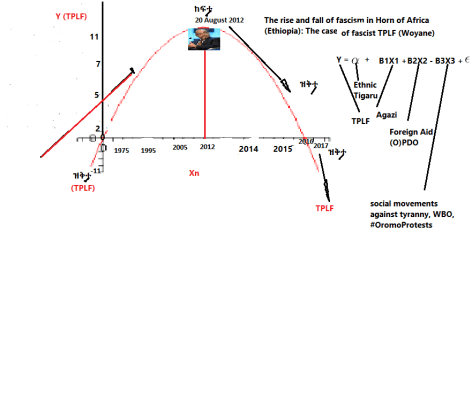

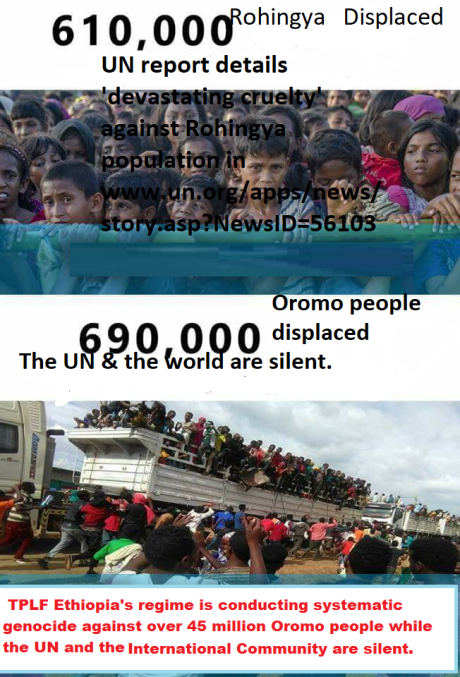
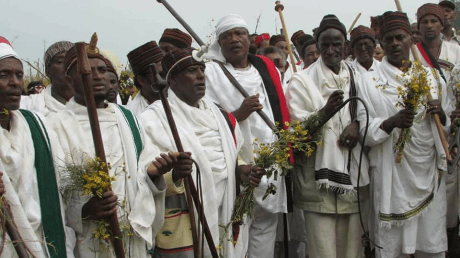
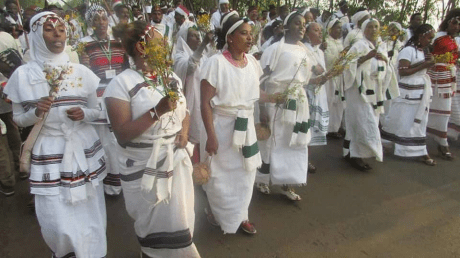
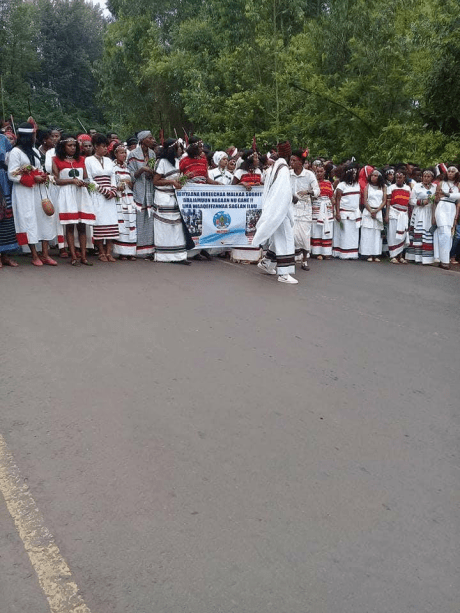
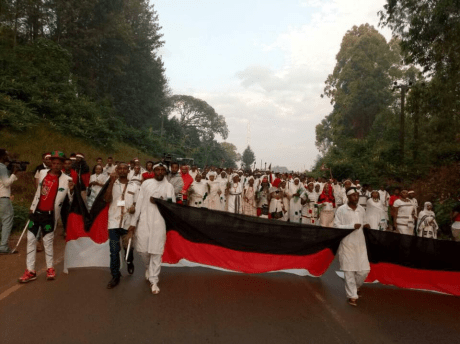
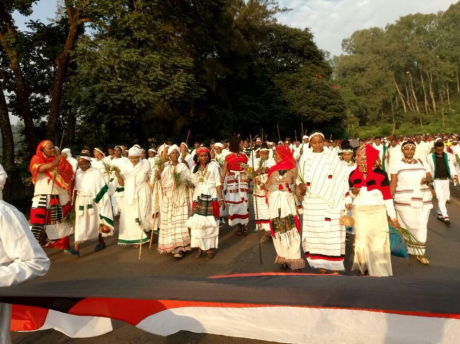
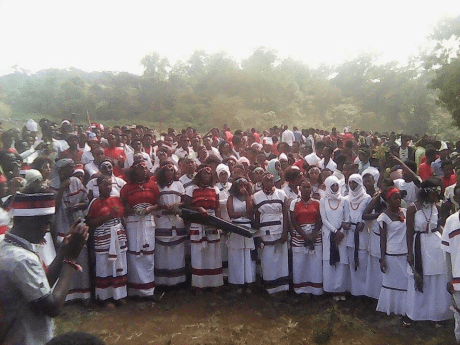
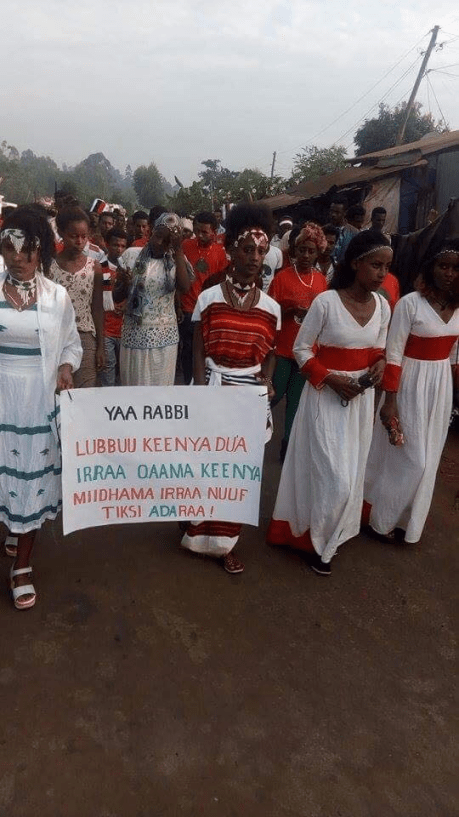
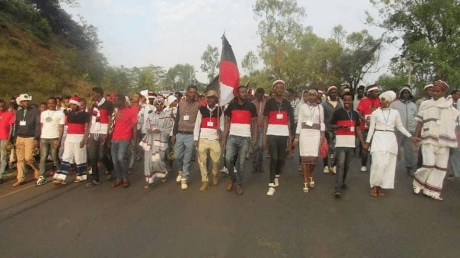
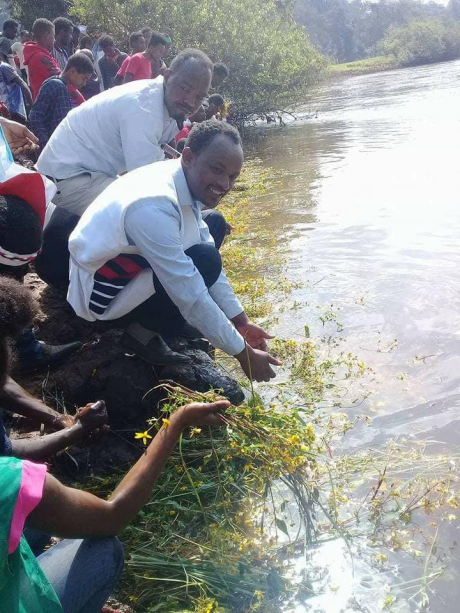
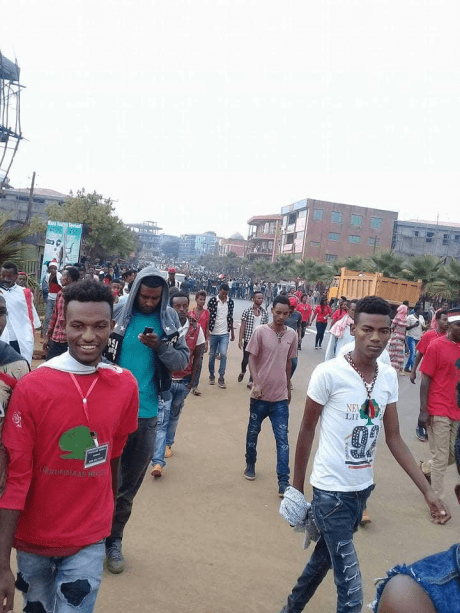
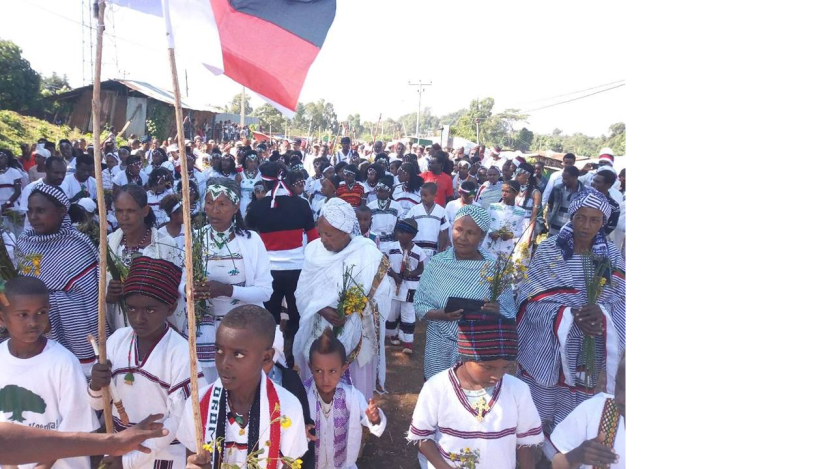
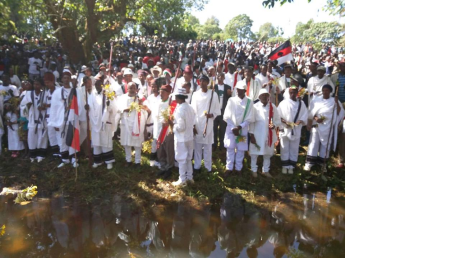
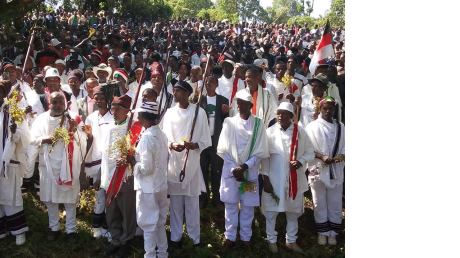
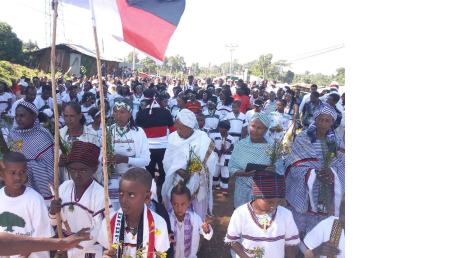

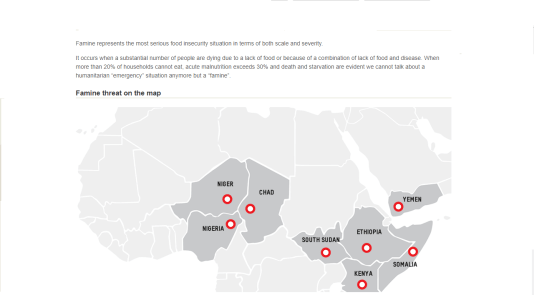
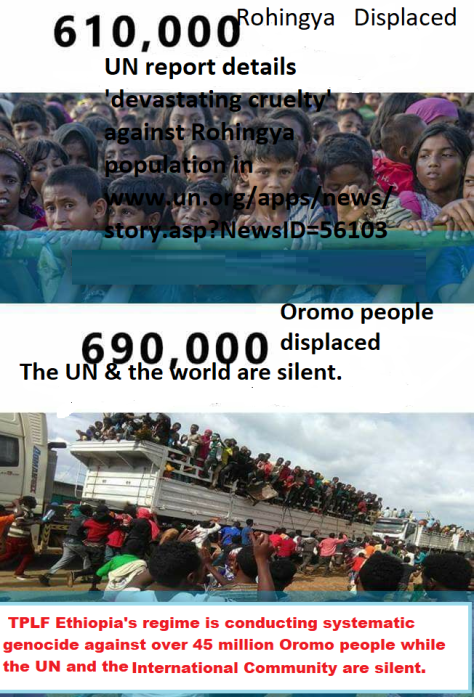
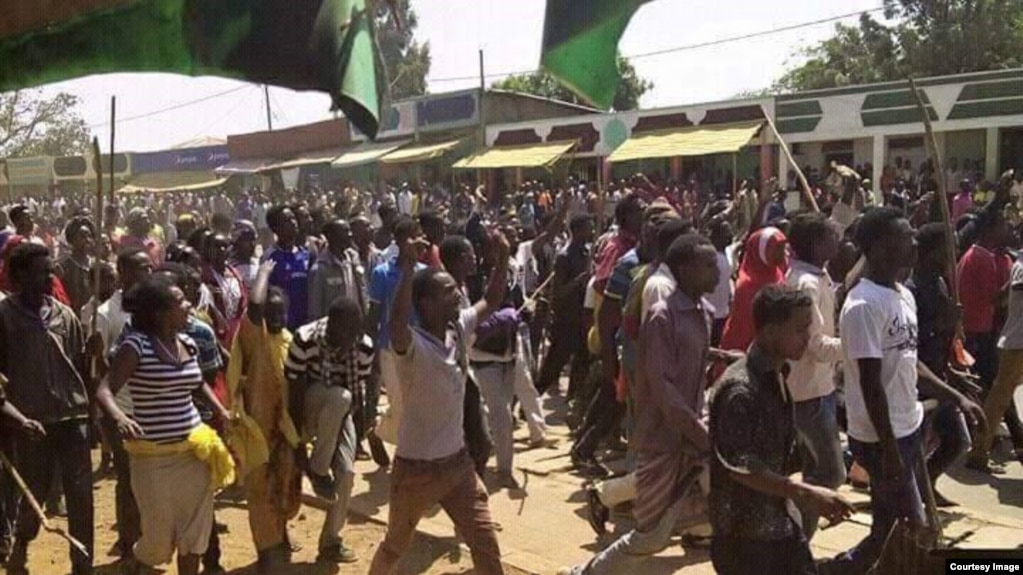
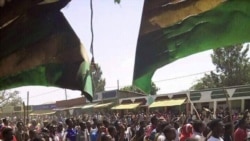




 Oromian Economist
You must be logged in to post a comment.