Economic and development analysis: Perspectives on economics, society, development, freedom & social justice. Leading issues in Oromo, Oromia, Africa & world affairs. Oromo News. African News. world News. Views. Formerly Oromia Quarterly
‘Colonial laws and practices have not imposed themselves on the independent Africa; the real and biggest problem has been the unwillingness of the current African leadership to change and/ or repeal the many unjust colonial laws. If anything, colonial laws and practices have either at worst been maintained to protect whites and the black African elite interests or at best been adapted to suit the needs of the African leadership, needs of ruling tribes or clans or nations at the expense of all others….If there is anything that Africa should learn from the latest xenophobic attacks in South Africa, it is that the continent has yet to command its independence and seriously address tribal prejudice and stereotypes. Governments continue to show little or no interest in respecting people and dealing with simmering internal social injustices. African independence has perpetually shown no empathy towards any black communities carrying a different social identification from those wielding authority. Historically, we have struggled with accommodating internal diversity.
The starting point towards correcting one’s mistakes is owning them. Africa needs to stop hiding behind colonialism and accept most of the problems we face today are our internal creation and only we can make the necessary changes required. Africans can conveniently blame colonialism all they want but the majority of conflicts between nations and communities show more internal prejudice and less external intervention as the cause.’
If there is anything that Africa should learn from the latest xenophobic attacks in South Africa, it is that the continent has yet to command its independence and seriously address tribal prejudice and stereotypes. Governments continue to show little or no interest in respecting people and dealing with simmering internal social injustices. African independence has perpetually shown no empathy towards any black communities carrying a different social identification from those wielding authority. Historically, we have struggled with accommodating internal diversity.
Letter to UN from Oromo Community in Seattle on Plight of Refugees in Yemen
Open letter to UNHCR from the Oromo Community Services of Seattle (OCSS)
………………………………………………………………………………………………………………..
Antonio Guterres, United Nations High Commissioner for Refugees
Case Postale 2500
CH-1211 Genève 2 Dépôt
Switzerland
Dear Commissioner Guterres,
We, the Oromo Community in Seattle*, are writing this letter to express our deep concern and dismay regarding the inhuman suffering of Oromo refugees in Yemen. Thousands of Oromo refugees have fled their homeland to neighboring countries, including Yemen, seeking protection from persecutions, large-scale arbitrary detentions, disappearances, tortures and extra-judicial killings they would be subjected to from the Ethiopian government due to their ethnic identity and political opinions. According to the Amnesty Internationalreport ‘Because I am Oromo’ – Sweeping Repression in the Oromia Region of Ethiopia, that was released on October 2014, between 2011 and 2014, at least 5000 Oromo have been arrested, tortured, and faced extra-judicial executions due to their peaceful opposition to the government. This report is self-evident that Oromo were forced to escape to rescue their lives from possible harassment of the Ethiopian government.
Currently, it is estimated that over ten thousands Oromo refuges reside in refugee camps in Yemen, including Sana and Eden. The current political turmoil in Yemen put the refugees’ lives in dire situation. Reports reaching us from Yemen indicate that refugees are trapped with no help in situation beyond their control. We have also received a report that a number of Oromo refugees have been killed, and some of them wounded by the flying bullets and indiscriminate ongoing fighting due to lack of adequate protection. Lives that they clenched to save are again put them in grave danger.
We are gravely concerned about the deteriorating condition of Oromo refugees in Yemen unless your leadership and international community intervene as soon as possible, and necessary steps are taken immediately to save the lives of the refugees. Oromo refugees in Yemen are also suffering from lack of food, shelter and medical care. Furthermore, the Ethiopian government security agents follow Oromo refugees and abduct some individuals using the current political crisis as an opportunity. This situation also jeopardizes the safety of the refugees.
We believe that, at this critical juncture, your leadership and the active engagement of the international community could mean the difference between life and death for many Oromo refugees. The Universal Declaration of Human Rights, signed in 1948 and 1951, have articles that recognize the rights for refugees. Any country that has signed these declarations is obliged to respect them. When every letter of these declarations violated, member countries of the UN and humanitarian organizations should not keep silent.
Your Excellency,
We strongly believe that as a UN refugee agency, you are sanctioned to making a lasting impact on the lives of refugees and other displaced communities around the world by focusing on the basic needs and rights for refugees – like shelter, water, food, safety and protection from harm. Silence about the dire situation of Oromo refugees in Yemen is not only inhuman, but it is also a flagrant violation of the letter and spirit of the 1951 UN Convention, the 1967 Protocol Relating to Status of Refugees, and the UN General Assembly Resolution 2198 (XXI).
It is a duty of the United Nations High Commissioners for Human Rights, UNHCR and the international community to take a swift action to rescue the refugees whose lives and freedom have fallen in a grave danger. We earnestly demand the UNHCR and member nations to extend their humanitarian assistance so as to find a way in which the refugees could be rescued from that imminent humanitarian disaster that may result in carnage. We believe Oromo refugees, as any other people in the world, are entitled to get protection and humanitarian from the UNHCR and governments that signed 1951 Geneva Convention.
We, therefore, appeal to the UNHCR, all UN member nations and other humanitarian organizations to put all necessary pressure on the governments and groups to refrain from violating the rights of refugees in Yemen and territories under their control. As the current situation in Yemen exposes Oromo refugees to further threats, we demand respectfully the UNHCR Office to find urgently durable solutions in which the lives of the refugees can be saved. We also request urgent medical care, food and shelter for Oromo refugees in Yemen.
Sincerely Yours,
Oromo Community Services of Seattle
C.C:
H. E. Ban Ki-moon
Secretary-General
The United Nations
New York. NY 10017
E-mail: Inquiries@UN.Org
Fax: 212-963-7055
U.S. Secretary of State
John Kerry
Washington, DC 20520
E-mail: Secretary@state.gov
European Union
E-mail: public.info@consilium.eu.int
Fax: Fax (32-2) 285 73 97 / 81
U.S. Committee for Refugees
1717 Massachusetts Ave. NW
Suite 200
Washington, DC 20036
Tel: 202-347-3507
Fax: 202-347-3418
E-mail: uscr@irsa-uscr.org
Amnesty International
International Secretariat
1 Easton Street
London
WC1X 0DW, UK
Fax: +44-20-79561157
Human Rights Watch
Rory Mungoven
Global Advocacy Director
350 Fifth Avenue, 34th Floor
New York, NY 10118-3299 USA
Tel: 1-(212) 290-4700
Fax: 1-(212) 736-1300
———– * Oromo Community Services of Seattle
Address: 7058 32nd Avenue S. Suite # 101 – Seattle, WA 98118
Tel: (206) 251-1789
Western Governments’ Aid is Funding Human Rights Repression in Ethiopia
The Human Rights League of the Horn of Africa (HRLHA)Presented by Garoma B. Wakessa, Executive DirectorOSA Mid-Year Conference at Maximilians-University, GermanyMarch 28-29, 2015. After its first year of being in power, the TPLF government made its next step the weakening and/or eliminating of all independent opposition political organizations in the country. To pretend that it was democratizing the country, the TPLF signed five international human rights documents from 1991 to 2014. These include the “Convention against Torture and Other Cruel Inhuman or Degrading Treatment or Punishment”. Despite this, it is widely known that the TPLF has tortured many of its citizens ever since it assumed power and has continued that to the present day. The TPLF Government adopted a new constitution in 1995; based on this constitution, it formed new federal states.The new Ethiopian constitution is full of spurious democratic sentiments and human rights terms meant to inspire the people of Ethiopia and the world community. The TPLF’s pretentious promise to march towards democracy has enabled it to receive praise from people inside and outside including donor countries and organizations. The TPLF government has managed somehow to maintain a façade of credibility with Western governments including those of the USA and the UK, who have supported them since 1991. From 1991 onwards, the TPLF militia has been fully equipped with the UK government, equipment that the TPLF security force has used for intensive killings, abductions, and disappearances of a vast number of people. The victims were Oromo, Ogaden, Sidama peoples and others whom the TPLF suspected of being members, supporters or sympathizers of the Oromo Liberation Front (OLF). TPLF high officials to ordinary level cadres in the various regional states have engaged in enriching themselves and their family members by looting and embezzling public wealth and properties, raping young women in the occupied areas of the nations and nationalities of Ethiopia, and committing many other forms of corruption. The TPLF government declared, in 2004[1], an investment policy that resulted in the eviction of indigenous peoples from their lands and livelihoods. Ethiopia is receiving a significant aid package estimated at one-third of its annual budget from donor governments and governmental ganizations each year. The donations pouring into Ethiopian Government banks are in the name of development, humanitarian and security aid. The Ethiopian government is using these development aids to suppress political dissent, freedom of expression and assemblies. Human rights campaigners have repeatedly urged donor governments to ensure that their aid Money is utilized in an accountable and transparent manner- not for political repression. However, the Ethiopian government has boldly rejected even measured criticism of its human rights record with sweeping, contemptuous denials. Donor governments have appeared reluctant to challenge the Ethiopian government’s complete refusal to engage in constructive dialog about the donor government’s many human rights-related failings. Western governments have been too timid to challenge the government publicly. Instead, their aid policies are influenced by Ethiopia’s perceived status as the most stable country in the Horn of Africa and made Ethiopia their friend to fight the “global war on terrorism.” The development project funded by the UK government and run by the World Bank has been used for a violent resettlement program in Ethiopia. Britain’s Department for International Development (DfID) is the primary sponsor of the World Bank’s foreign aid initiative, supposedly set up to improve basic health, education, and public services in Ethiopia[2]. Those who attempted to oppose or resist evictions were murdered and/or jailed by the TPLF[3]. European Union (EU) is also working with the government of Ethiopia on several development programs. The partnership between Ethiopia and the EU is based on the African-EU strategic partnership[4] which gives emphasis to Peace and security and good governance and human rights. Regarding the governance and human rights under the strategic priority (b) it says,” the promotion of democratic governance and human rights constitutes a central feature of the Africa-EU dialog and partnership”. Moreover, the Cotonou/city of Benin agreement defines relations between the EU and Africa collectively, and between the EU and ACP countries. Based on this policy, EU and Ethiopia signed in Nairobi on June 19, 2014 European Union aid in favor of Ethiopia in an amount of 745.2 million EUR to be made available to Ethiopia for the period 2014-2020 based on Article 8 of the Cotonou Agreement which is to provide the basis for political relations and dialogue between Ethiopia and the EU. By providing help to the dictatorial regime in Ethiopia, the EU has breached:
The Africa-EU Strategic Partnership, a joint Africa-EU strategy policy adopted in Lisbon in 2007/ Lisbon, 9 December 2007 16344/07.”[5]
EU International Cooperation and Development policy which is primarily based on good governance and respect for human rights, their national country’s laws and international human rights standards,[6]
The giving away of Oromo land in the name of investment also includes Addis Ababa, the capital city situated at the center of Oromia Regional State. More than 30,000 Oromos were evicted by the TPLF/EPRDF Government from their lands and livelihoods in the areas around the capital city and suburbs. Their lands have been given to the TPLF officials, members and loyal cadres over the past 24 years. The TPLF government prepared a plan called “ Addis Ababa Integrated Master Plan” in 2013/2014, a project that aimed at annexing about 36 towns and surrounding villages into Addis Ababa. The project was challenged by the Oromo People’s Democracy Organization/OPDO in March 2014 in the seminar given to the members how to implement the project. The challenge was first supported by Oromo students in different universities, colleges and high schools in Oromia. The resistance then spread to Oromo farmers, Oromo intellectuals in all corners of Oromia Regional State and Oromo nationals living in different parts of the world. TPLF Agazi snipers brutalized More than seventy Oromo students from among the peaceful protestors. The “Addis Ababa integrated master plan”threatens to evict more than two million farmers from around the capital city. More than five thousand Oromos from all walks of life were imprisoned in different parts of Oromia Regional State. The inhuman military actions and crackdowns by the TPLF government against peaceful protestors were condemned by various international media such as the BBC[7], human rights organizations such as Amnesty International and the HRLHA[8]. The government admitted that it killed nine of them[9]. As well, more than seventy Oromo youths were brutalized. The HRLHA believes that the gross human rights violations committed by the TPLF government in the past 24 years against Oromo, Ogaden, Gambella, Sidama and others were pre-planned and intentional. The TPLF killed, tortured, and kidnapped and disappeared thousands of Oromo nationals, Ogaden and other nationals simply because of their resources and ethnic backgrounds. The recent research conducted by Amnesty International and released under the title “Because I am Oromo”: SWEEPING REPRESSION IN THE OROMIA REGION OF ETHIOPIA’[10], confirms that people in Ethiopia who belongs to other ethnic groups have been the victims of the TPLF. The TPLF’s inhuman actions against the citizens are clearly genocide, a crime against humanity[11]and an ethnic cleansing, acts, that breach domestic and international laws, and all international treaties the government of Ethiopia has signed and ratified. We at HRLHA firmly believe that the TPLF government leaders are accountable as a group and as individuals for the crimes they have committed and are committing against Oromos and others. Therefore, the HRLHA calls upon EU member donor states, investors and Organizations reassess their relationship with the Ethiopia TPLF/EPRDF government for its persistent brutal, dictatorial, and suppressive actions against innocent and unarmed civilians and refrain themselves from helping the dictatorial regime in Ethiopia. Recommendations:
Western Government donors should abide by their development and aid policy which says “no democracy, no aid”. The EU must respect its “Africa-EU Strategic Partnership, a joint Africa-EU strategy policy adopted in Lisbon in 2007/ Lisbon, 9 December 2007 16344/07.”[12]
The EU must abide by the Cotonou partnership agreement EU International Cooperation and Development policy which is primarily based on good governance and respect for human rights, their national country’s laws and international human rights standards,[13]
In 2014 the Ethiopian government continued to suppress free speech and associational rights, shattering hopes for meaningful reform under Prime Minister Hailemariam Desalegn. Government harassment and arrest of prominent opposition and media members continued, including the April arrest of nine journalists who were charged under Ethiopia’s controversial antiterrorism law. In April and May, massive protests in Oromia Regional State broke out following the announcement of the planned expansion of Addis Ababa into Oromia. At least 17 people died after the military fired on unarmed protesters.
Despite nascent signs of an opening with Eritrea, formal dialogues remain frozen between the two countries. The Ethiopian-Eritrean border remains highly militarized, though no major border clashes were reported in 2014.
Sporadic violence resumed in Ethiopia’s Ogaden region after talks failed in 2013 between the government and the Ogaden National Liberation Front (ONLF), a separatist group that has fought for independence since 1991. In January 2014, two ONLF negotiators dispatched to Nairobi for a third round of talks were abducted and allegedly turned over to Ethiopian authorities by Kenyan police. The kidnappings effectively ended the talks.
Ethiopia ranked 32 out of 52 countries surveyed in the Ibrahim Index of African Governance, below the continental average and among the bottom in East Africa. The country’s modest gains in the index are due to its improvement in human development indicators, but its ranking is held back by low scores in the “Participation and Human Rights” category.
Ethiopia’s bicameral parliament is made up of a 108-seat upper house, the House of Federation, and a 547-seat lower house, the House of People’s Representatives. The lower house is filled through popular elections, while the upper chamber is selected by the state legislatures; members of both houses serve five-year terms. The lower house selects the prime minister, who holds most executive power, and the president, a largely ceremonial figure who serves up to two six-year terms. Hailemariam has served as prime minister since September 2012, and Mulatu Teshome as president since October 2013.
The 2010 parliamentary and regional elections were tightly controlled by the ruling coalition party Ethiopian People’s Revolutionary Democratic Front (EPRDF), with reports of voters being threatened with losing their jobs, homes, or government services if they failed to turn out for the EPRDF. Opposition party meetings were broken up, and candidates were threatened and detained. Opposition-aligned parties saw their 160-seat presence in parliament virtually disappear, with the EPRDF and its allies taking all but 2 of the 547 seats in the lower house. The next elections are scheduled for 2015.
B. Political Pluralism and Participation: 2 / 16
Shorn of their representation in parliament and under pressure by the authorities, opponents of the EPRDF find it difficult to operate. In July 2014, opposition members—two from Unity for Democracy Party, one from the Arena Tigray Party, and one from the Blue Party—were arrested without charges and held without access to legal representation. The Ethiopian government denies the arrests were related to 2015 elections, but the detainments follow the government’s pattern of suppressing political dissent prior to popular votes.
A series of December 2014 rallies by a coalition of opposition parties saw nearly 100 people arrested, including the chairman of the Semayawi Party. Witnesses report that police beat protesters, though nearly all those arrested were released on bail within a week.
Political parties in Ethiopia are often ethnically based. The EPRDF coalition is comprised of four political parties and represents several ethnic groups. The government tends to favor Tigrayan ethnic interests in economic and political matters, and the Tigrayan People’s Liberation Front dominates the EPRDF. While the 1995 constitution grants the right of secession to ethnically based states, the government acquired powers in 2003 to intervene in states’ affairs on issues of public security. Secessionist movements in Oromia and the Ogaden have largely failed after being put down by the military.
C. Functioning of Government: 4 / 12
Ethiopia’s governance institutions are dominated by the EPRDF, which controlled the succession process following the death of longtime Prime Minister Meles Zenawi in 2012.
Corruption remains a significant problem in Ethiopia. EPRDF officials reportedly receive preferential access to credit, land leases, and jobs. Petty corruption extends to lower-level officials, who solicit bribes in return for processing documents. In 2013, the government attempted to demonstrate its commitment to fighting corruption after the release of a World Bank study that detailed corruption in the country. As part of the effort, the Federal Ethics & Anti-Corruption Commission made a string of high-profile arrests of prominent government officials and businessmen throughout 2013 and 2014. The Federal High Court sentenced many corrupt officials in 2014, including in one case a $2,500 fine and 16 years in prison. Despite cursory legislative improvements, however, enforcement of corruption-related laws remains lax in practice and Ethiopia is still considered “highly corrupt,” ranked 110 out of 175 countries and territories by Transparency International’s 2014 Corruption Perceptions Index.
Civil Liberties: 11 / 40
D. Freedom of Expression and Belief: 3 / 16
Ethiopia’s media are dominated by state-owned broadcasters and government-oriented newspapers. Privately owned papers tend to steer clear of political issues and have low circulation. A 2008 media law criminalizes defamation and allows prosecutors to seize material before publication in the name of national security.
According to the Committee to Protect Journalists (CPJ), Ethiopia holds at least 17 journalists behind bars—the second-highest number of jailed journalists in Africa as of December 2014, after Eritrea. Restrictions are particularly tight on journalists perceived to be sympathetic to protests by the Muslim community, and journalists attempting to cover them are routinely detained or arrested. Those reporting on opposition activities also face harassment and the threat of prosecution under Ethiopia’s sweeping 2009 Antiterrorism Proclamation. At least 14 journalists have been convicted under Ethiopia’s antiterror law since 2011, and none convicted have been released.
In April 2014, police arrested nine journalists—six associated with the Zone9 blogging collective and three freelancers—and charged them with terror-related offenses. Their trial has been postponed 13 times and was closed to the public until recently; their defense lawyer claims the defendants were forced to sign false confessions while in prison.
In June, the government fired 18 people from a state-run, Oromia-based broadcaster, silencing the outlet’s reporting on Oromo protests. In August, the government charged six Addis Ababa–based publications with terrorism offenses, effectively shuttering some of the last independent news outlets inside Ethiopia. In October, three publication owners were convicted in absentia after they fled the country. The same month, Temesgen Desalegn, former editor of the weekly Feteh, was convicted under Ethiopia’s criminal code on defamation and incitement charges and sentenced to three years in prison.
Due to the risks of operating inside the country, many Ethiopian journalists work in exile. CPJ says Ethiopia drove 30 journalists into exile in 2014, a sharp increase over both 2012 and 2013. Authorities use high-tech jamming equipment to filter and block news websites seen as pro-opposition. According to Human Rights Watch (HRW), since 2010 the Ethiopian government has developed a robust and sophisticated internet and mobile framework to monitor journalists and opposition groups, block access to unwanted websites or critical television and radio programs, and collect evidence for prosecutions in politically motivated trials.
The constitution guarantees religious freedom, but the government has increasingly harassed the Muslim community, which has grown to rival the Ethiopian Orthodox Church as the country’s largest religious group. Muslim groups accuse the government of trying to impose the beliefs of an obscure Islamic sect, Al-Ahbash, at the expense of the dominant Sufi-influenced strain of Islam. A series of protests against perceived government interference in religious affairs since 2012 have ended in a number of deaths and more than 1,000 arrests.
Academic freedom is often restricted in Ethiopia. The government has accused universities of being pro-opposition and prohibits political activities on campuses. There are reports of students being pressured into joining the EPRDF in order to secure employment or places at universities; professors are similarly pressured in order to ensure favorable positions or promotions. The Ministry of Education closely monitors and regulates official curricula, and the research, speech, and assembly of both professors and students are frequently restricted. In 2014, the Scholars at Risk network catalogued three incidents in academia, including the jailing or firing of professors who expressed antigovernment opinions.
The presence of the EPRDF at all levels of society—directly and, increasingly, electronically—inhibits free private discussion. Many people are wary of speaking against the government. The EPRDF maintains a network of paid informants, and opposition politicians have accused the government of tapping their phones.
E. Associational and Organizational Rights: 0 / 12
Freedoms of assembly and association are guaranteed by the constitution but limited in practice. Organizers of large public meetings must request permission from the authorities 48 hours in advance. Applications by opposition groups are routinely denied and, in cases when approved, organizers are subject to government meddling to move dates or locations. Since 2011, ongoing peaceful demonstrations held by members of the Muslim community have been met with violent responses from security forces. Protesters allege government interference in religious affairs and politically motivated selection of members of the Ethiopian Islamic Affairs Supreme Council. Though momentum has slowed, protests continue.
After the government announced an expansion of Addis Ababa’s city limits into the Oromia Regional State in April 2014, thousands of Ethiopians took to the streets. Witnesses reported that police fired on peaceful protesters, killing at least 17—most of whom were students in nearby universities—and detained hundreds.
The 2009 Charities and Societies Proclamation restricts the activities of foreign nongovernmental organizations (NGOs) by prohibiting work on political and human rights issues. Foreign NGOs are defined as groups receiving more than 10 percent of their funding from abroad, a classification that includes most domestic organizations as well. The law also limits the amount of money any NGO can spend on “administration,” a controversial category that the government has declared includes activities such as teacher or health worker training, further restricting NGO operations even on strictly development projects. NGOs have struggled to maintain operations as a result of the law.
Trade union rights are tightly restricted. Neither civil servants nor teachers have collective bargaining rights. All unions must be registered, and the government retains the authority to cancel registration. Two-thirds of union members belong to organizations affiliated with the Confederation of Ethiopian Trade Unions, which is under government influence. Independent unions face harassment, and trade union leaders are regularly imprisoned. There has not been a legal strike since 1993.
F. Rule of Law: 3 / 16
The judiciary is officially independent, but its judgments rarely deviate from government policy. The 2009 antiterrorism law gives great discretion to security forces, allowing the detention of suspects for up to four months without charge. After August 2013 demonstrations to protest the government’s crackdown on Muslims, 29 demonstration leaders were charged under the antiterrorism law with conspiracy and attempting to establish an Islamic state; their trial remains ongoing. Trial proceedings have been closed to the public, media, and the individuals’ families. According to HRW, some defendants claimed that their access to legal counsel has been restricted.
Conditions in Ethiopia’s prisons are harsh, and detainees frequently report abuse. A 2013 HRW report documented human rights violations in Addis Ababa’s Maekelawi police station, including verbal and physical abuse, denial of basic needs, and torture.
Yemen’s June 2014 arrest and extradition of British citizen Andargachew Tsige to Ethiopia at the government’s request has sparked outrage from human rights groups. Andargachew is the secretary-general of banned opposition group Ginbot 7 and was sentenced to death in absentia in 2009 and again in 2012 for allegedly plotting to kill government officials. Reports suggest that police have denied the British Embassy consular access.
Domestic NGOs say that Ethiopia held as many as 400 political prisoners in 2012, though estimates vary significantly. Nuredine “Aslan” Hasan, a student belonging to the Oromo ethnic group, died in prison in 2014; conflicting reports about the cause of his death—including torture—have not been verified.
The federal government generally has strong control and direction over the military, though forces such as the Liyu Police in the Ogaden territory sometimes operate independently.
Repression of the Oromo and ethnic Somalis, and government attempts to coopt their parties into subsidiaries of the EPRDF, have fueled nationalism in both the Oromia and Ogaden regions. Persistent claims that government troops in the Ogaden area have committed war crimes are difficult to verify, as independent media are barred from the region. The government’s announcement of its intention to expand Addis Ababa’s city limits into the Oromia Regional State exacerbates tensions over historical marginalization of Oromia; according to activists, the expansion will displace two million Oromo farmers.
Same-sex sexual activity is prohibited by law and punishable by up to 15 years’ imprisonment.
G. Personal Autonomy and Individual Rights: 5 / 16
While Ethiopia’s constitution establishes freedom of movement, insecurity—particularly in eastern Ethiopia—prevents unrestricted movement into affected sites.
Private business opportunities are limited by rigid state control of economic life and the prevalence of state-owned enterprises. All land must be leased from the state. The government has evicted indigenous groups from various areas to make way for projects such as hydroelectric dams. It has also leased large tracts of land to foreign governments and investors for agricultural development in opaque deals that have displaced thousands of Ethiopians. Up to 70,000 people have been forced to move from the western Gambella region, although the government denies the resettlement plans are connected to land investments. Similar evictions have taken place in Lower Omo Valley, where government-run sugar plantations have put thousands of pastoralists at risk by diverting their water supplies. Journalists and international organizations have persistently alleged that the government withholds development assistance from villages perceived as being unfriendly to the ruling party.
Women are relatively well represented in parliament, holding 28 percent of seats and three ministerial posts. Legislation protects women’s rights, but these rights are routinely violated in practice. Enforcement of the law against rape and domestic abuse is patchy, and cases routinely stall in the courts. Female genital mutilation and forced child marriage are technically illegal, though there has been little effort to prosecute perpetrators. In December 2012, the government made progress against forced child labor, passing a National Action Plan to Eliminate the Worst Forms of Child Labor and updating its list of problematic occupations for children.
One day they arrested me and they showed me everything. They showed me a list of all my phone calls and they played a conversation I had with my brother. They arrested me because we talked about politics on the phone. It was the first phone I ever owned, and I thought I could finally talk freely. — Former member of an Oromo opposition party, now a refugee in Kenya, May 2013
The vast majority of the cases documented by Human Rights Watch involving access to phone recordings involved Oromo defendants organizing Oromos in cultural associations, student associations, and trade unions. No credible evidence was presented that would appear to justify their arrest and detention or the accessing of their private phone records. These interrogations took place not only in Addis Ababa, but in numerous police stations and detention centers throughout Oromia and elsewhere in Ethiopia. As described in other publications, the government has gone to great lengths to prevent Oromos and other ethnicities from organizing groups and associations.123 While the increasing usefulness of the mobile phone to mobilize large groups of people quickly provides opportunities for young people, in particular, to form their own networks, Ethiopia’s monopoly and control over this technology provides Ethiopia with another tool to suppress the formation of these organizations and restrict freedoms of association and peaceful assembly. Human Rights Watch interviews revealed that interrogations seem to follow a similar pattern in which individuals are repeatedly told that security “is monitoring everything” and they should confess to various charges. If confessions are not forthcoming, security officials reveal knowledge of individual phone calls. If a confession or information is not revealed then an entire list of phone calls is produced or an individual phone call is played. At this stage, if no confession or information is obtained, prolonged detention takes place. As is often the case in Ethiopia, arbitrary detention without formal charges is common. In the cases Human Rights Watch has documented, mistreatment in detention at this stage frequently occurs. THEY KNOW EVERYTHING WE DO
(Human Rights Watch, New York) – The Ethiopian government has renewed efforts to silence independent voices abroad by using apparent foreign spyware, Human Rights Watch said today. The Ethiopian authorities should immediately cease digital attacks on journalists, while foreign surveillance technology sellers should investigate alleged abuses linked to their products.
Independent researchers at the Toronto-based research center Citizen Lab on March 9, 2015, reported new attempts by Ethiopia to hack into computers and accounts of Ethiopian Satellite Television (ESAT) employees based in the United States. The attacks bear similarities to earlier attempts to target Ethiopian journalists outside Ethiopia dating back to December 2013. ESAT is an independent, diaspora-run television and radio station.
“Ethiopia’s government has over the past year intensified its assault on media freedom by systematically trying to silence journalists,” saidCynthia Wong, senior Internet researcher at Human Rights Watch. “These digital attacks threaten journalists’ ability to protect the safety of their sources and to avoid retaliation.”
The government has repressed independent media in Ethiopia ahead of the general elections scheduled for May, Human Rights Watch said. Many privately owned print publications heavily self-censor coverage of politically sensitive issues or have shut down. In the last year, at least 22 journalists, bloggers, and publishers have been criminally charged, at least six publications have closed amid a campaign of harassment, and many journalists have fled the country.
Many Ethiopians turn to ESAT and other foreign stations to obtain news and analysis that is independent of the ruling Ethiopian People’s Revolutionary Democratic Front. However, intrusive surveillance of these news organizations undermines their ability to protect sources and further restricts the media environment ahead of the elections. Government authorities have repeatedly intimidated, harassed, and arbitrarily detained sources providing information to ESAT and other foreign stations.
Citizen Lab’s analysis suggests the attacks were carried out with spyware called Remote Control System (RCS) sold by the Italian firm Hacking Team, which sells surveillance and hacking technology. This spyware was allegedly used in previous attempts to infect computers of ESAT employees in December 2013. If successfully installed on a target’s computer, the spyware would allow a government controlling the software access to activity on a computer or phone, including email, files, passwords typed into the device, contact lists, and audio and video from the device’s microphone and camera.
Citizen Lab also found that the spyware used in the attacks against ESAT appeared to have been updated as recently as December 2014. On November 19, a security researcher, Claudio Guarnieri, along with several nongovernmental organizations, publicly released a tool called Detekt, which can be used to scan computers for Hacking Team RCS and other spyware. Citizen Lab’s testing determined that Detekt was able to successfully recognize the version of RCS used in a November attack, but not the version used in a December attack. Citizen Lab concluded that this may indicate that the software had been updated sometime between the two attempts.
These new findings, if accurate, raise serious concerns that Hacking Team has not addressed evidence of abuseof its product by the Ethiopian government and may be continuing to facilitate that abuse through updates or other support, Human Rights Watch said.
Hacking Team states that it sells exclusively to governments, particularly law enforcement and intelligence agencies. The firm told Human Rights Watch in 2014 that “we expect our clients to behave responsibly and within the law as it applies to them” and that the firm will suspend support for its technology if it believes the customer has used it “to facilitate gross human rights abuses” or “who refuse to agree to or comply with provisions in [the company’s] contracts that describe intended use of HT [Hacking Team] software.” Hacking Team has also stated that it has suspended support for their product in the past, in which case the “product soon becomes useless.”
Media reports and research by independent human rights organizations in the past year have documented serious human rights violations by the Ethiopian government that at times have been facilitated by misuse of surveillance powers. Although spyware companies market their products as “lawful intercept” solutions used to fight serious crime or counterterrorism, the Ethiopian government has abused its counterterrorism laws to prosecute bloggers and journalists who merely report on public affairs or politically sensitive issues. Ethiopian laws that authorize surveillance do not adequately protect the right to privacy, due process, and other basic rights, and are inconsistent with international human rights requirements.
Hacking Team previously told Human Rights Watch that “to maintain their confidentiality” the firm does not “confirm or deny the existence of any individual customer or their country location.” On February 25, 2015, Human Rights Watch wrote to the firm to ask whether it has investigated possible abuse of its products by the Ethiopian government to target independent media and hack into ESAT computers. In response, on March 6 a representative of the firm emailed Human Rights Watch that the company “take[s] precautions with every client to assure that they do not abuse our systems, and, we investigate when allegations of misuse arise” and that the firm is “attempting to understand the circumstances in this case.” The company also stated that “it can be quite difficult to get to actual facts particularly since we do not operate surveillance systems in the field for our clients.” Hacking Team raised unspecified questions about the evidence presented to identify the spyware used in these attacks.
Human Rights Watch also asked the company whether contractual provisions to which governmental customers agree address governments’ obligations under international human rights law to protect the right to privacy, freedom of expression, and other human rights. In a separate March 7 response from the firm’s representative, Hacking Team told Human Rights Watch that the use of its technology is “governed by the laws of the countries of our clients,” and sales of its technology are regulated by the Italian Economics Ministry under the Wassenaar Arrangement, a multilateral export controls regime for dual-use technologies. The company stated that it relies “on the International community to enforce its standards for human rights protection.”
The firm has not reported on what, if any, investigation was undertaken in response to the March 2014 Human Rights Watch report discussing how spyware that appeared to be Hacking Team’s RCS was used to target ESAT employees in 2013. In its March 7 response, the company told Human Rights Watch that it will “take appropriate action depending on what we can determine,” but they “do not report the results of our investigation to the press or other groups, because we consider this to be an internal business matter.”
Without more disclosure of how Hacking Team has addressed potential abuses linked to its business, the strength of its human rights policy will be in question, Human Rights Watch said.
Sellers of surveillance systems have a responsibility to respect human rights, which includes preventing, mitigating, and addressing abuses linked to its business operations, regardless of whether government customers adequately protect rights.
“Hacking Team should publicly disclose what steps it has taken to avoid abuses of its product such as those alleged against the Ethiopian government,” Wong said. “The company protects the confidentiality of its customers, yet the Ethiopian government appears to use its spyware to compromise the privacy and security of journalists and their sources.”
Oromo: HRLHA Plea for Release of Detained Peaceful Protestors
February 8, 2015 By Stefania Butoi Varga, Human Rights Brief, Center for Human Rights & Humanitarian Law*
From March to April 2014, members of Ethiopia’s largest ethnic group, the Oromo, engaged in peaceful protests in opposition to the Ethiopian government’s implementation of the “Integrated Regional Development Plan” (Master Plan). The Oromo believe that the Master Plan violates Articles 39 and 47 in the Ethiopian Constitution, by altering administrative boundaries around the city of Addis Ababa, the Oromia State’s and the federal government’s capital. The Oromo fear they will be excluded from the development plans and that this will lead to the expropriation of their farmlands.
In response to these protests, the Ethiopian government has detained or imprisoned thousands of Oromo nationals. In a January 2005 appeal, theHuman Rights League of the Horn
of Africa (HRLHA) claimed that the Ethiopian government is breaching the State’s Constitution and several international treaties by depriving the Oromo prisoners of their liberty. Amnesty International reports that some protestors have also been victims of “enforced disappearance, repeated torture, and unlawful state killings as part of the government’s incessant attempts to crush dissent.”
Under the Ethiopian Constitution, citizens possess the rights to liberty and due process, including the right not to be illegally detained. Article 17 forbids deprivation of liberty, arrest, or detention, except in accordance with the law. Further, Article 19 provides that a person has the right to be arraigned within forty-eight hours of his or her arrest. However, according to the HRLHA, a group of at least twenty-six Oromo prisoners were illegally detained for over ninety-nine days following the protests. The HRHLA claims that these detentions were illegal because the prisoners were arrested without warrants, and because they did not appear before a judge within forty-eight hours of their arrest. The Ethiopian authorities’ actions also disregard the United Nations International Covenant on Civil and Political Rights (ICCPR), which requires that no one be subject to arbitrary arrest, and that those arrested be promptly brought before a judge. Ethiopia signed and ratified the ICCPR in 1993, and is thus bound to uphold the treaty.
Additionally, the Ethiopian Constitution deems torture and unusual punishment illegal and inhumane. According to Article 18, every citizen has the right not to be exposed to cruel, inhuman, or degrading behavior. Amnesty International reports that certain non-violent Oromo protestors suffered exactly this treatment, including a teacher who was stabbed in the eye with a bayonet for refusing to teach government propaganda to his students, and a young girl who had hot coals poured onto her stomach because her torturers believed her father was a political dissident. Amnesty International further recounts other instances of prisoners being tortured through electric shock, burnings, and rape. If these reports are an accurate account of the government’s actions, the Ethiopian authorities are not only acting contrary to their constitution, but also contrary to the United Nations Convention Against Torture (CAT). According to Article 2 of the CAT, a State Member must actively prevent torture in its territory, without exception. In addition, an order from a high public authority cannot be used as justification if torture is indeed used. Ethiopia ratified the CAT in 1994, and is thus obligated to uphold and protect its principles.
The HRLHA pleads that the Ethiopian government release imprisoned Oromo protesters. This would ensure that the intrinsic human rights of the Oromo people, guaranteed by the Ethiopian Constitution and several international treaties ratified by Ethiopia would finally be upheld. Furthermore, it would restore peace to and diminish the fear among other Oromo people who have abandoned their normal routines in the wake of government pressure, and have fled Ethiopia or have gone into hiding.
*The Human Rights Brief is a student-run publication at American University Washington College of Law (WCL). Founded in 1994 as a publication of the school’s Center for Human Rights and Humanitarian Law, the publication has approximately 4,000 subscribers in over 130 countries.
In Ethiopia they live like animals, relentlessly persecuted, hunted down like games, killed at will and incarcerated en masse. No mercy is shown even to women and children. They are the Oromos — the largest ethnic group, the most marginalised in Ethiopia and arguably one among the most oppressed people in our planet. Despite their numerical majority, the Oromos, much like the Palestinians, are facing xenophobic oppression.
Amnesty International’s report on the state of existence of the Oromos, published last year, has been damning. It painted a chilling picture of the brutality unleashed by Ethiopian government on the hapless community to which the country’s President, Mulatu Teshome, belongs. The rights group, based in London, said: “At least 5,000 Oromos have been arrested based on their actual or suspected peaceful opposition to the government”. And most of them have been “subjected to treatment amounting to torture and other cruel, inhuman or degrading treatment”.
Amnesty researcher Claire Beston has been scathing. She said, “The Ethiopian government’s relentless crackdown on real or imagined dissent among the Oromo is sweeping in its scale and often shocking in its brutality. This is apparently intended to warn, control or silence all signs of ‘political disobedience’ in the region”. Beston, in her report, said in no uncertain terms that she saw “signs of torture, including scars and burns, as well as missing fingers, ears and teeth” on those Oromos she interviewed.
The scenario in the country is perhaps far more terrifying. The United States, in its 2013 Human Rights Report, has pointed out that at least 70,000 persons, including some 2,500 women and nearly 600 children are incarcerated with their mothers, in severely overcrowded six federal and 120 regional prisons. “There also were many unofficial detention centres throughout the country, including in Dedessa, Bir Sheleko, Tolay, Hormat, Blate, Tatek, Jijiga, Holeta, and Senkele,” the report added further.
Plurality, respect for basic democratic values and tolerance for dissent have never been the fortes for which Ethiopia is known in the world. It is for reasons on the contrary the country has already earned a massive notoriety internationally. Corruptions are rampant and behind the façade of development the government in Ethiopia is infamous for selling out the country to the western world and foreign corporations and, of course, for its blatant violation of basic human rights.
What defines Ethiopia today is the greed and corruption of its politicians, especially those in power. The brazenness with which the government is trying to sell out Omo Valley to foreign corporation is a shame and a heinous crime. Twice the size of France and UNESCO World Heritage Site, Omo Valley is known as the ‘cradle of mankind’ which, according to ancient-origins.net, has the world’s largest alkaline lake as well as the world’s largest permanent desert lake.
The Ecologist says, Lake Turkana in Omo Valley was a prehistoric centre for early hominids. Some 20,000 fossil specimens have been collected from the Turkana Basin. Anthropological digs have led to the discovery of important fossilised remains, most notably, the skeleton of the Turkana Boy, (or Nariokotome Boy). Finding Turkana Boy was one of the most spectacular discoveries in palaeoanthropology. His reconstruction comes from the almost perfectly preserved skeleton found in 1984 at Nariokotome near Lake Turkana.
Discovery of the fossilised Turkana Boy, aged between seven and fifteen who lived approximately 1.6 million years ago was a milestone in the study of our origin and ancestry. Yet, to the corrupt, shameless and avaricious Ethiopian government it is of no significance. And neither is the welfare of the indigenous people of the valley who are believed to be the living descendants of the early hominids.
Alas! Ethiopian government wants to sell out this important archaeological treasure trove to foreign corporations where they want to develop sugar, cotton and biofuel plantations. A shameless land grab is underway in Omo Valley where hundreds of more fossilised skeletons of our forefathers are expected to be found and retrieved.
Misrule, human rights violations, hubris, arrogance and corruption plagues Ethiopia. Continuous demagoguery against the Oromos has made Ethiopia sit atop a huge mound of gun powder waiting for a spark to explode. The Oromo Liberation Army (OLA), the armed wing of the Oromo Liberation Front (OLF) is getting ready for yet another armed struggle to overthrow the present political dispensation in power.
And given the history of insurgency in Ethiopia the country today seems to be heading fast towards a fresh bout of armed insurrection.
A low intensity struggle has already started as the Oromos are no more in mood to take the oppression, they are in no mood to suffer in silence their marginalisation. The ethnic fire the Ethiopian government has been stoking is gradually turning into an inferno.
We know human stupidity is endless and that of Ethiopia is infinite and dark. It cannot achieve growth and progress keeping its people delegitimised and aggrieved. The oppressed and tortured shall one day erupt to claim what legitimately belongs to them as well.
The author is the Opinion Editor of Times of Oman. All the views and opinions expressed in the article are solely those of the author and do not reflect those of Times of Oman. He can be reached at opinioneditor@timesofoman.com
The answer is clear: it is the people of Tigray, whose party, the TPLF led the fight against the Mengistu regime and took power in 1991, who benefited most. What is also striking is that the Oromo (who are the largest ethnic group) hardly benefited at all.
This is what the World Bank says about this: “Poverty reduction has been faster in those regions in which poverty was higher and as a result the proportion of the population living beneath the national poverty line has converged to around one in 3 in all regions in 2011.”
The World Bank does little to explain just why Tigray has done (relatively) so well, but it does point to the importance of infrastructure investment and the building of roads. It also points to this fact: “Poverty rates increase by 7% with every 10 kilometers from a market town. As outlined above, farmers that are more remote are less likely to use agricultural inputs, and are less likely to see poverty reduction from the gains in agricultural growth that are made. The generally positive impact of improvements in infrastructure and access to basic services such as education complements the evidence for Ethiopia that suggests investing in roads reduces poverty.”
Not surprisingly, the TPLF under Prime Minister Meles Zenawi and beyond concentrated their investment on their home region – Tigray. The results are plain to see.
The World Bank has just published an authoritative study of poverty reduction in Ethiopia. The fall in overall poverty has been dramatic and is to be greatly welcomed. But who has really benefited?
This is the basic finding:
In 2000 Ethiopia had one of the highest poverty rates in the world, with 56% of the population living on less than US$1.25 PPP a day. Ethiopian households experienced a decade of remarkable progress in wellbeing since then and by the start of this decade less than 30% of the population was counted as poor.
There are of course many ways of answering the question – “who benefited” – were they men or women, urban or rural people. All these approaches are valid.
The Ethnic Dimension
But in Ethiopia, where Ethic Federalism has been the primary driver of government policy one cannot ignore the ethnic dimension.
The Human Rights League of the Horn of Africa released an appeal that describes the crackdown on the Oromo community, which has been particularly significant in the last 10 months, after the protests, held in March and April 2014, against the annexation of some Oromo towns to the territory of Addis Ababa. The organization highlighted in particular, the situation of a group of 26 prisoners, who have been illegally detained, beaten, tortured and deprived of their few belongings.
Below is the Appeal from the Human Rights League of the Horn of Africa, also available in .pdf format:
Since the March-April 2014 crackdowns against the peaceful Oromo protesters who have protested against the Ethiopian Federal Government’s plan of annexation of 36 small Oromia towns to the capital city of Addis Ababa under the pretext of the “Addis Ababa Integrated Plan”, thousands of Oromo nationals from all walks of life from all corners of Oromia regional state including Wollo Oromo’s in Amhara regional state have been detained or imprisoned. Some have disappeared and many have been murdered by a special commando group called “the Agiazi force”. The “The Agiazi” force is still chasing down and arresting Oromo nationals who participated in the March-April, 2014 peaceful protests. Fearing the persecution of the Ethiopian government, hundreds of students did not return to the universities, colleges and high schools; most of them have left for the neighboring states of Somaliland and Puntiland of Somalia where they remain at high risk for their safety. Wollo Oromos who are living in Ahmara regional state of Oromia special Zone are also among the victims of the EPRDF government. Hundreds of Wollo Oromos have been detained because of their connection with the peaceful protests of March-April 2014. The EPRDF government has detained many Oromo nationals in Wollo Oromia special Zone under the pretext of being members or supporters of the Oromo Liberation Front (OLF), as prisoners’ voices from Dessie/Wollo prison have revealed.
From among the many Oromos who were picked from different districts and places from Wollo Oromia special Zone in Amhara regional state in April 2014, the HRLHA reporter in the area has received a document which shows that 26 Oromo prisoners pleaded to the South Wollo High Court that they were illegally detained first in Kamise town military camp for 36 days, Kombolcha town Police Station for 27 Days, and Dessie city higher 5 Police Station for 10 days- places where they were severely tortured and then transferred to Dessie Prison in July 2014. According to the document, they were picked up from three different districts and different places by federal police and severely beaten and tortured at different military camps and police stations and their belongings including cash and mobile telephones were taken by their torturers. In their appeal letter to the South Wollo high court they demanded
1. Justice and release from the prison because they had been arrested without court warrant and didn’t appear in front of the court for more than eight months- which violates the Ethiopian constitution.
2. The return of their belongings, including 1000 – 5000 Eth Birr and their mobile phones. […]
The Ethiopian Government for the past 23 years has continually breached:
1. the 1995 Constitution of Ethiopia Articles 14-19 by arresting citizens without court warrant, used torture and inhumane degrading treatments and deprived citizens of their livelihoods and generally discriminated against Oromo nationals
2. international treaties it has signed and ratified
2.1. CAT –Convention against Torture and other Cruel, Inhumane or Degrading Treatments or Punishment (1994)
2.2. CCPR – International Covenant on Civil and Political Rights (1991)
2.3. CESCR – International Covenants on Economic, Social and Cultural Rights (1991) and
2.4. CERD – International Convention on the Elimination of All Forms of Racial Discrimination (1976)
The Human Rights League of the Horn of Africa (HRLHA) strongly condemns the irresponsible actions of the Ethiopian Government and its agents for their inhumane treatments of citizens. The government should be held accountable for failing its duty and responsibility to protect and promote human rights in its territory.
The HRLHA calls upon regional and international donor States and Organizations to take measurable steps against the Ethiopian TPLF/EPRDF government for its persistent brutal, dictatorial, and suppressive actions against innocent and unarmed civilians.
RECOMMENDED ACTION: Please send appeals to the Ethiopian Government and its concerned officials as swiftly as possible, in English, Amharic, or your own language expressing:
– for the immediate and unconditional release of prisoners illegally detained and pay compensation
– urging the Ethiopian authorities to ensure that these detainees would be treated in accordance with the regional and international standards on the treatment of prisoners,
For further information on the detainees and on where to address the concerns, please see the attachedfile.
His Excellency Mr Ban Ki-Moon
United Nations Secretary-General
Office of the Secretary General of United Nations
885 Second Avenue
United Nations Headquarters
Room DHL-1B-154
New York, NY 10017
Fax +1 212-963-4879
Your Excellency
I write on behalf of the Oromo Liberation Front (OLF) to bring to your kind attention the plight of the Oromo people and to ask you to request the Security Council of the United Nations to treat the matter as a priority, to condemn the lawless atrocities by the Ethiopian regime, adopt appropriate actions to bring perpetrators to account, and safeguard the wellbeing of the Oromo and other peoples in Ethiopia.
In the land of their birth, the Oromo, who constitute the single largest national group in Ethiopia, are denied the most basic democratic right to organize freely and legally and express their political opinion. We do not know any country in the world, expect Ethiopia, where 35 million Oromo people are denied the right to have their own newspapers, to elect their own leaders and support an organization of their choice. Today, it is a serious crime, even punishable by death, to support independent Oromo organizations, such as the Oromo Liberation Front (OLF), internationally recognized organization, which jointly ruled Ethiopia with the TPLF in 1991/92. Supporters of the OLF and other independent organizations are harassed, detained for years without charge and their property confiscated without due process. Your Excellency, there is no doubt that the OLF enjoys support from the majority of the Oromo population. The current Ethiopian regime is dominated and controlled by the ruling Tigrayan People’s Liberation Front (TPLF). The TPLF represents less than seven percent of the population of Ethiopia. The TPLF, which fears the Oromo numerical voting power in any free and fair election, has directed multi-faceted attack on the Oromo political organizations, cultural institutions, educational establishments, the press and the killings of Oromo men and women, young and old, truly reaching a very dangerous proportion. This has to stop before it is too late. Today in Ethiopia all independent Oromo organizations are crippled and our people’s legal newspapers and magazines closed down. Even the Matcha and Tulama Association, a civic association, which was established in 1963 was closed down, its leaders detained and its property confiscated. We believe the TPLF dominated Ethiopian government deliberately targets the Oromo for persecution. This has been well documented by several human rights organizations, including the Ethiopian Human Rights League, European Parliament, Human Rights Watch/Africa, and Human Rights League of the Horn of Africa, Oromia Support Group and the State Department Annual Human Rights Report. The very recent 156 page Amnesty International October 2014 report clearly demonstrates that the TPLF dominated Ethiopian regime deliberately targets the Oromo population for persecution. This attack on the Oromo must be stopped before it is too late.
The Amnesty International, AI, report contains graphic accounts of arassment, intimidation, arbitrary and indefinite detention in formal and secret detention centres, extra-judicial killings and disappearances of innocent civilians on mere suspicion of individuals for sympathies with the Oromo Liberation Front. Collective punishment sometimes punishing entire neighbourhoods and penalising a close relative in place of a suspect, and mutilation and rape in detention are also common place in Oromia.
Peaceful demonstrators are wantonly beaten, tortured and mutilated, and many suspects indefinitely disappeared. The AI report is thoroughly detailed and it is based on information gathered in real time from real victims past and present, and from close family and friends of victims and from observers on the ground. The report provides specific cases that constitute crimes against humanity and violation of international law against arbitrary and cruel punishment. Whilst the report brings forth the regime’s
arbitrary and lawless behaviour, it must be said that it only scratches the surface, as the reality is even much worse.
There is no question that details unearthed by AI constitute extra-judicial killings and violations of international law. If disputed, the facts can be verified but the regime has to agree and guarantee another neutral investigation. The fact remains that the Oromo people and indeed all the different population groups in Ethiopia are undergoing a harrowing experience under abject misrule with no respite. What is happening in Ethiopia that AI report brought forth is a denial of basic freedoms including freedom to organise, freedom of expression, freedom to life and personal security, the freedom to be judged and the freedom to take part in decisions over ones affairs. As experience somewhere showed such lawlessness by governing elites lead to complete breakdowns and increased violence leading to even worse mass suffering and deaths and engulfing ever wider areas within the country and beyond. On experience of similar tragedies elsewhere including Somalia, Liberia, Sierra Leone, Afghanistan, Iraq and Syria, the behaviour of the current Ethiopian regime constitute a clear and present threat to international peace and security, which should not be ignored.
Your Excellency, my people were brought under Ethiopian domination through violent conquest during the Scramble for Africa and made part of the expanded Empire of Ethiopia. My organisation was forced to resort to armed resistance to regain Oromo people’s national rights only after the previous imperial regime adopted violent repression to Oromo attempts at peaceful processes to regain their basic human and democratic rights. The military dictatorship that replaced the imperial regime in 1974 initially raised hopes for a democratic alternative but soon snuffed the life out of any such hopes by instituting an intolerant one party dictatorship that respected no law, trampled elementary democratic practices and denied our people’s right to determine its destiny. The violation of basic human rights by that regime was also well documented by AI and many other human rights organisations.
My organization the OLF and the core of the present regime the Tigrean People’s Liberation Front, TPLF, were during the Marxist military regime on the same side opposing and exposing the lawlessness and excesses of that regime, and they solemnly committed themselves to institute a democratic future for all the oppressed peoples in Ethiopia. They also agreed to recognise their respective peoples’ rights to decide their own affairs and to freely determine their future destiny. They were partners also in organising a transitional programme enshrined in a charter which guaranteed basic liberties for the individual and self-determination of peoples including the Oromo.
According to the transitional programme, all peoples in Ethiopia would govern their affairs and participate in central government on equal basis. The process meant to guarantee equality and a level playing field for all parties with stake in the process. Unfortunately, within less than two years of the transitional exercise, the TPLF and its stalking-horse the Ethiopian Peoples’ Revolutionary Democratic Front, EPRDF, systematically drove all autonomous organisations out of the transitional process and ever since running a one party dictatorship. While opposition parties are registered in name, in an echo of practices in eastern European countries during the Cold War, their members face constant intimidation, harassment and repression and their political activities severely curbed. Similarly, the regime in Ethiopia does not tolerate any criticism of its arbitrary actions, not even a peaceful demonstration by the affected people. The peaceful protests in Oromia at the beginning of the current year 2014 was triggered by the regime’s arbitrary plans to extend the city limits of Addis Ababa against the wishes of the Oromo people, when, as witnessed, the regime unleashing severe repression firing live ammunition on peaceful demonstrators killing many, and detention, torture and disappearance of many more.
Your Excellency, there are undeniable changes from the era of the imperial rule and the Marxist military regime when the very name Oromo and Oromia were outlawed. However, mere facade of federal framework on paper that the current regime boasts does not amount to a real change. The trampling of basic human and democratic rights and the denial of our people’s right to decide their own affairs is fraught with further resentment and resistance. As the saying goes, a stitch in time saves nine. That is why we call on Your Excellency to bring the ever deteriorating situation in Ethiopia to the attention of the Security Council asking them to adopt measures that impress on the TPLF/EPRDF regime to uphold basic freedoms including freedom of expression, organisation, peaceful demonstration, and respect for the national rights of the Oromo people.
It will be recalled that the regime in Ethiopia has on several occasions during the past two decades organised sham elections to justify its misrule. However, far from giving it legitimacy, the charade has only deepened the mistrust and scorn of the Oromo and all other peoples and political players in Ethiopia. Regardless, the regime is again busy to run a similar election in 2015. The result is of course simple to predict. In view of the total obliteration of any meaningful competitors, the TPLF/EPRDF will retain power and the status quo will be maintained. This is an opportunity for the Security Council to
act to prevent maintenance of the status quo, which would speed a slide down the treacherous trail trekked in the past by similar tyrannical regimes in Sierra Leone, Somalia, Liberia and Syria with ruinous consequences. Your kind and swift action is much appreciated.
More @ https://oromianeconomist.com/wp-content/uploads/2014/12/appeal-letteer-to-un-general-secretary-mr-ban-ki-moon-12-11-2014.pdf
“Dargaggoonni kun Imaanaa guddaatu isin irra jira.Hacuucamuu sodaattanii biyya irraa hin godaaninaa.Jaalala uummataa qabaadhaa. Walii galtee qabaadhaa. Ani amma milli koo tokko gara boollaati. Isin garuu uummata keessan haqaan tajaajiluuf humnaa fi kutannoo cimaa qabaachuu qabdu!!!” Obbo Bulchaa Dammaqsaa
The only pro-democracy Opposition Coalition Party in Ethiopia, Medrek, held a rare rally in Finfinne (Addis Ababa) on Dec. 14, 2014. According to the reports, thousands of rally goers chanted slogans in Afan Oromo, English and Amharic languages demanding the TPLF-led Ethiopian regime free Oromo political prisoners, journalists and other political prisoners. Some of the slogans included: “Free Bekele Gerba!” – “Free Oromo Students!” – “Stop Land-Grabbing” – and “Free Journalists!”
At the rally, senior leaders of Medrek gave rousing speeches; speakers included: Dr. Beyene Petros (the Coalition’s President), Mr. Bulcha Demeksa (Chairman Emeritus of the Oromo Federalist Congress/OFC – one of the political organizations in the pro-democracy Medrek), Mr. Tilahun Endeshaw of the Ethiopian Social Democratic Federal Party/ESDFP, and Mr. Desta Dinka (Leader of the Medrek Youth).
International Human Rights Day marks the anniversary of the adoption of the Universal Declaration of Human Rights on December 10, 1948. Crafted in the shadow of the horrors of the Holocaust and World War II, the Declaration gave the world the vision it needed to stand up to fear and the blueprint it craved to build a safer and more just world. Its single premise is: “Recognition of the inherent dignity and of the equal and inalienable rights of all members of the human family is the foundation of freedom, justice and peace in the world.”
Human Rights Day Message:United Nations High Commissioner for Human Rights Zeid Ra’ad Al Hussein’s message for Human Rights Day 10 December 2014.
In observing Human Rights Day, its important to highlight the horrific going on in 2014 in our world. The following document is the summary of horrific repression going on against Oromo people by tyrannic Ethiopian regime:
In June more protests erupted just outside Addis Ababa in opposition to what is considered a discriminatory plan by the city council to expand the capital and displace many of the ethnic Oromos who live at its edges. The government often makes blanket accusations against critics based on their ethnicity. At least 5,000 ethnic Oromos have been arrested between 2011 and 2014 based on their actual or suspected opposition to the government, according to an October 2014 Amnesty International report.
The EPRDF has portrayed itself as a vanguard party, charged with a sacred duty to articulate the “developmental state”. Its dictum is “You are either with or against us.” It has evolved a rich rhetoric for those who oppose it by labelling them “anti-development” or “neoliberal”. In the meantime, the state’s command economy depends on dollars from “neoliberal” donors. It took $3 billion in external assistance in 2012, according to the World Bank, more than any other country in Africa.
In the run-up to the May 2015 general election, will the EPRDF allow the opposition to compete? Will the opposition participate or boycott the polls? Such queries are beside the point: the struggle for democracy in Ethiopia was lost long ago. The next election will be another EPRDF landslide, in keeping with the history of the current ruling party and its revolutionary roots. http://unpo.org/article/17759
Oromo: Only One Opposition MP Left in Ethiopian Parliament
In the Ethiopian Parliament, out of 548 MPs, only one is not part of the government coalition. Many other opposition party members, including leaders of the Oromo People’s Congress Party and of the Unity for Democracy and Justice Party, have been imprisoned, joining over 30,000 political prisoners in the country. The ruling party has progressively eliminated any opposition through abuse of anti-terror laws and banning NGOs, which are mainly funded from abroad.
Few political rights exist in Ethiopia and even fewer voices criticise the government.
The right to remain silent is one liberty not denied to critics of the Ethiopian government. Most other political entitlements have vanished. This explains the puzzle of Ethiopia’s invisible political opposition: it is so battered and brutalised, tattered and torn, that what is left of its pieces may never fit together again.
The current government is mostly to blame. It came to power in 1991 after it toppled the communist military junta led by despot Mengistu Haile Mariam. The victorious coalition of ethnic militias promised a new dispensation, based on the concept of “ethnic federalism”.
But nearly a quarter of a century later, Ethiopia remains a de facto one-party state. As countless analysts have noted, including successive European Union election observation missions, there is no separation between the government bureaucracy and the ruling Ethiopian Peoples Revolutionary Democratic Front (EPRDF). No political space is allowed to dissenting voices.
Most critics are behind bars, the first and main reason for the absence of a political opposition in Africa’s oldest independent nation.
Of the 547 members of Parliament (MPs), only one is from an opposition party. Girma Seif Maru of the Unity for Democracy and Justice party (UDJ) is the lonely MP–window dressing whom the government allowed to win a seat in the last general election in 2010. But large swathes of the UDJ are in prison.
Other opposition party members, including Bekele Gerba, a leader of the Oromo Federalist Democratic Movement, and Olbana Lelisa of the Oromo People’s Congress Party, were imprisoned days after meeting with representatives from Amnesty International in 2011.
Andualem Arage, the UDJ’s vice-chairman, and another UDJ leader, Natnael Mekonnen, were put behind bars for debating the 2011 Arab spring rebellions. So was outspoken journalist Eskinder Nega, who posed questions about the possibility of a similar Ethiopian movement in his online pieces. In June 2012 Mr Andualem was sentenced to 75 years in prison, while Messrs Eskinder and Natnael got off lighter with 18 each.
They are just three of the thousands of government critics silenced in the slammer. Barely a month goes by without news of fresh arrests and detentions. In July, four more leaders of the UDJ, Arena Tigray and Semayawi (“Blue”) opposition parties were detained. In addition, Andargachew Tsige, an Ethiopian opposition leader and British citizen, was arrested in Yemen and extradited to Addis Ababa, the capital, in July. He is facing the death penalty for allegedly plotting a coup in 2009.
In July 2013, thousands of people took to the streets of Addis Ababa demanding the release of some of Ethiopia’s estimated 30,000-40,000 political prisoners, according to Amnesty International and Human Rights Watch. The protestors also called for the repeal of a draconian anti-terror law that has been exploited to target legitimate opposition members. Crackdowns and arrests followed, including the detention of 40 UDJ activists who had distributed flyers encouraging people to protest.
The second reason for the opposition’s muffled voice is fear: a decade or more of repression has taken its toll. The government spies on dissidents in the diaspora and uses its control of food aid to literally starve the opposition at home, according to Human Rights Watch. Yet, Ethiopia’s citizens seem to passively accept each new transgression of their rights. They are just too scared to fight back.
A brief emancipatory moment swept Ethiopia in 2005. The ruling EPRDF, under the leadership of the late Meles Zenawi, allowed the forerunner of the UDJ, the Coalition for Unity and Democracy (CUD), a degree of freedom to campaign in the general elections that year. In polls that appeared relatively free, 174 opposition MPs were elected.
But the CUD disputed the results and protests erupted in the capital. Police killed nearly 200 unarmed protestors and arrested 40,000 CUD members and sympathisers in a nationwide clampdown, according to media reports. The memory of that brutality still casts a long shadow. Since then, the government has given no quarter.
This is the third factor explaining Ethiopia’s invisible opposition: the government controls every aspect of daily life. In 2010 Human Rights Watch documented the strategic use of food aid, agricultural inputs such as seeds and fertilisers, access to microcredit, teacher training and even university admissions to encourage support for the ruling party.
It worked. In the 2008 local election the ruling party won 99% of the votes and 3m local government seats. In the 2010 general election, the debacle of 2005 was avoided and voting was peaceful. The EPRDF took 99.6% of the parliamentary slots, leaving the UDJ with the one decorative seat.
The final squeeze on the political opposition and any form of dissent has been the use of repressive laws. The 2009 anti-terror law has a sweeping definition of terrorism. Another 2009 law bans NGOs that engage in human rights or advocacy activities from receiving more than 10% of their funds from abroad. It also requires all NGOs to re-register with a new government agency. This legislation closed down Ethiopia’s critical organisations and made hundreds of activists redundant.
As long-time Ethiopia observer, René Lefort, commented in July in an article on the Open Democracy website: “When the political space is impermeable, the inevitable internal conflicts can only overflow into the ethnic and/or religious sphere.”
They have. The government has been jostling for the last two years with the Muslim community that objected to government attempts to interfere in the appointments of the Islamic council. Every Friday, peaceful protests are held at mosques in Addis Ababa. Every Friday security forces shut them down and jail religious leaders, as reported in the media and acknowledged implicitly by government statements.
In June more protests erupted just outside Addis Ababa in opposition to what is considered a discriminatory plan by the city council to expand the capital and displace many of the ethnic Oromos who live at its edges. The government often makes blanket accusations against critics based on their ethnicity. At least 5,000 ethnic Oromos have been arrested between 2011 and 2014 based on their actual or suspected opposition to the government, according to an October 2014 Amnesty International report.
The EPRDF has portrayed itself as a vanguard party, charged with a sacred duty to articulate the “developmental state”. Its dictum is “You are either with or against us.” It has evolved a rich rhetoric for those who oppose it by labelling them “anti-development” or “neoliberal”. In the meantime, the state’s command economy depends on dollars from “neoliberal” donors. It took $3 billion in external assistance in 2012, according to the World Bank, more than any other country in Africa.
In the run-up to the May 2015 general election, will the EPRDF allow the opposition to compete? Will the opposition participate or boycott the polls? Such queries are beside the point: the struggle for democracy in Ethiopia was lost long ago. The next election will be another EPRDF landslide, in keeping with the history of the current ruling party and its revolutionary roots.
Is H&M turning a blind eye to land grabs in Ethiopia? TV4 does an investigation into H&M’s cotton sourcing from Ethiopia and discovers the disturbing truth.
SUMMARY: REPRESSION OF DISSENT IN OROMIA “I was arrested for about eight months. Some school students had been arrested, so their classmates had a demonstration to ask where they were and for them to be released. I was accused of organising the demonstration because the government said my father supported the OLF so I did too and therefore I must be the one who is organising the students.” Young man from Dodola Woreda, Bale Zone1
The anticipation and repression of dissent in Oromia manifests in many ways. The below are some of the numerous and varied individual stories contained in this report: A student told Amnesty International how he was detained and tortured in Maikelawi Federal Police detention centre because a business plan he had prepared for a competition was alleged to be underpinned by political motivations. A singer told how he had been detained, tortured and forced to agree to only sing in praise of the government in the future. A school girl told Amnesty International how she was detained because she refused to give false testimony against someone else. A former teacher showed Amnesty International where he had been stabbed and blinded in one eye with a bayonet during torture in detention because he had refused to ‘teach’ his students propaganda about the achievements of the ruling political party as he had been ordered to do. A midwife was arrested for delivering the baby of a woman who was married to an alleged member of the Oromo Liberation Front. A young girl told Amnesty International how she had successively lost both parents and four brothers through death in detention, arrest or disappearance until, aged 16, she was left alone caring for two young siblings. An agricultural expert employed by the government told how he was arrested on the accusation he had incited a series of demonstrations staged by hundreds of farmers in his area, because his job involved presenting the grievances of the farmers to the government.
In April and May 2014, protests broke out across Oromia against a proposed ‘Integrated Master Plan’ to expand the capital, Addis Ababa, into Oromia regional territory. The protests were led by students, though many other people participated. Security services, comprised of federal police and the military special forces, responded to the protests with unnecessary and excessive force, firing live ammunition on peaceful protestors in a number of locations and beating hundreds of peaceful protestors and bystanders, resulting in dozens of deaths and scores of injuries. In the wake of the protests, thousands of people were arrested. These incidents were far from being unprecedented in Oromia. They were the latest and bloodiest in a long pattern of the suppression – sometimes pre-emptive and often brutal – of even suggestions of dissent in the region. The Government of Ethiopia is hostile to dissent, wherever and however it manifests, and also shows hostility to influential individuals or groups not affiliated to the ruling Ethiopian Peoples’ Revolutionary Democratic Front (EPRDF) political party. The government has used arbitrary arrest and detention, often without charge, to suppress suggestions of dissent in many parts of the country. But this hostility, and the resulting acts of suppression, have manifested often and at scale in Oromia. A number of former detainees, as well as former officials, have observed that Oromos make up a high proportion of the prison population in federal prisons and in the Federal Police Crime Investigation and Forensic Sector, commonly known as Maikelawi, in Addis Ababa, where prisoners of conscience and others subject to politically-motivated detention are often detained when first arrested. Oromos also constitute a high proportion of Ethiopian refugees. According to a 2012 Inter-Censal Population Survey, the Oromo constituted 35.3% of Ethiopia’s population. However, this numerical size alone does not account for the high proportion of Oromos in the country’s prisons, or the proportion of Oromos among Ethiopians fleeing the country. Oromia and the Oromo have long been subject to repression based on a widespread imputed opposition to the EPRDF which, in conjunction with the size of the population, is taken as posing a potential political threat to the government. Between 2011 and 2014, at least 5,000 Oromos have been arrested as a result of their actual or suspected peaceful opposition to the government, based on their manifestation of dissenting opinions, exercise of freedom of expression or their imputed political opinion. These included thousands of peaceful protestors and hundreds of political opposition members, but also hundreds of other individuals from all walks of life – students, pharmacists, civil servants, singers, business people and people expressing their Oromo cultural heritage – arrested based on the expression of dissenting opinions or their suspected opposition to the government. Due to restrictions on human rights reporting, independent journalism and information exchange in Ethiopia, as well as a lack of transparency on detention practices, it is possible there are many additional cases that have not been reported or documented. In the cases known to Amnesty International, the majority of those arrested were detained without charge or trial for some or all of their detention, for weeks, months or years – a system apparently intended to warn, punish punish or silence them, from which justice is often absent. Openly dissenting individuals have been arrested in large numbers. Thousands of Oromos have been arrested for participating in peaceful protests on a range of issues. Large-scale arrests were seen during the protests against the ‘Master Plan’ in 2014 and during a series of protests staged in 2012-13 by the Muslim community in Oromia and other parts of the country against alleged government interference in Islamic affairs. In addition, Oromos have been arrested for participation in peaceful protests over job opportunities, forced evictions, the price of fertilizer, students’ rights, the teaching of the Oromo language and the arrest or extra-judicial executions of farmers, students, children and others targeted for expressing dissent, participation in peaceful protests or based on their imputed political opinion. Between 2011 and 2014, peaceful protests have witnessed several incidents of the alleged use of unnecessary and excessive force by security services against unarmed protestors. Hundreds of members of legally-registered opposition political parties have also been arrested in large sweeps that took place in 2011 and in 2014, as well as in individual incidents.
In addition to targeting openly dissenting groups, the government also anticipates dissent amongst certain groups and individuals, and interprets certain actions as signs of dissent. Students in Oromia report that there are high levels of surveillance for signs of dissent or political activity among the student body in schools and universities. Students have been arrested based on their actual or suspected political opinion, for refusing to join the ruling party or their participation in student societies, which are treated with hostility on the suspicion that they are underpinned by political motivations. Hundreds of students have also been arrested for participation in peaceful protests.
Expressions of Oromo culture and heritage have been interpreted as manifestations of dissent, and the government has also shown signs of fearing cultural expression as a potential catalyst for opposition to the government. Oromo singers, writers and poets have been arrested for allegedly criticising the government and/or inciting people through their work. People wearing traditional Oromo clothing have been arrested on the accusation that this demonstrated a political agenda. Hundreds of people have been arrested at Oromo traditional festivals.
Members of these groups – opposition political parties, student groups, peaceful protestors, people promoting Oromo culture and people in positions the government believes could have influence on their communities – are treated with hostility not only due to their own actual or perceived dissenting behaviour, but also due to their perceived potential to act as a conduit or catalyst for further dissent. A number of people arrested for actual or suspected dissent told Amnesty International they were accused of the ‘incitement’ of others to oppose the government.
The majority of actual or suspected dissenters who had been arrested in Oromia interviewed by Amnesty International were accused of supporting the Oromo Liberation Front (OLF) – the armed group that has fought a long-term low-level insurgency in the region, which was proscribed as a terrorist organization by the Ethiopian parliament in June 2011. The accusation of OLF support has often been used as a pretext to silence individuals openly exercising dissenting behaviour such as membership of an opposition political party or participation in a peaceful protest. However, in addition to targeting demonstrators, students, members of opposition political parties and people celebrating Oromo culture based on their actual or imputed political opinion, the government frequently demonstrates that it anticipates dissenting political opinion widely among the population of Oromia. People from all walks of life are regularly arrested based only on their suspected political opinion – on the accusation they support the OLF. Amnesty International interviewed medical professionals, business owners, farmers, teachers, employees of international NGOs and many others who had been arrested based on this accusation in recent years. These arrests were often based on suspicion alone, with little or no supporting evidence.
Certain behaviour arouses suspicion, such as refusal to join the ruling political party or movement around or in and out of the region. Some people ‘inherit’ suspicion from their parents or other family members. Expressions of dissenting opinions within the Oromo party in the ruling coalition – the Oromo People’s Democratic Organization (OPDO) – have also been responded to with the accusation that the dissenter supports the OLF. Family members have also been arrested in lieu of somebody else wanted for actual or suspected dissenting behaviour, a form of collective punishment illegal under international law.
In some of these cases too, the accusation of OLF support and arrest on that basis appears to be a pretext used to warn, control or punish signs of ‘political disobedience’ and people who have influence over others and are not members of the ruling political party. But the constant repetition of the allegation suggests the government continues to anticipate a level of sympathy for the OLF amongst the Oromo population writ large. Further, the government appears to also believe that the OLF is behind many signs of peaceful dissent in the region.
However, in numerous cases, the accusation of supporting the OLF and the resulting arrest do not ever translate into a criminal charge. The majority of all people interviewed by Amnesty International who had been arrested for their actual or suspected dissenting behaviour or political opinion said that they were detained without being charged, tried or going to court to review the legality of their detention, in some cases for months or years. Frequently, therefore, the alleged support for the OLF remains unsubstantiated and unproven. Often, it is merely an informal allegation made during the course of interrogation. Further, questions asked of actual or suspected dissenters by interrogators in detention also suggest that the exercise of certain legal rights –for example, participation in a peaceful protest – is taken as evidence of OLF support. A number of people interviewed by Amnesty International had been subjected to repeated arrest on the same allegation of of being anti-government or of OLF support, without ever being charged.
Amnesty International interviewed around 150 Oromos who were targeted for actual or suspected dissent. Of those who were arrested on these bases, the majority said they were subjected to arbitrary detention without judicial review, charge or trial, for some or all of the period of their detention, for periods ranging from several days to several years. In the majority of those cases, the individual said they were arbitrarily detained for the entire duration of their detention. In fewer cases, though still reported by a notable number of interviewees, the detainee was held arbitrarily – without charge or being brought before a court – during an initial period that again ranged from a number of weeks to a number of years, before the detainee was eventually brought before a court.
A high proportion of people interviewed by Amnesty International were also held incommunicado – denied access to legal representation and family members and contact with the outside world – for some or all of their period of detention. In many of these cases, the detention amounted to enforced disappearance, such as where lack of access to legal counsel and family members and lack of information on the detainee’s fate or whereabouts placed a detainee outside the protection of the law. them again. The family continued to be ignorant of their fate and did not know whether they were alive or dead.Many people reported to Amnesty International that, after their family members had been arrested, they had never heard from.
Arrests of actual or suspected dissenters in Oromia reported to Amnesty International were made by local and federal police, the federal military and intelligence officers, often without a warrant. Detainees were held in Kebele, Woreda and Zonal3 detention centres, police stations, regional and federal prisons. However, a large proportion of former detainees interviewed by Amnesty International were detained in unofficial places of detention, mostly in military camps throughout the region. In some cases apparently considered more serious, detainees were transferred to Maikelawi in Addis Ababa. Arbitrary detention without charge or trial was reported in all of these places of detention.
Almost all people interviewed by Amnesty International who had been detained in military camps or other unofficial places of detention said their detention was not subject to any form of judicial review. All detainees in military camps in Oromia nterviewed by Amnesty International experienced some violations of the rights and protections of due process and a high proportion of all interviewees who had been detained in a military camp reported torture, including rape, and other ill-treatment. Actual or suspected dissenters have been subjected to torture in federal and regional detention centres and prisons, police stations, including Maikelawi, military camps and other unofficial places of detention. The majority of former detainees interviewed by Amnesty International, arrested based on their actual or imputed political opinion, reported that they had been subjected to treatment amounting to torture and other cruel, inhuman or degrading treatment, in most cases repeatedly, while in detention or had been subjected to treatment that amounts to torture or ill-treatment in and around their homes. Frequently reported methods of torture were beating, particularly with fists, rubber batons, wooden or metal sticks or gun butts, kicking, tying in contorted stress positions often in conjunction with beating on the soles of the feet, electric shocks, mock execution or death threats involving a gun, beating with electric wire, burning, including with heated metal or molten plastic, chaining or tying hands or ankles together for extended periods (up to several months), rape, including gang rape, and extended solitary confinement. Former detainees repeatedly said that they were coerced, in many cases under torture or the threat of torture, to provide a statement or confession or incriminating evidence against others. Accounts of former detainees interviewed by Amnesty International consistently demonstrate that conditions in detention in regional and federal police stations, regional and federal prisons, military camps and other unofficial places of detention, violate international law and national and international standards. Cases of death in detention were reported to Amnesty International by former fellow detainees or family members of detainees. These deaths were reported to result from torture, poor detention conditions and lack of medical assistance. Some of these cases may amount to extra-judicial executions, where the detainees died as a result of torture or the intentional deprivation of food or medical assistance.
There is no transparency or oversight of this system of arbitrary detention, and no independent investigation of allegations of torture and other violations in detention. No independent human rights organizations that monitor and publically document violations have access to detention centres in Ethiopia.
In numerous cases, former detainees interviewed by Amnesty International also said their release from arbitrary detention was premised on their agreement to a set of arbitrary conditions unlawfully imposed by their captors rather than by any judicial procedure, and many of which entailed foregoing the exercise of other human rights, such as those to the freedoms of expression, association and movement. Failure to uphold the conditions, detainees were told, could lead to re-arrest or worse. Regularly cited conditions included: not participating in demonstrations or other gatherings, political meetings or student activities; not meeting with more than two or three individuals at one time; not having any contact with certain people, including spouses or family members wanted by the authorities for alleged dissenting behaviour; or not leaving the area where they lived without seeking permission from local authorities. For a number of people interviewed by Amnesty International, it was the difficulty of complying with these conditions and the restricting impact they had on their lives, or fear of the consequences if they failed to comply, intentionally or unintentionally, that caused them to flee the country. The testimonies of people interviewed by Amnesty International, as well as information received from a number of other sources and legal documents seen by the organization, indicate a number of fair trial rights are regularly violated in cases of actual or suspected Oromo dissenters that have gone to court, including the rights to a public hearing, to not be compelled to incriminate oneself, to be tried without undue delay and the right to presumption of innocence. Amnesty International has also documented cases in which the lawful exercise of the right to freedom of expression, or other protected human rights, is cited as evidence of illegal support for the OLF in trials. Amnesty International also received dozens of reports of actual or suspected dissenters being killed by security services, in the context of security services’ response to protests, during the arrests of actual or suspected dissidents, and while in detention. Some of these killings may amount to extra-judicial executions. A multiplicity of both regional and federal actors are involved in committing human rights violations against actual or suspected dissenters in Oromia, including civilian administrative officials, local police, federal police, local militia, federal military and intelligence services, with cooperation between the different entities, including between the regional and federal levels. Because of the many restrictions on human rights organizations and on the freedoms of association and expression in Ethiopia, arrests and detentions are under-reported and almost no sources exist to assist detainees and their families in accessing justice and pressing for remedies and accountability for human rights violations.
The violations documented in this report take place in an environment of almost complete impunity for the perpetrators. Interviewees regularly told Amnesty International that it was either not possible or that there was no point in trying to complain, seek answers or seek justice in cases of enforced disappearance, torture, possible extra-judicial execution or other violations. Many feared repercussions for asking. Some were arrested when they did ask about a relative’s fate or whereabouts. As Ethiopia heads towards general elections in 2015, it is likely that the government’s efforts to suppress dissent, including through the use of arbitrary arrest and detention and other violations, will continue unabated and may even increase. The Ethiopian government must take a number of urgent and substantial measures to ensure no-one is arrested, detained, charged, tried, convicted or sentenced on account of the peaceful exercise of their rights to the freedoms of expression, association and assembly, including the right to peacefully assemble to protest, or based on their imputed political opinion; to end unlawful practices of arbitrary detention without charge or trial, incommunicado detention without access to the outside world, detention in unofficial detention centres, and enforced disappearance; and to address the prevalence of torture and other ill-treatment in Ethiopia’s detention centres. All allegations of torture, incidents involving allegations of the unnecessary or excessive use of force by security services against peaceful protestors, and all suspected cases of extra-judicial executions must be urgently and properly investigated. Access to all prisons and other places of detention and to all prisoners should be extended to appropriate independent, non-governmental bodies, including international human rights bodies. Donors with existing funding programmes working with federal and regional police, with the military or with the prison system, should carry out thorough and impartial investigations into allegations of human rights violations within those institutions, to ensure their funding is not contributing to the commission of human rights violations. Further, the international community should accord the situation in Ethiopia the highest possible level of scrutiny. Existing domestic investigative and accountability mechanisms have proved not capable of carrying out investigations that are independent, adequate, prompt, open to public scrutiny and which sufficiently involve victims. Therefore, due to the apparent existence of an entrenched pattern of violations in Ethiopia and due to concerns over the impartiality of established domestic investigative procedures, there is a substantial and urgent need for intervention by regional and international human rights bodies to conduct independent investigations into allegations of widespread human rights violations in Oromia, as well as the rest of Ethiopia. Investigations should be pursued through the establishment of an independent commission of inquiry, fact-finding mission or comparable procedure, comprised of independent international experts, under the auspices of the United Nations Human Rights Council or the African Commission on Human and Peoples’ Rights.
Universal Periodic Review Concludes with Some Fireworks
In a one-hour session on September 19, the UN Human Rights Council adopted the outcome of its second Universal Periodic Review of Ethiopia. You can watch the video of the session here.
I’ve blogged about the UPR of Ethiopiabefore, and the adoption of the outcome is the last step in the process. The adoption of the outcome is also the only opportunity civil society organizations have to speak during the UPR process.
The Advocates for Human Rights is based in Minnesota, not Geneva, so we don’t generally get a chance to address the Human Rights Council during the UPR process. But I often watch the live webcasts, and this time I got up early to livetweet.
Several non-governmental organizations took the floor and raised concerns about the human rights situation on the ground in Ethiopia. Civicus World Alliance for Citizenship Participation, for example, expressed concern about Ethiopia’s refusal to accept recommendations to remove draconian restrictions on free expression. Renate Bloem (left), speaking for Civicus, added:
While relying on international funding to supplement 50-60 percent of its national budget, the government has simultaneously criminalized most foreign funding for human rights groups in the country. These restrictions have precipitated the near complete cessation of independent human rights monitoring in the country. It is therefore deeply alarming that Ethiopia has explicitly refused to implement recommendations put forward by nearly 15 governments during its UPR examination to create an enabling environment for civil society.
The Ethiopian Ambassador to the UN in Geneva, Minelik Alemu Getahun (top), lashed out at the NGOs that commented, particularly Civicus:
I regret the language used by some of the NGO representatives and particularly the call for action some of them made against Ethiopia in the Council for alleged isolated acts. Some of the language used in the allegations, particularly the remarks by CIVICUS on our budget is outrageous and incorrect. I can assure the Council that Ethiopia relies on its peoples and their resources, which is not unusual supplemented by international support.
The Human Rights Council then adopted the outcome of the second UPR of Ethiopia. The recommendations Ethiopia accepted are contained in the Report of the Working Group and an addendum, available here. Some of the more promising recommendations that Ethiopia accepted in September are:
Implement fully its 1995 Constitution, including the freedoms of association, expression and assembly for independent political parties, ethnic and religious groups and non-government organisations (Australia).
Take concrete steps to ensure the 2015 national elections are more representative and participative than those in 2010, especially around freedom of assembly and encouraging debate among political parties (United Kingdom of Great Britain and Northern Ireland).
Consider implementing the pertinent recommendations from the Independent Expert on Minorities, with a view to guaranteeing equal treatment of all ethnic groups in the country (Cape Verde).
Monitor the implementation of the anti-terrorism law in order to identify any act of repression which affects freedom of association and expression and possible cases of arbitrary detention. In addition, develop activities necessary to eliminate any excesses by the authorities in its application (Mexico).
Now it’s up to people on the ground in Ethiopia, as well as people outside of Ethiopia like the Oromo diaspora, to lobby the Ethiopian Government to implement the recommendations it accepted and to monitor whether the government is keeping its word.
The next UPR cycle for Ethiopia will begin in about 4 years, when NGOs will have a chance to submit new stakeholder reports demonstrating whether Ethiopia has implemented the recommendations it accepted, pointing out any developments on the ground since the last review, and advocating for new recommendations that will improve human rights in Ethiopia. Learn more about how you can get involved in the UPR process of Ethiopia (or any other country) on pages 200-210 of Paving Pathways.
Opportunities Ahead for Voices to be Heard There’s much more to be done in the effort to build respect for human rights in Ethiopia. In addition to the next steps mentioned above, the African Commission on Human and Peoples’ Rights will be reviewing Ethiopia’s human rights record in its December 2014 session. In September, the Advocates and the International Oromo Youth Associationsubmitted a lengthy alternative report to the African Commission, responding to the Ethiopian Government’s report. The African Commission will conduct an examination of the Ethiopian Government and then will issue Concluding Observations and Recommendations. You can read the African Commission’s Concluding Observations from its first review of Ethiopia, in 2010, here. To learn more about advocacy with the African Commission, read pages 268-280of Paving Pathways.
On Wednesday, November 19, Amane Badhasso and I will have a talk with the Amnesty International chapter of the University of Minnesota Law School. The students are eager to learn more about human rights in Ethiopia, and they want to participate in a collective activity to show their support. There’s been a lot of attention lately to a report Amnesty just released on human rights violations against the Oromo people.
Organizations like The Advocates for Human Rights and Amnesty will be ineffective if they work on their own. The Oromo diaspora, as well as other diaspora communities from Ethiopia, have a critical role to play in leading the way to promoting human rights, justice, and accountability in Ethiopia. The Advocates for Human Rights hopes thatPaving Pathways will lay the groundwork for many more fruitful collaborations.
Are you a member of a diaspora community? Do you know people who are living in the diaspora? What steps can the diasporans you know take to improve human rights and accountability in their countries of origin or ancestry? How could Paving Pathways and The Advocates for Human Rights assist them?



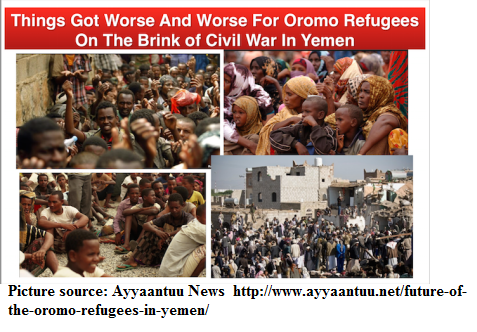

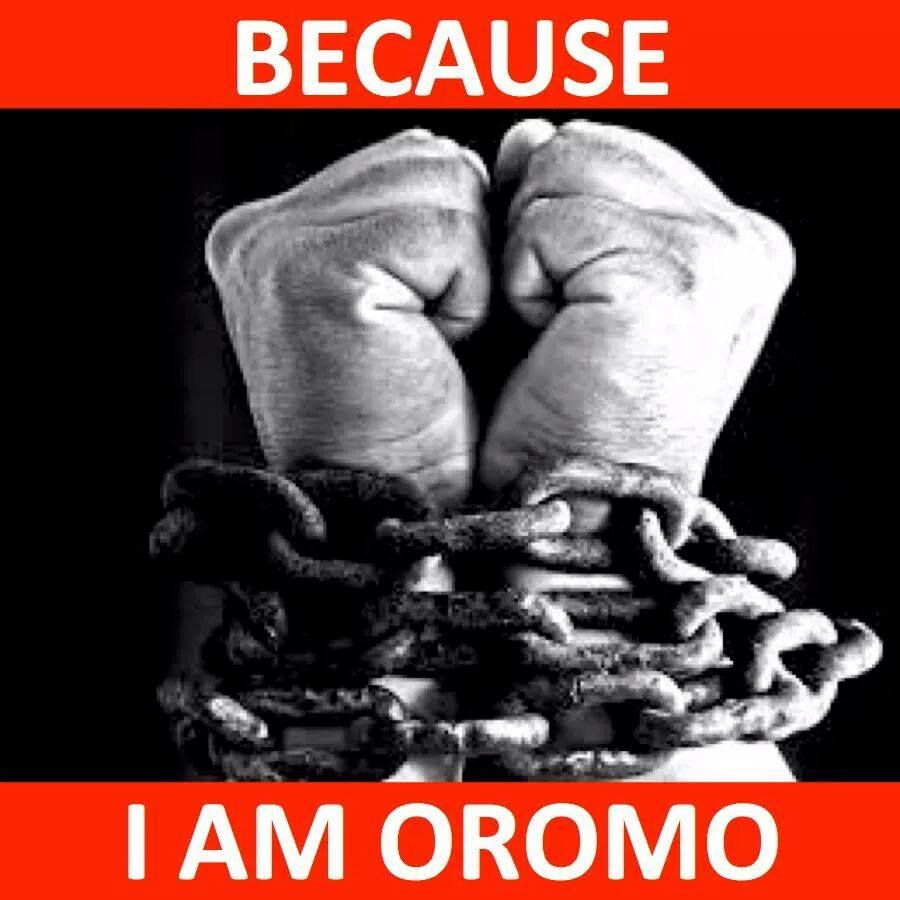



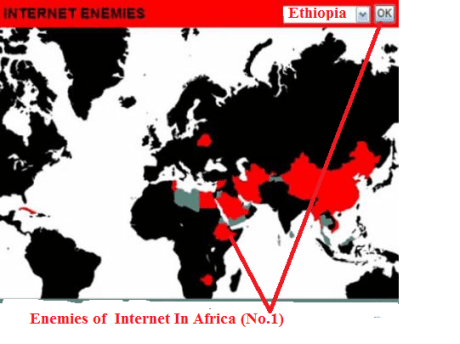


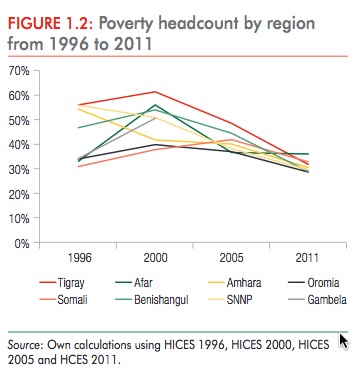


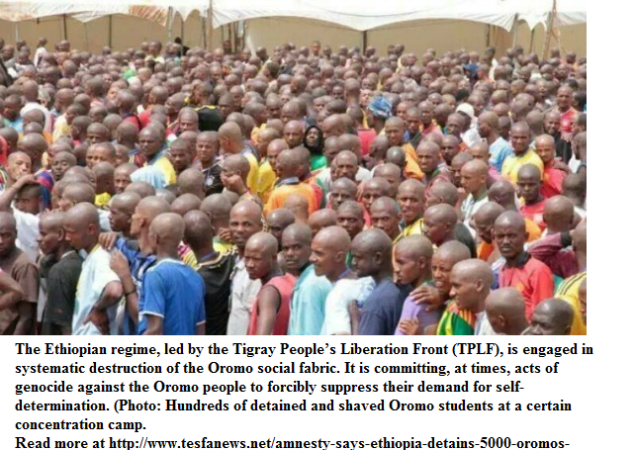







 Several non-governmental organizations took the floor and raised concerns about the human rights situation on the ground in Ethiopia. Civicus World Alliance for Citizenship Participation, for example, expressed concern about Ethiopia’s refusal to accept recommendations to remove draconian restrictions on free expression. Renate Bloem (left), speaking for Civicus, added:
 There’s much more to be done in the effort to build respect for human rights in Ethiopia. In addition to the next steps mentioned above, the African Commission on Human and Peoples’ Rights will be reviewing Ethiopia’s human rights record in its


 Oromian Economist
You must be logged in to post a comment.