Economic and development analysis: Perspectives on economics, society, development, freedom & social justice. Leading issues in Oromo, Oromia, Africa & world affairs. Oromo News. African News. world News. Views. Formerly Oromia Quarterly
According to estimates reported by the World Bank, the amount of official development assistant (ODA) Ethiopia received in 2010 was $4 billion but total amount of IFFs during that year was $5.6 billion.
This means in 2010 alone Ethiopia’s IFFs exceeded the ODA it received that year by $1.6 billion. In other words, Ethiopia’s IFFs amounted to diverting the entire aid money of 2010 to foreign banks and then still transfer abroad an additional sum of money. During the entire period (2004 to 2013) the total amount of money that Ethiopia lost due to IFF was $26 billion. This amounts to stealing nearly $300 per citizen. Alternatively, the size of stolen money was about 11 times the total the amount of emergency aid being sought from donors in the current year to buy cereals from abroad and feed the drought victims.
RUSH FOR THE EXITS: WHY IS ETHIOPIA’S CAPITAL FLIGHT ACCELERATING?
By J. Bonsa (PhD), Special to Addis Standard, 9 May 2016
A substantial sum of money has been illegally flowing out of Ethiopia during the last decade. What is even more worrying is not just that the levels of out flows are high but also the sizes of illicit capital outflows have been rising at alarming rates. This rather unique pattern has attracted the attention of the general public as well as those of bilateral and multilateral donor agencies.
I will also attempt to put some flesh on the bones of facts presented in the GFI database. I will do so by shedding some light on the political economy context of the illicit capital outflow (IFFs) from Ethiopia.
Stolen money trails
The natural starting point is to get a sense of magnitude on the levels and trends. The GFI data is summarized and plotted in Fig. 1. For the time being we focus on the total flows, that is the heights of each bar denoting sizes of annual illicit money outflows. The sum of the blue and red colors gives total amount of money illegally moved aboard from Ethiopia during that year. This ranged from USD $0.4 billion in 2004 to USD $5.6 billion in 2010.
The average annual outflow was $2.6 billion during 2004 and 2013. This is a sizeable sum of money by any standard. For instance, according to estimates reported by the World Bank, the amount of official development assistant (ODA) Ethiopia received in 2010 was $4 billion but total amount of IFFs during that year was $5.6 billion.
This means in 2010 alone Ethiopia’s IFFs exceeded the ODA it received that year by $1.6 billion. In other words, Ethiopia’s IFFs amounted to diverting the entire aid money of 2010 to foreign banks and then still transfer abroad an additional sum of money.
During the entire period (2004 to 2013) the total amount of money that Ethiopia lost due to IFF was $26 billion. This amounts to stealing nearly $300 per citizen. Alternatively, the size of stolen money was about 11 times the total the amount of emergency aid being sought from donors in the current year to buy cereals from abroad and feed the drought victims.
Potential culprits
One may wonder – who are the culprits responsible for Ethiopia’seconomic fraud at such massive scale? The GFI categorizes possible perpetrators into three groups: (a) financial institutions; (b) complicit business counterparts, mainly importers and exporters; and (c) government officials.
In the Ethiopian case, it is reasonable to exclude financial institutions because there is no foreign bank operating in Ethiopia, and the domestic private banks are extremely tightly controlled. Ethiopia’s most influential banks, the Commercial Bank of Ethiopia (CBE) and the National Bank of Ethiopia (NBE), are owned and run by the government. Therefore, in the context of Ethiopia it is safe to include (a) under (c).
That is to say Ethiopia’s IFF can only be undertaken by importers, exporters or government officials. One would hasten to add that there is a huge extent of overlaps between government officials and big businesses in Ethiopia, since big businesses are highly interconnected with the government and/or they are directly or indirectly owned and run by government officials.
Money diversion channels
Now we can shift our attention back to fig. 1 and consider the breakdowns of the IFFs, the individual component denoted by the blue and red sections in each bar. The GFI applies a methodological framework that accounts for two types of illegal movements of money from one country to another.
The first one is export or import trade misinvoicing. This is measured by using a methodology called Gross Excluding Reversals (GER). This simply mirrors exports by one country with imports of another country and vice versa. For instance, items of imports recorded by Ethiopia should agree with records of exporters to Ethiopia in all aspects – value, quantity and quality.
The second one is various leakages in the balance of payments, measured by using the “hot money narrow” (HMN) approach.The latter one is often referred to as “net errors and omissions” in the balance of payment jargon. For instance, if a donor agency or country recorded $1 million grants to Ethiopia but this does not appear in the records by the authorities in Ethiopia, then the GFI records this as a leakage from Ethiopia’s balance of payment.
It is clear from Fig. 1 that the bulk of illicit money transfer from Ethiopia has taken place using trade misinvoicing, denoted by the blue component of the bar. In 2004, trade misinvoicing constituted only 14% of the total IFFs. In 2013, however, this proportion has grown to 100%, the entire IFFs began to be accounted for more and more by trade misinvoicing. For the entire period under discussion, $19.7 billion (or 76% of the total IFFs) was conducted through trade misinvoicing. The year 2010 is an exception – diversion of “hot money” dominated in that year; it constituted 55% of the total IFFs.
False invoices
Trade misinvoicing can take place in one of the following four ways: over invoicing exports, under invoicing exports, over invoicing imports and under invoicing imports. In Ethiopia’s case, the GFI report indicated import over-invoicing is by far the most important method of transferring money abroad. During the period under analysis, about $19.7 billion was transferred abroad through import over-invoicing.
It is critical to understand how import misinvoicing hurts the Ethiopian economy. This is important in the context of huge public construction projects with substantially large components of imports of machinery and other equipment. For instance, an acquisition of a set of machinery whose real value is $1 million is recorded with inflated invoice of $1.5 million.
The importer allocates project budget at the inflated import value, pays the real value to the supplier and then siphons-off the difference (in this case $0.5 million) and deposits it in a foreign bank account. The real damage to the economy happens in terms of inflated capital expenditure. Perhaps the opportunity large capital projects provide for corrupt officials could be the ulterior motive for the uncontrollable urge to attach such a high priority to large capital projects in economic development strategies.
However, it should be noted that public capital projects are often financed through commercial loans that should be paid back with cumulative interests in years to come. The economic return to capital project would partly depend on the cost consideration at project implementation stage.
The GFI also finds some export trade misinvoicing in Ethiopia’s foreign trade, over-invoicing by $6.5 billion as well as $3 million under-invoicing. In trade based money laundering, the most common types of misinvoicing are import over-invoicing and export under-invoicing. As noted above, the case of import invoicing has no complications – so much over invoicing has taken place and it explains the bulk of trade based money laundering in Ethiopia. However, the case of export over-invoicing is uncommon.
Export over-invoicing do happen although they are rare, e.g. China’s trade with Hong-Kong. Export over-invoicing is required when there is a need to plough back money from abroad and report it as inflated foreign direct investment. This is likely the case with Ethiopia where the authorities have been desperate to report higher foreign investments particularly in the first half of the period under analysis.
Ethiopia’s capital flights dwarfs rest of developing countries
It would prove useful to know how bad Ethiopia’s IFFs is relative to other countries. Fig. 2 below compares Ethiopia with its neighbors, the rest of Sub-Saharan Africa (SSA) as well as the average of developing countries (DCs). The comparison was done by expressing total illicit money outflowas percentage of GDP. The years are grouped into three intervals. For reasons discussed further below, it would prove useful to contrast pre- and post-2005. Accordingly, I have isolated 2004 and then divided the remaining years into two equal intervals.
This revealed astonishing patterns of illicit money outflow from Ethiopia which starkly contrasted with those for other countries. First, throughout the years Ethiopia’s records considerably exceeded those for its two immediate neighbors, Kenya and Tanzania. Second, a comparison of 2004 across the countries shows that Ethiopia’s illicit money outflow was way below the Uganda, SSA, and the DCs averages.
Third, the situation changed dramatically from 2005 onwards. Ethiopia outstripped Uganda, and then closed the gap with the SSA average. Fourth, Ethiopia’s average annual money outflows between 2010 and 2013 reached 11% of the country’s GDP, considerably exceeding the corresponding figures for the other countries – SSA (5%), DCs (4%), Uganda and Tanzania (2%) and Kenya (0.013%). Fifth, it is important to note that illicit money transfers abroad constituted smaller and smaller percentages of GDP for most countries over the years, implying substantial improvements in transparency in their economic management. The situation in Ethiopia sharply contrasts with this reality – illicit money outflow becoming a larger and larger percentage of Ethiopia’s GDP. This indicates transparency in Ethiopia’s economic management has gone from bad to worse over the years.
It should be noted that the SSA average is largely driven by money being squandered by oil and other mineral resources exporting countries such as Nigeria and Angola. It is telling to note that Ethiopia, a country not known for exporting substantial mineral resources, is now characterized by illicit money outflow to GDP ratio exceeding that of an average SSA country.
Blind spots in accounting for remittance flows
The analysis in the preceding sections relied entirely on the Global Financial Integrity (GFI) report. GFI methodology is strictly confined to official records as starting points and then mirrors records at different places and times. Systemic discrepancies between records are then registered as illicit transactions.
Clearly, then the GFI methodology does not account for illicit money flows that take place through financial transactions in informal or black markets. Remittance flows are riddled with black markets in hard currencies. The situation is even worse in the context of Ethiopia, where official hard currency flows are tightly controlled, and hence creating conditions for prevalence of underground currency transactions.
To the extent that remittances are channeled through formal banking or foreign exchange offices, then the transactions get into the balance of payment records. Leakages from the flow are accounted for through the GFI approach called “hot money” discussed earlier.
However, there are strong evidences indicating that the bulk of remittance transfers to Ethiopia actually happen through informal channels, mainly because of better rates and lower costs.
The informal channels may take one of two forms. First, it is common for Ethiopians living abroad to take hard currencies with them every time they visit home and then directly exchange it to birr in local black markets at better rates by avoiding transfer fees. It also happens that they send hard currencies via travellers they trust so that they give it to their relatives, who in turn get it converted in local black markets. The World Bank estimated that 14% of Ethiopians to whom money was transferred from abroad in 2010 got it through travelers. Since the World Bank has not made a reference to money converted at local black markets, it means the total amount of hard currencies entering Ethiopia by informal channels is much higher than the 14% who regularly receive remittances.
Additionally, there is a more sophisticated black market which operates pretty much like the way foreign money transfer services operate, except that these are operated informally by individuals living abroad. As any Ethiopian living abroad can tell, every big city countries with hard currencies has a few black market operators who offer exchanges of foreign currencies to birr with additional incentives,at least two or three birr on top of the going rate that money transfer agencies offer.
I selected a couple of major cities and gathered background information for this piece. The margins offered vary across time and space but the current margin on above Western Union conversion rates were at least one birr per unit of USD equivalents of local currencies in London, Dubai, and Kuwait, excluding foreign exchange office fees charged per transaction. This means Ethiopians living abroad have good enough incentive to look for black market operators rather than sending money through formal channels.
The role of the black market is simply to collect and bulk the hard currencies. Where exactly the collected money goes is anybody’s guess. One may hope that importers who face constraints in foreign exchange rationing may smuggle out the hard currency they collected and/or importers may assign agents in foreign countries to collect and bulk hard currencies for them.
In both cases importers may spend the money they bulked on purchasing goods and services that will eventually enter Ethiopia. This is an optimistic scenario since the country may eventually benefit from availability of goods and services in the domestic market, except that the transactions were done informally and the government might have lost some tax revenues.
The upshot of this discussion, however, is that the hard currencies collected from local black markets may get smuggled out and get deposited in foreign bank accounts. Similarly, black market operators residing abroad may also be primarily motivated by a pressing need to convert birr into a hard currency and safely deposit it in a foreign bank account.
It should be noted that the GFI methodology misses out such blind spots in remittance flow accounting, which means Ethiopia’s capital flights discussed in the preceding sections is highly likely to underestimate the size of illicit capital flights from Ethiopia. If so much has been done to move money illegally abroad by abusing formal channels, then it is realistic to assume that the informal channels are even more susceptible to abuses by the same group of actors who seem to be in a rush to the exits.
Why the rush?
At this juncture it is appropriate to pool together different lines of discussions in the preceding paragraphs. The most crucial point here is the timing of dramatic changes in Ethiopia’s capital flight. It is clear from the facts presented in this piece that 2005 was a watershed moment in Ethiopia’s capital flight history in recent years.
For those who closely follow Ethiopia’s political and economic affairs, the fact that dramatic things began to happen soon after 2005 does not come as a surprise. The general election of that year and the upheavals that followed had seriously shaken self-confidence among the elites who held political and economic power. The possibility of losing power and economic advantages that accrues from it began to be felt starting from that year, when the ruling EPRDF snatched power under murky conditions from the hand of the opposition who claimed they actually won the general election.
This argument is substantiated by the following logical reasoning established in our discussions earlier. In the Ethiopian context there are no foreign banks, and domestic banks are very tightly controlled by the government. Also, there is a great deal of overlaps between interests of big businesses and those of government officials.
In that case, corrupt government officials and their affiliated businesses are the likely culprits for capital flights from Ethiopia at such epic proportions. The fact that rampant corruption has crippled the current government is openly debated in local media and among the elite at official forums. The evidence provided in this piece only corroborates the ongoing public debate.
ED’s Note: J. Bonsa is an economist by training. He can be reached at dinade0612@gmail.com.
The Oromo people in Ethiopia have long complained of being marginalized. Addis Ababa expansion plans which sparked fresh protests have been scrapped but the conflict continues to simmer, as DW’s Merga Yonas explains.
New Report from State Department Details Widespread Human Rights Abuses in Ethiopia
Oakland Institute, 9 May 2016
Oakland, CA—The United States Department of State recently released its annual Country Reports on Human Rights Practices, including an in-depth account of the human rights situation in Ethiopia. The report confirmed many of the ongoing human rights violations that the Oakland Institute has detailed in Ethiopia, including: abuses associated with the Government’s villagization program; restrictions on basic freedoms of expression, assembly, association, movement, and religious affairs; restrictions on activities of civil society organizations; and more.
“The US State Department report confirms that countless human rights abuses are being perpetrated by the Ethiopian Government,” said Anuradha Mittal, Executive Director of the Oakland Institute. “It also highlights appalling issues associated with Ethiopia’s criminal system, such as the use of torture, a weak and politically influenced judiciary, life-threatening prison conditions, and the use of electric shocks and beatings to extract confessions.”
Caught in this horrific system are thousands of journalists, political opposition members, land rights defenders, students, and indigenous and religious leaders, who have been unlawfully detained and arrested under Ethiopia’s draconian Anti-Terrorism Proclamation.
Included in the State Department report are the cases of Ethiopian Muslim leaders, detained and charged under the Anti-Terrorism Proclamation for participating in protests for religious freedom; and of land rights defenders Omot Agway Okwoy, Ashinie Astin, and Jamal Oumar Hojele who were arrested en route to a food security conference in Nairobi and charged under the Anti-Terrorism law.
Countless more stories were not included in the report, including that of indigenous Anuak leader Okello Akway Ochalla, who was abducted in South Sudan and forcibly taken to Ethiopia, in complete violation of extradition treaties and international law, for speaking out about abuses perpetrated against the people of Gambella, Ethiopia. On April 27, 2016, after more than two years in jail, Mr. Okello was handed a nine year prison sentence.
“Over the past years, countless indigenous communities have been evicted from their land to make way for large-scale land grabs in Ethiopia,” commented Mittal. “These displacements are happening without the free, prior, and informed consent of the impacted populations, and when communities resist, they are forcibly removed by means of violence, rape, imprisonment, and the denial of humanitarian assistance, including food aid. To make matters worse, the people who stand up and fight for the rights of those communities – people like Mr. Okello and Pastor Omot – are being jailed. This must stop.”
“Ethiopia is the United States’ closest ally in Africa and the second largest recipient of US overseas development assistance in Africa,” she continued. “In these unique roles, the US has both the power and the moral responsibility to ensure that basic human rights and the rule of law are upheld in the country. Through its report, the United States acknowledges the widespread human rights violations taking place in Ethiopia. The question is: when will the US finally do something to address this egregious situation?”
Dispatches: Using Courts to Crush Dissent in Ethiopia
(HRW) — For the past six months, thousands of people have taken to the streets in Ethiopia’s largest region, Oromia, to protest alleged abuses by their government. The protests, unprecedented in recent years, have seen Ethiopia’s security forces use lethal force against largely peaceful protesters, killing hundreds and arresting tens of thousands more.
The government is inexorably closing off ways for Ethiopians to peacefully express their grievances, not just with bullets but also through the courts. In recent weeks, the Ethiopian authorities have lodged new, politically motivated charges against prominent opposition politicians and others, accusing them of crimes under Ethiopia’s draconian counterterrorism law.
Just last week, Yonatan Tesfaye Regassa, the head of public relations for the opposition Semayawi Party (the Blue Party), was charged with “planning, preparation, conspiracy, incitement and attempt” of a terrorist act. The authorities citied Yonatan’s Facebook posts about the protests as evidence; he faces 15 years to life in prison, if convicted.
In April, Bekele Gerba, deputy chairman of the Oromo Federalist Congress (OFC), Oromia’s largest registered political party, and 21 others, including many senior OFC members, were charged under the counterterrorism law, four months after their arrest on December 23, 2015. Bekele is accused of having links with the banned Oromo Liberation Front, a charge frequently used by the government to target ethnic Oromo dissidents and others. Deeply committed to nonviolence, Bekele has consistently urged the OFC to participate in elections despite the ruling party’s iron grip on the polls. Bekele and the others have described horrible conditions during their detention, including at thenotorious Maekalawi prison, where torture and other ill-treatment are routine.
The authorities also charged 20 university students under the criminal code for protesting in front of the United States Embassy in Addis Ababa in March, 2016. The “evidence” against them included a video of their protest and a list of demands, which included the immediate release of opposition leaders and others arrested for peaceful protests, and the establishment of an independent body to investigate and prosecute those who killed and injured peaceful protesters. They face three years in prison if convicted.
The Ethiopian government is sending a clear message when it charges peaceful protesters and opposition politicians like Bekele Gerba with terrorism. The message is that no dissent is tolerated, whether through social media, the electoral system, or peaceful assembly.
(Amnesty USA) — The Ethiopian authorities must immediately and unconditionally release a prominent opposition politician facing a possible death sentence on trumped-up terrorism charges over comments he posted on Facebook, said Amnesty International.
Yonatan Tesfaye, the spokesman of the opposition Semayawi (Blue) party, was arbitrarily arrested in December 2015 and held in lengthy pre-trial detention for comments he posted on Facebook. The government says his posts against a government plan to extend the capital’s administrative authority to the Oromia region were in pursuit of the objectives of the Oromo Liberation Front (OLF), which it considers a terrorist organization.
“The Ethiopian authorities have increasingly labelled all opposition to them as terrorism. Yonatan Tesfaye spoke up against a possible land grab in Oromia, which is not a crime and is certainly not terrorism,” said Muthoni Wanyeki, Amnesty International’s Director for East Africa, the Horn and the Great Lakes.
“He and many others held under similar circumstances should be immediately and unconditionally released.”
Tesfaye was arbitrarily arrested in December 2015 and held without charge for months on end. It was not until May 4, 2016 that he was charged with “incitement, planning, preparation, conspiracy and attempt” to commit a terrorist act. The state prosecutor charged that Tesfaye’s remarks were in pursuit of the OLF’s objectives.
“Yonatan Tesfaye has no demonstrated links to the OLF. His arrest is just another example of government overreach in the application of its seriously flawed anti-terrorism law. This law is once again being used as a pretext to quash dissent,” said Wanyeki.
The Ethiopian authorities should also promptly, impartially, thoroughly and transparently investigate claims that he may have been tortured or otherwise ill-treated in detention at the Maekelawi Prison, a jail notorious for its widespread use of torture.
Ethiopia: Endless Injustices against Oromo Nation in the Name of Law Enforcement
HRLHA Press Release
May 3, 2016
The Human Rights League of the Horn of Africa (HRLHA) strongly condemns the TPLF/EPRDF Government’s endless manipulations of the justice system to its own political ends, which was once again manifested in the fully fabricated allegations and charges filed against 22 (twenty-two) Oromo nationals. It surprised no one that the TPLF/EPRDF Government, as usual, used the infamous legal tool of the Anti-Terrorism Law, as a result of which thousands of innocent Oromos and other nationals have been victimized, to arrest, detain and take to court another batch of Oromo activists. These newest allegations and attempts of abusing the justice system are taking place following the months-long and region-wide public protests in Oromia; and are, undoubtedly, parts of the heavy-handed crackdown, which included the imposition of martial law in the Regional State in an effort to suppress the public anger and demands for change.
As described by some international legal analysts, the Ethiopian Anti-Terrorism Law “… criminalizes basic human rights, especially freedom of speech and assembly. The law defines terrorism in an extremely broad and vague way so as to give the government enormous leeway to punish words and acts that would be perfectly legal in a democracy”. This is the reality that came into play in the case of these newly made allegations against 22 Oromo nationals.
According to documents obtained by HRLHA, the 22 Oromo nationals, including top political leaders of the opposition Oromo Federalist Congress party, such as Mr. Bekele Gerba (Deputy Chairman) and Mr. DejeneTafa (Deputy Secretary General), Addisu Bulala and others have been charged with allegedly conspiring to overthrow the government by means of instigating a public revolt and protests as well as collaborating with other political organization called Oromo Liberation Front. The new creation in this case is that attempts were made to associate the officially registered and legally operating political parties like the OFC with opposition political organizations that were deemed outlaw by the Ethiopian Government in order to criminalize their legitimate existence and activities.
From left to right, Bekele Gerba, Djene Tafa, Addisu Bulala & others
It is so unfortunate that Mr. Bekele Gerba is being subjected to such politically and racially motivated injustice and the resultant sufferings in Ethiopian substandard jails for the second time in a matter of two years.
The HRLHA has ample documents that hundreds of thousands of innocent Oromos and members of other nationalities have already fallen victims of such injustices and dictatorship committed particularly using this Anti-Terrorism Law, described by some as “a tool to stifle dissent”, as a legal weapon.
Local, regional and international communities have repeatedly witnessed over the past twenty-five years that the TPLF/EPRDF Government of Ethiopia misuses the political power, the justice system, and other public resources to silence and/or eliminate all forms of oppositions and political descents, despite the constitutionally declared democracy, in order to ensure monopoly and lasting partisan political goals. But, no tangible and effective actions are taken so far to make the Ethiopian Government refrain from punishing its own citizens just for exercising or attempting to exercise some of their basic and constitutionally provided democratic rights.
The HRLHA, first of all, calls upon the Ethiopian Government to unconditionally release these Oromo nationals detained and charges for allegedly committing acts of terrorism; as their words and/or acts are undoubtedly legal and, above all, constitutional. HRLHA also calls upon the international community’s so that they condemn the Ethiopian Government, acts of injustices against innocent citizens, and request that these unjustly detained and falsely charged Oromos are freed unconditionally.
RECOMMENDED ACTION: Please send appeals to the Ethiopian Government and its concerned officials as swiftly as possible, in English, Amharic, or your own language expressing:
For the immediate and unconditional release of prisoners illegally detained
Urging the Ethiopian authorities to ensure that these detainees would be treated in accordance with the regional and international standards on the treatment of prisoners,
Copied To:
TheUS Department of State Secretary
His Excellency Mr. John Kerry
WASHINGTON, D.C. HEADQUARTERS
(202) 895-3500 OFMInfo@state.gov
Office of Foreign Missions2201 C Street NW
Room 2236
Washington, D.C. 20520
Customer Service Center
3507 International Place NW
Washington, D.C. 20522-3303
UK Secretary of State for Foreign and Commonwealth Affairs The Rt Hon Philip Hammond MP Parliamentary
House of Commons, London, SW1A 0AA
Tel: 020 7219 4055
Fax: 020 7219 5851
Email: hammondp@parliament.ukDepartmental
Foreign and Commonwealth Office,
King Charles Street ,
London, SW1A 2AH
Tel: 020 7008 1500
Email: fcocorrespondence@fco.gov.uk
Minister of Foreign Affairs (Canada) His Excellency Stéphane Dion
Enquiries Service (BCI)
Global Affairs Canada
125 Sussex Drive
Ottawa, ON, Canada
K1A 0G2 Email:Enquiry Service – Online form
Minister for Foreign Affairs (Sweden) Her Excellency Margot Wallström
Switchboard: +46 8 405 10 00
Street address: Rosenbad 4
Postal address: SE 103 33 Stockholm
Minister of Foreign Affairs (Normway)
His Excellency BørgeBrende Ministry of Foreign Affairs
E-mail: post@mfa.no
Phone: + 47 23 95 00 00
Address: 7. Juniplassen 1, N-0032 Oslo
The UN Human Rights Commissioner
Mr. Zeid Ra’ad Al Hussein
OHCHR address:
Office of the United Nations High Commissioner for Human Rights (OHCHR)
Palais Wilson
52 rue des Pâquis
CH-1201 Geneva, Switzerland.
Council of Europe
Office of the Commissioner for Human Rights
67075 Strasbourg Cedex
FRANCE+33 (0)3 88 41 34 21
+33 (0)3 90 21 50 53
African Commission on Human and Peoples’ Rights
31 Bijilo Annex Layout, Kombo North District
Western Region P.O. Box 673 Banjul
The Gambia
Tel: (220) 441 05 05, 441 05 06
Fax: (220) 441 05 04
E-mail: au-banjul@africa-union.org
Debre Mekuria breastfeeds her malnourished baby in Seriel health centre in Ethiopia’s northern Amhara region, Feb. 13, 2016. REUTERS/Tristan Martin
NAIROBI, May 5 (Thomson Reuters Foundation, 4 May 2016) – Over the years, Ethiopian mother-of-three Hana Mekonnen has received all sorts of aid designed to free her from the bitter trap of poverty and hunger: goats, cash transfers, resettlement and, of course, sacks of grain.
None has worked.
Hana’s one-year-old son was diagnosed with malnutrition in October, usually a time of plenty in Ethiopia’s mountainous Amhara region, when the main harvest starts to come in.
The Horn of Africa nation’s worst drought in 50 years has left her destitute, reduced to arguing with neighbors over the allocation of aid rations.
“Because of the drought, we are all poor,” she said, seated in her dimly-lit hut with her child on her lap.
“No one in this village has anything to give their children. We all live on food aid.”
Hana blames God for failed rains, but development experts say her chronic poverty is the result of traditional farming methods, a soaring population and a lack of alternative sources of income.
Millions of farmers and herders across Africa have been pushed into crisis by drought this year, raising questions about the ability of aid to break the hunger cycle, despite a resolve to do so after famine killed 260,000 people in Somalia in 2011.
How to make people less vulnerable to natural disasters, and improving the aid response when they do strike, are key themes of the World Humanitarian Summit on May 23-24 in Istanbul.
SAFETY NET
Hana receives cash and food six months a year, in exchange for environmental work, like digging ponds and planting trees.
Ethiopia’s Productive Safety Net Programme (PSNP), set up in 2005, helps her through the ‘lean season’ between harvests, while also rehabilitating land and building roads, health posts and schools to tackle some of the underlying causes of poverty.
The scheme, administered by the government and largely funded by international donors, was set up to end the annual scramble for emergency funding to feed hungry Ethiopians, averaging 5 million a year in the decade before its launch.
It has made the provision of food aid more predictable and cheaper, helping to prevent the terrible famines that tarnished Ethiopia’s international image in the 1970s and 80s.
But it has not ended hunger.
“Ethiopia is, and has demonstrated itself to be, very effective at response,” said Laura Hammond, who heads the development studies department at the University of London’s School of Oriental and African Studies (SOAS).
“But there’s still this level of vulnerability and poverty that is persistent and that’s harder to turn a corner on.”
This year, one in five Ethiopians need food aid, with 8 million receiving support from the PSNP and another 10.2 million from a $1.4 billion humanitarian appeal.
By 2020, the project – Africa’s largest social safety net – will have cost donors $5.7 billion, raising questions about its sustainability.
“Ultimately, there does need to be a vision for this not being a donor-financed safety net,” Greg Collins, director of the Center for Resilience at the U.S. Agency for International Development (USAID), told the Thomson Reuters Foundation.
“We more and more need to be investing in creating opportunities that allow those who are able to graduate from the PSNP.”
Initial optimism about a rapid shift to self-sufficiency has been replaced with an acceptance that some Ethiopians will be dependent on aid indefinitely.
GROWTH STORY
The busy roads, endless construction sites and new light railway snaking over Ethiopia’s capital are testament to the double-digit growth it has enjoyed for the last decade.
This growth has led to a dramatic drop in poverty rates, with the share of the population living below the poverty line falling from 56 to 31 percent between 2000 and 2011, according to World Bank data.
“Ethiopia is the darling of Africa at the moment,” said Lindsey Jones, a researcher with the London-based Overseas Development Institute. “Its economy is expanding massively.”
But deeper structural changes, like urbanization and industrialization, are needed to end poverty, experts say.
From the early 1990s, Ethiopia pursued an agriculture-led development strategy, under visionary strongman Meles Zenawi.
Increased use of fertilizer, better seeds and expert advice produced sharp increases in yields, benefiting the 92 percent of Ethiopians who, according to the World Bank, own land.
As Ethiopia’s population has doubled since the early 1990s, many people’s farms are often only half a hectare.
“There is no means to increase the landholding size,” said Mitiku Kassa, head of Ethiopia’s National Disaster Prevention and Preparedness Committee. “The only option is to increase the productivity of the land by using agricultural technologies.”
Each ward has three development agents, graduates in crop and animal sciences, who demonstrate to villagers how to increase their yields, he said.
But farmers remain vulnerable to poor rains, unlike workers in manufacturing and services jobs, which have proven critical in reducing poverty in countries like Bangladesh and Rwanda.
Ethiopia’s recent investment in the food processing, textile and flower industries is a step towards diversifying the economy away from its heavy dependence on farming, said SOAS’s Hammond.
ACT BEFORE DROUGHT
The most popular buzzword among aid workers after the 2011 drought across the Horn of Africa was “resilience”, which means boosting people’s ability to bounce back from shocks like a failed harvest or a death in the family.
Projects that provide families with alternative sources of income, such as livestock, or loans to set up small businesses, can make them less vulnerable when disaster hits.
“What’s needed is more investment in action before droughts strike,” said Michael Mosselmans, head of humanitarian policy and practice for Christian Aid.
Every dollar spent on preparedness saves seven dollars in disaster aftermath, the United Nations says, but it is harder to generate enthusiasm for preventative projects than tackling visible crises, like starving children.
At the World Humanitarian Summit, Christian Aid is calling for 5 percent of aid to be spent on resilience and disaster preparedness, up from the current 0.4 percent.
Ethiopia is not holding its breath.
The government’s Mitiku says efforts to end hunger for women like Hana must be driven by Ethiopia itself.
“Emergencies will continue, in my view, as long as we are living with adverse climate change,” he said, drawing comparisons with drought-hit California.
“They are not appealing (for funds) because they have the capacity to respond. We expect Ethiopia to have such capacity to respond by itself… when we reach lower middle-income (status),” he said, a target it has set for 2025.
During my recent visit to Addis Ababa, one thing caught my eyes: the increased number of people on the streets begging for food and money. This is not the same Ethiopian capital I visited last year. It is very different due to a severe drought, and the government is trying hard to keep word from getting out.
Ziway Dugda district communities waiting for food distribution at Ogolcha food centre in a drought stricken area in Ziway Dugda district, during UN Secretary General, Ban Ki moon’s visit to Ethiopia, on 31 January, 2016.(AP/MulugetaAyene)
I asked a fellow journalist from Ethiopia – I will not mention his identity for security reasons – if I could take a photo.
“The government doesn’t want us (media) to write about this, and especially if you are a foreign journalist, you will be in much trouble. Most of the local journalists here are in jail for reporting the hunger stories and other stories that the government is against.
“The government thinks by telling the hunger stories, it is an embarrassment to the country,” he says, echoing what I hear from other journalists as well as NGOs.
Ethiopia is facing its worst drought in at least three decades, with devastating effects on agriculture and livestock, whilst millions of people face food insecurity. More than 10 million people – one in ten Ethiopians – are said to need emergency aid due to failed rains.
The Ethiopian government and humanitarian agencies have said that Ethiopia needs nearly US$600 million in international humanitarian assistance. But critics say the government’s new leasing law for foreign concerns is aggravating the crisis by blocking livestock from grazing in areas less-affected by the drought.
One-quarter of all districts in Ethiopia – mainly in the north of the country – are officially classified as facing a food security and nutrition crisis after the drought cut production by up to 90 per cent in some areas. That has caused a flight to the cities.
“Whenever the drought occurs in these areas, people migrate to areas less affected to look for food, and Addis Ababa is one of the areas they move to, especially those just in the outskirts of the city,” said Mitiku Kassa, the Commissioner in charge of Ethiopia’s Disaster Risk Management and Food Security Agency, in an interview with Equal Times.
According to the NGO Save the Children the number of those affected could be higher, considering that 7.9 million people are supported by the government’s safety net program that provides wheat, cereals and cooking oil. It says at least 6 million children are hungry.
Worst seen since the 1980s
The nation has historically struggled with hunger, including in the 1980s, when famine and civil war left hundreds of thousands of people dead.
Experts are predicting that Ethiopia will experience the worst drought in generations, one that will surpass the 1984 famine that killed one million people.
United Sates Department of Agriculture reports that Ethiopia sought 1 million tons of wheat late last year – more than what it bought last season. The government also purchased 500,000 tons more last month through the port of Djibouti, as Ethiopia is a landlocked country.
It is estimated that imports will jump to 2.5 million tons this year, up from the 900,000 tons purchased last year. And USAID, which has deployed a disaster response team to Ethiopia, last month announced that it would provide nearly US$4 million in maize and wheat seed for more than 226,000 households.
“The Ethiopian government is building distribution points and temporary warehouses for the food delivery,” Mohammed Said, the Ethiopian government Director of Communications and Media, tells Equal Times.
“All the centres in the drought-affected regions have been equipped with food they need, and focus is now shifting to providing seeds and fertiliser to farmers so they can start planting following the start of rains.”
He said that the government has a budget of US$381million to cater for those affected by drought, including their animals.
The UN Food and Agriculture Organisation (FAO) early this year announced an emergency US$50 million aid to help drought-hit Ethiopians.
Ethiopian Prime Minister Hailemariam Desalegn said Ethiopia has launched emergency food delivery and supervision system that helps provide food for the drought affected areas before the onset of the rainy season. He also called for more international assistance.
The United Nations also says that 5.8 million people in the country are in need water, sanitation, and hygiene services while the total assistance required in 2016 is US$1.4 billion.
The predicted number of children at risk from suffering from severe malnutrition this year is 430,000.
Paul Handley, Head of the Office for Coordination of Humanitarian Affairs (OCHA) in Ethiopia, said that by the end of the first quarter of 2016, 546,257 moderately malnourished children and pregnant and breastfeeding women were treated through the Targeted Supplementary Feeding (TSF) Programme. This represents 82 per cent of the first quarter target of 665,000 people.
“Food overall will become harder to access if we continue to see prices rise, food stocks deplete and livestock become weaker, less productive, and perish,” says FAO representative for Ethiopia, Amadou Allahoury.
“As soon as the rains start, FAO plans include distributing seeds and animal feed, vaccinating animals, delivering 100,000 sheep and goats to vulnerable households and giving farmers cash for bringing weakened and unproductive livestock to slaughter.”
He says that the current drought is not just a food crisis – it is above all a livelihood crisis.
Under Ethiopian law, land is government-owned but occupants have customary rights. In 2010, Ethiopia passed a new farm policy to which the government is leasing 3 million hectares to foreign agricultural investors who mostly include Chinese, Indians and Saudis.
According to the government, the foreign investors will have to satisfy domestic food needs before they can export, while at the same time improve the social welfare of people in the rural areas.
“You cannot speak about land issues now especially with the food insecurity in the country. You will be arrested for that,” says one official who spoke on condition of anonymity. “The vast majority of land is being used by foreigners for agriculture, especially rice cultivation in the southwest region,” he says.
Although not as affected by the drought as the northern region, the southwest is where most of the food for the country comes from.
“Pastoralists would also move to this region whenever there is drought in the north, to graze their animals, but now they can’t,” the official says. “This is one of the reasons we are witnessing the worst hunger in the country.”
The United States is deeply concerned by the Government of Ethiopia
On Ethiopia’s Charges of Terrorism Against Political Leaders
Press Statement
John Kirby Assistant Secretary and Department Spokesperson, Bureau of Public Affairs
Washington, DC
April 29, 2016
The United States is deeply concerned by the Government of Ethiopia’s recent decision to file terrorism charges against Oromo Federalist Congress (OFC) First Vice-Chairman Bekele Gerba and others in the Oromia region who were arrested in late 2015.
We again urge the Ethiopian government to discontinue its reliance on the Anti-Terrorism Proclamation law to prosecute journalists, political party members, and activists, as this practice silences independent voices that enhance, rather than hinder, Ethiopia’s democratic development.
We commend Ethiopian officials for pledging to address legitimate grievances from their citizens and acknowledging that security forces were responsible for some of the violence that took place during the protests in Oromia; however, the government continues to detain an unknown number of people for allegedly taking part in these protests and has not yet held accountable any security forces responsible for alleged abuses. This undermines the trust and confidence needed to produce lasting solutions.
We urge the Ethiopian government to respect due process of those detained by investigating allegations of mistreatment, by publicly presenting the evidence it possesses against them, and by distinguishing between political opposition to the government and the use or incitement of violence. We reaffirm our call on the government to protect the constitutionally enshrined rights of its citizens, including the right to participate in political parties, and we urge the Government to promptly release those imprisoned for exercising these rights.
Klobuchar, Franken Condemn Ethiopia’s Lethal Violence Against Protesters
April 27, 2016
For Immediate Release:
Contact: Colin Milligan (Klobuchar), 202-228-6317
Michael Dale-Stein (Franken), 202-224-2916
The bipartisan resolution calls for the Secretary of State to conduct a review of U.S. security assistance to Ethiopia in light of allegations that Ethiopian security forces have killed civilians;it also calls upon the government of Ethiopia to halt violent crackdowns, conduct a credible investigation into the killing of protesters, and hold perpetrators of such violence accountable
WASHINGTON, DC – U.S. Senators Amy Klobuchar and Al Franken today condemned the lethal violence used by the government of Ethiopia against hundreds of Oromo protesters. The bipartisan Senate resolution calls for the Secretary of State to conduct a review of U.S. security assistance to Ethiopia in light of allegations that Ethiopian security forces have killed civilians. It also calls upon the government of Ethiopia to halt violent crackdowns, conduct a credible investigation into the killing of protesters, and hold perpetrators of such violence accountable.
“I am deeply concerned by continuing reports of violence and restrictions on civil liberties perpetrated by Ethiopian security forces in the Oromia region of Ethiopia,”said Klobuchar. “Minnesota is proud to be home to the largest Oromo community in the United States. My thoughts are with the families of those who have been victims of violence in Ethiopia. I call on Prime Minister Desalgen to restore confidence in the government by putting an end to the violence and intimidation from Ethiopian security forces against peaceful protestors.”
“Around 40,000 Oromo people live in Minnesota, and I’m proud that our state is home to so many vibrant immigrant families,” said Franken. “I stand with our local Oromo community against the terrible violence that’s affected their loved ones who are still in Ethiopia. For years, the Ethiopian government has been accused of serious human rights violations—unprovoked arrests, torture, and oppression—and in recent months, reports indicate that at least 200 people have been killed by Ethiopian security forces. Our bipartisan resolution will help bring much-needed awareness to a terrible tragedy that can no longer go overlooked.”
The protests in Ethiopia, which began last November, were prompted by concerns about lack of grassroots consultation with affected communities in advance of the Ethiopian government’s plan to expand the capital, Addis Ababa. At least 200 people are believed to have died at the hands of security forces during the course of the protests, and hundreds more have been jailed, including journalists reporting on the demonstrations. In February, Klobuchar and Franken sent a letter to Secretary Kerry urging the administration take action to address escalating violence against civilians in the Oromia region of Ethiopia. Minnesota is home to the largest Oromo population in the United States.
The United States works closely with Ethiopia on Administration initiatives including Feed the Future and the African Peacekeeping Rapid Response Partnership.
How Konso people’s demand for constitutional self-determination was met with state violence
Abate Seyoum, from Konso, Addis Standard, 25 April, 2016
Undoubtedly, Ethiopia is going through nervous times. The much publicized massive anti-government protests by the Oromo, the country’s largest ethnic group, since the last five months reveal the depth and length of the government’s intolerance for dissenting voices.
But unconcerned by a potentially similar response of killing and jailing by the government, the Konso community in Ethiopia’s Southern Nations, Nationalities, and People’s Region (SNNPR), located south of the famous Lake Chamo, have been protesting against the regional administration.
Although the protest has attracted little media attention, the Konso people have staged peaceful protests for ten consecutive months before cal has returned as of end of last month. During the period of protest tension has escalated and deescalated time and again. Several members of the Konso community faced mass arrests, releases, and re-arrests. On Sat. March 5th confrontation between the community and a federal police force resulted in the later firing live bullets against unarmed people, injuring one. Security forces have also detained the chief traditional leader Kalla Gezahegn (who is now released after so much pressure). In jail, Kalla joined several other detainees who were accused of being motivated by outlawed armed groups including the banned Oromo Liberation Front (OLF) and the Patriotic Ginbot 7.
Why were the Konso protesting?
The fundamental cause of the conflict between the regional administration and the Konso Community lies in the making of the newly established Segen Area Peoples Zone in March 2011. In a bid to provide an administrative solution to the recurring quest for self administration and autonomy by the Alle ethnic minority, the regional government granted District (Woreda) status to Alle Community, unifying several districts (Kebeles),which, until then were administered by the Derashe and Konso Special Districts.
It soon appeared that the newly created Alle District needed a linking administrative tier below the regional government to be attached to. (The reason being as a mere district it cannot have direct link with the regional administration). The easiest way out for the then regional authorities was to create a new zone in the region by combining Konso, Derashe, Amaro, and Burji Special Woredas to the newly created Alle Woreda. In haste and without any sort of public consultation, as the Konso People claim, the regional administration created a zone called Segen Area Peoples Zone, with its capital at Gumayde town. The regional government sought to solve the single problem of Alle Community by creating four more problems for other communities.
The creation of the new zone means the demotion of Konso, Derashe, Burji, and Amaro from Special District status to District status, which has budgetary, economic and political implications, Konso being at the worst end point. The combining of these special districts also means the revoking of their constitutional administrative autonomy which they have exercised for the last 20 years.
But for Konso, the problem is not just economic one; it has a political under layer. The base of the zone administration is in the Gumayde town of Konso, which means moreKebelesneed to be taken from Konso District to make up yet another administrative tier with the name of Gumayde Town Administration under the zone. The Konso people are vehemently opposed to this move as it arguably impedes their constitutional right to self-administration, and their right to advance their culture, language and national identity, enshrined in the constitution. Thus, from the very beginning the Konso have been exercising a subdued form of protest claiming that it has led to political, administrative, and economic injustices.
Triggers of the latest protest
The new protest broke out when the newly created Segen Area Peoples Zone Administration took the hitherto shelved Segen Town Administration establishment plan and started to implement it in June 2015, taking land from the five Kebeleadministrations from Konso Woreda without public consultation. Angered by yet another move of impunity by the regional and zonal administrations, the Konso people have decided to use their constitutional right to self determination and self administration: they have requested to separate from the Segen Area Peoples Zone, and establish their own new zone.
First, led by traditional clan leaders the Konso people have held several mass rallies between July and October 2015 calling on the regional government to halt the implementation and hold public consultations. Having been angered by the administration’s indifference and refusal to organize public consultations, the elders and prominent community leaders called yet another big rally. On Friday October 9th 2015 more than 50,000 people staged a silent walk through the town.
Second, the elders, following traditional rites, rebuked zonal administration members of Konso origin, declaring their total disrespect for the elders, the community, the culture and even to the constitutional values. They declared to the mass that the zonal government structure and their district collaborators were irrelevant to the community. Since that day a strong peaceful social disobedience is being applied by the community to keep the rogue leaders at bay. The community also called on the district council not to approve the budget for the current Ethiopian Fiscal year, as it is unfairly distributed by the zonal administration.
Third, the mass rally elected a 12 member committee to prepare, submit and follow up a written request to relevant government organs declaring the Konso decision to separate from the Segen Area Peoples Zone and requesting the regional government to grant Konso a zonal status of its own. Elders and representatives then submitted the communities’ request to regional and federal government organs. The sovereign councils in 38 of the 43Kebele administrations in the district approved the Konso community’s decision to separate from the Segen zone. This was followed by the approval and endorsement of the community’s decision by the principal district government legislative organ, the sovereign district council. The council fully approved the decision to separate from Segen Area Peoples Zone, which is the ultimate precondition for self determination as stated in the regional constitution.
In came excessive force and subversive tactics
The regional government which hitherto underestimated the depth and breadth of the Konso Protest realized that things were getting out of its hands in the district. In anticipation of yet another large rally, and in a bid to subvert it, the regional government has deployed the regional Special Forces and hastened to make arrests. So far the district police commander, three members of the peoples committee, and the district deputy chief administrator along with a dozen others are placed under police custody.
In reaction to the disproportional state violence, a general strike was staged by schools and government offices. Although several provocations were conducted by the security forces (in one incident at Fasha on Sunday Nov. 15th 2015, for example, the Special Forces randomly fired 200 rounds of tear gas into people’s houses and the market place). However their violence did not beget violence as the community kept its discipline and order.
Following talks between the SNNPR Chief Regional Administrator and the elders from the community, those who were arrested were released and the Special Forces were withdrawn. Offices and schools were also re-opened.
But the regional government continued intimidating the Konso community with a frequent visit and use of heavy words by its officials including Kifle G/Mariam, head of the regional health bureau; Lemma Gezume, Speaker of the Council of Nationalities of the regional government and Fiseha Garedew, Commissioner General of the regional Special Forces as well as zonal government administrators.
Unfortunately, as of late, the regional government has resorted to more violent tactics by deploying more troops from the regional Special Forces. So far more than 1200 members of the regional Special Forces have been deployed to the district and to stations close to large traditional community settlement compounds, establishing check points at every village entrances, subjecting innocent citizens to daily searches. They have also disarmed the district police and confiscated motorbikes and other property belonging to community members.
On February 28 this year under the pretext of conducting the regular political evaluation, the regional authorities have taken all Konso district cabinet members to Arbaminch city and arrested five of them including Solomon Galita, the district’s chief administrator.
Currently, there remains a high presence of Special Forces in the area creating an atmosphere of fear and tension. Afraid of repercussion including arbitrary beatings and arrests, schools and government offices remain closed and roads are deserted.
Ways out of the impasse?
The Konso people appear to possess a very strong commitment to the Constitutional order. They, in fact, have reaffirmed their commitment in a written statement. However, subversive tactics of the regional and zonal administration which resort to criminalizing genuine demands rather than addressing them properly are highly unlikely to yield positive results. Nor will the use of military means produce a lasting solution. But several members of the Konso community say there are a few things the regional government can do to diffuse the tension and find a lasting solution to the problem.
First and foremost, all those incarcerated without charges and without due process must be released immediately or should be given immediate access to justice. The government should re-arm the district police and should immediately reduce the number or withdraw the Special Forces on the ground. It requires genuine effort on the government’s side to regain public trust.
Second, the regional government must realize that it cannot always continue to be both the referee and the player in the game. It must make itself ready to listen to and understand the community’s genuine constitutional demands. Subversive tactics will only end up widening the rift between the government and the public.
Third, any mediation effort by the zonal administrators, who have lost their traditional statuses in the eyes of the wider community, cannot result in a productive outcome. The Konso are very conservative in that regard; the elders demand respect for their culture.
Fourth, the government should stop recycling and reappointing officials who were once or twice purged by the party for various reasons including corruption and incompetence.
The Konso protests have drawn the SNNPR authorities to a new realm of conflict, a realm of peaceful disobedience which they are not well acquainted with. It has taken more time, resources, and energy, from them. And yet there is no foreseeable end to it. Unless they learn from their failed tactics so far, they will not have the resource, energy and time to deal with such non violent protests if they erupt simultaneously in just two or three of the districts in the region.
Konso Democracy#, peaceful demonstration in October 2015
ED’s Note: the author is a resident of Konso and member of the community. This commentary was first published on March edition of the magazine.
Since then, according to the author, the following developments have occurred in the area:
“As is rightly recommended in the [article], the government has finally submitted to a peaceful negotiated solution to the problem. The federal government intervened by releasing the chief traditional leader on 21/03/2016 from Arbaminch Prison to hold meeting with community.
“Subsequently, they held a weeklong series of meetings with the community led by SNNP Chief Administrator, Dese Dalke, Federal Police Commissioner, and Defense Ministry representative. They agreed on 12 point issues to be resolved. Nine are agreed upon. Three points, the main political demands of the people remain unresolved. But normalization steps have already started. The community and the regional government are now negotiating on action plans to resolve the issues agreed up on. All the 200 prisoners are released and only four people remain jailed.”
FOUR MISSING OROMO FEDERALIST CONGRESS MEMBERS, CO-DEFENDANTS APPEAR IN COURT THIS MORNING
ADDISSTANDARD, APRIL 26, 2016
Twenty two defendants, including four missing senior members of the opposition Oromo Federalist Congress (OFC) have appeared at the Federal High Court 19th Criminal Bench this morning. The court adjourned the next hearing, which will be a defense hearing, until May 10th.
Federal prosecutors have charged 22 members of the OFC on Friday April 22nd with several articles of Ethiopia’s infamous Anti-Terrorism Proclamation (ATP). On the same day the court ordered the police to transfer all the 22 detainees from the notorious Ma’ekelawi, where they have been kept incommunicado for most of the last four months, to Qilinto, a prison cell south of the city’s outskirt under the administration of the Addis Abeba Prison Authority.
Following their transfer on Friday, however, news emerged that four of the 22: Bekele Gerba , first secretary general of the opposition Oromo Federalist Congress (OFC), OFC members Adisu Bulala, Gurmesa Ayano and Dejene Tafa, have disappeared after refusing to take “unknown pills” administered to them by prison authorities upon their arrival in Qilinto.
This morning, Bekele Gerba told the court that the four of them were “kept in an isolated, dark room for the last four days for refusing to take pills which we didn’t know about.” Bekele also told the court they have been denied access to their family members and legal counsel. He then requested the court to arrange for public hearing as per their constitutional rights so that “journalists and family members can attend court hearings.” Dejene Tafa on his part said that he now fears for his safety and the safety of the 21 co-defendants.
This morning a further 16 individuals, all from the Oromia regional state, and were detained at Ma’ekelawi were also brought to the same court. The court adjourned the hearing until this afternoon. It is expected that like the 22, the 16, under the file name of Tesema Regasa, will be charged with the ATP. According to lawyer Wondimu Ebbissa, who is representing the 22 defendants, so far 83 defendants, including Bekele Gerba et al, are held in Qilinto and a further 97 are believed to be either at Ma’ekelawi or the Addis Abeba police prison facility near Ma’ekelawi.
Among the charges the prosecutors have brought on defendants include statements that the defendants have participated in the recent #OromoProtests against the implementation of the Addis Abeba Master Plan, the immediate cause for the widespread protests within the Oromia regional states, the largest of the nine regional states that constitute Ethiopia.
However, a month after protests have erupted, in a rare gesture of concession to public demand, both the federal government and the Oromia regional state have said they withdrew the plan, something the federal prosecutors seem to negate with some part of their charges that indicted defendants for participating in the protest.
Congresswoman McCollum addresses the Minnesota Oromo community.
WASHINGTON — This morning, Congresswoman Betty McCollum addressed a large delegation of the Minnesota Oromo community visiting Washington today to attend a briefing held by the United States House of Representative’s Tom Lantos Human Rights Commission. In her address, Congresswoman McCollum reiterated her concern about human rights abuses against the Oromo people in Ethiopia.
Congresswoman McCollum delivered the following remarks:
Greetings and welcome to Washington! Thank you for being here today in the U.S. House to add your voices to the cause of human rights in Ethiopia.
The Lantos Human Rights Commission briefing today is an important step to informing and educating Congress about the unacceptable treatment of Oromos in Ethiopia. The current situation in Ethiopia must not be allowed to continue. The Oromo people are suffering and I share your concern. Peaceful protesters are being imprisoned, they are being tortured, they are being killed.
The Ethiopian Government must be held accountable and it will take pressure from Congress and the Obama Administration to end the repression of the people of Oromia. Later this week I will be meeting with Ethiopia’s ambassador to the U.S. and the message that I will deliver is – stop the detentions, stop the repression, stop the killing – and respect human rights!
Ethiopia benefits greatly from its relationship with the United States. The American people provide hundreds of millions of dollars of food aid, health care funding, and agriculture assistance to Ethiopia. We must demand in return that human rights be respected. We must demand human rights for the Oromo people!
Friends, I am proud to represent so many Oromo Americans who live my district in Minnesota. Thank you for sharing your strong voices! Thank you for fighting for human rights!
Peoples Alliance for Freedom and Democracy (PAFD) public meeting hosted by Oromo Student Union and Ogaden Community in Germany was held on 9th of April 2016 in Frankfurt am Main, Germany.
It was attended by two Executive committee members of PAFD, human rights advocators, invited guests, Veteran members of successful liberation movement, representatives of youths and Women and generally by the peoples and nations of member organisations of PAFD.
On this meeting, paper was presented by the officials of PAFD on the current political situation in the Horn of Africa with special emphasis on Ethiopia. The objectives of the PAFD were also explained. The atrocious nature of EPRDF across the empire, images and videos of the ongoing protest and public resistance from Oromia have been presented. Artists have entertained with cultural music in between discussions.
Member Communities and other peace loving friends in Germany all gathered on this occasion have expressed their unflinching support and solidarity for the Alliance. They noted that the oppressed peoples in Ethiopia have now reached a tipping point where the outcry of the peoples under Occupation of the Ethiopian regime cannot be ignored any more.
After thorough discussions and comments on the presentations during the meeting the participants continued discussions on the various issues. Finally the participants concluded the meeting upon passing political resolution.
The Political Resolution of this public meeting in Germany: –
Hereby in unison we convey our unflinching support for PAFD in its struggle against the TPLF/EPRDF-led Ethiopian regime, to regain the legitimate national right for the Nations and peoples. We also appreciate the outcome of PAFD congress that brought member organisations under one umbrella leadership to forge stronger bond of unity among member organisations which allowed them to strengthen their combined effort on diplomatic, political and armed struggle against TPLF. The participants of the meeting also summoned all nations and Nationalities in Ethiopia to create a firm ground for a unity of purpose and mutual respect. In the last twenty plus years TPLF/EPRDF has been tactically engaged in instigation of ethnic discord. We call up on our peoples to be aware of “divide and rule” colonial principle and resolve their conflict in a manner they used to live in it.
The Ethiopian government is currently playing a destructive and destabilizing role in the Horn of Africa in general and on the peoples under its rule in particular. The Dictatorial regime run by the TPLF is currently using every means at its disposal to silence the quest of people for justice. Freedom of press, civil Societies and independent judiciary are non-existence in this country. The Regular army and Agazi militias are using brute force against innocent Oromo protesters with complete impunity; extra-judicial executions, enforced disappearances, arbitrary mass detentions and harsh prison terms under dubious laws are practiced beyond imagination. People are evicted from their ancestral land under the pretext of “Development” and “master plans”. We strongly condemn such belligerent act of Ethiopian regime.
The partnership of EU with Ethiopia is aimed to bring a political environment guaranteeing peace, security and stability, which are the solid ground for sustainable economic policies and developments. Respect of human right violations, sustained economic growth, developing the private sector, increasing employment, good governance and etc. are the main witness and visible criterion for the objective of the partnership. Concerning the current Tigryan Peoples Liberation Front (TPLF) led regime of Ethiopia, there is massive evidence, which demonstrates beyond any doubt that the government is intensifying the persecution of Ogadeni, Oromo, Sidama, Gambella, Benishangul and other nations and nationalities in the empire. We appeal to the international communities in general and EU to implement ACP-EU agreement and its resolution passed on 21st January 2016.
The public meeting appreciated Resolution of EU, Concerns of some democratic governments and honours Amnesty International, Human Rights Watch, Human rights League Horn of Africa, Oromia Support Group, Ethiopian Human Rights Council and International Commission of Jurists for their principled and responsible activities in exposing the atrocities of TPLF government behind the curtail. Although the effort of these humanitarian organisations are limited to exposure, as it ought to be as a matter of rule, the participants of this public meeting values this contribution to be immense in bridling the militant and aggressive nature of the TPLF regime.
It is clear that the EPRDF force’s violent manoeuvre is intensifying from day to day. People are being denied to lead peaceful life. Such deplorable act has to be unequivocally condemned by all peace-loving forces. Therefore, we call upon all peoples in the empire of Ethiopia to join us in the struggle against the EPRDF regime.
We also call USA, EU and AU to refrain themselves on current deal with TPLF’s regime about the Oromo protest behind the curtail without the consent of peoples in Ethiopia and particularly in this case the Oromos.
(National Helm) — Two Chinese migrant workers found $356,246 cash in airport and returned it to three travelers from Ethiopia. The migrant workers who were working on a construction project in southern China‘s Guangzhou Baiyun International Airport Friday found a white paper bag containing bulks of US dollar bills unattended.
The workers reported the situation to the police and later on met three Ethiopian travelers who came to claim the lost. The migrant workers’ move won lots of praises after the story went viral.
Multidimensional Poverty Index: Ethiopia has the second highest percentage of people who are MPI poor in the world: of Ten Poorest Countries in The World (All in #Africa) – MPI 2015 Ranking
‘Human development is a process of enlarging people’s choices—as they acquire more capabilities and enjoy more opportunities to use those capabilities. But human development is also the objective, so it is both a process and an outcome. Human development implies that people must influence the process that shapes their lives. In all this, economic growth is an important means to human development, but not the goal. Human development is development of the people through building human capabilities, for the people by improving their lives and by the people through active participation in the processes that shape their lives. It is broader than other approaches, such as the human resource approach, the basic needs approach and the human welfare approach.’ -UNDP 2015 Report
Ethiopia’s HDI value for 2014 is 0.442— which put the country in the low human development category— positioning it at 174 out of 188 countries and territories.
In Ethiopia 88.2 percent of the population (78,887 thousand people) are multidimensionally poor while an additional 6.7 percent live near multidimensional poverty (6,016 thousand people). The breadth of deprivation (intensity) in Ethiopia, which is the average of deprivation scores experienced by people in multidimensional poverty, is 60.9 percent. The MPI, which is the share of the population that is multidimensionally poor, adjusted by the intensity of the deprivations, is 0.537. Rwanda and Uganda have MPIs of 0.352 and 0.359 respectively.Ethiopia, UNDP country notes
(Sunday Adelaja’s Blog) — When Poverty and non-existent double digit growth met face-to-Face at a dumpster site called KORA in Ethiopia. As we speak, thousands of people in Addis Ababa survive from the leftover “food” dumped in such dumpsters. People, in fact, used to call them “Dumpster Dieters”. They are either the byproducts or victims of the cooked economic figures. You be the judge!
Yet the new measurement known as the Multidimensional Poverty Index, or MPI, that will replace the Human Poverty index in the United Nations’ annual Human Development Report says that Ethiopia has the second highest percentage of people who are MPI poor in the world, with only the west African nation of Niger fairing worse. You probably heard that Ethiopia has been a fast growing economy in the content recording very high growth rate not just in Africa but the world as well.
This comes as more international analysts have also began to question the accuracy of the Meles government’s double digit economic growth claims and similar disputed government statistics referred by institutions like the IMF. The list starts with the poorest.
Niger
Ethiopia
Mali
Burkina Faso
Burundi
Somalia
Central African Republic
Liberia
Guinea
Sierra Leone
What is the MPI?
People living in poverty are affected by more than just income. The Multidimensional Poverty Index (MPI) complements a traditional focus on income to reflect the deprivations that a poor person faces all at once with respect to education, health and living standard. It assesses poverty at the individual level, with poor persons being those who are multiply deprived, and the extent of their poverty being measured by therange of their deprivations.
Why is the MPI useful?
According to the UNDP report, the MPI is a high resolution lens on poverty – it shows the nature of poverty better than income alone. Knowing not just who is poor but how they are poor is essential for effective humandevelopment programs and policies. This straightforward yet rigorous index allows governments and other policymakers to understand the various sources of poverty for a region, population group, or nation and target their humandevelopment plans accordingly. The index can also be used to show shifts in the composition of poverty over time so that progress, or the lack of it, can be monitored.
The MPI goes beyond previous international measures of poverty to:
Show all the deprivations that impact someone’s life at the same time – so it can inform a holistic response.
Identify the poorest people. Such information is vital to target people living in poverty so they benefit from key interventions.
Show which deprivations are most common in different regions and among different groups, so that resources can be allocated and policies designed to address their particular needs.
Reflect the results of effective policy interventions quickly. Because the MPI measures outcomes directly, it will immediately reflect changes such as school enrolment, whereas it can take time for this to affect income.
Ethiopia’s clampdown on dissent tests ethnic federal structure
Protests sparked by the arrest of Konso leader Kala Gezahegn underlined growing tensions between Ethiopia’s central government and many ethnic populations
BY William Davison, The Guardian, Global development, 8 April 2016
Kala Gezahegn, the traditional leader of Ethiopia’s Konso people. Kala Gezahegn, the leader of the Konso people, addresses a crowd. His arrest highlighted growing tensions in Ethiopia between state power and ethnic groups’ desire for autonomy. Photograph: Courtesy of Kasaye Soka
Nothing seemed amiss when an Ethiopian government vehicle arrived to collect the traditional leader of the Konso people for a meeting in March. But instead of being taken to discuss his community’s requests for more autonomy, Kala Gezahegn was arrested.
Kala’s detention marked a low point in fraught relations between the Konso in southern Ethiopia and the regional authorities in the state capital, Hawassa. Five years ago, the Konso lost their right to self-govern, and growing tensions since then mirror discontent in other parts of Ethiopia.
The 1995 constitution in Africa’s second most populous country allows different ethnic groups to self-govern and protects their languages and culture under a system called ethnic federalism. The largest ethnicities – such as the approximately 35 million-strong Oromo – have their own regional states, while some smaller groups administer zones within regions, as the Konso effectively used to do.
Many of Ethiopia’s ethnic identities, which number more than 80, were suppressed during the imperial and national-socialist eras that preceded the federal system.
What happened in Konso followed demonstrations and killings by security forces in Oromia, the most populous region. A rights group says 266 people have been killed since mid-November during protests over injustice and marginalisation.
Demonstrations were sparked by a government plan to integrate the development of Addis Ababa and surrounding areas of Oromia. After fierce opposition from the Oromo, that scheme was shelved in January, but protests have continued, fuelled by anger over alleged killings, beatings and arrests.
In Amhara, a large region north of Addis Ababa, there was violence late last year related to the Qemant group’s almost decade-old claim for recognition as a group with constitutional rights. The fact that the Qemant rejected a territorial offer from the authorities, saying it was too small, may have provoked local Amhara people. In December, federal security forces were dispatched to contain escalating communal violence.
In Konso, after Kala and other leaders were locked up, thousands took to the streets to protest. During clashes with police on 13 March, three people were killed, and now the dispute seems entrenched.
Women at Fasha market in Ethiopia’s Konso region. Photograph: Grant Rooney/Alamy
The crux of the issue is a 2011 decision to include the Konso – which is in the multi-ethnic Southern Nations, Nationalities and Peoples’ Region (SNNPR) and has 250,000 people – in the newly created Segen zone, thereby removing their right to self-rule. That decision was taken without consultation and resulted in worsening public services and unresponsive courts, says Kambiro Aylate, a member of a committee chosen to represent the community’s demands.
The budget for Konso’s government was reduced by 15%, says Orkissa Orno, another committee member. “The Konso people used their rights to ask for a different administrative structure,” he says.
In a recent interview, prime minister Hailemariam Desalegn blamed the unrest in Oromia on high youth unemployment and a “lack of good governance”, a line echoed by officials in other regions.
Kifle Gebremariam, the deputy president of the SNNPR, said the Konso leaders were arrested on suspicion of maladministration and corruption, issues “completely different” from the political question.
Kifle added that discussions had been held with residents about the status of the administration. “The regional government, including the president, gave them the right response, but they are not peacefully accepting this.”
Kala’s supporters dispute that account, although there have been signs of compromise, with the traditional leader permitted to take part in recent negotiations.
Concerns over the federal system’s ability to withstand such strains are not new. For example, southern groups such as the Wolayta were involved in violent clashes before they were granted their own zone in 2000.
In 2009, the International Crisis Group wrote in a report (pdf): “Ethnic federalism has not dampened conflict, but rather increased competition among groups that vie over land and natural resources, as well as administrative boundaries and government budgets.”
Officials have argued for decades that the focus on minority rights has been integral to an unprecedented period of peace and development.
Assefa Fiseha, a federalism expert at Addis Ababa University, agrees the system has brought stability to a country threatened with fragmentation in the early 1990s after ethno-nationalist rebellions overthrew a military regime.
But a lack of democratisation and centralised economic decision-making works against local autonomy and exacerbates grievances, according to Assefa.
“The regional states, as agents of the regional people, have to be consulted on whatever development project the federal government wants to undertake,” he says.
In fact, the government appears to have been moving in the opposite direction, as its legitimacy depends on economic growth and improving social services and infrastructure.
National projects – 175,000 hectares (430,000 acres) of state-owned sugar plantations in the ethnically rich south Omo area, for instance – are designed, implemented and owned by federal agencies.
The now scrapped integrated Oromia-Addis Ababa plan is another example, as it was developed without scrutiny by “key stakeholders” in the Oromia government, Addis Ababa city and the federal parliament, Assefa says.
One reason for quick decisions in a devolved federation is that the political positions of Ethiopia’s diverse communities are filtered through a rigid ruling coalition.
Along with allied parties, the Ethiopian Peoples’ Revolutionary Democratic Front won every federal and regional legislative seat in May’s elections, extending its control of all tiers of government.
The EPRDF has held power for 25 years, partly by building a popular base of millions of farmers and demanding strict obedience to party doctrine and policy, but some say this is now changing.
The wave of protests, so soon after the landslide election victory, shows that the “dominant party system is facing problems”, Assefa says.
“Growing ethno-nationalism, centralised policymaking and the failure to provide space for political dissent combined together make a perfect storm for violence.”
Ethiopia: Double Digit Growth or Collapsing Economy?
Analysis by Andualem Sisay, All Africa, 8 April 2016
Ethiopian government’s increasing reliance on foreign loans is posing a serious risk of economic collapse, a renowned economist has revealed.
“Take for instance China, which has loaned over $17 billion to the Ethiopian government for infrastructure projects. Our total investment is 40 per cent of the GDP. Our saving is between 10-20 per cent of the GDP.
“We import $13 billion and export $3 billion. They are the ones who are filling all these deficit gaps,” said Dr Alemayehu Geda.
The Addis Ababa and London universities don was presenting his paper on Foreign Direct Investment (FDI) in Ethiopia and Credit Financing.
“What will happen if they stopped such financing tomorrow? What if, for instance, the Chinese government tomorrow says sell for me Ethio Telecom or sell to me Ethiopian Airlines or give me some share or buy my aeroplanes, or I will stop such credit financing?
Strategic items
“The country will collapse, I guarantee you,” he said.
Dr Alemayehu went on: “About 77 per cent of our imports are strategic items. Fuel only has 25 per cent share of the total import. As a result, even if we want to reduce these imports, we can’t. Ethiopia needs to minimise strategic vulnerability.”
The don elaborated giving the example of how the Koreans mitigated against such dependency risks when they used to source 75 per cent of their imports from the US some decades ago.
Dr Alemayehu presented his paper in Addis Ababa at the launch of a two-year 12 series of public dialogue by the Forum for Social Studies – a local civil society, partially financed by the UK’s Department for International Development (DfID).
“The Koreans came out of such vulnerability risk after analysing their situation properly, discussing the issue with their intellectuals and setting long term plans,” he said, advising the Ethiopian government to invest in quality education, skilled labour and improve the negotiations capacity as well as have in place a well-designed policy.
Last decade
Official estimates have shown the Ethiopian economy growing by double digits annually for about a decade now, a figure that has highly been doubted by independent scholars.
The Addis government has been applauded for growing the country’s GDP by around 10 per cent per year for the last decade.
In his paper, Dr Alemayehu indicated that Ethiopia’s external loan included $17.6 billion from China for various infrastructure developments, around $3 billion from Turkish and close to $1 billion from Indian governments.
The World Bank’s data shows that from 2012 – 2016, Ethiopia has taken a total loan of close to $6 billion from the global lender. Last year, Ethiopia for the first time, joined Euro Bond and accessed $1.5 billion.
In addition to loans, reports show that some $3 billion annually came to the country in the form of aid from donors.
Have declined
Ethiopia’s exports have declined from around $3 billion last year to around $2.5 billion this year, as revealed in the recent six-month report of the prime minister to the parliament.
Even though tax collection has been growing by an average of 20 per cent annually over the past five years, Ethiopia’s tax to GDP ratio still stands at 13 per cent, which is less than the around 16 per cent of the sub-Saharan average.
Last year, Ethiopia collected around $6 billion from tax, including $25 million recovered from contraband traders. The figure could have been raised by at least $3 billion had it not been for the generous tax incentives the country has provided to investors, according to latest report of the Ethiopian Revenue and Customs Authority (ERCA).
In only nine months of Ethiopia’s last budget (July 8, 2014 – July 7, 2015), the country provided tax incentives of around $2.4 billion to investors, by exempting them from customs and excise duties and withholding, VAT and surtaxes, according to ERCA’s report.
Financial integrity
A financial integrity report last December indicated that around $2 billion was leaving Ethiopia every year through mis-invoicing and other tax frauds.
When it comes to the FDI coming from China, India and Turkey, close to 71 per cent of their investments in Ethiopia were in the manufacturing sector.
However, job creation, technology transfer and export contribution were insignificant for Ethiopia, which has over an 90 million population dominated by the youth. The country has about 16 per cent unemployment rate, according to Dr Alemayehu.
Between 2003-2012, there were 93 Chinese companies that had reportedly invested $600 million, creating around 69,000 permanent and 79,000 temporary jobs for Ethiopians. There was little contribution to technology transfer and foreign currency generation through the exportation of their products.
According to Dr Alemayehu’s paper, during the same period, Indian investments in Ethiopia created 24,000 and 26,000 permanent and temporary jobs respectively, while 341 Turkish companies operating in Ethiopia created a total of 50,000 jobs.
Though much was being talked about Chinese investments growing in Africa, the Asian giant had less than 4 per cent of total share of FDI on the continent, out of the total stock of $554 billion worth in 2010. Most of the investments in Africa were still dominated by the Western companies, according to Dr Alemayehu.
Prime Minister Hailemariam Desalegn recently told the local media that Ethiopia’s GDP growth was not expected to record a double digit this year and would likely drop to around 7 per cent.
However, his special economic adviser with a ministerial docket, Dr Arkebe Equbay, reportedly told Bloomberg media that the economy was expected to grow by 11 per cent this year.
Foreign debts
The government was now expected to deal with puzzles such as why the economic performance was not as good as in the previous years, with all the generous incentives to investors and huge infrastructure investments mainly dependent on local and external loans?
How to repay its local and foreign debts before the lenders force the government to cede shares in its highly protected businesses, such as, Ethio Telecom, Ethiopian Airlines, the Commercial Bank of Ethiopia, the Ethiopian Insurance Corporation and Ethiopian Shipping Lines is, for sure, the elephant in the room.
But the big question is: How soon will these issues get the attention of a government pre-occupied with trying to feed about a dozen million people affected by drought and dealing with political unrest and conflicts mainly in Oromia and Gondar area of Amhara Region?
Ethiopian migrants, all members of the Oromo community of Ethiopia living in Malta, protest against the Ethiopian regime in Valletta, Malta, Dec. 21, 2015. (photo by REUTERS/Darrin Zammit Lupi)
CAIRO (Almonitor, April 5, 2016) — On March 13, nearly 1,000 people of the Oromo ethnic community took part in a big ceremony celebrating the second anniversary of the Oromia Media Network (OMN), which opposes the ruling regime in Ethiopia.
The ceremony was the first event held by the Ethiopian opposition in Cairo since theoutbreak of violence in Ethiopia between the government and the ethnic community in December. The violence arose over Ethiopia’s “master plan” to expand the capital, Addis Ababa, into large parts of Oromo farmlands without any actual compensation.
At that time, Egypt’s Foreign Affairs Ministry contented itself with issuing a press statement on Dec. 21, saying that the incidents “are an internal Ethiopian issue.”
“We are looking forward to stability and the completion of the comprehensive economic and social development programs in Ethiopia,” the ministry said.
Yet local Ethiopian media outlets continued to circulate statements by Ethiopian officials accusing Cairo of supporting the opposition and of being behind these events in order to weaken Ethiopia. These statements were based on the late Ethiopian Prime Minister Meles Zenawi’s remarks in November 2010 that there was irrefutable evidence of Egypt’s support for insurgents in Ethiopia, under the rule of former President Hosni Mubarak.
At the second anniversary ceremony, OMN head Jawar Mohammed spoke of the need for the Oromo uprising to continue against the policies of the Ethiopian government and the ruling Tigrayan People’s Liberation Front (TPLF) party. He accused the government of adopting systematic policies against the Oromo community and of seizing its land.
A government official who coordinates African affairs and spoke to Al-Monitor on condition of anonymity said, “The Egyptian authorities have nothing to do with the ceremony.”
He explained, “A group of Ethiopian activists applied for a security approval for the ceremony, which they obtained, similarly to any other foreign communities wishing to hold activities in Cairo.”
The United Nations High Commissioner for Refugees (UNHCR) fact sheet issued in February said 6,916 Ethiopian asylum seekers are registered with the UNHCR in Cairo.
“Most of the Ethiopians who are registered with the UNHCR are of the Oromo people, whose registration rate has been constant since 2015,” Marwa Hashem, assistant public information officer for the UNHCR in Cairo, told Al-Monitor.
“The UNHCR have provided all political asylum seekers and refugees from Africa with services such as material aid to the most needy, educational grants, health care and psychosocial support.”
Ahmad Badawi, head of the Egyptian Foundation for Refugee Support, told Al-Monitor, “Egypt is committed to its international obligations not to reject asylum seekers when they do not oppose national security, even those who enter illegally.”
The Egyptian government does not provide any special advantages to Ethiopian refugees without providing the same to other foreign nationals, he said. UNHCR is in charge of providing services to all refugees.
The Oromo ethnic community makes up 40% of Ethiopia’s population, followed by the Amhara and Tigrayan communities, which make up 32% — though Tigrayans control the government through the ruling TPLF party. The Oromia Regional State stretches over large areas in central Ethiopia, where the capital is located, and includes most of Ethiopia’s wealth, as it controls the country’s coffee exports, gold mines and the rivers’ headwaters.
Due to the escalating protests, the Ethiopian government canceled the plan to expand the capital. Yet the Oromo revolution has not ended, as the people continue to demand freedom and fair representation in the government and to protest the ruling party’s practices.
“The Oromo community will continue to protest not only against the Ethiopian government’s master plan, which raised problems in the past, but also to preserve the Oromo ethnic community’s land, culture and language, against the ethnic policies of the Tigrayan who control the rule,” Girma Gutema, an Oromo community activist, told Al-Monitor.
“Eritrea and Sudan supported the Oromo struggle. Yet following the Sudanese-Ethiopian rapprochement, many rebels fled to Eritrea,” Gutema said. However, the Egyptians, as well as the international community, don’t know enough about the Oromo community’s problems to be able to offer support.
Such rumors, he said, are propaganda spread by the Ethiopian government due to its historic bickering with Egypt.
Galma Guluma, an Ethiopian political activist and organizer of the ceremony in Cairo, told Al-Monitor that Cairo is the safest place for Oromo people fleeing Ethiopia, particularly sinceSudan changed its policy and is now turning over Ethiopian oppositionists to their government.
“Fleeing to Cairo was not an easy thing to do. Many refugees went through difficult situations and conditions until they reached the Egyptian border,” Guluma said. “Most of the Oromo refugees in Cairo do not have permanent jobs, and some girls are working as domestic servants. Moreover, they receive very little aid from the civil society organizations.”
Guluma added, “We do not have weapons to face the regime in Ethiopia. Our goal is to focus on [getting] the media to speak of the suffering of the Oromo people,” who are oppressed despite the great wealth in their state.
He noted, “Cairo has been a historical place for the Oromo struggle and the idea of the media network and Oromo radio started in Cairo more than 50 years ago with SheikhMohammed Rashad, who studied at the Al-Azhar University in the 1960s and was honored by [former Egyptian President] Gamal Abdel Nasser.”
The Egyptian political administration has said that, while it seeks to build trust and goodwill, its open-door policy for Oromo refugees is part of an international commitment to the refugees’ case and should not be perceived as an attempt to exploit any internal conflicts to weaken the Ethiopian state.
Nevertheless, this issue remains a focus of constant tension in Egyptian-Ethiopian ties, in addition to the historic conflict over Nile water management.
In recent months, Ethiopia has seen its worst unrest in a decade. Members of Ethiopia’s Oromo ethnic group, which feels left out of the country’s booming economy, have taken to the streets in protest.
Protesters are calling for equal rights and an end to what they call corruption, land grabs and government oppression. Some Oromo families have been forced off their land, and the government refuses to officially recognise the Oromo language. The government has cracked down on the protests, and activists and human rights groups say over 200 people have been killed. FRANCE 24’s reporter spoke to the families of several victims.
Click on the video player above to watch FRANCE 24’s full report from Ethiopia.
It is uncertain how many people have died in clashes between security forces and protesters since November, when a series of demonstrations began.
Local estimates put the figure at between 80 and above 200. The New York-based Human Rights Watch has said that more than 200 people may have died in about six months, a figure the government denies.
“With regards to allegations from human rights groups or self-styled human rights protectors, the numbers they come with, the stories they often paint, are mostly plucked out thin air,” Getachew Reda, the information minister, told Al Jazeera.
Abi and Dereje’s mother was among those shot in January. She was hit by a bullet in the neck. Despite receiving medical treatment, she died of her wounds in March.
“The little girl cries and keeps asking where her mother is. We feel her pain,” said the children’s grandfather Kena Turi, a farmer. “The older one cried when his mother was shot and died, but now it seems he understands she’s gone.”
Oromo students began rallying to protest against a government plan they said was intended to expand the boundaries of Addis Ababa, the capital, into Oromia’s farmland.
Protests continue
Oromia is the country’s largest region, and many there believe the government did not want to redevelop services and roads, but that it was engaged in a landgrab.
Though the government shelved its “Integrated Development Master Plan” due to the tension, protests continued as the Oromo called for equal rights.
In February, another anti-government rally turned violent. Nagase Arasa, 15, and her eight-year-old brother Elias say they were shot in their legs while a demonstration happened near their home.
“I was in the back yard walking to the house when I was shot,” Nagase told Al Jazeera.
“My brother was in the house. I couldn’t walk I was bleeding. Then I was hit again when I was on the ground I felt the pain then my brother came to help me and he was shot too.”
Ethiopia has an ethnically-based federal system that gives a degree of self-rule to the Oromo people.
But the Oromo opposition, some of whose members have been detained, says the system has been corrupted by the ruling coalition, the Ethiopian People’s Revolutionary Democratic Front.
A ‘marginalised’ community
Merera Gudina, an Oromo politician, said that members of his community feel marginalised — excluded from cultural activities, discriminated against because of their different language, and not consulted in political or economic decisions.
With double-digit growth over the last decade, Ethiopia has one of the fastest-growing economies in the world, but the majority of the Oromo remain poor.
“Until the Oromo’s get their proper place in this country I don’t think it [dissent] is going to go. The government wants to rule in the old way; people are resisting being ruled in the old way,” Gudina said.
Reporting and recording human rights abuses is also risky, activists told Al Jazeera. Local and foreign journalists said attempts were made to intimidate them, with some detained.
Al Jazeera spoke with local reporters who said they were too afraid to even try and cover the issue.
“It’s very dangerous. Everybody is living in fear. They imprison people every day. People have disappeared. Doing this work is like selling my life,” a human rights activist told Al Jazeera, speaking on the condition of anonymity.
Government rejects claims
Kumlachew Dagne, a human rights lawyer, said there was a need for “public forums and consultation for debates on public policy issues” to allow for different views to be heard. He added that the protesters who were injured or killed had not been armed.
“Many of those people were killed after the protests took place many of the people were shot in the back some were shot in the head, which shows that these people were not armed,” he said.
“They were peaceful demonstrators. That is consistent with reports we had from victims’ families.”
The government rejects such claims as exaggerated or fabricated.
“People, whether they are civilians or security officials who have been involved in an excessive use of force, will be held responsible,” Reda said.
He said the government would consult with the Oromo people and “address the underlying problems”.
Portland Senators Jeffrey A Merkley & Ron Wyden write letter to Secretary of State John Kerry urging him to ensure resource given to Ethiopia are not just for purposes that undermine US long term interst. The also request the State Dept to provide account of killings, arrest and other human right abuse in response to #OromoProtests, and to identify persons responsible for committing these crimes. We are grateful to the Senators and the Oromo Community of Portland.
Students believed to have been injured during protests at Wallaga University Oromo activists
UK (International Business Times) — Hundreds of people from Oromia, Ethiopia’s largest state, are still protesting on the streets calling for self-rule. An activist who spoke to IBTimes UK on condition of anonymity explained that Oromopeople, Ethiopia’s biggest ethnic group, were also protesting against the alleged violence carried out by security forces against demonstrators.
The Oromo people are Ethiopia’s largest ethnic group and their population amounts to more than 25 million (around 35% of Ethiopia’s total population). They originated in the Horn of Africa, where they are believed to have lived for millennia.
Oromo people speak Afaan Oromoo, as well as Amharic, Tigrinya, Gurange and Omotic languages. They are mainly Christian and Muslim, while only 3% still follow the traditional religion based on the worshipping of the god, Waaq.
In 1973, Ethiopian Oromo created the Oromo Liberation Front (OLF), which stemmed from the discontent over a perceived marginalisation by the government and to fight the hegemony of theAmhara people, another large ethnic group in Ethiopia.
OLF – still active today – also calls for the self-determination of the Oromo people. It has been deemed as a terror organisation that carried out violent acts against people in Ethiopia, Somalia and Kenya. The group hasalways denied such allegations, claiming its mission is to terminate “a century of oppression” against the Oromos.
The Ethiopian government scrapped the master plan following increasing agitation which activists claimed led to the death of at least 200 people.
“The issue of the master plan was only an immediate cause,” a source close to the campaigners said. “The root causes are real demands for Oromo self-rule, democracy and rule of law, among others and the government has continued to respond violently.”
The activist also claimed that during student protests which occurred on 8 March, police allegedly arrested more than 50 people and injured many.
“Student protests occurred at some large universities including Addis Ababa University,Jima University and Wallaga University,” the source added.
“AtAddis Ababa , Oromo students demonstrated for the second round in front of the US embassy chanting ‘we are not terrorists, we are Oromo, stop the killings inOromia’. In Wallaga, government forces beat and injured many students. Hospital beds were overflowing with injured students and ambulances were prevented from taking victims to hospitals in other cities around that part of Oromia,” the source alleged.
Government dismisses allegations of violence
The Ethiopian embassy in London has not responded to a request for comment on the fresh allegations.
On 21 February, Human Rights Watch (HRW) released a report warning that at least 200 people had been killed with further arrests of Oromo protesters by security forces, including the military.
However, Ethiopia dismissed the allegations with an official telling IBTimes UK the HRW report was“abysmal propaganda.” The government claimed the death toll was much lower than 200 but did not give a specific figure. Protesters were also accused of trying to secede and create an independentOromia state.
An earlier statement by the Ethiopian embassy sent to IBTimes UK stated that the government engaged in public consultations which resulted in the decision to scrap the master plan. Authorities also launched an investigation to identify people behind “corrupt land acquisition practices”, loss of innocent lives and damage to private and public properties. The investigation has led to a number of arrests.
A woman and her child await medical attention in Oromia, Ethiopia, January 31. A severe drought and anti-government protests in Oromia have increased restrictions on press freedom in Ethiopia, according to a journalists’ association.EDMUND BLAIR/REUTERS
Press freedom in Ethiopia is dwindling in light of recent anti-government protests and the severe drought in the Horn of Africa state, according to a journalists’ association.
Two journalists and a translator were arbitrarily detained for 24 hours on Thursday when reporting on the protests in Oromia, according to a statement issued by the Foreign Correspondents’ Association of East Africa (FCAEA) on Monday. Bloomberg correspondent William Davison and freelance journalist Jacey Fortin, along with their translator, were not given any reason for their detention. Their phones and identification cards were taken during the arrest.
Protests among the Oromos, who constitute Ethiopia’s largest ethnic group, have been ongoing since November 2015 and were originally directed against plans by the federal government to expand the capital Addis Ababa. At least 140 protesters were killed between November 2015 and January, according to Human Rights Watch (HRW). The Addis expansion plans were dropped in January but the protests—which have morphed into a general expression of dissatisfaction with the government among Oromos—have continued and demonstrators are still being subjected to “lethal force,” HRW said on February 22. The Ethiopian government has said that “destructive forces” —including some from neighboring Eritrea—have hijacked the protests and would be dealt with decisively. The FCAEA said that the detentions marked “a worrying escalation” in Ethiopia, which already has a poor record for allowing journalists to operate freely. Ethiopia was ranked 142nd out of 180 countries in terms of press freedom in 2015 by non-profit organization Reporters Without Borders, which recorded six newspapers closing and more than 30 cases of journalists fleeing abroad in 2014. “Ethiopia is well-known for its tough stance on journalists but this is a worrying spike of arbitrary detention of media workers at a time of increased interest in Ethiopia,” says Ilya Gridneff, chairman of FCAEA. “Journalism is not a crime and those in Ethiopia should not be treated as criminals.”Davison told Newsweek that the risks of reporting on certain topics in Ethiopia is too high because of the threat of detainment. “It was a shock to be held overnight in a prison cell and not be given any explanation of what we were being held for,” says Davison. The “very heavy and militarized response” to the Oromo protests “raises the chance that reporters are going to be obstructed from doing their work,” he says.
Newsweek contacted the Ethiopian Embassy in London but was yet to receive a reply at the time of publication.
Coupled with the Oromo protests, Ethiopia is currently experiencing its worst drought in around 50 years, partly due to the El Nino weather pattern. Up to 15 million people in the country require emergency humanitarian food assistance and the United Nations is appealing for $50 million to help the government cope with the crisis.
Press Release: Foreign Correspondents’ Association of East Africa (FCAEA)
The Foreign Correspondents’ Association of East Africa (FCAEA) is concerned about an escalation of the threat to press freedom in Ethiopia after the recent 24-hour detention of two accredited journalists and their translator.
Journalists in Ethiopia have for years faced obstacles to press freedom. Now, two ongoing news events — a drought in the Ethiopia’s eastern regions, and protests across the central Oromia region — have called for increased travel outside of the capital Addis Ababa, which has become difficult due to a high security presence.
Arbitrary detentions, which typically last a few hours, were already a common impediment for accredited journalists in Ethiopia. But the recent 24-hour detention marks a worrying escalation.
William Davison, a correspondent for Bloomberg in Ethiopia; freelance journalist Jacey Fortin; and their translator were traveling in eastern Ethiopia on March 3rd when they were detained on the main road near Awash town, Afar region, at 12:40 p.m. by the Federal Police. Their phones and identification cards were taken during the arrest.
The three were escorted by Federal Police on a four-hour drive back to Addis Ababa. They were then briefly taken to an office of the security services, held overnight at a police station jail, and released around noon on March 4th. The authorities never offered a reason for the detention.
“Over the last five years, I have been detained multiple times in Ethiopia. I think reporting on certain topics has now become too risky because of the threat of detainment,” said Davison. “Until the government makes a genuine commitment to media freedom, it will be impossible for journalists to report safely with accuracy and integrity.”
The FCAEA is equally concerned about the dangers faced by translators, fixers and local journalists, who have no support from foreign embassies or international news organizations.
“Every time I’ve been detained while working in Ethiopia, I’ve felt that my translator has been most at risk,” said Fortin. “They are often asked to produce a media license like mine, despite the fact that such documentation is not available to translators.”
These threats are making reporting in Ethiopia increasingly difficult. We hope that dialogue with the relevant government agencies, including the security services, can begin to resolve the problem.
TPLF Ethiopia’s land robbery and barbarism must end!
#OromoProtests: TPLF’s barbarism against Surma (the Suri , the Mursi and the Mekan) people of Lower Omo basin in Southern state. TPLF’s Agazi forces are conducting mass torturing of the kushitic people of Omo Valley (the Surma) in 21 century as their land is taken for woyanes sugar plantations, owned by a Tigrean.
Namoonni akkanatti Wayyaaneen hiraarfamaa jiran kun lammiilee saba Surmaa kan laga Oomoo irra galaniiti. Ummanni kun lafti isaanii irraa fudhatamee abbaa qabeenyaa Tigree tokko warshaa sukkaraa irratti dhaabuu waan mormaniifi.
March 3, 2016
President Jacob Zuma
President of South Africa
Union Buildings
Private Bag X1000, Pretoria 0001
South Africa Dear Honorable President Zuma:
On behalf of many Oromo refugees in South Africa, Oromo refugees all over the world and Oromos in Ethiopia who are experiencing severe and violent oppression under the Ethiopian People Revolutionary Democratic Front, I congratulate the African National Congress, the People of South Africa and you on the 104th anniversary of the ANC.
Oromo is one of the largest and indigenous African groups on the continent and the largest single ethnic group in Ethiopia. During the nineteenth century, the country of Abyssinia was never colonized by any European power as happened to nations and regions across the rest of Africa. However, at that time, there was a struggle for power in Abyssinia. The King of Shewa (later Emperor Menelik II), in his pursuit of the imperial crown, saw an opportunity to augment his wealth, military power, and territorial domination by expropriating the lands of the Oromo people lying to the south of Abyssinia and directly or indirectly enslaving many Oromo children. He also imposed taxes on all Oromo slaves (almost all children) taken through his kingdom en route to the Arab slave markets across the Red Sea. In this way, Menelik II managed to bring the Oromo people to their knees by breaking their resistance, taking away their land, their livelihoods, and their children. The fall of the Oromo nation paved the way for the conquering of all the southern nations and nationalities including the expropriation of their lands to create the territory defined and known today as Ethiopia.
Since colonization by Menelik II, Oromo have suffered at the hands of successive Ethiopian rulers. A recent historical study has shown that a group of sixty-four liberated Oromo slave children arrived at Lovedale Institution in 1890 where they were cared for and educated. By 1910, one-third had returned home, one-third had died and one-third (23) chose to remain in South Africa. Among these was Bisho Jarsa, the grandmother of the late Dr. Alexander Neville, the renowned intellectual, educationalist, human rights activist and struggle hero.
When Menelik II was succeeded by Emperor Haile Selassie, conditions became even worse for the Oromo people and the other colonized nations and nationalities. It was under this regime that Oromos and others started to organize themselves clandestinely. The first Oromo civil organization called the Macha-Tullama Welfare Association was founded in 1960 by General Tadesse Biru and other Oromo nationals from a different part of the Oromia regions. The objective of the Macha-Tullama Welfare Association was to create awareness and lay the foundation for the Oromo liberation struggle. This civil organization was later banned by the regime of Hailie Selassie and General Tadesse Biru and others were jailed. Many members were killed and others forced to leave the country.
General Tadesse Biru was not only the founder of the Macha-Tullama Welfare Association but was also among the founding members of the Oromo Liberation Front (OLF). When the late President Nelson Mandela arrived in Ethiopia in 1962, General Tadesse Biru personally trained him in guerilla warfare.
The death of Haile Selassie and the rise of Mengistu Haile Mariam failed to bring about desired change, the change that the oppressed people had hoped for. Instead, the Soviet-backed group proved even worse, creating a one-party Communist state in 1975 under the name of Derg.Opposition political parties and civil organizations came under attack. The “red terror” under the Mengistu regime crushed all organizations and people who sought freedom, peace and democracy. Many people were treated in the barbaric and brutal manner (including the jailed General Tadesse Biru). Many Oromo sons and daughters were mercilessly murdered, their bodies tied to cars and dragged on the streets of Addis Ababa and other cities. Parents were forced to buy the bodies of their loved ones bodies in order to bury them.
Under the regime’s program of villagization, Oromo land was once again taken from them and given to settlers from the northern part of the Ethiopian empire, especially to the Amharas and Tigreans. The regime tried to stamp out the identity, language and culture of the Oromo people, replacing these, through a National Literacy Campaign, with the language and culture of the Habesha (the Amhara, Tigray and Gurage people).
After 17 years of iron-fist rule, the Derg regime was overthrown by three organizations namely the Oromo Liberation Front (OLF), the Ethiopian People Revolutionary Democratic Front (ERDF) and the Eritrean People Liberation Front (EPLF).The above mentioned three main organizations formed the Transitional Government of Ethiopia under a Transitional Charter.
There was great of hope for the people of Ethiopia in general and the Oromo nation and other colonized nationalities in particular. The oppressed people of the empire envisaged that they would soon enjoy full democracy and that all human rights would be safe-guarded in terms of the right to self-determination as recognized internationally and enshrined in the UN charter. Article 39 of the Ethiopian Constitution, adopted in 1991, clearly indicates the right of self-determination up to secession: “Every nation, nationality or people in Ethiopia shall have the unrestricted right to self-determination up to secession.”
The EPRDF is presently in power and has enjoyed the support of the USA and western governments since the collapse Mengistu regime. The idea of democracy, the rule of law and constitutionalism never materialized as promised. The Article only worked for Eritreans and Oromo and others again subjected to the same inhuman treatment under this new Abyssinian ruler. The subjugation, marginalization and all kinds of oppression have been perpetuated systematically. The suffering of the oppressed people increased more than ever before. The non-functioning, ethnic-based federal system was instituted to deceive both international communities and people of the country. The EPRDF-TPLF, led by the late Prime Minister Meles Zenawi, dominated political and economic power in the empire. Eventually, the hopes of the oppressed people evaporated and peoples’ organizations like the OLF were forced to abandon their support for the Transitional Charter. With the support of western powers, the EPRDF cemented its domination. OLF members, sympathizers and Oromo people from all walks of life have been jailed, tortured, raped, dehumanized and killed. Even the lives of those who fled, seeking refuge in neighboring countries, were not spared. They have been hunted down by EPRDF agents with the co-operation of Ethiopian embassies in these territories. These embassies have played a huge role in assassinating Oromo refugees, as well as hijacking and secretly (or openly) taken back to Ethiopia. Those who were returned to Ethiopia in this way were either killed, are languishing in jail or have simply disappeared. This happened in Djibouti, Sudan, Somalia and especially Kenya. In Kenya, not only Oromo from Oromia were faced with cruelty but also, the indigenous Kenyan citizens of Oromo origin suffered equally. The co-operation between Ethiopian and Kenya security agencies has been very strong in destroying Oromo opposition and refugees. However, the above-mentioned inhumanities have never deterred the Oromo people from demanding their birth rights. On different occasions, the people have risen against the colonizers and have continued with their resistance.
Besides organized Oromo resistance and political activities among the Oromo in the diaspora, the people residing within the empire have risen against the brutal regime of Ethiopia since the 1995 election. The system imposed at that time was marred by irregularities and the people showed their dissatisfaction and disobedience to the TPLF regime. The Ethiopian security forces and the military responded with brutality in their attempts to crush these popular uprisings.
Elections in Ethiopia are not free and fair; they are held just for formality. Post-election, many have been killed, maimed and jailed. The irregularities of these so-called elections in the empire have raised concern inside and outside the country. Many human right organizations like Human Rights Watch and Amnesty International have voiced their concern but these have only landed on deaf ears in the Ethiopian ruling party and among the international governments. Instead of pressuring the regime to desist from these irregularities, international donors have increased their material aid and support. Western funding has not been used for the purposes the donations were made. Instead of being used to support intended development programs, western aid has been used to crush opposition groups, inside the country and in the diaspora. Mostly, this external funding has been used to equip the regime’s security and military forces. The recent “election,” which reflected 100% support for the EPRDF, was another indication of dictatorship and undemocratic nature of TPLF regime. Currently, there is no one single elected opposition member of the Ethiopian Parliament. Surprisingly, this regime is enjoying legitimacy according to international countries and other African countries in general.
The most powerful tool that the EPRDF regime is using is self-crafted anti-terror law. This law overrides all laws in the country—including all human rights laws. The law is designed to silence all opposition parties, especially the Oromo Liberation Front (OLF) and the Ogaden National Liberation Front (ONLF).
Currently, the Ethiopian regime is busy changing its system of oppression. In the long and arduous struggle for freedom and democracy, Oromos and other colonized nations and nationalities have regained certain rights. These rights include the development of their culture and the right to use their languages, regaining of their geographical boundaries etc. When people try to hang on to the fragments of rights(which are the fruits of many sacrifices and struggling for more to the extent of self-determination), the EPRDF regime, on the contrary, is busy reversing these hard-won rights. This pull and push situation make Ethiopia hell on earth and the situation is worst of all in the Oromia region. Current action by the brutal EPRDF regime in the Oromia region includes:
From the period of Transition, Oromos have been locked out of any powerful political positions, including surrogate organizations like the Oromo Peoples’ Democratic Organization (OPDO). Under the EPRDF, no Oromo nationals are allowed to hold any important portfolio. All key political positions are deliberately reserved for members of the TPLF.
After war after devastating war with Mengistu H. Mariam, all regions ought to have experienced programs of rebuilding and development. However, development programs mainly focused on the Tigray region while other regions remained to suffer.
Business opportunities have been given 100% to Tigray nationals. Other businessmen and women were totally illegalized, and imports and exports were reserved to Tigray son and daughters at the expense of others.
The education system was modified to accommodate the children of the current regime, scholarships being based on proven loyalty to the regime. When it comes to job opportunities, getting a decent job is not done on merit but dependent on loyalty to the EPRDF. In order for one to get a job, he or she must be a member of the EPRDF. Oromo nationals must be members of the surrogate organization, the OPDO, to be considered for a position.
In addition, to the above-mentioned marginalization and exploitation, basic human rights—like freedom of speech, freedom of association, freedom of assembly and freedom of expression—of all the colonized peoples were nullified. The ruling regime will not tolerate any individual or group of individuals speaking out against the regime unless these individuals or organizations support the mighty EPRDF forces. The only speech allowed is praise of the ruling regime and of the individuals within these circles. Those fundamental freedoms put on paper only to deceive western donor countries and international communities.
Land-grabbing had its roots under Menelik II. The current regime is even more brutal. EPRDF is openly putting Oromo land on sale. Under the pretext of land for investors, land-grabbing reached an alarming level. Oromo farmers are losing their lands to the so-called investors, EPRDF officials are busy selling and sharing Oromo land. The farmers have not only lost their land but also their livelihood and have been reduced to begging on the streets of Addis Ababa.
As if the already existing marginalization and exploitation were not enough, the current Addis Ababa Master Plan was introduced to expropriate more Oromo land and, once and for all, to disintegrate Oromia regional boundaries. The intention was not to develop Addis Ababa but to break Oromo national unity and put down the claim of Oromo to Addis Ababa (Finfinne)—the cities surrounded by the Oromia Region—as their capital.
The current wave of Oromo resistance is to stop these unacceptable moves by Ethiopian colonizers which have targeted the very existence of the Oromo people and the Oromia Region. Many students (from primary school to university level), farmers and Oromo from all other walks of life in Oromia and in the diaspora have been openly objecting and demanding the cancelation of the Addis Ababa Master Plan. The ultimate goal is for the total freedom of Oromia from all kinds of subjugation. Oromos will continue to face unimaginable, inhumane, violent suppression and death at the hands of these colonizers unless some peace loving international communities act in time. Our nation is bleeding.
At this darkest moment, we humbly request you and your government to take timely action to save the Oromo nation and the other colonized nations and nationalities:
The Oromo people stood by the ANC and the people of South Africa during your long and difficult struggle against the illegal and unjust apartheid regime.
The Oromo people were part and parcel in fighting against the apartheid regime by giving material and technical support. In 1962, when Nelson Rolihlahla Mandela fled to Ethiopia, his personal trainer was patriot-martyr General Tadesse Biru. General Biru was the founding father of Oromo Liberation Front. While the late President Mandela lived to realize some of his dreams, General Tadesse was killed by the brutal Derg regime without seeing a free Oromia. Our humble request to you and your ANC-led government is to give attention to ending the suffering of the Oromo people.
The ANC and the South African government have significant power and influence on the African political economy. Utilizing these influences through an organization like the African Union (AU), you and your government can put pressure on the current Ethiopian regime to stop all the atrocities they are currently committing against the unarmed Oromo masses. For the sake of peace, the Article 2 of AU charter should be by-passed. According to this particular article another African country cannot interfere in another country internal matter. What is happening in Ethiopia transcends being simply an internal matter.
The current uprising of Oromo students is very similar to the 1976 Soweto Uprising. Unarmed Oromo students are falling like leaves by bullets fired by the EPRDF security forces. Primary school children as young as 8 years old have been killed. Mass arrest, torture, disappearance and rape have become daily occurrences. The current death toll has reached 178. This figure only indicates a smaller portion of the actual number of deaths. The number can be tripled but the absence of media freedom prevents such reporting. All educational institutions have become military camps and the teaching and learning process have been interrupted. While children of colonizers enjoy a normal learning environment, Oromo educational institutions have become a war front. We fear the Oromo people will be forced to produce an ignorant generation in the 21st Not only the Oromo people but the entire African continent cannot afford this. Your government can save us from this happening.
It seems the international communities have turned their backs on the African continent in generally, and on the Oromo nation in particular. The west acts according to their own interest and we have many instances indicating how their self-interest comes first rather than human suffering. Many civil wars result from neglect such as this. If the current situation Ethiopia is neglected it will lead to fully-fledged civil war which will not only destabilize the empire but the entire region as well. We have no doubt that you and your government have the power to stop this from happening.
You and the ANC-led government have experienced how failed governments eventually become the breeding ground for extremist groups and make life hell for all residents of that particular region. Refugees from these failed nations have fled as far as Europe and South Africa and have become a burden on the limited economic system. The stress on the economic system has brought about many xenophobic attacks. Solving the problem at source is preferable. This can only happen when a powerful government like South Africa can act.
There are, at long last, some signs that the international community is beginning to listen and is taking note of the ongoing human rights violations being perpetrated by the Ethiopian authorities. For example, the mainstream international media are beginning to report on the most recent uprisings starting in November in which at 178 Oromo people have been killed.
In addition, the US Department of State issued a statement on 14 January 2016 calling on the Ethiopian Government “to refrain from silencing dissent and to protect the constitutionally enshrined rights of all citizens, including the right to gather peacefully, to write, and to speak freely as voices of a diverse nation. We call for the release of those imprisoned for exercising their rights, such as political party leaders and journalists.”
And, as recently as21 January 2016, the European Parliament approved an Official Resolution of the EU on the Situation in Ethiopia which “Strongly condemns the recent use of excessive force by the security forces in Oromia and in all Ethiopian regions and the increased number of cases of human rights violations; expresses its condolences to the families of the victims and urges the immediate release of all those jailed for exercising their rights to peaceful assembly and freedom of expression …The EU, as the single largest donor, should ensure that EU development assistance is not contributing to human rights violations in Ethiopia.”
We call on you, your South African government, African heads of states and the international community, local and international right organizations that can play positive roles to act before it is too late.
Thank you
Denge Garse (Oromo People Association)
Copies to:
Amnesty International (South Africa)
3 Glenhove Street
Rosebank
2196 JOHANNESBURG
Phone: +27 011 2836000
Fax: +27 011 4471734
ACTION SUPPORT CENTRE Physical Address:
12 Clamart Street Corner Menton Street
Clamart House Lower Level 4,
Richmond, JohannesburgPostal Address:
Postnet Suite #145,
Private Bag X9, Melville, 2109
South Africa
Tel :011 482 2453/7442
Fax:011 482 2484
Blog: www.actionsupportcentre.co.za
Consortium For Refugees And Migrants In South Africa (CORMSA)
For all general information, please contact us: info@cormsa.org.za
501 Heerengracht
87 De Korte Street
Braamfontein
Johanneburg 2001
2001, South Africa.Tel: +27 11 403 7560
Fax: +27 11 403 7559
Email address: info@fhr.org.za
Telephone numbers: + 27 (0) 11-484-0390
Foundation for Human Rights
Physical Address:
Old Trafford 3 Building
Isle of Houghton
36 Boundary Road
Parktown, JohannesburgPostal Address:
Private Bag X124
Braamfontein 2017
Johannesburg
South Africa
Human Rights Information and Documentation Systems
Email: info@huridocs.org
Phone: +41 22 755 52 52
Address: 3, rue de Varembé, 1202 Geneva (4th floor)
Pan African Parliament
19 Richards Drive, Gallagher Estate
Midrand, Johannesburg
South Africa
T: +27 (011)5455000
E: info@panafricanparliament.org
Muslim Judicial Council Headquarters
20 Cashel Ave, Zwartdam, Cape Town, 7760Postal Address
P.O. BOX 38311, Gatesville, 7766
Republic of South Africa
Tel: + 27 (21) 684 4600
Fax: + 27 (21) 696 5154
E-mail: idaarah@mjc.org.za
South African Council of Churches Contact details
Telephone: +27 (0) 11 241 7800
Fax: +27 (0)11 492 1448
Email: support@sacc.org.za National Head Office
Khotso House
62 Marshall Street
Johannesburg
South Africa
South Africa Forum for International Solidarity CONTACT US
4th floor Elephant House,
105 Market Street,
Johannesburg
Tel: 011 333 1730
Fax: 011 333 1735
Website: www.safis.org.za
South African Catholic Bishops Conference Contact:
Fr Grant Emmanuel
SACBC
399 Paul Kruger Street
PO BOX 941
Pretoria
0001
Tel: +27 12 323 6458
Fax: +27 12 326 6218
The Human Rights Institute of South Africa (HURISA) Contact Us
Head Office:
31 Quinn Street,
Newtown,
Johannesburg, 2001
SOUTH AFRICA
Tel: 011 492 1103
Fax: 011 492 0552
Website: www.hurisa.org.za
The Thabo Mbeki Foundation
6-10 Riviera office park
Riviera Road
Block D
Killarney
2193, Gauteng
Economic Freedom Fighters
78 De Korte,
Braamfontein,
Johannesburg Name: Godrich Gardee Cell: 082 370 8402 Email: ggardee@effighters.org.za Rank: Secretary General
DA Leader’s Office
Tel: +27 (0) 21 465 1431
Fax: +27 (0) 21 466 8394
Email: leader@da.org.za Postal Address:
The Democratic Alliance
P.O. Box 15
Cape Town
8000Physical Address:
Marks Building (2nd and 3rd Floor)
Parliament
Plein Street
Cape Town
Institute For Security Studies (ISS)
ISS Pretoria
Block C, Brooklyn Court
361 Veale Street
New Muckleneuk
Pretoria 0181P.O. Box 1787
Brooklyn Square
Pretoria 0075
Tel +27 12 346 9500/2
Fax +27 12 460 0998
Email: pretoria@issafrica.org
The missing Oromo protesters join a long list of disappearances
By Hassen Hussein*, OPride
(Opride.com): Last week, I read an angry, anguished and daringly eloquent letter from ijoollee Jalduu, a young Oromo from the flashpoint town of Gindo in southwest Shawa, the epicenter of the still-ongoing popular resistance against the Ethiopian state.
Addressed to his countrymen — at home and abroad — the 25-page chronicle captures the depth of grievance animating today’s Oromo youth to revolt.
To a large extent, the writer dwelled on the transformation of the quarter-a-century-long indirect Tigrean rule to the current military occupation and the accompanying injustices. He also drew parallels between today’s events and emperor Menelik’s foray into the heartland of Oromo territory in the 1880s and the Italian occupation of Abyssinia in the 1930s.
There are many ways in which armies of occupation leave behind indelible marks. One is by their routine practice of snatching away — at night or broad daylight — young able-bodied men and women, some unconnected with the conflict, from their families. The luckiest of these families find their loved ones in some dingy prison or detention center. They may not have them back home again. But they take solace in their ability, however limited, to at least visit them. And the chances to sue, entreat, or pray for their release. Hearing about them, even in the form of rumors and urban legends, is a boon.
The luckier accidentally stumble upon or be alerted by neighbors or passerby to the dead, charred, mangled, mutilated, disfigured or leftover pieces and bits of the once healthy and beautiful bodies of their loved ones in the adjoining or distant ditches, forests, ravine, creek or parts sticking out from a mass grave. Lucky, because at least they get to bury them and get some closure. This does not mean the loss is any less tragic and painful as a mother wailing for her young son killed by the security forces in Olankomi chillingly stated, “they did not kill him. They have killed me.”
The unluckiest are those forever left in the dark, those who have to carry the heavy weight of the missing’s uncertain fate; those who are left with the overwhelming voids that no anguished memory can fill. Haunted by the forever wandering souls of the disappeared, future generations experience the loss—whether the story is told or the window into them is slammed shut.
Like a broken piece of glass, stories of the missing lodge themselves into the psyche stoking our historical memory. With every movement, the piece of glass shifts as if to remind us its presence. The families hold no public memorials and nurse the wound privately, allowing a void to live within them and sometimes it feels as if we also live within it—especially in times of distress such as the one we currently inhabit.
The trauma is the greatest when the missing happens to be a female relation. Growing up, I kept hearing the story of a great aunt snatched away by an unknown soldier in the service of Menelik’s army as it was making its way possibly from Anole and Azule to Calanqo through my mother’s birth village. Such stories are never complete and neither is mine. For example, I do not even know her name—having not asked. However, their incompleteness does not make such stories any less potent.
“Was she a fighter?” we would ask. “No, she was a young girl herding cattle ” my mother intoned.
“Where was her father?” we would ask. “A warrior, he believed a warrior’s code disallowed harming or taking children after an active battle is over” she would say.
“Did he try to get her back?” He did but unsuccessfully.
“Why did her mother not plead with the captors?” My mother answered, “She did, to no avail. The captors did not speak her language and nor she theirs.”
“Where did they take her?” “Nobody knew.”
“Nothing heard from her or about her ever since?”
“You ask too many questions, none,” which signaled it was time to move on to a different story or household or outdoor chore.
Ijoollee Jalduu’s haunting story prompted me to share a poem I wrote at a writers’ retreat in the thick of Minnesota’s famed winter in 2013. It is an ode to this great aunt and to my mother, an angel of a woman whose protective shield wards off dangers and unconditional love sustains, nourishes and keeps me alive to this day, a mother who experienced her share of the tragedies afflicting all mothers in times of civil unrest.
Today’s Oromo youth have more guts in responding to the cries of their mothers who have to deal with such unexplained and unexplainable losses, mothers who would forever be torn between whether to tell the story of their disappeared loved ones to their younger children and grandchildren.
I share this poem now in an attempt to situate the gushing new wounds of the Oromo in the context of our tortured history. The river of innocent young productive men and women disappearing in the hands of armies sent to quell civilians opposing unjust rule and occupation stubbornly continues to flow unbroken. And if we are to talk of a common future, we need to break the silence and end this vicious cycle of violence.
The notorious Agazi special forces unit is wreaking havoc throughout Oromia turning happy and peaceful rural villages into ghost towns. In its footsteps, it is condemning many mothers to lives of eternal anguish by taking away their precious young men and women to unknown destinations never to be seen or heard from again. The brutality is such that no self-respecting Ethiopian of any ideological bent, political orientation or ethnic background can and should remain unmoved. No organized state army should be allowed to terrorize anyone, let alone a huge chunk of society at will and with impunity, and hope to rule the vanquished talking as if its divine right to rule is affronted by our mere show of dissent. Silence towards such doubly insulting injustice is morally indefensible.
This is a human story of conflict. Many Ethiopian mothers have suffered the same unwarranted grief decade after decade. Most often than not, the perpetrators and their victims spoke no one language, literally and figuratively. The stories are told and retold not to open new wounds but to keep the memory of the disappeared alive and for some closure, which had eluded many a grieving Ethiopian mother, Oromo or otherwise, for generations.
An Ode to my Great Aunt
You stole my great aunt, so I know her only in fragments
In late night stories from my mother
When you dragged her away, after pillaging the village
Was it for a wife?
Or a lifelong joy toy, eternal symbol for your oomph and triumph over my forebears
Tell me; did you sap her youth and ditch her on the road to Calanqo?
Or smother her in a fit of martial anger to avenge a buddy’s passage to the underworld
A fart boasting to hide his fortuitous escape from Lenjiso’s righteous wrath in Anole
Only to be sent over the hill standing on great grandpa’s cliff path
Before he abandoned her doomed rescue; tell me soldier, I am speaking to you.
Or was it to desecrate the sacred land that resented your booted feet?
Tell me, I need to understand,
Did you hurl her off as war booty to your homeland, I know not where?
Or did you hand her over along with the loot to your emperor?
Tell me, how long before her spirit ceased to kick and scream against your unrelenting clutch?
Before it too slid below your iron-fitted feet soothing her into becoming one of them creatures
Falling in love with their captors dying from within to stay alive from outside
Or dead defiant to the bitter end.
Tell me, did you make her one of your many concubines to nurse and cure your manly wounds?
Please do tell me, with no language shared, did you sign or gesture to make her forget her folks or accept her forlorn fate?
Do tell me, did she bear you children, nephews and nieces I had not known?
Please tell me, did you baptize her into your religion?
To be welcomed as your captive companion into heaven
I hope you flame in hell, forever forsaken.
Then again, the fruits of your aggression
Might have been my transgressed kin
The open wound in my mother’s heart that hurt to day’s end.
—-
* Hassen Hussein teaches Leadership and Management courses at the Saint Mary’s University of Minnesota, and can be reached at hxhuss10@smumn.edu
Tigrean elites in charge of the Ethiopian regime fear us because they cannot defeat us. In equal measure, they fear that foreign donors will withdraw the aid that makes up half the country’s budget and pays for the slow genocide that we suffer.
Genocide need not manifest only in the bloody rapid mass murders of civilians as was seen in Rwanda. Genocide scholars acknowledge that genocide might masquerade as a slow elimination of a group by attrition. One dictionary defines attrition as, “a gradual process of wearing down, weakening or destroying something.” That is what the TPLF elites are doing to us.
Although the TPLF elites would like to get rid of the Oromo and other peoples of the South, they cannot achieve that goal quickly without global awareness of the international crime of genocide, the certain embarrassment, and the ensuing possible punishment. Concealed genocide by attrition provides sufficient cover so that foreign donors need not act on their dislike of the regime’s savagery.
So governing Tigrean elites cleverly camouflage their intent to destroy us, a key element of genocide, and whitewash the destructive acts themselves to imitate the poverty we suffer. The attempted theft of Finfinee by the pretext of government policy is only one more example of the theft of our land, our food and our heritage, and with it comes the kind of poverty that is close to death.
We have been so deprived of the basic needs of life that we have become one with the soil that covers our ancestors. We touch their bones with our kisses and weep for our children. We are close to heaven and our souls burn with the touch of God.
We say to the world, “We are not the cause of our own poverty. Open your eyes to the truth. Please stop funding our genocide.”
That time may be soon to come. In 2013 economics Professor William Easterly charged that the US and the UK were sending aid for foreign policy reasons and that, “The aid donors had to respond to the public embarrassment of supporting a ruler who shot down demonstrators and jailed the opposition.”
And in December of 2015, the UK Guardian reported that peaceful demonstrations against the master plan are being met with “excessive force and live ammunition.”
But although we suffer oppression, we will no longer accept the murders of our children. We no longer accept the military occupation of Oromia by TPLF Ethiopia regime. We received a report by an anonymous Oromo who told us, “We are sorry about the recent deaths of Oromo children, but as a result we are seeing the birth of freedom. Bloodied towns in … are now liberated from the enemy. This is a proud moment in our struggle”
He continued, “In the town of … government cabinet offices were burned down by the people.” Our people were brave in the and the contact is brave in the communication. Our comrades, unarmed, untrained and with families nearby are uniting and fighting for the stolen Oromo lands and stolen Oromo lives.
Our hero finishes, “Please, if we die, don’t be sorry for us. At this time, everyone has accepted that there will be spilled blood and deaths among us so that future generations of us will live in freedom. Be in peace. Oromiyaa shall be free.”
These words demanding freedom echo through the centuries from the American Founding Fathers. Patrick Henry asked in 1775, “What is it that gentlemen wish? What would they have? Is life so dear or peace so sweet, as to be purchased at the price of chains and slavery? Almighty God, I know not what course others may take, but as for me, give me liberty or give me death!”
But the British army sent by the King of England had a very long journey for supplies and soldiers who were needed win a rebellion of colonists who were armed. Our genocidaires are armed, well supplied and funded by their foreign friends.
It’s our job, we of the diaspora, to keep the plight of our people visible to the global public, and to fund the demonstrators. When asked, we must give more than we can afford. We should remember that although we may not be shedding our Oromo blood, we must support our hero kin with Oromo treasure. We must teach our children about those who have fallen and about the country about to be born.
The time is here to act. Our homeland is burning. Our people are perishing. We are all joined in the knowledge of our history. Few of us would have left Oromiyaa of our own desire and we should never forget those we left behind.
Having suffered as a Nation for so long, we have God weeping with us. We need not watch quietly as the regime continues to commit genocide on our people. . The time is now.
#Oromoprotests this mother is a 7 month pregnant and has 6 kids, lives in the West Arsi zone ofthe #Oromia state in #Ethiopia. When the Tigreans led security forces came to her home searching for her husband, she came out of her home and falled, kneeled down to his legs and begged him, not to kill her and her kids. Other militias went to her home to search for her husband and couldn’t find him. She kept begging them in #AfaanOromoo and #Sidamalanguages, as she doesn’t speak Amharic. The militias don’t speak either of these languages. Finally, they have mercilessly killed her firing five bullets to her. It is a very painfully to see such a tragedy, and her kids are now orphans. That’s how #democracy is being built in #Ethiopia by#TpLF. #ያማል
Ethiopia: Civil society calls upon Human Rights Council to investigate government crackdown on Oromo protest
Front Line Defenders, 24 February 2016
To Permanent Representatives of
Members and Observer States of the
UN Human Rights Council
Geneva, 24 February 2016
RE: Addressing restrictions on freedom of assembly and civil society in Ethiopia
Your Excellency,
The undersigned civil society organizations (CSOs) write to express our serious concerns about the Ethiopian Government’s grave restrictions on fundamental human rights, exemplified by the recent crackdown on largely peaceful protests in the Oromia region. As the UN Human Rights Council (UN HRC) prepares to release its landmark recommendations for the proper management of assemblies, we urge your delegation to address the rapidly deteriorating environment for independent dissent and violations of the right to freedom of assembly in Ethiopia at the upcoming 31st UN HRC Session.
Since December 2015, Ethiopian security forces have routinely used excessive and unnecessary lethal force to disperse and suppress peaceful protests in the Oromia region. The protesters, who have been advocating against the dispossession of land without adequate compensation under the government’s Integrated Development Master Plan, have been subjected to widespread rights violations. According to international and national human rights groups, at least 150 demonstrators, including scores of children and university students, have been killed during the protests. It is also widely reported that hundreds of people have suffered bullet wounds and beatings by the police and military.
The authorities have also arbitrarily arrested thousands of people throughout Oromia for participating in or supporting the protests. Many of those detained are being held without charge and without access to family members or legal representation. Numerous human rights activists, journalists and opposition political party leaders and supporters have been arbitrarily arrested and detained in Oromia. Among those arrested and still in detention are Bekele Gerba (Deputy Chair, Oromo Federalist Congress (OFC)), Dejene Tufa (Deputy General Secretary, OFC), Getachew Shiferaw (Editor-in-Chief of the online newspaper Negere Ethiopia), Yonathan Teressa (a human rights defender) and Fikadu Mirkana (reporter with the state-owned Oromia Radio and TV).
The government also continues to misuse the abusive 2009 Anti-Terrorism Proclamation to silence independent reporting and support of the protest movement. Specifically, on January 22, 2016, opposition leader Bekele Gerba and 21 other individuals were arraigned at the Federal First Instance Court, Arada Branch, which granted the prosecutor’s request for 28 days remand to police custody under the Anti-Terrorism Proclamation.
Moreover, weeks earlier, on December 15, 2015, the government publically described the protesters as “an organised and armed terrorist force” in a cynical and disturbing attempt to conflate their legitimate exercise of fundamental civil liberties with acts of terrorism. We remain deeply concerned that this description of the mostly peaceful protesters has also contributed to greater use of excessive force by security personnel.
Prominent human rights experts and groups, including the UN High Commissioner for Human Rights, have repeatedly condemned the deliberate misuse of the Anti-Terrorism Proclamation’s overbroad and vague provisions to target journalists and activists. The law permits up to four months of pre-trial detention and prescribes draconian prison sentences for a wide range of activities protected under international human rights law. Dozens of human rights defenders as well as journalists, bloggers, peaceful demonstrators and opposition party members have been subjected to harassment and politically motivated prosecution under the Anti-Terrorism Proclamation, making Ethiopia one of the leading jailers of journalists in the world.
There are no effective avenues to pursue accountability for abuses given the lack of independence of the judiciary and legislative constraints. During the May 2015 General Elections, the ruling EPRDF party won all 547 seats in the Ethiopian Parliament. In addition, domestic civil society organizations are severely hindered by one of the most restrictive NGO laws in the world. Specifically, under the 2009 Charities and Societies Proclamation, the vast majority of Ethiopian organizations have been forced to stop working on human rights and governance issues, a matter of great concern that has been repeatedly raised including at Ethiopia’s Universal Periodic Review (UPR).
This restrictive environment means that there are few avenues available for accountability and independent dissent in the country. It is essential that the UN Human Rights Council takes a strong position urging the Ethiopian Government to immediately end its systematic campaign to suppress peaceful protests and legitimate human rights activism.
Amid a growing chorus of concern, a number of intergovernmental bodies, including the European Parliament, have called on the Ethiopian government to immediately cease its political intimidation and persecution of peaceful protesters and human rights defenders. Recently, on 21 January, four UN Special Rapporteurs and the Working Group on Enforced or Involuntary Disappearances issued a joint statementcondemning the ongoing crackdown and further called on the Ethiopian Government to “immediately release protesters who seem to have been arrested for exercising their rights to freedom of peaceful assembly and expression, to reveal the whereabouts of those reportedly disappeared and to carry out an independent, transparent investigation into the security forces’ response to the protest.”
During the upcoming 31st session of the Human Rights Council, we urge your delegation to make joint or individual statements (for example during the high-level segment, in interactive dialogue with the High Commissioner, and under other relevant agenda items), reinforcing and building upon the concerns of these and other international bodies.
Specifically, we respectfully request your delegation to press Ethiopia to:
immediately cease the use of excessive and unnecessary lethal force by security forces against protesters in Oromia Region of Ethiopia and elsewhere in Ethiopia;
immediately and unconditionally release journalists, human rights defenders, political opposition leaders and members as well as protesters arbitrarily detained during and in the aftermath of the protests;
urgently establish a thorough, independent, impartial and transparent investigation into all of the deaths resulting from alleged excessive use of force by the security forces, and other violations of human rights in the context of the protests;
ensure that those responsible for human rights violations are prosecuted in proceedings which comply with international law and standards on fair trial and without resort to the death penalty;
and fully comply with its international legal obligations and commitments including under the, ICCPR, African Charter and its own Constitution.
Sincerely,
Article 19
Association for Human Rights in Ethiopia (AHRE)
CIVICUS: World Alliance for Citizen Participation
Civil Rights Defenders
Defend Defenders (East and Horn of Africa Human Right Defenders Project)
Oromo Protests: Why Ethiopia’s Largest Ethnic Group is Demonstrating
(Newsweek, 26 Feb. 2016) — Since the Ethiopian government announced plans to expand the territory of the capital Addis Ababa in April 2014, the country’s largest region, Oromia, has been racked with protests that have led to hundreds of deaths.
Oromia, which completely surrounds the capital of the Horn of Africa country, is home to the Oromo ethnic group. Oromos constitute the largest ethnic group in Ethiopia, yet members of the community claim to havesuffered systematic discrimination and oppression at the hands of Ethiopia’s federal government.
Newsweek explains who the Oromo are, why they are protesting and how the Ethiopian government is responding.
Who are the Oromos?
More than one in three Ethiopians hails from the Oromo ethnic group: Oromos constituted more than 25 million of the total 74 million population at the last census in 2007 (the population of Ethiopia has since grown to almost 100 million). The Oromo have their own language and culture distinct from the Amharic language, which is employed as Ethiopia’s official dialect.
The Oromo have been subject to human rights violations and discrimination under three successive regimes in Ethiopia, according to a 2009 report by U.S.-based Advocates for Human Rights group: the Abyssinian Empire under Haile Selassie, dissolved in 1974; the Marxist Derg military junta that seized power in 1974 and ruled until 1991; and the Federal Democratic Republic of Ethiopia, established in 1991 and existing until the present.
Oromo language was sidelined and not taught in schools for much of the 20th century and Oromo activists were often tortured or disappeared. A 2009 report by the United Nations Commissioner for Human Rights (OHCHR) stated that 594 extra-judicial killings and 43 disappearances of Oromos were recorded between 2005 and 2008 by an Oromo activist group. The ethnic group have clashed with the ruling Ethiopian People’s Revolutionary Democratic Front (EPRDF), in power since 1991; an Amnesty International report in October 2014 stated that at least 5,000 Oromos were arrested between 2011 and 2014 on the basis of opposition to the government.
Why have Oromos protested against the Addis Ababa master plan?
According to the Ethiopian government, the Addis Ababa Integrated Master Plan proposed to expand the capital’s territory in order to bring better services and greater economic opportunities to the rural areas surrounding Addis. For the Oromos, however, the plan constituted an attempted land grab that could result in the forced eviction of Oromo farmers and the loss of valuable arable land in a country regularly plagued by drought.
Protests began in Oromia immediately after the plan was announced—at least nine students were killed in April and May 2014, according to the government, although eyewitnesses said the total was at least 47. The most recent round of protests began in November 2015 and have spread across the entirety of the vast Oromia region. Human Rights Watch (HRW) reported in January that at least 140 protesters had been killed in demonstrations after heavy-handed crackdowns by security forces.
The Ethiopian government announced later in January that it was abandoning the Addis expansion plans after the Oromo People’s Democratic Organization (OPDO)—the ruling party in Oromia and a member of the governing EPRDF coalition—dropped its support for the scheme. Yet despite that, the crackdown has continued: HRW’s latest update on February 22 cited claims from activists that more than 200 protesters had been killed, with security forces allegedly firing on peaceful protesters and thousands detained without trial.
Ethiopian Prime Minister Hailemariam Desalegn, pictured addressing a U.N. summit in New York, September 25, 2015, has vowed to crack down on “destructive forces” the government says are hijacking Oromo protests.ANDREW KELLY/REUTERS
How have the government responded to Oromo protests?
The EPRDF has come down hard on protesters, claiming that “destructive forces”—including groups designated as terrorist organizations by the Ethiopian government—are hijacking the protests for their own means. Hailemariam Desalegn, the Ethiopian prime minister, said in December 2015 that protesters had burned down government properties and killed security forces, and that “merciless legitimate action” would be taken against those causing disorder.
In a statement sent to Newsweek on February 23, the Ethiopian embassy in London said that the claims made in HRW’s February report were based on “malicious statements, false accusations and unsubstantiated allegations from opposition propaganda materials.” The embassy claimed that the Addis expansion plans were dropped after “extensive public consultations” and an investigation into killings and destruction of property was underway.
Are Oromos seeking secession from Ethiopia?
One of the designated terrorist organizations accused of involvement in the protests by the Ethiopian government is the Oromo Liberation Front (OLF). The group wasestablished in 1973 to campaign for the Oromo’s right to self-determination. The OLF is now based out of Washington, D.C. and any accusations of its involvement in the Oromo protests is a means of “criminalizing protesters,” according to Etana Habte, Ethiopian author and PhD candidate at SOAS University of London. “I don’t believe the OLF has very significant influence on this protest,” says Habte. “[Claims the OLF is involved] have not any relevance or grain of truth within itself. Oromo protests are fundamentally peaceful and it carries a legitimate question.”
Habte claims that what the Oromo are seeking is self-determination, not secession.Article 39 of Ethiopia’s 1994 constitution affords “every nation, nationality or people in Ethiopia” the “unrestricted right to self-determination up to secession.” What the Oromo are asking for, says Habte, is a greater say in how their region is governed. “Oromos understand Oromia as their own territory where they have an absolute and constitutional right to self-rule,” says Habte. “The Oromo protests don’t ask for anything more than [what is provided by] the constitution.”
Human Rights Watch says security forces are continuing to persecute members of Ethiopia’s largest ethnic group, the Oromo. Hundreds have allegedly been killed in recent protests over a government plan to expand the capital Addis Ababa into Oromo land.
Ethiopia: Govt Accused of Bloody Crackdown On Protesters
By All Africa and Al Jazzera, 22 February 2016
Ethiopian security forces are carrying out a brutal crackdown on peaceful protests in the country’s Oromia region and thousands of people are being held without charge, a human rights group has said.
The demonstrations began in November due to a government plan to expand the boundaries of Addis Ababa into Oromia, which surrounds the capital, raising fears among Oromo people that their farms would be expropriated.
Addis Ababa, which has accused the protesters of having links with “terror groups”, dropped the plan on January 12 and announced the situation in Oromia was largely under control.
The New York-based Human Rights Watch (HRW), however, said the protests were continuing.
Ethiopia’s information minister, Getachew Reda, told Al Jazeera that he had not yet read the report and so could not comment on it.
HRW noted that researchers were unable to determine how many people have been killed or arrested because access to Oromia is restricted.
“[Ethiopian] activists allege that more than 200 people have been killed since November 12, 2015,” the rights group said.
In a previous document at the beginning of January, HRW reported at least 140 killings.
“Flooding Oromia with federal security forces shows the authorities’ broad disregard for peaceful protest by students, farmers, and other dissenters,” Leslie Lefkow, deputy Africa director at Human Rights Watch, said on Monday.
“The government needs to rein in the security forces, free anyone being held wrongfully, and hold accountable soldiers and police who used excessive force,” Lefkow added.
The rights group called on the Ethiopian government to end excessive use of force by its security forces, free everyone detained arbitrarily, and conduct an independent investigation into killings and other security force abuses.
The Oromos are the largest ethnic group in the horn of Africa country.
Ethiopia: Oromo protests will continue unless government ceases ‘killings and torture’
Human Rights Watch Reports Daily Killings As Ethiopian Government Continues Oromia Crackdown
By Manny Otiko, The Atlanta Black Star, February 23, 2016
Photo: Women mourn during the funeral ceremony of a primary school teacher who family members said was shot dead by military forces during protests in Oromia, Ethiopia in December 2015. (Reuters)
The Ethiopian government is reportedly continuing its crackdown on the Oromo people.
According to the New York-based Human Rights Watch, about 200 protesters have been killed in the latest government operation. Oromia, home to the Oromo people, is Ethiopia’s largest region. Demonstrations in the region broke out when the government attempted to clear a forest for an investment project. Protests escalated when the government decided to expand the borders of Addis Ababa, Ethiopia’s capital, to incorporate surrounding towns in Oromia, according to The International Business Times.
Government forces have used heavy-handed tactics to squash the protests, including rounding up and detaining protesters, torture and even extra-judicial killings, according to The Atlanta Blackstar. Many of the early protests were led by students, but that has not stopped the violence from security forces.
“They walked into the compound and shot three students at point-blank range,” said a 17-year-old student in a Human Rights Watch report. “They were hit in the face and were dead.”
The IBT said there are almost daily reports of killings.
“Things have become considerably more violent in the last few days,” said Felix Horne, Horn of Africa researcher at Human Rights Watch. “The government needs to back down and stop the brutal crackdown.”
It’s difficult to get accurate information about what’s going on because Ethiopia does not have a free media. Human Rights Watch says it is relying on information leaking out via social media posts. The foreign-based Oromo Media Network is also reporting on the situation. However, its signals have been jammed by the Ethiopian government. Government forces have also reportedly smashed OMN satellites and jailed people who have shown their broadcasts.
However, the Ethiopian government denies there is a problem and dismissed Human Rights Watch’s latest report.
Getachew Reda, Ethiopia’s communications minister, told the BBC the report was an “absolute lie” and questioned how Human Rights Watch could report on the situation from New York. He also blamed the latest violence on armed gangs “who are trying to stir up emotions in the public.”
According to The IBT, the European Parliament passed a January resolution condemning the government’s crackdown on largely peaceful protesters. However, the U.S. government has not criticized the Ethiopian government, and has called for dialogue. According to The IBT, Ethiopia received $580 million in aid from the U.S. in 2012. Additionally, The Washington Post reported that the U.S. government uses Ethiopian bases to fly drone missions against terrorists groups in Somalia.
Leslie Lefkow, deputy Africa director at Human Rights Watch, said countries that donate money to Ethiopia should pressure the government to stop the killing.
“Ethiopia’s donor countries have responded tepidly, if at all, to the killing of scores of protesters in Oromia,” said Lefkow. “They should stop ignoring or downplaying this shocking brutality and call on the government to support an independent investigation into the killings and other abuses.”
Oppressed and marginalized people have a shared experience: their oppressors invent a “mythical portrait” of the oppressed . Through this “mythical portrait”, the oppressed is depicted as uncivilized, savage, lacking self-control, irrational, unable to govern themselves, dangerous to themselves and to those in their midst, etc. On the other hand, the oppressor invents the opposite “mythical portrait” for itself.
This ugly portrait of the oppressed creates a mythical basis to keep the oppressed in perpetual misery. It creates a sense of fear that separates one oppressed group from another. This “mythical portraits” also helps garner support for the oppressive system from its base and outside the base as it makes the system as guarantor of the societiy’s well-being.
The successive Ethiopian government, particularly in the last 25 years, have created Oromo-phobia by inventing a mythical portrait of the Oromo. Consequently, the emancipation of the Oromo from their oppression is seen as destabilizing to Ethiopia and detrimental to the very existence of non-Oromo people in Ethiopia. Such a portrait has worked so well in the last 25 years that even those who are marginalized under the current government are unable to align their common interest with the Oromo people. The oppressive minority regime creates conflicts between oppressed groups and then portrays itself as the only rational and arbiter, thereby deserving to rule the “barbaric” others. This machination of the Ethiopian government, however, seems to be falling apart recently.
Since the eruption of the current Oromo revolution (#OromoProtests), the oppressive Ethiopian government left no stone unturned to further distort the “mythical portrait” of the Oromo people. The Communication Minister Getachew Reda called the peaceful #OromoProtests “devils” that must be dealt with , and the Prime Minister threatened to take “merciless action” labeling the unarmed and peaceful protesters “terrorists”. Once this “mythical portrait” is created, they not only justify their actions but leaves them with no choice but to intensify the repression. That is exactly what the regime has been doing since Novermber 12, 2015. What they did not manage to do this time around is to incite inter-ethnic and inter-religion conflict- despite their best effort.
Why is the Ethiopian oppressive minority regime failing to incite conflict between Oromo and others, and to incite inter-faith conflict in this time of revolt? A lot of credit should go to the tactics employed by the #OromoProtests movement, and their pre-emptive outreach to all Ethiopians and their transparent revolution.
True to the Oromo culture, the elders gathered the revolutionary youth to undertake an Oath taking ceremony during which they promulgated:
The minority groups living in Oromia should not be harmed/should be protected. They emphasized that no one but the regime is their enemy. They admonished the youth that if any one considers others as enemy because of their ethnicity, it will tarnish the good Oromo name and goes counter to the principle of Oromummaa (Oromoness)
No properties should be damaged
Any one who harms minorities and/or damage properties, is in violation of Oromo-norms and is considered enemy of the Oromo people and obstacle to the peaceful struggle against tyranny.
We have heard the same voice of reason during the early weeks of the protest in West Shewa. Obviously this expression of tolerance is not a culture that just emerged now; it’s centuries old culture that is simply captured on video at this historical time. I share this video with pride to other Ethiopians and I hope it gives them hope and understanding about the Oromo people.
The #OromoProtests movement is shattering the “mythical portrait” of the Oromo people and replacing it with a true portrait of the Oromo people that is loving, caring and welcoming. The time when the rest of Ethiopians and the Oromo people join hands in good faith is the beginning of the era for the true liberation of the multi-nation federation we call Ethiopia. There is hope and the #OromoProtests is the fountain of such hope.
Gudina dreams every night of the student she saw with blood pouring out of their mouth after being struck by a bullet fired by Ethiopian security forces during a protest in December. At a related protest in a different town, 17-year-old Gameda saw security forces enter a school compound and shoot three students point blank, and then carry the bodies away.
Tear gas and bullets from security forces have become a regular part of the state’s crackdown in Ethiopia’s Oromia state, as students keep up a protest movement against the government’s plan for expansion and development of the capital, Addis Ababa. Many say the plan will push the Oromo people off their lands.
According to a report from Human Rights Watch this week, Ethiopia has continued to violently suppress the demonstrations that sparked in November, killing protesters and arresting thousands more without charges. Several people the advocacy organization spoke with said they were subjected to torture and sexual assault while detained.
“Continuing to treat the protests as a military operation that needs to be crushed through force shows the complete disregard the government has for peaceful protest and freedom of expression,” said Felix Horne, Human Rights Watch’s researcher for the Horn of Africa.
“Things have become considerably more violent in the last few days,” he said. “Given the limitations on independent reporting on the ground, it’s hard to know precisely what has been happening.” The organization, which is the source of the eyewitness accounts, has changed the names of people it mentions and even avoids specifying their gender, to protect them for the crackdown by the government Tensions are longstanding between the Oromo and the government, lead with a heavy hand by Prime Minister Hailemariam Desalegn.
The demonstrations started in mid-November in Oromia, the nation’s largest state and home to 27 million people, including 3.3 million living in Addis Ababa. The Oromo, who are the country’s largest ethnic group, are opposed to the government’s Addis Ababa and Surrounding Oromia Special Zone Development Plan. Activists claim the development agenda will swallow up Oromo land and displace farmers as the capital grows outward.
That expansion reflects Ethiopia’s status as one of the fastest-growing economies in the world. The International Monetary Fund ranks it among the top five expanding economies globally, with a gross domestic product that expanded 10.3 percent from 2013 to 2014. The capital development plan is in line with the economic and urban growth, with plans for building highways, roads, parking lots, market areas, and an airport.
On November 12, elementary and high school students formed the first demonstration in the town of Ginci, about 55 miles from Addis Ababa. As a part of the controversial development project, work had just begun on clearing a forest at the edge of town. Activists said the students engaged in peaceful demonstrations, and videos at the time showed them often standing in silence.
Over the next few weeks, protests began to spread to towns throughout the state as part of a larger and years-long Oromo movement. The Oromo account for more than 80 percent of the Oromia state population. Nationally, they represent more than 35 percent.
Many Oromos say they have not benefitted from the country’s development. Literacy rates and government representation are bleak for the Oromo.
This is not the first protest against the so-called Master Plan; there was a similar uprising in April and May of 2014 after the development plan was approved. A crackdown by security forces left dozens dead and hundreds arrested.
As the current movement unfolded, the recent demonstrations quickly surpassed the scale of those from 2014. By January activists estimated upwards of 140 people had been killed and, according to Human Rights Watch, killings and violence have been reported daily. That figure has since risen to more than 200 people.
With Desalegn and the Ethiopian People’s Revolutionary Democratic Front controlling the parliament and the judiciary, while having eroded independent civil society and media, Horne said that the protest crackdowns were limiting one of the few outlets for criticism left.
“If Oromia’s citizens have concerns how are they to peacefully express it?” he said. “As we’ve seen the last three months, if you take to the streets you run the risk of being shot by security forces who view protest movements as something to be crushed through brutal force.”
Killings, Detention of Protesters Enter Fourth Month
By Human Rights Watch, 21 February 2016
(Nairobi) – Ethiopian security forces are violently suppressing the largely peaceful protests in the Oromia region that began in November 2015. Almost daily accounts of killings and arbitrary arrests have been reported to Human Rights Watch since 2016 began.
Security forces, including military personnel, have fatally shot scores of demonstrators. Thousands of people have been arrested and remain in detention without charge. While the frequency of protests appears to have decreased in the last few weeks, the crackdown continues.
Protesters in Oromia region, Ethiopia, December 2015.
“Flooding Oromia with federal security forces shows the authorities’ broad disregard for peaceful protest by students, farmers and other dissenters,” said Leslie Lefkow, deputy Africa director at Human Rights Watch. “The government needs to rein in the security forces, free anyone being held wrongfully, and hold accountable soldiers and police who used excessive force.”
The Ethiopian government has said that the situation in Oromia is largely under control following the government’s retraction on January 12 of the proposed “Addis Ababa Integrated Development Master Plan.” The controversial proposal to expand the municipal boundaries of the capital, Addis Ababa, into farmland in Oromia sparked the initial demonstrations.
The plan’s cancellation did not halt the protests however, and the crackdown continued throughout Oromia. In late January 2016, Human Rights Watch interviewed approximately 60 protesters and other witnesses from various parts of the Oromia region in December and January who described human rights violations during the protests, some since mid-January. They said that security forces have shot randomly into crowds, summarily killed people during arrests, carried out mass roundups, and tortured detainees.
Women mourn during the funeral ceremony of a primary school teacher who family members said was shot dead by military forces during protests in Oromia, Ethiopia in December 2015. December 17, 2015.
While there have been some reports of violence during the protests, including the destruction of some foreign-owned farms and looting of some government buildings, most of the protests since November have been peaceful. On February 12, federal security forces fired on a bus after a wedding, killing four people, provoking further protests. A February 15 clash between federal security forces and armed men believed to be local police or militias, resulted in the deaths of seven security officers, according to the government.
On January 10, security forces threw a grenade at students at Jimma University in western Oromia, injuring dozens, eyewitnesses reported. Multiple witnesses told Human Rights Watch that security forces stormed dormitories at Jimma University on January 10 and 11, with mass arrests and beatings of Oromo students.
Security forces have arrested students, teachers, government officials, businesspeople, opposition politicians, healthcare workers, and people who provide assistance or shelter to fleeing students. Because primary and secondary school students in Oromia were among the first to protest, many of those arrested have been children, under age 18.
“They walked into the compound and shot three students at point-blank range,” one 17-year-old student said describing security force reaction to students chanting against the master plan. “They were hit in the face and were dead.”
Human Rights Watch spoke to 20 people who had been detained since the protests began on November 12, none of whom had been taken before a judge. Fourteen people said they were beaten in detention, sometimes severely. Several students said they were hung up by their wrists while they were whipped. An 18-year-old student said he was given electric shocks to his feet. All the students interviewed said that the authorities accused them of mobilizing other students to join the protests. Several women who were detained alleged that security officers sexually assaulted and otherwise mistreated them in detention.
The descriptions fit wider patterns of torture and ill-treatment of detainees that Human Rights Watch and other rights groups have documented in Oromia’s many official and secret detention facilities. Numerous witnesses and former detainees said that security forces are using businesses and government buildings in West Shewa and Borana zones as makeshift detention centers.
At time of writing, some schools and universities remain closed throughout Oromia because the authorities have arrested teachers and closed facilities to prevent further protests, or students do not attend as a form of protest or because they fear arrest. Many students said they were released from detention on the condition that they would not appear in public with more than one other individual, and several said they had to sign a document making this commitment as a condition for their release.
Human Rights Watch has not been able to verify the total numbers of people killed and arrested given restrictions on access and independent reporting in Ethiopia. Activists allege that more than 200 people have been killed since November 12, based largely on material collated from social media videos, photos, and web posts. Available information suggests that several thousand people have been arrested, many of whose whereabouts are unknown, which would be a forcible disappearance.
Human Rights Watch has documented 12 additional killings previously unreported. Most of these occurred in Arsi and Borana Zones in southern Oromia, where protests have also been taking place but have received less attention than elsewhere. This suggests that the scale of the protests and abuses across Oromia may be greater than what has been reported, Human Rights Watch said.
The Ethiopian government’s pervasive restrictions on independent civil society groups and media have meant that very little information is coming from affected areas. However, social media contains photos and videos of the protests, particularly from November and December.
The Oromia Media Network (OMN) has played a key role in disseminating information throughout Oromia during the protests. OMN is a diaspora-based television station that relays content, primarily in the Afan Oromo language, via satellite, and recently started broadcasting on shortwave radio. The Ethiopian government has reportedly jammed OMN 15 times since it began operations in 2014, in contravention of international regulations. Two business owners told Human Rights Watch they were arrested for showing OMN in their places of business. Federal police destroyed satellites dishes that were receiving OMN in many locations. Students said they were accused of providing videos for social media and of communicating information to the OMN. Arrests and fear of arrest has resulted in less information on abuses coming out of Oromia over the last month.
The Ethiopian government should end the excessive use of force by the security forces, free everyone detained arbitrarily, and conduct an independent investigation into killings and other security force abuses, Human Rights Watch said. Those responsible for serious rights violations should be appropriately prosecuted and victims of abuses should receive adequate compensation.
On January 21, the European Parliament passed a strong resolution condemning the crackdown. There has been no official statement from the United Kingdom, and the United States has not condemned the violence, instead focusing on the need for public consultation and dialogue in twostatements. Otherwise, few governments have publicly raised concerns about the government’s actions. As two of Ethiopia’s most influential partners, the United Kingdom and the United States should be doing more to halt the violent crackdown and to call for an independent investigation into the abuses, Human Rights Watch said.
“Ethiopia’s donor countries have responded tepidly, if at all, to the killing of scores of protesters in Oromia,” Lefkow said. “They should stop ignoring or downplaying this shocking brutality and call on the government to support an independent investigation into the killings and other abuses.”
For additional information and accounts from eyewitnesses and victims, please see below.
Student protests in Oromia began on November 12, 2015, in Ginchi, a small town 80 kilometers southwest of Ethiopia’s capital, Addis Ababa, when authorities sought to clear a forest for an investment project. The protests soon spread throughout the Oromia region and broadened to include concerns over the proposed expansion of the Addis Ababa municipal boundary, known as the “Addis Ababa Integrated Development Master Plan.” Farmers and others joined the protest movement as the protests continued into December.
Many protesters allege that the government’s violent response and the rising death toll changed the focus of the protests to the killing and arrest of protesters and decades of historic Oromo grievances came to the forefront. Oromia is home to most of Ethiopia’s estimated 35 million Oromo, the country’s largest ethnic group. Many Oromo feel marginalized and discriminated against by successive Ethiopian governments. Ethnic Oromo who express dissent are often arrested and tortured or otherwise ill-treated in detention, accused of belonging to the Oromo Liberation Front, which has waged a limited armed struggle against the government and which parliament has designated a terrorist organization.
On December 16, Prime Minister Hailemariam Desalegn said that the government “will take merciless legitimate action against any force bent on destabilizing the area.” The same day, the government communication affairs office minister, Getachew Reda, said that “an organized and armed terrorist force aiming to create havoc and chaos has begun murdering model farmers, public leaders and other ethnic groups residing in the region.” Since that time, federal security forces, including the army and the federal police, have led the law enforcement response in Oromia.
On January 12, the ruling coalition’s Oromia affiliate, the Oromo People’s Democratic Organization (OPDO), announced on state television that the “Addis Ababa Master Plan” would be cancelled. While the decision was an unprecedented change of policy, people Human Rights Watch interviewed suggest that there has been confusion over the actual status of the plan and whether government will follow through with the cancellation.
After the Addis Ababa master plan had originally been announced in 2014, protests occurred throughout Oromia, which security forces dispersed using live ammunition, killing at least several dozen people. Hundreds were arrested. Many of the arrested remain in custody without charge. Most of the approximately 25 students that Human Rights Watch interviewed from the 2014 protests who had been detained alleged torture and other ill-treatment. Many formerly detained students have not been permitted to return to their universities. On December 2, 2015, five Oromo students were convicted under the counterterrorism law for their role in the 2014 protests. There has been no government investigation into the use of excessive and lethal force during the 2014 protests.
Summary Killings, Unnecessary Lethal Force
In the early weeks of the 2015 protests, security forces who responded to the demonstrations were largely Oromia regional police, who used teargas against protesters, although with some incidents involving live ammunition. Many of the killings initially reported occurred after dark when security forces went house-to-house searching for protesters. They killed some students who tried to flee and others in scuffles during arrests, while the exact circumstances of many deaths are unknown.
Under international human rights standards, law enforcement officials may only use lethal force in self-defense or to prevent an imminent threat to another’s life.
After a December 16 announcement by the prime minister that the government would “take merciless legitimate action against any force bent on destabilizing the area,” witnesses said federal police and military forces were deployed in more parts of Oromia alongside the regional police. Many protesters alleged that the federal police and soldiers fired into crowds.
Wako – a 17-year-old protester from West Shewa whose name, along with others, has been changed for his protection, described the change:
During the first protest [in mid-November], the Oromia police tried to convince us to go home. We refused so they broke it up with teargas and arrested many. Several days later we had another protest. This time the [federal police] had arrived. They fired many bullets into the air. When people did not disperse they fired teargas, and then in the confusion we heard the sounds of more bullets and students started falling next to me. My friend [name withheld] was killed by a bullet. He wasn’t targeted, they were just shooting randomly into the crowd.
Gudina, a 16-year-old Grade 10 student from Arsi Negelle, described the authorities’ response to a protest in early December:
All the schools got together and took to the streets. As we protested, teargas was thrown, we kept marching and then from behind us we heard bullets, many students were hit and fell screaming. One very young student from my school I saw had been shot in throat and blood was pouring. I have dreams every night of that student.
Protesters from Arsi, West Shewa, Borana, and East Wollega zones all described similar events in which security forces, predominantly federal police, shot into crowds with live ammunition, especially since mid-December. They gave little or no warning about using teargas and live ammunition.
Three high school students from Arsi who were interviewed separately described an incident at their school. Kuma, a 17-year-old student, said:
We heard a Grade 6 student was killed in [neighboring village]. To show our solidarity we decided to protest. When the different classes came together and started marching toward the government office, security forces moved toward us. They threw teargas, and then we heard the sound of gunfire. My friend [name withheld] was shot in the chest, I saw him go down and bleeding. We ran away and I never looked back. His mother told me later he had been killed. He was 17 years old.
Security forces entered a school compound near Shashemene apparently to discourage their participation in a planned protest. Gameda, a 17-year-old Grade 9 student, said:
We had planned to protest. At 8 a.m., Oromia police came into the school compound. They arrested four students [from Grades 9-11], the rest of us were angry and started chanting against the police. Somebody threw a stone at the police and they quickly left and came back an hour later with the federal police. They walked into the compound and shot three students at point-blank range. They were hit in the face and were dead. They took the bodies away. They held us in our classrooms for the rest of the morning, and then at noon they came in and took about 20 of us including me.
Arbitrary Arrests, Detention
Several dozen people told Human Rights Watch about friends and colleagues who had been arrested without a valid basis, including many whose whereabouts remain unknown. Fifteen protesters from various parts of Oromia described their own arrests. Usually in the evening following a daytime protest, security forces would go door-to-door arresting students, including many who had not participated, including an 8-year-old in the Borana zone on January 9. They primarily targeted men and boys, but many women and girls were also arrested. Those arrested were taken to police stations, military barracks, and makeshift detention centers.
Kuma, a Grade 7 student from Borana zone, was arrested in early December, held for five days in an unknown location, and beaten with a wooden stick:
They said to me “Why were you in the demonstration? This means you do not like the government. Why? We do good for you.” Then they kept saying we had relations with the OLF [Oromo Liberation Front, which the government considers to be a terrorist group]. What does demonstrating have to do with the OLF? I was released after signing a paper that I would not go in public with more than one person. Many people in our town were released after signing this paper. Several days later there was another protest, I didn’t go, but knew I would be arrested again. I sat at home hearing gunshots all day long hoping I didn’t know any of those that would be killed.
Gameda, a Grade 7 student, said he was arrested at his school compound on the day of a planned protest:
For 10 days I was held at the police station. For the first three days, they would beat me each night on the back and legs with a wooden stick and ask me about who was behind the protests and whether I was a member of the OLF. I was released and several weeks later the protests started again in our town. They arrested me again. Same beatings, same questions. My family bribed the police and I was released.
The authorities have imposed collective punishment on people deemed to have been helping protesters. Lelisa, a woman who assisted students fleeing the security forces in Arsi in early December, said:
I wasn’t at the protests but I heard gunfire all day long and into the night. Students were running away and hiding themselves. Ten students came to me and asked for help so I hid them from the police. The police were going door-to-door at night arresting students. They came to my house, arrested all the boys and I convinced them that the three girls were my daughters. Then an hour later they came back and arrested my husband. They beat him in front of me, when I begged them not to kill him they kicked me and hit me with the butt of their gun. They took him away. I have heard nothing from him since.
Negasu, an owner of a private school, said he was arrested because students at his school were involved in the protest:
I owned a private school in [location withheld]. The students protested but the police did not break it up violently, they just filmed it and then arrested many people at night. Four of the protesters were from my school. So the police came at night and arrested me and took me to a military camp [name withheld]. For five days I was held in a dark hole by myself. It was freezing and they did not feed me for two days. I was beaten each night and accused of giving money to opposition groups, to the Oromo Federalist Congress and to OLF. They also accused me of posting videos to social media and sending to OMN. They just make things up. They closed my school and froze my bank account. They took my house also. Now I have nothing and the students are either going through what I did in detention or are not able to go to school because it’s been closed.
Students who were perceived to be vocal or had family histories of opposing government were particularly at risk. Lencho, 25, said:
I was known to be vocal and was a leader among the students. My father was known to oppose the government. I did not even participate in the protests because of fear but I was identified as one of the mobilizers. I was arrested, and when I got to the police station I saw local government officials, a local Oromo artist [singer], my teacher, and all of the outspoken students of our high school. They were arresting those that they thought were influential. I don’t even think any of them were in the protests because of fear.
Prominent Oromo intellectuals, including senior members of the Oromo Federalist Congress (OFC), a registered political party, have also been arrested. On December 23, Deputy Chairman Bekele Gerba was arrested at his home and taken to Addis Ababa’s Maekelawi prison, where torture and other ill-treatment have been documented. On January 22, he appeared in court, and prosecutors were granted an additional 28 days for investigation, suggesting he is being investigated under the abusive Anti-Terrorism Proclamation. Bekele has been a moderate voice in Oromia politics and a staunch advocate for non-violence.
In addition to those perceived to be actively involved in the protests, security forces have arrested influential people, including prominent Oromo businessman, teachers, professors, and numerous singers and artists. One teacher said:
The students protested. At night they came and arrested many of them, my students were calling me all night to tell me the police were at their door. Then I heard that most of the teachers had been arrested, too. I was away from town at the time. Then the woreda[district] administrator called and told me I was to be held responsible for my student’s behavior since I did not talk them out of it. I had already been in trouble because I did not attend a workshop at the school on the master plan and how we were to convince students it was good for them.
A well-known Oromo singer, now living in exile, said:
I released a song on Youtube [in December] that spoke about the protests and the need for students to stop the silence and speak out about the abuses our people face. I had been arrested three times previously for my songs. My songs have always focused on Oromo history and culture but I was always careful for the songs not to be seen as political in any way. But they arrest you anyway. After my third detention, I stopped censoring myself and spoke openly through my music. Hours after my song was released, I got word from the local administrator that I was to be arrested so I ran away from my home and haven’t been back.
An Ethiopian intelligence official acknowledged to Human Rights Watch in January 2016 that targeting public figures was a deliberate government policy. “It is important to target respected Oromos,” he said. “Anyone that has the ability to mobilize Oromos will be targeted, from the highest level like Bekele, to teachers, respected students, and Oromo artists.”
Human Rights Watch also interviewed a number of students who had been detained during the 2014 protests, eventually released, and then were arrested again as soon as the protests began in November 2015. Some described horrendous treatment in detention. Waysira, a then-second year university student, said:
[In 2014] I was arrested for two weeks. I was stripped to my underwear and beaten with sticks. They applied electric wires to my back. They wanted me to admit being OLF and to say where my brother was – who they suspect was OLF. Eventually they released me. I wasn’t allowed to go back to school, so I have been sitting around doing nothing ever since. I went back to my family’s village. When the protests started again in Oromia, they came to my house and arrested me again. There hadn’t been protests in that area, but there were on the campus I had been suspended from. They accused me of mobilizing students, and beat me for two days. Then I was released. They wanted to target anyone they thought might be thinking of protesting.
Torture, Ill-Treatment in Detention
All of the students interviewed who had been detained said the authorities interrogated them about who was behind the protests and about their family history. They said interrogators accused them of having connections to opposition groups – typically the legally registered Oromo Federalist Congress and the banned Oromo Liberation Front. Interrogators accused some students of providing information to diaspora or international media and a number of students said their phones, Facebook accounts, and email accounts were searched during detention. These descriptions of interrogation match patterns Human Rights Watch has documented in Oromia over several years.
Tolessa, a first-year university student from Adama University, said:
It was the evening after the protest. We were recovering from the teargas and trying to find out who had been shot during the protest. Then the security forces stormed the dormitories. They blindfolded 17 of us from my floor and drove us two hours into the countryside. We were put into an unfinished building for nine days. Each night they would take us out one by one, beat us with sticks and whips, and ask us about who was behind the protests and whether we were members of the OLF. I told them I don’t even know who the OLF are but treating students this way will drive people toward the OLF. They beat me very badly for that. We would hear screams all night long. When I went to the bathroom, I saw students being hung by their wrists from the ceiling and being whipped. There was over a hundred students I saw. The interrogators were not from our area. We had to speak Amharic [the national language]. If we spoke Oromo they would get angry and beat us more.
Meti, in her 20s, was arrested in late December for selling traditional Oromo clothes the day after a protest in East Wollega:
I was arrested and spent one week at the police station. Each night they pulled me out and beat me with a dry stick and rubber whip. Then I was taken to [location withheld]. I was kept in solitary confinement. On three separate occasions I was forced to take off my clothes and parade in front of the officers while I was questioned about my link with the OLF. They threatened to kill me unless I confessed to being involved with organizing the protests. I was asked why I was selling Oromo clothes and jewelry. They told me my business symbolizes pride in being Oromo and that is why people are coming out [to protest]. At first I was by myself in a dark cell, but then I was with all the other girls that had been arrested during the protest.
A 22-year-old woman told Human Rights Watch she was arrested the night of a protest in late December and taken to what she described as a military camp in the Borana zone. She was held in solitary confinement in total darkness. She said she was raped on three occasions in her cell by unidentified men during her two-week detention. On each occasion, she believed there were two men involved. She was frequently pulled out of her cell and interrogated about her involvement in the protests and the whereabouts of her two brothers, who the interrogators suggested were mobilizing students. She was released on the condition that she would bring her two brothers to security officials for questioning.
Right to Health, Education
The authorities have targeted health workers for arrest during the protests, and as a result some wounded protesters have been unable to get treatment. Demiksa, a student from Eastern Wollega, said that he was refused medical treatment in late December for his injured arm and face after he was pushed to the ground in a panic when Oromia regional police fired teargas at protesters: “[The health workers] said they couldn’t treat me. The day before security forces had arrested two of their colleagues because they were treating protesters. They were accused of providing health care to the opposition.”
Health workers said security forces harassed them and arrested some of their colleagues because they posted photos on social media showing their arms crossed in what has become a symbol of the protest movement. A health worker in East Wollega said he had been forced at gunpoint to treat a police officer’s minor injuries while student protesters with bullet wounds were left unattended. The health worker said at least one of those students died from his injuries that evening.
Many students said the local government closed schools to prevent students from mobilizing, or because teachers had been arrested. Some students said they were afraid to go to class or were refusing to go to school as a form of protest against the government. Four students who had been detained said that security officials told them that they would not be allowed to return to their university. A Grade 6 student who said she had the highest marks in her class the previous year said that the principal told her she would not be allowed to go back to school because she attended the protests. As a result, she decided to flee Ethiopia.
Human Rights Watch previously documented cases of students who were suspended after they participated in the 2014 protests, a pattern that is also emerging in the aftermath of the current protests.



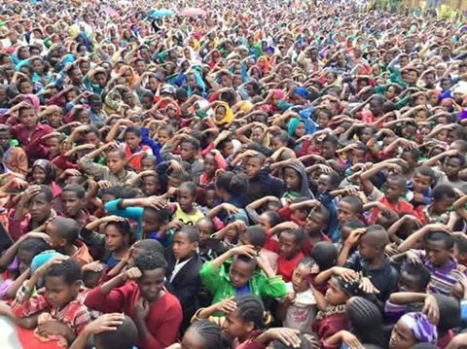

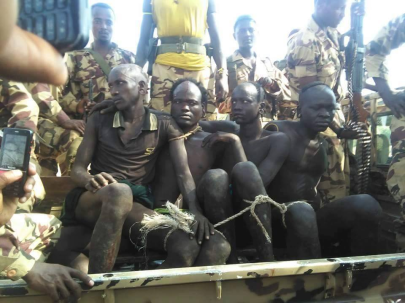

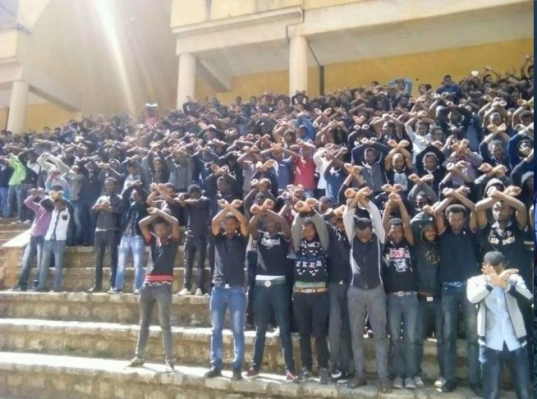


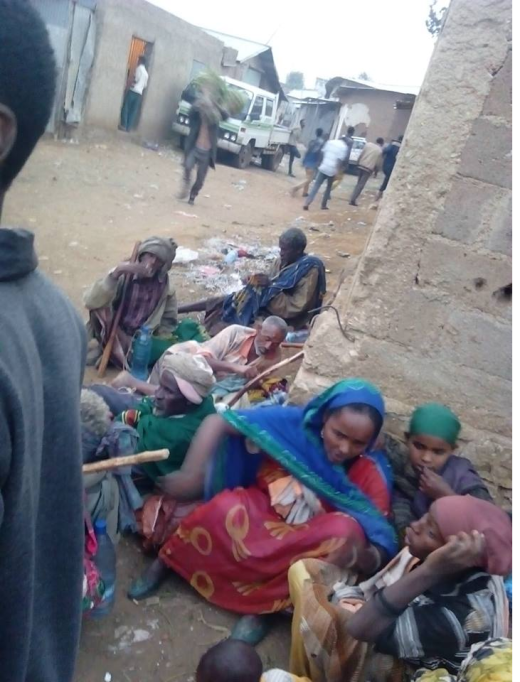


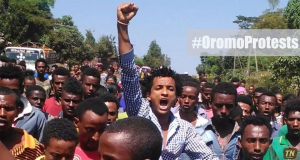
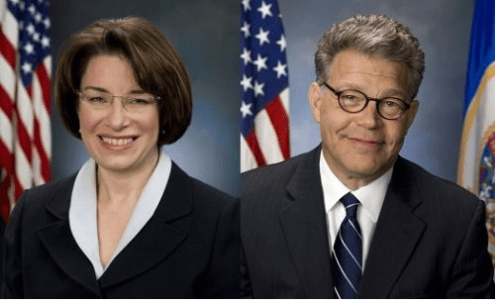

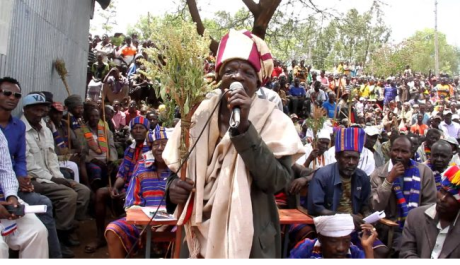

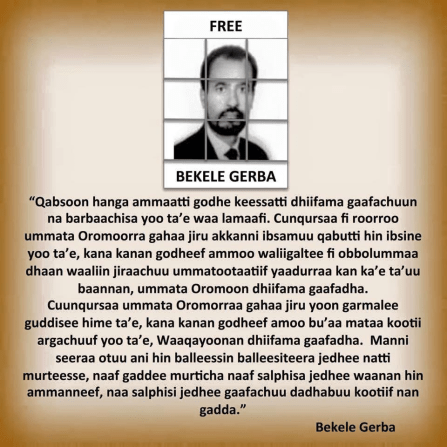

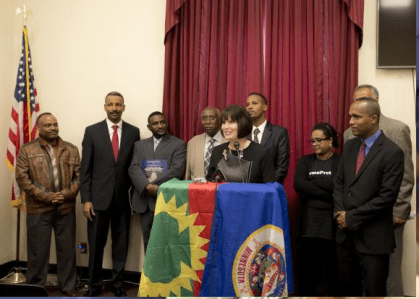
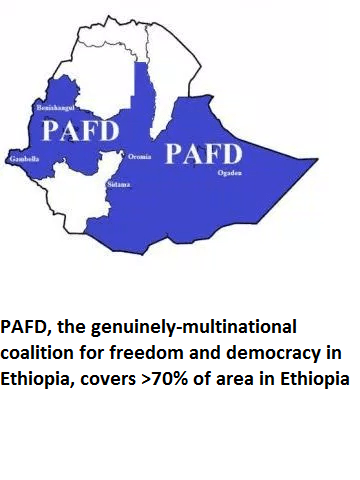

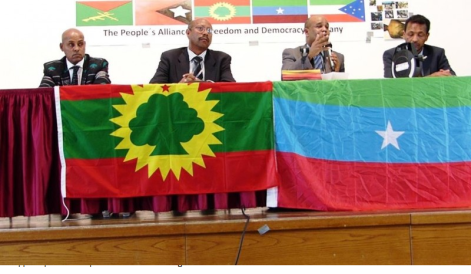
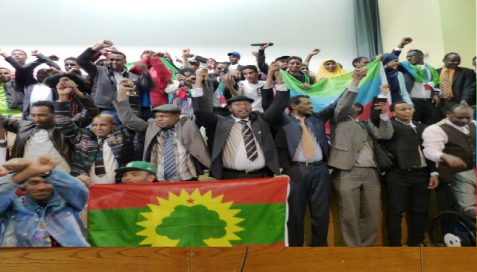

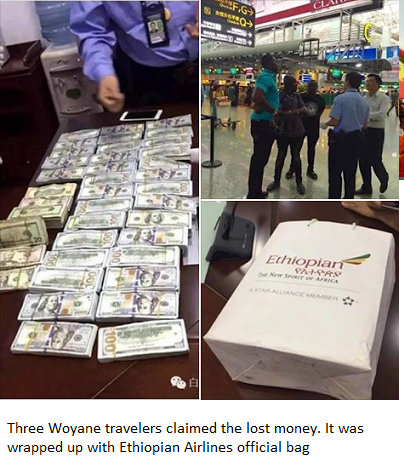

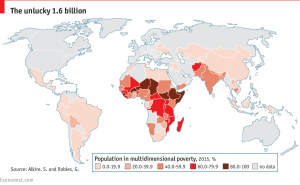
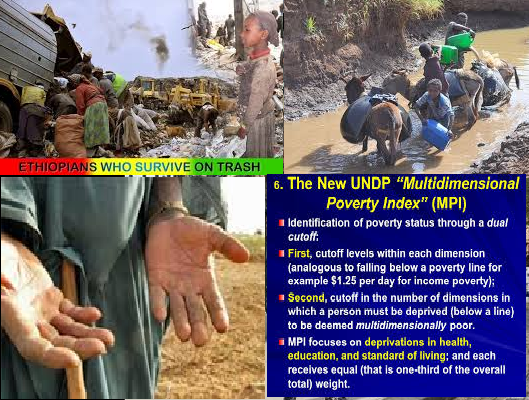

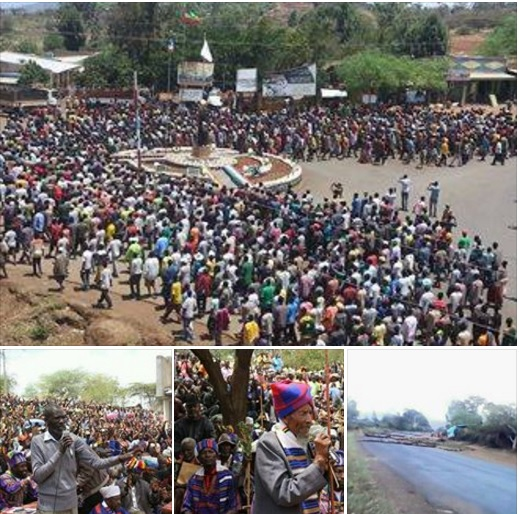
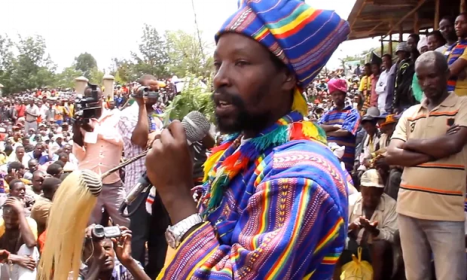
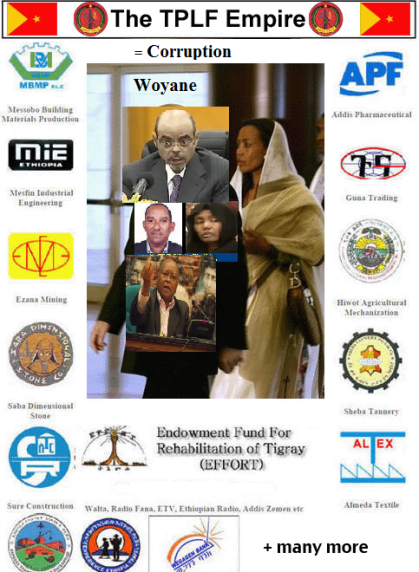

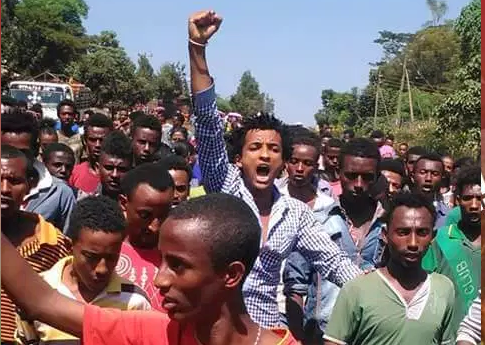
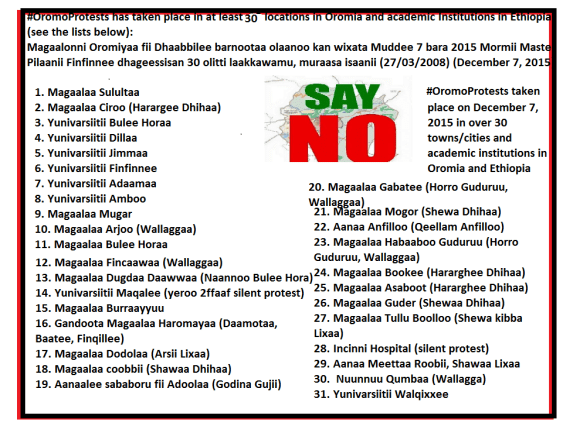


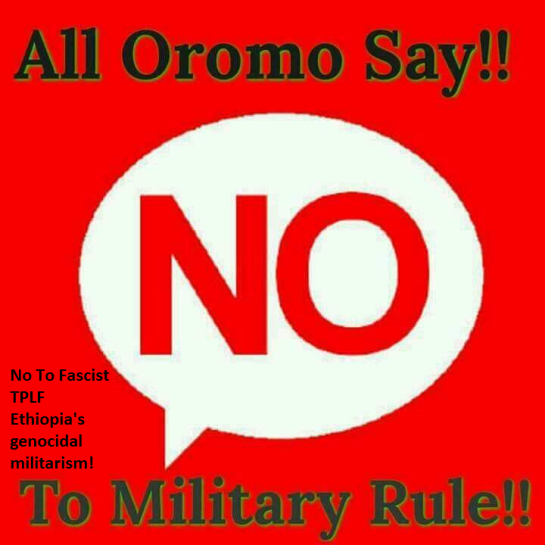
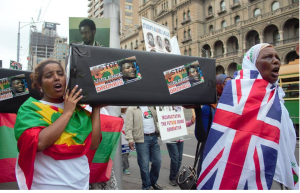


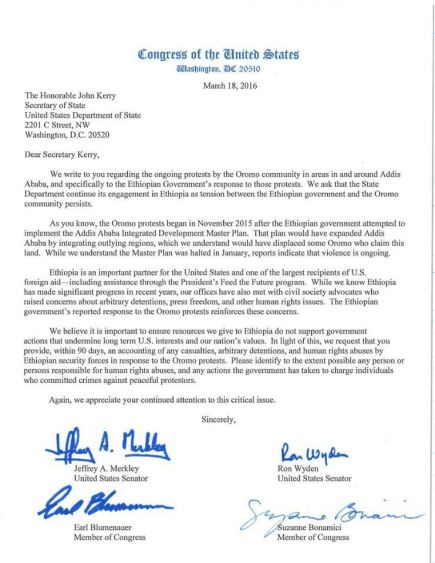
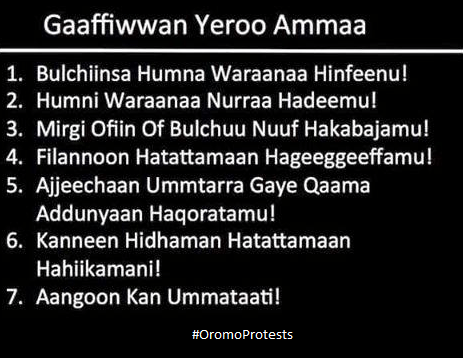
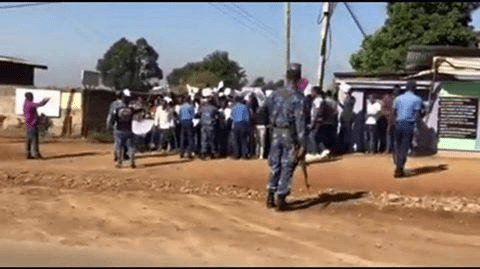
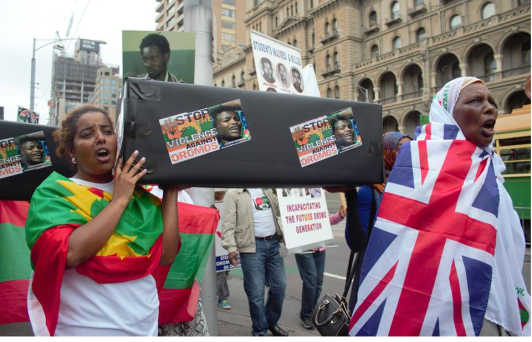
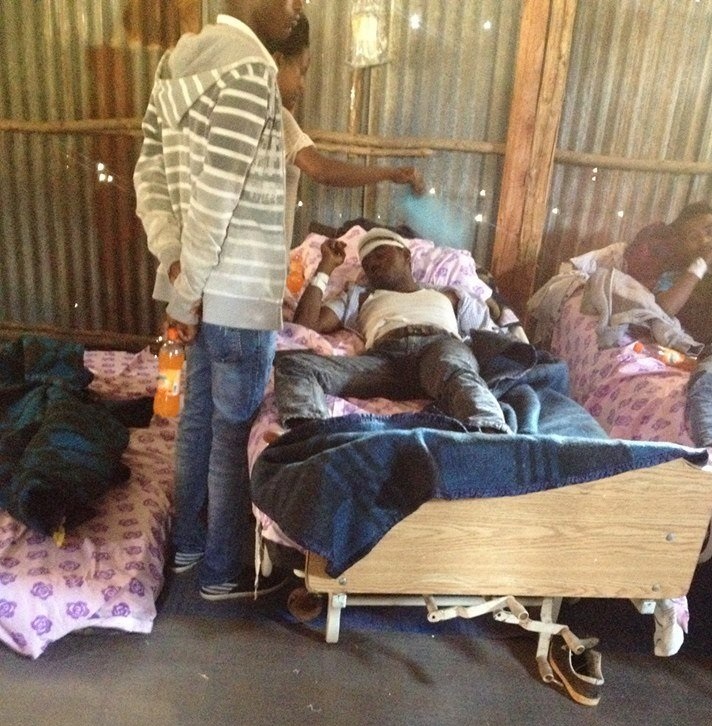

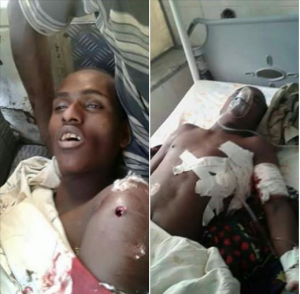
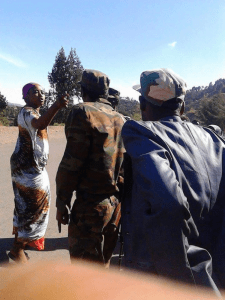


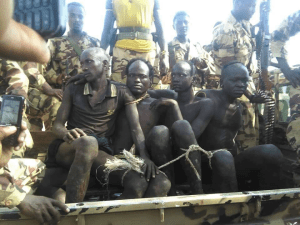

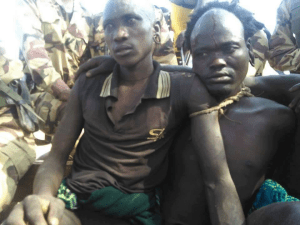
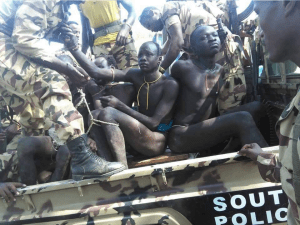

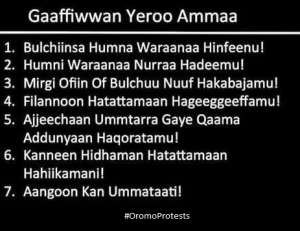
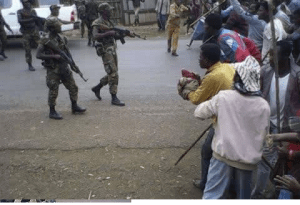
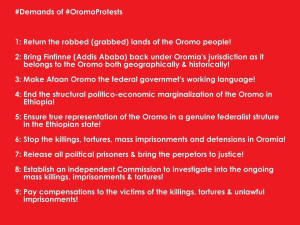
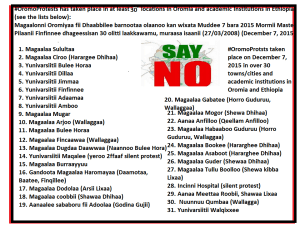
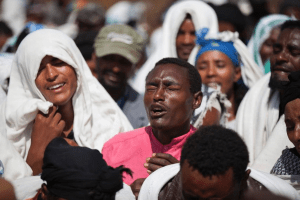
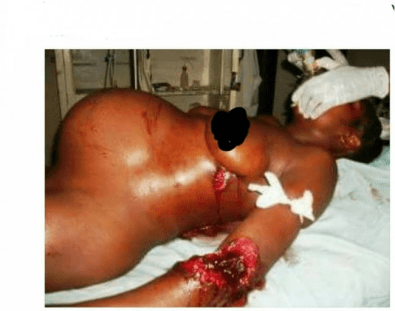
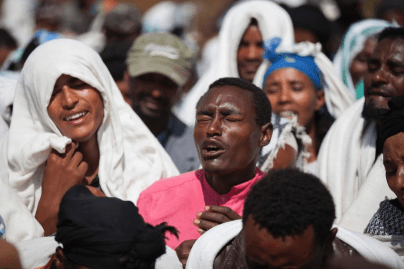

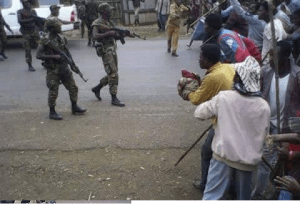
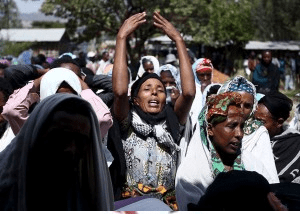

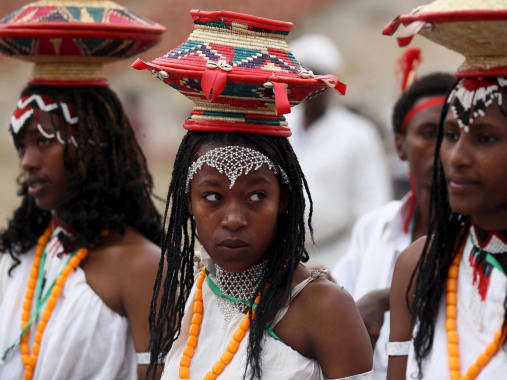
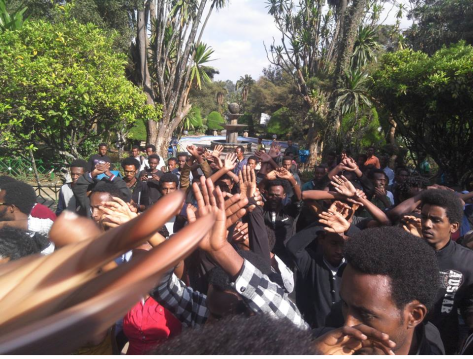


 Oromian Economist
You must be logged in to post a comment.