South Sudan: Unmasked Wounds December 30, 2013
Posted by OromianEconomist in Africa, Aid to Africa, Colonizing Structure, Corruption, Culture, Development, Dictatorship, Economics, Economics: Development Theory and Policy applications, Human Rights, Humanity and Social Civilization, Kemetic Ancient African Culture, Knowledge and the Colonizing Structure., Knowledge and the Colonizing Structure. Africa Heritage. The Genocide Against Oromo Nation, Land Grabs in Africa, Language and Development, Oromia, Oromiyaa, Oromo, Oromo Culture, Oromo Identity, Oromo the Largest Nation of Africa. Human Rights violations and Genocide against the Oromo people in Ethiopia, Oromummaa, Self determination, Sirna Gadaa, Slavery, The Colonizing Structure & The Development Problems of Oromia, Uncategorized.Tags: Africa, African Studies, Democratisation, Developing country, Development and Change, Economic and Social Freedom, Governance issues, Horn of Africa, Human rights, Oromia, Oromo, Oromo people, Oromummaa, South Sudan, State and Development, Sub-Saharan Africa, Sudan, Universal Declaration of Human Rights
add a comment

“The elites inherited vast natural wealth and boundless international good will following the historic referendum, but they squandered both. They lapsed into a culture of corruption, conspicuous personal consumption and tribalistic political machinations. They have not been serious about democratization, institution-building or even the most basic service delivery, which they have preferred to outsource to foreign relief agencies. African leaders — backed by the United States and United Nations — have taken key steps toward pressuring South Sudan’s leaders to stop the war. But the deeper responsibility for creating a South Sudanese nation at peace with itself lies with the country’s own leaders.” -Abdul Mohammed and Alex de Waal, WP Opinions.
There is an opportunity to halt South Sudan’s slide into war and state failure, but it must be seized within days or it will be lost. This requires the leaders of South Sudan to rise above narrow, tribalistic, zero-sum politics and develop a national program. President Salva Kiir and other members of the country’s political elite — in government and in opposition, inside South Sudan and in the diaspora — must respond to this challenge now or go down in history as having betrayed their people.
Nine years ago, on Jan. 9, 2005, the Sudanese government and the southern-based Sudan People’s Liberation Movement (SPLM) signed a historic peace accord that brought an end to more than 20 years of war between northern and southern Sudan. That agreement culminated in a referendum, held from Jan. 9 to Jan. 15, 2011, in which the southern Sudanese voted overwhelmingly for independence. Africa and the international community welcomed the new Republic of South Sudan, hopeful that it would put this history of strife and suffering behind it.
But the peace agreement and the show of unity around independence masked many unhealed wounds. During those long years of civil war, the South Sudanese weren’t united, and their divisions exploded into a bloody internecine conflict in 1991 after SPLM officers challenged the leadership of Col. John Garang . The strife became a tribal war, mainly between ethnic Dinka and ethnic Nuer , involving massacres of civilians on both sides and mass starvation. The atrocities left deep scars.
For the following decade, leaders of churches and civil society and friends from abroad, including U.S. representatives, undertook a painstaking effort at “people-to-people peace” among South Sudanese communities. This task was incomplete when the 2005 north-south peace agreement was signed. Amid the euphoria of that peace and the work of reconstructing a war-ravaged land, President Kiir, who took over after Garang died in a helicopter crash in July 2005 , neglected to continue the necessary work of reconciliation. Instead, the wait for independence and plentiful oil revenues maintained a semblance of unity.
It is those unhealed wounds that are tearing South Sudan apart today.
Two years after achieving independence, a political dispute between President Kiir and Vice President Riek Machar erupted into the open. Kiir dismissed Machar and most of his cabinet. Two weeks ago, this dispute suddenly mutated from a contest over votes in the ruling bodies of the SPLM into a terrifyingly violent tribal conflict. The speed and vigor of ethnic mobilization not only threatens a widening war but also jeopardizes the very viability of the South Sudanese state.
African and international mediators are in a race against time to stem this tide. Once the political dispute descends completely into a fight for communal survival, foreign leverage disappears. Ethiopia and Kenya, acting on behalf of African nations, took key steps at a summit in Nairobi Friday to try to stop further violence. They called for a cease-fire and for the rights of 11 high-level political leaders arrested by the government to be respected. (Two were released on Saturday.) They affirmed the core African principles: no unconstitutional change in government and South Sudan must build a viable state. President Kiir stays, but he must negotiate.
Stopping the shooting is the immediate priority. But the mediators should not be content with patching together a ruling coalition and returning to business as usual in advance of scheduled elections in 2015. A power-sharing formula could become just another division of the spoils, and elections could become another exercise in ethnic division.
For too long, South Sudan’s leaders evaded their responsibilities by blaming their woes on the war and oppressive policies of the government in Khartoum. Now, having joined the club of nations, they must play by its rules. The United States, having given South Sudan the benefit of many doubts, is threatening to withhold aid if power is seized or held by force. That is quite correct. Any political process must take into account South Sudan’s unique and painful history. The biggest task is an all-inclusive national discussion on what it means to be a nation. The political elites should listen to the wisdom of pastors and civil society leaders, who are insisting that the politicians return to the path of dialogue and healing. The road to a viable state lies in national reconciliation.
The elites inherited vast natural wealth and boundless international good will following the historic referendum, but they squandered both. They lapsed into a culture of corruption, conspicuous personal consumption and tribalistic political machinations. They have not been serious about democratization, institution-building or even the most basic service delivery, which they have preferred to outsource to foreign relief agencies. Read the details in the following site:
Two weeks ago fighting broke out in Juba, the capital of the east African country that won independence from Sudan hardly two years ago. The violence quickly spread across the country, leaving at least 1,000 people dead. More than 100,000 are reportedly displaced, many seeking refuge in UN camps.High winds could slow Toronto’s ice storm recoveryVideo: High winds could slow Toronto’s ice storm recovery Toronto doing its best to restore power: Rob FordVideo: Toronto doing its best to restore power: Rob Ford It has also raised fears of an all-out civil war between the main Dinka and Nuer ethnic groups. “Political issues and tribalism are being used to pit South Sudanese against each other as our leaders fight for power,” Jal says. “Our country’s leadership hangs in the balance and ordinary citizens are paying for it with their lives.” “This is how genocide begins,” he adds.
http://www.thestar.com/news/gta/2013/12/29/torontos_south_sudanese_community_urges_end_to_killing.html
South Sudan on the verge of civil war
- Most South Sudanese interviewed for this project assert that the most obvious impediment to national cohesion is exclusion from the national platform, especially exclusion along ethnic lines. Corruption, nepotism, and exclusion from access to government jobs were also raised as issues that the government will need to address directly for citizens to have pride in their nation.
- There is a widespread sense of worry about the viability of South Sudan as a nation due to insecurity, especially insecurity rooted in the current ethnic conflicts occurring in seven out of the ten states.
- Both political leaders and ordinary citizens recognize the importance of national unity and the equitable display and celebration of cultural diversity as a national asset; representation of all ethnic nationalities and creation of a broad-based government is central to South Sudan’s transition to nationhood. The immediate challenge involves creating programs that promote citizenship in the nation over ethnic citizenship. The opaque climate of the transitional constitutional review process has not earned the government much trust from all sectors of society, and this has made for a bad start toward national consensus.
- As a multiethnic society, South Sudan also is confronted with the question of a language policy. To speed up the process of nation building, the government will need to transform current discussions on language into practical decisions regarding the development of anational language. Identifying five national languages that represent the three greater regions of the country would be one way to approach it.
- Most South Sudanese interviewed for this project assert that the most obvious impediment to national cohesion is exclusion from the national platform, especially exclusion along ethnic lines. Corruption, nepotism, and exclusion from access to government jobs were also raised as issues that the government will need to address directly for citizens to have pride in their nation.
- There is a widespread sense of worry about the viability of South Sudan as a nation due to insecurity, especially insecurity rooted in the current ethnic conflicts occurring in seven out of the ten states.
- Both political leaders and ordinary citizens recognize the importance of national unity and the equitable display and celebration of cultural diversity as a national asset; representation of all ethnic nationalities and creation of a broad-based government is central to South Sudan’s transition to nationhood. The immediate challenge involves creating programs that promote citizenship in the nation over ethnic citizenship. The opaque climate of the transitional constitutional review process has not earned the government much trust from all sectors of society, and this has made for a bad start toward national consensus.
- As a multiethnic society, South Sudan also is confronted with the question of a language policy. To speed up the process of nation building, the government will need to transform current discussions on language into practical decisions regarding the development of anational language. Identifying five national languages that represent the three greater regions of the country would be one way to approach it. http://www.usip.org/publications/diversity-unity-and-nation-building-in-south-sudan
- Copyright © OromianEconomist 2013 & Oromia Quarterly 1997-2013, all rights are reserved. Disclaimer.
Related articles
- Hundreds of S.Sudanese flee to Sudan: UN source (modernghana.com)
- Uganda warns South Sudan rebel leader (news.yahoo.com)
- Inspiring Stories from South Sudan (aidleap.wordpress.com)
- Suspicion threatens IGAD’s role in South Sudan conflict (sudantribune.com)
- Battles rage in South Sudan as cease-fire hopes fade (dailystar.com
Freedom Is Sweet December 27, 2013
Posted by OromianEconomist in Culture, Human Rights, Humanity and Social Civilization, Kemetic Ancient African Culture, Knowledge and the Colonizing Structure. African Heritage. The Genocide Against Oromo Nation, Language and Development, Oromia, Oromiyaa, Oromo, Oromo Culture, Oromo Identity, Oromo Nation, Oromo Social System, Oromo the Largest Nation of Africa. Human Rights violations and Genocide against the Oromo people in Ethiopia, Oromummaa, Self determination, Sirna Gadaa, The Colonizing Structure & The Development Problems of Oromia, The Oromo Democratic system, The Oromo Governance System, The Oromo Library, Theory of Development, Uncategorized.Tags: Africa, African culture, African Studies, Australia, Federation Square, Horn of Africa, Human rights, Human Rights and Liberties, Human rights violations, National Self Determination, Oromia, Oromiyaa, Oromo, Oromo culture, Oromo people, Oromummaa, State and Development, Sub-Saharan Africa, Universal Declaration of Human Rights
add a comment
“Freedom is Sweet” is taken from the speech made by Inga Peulich MLC , Parliamentary Secretary for Education at Oromia @ Federation Square, Melbourne Australia on 22nd of December 2013. The festival aims to bring Oromo people together, irrespective of age, gender and belief, to help promote self-empowerment. It also seek to educate the public on the lifestyle, culture and ethics of members of the Australian Oromo community. Furthermore, it’s a time to celebrate and commemorate the beauty of Australian Oromo culture and to promote both multiculturalism and diversity across Australia.
The celebration of Oromia at Federation Square marks the beginning of yet another exciting year of events that aim to bring the case of the Oromo cause.
Related articles
- Oromo Displacement Past & Present (oromianeconomist.wordpress.com)
- 99% of the prisoners are OROMO political prisoners in Ethiopia!!!!! (danieltadesse.wordpress.com)
- Oromoia Students Movement and the Current Trends of Oromo Youths and Intellectuals (oromedia.net)
- Message from Dr. Ibrahim Amae Elemo on the #BoycottBedele Campaign (freedomfororomo.wordpress.com)
- Let no one Rob you of your Identity (dhaamsaogeetti13.wordpress.com)
The Scramble For Africa, Big Agriculture & The Industrial Farm Land: At What Cost? December 19, 2013
Posted by OromianEconomist in Africa, Colonizing Structure, Corruption, Dhaqaba Ebba, Dictatorship, Oromia, Oromiyaa, Oromo, Oromo Culture, Oromo Identity, Oromo Nation, Oromo the Largest Nation of Africa. Human Rights violations and Genocide against the Oromo people in Ethiopia, Self determination, The Colonizing Structure & The Development Problems of Oromia, Tyranny, Uncategorized.Tags: Africa, African Studies, Developing country, Development, Development and Change, Economic and Social Freedom, Genocide against the Oromo, Horn of Africa, Human rights, Human Rights and Liberties, Human rights violations, Land grabbing, Land grabs in Africa, National Self Determination, Oromia, Oromo, Oromo people, Sub-Saharan Africa, Tyranny, Universal Declaration of Human Rights
comments closed
‘


Picture source : Gadaa.com

Green Rush In Africa
Picture Source: FP

‘There is a gold rush happening in Ethiopia, but it’s not a hunt for the yellow metal. It’s a quest for the green gold of fertile farmland. A nation more associated with periodic famine and acute childhood malnutrition than with agricultural bounty is leasing millions of hectares -an area the size of Belgium – to foreign companies, who want to grow and export food to places like Saudi Arabia, China, India, and Europe. One-third of the fertile Gambella area in western Ethiopia, for example, is being leased for the next 50 years by the Bangalore-based food company Karuturi Global. Forests are being clear-cut, swamps drained, rivers diverted, and whole villages moved to make way for flower farms and palm-oil and rice plantations. “It is very good land. It is quite cheap…. We have no land like this in India,” effused Karuturi’s project manager Karmjeet Shekhon to the Guardian soon after the lease was settled in 2011. The government in Addis Ababa says it needs foreign companies like Karuturi Global to help create jobs, raise Ethiopia’s income from food exports, and develop the agricultural technology and infrastructure that can bring the impoverished country into the mainstream of the global market economy. It has enticed investors with tax breaks alongside rock-bottom lease rates (as little as $1 per hectare per year). But at what cost — to land rights, to human health, to the environment, to national stability?’
– See more at original source: http://www.foreignpolicy.com/articles/2013/12/17/green_rush_industrial_farmland_africa#sthash.lq1Wlefk.dpuf
Copyright © OromianEconomist 2013 & Oromia Quarterly 1997-2013, all rights are reserved. Disclaimer.
Global Poverty & Development Agendas: Dead Aid, Ethiopia & The West December 17, 2013
Posted by OromianEconomist in Africa, Aid to Africa, Colonizing Structure, Development, Economics: Development Theory and Policy applications, Knowledge and the Colonizing Structure. Africa Heritage. The Genocide Against Oromo Nation, Land Grabs in Africa, Oromia, Oromiyaa, Oromo, Oromo Culture, Oromo Identity, Oromo Nation, Oromo the Largest Nation of Africa. Human Rights violations and Genocide against the Oromo people in Ethiopia, Oromummaa, Self determination, The Colonizing Structure & The Development Problems of Oromia, Theory of Development, Uncategorized.Tags: Africa, African Studies, Dead Aid, Development and Change, Economic and Social Freedom, Genocide against the Oromo, Governance issues, Horn of Africa, Human rights, Human Rights and Liberties, Human rights violations, Land grabbing, National Self Determination, Oromia, Oromiyaa, Oromo, Oromo people, Oromummaa, State and Development, Sub-Saharan Africa, Tyranny, Universal Declaration of Human Rights
add a comment
In excess of 35 million Ethiopians still live in abject poverty subsisting on less that $2 a day while a tiny fraction of the country’s 85 million people has become excessively rich. As more and more ODA is pumped into the country Ethiopia’s HDI rank hasn’t improved (in fact it has gone from 169th in the world to 173rd in the last decade), journalists, academics and opposition figures are still jailed for speaking out against the regime, ethnic minorities such as the Oromo are discriminated against and forced off their lands, corruption and human rights abuses are still rife. Less people may be dying but are ordinary peoples’ lives improving at a rate that warrants the West to turn a blind eye to the crimes of those in power? It may suit certain agendas to do so but it does a massive disservice to ordinary Ethiopians. Read the full text at: http://www.transcend.org/tms/2013/12/global-poverty-and-post-colonial-development-agendas-ethiopia-and-the-west/


http://en.wikipedia.org/wiki/List_of_countries_by_percentage_of_population_living_in_poverty
Related articles
Oromo Displacement Past & Present December 12, 2013
Posted by OromianEconomist in Africa, Colonizing Structure, Dictatorship, Domestic Workers, Human Rights, Human Traffickings, Knowledge and the Colonizing Structure., Knowledge and the Colonizing Structure. African Heritage. The Genocide Against Oromo Nation, Oromia, Oromiyaa, Oromo, Oromo Culture, Oromo Identity, Oromo the Largest Nation of Africa. Human Rights violations and Genocide against the Oromo people in Ethiopia, Oromummaa, Qubee Afaan Oromo, The Colonizing Structure & The Development Problems of Oromia, Tyranny, Uncategorized.Tags: Africa, African Studies, Economic and Social Freedom, Horn of Africa, Human rights violations, Oromia, Oromo, Sub-Saharan Africa, Tyranny, Universal Declaration of Human Rights
comments closed

From slavery to freedom:the Oromo slave children of Lovedale, prosopography and profiles
Sandra Carolyn Teresa Rowoldt Shell
Student number: RWLSAN002
A dissertation submitted in fulfilment of the requirements for the award of the degree of Doctor of Philosophy in Historical Studies
Faculty of the Humanities
University of Cape Town
2013
https://www.academia.edu/3760219/From_slavery_to_freedom_the_Oromo_slave_children_of_Lovedale_prosopography_and_profiles
http://www.bbc.co.uk/news/world-africa-14357121?SThisFB

http://oromocommentary.files.wordpress.com/2010/07/machbuba-an-oromo-slave-girl-who-won-the-heart-of-a-german-prince.pdf
Related Articles:
During Ethiopian colonial expansion, Oromia, “the charming Oromo land, [would] be ploughed by the iron and the fire; flooded with blood and the orgy of pillage” (de Salviac, 2005 [1901]: 349). Calling this event as “the theatre of a great massacre,” Martial De Salviac (2005 [1901]: 349) states, “The conduct of Abyssinian armies invading a land is simply barbaric. They contrive a sudden irruption, more often at night. At daybreak, the fire begins; surprised men in the huts or in the fields are three quarter massacred and horribly mutilated; the women and the children and many men are reduced to captivity; the soldiers lead the frightened herds toward the camp, take away the grain and the flour which they load on the shoulders of their prisoners spurred on by blows of the whip, destroy the harvest, then, glutted with booty and intoxicated with blood, go to walk a bit further from the devastation. That is what they call ‘civilizing a land.'” The Oromo oral history also testifies that Ethiopians/Abyssinians destroyed and looted the resources of Oromia, and committed genocide on the Oromo people through massacre, slavery, depopulation, cutting hands, famine, and diseases during and after the colonization of Oromia.
According to Martial de Salviac (2005 [1901]: 350), “With equal arms, the Abyssinia [would] never [conquer] an inch of land. With the power of firearms imported from Europe, Menelik [Abyssinian warlord] began a murderous revenge.” The colonization of Oromia involved human tragedy and destruction: “The Abyssinian, in bloody raids, operated by surprise, mowed down without pity, in the country of the Oromo population, a mournful harvest of slaves for which the Muslims were thirsty and whom they bought at very high price. An Oromo child [boy] would cost up to 800 francs in Cairo; an Oromo girl would well be worth two thousand francs in Constantinople” (de Salviac, 2005 [1901]: 28). The Ethiopian/Abyssinian government massacred half of the Oromo population (five million out of ten million) and their leadership during its colonial expansion (de Salviac, 2005 [1901]: 608, 278; Bulatovich, 2000: 66-68). According to Alexander Bulatovich (2000: 68-69), “The dreadful annihilation of more than half of the population during the conquest took away from the [Oromo] all possibilities of thinking about any sort of uprising . . . Without a doubt, the [Oromo], with their least five million population, occupying the best land, all speaking one language, could represent a tremendous force if united.” The destruction of Oromo lives and institutions…
See the full content of this document
http://law-journals-books.vlex.com/vid/oromo-democracy-classical-civilization-411848362
‘The study confirms that there is clear nexus between authoritarian rule,
man-made famines, and genocide in Ethiopia.’
http://www.codesria.org/IMG/pdf/Mekuria_Bulcha.pdf
Copyright © OromianEconomist 2013 & Oromia Quarterly 1997-2013, all rights are reserved. Disclaimer.
Africa: The Time is not for Currency Unions December 9, 2013
Posted by OromianEconomist in Africa, Aid to Africa, Corruption, Development, Economics, Economics: Development Theory and Policy applications, Knowledge and the Colonizing Structure., Oromia, Oromo the Largest Nation of Africa. Human Rights violations and Genocide against the Oromo people in Ethiopia, Self determination, Uncategorized.Tags: Africa, African Studies, Currency Unions, Developing country, Development, Development and Change, Economic and Social Freedom, Governance issues, National Self Determination, Oromia, Oromo, Social Sciences, Sub-Saharan Africa
comments closed
“If a region as rich as the euro zone has struggled to cope with such pressures, the likelihood that the poorer and less well-governed places hoping to adopt the eco could is tiny.”
‘Under the proposal an initial group of six countries will adopt the eco by 2015 (see map). Five years later the members of the West African Economic and Monetary Union (known as UEMOA, its French acronym), which currently share a currency called the West African CFA franc, are to adopt the eco too, creating a currency union of over 300m people. West African politicians are pushing for further integration because they, like most economists, argue that the single currency for UEMOA has been a qualified success. UEMOA member states are more fiscally disciplined than their neighbours outside the currency zone, says Cécile Couharde of the University of Paris Ouest Nanterre La Défense. The French government currently underwrites the West African CFA franc by guaranteeing to convert it to euros at a ratio of one to 0.0015. That has provided a stability rare in African currencies. Monetary unions also simplify trade: UEMOA has more intraregional trade than any other region in Africa, according to an IMF paper. But the currency union has downsides. UEMOA economies move at different speeds. According to research by Romain Houssa, at the Catholic University of Leuven in Belgium, economic changes are poorly correlated between member states. From 2007 to 2012, the IMF found, the correlation between the business cycle of Senegal, a country with strong trade links outside the zone, and the other countries in UEMOA was almost zero. Consequently, a UEMOA-wide interest rate is not ideal: as in the euro zone, some countries end up with the wrong rate. And an inflexible exchange rate makes economic adjustment difficult. From 2000 to 2012 average annual growth in output in UEMOA countries was about half that of comparable sub-Saharan economies, according to Gianluigi Giorgioni of Liverpool University. Whereas UEMOA’s currency union has drawbacks, the proposed eco zone may have fatal flaws. It would encompass even more economic diversity. Nigeria in particular stands out. Its economy is huge by its neighbours’ standards. UEMOA’s GDP is about $75 billion; Nigeria’s is about $260 billion. The GDP of the next-biggest economy in the region, Ghana, is about $40 billion. And the Nigerian economy is unusual. Unlike most other West African countries it is heavily dependent on oil, which accounts for over a third of output, according to data from the OECD, a club of mostly rich countries. IMF research shows that Nigeria’s balance of trade tends to move in the opposite direction to its neighbours’—they are largely importers of oil. During periods of high oil prices Nigeria may push for interest-rate rises. That would be disastrous for other eco-zone economies, which are likely to be gasping for lower rates. To make matters worse the eco might be vulnerable to speculative attack. France would be unlikely to guarantee it, reckons Mr Giorgioni, as the liabilities would be large and the countries involved are not former French colonies. Without such support, investors would be nervous. Any fiscal laxity would be punished. If a region as rich as the euro zone has struggled to cope with such pressures, the likelihood that the poorer and less well-governed places hoping to adopt the eco could is tiny.’
“In the run-up to achieving a common currency, the East African Community (EAC) nations aim to harmonise monetary and fiscal policies and establish a common central bank. Kenya, Uganda, Tanzania and Rwanda already present their budgets simultaneously every June. The plan by the region of about 135 million people, a new frontier for oil and gas exploration, is also meant to draw foreign investment and wean EAC countries off external aid. “The promise of economic development and prosperity hinges on our integration,” said Kenya’s President Uhuru Kenyatta. “Businesses will find more freedom to trade and invest more widely, and foreign investors will find additional, irresistible reasons to pitch tent in our region,” said Kenyatta, leader of the biggest economy in east Africa.Kenyatta, who is due to face trial at the International Criminal Court on crimes against humanity charges in February, took over the chairmanship of the bloc from Ugandan President Yoweri Museveni, hosting the summit.Kenya has launched a $13.8 billion Chinese-built railway that aims to cut transport costs, part of regional plans that also include building new ports and railways. Landlocked Uganda and Kenya have discovered oil, while Tanzania has vast natural gas reserves, which require improved infrastructure and foreign investment so they can be exploited. Tanzania, where the bloc’s secretariat is based, has complained that it has been sidelined in discussions to plan these projects, but Kenyatta said the EAC was still united. Kenneth Kitariko, chief executive officer at African Alliance Uganda, an investment advisory firm, said the monetary union would boost efficiency in the region’s economy estimated at about $85 billion in combined gross domestic product.”In a monetary union, the absence of currency risk provides a greater incentive to trade,” he said.Kitariko said, however, that achieving a successful monetary union would require convergence of the union’s economies, hinting that some challenges lay ahead.”Adjusting to a single monetary and exchange rate policy is an inescapable feature of monetary union … but this will take time and may be painful for some,” he said, referring to the fact that some countries may struggle to meet agreed benchmarks.” http://www.aljazeera.com/news/africa/2013/11/east-african-nations-agree-monetary-union-20131130175336476127.html
Copyright © OromianEconomist 2013 & Oromia Quarterly 1997-2013, all rights are reserved. Disclaimer.
The Oromo, Gadaa/Siqqee Democracy and The Liberation Of Ethiopia Colonial Subjects December 5, 2013
Posted by OromianEconomist in Africa, Development, Gadaa System, Human Rights, Humanity and Social Civilization, Knowledge and the Colonizing Structure. African Heritage. The Genocide Against Oromo Nation, Oromia, Oromiyaa, Oromo, Oromo Culture, Oromo Identity, Oromo Nation, Oromo Social System, Oromummaa, Self determination, Sirna Gadaa, The Oromo Governance System, Theory of Development, Uncategorized.Tags: Africa, African culture, African Studies, Economic and Social Freedom, Gadaa System, Governance issues, Human Rights and Liberties, Human rights violations, National Self Determination, Oromia, Oromo, Oromo people, Siqqee, Sub-Saharan Africa, Universal Declaration of Human Rights
comments closed

This paper explores the potential role of the Gadaa/Siqqee system of Oromo democracy in the development of a democratic multinational liberation movement of the colonized nations within the Ethiopian Empire in order to dismantle the Tigrayan- led Ethiopian terrorist government and replace it with a sovereign multinational democratic state in the Horn of Africa based on the principles of indigenous democracy. After a brief introduction, this study describes the presence of a democratic, Siqqee/Gadaa administration among the Oromo in the Horn of Africa in the
16th and 17th centuries and the subsequent changes that made them vulnerable to colonization. It further examines the essence and main characteristics of Gadaa/Siqqee, showing that it provides a contrasting political philosophy to the authoritarian rule of the Ethiopian Empire. The study shows that in the face of oppression and exploitation the Oromo people have struggled to preserve and redevelop their indigenous democracy, written records of which go back to the 16th century, long before European nations embraced the principles of democratic governance. It also explains how it can be adapted to the current condition of the colonized nations within the Ethiopian Empire in order to revitalize the quest for national self- determination and democracy and to build a sovereign democratic state in a multinational context. Furthermore, the piece asserts that this struggle is truly a diffi cult one in the 21st century as the process of globalization is intensifi ed and regional and local cultures are being suppressed under the pressure of dominating cultures.
Asafa Jalata, Professor, Department of Sociology, The University of Tennessee, Knoxville, Tennessee
Harwood Schaffer, Research Assistant Professor, Agricultural Policy Analysis Centre, The University of Tennessee
Read the full article from the following:
http://works.bepress.com/cgi/viewcontent.cgi?article=1104&context=asafa_jalata
http://works.bepress.com/asafa_jalata/63/
Copyright © 2013 & Oromia Quarterly 1997-2013, all rights are reserved. Disclaimer.
WHy The Aid To Africa Has Failed? December 1, 2013
Posted by OromianEconomist in Africa, Aid to Africa, Corruption, Development, Dictatorship, Economics, Economics: Development Theory and Policy applications, Oromia, Oromiyaa, Oromo, Oromo Culture, Oromo Identity, The Colonizing Structure & The Development Problems of Oromia, Uncategorized.Tags: Africa, African Studies, Aid to Africa, Developing country, Development, Development and Change, Economic, Economic growth, Horn of Africa, Human rights, Oromia, Oromo, Oromo people, Sub-Saharan Africa
add a comment
“Never mind that Africa receives roughly $50 billion in aid annually from foreign governments, and perhaps $13 billion more from private philanthropic institutions, according to Penta’s estimate. Never mind that Angola’s oil revenues are around $72 billion, and Nigeria’s $95 billion; that Africa boasts at least 55 verified and somewhat detached billionaires. I can testify that Africa is much worse off than when I first went there 50 years ago to teach English: poorer, sicker, less educated, and more badly governed. It seems that much of the aid has made things worse.”
Here is in the following the renowned author Paul Theroux discusses why Africa’s aid industry is in a mess. For the details and original source please refer to:
‘In its naked reality, Africa, the greenest continent, is still the most beautiful, the least developed, the wildest on earth. Vast plains, big animals, hospitable people, who have been enslaved, sidelined, colonized, and converted willy-nilly either to Christianity or Islam. This receptive amphitheater of goodwill and big game, inspires megalomania among its foreign visitors who strut upon it — it has always done so, for those who seek the singularity of a little excitement and glory. I sometimes think that if the poorer counties of America’s Deep South had rhinos and elephants, instead of raccoons and possums, the philanthropists might direct their attentions to those parts, too.A rich white donor in black Africa is a study in high contrast that puts one in mind of the gallery of role models: Tarzan, Mr. Kurtz, King Leopold, Cecil Rhodes, Livingstone, Mrs. Jellyby, Albert Schweitzer, Hemingway, Henderson the Rain King: the overlords, the opportunists, the exploiters, the visionaries, the hunters, the care-givers, the baptizers, the saviors, all of them preaching the gospel of reform and seeking a kingdom of their own, if not an empire.Henry David Thoreau, the 19th-century American author, believed that all such outgoing people had something discreditable in their past that through giving they aimed to expiate. And all are characterized by the rather touching innocence of a billionaire faced with the brutal truth that the relative simplicity of acquiring wealth is nothing compared to the extreme difficulty of giving money away, for the common good.’
‘The real helpers are not the schemers and grandstanders of the eponymous family foundations or charities; they are nameless ill-paid volunteers who spend years in the bush, learning the language and helping in small-scale manageable projects, digging wells, training mid-wives, teaching villagers that unprotected sex spreads HIV; and among these stalwarts are the long-serving teachers who have liberated Africans by simply teaching them English, and are still doing so, even as they make the local governments lazier. The so-called White Fathers (the Society of Missionaries of Africa) I met in Malawi who ran upcountry clinics used to say, “I guess I’ll be buried here.” No one ever says that now, and significantly none of the people I spoke with for this piece ever expressed a wish to spend any serious length of time in Africa. None speaks an African language. To the detriment of their aims, they are on better terms with the African politicians than the common ruck of African people. Years living simply on the ground in Africa convinced me that there was more for me to learn from Africans than to teach. I saw there were many satisfactions in the lives of people who were apparently poor; many deficits in the lives of the very wealthy. I saw that African families were large and complex and interdependent; that old age was revered, that Africa’s link to the distant past — to the dawn of the world — was something marvelous and still intact in many places. Most of all, I was impressed by the self-sufficiency of ordinary people. Without much in the way of outside help, the people in the countries I knew managed to endure, usually through the simplest traditional means, and finally to prevail. Africa has the schools, the money and the resources to fix its own problems; it’s appalling to think of donors telling them otherwise, of the whole continent terminally indebted and living on handouts.’
‘Never mind that Africa receives roughly $50 billion in aid annually from foreign governments, and perhaps $13 billion more from private philanthropic institutions, according to Penta’s estimate. Never mind that Angola’s oil revenues are around $72 billion, and Nigeria’s $95 billion; that Africa boasts at least 55 verified and somewhat detached billionaires. I can testify that Africa is much worse off than when I first went there 50 years ago to teach English: poorer, sicker, less educated, and more badly governed. It seems that much of the aid has made things worse. I am not alone observing this fact. In his new book, The Great Escape: Health, Wealth, and the Origins of Inequality, economist Angus Deaton questions the usefulness of all aid, and describes how the greater proportion of the world’s poor are found not in Africa but in the booming, yet radically unequal, economies of China and India. Zambian-born economist Dambisa Moyo calls aid a “debilitating drug,” arguing that “real per-capita income [in Africa] today is lower than it was in the 1970s, and more than 50% of the population — over 350 million people — live on less than a dollar a day, a figure that has nearly doubled in two decades.” The Kenyan economist James Shikwati takes this same line on aid, famously telling the German magazine Der Spiegel, “For God’s sake, please stop.” There have, of course, been a few successes. For all his faults, Bill Clinton’s strong-arming of pharmaceutical companies to lower the price of one-a-day AIDS medications, to less than a dollar per pill, has delivered real relief to Africa’s most vulnerable. But we also need to be honest about such grandiose ambitions: Most fail. (For lessons on what to avoid and what to do in order to execute effective philanthropy in Africa, see the box at end of story.) The most recent example of a Westerner running amok in Africa appears to be the celebrity-economist Jeffrey Sachs and his $120 million effort to end extreme poverty there. Nina Munk documents in her book The Idealist (see Penta Sept. 12) how, among other things, Sachs’ Millennium Villages Project poured $2.5 million over three years into a sparsely populated community of nomadic camel herders in Dertu, Kenya, and trumpeted its success. In actual fact, the charity’s paid-for latrines became clogged and overflowing, the dormitories it erected quickly fell into disrepair, and the livestock market it built ignored local nomadic customs and was closed within a few months. An incensed Dertu citizen filed a 15-point written complaint against Sachs’s operation, claiming it “created dependence” and that “the project is supposed to be bottom top approached but it is visa [sic] versa.” ‘
African Philanthropy Done Right
Foundation Source is the philanthropic advisor and partner to over 1,100 family foundations. Penta asked the organization’s chief philanthropic officer, Page Snow, to provide some basic guidelines on how to successfully execute philanthropic projects in Africa. Her advice:
“Beware the panacea. Millions of dollars are wasted on overly ambitious projects claiming to be a ‘killer app.” Projects that employ tried-and-true interventions, narrower in scope, usually have far greater impact. Demand responsible management. Ask tough questions if money is flowing into a charity, but isn’t flowing out to charitable causes. Avoid duplication. Be aware of other efforts already on the ground and make sure that your program isn’t a wasteful repeat but, preferably, leverages off what’s there. Support local, sustainable solutions. Avoid short term fixes by always seeking input from locals; plan for them to run the project on their own in the long-run. Beware of poor infrastructure projects. Make sure wells are dug where they’re actually needed, that the bridges and roads are integrated into existing plans by government or other NGOs.Use technology intelligently. Over 90% of households across sub-Saharan Africa don’t have access to electricity for their everyday needs, let alone power for laptops. Make sure locals have the skills, resources, and necessary tools to keep tech-dependent elements of your philanthropic project running. Be prepared to face corruption. Even when a project has been granted governmental approvals, there’s no guarantee of official cooperation; corruption and regional conflicts pose considerable challenges. Be culturally appropriate. Put on your anthropologist’s hat. Africans have their own process for dealing with grief and loss; Western-style grief counselors following a natural disaster or war aren’t appropriate.”
Copyright © Oromianeconomist 2013 and Oromia Quarterly 1997-2013. All rights reserved . Disclaimer.
The Precarious Balance of Economic productutivity and Corrupt Governance: Ethiopia Is Amongst World’s Least Competitive Countries October 29, 2013
Posted by OromianEconomist in Colonizing Structure, Corruption, Development, Dictatorship, Economics, Economics: Development Theory and Policy applications.Tags: Africa, Corruption, Ethiopia, GCI, Global Competitiveness Report, Gross domestic product, Nigeria, Oromia, Oromo, Sub-Saharan Africa, World Economic Forum
3 comments

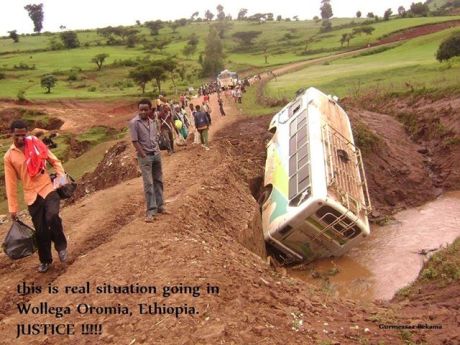
The Corrupt Empire is uncompetitive: Ethiopia Is Amongst World’s Least Competitive Countries
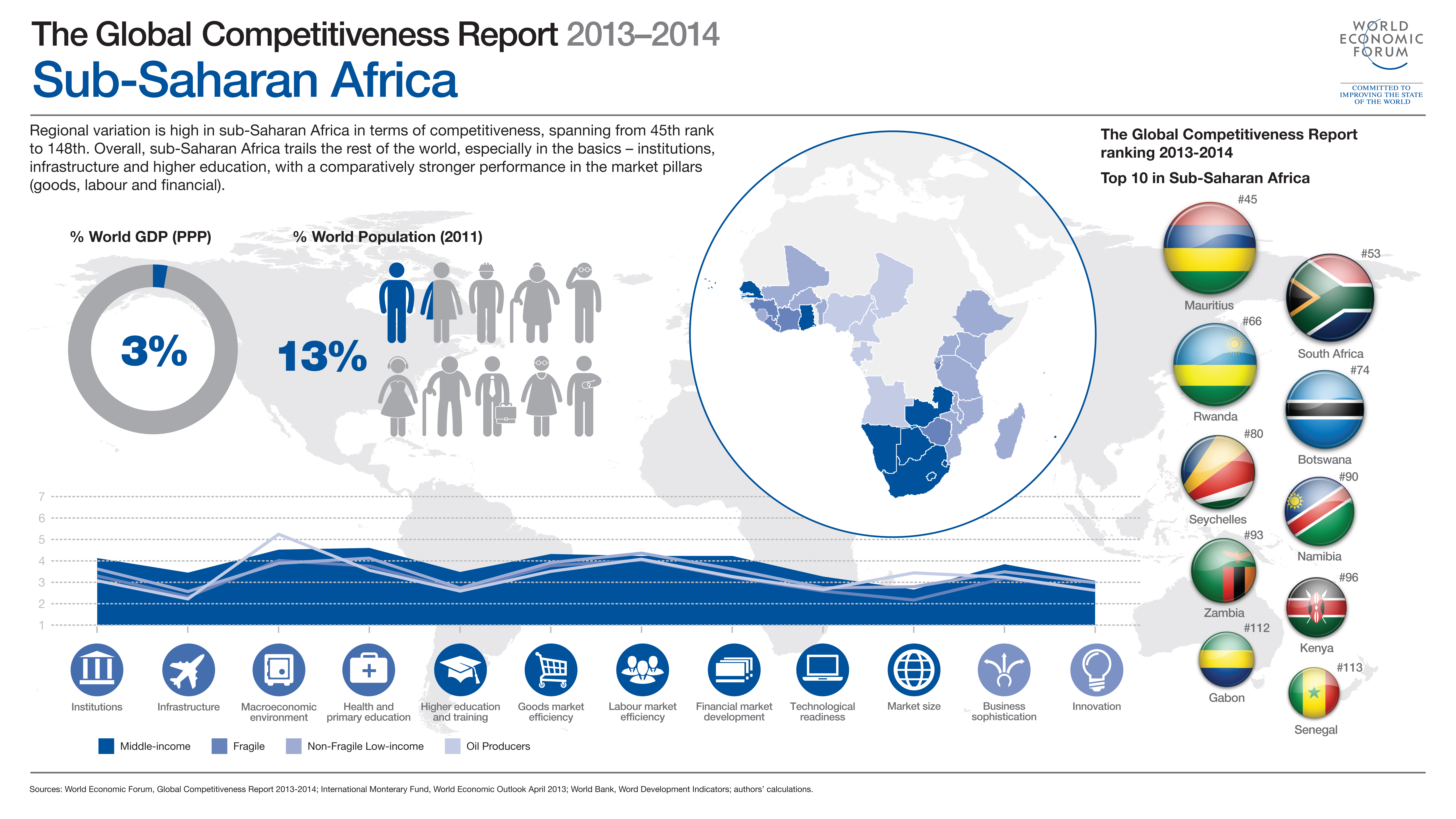
Despite its damn statistics of massive long term paper growth of TPLF Ethiopia’s economy, the country is still ranked among the worst performing in the Global Competitive Index (GCI) 2013 -2014, recently released by the World Economic Forum. (see page 163 for the detail summary of the report). According to the report, Ethiopia dropped 15 places from last year’s 106th position to 121st among the 144 countries profiled.
The Global Competitive Index , which was introduced in 2004, measures how the combinations of institutions, policies, and other factors determine the level of productivity of a country. The GCI scores is calculated by putting together the 12 pillars of competitiveness, such as: institutions, infrastructure, macroeconomic environment, health and primary education, higher education and training, goods market efficiency, labour market efficiency, financial market development, technological readiness, market size, business sophistication and innovation.
According to the ranking, Ethiopia is placed in the poorest pool of economic development possible (see, the following graphics). Ethiopia ranked as a “factor driven” economy which includes Nigeria, Liberia, Lao, Mali and Yemen.There are four stages of development with innovation-driven economies being the best pool of economies.

Ethiopian economic productivity is one of the poorest despite clear advantages of its internal market and economies of scale with population over 85 million compared to other African countries. Due to its population, it has a large internal market size (66 position), only next to Nigeria (the largest internal market size in Africa, also performing poor).
GCI has identified weak basic institutional requirements (118) of Ethiopia that account 60% of the index ranking: corruption, poor infrastructure, poor primary education, poor macroeconomic environment, efficiency enhancers and technological readiness.
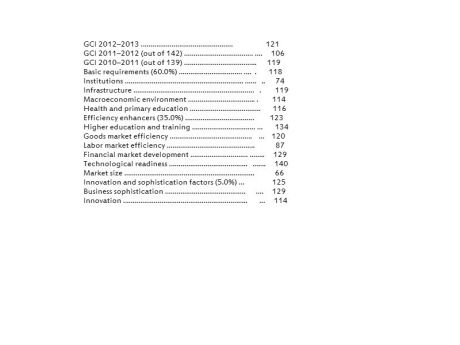
The GCI has noticed with Ethiopia’s economy the following among the most problematic factors for doing business:
Access to finance, corruption, inefficient government bureaucracy, inflation, policy instability, tax regulations and inadequate supply of infrastructure.
Technological readiness is also the worst performance:
Availability of latest technologies (132)
Firm-level technology absorption (139)
FDI and technology transfer (128)
Individuals using Internet, % (142)
Broadband Internet subscriptions/100 pop (131)
Mobile broadband subscriptions/100 pop (120)
Ethiopia with a population of over 85 million only produces $31.7 billion GDP with per capita income of $1 per day.
Key indicators, 2011
Population (millions) ……………………………………….85.1
GDP (US$ billions)* ……………………………….. ………31.7
GDP per capita (US$) ……………………………….. …365.2
GDP (PPP) as share (%) of world total …………..0.12
Sectoral value-added (% GDP), 2011
Agriculture …………………………………………………. ..41.9
Industry ……………………………………………………… .12.6
Services ……………………………………………………. ..45.5
Human Development Index, 2011
Score, (0–1) best ………………………………………. ….0.36
Rank (out of 187 economies) ……………………………174
Sources: IMF; UNFPA; UNDP; World Bank and GCI
The report noted that Mauritius has replaced South Africa (53rd) as the most competitive country in Sub-Saharan Africa. Ranked 45th position the country moved up nine places this year.The country’s best performance has supported by “transparent public institutions (ranked at 39th) with clear property rights and strong judicial independence and an efficient government (29th).”
Switzerland, ranked at number one is the most competitive country in the world. For top ten Sab Saharan African countries See:
http://www3.weforum.org/docs/GCR2013-14/GCR_Infographic_SubSaharanAfrica_2013-2014.jpg
Click to access WEF_Africa_Competitiveness_Report_2013.pdf
Click to access WEF_Africa_Competitiveness_Report_2013.pdf
www3.weforum.org
Prosperity Index 2013
Ethiopian: 126/142.
75.6% say gov’t is corrupt.
Satisfaction with gov’t efforts to address poverty: 21.2%.
The Governance sub-index dropped two places, to 118th, because of decreases in political rights, political constraints, the rule of law, and regulatory quality.
http://www.prosperity.com/#!/country/ETH
Copyright © Oromianeconomist 2013 and Oromia Quarterly 1997-2013. All rights reserved. Disclaimer.
Related articles
- Global Competitiveness Report 2013-2014 (pacific.scoop.co.nz)
- A prisoner of conscience’s call for sanctions against Ethiopia | Eskinder Nega (theguardian.com)
- Tyrannic Ethiopia bans access to student’s critical article (oromianeconomist.wordpress.com)
The New Scramble for Africa: Poverty, Guns And The Weapons Market September 15, 2013
Posted by OromianEconomist in Africa, Colonizing Structure, Corruption, Development, Dictatorship, Economics, Knowledge and the Colonizing Structure., Uncategorized.Tags: Africa, Genocide, Gross domestic product, Human development Index, Human rights violations, Oromia, Oromo, Sub-Saharan Africa, Weapon
1 comment so far

The world OutLine states Africa is going to spend over $20bn on defence projects over the coming decade. ‘As the European defence market becomes ever more bereft of big spenders and Asian markets face strong competition from China, Africa’s 54 states will make the last major geopolitical frontier for defence companies.’ It has been reported that whilst for various reasons there is undoubtedly significant demand for the latest weaponry in the region, large-scale arms contracts do raise questions over the future of a continent already stricken with poverty and permanent violence. It is well known Africa is run by dictators and human rights abusers. Defence contractors with out doubt are always looking to maximize profits and increase their trade, however, it is not clear whether ethical considerations will be in place in providing such weapons in the continent run by unaccountable politicians and unelected tyrants engaging in militarism, e.g Ethiopia, Rwanda and Sudan. It is worrying that scarce public money will continue to be diverted from social and economic investment and wasted into arms deals. ‘The UN has warned that 22 of the 24 lowest Human Development Index nations are in Sub-Saharan Africa, and in some instances GDP per capita is less than $200 a year. However, pumping aid into the region is not necessarily the answer. A 2005 report suggested that a staggering proportion of the $500bn of aid sent to Africa over the last forty years has been embezzled through corrupt institutions; the so-called ‘leaky begging bowl’. It would be interesting to know how much of this will fund armaments over the next decade.’ http://theworldoutline.com/2013/09/africa/
Related articles
- Guns amid poverty: the defence industry’s new ‘Scramble for Africa’ (stratrisks.com)
- Guns amid poverty: the defence industry’s new ‘Scramble for Africa’ (phantomreport.com)
- The Not-So-Great Professor: Jeffrey Sachs’ Incredible Failure to Eradicate Poverty in Africa (psmag.com)
- How happy is sub-Saharan Africa? (one.org)
The Unravelling of a Colonized Mind by Jana-Rae Yerxa March 24, 2013
Posted by OromianEconomist in Africa, Colonizing Structure, Development, Humanity and Social Civilization, Ideas, Irreecha, Kemetic Ancient African Culture, Knowledge and the Colonizing Structure., Knowledge and the Colonizing Structure. Africa Heritage. The Genocide Against Oromo Nation, Knowledge and the Colonizing Structure. African Heritage. The Genocide Against Oromo Nation, Oromia, Oromiyaa, Oromo, Oromo Culture, Oromo First, Oromo Identity, Oromo Nation, Oromo the Largest Nation of Africa. Human Rights violations and Genocide against the Oromo people in Ethiopia, Oromummaa, Qubee Afaan Oromo, Self determination, Sirna Gadaa, Slavery, Uncategorized.Tags: Anishinaabe, Colonialism, Colony, Couchiching First Nation, Human rights violations, Little Eagle, Oromia, Oromia Region, Oromiyaa, Oromo, Oromo culture, Oromo First, Oromo people, Oromummaa, Self determination, Social work, Sub-Saharan Africa, Tyranny, Universal Declaration of Human Rights, University of Victoria
1 comment so far

The Unravelling of a Colonized Mind by Jana-Rae Yerxa.
Sure everybody struggles. But to be born an Indigenous person, you are born into struggle. My struggle. Your struggle. Our struggle. The colonial struggle. There are many layers to this struggle. For the longest time, I didn’t even know what the true struggle was about yet I couldn’t escape it. It consumed me. Colonialism, as I have been forced to discover, is like a cancer. But instead of the cells in your body betraying itself, the thoughts in your mind work against you and eat you up from the inside out. You’re like the walking dead and you don’t even know it because you are so blinded. You can’t see the truth.
Here are some of the perverted ways colonialism infects the mind:
• With a colonized mind, I hate being Indian.
• With a colonized mind, I accept that I am Indian because that’s who the colonizer told me I am.
• With a colonized mind, I don’t understand that I am Anishinaabe.
• With a colonized mind, I believe I am inferior to the white race.
• With a colonized mind, I wish I was white.
• With a colonized mind, I draw pictures of my family with peach coloured skin, blonde hair and blue eyes because I’ve internalized that this is the ideal, what looks good and what is beautiful.
• With a colonized mind, I keep my feelings of inferiority to white people a secret from others and even from myself.
• With a colonized mind, I try diligently to mirror white people as closely as I possibly can.
• With a colonized mind, I desperately want to be accepted by white people.
• With a colonized mind, to gain the acceptance of white people, I will detach myself from all that does not mirror acceptable “white” standards, whether it is how one dresses, one speaks, or one looks.
• With a colonized mind, I feel as though I am swearing when I say “white people” in front of white people.
• With a colonized mind, I believe there is no racism.
• With a colonized mind, I believe that racism does not impact me.
• With a colonized mind, I deny my heritage and proudly say, “We are all just people.”
• With a colonized mind, when discussing issues pertaining to race, I try desperately not to offend white people.
• With a colonized mind, I do not know who I am.
• With a colonized mind, I believe I know who I am and do not understand that this isn’t so because I’ve become the distorted image of who the colonizer wants me to be and remain unaware of this reality.
• With a colonized mind, I could care less about history and think that our history don’t matter.
• With a colonized mind, I do not understand how the history created the present.
• With a colonized mind, I do not see how I have been brainwashed to be an active participant in my own dehumanization and the dehumanization of my people.
• With a colonized mind, I do not recognize how others dehumanize me and my people.
• With a colonized mind, I devalue the ways of my people- their ways of seeing, their ways of knowing, their ways of living, their ways of being.
• With a colonized mind, I cannot speak the language of my ancestors and do not care that this is so.
• With a colonized mind, I am unaware of how colonization has impacted my ancestors, my community, my family, and myself.
• With a colonized mind, I think that my people are a bunch of lazy, drunk, stupid Indians.
• With a colonized mind, I discredit my own people.
• With a colonized mind, I think that I am better than ‘those Indians’.
• With a colonized mind, I will silently watch my people be victimized.
• With a colonized mind, I will victimize my own people.
• With a colonized mind, I will defend those that perpetrate against my people.
• With a colonized mind, I will hide behind false notions of tradition entrenched with Euro-western shame and shame my own people re-creating more barriers amongst us.
• With a colonized mind, I tolerate our women being raped and beaten.
• With a colonized mind, I tolerate our children being raised without their fathers.
• With a colonized mind, I feel threatened when someone else, who is Anishinaabe, achieves something great because I feel jealous and wish it was me.
• With a colonized mind, when I see an Anishinaabe person working towards bettering their life, because my of my own insecurities, I accuse them of thinking they are ‘so good now’.
• With a colonized mind, I am unaware that I was set up to hate myself.
• With a colonized mind, I do not think critically about the world.
• With a colonized mind, I believe in merit and do not recognize unearned colonial privilege.
• With a colonized mind, I ignorantly believe that my ways of seeing, living and believing were all decided by me when in reality everything was and is decided for me.
• With a colonized mind, I am lost.
• With a colonized mind, I do not care about the land.
• With a colonized mind, I believe that freedom is a gift that can be bestowed upon me by the colonizer.
• With a colonized mind, I believe that I am powerless and act accordingly.
• With a colonized mind, I do not have a true, authentic voice.
• With a colonized mind, I live defeat.
• With a colonized mind, I will remain a victim of history.
• With a colonized mind, I will pass self-hatred on to my children.
• With a colonized mind, I do not understand the term “self-responsibility.”
• With a colonized mind, I do not recognize that I have choice and do not have to fatalistically accept oppressive, colonial realities.
• With a colonized mind, I do not see that I am a person of worth.
• With a colonized mind, I do not know I am powerful.
The colonial struggle, as I said earlier, has many layers. I am no longer being eaten from the inside. Yet it is no less painful. What is different today is that I am connected to a true source of power that was always there. It’s like my friend once said, “I come from a distinguished people whose legacy shines on me like the sun.” I now understand this and it is because of this understanding that my mind and my soul are freer than they have ever been. It is because of that gift- that awakening which came through struggle- that I will proudly continue to struggle for freedom. My freedom. Your freedom. Our freedom.
Jana-Rae Yerxa, is Anishinaabe from Little Eagle and Couchiching First Nation and belongs to the Sturgeon clan. Activist. Social Worker. Former professor. Current student. She is committed to furthering her understanding of Anishinaabe identity and resurgence as well as deconstructing Indigenous/settler relations in the contexts of colonization and decolonization. Jana-Rae is currently enrolled in the Indigenous Governance Program at University of Victoria.
http://lateralloveaustralia.com/2013/03/14/the-unravelling-of-a-colonized-mind-by-jana-rae-yerxa/
Copyright © Oromianeconomist 2014 and Oromia Quarterly 1997-2014. All rights reserved. Disclaimer.
Related articles
- The Unravelling of a Colonized Mind by Jana-Rae Yerxa (lateralloveaustralia.com)
- Colonization And Apartheid (deliberation.info)
- When Things Fall Apart (connexicon.wordpress.com)
- Op Ed: Anti Violence Against Indigenous Women and Resurgence (blackcoffeepoet.com)
Africa: Archaic and colonial boundaries are no longer representative of the peoples living within them March 1, 2013
Posted by OromianEconomist in Uncategorized.Tags: Africa, Archaic colonial boundaries, Balkans, Falkland Islands, Oromia, Oromia Region, Oromo people, Sub-Saharan Africa, Sudan, United Nations, Yugoslav Wars
add a comment
‘The Yugoslav Wars exposed the bitter, entrenched divides between peoples and religions in the Balkans and took almost a decade of continued conflict, numerous international interventions (some more effective than others) and continued UN presence before peace in the region returned. The idea of sub-Saharan Africa ‘Balkanizing’ into nation states is a terrifying thought indeed. The right to self-determination is enshrined in the highest echelons of the United Nations; it is the reason why the Falkland Islands will remain in British hands despite being 8000miles from London; why the Scots will vote in 2014 over dismantling the United Kingdom and why Cataluña are aiming for similar successes in Spain. The Scots and Catalans argue that they are nations distinct and separate from that of the power that rules over them and that they are caught in archaic national boundaries which are no longer representative of the peoples living within them. Africa’s borders remain archaic and colonial; arbitrary lines in the sand sketched by generals and statesmen in London and Paris that serve to divide peoples, communities and nations, forcing them to be ruled by people with whom they share little but who they rely on for everything. Whilst we celebrate separatist movements in Europe we continue to dismiss them in Africa as tribal disputes, or as Jihadist land grabs or anything else that allows other countries to ignore a deep-seated issue. The wholesale redrawing of the African continent along national, ethnic lines is impossible, but if the conflicts of Mali and Sudan can teach us anything it is that the separatist cry across the continent is becoming louder and louder. The further fracturing of the continent seems almost inevitable.’
http://world-outline.com/2013/02/africanborders/
Copyright © Oromianeconomist 2013 and Oromia Quarterly 1997-2013. All rights reserved. Disclaimer.
Related articles
- Colonialism and the Destabilization of Africa (3rdworldliberator.wordpress.com)
- Colonialism11 (slideshare.net)
- Aspiring Africa | Anonymous | Economist | 01 March 2013 (thebrowser.com)
- Graphic: Out of Africa – Did the Colonial Powers ever Really Leave? (news.nationalpost.com)
- Extremely old (237 – 581 kya) root of human Y-chromosome phylogeny (dienekes.blogspot.com)
Recent Popular Reports about Africa’s Explosive Growth are Highly Exaggerated January 4, 2013
Posted by OromianEconomist in Africa, Corruption, Development, Economics, Uncategorized.Tags: Africa, Asia, Economic and Social Freedom, Economic development, Economic growth, Economist, Four Asian Tigers, Gross domestic product, Human rights, Manufacturing industries, Market value added, Oromia, Oromo people, Oromummaa, Sub-Saharan Africa
add a comment
“Recent high growth rates and increased foreign investment in Africa have given rise to the popular idea that the continent may well be on track to become the next global economic powerhouse. This “Africa Rising” narrative has been most prominently presented in recent cover stories by Time Magazine and The Economist. Yet both publications are wrong in their analysis of Africa’s developmental prospects — and the reasons they’re wrong speak volumes about the problematic way national economic development has come to be understood in the age of globalization.Both articles use unhelpful indicators to gauge Africa’s development. They looked to Africa’s recent high GDP growth rates, rising per capita incomes, and the explosive growth of mobile phones and mobile phone banking as evidence that Africa is “developing.” Time referred to the growth in sectors such as tourism, retail, and banking, and also cited countries with new discoveries of oil and gas reserves. The Economist pointed to the growth in the number of African billionaires and the increase in Africa’s trade with the rest of the world. But these indicators only give a partial picture of how well development is going — at least as the term has been understood over the last few centuries. From late 15th century England all the way up to the East Asian Tigers of recent renown, development has generally been taken as a synonym for “industrialization.” Rich countries figured out long ago, if economies are not moving out of dead-end activities that only provide diminishing returns over time (primary agriculture and extractive activities such as mining, logging, and fisheries), and into activities that provide increasing returns over time (manufacturing and services), then you can’t really say they are developing. despite some improvements in a few countries, the bulk of African countries are either stagnating or moving backwards when it comes to industrialization. The share of MVA in Africa’s GDP fell from 12.8 percent in 2000 to 10.5 percent in 2008, while in developing Asia it rose from 22 percent to 35 percent over the same period. There has also been a decline in the importance of manufacturing in Africa’s exports, with the share of manufactures in Africa’s total exports having fallen from 43 percent in 2000 to 39 percent in 2008. In terms of manufacturing growth, while most have stagnated, 23 African countries had negative MVA per capita growth during the period 1990 – 2010, and only five countries achieved an MVA per capita growth above 4 percent.”
http://www.foreignpolicy.com/articles/2013/01/04/the_myth_of_africa_s_rise?page=0,1
http://www.vice.com/read/is-this-the-century-of-africas-rise-1
http://www.wider.unu.edu/publications/newsletter/articles/en_GB/05-09-Szirmai/
http://thinkafricapress.com/development/africa-rising-myth-bring-authoritarian-capitalism-instead
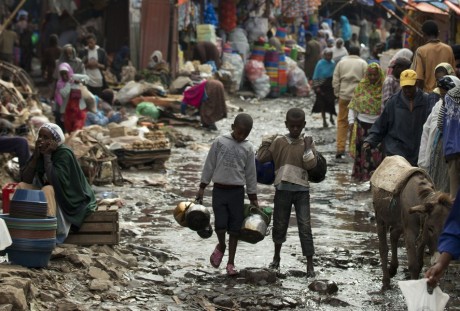
http://www.forbes.com/pictures/mef45jgim/10-saddest-ethiopia/
Copyright © Oromianeconomist 2013 and Oromia Quarterly 1997-2013. All rights reserved. Disclaimer.
Related articles
- The biggest challenges facing Africa have little to do with religion, per se, and less with global terrorism.http://www.foreignpolicy.com/articles/2013/10/02/demography_is_destiny_africa_al_shabab#.Uk3ZTTT2_xA.twitter …
- “Re-Branding Africa” and “Africa Rising”: Whose #Africa? Whose Rise? http://aconerlycoleman.wordpress.com/2013/10/03/re-branding-africa-and-africa-rising-whose-africa-whose-rise/
- Africa is not rising, survey shows that ”the boom” only benefits a narrow elite http://www.theguardian.com/world/2013/oct/02/africa-not-rising-survey?CMP=twt_gu
- A skeptical perspective on African development (marginalrevolution.com)
-
http://transitions.foreignpolicy.com/posts/2013/09/30/the_african_statistics_smackdown_continued
Ethiopia in the Extreme Food Security Risk Index – Map October 22, 2012
Posted by OromianEconomist in Uncategorized.Tags: Africa, Famine, Food security, Sub-Saharan Africa
add a comment
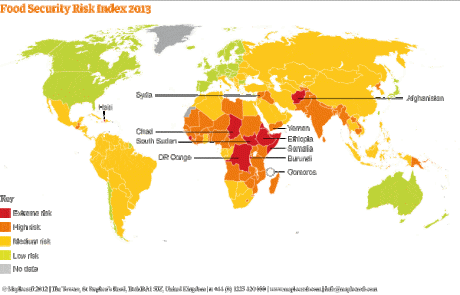
The food security risk index – map
‘The index has been developed by the risk analysis company Maplecroft for governments, NGOs and business to use as a barometer to identify those countries which may be susceptible to famine and societal unrest stemming from food shortages and price fluctuations. This map shows the results of evaluating the availability, access and stability of food supplies in 197 countries, as well as the nutritional and health status of populations,’ The guardian.
http://www.guardian.co.uk/global-development/graphic/2012/oct/10/food-security-risk-index-map
As Africa is clearly the most afflicted, with six (Ethiopia, Somalia, S.Sudan, Congo, Chad and Eritrea) of the seven states at “extreme risk.” Afghanistan was the only country outside of Africa at extreme risk , Maplecroft inside report. According to FAO’s study, out of Ethiopia’s total Population of 84.7 million the number of undernourished persons are 34.0 million, and prevalence of undernourishment is 40 %.
Related articles
- Africa facing intensified ‘food crisis’ (aljazeera.com)
- Global Food Crisis Risk Is Soaring (beyond2012zeitgeist.com)
- Global Food Crisis Risk Is Soaring (conservativeread.com)
- Corporate giants reap billions from hunger (climateandcapitalism.com)
- Global Food Crisis Risk Is Soaring [MAP] (businessinsider.com)
- Global Food Crisis Risk Is Soaring (fromthetrenchesworldreport.com)
Copyright © Oromianeconomist 2012 and Oromia Quarterly 1997-2012. All rights reserved. Disclaimer.
Gadaa Oromo Democracy: Three Approaches to the Study of African Society September 27, 2012
Posted by OromianEconomist in Africa, Ancient African Direct Democracy, Culture, Finfinnee, Gadaa System, Humanity and Social Civilization, Irreecha, Kemetic Ancient African Culture, Oromo, Oromo Culture, Oromo First, Oromo Identity, Oromo Nation, Oromo Social System, Oromummaa, Self determination, Sirna Gadaa, State of Oromia, The Oromo Democratic system, The Oromo Governance System, Uncategorized.Tags: Africa, African culture, African Studies, Ancient African Direct Democracy, Ancient Black People, Ancient Egyptian people, Democracy, Economic and Social Freedom, From, Gadaa System, Governance issues, Horn of Africa, Kemet, Kushitic people, National Self Determination, Oromia, Oromiyaa, Oromo, Oromo culture, Oromo people, Oromummaa, Politics, Siqqee, Siqqee Oromo Women Institution, Sirna Gadaa, Social Sciences, State and Development, Sub-Saharan Africa, United Nations, Universal Declaration of Human Rights, World Bank
3 comments
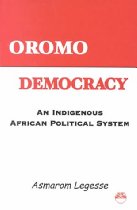
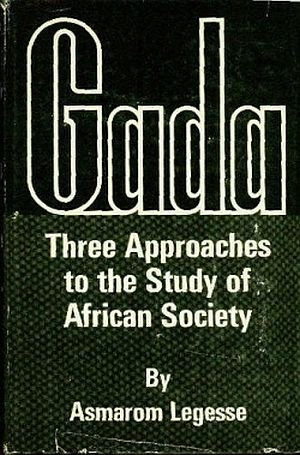
These closely related books reveal the many creative solutions an African society found for problems that people encounter when they try to establish a democratic system of governing their affairs. In much of what has been written about Africa, the common image is that of people governed by primitive customs and practices, in which only feudal roles of elders, kings, chiefs, sultans, and emirs have been acknowledged by Western observers. Little is ever shown of indigenous African democratic systems, under which there is distribution of authority and responsibility across various strata of society, and where warriors are subordinated to deliberative assemblies, customary laws are revised periodically by a national convention, and elected leaders are limited to a single eight-year terms of office and subjected to public review in the middle of their term. All these ideals and more are enshrined in the five-century old constitution of the Oromo of Ethiopia, which is the subject matter of these books.
In these books, Legesse brings into sharp focus the polycephalous or “multi-headed” system of government of the Oromo, which is based on clearly defined division of labor and checks and balances between different institutions. Revealing the inherent dynamism and sophistication of this indigenous African political system, Legasse also shows in clear and lucid language that the system has had a long and distinguished history, during which the institutions changed by deliberate legislation, and evolved and adapted with time.’ Amazon Books &
Related articles
Introduction
http://oromopress.blogspot.co.uk/2011/12/review-of-oromo-democracy-indigenous.html?m=1
http://www.readperiodicals.com/201203/2672718591.html
- Gadaa: An Oromo Democracy and the Symbol of Oromo Civilization (odaakoo.wordpress.com)
- Contours of the Emergent & Ancient Oromo Nation (oromianeconomist.wordpress.com)
- http://www.iwmi.cgiar.org/publications/CABI_Publications/CA_CABI_Series/Community_Law/protected/Ch%2009.pdf
- Oromia of Dhaqabo Ebba: The Cradle of Mankind Is Also A Home of The Oldest Living person On Earth (oromianeconomist.wordpress.com)
Copyright © Oromianeconomist 2012 and Oromia Quarterly 1997-2012. All rights reserved. Disclaimer.


 Oromian Economist
You must be logged in to post a comment.