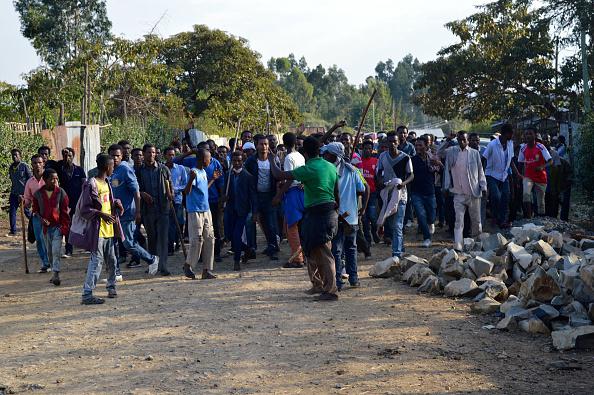
Interview:
Ethiopia’s Bloody Crackdown on Peaceful Dissent, an interview with Ethiopia researcher Felix Horne
Economic and development analysis: Perspectives on economics, society, development, freedom & social justice. Leading issues in Oromo, Oromia, Africa & world affairs. Oromo News. African News. world News. Views. Formerly Oromia Quarterly


UN Human Rights Council – 32nd Session
13 June – 1 July 2016
Geneva, Switzerland
————————————————————–
June 22, 2016
Presenter: Mr. Garoma Wakessa
Director, HRLHA
—————————————————————
Human Rights Crisis In Oromia Regional State of Ethiopia
Mr. Chairman and Council Participants;
Mr. Chairman
Mr. Chairman
Therefore, the HRLHA respectfully asks the UN Human Rights Council to use its mandate to establish a commission of inquiry on human rights in Oromia Regional State of Ethiopia.


Bangladesh has taken an ever-increasing turn to authoritarianism in recent years. The authorities have engaged in mass arrests of opposition members – numbering in the thousands – and have cracked down on civil society groups, opposition media houses, editors, and journalists. Impunity for the security forces remains the norm, as alleged abuses by government forces go unchecked. The government’s initial response to the machete killings of over 50 people was to warn these victims to exercise self-censorship, even going so far as to prosecute four bloggers for “hurting religious sentiment.” In the past week, the authorities have taken a more determined turn in responding to these killings, but instead of investigating and prosecuting in a careful, measured manner, have fallen back on old patterns and arrested 15,000 people, many, it seems, arbitrarily. We urge Member States to raise this concerning situation at the Council and directly with the government.
In Ethiopia, state security forces have killed more than 400 protesters since November 2015, during largely peaceful protests in its largest region of Oromia. Many of those killed were students. Tens of thousands of people have been detained, and many of those remain in detention without charge. More broadly, Ethiopia continues to criminalize peaceful expression of dissent through severe restrictions on independent media, independent civil society, and misuse of its antiterrorism law. Torture and ill-treatment in detention continues to be a serious concern. We call for an independent and impartial investigation into the use of excessive force and other serious abuses by security forces in Oromia. As a Human Rights Council member – and vice-president – Ethiopia is required to cooperate with the Council and its mechanisms. Yet it has not accepted requests by numerous Special Procedures to visit over the past decade. We urge the government to do so as a matter of priority.
In Thailand, since the military coup in May 2014, the ruling National Council for Peace and Order (NCPO) has carried out policies and actions without any effective oversight or accountability. A current draft constitution, written by a junta-appointed committee, endorses unaccountable military domination of governance even after a new government takes office. Regardless of its pledges to respect human rights, the junta—led by Prime Minister Gen. Prayut Chan-ocha—has banned political activity and public gatherings; made expression subject to criminal prosecution; conducted hundreds of arbitrary arrests; and held civilian detainees in military detention. Public debates and open opposition to the draft constitution, on which a referendum is scheduled for August 7, 2016, are prohibited. Military courts are regularly used to try civilians, particularly dissidents and alleged lese majeste offenders. In southern border provinces, serious abuses by all sides continue unabated in the fighting between separatist groups and security forces. The killing and enforced disappearance of human rights defenders and other activists, as well as reprisals via politically motivated criminal litigation, remain a pressing concern across Thailand. Millions of migrant workers face systematic abuse. Asylum seekers, having no legal avenue to bring their claims, are subject to arrest and deportation.
Finally, the armed conflict in Yemenhas been marked by serious violations of international law and an absence of accountability. The Saudi-led coalition has carried out numerous indiscriminate and disproportionate aerial attacks. Human Rights Watch alone documented 43 airstrikes that killed more than 670 civilians and 16 attacks involving indiscriminate cluster munitions. The Houthis and allied forces have fired weapons indiscriminately into civilian areas, recruited children, and laid anti-personnel landmines. The conflict has taken a terrible toll, with more than 3,500 civilians killed and 82 percent of the population needing humanitarian assistance. The Human Rights Council should establish an international mechanism to investigate violations by all parties to the conflict.
https://www.hrw.org/news/2016/06/22/un-human-rights-council-item-4-general-debate

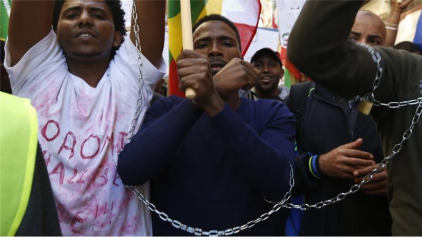

Awol K. Allo is a Fellow in Human Rights at the London School of Economics and Political Science.
So much for the “Ethiopia rising” meme which Ethiopian authorities ostentatiously promote to camouflage the repressive nature of the state.
A new report published by Human Rights Watch on the Oromo protests depicts a disturbing picture of a government that thrives on systematic repression and official violence.
The report, which puts the death toll from the seven-month-long protest at more than 400, exposes the “Ethiopia rising” narrative for what it is: a political Ponzi scheme.
Underneath the selective highlighting of Ethiopia’s story of renaissance and transformation lies a Janus-faced reality in which the triumph of some has meant the utter submission of others.
The Oromo protests are exposing the senseless suffering and brutality that lies beneath Ethiopia’s rhetoric of development and revival.
After 25 years of absolute control over the country’s public life, the ruling party is facing its biggest political challenge yet: an unconventional and innovative resistance to its iron-fisted rule.
What is unfolding in the drama of this increasingly defiant and unprecedented protest is the subplot that producers and cheerleaders of the “Ethiopia rising” myth neither anticipated nor fully understood: the power of the indignant to wreak havoc and paralyse the state even as they were met with murderous official violence.
Though the protest was initially triggered by the threat of displacement by Ethiopia’s development policies – particularly the proposed expansion of the territorial limits of the capital, Addis Ababa, into neighbouring Oromo lands – this is not the sole reason and cannot provide an adequate explanation of the level of defiance on the streets of Oromia.
Rather, the protest is a manifestation of long-simmering ethnic discontent and deeper crisis of representation that pushed Oromos to the margin of the country’s political life.
READ MORE: Ethiopia – Oromo protests continue amid harsh crackdown
Despite a rare concession by the authorities to cancel the “master plan”, the protest is still ongoing, demanding genuine political reforms aimed at an equitable reorganisation and overhauling of existing frameworks and arrangements of power in the country.
Protesters argue that the prevailing arrangements with the ethnically mixed morphology of the Ethiopian state, in which ethnic Tigray elites dominate all aspects of public life, are not only undemocratic, they are also an existential threat to the peaceful co-existence of communities in the future.
As the single largest ethnic group in a multi-ethnic country in which ethnicity is the pre-eminent form of political organising and mobilisation, the prevailing arrangement presents a particularly unique and challenging problem for the Oromo.
According to the 2007 Ethiopian National Census, Oromos constitute 34.49 percent of the population while Tigray, the politically dominant ethnic group, represents 6.07 percent of the total population. The real figure for the Oromo people is much higher.
| The silence of the international community in the face of consistent reports raising alarms about systematic and widespread atrocities is deafening. |
By virtue of being a majority ethnic group, Oromos represent an existential threat to the legitimacy of ethnic Tigrayan rule and therefore have to be policed and controlled to create an appearance of stability and inclusiveness.
In a landmark report titled “Because I am Oromo“, Amnesty International describes a widespread and systematic repression, astonishing in scope and scale, in which the conflagration of ethnic identity and political power gave rise to the unprecedented criminalisation and incarceration of Oromos over the past five years.
Oromos have been the victims of an indiscriminate and disproportionate attack in the hands of security forces. This, protesters argue, had a far deeper and more corrosive effect of rendering Oromo identity and culture invisible and unrecognisable to mainstream perspectives and frameworks.
OPINION: Ethiopia drought – How can we let this happen again?
The government’s response so far has been to dismiss the movement as misinformed, and besmirch it as anti-peace or anti-development elements controlled and directed by external forces – an old tactic used by the government to discredit and criminalise dissent. The most vocal and outspoken members of the movement are being tried for terrorism.
The silence of the international community in the face of consistent reports raising alarms about systematic and widespread atrocities is deafening.
The obsessive focus of the West on the “war on terror” and the tendency to define human rights policy through the lens of the war on terror means that those who abuse their citizens under the guise of the war on terror are impervious to criticism.
READ MORE: Ethiopia’s Oromo people demand equal rights in protests
In the decade since 9/11, the West went beyond technical and financial support to providing diplomatic cover to abuses of human rights including by creating make-believe stories that Ethiopia is a democracy and an economic success story.
High-ranking government officials, including the United States President Barack Obama, praised the ruling party as “democratically elected“, providing much-needed endorsement and legitimisation to the government.
The “Ethiopia rising” narrative and its economic fiction is beginning to unravel. With the IMF significantly downgrading its economic forecast to 4.5 percent from 10.2 percent last year, the exodus of people fleeing its repression, and the droughts that made a fifth of its 100 million people dependent on food aid, Ethiopia’s economic miracle is being exposed for what it is: the benefit of the elite.
The Ethiopian government and its partners in the West are thinking that the outcry will die away, that the outrage will pass. We should lose no opportunity to prove them wrong.
Awol K Allo is Fellow in Human Rights at the London School of Economics and Political Science.
The views expressed in this article are the author’s own and do not necessarily reflect Al Jazeera’s editorial policy.
Source: Al Jazeera
More at:-
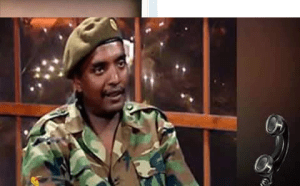
TPLF Ethiopia’s regime Hospital in Mekelle, Tigray harvests and exports human organs, senior military exposes.
Icciitii wayyaanee B. Gen/Hayluu Gonfaa saaxile keessaa muraasa.
1. Hospitaalli magaalaa Maqaleetti ijaarame qaama dhala namaa keessattuu kan raayyaa ittisaa filee “export” gochaa jiraachuu.
Akka Gen/Hayluun jedhanitti Tigiraayi keessatti waggaa tokko keessatti yoo xiqqate miseensota raayyaa ittisa biyyattii 1000 tuu dhukkuba adda addaa qofaa du’a. Reeffi kun hundi qaamni isaanii filamee biyya alaatti gurguramaa jira.
2.Maatii raayyaa ittisa mishinii (ergama) UN dhaaf bobbaafamanii du’aniif UN’n beenyaa tokkoo tokkoon nama dhu’eef $1,000,000 ykn qar. 22,000,000 kaffala. Qarshii kana garuu maatii wareegamtootaa utuu hintaane generaalota TPLF tuu addaan qooddata.
3.Mootummaan Tigree waraanni Ethio-Eritira akka badus akka ho’us hin barbaadu. Sababini isaas:
a, baajanni waggaa raayyaa ittisaa qar. biliyoona 20-30 dabalata bajata kanaan naannoo Tigiraayitu ittiin misooma, achitti waan dhangala’uuf.
b, Raayyaan ittisaa humnasaatiin hojii misooma naannichaa hojjechaa waan jiruuf
c, Daldaltoonniifi kontiraakteroonni naannichaa gabaa argataniin faayidaa guddaa argataa waan jiraniif.
4.Generaalonni TPLF qajeelcha ajajaa muummichaan (muummicha minstiraan) utuu hintaane waan sammuun isaanii ajaje qofa akka hojjetan. Kanaafuu yakka kamuu yoo dalagan akka itti hin gaafatamneefi ajaaan muummichaa (H/Maariyaam) kan hinbeekne ta’uu isaa saaxilaniiru.
read more at:-
Free Wrongfully Held Detainees, Independent Inquiry Needed
“Such a Brutal Crackdown, killings and arrests in response to Ethiopia’s Oromo Protests (1)
Haleellaa gara jabeenyaa dorgommi hinqabne
(Nairobi) – Ethiopian security forces have killed more than 400 protesters and others, and arrested tens of thousands more during widespread protests in the Oromia region since November 2015. The Ethiopian government should urgently support a credible, independent investigation into the killings, arbitrary arrests, and other abuses.
The 61-page report. “‘Such a Brutal Crackdown’: Killings and Arrests in Response to Ethiopia’s Oromo Protests,” details the Ethiopian government’s use of excessive and unnecessary lethal force and mass arrests, mistreatment in detention, and restrictions on access to information to quash the protest movement. Human Rights Watch interviews in Ethiopia and abroad with more than 125 protesters, bystanders, and victims of abuse documented serious violations of the rights to free expression and peaceful assembly by security forces against protesters and others from the beginning of the protests in November 2015 through May 2016.
“Ethiopian security forces have fired on and killed hundreds of students, farmers, and other peaceful protesters with blatant disregard for human life,” said Leslie Lefkow, deputy Africa director at Human Rights Watch. “The government should immediately free those wrongfully detained, support a credible, independent investigation, and hold security force members accountable for abuses.”
Human Rights Watch found that security forces used live ammunition for crowd control repeatedly, killing one or more protesters at many of the hundreds of protests over several months. Human Rights Watch and other organizations have identified more than 300 of those killed by name and, in some cases, with photos.
Ethiopia’s Bloody Crackdown on Peaceful Dissent, an interview with Ethiopia researcher Felix Horne
The November protests were triggered by concerns about the government’s proposed expansion of the capital’s municipal boundary through the Addis Ababa Integrated Development Master Plan. Protesters feared that the Master Plan would displace Oromo farmers, as has increasingly occurred over the past decade, resulting in a negative impact on farm communities while benefiting a small elite.
As protests continued into December, the government deployed military forces for crowd-control throughout Oromia. Security forces repeatedly fired live ammunition into crowds with little or no warning or use of non-lethal crowd-control measures. Many of those killed have been students, including children under 18.
The federal police and military have also arrested tens of thousands of students, teachers, musicians, opposition politicians, health workers, and people who provided assistance or shelter to fleeing students. While many detainees have been released, an unknown number remain in detention without charge and without access to legal counsel or family members.
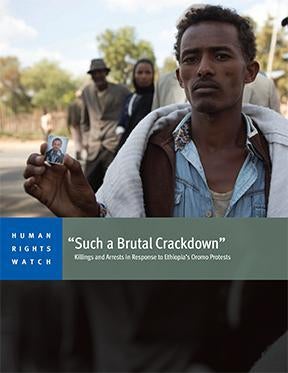
Killings and Arrests in Response to Ethiopia’s Oromo Protests
Witnesses described the scale of the arrests as unprecedented. Yoseph, 52, from the Wollega zone, said: “I’ve lived here for my whole life, and I’ve never seen such a brutal crackdown. There are regular arrests and killings of our people, but every family here has had at least one child arrested.”
Former detainees told Human Rights Watch that they were tortured or mistreated in detention, including in military camps, and several women alleged that they were raped or sexually assaulted. Some said they were hung by their ankles and beaten; others described having electric shocks applied to their feet, or weights tied to their testicles. Video footage shows students being beaten on university campuses.
Despite the large number of arrests, the authorities have charged few individuals with any offenses. Several dozen opposition party members and journalists have been charged under Ethiopia’s draconian anti-terrorism law, while 20 students who protested in front of the United States embassy in Addis Ababa in March were charged with various offenses under the criminal code.
Access to education – from primary school to university – has been disrupted in many locations because of the presence of security forces in and around schools, the arrest of teachers and students, and many students’ fear of attending class. Authorities temporarily closed schools for weeks in some locations to deter protests. Many students told Human Rights Watch that the military and other security forces were occupying campuses and monitoring and harassing ethnic Oromo students.
There have been some credible reports of violence by protesters, including the destruction of foreign-owned farms, looting of government buildings, and other destruction of government property. However, the Human Rights Watch investigations into 62 of the more than 500 protests since November found that most have been peaceful.
The Ethiopian government’s pervasive restrictions on independent human rights investigations and media have meant that very little information is coming from affected areas. The Ethiopian government has also increased its efforts to restrict media freedom. Since mid-March it has restricted access to Facebook and other social media. It has also restricted access to diaspora television stations.
In January, the government announced the cancellation of the Master Plan. By then, however, protester grievances had widened due to the brutality of the government response.
While the protests have largely subsided since April, the government crackdown has continued, Human Rights Watch found. Many of those arrested over the past seven months remain in detention, and hundreds have not been located and are feared to have been forcibly disappeared. The government has not conducted a credible investigation into alleged abuses. Soldiers still occupy some university campuses and tensions remain high. The protests echo similar though smaller protests in Oromia in 2014, and the government’s response could be a catalyst for future dissent, Human Rights Watch said.
Ethiopia’s brutal crackdown warrants a much stronger, united response from concerned governments and intergovernmental organizations, including the United Nations Human Rights Council, Human Rights Watch said. While the European Parliament has passed a strong resolution condemning the crackdown and a resolution has been introduced in the United States Senate, these are exceptions in an otherwise severely muted international response to the crackdown in Oromia. The UN Human Rights Council should address these serious abuses, call for the release of those arbitrarily detained and support an independent investigation.
“Ethiopia’s foreign supporters have largely remained silent during the government’s bloody crackdown in Oromia,” Lefkow said. “Countries promoting Ethiopia’s development should press for progress in all areas, notably the right to free speech, and justice for victims of abuse.”
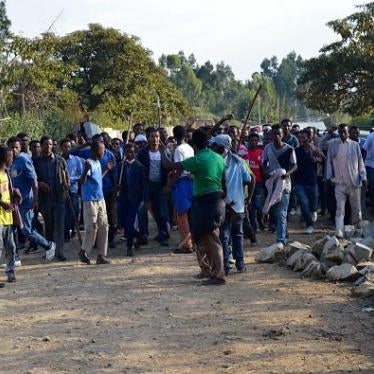
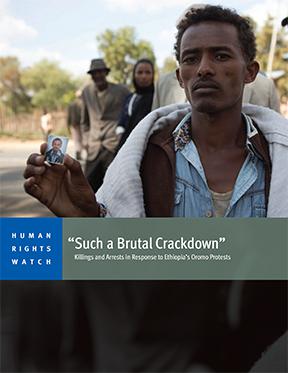
Killings and Arrests in Response to Ethiopia’s Oromo Protests
There is a violent repression in Ethiopia – so why is the UK government silent about it?
By David Mepham By David Mepham, IBTimes June 16, 2016
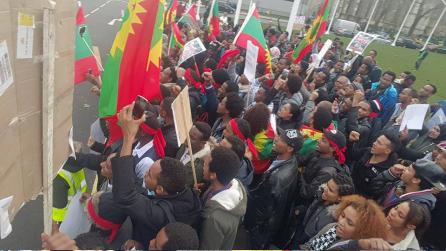
Oromo community protest in London over ‘ethnic cleansing’
http://www.ibtimes.co.uk/there-violent-repression-ethiopia-so-why-uk-government-silent-about-it-1565781
Ethiopia: Oromo community protest in London over ‘ethnic cleansing’ IBTimes UK
The Ethiopian government is engaged in its bloodiest crackdown in a decade, but the scale of this crisis has barely registered internationally. According to Human Rights Watch, more than 400 people, including many children, have been killed by the country’s security forces in Oromia, Ethiopia’s largest region, with lethal force unleashed against largely peaceful, student-led protests.
For the past seven months, security forces have fired live ammunition into crowds and carried out summary executions. While students were first on the streets, many others have joined them, including teachers, musicians, opposition politicians and healthcare workers. Tens of thousands of people have been arrested, some of whom remain in detention without charge, and there are credible reports that detainees have been tortured or beaten – some of them in public. Hundreds of other people have been forcibly disappeared.
In normal circumstances, a crackdown on this scale would generate large-scale media attention and prompt strong international censure. But global media coverage has been very limited, in part because of Ethiopia’s draconian restrictions on media reporting and the difficulties journalists face in accessing the region. The response of governments internationally, including the British government, has also been extremely muted.
The reason for this is not a lack of information: diplomats in the country have a fairly good idea of what is going on in Oromia. Instead, it appears to be a flawed political calculation that the UK’s massive investment in Ethiopia’s development efforts (over 300 million pounds of aid is provided annually) would be undermined by public criticism or greater pressure on the government to rein in its abusive security forces.
The other obstacle is Ethiopia’s acute food crisis, where a severe drought – the worst since the famine of 1984-85 – has left 18 million people in need of aid. Global attention on this issue has led many governments around the world to overlook or downplay the other very urgent crisis unfolding in Oromia.
But these trade-offs are short-sighted and counter-productive. Ethiopia’s repression and its deepening authoritarianism hinder, rather than help, the country to combat food insecurity, promote development and tackle a range of other challenges. And they create the conditions for further instability and polarisation.

Ethiopia
Ethiopia is struggling with its worst drought for 30 years, with millions in dire need of life-saving aidGetty Images
Indeed, it was the very lack of respect for rights in the Ethiopian government’s approach to development that first triggered unrest in Oromia last November. The early protests were a response to the so-called ‘Addis Ababa Integrated Development Master Plan’, which proposed a 20-fold expansion of the municipal boundary of the capital.
Protesters objected that this top-down initiative from the government, introduced without meaningful consultation or participation of the affected communities, would displace thousands of ethnic Oromo farmers from land around the city. Those displaced by similar government initiatives over the past decade have rarely received compensation or new land on which to rebuild their lives – and protesters feared a repeat of this experience on a larger scale.
Dinka Chala
Mersen Chala, brother of Dinka Chala, who was killed by Ethiopian forces for protesting, but his family says he was not involved ,December 17, 2015, Oromia.Getty Images
Concerns were also expressed about mining and manufacturing projects in Oromia and their impact on the environment and access to water. In mid-January 2016, the government announced it had “cancelled” the Master Plan. But despite this, the government does not seem to have changed its approach (it is still marketing land to investors, for example), there has been no let-up in the repression, and the protests continue. The government’s violent response and the rising death toll have further inflamed the situation and decades of historic Oromo grievances around cultural, economic and political marginalisation have come to the fore.
With or without the plan, the forced displacement of farmers looks likely to continue – as it has in many parts of Ethiopia – unless the Ethiopian government fundamentally changes its approach to development. That would mean treating communities as genuine partners in the development process, meaningfully consulting them, and allowing them to shape development projects. And it should mean opening up space for peaceful dissent and political opposition, as well as independent media.
In the short-term, the Ethiopian government could ease tensions by releasing all those arbitrarily arrested and imprisoned, establishing a credible independent investigation into the killings and other violations – with those responsible for abuses held to account – and it could start a dialogue with the Oromo community about their legitimate grievances that have fuelled these protests.
But given the awful rights record of the government in Addis this seems highly improbable without stronger international pressure. As a major development partner to Ethiopia – including support for work in the Oromia region itself – the British government should use its leverage more assertively and help galvanise a concerted international response – one which highlights, to the Ethiopian government, the cost of its ongoing repression. And it should press the Ethiopians to pursue a development strategy that respects human rights, rather than tramples all over them.
David Mepham is UK Director of Human Rights Watch
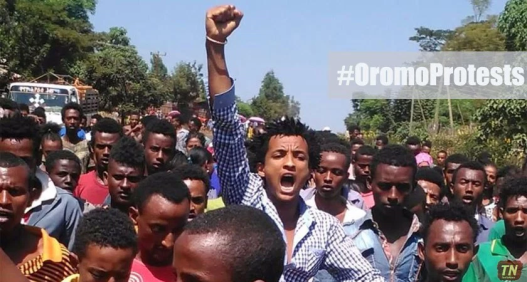
Ethiopian security forces have killed more than 400 protesters and others, and arrested tens of thousands more during widespread protests in the Oromia region since November 2015. Human Rights Watch interviews in Ethiopia and abroad with more than 125 protesters, bystanders, and victims of abuse documented serious violations of the rights to free expression and peaceful assembly by security forces against protesters and others from the beginning of the protests in November 2015 through May 2016.The Ethiopian government should urgently support a credible, independent investigation into the killings, arbitrary arrests, and other abuses. – By HRW, Jun 15, 2016
Hiyumaan Raayit Wochiin gabaasa har’a baasen, humnoonni nageenyaa Itiyoophiyaa yeroo mormiin Oromiyaa keessatti baldhinaan gaggeeffamen Sadaasa 2015 eegalee namoota 400 ol kan ajjeesan yoo ta’u kan kuma kudhaniin lakkaawwaman immoo hidhanii jiru. Mootumman Itiyoophiyaa ragaa amanama ta’en akka utubu, qaama bilisa ta’e tokko hundeesun waayee namoota ajeefamanii akka qoratu, waayee namoota badii tokko malee hidhamaniifii dhiitamuu mirga namaa adda addaa gabaasa akka dhiheesu. HRW June 15, 2016
The Blues is said to be based on musical traditions drawn from African roots. The slave trade to Arabia and the east – in total, much bigger than the better-known trade routes west – despatched misery on a similar scale.
Except that Oromo and other slaves taken from and through Abyssinia (up to the 1930s incidentally, and continuing now under the guise of domestic servants) were more likely to become freed women and men, and become political and military leaders. Not so much now.
The majority pay to travel on false papers, often with exaggerated ages, to work, for many in a state of slavery, for Arabian families. They flee from persecution because they have dared to stand up for Oromo rights.
Between November 2015 and March 2016 over 400 Oromo students and civilians have been shot dead on the streets of Ethiopia, where they demonstrated. Or when they opened their doors to the house-to-house searches which followed. Local informants report many more killings. Names, dates and locations of over 250 extra-judicial executions have been given.
Where is the clamour from left and right, complaining about misuse of our generous aid to Ethiopia? This aid amounts to about £300 million yearly – Ethiopia receives more aid from the UK than any other country in the world.
Well, the clamour is not coming because, allegedly, the government is in control and the opposition is weak and divided. Small wonder, that an oppressive regime with western support and intelligence can render an opposition weak and divided
Meanwhile, students bleed on Ethiopian streets and there is martial law in Oromia. Tens of thousands of young people are incarcerated in concentration camps. Is this the sort of stability that the UK wants to encourage?
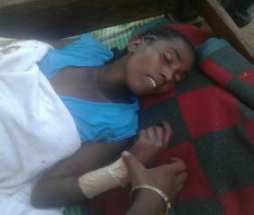
This picture is of a young woman killed in central Oromia Region, at a place named Galesda. Her name is Nato Guluma. She was shot dead in Jaldu, West Showa, on 14 December 2015.
What do we want the UK’s foreign policy to look like in Ethiopia, East Africa, the Middle East? Like this? An sweeping under the rugs of innocent lives lost in the struggle for freedom from persecution? Then again, so few of us know about these lives. After all, Oromo students being shot dead is sometimes just not media material, and will never make it to the UK’s front pages.
Well, now you know.
Dr Trevor Trueman learned about the unfair treatment of asylum-seekers when providing expert witness reports on Ethiopia to immigration appeal tribunals and courts. He has developed an expertise on human rights abuses in Ethiopia as a result of reporting abuses against Oromo and other peoples of Ethiopian publicly since 1994. He trained Oromo health workers in three long field trips from 1988 to 1991. He is now a member of the steering committee of Amnesty’s Asylum Justice Project.
Credit for Featured Image: Flickr
https://lseamnestyinternational.wordpress.com/2016/06/14/delta-blues-to-the-oromo-blues/
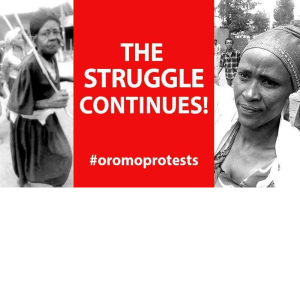
NO TO IMPUNITY!!!
By Tsegaye Ararssa)
That the Ethiopian Human Rights Commission is not an independent institution and that it is incapable of doing human rights monitoring has long been admitted by the regime itself. So, no report it presents is a result of an independent inquiry. No statement it makes is an impartial statement. What we heard yesterday is not even close to the admission of guilt on the part of the regime made by the Prime Minister and the Spokesperson earlier in the year.
We have yet to see its report, the methods it used, and the personnel it mobilized to conduct its investigation. We have yet to see whom they identified as these “other forces who sought to take advantage of the people”. We have yet to see how “these other forces” are implicated. We have yet to see a full description of who did what so that we can make them responsible. To blame indefinite (and invisible) forces for the people killed (over 500 now), for the people injured (in thousands), and for the people arbitrarily arrested (estimated to be over 50,000), for the destruction of property (through vandalizing and burning of university campuses), for the suspension and dismissal of Oromia’s civil administration unconstitutionally (without even a semblance of legality that could be seen if there were an emergency declaration or a “federal intervention”) is a farce of incredible proportion. And we reject that completely, and we say NO!
Referring to “these other forces” as the responsible bodies without clearly identifying them and without establishing the mode of their involvement is only deflecting responsibility from the regime that acted completely lawlessly (illegally and unconstitutionally) to take “merciless and definitive measures” on protestors and to subject the entire region to military rule. This is simply unacceptable. And we say NO to impunity!
The report claims that the federal army, special forces, federal police, and the entire intelligence personnel was unleashed on Oromia to kill, injure, arrest, and terrorize the people [totally in accordance with the order of the Prime Minister to take “merciless and definitive measures”] on the invitation of the region. However, it doesn’t even care to tell us when was it requested, how it was requested, and according to which rules of procedure (apart from that put in place for a legitimate Federal Intervention in the regions). This is completely illegal and unacceptable. We reject this, and mercilessly and conclusively say NO to that, too!
The report claims that the crisis was caused, among other things, by a misunderstanding of the Master Plan. This suggests that the Master Plan is an appropriate plan. This is utterly unacceptable. We say NO!
By issuing this statement by the EHRC, the regime is now suppressing and displacing the truth of the atrocities it perpetrated on innocent protestors.
We say NO to this suppression of the truth, our truth, just as we say NO to the repression of the protest, and the wider systematic oppression of the Oromo and other peoples of Ethiopia by a regime that has rendered itself not just undemocratic but utterly anti-democratic.
The modest road we suggested from the start remains to be the only road the regime has to take in order to restore peace (and survive this crisis as a regime).
We state it to them again:
1. Rescind the Master Plan unequivocally (both in Addis and in the adjacent Oromia Zones). Take a clear, public stance by issuing a Parliamentary Resolution against the Master Plan.
2. Stop the violence and remove the Army, the Special Force, the Federal Police, and the intelligence personnel from all civilian life in Oromia.
3. Release all the political prisoners arrested in relation to the protest, including political dissidents arbitrarily taken captive in the wake of the re-eruption of the protest.
4. Set up a genuinely independent commission with members and/or observers from international organizations to conduct a proper investigation to the crisis and to make efforts to establish responsibility (political, administrative, legal, and moral) for the harm caused in the process.
5. Take political responsibility as a government, apologize to the public officially (with a clear statement written and delivered in a proper forum fully transparently to the media), and take all appropriate measures to restore the dignity of the victims and pay reparations to the same.
6. Remove all officials who are at the forefront of political and administrative responsibilities, for by being implicated in the bloodbath that they caused in the course of the crisis, they have totally lost the moral legitimacy, the legal competence, and the public credibility to govern.
7. Ensure that those who did and caused the killings, injuries, rapes, tortures, and arbitrary arrests be held legally accountable (in accordance with the criminal law of the country) before an independent court of law. Allow a forensic determination of guilt and punishment in proportion to the degree of their participation. Fail to do this, the regime will be haunted by the possibility of being brought before international justice institutions (or at least they will face the inconvenience of having to defend themselves).
8. The Government in Oromia has lost all the credibility and all the legitimacy (which it never had anyway!) to govern the region. It is imperative that the Caffee Oromia dismiss itself and call for an election before the next parliamentary year (leaving the day to day administration of matters to a care taker government of the old cabinet).
9. Stop all acts of eviction of farmers from their land which, to most of them, is their only means of livelihood. Work towards a better (possessory) tenure security over the plots of land they now have. Stop all activities of land grab and consequent displacement of people everywhere (in Oromia and beyond) even in the name of “development.” Work towards a more legally entrenched, fair, just, and consultative mode of development planning where necessary expropriation is done with due, effective, and adequate compensation.
10. Ensure that the ‘Special Interest’ clause of the constitution is implemented urgently. In the determination of the content of the Special Interest, Oromia’s voice must be properly listened to as well as that of the city government of Addis Ababa. Start a comprehensive, inclusive, open, and genuinely participatory discussion with all the peoples of Ethiopia about where to place the federal Capital city. In an act of bona fide cooperation, the Oromia government should take steps towards suggesting another options and modes for relocating the capital city within or outside of Oromia (and its own contribution, as the largest State in the Federation, towards building the new capital–if this be the option).
These things are doable things. These things are easier things to do for the regime. Anything short of this will only provoke a more vehement and persistent resistance. To do anything less, or anything other than these modest suggestions, is an invitation for further crisis.
We will do everything at our disposal to resist this. We keep saying NO!
We keep saying NO to justification and rationalization of State terror.
We keep saying NO to all forms of impunity for the gross violation of human rights in Oromia and beyond.
We keep saying NO to all forms of eviction from land including through the Master Plan.


Throughout the country’s 25-year history, Eritrea’s border with Ethiopia has been a hotly-disputed region.
Eritrea shares a 640-mile boundary with its Horn of Africa neighbor, from whom it only gained independence in 1991. The two countries fought a bloody two-year war over border boundaries between 1998 and 2000, since which bilateral relations have been characterized by a “no war, no peace” situation.
What’s Eritrea’s history with Ethiopia?Now, Eritrea has blamed Ethiopia for clashes in the Tsorona region, about halfway along the border. The reported clashes have raised the specter of conflict in a region where tension is always high.
Until 1991, Eritrea was considered an autonomous region within Ethiopia. The latter’s decision to attempt to annex the former in 1961 sparked a 30-year independence war. Against a much-larger and better-equipped Ethiopian army, the Eritrean People’s Liberation Front won the war and toppled Ethiopian President Mengistu Haile Mariam, with the assistance of Ethiopian rebels. Eritrea was recognized as an independent state by the international community in 1993 following a United Nations-backed referendum vote in favor of independence.
Why is the border a flashpoint?
A full-scale war broke out between Ethiopia and Eritrea in May 1998 and focused on the town of Badme, which both sides claimed belonged to them. Eritrea was found to have triggered the war by attacking Ethiopian troops around Badme, according to a 2005 ruling by the Eritrea-Ethiopia Claims Commission, a body based in The Hague that was established to deal with the conflict’s fallout. Over the next two years, tens of thousands of soldiers were killed on both sides in a bloody battle that achieved very little in terms of concrete boundary changes.
The conflict ended in December 2000 after a peace accord known as the Algiers Agreement was signed by both parties. One condition of the agreement was the establishment of a boundary commission that in 2002 ruled that Badme was part of Eritrea. While both countries initially accepted the ruling, Ethiopia later said it was dissatisfied with the boundary and Badme continues to be occupied by Ethiopian troops. “Eritrea and Ethiopia have essentially been in a Cold War since the last war in 1998-2000,” says Ahmed Salim of political risk consultancy Teneo Intelligence.
 An Eritrean soldier looks through a spyhole on the frontline in Badme, Eritrea, March 2, 2000. Tens of thousands of people died in the two-year border war between Eritrea and Ethiopia.SS/CLH/REUTERS
What’s happened this time?
Following reports from residents living on the Ethiopian side of the border of hearing heavy gunfire, Eritrea accused Ethiopia on Sunday of infringing its territory. “The TPLF regime has… unleashed an attack against Eritrea on the Tsorona Central Front,” Eritrea’s Information Ministry said in a statement released overnight Sunday and reported by Reuters. The TPLF refers to the Tigrayan People’s Liberation Front, a member of Ethiopia’s ruling coalition.
Besides the claim from the Eritrean government in the capital Asmara, however, there is very little confirmed detail of what happened. Ethiopia’s Information Minister Getachew Reda told the BBC he was not aware of any fighting, and details coming out of Eritrea have been scant, with the country having a notoriously closed media.
What could the clashes lead to?
If significant fighting has occurred, it is unlikely that either side will want to escalate the conflict, according to Jason Mosley, a Horn of Africa expert and associate fellow at Chatham House. “It’s not in [Ethiopia’s] interest to precipitate the collapse of the Eritrean state. The Eritreans are certainly not in a position militarily to want to escalate to a full-scale conflict with Ethiopia,” says Mosley.
Eritrea is notorious for its conscription program. The compulsory national service program, which can often last for decades, continues to be indefinite,according to Amnesty International, despite the government in Asmara pledging in 2014 to limit national service to 18 months. The program is an oft-cited reason given by migrants and refugees fleeing the country—in 2015, Eritrea was the African country with the highest number of people applying for asylum in Europe. According to Mosley, “episodic reminders” of the “existential threat from Ethiopia” are useful to the Eritrean government in justifying its program. “Whatever the mechanics of what has or hasn’t happened… the Eritrean state will probably try to portray this to the fullest extent it can as evidence of a very aggressive Ethiopian posture,” says Mosley.
Are the clashes connected to Ethiopia’s Oromia crisis?
Since November 2015, Ethiopia has been dealing with large-scale protests among members of the Oromo ethnic group, the country’s majority ethnicity. These have resulted in a crackdown in which hundreds of people have been killed, according to Human Rights Watch. The Ethiopian government has said that Eritrea has backed the protests, which were initially sparked by plans to expand the capital Addis Ababa that would entail relocating Oromo farmer families.
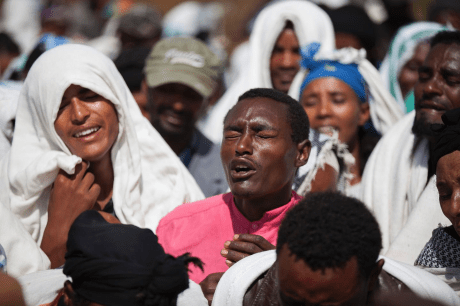
But according to Mosley, the Oromia crisis is an internal affair and has nothing to do with Ethiopia and Eritrea’s border disputes. “[The Oromo protests] is the reaction from a certain educated strata of Ethiopian society about being completely blocked out of negotiations around the development planning,” says Mosley. “It’s not an Eritrean plot, this is an Ethiopian ruling party failing.”
http://europe.newsweek.com/why-eritreas-border-ethiopia-conflict-zone-469739
Related:-
http://www.tesfanews.net/ethiopia-admits-sustained-significant-casualty/
Oromo wedding in Noolee Kaabbaa, Western Oromia
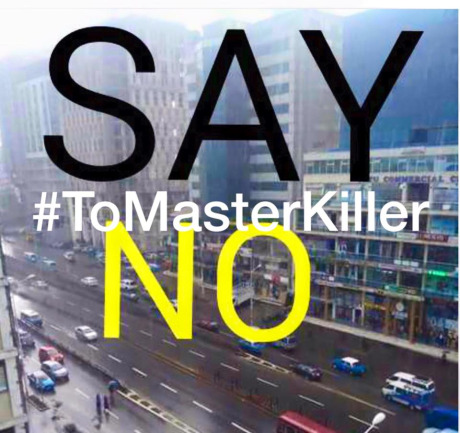
People like TPLF leaders are those who never change no matter how much one tries to explain to them about the brutality of their ruling system and barbaric actions of their military and special commandos. This article expose the failed policy of the TPLF and their new destructive plan to slow-down the Oromo people movement for freedom.
By Dr. Baaroo Keno Dheressa
 The Oromo people are survived the lethal colonialist rule of previous one (they change the Oromo name from Tolesa and Gemechu to Getnet and Gebremeskel and they change the name of our town namely Finfinnee to Addis Abeba, bishoftu to dabrezeit and adama to nazret). The current colonialist TPLF elite plays in multiple cards and faces (mixing up the definition of Oromo people goal self-determination, statehood, sovereignty, and democracy, and creating dysfunctional organization like OPDO to distract the real goal of the struggle). But We Oromo people have to be proud to be an Oromo by challenging all those obstacles and keeping our determination intact for freedom with limited resources and absence of external assistance.
African countries today face greater challenges to peace and stability than ever before with a volatile mix of insecurity, instability, corrupt political institutions and poverty. Alarmingly, most of these countries lack the political will to make and maintain peace agreements, and thus have fallen prey to continuous armed ethnic conflict. (Monty Marshall, 2003) This is partly due to ineffective conflict management.
The Ethiopian government (TPLF) try to teach us and also try to follow the path of South Africa and Nigeria. South Africa is made up of whites, indigenous Africans, coloreds, and Indians. The blacks form the majority of the population with about 30 million people, the whites 5 million, and the coloreds and Indians share 3 million. The country has about 11 linguistic groups, but English is the official language. Nigeria is Africa’s most populous country with about 120 million people. It is home to 250 linguistic groups, but English is also Nigeria’s chosen official language Although most of the ethnic groups are very tiny, three ethnic groups constitute somewhere between 60 and 70 percent of the population. The Hausa-Fulani ethnic groups count for 30 percent of the population, the Yorubas about 20 per cent and the Igbos about 18 percent.
Both countries (Both Nigeria and South Africa) bear the responsibility to steer the continent away from the repression of authoritarian governments towards a path of social and economic development and good governance. Interestingly, the two countries are also driven by a similar political strategies to manage conflict through national reconciliation, consensus building and economic development. The dual processes of transition and transformation need nothing less than a vibrant economy in which the basic needs of citizens are taken care of.
TPLF is sending his cadres to Nigeria and south Africa to learn about those political transformation in order to cheat western world to enhance cash flow and internally oppressing all types of opposition, silencing critical voices like Mr. Bekele Gerba, killing, torturing and imprisoning innocent civilians. The TPLF is also try to tell us about the economic growth of the country (I think they are mixing millionaires of TPLF elite with the country) while millions of peoples in Ethiopian empire facing imminent famines. Wake up TPLF leaders it is 21st century (what does it mean is homework for you).
People like TPLF leaders are those who never change no matter how much one tries to explain to them about the brutality of their ruling system and barbaric actions of their military and special commandos. This article expose the failed policy of the TPLF and their new destructive plan to slow-down the Oromo people movement for freedom.
Medical definition of fibrosis and cirrhosis is: Hepatic fibrosis occurs in response to chronic liver injury. The response to liver injury includes collapse of hepatic lobules, formation of fibrous septae, and hepatocyte regeneration with nodule formation. Hepatic fibrosis is reversible. Cirrhosis represents a late stage of progressive hepatic fibrosis characterized by distortion of the hepatic architecture and the formation of regenerative nodules. It is generally considered to be irreversible in its advanced stages, at which point the only treatment option will be liver transplantation or death.
TPLF is now arrived on the top of the decisive treatment option (identical process of cirrhosis). The OPDO and other artificial organization mission is failed, traitors and collaborators are fail to fulfill their mission, military and security forces are demotivated because of fierce resistance from freedom fighters like Qeerroo and WBO, awareness of the people is much greater than TPLF kitchen cabinet policy, international community are fade-up of the pathological lies of TPLF leaders, media information is faster than colonialist destructive actions, innocent civilians are daily the primary victim of the TPLF policy….etc. So the best remedy to save the TPLF from death will be transplantation, but the problem is there is no matched organ is/will found. So, the TPLF is now hospitalized in palliative center and awaiting unpleasant death. Unfortunately the TPLF is still working hard from dying bed to defend his destructive policy through his loyalist (traitors and collaborators) instead of participating in the restoration of historical justice for the respect of human rights for all human beings and to safe his Seoul.
According to my tangible information the TPLF government are investing 40 million dollars to implement his last mission. The main core of the mission is to destroy unity among Oromo’s . According to the insiders the short and long term enemy of the TPLF power is the force behind the unity of Oromo people. Again the insiders expose the taxonomy of government plan to implement his mission.
Core category demands are:
None of us on the earth choose to be born where we are born but once born, for example in my case, as an Oromo, there is no way I can change it. Unlike religion, behavior and attitudes towards nature, ethnic belongingness cannot be changed. That is why I cannot stop reminding at every chance I got the international community, TPLF elite and their puppet collaborators that as an Oromo, I am oppressed and I want my freedom and equality. The collaborators and traitors proposing us to give our left cheek after TPLF slap us on the right, but my answer is first I will never let you slap me and if at all it happens, I will slap you back even harder. That is a simple formula of defending our right but not through mutilated OPDO ways, incapacitated and nihil individual propaganda or buying ground or house around Finfinnee and every year visiting colonialist sky-reach building.
When TPLF fought to colonize Oromo’s and other nations in Ethiopian empire not through investment plan and lousy approach to Mengistu Hailemariam. They colonize Oromo’s and other nations “through total destruction tactic and strategy”, their nick name was “ dildy afrash”. So Yesterday TPLF was master of destruction and currently they call themselves surprisingly champion of development. My message to the traitors of Oromo people and collaborators of TPLF stop sending and propagating enemy destructive message and stand for freedom and equality at any cost.
We the Oromo people are a victim of the system which the TPLF trying to defend at all cost on the international stage and protect by his mechanized military around Oromia and therefore TPLF and their collaborators will be disappointed with my analysis. That is not what I enjoy to do but I have no choice because the TPLF government is violating our fundamental human rights. The Oromo leaders and the Oromo people simply want to enjoy their fundamental human rights be it civil and political, economic, social and cultural among which the right to self-determination is the most advocated.
Let me clear again: Everybody who are defending the TPLF ruling system are our enemy (TPLF itself, collaborators, traitors). While the old elites are trying to restore the dead oppressive system once again and the TPLF is try to protect and prevail the current totally destructive and unhuman oppressive system, the Oromo’s are still fighting for the same question of 100 years ago that is total freedom. Now tell me dear TPLF-junta and collaborators, on what ground could you think the possibility of developing love for this ugly ruling system (killers and torturers) and plan to live with you in peace?
TPLF elite are different from other previous colonialist in the sense that they tried to use spices in contrast to the previous colonialist to justify their democratic nature, allowing afaan oromo as the official language of courts and of instruction at schools and recognition of the Oromia state. For recognition of our country Oromia and using our language (afaan oromo) in our country is not a gift. To accomplish that we Oromo people fought a bloody fight and we sacrifice enormous life of brave sons and daughters of Oromo people. Come on TPLF junta your disease is worsening by confusing you (brain damage), I think you are developing “ammoniacal encephalopathy” because of your decompensated cirrhosis (decaying politics like dealing with mutilated OPDO and nonproductive collaborators).
I and my fellow Oromo people are not against any nation, I am sure in any nation there are a good person, leaders, intellectuals who care for equality, democracy, human rights, loving and a caring family man and women but when it comes to the defence of my right, I will not give you credit for being a good person, leader, intellectuals or family person. No one, including TPLF elite accept domination and exploitation and there is no reason on earth why the Oromo’s should be expected to give up fighting for freedom from oppression and dancing and building house with you on the grave of our hero’s.
The Oromo’s paid a heavy price to build Ethiopia but when it comes to power and money they are the last to touch the desk and when it comes to the human-right and equality they are the first to be victim of the system. But now the time of abuses was passed and Oromo people are getting aware of the reality and starting to build their home (Oromia). We Oromo people have no intention whatsoever to violate anybody rights to the contrary we will fight for them to be respected and we expect the same from other nations those we fight for their freedom.
Victory to the Oromo people!
Dr. Baaroo Keno Deressa,
First medical degree in internal medicine and second medical degree specialized in gastro-hepatology disease
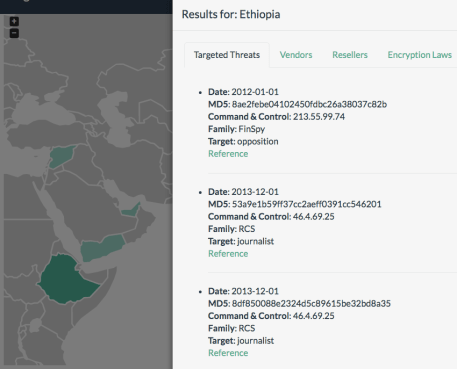
This Map Tracks Where Governments Hack Activists and Reporters
Andy Greenberg, Security, 5 June 2016
IN AN AGE when spies carefully hide their tracks through layers of obfuscation and proxy servers, locating the perpetrators of online surveillance is often nearly impossible. But the victims of these spying campaigns can sometimes be easier to place. And one open-source initiative has set out to map cases where state-sponsored malware campaigns target members of civil society, in an effort to show how governments use digital intrusions to control and disrupt their enemies around the globe.
 The Digital Freedom Alliance’s map showing the country of the target—not the origin—of malware attacks against different civil society groups. DIGITAL FREEDOM ALLIANCE

An informal group of security researchers calling themselves the Digital Freedom Alliance this week launched a collaborative software project to aggregate and map out government hackers’ attacks against journalists, activists, lawyers and NGOs around the world. The project, whosecode is hosted on Github, collects data about state-sponsored malware infections from public sources like the University of Toronto’s Citizen Lab, TargetedThreats.net, and security firms’ research. It then organizes that data into a map that breaks down the attacks by date, target type, the family of malware used, as well as the location of the command and control server used to coordinate each malware campaign.
The mapping project was conceived last year, when Citizen Lab malware researcher Claudio Guarnieri gave a talk at the Chaos Communications Camp conference in Zehdenick, Germany about how security researchers need to collaborate more when fighting governments’ digital oppression of activists and journalists. “We always lacked a starting point for people to get an understanding of what is going on…how countries are employing technologies to repress dissent,” he says. “Ideally, this would develop into a place where [we can] reconstruct narratives on what is happening in different regions of the world.”
The country with the most targeted attacks on the map, for instance, is India, with 145 documented attacks. That’s because of the sheer volume of attacks carried out by the Chinese government, Guarnieri explains, against the Tibetan exiles and separatist activists in the Indian city of Dharamsala. The next most targeted country on the map isSyria, where the brutal dictatorship of Bashar Al-Assad has been using malware to target opposition groups since the country devolved into a bloody civil war.
In addition to tracking victims, the Digital Freedom Alliance’s map also shows the location of companies selling surveillance technology, as well as the resellers of those tools, in an effort to map out the shady supply chain of targeted spying. That data, Guarnieri says, is sourced from surveillance tracking projects like BuggedPlanet.info andWikiLeaks’ Spy Files. The country with the most listed surveillance vendors, unsurprisingly, is the United States, though Guarnieri admits the list’s definition of “surveillance vendor” is rather loose: It includes not only the creators of the malware documented in the group’s map, but also other potentially nasty technologies like passive data collection tools and internet filtering software.
For now, the map’s data is no doubt incomplete. But Guarnieri hopes more researchers will contribute to it, and that it could someday soon serve as a resource for tracking and fighting back against government spying. “[It provides] relevant information to further investigate, identify victims, and perhaps rally campaigning if there are human rights abuses involved,” he says.
Guarnieri also intends the map project to serve as evidence that Western surveillance firms’ technology does in fact fall into the hands of dictators who use it to surveil innocent victims—a rebuttal to the claims of companies like the Italian firm Hacking Team. That Milan-based tech company denied its tools had been used for wrongdoing, but then a hack of its email server exposed that it had sold its products to repressive countries including Ethiopia, Egypt, Saudi Arabia, and Sudan. “I was tired of the Hacking Team-types claiming that there are no solid evidences of abuses, when there are plenty,” says Guarnieri. “You get most of them plotted in that map.”
Read more at:-
https://www.wired.com/2016/05/map-tracks-governments-hack-activists-reporters/#slide-2

The Unholy Alliance, Five Western Donors Shape a Pro-Corporate Agenda for African Agriculture, exposes how a coalition of four donor countries and the Bill and Melinda Gates Foundation is shaping a pro-business environment in the agricultural sector of developing countries, especially in Africa. unholy_alliance_web
Five Western donors including the Bill and Melinda Gates Foundation, the US, UK, Danish, and Dutch governments, are bankrolling the Enabling the Business of Agriculture (EBA) project, implemented by the World Bank. The EBA’s goal is to help create “policies that facilitate doing business in agriculture and increase the investment attractiveness and competitiveness of countries.”1 To achieve this, the EBA benchmarks areas including seeds, fertilizers, markets, transport, machinery, and finance, to determine whether or not countries’ laws facilitate doing business in agriculture. The EBA exemplifies a growing trend in international donors’ aid programs, which have become powerful instruments to impose a market-based, pro-private sector vision of agriculture. Following the 2007-2008 food price crisis, G8 members gathered at L’Aquila summit in Italy and pledged to support country-owned food security strategies. However, it did not take long for this commitment to give way to aid programs that, instead of supporting robust national agriculture policies, favor private sector-led and market-driven food systems. In 2012, the G8 members launched the New Alliance for Food Security and Nutrition (NAFSN), an initiative that gives a central place to agroindustry and agrochemical companies, to the detriment of family farmers.2 Africa, the site of NAFSN implementation, is a primary target of the pro-corporate push by several Western donors. The continent is marked by the proliferation of bilateral and multilateral initiatives to support the expansion of agribusinesses and the increased use of industrial inputs (synthetic fertilizers, pesticides, hybrid and genetically modified seeds, etc.). The US, UK, Danish, and Dutch governments are providing direct financing through business grants and other support mechanisms such as loans and insurance to agribusinesses operating in Africa. Often, the recipients of aid money are national companies with an assumed goal to combine aid with commercial interests. In parallel, rising amounts of taxpayers’ money is flowing into multilaterally funded entities such as the Alliance for a Green Revolution in Africa (AGRA), active in training, research, and advocacy around the use of hybrid seeds and chemical fertilizers. AGRA is also a vehicle used to manage multi-donor initiatives such as the Africa Enterprise Challenge Fund (AECF),3 which is investing in large-scale agricultural projects and industrial production of agricultural inputs. With the creation of the NAFSN, in which the EBA is entrenched,4 donors are increasingly conditioning their aid to African countries to policy reforms and measures that will facilitate the corporate takeover of their agriculture. The five donors of the EBA are spearheading an aggressive campaign, aimed at pushing to expand agribusiness activity in Africa through the takeover of land for commercial agriculture, opening of countries’ input markets, privatizing of seed systems, and reforms of agricultural trade and tax laws to boost corporate profit. The donors believe that an “agricultural transformation” based on global trade and agroindustry will increase economic growth and provide better incomes to farmers.5 But the impacts of such a transformation are likely to be devastating for the majority of African farmers. Rising pressure on land and natural resources; dependence on expensive and polluting agricultural inputs; increased vulnerability to climate shocks; criminalization of seed saving and exchange practices; and weakened government ability to support national agriculture are among the outcomes that the five donors investigated in this report will deliver to the continent.
Read more at:-
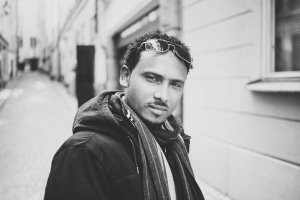

“But the government – of course, it is not a government, actually – is a group of gangsters and mafias, because if someone is making a group and that group is not representing the majority of the nation or the people, you could not say that that is a government. If the government is not elected by the people, for the people, you could not consider that as a government!”
Poet Caalaa Hayiluu Abaataa about why he wrote poetry about the oromo people who suffers oppression by the Ethiopian government. Caalaa Hayiluu Abaataa was jailed and tortured in Maekelawi, the notorious police station in Ethiopia, for writing poetry about the Oromo people who suffers oppression by the Ethiopian government. He now lives in exile in Sweden. Read his story here.
Filmed during Poesi på liv och död – exilen den verkliga utmaningen (Poetry on life and death – With life in exile as the real challenge), an event by Stockholm University. May 10, 2016 at Fanfaren Kultur Farsta, Stockholm, Sweden. To watch a full video from the event, click here.
Video by Untold Stories / Melody Sundberg.
Namoonni 51 ol Ogaden keessattii wayyaaneen ajjesamuuni gabaafame. Kan ajjeefamani keessa baayyeen dubartoota fi daa’imman ta’uun beekame.
(ONLF, 8 June 2016) — The Ethiopian Army wantonly massacred 51 civilians in Jama’ Dubad village near Gashamo town on June 5, 2016. The army indiscriminately opened fire on unarmed civilians in the village centre, shooting everybody in sight, not sparing women, children or the elderly. After the army started the massacre, many villagers run to the local mosque, hoping that they may be spared there. However, the Ethiopian army followed them there, shooting and killing them all. Then, the army torched the village, destroying all property, food and the water supplies of the village.
Many wounded civilians who managed to run away to the fields, are scattered and hiding in the fields. Some of the villages and many children are still unaccounted for. In addition, the Ethiopian army has abducted more than ten elders whose whereabouts are still unknown. The Ethiopian army has sent reinforcements and are currently occuppying villages along the border. This is an indication that the army intends to commit more massacres in order to create fear and stem any reaction from the local communities.
Just two months ago, the Ethiopian army massacred civilians in Dhaacdheer and Gaxandhaale villages near Galadi town in Wardheer region, killing scores of civilians. In Febraury 2016, the Ethiopian army and the Liyu Police militia destroyed Lababar village near Shilabo, killing more than 300 civilains and destroying the whole community in order to clear areas near the Jeexdin (Calub) Gas fields. In similar aggression the Ethiopian army killed many civilians near Bur-Ukur, Ferfer, Beledwayne and Hudur areas at the end of last year.
After committing crimes intended to extinguish the spirit and the humanity in Ogaden, Oromia and all communities in Ethiopia, the regime is now increasingly targeting other peoples along its borders and other neighbouring countries, specially those along the Somalia and Kenyan borders.
The Ogaden National Liberation Front categorically condemns the action of the Ethiopian regime and calls upon all peoples and parties in the Horn of Africa and the international community to condemn this heinous act and come to the aid of the affected innocent civilians.
Issued by
Ogaden National Liberation Front (ONLF)

Wayyaaneen karaa seraan alaatin gorgurtaa bondii biyya Ameerkaa keessatii kan rawwatte dolaara miliyoona 6. 5 waan seraa biiyyaati cabsiitef akkaa kaafaltu agoowoni Ameerkaa itti murttessan.
SEC: Ethiopia’s Electric Utility Sold Unregistered Bonds In U.S.
Washington D.C., June 8, 2016 (SEC) — The Securities and Exchange Commission today announced that Ethiopia’s electric utility has agreed to pay nearly $6.5 million to settle charges that it violated U.S. securities laws by failing to register bonds it offered and sold to U.S residents of Ethiopian descent.
According to the SEC’s order instituting a settled administrative proceeding:
“Foreign governments are welcome to raise money in the U.S. capital markets so long as they comply with the federal securities laws, including registration provisions designed to ensure that investors receive important information about prospective investments,” said Stephen L. Cohen, Associate Director of the SEC’s Division of Enforcement. “This settlement ensures that investors get all of their money back plus interest.”
The SEC’s order finds that EEP violated Sections 5(a) and 5(c) of the Securities Act of 1933. EEP admitted the registration violations and agreed to pay $5,847,804 in disgorgement and $601,050.87 in prejudgment interest. The distribution of money back to investors is subject to the SEC’s review and approval. Investors seeking more information should contact the administrator of the distribution, Gilardi & Co. LLC, at 844-851-4591.
The SEC’s investigation was conducted by Carolyn Kurr and Daniel Rubenstein and supervised by C. Joshua Felker. The SEC appreciates the assistance of the U.S. Department of State.
የኢትዮጵያ መንግስት በአሜሪካን ህገወጥ የቦንድ ሽያጭ በማድረግ የሰበሰበውን ገንዘብ እንዲመልስ ተወሰነበት። የአሜሪካን የቦንድ ሽያጭና ግዥን የሚቆጣጠረው ኮሚሽን ባቀረበው ክስ መሰረት የኢትዮጵያ መንግስት በአሜሪካን ባልተመዘገበ የቦንድ ሽያጭ የሰበሰበውን 5.8ሚሊዮን ዶላር ጨምሮ በድምሩ 6.5 ሚሊዮን ዶላር እንዲከፍል ተስማምቷል። በአሜሪካን ሀገር ከሚኖሩ ከ3,100 ኢትዮጵያውያን የተሰበሰበው ገንዘብ ለአሜሪካን መንግስት ይከፈላል።

Ethiopian Prime Minister Hailemariam Desalegn (left), walks alongside President Obama during the U.S. president’s visit to the African nation last July. Critics say Ethiopia has cracked down hard on the opposition, but makes modest gestures to give the impression it tolerates some dissent.
SIMON MAINA/AFP/Getty Images
The Oromo Federalist Congress, an opposition party in Ethiopia, represents the largest ethnic group in the country, the Oromo.
Yet its office in the capital Addis Ababa is virtually deserted, with chairs stacked up on tables. A chessboard with bottle caps as pieces is one of the few signs of human habitation. In a side office, the party’s chairman, Merera Gudina, explains why the place is so empty: Almost everyone has gone to prison.
The deputy chairman? Prison. The party secretary general? House arrest. The assistant secretary general? In prison. Six members of the party’s youth league? All in prison.
Critics of the Ethiopian government regularly land in prison. So why isn’t Merera Gudina, the chairman of the party and an outspoken critic of the regime, also behind bars?
The reason, he says, is what he calls “the game of the 21st century.” Less-than-democratic regimes are getting more sophisticated, and instead of completely crushing dissent, they seek to create the appearance of tolerance or even a multiparty democracy, explains Merera. (Ethiopians go by their first names).
In the case of Ethiopia, a strategy was laid out by the late former prime minister, Meles Zenawi, after the 2005 election, in which opposition parties won 32 percent of parliament and appeared poised to challenge the government.
“Wait for the opposition to grow legs,” Meles said in a meeting with top party officials. “And then cut them off.”
Merera says he is the current example of that strategy. He describes himself as a “floating head,” while the legs of his party — all his deputies, his candidates, his organizers — are either imprisoned or threatened.
Criticism On Human Rights
Human rights groups are extremely critical of Ethiopia, but it is a member of the international community in good standing.
“We are very mindful of Ethiopia’s history, the hardships that this country has gone through,” Obama said. “It has been relatively recently in which the Constitution that was formed, and elections put forward a democratically elected government.”
A number of human rights groups criticized Obama, saying he should have pressed much harder.
Shortly before Obama’s visit, Ethiopia released several noted opposition journalists and politicians. The deputy chairman of the Oromo Federalist Congress, Bekele Gerba, was among those freed, and he promptly flew to Washington to sound an alarm bell.
“Every one of us is in a very high risk,” he told NPR’s Michele Kelemen. “Because anybody who criticizes the government is always a suspect.”
Bekele said his wife, a high school teacher, was also forced out of her job because of his politics. Bekele declined to use this trip to the U.S. to stay and apply for asylum. Instead, he said, he was determined to go back to Ethiopia, no matter what would happen.
Opposition Figure Re-Arrested
Soon after his return, Bekele was arrested again, and remains in prison today. Bekele is considered a moderate and he counsels nonviolence. He used his free time in prison to translate the writings of Dr. Martin Luther King, Jr.
Merera, the party leader, says that targeting Bekele has a boomerang effect.
“When you are suppressing the moderate voice, then what you get is the radical voice,” he warns.
The arrest of moderates inside the country may be amplifying more radical rhetoric in the diaspora, such as rhetoric about “government overthrow” that Ethiopian officials are quick to highlight.
Genenew Assefa, a government spokesman, points out that Ethiopian opposition “tends to be extremist,” but also takes his own Justice Ministry to task for arresting so many opposition members.
“And then we put them in jail, and then it’s a vicious circle,” he says with a sigh. “And this is how it works. I personally, you know, would like to deal with this differently.”
He says that he would like Ethiopia to counter criticism with politics, not with police.
But Ethiopian politics appears to be moving away from democratic freedoms, not toward them. In last year’s election, the ruling party won 100 percent of the seats in parliament. Even the “floating heads” no longer have a token parliamentary seat.
Merera says that the Ethiopian strategy isn’t working.
“You can’t arrest everybody,” he says. He says that what is brewing is “an intifada (uprising), an Ethiopian intifada — even now, they don’t need leadership.”
Last November, ethnically Oromo regions of the country erupted in popular protests. Activists say 350 people have been killed, and thousands more arrested. There’s a growing fear that Ethiopia’s “cut off the legs” strategy is splitting the country.

John Vidal, The Guardian, 2 June 2016

NPR, 5 June 2016
When Ethiopia barred its best distance runner from competing in the 2016 Olympics, many saw it as an act of ethnic discrimination. Another runner from the same ethnic group says he was exiled.
MICHEL MARTIN, HOST:
If you are a betting person – and we’re not endorsing this – but if you are, it’s a safe bet that the gold in middle-distance running in this summer’s Olympics will go to Ethiopia or Kenya. That’s because those two countries dominate the 5K and the 10K. So it was a shock to the running world when Ethiopia announced its main national team will not include the world record holder in both those races. That’s three-time Olympic champion Kenenisa Bekele. Bekele says he is being discriminated against because of his ethnicity. Bekele is Oromo. NPR’s Gregory Warner tells us more about why other runners say ethnic discrimination casts a shadow over Ethiopian track.
GREGORY WARNER, BYLINE: The 23-year-old refugee I meet in Nairobi talks quietly as if to conserve energy. He’s thin and nervous. But there’s one name that can put a burst of joy on his face. That name – Kenenisa Bekele.
MOHAMED KEMAL: (Speaking Oromo).
WARNER: In fact, you smile when I even say his name.
KEMAL: (Speaking Oromo).
WARNER: This is Mohamed Kemal (ph). He’s also a runner. And he was 16 years old in 2008 when Bekele won gold medals in the 5K and the 10K races in Beijing.
(SOUNDBITE OF 2008 SUMMER OLYMPICS)
UNIDENTIFIED ANNOUNCER: And the awesome strength – the awesome, awesome speed. He’s untouchable once again. It’s a new Olympic record.
(APPLAUSE)
KEMAL: (Through interpreter) (unintelligible) Kenenisa is my role model. So always I’m thinking to be wise like Kenenisa.
(SOUNDBITE OF PAPERS RUSTLING)
WARNER: Kemal pulls out papers. They’re the finishing times for an Ethiopian half marathon in 2014.
So 1 hour 6 minutes 8 seconds – 86th.
Kemal’s time put him in the country’s top 100 that year. But before the race, he says, the coach of his running club had pulled him aside and told him to throw the race for another runner.
KEMAL: (Through interpreter) We have been told to make others too tired, but, at the finishing, to give the chance for the Tigrinya.
WARNER: Give the chance to the Tigrean, he says. Kemal is not of the Tigrean ethnicity. He’s Oromo.
KEMAL: (Through interpreter) I was discriminated because of I’m Oromo.
WARNER: Kemal refused to throw the race. He was tired, he says, of being passed over for international sponsors or forced to pay bribes for the chance to run just because of his ethnic background. But after he finished so well in the race, the furious coach told him he’d be barred from future competitions.
KEMAL: (Through interpreter) After this, things become serious.
WARNER: In November of last year, Ethiopia erupted in massive civil protest by Oromo, the country’s largest ethnic group. And their complaints were various – that their ancestral land was being taken, that their children were discriminated against in education and employment. They said that Oromo who didn’t adhere to the ruling party ideology were targeted. Thousands of Oromo were arrested, including Kemal. And when he was released, he snuck over the border to Kenya. At 23 he had chosen impoverished freedom over a running career.
So let me ask you – with everything that’s happened to you, will you watch the Olympics? And if you watch it, will you be rooting for Ethiopia?
KEMAL: (Speaking Oromo).
WARNER: Kemal’s answer is complicated. A win for Ethiopia in Rio would reflect positively on a national athletics program that Kemal feels is rotten. And his role model, Kenenisa Bekele, won’t be running. But the other Ethiopian runners are men and women that he knows and admires. How can he not cheer if they win?
KEMAL: (Through interpreter) When my colleagues won that’s – that race, I become excited.
WARNER: So you focus on the face and not on the flag?
KEMAL: (Through interpreter) Yes.
WARNER: But of course the headline, if that happens, will be Ethiopia clinches another gold. Gregory Warner, NPR News, Nairobi.
Related:-
Ethiopia’s Kenenisa Bekele says his exclusion from marathon team for Olympics is “unjust”https://t.co/IGolZrPeIe
In terms of MPI measurement, Ethiopia’s 87.3% of the population are identified as MPI poor, by far higher than Africa’s average (54%) and East Africa’s average (70%).
MPI Country Briefing 2016, Ethiopia
The 2016 Multi-Dimensional Poverty Index was published on 3rd June 2016. It now covers 102 countries in total, including 75 per cent of the world’s population, or 5.2 billion people. Of this proportion, 30 per cent of people (1.6 billion) are identified as multidimensionally poor.
The Global MPI has 3 dimensions and 10 indicators (for details see here and the graphic, right). A person is identified as multidimensionally poor (or ‘MPI poor’) if they are deprived in at least one third of the dimensions. The MPI is calculated by multiplying the incidence of poverty (the percentage of people identified as MPI poor) by the average intensity of poverty across the poor. So it reflects both the share of people in poverty and the degree to which they are deprived.

The MPI increasingly digs down below national level, giving separate results for 962 sub-national regions, which range from having 0% to 100% of people poor (see African map, below). It is also disaggregated by rural-urban areas for nearly all countries as well as by age.
Headlines from the MPI 2016:
This year’s MPI focuses on Africa:
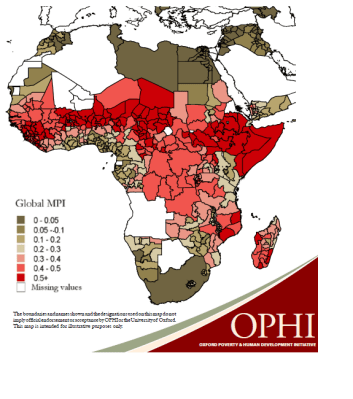
See here for my post on the MPI 2014. I’d be interested in your reflections on what MPI adds to the usual $ per day metrics, in terms of our understanding of development.
http://www.dataforall.org/dashboard/ophi/index.php/mpi/country_briefings

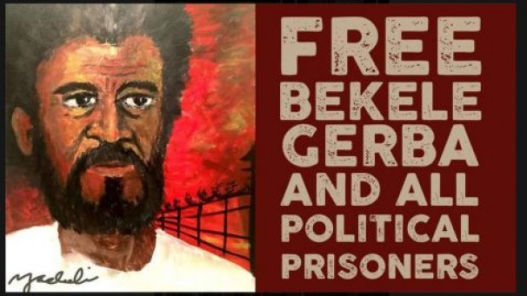
Prison police brings Bekele Gerba et.al to court barefoot, wearing only shorts and t-shirts
The police failed to bring Tesema Regasa and 15 others in the same file to the court
Mahlet Fasil, addisstandard, 3 June 2016
The Addis Abeba prison administration Qilinto prison police have this morning brought prominent opposition figure Bekele Gerba and the 21 others in the same file for a hearing at a court all barefoot. The detainees were also wearing mere shorts and t-shirts when they appeared at the Federal High Court 19th Criminal Bench here in the capital.
Once inside the court room the detainees, through Bekele Gerba, first secretary general of the opposition Oromo Federalist Congress (OFC), told the judges that the police have come to their cells in Qilinto, a prison in the outskirt of south of Addis Abeba, yesterday and stripped them all of their clothes and shoes to prevent them from wearing black upon appearing in court this morning.
On May 11 the police have failed to bring the 22 detainees, all charged with Ethiopia’s infamous Anti-Terrorism Proclamation, ATP, to the court because all them were wearing black to protest their arrest. However, the police have told the court this morning that they didn’t bring defendants during the last hearing because they have not received a letter from the court. The judge told the police at the court this morning that the police officers on duty on May 11 must appear in court to explain the real reason.
Bekele also told the court that he and his co-defendants were subjected to torture and other forms of physical and psychological abuses inside the prison and requested the judge for a change of prison. But the judge denied the request.
The 22 defendants were all arrested between November and December 2015, shortly after the start (and in connection with) Oromo protests in November that gripped the nation for the next five months. Defendants include several members of OFC, students and civil servants who came from various parts of the Oromia regional state.
Prosecutors have charged the 22 with various articles of the ATP. The charges include, but not limited to, alleged membership of the banned Oromo Liberation Front (OLF), public incitement, encouraging violence, as well as causing the death of innocent civilians and property destructions in cities such as Ambo and Adama, 120km west and 100km east of Addis Abeba during the recent Oromo protests in Ethiopia. This morning all of the defendants have presented a written defense statement. The court adjourned the next hearing until June 27.
In a related development, the police at Qilinto have failed to bring this morning 16 other individuals, all from the Oromia regional state and were detained in connection with the #OromoProtests, to the court. The 16 detainees, under the file name of Tesema Regasa were first brought to the court on April 26. They were subsequently charged with the ATP and have, last month, presented their defense statements to the court. Today’s court appearance was adjourned to hear prosecutors’ counter response for the defense statements. The court re-adjourned the next hearing until June 15.
Wondimu Ebbissa, who is representing Bekele Gerba et.al, said last month that more than 80 defendants, including Bekele Gerba et al, were held in Qilinto and a further 97 were believed to be either at the Ethiopian Federal Polcie Force Central Bureau of Criminal Investigation, known in Amharic as Ma’ekelawi, or the Addis Abeba police prison facility near it. All of them are detained in connection with #OromoProtests.
In a separate development, the Federal High Court 19th Criminal Bench yesterday adjourned the hearing for Yonatan Tesfaye, former spokesman of the opposition Semayawi (Blue) Party, until June 21. The court received Yonatan’s defense statement in its hearing and adjourned the next hearing to receive prosecutor’s counter statement.

Last month prosecutors have charged Yonatan with ATP and have presented as evidence the defendant’s Facebook status updates during the #OromoProtests. The charges against Yonatan allege that he was posting inciting message on his Facebook, encouraging protesters to loot and destruct properties. Charges also allege Yonatan was calling for regime change through violence.
Prison police brings Bekele Gerba et.al to court barefoot, wearing only shorts and t-shirts
Related from social media:-
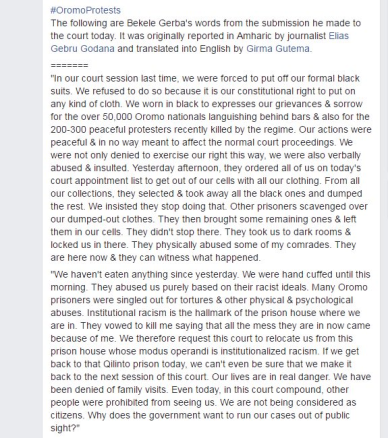
Guyyaa har’aa Obboo Baqqalaa Garbaa Kaanaateeraa keessaa; Kofoo gabaabduu fi miila duwwaa mana murtiititti dhiyaatan;
” Gaggeessitoonni Bulchiinsa Manneen Sirreessaa hamma hin jijjiiramnetti jiruun keenna rakkoo guddaa keessa jira; beellama itti aanuf nabsedhaanuu argamuu keenna ni shakkina”
” Gara kutaa dukkanaatti fuudhanii nuun deeman. Nu keessaa gartokkee keenya akka malee nu tuman”
” Akka Lammii Biyyattiitti lakkaawwamaa hin jirru”
Obbboo Baqqalaa Garbaa
—————
” Beellama keenna isa dabre irratti uffata gurraacha mana murtiitti dhiyaachudhaaf uffanne baafadhaa nuun jedhan. Nutis hin baafannu jennee mormine. Uffata barbaanne kaawwachuun mirga heera biyyattiittiin nuuf kenname jenneen. Nuti uffata gurraacha kan uffanneef Lammileen Sabaan Oromoo ta’an Kuma 50 ol mana hidhaa keessatti kan argamaniifii dabalataan waggaa kana keessatti qofa lammiilen Oromoo 200 – 300 ajjeefamuu isaaniitiif gadda nutti dhagayame ibsuuf ture. Gochi nuti raawwanne hundi seera fi hojmaata mana sirreessaa haala hin tuqneen ture. Kuni gonkumaa hin ta’u jedhanii nu dhoowwan, nutti dallanan, nu sodaachisuudhaaf yaalan, nu arrabsan.
” Kaleessa sa’aa booda namoonni mana murtiitti dhiyaannu adda baafamne akka dhufnu godhamne. Eddoo jirruu uffata keenya qabannee akka baanu godhame. Uffata keenya keessaa uffata gurraacha barbaadanii fudhatan. Nutis ” uffata keenya hunda isaa nuuf deebisuu qabdu jennee gaafanne. Isaanis gara mana dukkanaa fuudhanii nuun deeman. Nu keessaayis namoota tokko tokko garmalee tumaadhaan dararan. Namootni tumamanis asuma waan jiraniif dhadacha fuulduratti waan irra ga’r kana ibsachuu ni danda’u. Uffatni keenya hundi isaa lafarratti waan bittinneeffameef hidhamtoonni biroo kan barbaadan keessaa fudhatan. Isa hafe fidanii kutaa keenya keessatti darban. Hanga har’aatti midhaan hin nyaanne. Harki keenya hamma ganamaatti Kaateenaadhaan hidhamee ture. Gochi suukaneessaan nurratti raawwatame hundi kan Oromummaa keenyarratii xiyyeffateedha. Lammiin sabaan Oromoo ta’e qofti filatamee garmalee tumamaa jira. Eddoon itti hidhamne kan ilmi namaa sababa sabummaa isaatif qofa itti adabamuudha. Anaanis ‘ Kan kana godhu sihi, si arganna’ naan jedhanii jiru.
Manni murtii eddoo turtii biraa akka nuuf mijeessu ni gaafanna. Ammas yoo gara mana hidhaa Qiliinxootti nu deebistan waan nurra ga’u hin beeknu. Sodaa guddaa qabna. Hoggantoonni mana sirreesichaa hamma hin jijjiiramnetti nabsee keennaaf ni sodaanna. Haala kanaan Beellama itti aanuf nabseedhaan argamuu danda’uu keenyas amantii hin qabnu. Maatin keenya akka nu hin daawwanne dhorgamaa jiru. Har’as erga dallaa mana murtii keessa seennee booda Namootni akka nu hin argine godhameera. Wanti akkanaa kuni mootummaadhaaf maal isaaf godhaa? Akka lammiitti lakkaawwamaa hin jirru.”
Ethiopia: Detainees beaten and forced to appear before court inadequately dressed
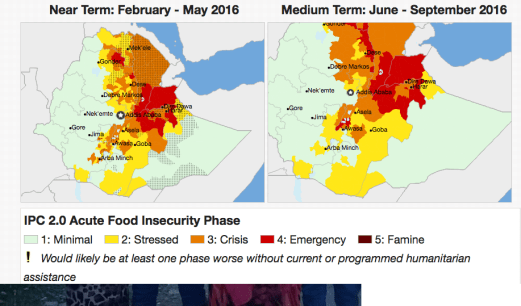
ETHIOPIA: The worst drought in 50 years has tripled humanitarian needs since early 2015. More than 2.3 million households need immediate agricultural support. The number of people who need emergency health interventions nearly doubled in three months, from 3.6 million in December 2015 to 6.8 million in March 2016. A total of 10.2 million people still need food assistance, and this number is expected to grow in the second half of the year. There are an estimated 2 million additional ‘ad hoc beneficiaries’ – people needing assistance outside the original plan. Malnutrition rates are staggering, with over one third of Ethiopia’s woredas (districts) officially classified as facing a dire food security and nutrition crisis. A total of 2.5 million children under age 5, pregnant women and nursing mothers need treatment for moderate acute malnutrition . It is estimated that 20 per cent of the expected 435,000 severely malnourished children will develop medical complications that need intensive life-saving medical treatment in hospital-based therapeutic feeding centres….
OCHA_ElNino_Monthly_Report_2Jun2016
The humanitarian impact of the 2015-2016 El Niño remains deeply alarming, now affecting over 60 million people. Central America, East Africa (particularly Ethiopia), the Pacific and Southern Africa remain the most affected regions. The El Niño phenomenon is now in decline, but projections indicate the situation will worsen throughout at least the end of the year, with food insecurity caused primarily by drought not likely to peak before December. Therefore, the humanitarian impacts will last well into 2017 . El Niño has affected food security and agricultural production, with cascading effects on livelihoods, health, water, sanitation, education and other sectors. This is due to flooding, disease outbreaks and malnutrition, disruption of health and education services, and overall increased mortality. In Eastern and Southern Africa,¹ some 50.2 million people are food insecure, many due to drought exacerbated by El Niño or due to a combination of drought and conflict. This number is expected to increase significantly towards the end of the year. Drought, flooding and extreme weather events caused by El Niño affect women and girls in particular ways which must be understood and incorporated into humanitarian and development interventions.
This year’s El Niño is taking place in a world already dramatically affected by climate change. More extreme weather events are expected, and climate change may increase the frequency and severity of future El Niño events. These events hit the poorest communities hardest. This means that, in addition to responding quickly to critical food, water, nutrition, health and livelihoods requirements, efforts must be focused on building climate resilience and the capacity to respond to future shocks.
The likelihood of a La Niña developing by September 2016 has increased to 75 per cent². However, some uncertainty remains, as forecasts made at this time of the year typically have less accuracy than those made during the second half of the year. The World Meteorological Organization’s El Niño/La Niña Update3 of 12 May indicates a return to ENSO-neutral conditions in May 2016, with odds increasing of La Niña development in the third quarter. The specific impacts of La Niña are difficult to predict, but it typically brings extreme weather to the same regions most affected by El Niño, where people’s coping capacities have already been eroded. Areas now experiencing drought could face flooding, and areas that have seen excessive rainfall with El Niño could experience drought. This means that La Niña preparedness and early action need to be built into El Niño response and recovery efforts, and development actors should increase risk and vulnerability-reduction efforts in priority areas, including by reprioritizing existing development funding to mitigate the risks.
Several additional countries have finalized costed response plans since the last Global Overview, raising the funding request to almost US$3.9 billion. Response plans with requests for international assistance have been completed by Governments and/or humanitarian partners in 19 countries, with other plans still being finalized. Since mid-2015, the Central Emergency Response Fund (CERF) has allocated over $119 million to 19 countries. Reflecting recent pledges and new funding requests, the current funding gap is almost $2.5 billion. The Southern African Development Community (SADC) is expected to issue a regional appeal in June 2016, based on new crop assessments completed in May/June, which is expected to increase the funding request. The food security and agriculture sector is the worst affected by El Niño, with funding requests comprising almost 80 per cent of all national and humanitarian response plans.
UN Office for the Coordination of Humanitarian Affairs:
To learn more about OCHA’s activities, please visit http://unocha.org/.

Date:21 June 2016Time: 9:00 AM
Finishes:21 June 2016Time: 7:00 PM
Venue: Russell Square: College Buildings Room: Khalili Lecture Theatre
Type of Event: Symposium
In late July of 2015, President Barack Obama praised Ethiopia as a “model of development,” an example of a young democracy and an effective ally of the West in the war against terror. Three months later, the country was rocked by massive protests in the Oromia region demanding an end to the one-party stranglehold on the political landscape, ethnic discrimination in allocating national resources, and the rule of violence in Ethiopia. In response, the state turned to coercion and violence to put down the uprising.
The dramatic turn of events has exposed a structural weakness in the Ethiopian state, one which John Markakis has called the failure of nation-building. After the #OromoProtests, the Ethiopian state is unlikely to continue business as usual. First, the use of external endorsement as a leverage to seek internal legitimacy has limits. Second, state violence further delegitimizes the state, necessitating further coercion. In this cycle of violence, the state is unlikely to win a protracted conflict against its own population. In time, the state recedes, extra-state entities will step up to supplant the state and provide social services and security for its populations. In this situation, state collapse becomes imminent.
A one-day symposium at SOAS, University of London, will explore how apparently strong state institutions eventually produce weaknesses that in turn initiate tendencies towards coercion, illegitimacy and fragility. By addressing this phenomenon historically and ethnographically the symposium intends to examine new frameworks for understanding the Ethiopian state and the changing contours of political legitimacy.
Contact email:cas@soas.ac.uk

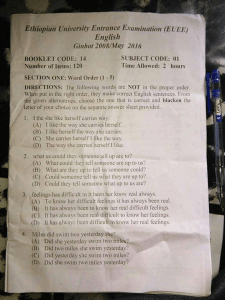



Jimma University organized the first international conference on Oromo studies under the grand theme ‘Oromo Knowledge Systems and Practices.’ The conference was held from 21st – 22nd May, 2016 at Jimma University College of Agriculture and Veterinary Medicine Conference Hall. It was attended by dignitaries, representatives from several government institutions, university presidents, scholars extensively engaged in Oromo studies and Aba Gedas’ from different parts of Oromia National Regional State.
The conference is aimed at bringing together scholars from various disciplines and institutions that are engaged in Oromo studies and also creating the opportunity to identify core thematic research areas, generating scholarly views to identify core activities to be undertaken in the future and indicating directions to policy makers. It is also aimed to serve as an initiative for collaboration among universities in the country and other governmental and non-governmental organizations.
The conference was started by the blessing of all Aba Gedas present at the conference who colorfully expressed their good wishes and blessings as per the Oromo culture. Professor Fikre Lemessa, President of Jimma University, while welcoming all the guest and participants of the conference underscored that initiating a scientific discourse on Oromo studies was pretty well unimaginable a century back while the Oromo people had unfathomable oral traditions and were also farsighted and endowed with hospitality.
He also underlined that the knowledge systems and practices exercised by the Oromo people has not been recognized at national and international level, despite the language is spoken by many other ethnic groups in Ethiopia and the Oromo people practiced a democratic system of governance during the time when democracy was a luxury for significant portion of the world population and western ideals of democracy has not be as ubiquitous as today. It is in line with recognizing these historical facts that JU launched the Institute of Oromo Studies. The community is in the ambit of JU’s philosophy and it fully affirms the very important benefit of taking indigenous knowledge of the community in to account as an engine of scientific exploration. Therefore, according to him, the institute will serve as an interdisciplinary, extra- departmental and interuniversity collaborative institute with the primarily focus on research and outreach making the community as orbit of attention. He has also firmly stated that, the conference will be a landmark in Oromo Studies to open the doors for well-organized and high quality research in the area.
Present on the occasion and guest of honor of the event was Dr. Kaba Urgessa, Minister of the F.D.R.E ministry of Education. He stated that the Ethiopian government has been relentlessly endeavoring and investing huge sum of capital on building facilities and building human resource capacity to ensure access to quality education. Education is the key for the aspired for national development and the government is investing to its highest possible capacity to improve access and quality of education in the country. He further underlined that, Universities are fully mandated in their three major functional areas of teaching, research and community services and as a result should give sufficient attention to reflect the culture, values and practices of their surrounding community. He further stated that, the existing constitution and federal state arrangement has created a fertile political ground and a level field for the representation, refection and practice of the values and cultures of the diverse ethnic groups in the country.
In this regard, according to him, JU has been on the right path and can be exemplary to all other higher education institutions in the country, as it took the initiative to open the department of Afan Oromo in 2002 and yet again pioneered the launching of the Institute of Oromo Studies currently. The institute will definitely play a crucial role in promoting the culture of the Oromo people on the basis of scientific evidences and will also contribute in initiating network of scholars and institutions to expand the efforts with hands joined from all relevant stakeholders. He finally affirmed that the Ministry will fully support JU to strengthen the institute and solicit efforts from other similar institutions.
At the subsequent stages of the conference, forty seven papers were presented by different prominent scholars in the plenary and four parallel sessions. Among the scholars presented lead paper at the conference were Professor Ephraim Issac, Professor Tessema Ta’a, Dr. Taddesse Berisso, Dr. Chikage Oba-Smidt and others.
At the final stage of the conference, Mr. Kora Tushune, V/P for Business and Development of JU chaired the session that discussed on the way forward to glean out outstanding issues which have to be emphasized for the successful accomplishment that aspired for targets of the institute at institutional, national and international level. Mr. Kora presented a comprehensive list of proposals that needs due attention to enrich the institute, sustain its efforts and take it further steps to meet its set forth goals. The points he raised were instrumental in shaping the discussions and later on substantiated by the panelists of the session and the participants. Finally, it was agreed that, the institute should target the production of high quality research outputs and dissemination, ensure scientific and evidence based promotion of the Oromo cultural values and practices, gather all research outputs and books at national and international level to organized an archive of Oromo studies and support future young researchers, form robust network of institutions and scholars to extend the efforts initiated by JU and institutionalize the efforts to a broader level of collaboration to bring international actors on board.
The Conference was wrapped up after certificates were awarded to paper presenters and institutions sponsored the workshop and with a closing speech by Dr. Taye Tolemariam, V/P for Academic Affairs of JU who extended his gratitude for participants from abroad and within Ethiopia and organizers of the workshop. He has also underlined the importance of giving special emphasis on the outstanding issues suggested by participants and panelists to register sustained success by the institute in the country and beyond.
JU hosts the First International Conference on Oromo Studies
Jimma University hosts the First International Conference on Oromo Studies

13 June – 1 July 2016, Geneva, Switzerland
Item 4 – Human rights situations that require the Council’s attention
May 29, 2016
(HRLHA) – Ever since November of 2015 and still going on are serious human rights violations in Oromia Regional State of Ethiopia. Peaceful protestors against the so-called ” Addis Ababa Integrated Master Plan” came to the streets in Oromia in November to express their grievances about the “Addis Ababa Integrated Master plan” and were met with brutal crackdowns. An estimated 500 plus Oromos have been killed by the Ethiopian Government force. The Ethiopian Government deployed its military and applied excessive force against the unarmed civilians to quell the dissent. The Oromo nation protested against the “Addis Ababa Integrated Master Plan” because:
The recent deadly violence against Oromo peaceful demonstrators staged against the so called “Addis Ababa Integrated Master Plan”- violence that has already claimed over 500 lives, including children and senior citizens along with more than 20,000 – 30,000 imprisoned and more disappeared- has also attracted the attention of many donor countries such as the USA whose Department of State has condemned the excessive military force against the peaceful demonstrators, (see in table 1)
Various organizations, including government agencies ( EU parliament, UN Experts), international, regional and domestic human rights organizations (HW, AI, HRLHA) and international mass media such as BBC, CNN, France 24 have reported on the recent violations in Oromia Regional State of Ethiopia, (see in Table 2)
Table 1 – Government Agency’s Report
| Reporter | Report Description | Report Date |
| The White House Office of the Press Secretary | Statement by National Security Council Spokesperson Ned Price on the Arrest of Journalists in Ethiopia | December 30, 2015 |
| US Department of State | The United States Concerned By Clashes in Oromia, Ethiopia | December 15, 2015 |
| EU Parliament | European Parliament resolution on the situation in Ethiopia | January 21, 2016 |
| UN Experts | UN Experts Urge Ethiopia to halt violent crackdown — | January 21, 2016 |
Table 2- Human Rights Organizations’ Report
Recommendation:
Recalling that the Universal Declaration of Human Rights guarantees the right to life, liberty and security of person, freedom of opinion and expression, freedom of peaceful demonstration and assembly,
Recalling further that the Universal Declaration of Human Rights prohibits torture and cruel, inhuman or degrading treatment or punishment, arbitrary arrest and detention,
The HRLHA urges the United Nations Human Rights Council to raise concerns about the serious human rights abuses presently taking place in Oromia.
The HRLHA also calls upon the UN Human Rights Council:



Press Release on the occasion of 14th Commemorative anniversary of Sidama Loqqee Massacre and the Massacre of the other civilians.
May 30, 2016, London
The repeated massacres and genocides of past 25 years that the TPLF’s barbaric regime has committed on unarmed civilians of all regions-and the ongoing indiscriminate massacres it is committing now are likely to continue unabated for a long time if the peoples in Ethiopia remain fragmented, divided and refuse to take the responsibility of confronting and stopping this criminal regime. Failure to do so has already unquestionably contributed to the longevity of the regime.
We, the PAFD member organizations envisage a dynamic and flexible approach with potential of accommodating the interests of all stakeholders without any differences and without actually dictating our own agendas for all the peoples in Ethiopia. This will allow all to move forward in unison in their strides towards justice, democracy and genuine self-determination, which is practically denied by the current regime. Moreover, we strongly believe that this is the only way forward to stop the ongoing genocide, to restore the rule of law, human dignity and pride and democratic order in Ethiopia.
To be able to do so, all the peoples in Ethiopia and their respective organizations must put their differences aside and unite strategically in order to end the suffering of all perpetrated by the TPLF led EPRDF’s brutal regime.
Today’s Sidama Loqqee massacre 14th commemorative anniversary isn’t unique to Sidama nation and isn’t a past history. It has been committed on tens of thousands of civilians in Ethiopia from Amhara, Afar, Benshagul, Hadya, Kambata, Ogaden Somali, Omo, Oromia, Sidama, Shakicho and the rest of regions of Ethiopia. And it is ongoing in Oromia, Ogadenia, Gambella, Konso, Omo Valley and the rest of regional, Zone and district levels.
Unconditionally condemning the past and ongoing genocides and massacres, the PAFD calls upon all organizations and peoples in Ethiopia to be united, move forward and stop the regime brutalizing them all.
PAFD also urges the international and regional communities to stand on the side of the people in order to stop the ongoing blatant human rights violations and hold the perpetrators into account both locally and in the international arena
PAFD salutes the indefatigable and resilient spirits of the Sidama Loqqee martyrs and all the other civilians who have been the victims of past and ongoing massacre by current callous regime in Ethiopia.
Finally, PAFD promises that all those wronged souls may rest in peace and that their valuable lives will be not be lost in vain. It will continue fighting for justice and democracy and righting the wrongs committed against them and the other living multitudes. PAFD will never forget your courageous and honorable sacrifices for generations to come.
PAFD Executives, May 30, 2016, London

About six dozen confirmed and several dozen unconfirmed Sidama civilians have been indiscriminately gunned down in broad day lights by Ethiopian armed forces on May 24, 2002 in Sidama land whilst peacefully protesting government’s continued denial of constitutionally guaranteed rights to regional self-administration. The Sidama of all walk of lives have staged on a peaceful demonstration in Hawassa’s outskirts village known as Loqqee, on early hours of the aforementioned date after fully satisfying the constitutional requirements rightly stipulated in incumbent’s constitution whilst undertaking such publically guaranteed democratic privileges. Over 300 have been seriously injured and the other several hundreds have sustained minor injuries.
Disallowed to be collected by their love ones’, the dead bodies of the Sidama victims have been left for days to be devoured by by hyenas during the period of 24-48 hours’ strict curfew imposed in entire Sidama land following the Loqqee massacre. Over 15,000 Sidama civilians from all over the Sidama districts and villages have been also rounded up to be indiscriminately mass arrested and tortured; as the military personnel were allowed to roam on the streets and villages -literally terrorizing the entire nation.
The Tigray People’s Liberation Front (TPLF/EPRDF’s) government under the leadership of late PM Meles Zenawi has meticulously planned and centrally coordinated the Sdiama Loqqee massacre. The current TPLF/EPRDF’s PM, Hailemariam Desalegn -the then Southern Ethiopian regional State president has been given the responsibilities of stage-managing of the Sidama Loqqee massacre and has been also ordered to chair a pre-massacre extraordinary urgent meetings of May 23, 2002. Assigned by late PM, federal government officials, regional and Sidama Zone politicians numbering 21 participants have taken part in the said stage-managing meeting of the massacre in the eve of May 24, 2002 Loqqee massacre in Hawassa (the Sidama capital). They all but two Sidama participants have agreed to shoot and kill all Sidama civilians if they go on with demonstration in the following morning. The aforementioned massacre has taken place under such deliberately and clearly targeted killing of the Sidama civilians who have done no wrong but attempted to exercise their constitutional guaranteed rights.
The Sidama nation is globally marking the said 14th commemorative anniversary of the Sidama Loqqee massacre whilst the nation is still languishing under TPLF’s brutally oppressive regime seeking the way out of it with the rest of Ethiopians. The nation commemorates the 14th anniversary of its sons and daughter’s massacre in the midst of further government orchestrated impoverishment, displacements of millions of Sidama peasants, deliberately imposed subjugation, economical and politico-social marginalization. More importantly, the nation is commemorating the 14th anniversary with the rest of subjugated and massacred Ethiopians with renewed sense of hope and determination to bring those who have massacred the Sidama civilians and the other Ethiopian civilians to justice.
The London conference of May 30th 2016 Sidama Loqqee 14th commemorative anniversary and other Ethiopians massacre commemorating event asserts the fact that the future directions of peoples of Ethiopia depends on us all. The massacre is ongoing in Oromia, Ogadenia, Amhara, Gambella, Benshangul, south Omo and the rest of Ethiopia. Therefore, we call upon all Ethiopians to join us in fighting of the repressive regime to bring about lasting and genuine solution beneficial to all Ethiopians.
To date no person from federal to regional and Sidama Zone level has been held accountable for the Sidama Loqqee massacre. Instead, those who have been fully involved in planning, stage-managing and massacring of the Sidama civilians have been uplifted and rewarded with more powers, financial packages and privileges. The SNLF categorically condemns the brutal action of the TPLF’s barbaric regime and calls upon all democracy loving Ethiopia related politicians and the entire peoples of Ethiopia to be united to fight the regime enslaving us all with rigor and determination.
We never forget the Sidama Loqqe massacre victims and the cause for which they have sacrificed their precious lives. We also never forget the Oromo, Ogadenia, Amhara, Gambella, Benshangul and the rest of Ethiopians who have been massacred by TPLF/EPRDF’s brutal regime during its 25 years of reign of terror.
We salute the Sidama Loqqee Massacre Victims and the rest of Ethiopian people’s victims. May your souls rest in peace whilst we fight for justice to prevail on your behalf.
SNLF, May 30, 2016
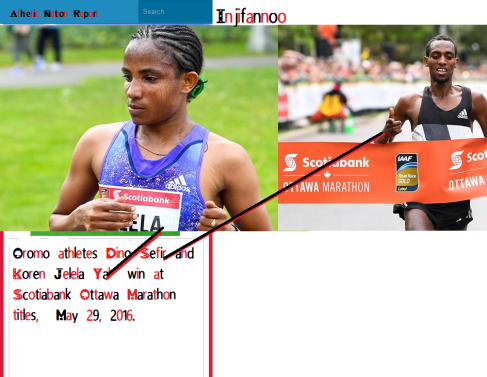
Oromo athletes Dino Sefir and Koren Jelela Yal beat the heat and they beat the fields to win Scotiabank Ottawa Marathon titles, Sunday, May 29, 2016. They drifted to the men’s and women’s titles and their respective first-place bonuses of US $30,000.
Under warm and humid conditions Dino Sefir ran away from what had been considered a very tightly competitive group to win in 2:08:14. The 2012 Olympian outlasted pacers who reached only 25km before dropping out, as well as his countryman, a 19-year-old Tola Shura Kitata, to earn himself the victor’s laurels. Kitata, who burst onto the scene a year ago after running 2:08:53 in his marathon debut in Shanghai, was second in 2:10:04 with Kenya’s Dominic Ondoro third in 2:11:39.
Following Jelela to the end of the official 42.195-kilometre course were 2015 champion Aberu Makeria (2:29:51) and two other Oromo athletes, Sechale Delasa (2:32:46) and Makida Abdela Hordofa (2:34:29).
More at:
http://www.ottawasun.com/2016/05/29/ottawa-marathon-winners-ethiopias-dino-sefir-and-koren-jelela
This is the answer to a Parliamentary Question about the Ethiopian government’s response to the Oromo protests and the credibility of the Ethiopian Human Rights Commission into the way in which these were handled.
Martin
Baroness Anelay of St Johns, the Foreign and Commonwealth Office, has provided the following answer to your written parliamentary question (HL29):
Question:
To ask Her Majesty’s Government what assessment they have made of whether the Ethiopian Human Rights Commission is a credible body to investigate human rights violations committed by the Ethiopian security forces in their response to the Oromo protests. (HL29)Tabled on: 18 May 2016
Answer:
Baroness Anelay of St Johns:The British Government remains deeply concerned about the handling of demonstrations in Oromia and the reported deaths of a number of protestors, and has repeatedly made representations to the Ethiopian Government over the ongoing situation in Oromia. We will continue to monitor the situation closely and raise our concerns with the Ethiopian Government, including on the use of force.
The Ethiopian Human Rights Commission (EHRC) has been appointed to look into the handling of the protests in Oromia. We will not pre-judge the outcome of their investigation and we await the publication of their report. We will continue to urge the EHRC and the Government of Ethiopia to ensure that their report is credible, transparent and leads to concrete action. We will take a view on what further lobbying, if any might be appropriate following the publication of the EHRC report.
Date and time of answer: 26 May 2016 at 15:27.
This is the answer to a Parliamentary Question about the Ethiopian government’s response to the Oromo protests and the credibility of the Ethiopian Human Rights Commission into the way in which these were handled.
Martin
Baroness Anelay of St Johns, the Foreign and Commonwealth Office, has provided the following answer to your written parliamentary question (HL29):
Question:
To ask Her Majesty’s Government what assessment they have made of whether the Ethiopian Human Rights Commission is a credible body to investigate human rights violations committed by the Ethiopian security forces in their response to the Oromo protests. (HL29)
Tabled on: 18 May 2016
Answer:
Baroness Anelay of St Johns:
The British Government remains deeply concerned about the handling of demonstrations in Oromia and the reported deaths of a number of protestors, and has repeatedly made representations to the Ethiopian Government over the ongoing situation in Oromia. We will continue to monitor…
View original post 109 more words
The ruling regime, that appears to be more concerned with its international image than the suffering of those in need, has presented an ambiguous, contradictory picture of the famine.
Millions of the poorest, most vulnerable people in Ethiopia are once again at risk of starvation. Elderly men and women, weak and desperate, wait for food and water; malnourished children lie dying; livestock, bones protruding, perish.
According to a statement issued by the World Food Programme (WFP) on 6th February, over 10 million of the most vulnerable require urgent humanitarian assistance. This figure was published in the Joint Government and Humanitarian Partners’ Document (HRD) in December last year, and does not take into account the seven and a half million people who annually receive support from Ethiopia’s Productive Safety Net Programme – PSNP, (established in 2005 to enable, “the rural poor facing chronic food insecurity to resist shocks, create assets and become food self- sufficient), taking the total in need to almost 18 million. The worst affected areas, according to USAID, are the pastoral areas of Afar and Ogaden Region – where people rely totally on their livestock – and the agricultural lowlands of East and West Haraghe – close to the capital Addis Ababa.
The WFP explain that the level of humanitarian need in Ethiopia has “tripled since early 2015…caused by successive harvest failures and widespread livestock deaths. Acute malnutrition has risen sharply, and one quarter of Ethiopia’s districts are now officially classified as facing a nutrition crisis.” With a shortage of food, families are forced to make children drop out of school to take up menial jobs to survive; such children, lacking a decent education, are unable to find well-paid jobs in adulthood, and so the spiral of exclusion, poverty and deprivation continues.
Poverty and Chronic Food Insecurity
Ethiopia is a large country (385,925 sq. miles), with a population of just over 101 million (13th largest in the world), which is growing at a yearly rate of around 2.5% (over double the world-wide average). Conflicts resulting in migration from the neighbouring states of Sudan, South Sudan, and Eritrea has brought an influx of refugees and asylum seekers, which according to USAID amount to more than 733,000.
More than half the population live on less than $1 a day; over 80% of the population live in rural areas (where birth-rates are highest), and work in agriculture, the majority being smallholder farmers who rely on the crops they grow to feed themselves and their families.
The people of Ethiopia have suffered chronic food insecurity for generations: the major reason, as is the case throughout the world, is poverty. Other causes are complex; some due to climate change, others result from the ruling regime’s policies. Action Aid (AA) reports that unequal trading systems are a factor. The Ethiopian government purchases crops from farmers at low, fixed prices. International organisations encourage Ethiopia to produce cash crops to export, which reduces the land available for growing domestic crops – yes, Ethiopia – where millions rely on food aid every year – exports food. The country’s top exports are Gold (21%) Coffee (19%), vegetables and oily seeds, followed closely by live animals and khat – a highly addictive narcotic.
The agricultural system itself is another major cause. Individuals do not own land; it is assigned, AA states, “according to the size of a family, and redistributed every few years.” This means that every time land is redistributed “it is divided between more people”, so each farmer gets less. The lack of investment, combined with the need for large yields from a small area, leads to soil degradation, resulting in poor harvests.
The Oakland Institute (OI) in their report on the country’s land sales makes clear that drought (15 droughts since 1965), state-fuelled armed conflict, as well as “inappropriate government policies (land tenure, access to markets, etc.), rapid population growth and lack of infrastructure,” add to the list of causes.
Land grabbing and hunger
Since 2008 the EPRDF government has been leasing huge amounts of fertile agricultural land to so-called “foreign investors’’: international corporations, domestic agents, fund managers, and nations anxious to secure their own future food security.
Detailed research by the OI in 2011 estimated that “3,619,509ha of land have been transferred to investors, although the actual number may be higher.” Incentives to investors include exemption from import taxes, income taxes and custom duties as well as ‘easy access to credit’; the Ethiopian Development Bank will contribute up to 70% towards land costs – which are extremely cheap to begin with.
Land is sold with the understanding that it is totally cleared of everything – including people, by government forces. Indigenous communities, who have lived on the same land for generations are displaced and herded into camps – the universally condemned ‘Villagization’ programme. OI state that over a million people have been affected, and that, “the loss of farmland, the degradation and destruction of natural resources, and the reduction of water supplies are expected to result in the loss of livelihoods of affected communities.” Despite this, the ruling regime maintains that the land sold – all land is state owned (with formal and informal land rights) – is unused, and is being leased off ‘without affecting farmers’.
Industrial size farms have been built and foodstuffs (not eaten by the native population) grown for export, – back to their homeland – India for example. Very little, if any, of the food grown is going into the Ethiopian food market, and there are attractive government incentives in place to ‘ensure that food production is exported, providing foreign exchange for the country at the expense of local food supplies’. Oakland found that these commercial agricultural investments, by national and multi-national companies “increase rates of food insecurity” in Ethiopia, and that, despite “endemic poverty and food insecurity, there are no mechanisms in place to ensure that these investments contribute to improved food security.”
OI makes clear that in addition to these land sales, ‘state-fuelled armed conflict’ is an underlying cause of food insecurity. One of the worst affected areas in the current famine is the Ogaden (or Somali) region in the Southeast corner of the country. The majority ethnic Somali population has been under military control since 1992. People fleeing the area report large-scale arrests of civilians, torture, rape and murder, as well as the destruction of land, cattle and property, and confiscation of humanitarian aid by government military and Para-military forces. With international media and most humanitarian aid groups denied access to the region since 2007, independent information on the conflict and the impact and extent of the current famine is in short supply.
Official duplicity
The ruling regime, that appears to be more concerned with its international image than the suffering of those in need, has presented an ambiguous, contradictory picture of the famine.
In a recent interview Arkebe OQubay, the ‘special adviser to the Prime-Minister’ told Bloomberg that the countries greatest achievement since 1984, was that “we are being able to feed ourselves. In 1984 we were struggling to feed our 40 million-population, but now we have 95 million population and we have food security.” This is pure fantasy: Ethiopia (according to most recent, 2012 figures) remains the largest recipient of food aid in the world, and millions are today at risk of starvation.
Shortly after this claim from his ‘special adviser’, the Prime Minister himself, Hailemariam Desalegn appealed for help in supplying humanitarian aid to the millions in need, saying, ESAT News report; “it is the responsibility of the international community to intervene before things get out of hand.”
The EPRDF government owns most of the media inside the country, exerts tight controls on any marginally ‘independent’ publications and seeks to restrict and condition reporting by international media. Interviewed by foreign news agencies, officials smugly reject claims of widespread human rights violations and paint themselves as a democratic government bringing economic prosperity, opportunity and stability to the country: A fabricated image, far from the truth.
With the government more or less controlling the flow of news about the situation in the drought-hit areas, detailed, open and honest information is hard to come by. The sole independent Ethiopian broadcaster ESAT News, which has reliable contacts in the country, carries the account of an aid worker who recently spent time in the worst affected regions – Afar in the North East and Ogaden in the South East. He reports that, “the famine was already taking its toll on humans and livestock………[and] that the situation in places near Jijiga and Shinile in Somali [or Ogaden] region was very serious.” He saw, children whose skins were fused with their bones at feeding centers in the regions,” and at a health center in Afdem (in central east part of the Ogaden), met “hunger stricken bony children.”
The government proudly boasts that the Ethiopian economy has been growing, by between 7% and 8% (UK GOV figures) for almost a decade, that malnutrition and famine are no longer possible and that within a decade Ethiopia will be a middle ranking power. Nevertheless Ethiopia finds itself ranked 174th out of 188 countries in the UN Human Development Index (inequality adjusted). This suggests that whatever ‘growth’ the country has achieved, it has not changed the lives of the majority of Ethiopians, and, as is evidenced by the millions suffering from hunger and malnutrition, has clearly not eradicated food insecurity – which should be the first priority of the government.
Donor response
The scale of the current crisis has led the UNOHCA to call for $1.4 billion of funding to supply emergency food and water, to ‘in excess of 15 million’ people. So far donors have been slow to come forward, prompting Save the Children’s Ethiopia Director to describe the reaction as “the worst international response to a drought that he has seen.”
Around 45% of the total has been donated, including $200 million from the ruling regime. However the United Nations World Food Programme (WFP) says it has less than a third of the money it needs to keep the aid coming.
America has offered some small-scale additional support, sending, CNN reports, “20 disaster experts to provide technical assistance, conduct humanitarian assessments and coordinate relief efforts with partners on the ground,” as well as “$4 million in maize and wheat seed for more than 226,000 households.” This level of assistance, whilst welcome, is nowhere near enough, and it seems the motive is far from pure. “Climate-related threats pose an urgent and growing threat to our national security, contributing to increased natural disasters, refugee flows and potential conflicts over basic resources like food and water,” said USAID spokesman Ben Edwards. It seems the US is concerned about ‘stability’ in Ethiopia and the wider region, not human welfare; fearing that a lack of food and work may drive young people into the hands of extremist groups, and encourage migration, adding to the huge refugee flows.
The UNOCHA estimates the total current cost of worldwide humanitarian demand to be $21 billion. With Syria on fire, a huge refugee crisis in Europe, urgent demand in Yemen, Afghanistan and Iraq, in addition to ongoing international development commitments (including Ethiopia), donor nation resources (and attention) is turned elsewhere.
The need for sharing
It is the poor who die of hunger related causes throughout the world; it is the poorest people in rural Ethiopia – who constitute some of the poorest people on Earth – who are currently at risk. Every day 35,000 children in the world die of starvation and its attendant causes, but we live in a world of plenty; there is no need for a single man, woman, or child, – in Ethiopia or anywhere else, to die because they do not have enough food or water to survive. Oxfam report that, the world now “produces 17% more food per person today than 30 years ago. But close to a billion people go to sleep hungry every night.” And they all live, more or less, in seven countries: India, China, Ethiopia, the Democratic Republic of Congo, Bangladesh, Indonesia, and Pakistan.
Food, like water, shelter, access to education and health-care is a human right, and is enshrined as such in the Universal Declaration of Human Rights. Like all natural resources it should be shared equitably amongst the people of the world, so that nobody, anywhere – specifically the famine-affected regions of Ethiopia, where so many are once again in dire need – experiences food-insecurity and dies of hunger.
By Baaroo Keno Deressa, Dr.
Concerning this issue my letter to United nations and European commission will be published soon.
 After twenty-seven years in power, the TPLF-elite dare to tell us that Rome was not built in a day. Are they ignorant or arrogant??? Twenty-seven years is quite a long time to bring changes in the lives of all people. When the TPLF moved to Dadabit telling the world that Mengistu did not bring any change. But Mengistu remain in power 17 years and TPLF is now 27 years in power, number of days in one year then and now are still 365 and I don’t understand why twenty-seven years of their palace life should not be considered a long time? Yes they bring many changes in Tigray region (in military technology, medical science, economic empowerment….etc). But the mother of all cash flow and life-oxygen my beloved Oromia and generous people of Oromo are:
Mostly government statements are based on “kitchen cabinet” (TPLF junta) and Oromo people no matter what the truth is, they must accept it. The TPLF commandos are always right because they have the gun and the system supporting them. The stronger can always tell the wrong and force the weaker to accept it as the right. Trying to prove that the “stronger” is wrong is tantamount.
Whatever their power we Oromo people have to stand firmly with full commitment and confront it this barbaric act.
Let me put some facts with evidence based manner:-

Aayyoo Foolii Gorbaa (1915-2016)

Hayiluu Raggaasaa
Aayyoo Foolii Gorbaa kan dhalatan bara 1915 yoo ta’u, dhalatanii waggaa 101tti Caamsaa 23 bara 2016tti boqotan. Haati gooticha Oromoo Kolonel Hayiluu Raggaasaa kan dhalatan Oromiyaa, Godina Shawaa Dhihaa, Aanaa Meetaa Roobii, Ganda Gileetti . Kan boqotani Caamsaa 23, 2016 Finfinneetti.
Maatii isaaniif Aayyoo Foolii daa’ima tokkittii turan. Dhalatanii waggaa 13tti kan heeruman yoo ta’an umurii isaanii keessatti ijoollee 16 dahan.
Aayyoo Foolii Gorbaa haadha gootaa, sabboontuu qabsooftuu fi nama seenaa saba Oromoo caqasuu fi yaadachuun dandeetti aaddaa qaban aayyoo seenati. Ilmi isaani, Kolonel Hayiluu Raggaassaa, Taddassaa Biruufaa waliin ta’uu warra qabsoo bilisummaa Oromoo calqabaa qindeessanii utuu finiinsaa jiranii kan wareegamanidha. Aayyoo Fooli qabsoo kana irratti akkaataatti qooda itti fudhachaa turanii fi waan ilmaan saaniis keessa turan ifatti ibsaa turani. Kunisi vidyoota armaa gadii irraa kan caqasamudha.
Aayyoo Foolii Gorbaa seenaa saba Oromoo keessatti bara baraan yaadatamu.
Biyyoon isaanitti haa salphatu.
BY ADOTEI AKWEI, Amnesty International USA, 22 May 2016

By Adotei Akwei,Managing Director for Government Relations and Kayla Chen, Government Relations and Individuals at Risk Intern at Amnesty International USA
Sub-Saharan Africa is facing a growing trend of evaporating political space. Non-governmental organizations are being heavily and often violently restricted, and newspapers, bloggers and other voices of dissent or criticism are being silenced or intimidated into exile.
In some countries such as Uganda, Burundi and the Democratic Republic of the Congo, heads of state are rewriting their constitutions to eliminate term limits, in the process using security forces to squash protests from both political opposition and civil society. In other countries such as in Angola, the governments make use of their control over their judiciariesto intimidate or bury critics and youth activists in legal processes that cripple them financially or trap in never ending trials. Elsewhere, governments invoke the specter of terrorism and threats to national security as justification for passing sweeping laws whose interpretation empowers them to impose draconian penalties on oppositional parties and civil society, with little regard for international standards of due process or international and regional rights standards on freedom of expression, association and assembly.
In several countries government authorities have cracked down on nonviolent protests with violence. On Monday May 17, the Kenyan security forces brutally beat nonviolent demonstrations organized by the opposition Coalition for Reform and Democracy (CORD), led by former Prime Minister Raila Odinga, to demand the dismissal of the members of the Independent Electoral and Boundaries Commission.

On the 6th of May the Ugandan police beat demonstrators who had gathered after it was announced that opposition presidential candidate Kizza Besigye would face the death penaltyfor charges of treason.
Ethiopia has been at the forefront of this wave of violent intolerance. Members of the Oromo ethnic group are facing a brutal crackdown following initially peaceful protests that started in the fall of 2015. Some estimates place the number of persons killed at the beginning of 2016 at over 400. Thousands have been detained and hundreds of homes and businesses have been destroyed. The violent crackdown is consistent with the violent security force crackdowns in Oromia in 2014 and in Konso in March 2016 as well as against other protests.
Closing of Political Space in Ethiopia
This is the reality facing Ethiopians whom the government designates opponents of the ruling Ethiopian People’s Revolutionary Democratic Front (EPRDF). The government heavily restricts freedom of expression and association, and severely constrains political space, especially for civil society organizations.
In the 2015 elections, the EPRDF and its allies claimed all of 547 seats in Parliament amid concern over the lack of conditions for free and fair elections. It has become virtually impossible to question, challenge or protest against any action of the government. According to the World Justice Project Rule of Law Index, Ethiopia ranks 91 out of 102 countries with severe constraints on government powers and fundamental rights. Freedom House also rated the country “not free”. Ethiopia scores 6 out of 7, on a scale of 1-7 from free to not free, on both civil liberties and political rights. Civil society organizations have been forced to close, thousands of political prisoners are languishing in prisons, and human rights defenders who dare to speak out are forcibly imprisoned and beaten.
The use of the Anti-Terrorism Proclamation Act continues to be used to silence journalists and other critics who dare to speak out. People like noted journalist Eskinder Nega, Oromo leader Bekele Gerba, and Anuak Land rights activist Okello Akway Ochalla are all behind bars and charged with terrorism for opposing the government policies. They are just three individual stories of many who are suffering under the Ethiopian government’s crackdown on human rights.
Eskinder Nega was sentenced to 18 years in jail in 2012 for fulfilling his role as a journalist and questioning the use of the Anti-Terrorism Proclamation to arrest those that criticized the government. This was not the first time Eskinder had faced unjust retaliation due to his refusal to be silenced. Eskinder’s son Nafkot was born in prison in 2005 when both Eskinder and hjs wife Serkalem were imprisoned for criticizing the government’s killing of nearly 200 people in post-election protests in 2005. Four years later after he was unjustly convicted and imprisoned once again, Eskinder Nega still languishes behind bars and more convictions have been handed down using the Anti-Terrorism Proclamation.
Bekele Gerba, a prominent leader of the Oromo Federalist Party, visited the United States last August after his release prior to President Obama’s visit to Ethiopia. He told NPR that Obama’s visit to Ethiopia last summer was a trip that sent the wrong message of solidarity to a repressive government with very little support from its own people. He also expresseduncertainty in regards to his freedom when he returned back to Ethiopia. A few months after his return Bekele was arrested on December 23, 2015 and held in a 4m X 5m cell with 21 others. Bekele and his counterparts were charged on April 22, 2016 with various provisions set forth in the Anti-Terrorism Proclamation. This charge is clearly meant to silence him and others who dare to criticize and oppose the current regime.
Okello Akway Ochalla, a Norwegian citizen, was abducted from Juba, South Sudan, two years ago and ended up in an Addis Ababa court where he was sentenced to nine years in prison on April 27, 2016. Okello was the governor of the Gambella region, a key location of land grabbing and forced relocation by the Ethiopian Government, before escaping the country following a massacre of his people, the Anuaks, in 2003. Abducted from South Sudan in 2014 and brought back to Ethiopia, Okello was charged under the Anti-Terrorism Proclamation for speaking to the international media about the massacre of his people and the ongoing struggle of the people of Gambella. Rights groups are alarmed that the primary evidence used to convict Okello was a confession obtained while Okello was in solitary confinement. There have been reports that Okello was beaten and tortured. His trial highlights serious failures of due process and the rule of law in the Ethiopian courts.
More laws are being drafted by the Ethiopian government that confirm it will continue to suppress opposition and dissent. Current government policies of making access to education, government jobs and services contingent on party membership, forcing citizens to undergo “policy trainings” of indoctrination, and widespread monitoring of all public spaces has created an environment of fear with no room for public debate.
Despite all this, the ruling ERPD still enjoys support from the international community. The United States recently renewed a new defense and security cooperation agreement with Ethiopia, which is being trumpeted as U.S. support of the Ethiopian government’s policies, including the military’s excessive use of force. Ethiopia also continues to receive hundreds of millions of dollars from the United States, the European Union and other countries in development and humanitarian aid.
It is crucial that governments that commit human rights violations be held to the spotlight and pressed to be accountable. Countries that provide assistance to those governments need to prioritize respect for, and protection of human rights for several reasons.
First, grave human rights violations can further stymy development and it potentially drives voices of dissent to abandon non-violence.
Second, supporting an oppressive regime for the sake of regional security will only further destabilize a region already ravaged by conflict, unclear borders, poverty and lack of respect for the rule of law, all in the pursuit of short term stability.
The Ethiopian people deserve better than that.

Tirunesh Dibaba made a winning return to competition after a two year hiatus and she also created a small piece of history by becoming the first woman to claim three victories in the Great Manchester Run, an IAAF Gold Label Road Race, on Sunday 22 May 2015.
Keen to blow away the cobwebs in her first race back, Dibaba unusually took up the lead just before the two kilometre mark – a position which she barely yielded for the remainder of her comeback race.
Edna Kiplagat and early leader Diane Nukuri followed in Dibaba’s slipstream through 5km in 15:45 but Nukuri – the multiple national record-holder for Burundi on the track and road – began to lose ground after Dibaba inserted a 3:04 split for the sixth kilometre.
The order remained the same through the eight kilometre mark in 25:03 and for a short while, an upset appeared to be on the cards. Kiplagat moved into the lead for the first time while Dibaba was looking laboured.
But Dibaba stayed in contact before striking the front with about 600 metres remaining. It might not have been a vintage showing but the world 5000m record-holder proved she is likely to be a force this summer on the basis of her victory this morning in 31:16 to move to third on the 2016 world lists.
“I felt a bit nervous [before the race] but I’m happy with my result,” said Dibaba, who clocked 15:31 for the second half. “I did not expect this time; I just wanted to win. I didn’t know what was going to happen and I had no clue about the time.”
Dibaba will turn her focus back to the track with the foremost goal of sealing the qualifying time over 10,000m for the Olympic Games.
“I don’t know exactly where or when I will be running but I expect to run it within a month,” said Dibaba, who hasn’t decided if she will run any shorter races to sharpen up.
While there was a considerable degree of uncertainty in regards to the selection criteria for the Ethiopian marathon team, Dibaba more or less knows what she has to do to gain a place on her fourth Olympic team this summer.
“The federation is going to select the team according to time. The best three times will be selected,” she said.
Kiplagat, 36, finished just outside her long-standing lifetime best of 31:19 in second with 31:25 while Nukuri – who is targeting a top-15 finish in the Olympic marathon this summer – shaved three seconds off her lifetime best in third in 31:49.
On her comeback from a chest infection and virus, Gemma Steel was the top British finisher in eighth in 32:43.
Bekele defeats Kipsang for his second win in Manchester
The men’s race played out in an almost identical manner to the 2014 edition with Kenenisa Bekele cutting loose from Wilson Kipsang in the last kilometre to claim his second victory on Deansgate.
Running less than a month after contrasting fortunes in the London Marathon, Bekele and Kipsang didn’t appear to have the residual effects of that race in their legs as they eased through the halfway mark in 14:17 alongside Australia’s David McNeill and New Zealand’s Zane Robertson.
After a relatively sedate first half, the pace began to increase with Kipsang taking the initiative and by the 8km mark which was reached in 22:40, the pre-race favourites had forged nearly eighty metres on Robertson.
Given Bekele’s awesome pedigree at this distance, the outcome was more or less a foregone conclusion with two kilometres remaining and so it played out with Bekele easing away in the last kilometre.
Bekele said before the race he wasn’t expecting a fast time so soon after finishing third in the London Marathon but the two-time Olympic 10,000m champion, who took a short break after finishing third in the London contest, still broke the tape in 28:08 –after a 13:52 second half– which was faster than his winning time two years ago.
But his chance of winning a fourth Olympic title later this summer appears to be in the balance with the news that he was only named as a reserve on the Ethiopian marathon team.
Kipsang finished second for the third time in four years in 28:15 while McNeill overhauled Robertson for third, 28:39 to 28:54.
Kipsang also missed out on selection for the Olympic Games, although his chances were thwarted after he took a heavy fall at a drinks station around the 10km mark. He said his leg – which became painful after the 25km checkpoint in London – feels fine now, although he still feels some pain in his shoulder.
And had he not fallen, Kipsang is confident he would have kept pace with Eliud Kipchoge and Stanley Biwott in London, who ran 2:03:05 and 2:03:51 respectively.
“Yes, yes, definitely,” he said without hesitation. “I was prepared.”
More at:-
http://www.iaaf.org/news/report/dibaba-wins-third-manchester-10k

The Ethiopian government’s lack of a specific policy or programme to address indigenous peoples’ special needs and status has further aggravated their situation. Ethiopia, is a key political actor in Africa, and the second most populous country on the continent. It is a glaring omission that such a significant political actor has not attempted—in consultation with the country’s indigenous peoples and their representative institutions—to develop policies and programmes that are in accordance with guidelines from the UN and other relevant bodies and which would bridge the social and economic gaps that are currently causing such distress. The Ethiopian government is thus failing to address widely reported concerns regarding the human rights of indigenous people in Gambela, the lower Omo Valley, Benishangul Gumuz, Afar, Somali and Oromia regions—all areas that have been part of the government’s land lease policy and villagization programme. The Oromia region has been the site of significant protests since late 2015 when protests began over plans to expand the capital, Addis Ababa. In what was seen as an attempted “land grab”, Oromo farmers argued that expanding Addis Ababa would lead to their displacement and the loss of arable land. Although plans were subsequently dropped, protests continued, leading to what activists reported as the deaths of around 200 people so far, and heightened tensions in the area.
http://www.iwgia.org/publications/search-pubs?publication_id=740
PP. 394- 408
The indigenous peoples of Ethiopia make up a significant proportion of the country’s estimated 95 million population. Around 15 percent are pastoralists who live across Ethiopia, particularly in the Ethiopian lowlands, which constitute around 61 percent of the country’s total landmass. There are also a number of hunter-gathering communities, including the forestdwelling Majang (Majengir) who live in the Gambela region. Ethiopia has the largest livestock population in Africa, a significant amount of which is concentrated in pastoralist communities living on land that in recent years has become the subject of high demand from foreign investors. The political and economic situation of indigenous peoples in Ethiopia is a tenuous one. The Ethiopian government’s policy of villagization has seen many pastoralist communities moved off of their traditional grazing lands, and indigenous peoples’ access to healthcare provision and to primary and secondary education remains highly inadequate. There is no national legislation that protects them, and Ethiopia has neither ratified ILO Convention No. 169, nor was present during the voting on the UN Declaration on the Rights of Indigenous Peoples (UNDRIP). Anti-terror law: a threat to indigenous peoples’ rights The situation for indigenous peoples in Ethiopia suffered a significant deterioration in 2015. There was no improvement in national legislation that could offer protection to indigenous peoples, and Ethiopia continues to fail in its obligations under the international human rights mechanisms it has ratified, e.g., the International Convention on the Elimination of All Forms of Racial Discrimination, which calls for special attention to be paid to indigenous peoples, a situation regarding which a number of human rights organizations—including the International Working Group for Indigenous Affairs (IWGIA), Human Rights Watch (HRW) and Minority Rights Group International (MRGI)—have expressed concern. Moreover, this lack of compliance must also be seen within the context of wider concerns regarding the Ethiopian government’s alleged use of anti-terror laws to curtail freedom of speech. Concerns about the latter intensified in April 2014 with the arrest of six members of the Zone 9 blogging group and three other journalists, while the situation with regard to indigenous peoples’ rights became even more acute in March 2015 with the arrest in Addis Ababa of seven activists heading to a workshop on food security in Nairobi. Although four of them were eventually released, on 7 September 2015, after six months in detention, the remaining three activists, Pastor Omot Agwa, Ashinie Astin, and Jamal Oumar Hojele, were charged under Ethiopia’s counter-terrorism laws, and now face the possibility of extended prison terms if found guilty (Omot faces a sentence of 20 years to life). This has caused widespread concern amongst human rights defenders inside and outside the country, as well as a number of leading human rights organizations.
Land grabbing and policy of villagization A key element in the deteriorating situation of indigenous peoples in Ethiopia is the ongoing policy of “land grabbing” where companies lease large tracts of land from the Ethiopian government in return for significant levels of foreign investment. Since 2008, when widespread concern about the possibility of a potentially global food crisis increased demand for agricultural land, the Ethiopian government has leased millions of hectares of land throughout the country to agricultural investors, both foreign and domestic. The Ethiopian government says that such investments are important for guaranteeing food security. The policy is also seen as an important element in Ethiopia’s development strategy because it means that land that is categorized as “under-utilized” can be used productively. However, much of this land is in reality not under-utilized but is used by pastoralists, whose customary rights to the land are being consistently violated. Moreover, the way in which the land is used under the new leasing arrangements arguably does little for food security as there is little food produced. Instead, land is chiefly being used for an array of non-food products such as flowers, or for growing food products destined for the export market. Interestingly, at the very end of 2015, the Ethiopian Agriculture Ministry’s land investment agency notified Karuturi Global Inc., one of the first and largest external investors, that its lease was being cancelled because of a lack of “development”. Karaturi had used only 1,200 ha of land out of the 100,000 originally allocated to it, and so the Agriculture Ministry has stated that the rest will return to a “land bank” for future investment. The Ethiopian government continues to highlight the employment opportunities of such investment for those living in lowland areas, but much of the employment in these areas has gone to “highlanders” from the central and northern areas of Ethiopia who have moved there to find work. The latter has also increased the possibilities of ethnic tensions, something that has been seen in the Gambela region and in the lower Omo Valley in particular. In the latter case, the building of the Gibe III Dam, which significantly impacts upon water security in the Omo Valley region, has meant a heightened threat to food security and in turn increased conflict over existing resources. For example, there have been reports that cattle herders have moved their animals into Mago National Park to find grass, and have been met with violence from government soldiers who are protecting the park and its wildlife. Reports from external sources have said that the lives of those indigenous peoples living in the region have been “fundamentally and irreversibly” changed by the building of the dam. It will make it very difficult for the half a million indigenous people whose lives and livelihoods depend upon the Omo River to continue living in the area and sustaining their traditional livelihoods. According to the Dam’s Public Consultation and Disclosure Plan, only 93 members of four indigenous communities were consulted and this happened only after construction of the dam had already begun. In addition, part of the Ethiopian government’s policy on land management includes the pursuit of a policy of villagization, which aims to resettle those who live in rural areas—often indigenous peoples—into communities with improved access to basic amenities, such as clean water, medical services and schools. In reality, however, such amenities have not been provided, and many of the communities have too little food for the population that now exists there. Many people find that when they try and return to the land that they have left in order to resume their previous way of life the land has been leased and they no longer have access to it.
Indigenous communities thus find themselves displaced and deprived of their traditional livelihoods and of access to their natural environment, including access to water, grazing and fishing grounds, arable lands and forest resources. The Ethiopian government’s lack of a specific policy or programme to address indigenous peoples’ special needs and status has further aggravated their situation. Ethiopia, is a key political actor in Africa, and the second most populous country on the continent. It is a glaring omission that such a significant political actor has not attempted—in consultation with the country’s indigenous peoples and their representative institutions—to develop policies and programmes that are in accordance with guidelines from the UN and other relevant bodies and which would bridge the social and economic gaps that are currently causing such distress. The Ethiopian government is thus failing to address widely reported concerns regarding the human rights of indigenous people in Gambela, the lower Omo Valley, Benishangul Gumuz, Afar, Somali and Oromia regions—all areas that have been part of the government’s land lease policy and villagization programme. The Oromia region has been the site of significant protests since late 2015 when protests began over plans to expand the capital, Addis Ababa. In what was seen as an attempted “land grab”, Oromo farmers argued that expanding Addis Ababa would lead to their displacement and the loss of arable land. Although plans were subsequently dropped, protests continued, leading to what activists reported as the deaths of around 200 people so far, and heightened tensions in the area.
Considering the future for indigenous peoples’ rights in Ethiopia, it therefore remains important that there be a country-wide, inclusive and participatory movement in the country that would be able to ensure that the concerns of pastoralists and agro-pastoral peoples are taken into account as part of key government policies and programmes. The country’s lack of formal mechanisms in which to consider such issues, as well as legal restrictions on freedom of association and speech, appear to preclude this. This is despite the fact that the Ethiopian constitution—though lacking in clear provisions directly related to indigenous peoples —does include a provision for dealing with the development needs of pastoralist communities. However, the overall outlook for a nationwide indigenous peoples’ movement is promising. Consensus is underway amongst various groups that— with the support of international organizations and a more positive government view—could enable the country’s marginalized communities to face a more positive future.
Addis Ababa, Ethiopia —The capital city is going through a building boom but many of its citizens are suffering from extreme poverty. On top of that, social friction between the government and its citizens is high, especially after protests over building plans killed students and farmers.
Singapore (Business Insider) — Every year Mercer, one of the world’s largest HR consultancy firms, releases itsQuality of Living Index, which looks at the cities that provide the best quality of life.
Business Insider has already looked at the27 cities with the best quality of life and also the 17 European cities that are deemed the most unsafe.
Now we take a look at what cities are ranked as providing the worst quality of life.
The ranking is one of the most comprehensive of its kind and is carried out annually to help multinational companies and other employers to compensate employees fairly when placing them on international assignments, according to Mercer.
Looking at 450 cities across the world, Mercer takes into account the following metrics to judge which cities made the list for the best quality of life — which therefore shows what it feels are the best and worst:
Mercer made a list of 230 countries and Business Insider took a look at the bottom 33 in the world.




| M | T | W | T | F | S | S |
|---|---|---|---|---|---|---|
| 1 | 2 | 3 | 4 | 5 | ||
| 6 | 7 | 8 | 9 | 10 | 11 | 12 |
| 13 | 14 | 15 | 16 | 17 | 18 | 19 |
| 20 | 21 | 22 | 23 | 24 | 25 | 26 |
| 27 | 28 | 29 | 30 | |||



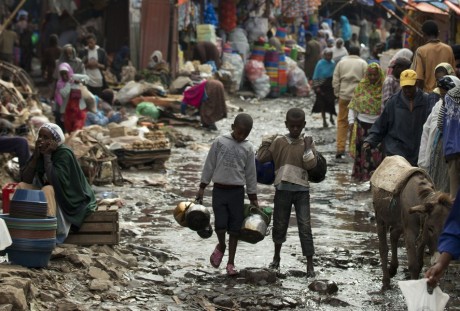


 Oromian Economist
You must be logged in to post a comment.