Economic and development analysis: Perspectives on economics, society, development, freedom & social justice. Leading issues in Oromo, Oromia, Africa & world affairs. Oromo News. African News. world News. Views. Formerly Oromia Quarterly
Feyisa Lilesa, who is now living in the United States following his performance at the Rio Olympics, won the United Airlines NYC Half on Sunday. Again, the Olympic marathon silver medallist, who is Ethiopian, crossed his wrists above his head, forming an “X,” in solidarity with the Oromo people, the largest ethnic group in the Horn of Africa. It’s not the first, or second, time that Lilesa has performed such a gesture.
Excluding Sunday’s performance, Lilesa has on two previous notable occasions performed what is part of the Oromo protests since the Olympics including at the Honolulu Marathon and the Houston Half-Marathon. The 27-year-old did not return to Ethiopia after the Olympics fearing for his life because of the finish line act. The long-distance specialist is currently residing in Flagstaff, Ariz. with his family recently relocating to the United States on Valentine’s Day.
According to CNN, there have been protests across Ethiopia “since April of 2014 against systematic marginalization and persecution of ethnic Oromos.” The protests can be sourced to the territorial limits of the capital city Addis Ababa extending into neighboring Oromo villages displacing residents. In 2016, Ethiopian security forces “killed hundreds and detained tens of thousands of protesters in Ethiopia’s Oromia and Amhara regions,” according to Human Rights Watch. The government told Lilesa that it would be safe to return home.
As seen a recent feature in the New York Times, Lilesa has received a green card as a permanent resident in the United States “for individuals of extraordinary ability in the sciences, arts, education, business and sports.” Lilesa’s finish line protests have led other runners, including several in Canada, to cross their wrists above their head at the finish line of races.
On Sunday, Lilesa and Scotland’s Callum Hawkins were side-by-side entering the finishing stretch towards Wall Street. Lilesa won by four seconds in 1:00:04, his first victory since the 2016 Tokyo Marathon. In the women’s race, there was also a tight finish as American Molly Huddle completed the NYC Half three-peat bettering Emily Sisson in 1:08:19 to 1:08:21. The two are training partners and reside in Providence, R.I. (Huddle is married to former Canadian middle-distance specialist Kurt Benninger.)
““I never would have thought I could come back here and win three times,” Huddle said in a New York Road Runners (NYRR) release. “I remember the first win was such a surprise for me, and last year we ran so fast. I just feel really lucky to have won a third time. Every time is really difficult with an international field. New York Road Runners brings in some of the best of the best. Some people are in marathon buildups but some people were really gearing up for this race. I feel like it was a really cool win, and just contributes to my enthusiasm for New York.”
Rachel Cliff (1:12:07) for eighth and Eric Gillis (1:03:49) in 16th were the top Canadians in the race that featured more than 20,000 runners.
1. Col. Gebremedihin Gebre, Shhinelle Zone Coordinator and deputy commander of Somali Special Forces
2 Col. Fiseha, chief of intelligence of somali regional government, specializing particularly in Oromos and Oromia issue, also heads and supervises Fefem zone security
3. Col. Gitet Tesfaye , coordinates and leads disputed borders issue and security
4. Major Desalegn Haddish, Babile front intelligence chief
5 Major Abraha Sisay, heads training of mercenaries and somali recruits at Bobas training center
6 Brigadier General Hadgu Belay, advisor to the president of Somali region on security and organizational affairs on security at regional government level
7 Col. Gebretensae, heads and coordinates Somali militias organization Oromo mercenaries working with the TPLF officials
1. Lieutenant Hassan Ali, former member of defense forces of Ethiopia, now commands a Liyu Police unit consisting 120 members at attacking Erer district( wereda)
2. Captain Mohammed Ibrahim, with a unit of 120 members at Babile front( WEREDA)
3 Sergeant Usman Mohammed, Garalencha district
4 Sergeant Jibril Ahmed spies on Oromo militia in Gursum district, to Fafam direction
5 Sergeant Mohamed Usman, Raqe, Meyu Muluke areas military operations
6 Sergeant Fuad Aliyi, Chinaksen district
* The Liyu Police and Somali region militia are organized in 26 regiment each consisting up to 500 personnel.
Hello dear esteemed managerial staffs, Risk-taking and Committed Journalists and Thoughtful and Truthful Reporters of Global Media Outlets!
Today, I kindly call up on and humanely urge you, to search, research and report on the case of drought weakening and dismantling almost all parts of Eastern Africa. Literature and memories have it that, though the intensity and severity might differ, almost all countries in this part of the world is facing some amount of pressure from drastic factors of Climate Change. Particularly, these regions are suffering from A Very Rapid Desertification locally and irreversible Global Warming universally since the last three decades. It is very sad that, we have multitudes of witnesses and plentiful of testimonies also that the deep-rooted Poverty, ever growing and rampant Corruption and other pertinent problems of Good Governance make the issue under a multidimensional media’s spotlight. This is why, this area is literally dubbed ‘a hell on the face of the planet earth’.
Recently, I, personally, observed the case of Borana, Gabra, Garri, Guji, Gedio, Sidama, Western Arsi and Eastern Shawa communities in Central and Southern Ethiopia, Northern Kenya and South-Western Somalia. More or less, people of these areas lived up experiencing droughts in the past. In these vicinity all in pastoral, agro-pastoral and agricultural settings they saw the taste of desert somehow. I also, personally have seen it. Bitterly faced it. Kept living being affected by it. I admit that I have seen peoples’ livelihood shifted, villages abandoned, children drawn out of schools, old men engaged in hard and unsafe work, pregnant women traveling long journeys in search for a can of drinking water and lives perished in vain and lost in the perching wilderness- all because of severe drought. Nevertheless, unlike the drought we are accustomed to know, this year round it is different completely. There is no place unaffected. No loopholes to take refuge for the herds and shepherds.
For instance, in the case of Borana Zone there has been no rain for the two consecutive normal rainy seasons. No fodder and water for animal consumption in any part of this area let it be Liban, Dirre, Malbe, Golbo, Sakhu or Waso. Now as we speak, in Borana, the drought is so much severe than its former status that let alone livestocks, human lives are at stake and at unredeemable risk if we fail to react as soon as we can. FYI, a rumor is being aired that quite a number of people have been died of hunger in Sakhu (Marsabit) county, around Magado in Dirre Woreda, Chari in Elwaye Woreda and some are on their deathbed around remote parts of the province where trucks can not easily travel and distribute the life’s essentials like water and food. The case of Liban areas, that is the worst case scenario though we need more details to cover much on the matter later on.
Anyway, this challenge has persisted long enough (more than consecutive 8 months now) in this area to render all community members helpless and hopeless; whether they are/were rich or poor, young or old, men or women, educated or non-educated. In these all periods of drought, the urban elites and youth groups from these communities have tried their best in easying the matter. They tried their best. They have raised funds at different levels and tried to help the drought stricken community members. Their vigor and hope is now fading. Therefore, they are pleading with the Global Communities. They say in unison, “We appreciate all efforts done by our fellow humans to help our pastoral community, in standing by our side and restoring the livelihood of rural dwellers which is very worse in comparison to towns’. Not only in the past, but also we have seen many individuals and groups supporting the rural people along with us. However, the drought is still being more severe than any time before. Despite the willingness of many Voluntary Aid Organizations and Emergency Projects to share what they have there is a huge gap in provision. We all know that, the Humanitarian Aids Organizations aim to save the lives and give us supplementary and temporal handouts at least. Unfortunately, most of them could not manage to do that because of the lack of tangible information on the ground. Leaders tend to talk about Resilience and Sustainability than our immediate need right now. We want sustainability as any other nations in the world. But now, our urgent need is food, water and medicine for survival.” They also asserted, “The governments, various social groups and stakeholders shall not keep silent on us because we’re on the brink of death. Mass death!’
For the second time in less than six months, the Ethiopian ruling party EPRDF-dominated parliament has declared a three-day nationwide mourning. This time it is for the victims of a devastating collapse of a mountain of solid waste located 13 km southwest of the capital Addis Abeba on Saturday, March 9.
As late as Wednesday and Thursday more excavators were arriving
The story of the growing numbers of Ethiopians (115 as of yet) who died buried under a pile of Addis Abeba’s solid waste first broke nearly 12 hours after it struck. For such a story about Ethiopia’s “forsaken” [“we are the forsaken; why would anyone care, right?”], it was neither surprising nor unexpected.
In the shadow of death
Officially known as “Reppi” landfill (commonly called by its local name Qoshe in Amharic) the area is a mountain of an open dumpsite where millions of tons of solid waste collected from the sprawling capital, home to some four to five million inhabitants, has simply been disposed off for more than half a century.
Established 54 years ago, and occupying 37ha surface area, Qoshe is not your ideal landfill. For starters, its surroundings on all four sides is home to both plastic makeshift shelters and poorly constructed mud & wood houses that shelter hundreds of people, a figure by far bigger than what the government admits as ‘houses’ with registered title deeds; and unlike repeated media reports that followed the tragic incident, the residents of the plastic makeshift and mud & wood houses are not all rubbish scavengers. “I work at the Ethiopian electric power corporation,” said Alemayehu Teklu, a father of four who, as of this writing, is still looking for his three children and his wife. “Only my first born son survived because he was not at home the night the garbage mountain caved in.”
Alemayehu and his family resettled in the area ten years ago when several shanty towns were demolished in many parts of Addis Abeba city to give way to new high rising buildings. “We had a two bedroom old house near Kazanchis that belonged to the families of my wife. The Kebele administrators had told us we should evacuate in two months but our house was demolished within three weeks after we were served with the notice,” Alemayehu said, “we were paid 70,000 birr [roughly $2, 500 in today’s exchange rate] as value for our house and were told we would be given a plot in one of the outskirts of the city. No one ever responded to our repeated pleas afterward and I settled my family here after buying the plot for 10, 000 birr.” Struggling to contain his tears, Alemayehu said: “we are the forsaken; why would anyone care, right?”
The people living around Qoshe are not only waste pickers who come from the city
The massive scale of decades-old evictions of the poor from the center of the city, which is, by all measures, a corruption-infested practice by city administration officials, means there are countless stories similar to Alemayehu’s. None of the dozen interviewees approached by Addis Standard say they become residents of an area surrounding a mountain of waste by choice. These include Mintiwab Gushe, a mother of four who lived in the area for the last 35 years, gave birth to all her children in the same mud & wood house they now remain buried under. Mintiwab is unable to compose herself to talk. And others, such as Gurmu Kidane and his now missing family of two have come to Qoshe as recently as June 2016, when more than 200 special police task force units have started demolishing houses in Nefas Silk Lafto Kifle Ketema in western Addis Abeba, which city authorities claimed were built illegally since 2005. “My family and I came here after losing our house because my sister who got a new condominium unit and had rented her house here in Qoshe gave it to me so I can shelter my family,” said Gurmu. He owns a cement mixer and lives off renting it to construction sites. His 16 years old daughter and his wife are now among the missing.
But the area surrounding Qoshe is not just home to the 200 or so households known to the city Administration; there are at least “500 households most of which also rent additional quarters to tenants,” said a young man who wants to remain anonymous. Here is where the story of Hadya Hassan, 72, fits. She rented her house to 13 different people who came from different parts of the country in search of labor. They are unregistered anywhere hence unknown to city officials. “We have been submitting requests to be relocated to our respective Kebele officials for years. Today, they came to see us mourn,” Hadiya told Addis Standard.
A sign posted at a tent erected to mourn the victims show the presence of unregistered tenants
Hauntedby collect and dump
Until 2014, Qoshe has consolidated its notoriety as the only open dumpsite that outlived its original purpose. For 54 years, it served as a dumpsite while having no facilities such as fences, drainage systems, odor control, or recycling methods.
“The present method of disposal is crude open dumping: hauling the wastes by truck, spreading and leveling by bulldozer and compacting by compactor or bulldozer,” admitted a research overview paper commissioned by the Addis Abeba City Administration in 2010 and was delivered to the UN Habitat. It also estimated that about 200,000 tons of waste was annually produced in Addis Abeba alone, of which 76% is generated from domestic households.
The ten-years-old commissioned review is an early sign that city authorities have long been haunted by the black mountain of dumpsite they have created half a century ago and have subsequently failed to manage properly. Nor have they been short of policy recommendations from think-tank organizations funded by foreign governments. “Adequate planning of waste management is essential if communities and regions are to successfully address the challenge of a sustainable development, including resource conservation, climate protection, and pollution prevention,” reads one such action brief written in 2010 and was partially funded by the German government’s ministry of education.
The Addis Abeba City Government Cleaning Management Agency, an agency accountable to the city administration, began taking the ensuing disaster at Qoshe a little more seriously around 2009, according to an official in the agency who spoke to Addis Standard but wants to remain anonymous because “now is a sensitive time.”
“At that time, authorities have begun to discuss selecting alternative sites and the closure and eventual transformation into a public park of Qoshe. Project proposals were submitted to several donors to conduct feasibility studies to open a modern dumpsite, which would also be used to generate green energy,” he said. Several donors, including the US, have responded positively and have provided large amounts of grants to the city administration,” he said, without mentioning the exact amount of money. “It was a lot.”
This was followed by a binge of workshops, both by the city administration and donors, research works, study tours to foreign capitals for high-level city officials including the Mayor, Diriba Kuma, and proposals on alternative sites and type of a state-of-the-art dumpsite.
As the spree of talks and workshops began to take shape, in a process the details of which is shrouded in backdoor negotiations, in 2012 the Addis Abeba city administration decided to obtain 136ha land in Sendafa, some 30km northeast of Addis Abeba, and is home to hundreds of farmers. As of now, Addis Standard is not able to verify the availability of documents, if any, detailing the process and eventual decision by the city administration to acquire this plot of land in Sendafa.
Be that as it may, with a US$337 million grant secured from the French government, and a project office assigned to do the job – Addis Abeba Waste Recycling & Disposal Project Office – the city administration looked poised to turn Sendafa Sanitary Landfill become everything Qoshe was not in more than 50 years of its history.
Sendafa Sanitary Landfill had a US$27.6 million initial budget; it is supposedly guided by an elaborated Environmental and Social Impact Assessment report; it had a 40 million birr [roughly US$1.8 million] compensation scheme for the farmers to be displaced by the project; it was benefiting from the rich experience of VINCI Grands Projets, a French construction company (coincidence?); it was to be assisted by four separate waste transfer stations for preliminary treatment of waste; and city officials determined to change the city’s face defiled by the solid waste its residents keep on producing and dumping carelessly. Sendafa Sanitary Landfill had everything to become a modern-day landfill.
Simultaneously, city administration officials have assigned a US$158 million for a project to turn Qoshe into a 50mw waste-to-energy plant and have awarded the contract to the UK-based Cambridge Industries; this was to be followed by yet another ambitious work to turn Qoshe into a green public park. This plan to green Qoshe was receiving institutional guidance, including from the Addis Abeba University (AAU) and the Horn of Africa Regional Environmental Center and Network (HoARE&N).
If the French government came to the financial rescue of the Sendafa Sanitary Landfill, turning Qoshe into a waste-to-energy plant and a green park is enjoying a large sum of donors’ money Ethiopia is receiving in grants as part of its newly designed Climate–Resilient Green Economy (CRGE) planned to last for 20 years at cost of US$150 billion. One of the four pillars stated in this new lucrative project is the government’s wish to expand “electricity generation form renewable energy for domestic and regional markets.” Among the major contributors to this project are the United Nations Development Assistance Frameworks (UNDAFs) and OECD countries.
However, reminiscent of delays the Sendafa Sendafa Sanitary Landfill experienced, the Qoshe waste-to-energy project has already missed its opening deadline several times.
What really went wrong?
Delayed as it may, Sendafa Sanitary Landfill opened in February 2016; Qoshe took its first break in 53 years. But six months into its service, Sendafa Sanitary Landfill imploded, leaving Addis Abeba to explode with its waste.
At the heart of the matter is the US$27.6 worth landfill which looked nowhere close to its plans on paper. “VINCI Grands Projets was paid may be half of the initial amount it won the contract for and even that, it was done in bits and pieces with several delays. The company was also not able to receive the hard currency it needed to import some of the equipment it badly needed” said a project team member at the Addis Abeba Waste Recycling & Disposal Project Office, who also spoke to Addis Standard on conditions that he remains anonymous. “And yet authorities from the city administration have rushed the opening of the landfill before it was fully completed.”
in Less than six months, households in Sendafa were exposed to toxic fluid
Addis Standard is unable to hear from VINCI Grands Projets representatives because its office is nowhere to be found in the addresses it listed was its location: “Sendafa Subcity – Woreda 13 and Yeka Subcity – Woreda 13 (Ayat Village Zone 06) Legetafo road.” And there is no registered telephone line under the company, or at the very least, operators at the state owned telecom giant are not aware of it.
But that doesn’t change the fact that Sendafa Sanitary Landfill was not only incomplete when it started receiving the city’s solid waste, but also none of the four waste transfer stations incorporated in the plan were built. These were sites designed to serve as preliminary waste treatment sites and were planned to be built simultaneously in four separate sites including Akaki sub city and Reppi itself.
“And yet, in Oct. 2016, the Addis Ababa City Government Cleaning Management Agency spent close to US$5 million to purchase 25 compactors and ten road sweepers designed to be given to all sub-cities to boost the existing, old compactors in order to dispose off the city’s waste in an efficient manner at the designated waste transfer sites. This was the second time the agency made such huge investment to buy compactors. Already in 2012, it bought 19 compactors at a cost of US$3.9 million; almost all of them were sitting idle by the time Sendafa Sanitary Landfill was opened,” our source at the Agency said.
Having consumed millions of dollars, but being not much of use in a city that never knew how to sort its garbage, Sendafa was quickly becoming just another Qoshe and the farmers were a storm in wait.
A truck pushing the pile of trash in the new Sendafa Sanitary Landfill
Under-compensated (of the 40 million birr originally assigned as compensations package, an official from the Solid Waste Recycling and Disposal project Office admitted having disbursed only 25 million – but the actual payment is even less than five million birr); dispossessed of their land; lied to as they were told their land was needed for future construction of an airport; and forced to live near a landfill that already started to stink, the Sendafa farmers have refused to accept nothing less than the total closure of the landfill.
And as the yearlong anti-government protests that started in Nov. 2015 continued to gather momentum, questions also began popping up; questions that probe the tumultuous power the city of Addis Abeba exercises over its surrounding villages administratively belonging to the Oromia regional state. Authorities both from the city administration and the Oromia regional state were locked in last minute discussions to avoid the fallout, and find ways to re-open a US$27 million worth new landfill, to no avail.
A city threatned by trash
As the pile of solid waste threatened Addis Abeba in the middle of the summer rainy season, the city administration decided to quietly reopen Qoshe.
Not the old Qoshe anymore
But in the six months since Qoshe was going through its eventual closure, Reppi as an area has completely changed. The real estate market in its surroundings, hyper inflated by the promise of a future public park and the ever increasing land value in Addis Abeba, has boomed. Construction sites near Qoshe have mushroomed, and bulldozing excavators have begun working aggressively for several projects the poor residents of the area know nothing about. “One day before the collapse of the trash, several bulldozers were ploughing the earth for what one of the operators carelessly told us was an ‘important government project’,” said Gebresselasie Mekuria, a resident at the western end of Qoshe landfill. “The smell was getting worse and we have filled our complaints to the Kebele officials asking them to relocate us; they responded to us as if we were mad people; as if living in this hell on earth is our preordained destiny.”
Meanwhile, while the planned constriction of the 50mw waste-to-energy plant is still ongoing, the plan for earlier promises to turn Qoshe into a green public park has stalled. With the collapse of the black mountain, its residents are now left with nothing but unknown numbers of victims.
The new waste-to-energey plant from outside
For the hundreds of these people who lived in the shadow of death, death is a routine exercise; and every time it happens, it leaves in its devastating wake a trail of lives altered forever. That is what happened on Saturday night to Bethlehem Yared, 16, who feels the burden of not been able to save her six years old brother who “decided to hide under the sofa when I ran for my life and asked him to follow me; I had to leave him behind”. Another one, Ayalew Negussie, who survived with his family, is deeply disoriented because “I lost all of my neighbors and friends whom I knew longer than I knew my children”; and Bedria Jibril, who is unable to “think anymore” after losing everything she has in less than 25 minutes. “I only left the house to buy milk for my one-year-old son and when I came back, I couldn’t find where my house was; I lost my husband and my two children all in less than 25 minutes.”
The collapse of this mountain of waste also deprived a means of income to no less than 300 waste pickers who scour it every day. Some of these are residents of the area, but many come from the city in search of something valuable, including food.
Qoshe is not new to life-devouring accidents. In 2015, a flashflood had displaced more than 70 households, many of which are plastic makeshift; in 2014, shortly before the closure of the dumpsite, a small collapse triggered by waste pickers had killed about 13 of them.
But on Saturday March 9, the black mountain of dirt finally decided to end sheltering the people who have taken refuge in it from a city that loathes them but loves their labor. Sadly, their story is not only a story of a waste mountain that collapsed on them, but has a trail of corruption and criminal negligence that left survivors with nothing but counting the bodies of their loved ones. AS
Additional reseach by Selam Ayalew from Addis Abeba University (AAU)
I believe that human rights, and the right to health in particular, should be a top priority of and guiding principle for the next WHO Director-General, whom the world’s health ministers will choose at the World Health Assembly in May. Human rights, after all, encompass the values needed to achieve health for all and health justice, such as equity, non-discrimination, universality, participation, and accountability. They are legally binding precepts. Above all, they embrace human dignity, and the utmost respect for all people in health systems and health-related decisions. They embody the notion of people-centered health services.
This importance demands electing to the post a credible and strong leader on human rights, someone with a history of fighting injustice, of opposing human rights violations, of standing up for the marginalized and oppressed, of resisting political, corporate, or other interests that stand in the way of human rights. This centrality of human rights means electing an individual willing to stand against forces and policies that tolerate or even perpetuate discrimination, or that let political or other concerns override the rights of women, minorities, immigrants, political opponents, or anyone else. It entails appointing a person who views organizations fighting for human rights as partners, even when their own governments may oppose them.
Three candidates remain in the race to be the next WHO Director-General: Tedros Adhanom, David Nabarro, and Sania Nishtar. All candidates should be accountable for their past support of human rights, and outline their plans for furthering human rights around the world if chosen to lead WHO. While it is important for all candidates to do this, one candidate in particular ought to provide a detailed public account of where he stands, and has stood, on human rights. Having spent more than a decade as a cabinet minister in a government that has committed large-scale human rights abuses, Dr. Tedros must make clear his position and intention.
In its World Report 2017, Human Rights Watch calls the media in Ethiopia “under government stranglehold,” with at least 75 journalists fleeing into exile since 2010, and others arrested. A 2009 law “continues to severely curtail the ability of independent nongovernmental organizations.” Security forces “frequently” torture political detainees, of whom there are many. Over the past decade, Ethiopia has denied entry to all UN human rights special rapporteurs, other than on Eritrea.
The Ethiopian government’s repressive ways gained international prominence at the Rio Olympics last summer. As he crossed the finish line, winning the silver medal, Ethiopian marathon runner Feyisa Lilesa crossed his arms as a symbol of protest against the government’s violent response to protests in the Ethiopia’s Oromia region. Two months earlier, Human Rights Watch had released a report detailing the government’s violent response to the protests, the most recent round of which began in November 2015. They broke out in response to the government clearing land for an investment project. This fed into wider fears about farmers being displaced without adequate consultation or compensation as part of a master plan to massively expand the boundaries of Addis Ababa, the capital, into the neighboring Oromia region. Adding fuel to the protests were environmental and other local concerns, and longer-standing grievances among members of Ethiopia’s largest ethnic group, the Oromo, of political, economic, and cultural marginalization. Amnesty International reported that least 800 protesters had been killed by the end of 2016.
Ethiopia’s Ministry of Foreign Affairs posted a blog on its official website in October 2016 (when Dr. Tedros was still Foreign Minister) in response to Human Rights Watch’s reporting on Ethiopia. The piece accuses Human Rights Watch of baseless allegations, intentionally misleading its audience, and propagating “scare stories.” It focuses on the NGO’s response to an October stampede during an anti-government protest at an annual festival in Oromia, though addresses Human Rights Watch’s reporting in Ethiopia more generally. Yet Human Rights Watch is widely recognized to employ a gold standard of research. The above-mentioned report, for example, was based on more than 125 interviews, “court documents, photos, videos and various secondary material, including academic articles and reports from nongovernmental organizations, and information collected by other credible experts and independent human rights investigators.” All material in the report was verified by two or more independent sources.
In light of Ethiopia’s severe human rights abuses and Dr. Tedros’s prominent position within the ruling party and the government, a natural question becomes: What was his role in the country’s systematic abuses of human rights?
I do not know the answer, or the veracity of other charges that Ethiopian diaspora organizations have lodged. In his role in the TPLF and ERPDF power structures, is it possible that he tried to change things from the inside, using his position of power within the government to oppose the government’s repression?
What we do know, though, based on the independent reports of Human Rights Watch, Amnesty International, the U.S. State Department, and others, is that the human rights situation in Ethiopia is dire. And Dr. Tedros has long been an important member of the government.
Dr. Tedros has committed to an open and transparent approach to running WHO. Now is the time for him to demonstrate this commitment, publicly addressing the concerns about human rights during his time in the Ethiopian government, and his role, including as a member of the power structures of the ruling party and coalition. States should evaluate his answers carefully and in light of other evidence.
States should also consider whether regardless of Dr. Tedros’s actions within the government – perhaps unless he vigorously fought against rights-abusive policies from the inside – the mere fact of having served (particularly for a considerable length of time) in a high-level post of a government that perpetuates such severe human rights abuses should be an automatic disqualifier from any international leadership position. Would electing someone put forward by such a government, particularly someone who has long served in that government, in some way represent the international community endorsing, accepting, the legitimacy of that government and its policies, and diminish the importance we ascribe to human rights?
We live in an era where human rights remain under great threat. Especially at such times as these, it is vital that states vote for a candidate whose record and integrity will enable them to lead WHO into a new era of health and human rights.
March 16, 2017 – Scholars at Risk (SAR) is concerned over the arrest and ongoing incommunicado detention of Professor Bekele Gerba, a foreign language professor at Addis Ababa University and the deputy chairman of the Oromo Federalist Congress (OFC), who is facing terrorism-related charges that apparently stem from his peaceful exercise of the rights to freedom of expression and association.
SAR understands that on December 23, 2015, Ethiopian federal security forces arrested Professor Gerba, a prominent Oromo rights activist, after entering and searching his home. His arrest occurred against a backdrop of protests and intensifying clashes between the Ethiopian government and supporters of the rights of the Oromo minority, over the government’s renewed implementation of its “Addis Ababa Integrated Development Master Plan.” Sources suggest that Professor Gerba’s arrest was a reaction to the protests taking place across the Oromia region.
Upon his arrest, Professor Gerba’s family and witnesses were reportedly told that he would be taken to Maekalawi prison, where they could visit him in 24 hours. The day he was scheduled to appear in court, however, Professor Gerba allegedly disappeared and has since been held incommunicado. SAR understands that on April 22, 2016, an Ethiopian court brought terrorism-related charges against Professor Gerba and 21 others in connection with the protests. Prosecutors have since presented as evidence videos of a speech Professor Gerba gave at an August 2015 conference organized by the Oromo Studies Association and a December 2015 interview with a foreign-based, Ethiopian media outlet. SAR further understands that Professor Gerba has reported that he and his co-defendants have suffered ill-treatment during their detention.
SAR calls for emails, letters, and faxes respectfully urging the authorities to release and drop all charges against Professor Gerba; or, pending this, to ensure his well-being while in custody, including access to legal counsel and family, and to ensure that his case proceeds in a manner consistent with Ethiopia’s obligations under international law, in particular internationally recognized standards of due process, fair trial, and free expression.
Those living in the Ogaden and Oromia regions are most vulnerable to the State-sponsored persecution. Protests in Oromia were violently repressed by the government since they started in April 2014, and continue to be. “Jail Ogaden” holds thousands of prisoners of conscience in overcrowding conditions and unhygienic facilities. Rape is systematically used as a weapon by the government and local polices such as the Liyu Police, combined with other forms of torture. And those are just a handful of examples. UNPO Report, Human Rights in Ethiopia
UNPO has released a report on human rights in Ethiopia, shedding light on the worrying situation of the Oromo and Ogadeni peoples. While international partners tend to hail Ethiopia as an African democratic role model and a beacon of stability and hope in an otherwise troubled region, the fundamental rights of the country’s unrepresented continue to be violated on a daily basis. With the support of major international donors such as the European Union, Addis Ababa increasingly prioritises strong economic growth, development and a high degree of enforced political stability at the expense of human rights and civil liberties.
Ethiopia’s economy has been growing steadily in recent years, boasting a small emerging middle class and receiving continuously-increasing foreign investment. The country is seen as a key ally by Western powers in the fight against terrorism and the regulation of international migration. Meanwhile, Ethiopia remains one of the world’s poorest countries, with a third of the population living in abject poverty and the country’s regime is also one of the African continent’s most authoritarian in character, cracking down mercilessly on those who voice dissent.
Those living in the Ogaden and Oromia regions are most vulnerable to the State-sponsored persecution. Protests in Oromia were violently repressed by the government since they started in April 2014, and continue to be. “Jail Ogaden” holds thousands of prisoners of conscience in overcrowding conditions and unhygienic facilities. Rape is systematically used as a weapon by the government and local polices such as the Liyu Police, combined with other forms of torture. And those are just a handful of examples.
As of March 2017, 300 people have died of hunger and cholera in the Ogaden region, because of the restrictions imposed by the Ethiopian government. Limitations on freedom of movement bars access to healthcare facilities and the trade embargo causes critical food shortages. UNPO calls on the international community to play its role in safeguarding human rights by putting an end to the financial flows fueling the Ethiopian State’s oppression and intimidation of the most vulnerable among its population.
Oromo-Somali Solidarity Forum Press Release
Date: 16th of March, 2017 Ref: OSSF/01/17
For immediate release
Since November 2016, i.e., for the last five months, the murderous Liyu Police forces, commanded by the President of the Somali Regional State, have been undertaking border raids and attacks against civilians in the Oromia region, in the process killing and displacing many people. The attack is launched on five Oromia zones and 14 districts bordering the Somali region. At least 200 civilians have been killed and many others injured in the attacks according to reports. These senseless attacks were ordered by the TPLF as part of its strategy to weaken the popular uprising underway in Oromia against the minority ruling clique. TPLF has been trying to portray the conflict it maneuvered between the brotherly Somali and Oromo peoples as a dispute between the two regions over the ownership of border towns and localities, a dispute that has been settled through public referenda in 2005/6. The two neighboring ethnic groups have co-existed peacefully for centuries and have a culture of resolving disputes through established traditional conflict resolution mechanisms. Without the sinister hands of the TPLF, this conflict would not have even started. TPLF is hiding in plain sight and should understand that such mischief will not absolve it from the crimes it continues to commit against both the Oromo and Somali people.
The atrocities committed by the Liyu Police did not start with defenseless Oromos. These merchants of death and destruction have been terrorizing their own Somali people for the last ten years at the behest of their TPLF masters. They have committed numerous grave human right violations inside the Somali region and even as far beyond as Somalia with gruesome executions, rape, and burning of villages being their distinctive trademarks.
We at the Oromo-Somali Solidarity Forum hereby condemn this TPLF-engineered reckless conflict which led to the bloodshed of our brotherly peoples. We urge the brotherly Somali and Oromo peoples to stand in solidarity and deny the TPLF the pleasure of achieving the division and animosity it aspires to sow between our people. The ongoing conflict is not a war between Oromos and Somalis. It is a proxy war orchestrated by the TPLF against Oromos through the Liyu Police which is an auxiliary instrument of repression by the desperate minority regime. United, we will overcome TPLF’s 26 years of oppression and mayhem.
Victory to the oppressed Oromo and Somali people!
With profound regards!
Oromo-Somali Solidarity Forum
Addressed to: All Ethiopians, Oromos, Somalis and the international press
This year has not been kind to Ethiopia, including widespread popular unrest, drought in many parts of the country, a cholera outbreak and stampede at a culture festival. Yet the deaths at the Addis Ababa landfill on Saturday stands out as a sobering counterpoint to the country’s boasts of economic progress.
…But 30 percent of Ethiopia’s population still lives below the poverty line.
“These people, including many women and children, had no option but to live and work in such a hazardous environment because of the government’s failure to protect their right to adequate housing, and decent work.” – WP
Rescuers work at the scene of a garbage landslide, on the outskirts of the capital Addis Ababa, in Ethiopia on Sunday (AP Photo/Mulugeta Ayene)
Three days of national mourning began Wednesday for the victims of a catastrophic landslide at the Ethiopian capital’s main garbage dump that left at least 113 bodies buried under a wall of trash and dirt, mostly women and children.
This year has not been kind to Ethiopia, including widespread popular unrest, drought in many parts of the country, a cholera outbreak and stampede at a culture festival. Yet the deaths at the Addis Ababa landfill on Saturday stands out as a sobering counterpoint to the country’s boasts of economic progress.
Ethiopia’s government for the last decade has tried to put behind the familiar cliches in Western minds of famine and poverty. The numbers help their case. Ethiopia has one of the best-performing economies in Africa. But 30 percent of Ethiopia’s population still lives below the poverty line.
The changes are especially apparent in Addis Ababa, which was once little more than an overgrown village with a few government buildings. The city is now sprouting with glass and metal skyscrapers ringed by affluent new neighborhoods catering to an emerging middle class.
But the landfill tragedy is a reminder that the slums and shantytowns are still there, too. One of them was built amid the artificial mountain of garbage, where people scrap out a living combing through the refuse. Late Saturday, they heard a roaring sound. The garbage mountain suddenly gave way, sweeping away makeshift homes and burying dozens.
The growth of the capital has often outstripped efforts to manage it, creating hazards like the half-century-old landfill of Reppi, also known as Koshe or dirt in Ethiopia’s Amharic language.
Located southwest of the city, just a 15-minute drive from the embassy-filled neighborhood of Old Airport that is also home to the city’s best international school, this mountain of trash is now surrounded by housing developments.
Here, hundreds of men, women and children known as “scratchers” comb through the daily trash deliveries from the rest of the city, squabbling over the highly prized refuse from the wealthier neighborhoods that yield the most valuable castoffs or the best food. Overhead birds circle the more than 70-acre site, waiting for their own turn on this artificial mountain of trash.
Even before the latest collapse claimed dozens of lives, injuries and deaths from the settling trash or the bulldozers were common in this area, which is often a first port of arrival for immigrants from the countryside.
There was an attempt recently to close down the Koshe dump. But protesters from the surrounding Oromo region blocked garbage trucks heading for a new site.
In sharply worded statement Monday, Amnesty International held the government responsible for this “totally preventable disaster,” saying that the government was aware it was at full capacity but used it anyway and allowed people to build their huts on the garbage.
“These people, including many women and children, had no option but to live and work in such a hazardous environment because of the government’s failure to protect their right to adequate housing, and decent work.”
An estimated 300 people scavenge through the rubbish mountain at any given time and it is feared that the death toll could keep rising. The tally of dead rose sharply Wednesday from 72 to at least 113, an Addis Ababa official, Dagmawit Moges, told the Associated Press.
The government has announced the relocation of at least 300 people living on the site as well as compensation for the families. There have been scuffles though between residents and rescue workers, claiming they are not doing enough.
In the days since the landslide, there has been a heavy security presence at the site.
There has been no official reason for what caused the landslide, though the site’s overcapacity and the strain of accepting every day more garbage from the city’s estimated 3.5 million residents could be part of it.
Some residents have also claimed that the trash mountain was destabilized by a small foreign-funded biogas facility on the site to harvest methane gas and part of a years-long (and so far unsuccessful) effort to eventually close down the landfill — an accusation denied by the government.
Next to the festering, unstable landfill, that represents everything wrong with waste disposal across Africa and the developing world, is a project that could hopefully become a symbol of the continent’s future.
Press Release For Immediate Release March 14, 2017
The Oromo Leadership Convention (OLC) held its second meeting in the City of Washington, District of Columbia, March 10 – 12, 2017. The Convention was opened with the blessing of representatives of the main religious groups in Oromo society and concluded after successfully deliberating on the current situation in Oromia and passing landmark resolutions that affirm the unity of all Oromo and underscore the need to strengthen institutions of democracy.
This Convention was attended by over 600 religious, civic and community leaders from across North America and other parts of the world, political organizations, professional and civil societies, artists, businessmen, scholars, veterans of the struggle and Oromo notables who have contributed to the advancement of the Oromo cause in their respective fields.
Considering the gravity of the deteriorating situation in Oromia and the tremendous suffering that the state of emergency has imposed on our people, the Convention focused on taking action.
1. Based on the proposal recommended by the Task Force on Humanitarian Assistance, the Convention established a non-governmental organization known as HIRPHA International (Humanitarian Initiative to Relieve the Plight in the Horn of Africa) to assist in the effort deliver coordinated and efficient aid to the victims of the Ethiopian government.
2. Accepting the proposal of the Task Force on Diplomacy and Advocacy, the Convention established a research and policy center that will assist the efforts to conduct diplomatic action in a strategic and coordinated manner with the view to assisting the struggle to end tyrannical rule in Ethiopia. This center will be named Organized Diplomacy and Advocacy Action in the Horn of Africa (ODAAHA).
3. Recognizing that the Task Force of Experts presented revised documents known as the Declaration of Oromo Unity and National Aspirations and Oromo Charter of Freedom, Justice, Dignity and Human Rights reflect the views of the delegates regarding the foundation of Oromo unity and a common ground for political action, the Convention adopted the revised documents as its official documents.
4. Recognizing that the need for further discussions to internalize the contents of these documents, the Convention recommended them to Oromo communities around the world for studying and discussions. The Task Force of Experts was named as a Commission of Experts to spearhead the effort.
Considering that the Oromo struggle needs robust, functioning and autonomous democratic and civil society institutions, the Convention discussed new agendas proposed by the OLC Executive Committee. The new agenda emphasized the need for enhancing women’s participation and youth engagement in the Oromo nation’s future and initiated an effort to create professional associations.
After thoroughly discussing two concept papers, the delegates recommended launching a community-wide conversation with a view of taking concrete steps to enhance women and youth participation in Oromo affairs within a reasonable period.
Recognizing the demand of the Oromo people, the Convention stressed the importance of the unity of purpose among Oromo political organizations for the success of our people’s struggle. The participants recommended to all political parties to continue to work together to find ways to mobilize our people for the bitter struggle ahead and redouble efforts to expand the arena of interparty collaboration, build democratic institutions, and fortify self-rule capabilities.
Recognizing the gravity of the time, Convention participants decided to increase their support for the Oromo struggle and to join hands in solidarity with all freedom loving peoples to fight against the repressive TPLF regime. In view of the continued suffering of our people, the Convention, once again, condemns in the strongest of terms the continued killings, mass incarcerations, enforced disappearances, and persecution of Oromo. The delegates also demanded an immediate end to the State of Emergency that has made life impossible for our compatriots.
Concerned with the continued impunity of the Ethiopian regime, the Convention, once again, calls upon the international community to live up to its commitment not to “never again” allow mass killings from occurring again by demanding the establishment of an independent and thorough investigation into the mass killings, especially at the Irreecha festival on October 2, 2016, and the other crimes perpetrated by Ethiopian security forces against innocent people.
Finally, the Oromo Leadership Convention extends its call to all peoples in Ethiopia to redouble their efforts to end totalitarian rule in the country.
Kaayoon isaa akka koree yaa’ii tana kopheessite keessaa Dr.Izqiheel Gabbisaa yuniversitii Kaateringi ka Mishigen jirtu keessaa dubbatetti ummata Oromoo biyya keessaa fi biyya alaatti rakkoo gugurdoo keessa jiru gargaarsa ilmaan namaatii fi gama siyaasaalleen gargaaraa tokkummaa Oromoo ijaaruu fi jabeessuu dhaaba dhaabuu.
Akkuma kanaan Yaa’iin tun dhaaba HIRPHA International (Humanitarian Initiative to Relieve the Plight in the Horn of Africa) jedhu ka nama mootummaan Itoophiyaatiin Afrikaa gama Gaafaa keessaa miidhame gargaarsa qindaahee kennuun qagaraafuu.
Tanaafuu Afrikaa gama Gaafaa keessatti damee Organized Diplomacy and Advocacy Action in the Horn of Africa (ODAAHA) yayyaban.
3.Tana maleellee galmee yaada Koree Qindeessituutin dhiyaatte jedhan Declaration of Oromo Unity and National Aspirations and Oromo Charter of Freedom,Justice, Dignity and Human Rights jedhuun tokkummaa Oromoo jabeesitu jedhan yayyaban.
Press Releaseby Peoples’ Alliance for Freedom and Democracy (PAFD)
March 14, 2017
In Ethiopia, once again, mothers, fathers, sisters, brothers, cousins, aunties, uncles, grannies and grandads have painlessly perished under the rubble of rubbish dump landslide in the outskirt ghetto of the capital. Once again, one of the darkest days repeated in different form on a different segment of the society. Once again, the peoples of Ethiopia are mourning for the tragic death of several dozen, in addition to ongoing execution of the Oromo and the rest peoples of Ethiopia by terrorizing TPLF’s security apparatuses under its draconian State of Emergency; death of Ogaden Somali people who’re left to die from preventable Cholera epidemic; and the ongoing suffering of Gambella children who’re routinely abducted by the foreign forces and the civilians who are killed by the said invaders without the protection of TPLF’s authorities who call themselves government.
The PAFD’s member originations, on behalf of their respective nations send their deepest and heartfelt condolences to the families of such tragedies. We know that there is no accountable government or institution to be held into account; although we never stop pushing with our demand for the TPLF’s regime to be held responsible. We’ve also learnt that, hundreds have been left homeless when their substandard and dilapidated houses, which they call it, a home has been buried under tons of negligently dumped garbage landslide. TPLF’s regime has ignored a repeated advice of the experts to do something about the garbage, preferring to focus on executing civilians instead.
Therefore, the death of more than 68 people in the said landslide at a huge garbage dump on the outskirt of the Ethiopian capital (Finfinnee/Addis Ababa) on the night of March 11, 2017 is, a clear case of dereliction of duty by the Ethiopian TPLF’s dictatorial regime. Further reports also indicate that, several dozen are still missing; and the subjects are said to be some of those who have been neglected by the ruling TPLF/EPRDF in the last 26 years of its reign; whereas the rest of the victims were some of those who have been uprooted from their ancestral lands from the outskirts of Fifinnee (Oromia) to vacate it for TPLF’s generals and politicians to trade with their lands under pretexts of investment. In either case, however, the regime in power is responsible.
The subjects are ended up with such brutish and unforgiving death. We, in PAFD are deeply touched with such unsettling incidents mainly affected the subjugated and disregarded groups of society by the regime in power. We urge the peoples of Ethiopia to stand hand in hand and support the victims during such harrowing process of transition to their contexts of normality. Meanwhile, the regime in power must be wholly condemned for failing to provide the citizens with the elementary protection in the outskirt of the capital from where it exploits their resources without regards to their safety and wellbeing. The PAFD also urges all nations and peoples of Ethiopia to unite in fighting the brutalizing regime to bring about genuine change in Ethiopian politico-economic and social landscape thereby to be able to stop such negligence of unrepresentative TPLF’s government who has proved its inaptness in the last 26 years.
Finally, the TPLF’s dictatorial government must be held into account for its failure to protect the citizens; urged to unconditionally compensate the families of this tragic incident for negligently causing the death and destruction of their lives and livelihoods.
May the soul of those who have died and are needlessly dying due to TPLF’s deliberate negligence and because of the ongoing operation of security apparatuses all over the country rest in peace. The PAFD never rests until justice prevails on behalf of all its stakeholders and the rest of subjugated peoples of Ethiopia.
The death of more than 60 people in a landslide at a vast rubbish dump on the outskirts of the Ethiopian capital over the weekend is a clear case of dereliction of duty by the Ethiopian authorities, said Amnesty International today.
Dozens are still missing since the landslide at the 36-hectare Repi municipal dumpsite in Addis Ababa on 11 March, and many families have been left homeless after their makeshift houses were buried under tonnes of waste.
“The Ethiopian government is fully responsible for this totally preventable disaster. It was aware that the landfill was full to capacity but continued to use it regardless. It also let hundreds of people continue to live in close proximity to it,” said Muthoni Wanyeki, Amnesty International’s Regional Director for East Africa, the Horn and the Great Lakes.
The Ethiopian government is fully responsible for this totally preventable disaster. It was aware that the landfill was full to capacity but continued to use it regardless
“These people, including many women and children, had no option but to live and work in such a hazardous environment because of the government’s failure to protect their right to adequate housing, and decent work.”
Now in its fifth decade, Repi – also known as Koshe, which means “dust” – is the oldest landfill in Addis Ababa, a city of more than 3.6 million people. More than 150 people were at the site when the landslide happened. Many of them had been scavenging items for sale while others lived there permanently, in unsafe makeshift housing.
“The government must do everything in its power to account for all those who are missing, provide survivors with adequate alternative housing, and safe and healthy working conditions,” said Muthoni Wanyeki.
“It must also ensure that a full-fledged inquiry is held to determine the specific causes of the landslide, and hold the individual officials responsible to account.”
About 150 people were at the site when the landslide struck on Sunday [AP]
At least 46 people have been killed and dozens are missing after a landslide struck at a massive garbage dump on the outskirts of Ethiopia’s capital.
The landslide late on Saturday levelled more than 30 makeshift homes of squatters living inside the Koshe landfill on the outskirts of Addis Ababa, said Dagmawit Moges, head of the city’s communications bureau.
Moges said most of the dead were women and children, and more bodies were expected to be found in the coming hours.
It was not immediately clear what caused Saturday night’s disaster. “We expect the number of victims to increase because the landslide covered a relatively large area,” he said.
The landfill has been a dumping ground for the capital’s garbage for more than 50 years.
About 150 people were at the site when the landslide occurred, resident Assefa Teklemahimanot told The Associated Press news agency, adding dozens were still missing.
Addis Ababa Mayor Diriba Kuma said 37 people had been rescued and were receiving medical treatment.
Many people at the site had been scavenging items to make a living, but others live at the landfill because renting homes, largely built of mud and sticks, is relatively inexpensive there.
“My house was right inside there,” said a shaken Tebeju Asres, pointing to where one of the excavators was digging in deep, black mud. “My mother and three of my sisters were there when the landslide happened. Now I don’t know the fate of all of them.”
The resumption of garbage dumping at the site in recent months likely caused the landslide, Assefa said.
Dumping had stopped in recent years, but it resumed after farmers in a nearby restive region where a new garbage landfill complex was being built blocked dumping in their area.
Smaller landslides have occurred at the Koshe landfill in the past two years, Assefa said.
“In the long run, we will conduct a resettling programme to relocate people who live in and around the landfill,” the Addis Ababa mayor said.
About 500 waste-pickers are believed to work at the landfill every day, sorting through the debris from the capital’s estimated four million residents. City officials say close to 300,000 tonnes of waste are collected each year from the capital, most of it dumped at the landfill.
Since 2010, city officials have warned the site was running out of room for trash.
City officials in recent years have been trying to turn the garbage into a source of clean energy with a $120mn investment. The Koshe waste-to-energy facility, which has been under construction since 2013, is expected to generate 50 megawatts of electricity upon completion.
Residents grieve as bodies are recovered at the scene of a garbage landslide on the outskirts of the capital Addis Ababa [Elias Meseret/AP]
At the end of her journey to trace the life of a typical flip-flop – from oilfield to factory to street to trash – Caroline Knowles was confronted with the Ethiopian capital’s largest landfill site …
At the end of her journey to trace the life of a typical flip-flop – from oilfield to factory to street to trash – Caroline Knowles was confronted with the Ethiopian capital’s largest landfill site …
WORTHINGTON — Worthington Middle School students came together Friday afternoon to make bracelets as a way to support the Oromo Awareness Project.
The Oromo Awareness Project is an effort led by WMS student and Oromo eighth-grader Chaltu Uli, who hopes to bring awareness to the community about injustice happening in her home country of Ethiopia — specifically with the Oromo people.
The Oromo, Ethiopia’s largest ethnic group, have developed their own cultural, social and political system throughout history that differs from the rest of the country, which is governed by the Tigray People Liberation Front (TPLF). The TPLF has stepped over human rights and silenced any entity or individuals who don’t support its leadership, creating an environment of crisis in Ethiopia. There is constant confrontation currently taking place between the TPLF and the Oromo people that has resulted in significant loss of life.
Initially, Uli handed out letters during Worthington’s International Festival in which she shared her story and the situation in Ethiopia.
“The letter had a good response among some but she wanted to make it bigger, and so we thought, ‘What we can do to get the word out?’ said Kelly Moon, English immersion teacher at WMS. “And what actions do we want people to have in response to the letter?”
Moon was able to answer those questions while attending a student council leadership conference at which she connected with More Believe, a multimedia organization that helps companies promote their causes. Although the company agreed to produce the video for an affordable price, Moon still needed to come up with an idea to finance the video.
“The video is basically going to be about her story and what is happening in Ethiopia,” Moon said. “In order to make that video, we need the funds to create it.”
Uli and part of her family came to the United States in 2014 to flee the violence taking place in their country. However, her mother and youngest sister are still in Ethiopia.
“I have family there, so I am really concerned for them because there are really bad things happening there,” Uli said.
Despite the difficult situations she has had to overcome, Uli has been able to learn English and adapt to her new environment. She still worries, though, about the injustice happening in her native land.
Moon and Uli came up with the idea of creating bracelets and will sell them in the community to raise funds for the video. The student-made bracelets have four beads that represent the Oromo flag. Along with the bracelet, a short description of the meaning of each color is written on the back of the packaging.
Students will sell the bracelets, and a $500 goal has been set.
Moon explained that students are still deciding how to proceed after video is made. Possibilities include approaching legislators or donating funds to an organization, among others.
“We are still trying to figure out which avenues are going to be legitimate — like if it’s going to be donation, where is that money going to go where it will actually help and not just be incorrectly used,” Moon said.
Uli explained that her ultimate goal with the project is to bring awareness to government officials so they take action in helping the Oromo people.
“If they want they can donate money, but more importantly, we want them to contact the government and tell them about the Oromo people and what is happening in Ethiopia,” Uli said. “In the end, our goal is to make the government aware and to take action.”
Moon noted that although the project is focused on the Oromo, she hopes people will be more empathetic with refugees — or any individual who arrives in the country who is running from violence.
“I think when you know somebody’s story, it puts a face to the issue,” Moon said. “it’s not longer just an issue or problem “
Human Rights Watch Statement to US House Foreign Affairs Committee, Subcommittee on Africa, Global Health, Global Human Rights, and International Organizations
Thursday, March 9, 2017
Chairman Smith, Ranking Member Bass, members of the Subcommittee: thank you for holding this important hearing on the current situation in Ethiopia and for inviting me to testify. I am pleased to be a part of it.
Ethiopia is a country of dual realities. Visitors and diplomats alike are impressed with the double-digit economic growth, the progress on development indicators, and the apparent political stability. But in many ways, this is a smokescreen: many Ethiopians live in fear. The current government – the only one since 1991 – runs the country with an almost complete grip on power, controlling almost all aspects of political, public, and even much private life. Pervasive telephone and online surveillance and an intricate network of informants allow the government to quickly curb any threats to its control; it silences critical voices through the use of arbitrary arrests and politically motivated prosecutions. These actions also prevent critical and divergent views as many who may be impacted by these harsh policies fear repercussions.
Ethiopia remains among Africa’s leading jailors of journalists. If you are or you seek to be an independent Ethiopian journalist you must choose between self-censorship, harassment, and possible arrest, or living in exile. The government blocks websites critical of the authorities and sometimes blocks the internet completely. Independent radio and television stations are regularly jammed. In short, the state tightly controls the media landscape, making it extremely challenging for Ethiopians to access information that is independent of government perspectives. As a result, Voice of America, which broadcasts in three Ethiopian languages, has become an increasingly important source of information for many Ethiopians but the government has, at times, obstructed its broadcasts as well.
Independent civil society groups face overwhelming obstructions. The 2009 Charities and Societies Proclamation has made obtaining foreign funding nearly impossible for groups working on human rights, good governance, and advocacy. Leading members of the human rights movement have been forced to flee abroad and many organizations have stopped working on human rights and good governance to avoid problems.
There have also been serious restrictions on opposition political parties. This led to the ruling coalition in the May 2015 election winning 100 percent of the seats in the federal and regional parliaments. This is despite evident anti-government sentiments in much of the country, as the protests would later illustrate. Arbitrary dentition of members and supporters, politically motivated criminal charges, and restrictions on financing ensures that opposition parties are constrained and largely ineffective.
The state systematically ensures that many of the country’s 100 million citizens are dependent on the government for their livelihoods, food security and economic future. It controls the benefits of development including access to seeds, fertilizers, jobs, health care, and humanitarian assistance, even when funded by the US or other donors. While US-funded development assistance contributes to much-needed poverty reduction efforts, it also adds to the repressive capacity of the government by bolstering Ethiopians’ reliance on the government for their livelihoods and ultimately for their survival.
There is no evidence that the ruling party rigs elections – they don’t need to. The population’s dependence on the ruling party and the limits on opposition parties leaves many citizens, particularly in rural areas, little choice but to support the ruling party come election time. As one farmer in the Amhara region told me in July 2014, “we do not like this government, but we always vote for them. We have to because we get our seeds and fertilizer from them. During times of drought, we get food aid from them. If we don’t vote for them, we can’t eat.” He went on to tell me about his neighbor who voted for the opposition in the 2010 election and shortly thereafter was denied food aid, was denied treatment at a government health clinic, and eventually was displaced from his land for an investment project run by a government cadre.
The justice system provides no check on the government. Courts have shown little independence during politically charged trials. Many opposition politicians, journalists, and activists have been convicted under the repressive 2009 anti-terrorism law and sentenced to lengthy prison terms. Acquittals are rare, credible evidence is often not presented, and trials are marred by numerous due process concerns. Mistreatment and torture are common in Ethiopia’s many places of detention. Just two weeks ago, Dr. Merera Gudina , the chair of the Oromo Federalist Congress (OFC), a legally registered political opposition party, was charged with “outrages against the constitution.” A former fellow at the National Endowment for Democracy (NED), Merera joins many other senior opposition leaders currently facing politically motivated criminal charges. Among those presently standing trial is OFC deputy chairman Bekele Gerba. Prosecutors included as ostensible evidence of his crimes a video of Bekele at an August 2016 conference here in Washington, DC, where he spoke of the importance of nonviolence and commitment to the electoral process. Like Merera, he has been a moderate voice of dissent in a highly polarized political landscape.
This begs the question: what avenues are left in Ethiopia to express dissent, to question government policies or to voice concern over abusive practices and how can the United States help strengthen free expression and association rights in Ethiopia?
I speak to you to today 16 months after large-scale and unprecedented protests started in Ethiopia’s largest region of Oromia in November 2015, spreading to the Amhara region in July 2016. Ethiopian military forces and police cracked down on these largely peaceful demonstrations, killing hundreds and detaining tens of thousands. The protests were a predictable response to the systematic and calculated suppression of fundamental rights and freedoms.
On October 2, the protest movement took a devastating turn. In Bishoftu in Ethiopia’s Oromia region, security forces mishandled a large crowd at the Irreecha cultural event causing a stampede that killed scores of people as they fled security forces. In the days that followed, angry mobs of youth destroyed government buildings and private property. Ethiopia was on the brink of chaos. One week after the Irreecha tragedy the government announced a state of emergency that remains in place. It prescribed sweeping and vaguely worded restrictions on a broad range of actions undermining rights to free expression, association, and peaceful assembly. It goes far beyond what is permissible under international human rights law and signaled a continuation of the militarized response to the expression of grievances. While the state of emergency has halted both the destruction of properties and the protests themselves, underlying grievances remain. No one should deny there are serious risks that more unrest could occur.
Since imposing the state of emergency, the Ethiopian government has repeatedly committed publicly to undertake “deep reform” and engage in dialogue with opposition parties to address grievances. In short, the authorities are saying the right things. But the only changes the government has made so far are largely cosmetic and fall dramatically short of the protesters’ calls for the protection of basic human rights.
The continuation of the state of emergency – furthering crushing the space for free expression and divergent views of governance – is not conducive for the open dialogue that is needed to address Ethiopia’s ongoing crisis. The government announced that it arrested over 20,000 people since the state of emergency began, although there has been little corroboration of these numbers, which could be higher. These mass arrests along with politically motivated trials of key opposition leaders, reinforces the message that the government is continuing along the path of suppressing dissent by force and not engaging in genuine and meaningful dialogue with opposition groups.
While we are speaking today about the lack of accountability over the brutal crackdown in Oromia and Amhara regions over the last 16 months, Ethiopians in other regions have also been victims of serious abuses, most often without any meaningful investigations by the government. For example, Human Rights Watch documented possible crimes against humanity committed by the Ethiopian army in 2003 and 2004 in the Gambella region. There was no credible investigation into the extrajudicial executions, rape, and torture. In Ethiopia’s Somali Regional State, the Ethiopian military committed war crimes and possibly crimes against humanity between mid-2007 and 2008 during their counterinsurgency campaign against the Ogaden National Liberation Front (ONLF). The Liyu police, a paramilitary force formed in 2008 that reports to the president of the Somali Regional State, have been implicated in numerous extrajudicial killings, torture, rape, and attacks on civilians accused of backing the ONLF. No meaningful investigations have been undertaken into any of these alleged abuses in the Somali Regional State.
International scrutiny of Ethiopia’s rights record has also been lacking despite its June election to the UN Security Council, and its membership on the UN Human Rights Council – which requires it to uphold the “highest standards of human rights” and cooperate with UN monitors. Ethiopia has refused entry to all UN special rapporteurs since 2007, except the Special Rapporteur on Eritrea. There are outstanding requests from the special rapporteurs on torture, freedom of opinion and expression, and peaceful assembly, among others. In total, 11 UN Special Rapporteurs have outstanding requests for access to Ethiopia.
Despite abundant evidence of serious and growing repression by the Ethiopian government, particularly since the 2005 election, the US government has been a muted critic. Quiet diplomacy proven ineffectual and has coincided with the dramatic downward spiral in human rights and a serious constriction of political space that has led to the crisis Ethiopia is in today. It is time for a new US approach to Ethiopia in which Congress can play a leadership role in seeking a more balanced policy and requiring more deliberate oversight as it has done in other countries in crisis, including the Democratic Republic of Congo and Egypt.
As a starting point, members of Congress should speak out strongly and publicly against abuses by the Ethiopian government. House Resolution 128 and the resolutions introduced last year are steps in the right direction and contain many important elements. While non-binding, they are impactful because they let the Ethiopian government know there are repercussions for brutality against their own citizens – brutality that undermines US priorities in the Horn of Africa, including security, development, and economic growth. These partnerships are dependent on long-term stability in Ethiopia. Opposition to the ruling party’s repressive rule – as witnessed in the last 16 months – is a glaring indication that Ethiopia’s governance model marked by lack of respect for basic rights, is incapable of ensuring that stability.
International legitimacy is very important to the Ethiopian government – it wants to be a key player on the international stage and condemnation of its human rights record contradicts that image. So consistent, sustained and vocal pressure is critical.
It is crucial that the US makes it clear that if Ethiopia is going to remain a strong US partner it needs to open up legitimate political space and allow for critical voices to be heard. To begin with, members of Congress can and should call for the release of all political prisoners, including those like Bekele and Merera who should be part of any credible dialogue between the government and opposition parties. Members of Congress should also call for the release of all journalists unjustly jailed and call for the repeal or substantial amendment of repressive laws used to stifle critical voices. Any meetings with the Ethiopian ambassador to the US should include these points, as should any meetings with other Ethiopian officials, whether in DC or elsewhere. As the FY18 budget process gets underway, US support to the Ethiopian government should be conditioned on making progress in these and other areas of concern.
Members of Congress should use available opportunities to tell Ethiopia to stop hiding its own human rights record from international scrutiny. As a member of both the Human Rights Council and the Security Council, Ethiopia should cooperate fully with UN special mechanisms, in particular the rapporteurs on peaceful assembly and torture.
As expressed in House Resolution 128, members of Congress should reiterate the call of the UN high commissioner for human rights, the African Commission on Human and Peoples’ Rights, and others for an independent international investigation into the crackdown in Oromia and Amhara regions. Such action will send a powerful message to the Ethiopian government that its security forces cannot shoot and kill peaceful protesters with impunity. It will also send an important message to the victims and families, that their pleas for justice are being heard.
I’ll close by saying that I am aware of concerns expressed by some in the administration – and even here in Congress – that a more public stance on Ethiopia’s domestic situation might undermine the bilateral partnership between Addis Ababa and Washington – including cooperation on development, security and peacekeeping. But the United States has often underestimated its own leverage and been overly cautious as a result. Some of Ethiopia’s international partners have made strong public statements in the last year and these statements have not undermined their strategic partnerships. Far from it. The US may need Ethiopia – but Ethiopia needs the US too. The US should send a strong signal of support to the many Ethiopian citizens and Ethiopian Americans who seek the protection of their rights, greater political space, and democracy but whose fight for dignity and freedom has been crushed time and again through brutal force.
Chairman Smith on the hearing:“Ethiopia has long been an important ally, providing effective peacekeepers and collaborating in the War on Terror. However, increasingly repressive policies have diminished political space and threaten to radicalize not only the political opposition but also civil society by frustrating their ability to exercise their rights under law. This hearing will examine the current situation in Ethiopia with an eye toward developing policies to help this nation to reverse an increasingly tense situation in the troubled Horn of Africa.”
Witnesses
Panel I
Terrence Lyons, Ph.D.
Associate Professor
School for Conflict Analysis and Resolution
George Mason University [full text of statement]
[truth in testimony form]
Ageing is not a fixed process – we can change its trajectory
By James Hewitt, WEF, Head of Science & Innovation, Hintsa Performance
Published Thursday 2 February 2017
Driving an F1 car is not a particularly healthy thing to do… I want to live a quality life when I’m old, and not suffer from horribly degenerated discs.
—Four-Time Formula One World Champion, Sebastian Vettel
The question of how to maximise ‘health span’ – the period of life during which we are generally healthy and free from serious disease – is increasingly prevalent both in and out of sport.
It’s likely that we will live and work for more years than any generation before us. For many, this will be a necessity as much as a choice, as the increasing social costs of an ageing population are pushing back retirement age in many countries. These changes will have significant economic, social and psychological impacts, but one of the key questions we need to ask concerns the kind of life we’re hoping for, over this time course.
Lifespan or ‘health-span’
Different parts of our body and brain mature at different rates, so it’s very difficult to say what human ‘peak age’ might be. However, it’s clear that the first phase of life is dominated by growth, while declines become more apparent in the second half.
Many of us assume that the ageing process is a fixed process, that we reach our peak then begin an irreversible decline. This hasn’t stopped an entire industry from trying to make an impact, though.
It seems that many of us would prefer to ‘die young as late as possible’, but while we’re living longer, we’re living ‘sicker’.
Sport as a laboratory
Studying ageing is a challenge, because as we get older, the number of confounding factors in observational research increases. The longer we live, the more choices we make, the wider variety of environments, stimuli and stresses we are exposed to. This can distort results, making it difficult to discern the difference between natural declines in health and performance from deteriorations that occur as a result of lifestyle factors and poor choices.
In contrast, the world of sport represents a fascinating ‘laboratory’ for studying human potential in the absence of sedentary behaviour. In athletic competition, cardiovascular, respiratory, neuromuscular as well as cognitive systems must all work well individually, and as a system, making it one of the best testing grounds for how our body and brain should work together at their best.
Physical inactivity is a primary cause of many of the chronic ailments which afflict an ageing population, but the high levels of physical activity among masters athletes mean that they should be free from many of the negative effects of sedentary behaviour. Any declines in athletic performance mirror the changes in the body and mind that occur as we age, rather than being a result of inactivity or other intervening lifestyle factors.
—Inherent ageing in humans: The case for studying master athletes: Editorial
Compressed ageing
The performance changes in masters sporting events display a ‘curvilenear,’ rather than linear, pattern. Instead of reaching a peak in their 30s, before experiencing an inexorable and linear decline, masters athletes retain close-to-peak performance for much longer, experiencing a gentler decline, followed by a rapid drop-off in the latter part of life.
The findings among masters athletes reflect the aim that many of us have: maximise ‘healthspan’ by reaching a peak, then maintaining our health, physical and cognitive capacities for as long as we can, compressing ill health into as short a period as possible.
Maximise growth, minimise decay
If you’re younger than 35, there is still time to maximise ‘peak’ health and fitness. Ideally, you should aim to start from as high a point as possible, before the influence of ‘decay’ becomes more pronounced. However, if you’re older than 35, significant improvements are still possible.
It’s never too late to change your trajectory for the better. Studies have demonstrated that even 90 year-olds can improve their strength and power, with the appropriate training regimen and significant benefits are possible from relatively small ‘doses’ of physical activity.
Movement is medicine
Physical activity sets off a cascade of ‘signals’ which, if repeated, improve the function of our body and brain, diminishing the risk of cardiovascular disease and metabolic disorders, reducing anxiety and enhancing concentration and attention.
Movement is medicine. The benefits of physical activity far outweigh the possibility of adverse outcomes in almost every population, and increasing your levels of physical activity is one of the few interventions that has been demonstrated as beneficial across age-ranges, ethnic groups, and spectrums of physical ability.
Physical activity levels in our leisure time have remained relatively constant over the past few decades. However, sedentary activities at home, such as watching TV or consuming other media, coupled with technological advances in the workplace, mean that we spend a lot more time sitting over the course of an average week than we used to.
Does regular exercise let us get away with slumping at our desks?
The benefits of regular exercise are widely known, but even for physically active knowledge workers, morning exercise regimens are typically followed by extended periods of sedentary time, in the office, during commutes and at home. Unfortunately, it appears that we can’t ‘out-exercise’ our desk-jockey lifestyles.
In 2009, researchers studied 17,013 people aged between 18-90 years old. They found a dose-response relationship between sitting time and dying from anything. More significantly, they also found that this risk was independent of overall physical activity levels. It doesn’t matter how active you are. If you sit down for long periods, you are increasing your risk for chronic disease.
These findings have been supported by a number of other studies. Those of us sitting for 11 hours or more, per day, are at the greatest risk, regardless of how much physical activity we do.
—Leisure time spent sitting in relation to total mortality in a prospective cohort of US adults
Many physical activity programmes fail because their goals are too ambitious. The key is to start doing something. Don’t let perfection be the enemy of ‘good enough’. The following four actions may provide you with some ideas about where to begin. (It’s recommended to consult a medical professional before starting a new exercise programme.)
2) Move slow. Aiming to accumulate 10,000 steps each day has become a common means to increase daily physical activity. While some studies have not been supportive, many have demonstrated that increasing step count, and trying to integrate additional steps into your day to reach the 10,000 target, can be beneficial in terms of increasing physical activity and health.
3) Move fast. High Intensity Interval Training (HIIT) involves repeated bouts of high-intensity effort, followed by varied recovery times. A typical HIIT session could last between 20 and 60 minutes, but even shorter sessions have been demonstrated to be beneficial. A 2012 study among healthy, but sedentary men and women, demonstrated that 10-minute high-intensity cycling sessions, repeated three times per week for six weeks, improved health and fitness markers, including a 28% increase in insulin sensitivity and 12-15% improvement in VO2 max.
Business in the Sululta district of Ethiopia’s Oromia region is burgeoning. So why, despite abundant rainfall, does half the population have no access to fresh water?
People in Sululta queue for tap water. The local government has failed to provide water for most households in the area. Photograph: William Davison
Towards the end of the day at the Abyssinia Springs bottled water factory near Ethiopia’s capital, Addis Ababa, workers hose down the car park liberally. Outside the gates, residents of the Sululta area trudge along the road with empty yellow jerrycans that they will fill from muddy wells and water points.
Over the past decade, the town in Oromia region has attracted plenty of investment. A Chinese tannery, steel mills, water factories and hotels have sprung up.
The boom has also lured workers for the building sites that litter the district with piles of rubble, electric cables, and eucalyptus tree trunks used for scaffolding.
Officials appointed last year amid a wave of unrest admit that they do not know the exact size of Sululta’s population. The local government has failed to keep up with the town’s chaotic growth over the past decade, which has contributed to anti-government sentiment.
Although investing in water infrastructure is challenging for a poor country, funding is not the problem in relatively wealthy Sululta, according to Messay. Instead, he believes corrupt management of the land rush, a lack of demand on investors to protect the environment, and the government’s inadequate planning and data collection have contributed to the crisis.
“When the public burned the investments down, it was not that they wanted to damage them. It was our problem in managing them,” says Messay.
Initially peaceful, the protests that began in Oromia in November 2015evolved into the angry ransacking of government offices and businesses after security forces used lethal force to disperse crowds. Human rights groups estimate that up to 600 people were killed across the country.
Since then, Ethiopia’s multi-ethnic ruling coalition, the Ethiopian People’s Revolutionary Democratic Front, which controls all the legislative seats in a de facto one-party state, has embarked on what it calls a process of “deep reform” to try to address governance failings.
People in Yubdo village, in Ethiopia’s Oromia region, mourn the death of Dinka Chala in December 2015. Photograph: Zacharias Abubeker/AFP/Getty Images
In 2014 – the latest year for which data is available – the Ethiopian government received $3.6 bn (£3bn) in aid, while the government budget was $9bn, which included donor funding. Most cash for regional governments comes from federal transfers. However, the impressive statistics rattled off at development conferences are of little comfort to low-income workers in Sululta, who say they feel ignored by a government that has licensed more than five plants for bottled water while failing to dig enough wells or build pipes to houses. According to WaterAid, 42 million Ethiopians lack access to safe water.
Worku Deme, 40, who delivers cement blocks around Sululta, says the community wrote to government offices two years ago asking for action on water supply. But nothing has changed, he says, beyond the faces of the administrators who ask people to be patient.
“There is no one to care about us,” says Deme, as a woman walks past with a jerrycan strapped to her back.
The situation is especially galling for Sululta because the town is situated in the highlands, where rainfall is abundant for about four months of the year.
The national government, which likes to describe Ethiopia as the “water tower of Africa”, is investing heavily in hydropower, including the continent’s largest dam, in the Nile basin. However, past failures to tap water resources in the rain-deprived east of the country contributed to a fifth of the population needing aid during a drought that began in 2015, killing livestock and causing crops to wither.
In Suluta, there has been investment in boreholes and pumps, but mostly by the private sector. Abyssinia Springs, in which Nestlé Waters bought a majority stakelast year, pumps 50,000 litres an hour, which means its capacity is more than half that of the local government.
“There’s water everywhere. The only problem is the government’s willingness,” says a manager at another company, Classy Water, who did not give his name.
Many non-water businesses have dug their own wells.
According to Getachew Teklemariam, a former government economic planner, there has been a lack of water infrastructure planning that takes into account demographic and economic changes across Ethiopia. Instead, development has been piecemeal and household water supply numbers are sometimes inflated by officials for political gain. “With a lack of insight into the reality on the ground, most efforts at improving infrastructure have been uncoordinated and wasteful,” he says.
In January 2016, the government shelved its “integrated development plan” to expand Addis Ababa into surrounding Oromia areas following protests and criticism that the plan would pave the way for more evictions of Oromo farmers.
Today, locals in Sululta travel on public transport to queue for water at a tap built by the Sudanese-owned Nile Petroleum, or pay others to do so. At the end of the town, which mostly lies along one main road, residents collect water from a faucet provided by China-Africa Overseas Leather Products. But the tannery has been accused of polluting water supplies, and in January 2016 protesters invaded the premises. Last month, it was a base for about 50 Ethiopian soldiers monitoring the security situation.
Messay, a mechanical engineer who has worked in the public water sector for a decade, says the government has erred by placing only minimal demands on investors in its eagerness to create jobs: “They [the leather company] drop their waste downstream. It is killing the farmers’ cattle, it’s making the fertility of the soil deplete.” Managers from the firm did not respond to requests for comment.
Women collect water from a muddy well in Sululta town in Ethiopia, where the local government has failed to provide water for most households. Photograph: William Davison
Messay appears committed to solving the water problem but realistic. He is critical of property investors from the capital who, he claims, seized plots illegally, and of the “corrupt” land administrators who facilitated the town’s chaotic growth. “You expect them to be more responsible, as they are from a big city,” says Messay of the investors.
Turkish contractors are digging a borehole to increase the water supply, which Messay believes might be meeting half the demand.
Nestlé Waters says it wants to help and is funding Addis Ababa University experts to study the environmental and socio-economic situation of the area. The study might feed into another “integrated” plan and possibly an effort to turn Sululta into an “eco city”. But Messay is sceptical as to whether the corporation’s public interest is genuine, noting that there were similar noises from Abyssinia Springs when the water plant was built about seven years ago.
Bara Boorannii Gadaan bulaa bahe bara 1,456 bara addunyaan maan keessa jirti?Amerikaan maqaa guddoo tun qabdu tun bara sun keessaa USA jedhamtee yaamamuufuu ganna 320 hafaaf.
The Borana Oromo have elected Kura Jarso, 30, as their 71st Abba Gadaa in an elaborate, week long ceremony attended by tens of thousands of people in Badhaasa, southern Oromia.
Spectators and invited guests started arriving at Arda Jila Badhaasa (the Badhasa ceremonial place) several days ahead of Jarso’s inaguration. The mood here was euphoric all week long and Badhaasa is packed with people from every corner of Oromia. This is where the Borana Oromo leaders have exchanged power peacefully and in a democratic manner every eight years for more than 560 years. Click here to read more at OPRIDE.
This article explores the raison d’être for why the Neo-Agazians – the king makers in the Tigray People’s Liberation Front (TPLF), a.k.a. the present-day rulers of Ethiopia – have adopted a non-intuitive strategy of waging a war of attrition against the Oromo through a notoriously brutal proxy, the ill-reputed Liyu Police of the Somali region; whilst they were rather widely expected to reassess their current policy and attempt to pacify Oromia – a state that has been the epicenter of a historic and heroic popular opposition against the government in the last three years. In my opinion, here are some of the primary reasons.
The obsession to smoke out and defeat the Oromo Liberation Army:
TPLF’s general disposition and military escapades over the last twenty five years, would lead a neutral analyst to the conclusion that it is obsessed, more than anything else, with the goal of dismantling the Oromo Liberation Front (OLF) and its army. As a result of this fixation, Afaan Oromo has earned the unique distinction of becoming Ethiopia’s “language of prisons”, and Oromia has turned into the killing field of the Horn of Africa, where all sorts of human rights abuses are the norm. TPLF’s various military adventures in the Horn of Africa – from its various illegal military interventions in
(Ayyaantuu) -Somalia to its regular incursions into Kenya, as well as its so-called peacekeeping missions in south Sudan – are all motivated by what appears to be a preoccupation to deny the Oromo liberation army (OLA) a base of operation. These military adventures have been carried out without due regard for the cost in human lives, but they have allowed the regime to stay in power by weakening its greatest homegrown threat which comes in the form of OLA.
There is no doubt that the OLF has been downgraded, partly as a result of these actions by the TPLF and the resulting geo-political outcomes. The OLA has diminished in size and effectiveness from its heyday in the late 1980’s, when it was able to engage two formidable opponents – the Sudan People’s Liberation Army and the Ethiopian army in the west, and the latter in the east and the southeast – and thrive at the same time. TPLF’s strategic maneuver and direct military interventions in the neighboring countries contiguous to Oromia in the last two decades should thus be seen in light of its fixation to deny its strategic nemesis, the OLF, a military base of operation – an objective in which it has succeeded to a great extent, thus far.
But, judging by events that have transpired in Oromia in the last three years, particularly in 2016, it appears that the OLF has adapted to these difficult geo-political circumstances and could be poised to take on the TPLF more vigorously than before. Notwithstanding the misguided efforts by some in the diaspora to hijack the Oromo Protests, there are clear signals that the protest movement is orchestrated by the OLF. This development has shaken the regime to its core, from which it is likely not going to able to recover. The Oromo Protests have put the TPLF in unfamiliar territory, forcing it to react to facts on the ground its adversary has set in motion. Albeit at tremendous cost to Oromo lives, round one of this phase of the conflict between the OLF and the TPLF was decisively concluded with the latter substantially degraded politically and economically, if not militarily yet, invigorating the former substantially. Therefore, the ground work seems to have been laid for round two and perhaps the decisive stage of this phase of the conflict; and judging by its current activities, the TPLF is mightily worried (as it should be) about the likely outcomes.
One of the dangerous policies the TPLF is pursuing currently to foil what is shaping up to be a historic faceoff between its forces and Oromo freedom fighters, is to unleash the notorious Somali region paramilitary group on peaceful Oromo citizens in the east, the south and the southeast. In my opinion, the main purpose of this move is to provoke OLF fighters to come out of the woodwork, as it were, in order to engage them militarily before more recent events have a chance to solidify in ways that will benefit the combatants. Based on certain signals that are out there, the OLF might have succeeded in embedding its forces in certain communities in Oromia, and it would be reasonable to assume that the TPLF wants to flush these Oromo fighters by goading them into battles of its choosing. It is a clever move, but it doesn’t appear that the OLF is taking the bait.
The best defense is a good offense:
The principle of “the best defense is a good offense” has successfully been employed in many areas of life that are guided by strategic interactions between two or more actors. Whether it is sporting competitions, competitions for market, or more consequential human conflicts such as wars, players that prevail are often times those that strike first and knock their opponents off their game plan, forcing them to react. Successful war generals and strategic thinkers – including George Washington, Mao Zedong, Machiavelli and others – have utilized this principle with remarkable success.
The TPLF has used this adage throughout its existence – both in the military and the political arenas – initially against the fearsome Dergue, and later on against all opposition parties, including the OLF. In all the engagements I personally witnessed closely, for instance, the TPLF always seemed to relish the initiative to attack – often with surprising speed and agility – forcing its opponents to scramble to assume defensive positions, denying them opportunities to launch their own attacks. The surviving members of Dergue’s armed forces could speak more competently than I can about the efficacy of TPLF’s famed Qorexa tactics in the battle field.
With the OLF adapting to the aforementioned difficult geo-political realities in the Horn of Africa, and OLA likely getting deeply rooted in Oromia, the TPLF appears to have lost the strategic edge it has worked so hard to achieve and maintain. The Oromo Protests have exposed its weaknesses so unmistakably, sending a clear signal to potential partners or enemies, big or small, that the “dogs from Tigray” might have just been neutered and may not have potent bites anymore. Notice the most recent political developments in Somalia, South Sudan, the European Parliament, and even some corners of the US government – developments that mark that the ground has begun shifting from under the TPLF. Therefore, with no obvious OLF military camp it can attack, and a realization setting in among its senior ranks that its strategic opponent might have regrouped enough to start putting some non-trivial points on the board; the TPLF is undertaking unprovoked military aggressions against Oromo civilians in the east, the southeast, the south, and the west via its proxy paramilitary units, certain that the oppressive system it has built over the years cannot be sustained if it is perceived to have lost its mojo. Thus, its latest move is most likely a desperate attempt to send a signal to its friends and foes that it is in control and still calling the shots.
Attempting to ingratiate to the Oromo a Trojan-Horse named the OPDO:
One of the remarkable outcomes of the Oromo Protests was that it annihilated the intricate and oppressive state structure the TPLF had built in Oromia using the so-called Oromo People’s Democratic Organization (OPDO), an outfit that was created by TPLF to rule and exploit the Oromo. The TPLF doesn’t stand a chance to rule Oromia without the OPDO serving the purpose for which it was invented. To reinstitute its tentacles throughout Oromia, therefore, the TPLF is employing a number of obvious and subtle strategies including the following: launching different initiatives meant to seduce the unemployed youth; promoting a few “educated” Oromo individuals to positions of power; and most importantly, undertaking moves that might ingratiate the OPDO to the Oromo. Lemma Megersa – the shiny-new telegenic puppet of the regime– is assigned a role of play-acting as the second coming of Tadesse Birru on TV, although he is little more than a pawn in a game being conducted behind his back against his own people.
If implemented properly, the unfolding strategy of unleashing the Liyu police on the Oromo would also contribute to the objective of endearing the OPDO to the Oromo to a certain extent. Here is a two-sentence script for this play: The TPLF invades the Oromo by using its proxies just enough to rile up the Oromo from coast-to-coast; then boom, the OPDO comes to the rescue, turning – contrary to reason and logic – into a “legitimate” Oromo organization that can protect the interests of its constituents. Arguably, this drama has thus far played out as planned by its authors, considering how many Oromo activists have fallen for this cruel scheme. Just because they uttered nationalistic soundbites on state TV, some members of the so-called Caffee Oromiyaa are being promoted as defenders of Oromo national interests by individuals who should know better, indicating that the Neo-Agazians might have achieved some of their short term objectives by making the OPDO an acceptable alternative to a segment of our traumatized population. The Oromo national trauma must be so deep that many mistake the enablers of their abusers for their saviors.
Breaking the thriving morale of the Oromo:
Events that have transpired in the last three years in Oromia – particularly the well-orchestrated massacre at the Irreechaa festival on October 2, 2016 and the ethnic cleansing operations being carried out against the Oromo of Hararge, Bale, Guji, Borana, and some parts of Wollega – are well-designed operations by TPLF aimed at, among other things, breaking the thriving morale of the Oromo and checking the rising tide of Oromo nationalism. The TPLF has always banked on riding Oromo nationalism that it believed could be manipulated at will to exploit Oromo resources, and utilized to engage in a campaign against the traditional and historical nemesis of Tigray – the Amhara elites. When this strategy failed – with the Oromo taking a heroic stand to challenge its monopoly of power and exploitation of their resources; and the Oromo and the Amhara showing some signs of solidarity, even if tactically – it resorted to a war of attrition against the Oromo, foolishly thinking that that would break the thriving morale of the Oromo and put the genie back in the bottle.
For those capable of discerning the zeitgeist in contemporary Ethiopia, however, the writing on the wall is unmistakable: Oromo nationalism has prevailed against all odds – thanks to the sacrifices of countless precious Oromo children – and will continue to develop at a pace determined largely by the dialectics within Oromo society. No amount of treacherous designs by the current rulers of Ethiopia, or the ill-will of those who wish to dismantle it, can derail it from its current auspicious trajectory.
Avenging for the loss it has sustained politically, diplomatically, and financially due to Oromo Protests:
As stated earlier, the Oromo Protests have inflicted heavy losses – politically, diplomatically, and financially – on the TPLF from which it will never recover. Although this is not how smart strategic players are supposed to conduct themselves in high-stakes political games, I can’t put it beyond the realm of possibility that avenging for these losses might just be one of the motivating factors for the dangerous course the TPLF has chosen recently. To the extent that the Neo-Agazians are disposed towards having a sense of entitlement to the political and economic power they are currently enjoying undeservedly (there are plenty of evidences indicating that this might be the case), their lashing out against the Oromo – a nation that has effectively foiled their long-term objective of developing Tigray at the expense of Oromia – should not be unexpected.
In summary, the TPLF is a severely wounded entity that is running out of options faster than most so-called experts of the Horn of Africa anticipated. There will not be any measure it will not pursue in order to stay in power for as long as it is feasible. For now, Abay Tsehay and co. are using Abdi Iley and his UK-financed killing-squads as a “Hail Mary pass” to see if that could extricate the TPLF out of its desperate situation. The OLF is expected to execute its game plan with discipline, focusing on the real prize, disregarding the white noise coming out of the diaspora in the virtual space.
Related:
Bob Zimmer, Member of Parliament for Prince George-Peace River-Northern Rockies, Canada has expressed solidarity for #OromoProtests.
A negative Indian Ocean Dipole (IOD) resulted in below average rainfall over East Africa and led to drought situations in Somali, Oromia and SNNP regions. The humanitarian situation continues to deteriorate and more than 4.2 million people in these regions are targeted to receive food aid in 2017 (out of a total of 5.6 million people estimated to require food assistance in Ethiopia in 2017). These people are also in critical need of emergency water, health and nutrition services.
The Ministry of Health, with support from health partners and UNICEF, has started a regular national measles vaccination targeting 22.9 million children.
The Government of Ethiopia, with support from WASH partners, including UNICEF, is providing water rations to an estimated 839,500 people in Afar, Oromia, SNNP, Somali and Tigray regions.
Child protection and education sectors remain largely underfunded, with no funds received for 2017 in either programme. Both programmes play a critical role in protecting emergency affected children and addressing children’s psychosocial needs.
SITUATION IN NUMBERS
5.6 million people* require relief food assistance in 2017
303,000 children* are expected to require treatment for SAM in 2017
9.2 million people* require access to safe drinking water and sanitation services
2 million school-aged children* require emergency school feeding and learning materials assistance
There are 801,079 refugees in Ethiopia (UNHCR, January 2017)
Situation Overview and Humanitarian Needs
The humanitarian situation continues to deteriorate in Somali, Oromia plus parts of SNNP regions. According to the 2017 Humanitarian Requirements Document (HRD), 5.6 million people require relief food aid in Ethiopia, including more than 4.2 million people in the Horn of Africa (HoA) drought affected regions. However, as the drought situation is worsening, an increase in people requiring food aid is expected. Water shortage and depletion of pasture have resulted in the displacement of mainly pastoralist populations to neighbouring woredas and regions as well as the deaths of a large number of livestock. In addition, the displacement of families has further disrupted already limited education opportunities for children and significantly increased the risk for children’s separation from families, abuse and exploitation. In Afar, failure of seasonal rains in December 2016 has resulted in critical water shortage.
In early February 2017, UNICEF has undertaken an assessment of the impact of the drought in the most affected zones of SNNP region (Gamo Gofa, Segen and South Omo). The assessment findings indicate that water, food and livestock feed are the most pressing needs in the affected areas.
The renewed influx of Somali and South Sudanese refugees into Somali and SNNP regions, respectively, has further stressed the already dire situation in these regions. In SNNP, a total of 4,800 families seeking asylum have fled South Sudan due to food insecurity and conflict and have reportedly settled in Ngangatom woreda of South Omo zone in January 2017. In Somali region, 4,106 asylum seekers from Somalia have arrived in Ethiopia between 1 January and 28 February 2017, fleeing from a conflict exacerbated by food insecurity.
True Knowledge is wisdom. The Oromo value wisdom to the highest degree: ‘Rather than to be kissed by foolish man, I prefer to slapped by a wise man.’ How is true knowledge acquired? The Oromo proverbs answers: By inference, by study, through suffering, by moulding another person, by heart. ‘ One who does not understand an inference will never understand the thing as it is.. … But the great school of knowledge is experience, long life and old age. … The Oromo proverb offers no definition of knowledge; they are not interested so much in nature of knowledge as the type of knowledge they propose as a model for man-in-society, and it is clearly a knowledge obtained through experience through proximity to the object, as ‘the calf is known by the enclosure to have become a bull.’ See Claud Summer, Ph.D., Dr.h.c (1995), Oromo Wisdom Literature, Volume I , Proverbs Collection and Analysis.
Makmaaksa Oromoo (Oromo proverbs):
Abba hin qabdu akaakyuuf boochi
Abbaa iyyu malee ollaan namaa hin birmatu
Abbaan damma nyaateef ilma hafaan hin mi’aawu
Abbaatu of mara jedhe bofti hantuuta liqimsee
Abjuun bara beelaa buddeena abjoota
Addaggeen hamma lafa irra ejjettu nama irra ejjetti
Afaan dubbii bare bulluqa alanfata
Afaan gaariin afaa gaarii caala
Afaanii bahee gooftaa namaa ta’a
Akka madaa qubaa, yaadni garaa guba
Akka abalun sirbaan boquu nama jallisa
Akkuma cabannitti okkolu
Akukkuun yeroo argate dhakaa cabsa
Alanfadhuuti gara fira keetti garagalii liqimsi
ama of komatu namni hin komatu
Amartiin namaa hin taane quba namaa hin uriin
Ana haa nyaatuun beela hin baasu
Ani hin hanbifne, ati hin qalbifne
arrabni lafee hin qabdu lafee nama cabsiti
Asiin dhihoon karaa nama busha
“Aseennaa natu dide, kennaa warratu dide otoo nabutanii maal ta’a laata”,jette intalli haftuun
Badduun fira ishee yoo hamattee, baddubaatuun niiti ishee hamatti
Bakkka oolan irra bakka bulan wayya
Bakka kufte osoo hin taane, bakka mucucaatte bari
Balaliitee balaliite allaattiin lafa hin hanqattu
Bara bofti nama nyaate lootuun nama kajeelti!!
Bara dhibee bishaan muka namatti yaaba
Bara fuggisoo harreen gara mana, sareen gara margaa
Barri gangalata fardaati
Beekaan namaa afaan cufata malee hulaa hin cufatu
Biddeena nama quubsu eelee irratti beeku
Billaachi otoo ofii hin uffatiin dhakaatti uffisti
Bishaan gu’a gahe nama hin nyaatiin, namni du’a gahe si hin abaariin
Bishaan maaltu goosa jennaan waan achi keessa jiru gaafadhu jedhe
Bishingaan otoo gubattuu kofalti
Boru hin beekneen qad-bukoon ishee lama
Boftii fi raachi hanga ganni darbutti wal faana jiraattu
Bulbuluma bulbuli hangan dhugu anuu beeka
Buna lubbuuf xaaxa’u warri naa tolii kadhatu
Cabsituun tulluu amaaraatiin giraancee jetti
Citaan tokko luqqaasaniif manni hin dhimmisu
Dabeessa uleen (jirmi) shani
Daddaftee na dhungateef dhirsa naa hin taatu jette sanyoon
Dawaa ofii beekan namaa kudhaamu
Deegan malee waqayyo hin beekani
dhalli namaa otoo nyaattu diida laalti
Dhirsi hamaan maaf hin nyaatiin jedha niitii dhaan
Dhirsaa fi niitiin muka tokko irraa muramu
Dugda hin dhungatan, hunda hin dubbatani
Durbaa fi jiboota garaa gogaa lenjisu
Iyyuuf bakkeen naguma, dhiisuuf laphee na guba
Dhuufuun waliin mari’atanii dhuufan hin ajooftu
Diimina haaduun nyaatani,diimaa arrabaan nyaatu
Dinnichi bakka gobbitetti hordaa cabsiti
Doqnaa fi garbuu sukkuumanii nyaatu
Du’aan dhuufaa jennaan kan bokoke dhiisaa jedhe
Dubbii baha hin dhorkani galma malee
Dubbii jaarsaa ganama didanii galgala itti deebi’ani
Duulli biyya wajjinii godaansa
Eeboo darbatanii jinfuu hin qabatani
Edda waraabessi darbee sareen dutti
Fagaatan malee mi’aa biyyaa hin beekani
Farda kophaa fiiguu fi nama kophaa himatu hin amaniin
Firri gara firaa jennaan kal’een gara loonii jette
Foon lafa jira allaatti samii irraa wal lolti
foon lakkayi jennaan rajijjin tokko jedhe
fokkisaan nama qabata malee nama hin kadhatu
Fuula na tolchi beekumsi ollaa irraa argamaa jette intalli
Gaangeen abbaan kee eenyu jennaan eessumni koo farda jette
Gaangoonn haada kutte jennaan oftti jabeessite jedhani
Gabaan fira dhaba malee nama dhabinsa hin iyyitu
Galaanni bakka bulu hin beekne dhakaa gangalchee deema
Gaalli yoom bade jennaan, gaafa morma dheeratu bade
Gama sanaa garbuun biile (asheete) jennan warra sodaanne malee yoom argaa dhabne jedhe jaldeessi
Gamna gowomsuun jibba dabalachuu dha
Ganaman bahani waaqa jalaahin bahani
Gara barii ni dukkanaa’a
Garaa dhiibuu irra miila dhiibuu wayya
Garbittii lubbuuf walii gadi kaattu, warri qophinaafi se’u
Jaalalli allaatti gara raqaatti nama geessa
Gaashatti dhuufuun daalattii dha
Gogaa duugduun yoo dadhabdu saree arisaa kaati
Gola waaqayyoo itti nama hidhe lookoo malee ijaajju
Goomattuuf goommanni hin margu
Goondaan walqabattee laga ceeti
Gowwaa wajjin hin haasa’iin bakka maleetti sitti odeessa, karaa jaldeesaa hin hordofiin halayyaa nama geessa
Gowwaan ballessaa isaa irraa barat, gamni balleessaa gowwaa irraa barata
Gowwaan bishaan keessa ijaajjee dheebota
Gowwaan gaafa deege nagada
Gubattee hin agarre ibiddatti gamti
Guulaa hin bitiin jiilaa biti
Gowwaa kofalchiisanii, ilkee lakawu
Gowwaa fi bishaan gara itti jallisan deemu
Haadha gabaabduu ijoolleen hiriyaa seeti
haadha laalii intala fuudhi
Haadha yoo garaa beekan ilmoo jalaa qabani
Halagaa ilkaan adii, halangaan isaa sadi
Hanqaaquu keessa huuba barbaada
Haati ballaa (suuloo) ya bakkalcha koo jetti
Haa hafuun biyya abbaa ofiitti nama hanbisa
Haati hattuun intala hin amantu
Haati hattuun intala hin amantu
Haati kee bareeddi jennaan, karaa kana dhufti eegi jedhe
Habbuuqqaa guddinaaf hin quufani
Hagu dhiba jette sareen foksoo nyaatte
Hagu dhiba jette sareen foksoo nyaattee
Halagaa gaafa kolfaa fira gaafa golfaa
Hantuunni hadha ishee jalatti gumbii uruu bartii
Harka namaatiin ibidda qabaa hin sodaatani
Harki dabaruu wal dhiqxi
Harkaan Gudunfanii, Ilkaaniin Hiikkaa Dhaqu
Harree ganama badee, galgala kur-kuriin hin argitu
Harree hin qabnu, waraabessa wajjin wal hin lollu
Kan harree hin qabne farda tuffata
Harreen nyaattu na nyaadhu malee bishaan ol hin yaa’u jette waraabessaan
Harreen yoo alaaktu malee yoo dhuuftu hin beektu
Hidda malee xannachi hin dhiigu
Hidda mukaa lolaan baaseetu, hidda dubbii farshoo (jimaa)n baase
Hidhaa yoo tolcha, gadi garagalchanii baatu
hin guddattuu jennaan baratu dhumee jedhe
Hiriyaa malee dhaqanii gaggeessaa malee galu
hiyyeessaf hin qalani kan qalame nyaata
Hoodhu jennaan diddeetu lafa keenyaan hatte
Hoolaan abbaa abdatte, diboo duuba bulchiti
Hoolaan gaafa morma kutan samii(waaqa) arkiti
Ija laafettiin durbaa obboleessaf dhalti
Ijoollee bara quufaa munneen ibidda afuufa
Ijoollee hamtuun yoo nyaataaf waaman ergaaf na waamu jettee diddi
Ijoolleen abaa ishee dabeessa hin seetu
Ijoolleen quufne hin jett, garaatu na dhukube jetti malee
Ijoolleen quufne hin jettu beerri fayyaa bulle hin jettu
Ijoolleen niitii fuute gaafa quuftu galchiti
Ijoollee qananii fi farshoo qomocoraa warratu leellisa
Ijoollee soressaa dhungachuun gabbarsuu fakkaatti
Ilkaan waraabessaa lafee irratti sodaatu
Ilmi akkoon guddiftu dudda duubaan laga ce’a
Intalli bareedduun koomee milaatiin beekamti
Intallii haati jajju hin heerumtu
Itti hirkisaan kabaa hin ta’u
Ittiin bulinnaa sareen udaan namaa nyaatti
Jaamaan boru ijji keen ni banamti jennaan, edana akkamitin arka jedhe
Jaarsi dhukuba qofaa hin aaduu, waan achisutu garaa jira
Jaarsii fi qalqalloon guutuu malee hin dhaabatu
Jabbiin hootu hin mar’attu
Jaalalli jaldeessa yeroo fixeensaa garaa jalatti, yeroo bokkaa dugda irratti nama baatti
Jaalala keessa adurreen ilmoo nyaatti
Jaalalli allaatti gara raqaatti nama geessa
Jarjaraan re’ee hin horu
Jarjaraan waraabessaa gaafa ciniina
Jibicha korma ta’u elmaa irratti beeku
Jiraa ajjeesuun jalaa callisuu dha
Kadhatanii galanii weddisaa hin daakani
Kan abbaan gaafa cabse halagaan gatii cabsa
Kan abbaan quba kaa’e oromi(namni, halagaan) dhumdhuma kaa’a
Kan afaanii bahee fi kan muccaa bahehin deebi’u
Kan bishaaan nyaate hoomacha qabata
Kan citaa qabaa tokko namaa hin kennine mana bal’isii gorsiti
Kan dandeessu dhaan jennaan gowwaan galee nitii dhaane Adaamiin ollaa hagamsaa jiru bara baraan boo’aa jiraata
Kan gabaa dhagahe gowwaan galee niitii dhokse
Kan hanna bare dooluutu sosso’a
Kan hordaa natti fiiges, kan haaduun natti kaates bagan arge jette saani du’uuf edda fayyitee booda
Kan humnaan lafaa hin kaane yaadaan Sudaanitti nagada
Kan ilkaan dhalchu kormi hin dhalchu
Kan namni nama arabsi irr, kan abbaan of arabsutu caala
kan qabuuf dabali jennaan harreen laga geesse fincoofte
Kan of jaju hin dogoggoru
Kan quufe ni utaala, kan utaale ni caba
Kan tolu fidi jennaan, sidaama biyya fide
Kan tuffatantu nama caala, kan jibbanitu nama dhaala
Kan tuta wajjin hin nyaanne hantuuta wajjin nyaatti
Kan waaqni namaa kaa’e cululleen hin fudhattu
Karaa foolii nun hin jedhani jette wacwacoon
Karaan baheef maqaan bahe hin deebi’u
Karaan sobaan darban, deebi’iitti nama dhiba
Karaa dheeraa milatu gabaabsa, dubbii dheeraa jaarsatu gabaabsa
Karaa fi halagaatu gargar nama baasa
Keessummaan waan dhubbattu dhabde mucaa kee harma guusi jetti
Keessummaan lolaa dha abbaatu dabarfata
Keessa marqaa boojjitootu beeka
Kijiba baranaa manna dhugaa bara egeree wayya
Kokkolfaa haati goota hin seetu
Kormi biyya isaatti bookkisu biyya namaatti ni mar’ata
Kursii irra taa’anii muka hin hamatani
Lafa rukuchuun yartuu ofiin qixxeessuu dha
Lafa sooriin du’e baataatu garmaama
Lafaa fuudhuutti ukaa nama bu’a
Lafti abdatan sanyii nyaatee namni abdatan lammii nyaate
Laga marqaa jennaan ijoolleen fal’aanaan yaate
Lama na hin suufani jette jaartiin qullubbii hattee
Leenci maal nyaata jennaan, liqeeffatte jedhe, maal kanfala jennaan, eenyu isa gaafata jedhe
Lilmoon qaawwaa ishee hin agartu, qaawwaa namaa duuchiti
Lukkuun(hindaaqqoon) haatee haateealbee ittiin qalan baafti
Maa hin nyaatiin jedha dhirsi hamaan
Maal haa baasuuf dhama raasu
Mammaaksi tokko tokko dubbii fida tokko tokko dubbii fida
Mana haadha koon dhaqa jettee goraa bira hin darbiin
Mana karaa irra kessumaatu itti baayyata
Manni Abbaan Gube Iyya Hin Qabu
Maraataa fi sareen mana ofii hin wallalani
Maraatuun jecha beektu, waan jettu garuu hin beektu
Marqaa afuufuun sossobanii liqimsuufi
Marqaan distii badaa miti, irri ni bukata, jalli ni gubata
Marxoon otoo fiiganii hidhatan otuma fiiganii nama irraa bu’a
Mataa hiyyaassaatti haaduu baru
Midhaan eeguun baalatti hafe
Mucaa keetiin qabii mucaa koo naa qabi jettehaati mucaa
Muka jabana qabu reejjiitti dhibaafatu
Morkii dhaaf haaduu liqimsu
Nama foon beeku sombaan hin sobani
Namni akka fardaa nyaatu, gaafa akka namaa nyaate rakkata
Namni beela’e waan quufu hin se’u
Namni dhadhaa afaan kaa’an, dhakaa afaan nama kaa’a
Namni gaafa irrechaa duude, sirba irreechaa sirbaa hafa
Namni guyyaa bofa arge halkan teepha dheessa
Namni hudduu kooban galannii isaa dhuufuu dha
Namni mana tokko ijaaru citaa wal hin saamu
Namni nama arabsu nama hin faarsu
Namni badaan bakka itti badutti mari’ata
Namni gabaabaan otoo kabaja hin argatiin du’a
Namni qotiyyoo hin qabne qacceen qalqala guutuu dha
Nama kokkolfaa nama miidhuu fi bokkaan aduu baasaa roobu tokko
Niitiin dhirsaaf kafana
Niitiin marii malee fuudhan marii malee baati
Niitiin afaan kaa’aami’eeffatte yoo kabaluuf jedhan afaan banti
Nitaati jennaan harree qalle, hin tatuu jennaan harree ganne, qoricha jennaan isuma iyyuu dhaqnee dhabne
Obboleessa laga gamaa mannaa gogaa dugduu(faaqqii) ollaa ofii wayya
Obsaan aannan goromsaa dhuga
Obsan malee hn warroomani
Ofii badanii namaa hin malani
Of jajjuun saree qarriffaan udaani
Ofi iyyuu ni duuti maaliif of huuti
Ofii jedhii na dhugi jedhe dhadhaan
Okolee diddu okkotee hin diddu
Ollaa araban jira akkamittin guddadha jette gurri
Ollaan akkam bultee beeka, akkatti bule abbaatu beeka
Ollaafi garaan nama hin diddiin
Ollaa fi kateen nama xiqqeessiti
Ol hin liqeessiin horii keetu badaa, gadi hin asaasiin hasa’aa keetu bushaa’a
Otoo beeknuu huuba wajjin jette sareen
Otoo garaan tarsa’e jiruu, darsa tarsa’eef boossi
Otoo farda hin bitiin dirree bite
Otoo fi eegeen gara boodaati
Otoo garaan dudda duuba jiraate, qiletti nama darbata
Otoo sireen nama hin dadhabiin tafkii fi tukaaniin nama dadhabdi
Qaalluun kan ishee hin beektu kan namaa xibaarti
Qaban qabaa hin guunnee gad-lakkisan bakkee guutti
Qabbanaa’u harkaan gubnaan fal’aanan
Qabanootuharkaa, hoo’itu fal’aanaan
Qabeenyi fixeensa ganamaati
Qalloo keessi sibiila
Qalladhu illee ani obboleessa eebooti jette lilmoon
qaaqeen yoo mataan ishee marge bade jetti
Qarri lama wal hin waraanu
Qeesiinwaaqayyoo itti dheekkam, daawwitii gurgurtee harree bitatte
Qoonqoon darbu, maqaa hin dabarre nama irra kaa’a
Qoonqoon bilchina eeggattee, qabbana dadhabde
Qorichaofii beekan namaa kudhaamu
Qotee bulaa doofaan, miila kee dhiqadhu jennaa, maalan dhiqadha borus nan qota jedhe
Qurcii dhaan aboottadhu jennaan, qophoofneerra jedhe
Raadni harree keessa ooltedhuufuu barattee galti
Sa’a bonni ajjeese ganni maqaa fuudhe
Saddetin heerume jarjarrsaa akka baranaa hin agarre jette jaartiin, salgaffaa irratti waraabessi bunnaan
Salphoo soqolatte soqolaa gargaaru
Saree soroobduun afaan isheef bukoo ykn. dudda isheef falaxaa hin dhabdu
Sabni namatti jiguu irra gaarri (tulluun) namatti jiguu wayya
Sareen duttu nama hin ciniintu
Sanyii ibiddaa daaraatu nama guba
Sareen warra nyaattuuf dutti
Seenaa bar dhibbaa baruuf bardhibba jiraachuun dirqama miti
Shanis elmamu kudhanis, kan koo qiraaciitti jette adurreen
Sirbituu aggaammii beeku
Sii uggum yaa gollobaa, anaafoo goommani ni dorroba inni gurr’uu soddomaa jette jaartiin horii ishee gollobaan fixnaan
Sodaa abjuu hriba malee hin bulani
Soogidda ofiif jettu mi’aayi kanaachi dhakaa taata
Sombaaf aalbee hin barbaadani
Suphee dhooftuun fayyaa gorgurtee, cabaatti nyaatti
Taa’anii fannisanii dhaabatanii fuudhuun nama dhiba
Takkaa dhuufuun namummaa dh, lammmeessuun harrummaadha
Tikseen dhiyootti dhiifte fagootti barbaacha deemti
Tiksee haaraan horii irraa silmii buqqisaa oolti
Tokko cabe jedhe maraataan dhakaa gabaatti darbatee
tokko kophee dhabeetu booha, tokko immoo miila dhabee booha
Tufani hin arraabani
Udaan lafatti jibban funyaan nama tuqa
Ulee bofa itti ajjeesan alumatti gatu
Ulee fi dubbiin gabaabduu wayya
Ulfinaa fi marcuma abbaatu of jala baata
Waa’een garbaa daakuu fi bishaani
Waan ergisaa galu fokkisa
Waan jiilaniin kakatu
Waan kocaan kaa’e allaattiin hin argu
Waan namaa kaballaa malee hin quufani
Waan samii bu’e dacheen baachuu hin dadhabu
Waan uffattu hin qabdu haguuggatee bobbaa teessi
Waan warri waarii hasa’aan, Ijoolen waaree odeesiti
Wadalli harree nitii isaa irraa waraabessa hin dhowwu
Wal-fakkaattiin wal barbaaddi
Wali galan, alaa galan
Wallaalaan waan beeku dubbata, beekaan waan dubbatu beeka
Waaqaaf safuu jette hindaaqqoon bishaan liqimsitee
Warra gowwaa sareen torba
Waraabessi bakka takkaa nyaatetti sagal deddeebi’a
Waraabessi biyya hin beekne dhaqee gogaa naa afaa jedhe
Waraabessi waan halkan hojjete beekee guyyaa dhokata
Yaa marqaa si afuufuun si liqimsuufi
Yoo ala dhiisan mana seenan, yoo mana dhiisan eessa seenan
Yoo boora’e malee hin taliilu
Yoo ejjennaa tolan darbatanii haleelu
Yoo iyyan malee hin dhalchanii jedhe korbeesi hoolaa kan re’eetiin
Yoo suuta ejjetan qoreen suuta nama waraanti
yoo dhaqna of jaalatan fuula dhiqatu
Yoo namaa oogan eelee jalatti namaa marqu
yoo ta’eef miinjee naa taata jette intalli
Ethiopia: The most significant human rights problems were security forces’ use of excessive force and arbitrary arrest in response to the protests, politically motivated prosecutions, and continued restrictions on activities of civil society and NGOs.
Security forces used excessive force against protesters throughout the year, killing hundreds and injuring many more. The protests were mainly in Oromia and Amhara regions. At year’s end more than 10,000 persons were believed still to be detained. This included persons detained under the government-declared state of emergency, effective October 8. Many were never brought before a court, provided access to legal counsel, or formally charged with a crime. On June 10, the government-established Ethiopian Human Rights Commission (EHRC) reported and presented to parliament a summary of its report. The EHRC counted 173 deaths in Oromia, including 28 of security force members and officials, and asserted that security forces used appropriate force there. The EHRC also asserted Amhara regional state special security had used excessive force against the Kemant community in Amhara Region. On August 13, the international NGO Human Rights Watch (HRW) reported an estimate that security forces killed more than 500 protesters. In October the prime minister stated the deaths in Oromia Region alone “could be more than 500.” The UN High Commissioner for Human Rights requested access to Oromia and Amhara regions, which the government refused. Following dozens of deaths at a religious festival in Bishoftu on October 2, groups committed property damage. On November 9, international NGO Amnesty International reported more than 800 persons were killed since November 2015.
The most significant human rights problems were security forces’ use of excessive force and arbitrary arrest in response to the protests, politically motivated prosecutions, and continued restrictions on activities of civil society and NGOs.
Other human rights problems included arbitrary killings; disappearances; torture and other cruel, inhuman or degrading treatment or punishment; harsh and life-threatening prison conditions; arbitrary arrest, detention without charge, and lengthy pretrial detention; a weak, overburdened judiciary subject to political influence; infringement on citizens’ privacy rights, including illegal searches; a lack of participatory consultations and information during the implementation of the government’s “villagization” program; restrictions on civil liberties including freedom of speech and press, internet freedom, academic freedom and of cultural events, and freedom of assembly, association, and movement; interference in religious affairs; only limited ability of citizens to choose their government; police, administrative, and judicial corruption; restrictions on activities of civil society and NGOs; violence and societal discrimination against women; female genital mutilation/cutting; abuse of children; trafficking in persons; societal discrimination against persons with disabilities, persons based on their gender identity and sexual orientation, and persons with HIV/AIDS; societal violence including violence based on ethnicity, property destruction, and the killing of security force members; and limits on worker rights, forced labor, and child labor, including forced child labor.
Impunity was a problem. The government generally did not take steps to prosecute or otherwise punish officials who committed abuses other than corruption.
Section 1. Respect for the Integrity of the Person, Including Freedom from:Share
a. Arbitrary Deprivation of Life and other Unlawful or Politically Motivated Killings
There were numerous reports the government and its agents committed arbitrary and unlawful killings. Security forces used excessive force against protesters throughout the year, killing hundreds. The protests were mainly in Oromia and Amhara regions. A March 14 report from the independent Ethiopian NGO Human Rights Council (HRCO) covering 33 districts in Oromia from November 2015 to February 20 described more than 100 extrajudicial killings. On June 10, the government-established EHRC reported to parliament that it counted 173 deaths in Oromia, including 28 of security force members and officials, and asserted security forces used appropriate force there. The EHRC also asserted Amhara regional state special security had used excessive force against the Kemant community in Amhara Region. The EHRC did not publicly release its report. On August 13, HRW estimated security forces killed more than 500 protesters.
On August 6 and 7, security forces reportedly killed approximately 100 persons in response to demonstrations in major cities and towns across the Oromia and Amhara regions. Political opposition groups reported government forces killed more than 90 protesters in Oromia. The Amhara regional government reported seven deaths; other sources reported more than 50 were killed in Amhara Region.
b. Disappearance
Individuals reportedly arrested by security forces as part of the government’s response to protests disappeared. In a June report on the government’s response to Oromo protests, HRW reported hundreds of persons were “unaccounted for” including children.
Due to poor prison administration, family members reported individuals missing who were in custody of prison officials, but whom the families could not locate.
c. Torture and Other Cruel, Inhuman, or Degrading Treatment or Punishment
Although the constitution and law prohibit such practices, there were reports security officials tortured and otherwise abused detainees.
In its June report, HRW reported security force members beat detainees, including minors. Security force members used wooden sticks, rubber truncheons, and whips to do so. According to the report, several students stated they were hung by their wrists and whipped, four said they received electric shocks to their feet, and two had weights tied to their testicles. Several female detainees reported security force members raped them. The report stated, “Most of the individuals interviewed by HRW who were detained for more than one month described treatment that appeared to amount to torture.”
Mistreatment reportedly occurred at Maekelawi, official detention centers, unofficial detention centers, police stations, and in Kilinto federal prison. There were reports police investigators used physical and psychological abuse to extract confessions in Maekelawi, the federal crime investigation center in Addis Ababa that often held high-profile political prisoners. Interrogators reportedly administered beatings and electric shocks to extract information and confessions from detainees. HRW reported abuses, including torture, that occurred at Maekelawi. In a 2013 report, HRW described beatings, stress positions, the hanging of detainees by their wrists from the ceiling, prolonged handcuffing, pouring of water over detainees, verbal threats, and solitary confinement. Authorities continued to restrict access by diplomats and NGOs to Maekelawi, although some NGOs reported limited access.
The United Nations reported that during the year (as of December 20) it received one allegation of sexual exploitation and abuse against Ethiopian peacekeepers for an incident alleged to have occurred during the year. The allegation, against military personnel deployed to the UN Mission in the Republic of South Sudan, was investigated by the Ethiopian government and found to be unsubstantiated.
Prison and Detention Center Conditions
Prison and pretrial detention center conditions remained harsh and in some cases life threatening. There were reports that authorities beat and tortured prisoners in detention centers, military facilities, and police stations. Medical attention following beatings reportedly was insufficient in some cases. Prisoners died in fires.
The country had six federal and 120 regional prisons. During the state of emergency, effective since October 8, the government announced detention centers in Awash, Ziway, and Dilla and stated suspects could be detained at various police stations in Addis Ababa. There also were many unofficial detention centers throughout the country, including in Dedessa, Bir Sheleko, Tolay, Hormat, Blate, Tatek, Jijiga, Holeta, and Senkele. As part of the government’s response to the protests, persons were also detained in military facilities, local administration offices, and makeshift government-owned sites.
A local NGO supported model prisons in Adama, Mekelle, Debre Birhan, Durashe, and Awassa; these prisons had significantly better conditions than those in other prisons.
Pretrial detention often occurred in police station detention facilities, where conditions varied widely, but reports indicated poor hygiene and police abuse of detainees.
Physical Conditions: Authorities sometimes incarcerated juveniles with adults. Prison officials generally separated male and female prisoners, although mixing occurred at some facilities.
Severe overcrowding was common, especially in prison sleeping quarters. The government provided approximately nine birr ($0.40) per prisoner per day for food, water, and health care, although this amount varied across the country. Many prisoners supplemented this amount with daily food deliveries from family members or by purchasing food from local vendors. Other reports noted officials prevented some prisoners from receiving food from their families. Medical care was unreliable in federal prisons and almost nonexistent in regional ones. Prisoners had only limited access to potable water. Water shortages caused unhygienic conditions, and most prisons lacked appropriate sanitary facilities. Many prisoners had serious health problems but received little or no treatment. There were reports prison officials denied some prisoners access to needed medical care. In 2012 the Ministry of Health stated nearly 62 percent of inmates in jails across the country experienced mental health problems due to solitary confinement, overcrowding, and lack of adequate health-care facilities and services.
The June HRW report on government response to Oromo protests stated detainees reported overcrowding, inadequate access to food and water, and solitary confinement, including in military camps. The report stated men and women were not held in the same cells in most locations, but children were detained with adults.
Fires in prisons occurred in Gondar in December 2015, in Ambo on February 19, in Debretabor on September 1, and, on September 3, at Kilinto Prison where at least 23 inmates died.
Visitors of political prisoners and other sources reported political prisoners often faced significantly different treatment compared with other prisoners. Allegations included lack of access to proper medication or any medical treatment, lack of access to books or television, and denial of exercise time. In at least one case, when such complaints were openly raised in a court of law, the presiding judges referred the complaints to the prison administration, which had already refused to look into the complaints.
Administration: Due to the lack of transparency regarding incarceration, it was difficult to determine if recordkeeping was adequate. There were reports prisoners mistreated by prison guards did not have access to prison administrations to complain. Prisons did not have ombudspersons to respond to complaints. Legal aid clinics existed in some prisons for the benefit of prisoners, and at the regional level had good working relations with judicial, prison, and other government officials. Prison officials allowed detainees to submit complaints to judicial authorities without censorship. Courts sometimes declined to hear such complaints.
The law permits prisoners to have visitors. According to the Anti-Terrorism Proclamation (ATP), a lawyer is permitted to visit only one client per day, and only on Wednesdays and Fridays. Authorities allegedly denied family members access to persons charged with terrorist activity. There were also reports authorities denied the accused visits with lawyers or with representatives of the political parties to which they belonged. In some cases police did not allow pretrial detainees access to visitors, including family members and legal counsel.
After the September 3 fire in the federal prison at Kilinto, attorneys reported visitation for several prisoners was restricted to closely prison visits by family members only. Conversations could not touch on subjects such as trials, politics, and allegations of abuse. This was reported in the prisons in Kilinto, Shewa Robit, and Ziway. These restrictions also applied to political prisoners.
Officials permitted religious observance by prisoners, but this varied by prison, and even by section within a prison, at the discretion of prison management. There were allegations authorities denied detainees adequate locations in which to pray. Prisoners could voice complaints regarding prison conditions or treatment to the presiding judge during their trials.
Independent Monitoring: During the year the International Committee of the Red Cross visited prisons throughout the country as part of its normal activities. The government did not permit access to prisons by other international human rights organizations.
Regional authorities had allowed government and NGO representatives to meet with prisoners without third parties present. By September such allowances were severely curtailed, however. Prison officials reportedly denied access to prisoners for civil society representatives and family members, including in undisclosed locations. The government-established EHRC, which is funded by parliament and subject to parliamentary oversight, monitored federal and regional detention centers and interviewed prison officials and prisoners in response to allegations of widespread human rights abuses. An NGO continued to have access to various prison and detention facilities around the country.
Improvements: The government constructed two new prisons.
d. Arbitrary Arrest or Detention
The constitution and law prohibit arbitrary arrest and detention; however, the state of emergency regulations allowed law enforcement to arrest and detain individuals without a court warrant. There were thousands of reports of arbitrary arrest and detention related to protests. Security forces arbitrarily arrested and detained protesters, professors, university students, musicians, businesspersons, health workers, journalists, children, and others. Security forces went door-to-door after protests to conduct arrests and arbitrarily detained opposition party members and supporters, accusing them of inciting violence.
ROLE OF THE POLICE AND SECURITY APPARATUS
The Federal Police report to the Office of the Prime Minister and are subject to parliamentary oversight. The oversight was loose. Each of the nine regions has a state or special police force that reports to regional civilian authorities. Local militias operated across the country in loose and varying coordination with regional and federal police and the military. In some cases these militias functioned as extensions of the ruling party. The military played a significant role in responding to the protests. The constitution provides for the military to perform duties assigned to it under a state of emergency.
Impunity remained a serious problem, including impunity for killings of and violence against protesters. The internal mechanisms used to investigate abuses by federal police were not known. On June 10, the government-established Ethiopian Human Rights Commission reported to parliament on the protests, stating it confirmed 173 deaths in Oromia, including 28 security force members and officials, and asserted security forces used appropriate force there. The EHRC also asserted Amhara regional state special security had used excessive force against the Kemant community in Amhara Region. The commission did not publicly release its report. The government rarely publicly disclosed the results of investigations into abuses by local security forces, such as arbitrary detention and beatings of civilians.
The government continued to support human rights training for police and army personnel. It continued to accept assistance from NGOs and the EHRC to improve and professionalize its human rights training and curriculum by including more material on the constitution and international human rights treaties and conventions.
ARREST PROCEDURES AND TREATMENT OF DETAINEES
The constitution and law require detainees be brought to court and charged within 48 hours of arrest or as soon thereafter as local circumstances and communications permit. Travel time to the court is not included in the 48-hour period. With a warrant, authorities may detain persons suspected of serious offenses for 14 days without charge and for additional and renewable 14-day periods if an investigation continues. The courts allowed security officials to continue investigations for more than 14 days without bringing formal charges against suspects.
Under the ATP police may request to detain persons without charge for 28-day periods, up to a maximum of four months, while an investigation is conducted. The law permits warrantless arrests for various offenses including “flagrant offenses.” These include offenses in which the suspect was found committing the offense, attempting to commit the offense, or just completing the offense. The ATP permits a warrantless arrest when police reasonably suspect a person has committed or is committing a terrorist act.
The law prohibits detention in any facility other than an official detention center; however, local militias and other formal and informal law enforcement entities used an unknown number of unofficial local detention centers. As part of the government’s response to the protests, persons also were detained in military facilities.
A functioning bail system was in place. Bail was not available for persons charged with terrorism, murder, treason, and corruption. In most cases authorities set bail between 500 and 10,000 birr ($22 and $444), which most citizens could not afford. The government provided public defenders for detainees unable to afford private legal counsel but only when cases went to court. There were reports that while some detainees were in pretrial detention, authorities allowed them little or no contact with legal counsel, did not provide full information on their health status, and did not allow family visits. There were reports officials held some prisoners incommunicado for weeks at a time, and civilians were also placed under house arrest for an undisclosed period of time.
The constitution requires authorities under a state of emergency to announce the names of detainees within one month of their arrest. In practice, the names of those detained under the state of emergency were generally announced. The names were not always made available within 30 days and civilians were not always able to locate the rosters of names of those imprisoned.
Arbitrary Arrest: Authorities regularly detained persons arbitrarily, including protesters, journalists, and opposition party members. There were thousands of reports of arbitrary arrest by security forces in response to protests. The March 14 HRCO report listed 84 individuals under “illegal detention,” with four having subsequently been released.
On March 8, authorities detained 20 students from Addis Ababa University and charged them under the criminal code with inciting the public through false rumors, holding an illegal demonstration, and encouraging the public to disobey the ATP. On August 1, the Federal First Instance Court acquitted nine of the students and reduced the charges against the 11 others, whose trial continued at year’s end.
The government continued to arbitrarily arrest journalists and those who express views that oppose the government (see section 2.a.). On March 3, federal police temporarily detained a foreign correspondent, a freelance journalist, and their translator near Awash Town. Police reportedly took their phones and identification cards and then escorted them back to Addis Ababa. On March 4, authorities released them without giving any explanation for their detention.
In December 2015 police arrested and detained former Blue Party spokesperson Yonatan Tesfaye. On May 4, the federal attorney general charged Yonatan with incitement of terrorism through posts under a pseudonym on Facebook, citing article 4 of the ATP. The court hearing the trial changed the charges to article 6, which pertains to encouragement of terrorism and carries a lesser sentence. Yonatan’s trial continued at year’s end.
There were developments in the case of three individuals detained in March 2015 at Bole International Airport while on the way to Nairobi. In mid-November a court reduced the charges against Omot Agwa Okwoy to the criminal code and dropped the charges against Ashinie Astin Titoyk, and Jemal Oumar Hojele, who were both released.
Pretrial Detention: Some detainees reported being held for several years without charge or trial. The percentage of the inmate population in pretrial detention and average length of time held was not available. Lengthy legal procedures, large numbers of detainees, judicial inefficiency, and staffing shortages contributed to frequent trial delays. The state of emergency regulations allow authorities to detain a person without a court order until the end of the state of emergency.
Detainee’s Ability to Challenge Lawfulness of Detention before a Court: The law provides for detainees to be informed of the nature of their arrest. It also provides persons accused or charged of a crime the ability to appeal. During the year there were no reported cases of a court ruling that a person was unlawfully detained. The law does not provide for persons who are unlawfully detained to receive compensation.
Amnesty: In September, in keeping with a long-standing tradition of issuing pardons at the Ethiopian New Year, the government released more than 12,000 prisoners, including prisoners convicted under the ATP such as Abubeker Ahmed Mohamed and other members of the Muslim Arbitration Committee. Of those, 757 were released from federal prisons and more than 11,000 from regional prisons.
e. Denial of Fair Public Trial
The law provides for an independent judiciary. Although the civil courts operated with a large degree of independence, criminal courts remained weak, overburdened, and subject to political influence. The constitution recognizes both religious and traditional or customary courts.
TRIAL PROCEDURES
By law accused persons have the right to a fair public trial “without undue delay”; a presumption of innocence; the right to legal counsel of their choice; the right to appeal; the right not to self-incriminate; and the right to present witnesses and evidence in their defense, cross-examine prosecution witnesses, and access government-held evidence. In practice, however, detainees did not always enjoy all these rights, and as a result, defense attorneys were sometimes unprepared to provide an adequate defense. Defendants were not always presumed innocent, able to communicate with an attorney of their choice, provided timely free interpretation as necessary from the moment charged through all appeals, or provided access to government-held evidence. Defendants were often unaware of the specific charges against them until the commencement of their trials. There were reports of detainees being subjected to torture and other abuse while in detention to obtain information or confessions.
The federal Public Defender’s Office provided legal counsel to indigent defendants, but scope and quality of service were inadequate due to the shortage of attorneys, who in some cases may individually handle more than 100 cases and many more individual clients at the same time. Numerous free legal aid clinics, based primarily at universities, provided services. In certain areas of the country, the law allows volunteers, such as law students and professors, to represent clients in court on a pro bono basis.
Many citizens residing in rural areas had little access to formal judicial systems and relied on traditional mechanisms for resolving conflict. By law all parties to a dispute must agree to use a traditional or religious court before such a court may hear a case, and either party may appeal to a regular court at any time. Sharia (Islamic law) courts may hear religious and family cases involving Muslims if both parties agree to use a sharia court before going to trial. Sharia courts received some funding from the government and adjudicated a majority of cases in Somali and Afar regions, which are predominantly Muslim. Other traditional systems of justice, such as councils of elders, continued to function. Some women stated they lacked access to free and fair hearings in the traditional court system because local custom excluded them from participation in councils of elders and because of strong gender discrimination in rural areas.
POLITICAL PRISONERS AND DETAINEES
The number of political prisoners and detainees at years’ end was not known. The government detained journalists and political opposition members.
Police arrested Bekele Gerba, deputy chairman of recognized political party the Oromo Federalist Congress (OFC), and 21 others in November and December 2015. On April 22, the attorney general charged them under the ATP. Authorities reportedly mistreated Bekele and others, including denying adequate medical care and access to visitors, including legal counsel. Their trial continued at year’s end.
Police arrested other leaders and members of political parties during the year, including Merera Gudina on November 30 (see also section 3, Elections and Political Participation, Political Parties and Political Participation).
There were further updates in the cases of 10 persons including opposition party leaders and others whom police detained in 2014. On May 10, the Federal High Court sentenced Zelalem Workagegnehu to five years and four months in prison, Tesfaye Teferi to three years and 11 months, and Solomon Girma to three years and seven months in prison. The other two defendants in the same trial, Yonatan Wolde and Bahiru Degu, were acquitted and released on April 15. Separately, the prosecution appealed the August 2015 Federal High Court acquittal of Habtamu Ayalew, Yeshiwas Assefa, Daniel Shibeshi, Abraha Desta, and Abraham Solomon. On December 2, the Supreme Court upheld the High Court’s acquittal of Habtamu Ayalew, Yeshiwas Assefa, and Abraham Solomon but remanded to the High Court the cases of Daniel Shibeshi and Abraha Desta.
There were also developments in cases of the Zone 9 blogging collective. In October 2015 the Federal High Court acquitted Natnael Feleke, Atnaf Berahane, Abel Wabella, and Soleyana Shimeles Gebremichael (in absentia) and reduced the charges against Befekadu Hailu. The prosecution’s appeal of the acquittals continued at the Supreme Court, and the Federal High Court continued to hear the trial of Befekadu Hailu. On October 4, Natnael Feleke was arrested again. He was later released on bail and charged with “inciting the public through false rumors” in relation to having made critical remarks regarding the government during a private conversation at a restaurant. On November 11, authorities arrested Befekadu Hailu again. On December 21, he was released without charge.
CIVIL JUDICIAL PROCEDURES AND REMEDIES
The law provides citizens the right to appeal human rights violations in civil court. Citizens did not file any such case during the year.
f. Arbitrary or Unlawful Interference with Privacy, Family, Home, or Correspondence
The law generally requires authorities to obtain court-issued search warrants prior to searching private property, however, after the state of emergency, prior court approval for searches was suspended. In an amendment to the state of emergency provisions, security officials had to provide a reason, an official identification card, and be accompanied by someone from the community before conducting a search. The law also recognizes exceptions for “hot pursuit,” in which a suspect enters premises or disposes of items that are the subject of an offense committed on the premises, and when police have reasonable suspicion evidence of a crime punishable by more than three years of imprisonment is concealed on or in the property and that a delay in obtaining a search warrant would allow the evidence to be removed. Moreover, the ATP permits warrantless searches of a person or vehicle when authorized by the director general of the Federal Police or his designee or a police officer has reasonable suspicion a terrorist act may be committed and deems a sudden search necessary.
Opposition political party leaders and journalists reported suspicions of telephone tapping, other electronic eavesdropping, and surveillance, and they alleged government agents attempted to lure them into illegal acts by calling and pretending to be representatives of groups–designated by parliament as terrorist organizations–interested in making financial donations.
The government reportedly used a widespread system of paid informants to report on the activities of particular individuals. Opposition members, journalists, and athletes reported ruling party operatives and militia members made intimidating and unwelcome visits to their homes and offices and intimidated family members. These included entry into and searches of homes without a warrant.
There were reports authorities dismissed opposition members from their jobs and that those not affiliated with the EPRDF sometimes had trouble receiving the “support letters” from their kebeles (neighborhoods or wards) necessary to get employment (see section 3, Political Parties and Political Participation).
Security forces continued to detain family members of persons sought for questioning by the government.
The national and regional governments continued to implement the policy of Accelerated Development (informally known as “villagization”) plans in the Afar, Benishangul-Gumuz, Gambella, the Southern Nations, Nationalities, and Peoples’, Oromia, and Somali regions, which might include resettlement. These plans involved relocation by regional governments of scattered rural populations from arid or semiarid lands vulnerable to recurring droughts into designated communities closer to water, services, and infrastructure. The stated purposes of accelerated development were to improve the provision of government services (health care, education, and clean water), protect vulnerable communities from natural disasters and attacks, and change environmentally destructive patterns of shifting cultivation. Some observers alleged the purpose was to enable large-scale leasing of land for commercial agriculture. The government described the program as strictly voluntary. The government had scheduled to conclude the program in 2015, but decided to continue it.
International donors reported assessments from more than 18 visits to villagization sites since 2011 did not corroborate allegations of systematic, grave human rights violations. They found delays in establishing promised infrastructure and inadequate compensation. Communities and families appeared to have agreed to move based on assurances from authorities of food aid, health and education services, and land; some communities were moved before adequate basic services such as water pumps and shelter were in place in the new locations. Follow-up visits suggested the government had done little to improve consultations with affected communities, and communities were not fully informed when consenting to cede their rights for land projects.
Section 2. Respect for Civil Liberties, Including:Share
a. Freedom of Speech and Press
The constitution and law provide for freedom of speech and press, however the state of emergency regulations included restrictions on these rights. Authorities harassed, arrested, detained, charged, and prosecuted journalists and others perceived as critical of the government, creating an environment of self-censorship.
Freedom of Speech and Expression: The state of emergency regulations contained several prohibitions that restricted freedom of speech and expression and resulted in detention or disappearance of numerous independent voices. The regulations prohibited any covert or overt agitation and communication that could incite violence and unrest (interpreted to include the popular Oromo protest sign of raising crossed arms over one’s head), any communication with designated terrorist groups or antipeace forces, storing and disseminating text, storing and promoting emblems of terrorist groups, incitement in sermons and teaching in religious institutions to induce fear or incite conflict, speech that could incite attacks based on identity or ethnicity, exchange of information by any individual with a foreign government in a manner that undermines national sovereignty and security, and any political parties from briefing journalists in a manner that is anticonstitutional and undermines sovereignty and security. Individuals self-censored as a result of these prohibitions.
Authorities arrested, detained, and harassed persons for criticizing the government. NGOs reported cases of torture of individuals critical of the government. The government attempted to impede criticism through intimidation, including continued detention of journalists and those who express critical opinions online and opposition activists, and monitoring of and interference in activities of political opposition groups. Some feared authorities would retaliate against them for discussing security force abuses. Authorities arrested and detained persons who made statements publicly or privately deemed critical of the government under a provision of the law pertaining to inciting the public through false rumors.
Press and Media Freedoms: The state of emergency prohibited listening to, watching, or reporting information from Ethiopian Satellite Television (ESAT) and Oromo Media Network.
Independent journalists reported problems using government printing presses. Access to private printing presses was scarce to nonexistent.
In Addis Ababa, nine independent newspapers and magazines had a combined weekly circulation of 70,711 copies. Four independent monthly and biweekly magazines published in Amharic and English had a combined circulation of 21,500 copies. State-run newspapers had a combined circulation of 85,500 copies. Most newspapers were printed on a weekly or biweekly basis, except state-owned Amharic and English dailies and the privately run Daily Monitor. Addis Standard magazine temporarily suspended the print edition of its publication soon after the state of emergency was declared.
Government-controlled media closely reflected the views of the government and ruling EPRDF. The government controlled the only television station that broadcast nationally, which, along with radio, was the primary source of news for much of the population. Six private FM radio stations broadcast in the capital, one private radio station broadcast in the northern Tigray Region, and at least 19 community radio stations broadcast in the regions. State-run Ethiopian Broadcasting Corporation had the largest broadcast range in the country, followed by Fana Radio, which was reportedly affiliated with the ruling party.
The government periodically jammed foreign broadcasts. The law prohibits political and religious organizations and foreigners from owning broadcast stations.
Violence and Harassment: The government continued to arrest, harass, and prosecute journalists. As of mid-December, at least 12 journalists remained in detention.
In December 2015 police detained Fikadu Mirkana, who worked as news anchor and senior reporter for Oromia State TV. He was released in April.
In December 2015 authorities detained journalist Getachew Shiferaw, editor in chief of a web-based opposition-affiliated newspaper. On May 19, authorities charged him with terrorism and his trial continued at year’s end.
The trial of two journalists affiliated with Radio Bilal whom authorities arrested in February 2015 and charged with terrorism continued at the Federal High Court.
Censorship or Content Restrictions: Government harassment caused journalists to avoid reporting on sensitive topics. Many private newspapers reported informal editorial control by the government through article placement requests and calls from government officials concerning articles perceived as critical of the government. Private sector and government journalists routinely practiced self-censorship. Several journalists, both local and foreign, reported an increase in self-censorship, especially after the October 8 implementation of the state of emergency. The government reportedly pressured advertisers not to advertise in publications that were critical of the government.
National Security: The government used the ATP to suppress criticism. Journalists feared covering five groups designated by parliament as terrorist organizations in 2011 (Ginbot 7, the Ogaden National Liberation Front (ONLF), the OLF, al-Qaida, and al-Shabaab), citing ambiguity on whether reporting on these groups might be punishable under the law.
INTERNET FREEDOM
The government restricted and disrupted access to the internet. It periodically blocked social media sites and internet access in areas of Oromia and Amhara regions, especially during protests. At times the government blocked access throughout the country. There were credible reports the government monitored private online communications without appropriate legal authority. State-owned Ethio Telecom was the only internet service provider in the country.
On June 7, parliament passed the Computer Crime Proclamation. There were concerns its provisions were overly broad and could restrict freedom of speech and expression. This included, for example, a provision that provides for imprisonment for disseminating through a computer system any written, video, audio or any other picture that incites violence, chaos, or conflict among people, and another provision that provides for a prison sentence for intimidation.
In July officials blocked social media sites for days across the country until the national school examination concluded. The government stated blocking these sites was necessary to provide for an “orderly exam process.” In May the national exams were reportedly leaked on social media, causing the government to postpone the exams.
On August 6 and 7, the government imposed a nationwide internet blackout.
The state of emergency regulations included prohibited agitation and communication to incite violence and unrest through the internet, text messaging, and social media.
Starting in early October, the government shut down mobile access to the internet in Addis Ababa, most parts of Oromia Region, and other areas. Wired access to several social media and communication sites were also denied. These included social media sites, including Facebook, Twitter, Instagram, YouTube, Skype, WhatsApp, and Viber, news websites such as the Washington Post and the New York Times, and many other sites, including foreign university homepages and online shopping sites such as Amazon.
The government periodically and increasingly restricted access to certain content on the internet and blocked numerous websites, including blogs, opposition websites, and websites of Ginbot 7, the OLF, and the ONLF, and news sites such as al-Jazeera, the BBC, and RealClearPolitics. Several news blogs and websites run by opposition diaspora groups were not accessible. These included Ethiopian Review, Nazret, CyberEthiopia, Quatero Amharic Magazine, and the Ethiopian Media Forum.
Authorities monitored telephone calls, text messages, and e-mails. Authorities took steps to block access to Virtual Private Network providers that let users circumvent government screening of internet browsing and e-mail. There were reports such surveillance resulted in arrests. According to the International Telecommunication Union, 11.6 percent of the population used the internet in 2015.
In March 2015 Citizen Lab, a Canadian research center at the University of Toronto, reported on attempts in 2014 to infect the computers of U.S.-based employees of ESAT with spyware. ESAT is a diaspora-based television and radio station. According to Citizen Lab, its research suggested involvement of the government and that the attacker may have been the Ethiopian Information and Network Security Agency.
ACADEMIC FREEDOM AND CULTURAL EVENTS
The government restricted academic freedom, including student enrollment, teachers’ appointments, and curricula. Authorities frequently restricted speech, expression, and assembly on university and high school campuses. The state of emergency regulations prohibited strikes in educational institutions and closing them or damaging property, gives authorities the power to order educational institutions to take measures against any student or staff member who violates the prohibitions in the regulations, and provides law enforcement the authority to enter educational institutions and take measures to control strikes or protests.
The ruling party, via the Ministry of Education, continued to favor students loyal to the party in assignment to postgraduate programs. Some university staff members commented that students who joined the party received priority for employment in all fields after graduation.
Authorities limited teachers’ ability to deviate from official lesson plans. Numerous anecdotal reports suggested non-EPRDF members were more likely to be transferred to undesirable posts and bypassed for promotions. There were reports of teachers not affiliated with the EPRDF being summarily dismissed for failure to attend party meetings. There continued to be a lack of transparency in academic staffing decisions, with numerous complaints from academics alleging bias based on party membership, ethnicity, or religion.
A separate Ministry of Education directive prohibits private universities from offering degree programs in law and teacher education. The directive also requires public universities to align their curriculum with the ministry’s policy of a 70/30 ratio between science and social science academic programs. As a result the number of students studying social sciences and the humanities at public institutions continued to decrease; private universities focused heavily on the social sciences.
Reports indicated a pattern of surveillance and arbitrary arrests of Oromo university students based on suspicion of their holding dissenting opinions or participation in peaceful demonstrations. According to reports there was an intense buildup of security forces (uniformed and plainclothes) embedded on university campuses preceding student protests, especially in Oromia, and in response to student demonstrations.
b. Freedom of Peaceful Assembly and Association
FREEDOM OF ASSEMBLY
The constitution and law provide for freedom of assembly; the state of emergency regulations, however, prohibited demonstrations and town hall meetings that did not have approval from the command post, the entity that oversees the state of emergency. The government did not respect freedom of assembly and killed, injured, detained, and arrested numerous protesters throughout the year (see also sections 1.a., 1.b., 1.c., 1.d., and 1.e.). The majority of protests were in Oromia and Amhara regions. On August 13, HRW reported an estimate that security forces killed more than 500 protesters since November 2015. On January 21 and October 10, UN experts called on the government to end the “crackdown on peaceful protests.” The UN High Commissioner for Human Rights requested access to the regions, which the government did not provide. On November 9, Amnesty international estimated at least 800 had been killed.
On August 6 and 7, security forces reportedly killed approximately 100 persons in response to simultaneous demonstrations in major cities and towns across Oromia and Amhara regions (see section 1.a).
On October 2, dozens were reportedly killed at a religious festival in Bishoftu. Security forces’ response to agitation in the crowd, including the use of teargas and firing into the air, reportedly led to a stampede that left many dead. On October 7, the UN Office of the High Commissioner for Human Rights (OHCHR) called for an investigation and urged the government allow independent observers access to Oromia and Amhara regions. On October 10, a group of UN human rights experts highlighted the October 2 events and urged the government to allow an international commission of inquiry to investigate the protests and violence used against protesters since November 2015. The government-established EHRC conducted an investigation into the incident. The results of that investigation were unknown.
Prior to the state of emergency, organizers of public meetings of more than two persons or demonstrations had to notify the government 48 hours in advance and obtain a permit. Authorities could not refuse to grant a permit but could require the event be held at a different time or place for reasons of public safety or freedom of movement. If authorities determined an event should be held at another time or place, the law required organizers be notified in writing within 12 hours of the time of submission of their request. After the state of emergency, prior-issued permits were deemed invalid.
Prior to the state of emergency, the government denied some requests by opposition political parties to hold protests but approved others. Opposition party organizers alleged government interference in most cases, and authorities required several of the protests be moved to different dates or locations from those the organizers requested. Protest organizers alleged the government’s claims of needing to move the protests based on public safety concerns were not credible. Local government officials, almost all of whom were affiliated with the EPRDF, controlled access to municipal halls, and there were many complaints from opposition parties that local officials denied or otherwise obstructed the scheduling of opposition parties’ use of halls for lawful political rallies. There were numerous credible reports owners of hotels and other large facilities cited internal rules forbidding political parties from utilizing their spaces for gatherings. Regional governments, including the Addis Ababa regional administration, were reluctant to grant permits or provide security for large meetings. After the state of emergency, the prohibition on unauthorized demonstrations or town hall meetings limited the organization of meetings, training sessions, and other gatherings. For example, members of at least one opposition political party reported they were prevented from having a four-person meeting.
FREEDOM OF ASSOCIATION
Although the law provides for freedom of association and the right to engage in unrestricted peaceful political activity, the government severely limited this right (see sections 3 and 5).
The state of emergency and the accompanying regulations restricted the ability of organizations to operate (see also section 5). The prohibitions relating to communication and acts that undermine tolerance and unity resulted in self-censorship of reports and public statements. The prohibition on unauthorized town hall meetings limited the organization of meetings, training sessions, and other gatherings. The prohibition on exchanging information or contact with a foreign government or NGOs in a manner that undermines national sovereignty and security reduced communication between local organizations and international organizations and others.
The state of emergency regulations also prohibited any political party “from briefing local or foreign journalists in a manner that is anticonstitutional and undermining sovereignty and security.”
The Charities and Societies Proclamation (CSO) law bans anonymous donations to NGOs. All potential donors were therefore aware their names would be public knowledge. The same was true concerning all donations made to political parties.
A 2012 report by the UN special rapporteur on the rights to freedom of peaceful assembly and association stated, “The enforcement of these (the CSO law) provisions has a devastating impact on individuals’ ability to form and operate associations effectively.”
International NGOs seeking to operate in the country had to submit an application via the country’s embassies abroad, which the Ministry of Foreign Affairs then submitted to the Charities and Societies Agency for approval.
d. Freedom of Movement, Internally Displaced Persons, Protection of Refugees, and Stateless Persons
Although the law provides for freedom of internal movement, foreign travel, emigration, and repatriation, the state of emergency regulations restricted internal movement. The government also restricted freedom of internal movement and foreign travel.
The government cooperated with the Office of the UN High Commissioner for Refugees (UNHCR) and other humanitarian organizations in providing protection and assistance to internally displaced persons (IDPs), refugees, returning refugees, asylum seekers, stateless persons, and other persons of concern. At times authorities or armed groups limited the ability of humanitarian organizations to operate in areas of insecurity, such as on the country’s borders.
In-country Movement: The state of emergency regulations prohibited diplomats from travelling more than 25 miles outside of Addis Ababa without prior notification to and approval from the command post. The government lifted this restriction in early November. Security concerns forced a temporary halt of deliveries of food and other humanitarian assistance in limited areas in Amhara and Oromia regions.
Foreign Travel: A 2013 ban on unskilled workers travelling to the Middle East for employment continued. The ban did not affect citizens travelling for investment or other business reasons. The government stated it issued the ban to prevent harassment, intimidation, and trauma suffered by those working abroad, particularly in the Middle East, as domestic employees.
There were several reports of authorities restricting foreign travel, similar to the following case: On March 23, National Intelligence and Security Service officials at Bole International Airport in Addis Ababa prevented Merera Gudina, chairman of the OFC, from departing the country. On June 15, Merera was permitted to leave. Authorities arrested him on December 1.
Authorities restricted travel of persons in the Zone 9 case. For example, authorities confiscated blogger Zelalem Kibret’s passport in November 2015 and prevented him from boarding his international flight. Airport security officials said he could not leave the country because he had previously been arrested. Authorities returned Zelalem’s passport on June 1, and he was later permitted to travel abroad.
Exile: As in past years, citizens including journalists and others remained abroad in self-imposed exile due to fear of government retribution should they return.
INTERNALLY DISPLACED PERSONS
According to the International Organization for Migration (IOM), there were 684,064 IDPs between August 2015 and August, including protracted and new cases, many of them due to the impact of the El Nino weather phenomenon. This was an increase compared with previous years.
Of the IDPs, 397,296 were displaced by flooding and conflict while 188,244 were displaced due to the effects of the drought related to El Nino. Another 33,300 were displaced due to resource-based competition. Most of those affected by El Nino returned to their places of origin.
IOM estimated 657, 224 individuals were considered “protracted IDPs,” meaning they lacked durable solutions such as local integration, internal resettlement, or return to home. The reasons for protracted displacements included interclan and cross-border conflict, natural disasters, political or community considerations in IDP resettlements, and lack of resettlement resources. Of these IDPs, 283,092 resided in Somali Region; 148,482 in Afar; 144,295 in Oromia; 47,950 in the Southern Nations, Nationalities, and Peoples’ Region; 13,245 in Amhara; 2,290 in Dire Dawa; and 2,055 in Harar. An additional 15,815 individuals displaced by flooding were still on the move and thus could not be attributed to any one region.
IOM reported in August 41,316 individuals or 7,844 households were internally displaced in Amhara, Oromia, and Somali regions, due to conflict and flooding. From August 24 through mid-September, approximately 8,000 individuals moved from Amhara Region to northwestern Tigray Region. Many of the IDPs cited as the reason for their departure recent conflicts in the region and a generalized sense they could be targeted because of their ethnicity (Tigrayan). The federal government allocated six million birr ($266,361) to Tigray Region for the IDP response. The funds were distributed among Hemera, Axum, Mekele, and Shire, which were the towns with the greatest IDP influx. The largest volume of arrivals was in Shire, which received 2.6 million birr ($115,423) of the region’s total. The federal government established a committee led by the Tigray Regional Agriculture Department to seek permanent integration options for the IDPs.
The IOM estimated an April 15 attack in Gambella Region by Murle ethnic group from South Sudan displaced more than 21,000 individuals (see section 6, Other Societal Violence or Discrimination).
The government, through the Disaster Risk Management Food Security Sector (DRMFSS), continued to play an active role in delivering humanitarian assistance to IDPs. Federal and local DRMFSS officials coordinated with IOM and its partners in monitoring IDP populations.
PROTECTION OF REFUGEES
Access to Asylum: The law provides for granting of asylum or refugee status, and the government has established a system for providing protection to refugees. The state of emergency regulations prohibited entering the country without a visa.
According to UNHCR, the country hosted 743,732 refugees as of August. The majority of refugees were from South Sudan (281,612) and Somalia (254,277), with others from Eritrea (161,615), Sudan (39,317), and other countries. There were 1,554 registered Yemeni asylum seekers.
UNHCR, the Administration for Refugee and Returnee Affairs, and humanitarian agencies continued to care for Sudanese arrivals fleeing from conflict in Sudan’s Blue Nile State, averaging 1,500 new arrivals per month, according to UNHCR. The government also extended support to asylum seekers from South Sudan, mostly arriving from Upper Nile and Unity states. Persistent conflict and food insecurity prompted the flow of South Sudanese refugees into the country; there were an estimated 2,712 arrivals during August.
Eritrean asylum seekers continued to arrive. Approximately 23 percent were unaccompanied minors. Many who arrived regularly departed for secondary migration through Egypt and Sudan to go to Europe and other final destinations.
Freedom of movement: The state of emergency regulations prohibited leaving refugee camps without permission from an authorized body. The government continued a policy that allowed some Eritrean refugees to live outside a camp. The government gave such permission primarily for persons to attend higher-education institutions, undergo medical treatment, or avoid security threats at the camps.
Employment: The government does not grant refugees work permits.
Durable Solutions: The government welcomed refugees to settle in the country but did not offer a path to citizenship or provide integration. The government supported a policy allowing some refugees to live outside camps and engage in informal livelihoods. Refugee students who passed the required tests could attend university with fees paid by the government and UNHCR.
Section 3. Freedom to Participate in the Political ProcessShare
The constitution and law provide citizens the ability to choose their government in free and fair periodic elections held by secret ballot and based on universal and equal suffrage. The ruling party’s electoral advantages, however, limited this ability.
Elections and Political Participation
Recent Elections: In May 2015 the country held national elections for the House of People’s Representatives, the country’s parliamentary body. In October 2015 parliament re-elected Hailemariam Desalegn prime minister.
In the May 2015 national parliamentary elections, the EPRDF and affiliated parties won all 547 seats, giving the party a fifth consecutive five-year term. Government restrictions severely limited independent observation of the vote. The African Union was the sole international organization permitted to observe the elections. Opposition party observers accused local police of interference, harassment, and extrajudicial detention. Independent journalists reported little trouble covering the election, including reports from polling stations. Some independent journalists reported receiving their observation credentials the day before the election, after having submitted proper and timely applications. Six rounds of broadcast debates preceded the elections, and for the most part they were broadcast in full and only slightly edited. The debates included all major political parties. Several laws, regulations, and procedures implemented since the 2005 national elections created a clear advantage for the EPRDF throughout the electoral process. In addition the “first past the post” provision, or 50 percent plus one vote required to win a seat in parliament, as stipulated in the constitution, contributed to EPRDF’s advantage in the electoral process. There were reports of unfair government tactics, including intimidation of opposition candidates and supporters. Various reports confirmed at least six election-related deaths during the period before and immediately following the elections. The National Electoral Board of Ethiopia (NEBE) is politically dependent on the prime minister, and there is no opportunity for nonruling political parties to have a say in its decisions concerning party registration and candidate qualification. NEBE has sole responsibility for voter education and broadcast radio segments and distributed manuals on voter education in many local languages.
In a preliminary election assessment, the African Union called the elections “calm, peaceful, and credible” and applauded the government for its registration efforts. It raised concerns, however, regarding the legal framework underpinning the election. NEBE registered more than 35 million voters, and did not report any incidents of unfair voter registration practices.
Political Parties and Political Participation: The government, controlled by the EPRDF, unduly restricted political parties and members of certain ethnic groups, particularly the Amhara and Oromo, who stated they lacked genuine political representation at the federal level. The state of emergency regulations restricted political parties’ ability to operate. For example, the regulations prohibit any political party “from briefing local or foreign journalists in a manner that is anticonstitutional and undermining sovereignty and security.”
Authorities arrested and prosecuted political opposition members including under allegations of terrorism (see section 1.e., Political Prisoners). Government officials alleged many members of legitimate Oromo opposition parties were secretly OLF members and, more broadly, that members of many opposition parties had ties to Ginbot 7.
The OFC reported that authorities have kept OFC general secretary Bekele Nega under house arrest since December 30, 2015. Security personnel reportedly told him not to leave his house in Addis Ababa, use his phone, or give any interviews to media. Authorities also arrested other OFC leaders and members including Merera Gudina and Bekele Gerba (see section 1.e., Denial of Fair Public Trial, Political Prisoners and Detainees).
On October 11, authorities arrested Blen Mesfin and three other members of the registered Blue (Semayawi) Party. Blen Mesfin was charged with “inciting the public through false rumors.” Authorities ordered her release on bail. On the day scheduled for her release, authorities rearrested and detained her without charge. She was released on December 21, although it was unclear whether she still faced charges.
Constituent parties of the EPRDF conferred advantages upon their members; the parties directly owned many businesses and were broadly perceived to award jobs and business contracts to loyal supporters. Several opposition parties reported difficulty in renting homes or buildings in which to open offices, citing visits by EPRDF members to the property owners to persuade or threaten them not to rent property to these parties. There were reports authorities terminated the employment of teachers and other government workers who belonged to opposition political parties. According to Oromo opposition groups, the Oromia regional government continued to threaten to dismiss opposition party members, particularly teachers, from their jobs. There were reports unemployed youths not affiliated with the ruling coalition sometimes had trouble receiving the “support letters” from their wards necessary to get jobs.
Registered political parties must receive permission from regional governments to open and occupy local offices. Opposition parties reported difficulty acquiring the required permissions for regional offices, adversely affecting their ability to organize and campaign. Laws requiring parties to report “public meetings” and obtain permission for public rallies were also used to inhibit opposition activities.
Participation of Women and Minorities: No laws prevented women or minorities from voting or participating in political life, although highly patriarchal customs in some regions limited female participation in political life. Women were significantly underrepresented in both elected and appointed positions. As of the October change in cabinet assignments, women held three of the 22 federal government ministerial positions, including one of three deputy prime minister positions, and also held 212 of 547 seats in the national parliament. The Tigray Regional Council included the highest proportion of women nationwide, at 50 percent (76 of the 152 seats).
The government’s policy of ethnic federalism led to the creation of individual constituencies intended to provide for representation of all major ethnic groups in the House of Federation (one of the two chambers of parliament). There were more than 80 ethnic groups, and small groups lacked representation in the other chamber of parliament, the House of People’s Representatives.
Section 4. Corruption and Lack of Transparency in GovernmentShare
The law provides criminal penalties for corruption by officials. Despite the government’s prosecution of some officials for corruption, many officials continued to engage in corrupt practices with impunity. Although the government cited fighting corruption as a high priority in its public statements, there were perceptions corruption increased in the government.
Corruption: Corruption, especially the solicitation of bribes, including police and judicial corruption, remained problems. Some government officials were thought to manipulate the land allocation process, and state- and party-owned businesses received preferential access to land leases and credit. The federal attorney general was mandated to investigate and prosecute corruption cases.
The government attributed some of the unrest in Oromia to corruption. For example, on June 9, authorities detained Zelalem Jemaneh, former head of the Oromia Regional State Agriculture Bureau with the rank of deputy chief administrator, on allegations of corruption.
The trial of Wondimu Biratu Kena’a, former head of the Revenues Bureau of Oromia Region who was arrested in August 2015 on allegations of grand corruption and embezzlement, continued at year’s end.
On May 17, the High Court sentenced former intelligence deputy chief Woldeselassie Woldemichael, who authorities arrested in 2013, to 10 years in prison and a fine of 50,000 birr ($2,220) after convicting him of abuse of power and generation of wealth from unknown sources.
Financial Disclosure: The law requires all government officials and employees to register their wealth and personal property. The law includes financial and criminal sanctions for noncompliance. The president and prime minister registered their assets. The Federal Ethics and Anti-Corruption Commission (FEACC) reported it registered the assets of 26,584 appointees, officials, and employees between July 2015 and April. The commission also carried out reregistration of previously registered assets in the stated period. As of November 2015, 95,000 officials had registered their assets as required by law.
The FEACC held financial disclosure records. By law any person who seeks access to these records may make a request in writing; access to information on family assets may be restricted unless the FEACC deems the disclosure necessary.
Public Access to Information: The law provides for public access to government information, but access was largely restricted. The law includes a narrow list of exceptions outlining the grounds for nondisclosure. Responses generally must be made within 30 days of a written request, and fees may not exceed the actual cost of responding to the request. The law includes mechanisms for punishing officials for noncompliance, as well as appeal mechanisms for review of disclosure denials. Information on the number of disclosures or denials during the year was not available.
The government publishes laws and regulations in its national gazette, known as the Federal Negarit Gazeta, prior to their taking effect. The Government Communications Affairs Office managed contacts between the government, the press, and the public; the private press reported the government rarely responded to its queries.
Section 5. Governmental Attitude Regarding International and Nongovernmental Investigation of Alleged Violations of Human RightsShare
A few domestic human rights groups operated but with significant government restrictions. The government was generally distrustful and wary of domestic and international human rights groups and observers. State-controlled media were critical of international human rights groups such as HRW.
The CSO law prohibits charities, societies, and associations (NGOs or CSOs) that receive more than 10 percent of their funding from foreign sources from engaging in activities that advance human and democratic rights or promote equality of nations, nationalities, peoples, genders, and religions; the rights of children and persons with disabilities; conflict resolution or reconciliation; or the efficiency of justice and law enforcement services. The law severely curtails civil society’s ability to raise questions of good governance, human rights, corruption, and transparency and forced many local and international NGOs working on those issues to either cease advocacy, or reregister and focus on activities other than rights-based advocacy.
Some human rights defender organizations continued to register either as local charities, meaning they could not raise more than 10 percent of their funds from foreign donors but could act in the specified areas, or as resident charities, which allowed foreign donations above 10 percent but prohibited advocacy activities in those areas.
The state of emergency and the accompanying regulations restricted the ability of organizations to operate. The prohibitions relating to communication and acts that undermine tolerance and unity resulted in self-censorship of reports and public statements. The prohibition on unauthorized town hall meetings limited the organization of meetings, training sessions, and other gatherings. The prohibition on exchanging information or contact with a foreign government or NGOs in a manner that undermines national sovereignty and security reduced communication between local organizations and international organizations and others. Curfews in certain areas impeded human rights investigations. The obligation of all organizations to give information when asked by law enforcement raised concerns regarding confidentiality of information.
In July, August, and October, authorities arrested seven members of HRCO. On October 23, authorities dispersed a fundraising event celebrating HRCO’s 25th anniversary. Authorities claimed the organization did not seek additional approval from the command post for the gathering, though it had sought and received approval for the event prior to the start of the state of emergency. As of November 27, at least three members of HRCO remained in detention.
The government denied most NGOs access to federal prisons, police stations, and undisclosed places of detention. The government permitted a local NGO that has an exemption enabling it to raise unlimited funds from foreign sources and to engage in human rights advocacy to visit prisoners. Some NGOs played a positive role in improving prisoners’ chances for clemency.
Authorities limited access of human rights organizations, media, humanitarian agencies, and diplomatic missions in certain areas.
The government continued to lack a clear policy on NGO access to sensitive areas, leading regional government officials and military officials frequently to refer requests for NGO access to the federal government. Officials required journalists to register before entering certain regions or denied access. There were reports of regional police or local militias blocking NGO access to particular locations on particular days, citing security concerns.
The United Nations or Other International Bodies: The government did not cooperate with requests for investigations from the OHCHR or UN experts. In August the UN High Commissioner for Human Rights urged the government to allow independent observers into Oromia and Amhara regions. The commissioner reportedly said allegations of excessive use of force across the two regions must be investigated. The government dismissed the request through its spokesperson, who, on August 11, told an international media the United Nations was entitled to its opinion, but the government was responsible for the safety of its own citizens. The spokesperson stated the government would launch its own investigation. On October 7, following the deaths at the religious festival in Bishoftu, the OHCHR reiterated the request the government allow independent observers access to Oromia and Amhara regions. On October 10, a group of UN human rights experts urged the government to allow an international commission of inquiry to investigate.
Requests from the UN special rapporteur on torture and other cruel, inhuman, or degrading treatment or punishment to visit the country remained unanswered.
Government Human Rights Bodies: The EHRC reportedly investigated hundreds of human rights complaints, organized field investigations, conducted prison visits to provide recommendations on improving prison conditions, and produced annual and thematic reports. On June 10, the EHRC reported to parliament that it counted 173 deaths in Oromia, including 28 of security force members and officials, and asserted security forces used appropriate there. The EHRC also asserted Amhara regional state special security had used excessive force against the Kemant community in Amhara Region. The commission did not publicly release its report. The EHRC also investigated the September 3 fire in Kilinto prison. The commission operated 112 legal aid centers in collaboration with 22 universities and two civil society organizations, the Ethiopian Women Lawyers’ Association, and the Ethiopian Christian Lawyers Fellowship.
The Office of the Ombudsman has authority to investigate complaints of administrative mismanagement by executive branch offices. From July 2015 to June, the office received 2,849 complaints; the ombudsman opened investigations into 1,231 (including 209 cases from the previous year) and referred 1,827 cases outside its mandate to other offices. Of the 1,231 cases the office investigated, it reported resolving 1,010 (82 percent); 221 remained pending. The majority of complaints investigated dealt with land, administration of public service, delay in service delivery, unjust decisions, social security, and access to information.
Section 6. Discrimination, Societal Abuses, and Trafficking in PersonsShare
Women
Rape and Domestic Violence: The law criminalizes rape and provides for penalties of five to 20 years’ imprisonment, depending on the severity of the case. The law does not expressly address spousal rape. The government did not fully enforce the law, partially due to widespread underreporting. Recent statistics on the number of abusers prosecuted, convicted, or punished were not available.
Domestic violence is illegal, but government enforcement of laws was inconsistent. Domestic violence, including spousal abuse, was a pervasive social problem. Depending on the severity of damage inflicted, penalties range from small fines to up to 15 years’ imprisonment.
Although women had recourse to police and the courts, societal norms and limited infrastructure prevented many women from seeking legal redress, particularly in rural areas. The government prosecuted offenders on a limited scale.
Domestic violence and rape cases often were delayed significantly and given low priority. In the context of gender-based violence, significant gender gaps in the justice system remained, due to poor documentation and inadequate investigation. Gender-based violence against women and girls was underreported due to cultural acceptance, shame, fear of reprisal, or a victim’s ignorance of legal protections.
“Child friendly” benches hear cases involving violence against children and women. Police officers were required to receive domestic violence training from domestic NGOs and the Ministry of Women, Children, and Youth Affairs. There was a commissioner for women and children’s affairs on the EHRC.
Female Genital Mutilation/Cutting (FGM/C): FGM/C is illegal, but the government did not actively enforce this prohibition or punish those who practiced it. According to the UN Children’s Fund (UNICEF), 74 percent of women and girls had undergone FGM/C. The penal code criminalizes the practice of clitoridectomy, with sentences of imprisonment of at least three months or a fine of at least 500 birr ($22). Infibulation of the genitals is punishable by five to 10 years’ imprisonment. No criminal charges, however, have ever been filed for FGM/C.
The prevalence of FGM/C was reportedly declining. UNICEF cited a 2011 Welfare Monitoring Survey as finding 23 percent of girls between birth and age 14 had undergone FGM/C. Although statistics on FGM/C varied, one report from 2013 cited Afar, Somali, and Dire Dawa regions as having the highest prevalence of FGM/C. It was less common in urban areas.
The age at which FGM/C is performed depends on the ethnic group, type of FGM/C performed, and region. In the north FGM/C tended to be performed immediately after birth; in the south, where FGM/C is more closely associated with marriage, it was performed later. Girls typically had clitoridectomies performed on them seven days after birth (consisting of an excision of the clitoris, often with partial labial excision) and infibulation (the most extreme and dangerous form of FGM/C) at the onset of puberty. The government’s strategy was to discourage the practice through education in public schools, the Health Extension Program, and broader mass media campaigns rather than to prosecute offenders. International bilateral donors and private organizations were active in community education efforts to reduce the prevalence of FGM/C, following the government’s lead of sensitization rather than legal enforcement.
Other Harmful Traditional Practices: Marriage by abduction is illegal, although it continued in some regions despite the government’s attempts to combat the practice. Forced sexual relationships accompanied most marriages by abduction, and women often experienced physical abuse during the abduction. Abductions led to conflicts among families, communities, and ethnic groups. In cases of abduction, the perpetrator did not face punishment if the victim agreed to marry the perpetrator.
Sexual Harassment: Sexual harassment was widespread. The penal code prescribes penalties of 18 to 24 months’ imprisonment, but authorities generally did not enforce harassment laws.
Reproductive Rights: Individuals and couples generally have the right to decide the number, spacing, and timing of their children; manage their reproductive health; and to have access to the information and means to do so, free from discrimination, coercion, or violence. Traditional practices such as marriage by abduction in which forced sex occurred limited this right in practice. According to a 2016 Demographic and Health Survey (DHS), the maternal mortality rate declined to 412 deaths per 100,000 live births. An article surveying maternal mortality listed obstructed labor/uterine rupture, hemorrhage, hypertensive disorders of pregnancy, and sepsis/infection as the top four causes from 2000 to 2012. The 2016 DHS found a modern contraceptive prevalence rate of 35 percent nationwide among married women and 55 percent among sexually active unmarried women. For married women the rate increased compared with that found in previous DHS surveys. According to the 2016 DHS, the percentage of births delivered by a skilled attendant increased to 28 percent and those that occurred in a health facility increased to 26 percent. Abortion is illegal but with numerous exceptions. The incidence of illegal, unsafe abortions had declined since legislation changed, which accounted in part for the drop in maternal mortality. All maternal and child health services were provided free of charge in the public sector; however, challenges persisted in accessing quality services in more remote areas of the country due to transportation problems.
Discrimination: Discrimination against women was a problem and was most acute in rural areas, where an estimated 80 percent of the population lived. The law contains discriminatory regulations, such as the recognition of the husband as the legal head of the family and the sole guardian of children more than five years old. Courts generally did not consider domestic violence by itself a justification for granting a divorce. Irrespective of the number of years a marriage existed, the number of children raised, and joint property, the law entitled women to only three months’ financial support if a relationship ended. There was limited legal recognition of common-law marriage. A common-law husband had no obligation to provide financial assistance to his family, and consequently women and children sometimes faced abandonment. Traditional courts continued to apply customary law in economic and social relationships.
The constitution states ownership of land and natural resources “is exclusively vested in the State and in the peoples of Ethiopia.” Both men and women have land-use rights that they may pass on as an inheritance. Land law varies among regions, however. All federal and regional land laws empower women to access government land. Inheritance laws also enable widows to inherit joint property they acquired during marriage.
In urban areas women had fewer employment opportunities than men did, and the jobs available did not generally provide equal pay for equal work. Women’s access to gainful employment, credit, and the opportunity to own or manage a business was limited by their generally lower level of education and training and by traditional attitudes.
Children
Birth Registration: Citizenship is derived from one’s parents. The law requires all children to be registered at birth. Children born in hospitals were registered; most of those born outside of hospitals were not. The overwhelming majority of children, particularly in rural areas, were born at home. During the year the government initiated a campaign to increase birth registrations.
Education: The law does not make education compulsory. As a policy primary education was universal and tuition free; however, there were not enough schools to accommodate the country’s youth, particularly in rural areas. The cost of school supplies was prohibitive for many families. The number of students enrolled in schools expanded faster than trained teachers could be deployed. The net primary school enrollment rate was 90 percent of boys and 84 percent of girls
Child Abuse: Child abuse was widespread. Uvula cutting, tonsil scraping, and milk tooth extraction were amongst the most prevalent harmful traditional practices. The African Report on Child Wellbeing 2013, published by the African Child Policy Forum, found the government had increased punishment for sexual violence against children. “Child friendly” benches heard cases involving violence against children and women. There was a commissioner for women and children’s affairs in the EHRC.
Early and Forced Marriage: The law sets the legal marriage age for girls and boys at 18; however, authorities did not enforce this law uniformly, and rural families sometimes were unaware of this provision. In several regions it was customary for older men to marry girls, although this traditional practice continued to face greater scrutiny and criticism. The government strategy to address underage marriage focused on education and mediation rather than punishment of offenders.
According to a 2015 UNICEF report, 16 percent of women ages 20-24 were married before age 15 and 41 percent before age 18. According to the 2011 DHS, the median age of first marriage among women between ages 20 and 49 who were surveyed was 17.1 years, compared with 16.5 years in 2005.
In Amhara and Tigray regions, girls were married as early as age seven. Child marriage was most prevalent in Amhara Region, where approximately 45 percent of girls marry before age 18, and the median first marriage age was 15.1 years, according to the 2011 DHS, compared with 14.7 years in 2005. Regional governments in Amhara and, to a lesser extent, Tigray offered programs to educate girls, young women, parents, community leaders, and health professionals on problems associated with early marriage.
Female Genital Mutilation/Cutting (FGM/C): Information is provided in the women’s section above.
Sexual Exploitation of Children: The minimum legal age for consensual sex is 18, but authorities did not enforce this law. The law provides for three to 15 years in prison for sexual intercourse with a minor. The law provides for one year in prison and a fine of 10,000 birr ($444) for trafficking in indecent material displaying sexual intercourse by minors. The law prohibits profiting from the prostitution of minors and inducing minors to engage in prostitution; however, commercial sexual exploitation of children continued, particularly in urban areas. Girls as young as age 11 were reportedly recruited to work in brothels. Customers often sought these girls because they believed them to be free of sexually transmitted diseases. Young girls were trafficked from rural to urban areas. They also were exploited as prostitutes in hotels, bars, resort towns, and rural truck stops. Reports indicated family members forced some young girls into prostitution.
Infanticide or Infanticide of Children with Disabilities: Ritual and superstition-based infanticide, including of infants with disabilities, continued in remote tribal areas, particularly South Omo. Local governments worked to educate communities against the practice.
Displaced Children: According to a 2010 report by the Ministry of Labor and Social Affairs, approximately 150,000 children lived on the streets, of whom 60,000 were in the capital. The ministry’s report stated the inability of families to support children due to parental illness or insufficient household income exacerbated the problem. Research in 2014 by the ministry noted rapid urbanization, illegal employment brokers, high expectations of better life in cities, and rural-urban migration were adding to the problem. These children begged, sometimes as part of a gang, or worked in the informal sector. A large number of unaccompanied minors from Eritrea continued to arrive in the country (see section 2.d.).
Institutionalized Children: There were an estimated 4.5 million orphans in the country in 2012, according to statistics published by UNICEF. The vast majority lived with extended family members. Government and privately run orphanages were overcrowded, and conditions were often unsanitary. Due to severe resource constraints, hospitals and orphanages often overlooked or neglected abandoned infants. Institutionalized children did not receive adequate health care.
International Child Abductions: The country is not a party to the 1980 Hague Convention on the Civil Aspects of International Child Abduction. See the Department of State’s Annual Report on International Parental Child Abduction at travel.state.gov/content/childabduction/en/legal/compliance.html.
On April 15, members of the Murle ethnic group from South Sudan reportedly abducted more than 100 children from Gambella Region (see section 6, Other Societal Violence or Discrimination).
Anti-Semitism
The Jewish community numbered approximately 2,000 persons. There were no reports of anti-Semitic acts.
The constitution does not mandate equal rights for persons with disabilities. The law prohibits discrimination against persons with physical and mental disabilities in employment and mandates access to buildings but does not explicitly mention intellectual or sensory disabilities. It is illegal for deaf persons to drive.
The law prohibits employment discrimination based on disability. It also makes employers responsible for providing appropriate working or training conditions and materials to persons with disabilities. The law specifically recognizes the additional burden on women with disabilities. The government took limited measures to enforce the law, for example, by assigning interpreters for deaf and hard of hearing civil service employees (see section 7.d.). The Ministry of Labor and Social Affairs and the Public Servants Administration Commission are responsible for the implementation of the Proclamation on The Rights of Disabled Persons to Employment.
The law mandates building accessibility and accessible toilet facilities for persons with physical disabilities, although specific regulations that define the accessibility standards were not adopted. Buildings and toilet facilities were usually not accessible. Property owners are required to give persons with disabilities preference for ground-floor apartments, and this was respected.
Women with disabilities were more disadvantaged than men with disabilities in education and employment. The 2010 Population Council Young Adult Survey found young persons with disabilities were less likely to have ever attended school than those without disabilities. The survey indicated girls with disabilities were less likely than boys to be in school: 23 percent of girls with disabilities were in school, compared with 48 percent of girls and 55 percent of boys without disabilities. Overall, 48 percent of young persons with disabilities surveyed reported not going to school due to their disability. Girls with disabilities also were much more likely to suffer physical and sexual abuse than girls without disabilities. Of sexually experienced girls with disabilities, 33 percent reported having experienced forced sex. According to the same survey, approximately 6 percent of boys with disabilities had been beaten in the three months prior to the survey, compared with 2 percent of boys without disabilities.
There were several schools for persons with hearing and vision disabilities and several training centers for children and young persons with intellectual disabilities. There was a network of prosthetic and orthopedic centers in five of the nine regional states.
The Ministry of Labor and Social Affairs worked on disability-related problems. The CSO law continued to affect negatively several domestic associations, such as the Ethiopian National Association of the Blind, the Ethiopian National Association of the Deaf, and the Ethiopian National Association of the Physically Handicapped, as it did other civil society organizations. International organizations and some local CSOs were active, particularly on issues concerning accessibility and vocational training for persons with disabilities.
The right of persons with disabilities to vote and otherwise participate in civic affairs is not restricted by law, although lack of accessibility can make participation difficult. In the May 2015 national elections, African Union observers reported voters requiring assistance were always provided with assistance, either by a person of their choice or by polling staff. Most polling stations were accessible to persons with disabilities, and priority was given to them as well as to the elderly, pregnant women, and nursing mothers.
National/Racial/Ethnic Minorities
The country has more than 80 ethnic groups, of which the Oromo, at approximately 35 percent of the population, is the largest. The federal system drew boundaries approximately along major ethnic group lines. Most political parties remained primarily ethnically based, although the ruling party and one of the largest opposition parties are coalitions of ethnically based parties.
HRCO reported that a few Oromo protesters in Ameya, South West Shoa Zone of Oromia, burnt down homes and property of Amhara residents on December 12, 2015. According to the HRCO report, the attack displaced several hundred farmers and destroyed more than 800 homes. A number of Amhara farmers reportedly retaliated by burning down homes of 96 Oromo farmers. The two communities held joint meetings and condemned the attacks on both sides. They were working together to rebuild the destroyed houses.
Acts of Violence, Discrimination, and Other Abuses Based on Sexual Orientation and Gender Identity
Consensual same-sex sexual activity is illegal and punishable by three to 15 years’ imprisonment. No law prohibits discrimination against lesbian, gay, bisexual, transgender, and intersex (LGBTI) individuals. There were some reports of violence against LGBTI individuals; reporting was limited due to fear of retribution, discrimination, or stigmatization. There are no hate crime laws or other criminal justice mechanisms to aid in the investigation of abuses against LGBTI individuals. Individuals did not identify themselves as LGBTI persons due to severe societal stigma and the illegality of consensual same-sex sexual activity. Activists in the LGBTI community stated they were followed and at times feared for their safety. There were no updates on reports of persons incarcerated for allegedly engaging in same-sex sexual activities.
The AIDS Resource Center in Addis Ababa reported the majority of self-identified gay and lesbian callers, most of whom were men, requested assistance in changing their behavior to avoid discrimination. Many gay men reported anxiety, confusion, identity crises, depression, self-ostracism, religious conflict, and suicide attempts.
HIV and AIDS Social Stigma
Societal stigma and discrimination against persons with or affected by HIV/AIDS continued in the areas of education, employment, and community integration. Persons with or affected by HIV/AIDS reported difficulty accessing various services. There were no statistics on the scale of the problem.
Other Societal Violence or Discrimination
Violence occurred, including in Gambella Region and during protests.
On April 15, armed men from the Murle ethnic group from South Sudan who crossed into the country reportedly killed more than 200 women and children in three woredas of Nuer Zone in Gambella Region. The attackers also reportedly abducted more than 100 children and stole thousands of cattle. The Murle attack added to the instability of the region, which was already under pressure because of interethnic clashes between Nuer and Anuak groups that started on January 20.
On April 21, South Sudanese refugees living in Jewi camp in Gambella Region reportedly killed 10 Ethiopians contracted by an international NGO to build a secondary education facility. The violence was triggered when an NGO-contracted truck hit and killed two refugee children. Authorities detained 53 refugees suspected of the killings and, on August 15, filed criminal charges against 23 of them. According to the Administration for Refugee and Returnee Affairs, the government provided two public defenders to represent the refugees at their trial. The UNHCR Protection Unit as well as the International Committee of the Red Cross had access to the detainees and monitored the legal process.
On June 29, residents of Hana Mariam, Furi, and Mango Cheffe localities of Nifas Silk Laphto Subcity in Addis Ababa clashed with police and killed two police officers and a local official during the start of the city government’s operation to evict residents forcibly. Both Addis Ababa Police Commission and Government Communication Affairs Office confirmed the killings.
Section 7. Worker RightsShare
a. Freedom of Association and the Right to Collective Bargaining
The constitution and law provide workers, except for civil servants and certain categories of workers primarily in the public sector, with the right to form and join unions, conduct legal strikes, and bargain collectively, although other provisions and laws severely restrict or excessively regulate these rights. The law specifically prohibits managerial employees, teachers, health-care workers, judges, prosecutors, security-service workers, domestic workers, and seasonal and part-time agricultural workers from organizing unions.
A minimum of 10 workers is required to form a union. While the law provides all unions with the right to register, the government may refuse to register trade unions that do not meet its registration requirements including because of a nonpolitical conviction of the union leader within the previous 10 years and the presence of illegal union objectives. The government may unilaterally cancel the registration of a union. Workers may not join more than one trade union per employment. The law stipulates a trade union organization may not act in an overtly political manner. The law allows administrative authorities to appeal to the courts to cancel union registration for engaging in prohibited activities, such as political action.
Other laws and regulations that explicitly or potentially infringe upon workers’ rights to associate freely and to organize include the CSO law, Council of Ministers Regulation No. 168/2009 on Charities and Societies to reinforce the CSO law, and the ATP. The International Labor Organization (ILO) Committee of Experts on the Application of Conventions and Recommendations noted the CSO law gives the government power to interfere in the right of workers to organize, including through the registration, internal administration, and dissolution of organizations’ processes.
While the law recognizes the right of collective bargaining, this right was severely restricted. Negotiations aimed at amending or replacing a collective agreement must be completed within three months of its expiration; otherwise, the provisions on wages and other benefits cease to apply. Civil servants, including public school teachers, have the right to establish and join professional associations created by the employees but not to negotiate better wages or working conditions. Arbitration procedures in the public sector are more restrictive than those in the private sector. The law does not provide for effective and adequate sanctions against acts of interference by other agents in the establishment, functioning, or administration of either workers’ or employers’ organizations.
Although the constitution and law provide workers with the right to strike to protect their interests, the law contains detailed provisions prescribing extremely complex and time-consuming formalities that make legal strike actions difficult. The law requires aggrieved workers to attempt reconciliation with employers before striking and includes a lengthy dispute settlement process. These provisions apply equally to an employer’s right to lock workers out. Two-thirds of the workers concerned must support a strike before it is authorized. If a case has not already been referred to a court or labor relations board, workers retain the right to strike without resorting to either of these options, provided they give at least 10 days’ notice to the other party and the Ministry of Labor and Social Affairs and make efforts at reconciliation.
The law also prohibits strikes by workers who provide essential services, including air transport and urban bus service workers, electric power suppliers, gas station personnel, hospital and pharmacy personnel, firefighters, telecommunications personnel, and urban sanitary workers. The list of essential services exceeds the ILO definition of essential services. The law prohibits retribution against strikers, but it also provides for civil or penal penalties against unions and workers involved in unauthorized strike actions. Violation of this procedure is an offense punishable with a fine not exceeding 1,200 birr ($53) if committed by a union or of 300 birr ($13) if committed by an individual worker. If the provisions of the penal code prescribe more severe penalties, the punishment laid down in the code becomes applicable. The government may dissolve unions for carrying out strikes in “essential services.”
The informal labor sector, including domestic workers, was not unionized and was not protected by labor laws. Workers are defined as persons in an employment relationship. Lack of adequate staffing prevented the government from effectively enforcing applicable laws for those sectors protected by law. Court procedures were subject to lengthy delays and appeals.
Freedom of association and the right to collective bargaining were respected, but some legal problems remained. The ILO was critical of the government’s alleged use of the antiterrorism law to punish ringleaders, organizers, or commanders of forbidden societies, meetings, and assemblies. The government refused for the fourth year to register the National Teachers Union (NTA) on grounds a national teachers’ association already existed and that the NTA’s registration application was not submitted in accordance with the CSO law. In 2013 an ILO mission made a working visit and signed a joint statement with the Ministry of Labor and Social Affairs, stating the government was committed to registering the NTA. The ILO’s Ethiopia office reiterated this message and characterized the dispute as an administrative issue focused on naming rights and diaspora membership.
While the government allowed citizens to exercise the right of collective bargaining, enterprise unions are allowed to negotiate wages only at the plant level. Unions in the formal industrial sector made some efforts to enforce labor regulations.
Antiunion activities occurred but were rarely reported. Despite the law prohibiting antiunion discrimination, unions reported employers terminated union activists. There were unconfirmed reports that some major foreign investors generally did not allow workers to form unions, often transferred or dismissed union leaders, and intimidated and pressured members to leave unions. Lawsuits alleging unlawful dismissal often took years to resolve because of case backlogs in the courts. Employers found guilty of antiunion discrimination were required to reinstate workers dismissed for union activities and generally did so. The law prohibits retribution against strikers, and there were no reported cases of violations. Labor officials reported that high unemployment, fear of retribution, and long delays in hearing labor cases deterred workers from participating in strikes or other labor actions.
b. Prohibition of Forced or Compulsory Labor
In August 2015 the federal government enacted a comprehensive overhaul of its antitrafficking penal code. The code prescribes harsh penalties of up to life imprisonment and a fine of 500,000 birr ($22,197) for human trafficking and exploitation, including slavery, debt bondage, forced prostitution, and servitude.
Although the ban on labor migration to the Gulf States remained in effect, in February the government enacted the Revised Overseas Employment Proclamation (Proclamation No. 923/20 16), a major precondition for lifting the labor migration ban.
The law prohibits all forms of forced or compulsory labor but permits courts to order forced labor as a punitive measure. Slavery, even in disguised form, is punishable with five to 20 years’ imprisonment and a fine. The government did not effectively enforce the law, and forced labor occurred. Police at the federal and regional levels began to receive training focused on human trafficking and exploitation. Both adults and children were forced to engage in street vending, begging, traditional weaving, or agricultural work. Children also worked in forced domestic labor. Situations of debt bondage also occurred in traditional weaving, pottery making, cattle herding, and other agricultural activities, mostly in rural areas. Girls were exploited in domestic servitude and prostitution in neighboring African countries. Ethiopian women who migrated for work or fled abusive employers in the Middle East were also vulnerable to sex trafficking. Men and boys migrated to the Gulf States and other African nations, where some were subjected to forced labor.
The government sometimes deployed prisoners to work outside the prisons for private businesses, a practice the ILO stated could constitute compulsory labor.
c. Prohibition of Child Labor and Minimum Age for Employment
By law the minimum age for wage or salary employment is 14. The minimum age provisions, however, apply only to contractual labor and do not apply to self-employed children or children who perform unpaid work. The law prohibits hazardous or night work for children between 14 and 18. The law defines hazardous work as any work that could jeopardize a child’s health. Prohibited work sectors include passenger transport, work in electric generation plants, factory work, underground work, street cleaning, and many other sectors. The law expressly excludes children under age 16 attending vocational schools from the prohibition on hazardous work. The law does not permit children between ages 14 and 18 to work more than seven hours per day, between 10 p.m. and 6 a.m., or on public holidays or rest days.
Child labor remained a serious problem. The small number of trained labor inspectors and a lack of enforcement resources resulted in numerous violations. Occupational safety and health measures were not effectively enforced, and significant numbers of children worked in prohibited work sectors, particularly construction.
School enrollment was low, particularly in rural areas. To underscore the importance of attending school, joint NGO and government-led community-based awareness-raising efforts targeted communities where children were heavily engaged in agricultural work. The government invested in modernizing agricultural practices and constructing schools to combat the problem of child labor in agricultural sectors.
In both rural and urban areas, children often began working at young ages. Child labor was particularly pervasive in subsistence agricultural production, traditional weaving, fishing, and domestic work. A growing number of children worked in construction. Children in rural areas, especially boys, engaged in activities such as cattle herding, petty trading, plowing, harvesting, and weeding, while other children, mostly girls, collected firewood and fetched water. Children worked in the production of gold. In small-scale gold mining, they dug mining pits and carried heavy loads of water. Children in urban areas, including orphans, worked in domestic service, often working long hours, which prevented many from attending school regularly. Children also worked in manufacturing, shining shoes, making clothes, parking, public transport, petty trading, as porters, and directing customers to taxis. Some children worked long hours in dangerous environments for little or no wages and without occupational safety protection. Child laborers often faced physical, sexual, and emotional abuse at the hands of their employers.
d. Discrimination with Respect to Employment and Occupation
The law prohibits discrimination based on race, ethnicity, national origin nationality, gender, marital status, religion, political affiliation, political outlook, pregnancy, socioeconomic status, disability, or “any other conditions.” The law specifically recognizes the additional burden on pregnant women and persons with disabilities (see section 6). Sexual orientation, gender identity, and HIV-positive status are not specifically protected. The penalty for discrimination on the above grounds is a fine of 1,200 birr ($53). The government took limited measures to enforce the law.
Discrimination in employment and occupation occurred with respect to women, who had fewer employment opportunities than did men, and the jobs available did not provide equal pay for equal work.
Discrimination against migrant workers also occurred (see section 7.e.).
e. Acceptable Conditions of Work
There is no national minimum wage. Some government institutions and public enterprises set their own minimum wages. Public-sector employees, the largest group of wage earners, earned a monthly minimum wage of approximately 420 birr ($19). The official estimate for the poverty income level was 315 birr ($14) per month.
Only a small percentage of the population, concentrated in urban areas, was involved in wage-labor employment. Wages in the informal sector generally were below subsistence levels.
The law provides for a 48-hour maximum legal workweek with a 24-hour rest period, premium pay for overtime, and prohibition of excessive compulsory overtime. The country has 13 paid public holidays per year. The law entitles employees in public enterprises and government financial institutions to overtime pay; civil servants receive compensatory time off for overtime work. The government, industries, and unions negotiated occupational safety and health standards. Workers specifically excluded by law from unionizing, including domestic workers and seasonal and part-time agricultural workers, generally did not benefit from health and safety regulations in the workplace.
The Ministry of Labor and Social Affairs’ inspection department was responsible for enforcement of workplace standards. In 2015 the country had 423 labor inspectors and, according to the ministry, they completed 37,500 inspections in 2015. The labor inspectors did not enforce standards effectively. The ministry’s severely limited administrative capacity; lack of an effective mechanism for receiving, investigating, and tracking allegations of violations; and lack of detailed, sector-specific health and safety guidelines hampered effective enforcement of these standards. Maximum penalties for different types of violations range from 300 birr ($13) to 1,000 birr ($44), which by themselves are insufficient to deter such violations
Compensation, benefits, and working conditions of seasonal agricultural workers were far below those of unionized permanent agricultural employees. The government did little to enforce the law. Most employees in the formal sector worked a 39-hour workweek. Many foreign, migrant, and informal-sector workers worked more than 48 hours per week.
Workers have the right to remove themselves from dangerous situations without jeopardizing their employment; there were no reports that workers exercised this right. Hazardous working conditions existed in the agricultural sector, which was the primary base of the country’s economy. There were also reports of hazardous and exploitative working conditions in the construction and industrial sectors, although data on deaths and injuries were not available.
Mr. Steinman advises foreign democracy movements. He authored the novel “Money, Blood and Conscience” about Ethiopia’s secret genocide.
In what could be an important test of the Trump Administration’s attitude toward foreign aid, the new United Nations Secretary-General, António Guterres, and UN aid chief Stephen O’Brien have called on the international community to give the Ethiopian government another $948 million to assist a reported 5.6 million people facing starvation.
Speaking in the Ethiopian capital, Addis Ababa, during the recent 28th Summit of the African Union, Guterres described Ethiopia as a “pillar of stability” in the tumultuous Horn of Africa, praised its government for an effective response to last year’s climate change-induced drought that left nearly 20 million people needing food assistance, and asked the world to show “total solidarity” with the regime.
Women and children wait for care at an outpatient treatment center in Lerra village, Wolayta, Ethiopia, on June 10, 2008. (Jose Cendon/Bloomberg News)
Ethiopia is aflame with rebellions against its unpopular dictatorship, which tried to cover up the extent of last year’s famine. But even if the secretary general’s encouraging narrative were true, it still begs the question: Why, despite ever-increasing amounts of foreign support, can’t this nation of 100 million clever, enterprising people feed itself? Other resource-poor countries facing difficult environmental challenges manage to do so.
Two numbers tell the story in a nutshell:
1. The amount of American financial aid received by Ethiopia’s government since it took power: $30 billion.
2. The amount stolen by Ethiopia’s leaders since it took power: $30 billion.
The latter figure is based on the UN’s own 2015 report on Illicit Financial Outflows by a panel chaired by former South African President Thabo Mbeki and another from Global Financial Integrity, an American think tank. These document $2-3 billion—an amount roughly equaling Ethiopia’s annual foreign aid and investment—being drained from the country every year, mostly through over- and under-invoicing of imports and exports.
Ethiopia’s far-left economy is centrally controlled by a small ruling clique that has grown fantastically wealthy. Only they could be responsible for this enormous crime. In other words, the same Ethiopian leadership that’s begging the world for yet another billion for its hungry people is stealing several times that amount every year.
America and the rest of the international community have turned a blind eye to this theft of taxpayer money and the millions of lives destroyed in its wake, because they rely on Ethiopia’s government to provide local counterterror cooperation, especially with the fight against Al-Shabab in neighboring Somalia. But even there we’re being taken. Our chief aim in Somalia is to eliminate Al-Shabab. Our Ethiopian ally’s aim is twofold: Keep Somalia weak and divided so it can’t unite with disenfranchised fellow Somalis in Ethiopia’s adjoining, gas-rich Ogaden region; and skim as much foreign assistance as possible. No wonder we’re losing.
The Trump Administration has not evinced particular interest in democracy promotion, but much of Ethiopia’s and the region’s problems stem from Ethiopia’s lack of the accountability that only democracy confers. A more accountable Ethiopian government would be forced to implement policies designed to do more than protect its control of the corruption. It would have to free Ethiopia’s people to develop their own solutions to their challenges and end their foreign dependency. It would be compelled to make the fight on terror more effective by decreasing fraud, basing military promotions on merit instead of cronyism and ending the diversion of state resources to domestic repression. An accountable Ethiopian government would have to allow more relief to reach those who truly need it and reduce the waste of U.S. taxpayers’ generous funding. Representative, accountable government would diminish the Ogaden’s secessionist tendencies that drive Ethiopia’s counterproductive Somalia strategy.
Prime Minister of Ethiopia Hailemariam Desalegn attends the 28th African Union summit in Addis Ababa on January 30, 2017. (ZACHARIAS ABUBEKER/AFP/Getty Images)
But Ethiopia’s government believes it has America over a barrel and doesn’t have to be accountable to us or to its own people. Like Mr. Guterres, past U.S. presidents have been afraid to confront the regime, which even forced President Barack Obama into a humiliating public defense of its last stolen election. The result has been a vicious cycle of enablement, corruption, famine and terror.
Whether the Trump Administration will be willing to play the same game remains to be seen. The answer will serve as a signal to other foreign leaders who believe America is too craven to defend its money and moral values.
The OACC is alarmed by the unsettling grave situation transpiring in Oromia today. Just when you think it couldn’t get any worse, the TPLF has hit a new low. The revival and strengthening of Oromo protest over the last two years had shaken the TPLF/EPRDF regime to its core. Even though it has by and large installed military administration using the so called State of Emergency declaration, the TPLF knows that this is a temporary fix that cannot stop the impending Oromo uprising. The regime has realized that it cannot quell the Oromo movement and rule as before.
Therefore, in addition to its old tactic of dividing the Oromo within itself, the regime has now devised and rolled out a new tactic aimed at averting the Oromo rage from itself to a new foe it is fabricating for the Oromos. This new tactic is instigating conflict between the Oromo and all its neighbors. In the last few months, the regime has partially succeeded in one area. In using the puppet Somali regional state, that has committed untold atrocities against its own people, TPLF has declared war and annexed some Oromia territories to Somalia region.
As a result of the terroristic and violent action of the notorious semi criminal roving band called Liyu Police, to date more than two-hundred Oromos are killed and many more hundreds are maimed, and thousands of goats and chattels are looted from the people. In addition, thousands are evicted from their land and homes. The Liyu Police, with the blessing of the Ethiopia government, is today occupying significant part of Oromia. Unless stopped immediately, this has a great consequence for the future territorial integrity of Oromia.
Evidence is coming out that the regular TPLF army members are not only participating in the Liyu Police raids against the Oromo population, but are also leading it from behind. One of the fundamental functions of any government is to keep peace and stability. In Ethiopia, the irony is that it is the government that foments conflict and instability.
The Oromo and Somali population should not fall prey to this malicious TPLF tactic of divide and rule. There is no enmity between the Oromo and Somali population. They should rather be wise and stand together and fight this cancerous regime that is becoming the source of all conflict in the country.
Unless and until it is removed from power, it should definitely be expected that the TPLF will concoct similar conflicts between the Oromo and other ethnic groups. Thus, it’s incumbent on the Oromo population to keep vigilant and guard against such political machinations.
It is only the lack of strong Oromo government and the division between the Oromos that has made Oromia vulnerable and to be overrun by any force at will. And it’s only the concerted effort of the Oromo population, in alliance with all peace loving peoples of Ethiopia, that can put an end to this troubling situation.
Today, it is the Somali militia, and tomorrow, unless we are prepared, it’s going to be militia forces from other regions that are going to occupy and slaughter our defenseless and forsaken population with impunity. Therefore, it is high time that all Oromos, including those in the government who still have a little nationalism left in them, come together, strengthen their unity, and confront this dangerous situation in unison.
This is a national issue that should worry every Oromo irrespective of any political and any other differences. At this crucial stage of our people’s struggle, it’s especially incumbent on Oromo political organizations, by taking into account the gravity of the situation, to close their gap more than any other time, and lead our people to the final victory.
Oromo-American Citizens Council (OACC) is a Minnesota non-profit organization established and functioning since 2002. We are made up of Oromo-Americans and others who are concerned about Oromo issues. Among others, we advocate for equal rights of Oromos in Ethiopia, expose human rights violations, and help initiate dialogue and reconciliation among various Ethiopian groups.
“Long before the term ‘fake news’ became part of the everyday lexicon, the Ethiopian government had been actively working to induce the public into a post-truth world where the norm is fake news.”
Facing the worst drought in half a century, Ethiopia had managed to avert a crisis without significant foreign aid, boasted a December 27th report on state-run news agency ENA. A day later Eshetu Homa Keno, a U.S.-based online activist, posted on Facebook a figure released by the United Nations showing that the amount of foreign humanitarian aid Ethiopia received in 2016 was more than a billion U.S. dollars while the government’s share was a relatively meager 109 million dollars.
In another post on the same day, Eshetu raised a curious case of a stadium construction project in southwestern Ethiopia. The stadium, initially reported by state media to be finished in two years, was in its eighth year of construction without completion. Earlier that year the ENA told the public that most of the project was completed. However, the image it used in its report to illustrate the progress of the construction was uncovered by Eshetu to have been snatched from a Russian website. Public ridicule followed, forcing the news agency to take the picture down.
Eshetu is among a new breed of online activists working to hold state news agencies in Ethiopia accountable – a task that has grown more important as independent media wither. He has been active on social media for more than eight years but it was only a couple of years ago that he decided to focus on what he calls “exposing the outlandish lies and exaggerated development reports” by state-owned and affiliated-media in Ethiopia.
In addition to fact-checking inflated claims, he frequently monitors reports looking for contradictions and inconsistencies. “I am not a journalist by training,” he says, “I am just doing this to fight back against government-run propaganda machinery.”
Eshetu annotates state media articles so that his followers can grasp inconsistencies
Close monitoring has raised interesting questions about seemingly bland and straightforward state news items. For instance, Eshetu pointed out last month that a new ENA report on the opening of a hospital in the town of Jigjiga contradicted reports carried earlier by other state-affiliated agencies, Walta and FanaBC, which pointed to an earlier opening date. The underlying inconsistency of these reports raises questions about why the hospital project opened behind schedule, whether there were also cost overruns, and other performance issues not addressed by the state media reports themselves.
Online activism in Ethiopia is also trying to fill a gap left by a lack of vibrant civil society. An online project, Ethio-Trial Tracker, hopes to bring light to the government’s “use and abuse of anti-terrorism proclamation,” by documenting people charged under it.
Ethiopia is ranked as one of the top five worst jailers of journalists worldwide, second only to neighboring Eritrea in sub-Saharan Africa, with 16 journalists imprisoned currently, according to the Committee to Protect Journalists. A 2015 report by human rights watchdog Freedom House claimed that the government employed a variety of strategies to weaken the independence of the press, including legal pressure, censorship of newspapers and the internet, arbitrary detention and intimidation of journalists and bloggers, and heavy taxation on the publishing process.
According to a journalism and communications lecturer at Addis Ababa University, the weakness of the independent media coupled with the government’s tight grip on information creates a fertile ground for fictitious reports to flourish.
“The government has made it difficult, if not impossible, for journalists to independently verify the various claims it makes,” said the lecturer, who wished to remain anonymous. Accordingly, “Long before the term ‘fake news’ became part of the everyday lexicon, the Ethiopian government had been actively working to induce the public into a post-truth world where the norm is fake news.”
Eshetu Homa Keno
Eshetu argues that the withering of independent media helped social media to grow impactful. Ethiopia has one of the lowest rates of internet penetration in the world. In 2016 only an estimated 4.4 per cent of its 100 million people used the internet. Regardless, Facebook and Twitter are now preferred platforms for Ethiopians as forums for expressing opinions. Eshetu says they are also important places for “disseminating information and exposing human rights violations.”
Pushback
Speaking at United Nations General Assembly summit in September, Prime Minister Hailemariam Desalegn warned world leaders about the dangers of social media. “Social media has certainly empowered populists and other extremists to exploit people’s genuine concerns and spread their message of hate and bigotry without any inhibition,” he said. A couple of weeks later he declared a state of emergency as a response to a yearlong wave of unrest and shut down certain social media platforms including Facebook, Twitter, Viber and WhatsUp, in various parts of the country.
The lecturer at Addis Ababa university says that the prime minister “raised a legitimate concern when he talked about the potential perils posed by social media activism especially in the context of Ethiopia.”
“Most of the activists are based abroad and some of them have a tendency to disregard the truth or to shun responsibility so long as it serves a political end they see.”
One of the early victims of the state of emergency was the Addis Standard, a monthly magazine critical of the government which was forced to stop its print edition in November. Its editor in chief, Tsedale Lemma argues that social media has become a den for extremists but also presents great opportunities for journalists to highlight unreported issues and offer alternative perspectives.
Tsedale Lemma
“It is easier for the Ethiopian media, with its limited capacity, to get stories breaking on social media and follow the lead for further verification when that’s possible,” she says. The editor cites the example of the anti-government protests that started in November 2015 in Ethiopia’s largest state Oromiya.
Even though this was a big story, “for the first couple of months, there was a terrifying silence among the established media,” she recalls, “while people on social media were quite vocal often calling out the media to pay attention.”
The government believes that the protests may have been orchestrated from abroad – or at least hijacked by foreign-based activists. In February charges were made against a prominent social media activist based in the U.S., Jawar Mohammed, for his alleged involvement in the protests. For Eshetu, though, “the protests were the result of a continuous abuse of power by the ruling party which left the country’s youth disillusioned and hopeless.” Yet social media gave it some energy, he says.
Four months into the state of emergency, the government has shown no sign of loosening its grip on the media or civil society. But authorities reopened access to Facebook in Addis Ababa in December – a boon for Ethiopian online activism.
With Facebook as their preferred medium, online activists like Eshetu might succeed in eventually eroding popular trust in state-run media. But also possible is that they will spur reforms that will make state outlets more professionalized and responsive. What’s clear is that state media and social media – and not independent media institutions – are the two dominant publishing sectors at the moment and they are likely to continue in uneasy coexistence for some time to come.
Calling your Representative about House Resolution 128 Supporting Human Rights and Encouraging Inclusive Governance in Ethiopia
General Tips and Information
Phone calls can be left with your representative after business hours. Both messages and live calls will be logged, tallied, and made a part of a record that representatives use to determine what issue their constituents think are important.
Please call your representative only! Your tally will not be marked down unless you can give a city and zip code from the state, or are calling from an in-state area code.
Call as frequently as possible in order to get your voice heard.
Clearly tell your representative what you would like him/her her to do for you. Be simple and direct.
Be nice.
Step by Step Guide to Calling your Representative about House Resolution 128
STEP 1: Dial the Capitol Switch Board at 202-224-3121 and ask to be connected to you to your representative’s office. You can also get your representatives direct number by clicking on this link: http://www.house.gov/representatives/find/
STEP 2: A legislative assistant will likely answer the phone. State a variation of the following:
Give your name, city, and zip code, and say “I don’t need a response.” That way, they can quickly confirm you are a constituent and tally your call without taking the time to input you into a response database (omit “I do not need a response” from your comments if you want a formal response).
State that you are calling about House Resolution 128.
Ask for the name of the person logging the call.
Examples:
Option 1– Hi, my name is __________, I’m a constituent from ________ ( state ), zip code_______ I don’t need a response. I am calling to urge Representative _________________ to cosponsor or support House Resolution 128 to pressure the Ethiopian government to allow peaceful protests in the Oromia region, to release jailed protesters, and to institute democratic reforms in a country. Thank you for your time.
or
Option 2– Hello, my name is ________ and I am calling to urge Representative ____________ to cosponsor or support House Resolution 128 called “Supporting respect for human rights and encouraging inclusive governance in Ethiopia”.
I am concerned about the human rights violations currently being committed by the Ethiopian government against students, protesters, and political opponents in the Oromia region and in other parts of Ethiopia. Since November of 2015, the Ethiopian government has killed hundreds of Oromo protesters and jailed thousands of others for peacefully resisting its plan to confiscate and displace thousands of Oromo farmers. In addition, freedom of expression and association have been severely limited in Ethiopia. In October of 2016, the Ethiopian government issued a State of Emergency which limited cell phone and social media use in the country in order to reduce the likelihood that information about its atrocities gained international attention. Without a strong rebuke from the U.S. government, Ethiopia will continue kill and forcefully detain peaceful protesters and dissenting voices in the country.
| “If I go back to Ethiopia, maybe they will kill me. If I am not killed, maybe they will put me in prison.” These words were not spoken by just anyone seeking asylum. They were spoken by 2016 Olympic silver medalist Feyisa Lilesa when he displayed the Oromo Revolution symbol of an X after running a 2:09:54 marathon in Brazil, in August 2016.
Feyisa, 27, fearing for his life, found refuge in Arizona, where he is training for the London Marathon. Feyisa received a green card and has been living in the United States since September. On Valentine’s Day of this year, his wife, daughter, and son, were reunited with him.
Feyisa highlights the real story.
The Oromo Revolution is a movement seeking societal change and equal rights in Ethiopia, a country of over 86 million. It developed in response to the government’s violent response to peaceful protests. Oromia is the largest of nine ethnically based regions in Ethiopia, and it is one of the most fertile lands in Ethiopia’s agrarian society. Protesters initially displayed opposition to the “Master Plan,” a government push to expand the capital, Addis Ababa, further into Oromia.
In response to the protesters, the Government of Ethiopia eventually decided to cancel the Master Plan, but damage was done as security forces killed hundreds, wounded thousands, and imprisoned tens of thousands.
OROMO AND AMHARA PROTESTERS CALL FOR EQUITABLE RIGHTS, AUGUST 6, 2016. REUTERS/TIKSA NEGERI
Amnesty International and Human Rights Watch have documented hundreds of cases of alleged human rights abuses by the government against the Oromos and Amhara populations, including the killing of peaceful protesters, the arrest and detention of students, journalists, and political leaders, and the stifling of political dissent under the guise of “counterterrorism.” Ethiopia is a strategic ally of the United States, assisting in counterterrorism efforts against al-Shabab, an Al-Qaeda aligned jihadi terrorist group based in Somalia.
In 1991, the Ethiopian People’s Revolutionary Democratic Front (EPRDF) took power and has ruled for nearly two decades. The EPRDF is primarily comprised of the Tigrayan People’s Liberation Front (TPLF), which is a minority group. In Ethiopia, the Oromos and Amharas constitute the two largest ethnic groups, combining for over 61% of the population. Yet, in 2015, the EPRDF won 100% of parliamentary seats, up from 99.6% in 2010. Despite an obvious lack of equality in representation, in 2015 President Obama referred to the Government of Ethiopia as “democratically elected”.
As a response to the Oromo Revolution, the Oromo Leadership Convention (OLC) is seeking to organize an overall consensus for the future of the Oromo. While several conferences have been conducted, there is another scheduled for March 2017, in Arlington, Virginia.
While the OLC continues to build consensus, the Government of Ethiopia continued to implement a state of emergency. Last week prosecutors also brought multiple criminal charges against key Oromo opposition leaders, which included charges of treason, that they attempted to “violently overthrow the constitutional order”. Charges were also brought against two foreign-based television stations, OMN and ESAT, which included allegations that they violated Ethiopia’s Anti-Terrorism laws.
MEP calls for inquiry as Ethiopian and Eritrean asylum seekers receive 40 lashes and $800 fines, while activists warn EU migration aid is emboldening Sudan.
People from Somalia and Ethiopia are detained on the outskirts of Khartoum in January 2017. Activists say Sudan’s crackdown on migrants and refugees has escalated. Photograph: Ashraf Shazly/AFP/Getty Images
The EU is facing calls to rethink its cooperation with Sudan on migration flows after scores of refugees were whipped, fined, jailed and deported from Khartoum last weekend following a peaceful protest over a huge rise in visa processing fees.
About 65 asylum seekers – the majority from Ethiopia and some from Eritrea – were lashed 40 times on their backs and the back of their legs with leather whips, lawyers told the Guardian.
The detainees were also handed fines of more than $800 (£645), and 40 were deported immediately, after being arrested in what witnesses say was a violent police attack on a peaceful protest.
The MEP Barbara Lochbihler, vice-chair of the European parliament’s sub-committee on human rights, said the EU should launch an inquiry. “The EU must voice clear criticism on the recent incidents, conduct a thorough investigation, try and help the people concerned, and draw the necessary conclusion: if projects such as Better MigrationManagement carry the risk for the EU to become complicit in human rights abuses, which I believe to be true, we should pull out immediately.”
Judith Sargentini, an MEP on the European parliament’s development committee, said she would be asking a question about the issue in parliament this week.
“Honestly, when we see Ethiopian refugees being harassed, lashed and thrown out of the country, we have to wonder whether we are not legitimising the Sudanese behaviour with our funding,” she said.
“The [EU] training for immigration and border management does not seem to be working very effectively yet,” she added. “I can imagine that [Sudan’s president Omar] al-Bashir thinks he has more manoeuvring space because the EU money is coming.”
A human rights worker in Sudan, who asked not to be identified for security reasons, said the regime’s brutality towards refugees had worsened in the last year as EU cooperation had increased.
“The crackdown on migrants and refugees has escalated,” the activist said. “The government feels empowered to do whatever they want. They think they can get away with human rights violations like this. They see them as goodwill gestures to the EU to show they are controlling the flow of migrants.”
The commission has pledged nearly €2bn to countries taking steps to curb migration to the EU in an emergency trust fund for Africa. Sudan separately received €100m of funds last year to improve border security and address causes of forced displacement.
Sudan is also benefiting from €40m (£34m) set aside under the Khartoum Process’s Better Migration Management scheme to help restrict refugee flows in central and east Africa.
These revenues could be used to pay for military and police border management posts, surveillance systems, transport vehicles, communications, protective police gear, IT systems, infrastructure and power supplies.
EU officials deny that any revenues will go to government forces such as the Rapid Support Forces (RSF), border guards on Sudan’s Libyan frontier linked to the notorious Janjaweed militia.
The RSF commander Mohamed Hamdan, known as Hemedity, last year demanded that the EU replace vehicles and weapons lost while his force rounded up 20,000 migrants.
“We are hard at work to aid Europe in containing the flow of migrants, and if our valuable efforts are not well appreciated, we will open the desert to migrants,” Hemedity said.
But it was a Khartoum court’s police that whipped and deported the asylum seekers, not the RSF. Most of those arrested were Oromo people fleeing ethnic and political repression. The court case that followed also fell short of international standards, according to local lawyers.
“It was not a fair trial,” claimed Montasir Mohammed, a lawyer for two of the arrestees. “No legal representatives were allowed to attend the court, and the men were not given a chance to appeal. The flogging was administered immediately after the court hearing. No doctors have been allowed to see them.”
The asylum seekers had been arrested last Friday when police dispersed a sit-down protest by 300-500 people outside the Ethiopian embassy in Khartoum. Eyewitnesses say officers attacked protesters with long wooden batons and tear gas canisters, provoking a dangerous stampede.
One witness, who asked to remain anonymous, said: “People were quietly sitting down on the pavement when suddenly the police came with big sticks and started to beat people. Then the military police arrived and fired teargas.
“People started to run but there was no way to escape except by jumping over a cemetery wall. Then it collapsed because so many people were jumping and pushing on it. All the people trying to escape were badly beaten as they ran, even me. It was painful.”
Use of overseas aid for this kind of political repression is “explicitly excluded” under criteria agreed by the OECD’s Development Assistant Committee last year.
The EU says it has not yet given any funds to the Sudanese government and that monies have been directed through international agencies.
However, a parliamentary delegation to Sudan in December said while EU stocks might not yet have arrived, it was clear that its funding projects “will be providing equipment to national police across the region for border control”.
Around 500,000 refugees from Eritrea, Ethiopia and Somalia are currently thought to be in the country.
Last week, a British parliamentary inquiry warned that in Sudan, “the European Union’s long-held reputation as a human rights standard-bearer is in danger of being sacrificed at the altar of migration”.
The Ethiopian Somali Liyu Police led by the Ethiopian Federal government’s killing squad have been engaged in a cruel war for the past six months against the Oromo nation in fifteen districts of Oromia. The Oromia districts that have been invaded by the two aforementioned forces are in east and east- west Hararge Zone, Eastern Oromia, Guji, Borana and Bale, South Oromia zones, Southern Oromia of Oromia Regional State.
Somali Liyu Police Invading Southern Oromia
The Ethiopian Federal government, which in theory has a state duty and a responsibility to bring peace and harmony among the nations and nationalities in the country, is actually engaged in instigating a war between the Ethiopian Somali and Oromo nations. High casualties have been registered on both sides in the past six months. Hundreds of Ethiopian Somali Liyu Police led by the Federal government’s killing squad have entered into Oromia villages, attacked and killed and abducted hundreds of Oromos and looted properties; over 750 goats, ships, and camels were taken.
According to the HRLHA informants, the Oromia Regional State nominal administrative leaders, including Lema Megersa- the president- turned a blind eye while the citizens they claimed to be governing have been killed, abducted, and displaced from their lands and villages and dehumanized by the warriors of the Ethiopian Somali Liyu Police led by the Federal government of Ethiopa’s killing squad.
Recently, the invasion into Oromia has expanded into the western part of Oromia Regional State. The Federal government force in Gambela crossed into West Wallaga, Oromia Regional State villages and displaced thousands of Oromos in Qelem Zone of Anfillo and Yatii districts. The HRLHA informants also disclosed that the Ethiopian Killing squad force is on intensive training on the western side of Oromia regional state boundary in Benshangul regional state preparing to invade Oromo villages in the western part of Wallaga zone of Oromia Regional State.
During the recent skirmish between Liyu Police and Oromo people on February 23, 2017, in Bale, Sawena district at Qilessa village Southern Oromia, 19 Oromos were killed and 13 wounded. In the same fight, 35 were killed and 50 wounded from the Ethiopian Somali Liyu Police invaders by Oromo civilian resistance force.
According to the HRLHA informants, the total casualties in connection with the invasion by the Ethiopian -Somali Liyu Police led by the Federal government’s killing squad in Oromia Zones of Guji, Borana, Bale and east and west Hararge zones caused the deaths of over 200 Oromos and injured over 150 and many were abducted and taken to Somali Region. The report from our informants also confirmed Oromo self-defense civilians killed over 260 invaders, members of Liyu police and Ethiopian Federal Killing squads, and injured many others.
This meaningless and reckless action by the Ethiopian Federal government will destabilize the region in general and Ethiopia in particular.
It is clear that the Ethiopian Federal government is demonstrating its hidden agenda- to eliminate the Oromo nation under the pretext of boundary conflict between nations and nationalities. During the Oromo self-defense attack against Somali Liyu Police, many invaders were killed and others injured. This shows that the plan to invade Oromia in all directions may lead to a civil war, which suggests that the Federal Government of Ethiopia is deliberately plotting to cause a war among nations and nationalities in the country.
Background
Ethiopians have been under extreme repression ever since October 8, 2016- a State of Emergency in fact. The Ethiopian government has used a state of emergency in order to kill, imprison and abduct citizens from their homes and workplaces in Oromia and Amhara regional states. During the past four months- under the State of Emergency- over 70,000 Oromos, including pregnant women, seniors and underage children have been taken to concentration camps in Xolay, Zubway, Didessa, Huriso and other places. There, they have been tortured, exposed to communicable diseases and malnutrition from which hundreds have died.
The cause of the civilian unrest in Ethiopia during the past two years was the marginalization of the citizens from the political and fair distribution of their economic resources; they have also been evicted from their ancestral lands without consultation and compensation. Evictions from the land around the city of Addis Ababa after the declaration of ” The Addis Ababa Integrated Master Plan”- evictions which have confronted by the Oromo nation from all walks of lives and have caused the deaths of over 2000 Oromos by the federal government sniper force Agazi- still continue. In the Month of February over 200 People have been displaced by the government and their lands have been taken. Every day a number of people are detained all over Oromia and Amhara regional States and tortured.
Today, over ten million Ethiopians are daily exposed to hunger and poverty while the Ethiopian government has invested billions of dollars of foreign aid in training killing squads to kill its own people, claiming that Ethiopians were not dying from hunger and poverty.
A call on International Communities:
The HRLHA once again renews its calls to the international community to act collectively in a timely and decisive manner to request the Ethiopian government to stop instigating war among the Nations and nationalities in Ethiopia, a situation that could easily lead to civil war.
The HRLHA further requests that members of the UN Human Rights Council urge the Ethiopian government to allow the UN Human Rights Special Rapporteurs to visit the country to assess the human rights situations of political prisoners and others in detention centers all over the country
The HRLHA calls upon major donor governments, including the USA, UK, Canada, Sweden, Norway and Australia to make sure that their aid money is not used to train the Ethiopian Government’s killing squads to dehumanize the citizens of Ethiopia
Copied To:
UN Security Council
Office of the Ombudsperson
Room DC2 2206
United Nations
New York, NY 10017
United States of America
Tel: +1 212 963 2671
E-mail: ombudsperson@un.org
UN Human Rights Council OHCHR address: Office of the United Nations High Commissioner for Human Rights (OHCHR)
Palais Wilson
52 rue des Pâquis
CH-1201 Geneva, Switzerland.
Africa Union (AU)
African Union Headquarters
P.O. Box 3243 | Roosevelt Street (Old Airport Area) | W21K19 | Addis Ababa, Ethiopia
Tel: (251) 11 551 77 00 | Fax: (251) 11 551 78 44
Webmaster: webmaster@africa-union.org
The US Department of State WASHINGTON, D.C. HEADQUARTERS
(202) 895-3500
OFMInfo@state.gov
Office of Foreign Missions
2201 C Street NW
Room 2236
Washington, D.C. 20520
Customer Service Center
3507 International Place NW
Washington, D.C. 20522-3303
UK Secretary of State for Foreign and Commonwealth Affairs
Parliamentary
House of Commons, London, SW1A 0AA
Tel: 020 7219 4055
Fax: 020 7219 5851
Email: hammondp@parliament.uk
Departmental
Street,
London, SW1A 2AH
Tel: 020 7008 1500
Email: fcocorrespondence@fco.gov.uk
Minister of Foreign Affairs (Canada) Write to:
Enquiries Service (BCI)
Global Affairs Canada
125 Sussex Drive
Ottawa, ON
K1A 0G2
Email: Enquiry Service – On line form
Canada
Minister for Foreign Affairs (Sweden)
Her Excellency Margot Wallström
Switchboard: +46 8 405 10 00
Street address: Rosenbad 4
Postal address: SE 103 33 Stockhol
Minister of Foreign Affairs (Normway)
His Excellency BørgeBrende
Ministry of Foreign Affairs
E-mail: post@mfa.no
Phone: + 47 23 95 00 00
Address: 7. juniplassen 1, N-0032 Oslo
The Mo Ibrahim Foundation today announced that there is no winner of the 2016 Ibrahim Prize for Achievement in African Leadership.
The announcement was made following a meeting of the independent Prize Committee chaired by Dr Salim Ahmed Salim, and the Foundation’s Board meeting last weekend.
Commenting on the decision of the Prize Committee, Dr Salim said:
As I emphasise each year, a very high bar was deliberately set when the Prize was launched in 2006. We recognise and applaud the important contributions that many African leaders have made to change their countries for the better. But the Prize is intended to highlight and celebrate truly exceptional leadership, which is uncommon by its very definition. After careful consideration, the Committee has decided not to award the Prize in 2016.
The candidates for the Ibrahim Prize are all former African executive Heads of State or Government who have left their office during the last three calendar years (2014-2016), having been democratically elected and served their constitutionally mandated term.
Since being launched in 2006, the Ibrahim Prize has been awarded four times. The previous Laureates are President Hifikepunye Pohamba of Namibia (2014), President Pedro Pires of Cabo Verde (2011), President Festus Mogae of Botswana (2008), and President Joaquim Chissano of Mozambique (2007). Nelson Mandela was the inaugural Honorary Laureate in 2007.
The Foundation looks forward to hosting its flagship event, the Governance Weekend, in Marrakech, Morocco from 7-9 April 2017. The event will open on the Friday evening with a high-profile discussion titled ‘A Conversation on Leadership’, looking at the challenges of global leadership in the 21st century.
The Ethiopian Somali Liyu Police led by the Ethiopian Federal government’s killing squad have been engaged in a cruel war for the past six months against the Oromo nation in fifteen districts of Oromia. The Oromia districts that have been invaded by the two aforementioned forces are in east and east- west Hararge Zone, Eastern Oromia, Guji, Borana and Bale, South Oromia zones, Southern Oromia of Oromia Regional State.
In his interview with VOA, U.S. Assistant Secretary of State for Democracy, Human Rights, and Labor, Tom Malinowski discussed the current Ethiopian situation and his concerns regarding human right protection. He said, “It’s a very difficult situation. The country is under a state of emergency, and a state of emergency by definition means that certain rights are suspended. Due process is suspended. And however much the government may feel that the state of emergency has brought calm temporarily to the country, it also brings with it certain risks. It risks adding a new layer of grievances to those grievances that initially led people in Oromia and Amhara to come out onto the streets. At first they were concerned about land seizures and lack of jobs and representation, all of which the government has acknowledge to be real and legitimate. But now they’re also upset about the arrests and the violence. And the longer this continues, the more those grievances are likely to build. At the same time, it risks giving greater power to the security apparatus in a way that could delay the introduction of the reforms that the Prime Minister and the government have, to their great credit, said are necessary.” Listen the first part of VOA interview at: http://bit.ly/2h3kmYO https://www.facebook.com/us.emb.addisababa/posts/1372399152802454
An Ethiopian government directive under a state of emergency contains overly broad and vague provisions that risk triggering a human rights crisis, Human Rights Watch said in a legal analysis. The government should promptly repeal or revise all elements of the directive that are contrary to international law. 31 October 2016.
“Internet mobile irrati fayadamuuf mali argameera… akkas agodhani qeeroon Setting..more network….mobile network… access network name…. harka mirgara + kan jedhu tuqu… name kanjedhu … et.wap… APN… et.wap…. proxy…10.204.189.211… port…9028…. authentication… PAP or CHAP kan jedhu guutu… kana booda qeerroon mirgaan galte Mobile jam Tplf irraa hanu… sanan fayadama jira amaan kana.” #OromoRevolution.
For those following the Feyisa Lilesa and #OromoProtests in Ethiopia: Sifan Hassan on his demonstration – “He’s my hero.”
Protest in Chinaksan, East Hararge against invasion and killings by Liyu Police. Protesters demand the TPLF army siding with killers and demand it to leave the area. February 23, 2017
■■■■■■■■■■■■
Hiriira Mormii Godina HarargeeBahaa Magaalaa Cinaaqsan. Ummanni makkalaakayaan nurraa haa ka’u jedha.
– He made the banned gesture against the TPLF rulers.Via Naf-tanan Gaadullo
by CDEFour-time Olympic champion Sir Mo Farah made the famous Oromo gesture in protest against the government of Ethiopia as he crossed the finishing line in the 5,000m Birmingham Indoor Grand Prix on Saturday.The legendary British athlete who have just returned from Ethiopia to break the European record at the event (pictured), swapped his ‘Mobot’ signature celebration with a show of solidarity for the Oromo people.In Rio Olympic, hundreds of millions of people watched Ethiopian silver medallist Marathon winner Feyisa Lilesa hold his arms over his head, wrists crossed, in support of members of his Oromo ethnic group against the Ethiopian ruling party.The Tigre ethnics group (TPLF) of the country’s leaders have been repeatedly accused of human rights abuses and of discrimination against the Oromo, the country’s largest ethnic group, comprising about 35% of the country’s 100m population. Continue reading →
FLAGSTAFF, Ariz. — The young boy was getting reacquainted with his father after an absence of six months and climbed on him as if he were a tree. The boy kissed his father and hugged him and clambered onto his shoulders. Then, when a protest video streamed on television, the boy grabbed a stick, and the lid of a pot to serve as a shield, and began to mimic a dance of dissent in the living room.
There is much joy and relief, but also continued political complication, in the modest apartment of Feyisa Lilesa, the Ethiopian marathon runner who won a silver medal at the Rio Olympics and gained international attention when he crossed his arms above his head at the finish line in a defiant gesture against the East African nation’s repressive government.
Afraid to return home, fearing he would be jailed, killed or no longer allowed to travel, Lilesa, 27, remained in Brazil after the Summer Games, then came to the United States in early September. He has received a green card as a permanent resident in a category for individuals of extraordinary ability in the sciences, arts, education, business and sports.
On Valentine’s Day, his wife, Iftu Mulisa, 26; daughter, Soko, 5; and son, Sora, 3, were reunited with him, first in Miami and then in Flagstaff, where Lilesa is training at altitude for the London Marathon in April. Their immigrant visas are valid until July, but they also hope to receive green cards.
“I’m relieved and very happy that my family is with me,” Lilesa said, speaking through an interpreter. “But I chose to be in exile. Since I left the situation has gotten much, much worse. My people are living in hell, dying every day. It gives me no rest.”
Lilesa’s Olympic protest was against Ethiopia’s treatment of his ethnic group, the Oromo people, who compose about a third of the country’s population of 102 million but are dominated politically by the Tigray ethnic group.
Last month, Human Rights Watch reported that, in 2016, Ethiopian security forces “killed hundreds and detained tens of thousands” in the Oromia and Amhara regions; progressively curtailed basic rights during a state of emergency; and continued a “bloody crackdown against largely peaceful protesters” in disputes that have flared since November 2015 over land displacement, constitutional rights and political reform.
Photo
Feyisa Lilesa’s gesture as he finished second in the Olympic marathon was made to protest Ethiopia’s treatment of his ethnic group, the Oromo people.CreditOlivier Morin/Agence France-Presse — Getty Images
The Ethiopian government has said that Lilesa could return home safely and would be considered a hero, but he does not believe this. He lists reasons for his suspicions, and they are personal: His brother-in-law, Tokkuma Mulisa, who is in his early 20s, has been imprisoned for about a year and reportedly tortured, and his health remains uncertain. His younger brother, Aduna, also a runner, was beaten and detained by the Ethiopian military in October.
Aduna Lilesa, 22, said he was training in Burayu, outside the capital, Addis Ababa, on Oct. 16 when soldiers approached him. They hit him in the head with the butt of a rifle, kicked him and threatened to shoot him, he said, while demanding information about Feyisa.
Fearing for his life, a gun pointed at him, Aduna said he lied and told the soldiers what he thought they wanted to hear about his brother: “He is a terrorist; he is no good.”
Since the Olympics, Aduna said, his wife has been suspended from her job with Ethiopian government radio. He is living with Feyisa in Flagstaff until mid-March, when he will return home to his wife and young son. “It is not safe, but my family is there,” Aduna Lilesa said. “If I live here, they will be confused.”
Unease extends, too, to the Ethiopian running community.
When Feyisa Lilesa runs the London Marathon, one of his primary challengers figures to be Kenenisa Bekele, a three-time Olympic champion on the track and a fellow Oromo who is considered by many the greatest distance runner of all time. The two runners were never close and tension between them increased last September in Berlin, where Bekele ran the second-fastest marathon time ever.
Before that race, Bekele said in an interview with Canadian Running Magazine, speaking in English, which is not his first language, that “anyone have right to protest anything” but “you need to maybe choose how to protest and solve things.”
Asked specifically about Lilesa’s Olympic protest, Bekele said it was better to get an answer from him. Asked about other Ethiopian runners who have made similar crossed-arm gestures, Bekele said that sport should be separate from politics, that everyone had a right to protest in Ethiopia and that the government was trying to “solve things in a democratic way.”
Bekele has received some criticism for not being more forceful in his remarks, and on social media in Ethiopia there is a split between supporters of the two runners. “Many people are being killed,” Lilesa said of Bekele. “How can you say that’s democratic? I’m very angry when he says that.”
Lilesa playing with his son, Sora, at the family’s new apartment in Flagstaff, where Lilesa is training for the London Marathon in April.CreditMatthew Staver for The New York Times
His own social awareness, Lilesa said, began when he was a schoolboy, living on a farm in the Jaldu district, sometimes spelled Jeldu, west of Addis Ababa. Security forces used harsh tactics to break up student protests, he said, and sometimes his classmates simply disappeared. He belongs to a younger Oromo generation emboldened to resist what it considers to be marginalization by Ethiopia’s ruling party.
“Before, people would run away; they feared the government, the soldiers,” Lilesa said. “Today, fear has been defeated. People are standing their ground. They are fed up and feel they have nothing more to lose.”
When he was named to Ethiopia’s Olympic team last May, three months before the Summer Games, Lilesa felt it was urgent to make some kind of protest gesture in Rio de Janeiro. But he did not tell anyone of his plans. If he told his family, they might talk him out of it. If the government found out, he might be kicked off the Olympic team or worse.
He continued to visit Oromo people detained in jail and to give money to Oromo students who had been dismissed from school and left homeless. He was wealthy for an Ethiopian, independent, and he sensed that the government monitored some of his movements.
He worried that he could be injured or killed in a staged auto accident. Or that someone might ambush him when he was training in the forests around Addis Ababa. When the doorbell rang at his home, he went to the second floor and peered outside before answering.
“I was really fearful,” Lilesa said. “Being an Oromo makes one suspect.”
On the final day of the Olympics, his moment came. As he reached the finish of the marathon, in second place behind Eliud Kipchoge of Kenya and ahead of Galen Rupp of the United States, Lilesa crossed his arms. It was a familiar Oromo gesture of protest and one that carried great risk, both to his career representing Ethiopia and to his family.
“Giving up running for Ethiopia was the least I could do, because other people were giving up their lives,” Lilesa said.
Iftu Mulisa, his wife, was watching at home in Addis Ababa with 15 or 20 relatives and friends. There was loud cheering and celebrating, and then Lilesa crossed his arms. The cheering was replaced by silence and confusion and fear.
Photo
After the Olympics, Lilesa was not certain he would see his family again. But on Valentine’s Day, they flew to Miami to join him.CreditWilfredo Lee/Associated Press
“Everyone was asking: ‘Does he come home? Does he stay? What happens next?’” Mulisa said. “It was so shocking. He hadn’t told anyone.”
For two or three days, Lilesa said, he did not answer the phone when his wife called.
“I had put them in this position and I just didn’t know what to say to her,” he said.
Still, he felt he had made the right decision.
“I needed to do this,” Lilesa said. “I thought of it this way: When a soldier enlists, you know the risks, but because you swore to defend the country or the law, you don’t think about the consequences.”
When he finally spoke to his wife, Lilesa said, he tried to calm her and tell her everything would be O.K. But the uncertainty was difficult.
“He had never been gone more than a week or two,” Mulisa said. “Having young kids made it more difficult. They missed him and asked questions I couldn’t answer. But I was hopeful we would be reunited one day.”
In a diplomatic whirlwind, Lilesa secured an immigrant visa to the United States and eventually moved to Flagstaff, a training hub at nearly 7,000 feet where athletes often go to enhance their oxygen-carrying capacity. He was invited there by a runner from Eritrea, which neighbors Ethiopia.
Even in the best of situations, distance running can be an isolating life of training twice a day and sleeping. Lilesa kept in touch with his family through video chats, but they were disrupted for a period when the Ethiopian government restricted internet access.
In Ethiopia it is the traditional role of the wife or maid to prepare the food, to do the domestic chores. Without his family, Lilesa said, he sometimes ate only once or twice a day, too tired to cook dinner, hardly recommended for marathoners who routinely train more than 100 miles per week.
Lilesa with his wife, Iftu Mulisa, and their children, Sora, 3, and Soko, 5. “I’m relieved and very happy that my family is with me,” he said.CreditMatthew Staver for The New York Times
“I had to fend for myself in a way I’ve never done in my life,” he said.
Perhaps the most difficult moment, Lilesa said, came when he was still in Rio de Janeiro after the Games and learned of the death of a close friend, Kebede Fayissa. He had been arrested in August, Lilesa said, and was among more than 20 inmates to die in a fire in September under suspicious circumstances at Kilinto prison on the outskirts of Addis Ababa. Opposition figures have said that the bodies of some prisoners had bullet wounds.
“I didn’t even know he had been arrested and there I was in Brazil, finding about his death on Facebook,” Lilesa said of Fayissa. “He had helped me so much at different times of my life.”
Eventually, Mulisa and their two children received immigrant visas to enter the United States and left Addis Ababa in mid-February for Frankfurt, Germany, then Miami, where Lilesa greeted them at the airport. The scariest time, Mulisa said, came when she walked down the Jetway to the plane, afraid the Ethiopian government would prevent her from leaving at the last minute.
Most likely, Lilesa said, his family was permitted to leave because to do otherwise would have generated negative publicity. In Miami, there was more emotion than words, Mulisa said, as the children hugged their father and she told him, “I didn’t think I would see you so soon.”
While he will surely not be chosen to compete for Ethiopia at the Olympics and world track and field championships while in exile, Lilesa can still make hundreds of thousands of dollars as an independent, elite marathon runner. Since the Olympics, he has run a marathon in Honolulu and a half marathon in Houston. A GoFundMe campaign for him and his family, started by supporters, raised more than $160,000. The London Marathon is two months away.
He now has a voice as strong as his legs. Lilesa has met with United States senators, addressed members of the European Parliament in Brussels, written an op-ed essay in The Washington Post and spoken with numerous reporters, trying to spread the story of the Oromo people.
If the political situation changes in Ethiopia, he said, he and his family will move home. He does not expect that to happen soon. In the meantime, he hopes that his wife and children will be permitted to make yearly trips there to visit relatives. For himself, he said he had no regrets.
“This has given me more confidence, more reasons to try harder, more reasons to compete so that I can use this platform to raise awareness,” Lilesa said. “I’m constantly thinking, what else can I do?”
Befeqadu Hailu, a member of the Zone-9 blogging group was arrested for criticizing the State of Emergency Declaration, in an interview he gave to the Voice of America. In this note, he shares what he witnessed during his stay at Awash Sebat Military Training Centre, which was turned into a rehabilitation centre for people arrested during the State of Emergency.
Wakoma Tafa was planning to get married on Sunday 9 October 2016, when the police arrested him just three days before his wedding day in Alem Gena -a town 25kms west of Addis Ababa. On his would-be wedding day, the Police took Wakoma to Awash Sebat Federal Police Training Centre, turned into a ‘rehab centre’ (Tehadiso Maekel) as per the Ethiopia’s State of Emergency.
I met Wakoma after the Command Post (a special unit established to to enforce the state of emergency declaration measures) transferred me to Awash Sebat along with 242 other ‘suspects’ from Addis Ababa. Together, we were over 1000 people.
The day we arrived at the center, we saw many youngsters in worn-out dirty shirts, walking barefoot in two lines. A fellow detainee related that it looked like a scene from the movie series ‘Roots’.
A scene from ‘Roots’?
The day we arrived at the center, we saw many youngsters in worn-out dirty shirts, walking barefoot in two lines. A fellow detainee related that it looked like a scene from the movie series ‘Roots’.
Later, we found out that the police were taking them to the sandy field at the back of the compound for physical exercises every day after breakfast. The exercises included frog-jumping, push-ups, sit-ups and supporting their body for long in a push-up position. The hot ground burnt their palms. The police encouraged those too tired to continue by beating them.
Oromia Police, who were in charge of the interrogations, thrashed, kicked, and punched the detainees during interrogation. The purpose of the interrogations was to find out the level of their participation and to name the others in the protests. During the 33 days of our stay, Wakoma’s nose was bleeding every day since a police officer kicked him during interrogation. Nurses at the centre could not stop his bleeding. However, Wakoma was not the only one tortured during interrogations. Most of the ‘suspects’ who were in Awash Sebat for 40 days before our arrival sustained varying degrees of beating, slapping and kicking.
A new normal
Then, our turn came to be paraded, bare footed, to the open pits within the Centre’s compound. The gravel path was hard to walk on barefoot but the yelling of officers dangling their sticks was enough incentive to run on it. Once we reached the toilet pits, we had to sit side by side and do our business. None of us was willing to do it the first day. Later on, we accepted that it as the new normal.
For breakfast, they gave us half-cup of tea and two loaves of bread. I noticed the youngsters, who were there before us, enjoying the additional loaf of bread. Before our arrival, they had only one during breakfasts.
They spread us into 10 different halls each harboring more than one hundred detainees. Each room has sixteen double-decker beds enough for only thirty-two people; the rest shared mattresses on the floor. The rooms have ventilators but not enough to cool the heat. In addition, there was not enough water –not even to drink. In the 33 days of my stay, I was able to wash only two times.
‘Rehabilitation training’
Befekadu’s Certificate of attendance for the rehabilitation training
On day two of the parading, the Command Post sent a team to start our ‘rehabilitation training’. They also allowed us to wear shoes. Unfortunately, nearly half of the detainees who were there before us had no shoes when they arrived at the Centre 40 days prior to our arrival.
The state of emergency Inquiry Board came and spoke to notable opposition party members such as Abebe Akalu, Eyasped Tesfaye, and Blen Mesfin. They reported the rights violations we were facing in detail. However, we learnt that the Ethiopian Broadcasting Corporation, the state-broadcaster, reported only logistic problems, entirely leaving out complaints of rights violations.
Most detainees from Addis Ababa, however, complained to the officials that they are victims of personal revenge. Some said people with personal grudges against them tipped their names to the police. Similarly, most detainees from the Oromia regional state maintained they were victims of being in the wrong place at the wrong time.
One of the clips they regularly showed on the screen was the Afaan Oromo song, ‘Madda Seenaa’by artist Teferi Mekonen. Ironically, Teferi Mekonen was among us. On our “graduation” day, he was invited to perform on the stage. He pleased us all by singing the politically charged Oromifaa song, ‘Maalan Jira’, by the prominent Oromo artist Haacaaluu Hundeessaa. Sadly, Teferi Mekonen is re-arrested immediately after our release from Awash Sebat. I was shocked to see him in a prison here in Addis Ababa when I went to visit my friends, journalists Annania Sori and Elias Gebru.
A day before we left the centre, the police told us we had to wear a t-shirt on which ‘ayidegemim/Irra hin deebiamu’ (never again) is printed in Amharic and Oromifa. None of us hesitated to wear the t-shirts – they were fresh and clean and our souls were desperately looking beyond the centre and to getting back to our homes; we were exhausted and looking forward to resume the life we left.
There were 17 women among the detainees and one of them was pregnant. There were also about 15 underage boys. We were all in it together and we all survived.
I am hoping that the 28 years old Wakoma can re-organize his wedding again.
A Court in Ethiopia has adjourned the case of Dr Merera Gudina on 23 February, allowing the police to investigate him for another 28 days. Dr Merera was arrested on 1 December 2016. The African Studies Centre Leiden is concerned about Merera, who is a political scientist and chairman of the Oromo Federalist Congress in Ethiopia, a legal opposition party. Dr Merera has been a visiting scholar to the African Studies Centre Leiden twice and has made major contributions to the understanding of Ethiopian and African political life. He has been a consistent voice for moderation, dialogue and transparent politics.
Dr Merera has been in prison since his arrest. According to a post on Twitter from the Ethiopian Human Rights Project, the Court adjourned the case of Merera Gudina on 23 February 2017, which it also did on 26 January 2017.
Before his arrest Dr Merera had returned from a meeting on 9 November at the European Parliament in Brussels, where he had, upon invitation, briefed EP members on the situation in Ethiopia after the proclamation of the ‘state of emergency’ on 12 October 2016. Although Dr Merera has been in prison (Ma’ekälawi Prison) for nearly three months, no charges have been brought, and the ground given for his arrest was “…trespassing the state of emergency rulings of the country”, an apparent reference to the presence at the same meeting of a leader of the Ginbot-7 movement, a group seen as ‘terrorist’ by the Ethiopian government under its ‘anti-terrorism proclamation’ of 2009. This reason given for Dr Merera’s arrest seems not very convincing, as Dr Merera did not invite these members and did not organize the meeting: that was the European Parliament. Dr Merera cannot be reproached for having to meet and sit at the same table with other guests invited by the European Parliament.
Although we understand Ethiopian government’s concern with security, this arrest of Dr Merera does not fit the picture. It is well known that he and his party OFC have no violent or insurrectionist agenda, and he has always been very open and clear about his position and that of his party. The activities of this party are consistently peaceful and aimed at political dialogue and accommodation.
In prison, Dr Merera has so far neither been allowed to meet friends and relatives nor his lawyers.
The ASCL is concerned about his fate. Detaining him does not match the confidence building measures and efforts ‘to hear the voice of those that may not be represented’ in Ethiopia, a stated aim of Ethiopia’s Prime Minister Mr. Hailemariam Dessalegn, e.g., in his talks with visiting German Chancellor A. Merkel on 11 October in Addis Ababa.
We therefore would like to plead for the unconditional release from prison of Dr Merera.
The Origin Behind The God & Devil Concept ( There is No Devil in Indigenous Afrikan Spiritual Science-Spirituality ) – Haki Kweli Shakur ________________________________________ WITHOUT T…
WITHOUT THE DEVIL, THERE IS NO CHRISTIANITY
Without the devil, there is no Judaism, Christianity or Islam. Neither sin nor the devil are native Africanconcepts. ‘Devil’ as expounded by the alien unAfrican, anti-African and non-African Judeo-Christian &Islamic religions, does not exist in traditional African spirituality. We don’t condemn, much less demonize anyone who believes in the “the Devil” or even “the Devil” himself. One is free to believe in anything onewishes. The only case we make is, ITS NOT AFRICAN.
“African Religion doesn’t know a cosmic principle of evil like the devil in the Christian and Muslim faith.”Gregor Schmidt, MCCJ Contemporary Beliefs about Witches and Witchcraft in Kenya, p.3
“Within the African worldview there is no concept of a devil that is in constant battle with God. Onlythrough colonization and enslavement have Africans adopted such a notion, and in some instances theyhave infused it into their own indigenous belief systems.” The African Concept of God,p. 6 (Unattributed)
“African spirituality does not recognize any all-powerful supernatural being that is hell bent on deposingthe creator as master of the universe. Consequently thereis no word for ‘Devil’ in most African languages. In their pathetic disingenuous attempt to translate the alien concept of ‘devil’ into African languages, the unimaginative purveyors of the intolerant alien creeds (Islam,Christianity) distorted, mangled anddemonized otherwise reputable African deities like Esu & Ekwensu. ‘Devil’ is a figment of superstitiousJudeo-Christian/Islamic imagination; a convenient fall-guy to explain their moral failing .” Esu: The
Revenge Of Bishop Ajayi Crowther, By Remi Oyeyemi, Nigeria Village Square”
“…
the missionary agenda had had a number of effects to declare ethno- spirituality unworthy; to declareimagery as idolatry, and visualisation as superstition. Also, by identifying indigenous deities with the devil,missionaries validated belief in a devil with all the power and attractiveness of the indigenous deity.”Stephen Bigger Ethno-spirituality: A Postcolonial Problematic? Alternation Special Edition 3(2009):233
“Enyeribe Onuoha refutes the idea that Ekwensu is Satan or anti-God. For him, Igbo religion has notranslated word for “evil incarnate” and there are no such spirits called the “Devil” who does nothing butevil. Rather for him, Ekwensu is one of the minor spirits of Igbo spiritology.
According to him, the term is a
borrowed one transported directly from Christian theology and knowledge of the Satan.” MatthewMaduabuchi Nsomma Anyanwu, The Doctrine of Resurrection and the Challenge of TraditionalI
quickgrid_20169415171745 igbo(African) Eschatology: 313
There is no “devil”or adversary against God in the African Traditional Religion of the Igbo“…
in the indigenous cosmology the deities do not contest the power of the Supreme God (Chukwu), butrather work in concert with humans for realization of individual and communal destiny.” Elochukwu Uzukwu, InterfaceBetween Igbo Theology and Christianity, p.87 Ref Source NGa Sidney Davis
“For example, Capuchin missionaries made numerous and sometimes detailed assessments of local religious life during their evangelical work in Kongo. Much of this work takes the form of denunciations of local customs,thus revealing a strong Christian bias. This bias is reflected, for example, in their tendency to identify all supernatural beings worshipped in Kongo as manifestations of the Devil. Their accounts are never quite clear as to whether the Kongolese truly were worshipping a figure they regarded as wicked and evilin the same way Christians regard the Devil, or even whether Kongolese cosmology included a figure who served as an opponent for God, or whether the missionaries were simply assigning all supernatural beliefs to the Devil. Most historians address this difficulty by studying modern anthropological accounts or the testimony of modern Kongolese and hoping that they can see the local cosmology more fully.Nonetheless, the missionaries were contemporary eyewitnesses and thus can never be discounted as a source of information,whatever problems their bias creates.” Writing African history, edited by John
Edward Philips: 268
In Tanzania lie Lake Victoria, the Ngorongoro Crater and the Olduvai Gorge where the oldest known
remains of the human species have been found. The north-south line of lakes, Albert, Ruranzige, Kivu, and Tanganyika, make the eastern edge of the Ituri Forest in Congo. The Efe Pygmies who live on the Ituri Forest called the Towering massif of Ruwenzori Baba Tiba, the Mountains of the Moon. In Efe theology the first man ascended to the heavens after serving as a benevolent governor of the primordial Pygmy nation.
He then established residence on the moon where he still assists God by serving as the angel-of-the-
moon. For tropical Black Africa the moon was, and still is, the favorite object of veneration, not the sun.
Egyptian texts from around 2500 BC refer to the Pygmies as little men from the land of trees and spirits at the foot of the Mountains of the Moon. Egyptian king Nefrikare sent an expedition into central Africa and it returned with a dancing dwarf known as Akka. In the pyramid text of the sixth-dynasty monarch Pepi I it is declared that, “He who is between the thighs of Nut is the Pygmy who danceth like the god and who pleaseth the heart of the god before his great throne.” Nut was the goddess of heaven and the mother of Osiris. This Pygmy was called Bes. ( Courtesy Shahar Harari)
There is no Devil or demonizing or Intra- and inter-religious hate and violence or human right violations among, between or against practishioners of African Spirituality, African Traditional Religion (ATR), Indigenous (Igbo) Traditional (or Tribal) Religions (ITR), or among practitioners of Voodoo, Verdun, Juju, Obeah, Ifa, Afa, Shamanism, Wicca, etc or among Atheists or of any human being. Because of their belief in the Devil the Abrahamic religions terrorize and demonize each other and all these religions terrorize and demonize among and within themselves (Intra- and Inter), Sunni against Shia, Protestant against Catholic, also among and within Jewish sectarians (especially along ethnic and racial lines) and so on ad nauseum.
“The Book” religions have within their Holy Texts justification for religious and human violence and the demonization of others. However the Abrahamic Religions and/or “Book Religions” all agree together in one thing, they are all together and united in terrorizing and demonizing ATR or ITR. To these religionists African indigenous culture and spirituality (ATR and ITR) was seen and is still seen as “barbaric,” “brutish,” “bestial,” “black magic,” “cannibalistic,” “devilish,” “demonic,” “dispensable,” “despicable,” “heathen,” “illiterate,” “immoral,” “inferior,” “primitive,” “pagan,” “promiscuous,” “satanic,” “savage,” “sensual,” “sexual,” “superstitious,” “uncivilized,” “witchcraft”, inter alia, etcetera, ad infinitum, ad nauseum and so on. What is so ironic is they as Devil believers and demonizers accuse us of worshipping the Devil and demons when we demonize no one!
The Demonization of Afriqan People First Took Place With The God Bes
The God Bes
A guardian god. Bes was a foreign god, an import from the land of Nubia. He was jolly, fond of music, and dancing. He was a popular god who was adopted by the middle classes; he was considered a tutelary god of childbirth and, strangely enough, of cosmetics and female adornments. Bes chased away demons of the night and guarded men from dangerous animals. His image was carved on bedpost. He eventually became a protector of the dead and, amazingly, competed with even the refined and magnificent god Osiris for the attentions of men. He was originally the protective deity of the royal house of Egypt, but came to be a popular household deity throughout Egypt. Archeology Findings The oldest known fossil remains, according to Dr. Louis Leakey, were found in the Olduvai Gorge region in Kenya, Uganda and Tanzania. These first “small stature” people were known as the “Twa”, who worshipped the God Bes, a primitive human form of Horus I, being the earliest form of Ptah the God of Gods. The Twa, are modern humans or Homo sapiens sapiens. They are a diminutive Africoid people residing in the rain forests of Central Africa. Related groups live in South and Southeast Asia. We also find this same black God, Ptah, symbolized in the mystery system in Egypt. The Twa are said to have migrated the four thousand one hundred miles of the Nile river, establishing what was later to become the Egyptian civilization. A Modern Theory of Language Evolution, by Carl J. Becker, 2004, p. 164 & 167:
Full video The Origin of The God and The Devil Concept Haki Kweli Shakur & K.Kinte
“Injustice Anywhere Is A Threat To Justice Everywhere. We Are Caught In An Inescapable Network Of Mutuality, Tied In A Single Garment Of Destiny. Whatever Affects One Directly, Affects All Indirectly.” Martin Luther King Jr. “Letter from Birmingham Jail”, 16 April 1963, USA
The TPLF Never Quashes the Oromo Revolution.
The Oromo nation’s new waves of struggle against the ongoing oppression began in October 2015, is continuing unabated; despite the imposition of state of emergency by TPLF’s ruthless regime since October 2016. Several hundreds of Oromo civilians have been summarily executed on monthly basis ever since; and to date hundreds are getting slaughtered by TPLF’s terrorizing agents known as ‘Agi-azi’, in addition to Ogaden Sumali Liyu militia, the national army and security forces. Additionally, hundreds of thousands of Oromo civilians are rounded up and taken to various torturing chambers all over the country; where the prisons of the country mainly entertain Oromo prisoners – to the extent where people assume that the language of all prisons in Ethiopia became Affan Oromo. The Oromo’s prominent opposition figures such as Baqala Garbaa and Professor Marara Gudina among hundreds of thousands of Oromo prisoners remain unlawfully incarcerated. Therefore, the Oromo’s current revolution is the outcome of over century old grievances resulted from deep-seated injustice imposed on the nation by successive Ethiopian rulers including the current TPLF’s ruthless regime.
Therefore, the aim of the Oromo nation’s new form of struggle is not about demanding the regime to answer their mysterious, unrealistic and alien quests. To the contrary, the Oromo nation unanimously rose to unconditionally demand its Waqaa, Allah, Magano, Yahweh, Egiziabher (God-given) unalienable rights to decent life, liberty, freedom of choice and self-determination, the pursuit of happiness and dignity; all denied to the nation by this regime for the last 26 years. The Oromo nation as the rest nations and peoples of Ethiopia is demanding ‘Nothing More, Nothing Less’.
Furthermore, the Oromo nation as the rest peoples of Ethiopian is demanding the current TPLF’s terrorist regime to stop the ongoing exploitation of their vast resources and economy, displacements of millions of Oromo peasants from their ancestral lands and livelihood (to vacate it for TPLF’s military commanders and its collaborators to trade with it under the pretext of elusive investment and fake development). The Oromo is demanding its denied rights to be unconditionally restored.
Sadly, the response of TPLF’s ruthless regime to date remain live bullet and mass incarceration of hundreds of thousands of Oromo civilians where inhumane treatments in various prisons is extreme. To make the situation worst, the current deployment of Ogaden Liyu militia (Agi’Azi within it) to massacre the Oromo people from East to South Ogaden neighboring areas is demonstrating the virulent nature of TPLF’s brutal regime to the Oromo nation in particular, to the rest peoples and nations of Ethiopia in general. Lessons the peoples of Ethiopia have learnt thus far are evident that this regime never respect its own constitution which vehemently denounces (at least on paper) its harrowing actions to unarmed civilians. Wholly disregarding its constitution, the regime remains responding all quests of the Oromo, Ogaden Sumali, Sidama, Amhara, Konso, Gambella, Benshangul and the rest peoples and nations of Ethiopia with live bullet and unprecedented level of brutality since it has assumed power in May 1991.
The West and Their Hypocrisy
Overwhelmingly occupied with jungle mentality of over four decades, to date the TPLF’s architects resorted to responding to any peaceful quests of the subjects with brutality and cruelty of unheard proportion in Empire’s history. The military commanders of the TPLF, blatantly terrorize unarmed civilians in front of the oblivious Western diplomats whose mouths remain zipped when vested interests’ posse eerie silence. Whilst the said oblivious diplomats watching in front of their noses, the TPLF’s killing machines who are mainly trained and equipped with modern snipers by the USA, France, the UK and some other EU countries military and security personnel, summarily execute the unarmed Oromo, Ogadenia, Amhara, Gambella, Konso, Sidama and the rest peoples of various nations. Obliviously, regardless, they pore aid money to date. To have such confidence in executing unarmed civilians and mass arresting tens of thousands of civilians, the TPLF’s politicians often receive tacit agreement from their surreptitiously watching Western sponsors who always pay deaf ears and blind eyes to the suffering of the majority of stakeholders.
West’s politicians, particularly during the era of Tony Blair’s Premiership, when once TPLF’s late leader PM Meles Zenawi, was regarded as their darling; the West has tacitly given him outright authority to do whatever he wishes on his subjects as long he runs their agenda in the horn. This has been obliviously reinforced by the repeated visits of the USA’s, Germany’s and UK’s leaders and high level officials including last year’s visit of the USA’s former president, Barak Obama. Their Medias remain as oblivious as their politicians, whilst wasting their time talking about the ailing Robert Mugabe, instead.
Due to the above geopolitical interests of the West and concomitant silence in the face of unfolding executions, the TPLF ruthless regime became bold, callously, blunt, confident, unrepentant and stubbornly determined to assure the subservience of the majority to its barbaric rule. Particularly, with this end, it is the Oromo nation to be mainly focused upon, the Amhara standing the second in the queue. The ultimate reasons why the Tigrean regime is focusing on brutalizing the Oromo nation is twofold. The first is the Oromo’s economic importance for its plan of exponentially increasing the capacity of their domestic and international bank accounts. Those, TPLF’s military commanders, once who were penniless when they occupied Finfinnee (Addis Ababa), over quarter of a century ago, now become multimillionaires by looting, primarily the wealth of the Oromo nation as the region has got vast resources including immense minerals and abundant cash crops; as Oromia remains their primary cash cow. The second reason is the Oromo’s being major single entity in Ethiopia. Hence, unless the regime, divides and silences the Oromo nation and the second largest nation of Ethiopia, the Amhara, TPLF knows that its survival will be at stake. Cognizant of this, the regime leaves no stone unturned to humiliate and silence the Oromo nation primarily and the Amhara secondly.
III. TPLF’s Erroneous Belief That the Smouldering Fire Has Been Extinguished.
It’s imperative that TPLF believes that, it has accomplished its tasks after the imposition of state of emergency. Gullible belief, as far as the situations in Oromia and Amhara regions are concerned. The fire is steadily Smouldering. The same is true in all regions. Moreover, TPLF particularly believes that its infamous quislings have silenced the 4th and 5th largest nations of the county, the Sidama and Ogaden Sumali. In the cases of both Sidama and Ogadenia, this is the case simply because it uses notorious cadres of the country known for their barbaric actions against their own people whilst implementing TPLF’s agenda in their respective regions although in Ogaden, the ONLF is fiercely fighting the enslaving regime. The hideous personalities include, the infamous ‘Shiferaw Shigute’ who has worked hard to humiliate the Sidama nation time and again whilst facilitating, and committed crimes against the Sidama people in addition to his major roles in displacing tens of thousands of Sidama peasants from their ancestral lands by leaving them destitute. Abdi Mohammed Omar of the Ogaden Sumali (regional puppet president), who is known for his viciousness and blood thirsty nature as his Sidama counterpart, is responsible for the death and incarceration of tens of thousands of Sumali civilians. This is the wicked puppet who is overseeing the official commanding aspect of Ogaden Liyu militia under the watchful eyes of TPLF’s generals, whilst implementing the current massacre of the Oromo civilians from east to south east. The two notorious cadres known for their both barbarism and moronic nature, are instrumental in dehumanizing their own peoples and beyond. Besides, the Smouldering fire in Oromia and beyond won’t be extinguished until it successfully achieves its objectives.
Is the Division of Oromo Diaspora Playing Against the Oromo’s Interests?
If a herd of buffalo remain united creating fence like defense, stands its grounds and doesn’t run away from its predators, none of them could be easily devoured. However, once a herd loses its ground, frightened, panicked and start to run away, natural separation occurs -thereby become an easy prey. We human beings are not different. If we are united and defy any oppression, no oppressor on planet will be able to enslave his/her subjects. Nowhere on planet, oppression has been successful unless the subjects are divided, manipulated and mentally defeated to allow themselves to be enslaved. This has been the case during the era of European colonization of Africa and the rest parts of the world; and it is the case as we speak all over the world. This has been the case in human history since mankind began a socially organized life. Yet, failing to assert such simple analogues, we fail time and again. We make the same mistakes repeatedly. This can be the case, when we are less aware of or our ego overrides the needs of our downtrodden groups of society for whom we may claim, are ready to sacrifice our lives, whilst quashing their dream as we continue bickering on little issues.
Finally, I dare to be bold (although I might be told it’s none of my business), on the fact that, the division and subdivision of Oromo Diaspora and opposition groups for minor issue is playing to the advantage of the TPLF’s ruthless regime. The division of the Oromo Diaspora is allowing to the regime to buy time. The Oromo players must stop, rethink and act quickly to save the situation before it gets out of control, thereby, elongate the suffering of the Oromo people those who are paying ultimate sacrifices with their precious lives day and night. If we remain as stubborn as we seem now, let all of us not forget that we’re committing inexcusable historical error. Humbly, I remotely believe that any Oromo wants this to be the case. Therefore, it’s now, the right time to act.
The Silence of The Sidama Nation Must Come to An End!
The relationship of Oromo and Sidama nations is much deeper than mere solidarity, one might entertain as a temporary show case only benefiting politico-diplomatic gesture. Both Kush brothers share deeper unity in several ways. Their view of the world around them and beyond, their perception of justice and equality as well as governance under egalitarian systems ‘Gadaa and Luwa’, their religious belief are of similar nature, not only they are of similar stock. The Sidama and the Oromo nation share numerous attributes- not exhaustively such as cultural and psychological as well as socio-economic. Their being are closely intertwined in such a manner that, sometimes becomes indistinguishable. If one studies the Arusi and Bale Oromo and traditional Sidama society, their stark similarities are unprecedented.
Moreover, Oromo and Sidama nations’ resistance movements predate the creation of the current barbaric incumbent, TPLF. Since Hailesilassie and prior to the latter, including during the Abyssinian king, Menelik II, Oromo and Sidama nation have shared both bad and good times together. They have been in quest for their liberty and freedom taken away from them together. Both nation are the victims of the current injustice. Whilst the Tigreans were part and parcels of the subjugating empire, the solidarity of the Sidama and Oromo has been there. Therefore, at this critical moment in the history of the Oromo nation, while its sons and daughters are gunned-down in broad day lights by Tigrean barbaric regime; to me as a principled Sidama man, the current uncustomary silence of the nation is extremely unsettling. Thus, I urge the Sidama nation to rise and walk shoulder to shoulder with its Oromo brothers and sisters. The propaganda of the regime conveyed and enforced through notorious ‘Shiferaw Shigute’ network, evidently, so far has confused the Sidama nation. Such deceitful propaganda should be critically considered and scrutinized to be eventually regurgitated. There is no excuse, for the current silence, thus I reiterate that, the Sidama must stand with its Oromo cousins and disallow its land from being used by the TPLF’s brutal regime, to incarcerate and torture Oromo brothers and sisters, old and young alike.
The Unity of All Peoples of Ethiopia Is Paramount to Dismantle Brutal TPLF.
Having a meticulously planned objective; using violence, assassination, massacres, land confiscation and expropriation of the entire wealth of the country, for the last 26 years, the TPLF’s regime has demonstrated its virulence to all peoples of the country. Not only to the other peoples, it has also shown its hideous nature to its own people to achieve its objectives. A good example could be drawn from its barbaric action when it has masterminded the massacre in ‘Hawzen’ market place where hundreds of Tigray civilians have been mercilessly bombed by the fighter jet coordinated by TPLF. Its action was planned to blame on its predecessors to gain international sympathy. Therefore, the TPLF’s regime has time again shown its barbarism and viciousness to all peoples of the country. The solution, thus is needing a strategic unity, maintaining differences as they are, until we get rid of this ruthless regime. The current revolution started by gallant Oromo nation is serving as a vehicle to achieve such objectives, thus shouldn’t be aborted by the brutal crackdown on a peaceful and purpose-driven Oromo youth and the entire nation.
All peoples of Ethiopia need to synchronize their struggle, temporarily leaving their petty differences aside, until this bestial regime is brought down to its knees. We must, rethink our actions before we rush into entertaining petty differences whilst men and women, youth and old citizens are gunned-down in broad day light in all parts of the country. None of us can afford continuing in such heartless and soulless manner; if we genuinely aspire the emaciation of our nations and peoples from over a quarter of a century subjugation and brutality of unprecedented scale. The time is today. Let’s move with strategic togetherness before it’s too late.
Denboba Natie, (my opinion not of my political party or alliance)
Fascist TPLF Ethiopia’s federal defence army, Abbay Tsehaye & Samora Yunus are architects of the ongoing genocidal ethnic cleansing against Oromo people in South and Eastern Oromia.
Several members of Ethiopia’s Somali region’s Liyu special police were reportedly killed by armed locals on 14 February in Gursum district, Oromia region, allegedly in response to recent raids into the area by these security forces, according to Ethiopian opposition media. Locals also seized unspecified amounts of police ammunition and weapons during the violence.
Earlier in February, both an Oromia government official and an Oromo opposition party had claimed Somali regional police involvement in recent cattle raids, looting, and killings in Oromia’s East Haraghe (which includes Gursum), Bale, Guji, and Borena zones.
Complicity by the Ethiopian government, dominated by its Tigrayan People’s Liberation Front (TPLF) wing, in these raids would most likely be part of a strategy designed to prevent the formation of a cross-ethnic domestic opposition and marginalise the ethnic-Oromo opposition ahead of the scheduled end of the state of emergency in April.
About Jane’s
Jane’s Defence Weekly (abbreviated as JDW) is a weekly magazine reporting on military and corporate affairs, edited by Peter Felstead. It is one of a number of military-related publications named after John F. T. Jane, an Englishman who first published Jane’s All the World’s Fighting Ships in 1898. It is a unit of Jane’s Information Group, which was purchased by IHS in 2007. The magazine has a large circulation and is frequently cited in publications worldwide






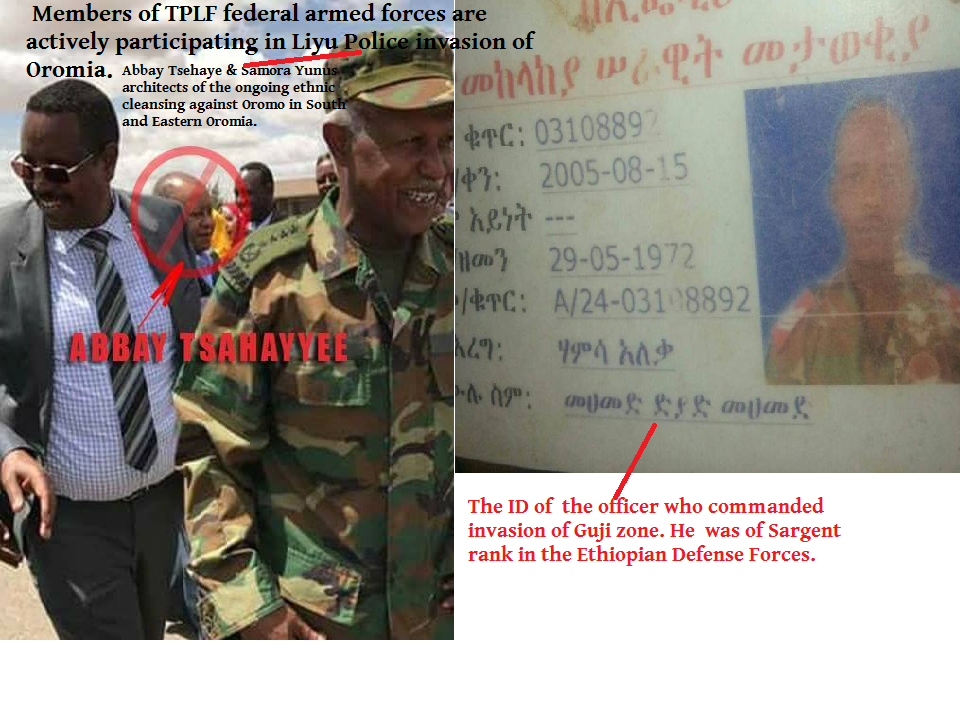


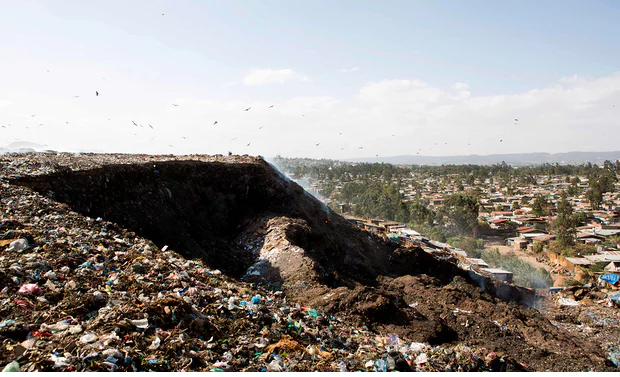


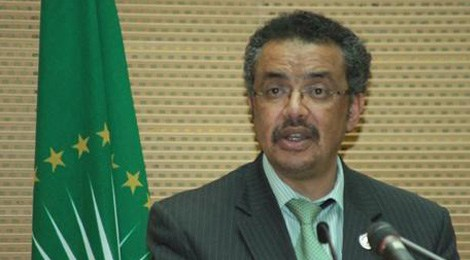





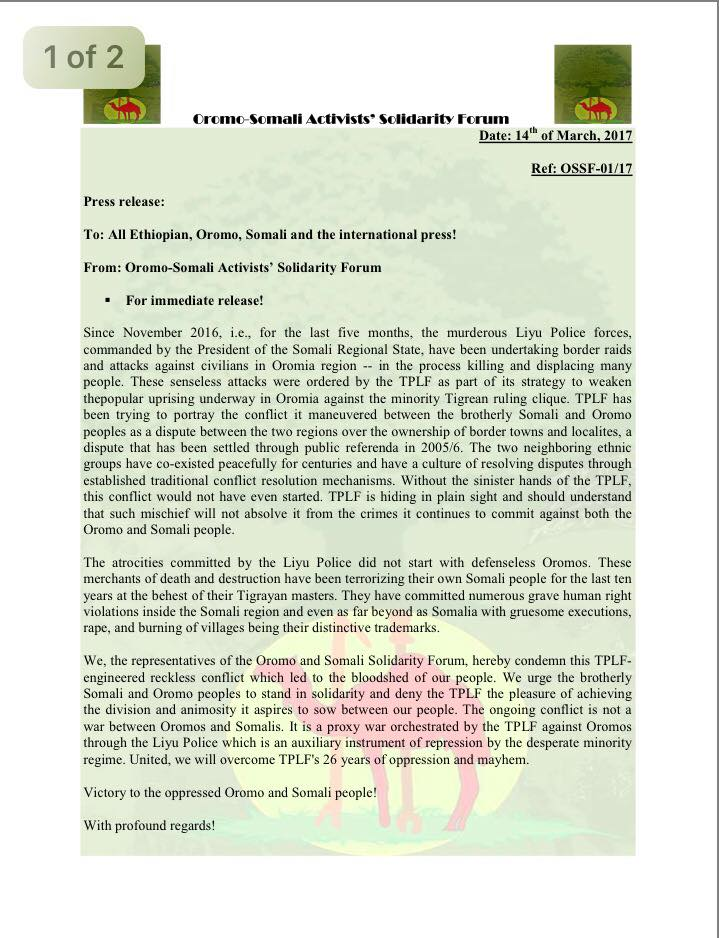



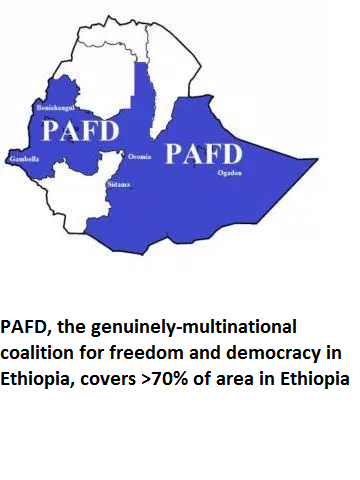

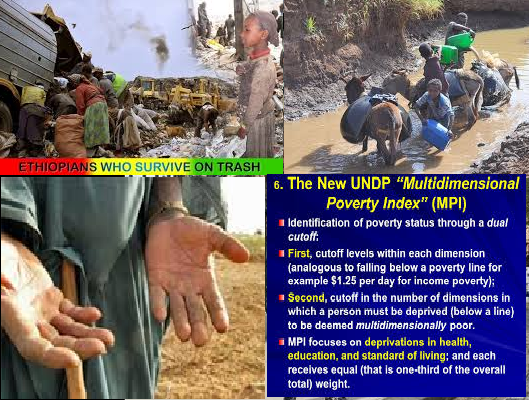
 About 150 people were at the site when the landslide struck on Sunday [AP]

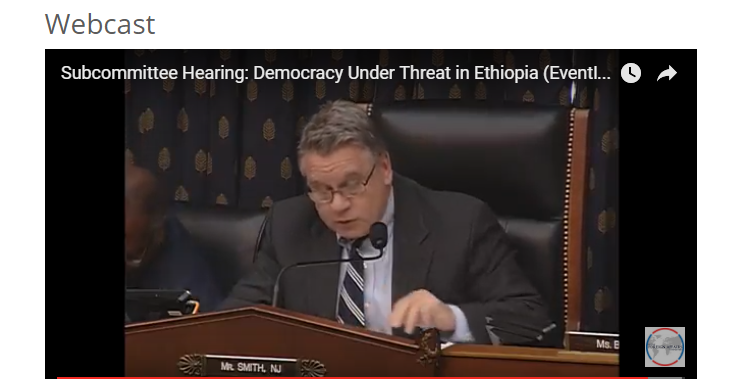


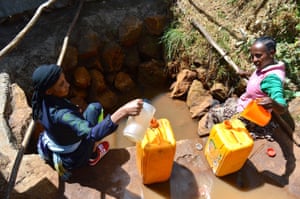
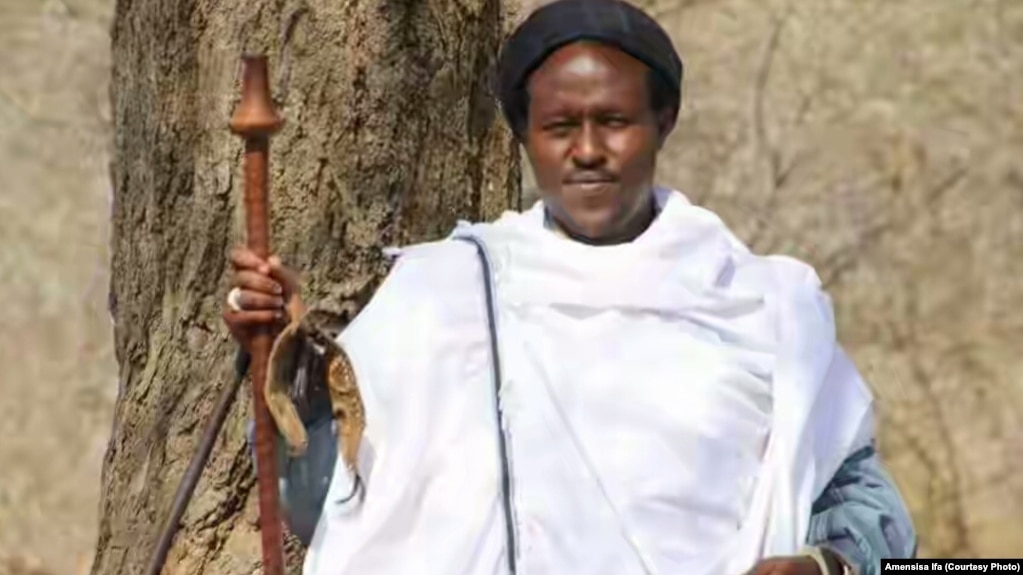
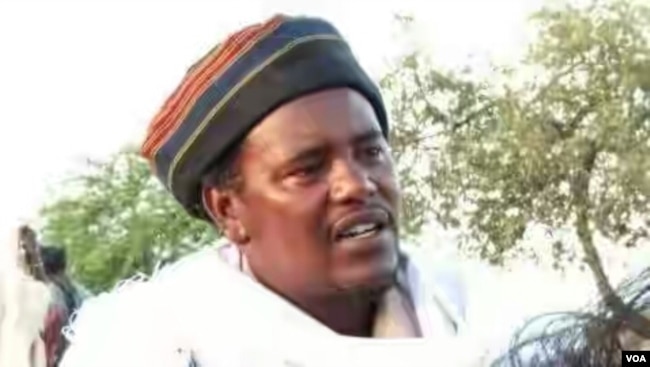
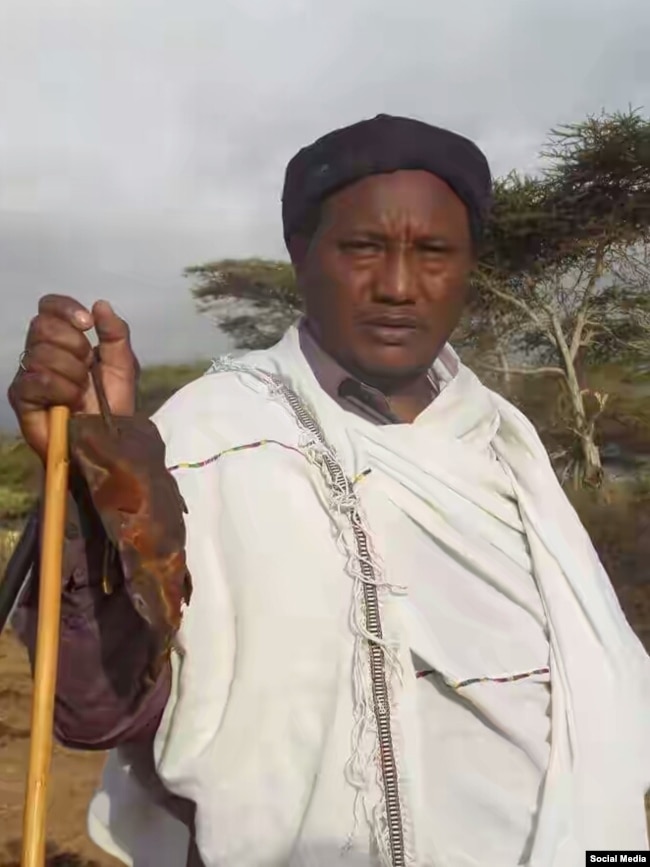
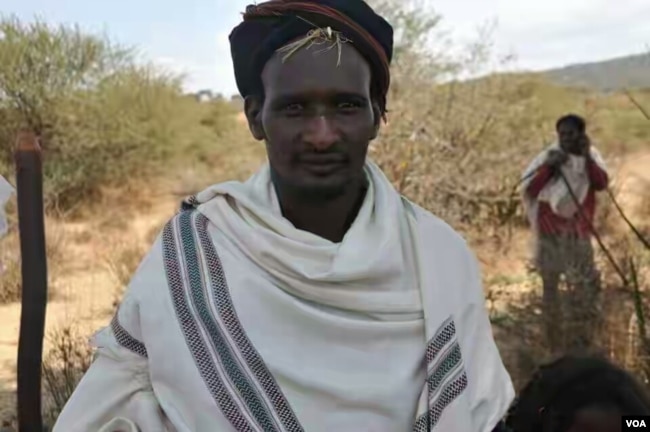
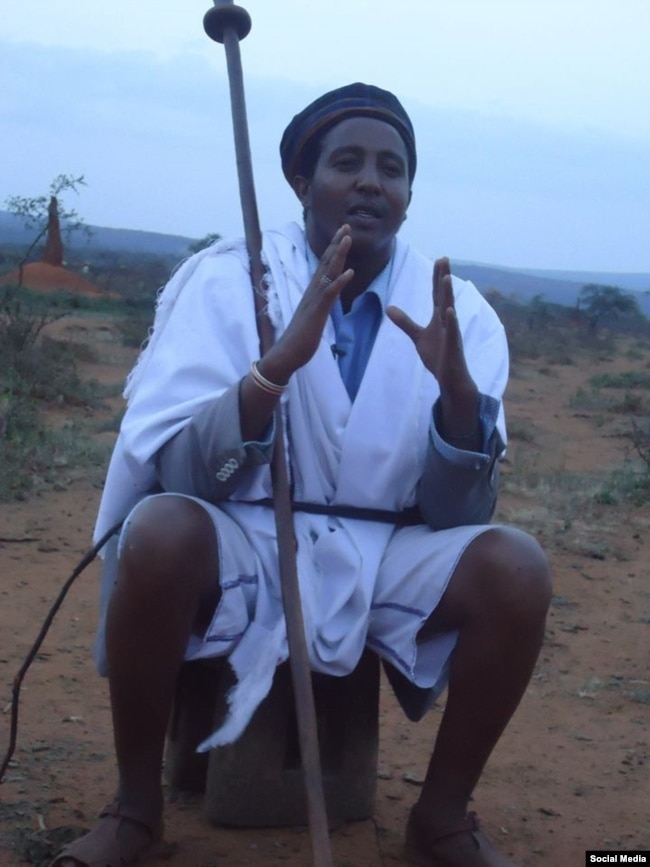



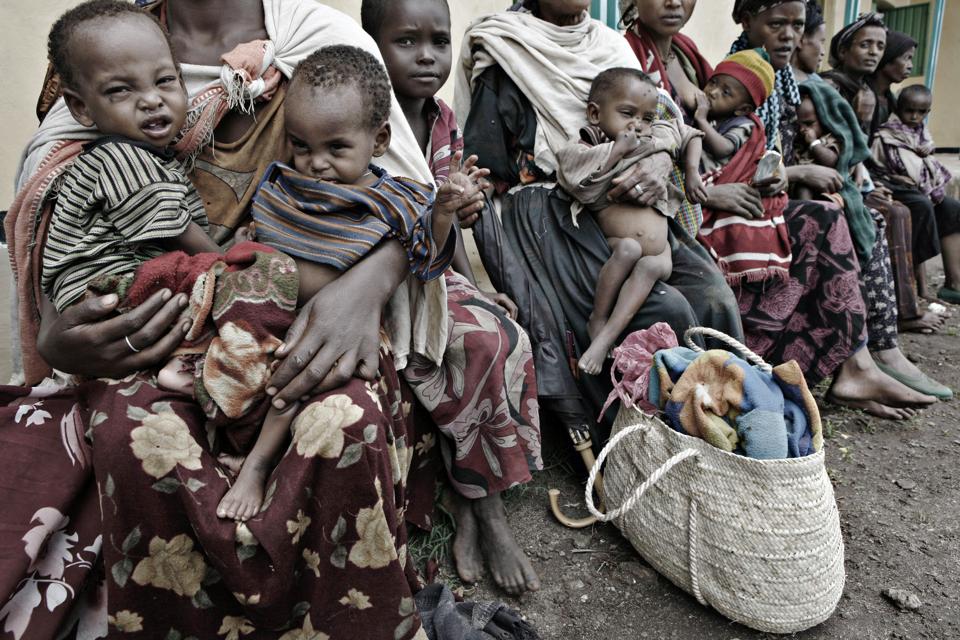
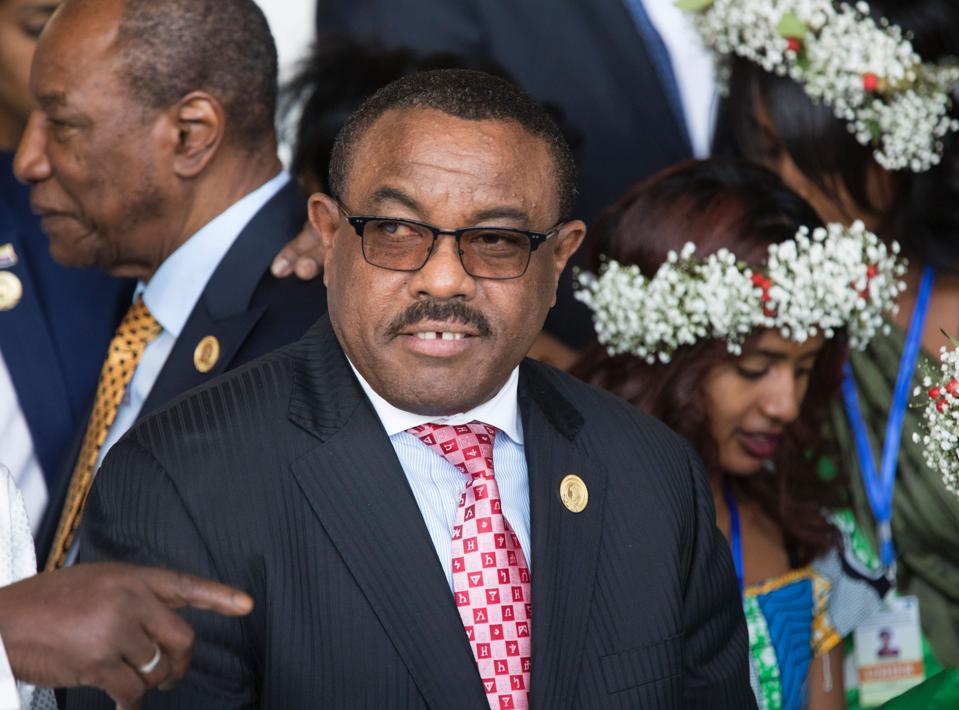


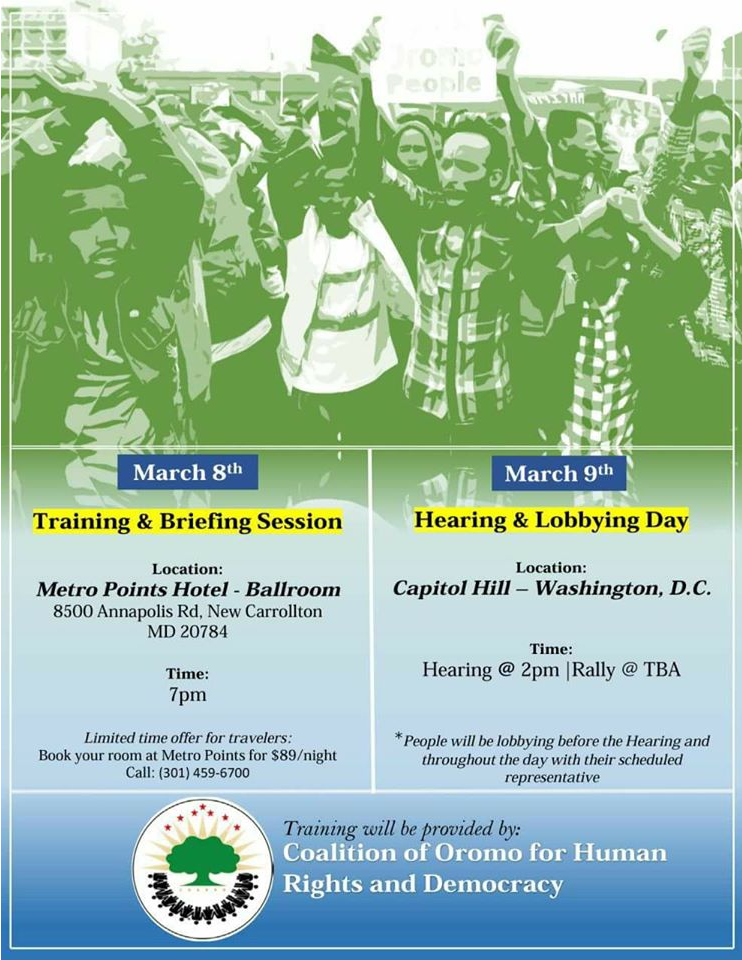


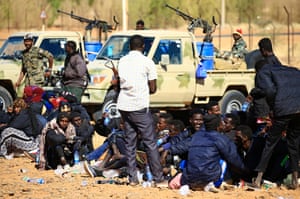

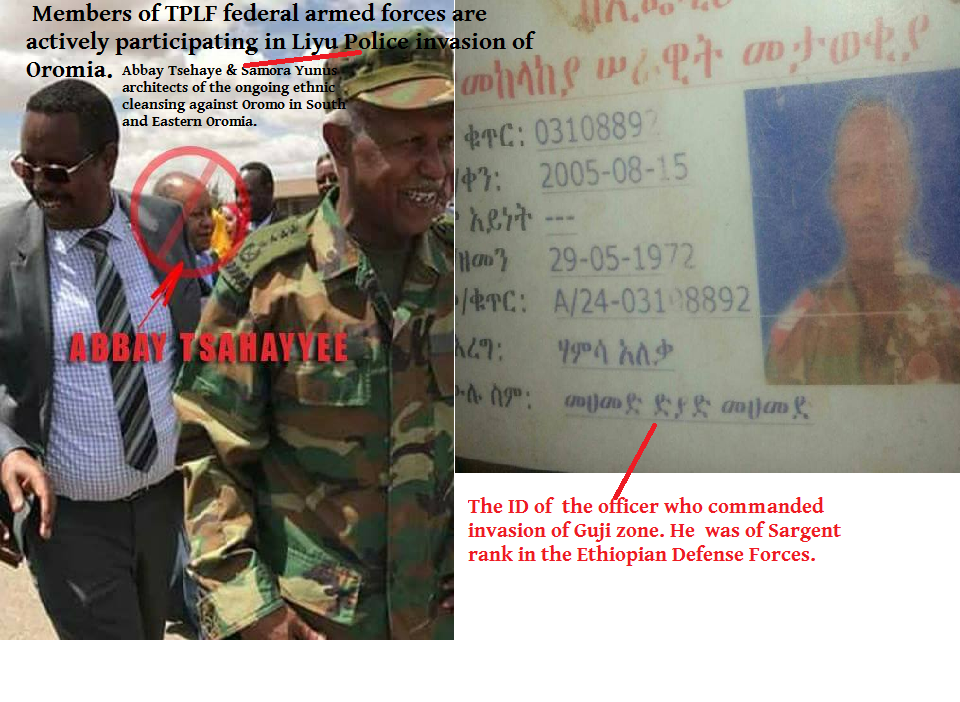


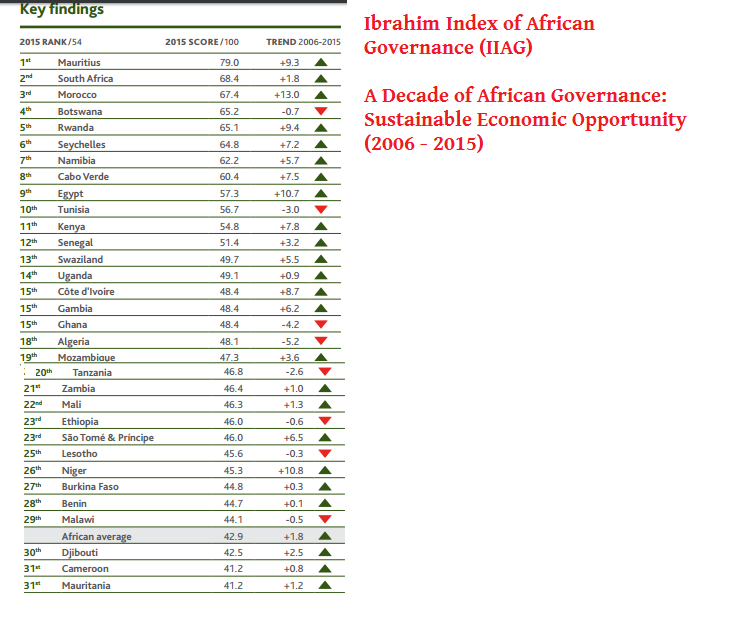






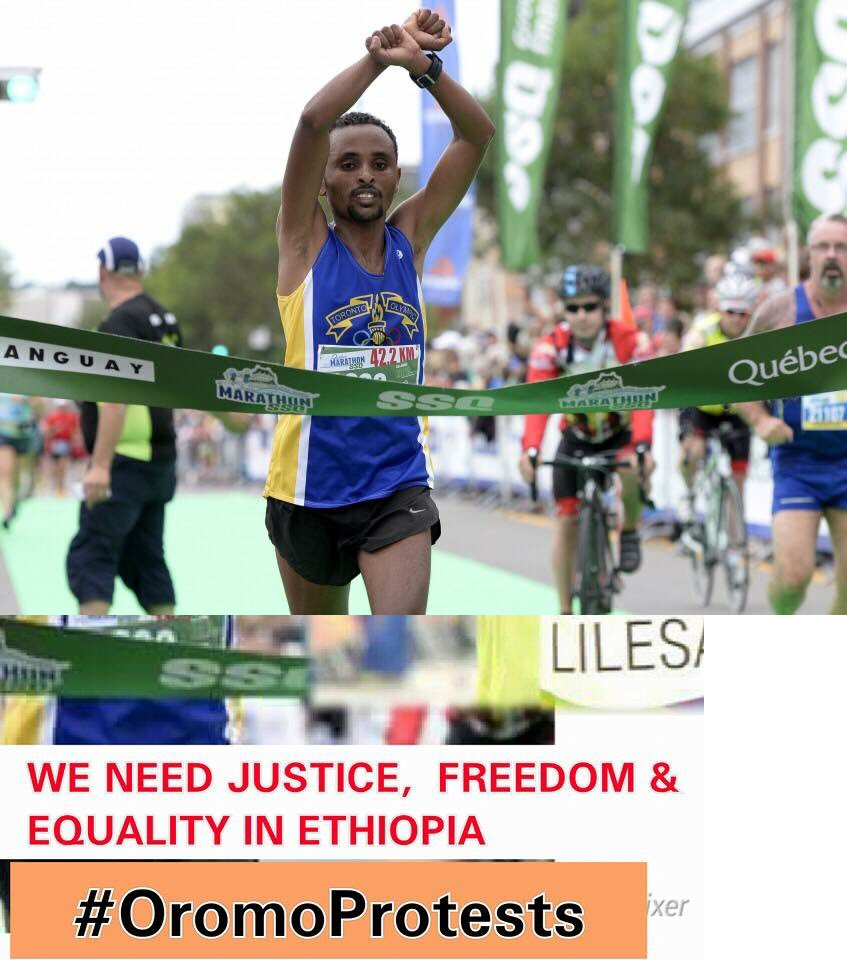


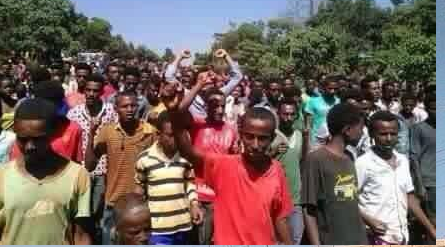







 Four-time Olympic champion Sir Mo Farah made the famous Oromo gesture in protest against the government of Ethiopia as he crossed the finishing line in the 5,000m Birmingham Indoor Grand Prix on Saturday.The legendary British athlete who have just returned from Ethiopia to break the European record at the event (pictured), swapped his ‘Mobot’ signature celebration with a show of solidarity for the Oromo people.In Rio Olympic, hundreds of millions of people watched Ethiopian silver medallist Marathon winner Feyisa Lilesa hold his arms over his head, wrists crossed, in support of members of his Oromo ethnic group against the Ethiopian ruling party.The Tigre ethnics group (TPLF) of the country’s leaders have been repeatedly accused of human rights abuses and of discrimination against the Oromo, the country’s largest ethnic group, comprising about 35% of the country’s 100m population.


 A Court in Ethiopia has adjourned the case of


You must be logged in to post a comment.