Economic and development analysis: Perspectives on economics, society, development, freedom & social justice. Leading issues in Oromo, Oromia, Africa & world affairs. Oromo News. African News. world News. Views. Formerly Oromia Quarterly
The 2015 Corruption Perceptions Index clearly shows that corruption remains a blight around the world. But 2015 was also a year when people again took to the streets to protest corruption. People across the globe sent a strong signal to those in power: it is time to tackle grand corruption.
José Ugaz, Chair, Transparency International
Ethiopia is listed among the countries in the world where corruption highly prevails. According to Transparency International’s Corruption Perception Index, Ethiopia ranks 103 out of 168 countries and territories included in this year’s index.This doesn’t come as a surprise to many as Ethiopia has been for two decades under the control of a bunch of corrupt officials who are deafening us with the ‘11% economic growth’ mantra while millions of Ethiopians are starving to death.These corrupt officials are killing, torturing and imprisoning citizens in hundreds and thousands because they challenged their corrupt attitudes and their endless greed for wealth and power.
CIVICUS spoke to Yared Hailemariam, the director of Association for Human Rights in Ethiopia (AHRE), concerning the recent killing of protesters in the country. AHRE is an NGO initiative of Ethiopian human rights activists that fled the country and is dedicated to the advancement of human rights protection in Ethiopia.
1. Can you detail the main causes of the current protests in Ethiopia?
The current protest in Ethiopia’s Oromia region began in November 2015. The first and main cause of the protests was the controversial government proposal of a Master Plan for the capital, Addis Ababa, which aims to expand the city by taking over several Oromia towns surrounding the capital. Protestors say the implementation of the plan will result in the displacement of thousands of local farmers who settled in the area many years back. The protest was started by students in Oromia region and then farmers and other members of the Oromo ethnic group joined the demonstrations.
2. The government has now said that it has halted the Master Plan. What are the implications of this on the current protests?
This Master Plan which is known as the “Addis Ababa Integrated Regional Development Plan” was announced by the government in April 2014. That announcement was followed by bloody protests in April and May 2014 after government forces used excessive force to stop peaceful Oromo protesters who opposed the plan. As a result, dozens were killed, hundreds of students were arrested, and many charged under the anti-terrorism law, and many others left the country. After the 2014 bloody events, the government promised to settle the disputes raised concerning the Master Plan by holding inclusive and transparent dialogue with all stakeholders especially the local residents, opposition parties, civil society representatives and local officials. However, the promises were not adhered to hence the current protest is due to those unfulfilled promises on lack of consultations.
Since the current protest started in mid-November 2015 a large number of causalities and mass arrests have been reported. These are unlawful, brutal and irresponsible acts of the government aim to dismantle the protests. The intensity of the response of the armed forces in the Oromia region exacerbated the situation. Even after the government announced its decision to halt the implementation of the Master Plan, a number of casualties were still being recorded.
In the last few weeks the protestors were also raising other serious issues such as lack of the rule of law, accountability of the state, corruption, justice problems, inequality, lack of democracy, and non-respect for basic rights of citizens.
3. It has been reported that approximately 160 people have already been killed during the protests. Can you describe the extent of the violations committed during the protests?
The current protest started on 12 November 2015 in a small town called Ginchi, which is about 80 kilometres south-west of Addis Ababa. After a week, the protests spread throughout the Oromia region. In most places the protests were peaceful including at universities, high schools and elementary students. But the response of the army and police was disproportionate to the protests as they attacked protestors killing more than 160 people and wounding many others.
On 1 December 2015 the Federal Police killed Gazahany Oliiqaa, a Haromaya University student. Some of those killed included young students and children between the ages of seven and 15 years old.
Thousands of protestors, including opposition leaders, journalists and activists were also arrested. In December 2015, prominent opposition leader Bekele Gerba, two journalists Getachew Shiferaw and Fikadu Mirkana, online activist Yonatan Teressa and four other Blue Party members were arrested. The Ethiopian authority labelled them as terrorists. In two of the main universities in the Oromia Region, including Harromaya University there were explosions in which a number of students sustained serious injuries.
4. In light of the multitude of restrictions imposed on the media and civil society in Ethiopia, to what extent has civil society been able to document and report on the protests?
Ethiopia has for a long time severely restricted press freedom and the work of civil society. It is one of the top countries when it comes to jailing journalists, many of whom it charges under the 2009 anti-terrorism law. The space for civil society to carry out their work has also been narrowed since the adoption the 2009 Charity and Societies Proclamation. This law has crippled the ability of many local NGOs especially those who work in the area of human rights. The restrictions imposed on media and civil society have a significant impact on the monitoring, documentation and reporting of the situation of human rights in Ethiopia.
As far as I am aware the current protest in Oromia region have not been well documented or investigated by the independent media or human rights organisations. Only a few foreign journalists tried to report the protest. The rest of the information has been gathered by local amateur social media activists who reported most of the incidents from the scene. Together with the foreign media, local journalists are not allowed to carry out investigations on the protest. The only local human rights organisation, the Human Rights Council (HRCO) has expressed its concern on the protest and asked the government to stop the killings and targeting of peaceful protestors. However, it was unable to conduct its investigation or reporting because of restrictions and budget constraints that hinder it from covering the whole country.
5. Has the response of the international community been adequate?
I could say that in the last two months the response of the international community has not been adequate especially when the number of causalities were rising daily. There has not been any strong pressure on the Ethiopian government to stop the excessive use of force against protesters. Perhaps the first response from the international community is the motion of the European Parliament for a resolution on the current situation in Ethiopia which has adopted on 21 January 2016. There is still more to be done by the international community to stop the continuing violations of human rights in Ethiopia before the situation gets out of control and leads to political instability in the country.
6. What can international and regional civil society groups do to support activists in the country?
Activists in the country have faced numerous challenges and many restrictions as they perform their day to day activities. They are also subject to direct attack by government authorities. The Ethiopian government is labelling activists who criticise its policies as terrorists. As a result, the participation and visibility of Ethiopian activists in international and regional human rights mechanisms is very low and limited. This gap can be closed with a strong commitment and efforts of the international and regional civil society who have better access to advocate on the situation of Ethiopia at all levels. They could also support the work of local activists through capacity building, financing their work, consulting, supporting their research work and providing technical and security support.
A solidarity message to the Oromo people from the following U.S.-based Oromo organizations (listed alphabetically): Bet’el Oromo Evangelical Church of Minnesota; Bilal Oromo Dawa Center of Minnesota; Macha Tulama Association; Northern California Oromo Community; OFC International Support Group; Oromia Media Network Board; Oromo American Citizens Council; Oromo Community of Minnesota; Oromo Community of Portland; Oromo Members of the Orthodox Church in the U.S.; Oromo Studies Association; Our Redeemer Oromo Evangelical Church of Minnesota; Tawfiq Islamic Center of Minnesota; Tawhid Islamic Center of Minnesota; and TUMSA.
The message is delivered in three languages: Afaan Oromoo, English and Amharic:-
Sabni Oromoo mootummoota Itoophiyaa wal jijjiiraa turan jalatti waggaa 120 oliif hacuuccaadhaan gidirfameera. Haa ta’u malee wanti mootummaan gara jabeessa ta’e kan isin amma jala jirtan EPRDF/TPLF torbanoota muraasa darban kana keessa raawwate kun kan dhiyootti ta’eera jennee yaadachuu dandeenyu hundumaan ol hammaataadha.
Magaalaa fi baadiyyaan isin keessa jiraattan hundi humna waraanaatiin qabamee waan jiruuf sodaa guddaa fi qabatamaa keessa akka jirtan ni hubanna. Weerarri gara jabinaa humni waraanaa biyyoolessaa Aga’azii Oromiyaa irratti geggeesse nu keessaa baduu hin danda’u. Barattoota umurii mana barumsaa keessa jiran kan humni waraanaa mootummaa Itoophiyaa ajjeeseef onneen keenya gaddaan cabee jira. Oduu dirqisiifamanii gudeedamuu dubartoota keenyaa dhaga’uudhaan onneen keenya madaa’eera. Isa mootummaan Itoophiyaa sochii isin gootan kanaan shororkeessitummaadha jedhe nuti morminee jirra. Kana irratti eenyutu shororkeessituudha? Barattoota hidhannoo hin qabne warra karaa nagaadhaan mormii isaanii dhageessifatan moo waraana hidhatee isaan ajjeesaa jirudha? Dhugaan ofii isaatii haa dubbatu.
Miidhamni, hacuuccaa fi murtiin dalgaa lafuma ofii keessanii irratti hidhamtoota isin haa taasisu iyyuu malee haala ulfaataa akkasii keessatti iyyuu gara kuteenyaa fi gootummaadhaan qabsoo keessan itti fuftanii jirtu. Dargaggootni Oromoo, naamusni keessan, booreen keessan, jaalalli isin biliisummaaf qabdan, ciminnii fi diddaan isin qorumsa jabaa kana keessatti agarsiiftan, nu boonsee jira. Uummata Itoophiyaa fi kan biroofis burqaa kaka’umsaa fi jabinaa taataniittu. Gumaacha keessaniif dhalootni Oromoo kan isin galateeffatu yeroo ta’u, aarsaa keessan seenaan ni yaadata.
Wal’aansoon saba Oromoo sadarkaa hadha’aa irra ga’ee jira. Amma boodatti deebi’uun hin jiru. Amma dhumaatti fuula duratti tarkaanfachuu malee filannoo biraa hin qabnu. Aarsaa baafame akka waan waa’ee hin baafneetti lakkoofsisuu hin qabnu. Mo’icha as dhiyaate kana adda kutuun balaa guddaa qaba.
Hafuurri Oromoon Biliisummaaf qabu kana booda waanjoo garbummaa fi hacuuccaa waan baachuu hin dandeenyeef, tures dhiyaates haqni jali’na irratti akka mo’uu fi uummatni keenya akka mo’icha argatu shakkii hin qabnu. Sabni Oromoo guddichi deebi’ee akka biliisomu ni amanna!
SOLIDARITY MESSAGE TO OUR COMPATRIOTS
We, the undersigned, representatives of Oromo civic, religious, academic, community and media organizations, hereby in unison convey our heartfelt condolences to those who have lost family members. We also send our unflinching support and message of solidarity to you, our people, who are valiantly resisting the repression by the Ethiopian government.
The Oromo nation has suffered over 120 years of indignity under successive Ethiopian regimes, but the cruelty and viciousness you have been subject to by the EPRDF/TPLF regime in the last few weeks surpasses anything that we have witnessed in recent memory.
We understand that today you are living under a significant amount of fear and duress as a result of the military occupation of your towns and villages. The outrage we feel at the brutality the TPLF Agazi force has unleashed in Oromia is immeasurable. We are heartbroken by the number of school age children the Ethiopian security forces have killed. We are repulsed and outraged by the news of women raped. We reject the Ethiopian government’s characterization of your movement as an act of terrorism. Who is the terrorist here? Are they the unarmed school children demonstrating peacefully or those who are armed and killing them? Let the truth speak for itself.
In spite of all the violence, repression and systemic abuse that has made you prisoners in your own land, you have persevered and heroically continued the struggle under the most difficult of conditions. And to the Oromo youth, your discipline, tenacity, love of liberty, courage and defiance in the face of an adversity, has made us all proud. You are a source of inspiration and strength for all peoples in Ethiopia and beyond. Generations of Oromos will remain indebted to you for your contributions, and history will remember your sacrifice.
The Oromo nation has reached a critical stage in its struggle. At this point, there is no turning back. We have no choice, but to march to the very end. We cannot allow the sacrifices made to be in vain. The consequences of stopping short of ultimate victory will be disastrous.
Therefore, we want to encourage you to remain resolute and courageous as you sustain the struggle. Through its various agents of violence, this government has declared war on the Oromo people. And a government that declares war on the very people it seeks to rule has no moral authority or legitimacy to remain as such. Thus, the struggle to liberate our people from this repressive regime should continue undeterred.
At this critical juncture in our history, as we send you this message of solidarity, we pray for the safety and well-being of our people and recommit ourselves to stand with you and support the struggle with everything at our disposal. As the free Oromo spirit can no longer bear the yoke of bondage and indignity, there is no doubt in our minds that sooner or later justice will prevail over evil and our people will be victorious. We are confident that the great Oromo nation shall once again be free!
– Bet’el Oromo Evangelical Church of Minnesota
– Bilal Oromo Dawa Center of Minnesota
– Macha Tulama Association
– Northern California Oromo Community
– OFC International Support Group
– Oromia Media Network Board
– Oromo American Citizens Council
– Oromo Community of Minnesota
– Oromo Community of Portland
– Oromo Members of the Orthodox Church in the U.S.
– Oromo Studies Association
– Our Redeemer Oromo Evangelical Church of Minnesota
– Tawfiq Islamic Center of Minnesota
– Tawhid Islamic Center of Minnesota
– TUMSA
South Africa: Bloody Repression in Ethiopia and Why #FeesMustFall Should Take Notice
ANALYSIS
By Addis Alem, All Africa, 4 February 2016
Over the past few months, students, in solidarity with farmers resisting land grabs in the Oromia region of Ethiopia, faced off with security forces in some of the biggest protests the country has ever seen. The protests against the “Addis Ababa Master Plan” were repelled by Ethiopian troops, resulting in mass arrests and deaths of protestors.ADDIS ALEM describes the current situation in the Oromia region, and how it can be compared to the #FeesMustFall protests in South African universities.
The Oromo community, Ethiopia’s largest ethnic group, began protesting in November against the “Addis Ababa Master Plan”, which, the government said, aimed to develop areas surrounding the capital. Protesters said the plan would only evict farmers and leave them dispossessed and impoverished.
While the protests were about the plan, it also was an opportunity for the Oromo people who feel marginalised economically and culturally by the government, to be heard. And the struggle over the plan is part of a bigger accusation leveled against the state: the forcible removal of removing tens of thousands of people from their homes to make way for large-scale, commercial ventures (mostly foreign).
Of course it is a problem: eighty percent of Ethiopians still live in rural areas and land remains a contentious issue in this East African country.
The protests
Students – from high schools and primary schools – led the protests against land grabs. Doctors, nurses, teachers and bank workers stood in solidarity with them, and boycotts, sit-ins and silent marches were held throughout the country.
The response from the Ethiopian government has been brutal. The police and army in Ethiopia responded with live ammunition, teargas and mass arrests, resulting in scores dying – including children.
Independent reporting on what is happening in the country is almost nonexistent due to government censorship. There is also no way to independently verify the death toll, but activists have put the number at at least 150.
Hundreds more are said to have been arrested, joining tens of thousands of political prisoners in Ethiopian jails.
Journalists, bloggers, Muslim advocates for religious freedom, non-governmental organisations, opposition groups and other dissenting voices have long been repressed with Ethiopia’s Anti-Terrorism Proclamation 652/2009. According to Amnesty International, the law permits the government to use unrestrained force against suspected terrorists, including pre-trial detention of up to four months.
Those involved in the current wave of protests have been labelled as “terrorists”, with the military being sent in to clamp down on them. Journalists, bloggers and other dissenting voices have already been prosecuted on the basis of Anti-Terrorism Laws.
Take the story of Hora Banti Irena, a 4th year Food Science student at Walaga University. On January 4th, he was arrested on campus. Two days later, his body was found in the Hadiyya river. In another incident, Reuters reported that two students were killed and six others were injured when a hand grenade was thrown at them in Dilla University.
Meanwhile, others have simply disappeared. In one case, Kenna Shiferaw, a 10th-grade student at Ambo Secondary school was kidnapped by soldiers. Her pictures, along with many others, have flooded social media.
#OromoProtests Kenna Shiferaw a 10th grade student at Ambo secondary school was kidnapped by soldiers this morning. pic.twitter.com/hYkzzr6zSS
— Addisgazetta (@addisgazetta) December 29, 2015
The army was deployed onto some university campuses and schools, and some students – including high school and primary school students – boycotted class, demanding the release of their classmates and arrest of those who killed protestors.
As a result of the protests, the government’s plan was shelved. But the protests have continued. Though calls have been made for independent investigations into the killings and arrests, nothing has been done. The protests over the land have triggered protests against the dispossession of thousands of smallholder farmers, destruction of livelihoods and erosion of cultural rights.
#Ethiopea.Powerful cover from @addisstandard on #OromoProtests. pic.twitter.com/zAKywcSlkb
— Revi Mfizi (@revimfizi) January 11, 2016
“The government should desist from using draconian anti-terrorism measures to quell protests and instead protect its citizen’s right to freedom of expression and peaceful assembly,” Muthoni Wanyeki, Amnesty International’s Regional Director for East Africa, the Horn and the Great Lakes, was quoted as having said.
Last year, in Ambo, about 125km west of the Addis Ababa, about 47 were reported to have been killed by security forces [Editor’s note: the Ethiopian government said nine people were killed] after university students led a protest against the land grabbing.
In many ways, the wave of protests over land is a resumption of student-led protests 2014, and they have re-emerged at a time of immense desperation: the country faces one of the worst droughts since the 1980s. Despite the much lauded double-digit growth, some ten million people are already in desperate need of food aid as a result of the drought.
The link to South Africa
The student-led struggle in solidarity with smallholder farmers in Ethiopia is similar to the campaign for better working conditions for cleaning staff in South African universities. The campaign in South Africa has forged a unity between students and mainly black women workers, who endure insecure working conditions and earn a poverty wage.
To this end, it is impossible to talk of #FeesMustFall without bringing in the struggles of students and the Oromo people in Ethiopia. They are in many ways the same struggle: for dignity, justice and better access for the black body. Moreover, #FeesMustFall is perhaps the first stop en route the land question in South Africa.
Besides, the story has certainly reached South Africa.
Ethiopians protest at #UN offices in #Pretoria demanding UN interves in rights abuses in #Ethiopia #OromoProtests pic.twitter.com/HBDhVOmlCU
— Hassan Isilow (@hisilow) February 1, 2016
This places an urgent responsibility into the hands of students and other progressives organising in universities and other political formations in South Africa and beyond against this brutal repression of students fighting a similar cause.
The use of live ammunition by the security forces must cease, and thorough and transparent investigations into the extra-judicial killings and other violence against protestors in Ethiopia must begin immediately. Likewise, there must also be investigations into violence of police and private security in protests in South Africa. All political prisoners in Ethiopia must be released. The Anti-Terrorism laws must also be scrapped.
We anticipate that there will be more protests at South African universities against financial exclusion and against outsourcing in 2016. In fact, mobilisations have long begun. The promise to contain protests by any means has also been made repeatedly as universities doggedly insist they will continue to block students burdened with debt and insist on upfront payment.
A firm stand against any form of repression and urgent solidarity is needed to protect the right to protest in South Africa. In the same light, solidarity with the Oromo student-led protests against land grabbing is also an important step which speaks to the struggle of African people to decide on their own material wellbeing in their collective interests and not that of a narrow political and economic elite.
Addis Alem (not his real name) is a member of the October 6 movement, a collective of progressive students, workers and academics in the University of Johannesburg and Witwatersrand.
Ethnic Cleansing in Gambella Region, Ethiopia: What Is to Become of Its Minorities?
Unfortunately it is not unusual for the Ethiopian government to conduct ethnically-based human rights violations in its own country. Only a few weeks go, Oromo civilians were specifically targeted and killed in their home towns following peaceful protests. Today it is the Anuak community who is suffering from oppression by national authorities. The government seems to have started the conflict to repress a group of civilians suspected of affiliation to the Gambella Peoples’ Liberation Movement (GPLM). The People’s Alliance for Freedom and Democracy (PAFD) condemns these atrocities and pleads the international community to take these continuous human rights violations in consideration when engaged in relations with the Ethiopian Government.
Photo courtesy of Julio Garcia @Flickr
On January 27, 2016, around 2:00 am local time, ‘special police’ from the regional administration of Gambella aided by local militia attacked Anuak civilians all over the region. Subsequently, the death of more than four dozen of Anuak civilians have been reported; and the indiscriminate massacre of unarmed Gambella civilians is said to be continuing. Moreover, the local militia close to the regional administrator attacked a prison in Gambella town and residential areas by killing more than 8 people and destroying the regional state prison.
In Gambella, the Ethiopian government arms and trains both the special police forces and the local militias. Therefore, the government is believed to have instigated the current conflict after it has suspected that the Anuak are affiliated to Gambella Peoples’ Liberation Movement (GPLM), one of the founding members of the ‘Peoples’ Alliance for freedom and Democracy’ (PAFD). The instability of the South Sudan is also said to have negatively impacted on the intra-communal harmony.
Between 13 and 16 of December 2003, in Gambella region, the Ethiopian army has massacred over 424 Anuak people, wounding further 200 and causing the disappearances of about 85 people.
Time and again, we have witnessed such profoundly disturbing crimes perpetrated by the current Ethiopian government on civilians of all regions. Since November 2015, the Ethiopian government’s forces are committing similar massacres and brutally treating unarmed Oromo civilians in various Oromia villages and towns. The Oromo civilians are peacefully protesting TPLF’s land-grabbing policies under the pretext of expanding Addis Ababa.
The regime blatantly continues committing similar massacres in Ogaden Somali, Sidama, Tepi-Mezenger, Beni-Shangul and other regions in front of the international community. Civilians and opposition groups and their supporters are arbitrarily imprisoned, continually tortured and denied legal representation. Millions of farmers are continually uprooted from their livelihoods to vacate their land for TPLF’s business. Journalists for writing the truth and all those who dare to exercising their constitutionally guaranteed rights are classified as terrorists.
Therefore, PAFD
– Categorically condemns the Ethiopian government’s systematic instigation of the current conflict in Gambella and urges it to stop the arming of one ethnic group to stand against their own people.
– Calls upon all the Gambella civilians to exercise utmost restraint; stop massacring their own brothers and sisters- instead uniting to resist authoritarian TPLF’s regime
– Calls upon all Gambella related democratic movements and liberation fronts to unite in unanimously denouncing the Ethiopian government’s heinous tactics of inciting conflicts between fraternally co-exited brothers and sisters.
– Calls upon all the international and Ethiopian related democratic forces to unite in condemning the on-going Gambella massacre orchestrated by the Ethiopian government.
– Calls upon all the international humanitarians and Western politicians to rethink their position whilst supporting the Ethiopian TPLF’s authoritarian regime.
– Call upon all foreign groups to desist from interfering in the internal affairs of the Gambella peoples.
For the original press release please download this.
The only way to access the internet in Ethiopia is through the government-owned provider, Ethio Telecom, which has unilateral control over the telecom industry. A burgeoning tech scene in neighboring Kenya, which has an internet penetration rate of 69.6 percent, has garnered the name “Silicon Savannah.” But in Ethiopia, the monopoly on internet access has created one of the most disconnected countries in the world.
Only 3.7 percent of Ethiopians have access to the internet, according to the latest data, one of the lowest penetration rates in the world. By comparison, South Sudan, which lacks most basic government services, has an internet penetration rate of 15.9 percent. There are only ten countries with lower internet penetration than Ethiopia. Most of them, such as Somalia and North Korea, are hampered by decades-long civil wars or largely sealed off from outside world.
Nafkot Nega thinks journalists are terrorists. When I visited him and his mother, Serkalem Fassil, at their tiny apartment in the outskirts of Washington, DC, in early January, 9-year-old Nafkot intermittently murmured and jabbed his hands, pretending to be a superhero fighting criminals.
Perhaps some of those criminals were journalists like his father, Eskinder Nega, who was convicted of violating Ethiopia’s anti-terror law in July 2012. Eskinder is currentlyserving an 18-year prison sentence.
“Journalism is a crime or a terrorist act in his mind because what has been portrayed about [his dad],” Serkalem explained to me through a translator. “Not only his dad, but if you mention any journalist he will scream and say ‘I don’t like journalists!’”
Their story is a weaving tale that mirrors how Ethiopia, home to over 90 million people, became a digital hermit nation. How Nafkot come to believe journalism is a crime equivalent to terrorism is a case study of how governments have used the internet as a tool for repression.
***The only way to access the internet in Ethiopia is through the government-owned provider, Ethio Telecom, which has unilateral control over the telecom industry. A burgeoning tech scene in neighboring Kenya, which has an internet penetration rateof 69.6 percent, has garnered the name “Silicon Savannah.” But in Ethiopia, themonopoly on internet access has created one of the most disconnected countries in the world.
Only 3.7 percent of Ethiopians have access to the internet, according to the latest data, one of the lowest penetration rates in the world. By comparison, South Sudan, which lacks most basic government services, has an internet penetration rate of 15.9 percent. There are only ten countries with lower internet penetration than Ethiopia. Most of them, such as Somalia and North Korea, are hampered by decades-long civil wars or largely sealed off from outside world.
As one of the fastest growing economies in Africa, with one of the most storied cultures in the world, Ethiopia’s lack of internet access is astounding. It’s also troubling.
It’s unclear exactly how many Ethiopians can access the internet. Those who can, however, must contend with the specter of state surveillance. The Ethiopian government is suspected of deploying spyware and other hacking and surveillance tools to surveil individuals, including at least one American citizen, hooked to the web. Because of these alleged cybersleuthing efforts, the Ethiopian government has turned an engine of commerce and information into an afterthought and an instrument of surveillance.
Nafkot. Illustration: Shaye Anderson
Former American diplomats, current members of Ethiopia’s intelligence agency, and foreign policy experts all told me that the Ethiopian government is afraid of dissident views spreading online, and has crafted its intelligence service, telecom sector, and legal codes to stamp out digital dissent.
Perhaps the foremost victim of the country’s internet crusade is young Nafkot, who believes his father is a terrorist because he’s a journalist. Nafkot’s parents were two of the most well-known journalists in Ethiopia; Eskinder and Serkalem were internationally award winning media moguls, who began their respective careers after the communist Derg regime fell in 1987, and a new government formed in 1991. After a disputed parliamentary election where ensuing protests turned violent in 2005, both Eskindir and Serkalem were arrested.
Unbeknownst to either of them, Serkalem was pregnant.
***The prohibitive factors that cause Ethiopia’s digital divide are straightforward. The monopoly on internet access has made it prohibitively expensive for many citizens to get online. Routine service outages make connections unreliable. And for those Ethiopians who do manage to access the internet, there is little content available in the local language of Amharic.
Whether these barriers to internet access are the intended result of a system designed to limit the spread of information, or the unintentional byproduct of a monopolistic cash cow is about as murky as the country’s dealings in cyber-espionage.
“Ethiopia wants to maintain as much control as possible over the internet so that it can prevent internal comments that are critical of government policies and minimize access to critical comments originating outside Ethiopia,” David Shinn, the former American ambassador to Ethiopia, told me.
A member of the Information Network Security Agency, one of Ethiopia’s intelligence agencies, also told me the monopoly purposefully limited internet access to preserve security in the country.
“Everything connected to the internet is slowing down”
“It’s because of security reasons, and I don’t think there is anything related to that other than this,” said the official, who works on technical capabilities and spoke on the condition on anonymity because he did not want to talk about his employer. “Everything connected to the internet is slowing down. Entrepreneurs can’t create their companies.”
Ethiopia is among a constellation of African nations made of patchworks of ethnic identity, and Bronwyn Bruton, the Deputy Director of the Africa Center at the Atlantic Council, told me that the government has led the fractured country by limiting freedom of expression.
“The Ethiopian state is very fragile,” Bruton said. “It’s built on a premise of segregation that is in theory separate but equal, however in practice dominated by one ethnic group, the Tigray. The Tigreans are only about six percent of the population but they absolutely dominate political and economic power.”
When I asked Teressa Belete, the Chief Enterprise Officer at Ethio Telecom, if the lack of internet access was a deliberate result of the government to limit free speech and dissent, he seemed genuinely confused and dismissed the idea. The advantage of a government monopoly, Belete said, is that rural Ethiopians, who make up a majority of the country’s population, wouldn’t be serviced by private companies with profit motives.
Yet Ethio Telecom, which was founded in 1952, made an estimated $300 million profit per year, as The Economistreported in 2012. And Ethio Telecom used the excess funds to bankroll railway development in the country.
“The country lags far behind in terms of liberalization of the [telecommunications] sector,” said Lishan Adam, a consultant who has worked with the World Bank on information and communications tech policy. “They missed most of the liberalization era in the 1990s, and there was a delay in terms of getting internet.”
Adam told me Ethiopia only became connected to the internet in 1997, and said that while the desire to limit free speech might be a factor in the lack of internet access, it wasn’t the main reason why most Ethiopians aren’t online.
Ethiopia’s internet penetration rate is reported to be 3.7 percent as of November 2015. Ethiopian officials take issue with that figure, reported by the World Bank. They argue it’s inaccurate because it doesn’t fully account for mobile subscribers. The World Bank’s numbers do include mobile subscribers, but it’s likely the reported number is still too low, and Adam estimated that the true internet penetration rate is between five and 15 percent of the population.
***Nafkot was born in prison in 2006. He was premature and couldn’t breathe at room temperature. Doctors wanted to move him immediately to a hospital with incubators, but the only hospital that could admit him required a signed form one of his parents. Serkalem was still under anesthesia, and the police wouldn’t bring the form to Eskindir. Nafkot could not get the treatment he needed.
“They didn’t really care about his life, but for the grace of God survived,” Serkalem said, her voice rising with anger.
Nafkot stayed at his grandparent’s home until Serkalem and Eskinder were released from prison. At which point, Serkalem and Eskinder could not continue working as print journalists; along with most of the independent newspapers in the country, theirs were shut down. Serkalem stopped writing altogether. Eskinder began blogging online, one of the first in the country to do so.
“He turned to blogging because all of the other avenues were closed,” Serkalem said. “Although he knew that not many had internet access in Ethiopia, it was better than being silent. He knew it wasn’t going to do much, but he needed to write.”
Serkalem. Illustration: Shaye Anderson
The internet penetration rate in Ethiopia was 0.2 percent in 2005, and it is believedby internet security experts that the government’s online censorship began in 2006, the year Eskinder started blogging. Opposition websites inside Ethiopia became inaccessible that year, and the government was assumed to be behind the censorship.
Before parliamentary elections in 2010, the Ethiopian government introduced a vague anti-terrorism law in an effort to avoid another contested election, Jeffrey Smith, an international human rights expert based in Washington, DC, told me. The law has become a cornerstone of the government’s censorship, labeling anyone who “influences government” a “terrorist.”
“Ethiopia is an example of a ruling regime that uses the term ‘terrorism’ as a politically expedient term,” Smith said. “The terrorism concerns inside the country are real but they have gone way beyond that, and have systematically abused human rights.”
With the Arab Spring protests in late 2010, there was hope the anti-government rallies that began in Tunisia would spread to Ethiopia. Eskinder’s blogging was provocative and confrontational during this time. In one 2011 article he prodded the Ethiopian military to choose the side of the people like the Egyptian military did at the time.
“Ordinary citizens took the initiative all over North Africa and the Middle East,” Eskinder wrote in another post, published September 2, 2011. “The results made history. They are powerful precedents for the rest of humanity. While inspiring words, sober analyses and robust debates are indispensable as ever, they will remain exactly no more than mere words unless translated into actions. To Ethiopia this means risking the core of a much cherished collective vision—peaceful transition to democracy.”
“No school for me”
On September 14, 2011, while Eskinder was picking up Nafkot from school, the Ethiopian intelligence service surrounded Eskinder’s car and arrested him. Serkalem raced to the scene. She found Nafkot crying, but no Eskinder. Serkalem took Nafkot to his grandmother’s house, then went straight to the Maekelawi prison, notorious for practices of torture. She waited for three hours for Eskinder to show up. But he never did.
That’s because Eskinder was actually at their house, watching the intelligence service rifle through the family’s belonging. Serkalem recalled that when she returned home the intelligence officers tried to stop her from entering, but she forced herself through to reach Eskinder. Panicked, she yelled out to him.
“Calm down, and be courageous!” Eskinder shouted back. Then he was taken away.
Afterward, Serkalem went to pick up 5-year-old Nafkot. The boy was clearly traumatized from witnessing his father arrested at school. The next day, Nafkot didn’t want to go back.
“No school for me,” he said.
***The Ethiopian intelligence apparatus is one of the most invasive in the world. Exiled Ethiopian journalists in Nairobi, Kenya, told me of being followed or snooped on by government agents who had no interest in hiding their identity. One Ethiopian businessman joked to me about how he wouldn’t be surprised if he heard a third-party cough while talking with someone over the phone.
Felix Horne, the Ethiopia researcher at Human Rights Watch and author of acomprehensive report on the Ethiopian surveillance agency, told me that the government has a nationwide program called “five to one.” It’s an all-seeing system in which five citizens are monitored by one individual. It is like a listening node in a system that spans the entire country with the goal to preserve command over its many ethnic groups.
“The Ethiopian government, like many other governments, appears to be using hacking tools to supplement their regular surveillance regime” said Bill Marczak, a research fellow at Citizen Lab. The Ethiopian government’s traditional surveillance methods are “effective for someone who is looking inside Ethiopia, but one of the features of Ethiopia is it has a very large diaspora community spread out over many different countries in the world.”
Washington, DC, has around a quarter million Ethiopian expatriates, and there is a large presence in Europe, Marczak added. And there is “no way other than hacking, phishing, and targeted attacks to monitor these people.”
Eskinder. Illustration: Shaye Anderson
When Neamin Zeleke received an email in December 2014 claiming to have inside information about a sensitive subject in Ethiopia, his home country, he recognized it as a likely hack. Zeleke was managing director of Ethiopian Satellite Television and Radio (ESAT), one of the largest Ethiopian news outlets, and run by members of the country’s diaspora. Its website and TV service are banned in the country. But Ethiopians can still access the channel and website through satellites and proxy servers.
Zeleke told me that ESAT satellite service has been jammed 20 times by the government. The latest jam, he said, happened just a few minutes before he and I met in early January. He forwarded the suspicious email to Marczak of Citizen Lab, who recognized that it carried a low-level bug likely from Hacking Team, a provider of surveillance software to governments across the world.
Using software from Hacking Team, an Italian company, and likely the Gamma Group, a European company, the Ethiopian intelligence service has targeted journalists and political opponents with invasive systems that allow the government to remotely activate a computer camera and microphone, record keystrokes, and monitor online activity. The frequency of these attacks and other surveillance capability is obscured by the inherent secrecy of spycraft, and that the targets of these hacks either don’t know, or don’t want to share that they’ve been infiltrated makes it difficult to assess the tools and motivations of their hacking, Marczak told me.
Zeleke is both a journalist and a political opponent. He is a member of Ginbot 7, an armed opposition group in Ethiopia that is labeled a terrorist organization by the government. Security experts told me that there is no evidence Ginbot 7 has ever undertaken terrorist activity, and the organization is not on the US State Department’s list of terror organizations.
Ginbot 7 is largely a collection of exiled Ethiopians who operate outside the borders of the country they wish to change. According to an ESAT report, Ginbot 7 has attacked government soldiers, which Zeleke confirmed to me.
Zeleke stepped down as managing director of ESAT in early 2016. He didn’t have the time for it anymore, and told me he was worried he could no longer be objective. He is now a consultant for the organization, though he still holds a corner office in the station’s tiny studio, which is lined with awards from prestigious human rights organizations.
One of the awards was for Eskinder Nega.
Zeleke told me ESAT took the award on behalf of Eskinder, who “was considered one of the pioneers of independent media in Ethiopia.”
In the ESAT news bullpen, and also next to Eskinder’s award in Zekele’s office, was a large portrait of Andargachew Tsige, the founder of Ginbot 7, in military fatigues. Tsige is believed to be under arrest in Ethiopia. Zeleke lept toward me when I tried to take a photo of the portrait next to Eskinder’s award.
“I don’t think that’s appropriate for this story,” Naimin said, moving Tsige’s photo out of the shot.
Later, I asked Zeleke if he thought the Ethiopian government was targeting him and other ESAT journalists because of their dissident views, or because the government perceives the organization as affiliated with Ginbot 7. What if authorities didn’t know where Zeleke’s political activity ends, and his journalism begins? It wouldn’t justify the surveillance. But because there have been so few public cases of the Ethiopian government’s targets, the distinction could illuminate the motivations of the intelligence service’s hacking—primarily to stop the flow of information, or targeting perceived political threats.
The head of the government agency that runs Ethiopia’s hacking, the INSA, declined to comment for this story.
The real punishment wasn’t his time wasted behind bars. It was seeing Nafkot suffer without a father
Zeleke told me that the Ethiopian government is monitoring ESAT because it is a political organization affiliated with Ginbot 7, but it is a fully independent organization and the journalists are from across the political spectrum.
“The fact that I am affiliated with Ginbot 7 may be a factor, but without me being here, whoever is the head of ESAT, these journalists [would be attacked],” he told me. “Others, many others who are not Ginbot 7, thousands of others, are subject to cyberattacks and surveillance. So, I mean, logically you have to see the context. This is a routine practice by the police, an authoritarian state to control the populous, to control the flow of information, and to intimidate alternative media and political dissenters.”
***Serkalem and Nafkot would visit Eskinder in prison every Saturday and Sunday after he was sentenced. Eskinder tried to convince Nafkot that he was just in school, not at prison, to make the burden of an absent father easier on his young son. Born in a prison, Nafkot recognized that his father wasn’t in school.
“No, you’re in jail,” he would say to his dad.
Nafkot Nega has believes that the profession of his parents is a crime equivalent to terrorism. Innovative industries in Ethiopia have been hamstrung to preserve this philosophy, and those who do access the internet are targets of relentless hacking.
When they visited, Serkalem told me the jail staff would humiliate inmates in front of their families. Eskinder grew concerned that Nafkot would become desensitized to the brutality and grow resentful of the world.
“It’s OK to be jailed for what you believe in, but to see the impact on your family and your son, he couldn’t bear, and asked me to take him away,” Serkalem told me. The real punishment wasn’t his time wasted behind bars. It was seeing Nafkot suffer without a father.
Eskinder started to ask his wife and son the same question each time they visited: “Have you bought your ticket?” He also pressed other family members and friends who visited to convince Serkalem and Nafkot to leave Ethiopia, so he could finish his time with the peace of mind that his family would be safe.
The last time Nafkot saw his father was July 23, 2014. Serkalem had purchased two tickets for the United States the next day, and Eskinder tried to cheer up his son during their last visit.
“America is right nearby!” he exclaimed.
Serkalem told me she wants to create a positive memory for Nafkot of his father. She wants to convince her son that his father’s sacrifice as not in vain. Eskinder is scheduled to be released from prison in 2030, when Nafkot will be 23 years old—the same age Eskinder opened his first newspaper in Ethiopia.
The following is a statement from the Peoples’ Alliance for Freedom and Democracy (PAFD), a coalition of five political groups, namely: Oromo Liberation Front (OLF), Ogaden National Liberation Front (ONLF), Sidama National Liberation Front (SNLF), Gambella People’s Liberation Movement (GPLM) and Benishangul People’s Liberation Movement (BPLM).
PAFD Press Release
PAFD Strongly Condemns the Ethnic Cleansing in Gambella
On January 27, 2016, around 2:00am local time, ‘special police’ from the regional administration of Gambella, aided by local militia, attacked Anuak civilians all over the region. Subsequently, the death of more than four dozens of Anuak civilians have been reported; and the indiscriminate massacre of unarmed Gambella civilians is said to be continuing. Moreover, the local militia, close to the regional administrator, attacked a prison in Gambella town and residential areas by killing more than 8 people and destroying the regional state prison.
In Gambella, the Ethiopian government arms and trains both the special police force and the local militias. Therefore, the government is believed to have instigated the current conflict after it has suspected that the Anuak are affiliated to Gambella People’s Liberation Movement (GPLM), one of the founding members of the Peoples’ Alliance for Freedom and Democracy (PAFD). The instability of the South Sudan is also said to have negatively impacted on the intra-communal harmony.
Between 13 and 16 of December 2003, in Gambella region, the Ethiopian army has massacred over 424 Anuak people – wounding further 200 and causing the disappearances of about 85 people.
Time and again, we have witnessed such profoundly disturbing crimes perpetrated by the current Ethiopian government on civilians of all regions. Since November 2015, the Ethiopian government’s forces are committing similar massacres and brutally treating unarmed Oromo civilians in various Oromia villages and towns. The Oromo civilians are peacefully protesting TPLF’s land-grabbing policies under the pretext of expanding Addis Ababa.
The regime blatantly continues committing similar massacres in Ogaden Somalia, Sidama-land, Tepi-Mezenger, Benishangul and other regions in front of the international community. Civilians and opposition groups and their supporters are arbitrarily imprisoned, continually tortured and denied legal representation. Millions of farmers are continually uprooted from their livelihoods to vacate their land for TPLF’s business. Journalists for writing the truth and all those who dare to exercising their constitutionally guaranteed rights are classified as terrorists.
Therefore, PAFD:
– categorically condemns the Ethiopian government’s systematic instigation of the current conflict in Gambella and urges it to stop the arming of one ethnic group to stand against their own people;
– calls upon all the Gambella civilians to exercise utmost restraint; stop massacring their own brothers and sisters – instead uniting to resist against the authoritarian TPLF’s regime;
– calls upon all Gambella related democratic movements and liberation fronts to unite in unanimously denouncing the Ethiopian government’s heinous tactics of inciting conflicts between fraternally co-exited brothers and sisters;
– calls upon all the international and Ethiopian related democratic forces to unite in condemning the ongoing Gambella massacre orchestrated by the Ethiopian government;
– calls upon all the international humanitarians and Western politicians to rethink their position whilst supporting the Ethiopian TPLF’s authoritarian regime;
– call upon all foreign groups to desist from interfering in the internal affairs of the Gambella peoples.
Issued by Peoples’ Alliance for Freedom and Democracy (PAFD)
February 2, 2016
The two U.S Senators from the state of Minnesota, Amy Klobuchar and Al Franken sent to States Secretary John Kerry their strong legislative support to the ongoing #OromoProtests by issuing the letters below.
They condemning the authoritarian regime of Ethiopia. ” The United States has a compelling interest in ensuring U.S. resources provided to Ethiopia are not being used to violate human rights.”
February 2, 2016
The Honorable John F. Kerry
Secretary of State United States
Department of State
Washington, D.C. 20520
Dear Secretary Kerry,
We write to request that the State Department provide recommendations for actions the United States can take to address the escalating violence against civilians in the Oromia region of Ethiopia. In November 2015, farmers and students in the Oromia region began protests in response to the Ethiopian government’s Master Plan to expand Addis Ababa into surrounding farmland. We are deeply concerned by reports from Human Rights Watch and the media that indicate at least 140 protesters have been killed by Ethiopian security forces.
Minnesota is home to the largest Oromo population in the United States, and our constituents are concerned about the reports of violence and intimidation protesters have faced from government security forces. We want to thank you for condemning the recent killings and violence against peaceful Oromo protesters. However, we believe stronger action is required. Reports from Human Rights Watch, Amnesty International, and the Committee to Protect Journalists have alleged that government security forces are using arbitrary arrests and prosecution to silence journalists and Ethiopian citizens who are exercising freedom of expression.
Ethiopia’s restrictions on freedom of the press and independent civil society groups mean those monitoring human rights in Ethiopia increasingly rely on social media reports from protesters and contacts on the ground. There is widespread fear that violence will escalate and that the government is taking steps to isolate the Oromia region. Reports indicate that authorities have recently cut mobile phone coverage in areas where there is a heavy military presence, further escalating fears about the potential for increased violence.
The United States Congress sent a strong message to Ethiopia regarding the government’s Master Plan and harsh crackdown on peaceful protestors by passing a provision in the 2015 Omnibus Appropriations Bill to ensure U.S. aid to Ethiopia cannot be used to support the forced evictions of farmers. The United States has a compelling interest in ensuring U.S. resources provided to Ethiopia are not being used to violate human rights. We would like more information regarding the alleged actions by the Ethiopian government and how the United States can ensure that basic human rights are not being violated.
We respectfully ask you to conduct a full, thorough review of this ongoing situation and report to Congress on immediate actions that can be taken to protect innocent civilians in Ethiopia.
Thank you for your attention to this important human rights manner.
Sincerely,
Amy Klobuchar
United States Senator
Al Franken
United States Senator
US Department of State responds to Congressman Keith Ellison’s letter written on behalf the Oromo people, #OromoProtests
The culture of power in Ethiopia is one of centralization. But real federalism couldn’t be beyond reach. The Oromo Protests in Oromya shows that it is becoming an absolute requirement.
The Tigray Peoples Liberation Front (TPLF), the strongest component of the ruling coalition, from the middle of 2014 has faced the highest level of Tigrean popular discontent since its inception 40 years ago. That came first. Now the unrest in the most populated region of Ethiopia has sent to the regime as a whole the most shattering warning shot since its arrival in power in 1991.
Despite Tigray’s marginality in terms of geography, population – 6% of Ethiopians – and its economy, the TPLF had the strength to impose its hegemony after its victory over the Derg military-socialist junta in 1991. This dominance has recently declined, but it remains the driving force of the coalition between the four ethnic forces constituting the near-single party – the Ethiopian People’s Revolutionary Democratic Front (EPRDF) – with the Amhara National Democratic Movement (ANDM), the Oromo People’s Democratic Organisation (OPDO) and the Southern Ethiopian People’s Democratic Movement (SEPDM).
It is also the only party that the population sees as its authentic and legitimate representative. However, since the spring of 2014, it has been shaken by a rising tide of popular discontent. “Give us back our TPLF!” cry the Tigrayans, a Front that is righteous, disinterested, devoted as it was during the armed struggle, ready to listen and to serve, but now accused of having succumbed to an unholy trinity: corruption, bad governance, unaccountability.
“We have acted as if it was pointless to listen to people because we are building roads and opening schools”, admits one former TPLF leader off the record. It is the “old guard”, sidelined during the second half of the reign of the omnipotent Prime Minister Meles Zenawi, who died in 2012, which sounded the alarm and then led the charge. Meles had promoted a new generation of leaders – the “Melesites”. Some young party members, mostly ambitious intellectuals, enraged by the degeneration of the Front, rushed into the breach opened up by the old timers. If it doesn’t regain its old strength, they are convinced, it will not be able to maintain its influence, and the Tigrayans would be exposed to a quasi existential risk of ceasing even to be masters in their own house, thereby losing the main asset of a 40 year struggle. Their goal: to revitalise the Front through “democratisation” and thereby regain popular support. Their target: the existing leadership, which they see as populated with incompetent “yes-men”.
However, the most disturbing warning signal came from Oromya, the region that accounts for 37% of the total population and is the economic heart of the country. Since mid-November, its northern half at least has been in a ferment of dissent. Demonstrations were followed by riots so intense and extensive as to be described as a “slide into a security crisis”: the authorities lost control of entire areas abandoned or deserted by the security forces.[1] Half the high schools and universities had to close their doors.[2] In their wake, as always happens in a power vacuum, came looters and vandals. While official government figures continue to strain credulity, other sources report more than a hundred dead.[3] Two months on, things have only partially returned to normal.
The trigger was an ordinary land expropriation in favour of private investors in a small town a hundred or so kilometres west of Addis Ababa. However, the focal point of the grievances was the so-called Master Plan for the expansion of Addis Ababa. The city has its own administrative government, but is located far inside Oromya. This territory was conquered by the Northeners at the end of the nineteenth century, and has grown by eating into the surrounding areas, still a trauma for many Oromo. The Plan covered an area 20 times larger than the existing capital, and would impact millions of Oromo. It possessed all the deficiencies of large development operations in Ethiopia: opacity and confusion, with documents of uncertain status released in dribs and drabs, thus a lack of clarity even about the respective roles of Addis Ababa municipality and the Oromya authorities in the area concerned; a centralising, top-down approach, with no consultation of the people. Oromo opinion once again rose up against what it perceives as a further drive to truncate its territory, exacerbated by a swathe of ruthless land grabbing, like that already experienced by tens of thousands of Oromo farmers around the capital or elsewhere, to the benefit of investors, whether foreign or Ethiopian, Oromo or otherwise.
The authorities began by reacting reflexively in their usual way: if it moves, hit it. To show their peaceful intentions, the demonstrators raised crossed arms or sat with bowed heads. The security forces’ disproportionate violence fuelled the protests. “Killing is not an answer to our grievances”, was the cry. For the first time on this scale, protest extended outside the “intellectual” milieu – students and teachers – to encompass not just high school and even primary school pupils, but even the lower classes, including simple farmers, who constitute three quarters of the population.
The straw that broke the camel’s back
The Master Plan was simply the straw that broke the camel’s back, the culmination of a much wider and more long-standing conflict. This is evidenced by the protesters’ targets: people and property with links – however tenuous – to the authorities, regional and federal. The officials, despite their being almost all Oromo; their symbols, their facilities (offices, cars, prisons, even medical centres and unemployment support agencies); companies owned by foreigners, non Oromo, and even by Oromo, if they have been imposed despite the peoples wishes.
Even local “model farmers” were targeted, a group who receive special government support to “modernise” their farms, on condition that they then show their fellow peasants the path to follow. Too often, they are selected by nepotism, with the result that an informal alliance has formed between local government and a new class of “kulaks”, accused of exploiting this patronage for underhand purposes, via renting or share cropping on land held by poorer farmers who have fallen into a spiral of debt. Worse still: in some places neighbours were killed, their houses burned, simply for being non Oromo.[4]
The target of unrest in Oromya was not just the unholy trinity, as in Tigray, though it is even more devastating there, but also harassment by the security apparatus, with its thousands of political prisoners, often held for years without trial. “There is no democracy, there is no justice”, complained some demonstrators. The centralisation of power, in contradiction with authentic federalism, is exacerbated by the general perception of Tigrean hegemony and the marginalisation and dispossession of Oromya.
“We want genuine self-rule”, ran one of the slogans. The attendant centralisation of development, and its relative liberalisation, initiated at the start of the 2000s, favours an “entrepreneurial” economic elite, covering a range of beneficiaries stretching from the big foreign investor to the rich peasant or Ethiopian businessman, whether Oromo or not. The ascendancy of this elite is consubstantial with the high positions it almost automatically occupies in the ruling party. Its behaviour is seen as predatory, primarily in respect of land.
“Oromya is not for sale”, demonstrators chanted. Their political opposition thus coincides with, and is reinforced by, an economic and cultural conflict around the resource that is the most precious, and quasi sacred, to the vast majority, land — which still acts as the cement of the social contract. Between this majority and this heterogeneous elite, but also within a peasantry that had previously remained largely homogeneous since the agrarian reform of 1975, class antagonisms have deepened. Moreover, plans in an increasingly sensitive sphere — the economy — could harden them.
First, there is the hidden aspect of the economy. Mystery surrounds the real situation of whole sectors controlled, directly or indirectly, by the state, i.e. two thirds of the economy outside traditional agriculture, their profitability, and above all their indebtedness, the key to their recent growth. One suspects that the alarmist rhetoric around the urgent need for a change of direction owes much to this black hole.
Moreover, the current version of the leading public impulse for economic growth — the “developmental state” — is coming to the end of the line. Its objective was to accomplish a shift from agriculture to industry. However, shares of the economy held by the industrial and manufacturing sectors remain at a similar level as at the end of Haile Selassie’s reign: respectively 11% and 5% of GDP then, 13% and 5% today.[5]
Growth on a downward path
“The 10-years perspective is a transition where manufacturing will lead the economy”, asserts Arkebe Oqubay, mastermind of this transformation.[6] Without it, there is no chance of absorbing the 2 to 2.5 million young people arriving on the labour market every year, of becoming competitive by increasing productivity, thereby reducing a growing trade deficit and turning round an increasingly negative balance of payments — the possibility of a foreign exchange crunch is increasingly raised [7] — and ultimately no chance of maintaining a high growth rate, the core of the regime’s legitimacy. For him, the worst scenario would be the combination of an economic slowdown with bad governance and assertions of nationalist feeling.
This growth rate is on a downward path, officially declining from 12% per annum in 2005 to 8% today.[8] The World Bank suggests that this fall is likely to continue.[9] Public investment, the driver of growth, has reached its ceiling at a third of GDP. Further growth therefore demands a massive inflow of private capital, mainly from abroad, bringing jobs and higher productivity, and carrying local capital in its wake, initially in subcontracting activities. However, “many of the foreign investors in Ethiopia fail because the environment is difficult”, Arkebe judges[10]. “Ethiopia lags behind Sub-Saharan African peers in most reform dimensions”.[11] Hence the intention to introduce greater ‘liberalisation’ in order to give business an attractive, stable and predictable framework, and even to open up new sectors such as banking to foreigners.
These reforms will also need to tackle another blind spot. Moving from archaic agriculture to a competitive manufacturing sector requires an army of skilled professionals with free rein to apply their knowledge. Ethiopia’s 34 universities hold almost 700,000 students and have issued more than 500,000 degrees in the last five years alone.[12] However, this increase in quantity has been accomplished to the detriment of quality. Above all, the centuries-old codes of power, whatever the domain, remain largely in place: implacable hierarchy, top-down administration, blind obedience. They are even reinforced by the near obligation of party membership in the public sector: party loyalty takes precedence over public service. The professional capacities of this new class of “intellectuals” are therefore held in check.
This lost potential hinders economic growth. Moreover, the gap between this “Internet generation” and the excessively authoritarian, fossilised and infantilising practice of power, at every level, is generating growing frustration.
While some of the new generation are satisfied with the advantages – legal and illegal – associated with their positions, others want to make their voices heard.
Haile Selassie created an intellectual elite to run a state machinery subordinate to his rule alone. Held in subjection, it rebelled, especially when — as today — graduate unemployment exploded. By contrast with the past, however, even the most anti-establishment of the present generation are not looking for a change of regime, but primarily for a role commensurate with their qualifications, and then, for some, a genuine application of the constitution, primarily with regard to federalism, particularly in Oromya.
Drought and war
Finally, there are two other challenges. After an exceptional drought, almost 20 million Ethiopians are in need of emergency or long-term food aid.[13] The authorities have responded vigorously, especially as they are haunted by the correlation between the overthrow of Haile Selassie and then the Derg and the famines that preceded them. But they themselves acknowledge failures in the distribution of aid and that the worst is yet to come.
An end to the state of phony peace with Eritrea is a growing demand in Tigray. Previously, they wanted it so that investors would finally come and rescue the region from its economic stagnation. Now it is demanded on the grounds that the military facilities that Asmara is providing to the Saudi-led coalition show that Eritrea is a bridgehead for an “Arab-Muslim encirclement”. For example, onepro-TPLF website writes:
“Ethiopia is surrounded by (Arab) strategic enemies… working to disintegrate and dismantle Ethiopia… Most of the Arab countries think Ethiopia is the gate of Africa, if they can convert the Ethiopian Christians to the Muslim faith, they can control Africa and its resources.”[14] “As the end justifies the means, Ethiopia has to use everything at its disposal to take a swift military action againstEritrea; get rid of its hostile government; annex Assab”.
What is not known is how far the leadership of the Front is listening to this demand.
Faced with these challenges, sticking to the “Meles line”, as the ruling power has up to now, i.e. maintaining the status quo, has become untenable. However, the structure of power that he left behind is vacillating in its readiness to tackle this. Two power systems are in conflict with each other, though both managed by almost the same people.
Two institutions have never played their statutory role: the legal system and the legislative assemblies. With the rise of Meles Zenawi in the early 2000s, the others became empty shells: the TPLF itself, the three other components of the EPRDF, the cabinet, the regional governments. They were reduced to mere communication channels for orders delivered from the top. Pyramidal and interpersonal, this structure of authority had little regard for institutions. Simultaneously, a constellation of mini-fiefs formed, each at the node of a network built on relationships of different kinds — family, friendship, and fundamentally regional and/or sub-regional, as well as business — all beneficiaries of the “developmental state”. After victory over the Derg, the revolutionary elite used its positions in the party-state to monopolise the management of public and para-public companies, and then to launch itself into the private sector on the back of public contracts. Thus was born an oligarchical constellation formed inside the highest party-state circles, with one foot in these circles, the other in business. These practices spread like lightning down to the lowest levels, hence the sharpness of the tensions generated by corruption, bad governance and unaccountability. But with one fundamental difference compared to essentially predatory regimes: it continued to deliver. Even though the official growth rate is undoubtedly overstated, and its social distribution problematic, progress is unquestionable. With peace and security – until recently – it has been the basis of the regime’s legitimacy.
A crumbling pyramid
When Meles Zenawi died suddenly in August 2012, this pyramid crumbled. It left a system of power that was diffuse — disseminated between multiple centres, whether individual or institutional, and riven with ferocious personal rivalries — and lacking direction. A common front was maintained to settle the succession in terms of individuals, notably with the appointment of Haile Mariam Dessalegn as Prime Minister.
Nevertheless, although their workings remain riddled by these personal networks, “now, institutions start to matter”, stresses one well-informed observer: thus, the Executive Committee of the EPRDF, cabinet, starting with the Prime Minister is increasingly assertive, and regional governments follow on through a centrifugal effect. The security forces and army, however, remain a bastion apart, and interrelations between all these power centres are still vague and unstable. The reconstruction of a solid and consensual system is still on the agenda. At the same time, the situation it faces on all fronts is becoming increasingly problematic. Too many officials remain too rigid, arrogant and disconnected to see the urgency of the situation; too unstable and fragmented. The leadership can hardly agree on the changes needed, let alone implement them.
Questioned about the existence of a “wider consensus within the ruling party” on greater economic openness, Arkebe Oqubay replied evasively: “I cannot say 100%.”[15] The opposition is of three kinds: the Ethiopian economic elite is highly disparate, divided between the most powerful groups who hope to be able to piggyback on the influx of foreign investors, and small businesses which consider themselves too weak to withstand international competition. An old “socialistic” ideological current persists. And finally, the nationalistic strain remains strong: no Ethiopian leadership has ever allowed a foreign presence, of whatever kind, to acquire sufficient influence as to potentially escape its control. Yet a massive influx of foreign investors inevitably requires compromises that will one way or another dent that sovereignty.
Moreover, this greater economic openness is likely to exacerbate the antagonisms described above, by fuelling bad governance and corruption, which exploded with the ‘liberal’ turn of the early 2000s. And the reforms currently under way or on the drawing board are purely technical. Indispensable as it is, an alteration in the ‘culture of power’ is not a priority in the economy.
Gimgema – ግምገማ
According to the official media, the combat against the unholy trinity is in full sway. The last TPLF Congress and its Central Committee saw a swathe of criticism and self-criticism, reviving one of the Font’s strongest traditions – the “gimgema” – which had become stripped of its original function in recent years. However, this merely resulted in a compromise between ‘reformists’ and ‘conservatives’, between ‘urgentists’ and ‘wait and seers’. In accordance with the traditional practice of ‘democratic centralism’, the Central Committee overruled the Congress. Two “reformers” joined the Executive Committee, the remaining “Melesites” stayed, including the chairman, Abay Woldu, who was the focus of the critiques. They will be closely monitored by newcomers to the Central Committee. The reforms were approved, but they had already been formulated in virtually the same terms at the previous congress.
Nonetheless, gimgema spread throughout Tigray. The leaders are touring the state, holding public meetings. Local officials are required to account for their behaviour to the inhabitants. In these people’s courts, judgement is rapid, the defence insignificant. Hundreds of low and medium ranking officials have been sacked, thousands warned. But we have no way of knowing whether the authorities took into account the voices of the participants before immediately appointing their replacements, or whether — as usual — they simply named them and left it to the people to formally endorse them.
In contrast, it doesn’t appear that the same purge is taking place elsewhere, or at least not with the same intensity, except in Addis Ababa.[16] Not that the unholy trinity is any less rampant, quite the contrary. But the reformist drive emanating from part of the TPLF and a few influential individual allies in the other parties, is having little impact outside, when it is not met with concealed opposition. ANDM and particularly OPDO, already so fragile when the TPLF launched its reforms and its purges, do not seem capable of handling the shock of such a challenge. The ANDM Congress was a quiet affair, OPDO’s was virtually a non-event. The same leadership teams were reappointed with no significant changes.
Above all, the exercise is limited in its very conception. The idea is that the party-state should correct itself, without any intervention by an external and independent body. The only involvement eagerly sought is that of the “public”, a fetish word, meaning de facto a fluctuating collection of individuals, by definition unorganised and unstructured. Nothing can or should undermine the monolithism of the ruling power.
The reactions to the events in Oromya reveal shock and confusion. First, in the intensity of the repression, with thousands of arrests, including senior cadres from the Oromo legal opposition parties, journalists, intellectuals. Then in its desire to silence discordant media voices, including the two TV networks run by opponents in the diaspora, to the point that the security forces even wrecked satellite dishes.
And in the cacophony emanating from the leadership. At one extreme, denial of the obvious. “There is a fair power sharing system between the federal government and the regional states which has enabled the regions to decide by themselves on issues that are specific to them”, the government spokesman maintained. “We know the protests are based on false claims.” The protesters are demonised, driven by “the conspiracies of destructive forces… of evil forces”, of “anti-peace elements”, including opposition parties which are, for good measure, “the proxies of the Eritrean regime”, and “are now organizing armed gangs”.[17]
At the other extreme, Abadulla Gemada, speaker of the House, a long-standing leader of OPDO but a man with the Prime Minister’s ear and one of the few leaders whose position in the traditional Oromo hierarchy attracts a certain popularity, declared in essence that the Oromos were smart enough not to let themselves be manipulated and to demonstrate for good reasons.[18] Between the two extremes, a convoluted acknowledgement, even from the Prime Minister, that “the recent question raised by the people of Oromia is a legitimate one”, that the Master Plan should have been drawn up in consultation “with the people of Oromia”, but also that “merciless legitimate action against any force bent on destabilising the area” is required.[19]
Finally, The Plan has been abandoned”.[20] For Abay Tsehaye, one of top ideas men and a political adviser to the Prime Minister, the sole culprits are corrupt OPDO officials and shady businessmen who “created all the mess… to capitalize on chaos” so as “to preempt the good governance drive… using the Master Plan as a smokescreen”[21]. So the whole problem comes down to black sheep who are manipulating Oromo to escape the punishment they deserve. Only part of the press dared to go further. For example, the Addis Standard, with a front page showing two raised crossed arms in red on a black background, carried the headline “Why is Ethiopia killing its people again?” subtitled “Oromo protests; not just about the ‘Master Plan’… Marking the next Ethiopian Political Chapter”.[22]
Federalism and hyper-centralised reality
The regime is now paying the price for the accumulated mistakes of its ethnic policy. Both ANDM and OPDO were created by the TPLF. They have never broken free of its oversight, at least to the extent of being considered legitimate representatives by the Amhara and the Oromo, with the capacity to voice their aspirations and grievances at federal level. This original fault line undermines the whole federal construct. Federalism is at the heart of the constitution and institutions, but the reality is hyper-centralised, the primacy of the Tigryan elite, even if increasingly under stress, undeniable in the political, economic and even more so the military and security spheres.
The “national question” boomerangs back on those who claim to have settled it once and for all: constantly emphasising national identities and proclaiming that they now all have the right to assert themselves, equally and entirely; in reality, keeping them ranked and constrained. Meles Zenawi’s iron fist had contained this contradiction. It could not but break loose after his death. In the absence of strong and inclusive political structures to handle it, it inevitably overflowed into the street.
One of the most illuminating evidences of these accumulated mistakes is the vacuity of the OPDO. It won 100% on the seats during the May elections, but it proved incapable of maintaining law and order, incapable of channelling discontent: it disintegrated. Most of its top leadership further discredited themselves by adopting the government line. As for the rest of its officials, very many joined the protests, others quite simply faded away. Oromya lives under a de facto state of security/military siege directed from Addis Ababa.
A Copernican revolution?
Would simple reforms resolve all these profoundly interdependent pitfalls, or do they demand a complete overhaul of the regime? Surprisingly as it may seem, part of the TPLF and some high level officials beyond believe this is the case. They have in recent months undergone a Copernican revolution, breaking with everything they have thought and done since their beginnings, 40 years ago now, as with all Ethiopian leaders since the dawn of time: ruling by force.
They underline that throughout the country’s history, all regime changes have come through armed conflict. “We want to leave future generations an Ethiopia that is not only prosperous, but also sustainably stable and peaceful”, they say. The only solution would be to let the institutions work as the constitution stipulates. In other words, deliberative assemblies that actually control the executive, from federal level down through the 17,000 municipalities; an independent legal system; a recognition of the positive role that the opposition parties and media could play. Sincere conversion or a pragmatic acceptance of reality? For their Tigrayan proponents, given the arch-minority status of the Tigreans, the clinching argument is that only genuine federalism could give them the vital long-term guarantee of remaining at least masters in their own homeland.
In the immediate, the management of the unrest in Oromya contradicts these intentions. However, the shock has been too sudden and too violent for the regime not to be out of its depth and to revert to its traditional repressive habits. But its history also shows that it only changes after a very long period of internal maturation. There is nothing to say that a period of deep reflection has not begun, albeit as ever behind double locked doors.
The obstacles are huge: the whole culture of power would be turned upside down, along two axes.
This culture is one of centralisation. But real federalism couldn’t be beyond reach. Oromya shows that it is becoming an absolute requirement. The foreign investment influx requires long term stability. Decentralisation is not conditional on the establishment of the ‘rule of law’ in every other sphere. In particular, oligarchical power could adapt to, and even prosper alongside genuine decentralisation. However, it would entail at least a full reconstruction of OPDO, and probably ANDM as well. Otherwise, it is to be feared that the inter-nation relationship would become even more critical, with young Oromo activists in particular deciding that the only choice is armed struggle because nothing could be achieved by political means.
It is also an authoritarian culture. Since the student movement of the 1970s, this authority has been vested in a small self-proclaimed vanguard elite, whose legitimacy is founded on the claim to supreme knowledge. It might adopt the argument of the early Soviet leadership: “We alone know what should be done to make you prosperous and happy, and so we have the right and the duty to do it if necessary by force and against your will.” In essence, therefore, this power is vertical and monolithic: any dissent could only come from misguided individuals or from ‘anti-peace’ and ‘anti-development’ elements. Criticism can be accepted only if levelled at failures in the execution of a policy, but not at the policy itself. That is precisely the limitation of the current campaign against the unholy trinity.
Rule of law?
This raises the question of what meaning these ‘reformers’ give to the ‘rule of law’: does it include the possibility that the country’s vital forces, whether driven by political, economic or social motives, including these new ‘intellectuals’, could organise themselves and make dissenting voices heard, not only about the form, but also about the substance of policy? This would require the end of monolithism, the acceptance of counter-forces, and therefore an end to the obsession with maintaining control over all organisations, whatever their nature.
It would also require an end to the wait for the supreme saviour, the ‘strong man’. Even within the TPLF, and even more so in the population of former Abyssinia, many are convinced that only such a figure could stabilise and preserve the structure of power, thus bring a lasting stability, as supposedly demonstrated throughout Ethiopian history.
Establishing the rule of law is above all about confronting oligarchical power. During a famous televised discussion about tackling the unholy trinity, attended by a gathering of the leadership and opened by a devastating report into the spread of its depredations right to the top of the party-state, Haile Mariam Dessalegn exclaimed: “Here, we talk, but once outside, we defend our different networks to ensure that they are not affected. That is the primary sickness!”[23] A confession of the limitations of self-correction.
The abandonment of the Master Plan is an unprecedented decision, but one that even the legal opposition considers a first step on a very long journey. It is calling for a significant gesture of appeasement, such as the freeing of the recent detainees, as proof that the government is sincerely ready to enter into dialogue with all the stakeholders concerned who possess recognised status, and with respected figures, for a complete rethink.[24] If it accepts, the opposition would have to concede that the process could only be gradual, extremely lengthy, that if the EPRDF agrees not to dictate its outcome, it will nevertheless insist on retaining control throughout the whole process, and that one line in the sand cannot for the moment be crossed: challenging federalism and the upper hand Tigreans hold over the security services and the army, which it sees for the time being as its ultimate shield.
“Where does all this lead us? To the beginning of the end? Let us hope not”, concludes a recent editorial in Addis Fortune.[25] In the absence of a credible alternative authority, only the existing regime can decide whether it ultimately wishes to change, or is prepared to risk the worst.
The Human Rights League of the Horn of Africa (HRLHA) would like to express its deep concerns regarding the safety of Oromo prisoners in the Kalitti Jail in Addis Ababa/Finfinne in Ethiopia. According to information leaked out from the Jail and obtained by the HRLHA, Oromo prisoners are discriminatory subjected to torture in a very harsh jail condition in underground dark rooms.
In an inhuman and extrajudicial action taken against some Oromo prisons on the 29th of January, 2016, a lot of Oromo inmates were subjected to tortures that last for over ten hours and left those victims in life-threatening situations. The attack on Oromo prisoners by the prison guards and administrators was executed in two rounds on the same nights in two different compounds of the Jail. According to the leaked documents, it first started in the compound known as “Number Two”.In an after-hour operation, a handful of Oromo inmates was taken out of their prison cells on this Number Two compounds. They were beaten up and tortured for hours and eventually taken to the compound called “Tanker”. They were all naked, their bodies covered with blood, cuts and woulds, and broken limbs.
Tanker is a compound where most of the dark prison cells are located, according to the document obtained by HRLHA. Shocked by the conditions of those tortured Oromos, the Oromo inmates who were previously in the dark cells of the Tanker compound asked as to why they were not allowed at least to have clothes on themselves. This very question triggered another round of assault and torture on some of those who raised the question. These include Kadir Zinabu, Abdisa Ifa, Fakada Abdisa, Abdii Birru, Banti Daggafa, Dajjazmach Bayyana, and Hasien Abdurahman. They were all severely beaten up; and finally transferred to another dark room within the Tanker compound.Husien Abdurahman in particular was separated from all others and taken away to a yet unknown destination; because he was bitterly crying and screaming due to the severe injuries and woulds he received from the assaults and torture. Mr. Husien Abdurahman was not seen or heard from since then (the morning of January 30, 2016). There has been a very deep fear among his fellow prisoners that he might not be alive any more.
This inhuman and extrajudicial operation of torture was headed by a prison official called Gabriel-Igzi’abiher, and took place from around 9:00 PM to about 11:00 AM Ethiopian time. According to the information obtained from the Jail, Mr. Gabre-Igzi’abiher was further threatening the whole Oromo political prisoners verbally, mentioning that he and the government led by his TPLF party could, if need be, drag Oromo prisoners out of their prison cells one by one and shoot them dead.
Such inhuman and cruel treatments added to the already harsh prison situation like that of Kalitti, the safety of political prisoners, who are categorized as enemies by the Ethiopian Government, is undoubtedly at risk. Therefore, HRLHA calls upon all regional and international human rights and diplomatic agencies so that they do all that is at their disposal to ensure the well being of the political prisoners in Kalitti Jail and elsewhere in Ethiopia.
Copied to:
UNESCO Headquarters Paris.
7, place de Fontenoy 75352 Paris 07 SP France
1, rue Miollis 75732 Paris Cedex 15 France
General phone: +33 (0)1 45 68 10 00
Website: http://www.unesco.org
United Nations Educational, Scientific and Cultural Organisation (UNESCO)- Africa Department
7 place Fontenoy,75352
Paris 07 SP
France
General phone: +33 (0)1 45 68 10 00
Website: http://www.unesco.org/new/en/africa-department/
UNESCO AFRICA RIGIONAL OFFICE
MR. JOSEPH NGU
Director
UNESCO Office in Abuja
Mail: j.ngu(at)unesco.org
Tel: +251 11 5445284
Fax: +251 11 5514936
Office of the UN High Commissioner for Human Rights
United Nations Office at Geneva 1211 Geneva 10, Switzerland Fax: + 41 22 917 9022 (particularly for urgent matters) E-mail: tb-petitions@ohchr.org this e-mail address is being protected from spambots. You need JavaScript enabled to view itOffice of the UNHCR
Telephone: 41 22 739 8111
Fax: 41 22 739 7377
Po Box: 2500
Geneva, Switzerland
African Commission on Human and Peoples‘ Rights (ACHPR)
48 Kairaba Avenue, P.O.Box 673, Banjul, The Gambia.
Tel: (220) 4392 962 , 4372070, 4377721 – 23 Fax: (220) 4390 764
E-mail: achpr@achpr.org
Office of the Commissioner for Human Rights
Council of Europe
F-67075 Strasbourg Cedex, FRANCE
+ 33 (0)3 88 41 34 21
+ 33 (0)3 90 21 50 53
Contact us by email
U.S. Department of State
Laura Hruby
Ethiopia Desk Officer
U.S. State Department HrubyLP@state.gov
Tel: (202) 647-6473
– Demonstrators say government scheme to expand capital Addis Ababa endangers farmers
– Demonstrators say government scheme to expand capital Addis Ababa endangers farmers
By Hassan Isilow
(PRETORIA, South Africa) – Ethiopians protesting against human rights abuses in their homeland gathered outside UN offices in Pretoria on Monday to call for the international community to take action.
“We are protesting here to create awareness about the killings of Oromo protesters in Ethiopia,” organizer Muna Saidi told Anadolu Agency. “We want the UN to help us pressure the Ethiopian government to stop these killings.”
Demonstrations sprung up in Ethiopia late November after the government proposed expanding the boundaries of capital Addis Ababa into Oromia regional state, leading to concerns among Oromo farmers about a loss of land.
The Oromo are the country’s largest ethnic group.
Saidi said many organizations had been silent over human rights violations in Ethiopia, where, according to Human Rights Watch, at least 140 protesters have been killed by security forces.
Several journalists, bloggers and opposition members have reportedly been jailed for criticizing the government.
“There is no freedom in Ethiopia,” Abdurrahman Jibro, chairman of the Oromo People’s Association of South Africa, told Anadolu Agency. “Protesters are shot and killed. Hundreds of Oromo youth have now fled to neighboring countries because they fear they will be arrested.”
Monday’s protest of around 300 saw demonstrators carrying placards calling for the release of political prisoners and an end to evictions in Oromia.
Will Expressing Concern Prevent State-Led Mass Murder in Oromia, Ethiopia?
By Habtamu Dugo*, Finfinne Tribune, 1st February 2016
The number of Oromo civilians killed, maimed, tortured, disappeared and raped by Ethiopian government forces has been increasing after Ethiopia’s Foreign Minister Dr. Tedros Adhanom met with the European Union and US Ambassador to the United Nations Samantha Powers. Ignoring concerns by the EU and Ambassador Powers over Ethiopia’s government’s violent responses to peaceful Oromo protesters, Tedros’ government has continued with the killings and many other forms of atrocities against the Oromo people, including killing children.
The number of state-led killings has now increased to 185, according Abiyi Atomsa, an Oromo activist who provided the “minimum death tolls”. Another source, Ethiopia Crisis, a group that monitors the crisis and provides updates on the violence, reported on January 29, 2015 that the number of people killed for peacefully protesting against the government over land grabbing “exceeds 200.” A month ago, Human Rights Watch reported that 140 members of the ethnic Oromo were killed for protesting a government plan to expand the boundary of Addis Ababa city into Oromia regional state by evicting Oromo farmers. HRW stated “arrest of respected politician” Bekele Gerba, Deputy Chairman of the Oromo Federalist Congress, marked the escalation of the crisis.
The European Union Parliament, which correctly assessed the crisis and debated on it and passed a 15-point “resolution on the situation in Ethiopia”, is the only international actor with concrete plans to curb massive rights abuses by the Ethiopian government in Oromia if and when this monumental resolution is translated into actions. Not only did the EU parliament condemn the excessive use of violence by government forces against peaceful protesters, it also called for impartial investigations into killings and other human rights violations and for the prosecution of responsible government actors. More importantly, the EU made it clear that aid to Ethiopia will be contingent upon the protection of human rights going forward. The resolution “stresses that financial support to Ethiopia from the EU should be measured attending to the country’s human rights record and the degree to which the Ethiopian government promotes reforms towards democratization, as the only way to ensure stability and sustainable development.”
Contemptuous of the EU and concerns of Western nations providing aid, $3 billion amounting to half of Ethiopia’s national budget, the Ethiopian regime has not taken any steps to de-escalate the situation. In fact, it’s escalating the use of lethal force against unarmed protesters in Oromia and Gambella regions.
The United States government has failed to follow the good example set by the EU parliament; the US does not yet have a concrete plan to curb the unfolding crimes against humanity against the Oromo population by the Ethiopian state. Despite a stark omission of violence against the Oromo protesters by Ethiopian government from a recent White House National Security Council statement, the State Department and some US diplomats have publically expressed increasing levels of concerns about the killings in Oromia, and urged the Ethiopian government to “allow peaceful protests” and called for “a meaningful dialogue about Oromo community [people’s] concerns.”
While increasing expressions of concern are welcome by the Oromo people, all these statements from the US government lack any concrete plans on how to stop the atrocities by the Ethiopian government. Having observed the reluctance by the United States, the Ethiopian government continued with massive atrocity crimes in the state of Oromia. These statements cleverly avoid the need for involving political actors in the said dialogue. It is very well known that the situation calls for more than a dialogue at this stage—a possible change of system or a comprehensive negotiation of a transitional order involving all political actors with opposing ethno-nationalist agenda. Activists on social media tweeted to the White House, the State Department and Ambassador Samantha Powers and demanded a more concrete action that would lead to holding the regime accountable.
Britain has also expressed concern through its member of parliament. James Duddridge, member of the UK Parliament, posted a message on Twitter saying that he, “raised concerns with Tedros Adhanom [Ethiopia’s MFA] about Oromo protests—important for authorities to exercise restraint and address the root causes.” This expression of concern on social media is welcome, but it raises a question as to whether the United Kingdom has any concrete plans to hold the government it helps finance accountable over killings and other forms of crimes against humanity in Oromia and all parts of Ethiopia. Social media activists pointed out to the UK MP that expressing concern will not alter the violent behavior of the Ethiopian government toward Oromo civilians. Activists cited that the killings continued after James Duddridge expressed concern. So, the concern did not have any impact on the behavior of the regime.
However, except for issuing foreign travel advice in Ethiopia to protect its citizens, the British Home Office has not issued a statement condemning the excessive use of force against Oromo civilians. Like the U.S., the U.K. has no publicly-available plan with which to hold its aid darling Ethiopia accountable over massive human rights abuses. The British Department for International Development has kept pumping aid into Ethiopia without accountability mechanism in place regarding how this aid would be used.
Although asking favors is not a bad thing, the Oromo people are not asking the West to do them a favor when they protest in Western cities such as Washington DC, Seattle, Minneapolis, Ottawa, London, Berlin, Melbourne and so on. They are asking for the withdrawal of foreign aid or the conditioning of aid on the protection of human rights because they believe currently the Ethiopian government is using foreign aid to finance its military campaigns in civilian quarters in Oromia and Ethiopia. Oromo demonstrators in the United States, Canada, and at the United Nations headquarters in New York City, demanded them to stop supporting “tyrannical Ethiopian government that is killing children in schools, colleges and universities across Oromia.”
The United States is not committed to democracy and human rights in Ethiopia despite decades of paying lip service. Nothing speaks louder about America’s lack of commitment to human rights and democracy in Ethiopia than US President Barack Obama infamously calling the current one-party totalitarian Ethiopian government “democratically elected,” during a visit to Ethiopia. The US government does not have a detailed plan with which to hold the autocrats in Ethiopia accountable. It is certain that expressing concern will not stop the ethno-partisan government of Ethiopia from carrying out its habitual and planned atrocities against the Oromo people.
In Oromia, none of the perennial questions raised by millions of Oromo marchers in hundreds of cities and villages have been answered so far. The Ethiopian government has not bowed to international laws, its own constitution, and toothless expressions of concern and condolences from Western diplomats and politicians over killings.
Since December 15, Oromia civilian administration has been illegally suspended in Oromia and Oromia has been brought under military rule. The Oromo people were declared “terrorists, witches and devils” by Prime Minister Hailemariam Deslagn and Information Minster Getechew Reda and centrally-coordinated merciless military actions were threatened and acted upon. Henok Gebissa, a visiting international law fellow at Washington Lee University School of Law in Lexington, Virginia, writes about the military occupation of Oromia as follows: “The current military control in Oromiya exactly resembles the famous Nazi Law known as The Third Reich of 1933 that Nazified all German law in order to grant arbitrary power to Hitler to detain and convict Jews.” In this case, the military is giving arbitrary power to elites of Tigrean Peoples Liberation Front ruling Ethiopia. Gebissa also described growing humanitarian crises where, in addition to all schools in Oromia, the government has deployed the military to hospitals in order to prevent injured individuals from getting medical treatment. People are left to die in the streets from bleeding caused by gunshots.
The first step in finding solutions to questions of land ownership and self-rule raised by the Oromo protesters is to stop the killings. Stop firing live ammunition into crowds of innocent school children with backpacks. But so far international actors have not demonstrated the will to stop the killings, let alone find a solution to politico-survival questions raised by the Oromo people.
The Oromo people have not taken the government announcement that it’s going to cancel the master plan as credible because they know that there is no written document to prove that it has canceled the plan. They also don’t trust the ruling party which was ordered to make the statement to dampen the protests and to curtail international media interest in the ever-deepening crisis. The Oromo upgraded their question to the question of national self-government, democracy, justice and release of all political prisoners.
Making over 45 million people in Ethiopia, the Oromo in the homeland and in the diaspora are asking Western partners of the Ethiopian government to at least choke the flow of aid until they (international actors) come up with plans to end pervasive violence and to ensure the creation of a new democratic order that respects the will of the people. Cutting aid to Ethiopia is no simple action since aid accounts for a good half of Ethiopia’s budget and obviously a significant part of that budget is funding the military being used by one group to persecute non-coethnics with the current rulers of Ethiopia who do not represent the Oromo or the rest of the country.
The international community must also urge that journalists, media, human rights organizations, humanitarian organizations and independent observers have access to Ethiopia in general and to hotspots of unfolding crises such as Oromia, Ogaden, Gambella and other regions needing urgent humanitarian help in particular.
The Ethiopian government thrives on massive surveillance and information control whenever it engages in massive atrocities internally. Human Rights Watch’s Ethiopia researcher, Felix Horne writes profoundly that it is such monopolistic control over information by government that has rendered the “massive crisis” invisible to the world. Horne’s recommendation to Ethiopia’s partners: “But they should also be clear that Ethiopia needs to ensure access to information and stop disrupting telecommunications and targeting social media users. The world needs to know what is happening in Oromia—and Ethiopians have a right to know what is happening in their country.”
Simon Allison writes that “Ethiopia exploits AU role to suppress international criticism,” including surveillance on AU activities by the National Intelligence and Security Service of Ethiopia. As result, AU has been effectively prevented from saying anything on Oromo protests.
If the Ethiopian regime continues to deny access to affected regions, the world is correct to assume that Ethiopia is hiding crimes against humanity against the Oromo people and others. The denial of access to information has made it difficult to assess the real magnitude of the crisis although it’s clear the crisis is massive. Number of people being killed by the government is increasing, but the world does not know about it. Death tolls cited in this piece are minimum estimates and they are just the tip of the iceberg as far as the atrocities by government forces are concerned because the regime intentionally prevents any “negative news from coming out of Ethiopia.”
—
* Habtamu Dugo is Adjunct Professor of Journalism and Communications at Howard University, Washington DC. He is also member of the OSA Board of Directors. He can be reached at hab.dugo@gmail.com
Gayle E. Smith, Chief Administrator of the United States Agency for International Development (USAID) said the US continued to be vigilant over the recent protest and subsequent violent crackdown in Oromiya regional state, the largest of Ethiopia’s nine states.
Speaking at a press briefing in the sidelines of the 26th AU heads of state summit this afternoon, Gayle Smith said that she has discussed the issue with the government in Ethiopia.“We have forwarded our clear concern of the dangers leaving such a problem unattended,” she said.
State Department Assistant Secretary for African Affairs, Linda Thomas-Greenfield, on her part emphasized the importance of communication. “We have engaged the government [on this regard] and there is a clear recognition on their side [that] the questions raised were legitimate” and the use of excessive force was “a mistake.”
Answering to a question from Addis Standard on whether there was a discussion with the Ethiopian government on the way forward, Ass. Sec. Thomas-Greenfield added that “requests have been made” for an investigation which is “transparent and shared” and for the protesters in police custody to be given “access to justice.”
Tom Malinwoski, Assistance Secretary for Democracy, Human Rights and Labor, on his part said that “we have had constructive discussions with government officials including the Prime Minister.” The level of recognition of the situation “is a crucial first step,” he said.
While access to justice is important for the protesters, including members of the opposition, who were taken into police custody and if there is anyone who is jailed for peaceful expression of opposition, “we believe should be released,” added Malinwoski.
The Oromo Protests, which began on No 12th last year in Ginchi, a small town some 80 Kms South West of the Capital Addis Abeba, is by far the largest protest against the ruling EPRDF since it came to power in 1991.
The US has previously expressed its concerns against the violent crackdown on the protesters, and urged the government in Ethiopia to permit peaceful protest and commit to a constructive dialogue to address legitimate grievances.
But according to a Human Rights Watch report in early January, has resulted in 140 deaths. But several accounts from activists and campaigners put the number as high as above 200.
USAID Administrator Gayle Smith led the US delegation to the AU summit. Joining the delegation are Department of States Assistant Secretary Thomas-Greenfield and Assistant Secretary Tom Malinwoski.
The Second Genocide is Being Committed against Unarmed Anuak Tribe in Gambella, Southwest Ethiopia, by South Sudanese Refugees with Ethiopian Government’s Approval
It is with deep sadness that we learned that the Ethiopian government has once again embarked on carrying out a massive massacre of unarmed Anuak civilians in Gambella town of southwest Ethiopia, using similar killing style of 2003. Unlike the December 2003 – which involved Ethiopian highlanders’ civilians, this time, the Ethiopian government used South Sudanese ethnic Nuers to carry out the genocide.
The Nuers who are spearheading the killing of Anuaks are going front, while the Ethiopian military accompany them in the back. Any Anuak seen carrying traditional weapon, such as a spear, is shot dead by the Ethiopian military forces. In addition, the government ordered all Anuaks in police and special force to be disarmed by the Ethiopian military. Leaving all Anuaks vulnerable to be killed. In this rampage killing, the Nuer refugees are armed with modern weapons, such as AK-47, garnets and bombs, and are allowed to kill Anuaks and loots their properties before burning their houses to ground.
For the last three months, the Governor of Gambella region Mr. Gatluak Tut – who by nationality is a South Sudanese Nuer, with the knowledge of Ethiopian government, brought many guns to Gambella town from the Sudanese Nuer rebel base of Dr. Riek Machar Teny. These guns are distributed to all Nuers living in Gambella town in preparation to commit such mass genocide-plan. What availed itself on Wednesday January 27, 2016 around 2am and continued up to-date is the execution of such an atrociousness plan. Clearly, the plan was coordinated, and it was a combination of a strategic long-term plan by the EPRDF/Ethiopian government, South Sudanese Nuers, and their rebel leader Dr. Riek Machar Teny to kill all Anuaks living in Gambella town.
Obviously, it was a continuation of the policy of genocide against the Anuaks which began its first implementation in December 2003. The Ethiopian government can not rest or stop its policy of genocide until all Anuaks are killed and the land is taken by the very government committing the genocide.
The Gambella People’s Liberation Movement (GPLM) strongly condemned this atrocity committed against our people by foreign forces with the support of the Ethiopian government and security organs. We believe such use of foreigners to kill Ethiopian nationals by the very government supposedly to protect them not only a violation of the country sovereignty and the constitution, but also is a violation of international law in the states obligation to protect it own citizens.
Thus, we calls on:
• International community to pressure the Ethiopian government to stop indirect and direct killing of Anuak civilians;
• To establish independent inquiries to investigate the massacre currently taking place in Gambella;
• The United States government and the Europeans community to pressure the Ethiopian government to desist from committing current genocide on our people;
• The United Nations and members nations, the African Union, in the East African countries to instruct the South Sudanese Nuer rebel leader Dr. Riek Machar Teny to immediately stop supplying his Nuer tribe with deadly weapons to be used against unarmed Anuak civilians and creating instability in Gambella.
• Unconditional remove and transfer South Sudanese Nuers out of Gambella immediately;
• Finally, calls on government of EPRDF to stop its divide-and-rule politics in Gambella.
GAMBELLA PEOPLE’S LIBERATION MOVEMENT (GPLM) EXECUTIVE COMMITTEE.
Contact Number: 1(204)-218-5988 Or 1(507)-383-0534
(Resurgent Dictatorship) — After a tense year marked by widely-criticized elections in which Ethiopia’s ruling party won 100 percent of parliamentary seats, 2015 concluded with yet more repression in the East African nation. During the last weeks of December, the Committee to Protect Journalists reported the arrests of two journalists, while five Zone 9 bloggers who had been acquitted of terrorism charges in October were summoned back to court as state prosecutors appealed their earlier acquittal.
These detentions occurred amid widespread protests in Oromia state, Ethiopia’s largest region. Human Rights Watch reported that since the protests began in mid-November 2015, police and security forces had killed 140 protesters and wounded many others, while hundreds of demonstrators and activists have been jailed; Ethiopian government officials have only publicly acknowledged five deaths.
The trigger for this recent crisis was the Integrated Regional Development Plan for Addis Ababa. Commonly known as “The Addis Ababa Master Plan,” its implementation would have expanded the capital city into parts of the neighboring Oromia region, potentially displacing a large number of local farmers, threatening their constitutionally-protected right to livelihood, and eroding local authority. One Ethiopia analyst, Tsegaye R. Ararssa, noted that the Master Plan violated Articles 39 and 105(2) of Ethiopia’s Constitution, which authorize alterations to state boundaries only by a referendum of self-determination or a constitutional amendment. Although the government recently decided to scrap the Master Plan, the decision was made primarily to silence the protests and falls short of addressing the protestors’ underlying concerns about the lack of good governance, access to information, and freedom of expression in Ethiopia.
The Ethiopian government prides itself on having one of the world’s fastest growing economies (the International Monetary Fund ranks the country among the top five globally). But the authorities often promote growth at the expense of citizens’ basic human rights, and many citizens feel that they have not benefitted from the country’s economic growth. The United Nations Development Program’s Human Development Index ranks Ethiopia 174 out of 187 countries, and despite the government’s growth plans, 29 percent of Ethiopia’s population lives below its national poverty line.
The recent Oromia protests are a clear indication of what happens when the population feels that development is being imposed. If the government genuinely believes in inclusive economic growth, its plans would benefit from better communication with the people. Instead, the authorities have closed most venues for two-way communication and use state media to control media narratives and disseminate propaganda about their development plans.
In my January 2016 Journal of Democracy article, I describe how Ethiopia’s authorities have used legal and economic methods to suppress civil society and independent media. Ethiopia’s criminal code and press law, which have long been highly restrictive, have tightened significantly in the years since Ethiopia’s 2005 general elections, when mass protests erupted over vote-rigging allegations. Media repression became even more organized and systematic in 2009 after Ethiopia adopted the Anti-Terrorism Proclamation (ATP). Ostensibly intended to counter security threats, since its adoption the ATP has only ever been used to bring charges against political activists and members of independent media.
The Civil Society Proclamation (CSP), adopted in 2009 around the same time as the ATP, has also curtailed the efforts of most human rights organizations. Restrictions on foreign funding and regulations which limit how much a civil society organization (CSO) can dedicate toward its administrative and operations costs make it extremely difficult for CSOs to survive. According to onestudy, the number of federally-registered local and international CSOs in Ethiopia dropped by 45 percent (from 3,800 to 2,059) between 2009 and 2011. Ethiopia’s Charities and Societies Agency (CSA) claimed in 2014 that 3,174 CSOs were registered in Ethiopia, but a 2014 study by the joint European Union’s Civil Society Fund (EU-CSF II) found that of the total number of CSOs registered by Ethiopia’s Civil Society Agency, only 870 were actually operational. USAID’s 2014 CSO Sustainability Index for Sub-Saharan Africa noted that the impact of CSOs in Ethiopia is limited by national policies, funding restrictions, and a lack of government interest.
As a result of policies like these, platforms which normally serve to facilitate communication and feedback between government and citizens, such as media and civil society organizations, have been silenced by heavy government censorship and the criminalization of dissent. The lack of accountable communication channels makes the population feel alienated from the government, and the only remaining avenue for the public to express its concerns—peaceful demonstration—typically results in a harsh crackdown, as the last few months have shown. In December, Ethiopia’s Prime Minister Hailemariam Dessalegn appeared on state television to defend the government’s use of physical repression against Oromia protestors, saying the government will take “merciless legitimate action against any force bent on destabilizing the area.”
These remarks betray the authorities’ insecurity. The increased intensity of repression against independent media, associations, and civil society organizations reflect a government that feels threatened by independent voices. Like most authoritarian regimes, Ethiopia’s government worries that the more informed and connected the people are, the more empowered they will be to hold the government to account. In other words, Ethiopia’s attempt to gag the media and choke civil society is not a sign of the government’s strength, but rather of its weakness.
Simegnish “Lily” Mengesha is a visiting fellow and former Reagan-Fascell Democracy Fellow at the National Endowment for Democracy’s International Forum for Democratic Studies. A seasoned journalist, media consultant, and translator, she previously served as director of the Ethiopian Environment Journalists Association.
The views expressed in this post represent the opinions and analysis of the author and do not necessarily reflect those of the National Endowment for Democracy or its staff.
The restrictions imposed on media and NGOs have the very real consequence of minimising negative news and information coming out of Ethiopia. This is one element of a censorship regime that is working. Recently, this was apparent in the coverage – or lack thereof – of the huge Oromo protests, where affected communities demonstrated against government plans to expand Addis Ababa. An estimated 140 people were killed, but the situation barely made international news, unlike, for example, the global headlines generated by the Marikana massacre in South Africa, even though the Marikana protest was smaller and far fewer people died.
Still, for an unabashedly authoritarian government, the ability to control information flow is the most significant advantage to hosting the headquarters of the AU. Just like that shiny AU building distracts the eye from the relative poverty of the suburb around it, so hosting the AU in Addis Ababa helps to disguise and obscure the darker elements of the Ethiopian growth story.– DM
How Ethiopia exploits AU role to suppress international criticism
BY SIMON ALLISON, DAILY MAVERICK, 28 JANUARY 2016
Media and civil society at the African Union’s headquarters in Addis Ababa face a stark choice: avoid criticising Ethiopia, or risk being denied access to the continental body. SIMON ALLISON reports on how the Ethiopian government uses its role as gatekeeper to the AU to keep journalists, researchers and activists in check.
ADDIS ABABA – The African Union headquarters, 24-storeys of clean lines and soaring glass, is Addis Ababa’s tallest building. It looks all wrong in the context of its dusty, low-rise surroundings (although increasingly less so, as the city develops furiously around it). It’s almost like it was accidentally transplanted from Shanghai or Beijing, which, in a way, it was – China paid for and built it. But there’s no question that it belongs. The building is Africa’s diplomatic centre, and Addis is the continent’s diplomatic capital. There’s nowhere else it could be.
The city’s starring role in continental politics began in 1963, when Ethiopia brokered a truce between two rival African blocs with different ideas of what a continental body should look like. The breakthrough conference in 1963, where the Organisation of African Unity (OAU) was declared, took place in Addis Ababa, and it was only natural that the new institution should establish its headquarters there too.
Not that there wasn’t a fight. Togo spent $120 million – that was half its annual budget at the time – on a lavish new hotel and conference centre in Lomé, complete with 52 presidential villas, in an effort to persuade the OAU to move its headquarters. The bid failed, and the complex turned into a ludicrously expensive white elephant, abandoned and left derelict for decades.
Togo’s attempt to steal Addis Ababa’s thunder was only crazy because it failed. Had it worked, the investment would have looked like a small price to pay. As Ethiopia well knows, the benefits – both financial and political – far outweigh any costs associated with hosting the AU.
Let’s start with the obvious. The AU rakes in hard currency for Ethiopia. There’s the $2,000-plus a month rentals for staff villas; the restaurants, hotels and conference venues built to cope with the regular influx of summit delegates; the thousands and thousands of flight bookings – often first or business class – which have helped Ethiopian Airlines become the largest airline in Africa. The AU is a cash cow, and Ethiopia has been milking it for more than 50 years.
It’s not just about the AU itself. Almost every African country has an embassy in Addis, because they’ve all got ambassadors to the AU (Why else would the likes of beleaguered Mali, for example, maintain a mission here?). This applies to non-African countries too: Addis Ababa’s status as a diplomatic hub means it attracts more foreign representation than other African capitals of a similar size, including another vast international organisation: the United Nations Economic Commission for Africa. These missions all rent offices and houses, employ local staff, and shop in local stores, as do the research organisations and NGOs who trail in their wake.
While there’s no doubt that the AU is good for the local economy, it’s also true that hosting the AU inflates Ethiopia’s influence over AU decisions. Unlike many African countries, Ethiopia is able to attend every meeting, and, as host, it is given the floor whenever it wishes. It is able to send high-level representation with ease, which can play a major factor in smaller meetings outside of summits. So far, so normal for any major diplomatic city, be it Brussels, Geneva or New York. But Ethiopia takes things even further, using its role as gatekeeper to the AU to protect itself from international scrutiny and criticism, and to monitor those who deal with the continental body.
Non-governmental organisations are particularly affected. In order to open an AU liaison office in Addis, foreign NGOs must first be registered by the Ethiopian government. This registration can be withdrawn at any time, and with it, access to the AU. Several senior staff at international NGOs and civil society organisations told the Daily Maverick that this arrangement is premised on a tacit understanding: as long as you don’t criticise Ethiopia, your registration remains intact, and you are free to interact with the AU. On occasion, this includes hiring a local employee with known links to national intelligence.
“We are very, very careful with what we say about Ethiopia. They are very sensitive, and the AU comes first for us,” said one senior NGO official, speaking on condition of anonymity – for obvious reasons.
A similar arrangement applies to journalists, who cannot receive AU accreditation without first obtaining an Ethiopian press card; the arrangement is slightly different during AU summits, although visiting journalists must still register with the government communications office. Effectively, this means that Ethiopia, a country that is notorious for its tight grip on independent media, controls who can and cannot report on the AU. Again, this forces journalists to make a trade off: either report on the AU, and stay quiet on sensitive issues in Ethiopia, such as human rights violations; or report accurately on Ethiopia and risk deportation and losing access, perhaps permanently, to the AU.
Several prominent NGOs and research organisations, such as Human Rights Watch and International Crisis Group, have declined to open an office in Addis for fear of working in such sensitive conditions, and base their offices that deal with the AU, elsewhere. Likewise, most foreign correspondents choose to work from Johannesburg or Nairobi rather than Addis, even though Addis – with all its diplomatic activity and excellent air links – is a natural base. This not only protects the Ethiopian government from criticism, but weakens scrutiny of the AU itself.
The extent to which Ethiopia’s state security agency is involved in monitoring and screening people who work or visit the AU becomes obvious at the January summits held in Addis Ababa. Their involvement is so blatant, in fact, that the National Intelligence and Security Service actually produces the badges given to all attendees:
The message is unmistakeable: we are watching you.
An Ethiopian government spokesman did not respond to a request to comment for this story.
The restrictions imposed on media and NGOs have the very real consequence of minimising negative news and information coming out of Ethiopia. This is one element of a censorship regime that is working. Recently, this was apparent in the coverage – or lack thereof – of the huge Oromo protests, where affected communities demonstrated against government plans to expand Addis Ababa. An estimated 140 people were killed, but the situation barely made international news, unlike, for example, the global headlines generated by the Marikana massacre in South Africa, even though the Marikana protest was smaller and far fewer people died.
In some ways, the suppression of information about Ethiopia is a missed opportunity. The country is growing at a tremendous rate, and has made huge strides in the provision of healthcare and education. It desperately needs to improve its international image, which (unfairly) remains rooted in the famine reporting of the 1980s. There are good news stories that aren’t being told, as well as bad.
Still, for an unabashedly authoritarian government, the ability to control information flow is the most significant advantage to hosting the headquarters of the AU. Just like that shiny AU building distracts the eye from the relative poverty of the suburb around it, so hosting the AU in Addis Ababa helps to disguise and obscure the darker elements of the Ethiopian growth story. DM
Photo: Delegates listen to remarks by U.S. President Barack Obama at the African Union in Addis Ababa, Ethiopia July 28, 2015. REUTERS/Jonathan Ernst
Ethiopia: Land – the Perpetual Flashpoint of Ethiopia’s Political Crisis
OPINION By Endalk Chala, Addis Standard and All Africa, 28 January 2016
#OromoProtests Special coverage
It is important to situate the recent Oromo students’ protest within the historical context of students’ dissent in Ethiopia. The wave of protest that swept through Oromiya, Ethiopia’s biggest and populous regional state, bears a striking resemblance to the 1960s Ethiopian students’ protest, which culminated into the 1974 revolution that brought down Africa’s last standing Emperor, Haile Sellasie I. It was a revolution that changed Ethiopia’s land tenure system for good.
Like the 1960s, the issue of land ownership has fueled the current students’ protest across the entire Oromiya region; as in 1960s, political repression, drought and cover up of the ongoing severe food shortage that is affecting more than 20 million Ethiopians have created fissures in the political system and anger among the general public.
The current Ethiopian Constitution is by and large one of the legacies of the 1960s students’ movement. Adopted in 1995, the constitution pledges that ‘Land is a common property of the Nations, Nationalities and Peoples of Ethiopia and shall not be subject to sale or to other means of exchange.’However, the regime in Ethiopia owns every inch of land and has been relentlessly taking away huge swathes of it from farmers under the guise of public purpose, only to sell it to investors.
Series of legislations have also made tenure security of farmers vulnerable to the state’s needs over their land. Moreover, the adequacy and fairness of the amount of compensation paid for displaced farmers when the state expropriates their land remains questionable.
Several reports and researches indicate that since 2005 alone hundreds of thousands of mostly Oromo farmers are displaced from their lands to make way for sprawling Addis Abeba. They have subsequently become either daily laborers or beggars in the streets of Addis Abeba. The Oromo protest in this context is not just an opposition to urbanization or infrastructure construction as the regime’s propaganda machine, led by state owned and affiliated media, kept on reciting it; but it is based on a lived experience of anger, desperation and anxiety with the growing trend of repression and displacement.
Breeding the politics of protection
The two previous regimes in Ethiopia were excessively repressive and dictatorial in their nature. During their sixty years of combined rule the politics was selectively distributive in which only a few elites had access to state resources. When the current government came to power in 1991 it reconfigured a century old unitary political system into a new federal political system, taking ethnicity as a primary informer of the federal system. But slowly the politics of a federated Ethiopia once again transformed itself into the politics of protecting a select, centralized few elites.
Far from being federal, as the name says it is, the system started gravitating around a few political elites who have access to make or influence polices; they resorted to establishing a profoundly clientelistic centralism, bent almost entirely upon elites of one ethnic group. Consequently, all the major and key parts of state institutions – army, air force, police, and intelligence, among others, have come under private hands of members of the Tigrayan People Liberation Front (TPLF), one of the four coalition parties that make up the ruling EPRDF. As a result political and bureaucratic institutions have become formal instruments for accumulation of wealth and power that benefits a select few elites who are either members of this party or have access to its network.
However for much of the last 25 years, the central government’s led rhetoric has been about perceived notion of doing away with ethnic suppression and ‘peripherality’ among the Oromos and previously marginalized groups of the wider south. While the start of such rhetoric might have served to empower some of the previously marginalized groups, regional states such as Oromiya and Gambella have never been able to achieve their full independence as stipulated in the constitution; they are neither free to use their resources such as lands as they wish, nor take autonomous positions that represent their interests, especially if the power play at the central government considers those interests threatening to its excess.
Not so much about repression
The growing indignation of many Ethiopians is not so much about the repression under this regime as it is about government’s relentless investment in political propaganda to appear democratic. Unlike the previous two regimes the current government preserves some of the formal aspects of democracy – elections, the concept of multi-party system, a national assembly, or a constitution – just to undo all by deploying systematic technicalities of statecraft. To make matters worse it also boasts extraordinary economic growth and managed to portray itself as the champion of the fastest growing economy.
The truth is, however, like in the 1960s millions of Ethiopians are unable to feed themselves once a day and are hungry again; like in the 1960s millions of Ethiopians are unable to tolerate the economic marginalization in favor of a select few who have managed to build tight political and economic patronage network; and like in the 1960 millions of Ethiopians (this time led by Oromo students) are on the streets saying no to the cumulative results of the ongoing state led political mortification.
And like in the 1960s no amount of state propaganda will cover it up.
Eds’ Note: Endalk Chala is a doctoral student in Media Studies at University of Oregon
‘We ran away from murder, torture and rape’: Oromo Ethiopians ask Manchester to ‘stand with them’ in protest
By Dominic Thomas, Mancunian Matters, 27 January 2016
Around a hundred protesters turned out to call on the UK Government to act on and stop supporting the killing of Oromo people in Ethiopia, in Albert Square yesterday.
The protest comes after Human Rights Watch reported at least 140 people had been killed and tens of thousands arrested by government forces in anti-government protests since November.
This took place in the Oromia region, where the Government had planned to expand the control of the country’s capital in what was known as the Master Plan of Addis Ababa.
The land-grabbing led to anger from the Oromo people, who claim the plans – which have since been scrapped – are part of systematic repression of their ethnic group, and is being supported by the UK Government, which provides Ethiopia with around £300million a year in aid.
Mohammed Tusa, Chairman of the Oromian Community which organised the protest in Manchester, told MM: “We ask the UK Government to stand with Oromo people, to stand against the Ethiopian Government and to speak out.
“So far many protests have taken place in the UK – in London and in Manchester several times –but nobody is listening to us. The BBC is not listening to us, and the Government is keeping quiet.
“We respect and we love British society, but the UK Government is not acting the way we expect them to.”
He described how he and his fellow protestors had been forced to flee to the UK because of the suppression and violence people of his ethnic group faced in Ethiopia.
“Everybody here who came to Britain was forced to flee their own country,” he said.
“We love our country and would love to live there but were forced to run away from there by violations of murder, torture and rape by the Government.”
One protester claimed that he believes around 40,000 Oromo people are currently in jail, and that most opposition leaders and intellectuals have been killed by military action.
“The opposition leaders are being arrested, so freedom of expression is not there,” said one.
“The British Government has been financing the Ethiopian Government to support the poor people, but they have misused that money.
“The British Government should stand up, should listen to our voice, listen to the people and they should act. They are a superpower of the world, so they have to tell them to stop killing innocent students, mothers and farmers.”
Ethiopia has been run by the Ethiopian People’s Democratic Revolutionary Democratic Front since 1995, with the party winning all 547 seats at the last election.
A statement from the European parliament earlier this week read: “The EU, as the single largest donor, should ensure that EU development assistance is not contributing to human rights violations in Ethiopia.
“It also calls on the Ethiopian authorities to stop suppressing the free flow of information, to guarantee the rights of local civil society and media and to facilitate access throughout Ethiopia for independent journalists and human rights monitors.”
In Ethiopia in 2015 there were continuing government crackdowns on opposition political party members, journalists, and peaceful protesters, many of whom experienced harassment, arbitrary arrest, and politically motivated prosecutions.
The Ethiopian People’s Revolutionary Democratic Front (EPRDF), the ruling party coalition, won all 547 parliamentary seats in the May elections, due in part to the lack of space for critical or dissenting voices. Despite a few high-profile prisoner releases ahead of the June visit of United States President Barack Obama, there was no progress on fundamental reforms of the deeply repressive laws and policies constricting Ethiopian civil society organizations and media.
Elections and Political Space
May’s federal elections took place in a general atmosphere of intimidation, and concerns over the National Electoral Board’s lack of independence. Opposition parties reported that state security forces and ruling party cadres harassed and detained their members, while onerous registration requirements effectively put opposition candidates at a disadvantage.
Opposition parties reported that government officials regularly blocked their attempts to hold protests and rallies in the run-up to the election by denying permits, arresting organizers, and confiscating equipment.
These restrictions, alongside the absence of independent media and civil society, meant there was little opportunity for dissenting voices to be heard or meaningful political debate on key issues ahead of the elections.
Freedom of Peaceful Assembly
Eighteen individuals identified as leaders of the Muslim protest movement that swept across Ethiopia from 2012-2014 were convicted in July under the Anti-Terrorism Proclamation and sentenced in August to between 7 and 22 years each after closed, flawed trials. Authorities detained them in July 2012 when some Muslim communities were protesting against perceived government interference in their religious affairs.
An unknown number of ethnic Oromo students continued to be detained, many without charge, after protests throughout Oromia in April and May 2014 against the planned expansion of Addis Ababa’s municipal boundary into Oromia. Security personnel used excessive and at times lethal force, including live ammunition, against protesters in several cities, killing at least several dozen protesters, and arrested hundreds.
There have been no investigations by Ethiopian authorities into the deaths and the use of unlawful force. Those released said they were tortured or otherwise ill-treated in detention. Ethnic Oromos make up approximately 45 percent of Ethiopia’s population and are often arbitrarily arrested and accused of belonging to the banned Oromo Liberation Front (OLF).
Freedom of Expression and Association
Media remained under government stranglehold, with many journalists having to choose between self-censorship, harassment and arrest, or exile. At least 60 journalists have fled into exile since 2010. Tactics used to restrict independent media included targeting publishers, printing presses, and distributors.
The Ethiopian government’s systematic repression of independent media has created a bleak landscape for free expression ahead of the May 2015 general elections. In the past year, six privately owned publications closed after government harassment; at least 22 journalists, bloggers, and publishers were criminally charged, and more than 30 journalists fled the country in fear of being arrested under repressive laws.
In June, journalist Reeyot Alemu and five other journalists and bloggers from the Zone 9 blogging collective were released from prison ahead of President Obama’s visit to Ethiopia, On October 16, the remaining four imprisoned Zone 9 bloggers were acquitted of terrorism charges after 39 hearings and 539 days in detention. A fifth charged in absentia was also acquitted. Many other journalists, protesters, and other political opponents continued to be prosecuted under the Anti-Terrorism Proclamation, and many journalists including Eskinder Nega and Woubshet Taye remain in prison.
The 2009 Charities and Societies Proclamation (CSO law) continues to severely curtail the ability of independent nongovernmental organizations to work on human rights. The law bars work on human rights, good governance, conflict resolution, and advocacy on the rights of women, children, and people with disabilities if organizations receive more than 10 percent of their funds from foreign sources.
The government regularly monitors and records telephone calls of family members and friends of suspected opposition members and intercepts digital communications with highly intrusive spyware. Leaked emails from Milan-based Hacking Team, which sold spyware to the Ethiopian government, reveal that despite warnings of the risk of Ethiopia misusing their spyware, they issued a temporary license to Ethiopia while they began negotiations in April on a new contract worth at least US$700,000.
Torture and Arbitrary Detention
Ethiopian security personnel frequently tortured and otherwise ill-treated political detainees held in both official and secret detention centers to give confessions or provide information. At its UN Universal Periodic Review in 2014, Ethiopia accepted a recommendation to “adopt measures which guarantee the non-occurrence of cases of torture and ill-treatment in places of detention,” but there is little indication that security personnel are being investigated or punished for carrying out these abuses.
The Liyu police, a Somali Regional State paramilitary police force without a clear legal mandate, continued to commit serious human rights abuses in their ongoing conflict with the Ogaden National Liberation Front (ONLF) in Ethiopia’s Somali Region, with reports of extrajudicial killings, arbitrary detention, and violence against civilians who are accused of supporting or being sympathetic to the ONLF.
Andargachew Tsige, a United Kingdom citizen and secretary-general of the Ginbot 7 organization, a group banned for advocating armed overthrow of the government, remains in detention in Ethiopia after his unlawful 2014 deportation to Ethiopia from Yemen while in transit. He had twice been sentenced to death in absentia for his involvement with Ginbot 7. UK consular officials visited Andargachew only three times, amid growing concerns about his mistreatment in detention. In April, the UN Working Group on Arbitrary Detention called on Ethiopia to release and compensate Andargachew.
Forced Displacement Linked to Development Programs
Some donors, including UK’s Department for International Development (DFID) and the World Bank, rechanneled funding from the problematic Protection of Basic Services (PBS) program in 2015. PBS was associated with the abusive “villagization program,” a government effort to relocate 1.5 million rural people into permanent villages, ostensibly to improve their access to basic services. Some of the relocations in the first year of the program in Gambella region in 2011 were accompanied by violence, including beatings and arbitrary arrests, and insufficient consultation and compensation.
Some Gambella residents filed a complaint in 2013 to the World Bank’s Inspection Panel, the institution’s independent accountability mechanism, alleging that the bank violated its own policies on indigenous people and involuntary resettlement. The Inspection Panel identified major shortcomings in the PBS program in its November 2014 recommendations, although the World Bank Board largely rejected the findings in February. A translator who worked with the Inspection Panel in Gambella was arrested in March and charged under the Anti-Terrorism Proclamation in September 2015.
In February, in the course of a court hearing on a complaint by an Ethiopian farmer that the UK violated its partnership principles by supporting the PBS program, DFID announced that it was ending support to the PBS program. DFID cited concerns over Ethiopia’s civil and political rights record, including concerns related to “freedom of expression and electoral competition, and continued concerns about the accountability of security services.”
There are ongoing reports of forced displacement from development projects in different regions, often with minimal or no compensation and little in the way of prior consultation with affected, often indigenous, communities. Allegations have arisen from commercial and industrial projects associated with Addis Ababa’s expansion and the continued development of sugar plantations in the Lower Omo Valley, which involves clearing 245,000 hectares of land that is home to 200,000 indigenous people. Communities in Omo have seen their grazing land cleared and have lost access to the Omo River, which they relied on for crops. Individuals who questioned the development plans were arrested and harassed.
Violent incidents, both between different ethnic groups and between the government and ethnic groups, increased in 2015 partly due to the growing competition for grazing land and other resources. The reservoir behind the Gibe III dam began filling in January 2015, reducing the annual natural flood that replenished the agricultural lands along the banks of the Omo River.
Key International Actors
Ethiopia enjoys strong support from foreign donors and most of its regional neighbors, based on its role as host of the African Union and strategic regional player, its contribution to UN peacekeeping, security and aid partnerships with Western countries, and its progress on development indicators. The African Union(AU)—the only international body that monitored the May elections—declared the elections “credible” despite the severe restrictions on opposition political parties, independent media, and civil society.
Ethiopia continued to facilitate negotiations between warring parties in South Sudan, and its troops maintained calm in the disputed Abyei Region. Ethiopia deploys troops inside Somalia as part of the AU mission, and in 2015 there were growing reports that abusive “Liyu police” forces were also deployed alongside the Ethiopian Defense Forces. Ethiopia continued to host hundreds of thousands of refugees from South Sudan, Somalia, and Eritrea.
Ethiopia is one of the largest recipients of donor aid in Africa, receiving almost $3 billion in 2015 despite allegations of human rights abuses associated with some development programs, including forced displacement in Gambella and the Omo Valley. There are no indications that donors have strengthened the monitoring and accountability provisions needed to ensure that their development aid does not contribute to or exacerbate human rights problems in Ethiopia.
We are raising this matter repeatedly in order to remind each other now and then, so that we may not be caught off guard by daily sprouting distorters. The way Oromiyaa resistance of November 2015 took shape surprised not the incumbent colonial government and opposition organizations that aspire to replace it alone, but also confused Oromo organizations as well. Because it was unprecedented phenomenon the TPLF leaders seem to be at a loss on how to handle it. What they can do was only secretly declaring Marshal Law that led to genocide and unnecessary incarceration. Ethiopian opposition organizations that crave to replace TPLF jumped to support the movement unconditionally but cooled down when they found their unevenly developed constituencies of Nafxanyaa remnant extremists were not supportive. This exposed that they are not representing a people’s dreams but that of groups that aspire to control the colonies next. These guys are reactionaries blinded by greedy for power and cannot move with the new world order. The naïve are in cahoots with them for nothing. That there are those that started conspiracy crossing the line to overthrow Wayyaanee and mount the peoples is becoming an open secret.
The peace loving Habashaa people have no problem with their neighbors. They are not yet subjected to eviction Oromiyaa type or land grab, their language is still the king’s language and their green, yellow and red flag is flying far beyond their borders etc. so no reason to rebel now. Even Habasha students in Oromo universities are mostly said not involved in the uprising but stayed in campuses. That implies that they do not feel belongingness to the rebelling region. “Ethiopianism” politicians want to propagate is only their own wish.
Oromo politicians lived confused by multifaceted pressure for a long time. Unable to move forward they turned to defending their leadership turf from assumed internal descent. As a result sincerity and transparency to members and supporters is lost. They have weakened their own base denying themselves the advantage due to a great people. Members became first in the list of adversaries. While they are in this mood, the movement came and gave the politicians and individual activists their lives’ shock. That they were only façade is exposed. Since then their behavior has become incoherent and frenzy, trying to cling on any string they come by and at times whisper of being in control of the movement. And some also are fuming with ambitions for fame and fortune they expect as a result. In connection with this, lies released have no bounds. But they should not forget the saying, “To fool the wise is to seek hatred”. For the mute observer there are lots to be said.
The opposition later switched to asking Oromo resistance movement to be named “Ethiopian”. The Oromo struggle had been around in its organized manner for half a century. They still do not comprehend it differently from how they initially responded to it. Since then much was gained by Oromo revolution as a result of damage done to fabrics of colonialism. Oromo nationalism has since spread throughout the land and people are now politically more conscious of their interest and identity than their elites. So the same approach of 70s and 80s do not serve. Instead of responding to national demand, when it was only a drop, with contempt full of tirades and insults, had they given it necessary attention then, it could not have now turned into the uncontrollable great flood? Though different in presentation and tactics this movement is only extension of the first phase of movement started by Oromo youth of the 60s. However that the objective goal or Kaayyoo is the same can be seen from placards and slogans they are using.
Even now, the offer given them by stray Oromiyaan politicians, to stand with them as equals and fight the Wayyaanee did not sink well with them. They want to humiliate them further by asking them to accept all about Ethiopia unconditionally and work against Article 39 of Ethiopian Constitution. They also want them to condemn OLF for them. They do not lack the method of attracting tamed Oromo but how to cleanse “the poison” spread by OLF. Those that join them are those who can do that, not those demanding to seat on equal level. In their mind there is only one old Imperial Ethiopia that they head, no modification is acceptable to them.
Therefore those that are going crazy with her love have to take that anyways. For independence camp the national objective set by OLF can never be stopped from reaching its goal even if they go insane. OLF is like a mushroom; its spores are scattered everywhere ready to sprout when one mutates into Ethiopianist. It must be known that the nation is not proud of enemy “Askaries” who were defectors and captives however capable they may be, they died enemy soldiers. Our concern is with those that died fighting for independence of their nation our praise should go for them and them alone. No one can rehabilitate the Askaries except independent Oromiyaa.
For Oromo struggle there will be no negotiation with any one that does not accept Oromiyaa’s sovereignty. Habasha have to think how to live with their neighbors after the decline of the empire. Trying to scare us with civil war of the Somalia type, if Oromiyaa gets freedom is not realistic and productive. Unless wanting to be quoted after death for saying it, they are no more the types to venture into colonial war again. Oromiyaa is not Somalia; there will be no mess let alone civil war for the breakdown of the empire. It has the capacity and the culture for self-control. It is clear that the life of Ethiopian Opposition will be short without Oromiyaa or civil war. Even unity of what is now called Amaaraa Country could become doubtful. But it would be prudent if genuine representatives of all people that have stake in the empire sit around a peace and reconciliation table and liquidate the empire and give everyone the chance to decide on its destiny. By participating in that, they can overcome their fears but not by trying the impossible sabotaging of others freedom. Image of “Mother” presented by Afework Teklee serves no more; times have changed. Spit your “Hirmii”.
Oromo youth is finding its way to build Oromiyaa devoid of oppression and servitude imposed on it by aliens. Oromiyaa is for Oromiyaans. There is no force to defend non Oromo Oromiyaans or aliens living in it than Oromiyaa itself. Those that do not want can smoothly exit without much ado. Alien forces that want to take DNA of long abandoned relatives as excuse to disturb its peace have to think twice. Oromo nationals that are trying to jeopardize hard won victories of Oromo youth and farmers must know they are misfired cartridges; they cannot be effective now as they have not been in yester years. Therefore, for good or worse better repent for past mistakes and stick to their people’s struggle. One who does not hold fast on what one initiates and holds that, leaving this one is of no use to oneself or for anybody. Without showing perseverance there is nothing one can be trusted for. It is high time that we all Africans understand values our peoples attach to freedom and independence and act accordingly. Oromiyaa has now burst into existence thanks to the sacrifices of its heroes of the past, and its revolutionary youth of the present. No force can hide it anymore! Long live Oromiyaa, long live our patriots!
Honor and glory for the fallen heroines and heroes; liberty, equality and freedom for the living and nagaa and araaraa for the Ayyaanaa of our forefathers!
( Finfinne Tribune | Gadaa.com): According to media reports, Bekele Gerba, other imprisoned leaders of the Oromo Federalist Congress (OFC), and other Oromo political prisoners are on a hunger strike in Ma’ekelawi, the notorious prison in Addis Ababa. The report said the political prisoners started their strike on Friday, January 22, 2016, and have vowed to continue the strike until their demands are met. Some of their demands, which they have communicated to the prison’s officials, include:
1) access to legal counsels and visitations by family as guaranteed by the Constitution and internationally accepted rights of prisoners;
2) cessation of torture of political prisoners in Ma’ekelawi;
3) access to proper medical care for all political prisoners.
It has not been possible to verify how many political prisoners are taking part in the strike. However, it has been confirmed that the following leaders of OFC are part of it: Bekele Gerba, Dejene Tafa, Desta Dinka, Addisu Bulala and others. Since November 2015, thousands of Oromos have been taken to Ma’ekelawi in connection with the ongoing Oromo Protests against the lack of adequate self-rule for Oromia (of which the Master Plan is an example), and the decades-old marginalization of the Oromo people in the political, economic, social, linguistic and cultural spheres in Ethiopia as a whole. In addition to those thousands arrested in prisons and concentration camps across Oromia and Ethiopia, more than 160 Oromo persons were killed, and thousands of Oromo persons have been wounded by the Ethiopian Federal armed forces – including tens of Oromo children.
It is to be remembered that the Ethiopian government brought Bekele Gerba, Dejene Tafa, Addisu Bulala and others to a federal court in central Addis Ababa on January 22, 2016 (listen to the report in Amharic below) – this date is the same date on which the hunger strike reportedly began; many human rights organizations, such as the Human Rights Watch and Amnesty International, accuse the Ethiopian government of using draconian laws to prosecute peaceful and legitimate political dissidents in biased courts to silence voices critical of the government’s violations of human rights and unjust policies.
Long-time activist for Oromo rights and a founding member of the Macha-Tulama Association Ob. Bekele Mekonnen Wessenu (1930-2016) passed away over the weekend in London (Jan. 24, 2016)
Colleagues eulogize Ob. Bekele Mekonnen Wessenu as a great fighter for Oromo rights
Finfinne Tribune, 26 January 2016
From Ob. Ibsaa Guutama (via Gubirmans.com)
Nagaa isa Dhumaa Baqqalaa Makonniniif Dhaamu
Baqqalaa Makonnin qaamaan nama bareedaa fulli ifaa yeroo hunda nama arguu gammaduu, arjaa fi of kennaa ture. Kun nama hin beekneef himuuf malee kan beekaniif kana caalaa tahuu saa waliin beekna. Miirri Baqqalaa, murannoo fi dudhammi kaayyoo saba saatiif qabu akkuma qaama hafee hin qabu. Baqqalaa Makonnin yeroo yaadannu ilama Warra Abbaafardaa tahu saa irra dabarree abba saa gooticha Oromoo, Makonnin Wasanuu fi qabsoo saba Oromoo yaadanna. Baqqalaan dardara haa turu malee abbooliima saa waliin Waldaa Maccaa fi Tuulama (WMT) ijaaruu fi wareegama guddaa baasuutt beekama. Baqqalaan dabaankufoota Oromoo Taddasaa Birruu, Maammoo Mazamirii, Sayifuu Tasammaa, Lammeessaa Boruu fi Abboolii WMT waliin gidiraa qabsoo hadhooftuu nama dhandhamate. Baqqalaan nama qaabannoo gaarii qabu, seenaa fi cunqurfama Oromoos tooraan kan yaadatu ture.
Baqqalaan bara Mootummaa Cehumsaa 1992 ummata ijaaruu fi dammaqsuutt qoodi inni fudhate dabbaloota ABO hundaan beekamaa dha. Akka ijoollee diinaan salphifamuu, kaayyoo ummata saa bakaan gahuuf qabsoo godhame keessatt hanga du’a saatt hin qollifanne. Roorroon diinaa sabboonota Oromoo lakkofsi hin beekamne biyyaa baaseera. Baqqalaan akka gaaf tokko biyya saa jaallatutt deebi’u abdii utuu hin kutatin qabsaawaa ture. Ummati Oromoo fi jaallawwan saa qabsoo, utuu mararfatanii dhukuba humnaa ol tahen raawwachuu saatiif manguddicha qabsoo bilisummaa saanii kana gaggeessaa jiru. Baqqalaan akkuma abbaa saa utuu diina jala hin kurkurin jannummaan obbaafate.
Jaalbiyyaan Oromoo, Baqqalaa Makonnin hardha hirree saa haa boraafatu malee fakkeenyi inni dhaloota ittaanuuf dhiisee darbe barabaraan yaadatama jiraata. Yeroo ijoolleen Oromoo kaatee lafa raasaa jirtu kanatt bakka qabsoon inni eegale geese utuu hin argin dadhabuun saa kan isa beeknu hunda dhukkuba garaa nutt tahee hafa. Haa tahu malee Baqqalaan hin dune ijoollee kana keessaan jiraataa. Baqqalaan kan warra saa qofa mitii, kan Oromiyaa hundaatii. Egaa Obboo Baqqalaa, utuu hin fedhin waldhabne, utuu nagaa walitt hin dhaamin deemtee, hin dhufta jennee karaa ilaaluunis hin hafe. Nagaatt egaa jaala koo. Firoota fi jaallewwan saa hundaan haa jabaannu jenna. Lubbuun saa qabanna haa ciistu.
Ulfinaa fi surraan gootota kufaniif; bilisummaa, walqixxummaa fi balchummaan kan lubbuun jiraniif; nagaa fi araarri sabichaa fi Ayyaana abbooliif haa tahu!
Ibsaa Guutama
Amajjii 2016
From Ob. Tesfaye Kenna
Birilleetu cabe, daadhiitu dhangala’e!
Gomboo kuusaa cuuphataa, yaa nama gaafa qaanii olkeewwata baaltetaa
Biqilaa dirree waajjuu, migira warra Salaalee
Oromticha Tuulamaa, Wasiila waarra Maccaa
Qabeenya isa Booranaaf, abdii dha Bareentummaaf
Hin sarmuu ilma gootaa, falmaa mirga dhalootaa
Bareeddicha akka cirri, mul’ataa tuuta keessaa
Sanyii fiixaa namaa, gooftaa amma maqaa gahu
Baqqalaa ilma Mokee nama waan himaniif qabu
Haftee hundeessota qabsoo, dhikima seenaa himu
Booqaa lammii keessaa, yaa guddicha akka Tulluu
Sibbiila gaafa xiiqii, abdii gaafa rakkinaa
Babal’aa damee odaa, gaaddisa qabsaayotaa
Buqqisaa akka ulee gajjaa, xoolagaa arcummee uulmaa
Guddisa Taaddee Birruu, yaa Wasanuuf akaakoo
Hin bannee akkam taanaree yaa abdii gaafa rakkoo
Warqii ibiddaan bahe, jabaa yaa sibila koo
Siqabaa man Tuulamaa, lakkaawwata lammii koo
Finceessisaa baalagee, jabaa diina hunkuru
Diina hunkuruuf malee, du’aaf jabaan hin jiruu
Baqqalaa nama lafee lammiirraa roorroo, dhoowwuuf, ojjate maaltu itti hafe
Goota roorroon hin moone, Baqqalaa ya qomoo koo
Maal raajii maaltu ta’e, buttuu maaltu sibute?
Kalee dheengadda mitii, miidiyaan keenya guddaan,
Hundeefama bu’uraa, calqaba hundee qabsoo,
Seenaa Maccaa-Tuulamaa, sagalee keetiin baasee,
Kan gurra keenyaan ga’e?
amma naaf galte dubbiin, wannattii qaanii hin beekne,
Kan gootaaf sodaa hin qabne, du’atu addaan nubaasee
Asirraa galli hin jiruu, kanuma dhumni namaa
Fooniin sidhabne malee, seenaan kee lammii boonse,
Tasallee hin dagatamuu, bara baraan himamaa
Fooniin sidhabne malee, seenaan kee lammii boonse,
Tasallee hin dagatamuu, bara barbaraan himamaa
Oromo: Civil Society and International Bodies Condemn Violence
UNPO, 25 January 2016
On 22 January 2016, the Human Rights League of the Horn of Africa issued a statement, emphasising the recent attention accorded by the United States, European Union and United Nations to the human rights situation in Ethiopia. While The European Parliament, through a recent urgent resolution, calls for a credible,transparent and independent investigation into the killings of at least 140 Oromo protesters and into other alleged human rights violations, the HRLHA condemns the state sponsored violence, calling on the Ethiopian government to “immediately withdraw its special force “Agazi” from the Oromia Regional State and bring the perpetrators to justice.”
Below is the statement published by the Human Rights League of the Horn of Africa:
The tireless voices for the voiceless spoken by human rights organizations such as Amnesty International (AI), Human Rights Watch (HRW), the Human Rights League of the Horn of Africa (HRLHA) and others- for decades-about the gross human rights violations in Ethiopia have caught the attention of the world and finally the hard truth has been revealed.
The US Government, the EU parliament and UN experts condemn the killings, detentions and kidnappings in the Oromo Nation by Ethiopian Government forces. The Oromo nation demand and that their basic freedoms and fundamental rights be respected in their own country.
The USA Government in its statements of December 18, 2015″The United States, Calls for Meaningful Dialogue About Oromo Community Concerns” and 14 January 2016 ” The United States Concerned By Clashes in Oromia, Ethiopia “condemned the Ethiopian brutality against peaceful protestors and urged the government of Ethiopia to permit peaceful protest and commit to a constructive dialogue to address legitimate grievances.
The European Union in its debate on 21 January 2016 discussed the “Human Rights Situation in Ethiopia”. The EU Parliament strongly condemns the recent use of violence by the security forces and the increased number of cases of human rights violations in Ethiopia. It calls for a credible, transparent and independent investigation into the killings of at least 140 protesters and into other alleged human rights violations in connection with the protest movement after the May 2015 federal elections in the country.
The UN Experts in their release of 21 Jan. 2016: “UN experts urge Ethiopia to halt a violent crackdown on Oromia protesters, ensure accountability for abuses“. They called on theEthiopian authorities to end the ongoing crackdown on peaceful protests by the country’s security forces, who have reportedly killed more than 140 demonstrators and arrested scores more in the past nine weeks.
The Human Rights League of the Horn of Africa appreciates the statements coming out from different governmental agencies and governments exposing the ethnic persecutions and crimes against humanity in Oromia Regional State by Ethiopian Government forces in which over 180 Oromo nationals from all walks of life have been brutalized by the special force “Agazi” , over 8, 050 Oromo were arbitrarily detained and where large numbers were kidnapped and taken to an unknown destination.
To stop further human catastrophes in Oromia Regional State, the HRLHA urges the world community to continue putting pressure on the Ethiopian government:
To immediately withdraw its special force “Agazi” from the Oromia Regional State and bring the perpetrators to justice To unconditionally release the detainees To compensate, all casualties have been done by the government-sponsored criminals To abort the state of emergency declared in Oromia Regional State All authorities who were involved in the present political crisis in the Oromia Regional state, including the PMs special advisor AbayTseye and the PM of Ethiopia HailemariamDessalengn, should be stripped of their government responsibilities To allow independent investigators into the country to conduct an investigation into the present and past gross human rights violations in Oromia Regional State.
Ethiopian authorities have killed at least 17 children and injured many more involved in peaceful land rights protests since December 2015.
Demonstrations over a plan to expand the capital into the ethnic region of Oromia began in Ethiopia in late November. Since then, there have been 140 confirmed deaths of protesters at the hands of government authorities. Of the 17 minors killed by authorities, most were between the ages of 12 and 17 years old. Citizen media reports also show that many more school children have been injured in the protest movement.
The protesters are speaking out against the so-called “Master Plan” to expand the capital city, Addis Ababa, into Oromia, fearing that the proposed development will result in direct persecution of the Oromo ethnic group, including mass evictions of Oromo farmers from their land. Oromo people, who represent the largest ethnic group in Ethiopia, have experienced systematic marginalization and persecution over the last quarter century. Some estimates put the number of Oromo political prisoners in Ethiopia at 20,000 as of March 2014. The country’s ruling elite, of the EPRDF party, are mostly from the Tigray (only 6% of Ethiopia’s 90 million population ) region, which is located in the northern part of the country.
In parallel with efforts of global organizations such as Human Rights Watch, local activists have worked to document and preserve evidence of these killings since early December. Last week, Ethiopian media scholar Endalk Chala and Oromo activist Abiy Atomssa published a map of confirmed deaths based on a crowdsourced data set comprised of reports from citizens, activists, social media, local media networks and VOA’s Amharic service.
Eighth grader Barihun Shibiru of West Shawa was among a handful of minors who were arrested and executed once in official custody. Shibiru’s funeral was held on December 17.
Citizen videos have also helped document and confirm deaths of minors, including a video that shows students crowding around the body of Lucha Gamachu, a 9th grader at Burqa Wanjo Secondary School. The video was published on Facebook by Jawar Mohammed.
We ask that any person who has evidence of the death or disappearance of protesters please contact us at editor@globalvoicesonline.org.
Sub-Saharan Africa is experiencing a learning crisis: While more children are attending school, many learn very little. By grade 3, many students cannot recognize a single word of a simple paragraph. At the end of the primary cycle, results from an assessment of math skills in 14 Southern and Eastern African countries found that 60% did not get beyond the designation of “basic numeracy,” and arecent assessment in 10 Western and Central (francophone) African countries found that 60% did not get beyond the ability to answer brief questions by calling upon factual knowledge or a specific procedure (defined by the authors as the “sufficient” competency threshold). By addressing these urgent education issues, governments could ensure that young Africans have the basic skills to build on through further education or on-the-job experience. Other dimensions of human capital merit action. Governments should put in place programs that ensure early child development; young children who start off with appropriate nutrition and stimulation have greater success later in life. Also, employers demand workers with high levels of socioemotional skills, which are also rewarded in household enterprises. There should be attention to developing these skills; for example, “life skills” training for adolescent girls has resulted in higher earnings.
Youth Employment in Africa: what policy makers can do
By Deon Filmer, Ideas 4 Development
Just under two years ago, I—along with a team from across the World Bank—co-authored a report, Youth Employment in Sub-Saharan Africa, which tackled the growing gap between the aspirations of African youth and the realities of the job markets—and what governments should do about it. With an expected 11 million young Africans entering the labor market every year well into the next decade, the findings and main messages of the report remain relevant.
Boosting youth employment is not a one-dimensional task that can be solved, for example, by merely increasing training opportunities—a frequently touted response. The key is to ensure that young people—and other workers—can earn a decent income in whatever work they do. Young people need strong foundational skills—human capital—to bring to their jobs; farm and business owners, entrepreneurs and investors need a conducive environment to create more productive opportunities. Governments must address the quality of basic education and remove obstacles that hinder progress in agriculture, household enterprises, and manufacturing.
Nearly 80% of Africans work in the informal sector on small farms or in household enterprises. Most people in these sectors earn meager incomes. The challenge is beyond unemployment it is that of boosting earnings across the board.
Africa’s impressive economic growth over the past 15 years (about 7% a year) was not associated with large-scale job creation or poverty reduction. Much of this growth was in the extractive industries that are less labor-intensive. Although the formal wage sector grew quickly in some countries (10% a year in Ghana) even in the best-case scenario, this sector will not create enough jobs in the near future. The report featured estimates of what kinds of jobs workers would have in 2020 based on optimisticprojections of overall economic growth, andhigh estimates of the formal sector wage job creation that would be associated with that growth—using the cases of countries such as Bangladesh and Vietnam as sources (Fox et al. 2013). The results were sobering: while the number of jobs created would be impressive, the structure of the labor force would remain remarkably similar to what it is today—low-income African countries would have close to 60% of workers in agriculture, 20% in household enterprises, 13% working for wages in the services sector, and only 6% working for wages in the industrial sector. Demography and the difference between stocks and flows mean that any change will take a long time.
What, then, is a government to do? The report provides a framework for systematically assessing constraints to higher earnings related to the human capital that workers bring to their jobs, and the business environment that ensures that those jobs are productive. The framework looks not just at the formal wage sector, but also at how to increase productivity in agriculture and in household enterprises. It recommends what should be “done now for now” and what should be “done now for results later.”
Key recommendations for policy makers include:
Carry out business environment reforms that attract investment into large enterprises that can create a lot of formal wage jobs, and help make these firms more competitive. Priority reforms include improving access to finance and infrastructure services, improving trade logistics, and easing regulatory constraints to entrepreneurship.
Ramp up efforts to support theinformal sector. Recognize its importance and ensure the legal status of those who work in it. Provide support by ensuring access to (i) land or (legal) space to operate a business, (ii) public services (such as security services) and infrastructure (such as electricity) so that small businesses can be secure and have a predictable operational environment, and (iii) finance so that even smallholder farmers and household enterprises can invest in their businesses to make them more productive.
Ensure that youth have solidfoundational skills. Sub-Saharan Africa is experiencing a learning crisis: While more children are attending school, many learn very little. By grade 3, many students cannot recognize a single word of a simple paragraph. At the end of the primary cycle, results from an assessment of math skills in 14 Southern and Eastern African countries found that 60% did not get beyond the designation of “basic numeracy,” and arecent assessment in 10 Western and Central (francophone) African countries found that 60% did not get beyond the ability to answer brief questions by calling upon factual knowledge or a specific procedure (defined by the authors as the “sufficient” competency threshold). By addressing these urgent education issues, governments could ensure that young Africans have the basic skills to build on through further education or on-the-job experience. Other dimensions of human capital merit action. Governments should put in place programs that ensure early child development; young children who start off with appropriate nutrition and stimulation have greater success later in life. Also, employers demand workers with high levels of socioemotional skills, which are also rewarded in household enterprises. There should be attention to developing these skills; for example, “life skills” training for adolescent girls has resulted in higher earnings.
Promote the dynamic private market forvocational education and training(which includes apprenticeships). Priorities include providing information and facilitating access to existing training for disadvantaged youths as well as well as ensuring the availability of better training options (this does not necessarily mean providing these services). In the presence of active training markets, public interventions need to be selective, performance driven, and evidence-based. One interesting finding is that programs that combine training with access to finance (to start or invest in a business) seem to show substantial promise.
While there is no silver-bullet that will solve the challenge of youth employment, a number of actions can, and should, be taken to ensure that young Africans are well-prepared for work—and that the work that they will engage in will yield substantially higher incomes than it does today.
OPINION: OROMO PROTESTS: GETTING THE MESSAGES RIGHT
#OromoProtests Special coverage
By J. Bonsa, PhD, Addis Standard, January 25, 2016
The most commonly held rallying cry of the ongoing Oromo protestin Ethiopia is “Say No to the Master Plan!” There is a consensus among the protesters and the general public that the “Master Plan”, named by some campaigners as the “Master Killer”, has just served as a focal point that ignited the widespread discontent in a range of social, political and economic lives of the Oromo who finally went out en masse to express their outrage.
This piece is concerned with effective messaging of the protest. If framed wisely and clearly,messages and slogans can contribute to effective communication between the wider Oromo society in general and, most importantly, with the rest of the Ethiopian people and the international community.
It should be emphasized that the Oromo protest is a spontaneous outburst of rage among the Oromo youth and the general public at large, who had enough of the relentless and systematic oppression and dispossession by the current EPRDF led government in which the Oromo peopleare not genuinely and meaningfully represented. Since the protest is not centrally organized and coordinated, it is not surprising if the messages are not as sharp as they should.
The “Plan”
The concerns and questions related to the ‘Master Plan’ can be classified into the following sets of issues and regulations: The ‘Master Plan’– The request to scrap the ‘Master Plan’, a technical document that specifies the expansion of Addis Abeba by 20 times its current size, albeit with the ominous prospect of dissecting Oromiya into two parts through a deliberate enlargement of Addis Abeba; and Evictions and Land Grab – This follows from (a) the enlargement of Addis Abeba will inevitably get accomplished by evicting hundreds of thousands of farmers and turning pristine farm lands into a massive urban development spaces; and (b) Urban Development Law– recently passed byCaffee Oromiya, which was rushed through as an urban development law with far reaching implications, essentially obliterating Oromiya’s right on its urban centers.
If we count slogans that appeared on placards carried at demonstrations in towns and villages of Oromiya as well as solidarity rallies organized by the Oromo diaspora, then perhaps more than 90% of the cases would refer to the ‘Master Plan’, that is in the sense of (a) above. We witness similar levels of frequent references on social media; for instance, profiles of activists on Facebook often appear with a familiar red-green colored two worded slogan, “Say NO”, a shorthand for “Say No to the Master Plan”. Matters related to land grab are also referred to during chants by protesters but with less frequency than “Say No” type slogans. As far as I am aware, the “urban development law” has received a very marginal attention during the protest rallies and related discourses.
Unintended outcomes
There is an unintended consequence of heavy reference to the ‘Master Plan’ during opposition and solidarity rallies and expert discussions. The presence of the very word ‘Plan’ in ‘Master Plan’ seems to have hugely distorted the message. By definition, ‘plans’ are essentially futuristic. Therefore, any opposition to a planned activity can essentially (and easily) sound as if it is all about opposing something yet to take place. To complicate matters, even in latest press releases by Oromo political groups appear with phrases like “if implemented”; that is to say “if this Master Plan is going to be implemented”.
In rare cases when they report on Oromo protest, the western media often misrepresented Oromo protest as opposition to “development plan”, with negative connotation of portrayal as anti-economic development. The EPRDF ledgovernment has often projected this image portraying itself as pro-development and Oromo activists as obstacles againstits development plans. Even if Oromos put their cases in the best possible way, then I suspect the government would still devise ways to distort it and the Western Media would still be reluctant to provide fair coverage. Such that lack of focus in getting messages right have therefore immensely contributed to the distorted image of Oromo activism, specifically related to opposition to the ‘Master Plan’.
The excessive reference to the ‘Master Plan’ has already caused some misunderstandings and created obstacles to the ongoing Oromo uprising. For instance, government officials have reluctantly indicated their willingness for dialogue. Under pressure they have gone as far as announcing a closure of the Integrated Master Plan Project Office. The US government has provided a lip service to Oromo protest, effectively implying that “what happened is regrettable, but now that the government is willing to talk to you, stop protesting and start engaging with the authorities”. Sadly, the US government has yet again given the moral high ground to the government in Ethiopia, whose security forces have already killed more than 80 peaceful Oromo protesters, including a mother who tried to plead and protect her son.
Sharpening
In my view, what is required is simple and straightforward. The messages can get right by doing two things: Prioritize:I propose prioritization the messages in the following order: oppositions againstthe general practice of land grab; the Oromiya urban development law; and the ‘Master Plan’ itself. Meanwhile references to the later have to be kept to the minimum. Land grab, the end result of the ‘Master Plan’, has to be brought up front and protesters have to be vocal in their opposition to the ill-designed and deceitful regulation rushed through Caffee Oromiya. References to the fuzzy, vague and broad “plan” have to be relegated to a third category. However, I believe it should still remain on the placards but with less frequency than it currently appears. Balance: The message gets clearer if opposition to the ‘Master Plan’is unpacked and presented in its time dimension: past, present and future. So far, the misunderstanding emanates from the presence of the word ‘Plan’ in ‘Master Plan’, which gave totally wrong impressions that Oromos are protesting a plan that is not yet implemented. It is a known fact that this is not the spirit in which the Oromo protests have taken place. The fact of the matter is the ‘Addis Master Plan’ has already been implemented. The EPRDF government should therefore be accused and challenged not only for lack of public participation in the preparation of the ‘Master Plan’ but also for declaring a plan for City development activity which has already been substantially implemented without much say from the general public. This would mean reframing the message and challenging primarily the implemented component of the Addis Abeba Master Plan. In other words, the focus of the movement should shift from what is yet to happen to what has already happened. This will save the protest from being labeled as a protest led by “imagination” to opposition against incalculable damages and crimes already perpetrated on the Oromo people.
Focusing
The whole purpose of this analysis is to assist with sharpening the messages and messaging in the ongoing Oromo protest. I will conclude by providing rough sketches of the nature of effective messages I would like to see in future rallies. Although I put “Land Grab” as a primary target for opposition, even this would need to be framed in such a way that the message to be conveyed is a great deal more focused and sharper. In the context of Oromiya, “We Oppose Land Grab” is not good enough. Instead“Lafaa Hattee Deebisi!” or “Return Stolen Properties!” sounds sharper. I will simply outline a few focal points, and leave the task of coining effective slogans out of them. (of course, that is if my concern is shared with others colleagues).
Compensation– peaceful protesters would need to put across messages that target proper compensation for millions of families that have already been evicted over the last two decades. The justification for this is clear and straightforward. Ill-compensated farmers have legitimate cases to legally hold the authorities accountable for their dispossessed properties. There is no such a thing as bygones are bygones in such matters. In this case, the target has to be proper compensations perhaps over a longer period of time. It is possible to imagine the kinds of settlement that can be reached.
This might include establishing an inquiry that will look into the elaborate scams surrounding property development deals, amount of money collected, and then institute public fund for special compensations that will regularly pay evicted farmers and reinstate their dignities as human beings. Inevitably, such compensation funds can be sustained through property taxes, which inin tern force those who unjustly acquired land to pay back in the long run. Such guarantees will save current owners from insecurity in the short term to medium term.
‘Master Plan’– The manner in which protesters oppose part of the ‘Master Plan’yet to be implemented would need to be reframed. The aspect related to inevitable future land grab will remain as in the current rally but it should not be allowed to overshadow other aspects. However, I think it is important to express opposition to the deceitful merger of Addis Abeba with surrounding Oromiya towns in the pretext of development. Peaceful protesters would need to vocally express their opposition to “merger”. The reason is clear; it violates the basic principles of federalism. Something like this would send a strong message: Development Plan Integrations, Yes!; City-Town Mergers, No!.It can never be a difficult task to elaborate the underlying reasons for such slogans. It will also remove the unfortunate image of sounding a protest against “development plans”. Holding this slogan is like hittingtwo birds with one stone – a protest against land grab, gerrymandering, and the urban development proclamation. It also gives confidence for others who plan to settle in Oromiya.
Ed’s Note: The writer is an economist by profession and can be reached atdinade0612@gmail.com. The opinions expressed in this article are that of the author and do not necessarily reflect the editorial principles of Addis Standard magazine
The number of Oromo protesters killed as of now exceeds 150, according to campaigners.
OPINION: OROMO PROTESTS: MARKING THE NEXT ETHIOPIAN POLITICAL CHAPTER
#OromoProtests Special coverage
By Henok Gabisa, Addis Standard, 25 January 2016
The current situation in Oromiya and wider Ethiopia is blusterous. In the words of an anonymous commentator on the ground, “Oromiya is a war zone; we are under effective military control.” From this characterization, I gather that the government security forces’ merciless firing of live ammunition at peaceful protestors has turned the situation into a popular civil rebellion in all of Oromiya. As a matter of fact, protest actions have taken place in more than 170 Oromo cities, towns and villages. As of this writing, Oromo activists have verified and documented the killing of over 100 Oromo persons, the majority of whom are students and farmers. The Associated Press reports that 80 Oromo protestors were killed. Oromo mothers and female students are being kidnapped and transported to unknown locations.
Effective December 15, the Oromo nation has fallen under the administrative jurisdiction of a “Command Post”, an entity chaired by the Prime Minister Hailemariam Desalegn. “Counter-Terrorism Task Force”, which is assembled for this particular purpose is also deployed. It remains a major legal question whether the “military administration” constitutes the same effect as declaration of emergency situation-executive decree which should have followed a procedure of its own as under article 93 of the constitution. However, as of now, what we know is that the inception of the “command post” already has obliterated any semblance of legality because it unconstitutionally suspended the bodies that administer (i.e., the State Parliament and the Executive) of the State of Oromiya and the nominal political party in charge there.
On December 16, the federal government released something very close to a national decree. It was read on a national TV during prime time broadcast service. A joint venture of the “Command Post” and “Anti-Terrorism Special Task Force”, the decree’s content was considered by many as amounting to a declaration of war against the Oromo in general. The following day, the communication minister, Getachew Reda, followed up the decree with a presser, in which he described Oromo protesters as “devils”, “demons”, “satanic”, “witches” and “terrorists”, who need special military operation “to be put back in their place”. In his cantankerous statements, Getachew cleared up what many observers already suspected: the deep-seated and systematized dehumanization project of the Oromo by the regime and beyond. Again, PM Hailemariam Dessalegn, in an exclusive interview with the national TV, menacingly vowed for a “merciless” national response against the Oromo protesters if they don’t stop protesting. Now, we are observing synchronized, condescending and patronizing melodrama being translated into collective punishment against the Oromo. Getachew’s sordidly loaded press communication in fact reminded me of Seif-Al Islam Gaddafi’s last taunting moment in one of the notorious TV broadcast in which he called the Libyan protestors “rats” who had to be annihilated. The current military control in Oromiya exactly resembles the famous Nazi Law known as The Third Reich of 1933 that Nazified all German law in order to grant arbitrary power to Hitler to detain and convict Jews. In a similar way, ours is also a regime that has unequivocally and arrogantly displayed that it is not only the enemy of the people, but also of itself.
Why the plan is the reincarnation of perennial Oromo question?
The protest, now turned into an unarmed popular uprising or movement, is a renewed call from Oromo people to object to and demand the unconditional and permanent termination of the implementation of the Addis Abeba Master Plan, which is designed to incorporate surrounding Oromo lands into the capital against the will of owner-operators. The complete absence, on the part of the government, to solicit public consultation or participation since the start of the plan’s preparation in 2009 did not only make it a surreptitious political scheme, but also flagged major questions as to the substantive intent and content of the plan itself. In fact, the plan was viewed among the Oromo as an existential threat to the people and their land. The Oromo see the plan as a danger to their identity, language, culture, environment, and most importantly, their right to property/land security and the right to a sustainable development.
The government’s initial attempt to foist the plan in 2014 faced a stiff resistance from Ambo University students and all corners of Oromiya, triggering a massive crackdown by the government that killed unknown number of Oromo students in April and May of the same year. No judicial investigation or commission of inquiry was established, nor did anyone government official was hold accountable.
Completely disrespecting the peoples’ persistent objection against the plan, as of November 2015, the government came back with an imperious determination to implement the infamous master plan. At this juncture, the Oromo people, indisputably, were convinced of the federal government’s long-term scheme to end the meager economic and political presence, of the Oromo in central Addis Abeba and its surroundings.
The Master Plan, which the regional government said was scarped all together, is an epitome of the major political and economic injustices that have lingered on unresolved for far too long. Political subordination and denial of self-governance, rising poverty and increasing unemployment rate among Oromo households because of the policy of land eviction and language discrimination, are some of the fundamental questions. The ongoing movement is an expression of demand for an international scrutiny towards the Ethiopian regime’s system of wealth distribution and economic regulation in the ethnically structured federal system of the country.
Over the last quarter of century, the Oromo people have been ruthlessly targeted for their identity, falling prey to one of the authoritarian regimes in the continent. For example, various reports indicate that about 90% of the political prisoners in Ethiopian prison are exclusively made up of the Oromo. Not only did this create a deep-seated grievance among the Oromo, but also displayed the inept political leadership of the incumbent, potentially risking long-term stability of the region. The condensed account of political and economic discrimination based on identity, language and culture, the widespread and systematic violation of fundamental rights to property, crumbling land security, complete non-existence of freedom of assembly and of the press are some of the rudiments that are heating up the recent Oromo civil movement. These questions are as old as the coming into power of the current regime itself, or well beyond. The surreptitiously designed Addis Master Plan is the latest iteration of the long-standing policy of dispossessing the Oromo from their property, this time under the shibboleth of “urbanization” and “development.”
Humanitarian Crises: regime’s breach of common Article 3 of Geneva Convention
With the civilian protestors facing a regime that has no hesitation to use the national military force, a humanitarian crises has unfolded at an alarming rate. In some cases the government has deployed military helicopters to transport military personnel to the protest sites. We have witnessed that the regime’s military response doesn’t have moral boundary. I suspect the regime is oblivious to the fact that the whole world is watching.
Material breach-by the regime’s military force-of humanitarian obligation also continues to take place in several other forms. For example, in Wallaga, reports indicate that medical professionals are being beaten and arrested for treating wounded protesters. In Najjo town, Ambo and Burayu, security forces have occupied hospital compounds and other medical facilities in order to detain, deny and refuse admittance of the fatally injured protesters. In fact, the same type of cruelty has been witnessed during the 2014 Oromo protest. Of course, this kind of material breach of international humanitarian duty could also be considered as a constitutive element of war crimes and crimes against humanity.
Furthermore, the regime’s moral revulsion against the protestors is well indicated in the pervasive and horrifying acts of group rapes allegedly committed by members of the military in a number of villages and university campuses. Some reports also reveal a disturbing account of a wife who was raped at night in front of her husband. It is clear that rape has always been used as a tool of committing crimes against humanity and war crimes in different countries at different times. That is why International Tribunal for Former Yugoslavia (ICTY) developed a legal theory under which an act of rape could give rise to a joint criminal conviction for crimes against humanity and war crimes. Any viable solution?
The movement is an expressed demand for sustainable peace, justice, democracy, equality and true development that had been lacking in the country over the last 25 years. Apparently, the existing model of governance couldn’t extend to the greater public beyond the elites and a few members of a group who are affiliated with the regime. In fact, that is why Ethiopia is on the brink of famine with over 20 million Ethiopian people in need of urgent food, the majority of the affected being the Oromo. The number of Ethiopian youths that very frequently perish in the Mediterranean Sea while running away from home should put the lie to the government’s claim of the double digit growth. The stories thousands of our sisters living in an almost slavery-like situation in the Middle East should be a sufficient indication of how the travesty of the assertion Ethiopia’s fast economic growth.
The recent movement filled with ultimate self-sacrifice is the latest episode in Oromo’s quest for a better future and legitimate self-governance. The movement understands that unchecked state power in Ethiopia has been the problem and not the solution to economic development. The movement is an ultimate negation of the regime’s grandiloquent declaration of the recent 100% parliamentary win. It is the movement that is guarding and protecting the constitution from the government that was supposed to defend it. At the end of the day, the movement is a demand for reconfiguration and restructuring of the politics of the country. Of all, the movement is a plea for the permanent removal of the metastasized political cancer that that has diminished the lives and existence of the Oromo.
So, it is possible that the movement will soon culminate in being a sole driving force for the emergence of a new Ethiopia that all can call home. Oromo children’s blood gushing like a river on every street of Oromo city is a timely proof for a well-deserved moral leadership in the country. Over the last two months, the incumbent regime has conveyed a message to the Oromo and all other Ethiopians that it cannot lead the country; that its moral integrity is already corrupted, busted and politically bankrupt. The regime didn’t cash in on the benefit of the doubt it was granted 25 years ago. Now, it is a prime time for the people to step up their games by owning and showing the right leadership. That is the only way out.
Ed’s Note: Henok Gabisa is Visiting International Law Fellow based at Washington and Lee University School of Law in Lexington, Virginia. He can be reached at GabisaH@wlu.edu. The opinions expressed in this article are that of the writer and do not necessarily reflect Addis Standard’s editorial guideline.
After almost two months of clashes between Oromo protesters and security forces in Ethiopia, authorities have scrapped a “master plan” that would have expanded the boundaries of Addis Ababa and, according to protesters, would have displaced Oromo farmers.
However, observers are divided on the significance of the move by Ethiopia and whether it truly represents a change of policy or just a reaction to negative publicity.
Dr. Awol Allo, a fellow in human rights at the London School of Economics, said he believes the government will find other ways to take land it deems useful.
“I don’t actually believe that the practices of displacement and the eviction and the plunder would cease,” Allo told VOA. “Remember, the expansion of Addis began a very long time ago and it has intensified over the course of the last 10 years because of the influx of investment into the city, both foreign and domestic.”
Compiled by activists
Allo pointed to figures compiled by jailed Oromo activist and opposition leader Bekele Gerba, who said 150,000 Oromo farmers have had their land taken by the government over the past 10 years.
“The practices would continue. They just don’t call them a master plan,” Allo said. “The master plan was basically intended to sort of basically formalize and legalize the processes of annexation and expansion. It may not have that kind of name that gives it a broader mandate, sort of legitimacy and authority, but the practice would nevertheless continue.”
Earlier this week, the European Parliament adopted a 19-point resolution urging Ethiopia to respect the rights of peaceful protestors as well as to cease intimidation and imprisonment of journalists. During a recent visit to Ethiopia, U.S. Ambassador to the United Nations Samantha Power urged the government to engage in dialogue with protesters.
Approximately 140 people were killed during the protests, according activists interviewed by Human Rights Watch.
“What we are urging is that the international community should not turn a blind eye to these gross violations of human rights that have taken place in Ethiopia,” said Mandeep Tiwana, head of policy and research at CIVICUS, a group that works to strengthen civil society and civilian participation in politics.
“They should diplomatically engage with Ethiopia, institute external inquiry into this matter and also bring to court those responsible for excessive force and it appears that security forces have used excessive force against peaceful protesters and in fact there are reports that even children as young as 12 have been killed,” Tiwana said.
Confirmed deaths
The government has confirmed that 13 security forces died in the clashes. VOA made repeated requests for comment from the Ethiopian Embassy in Washington, D.C., but has not yet received an official statement.
The protests come at a particularly difficult time for Ethiopia, as the worst drought to hit the area in 30 years has caused a famine that is particularly affecting the northeast region.
The aid group Save the Children says as many as 10 million people are in need of food aid and calls it one of the two worst humanitarian crises in the world, following only Syria.
But observers hope the desire by the international community to aid those affected by the drought will not prevent them from insisting that Ethiopia respect human rights as it pertains to the Oromo protests.
Muthoni Wanyeki, Amnesty International’s regional director for East Africa, the Horn and the Great Lakes, said her organization and others are calling for three additional measures following the cancellation of the master plan.
Release, investigation
First, they want the unconditional release of the people arrested during the protests. They also want an independent investigation of police conduct, and they are calling for a national dialogue about policing and demonstrations and what is appropriate during protests.
“It is a sign of good faith that the government canceled these immediate plans,” Wanyeki said. “I think the pressure from the community and from all of the people that put aid into Ethiopia’s much wanted development progress need to insist on standards around projects like this.”
Under Ethiopian law, all land belongs to the government and people who are relocated are entitled to compensation.
However, the constitution specifically protects the rights of pastoralists and their right not to be displaced from their land.
Allo said proper compensation and due process has not occurred in the Oromo region around Addis Ababa.
“Their entire livelihood is inextricably tied to the land and land means everything. Their property is a way of living for them so to deprive them of that possibility that prospect of leaving the land that they have known, in the ecologies that they have known, without proper consultation, without appropriate compensation, I think that is a huge injustice,” he said.
Oromo Protests sustained due to lack of democratic virtues; protests natural reactions to authoritarianism
By Abdurezack Hussein, Finfinne Tribune, 24 January 2016
Outrage has engulfed Ethiopia for a couple of months now. Peaceful protests – against a plan, popularly called the Integrated Master Plan, to expand the capital city borders into the surrounding Oromia National Regional State – are being suppressed by lethal force. Beyond affecting the livelihoods and the cultural makeup of the Oromo residents in the affected region, protesters argue, the Plan to snatch an area from one Federal State by another could amount to a blatant annexation. Thanks to the phony federal structure, the Oromia National Regional State, that was supposed to guard its borders and defend the protesters, is regrettably failing on both accounts. According to the Human Rights Watch, at least 140 innocent lives have since been gunned down. Activists on the ground, however, raise the death toll even higher.
The escalation of the crises and protesters’ defiance have unusually forced the government, which had vowed to implement the Plan at any cost, to retract the Plan. For the protesters, though, the government’s latest action is too little to rejoice and too late to embrace. Protesters’ discontent seems to have gone beyond the Master Plan into the working of the Federal State of Oromia itself. The sustained political disenfranchisement and the lack of real representation in the decision-making hierarchy have produced a magma of uneasiness with the system that has waited so long to explode. As the protesters are vowing to continue the protests, and more political actors and the international community are slowly joining and acknowledging their cause, the coming days and weeks will increasingly put the autocratic Ethiopian government in a difficult position.
Had it not been for the lack of democracy in Ethiopia, such opposition to the government’s policies could have been easily defeated either in the court or at the ballot box. The tragic failure of the system to hold the government accountable for its polices in either way has ultimately compelled the public that the responsibility – to safeguard its own rights and claim these hijacked democratic virtues at any cost – rests on the people’s protests.
Doing Development in an Autocratic Way
The incursion into a vast swath of land around the congested capital city will produce more development and modernization, the Ethiopian government contends. It, accordingly, accuses protesters of being traitors and obstacles in the so-called “miraculous double-digit growth.” Under the New Master Plan, the predominantly agrarian adjacent lands are expected to be replaced by alternatives usages that are presumably more valuable in terms of their economic values. It envisages creating new infrastructures, new real estates, new industries and new dwellers. It does not matter whether the Plan causes serious law abridgments, or is hugely unpopular, as far as it is adding to the GDP [Growth and Transformation Plan] and keeps alive the double-digit narrative. Public opinions and laws are, at best, second to development, and at worst, they are completely neglected. This is what is called doing development in an autocratic way.
At the heart of an autocratic way of building an economy, there exists a blatant disregard of accountability. In a working democracy, governments and policymakers are accountable to the law and the public. Any development plan, however economically sound it might be, is prone to cancellation, if it negates any law of the country and its Constitution. Autocrats, on the other hand, keep themselves above the law and dare abridge any verse of the Constitution. Besides, such a regime lacks an independent judiciary to keep the working of the government in check. Dictators, therefore, are in a perfect position to plan and execute any development plan without fearing any intervention by the judiciary.
The Integrated Master Plan is an epitome of an autocratic way of doing development. Despite the fact that it plans to stretch the borders of the capital city into the neighboring Oromia National Regional State’s land, which is potentially tantamount to annexation in a federal arrangement, neither the judiciary nor the House of Federation has toddled to intervene in the matter. It is the land of autocrats where accountability before the law is at its lowest.
Another route to bring accountability within the policymakers’ circles and to governments is via elections. Elections provide mechanisms to reward, or to punish, politicians and their policies. Parties with popular policies are elected into office; economic policies and projects are no exceptions. While in office, incumbent governments plan and execute development plans that are feasible in economic terms, sound in terms of country’s laws and popular in the eyes of their electorates. Free, fair and transparent elections constrain politicians from pursuing risky and unpopular policies. The recurrent massive turnovers among governments that follow austerity measures can be a good example in this respect.
In no-man lands of electoral autocrats, however, elections are, at best, mere periodic anniversaries, or at worst, eves of mass imprisonments of vocal dissidents. The very role of accountability-before-the-public that elections guarantee is impossible in dictatorships. However unpopular the policies they plan and execute might be, they can go away without facing any punishment by the public during elections. When elections cease to serve their natural purpose of voting politicians and their policies, plans – as unpopular as the Integrated Master Plan, can irresponsibly be planed and implemented without any accountability at the ballot box.
Protests as Working Constraints
Political institutions, such as legislature, political parties and elections ,are eminent constraints on governments. The judiciary, with its mighty power, keeps government’s actions in check. These are the virtues of democracy that nations under the auspices of autocracy are devoid of. Ethiopia has never been short of such regimes for very long. The current government has led the country for a quarter of a century with an iron fist. Any opposition to its rule and policies have been met with decisive force and merciless crackdowns.
The absence of democratic virtues like independent judiciary and elections as a mechanism to voice citizens’ approval or rejection of the government and its polices in Ethiopia has expectedly created enormous frustrations. Sustained public protests for the past few years by Ethiopian Muslims and the current Oromo protests are results of such hopelessness in the system and the institutions it has built.
The huge protests all across the Oromia National Regional State against the Master Plan for the past few months has claimed hundreds lives. Injuries and incarcerations are in thousands. Reports of torture and extra-judiciary killings are everyday news. Had the judiciary been to its honor and sound elections were in place, projects as unlawful and unpopular as the Master Plan would have been defeated in the court or at the ballot box. When both institutions fail, sadly, the people have to either chose between eviction and disenfranchisement, or bravely confront the implementation of the Plan with protests. Oromos have preferred the later and have audaciously faced one of the most brutal autocratic states in the world.
The sustained protests have lately compelled the government, which has got away with many actions without any public approval for past twenty five years, to rescind the Master Plan. It has, for now, dissipated the ambitions of the leeching pro-government business elites. What would have been easily defeated in a democratic polity has sucked the blood of many in the autocratic Ethiopia. The fallen and the injured have paid with their blood to reclaim deserved democratic virtues. They have won back what an independent judiciary or a fair election would otherwise have secured at ease. Protests have served as constraints on the government – which has abusively compromised the foremost constraints to its power: the judiciary and periodic elections.
Unfortunate enough, when protesters reclaim their rights after months of defiant protests and force their autocratic rulers to back down on their nightmare, another feature of an autocratic regime could dangerously spoil their jubilation: the question of credibility. In the absence of any institutional mechanism to assure accountability of the government, there is no way one can guarantee the government would not renege on its promises. As Mancur Olson (1991, p. 153) argued “If he (the autocrat) runs the society, there is no one who can force him to keep his commitments.” Repeated experiences in the past, and the very nature of the regime type, further strengthens the prospect of a possible change of mind sometime in the near future. More importantly, the amount of rents the political and business elites would have collected from such massive land grabs will inevitably test their commitment to the rhetorical promise they have lately made.
Both at the Crossroads
It appears that both the protesters and the government are at the crossroads. For the protesters, they have managed to force the government to scrap the Master Plan that has been the immediate cause of the protests. It is now the right time to decide whether to believe the government, which has been the sole architect of the Master Plan, and the subsequent brutality against protesters, on its word, or escalate their struggle to address the lingering deep-rooted sense of Oromo disenfranchisement and confront the beleaguered Ethiopian government to the end. Putting it differently, the struggle to reclaim democratic virtues has to make a shift to reclaiming democracy itself. While it is difficult to sleep safe believing the word of an autocrat, it also requires massive amounts of energy, coordination, solidarity and determination to make the second choice.
For the Ethiopian government, the current protests seem to indicate that the sun is slowly setting in their autocratic empire. History and the nature of the political regime the government is politicking are not on their side in terms of citizens’ confidence on their word. Incumbent politicians have to either go by their promise and give a strong signal to their credibility, or face the consequences of the ensuing protests and the public outrage. The coming days, weeks and months will tell which ways both the protesters and the government will take. Either way, the current protests, and actors involved from both sides, have already made it to the history of a country that has never witnessed a government of the people, for the people and by the people.
On 21st of January all party Groups of European Parliament debated and passed a resolution on the current political situation in Oromia, Ethiopia. Since mid-November 2015 another round of enormous wave of mass protests that started over respect for the right of Oromo People in general and against the expansion of the capital Finfinnee (Addis Ababa) that triggered more to be demanded on the basic fundamental and democratic rights that have been supressed for the last century and half. Instead of looking for the solution the Tigrean People’s Liberation Front (TPLF/EPRDF) led Ethiopian government declared war on the Oromo people and deployed its terrorizing special force (Agazi), the military and the federal police against peaceful Oromo demonstrators and the public at large. In doing so, it put Oromia under martial law tantamount to declaration of a state of emergency. The deployed forces have wantonly killed more than 180 people and wounded hundreds and detained thousands of Oromo farmers, students, teachers, merchants and government employees, including the medical staff trying to treat the overwhelming numbers of the brutalized mass.

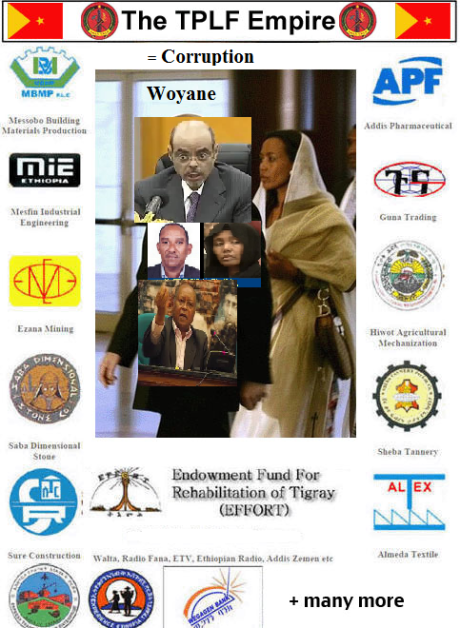


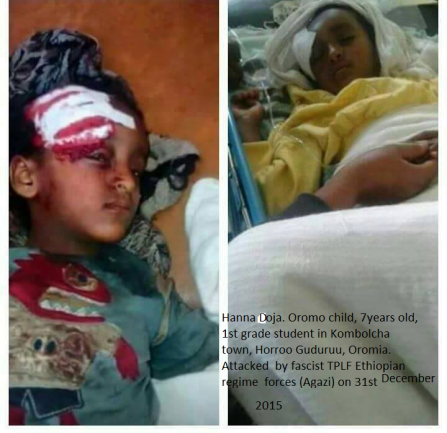
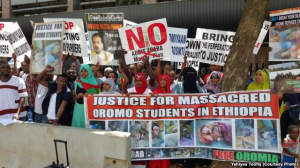
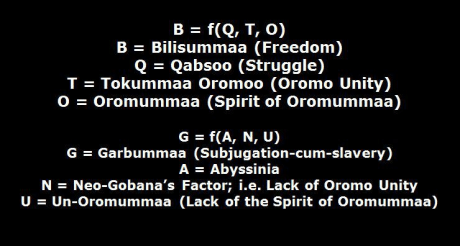


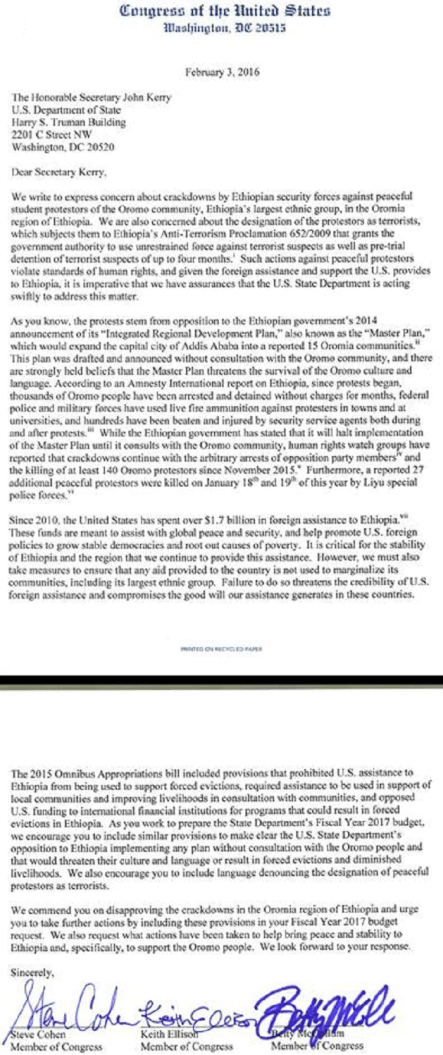

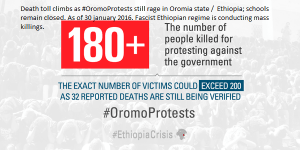
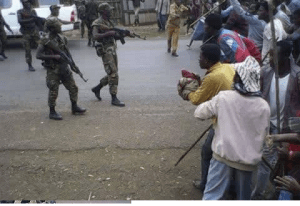



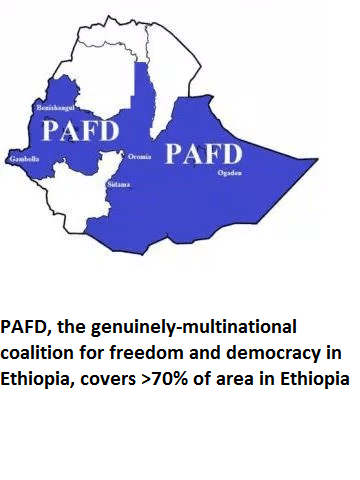

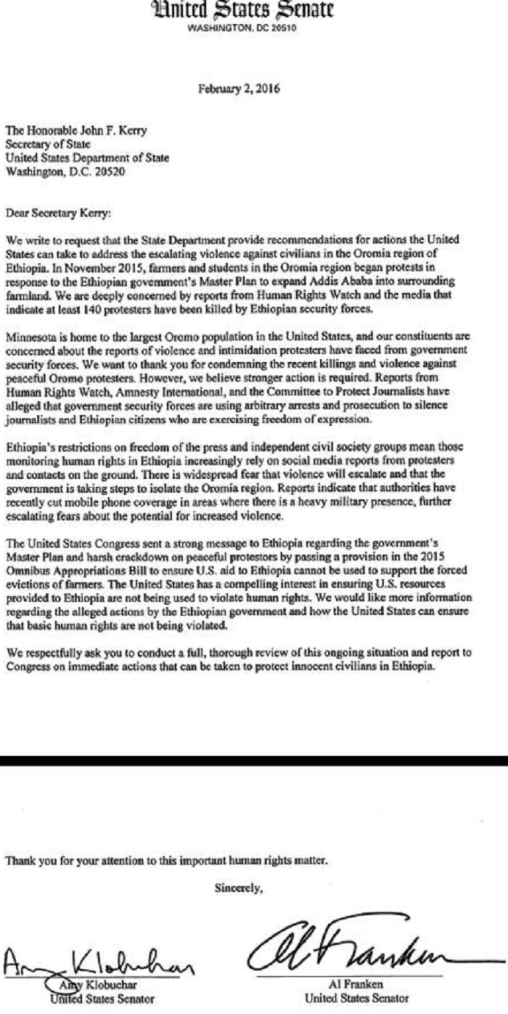
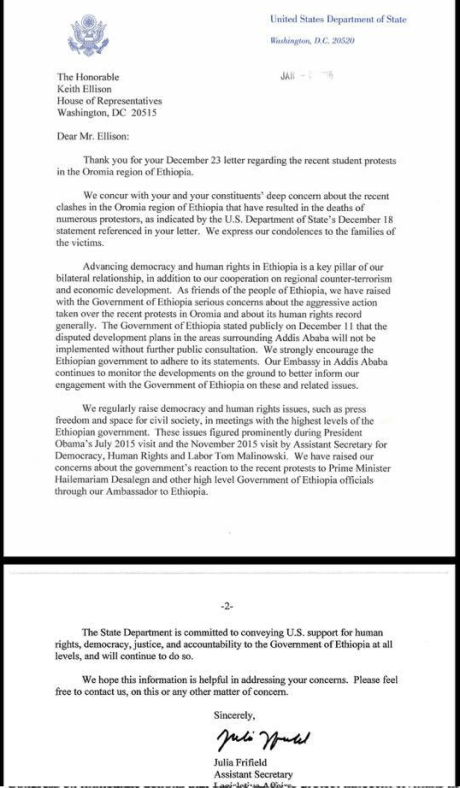
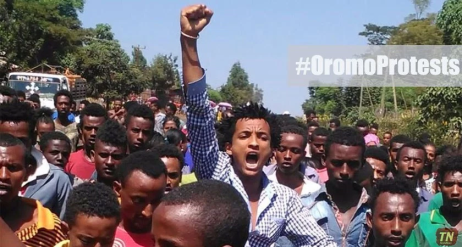
 While some of the new generation are satisfied with the advantages – legal and illegal – associated with their positions, others want to make their voices heard.
 Questioned about the existence of a “wider consensus within the ruling party” on greater economic openness, Arkebe Oqubay replied evasively: “I cannot say 100%.”[15] The opposition is of three kinds: the Ethiopian economic elite is highly disparate, divided between the most powerful groups who hope to be able to piggyback on the influx of foreign investors, and small businesses which consider themselves too weak to withstand international competition. An old “socialistic” ideological current persists. And finally, the nationalistic strain remains strong: no Ethiopian leadership has ever allowed a foreign presence, of whatever kind, to acquire sufficient influence as to potentially escape its control. Yet a massive influx of foreign investors inevitably requires compromises that will one way or another dent that sovereignty.
 The obstacles are huge: the whole culture of power would be turned upside down, along two axes.
 It would also require an end to the wait for the supreme saviour, the ‘strong man’. Even within the TPLF, and even more so in the population of former Abyssinia, many are convinced that only such a figure could stabilise and preserve the structure of power, thus bring a lasting stability, as supposedly demonstrated throughout Ethiopian history.



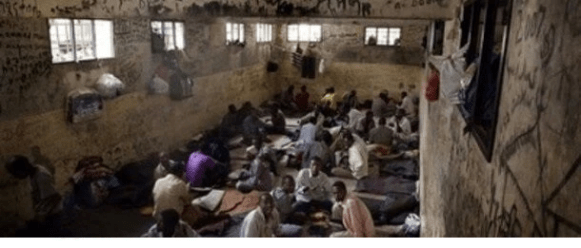


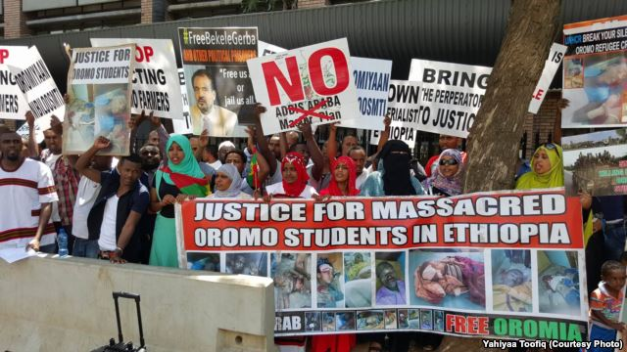
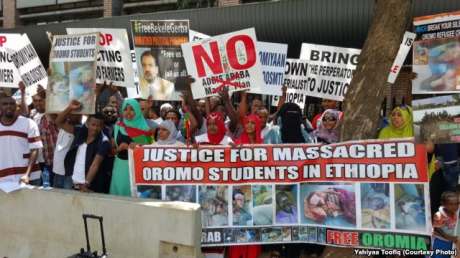
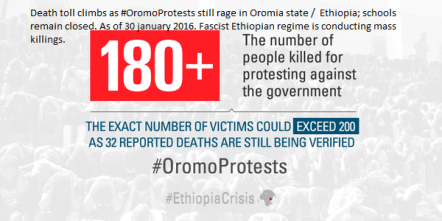
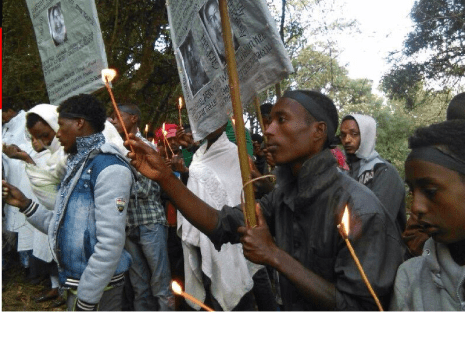
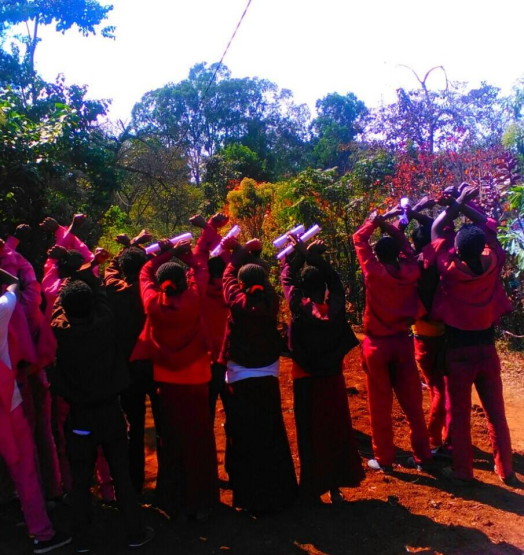
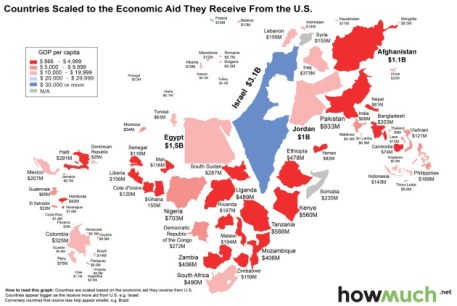
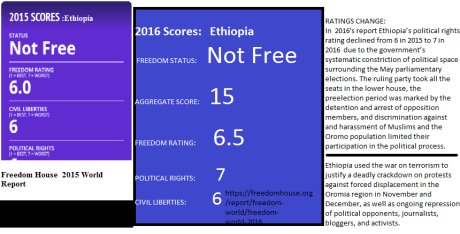



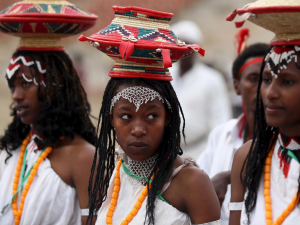

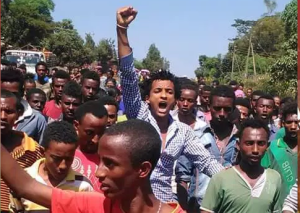

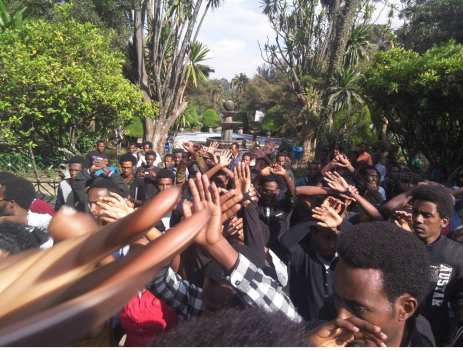
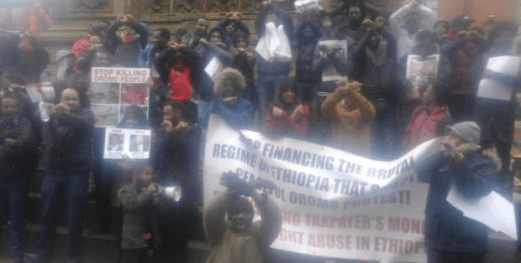

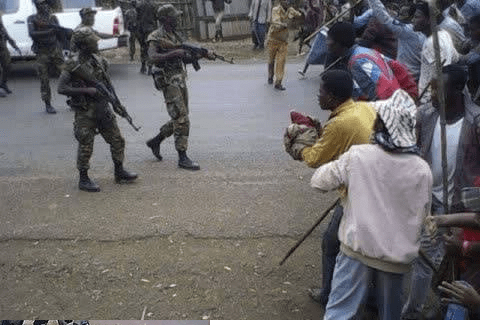
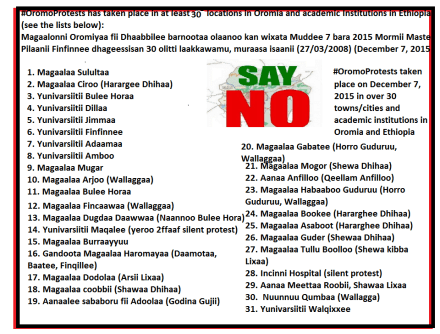
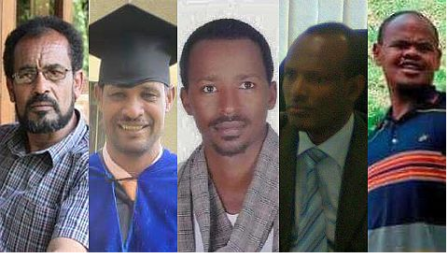
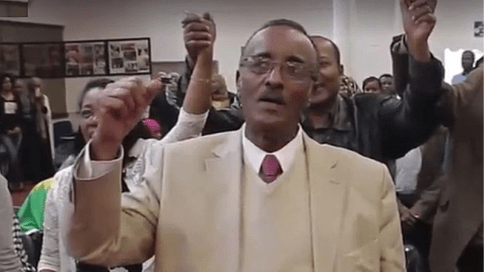
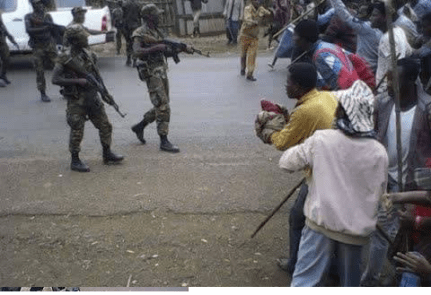


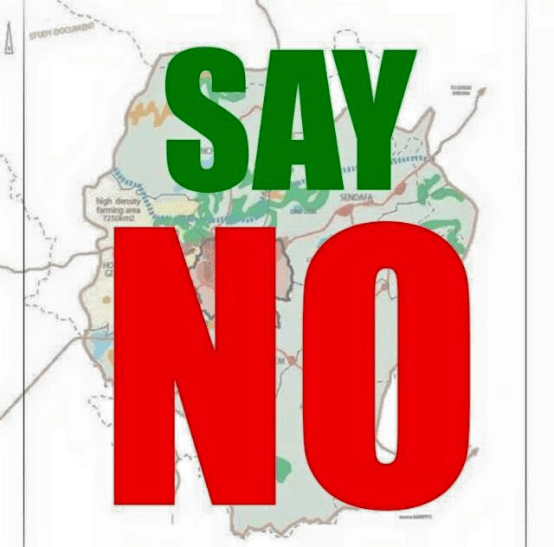
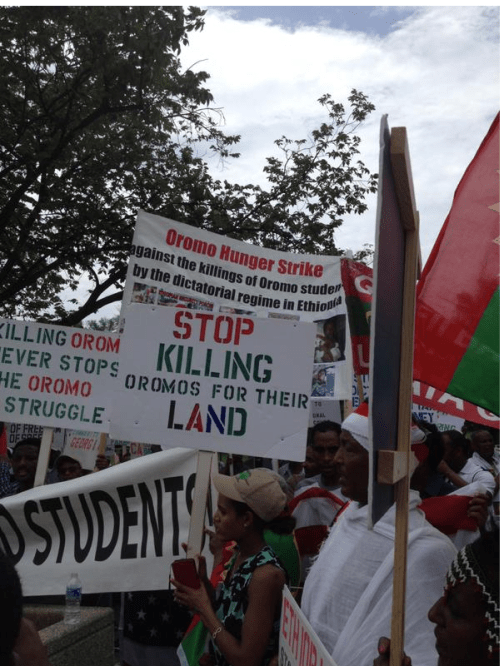
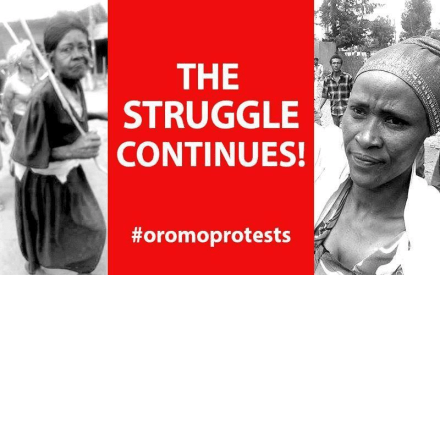
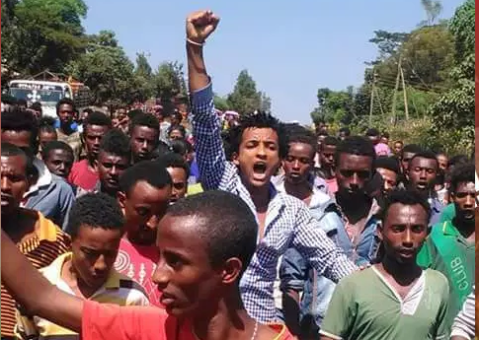
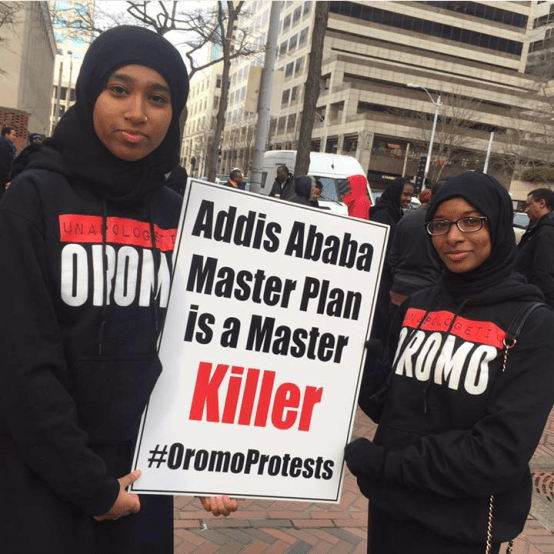
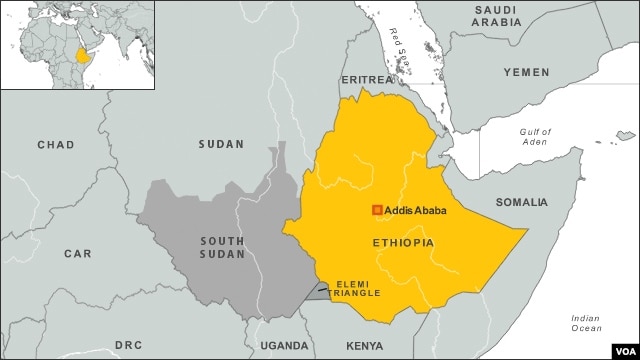
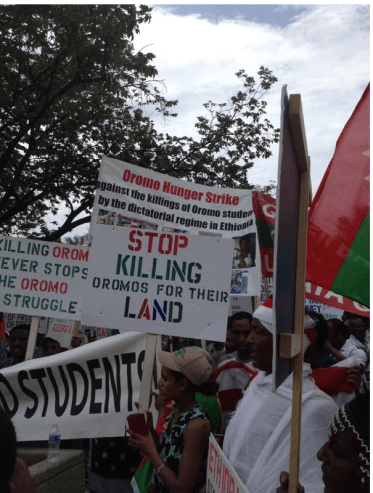
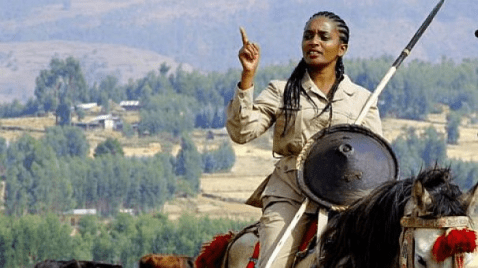
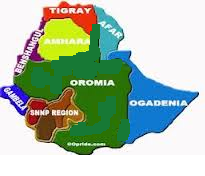




You must be logged in to post a comment.