Economic and development analysis: Perspectives on economics, society, development, freedom & social justice. Leading issues in Oromo, Oromia, Africa & world affairs. Oromo News. African News. world News. Views. Formerly Oromia Quarterly
“Compare that with the mean wealth of a South African at $11,310, Libyan ($11,040) and Namibian ($10,500). While the average Ethiopian has his asset base standing at a mere $260 despite years of economic growth and foreign investment – wealth has not filtered through to the people. With this kind of glaring inequality between and within countries, the “Africa Rising” narrative risks masking the realities of millions of Africans struggling to get by in continent said to be on the move.” http://www.africareview.com//Blogs/Africa-is-rising-but-not-everywhere/-/979192/2219854/-/12at0a8/-/index.html?relative=true
“Africa Rising” is now a very popular story – a near-universal belief that the continent is the next investment frontier after more than a decade of sustained high growth rates and increased foreign direct investment.
We even now have memes for this new narrative.
But some people have their doubts about this whole “Afro-optimism” talk – they say Africa isn’t really rising.
They argue that Africa’s low levels of manufacturing and industrialisation discredit the continent’s “growth miracle”. Its share of world trade is remains very small compared to Asia.
Well, Africa cannot be reduced to a single narrative. We have been victims of this before – for hundreds of years the continent has always been seen in a kind of Hobbesian way – where life is poor, nasty, brutish and short.
Now, there is a minority global elite working round the clock trying to turn this long-held view of a continent.
While I do not begrudge them for their PR efforts – we cannot mask the glaring inequality in Africa by developing a new optimist narrative about the continent.
There are many stories about Africa. Not just one.
Genocide
While the sun shines bright in Namibia, not the same can be said of Malawi where the government is bankrupt or the Central African Republic (CAR) where sectarian violence is increasingly becoming genocidal.
Pretty much everyone else in the world seems accustomed to the living hell that is Somalia.
But we have also come to a consensus that Botswana and Ghana are the model countries in Africa.
South Africa is a member of the BRICS. While the petro-dollars are changing the fortunes of Angola – it has grown its wealth per capita by 527 per cent since the end of the civil war in 2002.
Not much can be said of South Sudan. Oil has not done anything despite pronouncements by the liberation leaders that independence holds much promise for the young nation’s prosperity.
The country imploded barely three years into into its independence.
This is the problem of a single narrative – it is indifferent to the growing and glaring inequality in Africa and its various political contexts.
Many Africans still have no access to the basic necessities of life. Millions go to bed without food and die from preventable diseases.
Others live in war-ravaged countries in constant fear for their lives. You can bet the last thing on their mind is not a blanket “rising” narrative about Africa and the promise it holds. That is not their Africa, its someone else’s.
Yes. “Africa Rising” may be real. But only to a small minority.
Wealth distribution
A report by New World Wealth highlights the variations in wealth distribution across the continent’s 19 wealthiest countries.
Africa’s total wealth stood at $2.7 trillion last year down from $3 trillion in 2007 after taking a hit from the global financial crisis.
These 19 countries control 76 per cent while the remaining 35 scrape over $648 billion. And most of this wealth is concentrated in northern and southern Africa.
The western, central and eastern regions have some of the poorest individuals on the continent with the highest per capita wealth from this group – with the exception of Angola – coming from Nigeria at $1,350.
Compare that with the mean wealth of a South African at $11,310, Libyan ($11,040) and Namibian ($10,500).
While the average Ethiopian has his asset base standing at a mere $260 despite years of economic growth and foreign investment – wealth has not filtered through to the people.
With this kind of glaring inequality between and within countries, the “Africa Rising” narrative risks masking the realities of millions of Africans struggling to get by in continent said to be on the move.
The sun may be shining bright in Africa – but only in favoured parts of it.
It wasn’t always like this. Before nationalism, empires frequently ruled territory that contained many diverse peoples. The Habsburg family once ruled over the Spanish, Dutch and Austrian nations, along with many of the nations of Latin America. The Romans ruled hundreds of peoples great and small, from Greeks to Gauls to Britons to Iberians to Gallicians to Egyptians to Thracians to Illyrians to Carthaginians to Numidians and on and on. Before nationalism, peoples would rather submit to foreign conquerors than risk the loss of life and limb, and as a result conquerors rarely engaged in genocide except as a means of exacting vengeance on foreign rulers who defied them (as the Mongols and Assyrians were wont to do). Empires often took some of the vanquished as slaves, but rarely did empires kill thousands or millions of defenseless people deliberately and systematically for the sole purpose of decimating another nation. Instead, empires often brought conquered peoples into their trade networks, recruited them into their armies, and, eventually, even granted them citizenship rights. By treating conquered people well, they could in time acquire their loyalty.
Nationalism changed all of that. By placing lexical priority on independence and self-determination, all foreign occupiers become villains regardless of whether they are benign or malevolent in their treatment of the occupied nation. In this day and age, even members of a nation like the Scots, which enjoys spectacularly generous subsidies and full voting rights from the British government in Westminster, desire independence purely on the basis that some Scots are nationalists and believe that nothing less than full self-determination does their nation justice. If good treatment doesn’t buy loyalty, occupiers quickly find that they are without incentives to treat subject peoples well or to attempt to integrate them into their states. Nationalism becomes a self-fulfilling prophecy–if occupiers have nothing to gain by offering fair terms of cooperation, they will not offer them, and the subjugation nationalists fear becomes reality precisely because they fear it and refuse to cooperate with the occupier.
The occupier is left with two choices:
Get Out.
Kill Them All.
Often times, occupiers choose to abandon whatever ambitions they might have had and leave in defeat and disgrace. But this doesn’t always happen–some leaders correctly reason that if they could just replace the existing population with their own people, they could pacify the territory and keep the resources it provides. If those leaders have the stomach for it, they will do the following:
Systematically murder the resisting nation.
Colonize the extinct nation’s territory with their own citizens.
Profit.
If we want to prevent genocide, we need to prevent occupiers from having to choose between defeat and genocide.
As the current economic growth did not result from value addition and increased manufacturing, but instead from increases in world commodity prices, it makes the region susceptible to commodity price volatility. If commodity prices fall, Africa’s impressive economic growth might grind to a halt — thus, the dire need for diversification through industrialization. Even if commodity prices stay high, natural resources are not infinite and they must be managed with sagacity.
As recommended by the 2013 Africa Progress report, it is advantageous for African governments to fully implement the Accelerated Industrial Development for Africa (AIDA) plan, signed in 2008 in Addis-Ababa. The AIDA is a comprehensive framework for achieving the industrialization of the continent. If Africa can successfully steward its natural resource wealth, investing it wisely and using some to industrialize, then whether the resources run out or not or whether commodity prices fall, Africa would be on a good economic footing.
Moreover, not only will industrialization create the environment for adding value to Africa’s natural resources, but it will also provide much needed employment at various stages of the value adding chain for Africa’s 1.1 billion people — leading to wealth creation.
Industrialization will address many development gaps in sub-Saharan Africa. Some of these gaps, as noted in a UNECA Southern Africa Office Expert Group Meeting Report, include:
Africa’s high dependence on primary products
Low value addition to commodities before exports
High infrastructure deficit
High exposure to commodity price volatility
Limited linkage of the commodities sector to the local economy
Poorly developed private sector, which is highly undercapitalized
Limited commitment to implement industrial policies
Limited investment in R&D, science, innovation and technology
Low intra-Africa trade
Slow progress towards strengthening regional integration
The Time is Now
Is Africa ready? The answer is an emphatic yes. The phenomenal growth is one reason why Africa is ready, but growth on its own is not enough. Other conditions need to be considered: Does the continent have access to enough raw materials for production? What is the proximity of these natural resources to the continent? Is there adequate land, labor, and capital? These are the traditional factors of production or inputs to the production process.
Yes, Africa has access to the raw materials necessary for production. Unlike already industrialized nations who have to import raw materials from Africa and elsewhere over long distances, Africa enjoys close proximity to these resources.
With regards to the factors of production, Africa is the world’s second largest continent and therefore is home to plenty of land — most of which is arable.
Africa is also the world’s second most populous continent. The average age of an African in Africa is under 19 years. This means Africa has enough manpower or labor to industrialize.
Capital refers to man-made products used in the production process such as buildings, machinery and tools. Africa does have a measure of this, but instead needs to do more in this area — hence the need for greater infrastructural and skills development. In fact, African policymakers as well as their counterparts in the developed world should realize that it is high time for a shift in the nature of aid to the continent — from primarily monetary aid to the type of capital aid needed for industrialization.
Finally, when Africa successfully undergoes industrial development, its huge populace will serve as a market for the outputs of its production processes; any excess supply can be exported and swapped for foreign exchange. Africa is ready and the time for it to industrialize is now.
The views expressed in this article are the author’s own and do not necessarily reflect Fair Observer’s editorial policy.
read more@
Against the dysfunctional dependency foreign assistance, Clare Lockhart in World Affairs argues for cheaper, smarter and stronger aid that creates self-sufficiency.
‘Commerce [and] entrepreneurial capitalism take more people out of poverty than aid . . . . It’s not just aid, it’s trade, investment, social enterprise. It’s working with the citizenry so that they can unlock their own domestic resources so that they can do it for themselves. Think anyone in Africa likes aid? Come on.’
Putting these “Fish for a Lifetime” approaches into effect will require some major shifts. It will involve looking not to how much money was disbursed, or how many schools were built, but to value for money and return on investment. And instead of propping up a vast technical assistance industry of varying and often indifferent quality, a higher priority will be placed on conducting a “skills audit” of key personnel—from doctors and teachers to engineers and agronomists—who can be trained internally rather than importing more costly and less invested technical assistance from abroad.
‘It is also important under this new paradigm to distinguish between “aid” (such as life-saving humanitarian assistance and the financial or material donations it requires) and “development engagement,” which is something quite different. Development engagement can be low-budget, and should be designed to move a needy country toward self-sufficiency—so that the state can collect its own revenues and the people can support their own livelihoods—as soon as possible. Many recipient countries have enormous untapped domestic resources, and with some effort devoted to increasing those revenues and building the systems to spend them, could assume much more of the responsibility of meeting their citizens’ needs.’
But a strategy is only as good as its execution. Implementing development policies and programs correctly will require a clear-eyed look at the way programs are designed and implemented, and a re-examination of the reliance on contractors. There is no substitute in the long term for unleashing a society’s domestic potential of human, institutional, and natural capital through a well governed country.
‘Having judged the development programs of the last decade to be failures, many in the US now call for development budget cuts and wearily espouse isolationism. But it is a classic example of throwing the baby out with the bathwater. Failed methods do not mean that the goal of international development must be abandoned. Development needn’t be an indulgent venture in charity, or risky business, or a road to nowhere paved with good intentions. A more hardheaded approach, one that creates self-sufficiency rather than dependency, is the new beginning that the development world has been waiting for.’ – http://www.worldaffairsjournal.org/article/fixing-us-foreign-assistance-cheaper-smarter-stronger
In 2002, during the early stages of Afghanistan’s reconstruction process, I sat in a remote part of Bamiyan Province with a group of villagers who told me how excited they had been several months before, when a $150 million housing program from a UN agency had been announced on the radio. They felt the program, which promised to bring shelter to their communities, would transform their lives. They were shocked, however, to discover soon after that this program had already come and gone—with very little change to their lives. Indignant, as well as curious, they decided to track the money and find out what had happened to the program that, as far as they were concerned, had never been. Becoming forensic accountants, they went over the files and figures and found that the original amount granted by the UN had first gone through an aid agency in Geneva that took twenty percent off the top before sub-contracting to a Washington-based agency that took another twenty percent. The funds were passed like a parcel from agency to agency, NGO to NGO, until they limped to their final destination—Afghanistan itself. The few remaining funds went to buy wood from Iran, shipped via a trucking cartel at above-market rates. Eventually some wooden beams did reach the village, but they were too heavy for the mud walls used in construction there. All the villagers said they could do was cut up the wood for firewood, sending $150 million literally up in smoke.
With examples like this, it’s really no surprise that a growing chorus of commentators claims that foreign development is expensive, ineffective, and often resented by the intended beneficiaries. In The White Man’s Burden, for instance, William Easterly provides a searing critique of this do-good mentality, which he shows often causes more harm than help. In The Crisis Caravan, Linda Polman documents the unintended consequences of humanitarian assistance. In Dead Aid, Dambisa Moyo argues that aid serves to fuel corruption and lack of accountability among elites.
Critics of US assistance build on this narrative to paint a picture of an America overstretched and in decline, wasting money abroad in a futile effort to serve its uncertain foreign policy objectives, and call for cutbacks and disengagement.
The US has spent $100 billion in nonmilitary funds to rebuild Afghanistan. Yet, after a decade of mind-bending mismanagement and unaccountability, it seems all for naught.
Some of America’s recent engagements abroad have indeed been marked by extraordinary waste and poor design. As Joel Brinkley described in an article in this publication one year ago (“Money Pit,” January/February 2013), American aid to Afghanistan has at times been extravagantly wasteful, as when a contractor overbilled the US government by $500 million. Brinkley also points to the general practice of outsourcing aid projects to contractors with little oversight. Such failures undermine confidence in the very notion of US efforts in confronting poverty and call into question our ability to deal with conflict through “soft power.”
But this criticism misses an important distinction: it is not the principle of engagement, but the way many development projects work that has led to failure. There is, in fact, an alternative way of engaging abroad to promote stability and prosperity with more lasting effect and at a far lower cost than what has become a discredited status quo.
This alternative approach recognizes that there is no shortcut to development that circumvents the citizens and governing institutions of the country. It recognizes the prominent role of entrepreneurial and civic activity. It demonstrates an understanding that institutional change requires years, not months. It has been practiced by a number of farsighted development programs that have reinforced principles of partnership and local ownership of the policy agenda. This “Learn to Fish for a Lifetime” model seeks to build up local institutions that provide security, good governance, and other elements of self-sustaining economic growth. It takes advantage of the things that America knows how to do well: mobilizing investors, firms, universities, and other potent but underused tools that leverage private capital to deliver a kind of development that far outlasts the initial intervention. Many of the activities undertaken with this model actually generate enough revenue to pay back the initial investment, meaning that foreign development projects could someday operate at or close to “net zero” expenditure to the US taxpayer, a particularly appealing prescription in an era of harsh fiscal realities.
Putting “Fish for a Lifetime” approaches into practice, however, requires rejecting the prevailing approach, which makes for a complicated and ultimately self-defeating operation, in favor of one that emphasizes return on investment, both financially and in terms of improved conditions on the ground.
My own wake-up call to the yawning gap between the intentions and impact of major development programs came in that remote part of Afghanistan, soon after the Taliban had fled. Stories similar to the one I heard have been documented by the US special inspectors general for Iraq and Afghanistan reconstruction. But it is not just in combat zones where billions of taxpayers’ funds have created disappointment. After Haiti’s tragic earthquake in January 2010, world powers promised to “build back better” and citizens internationally joined them in committing billions of dollars to that country’s reconstruction. Aid programs in Haiti were notoriously dysfunctional even before the earthquake, but in the scramble to provide help after the catastrophe, funds and opportunities were squandered on an even grander scale. More than three years on, results have fallen far short of the promise. It is what one commentator and Haiti expert, Jonathan Katz, bleakly referred to in the title of his book on the aftermath of the earthquake: The Big Truck That Went By: How the World Came to Save Haiti and Left Behind a Disaster.
Haitian President Michel Martelly has been vocal in his criticisms of the effort, too: “Where has the money given to Haiti after the earthquake gone? . . . Most of the aid was used by nongovernmental organizations for emergency operations, not for the reconstruction of Haiti . . . . Let’s look this square in the eye so we can implement a better system that yields results.”
As Mark Schuller documents in his book Killing with Kindness, foreign donors directed the money to a network of NGOs that bypassed the Haitian government’s policy framework and the implementation capacity of its private sector, and thereby failed to meet the priorities of its citizens. Haitian organizations saw very little of the investment they needed to rebuild their society, but instead were overwhelmed by a vast aid machinery that parachuted down upon them with its own rules and priorities and complex bureaucracy.
Failure, as Haiti showed, does not come from a shortage of money or goodwill. Rather, the aid business has been afflicted by a set of institutional pathologies that almost guarantee failure. Projects designed in national capitals and foreign embassies are often divorced from the realities of the local lives of the people they intend to help, while the long time frames and rigidity of design mean that by the time a project rolls out, it is often irrelevant, even if money actually arrives after the overhead is paid to the food chain of delivery organizations. Multiple contractual layers mean too much of the original project money never even leaves international capital regions—especially Washington.
In Banda Aceh, Indonesia, analysts report how an NGO spent nearly $1 million of European Commission money on a project to construct eleven boatyards intended to stimulate the livelihoods of local fishermen, but in the end only created ten boats, none of them seaworthy.
Somewhere along the way, incentives have become skewed. Project managers and contractors alike are monitored mainly for whether the money in their charge can be tracked, rather than for whether aid activities have any transformational power. For many aid agencies, moreover, running projects has become the goal, rather than seeking to foster institutions and build productive partnerships among governments, firms, and communities. The metrics track whether a project was completed and the money disbursed, not whether sustainable institutions were left after the money had come and gone.
Finally, much of what has become standard procedure in the development business distorts local markets and displaces market activity. Every time a wheat consignment is distributed for free, for instance, local farmers see the market price for their locally grown wheat decrease. In Afghanistan in 2003, after a large-scale World Food Program wheat distribution, farmers threw up their hands and simply let their crops rot because aid had collapsed the market. Nor is it only farmers who are affected by thoughtless charity. Every time solar panels, water pumps, tractors, or cell phones are handed out for free, a local supplier can no longer sell and install his inventory, and a small business that might have long-range prospects for hiring and supporting several people is smothered.
The perversity of incentives operating in the aid and development field is no longer a trade secret. It has caught the attention of even some of the founders of the modern aid movement. “Aid is just a stopgap,” the pop star Bono, one of the forces behind putting charity to Africa on the map through the Live Aid concerts, told an audience at Georgetown University in November 2012. “Commerce [and] entrepreneurial capitalism take more people out of poverty than aid . . . . It’s not just aid, it’s trade, investment, social enterprise. It’s working with the citizenry so that they can unlock their own domestic resources so that they can do it for themselves. Think anyone in Africa likes aid? Come on.”
In an apparent one-eighty from his earlier focus on simply mobilizing aid donations, Bono’s Live Aid partner, Sir Bob Geldof, has followed suit by launching an infrastructure investment firm for Africa, proclaiming, “I want to leave behind me firms, farms, and factories.”
While the stories of what didn’t work in Afghanistan have grabbed the headlines, there have also been several examples of successful development engagement there. The National Solidarity Program in Afghanistan, for example, has directly reached more than thirty-eight thousand villages since 2003. Under its approach, a block grant, ranging from $20,000 to $60,000, goes directly to a bank account held by the village council, or Community Development Council. The village doesn’t have to apply for the funds, but if it wants to, it must follow three simple rules: elect or appoint the council, ensure a quorum of residents attend meetings to choose projects, and post the accounts in a public place. To date, the program has disbursed more than $1.6 billion, and the village councils have completed more than seventy thousand projects—roads to the local markets, water canals, and generators and microhydro systems that electrify the area.
In one case, thirty-seven villages trying to combat the loss of women in childbirth got together and pooled their money to build a maternity hospital. In another case, one hundred and eighty-five villages pooled their money to create a watershed management system, vastly expanding the land they could cultivate. NGOs are involved in these projects as facilitators who support the village through the complex transactions that it must undertake, but unlike in the traditional model of development, they don’t hold the purse strings or oversee the implementation of projects. The US Agency for International Development is now part of an international consortium that contributes to the program costs.
Similar projects exist at even greater scale in Indonesia and Pakistan. In Indonesia, the National Program for Community Empowerment (PNPM) works in more than eighty thousand villages across the nation. The program formed in 1998, in the wake of the Asian financial crisis, with the imperative to benefit communities directly with cash. Neither the government’s social safety nets nor the NGOs could do this alone, and so a partnership between governments and communities was established. Over time, the program has evolved to include micro-finance and other investment facilities, barefoot lawyers programs, and the construction of schools—all managed directly by the villages themselves.
According to official numbers, one of the PNPM programs, PNPM Mandiri Rural, reached four thousand three hundred and seventy-one sub-districts by 2009, and saw the construction or rehabilitation of ten thousand kilometers of road, two thousand and six bridges, two thousand nine hundred and eighty-six health facilities, and three thousand three hundred and seventy-two schools, in addition to the construction of public sanitation facilities and irrigation systems. These projects increased per capita consumption gains by eleven percent and reduced unemployment by one and a half percent. PNPM can accomplish all of this because of an open planning process by which projects are targeted to meet demand as expressed by the community rather than by officials thousands of miles away.
In a similar operation in Pakistan, the Rural Support Programs Network (RSPN) partners with three hundred and twenty thousand community organizations, covering five million households and thirty-three million people. These organizations have led responses to the earthquakes and floods, organized micro-finance and health insurance schemes, and built and operated schools, clinics, roads, and hydropower schemes.
This family of homegrown programs in Afghanistan, Indonesia, and Pakistan, and similar ones in Colombia, Mexico, and India, have proven it is possible to reach communities directly and at scale, cutting out the layers of contractors and NGOs that function as middlemen, while making communities the implementers of their own development in projects that achieve real results.
We really don’t need to look far afield to find approaches that work. There are a number of distinctly American approaches to development that have delivered in the past but have fallen unaccountably into disuse. Take the Economic Cooperation Act of 1948, a framework that for a while worked exceptionally well, but whose practices have been strangely forgotten in recent decades. At its core was the idea of facilitating “the achievement by the countries . . . of a healthy economy independent of extraordinary outside assistance.” The act’s programs, including the tremendously successful Marshall Plan, were geared toward the institutional and economic self-sufficiency of the recipients, with a central premise that the program could be judged a success only if it reduced the need for aid, rather than perpetuating it.
The Marshall Plan worked for the countries it sought to benefit and worked for the donor as well, paying the US back dividends both economically and in security terms far above its costs. This did not happen by chance. One of the participants in this plan, the political scientist Herbert Simon, describes in Administrative Behavior the painstaking organizational design that went into fine-tuning its approach. George Kennan, in a now-declassified memo from 1947, argued that “it is absolutely essential that people in Europe should make the effort to think out their problems and should have forced upon them a sense of direct responsibility for the way the funds are expended. Similarly, it is important that people in this country should feel that a genuine effort has been made to achieve soundness of concept in the way United States funds are to be spent.”
Other lesser-known US development programs similarly brought impressive results with moderate or no cost to the US taxpayer.
In the aftermath of the Korean War, South Korea had one of the lowest GDPs on earth, but between 1966 and 1989, it raised its GDP by an average of eight percent per year. Behind this story lies a dedicated effort to foster local capacity and industrial-led growth, backed by a US partnership. In 1966, President Lyndon Johnson agreed with President Park Chung-hee of South Korea to help establish the Korea Institute of Science and Technology (KIST) and assembled a team of leading scientists and technical experts to form and plan the institute. KIST aimed to nurture Korea’s own technical and managerial capacity to lay the basis for its economic transformation, rather than remain dependent on foreign management and input for its projects and companies. Korea is now one of a handful of nations that combine GDP per capita in excess of $20,000 with a population of more than fifty million people.
The South Korean government and the US government each contributed $10 million to KIST at its founding, and Washington used a similar model when it helped establish the Saudi Arabian National Center for Science and Technology (SANCST) in 1977. Saudi funds went to the US Treasury, which in turn paid for the technical assistance required for the center and a range of other initiatives.
Many of the best development initiatives are not directed by governments, but by the private sector and its use of market mechanisms. One example is the involvement of the Overseas Private Investment Corporation (OPIC) in the Afghan telecom sector. In 2002, Afghanistan had sparse telephone coverage, with access only either through a small number of fixed lines or very expensive satellite coverage. The UN proposed that the telecom sector should be addressed through an aid-driven approach, whereby funds would be used to contract with a major cell phone provider to set up services that would provide coverage to key embassies and aid agencies, at an estimated cost in the tens of millions of dollars. But, in line with how cell phone services are organized in any developed country, it was decided instead that rather than being paid by the government or aid agencies, the telephone company would bid for the license to operate a commercial service, with the proviso that services include a certain level of coverage and standard of quality.
The tender process went ahead. Several international companies registered their interest, but many expressed reservations about the level of risk they would be undertaking. This is where OPIC stepped in to draw up a risk guarantee for possible political and security problems. With an expenditure of just $20 million, this agreement provided sufficient confidence in the telecom sector for investment to proceed. By now, several billion dollars have been invested, more than sixteen million phones purchased, significant revenues generated via taxes to the Afghan government—and the $20 million guarantee was never called upon because the risks feared by the private companies never materialized. In this case, a risk instrument was able to pave the way for new market opportunities and to provide an essential service. Contrast that with the typical aid approach, which would have distorted the market, squandered money, and likely produced, at best, ambiguous results.
A similar example came out of the Caribbean. Before 2007, individual insurance companies were reluctant to insure Caribbean islands for hurricane and earthquake damage, the liability being considered commercially too risky. But then the World Bank’s Caribbean Catastrophe Risk Insurance Facility (CCRIF) was created, pooling risk to enable governments in the area to purchase affordable insurance. CCRIF was designed to protect Caribbean countries from the financial fallout of a natural disaster, offering each country timely and flexible payouts. The group can respond more quickly and more efficiently to a member country in need than can the sort of chaos of good intentions that descended on Haiti, as was demonstrated in its response to Hurricane Tomas in 2010. Barbados, St. Lucia, and St. Vincent and the Grenadines received fifty percent of their payouts within days.
In contrast to a top-down, statist aid paradigm, these “Fish for a Lifetime” approaches are all designed to unlock and leverage the value from within the society, state, and market. They all start with the operating principle of co-designing programs with the citizens and leaders from the country concerned. Where there is a market, they do not seek to use grant capital. Once the initial intervention is over, success is judged by whether or not the innovations designed for the crisis are sustainable. This approach is geared toward increasing the self-sufficiency of the country concerned, and in particular boosting its economy and generating its own revenue and tax base.
While the treasuries of most Western countries may be afflicted by the constraints of austerity budgeting, there are vast amounts of private investment capital looking for opportunities. Many of the countries that are seen as the neediest destinations for aid are also considered by emerging market investors as the fastest-growing in the world—Rwanda, Nepal, Indonesia, and India. Infrastructure projects from power to roads and ports can and do attract private capital, and public funds can be used for risk guarantees or as co-investments rather than grant aid for these projects. Rather than seeking to maximize aid, such an approach seeks to maximize the return on investment to the society concerned.
Putting these “Fish for a Lifetime” approaches into effect will require some major shifts. It will involve looking not to how much money was disbursed, or how many schools were built, but to value for money and return on investment. And instead of propping up a vast technical assistance industry of varying and often indifferent quality, a higher priority will be placed on conducting a “skills audit” of key personnel—from doctors and teachers to engineers and agronomists—who can be trained internally rather than importing more costly and less invested technical assistance from abroad.
It is also important under this new paradigm to distinguish between “aid” (such as life-saving humanitarian assistance and the financial or material donations it requires) and “development engagement,” which is something quite different. Development engagement can be low-budget, and should be designed to move a needy country toward self-sufficiency—so that the state can collect its own revenues and the people can support their own livelihoods—as soon as possible. Many recipient countries have enormous untapped domestic resources, and with some effort devoted to increasing those revenues and building the systems to spend them, could assume much more of the responsibility of meeting their citizens’ needs. Getting the toolbox right requires instruments that can best support this approach: the OPIC, enterprise funds, chambers of commerce, public diplomacy, scholarships, international financial institutions, trade measures, and the National Academies, among others.
But a strategy is only as good as its execution. Implementing development policies and programs correctly will require a clear-eyed look at the way programs are designed and implemented, and a re-examination of the reliance on contractors. There is no substitute in the long term for unleashing a society’s domestic potential of human, institutional, and natural capital through a well governed country.
Having judged the development programs of the last decade to be failures, many in the US now call for development budget cuts and wearily espouse isolationism. But it is a classic example of throwing the baby out with the bathwater. Failed methods do not mean that the goal of international development must be abandoned. Development needn’t be an indulgent venture in charity, or risky business, or a road to nowhere paved with good intentions. A more hardheaded approach, one that creates self-sufficiency rather than dependency, is the new beginning that the development world has been waiting for.
“Agribusiness feeds the rich; small farmers feed the rest. Yet we have a strong interest in feeding the world and are concerned that food conferences dominated by agribusiness directly threaten our ability to produce affordable, healthy, local food.Solving world hunger is not about industrial agriculture producing more food – our global experience of the green revolution has shown that the drive towards this industrial model has only increased the gap between the rich and the poor. Feeding the world is about increasing access to resources like land and water, so that people have the means to feed themselves, their families and their communities. Small family farms produce the majority of food on the planet – 70% of the world’s food supply! If conferences, like this one, exclude the voice of small farmers, then the debate about feeding the world is dominated by the rich and the solutions proposed will only feed their profits.”
A farming revolution is under way in Africa, pushed by giant corporations and the UK’s aid budget. It will surely be good for the global economy, writes Sophie Morlin-Yron, but will Africa’s small farmers see the benefit?
Many millions of small farmers that were once merely poor, will be propelled into destitution, the chaff of a neoliberal market revolution as pitiless as it is powerful.
World leaders in agriculture and development gathered in London last week at the The Economist’s ‘Feeding the World Summit’ to discuss global solutions to tackling Africa’s food security crisis.
At the event, which cost between £700 and £1,000 to attend, industry leaders spoke of new innovations and initiatives which would help fight poverty, world hunger and malnutrition, and transform the lives of millions of farmers worldwide.
Just one farmer
But there was only one farmer among the speakers, Rose Adongo, with barely a handful more in the audience. A Ugandan beef and honey farmer, Adongo was unimpressed by the technical solutions offered by the corporate speakers.
For her, the main issue was land ownership for farmers – and desperately needed changes in Ugandan law, under which women have no right to land ownership even though 80% of the country’s farmers are women, and they produce 60% of the food.
If only a woman could own land – currently passed down from father to son “she can produce more food”. Besides that she wanted cheaper fertilisers and an end to the desperate toil of hand working in the fields. Much of the land is currently plowed by hand which “can take weeks to do”.
Among the excluded …
But many were excluded from the event – and desperately wanted their voices to be heard. Among them was Jyoti Fernandes, from The Landworkers’ Alliance (member of La Via Campesina), a producer-led organisation representing small-scale agroecological producers in the UK.
“Agribusiness feeds the rich; small farmers feed the rest”, she said. “None of our members could afford to attend the Feeding the World Summit.
“Yet we have a strong interest in feeding the world and are concerned that food conferences dominated by agribusiness directly threaten our ability to produce affordable, healthy, local food.
Solving world hunger, she insisted, “is not about industrial agriculture producing more food – our global experience of the green revolution has shown that the drive towards this industrial model has only increased the gap between the rich and the poor.”
Improving access to land and water
“Feeding the world is about increasing access to resources like land and water, so that people have the means to feed themselves, their families and their communities.
“Small family farms produce the majority of food on the planet – 70% of the world’s food supply! If conferences, like this one, exclude the voice of small farmers, then the debate about feeding the world is dominated by the rich and the solutions proposed will only feed their profits.”
As Graciela Romero of War on Want commented in The Ecologist last week, it is that small farmers are feeding the world – not corporations:
“Millions of small-scale farmers produce 70% of the world’s food. Yet they remain excluded and forgotten from exchanges which affect their livelihoods or concern how to end world hunger.”
Private investment
Among the 27 speakers at the event were Nestlé Head of Agriculture Hans Joehr, Monsanto CEO Hugh Grant, Cargill Vice-Chairman Paul Conway, UN Secretary General for Food Security and Nutrition David Nabarro, and representatives from the World Food Program and World Vision.
And despite the involvement of some NGOs, academics UN officials, the main topic of discussion was private sector investment in agriculture.
Lynne Featherstone, a junior UK minister for International Development, said the way forward is newly developed efficient fertilisers, pest tolerant crops and private sector investment:
“There is substantial room for improvement, and helping farmers increase productivity while consuming fewer inputs is a priority. With partners such as CGIAR we have developed more efficient fertilisers and pest tolerant crop varieties.”
UK spending £280m to support private sector engagement
She also outlined the Government plans to invest £280m from its aid budget funding in businesses and organisations under the Alliance for Food Security and Nutrition (AFNC).
This private sector initiative – which has also involves 14 Governments – ostensibly aims to lift 50 million people in Africa out of poverty by 2022, by attracting more private investment in agriculture. Featherstone explained the rationale:
“Economic growth in these countries is best achieved through agricultural growth, which has the power of raising incomes and getting people out of poverty. And the private sector can catalyse that agricultural growth with sustainable agricultural investment.”
But is it really about land grabs?
But critics fear that is has rather more to do with getting governments on-side so corporations can carry out land grabs – taking the best watered and most fertile land away from African farmers and delivering it up to investors to plant cash crops across the continent, while turning once independent small farmers into a a proletarian underclass of landless plantation workers and rootless urban workers.
Paulus Verschuren, Special Envoy on Food and Nutrition Security, Ministry of Foreign Affairs, The Netherlands attempted to strike a balance:
“We are not going to fix the zero-hunger challenge without involving the private sector, but we need to set the criteria for these transformational partnerships. They need to have a business outcome and a development outcome.”
Corporations keen to help small farmers …
Representatives of major food corporations also insisted that they wanted to work with small farmers and help them to produce their crops efficiently while meeting development objectives.
Nestlé’s Corporate Head of Agriculture, Hans Jöhr, claimed to be willing to work with small farmers as well as large to fulfil development objectives and improving resource efficiency:
“The issue of feeding the world has to been seen in perspective of rural development, and not only technology”, he said. “And it’s definitely not about talking small versus big farmers, I think that was really the yesterday talk. It’s about people, individuals, it’s about farmers.
We cannot go on polluting and destroying
“So in this meeting about farmers, when we are talking about farmers, we are going back to what we have listened to, the restrictions we all face in business is natural resources, natural capital. It’s not only about the land, it’s mainly about water.
“This leads us to looking into production systems and methods and understanding that we cannot continue to go on with polluting destroying and depleting natural resources and with wasting them.
“Farmers who don’t know how to farm waste a tremendous amount of natural resources and agricultural materials because they don’t know how to store, and are not linked to an outlet to markets. That means that we have to help them better understand the production systems.”
Productivity must be raised
Vice Chairman of Cargill, Paul Conway, emphasised the importance of secure land ownership: “The number one thing here isn’t technology, it isn’t finance, it’s security of tenure of the land, which is absolutely critical.”
And Monsanto’s CEO Hugh Grant played down the importance of genetic modification in improving crop yields in Africa, from 20 bushels of grain per hectare to India’s typical level of 100 bushels.
“There is no reason Africa shouldn’t be close to India, it’s all small-holder agriculture. Why is it 20 today and not 90? Now forget biotech, that’s eminently achievable with some sensible husbandry and land reform ownership, the tools are in hand today.”
“We have set goals to double yields in the next 30 years with a third less water, agriculture gets through an enormous amount of water. The first 70 per cent of which goes to agriculture, the next 30 per cent goes to Coke, Pepsi, swimming pools and everything you drink and all of industry, and that isn’t sustainable.
We believe our sole focus on agriculture is vital as the world looks to produce enough nutritious food to feed a growing population while conserving, or even decreasing, the use of precious natural inputs such as land, water and energy.”
Farmers ‘invisible and irrelevant’
But Mariam Mayet, Director of African Safety for Biosafety – which campaigns against genetic engineering, privatisation, industrialisation and private sector control of African agriculture – was not convinced.
To the constellation of famous speakers and corporate representatives, she said, small farmers were a simple obstruction to progress:
“We know that all of African farmers are invisible and irrelevant to those at this summit. These producers are seen as inefficient and backwards, and if they have any role at all, it is to be forced out of agriculture to becoming mere passive consumers of industrial food products.
“Africa is seen as a possible new frontier to make profits, with an eye on land, food and biofuels in particular.
“The recent investment wave must be understood in the context of consolidation of a global food regime dominated by large corporations in input supply such as seed and agrochemicals especially, but also increasingly in processing, storage, trading and distribution.
“Currently African food security rests fundamentally on small-scale and localised production. The majority of the African population continue to rely on agriculture as an important, if not the main, source of income and livelihoods.”
Can the chasm be bridged?
If we take the sentiments expressed by corporate bosses at face value – and why not? – then we do not see any overt determination to destroy Africa’s small farmers. On the contrary, they want to help them to farm better, more productively and efficiently, and more profitably.
And perhaps we should not be surprised. After all that suits their interests, to have a growing and prosperous farming sector in Africa that can both buy their products and produce reliable surpluses for sale on global food markets.
The rather harder question is, what about those farmers who lack the technical or entrepreneurial ability, the education, the desire, the extent of land, the security of land tenure, to join that profitable export-oriented sector? And who simply want to carry on as mainly subsistence farmers, supporting their families, producing only small surpluses for local sale?
The small subsistence farmer has no place
Stop and think about it, and the answer is obvious. They have no place in the new vision of agriculture that is sweeping across the continent, with the generous support of British aid money.
Their role in this process is to be forced off their land – whether expelled by force or by market forces – and deliver it up to their more successful neighbour, the corporation, the urban agricultural entrepreneur, to farm it at profit for the market.
And then, either to leave their village homes and join the displaced masses in Africa’s growing cities, or to stay on as landless workers, serving their new masters.
This all represents ‘economic progress’ and increases in net production. But look behind the warm words – and many millions of small farmers that were once merely poor, will be propelled into destitution, the chaff of a neoliberal market revolution as pitiless as it is powerful.
Is this really how the UK’s aid funds should be invested?
A landmark G8 initiative to boost agriculture and relieve poverty has been damned as a new form of colonialism after African governments agreed to change seed, land and tax laws to favour private investors over small farmers.
Ten countries made more than 200 policy commitments, including changes to laws and regulations after giant agribusinesses were granted unprecedented access to decision-makers over the past two years.
The pledges will make it easier for companies to do business in Africathrough the easing of export controls and tax laws, and through governments ringfencing huge chunks of land for investment.
The Ethiopian government has said it will “refine” its land law to encourage long-term land leases and strengthen the enforcement of commercial farm contracts. In Malawi, the government has promised to set aside 200,000 hectares of prime land for commercial investors by 2015, and in Ghana, 10,000 hectares will be made available for investment by the end of next year. In Nigeria, promises include the privatisation of power companies.
A Guardian analysis of companies’ plans under the initiative suggests dozens of investments are for non-food crops, including cotton, biofuels and rubber, or for projects explicitly targeting export markets.
But small farmers, who are supposed to be the main beneficiaries of the programme, have been shut out of the negotiations.
Olivier de Schutter, the UN special rapporteur on the right to food, said governments had been making promises to investors “completely behind the screen”, with “no long-term view about the future of smallholder farmers” and without their participation.
He described Africa as the last frontier for large-scale commercialfarming. “There’s a struggle for land, for investment, for seed systems, and first and foremost there’s a struggle for political influence,” he said.
Zitto Kabwe, the chairman of the Tanzanian parliament’s public accountscommittee, said he was “completely against” the commitments his government has made to bolster private investment in seeds.
“By introducing this market, farmers will have to depend on imported seeds. This will definitely affect small farmers. It will also kill innovation at the local level. We have seen this with manufacturing,” he said.
“It will be like colonialism. Farmers will not be able to farm until they import, linking farmers to [the] vulnerability of international prices. Big companies will benefit. We should not allow that.”
Tanzania’s tax commitments would also benefit companies rather than small farmers, he said, adding that the changes proposed would have to go through parliament. “The executive cannot just commit to these changes. These are sensitive issues. There has to be enough debate,” he said.
Million Belay, the head of the Alliance for Food Sovereignty in Africa (AFSA), said the initiative could spell disaster for small farmers in Africa. “It clearly puts seed production and distribution in the hands of companies,” he said.
“The trend is for companies to say they cannot invest in Africa without new laws … Yes, agriculture needs investment, but that shouldn’t be used as an excuse to bring greater control over farmers’ lives.
“More than any other time in history, the African food production system is being challenged. More than any other time in history outside forces are deciding the future of our farming systems.”
‘Much of the “Africa Rising” narrative is based on the cyclical growth in income revenues from commodities. But who knows how long this will last? Dr Moghalu wants African governments to grasp hold of their future by creating industrial manufacturing so that Africans can consume what they produce. If that could be achieved, the continent will have moved away from being an import-driven consumer-driven economy. It is only then, he argues, that we can say Africa has truly risen.’
The term “Africa Rising” is on the lips of many these days particularly as seven of the world’s fastest growing economies are believed to be African. But can this current wave of Afro-optimism bring genuine prosperity to the African continent? Dr Kingsley Chiedu Moghalu, the Deputy Governor of the Central Bank of Nigeria thinks not.
“Hope is good,” he says. “But hope must be based on concrete substantive strategy going forward, so I pour a little bit of cold water of the Africa Rising phenomenon. I think it could lead to illusionary thinking. I recall that when African countries became independent that there was a huge sense of euphoria around the continent that independence guaranteed economic growth, political development and stability. But this did not happen in the following 30 to 40 years.”
In his latest book, Emerging Africa: How the Global Economy’s ‘Last Frontier’ can prosper and matter, Dr Moghalu presents his own ideas on how Africa can become truly prosperous. He describes it as “a vision for Africa’s future based on a fundamental analysis of why Africa has fallen behind in the world economy”.
In doing so, the LSE alumnus discusses some fundamental misunderstandings about which African states need to revise their assumptions.
The first is the idea that globalisation is automatically good. Rather, Dr Moghalu describes it as a huge and influential reality which Africans must engage with a sense of sophistication and self-interest. It is important to find a way to break that stranglehold because globalisation is neither benign in its intention nor agnostic in its belief. It is driven by an agenda and there are people who drive it.
Economist Dambisa Moyo caused controversy with her first book, Dead Aid: Why foreign aid isn’t working and how there is another way for Africa. Dr Moghalu echoes some of her arguments describing foreign aid as one of the leading reasons why Africa is impoverished. “It has removed the incentive of many African nations to seek solutions for their economic challenges and create wealth for their citizens,” he argues. “Instead it has perpetuated poverty because they are simply content to survive from one day to the next.”
Foreign aid does have its place, Dr Moghalu admits, but “it should always be within a limited time frame and it should focus on economic wealth creation activities rather than just helping people survive”. On the day we meet, the UK Secretary of State for International Development Justine Greening is in the news revealing that there will be a radical shift in future UK aid into economic development, concentrating on economic growth and jobs. Dr Moghalu expressed great pleasure at this announcement remarking that “it is very interesting that British policy is catching up with the recommendations in my book”.
Another fundamental understanding that the central banker develops in his book is the importance of understanding the four different kinds of capitalism and the implications they have for Africa’s growth. The first is state capitalism which is not very common, although it is practised by China. It is, in fact, an oxymoron. Many African states do not have the capacity to run state capitalism because you need an all-knowing state with a huge reserve of strategic thinking capacity to be able to direct wealth creation for the purposes defined by the state. There is also oligarchic or crony capitalism in Russia and some African states. This can be turned into strategic activity if cronyism is not rampant. South Korea did that by creating the Chaebols, the family-held businesses which today dominate the South Korea economy. Welfare capitalism is the norm is Europe. Some African states have practised welfare capitalism without generating the type of revenue that will sustain it into the future. Now it is out of favour. Entrepreneurial capitalism is what made America wealthy and this is what Dr Moghalu recommends for most African economies because it suits the African culture. Along with a certain amount of oligarchic and welfare capitalism, it would do Africa a world of good, he adds.
Much of the “Africa Rising” narrative is based on the cyclical growth in income revenues from commodities. But who knows how long this will last? Dr Moghalu wants African governments to grasp hold of their future by creating industrial manufacturing so that Africans can consume what they produce. If that could be achieved, the continent will have moved away from being an import-driven consumer-driven economy. It is only then, he argues, that we can say Africa has truly risen. http://blogs.lse.ac.uk/africaatlse/2014/02/12/afro-optimism-will-not-transform-africa/
Oakland, CA – In a historic move, the US Congress has taken a stance on land grabs-related human rights abuses in Ethiopia. The 2014 Omnibus Appropriations Bill contains provisions that ensure that US development funds are not used to support forced evictions in Ethiopia.
The bill prevents US assistance from being used to support activities that directly or indirectly involve forced displacement in the Lower Omo and Gambella regions. It further requires US assistance in these areas be used to support local community initiatives aimed at improving livelihoods and be subject to prior consultation with affected populations. The bill goes further and even instructs the directors of international financial institutions to oppose financing for any activities that directly or indirectly involve forced evictions in Ethiopia.
According to Anuradha Mittal, Executive Director of the Oakland Institute, “We welcome this move as it aims to address one major flaw of US assistance to Ethiopia. The step taken by the US Congress is very significant, as it signals to both the Ethiopian government and the US administration that turning a blind eye to human rights abuses in the name of development is no longer an option.”
Several reports from the Oakland Institute have raised alarm about the scale, rate, and negative impacts of large-scale land acquisitions in Ethiopia that would result in the forced displacement of over 1.5 million people. This relocation process through the government’s villagization scheme is destroying the livelihoods of small-scale farmers and pastoralist communities. Ethiopian security forces have beaten, arrested, and intimidated individuals who have refused to relocate and free the lands for large-scale agricultural plantations.
Ethiopia’s so-called development programs cannot be carried out without the support of international donors, primarily the US, one of its main donors. Oakland Institute’s on-the-ground research has documented the high toll paid by local people as well as the role of donor countries such as the US in supporting the Ethiopian policy.
This language represents an important first step towards Congress initiating a comprehensive examination of US development practices in Ethiopia. As the oversight authority of the State Department, Congress must now ensure that the law is fully upheld and implemented. This warrants thorough scrutiny of USAID programs to Ethiopia and their contribution to forced resettlements and human rights abuses.
With this bill, USAID, the State Department, as well as the World Bank, will have to reconsider the terms and modalities of the support they provide to the Ethiopian government. According to Frederic Mousseau, Oakland Institute’s Policy Director, “This is a light of hope for the millions of indigenous people in Ethiopia who have sought international support from the international community to recognize their very destruction as communities and people.” Read Further @
USAID’s cover-up of Ethiopia abuses overruled by Congress 12 February 2014
The United States Congress has acted to prevent its aid to Ethiopia being used to fund forced evictions of tribal peoples in the south west of the country.
The provisions in the Omnibus Appropriations Bill for 2014 represent a slap in the face for USAID, which last month said that ‘there are no reports of widespread or systematic human rights abuses’ in the region.
In fact, tribes of the Lower Omo Valley are being violently evicted from their villages by the government to make way for lucrative cotton, palm oil, and sugarcane plantations whose irrigation will be made possible by the controversial Gibe III dam. Transferred to designated resettlement areas, the once self-sufficient tribes will be left with no access to their livestock or lands and, consequently, will be unable to sustain themselves. Intimidation tactics, such as rape and beatings, have reportedly been used against those who resist resettlement.
One Mursi man told Survival International, ‘We are waiting to die. We are crying. When the government collects people into one village there will be no place for crops, and my children will be hungry and have no food.’
The Ethiopian government has not consulted any indigenous communities over its aggressive plantation plans in the Omo Valley, and very few were consulted over the construction of the Gibe III dam.
This sugarcane plantation, part of a government sponsored land grab, now occupies land used by tribes of the Lower Omo Valley since time immemorial.
Ethiopia is one of the biggest recipients of American and British aid through the United States Agency for International Development (USAID) and the UK Department for International Development (DFID).
Although the provisions in the recent spending bill will force USAID to reevaluate the funding given to Ethiopia, it will ultimately be the responsibility of Congress to guarantee that the terms are upheld.
Survival International Director Stephen Corry said today, ‘This bill is a huge step in the right direction, and shows that USAID’s shameful denials of the human rights abuses being committed in the Lower Omo simply haven’t been believed.
‘American taxpayers want to be sure that their money isn’t going toward the destruction of tribal peoples’ lives. Hopefully the historic provisions in this year’s spending bill will ensure that’s the case. It is now high time that British parliamentarians follow suit and ensure that DFID does not use UK taxpayers’ money to fund human rights violations in the Lower Omo.’ http://www.survivalinternational.org/news/9983
Further References on land grabs in Africa
Around 90 percent of the population of 87 million still suffers from numerous deprivations, ranging from insufficient access to education to inadequate health care; average incomes are still well below $1500 a year; and more than 30 million people still face chronic food shortages.
And while there are a number of positive and genuine reasons for the growth spurt – business and legislative reforms, more professional governance, the achievements of a thriving service sector – many critics say that the growth seen in agriculture, which accounts for almost half of Ethiopia’s economic activity and a great deal of its recent success, is actually being driven by an out of control ‘land grab’, as multinational companies and private speculators vie to lease millions of acres of the country’s most fertile territory from the government at bargain basement prices.
At the ministry of agriculture in Addis Ababa, this land-lease programme is often described as a “win-win” because it brings in new technologies and employment and, supposedly, makes it easier to improve health care, education and other services in rural areas.
“Ethiopia needs to develop to fight poverty, increase food supplies and improve livelihoods and is doing so in a sustainable way,” said one official.
But according to a host of NGO’s and policy advocates, including Oxfam, Human Rights Watch and the Oakland Institute, the true consequences of the land grabs are almost all negative. They say that in order to make such huge areas available for foreign investors to grow foodstuffs and bio-fuels for export – and in direct contravention of Ethiopia’s obligations under international law – the authorities are displacing hundreds of thousands of indigenous peoples, abusing their human rights, destroying their traditions, trashing the environment, and making them more dependent on food aid than ever before.
“The benefits for the local populations are very little,” said renowned Ethiopian sociologist Dessalegn Rahmato. “They’ve taken away their land. They’ve taken away their natural resource, because these investors are clearing the land, destroying the forest, cutting down the trees. The government claims that one of the aims of this investment was to enable local areas to benefit by investing in infrastructure, social services … but these benefits are not included in the contract. It’s only left up to the magnanimity of the investor.”
And those investors, he continued, are simply not interested in anything other than serving their own needs: “They can grow any crop they want, when they want it, they can sell in any market they want, whether it’s a global market or a local market. In fact most of them are not interested in the local markets.”
He cited as an example a massive Saudi-owned plantation in the fertile Gambella region of south west Ethiopia, a prime target area for investors: “They have 10,000 hectares and they are producing rice. This rice is going to be exported to the Middle East, to Saudi Arabia and other places. The local people in that area don’t eat rice.”
But the most controversial element of the government’s programme is known as ‘villagisation’ – the displacement of people from land they have occupied for generations and their subsequent resettlement in artificial communities.
In Gambella, where two ethnic groups, the Anuaks and the Nuers, predominate, it has meant tens of thousands of people have been forced to abandon a traditional way of life. One such is Moot, an Anuak farmer who now lives in a government village far from his home.
“When investors showed up, we were told to pack up our things and to go to the village. If we had decided not to go, they would have destroyed our crops, our houses and our belongings. We couldn’t even claim compensation because the government decided that those lands belonged to the investors. We were scared … if you get upset and say that someone stole your land, you are put in prison. If you complain about being arrested, they will kill you. It’s not our land anymore; we have been deprived of our rights.”
Despite growing internal opposition and international criticism, the Ethiopian government shows no sign of scaling the programme back. According to the Oakland Institute, since 2008, an area the size of France has already been handed over to foreign corporations. Over the next few years an area twice that size is thought to be earmarked for leasing to investors.
So what does all this mean for the people on the ground? In Ethiopia – Land for Sale, filmmakers Veronique Mauduy and Romain Pelleray try and find out.
Farming and food in Africa and the battle over land, water and resource rights
Africa is being heralded as the new frontier for commercial farming but, as governments and investors sign deals, a counter movement of family farmers is promoting alternative pathways to development.
The International Year of Family Farming is now underway, and never before have family farmers in Africa been more under threat.
Large land deals between African governments and usually foreign (and sometimes domestic) investors have seen swathes of the countryside leased or conceded, often for as much as 50-99 years. From Senegal in West Africa to Ethiopia in the Horn, and down to Mozambique in the south, land considered idle and available has changed hands, with profound implications for local people and the environment.
HCH is working in conjunction with the Oromia Support Group of Australia (OSGA), one of our long standing community partners, to raise urgently required funds toward a unique opportunity to
present serious allegations of human rights abuses in Ethiopia, at the highest level; the United Nations Universal Periodic Review (UPR).
Human rights organisations have long been reporting human rights abuses committed by the Ethiopian government, which include rape, torture, arbitrary detention and kidnapping. OSGA is an Australian based organisation that was established in 2008 to report on and raise awareness of these violations.
They have recently been offered a significant opportunity to send a delegate to the 19th session of the UN Human Rights Council’s UPR in April, 2014. There they will present a first-hand account of human rights abuses committed by the Ethiopian government.
This opportunity, to report first-hand accounts of torture, arbitrary imprisonment and rape to senior UN officials, will enable them to forward these concerns to the Ethiopian government during the official UPR process. This process will require the Ethiopian government to answer the accusations.
OSGA is raising urgently needed funds to send a representative from the Ethiopian community in Australia. The estimated total cost is approximately $5,000. If you can help, OSGA can provide a receipt, and will also report on the acquisition of any funds. Any contribution would greatly assist this effort.
If you can contribute, please contact info@osgaustralia
It is to be recalled that Finfinnee (Addis Ababa) was founded as the present capital city the so called Ethiopian in 1886 by a man called Minilik II. During this time, the area was inhabited by the Oromo people and the area was almost covered with natural forest. Initially the Shawa government made it seat at Ankober. Hence, before the founding of Finfinee as a political and economic capital of the king, all the areas within the present Finfinnee and the surround areas was free like any other Oromia lands. However, after 1886 the Semitic people from the northern segments and others had taken the land and the Oromo people who were used to live in these areas were forced lost their land through time.
For example, according to Central Statistics Agency of Ethiopia (2007) Out of the 2,738,248 100% total population living in Finfinnee, the total number of the Oromo people living in the city was only 534,255 (19.51%). Since its founding as a capital, Finfinnee remained the capital city for the successive Ethiopian regimes (Menilik II, Lij Eyassu, Zawuditu, Hailesillasse I, Mengistu, Melles and HaileMariam). Through time, the number of inhabitants increased and urbanization expanded greatly. The deliberate and implicitly planned mission and decision of the Semitic people to erase any sign of Oromo history from Finfinnee was started during the forcefully integration of Oromo people into Ethiopia as second-class citizens and the process has continued in the present government.
Different people mostly from the northern part of the so called Ethiopia have come from the various ethnic groups come and settled in the capital owing to its supper suitable agro-climatic and exploit the natural within the outside today’s Finfinne from the near distance in the name of work and investment. Where did those Oromo farmers go when Finfinnee became the property of new invaders? Be in mind that the Oromo’s are pushed to the peripheral areas of the capital and the number of Oromo people inhabitants decreased from time to time, as the above data depicts. The indigenous people of the land were pushed out one after the other and were replaced by the invaders from the north. What is happening to the Oromo people living on the outskirt of Finfinne today? It is simply the continuation of a process, which had resulted in a massive displacement of an indigenous Oromo people.
B. The New Master Plan of Fifinnee and Areas to be Incorporated
For the last 100 or so years the Master Plan of Finfinnee city was revised several times. The recent proposal of preparing new Master Plan for City administration that planned to incorporates all the towns and districts lying within the range of 1 hour commuting distance from the Finfinnee, justifies the blatant violation of the constitution and their voracious appetite to systematically replacing resource and land deficient people to these fertile lands owned by the Oromo people. According to the proposed plan of established the “Integrated Regional Development Plan”, an additional 36 towns and 17 districts currently administered by the Oromia regional State will be merged with Finfinnee so that the right of the land use will be determined by the central mayor .
The new Master Plan was intended to incorporate Oromia’s land locating in 100kms around the Finfinnee city. According to Ethiopia Government preparation, the following 36 Towns and 17 Districts are included in the newly planned Master plan. (See the figure 1.)
Some of the Towns are: Adama, Sodere, Mojo, Wenji Adama, Ejere, Alem Tena, Koka, Adulala, Bushoftu, Dukem, Gelen, Akaki Beseka, Godino, Chefe Donsa, Sebeta , Sendafa, Milkewa, Wendoda, Sirti, Duber,Gorfo, Chancho, Mulo, Debra,Muger , Ulo, Adis Alem, Holota, Burayu,Debre Genet, Illu Teji, Tefki, Sebeta, Boneya, Melka Kunture and etc.
Some of the Districts areas are: Adama, Dodota, Bora, Lome, Liben chukala, Adea (around Bushoftu), Akaki, Gimbichu, Bereh(around Sebeta), Aleltu, Jida, Sulultu, Ejere, Welmera, Illu, Sebeta Hawas and etc.
Today, when the world is concerned about preserving ecology and wild life in their natural habitat, it is an Ethiopian Government that is clearing an indigenous Oromo people from their home Land in the name of inequitable Economic Development. Hence, who should stand and speak for these innocent people and argue to preserve the right of the extremely vulnerable Oromo people living in the proposed territories and to preserve the indigenous Oromo people, culture, Languages and etc. Otherwise sooner than latter these great people will be marginalized and lost their identities.
Figure 1: The newly Developed and proposed Master Plan of the tomorrow’s Finfinne over the coming 25 years
C. The Agenda behind the “Integrated Regional Development Plan (IRDP)”
An office called “Addis Ababa and the surrounding Oromia Integrated Development Plan” prepared an International and National Conference on June 2013 at Adama Town, Galma Abba Gadaa. The Objective of organizing the conference of the top ranking government cadres (mostly OPDO’s) was to work on the manifesting of the proposed Integrated Regional Development Plan (IRDP) and prepare the cadre’s to work on the people.
On the Conference, it was stated that, the Purposes of the “IRDP” are:
Instrumental to unleashing Regional Development Potentials
Enables localities addressing their mutual development challenges
Enables localities addressing their mutual development challenges
Strengthens complementarities and interconnection of localities
These purposes can be the explicit or clear objectives of the plan. However, the plan have hidden or implicit agenda. Systematically bringing the land under their custody so that, it will sooner or later scramble among their impoverished people in their region. For example, the Finfinnee City Administration and Finfinnee Special Zone can address their mutual development challenges without being incorporated into one master plan. However, the Master plan is not prepared on mutual benefit as the plan is solely prepared by Finfinnee City Administration, despite the name of the office. Hence, though development is boldly emphasized, the main purpose seems to clear the Oromo farmers from their lands in the name of unfair Economic Development.
It was also stated that the Pillars of the Integrated Regional Development Plan are:
Regional Infrastructure Networks
Natural Resource and Environment Stewardship
Cross – Boundary Investments/ e.g FDI)
Joint Regional Projects
However, there seem hidden agenda behind these pillars. For example, in the name of cross-Boundary Investments, local Oromo farmers are going to lose their land for the so-called “investors” and under the pretext of promoting national economy through FDI initiatives In addition, if the plan is going to be realized natural and environmental degradation is inevitable.
In addition, the Basic Principles of the Integrated Regional Development Plan are:
Ensuring Mutual Benefits
A joint development Framework – not a substitute for local plans
An Integrated Regional Plan voluntarily accepted by participating partners
Differences resolved through negotiation and under in-win scenario
Nevertheless, the plan will not ensure a mutual benefit at it is largely intended to displace Oromo farmers from their land. In additions, the populations of the two areas are not homogenous. Hence, they have no common interest. Even though it is said the “IRDP’ will be voluntarily accepted by participating partners, the top cadres in Oromia themselves have strongly opposed the plan on the conference. Beside, the implicit objective of the plan is to remove/avoid the differences in language and culture there by to plant “Ethiopianism or Tigreans” on Oromo land. The plan is intended to say good bye to Oromo Culture and language. The other thing is that the differences between Oromo and others cannot be resolved as it is intended to eradicate Oromo identity, culture and language. As we know from history, Oromo’s never compromised on these issues. Hence, if the plan is to be implemented, peaceful co-existence may not be there.
D. Problems that may come because of the Integrated Regional Development Plan
As different sources shown, many Oromo’s living in Special Zone has already lost their land in the name of foreign direct investment and land grasping. This is because of several fa3ctories are constructed in the special zone by taking the Lands from local Oromo farmers. It is not new to see Oromo labor workers or guards in their own land. Family members are highly displaced by this measure. Many went to street. Not only the displaced Oromos damaged by this. It is said chemical coming out of the factories are also hurting the health of the remaining Oromos. It is said that “In Central Oromia, thousands of people and their livestock died due to the industrial pollution directly released to rivers and lakes.”
Taking the above as an experience, there also different reasons why the newly Master plan of Finfinne should not be implemented on Oromo people. Some of the reasons are:
1. It will bring Extreme Poverty: It is inevitable that the local Oromo farmers lost their land in the name of investment and urbanization. This means that the Oromos are systematically cleaned from their own land, as they were cleaned from Finfinnee in earlier days. Hence, the local farmers lose their land which is part of their permanent asset. After the lose their land, the farmers will going to work for 300 birrr in the factory or serve as house servant or home guard, which is already started. By doing so, the farmers face extreme poverty. In addition, the gap between rich and poor will very high. For example, one writer described the impact of “investment” saying:
“The current regime has sold out more than 3 million hectares of fertile land to the foreigner investors after forcefully displacing Oromo farmers from their ancestral land. The grabbing of land ended the indigenous people without shelter and foods. This displacement of the Oromo people accompanied by limitless human rights violations set the Oromo to be the vast number of immigrants in the Horn of Africa.”
2. Family displacement and disintegration: Members of a family will be displaced and disintegrated as a result of loosing their land. In addition, the workers of Finfinnee special zone will be displaced as they are working in Afan Oromo.
3. Abuse of constitutional rights: After long year of struggle and sacrifice of thousands of Life, Afan Oromo given constitution right to be used in administration, school and other sectors in Oromia region. This is one of the basic objectives that Oromos has been struggling. However, if the master plan is going to be implemented, working language of Finfinnee City, Amharic, is going to be used in the areas. By doing so, the local people will be forced to learn new language to use it for different purpose. The measure will take back Oromo to the “Atse” region. The Federal Constitution states “Every people, nation and nationality have the right to speak, to write and to develop their own language, as well as to express, to develop and to promote their culture and history.Article 39” will be clearly violated. The Oromo living in Finfinnee Special Zone will lose the rights that the FDRE constitution guarantees them.
4. Academic and psychological impacts on Oromo students: If the newly proposed master plan of Finfinnee City is going to be implemented, Oromo students living in the surrounding area will attend their education in Amharic, which is second language to the students. It is strongly argued that using the native languages of students as a medium of instruction is a decisive factor for effective learning However, this situation, failure to give a role to native languages and largely depending on second/foreign language instruction, brought various difficulties to students. The students are expected to entangle not only with learning the subject matters but also the language itself. It also creates difficulty to students in expressing themselves and as a result it limits their classroom participation as there is fear of making mistakes. In addition, it is a barrier to smooth classroom communication. It is also argued that use of a second/foreign language in education negatively affects the ability and the ease with which knowledge is acquired by students. It also affects the performance of students and creates difficulties in developing their cognitive skills. Moreover, giving low status to native languages of students in educational setting leads to marginalization of majority of the citizens from active engagement in the development arena. In general, the master plan will have negative impacts on Oromo students in various academic aspects.
5. Impact on Identity and Culture of Local Oromo People: The new plan will make Oromos to lose their identity and culture, like the previous regimes did. This is because people having different identity and culture are going to settle on Oromo land. The settlers will push out the Oromo identity and replace by their own. The Oromo’s will have very limited opportunity to exercise their cultural value and linguistic form. The language and cultural development will be also hampered by the new plan.
6. Economic impact: If the master plan is going to be realized, the Finfinnee City Adminstration will control all economic aspects of the areas. The income that is collected from different factories will be taken. The Oromiya government will loose great income to Finfinnee city administration.
7. Impact on Natural Resource and Environment: As the result of the plan, there will be overspread ground and surface water pollution. In addition, there will be severe deforestation and natural resource depletion.
8. Cutting Oromia into East and West Regions: The new Master Plan of Finfinne city will cut the current Oromia into two parts i.e. Eastern and Western. This is because the Central and great part of Oromia is proposed to be taken and incorporated into Finfinnee. Hence, the Central part that joins East and West will be taken.
D. What Should be done to Save the Oromo People around Finfinnee
As shown above, the master plan is so disadvantage for Oromia. In general, if we see the plan, it will affect local Oromo people in various aspects. However, the government who is supposed to represent the Oromo people is unable to see the danger. So we kindly ask the Oromos at home and Diaspora and other concerned bodies to forward ways and mechanisms to stop the intended plan. We ask the Oromo people and international communities, who will stand for the Oromo’s living around Finfinnee??
If we read an honest history of the present and past Governments of Ethiopia, we would conclude that the present Government is truly facing a difficult dilemma. At the dawn of the 21st century, we can neither run away from ourselves nor hide our realities. We have to face our generation and the historical realities of our time. It is undeniable that today, people demand respect for their human and national rights. Above all, people will not rest until their identity and their sovereignty over what is theirs is ensured. These are the peoples’ most burning issues. They realize that they have to make utmost effort of their own. It is within the context of the above-mentioned framework that the Oromo people resolutely demand their rights and freedom. It is to those who want to deny the rights and freedoms of the people that we are most bitterly opposed. It is a crime to deny the national identity and sovereignty of a people no matter how sophisticated the tactics used to do so. It is equally wrong to see the national desire of a people from a selfish perspective. It is based on the above concepts and precepts that the Oromo people continue their unceasing and bitter struggle against being treated as second class citizens. We know that our struggle is just for it is motivated by our desire to preserve our dignity and identity as a people.
We, the sons and daughters of the Oromo people, strenuously oppose the implementation of new Master Plan for Finfinne administration because we fully understand the historical development of the desire of other people to displace the Oromo people in order to benefit the non-Oromo new comers and their lackeys in this country. This highly orchestrated conspiracy, the present Oromo generation shall not tolerate at any cost. It will steadfastly and resolutely resist the conspiracy.
We also request international communities to put pressure on FDRE/TPLF Government and Finfinnee City Administration to stop the proposed Master Plan, which directly or indirectly harm the Oromo people.
We call on the Federal Government of Ethiopia, House of Peoples’ Representatives, the Federation Council, the Oromia Council to stop clearing Oromo people from their home Land in the name of inequitable Development and replacing others on their land.
Please generate comments as many as possible on what should be done about the plan.
May Waaq Gurraacha help us!
From: Sabbontoota Oromoo, Oromia.
We are always Oromo First!!!!
Sabbontoota Oromo can be reached at sabboontotaaoromo@yahoo.in
by Teumay Debesay | February 13, 2014 Raya refers a tract of land stretching from Ala wuha in the south to Alaje in the north. That is bigger than Adwa and Axum awrajas combined. Historically, this is where the Weyane rebellion started in 1928 as a spontaneous reaction to a repressive system of the time. Originating in their present day Kobo wereda, the revolt would quickly spread to cover the entire Raya and Wejerat provinces. Later, the inhabitants of Enderta joined the revolt and a sort of quasi-organized alliance was formed after a decade of Raya and Wejerat rebellion. This alliance, Weyane, would emerge so potent that by its heyday it practically liberated the provinces of Raya, Wejerat and Enderta. The imperial government with the support of British Air force resorted to aerial bombardment of the rebel held areas which caused a wide-spread damage, including complete erasure of villages. However, the most detrimental factor that actually caused the demise of Weyane was to come from none other than Adwa people. In 1943, Dejazmach Gebrehiwot Meshesha along with a dozen of Adwans exploited the trust vested on them to assassinate the leaders of the Weyane movement. This is significant for in the Ethiopian tradition, at least until then, if one manages to kill the leader one will win the battle. Meshesha and co. breach of the traditional trust and value was so venomous that even to this date mistrust and resentment runs high in Raya. It is to be noted that if not for Meshesha of Adwa, the people were in a very strong bargaining position and if one has to look how similar revolts in Bale and other regions were resolved, the rebels demand for better governance was within reach. As a thank you for their contribution, Meshesha and his fellow Adwans were rewarded heavily by Haileselasse while a series of punitive attacks continued on the ‘originators’ of Weyane and ultimately Raya was divided between Wollo and Tigray.
When the TPLF started the armed insurrection in Ethiopia, it took little time to transform itself as an Adwa-only club by the same inherited act of treachery. The legacy of resentment that Meshesha and co. left means TPLF-Adwa had hard time to set foot in Raya. Hence, they needed to come up with a trick and did it so by cosmetically inserting the word Weyane in the Tigrigna version of its name. Taken with the harsher realities under DERG, Rayans reluctantly sided with TPLF on the principle of the lesser devil. Soon, tens of thousands of Raya youth joined the TPLF, including forming the majority and the backbone of Hadush “Hayelom” Ariaya’s fighting force that brought the little known“Hayelom” into prominence. However, if the experience of my village is anything, it is fair to conclude that almost all the Raya recruits ended up as cannon fodders. Those who survived, especially the independent and rational ones, would have never escaped the Meles-Sebhat death squad. In Raya, for example, it is not uncommon to talk to your relative TPLF fighter over the phone in the morning only to be notified of his death of “natural” consequences on the same day. I will say more on the motives next time. But for now, I want to draw your attention to the following Table, which is taken from the 1994 and 2007 population census of Ethiopia. I think this illustrates how the Raya and Adwa are faring under the TPLF-Adwa administration.
Clearly, 7 towns (Robit, Gobiye, Waja, Mersa, Korem, Wedisemro, Chelena) of Raya from the total 11, i.e., 64% of the town that existed in the 1994 Census Ethiopia have died or are dying. Well, with Adwa awraja towns the figures show a hard-to-believe growth registering as ridiculous as 1033% for Gerhusenay, Idegaarbi(377%), Nebelet(266%); even noticeable is the emergence of a novel city (Diobdibo) in the 2007 census, attesting to the developmental and modernization campaigns in Adwa rural areas as well. The bar graph of the rate at which towns are expanding (Adwa) or shrinking (Raya) shown below can only be a proof that in the so-called Tigray “killil” both, depending on the area, de-constructive and constructive policies are in operation. To the unsuspecting, it may occur that this might have to do with the pre-1991 TPLF bandit caused civil war. However, it is not quite so for, for instance, there was no single bomb that was dropped on Adwa towns nor was a confrontation in populated areas in the entire Adwa awraja. There was insignificant causality as far as the civilian population of Adwa is concerned for the TPLF military engagement tactic in Adwa/Axum area was totally different from the rest awrajas. For example, Korem town alone might have received far more arial bombardment than the entire Adwa awraja. From SehulMikael (the Godfather of Ethiopia’s disintegration), to Meshesha-Sebhat-Meles-Sebhat(again), there exist very little dissimilarity.Right now, Alamata, the only remaining city not to die fast enough as Adwans would have liked to see, is under open destruction. The residents never complained on the absence of developmental activity but never expected that the Adwa administration of the city will come-up with a destruction agenda. Surprised by the revelation, the unsuspecting residents went to Mekelle to air their grievances in the hope that the big men there might be rational and take proper action. However, Abay Woldu’s administration did not give it a second to listen; just ordered more Bulldozers, armored tanks and a battalion to effectively carry out the planned destruction. Worse, those who complained the demolishing of their belonging are rounded-up and now languish in Adwa operated secret Tigrayan jails Reference:
Central Statistical Authority Ethiopia: The 1994 populaion and Housing Census of Ethiopia. Results for Tigray region, Volume 1, Statistical report.Table 2.2, Page 11
Central Statistical Authority Ethiopia: The 1994 populaion and Housing Census of Ethiopia. Results for Amhara Region, Volume 1, Statistical report.Table 2.2, Page 13
The 2007 Population and Housing Census of Ethiopia: Statistical Report for Tigray Region, Table 2.1, page 7
The 2007 Population and Housing Census of Ethiopia: Statistical Report for Amhara Region, Table 2.2, page 11
Kiir is accused of creeping authoritarianism, strengthening his control over the security apparatus and threatening to curb non-government organisations and the media. A newspaper reportedly found itself in trouble for daring to publish a photo of the president wiping sweat from his brow. One foreign diplomat commented: “There is a danger that this country that fought so hard for its liberty is going to end up resembling the country it fought against.”
Peter Adwok Nyaba was higher education minister but says he could not get an audience with Kiir from July 2012 until his dismissal in July 2013. “Things were going wrong in the education system but I had a complete year of not being able to meet him,” says Nyaba, who has been under house arrest since Christmas Day. “Many people complained of the same thing. I think being president of the country is too big for him, which is showing itself in him being unable to take charge of the current situation. He’s just a village chief.”
Even the US president was reportedly given short shift. One aid agency official recalls: “Kiir treated Barack Obama like shit. The story goes they were supposed to meet at the UN in New York but Kiir kept him waiting for 20 or 30 minutes. People should have said this guy is not our friend.”
America is feeling buyer’s remorse, the source adds. “The people who were pushing the narrative South Sudan good, Sudan bad, are now calling out the South Sudanese government, but it’s too late. When a crisis like this breaks, the US’s leverage gets less and less.”
Kiir’s increasingly autocratic behaviour sowed division within his governing party, the Sudan People’s Liberation Movement (SPLM), struggling, like so many militant liberation movements before it, to transition to a political party. Last July, his vice-president, Riek Machar, a charismatic and ruthless former warlord once married to a British aid worker, openly defied him, telling the Guardian: “To avoid authoritarianism and dictatorship, it is better to change.” Machar and the rest of the cabinet were sacked three weeks later.
In early December, Machar and other malcontents amplified their dissent at a press conference and planned a public rally. “Growing disenchantment and international criticism created fertile ground for opportunists masquerading as democrats,” noted one insider. On 14 December, Machar and seven others walked out of an SPLM meeting. The following day, with the mood volatile, fighting broke out within the presidential guard. Kiir accused Machar, a rival of old, of attempting to overthrow him in a coup. But many observers pour scorn on this notion. “If it was a coup attempt it was the worst organised, worse conceived and worst executed coup ever,” says a diplomatic source. “There’s a constant battle between chaos and conspiracy in South Sudan. Nine times out of 10, it’s chaos.”
Nevertheless, Machar was content to ride the wave and subsequently accept leadership of a rebellion that quickly took on ugly ethnic dimension. Kiir is a Dinka, the biggest group, while Machar is a Nuer, the second most populous. Some say Kiir used the alleged coup attempt as a pretext to unleash his own private militia and, whether he intended it or not, Nuers were the victims. Machar, linked to a massacre of Dinkas in 1991, stands accused of stoking tribalism and mobilising a Nuer force known as the “white army”.
There is nothing inevitable about this, experts argue, noting that for most of their history Dinkas and Nuers have coexisted peacefully and inter-married. Indeed, five of 11 detainees accused of plotting against Kiir are Dinka, while there are Nuers in his government. Yet in villages across the country, where three in four people are illiterate, each group is feeding a spiral of paranoia about the other. Ivan Simonovic, the UN assistant secretary-general for human rights, warned in Juba last Friday: “There are completely different worldviews and narratives among communities. Truth is becoming ethnicised.”
Nowhere is this more evident than at the UN base in Juba, where more than 20,000 Nuers are crammed into about 45 acres, including young children, who can be seen defecating in the dirt, and heavily pregnant women. Many here believe the Nuer are the target of nothing less than ethnic cleansing and, officials say, some who have dared to venture beyond the gate in search of food and water have been murdered on sight.
Among them are a group of Nuer politicians roughing it inside a tent, lying on mattresses amid suitcases and jerry cans, their suits hanging in zip-up garment bags, one of which has the label, “Shoreditch, London”. One, too fearful to be named, tells me: “Men with guns came to my house and knocked on the door. They started shooting into the house and a bullet just missed my left eye and went into the wall. I ran and told my children to lie down. I felt toothless. It’s what happened in Rwanda exactly: if you were found in your house, you were dead.”
As peace talks in neighbouring Ethiopia go nowhere fast, many are gloomy about the prospects for peace in the short term and democracy in the long term. The conflict appears to be driving Kiir into the arms of Bashir and Uganda’s strongman president Yoweri Museveni, who is providing military support. The Americans are being spurned – described as “heartbreaking” for many senior officials who feel professionally and personally invested in the new nation.
But amid the atrocities on both sides there have been redemptive stories of Dinkas giving hunted Nuer families refuge in their homes and vice versa. No one interviewed by the Guardian believes that South Sudan was a mistake or regrets secession in those idealistic days of 2011. They do, however, blame the political elite. “Independence, with all its challenges, was the best thing that happened to this country,” insists Mading Ngor, a journalist and commentator. “I don’t know anyone who is looking for reunification with Sudan.
“There were a lot of emotional faces on independence day. People teared up when they saw the flag going up for the first time. There were youths running about celebrating the rise of a new nation: Dinka youths, Nuer youths. Now those youths are killing each other. There is a need for a new generation to accomplish what the politicians failed to do, which is to build. My hopes are pinned on the people of South Sudan. The future is always better.”
On 15 December 2013, South Sudan was rocked by fighting in the capital Juba. The conflict was apparently sparked by a dispute within the presidential guard, pitching Dinka against Nuer in support of, respectively, the President Salva Kiir Mayardit and his previous vice-president Riek Machar. Soon it spread like a wildfire to other parts of the country.
What began as a political power struggle within the political elite soon turned into deadly ethnic conflict taking the life of several thousands. While President Kiir accused his opponents of trying to seize power through a military coup, his opponents led by Riek Machar accused him of trying to use the incident to suppress his opponents. The outbreak of the fighting followed a drawn out political struggle between the two political rivals.
Mr. Machar accused Kiir of incompetence, failure in curbing corruption, ensuring national unity, state building and making progress towards socio-economic development. The president retorted by accusing him of undermining his government. The president also told his opponents to abandon the Sudan People’s Liberation Movement (SPLM) and form their own party.
The opponents however know very well that abandoning the SPLM spells political suicide because it means ending up in the cold. Instead of heeding the admonition of the president they opted to utilize the SPLM in challenging Salva Kiir. Thus, they decided to test their luck within the SPLM and demanded the convening of the SPLM congress.
Instead of convening a congress, however, Kiir decided to cleanse the SPLM and the government from his opponents. Riek Machar was fired as vice-president on 23 July 2013 and Pagan Amun from his post as Secretary General of the SPLM. Then the cabinet was dissolved on 31 July to pave the way for the president to install his loyalists.
After resisting persistent demand to convene the National Liberation Council (legislative organ of the SPLM), the president agreed to call the meeting which took place on 14 December 2013. The NLC however failed to reach an agreement that led to walk out of opponents that sparked the incident of 15 December.
Two interlinked factors of failures could explain the outbreak of the conflict.
The first is the failure of the SPLM government to transform itself from a liberation movement to a democratic political governing party and from bearer of a liberation political culture to civic political culture. Liberation political culture demands loyalty to the leader. Those who harbor political ambition and disloyalty and incline to express rivalry with the leader are thus thrown out in the cold.
In accordance with this political culture the vice-president and the secretary general of SPLM were fired from office because they expressed their intention to run against the president in the coming elections, which was construed by the president as harbouring lack of loyalty to him.
This action of the president threw the ruling party and the government into deep political crisis. Unfortunately democratic institutions of governance and conflict resolution that could mitigate and manage disputes are markedly absent in South Sudan. Therefore the political struggle among the political elite got out of hand plunging the new nation into an unprecedented spree of ethnic massacres.
The second failure concerns the transformation of the, virtually conglomerate, army of militias into an integrated national disciplined army. During the liberation struggle several ethnic based militias emerged and latter were incorporated into the SPLA (Sudan People’s Liberation Army). Following secession no efforts to transform the SPLA was carried out. Rather the SPLA remained divided on ethnic basis.
Militias that fought against the SPLA during the liberation struggle were simply incorporated in the emergent national army following the signing of the Comprehensive Peace Agreement (CPA) in 2005. The incorporation took place without necessary political education that would lead to integration and cohesion of the national army. Indeed the incorporation remained mechanical. When the political struggle within the political elite exploded the army simply degenerated into its ethnic origins.
This double failure of transformation aggravated the already highly fractured society along ethnic fault-lines. The all-time precarious inter-ethnic relation and fragile state building process was further thrown into disarray. The post-secession nation building and state construction has suffered immensely.
It seems now that whatever efforts of negotiation and reconciliation are attempted between the rivals it will be near to impossibility to bring them to a cordial working relation. There is no way they could work together again. The reconciliation process has come too late and the blood spilled in this conflict will haunt the nation for a long time to come.
Uganda’s meddling has also complicated the mediation and reconciliation efforts. Therefore there is a real possibility that South Sudan could be heading towards prolonged bloody civil war with ethnic accentuation unless friends and neighbours exert real pressure on the leaders. The role of the friendly states, external actors in general, mildly expressed, in the post-secession reconstruction have been paradoxical. It is time that they reassess their role!
Amid this near impossibility of reaching political reconciliation the following measures could be considered to be of critical importance:
Convening the congress of the SPLM as soon as possible. One of the problems that contribute to the current crisis is the overdue delay of the congress of the SPLM.
Dissolution of the SPLM. The SPLM has proven itself to be impotent, corrupt and domineering. It has also become divisive and impossible to reform therefore needs to be replaced by other political parties.
Quickly organise presidential election. This will address the power struggle for the office of the presidency. It will lead to democratic, constitutional and institutionalised transfer of power.
Undertake serious reconciliation. Throughout the liberation struggle the movement was divided and beset with bloody inter-ethnic civil wars. That history has never been addressed. The current crisis is a reminiscence of that history.
External actors should exert concerted pressure on the leaders. The leaders on their own are not capable to strike reconciliation. They need all the help they can get.
Immediate withdrawal of the Ugandan army from South Sudan. The intervention of Ugandan forces in the inter-ethnic conflict not only has complicated the negotiation and national reconciliation; it might also be implicated in the atrocities committed.
‘The second poorest country in the world according to the United Nations Development Programme (UNDP) Multidimensional Poverty Index, [2] Ethiopia consistently ranks extremely low upon a variety of socioeconomic, development and human rights indicators. [3] Recently, however, Ethiopia has experienced economic growth – making it amongst ‘Africa’s best performing economies.’ [4] This development reiterates the Ethiopian government’s lofty ambitions to attain ‘middle-income status by 2020.’ [5] The validity, sustainability, and possible ramifications of Ethiopia’s purported and ambitious economic transformation in the near future – which could prove beneficial domestically and regionally – merits closer analysis.’ – http://pambazuka.org/en/category/features/90435
To begin with, it is important that Ethiopia’s economic growth translate into broad scale development. While Ethiopia has reportedly witnessed tangible progress on the UN’s Millennium Development Goals (MDGs), [7] the International Monetary Fund (IMF) has noted that there still remains ‘a pressing need for policies to translate positive growth outcomes into stronger employment gains and further reduction in poverty and set off a dynamic, virtuous cycle of self sustaining and broad-based growth.’ Further challenges include high levels of youth and female unemployment, greater efforts being required to identify and address the needs of those in severe and chronic poverty (approximately 25 million or 27 percent of Ethiopians live in extreme poverty), and pervasive malnutrition. [8]
Ethiopia’s economic growth also arouses questions of equitable growth and redistribution. Handley et al. (2009) outline that, although essential, economic growth is not always wholly sufficient to reduce poverty or inequality. Rather, an assortment of measures must be undertaken to ensure that poorer strata of society are incorporated into national economic growth. [9] Even with Ethiopia’s past reduction of much national inequality, dramatic inequities in education and employment – and broad discrimination – along rural-urban, gender, and ethno-religious lines are starkly apparent. [10]
Another critical issue emanating from Ethiopia’s economic growth and general developmental efforts is the manner in which they have been pursued. For example, a vital component of Ethiopia’s agricultural development strategy is the ‘villagization’ program that entails the relocation of millions of people from locations reserved for industrial plantations. [11] Ethiopia is an agrarian-based society in which more than 80 percent of Ethiopians depend on agriculture and pastoralism for subsistence. Issues arising from the program have led to greater food insecurity, a destruction of livelihoods and the loss of cultural heritage. Additionally, the program, which frequently utilizes forced evictions, has been plagued by a plethora of human rights violations. A variety of human rights groups have documented beatings, killings, rapes, imprisonment, intimidation and political coercion by the government and authorities. [12]
While Ethiopia has suggested that leasing land to foreign investors is necessary to modernize farming, enhance domestic food production and generate employment, [13] it continues to struggle mightily with hunger, under-nutrition and stunting. [14] Further, a UN report has even suggested that such investment deals negatively impact local populations. [15]
Importantly, projections of Ethiopia’s forthcoming evolution into a middle-income country must address the fact that Ethiopia remains overwhelmingly dependent on foreign aid. Long unable to produce enough food for its population, the nation has been dependent on foreign food aid for decades; [16] recent World Food Programme data illustrates that the country remains one of the largest recipients of food aid in the world. [17]
Siyoum, Hilhorst, and Van Uffelen (2012) also note that more than 8 million Ethiopians rely on food aid. Furthermore, the authors find that Ethiopia’s food insecurity stems from government failures in addressing major structural problems including poor soil fertility, environmental degradation, population pressure, fragmented landholdings and a severe lack of income-generating opportunities outside of agriculture. [19]
In addition to its reliance on food aid, Ethiopia is highly dependent on external economic assistance. In 2011, Ethiopia was the world’s fifth largest recipient of official humanitarian aid and received $3.6 billion in total assistance, [20] the latter figure representing between 50-60 percent of its total budget. [21] Additionally, Ethiopia’s 2011 share of total official development assistance – approximately 4 percent – placed it behind only Afghanistan.
According to Finland’s Country Strategy for Development Cooperation in Ethiopia, published by the Finnish Ministry of Foreign Affairs, Ethiopia’s dependency challenges include the fact that its ‘…humanitarian support programmes are fragmented,’ [22] an outcome likely influenced by the expansive network of foreign development, religious, and charity organizations (2000-4000 in total). [23] The Finnish report also notes that ‘a large proportion of the Ethiopian people have limited coping mechanisms at their disposal.’ Furthermore, the country is faced with ‘an immediate need [to] transition from humanitarian aid to development [and]…without a range of dynamic and comprehensive activities to promote effective private sector development, particularly in agriculture, it will be very difficult to achieve the anticipated growth rates under the [growth and transformation plan].’ [24]
In fact, recent years have seen Ethiopia’s vaunted annual GDP growth rate decrease. [25] Utilizing World Bank data, which reports Ethiopia’s 2012 GNI per capita as $380 (current US$), [26] Ethiopia’s transition to lower middle-income status (between $1,036 – $4,085) [27] would require an annual growth rate of approximately 20 percent. This would appear to be highly unlikely, even if overlooking its recent descending economic trend or the negative effects of inflation.
These issues may be exacerbated by an array of financial risks. According to the IMF, Ethiopia faces growing external debt, [28] even though it was the beneficiary of debt cancellation in 2005 via the Heavily Indebted Poor Countries (HIPC) and Multilateral Debt Relief Initiatives (MDRI) programs. [29] Additionally, it is has experienced a worsening of its foreign exchange shortage, and a lack of sufficient financing for its growth and transformation plan. [30]
Beyond the aforementioned developmental challenges, issues of aid dependency and financial risks, domestic governance and external geopolitical factors represent critical concerns for Ethiopia. A multicultural, ethnically-diverse country with a state-structure built along institutionalized ethnic entrenchment in a nominal federal arrangement dominated by a single minority group; rising tensions with a resilient, large and historically repressed Islamic constituency; and troubled ties with neighbours are both challenges and possible impediments to Ethiopia’s projected economic growth unless adequately addressed.
Currently, political oppression, ethnic discrimination, extrajudicial executions, torture and other abuses in detention, [31] in addition to economic factors, have led hundreds of thousands of Ethiopians to flee the country. Many fall prey to human smugglers and traffickers who engage in a variety of the most depraved forms of abuse or exploitation. [32]
Additionally, Ethiopia has been at the forefront of a variety of conflicts. The separatist Ogaden National Liberation Front (ONLF) continues to wage an insurgency against the central government, [33] while terrorism – largely arising from Ethiopia’s policies and interventions in neighbouring regions – has been a constant threat. According to Global Humanitarian Assistance, in each of the years from 2002-2011 Ethiopia was engaged in some form of active conflict. [34] Prior, the 1998-2000 period saw Ethiopia wage a costly war against Eritrea. Since then, Ethiopia has failed to abide by its obligations as ruled by the international Eritrea-Ethiopia Boundary Commission, [35] and instead continues to occupy sovereign Eritrean territories – thus posing an unnecessary problem to both countries and the surrounding region. [36] Ethiopia’s recent tension with Egypt regarding the construction of Ethiopia’s Renaissance Dam is an additional dimension that complicates an already tenuous regional political landscape. [37]
Last, a potential crisis within or outright collapse of the Ethiopian state calls into question any projections of Ethiopia’s impending transition to middle-income status. Since 2006, Ethiopia has experienced a downward trend in the Fund for Peace (FFP) Failed States Index, while for 2013 it received amongst the lowest rankings. [38] This outcome is buttressed by Marshall and Cole’s (2011) State Fragility Index and Matrix which classifies Ethiopia as one of the eight ‘most fragile’ states in the world. State fragility is reported as an aggregate score of an array of governance categories including state effectiveness, legitimacy, security, armed conflict and other socio-economic and political factors. [39] Finally, the National Intelligence Council’s Global Trends 2030: Alternative Worlds (2012) suggests that Ethiopia is among the top 15 ‘high risk’ nations slated for state failure by 2030. [40]
In conclusion, Ethiopia’s recent economic growth and developmental progress are respectable achievements, particularly within a region long plagued by a variety of ailments. However, suggestions of Ethiopia’s socioeconomic transformation may prove fanciful if they fail to consider and address a variety of significant concerns.
The interactive snapshot of 125 countries showing the best and worst places in the world to eat, and the challenges people face getting enough of the right food.
Around the world, one in eight people go to bed hungry every night, even though there is enough food for everyone.
Ethiopia ranks 123 (worst) in over all food availability.
Repression in the Ogaden is mainly carried out by the notorious Liyu Police; this is a locally recruited force that has been widely condemned for the repressive methods that it uses.
This is how the force is described by Human Rights Watch:[6]
“Ethiopian authorities created the Liyu (“special” in Amharic) police in the Somali region in 2007 when an armed conflict between the insurgent Ogaden National Liberation Front (ONLF) and the government escalated. By 2008 the Liyu police became a prominent counterinsurgency force recruited and led by the regional security chief at that time, Abdi Mohammed Omar (known as “Abdi Illey”), who is now the president of Somali Regional State.
The Liyu police have been implicated in numerous serious abuses against civilians throughout the Somali region in the context of counterinsurgency operations. The legal status of the force is unclear, but credible sources have informed Human Rights Watch that members have received training, uniforms, arms, and salaries from the Ethiopian government via the regional authorities.”
In January 2013 it was reported that the Liyu police numbered between 10,000 and 14,000. The force was accused of numerous human rights abuses and summary executions.[7] The Guardian newspaper reported that it had seen an internal British government document, from the Department for International Development, indicating that there were plans to spend £13m–15m of aid money on the force as part of a five year “peace-building” programme. The report was denied by the British government, which said all funding would go via United Nations agencies and not through the Ethiopian authorities.[8]
Despite these assurances concern about the behaviour of the Liyu police remains. The testimony below and the reports of atrocities carried out in recent weeks indicate these are well placed.
Testimony of Captain Hassan Mohammed Abdi aka Hassan Afo, a former member of the Liyu Police, who was active with the force in Degehbur Province. June 2012.
“In Balidhuure village (Eastern Degehbur Province) located in between Gurdumi and Koore, a Liyu police unit that left from Aware and commanded by Major Kidinbir rounded up and finally driven away most of the people that lived in the area. Among them was a disabled man who walks with a stick named Ina-Yul-yul or the son of Yul-yul. Not far from the village of Balidhuure, the handicapped man, Ina-Yul-yul could not continue walking. One of the Liyu policemen noticed this and he informed Major Kidinbir by radio. Major Kidinbir said, “He can’t walk? Then kill him where he is at right now.” That’s how Ina-Yulyul was shot and killed. He was killed because of one of his brothers was among the ONLF fighters.”
Reports of human rights atrocities committed in the Ogaden Region over the previous month.
25/12/13: In Guna’gado district of Degahbur province, at least 25 civilians were detained and 25,000 Ethiopian birr was stolen from them
5/1/14: In Gasaangas in Hamara district 5 civilians are unlawfully detained. They were: Hassan Geday, Hassan Nour Moalim Ibrahim, Rukiya Moalim Ibraahin, Anbiya Sheikh Mohammed and Nafis.
5/1/14: In Dhuhun a girl named, Halimo Duulane was detained .
10/1/14: In Eastern Iimay, Fadumo Wacdi Ahmed, Sa’ada Hassan and Gordo Abdi God were detained by the Ethiopian Security Forces.
10/1/14,In Guna’gado, Mohammed Isse Gu’had was tortured, detained and his 11 camels were stolen.
3/1/14: Hamuud-ka, in Fiq Province, the security forces detained Mohammed Ibrahim.
5/1/14: Ya’hob Village in Fiq Province, the security forced killed in a cold-blood Abdullahi Lo’bari in cold blood and injured Ahmed Hassan Awl.
5/1/14: Hamaro in Nogob Province, the security forces detained several people : Mohammed Abdi Rahman Omar, Abdirahman Bade, Ta’kal Yousouf and Ina-Barud.
Annex
Amnesty International on Ethiopia’s Ogaden region[9]
In September, the government and the ONLF briefly entered into peace talks with a view to ending the two-decade long conflict in the Somali region. However, the talks stalled in October. The army, and its proxy militia, the Liyu police, faced repeated allegations of human rights violations, including arbitrary detention, extrajudicial executions, and rape. Torture and other ill-treatment of detainees were widely reported. None of the allegations was investigated and access to the region remained severely restricted. In June, UN employee Abdirahman Sheikh Hassan was found guilty of terrorism offences over alleged links to the ONLF, and sentenced to seven years and eight months’ imprisonment. He was arrested in July 2011 after negotiating with the ONLF over the release of two abducted UN World Food Programme workers.
The Ogaden is Ethiopia’s dark, dirty secret. It is far from prying international eyes, where almost anything can be done to anyone the government does not like.
The Ogaden was conquered and forcibly incorporated into Ethiopia by Emperor Menelik II in the last quarter of the 19th century. Its Somali speaking, almost exclusively Muslim community, never really accepted an Ethiopian identity. In 1977 it was the scene of an international conflict, as Somali President Siad Barre attempted to wrest the region from Ethiopia. The Soviet Union poured arms and Cuban troops into Ethiopia and the invasion was halted. The Ogaden National Liberation Front (ONLF) has been fighting the Ethiopian government since 1995, and local people have been caught up in the conflict.
The Ethiopian authorities have sealed off the region to international journalists.
‘Recognising that poor countries are poor because they have extractive institutions helps us understand how best to help them. It also casts a different light on the idea of foreign aid. We do not argue for its reduction. Even if a huge amount of aid is siphoned off by the powerful, the cash can still do a lot of good. It can put roofs on schools, lay roads or build wells. Giving money can feed the hungry, and help the sick — but it does not free people from the institutions that make them hungry and sick in the first place. It doesn’t free them from the system which saps their opportunities and incentives. When aid is given to governments that preside over extractive institutions, it can be at best irrelevant, at worst downright counter-productive. Aid to Angola, for example, is likely to help the president’s daughter rather than the average citizen. Many kleptocratic dictators such as Congo’s Mobutu Sese Seko have been propped up by foreign aid. And it wasn’t foreign aid that helped to undermine the apartheid regime in South Africa and got Nelson Mandela out of prison, but international sanctions. Those sanctions came from pressure on governments — including the British government — that would have preferred not to see them implemented. Today it is no different. Governments don’t like cutting their ties to dictators who open doors for international business, or help their geopolitical agendas. Pressure needs to come from citizens who do care enough about international development to force politicians to overcome the easy temptation of short-run political expediency. Making institutions more inclusive is about changing the politics of a society to empower the poor — the empowerment of those disenfranchised, excluded and often repressed by those monopolising power.’ –Daron Acemoglu and James A. Robinson, The Spectator magazine, 25th January 2014
Daron Acemoglu and James A. Robinson in their articles in The Spectator put forward the following interesting analysis regarding what is really at stake and leading issues in Africa’s development problems. They brought to our attentions why aid has failed and proposed how the predicaments can be tackled:-
David Cameron speaks compellingly about international aid. Eradicating poverty, he says, means certain institutional changes: rights for women and minorities, a free media and integrity in government. It means the freedom to participate in society and have a say over how your country is run. We wholeheartedly agree and were flattered to see the Prime Minister tell this magazine that he is ‘obsessed’ by our book on the subject, Why Nations Fail: The Origins of Power, Prosperity, and Poverty. But diagnosing a problem is one thing; fixing it another. And we don’t yet see the political will — in Britain or elsewhere — that could turn this analysis into a practical agenda.
The British government is strikingly generous in foreign aid donations. It spent £8.7 billion on foreign aid in 2012 — which is 0.56 per cent of national income. This is to rise to £11.7 billion, or 0.7 per cent of national income, next year. But if money alone were the solution we would be along the road not just to ameliorating the lives of poor people today but ending poverty for ever.
The idea that large donations can remedy poverty has dominated the theory of economic development — and the thinking in many international aid agencies and governments — since the 1950s. And how have the results been? Not so good, actually. Millions have moved out of abject poverty around the world over the past six decades, but that has had little to do with foreign aid. Rather, it is due to economic growth in countries in Asia which received little aid. The World Bank has calculated that between 1981 and 2010, the number of poor people in the world fell by about 700 million — and that in China over the same period, the number of poor people fell by 627 million.
In the meantime, more than a quarter of the countries in sub-Saharan Africa are poorer now than in 1960 — with no sign that foreign aid, however substantive, will end poverty there. Last year, perhaps the most striking illustration came from Liberia, which has received massive amounts of aid for a decade. In 2011, according to the OECD, official development aid to Liberia totalled $765 million, and made up 73 per cent of its gross national income. The sum was even larger in 2010. But last year every one of the 25,000 students who took the exam to enter the University of Liberia failed. All of the aid is still failing to provide a decent education to Liberians.
One could imagine that many factors have kept sub-Saharan Africa poor — famines, civil wars. But huge aid flows appear to have done little to change the development trajectories of poor countries, particularly in Africa. Why? As we spell out in our book, this is not to do with a vicious circle of poverty, waiting to be broken by foreign money. Poverty is instead created by economic institutions that systematically block the incentives and opportunities of poor people to make things better for themselves, their neighbours and their country.
Let us take for Exhibit A the system of apartheid in South Africa, which Nelson Mandela dedicated himself to abolishing. In essence, apartheid was a set of economic institutions — rules that governed what people could or could not do, their opportunities and their incentives. In 1913, the South African government declared that 93 per cent of South Africa was the ‘white economy’, while 7 per cent was for blacks (who constituted about 70 per cent of the population). Blacks had to have a pass, a sort of internal passport, to travel to the white economy. They could not own property or start a business there. By the 1920s the ‘Colour Bar’ banned blacks from undertaking any skilled or professional occupation. The only jobs blacks could take in the white economy were as unskilled workers on farms, in mines or as servants for white people. Such economic institutions, which we call ‘extractive’, sap the incentives and opportunities of the vast mass of the population and thereby keep a society poor.
The people in poor countries have the same aspirations as those in rich countries — to have the same chances and opportunities, good health care, clean running water in their homes and high-quality schools for their children. The problem is that their aspirations are blocked today — as the aspirations of black people were in apartheid South Africa — by extractive institutions. The poor don’t pull themselves out of poverty, because the basic ability to do so is denied them. You could see this in the protests behind the Arab Spring: those in Cairo’s Tahrir Square spoke in one voice about the corruption of the government, its inability to deliver public services and the lack of equality of opportunity. Poverty in Egypt cannot be eradicated with a bit more aid. As the protestors recognised, the economic impediments they faced stemmed from the way political power was exercised and monopolised by a narrow elite.
This is by no means a phenomenon confined to the Arab world. That the poor people in poor countries themselves understand their predicament is well illustrated by the World Bank’s multi-country project ‘Voices of the Poor’. One message that persistently comes across is that poor people feel powerless — as one person in Jamaica put it, ‘Poverty is like living in jail, living under bondage, waiting to be free.’ Another from Nigeria put it like this: ‘If you want to do something and have no power to do it, it is talauchi [poverty].’ Like black people in South Africa before 1994, poor people are trapped within extractive economic institutions.
But it is not just the poor who are thus trapped. By throwing away a huge amount of potential talent and energy, the entire society condemns itself to poverty.
The key to understanding and solving the problem of world poverty is to recognise not just that poverty is created and sustained by extractive institutions — but to appreciate why the situation arises in he first place. Again, South Africa’s experience is instructive. Apartheid was set up by whites for the benefit of whites. This happened because it was the whites who monopolised political power, just as they did economic opportunities and resources. These monopolies impoverished blacks and created probably the world’s most unequal country — but the system did allow whites to become as prosperous as people in developed countries.
The logic of poverty is similar everywhere. To understand Syria’s enduring poverty, you could do worse than start with the richest man in Syria, Rami Makhlouf. He is the cousin of President Bashar al-Assad and controls a series of government-created monopolies. He is an example of what are known in Syria as ‘abna al-sulta’, ‘sons of power’.
To understand Angola’s endemic poverty, consider its richest woman, Isabel dos Santos, billionaire daughter of the long-serving president. A recent investigation by Forbes magazine into her fortune concluded, ‘As best as we can trace, every major Angolan investment held by dos Santos stems either from taking a chunk of a company that wants to do business in the country or from a stroke of the president’s pen that cut her into the action.’ She does all this while, according to the World Bank, only a quarter of Angolans had access to electricity in 2009 and a third are living on incomes of less than $2 a day.
Recognising that poor countries are poor because they have extractive institutions helps us understand how best to help them. It also casts a different light on the idea of foreign aid. We do not argue for its reduction. Even if a huge amount of aid is siphoned off by the powerful, the cash can still do a lot of good. It can put roofs on schools, lay roads or build wells. Giving money can feed the hungry, and help the sick — but it does not free people from the institutions that make them hungry and sick in the first place. It doesn’t free them from the system which saps their opportunities and incentives. When aid is given to governments that preside over extractive institutions, it can be at best irrelevant, at worst downright counter-productive. Aid to Angola, for example, is likely to help the president’s daughter rather than the average citizen.
Many kleptocratic dictators such as Congo’s Mobutu Sese Seko have been propped up by foreign aid. And it wasn’t foreign aid that helped to undermine the apartheid regime in South Africa and got Nelson Mandela out of prison, but international sanctions. Those sanctions came from pressure on governments — including the British government — that would have preferred not to see them implemented.
Today it is no different. Governments don’t like cutting their ties to dictators who open doors for international business, or help their geopolitical agendas. Pressure needs to come from citizens who do care enough about international development to force politicians to overcome the easy temptation of short-run political expediency.
Making institutions more inclusive is about changing the politics of a society to empower the poor — the empowerment of those disenfranchised, excluded and often repressed by those monopolising power. Aid can help. But it needs to be used in such a way as to help civil society mobilise collectively, find a voice and get involved with decision-making. It needs to help manufacture inclusion.
This brings us back to David Cameron. When answering a question at New York University almost two years ago, he put it perfectly. ‘There is a huge agenda here,’ he said. It is time to ‘stop speaking simply about the quantity of aid’ and ‘start talking about what I call the “golden thread”.’ This, he explained, is his idea that long-term development through aid only happens if there is a ‘golden thread’ of stable government, lack of corruption, human rights, the rule of law and transparent information.
As the Prime Minister says, this is a very different thing to setting an aid spending target. Promoting his golden thread means using not just aid but diplomatic relations to encourage reform in the many parts of the world that remain in the grip of extractive institutions. It means using financial and diplomatic clout (and Britain has plenty of both) to help create room for inclusive institutions to grow. This may be a hard task — far harder than writing a cheque. But it is the surest way to make poverty history.
Daron Acemoglu and James A. Robinson are the authors of Why Nations Fail, which David Cameron last week declared one of his five favourite books of all time.
Read the full text of this article @:
The marks of Aannolee, Azulee, and Chalanqoo/Calanqoo cannot be erased from the memory of Oromo generations The marks of Aannolee, Azulee, and Chalanqoo/Calanqoo cannot be erased from the memory of Oromo generations. By Leenjiso Horo
The marks of Aannolee, Azulee, and Chalanqoo Cannot be erased from the memory of successive Oromo generations and from the history of the Oromo people. These marks are incorporated into our collective memory. For this, centuries may pass, generations may come and go but the crimes of Abyssinia-the mutilation of breasts of women and girls and of the right hands of men and boys at Aannolee and the mass massacres at Azulee and Chalanqoo will not be erased, will never be diminished, and never be forgotten.
Menelik II’s mutilation of breasts of women and girls and of hands of men and boys is the first one in warfare throughout written history-from antiquity to modern times, unless proven to the contray. Those who support Menelik’s genocide at Aannolee, Azulee, and Calanqoo as a “holy war” or as a war of “reunification of Ethiopia” should hold full entitlement to it.
During the campaign of colonization of the south in the late nineteenth-century king Menelik II of Abyssinia exterminated the Oromo population by 50%, Kaficho by 75%, Gimira by 80% and Madii by over 90% (Radio Simbirtu interview with Prof. Mekuria Bulcha, 19 December 2013, part 2). These are genocides of highest proportion. The basic argument of the Abyssinian genocide denials has, however, remained the same as always—it never happened, the term “genocide” does not apply-it is a “reunification of Ethiopia.” Recently, the tactics of denial of genocide has been shifted from “reunification of Ethiopia” to “holy war.”
Abyssinians always avoid public discourse of the genocide at Aannolee, Azulee, and Chalanqoo believing that sooner or later in the course of time that generation would pass from the scene and their children would become acculturated and assimilated in the Abyssinian way of life and Abyssinian political thought and then the issue of genocide dies out and will be forgotten. However, what the Abyssinians forgot or failed to understand is that the genocide at Aannolee, Azulee, and Chalanqoo shapes not only the outlook of the immediate victims of the generation of the time but also of subsequent generations of the future. It is very important for the descendents of the perpetrators- the deniers of Oromo genocide to engage introspection to face and learn from their own history. It is time for the Nafxanyaas-the deniers of genocide to ask themselves question as to how that gross mass genocide could have occurred, instead of denying it and trying to maintain a false righteous self-image.
The Abyssinians are unable or unwilling to deal with the truth. They have always refused to recognize the crimes committed against the peoples of the south, Oromo included as genocide. Instead they elevated it to the level of a “holy war/qidus xorrinnat”; then took pride in it; identified with it, enthusiastically embraced it, glorified and glamorized it. This campaign is in support of their political and religious elites, scholars, governments, institutions, and individuals those who have been preaching genocide committed against Oromo and the south as a “reunification of Ethiopia.” The Oromo Genocide and Tigrayans’ attempt to deny it
Today, the Tigrayan regime is behind the discussion of the past genocide to divert attention from itself, while it is committing genocide itself more dangerous than that of the past ones. It has undertaken open and total war campaign against the Oromo people. It is vitally important, therefore, that we should focus our attention on current genocide the Tigrayan regime is committing, while at the same time reminding ourselves the genocide that the Amhara regime of Menelik II committed a century ago. The Amharas have been denying the genocide against the Oromo and other southern peoples that their regime of Menelik II committed and now the Tigrayans are also denying the genocide that their regime is committing.
The Amharas are simply dancing and singing to the ghost of Menelik II but they do not possess the means and capabilities to commit anther genocide. Today, it is the Tigrayan regime led by TPLF that is committing genocidal mass murder against the Oromo people; it is this regime that possesses the means and capabilities to commit genocide. Its means are the army, paramilitary unit, the police force, special police or Liyyuu police, secret state agents, Death Squads, the bureaucratic and judicial system. All of these are already fully utilized for this purpose.
The sudden descend of the Tigrayan People’s Liberation Front (TPLF) upon Oromiyaa in 1991, set in a rapid motion a process to eliminate any opposition to its rule that culminate in the arrests, tortures and killings. Then since 1992, it has been carrying out a systematic, methodical, pre-planned, and centrally-organized genocidal mass murder against the Oromo people. Meles Zenawi was the notorious architect and organizer of policy of the Oromo genocide with his culprits and other thousands of perpetrators of genocide who are still implementing his policy after his death. His brutality against Oromo people has surpassed that of all his predecessors combined. His regime has erected concentration camps across Oromiyaa, camps such as Hursoo, Bilaattee, Dhidheessaa, Zuwaay, and Qalittii are the well known ones. But numerous other clandestine prison cells where the victims are eliminated have been established across the empire. The regime has openly undertaken a major Oromiyaa-wide persecution of Oromo. Hence Ordinary people, for the first time, being rounded up and sent to these clandestine centers for interrogation through torture. In the torture, few survived and many perished.
The pattern of destruction has been repeated over and over in different parts of Oromiyaa. Many of these repetitive destructions are far from the major cities; such repetition are a centrally design one. Further, reward structure set in place. That reward is geared towards those who implement the policy. The regional governors and officials who refuses to carry out orders to annihilate the Oromo are summarily replaced as disloyal and OLF agent. Community leaders are arrested and persecuted. Many of women, children, and elderly run into forests and deserts to escape slaughter. Today, the Oromo people are in violent historical moment. They are the target of Tigrayan regime for physical extermination and forcible removal from their lands. Hundreds of thousands have been killed; millions have been forced out from their lands and their lands haven been sold or leased to local and multination land-grabbers.
The Tigrayan regime has fully undertaken the implementation of the policy of Oromo extermination since 1992. The Amhara genocidal denialists are fully subscribed to this policy. In the Tigrayan regime’s jails millions of Oromo perished as the result of starvation, disease, the harsh environment, and physical extermination.
We are the nation of heroes, heroines and victims. We were the victims of genocide yesterday and we are the victims of genocide today. Yesterday, we were victims of genocide under Amhara successive regimes and today, we are victims of genocide under the Tigrayan regime. Indeed, we are a wounded and bled nation in our country by another nation- the Abyssinian nation.
We oftentimes say, never again to genocide in Oromiyaa. We say, the seeds of Aannolee, Azulee, and Chalanqoo must not be allowed to sprout again in Oromiyaa. And yet it has already sprout; violence is again around us; violence of genocide is still consuming our people. Menelik’s genocide at Aannolee, Azulee and Chalanqoo is reconstructed and renewed by Meles Zenawi and implemented Oromiyaa wide. Hence, the past genocide has now become the present new genocide. Hence, the dead Oromo are still dead; more are still dying; expropriated Oromoland is still expropriated; The pillaging of Oromiyaa is at its height and the colonized Oromiyaa is still colonized.
The way forward
The way forward is Oromo nationalists’ unity and the fight against occupation. For this, it is important to rebuild the Oromo Liberation Army (OLA) as superior mighty force both in quantity and quality to protect the population and secure liberation. This enables the nation to drive out the Tigrayan regime and establish independent Democratic Republic of Oromiyaa. Again, it is vitally important to remove Menelik’s statue from Oromiyaa; establish National Genocide Memorial Day for the victims of Aannolee, Azulee and Chalanqoo. This Oromo Genocide Memorial Day should be established and observed annually while we are still fighting for independence. The date and the month must be different from Oromo Martyrs Day/Guyyaa Gootoota Oromoo.
No one escapes from the history of one’s people. For this, we should and must not allow the past to rest and to be forgotten. Every generation must teach the succeeding generation about the past history, their heroes and heroines. The past, the present as well as the future belong to the succeeding generations. Each new generation hold the entitlement of the past and the present. For this, the establishment of the Oromo Genocide Memorial Day is the order of the day that the marks of Aannolee, Azulee, and Chalanqoo Cannot be erased from the memory of successive Oromo generations.
Oromiyaa Shall Be Free!
The Empire States of Ethiopia is a product of colonial conquest. Ethiopia is formed during the 19the century colonial scramble for Africa after the Abyssinian State, the only Black colonial power that took part in the colonial partition of Africa, conquered the Oromos, Sidamas, Ogadenese and other present day Southern Ethiopian peoples. Because of the conquest, the Oromos and other subject peoples were forcefully incorporated into Abyssinia, which was later on renamed Ethiopia.
As an outcome of a colonial conquest, the essence of the Ethiopian Empire State is the deprivation, oppression, subjugation and exploitation of the conquered peoples’ national, political, civic, cultural, social and economic rights. Stated differently, the defining characteristics of the Ethiopian Empire state, since its formation up to present, are the denial of national rights, human rights, and freedoms to the Oromo and other subject peoples. Furthermore, as the old adage goes, “a nation that oppresses others it not itself a free nation,” the successive Ethiopian regimes did not also respect the human rights and freedoms of its citizens, the Abyssinians.
The successive Ethiopian regimes’ stance on ratification of or accession to International Instruments designed for the promotion and protection of human rights corroborates the Ethiopian Empire State’s long-standing anti-human rights policies. It is a fact of history that the Ethiopian regime led by the late Emperor Haile Sillassie was among few states that did not sign/ratify the Universal Declaration of Human Rights of 1948. The Emperor Haile Sillassie regime, which was laboring in consolidation of the colonial conquests and Amharization of the conquered peoples, was engaged in gross violation of human rights, including practice of slavery and servitude failed to sign the Universal Declaration of Human Rights that, among others, abolished slavery and servitude and set standard for human rights protection.
It is instructive to note that, the Emperor Haile Sillassie regime declined from signing the Universal Declaration of Human Rights with, among others, the then minority apartheid regime of South Africa, the other notorious regime for being anti-human rights. The Ethiopian regime led by Emperor Haile Sillassie became Member of the United Nations on 13 November 1945, but it did not become a party to any Intentional Human Rights Conventions.
A military regime, known as Dergue, led by Colonel Mengistu Haile Mariam overthrew Emperor Haile Sillaasie’s regime in 1974. As far as respect for human rights and accession to Intentional Human Rights Conventions is concerned, the Dergue regime continued its predecessor’s anti-human rights policy and practice. The Military regime did not become a party to International Covenant on Economic, Social and Cultural Rights and International Covenant on Civil and Political Rights that have entered into force in 1976.
However, apparently following its patron the now defunct Soviet Union, the Ethiopian Military regime became a party to International Convention on the Elimination of All Forms of Racial Discrimination, 23 June 1976, Convention on the Elimination of All Form of Discrimination against Women, 10 September 1981, and Convention on the Rights of the Child, 14 May 1991.
It is a mockery that the Ethiopian Military regime that failed to be a party to International Covenant on Economic, Social and Cultural Rights and International Covenant on Civil and Political Rights, became a party to International Conventions that prohibit racial discrimination, discrimination against women and the Conventions on the Rights of the Child. Unlike the incumbent Tigrai Peoples Liberation Front, (TPLF) led Ethiopian regime, the two preceding Ethiopian regimes did not pretend to be champions of human rights and stayed out of the International Instruments and Mechanisms made and established for ensuring the protections of Human Rights and freedoms.
As a result of the proposal and strong push made in 1991-92 by Oromo Liberation Front (OLF) group who were then a member of Ethiopian Transitional Government, the current Ethiopian regime of TPLF was forced to depart from the positions held by its predecessors and has acceded to the following international human rights treaties: International Covenant on Civil and Political Rights, 11 June 1993, International Covenant on Economic, Social and Cultural Rights, 11 June 1993, and Convention against Torture and Other Cruel, Inhuman or Degrading Treatment of Punishment, 13 March 1994,
Apparently, accession to International Human Rights Treaties were one of the decisions the TPLF regime made as soon as it came to power as a consequence of two significant factors: (1) the proposal and the push the OLF group made to accept ICCPR and ICESCR and (2) the attempt the TPLF Regime made to please its foreign donors. However, the regime’s gross and appalling human rights violation records in the last fourteen years prove a contrary intention. Stated differently, the TPLF regime’s human rights record proves that the TPLF regime’s position on human rights is not any better, if not worse, than its predecessors that were not parties to the International Human Rights Covenants.
The TPLF regime’s engagement in a gross human rights violation of Oromos and other people is being recognized not only by reputable international non-governmental organizations that monitor states’ compliance with international human rights laws, but also by State Members of the United Nations, including the Untied States of America.
Read more from original source@ http://www.oromoliberationfront.org/Publications/OSvol11Art1003.htm
Oromia Speaks Vol. 11 Issue 1
Further References:
‘Article 2, paragraph 2 of the ICESCR obliges each State Party to guarantee that the rights enunciated in the Covenant are exercised without discrimination as to, inter alia, ethnic origin. In practice, however, the Government of Ethiopia directly and indirectly discriminates against several disadvantaged ethnic groups, including but not limited to the Oromo and the Anuak.’ –http://www2.ohchr.org/english/bodies/cescr/docs/ngos/AHR_Ethiopia_CESCR48.pdf
“Ethiopia history” even as a term continues to be controversial for what has been written so far is based on the idealized views of the leaders and covers only the positive deeds. Many argue history making is a societal issue and involves both positive and negative deeds. The lessons learnt from past history is the single most important benefit of having history. Since Ethiopian history does not acknowledge the negative deeds in the past and does not serve this important benefit many fail to acknowledge it as their history. It is largely based on “what is good for me by choice should be good for you by force and if you don’t obey you don’t belong”. It is based on systematic exclusion and pushing faraway deviant groups as a strategy to pull them in.
This strategy has been designed in a way that it imposes the culture and identity of one group putting in charge generation from the same group to defend it. The assignment of assimilating the others far deep inside and very fast is high on their agenda. However as the history that is systematically constructed to keep the supremacy of one group, it is dressed with myths and far reaching legends which are closely connected to supernatural power and symbolized places. The legend queen Sheba and her mythological relation with King Solomon signifies the same and leaders of the Solomonic dynasty systematically traced their decadency from this legend to load unshakable leadership on the society. The general population in the country, regardless of their ethnicity and religion, obeyed the rules in the chain for violation of their leadership is considered violation of the supernatural power. Societal and individual development in the country has also been stacked in theological stage as the result of this leadership techniques and many issues received their analysis from creationist and supernatural relation perspective even till today.
The radical lefts group that emerged in the 1960s questioned the validity of this connections, between leaders and the supernatural power and whether their leadership is really sacred, however not many extended the question to the sacred history of the country till very recently. Although, the history of the country is more of sacred and holly as some described and describing it, it has caused many dangers that deserve attentions. Over 80 ethnic groups in the country had pain in relation to Ethiopian state formation, Minlik II and subsequent leaders and not few grew up hearing those mind shaking pains. Now wonder that this generation can extend questioning the relationship between leaders and supernatural power to the meanings attached to the entire Ethiopian history and that already happened. This questioning nudes the false statues of Ethiopian history.
There is no doubt that this same act can cause a strong pain on those who nurtured that Ethiopian history has been crafted in a way that serves their personal interest and they should die to defend and maintain their supremacy in the country. As a response to this socialization call, the right wingers are now wagging a movement which can be equated to naked politics, not body based but evidence dressing. The couple of writings I am reading in the news paper, on blogs and social medias reflect this and they are all naked from evidence. They most often try to attack individuals, they publicly discuss how to physically attack people who nudes the history they were socialized to defend and die for, they misname institutions and personalities and assassinate characters, they try to divide and rule over members of movements based on their religion and place of origin and even aiming to oppose people and place name changes and removing monuments constructed to signify the injustice done on ethnic groups by Minilk II. For me this is doing nothing butter and different from their fathers and forefathers and by this techniques all they can achieve and some already achieved is losing their readers and followers. This is also equivalent to trying to attract attention by standing naked.I would like to argue evidence is the best weapon to win public opinion and attentions in this globalized world and standing, jumping and running naked may not help much and there is no much place for them as the son of the 19th century king in Ethiopia now because few (themselves) recalls that and if other do, that brings bad memory. So they better get dressed well with evidence to attract at least their own attentions.
The Human Right Issues and Violations in the Horn of Africa,Ethiopia-Oromia
The modern concept of human rights is rooted in the experiences of ‘legal lawlessness’ when crimes were committed with the authorization of the law, and when some human beings were denied their status as such. An answer to these experiences was the emergence of the international human rights law. The main aim of this branch of international law is to prevent broad violations of fundamental rights from recurring in the future. Appreciating the worth of every human being, the international community decided to eliminate elements that could destroy the individual person, but also to create the conditions that would enable him or her to develop and flourish. Accordingly, the Preambles to the International Bill of Rights provide that the “foundation of freedom, justice and peace in the world” is the “inherent dignity and of the equal and inalienable rights of all members of the human family”. (International Covenant on Civil and Political Rights, 1966). However, the dictator government of Ethiopia otherwise known TPLF is unable in the enforcement of these rights and remain a headache,mainly due to technical blockades; lack of effective institutions or the existence of weak institutions only; and lack of political will to implement human rights with differing degrees. Therefore asking your rights in Ethiopia will either lead you to be imprisoned or counted you as anti-government.
Instability in Horn of Africa and TPLF
The current crisis in the Horn of Africa is, on the one hand, a struggle between oppressed people who are fighting for self-determination and, on the other hand, the regime of the Tigray People’s Liberation Front (TPLF) that is trying to impose its rule by force.
The regime has set loose war, hunger, poverty, and disease to ransack the country. In particular, the regime has been and is systematically violating human rights of the Oromo and other peoples of in the country as well and the neighborings too.
The OLF also believes in peace, democracy and development . As the main organ that is championing the right of self-determination of the Oromo people, it fully realizes the present day global reality. It affirms that the international community does have legitimate concern and interest in political stability and economic development of the Horn of Africa. Moreover, the OLF is cognizant of the fact that the day of carving spheres of influence and promoting clients in superpower rivalry has given way to globalization. Further, the OLF firmly believes in the immediate termination of the vicious cycle of political conflicts, economic backwardness, environmental degradation, natural and man-made disasters that today ravage the peoples of the Horn of Africa.
(http://www.oromoliberationfront.org/PressReleaseArchive/Articles/Liberating.htm) Human Right Issue in Ethiopia
Allegations of arbitrary detention, torture, and other ill-treatment at the hands of Ethiopianpolice and other security forces are not new. But since the disputed 2005 elections, the Ethiopian government has intensified restrictions on freedom of expression, association,and assembly, deploying a range of measures to clamp down on dissent. These include arresting and detaining political opposition figures, journalists, and other independent voices, and implementing laws that severely restrict independent human rights monitoring and press freedom.
Since 2009 a new law, the Anti-Terrorism Proclamation, has become a particularly potent instrument to restrict free speech. The law’s provision undermine basic legal safeguards against prolonged pre-charge detention and unfair trials. In this context, Maekelawi has become an important site for the detention and investigation of some of the most politically sensitive cases.
Many detainees accused of offenses under the law—including some of Ethiopia’s most prominent political prisoners—have been detained in the Maekelawi facility as their cases were investigated or prepared for trial (Human Rights Watch, 2013). As a result of enforcement of the FDRE Proclamation 621/2009 that has been intended to impose superior regulation of charities, the party leaders decide who should receive and who should not receive the emergency support at grassroots level in the respective community.
Older Oormo people are usually victims of this type of abuse because of their allegiances to the values of the Oromo Gadaa system, that promotes respect and dignity to people in difficult situation. In so doing, technically, the authorities decide who should die from and who should survive the hunger. http://www.minorityvoices.org/news.php/fr/1381/ethiopiauk-oromo-rally-in-london Endless focus on Oromos by TPLF, why?
The Oromo people constitute the single largest national groups in the Ethiopia empire and the horn of Africa with the total of over 40 million people. The number of the oromo people and the geographical location of their country Oromia make the oromo country ( Oromia) the heart of Ethiopia. The Ethiopian empire mainly survives on the economic resources of Oromia. Although the Oromo people are one of the most impoverished and terrorized indigenous people .Recognizing that Oromia is the richest and largest populous state, the Tigrayan led Ethiopia government has been using collective violence to dominate, control and exploit Oromia which the key in controlling the Ethiopia government has been using political economy. Understanding the situation in Oromia helps in generalizing what is going through the country (Hassen,2011).
The Oromo people are just arrested and accused of being a member or supporter or sympathiser of the Oromo liberation struggle. To the Ethiopian government authorities, every Oromo appears to be a member of the Oromo Liberation Front (OLF), a political organisation struggling for the socio-economic, cultural and political rights of the Oromo people. One has to prove he/she is not a member or supporter of the OLF in order to live in relative peace. The safest proof is one and only one – to become a member of the EPRDF, the ruling party;failure to proove non-affiliation with OLF or any attempt to remain politically indifferent has come to be dangerous in Ethiopia for every ordinary Oromo. Business persons are systematically eliminated from investment and small scale business if they fail to be members of the ruling party in any case. Every student in college or university is required to secure membership of the ruling party at the campus in order for her/him to get job in public institutions or to run private business after completion of the study. The situation is worse for the rural people whereby farmers are required to be members of and demonstrate allegiance to the EPRDF in order to get agricultural inputs and/or have their children learn in school without assault by the government security. It always seems impossible untilit is done – Nelson Mandela
Ethiopia: land of slavery & brutality – the League of Nations, Geneva 1935
‘
An old Abyssinian was shooting with the sight adjusted at more than a thousand
metres. I said to the Dedjiajmatch [dejazmach] that the bullets might fall on the mountain
and kill someone. He burst out laughing and said, “What does it matter if they
do? There is nobody here but Shangalla [shankilla]”.’
Friends at ER:
The above quote was an extract from a document or a memorandum presented by the Italian Government delineating the reasons for the expulsion of Ethiopia from the League of Nations, the forerunner of today’s United Nations Organisation. The main point of their argument was the condition of slavery and gebbar (a slave-like system) to which Abyssinia/Ethiopia had reduced its subject populations in the southern half of its empire, while pillaging their lands.
The change of political masters in Addis Ababa has so far been a mere case of taking turns at abusing the populations of these same southern provinces of Ethiopia to benefit the gun-toting invaders from the “Habesha highlands” of northern Ethiopia (Tigre-Woyane at the moment).
In this light, you may find the following document of great historical significance. It also provides an insight into the unchanged modus operandi of all Ethiopian regimes before or since.
Here is the complete document….
“Geneva, September 11th , 1935. Official No. C.340.M.171.1935.VII.
(I) CONDITIONAL ADMISSION OF ETHIOPIA TO THE LEAGUE OF NATIONS.
As regards the condition required by Article I of the Covenant [accord]
regarding effective guarantees of a sincere intention to observe international
obligations, the Sub-committee pointed out that, in the past, Ethiopia had not
fully observed her international engagements. During the discussion it was
stressed how difficult it was to reconcile Ethiopia’s demand with the
circumstance that Ethiopia, once admitted to the league, might sit in judgement
on countries under mandate, more civilised than Ethiopia herself and not
stained with the disgrace of slavery…
(II) POLITICAL STRUCTURE AND CONDITIONS OF ETHIOPIA IN RELATION TO ARTICLE I OF
THE COVENANT [of the League of Nations].
(Summary):
Clear distinction between the Abyssinian State and the territories conquered by
it. Difference of religion, language, history, race, and political and social
structure. Negus’s domination over non-Abyssinian populations. The gebbar
system (a form of slavery) applied to subject populations. The Ethiopian
Government’s responsibility for the decimation of the subject populations.
Ethiopia’s incapacity to possess a colony.
ABYSSINIA AND HER “COLONIES”: DISTINCTION BETWEEN THE ABYSSINIAN STATE AND THE
CONQUERED TERRITORIES.
On this subject it is first of all necessary to obtain a fundamental idea of
the position. It is commonly said that Ethiopia is a national State in Africa
which forms a single unit. Nothing could be further from the facts. The
Ethiopian State, in its present form, is composed of two regions which are
clearly distinct both geographically and politically.
(i) The old Abyssinian State, consisting of the regions inhabited mainly by
Abyssinian populations speaking kindred languages derived from Southern Arabic.
But the old Abyssinian State itself could not be called a national State,
because even in those regions there are considerable non-Abyssinian minorities,
such as the Agau in the Tsana and Nile regions, the Falasha of Semien,
professing the Jewish religion …and others. Nevertheless, their common
allegiance to the dynasty of the House of Solomon, and the fact that for ages
they [peoples of the northern half of Ethiopia] had belonged to the same group
of States, have to a certain extent welded all these regions into a political
unit which, though rough and shapeless in structure, might have a position of
its own in the composition of present-day Ethiopia.
This Abyssinian State has well-defined and exact historical, geographical and ethnical boundaries. On the west, towards the Nile basin, and on the east, towards Danakil, the frontier of
the Abyssinian State coincided with the edge of the plateau. The Abyssinians, a
mountain people, are clearly distinguished by race, language and religion from
the populations which inhabit the torrid Danakil plain and the valleys sloping
down towards the Sudan.
To the south, the boundary of the Abyssinian State was marked by the course of
the Blue Nile as far as its confluence with the Adabai, by the watershed
between the Blue Nile and the Awash, and by the course of the river Awash as
far as its entry into the Danakil plain. The territories beyond these
boundaries, in the south, are inhabited by non-Abyssinian populations which,
throughout the centuries of their history, have been traditional enemies of the
Abyssinian State.
(ii) The non-Abyssinian areas recently conquered by the arms of the Negus
Menelik.-Beyond the confines of this nucleus of the Abyssinian State there
were, until forty years ago, other native States, some of which have a long
historical tradition of independence. Among the principal may be mentioned the
Emirate of Harrar, which comprised the regions between the river Awash, the
Webi Shebeli, and the south-eastern edge of the plateau, having the inhabitants
of Ogaden as tributaries.
The Emirate of Harrar is a Moslem State which was
ruled for centuries by the dynasty of its Emirs, and was the cultural and
religious centre of Islam in South-East Africa. The continuous relations
maintained by the Emirate with the Arab countries of the Levant had brought
that state up to a level of civilisation far superior to that of Abyssinia. We
need only mention the fact that, even to-day, Harrar is the only town in the
territory of the present Ethiopian State which is built of masonry and is not
composed of huts hovels made of branches, apart from few buildings in Addis
Ababa.
In the south-west, the kingdom of kafa was founded by the western Sidama
peoples. The political and social constitution of this kingdom and its history
(which comprises at least 600 years of independence, from the fourteenth
century to the Abyssinian conquest) form the subject of various well-known
works published only recently; and, not to quote Italian writers, we need only
refer to the voluminous work of the Austrian traveller Franz Bieber.
In the south, there is the kingdom of Wollamo, founded by the Sidama
populations of the Omo. How this peaceful little agricultural State was
devastated and destroyed by the Abyssinians is described in a work by a
Frenchman, M Vanderheym, which is nothing les than an indictment of the
Abyssinian State.
In the west, there is the Sultanate of Jimma, a Moslem State that became a
centre in Westrn Ethiopia towards which Moslem currents flowed from Harrar and
Egypt. Under the patriarchal administration of its sultans of the local
dynasty, Jimma had reached a high degree of economic prosperity, which it
retained, being the only Moslem State remaining independent of the Abyssinians
until the Negus annexed it to Ethiopia a few months ago.
The Abyssinian State is completely different in every respect from these vast
“colonies” which it has recently acquired:
(a) In religion, because the Abyssinians are Monophysite Christians, whereas
the Somali, Harrari, [deleted] [Oromo], Sidama are largely Moslem, and in part
still pagan;
(b) In language, because the Abyssinians speak Amharic and Tigrai (Semitic
languages), whereas in the conquered regions the languages spoken are totally
different from the Abyssinian languages, but are interrelated among
themselves-e.g.-Galla [Oromo], Somali, Kafi, Wolamo, etc.;
(c) In political and social structure, because the Abyssinian State is based on
the feudal system, whereas the Emirate of Harrar was organised on the model of
the States of the Arabian peninsula, and the Sidama States have a highly
centralised organisation of their own;
(d) In race, because the Abyssinians are Semiticised people, whereas the [deleted],
Sidama, Somali, Tishana, Yambo and the rest are Cushitic and Nilotic peoples;
(e) In history, because the Emirate of Harrar, for instance, has for centuries
waged relentless warfare against the Abyssinian State. Indeed, this warfare
might be said to constitute the whole history of Abyssinia itself; records of
it existed from at least the fourteenth century onwards. The Abyssinian
domination constitutes, in fact, the subjugation of a conquered people by its
age-long enemy.
DOMINATION OF THE NEGUS OVER NON-ABYSSINIAN POPULATIONS.
The Abyssinian domination in the conquered countries takes concrete form in the
slave trade and the so-called gebbar system. The slave trade will be considered
below. It should be pointed out here, however, that the slave trade is due not
only to a desire for gain, but also to the idea, deep-rooted in the
Abyssinians’ mind, that their victories have left them absolute masters of
populations which, in their eyes, are no more than human cattle.
This conception of the Abyssinians is confirmed b a typical incident narrated by Sir
Arnold Hodson in his work Where the Lion Reigns (page 41): ‘An old Abyssinian
was shooting with the sight adjusted at more than a thousand metres. I said to
the Dedjiajmatch [dejazmach] that the bullets might fall on the mountain and kill someone.
He burst out laughing and said, “What does it matter if they do? There is
nobody here but Shangalla [shankilla]”‘ (Shangalla is the name given by the Abyssinians to
the Nilotic peoples).
The gebbar system is a form of slavery, and is regarded as such by European
writers and travellers. In each of the countries conquered and annexed by
Abyssinia, a body of Abyssinian troops is stationed, comprising the soldiers
themselves and their families. The inhabitants of the conquered country are
registered in families by the Abyssinian chiefs, and to every family of
Abyssinians settled in the country there is assigned one or more families of
the conquered as gebbar. The gebbar family is obliged to support the Abyssinian
family; it gives that family its own lands, builds and maintains the huts in
which it lives, cultivate the fields, grazes the cattle, and carries out every
kind of work and performs all possible services for the Abyssinian family. All
this is done without any remuneration, merely in token of the perpetual
servitude resulting from the defeat sustained thirty years ago. It amounts to
what Anglo-Indians are accustomed to call “the law of the jungle”.
The gebbar can never obtain freedom from their chains, even by ransom. They must not leave
the land assigned for their work, and, if they run away, they themselves are
subject to the terrible punishment which are inflicted in Ethiopia, and to
which we shall refer shortly, while their village is bound to supply the
Abyssinians with another family to be reduced to the condition of gebbar, in
place of the fugitive family.
As to the effects of slavery and the gebbar system, all who know the facts are
agreed: the non-Abyssinian regions of Ethiopia are becoming a vast desert.
Every Abyssinian chief sent to those parts finds it necessary on his arrival to
provide himself with slaves and his soldiers’ families with gebbar. And when he
leaves the conquered countries to be transferred elsewhere, he takes away with
him, and allow his soldiers to take away with them, the greatest possible
number of slaves and gebbar to be employed at his new residence. This constant
draining of the population of the subject territories is particularly terrible,
because the slaves and gabbar are decimated, during the long journeys, by
hunger, thirst and ill-treatment from their Abyssinian masters. We quote
evidence from non-Italian sources.
Sir Arnold Hodson (Seven Years in Southern Abyssinia, London, 1927, page 146)
writes of Kafa: ‘There has recently been a change of Governors in Kafa, and, as
usual, the outgoing official was taking away as much as he could in goods and
slaves’. … Thus the population of Kafa, which Cardinal Gugliemo Massaja
estimated at a million and a half before the Abyssinian conquest, is now
reduced to 20,000. Again, whereas Vittorio Bottego estimated the population of
the Burji in 1895 at 200,000, there are now no more than 15,000 people in the
region. And Sir Arnold Hodson, who was Consul at Gardulla, not far from Burji,
writes as follows (Seven Years in Southern Abyssinia, page 102): ‘Burji had
been sadly devastated quite recently, and very few natives were left there. The
responsibility for this rests with a former Governor of Sidamo, named Ato
Finkabo, who appears to have carried on a very flourishing business in slaves
from these parts. In fact, he became so enterprising that most of the natives
who were left fled to Conso and Boran to escape falling into his clutches’.
George Montandon calculates (Au pays des Ghimirra, page 223) that the
population of Ghimirra has declined in a few years from 110,000 to 10,000.
The responsibility of the Addis Ababa Government for this incredible state of
affairs in the non-Abyssinian areas of the south is particularly great, because
it has compelled some of the more warlike non-Abyssinian peoples to arm
themselves in defence of their lives and liberty; and theses foreign peoples,
having acquired arms and ammunition, have in their turn become slave-raiders,
preying upon the unarmed neighbouring tribes, and so have increased the
destruction and the scourge of slavery.
In conclusion we need only quote …Major M Darley, who has had a very long
experience of Ethiopian affairs, and who wrote in 1926, three years after
Abyssinia’s entry into the League (Slaves and Ivory, page 34): ‘Abyssinia
should be the heart of North-East Africa, but all the veins or roads, which
should supply the rest of the starving body with nourishment, are blocked by
the Abyssinian policy, abysmal and suicidal, of depopulation, retrogression and
racial extermination’.
It will thus be seen that the Ethiopian State, administratively and politically
disorganised as It is, carries the dire effects of its domination (slavery and
gebbar) into vast regions of East Africa which were conquered by the arms of
the Negus only a few years ago. It is surely in the interests of civilisation
that the Harrari, [deleted] [Oromo], Somali, Sidama, and other peoples which have
for centuries formed separate national entities, should be removed from
Abyssinian oppression. To effect an immediate settlement of this grave problem
is, indeed, to act in conformity with the spirit of the covenant, which
requires that colonisation should be carried out only by advanced States which
are in a position to ensure the development and welfare of the native
peoples…
The documents show:
(a) That Ethiopia recognises slavery as a legal condition;
(b) That raids for the capture of individuals for purposes of slavery are
continuing on a large scale, especially in the southern and western regions of
Ethiopia;
(c) That the slave trade is still practiced;
(d) that the Ethiopian Government participates directly in the slave trade by
accepting slaves in payment of taxes and allowing detachments of regular troops
to capture new slaves;
(e) That, in addition to slavery proper, there exists the institution known as
“gebbar”, to which the population of non-Ethiopian [sic] regions are subject,
and which is a form of servitude akin to slavery;
(f) That the Ethiopian Government has taken no account of the recommendations
made to it by the committee of Experts on slavery, more particularly as regards
the abolition o the legal status of slave, as appears further from the report
submitted to the League of Nations in May 1935…
By her conduct, Ethiopia has openly placed herself outside the covenant of the
League and has rendered herself unworthy of the trust placed in her when she
was admitted to membership. Italy, rising up against such an intolerable
situation, is defending her security, her rights and her dignity. She is also
defending the prestige and good name of the League of Nations.”
“The government tends to favor Tigrayan ethnic interests in economic and political matters, and the EPRDF is dominated by the Tigrayan People’s Liberation Front. Repression of the Oromo and ethnic Somalis, and government attempts to co-opt their parties into subsidiaries of the EPRDF, have fueled nationalism in both the Oromia and Ogaden regions.” -Freedom House
Ethiopia is not an electoral democracy. Parliament is made up of a 108-seat upper house, the House of Federation, and a 547-seat lower house, the House of People’s Representatives. The lower house is filled through popular elections, while the upper chamber is selected by the state legislatures, with both serving five-year terms. The lower house selects the prime minister, who holds most executive power, and the president, a largely ceremonial figure who serves up to two six-year terms. All of these institutions are dominated by the EPRDF, which tightly controlled the 2010 elections and the succession process following the death of Prime Minister Meles Zenawi in 2012. While the 1995 constitution grants the right of secession to ethnically-based states, the government acquired powers in 2003 to intervene in states’ affairs on issues of public security.
Corruption is a significant problem in Ethiopia. EPRDF officials reportedly receive preferential access to credit, land leases, and jobs. Petty corruption extends to lower level officials, who allegedly solicit bribes in return for processing documents. In a survey of 1,000 people conducted by Transparency International (TI) in 2011, 64 percent of respondents reported having had to pay a bribe to customs officials, and 55 percent to a member of the judiciary. Ethiopia was ranked 113 out of 176 countries surveyed in TI’s 2012 Corruption Perceptions Index.
The media are dominated by state-owned broadcasters and government-oriented newspapers. One of the few independent papers in the capital, Addis Neger, closed in 2009, claiming harassment by the authorities. Privately-owned papers tend to steer clear of political issues and have low circulations. A 2008 media law criminalizes defamation and allows prosecutors to seize material before publication in the name of national security.
Journalists reporting on opposition activities face serious harassment and the threat of prosecution under the country’s sweeping 2009 Antiterrorism Proclamation. In July 2012, six journalists were convicted of terrorism. While five were convicted in absentia, the sixth, Eskinder Nega, received 18 years in prison. The judge said that he had consorted with the political group, Ginbot 7, a designated terrorist entity in Ethiopia. The United States, European Union and the UN High Commissioner for Human Rights expressed dismay at the verdicts. In other cases, the courts reduced sentences handed out to journalists convicted of terrorism. In August, a columnist with the Feteh weekly newspaper had her 14-year sentence reduced to 5 years; while in September, two Swedish journalists who had received 11-year sentences in 2011 for assisting the ONLF were pardoned.
Due to the risks of operating inside Ethiopia, many of the country’s journalists work in exile. The Committee to Protect Journalists says that Ethiopia has driven 79 journalists into exile in the past decade, more than any other nation. The authorities use high-tech jamming equipment to filter and block news websites seen as pro-opposition. Legislation adopted in May criminalizes the use of telecommunications devices to transmit any “terrorizing message.” Critics said the vaguely worded law also effectively banned the use of Skype and other voice-over-internet protocol services that cannot be closely monitored by the government.
The constitution guarantees religious freedom, but the government has increasingly harassed the Muslim community, which has grown to rival the Ethiopian Orthodox Church as the country’s largest religious group. Muslim groups accuse the government of trying to impose the beliefs of an obscure Islamic sect, al-Ahbash, at the expense of the dominant Sufi-influenced strain of Islam. Before his death, Meles said the Muslim community was a source of extremism, claiming it had links to Al-Qaeda.
Academic freedom is restricted. The government has accused universities of being pro-opposition and prohibits political activities on campuses. There have been reports of students being pressured into joining the EPRDF in order to secure places at universities.
The presence of the EPRDF at all levels of society inhibits free private discussion. Many people are wary of speaking against the government for fear of being overheard by party officials. The EPRDF maintains a network of paid informants, and opposition politicians have accused the government of tapping their telephones.
Freedoms of assembly and association are guaranteed by the constitution but limited in practice. Organizers of large public meetings must request permission from the authorities 48 hours in advance. Applications by opposition groups are routinely denied. Peaceful demonstrations were held outside mosques in July 2012, but the security forces responded violently, detaining protestors, including several prominent Muslim leaders. A total of 29 Muslims were eventually charged with offences under the antiterrorism law. They were awaiting trial at year’s end.
The 2009 Charities and Societies Proclamation restricts the activities of foreign NGOs by prohibiting work on political and human rights issues. Foreign NGOs are defined as groups receiving more than 10 percent of their funding from abroad, a classification that captures most domestic organizations as well. NGOs have struggled to maintain operations as a result of the law, which also requires them to reregister with the authorities. According to Justice Ministry figures, there were 3,522 registered NGOs before the law was passed and 1,655 afterward. In 2010, the Human Rights Council (HRCO) and the Ethiopian Women Lawyers’ Association had their bank accounts frozen for violating the rules on receiving foreign funds. An appeal against the ruling by the HRCO was rejected by the Supreme Court in October 2012.
Trade union rights are tightly restricted. All unions must be registered, and the government retains the authority to cancel registration. Two-thirds of union members belong to organizations affiliated with the Confederation of Ethiopian Trade Unions, which is under government influence. Independent unions face harassment. There has not been a legal strike since 1993.
The judiciary is officially independent, but its judgments rarely deviate from government policy. The Antiterrorism Proclamation gives great discretion to the security forces, allowing the detention of suspects for up to four months without charge. It was used in 2011 to detain more than 100 members of opposition parties; terrorist suspects were denied legal assistance while they awaited trial. A total of 31 people have been convicted under the law, 12 of them journalists. Conditions in Ethiopia’s prisons are harsh, and detainees frequently report abuse.
The government tends to favor Tigrayan ethnic interests in economic and political matters, and the EPRDF is dominated by the Tigrayan People’s Liberation Front. Repression of the Oromo and ethnic Somalis, and government attempts to co-opt their parties into subsidiaries of the EPRDF, have fueled nationalism in both the Oromia and Ogaden regions. Persistent claims that war crimes have been committed by government troops in the Ogaden are difficult to verify, as independent media are barred from the region. However, Human Rights Watch accused government paramilitaries of executing 10 men during an operation in the Gashaamo district in March 2012.
Private business opportunities are limited by rigid state control of economic life and the prevalence of state-owned enterprises. All land must be leased from the state. The government has evicted indigenous groups from various areas to make way for projects such as hydroelectric dams. It has also leased large tracts of land to foreign governments and investors for agricultural development in opaque deals. Up to 70,000 people have been forced to move from the western Gambella region, although the government denies the resettlement plans are connected to land investments. Journalists and international organizations have persistently alleged that the government has withheld development assistance from villages perceived as being unfriendly to the ruling party.
Women are relatively well represented in Parliament, having won 152 seats in the lower house in the 2010 elections. Legislation protects women’s rights, but they are routinely violated in practice. Enforcement of the law against rape and domestic abuse is patchy, with cases routinely stalling in the courts. Forced child labor is a significant problem, particularly in the agricultural sector. Same-sex sexual activity is prohibited by law and punishable with imprisonment.
The state of freedom declined for the eighth consecutive year in 2013, according to the latest edition of Freedom House’s annual survey, ‘Freedom in the World.’
The following is Human Rights Watch World Report 2014 on Ethiopia:
Hopes that Ethiopia’s new leadership would pursue human rights reforms following Prime Minister Meles Zenawi’s death in August 2012 have been shattered; there was no tangible change of policy in 2013. Instead, the Ethiopian authorities continue to severely restrict the rights to freedom of expression, association, and peaceful assembly, using repressive laws to constrain civil society and independent media, and target individuals with politically motivated prosecutions.
Muslim protests against perceived government interference in their religious affairs were met by security forces with arbitrary arrests and detentions, beatings, and other mistreatment throughout the year. The trial of 29 protest leaders who were arrested in July 2012 has been closed to the public, media, and family members since January. Others convicted under the country’s deeply flawed antiterrorism law—including opposition leaders and four journalists—remain in prison.
Ethiopia’s ambitious development schemes, funded from domestic revenue sources and foreign assistance, sometimes displace indigenous communities without appropriate consultation or any compensation. Security forces have also used violence, threats, and intimidation to force some groups to relocate, such as in the Lower Omo Valley where indigenous people continue to be displaced from their traditional lands, which are earmarked for state-run irrigated sugar plantations.
Freedom of Peaceful Assembly
Since early 2012, members of Ethiopia’s Muslim community—which constitutes at least 30 percent of the country’s population—have organized regular public protests. Demonstrations were triggered by perceived government interference in the Supreme Council of Islamic Affairs and the Awalia mosque in Addis Ababa.
The government has clamped down heavily on the protests, arbitrarily detaining and beating protesters, including 29 prominent activists and leaders who were arrested in July 2012 and charged in October 2012 under the Anti-Terrorism Proclamation. In January, the High Court closed those hearings to the public, including media, diplomats, and family members. Some defendants have alleged mistreatment in detention and the trials raise a number of due process concerns, including lack of access to legal counsel for some defendants for almost two months, and erratic access to relatives.
The government has also undermined the defendants’ presumption of innocence by broadcasting inflammatory material and accusations against them on state television. In February, the state-run Ethiopian Television (ETV) broadcast a program called “Jihadawi Harakat” (“Jihad War”) that included footage of at least five of the defendants filmed in pretrial detention. The program equated the Muslim protest movement with Islamist extremist groups, casting the protest leaders as terrorists.
Despite the arrests, protests continued throughout 2013. In early August, protests were organized in the capital, Addis Ababa, as well as in other cities to commemorate Eid al Fitr, the end of Ramadan. Witnesses described a heavy police presence in Addis Ababa, and credible sources said that police used excessive force to disperse the demonstrators and detained hundreds, at least temporarily.
The Semayawi Party (“Blue Party”), a newcomer to Ethiopia’s political scene, held a peaceful protest in June—the first large-scale protest organized by a political opposition party in eight years. A planned protest in August was cancelled when the Blue Party offices were raided by security forces, resulting in the arrest of dozens of people and the confiscation of equipment. The Blue Party had earlier been denied a permit by government to hold the protest.
Arbitrary Detention and Ill-Treatment
Arbitrary detention and ill-treatment in detention continues to be a major problem. Students, members of opposition groups, journalists, peaceful protesters, and others seeking to express their rights to freedom of assembly, expression, or association are frequently detained arbitrarily.
Ill-treatment is often reported by people detained for political reasons, particularly in Addis Ababa’s Federal Police Crime Investigation Center, known as Maekelawi, where most individuals are held during pre-charge or pretrial detention. Abuse and coercion that in some cases amount to torture and other ill-treatment are used to extract information, confessions, and statements from detainees.
Individuals are often denied access to legal counsel, particularly during pre-charge detention. Mistreated detainees have little recourse in the courts and there is no regular access to prisons and detention centers by independent investigators. Although the government-affiliated Ethiopian Human Rights Commission has visited some detainees and detention centers, there is no regular monitoring by any independent human rights or other organizations.
In July, a delegation from the European Parliament was denied access to Kaliti prison in Addis Ababa by Ethiopian authorities, despite having received prior authorization.
Freedom of Expression and Association
Since 2009, when the Anti-Terrorism Proclamation and the Charities and Societies Proclamation (CSO Law) were passed, freedoms of expression and association have been severely restricted in Ethiopia. The CSO law is one of the most draconian laws regulating nongovernmental activity in the world. It bars work on human rights, good governance, conflict resolution, and advocacy on the rights of women, children, and people with disabilities if organizations receive more than 10 percent of their funds from foreign sources.
Ethiopia’s most reputable human rights groups have either dramatically scaled down their operations or removed human rights from their mandates. Several of the country’s most prominent human rights activists have fled the country due to threats.
Ethiopian media remains under a tight government stranglehold, and many journalists practice self-censorship. Webpages and blogs critical of the government are regularly blocked, and foreign radio and TV stations are routinely jammed. Journalists working for independent domestic newspapers continue to face regular harassment and threats.
The Anti-Terrorism Proclamation has been used to target political opponents, stifle dissent, and silence journalists. In May, the Supreme Court upheld the 18-year sentence of journalist and blogger Eskinder Nega Fenta, who was convicted in July 2012 for conspiracy to commit terrorist acts and participation in a terrorist organization. Eskinder received the PEN Freedom to Write award in 2012. Reeyot Alemu Gobebo, a journalist for Feteh, was convicted on three counts under the terrorism law for her writings. Her sentence was reduced from 14 to 5 years on appeal, but her appeal of the remaining five-year sentence was dismissed in January. Reeyot was awarded the prestigious 2013 UNESCO/Guillermo Cano World Press Freedom Prize.
Journalists covering the Muslim protests were threatened and arbitrarily detained. Solomon Kebede, chief editor of the now-defunct Yemuslimoch Guday (“Muslim Affairs”), was arrested in January and charged under the Anti-Terrorism Proclamation. Yusuf Getachew, his predecessor, was charged under the same law in 2012. Several other journalists fled Ethiopia in 2013, making it one of the top three countries in the world in terms of the number of journalists in exile.
Forced Displacement Associated with Development Programs
Both the government of Ethiopia and the donor community have failed to adequately investigate allegations of abuses associated with Ethiopia’s “villagization program.” Under this program, 1.5 million rural people are being relocated, ostensibly to improve their access to basic services. However, some of the relocations in the first year of the program in Gambella region were accompanied by violence, including beatings and arbitrary arrests, and insufficient consultation and compensation.
On July 12, the World Bank’s board of executive directors approved the recommendation of the Inspection Panel, the institution’s independent accountability mechanism, to investigate a complaint from ethnic Anuak refugees alleging that the bank violated its own safeguards in Gambella. The investigation was ongoing at time of writing.
Ethiopia is proceeding with development of a sugar plantation in the Lower Omo Valley, clearing 245,000 hectares of land that is home to 200,000 indigenous peoples. Displaced from their ancestral lands, these agro-pastoralists are being moved to permanent villages under the villagization program.
Key International Actors
Ethiopia enjoys warm relations with foreign donors and most of its regional neighbors. Ethiopia has forged strong ties based on its role as the seat of the African Union (AU), its contribution to United Nations peacekeeping, security partnerships with Western nations, and its progress on some of the Millennium Development Goals (MDGs). These strong relationships have contributed to the international community’s silence on Ethiopia’s dismal human rights record.
The year 2013 saw Ethiopia continue to play a mediation role between Sudan and South Sudan, while its troops maintained an uneasy calm in the disputed Abyei region. Ethiopia continues to deploy its troops inside Somalia, but outside the AU mission.
Ethiopia also continues to receive significant amounts of donor assistance—almost US$4 billion in 2013. As partners in Ethiopia’s development, donor nations remain muted in their criticism of Ethiopia’s appalling human rights record and are taking little meaningful action to investigate allegations of abuses associated with development programs.
Relations with Egypt worsened in 2013 due to Egyptian concerns that Ethiopia’s Grand Renaissance Dam will divert valuable water from the Nile River. An estimated 85 percent of the Nile’s waters originate in the Ethiopian highlands and Egypt is completely dependent on the Nile for all its water needs. At 6,000 megawatts of electricity, the dam will be Africa’s largest hydroelectric project. Construction started in 2012 and the dam is scheduled to be completed in 2018.
In addition to Western donors, China, India, and Brazil are increasingly financing a variety of large-scale development initiatives. Foreign private investment into Ethiopia is increasing with agro-business, hydroelectric, mining, and oil exploration all gaining prominence in 2013. Agro-business investment is coming mainly from India, the Gulf, and the Ethiopian diaspora, attracted to very low land prices and labor costs. As seen in several of Ethiopia’s other large-scale development projects, there is a serious risk of forced displacement of people from their land when some of these programs are implemented. The full text of the report is available@:
Oromo Studies Association’s (OSA’s) Letter to U.S. Secretary of State on the Killings of 59 and Wounding of 42 Oromos in Eastern Oromia by Ethiopian-Trained “Liyu Police”:
January 17, 2014
The Honorable John F. Kerry
Secretary of State
U.S. Department of State
2201 C Street N.W.
Washington, DC20520
Subject: The killings of 59 Oromo men, women and children, the wounding of 42 others, the confiscation of property and the forcible removal of people from their ancestral land in eastern Ethiopia
Dear Mr. Secretary,
I am writing this letter on behalf of the Oromo Studies Association, an independent scholarly, multi-disciplinary, non-profit organization based in North American. My purpose is to bring to your attention and to protest on behalf of the members of OSA a crime committed against the Oromo in Eastern Ethiopia, that is, the killings of 59 Oromo men, women and children, the wounding of 42 others and the confiscation/destruction of property with an estimated value of Eth$14,726,000 in the eastern Oromia zone of Ethiopia. These acts of extreme and unprovoked violence, killings, violent wounding, burning of houses and confiscation of cattle and other property of the Oromo citizens in eastern Oromia zone, were committed by Ethiopian government-trained special Somali militia forces known as “Liyu Police” (translation: Special Police Force). The Ethiopian regime arms Somali in that region while disarming Oromo farmers. These actions of deliberately arming one people while equally deliberately disarming the other and, thus, by creating conflict between formerly closely related people – groups who have lived peacefully as neighbors for centuries – goes beyond abdicating governmental responsibility. It is a heinous crime that this government commits against peoples within its jurisdictional borders. The world regards these victims as citizens of Ethiopia, but they are being seriously mistreated with no proper defense available.
In the past several months, there has been a new wave of killing of Oromo nationals in particular who reside in the eastern Oromia zone of Ethiopia. Targeted Oromo victims suffer also the confiscation of their property and removal by the thousand of residents from their ancestral lands. This is a miserable new policy which constitutes nothing less than a strategy for creating a blood feud between the two culturally related people, namely, the Oromo and Somali in eastern Oromia zone of Ethiopia. In the sacred land of their birth, Oromo children, women and unarmed men are killed systematically by Ethiopian government Special Police forces. Once the slaughter is completed, these government-equipped forces then callously deny their victims even decent burial, which, in itself, is a crime against humanity.
The Ethiopian government is responsible for inflicting a great deal of harm and damage on defenseless Oromo peasants through this practice of arming Somali against disarmed Oromo farmers by building special police force comprised of Somalis. This appears to be a continuation of the callously inhuman policy of the Ethiopian regime that led to the removal of Oromo peasants from seven major ancestral regions covering extensive territories in the eastern Oromia zone of Ethiopia. Most OSA members are Oromo Americans, who closely follow events in the region and whose findings are confirmed by the reports of pain and suffering of their families – mothers, fathers, sisters, brothers, relatives and friends – who were killed, wounded and displaced, and whose livelihood was destroyed by Ethiopian government Special Police forces made up of Somali armed by the regime.
The Oromo Studies Association, OSA, was established 26 years ago by international scholars from around the globe to promote studies related and relevant to the Oromo and other peoples in the Horn of Africa. In its attempt to create academic forums where ideas and research findings about the Oromo and other people of Ethiopia and the Horn of Africa are freely discussed, OSA has established a peer-reviewed Journal of Oromo Studies, other periodic publications, as well as organizing regular mid-year and annual conferences. OSA has been involved in building a knowledge base for creating a democratic future for the peoples of Ethiopia and the Horn of Africa. In our scholarly organization Somali and Oromo scholars work together. The Journal of Oromo Studies publishes research papers on Somali studies. Our goal is to strengthen historical relations between the two related peoples.
You may be surprised to learn that Oromia, the Oromo regional state in Ethiopia, is the largest, the richest and the most densely populated regional state in Ethiopia. Because the Oromo constitute the single largest national group in Ethiopia – and in the entire region – they are regarded as the greatest threat to the ruling minority group, dominated by members historically affiliated with the Tigrayan Liberation Front (TPLF). The current government is dominated by Tigrayans persons whose ethnicity represents less than seven percent of the population of Ethiopia. Current Ethiopian government policies, which target populations on the basis of ethnicity, are best understood in light of a history of ethnic politics and ethnic discrimination. Arming Somalis to destroy Oromo in order to confiscate their lands and other resources continues ethnic politics in its most brutal form.
Oromo do not have powerful friends in the western world who bring the injustices that they suffer to the attention of international community. The Oromo Studies Association requests that you respond to our voice as a voice of conscience uttered to the international community. We urge that you immediately put pressure on the Ethiopian regime to desist from driving Oromo out their ancestral land in eastern Oromia zone of Ethiopia. We request that the State Department under your able leadership look into this critical matter take effective action while there is time to reverse a criminal policy and save the lives and livelihood of vulnerable populations in Eastern Ethiopia.
In the light of the issue raised which is only the most recent of an ongoing series of violent attacks on Oromo farmers in eastern Oromia zone during 2013, the Oromo Studies Association (OSA) urgently requests that the State Department utilize its good offices to seek justice by putting pressure on the Ethiopian government to:
• Stop immediately the Liyu Police attacks on Oromo farmers in the eastern Oromia zone of Ethiopia.
• Return, without delay, those who were forcibly driven from their ancestral lands in eastern Oromia zone of Ethiopia.
• Bring to speedy trial those who ordered the Liyu Police force to attack, killing 59 defenseless Oromo children, men and women and wounding 42 others while confiscating or destroying property estimated at Eth$14,726,000.
• Pay compensation for the lives lost and the property confiscated from those defenseless Oromo farmers in eastern Oromia zone of Ethiopia.
• Urge the Ethiopian government officials to stop the forcible removal of thousands of Oromo farmers from their ancestral lands in eastern Oromia zone of Ethiopia and make sure that such measures will never be repeated in Oromia or other parts of Ethiopia.
• Advise the leaders of the Ethiopian government to abandon the cruel and crude policy of disarming Oromo while unleashing the special police force on defenseless children, men and women.
• Strongly urge the leaders of the Ethiopian government to respect and implement the provisions in their own Constitution, which officially guarantees respect for human rights and democratic governance.
The Oromo Studies Association requests that the State Department, under your leadership, set an example by taking the above measures in a timely fashion.
You have an extraordinary opportunity to make a difference in the lives of millions of Oromo and other people in Ethiopia. Our scholarly association appreciates your good efforts in this regard.
Sincerely,
Ibrahim Elemo, President
Oromo Studies Association
P.O.Box: 6541
Minneapolis, MN 55406-0541
E-mail: ielemo@weisshospital.com
CC:
Ambassador Girma Birru
Embassy of FDRE, Washington, D.C
3506 International Drive, N.W.
Washington, D.C. 20008
Mr. Ban Ki-moon, Secretary-General
Office of the Secretary General of United Nations
885 Second Avenue
New York, NY 10017, USA
Mr. David Cameron, Prime Minister of UK
10 Downing Street, London, UK
The Hon. Tony Abbott, MP
Prime Minister
Parliament House
CANBERRA ACT 2600
Japanese premier, Mr. Abe, received a gift from the son of the late Oromo barefoot marathon legend Abebe Bikila, winner of the Tokyo Olympic marathon 50 years ago.
Japan’s rivalry with China is going global. After years of jousting over obscure islands in the East China Sea and competing for Asian influence, the two countries are now battling for power in a new arena: Africa.
It’s a region that Tokyo has long ceded to the Chinese, allowing Beijing to pile up massive economic and political capital across Africa. But on Friday, in a major shift in strategy, Japanese Prime Minister Shinzo Abe arrived in Ivory Coast to begin his first tour of sub-Saharan Africa – and the first by any Japanese prime minister in eight years.
As he has finished a three-nation tour of Africa on Monday in which he offered aid and development projects potentially worth billions of dollars to help his nation catch up with China’s enormous footprint on the continent, the prime minister, Shinzo Abe, has said he wants to expand Japan’s presence in Africa, and tap a region that can serve as both a source of minerals and energy for Japan’s industrial economy and a new market for Japanese goods.
Mr. Abe has made Africa one of the centerpieces of a diplomatic push to complement his domestic growth policies, known as Abenomics, which aim to end Japan’s long economic decline.
By placing more emphasis on Africa, Mr. Abe is throwing Japan into a scramble for resources there that also involves companies from China, the United States and other Western countries. Japan is particularly keen to find new sources of so-called rare earths and metals, raw material used in electronics and cellphones that it currently imports mostly from China.
But Japan also finds itself lagging far behind its rival China, which has been investing heavily in Africa for a decade. As if to underscore that great rivalry, at the same time that Mr. Abe was in Africa, China’s foreign minister, Wang Yi, was on a four-nation visit to the region. Japan will find it difficult to catch up to China’s political influence here. China’s leaders are frequent visitors to the continent. Chinese President Xi Jinping visited Africa last year on his first overseas trip as President. Beijing has cultivated close relationships with Africa’s ruling parties, routinely inviting their officials on junkets to China.
China’s state media were quick to portray Mr. Abe’s visit as an attempt to challenge Beijing in the African arena. Quoting several Japanese sources, state-owned China Daily said the Japanese leader is seeking to “contain” China’s influence in Africa.
Another Chinese newspaper, Global Times, quoted Japan analyst Geng Xin as saying that Tokyo was “cozying up” to Africa to try to dispel Japan’s image as an “economic giant and political dwarf.” He said Japan is wooing the votes of African countries for its bid to become a permanent member of the United Nations Security Council.
A spokeswoman for the Chinese Foreign Ministry, Hua Chunying, issued a veiled warning to Japan. “If there is any country out there that attempts to make use of Africa for rivalry, the country is making a wrong decision, which is doomed to fail,” she told a press conference this week.
Japanese officials have said that while they cannot match the $75 billion indevelopment aid that China has poured into Africa since 2000, they hope to close the gap in other ways. One is to use Japanese aid to train African engineers and technicians, in order to differentiate Japanese efforts from Chinese projects that have been criticized for employing mainly Chinese workers while offering few jobs to Africans. Japan, he said, prefers to “aid the human capital of Africa.”
The visit also brought an unusual amount of showmanship to Japan’s often drab style of diplomacy. On Friday, Mr. Abe traded jokes and even exchanged soccer jerseys with the president of Ivory Coast, Alassane Ouattara. The next day, Mr. Abe attended a tournament of the Japanese sport of judo in Abidjan.
Japan criticizes Beijing for its tendency to build lavish headquarters and office towers as donations for African politicians – including, most famously, the new $200-million headquarters of the African Union in Finfinnee (Addis Ababa), where Mr. Abe is scheduled to give a policy speech next week.
“Countries like Japan … cannot provide African leaders with beautiful houses or beautiful ministerial buildings,” Mr. Abe’s spokesman, Tomohiko Taniguchi, told the BBC.
But while the two countries take verbal shots at each other, the reality is that China has adopted a far more aggressive strategy in Africa, and has been enormously successful so far. China’s investment in Africa was reported to be about seven times that of Japan in 2011, and its exports to Africa were about five times greater.
China has become the top trading partner, or second-biggest trading partner, of about half of Africa’s countries. It is a major investor in Africa’s resources sector, and the biggest buyer of oil and minerals from many African countries. Its construction companies are building roads, highways, railway lines, sports stadiums, transit systems and hospitals across Africa.
Japan has lagged far behind in this race. Most of its engagement with Africa is as an aid donor. Last year it promised up to $32-billion in public and private assistance to Africa over the next five years, but this only confirmed its reputation as a donor, rather than a business partner.
Only a handful of Japanese investors are active in Ivory Coast, Ethiopia and Mozambique According to a fact sheet by the Japanese government, there are only two Japanese companies in Ivory Coast and only one in Ethiopia.
Japan’s prime minister Shinzo Abe has kicked off a visit to Ethiopia (Oromia) by meeting the Oromo running stars.The Japanese premier received a gift from the son of late Oromo barefoot marathon legend Abebe Bikila, winner of the Tokyo Olympic marathon 50 years ago. “My name is Abe, but everybody teased me at school, calling me Abebe,” Mr Abe said. “Many Japanese marathon runners would actually collapse after the race but when I saw Mr. Abebe actually stretching afterwards, it was such a surprise, even for a 10-year-old.”
In his visit to Ethiopia (Oromia), the Japansese prime minister was presented with a photo of Bikila winning Olympic gold in Tokyo, a gift from the late legend’s son, Yetnayet Abebe.”Today I had the opportunity to meet famous athletes from Ethiopia as well as the son of Mr. Abebe, as well as wonderful children boys and girls who will one day be gold medalists, or who will one day be winners at the 2020 Tokyo Olympics and Paralympics,” Mr Abe said. Bikila died in 1973 from complications caused by a road accident four years before, and remains one of the great icons of running, especially in Japan. The Japanese prime minister also met with Oromo female road and track stars Meseret Defar, Tiki Gelana, Derartu Tulu and Ibrahim Jeilan.More can be read from original sources @https://oromianeconomist.wordpress.com/?s=oromo+athletics&searchbutton=go
“Indigenous representatives insist that the individualistic view of the world is totally alien to the indigenous ideas of the world, their traditions, their past and their present. An exclusive emphasis on individual rights has not and cannot give effective guarantees for indigenous peoples, who require the simultaneous protection as collectivities
in order to survive and flourish as distinct peoples and cultures. Collective rights emphasise the value of protecting indigenous cultures and existence per se and reject assimilation and integration as valid modes of relating to indigenous peoples. Indigenous peoples have stated:
‘The concept of indigenous peoples’ collective rights is of paramount importance. It is the establishment of rights of peoples as groups, and not merely the recognition of individual rights, which is one of the most important purposes of this Declaration. Without this, the Declaration cannot adequately protect our most basic interests. This must not be compromised.’ (UN Sub-Commission, Indigenous Peoples Preparatory Meeting: Comments on the First Revised Text of the Draft Declaration on Rights of Indigenous Peoples, July 1989.) In contrast, some states use liberal theory in order to reject the notion of collective rights. ‘International instruments generally speak of individual not collective rights. … Making clear that the rights guaranteed are those of individuals prevents governments or groups of (sic) violating or interfering with them in the name of the greater good of a group or a state … In certain cases, it is entirely appropriate or necessary to refer to indigenous communities or groups, in order to reinforce their individual civil and political rights on the basis of full equality and non-discrimination. But characterising a right as belonging to a community, or collective, rather than an individual, can be and often is construed to
limit the exercise of that right (since only a group can invoke it), and thus may open the door to the denial of the right to the individual. This approach is consistent with the general view of the US, as developed by its domestic experience, that the rights of all people are best assured when the rights of each person are effectively protected.’
In their historical evolution, human rights have been perceived as the rights of individuals against state power.
Opponents of collective rights base their arguments on cosmopolitanism, a theory which advocates for autonomous
individuals who are free from their cultural tradition and can therefore make autonomous decisions, in contrast to the communitarian theory according to which the self has attachments to the culture he/she has grown up in. Liberals argue that the establishment of collective rights will reflect a totalitarian vision of the society and will raise tribalist or nationalistic attitudes. The extensive philosophising on the need for cultural membership and collective rights is generally perceived by international lawyers as very engaging and very relevant to legal debates on claims for collective rights; yet, sometimes it appears to be lagging behind new developments in international law. If
international law is defined as the system of rules and principles that govern international relations (Martin Dixon, Textbook on International Law, 3rd edn, London: Blackstone Press Ltd, 1996, 2), its normative direction on the issue cannot be ignored. The liberal emphasis on the dichotomy between the individual and the state ignores the existence of any intermediate groups. The rejection of collective rights derives from a notion of ‘monotheism of the state’, namely unlimited sovereignty of the state and the view that the state should be the only source of authority in each political system. However, this model appears to be inconsistent with the existing norms of international law as
well as the international political realities. In the post-national state, although sharing the state’s national identity, citizens have in most cases other loyalties as well. These loyalties may lie in groups smaller than the state, such as families, local communities, ethnic, religious and cultural groups, as well as groups bigger than the state, such as regional organisations (e.g. the European Union) or even the international society. All these groups represent a series of multiple loyalties that the individual has and consequently incorporate various cultures that influence
the individual. International law is in the process of recognising various sub-national groups other than the state. International norms are in the process of expanding the number of entities that enjoy legal personality if only for some purposes. Currently, non-state entities such as inter-governmental organisations, regional organisations, non-self-governing territories, liberation movements and insurgent communities, non-governmental organisations, corporations and autonomous local administrations can act to some extent as agents in the international arena (see Martin Dixon, op cit, 109 110, and lan Brownlie, Principles of Public International Law, 4th edn, Oxford: Clarendon Press, 1992, 58-70). International law goes even further and recognises the importance of groups in the life of the individual. The 1989 UNESCO Recommendation on the Safeguarding of Traditional Culture and Folklore protects the culture of sub-national groups. Also, the Convention on the Rights of the Child states that education must
develop respect for the child’s ‘own cultural identity, language and values’ as well as for ‘the national values of the country in which the child is living’. Although the human rights system gives the central role to the individual, protection is also given to the person as a member of groups, such as the family, ethnic, national, religious and linguistic groups and nations (peoples). Even though most of these provisions establish individual rights or individual rights in collective capacity, their spirit recognises the importance of groups for the individual and prescribes that these groups should be protected. By protecting the various sub-groups that surround the
individual, it appears that international law perceives these groups as forming concentric circles around the person. Apart from having his/her own attributes and choices as an independent agent, the person is also influenced by his/her immediate group (such as the family), peer group (such as the local group), ethnic, religious and cultural group, his/her nation” (peoples), state, continent/region and, finally, loosely by the main culture we all share as citizens of a common world. The closer the circle to the person, the more influence it has on him/her. In order to protect the individual, all the various ‘circles’ loyalties around him/her need to be protected. Thus, international law includes a different set of protection for the individual (by establishing individual rights), but also his/her family, ethnic, cultural or religious group, the society he/she lives in, and finally the culture of his/her continent and the culture of the world itself (by establishing collective rights) (see Ronald Caret, ‘Communality and Existence: The Rights of Groups’, 56 (1993) South California Law Review, 1001 1050). As Waldron argues (in Jeremy Waldron, ‘Minority Cultures and the Cosmopolitan Alternative’ 25 (1995) University of Michigan Journal of Law Reform, 751–793, as reprinted in Will Kymlicka (ed), The Rights of Minority Cultures, Oxford University Press, 1995, 93-119, 103): ‘Just as the allegedly self-made individual needs to be brought to a proper awareness of[h\s/]her dependence on social, communal and cultural structures, so too in the modern world particular cultures and national communities have an obligation to recognise their dependence on the wider social, political, international and civilisational structures that sustain them.’ ”
– Alexandra Xanthaki, Collective Rights: The Case for Indigenous People, 2000.
‘The concept of collective rights emerged because individual human rights do not guarantee adequate protection forindigenous peoples and other minorities exhibiting collective characteristics. These groups face various threats to their livelihoods, to their environments, to their health and to their security, and their very survival may depend upon the recognition and protection of their collective rights. … Collective rights are intergenerational. Land rights must be understood from this perspective, as present generations have inherited the territory of previous ones, and are obliged to pass it on to future generations. For that reason, indigenous territory should not be classified as property but rather as inheritance or patrimony. In the cosmic vision of many indigenous peoples, territory is not only a physical space but also where productive systems like fishing, hunting, agriculture, extractive activities and so forth are carried out in a self-reliant manner.’
Ethiopian is among the poorest in Africa, while South Africa tops the continent’s list of wealth per capita, a new survey released on Tuesday showed.
South Africa’s wealth per person last year was $11,310, according to research by consultancy New World Wealth, which has offices in the UK and South Africa. South Africa’s wealth per person grew 169% from $4,200 in 2000. Ethiopia’s wealth per capita last year stood at $260.
This was very far lower than that of Zimbabwe ($570), Tanzania ($450), Mozambique ($430) and Uganda ($360).
Wealth per capita is a measure of the net assets held by individuals including real estate, shares, business interests and intangibles, while excluding primary residences, according to the research released on Tuesday.
Libya ($11,040 wealth per capita), Tunisia ($8,400), Algeria ($6,250), Morocco ($5,780) and Egypt ($4,350) rank high on the list. Namibia, with per capita wealth of $10,500, and Botswana at $6,580 were among the top-ranked countries in Africa last year. This was, however, well below the global average of $27,600 and a fraction of that of the top-ranked countries such as Switzerland and Australia with wealth per capita of more than $250,000. When it comes to fastest-growing countries by economic growth per capita from 2000 to 2012, Angola tops the continental list, followed by Ghana and Zambia.
This work examines the philosophical origins of Oromo egalitarian and democratic thoughts and practice, the Gadaa-Qaalluu system, kinship organization, the introduction and spread of Islam and the consequent socio-cultural change. It sheds light on the advent of the Ethiopian empire under Menelik II, its conquests and Arsi Oromo fierce resistance (1880-1900), the nature and legacy of Ethiopian imperial polity, centre-periphery relations, feudal political economy and its impacts on the newly conquered regions with a focus on Arsi Oromo country. The book also analyzes the root causes of the national political crisis including, but not limited to, the attempts at transforming the empire-state to a nation-state around a single culture, contested definition of national identity and state legitimacy, grievance narratives, uprisings, the birth and development of competing nationalisms as well as the limitations of the current ethnic federalism to address the national question in Ethiopia.
‘Ethiopia, like Uganda and the CAR, has a government that came to power through the use of military force. For over twenty years Ethiopia’s ruling party has used the army to suppress the political opposition while periodically rigging elections to remain in power.President Museveni and the IGAD leaders are not only supporting President Kiir, they are supporting themselves. The undemocratic way in which President Kiir runs the state and the SPLM is no different from how President Omar al Bashir runs Sudan, President Museveni rules Uganda, President Kabila stumbles along in the DRC and Prime Minister Hailemariam Desalegn controls Ethiopia. They are not the right people to act as mediators.’ -Alex Obote-Odora, Consultant in International Criminal Law and Policy, Stockholm.
…………………………………………………………………………………………………………………………………
The world’s newest nation, lies in a dangerous neighbourhood. It is surrounded by countries with leaders who are warlords, dictators and/or indicted for war crimes by the ICC.
These leaders have regrouped under the regional body IGAD. They blindly support President Kiir without first examining the root causes of the conflict and determining which party is at fault.
South Sudan needs honest brokers from amongst past and present leaders with high moral standing who respect human values—not the current tainted IGAD leaders.
The international community must not allow leaders investigated by the ICC for violations of serious international crimes to pretend to act like peace brokers. The people of South Sudan deserve better.
South Sudan, the world’s newest nation, lies in a dangerous neighbourhood. The ‘old’ Sudan, its most important and strategic neighbour, is headed by General Omar al-Bashir, an indicted war criminal at the International Criminal Court (ICC). He is busy pursuing his brand of peace with President Salva Kiir Mayardit.
South Sudan is one of the few countries he can visit without fear of arrest and transfer to the ICC. The Darfur conflict remains unresolved as women and children continue to be killed by his army and proxy militias.
The Democratic Republic of Congo (DRC) is another unstable neighbour. The state is kept afloat by the United Nations peace-keeping force.
President Kabila faces a plethora of armed opposition groups; he used the ICC to get rid of his political opponents while protecting his soldiers and political allies from investigations and prosecutions. Since 1996, over five millions Congolese are believed killed by his army and by proxy militias of the governments of neighbouring Uganda and Rwanda.
The ICC is currently investigating situations in the DRC. Only a few weeks ago, one of the armed militias attempted, without success, to seize power by force in Kinshasa. In the process, many civilians were killed.
President Museveni, who seized political power in Uganda in 1986, has supervised the slaughter of more than 500,000 civilians in the various wars he has fought from Luwero, through eastern to northern Uganda. Outside Uganda, commanding the Uganda Peoples Defence Force (UPDF), President Museveni is responsible for many more civilians murders carried out by his soldiers and proxy militias in the DRC, South Sudan and the CAR.
Like General Kabila of DRC, General Museveni has also used the ICC to solve some of his political problems while fiercely defending members of the UPDF from investigation and prosecution by the ICC.
South Sudan’s other neighbour, the Central African Republic (CAR), is currently being ‘ruled’ by a war lord who cannot provide security even in the country’s capital, Bangui. The French and AU soldiers are responsible for keeping him in power.
Ethiopia, like Uganda and the CAR, has a government that came to power through the use of military force. For over twenty years Ethiopia’s ruling party has used the army to suppress the political opposition while periodically rigging elections to remain in power.
Like South Sudan, the so-called ‘liberation armies’ in Uganda, DRC and Ethiopia have transformed into ruling political parties without discarding their undemocratic and dictatorial tendencies.
The Kenyan situation is different from the traditional military regimes, but their leaders are currently facing charges of crimes against humanity at the ICC for the mass murders that took place after the 2007 presidential elections.
These leaders have regrouped under the Inter-Government Authority on Development (IGAD), a regional body in Eastern Africa. On 27 December 2013, at a meeting in Nairobi, primarily because of their track record, the IGAD leaders squandered an opportunity to demonstrate neutrality when they blindly supported President Kiir against Dr Riech Machar without first examining the root causes of the conflict and determining which party is at fault.
By issuing threats and taking sides with the principal antagonists, the IGAD leaders demonstrated their common dictatorial credentials and democratic deficit.
There is still a way out of the South Sudan political crisis which unfortunately is being addressed by military means. For a credible and lasting peace in South Sudan, individuals with high moral standing who respect human values from amongst past and present leaders need to be considered for appointment as mediators by the AU or the UN. South Sudan needs honest brokers and not the current tainted IGAD leaders.
One of the persons who enjoys respect from the antagonists is Kenya’s former foreign minister Mr Kilonzo Musyoka. He was a key player in the negotiations leading to the Comprehensive Peace Agreement (CAP) that led to the creation of the Republic of South Sudan. Similarly, General Daniel Opande, another impartial participant at the negotiations leading to the CAP, is neutral and generally respected by the antagonists.
Former OAU Secretary General, Salim A Salim is another suitable candidate He has an excellent track record for tackling difficult problems during his tenure. Ghana’s former President Kuffor is yet another candidate with respectable democratic credentials.
Africa is not short of talented mediators. It is unreasonable for the AU to send war mongers to negotiate peace. What the AU and the UN can do for South Sudan is to look at stable countries with democratic credentials like Botswana, Ghana, Namibia, Senegal or Tanzania and tap mediators from any of those countries.
On the other hand, it is neither shameful nor un-African to go outside the African continent and seek the best peace mediators from any part of the world. There are many competent and credible mediators in the Nordic region with excellent track record. They can provide the much needed neutrality in the Great Lakes Region in peace-making.
Occasionally mistakes are made and it is only natural to correct past mistakes. It was, for example, an error for the UN to request President Museveni to mediate in the South Sudan conflict. Uganda is already too involved in South Sudan going back to the mysterious death of John Garang. Uganda should be kept out of the South Sudan conflict.
President Museveni is neither an honest broker nor does he have democratic credentials. He is simply one of the many war lords on the Africa continent who has used force to achieve and retain political power. Over the years, he has tried to re-brand himself as a statesman but deep down, he remains a war lord.
Both his NRM and the SPLM are ‘liberation’ armies that failed to successfully transition to multi-party politics which accepts the separation of party and state. The NRM and the SPLM have remained undemocratic, dictatorial and has continued to use force, rig elections and retain power.
What Dr Machar demands in South Sudan is similar to demands made by Dr Kizza Besigye in Uganda: seeking reform of the electoral commission, an establishment of an impartial police force and an army with a national outlook. Instead, President Museveni has consistently threatened, arrested, tortured and detained Dr Besigye and other national politicians opposed to his regime. President Kiir is following his many bad examples.
President Museveni and the IGAD leaders are not only supporting President Kiir, they are supporting themselves. The undemocratic way in which President Kiir runs the state and the SPLM is no different from how President Omar al Bashir runs Sudan, President Museveni rules Uganda, President Kabila stumbles along in the DRC and Prime Minister Hailemariam Desalegn controls Ethiopia. They are not the right people to act as mediators.
The international community must not allow leaders from the ‘ICC states’ that is, Uganda, Kenya, DRC, CAR, Sudan—countries that are currently being investigated by the ICC for violations of serious international crimes—to pretend to act like peaceful leaders seeking peace in that troubled country. The people of South Sudan deserve better.
Read more at the original text @ http://naiforum.org/2014/01/warlords-unfit-to-mediate-in-south-sudan/
Today was such a pleseant day, i was invited to the Oromo community celebration of the beginning of the new Georgian year 2013. Oromo are the Koshian people of the State of Ethiopia. they are part of the Koshian civilization which Nubians belong to. So they are my cousins.
I have been introduced to the Oromo struggle in 2009, through my work in refugees’ issue in Egypt. One of my colleagues is a great man and he is from Oromo. He taught me about the struggle of his people against the central State in Ethiopia, actually they are sharing some problems with us, as Nubians, the suppression, neglection from the central government and cultural war to omit their deep rooted culture.
Oromo like many ethincities in Africa suffered specially after the colonization, because the colonizers built a wicked conflict in the African context which is the supremacy of a certain people or culture on the rest of the inhabitants of each country, after drawing unnatural borders.That was the case of Rwanda for example and that what lead to the genocide.
This wicked idea was entrenched through all means, political, social, economic and developmental.
Being in the trench of the unprivileged part means suffering by all means, no education, no health care, no development, complicated economic situation and for sure political prosecution if you dared to talk about your people suffering.
It is very problematic that the newly established states in Africa had hard time with the notion of nationalism, that they tried to embrace just one identity, and by that they completely deviated from the African tradition of respecting multiplicity. Africans suffered from the unnatural borders which cut some ethicities into pieces like the Nubian comminty when British cut Nubia into two part by the line of 22 north, which made some Nubians Sudanese and other Egyptians. even in the same states, some governments adopted very selective attitude in applying the notion of nationality, they made a check list and if you do not fit, you will suffer.
and Oromo do not fit, they are simply different.
That what happened to my Oromo-ian friend, he left the homeland, and he is a refugee here in Egypt, suffering from hardship of being a refugee in unwelcoming state like Egypt. but when you see him talking about his struggle you will only see the pride, that black pride which never vanishes.
Oromo people are struggling hard to be recognized and to have their human rights respected.
the Ethiopian state must stop its suppression to the Oromo people.
Respecting different people is essential, multiculturalism and persevering multiplicity is the pillar of any state.
Finally sometimes it is important to see Adhoc, this is a video showing how Oromo raised their flag in the last African cup for football:
“The elites inherited vast natural wealth and boundless international good will following the historic referendum, but they squandered both. They lapsed into a culture of corruption, conspicuous personal consumption and tribalistic political machinations. They have not been serious about democratization, institution-building or even the most basic service delivery, which they have preferred to outsource to foreign relief agencies. African leaders — backed by the United States and United Nations — have taken key steps toward pressuring South Sudan’s leaders to stop the war. But the deeper responsibility for creating a South Sudanese nation at peace with itself lies with the country’s own leaders.” -Abdul Mohammed and Alex de Waal, WP Opinions.
There is an opportunity to halt South Sudan’s slide into war and state failure, but it must be seized within days or it will be lost. This requires the leaders of South Sudan to rise above narrow, tribalistic, zero-sum politics and develop a national program. President Salva Kiir and other members of the country’s political elite — in government and in opposition, inside South Sudan and in the diaspora — must respond to this challenge now or go down in history as having betrayed their people.
Nine years ago, on Jan. 9, 2005, the Sudanese government and the southern-based Sudan People’s Liberation Movement (SPLM) signed a historic peace accord that brought an end to more than 20 years of war between northern and southern Sudan. That agreement culminated in a referendum, held from Jan. 9 to Jan. 15, 2011, in which the southern Sudanese voted overwhelmingly for independence. Africa and the international community welcomed the new Republic of South Sudan, hopeful that it would put this history of strife and suffering behind it.
But the peace agreement and the show of unity around independence masked many unhealed wounds. During those long years of civil war, the South Sudanese weren’t united, and their divisions exploded into a bloody internecine conflict in 1991 after SPLM officers challenged the leadership of Col. John Garang . The strife became a tribal war, mainly between ethnic Dinka and ethnic Nuer , involving massacres of civilians on both sides and mass starvation. The atrocities left deep scars.
For the following decade, leaders of churches and civil society and friends from abroad, including U.S. representatives, undertook a painstaking effort at “people-to-people peace” among South Sudanese communities. This task was incomplete when the 2005 north-south peace agreement was signed. Amid the euphoria of that peace and the work of reconstructing a war-ravaged land, President Kiir, who took over after Garang died in a helicopter crash in July 2005 , neglected to continue the necessary work of reconciliation. Instead, the wait for independence and plentiful oil revenues maintained a semblance of unity.
It is those unhealed wounds that are tearing South Sudan apart today.
Two years after achieving independence, a political dispute between President Kiir and Vice President Riek Machar erupted into the open. Kiir dismissed Machar and most of his cabinet. Two weeks ago, this dispute suddenly mutated from a contest over votes in the ruling bodies of the SPLM into a terrifyingly violent tribal conflict. The speed and vigor of ethnic mobilization not only threatens a widening war but also jeopardizes the very viability of the South Sudanese state.
African and international mediators are in a race against time to stem this tide. Once the political dispute descends completely into a fight for communal survival, foreign leverage disappears. Ethiopia and Kenya, acting on behalf of African nations, took key steps at a summit in Nairobi Friday to try to stop further violence. They called for a cease-fire and for the rights of 11 high-level political leaders arrested by the government to be respected. (Two were released on Saturday.) They affirmed the core African principles: no unconstitutional change in government and South Sudan must build a viable state. President Kiir stays, but he must negotiate.
Stopping the shooting is the immediate priority. But the mediators should not be content with patching together a ruling coalition and returning to business as usual in advance of scheduled elections in 2015. A power-sharing formula could become just another division of the spoils, and elections could become another exercise in ethnic division.
For too long, South Sudan’s leaders evaded their responsibilities by blaming their woes on the war and oppressive policies of the government in Khartoum. Now, having joined the club of nations, they must play by its rules. The United States, having given South Sudan the benefit of many doubts, is threatening to withhold aid if power is seized or held by force. That is quite correct. Any political process must take into account South Sudan’s unique and painful history. The biggest task is an all-inclusive national discussion on what it means to be a nation. The political elites should listen to the wisdom of pastors and civil society leaders, who are insisting that the politicians return to the path of dialogue and healing. The road to a viable state lies in national reconciliation.
The elites inherited vast natural wealth and boundless international good will following the historic referendum, but they squandered both. They lapsed into a culture of corruption, conspicuous personal consumption and tribalistic political machinations. They have not been serious about democratization, institution-building or even the most basic service delivery, which they have preferred to outsource to foreign relief agencies. Read the details in the following site:
Two weeks ago fighting broke out in Juba, the capital of the east African country that won independence from Sudan hardly two years ago. The violence quickly spread across the country, leaving at least 1,000 people dead. More than 100,000 are reportedly displaced, many seeking refuge in UN camps.High winds could slow Toronto’s ice storm recoveryVideo: High winds could slow Toronto’s ice storm recovery Toronto doing its best to restore power: Rob FordVideo: Toronto doing its best to restore power: Rob Ford It has also raised fears of an all-out civil war between the main Dinka and Nuer ethnic groups. “Political issues and tribalism are being used to pit South Sudanese against each other as our leaders fight for power,” Jal says. “Our country’s leadership hangs in the balance and ordinary citizens are paying for it with their lives.” “This is how genocide begins,” he adds. http://www.thestar.com/news/gta/2013/12/29/torontos_south_sudanese_community_urges_end_to_killing.html
Most South Sudanese interviewed for this project assert that the most obvious impediment to national cohesion is exclusion from the national platform, especially exclusion along ethnic lines. Corruption, nepotism, and exclusion from access to government jobs were also raised as issues that the government will need to address directly for citizens to have pride in their nation.
There is a widespread sense of worry about the viability of South Sudan as a nation due to insecurity, especially insecurity rooted in the current ethnic conflicts occurring in seven out of the ten states.
Both political leaders and ordinary citizens recognize the importance of national unity and the equitable display and celebration of cultural diversity as a national asset; representation of all ethnic nationalities and creation of a broad-based government is central to South Sudan’s transition to nationhood. The immediate challenge involves creating programs that promote citizenship in the nation over ethnic citizenship. The opaque climate of the transitional constitutional review process has not earned the government much trust from all sectors of society, and this has made for a bad start toward national consensus.
As a multiethnic society, South Sudan also is confronted with the question of a language policy. To speed up the process of nation building, the government will need to transform current discussions on language into practical decisions regarding the development of anational language. Identifying five national languages that represent the three greater regions of the country would be one way to approach it.
Most South Sudanese interviewed for this project assert that the most obvious impediment to national cohesion is exclusion from the national platform, especially exclusion along ethnic lines. Corruption, nepotism, and exclusion from access to government jobs were also raised as issues that the government will need to address directly for citizens to have pride in their nation.
There is a widespread sense of worry about the viability of South Sudan as a nation due to insecurity, especially insecurity rooted in the current ethnic conflicts occurring in seven out of the ten states.
Both political leaders and ordinary citizens recognize the importance of national unity and the equitable display and celebration of cultural diversity as a national asset; representation of all ethnic nationalities and creation of a broad-based government is central to South Sudan’s transition to nationhood. The immediate challenge involves creating programs that promote citizenship in the nation over ethnic citizenship. The opaque climate of the transitional constitutional review process has not earned the government much trust from all sectors of society, and this has made for a bad start toward national consensus.
As a multiethnic society, South Sudan also is confronted with the question of a language policy. To speed up the process of nation building, the government will need to transform current discussions on language into practical decisions regarding the development of anational language. Identifying five national languages that represent the three greater regions of the country would be one way to approach it. http://www.usip.org/publications/diversity-unity-and-nation-building-in-south-sudan
‘There is a gold rush happening in Ethiopia, but it’s not a hunt for the yellow metal. It’s a quest for the green gold of fertile farmland. A nation more associated with periodic famine and acute childhood malnutrition than with agricultural bounty is leasing millions of hectares -an area the size of Belgium – to foreign companies, who want to grow and export food to places like Saudi Arabia, China, India, and Europe. One-third of the fertile Gambella area in western Ethiopia, for example, is being leased for the next 50 years by the Bangalore-based food company Karuturi Global. Forests are being clear-cut, swamps drained, rivers diverted, and whole villages moved to make way for flower farms and palm-oil and rice plantations. “It is very good land. It is quite cheap…. We have no land like this in India,” effused Karuturi’s project manager Karmjeet Shekhon to the Guardian soon after the lease was settled in 2011. The government in Addis Ababa says it needs foreign companies like Karuturi Global to help create jobs, raise Ethiopia’s income from food exports, and develop the agricultural technology and infrastructure that can bring the impoverished country into the mainstream of the global market economy. It has enticed investors with tax breaks alongside rock-bottom lease rates (as little as $1 per hectare per year). But at what cost — to land rights, to human health, to the environment, to national stability?’
– See more at original source: http://www.foreignpolicy.com/articles/2013/12/17/green_rush_industrial_farmland_africa#sthash.lq1Wlefk.dpuf
“If a region as rich as the euro zone has struggled to cope with such pressures, the likelihood that the poorer and less well-governed places hoping to adopt the eco could is tiny.”
‘Under the proposal an initial group of six countries will adopt the eco by 2015 (see map). Five years later the members of the West African Economic and Monetary Union (known as UEMOA, its French acronym), which currently share a currency called the West African CFA franc, are to adopt the eco too, creating a currency union of over 300m people. West African politicians are pushing for further integration because they, like most economists, argue that the single currency for UEMOA has been a qualified success. UEMOA member states are more fiscally disciplined than their neighbours outside the currency zone, says Cécile Couharde of the University of Paris Ouest Nanterre La Défense. The French government currently underwrites the West African CFA franc by guaranteeing to convert it to euros at a ratio of one to 0.0015. That has provided a stability rare in African currencies. Monetary unions also simplify trade: UEMOA has more intraregional trade than any other region in Africa, according to an IMF paper. But the currency union has downsides. UEMOA economies move at different speeds. According to research by Romain Houssa, at the Catholic University of Leuven in Belgium, economic changes are poorly correlated between member states. From 2007 to 2012, the IMF found, the correlation between the business cycle of Senegal, a country with strong trade links outside the zone, and the other countries in UEMOA was almost zero. Consequently, a UEMOA-wide interest rate is not ideal: as in the euro zone, some countries end up with the wrong rate. And an inflexible exchange rate makes economic adjustment difficult. From 2000 to 2012 average annual growth in output in UEMOA countries was about half that of comparable sub-Saharan economies, according to Gianluigi Giorgioni of Liverpool University. Whereas UEMOA’s currency union has drawbacks, the proposed eco zone may have fatal flaws. It would encompass even more economic diversity. Nigeria in particular stands out. Its economy is huge by its neighbours’ standards. UEMOA’s GDP is about $75 billion; Nigeria’s is about $260 billion. The GDP of the next-biggest economy in the region, Ghana, is about $40 billion. And the Nigerian economy is unusual. Unlike most other West African countries it is heavily dependent on oil, which accounts for over a third of output, according to data from the OECD, a club of mostly rich countries. IMF research shows that Nigeria’s balance of trade tends to move in the opposite direction to its neighbours’—they are largely importers of oil. During periods of high oil prices Nigeria may push for interest-rate rises. That would be disastrous for other eco-zone economies, which are likely to be gasping for lower rates. To make matters worse the eco might be vulnerable to speculative attack. France would be unlikely to guarantee it, reckons Mr Giorgioni, as the liabilities would be large and the countries involved are not former French colonies. Without such support, investors would be nervous. Any fiscal laxity would be punished. If a region as rich as the euro zone has struggled to cope with such pressures, the likelihood that the poorer and less well-governed places hoping to adopt the eco could is tiny.’
“In the run-up to achieving a common currency, the East African Community (EAC) nations aim to harmonise monetary and fiscal policies and establish a common central bank. Kenya, Uganda, Tanzania and Rwanda already present their budgets simultaneously every June. The plan by the region of about 135 million people, a new frontier for oil and gas exploration, is also meant to draw foreign investment and wean EAC countries off external aid. “The promise of economic development and prosperity hinges on our integration,” said Kenya’s President Uhuru Kenyatta. “Businesses will find more freedom to trade and invest more widely, and foreign investors will find additional, irresistible reasons to pitch tent in our region,” said Kenyatta, leader of the biggest economy in east Africa.Kenyatta, who is due to face trial at the International Criminal Court on crimes against humanity charges in February, took over the chairmanship of the bloc from Ugandan President Yoweri Museveni, hosting the summit.Kenya has launched a $13.8 billion Chinese-built railway that aims to cut transport costs, part of regional plans that also include building new ports and railways. Landlocked Uganda and Kenya have discovered oil, while Tanzania has vast natural gas reserves, which require improved infrastructure and foreign investment so they can be exploited. Tanzania, where the bloc’s secretariat is based, has complained that it has been sidelined in discussions to plan these projects, but Kenyatta said the EAC was still united. Kenneth Kitariko, chief executive officer at African Alliance Uganda, an investment advisory firm, said the monetary union would boost efficiency in the region’s economy estimated at about $85 billion in combined gross domestic product.”In a monetary union, the absence of currency risk provides a greater incentive to trade,” he said.Kitariko said, however, that achieving a successful monetary union would require convergence of the union’s economies, hinting that some challenges lay ahead.”Adjusting to a single monetary and exchange rate policy is an inescapable feature of monetary union … but this will take time and may be painful for some,” he said, referring to the fact that some countries may struggle to meet agreed benchmarks.” http://www.aljazeera.com/news/africa/2013/11/east-african-nations-agree-monetary-union-20131130175336476127.html
“Never mind that Africa receives roughly $50 billion in aid annually from foreign governments, and perhaps $13 billion more from private philanthropic institutions, according to Penta’s estimate. Never mind that Angola’s oil revenues are around $72 billion, and Nigeria’s $95 billion; that Africa boasts at least 55 verified and somewhat detached billionaires. I can testify that Africa is much worse off than when I first went there 50 years ago to teach English: poorer, sicker, less educated, and more badly governed. It seems that much of the aid has made things worse.”
Here is in the following the renowned author Paul Theroux discusses why Africa’s aid industry is in a mess. For the details and original source please refer to:
‘In its naked reality, Africa, the greenest continent, is still the most beautiful, the least developed, the wildest on earth. Vast plains, big animals, hospitable people, who have been enslaved, sidelined, colonized, and converted willy-nilly either to Christianity or Islam. This receptive amphitheater of goodwill and big game, inspires megalomania among its foreign visitors who strut upon it — it has always done so, for those who seek the singularity of a little excitement and glory. I sometimes think that if the poorer counties of America’s Deep South had rhinos and elephants, instead of raccoons and possums, the philanthropists might direct their attentions to those parts, too.A rich white donor in black Africa is a study in high contrast that puts one in mind of the gallery of role models: Tarzan, Mr. Kurtz, King Leopold, Cecil Rhodes, Livingstone, Mrs. Jellyby, Albert Schweitzer, Hemingway, Henderson the Rain King: the overlords, the opportunists, the exploiters, the visionaries, the hunters, the care-givers, the baptizers, the saviors, all of them preaching the gospel of reform and seeking a kingdom of their own, if not an empire.Henry David Thoreau, the 19th-century American author, believed that all such outgoing people had something discreditable in their past that through giving they aimed to expiate. And all are characterized by the rather touching innocence of a billionaire faced with the brutal truth that the relative simplicity of acquiring wealth is nothing compared to the extreme difficulty of giving money away, for the common good.’
‘The real helpers are not the schemers and grandstanders of the eponymous family foundations or charities; they are nameless ill-paid volunteers who spend years in the bush, learning the language and helping in small-scale manageable projects, digging wells, training mid-wives, teaching villagers that unprotected sex spreads HIV; and among these stalwarts are the long-serving teachers who have liberated Africans by simply teaching them English, and are still doing so, even as they make the local governments lazier. The so-called White Fathers (the Society of Missionaries of Africa) I met in Malawi who ran upcountry clinics used to say, “I guess I’ll be buried here.” No one ever says that now, and significantly none of the people I spoke with for this piece ever expressed a wish to spend any serious length of time in Africa. None speaks an African language. To the detriment of their aims, they are on better terms with the African politicians than the common ruck of African people. Years living simply on the ground in Africa convinced me that there was more for me to learn from Africans than to teach. I saw there were many satisfactions in the lives of people who were apparently poor; many deficits in the lives of the very wealthy. I saw that African families were large and complex and interdependent; that old age was revered, that Africa’s link to the distant past — to the dawn of the world — was something marvelous and still intact in many places. Most of all, I was impressed by the self-sufficiency of ordinary people. Without much in the way of outside help, the people in the countries I knew managed to endure, usually through the simplest traditional means, and finally to prevail. Africa has the schools, the money and the resources to fix its own problems; it’s appalling to think of donors telling them otherwise, of the whole continent terminally indebted and living on handouts.’
‘Never mind that Africa receives roughly $50 billion in aid annually from foreign governments, and perhaps $13 billion more from private philanthropic institutions, according to Penta’s estimate. Never mind that Angola’s oil revenues are around $72 billion, and Nigeria’s $95 billion; that Africa boasts at least 55 verified and somewhat detached billionaires. I can testify that Africa is much worse off than when I first went there 50 years ago to teach English: poorer, sicker, less educated, and more badly governed. It seems that much of the aid has made things worse. I am not alone observing this fact. In his new book, The Great Escape: Health, Wealth, and the Origins of Inequality, economist Angus Deaton questions the usefulness of all aid, and describes how the greater proportion of the world’s poor are found not in Africa but in the booming, yet radically unequal, economies of China and India. Zambian-born economist Dambisa Moyo calls aid a “debilitating drug,” arguing that “real per-capita income [in Africa] today is lower than it was in the 1970s, and more than 50% of the population — over 350 million people — live on less than a dollar a day, a figure that has nearly doubled in two decades.” The Kenyan economist James Shikwati takes this same line on aid, famously telling the German magazine Der Spiegel, “For God’s sake, please stop.” There have, of course, been a few successes. For all his faults, Bill Clinton’s strong-arming of pharmaceutical companies to lower the price of one-a-day AIDS medications, to less than a dollar per pill, has delivered real relief to Africa’s most vulnerable. But we also need to be honest about such grandiose ambitions: Most fail. (For lessons on what to avoid and what to do in order to execute effective philanthropy in Africa, see the box at end of story.) The most recent example of a Westerner running amok in Africa appears to be the celebrity-economist Jeffrey Sachs and his $120 million effort to end extreme poverty there. Nina Munk documents in her book The Idealist (see Penta Sept. 12) how, among other things, Sachs’ Millennium Villages Project poured $2.5 million over three years into a sparsely populated community of nomadic camel herders in Dertu, Kenya, and trumpeted its success. In actual fact, the charity’s paid-for latrines became clogged and overflowing, the dormitories it erected quickly fell into disrepair, and the livestock market it built ignored local nomadic customs and was closed within a few months. An incensed Dertu citizen filed a 15-point written complaint against Sachs’s operation, claiming it “created dependence” and that “the project is supposed to be bottom top approached but it is visa [sic] versa.” ‘
African Philanthropy Done Right
Foundation Source is the philanthropic advisor and partner to over 1,100 family foundations. Penta asked the organization’s chief philanthropic officer, Page Snow, to provide some basic guidelines on how to successfully execute philanthropic projects in Africa. Her advice:
“Beware the panacea. Millions of dollars are wasted on overly ambitious projects claiming to be a ‘killer app.” Projects that employ tried-and-true interventions, narrower in scope, usually have far greater impact. Demand responsible management. Ask tough questions if money is flowing into a charity, but isn’t flowing out to charitable causes. Avoid duplication. Be aware of other efforts already on the ground and make sure that your program isn’t a wasteful repeat but, preferably, leverages off what’s there. Support local, sustainable solutions. Avoid short term fixes by always seeking input from locals; plan for them to run the project on their own in the long-run. Beware of poor infrastructure projects. Make sure wells are dug where they’re actually needed, that the bridges and roads are integrated into existing plans by government or other NGOs.Use technology intelligently. Over 90% of households across sub-Saharan Africa don’t have access to electricity for their everyday needs, let alone power for laptops. Make sure locals have the skills, resources, and necessary tools to keep tech-dependent elements of your philanthropic project running. Be prepared to face corruption. Even when a project has been granted governmental approvals, there’s no guarantee of official cooperation; corruption and regional conflicts pose considerable challenges. Be culturally appropriate. Put on your anthropologist’s hat. Africans have their own process for dealing with grief and loss; Western-style grief counselors following a natural disaster or war aren’t appropriate.”
“Policies aimed at enhancing agricultural productivity and increasing food availability, especially when smallholders are targeted, can achieve hunger reduction even where poverty is widespread. When they are combined with social protection and other measures that increase the incomes of poor families, they can have an even more positive effect and spur rural development, by creating vibrant markets and employment opportunities, resulting in equitable economic growth.” F.A.O.
“Poor people feeding their babies better and sending their children to school, while also building a new chicken coop. Let governments ensure that there are teachers there to actually teach the children, and you could be on to a really promising combination. It may look less impressive than a new oil platform or a shiny airport, but it will reduce poverty just the same, if not more!”
The new Deputy Chief Economist for the World Bank in Africa in his call for evidence based debate in pursuit of African development states the following arguments and calls for pro-poor development policies:
In 1990, poverty incidence (with respect to a poverty line of $1.25) was almost exactly the same in sub-Saharan Africa and in East Asia: about 57%. Twenty years on, East Asia has shed 44 percentage points (to 13%) whereas Africa has only lost 8 points (to 49%). And this is not only about China: poverty has also fallen much faster in South Asia than in Africa. These differences in performance are partly explained by differences in growth rates during the 1990s, when emerging Asia was already on the move, and Africa was still in the doldrums. But even in the 2000s, when Africa’s GDP growth picked up to 4.6% or thereabouts, and a number of countries in the region were amongst the fastest-growing nations in the world, still poverty fell more slowly in Africa than in other regions. Why is that? Part of the answer is that Africa’s population growth rates are still very high: 2.7% per year, versus 0.7% in East Asia. So a 4.6% growth rate for GDP translates into a much more modest sounding 1.9% growth in per capita GDP – less than the developing country average in 1999-2012. But an even bigger part is that Africa just seems less efficient at transforming economic growth into poverty reduction. That conversion is measured by what economists call the “growth elasticity of poverty”, a number that tells us by how much poverty falls for each percentage point in economic growth. According to a recent (and as yet unpublished) estimate by my colleagues Luc Christiaensen, Punam Chuhan-Pole and Aly Sanoh, that elasticity was about 2.0 in the developing world as a whole (excluding China) during the 2000s, but only 0.7 in Africa. At this rate, even if countries in Africa continue to grow at the same rates as in the 2000s – a period when the external environment was particularly benign, with rising commodity prices and abundant liquidity – poverty in 2030 would be in the 26%-30% range (assuming constant inequality). Under similar assumptions for other countries, somewhere between 60% – 80% of the world’s poor would live in Africa. Why is growth in Africa apparently less pro-poor than elsewhere? And what can be done about it? At first blush, at least part of the answer (beyond rapid population growth) has to do with both levels and changes in inequality. Inequality is relatively high in Africa: seven of the world’s 10 most unequal countries in the latest data in Povcalnet are in the region – despite the fact that African inequality is almost invariably measured for consumption, rather than income, while the opposite is true in Latin America. In addition, inequality has actually been rising in a number of countries. (Although the truth is that infrequent household surveys and changing methodologies are so common that we actually know relatively little about real changes in inequality in Africa – despite the impression you may get from various sources…)This clearly reflects a growth pattern that is less inclusive than we might like. In our latest Africa’s Pulse and in our recent presentation on the State of the Africa Region to the Annual Meetings of the Bank and the Fund in Washington, we reviewed some of these data, and suggested a four-part strategy for better sharing Africa’s growth in the future:
• First, preserve macroeconomic stability. Africa’s growth success in the 2000s reflects policy improvements, but also a benign external environment. During this period, fiscal deficits and current account deficits grew in most countries (Figure 1). While that is understandable, given plentiful capital flows, the risk is that those capital flows cease – or reverse – precisely at a time when commodity prices have stopped rising and are, in many cases, falling. Countries with large fiscal and current account deficits are inevitably more vulnerable to those risks.
• Second, build more – but mostly better – human and physical capital. Of course, alongside increases in total factor productivity – this is what drives economic growth everywhere. Despite progress, the needs in Africa are enormous, in everything from health and education to transport and energy. Our emphasis here is on quality: there have been real gains in access, but children won’t learn unless the teachers show up at school and, in addition, actually teach! Similarly, the costs of power, water, transport and communications remain excessively high. That is partly due to sheer scarcity, and partly to geographic fragmentation, but not only. The way contracts are designed, the way competition is (or isn’t) promoted, and the way subsidies interact with firm incentives all need looking at as well.
• Third, promote growth in the places and sectors where the poor live and work. For most of Africa, that means in rural areas – both by finding better ways to promote higher yields in agriculture, and by strengthening the off-farm economy. Linkages to small and medium-sized towns seem to be an important ingredient. This suggests that “local investments” – in rural roads and electrification, for example – is likely to be as important as big flagship projects. Even if the political economy tends to favor the latter.
• Fourth, harness the power of growth that takes place elsewhere for investments near – or in – the poor. That is particularly pertinent for (the large and growing group of) countries with large natural resource sectors. Oil and mining are not intensive in unskilled labor and could, if left alone, develop almost as “enclave sectors”. The main policy concern with these resources is to invest as much as possible of the rents they generate into other forms of capital, to replace the natural capital being depleted. But countries should be imaginative and comprehensive in their choice of investment portfolio. The portfolio should obviously include infrastructure, health and education projects, to build physical and human capital. But it may also include foreign assets, to help with the risk of exchange-rate appreciation and “Dutch disease”. And it should also include some cash transfers made directly to poor people. The prevailing evidence is that poor households tend to use the resources from small cash transfers rather wisely. They buy more and better food. They send their kids to school more often. And they even invest some of it in their own (very) small businesses: they buy chickens in Mexico, or goats in Tanzania.
That’s pro-poor growth for you! Poor people feeding their babies better and sending their children to school, while also building a new chicken coop. Let governments ensure that there are teachers there to actually teach the children, and you could be on to a really promising combination. It may look less impressive than a new oil platform or a shiny airport, but it will reduce poverty just the same, if not more!
Global hunger down, but millions still chronically hungry
‘Despite the progress made worldwide, marked differences in hunger reduction persist. Sub-Saharan Africa has made only modest progress in recent years and remains the region with the highest prevalence of undernourishment, with one in four people (24.8 per cent) estimated to be hungry. No recent progress is observed in Western Asia, while Southern Asia and Northern Africa witnessed slow progress. More substantial reductions in both the number of hungry and prevalence of undernourishment have occurred in most countries of East Asia, Southeastern Asia, and in Latin America.’
“Terms like ‘peasant farming’ or ‘traditional farming’ evoke for many people the notion of subsistence agriculture, and peasants living in blissful harmony with nature. The truth is that many peasant farmers struggle, many are poor and ironically constitute the majority of the undernourished in the world. Smallholder farmers need what other businesses need—access to finance, markets, infrastructure, technology, the tools and knowledge to grow their businesses, get their product to market and increase their incomes. That is their route out of poverty. It’s important to avoid black-and-white dichotomies between ‘big ag’ and ‘little ag’, industrial or traditional etc. Agricultural research, for example, can be of benefit to small farms as much as large. Small farmers need new technologies, adapted to their farming circumstances. Smallholder farming needs support; the question remains of who’s going to provide that support. There are critical roles for government, the private sector, development agencies and consumers. Integration of smallholders into higher-value market chains calls for a proactive role by national governments in terms of food safety standards, building infrastructure, and making the policy and legal environment conducive. That includes protecting the rights of small farmers—a large proportion of whom are women who face inequality and barriers to access to land, credit, education and advice. Strong producers’ associations managed and owned by small farmers can make working with small farmers more attractive to the private sector and also help safeguard their interests. And the private sector has to come equipped not only with finance but also with respect for rural people and the local context. To achieve food security, a sustained increase in agricultural productivity is required, with more focus on those small farmers who tend to be the most neglected: youth, women, other disadvantaged social groups and indigenous peoples. ”
‘The continent’s burgeoning middle class has driven much of that discourse. Stories about its growth, increasing wealth and expanding expenditure have contributed to portray an Africa on the ascent. Prospects are so promising that Mthuli Ncube, chief economist of the African Development Bank (AfDB), suggested that we recalibrate our development priorities: [Aid and development strategy] will have to concentrate less on the bottom of the pyramid and move to the middle, which means it has to be supportive of private sector initiatives, which then are the way middle class people conduct their lives.This sentiment is echoed regularly by development institutions. Never mind that the middle class is a precarious and expansive category lumping together people spending $2 to $20 a day. Let’s also ignore that the so-called ‘floating class’ at the bottom end of the spectrum represent almost 40% of said middle class, people who contend with questions like affording school fees and medical treatment on a regular basis. If we cherry pick the middle, what happens to the rest? It is one thing to use the middle class to unpack singular depictions of the continent, it is another to pivot all development policies and priorities towards them. On the continent, despite improvements in national economies, technology, and certain human development indicators, almost 2 Africans out of 3 remain affected by poverty. The number of poor people has doubled since 1980s and among the world’s 10 most unequal countries, six are in Africa. In a recent survey of more than 50,000 people in 34 African countries about current economic conditions, half say they struggle to meet daily needs like food, clear water, and medicine.’ http://naiforum.org/2013/11/against-the-gospel-of-africa-rising/
Afrobarometer which is a research project that has been coordinated by institutions in African countries and with partners in thirty-one countries. In its recent survey of public opinion across thirty-four African countries in the continent it validated the popular skepticism about the “Africa Rising” narrative.
In its 1st October 2013 research out come report, Afrobarometer’s data show that 20 percent of Africa’s population often goes without food, clean water, or medical care. More than 50 % of those surveyed think that economic conditions in their country are bad or “very bad.” Some 75% thought their government was doing a bad job in closing the gap between rich and poor. ‘John Allen, writing on AllAfrica.com, suggests that the results indicate that higher benefits of growth are going to a wealthy elite or that official statistics are overstating growth, or possibly both. Morten Jerven, in his recently book Poor Number, has shown the shortcomings of African statistics. In its report on the Nigerian economy, the World Bank observed that Nigeria’s high growth statistics could not be squared by increasing rates of poverty. These, and other inconsistencies, make Allen’s hypothesis on where the majority of Africa’s wealth is directed, look credible.’ For further readings refer to the following original sources:
Prosperity Index 2013
Ethiopian: 126/142.
75.6% say gov’t is corrupt.
Satisfaction with gov’t efforts to address poverty: 21.2%.
The Governance sub-index dropped two places, to 118th, because of decreases in political rights, political constraints, the rule of law, and regulatory quality. http://www.prosperity.com/#!/country/ETH
The recent and frequent reports on outstanding economic growth in Africa have quickly turned this into mainstream ‘knowledge’, but African economic statistics are very weak. Growing inequality is a key issue that needs to be in focus if all of Africa is to enjoy ‘growth’. Links between social, environmental and economic development are being downplayed. A key issue in today’s discussion on land is that governments consider unfarmed lands to be ‘unowned, vacant, idle and available’, which is completely misleading. Small scale farming in African countries has been persistent, despite efforts to replace it with ‘more efficient’, large scale agriculture.
The Endowment Fund for the Rehabilitation of Tigray (EEFORT) is known for its over reach way beyond its regional government borders and micro managing and being the exclusive beneficiary of the major resources of the empire.
RE: Joint Appeal Letter of OYSA, OCO, OSA, HRLHA and OSG on Eviction of Oromo Farmers and Human Rights Abuses in Ethiopia
Dear Honorable Secretary,
We the undersigned associations, namely: the Oromo Youth Self-help Association (OYSA), the Oromo Community Organization (OCO) of Washington D.C. Metropolitan area, the Oromo Studies Association (OSA), the Human Rights League of the Horn of Africa (HRLHA), and the Oromia Support Group (OSG) are a diverse group of scholarly, community and human rights organizations focusing on Ethiopia, particularly Oromia, the Oromo regional state in Ethiopia. We are writing this joint appeal letter to you to express our deep concern about the widespread human rights violations that continue unabated in Ethiopia and to request that the U.S. Department of State, under your able leadership, uses its enormous influence with the government of Ethiopia to stop its arbitrary arrests, kidnappings, tortures and killings of innocent Oromos and other peoples of Ethiopia. The Oromo, who constitute more than forty percent of the population of Ethiopia, have been the target of attack by the minority Tigrayan Peoples Liberation Front (TPLF) dominating the Ethiopian regime for over two decades.Pressure Ethiopia to Stop Killing and Evicting Oromo Farmers from their Ancestral LandsOn July 7, 2013 three innocent Oromo civilians namely: Mr. Ibrahim Henno (age 38), Mr. Mahammed Musa (age 26) and Mr. Mohammed Yusuf (age 27) were killed and two others – Mr. Nuredin Ismael (age 25) and Mr. Ali Mohammed (age 27) wounded in Eastern Oromia’s Regional State, in Ethiopia in a violence that involved the Federal Government’s special force known as Liyyu Police. According to the Human Rights League of Horn of Africa[1], the three dead victims of this most recent attack by Liyyu Police took place in Gaara-Wallo area in Qumbi District of Eastern Hararge Province in Eastern Ethiopia. The two wounded victims of this same violent action have since been treated at the Hiwot Fana Hospital in the city of Harar. More shocking was that the bodies of the three dead victims were eaten by hyenas, because there was nobody around to pick and bury them as the whole village had been abandoned when the Liyu Police forced the villagers to leave the area.The Ethiopian government-backed violence that has been going on in the name of border dispute around the Anniya, Jarso and Miyesso districts between the Oromia and Ogaden regional states has already resulted in the death of 40 Oromo nationals[2] and the displacement of more than 20,000 others along with looting of their cattle and valuable possessions.In January 2013, Amnesty International’s Ethiopia researcher, Claire Beston told the Guardian[3], “There have been repeated allegations against the Liyu police of extrajudicial killings, rape, torture and other violations including destruction of villages and there is no doubt that the special police have become a significant source of fear in the region.” In a similar dispute last May, the Voice of America reported[4] that at least five Oromos were killed in an inter-ethnic clash near the town of Dabus, Bidigilu county in the Benishangul Gumuz region. Manasibu county administrator in West Wollaga zone, Mr. Malkamu Tujuba, confirmed the death of civilians and destruction of properties to the VOA’s Afan Oromo program.
Oromo Political Refugees need UNHCR protection
Oromo Political refugees in Egypt who fled tyranny and subjugation in Ethiopia are facing another round of attack and human right abuse from Egyptians, who have been angry at the construction of the renaissance dam on the Nile River by Ethiopia. The UNHCR and Egyptian government couldn’t provide protection to these political refugees per the UN convention. Consequently, on July 6, 2013, one young Oromo was attacked by a knife as he and his friend were looking for dinner. His friend survived the knife attack by running away.
On May 22, 2013 nine Oromo/Ethiopian refugees were arrested in front of the UNHCR Office, Djibouti branch, where they had been for the renewal of their refugee identification cards. The families and friends of those refugees have not been able to see and/or communicate with them since they were arrested and detained. Based on related past experiences and the involvement of Ethiopian security agents in the arrest and detention of those refugees, there is a high level of fear that the government of Djibouti might deport the detained refugees back to Ethiopia exposing them to detention, torture and death. Similar human rights abuses have been reported on Oromo refugees in Yemen.
Pressure Ethiopia to Release Oromo Political Prisoners in Ethiopia
In May 2013 six Oromo civilians and artists were incarcerated by the TPLF security agents from their respective homes and work places. They are Tesfaye Lammuu, Addisu Mengistu/Karrayyu (Artist), Dasse Lamu, Birraa Margaa, Dhaba Abdulqadir, and Shasho Idosa.
On November 1, 2012, two well-respected Oromo opposition politicians, Mr. Bekele Gerba (professor) and Mr. Olbana Lelisa, along with seven other Oromo nationals, Welbeka Lemi, Adem Busa, Hawa Wako, Mohamed Melu, Dereje Ketema, Addisu Mikre and Gelgelo Gufa were convicted and later sentenced to long term imprisonment under the charge of “working underground to secede Oromia from the federal government” and other concocted charges after being kept in jail for more than a year. The two opposition leaders were arrested in August 2011 after speaking with Amnesty International officials.
Dear Honorable Secretary,
Over the past 21 years, the TPLF-led and dominated Ethiopian government, has imprisoned tens of thousands of political opposition and citizens, mainly Oromos. As the result of the government’s repressive policies, thousands of innocent citizens have been languishing in prisons and secret camps, and many have been severely tortured, deformed and/or killed. Others have been abducted and made to disappear. Hundreds have been murdered in broad day-light. Well respected human rights organizations such as Amnesty International, Human Rights Watch and US State Department’s own annual reports have documented rampant arrests, unlawful killings, abductions, tortures and other human rights abuses by the Ethiopian government. These reports are consistent with our own reports and direct experiences. We are frustrated because, despite these glaring facts, Ethiopia’s allies and Western donors are reluctant to restrain the government and halt its flagrant human rights abuses. Some donors even go on record to support the government’s wrong claim that Ethiopia is “on the road to democracy.” It is troubling that despite these well documented human rights abuses, the Ethiopian government continues receiving billions of dollars of aid money every year. Using over one third of its budget from foreign aid, Ethiopia has built one of the biggest and best-equipped armies in Africa, while millions of its citizens seek food aid. In fact, the aid money is used to impose the Tigrayan dictatorship and autocratic regime on Oromos and other peoples in a multinational society.
Observing the painful agony and sufferings of the ordinary people and the political prisoners, we specifically request that you and the US government:
Use your influence and international responsibilities to force the Ethiopian Government to stop the killing of Oromo nationals, bring the violence to end and facilitate the return of the displaced Oromos back to their homes.
Use your influence and international responsibilities to force the minority regime in Ethiopia to stop the politically motivated eviction of Oromo farmers from their ancestral land and illegal selling of Oromo land immediately.
Use your enormous influence to put political, economic and diplomatic pressures upon the Ethiopian government to unconditionally release Mr. Bekele Gerba, Mr. Olbana Lelisa and thousands of Oromo political prisoners.
Influence the Ethiopian government to respect the current Ethiopian constitution and stop the regime’s extrajudicial killings, arbitrary arrests and prolonged detention of innocent people without trial.
Insist on the unconditional release of all political prisoners before providing economic aid to the regime.
Demand that the regime is committed to respecting human rights of the Oromo and other peoples of Ethiopia and allow freedom of expression and assembly.
Demand the repeal of all new laws that violate the fundamental freedom of citizens: particularly the so called Anti-terrorism Law, Press Law, the current law that prevents charitable organizations from freely moving in the country and the most recent law that criminalizes the usage of Skype and other media tools.
Demand that the regime respect freedom of religion and stop interfering in religious affairs.
Finally, we believe that unless international donors, mainly the US government, use their leverage and make meaningful pressure, the Ethiopian government will continue with political repression of the Oromo and other nations and nationalities. Therefore, we humbly request you to exert your energy and diplomatic skills to create conducive political environment for establishment of the rule of law in Ethiopia. We earnestly believe that as America’s top diplomat and principal voice on international issues, you have an extraordinary opportunity to alleviate the incredible human sufferings of the Oromo and other peoples in Ethiopia. We thank you for your interest in the wellbeing of the Oromo and other peoples of Ethiopia.
Desta Yebassa, Ph.D.
Board President, Oromo Community Organization (OCO) of Washington D.C. Metropolitan area
6212 3rd Street NW, Washington, DC 20011 http://oneoromo.org/
Mosisa Aga, Ph.D.
President, Oromo Studies Association (OSA)
P.O Box 32391, Fridley, MN 55432 http://www.oromostudies.org/
Garoma Wakessa
Director, Human Rights League of the Horn of Africa (HRLHA)
994 Pharmacy Avenue, M1R 2G7, Toronto, ON, Canada http://humanrightsleague.com/
Dr. Trevor Trueman
Director, Oromia Support Group (OSG)
60 Westminster Rd, Malvern, WR14 4ES, UK http://www.oromo.org/
CC
Barack Obama
President of the United States
The White House
1600 Pennsylvania Avenue NW Washington, DC 20500
Dr Haile Fida Kuma has made an outstanding contribution to the development of Oromo national orthography. He was one of the pioneers who attempted to shade fresh on the history of the Oromo, the right of the Oromo people to speak, read and write in Afaan Oromo. He initiated Oromo studies in Europe and has made a major contribution both to our knowledge of Afaan Oromo grammar and to the discussion on how the language should be written 1968-1974. His first research paper was published in 1972, on Tatek, theoretical Journal of Ethiopian Studies in Europe entitled ‘Languages in Ethiopia: Latin or Geez for writing Afaan Oromo.’ He further published in 1973 Oromo Grammar book entitled ‘ Hirmaata Dubbi Afaan Oromo’: Haile Fida, et al. (1973). Hirmaata Dubbi Afaan Oromo, Paris and a literature book :‘Barra Birran Barie, paris,’ using his adopted 35 Latin Qubee alphabet. The books were as a result of his long-time study of the Oromo language and problems of Oromo orthography. In this groundbreaking Afaan Oromo grammar book, he adopted the Latin alphabet to the phonology of the Oromo language by modifying some of the shapes of the letters and adding subscript diacritics. He made distinctions between short and long vowels letters by using single vowels letters (i, e, a, o,u) for the former and double (ii, aa, oo, uu) ones for the latter. He presented the finding of his research to the conference of Ethiopian Student Union in Europe in 1972 and this brought a debate on language issues within the Ethiopian and Oromo students movement abroad (see, Dr. Fayisa Demie. 1996. Historical Challenges in the Development of the Oromo language and Some Agendas for Future Research, Journal of Oromo Studies, Vol.3, no.1 &2, pp. 18-27. Oromia Quarterly. Fayisa Demie. 1999. The Father of Qubee Afaan Oromo: A tribute in Honour of Haile Fida’s Contributions to the development of Oromo Orthography, Oromia Quarterly, Vol.. II, no.3. Pp. 1-5.) His knowledge on Oromo language was so encyclopaedic and his contribution to the Oromo studies in Europe was so well known at the time and his contribution was greatly acknowledge by the Oromians who know him very closely. Oromo national Organisations have started to use Qubee Afaan Oromo from 1970s. Oromo national Convention in 1991 endorsed the use of Qubee all over Oromia. Dr. Haile was assassinated by the Dergue Ethiopian regime before seeing this remarkable achievement in the use of Qubee in Oromia which is the greatest milestone in the history of the Oromo people. Dr. Haile Fida completed his initial primary education at Arjo primary school and junior garde 7-8 at then Haile Selassie I Secondary school in Naqamtee followed with secondary education at General Wingate school in Finfinnee and undergraduate at Finfinnee University (Science Faculty, Geology Department). Haile was an outstanding student while he was in General Wingate secondary school and the university. He completed his secondary education with 10A’s and 2B’s and his Undergraduate University with distinction with GPA 4. After graduation from the Department of Geology he was employed as a graduate assistant and became a lecturer in the same department. He left to France to pursue a postgraduate studies. Haile studied MA in sociology and social anthropology and PhD in philosophy at the Le Palais De L’ Academie Paris. While he was in Europe he was an active member of the Ethiopia students Union in Europe and an Honorary secretary of the French Socialist Party. Dr. Haile was married to Mme Marie and survived with two children.
Haile belonged to a group of generation of Oromo nationalist who embarked on arduous struggle to liberate the Oromo nation from Ethiopian oppression in two different strategies . The first Oromo group were convinced the Oromo question is a colonial question and argued the solution to the Oromo question is the liberation of Oromia from Ethiopian Colonialism. Indeed to show the Oromo identity as a colonial people deprived their right to govern themselves democratically and oppressed by Amhara/ Tigrai colonial settlers, they have put forward historical evidence which support the Oromo case. The second group, in which Haile belonged, argued the Oromo question is a national and it is possible to solve the problem through the democratisation of the Ethiopian state. As part of their struggle against national oppression this group of Oromos have attempted to take forward the national question high in the agenda of the Ethiopian student movement and other Ethiopian organisations that were mushroomed since the Ethiopian revolution in 1974. The first members of this generation were born in the early 1940’s and the youngest in the early and mid 1950’s. It was a generation of Oromo activists who came together to struggle against national oppression. Most of them killed while struggling for the Oromo cause or while attempting to change Ethiopia. Indeed Haile was one of the victims who died while attempting to change the environment of national oppression in Ethiopia. He was killed by Ethiopians while struggling against national oppression and for the right of the Oromo people to speak and write in their language. His early death robs Oromia an enthusiastic, hardworking and committed Oromo professional. The inspiration he provided throughout his life continues to influence Oromo scholars and new generations in the field of Oromo studies.
‘The idea of south-south co-operation evokes a positive image of solidarity between developing countries through the exchange of resources, technology, and knowledge. It’s an attractive proposition, intended to shift the international balance of power and help developing nations break away from aid dependence and achieve true emancipation from former colonial powers. However, the discourse of south-south co-operation has become a cover for human rights violations involving southern governments and companies. A case in point is the land grab by Indian corporations in Ethiopia, facilitated by the governments of both countries, which use development rhetoric while further marginalising the indigenous communities that bear the pain of the resulting social, economic and environmental devastation. It is against this scenario that international solidarity between communities affected by the insanity of a development model that prefers profits over people is reclaiming the principles of south-south co-operation.’http://www.guardian.co.uk/global-development/poverty-matters/2013/feb/25/indian-land-grabs-ethiopia http://ayyaantuu.com/horn-of-africa-news/ethiopia/indian-land-grabs-in-ethiopia-show-dark-side-of-south-south-co-operation/
‘Mega-dams and massive government-run irrigation projects are not the key to meeting world’s water needs, a growing number of experts now say. For developing nations, the answer may lie in small-scale measures such as inexpensive water pumps and other readily available equipment. How will the world find the water to feed a growing population in an era of droughts and water shortages? A growing number of water experts are saying, is to forget big government-run irrigation projects with their mega-dams, giant canals, and often corrupt and indolent management. Farmers across the poor world, they say, are solving their water problems far more effectively with cheap Chinese-made pumps and other low-tech and off-the-shelf equipment. Researchers are concluding that small is both beautiful and productive.’ “Cheap pumps and new ways of powering them are transforming farming and boosting income all over Africa and Asia,” Meredith Giordano, lead author of a three-year research project.
This book is an important contribution to the study of identity politics, a subject hotly contested by many Africanists. Bulcha’s discussion the state-centered bias in the much of academic work on Ethiopia and its denial of the history and pre-colonial autonomy of indigenous non-Abyssinian peoples aught to lead to some serious debate. (Kajsa Ekholm Friedman, Professor Emeritus, Lund University, Sweden).
This work by Mekuria Bulcha is the most comprehensive and innovative work on the Oromo of Ethiopia ever to be written. Identity politics, he argues can be a positive challenge to the development of the state. As it has been the case of Southern Sudan states can also evolve, disappear and change. This work outlines the history, the traditions and politics of the Oromo people summarized and critically assessing all scholarly work done previously. It will remain a seminal work for scholars of Africa and the Oromo for many years to come. It is master peace and sets new challenge for all of us researching on the Oromo nation and people. (Mario I. Aguilar, Professor, Chair of Religion and Politics & Director of the Center for the Study of Religion and Politics (CSRP), University of St. Andrew, Scotland, UK).
Based on empirical evidence and relevant theories of nationalism Bulcha convincingly argues that the pre-colonial Oromo were a pre-modern nation. He revisits the representation of the Oromo identity in Ethiopian history and proposes the innovative and stimulating thesis that the 16th century Oromo ‘invasion’ of the Ethiopian highlands was the result of a conscious effort to regain control of a territory that was lost and contended since the 14th century Abyssinian expansion into the region. Mekuria Bulcha’s presentation of new evidence of the Oromo resistance to the 19th century conquest, his description of the international appeals by the Oromo elite in the colonial phase, his analysis of the activities of the Oromo social movements for the cultural and linguistic rights in the 1960s, and his account of the history of rebellion and armed struggle from the 60s, up to the current ethnic federalism are likely to make this book a classic reference for the studies on ethno-nationalism. (Marco Bassi, Ph.D. Research Associate, African Centre, University of Oxford, UK).
In his important and interesting discussions on the Gadaa System Mekurian Bulcha argues that:
The Oromo People created Gadaa, and Gadaa created the Oromo nation (Legesse, 2000 as quoted in Bulcha 2012)
The Gadaa system is the matrix of the Oromo culture and society: in the past it stood for several related ideas and practices encompassing cultural, political, economic and religious elements. Many of the basic elements of traditional Oromo culture that are anchored in the Gadaa system have withstood the exigencies of time and still today influence the values, attitudes, and social practices of Oromo people irrespective of, region, religion and social class. Oromo worldview and way of life was shaped by Gadaa system (Bulcha,, 2012 & Legesse, 2006).
The unity of the Oromos that is crystallized in the Gadaa culture is not a nostalgic memory of a glorious past or illusory of vision of the future paradise. Gadaa is a reality embedded in the Oromo psyche that constitutes what is to be Oromo as an individual and as a nation. Gadaa underpins the cohesive or corporate Oromo history that scholars who have not studied the Oromo fail to recognize (Gebissa, 2008).
The most important organ of the Gadaa system is the federal assembly known as Gumii Gayoo in Borana and Caffee in other places. These assemblies were very large and attended by councillors called hayyuu, drawn from different sections of the society. These assemblies made laws which defined the essence of Oromo democracy. In short, the specificity and similarity of the myriads of norms, rituals and political practices around which it was organized throughout the Oromo country make Gadaa a unique pan- Oromo institution of great historical depth (Bulcha, 2012, Legesse, 2000).
‘Provides the gist of one scholar’s knowledge of this country acquired over several decades. The author of numerous works on Ethiopia, Markakis presents here an overarching, concise historical profile of a momentous effort to integrate a multicultural empire into a modern nation state. The concept of nation state formation provides the analytical framework within which this process unfolds and the changes of direction it takes under different regimes, as well as a standard for assessing its progress and shortcomings at each stage. Over a century old, the process is still far from completion and its ultimate success is far from certain. In the author’s view, there are two major obstacles that need to be overcome, two frontiers that need to be crossed to reach the desired goal. The first is the monopoly of power inherited from the empire builders and zealously guarded ever since by a ruling class of Abyssinian origin. The descendants of the people subjugated by the empire builders remain excluded from power, a handicap that breeds political instability and violent conflict. The second frontier is the arid lowlands on the margins of the state, where the process of integration has not yet reached, and where resistance to it is greatest. Until this frontier is crossed, the Ethiopian state will not have the secure borders that a mature nation state requires.’ Amazon Books &
— At Finfinnee, Oromian Young Generations Literally Collections.
Methodological Individualism as a development Model and its Critics
Temesgen M. Erena (DPhil), Economist
The orthodox (neoclassical) world view comprises research programmes that are basically concerned with applying the tenets of neoclassical economics to the study of developing economies. From such a perspective, the principles underlying the economics of developing economies are the same as, or can be considered extension of those governing the economics of developed nations. This implies that meaningful epistemological activities within the development economics cannot be conducted without first determining its inextricable intellectual and analytical ties to mainstream economics.
According to Rostow (1960), the critical intention of development has been seen as the achievement of ‘high mass consumption society’ that can be measured by the level of per capita income. In this context, the inherent aim of development seems to materialise a society that reproduce the political economic system of the western Europe and North America, i.e., a competitive private enterprise based on the foundations of free market economy and a representative and democratic political system. Rostow (1960) has detailed this historical process of development in his schema of stages-of- growth model. Charles K. Wilber (1988) argues that the application of this model as centre of assay of the course of development supposes that present day developing countries reckon to the ‘traditional society’ stage or at the ‘preconditions’ stage in relative to the present stages of western developed countries. Like so, the contemporary developed countries were formerly underdeveloped, hence, all countries progress in the course of these stages.
In the extreme, the Orthodox (Neoclassical) strand theorises that since principles of economics are universal, there is but one economics, whose basic tenets are equally valid for both developing and developed economies, David (1986). In other words, it is considered inappropriate to speak about two distinct economics- one for developed countries and the other for developing countries. In this case, the, the dominant interpretive model of thought is based on a ‘universalist’ epistemology or ‘one world’ ideology and ‘aesthetic’, which assumes the existence of a continuous and homogenous world, David (1986). Contextually, knowledge and society are viewed in terms of discrete individual elements that become the continuous and homogenous phenomena of economic and social life through a process of aggregation.
The neoclassical paradigm stands on universalist, rationalist and positivist methodological pillars. In addition to the influence of positivism and other rationalist patterns of reasoning, neoclassical economic thinking also makes heavy use of the concept ‘mechanical equilibrium’, which is explained by the self-regulating operation of equilibrating forces. Such forces, it is argued, not only tend to maintain equilibrium of the economic system but also to restore this equilibrium once it has been disturbed by external forces.
In its evolution, the concept of equilibrium has had to be based on some conception of the economic system. Accordingly, it was thought that the evolution of any logically consistent economic order required some institution of private property as well as a sharp conceptual distinction between the economic system and other aspects of social reality, David (1986). This led to an emphasis on capitalistic, free enterprises ethic based on the principle of individualism. In the conception, individuals are considered to be at liberty to organise their social relationships in accordance their own interests, cole, etal (1991). Society hence, becomes no more a collection of individuals, and an individual behaviour, the goal and standards of moral behaviour.
The neoclassical paradigm is based on individualistic and libertarian philosophy. The philosophy postulates that the ultimate constituents of society are individual people who act appropriately in accordance with their own dispositions. In other words, the argument is that no social tendency exists that theorising about classes and other activities can only be represented by mental constructs, which are abstract models for interpreting certain relations among individuals. One implication is that it is impossible to have laws about society. Another is that the good of individuals is primarily objective of society as opposed to the neo-Marxist which emphasis that of the society as whole, Cole etal (1991).
Economic models, theories, and conceptual systems should be considered as device that merely helps the analysts to remember certain predictive regularities in observed phenomena, David (1986).
A related implication follows from the widespread acceptance of the “science as science” methodology. These are based on the claim that search for knowledge should be governed by scientific objectivity and the commitment to universal values that cut across national frontiers. Adherence to universal epistemological principles implies that there are common standards of scholarship and, as others argued there cannot be Chinese, Nigerian or Egyptian criteria for truth and validity. Commercial farms can be nationalised, criteria for truth cannot.
The universality epistemology finds a foremost representation in the study of resource allocation. The underlying principle that all societies must make decisions about the degree of sacrifice that must be made if resources must be allocated efficiently. This is based on the assumption of the universal scarcity of resources relative to human needs. Given scarce resources, it is impossible to satisfy all of the society’s goals simultaneously. Therefore, if scarce resources are to be efficiently utilised, they must be properly allocated. The possibility of deriving meaningful benefits from the use of these resources is therefore forecasted upon the nature of sacrifice. The problem of economic decision making in conventional economics is therefore coined in terms of a “cost-benefit” calculus. The neo-classical approach to this problem emphasise the need for rational choice in the use of scarce resources. The basis of this approach is that if the alternatives presented to us are not rationally chosen, resource scarcity is likely to increase within the passage of time, hence, impairing current standards of living and decreasing the possibility for future economic growth, David (1986). In this regard, the neo-classical, explanation of economic behaviour tends to rely heavily on competitive equilibrium, which assumes that the behaviour of free markets and prices provides the necessary conditions for individual economic agents to achieve maximum economic welfare and personal liberty, Todaro (1991)|.It is based on the methodological individualism mentioned previously, the implication being that individual economic decision-making units (household), firms, national governments, and so on)| are free and rational actors whose behaviour is guided by harmonious equilibrating force, David (1986)|.
The whole economy is assumed to consist of a large number of interacting markets that have a tendency to clear, that is, reach equilibrium, with the latter defined in terms of equality between demand and supply, and price. (These conditions are assumed to take place for individual markets, that is, partial equilibrium, or in other aspects where there is a set of relative prices for all goods and services, resulting in a simultaneous clearing of all markets that is general equilibrium. Given the quantities of resources of all kinds available to economic agents, consumer tastes and preferences, and production technology, the problem of general equilibrium revolves around the determination of the relative quantities of goods of all kind that will be produced and consumed, the prices at which they will be exchanged and how the earnings derived from resource utilisation will be distributed, Cole et al (1991)|.
Income distribution is thus treated as a special case of the general theory of price relations. The over all argument is that it is possible for self-interested individuals in a market-oriented economy to strive for and receive, their fair share of income and wealth created by the competitive process. In this context, the neo-classical model indicates that the marginal productivity forms the basis for payments to all factors of production. The assumption is that individuals have at their disposal a set of factors endowments and that income merely represents the sum of the product of these factors and their marginal products. The evolution of factor shares and incomes over times thus depends on factor prices and quantities, the elasticity of substitution among factors, changes in demand patterns, and the capital or labour savings bias of technological change.
It is therefore assumed that, given completive conditions and perfect information, resources will be efficiently allocated. Adjustment in factors prices are expected to bring equality in factor shares, with each factor receiving its ‘just’ or equitable reward. Under the circumstances, any attempt to enforce equality in the prevailing pattern of income distribution is considered inimical to economic growth and efficiency. To the extent that inequalities exist, they should be considered necessary for guarantying productivity levels, David (1986)|.
The implications of the marginal productivity theory of income distribution can be further explained by considering the distribution of labour and capital incomes. In the case of returns to the human factor (wage and salaries), the theory suggests that differences in marginal productivities can be explained by differences in both innate and acquired abilities. These differences tend to be particularly acute in those societies, for example, developing economies where highly skilled labour is in short supply relative to the large supply of unskilled labour. The argument, as is that individuals with relatively scarce skills would receive quasi-rents. These rents and other payment differences would disappear as more people acquired skill through education and training, David (1986). Hence, they argue that any attempt to equalise wages and salaries would prove to be inefficient. The implicit assumption is that pay differentials not only reward those with superior natural abilities but also serve as an incentive to those not so blessed to acquire skills to increase their productivity and efficiency, Hunt (1989). Given a set of competitive prices, the actions and reactions of individual economic agents will determine the quantities of goods and services demanded, and these will be matched with the quantities supplied in the various markets of the economy, David (1986). The achievement of such an over all equilibrium requires two sets of conditions. First, these is a subjective one in which the individual pursues the goal of maximum income satisfaction. The second is an objective one in which the market provides for these incomes and wants based on the maximum profit goals of business people. Thus, through the equilibrium between demand and supply, with all markets cleared, the optimum economic position reached by each individual economic agent becomes compatible with that attained by others.
The general equilibrium analysis (Varian, 1990) postulates that, in principle, the set of equilibrium prices tend to provide all the information that each individual economic agent needs to have in order to be able to co-ordinate its activities with those of all other economic agents in the economic system, Cole et al (1991). It is therefore, based on the assumptions of perfect competition and knowledge and foresight, and the absence of uncertainty. This ensures that the essential adjustments would take place of a disequilibrium situation were to arise. Where prices diverge from their equilibrium values, inconsistencies will arise in the plans economic agents, and they will be forced to adjust to an equilibrium situation. The underlying assumption is that the operation of the market is based on a negative feedback mechanism that reduces differences to zero through iterative price adjustment processes are also assumed to be stable. This means that once the system diverges from its equilibrium with a process of automatic readjustment would take place. Full employment is also implicitly assumed. With demand for goods and services equal to their supply, labour market will also clear. Neoclassicals consider this equilibrium to be the most efficient one, and thus the standard against which particular sectors of the economy as a whole should be appraised. The reasoning is that when over all economic agent will have reached an ‘optimal position’, that is, one that it cannot possibly improve by altering its behaviour. This is the ideal state described by Pareto and also known as a Pareto efficient allocation. It is considered to be the most efficient state and implies that any attempt made to improve a given economic agent’s position would have to be at someone else’s expense (David, 1986, Varian, 1990).
The general framework outlined above is also replicated in analysis of international economic relationships. In this case, trade and exchange are considered to be two of the most effective weapons for promoting resources allocation, distribution, and growth. This follows from assumptions of harmony of interests among nation states, patterns of trade based on comparative advantage, an equitable distribution of the gains from trade, and the free international flow of resources. The same normative forces are assumed to operate both nationally and internationally, with the private market considered to be the most effective mechanism for allocating distributing resources in all spheres, Hunt (1989|).
Consequently, the neoclassical (orthodox) school of thought attribute problems of developing economies essentially to the ‘dirigiste dogma’ and the ‘denial of economic principle’ (Lal, 1988); to over extension of the public sector; to economic controls which distorts the market and have unexpected and undesirable side effects; and to an over emphasis on investment in physical capital (spending on lavish prestige projects such as sport facilities, conference centres, brand new capital city, roads leads to nowhere, irrigation schemes that damage soil) compared to human capital. And they have proposed these setbacks to be neutralised to overcome inadequate development, Toye (1987). They took the form of supply side macro-economics and the privatisation of public corporations and call for the dismantling of public ownership, planning, and regulation of economic activities. By permitting free markets to flourish, privatising state owned enterprises, promoting free trade and export expansion, welcoming foreign investors, and eliminating the plethora of government regulations and price distortions in factor, product and financial markets, the neoclassical argue that economic efficiency and economic growth will be stimulated, Wilber (1988). Contrary to the claims of the political economy strands (neo- Marxist world views) which are subjects of subsequent discussions, the neoclassicals (Orthodox) argue that the third world are underdeveloped not because of the predatory activities of first world and the international agencies that it controls, but rather because of the heavy hand of the state and corruption, inefficiency, and lack of economic incentives, Todaro (1991).
It is assumed that development experience of western industrial countries is a model for the developing economies of today and therefore, neoclassical economics is universally applicable. It is held that the international capitalist economy does not discriminate against developing economies, but when conformed to it acts as an engine or motor of growth. What is needed, therefore, is not a reform of the international economic system or restructuring of dualistic developing economies or an increase in foreign aid or attempts to control population growth or amore effective central planning system. Rather, it is simply a matter of promoting free markets and laissez faire economics within the context of permissive government that allow the magic of market forces. And the “invisible hand” of market prices to guide resource allocation and stimulate economic development, Todaro (1991). They are quoting to us the failures of the public interventionist economies of African countries, Toye (1987).
Neoclassical policy is based on faith in the price mechanism to bring about an equilibrium in the economy which maximises welfare and growth, (i.e. development by their terms), “Efficient growth… raises the demand for unskilled workers by getting the prices right… is probably the single most important means of alleviating poverty,” Lal (1983). This process of development raises the standard of living of the poor via the ‘trickle down’ effect. Intervention by the government is unnecessary as a measure to alleviate poverty and would retard growth by distorting the market mechanism, holding up sustainable development. According to Lal, government policies dealing with basic needs, surplus labour, decreasing terms of trade, etc., are misleading and incorrect. He argues that developing countries are following the same economic patterns of development as developed countries. Therefore, the same economic rules and considerations apply. Both he and Bauer criticise ‘dirigistes’ for implying, by their policies, that people of developing countries are not rational that the ‘market decisions’ have to be made for them. That would suggest Toye’s argument- governments fulfilling the desires of frustrating individuals has some validity. Being rational does not necessarily make people able. It is within this context that the planning, growth with equity approach and a social market economy operation have come into considerations. However, such interventionist approach have been criticised by laissez faire economists as a reaction to far a recipe to failure. Lal (1988) points out that inefficient and incompetent bureaucracy as a cause of government failure. Attempts to intervene in imperfect markets serves to make things even further from the equilibrium of maximum efficiency and welfare. This is an over-sight, a generalisation which dismisses all past, present and future government intervention to make influence on disparities in income and accelerate development, as ineffective. This is clearly not the case.
The rapid development of South Korea and Taiwan in both intervening for growth and equity demonstrate this. Government policies concentrated on rural development, export oriented industrialisation were directly and indirectly dealing with inequality and poverty whilst promoting growth. It would be argued that all government intervention is not good. As is clear, some government intervention is and has bee ill advised- for example ‘the white elephants.’
But what is also becoming increasingly apparent is that the neo-liberal (Washington consensus) policies of liberalisation which the IMF and World Bank have made conditions for accepting loans have also created many problems. Not only have they quite often caused increasing inequalities in income distribution, but they have also failed to encourage growth in these countries. In many countries they have led to near chaos and crisis, in the economy as in many African countries, Lawrence (1986). External influences, such as increasing oil prices, MNC transfer pricing, increase in debt burdens, increased protectionism by developed economies, etc, mean that following free market principles lead to decreasing terms of trade and created economic problems within the countries. D. Lal (1983) would say that this is acceptable because it is a step in the right direction towards free market economies. Toye (1987) believes the neoclassical approach neglects the issues and treats and treats the solutions, In a reductionist manner, over looking the complexity of the issues and gives an over simplified solution.” Lack of past successes cannot simply be blamed on government interference with the price mechanism to account for the relatively poor performance of these economies would require a very detailed historical analysis of class forces and class struggle within these countries, of the effects of international strategic and geo-political factors as well as the effects of drought other climatic/ecological disasters, Sender et al (1986).
Neoclassical according to Sender and Smith, have paid too much attention to anti-interventionism- when it would be more beneficial to concentrate on improving what intervention is necessary. It is harmful for economists to adhere to policies which can only be relevant in a hypothetical ‘perfect market’ economy. The post- colonial period has been characterised by an astonishing absence of any coherent, analytical/ideological framework within which to formulate state intervention of an effective and suitable kind,” Sender et al (1986). Neo-classicalists need to address the conclusive historical evidence concerning the role of the state in all late industrialising countries in considering policy formulation.
The laissez faire economists edge on economic growth through the operation of the market mechanism (Adam Smith’s the famous invisible hand) as the key to development. There are also economists who emphasised planning (government intervention) to supplement or supplant the market. As in the former, the latter and economic growth has been taken as the essential of development. Meanwhile, the growth with equity economists contemplate on the distribution of the remunerations of growth to the deprived.
Neo-Marxist and dependency theorist, two main school of thoughts in the Political economy paradigm, are broadly apprehensive of the nature of the progression by which development is attained, Wilber (1988).
Classical Marxism was always, of course, a theory of development, i.e., of capitalism and its development, and transition to socialism. The theory was never adequate, however, in dealing with development problems of third world especially underdevelopment issues. Classical Marxists, after all, consider capitalism as historically progress, in every way an advanced over previous production systems, even if it is to be replaced by socialism one day. “ Imperialism was the means by which techniques, culture, and institutions that had evolved in western Europe over several centuries… sowed their revolutionary seeds in the rest of the world,” Warren (1980).
Seers (1987) argued that Marxism thus arrived at conclusions similar to those of many neoclassical economists, since both derived from Smith and Ricardo and the economics of the 19th century. He further pointed out that both doctrines assume competitive markets and the overriding importance material incentives. They are both basically internationalist and also optimistic, technocratic and economist. In particular, both treat economic growth as development and due primarily to capital accumulation.
According to Hunt (1989), the neo-Marxist paradigm derives from an attempt to develop and adapt classical Marxist theory to the analysis of underdeveloped economies. The paradigm gained widespread influence in the late 1960’s, providing an ideological and analytical framework for radical critiques of contemporary theories. Drawing their inspiration from the ideas of Marx and Lenin, and influenced also by other early Marxists, particularly Rosa Luxemburg, the neo-Marxists set out to investigate a problem that Marx himself had touched on only briefly- the process of economic change in the economies of Asia, Africa and Latin America.
With respect to the third world, the primary concern of the neo-Marxists is with what is happening to national output and to its distribution, and why. Particularly in the 1950s and 1960s there was little concern on the part of leading neo-Marxists to explore the essential nature of the models of production that prevail within the periphery. Instead the emphasis was on the economic and political relations between the ‘centre’ and the ‘periphery.’ In the analysing these issues the neo-Marxists use a terminology for the key concepts in their analytical framework that appears to drive from Marxism with different interpretation to certain concepts.
The neo-Marxist school which is tracing back to the work of Paul Baran, differs from Marx in arguing that capitalism will not be spread from the ‘centre’ to the ‘periphery’ but rather that existing underdevelopment is an active process linked to the development of the centre by the transfer of the surplus, Baran (1957, 1988). As economic surplus was extracted, capital accumulation stopped, and budding industries were killed off by ‘centre’ competition. Development in colonies was forced off its natural course and completely dominated by imperial interests. The colonies stagnated between feudalism and capitalism or the mix of both systems.
For Baran (1957) the real problem in developing economies is not the presence of the vicious circle- a phenomenon whose existence is acknowledged – but the lack of a significant stimulus to development aggravated by the surplus drain. Here again we have a polar view she said, something like a zero-sum game, in which the continuing primitive accumulation by the ‘centre’ implies a simultaneous negative accumulation for the periphery. Surplus then, generate and maintain underdevelopment in the developing economies, a phenomenon whose existence is acknowledged – but the lack of a significant stimulus to development aggravated by the surplus drain. As Frank (1988) (dependency scholar) has called this leads to “the development of underdevelopment.”
Amin, too, adopts Frank’s Motto, but with an altered meaning; for Amin, it means a “dependent development,” that, is, an inappropriate pattern of growth imposed upon the country through its ties with the centre- literally, through its being included in the world capitalist system. This view in turn allows for the possibility of growth aggregate income, an observed fact in many developing economies, Hunt (1989).
The crucial problem of how the available surplus is utilised in developing economies leads the political economy worldview to the examination of local elites. Writers like Baran and Sweezy argue that no local development is to be expected from such elites. On the contrary, the elites are by their very nature a factor contributing to underdevelopment. The analysis is based on the “objective function” in which these elites find themselves. Their economic behaviour- conspicuous consumption, investments in real estate and extreme risk aversion, the export of their savings to be deposited with foreign banks for security, their avoidance of investments in industry- is, from the sand point of private advantage, essentially a rational response to the circumstances in which they find themselves. Their fear of foreign competition where they to invest in more productive activities is seen as fully justified. They argued that most elite members lack the capital retained for the establishment of enterprises able to compete with foreign oligopolies. Also lacking are entrepreneurial skills and attitudes to work and innovation conducive to growth, see Wilber (1988).
Amin offers the view that many members of the developing economies elites profit, too; from foreign activities in their country. What enables Amin to say this is his adoption of Emmanuel’s theory of unequal exchange, in which the level of wages is the major determining factor. That wages are lower in developing economies means that the labour force of these countries carries the burden of exploitation both by its local capitalist class and by the capitalist class at the centre. It is burdened by the “regular” exploitation of the home capitalists and the “primitive accumulation” of the capitalist class at the centre. The higher wages that the centre’s working class enjoys are in turn attributed not solely to its higher productivity; it does not partake of the proceeds of the continuing primitive accumulation, Todaro (1991).
That there is also a disheartening lack of entrepreneurial and administrative talent in the countries of the third world that the neo-Marxists do not deny. But they view those who place this fact at the centre of their explanations of underdevelopment as being eclectic and arbitrary. The claim that entrepreneurial and administrative skills will make their utilisation possible and necessary appears- conditions that cannot exist in an environment of dependence. This problem, they claim, is secondary: It is consequence of the fundamental problem, which is the discouragement and systematic sabotaging (or, for Amin, the guiding into incorrect path), of the local development efforts by the centre, Todaro (1991).
They recognise the existence of a ‘comprador states’ or class and bourgeoisie classes in developing countries but they maintain that their positions are solely dependent on the advantages they give to an imperialist power- not exist in their own right.
So the main consideration for government intervention would be, for neo-Marxists, the ability to make a complete and absolute change “the third world was and is an integral and destined to play a major role in the attempt of capital in the world capitalist economy to stem and reverse the tide of growing economic crisis, “Frank (1981, 1988). This is manifested in increasing repression of the workforce in developing countries, not increasing equality, or alleviating poverty. So in order to achieve sustainable development with equality it would be necessary for a developing country to withdraw from the world capitalist system. The present system only maintains present inequalities due to the interest characteristic of capitalism. They would advocate complete autarky facilitated by a socialist movement.
Generally, the political economy school advocate equity oriented development. The fundamental assumptions of this perspective regarding capitalism and international capitalist economy are essentially opposite to those of neo-classical economists. They not only believe that international capitalist economy discriminates against developing economies, but that is directly responsible for their dire condition. Thus any solution to the poverty predicament requires a fundamental break from the international capitalist economy. A distinction here, more for historical relevance than for the logic of the argument should be made between neo-Marxian and the Marxian of Marx, with (Marx) essentially regarded the capitalist commodity production process as progressive, in that it was required for the realisation of the ultimate inevitable tools of communism. Thus, capitalism for Marx is a necessary phase of societal change. Furthermore, for Marx the capital commodity production process is universally applicable.
The other fundamental disagreement these theorists have with neo-classical school concerns ethics. Equity, for these theorists is an ethical ideal, an end by itself. The logical extreme of this view is that equality must remain the primary objective, even at the cost of efficiency.
It is argued by this perspective that it is contrary to the interests of the international capitalist commodity process, which is essentially and exclusively concerned with maximisation of profit, to redistribute wealth. Instead of a y ‘trickle -dawn’ tendencies, the inner- logic of capitalism with only lead to greater accumulation, and concentrate of wealth. Thus, it is imperative for any comprehensive development effort to break with the internationalist political economy. Since weak political position of the poor prevents them from changing the system, empowering the poor becomes the means to meaningful development. These theorists contend that attacking the symptoms of poverty with basic needs provisions, or welfare laws will not suffice, it is crucial to attack its cause. The answer is the empowerment of the poor.
The general tendency is towards the satisation of the modes of production, at least those sectors of the economy that are essential to the public goods. Thus, only the intervention of a populist state, resulting on the commanding heights of the economy can restructure the relations of production that benefit not a privileged few, but the unprivileged many.
This perspective defining the ‘left’ contours of the continuum in its logical extreme are diametrically contradicts the neo-classical perspectives.The obvious point of departure on the debate on development between the neo-classical and the political economy strands must be a definition of development. This is inescapably a normative exercise, but one that should not be avoided for this the reason. Development, by the very meaning of the word, can only be a process of the ‘becoming’. The argument holds regardless of whether the tendencies are rectilinear, cyclical or both (or neither). According to orthodox school sometimes implicitly and sometimes explicit value judgement in the definition of development has been westernised. This tendency has been challenged by the ‘development of another civilisation in East Asia, that is quickly achieving standard of living comparable to the west. One conclusive inference that can be drawn from the experience of Japan, China and the Asian Tigers is that a protestant ethic or generally a western social arrangement or socialist revolution of neo-Marxist is not a prerequisite for economic development.
From historical perspectives, the urgency underlying the contemporary development quest of developing economies has been recognised for the last seven decades. Of course, this should not be considered as that there were no problems of development prior to 1940’s. However, paralleling the increasing for economic self-determination and development of developing economies, there has been a tremendous growth in intellectual activity concerning the development problems.
The past 70 years have also witnessed a gluttony of models, theories, and empirical investigations of the development problem and the possibilities offered for transforming Asia, African, Latin American, and Caribbean nations. This body of knowledge as come to be known in academics and policy circles as development economics.
In these perspectives development is discerned in the context of sustained rise of an entire society and social system towards a better and ‘humane life’. What constitutes a better and humane life is an inquiry as old as humankind. Nevertheless, it must be regularly and systematically revised and answered over again in the unsteady milieu of the human society. Economists have agreed on at least on three universal or core values as a discernible and practical guidelines for understanding the gist of development (see Todaro,1994; Goulet, 1971; Soedjatmoko, 1985; Owens, 1987). These core- values include:
Sustenance:
the ability to meet basic needs: food, shelter, health and protection. A basic function of all economic activity, thus, is to provide a means of overcoming the helplessness and misery emerging from a lack of food, shelter, health and protection. The necessary conditions are improving the quality of life, rising per head income, the elimination of absolute poverty, greater employment opportunity and lessening income inequalities;
self-esteem:
which includes possessing education, technology, authenticity, identity, dignity, recognition, honour, a sense of worth and self respect, of not being used as a tool by others for their own exigency;
Freedom from servitude:
to be able to choose. Human freedom includes emancipation from alienating material conditions of life and from social servitude to other people, nature, ignorance, misery, institutions, and dogmatic beliefs. Freedom includes an extended range of choices for societies and their members and together with a minimization of external restraints in the satiation of some social goals. Human freedom embraces personal security, the rule of law, and freedom of leisure, expression, political participation and equality of opportunity.
Sustained and accelerated increase and change in quantity and quantity of material goods and services (both in absolute and per capita), increase in productive capacity and structural transformation of production system (e.g. from agriculture to industry then to services and presently to knowledge based (new) economy), etc. hereinafter economic growth is a necessary if not a sufficient condition for development.
As elaborated in Hirischman (1981) and Lal (1983), this corpus of thought and knowledge denotes economics with a particular perspective of developing nations and the development process. It has come to shape the beliefs about the economic development of developing countries and policies and strategies that should be followed in this process. While development economics goes beyond the mere application of traditional economic principles to the study of developing economies, it remains an intellectual offspring and sub discipline of the mainstream economics discipline. The growth in economic knowledge and the corresponding intellectual maturation of development thought and policy debate has led to the appearance of various perspectives of thought on the theory and reality of development and underdevelopment within the same discipline of development economics. The two main paradigms are neo-classicals (orthodox), and Political economy (neo-Marxists). There are also eclectics.



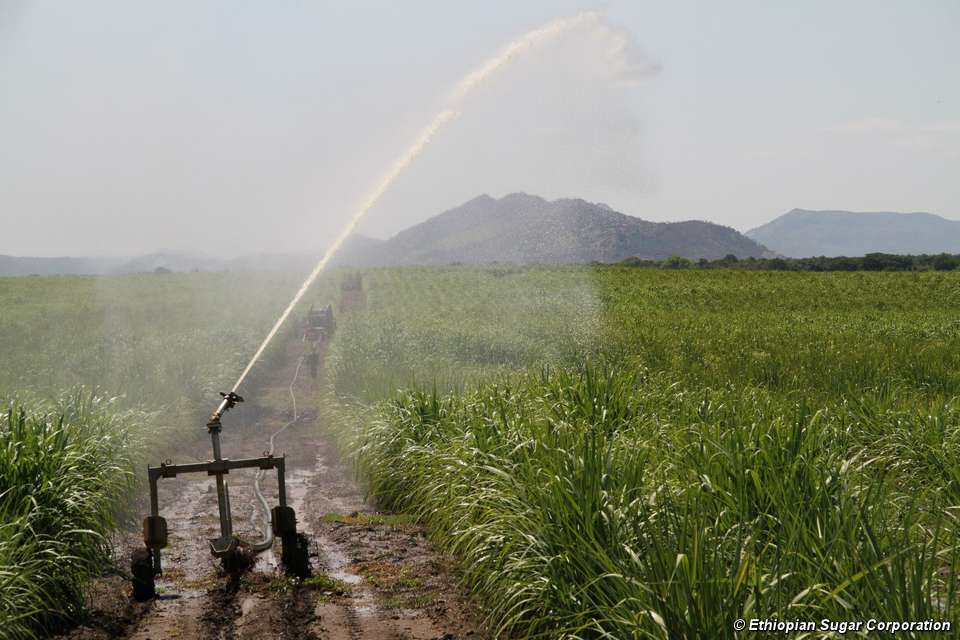


 Raya refers a tract of land stretching from Ala wuha in the south to Alaje in the north. That is bigger than Adwa and Axum awrajas combined. Historically, this is where the Weyane rebellion started in 1928 as a spontaneous reaction to a repressive system of the time. Originating in their present day Kobo wereda, the revolt would quickly spread to cover the entire Raya and Wejerat provinces. Later, the inhabitants of Enderta joined the revolt and a sort of quasi-organized alliance was formed after a decade of Raya and Wejerat rebellion. This alliance, Weyane, would emerge so potent that by its heyday it practically liberated the provinces of Raya, Wejerat and Enderta. The imperial government with the support of British Air force resorted to aerial bombardment of the rebel held areas which caused a wide-spread damage, including complete erasure of villages. However, the most detrimental factor that actually caused the demise of Weyane was to come from none other than Adwa people. In 1943, Dejazmach Gebrehiwot Meshesha along with a dozen of Adwans exploited the trust vested on them to assassinate the leaders of the Weyane movement. This is significant for in the Ethiopian tradition, at least until then, if one manages to kill the leader one will win the battle. Meshesha and co. breach of the traditional trust and value was so venomous that even to this date mistrust and resentment runs high in Raya. It is to be noted that if not for Meshesha of Adwa, the people were in a very strong bargaining position and if one has to look how similar revolts in Bale and other regions were resolved, the rebels demand for better governance was within reach. As a thank you for their contribution, Meshesha and his fellow Adwans were rewarded heavily by Haileselasse while a series of punitive attacks continued on the ‘originators’ of Weyane and ultimately Raya was divided between Wollo and Tigray.
 Right now, Alamata, the only remaining city not to die fast enough as Adwans would have liked to see, is under open destruction. The residents never complained on the absence of developmental activity but never expected that the Adwa administration of the city will come-up with a destruction agenda. Surprised by the revelation, the unsuspecting residents went to Mekelle to air their grievances in the hope that the big men there might be rational and take proper action. However, Abay Woldu’s administration did not give it a second to listen; just ordered more Bulldozers, armored tanks and a battalion to effectively carry out the planned destruction. Worse, those who complained the demolishing of their belonging are rounded-up and now languish in Adwa operated secret Tigrayan jails


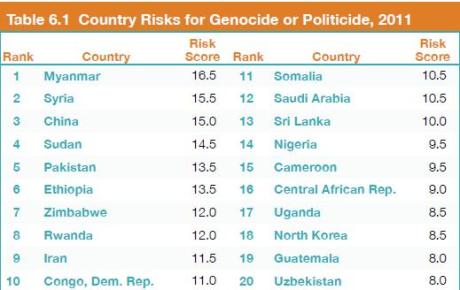


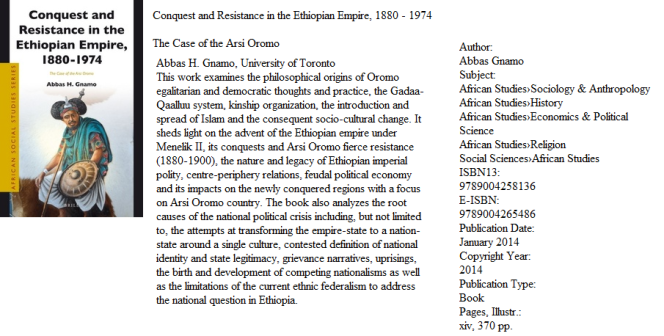

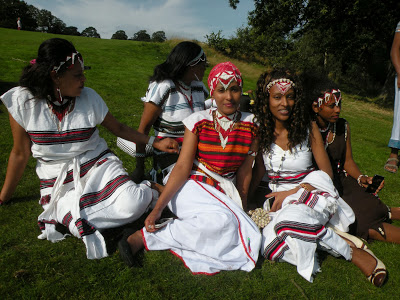






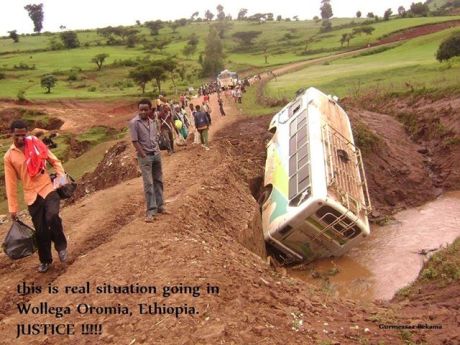
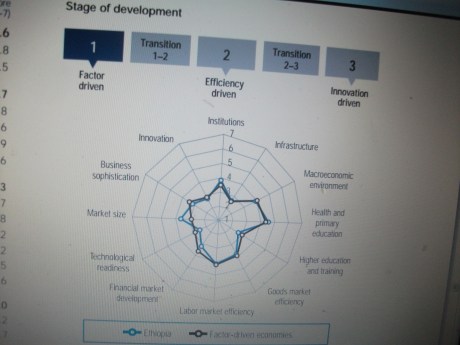






 Oromian Economist
You must be logged in to post a comment.