jump to navigation

HP: Ethiopia’s Bloody Crackdown: The Case for International Justice. #OromoProtests August 18, 2016

Posted by OromianEconomist in #OromoProtests.
Tags: , , , , ,
add a comment

Odaa OromooOromianEconomisttweet tweet #OromoProtests


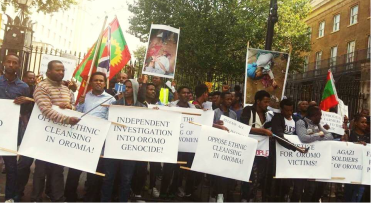
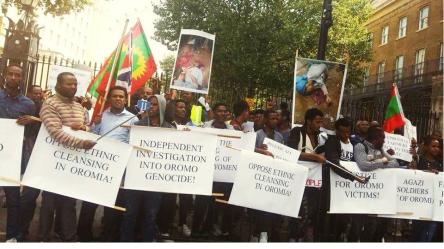
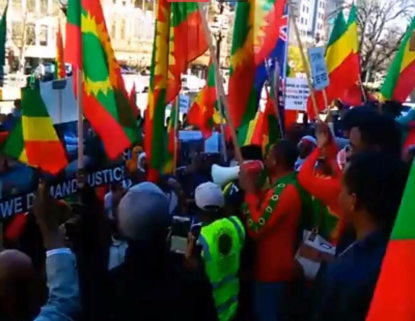
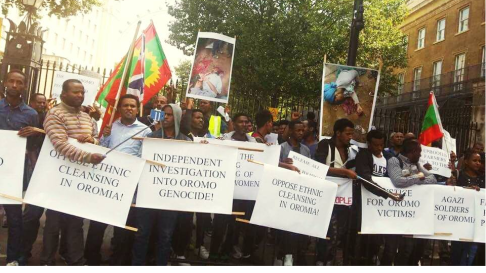
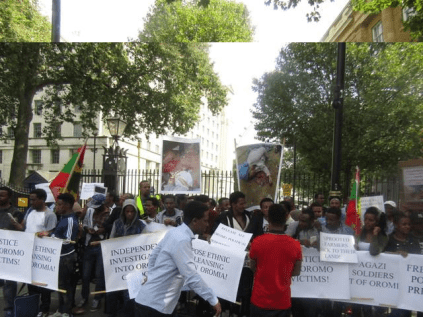
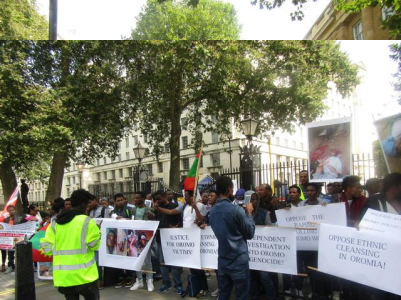
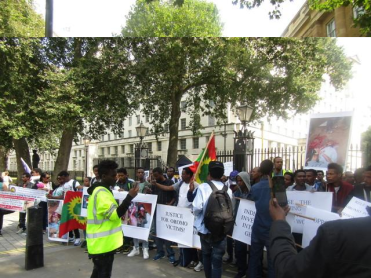
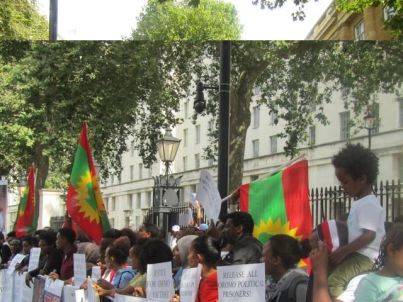
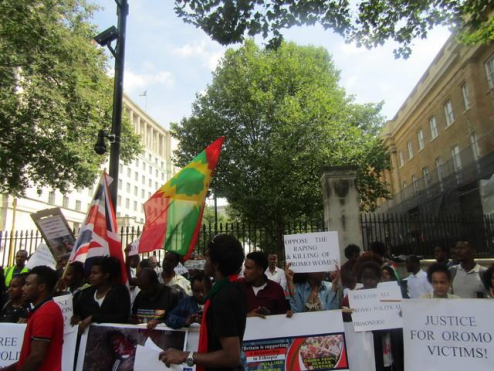
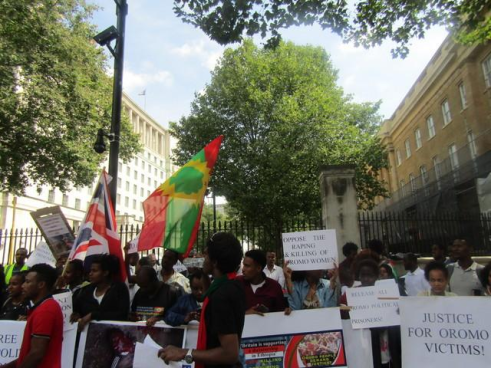
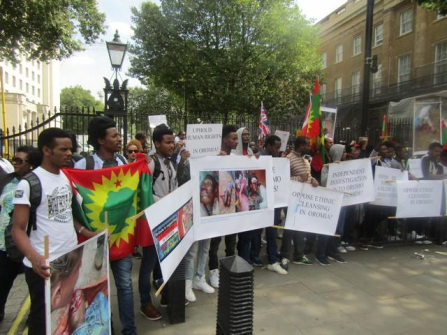
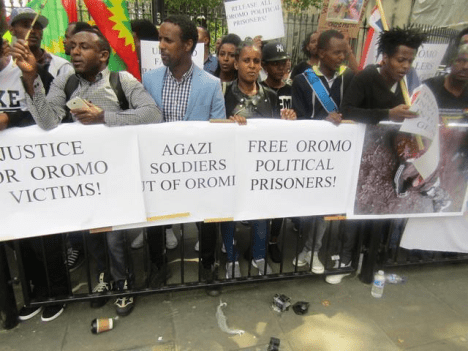
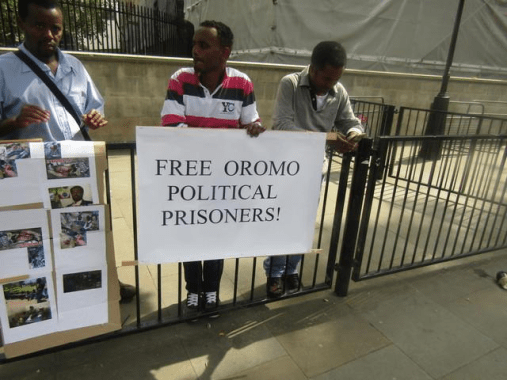
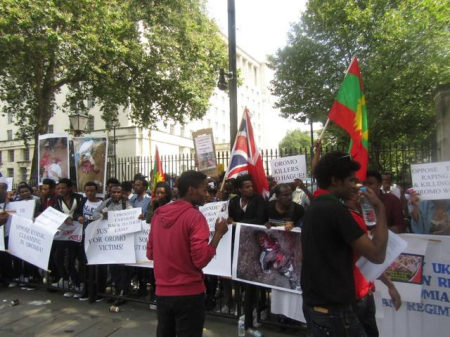
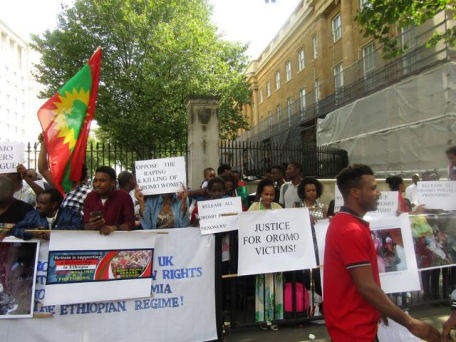
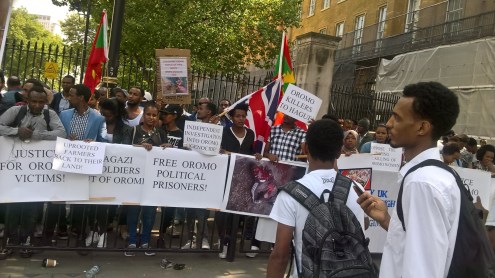
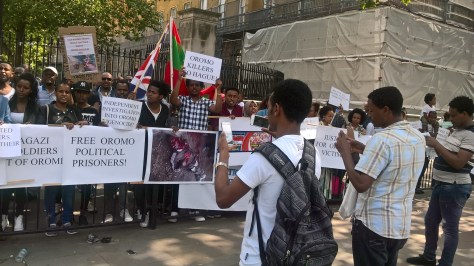
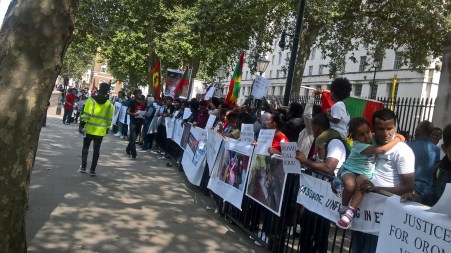
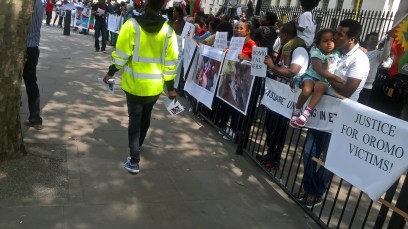
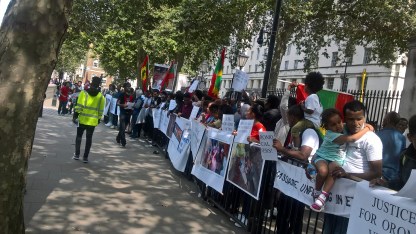
Grand #OromoProtests Global Solidarity Rally, 16 August 2016 Held in London 13

The Huffington Post

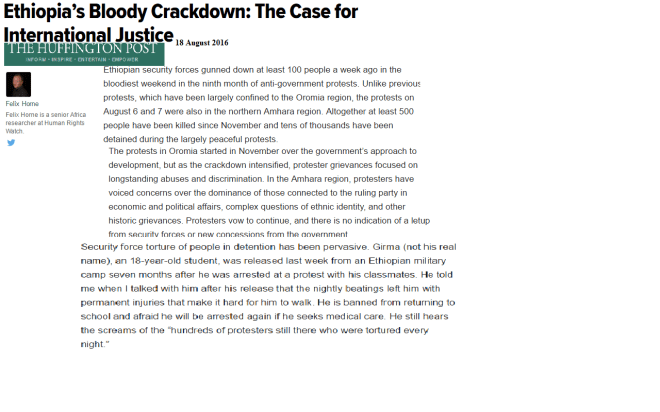
Ethiopia's Bloody Crackdown. The Case for International Justice

Click here to read: Ethiopia’s Bloody Crackdown: The Case for International Justice.

Grand #OromoProtests Global Solidarity Rally Held in Minnesota (Little Oromia), USA, 18 August 2016 August 18, 2016

Posted by OromianEconomist in #OromoProtests.
Tags: , , , , , , ,
1 comment so far

Odaa OromooOromianEconomisttweet tweet #OromoProtests

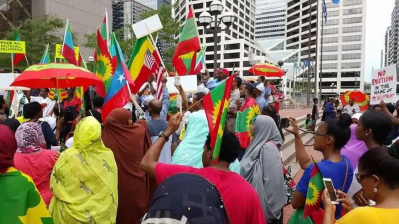
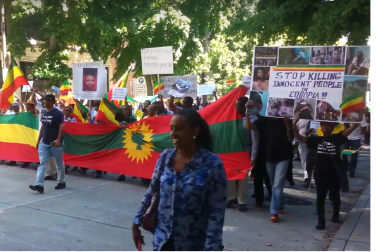
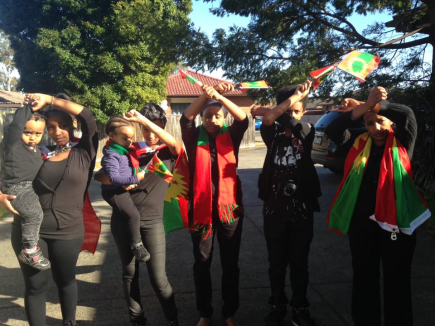
#OromoProtests, #AmharaProtests, #OgadenProtests Joint Solidarity Rally in Minnesota, 18 August 2016.

Grand #OromoProtests Global Solidarity Rally, 18 August 2016 Held in Little Oromia, Minnesota, USAGrand #OromoProtests Global Solidarity Rally, 18 August 2016 Held in Little Oromia, Minnesota, USA. p2


Grand #OromoProtests Global Solidarity Rally, 18 August 2016 Held in Little Oromia, Minnesota, USA. p1

Ethiopia: A country in turmoil (ZDF heute-journal) : A country in turmoil (ZDF heute-journal from 08/12/2016). #OromoProtests August 18, 2016

Posted by OromianEconomist in #OromoProtests.
Tags: , , , ,
add a comment

Odaa OromooOromianEconomist

Grand #OromoProtests Global Solidarity Rally, 16 August 2016 Held in London 13


In Ethiopia unrest and protests against the government. This goes with a heavy hand against it. At the center of the conflict is the distribution of farmland.

Seit einigen Tagen weiten sich in Äthiopien Unruhen und Proteste gegen die Regierung aus. Diese geht mit harter Hand dagegen vor. Im Mittelpunkt des Konflikts steht die Verteilung von Ackerland.


https://www.youtube.com/watch?v=wclWD4BqDE0

Germany: Human Rights Commissioner on the unrest in Ethiopia: Press release. #OromoProtests August 18, 2016

Posted by OromianEconomist in #OromoProtests.
Tags: , , , , , ,
1 comment so far

Odaa OromooOromianEconomist

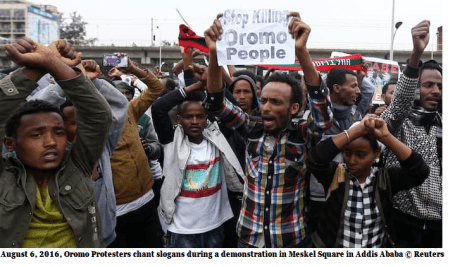
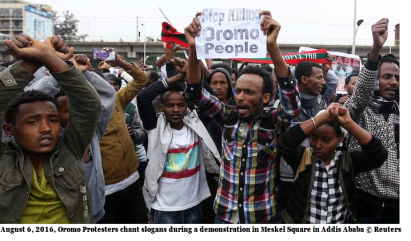
stop killing Oromo People

Logo, Germany foreign Affairs

Pressemitteilung

Menschenrechtsbeauftragte zu den Unruhen in Äthiopien

Erscheinungsdatum17.08.2016

Die Beauftragte der Bundesregierung für Menschenrechtspolitik und Humanitäre Hilfe, Bärbel Kofler, erklärte heute (17.08.):

Zusatzinformationen

Die Unruhen in Äthiopien, die sich inzwischen von der Region Oromia auf die Region Amhara sowie Addis Abeba ausgeweitet haben und zuletzt in einem blutigem Wochenende gipfelten, bei dem schätzungsweise  50 Menschen bei Zusammenstößen mit Sicherheitskräften getötet wurden, verfolge ich mit großer Sorge. Ich mahne alle Beteiligten an, in einen inklusiven Dialog einzutreten und bedingungslos auf Gewalt zu verzichten. Mein Beileid spreche ich den Angehörigen der Verstorbenen aus und wünsche den Verletzten eine baldige Genesung.

In der äthiopischen Verfassung garantierte Rechte wie freie Meinungsäußerung und friedliche Versammlungsfreiheit müssen gewahrt bleiben. Einsätze der Sicherheitskräfte gegenüber Demonstranten dürfen den Grundsatz der Verhältnismäßigkeit nicht brechen.

Ich bin davon überzeugt, dass Umverteilung von Land für Entwicklungs- und Investitionszwecke, sowie die Neugliederung von Verwaltungsbezirken partizipativ, transparent und sozialverträglich umgesetzt werden muss. Hierbei ist es wichtig, dass legitime Forderungen von ethnischen Gruppen und Oppositionskräften berücksichtigt werden. Die in Äthiopien erreichten wirtschaftlichen Fortschritte müssen allen Bevölkerungsteilen gleichermaßen zu Gute kommen. Ich appelliere daher an die Regierung, unter Nutzung der lokalen Kräfte und Stärkung der föderalen Struktur in einen konstruktiven Dialog mit der gesamten Bevölkerung einzutreten. Nur so kann die Lage auf Dauer beruhigt und ein friedvolles Leben gesichert werden.


Hintergrund

Seit November 2015 kommt es in der Region Oromia und neuerdings auch in der Region Amhara immer wieder zu Demonstrationen und Protesten gegen die Zentralregierung und die strukturelle Benachteiligung der Provinzen und deren ethnischen Bevölkerungen. Der äthiopische Staat reagierte darauf mit Zensur, Einschüchterung und gewaltsamen Vorgehen der Sicherheitskräfte. Wie auch bei früheren Protestaktionen hatte die Regierung zunächst die sozialen Medien und Nachrichtendienste und schließlich das gesamte Internet landesweit gesperrt.

Bestätigte  Zahlen über die Opfer gibt es nicht. Es kann jedoch als gesichert gelten, dass im Zeitraum  November 2015 bis Mai 2016 mehrere hundert Menschen ums Leben kamen (bis zu 400 laut AI und HRW). Die äthiopische Regierung bestätigt diese Zahlen nicht.

Neben der unruhigen Region Oromia hat sich Gondar (Amhara Region) seit einigen Wochen zu einem weiteren Brennpunkt Äthiopiens entwickelt. Aus der blutigen Festnahme einiger Aktivisten der Welkait-Volksgruppe am 14. Juli ist binnen weniger Wochen eine größere Protestbewegung entstanden, deren Ende noch nicht abzusehen ist.


press release (Google translated)

Human Rights Commissioner on the unrest in Ethiopia

Release date  17  August /2016

The Federal Government Commissioner for Human Rights Policy and Humanitarian Aid, Bärbel Kofler, stated today (17:08.):

additional information

The unrest in Ethiopia who have now spread from the Oromia region of the Amhara and Addis Ababa and recently culminated in a bloody weekend in which an estimated 50 people were killed in clashes with security forces, I have been following with great concern. I urge all parties to engage in an inclusive dialogue and unconditionally to renounce violence. My condolences to the families of the deceased, I and wish those injured a speedy recovery. In the Ethiopian Constitution guaranteed rights such as freedom of expression and peaceful assembly freedom must be respected.Appearances of the security forces against protesters must not break the principle of proportionality. I am convinced that redistribution of land for development and investment purposes, as well as the reorganization of administrative districts must be participatory, transparent and socially acceptable measures. It is important that legitimate demands of ethnic groups and opposition forces are taken into account. The arrived in Ethiopia’s economic progress must come to Good all populations equally. I therefore appeal to the Government to engage using local forces and strengthening the federal structure in a constructive dialogue with the entire population. Only so the location can assured permanent and peaceful lives are saved.


Background Since November 2015, in the region of Oromia and recently also in the Amhara region repeatedly to demonstrations and protests against the central government and the structural disadvantage of the provinces and their ethnic populations. The Ethiopian government responded by censorship, intimidation and violent actions of the security forces. As with earlier protests, the government had first social media and news services, and finally the entire Internet nationally banned. Confirmed figures on the victims do not exist. However, it can safely be assumed that in the period from November 2015 to May 2016, several hundred people were killed (up to 400, according to AI and HRW). The Ethiopian government does not confirm these numbers. In addition to the troubled region of Oromia to Gondar has developed (Amhara Region) for a few weeks to a further focal point of Ethiopia. From bloody arrest of some activists Welkait ethnic group on July 14 a larger protest movement has arisen within a few weeks, the end is not yet in sight.


Read more at Pressemitteilung Menschenrechtsbeauftragte zu den Unruhen in Äthiopien


Grand #OromoProtests Global Solidarity Rally Held in Johannesburg South Africa, 18 August 2016 August 18, 2016

Posted by OromianEconomist in #OromoProtests.
Tags: , , , , , , ,
1 comment so far

Odaa OromooOromianEconomist


tweet tweet #OromoProtests


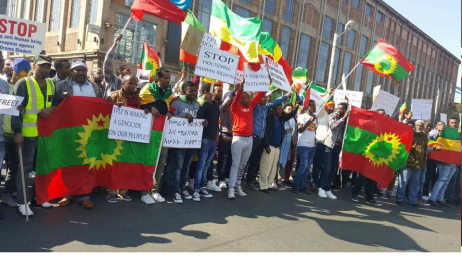
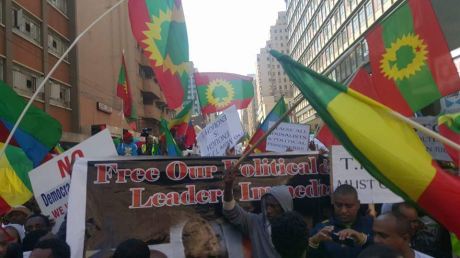
#OromoProtests #AmharaProtests #OgadeniaProtests joint global solidarity rally in Johannesburg, South Africa.


Grand #OromoProtests Global solidarity joint Ethiopians Rally Held in South Africa on 18 August 2016 p2


Grand #OromoProtests Global solidarity joint Ethiopians Rally Held in South Africa on 18 August 2016 p1


Grand #OromoProtests Global solidarity joint Ethiopians Rally Held in South Africa on 18 August 2016


Seattle Weekly: Grand #OromoProtests Global Solidarity Rally Held in Sheattle, 16 August 2016 August 18, 2016

Posted by OromianEconomist in #OromoProtests.
Tags: , , , , , , ,
1 comment so far

Odaa OromooOromianEconomist


Grand #OromoProtests Global solidarity joint Ethiopians Rally Held in Sheattle, USA on 16 August 2016

Ethiopian Immigrants March Against Brutal Regime


Seattle Weekly, 16 August 2016


The government has recently killed and disappeared hundreds of people.


A couple hundred members of Seattle’s Ethiopian immigrant community marched through downtown’s streets Tuesday afternoon in protest against U.S. support for the brutal Ethiopian regime.

“Back in Ethiopia, we have a dictatorial regime which has committed mass crimes against its own people,” said attorney Daniel Ajema, a marcher who identified himself as an organizer. “We’re here in solidarity with the people back home, and would like to support them and show our support.”

He’s not exaggerating. In their “Democracy Index” last year, the Economistgave Ethiopia’s government their lowest classification: an authoritarian regime, with an “Electoral Process and Pluralism” score of zero out of ten. Since November, according to the Human Rights Watch, government forces have killed hundreds of largely peaceful protesters and “disappeared” hundreds more.

Ajema said that the protest was specifically aimed at urging President Obama and philanthropist Bill Gates to try to lean on Ethiopia’s national government to do better on human rights and democracy. “We are here to voice our concern and our anger against the enablers of the regime,” he said. The Gates foundation currently has 150 projects worth more than $500 million in Ethiopia, according to the South African Broadcasting Service. The official U.S. relationship with Ethiopia is a friendly one: Ethiopian troops have battled the terrorist army al-Shabaab in neighboring Somolia, and last year our government sent theirs more than half a billion dollars in aid.

Ajema says both the U.S.’s and Gates Foundation’s money helps finance the regime, and he says both Gates and the president should insist on putting human rights ahead of political expediency.

“They’re not doing a whole lot of checking on good governance and democratic rights,” Ajema said. “They’re just blindly giving money to the government.”

Click hear to read  more at Sheattle Weekly


Grand #OromoProtests Global Solidarity Rally Held in Melbourne, Australia, 18 August 2016 August 18, 2016

Posted by OromianEconomist in #OromoProtests.
Tags: , , , , , , ,
1 comment so far

Odaa OromooOromianEconomist

tweet tweet #OromoProtests


Wayyaaneen haa dhabmtu!

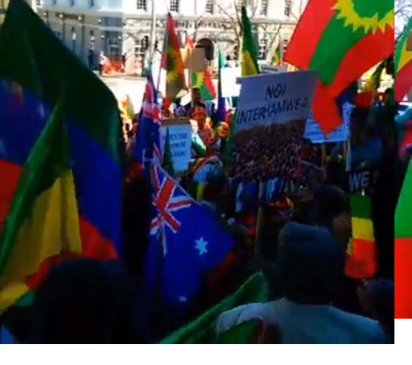
Grand #OromoProtests Global solidarity Rally Held in Melbourne, Australia, 18 August 2016.

Grand #OromoProtests Global solidarity Rally Held in Melbourne, Australia, 18 August 2016. p2

Grand #OromoProtests Global solidarity Rally Held in Melbourne, Australia, 18 August 2016. p3

Ethiopia’s volcano: The Oromo are resisting the regime and its bid to grab their land August 17, 2016

Posted by OromianEconomist in #OromoProtests.
Tags: , , , , ,
add a comment

 Odaa OromooOromianEconomist

tweet tweet #OromoProtests

For the first time in history, the plight of the Oromo people has also received worldwide attention. International media outlets have reported on the peaceful protests and subsequent government repression.

Ethiopia’s volcano: The Oromo are resisting the regime and its bid to grab their land

SAMANTHA SPOONER,  17 August 2016


Largest ethno-national group has been under martial law with citizens killed and subjected to beatings, torture and detention in concentration camps.
Oromo men, wearing their traditional costume.png
Oromo men  in their traditional costume

Countrywide demonstrations by the Oromo in Ethiopia have flared up again. Ethiopia’s authorities reacted with heavy force, resulting in the death of 100 civilians. SAMANTHA SPOONER asked Professor Asafa Jalata, a leading scholar on the politics of Oromia, about the countrywide protests

Who are the Oromo people?

The Oromo are the single largest ethno-national group in northeast Africa. In Ethiopia alone they are estimated to be 50-million strong out of a total population of 100-million. There are also Oromo living in Kenya and Somalia.

Ethiopia is said to have about 80 ethno-national groups. The Oromo represent 34.4% and the Amhara 27%. The rest are all less than 7% each.

The Oromo call themselves a nation. They have named their homeland “Oromia”, an area covering 284 538 square kilometres. It is considered to be the richest area of northeast Africa because of its agricultural and natural resources. It is often referred to as the “breadbasket” of the region. Sixty percent of Ethiopian economic resources are generated from Oromia.

The capital city of Ethiopia is located in the heart of Oromia. What the world knows as Addis Ababa is known to the Oromo as Finfinnee. When the Abyssinian warlord Menelik colonised the Oromo during the last decades of the 19th century, he established his main garrison city in Oromia and called it Addis Ababa.

Despite being the largest ethno-national group in Ethiopia, the Oromo consider themselves to be colonial subjects. This is because they have been denied equal access to their country’s political, economic and cultural resources. It all started with their colonisation by, and incorporation into, Abyssinia (the former Ethiopian empire) during the Scramble for Africa.

Today, comprising just 6% of the population, Tigrayans dominate and control the political economy of Ethiopia with the help of the West, particularly the United States. This relationship is strategic to the US, which uses the Tigrayan-led government’s army as their proxy to fight terrorism in the Horn of Africa and beyond.

The Oromo have been demonstrating since November last year. What triggered the protests?

The Oromo demonstrations have been underway for over eight months, first surfacing in Ginchi (about 80km southwest of the capital city) in November last year. It began when elementary and secondary schoolchildren in the small town began protesting the privatisation and confiscation of a small football field and the sale of the nearby Chilimoo forest.

The sentiment quickly spread across Oromia. The entire Oromo community then joined the protests, highlighting other complaints such as the so-called Integrated Addis Ababa Master Plan and associated land grabbing. The master plan was intended to expand Addis Ababa by 1.5-million hectares on to surrounding Oromo land, evicting Oromo farmers.

Last year’s demonstrations were the product of over 25 years of accumulated grievances. These grievances arose as a result of the domination by the minority Tigrayan ethno-national group. Because of this dominance the Oromo people have lost ownership of their land and become both impoverished and aliens in their own country.

What was different about these demonstrations was that, for the first time, all Oromo branches came together in co-ordinated action to fight for their national self-determination and democracy.

Which part of the Oromo is organising the rallies?

It is believed that underground activist networks, known as Qeerroo, are organising the Oromo community. The Qeerroo, also called the Qubee generation, first emerged in 1991 with the participation of the Oromo Liberation Front (OLF) in the transitional government of Ethiopia.

In 1992 the Tigrayan-led minority regime pushed the OLF out of government and the activist networks of Qeerroo gradually blossomed as a form of Oromummaa or Oromo nationalism.

Today the Qeerroo is made up of Oromo youth. These are predominantly students, from elementary school to university, organising collective action through social media. It is not clear what kind of relationship exists between the group and the OLF. But the Qeerroo clearly articulate that the OLF should replace the Tigrayan-led regime and recognise the Front as the origin of Oromo nationalism.

What are their demands?

Their immediate demands are for the Ethiopian government to halt the so-called Addis Ababa Master Plan, land grabbing, corruption and the violation of human rights.

Their extended demands are about achieving self-determination and sovereignty by replacing the Tigrayan-led regime with a multi-ethno-national democratic government. These demands gradually emerged to create solidarity with other ethno-national groups, such as the Amharas, who also have grievances with the regime.

How has the government reacted to the protests?

The government reaction has been violent and suppressive. Despite Oromia being the largest regional state in Ethiopia, it has been under martial law since the protests began. The government has been able to use this law to detain thousands of Oromos, holding them in prisons and concentration camps.

Security structures called tokkoo-shane (one-to-five), garee and gott have also been implemented. Their responsibilities include spying, identifying, exposing, imprisoning, torturing and killing Oromos who are not interested in serving the regime.

There have also been deaths and reports of thousands of Oromos who have been maimed as a result of torture, beatings or during the suppression of protests. For example, during the Oromia-wide day of peaceful protest on July 6, the regime army, known as Agazi, massacred nearly 100 Oromos. According to Amnesty International, 400 Oromos were killed before July 6. But in reality nobody knows exactly how many Oromos have been victims of violence.

What effect have these protests had on the country?

The Oromo protest movement has started to change the political landscape of Ethiopia and shaken the regime’s foundations. Erupting like “a social volcano”, it has sent ripples through the country, and several groups have changed their attitudes to stand in solidarity with the Oromo. The support of the Ahmaras has been particularly significant as they are the second-largest ethno-national group in Ethiopia.

For the first time in history, the plight of the Oromo people has also received worldwide attention. International media outlets have reported on the peaceful protests and subsequent government repression.

This has brought about diplomatic repercussions. In January the European Parliament condemned the Ethiopian government’s violent crackdown. It also called for the establishment of a credible, transparent and independent body to investigate the murdering and imprisonment of thousands of protesters. Similarly, the United Nations human rights experts demanded that Ethiopian authorities stop the violent crackdown.

Not all global actors are taking a strong stance. Some are concerned about maintaining good relations with the incumbent government. For example, the US State Department expressed vague concern about the violence associated with the protest movement. In sharp contrast, they signed a security partnership with the Ethiopian government.

Nevertheless, the momentum of the Oromo movement looks set to continue. The protests, and subsequent support, have seen the further development of activist networks and Oromo leadership, doubling their efforts to build their organisational capacity.

Is this the first time the Oromo have demonstrated their grievances?

No. The Oromo have engaged in scattered instances of resistance since the late 19th century when they were colonised.

In the 1970s the Oromo started to engage in a national movement under the leadership of the OLF. The Front was born out of the Macha-Tulama Self-Help Association, which was banned in the early 1960s, and other forms of resistance such as the Bale Oromo armed resistance of the 1960s. Successive Ethiopian regimes have killed or sent Oromo political and cultural leaders into exile.

How do you believe their grievances can be resolved?

Critics believe the Tigrayan-led minority regime is unlikely to resolve the Oromo grievances. Oromo activists believe that their national struggle for self-determination and egalitarian democracy must intensify.

I am sure that, sooner or later, the regime will be overthrown and replaced with a genuine egalitarian democratic system. This is because of the size of the Oromo population, abundant economic resources, oppression and repression by the Tigrayan-led government, the blossoming of Oromo political consciousness and willingness to pay the necessary sacrifices.

The Conversation

This is an edited version of an article that was originally published on theconversation.com


Grand #OromoProtests must see video: Fascist TPLF Ethiopia’s regime forces Shooting and killing a peaceful protesters in Robe, Bale, Oromia. August 17, 2016

Posted by OromianEconomist in #OromoProtests.
Tags: , , , ,
add a comment

Odaa OromooOromianEconomisttweet tweet #OromoProtests


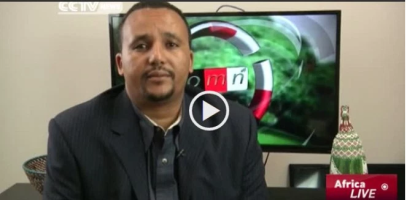
Grand  #OromoProtests (6  August 2016) MUST SEE: Soldiers shooting and killing a peaceful protesters in Robe, Bale. The victim is Abdela Kadir. Video source credited to Jawar Mohammed.

Grand #OromoProtests Solidarity Rally Held in London, 16 August 2016 August 17, 2016

Posted by OromianEconomist in #OromoProtests.
Tags: , , , , , ,
3 comments

Odaa OromooOromianEconomist

tweet tweet #OromoProtests


Grand #OromoProtests Global Solidarity Rally, 16 August 2016 Held in London 13


Grand #OromoProtests Global Solidarity Rally, 16 August 2016 Held in London p9Grand #OromoProtests Global Solidarity Rally, 16 August 2016 Held in London p10

Grand #OromoProtests Global Solidarity Rally, 16 August 2016 Held in London p11


Grand #OromoProtests Global Solidarity Rally, 16 August 2016 Held in London p12

Grand #OromoProtests Global Solidarity Rally, 16 August 2016 Held in London p5

Grand #OromoProtests Global Solidarity Rally, 16 August 2016 Held in London p5


Grand #OromoProtests Global Solidarity Rally, 16 August 2016 Held in London p2Grand #OromoProtests Global Solidarity Rally, 16 August 2016 Held in London p3Grand #OromoProtests Global Solidarity Rally, 16 August 2016 Held in London p4Grand #OromoProtests Global Solidarity Rally, 16 August 2016 Held in LondonGrand #OromoProtests Global Solidarity Rally, 16 August 2016 Held in London p1

Grand #OromoProtests Global Solidarity Rally, 16 August 2016 Held in London p7

Grand #OromoProtests Global Solidarity Rally, 16 August 2016 Held in London p8


WP_20160816_12_50_00_ProWP_20160816_12_49_26_Pro 1

WP_20160816_12_54_02_ProWP_20160816_12_53_58_ProWP_20160816_12_54_05_Pro


WP_20160816_12_54_02_Pro

https://www.youtube.com/watch?v=sRcZEUbBJyE


#OromoProtests Global Solidarity Rally in London, 16 August 2016, click here to watch Oromo Media Network (OMN) TV coverage part 1.

#OromoProtests Global Solidarity Rally in London, 16 August 2016, click here  to watch OMN’s report  part 2.

AFRICA TODAY ON ETHIOPIA PROTESTS WITH SEYI MARTINS. #OromoProtests August 15, 2016

Posted by OromianEconomist in #OromoProtests.
Tags: , , , ,
add a comment


Odaa OromooOromianEconomist


stop killing Oromo People#OromoProtests, #GrandOromiaProtests, 6 August 2016, all over Oromia. Dhaadannoo. p124#OromoProtests, #GrandOromiaProtests, 6 August 2016, all over Oromia. Dhaadannoo. p121#OromoProtests, #GrandOromiaProtests, 6 August 2016, all over Oromia. Dhaadannoo. p4#OromoProtests, #GrandOromiaProtests, 6 August 2016, all over Oromia. Dhaadannoo. p3#OromoProtests, #GrandOromiaProtests, 6 August 2016, all over Oromia. Dhaadannoo. p6#OromoProtests, #GrandOromiaMarch 6 August 2016, all over Oromia. Dhaadannoo. p9#OromoProtests, #GrandOromiaProtests, 6 August 2016, all over Oromia. Dhaadannoo. p123


https://www.youtube.com/watch?v=OEGdf4Cr8MQ

Al Jazeera Inside Story – What is triggering Ethiopia’s unrest? #OromoProtests August 15, 2016

Posted by OromianEconomist in #OromoProtests.
Tags: , , , , , ,
add a comment


Odaa OromooOromianEconomist


stop killing Oromo People#OromoProtests, #GrandOromiaProtests, 6 August 2016, all over Oromia. Dhaadannoo. p2


Calls for an international investigation in Ethiopia have surfaced after more than 100 people were killed in demonstrations.It is a conflict that has led to 400 deaths since November, 100 of them in the last week alone, according to human rights groups.The Ethiopian government is cracking down on ethnic Oromos and Amharas, who are calling for political reforms.Human rights groups have called the reponse ruthless. And the United Nations wants to send international observers to investigate.Ethiopia has denied that request, saying it alone is responsible for the security of its citizens. But what can be done to ensure the Ethiopian government respects human rights?Presenter: Folly Bah ThibaultGuests:Getachew Reda – Ethiopian communications affairs minister.Felix Horne – Ethiopia reseracher for Human Rights Watch.Ezekiel Gebissa – Profesor of History and African studies at Kettering University.- Subscribe to our channel: http://aje.io/AJSubscribe– Follow us on Twitter: https://twitter.com/AJEnglish– Find us on Facebook: https://www.facebook.com/aljazeera– Check our website: http://www.aljazeera.com/

Oromia: Athletic Nation Report: Rio Olympics: Shoeless runner Oromo athlete Etenesh Diro becomes a hero Olympian in steeplechase August 14, 2016

Posted by OromianEconomist in Africa, Athletic nation, Oromia, Oromo, Oromo Sport.
Tags: , , , , , , ,
add a comment

Odaa OromooOromianEconomist

As history repeats itself, barefoot Oromo athlete Abbabaa Bqilaa (Abebe Bikila), winner of Rome Olympic Marathon in 1964.

Oromo athlete Abebe Bikila (Abbabaa Biqilaa), barefoot, won Rome Olympic in 1960.

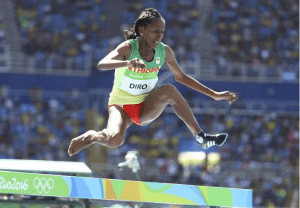
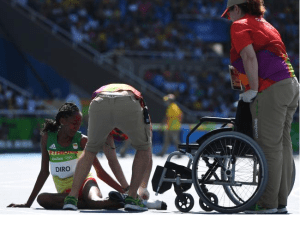
Oromo athlete Etenesh Diro of Oromia, representing Ethiopia in Rio 2016 Olympics  competes in the Women’s 3000m Steeplechase heat.Etenesh Diro, Oromo athlete in Rio Olympics become an Olympic hero

Oromo athlete Etenesh Diro of Oromia, representing Ethiopia in Rio 2016 Olympics  competes in the Women’s 3000m Steeplechase heat.


Etenesh Diro, Oromo athlete in Rio Olympics become an Olympic hero p1
Oromo athlete  Etenesh Diro — one of the favourites in the women’s 3000m steeplechase — was sitting comfortably in first place about two-thirds into her heat at the Olympics when disaster struck.
Her heel was clipped by a falling opponent, sending her tumbling to the ground and removing her right shoe.


Etenesh Diro, Oromo athlete in Rio Olympics become an Olympic hero p2
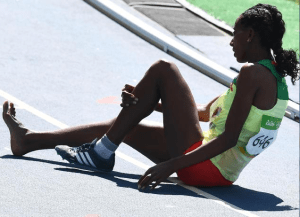
Etenesh Diro reacts after she competed in the Women’s 3000m Steeplechase. Picture: AFP


The 25-year-old stood and quickly tried to put it back on her foot, but the laces were tied tight and with no time to spare she cast it aside.
Realising she’d have a better chance of running barefoot, her sock went too — and the African set about attempting to fight her way back into a race where only the first three placegetters were guaranteed of progressing to the final.


Etenesh Diro, Oromo athlete in Rio Olympics become an Olympic hero
Oromia’s Etenesh Diro competes in the Women’s 3000m Steeplechase.
To say the crowd at Rio’s Maracana Stadium got behind her was an understatement.
With every step of Diro’s barren hoof the energy went up a notch — and she responded by passing several runners in the final few laps to claim seventh.

After the race Diro dropped to the ground in disappointment as competitors offered their support.
She’d failed to qualify and lost the opportunity to improve on a sixth-placed finish in London. But then something heartwarming happened.
Three teams involved in the race protested.

Etenesh Diro, Oromo athlete in Rio Olympics become an Olympic hero p3

Etenesh Diro (L) is helped by officials after she competed in the Women’s 3000m Steeplechase heat. Picture: AFP

Diro had been unfairly brought down and along with Jamaica’s Aisha Praught and Ireland’s Sara Treacy — who also fell after being impeded — would be given a place in the final, which expanded to 18 runners.
She will now be the fan favourite in the final, which also features Australian Genevieve LaCaze and starts at 12.15am Tuesday AEST.


Quartz: Blocked off: How the Ethiopia protests were stifled by a coordinated internet shutdown August 14, 2016

Posted by OromianEconomist in Uncategorized.
Tags: , , , , , , ,
add a comment


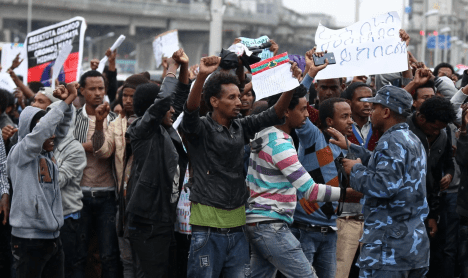
Odaa OromooOromianEconomistGrand #Oromoprotests in Finfinnee, image by Quartz

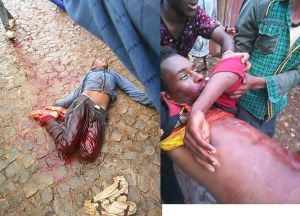
Alert, mass killings and torture is going on against Oromo people in Ethiopia.

How the Ethiopia protests were stifled by a coordinated internet shutdown

Guartz, 14 August 2016


Nearly 100 deaths and thousands of arrests have been reported in Ethiopia over the week, as part of protests against the marginalization and persecution of the Oromos and Amharas, Ethiopia’s two largest ethnic groups. But the attacks and arrests may not have been the only forms of retribution carried out by the Ethiopian government in its crackdown against protesters.
Last weekend, the internet was reportedly shut down in the country.
In an attempt to understand whether the internet was in fact shut down, we looked at some public sources of data that contain information about internet traffic. Such data provides strong indicators that the internet was most likely shut down during the Ethiopian protests last weekend, though it remains unclear if this occurred in all regions and/or on all types of networks across the country.
Ethiopian protests

Ongoing protests have been carried out by Ethiopia’s Oromo people since November, marking one of the most significant political developments in Ethiopia in recent years. These protests were sparked by the introduction of the Addis Ababa City Integrated Master Plan, which aims to expand the territorial limits of the country’s capital into neighboring Oromo towns, threatening to displace millions of Oromo farmers and bring the Oromo-dominated region under the Tigray-led federal government.

The unprecedented wave of protests has resulted in more than 400 deaths since November, according to a recent Human Rights Watch report.

Protesters relied on the internet to plan and mobilize so this may have prompted the Ethiopian government to pull the plug.

More protests sprung up in the Amhara regional state, with protesters requesting political reforms and specifically, the Welkait community demanding that ancestral land currently administered by the Tigray regional state be moved into the neighboring Amhara region.
The new-found unity between the two historically antagonistic communities of the Oromo and Amharas against a common adversary, the TPLF-led government, seems to have raised the tension in the country. The security forces response has been extreme, with observers comparing it to the 2005 post-election violence where nearly 200 people were killed. This time though, at least 30 people were reportedly killed in the Amhara region in one day alone.
Internet shutdown

Protesters relied on the internet to plan, mobilize and coordinate with each other and this may have prompted the Ethiopian government to pull the plug on the internet even before the planned protests started.

But this is not the first time that the Ethiopian government appears to be restricting access to the internet this year.
Last month, the government reportedly blocked social media platforms across the country after university entrance exams were leaked on Facebook by an Oromo activist, as a form of protest against the government.
Public data from last weekend indicates that the internet was shut down in Ethiopia during the heat of the protests, but it remains unclear if this occurred nationwide.
The graphs below illustrate that while internet traffic appeared to be originating from Ethiopia up until Aug. 5, such traffic was suddenly terminated until August 8th, indicating that the internet was probably shut down.
Read more at:-


http://qz.com/757824/how-the-ethiopia-protests-were-stifled-by-a-coordinated-internet-shutdown/

Oromia: Alert! Crimes against humanity: Mass torture and killings are going on against Oromo people in Ethiopia. August 14, 2016

Posted by OromianEconomist in #OromoProtests.
Tags: , , , , , , ,
2 comments

Odaa OromooOromianEconomist


stop killing Oromo People#OromoProtests, #GrandOromiaProtests, 6 August 2016, all over Oromia. Dhaadannoo. p124#OromoProtests, #GrandOromiaMarch 6 August 2016, all over Oromia. Dhaadannoo. p9


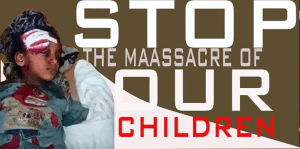
#OromoProtests Alert! Mass torture and killings are  going on against Oromo people in Ethiopia. Oromo children are subjected to torture and mass killings by fascsist Ethiopia’s regime (TPLF/Agazi force.

The  New York Times  was able to picture in video camera while fascist cruel Ethiopia’s regime (TPLF/Agazi) was  attacking peaceful Oromo Protesters in Finfinnee (Addis Ababa), Oromia on 6 August 2016, Grand #OromoProtests.  

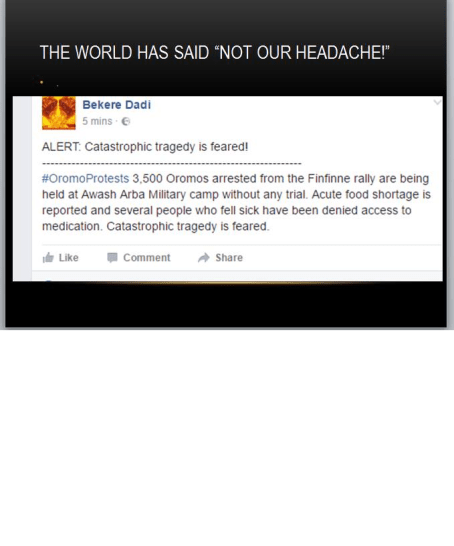
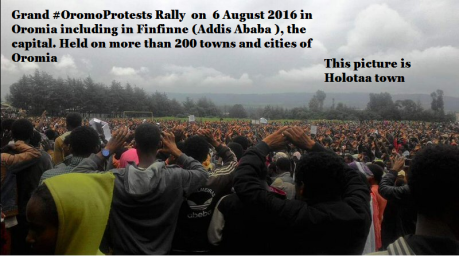
Genocide is going on against Oromo people. On 6 August 2016 Protests held over 200 towns and cities in Oromia state wide. All over, Oromo demonstrators demanding political change in Ethiopia have been met with violent resistance by the fascist TPLF Ethiopia’s regime.It has been reported that over 283 innocent Oromo have been gunned down by cruel fascist TPLF Ethiopia’s regime ( https://oromianeconomist.com/2016/08/13/oromia-dhiigi-mucaa-kootii-dhangalaee-hin-hafu-oromiyaan-ni-bilisoomti-akeeka-ummatni-oromoo-bakkaan-gahuuf-murteeffate/  ). These are in addition to over 600 people the regime has murdered since November 2015. Since  6 August 2016, over 4000  people are being tortured in Awash Arba concentration camp alone. This figure does not include thousands and thousands in thousands TPLF torture camps.

Alert, mass killings and torture is going on against Oromo people in Ethiopia.

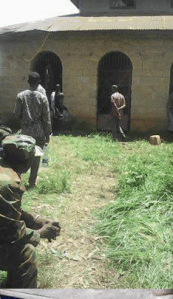
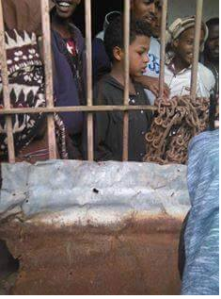
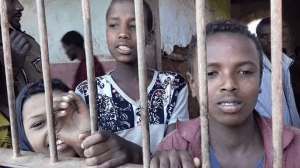
Fascist Ethiopia’s regime’s detaining and torturing Oromo children. This photo was taken at Iyasu IV prison in Gara Mulata, East Hararge, Oromia. 13 August 2016


Fascist Ethiopia's  regime's  detaining and torturing Oromo children. This photo was taken at Iyasu IV prison in Gara Mulata, East Hararge, Oromia. 13 August 2016. p2Fascist Ethiopia's  regime's  detaining and torturing Oromo children. This photo was taken at Iyasu IV prison in Gara Mulata, East Hararge, Oromia. 13 August 2016Fascist Ethiopia's  regime's  detaining and torturing Oromo children. This photo was taken at Iyasu IV prison in Gara Mulata, East Hararge, Oromia. 13 August 2016. p1

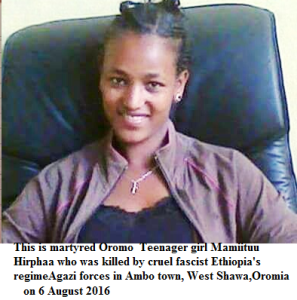
This is picture is a photo of martyred birght Oromo teenager school girl Mamiituu Hirphaa who was killed by cruel fascist Ethiopia’s regime Agazi forces in Ambo town, West Shawa, Oromia on 6 August 2016.

This is martyred Oromo teenager girl  Mamiituu Hirphaa who was killed by cruel fascist Ethiopia's regime Agazi forces in Ambo town, West Shawa, Oromia on 6 August 2016


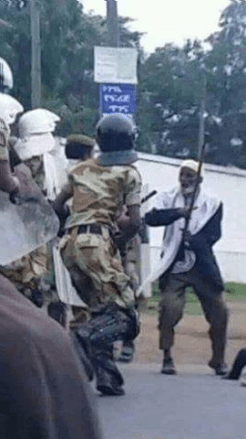
Fascist Ethiopia’s regime forces attacking 80 years Oromo elder in Arsi, Oromia state, captured by citizen journalist camera and social media.

#OromoProtests, an Oromo man, 80 years old confronting fascist Ethiopia's regime, Agazi forces, Arsi, Oromia, 12 August 2016

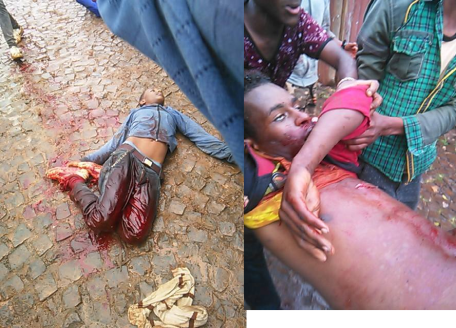
A full scale military massacre has-been conducted by ethiopias fascsit regime in Naqamte East Wallaggaa, Oromia. The is picture is a young Oromo gunned down by the regime forces. 6 August 2016. Grand #OromoProtests.

Grand #OromoProtests, Grand ‪#‎OromoProtests‬ full scale Military massacre  has been conducted by Ethiopia's fascsit regimei n Naqamte, East Walaga. 6 August 2016 pcture

These  are tips of the iceberg of  genocidal crimes of Fascist (TPLF) Ethiopia’s regime.


Hagayya 6 bara 2016 qabee gidiraa lammiin Oromoo  Finfinnee keessaa guramaani hidhaman keessa jiraan: Warra hidhamee gidramaa turee  bahe kessaa tokko akka dubbatetti:-


Hiriirra Guddicha Finfinneetti geggeeffame irratti ilmaan Oromoo 4000 tahan qabamanii Awash Sebat Kiilo kaampii jedhamutti hidhamanii jiru. Akkamitti qabaman, eenyutu qabeen, balaa akkamiitu irra gaheen, yoom Awash geeffaman? Yaadannoo namni jara qabame san keessaa tokko tahe naa erge armaan gadii obsaan dubbisaa.
“Jalqaba gafaa hirirra finfineetii banuu waan isaan godhan media iratti argitaanitu. guyyaa sana namaa heduutu qabamee namni qabame immoo kaan hirirra irraatti kaan daandii utuu deemaa jiruu kan immoo kutaa magaala finfinee garagaraa keessaatii ergaa qabamanii seera jala galaan bodaa garuu reebichaa ilmoo namaaf hin maaletuu irraatti rawwaate. fkn anii nama guyyaa sana qabamee keessaa nama tokkon ture. ergan nama baayee dukaa qabamee boodaa tilmaaman nama 30 kan tanuu nuu fudhaan mana dhunfaa tokko nu geessanii baayee nu reebaan, reebuu qofa mitii araabsoo garaa garan nu araabsaan fkn “nuuti bilisumaa siiniif lanee akkas tatu. Esaatti democracy argitaani beetuu?, oromoon angoon isaaf hin maluu …. ”
Garuu wantaan ijaakoon argee tokko yeeroo mana dhuunfaa sana keessaatti reebaama turee irraa caalaa kan nuu reebee namaa lammii tigire tahedha. kan bira immoo tigire tahee namaa hucuu military hin hufaane sababa tigiree tahee qofaaf nuu reebee mata nama heduu babaaqaaqsee . ergaa reebaan quufan boodaa gara kutaa finfinee keessaa bakka kasanchis ( sidistegn police station ) jedhamuu nuu dhaqataan. haga guyya keessaa sa’a 12tti achii ture. Sa’a 12 boodaa nufuudhaani bayaanii bakka lagahar jedhamu ykn ground tennis / diree tennis irraa nuu kayaan isaa boodaa bookkaan hedduun nutii roobe sa’a afurii oliif bokkaa keessaa nuu tursiisaan.
namnii hundii maali maalii goonee bokkaan nu ajeesuuf maalo bineesii illee yoo bokkaan roobuu bollaa ykn hoolqa jalati baqaata maliif isaan garuu bokkaa keessaati nu ajeestu jenaan cal jedhaa taahaa ykn achi keessaa bultuu nuun jedhaan.kun hundii ergaa rawwaatee boodee garu nama qabamee hundaa achii fudhaani gara kutaa magaala finfine iddoo police station jiruu hunda jirutti rabsaan achiitti nu hidhaan. achii booda gafa sanbaata guddaa galgaala halkaan keessa sa’a sadiiti nuufuudhaan gara Awash sebat kilo camp nu geesaan. achii bodaa achii keessaatii isporti ilmoon namaa hojeechuu hin dandeenya nuu hojeechisaan kaan reebaan lukaa irraa cabsaan kaan harkaa irraa cabsaan kaan kalee hojii ala gochisiisaan,
waa nyaata irraatti immoo ganama dabboo tokko guyyaa dabboo tokko galgaala dabboo tokko nuuf keenaa turaan bishaan immoo guyaatii walaaka letter tokko gadii nuuf kenaa tura. ijoolee shamaara isporti isaan hojechuu hin dandeenya hojechisee shamaara baayeetuu midhaan gudaan irraa gahee waluuma galaa namnii achii jiruu tilmaaman naannoo 4000 taha. achii kessaa gaafaa jimmaata namnii 66 keessaa baneera. kan keessaa dhalan nama18 ,dhiri 48tu bahe. ijoolee dhiraa irraa rifeensa mataa hadaaniruu namnii tokkoyyuu kan rifensaa mata qabu hin jiruu.”

Oromia: Shirri Haaraan Qabsoo Bilisummaa Oromoo irratti Hojjatamaa Jiraachuu ABOn Saaxile.Reiterating the Oromo political Questions and Ultimate objectives of the Oromo struggle August 13, 2016

Posted by OromianEconomist in #OromoProtests, Oromia, Self determination.
Tags: , , , , , , , ,
add a comment

Odaa OromooOromianEconomistOLF logo

Shirri Haaraan Qabsoo Bilisummaa Oromoo irratti Hojjatamaa Jiraachuu ABOn Saaxile.


(Oromedia, 13 Hagayya 2016) ABO fi QBO irratti shirri haaraa xaxamaa jiraachuu saaxile. Haata’uutii, ABO fi Ummatni Oromoo lammata shira akkasii akka hin keessumeessine ABOn gada jabeessee hubachiiseera.

Adda Bilisummaa Oromoo ibsa Hagayya 13 bara 2016 mata duree “Gaaffii fi Galii Siyaasaa Ummata Oromoo Caalaatti Ifa Gochuu” jedhuun baaseen karoorri haaraan qabsoo Oromoo dadhabsiisuuf qopheeffama ajiraachuu ibse.

Karoorri kun akak ABOn ibsetti, akkuma London Conference 1991 irratti godhame marraa lammataaf shira qabsoo Oromoo irratti akeekame, kan mirga hiree murteeffannaa Oromoo hin kabajne ta’uu addeesse.

“Akeekaa fi yaada farrummaa QBO kan mirga hiree murteeffannaa Oromoo hin kabajne kana ABO-Qeerroo fi ummatni Oromoo jabinaan dura dhaabbatu,” jedhee jira ABOn.

Itti dabaluunis, “mirgii fi dantaan ummata Oromoo alagaa fi humnoota alaa irraa kanneen dantaa aangoof bulaniin osoo hin taane ummata Oromoo abbaa dhimmaatiin murteeffamuu qaba,” jechuun ejajnnoo jabaan ibseera.

“Ummatni Oromoo Mirgi hiree ofii ofiin murteeffatuu ifaan kabajameefii dhiibbaa tokkoon maleetti sagalee isaatiin kan barbaadu wayta murteessuu danda’etti gaaffiin isaa deebii quubsaa argata,” jechuuni gaaffiin  fi galii siyaasaa ummata Oromoo hubachiiseera.

ibsa-abo-hagayya-13-bara-2016


Reiterating the Oromo political Questions and Ultimate objectives of the Oromo struggle
The OLF press release


The aims of the Oromo struggle led by the OLF is to realize the Oromo people’s selfdetermination right; to dismantle colonial system from Oromia and to free Oromo from subjugation and to establish free Oromia state. This can be achieved through the sole decision of the Oromo people who will choose either to establish a free Republic of Oromia or to make new political arrangement with neighboring nationalities based on interest, equality, mutual respect and democratic values and principles. This means that the OLF struggles to make an arrangement for Oromo people for free referendum rights.
The Oromo people has struggled and made huge scarifies to fulfill the aims and objectives of the Oromo struggle set out by the OLF. When the Oromo elites and committed individuals developed the OLF program, the central aim was to solve the fundamental political problem of the Ethiopian empire from its roots. The program was not only based on the interest of Oromo people but also considered the interests of other peoples in the Ethiopian empire who were colonized in a similar way and benefit from this struggle.
Thanks to Oromo heroes and heroines, today the Oromo people liberation struggle has reached the stage where every Oromo has gained a full confidence to achieve its long awaited freedom. Also millions of Oromo heroes and heroines are ready to sacrifice their lives for freedom until
the liberation of Oromia is realized. We have no doubt that with the sacrifices of committed Oromo heroes and heroines, the OLF vision, which is also the vision of vast Oromo people, will be achieved. However, we cannot deny that there are internal and external forces that want to give the Oromo liberation movement a blind eye and want to divert the Oromo genuine questions for their own political agenda and strategic interest.

olf-press-release-august-13-2016

Oromia: Darajjee Shumii: Noonnoo Noonnoo Gale Bishaan Noonnoo Dhowwadhu Dhowwadhu Roorroo. #OromoProtests Music August 13, 2016

Posted by OromianEconomist in #OromoProtests.
Tags: , , , , , , , ,
add a comment

Odaa OromooOromianEconomist


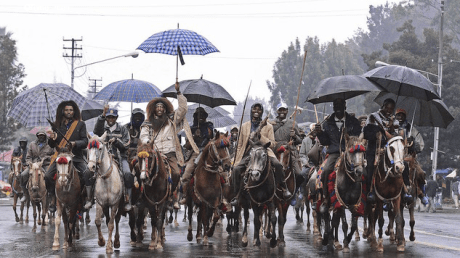
Oromo Horse men, display of bravery and patriotismOromiyaa


OROMIA: “DHIIGI MUCAA KOOTII DHANGALA’EE HIN HAFU. OROMIYAAN NI BILISOOMTI!” :AKEEKA UMMATNI OROMOO BAKKAAN GAHUUF MURTEEFFATE. August 13, 2016

Posted by OromianEconomist in #OromoProtests.
Tags: , , , , ,
2 comments

Odaa OromooOromianEconomist

dhiigin mucaakootii dhangala'ee hin hafu jette.

DHIIGI MUCAA KOOTII DHANGALA’EE HIN HAFU. OROMIYAAN NI BILISOOMTI!” :AKEEKA UMMATNI OROMOO BAKKAAN GAHUUF MURTEEFFATE.


Leeloo Sabaan


Hagayya 6, bara 2016 irraa eegaleee, Fincilla Xumura Gabrummaa, Qeerroo Bilisummaatiin hoogganamee, guutuu Oromiyaa keessatti, bifa addaan,akka abidda saafaa boba’aa jiru keessatti, Oromoo meesha maleeyyiin rasaasa mootummaa gabroomfataa Impaayera Ixoophiyaatiin ajjeeffaman hanga har’aatti 283 gahuu isaa maddeen: Jaarmota mirga dhala namaa, hospitalota fi poolisaa irraa dhagahamaa jira. Fincila kana keessatti kanneen wareega baasan, harki 92.8: shamarran, dargaggoo fi daa’imman egeree fi abdii borii Oromiyaa ta’anii dha. Maatiilee Oromiyaa ilmaan isaanii rasaasa Tigreetiin: qeyee isaanii keessatti, balbala mana isaanii duratti, abbaa fi haadha isaanii biratti Hagayya 6, bara 2016 irraa eegalee dhaban keessaa tokko, haadha Musxafaa oggaa taatu, rasaasa Ixoophiyaatiin mucaa dhabde kanaaf kan: rifatte, kan sodaatte, kan hamileen cabe osoo hin taane, wareegama mucaan isii Musxafaa jedhamu bilisummaa Oromiyaaf kaffale ittiin boonuu fi ittiin dhaadatuun isii, kanneen: aarii, fedhii, hawwii, dandeettii fi muratnoo ummata Oromoof tuffii qaban hunda kan ajaa’ibe oggaa ta’u, gootummaa fi muratnoo isiin agarsiiftetti kan ittiin booname qofa osoo hin taane, “haadha goota deesse” jedhamtee ummata Oromoo hunda biratti akka faarfamtuu fi kabajamtu taasisee maatiilee Oromoo rasaasa wayyaaneetiin ilmaan isaanii dhaban hunda kan jajjabeesse ture.

Dubartiin Oromoo kun, mucaa deessee fi guddifte kana, wanneen inni barbaadu fi akeeka inni wareegameef waan beektuuf, “Dhiigi mucaa kiyya dhangala’ee hin hafu. Oromiyaan ni bilisoomti !” jettee sagalee guddaa fi aariidhaan ummata Oromoo taaziyaaf gara isii dhufe keessaa garmaamtee dhiiga mucaa isiitiiin Oromiyaan akka bilisoomtu sodaa tokko malee labsaa turte. Dhiigi ilmoo isiitii, kan bilisummaa argamsiisu malee kan lafatti badu akka hin taane abdii qabdus shakkii tokko malee ibsaa turte. Dhaadannoon isii kun , “guyyaan itti ilmaan keenya bilisummaa argan ni dhufa” jechuudhaan kan Roobaa Bultum bara Miniliki raage, waggoota dhibba tokko ol booda illee, akeeki ummata Oromoo, Oromiyaa bilisoomte arguu qofa akka ta’e kan mul’isee dha. Akeeki bilisummaa Oromiyaa, akeeka dhaloota irraa dhalootatti darbee har’a gahe, jaarra tokko oliif hawwii ummata Oromoo kan ture fi fuuldurattis, itti fufee, qabsoo ummata Oromoo kan hoogganuu ta’uu ifa kan taasise dhaadannoon ‘haadha gootaa’ kun, ajjeechaa fi hidhaan bara: Minilik, Haayile Sillaasee, Dargii fi Wayyaanee ummata Oromoo fi qabsaawota isaa irratti raawwataa ture, akeeka bilisummaa Oromiyaa irraa ummata Oromoo of booda akka hin deebifne, ajjeechaa fi hidhaan fuulduratti ummata Oromoo irratti geggeeffamus , haga Oromiyaan bilisoomtutti, ummata Oromoo of booda deebisuu akka hin dandeenye guutuutti kan mirkaneesse qofa osoo hin taane, kanneen muratnoo ummata Oromoo irratti shakkii qaban illee, shakkii isaanii dhara/soba taasise.

Dhaadannoon ‘haadha gootaa’ kana irraa dhagahamaa ture, akeeki Adda Bilisummaa Oromoo, kan bilisummaa Oromoo fi walabummaa Oromiyaa, waggoota 43 dura lafa kaa’ame, har’a illee, akeeka hawwii ummata Oromoo calaqqisu ta’uu kan ifa taasise qofa osoo hin taane, akeeki ABO kun, akeeka dhaloota qubeetiin haammatame fi itti fufiinsa isaa illee shakkii tokko maleee kan abdachiisee dha.Hawwiin mucaa isii fi kan hunda Oromootaa, bilisummaa Oromiyaa waan ta’eef, dhaadannoo dhageessifte kanaan, Oromoon itti fufee qabsaawee, bilisummaa Oromiyaatiin gumaa ilma isii akka baasu abdii isiin ummata Oromoo irraa qabdus kan agarsiisuu dha.

Waan kana ta’eef, maatiileen Oromoo, ilmaan akka qaroo ija isaanitti ilaalan rasaasa Ixoophiyaatiin/wayyaaneetiin dhaban hundi: obsa, muratnoo fi abdi bilisummaa “haadha gootaa” kana irraa mul’ate akka fakkeenyaatti fudhatuun, ilmaan Oromoo hundi bilisummaa Orommiyaatiif akka qabsawan jajjabeessuu qaban. ‘Haatii gootaa’ kun,”Dhiigi mucaa kooti dhangala’ee hin hafu. Oromiyaan ni bilisoomti !” jettee dhaadachuun, abdii guddaa isiin dhaloota ammaa irraa qabdu kan calaqqisu waan ta’eef, hawwii isii kana bakkaan gahuuf ummatni Oromoo itti fufee, akeeka bilisummaa Oromiyaa ABO’n hooliganism bakkaan gahuuf gootummaan qabsaawee abdii isiiin irraa kaayyatte kana dalagaan mul’isuu qaba. Kana malees, wareegama ilmi isii kaffale kana butatanii, akeeka bilisummaa Oromiyaa, kan ‘haati gootaa’ kun raagde, karaa irraa jallisuun tokkummaa Ixoophiyaa kan haga har’atti cunqursaa siyaasaa fi saamicha diinagdee jalatti Oromoo kuffise, itti fufanii Oromoo irratti fe’uuf Oromoota fi Habashoota olii fi gadi kaatan, qaroominaan hordofee akeeka Ixoophiyummaa isaanii dura dhaabbatuun, akeeka Adda Bilisummaa Oroomoo, kan bilisummaa Oromiyaa tiksuu qaba. Qabsoon ummatni Oromoo haga har’aatti geggeesse, bilisummaa Oromiyaa dhaluuf foolachaa oggaa jiru kanatti, qabsicha gatachiisuuf humnooti Oromoo fi Ixoophiyaa shira hedduu xaxaa waan jiraniif, humnoota seenaa irraa hin baranne, gabroomfattootaa fi albaadhessoota siyaasaa kana hunda irraa qabsoo ummata Oromoo tiksuun, sochiin ummata Oromoo, bilisummaa Oromiyaatiin akka xumuramu godhuun dirqama olaanaa kan yeroo ti. Obruu/midhaan bilchaataa jirutti, diinni akka itti heddummaatu, qabsoo ummata Oromoo galma isaatti dhiyaate jiru kanattis, diinni keessaa fi ala itti heddummaata. Kanaaf, ummatni Oromoo, injifatnoo haga har’aatti galmeesse dammaqa cimaadhaan diiina keessaa fi alaa irraa tikfataa, qabsoo isaa bilisummaa Oromiyaatiin xumuree dhiigi ilmaan Oromoo rasaasa Ixoophiyaatiin/Wayyaaneetiin dhangala’e gatii malee akka hin hafe godhuun dirqama seenaa fi gootummaa Oromoo ti.

Dhiigi ilmaan Oromoo, dhangala’ee hin hafu !

Dhiigi ilmaan Oromoo dhangala’e Bilisummaa Oromiyaa ni biqilcha !

Abdiin Bilisummaa Oromiyaa, ABO fi Ummata Oromoo ti !

Injifatnoon Ummata Oromoof !

Leelloo Sabaa irraa

Hagayya 10/08/2016

Oromia: Injifannoo: Athletic Nation Report: Rio Olympics: Oromo Athlete Almaz Ayaana becomes the new world and Olympic records holder in 10,000 meters August 12, 2016

Posted by OromianEconomist in Africa, Athleteics, Athletic nation.
Tags: , , , , , , , , , , , , ,
2 comments

Odaa OromooOromo athlete Almaz Ayana is Olympic Champion with new world record. Tirunesh Dibaba is 3rd at #Rio2016


Rio Olympics: Almaz Ayaana becomes the new world record holder in 10,000 meters


 Oromo athlete Tirunesh Dibaba, winner of the last two Olympic titles, overtook early leader Alice Aprot of Kenya to get the bronze medal in 29:42.56, a lifetime best that was 14 seconds faster than the previous Olympic record she set in 2008.

An Oromo athlete, Almaz Ayana,  becomes the fastest runner ever seen before.  She ran the fastest 10 000m race in history in 29:17.45 during the 2016 Summer Olympics beating the previous world record by more than 14 seconds, a record that Wang Junxia had held for 23 years. Junxia had held for 23 years.

Oromo athlete Almaz Ayana is Olympic Champion with new world record. #Rio2016

Almaz Ayana Eba (born 21 November 1991) competes in the 3000 metres and 5000 metres event. She set a new 10000 metres world record, breaking the old one set in 1993, during the Rio 2016 Summer Olympics.


She won bronze medal in 5000 m event at the 2013 World Championships in Athletics held in Moscow, Russia. In the 2015 IAAF World Championships in Beijing, Almaz won the 5000m course beating Genzebe Dibaba by a long distance.

Almaz won her first senior title over 5000 metres at the 2014 African Championships in Marrakech, defeating favourite Genzebe Dibaba in a championship record time of 15:32.72.  One month later in the same stadium, she won the 5000m representing Africa at the 2014 IAAF Continental Cup by over 24 seconds.

Almaz ran a personal best of 14:14.32 over 5000 metres at the IAAF Diamond League meeting in Shanghai in 2015, improving upon her previous record of 14:25.84 which she had set in Paris in 2013. This made her the third fastest female athlete over that distance, behind compatriots Tirunesh Dibaba, the world record holder, and Meseret Defar.

On June 2, 2016 Almaz Ayana ran 5000 metres in 14:12.59 at IAAF Golden Gala in Rome. This made Almaz the second fastest woman ever on 5000 metres, second only to Tirunesh Dibaba, who holds the world record of 14:11.15.

Rio Olympics 2016


The Oromian athlete  representing Ethiopia takes 14 seconds off a 23-year-old mark; Molly Huddle breaks the U.S. record.

Last year’s world champion, Vivian Cheruiyot of Kenya, took silver in 29:32.53, just off of the previous world record of 29:31.78, set by Wang Junxia of China in 1993. Oromo athlete Tirunesh Dibaba, winner of the last two Olympic titles, overtook early leader Alice Aprot of Kenya to get the bronze medal in 29:42.56, a lifetime best that was 14 seconds faster than the previous Olympic record she set in 2008.

Molly Huddle of USA finished sixth in 30:13.17, an American record that took 9 seconds off the mark Shalane Flanagan set while winning bronze at the 2008 Games. Emily Infeld finished 11th in 31:26.94, a personal best. The third American, Marielle Hall, finished in 33rd in 32:39.32.

Aprot, who had the world-leading time heading into the race, set a fast pace from the start. She led a group of seven through halfway in 14:46.81, just off of world record pace. Huddle ran with the leaders through the first four kilometers, but then fell off, which is understandable given that the leaders passed 5,000 meters just 4 seconds slower than her U.S. record at the distance.

But even Aprot’s pace was too slow for Ayana, who surged into the lead and broke the pack apart with 12 laps to go. She used the same punishing solo front-running style to break Genzabe Dibaba (Tirunesh’s younger sister) in the 5,000 at the world championships last year. Cheruiyot, who has a strong finishing kick, kept Ayana within a few seconds for several laps, but then couldn’t hang on, leaving only the question of by how much Ayana would break the world record.

Ayana, the second fastest in history at 5,000 meters, is new to the 10,000; her Olympic title and world record was only her second time contesting the distance.


NEWS WEEK: ETHIOPIA MUST ALLOW OBSERVERS ACCESS AFTER DEADLY PROTESTS: U.N. RIGHTS CHIEF August 12, 2016

Posted by OromianEconomist in #OromoProtests.
Tags: , , , , ,
add a comment

Odaa OromooOromianEconomist

#OromoProtests, #GrandOromiaMarch 6 August 2016, all over Oromia. Dhaadannoo. p4

#OromoProtests, 2nd August 2016 and continues


ETHIOPIA MUST ALLOW OBSERVERS ACCESS AFTER DEADLY PROTESTS: U.N. RIGHTS CHIEF

Almost 100 people died in recent anti-government protests, according to rights groups.

Ethiopia must admit international observers to establish the facts around deadly protests that killed scores of people over the weekend, according to the United Nations human rights chief.

Anti-government protesters took to the streets in several parts of the Horn of Africa country to demonstrate against alleged economic and political marginalization. In the Oromia region—which has seen an unprecedented wave of demonstrations in recent months—protesters marched in the capital Addis Ababa, while rallies were also held in parts of the northwestern Amhara region, including the regional capital Bahir Dar.

Amnesty International claimed that almost 100 people were killed and hundreds injured in the protests as Ethiopian security forces used live bullets on protesters. The worst violence took place in Bahir Dar, where some 30 people were killed in a single day, according to the rights group. The Ethiopian government blamed “nearby and distant foreign enemies and social media activists” for holding the protests, which it said were unauthorized, and that security forces were reacting to violence and vandalism from demonstrators. The authorities also disputed the death toll given by rights groups and opposition politicians.

The U.N. High Commissioner for Human Rights, Zeid Ra’ad al-Hussein, said that the use of live ammunition against protesters “would be a very serious concern for us” and said that information about the protests had been difficult to come by. Press freedom is limited in Ethiopia, with the country ranked 142out of 180 in the 2016 World Press Freedom Index by Reporters Without Borders.

Zeid urged Ethiopian authorities to give international observers access in order to determine whether security forces had used excessive force and “promptly investigate…these allegations,” in an interview with Reuters on Wednesday.

Protests began in the Oromia region—which is home to the country’s largest ethnic group, the Oromo—in November 2015 over government plans to expand the territory of Addis Ababa, which Oromo protesters said would result in forced land seizures and displacement of farmers. The government dropped the plan in January, but protests continued, partially motivated by a brutal crackdown that had seen more than 400 people killed, according to Human Rights Watch (HRW). A spokesman for the Ethiopian Embassy in London, Abiy Berhane, told Newsweek that HRW’s death toll was “exaggerated.”

The other main group protesting the government is the Amhara, Ethiopia’s second-largest ethnic group. The Amharas have a decorated history in the country; all but one of the Ethiopian emperors were Amhara, according to IBTimes UK.

Ethiopia protesters

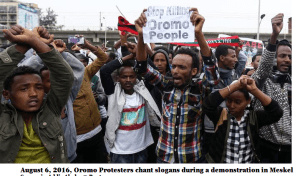
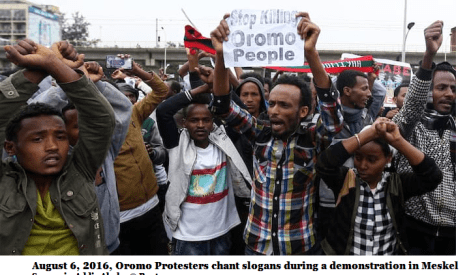
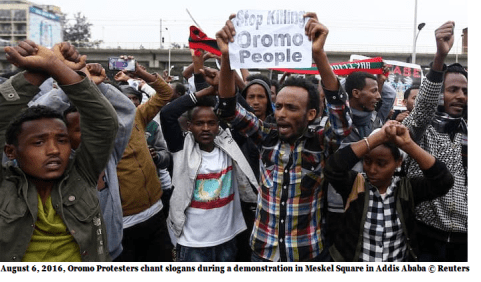
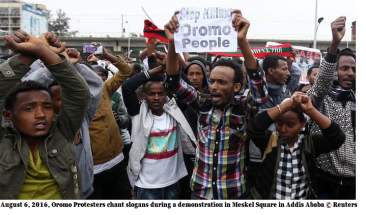
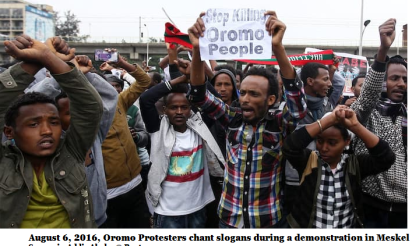
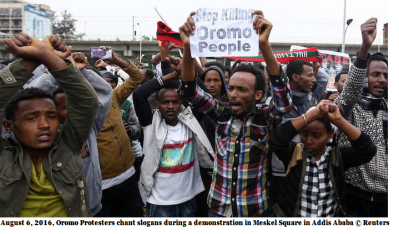
Protesters chant slogans during a demonstration over what they say is unfair distribution of wealth in the country at Meskel Square in Ethiopia’s capital Addis Ababa, August 6. Scores of people were reportedly killed in the protests.TIKSA NEGERI/REUTERS

http://europe.newsweek.com/un-rights-ethiopia-must-allow-observers-access-after-deadly-protests-489295

WESTERN DONORS SHOULD END THEIR SUPPORT FOR THE FASCIST/ TYRANNIC REGIME IN ETHIOPIA August 11, 2016

Posted by OromianEconomist in Uncategorized.
Tags: , , , , , , , ,
1 comment so far

Odaa OromooOromianEconomist

#OromoProtests, #GrandOromiaProtests, 6 August 2016, all over Oromia. Dhaadannoo. p6


Dictators are in a constant battle of gaining meaning to their existence by denying meaningful life to others. Through its atrocious actions and inactions, the TPLF/EPRDF has taken the animosity between itself and the people of Ethiopia to another threshold. It has completely lost the shred of legitimacy it had in few quarters when assuming power in 1991.
It is incumbent on us – the people – to struggle for the restoration of our humanity and dignity. Although the primary responsibility to liberate ourselves rests upon us, we should not underestimate the role of the international community in this life-and-death situation. Since November 2015, over 600 people have been killed, thousands wounded, and tens of thousands imprisoned in Oromia, by government forces, while protesting peacefully. Over 100 people have been killed in Oromia and Amhara regions only during the last weekend.

Most of the financial aid is given in the name of development and social services. While the dictators in Ethiopia are busy killing and detaining innocent people across Oromia and Amhara regions – not doing development or running social services – the World Bank is busy processing 1.2 billion USD in new aid for the regime.

It should be noted that, following the bloody 2005 elections during which about 200 people were killed by government forces, the Bank introduced a slightly tightened control system, which it has progressively loosened. Through the Program-for-Results Financing (PforR), it is currently implementing a scheme that is consequentially similar to the direct budget support it used to run before the 2005 elections. The “Results” in the “PforR” is to be confirmed by a mere report by the government, and the World Bank has no verification system of its own. The effect is that the regime will be able to divert the fund away from the intended purposes, including using it for enforcing tyranny.

To aid the government of Ethiopia in this time, when it is perpetrating a brutal crackdown against peaceful protesters, is an antithesis of development/public service and painful for the people suffering under the current regime. Remember, actions become eventful not only in themselves but also in relation to the context in which they take place. On both sides of the actions, there are human beings – those who stand with the authoritarian regime to enforce repression and those who suffer the consequences.

It is unfortunate and outrageous that the international donor community has refused to seriously consider the plight of the oppressed and continued to offer diplomatic, financial, and military aid to the oppressor. By doing so, the donor community supported dictatorship and serious human rights violations and deferred the dawn of freedom against the oppressed. They chose to support an authoritarian, minority regime in contradiction with the values they ostensibly advocate for – hypocrisy can only start to explain this blatant contradiction. It is unfortunate that the people of Ethiopia will have to put up with this agonizing reality.

It has been repeatedly said that dictators do not learn from history and, I add, hypocrites do not learn from history either. Allies of the TPLF/EPRDF regime are in a moral bankruptcy, with alarming consequences. We hold them morally responsible for sustained repression of the people of Ethiopia. Those who continue to directly and indirectly support a regime that kills, maims, and tortures innocent people will be held responsible in the court of public opinion and leave a bloody history for generations to come.

The delay of freedom and justice is very costly to all the oppressed people of Ethiopia, the cohorts of the regime, and the world at large. However, the quest for these virtuous goals will continue and, no matter how long it takes, will ultimately hit its desired destination. Then comes a time when redressing current moral bankruptcy of the international community becomes impossible. Nonetheless, today has offered non-ignorable options for all to consider seriously.

Out of faith in the inner sincerity of human beings and humanity’s united yearning for liberty and justice, I appeal to the citizens and tax payers of Western donor countries to hold their governments accountable and demand an end to financial, diplomatic, and military support to the authoritarian regime of Ethiopia, which is turning the country into war zone. Behold donors and Western allies of the minority regime, the struggle in Ethiopia may soon enter a massively new phase.

Yerooblog's avatarYEROOBLOG

By Gutu Olana
Dictators are in a constant battle of gaining meaning to their existence by denying meaningful life to others. Through its atrocious actions and inactions, the TPLF/EPRDF has taken the animosity between itself and the people of Ethiopia to another threshold. It has completely lost the shred of legitimacy it had in few quarters when assuming power in 1991.

It is incumbent on us – the people – to struggle for the restoration of our humanity and dignity. Although the primary responsibility to liberate ourselves rests upon us, we should not underestimate the role of the international community in this life-and-death situation. Since November 2015, over 600 people have been killed, thousands wounded, and tens of thousands imprisoned in Oromia, by government forces, while protesting peacefully. Over 100 people have been killed in Oromia and Amhara regions only during the last weekend.

Most of the financial aid is…

View original post 579 more words

Grand #OromoProtests: Amhara and Oromia unrests: Why are Ethiopia’s largest ethnic groups protesting? August 11, 2016

Posted by OromianEconomist in #OromoProtests.
Tags: , , , , ,
add a comment

Odaa OromooOromianEconomist

stop killing Oromo People#OromoProtests, #GrandOromiaProtests, 6 August 2016, all over Oromia. Dhaadannoo. p131

Amhara and Oromia unrests: Why are Ethiopia’s largest ethnic groups protesting?


Dozens feared dead during protests over disputed territories and human rights issues.

By , IBT, August 8, 2016

Ethiopia has witnessed a rise in protests in the north-western region of Amhara and in Oromia state, in the country’s south. Reports claim that clashes between police and protesters in both regions have resulted in alleged deaths and dozens of arrests.

Anti-government protests erupted in Amhara earlier in August, when thousands took to the streets of Gondar and Bahir Dar to protest over the administration of disputed territories. Members of the Welkait Tegede community are demanding their lands be administered by theAmhara region, instead of the Tigray state.

These territories used to be part of Amhara, until the political coalition known as theEthiopian People’s Revolutionary Democratic Front (EPRDF) introduced a federal system and restructured the region including the areas into the Tigray region.

Protesters, who identify themselves as ethnic Ahmara – Ethiopia’s second largest group – clashed with police during the demonstrations, labelled as the biggest anti-government unrest Ethiopia has witnessed in recent history.

Police fired tear gas and shot in the air to disperse thousands of people who shouted anti-government slogans.Authorities accused protesters of attacking public properties and saidat least seven people died during the unrest, which entered its third day on Sunday (7 August).

However, both witnesses and Amnesty International claimed at least 30 people were killed in Bahir Dar.

Ethiopia unrest
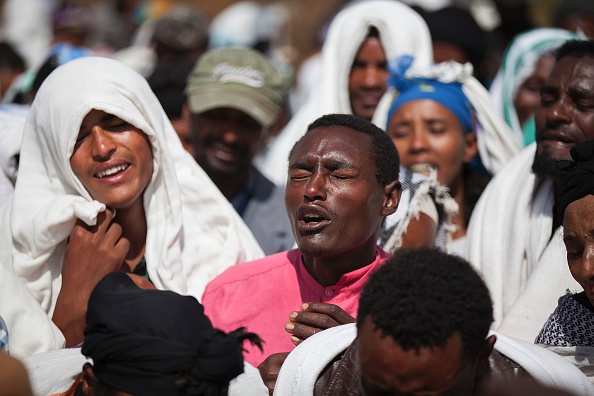
People mourn the death of Dinka Chala who was shot dead by Ethiopian forces in Yubdo Village, about 100km from Addis AbabaZACHARIAS ABUBEKER/AFP/Getty Images)

Oromo protests

Oromo activists, opposition members and Amnesty have claimed that at least 67 people were killed across Oromia, Ethiopia’s largest state,during anti-government protests at the weekend (6-7 August). The demonstrations were the culmination of a wave of unrest that has rocked Oromiain recent months.

Deadly protests erupted in November 2015 againsta government draft plan − later scrapped − that aimed to expand the boundaries of the capital Addis Ababa. Oromo people feared the plan would result in the confiscation of land owned by farmers, who would become impoverished as a result.

Demonstrations are still occurring today, although less frequently, with people calling for self-rule, the liberation of political prisoners, the end of what they perceive as “military regime” in the region and the cessation of an alleged crackdown by security forces on “peaceful and unarmed” demonstrators, mainly students and farmers.

Activists and human rights organisation have accused authorities of killing some 400 people since the protest started. The government has always denied the allegations of violence and claimed that legitimate protests had been infiltrated by people who aimed to destabilise the country.

“Having been tired of only counting the dead, Oromo activists called a grand Oromia wide public demonstration, dubbed #GrandOromiaRally, last Saturday, to call on the government to stop the killings and release the thousands it arrested,” an Omoro activist told IBTimes UK.

“The rallies were a great success. People came out in their thousands each in over 200 towns and cities across Oromia including the capital Addis Ababa and other major regional cities like Adama and Dire Dawa,” the activist, who spoke on condition of anonymty, continued.

There is no apparent connection between the two waves of demonstrations, but members of both communities have shown support for each other’s causes.

“Demonstrators in Grand Oromia Rally hailed slogans that show solidarity to theAmhara Protests, and those who came out on Amhara Protests hailed slogans that show solidarity with the #Oromo Protests,” the activist explained.

Government’s response

Reports claimed the government blocked internet access during the demonstrations that occurred at the weekend.

The Ethiopian embassy in London has not responded to a request for comment on the allegations.However, the state-affiliated Fana Broadcasting Corporation (FBC) reported authorities as blaming foreign enemies for the recent unrest anddeemed the recent protests as illegal.

“The government is aware that the ideas and slogans reflected in the demonstrations do not represent the people of Oromo or Gondar,” Prime Minister Hailemariam Desalegn said in a statement.


http://www.ibtimes.co.uk/amhara-oromia-unrests-why-are-ethiopias-largest-ethnic-groups-protesting-1574938

NPR: Ethiopia Grapples With The Aftermath Of A Deadly Weekend. #OromoProtests August 10, 2016

Posted by OromianEconomist in Uncategorized.
Tags: , , , ,
add a comment

Odaa OromooOromianEconomist


#OromoProtests, #GrandOromiaProtests, 6 August 2016, all over Oromia. Dhaadannoo. p124

(NPR) — The videos trickled out slowly on social media — slowly, because those posting them had to use special software to get around what seemed to be a government-imposed internet block.

This video showed thousands of people in the streets of the northern Ethiopian town of Gondar. The size of the crowd was significant in a country where civil protests are usually banned.

Even more significant? The location o f this anti-government protest.

For the last nine months, protests have erupted further south, in Oromiya, home to Ethiopia’s largest but historically marginalized ethnic group, the Oromo. But now the protests have spread north to a second region, the Amhara.

The different protesters have different grievances, but they share a growing frustration with the rule of a third, minority ethnic group — the Tigrayans. They say the Tigrayan elite has a cartel-like grip on the government, military and the fast-growing economy.

The response by the Ethiopian military to the protesters was swift and brutal. Amnesty International says that nearly 100 people were killed over the weekend when soldiers fired directly on demonstrators.

The U.N. human rights chief has “urge[d] the government to allow access for international observers” to investigate what happened.

Even after those weekend confrontations, witness reports were still filtering back to Addis Ababa, the capital. “We’re hearing who’s been wounded, who’s in hospital, who’s been killed, not to mention those who’ve disappeared without a trace,” said Tsedale Lemma, editor in chief of Addis Standard, one of the few Ethiopian magazines that risks open critiques of the government.

She described an Orwellian spectacle on state-run television, with “ferocious PR work” to discredit the protests. “People are being paraded in the TV, being made to denounce the protests. People denouncing even the use of Facebook.”

For years, Ethiopia’s government has warned against a social media-fueled uprising like the one that happened just north, in Egypt, in 2011.

If you watch Ethiopia’s state TV broadcasts, what you’ll be told is that the country’s protests are fueled by ethnic separatists — or even ethnic terrorists.

Tsedale disputes this explanation, saying the protesters’ beef is with the government, not with any particular ethnic group. “I don’t see that people are deliberately orchestrating ethnic violence in the country,” she says. “Of course, the government is eager to identify it as such.”

In Ethiopia, politics is ethnicity, and ethnicity is geography. The country is formally divided into autonomous ethnic states, each with its own ethnic government. It’s a controversial system called “ethnic federalism” that was instituted by the current regime. Political parties are organized along ethnic lines. Thus any critique of the central government will automatically take on ethnic dimensions.

The protesters impugn the Tigrayan elite — the government officials and army generals — who, they say, have a choke-hold on the country. The government accuses the protesters of fomenting ethnic war on all Tigrayans, rich and poor. And in the fragile ethnic balance that is Ethiopia, the battle to claim the narrative is just as important as the battle in the streets.

UN calls for probe into Ethiopia protesters killings. #OromoProtests #Africa August 10, 2016

Posted by OromianEconomist in #OromoProtests.
Tags: , , , , , , , ,
2 comments

UN calls for probe into Ethiopia protesters killings


90 deaths in Oromia and Amhara regions must be investigated by international observers, UN human rights chief says.

stop killing Oromo People#OromoProtests, #GrandOromiaProtests, 6 August 2016, all over Oromia. Dhaadannoo. p6#OromoProtests, Awaday, Oromia 31 July 2016. Fascist Ethiopia's regime forces killed 6 people and injured 26.#OromoProtests, #GrandOromiaProtests, 6 August 2016, all over Oromia. Dhaadannoo. p131

(Aljazeera) — The UN human rights chief has urged Ethiopia to allow international observers to investigate the killings of 90 protesters in restive regions at the weekend.

Zeid Raad Al Hussein, UN High Commissioner for Human Rights, said on Wednesday that allegations of excessive use of force across the Oromia and Amhara regions must be probed and that his office was in discussions with Ethiopian authorities.

“The use of live ammunition against protesters in Oromia and Amhara, the towns there of course would be a very serious concern for us,” Zeid told the Reuters news agency in an interview in Geneva.

He also said that his office had “not seen any genuine attempt at investigation and accountability” since January when the killings of protesters first began.

READ MORE: The ‘Ethiopia rising’ narrative and the Oromo protests

Unrest continued in Oromia for several months until early this year over plans to allocate farmland surrounding the regional capital for development.

Authorities in the Horn of Africa state scrapped the scheme in January, but protests flared again over the continued detention of opposition demonstrators.

At the weekend, protesters chanted anti-government slogans and waved dissident flags.

Some demanded the release of jailed opposition politicians. Information on the reported killings has been difficult to obtain, Zeid said.

Zeid said that any detainee, who had been peacefully protesting, should be released promptly.

The state-run Ethiopian News Agency said on Monday that “illegal protests” by “anti-peace forces” had been brought under control. It did not mention casualties.


Ethiopia must allow in observers after killings: U.N. rights boss

United Nations High Commissioner for Human Rights Zeid Ra’ad Al Hussein

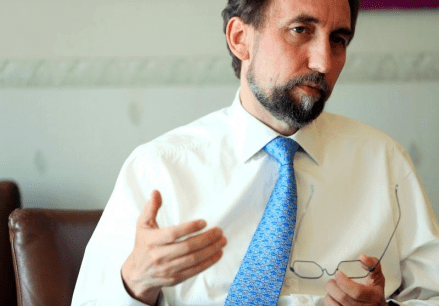
United Nations High Commissioner for Human Rights Zeid Ra’ad Al Hussein gestures during an interview with Reuters in Geneva, Switzerland, August 10, 2016. REUTERS/Pierre Albouy

(Reuters) — The U.N. human rights chief urged Ethiopia on Wednesday to allow international observers into restive regions where residents and opposition officials say 90 protesters were shot dead by security forces at the weekend.

In his first comments on the incident, Zeid Ra’ad Al Hussein, U.N. High Commissioner for Human Rights, said that allegations of excessive use of force across the Oromiya and Amhara regions must be investigated and that his office was in discussions with Ethiopian authorities.

Since January, when he said the killings of protesters first began, his office had “not seen seen any genuine attempt at investigation and accountability”.

“The use of live ammunition against protesters in Oromiya and Amhara, the towns there of course would be a very serious concern for us,” Zeid told Reuters in an interview in Geneva.

Unrest flared in Oromiya for several months until early this year over plans to allocate farmland surrounding the regional capital for development. Authorities in the Horn of Africa state scrapped the scheme in January, but protests flared again over the continued detention of opposition demonstrators.

At the weekend, protesters chanted anti-government slogans and waved dissident flags. Some demanded the release of jailed opposition politicians. Information on the reported killings has been difficult to obtain, Zeid said.

“So I do urge the government to allow access for international observers into the Amhara and Oromiya regions so that we can establish what has happened and that the security forces, if it is the case that they have been using excessive force, that they do not do so and promptly investigate of course these allegations.”

Zeid said that any detainee who had been peacefully protesting should be released promptly.

The state-run Ethiopian News Agency said on Monday that “illegal protests” by “anti-peace forces” had been brought under control. It did not mention casualties.

As in the Democratic Republic of the Congo, which Zeid visited last month, it is vital that security forces employ non-lethal means during peaceful protests, he said.

(Reporting by Stephanie Nebehay; editing by Mark Heinrich)

UN Dispatch: A MASSACRE IN ETHIOPIA

There was also a blanket ban on the internet over the weekend. “At least 97 people were killed and hundreds more injured when Ethiopian security forces fired live bullets at peaceful protesters across Oromia region and in parts of Amhara over the weekend, according to credible sources who spoke to Amnesty International. Thousands of protesters turned out in Oromia and Amhara calling for political reform, justice and the rule of law. The worst bloodshed – which may amount to extrajudicial killings – took place in the northern city of Bahir Dar where at least 30 people were killed in one day. ‘The security forces’ response was heavy-handed, but unsurprising. Ethiopian forces have systematically used excessive force in their mistaken attempts to silence dissenting voices,’ said Michelle Kagari, Amnesty International’s Deputy Regional Director for East Africa, the Horn and the Great Lakes.”  (Amnesty http://bit.ly/2b96dcg)


 http://www.undispatch.com/a-massacre-in-ethiopia/?utm_campaign=shareaholic&utm_medium=facebook&utm_source=socialnetwork

Time:Grand #OromoProtests: Scores Killed in Crackdown on Protests Across Ethiopia. August 9, 2016

Posted by OromianEconomist in #OromoProtests, Uncategorized.
Tags: , , , , , , ,
add a comment

Odaa Oromoostop killing Oromo PeopleGrand #OromoProtests, Grand ‪#‎OromoProtests‬ full scale Military massacre  has been conducted by Ethiopia's fascsit regimei n Naqamte, East Walaga. 6 August 2016 pctureThis Oromo  child is Lencho Abdi Abdulkarim, one of the 6 people shot in Dogu town, Gurawa District, East Hararge when fascist Ethiopia's regime forces  opened fire on wedding party on July 25, 2016#OromoProtests, Awaday, Oromia  31 July 2016.  Fascist Ethiopia's regime forces killed 6 people and injured 26.

(ADDIS ABABA, Ethiopia) — Ethiopian security forces shot dead several dozen people in weekend protests across the country as frustration with the government grows, an opposition leader and Amnesty International said Monday, while hundreds staged a rare demonstration in the capital after calls via social media. The government again blocked the internet over the weekend,…

via Scores Killed in Crackdown on Protests Across Ethiopia — TIME

Telesurtv: Ethiopia’s Crackdown on Dissent: Police Attack #OromoProtests August 9, 2016

Posted by OromianEconomist in #OromoProtests.
Tags: , , , , , , , ,
1 comment so far

Odaa OromooOromianEconomist

#GrandOromoProtests 6 August 2016, in Oromia including in Finfinnee (Addis Ababa), the capital.stop killing Oromo People#OromoProtests, #GrandOromiaProtests, 6 August 2016, all over Oromia. Dhaadannoo. p131


Ethiopia’s Crackdown on Dissent: Police Attack Oromo Protests

  • Protesters chant slogans during a demonstration over what they say is unfair distribution of wealth in the country at Meskel Square in Ethiopia

    Protesters chant slogans during a demonstration over what they say is unfair distribution of wealth in the country at Meskel Square in Ethiopia’s capital Addis Ababa, Aug. 6, 2016. | Photo: Reuters


The protests have left hundreds dead and thousands jailed.

Hundreds of protesters clashed with police Saturday in Ethiopia’s capital Addis Ababa after campaigners called for nationwide protests due to what they say is an unfair distribution of wealth in the country.

RELATED: 
Ethiopia’s Oromo Protest ‘Development,’ Displacement and Death

Violence broke out as police tried to stop several hundred chanting protesters from accessing the historic Meskel square.

The demonstrations started as a small-scale student protest over the government’s plan to expand Addis Ababa into adjacent farm lands of Oromiya, Ethiopia’s largest constitutionally autonomous state.

Now they have evolved into a series of large and bloody demonstrations against the government, leaving hundreds dead and thousands jailed.

On Friday, two people were killed in similar clashes with police in Ethiopia’s ancient city of Gonder. The violence broke out when police brought one of the leaders of the land campaign movement to court.

Protestors chanting “Freedom!”

Chief administrator of the Amhara region, Gedu Andargachew, has declared the protests illegal and said security services will take measures against those who take part.

In a country known for cracking down on dissent, the public protests are rare.

But tensions over the status of Wolkayt — a stretch of land that protestors from the region of Amhara say were illegal incorporated in the  neighbouring Tigray region — have been embroiling for at least the past 25 years.

The issue first resulted in violence two weeks ago when throngs of people in Gonder protested against an attempt to arrest Wolkayt campaigners.

http://www.telesurtv.net/english/news/Ethiopias-Crackdown-on-Dissent-Police-Attack-Oromo-Protests–20160806-0017.html


Related Reports by other media:-

http://unpo.org/article/19363

http://www.bbc.co.uk/news/world-africa-37015055

http://allafrica.com/stories/201608080011.html

http://www.aljazeera.com/news/2016/08/ethiopia-protests-160806132205709.html

http://www.bbc.co.uk/news/world-africa-37004725

http://www.upi.com/Top_News/World-News/2016/08/07/At-least-6-dead-in-Ethiopian-anti-government-protests/8141470581414/

http://www.ibtimes.com/ethiopia-protest-august-2016-amid-internet-ban-rally-against-government-leaves-least-2398668

http://www.presstv.ir/Detail/2016/08/07/478855/Ethiopia-antigovernment-protests-Addis-Ababa-Oromo

http://www.hindustantimes.com/world-news/about-50-killed-in-anti-govt-protesters-ethiopia-police-clashes-over-weekend/story-yUzFHncaVKkI4jTnSEQs5M.html

http://www.dailymail.co.uk/wires/afp/article-3729582/Dozens-killed-weekend-Ethiopia-protests-opposition-diplomat.html

http://www.voanews.com/content/weekend-protests-across-ethiopia-leave-more-that-12-dead/3455351.html

https://www.ft.com/content/2e44d82e-5d55-11e6-a72a-bd4bf1198c63

http://www.geeskaafrika.com/22396/ethiopiabahir-dar-entire-oromo-region-gears-weekend-protests/

http://www.myjoyonline.com/world/2016/August-7th/several-killed-as-ethiopia-police-clash-with-protesters.php

http://saharareporters.com/2016/08/08/least-100-killed-protests-ethiopia

http://www.talkmedianews.com/world-news/2016/08/08/protester-deaths-grip-ethiopia/

http://www.nbcnews.com/news/world/opposition-leader-deadly-violence-ethiopia-likely-get-worse-n625721

http://www.euronews.com/2016/08/08/ethiopian-security-forces-kill-scores-of-people-in-weekend-of-protests

http://allafrica.com/stories/201608081276.html

http://www.business-standard.com/article/news-ians/104-killed-in-ethiopia-anti-government-protests-116080900085_1.html

http://www.dailymail.co.uk/wires/afp/article-3726998/Dozens-arrested-Ethiopia-anti-government-protest.html

http://www.opposingviews.com/i/world/ethopian-government-switches-internet-amid-political-unrest

http://www.dw.com/en/dozens-killed-in-weekend-protests-across-ethiopia/a-19456204

http://www.iol.co.za/news/africa/dozens-killed-in-ethiopian-protests-2054779

http://theeagleonline.com.ng/nearly-100-dead-in-ethiopia-protests-amnesty/

http://www.innercitypress.com/ethiopia10oromo080816.html


UNPO: Oromo: Nationwide Protests Against Continued Marginalization and Suppression August 8, 2016

Posted by OromianEconomist in #OromoProtests.
Tags: , , , , , , ,
add a comment

Odaa OromooOromianEconomist

stop killing Oromo People#OromoProtests, #GrandOromiaProtests, 6 August 2016, all over Oromia. Dhaadannoo. p131#OromoProtests, #GrandOromiaProtests, 6 August 2016, all over Oromia. Dhaadannoo. p130#OromoProtests, #GrandOromiaProtests, 6 August 2016, all over Oromia. Dhaadannoo. p122#OromoProtests, #GrandOromiaProtests, 6 August 2016, all over Oromia. Dhaadannoo. p123#OromoProtests, #GrandOromiaProtests, 6 August 2016, all over Oromia. Dhaadannoo. p113


UNPO

Oromo: Nationwide Protests Against Continued Marginalization and Suppression

Photo Courtesy of: Awol Allo 2016 @Zehabesha

Already, dozens have been killed and thousands arrested by security forces in what is a new, nation-wide wave of Oromo protest which has swept through Ethiopia. When the protests started in November 2015, the focus was primarily on the central government’s proposed expansion of the capital into Oromo territory. Since then, the protestor’s focus has widened – mainly due to the government’s brutal response – and they now raise broader economic and political grievances which are also shared by other ethnic groups in Ethiopia.


Below is an article published by African Arguments:

Ethiopia’s largest ethnic group, the Oromo, have staged nationwide rallies today to protest their continued marginalisation and persecution by the government. These are a culmination of ongoing protests by the Oromo people since November 2015 and mark by far the most significant political development in the country since the death of the country’s long-time authoritarian leader, Meles Zenawi, in 2012.

At least hundreds of thousands of protestors reportedly took to the streets in more than 200 towns and cities across Oromia, Ethiopia’s largest regional state, to demonstrate against widespread and systematic persecution. According to local media reports, over 50 individuals have been killed and thousands arrested as police and security forces opened fire on peaceful protestors. These details are likely to change as more information comes in, though the government has severely restricted the internet and social media making communication difficult.

What are now widely referred to as the #Oromoprotests began in November 2015 when the government introduced the Addis Ababa City Integrated Master Plan, effectively expanding the territorial limits of capital Addis Ababa into neighbouring Oromo towns and villages. Oromo political leaders and activists argued that the plan, as designed, would displace millions of Oromo farmers from their ancestral lands and would threaten to eventually cleanse Oromo culture and identity from the area.

The protests were triggered by the announcement of the Master Plan and menacing land-grab policies that have already displaced more than 150, 000 Oromo farmers from the area, but they were also manifestations of a much deeper crisis of massive ethnic-based inequalities and discontentment that have been boiling underground, waiting to erupt.

Since the protests have begun, the government has arrested and jailed many of its vital and outspoken activists and organisers. A recent report by the Human Rights Watch puts the death toll from the first seven months of the protest at over 400 while the figure tallied by activists is significantly higher.

The Oromo are the largest ethnic group both in Ethiopia and East Africa, consisting of more than a third of Ethiopia’s 100 million people. However, the group has been marginalised and discriminated against by subsequent Ethiopian governments. Oromo culture and identity have been stigmatised and pushed into the periphery of country’s national life, while Oromo history has been filtered out of public memory.

Since assuming state power in 1991, the Tigray Peoples Liberation Front (TPLF) has sought to exploit historic disagreements between the Oromos and Amharas, the second largest ethnic group, to sustain the hegemony of ethnic Tigrayan elites. The TPLF framed longstanding Oromo demands for equality and justice as the greatest threat to Ethiopia’s unity and regional stability, and it used historic antagonisms between Oromo and Amhara as a political instrument to legitimise, justify, and consolidate its political and economic hegemony. The “Oromo question” became the quintessential Ethiopian problem.

Within this frame, Oromos are presented as narrow-minded, extremist, and exclusionary, while the Amharas are presented as chauvinist and violent. By producing crisis between the two groups, the current TPLF-led system presented itself both locally and internationally as the only moderate centrist force that can secure Ethiopia’s sovereignty and territorial integrity from the secessionist threat of the Oromos and the perceived far-right extremism of the Amharas.

In the decade since 9/11, Ethiopia refashioned itself as an anchor of stability in an increasingly restless region and began to build a reputation as a regional policing and intelligence powerhouse. As part of this West-facing strategy, it announced its 2006 invasion of Somalia as a war against terrorism, conning the US into sponsoring its proxy war with Eritrea. As the crisis in Somalia deepened, Ethiopia cemented its reputation further, emerging as America’s most reliable partner in the Horn of Africa.

This is not a partnership based on shared values of freedom, liberty, and commitment to democracy, but one based purely on security considerations. Ethiopia served as America’s local ally, and America, in turn, provided enormous financial, technical and diplomatic support. This brought in much-needed resources for the government to build the political and security infrastructure that has as its main aim the policing, control, and surveillance of internal dissent and opposition.

As the US began to define its foreign and human rights policy through the lens of fighting terror − entering a period of post-truth and post-moral politics in which sacrificing people in distant places in return for security became fair game − this emerged as the paradigmatic threat upon which the West’s fears and anxieties were projected. This made its ally Ethiopia completely impervious to criticism, even as the government used its grotesque anti-terrorism law to crush dissent, decimate the opposition, muzzle the media, and shrink civic space to extinction – all the while holding periodic elections.

Just as terrorism in the West is entangled with religion, terrorism in Ethiopia is entangled with ethnicity. And Oromos have been the primary victims of Ethiopia’s cynical appropriation of the cultural referents and resonances of the War on Terror.

Ethnic domination forms the hidden underside of the terrorism-politics nexus in the country. And its anti-terrorism law has provided the government with the most powerful political device to criminalise, police, and prosecute independent expressions and articulations of the Oromo question. Through the magic of this law, even the most basic of demands for human rights or expressions of opposition to government policy can be twisted into an existential threat.

Ethiopia’s persistent turn to its anti-terrorism law to purge critical opposition, activists, journalists, and community leaders is an unqualified disgrace to Ethiopia and its partners on the Global War on Terror.

The #Oromoprotests are a clear response to these and other forms of historic discrimination, and today’s nationwide protests mark a clear break from previous forms of protests in terms of its coordination and mobilisation. In a letter addressed to the government, protestors expressed their rejection of “the regime” and specifically asked the government to stop the violence against the Oromo, to free Oromo and other political prisoners, and to end military rule in Oromia and allow genuine self-rule, among others.

The government’s violent response to peaceful demands has led protestors to demand more radical and systemic change. The #Oromoprotests are no longer a single-issue movement. This is unchartered territory for the country and how the government reacts could go a long way to determining its fate. But today’s protest makes it clear that there can be no more business as usual for Ethiopia’s ruling elites.


http://unpo.org/article/19363


AI: Grand #OromoProtests: ETHIOPIA: UNLAWFUL KILLINGS August 8, 2016

Posted by OromianEconomist in Uncategorized.
Tags: , , , , , ,
add a comment

Odaa OromooAmnesty International

stop killing Oromo PeopleGrand #OromoProtests, Grand ‪#‎OromoProtests‬ full scale Military massacre has been conducted by Ethiopia's fascsit regimei n Naqamte, East Walaga. 6 August 2016 pctureEthiopia's regime TPLF (Tigray) ethnic apartheid soldiers attacking Oromo civilians in Holeta, Oromia, 29 July 2016


Ethiopia: Dozens killed as police use excessive force against peaceful protesters


AImnesty International, 8 August 2016


At least 97 people were killed and hundreds more injured when Ethiopian security forces fired live bullets at peaceful protesters across Oromia region and in parts of Amhara over the weekend, according to credible sources who spoke to Amnesty International.

Thousands of protesters turned out in Oromia and Amhara calling for political reform, justice and the rule of law. The worst bloodshed – which may amount to extrajudicial killings – took place in the northern city of Bahir Dar where at least 30 people were killed in one day.

“The security forces’ response was heavy-handed, but unsurprising. Ethiopian forces have systematically used excessive force in their mistaken attempts to silence dissenting voices,” said Michelle Kagari, Amnesty International’s Deputy Regional Director for East Africa, the Horn and the Great Lakes.

“These crimes must be promptly, impartially and effectively investigated and all those suspected of criminal responsibility must be brought to justice in fair trials before ordinary civilian courts without recourse to death penalty.”

Information obtained by Amnesty International shows that police fired live bullets at protesters in Bahir Dar on 7 August, killing at least 30. Live fire was also used in Gondar on 6 August, claiming at least seven lives.

The security forces’ response was heavy-handed, but unsurprising. Ethiopian forces have systematically used excessive force in their mistaken attempts to silence dissenting voices
Michelle Kagari, Amnesty International’s Deputy Regional Director for East Africa, the Horn and the Great Lakes

No deaths were reported from the Addis Ababa protests, but photos and videos seen by Amnesty International show police beating protesters with batons at Meskel Square, the capital’s main public space.

In Oromia and Amhara, hundreds were arrested and are being held at unofficial detention centres, including police and military training bases.

“We are extremely concerned that the use of unofficial detention facilities may expose victims to further human rights violations including torture and other forms of ill-treatment,” said Michelle Kagari.

“All those arrested during the protests must be immediately and unconditionally released as they are unjustly being held for exercising their right to freedom of opinion.”

Background

The protests in Oromia are a continuation of peaceful demonstrations that began in November 2015 against a government masterplan to integrate parts of Oromia into the capital Addis Ababa. Deaths were reported in multiple towns in the region, including Ambo, Adama, Asassa, Aweday, Gimbi, Haromaya, Neqemte, Robe and Shashemene.

The protests in Amhara began on 12 July 2016 when security forces attempted to arrest Colonel Demeka Zewdu, one of the leaders of the Wolqait Identity and Self-Determination Committee, for alleged terrorism offences.

Wolqait is an administrative district in Tigray Region that was part of Amhara Region before the ruling Ethiopian People’s Revolutionary Democratic Front (EPRDF) came to power 1991. It has been agitating for reintegration into Amhara for the last 25 years.


Ethiopia: Dozens killed as police use excessive force against peaceful protesters


Daily Mail: Grand #OromoProtests: At least 90 protesters killed in Ethiopia – residents, opposition August 8, 2016

Posted by OromianEconomist in #OromoProtests.
Tags: , , , , , , ,
add a comment

Odaa OromooDaily Mail logo

stop killing Oromo People#OromoProtests, #GrandOromiaProtests, 6 August 2016, all over Oromia. Dhaadannoo. p131

Grand #OromoProtests, Grand ‪#‎OromoProtests‬ full scale Military massacre  has been conducted by Ethiopia's fascsit regimei n Naqamte, East Walaga. 6 August 2016 pcture


At least 90 protesters killed in Ethiopia – residents, opposition


By Aaron Maasho


ADDIS ABABA, Aug 8 (Reuters) – More than 90 people were shot dead by security forces in protests across Ethiopia’s Oromiya and Amhara regions at the weekend, residents and opposition officials said on Monday.

Unrest flared in Oromiya for several months until early this year over plans to allocate farmland surrounding the regional capital for development. Authorities scrapped the scheme in January, but protests flared again over the continued detention of opposition demonstrators.

At the weekend, protesters chanted anti-government slogans and waved dissident flags. Some demanded the release of jailed opposition politicians.

“So far, we have compiled a list of 33 protesters killed by armed security forces that included police and soldiers but I am very sure the list will grow,” Mulatu Gemechu, deputy chairman of the opposition Oromo Federalist Congress, said.

The deaths were in at least 10 towns across Oromiya, he said, including Ambo, Dembi Dolo and Nekemt – areas that saw previous rounds of protest.

“Twenty-six people have been injured, while several have been detained,” Mulatu said, adding three members of his party were also being held.

Government officials were not immediately available for comment. The state-owned Ethiopian News Agency said “illegal protests” by “anti-peace forces” had been brought under control. It did not mention casualties.

DISPUTED TERRITORY

Oromiya is the second region to be hit by unrest in the past few days.

In Amhara, residents said police fired live bullets at demonstrators during protests over disputed territory that continued until early Monday in the city of Bahir Dar.

“Soldiers fired live rounds at protesters. Hospitals have been filled by dead and wounded victims,” one resident said, putting the number killed at 60.

Tensions have been rumbling for two decades over the status of Wolkayt district, a stretch of land that protesters from Amhara say was illegally incorporated into the neighbouring Tigray region to the north.

Nigusu Tilahun, spokesperson for the regional government, told state-affiliated news outlets that seven people died over the weekend.

Amnesty International said the bloodshed in Bahir Dar may amount to “extrajudicial killings” and that at least 30 people were killed in one day.

The United States said it was “deeply concerned” by the violence in both regions.

“We reaffirm our call to respect the constitutionally enshrined rights of all citizens, including those with opposition views, to gather peacefully and to express their opinions,” its embassy in Addis Ababa said in a statement.

Any sign of unrest is closely watched in Ethiopia, a Western ally against Islamist militants in neighbouring Somalia and an economic power seen as a centre of relative stability in a fragile region.

“Ethiopian forces have systematically used excessive force in their mistaken attempts to silence dissenting voices,” Michelle Kagari, Amnesty International’s Deputy Regional Director for East Africa, the Horn and the Great Lakes, said. (Reporting by Aaron Maasho; Editing by George Obulutsa and Janet Lawrence)


Read more: http://www.dailymail.co.uk/wires/reuters/article-3729831/At-90-protesters-killed-Ethiopia–residents-opposition.html#ixzz4Glk41Lgp
Follow us: @MailOnline on Twitter | DailyMail on Facebook


Addis Standard News: Grand #OromoProtests: Carnage as Ethiopia Forces Conduct Massive Crackdown Against Anti-Government Protesters in Multiple Places August 8, 2016

Posted by OromianEconomist in Uncategorized.
Tags: , , , , , , , ,
add a comment

Odaa OromooOromianEconomistAddis Standardstop killing Oromo People

Grand #OromoProtests, Grand ‪#‎OromoProtests‬ full scale Military massacre has been conducted by Ethiopia's fascsit regimei n Naqamte, East Walaga. 6 August 2016 pcture

The total death toll from 6 & 7 August 2016, Saturday protest and Sundays attacks on funerals have surpassed 150. These are in addition to over 500 Oromo national killed by the same fascist TPLF.-  Oromian Economist admin sources


News: Carnage as Ethiopia Forces Conduct Massive Crackdown Against Anti-Government Protesters in Multiple Places


(Addis Standard) — Addis Standard has so far received reports of the death of more than 50 Ethiopians in Oromia and Amhara regions of the country following massive anti-government protests over the weekend, during which the government entirely shut down internet connections throughout the country.

According to several tips received by Addis Standard from individuals who want to remain anonymous for fear of repercussions, death tolls were high in West Arsi (in Assasa, Adaba, Shashemene and Kofele cities), West Shewa in the city of Ambo and Ginchi town, east Hararge and east Wolega of the Oromia regional state. Accordingly more than 30 individuals were believed to have been shot dead by security forces on Saturday alone. Hundreds of protesters have also sustained gunshot wounds; hundreds detained by security forces while several people have disappeared without a trace.

A university student in Ambo who is originally from Dambi Dollo in Wolega called Addis Standard on Sundays with information that the police have abducted both his brother and his father “from their home on Saturday night. “

Further tips from northern Ethiopia also indicate that more than 20 individuals were killed on Friday and Saturday during protests in Gondar and Bahir Dar cities, ancient histories city home to thousands of tourists and the capital of the Amhara regional state respectively. It is believed that more than 20 individuals were killed by security forces. According to the government’s own account, seven people were killed in yesterday’s protest rally in Bahir Dar city, while five police officers were hospitalized. However, unconfirmed reports on social media claim the number to exceed 30.

The weekend protests in Bahir Dar followed a previous protest held between July 12th and 14th in which more than a dozen people were killed and a massive peaceful protest in the weekend of 30-31 July in Gonder city.

The protest in Amhara region followed a raid by heavily armed federal security forces, including the Anti-Terrorism special force, targeting members of the Wolkayit community who have been protesting against the federal government’s decision to incorporate the area where the community lives into the Tigray regional state. The Wolkayit community members also reject the idea of them being ethnically considered as Tigrayan and want to identify themselves as Amhara.

More causality feared

The death toll from both regions could reach as high as 80, according to online activists who post pictures of individuals who have died or have sustained severe wounds caused by gun shots.

The weekend region wide anti-government protests in Oromia regional state were called by online activists of the #OromoProtest, a persistent anti-government protest by Ethiopia’s largest ethnic group, the Oromo that lasted for the last nine months.

Accordingly, protests have happened in almost all major cities and small towns across the Oromia regional state, the largest of the nine regional states in Ethiopia home to close to 40 million of Ethiopia’s more than 100 million populations. Here in the capital Addis Abeba, a city originally belonging to the Oromo, police have quickly, and brutally dispersed protesters and have sealed roads leading up to Mesqel Square where online activists called for the protests to happen.

According to a recent report by Human Rights Watch (HRW), more than 400 Oromos were killed by security forces since the ongoing protest first flared up on November 12, 2015 in Ginchi, a small town some 80 Kms South West of the Capital Addis Abeba. In Addition to the report by the HRW, activists are also documenting the death, injuries and forced disappearances of individuals from areas where protests are taking place. Hundreds of University students have also been dismissed from several state universities located in the region.


Gabaasa Magaalaa Naqamtee irraa

(SBO/VOL – Hagayya 08,2016) Yakki suukaneessaan Uummata Oromoorratti raawwaachaa jiru hidda bal’iffachuun sadarkaa hawwwaasi akka galaanaa irratti galagale irrattillee addatti labsii waraanaa sagale guddoftuun beeksisuun meeshaa waraanaa hamma funyaaniitti hidhate sanaan Reeffa ilmaan keenyaa, dhiiga Uummata Oromoo akka galaanati dhangaalaasuu itti fufeera.

Addatti tibba kana magaalaa Naqamtee keessatti Gumuzoota hidhatan magaalaa Naqamtee Weerarsiisuun dhukaasaa Uummata nagaa bahe irratti roobsee, namoota 20,ol ajjeesuu ijaan arginee jirra.

Ani yeroon gabaasa kana qindeessu aariin jabaa fi akkasuma muddama dhukaasa qawwee mataarraa na xaxxaaxa’u jala taa’ee barreessuulle akka koo kan obsuu dadhabanii magaalattii keessa maanguddoo imimmaan harcaasaa bohanii mankaraaran ilaaluu hangan baqadhutti utuun gahuun, dhukaasa gadi qabamee nutti dhuka’u keessa magaalaattii goree mimmiliqaan barreessaa jira.

Dhuguma akka addunyaan dantaa uummatichaa hin qabne namatti agarsiisa. Mootummaan wayyaanee mootummaa ofiin bultuu ta’uushee mootummaa gaafatamni itti hin dhaga’amne callisee dhuukaasa namatti dhukaastu ta’uushee hubadheen jira.

Bakkeewwan rasaasni itti namoota keenya alanfatan Boordii, Bakke Jaamaa, Naannoo Hospitaalaa, Hoteela Addunyaa Galataa fuuldura, namaa karaa deemurratti, Hospitaala National fuuldura fi mana Amantaa Musilimaa cinaatti. Halkan sa’a afur keessa namni Afur lubbuun darbe video ergamerraa mirkaneffachuu dandeessu.

Dhukaasa guyyaa dheengaddaa guyyaa guutuu dhukaa’a tureen namoota hanga soddomaa ta’an lubbuun dhabnee jirra. Haa ta’u malee kana addaan baafachuuf reeffa keenyarratti waan nu rukutaa jiraniif maqaa kanneen addaan baasuun rakkisaa ta’aa jira. Addatti namoonnii halkan halkan akkasuma karaa asphaaltirratti akka hantuutaa ajjeefamaa jiraachuu ijaan argaa jirra.

Dhuguma Naqamte keessa guyyoota sadiif hojiin kamillee hojjetamaa hin jiru. Iyya keenya akka hin dhageessifneef connection kukkutaa jirti wayyaaneen. Nuti jiraattonni Naqamtee fi naannoo ishee dararaa jabduu addunyaan nuu hin beekne keessa jirra.


IBT: Grand #OromoProtests: Ethiopia Protest August 2016: Amid Internet Ban, Rally Against Government Leaves At Least 33 Dead. August 8, 2016

Posted by OromianEconomist in Uncategorized.
Tags: , , , , , , , ,
add a comment

Odaa OromooOromianEconomist

stop killing Oromo People

Ethiopia Protest August 2016: Amid Internet Ban, Rally Against Government Leaves At Least 33 Dead


(International Business Times) — The two largest ethnic groups in Ethiopia took part in a massive anti-government protest over the weekend that has claimed dozens of lives. The protesters demonstrated against alleged government discrimination and human rights violations.

In Ethiopia, majority of the general population is made up of the Oromo and Amhara ethnic groups. Protests first began last November when the government had plans to expand the capital into Oromia, which would in turn displace Oromo farmers in the region. After the government dropped their expansion plans, demonstrations continued to spotlight other issues impacting the community.

Dozens of protesters in the nation’s capital, Addis Ababa, were arrested on Saturday, BBC News reported. Things were far more violent in other parts of the country. According to the government, seven protesters died in Bahir Dar, a city located in the Amhara region. Demonstrations in the Oromia region reportedly claimed lives as well, with Oromo activists claiming at least 33 protestors were shot by police.

“So far, we have compiled a list of 33 protesters killed by armed security forces that included police and soldiers but I am very sure the list will grow,” Mulatu Gemechu, deputy chairman of the opposition Oromo Federalist Congress, told Reuters.

In light of the protests, the government has responded by banning unauthorized public demonstrations and blocking social media. Officials claimed online activists were responsible for the outcry. Prime Minister Haile Mariam Dessalegn announced Friday the internet ban stating they, “threaten national unity.”

“It has now become clear that people cannot hold peaceful protests in Ethiopia,” Seyoum Teshome, a blogger following the demonstrations, told The Associated Press. “Regional police forces are being replaced by the army, leaving many areas to be under the military’s control.”

The Grand Oromo Protests August 8, 2016

Posted by OromianEconomist in #OromoProtests, Uncategorized.
Tags: , , , , ,
add a comment


Odaa OromooOromianEconomist#GrandOromoProtests 6 August 2016, in Oromia including  in Finfinnee (Addis Ababa), the capital.stop killing Oromo People

A massive Oromia wide Oromo protest was called by activists in Oromia and those in diaspora to take place on August 6, 2016 and it swept the country with millions of protesters marching through towns and cities including Finfine(Addis Ababa) across Oromia, Ethiopia. The mass rallied waving the Oromo liberation flag which is red green red  with sycamore surrounded by sun and  a star at the top which is outlawed by the Tigrean People Liberation Front dominated Ethiopian government.  The demands included stop killing Oromos, free all political prisoners, stop evicting Oromo farmers, make Afaan Oromo an official federal language, justice for the victims of government force killings, remove military out of Oromia, respect the right to self rule in Oromia to name a few. The demonstration was planned to be peaceful as the coordinators advised the Oromo mass to refrain from violence and to avoid attacking government officials and the police.

However, the government deployed forces violently reacted to the protest by brutally beating the protesters and shooting at point blank killing over 60 in different Oromia cities and towns.  Citizens report that several participants were killed cold blooded by ethnic Tigray Agazi forces, and federal forces killing 13 in Asaasaa Arsi zone, 8 in Aawwadaay Hararghe, 5 in Dodolaa Arsi zone, 4 in Addelee East Hararghe, 5 in Haramaya  East Hararghe,  4 in Ambo West Shawa, 4 in Naqamte East Wallaga, 2 in Mandi West Wallaga, 1 in Ghimbi West Wallaga, 1 in Shashimanne Arsi, 2 in Eddoo and 1 in Hirna Hararghe. The social media news indicates the government forces have continued to assassinate Oromo business men across different cities alleging them for funding the protests.

Since the  government responded to the peaceful protests with violence the citizens and the organizers have finally decided to respond to the violence by the government by arming the civilians and warning that everyone has to be ready for self-defense. Organizers are planning to hold all Oromo organizations meeting in diaspora to chart the future roadmap for the Oromo’s struggle for independence. It is expected that the meeting  will be focused on how to empower the Oromo nation for self-defense and to mobilize resources to achieve it.

The Oromo political prisoners including the Oromo Federalist Congress secretary general Beqale Garba have called on the Oromo nation to intensify the struggle. The Oromo Liberation Front chairman Dawud Ibsa also issued a statement calling for an intensified struggle and soliciting more support for OLA.


https://youtu.be/YO5kqPj7ngs

#‎OromoProtests‬, TARKAANFII ITTI AANU

Oromia: Grand #OromoProtests Rally


A massive Oromia wide Oromo protest was called by activists in Oromia and those in diaspora to take place on August 6, 2016 and it swept the country with millions of protesters marching through towns and cities including Finfine(Addis Ababa) across Oromia, Ethiopia. The mass rallied waving the Oromo liberation flag which is red green red  with sycamore surrounded by sun and  a star at the top which is outlawed by the Tigrean People Liberation Front dominated Ethiopian government.  The demands included stop killing Oromos, free all political prisoners, stop evicting Oromo farmers, make Afaan Oromo an official federal language, justice for the victims of government force killings, remove military out of Oromia, respect the right to self rule in Oromia to name a few. The demonstration was planned to be peaceful as the coordinators advised the Oromo mass to refrain from violence and to avoid attacking government officials and the police.However, the government deployed forces violently reacted to the protest by brutally beating the protesters and shooting at point blank killing over 60 in different Oromia cities and towns.  Citizens report that several participants were killed cold blooded by ethnic Tigray Agazi forces, and federal forces killing 13 in Asaasaa Arsi zone, 8 in Aawwadaay Hararghe, 5 in Dodolaa Arsi zone, 4 in Addelee East Hararghe, 5 in Haramaya  East Hararghe,  4 in Ambo West Shawa, 4 in Naqamte East Wallaga, 2 in Mandi West Wallaga, 1 in Ghimbi West Wallaga, 1 in Shashimanne Arsi, 2 in Eddoo and 1 in Hirna Hararghe. The social media news indicates the government forces have continued to assassinate Oromo business men across different cities alleging them for funding the protests.Since the  government responded to the peaceful protests with violence the citizens and the organizers have finally decided to respond to the violence by the government by arming the civilians and warning that everyone has to be ready for self-defense. Organizers are planning to hold all Oromo organizations meeting in diaspora to chart the future roadmap for the Oromo’s struggle for independence. It is expected that the meeting  will be focused on how to empower the Oromo nation for self-defense and to mobilize resources to achieve it.The Oromo political prisoners including the Oromo Federalist Congress secretary general Beqale Garba have called on the Oromo nation to intensify the struggle. The Oromo Liberation Front chairman Dawud Ibsa also issued a statement calling for an intensified struggle and soliciting more support for OLA.We will continue to follow up and update as the news unfold back in Oromia.

Source: The Grand Oromo Protests

#‎OromoProtests‬, TARKAANFII ITTI AANU August 8, 2016

Posted by OromianEconomist in Uncategorized.
Tags: , , , , , ,
1 comment so far

Odaa OromooOromianEconomist


#GrandOromoProtests 6 August 2016, in Oromia including  in Finfinnee (Addis Ababa), the capital.


Grand #OromoProtests,Tarkaanfii itti aanu By Jawar


#‎OromoProtests‬, TARKAANFII ITTI AANU


Jawaar Mohamed


Kabajamtoota Ilmaan Oromoo,
Hunda dura, lammiilee keenya kan bilisummaa Oromoofi Oromiyaatiif falmachuudhaaf murteessanii hiriira guyyaa har’aa kanarratti hirmaachuun lubbuu isaanii lamuu hin deebine aarsaa godhanii jannata hawwaa, seenaan saba kanaa barabaraan isaan haa yaadatun jenna. Firaafi maatii isaaniitifis jajjabina haa laatu jenna. Itti aansuun ilmaan Oromoo miliyoonotaaan golee Oromiyaa hundarraa magaalota 200 ol keessatti murannoofi tokkummaan baatanii diina bargaanfachiiftanii saba keenyatti kabajaa hortaniif galanni keessan bilisummaa Oromiyaa haa ta’u jenna. Qindeessitoonni keenya kan guyyoota shan qofa keessatti hiriira guddinaafi gurmaa’ina kana fakkaatu argamsiisuu dandeessan, sabni isiniin boonee jira; kana daran hojjachuu akka dandeessanis shakkii tokko malee mirkaneessitanii jirtan. Isin waliin qabsaa’uun ulfina.

Hiriira kanarraa injifannoo gurguddaatu argame. Ummanni keenya doorsisa Wayyaanefi ergamtoonni isaanii irratti godhaa turan irra aanudhaan sodaa tokko malee bifa qindaayeen mirga isaatiif falmachuuf bahuun injifaannoo isa tokko. Ummanni keenya rakkoo biyya sanii karaa nagayaatiin furuuf hiree dhumaa ifaan ifatti kennuun boru balaan fedhe yoo bu’e komii kamiiyyuu afaan keessa akka qabsiifnu hiree nuuf kenne. Ummanni Oromoo guutuu Oromiyaa keessatti waamicha yeroo gabaabaatiin bifa qindaawaafi tokkummaa qabuun socho’uu akka danda’u mirkaneessuun akeeka hiriira kanaa keessaa isa tokko. Kun dhibbaan dhibbatti galma gahee jira. Tarkaanfilee itti aansinee fudhachuu qabnuufis humna qabnu madaallee ofitti amanamummaa akka horannuuf faaydaa guddaa qaba.

Gaafin garaa nama hundaa keessa yeroo ammaa jiru kanaan booda ‘maaltu itti aana’ kan jedhu akka ta’e shakkin hin jiru. Yaadni amma booda qabsoon nagayaa hin deemsisuu gara hidhannootti dabruu qabna jedhu jabaatee dhufaa jira. Kun yaada sirriiti. Garuu ummata hanqina hidhannoo qabu, kan tarsiimoofi caasaa waraanaatin hin ijaaraminiin al tokkoon ol ka’aatii mootummaadhaan walwaraanaa jechuun gaaga’ama bu’aa hin qabneef saba saaxiluu ta’a. Kanaafu cehuumsa tarsiimoo hanga ammaa irraa gara kan biraatti godhamuuf akka ka’uumsaatti yaadota armaan gadii kana dhiheessina;

1) Mormiin diddaa baatii saglan dabreef godhaa turre bifa daran qindaawaa ta’eefi tooftaalee haaraya dabalateen itti fufuu qaba;

2) Qabsoon nagayaa ( civil disobedience) hanga ammaa godhame tarkaanfilee diina ofirraa ittisu ( self defense action) dabalataa dhufuu qaba. Ammarraa duuti balbala Oromoo qofa osoo hin taane kan diinatis dhadhawuu eegaluu qabdi. Tarkaanfiin ittisaa kanneen armaan gadii kana dabalata;

a) Qondaalota siyaasaafi waraanaa Wayyaanee ol’aanoo ummanni keenya akka ajjeefamuuf ajaja dabarsan irratti tarkaanfiin ni fudhatama.

b) Milishaafi poolisii ummata ajjeesu kamiyyuu irratti adabbiin walmadaalaan ni fudhatama.

c) Loltoota Agaazii ummata shoorarkeessan tooftaalee dahanaa kanneen wareegama gama keenyaa xiqqeessanin nagaya dhoorguu barbaachisa. Bakka isaan kopha kophaa ykn namoota muraasaan socho’anii nyaatan, taphatan,bulaniifi oolanitti haleeluun jiilchuu barbaachisa.

3) Tarkaanfilee ofirraa ittisuu armaan olitti tarreeffaman kana hojitti hiikudhaaf hidhannoof rasaasni ummata keenyaaf saffisaan dhaqqabuu qaba. Kana milkeessuuf loltoonni ummanni keenya karaa danda’e hundaan ( fkn milishaa irraa hiikkachuun, bitachuun) hidhannoo harkatti galfachuu qaba. Dureeyyin biyya keessaafi ummanni biyya alaa leeccaloo gumaachudhaan ummata hidhachiisuu qabu. Akkasumas poolisoonnif qondaalonni siyaasaa sirnicha tajaajilaa jiran kan ummata isaanitiif aantummaan itti dhagahamu haalota meeshaaleen waraana dhunfannaa mootummaa jala jiran harka qabsaa’ota Oromoo itti galan mijeessuu danda’u. Kunis kan too’annaa isaanii jala jiru dabarsanii kennuun dabalatee bakkoota kuusaa meeshaa waraanaa akeekudhaan ta’uu danda’a. Walumaagalatti garuma danda’ame maraan, biyya keessaayis ta’ee biyyoota alaa irraa meeshaan waraanaa saffisaan harka Oromoo galuu qaba. Kana milkeessuun fuulleffannaa guddaa ( top priority) ta’uu qaba;

4) Caasaanfi waajjiraaleen bulchiinsaa Oromiyaa keessa jiran tajaajila ummataa kennuu dhiisanii meeshaa ukkaamsaaf cunqursaa ta’uun tajaajilaa jiru. Caasaaleefi waajjiraalee kana hiree argame hundaan barbadeessudhaan humna sirnichi qabu laamsheessuuf hedduu barbaachisaadha. Kanaafuu tarkaanfiin waajjiraalee bulchiinsaa irratti godinoota garii keessatti eegalame bal’inaan itti fufuu qaba;

5) Adaduma tarkaanfiin Oromoon fudhatu cimaa deemuun humni waraanaafi bulchiinsa sirnichaa laaffataafi diigamaa deema. Baniinsi ( security and administrative vacuum) uumamu kun rakkoo akka hin uumneef caasaan bakka bu’u ijaaramaa deemuu qaba. Bakka caasaan bulchiinsaa guututti diigametti, caasaan ummataa haaraan cinaatti ( parallel structure) ijaaramuu qaba. Akkasumas kufaatii diinaa saffisiisuufi nagayaa fi tasgabbii ummataa eegsisuuf humni waraanaa biyyooleessaa bifa gurmaa’eefi tarsiimoo qoratamaan masakamu ijaaramuu qaba. Waranni kun loltoota bilisummaa Oromoo bifa garagaatiin gurmaa’anii jiran, dargaggoota diinarraa qawwee hiikachuun iddoo garagaraatti gurmaa’anii socho’an akkasumas ilmaan Oromoo mooraa diinaa keessa sabatti dacha’niin ijaarama;

6) Hojiilee armaan olitti kaafne kana qindeessanii galmaan gahuuf hawaasni siyaasaa ( political community) Oromoo mataa walitti qabachuu qaba. Kana galmaan ga’uuf ji’a Fulbaanaa as deemu kana Waltajii Hoggantoota Oromoo Waliigalaa ( All Inclusive Oromo Leadership Summit) kan geggeessitoonni jaarmayaalee siyaasaa, hawaasaafi amantii akkasumas hayyoonni, abbootiin qabeenyaafi aartistootni irratti hirmaatan ni taa’ama. Waltajjiin kun akeeka lama qabaata. Kan duraa Wixinee Oromoofi Oromiyaan garafuulduraa ittiin bulan ( Oromian National Charter) kan marii hirmaattotaatin bilchaatee raggaasifme qopheessa. Kan lammataa dhaabbilee qabsoo kana xumuruufi bulchiinsa Oromiyaa bilisoomteetif bu’ura ta’uu danda’an ijaara. Fakkeenyaaf garee diiploomaasii keenyaa bifa waaltayeen geggeessu, kan gargaarsa ummata miidhamee ( humanitarian aid) bifa waaltayeen qindeessu fa’a ofiif akka dhaabbatuuf haala mijeessa. Koreen waltajjii kana qopheessu yeroo gabaa keessatti dhaabbachuun hojii isaa saffisaan akka geggeessu taasifama;

Tarkaanfilee armaan olitti tarreessine kana murannoo, jabinaafi saffisa waggoota muraasa dabran ittiin sochoo’aa turreen daran hojjachuudhaan gara hojiitti hiikuu barbaachisa. Hundi Keenyaa gahee keenya gahuumsaan haa baanu!

Dhugaa Qabna


‪#‎OromoProtests‬, TARKAANFII ITTI AANU


Human Rights League: Ethiopia: Death Squad Killings in Oromia Continue as the World Community Responds with a Deaf Ear August 7, 2016

Posted by OromianEconomist in Uncategorized.
Tags: , , , , , , ,
2 comments

Odaa OromooOromianEconomistHuman rights League of the Horn of Africa

Ethiopia: Death Squad Killings in Oromia Continue as the World Community Responds with a Deaf Ear


HRLHA Urgent Action

__________________________________________________________________

August 7, 2016

For Immediate Release  

Addressed To:

  1. UN Security Country Member States[1]

Office Contact[2]:

  • Security Council Report
    One Dag Hammarskjöld Plaza
    885 Second Avenue at 48th Street, 21st Floor
    New York, NY 10017
  • Telephone  212-759-9429
    Fax  212-759-4038
    Email  contact@securitycouncilreport.org
  1. UN Human Rights Council and UN Human Rights, Office of the High Commissioner[3]
Office Contact:Office of the United Nations High Commissioner for Human Rights (OHCHR)
Palais Wilson
52 rue des Pâquis
CH-1201 Geneva, Switzerland.
Postal address: Office of the United Nations High Commissioner for Human Rights (OHCHR)
Palais des Nations
CH-1211 Geneva 10, Switzerland

Telephone: +41 22 917 9656 , E-Mail:  civilsociety@ohchr.org

The long Oromo nation’s protest against the TPLF/EPRDF- led dictatorial government,  which has been going on for the past  eight  months, expanded its scope  on August 6, 2016 when over 190  Oromia towns including the capital city of Addis Ababa participated  in presenting their grievances and  demanding their fundamental human rights.

In this region- wide August 6 protest , in which for the first time the residents of the capital city participated, over 70 Oromos were recklessly brutalized and beaten and  over 800-1000  Oromos were taken to prison according to the HRLHA informants  in Oromia Regional State.

During the eighth round of the protest on August 6, 2016  the most devastated zones of Oromia were Awaday and Haromaya in East Hararge,  Asasa in  West Arsi , Dodola and Robe in Bale,  Ambo  and Walso in  West Showa,and  Naqamte in East Walaga  among others.

Since the protest started in November 2015, the government of Ethiopia has mercilessly killed over 670 Oromos and detained over 50,000. Among the dead, the majority are university and high school students, young children, pregnant women, and seniors. The killing squad Agazi force killed people not only on the streets, but in their homes  during the night time by breaking down their doors. Many people were taken from their homes and arrested, then taken to police stations, military camps and concentration camps.

The Human Rights League of the Horn of Africa (HRLHA)  and other human rights organizations have widely reported on the protests in Oromia in order to  make the world community aware of the real scope of the protests.

However, the world communities have chosen to remain silent and a few government agencies have responded to the horrific human rights crisis in Oromia Regional State.

It was in such circumstances and with outcries from human rights organizations that Ethiopia was elected  on June 28, 2016[4] to a UN Security Council member  seat ” one of the six principal organs of the United Nations, responsible for the maintenance of International Peace”. The HRLHA expressed its disappointment at this election to the president of the UN General Assembly in its appeal on July 4, 2016 THE ETHIOPIAN GOVERNMENT SHOULD NOT BE REWARDED FOR MASSACRING ITS PEOPLE”[5]
From 2011 to the present, Ethiopia has been a member of the UN human rights council[6]with the responsibility of protecting and promoting human rights globally.

Backgrounds of the Oromo grievances:

Since the TPLF/EPRDF government came to power in 1991, several documents have been created, including the 1995 Constitution. These documents, however, are designed only for show, to make the government look good to foreign eyes. Here is the truth:

  • From day one when the TPLF/EPRDF assumed power, the Tigrigna People Liberation Front (TPLF) members have focused on diminishing the political capability of the nations and nationalities of Ethiopia, groups that the government regards as its political  opponents.
  •  The TPLF created PDOs (Peoples’ Democratic Organizations) such as Oromo Peoples’ Democratic Organization (OPDO) and present them as the representatives of the  people of Ethiopia.
  • The TPLF, which represents only 5-6% of the total population of Ethiopia, monopolized political and economic power, ignoring the rights of the other 95% of the Ethiopian population.
  • The OPDO has no power, but serve as messengers and translators for the TPLF to penetrate into Oromia.
  • TPLF- owned companies such as  the Endowment Fund for the Rehabilitation of Tigrai (EFFORT)[7] and Mesfin Engineering took all opportunities to control businesses in Oromia and other regions. This made the TPLF members, including the military commanders,  millionaires while the area’s business community  members were left powerless
  • The resources of Oromo, Gambela and Benshangule people have been exploited not only by the TPLF members, but also by TPLF partner foreign government. For example,  for Hasen Guleid , the Djibouti president over 1000 hectares of Oromo land from Bale,Dodola has been granted for
  • Tens of thousands of  hectares of Oromo, Gambela and Benshangule lands have been leased to foreign investors at cheap prices without consent and consultations with the land owners.  Millions have been evicted from their livelihoods and became homeless, jobless and beggars.

Recommendations:

  1. The UN Security Council member states- of which Ethiopia is one-should hold the Ethiopian government accountable for its arbitrary arrests, killings and tortures of Oromo’s peaceful protesters
  2. The UN Human Rights Council, of which Ethiopia is a member, should hold the Ethiopian government accountable for its arbitrary arrests, killings and tortures of Oromo’s peaceful protesters
  3. Both UN Councils, of which Ethiopia is a member, must ask Ethiopia to immediately allow a neutral body to enter Ethiopia and investigate the crimes against humanity that the Ethiopian Government is committing against Oromo
The HRLHA is a non-political organization that attempts to challenge abuses of human rights of the people of various nations and nationalities in the Horn of Africa. It works to defend fundamental human rights, including freedoms of thought, expression, movement and association. It also works to raise the awareness of individuals about their own basic human rights and those of others. It encourages respect for laws and due process. It promotes the growth and development of free and vigorous civil societies.

[1] http://www.un.org/en/sc/about/
[2]http://www.securitycouncilreport.org/contact.php
[3] http://www.ohchr.org/EN/HRBodies/HRC/Pages/HRCIndex.aspx
[4] UN News Center – http://www.un.org/apps/news/story.asp?NewsID=54350#.V5_GGLgrLIU
[5] HRLHA:  http://www.humanrightsleague.org/?p=15767
[6] UN Human Rights Office of the High Commissioner, http://www.ohchr.org/EN/HRBodies/HRC/Pages/CurrentMembers.aspx
[7] https://ethiopiantimes.wordpress.com/2012/07/30/ethiopia-is-looted-by-effort-and-the-tplf-business-empire/

Oromia (WBO): Oduu gammachiisaa injifannoo gootichi warraana Oromoo ‪WBOn goonfate August 7, 2016

Posted by OromianEconomist in Uncategorized.
Tags: , , , ,
add a comment

Odaa OromooOromianEconomist


fb367-alaabaanew

Oduu gammachiisaa injifannoo gootichi warraana Oromoo WBOn goonfate


Gootichi Humni Ittisa Ummataa Godina Horroo Guduruu Wallaggaa Suluula Fincaa’aa Naannoo Warshaa Sukkaaraa Fincaa’aatti Qondaalota waaranaa wayyaanee haleele.

Humni Ittisa Ummataa Godina Horroo Guduruu Suluulaa Fincaa’aa naannawa Warshaa Sukkaaraa Fincaa’aatti tarkaanfii haleellaa Waraana Agaazii Wayyaanee Mana Nyaataa Baamboo Baar jedhamu keessatti argaman irratti tarkaanfii fudhateen hogganoota waraana wayyaanee 7 ol madeessuun miidhaa ulfaataa irraan gahee jira. Manni nyaataa bakka qubannaa fi nyaataa waraana wayyaanee ta’e kunis guutummaatti barbadaa’eera.

Manni nyaataa kun qabeenya dabballee wayyaanee Makonnin jedhamuu fi haadha warraa isaa loltoota diinaa sooruun beekamtu Dinqee jedhamtuu yoo tahu, osoo hogganoota waraana wayyaanee sooraa jirtuu humna ittisa ummataatiin tarkaanfiin irratti fudhatamee madeeffamuun haala hamaa keessa akka jirantu barame.

Humnoonni murna weerartuu guutummaa Oromiyaa keessaa hatattamaan bahuu akka qaban kan akeekkachiise gootichi Humni Ittisa Ummataa, humnoota hidhattootaa diina ummata Oromootti roorrisaa jiranii fi ergamtoota wayyaanee irratti tarkaanfii fudhatu hanga Oromiyaan bilisoomtutti jabeessee akka itti fufu beeksisee jira.


Waraanni Bilisummaa Oromoo godina bahaa tarkaanfii gumaabaas fudhateen Agaazii ummata keenya ajjeessaa jiran keessaa 13 dacheetti dabaleera.
Tarkaanfii gumaabaas WBO kanaan Konbolcha keessatti Agaazii lama; Awaday keeysatti agaaziin tokko, Dirree Dawaa keeysatti Agaaziin lama, Qobboo keesatti Agaaziin lama, Dadaritti Agaaziin sadi, ciritti Agaaziin lama, Baddeeysaatti Agaaziin afur, wataritti Agaaziin sadi, walumaa galatti, waraanni Wayyaanee kan fedelaa kudha sadi ajjeefamanii jiru.


Hagayya 07,2016 Humni Addaa WBO Godina Bahaa Lixa Harargee Ona Odaa Bultum araddaa Koluutti humna goolessituu wayyaanee agaazii irratti dhukaasa bane 4 ajjeesee 2 madeessee jira. Qawwee AK 3 fi bombiin harkaa 2 dhuunfatameera.

Oromia: Grand #OromoProtests Rally August 6, 2016

Posted by OromianEconomist in Uncategorized.
Tags: , , , ,
3 comments


Odaa Oromoo#OromoProtests, beeksisa, Hiriiraa Hagayya 6 bara 2016 p1

#Grand #OromoProtests 6 August 2016: Massive #OromoProtests  rally held all over the State of  Oromia including in Finfinnee (Addis Ababa), the capital. Held in more than 200 cities/towns.


Hagayya 6 Bara 2016 OromiyaaGuutuuKeessattiFicilliXumuraGabrummaaSeenaQabeessattiIttiFufee Jira.


Ethiopia’s unprecedented nationwide Oromo protests: who, what, why?http://africanarguments.org/2016/08/06/ethiopias-unprecedented-nationwide-oromo-protests-who-what-why/?utm_content=buffer3ccaf&utm_medium=social&utm_source=twitter.com&utm_campaign=buffer 


https://www.youtube.com/watch?v=l1itAaduWYQ


ODUU

Oduu Olmayaa Oromiyaa (Hag.06,2016)

https://www.oromiamedia.org/2016/08/06/oduu-olmayaa-oromiyaa-hag-062016/


ODUU

OMN: Oduu Amma Nu Gahe (Hag. 6, 2016)

https://www.oromiamedia.org/2016/08/06/omn-oduu-amma-nu-gahe-hag-6-2016/

stop killing Oromo People

Stop killing Oromo People
https://oromianeconomist.com/…/financial-times-anti-govern…/


Police break up anti-government protest in Ethiopian capital

Hundreds of protesters today clashed with police in Ethiopia’s capital Addis Ababa after campaigners called for nationwide protests due to what they say is an unfair distribution of wealth in the country.

Violence broke out as police tried to stop several hundred chanting protesters from accessing the historic Meskel square.

The demonstrations started as a small-scale student protest over the government’s plan to expand Addis Ababa into adjacent farm lands of Oromiya, Ethiopia’s largest constitutionally autonomous state.

Now they have evolved into a series of large and bloody demonstrations against the government, leaving hundreds dead and thousands jailed.

Yesterday, two people were killed in similar clashes with police in Ethiopia’s ancient city of Gonder.

http://www.timesofmalta.com/articles/view/20160806/world/police-break-up-anti-government-protest-in-ethiopian-capital.621231#.V6YGMACOuYY.facebook


https://www.youtube.com/watch?v=Ii9fyibklDw


https://www.youtube.com/watch?v=D4AkK7HmTEA


https://www.youtube.com/watch?v=eYq748O7EJA


https://www.youtube.com/watch?v=51ApcIxWXRg


https://www.youtube.com/watch?v=enwllO–Zmk


https://www.youtube.com/watch?v=kJ7lsNKgN7I


https://www.youtube.com/watch?v=3LrXQUIiF5g


https://www.youtube.com/watch?v=07Hp4JzQiog


https://www.youtube.com/watch?v=Vb4czRF2U3Y


https://www.youtube.com/watch?v=yS6xqiCAwf8


https://www.youtube.com/watch?v=FUNoFobnHS8


https://www.youtube.com/watch?v=VaV_Z_IK_Vc


https://www.youtube.com/watch?v=x1SO7oljudI


Grand #OromoProtests in Oromia, 6 August 2016.

Fascist Ethiopia’s regime attacking peaceful Protesters


Grand #OromoProtests in Oromia, 6 August 2016.

 Naqamtee, Wallaggaa, Western Oromia

Godina Wallaggaa magaalaa Naqamtee keessatti yeroo ammaa kana diddaa deemaa jiru dhaamsuuf dhukaasa hedduu Wayyaanee irraa ummata Oromoo irratti banamee jira,lubbuun nama hedduu darbuu hin oolu,network quunamtii balleessanii jiru.
Magaalaan godina Wallaggaa kan akka Horroo Guduru fi Qeellama Wallaggaa keessaa xurree quunamtii networkii balleessanii jiru.FXG ammoo guutummaatti itti fufee jira.

Godina Baalen magaala Gaasaraa, Haroo, Dumaal, Haroo, dibbee, Gindhiir Barbaree, Maliyyu, Dalloo manna mormii eegalan haala hoo’an itti jirama

Godina Arsii Aana Xannaa magaala xiichoo,seeruu,Ashmiira, Hamdaa, Asaasa, Seerofta,Ajjee Dheeraa,Itayya, Dodola,Adaabbaa, fi Edoonis keessatti mormiin itti fufee jira.
Guutummaa Arsiitti FXGn cimee deemaa jira shaashamanneef Asaasatti dhukkaasas ummatarratti bananiiru jedhamaara magaalota hedduu keessatti networkii bilbilallee ugguran magaala adaamatti namoonni lama rasaasan dhayame tokko du’eera


Grand #OromoProtests in Oromia, 6 August 2016.

Adama

  Hiriira Adaamaa fi Dhukaasa Wayyaanee


OROMIA: #OROMOPROTESTS: SANBATA DURAA DHUFU GUUTUU OROMIYAATTI HIRIIRI NI GODHAMA. #GrandOromiaMarch on 6 August 2016


OROMIA: #OROMOPROTESTS: SANBATA DURAA DHUFU GUUTUU OROMIYAATTI HIRIIRI NI GODHAMA. #GrandOromiaMarch on 6 August 2016 August 5, 2016

Posted by OromianEconomist in Uncategorized.
Tags: , , , , ,
2 comments

Odaa OromooOromianEconomist


#OromoProtests, beeksisa, Hiriiraa Hagayya 6 bara 2016 p1#OromoProtests, beeksisa, Hiriiraa Hagayya 6 bara 2016#OromoProtests, 2nd August 2016 and continues#OromoProtests, United voices of millions of Oromos will win! Ni moona. Oromia Times

The Grand Oromo March on the 6th of August 2016


Ji’oottan saglan dabraniif ummanni Oromoo gaafii mirgaa haqummaan isaa mootummaanuu amane qabatee haala seeraaf heerri biyyattii eeyyamuun falmachaa jiraachuun isaa ni beekma. Yeroo kana keessatti ilmaan Oromoo 600 ol ta’an loltoota mootummaatin ajjeefamanii, kanneen 5000 ol ta’an madaayanii jiran. Kana jechuunis ji’oottan saglan dabran kana qofa keessatti guyyuma guyyaadhaan ilmaan Oromoo sadi (guyyaatti) Agaaziidhaan ajjeefamaa turan. Hundi isaanii rasaasaan haala garaa jabinna hamaa tokkoon rukutamaniit ajjeefaman. Ajjeechaan suukanneessaa akkanaa kuni amaluma mootummaa abbaa irreeti jedhamee fudhatamaa ture hanga yoonaatitti. Tibbana kana garuu akkaataa mootummaan sun mormii naannoo biraatti ka’e (keessattuu naannoo Amaaraatitti) itti keessummeesse ‘edaa gaafii isaatiif deebin kan rasaasa ta’u Oromoo qofa’ akka jennu nu godhee jira. Oromiyaatti daa’immaniifi manguddoon harka duwwaa gaafii haqaa qabatanii bahan rasaasni itti roobfamee fixaman. Naannoo biraatti garuu ummanni qawwee qabatee magaalaa jidduutti dhukaasaa oolee osoo waa takka hin tuqamin nagayaan manatti deebi’ee gale. Asirratti wanti haalaan hubatamuu qabu, kun ta’aa kan jiru Oromoon lafa kiyya narraa hin saaminaa, qotee-bulaa Oromoo lafa irraatti dhalaterraa hin buqqisinaa waan jedheef qofa yoo ta’u, warri naannoo Amaaraa garuu lafa amma naannoo Tigray keessa jiru gara naannoo Amaaraatitti deebisaa, lafti sun duriin isaa keenya jechuudhaan gaafachaa jiru.

Guyyaa kaleessaatuu Gondoritti ummanni kumaatamaan tilmaamamu, hedduun isaa qawwee hidhatee bahee osoo waa takka hin tuqamin gale. Sa’aatilee muraasa booda Oromiyaa, Harargee Bahaa magaalaa Awwadaay keessatti ummata karaa nagayaatin mirga isaa falmachuuf bahe irratti duula ilaammatanii dhahuutiin (sniper shooting) ilmaan Oromoo 26 rasaasaan madeessuudhaan nama jaha ammoo ajjeesanii jiran. Kanarraa kan hubannu mootummaan sun lammiilee biyya sanii ija gargaraatiin akka laaluudha. Ummata Oromoo akka diina hiree argame maraanuu ajjefamuu qabu, ummata biraa ammoo kan mirgi isaa kunuunfamuufi qabu godheet laala jechuu dha. Haalli kun paartiin Dh.D.U.O kan silaa Oromiyaan bulcha jedhus paartiin ANDM irraa garaagarummaa akka qabus qabatamaan ifa taasisee jira. Naannoo Amaaraatti mormii loltoota ANDM duriitin qindeeffamaa jiru mootummaan naannichaa harka irra qabuu bira darbee ifatti deeggaraa akka jiru agarra. Yeroo miidiyaan mootummaa Oromiyaa olola mormii ummata Oromoo maqaa xureessu hojjatutti, kan naannoo biraa qabsoo isaanii ifatti deeggaruudhaan labsaa jira.

Maarree Oromoon guyyuma guyyaan yoo ajjeefamu, ormi maaliif kabajame?

1. Ummanni Oromoo fedhii gaaga’amni hamaan biyyaafi naannoo isaarratti osoo hin geenye mirga isaa kabachiifachuuf jecha tooftaa qabsoo nagayaa filatee, qawwee qabatee bahuu dhabe. Qawwees qabatee kan hin bahiniif waggoota 25 dabre kana bara baraan qawween irraa hiikkamaa ture. Dabalataanis hoggansi fi hayyoonni Oromoo qawwee qabattanii hokkaratti hin seeninaa jedhanii waan gorsaniifi. Kunis kan ta’eef Oromoon ummata nagaaf nageenya yeroo maraa aadaaf uumaa isaa keessatti leellisu waan ta’eefi. Naamusni kun garuu naatoofi kabajaa uumuufi dhabee saba guddaa kana tuffachiisee jira. Inumaayyuu mootummaan wayyaanee aadaa nagaaf nageenyaa ummata Oromoo kana siyaasaa ishee cunqursaatiif itti fayyadamuuf kutattee kaate fakkaata.

2. Baatilee saglan darban kana ummanni keenya magaalota bilisa baasee too’ate keessatti Ummanni Tigree kan Wayyaanonni irraa dhalatan akka hin tuqamneef wareegama guddaa kafale. Ummanni naannoo biraa garuu ni gobe. Naamusnifi tikni Oromoon godheef kana galateeffachurra akka doofaafi sodaataatti akka laalamu godhee jira.

Walumaagalatti Obsiifi naamusni haga gaba. Aariifi xiiqiin Oromoo amma guutee irraan jiguuf deema. Osoo sun hin taane hireen dhumaa haa laatamuufi. Ummanni Oromiyaa akkuma ummata naannoo biraa lammii kabajaan maltuun akka ta’e mootummaan sun akka mirkaneessuuf, tarkaanfileen armaan gadii ni fudhatamu.

1. Sanbata duraa as adeemu Hagayya 6, 2016 guutuu Oromiyaatti, Dirree Dhawaa dabalatee hiriiri nagayaa kan mormii ni godhama. Mormiin ammas akkuma dura guutuu guututti kan nagayaa ta’a. Gaaffileen keenyaas, ajjeechaan akka nurraa dhaabbatu, hoggatootni keenya kanneen hidhaa keessa jiran haal-duree tokko malee akka hiikaman, Oromiyaa humna Agaaziitiin bulchuun akka hafu, Oromoon mirga ofiin of bulchuun akka kabajamuuf gaafachuufi kkf ta’u.
2. Hiriira kana bahuudhaaf hayyamni hin gaafatamu. Akka heera mootummaatti hiriira qopheessuuf aanga’oota dursanii beeksiisuutu barbaachisa. Barruun kun akka beeksisa sanitti fudhatamuu qaba. (Ummanni Gondoris kanuma godhe, Oromiyaaf seerri addaa jiraachuu hin danda’u)! Dameen nageenyaa Oromiyaas ta’ee humnoonni federaalaa mormii kana dursanii hanqisuufis ta’ee guyya san ummata reebuuf yoo kan socho’an ta’e, gaafasirraa ka’ee sochiin Oromoo tarsiimoofi ergama ( mission and strategy) jijjiirrachuutti tarkaanfata. Gaaga’ama sanitti aansee dhufu hundaaf kan itti gaafatamu hogganoota Wayyaanee, akkasumas Oromoota isaan waliin hiriiruu itti fufan ta’a.

Ummanni keenyas kana beekee gaafa san tokkummaafi murnannoodhaan akka mirga isaatiif bahu waamicha dhiheessina.


BEEKSISA ” dargaggoonni baadiyaa akkaa magalaa hin seennee waan doorguu fedhaanif dargaggooni ammarraa eegalee akkaa magalaa seenaan, yoo kun hin mijoofne gaafasuma gandoota baadiyyaa keessatti lakkoofsaan baay’atanii erga walgahanii booda gamtaan gara magaalaa akka seenan. ”


https://www.oromiamedia.org/2016/08/03/qophii-addaa-hiriira-guddaa-guutuu-oromiyaatti-sanbata-kana-taasifamu-ilaalchisee/


Leading opposition party, leaders call for the grand .

BREAKING: Here is the hand written letter of Bekele Gerba and other political prisoners

#OromoProtests, #GrandOromiaProtests, 6 August 2016, all over Oromia. the hand written letter of Bekele Gerba and other political prisoners

#OromoProtests, #GrandOromiaProtests, 6 August 2016, all over Oromia. the hand written letter of Bekele Gerba and other political prisoners. p2

#OromoProtests, #GrandOromiaProtests, 6 August 2016, all over Oromia. the hand written letter of Bekele Gerba and other political prisoners. p3


Dhaadannoo Slogans)


#OromoProtests, #GrandOromiaMarch 6 August 2016, all over Oromia. Dhaadannoo.

#OromoProtests, #GrandOromiaMarch 6 August 2016, all over Oromia. Dhaadannoo. p1

#OromoProtests, #GrandOromiaMarch 6 August 2016, all over Oromia. Dhaadannoo. p2

#OromoProtests, #GrandOromiaMarch 6 August 2016, all over Oromia. Dhaadannoo. p3


#OromoProtests, #GrandOromiaMarch 6 August 2016, all over Oromia. Dhaadannoo. p4


#OromoProtests, #GrandOromiaMarch 6 August 2016, all over Oromia. Dhaadannoo. p6


#OromoProtests, #GrandOromiaMarch 6 August 2016, all over Oromia. Dhaadannoo. p7


#OromoProtests, #GrandOromiaMarch 6 August 2016, all over Oromia. Dhaadannoo. p8


#OromoProtests, #GrandOromiaMarch 6 August 2016, all over Oromia. Dhaadannoo. p9


#OromoProtests, #GrandOromiaProtests, 6 August 2016, all over Oromia. Dhaadannoo. p9


#OromoProtests, #GrandOromiaProtests, 6 August 2016, all over Oromia. Dhaadannoo. p10

#OromoProtests, #GrandOromiaProtests, 6 August 2016, all over Oromia. Dhaadannoo. p2

#OromoProtests, #GrandOromiaProtests, 6 August 2016, all over Oromia. Dhaadannoo. p3

#OromoProtests, #GrandOromiaProtests, 6 August 2016, all over Oromia. Dhaadannoo. p4

#OromoProtests, #GrandOromiaProtests, 6 August 2016, all over Oromia. Dhaadannoo. p5

#OromoProtests, #GrandOromiaProtests, 6 August 2016, all over Oromia. Dhaadannoo. p6


#OromoProtests, #GrandOromiaProtests, 6 August 2016, all over Oromia. Dhaadannoo. p7

#OromoProtests, #GrandOromiaProtests, 6 August 2016, all over Oromia. Dhaadannoo. p8

#OromoProtests, #GrandOromiaProtests, 6 August 2016, all over Oromia. Dhaadannoo. p110

#OromoProtests, #GrandOromiaProtests, 6 August 2016, all over Oromia. Dhaadannoo. p112

#OromoProtests, #GrandOromiaProtests, 6 August 2016, all over Oromia. Dhaadannoo. p113

#OromoProtests, #GrandOromiaProtests, 6 August 2016, all over Oromia. Dhaadannoo. p114


#OromoProtests, #GrandOromiaProtests, 6 August 2016, all over Oromia. Dhaadannoo. p115

#OromoProtests, #GrandOromiaProtests, 6 August 2016, all over Oromia. Dhaadannoo. p116


#OromoProtests, #GrandOromiaProtests, 6 August 2016, all over Oromia. Dhaadannoo. p117

#OromoProtests, #GrandOromiaProtests, 6 August 2016, all over Oromia. Dhaadannoo. p118

#OromoProtests, #GrandOromiaProtests, 6 August 2016, all over Oromia. Dhaadannoo. p119

#OromoProtests, #GrandOromiaProtests, 6 August 2016, all over Oromia. Dhaadannoo. p120

#OromoProtests, #GrandOromiaProtests, 6 August 2016, all over Oromia. Dhaadannoo. p121

#OromoProtests, #GrandOromiaProtests, 6 August 2016, all over Oromia. Dhaadannoo. p122

#OromoProtests, #GrandOromiaProtests, 6 August 2016, all over Oromia. Dhaadannoo. p123

#OromoProtests, #GrandOromiaProtests, 6 August 2016, all over Oromia. Dhaadannoo. p124

#OromoProtests, #GrandOromiaProtests, 6 August 2016, all over Oromia. Dhaadannoo. p125

#OromoProtests, #GrandOromiaProtests, 6 August 2016, all over Oromia. Dhaadannoo. p126

#OromoProtests, #GrandOromiaProtests, 6 August 2016, all over Oromia. Dhaadannoo. p127

#OromoProtests, #GrandOromiaProtests, 6 August 2016, all over Oromia. Dhaadannoo. p128

#OromoProtests, #GrandOromiaProtests, 6 August 2016, all over Oromia. Dhaadannoo. p130

#OromoProtests, #GrandOromiaProtests, 6 August 2016, all over Oromia. Dhaadannoo. p131

 
#OROMO PROTEST
#FREE BEKELE GERBA
#FREE ALL PLOTICAL PRISONERS WITH OUT ANY PRECONDITIONS
#FREE LIIBAN DABASA GUYO
#FREE COLONEL DEMEKE ZEWDE AND WELKAYITE COMMITEE
#FREE ABUBAKAR AHMED
#FREE YONATAN TERESA REGASA
#OROMIA IS NOT FOR SALE
#WE NEED FREEDOM
#NO DUMPING WASTE IN OROMIA
#STOP LAND GRAB IN OROMIA
#STOP EVICTING OROMO FARMERS
#STOP KILLING OROMO PEOPLE
#WE ARE NOT A TERRORIST
#HUMAN RIGHTS MUST BE RESPECTED
#DOWN TPLF DOWN
#FREE OROMIA FROM MILITARY
#WE STAND WITH WELKAYITE PEOPLE
#STOP KILLING AMAHARA PEOPLE
#STOP KILLING OGADEN PEOPLE
#NO TO MILITARY RULE IN OROMIA
#CHILD KILLERS MUST BE ARRESTED
# ENOUGH IS ENOUGH
#END MILITARY RULE IN OROMIA
#OROMIA SHALL BE FREE
#BRING OROMO PEOPLE KILLERS TO BOOK
#ABAY TSEHAYE TO THE COURT
#SAMORA YUNUS TO THE COURT
#WE NEED EQUALITY
#AFAAN OROMO FOR FEDERAL LANGUAGE
#WE NEED JUSTICE
#FREE MUSLIM COMMITEE
#TPLF MUST GO
#EPRDF MUST GO
#STOP ECONOMIC MONOPOLY OF TIGREANS
#NO WATER NO ELETCRICTY NO NETWORK IN ETHIOPIA
#11%GROWTH IS A LIE
#OROMIA IS BLEEDING
#PEOPLE POWER IS BIGGER THAN THOSE ON POWER
#FREE DHAQABA WARIYOO……..


ETHIOPIA BRACES FOR MASSIVE PROTEST RALLY CALLED BY ONLINE OROMO PROTEST ACTIVISTS

Ethiopia braces for massive protest rally called by online Oromo protest activists

Oromia (WBO): Irree fi Gaachanni Ummataa WBOn Diina galaafate August 4, 2016

Posted by OromianEconomist in Uncategorized.
Tags: , , , , , ,
add a comment

Odaa OromooOromianEconomistSBO Oduu Ammeefb367-alaabaanew


( SBO: Hagayya 03,2016) Irree fi Gaachanni Ummata Oromoo WBOn Godina Dhiha Oromiyaa keessa sossohu waraana wayyaanee ummata keenya hiraarsaa jiru irratti tarkaanfii fudhatu itti fufuun tibbanas injifannoo galmeessee jira.

Dhiha Oromiyaa keessa kan sossohu WBOn waraana wayyaanee ummata Oromoo nagaan mirga isaaf falmataa jiru shororkeessuuf konkolaataan bobbaafamaa ture Lixa Wallaggaa Anfilloo Muggii fi Gambeellaa gidduutti haleeluun kasaaraa guddaa irraan gahee jira.
Haaluma kanaan gootichi WBO Dhiha Oromiyaa Adoolessa 29,2016 barii lafaa sa’aa 4:00 irratti waraana wayyaanee konkolaataa 3n Anfilloo Muggi irraa gara Gambeellaatti deemaa ture bakka SS jedhamutti haxiidhaan haleeluun loltoota wayyaanee 8 battalatti oggaa ajjeesu, hedduu isaanii madeessuu Ajaji WBO Zoonii Qellem beeksiseera.

Lolli kun walakkaa sa’aatiif kan geggeeffame oggaa ta’u, madoon loltoota wayyaanee kun gara Gambeellaatti akka geeffamanis Ajaji WBO Zoonii Qellem dabalee hubachiiseera.

Waraanni wayyaanee haleelame kun humna dabalataa Gambeellaa irraa waammachuun sakattaa jedhee naannoo Anfilloo Garjeedaa fi gammoojjii Waabaa Eebbaa jedhamu keessatti ummata gidirsaa akka jirus hubachuun danda’ameera.

WBOn falmii mirga abbaa biyyummaa fi bilisummaaf ummatni Oromoo Warraaqsa Biyyaalessaa FXG finiinsaa jiru cinaatti, bilisummaa ummata Oromoo fi Walabummaa Oromiyaa mirkaneessuuf qabsoo hadhooftuu taasisaa jiru daran jabeessuun godinoota Oromiyaa adda addaa keessatti tarkaanfilee waraanaa qubattuu wayyaanee fi farreenii fi gufuu QBO fi warraaqsichaa ta’an irratti fudhatu jabeessaa fi babal’isaa jiraachuu hojiin agarsiisaa jira.


#OromoProtests and the future of Oromo struggle:A keynote speech of Dr. Merera Gudina, Chairman of OFC At OSA Annual Conference 2016. August 3, 2016

Posted by OromianEconomist in Uncategorized.
Tags: , , , , , , ,
3 comments

Odaa OromooOromianEconomist

Oromo Studies Association Annual Conference 2016 key note speaker, Dr. Merera


Oromo protests and the future of Oromo struggle

A keynote speech of Dr. Merera Gudina, chairman of the Oromo Federalist Congress (OFC), at the 2016 Oromo Studies Association (OSA) annual conference, Howard University, 30 July 2016.

Dr. Merera Gudina at OSA Annual Conference, 30 July 2016, Howard University

Introduction


I am here today to talk more about ourselves than the regime in power about whom I have been talking for a quarter of a century. I want to share my thoughts with you openly and honestly because I believe we have reached a stage where open, frank and honest discussion are necessary to lead our people towards the ultimate goal of liberation in our long journey to freedom. As we march forward, we should be honest to ourselves and to our people.

Exactly twenty two years ago, I presented a paper on how to democratize multi-ethnic polities like Ethiopia at the International Conference on Ethiopian Studies held at Michigan State University.

I then argued that “Oromos are the best candidate and centrally placed in terms of history, geography and demography to lead the country’s democratization drive. I even further argued that “Oromos can better claim that they are nearer to the Menilek palace at Arat kilo than those who came from Menez yesterday and Adwa today”. Some Oromo nationalists who found my ideas infuriating painted me as if I am playing the role of Gobana of the 19th century. In fact, they accused me of treason against the interest of our people. Undeterred, I continued to do what expected of me as much as I have understood the trends of Oromo politics, Ethiopian politics, African politics and global politics – all of which I had taught at Addis Ababa University for twenty eight years before I was pushed out because of my involvement in national politics.

Over the last quarter century, Oromo activists have grown matured politically. I have also outgrown my views. All of us have transcended our limitations. We find ourselvesin the same boat in the rising tide of Oromo nationalism. Today, Oromo nationalism a rising boat that is able to accommodate all of us. Without going to details many Oromos including Gadaa (Tesfaye) Gebreab have started to write about Merera’s way. It is with this new spirit that I am addressing OSA as a Keynote speaker twenty two years later.

The rise of modern Oromo nationalism

Let me say few things regarding the rise of modern Oromo nationalism and the major turning points thereof. As you might aware, the conjuncture of two episodes: the creation of Matcha and Tulama Association at the centre and the Bale uprising have immensely contributed to the birth of modern Oromo nationalism. They served as the first turning point and/or a great awakening for the Oromos.

To be sure, the Bale uprising has had a major impact not only on the rise of modern Oromo nationalism but also it had an important influence on the Ethiopian Student Movement that brought down Ethiopia’s ancien regime in 1974. I remember in the heydays of the Ethiopian Student Movement abroad: which way to the revolution: the Bale way or the Bole way had been an important question of tactics. The Bale way symbolized the determined militants’ way while the Bole way symbolized the way of softer revolutionaries. EPRP was the best example of the Bale way as it tried to come through Asimba – the replacement for Bale while MEISON represented the softer Bole way. In short the Bale uprising captured the imagination of the militant generation that brought about the 1974 popular revolution.

The second turning point in Oromo nationalism came with the revolution of 1974, which answered the most popular demand of the generation: “land to the tiller” in which Oromos and the rest of the southern peoples benefited most as serfdom and/tenancy was abolished. In fact, without exaggeration the radical land reform of 1975 was what made the Ethiopian revolution a revolution and the single most important victory for the Oromos and the rest of the southern peoples in the last 150 years. In a nutshell, it broke the economic backbone of the Neftegna system –rule by the gun.

Oromo intellectuals of the generation fully supported and implemented the historic “land to the tiller” proclamation. The end of tenancy and Oromos reclaiming of their ancestral land was historic in the sense that it marked the end of the Neftegnasystem – a great leap forward in our people’s march for freedom. It was the answer to the land question, which made the Ethiopian revolution of 1974 a revolution that moved millions of people into making a new history. Sadly, this is the historic gainthat the TPLF is bent on reversing under the guise of development. Under the current drive of land grab – the slogan “land to the tiller” is turned into ‘land to the investors’. That is why the Oromo youth are dying under the slogan “stop the land grab, lafti keenya, lafee keenya”.

Oromo intellectuals of the revolutionary generation failed to use wisely the opportune moment created by the revolution and the land reform. In other words, the second turning point in the history of modern Oromo nationalism had a negative dimension. To be more precise, the division which is still with us today started with the revolution of 1974. The inexperienced Oromo revolutionaries were seriously divided on the way forward. Some opted for socialism, i.e. transformation of Ethiopia as whole while others were attracted to the more radical version of Oromo nationalism and started to fight for the creation of Oromia republic. MEISON symbolized the socialist project while ECHAT – later OLF symbolized the more radical form of Oromo nationalism. Two contradictory slogans subsequently emerged: ‘red Gobena’ ,referring to the Oromo socialists within MEISON and ‘narrow nationalists’, referring to ECHAT and OLF members. The division consigned Oromo revolutionaries of the day into different camps. ECHAT and OLF members had extravagantly used the ‘red Gobana’ tag against the MEISON members while the MEISON members used the same extravagancy in calling ECHAT and OLF members ‘narrow nationalists’. The cost was too high for all of us. Consequently, the cream of that radical generation was decimated in the crisis that followed while some of us who escaped death passed our best years in prison cells – probably more horrible than the present ones.

The third turning point in modern Oromo nationalism came in 1991 when the OLF joined the transitional government controlled by the TPLF and EPRDF. The OLF despite its military weakness was able to mobilize people across Oromia. Millions of people were rallied behind the OLF and it suddenly became a major political force. Moreover, the Oromia region was created and Oromiffa has become a working language in Oromia. In fact, for a brief period of time OLF had become a government within a government in Oromia. And people thought total freedom was around the corner. The TPLF, which was watching the dramatic rise of the OLF very quickly moved to use its OPDO surrogates to crush the OLF. Despite its far less impressive military performance, the OLF has survived the TPLF’s military machine and has become the spirit of Oromo nationalism. I don’t remember how many times the EPRDF regime declared the OLF is dead in the last twenty five years and accuse the next day the OLF is being behind this or that incident and round up many young Oromos as terrorists. In other words, although militarily less effective, the OLF has shown a remarkable capacity to survive.

All along the EPRDF has been using its illegitimate child (Diqala) to rule the Oromia region by the use of sheer force and the consequent confrontation between the OLF and the Ethiopian regime has been too costly for the OLF and the Oromo people at large. However, a good thing here is that the rising tide of Oromo nationalism has persisted with its ups and downs and the regime could not fully suppress it.

In the meantime as Oromo resistance has continued, the Oromo National Congress was created in 1996. It made a good showing in the 2005 elections. Moreover, it has become yet another alternative in the Oromo people’s quest for freedom and democracy. It also opened yet another front in the struggle by using the legal platform created by the regime for donors’ consumption. It also survived the regime’s political surgery following the 2005 elections and five years later merged with another Oromo legal organization – the Oromo Federalist Democratic Movement (OFDM) and formed the Oromo Federalist Congress (OFC). The merger helped the unity of our people and enhanced our capacity to lead the struggle at home. Needless to add the rise of ONC/OFC brought back the Oromo dilemma: which way to the liberation of the Oromos? Needless to add the resolution of this dilemma is extremely important for the future of our people in its quest for freedom & democracy. We are yet to learn how to work with each other and our neighbors for a common national interest.

The Oromo Protest

The fourth turning point in the history of modern Oromo nationalism is the Oromo protest. To be sure, the 2014 Oromo protest in which about 78 people, mostly young people were killed, has been a precursor for the current protest, which is much more strong, wide spread and a mortal threat to the regime. Several factors contributed to the outbreak of the protest. Here, it is important to note that although it is difficult to apportion credits – as most Oromo organizations including the OPDO have contributed at different levels and arguably for different interest.interest. The OMN has done marvelous job in bringing the protest to the world stage. Oromo artists have also been at the forefront of the struggle – people like Haachaaluu Hundeesa, ChalaBultum, MuluBekele, Gelana, JamboJotie, etc. moved millions for the struggle by their appealing songs.

As you all know, the causes of the protests are many: chief of which are the historical marginalization of the Oromos as well as the continued marginalization, the dangerously growing corruption, maladministration and the discrimination thereof, the existence of the OPDO as a wound in Oromo nationalism, youth unemployment, etc; while the extensive land grab and the displacement thereof is a triggering factor. In a nutshell, the Oromo people as a whole and the youth in particular have been fed up with regime that successfully failed to promise them a better future.

Without minimizing the role of other Oromo organizations let me briefly tell you the contribution of the Oromo Federalist Congress to the on-going struggle. Our most important contribution has been the most effective campaign we were able to conduct during the 2015 elections. And thanks to the support of the Oromo Diaspora, we were able to organize a campaign that moved millions across Oromia. We could field more than ten land cruisers armed with loud speakers more for than two months. We were able to conduct street to street campaigns, organize mass rallies as high as 80 – 100,000 and distributed more than 3 million fliers containing clear messages to the youth, the farmers, the OPDOs as well as the security personnel in Oromia. I recall a police man who wept at our rally in Ambo when I said “you were born to an Oromo family, brought up by Oromo’s milk, when you die it is Oromo’s who will give you a decent burial, don’t kill your brothers and sisters to serve the interest of others”.

The inspiring mass rallies we had in Arsi, especially in Shashamane, Dodolla, Karsa and Shalla; the public meetings we had in Adama and Ciro stadiums; the rallies of fearless youth in KarsaMalima, South-west Shewa; the rallies we had in Hollota, Ginchi, Jaldu and Gindeberet, the turnout we got in Ambo, Guder, Gedo, MedaKegn, Bako, Shamboo, Nekempt, Gimhbi and Dembi Dollo, our rally in Bule Hora and finally the horses of Tikur-Inchini were all memorable rallies which taken together moved millions, especially the Oromo youth. In the 3 million fliers we distributed and in the mass rallies we organized our messages were loud and clear: they include “stop land grab, stop robbing the resources of our people, stop repression, stop discrimination, etc.”

We also promised lower taxation, lower fertilizer price and selected seeds and above all equal opportunity for employment and making Oromiffa the national language of the country alongside Amharic. Of course the creation of true federalism and democratic governance –i.e. genuine shared-rule and self-rule were at the centre of our campaign messages. In fact, the OPDOs were carrying bags of money to buy the votes of our people while our strategy was to mobilize people to the maximum of our capacity. By doing so we were able to expose the crimes of the TPLF/EPRDF regime to the full. I think, millions of Oromo youth we moved during the elections have taken their lessons seriously and applied their knowledge in the on-going struggle.

Moreover, after the elections when the OPDO brought back the Master Plan through the back door– we immediately called a public meeting at our office – under the slogan “stop the land grab and/or laftikenya, lafekenya”. And We called all Oromos to oppose the new land grab after the land reform of 1975. In fact, we compared the new land grab to the imperial days of land grab. I think, this immensely contributed to the resistance that followed.

Without exaggeration, the protest not only has become the fourth turning point in modern Oromo nationalism, it helped Oromos to make a great leap forward to the ultimate goal of liberation. Furthermore, it brought respect for Oromos both from their neighbors and the international community. Western diplomats and journalists most of whom might have never heard about Oromos crisscrossed Oromia to gauge the level and depth of Oromo protest. Oromos are suddenly recognized “Ethiopia’s largest ethnic group”. The protest has become the reminiscent of the Gada warriors of the 16th century and Oromos suddenly found new faith in themselves and started to believe that liberation is in their owns hands and within reach. I myself who have seen the revolutionary upheaval of 1974 and the overthrow of the military regime in 1991 was surprised when millions moved into action across the vast land of Oromia in a very short period of time.

As I said earlier, for the first time in Oromo history foreign diplomats, parliamentarians and journalists roamed the Oromo streets to understand the cause and the depth of Oromo protests. I remember what one day a young Dutch scholar asked me. She said to me “I am going to Ginchi and should I take a tablet for malaria?”. I told her “Ginchi is in a high land area and no need for it and asked her what you do there?”. With force she said “I want to see with my own eyes, the birth place of Oromo protest”. In summary, the Oromo youth have shown us the path to liberation with their blood by crossing the organizational divides and acting in unity as a result of which both our neighbors and the international community started to respect us as a people. Furthermore, it has opened a new chapter in the Oromo people’s struggle for freedom and democracy, which is a great leap forward – at that a new turning point. I dare say, Ethiopia will never be the same again. The protest has shown us what a united & determined people can achieve in the face of various challenges.

Every media outlet from American presses to BBC – to French Radio International and Aljazeera talked to us and covered the protests that were taking place even in the remote Oromia villages. Every western diplomat based in Addis talked to us. I remember American. British, Dutch, Swedish, German, Norway as well as the European Union parliamentarians discussing with us regarding the dimension and direction of the Oromo protest. The Oromos, who have been forgotten by the world powers, suddenly become the centre of their attention.

Reasons as to why non-Oromos are not attracted to join the Oromo protest until now may be many, but we can single out two main factors: one is what all of you know – fear of the Oromo separation agenda from many quarters. The other is what many people have not fully grasped – Oromos now have two political forces that have real life among the Oromo people – the OLF and OFC There are no comparable political groups in other regional states. Despite its weakness as an organization, the OLF has always been there to inspire the Oromo youth. Since 2005 the ONC – now the OFC has been using to the extent possible the legal platform.

Thanks to the support of the Diaspora including OMN, OFC was able to move millions of Oromo youth across the vast land of Oromia. In a nutshell, there is no political party that could capture the imagination of the youth in other regions of Ethiopia. To make my points clearer, if they had the capacity to do it, more than the solidarity, they could have joined the struggle with their own demands as they have plenty of them from Walkeit to the sale of land to the Sudan – to political repression and youth unemployment. To me understanding such differences is very important to plan for the future struggle.

The third important difference is that Oromo nationalism has passed the stage where Oromo quislings or traitors could not easily control. Surprisingly, more than three million OPDO members could not resist the rising tide of Oromo nationalism: some quickly gave in; some joined the popular uprising while some die-hards tried to stop the forward march of history. The Amhara youth have not reached that stage and the hodam Amharas still in control of the situation. To be sure, the Amhara mobilization is much stronger in the Diaspora while in the case of the Oromo – mobilization in the home front – especially that of the youth is much more united and stronger than abroad. The fourth difference is – the Diaspora Oromo activists are more connected to the grass root in the home front and hence have got much more influence over the youth at home. For all practical purposes the youth at home look at people like Jawar as their commander in-chief in their war against the regime. I don’t see comparable influence in the case of Amhara youth.

The dilemma over the road map to liberation and Our Chronic Division

The Arab world’s most known journalist, Mohammad Hykal, who had been very angry at the division of the Arab leaders once said “the Arab leaders met, agreed to disagree”. This is what has become the culture of Oromo political leaders for more than a generation. Let us admit that Oromo political parties are yet to learn how to aggregate their interest to work for a win – win situation by developing the art of compromise in our politics. The same applies to the larger Ethiopia. In addition to learning the art of compromise – to reach our ultimate goal, unity of purpose and action should be our guiding principle. We should be able to differentiate between the role of liberation movements and political parties struggling for power in a normal situation. We need to talk to each other, not over each other; we should stop dialogue of the deaf and listen to each other. Especially, we should know the consequences of our actions.

One of the most serious setbacks/we even can call it a disease of Oromo movements and/or political leadership is their failure to handle political differences and easily jumping to character assassinations of all kinds, especially when old friends take different political positions. Far worse, the blind followers easily follow the words of their superiors and jump to attack the new enemy they have created. I think the solution for this is to openly and honestly debate over our differences as well as on the way forward without demonizing each other. I believe internal democracy is necessary to tackle real political differences. Yet another serious problem in Oromo political organizations is lack of political dynamism both in our thinking and actions. And because of fear of each other, it takes years for Oromo political leaders to adopt new policies even when the reality on the ground demand quick action and moving fast.

Frankly speaking, because of our weakness, we could not produce a strong leader like the Eritreans or a collective leadership like the TPLF until Meles pushed aside the rest of his comrades to emerge as a sole dictator. We are also not good at establishing better cooperation with our neighbors and minimize our enemies. We really need to create real alliances that help us to move forward. I hope we understand even the mighty America creates both tactical and strategic alliances across the globe to promote its interests.

Sadly and surprisingly, the war over the internet has continued among Oromo political forces even at a point in time when the Oromo youth is writing a new history with their blood. No less surprising, I heard some even suggesting that there is no need for political organizations and the dispersed movement alone could do the job. To be sure, as much as I have understood both national and global politics – beyond a shadow of doubt, more than any point in time in the history of Oromo people’s struggle, our people need organization/organizations that can lead them across the finishing line to victory. To suggest otherwise is disarming our people and sabotaging their victory. Probably the suggestion may come out of political naiveties or frustration with existing organizations.

Whatever its sources, it is a self-defeating suggestion for which Oromos may pay very dearly. In this regard, all Oromos cannot be policy makers and while we reserve our right to oppose or support any Oromo organization, we should be careful in innocently selling the strategy of the enemy to our people as no people succeeded without leadership in modern history.

In our division, the worst and costly division is which came to us through the OPDOs. Originally the OPDOs were forced to join the wrong side of history as prisoners of war. Later most of them joined the wrong side of history willingly for their stomachs. Surprisingly, when OPDOs recruit members, they never, never, never talk about the cause of the Oromo people as they fully know they are not there to promote the cause of their people. In the Diaspora they always say “come and get the land for free” while at home they say “you get land, employment and/ or become an official to live good life”. Here, let me narrate to you my own experience.

A friend of mine, the elder brother of Hassan Ali (former president of the Oromia region), who then just joined the government asked me to join the OPDO. He told me that the OPDO was ordered to nominate nine Muslims and nine Christians as a quota to high office. I think they could not do that easily as many Oromo intellectuals were then supporters of the OLF. When he understood, I was not attracted to the lucrative high office, he said to me that “manas, makinashinargetajedheni” (i.e. I thought you can get a house, a car). This is the way millions of Oromos have joined the OPDOs and to use the words of Walter Rodney – the West Indies historian – “removed from history”. I think, we have a real challenge to bring them back to history these lost children of Oromia – by liberating them both from their stomachs and their masters.

The good thing is the Oromo protest has shown us is that the more than three million OPDO members – either because of their isolation, confusion or some level of Oromo nationalism retained in them – they could not stop the protest and the government had to send in its Agazi force and the federal police known for their notoriety to suppress the protest by sheer force.

The Challenges to our Intellectuals

Oromo intellectuals have developed a very bad culture of criticizing others by expecting from them miracles than taking practical actions themselves. Far worse, jealously (masanuma) has become a whole mark of our political culture. Oromo youth at home have broken it with their blood and it is high time that Oromo intellectuals and political leaders do the same to move forward. And whatever the source of the problem, this is yet our common disease we should overcome as quickly as possible.

Furthermore, the main challenge to Oromo intellectuals at home and abroad is how to participate in the struggle in a more meaningful way. The decisive moment has come when our intellectuals stop tailing the people’s struggle and start to contribute to the struggle in their brains and resources. Frankly speaking, what I hate to hear from our intellectuals is that they always say we are with you, but do nothing or very little in terms of contribution. I know Oromo intellectuals live in fear at home. I do not know how many of you in the Diaspora fully contributing to the struggle both in your brains and resources. What I generally hear is lamentations after lamentations about the weakness of this or that Oromo political organization. Who else is leading a better way, if our intellectuals are not joining the struggle in numbers and lead Oromo organizations more effectively?

I strongly urge you, if you wish success of the common struggle to join any organization of your choice and improve the quality of leadership for Oromo organizations. Some of you may tell me you are tired of supporting organizations that could not bring quick success. I remind you that success depends on the contribution of all of us to make our organizations and our struggle strong. For instance, intellectuals can better create think tanks for political organizations and help them perform better. Intellectuals can bring in the experiences of other successful nations. They can easily identify problems through empirical study and suggest viable solutions. They can invest their resources in the struggle while the Oromo youth invest their blood. What I am saying is that if we have the will, there are several ways to contribute.

I challenge Oromo intellectuals while the Oromo youth is writing a new history with its blood they should come out to honestly debate on the way forward so as help us to reach a national consensus. And as we fight to make our history, we also should be able to read the reality on the ground – and make hard choices based on facts – not on our wishes. I strongly believe compared to other groups in Ethiopia – Oromos should have very little worry about their future if they know how to play their game. What they should resolve as quickly as possible is their own little dilemma: which way to go forward and overcome the chronic division between Oromo political forces. Now the world has started to know us and understand us, we should do our homework as we claim our future so that we be people worthy of support. We should be able to learn the lessons of the lost opportunities in 1974; 1991 and 2005.

Oromo movements should be informed by current developments in global politics and listen to each other. To be frank with you Oromo artists have made more contribution to the protests than oromo intellectuals. One day – I met an Oromo artist from Ambo and asked him whether he is still around with his fiery songs. He boldly and confidently told me that “should we go to the bush even to sing?”. I haven’t seen comparable courage and confidence in my intellectual colleagues. In fact, what I always get when I meet them is an advice – “ofegi – becareful”.

Furthermore, the younger artists have really replaced the legendary singers: Ali Birra, Tsegaye Dandena, Kemer Yousef, ect; with their moving songs. I really wish Oromo intellectuals have the same courage.

Yet another main challenge to Oromo intellectuals is to go beyond driving expensive cars and buying good houses. I am not opposing doing that, if you are committed intellectuals, you can still have more resources to contribute to the liberation of our people. Honestly speaking I know a lot of Oromo friends in the Diaspora complaining, complaining and complaining about the cost of living in America to contribute for our organization 100 USD, but minutes later when we take more beer start to ask me about investment opportunities in Ethiopia.

Problems related to Resource Mobilization

I don’t know about other Oromo political organizations, the budget of our party is less than 10% of the price of a car a government spy or a TPLF businessman drives. In the 21st century we can only compete with enough resources and technology. We should not expect our organizations to deliver what we want unless we help them to develop the capacity to deliver.

If we know how to do it and the commitment to do it, there are several ways to do it. If the statistics I heard in Mennisota is correct, Oromos in the Diaspora from the America’s to Europe, the Middle East to Australia are more than 100,000. And if we have 100,000 Oromos in the Diaspora and they contribute One-Dollar –A Day as some say, I,.e. pay a tip of one dollar for the cause as you give a tip when you eat, we can raise 100,000 USD per day, 3,000,000 USD per month and 36,500,000 USD per year, i.e nearly one billion Ethiopian Birr. Even if this is less than an annual income of one TPLF businessman, this is a huge money for a political party like ours and we don’t even have to go to the bush to do the job. With that much of resource at our disposal we can become a real force and able to turn Oromo cities and towns to our bush.

Just imagine what can be done if all of you sponsor the struggle back home in the village you were born, woreda or zone. In this regard, even if I am extremely glad our Diaspora brothers and sisters have made a great leap forward in supporting our struggle at home, the older faces I know are still in their old politics. The best example is Minnesota, where almost all the older faces I know, did not show up even when we opened our first office in the western world. It appears, they have continued to be loyal to their old habits of doing things. As the saying goes – you cannot teach old dogs new tricks. They are yet to learn the success of one Oromo organization is the success for others too. I strongly advise them to engage in soul searching to transform themselves before they are discarded by history.

Yet another problem connected to our use of even the meager resources we mobilize is that Oromos are better at giving support for the victims/funerals than supporting political organizations that supposed to lead the struggle. Far worse, very often the money sent home end in the hands of OPDO spies. In this regard, a person I know well told me he gave 160,000 Birr to a spy in Ambo. I don’t know how much resources have been lost and being lost in such a way – which could have been used for the liberation of our people. In other words, we are not mobilizing enough resources for the struggle while which is raised is not properly and effectively used. Be sure that from this side of the planet, you cannot know who is who? Quislings of all sorts can easily get access to resource and divert it. I advise you to double check and recheck resources you send home – as it can be wasted like foreign aid to African dictators. In fact, I don’t know how much money the Diaspora sends that reach the needy. Taken as a whole, the message I want to pass is that we are not properly using even the resources we have mobilized.

Lack of Organizational Skill

One thing we should admit and overcome as quickly as possible is our organizational weakness. Organizations are central for any struggle to succeed. I still remember a slogan most popularized by EshetuChole, one of the most radical intellectuals of our generation at Addis Ababa University. He shouted a slogan:

One organize

Two organize;

Three organize

at the inauguration of the last leadership of the University Students Union of Addis Ababa, the famous USUAA, which was supported by the roaring sound of thousands of university staff and students. In this regard, there is a clear gap we should fill. As to my observation, Oromos never had an organization that matches their numerical strength for the last 500 years – i.e. since the Gada warriors of the 16th century. We need new skills to organize ourselves and back it up with the necessary resources. Our main problem is the failure to understand our potential and use it effectively in a way it makes a real difference. To be sure, the game of the 21st century is that of technology and resources for any organization to succeed.

As I raised above, another serious problem I see regarding Oromo organizations is that everybody is a policy maker. We have a right to oppose or support our leaders but, forty million Oromos cannot make their own individual policies for this or that party. We need leaders to lead us. To me, the best way forward is to build an organization/organizations that can lead the people for liberation and able to negotiate with force when necessary. To be sure, the real gap in our people’s struggle is the failure to build such organizations. Here , we should know a divided elite cannot lead a united nation. Don’t also forget that we succeed as a people and fall as a people. Hence, we should fight for our freedom as a people by overcoming our petty organizational and other differences.

Our People’s Struggle and the Disturbing American Foreign Policy

Let me raise the issue you all know well, American foreign policy troubles us. American diplomats have had the culture of working with the powers that be and winning and dinning with dictators. During the Cold War dictators from Chile’s Pinochet to Africa’s Mobutu – to Mubarak’s Egypt – to Philippines Marcos had wined and dined with successive American presidents. In our own situation, successive American leaders supported Emperor Haile Sellassie until the end came to his rotting regime.

As sometimes history is repeating itself, now they are doing the same for the EPRDF regime and may continue to do until the end. In one of my encounters with American officials after Obama’s shameful speech in Addis Ababa where he delighted his host by saying “you were elected by the people of Ethiopia,” I almost quarreled with the officials. I think the officials came to rebuild Obama’s damaged image. I told the officials “you are propping up the Ethiopian regime and consciously look away from its crimes”. He got angry and said “American foreign policy has three legs: humanitarian aid, development and security” and added “are you questioning our security arrangement with the Ethiopian regime”? I responded “whose security?- the security of the Ethiopian dictators or the security of the Ethiopian people?” A good thing is that about a month later, the Oromo protest, which surprised the Americans came. His lieutenant came back and at least visited Ambo.

Obviously the EPRDF regime is propped up by Western Governments, especially the big brothers. Even after I came here I visited some offices and their usual question is America’s security arrangement with the Ethiopian regime, which has always been at a standby and ready to serve them when they need it for peace keeping across Africa, especially in the Horn of Africa. It is such a story the American Embassy in Ethiopia is telling us. The real challenge to us is to draw a strategy that can move the West to go beyond their myopic security interest that led them to support the minority regime in Ethiopia. Mass rallies in front of the White House or the State Department are good and one of the options in our hands. I support them. But I always say both God and the Americans help those who help themselves.

Therefore, it is far better to build an organization/organizations that can speak to the Western governments and the EPRDF regime at home. Without backing up our diplomacy with force and building giant organizations that can talk and walk their talk, I don’t think we can move far. The real challenge is how to do our homework first before we beg others to help us.

In sum, in the last 20 years, I don’t remember how many times I visited the State Department, talked to senators and the congressmen & women. We could win-over only Donald Paine, who shifted his support to the opposition after the 2005 elections. As far as I can Judge from several of my encounters with American diplomats and my professional experience as a student of political science – you can influence American foreign policy-makers, in one of two ways: when you can become a force and they think you can bring down the regime in power or when the regime in power start to work against their interest like Mugabe of Zimbabwe. Therefore, to win the heart of the American leaders, we should become a force – a force that can speak to the Americans and the Ethiopian dictators. I think, we can do that if we can put aside our petty differences and invest in a real way to build organizations with committed leadership that make a difference. Know that the liberation of our people is in our own hands and while we seek the support of the Americans – we should do our homework as I earlier said, both God and the Americans help those who help themselves.

The Way Forward

Some say the Oromos came to present day Ethiopia in the 16th century while others take back this to the 10th century. Whatever that meant, beyond the shadow of doubt,Oromos constitute the largest nation in Ethiopia and/or the Horn of Africa. That bestows centrality on Oromos in the remaking of Ethiopia along democratic lines. Look for a moment at the history, geography and demography of Ethiopia. If the heart of Ethiopia is out with the Oromos, imagine what would happen to the remaining pieces. In all probability, the country may turn to a house of mad people where everybody throws stones against the other. If the turn to a mad house, because of their resources and their geography, in the end Oromos may be a net-loser.

I think, Oromos have to make a historic choice between assuming a central position in the remaking of Ethiopia or taking all the peoples of that country down together to the unknown world. To be sure, a minority regime cannot sponsor a democratic transformation, except in the South African way. Without claiming a copy right that is why I always say, Oromos should assume their rightful place of the remaking of Ethiopia in the interest of all the peoples of Ethiopia by ensuring a democratic transition that is fair to us and to our neighbors. I believe this is the best strategy to move forward in the re-writing of new history for our common home.

I have argued all along that the best strategy for the Oromos is to struggle for the taking-over of Menilek’s palace by championing democracy and sharing power based on one person-one vote. I still say Oromos should develop both the wisdom and capacity to end minority rule in Ethiopia. To do just that Oromos should able to create meaningful & strong democratic alliances with their neighbors based on trust and a fair game to both of us. If the country’s largest group is not ready to do that, who else is expected to do that can do that?.Oromos should not send fear to their neighbors, a very fact the minority regime has been always exploiting but security guarantees in a new democratic Ethiopia. These are the lessons we should learn from the Oromo protests, which moved millions of Oromos across the vast Oromia land while our neighbors are watching the drama from the side lines without showing any solidarity. Frankly speaking, many non-Oromo saw the Oromo protest as a threat, not as a liberator. This is a dilemma of our neighbors and yet another challenge of ours as we look into the future of our people’s struggle.

We should understand history, but should not be a prisoner of it. We should not forget our history, but not be its prisoners. We should operate dynamically in the fast changing dynamic world without losing ourselves in the game. We should embrace and work with those who want to work with us for a common goal while standing firm against those who aspire to give us the certificate to be Ethiopians. We should not allow the Oromo protest to be repressed by isolating it while the EPRDF regime is working day in and day out to mobilize our neighbors against us.

All of us should be ready to contribute our share by joining the call of history. There is an urgent need to resolve our own dilemma. I have been always arguing in terms of history, geography and demography Oromos are the best candidate to lead the democratization of Ethiopia. We should be aware of the fact that clashes of dreams and visions unless managed well can hurt all of us. In other words, Oromos should contribute to overcome the country’s political dead-end by making their contribution to overcome the clashes of dreams that has led to the political impasse for decades. Attracting our neighbors to a democratic game, i.e. a common middle road is a sine quanon for moving forwardthe country’s politics so as to save us from paying unnecessary cost.

At this historical juncture – we should be able to reassess our failures and successes to revitalize our movement by better strategizing our way of doing things. And as we fight for the freedom of our people, we should be able to use Oromos full potential with hope and confidence to engage our neighbors.

Lastly, let me say few things about OSA:

OSA is celebrating thirty years of its existence. I hope those who know it from birth to maturity can tell better the contours of its development, its ups and downs, i.e. give a better balance sheet. From a perspective of a distance onlooker, let me say the following: OSA has fought a thirty-year war in promoting Oromo nationalism with commitment and endurance in the world of academia. All of us should salute OSA for a good job done. We should encourage it, to take its work more aggressively with commitment and determination. Having said this, I want to raise some points regarding OSA based on my attendance of OSA meetings few times. First is time budgeting. Some programs are given much more time than others. I think, OSA time allocators should be serious in adhering to the original time. Time adjustments should be made if necessary with fairness. Secondly, some critical presentations are pushed to the end after many people are left or tired. I think, OSA would lose its central mission when real political issues that are critical to the survival of our nation arenot well covered or well attended. I understand OSA organizers do that to hold down people from leaving. I myself was not happy, for instance to make a speech in Chicago after the veterans of the Bale movement left or travailing several thousand kilometers to talk for few minutes at that after half of the meeting hall became empty. Thirdly circulation of OSA publications is limited, especially for the young readers at home. Even the universities in Oromia are not getting them. If not legally allowed, it can be done through some scholars. Lastly and more importantly, OSA should be able to find sponsors from Oromo communities and other organizations to enable the participation of more scholars from home as it is very important to create a better human link between the home-based intellectual community and those of you who are here.

Conclusion

Taking this opportunity I call upon all Oromo and Ethiopian political forces to unite and push the same democratic agenda.

I want to call upon the TPLF/EPRDF leaders to stop its repression and negotiate a fair democratic game with the genuine representatives of the various peoples of the country.

I also want to call upon the American government to stop supporting dictators who are terrorizing millions of their citizens in the name of fighting international terrorism.

Finally, let me conclude my presentation by repeating the immortal words of Kwame Nkrumah: Divided we fall, united we stand.


The desperation of Oromo refugees in Cairo August 3, 2016

Posted by OromianEconomist in Uncategorized.
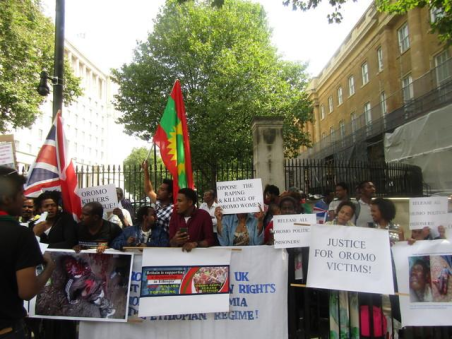
Tags: , , , , ,
add a comment

Odaa OromooOromo refugees in Egypt, we need protection

The desperation of Oromo refugees in Cairo


An Oromo asylum seeker died in Cairo last week after attempting to help two men who set themselves on fire during a protest in front of a United Nations office.
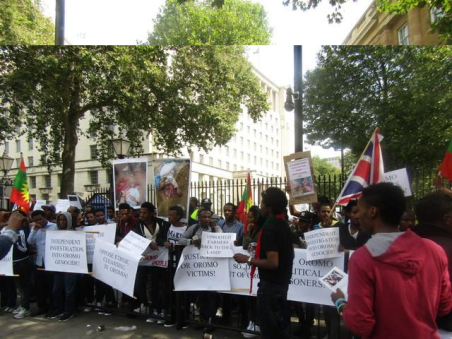
The protest outside the UNHCR’s office in 6th of October City called for the UN refugee agency to end its alleged discriminatory treatment of Oromo refugees.

Most Oromo refugees in Egypt come from Ethiopia, where they make up the largest ethnic group. The Ethiopian government responded to Oromo protests with violence late last year, intensifying an ongoing crackdown against them. Human Rights Watch estimated in June that over 400 Oromo have been killed since November 2015, with thousands injured, tens of thousands arrested and hundreds forcibly disappeared.
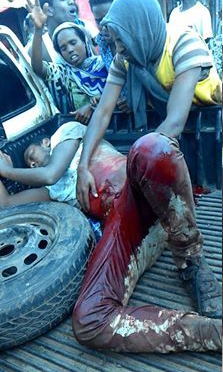
Mohamed Ademo, a Washington DC-based Oromo journalist, who has been following the case closely, told Mada Masr that Asli Nure was injured while trying to help two men who were later hospitalized, whose identities remain unknown.

Video footage of the incident was shared on social media, showing large amounts of smoke and people screaming.

The UNHCR released a statement saying it, “deeply regrets the tragic passing of an Ethiopian Oromo asylum-seeker on 26 July 2016, following a violent incident outside UNHCR office in Cairo.” The statement made no reference to the protest.

The UNHCR office will be closed until next week. The UN agency’s spokesperson Tarik Argaz told Mada Masr the closure is a temporary measure to guarantee the safety of staff members and asylum seekers coming to the offices.

Argaz says UNHCR security staff helped extinguish the fire and transported the injured to hospital. The office is working closely with hospital staff and the authorities in relation to the incident, he adds.

But Ademo claims the response from the UNHCR was lacking.

“It is even more tragic that the UNHCR’s response to all of this is to close its office. The appropriate course of action should have been to thoroughly investigate protesters’ grievances and what led to this deadly episode,” he says.

When asked about how the UNHCR is addressing Oromo concerns they are being discriminated against, with their applications for refugee status commonly either ignored or denied, Argaz says the agency is in touch with Oromo community figures concerning their grievances, but would not disclose any details.

Argaz and the UNHCR as a whole categorically deny Oromo refugees face any discriminatory treatment. “We process every claim according to UNHCR standard procedures. I want to stress that it’s an individual process and not a group-based approach,” says Argaz.

But Oromo community leaders have been saying for months that they face unfair treatment. Abdul Kadir, the secretary general of Oromo Refugees Egypt, a community organizing center for Oromo refugees, first spoke to Mada Masr in April about Oromo protests at the UNHCR office in Cairo, which continued for a couple of weeks. At the time Kadir and his organization had just begun negotiations with the UNHCR and they have since taken a step back from active protests. But he says palpable anger against the UNHCR remains.

“Many Oromo are rejected. Every week it’s 40 to 50 people who are rejected. More than 99 percent have been rejected, so people are angry, they are not happy with the UNHCR,” he claims.

Kadir says many Oromo refugees in Cairo have been accused by the Ethiopian government of belonging to the Oromo Liberation Front (OLF). The OLF is an armed group that was designated a terrorist organization by Ethiopia’s parliament in 2011. According to HRW, while the group has minimal military capacity, its existence is often used by the Ethiopian government to justify the repression of Oromo.

Many Oromo refugees in Cairo are either connected to the OLF or accused of connections, Kadir says, meaning they are unable to return to Ethiopia amid the ongoing crackdown.

He attributes the large number of rejected applications from Oromo for refugee status to the similar stories they tell, which he says makes UNHCR officials suspicious. However, he adds that many Oromo refugees wait years for a response after their initial status determination interviews with the UNHCR, in comparison to the average 20 months the UNHCR promises.

Feven Basada has been waiting for almost three years for the result of her refugee status interview. She says the stress of not knowing has caused her to become sick and unable to work, and that she is only able to survive because of the support of her church.

Basada left Ethiopia because her family was being targeted by the government. “I don’t know if anyone is alive or not,” she says. “You don’t have anyone. You don’t have a country, you don’t have anything. That’s why I have this sickness,” she adds. Basada lives alone, and often, when she calls the UNHCR office, no one answers. “I want to live like a human being, it is very hard … very difficult for women especially.”

Marwa Hashem, assistant public information officer for the UNHCR in Cairo, told Mada Masr that each refugee application has to be evaluated on an individual basis and the agency works with over 181,000 asylum seekers and refugees, which may explain the long wait. Hashem adds that staff shortages and increasing numbers of asylum seekers have made agency efforts to reduce the wait time difficult.

“Cases of asylum seekers with specific vulnerabilities may be adjudicated faster than others under certain circumstances, based on identified needs in each case,” Hashem explained, adding that the UNHCR does not discriminate against groups of people based on affiliation or ethnicity.

But others who work in the field disagree. A source from an international refugee organization told Mada Masr anonymously that he often sees Syrian refugees take priority over other groups.

“It’s been my experience that pretty much all refugee organizations right now have a dual focus — one for Syrian refugees and one for non-Syrian refugees. People will look at meeting a quota for non-Syrians, and they will dedicate half of their resources to Syrians,” he explains.

He says that the reason for this is a combination of the large influx of Syrian refugees into Egypt and funding priorities. In a world of tight funding, he explains, organizations have to make choices in order to cover their costs.

Whether or not this is the case, Oromo refugees are beginning to feel hopeless, according to Ademo.

“The depth of their frustration and grievance with lengthy procedures that keep ending in rejection is heartbreaking. The desperation has already led dozens to perish in the Mediterranean while attempting to reach Europe,” he says. A boat crossing the Mediterranean Sea from Egypt to Europe capsized in April and at least 400 refugees, largely from Somalia, Eritrea and Ethiopia, drowned.

Ademo says many Oromo still in Cairo feel hopeless and “some have publicly suggested they have nothing left to lose, and may set themselves alight.”

http://www.madamasr.com/