Economic and development analysis: Perspectives on economics, society, development, freedom & social justice. Leading issues in Oromo, Oromia, Africa & world affairs. Oromo News. African News. world News. Views. Formerly Oromia Quarterly
The Ethiopian empire was founded not based on the will of its nations and nationalities. It was formed by force by elites from the north with help of the European powers. Since its formation, Ethiopia has never respected the interests of other nationalities in the empire. Today, as in the past, the empire is serving only elites from the Tigray, particularly TPLF and members of its pseudo organizations, while majority of ordinary people from other nationalities, particularly the Oromos, are languishing under its tyranny. Subsequently, the economic, socio-cultural and political exploitations have continued unabated. Tired of such tyranny, the Oromo revolutionaries and the youth has stepped up an uprising that has engulfed the entire nation since 2014. Though the responses of the TPLF security forces were brutal, killing hundreds of peaceful protesters and detaining tens of thousands, the protest has continued and even expanded to the Amhara regional state and to the southern Nations and Nationalities regional state.
Desperate to control the people’s uprising, TPLF first declared a command post rule and then a state of emergency. However, neither of the command post nor the state of emergency has stopped the protest as TPLF hopes. Today, there is no political order in the country especially in Oromia and Amhara regional states. Failed to control the situation in the country, TPLF and its pseudo allies used various strategies to silence people’s quest for freedom and democracy. Since clinch on power, TPLF has been instigating a conflict along national and religion lines. Interestingly, after selfinstigating conflict using its undercover security agents, often it presents itself as a mediator while supporting one group with all sorts of logistics up to militarization. Subsequently, TPLF uses this self-instigated conflict as a propaganda on its statecontrol media to tell the people that TPLF is the best, perhaps the only, remedy for the state to continue as a nation. These are among the strategies that this minority group uses to stay on power. Contrary to this fact the TPLF and its dictatorial rule that are destroying the integrity of the country it claims to maintain.
In Oromia, there are countless instances where TPLF intentionally created a conflict between Oromos and other ethnic groups such as Somali. The current “Oromo -Somali conflict” in East and west Hararge, Bale, Borena and Guji zones seem unique in its nature from previous incidents. A well-trained special police forces (aka Liyu police) solely composed of ethnic Somalis are the fore front of the conflict. This conflict, perhaps a war, has been going on for now three weeks and hundreds of innocent Oromo people have been killed by this special police forces.
Although these special forces are composed of carefully selected ethnic Somalis, it is commanded by a TPLF general Abrhaa Qurater and is also enforced by TPLF Agazi Special Force. The Ethiopian government, as usual, is trying to divert this war as if it is just a conflict between Oromo and Somali farmers. Unlike previous conflicts, this is a large-scale war encompassing East and West Hararge, Bale, Borena and Gujii zones. It is also worth noting here that this Somali special forces are trained by Britain for a so called counter insurgency. The UK- and US-governments also finance the training and supported with all the logistics, which are now murdering innocent Oromo farmers in the East, south-east and southern Oromia bordering the Somali regional state. The TPLF government is using this special police forces, trained supposedly for counter insurgency, to raid just unarmed Oromo farmers. It not a simple conflict to ransack cattle and camels, as TPLF tried to present, however, it a war of ethnic cleansing by a well-trained police forces. Not only those directly involved in the war but also those who trained and armed them will be responsible for such atrocity on hundreds of innocent people.
Our people are fighting back with what they have, but one should note that these are a well-trained and armed forces. Thus, they need support from all Oromos in Oromia and across the globe. This is the time that we standup for the right cause, and show our support for those in dire need, putting aside our little differences. Thus, we call upon all Oromo in Oromia and in diaspora to stand with those who are facing the TPLF special forces with bare hand. The only ever lasting solution we have at stake now is to remove TPLF from power for once and for all. This is possible only when we all united and act as one people for one goal, remove TPLF, the killer of our people. We also call upon all Oromos who are currently serving at various posts in police and military camps of the TPLF to turn their weapons against the enemy of your people.
Those who supported the TPLF killing machinery financially as well as in logistics will not escape from accountability. Thus, we call upon the Western governments, specially the government of USA and UK who financially sponsored the training of such killing machinery should immediately withdraw their support and held the TPLF government accountable for all the killings and destruction. Finally, we would like to call upon all people in Ethiopian to stand together to bring an end to the TPLF tyranny.
Victory to the Oromo people!
Oromo Liberation Front
January 21, 2017
(Ayyaantuu News):There has been frequent, but in fact subsequent, attacks launched by what is called the Liyu Police Force of the Somali Regional State on different districts of Oromia along the South, South east and east particularly along the Hararghe, Bale and Borana lowlands. More than 200 people are estimated to have been killed so far. The Liyu Police, as commanded by the psychopath Abdi Illey did repeatedly commit war crimes and crimes against humanity on civilians in the Ogaden region. Most of the units of the Liyu police are said to have been recruited from Illey’s own clan. After he established the murderous militia group and took the command and control of it, Mr. Illey has literally turned himself into a war lord. He never gives sh* about what the officials at the federal gov’t had to say. It’s even with in the public domain that he spitted on the face of the puppet prime minister HMD in Jigjiga while he was there as a ‘guest of honor’ during the celebration day of what they call “nations and nationalities day” in 2013. While even most of the cabinet ministers of the federal government go on the routine per diem scales on trips to foreign countries, Abdi Illy makes it so differently. The man even contracts and commissions top security guards while reserving hotel rooms in some of the top hotels of the cities he goes for trip to.
It has been a matter of generic knowledge among the public that the Afar-Issa-Somali conflict over land was the cause for the dismissal for three-fourth of government cabinet members in the Somali regional State a couple of years back. At the heart of the conflict lies, as the Afar diaspora network claims, the Somali-Issa militia forces did expand their control into the heart of the Afar land reaching to the banks of the Awash River and the strategic highway linking Addis Ababa to the port cities of Assab and Djibouti. Apparently, the dispute was halted by TPLF’s interventionist deal that favored the position of the Afar. But insider informants had it that the TPLF-imposed decision to seal the deal favoring the position of the Afar asymmetrically divided the 12-membered cabinet of the Somali Regional State into a fiercely fighting group of 4 to 8 members. Accordingly, 8 of the 12 cabinet members including the then vice-president did reject the decision while 4 of them (including the president Abdi Illey) accepted the TPLF-imposed decision. But the whole saga then went astray so much so that the 8 cabinet members in the Somali Regional State who opposed the move had to be all fired out to implement the land dispute deal proposed by the TPLF, at the end of the day. Abdi Illey’s 4-membered group in the cabinet, a minority by any democratic sense, had to turn victorious by firing all the 8 others (including the vice-president) because Abdi Illey & co had the keen supported from TPLF Generals. What is more??
Why the TPLF wanted to favor the Afar in the tribal land dispute/conflict?
For the TPLF, the Afar region is just part of the greater Tigray it envisions. If article 39 of Ethiopia’s facade federalism is to be first invoked by the TPLF (the maker and its breaker) any time it reads greater risk in the wider Ethiopian politics, Tigreay will secede taking Afar along with it — we all know it and they all know it too. Tigreans have not only political and economic supremacy in the Afar areas but they even dominate the urban culture in there – much like the Amhara do in Oromia due to the lingering legacy of the imperial era and that of the derg. Most businesses in the Afar towns are owned by business men of Tigray origin who are affiliates of the TPLF, more often than not. So, for the TPLF, it’s a natural instinct choice for any land dispute deal between the Afar and the Somali being sealed in favor of the former. But more importantly, the TPLF can make sure that the later won’t lose the land it claimed or at least be compensated for it by what could possibly be paid by a party that had no involvement either in the conflict or in the deal to seal it at the end of the day. Here is where Abdi Illey’s attack on Oromia, as supported by the TPLF Generals comes in. He has already been declared as “the best person of the year” by the TPLF’s mouth piece called “Tigraionline.com”. Sooner or later, we will be told that some remote territories disputed among some tribal pastoralists of the Oromo and Somali have been given to the later. And that seals the backdoor deal between Abdi Illey and the TPLF Generals.
It’s conceivable that the OPDO are neither aware of it nor capable of stopping this deal. They are created to contradict the Oromo in the very first place. While the Liyu police not only raids Oromo villages crossing borders but also killing their cadre sitting in office, the OPDO did nothing other than dialing on the old digits of the Arat kilo palace. The response was loud and clear though: ‘the number you calling doesn’t exist’. But they are still calling….so amazing…….
.
So, the public should defend itself against these TPLF’s mercenary group called Liyu police by all means possible. We believe semi-organic bodies like the Oromia Police shall stand by the side of the public. We will overcome this dirty war of the TPLF too!
An Oromo, Ethiopian journalist missed in Adama/Gazexeessaa Abdii Gadaa achi buuteen dhabame.
Journalist Abdi Gada
An Oromo, Ethiopian journalist is missing in Adama. OBS-Oromia Broadcast Service Television journalist Abdi Gada went missing in Adama, Ethiopia last Wednesday. His whereabouts is not known yet. His family, friends and colleagues have been looking for him in all areas of detainees and prisoners including Ma’ikelawi, and Zeway (Batu). Many of his family, friends and colleagues believe that Journalist Abdi Gada was kidnapped by Ethiopian security forces because thousands of Oromo people are missing and have been arrested in Ethiopia. Journalist Abdi Gada was one among 20 Oromo (Ethiopian) journalists who were dismissed from the Oromia Radio and Television Organization in 2014, in a single day.——————————-
Gaazeexeessaan TV OBS-Oromia Broadcast Service, AbdiGadaaRoobiidarbiteAdaamattihojiidhaquufakkamanaabahettiachibuuteenisaadhabameera. Gaazexeessaankun, bara 2014 keessagaazexeessitootaOromoo 17 dhaabbataRaadiyoo fi TV Oromiyaakeessaasababatokkomalee ari’aman keessaa tokkoakka ta’eefi, saaniinbooda TV OBS keessa kan hojjataajiruudha.
Women wait to receive food at a distribution center in Gelcha village, one of the drought stricken areas of the Oromia region in Ethiopia, on April 28. Photo by Tiksa Negeri/Reuters
We came to Ethiopia to report on the country’s response to a historic drought. We left with a very different story and a taste of how hard it is for journalists, even those covering what should have been a mostly positive story.
For years, Ethiopia has struggled to shed its association with vast human suffering earned during the epic famine three decades ago.
Gleaming high rises in the capital, Addis Ababa, are testament to what today is one of Africa’s most robust economies. An infrastructure building boom has connected the farthest reaches of this sprawling nation of 100 million people, many of them now covered by a government social safety net.
As a result, even though Ethiopia’s current drought has been far more severe than that in the ‘80s — one-fifth of its population suffers moderate to severe food insecurity — there’s very little of the classic, horrible imagery: the emaciated faces of children with distended bellies, which became the backdrop of those historic famine relief rock concerts.
More hours went by before we finally got our “hearing” before five unidentified men. … Each of us was interviewed separately about exactly what our story was, why we chose to go where we did.
We went to Ethiopia to tell this new story, that drought does not have to lead to famine. Many experts say planning and good governance can greatly mitigate human suffering. Ethiopia’s government has won some kudos for its drought response this time, yet its abysmal record on human rights, its harsh treatment of journalists and political dissidents can hijack attempts to tell this story. And in our case, it did just that.
For foreign correspondents, obtaining a journalist visa requires extensive paperwork, documenting the serial numbers of all equipment down to cell phones, a detailed account of every place to be visited and, once approved — if approved — stern warnings not to deviate from it.
The morning after we arrived in Addis, armed with all required permits and paperwork, we set off for the Oromia region south of the capital, shooting images of the extensive housing and road projects under construction or newly completed, some images of farmland and finally a small farm whose owners were being trained in business skills while cultivating new specialty crops to help cope with climate vagaries.
It was here where we were summoned by Ethiopia’s “security services” to the police station. It is amusing to reflect now that our first reaction was annoyance: this would rob videographer Tom Adair of the afternoon’s best light. If only that was all we would lose.
About two hours into our wait in a dimly lit office, we were told to surrender all electronic equipment, including cell phones, and our passports. No explanation was offered, only the threat of arrest if we continued to insist, as we did, that our paperwork was in order, that it is illegal to confiscate a passport, especially without a receipt.
“Report to Immigration tomorrow, and you can collect it,” we were instructed by a plainclothesman who never introduced himself. That meant a six-hour journey back to the capital and to a building teeming with Ethiopians and foreigners alike, applying for passports or visas. In our case, our chance to get our equipment and documents returned.
More hours went by before we finally got our “hearing” before five unidentified men. They’d combed through every corner of our luggage in pursuit of hidden cameras or memory cards and demanded to see every inch of footage we’d shot. Each of us was interviewed separately about exactly what our story was, why we chose to go where we did.
An emaciated cow walks through a dry field in the Oromia region of Ethiopia. Photo by Tiksa Negeri/Reuters
Our explanation was simple: Oromia was hard-hit by the drought. It is where we planned to film food distribution and other retraining programs run by the government and by Baltimore-based Catholic Relief Services, the largest nongovernment aid group operating in Ethiopia. A CRS official accompanying us was also detained through this ordeal. This was mystifying since his agency, far from being subversive, is a key government partner in relief work.
As it turns out, Oromia is also one of several regions that have seen political unrest and protests — unrelated to the drought — which the government has put down violently. In the days just before we arrived, Human Rights Watch reported 100 deaths at the hands of riot police in the Oromia region.
It’s fair to assume that the security services were looking for footage or evidence of any encounters we might have had with protests or protesters, highly improbable given that we’d barely arrived in the country. A glance in our passports could attest to that.
Finally, 24 hours after they were taken, our passports and gear were returned with the only “official” explanation we would get.
“You did not get permission from Security,” we were advised, even though no such requirement is published anywhere.
Oromia was now off limits and interviews already scheduled with government ministers about the drought were now canceled.
In Ethiopia, “Security,” the National Intelligence Service, appears to hold the biggest sway, enforcers for a government hell bent on controlling the flow of public information and the images it sends out to the world.
Internet service was shut down throughout the country in the period just before we arrived, presumably to muzzle social media and to prevent protest images from being exported, a virtually impossible task in this day and age. Nevertheless, footage of the protests were broadcast and distributed.
Given that weeks of careful planning (to say nothing of the hefty travel costs) were wiped out by the whims of a paranoid security apparatus, it’s unlikely we’ll be able to return and tell this important story any time soon.
Fascist Ethiopia ‘s regime has been conducting mass killings in Awaday, Oromia. Fascist Ethiopia’s regime forces killed several Oromo children in Awaday, Oromia, 1 July 2016.
18 years old young Oromo woman Sabrina Abdalla was shot by fascist Agazi of the TPLF Ethiopia’s regime on 20 June 2016 in Chalanqo, East Hararge, Oromia. She has died at upon arrival at Harar hospital. She was shot in a small hut she uses to sell tea and coffee.
Body of Sabrina Abdalla (18 years), the 10th grade Oromo female student who was gunned down in the night of 20 June 2016 byfascist Ethiopia’s regime soldiers in Chalanqo, East Hararge, Oromia.
June 28 /29 2016: #Oromo protests in Oromia (finfinnee, Hanna Furi) as the regime engaged in destroying residential houses for land grabs.
This is not just a political slight of hand. This is downright tragic. This is simply brutal. This is an act of state terror. This is bureaucracy deployed to disrupt life and terrorize poor citizens. This is a heartless exposure of people to a miserable death on the streets in these dark rainy days. You can’t call out women and children to a meeting and yet demolish their houses in their absence. We say NO to this in the strongest possible terms! NO! to a continued infliction of unnecessary suffering to poor people! Tsegaye Ararssa.
(Nairobi) – Ethiopian security forces have killed more than 400 protesters and others, and arrested tens of thousands more during widespread protests in the Oromia region since November 2015. The Ethiopian government should urgently support a credible, independent investigation into the killings, arbitrary arrests, and other abuses.
The 61-page report. “‘Such a Brutal Crackdown’: Killings and Arrests in Response to Ethiopia’s Oromo Protests,” details the Ethiopian government’s use of excessive and unnecessary lethal force and mass arrests, mistreatment in detention, and restrictions on access to information to quash the protest movement. Human Rights Watch interviews in Ethiopia and abroad with more than 125 protesters, bystanders, and victims of abuse documented serious violations of the rights to free expression and peaceful assembly by security forces against protesters and others from the beginning of the protests in November 2015 through May 2016.
Ethiopian security forces have killed more than 400 protesters and others, and arrested tens of thousands more during widespread protests in the Oromia region since November 2015.
“Ethiopian security forces have fired on and killed hundreds of students, farmers, and other peaceful protesters with blatant disregard for human life,” said Leslie Lefkow, deputy Africa director at Human Rights Watch. “The government should immediately free those wrongfully detained, support a credible, independent investigation, and hold security force members accountable for abuses.”
Human Rights Watch found that security forces used live ammunition for crowd control repeatedly, killing one or more protesters at many of the hundreds of protests over several months. Human Rights Watch and other organizations have identified more than 300 of those killed by name and, in some cases, with photos.
Partial list of Oromos mainly students that have been killed by Ethiopian regime police, security agents, Special and armed force during peaceful demonstration of last three months (updated stand. March. 2016)
Partial list of Oromos mainly students that have been killed by Ethiopian regime police, security agents, Special and armed force during peaceful demonstration of last three months (updated stand. March. 2016)
ABC News: Right Group:Oromia: #OromoProtests: Ethiopia’s security forces carrying out serious rights abuses, killings and rapes in clashes with protesters in Oromia
Sabboonan Oromoo Barataa Tarreessaa Safaraamooraa Yunivarsiitii Mattuu keessatti Ajjeefame. Oromo national Tarreessaa Safaraa, Engineering student at Mattu University murdered by TPLF/ Ethiopian Security agents on 23rd October 2015
Ethiopian Government Paramilitary Commits Torture and Rape in Oromia
The following is a statement from the Human Rights League of the Horn of Africa (HRLHA).
HRLHA Urgent Action October 12, 2015
Harassments and intimidations through arbitrary arrests, beatings, torture and rapes were committed in Ada’a Berga district Western Showa Zone of Oromia Regional State against young Oromo nationals on September 24 and 25, 2015. More than 30 young Oromos were picked up from their homes at night by an Oromia paramilitary force. According to HRLHA informants in Ada’a Berga, the major targets of this most recent District Administration officials-sponsored violence were mostly young Oromos working in the Dangote Cement Factory and university students who were there to visit their families in the summer break. HRLHA informants from the area confirmed that this particular operation against young Oromo nationals in Ada’a Barga was led by the local government official obbo Tolera Anbasse. In this incident more than 30 young Oromos (16-25 ages) were arrested; more than 20 were severely beaten by the Oromia Paramilitary and confined in the Ada’a Barga district Police station for three days in violation of the Constitution of the Federal Democratic Republic of Ethiopia, Article 19 (3) “Persons arrested have the right to be brought before a court within 48 hours of their arrest. Such time shall not include the time reasonably required for the journey from the place of arrest to the court. On appearing before a court, they have the right to be given prompt and specific explanation of the reasons for their arrest due to the alleged crime committed”. Although it has been difficult to identify everyone by their names, HRLHA informants have confirmed that the following were among the arrestees:
All arrestees were accused of what the police referred to as “instigating the public against the government.”
When the arrestees were brought to court, one man explained to the court that he had been beaten severely in front of his family members and his wife and his sister age 16 were raped by one of the paramilitary members.
The arrestees showed their scarred backs to the court to indicate the torture inflicted on them by the Paramilitary. Even though the court released all the arrestees on bail the police refused the court order and took them to jail.
The Human Rights League of the Horn of Africa (HRLHA) expresses its deep concern over the safety and well-being of these arrested Oromo nationals and urge the Oromia Regional State Government to make sure that the bail conditions granted by the court are respected and release the arrestees unconditionally. HRLHA also urges the Oromia Regional State and the Ethiopian government to bring the torturers and rapists Ethiopian government paramilitary members to justice.
Naannawa Shagar aanaa Sululta Magaalaa Caancoo keessatti saamicha lafaa fi qotee bulaa humnaan qe’ee irraa buqqiduun daran hammaachuu irraan kan ka’e diddaan uummataa jabaate. Yeroo ammaa kana Wayyaanee fi dabballoonni ishee qotee bulaa lafa irraa buqqisuun saamicha gaggeessaa kan jirtu yoo ta’u uummanni magaala Caancoo diddaa jabaa dhageessisaa jira.
Diddaa uummataa kana dura dhaabbachuuf yeroo hedduu maqaa wal gahii jedhuun uummataa fi hojjattootta mootummaa yaamuun sossobuuf yaalaa kan turte yoo tahu walgahii isheen yaamte irratti hojjattoonni dhalootaan Oromoo tahanii fi uummanni magaalaa Caancoo diddaa jabaa waan dhageessisaniif diddaa kana dura dhaabbachuu hin dndeenye. Kana waan taheef ammas diddaa uummataa kana dhaamsuuf dabballootuma waliin saamicha gaggeessaa turan yeroodhaaf jettee mana hidhaa aanaa Sulultaa magaala Caancootti guuraa jirti.
Haaluma kanaan fakkeessidhaaf lafa saamtanii jirtu sababa jedhuu dabballootuma idhee itti gaafatamaainvestment kan tahe nama Salamoon Debebe jedhamuu fi mahandisoota magaala Caancoo nama sadi yeroodhaaf sagalee fi didaa uummataa dhaamsuuf jettee mana hidhaatti kan darbatte.
Darajjee Goobanaa, Oromo national and 3rd year student at Bule Hora University is murdered by fascist TPLF Ethiopia (Agazi) forces: Barataa Waggaa 3ffaa Yuuniversitii Bulee Horaa Kan Ta’e Sabboontichi Darajjee Goobanaa Rasaasa Poolisoota Wayyaaneen Wareegame.
Barataa Darajjee Goobanaan godina Wallaggaa Horroo Guduruu aanaa Jaardagaa Jaartee jedhamutti kan dhalatee guddate ta’uu fi amal qabeessaa fi qaroo ilma Oromoo akka ta’e barattooti Yuuniverstii Bulee Horaa dubbatu.
Peoples Most under Threat: The Oromo, Anuak, Afars & Somali (Ogaden) and other Indigenous People are Facing Genocide in Ethiopia, the Latest Annual Report Released on 18th May 2015 by Rights Group Reveals May 21, 2015
Yakka waraana mootummaan EPRDF/TPLFn uummata Oromoo fi barattoota Oromoo irratti fudhateen jiraattotii fi hojjettooti hostala Naqamtee haalaan kan gaddan yeroo ta’u Oromoonni adduunyaa irratti bakka hunda faca’anii jiran gochaa hammeenya wayyaanee kaan akka balaaleffatanii fi hirkoo baratootaaf akka ta’an Qeerroo dhaammata.
Gama biraan Haaluma kanaan walqabatee Yuunibarsiitiin Wallaggaa fi Magaalaan Neqemtee rafama guddaa keessa jirti, Mootummaan Wayyaanee lubbuu ilmaan Oromoo fi nageenya uummata Oromoof bakka tokko illee hin qabnee fi tarkaanfii gara jabinaa Oromoo irratti fudhachuun beekamu guyyaa har’aa caamsa 20/2015 immoo Magaalaa Neqemtee keessatti dabballota, fi
kaadiroota isaa waliin hiriira duula filannoo gaggeessa jira. Uummatni Oromoo magaalaa Neqemtee fi yuunibarsiitii wallaggaa humna waraanaa guddaan eegamaa jiruu, Barattootni Yuunivarsiitii Wallaggaa guyyaa hardhaa barnoota dhaabani jiru.
Armed TPLF (Agazi) forces that have camped in and occupied University of Wallagga in Naqamtee City have been engaged in terrorizing and torturing students and civilians in the city. It has been learnt that on 19th May 2015 the Agazi forces shot at and wounded 2 university students.
6 Oromo Students of Three Universities Abducted by TPLF Led Government Forces
Qeerroo Report, May 17, 2015: As the fake 2015 so called Ethiopian election approaches, the TPLF led Ethiopian government has intensified arresting, harassing, and abduction of Oromo nationals, especially Oromo students of universities and higher educational institutions. Accordingly, the following Oromo students of Adama University, Eastern Shoa zone of Oromia regional state have been abducted by the terrorist “intelligence” forces of the Ethiopian regime and their whereabouts are unknown. Read Full; Qeerroo Report, May 17 2015http://qeerroo.org/2015/05/17/6-oromo-students-of-three-universities-abducted-by-tplf-led-government-forces/
5 Oromo students from Adama University have been kidnapped by TPLF (Agazi) security forces. Kidnapping, torturing and violence against Oromo students and civilians is continued all over universities and entire Oromia. See the following table for few latest lists in Afaan Oromo.
Barataan Oromoo maqaan isaa Rabbirraa Biloo jedhamu Kiibxata Caamsaa 04, 2015 Univarsity Wallo, Kampasii Dassee keessaatti fannifamee ajjeefame. Barataan Oromoo kun barataa Health Science waggaa 1ffaa yoo tahu, barataa dadeettii fi namuusa qabeessa akka turee fi gaafa Wiixataa barumsaa isaa barachaa oolee gara naannoo sa’aa 1:00w.b. irraa eegalee akka baheen eessa buuteen isaa waan dhabameef hiriyooti isaa qaama Poolisii mooraa Univarsitichaatti gabasanis yerodhan tarkaanfiin akka hin fudhatamnee fi reeffi barataa Oromoo kanaa dirree kubbaa miillaa Universitichaa keessaatti gaafa Kiibxataa Caamasaa 04, 2015 fannifamee akka argame ibsaniiru. Yeroo reeffi barataa Oromoo kanaa argameetti qaami isaa walqixxaatee akka turee fi mallattoon biraa fuula isaa tahe afaan isaa irratti akka hin argamne hiriyooti isaa ifa godhanii jiru.Duuti barataa Rabbirraa Biloo rakkoo fi miidhaa barattoota Oromoo irraan bulchiinsi Univarsity Walloo fi mootummaan abbaa irree Wayyaanee geessisaa jiraniin kan wal-qabatee tahuu fi akkaataa du’a barataa Oromoo kanaa barattooti Oromoo Univarsity akka seeraan qoratamu bulchiinsa univaristichaa gaafatanis qaami bulichiinsa Univarsitichaa sun qormaati akkasii kan geggeeffamu Hospitaala Maqaleetti yookan immoo Hospitaal Miniliktti jechuudhaan ajjeechaan lammii Oromoo kanaa osoo seeraan hin qulqullaahin gara matii isaatti akka ergame ifa taheera. Barataan Oromoo kun bakki dhaloota isaa godina Shaggar Dhiyaa, aanaa Gindabaratti ta’uun beekameera.Mooraan Kampasii Dassee dallaa tokkollee kan hin qabne ta’uu isaa fi kana barattooti yeroo adda addaa qaama bulchiinsa Univarsitichaatti iyyatanis hawaasi nannichaayyu dalla isiniif taha jechuudhaan mooraa Univarsituchaatti dallaa ijjaaruu akka didan maddeen oduu kana ibsanii jiru.Barattooti Oromoo Univarsity Walloo yaaddoo barumsa isaanii nagaan barachuu fi wabii jireenyaa dhabuu qaban yeroo ibsan, barataan Oromoo mooraa san keessatti akka lammii lammaffaa fi yakkamaatti kan ilaalamuu fi gaaffii mirgaas tahe kan bulchiinsa Univarsity wajjin wal qabatee kamiyyuu yoo gaafatan tarkaanfiin isaan irratti fudhatamu isa dhumaa fi keessa deebii ykn ilaalcha tokko kan hin kennamneef tahuu ibsanii; gaaffii guumii aadaa fi afaan Oromoo hundeessuuf bulchiinsa Univarsitychaaf yeroo dheeraaf dhiyeessanillee hanga har’aatti deebii osoo hin argatiin jiraachuu isaa fi warreen gaaffii mirgaa akkasii dhiyeessan illee tarkaanfiin barumsa irraa hari’uu akka irratti fudhatamu akka akeekkachiifaman beekameera.
Humni Tika fi Loltuun Feederaala Wayyaanee Barattoota Oromoo Yuuniversitii Wallaggaa Hedduu Reebuu Saamaa Jira, Barattoota Afur Reebichaan Gara Malee Miidhe.
Oromo students in University Wallaggaa have been tortured and robbed their belongings by TPLF (Agazi) forces operating in the campus. Among students who have been severely attacked by Agazi are:
Abarraa Ayyalaa fi kanneen biroo maqaan hin qaqqabin dararama jiraachuun maddeen keenya gabaasan. http://qeerroo.org/2015/05/15/humni-tika-fi-loltuun-feederaala-wayyaanee-barattoota-oromoo-yuuniversitii-wallaggaa-hedduu-reebuu-saamaa-jira-barattoota-afur-reebichaan-gara-malee-miidhe/
More than 50 Oromo students arrested by Ethiopia’s tyrannic TPLF regime in Ambo, Oromia; 20 being tortured
The statement from the Human Rights League of the Horn of Africa (HRLHA):-Ethiopia: The Endless Violence against Oromo Nationals ContinuesFear of Torture | HRLHA Urgent Action For Immediate Release May 7, 2015 Harassment and intimidation through arbitrary arrests, kidnappings and disappearances have continued unabated in Ambo and the surrounding areas against Oromo youth and intellectuals since the crackdown of last year (April 2014), when more than 79 Oromos, mostly youth, were killed by members of the federal security force. According to HRLHA correspondents in Ambo, the major targets of this most recent government-sponsored violence were Ambo University and high schools Oromo students in Ambo town. In this incident, which started on April 20, 2015, more than 50 university and high school students were arrested; more than 20 were severely beaten by the security force and taken to the Ambo General Hospital for treatment. Although it has been difficult to identify everyone by their names, HRLHA correspondents have confirmed that the following were among the arrestees: Those who were badly beaten and are being hospitalized in the Ambo General Hospital: According to HRLHA reporters, the arrests were made to clear out supporters and members of the other political organizations running for the 5th General Election to be held May 24, 2015. The EPRDF, led by the late Meles Zenawi, claimed victory in the General Elections of 1995, 2000, 2005 and 2010. The TPLF/EPRDF government of Ethiopia has started a campaign of intimidation against its opponents. Extrajudicial arrests and imprisonments, particularly in the regional state of Oromia, the most populous region in the country, began late October 2014. The Human Rights League of the Horn of Africa (HRLHA) expresses its deep concern over the safety and well-being of these Oromo nationals who have been arrested without any court warrant, and are being held at police stations and unknown detention centers. The Ethiopian government has a well documented record of gross and flagrant violations of human rights, including the torturing of its own citizens, who were suspected of supporting, sympathizing with and/or being members of the opposition political organizations. There have been credible reports of physical and psychological abuses committed against individuals in Ethiopia’s official prisons and other secret detention centers. HRLHA calls upon governments of the West, all local, regional and international human rights agencies to join hands and demand the immediate halt to such extrajudicial actions against one’s own citizens, and the unconditional release of the detainees. RECOMMENDED ACTION: Please send appeals to the Ethiopian Government and its officials as swiftly as possible, written in English, Ahmaric, or your own language. The following are suggested: – Indicate your concern about citizens being tortured in different detention centers, including the infamous Ma’ikelawi Central Investigation Office; and calling for their immediate and unconditional release; – Urge the Ethiopian authorities to ensure that detainees will be treated in accordance with the regional and international standards on the treatment of prisoners, and that their whereabouts be disclosed, and – Make sure the coming May 24, 2015 election is fair and free. Read full statement from the following links: The Endless Violence against Oromo Nationals Continues, HRLHA Report, 7th May 2015
Ethiopia: Kidnapped And Disappearance of Oromo Civilians
Oromia Support Group Australia Appeal for Urgent Action: To: Committee on Enforced Disappearances and Committee against Torture Human Rights Treaties Division (HRTD) Office of the United Nations High Commissioner for Human Rights (OHCHR) Palais Wilson – 52, rue des Pâquis CH-1201 Geneva (Switzerland) Ethiopia: Kidnapped and disappearance of Oromo civilians Magarsa Mashsha And Urgessa Damana: Oromia Support Group Australia Inc. (OSGA) expresses its deep concern regarding the kidnapping a nd disappear an ce of two Oromo civilians by the Ethiopian security forces. Mr Magarsa Mashasha Ayansa was kidnapped and diapere d on April 23rd, 7pm local tim e while Urgessa Damana was on May 4th, 2015. Mr Magarsa, community health worker, a student of Ambo University is the local area resident. He was kidnapped by Ethiopian security forces from the country’s central city Fifinna (Addis Ababa) – Bole area – while he was on a trip for his personal business. In a similar situation, Mr Urgessa Damana a former Rift Valley University Student and resident of Ambo town also captured on 4th of May 2015 by Ethiopian security forces. Since then the whereabouts of theses Oromo civilians remained unknown. OSGA believes that th e Ethiopian government conduct violated the fundamental rights. The right to freedom from torture and the UN Body of Principles for the Protection of All Per sons under Any Form of Detention and Imprisonment including the UN Standard Minimum Treatment of Prisoners is entirely denied. We are concerned that this pattern will continue to worsen. We respectfully believe that the Office of the United Nations High Commissioner for Human Rights (OHCHR) – Human Rights Treaties Division (HRTD) has a duty to use its diplomatic relationships with the reciprocal expectation of protecting human rights and legitimate democratic governance. These accusations reveal serious violations of human rights and legal process, and without external accountability, many vulnerable people will suffer in the country. We, therefore, urge you to: 1. Request the Ethiopian Government to reveal the whereabouts of these two Oromo civilians and immediate and unconditional release of them including all political prisoners under their captivity. 2. Request to investigate, amongst other things, actions taken by the Ethiopian Government security forces in the state of Oromia and the suffering of Oromo civilians in hundreds of official and hidden torture chambers. 3. Raise this case with the international community and other relevant United Nation bodies. Stress the righ t to remedy, restitution, compensation, non-repetition, and punishment of the perpetrators, in line with the UN Guidelines on the right to treat. We denounce the attacks on peoples who are exercising their fundamental and democratic rights. Thanks for considering of OSGA appeal Oromia Support Group Australia Read More:- osga-appeal-for-urgent-action-on-the-disapperances-of-mr-magarsa-and-urgessa-may-8th-2015-photo-include
Oromo national Urgeessaa Dammanaa, student from Rift Valley University, kidnapped by fascist TPLF Ethiopian security forces on 4th May 2015 and his whereabouts is not known.
Oromoo Hidhuu fi Ajjeessuu Araada Kan Godhate Mootummaan Abbaa Irree Wayyaanee, Sabboonticha Oromoo Barataa Urgeessaa Daammanaa Caamsaa 4 Bara 2015 Edda Ukkaamsee Har’aa Ukkaamsee Eessa Buuteen Isaa Hin Beekamne.
Gabaasa Qeerroo Finfinnee,Caamsaa 4,2015Caamsaa 04,2015 Mootummaan Abbaa Irree EPRDF/TPLF yakka tokko malee ilmaan Oromoo sabboontota ta’an ukkamsaa jira haala kanaan guyyaa har’aa sabboonaan Qeerroo Oromoo kan ta’ee barataa Urgeessaa Dammanaa Kumsaa humnoota tikaa mootummaa EPRDF/TPLF magaalaa Finfinnee keessatti ukkanfame. Barataa Yuunivarsiitii Rift Valley kan ture, Sabboonaan Qeerroon Oromoo Urgeessaa Daammanaa yakka tokko illee utuu hin qabaatiin daa’imummaa isaa irraa eegaluun Oromummaan yakkamee manneen hidhaa biyyattii garaagaraa keessatti hidhamuun dararamaa kan ture,fi bara 2011 Mana hidhaa Maa’ikalaawwii, fi Qaalliittii Waggaa tokkoo oliif badii tokko malee hidhamee dararamaa kan turee fi yeroo garaagaratti mana hidhaa lixaa Shaggar magaalaa Amboottis hidhama kan ture yoo ta’uu, Guyyaa har’aa kanas badii tokkoo malee FDG Qeerroo Bilisummaa Oromoo gaggeessa jiru qinddeessiteetta jechuun yeroo dheeraa erga hordofamaa ture, ammas humnoota tikaa mootummaa Wayyaanee EPRDF/TPLF’n guyyaa hardhaa ukkanfamee eessa buuteen isaa hin beekamne. Sabboonaan Qeerroon barataan Oromoo kun FDG Qeerroon Bilisummaa Oromoo biyyattii keessatti qindeessee gaggeessa jiru keessa harka qabda sabaabaa jedhuun nannoo dhaloota isaa Godina Lixaa Shaggar Magaalaa Amboo kolleejjii Rifti Valley Amboo utuu barachaa jiruu yeroo sochii Warraaqsaa FDG bara darbee Ebla 2014 Qeerroon barattootni fi uummatni Oromoo sirna bittaa Wayyaanee balaaleffachuun mormii guddaa gaggeessa turanitti FDG kana qindeessuu keessa harka qabda jechuun naannoo dhaloota isaa magaalaa Amboo irraa baqachiifame ,barnoota isaas akkatti baratuu dhabuun haala baay’ee rakkisaa ta’ee keessatti gara magaalaa Dirree Dawaatti barnoota isaa itti fufuuf akkuma Koolleejjii Rift Valley Damee Dirree Dawaatti galmaa’ee barnoota eegaletti hordoffiin humnoota tikaa fi dabballoota Wayyaanee itti jabaachuun akka barnoota isaa itti fufee barachuu hin dandeenye dhorkatame akkatti baratuu dhabuun gara magaalaa Finfinneetti deebi’uun hojiilee wardiyummaa fi hojiiwwaan humnaa garaagaraa hojjechuun utuu of jiraachisuu guyyaa hardhaa humnoota tikaa mootummaa EPRDF/TPLF’n ukkanfamee eessa buuteen isaa dhabamee jira. Ilmaan Oromoo biyya abbaa isaanii keessa jiraachuu dadhabuun Mootummaan Wayyaanee diina itti ta’uun mirga namummaa fi dimookiraasii mulqamnee guyyaa irraa gara guyyaatti ilmaan Oromoo ukkaanfamaa jiraaniif dhaabbileen mirga namummaa addunyaa fi mootummootni gamtooman uummata Oromoof dirmachuu qabu, ilmaan Oromoo biyyoota garaagaraa keessa jirtan dhaabilee Idil-Addunyaa mirgoota namummaa kabachiisan hundatti akka uummata keenyaaf iyyaannu Qeerroon bilisuumma Oromoo dhaamsa dabarsa.
11 years old Oromo child from Galamsoo town, Eastern Oromia was tortured and murdered by fascist TPLF security forces. Mootumma abba irree wayyaannen muca daa’ima waggan isa 11 ta’e wajjira poolisii magaala galamsoo keessatti ati ABO dhaf basaasta haati kee eessa jirti, mal hojjetti jedhanii utuu reebanii lubbuun isa darbite.Source: Social networks, 4 May 2015.
Ogeessa Fayyaa fi Barataa Yuuniverstii Amboo Kan Ta’e Sabboonaa Magarsaa Mashashaa Ayyaanaa Humnoota Tika Wayyaaneen Ukkaamfame.
The Ethiopian Government is Responsible for the Inhuman Treatments against Ethiopian Refugees and Asylum Seekers around the World
HRLHA Press Release
25th April 2015
The Human Rights League of the Horn of Africa has been greatly saddened by the cold-blooded killing of 30 Christian Ethiopian refugees and asylum seekers in the past week in Libya by a group called Islamic State in Iraq and Syria/ ISIS. The HRLHA also highly concerned about thousands of Ethiopian refugees and asylum seekers living in different parts of Yemen were victimized due to the political crises in Yemen and hundreds have suffered in South Africa because of the unprecedented actions taken by a gang opposing refugees and asylum seekers in the country. The suppressive policy of the EPRDF/TPLF government has forced millions of Ethiopians to flee their country in the past twenty-four years. The mass influx of Ethiopian citizens into neighboring countries every year has been due to the EPRDF/TPLF policy of denying its citizens their socioeconomic and political rights. They have also fled out of fear of political persecution and detention. It has been repeatedly reported by human rights organizations, humanitarian and other non – governmental organizations that Ethiopia is producing a large number of refugees, estimated at over two hundred fifty thousand every year.
The HRLHA calls upon the Ethiopian government to unconditionally release the detained citizens and allow those who have been injured during the clash with police to get medical treatment.In connection with the incident that took place in Libya, on April 22, 2015 tens of thousands of Ethiopians marched on government- organized rallies against the killing of Ethiopian Christians in Libya. However, with the demonstrators’ angry expressions were directed at the authorities, the police used tear gas against them and hundreds of people were beaten on the street and arrested. On the 23rd and 24th of April 2015 others were picked up from their homes and taken to unknown destinations according to the HRLHA reporter in Addis Ababa.
Recommendations:
The Ethiopian government must stop political suppression in the country and respect the human rights treaties it signed and ratified
The Ethiopian Government must provide the necessary lifesaving help to those Ethiopians stuck in crises in the asylum countries of Yemen, South Africa and others.
The EPRDF/TPLF government must release journalists, opposition political party members, and others held in Ethiopian prisons and respect their right to exercise their basic and fundamental rights enshrined in the constitution of Ethiopia and international standard of human rights instruments.
Ethiopia: Police must stop the use of excessive force against demonstrators
April 27, 2015
PUBLIC STATEMENT April 22, 2015 AI Index: AFR 25/1515/2015Amnesty International calls on the Ethiopian authorities to ensure that police refrain from excessive use of force in policing demonstrations, after police violently dispersed mass protests in Addis Ababa yesterday. The Ethiopian authorities must respect the rights of demonstrators to exercise their rights to freedom of expression and of peaceful assembly.Video footage and photographs posted online show police beating protestors who appear to be offering no resistance, and tear gas being used against the crowd. A journalist in Addis Ababa told Amnesty International that 48 people had been seriously injured and admitted to different hospitals, and that many others sustained minor injuries. Two photos show wounded people being treated at hospital. Hundreds of others are reported to have been arrested.The protests started on Tuesday following circulation of a video showing the killing of around 30 people believed to be Ethiopians by the armed group ISIS in Libya. Two of the named victims have been identified as coming from Cherkos, Addis Ababa. Hundreds of relatives and friends were gathered outside their family homes before spilling on to the streets towards Meskel Square. Many protestors in the photographs and video footages posted online are shown holding pictures of the two men.Protests resumed on Wednesday morning, with thousands gathering in Meskel Square where a mass rally had been organized as part of the official three days of mourning announced by the government. Around 100,000 people took part in the demonstrations, which were initially targeted against the killings by ISIS, but later turned into anger towards the government, including its inability to protect Ethiopian citizens and more general calls for political reform. According to reports the police began to disperse the gathered crowd by force after some demonstrators shouted slogans during the rally, and as the situation escalated there were clashes between protesters and police.In a statement on Wednesday evening, Communications Minister Redwan Hussein accused the opposition Semayawi (Blue) Party of trying to manipulate the demonstrations for their own political interests and of inciting the public to violence, which the party has denied. The minister said that seven police officers had been injured and hospitalized, but made no mention of injuries or arrests among the protestors. Eight members of the Semayawi Party were arrested, including three candidates in the upcoming general elections on 24 May 2015. They are Woyneshet Molla, Tena Tayewu, Ermias Siyum, Daniel Tesfaye, Tewodros Assefa, Eskinder Tilahun, Mastewal Fekadu and Yidnekachewu Addis. At least one other party member was hospitalized after beaten on the head by police.The Ethiopian authorities have an obligation to facilitate people’s exercise of their right to freedom of expression and of peaceful assembly. If there is a legitimate reason for which it is necessary to disperse an assembly, police must avoid the use of force where at all possible or, where that is not practicable, must restrict any such force to the minimum necessary. Law enforcement officials may use force only when strictly necessary and to the extent required for the performance of their duty.The authorities in Ethiopia must ensure that there is an effective and impartial investigation into the use of force by police against protestors during the demonstrations and ensure that any police found to have used unnecessary or excessive force are subject to disciplinary and criminal sanctions as appropriate. Arbitrary or abusive use of force should be prosecuted as a criminal offence.Amnesty International urges the Ethiopian authorities to ensure that in policing demonstrations in the future, the police comply with international law and standards on the use of force by law enforcement officials. With general elections a month away on 24 May, the Ethiopian authorities should commit to facilitating the right of protestors to freedom of expression and peaceful assembly.
This is part and parcel of the TPLF Ethiopian government’s ongoing genocidal crimes against Oromo people. Kurnasoo Abdulmaalik Yuunis (in picture) is Oromo national residing in Eastern Oromia, Dire Dawa city. He was attacked and severely beaten on 28 March 2015 by TPLF (Woyane) killing forces in the area while he visited the police station to search for the whereabouts of his kidnapped brother and close friends.
Oromo: HRLHA Plea for Release of Detained Peaceful Protestors
February 8, 2015 By Stefania Butoi Varga, Human Rights Brief, Center for Human Rights & Humanitarian Law*
From March to April 2014, members of Ethiopia’s largest ethnic group, the Oromo, engaged in peaceful protests in opposition to the Ethiopian government’s implementation of the “Integrated Regional Development Plan” (Master Plan). The Oromo believe that the Master Plan violates Articles 39 and 47 in the Ethiopian Constitution, by altering administrative boundaries around the city of Addis Ababa, the Oromia State’s and the federal government’s capital. The Oromo fear they will be excluded from the development plans and that this will lead to the expropriation of their farmlands. In response to these protests, the Ethiopian government has detained or imprisoned thousands of Oromo nationals. In a January 2005 appeal, the Human Rights League of the Hornof Africa (HRLHA) claimed that the Ethiopian government is breaching the State’s Constitution and several international treaties by depriving the Oromo prisoners of their liberty. Amnesty International reports that some protestors have also been victims of “enforced disappearance, repeated torture, and unlawful state killings as part of the government’s incessant attempts to crush dissent.” Under the Ethiopian Constitution, citizens possess the rights to liberty and due process, including the right not to be illegally detained. Article 17 forbids deprivation of liberty, arrest, or detention, except in accordance with the law. Further, Article 19 provides that a person has the right to be arraigned within forty-eight hours of his or her arrest. However, according to the HRLHA, a group of at least twenty-six Oromo prisoners were illegally detained for over ninety-nine days following the protests. The HRHLA claims that these detentions were illegal because the prisoners were arrested without warrants, and because they did not appear before a judge within forty-eight hours of their arrest. The Ethiopian authorities’ actions also disregard the United Nations International Covenant on Civil and Political Rights (ICCPR), which requires that no one be subject to arbitrary arrest, and that those arrested be promptly brought before a judge. Ethiopia signed and ratified the ICCPR in 1993, and is thus bound to uphold the treaty. Additionally, the Ethiopian Constitution deems torture and unusual punishment illegal and inhumane. According to Article 18, every citizen has the right not to be exposed to cruel, inhuman, or degrading behavior. Amnesty International reports that certain non-violent Oromo protestors suffered exactly this treatment, including a teacher who was stabbed in the eye with a bayonet for refusing to teach government propaganda to his students, and a young girl who had hot coals poured onto her stomach because her torturers believed her father was a political dissident. Amnesty International further recounts other instances of prisoners being tortured through electric shock, burnings, and rape. If these reports are an accurate account of the government’s actions, the Ethiopian authorities are not only acting contrary to their constitution, but also contrary to the United Nations Convention Against Torture (CAT). According to Article 2 of the CAT, a State Member must actively prevent torture in its territory, without exception. In addition, an order from a high public authority cannot be used as justification if torture is indeed used. Ethiopia ratified the CAT in 1994, and is thus obligated to uphold and protect its principles. The HRLHA pleads that the Ethiopian government release imprisoned Oromo protesters. This would ensure that the intrinsic human rights of the Oromo people, guaranteed by the Ethiopian Constitution and several international treaties ratified by Ethiopia would finally be upheld. Furthermore, it would restore peace to and diminish the fear among other Oromo people who have abandoned their normal routines in the wake of government pressure, and have fled Ethiopia or have gone into hiding. *The Human Rights Brief is a student-run publication at American University Washington College of Law (WCL). Founded in 1994 as a publication of the school’s Center for Human Rights and Humanitarian Law, the publication has approximately 4,000 subscribers in over 130 countries.
Ethiopia:- TPLF’s Leaders Arrogance and Contempt – Inviting Further Bloodshed and Loss of Lives – HRLHA Statement
The following is a statement from the Human Rights League of the Horn of Africa (HRLHA). ———————- February 23, 2015 Since the downfall of the military government of Ethiopia in 1991, the political and socioeconomic lives of the country have totally been controlled by the Tigray People’s Liberation Front/TPLF leaders and business institutions. As soon as the TPLF controlled Addis Ababa, the capital city, in 1991, the first step it took was to create People’s Democratic Organizations (PDOs) in the name of different nations and nationalities in the country. With the help of these PDOs, the TPLF managed to control the whole country in a short period of time from corner to corner. The next step that the TPLF took was to weaken and/or eliminate all independent opposition political organizations existing in the country, including those with whom it formed the Ethiopian Transitional Government in 1991. Just to pretend that it was democratizing the country, the TPLF signed seven international human rights documents from 1991 to 2014. These include the “Convention Against Torture and Other Cruel Inhuman or Degrading Treatment or Punishment”. Despite this, it is known that the TPLF has tortured many of its own citizens ever since it assumed power, and has continued to the present day. The TPLF Government adopted a new constitution in 1995; and, based on this Constitution, it formed new federal states. The new Ethiopian Constitution is full of spurious democratic sentiments and human rights terms meant to inspire the people of Ethiopia and the world community. The TPLF’s pretentious promise to march towards democracy enabled it to receive praises from people inside and outside, including donor countries and organizations. The TPLF government managed somehow to maintain a façade of credibility with western governments, including those of U.S.A. and the UK. In reality, the TPLF security forces were engaged in intensive killings, abductions, disappearances of a large number of Oromo, Ogaden, Sidama peoples and others whom the TPLF suspected of being members, supporters or sympathizers of the Oromo Liberation Front (OLF), Ogadenian National Liberation Front (ONLF), and Sidama People’s Liberation Front (SPLF). TPLF – from high officials down to ordinary level cadres in the various regional states – engaged in enriching themselves and their family members by looting and embezzling public wealth and properties; raping young women in the occupied areas of the nations and nationalities in Ethiopia; and committing many other forms of corruptions. After securing enough wealth for themselves, the TPLF government officials, cadres and members declared, in 2004, an investment policy that resulted in the eviction of indigenous peoples from their lands and all types of livelihoods. Since 2006, thousands of Oromo, Gambela, and Benishangul nationals and others have been forcefully evicted from their lands without consultation or compensation. Those who attempted to oppose or resist were murdered and/or jailed by the TPLF1. The TPLF government then cheaply leased their lands, for terms as long as 50 years, to international investors and wealthy Middle East and Asian countries, including Saudi Arabia2. The TPLF government has done all this against its own Constitution, particularly article 40 (3)3, which states that “The right to ownership of rural and urban land, as well as of all natural resources, is exclusively vested in the State and in the peoples of Ethiopia. Land is a common property of the Nations, Nationalities and Peoples of Ethiopia and shall not be subject to sale or to other means of exchange”. These acts were also against the Universal Declaration of Human Rights, Article 17 (1 & 2)4, which says, “1. Everyone has the right to own property alone as well as in association with others. 2. No one shall be arbitrarily deprived of his property.” In order to facilitate further corruption and embezzlement, the money paid for the leases as long as 50 years were received in cash. For example, the Indian agro investor Karaturi explained to a Guardian newspaper’s reporter that the TPLF government officials asked him to pay in cash in order to get the land, which he called “green gold”5. These gross human rights violations by the TPLF leaders against the Oromos, Gambelas, and Benishanguls have been condemned by many civic organizations, including Amnesty International, the Human Rights Watch, the Human Rights League of the Horn of Africa, the Oakland Institute and others. The giving away of Oromo land in the name of investment also includes Addis Ababa, the capital city situated at the center of Oromia Regional State. 30,000 Oromos were evicted by the TPLF/EPRDF Government from their lands and livelihoods in the areas around the Capital City and suburbs, and their lands were given to the TPLF officials, members and loyal cadres over the past 24 years. In order to grab more lands around Addis Abba, the TPLF government prepared a plan called “the Addis Ababa Integrated Master Plan,” a plan that aimed at annexing about 36 towns and surrounding villages into Addis Ababa. This Master Plan was first challenged by the Oromo People’s Democracy Organization/OPDO in March 2014. The challenge was first supported by Oromo students in different universities, colleges and high schools in Oromia, and then spread to Oromo farmers, Oromo intellectuals in all corners of Oromia Regional State and to Oromo nationals living in different parts of the world. The Oromo nationals staged peaceful protests all over Oromia Regional State. In connection with this Addis Ababa Integrated Master Plan, which had the risk of evicting more than two million farmers from around the capital city, about seventy Oromo students from among the peaceful protestors were brutalized by the special TPLF Agizi snipers and more than five thousand Oromos from all walks of life were taken to prisons in different parts of Oromia Regional State. The inhuman military actions and crackdowns by the TPLF government against peaceful protestors were condemned by different international media, such as the BBC6, human rights organizations, such as Amnesty International and the HRLHA7. The government admitted that it killed nine of them8. The unrest that started in central Oromia suddenly escalated to such a high level that the TPLF leaders suspended the expansion plan for a while. However, recently, without the slightest regret and sense of remorse over the massacres committed against peaceful protestors of Oromo Nationals by his government in May and April 2014, the TPLF’s co-founder, top official and the current Prime Minister’s (Hailemariam Dessalegn’s) special advisor, Mr. Abay Tsehaye, vowed in public that anyone who attempts to oppose the implementation of the so-called Addis Ababa Master Plan would be dealt with harshly. In his speech, he confirmed that the TPLF government is determined to continue with the master plan, no matter what happened in the past or what may come in the future. In a manner that Abay Tsehaye was reiterating that the annexations of towns and cities in central Oromia into the capital Addis Ababa will go ahead as planned regardless of the absence of consultations and consent of the local people and/or the officials of the targeted towns and cities. Besides displaying his extreme arrogance and contempt for the Oromo Nation, Mr. Abay Tsehaye’s speech was in direct breach of constitutional provisions of both federal and regional states. The Human Rights League of the Horn of Africa (HRLHA) would like to express its deep concern that this TPLFs leader’s speech not only encourages violence against the country’s own citizens, but also invites further bloodshed and losses of lives; it leaves no room at all for dialogue, consultation and consent – norms which are at the core of a genuine democracy. This is still happening despite the killing of more than seventy Oromo youth and the arrest and incarceration of thousands of others as a result of violent and deadly responses by armed forces of the TPLF and the government to peaceful demonstrators in May and April 2014. Conclusion: The HRLHA believes that the gross human rights violations committed by the TPLF government in the past 24 years against Oromo, Ogaden, Gambela, Sidama and others were pre-planned and intentional all the times that they have happened. The TPLF killed, tortured, and kidnapped and disappeared thousands of Oromo nationals, Ogaden and other nationals simply because of their resources and ethnic backgrounds. The recent research conducted by Amnesty International under the title “Because I am Oromo”: SWEEPING REPRESSION IN THE OROMIA REGION OF ETHIOPIA’9 confirms that peoples in Ethiopia who belong to other ethnic groups have been the victims of the TPLF. The TPLF inhuman actions against the citizens are clearly a genocide, a crime against humanity10 and an ethnic cleansing, which breach domestic and international laws, and all international treaties the government of Ethiopia signed and ratified. The Human Rights League of the Horn of Africa wants to hold the TPLF government accountable, as a group and as individuals, for the crimes they have committed and are committing against Oromos and others. The HRLHA calls on all human rights families, non-governmental civic organizations, HRLHA members, supporters and sympathizers to stand beside the HRLHA and provide moral, professional and financial help to bring the dictatorial TPLF government and officials to international justice. ——————- * The HRLHA is a non-political organization which attempts to challenge abuses of human rights of the people of various nations and nationalities in the Horn of Africa. It works to defend fundamental human rights including freedoms of thought, expression, movement and association. It also works on raising the awareness of individuals about their own basic human rights and those of others. It encourages respect for laws and due process. It promotes the growth and development of free and vigorous civil societies. ——————- We Fight for Human Rights! HRLHA Head Office February 23, 2015 ——————- 1. Genocide Watch, http://www.genocidewatch.org/ethiopia.html; The Oakland Institute, Engineering Ethnic Conflict,http://www.oaklandinstitute.org/sites/oaklandinstitute.org/files/Report_EngineeringEthnicConflict.pdf 2. Saudi Company Leases Ethiopian Land for Rice Export, http://www.pri.org/stories/2011-12-27/saudi-company-leases-ethiopian-land-rice-export 3. Proclamation No. 1/1995 Proclamation of the Constitution of the Federal Democratic Republic of Ethiopiahttp://www1.umn.edu/humanrts/research/Proclamation%20no.1-1995.pdf 4. UDHR, http://www.un.org/en/documents/udhr/ 6. Ethiopia protest: Ambo students killed in Oromia state; BBC; http://www.bbc.com/news/world-africa-27251331 7. Ambo Under Siege; HRLHA; http://www.humanrightsleague.org/?p=14287; and Region-Wide, Heavy-Handed Crackdown on Peaceful Protesters; HRLHA; Http://Www.Humanrightsleague.Org/?P=14668 8. BBC TV Reported 9. Ethiopia: ‘Because I Am Oromo’: Sweeping Repression In The Oromia Region Of Ethiopia,https://www.amnesty.org/En/documents/Afr25/006/2014/En/ 10. Rome Statute of the International Criminal Court, Articles 6&7, http://www.ohchr.org/EN/ProfessionalInterest/Pages/InternationalCriminalCourt.aspx
http://gadaa.com/oduu/26561/2015/02/24/ethiopia-tplfs-leaders-arrogance-and-contempt-inviting-further-bloodshed-and-loss-of-lives-hrlha-statement/ Oromo Political Prisoners The young man whose photo you see below is Nimona Chali. He was the Chairman of Gumii Aaadaaf Afaan Oromo (GAAO) and a second year engineering student at Haromaya University. He was arrested from the university campus right after #OromoProtests started last year and he is being kept incommunicado in a dark room at the notorious Ma’ikelawi prison. He has not been charged with any crime nine months after his arrest. Nimona Chali had spent three years as a political prisoner prior to going to Haromaya University. He was born and raised in Ambo, a city known for its proud tradition of resistance against tyranny of Ethiopia.
Two Oromo Farmers in Salale Brutally Murdered; Their Bodies Dragged and Put on Pubic Display for Resisting Oppression Against Tigrean Habesha Rulers [Viewer Discretion Advised: Graphic Photo]
January 6, 2015 Since the March-April 2014 crackdowns against the peaceful Oromo protesters who have protested against the Ethiopian Federal Government’s plan of annexation of 36 small Oromia towns to the capital city of Addis Ababa under the pretext of the “Addis Ababa Integrated Plan”, thousands of Oromo nationals from all walks of life from all corners of Oromia regional state including Wollo Oromo’s in Amhara regional state have been detained or imprisoned. Some have disappeared and many have been murdered by a special commando group called “the Agiazi force”. The “The Agiazi” force is still chasing down and arresting Oromo nationals who participated in the March-April, 2014 peaceful protests. Fearing the persecution of the Ethiopian government, hundreds of students did not return to the universities, colleges and high schools; most of them have left for the neighboring states of Somaliland and Puntiland of Somalia where they remain at high risk for their safety. Wollo Oromos who are living in Ahmara regional state of Oromia special Zone are also among the victims of the EPRDF government. Hundreds of Wollo Oromos have been detained because of their connection with the peaceful protests of March-April 2014. The EPRDF government has detained many Oromo nationals in Wollo Oromia special Zone under the pretext of being members or supporters of the Oromo Liberation Front (OLF), as prisoners’ voices from Dessie/Wollo prison have revealed. From among the many Oromos who were picked from different districts and places from Wollo Oromia special Zone in Amhara regional state in April 2014, the HRLHA reporter in the area has received a document which shows that 26 Oromo prisoners pleaded to the South Wollo High Court that they were illegally detained first in Kamise town military camp for 36 days, Kombolcha town Police Station for 27 Days, and Dessie city higher 5 Police Station for 10 days- places where they were severely tortured and then transferred to Dessie Prison in July 2014. According to the document, they were picked up from three different districts and different places by federal police and severely beaten and tortured at different military camps and police stations and their belongings including cash and mobile telephones were taken by their torturers. In their appeal letter to the South Wollo high court they demanded Full document in1-Ethiopia-HRLHA-2015
Godina Dhiha Oromiyaa Magaalaa Gimbii Keessaitti Dhaddachi Maana Murtii Godina Wallagga Dhihaa Galmee Hidhamtoota Oromoo 32 Cufe.
Gabaasa Qeerroo Gimbii Muddee (December) 30,2014 Muddee 26 fi Muddee 27/2014 Godina Dhiha Oromiyaa magaalaa Gimbiitti Dhaddachi Mana Murtii Godina Wallagga Dhihaa galmee hidhamtoota Oromoo Oromummaan yakkamanii hidhamanii himatamaa jiran ilaaluun ilmaan Oromoo 32 bilisaan gadi lakkisee galmee hidhamtootaa cufee jira.Mootummaan abbaa irree Wayyaanee sobaan Ilmaan Oromoo yakkee balleessa malee hanga barbaade erga hidhatti ukkamsee booda, galmee sobaan qindeessee ittin ilmaan Oromoo hidhee dararaa ture turtii je’oota hedduu fi waggootan lakka’amuu booda bilisan gadi lakkisuun haamilee fi sammuu ilmaan Oromoo erga torture godhee booda gatii kan hin qabne ta’uun beekamadha. Ilmaan Oromoo jumlaan ukkanfamanii manneen hidhaa Wayyaanee garaagaraa keessatti argaman hundi Oromoo ta’anii dhalachuu fi ani Oromoodha, mirgi keenyaa sarbamuu hin qabu waan jedhanii dubbatan qofaaf yakkamaa ta’an malee balleessa kan hin qabne ta’uun beekamadha. Kanaafuu manneen murtii Oromiyaa dhugaa jiru hubachuun tarkaanfii sirrii fi seeraa warreen fudhachaa jirtan galatni keessan bilisummaa haa ta’uu jechaa ilmaan Oromoo manneen murtii Wayyaanee garaagaraa keessa jirtan waan dhugaa hojjettaniif midhaan fedhe iyyuu yoo isin irra ga’ee uummatni Oromoo cufti dugda keessan duuba jiraachuu hubachuun dhugaa Uummata keessanii fi haqa uummata Oromoo afaan qawween dabsamaa jiru akka dura dhaabbattan amma illee waamicha keenya dabarsina. Maqaa fi galmee himata ilmaan Oromoo irra bilisaan gadi lakkifaman kan isin qaqqabsifnu ta’uu ni hubachifna!!
ETHIOPIA: Outbreak of Deadly Disease in Jail, Denial of Graduation of University Students
HRLHA – URGENT ACTION December 10, 2014 The Human Rights League of the Horn of Africa (HRLHA) would like to express its deep concern over the outbreak of a deadly disease at Gimbi Jail in Western Wollega, as a result of which one inmate has already died and sixty (60) others infected. HRLHA strongly believes that the very poor sanitation in the jail, absence of basic necessities, and denial of treatment after catching the illness have contributed to Mr. Yaikob Nigaru’s death. HRLHA fears that those who have already caught the disease might be facing the same fate. It is well documented that particularly inmates deemed “political prisoners” are deliberately subjected to unfriendly and unhealthy environments and, after getting sick as a result, are not allowed access to treatment until they approach or reach the stage of coma, which is when recoveries are very unlikely. HRLHA considers it one way of the systematic eliminations of alleged and/or perceived political dissidents. Mr. Ya’kob Nigatu was one of the 224 Oromo Nationals (139 from Gimbi in Western Wollaga, 80 from Ambo, and 5 from Ma’ikellawi in Addis Ababa/Finfinne) who were charged by the Federal Government on the 10th of November, 2014 for allegedly committing acts of terrorism in relation to the April/May, 2014 peaceful protests by Oromo students in different parts of the regional state of Oromia. HRLHA has learnt that five of the 224 Oromo defendants, who were held at the infamous Ma’ikelawi Criminal Investigation for about six months, were subjected to harassments and intimidations through isolations and confinements, with no visitations by relatives and friends, no access to a lawyer, and no open court appearance until when they were eventually taken to court to be given the charges. Those five Oromo nationals, who were transferred to Kilinto Jail right after receiving the alleged terrorism charges, were:
Ababe Urgessa Fakkansa (a student from Haromaya University),
Magarsa Warqu Fayyisa (a student from Haromaya University),
Addunya Kesso (a student from Adama University),
Bilisumma Dammana (a student from Adama University),
Tashale Baqala Garba (a student from Jimma University), and
Lejjisa Alamayyo Soressa (a student from Jimma University).
Besides the outbreak of a deadly disease witnessed at Gimbi Jail, and the likelihood of the same situations to occur particularly at highly populated and crowded jails, Kilinto is known to be one of the very notorious substandard prisons in the country. Such facts taken into consideration, HRLHA would like to express its deep concern over the safety of those young Oromo prisoners. HRLHA has also received reports that 29 Oromo nationals, who have been attending the Addis Ababa/Finfinne University, have been denied proofs of graduations (degrees and/or diplomas) and, as a result, prevented from graduating after completing their studies for allegedly taking part in the April/May peaceful protests of Oromo students and other nationals against the newly drafted and introduced Finfinne Master Plan. The 29 Oromo students were first detained along with 23 other Oromo students of the same university, following the protests, and released on bails ranging between $1000.00 and $4000.00 Birr. Upon re-admission back to the University, they were all (52 of them) forced to appear before the disciplinary committee of the University, where they were asked to confess that their involvement in the peaceful demonstrations was wrong and that they should apologize to the Government and the public. According to reports from HRLHA’s correspondents, it was the students’ refusal to confess and apologize that has resulted in their prevention from graduating, despite their fulfillment of all the academic requirements. HRLHA describes the University’s becoming a political weapon as shameful, and the restrictions imposed on Oromo students as a pure act of racism aimed at partisan political gains. Of the 29 Oromo students who have become victims of the University’s non-academic action, HRLHA has obtained names of the following nine students:
Jirra Birhanu
Jilo Kemee
Mangistu Daadhii
Taddasaa Gonfaa
Lammeessa Mararaa
Ganna Jamal
Nuguse Gammadaa
Dajanee Daggafaa
Gaddisaa Dabaree
BACKGROUNDS: The human rights League of the Horn of Africa (HRLHA) has reported (May 1st and 13th, 2014, urgent actions, www.humanrightleague.org) on the heavy-handed crackdown of the Ethiopian Federal Government’s Agazi Special Squad and the resultant extra-judicial killings of 34 (thirty-four) Oromo nationals; and the arrests and detentions of hundreds of others. Besides, Amnesty International in its most recent report on Ethiopia – “Because I am Oromo – Sweeping repression in the Oromia region of Ethiopia” – has exposed how Oromo nationals have been regularly subjected to arbitrary arrest, prolonged detention without charge, enforced disappearance, repeated torture and unlawful state killings as part of the government’s incessant attempts to crush dissent. Also, the provisions in Ethiopia’s anti-terrorism law have been criticized by local, regional, and international human rights agencies such as Human Rights Watch and Amnesty International as violating most of the fundamental rights guaranteed in the Ethiopian Constitution, other legal documents and international human rights standards that the Country has ratified. Given Ethiopia’s proven track record of mistreating and/or torturing suspected members and supporters of opposition political organizations, HRLHA calls upon the world communities, human rights, humanitarian, and diplomatic agencies so that they monitor using all means available how those young prisoners are treated in Ethiopian jails. Please direct your concerns to:His Excellency, Mr. Haila Mariam Dessalegn, Prime Minister of Ethiopia P.O.Box – 1031 Addis Ababa Telephone – +251 155 20 44; +251 111 32 41 Fax – +251 155 20 30 , +251 15520 Office of the President of Oromia Regional State Telephone – 0115510455 Office of the Ministry of Justice of Ethiopia PO Box 1370, Addis Ababa, Ethiopia Fax: +251 11 5517775; +251 11 5520874 Email: ministry-justice@telecom.net.etUNESCO Headquarters, Paris. 7 place de Fontenoy 75352 Paris 07 SP France 1 rue Miollis 75732 Paris Cedex 15 France General phone: +33 (0)1 45 68 10 00 www.unesco.orgUnited Nations Educational, Scientific and Cultural Organisation (UNESCO)- Africa Department 7 place Fontenoy,75352 Paris 07 SP France General phone: +33 (0)1 45 68 10 00 Website: http://www.unesco.org/new/en/africa-department/UNESCO AFRICA RIGIONAL OFFICE MR. JOSEPH NGU Director, UNESCO Office in Abuja Mail: j.ngu@unesco.org Tel: +251 11 5445284 Fax: +251 11 5514936 Office of the UN High Commissioner for Human Rights United Nations Office at Geneva – 1211 Geneva 10, Switzerland Fax: + 41 22 917 9022 (particularly for urgent matters) E-mail: tb-petitions@ohchr.org (this e-mail address is being protected from spambots. You need JavaScript enabled to view it.) Office of the UNHCR Telephone: 41 22 739 8111 Fax: 41 22 739 7377 Po Box: 2500 Geneva, Switzerland. African Commission on Human and Peoples‘ Rights (ACHPR) 48 Kairaba Avenue, P.O.Box 673, Banjul, The Gambia. Tel: (220) 4392 962 , 4372070, 4377721 – 23 Fax: (220) 4390 764 E-mail: achpr@achpr.org Council of Europe, Commissioner for Human Rights, F-67075 Strasbourg Cedex, FRANCE + 33 (0)3 88 41 34 21, + 33 (0)3 90 21 50 53 Email (C/O): pressunit@coe.intU.S. Department of State Laura Hruby, Ethiopia Desk Officer U.S. State Department Email: HrubyLP@state.gov Tel: (202) 647-6473 Amnesty International – London Claire Beston, Claire Beston” Claire.Beston@amnesty.org Human Rights Watch Felix Horne, “Felix Horne” hornef@hrw.org.
Waaqeffannaa (Amantii Oromoo), the traditional faith system of the Oromo people, is one version of the monotheistic African Traditional Religion (ATR), where the followers of this faith system do believe in only one Supreme Being. African traditional religion is a term referring to a variety of religious practices of the only ONE African religion, which Oromo believers call Waaqeffannaa (believe in Waaqa, the supreme Being), an indigenous faith system to the continent of Africa. Even though there are different ways of practicing this religion with varieties of rituals, in truth, the different versions of the African religion have got the following commonalities: – Believe in and celebrate a Supreme Being, or a Creator, which is referred to by a myriad of names in various languages as Waaqeffataa Oromo do often say: Waaqa maqaa dhibbaa = God with hundreds of names and Waaqa Afaan dhibbaa = God with hundreds of languages; thus in Afaan Oromoo (in Oromo language) the name of God is Waaqa/Rabbii or Waaqa tokkicha (one god) or Waaqa guraachaa (black God, where black is the symbol for holiness and for the unknown) = the holy God = the black universe (the unknown), whom we should celebrate and love with all our concentration and energy. http://gadaa.com/oduu/11044/2011/09/19/waaqeffannaa-the-african-traditional-faith-system/
Oromo student Rabbirraa Kusha Bayeechaa from Ambo University, Waliso Branch, Accounting 1st year student was abducted by Fascist TPLF Agazi forces on 20th November and being tortured at jail in Waliisoo/Ejersa.
Sadaasa 21,2014 Gabaasa Qeerroo
Barattooti Oromoo Sababaa Gaaffii Mirgaa Kaastan Jedhuun Hidhamuu fi Dararamuun Irraa Hin Dhaabbanne,yeroo ammaa kanas mootummaan EPRDf Wayyaaneen dargaggoota Oromoo irratti duula banteen barataa Rabbirraa Kushaa Bayeechaa sababaa sochii warraaqsaa deemu duubaan jirta jedhuun Ambo college Waliso branch keessaa accounting wagga 1ffaa kan baratu yakka tokkoon malee Sadaasa 20,2014 mana hidhaa magaalaa Waliisoo/Ejerrsa jedhamutti darbamuun ilmaan Oromoo naannichatti Oromummaan yakkamanii hidhaman waliin dararaan guuddaa irraan gahaa jira. Barataa Rabbirraa Kushaa bakki dhaloota isaa godina Kibba Lixa Shaggar aanaa Iluu ganda Bilii jedhamutti kan dhalate yeroo ta’u.Yeroo dheeraaf sababaa Oromummaan yakkamaa akka turee fi yaada itti amanu dubbatee baafachuu dorkamaa turuun gabaasi nu gahe addeessa.
Ethiopia: The Violence Against Oromo Nationals Must Be Stopped, HRLHA
The following is a statement of the Human Rights League of the Horn of Africa (HRLHA). ————-
Ethiopia: The Endless Violence against Oromo Nationals Must be Halted
Fear of Torture, HRLHA Press Release November 16, 2014 Harassment and intimidation through arbitrary arrests, indefinite detentions without trial, kidnappings and disappearances have continued unabated in Ambo and the surrounding areas against peaceful protestors since the crackdowns of April 2014, in which more than 36 Oromos were killed by members of the federal security force. According to HRLHA correspondents in Ambo, the major target areas of this most recent government-sponsored violence includes Ambo town and the villages of Mida Qagni district in eastern Shewa zone, approximately 25km south of Ambo town. More than 20 Oromos, students, teachers and farmers from different villages were arrested beginning November 11, 2014, until the time of the compilation of this press release. According to HRLHA reporters, the arrests were made following the protest by the people of the area against the sales of their farmland by the federal Government of Ethiopia to the investors. Although it has been difficult to identify everyone by their names, HRLHA correspondents have confirmed that the following were among the arrested: 1- Kitata Regassa – age 70 – Wenni Village, Farmer 2- Tolessa Teshome – age 15 – Balami High School, 10th grade student 3- Dirre Masho – age 15 – Balami High School, 9th grade student 4- Tarku Bulsho – age 15 – Balami High School, 10th grade student 5- Yalew Banti – Balami High School, Teacher 6- Biyansa Ibbaa – age 15 – Balami High School, 10th grade student 7- Tesfay Biyensa – age 15 – Balami High School, 10th grade student 8- Mangistu Mosisaa – Balami, Businessman On the other hand, in order to “clear and smoothen” the road to the victory of the election, which is to be held in the coming May 2015, the TPLF/EPRDF government of Ethiopia has started the campaigns of intimidation against whom it suspects are members of the other political organizations running for the election. Extrajudicial arrests and imprisonments, particularly in the regional state of Oromia, the most populous region in the country, has begun starting from the end of October 2014. In this most recent wave of arrests and imprisonments that has been going on since the 30th of October 2014, and has touched almost all corners of Oromia, hundreds of Oromos from all walks of life have been apprehended and sent to prison. According to information obtained from the HRLHA reporters, many Oromos from Wollega, Jimmaa and Illu-Ababora Zones, Western Oromia Regional State, Bale and Borana Southern Oromia Regional State were arrested for being members of the Oromo Federalist Congress (OFC), the organization operating peacefully in Oromia Regional State. These members of the opposition political organization were accused with terrorism acts, and disseminating false and hateful information against the present government of Ethiopia. Among the detainees, three members Oromo Federalist Congress – Mr. Ahjeb Shek Mohamed, Mr. Mohamed Amin Kalfa and Mr. Naziv Jemal from Jima Zone were sentenced with two years and six months in prison and the fates of the rest detainees are yet unknown. The Human Rights League of the Horn of Africa (HRLHA) expresses its deep concern over the safety and well-being of these Oromo nationals who have been arrested without any court warrant and are being held at Mida Qagni police station and other at unknown detention centers. The Ethiopian government has a well-documented record of gross and flagrant violations of human rights, including the torturing of its own citizens who were suspected of supporting, sympathizing with and/or being members of the opposition political organizations. There have been credible reports of physical and psychological abuses committed against individuals in Ethiopian official prisons and other secret detention centers. HRLHA calls upon governments of the West, all local, regional and international human rights agencies to join hands and demand the immediate halt of such kinds of extra-judicial actions against one’s own citizens, and release the detainees without any preconditions.
RECOMMENDED ACTION: Please send appeals to the Ethiopian Government and its concerned officials as swiftly as possible, in English, Ahmaric, or your own language
Your concern regarding the apprehension and fear of torture of the citizens who are being held in different detention centers including the infamous Ma’ikelawi Central Investigation Office; and calling for their immediate and unconditional release;
Urging the Ethiopian authorities to ensure that these detainees would be treated in accordance with the regional and international standards on the treatment of prisoners, and to disclose the whereabouts of the detainees; and
To stop grabbing Oromo land without negotiation with the owners and compensation
Make sure the coming 2015 election is fair and free
Send Your Concerns to:
His Excellency: Mr. Haila Mariam Dessalegn – Prime Minister of Ethiopia
Tom Lantos Human Rights Commission: Hearing on the Human Rights Dilemmas in Ethiopia Testimony of Felix Horne, Human Rights Watch Researcher, Africa Division
NOVEMBER 17, 2014
Mr. Chairman and members of the committee, thank you for providing me the opportunity to speak today about the human rights situation in Ethiopia.The other panelists have articulated some of the critical issues that are facing Ethiopia ahead of the May 2015 elections. I would like to elaborate on human rights concerns associated with Ethiopia’s many development challenges.Ethiopia is the one of the largest recipients of development assistance in the world, including more than $800 million in 2014 from the US government. Many of Ethiopia’s 94 million people live in extreme poverty, and poverty reduction is rightly one of both the US and Ethiopian government’s core goals. Improving economic and human development is fundamental to ensuring that Ethiopians are able to enjoy their rights to health care, education, shelter, food and water, and Ethiopia’s government, civil society, international donors and private investors all have important roles contributing to the realization of these rights.But sustainable development also requires a commitment to the full range of human rights, not just higher incomes, access to education and health care, but the ability for people to express their views freely, participate in public policy decision-making, join associations of their choice, have recourse to a fair and accessible justice system, and live free of abuse and discrimination. Moreover, development that is not rooted in respect for human rights can be counter-productive, associated with abusive practices and further impoverishment of people already living in situations of extreme poverty. In Ethiopia, over the past few years Human Rights Watch has documented disturbing cases where international donors providing development assistance are turning a blind eye to government practices that fail to respect the rights of all beneficiaries. Instead of improving life in local communities, these projects are proving harmful to them. And given the repression of independent voices, media and associations, there are no realistic mechanisms for many local communities to express their views to their government. Instead, those who object or critique the government’s approach to development projects face the prospect of intimidation, harassment and even serious abuse. In 2011 in Ethiopia’s western region, Gambella, Human Rights Watch documented such abuses during the implementation of the first year of the government’s “villagization” program. Gambella is a region populated by indigenous groups who have suffered from political marginalization and lack of development for decades. In theory the villagization program aimed to address some of these concerns. This program required all indigenous households in the region to move from their widely separated homes into larger villages – ostensibly to provide improved basic services including much-needed schools, health clinics and roads. I was in Gambella for several weeks in 2011 and travelled to 16 different villages in five different districts. I met with people who had not yet moved from their homes and others who had been resettled. I interviewed dozens of people who said they did not wish to move but were forced by the government, by police, and by Ethiopia’s army if necessary. People described widespread human rights violations, including forced displacement, arbitrary arrest and detention, beatings, and rape and other sexual violence. Thousands of villagers fled into neighboring countries where they became refugees. At the same time, in the new villages, many of the promised services were not available and the food security situation was dire. The villagization program has also been implemented in other marginalized regions in Ethiopia. These regions are the same areas where government is leasing large pieces of land to foreign investors, often from India, China and the Gulf states, without meaningful consultation with local communities, without any compensation being paid to local communities, and with no benefits for local communities other than low-paying labor jobs on the plantations. In the Omo valley in southern Ethiopia, Human Rights Watch found that the combination of sugar and cotton plantations and hydroelectric development is causing the displacement of up to 200,000 indigenous people from their lands. Massive amounts of water are being used for these projects which will have devastating impacts for Lake Turkana across the border in Kenya and the 300,000 indigenous people who live in the vicinity of the lake and depend upon it. The displacement of communities in the Omo valley is well underway. As in Gambella, communities in the Omo valley told Human Rights Watch about coercion, beatings, arrests and threats from military and police to force people to move to new settlements. Human Rights Watch also found politically motivated abuse in development programs. In 2010, we documented discrimination and “political capture” in the distribution of the benefits of development programs especially prior to the 2010 elections. Opposition party supporters and others who did not support the ruling party were denied access to some of resources provided by donor-funded programs, including food aid, micro credit, seeds, fertilizers, and other critical agricultural inputs needed for food security, and even employment opportunities. Schools, funded as part of education programs by the US and other development partners, were used to indoctrinate school children in ruling party ideology and teachers were required to report youth perceived to support the opposition to the local authorities. These government practices, many of which continue today, show the intense pressure put on Ethiopian citizens to support the ruling party, and the way in which development aid is manipulated to discriminate against certain communities. All of these cases have several common features. First, the Ethiopian government routinely denies the allegations without investigation, claiming they are politically motivated, while simultaneously restricting access for independent media and investigators. Second, these programs are directly and indirectly funded by Western donors, who seem unwilling to acknowledge, much less address human rights concerns in Ethiopia. Monitoring and evaluation of these programs for human rights abuses is inadequate. Even when donors carry out assessments to look into the allegations, as has happened in Gambella, they are not conducted rigorously and do not ensure victims of abuses can speak freely and safely. In the current environment in Ethiopia, it is essential for anyone seeking to investigate human rights violations to go to locations where victims can speak openly, to understand the dynamics of the local communities, and recognize the depths of the fear they are experiencing. All of these problems are exacerbated by the ongoing government crackdown on the media and civil society. The independent press has been ravaged since the 2010 election, with the vast majority of journalists terrified to report anything that is remotely critical of the government. In October I was in a country neighboring Ethiopia where over 30 journalists have fled in the past few months alone. I spoke to many of them: their papers were closed, their families were threatened, and many had been charged under repressive laws merely because they criticized and questioned the Ethiopian government’s policies on development and other issues. I spoke with someone who was forced to seek asylum abroad because he had questioned in writing whether the development of Africa’s largest dam on the Nile River was the best use of money in a country where poverty is pervasive. As for Ethiopian civil society, it has been decimated by another law, the Charities and Societies Proclamation. It has made obtaining foreign funding nearly impossible for groups working on human rights, good governance, and advocacy. Leading members of the human rights movement have been forced to flee abroad. Some people take to the streets to peacefully protest. Throughout 2014 there were various protests throughout Ethiopia. In many of these protests, including during the student protests in the Oromia region in April and May of this year, the security forces used excessive force, including the use of live ammunition against the students. We don’t even know how many Oromo students are still detained because the government publicizes no information, there is no comprehensive human rights monitoring and reporting, and family members are terrified of reporting the cases. Members of the Muslim community who organized protests in 2012 against what they saw as government interference in religious affairs have also paid an enormous price for those demonstrations, with many beaten or arrested and most of the protest organizers now imprisoned on terrorism charges. Finally, bringing about change through the ballot box is not really an option. Given that 99.6 percent of the parliamentary seats in the 2010 election went to the ruling party and that the political space has shrunk dramatically since then, there is little in the way of a viable opposition that can raise questions about government policy, including development plans, or other sensitive topics. This situation leaves Ethiopians no real means to express concerns over the policies and development strategies imposed by the government. They either accept it, they face threats and imprisonment for speaking out, or they flee their country as thousands have done. The refugee communities in countries neighboring Ethiopia are full of individuals who have tried to raise concerns in all of these ways, and are now in exile. To conclude, we all recognize that Ethiopia needs and requires development. The problem is how development is being undertaken. Development projects need to respect the rights of the local communities and improve their quality of life, regardless of ethnicity or political perspective. The United States and Ethiopia’s other major partners can and should play a leading role in supporting sustainable, rights-respecting development. The US should not accept arguments that protecting human rights is in contradiction to development goals and implementation. In 2014, the appropriations bill required the US to scrutinize and suspend funding for development programs in Ethiopia that might contribute to forced evictions in Ethiopia, including in Gambella and Omo. This was an important signal that the abuses taking place were unacceptable, and this should be maintained in the upcoming FY15 appropriations bill, whether it is a stand-alone bill or a continuing resolution. As one of Ethiopia’s key partners and supporters of Ethiopia’s development, the US needs to do more to ensure it is rigorously monitoring and consistently responding to human rights abuses in Ethiopia, both bilaterally and multilaterally. The US should be pressing the Ethiopian government to ensure that there is genuine consultation on development initiatives with affected communities, that more robust monitoring is put in place to monitor for potential abuses within programs, and that independent civil society, both domestic and foreign, are able to monitor and report on rights abuses. Respect for human rights is first and foremost a concern of all Ethiopians, but it is also central to all US interests in Ethiopia, from security to good governance to sustainable development.
#Dargagoo Oromo Yoonas Jedhama Guyya Lama Dura Magalaa Jimma Nannoo Xaana Jedhamuti Miseensi Homa Waranaa Weyanee Fodda Cabse Seenudhan Akko Isa Xiyitii Tokkon Isammo Xiyitii 32 Itti Roobse Ajjesee. Dargagoon Kuni Eega Ji’oota Shan Dura Harmeen Isa Boqatte Booda Obbolessa Isa Kan Hangafa Fi Akko Isa Wajjiin Jiraata Ture. Miseensi Hooma Warana Wayyanee Bombi fi Mesha Waranaa Qabate Lubbu Dargagoo Oromo Kana Haala Sukkanessa Ta’een Dabrse Jira..Akkoon Mucaas Battalummati Boqatani. #BecauseIAmOromo. Sadaasa 15 bara 2014.
The genocidal TPLF (Ethiopian) Agazi troops by invading an Oromo family home in Jimma murdered Oromo youth Yoonas and his grand mum. The killers shot unarmed innocent boy 32 times and his grand mum 2 times. #BecauseIAmOromo. 15th November 2016
Intensifying Mass Arrest, Torture, and Killing will Only Inflame Struggle of for Freedom
Statement of Qeerroo Bilisummaa on Continued Arrest and Conviction of Oromo Students from Various Zones of Oromia
November 16, 2014
It is to be recalled that tens of thousands of Oromo nationals in general and Oromo students in particular have been arrested and severely tortured by the TPLF-led Ethiopian regime over the last few months in connection to a series of Oromo student protests which broke out in large scale and spread out throughout Oromia beginning the month of April, 2014. These protests, organized and led by the National Youth Movement for Freedom and Democracy (aka Qeerroo Bilisummaa), are just one incident in a series of continued struggle of the Oromo nation for freedom, democracy, and justice over the last 23 or so years. Hundreds have been gunned down by live bullets by the so called Agazi troops of the regime in the months of April and May, 2014. In addition to those who have been shot and killed during the protests, many have lost their lives in prison cells unable to stand the brutal torture. Many others have simply disappeared. Qeerroo Bilisummaa believes that those who disappeared have been killed and their bodies hidden – a practice repeatedly perpetrated on the Oromo prisoners by this regime. On July 7, 2014 Qeerroo Bilisummaa has compiled a list of 61 Oromos killed and 903 others rounded up and thrown into jail during the April/May Oromo student protests of universities, colleges, high schools, middle schools and other educational institutions. Our evidence indicates that all those who have been arrested have undergone through intense interrogation which involved severe and brutal torture. Many have lost their lives due to the severe torture. For example, a 2nd year Computer Science Oromo student of Haromaya University, Aslan (Nuradin) Hasan, was killed as a result of extended torture in prison on June 04, 2014. On the same day a 10th grade student, Dawit Wakjira, was arrested and beaten to death in Anfillo district, Qellem Wollega zone. Again on the same day a young high school teacher, Magarsa Abdissa, was beaten and killed in Gulliso Prison, West Wollega zone. The fact that these three young Oromos are known and reported to have been beaten to death on the same day, from different parts of Oromia, is a testimony that prisons in the empire are not safe places under this regime. It has to be noted that many other killings that occurred in the prison cells remained hidden as it is extremely difficult and risky to compile reports of such brutal killings under tight security machinery of the regime. The arrests and tortures have continued non-stop. More and more are being arrested before those who are in jail are released or brought to court. Many of those who survived the torture will remain incarcerated, without any charge, until they confess the accusations brought against them. On many other prisoners, concocted charges and false witnesses have been prepared and they are brought to the kangaroo court of the regime to pass a long time sentence on them so as to legitimize their prison term. Everybody who pays close attention to how the judicial system of the regime operates knows for sure that the so called “court” of the regime is just a place where a fictitious drama is performed. Qeerroo Bilisummaa believes no justice is expected from the so called “court” of the current Ethiopian regime at any level. In this brief statement the data collection team of Qeerroo Bilisummaa has compiled a list of 183 Oromos, from 6 different zones of Oromia, mainly students, on which the regime has finalized its trumped up charges in order to pass a “guilty” verdict on these young innocent Oromo students and others and sentence them to several years of prison. The main content of the charges brought against them is “having connection with the Oromo Liberation Front (OLF)” and “participating on the public protest against the government”. These Oromo students and other Oromo individuals are in addition to several hundreds of prisoners Qeerroo has reported in the last few months and our reports indicate that they are going under severe torture and they are denied food, health care, closing and basic needs to sustain their lives. Qeerroo Bilisummaa strongly demands that the Ethiopian regime drop all charges against these Oromo nationals and tens of thousands others and release them immediately and unconditionally. We would like to reiterate that we the Oromo youth Qeerroo will not sit and be silent when part of our body is bleeding. The Ethiopian regime should realize that intensifying arrest, torture and killing will only inflame the struggle of the Oromo people for their right. More oppression doesn’t lead to submission. It rather breeds more dissenting voices. We are certain that eventually the Oromo and other oppressed nations and nationalities will bring down this criminal regime and justice and freedom will prevail. Read Full Statement:- Continued Arrest and Conviction of Oromo Students from Various Zones of Oromia
OMN: Interview with Amnesty International Researcher Claire Beston – Part 2
OMN reported land grabs, mass arrests, killings and evictions by TPLF Agazi and Liyu Police at Mida Qenyi (Central Oromia, Ambo) and at Saweyna & Beelto in Bale, Southern Oromia.
Ethiopia’s federal court in Dire Dawa has handed down 1-5 years prison sentence against 16 Oromo students arrested during #OromoProtests. Below is these list of students:
According to a report obtained by HRLHA from its local reporters in eastern Oromia, the border clash that has been going on since November 1, 2014 around the Qumbi, Midhaga Lolaa, and Mayuu Muluqee districts between Oromo and Ogadenia nationals, has already resulted in the deaths of seven Oromos, and the displacement of about 15,000 others. Large numbers of cattle and other valuable possessions are also reported to have been looted from Oromos by the invaders. . The HRLHA reporter in the eastern Hararge Zone confirmed that this violence came from federal armed forces (the Federal Liyou/Special Police) from the Ogadenia side; the Oromos were simply defending themselves against this aggression- though without much success because the people were fully disarmed by the federal government force prior to the clash starting. Read the detail @ http://www.humanrightsleague.org/?p=15215
Mass killings is being conducted by Liyu Police against Oromo people in Eastern (Harargee) and Southern (Bale) Oromia. OMN News Sources, 7th November 2014.
Mass evictions of Oromo families from their ancestral homes in Buraayyuu (Central Oromia, near Finfinnee), OMN reports, 30 October 2014. Listen to the following OMN, Afaan Oromo News.
Seenaa Abdissa:- Twenty Years Later After the Adoption of the Constitution, Jailed, Abducted and Killed #BecauseIAmOromo
The following short note, but thought provoking and moving paragraph – adopted for the Oromo case from Dr. Martin Luther King’s “I Have A Dream” speech, is from Seenaa Abdissa’s Facebook. The time to end the injustice on the Oromo people is now; this generation must not run away from this injustice and pass on the duty of fighting against this injustice to the next generation. This generation must face the enemy and defeat it by all nonviolent means necessary. Qeerroo, stand up! ——————– by Seenaa Abdissa “Twenty years ago, when Ethiopians adopted a federal constitution after deposing the cruel dictator Mengistu Hailemariam, this momentous decree came as a great beacon light of hope to millions of Oromo who had been seared in the flames of withering injustice. It came as a joyous daybreak to end the long night of their captivity. But twenty years later, the Oromo still is not free. Twenty years later, the life of the Oromo is still sadly crippled by the manacles of segregation and the chains of discrimination. Twenty years later, the Oromo lives on a lonely island of poverty in the midst of a vast ocean of material prosperity. Twenty years later, the Oromo is still languished in the corners of Ethiopian prisons of Maikelawi, Kaliti, Zway and Kilinto and finds himself an exile in his own land and abroad. And so we’ve come here today to dramatize a shameful condition. #BecauseIAmOromo!!!”
Groups at risk of arbitrary arrest in Oromia
‘BECAUSE I AM OROMO’SWEEPING REPRESSION IN THE OROMIA REGION OF ETHIOPIAEthiopia has “ruthlessly targeted” and tortured its largest national group for perceived opposition to the government, Amnesty International said in a damning report on Tuesday.Thousands of people from the Oromo have been “regularly subjected to arbitrary arrest, prolonged detention without charge, enforced disappearance, repeated torture and unlawful state killings,” said the report, based on over 200 testimonies.”Dozens of actual or suspected dissenters have been killed.”At least 5 000 Oromos have been arrested since 2011 often for the “most tenuous of reasons”, for their opposition – real or simply assumed – to the government, the report added.Former detainees, who have fled the country and were interviewed by Amnesty in neighbouring Kenya, Somaliland and Uganda, described torture “including beatings, electric shocks, mock execution, burning with heated metal or molten plastic and rape, including gang rape,” the report said.One young girl said hot coals were dropped on her stomach because her father was suspected of supporting the OLF, while a teacher described how he was stabbed in the eye with a bayonet after he refused to teach “propaganda about the ruling party” to students.‘Relentless crackdown’Those arrested included peaceful protesters, opposition party members and even Oromos “expressing their Oromo cultural heritage,” Amnesty said.Family members of suspects have also been arrested, some taken when they asked about a relative who had disappeared, and had then been detained themselves without charge for months or even years.”The Ethiopian government’s relentless crackdown on real or imagined dissent among the Oromo is sweeping in its scale and often shocking in its brutality,” Amnesty researcher Claire Beston said.”This is apparently intended to warn, control or silence all signs of ‘political disobedience’ in the region,” she added, describing how those she interviewed bore the signs of torture, including scars and burns, as well as missing fingers, ears and teeth.Amnesty International’s report titled, “‘Because I Am Oromo’: A Sweeping Repression in Oromia …” can be accessed here.
Photo courtesy of: Gadaa.com@flickr
According to a report published by Amnesty International on Tuesday October 28, based on the testimony of over 200 people, the Ethiopian government is guilty of widespread human rights violations in the Oromia region. Anyone who is suspected of being a dissident risks arrest and torture, and even family members of those arrested have been targeted on the basis of sharing, or even having inherited their relative’s point of view.Below is an article published by Amnesty International:
Thousands of members of Ethiopia’s largest ethnic group, the Oromo, are being ruthlessly targeted by the state based solely on their perceived opposition to the government, said Amnesty International in a new report released today. “Because I am Oromo” – Sweeping repression in the Oromia region of Ethiopia exposes how Oromos have been regularly subjected to arbitrary arrest, prolonged detention without charge, enforced disappearance, repeated torture and unlawful state killings as part of the government’s incessant attempts to crush dissent. “The Ethiopian government’s relentless crackdown on real or imagined dissent among the Oromo is sweeping in its scale and often shocking in its brutality,” said Claire Beston, Amnesty International’s Ethiopia researcher. “This is apparently intended to warn, control or silence all signs of ‘political disobedience’ in the region.” More than 200 testimonies gathered by Amnesty International reveal how the Ethiopian government’s general hostility to dissent has led to widespread human rights violations in Oromia, where the authorities anticipate a high level of opposition. Any signs of perceived dissent in the region are sought out and suppressed, frequently pre-emptively and often brutally. At least 5,000 ethnic Oromos have been arrested between 2011 and 2014 based on their actual or suspected peaceful opposition to the government. These include peaceful protesters, students, members of opposition political parties and people expressing their Oromo cultural heritage. In addition to these groups, people from all walks of life – farmers, teachers, medical professionals, civil servants, singers, businesspeople, and countless others – are regularly arrested in Oromia based only on the suspicion that they don’t support the government. Many are accused of ‘inciting’ others against the government. Family members of suspects have also been targeted by association – based only on the suspicion they shared or ‘inherited’ their relative’s views – or are arrested in place of their wanted relative. Many of those arrested have been detained without charge for months or even years and subjected to repeated torture. Throughout the region, hundreds of people are detained in unofficial detention in military camps. Many are denied access to lawyers and family members. Dozens of actual or suspected dissenters have been killed. The majority of those targeted are accused of supporting the Oromo Liberation Front (OLF) – the armed group in the region. However, the allegation is frequently unproven as many detainees are never charged or tried. Often it is merely a pretext to silence critical voices and justify repression. “People are arrested for the most tenuous of reasons: organizing a student cultural group, because their father had previously been suspected of supporting the OLF or because they delivered the baby of the wife of a suspected OLF member. Frequently, it’s because they refused to join the ruling party,” said Claire Beston. In April and May 2014, events in Oromia received some international attention when security forces fired live ammunition during a series of protests and beat hundreds of peaceful protesters and bystanders. Dozens were killed and thousands were arrested. “These incidents were far from being unprecedented in Oromia – they were merely the latest and bloodiest in a long pattern of suppression. However, much of the time, the situation in Oromia goes unreported,” said Claire Beston. Amnesty International’s report documents regular use of torture against actual or suspected Oromo dissenters in police stations, prisons, military camps and in their own homes. A teacher told how he had been stabbed in the eye with a bayonet during torture in detention because he refused to teach propaganda about the ruling party to his students. A young girl said she had hot coals poured on her stomach while she was detained in a military camp because her father was suspected of supporting the OLF. A student was tied in contorted positions and suspended from the wall by one wrist because a business plan he prepared for a university competition was deemed to be underpinned by political motivations. Former detainees repeatedly told of methods of torture including beatings, electric shocks, mock execution, burning with heated metal or molten plastic and rape, including gang rape. Although the majority of former detainees interviewed said they never went to court, many alleged they were tortured to extract a confession. “We interviewed former detainees with missing fingers, ears and teeth, damaged eyes and scars on every part of their body due to beating, burning and stabbing – all of which they said were the result of torture,” said Claire Beston. Detainees are subject to miserable conditions, including severe overcrowding, underground cells, being made to sleep on the ground and minimal food. Many are never permitted to leave their cells, except for interrogation and, in some cases, aside from once or twice a day to use the toilet. Some said their hands or legs were bound in chains for months at a time. As Ethiopia heads towards general elections in 2015, it is likely that the government’s efforts to suppress dissent, including through the use of arbitrary arrest and detention and other violations, will continue unabated and may even increase. “The Ethiopian government must end the shameful targeting of thousands of Oromos based only on their actual or suspected political opinion. It must cease its use of detention without charge, torture and ill-treatment, incommunicado detention, enforced disappearance and unlawful killings to muzzle actual or suspected dissent,” said Claire Beston. Interviewees repeatedly told Amnesty International that there was no point trying to complain or seek justice in cases of enforced disappearance, torture, possible killings or other violations. Some were arrested when they did ask about a relative’s fate or whereabouts. Amnesty International believes there is an urgent need for intervention by regional and international human rights bodies to conduct independent investigations into these allegations of human rights violations in Oromia.
FILE – Ethiopian migrants, all members of the Oromo community of Ethiopia living in Malta, protest against the Ethiopian regime.
Amnesty International has issued a new report claiming that the Ethiopian government is systematically repressing the country’s largest ethnic group, the Oromo. Amnesty International says Ethiopia’s ethnic Oromo are subject to arbitrary arrest, detentions without access to lawyers, repeated torture and even targeted killings to crush dissident. Claire Beston is the Ethiopia researcher for Amnesty International. She says the East African country is hostile to any kind of dissent but particularly fears the Oromo for a number of reasons. “Including the numerical size of the Oromo because they’re the largest ethnic group; a strong sense of national identity amongst the Oromo; and also kind of history of perceived anti-government sentiment,” said Beston. Oromia is the largest state within Ethiopia and about 35% of the population is considered to be ethnically Oromo. Oromo students protested in April and May against the capital city’s restructuring plan – which they said would dilute Oromo culture through annexing traditional Oromo land surrounding Addis Ababa. The rare protests led to violence. Several dozen people were killed and hundreds arrested. Peaceful Oromo Muslim protests in 2012 and 2013 were also crushed with force and mass arrests. Beston says Oromo students and protestors are not the only ones who are at risk in Ethiopia. “We’re talking about hundreds of people from ordinary people from all walks of life including teachers and mid-wives, and even government employees, singers and a range of other professions who’re all arrested just on the suspicion that they don’t support the government,” said Beston. Amnesty International has not been allowed into Ethiopia since 2011. Researchers based the report’s findings on several hundred interviews with Oromo refugees outside Ethiopia and telephone and email conversations with Oromo inside the country. Many of the respondents said they had been detained in prisons, police stations, military camps or unofficial detention centers where they were subjected to repeated torture. Amnesty has concluded at least 5,000 Oromo have been arrested and detained since 2011, many for weeks or months without being charged. The report says they are usually accused of supporting or being members in the outlawed armed group, the Oromo Liberation Front. The OLF has been fighting for self-determination for more than 40 years. The report claims this is just a pretext for silencing dissent. In response to Amnesty, the government – through the state-run Oromia Justice Bureau – says there is no clear evidence of violations as claimed by Amnesty and calls the allegations “untrue and far from the reality”. Beston says repression throughout the country, and particularly against the Oromo, is likely to increase as the May 2015 elections approach.
Oromo demonstrators protest in London earlier this year following the killing of student protesters in Oromia state by Ethiopian security forces. Photograph: Peter Marshall/Demotix/Corbis
Ethiopia has “ruthlessly targeted” and tortured its largest ethnic group owing to a perceived opposition to the government, Amnesty International has said. Thousands of people from the Oromo ethnic group have been “regularly subjected to arbitrary arrest, prolonged detention without charge, enforced disappearance, repeated torture and unlawful state killings,” according to a damning report based on more than 200 testimonies. “Dozens of actual or suspected dissenters have been killed.” At least 5,000 Oromos have been arrested since 2011 often for the “most tenuous of reasons”, for their opposition – real or simply assumed – to the government, the report added. Many are accused of supporting the rebel Oromo Liberation Front (OLF). Former detainees who have fled the country and were interviewed by Amnesty in neighbouring Kenya, Somaliland and Uganda described torture “including beatings, electric shocks, mock execution, burning with heated metal or molten plastic and rape, including gang-rape”, the report added. One young girl said hot coals had been dropped on her stomach because her father was suspected of supporting the OLF, while a teacher described how he was stabbed in the eye with a bayonet after he refused to teach “propaganda about the ruling party” to students. There was no immediate response from the government, which has previously dismissed such reports and denied any accusation of torture or arbitrary arrests. “The Ethiopian government’s relentless crackdown on real or imagined dissent among the Oromo is sweeping in its scale and often shocking in its brutality,” the Amnesty researcher Claire Beston said. “This is apparently intended to warn, control or silence all signs of ‘political disobedience’ in the region,” she added, describing how those she interviewed bore the signs of torture, including scars and burns, as well as missing fingers, ears and teeth. With nearly 27 million people, Oromia is the most populated of the country’s federal states and has its own language, Oromo, which is distinct from Ethiopia’s official Amharic language. Some of those who spoke to Amnesty said people had been arrested for organising a student cultural group. Another said she was arrested because she delivered the baby of the wife of a suspected OLF member. “Frequently, it’s because they refused to join the ruling party,” Beston added, warning that many were fearful attacks would increase before general elections slated for May 2015. In April and May, security forces shot dead student protesters in Oromia. At the time, the government said eight had been killed, but groups including Human Rights Watch said the toll was believed to be far higher. Amnesty said “dozens” had been killed in the protests.
Many Oromo people flee Ethiopia to take refuge in neighbouring states
Thousands of Oromo people had been subjected to unlawful killings, torture and enforced disappearance, it said. Dozens had also been killed in a “relentless crackdown on real or imagined dissent”, Amnesty added. Ethiopia’s government denied the allegations and accused Amnesty of trying to tarnish its image. It has designated the Oromo Liberation Front (OLF), which says it is fighting for the rights of the Oromo people, a terrorist organisation. ‘Missing fingers’At least 5,000 Oromos have been arrested since 2011 “based on their actual or suspected peaceful opposition to the government”, Amnesty said in a report entitled Because I am Oromo – Sweeping repression in the Oromia region of Ethiopia. Former detainees who had fled the country described torture, “including beatings, electric shocks, mock execution, burning with heated metal or molten plastic and rape, including gang rape”, it added. Amnesty said other cases of torture it had recorded included:
A young girl having hot coals poured on her stomach while being held in a military camp because her father was suspected of supporting the OLF
A teacher being stabbed in the eye with a bayonet while in detention because he had refused to teach propaganda about the ruling party to his students
A student being tied in contorted positions and suspended from the wall by one wrist because a business plan he had prepared for a university competition was seen to be political
It compiled the report after testimonies from 200 people who were exiled in countries like Kenya and Uganda, Amnesty said. “We interviewed former detainees with missing fingers, ears and teeth, damaged eyes and scars on every part of their body due to beating, burning and stabbing – all of which they said were the result of torture,” said Claire Beston, Amnesty Ethiopia researcher. Ethiopian government spokesman Redwan Hussein dismissed Amnesty’s report. “It [Amnesty] has been hell-bent on tarnishing Ethiopia’s image again and again,” he told AFP news agency. Ethiopia is ruled by a coalition of ethnic groups. However, the OLF says the government is dominated by the minority Tigray group and it wants self-determination for the Oromo people.
Former detainees describe beatings, electric shocks, and gang rape, according to Amnesty International report
Al jazeera, October 28, 2014
Ethiopia has “ruthlessly targeted” and tortured thousands of people belonging to its largest ethnic group for perceived opposition to the government, rights group Amnesty International said in a report released Tuesday. The report, based on over 200 testimonies, said at least 5,000 members of the Oromo ethnic group, which has a distinct language and accounts for over 30 percent of the country’s population, had been arrested between 2011 and 2014 for their “actual or suspected peaceful opposition to the government.” “The Ethiopian government’s relentless crackdown on real or imagined dissent among the Oromo is sweeping in its scale and often shocking in its brutality,” said Amnesty International researcher Claire Beston. The rights group said those arrested included students and civil servants. They were detained based on their expression of cultural heritage such as wearing clothes in colors considered to be symbols of Oromo resistance – red and green – or alleged chanting of political slogans. Oromo, the largest state in Ethiopia, has long had a difficult relationship with the central government in Addis Ababa. A movement has been growing there for independence. And the government has outlawed a secessionist group, the Oromo Liberation Front (OLF), which has fought for self-determination for over 40 years. Since 1992, the OLF has waged a low-level armed struggle against the Ethiopian government, which has accused the group of carrying out a series of bombings throughout the country. Amnesty said that the majority of Oromo people targeted are accused of supporting the OLF, but that the “allegation is frequently unproven” and that it is “merely a pretext to silence critical voices and justify repression.” “The report tends to confirm the claims that diaspora-based Oromo activists have been making for some time now,” Michael Woldemariam, a professor of international relations and political science at Boston University, told Al Jazeera. “What it does do, however, is provide a wealth of detail and empirical material that lends credibility to claims we have heard before.”
Missing fingers, ears, teeth
Former detainees – who fled the country and were interviewed by Amnesty in neighboring Kenya, Somaliland and Uganda – described torture, “including beatings, electric shocks, mock execution, burning with heated metal or molten plastic, and rape, including gang rape,” Amnesty said. Although the majority of former detainees interviewed said they never went to court, many alleged they were tortured to extract a confession. “We interviewed former detainees with missing fingers, ears and teeth, damaged eyes and scars on every part of their body due to beating, burning and stabbing – all of which they said were the result of torture,” said Beston. Redwan Hussein, Ethiopia’s government spokesman, “categorically denied” the report’s findings. He accused Amnesty of having an ulterior agenda and of repeating old allegations. “It (Amnesty) has been hell-bent on tarnishing Ethiopia’s image again and again,” he told Agence France-Press. The report also documented protests that erupted in April and May over a plan to expand the capital Addis Abba into Oromia territory. It said that protests were met with “unnecessary and excessive force,” which included “firing live ammunition on peaceful protestors” and “beating hundreds of peaceful protesters and bystanders,” resulting in “dozens of deaths and scores of injuries.” Oromo singers, writers and poets have been arrested for allegedly criticizing the government or inciting people through their work. Amnesty said they, along with student groups, protesters and people promoting Oromo culture, are treated with hostility because of their “perceived potential to act as a conduit or catalyst for further dissent.” Al Jazeera and wire services. Philip J. Victor contributed to this report.
Ethiopia illegally detains 5000 Oromos in the Past four years: Amnesty, 27 October 2014
The Ethiopian Government, led by the Tigray People’s Liberation Front (TPLF) is engaged in systematic destruction of the Oromo social fabric. It is committing, at times, acts of genocide against the Oromo People for forcibly suppress their demand for self-determination (photo: Hundreds of detained and shaved Oromo students at a certain concentration camp).
Thousands of Ethiopians have been tortured by the country’s brutal security forces while Britain funnelled almost £1billion in aid to the country’s government, a damning report has revealed. Human rights group Amnesty International said more than 5,000 Ethiopians had been arrested, raped and ‘disappeared’ in a state-sanctioned campaign to crack down on political dissent over the past three years. At the same time, the Department for International Development gave Ethiopia £882.9million. The east African country is the second largest recipient of British aid after Pakistan. It pocketed £261.5million in 2012/13 and £284.4million in 2013 – and is due to get another £337million this year. David Cameron wrote to the Ethiopian prime minister earlier this month after a British man was sentenced to death without access to lawyers. The British ambassador in Addis Ababa has been allowed to meet Andargachew Tsige only once, seven weeks after he was arrested. His wife, Yemi Hailemariam, said she fears that Mr Tsige will face the same brutal treatment described in the Amnesty report. Its dossier of ‘sweeping repression in the Oromo region of Ethiopia’ was based on 240 testimonies and interviews with 176 refugees from the country’s majority Oromo ethnic group, reported the Times newspaper today. Women were gang raped by groups of prison guards, and men told how they had bottles of water ‘suspended from their genitalia’. The report says: ‘One man interviewed by Amnesty said his brother had had to have 70 per cent of his penis removed after release from detention as a result of being subjected to this treatment.’
More than 5,000 citizens were tortured, raped and burnt by Ethiopia’s security forces in a state-sanctioned campaign to suppress political dissent, a rights group claimed yesterday, while Britain gave almost £1 billion in aid. An Amnesty International report said that thousands of victims, including women and children, faced arbitrary arrest, forced disappearance, “repeated torture and unlawful state killings” in the past three years. http://www.thetimes.co.uk/tto/news/politics/article4250755.ece
Does British aid to Africa help the powerful more than the poor?
‘Sadly, anyone familiar with Ethiopia will not be surprised. With a long record of suppressing dissent, its government is one of the most authoritarian in Africa. Yet Ethiopia also benefits handsomely from British aid, receiving £329 million last year, making it the biggest recipient of UK development assistance in Africa – and the second biggest in the world.’
Does British aid to Africa help the powerful more than the poor? As Ethiopia’s regime is accused of atrocities, David Blair asks whether British aid might – inadvertently and indirectly – be subsidising repression? British aid to Ethiopia amounted to £329m last year. Ethiopia’s security forces have carried out terrible atrocities during a brutal campaign against rebels from the Oromo Liberation Front. So reports Amnesty International in a horrifying investigation which concludes that at least 5,000 people from the Oromo ethnic group have suffered torture, abduction or worse in the last three years alone. Sadly, anyone familiar with Ethiopia will not be surprised. With a long record of suppressing dissent, its government is one of the most authoritarian in Africa. Yet Ethiopia also benefits handsomely from British aid, receiving £329 million last year, making it the biggest recipient of UK development assistance in Africa – and the second biggest in the world. You could put these facts together and reach the headline conclusion: “British aid bankrolls terrible regime”. But the Department for International Development (DFID) would point out that things are not quite so simple. First of all, Ethiopia is one of the poorest countries in the world, with a national income per capita of less than £300. At least 25 million Ethiopians live in absolute poverty, defined as an income of less than 60p per day. Should you refrain from helping these people just because, through no fault of their own, they happen to live under a repressive government? Second, no British aid goes to Ethiopia’s security forces. Instead, our money is spent on, for example, training nurses and midwives, sending children to primary school and ensuring that more villages have clean water. If an Ethiopian military unit carries out an atrocity in the Ogaden region, would it really help matters if Britain stopped funding a project to give safe water to a village in Tigray? This is a serious argument and there are no easy answers. But DFID’s case also has two key flaws. First, when outside donors spend large sums in a poor country, they change the way the relevant government allocates its own resources. Put simply, if rich foreigners are prepared to pick up a big share of the bill for useful things like health and education, then the government could, for example, take the opportunity to spend a lot more on its horrible security forces. The great risk attached to aid is that you give national administrations more freedom to spend their money on what they think is important. That’s fine if the government concerned has the welfare of its people at heart. I put the point delicately: this is not universally true in Africa. In Ethiopia, there must be a real possibility that the government has bought more weapons for its appalling security force than would otherwise have been possible if DFID had not been covering a share of the bill for health, education, water, sanitation and so forth. The danger is that, inadvertently and indirectly, we could be subsidising Ethiopia’s campaign of repression. The second problem concerns the political setting in which aid is spent. Ethiopia is an authoritarian state with a dominant ruling party that holds 499 of the 547 seats in parliament. In this context, any outsider who invests large sums in Ethiopia will probably end up strengthening the regime’s grip on power, whether intentionally or not. Every time a school is built or a hospital opened, the ruling party will claim the credit. And if the party in question has a long history of crushing it opponents with an iron fist – which is certainly true in Ethiopia – then the donors could find themselves underwriting this system of repression, albeit indirectly. None of this suggests that Britain should cut off aid to Ethiopia tomorrow or that all our money is necessarily wasted. My only purpose is to show that the law of unintended consequences works more perniciously in the field of international development than just about any other. There are real dilemmas – and aid can end up helping the powerful more than the poor. http://www.telegraph.co.uk/…/Does-British-aid-to-Africa-hel…
Amnesty Says Ethiopia Detains 5,000 Oromos Illegally Since 2011
By William Davison
Bloomberg, Oct 27, 2014,
Ethiopia’s government illegally detained at least 5,000 members of the country’s most populous ethnic group, the Oromo, over the past four years as it seeks to crush political dissent, Amnesty International said. Victims include politicians, students, singers and civil servants, sometimes only for wearing Oromo traditional dress, or for holding influential positions within the community, the London-based advocacy group said in a report today. Most people were detained without charge, some for years, with many tortured and dozens killed, it said. “The Ethiopian government’s relentless crackdown on real or imagined dissent among the Oromo is sweeping in its scale and often shocking in its brutality,” Claire Beston, the group’s Ethiopia researcher, said in a statement. “This is apparently intended to warn, control or silence all signs of ‘political disobedience’ in the region.” The Oromo make up 34 percent of Ethiopia’s 96.6 million population, according to the CIA World Factbook. Most of the ethnic group lives in the central Oromia Regional State, which surroundsAddis Ababa, the capital. Thousands of Oromo have been arrested at protests, including demonstrations this year against what was seen as a plan to annex Oromo land by expanding Addis Ababa’s city limits. Muslims demonstrating about alleged government interference in religious affairs were also detained in 2012 and 2013, Amnesty said in the report, titled: ‘Because I am Oromo’ – Sweeping Repression in the Oromia Region of Ethiopia. http://www.bloomberg.com/news/2014-10-27/amnesty-says-ethiopia-detains-5-000-oromos-illegally-since-2011.html
ETHIOPIA: A Minor Gets Prison Terms for Alleged Instigation
HRLHA – URGENT ACTION October 14, 2014 The Human Rights League of the Horn of Africa (HRLHA) strongly condemns the sentencing of Abde Jemal, a fourteen-year old minor, in adults’ court to four years in prison and $700.00 Birr fine for allegedly inciting people to political violence. According to HRLHA’s correspondents, Abde Jemal was arrested by the security agents while tending his parents’ cattle out in the field. HRLHA has learnt that Abde Jemal was severely beaten up (in other words, physically tortured) following his arrest by members of the security force in order to coerce him into confessing in court to the alleged crime. To begin with, this was allowed to happen despite the provisions of the UN Convention on the Rights of the Child 1990, to which Ethiopia is a signatory, and which clearly states under Article 37(a) that State Parties shall ensure that “No child shall be subjected to torture or other cruel, inhuman or degrading treatment or punishment”; and additionally guarantees under article 40, sub-article 2(a) that every child alleged as or accused of having infringed the penal law should … “Not be compelled to give testimony or to confess guilt.” HRLHA has also learnt through its correspondents that Abde Jemal, after being sentenced to four years in jail on the 2nd of September, 2014, in criminal charge file #06055 in the Bilo Nopha District Court, in the western Illu Abbabor Province of the Regional State of Oromia, was soon sent to Bishar, the provincial grand prison in Mettu, where adult offenders of all kinds of common crimes including murder are held. Being born to a poor family, Abde Jemal assumed the responsibilities of supporting his parents and himself at this very young age. In the first place, it is undoubtedly abnormal and unusual to accuse a child of Abde Jemal’s age for inciting or being part of a POLITICAL violence. What is more, the Ethiopian Criminal Code, Chapter IV, sub-section I, under “Ordinary Measures”, states that, “In all cases where a crime provided by the criminal law or the Law of Petty Offences has been committed by a young person between the ages of nine and fifteen years (Art. 53), the court shall order one of the following measures …”: admitting to a curative institution (Art. 158), supervised education (Art. 159), reprimand; censure (Art. 160), school or home arrest (Art. 161), and other similar and light conditional sanctions and measures that facilitate the reforming, rehabilitation and reintegration of the young offender. The Criminal Code also provides, particularly under sub articles 162 and 168 in the same chapter, that the court shall order the admission of young offenders “… into a special institution for the correction and rehabilitation of the young criminals …” and “When the criminal was sent to a corrective institution, he shall be transferred to a detention institution if his conduct or the danger he constitutes renders such a measure necessary, or when has attained the age of eighteen years and the sentence passed on him is for a term extending beyond his majority.” Besides, the above mentioned UN Convention, under article 40, provides that “States Parties recognize the right of every child alleged as, accused of, or recognized as having infringed the penal law to be treated in a manner consistent with the promotion of the child’s sense of dignity and worth, and which takes into account the child’s age and the desirability of promoting the child’s reintegration and the child’s assuming a constructive role in society”. These all provisions inarguably show that minor offenders of Abde Jemal’s age deserve none of what have been imposed on him, including sending him to adults’ jail such as Bishari. Also, the UN Declaration of the Rights of the Child, another international document that Ethiopia has ratified, states that the child shall in all circumstances be among the first to receive protection and relief, and that the child shall be protected from practices which may foster racial, religious and any other form of discrimination. In spite of these all, according to HRLHA’s belief, Minor Abde Jemal has been subjected to all forms of discrimination – racial and political in particular, and was not given any of the protections he is entitled to as a child or a minor. By allowing such extra-judicial impositions to happen to its own citizen, a minor in this case, the Ethiopian Government is inviting the questioning of the credibility of its own justice system, and its adherence to international documents it has signed and ratified. Therefore, HRLHA calls up on the Ethiopian Government to unconditionally reverse all that have been imposed on Abde Jemal and other minors like him, if any, in adults’ criminal court, and ensure that the Minor gets fair trial in an appropriate judicial setting, in case he has really committed a crime. We also request that the Ethiopian Government honours all international documents that it has signed and that apply to children’s rights. HRLHA also calls up on regional and international diplomatic, democratic, and human rights agencies to challenge the Ethiopian TPLF/EPRDF Government in this regard; and join HRLHA in its demand for a fair treatment for Minor Abde Jemal. RECOMMENDED ACTION: Please send appeals to the Ethiopian Government and its concerned officials as swiftly as possible, in English, Ahmaric, or your own language:
Expressing your concerns over the absence of fair and appropriate delivery of justice, and the political biases impacting on the overall justice system,
Urging the concerned government offices and authorities of Ethiopia to ensure that Minor Abde Jemal would get a fair trial in appropriate court and based on the proper provisions of the criminal code as well as the constitution of the country,
Urging the Ethiopian Government to abide by all international instruments that it has ratified
Requesting diplomatic agencies in Ethiopia that are accredited to your respective countries that they play their parts in putting pressure on the Ethiopian Government so that it treats its citizens equally and fairly, regardless of their racial, religious, and/or political backgrounds.
Kindly send your appeals to:
His Excellency Haila Mariam Dessalegn, Prime Minister of Ethiopia,
Office of the UN High Commissioner for Human Rights,
United Nations Office at Geneva 1211 Geneva 10, Switzerland Fax: + 41 22 917 9022, (Particularly for urgent matters) E-mail: tb-petitions@ohchr.org Office of the UNHCR, Telephone: 41 22 739 8111 Fax: 41 22 739 7377 Po Box: 2500, Geneva, Switzerland.
African Commission on Human and Peoples‘ Rights (ACHPR)
48 Kairaba Avenue, P.O.Box 673, Banjul, The Gambia. Tel: (220) 4392 962, 4372070, 4377721 – 23 Fax: (220) 4390 764 E-mail: achpr@achpr.org Office of the Commissioner for Human Rights
Ethiopia: Systemic human rights concerns demand action by both Ethiopia and the Human Rights Council
AMNESTY INTERNATIONAL PUBLIC STATEMENT AI Index: AFR 25/005/2014 22 September 2014 Systemic human rights concerns demand action by both Ethiopia and the Human Rights CouncilHuman Rights Council adopts Universal Periodic Review outcome on Ethiopia With elections coming up in May 2015, urgent and concrete steps are needed to reduce violations of civil and political rights in Ethiopia.� Considering the scale of violations associated with general elections in 2005 and 2010, Amnesty International is deeply concerned that Ethiopia has rejected more than 20 key recommendations on freedom of expression and association relevant to the free participation in the elections and the monitoring and reporting on these. These include in particular recommendations to amend the Anti-Terrorism Proclamation, which continues to be used to silence critical voices and stifle dissent, and recommendations to remove severe restrictions on NGO funding in the Charities and Societies Proclamation.� The independent journalists and bloggers arrested just days before Ethiopia’s review by the UPR Working Group in May 2014 have since been charged with terrorism offences. Four opposition party members were arrested in July on terror accusations, and, in August, the publishers of five magazines and one newspaper were reported to be facing similar charges. While Amnesty International welcomes Ethiopia’s statement of ‘zero tolerance’ for torture and cruel, inhuman or degrading treatment, and its commitment to adopt preventative measures,� it is concerned by its rejection of recommendations to investigate and prosecute all alleged cases of torture and other ill-treatment and to ratify the Optional Protocol to the Convention against Torture and Other Cruel, Inhuman or Degrading Treatment or Punishment.� The organization continues to receive frequent reports of the use of torture and other ill-treatment against perceived dissenters, political opposition party supporters, and suspected supporters of armed insurgent groups, including in the Oromia region. Amnesty International urges Ethiopia to demonstrate its commitment to strengthening cooperation with the Special Procedures by inviting the Special Rapporteur on Torture to visit the country.� Unfettered access by independent monitors to all places of detention is essential to reduce the risk of torture. Ethiopia’s refusal to ratify the Convention for the Protection of All Persons from Enforced Disappearance is also deeply concerning in light of regular reports of individuals being held incommunicado in arbitrary detention without charge or trial and without their families being informed of their detention – often amounting to enforced disappearances.� Ethiopia’s UPR has highlighted the scale of serious human rights concerns in the country. Amnesty International urges the Human Rights Council to ensure more sustained attention to the situation in Ethiopia beyond this review. Background The UN Human Rights Council adopted the outcome of the Universal Periodic Review of Ethiopia on 19 September 2014 during its 27th session. Prior to the adoption of the review outcome, Amnesty International delivered the oral statement above. Amnesty International had earlier submitted information on the situation of human rights in Ethiopia:http://www.amnesty.org/en/library/asset/AFR25/004/2013/en/95f2e891-accc-408d-b1c4-75f20c83eceb/afr250042013en.pdf Public Document International Secretariat, Amnesty International, 1 Easton St., London WC1X 0DW, UKhttp://www.amnesty.org Document in PDFhttp://qeerroo.org/2014/09/24/ethiopia-systemic-human-rights-concerns-demand-action-by-both-ethiopia-and-the-human-rights-council/
The UN Human Rights Council adopted the outcome of the UPR of Ethiopia
Statement from HRLHA September 21, 2014 The UN Human Rights Council adopted the outcome of the Universal Periodic Review (UPR) of Ethiopia on September 19, 2014. On that date, Ethiopia was given 252 recommendations by the UN Human Rights Council member States[1] to improve human rights infringements in the country, based on the general human rights situation assessment made to Ethiopia on May 2014 at UPR. The Human Rights League of the Horn of Africa welcomes the adoption of the outcome of the UPR on Ethiopia and appreciates the majority of the UN Human Rights Council member states’ recognition that one of their members, Ethiopia, has committed gross human rights abuses in its own country contrary to its responsibility to protect and promote human rights globally. Most of the Recommendations the Ethiopian Government received on September 19, 2014 were similar to the 2009 recommendations that were given to the same country during the first round of UPR human rights situation assessment in Ethiopia[2]. This proves that the human rights situation in Ethiopia continues to deteriorate. The Human Rights League of the Horn of Africa also welcomes the Ethiopian government for its courage of admitting its wrongdoings and acknowledged most of the recommendations and promise to work further for their improvements. The HRLHA looks forward the Government of Ethiopia to shows its commitment to fulfil its promises, and not to put them aside until the next UPR comes in four years (2019) However, the government of Ethiopia failed again to accept the recommendations not to use the anti-terrorism proclamation it adopted in 2009 to suppress fundamental freedoms of expression, assembly and demonstrations. The country also rejected the recommendation of the member states to permit a special Rapporteur on the rights to freedom of peaceful assembly and of association to travel to Ethiopia to advise the Government. Today, thousands of people are languishing in prison because they formed their own political organizations or supported different political groups other than EPRDF. Thousands were indiscriminately brutalized in Oromia, Ogadenia, Gambela, Benshangul and other regions because they demanded their fundamental rights to peaceful assembly, demonstration and expression. These and other human rights atrocities in Ethiopia were reported by national and international human rights organizations, and international mass media, including foreign governments and NGOs. The Government of Ethiopia has repeatedly denied all these credible reports and continued with its systematic ethnic cleansing. The HRLHA appreciates the UN Human Rights Council members who have provided valuable recommendations that have exposed the atrocity of the Ethiopian Government against defenceless civilians and the HRLHA urges them to put pressure on the government of Ethiopia to accept those recommendations it has rejected and put them into practice. Finally, the HRLHA strongly supports the recommendations made by UN Human Rights Council member states and urges the Ethiopian Government to reverse its rejection of some recommendations, including:
Ratifying the Rome Statute of the International Criminal Court (ICC),
Ratifying the International Convention for the Protection of All Persons from Enforced Disappearance, OPCAT,
Permitting the Special Rapporteur on the rights to freedom of peaceful assembly and of association to travel to Ethiopia to advise the Government;
Improving conditions in detention facilities by training personnel to investigate and prosecute all alleged cases of torture, and ratify OPCAT,
Repealing the Charities and Societies Proclamation in order to promote the development of an independent civil society “Allowing Ethiopia’s population to operate freely”
Removing vague provisions in the Anti-Terrorism Proclamation that can be used to criminalize the exercise of the right to freedom of expression and association and ensure that criminal prosecutions do not limit the freedom of expression of civil society, opposition politicians and independent media ;and use this opportunity to improve its human rights record.
UN experts urge Ethiopia to stop using anti-terrorism legislation to curb human rights GENEVA (18 September 2014) – A group of United Nations human rights experts* today urged the Government of Ethiopia to stop misusing anti-terrorism legislation to curb freedoms of expression and association in the country, amid reports that people continue to be detained arbitrarily. The experts’ call comes on the eve of the consideration by Ethiopia of a series of recommendations made earlier this year by members of the Human Rights Council in a process known as the Universal Periodic Review which applies equally to all 193 UN Members States. These recommendations are aimed at improving the protection and promotion of human rights in the country, including in the context of counter-terrorism measures. “Two years after we first raised the alarm, we are still receiving numerous reports on how the anti-terrorism law is being used to target journalists, bloggers, human rights defenders and opposition politicians in Ethiopia,” the experts said. “Torture and inhuman treatment in detention are gross violations of fundamental human rights.” “Confronting terrorism is important, but it has to be done in adherence to international human rights to be effective,” the independent experts stressed. “Anti-terrorism provisions need to be clearly defined in Ethiopian criminal law, and they must not be abused.” The experts have repeatedly highlighted issues such as unfair trials, with defendants often having no access to a lawyer. “The right to a fair trial, the right to freedom of opinion and expression, and the right to freedom of association continue to be violated by the application of the anti-terrorism law,” they warned. “We call upon the Government of Ethiopia to free all persons detained arbitrarily under the pretext of countering terrorism,” the experts said. “Let journalists, human rights defenders, political opponents and religious leaders carry out their legitimate work without fear of intimidation and incarceration.” The human rights experts reiterated their call on the Ethiopian authorities to respect individuals’ fundamental rights and to apply anti-terrorism legislation cautiously and in accordance with Ethiopia’s international human rights obligations. “We also urge the Government of Ethiopia to respond positively to the outstanding request to visit by the Special Rapporteurs on freedom of peaceful assembly and association, on torture and other cruel, inhuman or degrading treatment or punishment and on the situation of human rights defenders,” they concluded. ENDS (*) The experts: Special Rapporteur on the promotion and protection of human rights and fundamental freedoms while countering terrorism, Ben Emmerson; Special Rapporteur on the rights to freedom of peaceful assembly and of association, Maina Kiai; Special Rapporteur on the promotion and protection of the right to freedom of opinion and expression, David Kaye; Special Rapporteur on the situation of human rights defenders, Michel Forst; Special Rapporteur on the Independence of Judges and Lawyers, Gabriela Knaul; Special Rapporteur on torture and other cruel, inhuman or degrading treatment or punishment, Juan Méndez. Special Procedures is the largest body of independent experts in the United Nations Human Rights system. Special Procedures is the general name of the independent fact-finding and monitoring mechanisms of the Human Rights Council that address either specific country situations or thematic issues in all parts of the world. Currently, there are 38 thematic mandates and 14 mandates related to countries and territories, with 73 mandate holders. Special Procedures experts work on a voluntary basis; they are not UN staff and do not receive a salary for their work. They are independent from any government or organization and serve in their individual capacity. Read @ http://www.ohchr.org/EN/NewsEvents/Pages/DisplayNews.aspx?NewsID=15056&LangID=E
The Ethiopian government has been demolishing the homes of Oromo farmers in order to implement its “Integrated Master Plan”, meant to integrate Addis Ababa with the surrounding towns of the minority’s home region. According to residents of the town of Legetafo at least two people were shot by government forces as they tried to prevent the destruction of their homes. http://unpo.org/article/17521Below is an article published by the The Nation:
Yehun and Miriam have little hope for the future. “We didn’t do anything and they destroyed our house,” Miriam told me. “We are appealing to the mayor, but there have been no answers. The government does not know where we live now, so it is not possible for them to compensate us even if they wanted.” Like the other residents of Legetafo—a small, rural town about twenty kilometers from Addis Ababa—Yehun and Miriam are subsistence farmers. Or rather, they were, before government bulldozers demolished their home and the authorities confiscated their land. The government demolished fifteen houses in Legetafo in July [2014]. The farmers in the community stood in the streets, attempting to prevent the demolitions, but the protests were met with swift and harsh government repression. Many other Oromo families on the outskirts of Ethiopia’s bustling capital are now wondering whether their communities could be next. These homes were demolished in order to implement what’s being called Ethiopia’s “Integrated Master Plan.” The IMP has been heralded by its advocates as a bold modernization plan for the “Capital of Africa.” The plan intends to integrate Addis Ababa with the surrounding towns in Oromia, one of the largest states in Ethiopia and home to the Oromo ethnic group—which, with about a third of the country’s population, is its largest single ethnic community. While the plan’s proponents consider the territorial expansion of the capital to be another example of what US Secretary of State John Kerry has called the country’s “terrific efforts” toward development, others argue that the plan favors a narrow group of ethnic elites while repressing the citizens of Oromia. “At least two people were shot and injured,” according to Miriam, a 28-year-old Legetafo farmer whose home was demolished that day. “The situation is very upsetting. We asked to get our property before the demolition, but they refused. Some people were shot. Many were beaten and arrested. My husband was beaten repeatedly with a stick by the police while in jail.” Yehun, a 20-year-old farmer from the town, said the community was given no warning about the demolitions. “I didn’t even have time to change my clothes,” he said sheepishly. Yehun and his family walked twenty kilometers barefoot to Sendafa, where his extended family could take them in. Opponents of the plan have been met with fierce repression. “The Integrated Master Plan is a threat to Oromia as a nation and as a people,” Fasil stated, leaning forward in a scuffed hotel armchair. Reading from notes scribbled on a sheet of loose-leaf notebook paper, the hardened student activist continued: “The plan would take away territory from Oromia,” depriving the region of tax revenue and political representation, “and is a cultural threat to the Oromo people living there.” A small scar above his eye, deafness in one ear and a lingering gastrointestinal disease picked up in prison testify to Fasil’s commitment to the cause. His injuries come courtesy of the police brutality he encountered during the four-year prison sentence he served after he was arrested for protesting for Oromo rights in high school and, more recently, against the IMP at Addis Ababa University. Fasil is just one of the estimated thousands of students who were detained during university protests against the IMP. Though Fasil was beaten, electrocuted and harassed while he was imprisoned last May, he considers himself lucky. “We know that sixty-two students were killed and 125 are still missing,” he confided in a low voice. The students ground their protests in Ethiopia’s federal Constitution. “We are merely asking that the government abide by the Constitution,” Fasil explained, arguing that the plan violates at least eight constitutional provisions. In particular, the students claim that the plan violates Article 49(5), which protects “the special interest of the State of Oromia in Addis Ababa” and gives the district the right to resist federal incursions into “administrative matters.” Moreover, the plan presents a tangible threat to the people living in Oromia. Fasil and other student protesters claimed that the IMP “would allow the city to expand to a size that would completely cut off West Oromia from East Oromia.” When the plan is fully implemented, an estimated 2 million farmers will be displaced. “These farmers will have no other opportunities,” Fasil told me. “We have seen this before when the city grew. When they lose their land, the farmers will become day laborers or beggars.” The controversy highlights the disruptive and often violent processes that can accompany economic growth. “What is development, after all?” Fasil asked me. Ethiopia’s growth statistics are some of the most impressive in the region. Backed by aid from the US government, the Ethiopian People’s Revolutionary Democratic Front (EPRDF), the country’s ruling coalition, is committed to modernizing agricultural production and upgrading the country’s economy. Yet there is a lack of consensus about which processes should be considered developmental. Oromo activists allege that their community has borne a disproportionate share of the costs of development. Advocates like Fasil argue that the “development” programs of the EPRDF are simply a means of marginalizing the Oromo people to consolidate political power within the ruling coalition. “Ethiopia has a federalism based on identity and language,” explained an Ethiopian political science professor who works on human rights. Nine distinct regions are divided along ethnic lines and are theoretically granted significant autonomy from the central government under the 1994 Constitution. In practice, however, the regions are highly dependent on the central government for revenue transfers and food security, development and health programs. Since the inception of Ethiopia’s ethno-regional federalism, the Oromo have been resistant to incorporation in the broader Ethiopian state and suspicious of the intentions of the Tigray ethnic group, which dominates the EPRDF. As the 2015 elections approach, the Integrated Master Plan may provide a significant source of political mobilization. “The IMP is part of a broader conflict in Ethiopia over identity, power and political freedoms,” said the professor, who requested anonymity. Standing in Gullele Botanic Park in May, Secretary of State Kerry was effusive about the partnership between the United States and Ethiopia, praising the Ethiopian government’s “terrific support in efforts not just with our development challenges and the challenges of Ethiopia itself, but also…the challenges of leadership on the continent and beyond.” Kerry’s rhetoric is matched by a significant amount of US financial support. In 2013, Washington allocated more than $619 million in foreign assistance to Ethiopia, making it one of the largest recipients of US aid on the continent. According to USAID, Ethiopia is “the linchpin to stability in the Horn of Africa and the Global War on Terrorism.” Kerry asserted that “the United States could be a vital catalyst in this continent’s continued transformation.” Yet if “transformation” entails land seizures, home demolitions and political repression, then it’s worth questioning just what kind of development American taxpayers are subsidizing. The American people must wrestle with the implications of “development assistance” programs and the thin line between modernization and marginalization in countries like Ethiopia. Though the US government has occasionally expressed concern about the oppressive tendencies of the Ethiopian regime, few demands for reform have accompanied aid. For the EPRDF, the process of expanding Addis Ababa is integral to the modernization of Ethiopia and the opportunities inherent to development. For the Oromo people, the Integrated Master Plan is a political and cultural threat. For the residents of Legetafo, the demolition of their homes demonstrates the uncertainty of life in a rapidly changing country.
Ethiopia: A Generation at Risk, Plight of Oromo Students Fulbaana/September 7, 2014 ————————– The following is an Urgent Action statement from the Human Rights League of the Horn of Africa (HRLHA). ————————– HRLHA Urgent Action FOR IMMEDIATE RELEASE September 06, 2014 The human rights abuses against Oromo students in different universities have continued unabated over the past six months – more than a hundred Oromo students were extra-judicially wounded or killed, while thousands were jailed by a special squad: the “Agazi” force. This harsh crackdown against the Oromo students, which resulted in deaths, arrests, detentions and disappearances, happened following peaceful protests by the Oromo students and the Oromo people in April-May 2014 against the so-called “Integrated Master Plan of Addis Ababa.” This plan was targeted at the annexation of many small towns of Oromia to the capital Addis Ababa. It would have meant the eviction of around six million Oromos from their lands and long-time livelihoods without being consulted or giving consent. The Human Rights League of the Horn of Africa (HRLHA) has repeatedly expressed its deep concern about such human rights violations against the Oromo nation by the EPRDF government(1). The HRLHA reporter in Addis Ababa confirmed that, in connection with the April-May, 2014 peaceful protests, among the many students picked from different universities and other places in the regional State of Oromia and detained in Maikelawi/”the Ethiopian Guantanamo bay Detention camp,” the following nine students and another four, Abdi Kamal, TofiK Kamal and Abdusamad – businessmen from Eastern Hararge Dirre Dawa town, and Chaltu Duguma (F), an employee of Wellega University, are in critical condition due to the continuous severe torture inflicted upon them in the past five months. The current ongoing arrests and detention of Oromo students started when the students were forced to attend a “political training” said to be a government plan to indoctrinate the students with the political agenda of EPRDF for two weeks before the regular classes started in mid-September 2014. Before the training started, students demanded that the government release the students who were imprisoned during the peaceful protests of April-May 2014. Instead of giving a positive answer to the students’ legitimate questions, the federal government deployed its military forces to Ambo and Wellega University campuses to silence their voices; many students were severely beaten, and hundreds were taken to prison from August 20-29, 2014. Through the brutality of the federal government’s military “Agazi,” students from Ambo University, Hinaafu Lammaa, Kuma Fayisa, Tarreessaa Waaqummaa Mulugeta, Sukkaaraa Cimidi, Leensa Hailu Bedhane (F) and Elizabeth Legesse (lost her two teeth) were among those harshly beaten in their dormitories, and then thrown outside naked in the open air. The HRLHA reporter documented the following names among hundreds of students taken to different detention centers from both Ambo and Wellega Universities on August 28 and 29, 2014. Among many Wellaga University students, those who were severely beaten on 28/08/2014 – Markos Taye, Ganati Desta and Mosisa Fufa – were first taken to Nekemte Hospital and later transferred to Tikur Anbasa, a hospital in the capital city, more than 300km away, for further treatment. They remain there in critical condition. The most recent report (Sept. 3, 2014) received by HRLHA from Ambo town indicates that more than 250 students released from Senkele detention center have been taken back to their villages so that their parents or guardians can sign documents stating that their children are responsible for the conflict created between the students and the federal military. The parents of the students rejected the attempt of the government to make their children guilty by supporting, instead, the demands of the students “Free our friends, bring the killers of the students to court.” By killing, torturing and detaining nonviolent protesters, the government of Ethiopia is breaching: 1. The 1995 constitution of the Ethiopia, Articles 29 and 30, which grant basic democratic rights to all Ethiopian citizens(2). 2. All international and regional human rights instruments that Ethiopia signed, and the UN Human Rights council 19th(3) and 25th(4) sessions resolutions that call upon states, with regard to peaceful protests, to promote and protect all human rights and to prevent all human rights violations during peaceful protests. Therefore, the HRLHA calls upon the Ethiopian Government to refrain from systematically eliminating the young generation of Oromo nationals and respect all international human rights standards, and all civil and political rights of citizens it has signed in particular. HRLHA also calls upon governments of the West, all local, regional and international human rights agencies to join hands and demand an immediate halt to such kinds of extra-judicial actions against one’s own citizens. Detainees should be released without any preconditions and the murderers should brought to justice. RECOMMENDED ACTION: Please send appeals to the Ethiopian Government and its appropriate government ministries and/or officials as swiftly as possible, both in English and Ahmaric, or in your own language: – Expressing concerns regarding the apprehension and possible torture of citizens who are being held in different detention centers, including the infamous Ma’ikelawi Central Investigation Office, and calling for their immediate and unconditional release; – Request that the government refrain from detaining, harassing, discriminating against Oromo Nationals; – Urging the Ethiopian authorities to ensure that detainees are treated in accordance with the regional and international standards regarding the treatment of prisoners; – Also send your concerns to diplomatic representatives in Ethiopia who are accredited to your country. —– (1) http://humanrightsleague.com/2014/05/ethiopia-ambo-under-siege-daily-activitiesparalyzed– hrlha-urgent-action/ (2) Constitution of the Federal Democratic Republic of Ethiopia 1995,http://www.wipo.int/wipolex/en/text.jsp?file_id=193667 (3) http://blog.unwatch.org/wp-content/uploads/Protection-of-Human-Rights-in-the-context-of-Peaceful– Protests1.pdf (4) http://blog.unwatch.org/wp-content/uploads/Peaceful-Protest-Resolution-2014.pdf
Oral statement, Human Rights Council, 19 June 2014
August 27, 2014 Fleeing from abuse in Ethiopia and seeking refuge in Kenya, Djibouti, Somaliland, South Africa and Egypt, 187 refugees have described in detail, during hour-long interviews how they and their close families were persecuted.[1] Nearly all reported arbitrary detention of relatives and 126 were themselves detained. Over half of those interviewed (95 – 51%) had been tortured, which amounted to 75% of former detainees. Rarely do refugee populations report experiencing torture to this extent. Rape was reported by 25% of women/girl refugees (21 of 85). Just over half of women/girl refugees who had been detained (41) were raped in detention, almost always repeatedly and by more than one officer, and sometimes by up to eight at a time. Refugees reported 87 disappearances in detention, of whom 69 were first degree relatives – parents, children, siblings or spouses. Extra-judicial killings of those whom refugees were able to name – friends, neighbours, relatives or co-detainees – were reported of 372 individuals, 84 of whom were first degree relatives. There are more than 250,000 Oromo refugees in the world. If only one tenth of that number has experienced the intensity of abuse meted out to the interviewees in Africa, hundreds of thousands of detentions without trial, at least 50,000 political killings, over 11,000 disappearances and over 6000 cases of rape by members of the security forces can be assumed to have taken place in Ethiopia since 1992. While Ethiopia has enjoyed favoured aid status and millions of it population have remained dependent on food aid, its oppressive policies have stifled pluralism and denied more than a fraction of democratic space to opposition groups. It has one of the most sophisticated security and surveillance systems in Africa and maintains a large, well-equipped army and air-force. Despite ongoing food-dependency, more than one million hectares of arable land has been leased to foreign investors growing for foreign markets while hundreds of thousands of local farmers have been evicted from their land. [1] http://www.oromo.org/osg/Report_46.pdf;http://www.oromo.org/osg/pr47.pdf; http://www.oromo.org/OSG/pr_48.pdf;http://www.oromo.org/OSG/pr_49.pdf; 26 Oromo refugees were interviewed by OSG in Cairo, 20-29 May 2013. Report is in preparation.
Oromia: Enhanced Master Plan to Continue Committing the Crimes of GenocideThe actions taken were aimed at destroying Oromo farmers or at rendering them extinct. ~Ermias Legesse, Ethiopia’s exiled EPRDF MinisterAugust 30, 2014 (Oromo Press) — The announcement of the implementation of the Addis Ababa Master Plan (AAMP) was just an extension of an attempt by EPRDF government at legalizing its plans of ridding the Oromo people from in and around Finfinne by grabbing Oromo land for its party leaders and real estate developers from the Tigrean community. The act of destroying Oromo farmers by taking away their only means of survival—the land—precedes the current master plan by decades. Ermias Legesse, exiled EPRDF Deputy Minister of Communication Affairs, acknowledged his own complicity in the destruction of 150,000[1] Oromo farmers in the Oromia region immediately adjacent to Finfinne. He testifies that high-level TPLF/EPRDF officials are responsible for planning and coordinating massive land-grab campaigns without any consideration of the people atop the land. Ermia’s testimony is important because it contains both the actus reus and dolus specials of the mass evictions[2]:Once while in a meeting in 1998 (2006, Gregorian),the Ethiopian Prime Minster Meles Zenawi , we (ERPDF wings) used to go to his office every week, said. Meles led the general party work in Addis Ababa. We went to his office to set the direction/goal for the year. When a question about how should we continue leading was asked, Meles said something that many people may not believe. ‘Whether we like it or not nationality agenda is dead in Addis Ababa.’ He spoke this word for word. ‘A nationality question in Addis Ababa is the a minority agenda.’ If anyone were to be held accountable for the crimes, everyone of us have a share in it according to our ranks, but mainly Abay Tsehaye is responsible. The actions taken were aimed at destroying Oromo farmers or at rendering them extinct. 29 rural counties were destroyed in this way. In each county there are more or less about 1000 families. About 5000 people live in each Kebele (ganda) and if you multiply 5000 by 30, then the whereabouts of 150,000 farmers is unknown.Zenawi’s statement “the question of nationality is a dead agenda in Addis Ababa” implies that the Prime Minister planned the genocide of the Oromo in and around Finfinne and others EPRDF officials followed suit with the plan in a more aggressive and formal fashion.Announcement of the Addis Ababa Master Plan and Massacres and Mass DetentionsAAMP was secretly in the making for at least three years before its official announcement in April 2014.[3] The government promoted on local semi-independent and state controlled media the sinister plan that already evicted 2 million Oromo farmers and aims at evicting 8-10 million and at dividing Oromia into east and west Oromia as a benevolent development plan meant to extend social and economic services to surrounding Oromia’s towns and rural districts. Notwithstanding the logical contradiction of claiming to connect Oromia towns and rural aanaalee (districts) to “economic and social” benefits by depopulating the area itself, the plan was met with strong peaceful opposition across universities, schools and high schools in Oromia. Starting with the Ambo massacre that claimed the lives of 47 people in one day[4], Ethiopia’s army and police killed over 200 Oromo students, jailed over 2000 students, maimed and disappeared countless others over a five-month period from April-August 2014.
Update Naqamte Indoctrination Conference (27 August 2014): After heated debate over the Addis Ababa Master Plan yesterday, federal police raided dormitories last night taking away hundreds of students to unknown detention center. Hospital sources confirm three students have been admitted to emergency room. Similar arrest and disappearances are being reported from other universities and meeting venues as well. Update on other campuses will follow.Although the cadres have been trying to discuss the three themes prepared for for the conference, the issue surrounding the Addis Ababa Master Plan continues to dominate the discussion. The tension has worsened following claim by cadres that the controversial Master Plan has been cancelled. Students have demanded that the alleged cancellation shall be made official and public. #OromoProtests, #FreeOromoStudents, Jawar Mohamed
ETHIOPIA: Relentless government violence on Oromo students and nationals continues, says human rights organization Posted: Hagayya/August 27, 2014 · Gadaa.com ————————- The following is a press release from the Human Rights League of the Horn of Africa (HRLHA). ————————- August 27, 2014 While fresh arrests and detentions, kidnappings and disappearances of Oromo nationals have continued in different parts of the regional state of Oromia following the April-May crackdown of peaceful demonstrators, court rulings over the cases of some of the earlier detainees by courts of the regional state are being rejected by political agents of the governing TPLF/EPRDF Party. The renewed violence by government forces against Oromo nationals started particularly following what was termed as “Lenjii Siyaasaa” (literally meaning “political training”) that has targeted Oromo Students of higher educational institutions and has been going on in the past two weeks in different parts of Oromia. Although the agendum for the “Political Training” was said to be “the unity of the country,” it instead has become an opportunity of carrying out further screenings and arrests of students, as around 100 more students have so far been arrested from Ambo University campuses alone and sent to a remote, isolated military camp called Sanqalle, leaving families and friends in fear in regards to the safety and well-being of the students in particular, not to mention the disruption of their studies. The arrests were made following the students’ protest of their confinement into the campuses during this so call “Political Trianing,” and the demand that the killers of their fellow students be brought to justice prior to discussing “unity.” Also, five students of Wallaga University, from among those who were gathered for the same purpose of “Political Training,” were kidnapped on the 22nd of August 2014, and taken away in a vehicle with plate number 4866 ET; and their whereabouts are not known since then. HRLHA correspondents have also traced another fresh arrests and detentions of around 100 Oromo nationals in a small town called Elemo, Doranni District in the Illu Abba Borra Zone. It took place on the 14th of August 2014; and Waqtole Garbe, Sisay Amana, Tiiqii Supha, Ittana Daggafa, Badiru Basha, Kamal Zaalii, Rashiid Abdu, Zetuna Waaqoo, Daggafa Tolee, Adam Ligdii, Indush Mangistu, Dibbeessa Libaan, and Ofete Jifar were a few among those detainees in Elemo Prison. More worrisome and frustrating is agents of the federal government’s interference with regional and local judicial systems. More than one hundred students and other Oromo nationals, from among the thousands who were detained following the April-May nationwide protest, have been granted bails in local courts of the regional government of Oromia. These include 64 detainees in Dembi Dollo/Qellem, 10 in Ambo, 40 in Sibu-Sire and Digga District. But, all the court decisions were overruled by political officials representing the federal government. The Dembi Dollo/Qellem detainees in particular were granted bails four times, only to be turned down by political officials all the four rounds. On the other hand, there have been some cases in which prison terms ranging from six months to a year-and-half were imposed on the Oromo detainees, not in courts, but by those representatives of the federal government. Also, some independent lawyers complain that they were threatened by officials from the ruling party; and, as a result, refraining from representing the Oromo detainees. Usual as it has been in the past fifteen or so years, this case of interfering with and disobeying court rulings indicates that the case of these most recent Oromo detainees is purely political. The Human Rights League of the Horn of Africa (HRLHA) calls upon the Ethiopian Government to refrain from harassing and intimidating students through such extra-judicial means as killings, arrests and detentions, and denials of justice after detention; and instead, facilitate conducive teaching-learning environments. HRLHA also calls upon the Ethiopian Government to unconditionally release the detained Oromo students and other nationals; and, as requested by their fellow students, bring to justice the killers of innocent and peaceful protestors during the April-May crackdown. BACKGROUNDS: The Human Rights League of the Horn of Africa (HRLHA) has reported (May 1st and 13th, 2014, urgent actions, HumanRightsLeague.com) on the heavy-handed crackdown of the Ethiopian Federal Government’s Agazi Special Squad and the resultant extra-judicial killings of 34 (thirty-four) Oromo nationals; and the arrests and detentions of hundreds of others. Although the brutalities of the armed squad and the resultant fatalities happened to be very high in Ambo Town, the peaceful protests by Oromo students of different universities and faculties have been taking place in April and May in various towns and cities of Oromia, including Diredawa and Adama in eastern Oromia, as well as Jimma, Mettu, Naqamte, Gimbi, and Dambidollo in western Oromia. The Oromo students of universities and colleges in different parts of the regional state of Oromia took to the streets for peaceful demonstrations in protest to the decision passed by the Federal EPRDF/TPLF-led Government to expand the city of Finfinnee/Addis Ababa by uprooting and displacing hundreds of thousands of Oromos from all sorts of livelihoods, and annexing about 36 surrounding towns of Oromia, the ultimate goal of which is claimed to be redrawing the map of the Oromia Region. The federal annexation plan, which was termed as “The Integrated Development Master Plan,” is said to be covering the towns of Dukem, Gelan, Legetafo, Sendafa, Sululta, Burayu, Holeta, Sebeta, and others, stretching the boundary of Finfinne/Addis Ababa to about 1.1-million hectares – an area of 20 times its current size. – HumanRightsLeague.com: http://www.humanrightsleague.com/
3rd year Water Engineering student Alamayyoo Sooressaa of Jimma University was kidnapped 4 months ago by Agazi (TPLF) forces. He is being tortured in Ma’ikkelawi with the rests of Oromo students held there. #FreeOromoStudents, 25th August 2014.
#FreeOromoStudents #OromoProtests, posted 25th August 2014
More than 200 university students gathered at Ambo University for political indoctrination by government cadres have been arrested.
The students are being kept at Sankalle Police Training Camp and have been subjected to severe beatings for opposing the indoctrination. #OromoProtests, 25th August 2014.
5th year Law student Iskandar (Obsaa) Abdulkadir of Haromaya University kidnapped by Agazi (TPLF) forces. Iskandar (Obsaa) Abdulkadir was kidnapped from Somaliland and sent to Ethiopia through extraordinary rendition. Obsa reportedly took refuge in the neighboring country following the student protest in May.
24 August 2014.
ODUU BAYEE NAMA NASIISTUU FI GADDISTUU BARAATAA SEERA WAGAA 5ffaa tii. WAYAANEN QIINDEESSA FDG UNIVESITII HAROMAYAA JECHUU DHAN ISSAA KANA SEERAF DEHESSUF YALAA TURAAN.YEROO HANGAA TOKKO BOODA ISKANDAR ABDULKADIR YKN OBSA ABDULQADIR TO’ANAA MOTUMMA WAYAANEE JALAA OLUU ISSAA MIRKKANAWEE. ISKANDAR YKN OBSA ABDULKADIR JECHUUN BARATOOTA WAGAA KANA ABOOKKATUMMAN EBIIFAMUU KESSA TOKKO TUREE GARUU OROMUMMATUU ISSA DORKKEE.OBSA YKN ISKANDAR PREZINDANTII BARAATOTAA UNIVERSIITII HAROMAYAA KAN TUREE. #oromoprotests #freeoromostudents
3rd year law student Waaqumaa Dhaabaa and high school student named Dereje from Ambo (Oromo nationals) were kidnapped by TPLF (Agazi) forces on 19th August 2014 and their whereabouts is not known. Ambo residents are being terrorized b Agazi forces#OromoProtests.
For details listen the following OMN.
Sad News (12th August 2014): Oromo youth (student) named Biqila Balaay, who was wounded by Agazi in Ambo during the #OromoProtests has passed away on 11 August 2014 at Tikur Anbassa Hospital.
Oduu Gaddaa amma nu qaqqabe!!Mormii Maaster Pilaanii Finfinneetiin wal qabatee sochii adeemsifamaa tureen Naannoo Ambootti Rasaasaan kan miidhamanii yaalamaa turan keessaa tokko kan ta’e Dargaggoo Biqilaa Balaay hospitaala Xuqur Ambassaa keessatti guyyoota hedduuf osoo daddeebi’ee yaalamuu miidhamni kun “Infection” itti ta’ee kaleessa galgala du’aan Addunyaa kana irraa Wareegameera. Reeffi isaa Hospitaala Miniilik keessatti erga sakatta’amee booda Galgala kana gara bakka dhaloota isaa Horroo Guduruu Wallaggaa Magaalaa Kombolchaatti gaggeeffameera. Sirni Awwaalcha isaa guyyaa borii magaalaa Kombolchaa keessatti ni raawwata!!!Biyyeen sitti haa salphatu!!!
Oduu Gaddisiisaa fi Seenaa Gabaabaa Gooticha Barataa Biqilaa Balaay Toleeraa
Gootichi Barataa Biqilaa Balaay Abbaa isaa Obbo Balaay Troleeraa fi Haadha isaa Aadde Siccaalee Mul’ataa Abdataa irraa Godina Horroo Guduruu Wallaggaa aanaa Habaaboo Guduruu ganda Caalaa Fooqaa keessatti bara 1991 A.L.Otti dhalate. Dhalatees Hiriyyoota isaa waliin taphachuu, Seenaa baruuf tattaafachuu fi barsiisuu kan jaallatu sabboonaa qaroo ilma Oromooti. Barataa Biqilaan guddatee barnootaaf akka gahetti bara 1999 AL.Otti mana barumsaa sadarkaa 1ffaa Caalaa Fooqaa seenuudhaan kuitaa 1ffaadhaa hanga 8ffaatti barate. Barnoota isaa sadarkaa lammaffaa mana barnootaa sadrkaa lammaffaa Kombolchaa seenuudhaan kutaa 9ffaa fi 10ffaa barate. Barnoota isaa Cinaatti ilmaan Oromoo sabboonummaa barsiisaa gama kallattii garaa garaadhaan QBO keessatti qooda olaanaa fudhachaa kan ture bara 2009 AL.Otti kutaa 10ffaa akka xumureen Koollejjii Horroo Guduruu magaala Fincaa’aa seenuun bara 2011 A.L.Otti muummee Veternarydhaan eebbifame. Barataa Biqilaa Balaay dhiibbaa mootummaan wayyaanee ilmaan Oromoo irraan geessu argaa bira kan hin dabarre QBO keessatti qooda fudhachaa kan as gahe Fincila diddaa garbummaa bara 2014 dhimma naannawa lafa Finfinnee qabatee dhoheen magaala Amboo keessatti hiriira barattootnii fi Uummatni gamtaan gaafa Ebla 25, 2014 gaggeessan keessatti qooda fudhachuun rasaasa mootummaa wayyaaneedhaan sa’a 12:29 PM irratti mataa rukkutame. Rukkutamees waldhaansaaf gara Hospitaala Xiqur Ambasaa guyyaa sana kan fudhatame yoommuu tahu maallaqa hedduu dhangalaasuudhaanis waldhaansa olaanaa irra ture. Waldhaansi olaanaan taasifamus rukkuttaa bakka hamaa rukkutamee fi waldhaansa taasisfameen qorichi kennamaafii ture mataa isaa keessaa rasaasa baasuuf yaalii godhamaa ture summii itti tahuun gaafa hagayya 11 bara 2014 Addunyaa kana irraa du’aan boqoteera.Qabsaa’aan ni kufa! Qabsoon itti fufa!Qeerroo Bilisummaa Hagayya 15, 2014
Sad News (4th August 2014):Teacher named Wakjira Barsisa, who was wounded in Gimbi during the #OromoProtests has passed away at Tikur Anbassa Hospital.In related news, the following 11 students have been released from Maekalwi prison after being detained and subjected to torture for the last three months. 1. Falmataa Bayecha 2. Mo’ibul Misganuu 3. Bekele Gonfa 4. Nimonaa Gonfa 5. Ebisaa Dhabasa 6.Ratta Dajash 7. Araarsaa Leggesse 8. Ashanafi ( Jaarraa ) Marga 9. Barisso Jamal 10. Abu ( Guyyo) Galma * 11. Alii Shadoo** Abu (#10) is a 14 years old , while Alii ( #11) is 15 years old. They were both 9th grade students at the time of their arrest.
Oromo star artists, Haacaaluu Hundeesa and Jaamboo Joote were arrested today in Finfinnee, but finally left the country. They are on their way to Washington Dulles International Airport. This is typical Woyaane tactic to chase away Oromo figures. Seif Nebelbaal News, 4th August 2014.
Mass killing’s in Ambo conducted by fascist Woyane (TPLF) army, Agazi.
Testimony of a youngman whose friend was murdered by Ethiopian securitymen during protest against the government decision to annex farming areas into Addis Ababa – which is believed to evict farmers from their ancestral homeland (https://wordpress.com/read/post/id/9822596/204/
Ethiopia’s Compliance with the Convention on the Rights of the Child Report for the Pre-Sessional Working Group of the Committee on the Rights of the Child Submitted by The Advocates for Human Rights, a non-governmental organization in special consultative status with ECOSOC and The International Oromo Youth Association, a non-governmental diaspora youth organization 69th Session of the Committee on the Rights of the Child, Geneva 22–26 September 2014http://www.theadvocatesforhumanrights.org/uploads/tahr_ioya_crc_loi_submission_july_1_2014.pdf
(The Advocates for Human Rights, Adoolessa/July 26, 2014, Finfinne Tribune, Gadaa.com ) – The Advocates for Human Rights, in collaboration with the International Oromo Youth Association, submitted a report for the Pre-Sessional Working Group of the Committee on the Rights of the Child. This report identifies numerous violations of the rights of children in Ethiopia, particularly with respect to the rights of the child to equality, life, liberty, security, privacy, freedom of expression and association, family, basic health and welfare, education, and leisure and cultural activities. Unless otherwise noted in the report, these violations occur without distinction based on the ethnic group of the child. In some cases, however, children belonging to the Oromo ethnic group—the largest ethnic group in Ethiopia—face discrimination or other rights violations unique to their ethnicity. The Advocates has worked extensively with members of the Ethiopian diaspora for purposes of documenting human rights conditions in Ethiopia. Since 2004, The Advocates has documented reports from members of the Oromo ethnic group living in diaspora in the United States of human rights abuses they and their friends and family experienced in Ethiopia.The Ethiopian Government has adopted strict constraints on civil society; Government monitoring and intimidation, as well as fear of reprisals, impede human rights monitoring and journalism in the country. In spite of this, The Advocates has documented the continued discrimination against the Oromo and other ethnic groups. In recent months, the Ethiopian Government has also violated the right to life of Oromo children and youth by using excessive force in response to peaceful protests, including violence, killing, mass detentions, and forced expulsions.Further, the Government fails to protect children from abuse in the family and from harmful traditional practices such as FGM. Perpetrators of physical and sexual violence against children enjoy impunity. The Government also fails to promote and protect rights of many children with disabilities. The Government’s “villagization” program places the health of children in rural areas at risk and impedes their right to an adequate standard of living. Children in Ethiopia continue to be denied access to primary education, especially in rural areas, and child domestic labor remains a serious concern.- Details: The Advocates for Human Rights and the International Oromo Youth Association report to the Committee on the Rights of the Child- Source: The Advocates for Human Rights
Oromo mother angry over murdered son
Yeshi, mother of man shot dead in April in Ambo By Hewete HaileselassieBBC Africa, Ethiopia
“Yeshi” is still trying to come to terms with the trauma of discovering the body of her son being carried through the streets of the Ethiopian city of Ambo.
A rickshaw driver in his 20s, he had been caught up in deadly protests between the police and students in the city in April. They were demonstrating about plans to extend the administrative control of the capital, Addis Ababa, into Oromia state.
Oromia is the country’s largest region and completely surrounds Addis Ababa – and some people feared they would be forced off their land and lose their regional and cultural identity if the plans went ahead.
Anger over ‘violent crackdown’ at protest in Ethiopia
BBC News, 28 July 2014
A plan by the Ethiopian government to expand the capital’s administrative control into neighbouring states has sparked months of student protests.
Security forces have been accused of cracking down on demonstrators in the region of Oromia. The government says 17 people died in the violence, but human rights groups say that number is much higher. The BBC’s Emmanuel Igunza has gained rare access to the town of Ambo where the protests took place.
Four Oromo students of Madda Walaabuu University have been abducted by TPLF/Agazi forces while with their family in Western Oromia (Wallagga, Gidaami). Their where about is yet unknown.
Barattooti Oromoo Yuuniversitii Madda Walaabuu 4 Boqonnaa Yeroo Gannaaf Gara Maatii Isaanii Wallagga, Gidaamii Itti Galan Tika Wayyaaneen Qabamuun Bakka Buuteen Isaanii DhabameGabaasa Qeerroo Qellem, Gidaamii – Adoolessa (July) 26, 2014Mootummaan wayyaanee barattoota boqonnaa yeroo gannaaf maatii galan maatii irraa irraa ugguruudhaan qabee mana hidhaatti galchaa akka jirtu gabasi nu gahe addeessa. Har’a gabaasni Qeerroo Qellem Giddamii irraa nu dhaqqabe kan ibsu barattoota madda Walaabuu Yuuniversitii irraa galan aanaa Gidaamii ganda Giraay Sonqaa jedhamu irraa basaasaa wayyaanee aanaa kaan irratti ilmaan Oromoo dabarsee diinaf saaxilun kennaa jiruun saaxilamanii humna waraana Wayyaanetti kennamuudhaan Adoolessa gaafa 18/2014 qabamanii hidhamanii jiru. Basaasaan wayyaanee maqaan isaa Waaqgaarii Qan’aa kan jedhamu jiraataa aanaa Gidaamii ganda Giraay Sonqaa jiraataa kan ture amma garuu ganda Afteer Saanboo jedhamutti teessoo jireenya isaa kan jijjiirrate maqaa qindeessitoota FDG, Miseensa ABO, Alabaa ABO fannisuutiin, uummata kakaasuu fi ijaaruun duras aanaa kana keessatti isaan kun warra duraati jechuudhan yuuniversitii irratti hojii kana hojjetaa akka turan jedhee diinaaf kennee kan jiru gabaasni nu gahe ibsa, ijoollotni kuni maqaan isaanii akka arman gadii kan taheedha:1. Gammadaa Birhaanee 2. Solomoon Taaddasaa 3. Mallasaa Taaffasaa 4. Amaanu’eel Facaasaakan jedhamaniidha, namootni maatii akka tahanii fi amma gara itti hidhamanillee kan hin beekmne tahuu isaa Qeerroon gabaasee Qellem Wallaggaa Gidaamii irraa nuuf gabaasee jira.
(July 22, 2014) – According to sources, the following Oromo political prisoners, who were arrested in connection with #OromoProtests over a month ago, had been transferred to the notorious Maekelawi prison recently. Before they were brought to Maekelawi, they had been apparently kept at the headquarters of the Ethiopian National Intelligence and Security Service (NISS) – where they were subjected to severe torture. Their ordeal was so severe that many of them were carried on stretchers into their new prison cells at Maekelawi. One prisoner, who was there at Maekalawi before them, apparently said to his visiting families: “I thought I had the worst torture until I saw the latest Oromo students.’ In particular, a female student Chaltu Dhuguma from Wallaggaa University, has contracted a breast infection from injuries she had sustained at the NISS headquarters. Although these Oromos have been in detention since early May 2014, they have not been brought before a court, or charged. They have been denied the right to attorney, and family visits are restricted. Jimmaa University 1. Falmata Barecha 2. Ebisa Daba 3. Lenjisa Alemayehu 4. Gamachu Bekele Wallaggaa University 5. Mo’ibuli Misganu 6. Bekele Gonfa 7. Ratta Dinberu 8. Chaltuu Dhuguma Adama University 9. Adugna Keesso 10. Bilisumma Damene Haromaya University 11. Nimonaa Chali 12. Abebe Urgeessa 13. Bilisumma Gonfa 14. Magarsa Bekele 15. Jara (Ashenafi) Marga 16. Ararsa Legesse Farmers from Wallaggaa 17. Aga Bekana 18. Dereje Businessmen from Jimmaa 19. Mohammed Chali 20. Ahmed Abagaro 21. Hussien Abagaro Borana 22. Galma Guyo 23. Korme Udesso 24. Roba Salaha 25. Aliyi Qellam Wallaggaa Farmers 26. Shariif Usumaan 27. Daani’el Akkumaa 28. Aliyyii Tarfaa Farmers from Jimmaa 29. Shiek Mohaammed Abbaa Garoo 30. Hassan Abdala Farmers from East Wallaggaa 31. Afrika Kebede Farmers from Western Shawaa 32. Tamire Chala From Dire Dawa 33. Abdusemed Mohammed 34. Tofik Abdalla 35. Bariso Jamal 36. Abdii Kamal
Addunya Keesso was a 4th year engineering student at Adama Science and Technology University in Adama, Oromia, Ethiopia. He was dismissed from the university after government officials accused him of playing a leadership role in the peaceful student protest against the infamous Addis Ababa City Master Plan which many believe will result in the eviction of millions of Oromos from their ancestral land. On may 29 Addunya Keesso and two other ASTU students (Bilisumma Daammana and Mekonnen Kebede) were abducted from Franko neighborhood in Adama and taken to Ma’ikelawi prison in Addis Ababa, Ethiopia where political prisoners are routinely tortured. Sources say Addunya Keesso has been tortured and has not been taken to court. It is to be recalled peaceful protesters were attacked by Ethiopia’s Federal Police and Agazi army since last April and scores of high school and college students have been killed and thousands detained in towns and villages across the Oromia region of Ethiopia. #FreeAddunyaaKeesso#FreeOromoStudents, 22nd July 2014
Oromo national, Bilisummaa Daammanaa, Final year Adama University student is being tortured in Fascist TPLF Ma’ikelawi torture chamber. #FreeOromoStudent. 20th July 2014. Bilisummaa Daammanaa jedhama.Barataa Yuuniversitii Saayinsii fi Teeknoloojii Adamaatti bara kana kan eebbifamu ture garuu,yuuniversitii irras ari’amuun,Gaaffii mirga Abbaa Biyyumaan wal qabatee,badii tokko malee yeroo amma kana mana hidhaa Wayyanee ma’akkalawwitti dararamaa jira! Gabaasa Qeerroo Adoolessa 19,2014 Finfinnee Barataa sabboonticha Bilisummaa Daammanaa jedhamu mooraa Adaamaa Yuuniversitii irraa kan baratuu fi baree baranaa kan xumuruun eebbifamu yoo tahu Ebla 29/2014 guyyaa FDG mooraa Yuuniversitii Adaamatti tokkummaa barattoota Oromoo moorichaan mootummaa Wayyaanee dura dhaabbachuudhaan gaggeessaniin tikoota Wayyaaneen hiriyoottan sabboontota Oromoo nama 40 ol tahan waliin qabamanii torbanoota lamaa oliif bakka buuteen isaanii dhabamee ture irraa kaasee bakka tursan tursanii gara mana hidhaa Maa’ikelaawwii keessatti sabboonaa beekamaa fi itti gaafatamaa dargaggoota ykn Qeerroo Yuuniversitii Adaamaa kan tahe,akkasuma dursaa maadhewwan mooraa fi magaalaa Adaamaa kan tahe Addnuyaa Keessoo waliin rakkina guddaa fi gocha suukkanneessaa waraana Wayyaaneetiin mana hidhaa Maa’ikelaawwii keessatti irratti raawwachaa tureera. Ammas gara jabinaan waan dhala namaa irratti hin raawwanne barataa Bilisummaa Daammanaa jedhamu kana irratti ammas irratti raawwacha jiru du’aa fi jireenya gidduutti argamuu isaa gabaasi qeerroo addeessa. http://qeerroo.org/2014/07/20/mana-hidhaa-maaikelaawwii-keessatti-barataa-sabboonaa-bilisummaa-daammanaa-reebichaan-rakkina-hamaa-keessa-jira/
Oromo national Walabummaa Dabale, 4th year Engineering student at Adama University is in TPLF Torture Chamber. He is the author of the above book in Afaan Oromo titled ‘Faana Imaanaa’.
Walabummaa Dabalee Barataa Yuuniversitii Saayinsii fi Teeknoloojii Adaamaatti barataa Injineeringii waggaa 4ffaa ture.yeroo ammaa kana mana hidhaa mootummaa Wayyanee keessatti dararamaa jirachuun isaa ni beekama.#FreeOromoStudents
High school student #Samuel Ittaana from Gimbii, Oromia was shot by fascist Ethiopia’s federal police (Agazi) while taking part in a peaceful demonstration during #Oromoptotests. #FreeOromoStudents
The above picture is some of the thousands Oromo student youths kidnapped by fascist TPLF (Agazi) forces and sent to its torture camp in Afar state. They are forced to shave and skin heads. The TPLF falsely claimed that they are ‘Godana Tadaadar’ (homeless, street residents). #OromoProtests #FreeOromoStudents 13th July 2014
Suuraan amma olii kun kan mootumaan Ethiopia ykn TPLF, dargagoota egeree boruu ta’an baraachiidhaan, barnoota isaanii irraa arii’uudhaan, qabeenyaa ykn qe’ee isanii irraa ariitee ergaa jettee booda asi deebitee maqaa itti baasitee ‘Ye Godaana Tadadari’ jechuun, dhiiraaf durba otuu hin jennee kan kumaatamatti lakkawaman mataa irraa aaduudhaan gara nanoo Afar keesatti ergitee jirtii. Kunis kan ta’ee filannoo itti aanuu rakkina amma tokko dhufuu danda’u irra hiridhisa kan jedhuu irra kan ka’ee karoorafatanii ta’uu isa beekamee.Dargagoota sodaa irra qaban kuma afurii ta’uun isanii beekamee. #OromoProtests
MORE THAN 3000 SHAVED HEADED OROMO STUDENTS WERE SENT TO AFAR CONCENTRATION CAMP
Following massive crock-down on Oromo students throughout Oromia, the Ethiopian People’s Revolutionary Front (EPRDF) regime moved thousands of Oromo students who participated in peaceful protests to various concentration camps. Besides putting those students in extremely dangerous detention centers, the detainees are usually exposed to various kinds of corporal punishments. According to Ethiopian Review report, among Oromo students who were arbitrarily arrested following massive arrest that took place in May this year, around 3000 of them were put to a massive head shaving ritual. The EPRDF regime practiced this kind of cruelty and act of barbarism against Oromo nationalists since it came to power 23 years ago. Prominent Oromo singer and nationalist Ilfinesh Qano is one of those who went through this ugly and inhumane practice of detainees handling. Reports show that more than 30,000 Oromos were rounded up and put in different camps following the demonstration that took place in Ambo, Addis Ababa, Robe, Nakamte and other Oromia cities and villages.
Humnootni tikaa sirna wayyaanee barataa Mootii Mootummaa ukkaamsanii fudhatan namoota shan oggaa ta’an, isaan keessaa tokko kana dura magaalaa Ambootti tika wayyaanee kan turee fi yeroo ammaa Adaamaadhaa kan hojjetu nama maqaan isaa Tasfaayee jedhamu ta’uunis barameera. Barataa Mootii Mootummaa Abdii barreessaa kitaaba “Qaroo Dhiiga Boosse” jedhamuu oggaa ta’u, sabboonummaa Oromummaa nama qabu akka ta’es kanneen isa beekan ibsaniiru. Mootummaan wayyaanee akkuma ilmaan Oromoo hedduu ukkaamsee nyaataa turee fi jiru barataa Mootii Mootummaa Abdii irrattis yakka fakkaataa raawwachuun isaa hin oolu kan jedhan hiriyootni isaa, ilmaan Oromoo biyya ambaatti argaman dararaa fi lubbuu ijoollee Oromoo hidhaa keessatti argamanii hambisuuf kanneen mirga dhala namaaf falmanitti iyyachuufii jabeessanii akka itti fufan dhaamsa dabarsaniiru.
Maqaan isaa Waaqjiraa Biraasa jedhama hojiin isaa barsiisaa yoo ta’u sababa sochii /mormii barattoota Oromootiin miidhaan irea gahee hospital Xuqur Anbassaa keessatti argama. Oromo national and teacher Waaqjiraa Biraasaa is in life and death situation after being tortured by Agazi/TPLF. At the time of this posting he is in Xiqur Ambassa (Black Lion Hospital), Finfinnee. #OromoProtests. #FreeOromoStudents. 13th July 2014. 31 Oromo students, under 16 year old teenagers are being tortured by Agazi (TPLF) in jail at Ambo. The National Youth Movement for freedom and Democracy listed (in its 10th July 2014 publication) their names which is in Afaan Oromo as follows:-Dararamni Oromoo mana hidhaa Wayyaanee keessaa umurii hin filatu Dargaggoonni maqaan isaanii armaa gadi xuqame guyyaa 23/08/2006 (A.L.E) irraa eegalee sababa tokko malee jumulaan walitti qabamanii shakkiidhaan hidhamuu irraan kan ka’e ma/mu/ol/Go/ Sh/Lixaatti akka dhihaatanii fi himannaan dhiyaate waan hin jirreef jedhee ajajaan akka gadi lakkisaman murteesse. Haa ta’u malee ajajni mana murtii kun hojii irra ooluu irra umurii daa’imummaan mana hidhaa keessatti dararamaa jirra jechuun ma/mu/waliigalaa Oromiyaatti ol iyyatanii hanga yoonaatti deebii hin arganne. Isaanis;
Shibirree Mokonnon G/Yesus Umuriin waggaa 15
Misgaanaa Oolgaa Dawoo umuriin waggaa 16
Alamituu Fayyeraa Baayisaa umuriin waggaa 16
Haaluma wal fakkaataan namoonni armaa gadii ammoo qabamanii mana qajeelcha poolisaa godinaa irraa gara mana sirreessaa Go/Sh/Lixaatti darbuun himannaa fi murtii tokko malee dararamaa jirani. Sababa kana irraa ka’uun dhimma isaanii hordofachuu akka hin dandeenye ibsachuun nama dhimma isaanii hordofuuf bakka buufachuun ma/mu/walii gala Oromiyaatti iyyatanii hanga yoonaatti deebii sirnaa akka hin arganne maddeen mirkaneessu. Isaan kunis;
A Summary of Oromos Killed, Beaten and Detained by the TPLF Armed Forces during the 2014 Oromo Protest Against The Addis Ababa (Finfinne) Master Plan Compiled by: National Youth Movement for Freedom and Democracy (NYMFD) aka Qeerroo Bilisummaa
July 05, 2014
Background
It is a well-documented and established fact that the Oromo people in general and Oromo students and youth in particular have been in constant and continuous protest ever since the current TPLF led Ethiopian government came to power. The current protest which started late April 2014 on a large scale in all universities and colleges in Oromia and also spread to several high schools and middle schools begun as opposition to the so called “Integrated Developmental Master Plan” or simply “the Master Plan”. The “Master Plan” was a starter of the protest, not a major cause. The major cause of the youth revolt is opposition to the unjust rule of the Ethiopian regime in general. The main issue is that there is no justice, freedom and democracy in the country. The said Master Plan in particular, would expand the current limits of the capital, Addis Ababa, or “Finfinne” as the Oromos prefer to call it, by 20 folds stretching to tens of Oromian towns surrounding the capital. The Plan is set to legalize eviction of an estimated 2 million Oromo farmers from their ancestral land and sell it to national and transnational investors. For the Oromo, an already oppressed and marginalised nation in that country, the incorporation of those Oromian cities into the capital Addis Ababa means once more a complete eradication of their identity, culture, and language. The official language will eventually be changed to Amharic. Essentially, it is a new form of subjugation and colonization. It was the Oromo university students who saw this danger, realized its far-reaching consequences and lit the torch of protest which eventually engulfed the whole Oromia regional state.For the minority TPLF led Ethiopian regime, who has been already selling large area of land surrounding Addis Ababa even without the existence of the Master Plan, meeting the demands of the protesting Oromo students means losing 1.1 million of hectares of land which the regime planned to sell for a large sum of money. Therefore, the demand of the students and the Oromo people at large is not acceptable to the regime. It has therefore decided to squash the protest with its forces armed to the teeth. The regime ordered its troops to fire live ammunition to defenceless Oromo students at several places: Ambo, Gudar, Robe (Bale), Nekemte, Jimma, Haromaya, Adama, Najjo, Gulliso, Anfillo (Kellem Wollega), Gimbi, Bule Hora (University), to mention a few. Because the government denied access to any independent journalists it is hard to know exactly how many have been killed and how many have been detained and beaten. Simply put, it is too large of a number over a large area of land to enumerate. Children as young as 11 years old have been killed. The number of Oromos killed in Oromia during the current protest is believed to be in hundreds. Tens of thousands have been jailed and an unknown number have been abducted and disappeared. The Human Rights League of the Horn of Africa, who has been constantly reporting the human rights abuses of the regime through informants from several parts of Oromia for over a decade, estimates the number of Oromos detained since April 2014 as high as 50, 000In this report we present a list of 61 Oromos that are killed and 903 others that are detained and beaten (or beaten and then detained) during and after the Oromo students protest which begun in April 2014 and which we managed to collect and compile. The information we obtain so far indicates those detained are still in jail and still under torture. Figure 1 below shows the number of Oromos killed from different zones of Oromia included in this report. Figure 2 shows the number of Oromos detained and reportedly facing torture. It has to be noted that this number is only a small fraction of the widespread killings and arrest of Oromos carried out by the regime in Oromia regional state since April 2014 to date. Our Data Collection Team is operating in the region under tight and risky security conditions not to consider lack of logistic, financial and man power to carry the data collection over the vast region of Oromia.
June 29, 2014 Dear Sir/Madam: We are reaching out to you as the Board of Officers of the International Oromo Youth Association (IOYA) whose nation is in turmoil back in Oromia, Ethiopia. Recently, Oromo students have been protesting against the new Addis Ababa “Integrated Master Plan” which aims at incorporating smaller towns surrounding Addis Ababa for the convenience of vacating land for investors by displacing millions of Oromo farmers. As a political move, this will essentially result in the displacement of the indigenous peoples and their families. Oromo farmers will be dispossessed of their land and their survival both economic and cultural terms will be threatened. The Oromos strongly believe that this plan will expose their natural environment to risk, threaten their economic means of livelihood (subsistence farming), and violate their constitutional rights. The Ethiopian government is executing its political agenda of progressive marginalization of the Oromo people from matters that concern them both in the Addis Ababa city and the wider Oromia region. The master plan is an unconstitutional change of the territorial expansion over which the city administration has a jurisdiction. The government justifies the move in the name of enhancing the development of the city and facilitating economic growth. The justification is merely a tactical move masked for the governments continued abuse of human rights of the Oromo people. While the Oromos understand that Addis Ababa itself is an Oromo city that serves as the capital of the federal government, they also consider this move as an encroachment on the jurisdiction and borders of the state of Oromia. The protesters peacefully demonstrated against this move. University students and residents have been in opposition to the plan, but their struggle has been met by a brutal repression in the hands of the military police (famously known as the Agazi). It has been reported that shootings, arrests, and imprisonments are becoming rampant. It is also reported that the death toll is increasing by the hour. Recently, sources indicate that over 80 people have been shot dead, others severally injured and thousands arrested. In addition, Oromo students have been protesting peacefully for over three weeks now, despite mass killings and arrests by Ethiopian security forces. University and high school students from more than ten universities have been engaging in the Oromo protests. The peaceful rally has now spread across the whole country and is expected to continue until the Ethiopian government refrains from incorporating over 36 surrounding smaller towns into Addis Ababa. It is stated to be displacing an estimate of 6.6 million people and violating constitutional rights of regional states. As an organization subscribing to broader democratic engagement of the Oromo youth, we oppose the brutal violence that the Ethiopian government is meting out on innocent, unarmed young students who are peacefully protesting. As leaders of the Oromo community, we support and stand in solidarity with Oromo protests in Ethiopia. The human rights volitions being carried out by the Ethiopian government against innocent students are unacceptable. Continuous assaults, tortures, and killings of innocent civilians must be stopped. We urge you to join us in denouncing these inhumane and cruel activities carried out by the Ethiopian government. We believe it is imperative that the international community raise its voice and take action to stop the ongoing atrocities that are wreaking havoc to families and communities in the Oromia region. We urgently request that such actions be taken in an attempt to pressure the Ethiopian government to stop terrorizing and killing peaceful protesters:
The US government and other International organizations should condemn the Ethiopian government’s brutal action taken on unarmed innocent civilians. Furthermore, we demand over 30,000 innocent protesters to be released from prisons, as they will be subjected to torture and ill treatment.
The Ethiopian People’s Revolutionary Democratic Front (EPRDF) is currently terrorizing its own electorates/nation. Under the law of R2P in the UN constitution, the international community is obliged to protect a nation that is being terrorized by its own government and EPRDF should be taken accountable.
We demand Ethiopia to be expelled from any regional and international cooperation including and not limited to AU and UN for its previous and current human rights violations. The International community should stop providing support in the name of AID and development to Ethiopia as it is violating the fundamental and basic needs of its nation.
The Ethiopian government should be stopped on immediate effect; its forceful displacement of the indigenous peoples across Ethiopia is unjust and unconstitutional. We ask the United States, European Union, and the United Nations to stand in solidarity with peaceful student protesters who are condemning such injustice.
The onus is on the international community to act in favor of the innocent and civilian populace that is seeking its fundamental right. Punitive actions towards this government should be taken for cracking down on freedom of expression and other democratic rights being expressed by its citizens.
We believe it is in the interest of our common humanity to take responsibility, to pay attention to this problem, to witness the plight of the voiceless victims, and to raise concerns to the Ethiopian government so it can desist from its brutal acts of repression. We count on your solidarity to help the Oromo youth be spared from arbitrary arrest, incarceration, and shootings. Yours Respectfully, International Oromo Youth Associationhttp://ayyaantuu.com/horn-of-africa-news/oromia/oromoprotests-ioya-appeal/https://www.youtube.com/watch?feature=player_embedded&v=E31gqU_fbpMAbdi Kamal Mussa is Oromo political prisoner kept in Dire Dawa. He graduated from Dire Dawa Universityin 2013 and was working at Ethiopian Commercial Bank, Jigjiga branch. He was arrested in May 2014 on bogus accusation of providing financial support to the student protesters. He is languishing in the gulag without any charge and legal representation. #OrmoProtests #FreeOromoStudents
Maqaan isaa Alamaayyoo Dassaalee Kumii ( miidiyaa hawaasaa barruu fuula duraa ykn facebook kana irratti Sabom Alekso Desale) jedhama. Dhalatee kan guddate godina Wallagga Bahaa aanaa Kiiramuutti. Barnoota sadarkaa ol’aanaa kan hordofes Naqamtee Kolleejjii ASK jedhamutti. Magaala Naqamtee yeroo turetti gama sochii jabeenya qaamaatiinis gurbaa sadarkaa guddaarra ga’edha. Si’ana oguma barsiisummaa ittiin leenji’een hawaasa leenji’eef tajaajiluuf Godina Addaa Saba Oromoo kan taate Kamisee, aanaa Dawwee Haarawaatti argama. Saabom Alamaayyoon yeroo hojii idilee isaarraa ba’utti boqonnaa malee dargaggoota magaalaa Booraatti argaman sochii jabeenya qaamaa fi gorsa naamusaa kennuufiin nama jaalalaa fi kabajaa guddaa argateerudha. Hawaasa oromoo magaala Booraa (magaala guddoo aanaa Dawwee Haarawaa) fudhatama argachuun sabboonaa kanaa kan isaan yaaddesse jala adeemtotni wayyaanee aanichaaf amanamoodha jedhaman hinaaffaa fi sodaa guddaa keessa waan isaan galcheef, haal duree tokko malee Oromummaa isaa qofaan yakkuudhaan Waxabajji 20, 2014 guyyaa keessaa naannoo sa’a 4:00 harka,ijaa fi miila isaa xaxuudhaan: ati ABO waliin hidhata qabda, haasawaa ABO’n wal qabatu yoo haasofte malee uummanni akkamiin akkas si sifeeffate, Hiriyoota kee si waliin ABO deeggaran eeri…fi gaaffilee inni sammuu keessaa hin qabneen jaanjessanii eeyyama tokko malee mana jireenya isaa erga sakatta’anii booda mana hidhaatti darbataniiru. Wanti guddaan akka namummaatti nama gaddisiisu garuu ilmi namaa yakka tokko malee, biyya namni jiru keessatti guyyaadhaan dirree irratti ija raramee yommuu dhiittaan mirga namoomaa daangaa darbe akkanaa irratti raawwatamu birmataan tokkollee dhibuu isaati. Namoonni sobaan balaaloo hammanaa irratti xaxanis kanneen akka Habtaamuu Calqaa (hojjetaa mana maree aanichaa) fi Jamaal ( itti gaafatamaa mana maree aanaa Dawwee Haarawaa) ta’uutu bira gahame. Yeroo ammaa kanatti bakkuuteen isaas akka dhabame hiriyyootni isaa soorata geessuuf barbaadan hadheessanii dubbataa kan jiran yommuu ta’u, maatiin isaas eessa buutee ilma isaanii dhabanii burjaaja’aa jiru. #OromoProtests
The following are photographs and backgrounds of 5 students abducted from Madda Walabu University. #OromoProtests
Jeylan Ahmed Mohammed West Hararghe, Abro Disttict, Haji Musa Vilage, Tourism Management majorn Class 2014
Diribe Kumarra Taasisaa, Kellem Wollega, Laloo Qilee District, Bilee Buubaa Village, Class 2014
Haile Dhaba Danboba, South west Shewa Dawoo District, Busaa 01 kebele, Economics, Class 2014,
Leenco Fixa Soboqa South West Shewa, Sadeen Soddoo District. Tolee Dalotaa Village, Water Engineering major 2nd year
Twenty Ethiopia state journalists dismissed, in hiding
“If they cannot indoctrinate you into their thinking, they fire you,” said one former staff member of the state-run Oromia Radio and Television Organization (ORTO), who was dismissed from work last month after six years of service. “Now we are in hiding since we fear they will find excuses to arrest us soon,” the journalist, who asked not to be identified for fear of reprisal, told CPJ.
On June 25, 20 journalists from the state broadcaster in Oromia, the largest state in terms of area and population in Ethiopia, were denied entry to their station’s headquarters, according to news reports. No letters of termination or explanations were presented, local journalists told CPJ; ORTO’s management simply said the dismissals were orders given by the government. “Apparently this has become common practice when firing state employees in connection with politics,” U.S.-based Ethiopian researcher Jawar Mohammed said in an email to CPJ. “The government seems to want to leave no documented trace.” Read more @http://www.cpj.org/blog/2014/07/twenty-ethiopia-state-journalists-dismissed-in-hid.php
STATE FIRES 20 JOURNALISTS FOR “NARROW POLITICAL VIEWS”
Reporters Without Borders condemns last week’s politically-motivated dismissal of 20 journalists from Oromia Radio and Television Organization (ORTO), the main state-owned broadcaster in Oromia, Ethiopia’s largest regional State.The 20 journalists were denied entry to ORTO headquarter on 25 June and were effectively dismissed without any explanations other than their alleged “narrow political views,” an assessment the management reached at the end of a workshop for journalists and regional government officials that included discussions on the controversial Master Plan of Addis that many activists believe is aimed at incorporating parts of Oromia into the federal city of Addis Ababa.The journalists had reportedly expressed their disagreement with the violence used by the police in May to disperse student protests against the plan, resulting in many deaths.It is not yet clear whether the journalists may also be subjected to other administrative or judicial proceedings.“How can you fire journalists for their political views?” said Cléa Kahn-Sriber, the head of the Reporters Without Borders Africa desk. “The government must provide proper reasons for such a dismissal. Does it mean that Ethiopia has officially criminalized political opinion ?“In our view, this development must be seen as an attempt by the authorities to marginalize and supress all potential critiques ahead of the national elections scheduled for 2015 in Ethiopia. These journalists must be allowed to return to work and must not be subjected to any threats or obstruction.”Ethiopia is ranked 143rd out of 180 countries in the 2014 Reporters Without Borders press freedom index.http://www.siitube.com/articles/state-broadcaster-fires-20-journalists-for-“narrow-political-views”_293.html
Up to 20 journalists reportedly fired from Ethiopian broadcaster
Ethiopian state broadcaster’s alleged dismissal of reporters prompts questions over press freedom.
Ethiopia’s state-run Oromia Radio and Television Organization (ORTO) allegedly sacked(link is external) up to 20 journalists on June 25. Neither the station nor the government has given reasons for the reported firings, but Reporters Without Borders said(link is external) ORTO management found the reporters had “narrow political views”.
#OromoProtests- (Vancouver Canada, 26th June 2014) Amnesty International Human Right against torture awarness public forum. Discussing forum on Oromo students tortured & killed by Ethiopian government because of questioning their constitutional rights.
52 students called before the disciplinary committee of Finfinnee (Addis Ababa) University
The TPLF listed the following students from Finfinnee ( Addis Ababa) University to be Punnished for being in peaceful Oromo students rally:
18 journalists of Oromia Radio and Television Organization (ORTO) have been fired
18 journalists of Oromia Radio and Television Organization (ORTO) have been fired. The journalists say they received no prior notice and learned of their fate this morning when security prevented them from entering the station’s compound located in Adama. Members of the management informed the journalists that they cannot help them as decision terminate their employment and the list of names came from the federal government. This firing follows a 20 day reindoctrination seminar given to journalists and reporters of the ORTO and workers of the region’s communication bureau.Main agenda’s for the seminar were the ongoing #OromoProtests and the upcoming election. Speakers at the seminar included Bereket Simon, Waldu Yemasel ( Director of Fana broadcasting), Abreham Nuguse Woldehana and Zelalem Jemaneh.http://www.siitube.com/articles/17-journalists-of-oromia-radio-and-television-organization-orto-have-been-fired_253.html
On June 25, when 18 journalists from Ethiopia’s state-run Oromia Radio and Television Organization (ORTO) arrived to start their scheduled shifts, they learned their employment had been terminated “with orders from the higher ups.” The quiet dismissal of some 10 percent of the station’s journalists underscores the country’s further descent into total media blackout. The firing of dissenting journalists is hardly surprising; the ruling party controls almost all television and radio stations in the country. Most diaspora-based critical blogs and websites are blocked. Dubbed one of the enemies of the press, Ethiopia currently imprisons at least 17 journalists and bloggers. On April 26, only days before US Secretary of State John Kerry’s visit to the capital, Addis Ababa, authorities arrested six bloggers and three journalists on charges of working with foreign rights groups and plotting to incite violence using social media. Reports on the immediate cause of the latest purge itself are mixed. But several activist blogs noted that a handful of the dismissed journalists have been irate over the government’s decision not to cover the recent Oromo student protests. An Ethiopia-based journalist, who asked not to be named due to fear of repercussions, said the 18 reporters were let go after weeks of an indoctrination campaign in the name of “gimgama” (reevaluation) failed to quiet the journalists. The campaign began earlier this month when a meeting was called in Adama, where ORTO is headquartered, to “reindoctrinate” the journalists there into what is sometimes mockingly called “developmental journalism,” which tows government lines on politics and human rights. The journalists reportedly voiced grievances about decisions to ignore widespread civic upheavals while devoting much of the network’s coverage to stories about lackluster state development. Still, although unprecedented, the biggest tragedy is not the termination of these journalists’ positions. Ethiopia already jails more journalists than any other African nation except neighboring Eritrea. The real tragedy is that the Oromo, Ethiopia’s single largest constituency (nearly half of Ethiopia’s 92 million people) lack a single independent media outlet on any platform. The reports of the firings come on the heels of months of anti-government protests by students around the country’s largest state, Oromia. Starting in mid-April, students at various colleges around the country took to the streets to protest what they saw as unconstitutional encroachment by federal authorities on the sovereignty of the state of Oromia, which according to a proposed plan would annex a large chunk of its territory to the federal capital—which is also supposed to double as Oromia’s capital. Authorities fear that an increasingly assertive Oromo nationalism is threatening to spin out of state control, and see journalists as the spear of a generation coming of age since the current Ethiopian regime came to power in 1991. To the surprise of many, the first reports of opposition to the city’s plan came from ORTO’s flagship television network, the TV Oromiyaa (TVO). A week before the protests began, in a rare sign of dissent, journalist Bira Legesse, one of those fired this week, ran a short segment where party members criticized the so-called Addis Ababa master plan. Authorities saw the coverage as a tacit approval for public displeasure with the plan and, therefore, an indirect rebuke of the hastily put-together campaign to sell the merits of the master plan to an already skeptical audience. But once the protests began, culminating in the killings of more than a dozen students in clashes with the police and the detentions and maimings of hundreds of protesters, TVO went mute, aside from reading out approved police bulletins. This did not sit well with the journalists, leading to the indoctrination campaign which, according to one participant, ended without any resolution. – See more at:http://www.cjr.org/behind_the_news/ethiopia_cans_18_journalists.php#sthash.ewAVFyXB.dpuf Dhaabbanni Raadiyoofi Televiziyoonii Oromiyaa kaleessa jechuun Roobii 25/6/2014 gaazexeessitoota Oromoo ta’an 18 balleessaa tokko malee hojiirraa dhaabuusaa gabaafame.Dhaabbinni Woyyaaneen maqaa Oromootiin Adaamatti banatte-Dhaabbanni Raadiyoofi Televiziyoonii Oromiyaa ilmaan Oromoo 18 kaleessaa kaasee baleessaafi sababa tokko malee hojiirraa dhaabee jira. Odeeffannoo hanga ammaa qabnuun maqaan gaazexeessitootaa 18 nu gahee jira. 1. Birraa Laggasaa-dubbisaa oduu afaan Oromoo 2. Abdisaa Fufaa-qopheessaa qophii dokumentarii 3. Olaansaa Waaqumaa-qopheessaa qophii barnootaa 4. Obsee Kaasahun-oduu dubbistuuf dhiheessituu qophii bohaartii 5. Abdii Gadaa-qopheessaa qophii dargaggootaa 6. Baqqalaa Atoomaa-reppoortera afaan Oromoofi English 7. Zallaqaa Oljiraa-qopheessaafi repportera 8. Kabbaboo Ibsaa-qopheessaa oduufi sagantaa afaan Oromoo 9. Ayyaanaa Cimdeessaa-qopheessaa qophii gola Oromiyaa 10. Yusuuf Warqasaa-qopheessaa qophiilee afaan, aadaafi tuurizimii 11. Izqeel Argaw- qopheessaa qophii barnootaa 12. Margaa Angaasuu-qopheessaa qophii ispoortii 13. Zallaqaa Oljiraa-qopheessaa qophii ‘haloo doktaraa’ 14. Xilahun Magarsaa – rippoortara website dhaabbata sanii 15. Liisaanewok Moges- qopheessaa sagantaa Afaan Oromoofi Amaaraa 16. Addis Tegeny- rippoortara afaan Amaaraa 17. Hamzaa Hussien- ripportara Afaan Oromoofi English 18.Bosonaa Dheeressaa-qopheessaafi gulaala oduu afaan Oromoo
#OromoProtests: U.S. Senators Say Ethiopian Govt’s Respect of All Ethnic Groups’ Human Rights Must Be Central to the U.S.-Ethiopia Relationship
Photos: Sen. Amy Klobuchar (L) and Sen. Al Franken (R) of Minnesota Two more U.S. Senators, Sen. Amy Klobuchar and Sen. Al Franken of Minnesota, wrote a letter to the U.S. Secretary of State, Mr. John Kerry, to express concerns about the Ethiopian government’s human rights violations, particularly the Ethiopian government’s recent acts of violence against Oromo peaceful demonstrators in Oromia. In the letter, the U.S. Senators urged the U.S. State Department to make the “respect for the rule of law and human rights in Ethiopian government’s treatment of all ethnic groups” central to the U.S.-Ethiopia relationship. It’s to be noted that U.S. Senators from the State of Washington, Sen. Maria Cantwell and Sen. Patty Murray, also wrote a letter earlier in June – expressing their concern about the Ethiopian government’s acts of violence against Oromo peaceful demonstrators. http://qeerroo.org/2014/06/24/oromoprotests-u-s-senators-say-ethiopian-govts-respect-of-all-ethnic-groups-human-rights-must-be-central-to-the-u-s-ethiopia-relationship/
HRLHA on Ethiopia: Gross Violations of Human Rights and an Intractable Conflict
The following is a report presented by Mr. Garoma B. Wakessa, Executive Director of the Human Rights League of the Horn of Africa (HRLHA), at the 26th Session of United Nations Human Rights Council in Geneva, Palais des Nations, on June 19, 2014.http://gadaa.net/FinfinneTribune/2014/06/hrlha-on-ethiopia-gross-violations-of-human-rights-and-an-intractable-conflict/——————– Ethiopia: Gross Violations of Human Rights and an Intractable ConflictIntroduction: It is common in democratic countries around the world for people to express their grievances/ dissatisfaction and complaints against their governments by peaceful demonstrations and assemblies. When such nonviolent civil rallies take place, it should always be the state’s responsibility to respect and guard their citizens’ freedom to peacefully assemble and demonstrate. These responsibilities should apply even during times of political protests, when a state’s own power is questioned, challenged, or perhaps undermined by assemblies of citizens practicing in nonviolent resistance. If a government responds to peaceful protests improperly, a peaceful protest might lead to a violent protest- that could then become an intractable conflict. Government agents, most of all the police, must respect the local and international standards of democratic rights of the citizens during peaceful assemblies or demonstrations. – Read the Full Reporthttp://gadaa.net/wp-content/uploads/2014/06/HRLHA_June2014.pdf
UNPO Condemns Recent Crackdown of Oromo Student Protests by Ethiopian Government
Following last month’s violent answer of the Ethiopian armed forces against peaceful protesters in Oromia, UNPO expresses its support to the victims’ families. Urgent attention from the international community to the situation of the Oromo people in Ethiopia is required. Over the course of the month of May, students in Oromia have been facing harsh repression by Ethiopia’s authorities. The peaceful student protests against the government’s planned education reforms, were met by excessive violence, causing the death of approximately 30 students and teachers. Reportedly, the youngest victim was only 11 years old. Ever since, international outrage spread, and in many cities solidarity protests were held. The Ethiopian Government has denied any responsibility, and is exercising a strict control over the local media. By staging the protests, the students wanted to express their concern about the government’s project to expand the municipal boundaries of the capital city, Addis Ababa. This would imply that the Oromo students’ communities, currently under regional jurisdiction, would no longer be managed by the Oromia Regional State. In addition, the reform would include the displacement of Oromo farmers and residents. Considering their vulnerable status in Ethiopian society, this would make the situation for Oromo individuals even worse than it already is. The discrepancy between the nature of the protests and the Ethiopian authorities’ reaction is extremely alarming, and gives further evidence of the human rights abuses to which the Oromo community is systematically subjected in Ethiopia. The Oromo suffer from severe discrimination, not only in terms of freedom of expression, as was the case in these recent events, but also in terms of basic human rights, cultural expression, socio-economic conditions and political representation. Housing development in Ethiopia regularly happens at the expense of Oromo farmers, who are forced to give up their lands, with insufficient or no financial compensation in return. These acts of forced removal or land grabbing are mostly achieved through violent attacks and killings. Over the past few years, many reports stated that Oromo individuals had been killed by the Ethiopian Special Police Forces, including women and children. According to a recent report published in 2013 by Human Rights Watch, numerous Oromo political prisoners were tortured and executed in secret prisons in Oromia and Ethiopia. UNPO strongly condemns the crackdown on the Oromo community and urges that those responsible are held accountable. UNPO furthermore calls on the Ethiopian government to stop violating the fundamental human rights of its citizens, and to respect and abide by the international conventions it signed and ratified. http://www.unpo.org/article/17246 – See more at:http://www.unpo.org/article/17246#sthash.Op7f2o5F.dpuf Oromo youth Galanaa Nadhaa murdered by TPLF/Agazi. Waxabajjii 23/2014 Sirni Awwalcha Gooticha Sabboonaa Oromoo dargaggoo Galanaa Nadhaa guyyaa har’a ganda dhaloota isaa Godina Lixa Shawaa Aanaa Tokkee Kuttaayee ganda qonnaan bulaa Tokkee Konbolchaatti bakka uummaanni Oromoo Godinotaa fi aanaawwaaan garaagaraa irra irraatti argamanitti gaggeeffama jira. keessattuu uummaanni aanaawwaan kanneen akka Aanaa Amboo, Gudar, Xiiqur Incinnii, Tokkee kuttaayee, Calliyaa Geedoo, Midaa Qanyii ,Shanaan, Finfinnee, fi bakkota hedduu irra uummaatni Oromoo tilmaamaan 3000 olitti lakka’amu irratti argamuun gaddaa guddaa sabboonaa Oromoo kana ibsachuun Dhaadannoo, eessaan dhaqxu sabboonaa Oromoo isa bilisummaa keenyaaf falmuu, Goota Oromoo mucaa dandeetii fi sabboonummaan nama boonsuu Galaanaa Nadhaa jechuun uummaanni haal;a ulfataa ta’een gaddee, jira. Qeerroowwan sabboontotni Oromoo sirna awwaalchaa kanarratti argamuun gumaan ilmaan Oromoo hin haftu, gumaa Galaanaa Nadhaa ni baasna, qabsoo goototni ilmaan Oromoo irraatti wareegamaan galmaan ga’uuf kutannoon qabsoofnaa, Wareegama ilmaan isheetiin Oromiyaan ni bilisoomti, Mootummaan wayyaanee EPRDF/TPLF/OPDO’n seeraatti dhiyaachuu qabu jechuun yeroo amma kanatti dhaadannoo dhageesisaa jiru. ummaanni Fardeen fe’atee dhaadannoo akkam jabaa ta’ee fi dheekkamsaan guutame dhageesisaa jira, kanneen kaan garaftuudhaan of reebuun hanga of dhiigsanitti gaddaa guddaa isanitti dhaga’amee fi roorroo garbummaa uummata irraa jiru ibsacha jiru.http://qeerroo.org/2014/06/23/sirni-awwalcha-sabboonaa-dargaggoo-oromoo-galaanaa-nadhaa-haala-hoaa-taeen-gaggeeffamaa-jira/ Galaanaan Nadhaa abbaa isaa obbo Nadhaa cawwaaqaa fi haadha isaa aadde Geexee Haacaaluu irraa godina lixa shawaatti bara 1972 ALH tti dhalate.Umuriin isaa wayita barnootaaf gahu mana barumsa baabbichaa sadarkaa lammaffaatti kuyaa tokkoo hanga sadii barate.kutaa 4 hanga 8 mana barumsaa tokkeetti barachuun qabxii gaarii fidee mana barumsaa Amboo sadarkaa lammaffaatti barnoota isaa kutaa saglaffaa itti fufe.Galaanaan nama sabboonummaa orommummaa qabuu fi qalqixxummaa dhala namaatti nama amanu ture.Galaannaan rakkina saba oromoof furmaanni qabsoo gochuu qofa jedhee amana.kanaafis gummaacha isarraa eegamu bahaa ture.bara 1992 yeroo bosonni baalee gubate barattoota oromoo adda dureen mormii dhageessisan keessaa tokko ture.mormii inni dhageessiseefis diinni qabee mana hidhaatti dararaa hangana hin jedhamne irraan gahe.haa ta’uu garuu Galaanaan nama doorsisa diinaaf jilbeeffatu hin turre.Jireenyi isaa qabsoo ture.Bara 1994 yeroo FDG oromiyaa keesssa deemaa ture Galaanaan ammas qooda lammummaa bahu irraa of hin qusanne.ammas diinni qabee mana hidhaa galche..Galaanaan bara kutaa 12 qorame ture mana hidhaa taa’ee.qabxii olaanaa fiduun yunivarsiitii maqaleetti ramadame.Achitti balaa dhibee waggaa kudha tokkof isa gidirseef saaxilame. kunis gochaa ilmaan tigireeti.Galaanaan waggaa kudha tokkoof erga dhukkubsatee booda sanbata darbe addunyaa kanarraa du’aan boqote.sirni awwaalcha isaa guyyaa har’aa bakka uummanni oromoo bal’aan argametti har’aa magaala tokkee bataskaana mikaa’el jedhamutti raawwatame.qabsaa’aan kufus qabsoon itti fufa!!!! IUOf!!!!!!!!!. ‘My name is Hambaasan Gudisaa. I was born in Gincii, West Showa, Oromia, Ethiopia. I was a third year student (Afaan Oromo major) at Addis Ababa University. I am the author of ‘AMARTII IMAANAA,’ a recent book written in Afaan Oromo. I was abducted from the university library by Ethiopian security forces on Thursday, June 19, 2014. Only my abductors know where I am or even whether I am dead or alive. There are thousands of young Oromos like me. Remember us in your prayers!’ #OromoProtests
Oromo Geologist Takilu Bulcha kidnapped by TPLF/Agazi security forces and his where about is unknown
Maqaan isaa Takiluu Bulchaa jedhama. Maqaa addaa Bokkaa jedhamuun beekama. Bakki dhaloota isaa Magaalaa Najjooti. Yuunivarsiitii FINFINNEE kiiloo 4 Muummee Geology/Earth Science kan seene ALI tti bara 1992 ture. Haa ta’u malee Gidiraama Wayyaaneen irraan ga’aa turteen barumsa isaa addaan kutee Jooraa turee waggaa Muraasaafis mana hidhaa Qaallittii keessa turee erga ba’ee booda, bara 2003 ALItti Mooraatti deebi’ee. Bara 2005 ALItti Eebbifamee ba’uudhaan Ji’a 3 project Gibe III keessa erga hojjetee booda, deebi’ee Ministeera Albuudaa Kan Magaalaa Finfinnee Naannoo Magganaanyaa Shoolaatti argamu keessa dorgomee gale. Kanaan booda Achi keessa naannoo ji’a 6tiif dalageera. Osoo kanaan jiruu Fiildiitiif ergamee Naannoo uummata Kibbaa keessa Ji’a 3′f dalagaa turee Gara Finfinneetti akkuma deebi’een Guyyaa 2 erga bulee booda dhabamsiisani. Hiriyaa fi maatiin issa iraa akka baree innii galuu dhabnan itii bilbilaa isaas yaalaanii dadhabuu issani nu ibsaan. Hiriyyoota isa waliin hojjetani ijoollee Habashaa tokko gaafatanii akka inni dalagaarra hin jirre tahuu issa baraan.Gaafa June 04-2014 iraa jalqabee ykn san duraas tahuu mala kan dhabamuu issa bekkamee duubaa yaa oromoo.
2.Kiflee Jigsaa-Ogeessa fayyaati, namni kuni humna waraana wayyaanee mana jireenya isaa cabsanii mana isaa keessatti erga reebanii booda gara manahidhaatti geessan.
3.Mitikuu Ittaana-Qote Bulaa
4.Isaayyas Bulchaa-Qote Bulaa
5.Taammiruu Tarfaa-Qote Bulaa
6.Yoohannis Aseffaa-Qote Bulaa
7.Kumarraa Waaqjiraa-Qote Bulaa
8.Birhaanuu Tarfaaa-Qote Bulaa
9.Malkaanuu Geetachoo-Qote Bulaa
10.Galahuun Leencaa
11.Tasfaayee Fiqaduu-Barsiisaa
12.Abiyoot Ayyaanaa-Qote Bulaa
13.Asheetuu Dhinaa-Qote Bulaa
14.Dabalaa Waaqjiraa-Qote Bulaa
15.Lammaa Dureessaa-Qote Bulaa
16.Charuu Tashoomee-Barataa
17.Addisuu Iddoosaa-Barataa
18.Maaruu Baajisaa-Qote Bulaa
19.Nagaash Gonjjoraa-Qote Bulaa
20.Misgaanuu Wandimmuu
21.Zelaale Dingataa-Qote Bulaa
22.Masfin Ofgaa-Qote Bulaa
23.Nagaasaa Yaadasaa-Qote Bulaa
24.Boshaa Baqqaabil-Qote Bulaa
25.Dawit Mitikkuu-Barataa
26.Ayyanaa Ittafaa-Qote Bulaa
Isaan kana keessaa gariin isaanii torbeewwan lamaa ol mana hidhaa keessatti humna waraana Wayyaaneetiin dararfmaa akka jiran Qeerroon gabaasee jira, gariin isaanii Waxabajjii 19,2014 akka qabaman addeessa.
#Oromoprotests+ 20 June 2014 8 senior year Oromo students suspended for a year from Ambo University. They are accused of being leaders of #OromoProtests. Below is list of these students and a sample letter posted on campus notifying students about the decision. 1.Bikila Galmessa 2.Morka Keneni 3.Awal Mohammed 4.Usma’il Mitiku 5.Fayisa Bekele 6.Yonas Alemu Ragassa 7.Hundessaa Abara 8.Tamirat Aga
OPINIONS
Aftenbladet
The farmers from the Oromo people around the capital Addis Ababa in Ethiopia losing livelihood and their culture when the government is now giving their land to foreign companies that want to invest in industry and other sectors, writes Badilu Abanesha.
Stop the plunder of the Oromo people
Badilu Abanesha , Oromo Association of South Rogaland
Published: Jun 13. 2014 3:19 p.m.Updated: Jun 13. 2014 3:28 p.m.
Millions of Oromo farmers in Ethiopia are being displaced without receiving compensation for the land they lose.Protests are brutally faced with violence, torture and murder.
Oromo are being deprived of their land and their ability to survive financially, and their culture is threatened. This happens at the boundaries of the capital Addis Ababa is substantially extended. Large areas are being given to foreign companies to establish manufacturing and service sectors at the farmers’ fields and orchards. The traditional inhabitants are losing their own food and are left to fend for themselves. If the government plan is completed, approx. 6.6 million people being driven from their homes without compensation.
Over 100 killed
There have been peaceful protests against these plans all over Oromia.Students at ten universities and large groups of people have protested against the plans, but their peaceful struggle has been met by brutal military police. There have been reports of shooting, detention and torture. Death toll rises with every passing day. Via various sources it has emerged that over 100 people have been shot and killed, while others are badly injured and thousands have been arrested. Oromo students have protested peacefully for over a month now, despite the killings and arrests by Ethiopian security forces. Oromo are Ethiopia’s largest ethnic group with over a third of the country’s population. They have traditionally been oppressed by Amhara and tigreanere, which has been the dominant, state income and country’s leading ethnic groups in Ethiopia.
Stop remittances
The Norwegian people, the Norwegian government and other international organizations should condemn the Ethiopian government’s brutal attack on unarmed innocent civilians. We demand that the detainees will not be subjected to torture and ill-treatment. We require all innocent protesters arrested are released from prison immediately. The Ethiopian government should immediately stop its movement by the original people from their own lands throughout Ethiopia. We also believe that financial transfers to management in Ethiopia must be stopped while of government does not respect the fundamental and basic rights of its own people. We worry about really what is happening in Ethiopia. It is difficult when we are not physically able to take part in their fight against injustice. Therefore, we have a great desire to pass on their plea for help to the outside world. Our hearts bleed, and we have awakened the people so they can see what is happening and help the injustices and massacres stopped. See @http://www.aftenbladet.no/meninger/Stopp-plyndringen-av-oromofolket-3441527.html#.U5-PjdJDvyv
#OromoProtests– Gindbarat, Kachis town invaded by Agazi/TPLF fascist forces (the above picture) Agazi/ TPLF armed forces killed three unarmed high school 912th grade) Oromo students on Thursday morning 12th June 2014 in Kachisi town ( Gindebert district, W. Shawa, Oromia) located 120 km from Ambo. The names of the three students killed: 1. Damee Balchaa Baanee 2. Caalaa Margaa 3. Baqqalaa Tarrafaa Oromo people of Gindaberete Protesting the shootings and killings of unarmed school students Waraannii Wayyaanee Aanaa Gindabarat irra qubsiifamee jiru, uummaata sivilii irratti waraana banuun barattoota Oromoo kutaa 12ffaa Sadii ajjeese. Waxabajjii 12/2014 Waraannii Mootummaa Wayyaanee Godina Lixaa Shawaa aanaa Gindabarat Magaalaa Kaachiis irra qubatee jiru eda galgala sa;aatii 1:00 irratti waraana banuun barattoota Oromoo kutaa 12ffaa Sadii (3) ajjeese jira. Mootummaan Wayyaanee duula dugugginsa sanyii genocide uummaata Oromoo irraatti banee jiru jabeessuun itti fufee, Wayyaaneen humna waraanaa of harkaa qabu uummata Oromoo irratti bobbaasuun yeroo amma kanatti uummata sivilii irratti waraana banuun dhukaasee ajjeesa jira,
Addaatti barattoota Oromoo adamsee rasaasaan reebee ajjeessuu itti fufee jira, haala kanaan barattootni Oromoo kutaa 12ffaa bara kana xummuran sadii(3) kan barattootni 1ffaa barataa Damee Balchaa Baanee, fi 2ffaa barataa Caalaa Margaa fi 3ffaa barataa Baqqalaa Tarrafaa kanneen jedhamaan Ilmaan Oromoo mana ba’anii nagaan galuu dadhabanii rasaasa loltuu wayyaaneetiin reebamanii ajjefamanidha. galgala edaa kana waraana loltuun wayyaanee ilmaan Oromoo nagaa irratti baneen yeroo amma barattootni Oromoo kun wareegamanii jiru,dhukaasnii meeshaa waraanaa Magaalaa Kaachiisi dirree waraanaa guddaa fakkeessa bulee, Tarkaanfii Gara jabinaa kanatti aaruun halkanuma edaa erga barattootni aajjeefamanii booda halkan keessa sa:aatii naannoo sa”a 6:00tti waraanaa wayyaanee fi Poolisota dhalootaan Oromoo ta’an kan aanaa Gindabarat magaalaa kaachiis keessatti argamanii fi Waraanaa wayyaanee gidduutti waldhabdeen guddaan dhalatee boombiin waajira poolisaa Magaalaa kaachiisii irratti dhoowofamuun poolisootnii fi waraannii wayyaanee madeeffamuun ibsame jira. gamaa lamaan irraa iyyuu hangi ajjeeffamee fi madeeffamee ammaf kan adda hin baafamne ta’uu maddeen keenya nuuf ibsan. Tarkaanfii Suukkaneessa galgala edaa wayyaaneen uummata sivilii irratti waraana banuun fudhateen balleessa tokko malee barattootni Oromoo nagaan qurumsa biyyooleessaa kutaa 12ffaa bara kana fudhatan 3 ajjeefamuun uummata daran kan aarsee waanta’eef, uummaanni nuti reeffaa iyyuu hin barbaadnu, wayyaaneen waliitti qabdee nu haa fixxuu malee ilmaan keenya irratti duuna jechuun yeroo ammaa kanatti uummaanni Aanaa Gindabart Magaalaa kaachisii fi Abunaa Gindabarat FDG guddaa gaggeessa jira, daandiin konkolaataa Abunaa Gindabarat irraan gara magaalaa Kaachisiitti dabarsuu uummataan cufamee jira, fincila guddaatu gaggeeffama jira. Wayee barataa Damee Baalchaa kalleessa (11/6/2014) ajjeefamee VOA Afaan Oromoo akkas jedhe: Dameen barataa kutaa 12ffati duraan walga’i ummataa magalaa kaachis kessatti akkas jedhe gaafate”Waa’e danga oromiyaatif kan falmuu barata qofaa?”jedhe ergasi barbaadama ture kana irra ka’udhan qormaata akka hin hojjanne dhorkinan barattonnis DAMEE malee hin qoramnu jedhan, kanan booda itti dhaadacha admiishin kardi kennafi guyya kalessa ‘form’ guute gale. Galgala ibsan badee jennaani shamaa bitatee osoo galuu namichi Caala (hidhata gandaa) Kilashidhaan suuqi jala dhokate ajjese. kannen biroo sadii midhan cimaan kan irra ga’edha, kunis kan ta’e poolisi oromiya waliin ta’uun namichi Shambel Gizu jedhamudhani. Barataa Caala Marga du’aafi jirenya giddu jira. Baratan maqan isaa hin beekamne rukutame hospitala seene achi poolisin fudhee achi buuten isaa dhabameera.Ummanni qarshii 8000 walitti qabuudhan reeffa damee gara hospitala tti qorannoof ergeera. Injifannoon Uummata Oromoof!!http://gadaa.net/FinfinneTribune/2014/06/ibsa-abo-ajjeechaa-ilmaan-oromoo-irratti-dhoksaan-hammarreessa-keessatti-barootaan-raawwatamaa-ture-ifa-bahe/
#OromoProtests- 11th & 12th June 2014 , Deeggaa, Illuu Abbaa Booraa, western Oromia, Lalisaa Sanaagaa High School and Sanaagaa Wuchaalee Primary & Middle Secondary School
on 11th June 2014, 5 school children were heavily beaten by Agazi/ TPLF forces. These students were taken to Beddallee hospital. on 12th June 2014 the rests of students from these schools were put in a lorry by Agazi forces and taken to unknown place. Waxabajjii 11 Bara 2014, Godina Iluu Abbaa Booraa Aanaa Deeggaa Mana Barumsaa sadarkaa 2ffaa Lalisaa Sanaagaa fi Sadarkaa 1ffaa fi Giddu Galeessa Sanaagaa Wucaalee irraa barattootin humna goolessituu ergamtoota wayyaanee wajjin walitti bu’iinsa uumameen barattootin 5 reebicha hamaa irra gaheen Yaalaaf gara Hosptaala Baddalleetti ergamuu gabaasuun keenya ni yaadatama. Oolaan guyyaa har’aa akkuma suuraa kana irraa argtanu konkolaataa fe’isaa mooraa Mana Barumsaa keessaa dhaabanii Ilmaan Oromoo akka meeshaati walitti guuranii fe’uun gara hin beekamnetti fuudhanii adeemaniiru jedhu maddeen keenya. Maatiin ijoollota kanaa dhaamsa nuu birmadhaa dabarfataniiru.
At Jaardagaa Jaartee, Horroo Guduruu Wallaggaa, Aliiboo town, Western Oromia, 11 Oromo nationals have been dismissed from their jobs an the allegations that they were involved in opposing the TPLF tyrannic rules.
Huseen Said, Political Science student, Haromaya University, attacked by TPLF forces. Waxabajjii 11,2014 Gabaasa Qeerroo Hidhaa fi ajjechaa mootummaa Wayyaanee jalaa dheessee gara Bosaassootti socho’aa kan ture barataan Oromoo tokko rasaasaan rukutamuun isaa gabaafame. Oduun Qeerroo dhaqqqabe akka hubachiisutti Yunversitii Haramaayaatti barataa Saayinsii Polotikaa kan ture barataa Huseen Sa’id Haajii jedhamu FDG barattoota Oromoo Yunversitichaan geggeeffamu keessaa harka qabda jedhamee hordoffii hidhaa fi ajjechaa mootummaa Wayyaanee jalaa baqatee gara Bosaassoo Puntlanditti osoo socho’aa jiruu, tikootni Wayyaanee isa hordofuun barataan kun kellaa magaalaa Qardhuu jedhamutti loltoota Puntlandiin akka rukutamu taasisanii jiran. Barataa Huseen Sa’id Haajii yeroo ammaa kana gargaarsaa fi waldhaansa ga’aa tokkoon maleetti Hospitaala Bosaassoo ciisee kan jiru oggaa ta’u, bakki dhaloota isaas Godina Baalee Ona Agaarfaa irraa ta’uun gabaafameera. See @http://qeerroo.org/2014/06/12/yunversitii-haramaayaatti-barataa-saayinsii-polotikaa-kan-tae-barataan-huseen-said-haajii-loltoota-wayyaaneen-rukutame-hosptala-gale/
Ethiopia’s Police State: The Silencing of Opponents, Journalists and Students Detained
By Paul O’Keeffe June 11, 2014 (Global Research) — Detention under spurious charges in Ethiopia is nothing new. With the second highest rate of imprisoned journalists in Africa[1] and arbitrary detention for anyone who openly objects to the Ethiopian Peoples’ Revolutionary Democratic Front (EPRDF) regime’s despotic iron fist, the Western backed government in Addis Ababa is a dab hand at silencing its critics. Eskinder Nega and Reeyot Alemu are just two of the country’s more famous examples of journalists thrown in prison for daring to call the EPRFD out on their reckless disregard for human rights. This April the regime made headlines again for jailing six[2] bloggers and three more journalists on trumped up charges of inciting violence through their journalistic work. Repeated calls for due legal process for the detainees from human rights organisations and politicians, such as John Kerry, have fallen on deaf ears as they languish in uncertainty awaiting trial. This zero-tolerance approach to questioning of government repression is central to the EPRDF’s attempts to control its national and international image and doesn’t show much signs of letting up. Stepping up their counter-dissent efforts the regime just this week detained another journalist Elias Gebru – the editor-in-chief of the independent news magazine Enku. Gebru’s magazine is accused of inciting student protests[3] which rocked Oromia state at the end of April. The magazine published a column which discussed the building of a monument[4] outside Addis Ababa honouring the massacre of Oromos by Emperor Melinik in the 19th century. The regime has tried to tie the column with protests against its plans to bring parts of Oromia state under Addis Ababa’s jurisdiction. The protests, which kicked off at Ambo University and spread to other parts of the state, resulted in estimates[5] of up to 47 people being shot dead by security forces. Ethiopia has a history of student protest movements setting the wheels of change in motion. From student opposition to imperialism in the 1960s and 1970s to the early politicisation of Meles Zenawi at the University Students’ Union of Addis Ababa. The world over things begin to change when people stand up, say enough and mobilise. Ethiopia is no different. Similar to its treatment of journalists Ethiopia also has a history of jailing students and attempting to eradicate their voices. In light of such heavy handed approaches to dissent the recent protests which started at Ambo University are a telling sign of the level discontent felt by the Oromo – the country’s largest Ethnic group. Long oppressed by the Tigrayan dominated EPRDF, the Oromo people may have just started a movement which has potential ramifications for a government bent on maintaining its grip over the ethnically diverse country of 90 million plus people. Students and universities are agents of change and the EPRDF regime knows this very well. The deadly backlash from government forces against the student protesters in Oromia in April resulted in dozens[6] of protesters reportedly being shot dead in the streets of Ambo and other towns in Oromia state. Since the protests began scores more have been arbitrarily detained or vanished without a trace from campuses and towns around the state. One student leader, Deratu Abdeta (a student at Dire Dawa University) is currently unlawfully detained in the notorious Maekelawi prison for fear she may encourage other students to protest. She is a considered at high risk of being tortured. In addition to Ms. Abdeta many other students are suspected of being unlawfully detained around the country. On May 27th 13 students were abducted from Haramaya University by the security forces. The fate of 12 of the students is unknown but one student, Alsan Hassan, has reportedly committed suicide by cutting his own throat all the way to the bones at the back of his neck after somehow managing to inflict bruises all over his body and gouging out his own eye. His tragic death became known when a local police officer called his family to identify the body and told them to pay 10,000 Birr ($500) to transport his body from Menelik hospital in Addis Ababa to Dire Dawa town in Oromo state. Four of the other students have been named as Lencho Fita Hordofa, Ararsaa Lagasaa, Jaaraa Margaa, and Walabummaa Goshee. Detaining journalists and students without fair judicial recourse may serve the EPRDF regime’s short term goal of eradicating its critics. However, the reprehensible silencing of opponents is one sure sign of a regime fearful of losing its vice-like grip. Ironically the government itself has its own roots in student led protests in the 1970s. No doubt it is well aware that universities pose one of the greatest threats to its determination to maintain power at all costs. Countless reports of spies monitoring student and teacher activities on campus, rigid curriculum control and micro-managing just who gets to study what are symptoms of this. The vociferous clamp-down on student protesters is another symptom and just the regime’s latest attempt to keep Ethiopia in a violent headlock. The regime would do well to remember that stress positions cause cramps and headlocks can be broken. It can try to suppress the truth but it can’t try forever. Paul O’Keeffe is a Doctoral Fellow at Sapienza University of Rome. His research focuses on Ethiopia’s developing higher education system. [1] http://www.cpj.org/2014/05/ethiopia-holds-editor-in-chief-without-charge.php[2] http://allafrica.com/stories/201404290650.html[3] http://www.theguardian.com/global-development/poverty-matters/2014/may/22/ethiopia-crackdown-student-protest-education[4] http://www.war-memorial.net/Aanolee-Martyrs-memorial-monument-and-cultural-center-1.367 [5] http://www.bbc.co.uk/news/world-africa-27251331 [6] http://www.hrw.org/news/2014/05/05/ethiopia-brutal-crackdown-protests Source: Global Research Read @ http://ayyaantuu.com/horn-of-africa-news/ethiopias-police-state-the-silencing-of-opponents-journalists-and-students-detained/#OromoProtests- 15 Oromo students were kidnapped on 9th June 2014 by TPLF/Agazi forces from Madda Walaabuu University, Oromia. Their where about is unknown (see their details as follows:
Barattootni Oromoo Yuunivarsiitii Madda walaabuu 15 tika mootummaa wayyaaneen halkan ukkaamsamuun bakka buuteen isaanii dhabame
Mass Grave of Oromos Executed by Govt Discovered in Eastern Oromia Posted: Waxabajjii/June 10, 2014 · Finfinne Tribune | Gadaa.com According to sources, a confrontation between residents and Ethiopian government officials broke out on June 9, 2014, over a mass grave discovered at the former Hameressa military garrison near Harar city, eastern Oromia. The mass grave is believed to contain remains of political prisoners executed during both the Dergue era and the early reigns of the current TPLF regime. Among those who were executed and buried in the location was Mustafa Harowe, a famous Oromo singer who was killed around early 1980′s for his revolutionary songs. Thousands more Oromo political prisoners were kept at this location in early 1990′s – with many of them never to be seen again.
The mass grave was discovered while the Ethiopian government was clearing the camp with bulldozers to make it available to Turkish investors. Upon the discovery of the remains, the government tried to quietly remove them from the site. However, workers secretly alerted residents in nearby villages; upon the spread of the news, many turned up en mass to block the removal of the remains and demanded construction a memorial statue on the site instead. The protests is still continuing with elders camping on the site while awaiting a response from government. In addition to the remains, belongings of the dead individuals as well as ropes tied in hangman’s noose were discovered at the site. See @ http://gadaa.net/FinfinneTribune/2014/06/mass-grave-of-oromos-executed-by-govt-discovered-in-eastern-oromia/ ——————— Lafeen ilmaan Oromoo bara 1980moota keessa mootummaa Darguutin, baroota 1990moota keessa ammoo Wayyaaneen dhoksaan kaampii waraanaa Hammarreessaa keessatti ajjeefamanii argame. Ilmaan Oromoo mooraa san keessatti hidhamanii booda ajjeefaman keessa wallisaan beekamaan Musxafaa Harawwee isa tokko. Musxafaa Harawwee wallee qabsoo inni baasaa tureef jecha qabamee yeroo dheeraaf erga hiraarfamee booda toora bara ~1991 keessa ajjeefame. Hiraar Musxafaarra geessifamaa ture keessa tokko aara wallee isaatirraa qaban garsiisuuf muka afaanitti dhiibuun a’oo isaa cabsuun ni yaadatama. Baroota 1990moota keessas Oromoonni kumaatamaan tilmaamaman warra amma aangorra jiru kanaan achitti hidhamanii, hedduun isaanii achumaan dhabamuun yaadannoo yeroo dhihooti. Haqxi dukkana halkaniitiin ajjeesanii lafa jalatti awwaalan kunoo har’a rabbi as baase. Dhugaan Oromoo tun kan amma as bahe, mootummaa kaampii waraanaa kana diiguun warra lafa isaa warra Turkiitiif kennuuf osoo qopheessuuf yaaluti. Lafee warra dhumee akkuma arganiin dhoksaan achirra gara biraatti dabarsuuf osoo yaalanii hojjattonni ummata naannotti iccitii san himan. Ummanniis dafee wal-dammaqsuun bakka sanitti argamuun ekeraan nama keenyaa akka achii hin kaafamneefi siidaan yaadannoo akka jaaramu gaafachaa jiran. Hamma feetes turtu dhugaan Oromoo awwaalamtee hin haftu.
#OromoProtests- 8th June 2014- Confrontation between residents and government officials is reported over mass grave discovered at the former Hameressa military garrison near Harar city. The mass grave is believed to contain remains of political prisoners executed during the Dargue era and the early reigns of TPLF. Among those who were executed and buried in the location is Mustafa Harowe, a famous Oromo singer who was killed in 1982? for his revolutionary songs. Thousands of more of political prisoners were kept at this location in early 1990s, with many of them never to be seen again.The mass grave was discovered while the government was clearing the camp with bulldozers to make it available to Turkish investors. Upon discovery of the remains, the government tried to quietly remove it from the site. However, workers secretly alerted residents in nearby villages who spread the news and turned up en mass to block the removal of the remains and demanding construction of memorial statue on the site. The protests is still continuing with elders camping on site while awaiting response from government.
#OromoPprotest at Hameressa military camp where mass grave was discovered on Sunday 8th June 214. Three people were injured when federal police attempted to forcefully remove residents who have camped on the location to protect the remains and demand conversion of the location into memorial site.
#OromOProtests (10 June 2014) – TPLF’s repressive action against our Oromo in East Oromia resulting in 3 people been injured. The regime wants to give away to foreigners a hallowed ground where mass grave is just been discovered. May be the regime is worried about possible unearthing and identification of remains of its own victims from 1990s.
After deciding that we wanted to leave Ethiopia, we had return to Ambo to pack our bags and say goodbye to our friends. Packing our bags turned out to be the easy part.When we arrived back in Ambo, the destruction was still apparent, although the cleanup had already started. The burned cars were pulled to the side of the road. The debris from the damaged buildings was already being cleared. The problem, however, was that the courthouse was one of the buildings that was burned. How do they plan on having trials for those hundreds of people we saw in jail, we wondered. We wanted to tell all our friends why we were leaving, but how could we say it? Maybe we should say, “It’s not OK for the police to hunt down young people and shoot them in the back.” Or maybe we should say, “It’s not OK for us to have to cower in our home, listening to gunshots all day long.” Or maybe we should say, “It’s not OK for the government to conduct mass arrests of people who are simply voicing their opinion.” Since the communication style in Oromia is BEYOND non-direct, with people afraid to really say what they mean, we knew exactly what to tell people:”We are leaving Ambo because we don’t agree with the situation,” we repeated to every friend we encountered. Everyone knew EXACTLY what we were talking about.We told our friend, a town employee, we were leaving, and he said, “Yes, there are still 500 federal police in town, two weeks after the protests ended.”We told a neighbor we were leaving, and he said, “Now there is peace in Ambo. Peace on the surface. But who knows what is underneath?”We told a teacher at the high school we were leaving, and she was wearing all black. “Maal taate? (What happened)” we asked. One of her 10th grade students was killed during the protests.We told the local store owner we were leaving, and she said, in an abnormally direct way, “When there is a problem, your government comes in like a helicopter to get you out. Meanwhile, our government is killing its own people.”After a traditional bunna (coffee) ceremony, and several meals with some of our favorite friends, we were the proud owners of multiple new Ethiopian outfits, given as parting gifts so we would ‘never forget Ethiopia.’How could we forget?We still don’t know exactly who died during the protests and the aftermath. It’s not like there is an obituary in the newspaper or something. But questions persist in our minds every day:
Our two young, dead neighbors remain faceless in our minds…was it the tall one with the spiky hair?
Students from the high school were killed…had any of the victims been participants of our HIV/soccer program?
What about that good-looking bus boy that is always chewing khat and causing trouble…is he alive? in jail?
How many people were killed? How many arrested?
If we knew the exact number of people killed or arrested, would it actually help the situation in any way?
I was at a fundraiser today. The majority of it was in Afaan Oromo, a language I’m trying to learn, but still very far from understanding. Still, I was tempted to decline when a woman in my row moved over to sit next to me and offered to translate for me. I kind of like to try to listen and pick out what I can. If I had turned her down, I would have missed the emotion conveyed in her translation. Her tone told me what I hadn’t figured out yet (though I should have known) – the son was going to die…a double injustice since the real-life plot not only includes the loss of ancestral lands, but also the lack of freedom to protest that loss, and death or imprisonment for those who dare to do so anyway. It was more of a skit, really. A powerful skit, regardless of acting ability, because the story is so powerful. A story of a family of three. Just one son, supported in his schooling by what his family was able to produce on their farm. The land was key. His parents had not been able to get an education. With the land, now he could. Yet when an investor came asking the government official if land was available, he was told, yes, there is much land that is ‘not being used.’ When the investor was brought to see the land in question, it was as if the farmer was invisible. The deal was made right there between the investor and a local intermediary while the farmer continued to plough his field. Then their son came home from school saying he was going out to march with other students to protest what was happening to the land – to all of the farmers in the area – the mom cautioned him to be safe, the government can not be trusted, she said. My translator began to cry in earnest. … I remembered once when I had to act out a similar scene. I’m not a big fan of role-plays, so I was going along with the activity, but holding back quite a bit. A group of us were given roles to act out a lesser known bit of Canadian history when indigenous children were forcibly removed from their villages and their families and taken to residential schools to be ‘educated,’ as well as assimilated, often abused, even experimented upon. Often, they never returned. Almost always, those who did return spoke of their lost childhood and traumatic memories. I was an Anishinabe mother in the role-play. In real life at the time, I had left my only child, a two year old boy, home for two weeks with his dad so I could participate in this delegation, mostly to learn more about the Anishinabe history in general and one community’s struggle in particular. Though the experience was meaningful, that day I was starting to wonder if two weeks was too long to be away from my son. One person had come to the delegation with me, Jared, a young man in his twenties. I knew him well in the sense that we were part of the same intentional living community. We had eaten together, worshipped together, sat in consensus decision-making meetings together, sang, cooked, and worshipped together over the previous three years. He was given the role of my son. Jared and I stood in the circle area with a few other people who had roles as part of the Anishinabe village. I was just going through the motions of the role-play, not really into it. Wishing I enjoyed that kind of thing more. Then they came for Jared. In that moment when they snatched him away, I cried out and reached out for him but he was gone and I was left sobbing. Somehow it had become real. Five years later, I still hear comments about how real my heartbreak felt to everyone in the room. … As the woman next to me struggled to speak through her tears, we watched the skit draw to its inevitable close. The security forces blocked the path of the unarmed protesters. The protesters held their ground. The security forces escalated the situation by firing at the students. The only child of the farmer and his wife was gunned down. His parent actors bitterly mourned his loss. He too is gone. It’s hard to clap after that. Hard to will one’s hands to applaud the actors when you’re thinking of the families that have gone through similar situations so recently. Many Oromo students are gone. Some known to be killed, some disappeared, arrested or abducted without releasing names. Many die in detention centers and prisons. Yes many students are gone. Some may return from imprisonment with accounts of mistreatment and suffering, with harrowing stories of other students locked up years ago, still in prison with no trial, no real charges and very little hope. Others will not return. One of those is Alsan Hassan, abducted May 27 from his university after participating in a hunger strike. On June 1, his family was notified of his death. They were told he killed himself, a story commonly invented by the authorities to cover up the real cause of death: torture. His parents came to retrieve their son. His body was severely disfigured from the abuses he had suffered. Still they could not simply take him home. They were charged an exorbitant price and had to return home, borrow money just to secure the release of his body and finally make journey home to bury him. The thought of Alsan and the other sons and daughters lost to their families – that is why the woman translating for me (and I) couldn’t keep from crying, however predictable the plot of the skit. I was sitting next to my six year old son. Her 11-or-so year old son was on the other side of her. We can’t help but hear these stories not only as fellow human beings, but as mothers. We translate, we write, we do whatever we can from the other side of the world in the hopes that we will inform and inspire enough people to bring an end to the unjust imprisonment of dissenting young voices. See @ http://amyvansteenwyk.tumblr.com/post/88273995454/gone To read more about Alsan: https://www.facebook.com/photo.php?fbid=1398441760444684&set=a.1389352578020269.1073741828.100008366190440&type=1&theater For more on the Oromo Protests: http://www.tcdailyplanet.net/news/2014/06/06/community-voices-oromoprotests-perspective
(OPride) — A 21-year old Oromo student, Nuredin Hasen, who was abducted from Haromaya University late last month and held incommunicado at undisclosed location, died earlier this month from a brutal torture he endured while in police custody, family sources said.
Members of the federal and Oromia state police nubbed Hassen (who is also known by Alsan Hassen) and 12 other students on May 27 in a renewed crackdown on Oromo students. Friends were not told the reason for the arrests nor where the detainees were taken.
Born and raised in Bakko Tibbe district of West Shawa zone, Alsan, who lost both of his parents at a young age, was raised by his grandmother.
The harrowing circumstances of his death should shock everyone’s conscience. But it also underscores the inhumane and cruel treatment of Oromo activists by Ethiopian security forces.
According to family sources, on June 1, a police officer in Dire Dawa called his counterpart at West Shewa Zone Police Bureau in Ambo and informed him that Alsan “killed himself” while in prison. The officer requested the local police to tell Alsan’s family to pick up his body from Menelik Hospital in Addis Ababa, Ethiopia’s capital. The West Shewa zone police relayed the message to the district police station in Bakko Tibbe and the latter delivered the message to Alsan’s family. Three family members then rushed to the capital to collect the corpse of a bright young man they had sent off, far from home, so that he can get a decent shot at college education.
Upon arrival, the hospital staff told the family to search for his body from among 30 to 40 corpse’s kept in a large room. According to our sources, what they saw next was beyond the realm of anyone’s imagination. The details are too gruesome to even describe.
They found their beloved son badly tortured, his face disfigured and barely recognizable. His throat was slit leaving only the muscles and bones at the back of his neck connecting his head to the rest of the body. There were large cuts along his eyelids, right below the eyebrows as if someone had tried to remove his eyes. There were multiple wounds all over his face and head. Both of his arms were broken between his wrists and his elbows. It appeared as if the federal forces employed all forms of inhumane torture tactics, leaving parts of his body severely damaged and disjointed. The family could not grasp the cruelty of the mutilation carried upon an innocent college student.
Their ordeal to recover Alsan’s body did not end there either. Once the body was identified, the federal police officer who brought the body from Harar told the family to pay 10,000 birr (roughly $500) to cover the cost of transportation the government incurred. They were informed that the body will not be released unless the money is paid in full.
The family did not have the money, nor were they prepared for the unexpected tragedy. After friends and relatives raised the requested sum to cover his torturers costs, Alsan’s body was transported to Bakko Tibbe, where he was laid to rest on June 2. There was little doubt that Alsan was murdered while in detention, but in police state Ethiopia, the family may never even know the full details of what happened to their son, much less seek justice. In an increasingly repressive Ethiopian state, being an Oromo itself is in essence becoming a crime. To say the gruesome circumstances surrounding Alsan’s death is heart-wrenching is a gross understatement. But Alsan’s story is not atypical. It epitomizes the sheer brutality that many Oromo activists endure in Ethiopia today. On June 6, another Oromo political prisoner, Nimona Tilahun passed away in police custody. Tilahun, a graduate of Addis Ababa University and former high school teacher, was initially arrested in 2004 along with members of the Macha Tulama Association during widespread protests opposing the relocation of Oromia’s seat to Adama. He was released after a year of incarceration and returned to complete his studies, according to reports by Canada-based Radio Afurra Biyya. Born in 1986, Tilahun was re-arrested in 2011 from his teaching job in Shano, a town in north Shewa about 80kms from Addis Ababa. He was briefly held at Maekelawi prison, known for torturing inmates and denying legal counsel to prisoners. And later transferred between Kaliti, Kilinto and Zuway where he was continuously tortured over the last three years. Tilahun was denied medical treatment despite being terminally ill. His death this week at Black Lion Hospital is the third such known case in the last two years. On August 23, 2013, a former UNHCR recognized refugee, engineer Tesfahun Chemeda also died under suspicious circumstances, after being refused medical treatment. In January, a former parliamentary candidate with the opposition Oromo People’s Congress from Calanqo, Ahmed Nejash, died of torture while in custody. These are the few names and stories that have been reported. Ethiopia holds an estimated 20 to 30 thousand Oromo political prisoners. Many have been there for more than two decades, and for some of them not even family members know if they are still alive. While Alsan, Chemeda, Nejash and Tilahun’s stories offer a glimpse of the brutality behind Ethiopia’s gulags, it is important to remember thousands more face similar heinous abuses everyday. Since Oromo students began protesting against Addis Ababa’s unconstitutional expansion in April, according to eyewitnesses, more than a 100 people have been killed, hundreds wounded and many more unlawfully detained. While a relative calm has returned to university campuses, small-scale peaceful protests continue in many parts of Oromia. Reports are emerging that mass arrests and extrajudicial killings of university students are far more widespread than previously reported. Last month, dozens of students at Jimma, Madawalabu, Adama and Wallaggauniversities were indefinitely dismissed from their education. In addition, an unknown number of students from all Oromia-based colleges are in hiding fearing for their safety if they returned to the schools. Given the Horn of Africa nation’s tight-grip on free press and restrictions on human rights monitoring, in the short run, the Ethiopian security forces will continue to commit egregious crimes with impunity. But the status quo is increasingly tenable. For every Alsan and Tilahun they murder, many more will be at the ready to fight for the cause on which they were martyred. As long repression continues unabated, the struggle for justice and freedom will only be intensified. No amount of torture and inhumane treatment can extinguish the fire that has been sparked. Written by Amane Badhasso, the president of International Oromo Youth Association, and a political science and legal studies major at Hamline University &. Badhatu Ayana, an Oromo rights activist.
See @http://www.opride.com/oromsis/news/3758-the-torture-and-brutal-murder-of-alsan-hassen-by-ethiopian-police ….DUBBADHU QAALLIITTI!!! dubbadhu qaallitti abaaramtuu lafaa yoo dubbachuu baatte xuriinsaa sitti hafaa ajjeechaa Niimoonaa akkaataa du’a isaa si qofaatu beeka jalqabaaf dhuma isaa dubbadhu qaallitti Oromoon si hin dhiisu maal jedhe Niimoonaan yeroo qofaa ciisu? yeroo kophaa ciisee dukkana daawwatu hunduu dabaree dhaan yeroo gadi dhiittu yeroo midhaan dhabee mar’ummaan wal rige yeroo bishaan dhabee qoonqoon itti goge yeroo madaa irratti madaa dabalate yeroo lammiif jecha waanjoo guddaa baate atis akka isaanii garaa itti jabaattee? Moo,bakka keenya buutee jabaadhu ittiin jette? dhiitichaaf kaballaa ciniinatee obsee iccitii keessa isaa yeroo diina dhokse maal jedhe Niimoonaan waa’ee miidhama isaa afaan keen itti himi si eegu maatiin saa dubbadhu qaallitti ol kaasi sagalee namni beeku hin jiru yoo waaqaaf si malee uummata isaaf jedhee rakkoo hunda obsee iji imimmaan didee yeroo dhiiga cobse Niimoonaan maal jedhe dhaamsa maal dabarse? dubbadhu Qaallitti himi waan dhageesse!! sirna awwaalchaa Niimoonaa Tilaahuun Imaanaa!!! Nimoonaa Xilaahuun Imaanaa (1986-2014). Oromo National, Banking and Finance Graduate of Finfinne University (AAU) & Teacher. Tortured and murdered by TPLF while in jail.http://qeerroo.org/2014/06/07/sbo-waxabajjii-08-bara-2014-oduu-ibsa-abo-waxabajjii-15-guyyaa-hundeeffama-sbo-waggaa-26ffaa-ilaachisee-dhaamsota-baga-ittiin-isin-gahee-fi-qophiilee-biroo-of-keessatti-hammatee-jira/
#OromoProtetsts– Gabaasa godina wallagga lixaa magaalaa Gimbii irraa
Four Oromo elders from Gimbi town of Oromia are being tortured in TPLF’s jail (Report received 6th June 2014).
“I mourn the death of our youngsters,” says the Rev. Teka Obsa Fogi of dozens of casualties witnessed since April 25 among peacefully protesting students throughout Oromia Regional State by security force shootings and beatings.* Pr. Fogi is pastor of Oromo Resurrection Evangelical Church (“OREC”) in Kensington, Maryland, a worshiping community of the Metro D.C. Synod with direct ties to the region, one of nine ethnically-based states of Ethiopia. “OREC and all Oromo churches are praying for our young students, their parents and those the government wants to dispossess of their land,” he says. “Please pray with us.” Protests, which began at universities in large towns throughout Oromia then spread to smaller communities in the region, erupted over the release in April of the proposed Addis Ababa Integrated Development Master Plan. The “Master Plan” outlines substantial municipal expansion of Addis Ababa to include more than 15 communities in Oromia according to Human Rights Watch, an international non-governmental organization that conducts research and advocacy on human rights.* “The problem is, if this ‘Master Plan’ is put into action, many Oromo farmers will be uprooted from the land they get their living from. They were tilling this land for generations. Compensation, if the government gives any, will only help them for a while,” Pr. Fogi anticipates, “and after that, they will be homeless.” An Ethiopian government statement on May 1 blamed protests by “anti-peace forces” on “baseless rumours” being spread about the “integrated development master plan” for the capital and acknowledged a limited number of protest-related deaths as reported by BBC News.** This report is one of few from traditional news sources available on the current situation. Indirectly emphasizing the challenge of telling this story, the United Nations human rights chief in a May 2 news release “condemned the crackdown on journalists in Ethiopia and the increasing restrictions on freedom of opinion and expression.”*** “The situation of family members and friends of Oromo members of our congregations and community is very fragile, and communications are very difficult and sensitive,” said the Rev. Michael D. Wilker, senior pastor of Lutheran Church of the Reformation in D.C. The congregation did respond to Pr. Fogi’s request for prayer during worship services May 11. “We trust that God hears us when we cry in pain and shout for justice. May God’s creativity, compassion and courage be with the Oromo people and all the residents of Ethiopia,” added Pr. Wilker. The Rev. Kathy Hlatshwayo, interim pastor of Oromo Evangelical Lutheran Church in D.C., was one of several local Lutheran pastors in attendance at an Oromo rally near the White House and State Department on May 9 to draw attention to the situation and protest the human rights violations. “We ask your prayers,” she said, “for the Oromo people, especially mothers and fathers whose children have been killed, the region of Oromia, Ethiopia, and those in diaspora and our congregations.” The Rev. Philip C. Hirsch, Assistant to the Bishop of the Metro D.C. Synod who also attended the rally, shares the following: God of mercy and of justice: We pray together with our Oromo sisters and brothers in Lutheran congregations in our synod for those who have suffered recent violence in Ethiopia. We pray for the students who were attacked, arrested or killed while protesting. We especially lift up to you the mothers, fathers and community members of the victims. Grant them peace. Grant them justice. In Christ’s holy name we pray, Amen.
Ambo story – shocking human right violations against Oromo people
In a recent interview with a local media, Mr Abdulaziz Mohammed – the Vice President of Oromia Region stated that “No one is arrested and we don’t have any information about the arrest.” The Vice President’s single statement says two contrasting ideas at a time – denying the arrest allegations and ignorant about the arrest. In the first place it is a shame for the Vice President to deny the reality on the ground – where more than 49 people were killed and 800 people have been arrested, tortured and imprisoned. These atrocities are in response to a series of demonstrations or protests by the Oromo people who demand the government to stop removing farmers from their ancestral homeland in the name of ‘development’. The demonstration at the initial stage was peaceful and in order before the government’s heavily armed security forces and the military started shooting and killing people. The harsh environment for the media in Ethiopia has made it absolutely difficult to get information about the depth of human right violations in Ethiopia. I was furious with the government’s intent to belittle the recent killings and human right abuses in many parts of Oromia – Ambo, Bale Robe, Adama, Bushoftu, Nekemte, Guder, Haromaya, Bulle Hora, Dire Dawa and many small towns in Western Oromia. I decided to visit the communities that have gone through these abuses and met with different people in a very cautious and careful way. I made my first visit to Ambo – where the arrests and torturing are still taking place. I talked with mothers who have lost their children, and young men who have been beaten and tortured, and people who have survived dreadful bullet hits and bodily injury. Ambo stories are dreadful and shocking!
“My name is E.B. I am 18 years of age. I dropped out of grade 5 – to help my poor parents to make some income and buy food. I live in Ambo town – where I do a labor job. I joined Ambo University Student’s protest about the government’s decision to take away farmers land around Addis Ababa. The first day was peaceful. But on the third day of the protest – the morning of 30th April 2014 the government security men started shooting demonstrators. It was unbelievable and shocking to see the soldiers shooting at unarmed people. We started dispersing to save our lives. Everyone was running except some of the young men who were trying to turn and shout at the shooters. I was running when a young man before me fell into the ground. I stopped to help him. I kneeled down beside him and lifted him up from his head – his eyes were blinking too fast. He was bleeding from his head. He was hit by a bullet in the back of his head. While I was trying to help him, I felt a sharp sting in my back. I felt watered-down my lower chest. I left the dead young man there and I tried to run a few meters. I looked my bottom chest and saw that air was getting out through the bullet wound. The bullet hit me in the back and went through my lower chest. I was staggering and fell into the ground. I didn’t recognized what happened since then – before I regained my consciousness two days later in a local hospital. The room where I was lying was full of people who were wounded by bullets.”
E.B. was hit by three bullets in his back. His friends lifted him from where he fell and took him to hospital. One of the bullets went through his lower chest and two more remained in his belly. He had to go through operation – where the two bullets were removed with his infected pancreas. His parents covered the cost of his medication from their meager income – his father as a clinic security guard and his mother as a cook.
“The doctor told me that I shouldn’t do any labor job and be careful with my injury. He told me that as my pancreas has been removed, there is less likely to recover from any future wounds even if I am not even sure whether I am going to fully recover and survive the present injury. Oooops it is painful – can’t sleep comfortably. I am worried about my future as I still continue to depend on my parents since this young age or…?” Tear gushing down from his eyes…this shouldn’t have happened to me. We were protesting peacefully… we don’t deserve bullets in return!”
http://oromo1refrendum.wordpress.com/2014/05/19/ambo-story-shocking-human-right-violations-against-oromo-people/ #OromoProtests- Fascist TPLF/Agazi’s genocidal crime against humanity. 10th grade student Dawit Waqjira shot and killed by TPLF/ Agazi on 3rd June 2014, Qellem Wallaggaa, Anifillo, Western Oromia. Ajjeefamuun Barataa Oromoo Daangaa Dhabe! Barataan Kutaa 10ffaa Daawwit Waaqjira Wallagga Anifilloo Keessatti Waraana Wayyaaneen Rukutamee Wareeganuun Gabaafame Posted: Waxabajjii/June 4, 2014 · Gadaa.com (Qeerroo.org – Waxabajjii 03, 2014 – Dambi Doolloo) – Gabaasa Qeerroo Qellem Wallaggaa Anfilloo Waxabajjii 03/2014 galgala keessaa sa’a 3:40 irratti.Mootummaan wayyaanee humna agaazii oromiyaa keessa tamsaasuudhaan gaaffii tokko malee nama oromummaa isaaf dhaabbatu rasaasaan rukuchiisaa jira.Gabaasni kun akka addeessutti kaleessa Waxabajjii 02/2014 barataa kutaa kurnaffaa qormaata biyyoolessaa fudhatee gale sabboonummaa isaatiin kan ka’e yakka tokkollee kan hin goone humna waraana agaaziitiin qabamee bosona seensisuudhaan reebicha hamma du’aatti irratti raawwatan,erga reebanii miidhanii booda sadarka du’a isaa beekuudhaan rasaasaan rukutani. Barataa Oromoo wareega qaalii kafale kana bosona keessatti reebanii erga hamma du’aatti deemsisanii booda galgala daandiitti baasaniiti rasaasaan akka rukutan kan ijaan argan ni dubbatu. Barataan kun maqaan isaa Daawwit Waaqjira jedhama.Guyya har’aa sirni awwaalcha isaa kan gaggeeffame yoo tahu humni waraana agaazii wayyaanee jedhamu kun uummata naannessee marsuudhaan hamma reeffi mucaa awaalamee xumuramutti akka waan rukuttaadhaaf qophiin jiruutti bakka qabachuudhaan gandi Ashii jedhamtu dirree waraanaa fakkaattee ooltee jirti jedhu maddi gabaasa Qeerroo Anfiilloo! Kana malees ganama Waxabajjii 03,2014 dargaggoon Addisuu Aagaa jedhamu magaalaa Laaloo Qilee keessa Motorbike qabatee osoo nagaan deemaa jiruu poolisoonni Oromiyaan reebamee Hosptala Ayiraa gullisoo galee akka jiru gabaasi naannicha irraa nu gahe addeessa. – Qeerroo.org: http://qeerroo.org/2014/06/04/ajjeefamuun-barataa-oromoo-daangaa-dhabe-barataan-kutaa-10ffaa-daawwit-waaqjira-wallagga-anifilloo-keessatti-waraana-wayyaaneen-rukutamee-wareeganuun-gabaafame/ #OromoProtests-Genocidal TPLF’s crime against humanity. Oduu Gaddaa ( Very sad News), 4th June 2014 Teacher Magarsa Abdisa tortured and died at military detention at Ayiraa detention center, Western Oromia.
Magarsaa Abdiisaa Mana Hidhaa Wayyaanee Wallagga Baha Ayiraa Keessatti Reebicha Loltoota Wayyaanee Irraan Wareegame
Mootummaan Wayyaanee ajjeechaa ilmaan Oromoo irratti geessitu jabeessuun kan itti fufte Godina Wallaggaa lixaa magaala Guulisoo keessatti barsiisaa BLLTO kan tahe barsiisaa Magarsaa Abdiisaa jedhamu kan dhalootaan Wallaggaa bahaa aanaa Jiddaa kan tahe reebichaa loltoota Wayyaanee irraan kan ka’e wareegame. Barsiisaa Magarsaa Abdiisaa sabboonummaan dhalatee kan guddate miindaa mootummaa Wayyaanee nyaatnee Uummata Oromoof hojjenna malee bitamna miti jechuun ejjennoo jabaa qabatee ilmaan Oromoo keessumattuu daraggootaa fi barattoota barsiisaa kan ture yoommuu tahu mootummaan Wayyaanee gaaffii abbaa biyyummaa gaafatamaa dhufeen wal qabatee mana hidhaatti kan ukkaamse yoommuu tahu reebicha addaa irraan gahuun Lubbuu isaa dabarsanii jiran. Uummatni Oromoo maal eegna?? Kana booda Uummatni martuu mirga isaaf ka’uun dirqama akka tahu waamicha jabaa dabarsina. Ajjeechaa mootummaan wayyaanee gaggeessaa jirus daran balaaleffanna. Qeerroon wareegama barbaachisaa baasee Uummata Oromoo bilisa baasuuf jabaatee kan hojjetu tahuus mirkansa. #OromoProtests-Genocidal TPLF’s crime against humanity. Oduu Gaddaa ( Very sad News), 2nd June 2014 Aslan Hasan, one of the 10 Oromo students kidnapped on May 29, 2014 from Haromaya University has died while in military detention center in Harar city. Apparently he collapsed during one of the torture sessions, then was taken to Tikur Anbessa Hospital in the capital, where he died on June 1, 2014. The regime told his families that the student committed suicide. Aslan was a 2nd year engineering student at the University. He was born in Bakko and attended high school in Burayu. His body has been taken to Gudar. Barataa Nuraddin(Alsan) Hasan dhalootaan magaalaa BAAKKOO’tti dhalate. Barnoota isaa sadarkaa 1ffaa achuma magaalaa Baakkootti xumure. Barnoota isaa sadarkaa lammaffaaf qophaa’naa obboleessa isaa bira taa’ee magaalaa BURAAYYUU tti xumure. Bara 2005(2013) yuuniversiitii Haramayaa saayinsii Injiinariing(Engineering science) jalattii muummee ‘Electirical Computer Engineering’ filachuun barataan sabboonaaf garraamiin kun haala hoo’aaf milkaayina qabuun barnoota isaa hordofaa utuu jiruu, humni mootummaa abba hirree wayyaaneen guyyaa gaafa 29/05/2014 mooraa guddicha YUUNIVERSIITII HARAMAYAA keessaa bakka GADA-JAHE(IOT CUMPUS) jedhamuun beekamu, Gamoo H lakk-doormii 26 (H-26) duulli mootummaa wayyaanee saroota OPDO waliin doormiitti itti seenan, hiriyoota isaa faana qayyabachaa utuu jiruu, qabame. Barataan sabboonaan Nuraddin(Alsan) Hasan guyyaa gaafa qabamee kaasee hanga guyyaa kaleessaatti (01/06/2014) barattoota kakaaste hidhata dhaaba alaa waliin qabda jechuun barataa barumsa qofaaf maatii isaa irraa adda bahee barnoota isaa hordofaa jiru, magaalaa Hararitti guyyoota sadii guutuu fannisanii reeban. Erga inni of dadhabees, sobdee akka nuti si dhiifnuuf malee hin miidhamne ittiin jechuun, utuu reebanii lubbuun isaa dabarte. Gocha hammeenyaa hagana ga’u raawwatanii, hidhamaan of ajjeeseera, gara hospitaalaa haa deemu, haa qoratamu. Jechuun reeffa isaa gara hospitaala XIQUR AMBASSAA geessan. Obboleessa isaa SULXAAN HASAN, waamuun obboleessikee mana adabaatti of-ajjeese gara finfinneetti kottuu reeffa fuudhi, jechuun maatii isaatti bilbilan. Yeroo ammaa kana reeffi barataa kanaa magaala GUDAR ga’uu isaa ergaan bilbilaa nu ga’eera. “Lubbuukeef Jannatan Hawwa” itttiin jedhaa! Maddi oduu peejii “kuusaa Dhiiga Oromoo” ti peejicha ‘like’ haa goonu press ‘like’ link on Kuusaa Dhiiga Oromoo’s page. RAKKOO AMBOO KEESSA JIRU!#OromoProtests- 2nd June 2014 Akkuuma beekamu FDG FI WAA’EEN MASTEER PLANII erga jalqabe kaase Magalatii keessatti saba Oromoo irratti kan rawwatama jiru mutumma kamiyyun kan rawwatama ture waliin hin madalamu jechudhan gabasaan magala Amboo irra nu qaqabee jira! Waan Nama gadisiisu keessa Barataa yunviristi tokko kan guyya finciilli itti jalqabee rasaasan rukutamee hanga ammatti bakka warri Ogumma fayya itti barataan(Mana reeffa)keessa keessa tursuun Jimaata darbee halkaan keessa sa’ati 10 irratti gara dhalotasa Arsii geeffame!Maqaassa fi waan jiru qulqulleesine isiin geenya! Kana irra kan ka’e Baratoon guyyaa kaleessa irra egalaani nyaata lagachuun barumsaa fi qormaata dhabuun isanii yaddoo gudda Bulchinsa yunv.Ambootti ta’e jira! Kan biraan Barataa Afaan oromoo kan ta’e fi bara kana kan eebbiifamu Kitaaba wagga sadii kaase kan barreessa turee manxase gabaa irra olchuuf jedhe waliin kan qabamee lafa buteensa kan dhabame ture yeroo amma yoo kitaaba kee kana gubuuf gabaa irra olchuu baatte murtii du’a sitti murteesiina jedhanii yoo itti himanille hanga du’atti Ani qopha’a dha malee waan isiin jettaan kana naaf hin liqimsanu jechuunsa beekame! Mani murtii yeroo amma kana waraana wayyaane wajjiin uummaata fi baraatootta miilla isaani kateenan hidhamaan konkoolata guuddatti fe’uudhan garaan keessa ciibsani mana murtiiti deedebissa jiraachun isanii beekame jira! Magaala Amboo keessa Bishaani erga bade ji’a sadii kan ta’e yommu ta’u Ibsa halkaan dhamsuun Mana nama cabsuun sakata’aa yoo ijoollee Shamaraan jiratee Abbaa fi Hadha isaan qabani eerga hidhanii dirqisiisani akka gudeedan bira ga’amee jira!yeroo amma kana seerri fi Motumaan kan keessa hin jirreef humna waraana fi tika wayyaaneen akka rakkacha jirtuu bekameera! FDG itti fuuffa malee kan hin dhabaanne ta’u isa beekisisaniru! Ijjifannoon Uummaata Oromoof!!!
May 29, 2014 (Jen and Josh in Ethiopia) — After the protests and violence in Ambo, we fled to the capital city of Addis Ababa and stayed at a little hotel called Yilma. Immediately, we started telling everyone about what happened in Ambo. We called and texted our friends, we talked to anyone at the hotel that would listen, and we posted things on Facebook. If we tell everyone about the protesters in Ambo being imprisoned and killed, surely it will stop, we reasoned.The next day, two strange men – one tall with dark skin, the other short with lighter skin – struck up a conversation with us in the hotel restaurant.“We’re from Minnesota, here to visit our family in Wollega,” they said. “Oh, we’re from St. Paul!” we replied, excited. “Oh, we’re from St. Paul, too!” they said, pulling out a fake-looking Minnesota driver’s license.The address said Worthington, not St. Paul.“How long have you lived in St. Paul?’ we asked. “Yes.” the tall man said, nervously. “I mean…how long have you lived in St. Paul?” we said, slower. “Just 2 weeks.” “And you’re already back in Ethiopia. And you just drove through Ambo, past all the protests and the police, to visit your family in Wollega?” we asked, thinking about the single paved road that heads west through Ambo. “Yes.” he replied. “You must be very brave,” we said, thinking about how the road was closed due to the violence. “Why?” he asked, baiting us with a stoic face.We froze, afraid to speak further. At that moment, after 20 months in Ethiopia, we finally understood why so many people in Oromia are afraid of spies. When we first arrived in Ambo, people thought WE were C.I.A. spies, which we found amusing…spies who couldn’t even speak the language? If we had beenspies, we certainly weren’t very good at our job. But now, the tables were turned.The two men began following us around the hotel area, sitting next to us whenever possible, walking slowly past our table, then returning slowly past our table – sometimes up to 10 times per hour. A different man followed us to a restaurant about a mile from the hotel, then sat at the closest table to ours, rudely joining a young couple’s romantic dinner.For the next three days, we stopped telling people about the protests and the imprisonments and the killings in Ambo. We were afraid that the two men would be listening. We were afraid that someone was monitoring our communications on the government-controlled cell phone service and the government-controlled internet. Were we just paranoid? Were we really being monitored? Maybe we had just integrated too much, to the point where we had become Oromo, afraid of government spies and afraid of speaking out and being put in jail. While being ferenji (foreigners) gave us some level of protection, thoughts of the Swedish journaliststhrown into an Ethiopian jail in 2011 lingered in the backs of our minds. The journalists “were only doing their jobs, and human rights group Amnesty International said the journalists had been prosecuted for doing legitimate work.” Did we seem just as suspicious to the government as those Swedish journalists? We didn’t want to find out.Peace Corps gave all the volunteers strict instructions NOT to blog or post on Facebook about the protests or killings across Oromia. It is just too dangerous to say anything about the Ethiopian government, they pointed out.That’s when we decided to leave Ethiopia. For us, staying in Ambo, not ruffling any feathers, was not an option. How could we go back and pretend that our neighbors, students, and and fellow residents didn’t die or didn’t end up in prison? http://jenandjoshinethiopia.blogspot.co.uk/2014/05/ambo-protests-spying-spy.htmlhttp://etefa.wordpress.com/2014/05/29/ambo-protests-spying-the-spy/
Breaking News: Amma Galgala Kana Barattooti Oromoo Yuuniversitii Haromaayaa 10 Doormii Keessaa Lolotoota Wayyaaneen Ukkaamfaman.
Walabummaa Goshee kan inni baratu Economics waggaa 2ffa bakki dhalootaa godina shawaa lixaa Ambo,
Irranaa Kabbadaa kan inni baratu agricultural wagga 2ffaa bakki dhalootaa godina Shawaa lixaa Ambo
Sanyii Yaalii kan inni baratu economics waggaa 3ffaa bakki dhalootaa godina Shawaa lixaa AMBO
Biqila Toleeraa kan inni baratu veternari Medecine waggaa 6ffaa bakki dhaloota godina kibba lixa Shawaa AMBO
Raggaasaa kan inni baratu waggaa lammaaffaa water engenering bakki dhalootaa Godina Shawa lixati 10.maqaan nu hin geenye.Ammaaf maqaan hin baramne.
In picture: student Leencoo Fiixaa
#OromoProtests-
Oromo Students Abducted From Haromaya University on May 28 Ten Oromo students were abducted from Haromaya University by Ethiopian (TPLF/Agazi) security forces on Wednesday, 28th May 2014. Their where abouts is unknown. Among the abductees are: 1. Lencho Fita Hordofa, 3rd year in the Department of Agriculture. He was born in the district of Dawo, South Shewa Zone of Oromia state 2. Ararsaa Lagasaa, 4th year student in the Department of Water Engineering. He was born and raised in the Tolee distrit of South Shewa Zone 3. Jaaraa Margaa, 4th year student in the Department of Water Engineering. He was born and raised in Sabata, South Shewa Zone 4. Alsan Hasan, 2nd year student in the Department of Electrical Engineering. He was born and raised in Ambo, West Shewa Zone 5. Walabummaa Goshee, 2nd year student in the Department of Economics. He was born and raised in Ambo, West Shewa Zone.
6. Irranaa Kabbadaa, 2nd year student in the Department of Agriculture. He was born and raised in Ambo, West Shoa Zone.
7. Sanyii Yaalii, 3rd year student in the Department of Economics. He was born and raised in Ambo, West Shoa zone.
8. Biqila Toleeraa, 6th year medical student, Department of Veterinary Medicine. He was raised in Ambo, South West Shoa zone.
9. Raggaasaa, 2nd year student in the Department of Water Engineering. He was raised in Ambo, West Shoa zone.
The names of the 10th student is not identified at this time. Shown in the photograph is Lencho Fita Hordofa, one of the ten kidnapped.
Submission from the HRLHA 26th Regular Session of the Human Rights Council (10 – 27 June 2014)
May 27, 2014Submission from the HRLHA 26th Regular Session of the Human Rights Council (10 – 27 June 2014)
Item 3:Promotion and protection of all human rights, civil, political, economic, social and cultural rights, including the right to development
(Country- Ethiopia) HRLHA is a non-political organization which attempts to challenge human rights abuses suffered by the peoples of various nations and nationalities in the Horn of Africa. HRLHA is aimed at defending fundamental human rights including freedoms of thought, expression, movement and organization. It is also aimed at raising the awareness of individuals about their own basic human rights and that of others. It focuses on the observances as well as the due processes of law. It promotes the growth and development of free and vigorous civil societies. Executive Summary This report covers mainly the gross human right violations in Ethiopia that have happened in the past twenty- three years in general, and the current human rights crisis in the Regional State of Oromia in Ethiopia in particular. The EPRDF/TPLF Government has committed gross human rights violations against the people of Ethiopia since it came to power in 1991 after toppling the dictatorial Dergue regime, contrary to the constitution of Ethiopia (1995) and international human rights treaties it has signed and rectified. It has continued to suppress the freedom expression, political and civil rights and, as a result, has sent dozen of journalists, bloggers, and hundreds of leaders and members of opposition political parties to jail. In violations of the right to protest and demonstrations, peaceful demonstrators have been shot at and killed, kidnapped and disappeared; hundreds have been arrested in mass and detained. A good case in point is the most recent very violent attack against unarmed and peaceful protestors of Oromo students of universities, colleges, and high schools in the regional state of Oromia. Methodology The information in this report is mainly based on HRLHA’s reports on human rights violations in Ethiopia as well as reports from other sources such as various international human rights organizations and civil society groups, and the US State Department annual country report of 2013. Violations of Fundamental Rights The current EPRDF government claims that the basic and fundamental rights of the citizens are respected in Ethiopia, and that the country is heading towards democracy. However, on the contrary, the basic and fundamental rights of citizens enshrined in the Ethiopian Constitution of 1995, under Chapter three (fundamental rights and freedoms, articles 13-28 and democratic rights ,articles 29-44)[1] which guarantees civil liberty and life in peace and harmony has been extremely violated. In the above articles are included individuals and common rights, such as equality before the law, freedom of speech and expression, freedom of association and peaceful assembly, freedom to practice religion. All are highlighted on paper only for the political consumption. In other words they are used as a cover-up for the gross violations of human rights.. Democratic Rights After the first global expression of rights, the Universal Declaration of Human Rights, to which all human beings are inherently entitled, has been adopted by the United Nations General Assembly in 1948. The international, regional and national documents were created to enforce the promotion of the rights enshrined in the declaration. Peaceful assembly (Article 20(1)) in the UDHR, while often characterized by marches, rallies and mass demonstration, which obviously involves the presence of a number of individuals in the public places, has been echoed in international law, regional standards, and national constitutions throughout the world. It becomes customary that in different parts of the world people are expressing their grievances/ dissatisfactions and complaints against their governments by peaceful demonstrations and assemblies. When such nonviolent and peaceful civil rallies are taking, place it should always be the state’s responsibility to respect and guard their citizens’ freedom of peaceful assembly and demonstration. These responsibilities also should apply even during times of political protest, when a state’s power is questioned, challenged, or perhaps undermined by assemblies of citizens practicing in nonviolent resistance. The 1995 Constitution of the Federal Democratic Republic of Ethiopia, articles 29 and 30 also grant these democratic rights to the Ethiopian citizens without distinction[2]. The Right of Thought, Opinion and Expression, The Right of Assembly, Demonstration and Petition are the rights of Ethiopian citizens through which they can express their opinions and dissatisfactions with the performances and activities of their government However, in the past two decades the current Ethiopian government proved that peaceful assemblies and demonstrations, expression of thoughts are not tolerated. Since the current government came to power in 1991, thousands of citizens who held political agenda different from the ruling party’s were systematically jailed, abducted or killed. Those who criticized the government of Ethiopia including journalists, bloggers, universities and high school students and teachers who took to streets to demand their rights peacefully were beaten, arrested and detained or killed. The Human Rights League of the Horn of Africa has been reporting in different ways on the systematic human rights violations by the Ethiopian government and its security agents against peaceful demonstrators. These include the recent case of Oromo students from different universities and colleges. The Oromo students were discriminately targeted particularly in the past six years[3]. The current political crises in Oromia regional state of Ethiopia is the continuation of the above facts. Peaceful protests against the so called the Master plan of Addis Ababa, which is likely to cause the estimated eviction of around 6 million Oromo peasants around the area and planed to be sold to the wealthy non-Oromos, should not be considered as a criminal activity. Instead it should be tolerated and be considered as one of the ways that the citizens can express their thoughts and concerns on the development plan of the government in which they were not consulted and did not give their consent. The Addis Ababa Expansion-related protests quickly spread around universities, colleges and high schools all over Oromia. And in response, contrary to the provisions in the constitution of the land and international basic and fundamental rights of the citizens, the Ethiopian government launched a brutal crackdown against peacefully demonstrating Oromo students in order to freeze the peaceful demand of the protestors. As a result of this brutal crackdown by special squads, more than 36 students were killed, hundreds wounded and thousands of others arrested and thrown into detentions. The protest against the expansion of Addis Ababa was not limited to students only, but also involved city dwellers, farmers and workers in Oromia. The most affected area was the Ambo Town and its surroundings where 16 University and high school students were killed, including the eight (8) year old boy. The Ethiopian Government’s atrocities that targeted the Oromo nation during the nationwide protest from April 24 to May 24, 2014 have been condemned by worldwide human rights organizations, public media, and other civic organizations.. The Human Rights Watch[4], Amnesty International[5], Oromia Suport Group[6], Human Rights League of the Horn of Africa[7], The guardian[8], BBC[9] , CNN[10] and The Create Trust[11] are among the organizations which condemn and reported the crime against humanity taken against the Oromo nation by Ethiopian armed force. The Ethiopian Government has repeatedly implemented various excessive forces to dissolve peaceful protests in violations of international treaties it has signed and ratified. The responses to legal, constitutional and peaceful protests should not include actions that violate human rights, such as arbitrary arrests and detentions, even guns or other violence. HRLH believes many atrocities, that were not reported on due to the tight controls, restrictions, and censorships on all local and international media, are taking place. The Ethiopian Government does not have any justification for the illegality of the protests for taking such brutal action against peaceful and unarmed students and other protestors. An illegal protest may happen if the protest becomes violent or is in violation of the state’s laws of public order and civility. Even if some peaceful protests include deliberate acts of civil disobedience, in which case it is permissible for states to make individual arrests of law offenders. However, as recognized by an HRC panel discussion on the matter (A/HRC 19/40)[12], the increasing use of criminal law against protest participants may ultimately contradict the states’ responsibility to uphold the right to peaceful assembly. In this situation the Ethiopian Government clearly violated the right to legal peaceful protest. Recommendation:
The Ethiopian Government first of all must respect and implement the rights of citizens enshrined in the constitution of the country (1995) and enforce the Ethiopian penal code of 2004
Ethiopia must avoid an excessive force in response to Oromo protests
The Ethiopian Government must abide by all international human rights instruments to which the country is a signatory
The Ethiopian Government must allow a fully independent, civilian-led investigation into the death of Oromo students and civilians including gross human rights violation in Oromia.
Ironically, as we sat at home, listening to gunshots all day long, John Kerry was visiting Ethiopia, a mere 2 hours away in Addis Ababa, to encourage democratic development. Around 3pm, while the sounds of the protests were far on the east side of town, we heard gunshots so close to our house that we both ducked reflexively. An hour later, we talked to a young man who said, numbly, “I carried their bodies from their compound to the clinic.” Our two young neighbors – university students – had been hunted down by the federal police and killed in their home while the protest was on the opposite side of town. Another friend told us about 2 students who were shot and killed by the federal police in front of a primary school…again, far away from the protest. Wednesday night, we slept fitfully, listening to the sounds of the federal police coming around our neighborhood. They were yelling over a bullhorn in Amharic, which we didn’t understand, but was later translated for us: “Stay inside your compound tonight and tomorrow.” Thursday, the bus station was closed and there weren’t any cars on the roads. That morning, a Peace Corps driver finally came to get us, looking terrified as he pulled up quickly to our house. We had to stop at the police station to get permission to leave town. While waiting at the station, we saw at least 50 people brought into the station at gunpoint, some from the backs of military trucks and many from a bus. Inside the police compound, there were hundreds of demonstrators overflowing the capacity of the prison, many of them visibly beaten and injured. After the U.S. Embassy requested our release, we headed out of town. The entire east side of town, starting from the bus station, was damaged. A bank, hotel, café, and many cars were damaged or burned. Our driver swerved to avoid the charred remains of vehicles sitting in the middle of the street. We couldn’t help but shed tears at the sight of our beloved, damaged town. – Read more @http://jenandjoshinethiopia.blogspot.co.uk/2014/05/ambo-protests-personal-account.html?spref=tw
Ethiopia: Worrisome Situations in Detention Centres Where #OromoProtests Protesters Imprisoned; an HRLHA Urgent Action
Posted: Caamsaa/May 24, 2014 · Gadaa.com
The following is a statement from the Human Rights League of the Horn of Africa (HRLHA).
———————— May 24, 2014 For Immediate Release While kidnappings and/or extra-judicial arrests and detentions have continued particularly around academic institutions in different parts of the regional state of Oromia in Ethiopia, disturbing and worrisome reports are coming out of detention centres where the Oromo students arrested in the past two weeks are being held. According to HRLHA correspondents in Nakamte, Wollega Province in western Oromia, there have been cases of tortures of varying levels as well as detainees being taken away in the middle of the night to unknown destinations for unknown reasons. Fifty (50) detainees, including thirteen females, were taken away at one time alone; and their whereabouts were not known. In relation to tortures, the reports indicate that some of the detainees are isolated from others and held in separate rooms handcuffed and legs tied together with their hands on the their backs. There were ten students subjected to this particular situation, among whom were Std. Tesfaye Tuffa (male) and Std. Bontu Hailu (female). Although not confirmed at this point, there were also eight students who were screened out in order to be transferred to a detention or investigation office at the federal level; and these include: 1. Chalaa Fekaduu Gashe (high school student), 2. Chalaa Fekaduu Raajoo (high school student), 3. Nimoonaa Kebede (Wollega University 5th year law student), 4. Moi Bon Misganuu (Wollega University, student), 5. Abdii Gaddisaa (high school student), 6. Abel Dagim (high school student), 7. Qalbessa Getachew (high school student), 8. Mulgeta Gemechu (high school student), 9. Edosa Namara Dheressa, Civil Engineering, Wallaga University In the meantime, reports indicate that kidnappings and/or extra-judicial arrests and detentions have continued in different parts of the regional state of Oromia, particularly in Hararge/Haromaya, West Showa, and West Wollega, all in relation to the protests that have been going on in the Regional State of Oromia in opposition to the newly introduced master plan to expand the Capital City of Addis Ababa/Finfinne in all directions by displacing the local Oromo residents. The following are among the hundreds of the most recent cases of kidnappings, arrests and detentions: 1) Edosa Namara Deressa – Wollega University (Civil Engineering) 2) Walabuma Dabale -Adama University, West Showa, 3) Ebisa Dale -Adama University 4) Ganamo Kurke -Adama University 5) Liban Taressa – Adama University 6) Adam Godana -Adama University 7) Bodana (last name not obtained) – Adama University Name of other detainees arrested May 15-17, 2014: The Human Rights League of the Horn of Africa (HRLHA) is highly concerned about the life-threatening situations in the detention centres where those young Oromos were held, and the safety and wellbeing of those who were taken to unknown destinations. Therefore, HRLHA calls upon the Ethiopian Government to abide by all international human rights instruments that it has signed, and refrain from subjecting the young detainees to such harsh situations. It also calls upon all local, regional, and international human rights organizations including UN Human Rights Council, humanitarian, and diplomatic agencies to put pressure on the Ethiopian Government so that it: 1. Unconditionally releases the Oromo students who were detained in the past two and three weeks simply because the attempted to exercise some of their fundamental rights in a peaceful and absolutely non-violent manner. 2. Stop killing, arresting and abducting Oromo nationals 3. To form an independent committee from civilians for investigation and Prosecution of the killing and torturing crimes. – HRLHAhttp://humanrightsleague.com/2014/05/ethiopia-worrisome-situations-in-detention-centres-hrlha-urgent-action/
Since 25th April, students have demonstrated throughout the Oromia Regional State, protesting against the government’s sinister sounding ‘Integrated Development Master Plan’. The Oromo people constitute Ethiopia’s largest ethnic group — around 27 million people — almost a third of the population. They have been marginalised and discriminated against since the 19th century when Empress Taytu Betul (wife of Menelikk II) chose the site of Addis Ababa for the capital. As the city grew Oromos were evicted from their land and forced onto the margins — socially, economically and politically: “time and again, Oromo farmers were removed from their land under the guise of development without adequate compensation.”[Geeska Africa]. Like tyrants everywhere, the paranoid EPRDF is hostile to all forms of dissent no matter the source; however they react with greater levels of brutality to dissenting voices in Oromia than perhaps anywhere else in the country, and “scores of Oromos are regularly arrested based on their actual or suspected opposition to the government.” [Amnesty International (AI)] The proposed ‘master plan’ would substantially expand the boundaries of Addis Ababa into areas of Oromia surrounding the capital. “Protestors claim they merely wanted to raise questions about the plan — but were answered with violence and intimidation.” [BBC] They rightly feel smallholder farmers and other groups living on government land (all land in Ethiopia is government owned) would once again be threatened, leading to large scale evictions to make way for land leasing or land sales, as has happened elsewhere in the country. In addition many Oromos see the proposed expansion as a broader threat to their regional and cultural identity and say the scheme is “in violation of the Constitutionally-guaranteed protection of the ‘special interests’ of the Oromia state.” [AI] Constitutional guarantees that mean nothing to the members of the ruling party, or a politically controlled judiciary. Killing, beating, intimidating University campuses have formed the beating heart of the protest movement that has now spread throughout the region. On Tuesday 29th April around 25,000 people, “including residents of Ambo town in central Oromia, participated in a city wide demonstration, in the largest show of opposition to the government’s plans to date.” [Revolution News] Somewhat predictably, security forces, consisting of the federal police and military Special Forces known as the ‘Agazi’, have “responded by shooting at and beating peaceful protesters in Ambo, Nekemte, Jimma, and other towns with unconfirmed reports from witnesses of dozens of casualties.” [Human Rights Watch (HRW)] A witness told Amnesty International that on the third day of protest in Guder town, near Ambo, the security forces were waiting for the protesters and opened fire when they arrived. “She said five people were killed in front of her. A source in Robe town, the location of Madawalabu University, reported that 11 bodies had been seen in a hospital in the town. Another witness said they had seen five bodies in Ambo [80 miles west of Addis Ababa] hospital.” Whilst the government says that “at least nine students have died” during the protests, “a witness told the BBC that 47 were killed by the security forces” — a misleading term for government thugs, who are killing, beating and intimidating innocent civilians: Amnesty reports that children as young as 11 years of age were among the dead. In addition to killing peaceful protesters, large numbers have been beaten up during and after protests, resulting in scores of injuries, and hundreds or “several thousands”, according to the main Oromia opposition party, the Oromo Federalist Congress (AFC), have been arbitrarily arrested and are being detained incommunicado. Given the regime’s history those imprisoned face a very real risk of torture. In many cases the arrests took place after the protesters had dispersed. “Security forces have conducted house to house searches in many locations in the region, [looking] for students and others who may have been involved. New arrests continue to be reported,” [AI] and squads of government thugs are reportedly beating local residents in a crude attempt at intimidation. Amnesty reports the case of a father whose son was shot dead during a protest, being ‘severely beaten’ by security forces, who told the bereaved parent “he should have taught his son some discipline.” The Oromia community has often been the target of government aggression, and recent events are reminiscent of January 2004, when several Oromia students at Addis Ababa University were shot and killed when protesting for the right to stage an Oromo cultural event on campus. Many more were wounded and 494 [Oromo Support Group (OSG)] were arrested and detained without charge or trial. HRW reported how “police ordered both male and female students to run and crawl barefoot, bare-kneed, and bare-armed over sharp gravel for three-and-half hours; they were also forced to carry each other over the gravel.” The Police, HRW goes on to say, “have repeatedly employed similar methods of torture and yet are rarely held accountable for their excesses.” The recent level of extreme violence displayed by the State is not unusual and takes place throughout Ethiopia; what is new is the response of the people. Anger at the security forces criminality has fuelled further demonstrations in Oromo as friends and family of those murdered have added their voices to the growing protest movement. This righteous stand against government brutality and injustice is heartening for the country and should be supported with condemnation and pressure from international donors and the UN more broadly. Those arrested during protests must be immediately released and investigations into killings by security personnel instigated as a matter of utmost urgency. Tools of control The government’s heavy-handed reaction to the Oromo protests is but the latest example of the regime’s ruthless response to criticism of its policies. Political opposition parties, when tolerated at all have been totally marginalised, dissenting independent voices are quickly silenced and a general atmosphere of fear is all pervading. Despite freedom of expression being a constitutional right virtually all media outlets are either government owned or controlled; “blogs and Internet pages critical of the Ethiopian government are regularly blocked and independent radio stations, particularly those broadcasting in Amharic and Afan Oromo, are routinely jammed.” [HRW] The EPRDF has created “one of the most repressive media environments in the world.” Reinforcing this condition, “the government on April 25th and 26th arbitrarily arrested nine bloggers and journalists in Addis Ababa. They remain in detention without charge.” [Ibid] International human rights groups (whose activities have been severely restricted by the stifling Charities and Societies Proclamation of 2009) as well as foreign journalists are not welcome, and reporters “who have attempted to reach the current demonstrations have been turned away or detained,” [Ibid] making it difficult to confirm exact numbers of those killed by government security personnel. The UN Human Rights Council recently reviewed Ethiopia’s human rights record under the Universal Periodic Review (UPR). Since the first review in 2009 the human rights condition has greatly deteriorated. The EPRDF rules the country through fear and intimidation, they have introduced ambiguous, universally condemned legislation to control and intimidate: the Charities and Societies Proclamation (CSO law) and the Anti-Terrorism Proclamation specifically. Laws of repression that together have made independent media and civil society completely ineffective. Freedom of assembly – another constitutional right – is not allowed, (or as can be seen with the Oromo protests) is dealt with in the harshest manner possible; the Internet and telecommunications are controlled and monitored by the government and phone records/recordings are easily obtained by security personnel. Arbitrary arrests and false Imprisonment of anyone criticizing the government is routine as is the use of torture on those incarcerated. In the Ogaden region the regime is committing gross human rights abuses constituting crimes against humanity and in Gambella and the Lower Omo Valley large numbers of indigenous people have been forcibly moved into government camps (Villagization Programme), as land is sold for pennies to international companies. In short, human rights are completely ignored by the Government in Ethiopia. As the people begin to come together and protest, international pressure should be applied on the regime to observe the rule of law and uphold the people’s fundamental human rights. Read more @http://www.counterpunch.org/
#OromoProtest- Barbaric Attack On peaceful and unarmed Oromo Students and civilians by TPLF/Agazi forces at Madda Waalabuu University, Bale Soutrhern Oromia, 21 May 2014.
IOYA Appeal Letter
Dear Sir, Madam, We are reaching out to you as the Board of officers of the International Oromo Youth Association (IOYA) whose nation is in turmoil back in Oromia, Ethiopia. Recently, Oromo students have been protesting against the new Addis Ababa “Integrated Master Plan” which aims at incorporating smaller towns surrounding Addis Ababa for the convenience of vacating land for investors by displacing millions of Oromo farmers. As a political move, this will essentially result in the displacement of the indigenous peoples and their families. Oromo farmers will be dispossessed of their land and their survival both economic and cultural terms will be threatened. The Oromos strongly believe that this plan will expose their natural environment to risk, threaten their economic means of livelihood (subsistence farming), and violate their constitutional rights. The Ethiopian government is executing its political agenda of progressive marginalization of the Oromo people from matters that concern them both in the Addis Ababa city and the wider Oromia region. The master plan is an unconstitutional change of the territorial expansion over which the city administration has a jurisdiction. The government justifies the move in the name of enhancing the development of the city and facilitating economic growth. The justification is merely a tactical move masked for the governments continued abuse of human rights of the Oromo people. While the Oromos understand that Addis Ababa itself is an Oromo city that serves as the capital of the federal government, they also consider this move as an encroachment on the jurisdiction and borders of the state of Oromia. The protesters peacefully demonstrated against this move. University students and residents have been in opposition to the plan, but their struggle has been met by a brutal repression in the hands of the military police (famously known as the Agazi). It has been reported that shootings, arrests, and imprisonments are becoming rampant. It is also reported that the death toll is increasing by the hour. Recently, sources indicate that over 80 people have been shot dead, others severally injured and thousands arrested. In addition, Oromo students have been protesting peacefully for over three weeks now, despite mass killings and arrests by Ethiopian security forces. University and high school students from more than ten universities have been engaging in the Oromo protests. The peaceful rally has now spread across the whole country and is expected to continue until the Ethiopian government refrains from incorporating over 36 surrounding smaller towns into Addis Ababa. It is stated to be displacing an estimate of 6.6 million people and violating constitutional rights of regional states. As an organization subscribing to broader democratic engagement of the Oromo youth, we oppose the brutal violence that the Ethiopian government is meting out on innocent, unarmed young students who are peacefully protesting. As leaders of the Oromo community, we support and stand in solidarity with Oromo protests in Ethiopia. The human rights violations being carried out by the Ethiopian government against innocent students are unacceptable. Continuous assaults, tortures, and killings of innocent civilians must be stopped. We urge you to join us in denouncing these inhumane and cruel activities carried out by the Ethiopian government. We believe it is imperative that the international community raise its voice and take action to stop the ongoing atrocities that are wreaking havoc to families and communities in the Oromia region. We urgently request that such actions be taken in an attempt to pressure the Ethiopian government to stop terrorizing and killing peaceful protesters:
The US government and other International organizations should condemn the Ethiopian government’s brutal action taken on unarmed innocent civilians. Furthermore, we demand over 30,000 innocent protesters to be released from prisons, as they will be subjected to torture and ill treatment.
The Ethiopian People’s Revolutionary Democratic Front (EPRDF) is currently terrorizing its own electorates/nation. Under the law of R2P in the UN constitution, the international community is obliged to protect a nation that is being terrorized by its own government and EPRDF should be taken accountable.
We demand Ethiopia to be expelled from any regional and international cooperation including and not limited to AU and UN for its previous and current human rights violations. The International community should stop providing support in the name of AID and development to Ethiopia as it is violating the fundamental and basic needs of its nation.
The Ethiopian government should be stopped on immediate effect; its forceful displacement of the indigenous peoples across Ethiopia is unjust and unconstitutional. We ask the United States, European Union, and the United Nations to stand in solidarity with peaceful student protesters who are condemning such injustice.
The onus is on the international community to act in favor of the innocent and civilian populace that is seeking its fundamental right. Punitive actions towards this government should be taken for cracking down on freedom of expression and other democratic rights being expressed by its citizens.
We believe it is in the interest of our common humanity to take responsibility, to pay attention to this problem, to witness the plight of the voiceless victims, and to raise concerns to the Ethiopian government so it can desist from its brutal acts of repression. We count on your solidarity to help the Oromo youth be spared from arbitrary arrest, incarceration, and shootings. Yours Respectfully, International Oromo Youth Association http://ayyaantuu.com/horn-of-africa-news/ioya-appeal-letter/https://www.youtube.com/watch?feature=player_embedded&v=biinZe1Edeo
Gambella Nilotes Army Condemns Killing Oromos for Their Land
Press Release 15th May 2014, Gambella “Ethiopian Government Must Stop Killing Oromos for their Land”
Gambella Nilotes United Movement/Army (GNUM/A) condemns the mass killing perpetuated by the TPLF-Led Ethiopian government’s security forces against the Oromo University students and other innocent civilians which occurred in many parts of Oromia Region particularly in Ambo Zone since last two weeks. The students were peacefully demonstrating their constitutional right for the Oromo farmers who were/are forcefully and illegally evicted from their ancestral land around Finfine (Addis Ababa) due to new Addis Ababa Integrated Master Plan imposed upon them. As our sources confirm the killings continue in Nekemte town and other areas of which unconfirmed number of innocent Oromos are being massacred. Many are arrested and many more disappeared from their homes as the protest demonstrations continue. It should be known that the proposed Master Plan by the TPLF – Led government of Ethiopia did not consider the interest and participation of the Oromo people to ensure that it would not cause eviction of people and land grabbing. The plan affirms the continuation of land grabbing policy designed to displaced poor rural people of Gambella, Ogaden, Benisgangul Gumuz, Afar, South Omo and other parts of the country. The Master plan will evict million of Oromo farmers from their ancestral land and make them landless, an act which denies their traditional land ownership rights around Addis Ababa. It must be condemned at all might for it is undemocratic and barbaric. It follows the mode of Menelik who built the country on slave trade economy in raiding slaves and plundering resources of the subjects, in exchange for weapons from European colonisers to build his hegemony, of which the Oromos, Gambellans, Ogadenians, Beneshagul/Gumuz people, Afar, south western nations and nationalities, and others were the victims. The wounds inflicted by the Menelik in the past are still open and bleeding, and it is immoral for the TPLF- Led government to scratch the wounds inflicted by their ancestors against Oromos without remorse. For this reason we call upon all the Oromos to unite. Whatever differences may exist, Oromos must unite as one body and seek solidarity from other oppressed people who are fighting for their freedom. The TPLF – Led Ethiopian government is racist beyond any doubt, and it is a failed state that believes in enforcing its racist policies at gun point. The unity and moral we have are more than the weapons they put their belief. We shall prevail. It must not be allowed to sell out Oromo land to foreign investors or to settle their own people in Oromos’ land while Oromos are evicted. Currently other Ethiopian are not entitled to own large land for their business unless those coming from northern part of the country. The land taken from all the oppressed people elsewhere in the country including the Oromos should be categorized as stolen property, in which day has come, actually it is very near to claim it back from all TPLF members and supporters. We encourage all Oromo people to continue with their demonstration not to allow any inch of Oromo land to Addis Ababa Master Plan. We call upon all the Oromo people throughout the world to strengthen their solidarity in support to those who are sacrificing their lives in the country for the freedom of Oromos. Gambella Nilotes United Movement/Army (GNUM/A) is also calling upon all people of Gambella and other South Western Nilotes to stand together with Oromo people who are suffering under brutal Ethiopian government. We call upon the international community, international human rights organizations and other concerned bodies to condemn the ongoing human rights abuses and atrocities perpetrated by the TPLF/EPRDF regime against the Oromo innocent civilians who are demanding their constitutional rights from the government. We are also calling upon the United Nations, EU, AU, and all other humanitarian organizations operating in Ethiopia to closely monitor the political and military action against the innocent civilian in Oromia region. At last we call upon the TPLF/EPRDF government to stop killing of the Oromos; to release our brothers kept in various prisons in the country under inhumanly conditions; to recognize the communal land rights and ownership in accord with the UN provisions; to respect Article 39 provision in the constitution and recognizes territorial integrity to stop extinction measures; to respect our independence development and foreign policies to ensure our freedom and prosperity in our territories. In conclusion the Gambella Nilotes United Movement/Army (GNUM/A) will continue its struggle for all people of Gambella and other oppressed Ethiopian to ensure freedom, justice, security and prosperity are brought to the oppressed. “Freedom and Justice for All Oppressed People of Oromo”“Unite We Must to Fight for the Rights and Justice of IndigenousSouth Western Nilotic and Omotic Peoples of Ethiopia”GAMBELLA NILOTES UNITED MOVEMENT/ARMYCENTRAL COMMITTEEOur contact:gambellagnuma@yahoo.comORgambellagnuma@gmail.comhttp://ayyaantuu.com/horn-of-africa-news/gambella-nilotes-army-condemns-killing-oromos-for-their-land/ Barattoota Oromoo kan Yuuiversitoota garagaraat osoo karaa nagaan hiriira bahani dhimma abba biyummaa isaanii falmata jiranuu lubbuun isaanii waraana mootummaa Wayyaanen darbite keessaa seenaa gabaabaa barattuu Tigist Maammoo Simaa isiniif qooda. Tigist Abbaa ishee Obbo Maammoo Simaa fi Haadha ishee Aaddee Ayeetuu Maammoo irraa bara 1992 akka lakkoofsa Oromootti Biyya Oromiyaa Godina Kibba lixa Shawaa Aanaa sadeen Sooddoo Ganda Saaririti jedhamutti dhalattee. Mana barnoota sadarkaa 1ffaa kan barattee 1-8 mana barnoota Calalaqa kan jedhamu miilan deemsa sa’a lama deemte barattee.sadarkaa 2ffaa 9-12 mana barnoota Harbuu Cululleetti baratte.
#OromoProtetsts- Tigist Mammo, Oromo student at Madda Waalabu University, murdered by TPLF/ Agazi forces.http://maddawalaabuupress.blogspot.co.uk/2014/05/seenaa-gabaabaa-gootittii-oromoo.html?spref=fb#OromoProtests- Peaceful Oromo students and civilians were attacked and wounded by Agazi in Nekemte, Western Oromia. Denied medical help. Agazi forced them out from hospital. Medical workers at Nekemte hospital were attacked by Agazi for giving medical services to wounded students and civilians. 20th May 2014
ODUU GADDISISSA!! Godina Wallagga lixaa aanaa Gimbii ganda waloo yesuusitti dhalata barataa Gammachiis Dabalaa umuriin 16 yoo ta’u barataa kutaa 9ti. Jireenyasaa keessatti cilee gubee gara magaalaa gimbii geessee ittin barataa maatii saas gargaara . Akkuma amalasaa cilee fuudhee guyyaa gaafa 02/09/2006 akka lakk habasha ganama gara magaalaa gimbii utuu deemuu loltuun wayyaanee naannoo gafaree bakkaa addaa mana indaaqqoo jedhamutti duukaa buutee ariun rasaasaan miilla isaa dhoofte. gaafuma sana hospitaala adventisti Gimbii ciise. Ta’us carraa fayyuu hin arganne guyyaa gaafa 12/09/2006tti lubbuunsaa darbite kichuutu hudhaatti cite ayiiiiiiiiiiii yaa oromoo lakkii ka’iiiiii uuuuuuuuuuuuuu —————————————SAD NEWS!! In west wallagaa in the town of Gimbi in the neighborhood of Waloo-yesuus. There was a 16 year old grade 9 student named Gammachiis Dabalaa. In his life time he used to burn firewood to make charcoal so he can support his family as well as paying for his education. Like his day to day duty, while he went to fetch woods and burn for charcoal on his way to Gimbi town in the morning on 02/09/2006(E.C) he was shot on his foot by a woyanee(TPLF) soldier. Since that day this young boy was spending his time in the Adventist Hosptal in the Gimbi town. Due to lack of quick recovery he passed away on 12/09/2006. May his soul rest in peace!!!!!!!!
#OromoProtests- Victim of TPLF/Agazi, in Western Oromia, Gimbi, Wallagga, 21st May 2014.
#OromoProtests – Victim of genocidal TPLF/Agazi. Photo of Milishu Melese who was killed by Agazi by a car yesterday in Adama. Family members say he was previously a political prisoner for 8 years ( 3 at
Maekelawi and 5 in Kaliti).He was ran over by car in broad daylight on 16th May 2014 along his
friend Bilisumma Lammi.
#OromoProtests- Photo of Oromo student Bilisumma Lammi of Rift Valley University college who was killed by by Agazi on 16th May 2014 with his friend in Adama.
OromoProtests– TPLF/Agazi’s crime against humanity. Wounded Oromo students from Wolega university in Nekemte hospital as of 17th May 2014
Dimokraasiin Biyya Ethiopia jedhamtu keessatti kunoo kana fakkaata!!! Hospitalli Naqamtee dhiiga Ilmaan Oromootiin guutameera!!! Saffisaan Oromiyaa guddisuun Qaroo Ilmaan Oromoo Abdii buroo kan ta’an itti duuluu, ajjeesuu, hidhuu, tumuu, mana barumsarraa’ari uu, doorsisuu, fi k.kn f.f taniin oromia nuuf guddifuun lallabaa jiran
Ethiopia: Ambo under Siege, Daily Activities Paralyzed
HRLHA Urgent ActionFOR IMMEDIATE RELEASE 13 May, 2014. The brutal attempts of crackdown against Oromo protesters by the Agazi Special Squad continuing unabated in different parts of the regional state of Oromia, reports coming from Ambo in central Oromia indicate that the town and its surrounding has come under virtual seizure by the Agazi Federal Armed Force, daily movements and activities becoming almost impossible. According to information obtained by HRLHA (this morning) form its correspondents, the Agazi Special Squad has been deployed in Ambo Town and its surrounding in much larger number than before and engaged in indiscriminately kidnapping the local people from along the streets and throwing them into detention centres in the area. There are also reports of widespread rapes being committed against female detainees. Although the protests against the plan to annex some central small towns of Oromia into the Capital Addis Ababa/Finfinne have been involving Oromos from all walks of life, age and gender, the prime targets have been the youth, university, college, and high school students in particular. Since the protest started in different parts of the regional state of Oromia two weeks ago, more than 50,000 (fifty thousand) Oromos have been arrested and detained from Ambo, Gudar, Tikur Inchini, Ginda-Barat, Gedo, and Bakko-Tibe towns in West Showa Zone of Central Oromia alone, Apart from along the streets in cities and towns, especially students are being picked up even from dormitories and classrooms on universities and college campuses. Reports add that there have been around twenty(40) extra-judicial killings so far that have resulted from brutal actions against unarmed and peaceful protesters by armed forces. Ever since the violence against Oromo protesters started two weeks ago, and following the release of its first urgent action over the incidents, the Human Rights League of the Horn of Africa (HRLHA) has been monitoring the situation through its correspondents in the region; and has been able to obtain some of the names of the Oromos (students and others) who have so far been killed, kidnapped or arrested, and detained or disappeared. There are also cases of beatings and wounds or injuries inflicted on some of the protesters by the heavy-handed federal armed force. The names are listed below:
Partial List of arrested Students from Addis Ababa University May 11, 2014
1
Abebe gadafa
12
Lataa Olani
2
Alamayo Taye
13
Melaku Girma
3
Gaddisaa dabalee
14
Mulata Eliyas
4
Gamada Dhidhita
15
Nigusie Gammada
5
Gudata Wakne
16
Nigusie Yoosef
6
Guddina
17
Sisay Safara
7
Indalu Yigezu
18
Taye Teshome
8
Jabessa ekele
19
Teshome Ararsa
9
Jamal Usman
20
Waqo Roba
10
Jilo Kamew
21
Yaatanii Utukan
11
Kebede Guddata
May 11, 2014 Arrestees from different universities in Oromia
No
Name
Department
Institute Name
1
Abebe Taddese
Political Science
Addis Ababa University
2
Chala Dirriba
Dirre Dawa University
3
Lencho
Electrical & Computer Engineering
Adama University
4
Fawaz Ahmed Usman
Mechanical Engneering
Adama University
5
Obsa Jawar
Management
Adama University
Partial list of Oromos killed by Agazi Armed Force of the Federal Government
NAME
SEX
Birth Place
Occupation
Academic institution
Place of execution
1
Ababa Kumsa
M
student
Wallaga
2
Abdii Kamaal
M
student and Krate Trainer
Gudar
Gudar
3
Abdiisaa Guutuu
M
9 years old teenager
–
Gudar
4
Abdiisaa Fiixee
Bussinessman
Gudar
5
Abdisa Nagasa
M
student
Wallaga
6
Alamnee Bayisa Tashoomee
M
9th grade
Ambo
Ambo
7
Alamayyoo Hirphasaa
M
9th grade
Ambo
Ambo
8
Alemaayyoo Urgeessaa
M
Farmer
Gudar
Gudar
9
Baayisaa Soorii
M
10
Biikkolee Dinqaa
M
11
Biqilaa Belay
M
Merchant
–
Ambo
12
Bultii Yaadasaa
M
Jibaat
Techinical student
Shanaan
13
Darejjee
M
Kebele Milisha
–
Ijaajjii
14
Falmata Bayecha
M
Medicine 5th year
Jimma
Jimma
15
Galana Adaba
M
Governance 3rdyear
Jimma
Jimma
16
Getachew Darajie
M
Governence 3rdyear
Jimmaa
Jimma
17
Geetahuun Jiraataa
M
Junior Secondary school
Gudar
Gudar
18
Geetuu Urgeessaa
M
student
Ambo
19
Gexe Tafari
F
student
Wollega
20
Gurmuu Damxoo
M
Junior Secondary school
Gudar
Gudar
21
Gosomsaa Baayisaa
M
Farmer
–
Ambo
22
Haacaaluu Jaagamaa
M
Jibaat
Shanaan
23
Husen Umar
M
Uni student
Jimmaa
Jimma
24
Indaalee Dessaalenyi
M
Ambo
Diplom holder, Bajaji driver
Ambo
Ambo, 01 Kebele
25
Indaalee Lammeessaa
M
9th grade student
Ambo
Ambo
26
Isra’el Habtamu
M
Uni student
Jimma
Jimma
27
Kebbedee Boranaa
M
Ambo
28
Kumalaa Guddisa
M
Tikur Incini
10th grade
Gudar
Gudar
29
Maammush Gaaddiisaa
M
Busssinessman
–
Gudar
30
Mammush Guutuu
M
11 years old teenager
–
Gudar
31
Naasir Tamaam
M
Driver
Gudar
32
Nagaasaa Lameessaa
M
Farmer oromo elder of 80 years old
Ambo
33
Olmaan Biinagdee
M
Ganjii Gooree
Farmer, 75 years Oromo elder
–
Ambo
34
Taddasee Gashuu
M
Waddeessaa,
Ambo Liibaan Machaa J.S.SchoolAmboAmbo35Tashome DawitM Uni studentWallaga 36Zabana BarasaM Governance 3rdyearJimmaJimma
Partial list of injured or wounded protestors
NAME
sex
Occupation
Academic institution
Region
Date
1
Abrhaam Suufaa
M
12th grade student
Ambo
Ambo
2
Balaayi Kuusaa
M
Midaa Qanyii
Ambo
01.05.2014
3
Baayisaa Obsaa
M
Midaa Qanyii
Ambo
01.05.2014
4
Baqalee Itichaa
M
5
Bitamaa Baayisaa
M
7th grade
Ambo
Ambo
6
Darrasaa Ayyaanaa
M
Midaa Qanyii
Ambo
01.05.2014
7
Geetuu warquu
Ambo
8
Gonfaa Mul’isaa
M
Bajajii driver
Ambo
9
Kasaahun Aseffaa
M
Ambo
10
Miidhaksaa ijiguu
M
Bussinesman
Ambo
11
Misgaanaa Mammuyyee
Ambo
12
Roobee Beenyaa
M
Ambo
13
Shallamaa Caalasaaa
M
High School student
Midaa Qanyii
Ambo
14
Shantamaa Qanaa’aa
M
Ambo
15
Sintaayoo Mirreessaa
F
5th grade student
Addis ketema, Ambo
16
Taaddalaa Tsagaayee
M
9th grade student
Ambo High School
Ambo
17
Warquu ijjiguu
M
Bussinesman
–
Ambo
18
Zarihuun Urgeessaa
M
Ambo
Partial list of indiscriminately arrested or kidnapped and detained protestors
Below is the list of some of the estimated 50,000 Oromos picked up and detained from different towns in West Showa Z0ne:
Name
Sex
Occupation
Place arrested
1
Ababaa Moosisaa
M
Tikur Incini
2
Alamayyoo Irreessoo
M
Was ONC Elected member of Oromia regional in 2005
Ambo
3
Ashannaafii Buusaa
M
12th grade student
Ambo
4
Agidoo Waqjiraa
M
Midaa Qanyii high school
Ambo
5
Ayyaantuu Dagaagaa
F
Merchant of cultural dresses
Ambo
6
Baqqaluu Gidaada
F
Ambo
7
Baayiluu Mallasaa
M
Gudar School
Gudar
8
Bilisee Indaaluu
F
High school student
Midaa Qanyii
9
Biraanuu Addunyaa
M
High school student
Tikur Incini
10
Burgudee Araarsaa
F
Highschool student
Ambo
11
Caalchisaa Aanaa
M
Preacher
Midaa Qanyii
12
Caalaa Baayisaa
M
With his 5-family member
Ambo
13
Camadaa Jaalataa
M
Farmer
Midaa Qanyii
14
Dagguu Takkaa
M
Elementary J.S. School, 8th grade
Addis Ketama-Ambo
15
Dammee Taddasaa
F
Ambo
16
Dararaa Galataa
M
High school Student
Midaa Qanyii
17
Darrasaa Guutataa
M
Farmer
Midaa Qanyii
18
Dawuti Raggaasaa
M
9th grade student
Liiban Maccaa Ambo
19
Dheeressaa Tarfaa
M
Bussinessman
Gudar
20
Dhibbaa Tutishaa
M
Assistant driver
Ambo
21
Gadaa
M
Ambo uni student
Ambo
22
Gechoo Dandanaa
M
High school student
Midaa Qanyii
23
Getaachoo dandanaa
M
Businessman
Gudar
24
Goobanaa Abarraa
M
High school student
Midaa Qanyii
25
Goobanaa Tolasaa
M
Tikur Incinni
26
Gonfaa Dhaabaa
M
Bussinessman
Ambo
27
Gudinaa Abarraa
M
High school student
Midaa Qanyii
28
Iddeessaa Magarsaa
M
Chairperson for Waqqeffata for Ambo area
Amboo
29
Lachiisaa Fufaa
M
Tikur Incinni
30
Lateeraa shallamoo
M
Tikur Incinni
31
Mallasaa Kabbadaa
M
Bussinessman
Ambo
32
Mootummaa Tasfaayee
M
Tikur Incinni
33
Nagarii Dhaabaa
M
Ambo
34
Qanaa’aa Chuuchee
M
Employee of KFO
Ambo
35
Salamoon Dhaabaa
M
11th grade student
Ambo
36
Shallamaa caalaa
M
Gudar
37
Shallamaa Caalasaaa
M
High School Student
Midaa Qanyii
38
Shallamaa Diroo
High School Student
Midaa Qanyii
39
Taaddasaa Misgaanaa
M
Tikur Incinni
40
Taamiruu Caalsisaa
M
Tikur Incinni
41
Tammiree Caalaa
Employee of youth and Sport commission
Caliyaa Geedoo
42
Tamasgeen Abarraa
M
Bussinessman
Ambo
43
Tasfayee Daksiisaa
M
High School Student
Midaa Qanyii
44
Tolaa Geeddafaa
M
High School Student
Midaa qanyii
45
Wabii Xilaahuun
M
Ambo university 3rd year
Ambo
HRLHA calls up on the Ethiopian Government to:
Immediately stop the racial and discriminatory violence against Oromos, and bring the culprits toJustice
Unconditionally release the detained Oromo students and facilitate the resumption of normal classes;
Reverse the decision of the plan and present it for discussion and consultations to the concerned Oromo People, and obtain their consents;
Compensate all loses and damages that resulted from the brutal actions of its armed forces.
HRLHA also calls up on regional and international diplomatic, democratic, and human rights agencies to challenge the Ethiopian TPLF/EPRDF government on its persistent brutal, dictatorial, and suppressive actions against innocent and unarmed civilians who are attempting to exercise some of their “said-to-have-been-granted” democratic rights.
Caamsaa 14,2014 Gara Jabeenya Wayyaanee TPLFn Magaalli Naqamte Akkasitti Oolte. TPLF’s cruelty Against Oromo students and civilians at Nekemte, Wolega university, 14 May 2014. 6 innocent people murdered.
DOCUMENT – ETHIOPIA: AUTHORITIES MUST PROVIDE JUSTICE FOR SCORES OF PROTESTERS KILLED, INJURED AND ARRESTED IN OROMIA
AMNESTY INTERNATIONALPUBLIC STATEMENT13 May 2014AI Index: AFR 25/002/2014
ETHIOPIA: AUTHORITIES MUST PROVIDE JUSTICE FOR SCORES OF PROTESTERS KILLED, INJURED AND ARRESTED IN OROMIA
Amnesty International condemns the use of excessive force by security forces against peaceful protesters in a number of locations across the Oromia region during the last two weeks, which has resulted in the deaths and injuries of dozens of people including students and children. Many hundreds of protesters are reported to have been arbitrarily arrested, and are being detained incommunicado and without charge. Detainees are at risk of torture. The Ethiopian government must immediately instruct the security forces to cease using deadly force against peaceful protesters, and to release any person who has been arrested solely because of their involvement in peaceful protests. These incidents must be urgently and properly investigated, and suspected perpetrators should be prosecuted in effective trial proceedings. Since late April, protests have taken place in many universities and towns across the Oromia region over the ‘Addis Ababa Integrated Development Master Plan’ – a plan from the central government to expand the capital, Addis Ababa, into parts of Oromia – the region which surrounds the city. The government says the master plan for expansion would bring city services to remote areas. However, the protesters, and many other Oromos, the ethnic group that makes up the significant majority of the population of Oromia regional state, fear that the move will be detrimental to the interests of Oromo farmers, and will lead to large scale evictions to make way for land leasing or sale. Many Oromos also consider the move to be in violation of the Constitutionally-guaranteed protection of the ‘special interests’ of the Oromia state. Numerous reports from witnesses, local residents and other sources indicate that the security forces have responded with excessive force against peaceful protesters. Forces comprised of the federal police and military special forces known as ‘Agazi’, have fired live ammunition at unarmed protesters in a number of locations including in Wallega and Madawalabu universities and Ambo and Guder towns, resulting in deaths in each location. One witness told Amnesty International that on the third day of protest in Guder town, near Ambo, the security forces were waiting for the protesters and opened fire when they arrived. She said five people were killed in front of her. A source in Robe town, the location of Madawalabu University, told Amnesty International that 11 bodies had been seen in a hospital in the town. Another witness said they had seen five bodies in Ambo hospital. There are major restrictions on independent journalism and human rights monitoring organizations in Ethiopia as well as on exchange of information. Because of these restrictions, in conjunction with the number of incidents that occurred in the last two weeks, it is not possible to establish the exact number of those who have been killed. The government acknowledged that three students had died at Madawalabu University, and five persons had died in Ambo town, but did not state the cause of death. Numbers of deaths reported by witnesses and residents within Oromia are significantly higher. Investigations into these incidents must include the establishment of comprehensive numbers of people killed and injured in all incidents. According to eye-witness reports received by Amnesty International, of those who were killed some people, including students and children, died instantly during protests, while some died subsequently in hospitals as a result of their injuries. Children as young as 11 years old were among the dead. Students and teachers constitute the majority of those killed and injured. Protesters were also reportedly beaten up during and after protests, resulting in scores of injuries in locations including Ambo, Jimma, Nekempte, Wallega, Dembi Dollo, Robe town, Madawalabu, and Haromaya. Hundreds of people have been arrested across many locations. The main Oromo opposition party, the Oromo Federalist Congress (OFC) which has been collecting information from its members throughout the region, believes those arrested may total several thousand. Witnesses told Amnesty International that in many cases the arrests took place after the protesters had dispersed. Security forces have conducted house to house searches in many locations in the region, for students and others who may have been involved. New arrests continue to be reported. A small number of people have been released, but most of those arrested remain in incommunicado detention, in many cases in unknown locations. The OFC also reports that two of its members were arrested in Ambo because they had spoken to a Voice of America reporter about events in the town. Hundreds of those arrested have been taken to unofficial places of detention including Senkele police training camp. One local resident, whose nephew was shot dead during the Ambo protests, told Amnesty International that detainees in Senkele have been prevented from seeing their families or receiving food from them. Military camps in Oromia have regularly been used to detain thousands of actual or perceived government opponents. Detention in military camps is almost always arbitrary – detainees are not charged or taken to a court for the duration of their detention, which in some cases has lasted for many years. In the majority of cases, detainees in military camps have no access to lawyers or to their families for the duration of their detention. Amnesty International has received countless reports of torture being widespread in military camps. The organization fears that the recent detainees are at serious risk of torture and other ill-treatment. There is a very high security force presence in towns across the region in recent days, including in university campuses. Witnesses in several locations say that classes have been suspended in the universities. Amnesty International has heard from other locations, where classes have continued or resumed, that attendance registers are being taken for every class, with serious repercussions threatened for those not present. Amnesty International has also received several reports that in a number of locations throughout the region local residents are being beaten and in some cases, arrested by the police, ostensibly to intimidate them against taking part in further protests. Police are also threatening parents to control their children. One witness told Amnesty International that one man who went to collect his son’s body, who had been shot dead during a protest, was severely beaten by security forces telling him he should have taught his son some discipline. The OFC says the response of the security forces has fuelled further protests as the colleagues, parents and community members of those killed and injured have joined in further protests against the brutality of the security forces. In some locations anger at the actions of the security forces has resulted in burning of cars and damage to property. The Ethiopian authorities regularly suppress peaceful protests, which has often included the use of excessive force against protesters. The Oromos have long felt discriminated against by successive governments. The current government is hostile to all dissent. However, this hostility often manifests most fiercely in the Oromia region, where signs of dissent are looked for and suppressed even more brutally than in other parts of the country. Scores of Oromos are regularly arrested based on their actual or suspected opposition to the government. The recent events are highly reminiscent of events in 2004 when months of protests broke out across the Oromia region and in Addis Ababa by college and school students demonstrating against a federal government decision to transfer the regional state capital from Addis Ababa to Adama (also known as Nazret), a town 100 kilometres south-east of Addis Ababa. The transfer was perceived to be against Oromo interests. Police used live ammunition in some incidents to disperse demonstrators, killing several students and wounding many others, which led to further protests. Hundreds of students were arrested and detained for periods ranging from several days to several months, without charge or trial. Many were severely beaten when police dispersed protests or in detention. Subsequently hundreds were expelled or suspended from university and many suffered long-term repercussions such as repeated arrest based on the residual suspicion of holding dissenting opinions. The events of the last two weeks in Oromia demonstrate that there has been no improvement in Ethiopia’s policing practices in the last decade, and that very serious concerns remain about the willingness of the Ethiopian security forces to use excessive force against peaceful protesters. These events also show that major restrictions remain on the ability of peaceful protesters to express grievances or make political points in Ethiopia. The environment for peaceful protest, freedom of expression and political participation has worsened over the last decade. The recent events in Oromia fall at a time when the local population and interested parties internationally, are starting to look towards the general elections in May 2015. The aftermath of the disputed 2005 elections also saw excessive use of force against peaceful protesters during widespread demonstrations against the alleged rigging of the election by the ruling EPRDF party. Security forces opened fire on protesters in Addis Ababa resulting in the deaths of more than 180 people. The recent events bode very ill for the run up to the 2015 elections, still a year away. Unless substantial reforms are urgently initiated, Amnesty International is concerned that the run up to the elections will be characterised by further serious violations of human rights. Amnesty International urges the Ethiopian authorities to immediately and publicly instruct the security forces to cease using excessive force against peaceful protesters in Oromia. While some of the recent protests in Oromia are reported to have seen incidents of violence, including destruction of property, the use of force, including lethal force, by security forces must comply with human rights standards at all times in order to protect the right to life. Amnesty International urges that any police response to further protests must comply with international requirements of necessity and proportionality in the use of force, in line with the UN Basic Principles on the Use of Force and Firearms by Law Enforcement Officials. These principles state that law enforcement may use only such force as is necessary and proportionate to maintain public order, and may only intentionally use lethal force if strictly necessary to protect human life. Thorough investigations which are credible and impartial must urgently take place into allegations of excessive use of force against peaceful protesters, and the torture of protesters and other members of local communities in Oromia, and where admissible evidence of crimes is found, suspected perpetrators should be prosecuted in effective trial proceedings that meet international standards. All persons arrested solely because of their participation in peaceful protests must be immediately and unconditionally released. Amnesty International urges that no-one suffers any violation or denial of their human rights as a result of their involvement in peaceful protests including any suspension or termination of their education. Finally, Amnesty International urges the Ethiopian government to respect all Ethiopians’ right to peacefully protest, as guaranteed under the Ethiopian Constitution and in accordance with Ethiopia’s international legal obligations, including under the African Charter on Human and Peoples’ Rights. The government should immediately remove all restrictions on free and open political participation, including restrictions on the independent media, civil society and political opposition parties.
Press Release from the Oromia Support Group (OSG) on the Oromo demonstrators arrested, beaten and shot dead by the Ethiopian Agazi Security Forces
Posted: Caamsaa/May 9, 2014 · Gadaa.com
Press Release from the Oromia Support Group-UK 7 May 2014 60 Westminster Rd Malvern, Worcs WR14 4ES UK Tel +44 (0)1684 573722 Email: osg@talktalk.net Demonstrators arrested, beaten and shot dead At least 16 peaceful student demonstrators were shot dead by the Agazi, Ethiopia’s riot police, between 28 April and 1 May. Protests against the planned extension of Addis Ababa city administration, which would evict thousands of farmers and split Oromia Region in two, were met with live ammunition and indiscriminate beating. Several killings were in Ambo, where 27,000 reportedly took to the streets, but demonstrations were also met with violence in Guder, Adama, Dire Dawa, Robe, Jimma, Metu, Nekemt, Gimbi and Dembi Dollo – high schools and universities in central, east and west Oromia Region. Sources claimed 25-50 were killed. At least seven were confirmed dead in Ambo alone. Many were badly injured and hundreds were taken from streets and university campuses to places of detention, where protestors and opposition party supporters are routinely tortured and raped. Names of confirmed dead, injured or detained are given overleaf. Those killed include Endale Desalegn (Temesgen), and Tasfaye Gashe, both ninth grade students in Ambo. Individuals in the UK are requested to write to their MPs, requesting them to ask the Minister for Africa, Mark Simmonds, and the Minister for International Development, Lynne Featherstone, what the British Government intends to do in response to this latest episode of killing and detaining peaceful demonstrators. Killed: Ababa Kumsa – Wallega Abdi Kamal – Guder Junior Secondary School Abdisa Nagasa – Wallega Endale Desalegn (or Temesgen) – Ambo High School Falmata Bayecha – Jimma 5th yr Medicine Galana Adaba – Jimma 3rd yr Governance Getachew Daraje – Jimma 3rd yr Governence Getahun Jirata – Guder Junior Secondary School Gexe Tafari – Wallega Gurmu Damxoo – Guder Junior Secondary School Hussen Umar – Jimma Israel Habtamu – Jimma Kumala Guddisa – Guder Junior Secondary School Tadesse Gashee – Ambo Liban Macha Junior Secondary School Tashome Dawit – Wallega Zabana Barasa – Jimma 3rd yr Governance (or Oromo Folklore) Injured: Balay Kusa – Mida Qanyi School – W Showa Bayisa Obsa – Mida Qanyi School – W Showa Dararsa Ayana – Mida Qanyi School – W Showa Adama University students detained and beaten: Abrahm Makonin Ararso Abenzari Hagaye Yohannis Abdala Hussen Julio Amnu’el Burka Danka Andu’alam Telahun Alemayo Ayantu Jalta Misha Bilisuma Lamii Agaa Bonsa Badhadha Bati Bultu Wadaju Bultum Chala Galan Dabiso Datamo Fayera Shif Dane Abo Bushira Dani’el Admasu Tamsgen Didaa Ahmed Ibroo Duni Hussen Walbu Ebisa Malka Nuruu Etihafa Tuffa Soraa Fantale Faru Qarsuu Fayisa Girma Biranu Gada Dinqa Bayisa Humin’esa Miliki Fanta Ibraham Musa Awal Ifabas Burisho Nuruu Iliyas Ishetu Ibsa Lami Marga Gabru Lelisa Ayansa Marga Marga Tuffa kiltu Magris Banta Sodaa Muktar Jeyilan Sa’ed Musxafa Kadir Siraj Nuho Gudata Irre Odaa Damis Bonjaa Shibiru Tariku Falke Sidise Jara Tashome Bakele Sabbatichal Tadalu Mamo Bacha Takalinyi Ketama Baharu Tayee Tafara Agaa Tullu Bonus Tura Welbuma Ragasa Qalbesa
Security Forces Fire On, Beat Students Protesting Plan to Expand Capital Boundaries
(Nairobi) – Ethiopian security forces should cease using excessive force against students peacefully protesting plans to extend the boundaries of the capital, Addis Ababa. The authorities should immediately release students and others arbitrarily arrested during the protests and investigate and hold accountable security officials who are responsible for abuses.On May 6, 2014, the government will appear before the United Nations Human Rights Council in Geneva for the country’s Universal Periodic Review of its human rights record.“Students have concerns about the fate of farmers and others on land the government wants to move inside Addis Ababa,” said Leslie Lefkow, deputy Africa director. “Rather than having its security forces attack peaceful protesters, the government should sit down and discuss the students’ grievances.”Since April 25, students have demonstrated throughout Oromia Regional State to protest the government’s plan to substantially expand the municipal boundaries of Addis Ababa, which the students feel would threaten communities currently under regional jurisdiction. Security forces have responded by shooting at and beating peaceful protesters in Ambo, Nekemte, Jimma, and other towns with unconfirmed reports from witnesses of dozens of casualties.Protests began at universities in Ambo and other large towns throughout Oromia, and spread to smaller communities throughout the region. Witnesses said security forces fired live ammunition at peaceful protesters in Ambo on April 30. Official government statements put the number of dead in Ambo at eight, but various credible local sources put the death toll much higher. Since the events in Ambo, the security forces have allegedly used excessive force against protesters throughout the region, resulting in further casualties. Ethiopian authorities have said there has been widespread looting and destruction of property during the protests.The protests erupted over the release in April of the proposed Addis Ababa Integrated Development Master Plan, which outlines plans for Addis Ababa’s municipal expansion. Under the proposed plan, Addis Ababa’s municipal boundary would be expanded substantially to include more than 15 communities in Oromia. This land would fall under the jurisdiction of the Addis Ababa City Administration and would no longer be managed by Oromia Regional State. Demonstrators have expressed concern about the displacement of Oromo farmers and residents on the affected land.|Ethiopia is experiencing an economic boom and the government has ambitious plans for further economic growth. This boom has resulted in a growing middle class in Addis Ababa and an increased demand for residential, commercial, and industrial properties. There has not been meaningful consultation with impacted communities during the early stages of this expansion into the surrounding countryside, raising concerns about the risk of inadequate compensation and due process protections to displaced farmers and residents. Oromia is the largest of Ethiopia’s nine regions and is inhabited largely by ethnic Oromos. The Oromos are Ethiopia’s largest ethnic group and have historically felt marginalized and discriminated against by successive Ethiopian governments. The city of Addis Ababa is surrounded on all sides by the Oromia region. Given very tight restrictions on independent media and human rights monitoring in Ethiopia, it is difficult to corroborate the government crackdown in Oromia. There is little independent media in Oromia to monitor these events, and foreign journalists who have attempted to reach demonstrations have been turned away or detained. Ethiopia has one of the most repressive media environments in the world. Numerous journalists are in prison, independent media outlets are regularly closed down, and many journalists have fled the country. Underscoring the repressive situation, the government on April 25 and 26 arbitrarily arrestednine bloggers and journalists in Addis Ababa. They remain in detention without charge. In addition, the Charities and Societies Proclamation, enacted in 2009, has severely curtailed the ability of independent human rights organizations to investigate and report on human rights abuses like the recent events in Oromia. “The government should not be able to escape accountability for abuses in Oromo because it has muzzled the media and human rights groups,” Lefkow said. Since Ethiopia’s last Universal Periodic Review in 2009 its human rights record has taken a significant downturn, with the authorities showing increasing intolerance of any criticism of the government and further restrictions on the rights to freedom of expression and association. The recent crackdown in Oromia highlights the risks protesters face and the inability of the media and human rights groups to report on important events. Ethiopian authorities should abide by the UN Basic Principles on the Use of Force and Firearms by Law Enforcement Officials, which provide that all security forces shall, as far as possible, apply nonviolent means before resorting to force. Whenever the lawful use of force is unavoidable, the authorities must use restraint and act in proportion to the seriousness of the offense. Law enforcement officials should not use firearms against people “except in self-defense or defense of others against the imminent threat of death or serious injury.” “Ethiopia’s heavy handed reaction to the Oromo protests is the latest example of the government’s ruthless response to any criticism of its policies,” Lefkow said. “UN member countries should tell Ethiopia that responding with excessive force against protesters is unacceptable and needs to stop.”
Oromo: Ethiopia Uses Force Against Peaceful Student Protesters
The Ethiopian government has used excessive force against students peacefully protesting the Government’s plans to expand the municipal boundaries of Addis Ababa, which would threaten the communities currently under regional jurisdiction, and would no longer be managed by Oromia Regional State. Demonstrators have expressed concern about the displacement of Oromo farmers and residents on the affected land. Below is an article published by Human Rights Watch: Ethiopian security forces should cease using excessive force against students peacefully protesting plans to extend the boundaries of the capital, Addis Ababa. The authorities should immediately release students and others arbitrarily arrested during the protests and investigate and hold accountable security officials who are responsible for abuses. On May 6, 2014, the government will appear before the United Nations Human Rights Council in Geneva for the country’s Universal Periodic Review of its human rights record. “Students have concerns about the fate of farmers and others on land the government wants to move inside Addis Ababa,” said Leslie Lefkow, deputy Africa director. “Rather than having its security forces attack peaceful protesters, the government should sit down and discuss the students’ grievances.” Since April 25 [2014], students have demonstrated throughout Oromia Regional State to protest the government’s plan to substantially expand the municipal boundaries of Addis Ababa, which the students feel would threaten communities currently under regional jurisdiction. Security forces have responded by shooting at and beating peaceful protesters in Ambo, Nekemte, Jimma, and other towns with unconfirmed reports from witnesses of dozens of casualties. Protests began at universities in Ambo and other large towns throughout Oromia, and spread to smaller communities throughout the region. Witnesses said security forces fired live ammunition at peaceful protesters in Ambo on April 30 [2014]. Official government statements put the number of dead in Ambo at eight, but various credible local sources put the death toll much higher. Since the events in Ambo, the security forces have allegedly used excessive force against protesters throughout the region, resulting in further casualties. Ethiopian authorities have said there has been widespread looting and destruction of property during the protests. The protests erupted over the release in April of the proposed Addis Ababa Integrated Development Master Plan, which outlines plans for Addis Ababa’s municipal expansion. Under the proposed plan, Addis Ababa’s municipal boundary would be expanded substantially to include more than 15 communities in Oromia. This land would fall under the jurisdiction of the Addis Ababa City Administration and would no longer be managed by Oromia Regional State. Demonstrators have expressed concern about the displacement of Oromo farmers and residents on the affected land. Ethiopia is experiencing an economic boom and the government has ambitious plans for further economic growth. This boom has resulted in a growing middle class in Addis Ababa and an increased demand for residential, commercial, and industrial properties. There has not been meaningful consultation with impacted communities during the early stages of this expansion into the surrounding countryside, raising concerns about the risk of inadequate compensation and due process protections to displaced farmers and residents. Oromia is the largest of Ethiopia’s nine regions and is inhabited largely by ethnic Oromos. The Oromos are Ethiopia’s largest ethnic group and have historically felt marginalized and discriminated against by successive Ethiopian governments. The city of Addis Ababa is surrounded on all sides by the Oromia region. Given very tight restrictions on independent media and human rights monitoring in Ethiopia, it is difficult to corroborate the government crackdown in Oromia. There is little independent media in Oromia to monitor these events, and foreign journalists who have attempted to reach demonstrations have been turned away or detained. Ethiopia has one of the most repressive media environments in the world. Numerous journalists are in prison, independent media outlets are regularly closed down, and many journalists have fled the country. Underscoring the repressive situation, the government on April 25 [2014] and 26 [2014] arbitrarily arrested nine bloggers and journalists in Addis Ababa. They remain in detention without charge. In addition, the Charities and Societies Proclamation, enacted in 2009, has severely curtailed the ability of independent human rights organizations to investigate and report on human rights abuses like the recent events in Oromia. “The government should not be able to escape accountability for abuses in Oromo because it has muzzled the media and human rights groups,” Lefkow said. Since Ethiopia’s last Universal Periodic Review in 2009 its human rights record has taken a significant downturn, with the authorities showing increasing intolerance of any criticism of the government and further restrictions on the rights to freedom of expression and association. The recent crackdown in Oromia highlights the risks protesters face and the inability of the media and human rights groups to report on important events. Ethiopian authorities should abide by the UN Basic Principles on the Use of Force and Firearms by Law Enforcement Officials, which provide that all security forces shall, as far as possible, apply nonviolent means before resorting to force. Whenever the lawful use of force is unavoidable, the authorities must use restraint and act in proportion to the seriousness of the offense. Law enforcement officials should not use firearms against people “except in self-defense or defense of others against the imminent threat of death or serious injury.” “Ethiopia’s heavy handed reaction to the Oromo protests is the latest example of the government’s ruthless response to any criticism of its policies,” Lefkow said. “UN member countries should tell Ethiopia that responding with excessive force against protesters is unacceptable and needs to stop.” See more at: http://www.unpo.org/article/17121#sthash.fL16bpV8.dpuf
HRLHA Urgent Action
May 1, 2014
The human rights League of the Horn of Africa (HRLHA) would like to express its deepest concern over the widespread brutalities of the Ethiopian Government in handling protests in different parts of the regional state of Oromia by peaceful demonstrators. In a heavy-handed crackdown being carried out by the federal armed squad called Agazi, which is infamously known for its cruelty against innocent civilians particularly during such public protests, 16 (sixteen) Oromo students have so far been shot dead in the town of Ambo alone and scores of others have been wounded, according to HRLHA correspondents in the area. The victims of the brutal attacks were not only from Federal Police brutality in Ambo town among those who were out protesting in the streets, but also among those who stayed behind on university campuses. Hundreds of others have also been arrested, loaded on police trucks, and taken to unknown destinations.
Although the brutalities of the armed squad and the resultant fatalities happened to be very high in Ambo Town, the peaceful protests by Oromo students of different universities and faculties have been taking place in the past couple of days in various towns and cities of Oromia including Diredawa and Adama in eatern Oromia, as well as Jimma, Mettu, Naqamte, Gimbi, and Dambidollo in western Oromia.
The Oromo students in all those and other universities took to the streets for peaceful demonstrations in protest to the recently made decision by the Federal EPRDF/TPLF- led Government to expand the city of Finfinnee/Addis Ababa by uprooting and displacing hundreds of thousands of Oromos from all sorts of livelihoods, and annexing about 36 surrounding towns of Oromia, the ultimate goal of which is claimed to be re- drawing the map of the Oromia Region. The federal annexation plan, which was termed as “The Integrated Development Master Plan”, is said to be covering the towns of Dukem, Gelan, Legetafo, Sendafa, Sululta, Burayu, Holeta, Sebeta, and others, stretching the boundary of Finfinne/Addis Ababa to about 1.1million hectares – an area of 20 times its current size.
The Oromo protesters claim that the decision was in violation of both the regional and federal constitutions that guarantee the ownership, special interests and benefits of the Oromo Nation over Finfinne/Addis Ababa. Similar unlawful and unconstitutional action taken at different times in the past fifteen and twenty years have already resulted in the dispossessions of lands and displacements of hundreds of thousands of Oromos farmers and business owners from around the city of Finfinne, forcing them into unemployment and day labourer.
The HRLHA has been able to obtain the names of the following students from among those who have been shot dead, wounded, and/or arrested and taken away:
No Name Gender University & Department
1 Falmata Bayecha M Jimma, Medicine 5th year 2 Galana Ababa M Jimma, Governance 3rd year 3 Zabana Barasa M Jimma, Oromo Folklore 3rd year 4 Getacho Darajje M Jimma, Governance 3rd year 5 Isra’el Habtamu M Jimma 6 Husen Umar M Jimma 7 Ababa Kumsa M Wallagga 8 Abdisa Nagasa M Wallagga 9 Tashome Dawit M Wallagga 10 Gexe Tafari F Wallagga
By so doing, the Ethiopian Government violates the property rights of peoples, which is clearly described both in local and international agreements including the Ethiopia constitution of 1995 article 40(3). While strongly condemning the brutality of the Ethiopian Government against its own people, specifically the youth, HRLHA would like to once again express its deep concerns regarding the whereabouts as well as safety of the students who have been taken into custody in relation to this protest.
HRLHA calls up on the Ethiopian Government to immediately stop shooting at and killed unarmed peaceful protestors who are attempting to exercise some of their fundamental rights and freedom of expression; and unconditionally release the detained students. We also request that the Ethiopian Government bring to justice the security agents who have committed criminal offences against own citizens by violating domestic and international human rights norms. HRLHA also calls up on regional and international diplomatic, democratic, and human rights agencies to challenge the Ethiopian TPLF/EPRDF government on its persistent brutal, dictatorial, and suppressive actions against innocent and unarmed civilians.
RECOMMENDED ACTION: Please send appeals to the Ethiopian Government and its concerned officials as swiftly as possible, in English, Ahmaric, or your own language expressing:
Your concerns over at the apprehension hundreds of students, and fear of torture of the citizens who are being held in Ma’ikelawi Central Investigation Office and other detention centers since February, 2011 to present at different times, and calling for their immediate and unconditional release;
Urging the authorities of Ethiopia to ensure that these detainees are treated in accordance with regional and international standards on the treatment of prisoners,
Urging the Ethiopian Government to disclose whereabouts of the detainees and,
Your concerns to diplomatic representatives of Ethiopia accredited to your respective countries,
Send Your Concerns to
His Excellency: Mr. Haila Mariam Dessalegn – Prime Minister of Ethiopia P.O.Box – 1031 Addis Ababa Telephone – +251 155 20 44; +251 111 32 41 Fax – +251 155 20 30 , +251 15520
Office of Oromiya National Regional State President Office Telephone – 0115510455
• Office of the Ministry of Justice of Ethiopia PO Box 1370, Addis Ababa, Ethiopia Fax: +251 11 5517775; +251 11 5520874 Email: ministry- justice@telecom.net.et
UNESCO Headquarters Paris. 7, place de Fontenoy 75352 Paris 07 SP France 1, rue Miollis 75732 Paris Cedex 15 France General phone: +33 (0)1 45 68 10 00 http://www.unesco.org
United Nations Educational, Scientific and Cultural Organisation (UNESCO)- Africa Department 7 place Fontenoy,75352 Paris 07 SP France General phone: +33 (0)1 45 68 10 00 Website:http://www.unesco.org/new/en/africa-department/
UNESCO AFRICA RIGIONAL OFFICE MR.JOSEPH NGU Director
UNESCO Office in Abuja Mail: j.ngu(at)unesco.org Tel: +251 11 5445284 Fax: +251 11 5514936
Office of the UN High Commissioner for Human Rights United Nations Office at Geneva 1211 Geneva 10, Switzerland Fax: + 41 22 917 9022 (particularly for urgent matters) E-mail: tb-petitions@ohchr.org this e-mail address is being protected from spambots. You need JavaScript enabled to view it
Office of the UNHCR Telephone: 41 22 739 8111 Fax: 41 22 739 7377 Po Box: 2500 Geneva, Switzerland
African Commission on Human and Peoples’ Rights (ACHPR) 48 Kairaba Avenue, P.O.Box 673, Banjul, The Gambia. Tel: (220) 4392 962 , 4372070, 4377721 – 23 Fax: (220) 4390 764 E-mail: achpr@achpr.org
Office of the Commissioner for Human Rights
Council of Europe F-67075 Strasbourg Cedex, FRANCE + 33 (0)3 88 41 34 21 + 33 (0)3 90 21 50 53 Contact us by email
U.S. Department of State Laura Hruby
Ethiopia Desk Officer U.S. State Department HrubyLP@state.gov Tel: (202) 647-6473
Amnesty International – London Claire Beston Claire Beston” <claire.beston@amnesty.org>,
Human Rights Watch Felix Hor “Felix Horne” <hornef@hrw.org>
Mekonnen Hirphaa, Civil Engineering student killed at Madda Walabuu University, Robe.
Since Ethiopia’s Tigrean Peoples Liberation Front apartheid army massacred over 52 people and injured as many on April 30th in Ambo town, confirmed killings have spiraled to 85, including 5 students killed, in Dambi Dollo town in Western Oromia today. Eyewitnesses told Oromo Press, 1 female student and 4 others were gunned down in Dambi Dollo on May 6 during a peaceful protest against the Addis Ababa Master Plan, which aims to evict 10 million Oromo farmers from Finfinne and surrounding towns and villages. Students were chanting, “Oromia will not be sold,” when they were indiscriminately fired on by Ethiopia’s army. 30 students are reported injured from live ammunition and excessive tear gas application.
Kumala Gudisa Bali, who was shot in Ambo, on April 30th and transported to Finfinne (Addis Ababa) for hospitalization, also died today at Black Lion Hospital.
Kumala Gudisa Bali, 1 of 52 massacred in Ambo
Many of students who were killed were shot multiple times on the head, neck and on the chest proving the brutality of the ethnically-pure Tigirean Agazi military unit. Other brutal methods of killings include hurling grenades into a crowd of students in soccer fields–one person died this way and 70 were injured this way at Haromaya University. Some members of the federal police gauged out eyes of some Oromos under arrest uttering ethno-racial slurs and “you will never see again.”
In a related breaking news from Fiche town, in north central Oromia, schools are shut down and surrounded by TPLF Ethiopia’s army. Witnesses saw at least 50 people, including students, teachers and residents being loaded and whisked away in military convoys. The students at Fiche were not even protesting when the army falsely told them that they were there to detonate a bomb and an explosive buried in the school compounds.
Ethiopia’s TPLF government is disarming Oromia regional police and replacing them with the more loyal and ethnically-pure TPLF soldiers and federal police. Oromia Times confirmed the imprisonment of “4 Oromia police commanders for refusal to order the use of lethal forces” against civilians and students. The Oromo police commanders were Lieutenants: Tadesse Legesse Gemechu, Habtamu Ragassa, Ayana Milkessa, and Alemu Kitessa Sanyi.
As many reporters, including BBC’s Mary Harper rightly observe: “it is very, very difficult for information to come out showing just how the authorities there are very repressive.”
Even human rights organizations with better resources, including Human Rights Watch, have been unable to get the exact numbers of students and civilians killed, injured and imprisoned in Oromia over the last 13 days. The general consensus, however, is that excessive force is being used by Ethiopia’s army to respond to peaceful student protesters demanding an end to ethnic-cleansing under the guise of urban development and city expansion.
The following is a statement from the International Oromo Youth Association (IOYA).
——————— May 1, 2014 Oromo students in Ethiopia are currently facing assault, imprisonment, and death due to the mass protests in Universities against the “Integrated Development Master Plan, “also known as the, “Addis Master Plan” The proposed plan aims to expand the current territory of Ethiopia’s capital by evicting and displacing thousands, if not millions of Oromo peasants from their lands. Student protestors are opposing the eviction of peasants from their lands and illegal expansion at the expense of indigenous people. Students at multiple universities including Jimma, Wollo, Haramaya, Ambo, Wollega, Metu, Bolu Hora, Adama, Maddawalabu and Dire Dawa University campuses continue to express their concerns through ongoing peaceful protests. On April 29, 2014, an estimated 25,000 people in Ambo marched in the streets of Oromia in opposition to the government’s plan. In an attempt to intimidate and deter further protests, Ethiopian security forces responded with gunfire and killed several students, leaving many others injured. To date, the numbers of deaths are still rising and Security forces are sent into various cities to silence further protests. The current crackdown on innocent students is no surprise to the international community. The Ethiopian government has been silencing dissenting voices by violently intimidating, killing, and torturing those who dare question or oppose its policies. Local reports indicate that the protests will continue so long as the Ethiopian government ignores the basic constitutional and free speech rights of the Oromo people. The atrocities and dehumanization of Oromo students must be stopped. Ethiopia continues to devalue basic human rights of the Oromo people and we cannot affirm their policies by staying silent. Our organization as a collective will be making a campaign video to raise awareness about the issue unfolding in the Oromia Region. We are asking for other communities to follow in solidarity and demand their respective communities to condemn atrocities being committed against students in Oromia. IOYA calls upon all Oromo and all human rights organizations to write letters to the international community and publicly stand in solidarity with the protesters right to condemn land eviction, displacement and disregard for regional constitutional rights. Sincerely, International Oromo Youth Association Website: www.ioya.org
Massacre of Peaceful Demonstrators- Perpetual Habit of TPLF RegimeOLF Press Release The level of repression and exploitation exacted by the successive regimes of Ethiopia on the subject peoples under their rule in general and the Oromo people in particular has been so unbearable that the people are in constant revolt. It has also been the case that, instead of providing peaceful resolution to a demand peacefully raised, the successive regimes have opted to violently suppress by daylight massacre, detention and torture, looting, evicting and forcing them to leave the country. Hundreds of students have been dismissed from their learning institutions. This revolt, spearheaded by the Oromo youth in general and the students in particular, has currently transformed into an Oromia wide total popular uprising.The response of the regime has, however, remained the same except this time adding the fashionable camouflage pretext of terrorism and heightened intensity of the repression. This has been the case in Ambo,MaddaWalabou,DambiDoolloo,Naqamte,Geedoo,HorrooGuduruu,BaaleeandCiroo in Oromia;andMaqaleeinTigray aswellGojjam in Amhara region, by the direct order fromtheTigray Peoples Liberation Front (TPLF) leaders in the last 22 years.Tens of peaceful demonstrators, including children under the age of 10,have been massacred in Ambo,MaddaWalabou yesterday April 30, 2014. Hand grenades have been deliberately thrown on student demonstrators in AmboandHaramaya Universities causing several death and serious wounds.Morehave been detained. Indiscriminate severe beating, including elderly, women and children by Federal Police and militia, is widespread.TheOLF condemnsthe perpetration of these atrocities and holds, the Prime Minister of the regime, the army, federal police and security chiefs, directly responsible for these crimes selectively targeting the Oromo, who peacefully presented their legitimate demands.TheOLF renews its call on the Oromo nationals who are serving in the armed forces of this regime not only to refrain from partaking in this crime against their parents, siblings and children; but also to resist and stand in defense of their kin and kith and other civilians.We call upon the Oromo people both inside and outside the country, to realize that wehave been pushed to the limit. The only way out of this and to redeem the agony visited upon us for the past is to fight back in unison. We specially call upon you in the Diaspora to act on behalf of your brethren, who are under siege, and urge the nations who host you to discharge their responsibility as government anda community of human beings towards thelong suffering Oromo and otherpeoples under the criminalTPLF regime.We urge again and again that the international community, human rights and organizations and governments for democracy to use their influence and do all they can to stop the ongoing atrocity against the Oromo people. Failure to act immediately will be tantamount to condoning.Victory to the Oromo People!Oromo Liberation Front May 01,2014ABO:HumnaWaraanaanHiriiraNagaaUkkaamsuunIttiFufaGochaaMootummaaWayyaaneWagga 22tiIbsaABOirraakennameHacuuccaa fisaaminsisirnootaabbootiiirreesirnootadarabeenItophiyaabitanbifa addaaddaangaggeeffamuummatootaItophiyaaadddattiammooummataOromooirraanmiidhaandhaqqabsiisesadarkaa hinobsamnedhaqqabuuirraaummatniOromoogaaffiimirgaa fidimokraasiikaasuudhaanwaggootadheeraafqabsoottijira.QabsoonummatniOromoosirnabittootaairrattiadeemsisaaturee fijirukunis har’a sadarkaa olaanaattitarkaanfateeguutuuOromiyaakeessattigarafincilaummataattijijjiiramee argama.Haa tahumaleemootummootniItophiyaagaaffiiummatniOromookaraanagaadhiheeffatu dhaga’anii furmaataittigochuuirrahumnaanukkaamsuu kanfilatantahuundhugaairra deddeebi’ee mul’ate dha.QabsoohaqaaummatniOromooittijiruufdeebisabarbaachisukeennuuirra “farranagaa, farramisoomaa,shororkeessota fikkfjechuunjumulaanajjeesuu,hidhuu,tumuu fibiyyaabaqachiisuuntarkaanfiileemootummootniItophiyaafudhataaturanii fijirani dha.Yeroo ammaa kanabarattootnii fidargaggootniOromooakkasumasummtniOromiyaaguutuukeessattigaaffiimirgaakaasuunhiriira nagaaadeemsisaajirankeessattideebiinargataajiranakkumaadeeffatamegaaffiibarattootaaofittifudhatuundeebiikennuuirrahaalasuukanneessanajjeechaa,reebicha fihidhaatahaajira.TarkaanfiiajajahogganootasirnaWayyaaneenhumnawaraanaaamanamaasirnichaanilmaanii fiummataOromooirrattifudhatamaajiruunlammiiwwanOromoo kanijoolleenumrii10nigadiikeessattiargamanAmboo,MaddaWalaabuu fibakkootabiroottikudhanootaanajjeefamaniijiran.Amboo fi UniversityHaromayaakeessattiboombiileedargaggotaa fiummataharkaqullaairratidhoosuungaraajabinaanlubbuundhabamsiifamaajira.Hedduun manahidhaattigatamaniiru.Jaarsaa fijaartii,guddaa fixiqqaaosoo hinjennereebichiummataOromoobakkayyuuttiirragahaajirusukanneessaa dha.TarkaanfiifudhatamaajirukunisittifufaajjeechaabarattootaOromoogaaffiimirgaakaasuuirraa Ambo,DambiDoolloo,Naqamte,Geedoo,HorrooGuduruu,Baalee,Ciroo fiOromiyaanalattisTigrayMaqalee fiGojjamkeessattiajjeefamaa fijumulaanmanneenbarnootaakeessaa ari’amaa turanii ti.ABOn gaaffiihaqaaummatnikaasaajiruufdeebiigahaakennuuirratarkaanfiisuukanneessaamootummaaWayyaaneenfudhatamaa kanjirujabeesseebalaaleffata. Tarkaanfiigarajabinaahumnaaddaawaraanaa,poolisaFederaalaa fihidhattootaanfudhatamaajiru kanaajajuu firaawwachiisuukeessattikanneenqoodaqaban,MuummichiMinistaraasirnichaa,ajajaanhumnawaraanaa figaafatamaantikaamootummaaWayyaaneegaafatamootahuu hubachiisa.Kanatti dabalees ABOnilmaanOromoohumnawaraanaa fipoolisaakeessattiargaman kanajjeefamaa,hidhamaa fitumamaajiranabbootii,haawwanii fiobboleewwanisaaniitahuuhubatuuntarkaanfiihammeenyaa fidiinummaa fudhatamaajiru kanakeessattiakkaqooda hinfudhanneqofaosoo hintaaneakka duradhaabbatanirra deebi’eewaamicha dhiheessaaf.Ummatni Oromookeessaa fi alajiruammaanboodagidaarattidhiibameefilmaatadhorkamee kanmayiiirraagahuuhubateeharkaawalqabateemirgaisaafalmatuu figumaakanneenwaggaa 22darbanajjeefamaabahanii fiammasgaraalaafinamaleejumulaanajjeefamaajiraniiseeraanistahekaraa danda’amu hundaanakkafalamtuwaamichakeenyacimsineedabarsina.Addattikanneen alajirtansagaleeummata kanadhageessisuufakkasochootani fidirqamasabummaakeessanbaatan waamichagooana.Hawaasni addunyaa, dhaabbattootni mirga namoomaaf dhaabbatanii fi jaarmayootni mirga dimokraasiif falman hundis tarkaanfii mootummaan abbaa irree ummata fayyaaleyyii gaaffii mirgaa fi dimokraasii kaasan irratti fudhataa jiru farra dimokraasii tahuu hubatuun gochaa isaa hatattamaan akka dhaabuuf dhiibbaa barbaachisu akka godhan ABOn hubachiisa. Gochaa kana callisanii ilaaluun gochaa kana eebbisuu keessaa qooda fudhatuu tahuu ABO deddeebisee hubachisa.Injifannoo Ummata Oromoof!Adda Bilisumma Oromoo!
OLF Statement | Ibsa ABO: Massacre of Peaceful Demonstrators- Perpetual Habit of TPLF Regime
Partial lists of Oromo students of Adama University kidnapped by Agazi and the whereabouts are not know: As of 3rd May 2014 The total number of Oromo students and residents of Adama city reached over 100. Barattoota University Adaamaa Kaleessa Guyyaa 5/1/2014 Mana Hidhaatti Guuran Keessaa Kan Ammaaf Maqaa Isaanii Arganne Armaan Gaditti Laalaa… 1.ebisa maliika Nuruu 2.Musxafa kadir siraji 3.bulitu wadaju bulitum 4.bilisuma lamii agaa 5.ifabas burisho Nuruu 6.tullu bonus tura 7.tayee tafara agaa 8.fanitale faru qarisuu 9.didaa ahimad ibiroo 10.odaa damis bonjaa 11.calla galan dabiso 12.marga tuffa qiliixu 13.shibiru tariku falqaa 14.dani’eli adimasu tamsigen 15.etihafa tuffa soraa 16.bonsa badhadha bati 17.fayisa girma biramu 18.dane aboo bushira 19.nuho gudata irre 20.abidal hussen julio 21.walbum ragasa qalibesa 22.lami marga gabiru 23.lelisa aynisa marga 24.humin’esa miliki falta 25.magris banita sodaa 26.gada dinqa bayisa 27.tashom baqal sabbatical 28.abirahmi makonin ararisu 29.takalinyi katam baharu 30.abenzari hagaye yuhanis 31.amnu’el buriqa daniq 32.duni hussen walbu 33.andu’alami xilahun almayo 34.ayantu jalta mishap 35.sidise Jara 36.iliyas ishetu Ibisa 37.tadalu mamo baca 38.ibrahami musan awal 39.muktar jeyilan sa’edi 40.datamo fayer shifa#Oromoprotests the following students have been arrested Monday 12th May 2014 morning at Adama University. 1) Fawaz Ahmad Usman.Mechanical, Engineering, 3rd yr 2) Obsa Juwar, Management 2nd yr 3) Lencho (las name unidentified) Electrical and Computer Engineering, 2nd yr.
Their classmates are unable to locate where they were taken after being arrested 36 Oromo Students Arrested by TPLF Ethiopian Regime As Part of Ongoing Violent Crash of the #OromoProtests FDG Posted: Caamsaa/May 12, 2014 · www.gadaa.com Breaking News reaching our desk: an estimated 36 Oromo students have been arrested by the TPLF Ethiopian regime in Haro Limu (Eastern Wallaggaa, Oromia) over the last week. These arrests are in addition to the several hundred others being carried out across Oromia by the TPLF Ethiopian regime to crash the ongoing Oromo Students #OromoProtests FDG Movement.
The Oromo Students #OromoProtests FDG Movement opposes the implementation of the Addis Ababa Master “Genocide” Plan, and demands the institutionalization of the Special Interests of the State of Oromiyaa over Finfinnee as per the Constitution. In addition, as the TPLF Ethiopian regime has resorted to violence to resolve the demands of #OromoProtests FDG, the Movement seeks justice for the slain Oromos and release of those arrested by the TPLF regime.
Godina Iluu Abbaa Booraa, Aanaa Beddellee Magaala BEDDELLEE keessatti mootummaan wayyaanee yeroo ammaa kana barattoota Oromoo baay’ee isaanii badii tokko malee hidhuu fi reebuu itti fufee jira. Guyyaa gaafa kamisa, 01/05/2014 barattoota qabanii hanga ammaatti maatin wal argaa dhorkamani jiran keessa kannen maqaa jaraa bira geenye kan armaan gadiiti. 1. Barataa MANSUUR KAMAAL kutaa 10ffaa Mana barumsaa Ingibii sadarka 2ffaa magaala Beddele ira 2. Barataa MUJAAHID JAMAAL kutaa 12 ffaa mana barumsaa S/2ffaa fi Qophaa’ina magaalaa Beddele irraa 3. Barataa KAMAAL kan jedhamu maqa abba isaa kan nu qaqqabne yo ta’u, kutaa 10ffaa Mana barumsaa Ingibii sadarka 2ffaa magaala Beddele irraa kan baratudha. Kanneen biroo yeroo maqaa isaanii argannu sinii ibsina. QABSOON ITTI FUFA. Qerroo Magaala Beddellee irraa! Post nuf godha. #OromoProtests #OromoProtests This is horrible! Yesterday (7th May 2014) night (local time reference) two young males are reportedly found dead, Nekemte town, one around the area knows as mirtizer and the other around board. According to an eye witness regarding the later body: today early morning, on the newly constructed cobble stone road taking from board down towards celeleki, in front of Bethel KG school, a body watched by very few people and with no ID card was taken by police who said nothing but drive their car towards where they came from, pocket road towards kuteba! #OromoProtests8th May 201- The following students have been arrested and remain in jail in Galamso (W. Hararge) due to the protest that took place few days ago. They are kept at the ‘karchale’.
#OromoProtests: Over the last several days we have been hearing from observers and officers that Oromia police ( both regular and special) has been disarmed, particular in areas where protest took place. This decision seems to have come following the decision by Oromia police not disperse protesters at Madda Walabu University. Since then Federal police and Agazi forces did not only take over security response but also have been seen in many cities using vehicles marked Oromia Police (Poolisii Oromiyaa). More over, Oromia police commanders are not included in the ‘ Emergency Command Post’ created to suppress and contain the protest. The so called Command Post was first established at regional level now extend to all zones. Representatives of Oromia Police are not found in any of these command posts. The security slot in these Commands are filled with federal police commanders, intelligence officers and military personnel ( More in this soon).
Also note that almost all cases of clashes and use of lethal force happened where federal police/ Agazi special military contingent was deployed. The two pictures show Oromia Police monitoring protest without violence. The other picture show federal police riding in Oromia Police vehicle with heavy machine gun mounted. #OromoProtests– picture of Darartu Abdata, student and head Oromo Students Cultural Association at Dire Dawa University who has been isolated from the rest of the student population and kept incommunicado. Its feared she might subjected to torture and other harm. #OromoProtests Oromo student Wabii Tilahun, 2nd year Afan Oromo student at Ambo University kidnapped by Agazi, his where about is not known.Micaan Kun Wabii Xilahn Jedhama Barata Afan Oromoo Waggaa 2 ffaa Godina Wallagaa Baha Aana limmuu dhufee Umatii Magaala Kana Osoo Ijaa Keessaa Ilaaluu kitabaa isaa 700 Maxxaanfmee Osoo Hin Gurguramiin Hafe Hidha hin hiikamnee jedhuu Waliin Fudhanii Deemaan Hospital Mana Hidha Amboo Keessaa Akkaa Hin Jirreee Biraa Geenyee Jirraa. Essaa Akkaa Busaan ni Wallaallee!!!!! Iyii iyaa dabarsii yaa Ilmaan Oromoo!!! Magarsaa Worku, Oromo student of Haromaya University, kidnapped by Agazi #OromoProtests- OBALAYAAN KOO AKKA GARII HUBADHAA DUBISSAA ! INNII KUNI BARAATAA UNIVERSITY HAROO MAYA DHA TII MAQAAN ISSAA MAGARSSA WORKUU DHAA. GAFAA MORMII DIDAA GARBRUMMAA JALQAABEE SAN ISSAA KANATUU XALAAYAA GAFII HAYYAMAA HIRIRAA BAHUU KAN BARESSEE WAJIRALEE DHIMAA LALCHIFTUU HUNDAA KAN AKKA MOTUMMAA FEDERAL FI MANA CAFEE OROMIYAA FI WAJIRALEE BAHA OROMIYAA POLIS KOMISHIONERA FI WARA ILALCHIISSUU HUNDAA HARKKA ISSAN GALCHEE KAN GAFATEE TAHUU ISSA ISSIINII IBSAA.DUBAA ARAA BARATOOTAA SII FINCILSSISE JECHUU DHAN MIRGA BARATOOTAAF WAAN FALMATEE JECHUU DHAA MOTUUMAAN WAYANEE FARA NAGAYA BORESSITUU JECHUU DHAAN QABANII MANA HIDHAA SHINILE YKN KARSHALE DHIMAA WARA SIYASSA ITII MANA DUKKANA DACHII JALAA GALCHANII KOOBAA ISSA GUYAA MAY 10/2014 GANAMAA MAGALA DIRE DAWATII HIDHAMEE.MAGARSSA WORKU ARAA MANA HIDHA DACHII JALAA SHINELE DIRE DAWA ITII HIDHAA JIRAA.FREE MAGARSSA WORK .NO FREEDOM OF SPEECH IN ETHIOPIA
#OromoProtests this is Ababa Tilahun, a 2nd yr statistics student who was injured during an explosion at Haromaya University. Doctors at Hiwot Fana Hospital complain that police harassment and interference is hindering provision of proper medical aid to students.Kun Abbabaa Xilaahun, barataa waggaa istaatistiksii waggaa lammafati. Bombii magaalaa Haroomaayatti dhoo’een madaaye. Doktoroonni Hospitaala Hiwoot Faanaa doorsisni poolisootaan nurra gahaa jiru tajaajila fayyaa bifa tasgabbayeen kennuu nu hanqise jedhuun komatu.
Its killings, imprisonment, and all illegal acts of atrocities immediately,
Respect the constitution of the land (article 49/5) and terminate the so called “Integrated Development Addis Ababa Master Plan.”
Respect the rule of law and bring those who committed extrajudicial killings to court
Release all political prisoners, journalists and prisoners of conscience without any prerequisite.
All concerned NGOs are also kindly requested to come to the assistance of the people that become victims of the current siution in the country. 02 May 2014 Addis Ababa Seal: http://ethiomedia.com/16file/4559.html
Statements on the Massacre of Oromo youth by TPLF regime in Ethiopia
(OPride) — Ethiopia is gripped by widespread student demonstrations, which has so far left at least 47 people dead, several injured and hundreds arrested, according to locals. In a statement on April 30, the government put the death toll at 11. About 70 students were seriously wounded in a separate bomb blast at Haramaya University in eastern Oromia on April 29, the statement added. The protests began last month after ethnic Oromo students voiced concerns over a plan by Addis Ababa’s municipal authorities, which aims to expand the city’s borders deep into Oromia state annexing a handful of surrounding towns and villages. Ethiopia’s brutal federal special forces, known as Liyyu police, responded to nonviolent protests harshly, including with live bullets fired at close range at unarmed students. The government’s brutal crackdown swelled the ranks of demonstrators as defiant students turned out around the country expressing their outrage. Ethiopia maintains a tight grip on the free flow of information; journalists are often detained under flimsy charges. Given the difficulty of getting any information out of the country, it is very difficult to fully grasp the extent, prevalence, and background of the latest standoff. Here are ten basic questionsabout the protests:
Who are the Oromo?
The Oromo are Ethiopia’s single largest ethnic group, constituting close to 40 percent of the country’s 94 million population. Despite their numerical majority, the Oromo have historically faced economic, social and political marginalization in Ethiopia. Theoretically, this changed in 1991, when Ethiopia’s ruling party deposed Mengistu Hailemariam’s communist regime. The transitional government set up by a coalition of rebel groups endorsed ethnic federalism as a compromise solution for the country’s traumatic history. The charter, which established the new government, divided the country into nine linguistic-based states, including Oromia — the Oromo homeland. Covering an area of almost 32 percent of the country, Oromia is Ethiopia’s largest state both in terms of landmass and population. Endowed with natural resources, it is sometimes dubbed as “Ethiopia’s breadbasket .” Want to know more? Here is a handy guide: http://www.gadaa.com/thepeople.html
What are the Oromo students protesting exactly?
In a nutshell, the protesters oppose the mass eviction of poor farmers that are bound to follow the territorial expansion of Ethiopia’s capital, Addis Ababa. Addis Ababa is a busy city that’s been rapidly expanding over the last decade — dispossessing and rendering many a poor farmer into beggars and daily laborers. Last month, in an apparent effort to improve the city’s global competitiveness and accommodate its growing middle-class, city officials unveiled what they call an “Integrated Development Master Plan,” which would guide the city’s growth over the next 25 years. But Ethiopia’s constitution places Addis Ababa in a peculiar position where it is at once a federal city and a regional capital for Oromia. While the city’s horizontal growth has always been contentious, this is the first attempt to alter its territorial boundaries.The actions by the authorities raise several disturbing questions. First, how does a jurisdiction annex another constitutionally created jurisdiction without any due process? What does this say about the sanctity of Ethiopia’s federalism? What arrangements were made to mitigate the mass eviction of poor farmers that accompanied previous expansions? Oromo students say the “master plan” is meant to de-Oromonize the city and push Oromo people further into the margins. But there’s also a long history behind it.
The Oromo, original inhabitants of the land, have social, economic and historical ties to the city. Addis Ababa, which they call Finfinne, was conquered through invasion in 19th century. Since its founding, the city grew by leaps and bounds. But the expansion came at the expense of local farmers whose livelihoods and culture was uprooted in the process. At the time of its founding, the city grew “haphazardly ” around the imperial palace, residences of other government officials and churches. Later, population and economic growth invited uncontrolled development of high-income, residential areas — still almost without any formal planning. While the encroaching forces of urbanization pushed out many Oromo farmers to surrounding towns and villages, those who remained behind were forced to learn a new language and embrace a city that did not value their existence. The city’s rulers then sought to erase the historical and cultural values of its indigenous people, including through the changing of original Oromo names.
Ethnic Oromo students at various universities around the country sparked the protests. It has now spread to high school and middle schools in the Oromia region. A handful of those killed in the last few days have been identified. Media is a state monopoly in Ethiopia. There is not a single independent media organization — in any platform — covering the state of Oromia. For this and other reasons, we may never know the identity of many of these victims. But thanks to social media, gruesome photographs of some students who sustained severe wounds from beating and gunshots have been circulating around social media. Here are few names and images (view these at your own discretion):http://gadaa.com/oduu/25751/2014/05/02/in-review-photos-from-the-oromoprotests-against-the-addis-ababa-master-plan-and-for-the-rights-of-oromiyaa-over-finfinne
Are the protests related to the recent arrest of bloggers and journalists?
Yes and no. Yes, the struggle for justice and freedom in Ethiopia is intractably intertwined as our common humanity. So long as the ruling party maintains its tight grip on power, the destiny of Ethiopia’s poor — of all shades and political persuasions — is one and the same. Oromo students are being killed and harassed for voicing their concerns. Ethiopian bloggers and journalists are jailed for speaking out against an ever-deepening authoritarianism. As the Martin Luther King once said, regardless of our ethnic and political differences, “injustice anywhere is a threat to justice everywhere.” This is much closer to home. No, technically because the bloggers were not part of the protests opposing Addis Ababa’s expansion. But we would go on a limb to suggest that they would have been the first to show a moral support and chime in on social media. Their past conducts suggest as much.
But the government says the plan is still open to public consultations
People mourn the death of Dinka Chala who was shot dead by Ethiopian forces in Yubdo Village, about 100km from Addis AbabaZACHARIAS ABUBEKER/AFP/Getty Images)
At least 27 protesters from the Oromo community, Ethiopia’s largest ethnic group, have been allegedly killed since the government announced it would scrap a plan to expand the boundaries of the capital Addis Ababa, which triggered mass demonstrations. Protesters in Oromia, one of the nine ethnically-based states of Ethiopia, have continued to demonstrate, arguing they did not trust the statement from the Oromo Peoples’ Democratic Organisation (OPDO) released earlier in January.
A demonstrator told IBTimes UK on conditions of anonymity: “21 peaceful demonstrators were killed yesterday [18 January] and six people are said to have been killed today. It’s really so tragic.”
The number adds to the already more than 140 people allegedly killed by security forces since protests started in November 2015 after the government announced the so-called “Addis Ababa master plan.”
The source alleged that the government deployed special forces, known as Liyu Police, into Oromia towns such as Bedeno and Dire Dawa. Liyu police – formed of Somalian soldiers – was created by the Ethiopian government in 2007 to halt the rise of Ogaden National Liberation Front (ONLF) separatist group. The special forces have been accused of committing crimes including extra-judicial executions.
“They [Liyu Police] have killed about 27 peaceful protesters even after the master plan was said to have been halted,” the source continued.
Ethiopian government’s position
Demonstrators argued that the master plan will lead to forced evictions of Oromo farmers who will lose their lands and become impoverished as a result. They also claimed that forced evictions as well as a perceived marginalisation by the government are already occurring and they threaten the survival of the Oromo’s culture and language.
The Ethiopian government, which has been accused of trying to censor information on the protests, has always denied Oromo people are marginalised and claimed the protests are being orchestrated by some dissidents who aim to destabilise the country. Officials have also refuted the number of deaths given by the activists and opened an investigation to assess the death toll as well as the circumstances of the deaths.
IBTimes UK has contacted the Ethiopian embassy for a comment on the recent death allegations, but has not received a response at the time of publishing.
In a previous interview, Abiy Berhane, minister counsellor at the embassy, told IBTimes UK regarding allegations of violence: “These are just one of the many fabrications that are being circulated by certain opposition groups as part of their propaganda campaign. The unrest cannot be described as a national crisis.
“The disturbances orchestrated by opposition groups have now subsided as the general public understood that the integrated master plan is still at a draft stage and will only be implemented after extensive public consultation in the matter takes place and gains the support of the people.”
European Union condemns “excessive force”
Meanwhile, the European Union has issued a resolution on the ongoing unrest, condemning the “excessive forces by security forces” in Oromia and other Ethiopian regions.
The document reads: “[The EU] calls on the government to carry out a credible, transparent and impartial investigation into the killings of protesters and other alleged human rights violations in connection with the protest movement, and to fairly prosecute those responsible, regardless of rank or position.
“Welcomes the government’s decision to completely halt the Addis Ababa and Oromia special zone master plan, that plans to expand the municipal boundary of Addis Ababa.”
The EU also urged the Ethiopian government to invite a UN rapporteur and human rights experts to investigate and to stop impeding the free flow of information.
Leaked Documents Show Need to Regulate Surveillance Sales
(New York, August 13, 2015) – The Italian spyware firm Hacking Team took no effective action to investigate or stop reported abuses of its technology by the Ethiopian government against dissidents, Human Rights Watch said. A comprehensive review of internal company emails leaked in July 2015 reveals that the company continued to train Ethiopian intelligence agents to hack into computers and negotiated additional contracts despite multiple reports that its services were being used to repress government critics and other independent voices.
The Italian government should investigate Hacking Team practices in Ethiopia and elsewhere with a view toward restricting sales of surveillance technology likely to facilitate human rights abuses, Human Rights Watch said.
“The Hacking Team emails show that the company’s training and technology in Ethiopia directly contributed to human rights violations,” said Cynthia Wong, senior Internetresearcher at Human Rights Watch. “Despite multiple red flags, Hacking Team showed a striking lack of concern about how its business could damage dissenting and independent voices.”
On July 5, 400 gigabytes (GB) of Hacking Team’s internal emails, documents, and source code that had been hacked were leaked online. The leaked emails confirm that the company had sold surveillance systems, training, and support and maintenance services to the Ethiopian Information Network Security Agency (INSA) as early as 2011, with contracts worth US$1 million in 2012. On November 5, 2012 Hacking Team congratulated INSA on infecting its first target.
Leaked Hacking Team emails showed that it reviewed independent reports published in 2014 and 2015 that presented findings that the government was targeting Ethiopian Satellite Television (ESAT) employees based in the United States using Hacking Team technology. Yet the company’s internal emails show only a superficial effort to investigate these findings and end the abuse.
Hacking Team states it sells exclusively to governments. Human Rights Watch first contacted Hacking Team in February 2014 after the Toronto-based research center Citizen Lab reported that the Ethiopian government had attempted to use Hacking Team’s spyware, Remote Control System, to hack into the computers of ESAT employees. ESAT is an independent, diaspora-run television and radio station. On December 20, 2013, a third party made three separate attempts to target two ESAT employees who live outside of Ethiopia. In each attempt, ESAT employees received a file through Skype.
The ESAT employees did not open the files, which were presented as and appeared to be a Word document or PDF file. However, if the employees had opened them, the files would have covertly installed a program that would have given the Ethiopian government access to files, emails, passwords, and Skype calls made on the infected computer. Testing by researchers at Citizen Lab found that the program appeared to be spyware that matched previously established characteristics of Hacking Team’s Remote Control System.
In response to a Human Rights Watch inquiry about this incident, the company stated that under its “Customer Policy,” “when questions about the proper use of our tools are raised either internally or come to our attention from outside the company, we investigate.” If a government agency is found to have misused its software, the company states, it will suspend support for the agency’s system, leaving it “vulnerable to detection and therefor useless”. However, until the firm’s recent data breach, the company has been unwilling to disclose any information on its clients or whether it opened an investigation into how the Ethiopian government has been using its technology under its customer policy.
A second report published in March 2015 by Citizen Lab further corroborated evidence that the Ethiopian security agency continued to use Hacking Team’s system to target ESAT journalists. It also showed that the company provided at least one software update to the agency in between the attacks, despite clear indications of abuse of the software. This raised considerable questions about whether the company took the action set out in its customer policy on earlier reports.
Although Hacking Team point out that the leaked information is partial, arguing that it does not include a record of phone calls or discussions held during internal meetings at the company, the company’s leaked internal emails do not show that the company conducted a serious investigation in response to allegations that the security agency had misused the system in 2014. As Hacking Team staff debated over email about how to respond to media reports of the Ethiopian government’s hacking activities, they were also discussing the security agency’s requests to upgrade its system and purchase additional services.
In March 2015, in response to reports from Human Rights Watch and Citizen Lab, Hacking Team asked Ethiopian officials for a written response to allegations that it was conducting abusive surveillance. The government responded that its targets are members of Ginbot 7, a banned Ethiopian opposition organization that the government considers to be a terrorist organization. The emails show no further inquiry by Hacking Team to the government’s response.
The Ethiopian government has invoked national security to clamp down on core freedoms and human rights. Human Rights Watch documented in a March 2014 report that the Ethiopian government uses its surveillance capacities to unlawfully monitor the activities of perceived political opponents inside the country and among the diaspora. Individuals with perceived or tenuous connections to even registered opposition groups are arbitrarily arrested and interrogated based on their phone calls. Recorded phone calls with family members and friends – particularly those with foreign phone numbers – are often played during abusive interrogations in which people who have been arbitrarily detained are accused of belonging to banned organizations.
The Hacking Team emails show that the company’s training and technology in Ethiopia directly contributed to human rights violations. Despite multiple red flags, Hacking Team showed a striking lack of concern about how its business could damage dissenting and independent voices.
Cynthia Wong
Senior Internet Researcher
Human Rights Watch and others have documented that the country’s anti-terrorism law has been used to target journalistsand others critical of government policies. Dozens of journalists, bloggers, and media publishers have been criminally charged and at least 60 journalists have fled the country since 2010. The clampdown on dissent culminated in the ruling Ethiopian People’s Revolutionary Democratic Front (EPRDF) coalition taking 100 percent of parliamentary seats in the May federal election.
Human Rights Watch wrote to Hacking Team in July to request comment on these findings. The company stated that it “suspended the relationship [with Ethiopia] last year and terminated all relations with Ethiopia earlier this year.” The company also stated that since its stolen information is publicly available, “the record demonstrates that the company followed all laws and regulations as well as its own customer policy.”
The firm specified that it investigated allegations of abuse in 2014 raised by Citizen Lab by “interrogating the client,” but the facts were “inconclusive.” The firm however noted that “there were several within the company who argued that irrespective of the reasons for this particular surveillance attempt, the Ethiopian investigators were inept, and the relationship with the client should be suspended for that reason alone,” and Hacking Team suspended support to the Ethiopian security agency in the fall of 2014. According to statements from Hacking Team to theWashington Post, Hacking Team suspended support, but the government “would still have had some ability to collect data from existing surveillance.”
In internal discussions revealed by the leaked emails, Hacking Team staff appeared toaccept the government’s justification that the surveillance was “lawful.” Hacking Team briefly suspended service to Ethiopia in March 2015, though seemingly due to concerns that the government’s “incompetent” and “reckless and clumsy” use of the company’s system would expose Hacking Team’s technology to detection, rather than concerns over possiblehuman rights abuses.Hacking Team’s surveillance tools are designed to be undetectable by commercial anti-virus programs and other analysis. According to internal emails, Hacking Team believedthat the Ethiopian government’s flawed use of the tool put its covert nature in jeopardy, along withthe confidentiality of the firm’s other customers.In a leaked email, one staff member also expressed concern that if the company continued the relationship with the Ethiopian security agency, it would have “demonstrated that [Hacking Team doesn’t] take seriously [its] own policies” regarding customer misuse of its technology to violate rights. The leaked emails reflect that the government continued to have access to Hacking Team’s tools after March 2015 and the company issued a temporary license to Ethiopia while they began negotiations in April on a new contract worth at least $700,000. At the time Hacking Team was hacked in July, the Ethiopian security agency had allowed its previous license to expire and the agency and the firm had not yet finalized a new contract.
Hacking Team wrote to Human Rights Watch that its “software is operated by the client, not by Hacking Team, and the subjects of surveillance, the information gathered and the reasons for the surveillance” are not available to Hacking Team. Yet the leaked emails suggest that Hacking Team had multiple opportunities to assess whether the government’s surveillance activities violated human rights and take action to stop these abuses. As part of the company’s support and training services, it repeatedly asked Ethiopian officials for information about intended surveillance targets so that the company could better assist the government in carrying out a successful attack, including through more sophisticated “social engineering” techniques to gain access to a target’s computer.
Social engineering often involves sending highly personalized emails from seemingly trusted sources to entice surveillance targets to open documents infected with spyware, which requires knowledge of the target’s contacts and interests. The released emails show no indication that the company conducted any human rights due diligence based on this kind of information, which may have raised red flags about possible abuses. The new 2015 contract that the company was negotiating with Ethiopia at the time of the data breach included “many months of training combined to [sic] our continuous on-site presence — in order to assist them, teach them, and supervise their investigative activities” according toleaked emails.
Previous reporting by Citizen Lab and others described how the Ethiopian government had used tools provided by FinFisher, a UK and Germany based competitor to Hacking Team, to target or monitor computers owned by other individuals in the Ethiopian diaspora in the US, UK, and Norway. In February 2014, the Electronic Frontier Foundation sued the Ethiopian government on behalf of one of the victims for violating US privacy laws.
Italy and other governments should ensure that all sales of Hacking Team systems and similarly controlled technologies are reviewed on a case-by-case basis, Human Rights Watch said. At a minimum, controls should require an inquiry into the human rights climate of the destination country, the end user and likely end use, technical specifications of the technology, and marketing materials employed by the companies to sell to government agencies.
“The Hacking Team leaks show this industry cannot be depended upon to regulate itself,” Wong said. “Italy and other governments should not turn a blind eye to these revelations, but should immediately investigate the practices of international spyware companies and impose real oversight and control over the exports of surveillance technologies.”
Background
The sale of surveillance technologies is largely unregulated at the national and international level. In December 2013, countries participating in the Wassenaar Arrangement on Export Controls for Conventional Arms and Dual-Use Goods and Technologies added “intrusion software” to its multilateral export control list. As a result, the European Union and 41 member countries to the Wassenaar Arrangement have begun to introduce regulations to control the sale of systems like those sold by Hacking Team. The EU regulations, which apply to Italy, went into force in December 2014.
On February 25, Hacking Team released a statement saying it was “complying fully” with the Wassenaar’s intrusion software controls. The company stated that “under the procedures agreed to by Hacking Team and the Italian Ministry of Economic Development, HT will request from the Italian Government export authorization for its technologies.”
The company’s leaked emails show the company’s lobbying efforts to ensure that it would not be required to seek specific authorization to export its technologies for all countries, undermining the Italian government’s ability to exercise oversight over its sales. In October 2014, the Italian Ministry of Economic Development briefly halted Hacking Team’s exports and proposed a broad control on the firm’s sales that would require a case-by-case review to approve each export, citing “possible uses concerning internal repression and violations of human rights.”
Leaked emails showed that company executives lobbied top Italian officials and government contacts to intervene. As a result, the Economic Development Ministry rescinded the broad control in November 2014, and instead granted a one-time “global license” for exports to countries that were part of the Wassenaar Arrangement in April 2015. It is unclear whether the Italian government has required Hacking Team to seek specific authorization for services, updates, and support the firm continues to provide under contracts signed before April.
Properly implemented export controls can be a valuable tool to help curb the unregulated spread of these systems and promote responsible business and human rights norms. Controls also act as an essential accountability and transparency mechanism. Greater transparency can assist governments and nongovernmental organizations in monitoring the human rights impact of their businesses, improving policies to address abuses, and enhancing remedies where violations occur.
On July 6, Ethiopia’s Federal High Court convicted leaders of the Ethiopian Muslims protest movement on charges of terrorism and conspiracy to create an Islamic state in Ethiopia. The verdict — against two Muslim journalists, 10 activists and six members of the Ethiopian Muslims Arbitration Committee — came after three years of a politically motivated trial whose outcome was long ago determined. Sentencing is scheduled for Aug. 3.
The trial and the verdict against the Muslim leaders is a political spectacle designed to conceal the regime’s reindoctrination campaign and silence long-standing grievances of the Muslim population. The crackdown on Muslim activists is part of the ruling party’s larger crusade against journalists, bloggers, activists and opposition leaders and supporters.
A peaceful movement
The Ethiopian Muslims movement was organized around the community’s three core demands: ending the government’s continued control of the Ethiopian Islamic Affairs Supreme Council, the official Islamic authority in Ethiopia; terminating the controversial reindoctrination of Ethiopian Muslims launched by the government in July 2011; and reopening the Awoliya College, the country’s only Muslim college. Authorities closed the institution in 2011, alleging it had become a breeding ground for radicals.
While the government has always controlled the council, it was Awoliya’s closure and the coercive reindoctrination campaign that triggered the confrontation. The government denies allegations of interference and control of religious institutions, but a leaked audio from the initial indoctrination sessions shows that it has invited preachers from Lebanon to introduce Al-Ahbash, a supposedly moderate sect of Sunni Islam, to Ethiopia.
Authorities arrested members of the Arbitration Committee in July 2012 after negotiations with the government failed, and they were charged with “intending to advance a political, religious or ideological cause” by force, signaling the impending criminalization of the peaceful movement.
Repressive political ends
Since the disputed 2005 elections and the mass arrests of opposition leaders and journalists, the use of court proceedings for repressive political ends has become one of the signature traits of the Ethiopian government. The primary purpose of these administrative acts disguised as criminal proceedings is the elimination of political opposition and critical voices. These trials function not to adjudicate legal disputes but to remove actors from the democratic sphere. The judicial machinery is set in motion not to determine guilt or innocence but to sustain and consolidate the government’s authoritarian stranglehold on its people.
In order to build a coherent narrative, the government often recasts genuine grievances as a national security threat and reconfigures activism as criminal offenses. For example, it accused the jailed Muslim leaders of working in tandem with foreign terrorist groups to destabilize Ethiopia and undo its economic progress. By dramatizing the impending danger and alleged links to regional militant groups such as Somalia’s Al-Shabab and Nigeria’s Boko Haram, the defendants’ prolonged trial was used to create an alternative reality manufactured by the ruling Ethiopian People’s Revolutionary Democratic Front (EPRDF).
The accused Muslim leaders see their actions as a defense of the constitution and their trial as persecution — a dubious plot to delegitimize their peaceful protests against the injustices of the state.
The government presented various forms of evidence — including documents, audio and video of sermons and speeches by the defendants, witness testimonies and material obtained through surveillance. However, most of the evidence was presented in closed sessions, and the accused were not given adequate opportunities for cross-examination. The government has deployed stealth propaganda to incriminate the defendants. Since the committee members’ arrests, authorities have produced two fake documentaries intended to generate images and narratives of terrorism to scare Christian Ethiopians and Western observers, in flagrant violation of the presumption of defendants’ innocence until proven guilty.
The verdict of history
The accused Muslim leaders see their actions as a defense of the constitution and their trial as persecution — a dubious plot to delegitimize their peaceful protests against the injustices of the state. The government misrepresented their cause in a desperate attempt to suppress their aspiration and consolidate its control over religious institutions and doctrines.
As the judge read out the verdict, one of the committee members accused the judge of being complicit in the perversion of justice and reading a judgment “written by the security establishment,” according to defense lawyers. “We appear before this court not because we thought that this court is an institution of truth and justice that judges without fear of favor but to clarify the historical record,” another defendant said.
The trial has been an occasion for the defendants to mount their objection to the government’s oppressive narratives and expose its abuse of institutions of truth and justice. As part of their struggle over the historical record, the committee members petitionedAfrica’s top human rights watchdog, the African Commission on Human and Peoples’ Rights, to intervene in the matter. Given the justice system’s lack of independence, the defendants are seeking to present their version of events before an independent international institution, contesting the allegations and images the government created in a trial in which it is both prosecutor and judge. In February 2015 the commission granted a provisional measure, asking Prime Minister Hailemariam Desalegn to undertake a full investigation into allegations of torture and other violations of due process rights.
The EPRDF is using counterterrorism as carte blanche to consolidate its authoritarian control over the country. Meanwhile, the United States, Ethiopia’s close ally in the global war on terrorism, has turned a blind eye to the misuse and abuse of its counterterrorism funding. President Barack Obama’s upcoming trip to Addis Ababa would be seen as yet another seal of approval for the regime’s repressive practices and the ruling party’s landslide victory in the recent elections. Ethiopia’s sudden and unexplained release of journalists and bloggers ahead of Obama’s visit later this month is a strategic move meant to assuage Washington’s concerns and to minimize the bad publicity around their continued incarceration.
Regardless of the outcome of these trials, history’s judgment will be different. In the verdict of history and the archives and repertoires of the oppressed, these individuals, like many who came before them, will be seen as victims of a grotesque system of justice.
Awol Allo is a fellow in human rights at the London School of Economics and Political Science.
Godina Baalee, Aanaa Gaasaratti, lafeeleen namoota dhiiba tokkoo olii argame. Skeletons of more than 100 human bodies found buried together in Bale, Gaasara district, Dambal locality, Oromia
Every five years the Ethiopian people are invited by the ruling party to take part in a democratic pantomime called ‘General Elections’. Sunday 24th May saw the latest production take to the national stage.
With most opposition party leaders either in prison or abroad, the populace living under a suffocating blanket of fear, and the ruling party having total control over the media, the election result was a foregone conclusion. The European Union, which had observed the 2005 and 2010 elections, refused to send a delegation this time, maintaining their presence would legitimise the farce, and give credibility to the government.
With most ballots counted, the National Election Board of Ethiopia announced the incumbent party to have ‘won’ all “442 seats declared [from a total of 547], leaving the opposition empty-handed…the remaining 105 seats are yet to be announced.” ‘Won’ is not really an accurate description of the election result; as the chairman of the Oromo Federalist Congress, Merera Gudina, put it, this “was not an election, it was an organised armed robbery”.
The days leading up to the election saw a regimented display of state arrogance and paranoia, as the government deployed huge numbers of camouflaged security personnel and tanks onto the streets of Addis Ababa and Bahir Dar. For months beforehand anyone suspected of political dissent had been arrested and imprisoned; fabricated charges drawn up with extreme sentencing for the courts, which operate as an extension of the government, to dutifully enforce.
Despite the ruling party’s claims to the contrary, this was not a democratic election and Ethiopia is not, nor has it ever been a democracy.
The country is governed by a brutal dictatorship in the form of the Ethiopian People’s Revolutionary Democratic Front (EPRDF) that has been in power since 1991, when they violently overthrew the repressive Derg regime. The EPRDF speaks generously of democracy and freedom, but they act in violation of democratic principles, trample on universal human rights, ignore international law, and violently control the people.
Independent international bodies and financial donors, from Human Rights Watch and Amnesty International to the European Union and the US State Department, are well aware of the nature and methods of the EPRDF, which is one of the most repressive regimes in Africa. The Committee to Protect Journalists reports that Ethiopia is “the fourth most heavily censored country in the World”, with more journalists forced to leave the country last year than anywhere except Iran.
In the lead up to the recent election, CPJ found that, “the state systematically cracked down on the country’s remaining independent publications through the arrests of journalists and intimidation of printing and distribution companies. Filing lawsuits against editors and forcing publishers to cease production.” Various draconian laws are used to gag the media and stifle dissent, the Anti Terrorist Proclamation being the most common weapon deployed against anyone who dares speak out against the government, which rules through fear, and yet, riddled with guilt as they must surely be, seem themselves fearful.
Democracy and Development
The government proudly talks a great deal about economic development, which it believes to be more important than democracy, human rights and the rule of law, all of which are absent in the country. And yes, during the past decade the country has seen economic development, with between 4% and 9% (depending on who you believe) GDP growth per annum achieved, the CIA states “through government-led infrastructure expansion and commercial agriculture development.” It is growth, however, that depends, the Oakland Institute make clear, on “state force and the denial of human and civil rights.”
GDP figures are only one indicator of a country’s progress, and a very narrow one at that. The broader Ethiopian picture, beyond the debatable statistics, paints a less rosy image:
Around 50% of Ethiopia’s federal budget is met by various aid packages, totaling $3.5 billion annually. Making it “the world’s second-largest recipient of total external assistance, after Indonesia” (excluding war torn nations, Afghanistan and Iraq), Human Rights Watch states. The country remains 173rd (of 187 countries) in the UN Human Development Index and is one of the poorest nations in the world, with, the CIA says, over 39% of the population living below the low poverty line of $1.25 a day (the World Bank worldwide poverty line is $2 a day) – many Ethiopians question this figure and would put the number in dire need much higher.
Per capita income is among the lowest in the world and less than half the rest of sub-Sahara Africa, averaging, according to the World Bank, “$470 (£287)”. This statistic is also questionable, as Dr. Daniel Teferra (Professor of Economics, Emeritus at Ferris State University,) explains, “In 2008-2011 income per capita (after inflation), was only $131,” contrary to the International Monetary Fund’s (IMF) 2013 report, which put the figure at $320.
The cost of living has risen sharply (current inflation is around 8%) and, as The Guardian reports, “growing economic inequality threatens to undermine the political stability and popular legitimacy that a developmental state acutely needs. Who benefits from economic growth is a much-contested issue in contemporary Ethiopia.” Not amongst the majority of Ethiopians it isn’t: they know very well who the winners are. As ever it is the 1%, who sit in the seats of power, and have the education and the funds to capitalize on foreign investment and development opportunities.
Some of those suffering as a result of the government’s development policies are the 1.5 million threatened with ‘relocation’ as their land is taken – or ‘grabbed’ from them. Leveled and turned into industrial-sized farms by foreign multinationals which grow crops, not for local people, but for consumers in their home countries – India or China for example.
Indigenous people cleared from their land are violently herded into camps under the government’s universally criticised “Villagization” program, which is causing the erosion of ancient lifestyles, “increased food insecurity, destruction of livelihoods, and the loss of cultural heritage”, relates the Oakland Institute. Any resistance is met with a wooden baton or the butt or bullet of a rifle; reports of beatings, torture and rape by security forces are widespread. No compensation is paid to the affected people, who are abandoned in camps with no essential services, such as water, health care and education facilities – all of which are promised by the EPRDF in their hollow development rhetoric.
An Insult to the People
Economic development is not democracy, and whilst development is clearly essential to address the dire levels of poverty in Ethiopia, it needs to be democratic, sustainable development. First and foremost Human Rights must be observed, and there must be participation, and consultation, which – despite the Prime Minister Hailemariam Desalegn’s duplicitous comments to Al Jazeera that, “we make our people to be part and parcel of all the [developmental] engagements,” – never happens.
The Prime Minister describes Ethiopia as a “fledgling democracy”, and says the government is “on the right track in democratizing the country”. Nonsense. Democracy is rooted in the observation of Human Rights, freedom of expression, the rule of law and social participation. None of these values are currently to be found in Ethiopia.
Not only is the EPRDF universally denying the people their fundamental human rights, in many areas they are committing acts of state terrorism (one thinks of the abuses taking place in the Ogaden region and the atrocities being committed against the Oromo people for example) that amount to crimes against humanity.
The recent election was an insult to the people of Ethiopia, who are being intimidated, abused and suppressed by a brutal, arrogant regime that talks the democratic talk, but acts in violation of all democratic ideals.
As Ethiopia votes, what’s ‘free and fair’ got to do with it?
By Terrence Lyons, The Washington Post
Ethiopia, Washington’s security partner and Africa’s second most populous country, is scheduled to hold national elections on May 24. The ruling Ethiopian People’s Revolutionary Democratic Front (EPRDF) and its allied parties won 99.6 percent of the seats in the last round of elections in 2010. There is no doubt that the ruling party will win again.
The party has ruled since 1991 when it seized power following a prolonged civil war. It dominates all major political, economic, and social institutions, has virtually eliminated independent political space, and opposition parties are fractured and harassed. Ethiopia has jailed more journalists than any other country in Africa.
The EPRDF is an extremely strong and effective authoritarian party. Yet Wendy Sherman, the Under Secretary of Political Affairs in the Department of State, recently said, “Ethiopia is a democracy that is moving forward in an election that we expect to be free, fair and credible.” What roles do elections play in authoritarian states and what, if anything, do they have to do with “free, fair, and credible” standards?
Part of the answer is to recognize that elections and political parties in autocratic states play different roles than they do in democratic states. Electoral processes are used by authoritarian regimes to consolidate power and to demonstrate the ruling party’s dominance, as argued by scholars of comparative politics such as Schedler and Gandhi and Lust-Okar. Research by Geddes shows that single-party authoritarian regimes tend to be more stable and last longer than military or personalistic ones. Strong partiesmanage instability by encouraging intra-elite compromise, co-opting opposition, and institutionalizing incentives to reward loyalty. Elections and strong political parties thereby contribute to “authoritarian resilience,” as scholars note with reference to China, Iran and Syria, and Zimbabwe.
Non-competitive elections are common in authoritarian states and incumbents often win by incredible margins. In Sudan, President Omar al-Bashir won 94 percent of the vote in April 2015 elections, Uzbek President Islam Karimov over 90 percent in March 2015, and Kazak President Nursultan Nazarbayev 97 percent in April 2015. Rwandan President PaulKagame, when asked if his 93 percent landslide in 2010 represented the will of the people, reportedly answered: “So, 93 percent – I wonder why it wasn’t higher than that?” The EPRDF’s 99.6 percent victory in 2010 createdcredibility problems in North American and European capitals where diplomats often asked, “Couldn’t they have just won by 60 or 75 percent?” But the point of elections under authoritarian rule is not to obtain a working majority or to win international approval. The purpose is to dominate domestic politics completely and thereby deter any leader from thinking he or she could challenge ruling party successfully. The dramatic, overwhelming victories send an important domestic message of strength and power, even as they strain credibility abroad.
The EPRDF recognizes the dangers it faces from competitive elections and that it democratizes at its peril. In 2005 Ethiopia held competitive elections, complete with significant opposition participation, major rallies, and televised debates. According to official results, the opposition’s share of seats in parliament increased from 12 to 172, representing 31 percent of the total. The opposition parties swept all the seats in Addis Ababa and many cabinet ministers and high-ranking officials lost their positions. This shift represented the potential for an important advance in democratization and a major break in the ruling party’s domination.
Members of the opposition, however, refused to accept the results and claimed that massive fraud had denied them outright victory. Some opposition leaders boycotted the parliament. Post-election demonstrations turned violent and were brutally put down by the Ethiopian military, leaving nearly 200 dead and an estimated 30,000 arrested. The 2005 election began with a democratic opening but ended with what the Department of State characterized as the criminalization of dissent.
In the aftermath of the 2005 crisis, the EPRDF responded by demonstrating its extraordinary strength in using the levers of state power and its considerable organizational capacities to control all aspects of political life. New laws largely eliminated civil society institutions and the Anti-Terrorism Proclamation has been used against journalists and other critics. Just before a visit by Secretary of State Kerry in April 2014, the regime arrested a group of young bloggers who called themselves Zone Nine and charged them with terrorism. Washington recently urged Addis Ababa “to refrain from using its Anti-Terrorism Proclamation as a mechanism to curb the free exchange of ideas.”
As a consequence of its restrictions on politics over the past decade, the ruling party has little to worry about with regard to the opposition parties competing in the upcoming elections. The limits on formal political competition have made social mobilization outside of the electoral process more important. A series of non-violent protests in 2012 by Ethiopian Muslims provided an important model of sustained, peaceful social mobilization. The regime arrested the movement’s leadership and has tried to link the protests to external enemies and terrorism. In 2014, the security services quickly suppressed demonstrations on university campuses by Oromos, highlighting the historical sense of marginalization perceived by many in Ethiopia’s single largest ethnic group. In April 2015, a government organized rally to mourn the killing of Ethiopian migrants in Libya by the Islamic State (ISIS) ended with arrests and clashes between security forces and protestors. The Ethiopian regime has managed each of these challenges without significant difficulty but the underlying grievances remain.
Editor’s Note: This video contains graphic content. Clashes broke out in Addis Ababa at a government-organized demonstration against the killing of Ethiopian Christians by Islamic State militants in Libya.
This article provides photos and personal stories of some of the many migrants risking the Mediterranean crossing to arrive in Europe. This dangerous undertaking would not be attempted if the situation they left behind was not so dire.
The State Department recommends U.S. citizens maintain a high level of security awareness during the electoral period and avoid political rallies, polling centers, demonstrations, and crowds of any kind as instances of unrest can occur. Review your personal security plans; remain aware of your surroundings, including local events; and monitor local news stations for updates. Although there have been no specific incidents of violence targeting U.S. citizens, U.S. citizens are urged to exercise caution and stay current with media coverage of local events. Election results are scheduled to be announced June 22, 2015.
During previous elections, the Ministry of Foreign Affairs (MFA) required all diplomats and international organization staff living in Addis Ababa to receive an official pass from the MFA if they planned to travel outside of Addis Ababa during the election season. While not in effect this election, the U.S. Embassy continues to urge U.S. citizens to be aware of election sensitivities. We especially recommend avoiding public polling stations on the day of the election, including schools and other public buildings. In Addis Ababa alone there will be nearly 1,600 polling stations – roughly one polling station for every kilometer.
We strongly recommend that U.S. citizens traveling to or residing in Ethiopia enroll in the Department of State’s Smart Traveler Enrollment Program (STEP) at travel.state.gov. STEP enrollment gives you the latest security updates, and makes it easier for the U.S. Embassy or nearest U.S. Consulate to contact you in an emergency. If you do not have Internet access, contact the nearest U.S. Embassy or Consulate to enroll directly.
Regularly monitor the State Department’s website, where you can find current Travel Warnings, Travel Alerts, and the Worldwide Caution. Read the Country Specific Information for Ethiopia. For additional information, refer to the “Traveler’s Checklist” on the State Department’s website.
The U.S. Embassy in Addis Ababa is located at Entoto Street, P.O. Box 1014. The Consular Section of the Embassy may be reached by telephone: +251-111-306000 or e-mail at consacs@state.gov, and is open Monday-Thursday, 7:30 a.m.-5:00 p.m. For after-hours emergencies, U.S. citizens should call +251-111-306911 or 011-130-6000 and ask to speak with the duty officer
By Felix Horne, Horn of Africa researcher at Human Rights Watch.
Since the last election, the ruling party has exerted more control and increased its repression of basic liberties.
Dissent of any type, particularly in rural areas, is dealt with harshly. The long-standing 5:1 system of grassroots surveillance – under which one individual is responsible for monitoring the activities of five households – has let local officials clamp down on dissent before it spreads beyond the household level.
This is what an election campaign looks like in Ethiopia, where the ruling coalition took 99.6 percent of parliamentary seats in the last national elections, in 2010.
Jirata, who asked that his real name not be used, is a 19-year-old student who was campaigning for a legally registered opposition party recently, when security officials arrested him.
They told him that he was working for a “terrorist group” that sought to forcibly bring down the government. He was badly beaten over the course of three nights and released on the condition that he end his involvement in politics. He is still limping from his injuries, and he told me he no longer has any interest in getting involved in politics. He says he will vote for the government party “because life is easier that way”.
Jirata was working for an Oromo party, representing an ethnic group long targeted by the government. But as Ethiopians go to the polls in late May, the prospects for opposition parties to fully and fairly campaign are grim.
Since the last election, the ruling party has only exerted more control and increased its widespread repression of basic liberties, including the rights to free expression, assembly, and association.
The courts provide no justice in cases of political importance. While election day is unpredictable, it’s clear that the avenues by which opposition parties can fully function and citizens can engage on political issues are largely closed.
While there are 75 registered opposition groups, several of the largest parties have talked of boycotting the elections because of flawed electoral processes. Challenges with registering candidates, acquiring the funds they are legally entitled to, mobilising their supporters, and keeping their members out of prison have taken their toll.
In short, there is limited space for government critics to play a peaceful and constructive role.
Suppression of non-governmental voices
The Ethiopian media provides little coverage of relevant political issues ahead of the election since what vestiges of independent media existed have largely been eliminated since 2010.
Reporters critical of the government are regularly harassed, threatened and detained. In 2014 alone, over 30 journalists fled Ethiopia and at least six publications were closed down.
Sources providing information to media and human rights groups are regularly targeted. Many diaspora media websites, while heavily politicised, remain blocked in Ethiopia. Journalists must choose between self-censorship, harassment, imprisonment, and exile.
The situation hasn’t been much better for opposition parties that want to organise peaceful protests and rallies ahead of the election. The Semayawi party (Blue Party), for example, is one of the newcomers in Ethiopia’s electoral landscape, and since 2013 has tried to hold regular and peaceful issue-based protests.
Protesters and organisers have frequently been arrested and harassed, their equipment has been confiscated, and permits unfairly denied. One of their leaders is on trial on trumped-up terrorism charges.
The lone opposition parliament member is not running this time due to a split in his party, the Union of Democracy and Justice, in which Ethiopia’s national electoral board played favourites. The net effect is that the government awarded the party name to an offshoot of the party that is more closely aligned to government policies and interests.
No dissent allowed
There are few ways for Ethiopians to peacefully express dissent or to contribute to the national political dialogue. Dissent of any type, particularly in rural areas, is dealt with harshly. The long-standing 5:1 system of grassroots surveillance – under which one individual is responsible for monitoring the activities of five households – has let local officials clamp down on dissent before it spreads beyond the household level.Telephone surveillance is commonplace, and the ongoing trial of a group of bloggers called Zone 9 has resulted in increased self-censorship online.
In short, there is limited space for government critics to play a peaceful and constructive role. The only international observers to the election will be the African Union. The European Union is not sending observers, noting that Ethiopia has not implemented recommendations by previous election observers. As Human Rights Watch documented after the 2010 elections, those who complain about election irregularities risk arrest and harassment.
“If we have an issue with government where do we go?” an Ethiopian who lives in a rural area recently told me, summing it up: “There is no media that will write our story, there are no more organisations that work on issues that the government does not like, if we take to the streets we are arrested, and if we go to their office to question we are called terrorists. If we go to the courts, there is no independence – we go to jail. There are no large opposition parties to vote for in the election, and even if there were, if we vote for them our lives then become very difficult. So what can we do? The elections are just another sign of our repression.”
Felix Horne is a Horn of Africa researcher at Human Rights Watch.
The levels of poverty and authoritarianism are higher in the Horn of Africa than anywhere else in the continent. Civil liberties are collateral victims. Post-Zenawi Ethiopia – a missed chance to liberalize Prime Minister Meles Zenawi’s death in August 2012 and his replacement by Hailemariam Desalegn raised hopes of political and social reforms that would benefit freedom of information. Sadly, these hopes have been dashed. The repressive anti-terrorism law adopted in 2009 is a threat that continues to hang over journalists, forcing them to censor themselves. Media that dare to violate the code of silence, especially as regards government corruption, are systematically intimidated. …There is no sign of any loosening of the vice that grips the Ethiopian media and the regime is unlikely to tolerate criticism before the elections in 2015. http://rsf.org/index2014/data/index2014_en.pdf
Ethiopia has been ranked at 176th spot among 199 countries on press freedom by US-based non-governmental organisation Freedom House.
In its Press Freedom Report 2014, not surprisingly, Ethiopia achieved a press freedom score of 81 and is categorized as “not free”, with North Korea, Belarus, Syria and the like. Ethiopia’s score in 2015 is 83 which is a declining trend.
According to Freedom House, each country or territory is given the press freedom score from 0 (best) to 100 (worst) on the basis of 23 methodology questions which are divided into three sub categories: economic environment, political environment and legal environment.
The total scores determine the status designation of free, partly free or not free.
A total score of 0-30 means press freedom status of “free”, 31-60 is categorised as “partly free”, and 61-100 is “not free”.
Neighboring Kenya and Uganda are with 122nd and 125th ranking spots respectively.
The top nations which scored the highest in press freedom are the Scandinavian countries of Norway, Sweden, Finland and Denmark, as well as European countries like Belgium, the Netherlands and Switzerland.
Freedom House noted that global press freedom declined in 2014 to its lowest point in more than 10 years.
It said the steepest decline relates to two factors – the passage and use of restrictive laws against the press, often on national security grounds, and the ability of local and foreign journalists to physically access and report freely.
Press freedom in Ethiopia declined in 2014 as the government launched a crackdown on journalists and bloggers ahead of the May 2015 elections. Among those arrested were six members of the Zone 9 blogging collective who regularly wrote on issues of human rights and governance. The government of Prime Minister Hailemariam Desalegn continued to use the draconian antiterrorism law to stifle dissent, targeting both print and online journalists, with some prosecuted in absentia. Others faced charges such as defamation. With 17 journalists behind bars as of December 1, according to the Committee to Protect Journalists (CPJ), Ethiopia was the second-worst jailer of journalists in Africa, after Eritrea.
Legal Environment
While the constitution guarantees freedom of the press, the 2005 criminal code contains many provisions that limit this right, including restrictions on “obscene” communication, defamation, and criticism of public officials. In April 2014, the state-owned broadcaster—the Ethiopian Radio and Television Agency (ERTA)—was found guilty of defaming the opposition Unity for Democracy and Justice party in a multipart documentary. The court ordered ERTA to air a correction, though an ERTA journalist who served as a presenter for the film was acquitted. In October, Temesghen Desalegn, the former editor and owner of the now-defunct independent weekly Feteh, was sentenced to three years in prison for incitement, criminal defamation, and false publication related to 2012 articles that criticized the government’s repression of student activists and ethnic minorities.
The 2009 antiterrorism law, ostensibly designed to address crimes related to armed insurgencies, has been used extensively against journalists. Most journalists prosecuted under the law have been accused of collaboration with government-designated terrorist organizations simply for publishing information about such groups or conducting interviews with their leaders. In February 2014, Somali journalist Mohamed Aweys Mudey was sentenced to 27 years in prison on terrorism charges. He had been arrested in November 2013 and detained for four months for allegedly possessing information about the operations of Somali extremist group the Shabaab in Ethiopia. In April 2014, six bloggers associated with the Zone 9 collective were arrested along with three independent journalists. The nine detainees were charged in July with receiving aid and instructions from terrorist groups with the intention to destabilize the country. In August, the government also brought criminal charges against five magazines—Lomi, Enqu, Fact, Jano, and Addis Guday—and the weekly newspaper Afro-Times. They were accused of “encouraging terrorism, endangering national security, repeated incitement of ethnic and religious hate, and smears against officials and public institutions.” The publishers of three of the magazines fled the country, but they were convicted in absentia and sentenced to over three years in prison. At least five other journalists were already serving sentences or in pretrial detention for alleged terrorism offenses, while two Eritrean journalists have been imprisoned without charge since 2006, also for suspected terrorist activities. Several additional journalists have been convicted in absentia.
Other restrictive laws that impede the practice of journalism include the 2008 Freedom of the Mass Media and Access to Information Proclamation, which imposes onerous licensing and registration requirements and harsh sanctions for violations, and the 2012 Telecom Fraud Offences Proclamation, which prescribes significant fines and up to eight years in prison for those convicted of using the telecommunications network to disseminate a “terrorizing message.” The latter law also criminalizes the use of popular voice over internet protocol (VoIP) communications software such as Skype for commercial purposes, or to bypass the telecommunications monopoly of state-owned Ethio Telecom.
The government’s selective enforcement of the laws and the lack of an independent judiciary mean that journalists have few guarantees of due process or a fair trial. Charges are often filed arbitrarily in response to personal disputes. Court cases can continue for years, and many journalists have multiple charges pending against them.
Ethiopia has one of the continent’s most progressive freedom of information laws, but access to public information is largely restricted in practice, and the government has traditionally allowed only state-owned media outlets to cover official events.
The 2009 Proclamation for the Registration and Regulation of Charities and Societies has crippled the ability of nongovernmental organizations to monitor and advocate for media freedom and other human rights issues, in part by restricting foreign funding and imposing rigid and intrusive spending rules.
In April 2014, a staff member of the international advocacy group Article 19 was detained upon arrival in Ethiopia from Kenya, held without access to a lawyer for more than a day, and deported with a warning not to return. He had been scheduled to provide journalists with security training. International organizations and activists have mounted public campaigns on behalf of jailed Ethiopian journalists, but they have had little concrete effect. Eskinder Nega, a journalist and blogger who was sentenced to 18 years in prison in 2012 for his critical reporting, was named as the recipient of the 2014 World Association of Newspapers and News Publishers (WAN-IFRA) Golden Pen of Freedom Award. The Zone 9 bloggers received significant international support after their arrest, particularly on social media. Nigerian and Tanzanian bloggers organized the first Africa-wide “tweetathon” to call for their release, and legal petitions were submitted to the African Union and the United Nations.
Political Environment
Censorship and self-censorship are routinely practiced. Many private newspapers report that officials attempt to control content through article placement requests and telephone calls to editors about stories that are critical of the government. In June 2014, 20 journalists from the state-owned Oromia Radio and Television Organization were fired with no formal explanation. The journalists said the mass dismissal could be linked to their views on a student protest movement that challenged a government plan to cede parts of Oromia State to the federal capital region of Addis Ababa.
The government obstructs access to numerous websites, including independent and international news sites, opposition websites, and the sites of groups designated as terrorist organizations. Controversial political blogs, many of which are based abroad, are blocked, preventing important voices from contributing to the local political debate. Tor, a software package that allows users to circumvent internet filtering and browse the web anonymously, has been blocked since Ethio Telecom adopted deep packet inspection (DPI) to control internet traffic in 2012. In 2013, employees of the independent Ethiopian Satellite Television Service (ESAT), a satellite broadcaster run by diaspora journalists operating abroad, were targeted with sophisticated spyware that can be used to copy files, obtain passwords, and intercept Skype calls and instant messages.
Media outlets face significant restrictions on coverage of mass protests, particularly those by the Muslim community against policies that threaten their religious freedoms, which began in 2012. Journalists who cover the demonstrations have faced arrests and harassment. In July 2014, photojournalist Aziza Mohamed of Addis Guday was arrested and held without charge for supposedly inciting protesters to violence. The editor and the managing director of the defunct Muslim weekly Ye Muslimoch Guday were similarly arrested for coverage of the protests in 2012 and 2013, respectively, and their trials on terrorism charges were ongoing in late 2014.
Harassment and intimidation of critical journalists in Ethiopia remains a common practice among law enforcement officials. A 2013 Human Rights Watch report documented dozens of cases of abuse and mistreatment of inmates at the Maekelawi detention center—a key federal facility for journalists and other political prisoners in Addis Ababa—including unlawful interrogation tactics and denial of access to basic needs, as well as to family members and lawyers, in order to obtain coerced confessions. Growing concerns about politically motivated charges and possible imprisonment have led a record number of Ethiopian journalists to flee abroad. According to CPJ, more than 30 journalists left the country during 2014, twice as many as in the previous two years combined.
Economic Environment
The number of print outlets covering politics decreased significantly after 2005, while weekly papers and magazines on business and lifestyle topics—catering to the growing urban middle class—are proliferating. The state operates the only national television station and owns almost all radio outlets, the primary sources of information for Ethiopians. State-controlled media are biased in favor of the government and the ruling party. Broadcasting law prohibits any political, religious, or foreign entities from owning stations, though the owners of the few private radio stations are generally seen as friendly to the authorities. The signals of international broadcasters such as Deutsche Welle and Voice of America (VOA) have occasionally been jammed, reportedly with technical support from the Chinese government.
Fear of prosecution and heavy taxes on the publishing process have effectively concentrated the printing industry in the hands of the largest state-run printer, Berhanena Selam Printing Press. In 2012, Berhanena Selam introduced a revised “standard contract” that allows it to refuse distribution of content deemed to be contrary to state interests. Publishers must submit to the contract or risk losing their printing privileges. The printer voided agreements with Feteh and the opposition dailyFinote Netsanet that year, effectively putting the former out of business. By giving the state enterprise the power to vet and review articles before printing them, the new contract essentially reestablished official prepublication censorship in Ethiopia.
Ethiopia and neighboring Djibouti, which has a population of less than a million, are the only countries in Africa to maintain a complete monopoly on telecommunications, including provision of internet service. With the support of the Chinese government, Ethio Telecom managed to raise mobile connectivity to nearly 29 percent of the population in 2013, though internet connectivity remained at a meagre 2 percent. The government’s control of the telecommunications sector has allowed it to contain the potential of new communication technologies to enable civic and political mobilization, but it continues to invest massive resources in these technologies to support its own state surveillance apparatus and development agenda.
Global press freedom hits decade low – survey
AFP, Washington, 29 April 2015
Freedom of the press around the world has plummeted to the worst level in a decade, a survey warned Wednesday, with the United States and China both tightening the noose.
Journalists globally encountered more restrictions from governments, militants, criminals and media owners, the annual report by the human rights group Freedom House said.
“Journalists faced intensified pressure from all sides in 2014,” said Jennifer Dunham, project manager of the report.
“Governments used security or antiterrorism laws as a pretext to silence critical voices, militant groups and criminal gangs used increasingly brazen tactics to intimidate journalists, and media owners attempted to manipulate news content to serve their political or business interests.”
One factor was the passage and use of restrictive laws, often on national security grounds.
“One of the most troubling developments of the past year was the struggle by democratic states to cope with an onslaught of propaganda from authoritarian regimes and militant groups,” Dunham said.
“There is a danger that instead of encouraging honest, objective journalism and freedom of information as the proper antidote, democracies will resort to censorship or propaganda of their own.”
Of the 199 countries and territories studied in 2014, a total of 63, or 32 percent, were rated “free” for the news media, while 71 (36 percent) were “partly free” and 65 (32 percent) “not free.”
Only 14 percent of the world’s inhabitants live in countries with a free press, Freedom House said.
The rating for the United States fell due to detentions, harassment, and rough treatment of journalists by police during protests in Ferguson, Missouri, the report said.
Elsewhere in the Americas, declines in press freedom were seen in Honduras, Peru, Venezuela, Mexico and Ecuador.
The report said only five percent of people in the Asia-Pacific region have a free press, and that the rating for China fell as “authorities tightened control over liberal media outlets.”
Europe as a region had the highest score but also experienced the second-largest decline over the past 10 years.
The report also cited tougher conditions for journalists in Russia, Syria, Algeria, Nigeria and Ethiopia, while Tunisia “registered the best score of any Arab country.”
When we are condemning J-Zuma and his fellow Zwelithini‘s statement, we must not skip the fundamental question of “why are citizens running away from their countries in Africa? Why Zimbabweans, Nigerian, Mozambicans etc. are so many in South Africa? What Malian, Senegalese, Eritreans… are doing on the Mediterranean Sea? What Ethiopian, Eritreans… are looking for in Libya on their way to cross the sea? And Why African Leaders and institutions are silence on these questions? Close to 2000 migrants died crossing the Mediterranean to Europe this year only, many times more than during the same period in 2014…
Many in our continent, many of our leaders and institutions know the answers to these questions. Unfortunately, there are no actions being taken to resolve them; there are not even any honest acknowledgements of the problem; rather we are served with empty diplomatic statements everyday with no decisive action for change. We are turning around and the situation is getting worse.
Within a week, Ethiopians were hit with a quadruple whammy. On April 19, the Libyan branch of the Islamic State in Iraq and the Levant (ISIL) released a shocking video purporting to show the killings and beheadings of Ethiopian Christians attempting to cross to Europe through Libya. This came only days after an anti-immigrant mob in South Africa killed at least three Ethiopian immigrants and wounded many others. Al Jazeera America reported that thousands of Ethiopian nationals were stranded in war-torn Yemen. And in the town of Robe in Oromia and its surroundings alone, scores of people were reportedly grieving over the loss of family members at sea aboard a fateful Europe-bound boat that sank April 19 off the coast of Libya with close to 900 aboard.
These tragedies may have temporarily united Ethiopians of all faiths and ethnic backgrounds. But they have also raised questions about what kind of desperation drove these migrants to leave their country and risk journeys through sun-scorched deserts and via chancy boats.
The crisis comes at a time when Ethiopia’s economic transformation in the last decade is being hailed as nothing short of a miracle, with some comparing it to the feat achieved by the Asian “tigers” in the 1970s. Why would thousands of young men and women flee their country, whose economy is the fastest growing in Africa andwhose democracy is supposedly blossoming? And when will the exodus end?
After the spate of sad news, government spokesman Redwan Hussein said the tragedy “will be a warning to people who wish to risk and travel to Europe through the dangerous route.” Warned or not, many youths simply do not see their dreams for a better life realized in Ethiopia. Observers cite massive poverty, rising costs of living, fast-climbing youth unemployment, lack of economic opportunities for the less politically connected, the economy’s overreliance on the service sector and the requirement of party membership as a condition for employment as the drivers behind the exodus.
A 2012 study by the London-based International Growth Center noted (PDF) widespread urban unemployment amid growing youth landlessness and insignificant job creation in rural areas. “There have been significant increases in educational attainment. However, there has not been as much job creation to provide employment opportunities to the newly educated job seekers,” the report said.
One of the few ISIL victims identified thus far was expelled from Saudi Arabia in 2013. (Saudi deported more than 100,000 Ethiopian domestic workers during a visa crackdown.) A friend, who worked as a technician for the state-run Ethiopian Electricity Agency, joined him on this fateful trek to Libya. At least a handful of the victims who have been identified thus far were said to be college graduates.
Given the depth of poverty, Ethiopia’s much-celebrated economic growth is nowhere close to accommodating the country’s young and expanding population, one of the largest youth cohorts in Africa. Government remainsthe main employer in Ethiopia after agriculture and commerce. However, as Human Rights Watch noted in 2011, “access to seeds, fertilizers, tools and loans … public sector jobs, educational opportunities and even food assistance” is often contingent on support for the ruling party.
Still, unemployment and lack of economic opportunities are not the only reasons for the excessive outward migration. These conditions are compounded by the fact that youths, ever more censored and denied access to the Internet and alternative sources of information, simply do not trust the government enough to heed Hussein’s warnings. Furthermore, the vast majority of Ethiopian migrants are political refugees fleeing persecution. There are nearly 7,000 registered Ethiopian refugees in Yemen, Kenya has more than 20,000, and Egypt and Somalia have nearly 3,000 each, according to the United Nations refugee agency.
As long as Ethiopia focuses on security, the door is left wide open for further exodus and potential social unrest from an increasingly despondent populace.
Ethiopians will head to the polls in a few weeks. Typically, elections are occasions to make important choices and vent anger at the incumbent. But on May 24, Ethiopians will be able to do neither. In the last decade, authorities have systematically closed the political space through a series of anti-terrorism, press and civil society laws. Ethiopia’s ruling party, now in power for close to 24 years, won the last four elections. The government has systematically weakened the opposition and does not tolerate any form of dissent.
The heightened crackdown on freedom of expression has earned Ethiopia the distinction of being the world’sfourth-most-censored country and the second leading jailer of journalists in Africa, behind only its archrival, Eritrea, according to the Committee to Protect Journalists.
There is little hope that the 2015 elections would be fundamentally different from the 2010 polls, in which the ruling party won all but two of the 547 seats in the rubber-stamp national parliament. The ruling party maintains a monopoly over the media. Authorities have shown little interest in opening up the political space for a more robust electoral contest. This was exemplified by the exclusion of key opposition parties from the race, continuing repression of those running and Leenco Lata’s recent failed attempt to return home to pursue peaceful political struggle after two decades of exile. (Lata is the founder of the outlawed Oromo Liberation Front, fighting since 1973 for the rights of the Oromo, Ethiopia’s marginalized majority population, and the president of the Oromo Democratic Front.)
A few faces from the fragmented and embittered opposition maybe elected to parliament in next month’s lackluster elections. But far from healing Ethiopia’s gashing wounds, the vote is likely to ratchet up tensions. In fact, a sea of youth, many too young to vote, breaking police barriers to join opposition rallies bespeaks not of a country ready for elections but one ripe for a revolution with unpredictable consequences.
Despite these mounting challenges, Ethiopia’s relative stability — compared with its deeply troubled neighbors Somalia, South Sudan, Eritrea and Djibouti — is beyond contention. Even looking further afield, across the Red Sea, where Yemen is unraveling, one finds few examples of relative stability. This dynamic and Ethiopia’s role in the “war on terrorism” explains Washington’s and other donors’ failure to push Ethiopia toward political liberalization.
However, Ethiopia’s modicum of stability is illusory and bought at a hefty price: erosion of political freedoms, gross human rights violations and ever-growing discontent. This bodes ill for a country split by religious, ethnic and political cleavages. While at loggerheads with each other, Ethiopia’s two largest ethnic groups — the Oromo (40 percent) and the Amhara (30 percent) — are increasingly incensed by continuing domination by Tigreans (6 percent).
Ethiopian Muslims (a third of the country’s population of 94 million) have been staging protests throughout the country since 2011. Christian-Muslim relations, historically cordial, are being tested by religious-inspired violence and religious revivalism around the world. Ethiopia faces rising pressures to choose among three paths fraught with risks: the distasteful status quo; increased devolution of power, which risks balkanization; and more centralization, which promises even further resistance and turmoil.
It is unlikely that the soul searching from recent tragedies will prompt the authorities to make a course adjustment. If the country’s history of missed opportunities for all-inclusive political and economic transformation is any guide, Ethiopians might be in for a spate of more sad news. As long as the answer to these questions focuses on security, the door is left wide open for further exodus and potential social unrest from an increasingly despondent populace.
*Hassen Hussein is an assistant professor at St. Mary’s University of Minnesota.
OROMO LIBERATION FRONT (OLF) AND OTHER PROMINENT OPPOSITION POLITICAL GROUPS AND SOME CIVIC SOCITIES OF ETHIOPIA HELD A CONFERNCE IN EUROPEAN PARLIAMENT, BRUSSELS, BELGIUM
On 23 of April 2015, a high level conference entitled ‘Cartoon Democracy – Authoritarian Rule and Elections in Ethiopia’ was held in European Parliament, Brussels, Belgium. The conference was organised by some members of European Parliament from different Party Groups and member states and UNPO. The conference was unique in a sense it is standing against the established mind set-ups and traditional working system of politics in the Ethiopia Empire. It managed to assemble a diversified gathering that includes various opposition leaders, journalists, international experts, politicians and human rights advocators. The conference was aimed at consulting and coordinating various voices on the ever worsening political landscape in Ethiopia.
This Conference which was held a week after the US official Under Secretary of State for Political Affairs Wendy Sherman praised Ethiopia as a democracy, suggesting Ethiopia made great strides toward an open and inclusive electoral process. Despite the US official already endorsed the outcome of Ethiopia’s traditional National election, on the other side the Atlantic Ocean, the Europeans are showing a firm stand against endorsing Sham and ceremonial election. The keynote speaker of the conference clearly indicated that assisting Authoritarian one party rule might lead the country to formidable civil conflict. The current prevalent inter- and intra-regional armed conflict, popular uprising, desperate repressive acts of the regime against civilians, rampant corruption, mismanagement, Hunger, population growth, Environmental degradation, displacement of peoples as a result of land grabbing, high rate of the expansion of pandemic diseases, government-instigated ethnic conflicts as an instrument of divide-and-rule, etc. are all indicative for Ethiopian regime’s authoritarian nature and lack of democracy in the country. Read More:-Report of EU conference 23042015 Brussels
United in Opposing Ethiopian Cartoon Democracy: European Parliament Conference Offers Platform for Dialogue ahead of 24 May Election
Overall, there seemed to be a strong agreement among the speakers on two main points: firstly, that any real democratic change and cessation of ongoing human rights abuses in Ethiopia can only be achieved through joint action involving all ethnic and political opposition movements; and secondly, that the EU and other major donors must hold the Ethiopian government accountable for its actions, by conditioning and better overseeing the flow of funds, thus ensuring that foreign aid is not being misused to perpetrate human rights violations and oppress the people it is supposed to serve. Following this successful conference, UNPO, together with its partners, will continue to work towards ensuring the Ethiopian peoples’ voices are better heard on the international stage, and encourage different ethnic and political groups to put their differences aside and work together towards positive change in Ethiopia.
The Ethiopian Government is Responsible for the Inhuman Treatments against Ethiopian Refugees and Asylum Seekers around the World
HRLHA Press Release
25th April 2015
The Human Rights League of the Horn of Africa has been greatly saddened by the cold-blooded killing of 30 Christian Ethiopian refugees and asylum seekers in the past week in Libya by a group called Islamic State in Iraq and Syria/ ISIS. The HRLHA also highly concerned about thousands of Ethiopian refugees and asylum seekers living in different parts of Yemen were victimized due to the political crises in Yemen and hundreds have suffered in South Africa because of the unprecedented actions taken by a gang opposing refugees and asylum seekers in the country. The suppressive policy of the EPRDF/TPLF government has forced millions of Ethiopians to flee their country in the past twenty-four years. The mass influx of Ethiopian citizens into neighboring countries every year has been due to the EPRDF/TPLF policy of denying its citizens their socioeconomic and political rights. They have also fled out of fear of political persecution and detention. It has been repeatedly reported by human rights organizations, humanitarian and other non – governmental organizations that Ethiopia is producing a large number of refugees, estimated at over two hundred fifty thousand every year.
The HRLHA calls upon the Ethiopian government to unconditionally release the detained citizens and allow those who have been injured during the clash with police to get medical treatment.In connection with the incident that took place in Libya, on April 22, 2015 tens of thousands of Ethiopians marched on government- organized rallies against the killing of Ethiopian Christians in Libya. However, with the demonstrators’ angry expressions were directed at the authorities, the police used tear gas against them and hundreds of people were beaten on the street and arrested. On the 23rd and 24th of April 2015 others were picked up from their homes and taken to unknown destinations according to the HRLHA reporter in Addis Ababa.
Recommendations:
The Ethiopian government must stop political suppression in the country and respect the human rights treaties it signed and ratified
The Ethiopian Government must provide the necessary lifesaving help to those Ethiopians stuck in crises in the asylum countries of Yemen, South Africa and others.
The EPRDF/TPLF government must release journalists, opposition political party members, and others held in Ethiopian prisons and respect their right to exercise their basic and fundamental rights enshrined in the constitution of Ethiopia and international standard of human rights instruments.
“Under Secretary Sherman’s comments today were woefully ignorant and counter-productive,” said Daniel Calingaert, executive vice president of Freedom House. “Ethiopia remains one of the most undemocratic countries in Africa. By calling these elections credible, Sherman has tacitly endorsed the Ethiopian government’s complete disregard for the democratic rights of its citizens. This will only bolster the government’s confidence to continue its crackdown on dissenting voices.”
In response to today’s comments by Under Secretary for Political Affairs, Wendy Sherman, in which she referred to Ethiopia as a democracy and the country’s upcoming elections free, fair, and credible, Freedom House issued the following statement:
“Under Secretary Sherman’s comments today were woefully ignorant and counter-productive,” said Daniel Calingaert, executive vice president of Freedom House. “Ethiopia remains one of the most undemocratic countries in Africa. By calling these elections credible, Sherman has tacitly endorsed the Ethiopian government’s complete disregard for the democratic rights of its citizens. This will only bolster the government’s confidence to continue its crackdown on dissenting voices.”
Background:
Since coming into power in the early 1990s, the Ethiopian People’s Revolutionary Democratic Front (EPRDF) has dominated politics through a combination of political cooptation and harassment. The country experienced a degree of democratization through the early 2000’s, culminating in the most competitive elections in the county’s history in 2005. Since these elections, the EPRDF has restricted political pluralism and used draconian legislation to crack down on the political opposition, civil society organizations, and independent media. In the 2010, EPRDF and its allies won 546 out of 547 parliamentary seats.
Freedom House is an independent watchdog organization that supports democratic change, monitors the status of freedom around the world, and advocates for democracy and human rights.
U.S Department of State Endorsing of Upcoming Elections: Denial and Disrespect
The Human Rights League of the Horn of Africa (HRLHA)
HRLHA Statement:
The Human Rights League of the Horn of Africa (HRLHA) strongly opposes to the position that the U.S State Department has taken in regards to the upcoming Ethiopian election and the overall democratization process in the country in the past twenty-four years; and describes the comments by the Under Secretary of State as a sign of disrespect for ordinary citizens of Ethiopia and disregard for the human miseries that hundreds of thousands of Ethiopian have gone through under the EPRDF/TPLF-led government.
The HRLHA has no doubt at all that the U.S Government in general and U.S Department of State in particular, with the biggest and highly staffed of all Western embassies in Ethiopia, are very well aware of the political realities that have been prevailing in the country over the past two decades. An excellent proof is the Country Reports on Human Rights Practices that is issued annually by the US Department of State itself. Suppressions and denials of fundamental human rights in Ethiopia under the EPRDF/TPLF Government were being reported on by various human rights and humanitarian as well as government and diplomatic agencies; and, based on the facts revealed in such reports, the Ethiopian Government has repeatedly been ranked as the worst both at the regional and global levels.
In a country that has witnessed the highest number of political incarceration in its history, where unarmed students and other civilians were gunned down in hundreds simply because they attempted to exercise some of their fundamental rights, in “one of the ten most censored countries” where the existence of independent media has become impossible and, as a result, press freedom has been curtailed completely, where all sorts of socio-economic rights have been tied to political sympathy and supports, it would be an insult and disrespect to its ordinary citizens, and a disregard for the precious lives of innocent people that have been taken away by brutal hands to say that such a country is a democracy, and that the upcoming elections would be free and fair while intimidations and harassments of opposition candidates, as well as potential voters, were taking place out in the field even while the Under Secretary of State was making the comments. While encouraging the most repressive government and governing party towards becoming more dictatorial, the Under-Secretary of State’s comments discourage and undermine the sacrifices that the Ethiopian peoples have paid and are still paying to realize their century-old dream of building free and democratic country.
The Human Rights League of the Horn of Africa (HRLHA) requests that the Under Secretary of State retract the wrong comments and apologize to the Ethiopian peoples. It also urges the U.S State Department to recognize and acknowledge the realities in Ethiopia and use the close ties that exists between the two governments to put pressure on the ruling EPRDF/TPLF party so that it allows the implementation of a genuine democracy.
The Major Challenges of Opposition Parties in Ethiopia and the Case of Leenco Lata’s ODF
By Kiya Tesfaye*
Since the adoption of the new Constitution in 1995, Ethiopia has organized 4 elections carried out regularly ever 5 years (in 1995, 2000, 2005 and 2010); the ruling party, TPLF, claimed victories in all of these elections. Unfortunately, post-election reports always show that none of the elections in Ethiopia has so far been free, fair and democratic.
Through intimidation by local cadres, or by withholding basic government rations from rural and urban poor households, people had been forced to vote for TPLF. Through such controversial elections, TPLF had claimed victories over the majority of the votes. In some places, where the TPLF had been unable to win, stealing the ballot cards had been the case. Election frauds, reactions of the opposition parties to the unfair elections, and anger of the public had been the main reasons to see instabilities, chaos, mass arrests, deaths, harassment and disorders in the aftermaths of election periods. Therefore, due to the undemocratic nature of these elections, dissenting political parties had been unable to win over the dictatorial TPLF regime – which indirectly means that people can’t change their leaders through the ballot box in Ethiopia.
In absence of free and fair election, the election itself can’t be a means to justify the legitimacy of a given government. Thus, the 2015 election will not be different from the past. According to the National Electoral Board, nearly 35 million people had registered to vote, and 60 opposition parties had registered to run for parliamentary polls dated for May 24, 2015.
Having seen the previous elections in Ethiopia, what will we expect from the upcoming 2015 election? I have a firm belief that the upcoming election will not be any different from the previous ones unless otherwise the opposition parties can make miracles helped through the divine power. Given the totalitarian nature of TPLF, no one in Ethiopia votes for the opposition parties to win the election and form a government, but instead people vote for dissenting parties only to have some seats in the TPLF-dominated Parliament.
In meantime, it is important to remind that it is not due to lack of alternative policies that opposition parties fail to win an election in Ethiopia. The major reasons why opposition parties are unable to win elections in Ethiopia are due to the fact that they are mired in multiple challenges, unlike the ruling party. I will briefly discuss these challenges below.
Major Challenges of Opposition Parties in Ethiopia
1. ABSENCE OF FREEDOM OF MEDIA
In the absence of independent media outlets, it is almost impossible to hold free and fair elections. Unfortunately, Ethiopia, under the TPLF government, is not a friendly home for independent media. The government in Ethiopia is best known for its systematic repression of the very few independent media outlets. Especially after the Anti-Terrorist Proclamation of 2009, independent media have been subjected to intimidation, harassment, and in most cases, exile. You can hardly find a single independent, non-state affiliated media outlet in Ethiopia today. The majority of newspapers, and radio and television stations are state controlled or state affiliated. The very few pseudo-independent media, which in some cases are accused of being state-affiliated behind the screen, are also subject to strict procedures of state censorship. The main radio and television stations, which are run by the state, are usually seen broadcasting the propaganda of the TPLF regime and promote government policies; and in contrary, they have no room to broadcast the human rights violations and corruptions of the dictatorial administration of the ruling party.
Since more than 85% of the population in Ethiopia resides in rural areas, radio is the only medium of news, and hence, this gives the ruling party a significant advantage in promoting its policies and preserving itself as the irreplaceable political party by controlling the radio access to the rural population. Journalists of local media outlets, which deviate from state censorship of the government, usually face arrests, harassment, shutdowns and/or exile.
The only media opportunities available for the local opposition parties are Diaspora-based media. Usually, most of these websites are blocked and cannot be accessed in Ethiopia while popular stations like OMN [Oromia Media Network] are jammed by the government in Ethiopia. It is clear that media can have huge impacts to the mind of a society. Due to the fear of the power of media, TPLF has been denying media access to opposition parties, and at the same time, restricting the blossoming of independent media in the country – forcing opposition parties to rely on Diaspora-based media outlets.
The case for Oromo media is even worse. Being the largest nation, Oromo lacks access to media in Afan Oromo, which is the largest language spoken in the Horn of Africa; it is safe to say that there is no single Afan Oromo media outlet in Ethiopia. Due to the fear of the government for independent Oromo media, Oromo political organizations suffer from the absence of freedom of media, more than others.
2. ABSENCE OF A NEUTRAL ELECTORAL BOARD
The National Electoral Board of Ethiopia, which is theoretically supposed to be an autonomous and independent body, has been accused of being the mouthpiece of the ruling party. The Election Board, which consists of nine individuals strategically nominated by the late Prime Minister, has been the major reason for the lack of fair and free elections in Ethiopia.
Dr. Merga Bekana (Chairman) and Dr. Addisu Gebre-Egziabher (Deputy Chairman) are key figures in the Board that is accused of working for the interest of TPLF. The latter, Dr. Addisu, who is currently working as a Head of a Department in the Ministry of Federal Affairs and a close friend for members of the TPLF Central Committee, is purposely assigned in the Board to protect the interest of TPLF. The Election Board has also been accused of interfering in the internal affairs of opposition parties, and putting complicated procedures and criteria for opposition parties with the goal of expelling them from election runs when found not abiding with these complicated election procedures and criteria.
3. The NON-NEUTRALITY OF THE MILITARY
What has enabled the TPLF regime to brutally rule the country for more than two decades is not its ability to create a robust and democratic political, social and economic environment. The strength of TPLF is its military. The military, which is almost dominated by one nation, the Tigreans, from which the TPLF ruling party officials also come, has been the backbone to the dictatorial regime of TPLF. Basically, a military is responsible to maintain peace, uphold constitutional orders and protect the territorial sovereignty of the country. But, in the case in Ethiopia, the TPLF government has been usually criticized for using the military for spying, intimidating and arresting opposition party individuals. It is not uncommon to hear accusations from dissenting political parties about being spied upon and about their everyday activities being tracked by the military intelligence services, and in some cases, about physical obstacles put on their ways during election campaigns.
THE CASE OF LEENCO LATA’S ODF
Having seen the three major challenges of opposition parties in Ethiopia, ODF [Oromo Democratic Front] will never be an exception to not be mired in these aforementioned challenges, had its move to Ethiopia turned long lasting. ODF’s 24-hour stay in the country, after all, is a witness to what this article wants to address. Members of ODF are prominent politicians with ample experiences in Oromo and Ethiopian politics, and had been pioneers of the Oromo struggle for freedom, and hence, they can have the possibility to make positive impacts on the political atmosphere in Ethiopia. However, that is not what the government in Ethiopia wants at all. Although the government claims to have established a multiparty system to convince donor countries, that remains true only in books; especially, chasing away exiled politicians who had come back home for a peaceful political struggle, has proven the multiparty system in Ethiopia fake and nonexistent.
The above challenges of opposition parties deliver one clear message to outsiders who observe politics in Ethiopia. That is, the totalitarian nature of the TPLF regime. Despite holding regular elections every 5 years – visually appealing rituals for the international community, the TPLF regime wants to rule the country eternally and brutally by using brute-force. Period.
* Kiya Tesfaye is an Oromo activist and lives in Norway; he can be reached at kiyaa28@gmail.com
See more at: http://finfinnetribune.com/Gadaa/2015/03/kiya-tesfaye-the-major-challenges-of-opposition-parties-in-ethiopia-and-the-case-of-leenco-latas-odf/
A Tigrean Oldie that seems misunderstanding the trend of history was heard bellowing from somewhere in Awaasaa anti-Oromo stance as if the Oromo were still those of yester years that Yohaanis had cut their tongues to impose his will. Since the colonization of Oromiyaa, Oromoo movements towards liberation had come being sabotaged by those that originated from her bosom and registered for serving the enemy knowingly or unknowingly. Oromo by nature are effective and efficient in all fields of engagement. As fighters they were known for bravery that thousands could not subdue. Believing that the colonizer gave priority to hiring them for fields that require guts and open mindedness. For internal and external conflicts including against the Oromo, it used to deploy mostly such hirelings. Those forget even the ethical and cultural obligation of their ancestors once their belly is full. In their cultural setting they used to brag by their father’s name, as galtuu to brag by the master’s name become their source of pride.
Many none Oromo anticolonial activists take the Oromo as force of reaction merely from the number of galtuu (runaways) mobilized against them. These days, those ashamed of serving the enemy are increasing. Gone are the days the Oromo join colonial camp in masse hired to strengthen colonial forces. The trend is joining liberation force to empower subjugate nations. The objective of Oromoo liberation movement that was set by the vanguard OLF is not only to liberate the land but also includes liberation of the enslaved minds. As long as there are those brainwashed, Oromiyaa will remain a forest from where everybody cuts shafts for their spears. For this reason whenever we talk about organization that are formed in the name of Oromo this should not be forgotten. To leave behind one’s nationals behind will be pilling up shame for the nation. They have to be told daily that enemy organization is not compatible with their identity. Stripping them or adding curs to humiliation they are already suffering in hands of the enemy is of no use for the nation. That should be the way progressives think. Progressivism is not a monopoly of a class or a party; it is the determination of individuals or groups from all walks of life that stand for change to betterment of society. Negotiations are possible but the nation’s kaayyoo is not negotiable.
The Tigreans are occupying Oromiyaa by changing their ancestors’ tactics keeping the major strategy constant. They had contact with Oromo activists when both were in struggle for liberation but failed to enroll them for their major mission. However it was then that they were exposed to strong and weak points of Oromo struggle. That helped them to devise ahead the means by which to thwart it. Though the basic objective is to lure and recruit from among the Oromo it was not as glaring recruitment for servitude as their forebears. But they created a pseudo organization for Oromummaa seemingly with equal status as theirs. The tither attached to it was not as discreet as they thought but was visible to the naked eye. In that way a fake organization, OPDO was molded for POW galtuu. They formed a similar “PDO” for the Amaaraa and others and created EPRDF under the leadership of TPLF that is now reigning. OPDO means Tigrean ruling Oromiyaa with mask of Oromummaa on. Thus TPLF that came pretending to be a progressive force was exposed as the most reactionary batch of all past autocratic rulers of the empire.
Those that are now called members of the OPDO are mere servants like olden times galtuu and never represent Oromiyaa. Some Oromo persons had their doubts to call openly OPDO is mere servant. But others has given it an adjective “Maxxannee”(appendage). To assure its continued loyalty periodically OPDO was called for “gimgamaa” (assessment) meeting chaired by the masters. With this “gimgamaa” members of OPDO were subjected to insults, reprimand, threat, and harassment, being chased out, disappearance and imprisonment up to this day. This time, knowingly or unknowingly sour relations between the colonizer and OPDO was leaked from a meeting hall. A Tigray oldie who gathered his “Maxxannee” leaders in an Awaasaa meeting hall was heard swearing and reprimanding them. Unless he was not drunk he would not dared provoking swarm of bees.
He treaded over sovereignty of Oromiyaa claimed to have been recognized by their constitution. The fire was not limited to OPDO alone but jumped to the people they originated from. His reprimand to his “Maxxannee” was not surprising, but what made the Oromo rise together in furry was his demand from servants to hogtie and handover the Oromo people to him. Even those in the meeting roared with laughter at his below, it seems. Oromo liberation movement had its own pre drawn program on how to handle enemy machination. Rumbling of the person seemed new because of foot drugging of Oromo revolution. His doings brought forth the true nature of EPRDF to the open and excited Oromo that were giving it benefit of the doubt; otherwise it did not surprise those that knew its nature. The oldie verified the truth for those that had doubts of OPDO being an Addeet forged arm of TPLF not of the Oromo.
Though those threatened are runaways it was because of their Oromummaa that they were sworn at. It was looking down up on Oromummaa in the open market that provoked nationalists’ anger. Many Oromo and ordinary members of OPDO might have never thought that those leaders of the organization would be censured like small kids. It was told that OPDO was equal partner of the organization that rule the empire but that was like the saying “Hoodwinking the hen they entangled her with cable to put her down”. Now their defective relations are made very public, to quietly overlook is shame. Oromo says “shame is worse than death”.
Modern technology enables one to hear what is whispered in room in Awaasaa from Shaashamannee. The Wayyaanee oldie forgot or from contempt he has for the people he pushed the Maxxannee into a corner and bellowed on them. He told them to give up their nation’s land or he will show them their size. The choice is since death is inevitable to die honorably or to kiss their feet and continue in shame. That equality of member organization is false is officially heard from true ruler of Oromiyaa. Everybody knew that relation between OPDO and EPRDF was not what is in writing but that between master and servant. If relation that had existed for the last twenty five years could accidentally leak and make all nationals to rise in fury there is no reason for it to cool off. That could guard from being kicked around by minority forever. For that reason instead of being caught by surprise and reacting to provocation of the enemy year in year out, it is high time that one firmly sticks to own program. For the time being let us sing with artist Gaaddisaa “Qeerroon mataa tuutaa hin jarjartu suuta” (The hairy head youth moves without haste). But, for how long should we drag our foot?
Habashaa government has come down kicking and suppressing Oromo and other nations with help of Oromo runaway as instrument since the last decades of 19thcentury. The Oromo can never be free from alien contempt until those who are Oromo stop serving as arm of the enemy. The Habashaa that used to shun mentioning the name Oromo now when time got harsh on them started to claim equal participation of Oromo in their administration citing services of individual runaways and POW as if the Oromo nation has ever made a pact with them to participate in their governance. All past world empires had recruited great armies from their colonies for own purposes. For example, when the British defeated the Italians and reinstituted Hayila Sillaasee to his throne except for few officers all it deployed to war fronts were persons from colonies of their own and other European countries’. From among them those from the Sudan, Congo and Asia can be mentioned. The Italians also used fighters from Eritrea, Somalia and Libya when they forced the emperor to flee his empire. Those participated not representing their countries but as individuals. Whether it is for bad or good their countries are not responsible .To say they ruled Britain and Italy together will be laughable. What is attributed as part played by Oromo individuals in Ethiopian administration was not different from those.
OPDO and its present day members are different in nature. TPLF built OPDO and filled its rank and file with demoralized prisoners of war in its captivity and those supplied it by EPLF. Those captives looked upon it with fear as their God and lived kowtowing for it for sparing them after butchering most of their comrades. Most captives survived to this day after losing stamina and lots had been purged. Now only few are left at the top. They were those that rebuke of the oldie thundered on these days. It seems the need for them is waning and they may even be considering to be replaced by better group. Because they have gained knowledge of the country and the language they might have felt no more need for a surrogate. Most OPDO members are recent recruits and are younger. They did not receive the hardship that their seniors experienced. For this reason the type of brainwashing they are subjected to is different. Unlike their elders it is not only with their belly but if they want there could be a bit of grey matter remaining in their head to think with. That there are those that comply with orders by luring or forcing and those that refuse to comply can be deduced from words of the oldie. He yelled at those he took as not conforming to his silly orders.
Most OPDO members are blamed for being opportunists. Opportunism can be viewed in two ways. One is those that went into it in masse not the chance of filling their belly. The others are those that believed it could be a short cut to find solution for problems of their people. Freedom has no short cut one has to sweat, bleed and be maimed to reach it. But they may get experience to realize their naiveté from the road they started to travel. That might give them the experience to realize their naiveté. They may also realize that objective of the guest is not only to plunder resources and honor of the nation but also to erase its identity. If that could not propel them to patriotic move nothing could. With steel strong discipline, revolutionary commitment for national cause and determination to achieve principal goal of Oromummaa, let alone Wayyaanee Mountain will not dare stand in their way. There is nothing valuable than one’s life. But no one can avoid death. For this reason it will be honorable to die cultivating priceless freedom than to live in perpetual humiliation. Even those that salivate for Ethiopianism will be respected if only they could first become themselves and stand on their feet. Then only they will be listened to respectfully. The oldie and friends that came wiping nits that struggle of liberation infested them with got not only chubby chicks and bulging belly but were also listened to and respected by the world because they had among others strong dependable rear.
It is expected from the wronged to be ever prepared rather than spontaneously boiling by periodical provocations of the enemy. Belching of the oldie after over eating should not be a point of irritation. What does “We shall reduce them to their size” means? Does it mean turning them to dust and level them with the ground? What is the unit of measure of said size? Could it mean massacring and reducing size of population to their own? So far they have never spared them; could it be possible that they got new more efficient weapons this time? Could it be that the oldie accepted Master Isaayyaas Afawarqii’s advice and going to erase article 39 of their constitution? There was nothing they did not do to tighten their domination on the Oromo. However Oromo youth had assured them that they cannot move back Oromo revolution one finger. Africa belongs to the future generation; the role of those that are in their last phase should have been reviewing and evaluating their past rather than making distortions they created transcend their time and create obstacles to bright future and understanding of coming generation. Lamenting about archaic Ethiopian empire is a backward idea. Without distinction Africans need review colonial chronic. Not leaders that see country, people and themselves as entities independent of each other but the African peoples should come forward and impose their will in reconstructing their continent. Groups that fought their ways to freedom should know how to maintain it not itching to control and enslave others in their turn. Abusing gains registered by sacrifices of thousands is dishonoring not only the nation that suffered much for it but also to memory of those patriots. They should have the courage to regret for past misdeeds and stop endless killings or herding citizens to prisons. By doing so whom are they serving, for what end? This will only send their names down to garbage bin of history with Quisling, Mussolini and Hitler. Failing to heed they know what peoples’ storm could bring. Bellowing of the oldie did not add anything different to the existing conflict, but it is possible for it to leave stigma to relations of future generation of the region.
Honor and glory for the fallen heroines and heroes; liberty equality and freedom for the living and nagaa and araaraa for the Ayyaanaa of our fore parents!
In 2014 the Ethiopian government continued to suppress free speech and associational rights, shattering hopes for meaningful reform under Prime Minister Hailemariam Desalegn. Government harassment and arrest of prominent opposition and media members continued, including the April arrest of nine journalists who were charged under Ethiopia’s controversial antiterrorism law. In April and May, massive protests in Oromia Regional State broke out following the announcement of the planned expansion of Addis Ababa into Oromia. At least 17 people died after the military fired on unarmed protesters.
Despite nascent signs of an opening with Eritrea, formal dialogues remain frozen between the two countries. The Ethiopian-Eritrean border remains highly militarized, though no major border clashes were reported in 2014.
Sporadic violence resumed in Ethiopia’s Ogaden region after talks failed in 2013 between the government and the Ogaden National Liberation Front (ONLF), a separatist group that has fought for independence since 1991. In January 2014, two ONLF negotiators dispatched to Nairobi for a third round of talks were abducted and allegedly turned over to Ethiopian authorities by Kenyan police. The kidnappings effectively ended the talks.
Ethiopia ranked 32 out of 52 countries surveyed in the Ibrahim Index of African Governance, below the continental average and among the bottom in East Africa. The country’s modest gains in the index are due to its improvement in human development indicators, but its ranking is held back by low scores in the “Participation and Human Rights” category.
Ethiopia’s bicameral parliament is made up of a 108-seat upper house, the House of Federation, and a 547-seat lower house, the House of People’s Representatives. The lower house is filled through popular elections, while the upper chamber is selected by the state legislatures; members of both houses serve five-year terms. The lower house selects the prime minister, who holds most executive power, and the president, a largely ceremonial figure who serves up to two six-year terms. Hailemariam has served as prime minister since September 2012, and Mulatu Teshome as president since October 2013.
The 2010 parliamentary and regional elections were tightly controlled by the ruling coalition party Ethiopian People’s Revolutionary Democratic Front (EPRDF), with reports of voters being threatened with losing their jobs, homes, or government services if they failed to turn out for the EPRDF. Opposition party meetings were broken up, and candidates were threatened and detained. Opposition-aligned parties saw their 160-seat presence in parliament virtually disappear, with the EPRDF and its allies taking all but 2 of the 547 seats in the lower house. The next elections are scheduled for 2015.
B. Political Pluralism and Participation: 2 / 16
Shorn of their representation in parliament and under pressure by the authorities, opponents of the EPRDF find it difficult to operate. In July 2014, opposition members—two from Unity for Democracy Party, one from the Arena Tigray Party, and one from the Blue Party—were arrested without charges and held without access to legal representation. The Ethiopian government denies the arrests were related to 2015 elections, but the detainments follow the government’s pattern of suppressing political dissent prior to popular votes.
A series of December 2014 rallies by a coalition of opposition parties saw nearly 100 people arrested, including the chairman of the Semayawi Party. Witnesses report that police beat protesters, though nearly all those arrested were released on bail within a week.
Political parties in Ethiopia are often ethnically based. The EPRDF coalition is comprised of four political parties and represents several ethnic groups. The government tends to favor Tigrayan ethnic interests in economic and political matters, and the Tigrayan People’s Liberation Front dominates the EPRDF. While the 1995 constitution grants the right of secession to ethnically based states, the government acquired powers in 2003 to intervene in states’ affairs on issues of public security. Secessionist movements in Oromia and the Ogaden have largely failed after being put down by the military.
C. Functioning of Government: 4 / 12
Ethiopia’s governance institutions are dominated by the EPRDF, which controlled the succession process following the death of longtime Prime Minister Meles Zenawi in 2012.
Corruption remains a significant problem in Ethiopia. EPRDF officials reportedly receive preferential access to credit, land leases, and jobs. Petty corruption extends to lower-level officials, who solicit bribes in return for processing documents. In 2013, the government attempted to demonstrate its commitment to fighting corruption after the release of a World Bank study that detailed corruption in the country. As part of the effort, the Federal Ethics & Anti-Corruption Commission made a string of high-profile arrests of prominent government officials and businessmen throughout 2013 and 2014. The Federal High Court sentenced many corrupt officials in 2014, including in one case a $2,500 fine and 16 years in prison. Despite cursory legislative improvements, however, enforcement of corruption-related laws remains lax in practice and Ethiopia is still considered “highly corrupt,” ranked 110 out of 175 countries and territories by Transparency International’s 2014 Corruption Perceptions Index.
Civil Liberties: 11 / 40
D. Freedom of Expression and Belief: 3 / 16
Ethiopia’s media are dominated by state-owned broadcasters and government-oriented newspapers. Privately owned papers tend to steer clear of political issues and have low circulation. A 2008 media law criminalizes defamation and allows prosecutors to seize material before publication in the name of national security.
According to the Committee to Protect Journalists (CPJ), Ethiopia holds at least 17 journalists behind bars—the second-highest number of jailed journalists in Africa as of December 2014, after Eritrea. Restrictions are particularly tight on journalists perceived to be sympathetic to protests by the Muslim community, and journalists attempting to cover them are routinely detained or arrested. Those reporting on opposition activities also face harassment and the threat of prosecution under Ethiopia’s sweeping 2009 Antiterrorism Proclamation. At least 14 journalists have been convicted under Ethiopia’s antiterror law since 2011, and none convicted have been released.
In April 2014, police arrested nine journalists—six associated with the Zone9 blogging collective and three freelancers—and charged them with terror-related offenses. Their trial has been postponed 13 times and was closed to the public until recently; their defense lawyer claims the defendants were forced to sign false confessions while in prison.
In June, the government fired 18 people from a state-run, Oromia-based broadcaster, silencing the outlet’s reporting on Oromo protests. In August, the government charged six Addis Ababa–based publications with terrorism offenses, effectively shuttering some of the last independent news outlets inside Ethiopia. In October, three publication owners were convicted in absentia after they fled the country. The same month, Temesgen Desalegn, former editor of the weekly Feteh, was convicted under Ethiopia’s criminal code on defamation and incitement charges and sentenced to three years in prison.
Due to the risks of operating inside the country, many Ethiopian journalists work in exile. CPJ says Ethiopia drove 30 journalists into exile in 2014, a sharp increase over both 2012 and 2013. Authorities use high-tech jamming equipment to filter and block news websites seen as pro-opposition. According to Human Rights Watch (HRW), since 2010 the Ethiopian government has developed a robust and sophisticated internet and mobile framework to monitor journalists and opposition groups, block access to unwanted websites or critical television and radio programs, and collect evidence for prosecutions in politically motivated trials.
The constitution guarantees religious freedom, but the government has increasingly harassed the Muslim community, which has grown to rival the Ethiopian Orthodox Church as the country’s largest religious group. Muslim groups accuse the government of trying to impose the beliefs of an obscure Islamic sect, Al-Ahbash, at the expense of the dominant Sufi-influenced strain of Islam. A series of protests against perceived government interference in religious affairs since 2012 have ended in a number of deaths and more than 1,000 arrests.
Academic freedom is often restricted in Ethiopia. The government has accused universities of being pro-opposition and prohibits political activities on campuses. There are reports of students being pressured into joining the EPRDF in order to secure employment or places at universities; professors are similarly pressured in order to ensure favorable positions or promotions. The Ministry of Education closely monitors and regulates official curricula, and the research, speech, and assembly of both professors and students are frequently restricted. In 2014, the Scholars at Risk network catalogued three incidents in academia, including the jailing or firing of professors who expressed antigovernment opinions.
The presence of the EPRDF at all levels of society—directly and, increasingly, electronically—inhibits free private discussion. Many people are wary of speaking against the government. The EPRDF maintains a network of paid informants, and opposition politicians have accused the government of tapping their phones.
E. Associational and Organizational Rights: 0 / 12
Freedoms of assembly and association are guaranteed by the constitution but limited in practice. Organizers of large public meetings must request permission from the authorities 48 hours in advance. Applications by opposition groups are routinely denied and, in cases when approved, organizers are subject to government meddling to move dates or locations. Since 2011, ongoing peaceful demonstrations held by members of the Muslim community have been met with violent responses from security forces. Protesters allege government interference in religious affairs and politically motivated selection of members of the Ethiopian Islamic Affairs Supreme Council. Though momentum has slowed, protests continue.
After the government announced an expansion of Addis Ababa’s city limits into the Oromia Regional State in April 2014, thousands of Ethiopians took to the streets. Witnesses reported that police fired on peaceful protesters, killing at least 17—most of whom were students in nearby universities—and detained hundreds.
The 2009 Charities and Societies Proclamation restricts the activities of foreign nongovernmental organizations (NGOs) by prohibiting work on political and human rights issues. Foreign NGOs are defined as groups receiving more than 10 percent of their funding from abroad, a classification that includes most domestic organizations as well. The law also limits the amount of money any NGO can spend on “administration,” a controversial category that the government has declared includes activities such as teacher or health worker training, further restricting NGO operations even on strictly development projects. NGOs have struggled to maintain operations as a result of the law.
Trade union rights are tightly restricted. Neither civil servants nor teachers have collective bargaining rights. All unions must be registered, and the government retains the authority to cancel registration. Two-thirds of union members belong to organizations affiliated with the Confederation of Ethiopian Trade Unions, which is under government influence. Independent unions face harassment, and trade union leaders are regularly imprisoned. There has not been a legal strike since 1993.
F. Rule of Law: 3 / 16
The judiciary is officially independent, but its judgments rarely deviate from government policy. The 2009 antiterrorism law gives great discretion to security forces, allowing the detention of suspects for up to four months without charge. After August 2013 demonstrations to protest the government’s crackdown on Muslims, 29 demonstration leaders were charged under the antiterrorism law with conspiracy and attempting to establish an Islamic state; their trial remains ongoing. Trial proceedings have been closed to the public, media, and the individuals’ families. According to HRW, some defendants claimed that their access to legal counsel has been restricted.
Conditions in Ethiopia’s prisons are harsh, and detainees frequently report abuse. A 2013 HRW report documented human rights violations in Addis Ababa’s Maekelawi police station, including verbal and physical abuse, denial of basic needs, and torture.
Yemen’s June 2014 arrest and extradition of British citizen Andargachew Tsige to Ethiopia at the government’s request has sparked outrage from human rights groups. Andargachew is the secretary-general of banned opposition group Ginbot 7 and was sentenced to death in absentia in 2009 and again in 2012 for allegedly plotting to kill government officials. Reports suggest that police have denied the British Embassy consular access.
Domestic NGOs say that Ethiopia held as many as 400 political prisoners in 2012, though estimates vary significantly. Nuredine “Aslan” Hasan, a student belonging to the Oromo ethnic group, died in prison in 2014; conflicting reports about the cause of his death—including torture—have not been verified.
The federal government generally has strong control and direction over the military, though forces such as the Liyu Police in the Ogaden territory sometimes operate independently.
Repression of the Oromo and ethnic Somalis, and government attempts to coopt their parties into subsidiaries of the EPRDF, have fueled nationalism in both the Oromia and Ogaden regions. Persistent claims that government troops in the Ogaden area have committed war crimes are difficult to verify, as independent media are barred from the region. The government’s announcement of its intention to expand Addis Ababa’s city limits into the Oromia Regional State exacerbates tensions over historical marginalization of Oromia; according to activists, the expansion will displace two million Oromo farmers.
Same-sex sexual activity is prohibited by law and punishable by up to 15 years’ imprisonment.
G. Personal Autonomy and Individual Rights: 5 / 16
While Ethiopia’s constitution establishes freedom of movement, insecurity—particularly in eastern Ethiopia—prevents unrestricted movement into affected sites.
Private business opportunities are limited by rigid state control of economic life and the prevalence of state-owned enterprises. All land must be leased from the state. The government has evicted indigenous groups from various areas to make way for projects such as hydroelectric dams. It has also leased large tracts of land to foreign governments and investors for agricultural development in opaque deals that have displaced thousands of Ethiopians. Up to 70,000 people have been forced to move from the western Gambella region, although the government denies the resettlement plans are connected to land investments. Similar evictions have taken place in Lower Omo Valley, where government-run sugar plantations have put thousands of pastoralists at risk by diverting their water supplies. Journalists and international organizations have persistently alleged that the government withholds development assistance from villages perceived as being unfriendly to the ruling party.
Women are relatively well represented in parliament, holding 28 percent of seats and three ministerial posts. Legislation protects women’s rights, but these rights are routinely violated in practice. Enforcement of the law against rape and domestic abuse is patchy, and cases routinely stall in the courts. Female genital mutilation and forced child marriage are technically illegal, though there has been little effort to prosecute perpetrators. In December 2012, the government made progress against forced child labor, passing a National Action Plan to Eliminate the Worst Forms of Child Labor and updating its list of problematic occupations for children.
In a leaked recording, a senior official of the Ethiopian Government, Mr Abay Tsehaye, threatens officials from Oromia regarding a delay in the implementation of the tendentious ’Addis Ababa master plan’. Oromo political and human rights activists fear an increased crackdown on the population, as they believe these threats are part of a wider persecution mainly due to the upcoming national elections, which will take place in May 2015. http://unpo.org/article/17983
The Oromo social media have been buzzing over comments attributed to senior Ethiopian official, Abay Tsehaye. In a leaked audio Tsehaye can be heard threatening officials from the state of Oromia for a delay in implementing the controversial Addis Ababa master plan.
Ethiopia is also gearing up for yet another symbolic election. The two events signal the potential return of crackdown on Oromo leaders and human rights activists.
In recent years the ruling Ethiopian People’s Revolutionary Democratic Front (EPRDF) has adopted a series of draconian legislations to profile and target dissenting Oromos. If EPRDF’s conducts during the past four elections are any guide, the persecution of the Oromo is likely to increase over the next few months ahead of the May [2015] vote.
The Tigrean Liberation Front (TPLF) controlled regime in Ethiopia associates every dissenting Oromo with the Oromo Liberation Front (OLF). After proscribing the group as a terrorist organization in 2011, authorities have turned to two legal instruments adopted in 2009 to criminalize and eliminate any presumed threat to its reign: the Civil Societies and Charities law and the Anti-Terrorism Proclamation.
Counterterrorism has been on the international agenda since 1934 when states made a failed attempt to come up with a comprehensive international convention to prevent the rising threat of terrorism.
Most states now agree on the increasing risks of terrorism and the need for collective response. However, given the lack of comprehensive convention or even an agreement on what constitutes terrorism, national counterterrorism efforts have contributed to the worsening of human rights and civil liberties, especially in authoritarian states such as Ethiopia.
In its preamble Ethiopia’s Anti-Terrorism proclamation states that it aims, inter alia, to enable the country cooperate with other states in the fight against terrorism and to enforce its international obligations. However, the EPRDF made the true purpose of the legislation clear by proscribing major opposition groups as terrorists, thereby systematically reserving legally sanctioned power to relentlessly crackdown on any opposition to its rule.
Article 3 of the law stipulates very broad and vague definitions of terrorism, which has enabled the government to severely restrict human rights in violation of both the country’s constitution and its international treaty obligations. The disproportionate targeting of the Oromo using the counterterrorism legislation has been confirmed by independent investigations by human rights organizations such as the Amnesty International and Human Rights Watch. The proscription of the OLF as a terrorist organization has made it easier for the TPLF regime to profile and intensify its crackdown on the Oromo.
The Ethiopian Constitution provides for the legitimate exercise of the right to assembly. However, the vague provisions of the anti-terrorism law has given the regime a free reign to link any attempt to advocate for the advancement of Oromo rights as a ‘moral’ support for the OLF. Authorities label any conscious Oromo as having involvement or sympathies for the OLF and hence a terrorist.
Multitudes of Oromo youth, activists and leaders involved with legally recognized political organizations, civil society groups; religious and cultural institutions have been victims of such unfounded association. Even critical members of the Oromo People’s Democratic Organization (OPDO) are not immune from this collective persecution.
The anti-terrorism law classifies ‘damage to property’, natural resources, historical or cultural heritages, and interruption or disruption of any public service as acts of terrorism. The legitimate exercise of the right to peaceful assembly could result in a minor breach involving any of these activities effectively enables the TPLF government to classify them as terrorist activities and make a prior restraint to the right to peaceful assembly. These activities could have been governed under ordinary criminal law. One of the main purposes of an anti-terrorism legislation is to tackle serious threats to civilian lives not minor offenses that could be dealt with within the bounds of the existing criminal law.
Over the past half-decade thousands of Oromo students, teachers, business owners and farmers, who took part in peaceful protests, have been charged with under the sweeping legislation. These include those who were detained, tortured or killed last year following Oromia wide protests against Addis Ababa’s master plan, which Tsehaye has vowed to implement with or without regional support.
EPRDF has no tolerance for any dissenting political views but the impact of suppressing Oromo’s freedom of expression is far reaching. The anti-terrorism law provides harsh punishment for ‘publishing or causing the publication of a statement that is likely to be understood by some or all of members of the public to whom it is published as a direct or indirect encouragement for terrorism.’
Such broad definitions have enabled the government to crackdown on Oromo journalists, bloggers and anyone who is critical about its oppressive laws and policies.
Currently, there is no active independent TV, radio, newspaper or magazine in Afaan Oromo inside Ethiopia. The government actively monitors and routinely blocks media outlets based outside the country. Oromo journalists working for state owned media that dare speak out on the interest of the Oromo nation are persecuted or threatened with dismissal. This restriction on freedom of expression has made independent Oromo press non-existent.
In theory, the 1995 Ethiopian constitution provides extensive guarantees for the rights of the Nation, Nationalities and Peoples in Ethiopia. Its preamble commences with the phrase ‘we the nations nationalities and peoples’ asserting the role of the constitution as an expression of their sovereignty and inalienable right to self-determination. The constitution also aims to rectify the oppression perpetrated against minority ethnic groups under previous Ethiopian regimes.
It makes the country’s nations and nationalities the sovereign power holders, entrusts them with the power to interpret the constitution and guarantees their right to self-determination which extends from establishing autonomous regional government to an independent State.
The formation of Oromia state was a vital step toward ending the century old yoke of oppression against the Oromo. The constitution gives Oromos the right to establish an organization, which can advocate for its self-determination. The decision to remain within federal Ethiopia or to form an independent state through a referendum is theirs to make.
The broad and vague provisions of Ethiopia’s terrorism law and its aggressive and discriminate application undermines Oromos right to self-determination, violates the country’s constitution and international treaties ratified by the country. The law has made it impossible for the Oromo to enjoy their right to self-determination in all of its expressions such as celebrations of Oromummaa, Waaqeffannaa, Afaan Oromo and Oromo history without fear of persecution. It is unthinkable to even imagine the establishment of a political organization that openly advocates for the creation of independent Oromia through referendum. All these acts are construed as terrorism and punishable under the anti-terror law.
The 1995 Constitution widely recognizes fundamental human rights for all in accordance with international human rights instruments that Ethiopia has ratified. As the supreme law of the land and its requirement of interpreting these human rights tenets in accordance with international human rights documents ratified by the country places more weight on the document. As such, any law and decisions of state organs that contravenes the constitution is null and void.
This means that the raft of oppressive legislations adopted by EPRDF, including the anti-terrorism proclamation are in clear violation of the constitution and a range of international treaties. This also includes the decision to expand Addis Ababa’s jurisdiction with clear disregard to a series of individual and collective human rights of the Oromo and the constitution’s “special status” clause with respect to Oromia’s rights.
Unfortunately, the 1995 Constitution suffers from various contradictions including some rooted in the document itself. In fact, it is used to create a facade of democracy and cover up EPRDF’s despotic rule. Besides, the constitution entrusts the task of interpreting the law to the House of Federation. The EPRDF dominated House considers the constitution as a political rather than a legal document. These factors made the constitution practically illegitimate outside the governing party. It serves the sole purpose of defending the regime’s transgressions.
Oromo activists should continue to appeal to international organizations and donors to put pressure on the Ethiopian government to respect human rights and monitor their aid disbursements. Yet real solutions to Oromos quest for liberty, equality and justice lie in locally based response. Given the circumstances, there is no better place to start than demanding the implementation of the constitution itself. Unruly officials like Abay Tsehaye must be challenged using the same constitution that they swore to uphold but break at will. And they must be brought to justice for the gross human rights violations they are committing against innocent civilians. http://unpo.org/article/17983
According to a schedule released by the National Electoral Board of Ethiopia, citizens will go to the polls to elect a new government on 24 May 2015. It will be Ethiopia’s fifth national election since EPRDF came to power in 1991.
In connection with the coming National Election of Ethiopia, the ruling EPRDF government has begun to wage a widespread campaign to secure again the 99.6% of parliamentarian seats it has controlled since 2010- the seats it acquired by electoral fraud. As the election date of May 2015 approaches, the government of Ethiopia has unabashedly continued its systematic violence against opposition political parties’ leaders, members, and supporters. Candidates of the opposition political parties are the major targets in all regional states in the country including the capital city, Finfinne/Addis Ababa. For example, the information that the HRLHA has obtained through its correspondents indicates that hundreds of election candidates of the opposition OFC (Oromo Federalist Congress) party from most zones of Oromia Regional State have been arrested and sent to prisons.
In the most recent wave of arrests and imprisonments that has been going on since the first week of January, 2015 and which has touched almost all corners of Oromia, hundreds of OFC party leaders, members and supporters from all walks of life have been taken from their homes and work places and sent to prison.
According to the HRLHA reporter, in this particular political violence by the ruling party against the OFC party leaders, members and supporters in western Oromia zone Qellem, Dabidolo and Gambit districts, in the eastern Wallagga zone Guduru, Nunu Qumbq, and Wama Haagaloo districts, in the Eastern Oromia Zone in the Western Hararge zone in Masala district, in the Southern Oromia zone in Robe – Bale town Regional State of Oromia have been taken to prison.
The HRLHA reporter has managed to obtain the names of the following few OFC leaders currently held in prison: 1, Mr. Dula Maatiyoos, chairman of the OFC political party in Qelem district, 2. Mr. Abiyot Tadesse, Chairman of the OFC political party in Dambi Dollo district, 3. Mr Zelalam Shuma, chairman of the OFC political party in Sayyo district, and 4. Mr. Mezgebu Tolessa, chairman of the OFC in Gidami district.
The HRLHA strongly condemns the EPRDF government’s move towards the systematic elimination of the opposition parties from the coming election in order to control again all parliamentarians’ seats for itself as has happened in the previous four elections. It should be remembered that the EPRDF has claimed victory in the elections of 1995, 2000, 2005 and 2010- ever since the fall of the military/ Derg regime of 1991 and the adoption of a new constitution in August 1995.
The HRLHA calls on the Western allies of the ruling TPLF/EPRDF party as well as regional and international diplomatic, development and donor agencies to put pressure on the Ethiopian government and demand an immediate halt to this extra-judicial and unconstitutional act of violence and the unconditional release of those innocent citizens whose arrests and imprisonment are purely political. It also calls on those bodies to put additional pressure on the ruling TPLD/EPRDF party to organize a truly free and fair election, and prepare itself to participate accordingly.
This UA is copied to:
Current Membership of the Human Rights Council
Office of the UN High Commissioner for Human Rights
United Nations Office at Geneva 1211 Geneva 10, Switzerland Fax: + 41 22 917 9022 (particularly for urgent matters) E-mail: tb-petitions@ohchr
Human Rights Treaties Division (HRTD)
Office of the United Nations High Commissioner for Human Rights (OHCHR)
Palais Wilson – 52, rue des Pâquis
CH-1201 Geneva (Switzerland)
Tel.: +41 22 917 97 06
Fax: +41 22 917 90 08
E-mail: cat@ohchr.org
Secretariat contact details
Secretariat of the Subcommittee on Prevention of Torture
Office of the United Nations High Commissioner for Human Rights (OHCHR)
Palais Wilson – 52, rue des Pâquis
CH-1201 Geneva (Switzerland)
Mailing address
UNOG-OHCHR
CH-1211 Geneva 10
Switzerland
Tel: +41 22 917 97 44
Fax: +41 22 917 90 22
E-mail: opcat@ohchr.org
Internet: http://www.ohchr.org
Committee on Enforced Disappearance (CED)
Human Rights Treaties Division (HRTD)
Office of the United Nations High Commissioner for Human Rights (OHCHR)
Palais Wilson – 52, rue des Pâquis
CH-1201 Geneva (Switzerland)
Mailing address
UNOG-OHCHR
CH-1211 Geneva 10 (Switzerland)
Tel.: +41 22 917 92 56
Fax: +41 22 917 90 08
E-mail: ced@ohchr.org
Office of the UNHCR
Telephone: 41 22 739 8111
Fax: 41 22 739 7377
Po Box: 2500
Geneva, Switzerland
African Commission on Human and Peoples‘ Rights (ACHPR)
48 Kairaba Avenue, P.O.Box 673, Banjul, The Gambia.
Tel: (220) 4392 962 , 4372070, 4377721 – 23 Fax: (220) 4390 764
E-mail: achpr@achpr.org
• Office of the Commissioner for Human Rights
Council of Europe
F-67075 Strasbourg Cedex, FRANCE
+ 33 (0)3 88 41 34 21
+ 33 (0)3 90 21 50 53
U.S. Department of State
Short Echalar Julie A
shortJA@state.gov
U.S. Department of State
Trim, Vernelle X
Ethiopian desk officer
trimvx@state.gov
Amnesty International – London
Claire Beston
Claire Beston” <claire.beston@amnesty.org>,
Human Rights Watch
Felix Hor
“Felix Horne” <hornef@hrw.org>,
Nobody trusts politicians, but some governments are more despicable than others. The brutal gang ruling Ethiopia is especially nasty. They claim to govern in a democratic, pluralistic manner; they say they observe human rights and the rule of law, that the judiciary is independent, the media open and free, and public assembly permitted as laid out in the constitution. But the ruling Ethiopian People’s Revolutionary Democratic Front (EPRDF) systematically violates fundamental human rights, silences all dissenting voices and rules the country in a suppressive, violent fashion that is causing untold suffering to millions of people throughout the country.
There is no freedom of the press: Journalists are persecuted, intimidated and arrested on false charges, so too their families. All significant media outlets and print companies are state-owned or controlled, as is the sole telecommunications company – allowing for unfettered government monitoring and control of the internet. Radio is almost exclusively state-owned and, with adult literacy at around 48 percent, remains the major source of information. Where private media has survived, they are forced to self-censor their coverage of political issues: If they deviate from “approved content,” they face harassment and closure.
In many cases, journalists are forced to leave the country, and some are illegally tried in absentia and given long prison sentences or the death penalty. Human Rights Watch (HRW) states in its detailed report “Journalism Is Not a Crime,” that Ethiopia has more journalists in exile than “any country in the world other than Iran,” and estimates, “60 journalists have fled their country since 2010 while at least another 19 languish in prison.” More than 30 left in 2014, twice the number escaping in 2013 and 2012 combined, and numerous publications were closed down, revealing that the media situation and freedom of expression more widely are becoming more and more restrictive. “If they cannot indoctrinate you into their thinking, they fire you,” said a dismissed journalist from state-run Oromia Radio, summing up the approach of the ruling party to press freedom and indeed democracy as a whole.
With upcoming elections in May, the media should be allowed to perform its democratic responsibility – revealing policies and the incumbent regime’s abuses, providing a platform for opposition groups and encouraging debate. However, the guilt-ridden EPRDF government, desperate to keep a lid on the human rights violations it is committing, sees the independent media as the enemy, and denies it the freedom, guaranteed under the constitution, to operate freely.
Tools of Control
Soon after the 9/11 attacks on the World Trade Center in New York City, President George W. Bush made his now notorious speech in which he reaffirmed Ronald Reagan’s 1981 declaration to initiate a worldwide “war on terror,” against terrorism and nations that “provide aid or safe haven to terrorism.” Bush’s understandable if hypocritical political statement of intent allowed regimes perpetrating terror like the EPRDF to impose ever more repressive laws under the guise of “fighting terrorism” and “containing extremism.”
A year before the 2010 Ethiopian general election, the government introduced a raft of unconstitutional legislation to control the media, stifle opposition parties and inhibit civil society: The Charities and Societies Proclamation introduced in 2009 decimated independent civil society, and created, Amnesty International says, “a serious obstacle to the promotion and protection of human rights in Ethiopia.” It sits alongside the equally unjust Anti-Terrorism Proclamation (ATP) of the same year, which is the sledgehammer commonly used to suppress dissent and silence critical media voices both inside the country, abroad and on the internet. Overly broad and awash with ambiguity, the ATP allows for long-term imprisonment and the death penalty for so-called crimes that meet the government’s vague definition of terrorism, and allows evidence gained through torture to be admissible in court, which contravenes the UN Convention Against Torture, ratified by Ethiopia in 1994. In 2012, the government added the Telecom Fraud Offenses Proclamation to its arsenal of repression, criminalizing “the use of popular voice over IP (VoIP) communications software such as Skype for commercial purposes or to bypass the monopoly of state-owned Ethio-Telecom.” Eight years imprisonment and large fines are imposed if anyone is convicted of “using the telecommunications network to disseminate a ‘terrorizing message'” – whatever that may be.
The anti-terror legislation violates international law and has been repeatedlycondemned by Amnesty International and Human Rights Watch. In addition, in September 2014, a group of UN human rights experts urged the ruling party “to stop misusing anti-terrorism legislation to curb freedoms of expression and association in the country.” The eminent group went on to call upon the government “to free all persons detained arbitrarily under the pretext of countering terrorism,” and “let journalists, human rights defenders, political opponents and religious leaders carry out their legitimate work without fear of intimidation and incarceration.” Their visit followed one made by members of the European Parliament’s Subcommittee on Human Rights who visited Ethiopia in July 2013 when they pressured the government to release journalists and opposition activists imprisoned under the ATP.
Wrapped in arrogance and paranoia, the EPRDF disregarded these righteous demands as well as requests to allow a visit by the “Special Rapporteurs on freedom of peaceful assembly and association, on torture and other cruel, inhuman or degrading treatment or punishment” to visit the country and report “on the situation of human rights defenders.” No doubt, the people of Ethiopia would welcome such a visit; one questions the protocol that allows regimes like the EPRDF the right to deny such a request.
Keep Quiet
The ATP has been widely used to punish troublesome journalists who criticize the government or publish articles featuring opposition members and regional groups calling for self-determination. Anyone who challenges the EPRDF’s policies or draws attention to the human rights violations taking place throughout the country are branded with the T word, intimidated and silenced.
The two most prominent journalists to be imprisoned are award-winning Eskinder Nega and Reeyot Alemu Gobebo. Arrested at least seven times, Nega is currently serving an 18-year sentence for doing nothing more than calling on the government to respect freedom of expression laws enshrined in the constitution (that the EPRDF themselves penned), and end torture in the country’s prisons. Reeyot Gobebo, winner of the 2013 UNESCO-Guillermo Cano World Press Freedom Prize, is currently serving a five-year jail term (commuted from 14 years after two of the charges were dropped on appeal), after being charged with a variety of unfounded, unsubstantiated terrorist related charges. These two courageous professionals, HRW relates, have “come to symbolize the plight of dozens more media professionals, both known and unidentified, in Addis Ababa and in rural regions, who have suffered threats, intimidation, sometimes physical abuse, and politically motivated prosecutions under criminal or terrorism charges.” When an article critical of the government is published, writers or editors receive threatening phone calls and text messages (emails in my case) from government stooges. If publications and broadcasters persist in publishing such pieces, they suffer persecution, arrest and imprisonment.
The EPRDF’s paranoid desire to control everything and everybody inside Ethiopia is not restricted to the national media alone. Voice of America (VoA) and Deutsche Welle (DW), which both have a presence in Addis Ababa, are routinely targeted by the government, as is ESAT TV, a shining light of independent broadcasting in Amharic from the United States and Europe. Their satellite transmissions are regularly jammed, and their staff and family members threatened and harassed; on January 11, 2015, the wife of Wondimagegne Gashu, a British citizen, long-time human rights activist and ESAT worker, was violently detained with her three young children for two days inside Addis Ababa airport. Before the family was deported, security personnel threatened to kill her husband if he continues his associations.
The government also restricts access to numerous websites, including independent news, opposition parties and groups defined by the government as terrorist organizations and political blogs. The required technology and expertise to carry out such criminal acts is supplied by unscrupulous companies from China and Europe – companies that should “assess [the] human rights risks raised by potential business activity, including risk posed to the rights of freedom of expression, access to information, association, and privacy.” In other words: behave in a responsible, ethical manner.
State Terrorism
Freedom of the media and freedom of expression sit alongside other democratic principles, like an independent judiciary, consensual governance, participation and freedom of assembly. Where these basic tenets are absent, so too is democracy. If the state systematically crushes independent media and commits widespread human rights violations, as in Ethiopia, we see not a democratic government, but a brutal dictatorship committing acts of state terrorism.
In HRW’s damning report on media freedoms within the country, a series of commonsense recommendations are made that should be immediately enforced. Chief among these are that all journalists currently imprisoned be released; that the government immediately cease jamming radio and television stations and unblock all websites of political parties, media and bloggers; that all harassment of individuals exercising their right to freedom of expression stop and that the regime repeal or amend all laws that infringe upon privacy rights.
By essentially banning independent media and making freedom of expression a criminal offense, the Ethiopian government is in gross violation of its own legally binding constitution as well as a raft of international covenants. All of which seems not to concern the ruling party, which treats international law with the same indifference it applies to the Ethiopian people. Pressure then needs to be applied by those nations with longstanding relationships with Ethiopia: the United States and Britain come to mind as the two nations that have the biggest investment in the country and whose gross negligence borders on complicity. As major donor nations, they have a moral responsibility to act on behalf of the people, to insist on the observance of human rights and the rule of law, and to hold the EPRDF regime accountable for its repressive criminal actions.
URGENT APPEAL TO INTERNATIONAL COMMUNITY AND HUMAN RIGHTS ADVOCATES
Oromo Refugee Community Welfare Association, Kenya
The Oromo Refugee Community Welfare Association is a registered organization under the Societies Act at Registrar of Societies in Kenya. It’s a non-political and non-profit making, whose mission is to promote, protect and advocate the rights of Oromo Refugee and asylum seekers in Kenya.
Thus, the Oromo community legal officials have the responsibility to appeal to the concerned body that the entire of the Oromo community here in Kenya is exposed to imminent danger from Ethiopian security agents. They used different methods to crack down innocent refugee’s, especially whom they still expected that the mastermind of unrest going on in that state. This has been found and confirmed from the invitation letter proposed by Oromo Regional State high officials.
The invitation move is intended to perpetuate the previous persecution which has been done on several refugees who are currently living here in Kenya. To highlight on this matter; the incident which encountered the innocent and surviving refugees have been drawn as follows.
Arrest and Repatriation of Asylum seekers
In 2004 for example, over 750 Oromo refugees who escaped to Kenya, majority number being students from various institutions from the Oromia region has been forcefully deported back and exposed to several persecutions. The Kenya authority arrested them in Moyale by mislead of the Ethiopian government allegation at Kenya border town. On their arrival, they reported to Moyale Police Station for a few days, then hosted for about a week at the Butiye Primary School.
They were later transferred to Odda Airstrip a few kilometers away from Moyale town, provided to tenants and food. After two weeks of their stay at the airstrip, they were visited by some people said to be officials of the UNHCR, unfortunately, while the said UNHCR officials were addressing the crowd, contingent of Kenya Military lorries, surrounded them, brutalized and forcefully loaded them into the military lorries and took them back to Ethiopia and handed over to the aggressively waiting Ethiopian security forces.
Among the deported students
Mahadi Halakhe, a former student from Moyale High School. Mr. Mahadi fled back to Kenya after serving the detention and torture, at present lives in Kenya recognized refugee with UNHCR mandate.
Adunya Dhaba, a former student from Mekele University
Legesse Abetu, a former student of Addis Ababa University.
Teshale Tesfaye, a former student of Addis Ababa University
On 4th October 2010, three Oromo asylum seekers who were registered with UNHCR were arrested from Huruma – Nairobi. The three are: –
Diida Godana – UNHCR File No. Neth 034648
Wako Godana
Guyo Biqo
The three were arrested and detained at the Gigiri Police Station for eight (8) days without any charges and trial before the law court. Through the effort of community and human rights organization that facilitated a legal representation, the three were arraigned in court with malicious charges of being unlawfully in Kenya and suspected OLF members by false allegations of Ethiopian security agents. For reference, “CMS 328/10 Nairobi, the case is pending for hearing as they are out on a cash bail of Kshs. 100,000 each.
DEPORTATION OF OROMO REFUGEES WHO LIVES WITH UNHCR MANDATE IN KENYA
Legesse Angessa and Teklu Bulcha Dhinsa were abducted from Dhadhab Refugee Camp and deported back to Ethiopia.
In 2005, Mr. Liiban Jarso, Olqabaa Lataa and Amansiisa Guutaa (former student from Addis Ababa University) were abducted from Eastleigh, Nairobi and unlawfully deported back to Ethiopia. In connection to this and many other disappearances of Oromo refugees, hundreds of Oromo refugees marched in mass demonstrations and gathered outside the UNHCR office in Nairobi on 27th December 2005 to complain the rise of insecurity and abduction cases instigated by the Ethiopian government and claimed that some had been killed.
The Kenya government authority intervened and the security detectives arrested three Ethiopian men believed to be secret security agents deployed to cause atrocities to Oromo refugees in Kenya. The three; Mr. Tesfaye Alemayo and Lulu were charged and tried before the law court which ruled and ordered their deportation to Ethiopia.
On 27th April 2007 the Kenya terrorist police arrested Engineer Tesfahun Chemeda and Mesfin Abebe from a Nairobi hotel. They have lived as recognized refugees since 2005 under the concern of UNHCR mandate. They were charged as a suspected terrorist and arraigned before a law court in Nairobi.
Efforts by members of Oromo community, the Kenya Human Rights Commission and the UNHCR to prevent their refinement went to no avail, when on 7th May 2007 during a court hearing, Kenyan officials told a local judge, the two were already deported back to Ethiopia to face terrorism charges. Later on, they were then sentenced to life imprisonment. Moreover, because of harsh conditions and torture at the prison, one of the arrested engineer Tesfahun Chemeda passed on. Nevertheless, the Ethiopian government brutally arrests, tortured, killed, and expelled innocent Oromo students from different universities who stood for their constitutional rights. Those who survived from such persecution compelled to exile from their homeland to neighboring countries like Kenya, which host a bigger number of these Oromo refugees.
OROMO REFUGEES WHO WERE ASSASSINATED BY ETHIOPIAN SECURITY IN KENYA
Jattani Ali Tandu, assassinated in Nairobi hotel on 2nd July 1992.
In 2003, asylum seeker Mr. Halakhe Diidoo was killed by Ethiopian security in the town of Moyale – Kenya as he crossed to seek asylum.
In 2004, Mr. Areeroo Galgalo was gunned down in Moyale – Kenya just some 50 metres away from Moyale Police Station as he was heading to seek asylum at the police station.
On 4th September 2007, Mr. Gaaromse Abdisaa was shot dead in Moyale town – Kenya while in bid to save his life and seek asylum.
6th November 2007, a group of ten (10) Oromo refugees was attacked in their living apartment in Eastleigh Nairobi. At least two were killed on the sport and some injured.
On 20th March 2010, Mr. Asefa Alemu Tana, a refugee with UNHCR File No.: Neth 029833/1 was found dead at his home near a bathroom, with deep head injuries. He lived in Huruma with his family members.
On 1st February 2013, Mr. Dalacha Golicha a registered asylum seeker with UNHCR appointment letter was shot dead at his home in Huruma Nairobi.
On 4th April 2013, Mr. Mohamed Kedir Helgol was shot dead and left in his private car along Eastleigh Street. It’s our great belief with no doubt that the killers of Oromo refugee are the Ethiopian secret security agents in Kenya.
In 1994 a twenty four year old Boru was found hanged on a tree at the backyard of the camp. Most Oromos believe that the EPRDF agents killed him.
In 1994 an unknown gunman, who is believed to be an EPRDF agent, shot and killed many Oromo refugees inside the refugee camp.
In the same year (1994), an Oromo religious man, Shek Abdusalam Mohammed Madare, was shot and wounded seriously. As a result, many Oromos living in the camp had protested against the discriminating killings of the Oromo refugee.
In 1995 three Oromo houses were burnt down in Kakuma camp, where a 5 year old baby girl, Hajo Ibrahim, was killed.
N 1996 a frustrated Oromo refugee, who fled from the camp and was found dead in the surrounding area, after half of his body was eaten by scavengers.
In 1998 a group of masked gunmen, showered bullets in the Oromo section of the camp for several hours.
In 1998 Mr. Rashid Abubaker was found dead in Eastleigh by gunmen believed to be EPRDF agents.
In 1999 Mr. Sulxan Adem, Awal and Mohammed Seraj were kidnapped by unknown secret agents, and disappeared.
On 3rd June, 2000 a young nationalist Abudulwasi Abdulaziz was killed by EPRDF government secret killing square on the Juja Road at Pangani. He was a member of the Oromo Traditional Band.
In the same year (2000) Mr. Alamu a well known and respected Oromo in Dadab, was killed by unidentified people, but it is believed that those killers were assisted by the Ethiopian authorities.
In the same year (2000), a UNHCR field officer named Shida had found one of the Ethiopian community members who bought a gun to kill the Oromo. She was said to have brought the person to Nairobi so that he would be charged in Kenya for his killing attempt.
In the same year (2000), one Oromo refugee was shot and lost one of his limbs.
In the same year (2000), in Dadab Mr. Solomon was shot dead.
In 2001 Ifrah Hussein was kidnapped in Kakuma by an unknown group of people and her whereabouts unknown to this date.
In 2001 Mr. Jamal Mussa, Mr. Mohammed Adem and Mr. Mohammed Jamal and Tofik Water all disappeared and their whereabouts are still unknown.
In 2001 again the one Oromo refugee was killed in a planned car accident, the car was driven by an Ethiopian who is believed to be an Ethiopian government agent.
At the beginning of 2002 Awel Mohammed Hussein was kidnapped from Dadab, and then found while he was taken to Dolo Military Camp in Ethiopia where he was killed by EPRDF soldiers two days later.
In the same year four Oromo refugees escaped in Kakuma fleeing to Nairobi from planned assassination by EPRDF squad.
On 2nd November 2002 Mr. Indalkachaw Teshome Asefa was murdered by Ethiopian security forces in Moyale town.
On the same day the body of Oromo women, believed to be murdered by security force was found in the town.
In December, 2009 an organized attempt by the Ethiopian government to deport some innocent Oromo refugee community members Mr. Mamed Said a well known elder of the community Mr. Alemu Ware and Yesuf Mohamed was reversed with the help of concerned bodies and the cry of Oromo community members.
The recent plan of the Ethiopian security agents who came here in Kenya was to trap and exhaust the survivors of Oromo refugee’s life who are residing here in Kenya.
Therefore, the entire Oromo community here in Kenya would like to appeal to its members to refrain from attending the expected meeting organized by Oromia regional state of high officials which is to be held on 14TH February 2014. Besides, the Oromo community would like to appeal to the international community and international human rights organizations as well as human rights activists to intervene the situation and provide legal protection.
Oromo Refugee community welfare Association Walda Walgargaarsa Hawaasa Baqattoota Oromoo
ETHIOPIA: Flagrant Human Rights Abuse against Oromo Nationals Continues
HRLHA Urgent Action
Feb 01, 2015
For immediate Release
It is cruel, brutal and inhumane to hang any person for any wrongdoing particularly in Ethiopia, a country that claims democracy is its core principle of governance. The execution of Ketama Wubetu and his friend by Ethiopian solders- by hanging on a fence- on December 09, 2014 in Salale zone of Dera District in the regional State of Oromia was barbaric. If the hanged men were members of an opposition group fighting against the government, once they were captured they should have been brought to justice.
Sadly enough, the government soldiers shamelessly displayed the bodies of these two Oromo nationals to the public- including children. This kind of inhuman and fascistic action will not solve the political crisis in the country. Rather, it will complicate and escalate it to another level. The fascistic action committed against the two Oromo nationals by the government army clearly shows that justice in the country is dysfunctional and symbolic.
By doing this the Ethiopian Government has blatantly violated international humanitarian law and international human rights law principles including international human rights standards.
The Human Rights League of the Horn of Africa highly condemns the federal armed force, as well the Oromia regional state militia, for their fascistic acts against these two individuals and calls upon the Ethiopian government to bring the killers to justice. The Government of Ethiopia should also explain the situation to the world community particularly to the UN Human Rights Council that it is a member of.
The HRLHA calls upon regional and international donors, UN member states and Organizations to take measurable steps against the Ethiopian TPLF/EPRDF government for its persistent brutal, dictatorial, and suppressive actions against civilians. It also urges all national, regional and international diplomats, donor countries and organizations and human rights groups to join hands in putting pressure on the Ethiopian government so that it invites immediately neutral body to investigate the human rights situation in the country.
BACKGROUNDS:
The Human Rights League of the Horn of Africa (HRLHA) has reported (May 1st and 13th, 2014, urgent actions, www.humanrightleague.org) on the heavy-handed crackdown of the Ethiopian Federal Government’s Agazi Special Squad and the resultant extra-judicial killings of 34 (thirty-four) Oromo nationals, and the arrests and detentions of hundreds of others. Amnesty International in its most recent report on Ethiopia – “Because I am Oromo – Sweeping repression in the Oromia region of Ethiopia” – has exposed how Oromo nationals have been regularly subjected to arbitrary arrest, prolonged detention without charge, enforced disappearance, repeated torture and unlawful state killings as part of the government’s incessant attempts to crush dissent.
RECOMMENDED ACTION: Please send appeals to the Ethiopian Government and its concerned officials as swiftly as possible, in English, Amharic, or your own language expressing:
explanation for its brutal and fascistic action against citizens and invite immediately nutria body for investigation
the Ethiopian authorities to ensure that the killers are brought to justice immediately
Send Your Concerns to:
His Excellency: Mr. Haila Mariam Dessalegn – Prime Minister of Ethiopia
Office of the UN High Commissioner for Human Rights
United Nations Office at Geneva 1211 Geneva 10, Switzerland Fax: + 41 22 917 9022 (particularly for urgent matters) E-mail: tb-petitions@ohchr
Human Rights Treaties Division (HRTD)
Office of the United Nations High Commissioner for Human Rights (OHCHR)
Palais Wilson – 52, rue des Pâquis
CH-1201 Geneva (Switzerland)
: +41 22 917 97 06
Fax: +41 22 917 90 08
E-mail: cat@ohchr.org
Secretariat contact details
Secretariat of the Subcommittee on Prevention of Torture
Office of the United Nations High Commissioner for Human Rights (OHCHR)
Palais Wilson – 52, rue des Pâquis
CH-1201 Geneva (Switzerland)
Committee on Enforced Disappearance (CED)
Human Rights Treaties Division (HRTD)
Office of the United Nations High Commissioner for Human Rights (OHCHR)
Palais Wilson – 52, rue des Pâquis
CH-1201 Geneva (Switzerland)
African Commission on Human and Peoples‘ Rights (ACHPR)
48 Kairaba Avenue, P.O.Box 673, Banjul, The Gambia.
Tel: (220) 4392 962 , 4372070, 4377721 – 23 Fax: (220) 4390 764
E-mail: achpr@achpr.org
Office of the Commissioner for Human Rights
HRLHA Holds Public Meetings with Oromo Community Members
The Human Rights League of the Horn of Africa (HRLHA) held, over the past three weeks, public meetings with members of Oromo Communities in four cities of Canada and discussed human rights issues in the Horn of Africa in general and in Ethiopia in Particular. The Oromo communities involved were those of Toronto/Ontario, Edmonton & Calgary/Alberta and Winnipeg/Manitoba; and the major topic of discussion at all the four public meetings was the unabated gross human rights violations by the different regimes of the Ethiopian Government for over a century, with particular focus on what have been happening in the past twenty years under the current TPLF/EPRDF government.
Toronto:
The public gathering in Toronto was held on December 13, 2014 at the office of Oromo Canadian community Association. At the gathering, HRLHA Executive Director Mr. Garoma B. Wakessa explained in his presentation “the gross and Systematic violations of human rights against Oromo nation and other nationals in Ethiopia in the past and at present”by different governments that ruled the country. Extra judicial killings, mass arrests and detentions, kidnappings and disappearances, and tortures under the present government in particular have been discussed in details.
Besides, Mr. Tesfaye Dheressa Kumsa, Director of Investigations and Dissemination with HRLHA, who did a presentation on “Land Grabs and Evictions as a Cultural Genocide”, explained how forced displacements of the Oromos and others from their farm lands and the resultant detachments and disconnections from traditional rural lives have been causing destructions of precious cultural assets, values, and wisdoms from which the societies have been benefiting generation after generation.
The HRLHA presenters explained that they are working with other civil society organizations to bring the perpetrators to justice and urged all human rights advocates to stand together in this regard.
Edmonton and Calgary:
On December 20 and 21, 2014, similar public meetings were held in Edmonton and Calgary/Alberta respectively, and many Oroms participated and discussed human rights violation issues in Oromia and Other regions in Ethiopia.
At the gathering, HRLHA Executive Director Mr. Garoma B. Wakessa presented “the gross and Systematic violations of human rights against Oromo nation and other nationals in Ethiopia in the past and at present” by different governments that ruled the country.
Extra judicial killings, mass arrests and detentions, kidnappings and disappearances, and tortures under the present government in particular have been discussed in details. The participants have actively participated in discussion by giving their perspectives on the continuous gross human right violations by EPRDF government of Ethiopia against Oromo young generation in particular. At the end of the meeting, the consensus has been reached that the perpetrators should be brought to justice for genocide they had committed and also Oromos must pay all necessary sacrifices to resist the evil action of the EPRDF Government to save Oromo nation from more victimizing.
Winnipeg/Manitoba:
On Dec 27, similar meeting was held in Winnipeg/Manitoba and many Oromos participated and discussed human rights violation issues in Oromia and Other regions in Ethiopia.
Winnipeg
Extra judicial killings, mass arrests and detentions, kidnappings and disappearances, and tortures under the present government in particular have been discussed in details. After many hours’ explanations and discussions on genocide the EPRDF government has committed against Oromo nationals and others, the consensus has been reached that the perpetrators should be brought to justice for genocide they had committed and also Oromos must pay all necessary sacrifices to resist the evil action of the EPRDF Government to save Oromo nation from more victimizing.
During the discussions at four meetings held, it has been concluded that, by committing such well documented human atrocity, the Ethiopian government has violated the constitution of the land, regional, and International human rights treaties it has signed and ratified. The continued gross human right violations in Oromia, Ogadenian and Gambela regions in the past twenty three years by the EPRDF Government were/are intentionally committed genocides and crimes against humanity. For its deliberate actions of killings, torturing and disappearing its citizens, the EPRDF Government should be accountable. For the heinous human atrocity of EPRDF government against Oromo, Ogaden and Gambela people there are credible documents and proofs to hold the EPRDF Government accountable for its criminal actions and to bring the perpetrators to justice. The participants raised several questions on the possibilities of bringing the government to justice and all possibilities were explained by the presenters.
Finally Oromo participants of the four meetings thanked all HRLHA members for their commitment of defending human rights and promised to support HRLHA financially to make the organization stronger. HRLHA chapter organization was created during the meetings to help the organization’s more involvement in the communities.
(31ST DECEMBER 2014, US DEPARTMENT OF STATE: OFFICE TO MONITOR AND COMBAT TRAFFICKING IN PERSONS) — Ethiopia is a source and, to a lesser extent, destination and transit country for men, women, and children who are subjected to forced labor and sex trafficking. Girls from Ethiopia’s rural areas are exploited in domestic servitude and, less frequently, prostitution within the country, while boys are subjected to forced labor in traditional weaving, herding, guarding, and street vending. The central market in Addis Ababa is home to the largest collection of brothels in Africa, with girls as young as 8-years-old in prostitution in these establishments. Ethiopian girls are forced into domestic servitude and prostitution outside of Ethiopia, primarily in Djibouti, South Sudan, and in the Middle East. Ethiopian boys are subjected to forced labor in Djibouti as shop assistants, errand boys, domestic workers, thieves, and street beggars. Young people from Ethiopia’s vast rural areas are aggressively recruited with promises of a better life and are likely targeted because of the demand for cheap domestic labor in the Middle East.
Many young Ethiopians transit through Djibouti, Egypt, Somalia, Sudan, or Yemen as they emigrate seeking work in the Middle East; some become stranded and exploited in these transit countries, and are subjected to detention, extortion, and severe abuses—some of which include forced labor and sex trafficking—while en route to their final destinations. Young women are subjected to domestic servitude throughout the Middle East, as well as in Sudan and South Sudan. Many Ethiopian women working in domestic service in the Middle East face severe abuses, including physical and sexual assault, denial of salary, sleep deprivation, withholding of passports, confinement, and even murder. Ethiopian women are sometimes exploited in the sex trade after migrating for labor purposes—particularly in brothels, mining camps, and near oil fields in Sudan and South Sudan—or after fleeing abusive employers in the Middle East. Low-skilled Ethiopian men and boys migrate to Saudi Arabia, the Gulf States, and other African nations, where some are subjected to forced labor. In October 2013, the Ethiopian government banned overseas labor recruitment. Preceding the ban, Ministry of Labor and Social Affairs (MOLSA) officials reported that up to 1,500 Ethiopians departed daily as part of the legal migration process. Officials estimated this likely represented only 30 to 40 percent of those migrating for work; the remaining 60 to 70 percent were smuggled with the facilitation of illegal brokers. Brokers serve as the primary recruiters in rural areas. Over 400 employment agencies were licensed to recruit Ethiopians for work abroad; however, government officials acknowledged many to be involved in both legal and illegal recruitment, leading to the government’s ban on labor export. Following the ban, irregular labor migration through Sudan is believed to have increased. Eritreans residing in Ethiopia-based refugee camps, some of whom voluntarily migrate out of the camps, and others who are lured or abducted from the camps, face situations of human trafficking in Sudan and Egypt’s Sinai Peninsula.
Since November 2013, the Saudi Arabian government has deported over 163,000 Ethiopians, including over 94,000 men working mostly in the construction sector and over 8,000 children working in cattle herding and domestic service; international organizations and Ethiopian officials believe thousands were likely trafficking victims. Many migrants reported not having repaid debts to those who smuggled them to Saudi Arabia, rendering some of them at risk for re-trafficking.
The Government of Ethiopia does not fully comply with the minimum standards for the elimination of trafficking; however, it is making significant efforts to do so. The Federal High Court convicted 106 traffickers and worked with international partners to shelter and provide emergency care to trafficking victims. In 2013, following an influx of trafficking victims returning to Ethiopia, the government recognized problems with its oversight of Ethiopian-based employment agencies, which were failing to protect workers sent overseas. In response, the government temporarily banned labor recruitment and began to revise the relevant employment proclamation to ensure improved oversight of these agencies and better protection of its citizens while working abroad. The government facilitated the return of thousands of Ethiopians, including many likely trafficking victims, deported from Saudi Arabia and elsewhere during the reporting period, and coordinated with NGOs and international organizations to provide services to the returning migrants. The government relied on NGOs to provide direct assistance to both internal and transnational trafficking victims and did not provide financial or in-kind support to such organizations. The government did not deploy labor attachés or improve the availability of protective services offered by its overseas diplomatic missions. The absence of government-organized trainings in 2013 was a concern. The government also did not effectively address child prostitution and other forms of internal trafficking through law enforcement, protection, or prevention efforts. It did not report on the number of victims it identified in 2013.
Recommendations for Ethiopia:
Complete amendments to the employment exchange proclamation to ensure penalization of illegal recruitment and improved oversight of overseas recruitment agencies; strengthen criminal code penalties for sex trafficking and amend criminal code Articles 597 and 635 to include a clear definition of human trafficking that includes the trafficking of male victims and enhanced penalties that are commensurate with other serious crimes; enhance judicial understanding of trafficking and improve the investigative capacity of police throughout the country to allow for more prosecutions of internal child trafficking offenses; increase the use of Articles 596, 597, and 635 to prosecute cases of labor and sex trafficking; improve screening procedures in the distribution of national identification cards and passports to ensure children are not fraudulently acquiring these; allocate appropriate funding for the deployment of labor attachés to overseas diplomatic missions; institute regular trafficking awareness training for diplomats posted abroad, as well as labor officials who validate employment contracts or regulate employment agencies, to ensure the protection of Ethiopians seeking work or employed overseas; incorporate information on human trafficking and labor rights in Middle Eastern and other countries into pre-departure training provided to migrant workers; engage Middle Eastern governments on improving protections for Ethiopian workers; partner with local NGOs to increase the level of services available to trafficking victims returning from overseas, including allocating funding to enable the continuous operation of either a government or NGO-run shelter; improve the productivity of the national anti-trafficking taskforce; and launch a national anti-trafficking awareness campaign at the local and regional levels.
Prosecution
The Government of Ethiopia maintained its anti-trafficking law enforcement efforts during the reporting period, but its efforts continued to focus wholly on transnational trafficking, with little evidence that the government investigated or prosecuted sex trafficking or internal labor trafficking cases. Ethiopia prohibits sex and labor trafficking through criminal code Articles 596 (Enslavement), 597 (Trafficking in Women and Children), 635 (Traffic in Women and Minors), and 636 (Aggravation to the Crime). Article 635, which prohibits sex trafficking, prescribes punishments not exceeding five years’ imprisonment, penalties which are sufficiently stringent, though not commensurate with penalties prescribed for other serious crimes, such as rape. Articles 596 and 597 outlaw slavery and labor trafficking and prescribe punishments of five to 20 years’ imprisonment, penalties which are sufficiently stringent. Articles 597 and 635, however, lack a clear definition of human trafficking, do not include coverage for crimes committed against adult male victims, and have rarely been used to prosecute trafficking offenses. Instead, Articles 598 (Unlawful Sending of Ethiopians to Work Abroad) and 571 (Endangering the Life of Another) are regularly used to prosecute cases of transnational labor trafficking. The absence of a clear legal definition of human trafficking in law impeded the Ethiopian Federal Police’s (EFP) and Ministry of Justice’s ability to investigate and prosecute trafficking cases effectively. Officials began drafting amendments to the Employment Exchange Services Proclamation No. 632/2009, which governs the work of approximately 400 licensed labor recruitment agencies; planned amendments will prohibit illegal recruitment and improve oversight of recruitment agencies.
During the reporting period, the EFP’s Human Trafficking and Narcotics Section, located within the Organized Crime Investigation Unit, investigated 135 suspected trafficking cases—compared to 133 cases in the previous reporting period. The federal government reported prosecuting 137 cases involving an unknown number of defendants relating to transnational labor trafficking under Article 598; of these cases, the Federal High Court convicted 106 labor traffickers—compared to 100 labor traffickers convicted in the previous reporting period. Officials indicated that these prosecutions included cases against private employment agencies and brokers, but did not provide details on these cases or the average length of applied sentences. Between June and July 2013, courts in the Southern Nations, Nationalities, and Peoples Region (SNNPR) reportedly heard 267 cases involving illegal smugglers and brokers. In addition, in Gamo Gofa, a zone within SNNPR, the zonal court convicted six traffickers in 2013—the first convictions in that area’s history. The EFP investigated allegations of complicity in trafficking-related crimes involving staff at several foreign diplomatic missions in Addis Ababa; the EFP arrested several staff at these missions.
In 2013, the government did not initiate any sex trafficking prosecutions, including for child prostitution. It also did not demonstrate adequate efforts to investigate and prosecute internal trafficking crimes or support and empower regional authorities to effectively do so. Regional law enforcement entities throughout the country continued to exhibit an inability to distinguish human trafficking from human smuggling and lacked capacity to properly investigate and document cases, as well as to collect and organize relevant data. In addition, the government remained limited in its ability to conduct international investigations. The government did not provide or fund trafficking-specific trainings for law enforcement officials, though police and other officials received training from international organizations with governmental support during the year. Seventy-seven judges also received training on both child labor and human trafficking. The government did not report any investigations, prosecutions, or convictions of public officials allegedly complicit in human trafficking or trafficking-related offenses. For example, reports suggest local kabele or district level officials accepted bribes to change the ages on district-issued identification cards, enabling children to receive passports without parental consent; passport issuance authorities did not question the validity of such identification documents or the ages of applicants.
Protection
The government did not provide adequate assistance to trafficking victims—both those exploited internally or after migrating overseas—relying almost exclusively on international organizations and NGOs to provide services to victims without providing funding to these organizations. However, following the Saudi Arabian government’s closure of its border and massive deportation of migrant workers, officials worked quickly and collaboratively with international organizations and NGOs to repatriate and accommodate over 163,000 Ethiopian returnees from Saudi Arabia and several hundred from Yemen. The government did not report the number of victims it identified and assisted during the year. It remained without standard procedures for front-line responders to guide their identification of trafficking victims and their referral to care. During the reporting period, following the return of Ethiopians exploited overseas, the Bole International Airport Authority and immigration officials in Addis Ababa referred an unknown number of female victims to eleven local NGOs that provided care specific to trafficking victims. Typically such referrals were made only at the behest of self-identified victims of trafficking. One organization assisted 70 trafficking victims during the year—often from Saudi Arabia, Kuwait, Qatar, Yemen, and Lebanon—providing shelter, food, clothing, medical and psychological treatment without government support. The government’s reliance on NGOs to provide direct assistance to most trafficking victims, while not providing financial or in-kind support to such NGOs, resulted in unpredictable availability of adequate care; many facilities lacked sustainability as they depended on project-based funding for continued operation. Despite its reliance on NGOs to provide victims care, the government at times created challenges for these organizations as a result of its 2009 Charities and Societies Proclamation. This proclamation prohibits organizations that receive more than 10 percent of their funding from foreign sources from engaging in activities that promote—among other things—human rights, the rights of children and persons with disabilities, and justice. These restrictions had a negative impact on the ability of some NGOs to adequately provide a full range of protective services, including assistance to victims in filing cases against their traffickers with authorities and conducting family tracing.
The government operated child protection units in the 10 sub-cities of Addis Ababa and six major cities, including Dire Dawa, Adama, Sodo, Arba Minch, Debre Zeit, and Jimma; staff at the units were trained in assisting the needs of vulnerable children, including potential trafficking victims. Healthcare and other social services were generally provided to victims of trafficking by government-operated hospitals in the same manner as they were provided to other victims of abuse. The government continued to jointly operate an emergency response center in the Afar Region jointly with the IOM, at which police and local health professionals provided medical and nutritional care, temporary shelter, transport to home areas, and counseling to migrants in distress, including trafficking victims. While officials reportedly encouraged victims to assist in the investigation and prosecution of their traffickers, there were no protective mechanisms in place to support their active role in these processes. For example, Ethiopian law does not prevent the deportation of foreign victims to countries where they might face hardship or retribution. There were no reports of trafficking victims being detained, jailed, or prosecuted in 2013. The limited nature of consular services provided to Ethiopian workers abroad continued to be a weakness in government efforts. Although Employment Exchange Services Proclamation No. 632/2009 requires licensed employment agencies to place funds in escrow to provide assistance in the event a worker’s contract is broken, the Ministry of Foreign Affairs (MFA) has never used these deposits to pay for victims’ transportation back to Ethiopia. Nonetheless, in one case, a young woman in domestic servitude was pushed off the fifth story of a building by her employer in Beirut; once the victim was out of the hospital, the Ethiopian Embassy assisted in her repatriation, and upon her arrival, officials referred her to an NGO for assistance.
While officials worked to facilitate the return of stranded migrants and detainees, many of whom are believed to be trafficking victims, its focus was solely emergency assistance, with minimal direct provision of or support for longer-term protective services necessary for adequate care of trafficking victims. In April 2013, through a bilateral agreement with Yemeni officials, the Ethiopian government facilitated the return of 618 Ethiopian migrants stranded in Yemen after having failed to cross the Saudi Arabian border or been deported from Saudi Arabia. The government did not coordinate humanitarian assistance for these returnees upon their arrival in Addis Ababa. IOM coordinated subsequent returns, providing shelter at the IOM transit center in Addis Ababa, where returnees received medical care and psycho-social support while UNICEF conducted family tracing. The government did not provide financial or in-kind support to these IOM-led operations.
Beginning in November 2013, the Saudi Arabian government began massive deportation of foreign workers, who lacked proper visas or employment papers. The Ethiopian government led the repatriation and closely collaborated with IOM as part of an emergency response to the deportation of 163,000 Ethiopians from Saudi Arabia—many of whom were likely trafficking victims. Ethiopian diplomats worked to identify Ethiopian detainees stuck in 64 Saudi detention camps and various ministries met twice a week in an effort to return the migrants as rapidly as possible because of inhumane conditions within Saudi deportation camps. With a peak of 7,000 returning each day, the government partnered with IOM to provide food, emergency shelter, and medical care, and facilitate the deportees’ return to their home areas. Those requiring overnight stays in Addis Ababa were accommodated in IOM’s transit center and three transit facilities set up by the government; two of these were on government training campuses and one was rented at the government’s expense. The Disaster Risk Management and Food Security Section of the Ministry of Agriculture set up incident command centers at transit centers where representatives from all ministries addressed issues among returnees. The Ministry of Health and the Ministry of Women, Children, and Youth Affairs provided blankets, food, and the approximate equivalent of $12,000 to a local NGO that assisted 87 severely traumatized trafficking victims identified among this population—believed to be only a mere fraction of the total number of victims needing comprehensive counseling and reintegration support among these deportees. Regional governments established committees to provide returnees basic assistance and planned to support their reintegration via the establishment of cooperatives and small businesses. For example, in Addis Ababa, 3,000 returnees received psychological support and 1,743 graduated from technical skills training. While the government contributed the equivalent of approximately $2.5 million towards repatriation costs, it requested reimbursement from IOM via donors for the equivalent of approximately $27,000 worth of food.
Prevention
The government made moderate efforts to prevent human trafficking. It coordinated both regional and national awareness raising campaigns. In 2013, nationally-owned media companies aired a drama series which portrayed the dangers of being trafficked. The Women’s Development Army, a government run program, raised awareness of the dangers of sending children to urban areas alone and of the potential for abuse when illegal brokers facilitate migration. Working-level officials from federal ministries and agencies met weekly as part of the technical working group on trafficking, led by MOLSA. The inter-ministerial taskforce on trafficking met quarterly and was extensively involved in responding to the deportation of Ethiopians from Saudi Arabia.
Officials acknowledged that licensed employment agencies were involved in facilitating both legal and illegal labor migration and, as a result, enacted a temporary ban on the legal emigration of low-skilled laborers in October 2013. The ban is set to remain in place until draft amendments to the employment exchange proclamation are enacted to allow for greater oversight of private employment agencies, to mandate the placement of labor attachés in Ethiopian embassies, and to establish an independent agency to identify and train migrant workers. The government monitored the activities of labor recruitment agencies and closed an unknown number of agencies that were identified as having sent workers into dangerous conditions. Officials acknowledged that the ban may encourage illegal migration; as a result, the EFP mobilized additional resources to monitor Ethiopia’s borders. In February 2014, the EFP intercepted 101 Ethiopians led by an illegal broker at the border with Sudan. In early November 2013, the government sent a delegation of officials to Saudi Arabia to visit various camps where Ethiopians were being held. Due to the poor conditions in the camps and numerous reports of abuse, the Ethiopian government acted to remove all of their citizens swiftly. During the year, a planned government-funded, six-week, pre-departure training for migrant workers was suspended due to lack of funding. Labor migration agreements negotiated in the previous reporting period with Jordan, Kuwait, and Qatar remained in place; the government negotiated new agreements in 2013 with the Governments of Djibouti, Sudan, the UAE, and Kenya. However, these agreements did not explicitly contain provisions to protect workers—such as by outlining mandatory rest periods, including grounds for filing grievances, and prohibiting recruitment fees.
In 2013, the government established the Office of Vital Records to implement a June 2012 law requiring registration of all births nationwide; however, the lack of a uniform national identification card continued to impede implementation of the law and allowed for the continued issuance of district-level identification cards that were subject to fraud. MOLSA’s inspection unit decreased in size during the reporting period from 380 to 291 inspectors as a result of high turnover rates and limited resources. In 2013, the government’s list of Activities Prohibited for Young Workers became law. MOLSA inspectors were not trained to use punitive measures upon identifying labor violations, and expressed concern that such efforts would deter foreign investment. The government provided Ethiopian troops with anti-trafficking training prior to their deployment abroad on international peacekeeping missions, though such training was conducted by a foreign donor.
Sir Tim Berners-Lee, inventor of the World Wide Web and founder of the Web Foundation, has called for the Internet to be recognised as a basic human right. Sir Tim noted that in our increasingly unequal world, the Web has the potential to be a great equalizer, but only “if we hardwire the rights to privacy, freedom of expression, affordable access and net neutrality into the rules of the game.”
In order to reverse this slide and leverage the power of technology to fight inequality, the Web Foundation is calling on policymakers to:
Accelerate progress towards universal access by increasing access to affordable Internet and ensuring that everyone can use the Web all of the time, safely, freely and privately.
Level the playing field by preventing price discrimination in Internet traffic, and treating the Internet like any other public utility.
Invest in high-quality public education for all to ensure that technological progress doesn’t leave some groups behind.
Promote participation in democracy and protect freedom of opinion by reversing the erosion of press freedom and civil liberties, using the Web to increase government transparency, and protecting the freedoms of speech, association, and privacy.
Create opportunities for women and poor and marginalised groups by investing more in ICTs to overcome key barriers in health, education, agriculture and gender equity.
ETHIOPIA, The Gambia and Sudan are some of the most repressive places in Africa for online freedom, a new report by watchdog organisation Freedom House indicates, while South Africa and Kenya are the among the most free for internet users in the continent.
But the 12 African countries surveyed show a worrying trend – the majority are becoming more repressive compared to last year. Just South Africa – the best ranked – Kenya, Uganda and Malawi have maintained the same score as last year; Nigeria, Angola, Rwanda, Zimbabwe, Sudan and Ethiopia have deteriorated. Zambia and The Gambia are new entrants on the list this year.
The negative trajectory in internet freedom is mirrored around the world – the report states that in 36 of the 65 countries surveyed, internet freedom scores have become worse, as governments become increasingly nervous about their national security, and more sophisticated in surveillance and control.
“Very few countries registered any gains in internet freedom, and the improvements that were recorded largely reflected less vigorous application of existing internet controls compared with the previous year, rather than genuinely new and positive steps taken [by governments],” the report states.
Although most African countries do not explicitly censor content much, there has been an increasingly harsh manner in which users are targeted for the things they say online – in some countries, Freedom House reports, “the penalties for online expression are worse than those for similar actions offline”.
A higher score means a more repressive environment. Source: Freedom House
In July 2013, for example, the Gambian government passed amendments to the Information and Communication Act that specifically criminalised the use of the internet to criticise, impersonate, or spread false news about public officials. Anyone found guilty could face up to 15 years in prison, fines of roughly $100,000, or both—significantly harsher punishments than what the criminal code prescribes for the equivalent offenses offline.
The report reveals that breaches in cybersecurity are also eroding freedom, as government critics and human rights organisations are subject to increasingly sophisticated and personalised malware attacks, documented in 32 of the 65 countries examined.
Low internet penetration, state monopoly
Ethiopia comes out as the worst place in Africa for internet freedom. In the first place, lack of telecoms infrastructure, government monopoly and oppressive regulation means that internet penetration is just 2%, one of the lowest in Africa.
A law enacted in November 2013 gives the Information Network Security Agency (INSA) carte blanche to inspect private online activities without oversight. Facebook, Twitter, Yahoo, and CNN were inaccessible for 12 hours in July 2013, while the number of permanently blocked webpages also increased.
In the Gambia, as well as setting out punitive new laws, internet cafe registration regulations were tightened in September 2013, requiring operators to provide thorough details for a license, as well as mandating the physical layout of cafes and the signs that must be displayed.
In Nigeria too, cybercafés have to keep a log of their customers – although the mobile revolution means that these attempts at controlling internet use will become increasingly irrelevant.
But if you can’t control access, then persecution and punishment becomes the next measure – and African governments show remarkable sophistication here.
In Ethiopia, the government launched high-tech surveillance malware against several online journalists in the Ethiopian diaspora and dissidents in exile; six bloggers of the prominent Zone9 blogging collective were arrested in April 2014 on charges of terrorism.
This year shows a more repressive environment than last year in many countries. Source: Freedom House
The same was observed in Angola, where “insider sources” affirmed that a German company had assisted the Angolan military intelligence in installing a sophisticated communications monitoring system on a military base, the report states. Further evidence, as of November 2013, found that at least one major ISP hosts a spyware system directly on its server.
In Rwanda, a growing number of independent online news outlets and opposition blogs were intermittently inaccessible in Rwanda in the past year. The Law Relating to the Interception of Communications enacted in October authorised high-ranking security officials to monitor email and telephone conversations of individuals considered potential threats to “public security”.
In Sudan, a localised internet service disruption in June and a nationwide blackout in September corresponded with large anti-government protests; the blackouts were reportedly directed by the government.
Even in the countries ranked as relatively free, harassment and intimidation of journalists and bloggers – and even ordinary citizens – is a widespread form of internet control. In Malawi online journalists are “periodically detained and prosecuted for articles posted on news websites”.
Most recently, Justice Mponda, a correspondent for the online publication Malawi Voice, was arrested in November 2013 for allegedly “intimidating the royal family” in an investigative story about former President Banda’s connection to the theft of millions of Malawian kwacha from government coffers in a scandal known as “Cashgate.” He was later acquitted.
Mugabe’s digital ‘death’
But it’s Zimbabwe that has had some of the most bizarre persecutions. An editor at the Sunday Mail state newspaper, Edmund Kudakwashe Kudzayi, was arrested in June on accusations of running the Baba Jukwa Facebook account, an activist page of over half a million followers harshly critical of the government. In July, the government took down the facebook page, and Kudzayi’s case remains unresolved.
It gets crazier – in January 2014, teenage Facebook user Gumisai Manduwa was arrested for allegedly insulting the president after he posted on his Facebook page that President Mugabe “had died and was being preserved in a freezer.” Manduwa was released on bail two days after his arrest. His case remains on the court’s docket as of mid-2014.
And another court case, this one against 21-year old Shantel Rusike is still being dragged through the magistrate courts in Bulawayo as of mid-2014.
Rusike was arrested on December 24, 2012 and held for four days after she was reported to the police for sending an image depicting President Mugabe “in a nude state” via WhatsApp on her mobile phone. Rusike faces charges of “causing hatred, contempt or ridicule of the president”.
Ethiopia
2013 2014
Internet Freedom Status Not Free Not Free
Obstacles to Access (0-25) 22 23
Limits on Content (0-35) 28 28
Violations of User Rights (0-40) 29 29
TOTAL* (0-100) 79 80
* 0=most free, 100=least free
Population: 89.2 million
Internet Penetration 2013: 2 percent
Social Media/ICT Apps Blocked: Yes
Political/Social Content Blocked: Yes
Bloggers/ICT Users Arrested: Yes
Press Freedom 2014 Status: Not Free Key Developments: May 2013 – May 2014
• Telecom services worsened, characterized by frequently dropped phone calls, prolonged internet service interruptions, and slow response times to service failures (see Obstacles to Access).
• Facebook, Twitter, Yahoo, and CNN were inaccessible for 12 hours in July 2013, while the
number of permanently blocked webpages also increased (see Limits on Content).
• A law enacted in November 2013 gives the Information Network Security Agency (INSA)
carte blanche to inspect private online activities without oversight (see Violations of User
Rights).
• The government launched sophisticated surveillance malware against several online journalists
in the Ethiopian diaspora and dissidents in exile (see Violations of User Rights).
• Six bloggers of the prominent Zone9 blogging collective were arrested in April 2014 on
charges of terrorism (see Violations of User Rights).
Introduction
Ethiopia continues to have one of the lowest rates of internet and mobile phone connectivity in the world, as meager infrastructure, government monopoly over the telecommunications sector, and obstructive telecom policies have significantly hindered the growth of information and communication technologies (ICTs) in the country. Coupled with highly repressive laws and tactics aimed at restricting freedom of expression and access to information, internet freedom in Ethiopia is consistently rated the worst in sub-Saharan Africa and among the worst in the world.
Despite the country’s extremely poor telecommunications services and a largely disconnected population, Ethiopia is also known as one of the first African countries to censor the internet, beginning in 2006 with opposition blogs.1. Since then, internet censorship has become pervasive and systematic through the use of highly sophisticated tools that block and filter internet content and monitor user activity. The majority of blocked websites feature critical news and opposition viewpoints run by individuals and organizations based mostly in the diaspora. Surveillance of mobile phone and internet networks is systematic and widespread, enabled by Chinese-made technology that allows for the interception of SMS text messages, recording of phone calls, and centralized monitoring of online activities. The government also employs commentators and trolls to proactively manipulate the online news and information landscape.
During the report’s coverage period, internet freedom in Ethiopia worsened due to increasing restrictions on access to social media and communications tools, such as Storify, and the temporary blocking of Facebook and Twitter in July 2013. A new law passed in November 2013 gave the Information Network Security Agency (INSA) carte blanche to track private online communications and investigate electronic devices without oversight. In addition, a number of diaspora journalists and exiled dissidents were targeted with surveillance malware, demonstrating a growing level of sophistication in the government’s effort to silence critical voices that extends beyond the country’s borders.
In 2014, the Ethiopian authorities increased their crackdown against bloggers and online journalists, using the country’s harsh laws to prosecute individuals for their online activities and quash dissent. Most alarmingly, six bloggers from the critical Zone9 blogging collective and three journalists associated with Zone9 were arrested in late April 2014 on charges of terrorism, which, under the Telecom Fraud Offenses Law and anti-terrorism proclamation, can entail a sentence of up to 20 years in prison if the bloggers are found guilty. The Zone9 case was repeatedly stalled by the courts throughout 2014, leaving the bloggers in pre-trial detention for over six months as of late-2014. Meanwhile, two online radio journalists were arrested and detained for a week without charges in August 2013, and the prominent dissident blogger, Eskinder Nega, and award-winning journalist, Reeyot Alemu, continue to serve lengthy prison sentences, despite international pressure for their release. The overall crackdown has had a major chilling effect on internet freedom and freedom of expression in the country, leading to increasing levels of self-censorship among online journalists, bloggers, and ordinary users alike.
Obstacles to Access
In 2013 and 2014, access to ICTs in Ethiopia remained extremely limited, hampered by slow speeds and the state’s tight grip on the telecom sector. According to the International Telecommunications Union (ITU), internet penetration stood at a mere 1.9 percent in 2013, up from 1.5 percent in 2012. Only 0.25 percent of the population had access to fixed-broadband internet, increasing from 0.01 percent in 2012.Ethiopians had more access to mobile phone services, with mobile phone penetration rates increasing from 22 percent in 2012 to 27 percent in 2013 though such access rates still lag behind a regional average of 80 percent. Meanwhile, less than 5 percent of the population has a mobile-broadband subscription. Radio remains the principal mass medium through which most Ethiopians stay informed. While access to the internet via mobile phones increased slightly in the last year, prohibitively expensive mobile data packages still posed a significant financial obstacle for the majority of the population in Ethiopia, where per capita income in 2013 stood at US$470.8 Ethiopia’s telecom market is very unsaturated due to monopolistic control, providing customers with few options at arbitrary prices. Prices are set by the state-controlled Ethio Telecom and kept artificially high. As of mid-2014, monthly packages cost between ETB 200 and 3,000 (US$10 to $150) for 1 to 30 GB of 3G mobile services.
The computer remains the most practical option for going online, though in 2014, personal computers are still prohibitively expensive. The combined cost of purchasing a computer, initiating an internet connection, and paying usage charges makes internet access beyond the reach of most Ethiopians. Consequently, only 2 percent of Ethiopian households had internet access in their homes in 2013. The majority of internet users rely on cybercafes to log online, leading to a growth of
cybercafes in recent years, particularly in large cities. A typical internet user in Addis Ababa pays between ETB 5 and 7 (US$0.25 to $0.35) for an hour of access. Because of the scarcity of internet cafes outside urban areas, however, rates in rural cybercafes are more expensive.
For the few Ethiopians who can access the internet, connection speeds are known to be painstakingly slow. For years, logging into an email account and opening a single message could take as long as six minutes at a standard cybercafe with broadband in the capital city.12 According to May 2014 data from Akamai’s “State of the Internet” report, Ethiopia has an average connection speed of 1.2 Mbps (compared to a global average of 3.9 Mbps). Meanwhile, Ethiopia’s broadband adoption (characterized by connection speeds greater than 4 Mbps) is less than 3 percent,14 while the country’s narrowband adoption (connection speed below 256 Kbps) is about 20 percent among those with access. Numerous users reported that internet and text messaging speeds were extremely slow during the coverage period, with services completely unavailable at times. Frequent electricity outages are also a contributing factor to poor telecom services. Despite reports of massive investments from Chinese telecom companies in recent years,17 Ethiopia’s telecommunications infrastructure is among the least developed in Africa and is almost entirely absent from rural areas, where about 85 percent of the population resides. The country is connected to the international internet via satellite, a fiber-optic cable that passes through Sudan and connects to its international gateway, and the SEACOM cable that connects through Djibouti to an international undersea cable. In an effort to expand connectivity, the government has reportedly installed several
thousand kilometers of fiber-optic cable throughout the country over the past few years. Construction of the East African Submarine Cable System (EASSy) was completed and launched in July 2010, but its effects on Ethiopia have yet to be seen as of mid-2014. The space for independent initiatives in the ICT sector, entrepreneurial or otherwise, is extremely
limited, with state-owned Ethio Telecom holding a firm monopoly over internet and mobile phone services in the country. Consequently, all connections to the international internet are completely centralized via Ethio Telecom, enabling the government to cut off the internet at will. As a result, the internet research company Renesys classified Ethiopia “as being at severe risk of Internet disconnection,” alongside Syria, Uzbekistan, and Yemen in a February 2014 assessment. During the coverage period, one Renesys report found that 40 percent of Ethiopia’s networks were down for a few hours on July 18, 2013 as a result of a disruption on the SEACOM network, though the exact reason for the disruption was unknown. In September 2013, a number of cybercafe owners in Ethiopia reported an increasing trend of unpredictable internet connections and speeds beginning in June that resulted in a significant decline in business, with internet connections reported as unavailable for up to 15 days in a month. Mobile phone networks—also completely centralized under Ethio Telecom—are similarly vulnerable to service disruptions and shutdowns by the government, which often occur during politically sensitive times. During the coverage period, there were frequent reports of dropped cell phone and landline calls, complete network blackouts in many parts of the country, and overlapping voices in calls. The latter phenomenon led people to suspect government engagement in a widespread eavesdropping scheme (see “Violations of User Rights” for details on surveillance). Meanwhile, cybercafes are subject to onerous requirements under the 2002 Telecommunications
(Amendment) Proclamation, which requires cybercafe owners to obtain an operating license with Ethio Telecom via a murky process that can take months. During the coverage period, Ethio Telecom began enforcing its licensing requirements more strictly in response to the increasing spread of cybercafes, reportedly penalizing Muslim cafe owners more harshly. Violations of the stringent requirements, such as a prohibition on providing Voice-over-IP (VoIP) services, entail criminal liability. Despite repeated international pressure to liberalize telecommunications in Ethiopia, the government
has not eased its grip on the sector. In June 2013, the prime minister publicly affirmed that the government would maintain a monopoly over the country’s telecoms. In the meantime, China has emerged as a key investor and contractor in Ethiopia’s telecommunications industry, and in July 2013, the government signed a US$1.6 billion agreement with the Chinese telecom companies,
Zhongxing Telecommunication Corporation (ZTE) and Huawei, to upgrade its broadband network to 4G in Addis Ababa and expand 3G across the country. The networks built by the Chinese firms have been criticized for their high costs and poor service, though the partnership has enabled Ethiopia’s authoritarian leaders to maintain their hold over the telecom sector. Furthermore, the contracts have led to increasing fears that the Chinese may also be assisting the authorities in developing more robust internet and mobile phone censorship and surveillance capacities.
The Ethiopian Broadcasting Authority (EBA) and the Ethiopian Telecommunications Agency (ETA) are the primary regulatory bodies overseeing the telecommunications sector. These two organizations were established as autonomous federal agencies, but both are highly controlled government bodies. Limits on Content
During the coverage period, over a hundred websites remained inaccessible in Ethiopia, with a greater number of online tools and services targeted for blocking. A June 2014 report affirmed the government’s efforts to recruit and train progovernment citizens to attack politically objectionable content online.
The Ethiopian government imposes nationwide, politically motivated internet blocking and filtering that tends to tighten ahead of sensitive political events. The majority of blocked websites are those that feature opposition or critical content run by individuals or organizations based in the country or the diaspora. The government’s approach to internet filtering generally entails hindering access to a list of specific internet protocol (IP) addresses or domain names at the level of the Ethio Telecom-controlled international gateway. A more sophisticated strategy of blocking websites based on a keyword in the URL path, known as deep-packet inspection (DPI), was detected in May 2012 when the Tor network—an online tool that enables users to browse anonymously—was blocked. In January 2014, an independent test conducted by a researcher based in the country found 120 unique URLs that were inaccessible in the country, 62 of which were Ethiopian news websites, 14 of which were political party websites, of which were blogs, and 7 of which were television and online
radio websites. During the test, some websites opened at the first attempt but were inaccessible when refreshed. The test also found that select tools and services on Google’s Android operating system on smart phones were inaccessible at irregular intervals but for unclear reasons. A separate test on over 1,400 URLs between July and August 2013 by the OpenNet Initiative in partnership withHuman Rights Watch similarly found 62 websites blocked altogether and numerous others intermittently inaccessible. International news outlets were increasingly targeted for censorship. Al Arabiya, a Saudi Arabia-based media outlet, and both of Al Jazeera’s Arabic and English websites were intermittently blocked during the coverage period. In July 2013, websites belonging to Yahoo and CNN were reportedly inaccessible for about 12 hours. Facebook and Twitter were also targets of the short-term July 2013 blocking. There was no evident impetus or reason for the short-term blocking, and other major services such as Gmail and new outlets such as the New York Times remained accessible. Nevertheless, the incident further increased worries over reports of government plans to block popular social media tools completely. Facebook and Twitter platforms were otherwise generally accessible, although some individual Facebook groups belonging to opposition individuals remained blocked altogether, particularly when accessed via the unencrypted (http://) URL pathway. Meanwhile, the social media curation tool Storify—first blocked in July 201241—remained blocked during the coverage period, while the URL shortening tool Bit.ly was inexplicably blocked in late 2013.
In the past few years, the authorities have become more sophisticated in their censorship techniques, electing to block select webpages as opposed to entire websites. Critical online news articles are usually targeted, such as an August 2012 Forbes article titled, “Requiem for a Reprobate Ethiopian Tyrant Should Not Be Lionized,” which was blocked for criticizing the local and global praise of the former prime minister’s debatable economic growth achievements; the article remained blocked as of June 2014.44 A July 2013 YouTube video of the anti government Muslim protests that occurred from 2012-13 was also blocked as of late 2013.
International blog-hosting platforms such as Blogspot have been frequently blocked since the disputed parliamentary elections of 2005, during which the opposition used online communication tools to organize and disseminate information that was critical of the ruling Ethiopian People’s Revolutionary Democratic Front. In 2007, the government instituted a blanket block on the domainnames of two popular blog-hosting websites, Blogspot and Nazret, though the authorities have
since become more sophisticated in their censorship techniques, now blocking select pages such as the Zone9 independent blog hosted on Blogspot, as opposed to the entire blogging platform. Nazret, however, remained completely blocked as of June 2014. Circumvention strategies have also been targeted, with the term “proxy” yielding no search results on Google, according to an independent source. Meanwhile, the terms “sex” or “porn” are still searchable.
In addition to increasing blocks of online content, politically objectionable content is often targeted for removal, often by way of threats from security officials who personally seek out users and bloggers to instruct them to take down certain content, particularly critical content on Facebook. The growing practice suggests that at least some voices within Ethiopia’s small online community are being closely monitored. Some restrictions are also placed on mobile phones, such as the requirement for a text message to obtain prior approval from Ethio Telecom if it is to be sent to more than ten recipients. A bulk text message sent without prior approval is automatically blocked. There are no procedures for determining which websites are blocked or why, which precludes any avenues for appeal. There are no published lists of blocked websites or publicly available criteria for how such decisions are made, and users are met with an error message when trying to access
blocked content. This lack of transparency is exacerbated by the government’s continued denial of its censorship efforts. Meanwhile, the decision-making process does not appear to be controlled by a single entity, as various government bodies—including the Information Network Security Agency (INSA), Ethio Telecom, and the ministry of ICT—seem to be implementing their own lists, contributing to a phenomenon of inconsistent blocking. Lack of adequate funding is a significant challenge for independent online media in Ethiopia, as fear of government pressure dissuades local businesses from advertising with politically critical websites. Local newspapers and web outlets receive their news and information from regime critics and opposition organizations in the diaspora. While the domestic Ethiopian blogosphere has been expanding, most blogging activity on Ethiopian issues still originates in the diaspora. Few Ethiopian journalists work for both the domestic print media and overseas online outlets due to the threat of repercussions. Increasing repression against journalists and bloggers has had a major chilling effect on expression online, particularly following the arrest of the Zone9 bloggers in April 2014 (see “Violations of User Rights”). Fear of pervasive surveillance has led to widespread self-censorship, and many bloggers publish anonymously to avoid reprisals. Notably, users on social media platforms such as Facebook and Twitter seem to practice a lower degree of self-censorship, which may be due to poor awareness of privacy settings, or the perception that posts on social media are anonymous or more secure. Despite extremely low levels of internet access, the authorities employ progovernment commentators and trolls to proactively manipulate the online news and information landscape. Acrimonious exchanges between commentators on apologist websites and an array of diaspora critics and opposition figures have become common in online political debates. There was a noticeable increase in the number of progovernment commentators during the coverage period, as confirmed in a June 2014 report by the Ethiopian Satellite Television Service (ESAT) that detailed the government’s efforts to recruit and train progovernment citizens to attack politically objectionable content online. According to the ESAT report, hundreds of bloggers who report directly to government officials had been trained on how to post progovernment comments and criticize antigovernment articles on social media platforms. As the country prepares for the upcoming 2015 National Election, the state media has stepped up its campaign against the press in general and the use of social media in particular, claiming that foreign agents and terrorists are using social media to destabilize the country. Consequently, many civil society groups based in the country are wary of mobilizing against the government, and calls for protest come mostly from the Ethiopian diaspora rather than from local activists who fear the government’s violent crackdowns against protest movements. Nevertheless, over the past few years, Facebook has become one of the most popular mediums through which Ethiopians share and consume information. Social media services have also become significant platforms for political deliberation and social justice campaigns. For example, in September 2013, a group of young Ethiopian bloggers and activists based in Addis Ababa launched a Facebook and Twitter campaign on the occasion of Ethiopia’s New Year celebration to share their vision of a better Ethiopia, using the hashtag #EthiopianDream.52 In November 2013, Ethiopians responded to the Saudi government’s crackdown on undocumented Ethiopian immigrants in Saudi Arabia by organizing the online campaign, #SomeoneTellSaudiArabia, to protest the abusive treatment of Ethiopian immigrants. Netizen activism was particularly pronounced and widespread following the arrest of six Zone9 bloggers and three journalists for their alleged affiliation with the Zone9 collective (see “Violations of User Rights”). Ethiopian bloggers and social media users flocked online to spread the #FreeZone-9Bloggers hashtag in a campaign that quickly swept across the social media sphere and garnered
widespread support from around the world. Within five days, the #FreeZone9Bloggers hashtag had been tweeted more than 8,000 times. Unfortunately, the international campaign elicited no response from the government, and the imprisoned bloggers and journalists are still awaiting trial on charges of terrorism as of late-2014.
Violations of User Rights
During the coverage period, the Ethiopian government’s already limited space for online expression continued to deteriorate alongside its poor treatment of journalists. A new proclamation passed in November 2013 empowered INSA with sweeping surveillance capabilities without judicial oversight. Sophisticated malware was launched against online radio journalists and dissidents in exile, while repression against bloggers and ICT users in the country increased notably. Six bloggers of the critical Zone9 blogging collective were arrested for their alleged terrorist activities. The 1995 Ethiopian constitution guarantees freedom of expression, freedom of the press, and access to information, while also prohibiting censorship. These constitutional guarantees are affirmed in the 2008 Mass Media and Freedom of Information Proclamation, known as the press law, which also provides certain protections for media workers, such as prohibiting the pre-trial detention of journalists. Nevertheless, the press law also includes problematic provisions that contradict constitutional protections and restrict free expression. For example, media outlets are required to obtain licenses to operate through an onerous registration process that applies to all outlets, regardless of size, though it is uncertain whether the press law’s broad language encompasses online media. Penalties for violating the registration requirement and other restrictions on content, such as defamation, involve high fines and up to two and three years in prison, respectively.
In September 2012, the government codified specific restrictions on various telecommunications activities through the passage of the Telecom Fraud Offences law, which revised a 1996 law that had placed bans on certain communication applications, such as Voice over Internet Protocol (VoIP)60— including Skype and Google Voice—call back services, and internet-based fax services. Under the new law, the penalties under the preexisting ban were toughened, increasing the fine and maximum prison sentence from five to eight years for offending service providers, and penalizing users with
three months to two years in prison. The law also added the requirement for all individuals to register their telecommunications equipment—including smart phones—with the government, which security officials typically enforce by confiscating ICT equipment when a registration permit cannot be furnished at security checkpoints, according to sources in the country.
Most alarmingly, the Telecom Fraud Offences law extended the violations and penalties defined in the 2009 Anti-Terrorism Proclamation and 2004 Criminal Code to electronic communications, which are broadly defined yet explicitly include both mobile phone and internet services. The anti-terrorism legislation prescribes prison sentences of up to 20 years for the publication of statements that can be understood as a direct or indirect encouragement of terrorism, vaguely defined.64 Meanwhile, the criminal code holds any “author, originator or publisher” criminally liable for content allegedly linked to offenses such as treason, espionage, or incitement, which carries with it the penalty of up to life imprisonment or death. The criminal code also penalizes the publication of a “false rumor” with up to three years in prison. In 2014, the Ethiopian authorities increased their crackdown against bloggers and online journalists, using the country’s harsh laws to prosecute individuals for their online activities and silence dissent. Most alarmingly, six bloggers from the critical Zone9 blogging collective and three journalists associated with Zone9 were arrested in late April 2014 on charges of terrorism. They were accused of “working with foreign organizations that claim to be human rights activists… and receiving finance to
incite public violence through social media,” though the arrests had occurred just days following Zone9’s Facebook post announcing plans to resume its activism. The blogging collective had been inactive for seven months as a result of “a considerable amount of surveillance and harassment” the bloggers had suffered at the hands of security agents for their writings and social media activism. Despite widespread international condemnation of the Zone9 arrests, the detainees were denied bail in August and remained in jail as of fall 2014, awaiting trial. Meanwhile, the well-known dissident journalist and blogger Eskinder Nega is still carrying out an 18-year prison sentence handed down in July 2012 under the anti-terrorism law. Numerous other journalists and media outlets—both online and print—were targeted for arrest and prosecutions during the coverage period, including Darsema Sori and Khalid Mohammed who were arrested in August 2013 for their work with the online radio station, Radio Bilal, which is known for its extensive coverage of the 2012-13 anti government protests organized by Ethiopian Muslims.
They were released after being held for a week without charges,71 but the arrests were in keeping with the government’s concerted efforts to silence the protests. Given the high degree of online repression in Ethiopia, some political commentators use proxy servers and anonymizing tools to hide their identities when publishing online and to circumvent filtering, though the ability to communicate anonymously has become more difficult. The Tor Network anonymizing tool was blocked in May 2012, confirming that the government has deployed deep-packet inspection technology, and Google searches of the term “proxy” mysteriously yield no results. Anonymity is further compromised by strict SIM card registration requirements. Upon purchase of a SIM card through Ethio Telecom or an authorized reseller, individuals must provide their full name, address, government-issued identification number, and a passport-sized photograph. Ethio Telecom’s database of SIM registrants enables the government to cut-off the SIM cards belonging to targeted individuals and to restrict those individuals from registering for new SIM cards. Internet subscribers are also required to register their personal details, including their home address, with the government. In 2013, an inside informant leaked worrying details of potential draft legislation that seeks to mandate real-name registration for all internet users in Ethiopia, though there are no further
details of this development as of mid-2014. Government surveillance of online and mobile phone communications is pervasive in Ethiopia, and evidence has emerged in recent years that reveal the scale of such practices. According to 2014
Human Rights Watch research, there are strong indications that the government has deployed a centralized monitoring system from the Chinese telecommunications firm ZTE, known as ZXMT, to monitor phone lines and various types of communications, including mobile phone networks and the internet.73 Known for its use by repressive regimes in Libya and Iran, ZXMT enables deep-packet inspection (DPI) of internet traffic across the Ethio Telecom network and has the ability to intercept emails and web chats. Another ZTE technology, known as ZSmart, is a customer management database installed at Ethio Telecom that provides the government with full access to user information and the ability to intercept SMS text messages and record phone conversations. ZSmart also allows security officials to locate targeted individuals through real-time geolocation tracking of mobile phones. While the extent to which the government has made use of the full range of ZTE’s sophisticated surveillance systems is unclear, the authorities frequently present intercepted emails and phone calls as evidence during trials against journalists and bloggers or during interrogations as a scare tactic. In November 2013, a new Cyber Security Law expanded the surveillance powers of the Information Network Security Agency (INSA)—the government body established in 2011 to preside overcurity of the country’s critical communications infrastructure. According to reports, the law states that “social media outlets, blogs and other internet related media have great capabilities to instigate war, to damage the country’s image and create havoc in the economic atmosphere of the country”—
setting the logic for expanding INSA’s duties to include developing offensive cyber capabilities and ICT tools. The proclamation also empowers INSA to investigate computers, networks, internet, radio, television, and social media platforms “for any possible damage to the country’s social, economic, political and psychological well being.” INSA reportedly uses sophisticated spyware, such as the commercial toolkit FinFisher—a device that can secretly monitor computers by turning on webcams, record everything a user types with a key logger, and intercept Skype calls—to target dissidents and supposed threats. A leaked document confirmed that the UK-based company, Gamma International, had provided Ethio Telecom with the FinFisher surveillance toolkit at some point between April and July 2012.80 In addition, research conducted by Citizen Lab in March 2013 worryingly found evidence of an Ethio Telecom-initiated inSpy campaign launched against users that employed pictures of the exiled prodemocracy group, Ginbot 7, as bait. There has been an increasing trend of exiled dissidents targeted with surveillance malware in the past few years. In April 2013, Tadesse Kersmo, a senior member of Ginbot-7 living in exile in the United Kingdom since 2009, came across the above-mentioned Citizen Lab FinSpy report and noticed that one of the spyware campaign’s bait was a picture of himself. He contacted Citizen Lab to have his computer examined and found that FinSpy had been active on his computer over two days in June 2012. The spyware may have transmitted any or all of Kersmo’s emails, chats, Skype calls, files, and web searches to a server based in Ethiopia, which could have provided the authorities with names of contacts, colleagues, and family members still living in the country. In February 2014, Privacy International filed a criminal complaint to the UK’s National Cyber Crime Unit on Kersmo’s behalf, urging them to investigate the potential unlawful interception of communications.
In the same month, the Electronic Frontier Foundation filed a similar suit in the United States on behalf of another Ethiopian dissident (and American citizen) identified publicly under the pseudonym Mr. Kidane. Kidane’s computer had also been found infected with the FinSpy malware sometime between late October 2012 and March 2013, which had secretly recorded dozens of his Skype calls, copied emails he had sent, and logged a web search conducted by his son on the history of sports medicine for a school research project.86 The FinSpy IP address was linked to a server belonging to
Ethio Telecom. Recent Citizen Lab research published in February 2014 uncovered the use of Remote Control System
(RCS) spyware against two employees of the diaspora-run independent satellite television, radio, and online news media outlet, Ethiopian Satellite Television Service (ESAT), based in Alexandria, VA.87 Made by the Italian company Hacking Team, RCS spyware is advertised as “offensive technology” sold exclusively to law enforcement and intelligence agencies around the world, and has the ability to steal files and passwords, and intercept Skype calls/chats. 88 While Hacking Team claims that they do not deal with “repressive regimes,” the RCS virus sent via sophisticated bait to the two ESAT employees made it clear that the attack was targeted, and researchers have strong suspicions of the Ethiopian government’s involvement.
While the government’s stronghold over the Ethiopian ICT sector enables it to proactively monitor users, its access to user activity and information is less direct at cybercafes. For a period following the 2005 elections, cybercafe owners were required to keep a register of their clients, but the requirement has not been enforced since mid-2010.91 Nevertheless, some cybercafe operators revealed that they are required to report any “unusual behavior” to security officials, and officials often visit cybercafes (sometimes in plainclothes) to ask questions about specific users or monitor user activity themselves.
Government security agents frequently harass and intimidate bloggers, online journalists, and ordinary users for their online activities. Independent bloggers are often summoned by the authorities to be warned against discussing certain topics online, while activists claim that they are consistently threatened by state security agents for their online activism. Bloggers from Zone9, for example, reported suffering a considerable amount of harassment for their work, leading them to go silent for several months. Shortly after the blog announced on Facebook that it was resuming activities in April 2014, six Zone9 bloggers were arrested and sent to a federal detention center in Addis Ababa where the torture of detainees is reportedly common. The active Gmail accounts belonging to several of the Zone9 bloggers94 while in detention suggests that they may have been forced give their passwords to security officials against their will.
Read more @ https://freedomhouse.org/sites/default/files/FOTN_2014_Full_Report_compressedv2_0.pdf
ETHIOPIA: ‘BECAUSE I AM OROMO’: SWEEPING REPRESSION IN THE OROMIA REGION OF ETHIOPIA
His Excellency Mr Ban Ki-Moon
United Nations Secretary-General
Office of the Secretary General of United Nations
885 Second Avenue
United Nations Headquarters
Room DHL-1B-154
New York, NY 10017
Fax +1 212-963-4879
Your Excellency
I write on behalf of the Oromo Liberation Front (OLF) to bring to your kind attention the plight of the Oromo people and to ask you to request the Security Council of the United Nations to treat the matter as a priority, to condemn the lawless atrocities by the Ethiopian regime, adopt appropriate actions to bring perpetrators to account, and safeguard the wellbeing of the Oromo and other peoples in Ethiopia.
In the land of their birth, the Oromo, who constitute the single largest national group in Ethiopia, are denied the most basic democratic right to organize freely and legally and express their political opinion. We do not know any country in the world, expect Ethiopia, where 35 million Oromo people are denied the right to have their own newspapers, to elect their own leaders and support an organization of their choice. Today, it is a serious crime, even punishable by death, to support independent Oromo organizations, such as the Oromo Liberation Front (OLF), internationally recognized organization, which jointly ruled Ethiopia with the TPLF in 1991/92. Supporters of the OLF and other independent organizations are harassed, detained for years without charge and their property confiscated without due process. Your Excellency, there is no doubt that the OLF enjoys support from the majority of the Oromo population. The current Ethiopian regime is dominated and controlled by the ruling Tigrayan People’s Liberation Front (TPLF). The TPLF represents less than seven percent of the population of Ethiopia. The TPLF, which fears the Oromo numerical voting power in any free and fair election, has directed multi-faceted attack on the Oromo political organizations, cultural institutions, educational establishments, the press and the killings of Oromo men and women, young and old, truly reaching a very dangerous proportion. This has to stop before it is too late. Today in Ethiopia all independent Oromo organizations are crippled and our people’s legal newspapers and magazines closed down. Even the Matcha and Tulama Association, a civic association, which was established in 1963 was closed down, its leaders detained and its property confiscated. We believe the TPLF dominated Ethiopian government deliberately targets the Oromo for persecution. This has been well documented by several human rights organizations, including the Ethiopian Human Rights League, European Parliament, Human Rights Watch/Africa, and Human Rights League of the Horn of Africa, Oromia Support Group and the State Department Annual Human Rights Report. The very recent 156 page Amnesty International October 2014 report clearly demonstrates that the TPLF dominated Ethiopian regime deliberately targets the Oromo population for persecution. This attack on the Oromo must be stopped before it is too late.
The Amnesty International, AI, report contains graphic accounts of arassment, intimidation, arbitrary and indefinite detention in formal and secret detention centres, extra-judicial killings and disappearances of innocent civilians on mere suspicion of individuals for sympathies with the Oromo Liberation Front. Collective punishment sometimes punishing entire neighbourhoods and penalising a close relative in place of a suspect, and mutilation and rape in detention are also common place in Oromia.
Peaceful demonstrators are wantonly beaten, tortured and mutilated, and many suspects indefinitely disappeared. The AI report is thoroughly detailed and it is based on information gathered in real time from real victims past and present, and from close family and friends of victims and from observers on the ground. The report provides specific cases that constitute crimes against humanity and violation of international law against arbitrary and cruel punishment. Whilst the report brings forth the regime’s
arbitrary and lawless behaviour, it must be said that it only scratches the surface, as the reality is even much worse.
There is no question that details unearthed by AI constitute extra-judicial killings and violations of international law. If disputed, the facts can be verified but the regime has to agree and guarantee another neutral investigation. The fact remains that the Oromo people and indeed all the different population groups in Ethiopia are undergoing a harrowing experience under abject misrule with no respite. What is happening in Ethiopia that AI report brought forth is a denial of basic freedoms including freedom to organise, freedom of expression, freedom to life and personal security, the freedom to be judged and the freedom to take part in decisions over ones affairs. As experience somewhere showed such lawlessness by governing elites lead to complete breakdowns and increased violence leading to even worse mass suffering and deaths and engulfing ever wider areas within the country and beyond. On experience of similar tragedies elsewhere including Somalia, Liberia, Sierra Leone, Afghanistan, Iraq and Syria, the behaviour of the current Ethiopian regime constitute a clear and present threat to international peace and security, which should not be ignored.
Your Excellency, my people were brought under Ethiopian domination through violent conquest during the Scramble for Africa and made part of the expanded Empire of Ethiopia. My organisation was forced to resort to armed resistance to regain Oromo people’s national rights only after the previous imperial regime adopted violent repression to Oromo attempts at peaceful processes to regain their basic human and democratic rights. The military dictatorship that replaced the imperial regime in 1974 initially raised hopes for a democratic alternative but soon snuffed the life out of any such hopes by instituting an intolerant one party dictatorship that respected no law, trampled elementary democratic practices and denied our people’s right to determine its destiny. The violation of basic human rights by that regime was also well documented by AI and many other human rights organisations.
My organization the OLF and the core of the present regime the Tigrean People’s Liberation Front, TPLF, were during the Marxist military regime on the same side opposing and exposing the lawlessness and excesses of that regime, and they solemnly committed themselves to institute a democratic future for all the oppressed peoples in Ethiopia. They also agreed to recognise their respective peoples’ rights to decide their own affairs and to freely determine their future destiny. They were partners also in organising a transitional programme enshrined in a charter which guaranteed basic liberties for the individual and self-determination of peoples including the Oromo.
According to the transitional programme, all peoples in Ethiopia would govern their affairs and participate in central government on equal basis. The process meant to guarantee equality and a level playing field for all parties with stake in the process. Unfortunately, within less than two years of the transitional exercise, the TPLF and its stalking-horse the Ethiopian Peoples’ Revolutionary Democratic Front, EPRDF, systematically drove all autonomous organisations out of the transitional process and ever since running a one party dictatorship. While opposition parties are registered in name, in an echo of practices in eastern European countries during the Cold War, their members face constant intimidation, harassment and repression and their political activities severely curbed. Similarly, the regime in Ethiopia does not tolerate any criticism of its arbitrary actions, not even a peaceful demonstration by the affected people. The peaceful protests in Oromia at the beginning of the current year 2014 was triggered by the regime’s arbitrary plans to extend the city limits of Addis Ababa against the wishes of the Oromo people, when, as witnessed, the regime unleashing severe repression firing live ammunition on peaceful demonstrators killing many, and detention, torture and disappearance of many more.
Your Excellency, there are undeniable changes from the era of the imperial rule and the Marxist military regime when the very name Oromo and Oromia were outlawed. However, mere facade of federal framework on paper that the current regime boasts does not amount to a real change. The trampling of basic human and democratic rights and the denial of our people’s right to decide their own affairs is fraught with further resentment and resistance. As the saying goes, a stitch in time saves nine. That is why we call on Your Excellency to bring the ever deteriorating situation in Ethiopia to the attention of the Security Council asking them to adopt measures that impress on the TPLF/EPRDF regime to uphold basic freedoms including freedom of expression, organisation, peaceful demonstration, and respect for the national rights of the Oromo people.
It will be recalled that the regime in Ethiopia has on several occasions during the past two decades organised sham elections to justify its misrule. However, far from giving it legitimacy, the charade has only deepened the mistrust and scorn of the Oromo and all other peoples and political players in Ethiopia. Regardless, the regime is again busy to run a similar election in 2015. The result is of course simple to predict. In view of the total obliteration of any meaningful competitors, the TPLF/EPRDF will retain power and the status quo will be maintained. This is an opportunity for the Security Council to
act to prevent maintenance of the status quo, which would speed a slide down the treacherous trail trekked in the past by similar tyrannical regimes in Sierra Leone, Somalia, Liberia and Syria with ruinous consequences. Your kind and swift action is much appreciated.
More @ https://oromianeconomist.com/wp-content/uploads/2014/12/appeal-letteer-to-un-general-secretary-mr-ban-ki-moon-12-11-2014.pdf
Oakland, CA – Today, the Oakland Institute (OI), in collaboration with the Anywaa Survival Organisation (ASO), released Engineering Ethnic Conflict: The Toll of Ethiopia’s Plantation Development on the Suri People, the latest in its series of comprehensive investigative reports about land grabs and forced evictions in Ethiopia. The report uncovers the truth behind a reported massacre of 30 to 50 Suri people in May 2012 near the 30,000-hectare Malaysian-owned Koka plantation. Based on extensive fieldwork, Engineering Ethnic Conflict reveals the destabilizing effects of foreign investment in Southwestern Ethiopia and examines the role of international aid programs in supporting forced evictions in the country.
“The tragic experiences of the Suri people outlined in this report are just one of many examples of the human rights abuses experienced by pastoralist communities in regions across Ethiopia,” said OI’s Executive Director, Anuradha Mittal. “These incidents are intimately tied to the Ethiopian government’s priorities of leasing land to foreign entities,” she continued.
“Some donor countries and development institutions have heralded Ethiopia for its unprecedented economic growth in recent years, which has in turn led to large-scale land acquisitions by foreign interests,” said Nyikaw Ochalla, Executive Director of the Anywaa Survival Organisation. “What has gone underreported is the tragic on-the-ground impact of this growth on indigenous populations. Engineering Ethnic Conflict exposes this harsh reality,” Ochalla continued.
“Unfortunately the Suri and other marginalized groups have no ability to voice their concerns over these developments on their land. There is little in the way of an independent media in Ethiopia that is permitted to cover this story, civil society that could advocate on these issues have been decimated by repressive laws, any criticism of government is met with harassment and detention. So what options are left for the Suri?” said Felix Horne of the Human Rights Watch.
The Suri pastoralist communities have lived in Southwestern Ethiopia for up to 200 to 300 years. The introduction of the large-scale plantations, including the Koka plantation in 2010, has not only made important grazing lands unavailable to the Suri and devastated their livelihoods–but also disturbed political order between the Suri and other local ethnic groups, escalating violent conflicts.
From coerced displacement of the Suri people to the exacerbation of pre-existing ethnic tensions between local groups in the region, Engineering Ethnic Conflict highlights the unreported nightmare experienced by Ethiopia’s traditionally pastoralist communities.
The report comes at a significant time in US politics. The US Senate included provisions in the 2014 Appropriations Bill that effectively diverts development aid funds for Ethiopia away from projects associated with forced evictions. Engineering Ethnic Conflict raises important questions about whether and how this language is being implemented, and the problematic connections between aid from the World Bank Group and other international donors, including the International Fund for Agricultural Development, for programs that support forced displacement and perpetrate violence against pastoralist communities.
“The stance taken by the US government in 2014 was encouraging, but it remains unclear whether action has been taken to implement the provisions of the bill and monitor the situation on the ground in Ethiopia,” said Mittal. “In light of this opacity and the continued violence and human rights abuses, it is time for the US government, other donors, and international institutions to stop turning a blind eye and take a strong stand to ensure aid in the name of development is not contributing to the ongoing atrocities nor supporting the forced displacement of people,” she continued.
The Oakland Institute is an independent policy think tank whose mission is to increase public participation and promote fair debate on critical social, economic and environmental issues (www.oaklandinstitute.org).
About the Anywaa Survival Organisation
Anywaa Survival Organisation is a not-for-profit organisation that believes in social justice and environmentally sensitive development that recognises and respects the rights of indigenous peoples’ active participation and enjoyment of the benefits of development in their own territories without prejudice (www.anywaasurvival.org).
In June more protests erupted just outside Addis Ababa in opposition to what is considered a discriminatory plan by the city council to expand the capital and displace many of the ethnic Oromos who live at its edges. The government often makes blanket accusations against critics based on their ethnicity. At least 5,000 ethnic Oromos have been arrested between 2011 and 2014 based on their actual or suspected opposition to the government, according to an October 2014 Amnesty International report.
The EPRDF has portrayed itself as a vanguard party, charged with a sacred duty to articulate the “developmental state”. Its dictum is “You are either with or against us.” It has evolved a rich rhetoric for those who oppose it by labelling them “anti-development” or “neoliberal”. In the meantime, the state’s command economy depends on dollars from “neoliberal” donors. It took $3 billion in external assistance in 2012, according to the World Bank, more than any other country in Africa.
In the run-up to the May 2015 general election, will the EPRDF allow the opposition to compete? Will the opposition participate or boycott the polls? Such queries are beside the point: the struggle for democracy in Ethiopia was lost long ago. The next election will be another EPRDF landslide, in keeping with the history of the current ruling party and its revolutionary roots. http://unpo.org/article/17759
Oromo: Only One Opposition MP Left in Ethiopian Parliament
In the Ethiopian Parliament, out of 548 MPs, only one is not part of the government coalition. Many other opposition party members, including leaders of the Oromo People’s Congress Party and of the Unity for Democracy and Justice Party, have been imprisoned, joining over 30,000 political prisoners in the country. The ruling party has progressively eliminated any opposition through abuse of anti-terror laws and banning NGOs, which are mainly funded from abroad.
Few political rights exist in Ethiopia and even fewer voices criticise the government.
The right to remain silent is one liberty not denied to critics of the Ethiopian government. Most other political entitlements have vanished. This explains the puzzle of Ethiopia’s invisible political opposition: it is so battered and brutalised, tattered and torn, that what is left of its pieces may never fit together again.
The current government is mostly to blame. It came to power in 1991 after it toppled the communist military junta led by despot Mengistu Haile Mariam. The victorious coalition of ethnic militias promised a new dispensation, based on the concept of “ethnic federalism”.
But nearly a quarter of a century later, Ethiopia remains a de facto one-party state. As countless analysts have noted, including successive European Union election observation missions, there is no separation between the government bureaucracy and the ruling Ethiopian Peoples Revolutionary Democratic Front (EPRDF). No political space is allowed to dissenting voices.
Most critics are behind bars, the first and main reason for the absence of a political opposition in Africa’s oldest independent nation.
Of the 547 members of Parliament (MPs), only one is from an opposition party. Girma Seif Maru of the Unity for Democracy and Justice party (UDJ) is the lonely MP–window dressing whom the government allowed to win a seat in the last general election in 2010. But large swathes of the UDJ are in prison.
Other opposition party members, including Bekele Gerba, a leader of the Oromo Federalist Democratic Movement, and Olbana Lelisa of the Oromo People’s Congress Party, were imprisoned days after meeting with representatives from Amnesty International in 2011.
Andualem Arage, the UDJ’s vice-chairman, and another UDJ leader, Natnael Mekonnen, were put behind bars for debating the 2011 Arab spring rebellions. So was outspoken journalist Eskinder Nega, who posed questions about the possibility of a similar Ethiopian movement in his online pieces. In June 2012 Mr Andualem was sentenced to 75 years in prison, while Messrs Eskinder and Natnael got off lighter with 18 each.
They are just three of the thousands of government critics silenced in the slammer. Barely a month goes by without news of fresh arrests and detentions. In July, four more leaders of the UDJ, Arena Tigray and Semayawi (“Blue”) opposition parties were detained. In addition, Andargachew Tsige, an Ethiopian opposition leader and British citizen, was arrested in Yemen and extradited to Addis Ababa, the capital, in July. He is facing the death penalty for allegedly plotting a coup in 2009.
In July 2013, thousands of people took to the streets of Addis Ababa demanding the release of some of Ethiopia’s estimated 30,000-40,000 political prisoners, according to Amnesty International and Human Rights Watch. The protestors also called for the repeal of a draconian anti-terror law that has been exploited to target legitimate opposition members. Crackdowns and arrests followed, including the detention of 40 UDJ activists who had distributed flyers encouraging people to protest.
The second reason for the opposition’s muffled voice is fear: a decade or more of repression has taken its toll. The government spies on dissidents in the diaspora and uses its control of food aid to literally starve the opposition at home, according to Human Rights Watch. Yet, Ethiopia’s citizens seem to passively accept each new transgression of their rights. They are just too scared to fight back.
A brief emancipatory moment swept Ethiopia in 2005. The ruling EPRDF, under the leadership of the late Meles Zenawi, allowed the forerunner of the UDJ, the Coalition for Unity and Democracy (CUD), a degree of freedom to campaign in the general elections that year. In polls that appeared relatively free, 174 opposition MPs were elected.
But the CUD disputed the results and protests erupted in the capital. Police killed nearly 200 unarmed protestors and arrested 40,000 CUD members and sympathisers in a nationwide clampdown, according to media reports. The memory of that brutality still casts a long shadow. Since then, the government has given no quarter.
This is the third factor explaining Ethiopia’s invisible opposition: the government controls every aspect of daily life. In 2010 Human Rights Watch documented the strategic use of food aid, agricultural inputs such as seeds and fertilisers, access to microcredit, teacher training and even university admissions to encourage support for the ruling party.
It worked. In the 2008 local election the ruling party won 99% of the votes and 3m local government seats. In the 2010 general election, the debacle of 2005 was avoided and voting was peaceful. The EPRDF took 99.6% of the parliamentary slots, leaving the UDJ with the one decorative seat.
The final squeeze on the political opposition and any form of dissent has been the use of repressive laws. The 2009 anti-terror law has a sweeping definition of terrorism. Another 2009 law bans NGOs that engage in human rights or advocacy activities from receiving more than 10% of their funds from abroad. It also requires all NGOs to re-register with a new government agency. This legislation closed down Ethiopia’s critical organisations and made hundreds of activists redundant.
As long-time Ethiopia observer, René Lefort, commented in July in an article on the Open Democracy website: “When the political space is impermeable, the inevitable internal conflicts can only overflow into the ethnic and/or religious sphere.”
They have. The government has been jostling for the last two years with the Muslim community that objected to government attempts to interfere in the appointments of the Islamic council. Every Friday, peaceful protests are held at mosques in Addis Ababa. Every Friday security forces shut them down and jail religious leaders, as reported in the media and acknowledged implicitly by government statements.
In June more protests erupted just outside Addis Ababa in opposition to what is considered a discriminatory plan by the city council to expand the capital and displace many of the ethnic Oromos who live at its edges. The government often makes blanket accusations against critics based on their ethnicity. At least 5,000 ethnic Oromos have been arrested between 2011 and 2014 based on their actual or suspected opposition to the government, according to an October 2014 Amnesty International report.
The EPRDF has portrayed itself as a vanguard party, charged with a sacred duty to articulate the “developmental state”. Its dictum is “You are either with or against us.” It has evolved a rich rhetoric for those who oppose it by labelling them “anti-development” or “neoliberal”. In the meantime, the state’s command economy depends on dollars from “neoliberal” donors. It took $3 billion in external assistance in 2012, according to the World Bank, more than any other country in Africa.
In the run-up to the May 2015 general election, will the EPRDF allow the opposition to compete? Will the opposition participate or boycott the polls? Such queries are beside the point: the struggle for democracy in Ethiopia was lost long ago. The next election will be another EPRDF landslide, in keeping with the history of the current ruling party and its revolutionary roots.
Is H&M turning a blind eye to land grabs in Ethiopia? TV4 does an investigation into H&M’s cotton sourcing from Ethiopia and discovers the disturbing truth.
Denmark, Korea And Sweden are the world’s most digitally connected countries while Ethiopia is one of 10 least connected
November 26, 2014 (The Telegraph) — Denmark has been named the world’s “most connected” country based on mobile phone and internet use.
Scandinavia dominated this year’s rankings, with Sweden in third place, followed by Iceland in fourth, Norway sixth and Finland eighth. Britain came fifth.
They were compiled as part of a report by the International Telecommunication Union – theInformation and Communication Technology Development Index (IDI), which rates 166 countries according to their level of access to, use of and skills in using information and communication technology.
Hong Kong was the ninth most connected country, coming in ahead of Japan in 11th place, while Luxembourg completed the top 10.
Other countries in the top 30 included the US (which ranked 14th), Australia, Switzerland, Singapore, Germany, France, New Zealand, Estonia and Macau, as well the principalities of Andorra and Monaco.
The 10 least connected countries were all in Africa, with the Central African Republic being the worst, followed by Niger, Chad, Eritrea and Ethiopia.
All countries were shown to have improved their IDI values in the last year, while the nations with the “most dynamic” improvement in ranking included the United Arab Emirates, Fiji, Cape Verde, Thailand, Oman, Qatar, Belarus, Bosnia & Herzegovina and Georgia. Improvements were said to have been driven mostly by better wireless broadband connection.
Europe proved to be the most connected region, scooping up eight of the top 10 rankings, while Africa had the lowest regional ranking. The continent, however, did show a mobile broadband growth rate of more than 40 per cent in 2014 on last year.
Nearly three billion people globally will be using the internet by the end of this year, up by nearly 40 per cent on last year. But 450 million people still don’t live within reach of a mobile signal, while 4.3 billion people are not connected to the internet – with 90 per cent of those living in developing countries, the report said.
Earlier this year, Telegraph Travel’s technology expert Donald Strachan outlined the “world’s Wi-Fi-friendliest cities”, featuring various countries from the top 40 of this year’s IDI report.
Connecting in the Finnish capital of Helsinki is password-free and easy thanks to a network of hotspots in public buildings, civic squares and even on some buses and trams around the city.
Hong Kong, “one of the world’s most futuristic cities”, was said to be generous with free internet access in public areas. There are several free Wi-Fi networks, the key ones being GovWiFi (at parks, libraries, public buildings, ferry terminals and more) and MTR WiFi, which provides 15 minutes of free Wi-Fi per device up to five times every day at MTR stations.
Taipei offers 30 days of free access to a national, government-backed network of over 5,000 hotpsots. Hundreds of these free iTaiwan hotspots are available throughout the Taiwanese capital.
Macau was noted for its WiFiGo service which offers free internet for visitors every day between 8am and 1am. The network has around 150 hotspots, meaning there’s usually Wi-Fi close by, including at ports, museums and tourist information centres.
Other major cities with free public Wi-Fi access include New York, Paris and Perth, Australia, as well as Florence and Tel Aviv, which has eighty hotspots dotted around its centre.
Access to free Wi-Fi has been an increasingly important factor for travellers around the world, especially when booking a hotel. Britain’s hotels were found to be among the worst in Europe for free Wi-Fi access, while the two best performing cities were both Swedish – Malmö and Gothenburg, where 98 per cent and 96 per cent of hotels were found to offer free Wi-Fi, a survey by the travel search engine KAYAK earlier this year revealed.
A new website aiming to help travellers in the search for free and fast wireless internet access was introduced earlier this year.Hotewifitest.com lets hotel guests test the speed of their internet connection, and then stores the results for others to view. It also records whether the Wi-Fi is free or comes at a price.
Several airports around the world also offer free Wi-Fi services, with Dallas-Forth Worth in Texas being among the best, providing free Wi-Fi in all five of its terminals since 2012. Since upgrading its former paid network, the number of daily Wi-Fi connections has risen from 2,000 to 55,000. Helsinki Airport, Singapore’s Changi Airport, Seoul’s Incheon Airport and Amsterdam Schiphol complete the world’s top five for airport Wi-Fi quality.
None of Britain’s six busiest airports – Heathrow, Gatwick, Manchester, Stansted, Edinburgh and Luton – offer unlimited free internet access, according to a study by Skyscanner, the flight comparison website.
UNPO Publishes Report on Ogaden persecution in Ethiopia
In recent years the Ogaden people in Eastern Ethiopia have increasingly suffered various human rights abuses as the Ethiopian State continues its mission of ethnic oppression.
These violations of human rights often compound the current humanitarian crisis that is developing in the region; with foreign aid funds supporting a state that actively deters humanitarian organisations from operating in the Ogaden region.
To help increase awareness about the worsening situation for the Ogaden people, UNPO has published abackground report outlining some of the major human rights that currently exist.
This report focuses on many of the Ogaden people’s civil and political rights that have been violated by the Ethiopian Government, and puts them into the broader context of the general state of human rights compliance throughout the whole country.
Cause for serious concern continues to be the suppression of the free media and freedom of expression within Ethiopia. Silencing the voices of those willing voice concerns of state suppression means that the outside world is never likely to know the full scale of rights violations that are taking place within the country.
Of further concern to international law is the occurrence of extra-territorial activity of the Ethiopian State in both targeting political opposition and persecuting the Ogaden people. The fact that these actions have now begun to span borders makes it even harder to encourage transparency on the issues.




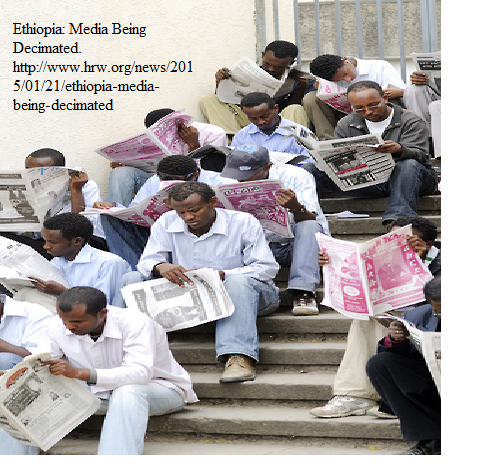
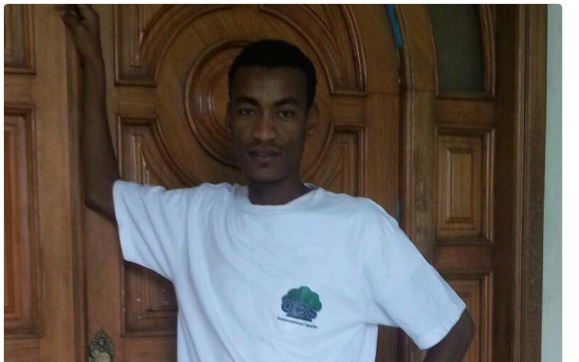







 Oromia Support Group


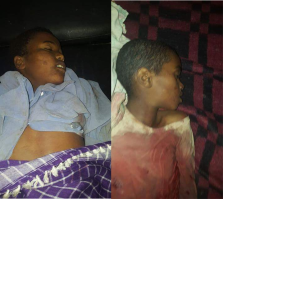


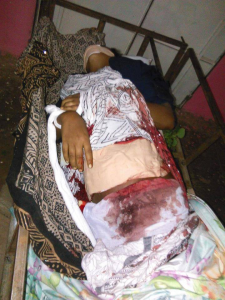




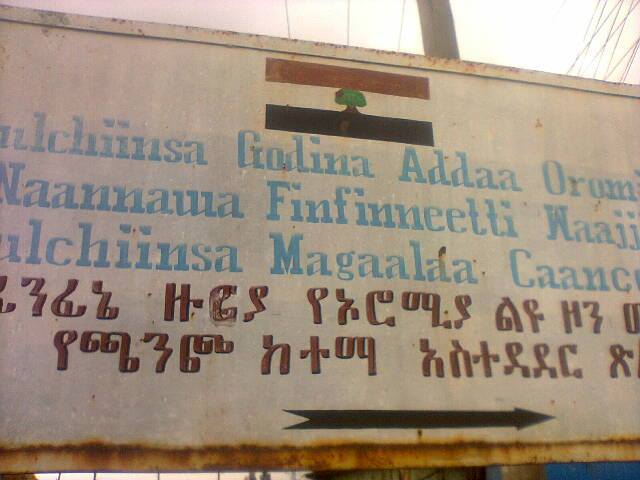

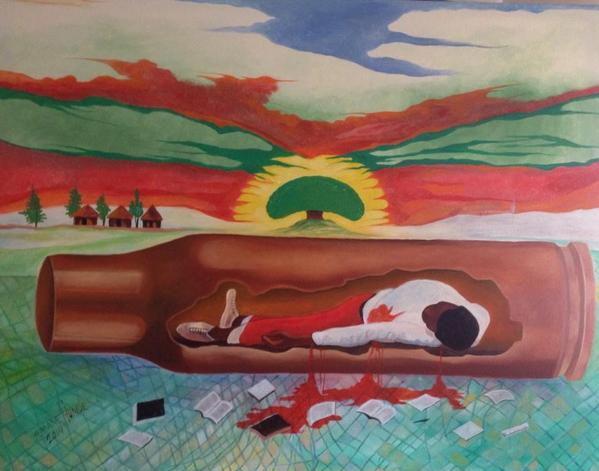
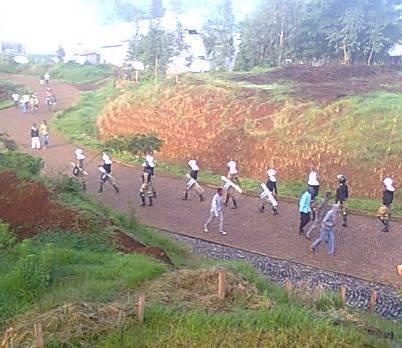


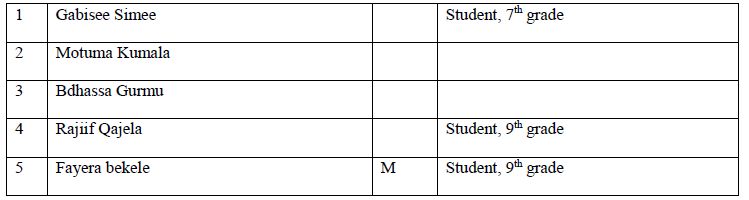 According to HRLHA reporters, the arrests were made to clear out supporters and members of the other political organizations running for the 5th General Election to be held May 24, 2015. The EPRDF, led by the late Meles Zenawi, claimed victory in the General Elections of 1995, 2000, 2005 and 2010. The TPLF/EPRDF government of Ethiopia has started a campaign of intimidation against its opponents. Extrajudicial arrests and imprisonments, particularly in the regional state of Oromia, the most populous region in the country, began late October 2014. The Human Rights League of the Horn of Africa (HRLHA) expresses its deep concern over the safety and well-being of these Oromo nationals who have been arrested without any court warrant, and are being held at police stations and unknown detention centers. The Ethiopian government has a well documented record of gross and flagrant violations of human rights, including the torturing of its own citizens, who were suspected of supporting, sympathizing with and/or being members of the opposition political organizations. There have been credible reports of physical and psychological abuses committed against individuals in Ethiopia’s official prisons and other secret detention centers. HRLHA calls upon governments of the West, all local, regional and international human rights agencies to join hands and demand the immediate halt to such extrajudicial actions against one’s own citizens, and the unconditional release of the detainees. RECOMMENDED ACTION: Please send appeals to the Ethiopian Government and its officials as swiftly as possible, written in English, Ahmaric, or your own language. The following are suggested: – Indicate your concern about citizens being tortured in different detention centers, including the infamous Ma’ikelawi Central Investigation Office; and calling for their immediate and unconditional release; – Urge the Ethiopian authorities to ensure that detainees will be treated in accordance with the regional and international standards on the treatment of prisoners, and that their whereabouts be disclosed, and – Make sure the coming May 24, 2015 election is fair and free. Read full statement from the following links:


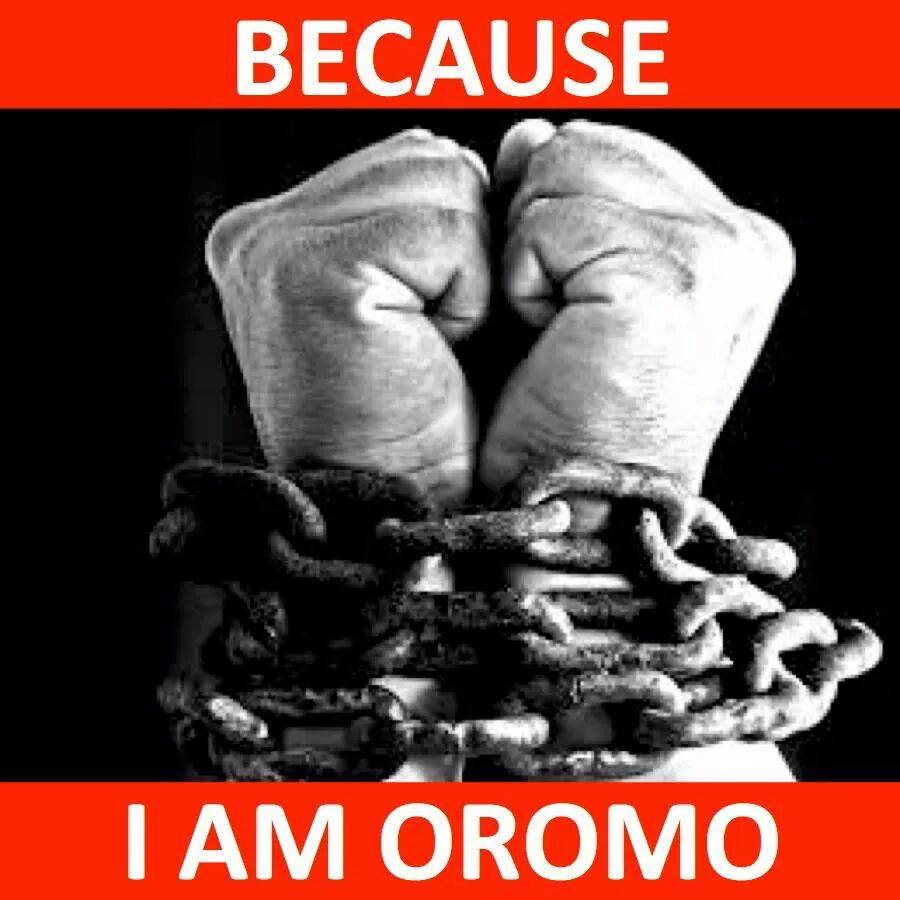


 Magaalaa Qassoo Keessatti Gaaffii Mirgaa Kaasuun Poolisoota Wayyaanee Waliin Wal Qabaa Jiru. Wallaggaa, aanaa Waamaa Hagaloo magalaa Qassoo keessatti Bitootessa 10 bara 2015 Humna uumata Oromoo FDG gaggeessaa jiruu fi ergamtoota Wayyaanee jidduutti walitti bu’iinsi guddaan uumameen magaalli Qassoo dirree falmaa ta’uu Qeerroon naannicha irraa gabaasa. Gaaffii uumannii fi qonnaan bultooti naannichaa gaafataniin wal qabatee guyyaa har’aa hiriirri magaalaa kanatti ta’ee fi dhadatnooleen uumataa kan isaan rifaasise poolisoonni Wayyaanee uumata nagaa qabanii hidhuu fi hiraarsuu itti fufanii jiru. Haaluma kanaan sabboontota armaa gadii kana magaalaa Qasoo keessaa waraanni Wayyaanee guyyaa har’aa qabee akka hidhee jiru qeerroon gabaasa. 1. Qajeelaa Raggaasaa 2. Boodanaa Baqqalaa 3. Misgaanuu Raggaasaa 4. Danjaa Dhangi’aa 5. Dhugaasaa Abdiisaa 6. Booboo Addunyaa 7. Misgaanuu Addunyaa fi kanneen biroon mana hidhaatti argamu Oduu dhuma wal fakkaatuun lubi waldaa makaana yesuus darabaaWaggaarii Ayyaanaa jedhamu mootummaan akka kufuuf Waaqayyoon kadhatte jedhamee achi buuteen isaa kan dhabamedha.

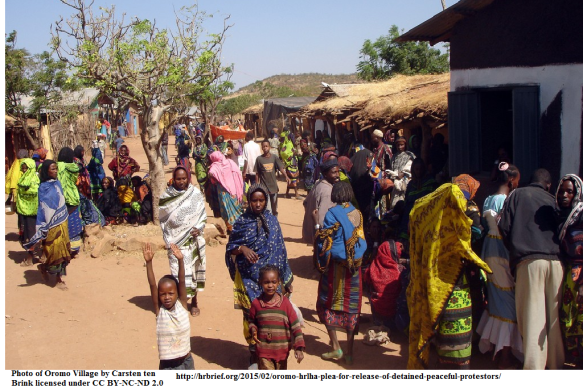


 February 23, 2015 Since the downfall of the military government of Ethiopia in 1991, the political and socioeconomic lives of the country have totally been controlled by the Tigray People’s Liberation Front/TPLF leaders and business institutions. As soon as the TPLF controlled Addis Ababa, the capital city, in 1991, the first step it took was to create People’s Democratic Organizations (PDOs) in the name of different nations and nationalities in the country. With the help of these PDOs, the TPLF managed to control the whole country in a short period of time from corner to corner. The next step that the TPLF took was to weaken and/or eliminate all independent opposition political organizations existing in the country, including those with whom it formed the Ethiopian Transitional Government in 1991. Just to pretend that it was democratizing the country, the TPLF signed seven international human rights documents from 1991 to 2014. These include the “Convention Against Torture and Other Cruel Inhuman or Degrading Treatment or Punishment”. Despite this, it is known that the TPLF has tortured many of its own citizens ever since it assumed power, and has continued to the present day. The TPLF Government adopted a new constitution in 1995; and, based on this Constitution, it formed new federal states. The new Ethiopian Constitution is full of spurious democratic sentiments and human rights terms meant to inspire the people of Ethiopia and the world community. The TPLF’s pretentious promise to march towards democracy enabled it to receive praises from people inside and outside, including donor countries and organizations. The TPLF government managed somehow to maintain a façade of credibility with western governments, including those of U.S.A. and the UK. In reality, the TPLF security forces were engaged in intensive killings, abductions, disappearances of a large number of Oromo, Ogaden, Sidama peoples and others whom the TPLF suspected of being members, supporters or sympathizers of the Oromo Liberation Front (OLF), Ogadenian National Liberation Front (ONLF), and Sidama People’s Liberation Front (SPLF). TPLF – from high officials down to ordinary level cadres in the various regional states – engaged in enriching themselves and their family members by looting and embezzling public wealth and properties; raping young women in the occupied areas of the nations and nationalities in Ethiopia; and committing many other forms of corruptions. After securing enough wealth for themselves, the TPLF government officials, cadres and members declared, in 2004, an investment policy that resulted in the eviction of indigenous peoples from their lands and all types of livelihoods. Since 2006, thousands of Oromo, Gambela, and Benishangul nationals and others have been forcefully evicted from their lands without consultation or compensation. Those who attempted to oppose or resist were murdered and/or jailed by the TPLF1. The TPLF government then cheaply leased their lands, for terms as long as 50 years, to international investors and wealthy Middle East and Asian countries, including Saudi Arabia2. The TPLF government has done all this against its own Constitution, particularly article 40 (3)3, which states that “The right to ownership of rural and urban land, as well as of all natural resources, is exclusively vested in the State and in the peoples of Ethiopia. Land is a common property of the Nations, Nationalities and Peoples of Ethiopia and shall not be subject to sale or to other means of exchange”. These acts were also against the Universal Declaration of Human Rights, Article 17 (1 & 2)4, which says, “1. Everyone has the right to own property alone as well as in association with others. 2. No one shall be arbitrarily deprived of his property.” In order to facilitate further corruption and embezzlement, the money paid for the leases as long as 50 years were received in cash. For example, the Indian agro investor Karaturi explained to a Guardian newspaper’s reporter that the TPLF government officials asked him to pay in cash in order to get the land, which he called “green gold”5. These gross human rights violations by the TPLF leaders against the Oromos, Gambelas, and Benishanguls have been condemned by many civic organizations, including Amnesty International, the Human Rights Watch, the Human Rights League of the Horn of Africa, the Oakland Institute and others. The giving away of Oromo land in the name of investment also includes Addis Ababa, the capital city situated at the center of Oromia Regional State. 30,000 Oromos were evicted by the TPLF/EPRDF Government from their lands and livelihoods in the areas around the Capital City and suburbs, and their lands were given to the TPLF officials, members and loyal cadres over the past 24 years. In order to grab more lands around Addis Abba, the TPLF government prepared a plan called “the Addis Ababa Integrated Master Plan,” a plan that aimed at annexing about 36 towns and surrounding villages into Addis Ababa. This Master Plan was first challenged by the Oromo People’s Democracy Organization/OPDO in March 2014. The challenge was first supported by Oromo students in different universities, colleges and high schools in Oromia, and then spread to Oromo farmers, Oromo intellectuals in all corners of Oromia Regional State and to Oromo nationals living in different parts of the world. The Oromo nationals staged peaceful protests all over Oromia Regional State. In connection with this Addis Ababa Integrated Master Plan, which had the risk of evicting more than two million farmers from around the capital city, about seventy Oromo students from among the peaceful protestors were brutalized by the special TPLF Agizi snipers and more than five thousand Oromos from all walks of life were taken to prisons in different parts of Oromia Regional State. The inhuman military actions and crackdowns by the TPLF government against peaceful protestors were condemned by different international media, such as the BBC6, human rights organizations, such as Amnesty International and the HRLHA7. The government admitted that it killed nine of them8. The unrest that started in central Oromia suddenly escalated to such a high level that the TPLF leaders suspended the expansion plan for a while.
  However, recently, without the slightest regret and sense of remorse over the massacres committed against peaceful protestors of Oromo Nationals by his government in May and April 2014, the TPLF’s co-founder, top official and the current Prime Minister’s (Hailemariam Dessalegn’s) special advisor, Mr. Abay Tsehaye, vowed in public that anyone who attempts to oppose the implementation of the so-called Addis Ababa Master Plan would be dealt with harshly. In his speech, he confirmed that the TPLF government is determined to continue with the master plan, no matter what happened in the past or what may come in the future. In a manner that Abay Tsehaye was reiterating that the annexations of towns and cities in central Oromia into the capital Addis Ababa will go ahead as planned regardless of the absence of consultations and consent of the local people and/or the officials of the targeted towns and cities. Besides displaying his extreme arrogance and contempt for the Oromo Nation, Mr. Abay Tsehaye’s speech was in direct breach of constitutional provisions of both federal and regional states.
  The Human Rights League of the Horn of Africa (HRLHA) would like to express its deep concern that this TPLFs leader’s speech not only encourages violence against the country’s own citizens, but also invites further bloodshed and losses of lives; it leaves no room at all for dialogue, consultation and consent – norms which are at the core of a genuine democracy. This is still happening despite the killing of more than seventy Oromo youth and the arrest and incarceration of thousands of others as a result of violent and deadly responses by armed forces of the TPLF and the government to peaceful demonstrators in May and April 2014. Conclusion: The HRLHA believes that the gross human rights violations committed by the TPLF government in the past 24 years against Oromo, Ogaden, Gambela, Sidama and others were pre-planned and intentional all the times that they have happened. The TPLF killed, tortured, and kidnapped and disappeared thousands of Oromo nationals, Ogaden and other nationals simply because of their resources and ethnic backgrounds. The recent research conducted by Amnesty International under the title “Because I am Oromo”: SWEEPING REPRESSION IN THE OROMIA REGION OF ETHIOPIA’9 confirms that peoples in Ethiopia who belong to other ethnic groups have been the victims of the TPLF. The TPLF inhuman actions against the citizens are clearly a genocide, a crime against humanity10 and an ethnic cleansing, which breach domestic and international laws, and all international treaties the government of Ethiopia signed and ratified. The Human Rights League of the Horn of Africa wants to hold the TPLF government accountable, as a group and as individuals, for the crimes they have committed and are committing against Oromos and others. The HRLHA calls on all human rights families, non-governmental civic organizations, HRLHA members, supporters and sympathizers to stand beside the HRLHA and provide moral, professional and financial help to bring the dictatorial TPLF government and officials to international justice. ——————- * The HRLHA is a non-political organization which attempts to challenge abuses of human rights of the people of various nations and nationalities in the Horn of Africa. It works to defend fundamental human rights including freedoms of thought, expression, movement and association. It also works on raising the awareness of individuals about their own basic human rights and those of others. It encourages respect for laws and due process. It promotes the growth and development of free and vigorous civil societies. ——————- We Fight for Human Rights! HRLHA Head Office February 23, 2015 ——————- 1. Genocide Watch,
![Two Oromo Farmers in Salale Brutally Murdered; Their Bodies Dragged and Put on Pubic Display for Resisting Oppression Against Tigrean Habesha Rulers [Viewer Discretion Advised: Graphic Photo]](https://i1.wp.com/finfinnetribune.com/wp-content/uploads/2015/01/Oromo-in-Salale-Murdered-Dragged-and-Displayed-2015.jpg?resize=950%2C713)
![Two Oromo Farmers in Salale Brutally Murdered; Their Bodies Dragged and Put on Pubic Display for Resisting Oppression Against Tigrean Habesha Rulers [Viewer Discretion Advised: Graphic Photo]](https://i0.wp.com/finfinnetribune.com/wp-content/uploads/2015/01/Oromo-in-Salale-Murdered-Dragged-and-Displayed-2015-3.jpg)


 Dargaggoonni aanaa kanaa naamusa filannoo jeequuf warra qophaya jiran waan taheef jedhamee barattootas tahee dargaggoota hundaafuu kaardiin filannoo dhorkamuu Qeerroon gabaasaa jira. Akkasuma aanama kana keessa ganda Baabboo jedhamu keesstti dargaggootaan qarshii 3, 3 fidaa waraqaa eenyummaa baafadhaa isaan booda filannoof kaardii isiniif laanna jedhame tole jechuun dargaggoonni qarshii jedhame kana kennan, horiin isaan irraa fuudhames gara darbe dargaggoonni kaardiis fudhachuu hin dandeenye qarshii keenya deebisa Wayyaanee silaafuu hattuudha jechuudhaan daraggoonni Oromoo guyyaa kaleessaa FDG kaasanii jiru. Haala kanaan namootni 6 dargaggoota kan qindeessu filannoon aka hin gaggeeffamneef dargaggoota ijaaraa kan jiraniidha jedhamuun ganda Baabboo irraa konkolaataa poolisiin galgala sa’a 12 booda waajjira poolisii aanichaatti gaaffeman, namootni kun maqaan isaanii: 1. Mikaa’el Hirkisa-ogeessa fayyaa Looniiti 2. Nuuraddiin Muusaa-Daldalaa 3. Amad Horaa-Qonnaan Bulaa 4. Shaful Boshoraa-Barataa 5. Iddoosaa Raagaa-Qonnaan Bulaa 6. Shuumaa Lammeessaa-Qonnaan Bulaa Namootni kun amma waajjira poolisii aanaa Jimmaa Horroo keessa jiru, maqaan ittiin yakkaman tokko namusa filannoo kan jeeqan, kana gochuufis uummata fi dargaggoota ijaarsa irratti kan argaman jedhamuun. Suuraaleen kun barattoota qabamanii fi loltoota sirncha muldhisa.
 Since the March-April 2014 crackdowns against the peaceful Oromo protesters who have protested against the Ethiopian Federal Government’s plan of annexation of 36 small Oromia towns to the capital city of Addis Ababa under the pretext of the “Addis Ababa Integrated Plan”, thousands of Oromo nationals from all walks of life from all corners of Oromia regional state including Wollo Oromo’s in Amhara regional state have been detained or imprisoned. Some have disappeared and many have been murdered by a special commando group called “the Agiazi force”. The “The Agiazi” force is still chasing down and arresting Oromo nationals who participated in the March-April, 2014 peaceful protests. Fearing the persecution of the Ethiopian government, hundreds of students did not return to the universities, colleges and high schools; most of them have left for the neighboring states of Somaliland and Puntiland of Somalia where they remain at high risk for their safety. Wollo Oromos who are living in Ahmara regional state of Oromia special Zone are also among the victims of the EPRDF government. Hundreds of Wollo Oromos have been detained because of their connection with the peaceful protests of March-April 2014. The EPRDF government has detained many Oromo nationals in Wollo Oromia special Zone under the pretext of being members or supporters of the Oromo Liberation Front (OLF), as prisoners’ voices from Dessie/Wollo prison have revealed. From among the many Oromos who were picked from different districts and places from Wollo Oromia special Zone in Amhara regional state in April 2014, the HRLHA reporter in the area has received a document which shows that 26 Oromo prisoners pleaded to the South Wollo High Court that they were illegally detained first in Kamise town military camp for 36 days, Kombolcha town Police Station for 27 Days, and Dessie city higher 5 Police Station for 10 days- places where they were severely tortured and then transferred to Dessie Prison in July 2014. According to the document, they were picked up from three different districts and different places by federal police and severely beaten and tortured at different military camps and police stations and their belongings including cash and mobile telephones were taken by their torturers. In their appeal letter to the South Wollo high court they demanded Full document in


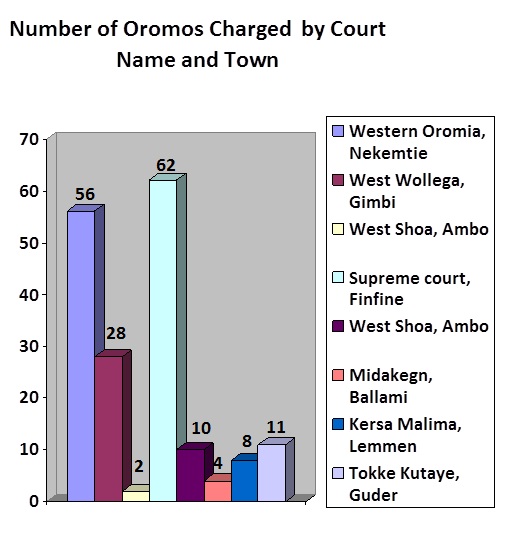


 ETHIOPIA: Relentless government violence on Oromo students and nationals continues, says human rights organization Posted: Hagayya/August 27, 2014 · Gadaa.com ————————- The following is a press release from the Human Rights League of the Horn of Africa (HRLHA). ————————- August 27, 2014 While fresh arrests and detentions, kidnappings and disappearances of Oromo nationals have continued in different parts of the regional state of Oromia following the April-May crackdown of peaceful demonstrators, court rulings over the cases of some of the earlier detainees by courts of the regional state are being rejected by political agents of the governing TPLF/EPRDF Party. The renewed violence by government forces against Oromo nationals started particularly following what was termed as “Lenjii Siyaasaa” (literally meaning “political training”) that has targeted Oromo Students of higher educational institutions and has been going on in the past two weeks in different parts of Oromia. Although the agendum for the “Political Training” was said to be “the unity of the country,” it instead has become an opportunity of carrying out further screenings and arrests of students, as around 100 more students have so far been arrested from Ambo University campuses alone and sent to a remote, isolated military camp called Sanqalle, leaving families and friends in fear in regards to the safety and well-being of the students in particular, not to mention the disruption of their studies. The arrests were made following the students’ protest of their confinement into the campuses during this so call “Political Trianing,” and the demand that the killers of their fellow students be brought to justice prior to discussing “unity.” Also, five students of Wallaga University, from among those who were gathered for the same purpose of “Political Training,” were kidnapped on the 22nd of August 2014, and taken away in a vehicle with plate number 4866 ET; and their whereabouts are not known since then. HRLHA correspondents have also traced another fresh arrests and detentions of around 100 Oromo nationals in a small town called Elemo, Doranni District in the Illu Abba Borra Zone. It took place on the 14th of August 2014; and Waqtole Garbe, Sisay Amana, Tiiqii Supha, Ittana Daggafa, Badiru Basha, Kamal Zaalii, Rashiid Abdu, Zetuna Waaqoo, Daggafa Tolee, Adam Ligdii, Indush Mangistu, Dibbeessa Libaan, and Ofete Jifar were a few among those detainees in Elemo Prison. More worrisome and frustrating is agents of the federal government’s interference with regional and local judicial systems. More than one hundred students and other Oromo nationals, from among the thousands who were detained following the April-May nationwide protest, have been granted bails in local courts of the regional government of Oromia. These include 64 detainees in Dembi Dollo/Qellem, 10 in Ambo, 40 in Sibu-Sire and Digga District. But, all the court decisions were overruled by political officials representing the federal government. The Dembi Dollo/Qellem detainees in particular were granted bails four times, only to be turned down by political officials all the four rounds. On the other hand, there have been some cases in which prison terms ranging from six months to a year-and-half were imposed on the Oromo detainees, not in courts, but by those representatives of the federal government. Also, some independent lawyers complain that they were threatened by officials from the ruling party; and, as a result, refraining from representing the Oromo detainees. Usual as it has been in the past fifteen or so years, this case of interfering with and disobeying court rulings indicates that the case of these most recent Oromo detainees is purely political. The Human Rights League of the Horn of Africa (HRLHA) calls upon the Ethiopian Government to refrain from harassing and intimidating students through such extra-judicial means as killings, arrests and detentions, and denials of justice after detention; and instead, facilitate conducive teaching-learning environments. HRLHA also calls upon the Ethiopian Government to unconditionally release the detained Oromo students and other nationals; and, as requested by their fellow students, bring to justice the killers of innocent and peaceful protestors during the April-May crackdown. BACKGROUNDS: The Human Rights League of the Horn of Africa (HRLHA) has reported (May 1st and 13th, 2014, urgent actions, HumanRightsLeague.com) on the heavy-handed crackdown of the Ethiopian Federal Government’s Agazi Special Squad and the resultant extra-judicial killings of 34 (thirty-four) Oromo nationals; and the arrests and detentions of hundreds of others. Although the brutalities of the armed squad and the resultant fatalities happened to be very high in Ambo Town, the peaceful protests by Oromo students of different universities and faculties have been taking place in April and May in various towns and cities of Oromia, including Diredawa and Adama in eastern Oromia, as well as Jimma, Mettu, Naqamte, Gimbi, and Dambidollo in western Oromia. The Oromo students of universities and colleges in different parts of the regional state of Oromia took to the streets for peaceful demonstrations in protest to the decision passed by the Federal EPRDF/TPLF-led Government to expand the city of Finfinnee/Addis Ababa by uprooting and displacing hundreds of thousands of Oromos from all sorts of livelihoods, and annexing about 36 surrounding towns of Oromia, the ultimate goal of which is claimed to be redrawing the map of the Oromia Region. The federal annexation plan, which was termed as “The Integrated Development Master Plan,” is said to be covering the towns of Dukem, Gelan, Legetafo, Sendafa, Sululta, Burayu, Holeta, Sebeta, and others, stretching the boundary of Finfinne/Addis Ababa to about 1.1-million hectares – an area of 20 times its current size. – HumanRightsLeague.com:




 31 Oromo students, under 16 year old teenagers are being tortured by Agazi (TPLF) in jail at Ambo. The National Youth Movement for freedom and Democracy listed (in its 10th July 2014 publication) their names which is in Afaan Oromo as follows:- Dararamni Oromoo mana hidhaa Wayyaanee keessaa umurii hin filatu Dargaggoonni maqaan isaanii armaa gadi xuqame guyyaa 23/08/2006 (A.L.E) irraa eegalee sababa tokko malee jumulaan walitti qabamanii shakkiidhaan hidhamuu irraan kan ka’e ma/mu/ol/Go/ Sh/Lixaatti akka dhihaatanii fi himannaan dhiyaate waan hin jirreef jedhee ajajaan akka gadi lakkisaman murteesse. Haa ta’u malee ajajni mana murtii kun hojii irra ooluu irra umurii daa’imummaan mana hidhaa keessatti dararamaa jirra jechuun ma/mu/waliigalaa Oromiyaatti ol iyyatanii hanga yoonaatti deebii hin arganne. Isaanis;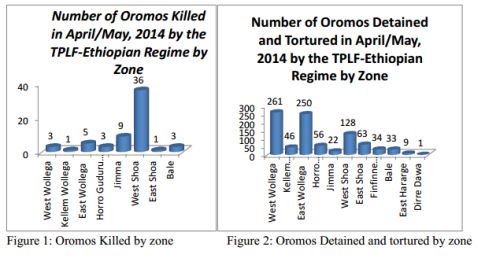
 June 29, 2014 Dear Sir/Madam: We are reaching out to you as the Board of Officers of the International Oromo Youth Association (IOYA) whose nation is in turmoil back in Oromia, Ethiopia. Recently, Oromo students have been protesting against the new Addis Ababa “Integrated Master Plan” which aims at incorporating smaller towns surrounding Addis Ababa for the convenience of vacating land for investors by displacing millions of Oromo farmers. As a political move, this will essentially result in the displacement of the indigenous peoples and their families. Oromo farmers will be dispossessed of their land and their survival both economic and cultural terms will be threatened. The Oromos strongly believe that this plan will expose their natural environment to risk, threaten their economic means of livelihood (subsistence farming), and violate their constitutional rights. The Ethiopian government is executing its political agenda of progressive marginalization of the Oromo people from matters that concern them both in the Addis Ababa city and the wider Oromia region. The master plan is an unconstitutional change of the territorial expansion over which the city administration has a jurisdiction. The government justifies the move in the name of enhancing the development of the city and facilitating economic growth. The justification is merely a tactical move masked for the governments continued abuse of human rights of the Oromo people. While the Oromos understand that Addis Ababa itself is an Oromo city that serves as the capital of the federal government, they also consider this move as an encroachment on the jurisdiction and borders of the state of Oromia. The protesters peacefully demonstrated against this move. University students and residents have been in opposition to the plan, but their struggle has been met by a brutal repression in the hands of the military police (famously known as the Agazi). It has been reported that shootings, arrests, and imprisonments are becoming rampant. It is also reported that the death toll is increasing by the hour. Recently, sources indicate that over 80 people have been shot dead, others severally injured and thousands arrested. In addition, Oromo students have been protesting peacefully for over three weeks now, despite mass killings and arrests by Ethiopian security forces. University and high school students from more than ten universities have been engaging in the Oromo protests. The peaceful rally has now spread across the whole country and is expected to continue until the Ethiopian government refrains from incorporating over 36 surrounding smaller towns into Addis Ababa. It is stated to be displacing an estimate of 6.6 million people and violating constitutional rights of regional states. As an organization subscribing to broader democratic engagement of the Oromo youth, we oppose the brutal violence that the Ethiopian government is meting out on innocent, unarmed young students who are peacefully protesting. As leaders of the Oromo community, we support and stand in solidarity with Oromo protests in Ethiopia. The human rights volitions being carried out by the Ethiopian government against innocent students are unacceptable. Continuous assaults, tortures, and killings of innocent civilians must be stopped. We urge you to join us in denouncing these inhumane and cruel activities carried out by the Ethiopian government. We believe it is imperative that the international community raise its voice and take action to stop the ongoing atrocities that are wreaking havoc to families and communities in the Oromia region. We urgently request that such actions be taken in an attempt to pressure the Ethiopian government to stop terrorizing and killing peaceful protesters:
 Abdi Kamal Mussa is Oromo political prisoner kept in Dire Dawa. He graduated from Dire Dawa Universityin 2013 and was working at Ethiopian Commercial Bank, Jigjiga branch. He was arrested in May 2014 on bogus accusation of providing financial support to the student protesters. He is languishing in the gulag without any charge and legal representation. #OrmoProtests #FreeOromoStudents


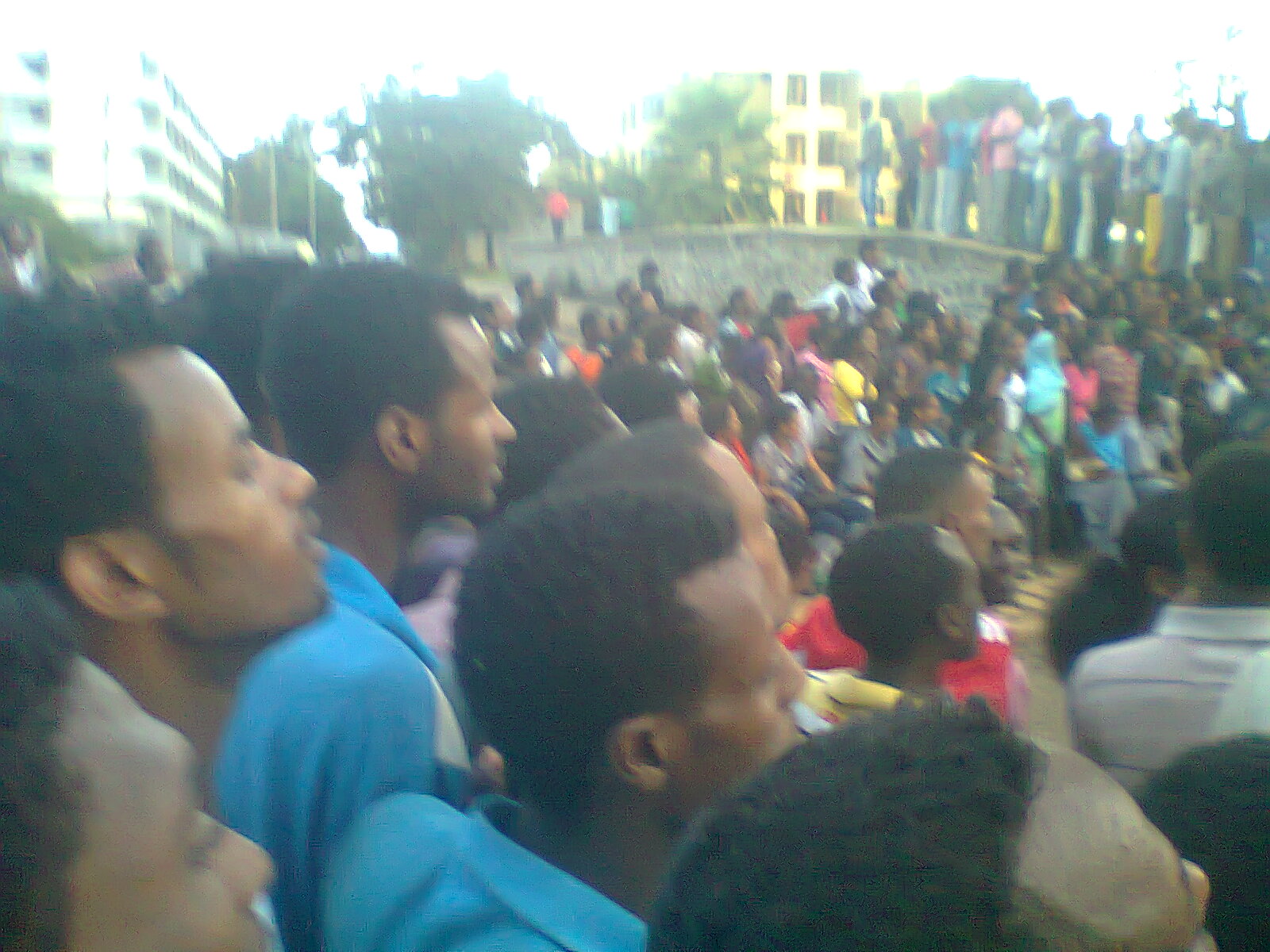

 Photos: Sen. Amy Klobuchar (L) and Sen. Al Franken (R) of Minnesota Two more U.S. Senators, Sen. Amy Klobuchar and Sen. Al Franken of Minnesota, wrote a letter to the U.S. Secretary of State, Mr. John Kerry, to express concerns about the Ethiopian government’s human rights violations, particularly the Ethiopian government’s recent acts of violence against Oromo peaceful demonstrators in Oromia. In the letter, the U.S. Senators urged the U.S. State Department to make the “respect for the rule of law and human rights in Ethiopian government’s treatment of all ethnic groups” central to the U.S.-Ethiopia relationship. It’s to be noted that U.S. Senators from the State of Washington, Sen. Maria Cantwell and Sen. Patty Murray,
 Following last month’s violent answer of the Ethiopian armed forces against peaceful protesters in Oromia, UNPO expresses its support to the victims’ families. Urgent attention from the international community to the situation of the Oromo people in Ethiopia is required. Over the course of the month of May, students in Oromia have been facing harsh repression by Ethiopia’s authorities. The peaceful student protests against the government’s planned education reforms, were met by excessive violence, causing the death of approximately 30 students and teachers. Reportedly, the youngest victim was only 11 years old. Ever since, international outrage spread, and in many cities solidarity protests were held. The Ethiopian Government has denied any responsibility, and is exercising a strict control over the local media. By staging the protests, the students wanted to express their concern about the government’s project to expand the municipal boundaries of the capital city, Addis Ababa. This would imply that the Oromo students’ communities, currently under regional jurisdiction, would no longer be managed by the Oromia Regional State. In addition, the reform would include the displacement of Oromo farmers and residents. Considering their vulnerable status in Ethiopian society, this would make the situation for Oromo individuals even worse than it already is. The discrepancy between the nature of the protests and the Ethiopian authorities’ reaction is extremely alarming, and gives further evidence of the human rights abuses to which the Oromo community is systematically subjected in Ethiopia. The Oromo suffer from severe discrimination, not only in terms of freedom of expression, as was the case in these recent events, but also in terms of basic human rights, cultural expression, socio-economic conditions and political representation. Housing development in Ethiopia regularly happens at the expense of Oromo farmers, who are forced to give up their lands, with insufficient or no financial compensation in return. These acts of forced removal or land grabbing are mostly achieved through violent attacks and killings. Over the past few years, many reports stated that Oromo individuals had been killed by the Ethiopian Special Police Forces, including women and children. According to a recent
  Oromo youth Galanaa Nadhaa murdered by TPLF/Agazi. Waxabajjii 23/2014 Sirni Awwalcha Gooticha Sabboonaa Oromoo dargaggoo Galanaa Nadhaa guyyaa har’a ganda dhaloota isaa Godina Lixa Shawaa Aanaa Tokkee Kuttaayee ganda qonnaan bulaa Tokkee Konbolchaatti bakka uummaanni Oromoo Godinotaa fi aan
 Galaanaan Nadhaa abbaa isaa obbo Nadhaa cawwaaqaa fi haadha isaa aadde Geexee Haacaaluu irraa godina lixa shawaatti bara 1972 ALH tti dhalate.Umuriin isaa wayita barnootaaf gahu mana barumsa baabbichaa sadarkaa lammaffaatti kuyaa tokkoo hanga sadii barate.kutaa 4 hanga 8 mana barumsaa tokkeetti barachuun qabxii gaarii fidee mana barumsaa Amboo sadarkaa lammaffaatti barnoota isaa kutaa saglaffaa itti fufe.Galaanaan nama sabboonummaa orommummaa qabuu fi qalqixxummaa dhala namaatti nama amanu ture.Galaannaan rakkina saba oromoof furmaanni qabsoo gochuu qofa jedhee amana.kanaafis gummaacha isarraa eegamu bahaa ture.bara 1992 yeroo bosonni baalee gubate barattoota oromoo adda dureen mormii dhageessisan keessaa tokko ture.mormii inni dhageessiseefis diinni qabee mana hidhaatti dararaa hangana hin jedhamne irraan gahe.haa ta’uu garuu Galaanaan nama doorsisa diinaaf jilbeeffatu hin turre.Jireenyi isaa qabsoo ture.Bara 1994 yeroo FDG oromiyaa keesssa deemaa ture Galaanaan ammas qooda lammummaa bahu irraa of hin qusanne.ammas diinni qabee mana hidhaa galche..Galaanaan bara kutaa 12 qorame ture mana hidhaa taa’ee.qabxii olaanaa fiduun yunivarsiitii maqaleetti ramadame.Achitti balaa dhibee waggaa kudha tokkof isa gidirseef saaxilame. kunis gochaa ilmaan tigireeti.Galaanaan waggaa kudha tokkoof erga dhukkubsatee booda sanbata darbe addunyaa kanarraa du’aan boqote.sirni awwaalcha isaa guyyaa har’aa bakka uummanni oromoo bal’aan argametti har’aa magaala tokkee bataskaana mikaa’el jedhamutti raawwatame.qabsaa’aan kufus qabsoon itti fufa!!!! IUOf!!!!!!!!!. ‘My name is Hambaasan Gudisaa. I was born in Gincii, West Showa, Oromia, Ethiopia. I was a third year student (Afaan Oromo major) at Addis Ab


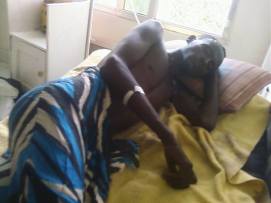
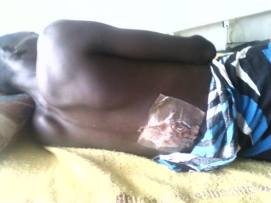


 Six/Seven TPLF/Agazi armed men against two unarmed Oromo youth. Humni diinaa biyya keenya humnaan qabattee jirtu, kunoo haala kanaan, gara-jabina daangaa hin qabneen, amma nyaattee-dhugdu ol-fuutee ijoollee keenyatti buufatti. Innumtuu tokko yookaan lama miti; shan, jahaa fi torbaa taatee. see @


 Still, I was tempted to decline when a woman in my row moved over to sit next to me and offered to translate for me. I kind of like to try to listen and pick out what I can. If I had turned her down, I would have missed the emotion conveyed in her translation. Her tone told me what I hadn’t figured out yet (though I should have known) – the son was going to die…a double injustice since the real-life plot not only includes the loss of ancestral lands, but also the lack of freedom to protest that loss, and death or imprisonment for those who dare to do so anyway. It was more of a skit, really. A powerful skit, regardless of acting ability, because the story is so powerful. A story of a family of three. Just one son, supported in his schooling by what his family was able to produce on their farm. The land was key. His parents had not been able to get an education. With the land, now he could. Yet when an investor came asking the government official if land was available, he was told, yes, there is much land that is ‘not being used.’ When the investor was brought to see the land in question, it was as if the farmer was invisible. The deal was made right there between the investor and a local intermediary while the farmer continued to plough his field. Then their son came home from school saying he was going out to march with other students to protest what was happening to the land – to all of the farmers in the area – the mom cautioned him to be safe, the government can not be trusted, she said. My translator began to cry in earnest. … I remembered once when I had to act out a similar scene. I’m not a big fan of role-plays, so I was going along with the activity, but holding back quite a bit. A group of us were given roles to act out a lesser known bit of Canadian history when indigenous children were forcibly removed from their villages and their families and taken to residential schools to be ‘educated,’ as well as assimilated, often abused, even experimented upon. Often, they never returned.
  Almost always, those who did return spoke of their lost childhood and traumatic memories. I was an Anishinabe mother in the role-play. In real life at the time, I had left my only child, a two year old boy, home for two weeks with his dad so I could participate in this delegation, mostly to learn more about the Anishinabe history in general and one community’s struggle in particular. Though the experience was meaningful, that day I was starting to wonder if two weeks was too long to be away from my son. One person had come to the delegation with me, Jared, a young man in his twenties. I knew him well in the sense that we were part of the same intentional living community. We had eaten together, worshipped together, sat in consensus decision-making meetings together, sang, cooked, and worshipped together over the previous three years. He was given the role of my son. Jared and I stood in the circle area with a few other people who had roles as part of the Anishinabe village. I was just going through the motions of the role-play, not really into it. Wishing I enjoyed that kind of thing more. Then they came for Jared. In that moment when they snatched him away, I cried out and reached out for him but he was gone and I was left sobbing. Somehow it had become real. Five years later, I still hear comments about how real my heartbreak felt to everyone in the room. … As the woman next to me struggled to speak through her tears, we watched the skit draw to its inevitable close. The security forces blocked the path of the unarmed protesters. The protesters held their ground. The security forces escalated the situation by firing at the students. The only child of the farmer and his wife was gunned down. His parent actors bitterly mourned his loss. He too is gone. It’s hard to clap after that. Hard to will one’s hands to applaud the actors when you’re thinking of the families that have gone through similar situations so recently. Many Oromo students are gone. Some known to be killed, some disappeared, arrested or abducted without releasing names. Many die in detention centers and prisons. Yes many students are gone. Some may return from imprisonment with accounts of mistreatment and suffering, with harrowing stories of other students locked up years ago, still in prison with no trial, no real charges and very little hope. Others will not return. One of those is Alsan Hassan, abducted May 27 from his university after participating in a hunger strike.
  On June 1, his family was notified of his death. They were told he killed himself, a story commonly invented by the authorities to cover up the real cause of death: torture. His parents came to retrieve their son. His body was severely disfigured from the abuses he had suffered. Still they could not simply take him home. They were charged an exorbitant price and had to return home, borrow money just to secure the release of his body and finally make journey home to bury him. The thought of Alsan and the other sons and daughters lost to their families – that is why the woman translating for me (and I) couldn’t keep from crying, however predictable the plot of the skit. I was sitting next to my six year old son. Her 11-or-so year old son was on the other side of her. We can’t help but hear these stories not only as fellow human beings, but as mothers. We translate, we write, we do whatever we can from the other side of the world in the hopes that we will inform and inspire enough people to bring an end to the unjust imprisonment of dissenting young voices. See @


 Nimoonaa Xilaahuun Imaanaa (1986-2014). Oromo National, Banking and Finance Graduate of Finfinne University (AAU) & Teacher. Tortured and murdered by TPLF while in jail.

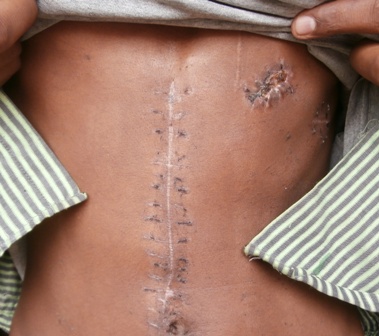

 Aslan Hasan, one of the 10 Oromo students kidnapped on May 29, 2014 from Haromaya University has died while in military detention center in Harar city. Apparently he collapsed during one of the torture sessions, then was taken to Tikur Anbessa Hospital in the capital, where he died on June 1, 2014. The regime told his families that the student committed suicide. Aslan was a 2nd year engineering student at the University. He was born in Bakko and attended high school in Burayu. His body has been taken to Gudar. Barataa Nuraddin(Alsan) Hasan dhalootaan magaalaa BAAKKOO’tti dhalate. Barnoota isaa sadarkaa 1ffaa achuma magaalaa Baakkootti xumure. Barnoota isaa sadarkaa lammaffaaf qophaa’naa obboleessa isaa bira taa’ee magaalaa BURAAYYUU tti xumure. Bara 2005(2013) yuuniversiitii Haramayaa saayinsii Injiinariing(Engineering science) jalattii muummee ‘Electirical Computer Engineering’ filachuun barataan sabboonaaf garraamiin kun haala hoo’aaf milkaayina qabuun barnoota isaa hordofaa utuu jiruu, humni mootummaa abba hirree wayyaaneen guyyaa gaafa 29/05/2014 mooraa guddicha YUUNIVERSIITII HARAMAYAA keessaa bakka GADA-JAHE(IOT CUMPUS) jedhamuun beekamu, Gamoo H lakk-doormii 26 (H-26) duulli mootummaa wayyaanee saroota OPDO waliin doormiitti itti seenan, hiriyoota isaa faana qayyabachaa utuu jiruu, qabame. Barataan sabboonaan Nuraddin(Alsan) Hasan guyyaa gaafa qabamee kaasee hanga guyyaa kaleessaatti (01/06/2014) barattoota kakaaste hidhata dhaaba alaa waliin qabda jechuun barataa barumsa qofaaf maatii isaa irraa adda bahee barnoota isaa hordofaa jiru, magaalaa Hararitti guyyoota sadii guutuu fannisanii reeban. Erga inni of dadhabees, sobdee akka nuti si dhiifnuuf malee hin miidhamne ittiin jechuun, utuu reebanii lubbuun isaa dabarte. Gocha hammeenyaa hagana ga’u raawwatanii, hidhamaan of ajjeeseera, gara hospitaalaa haa deemu, haa qoratamu. Jechuun reeffa isaa gara hospitaala XIQUR AMBASSAA geessan. Obboleessa isaa SULXAAN HASAN, waamuun obboleessikee mana adabaatti of-ajjeese gara finfinneetti kottuu reeffa fuudhi, jechuun maatii isaatti bilbilan. Yeroo ammaa kana reeffi barataa kanaa magaala GUDAR ga’uu isaa ergaan bilbilaa nu ga’eera. “Lubbuukeef Jannatan Hawwa” itttiin jedhaa! Maddi oduu peejii “kuusaa Dhiiga Oromoo” ti peejicha ‘like’ haa goonu press ‘like’ link on Kuusaa Dhiiga Oromoo’s page. RAKKOO AMBOO KEESSA JIRU!#OromoProtests- 2nd June 2014 Akkuuma beekamu FDG FI WAA’EEN MASTEER PLANII erga jalqabe kaase Magalatii keessatti saba Oromoo irratti kan rawwatama jiru mutumma kamiyyun kan rawwatama ture waliin hin madalamu jechudhan gabasaan magala Amboo irra nu qaqabee jira! Waan Nama gadisiisu keessa Barataa yunviristi tokko kan guyya finciilli itti jalqabee rasaasan rukutamee hanga ammatti bakka warri Ogumma fayya itti barataan(Mana reeffa)keessa keessa tursuun Jimaata darbee halkaan keess
 (RAB, Waxibajjii 1, 2014) Mootummaan Woyyaanee Hegeree Biyyaa akkasitti karaatti hambisaa jira! Dargaggoo Nimoonaa Xilaahun bara 2007 yunversiitii Finfinneetii eebbifamee godina Kaaba shawaa mana barumsaa Shanootti barsiisaa ta’ee yeroo ramadame akkuma dargaggoo Oromoo kaanii innis ummata isa guddisee, barsiisee kanaan isa ga’e tajaajiluuf hawwii guutuudhaan ture kan inni hojii barsiisummaa eegale. Akkuma dargaggeessa kamii iyyuu mana dhaabee ijoollee godhatee jireenya gaggeessuuf abjuun isaa bara dheeraa waan bakka ga’aa dhufe itti fakkaate. Waxibajjii 26, 2008 namni mul’ataa kun hojii barsiisummaa jalqabee reefuu baatii muraasa hojechuu isaati. Guyyuma kana akkuma guyyoota kaanii hiriyyoota isaa wojjin utuu mana barumsaa inni barsiisuu galaa jiruu konkolaataan lakkoofsa gabatee ishee 3-F taate dingata dhuuftee fundura isaa dhaabbate. Konkolaataan kun kan Poolisii Federaalaati. Konkolaataa kana keessaa namootni uffata sivilii uffatan utaalanii bu’uudhaan balleessaa tokko malee barsiisaa Nimoonaa ukkamsanii fuudhanii sokkani. Dargaggoo Nimoonaa utuu gara wojjira poolisii anichaatti illee hingeeffamiin dabarfamee iddoo hinbeekamnetti geeffamuu isaa namootni yeroo sana ijaan argan himaniiru. Haalli kun kan isaan yaadesse Oromootni baayyeen dhaabbileen mirga dhala namaa tiksan addunyaa dhiimma kana duukaa bu’anii lubbuu dargagoo Nimoonaa akka baraaraniif waamicha godhanii turan. Woggaa tokko, waggaa lamaa, sadii … woggootiin 6 nilakkaa’aman……… Mootummaan Woyyaanee ilmaan Oromoo, keesummaa immoo hegeree biyyaa kan ta’an dargagoota Oromoo hamilee cabsuuf tooftaa inni itti gargaaramu keessa inni tokkoo dargaggoota oromoo sammuu cimaa qaban ukkamsee mana hidhaa buusee, achitti torchii godhee, namummaatii isaan baasee gaafa isaan qarqara boollaa irra ga’an gadi darbachuu yookanis mana hidhaa keessatti ajjeesee reeffa isaanii baasuudha. Dargaggoo Nimoonaas carradhuma kanatu isa argate. Woggootii ja’aan darbaniif Manneetii hidhaa Mayikelaawwii, Qaallittii, Qiliinxoo, akkasumas Ziwaaytti gidiraa ilmoon namaa arguu hinqabne baayee arge. Kana irraa kan ka’es dhukkuba irra bu’e. Dhukkuba isaa kanaafis yeroo dheeraa fuundura woldhaansa haakimaa argachuun irra ture hinargatiin hafe. Bulchiinsi mana hidhaa Lubbuu dargaggoo kanaa baraaruuf gargaarsi woldhaansaa hakimaa olaanaan akka isa barbaachisu yoo beeke illee yeroo dheeraadhaaf irratti ilaaleera. Dhuma irratti guyyaa muraasa fuudura waardiyyoota poolisii federaalaa afuriin marfamee eegamaa hospitaala Xiqur Anbessaa akka seenu yoo godham iyyuu dhukkubni isaa waan baayyee irra tureef, yeroo itti gargaarsa argatutti waan hinargatiin hafeef hakiimotni kana booda waan baayee gargaaruu akka hindandeenye dubbataniiru. Umrii waggaa digdamootaa keessatti kan argamu dargaggoo xobbeen abdii borii amma guyyaa du’a isaatii eegachaa jirra jedhamee iddi himamee guyyaa yartuu boda gaafa Waxabajjii 5 bara 2014 wareegame. –

 While kidnappings and/or extra-judicial arrests and detentions have continued particularly around academic institutions in different parts of the regional state of Oromia in Ethiopia, disturbing and worrisome reports are coming out of detention centres where the Oromo students arrested in the past two weeks are being held. According to HRLHA correspondents in Nakamte, Wollega Province in western Oromia, there have been cases of tortures of varying levels as well as detainees being taken away in the middle of the night to unknown destinations for unknown reasons. Fifty (50) detainees, including thirteen females, were taken away at one time alone; and their whereabouts were not known. In relation to tortures, the reports indicate that some of the detainees are isolated from others and held in separate rooms handcuffed and legs tied together with their hands on the their backs. There were ten students subjected to this particular situation, among whom were Std. Tesfaye Tuffa (male) and Std. Bontu Hailu (female). Although not confirmed at this point, there were also eight students who were screened out in order to be transferred to a detention or investigation office at the federal level; and these include: 1. Chalaa Fekaduu Gashe (high school student), 2. Chalaa Fekaduu Raajoo (high school student), 3. Nimoonaa Kebede (Wollega University 5th year law student), 4. Moi Bon Misganuu (Wollega University, student), 5. Abdii Gaddisaa (high school student), 6. Abel Dagim (high school student), 7. Qalbessa Getachew (high school student), 8. Mulgeta Gemechu (high school student), 9. Edosa Namara Dheressa, Civil Engineering, Wallaga University In the meantime, reports indicate that kidnappings and/or extra-judicial arrests and detentions have continued in different parts of the regional state of Oromia, particularly in Hararge/Haromaya, West Showa, and West Wollega, all in relation to the protests that have been going on in the Regional State of Oromia in opposition to the newly introduced master plan to expand the Capital City of Addis Ababa/Finfinne in all directions by displacing the local Oromo residents. The following are among the hundreds of the most recent cases of kidnappings, arrests and detentions: 1) Edosa Namara Deressa – Wollega University (Civil Engineering) 2) Walabuma Dabale -Adama University, West Showa, 3) Ebisa Dale -Adama University 4) Ganamo Kurke -Adama University 5) Liban Taressa – Adama University 6) Adam Godana -Adama University 7) Bodana (last name not obtained) – Adama University Name of other detainees arrested May 15-17, 2014:


 The Human Rights League of the Horn of Africa (HRLHA) is highly concerned about the life-threatening situations in the detention centres where those young Oromos were held, and the safety and wellbeing of those who were taken to unknown destinations. Therefore, HRLHA calls upon the Ethiopian Government to abide by all international human rights instruments that it has signed, and refrain from subjecting the young detainees to such harsh situations. It also calls upon all local, regional, and international human rights organizations including UN Human Rights Council, humanitarian, and diplomatic agencies to put pressure on the Ethiopian Government so that it: 1. Unconditionally releases the Oromo students who were detained in the past two and three weeks simply because the attempted to exercise some of their fundamental rights in a peaceful and absolutely non-violent manner. 2. Stop killing, arresting and abducting Oromo nationals 3. To form an independent committee from civilians for investigation and Prosecution of the killing and torturing crimes. – HRLHA

 Press Release 15th May 2014, Gambella “Ethiopian Government Must Stop Killing Oromos for their Land”
 Barattoota Oromoo kan Yuuiversitoota garagaraat osoo karaa nagaan hiriira bahani dhimma


 #OromoProtests- Peaceful Oromo students and civilians were attacked and wounded by Agazi in Nekemte, Western Oromia. Denied medical help. Agazi forced them out from hospital. Medical workers at Nekemte hospital were attacked by Agazi for giving medical services to wounded students and civilians. 20th May 2014
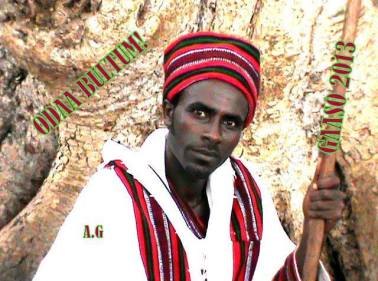


 Sources claimed 25-50 were killed. At least seven were confirmed dead in Ambo alone. Many were badly injured and hundreds were taken from streets and university campuses to places of detention, where protestors and opposition party supporters are routinely tortured and raped. Names of confirmed dead, injured or detained are given overleaf. Those killed include Endale Desalegn (Temesgen), and Tasfaye Gashe, both ninth grade students in Ambo. Individuals in the UK are requested to write to their MPs, requesting them to ask the Minister for Africa, Mark Simmonds, and the Minister for International Development, Lynne Featherstone, what the British Government intends to do in response to this latest episode of killing and detaining peaceful demonstrators. Killed: Ababa Kumsa – Wallega Abdi Kamal – Guder Junior Secondary School Abdisa Nagasa – Wallega Endale Desalegn (or Temesgen) – Ambo High School Falmata Bayecha – Jimma 5th yr Medicine Galana Adaba – Jimma 3rd yr Governance Getachew Daraje – Jimma 3rd yr Governence Getahun Jirata – Guder Junior Secondary School Gexe Tafari – Wallega Gurmu Damxoo – Guder Junior Secondary School Hussen Umar – Jimma Israel Habtamu – Jimma Kumala Guddisa – Guder Junior Secondary School Tadesse Gashee – Ambo Liban Macha Junior Secondary School Tashome Dawit – Wallega Zabana Barasa – Jimma 3rd yr Governance (or Oromo Folklore) Injured: Balay Kusa – Mida Qanyi School – W Showa Bayisa Obsa – Mida Qanyi School – W Showa Dararsa Ayana – Mida Qanyi School – W Showa Adama University students detained and beaten: Abrahm Makonin Ararso Abenzari Hagaye Yohannis Abdala Hussen Julio Amnu’el Burka Danka Andu’alam Telahun Alemayo Ayantu Jalta Misha Bilisuma Lamii Agaa Bonsa Badhadha Bati Bultu Wadaju Bultum Chala Galan Dabiso Datamo Fayera Shif Dane Abo Bushira Dani’el Admasu Tamsgen Didaa Ahmed Ibroo Duni Hussen Walbu Ebisa Malka Nuruu Etihafa Tuffa Soraa Fantale Faru Qarsuu Fayisa Girma Biranu Gada Dinqa Bayisa Humin’esa Miliki Fanta Ibraham Musa Awal Ifabas Burisho Nuruu Iliyas Ishetu Ibsa Lami Marga Gabru Lelisa Ayansa Marga Marga Tuffa kiltu Magris Banta Sodaa Muktar Jeyilan Sa’ed Musxafa Kadir Siraj Nuho Gudata Irre Odaa Damis Bonjaa Shibiru Tariku Falke Sidise Jara Tashome Bakele Sabbatichal Tadalu Mamo Bacha Takalinyi Ketama Baharu Tayee Tafara Agaa Tullu Bonus Tura Welbuma Ragasa Qalbesa
 The Ethiopian government has used excessive force against students peacefully protesting the Government’s plans to expand the municipal boundaries of Addis Ababa, which would threaten the communities currently under regional jurisdiction, and would no longer be managed by Oromia Regional State. Demonstrators have expressed concern about the displacement of Oromo farmers and residents on the affected land. Below is an article published by


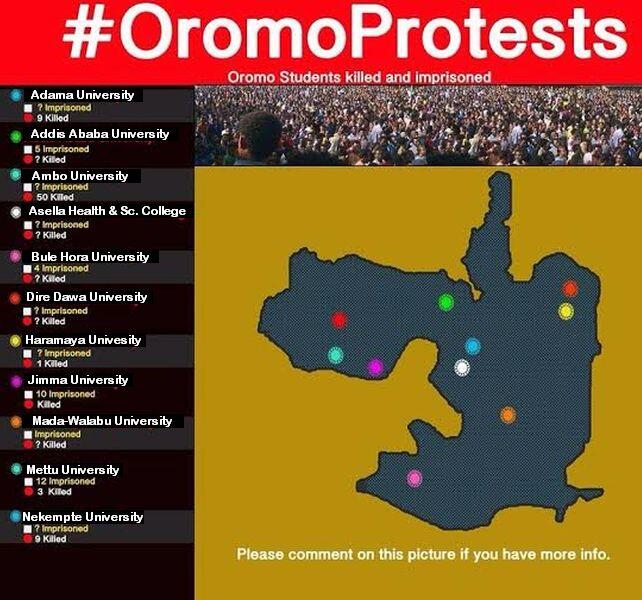


 #OromoProtests Oromo student Wabii Tilahun, 2nd year Afan Oromo student at Ambo University kidnapped by Agazi, his where about is not known.Micaan Kun Wabii Xilahn Jedhama Barata Afan Oromoo Waggaa 2 ffaa Godina Wallagaa Baha Aana limmuu dhufee Umatii Magaala Kana Osoo Ijaa Keessaa Ilaaluu kitabaa isaa 700 Maxxaanfmee Osoo Hin Gurguramiin Hafe Hidha hin hiikamnee jedhuu Waliin Fudhanii Deemaan Hospital Mana Hidha Amboo Keessaa Akkaa Hin Jirreee Biraa Geenyee Jirraa. Essaa Akkaa Busaan ni Wallaallee!!!!! Iyii iyaa dabarsii yaa Ilmaan Oromoo!!!
  Magarsaa Worku, Oromo student of Haromaya University, kidnapped by Agazi #OromoProtests- OBALAYAAN KOO AKKA GARII HUBADHAA DUBISSAA ! INNII KUNI BARAATAA UNIVERSITY HAROO MAYA DHA TII MAQAAN ISSAA MAGARSSA WORKUU DHAA. GAFAA MORMII DIDAA GARBRUMMAA JALQAABEE SAN ISSAA KANATUU XALAAYAA GAFII HAYYAMAA HIRIRAA BAHUU KAN BARESSEE WAJIRALEE DHIMAA LALCHIFTUU HUNDAA KAN AKKA MOTUMMAA FEDERAL FI MANA CAFEE OROMIYAA FI WAJIRALEE BAHA OROMIYAA POLIS KOMISHIONERA FI WARA ILALCHIISSUU HUNDAA HAR


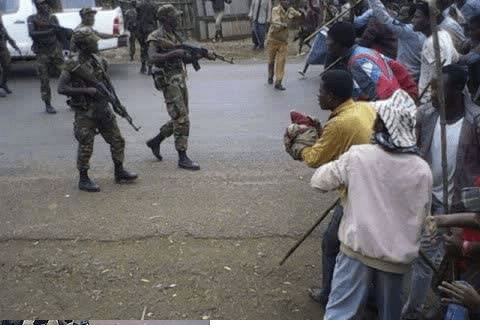


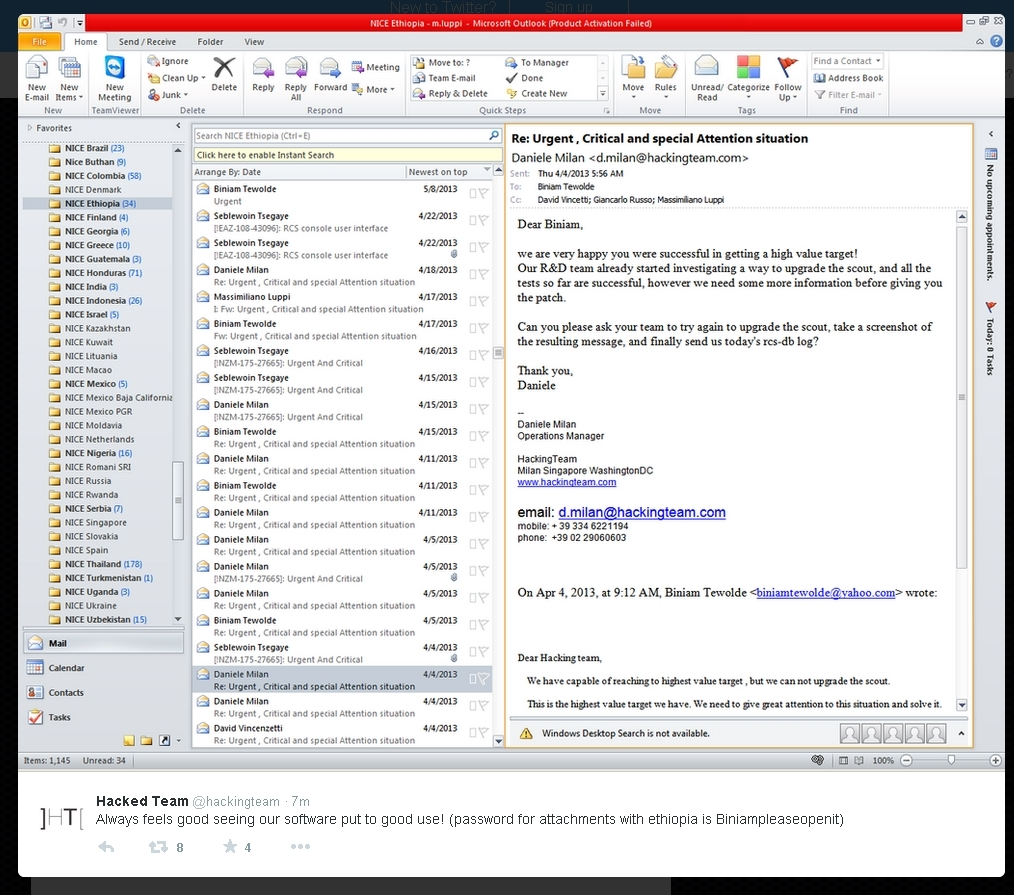


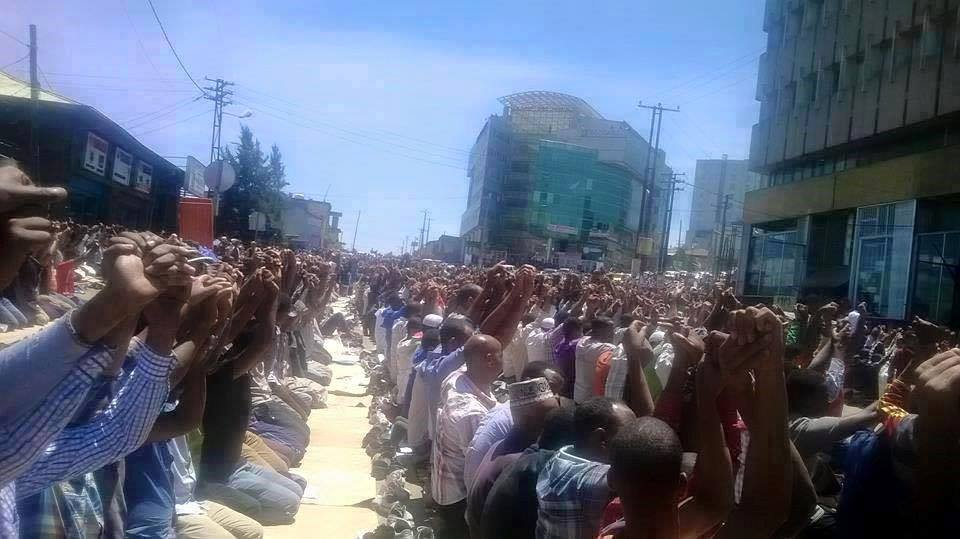


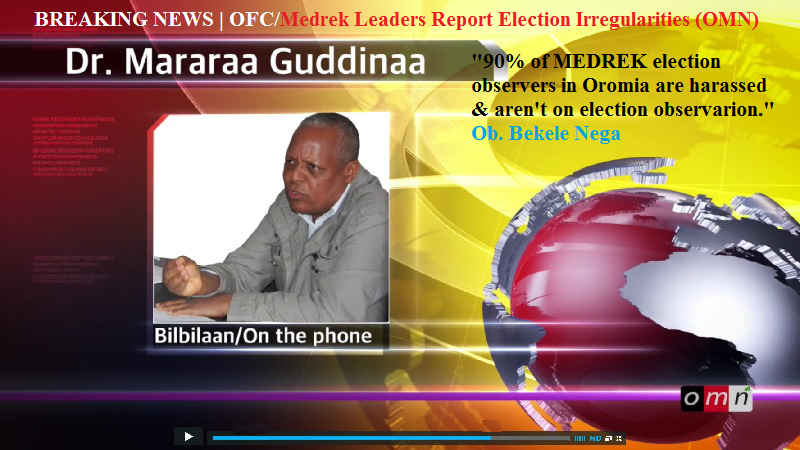

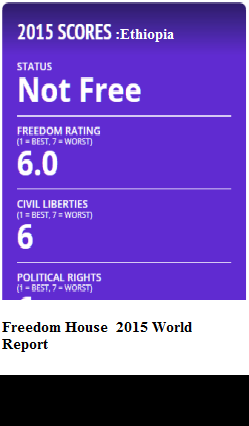
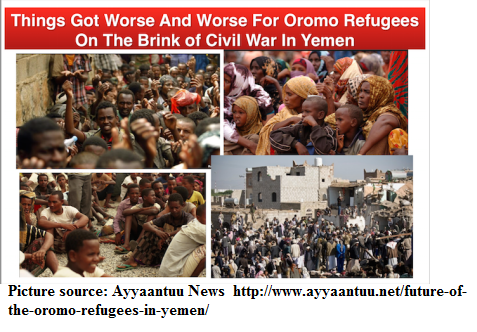



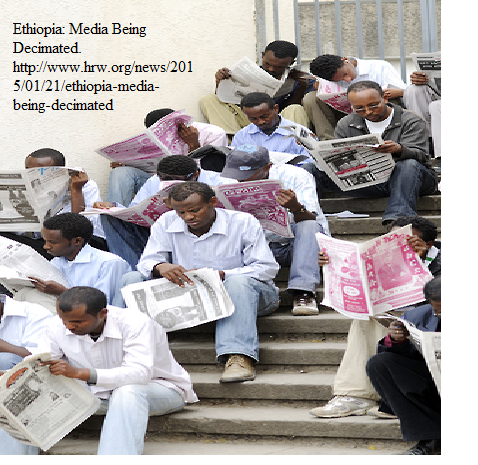
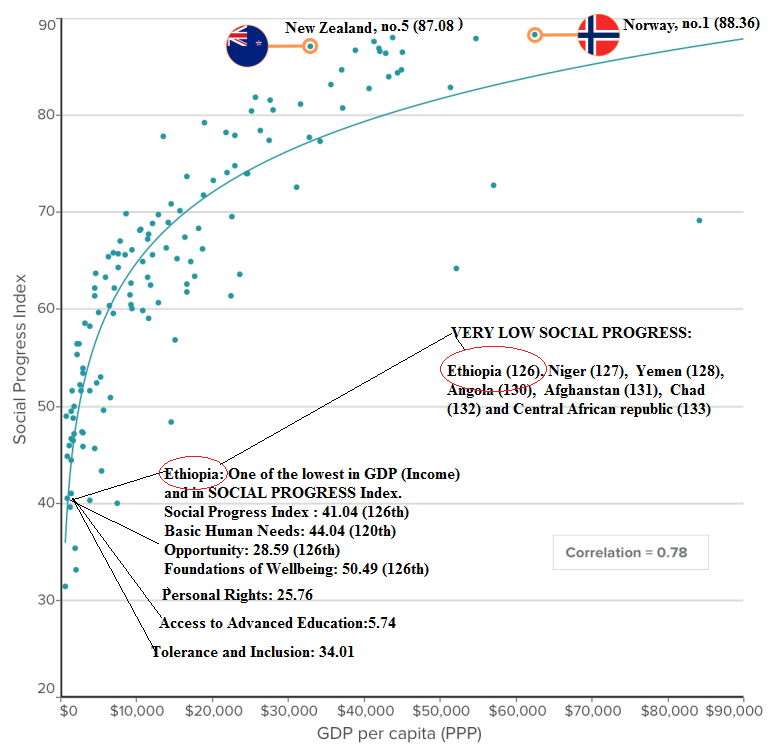
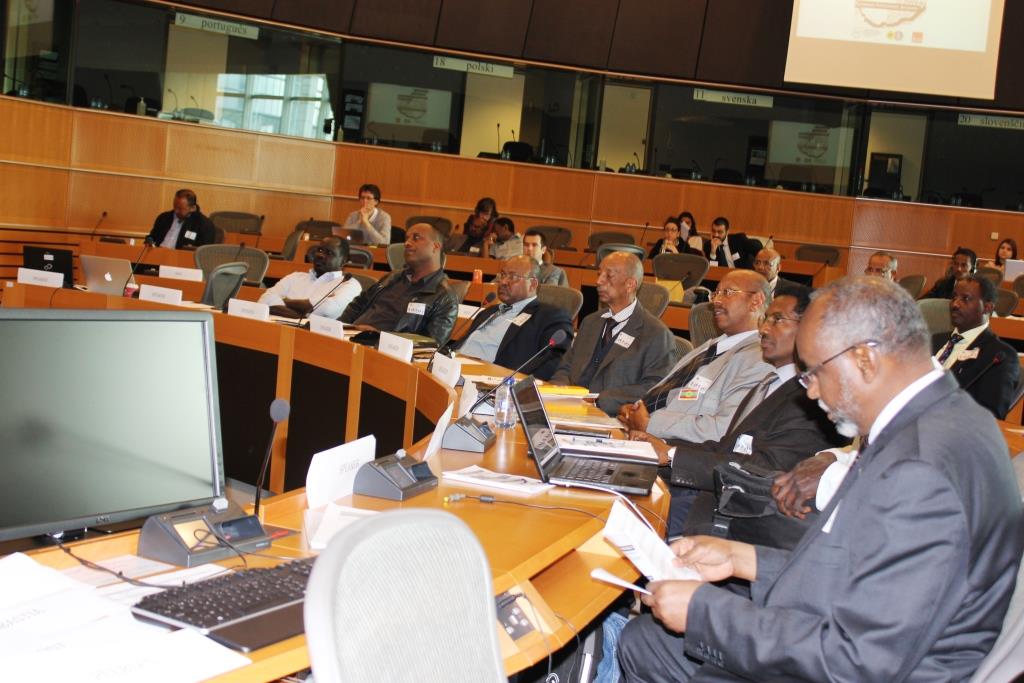

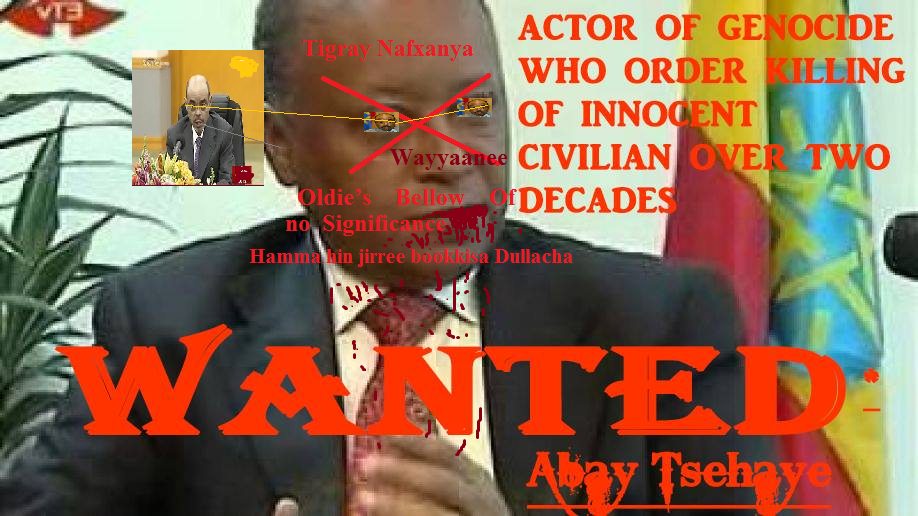




 (Image:
 Oromo Refugee community welfare Association
 By doing this the Ethiopian Government has blatantly violated international humanitarian law and international human rights law principles including international human rights standards.
 The Human Rights League of the Horn of Africa (HRLHA) held, over the past three weeks, public meetings with members of Oromo Communities in four cities of Canada and discussed human rights issues in the Horn of Africa in general and in Ethiopia in Particular. The Oromo communities involved were those of Toronto/Ontario, Edmonton & Calgary/Alberta and Winnipeg/Manitoba; and the major topic of discussion at all the four public meetings was the unabated gross human rights violations by the different regimes of the Ethiopian Government for over a century, with particular focus on what have been happening in the past twenty years under the current TPLF/EPRDF government.
 The public gathering in Toronto was held on December 13, 2014 at the office of Oromo Canadian community Association. At the gathering, HRLHA Executive Director Mr. Garoma B. Wakessa explained in his presentation “the gross and Systematic violations of human rights against Oromo nation and other nationals in Ethiopia in the past and at present” by different governments that ruled the country. Extra judicial killings, mass arrests and detentions, kidnappings and disappearances, and tortures under the present government in particular have been discussed in details.
 Besides, Mr. Tesfaye Dheressa Kumsa, Director of Investigations and Dissemination with HRLHA, who did a presentation on “Land Grabs and Evictions as a Cultural Genocide”, explained how forced displacements of the Oromos and others from their farm lands and the resultant detachments and disconnections from traditional rural lives have been causing destructions of precious cultural assets, values, and wisdoms from which the societies have been benefiting generation after generation.
 At the gathering, HRLHA Executive Director Mr. Garoma B. Wakessa presented “the gross and Systematic violations of human rights against Oromo nation and other nationals in Ethiopia in the past and at present” by different governments that ruled the country.
 (31ST DECEMBER 2014, US DEPARTMENT OF STATE: OFFICE TO MONITOR AND COMBAT TRAFFICKING IN PERSONS) — Ethiopia is a source and, to a lesser extent, destination and transit country for men, women, and children who are subjected to forced labor and sex trafficking. Girls from Ethiopia’s rural areas are exploited in domestic servitude and, less frequently, prostitution within the country, while boys are subjected to forced labor in traditional weaving, herding, guarding, and street vending. The central market in Addis Ababa is home to the largest collection of brothels in Africa, with girls as young as 8-years-old in prostitution in these establishments. Ethiopian girls are forced into domestic servitude and prostitution outside of Ethiopia, primarily in Djibouti, South Sudan, and in the Middle East. Ethiopian boys are subjected to forced labor in Djibouti as shop assistants, errand boys, domestic workers, thieves, and street beggars. Young people from Ethiopia’s vast rural areas are aggressively recruited with promises of a better life and are likely targeted because of the demand for cheap domestic labor in the Middle East.


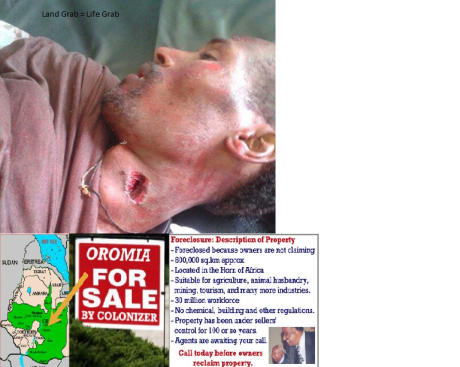


 Oromian Economist