


What is urgent is to bring down the tension by focusing the hopes and energies of the activists on a political way out, in the form of a tested, unchallengeable mechanism.

The crisis in Ethiopia has suddenly gained momentum and reached a tipping point. Things could go either way. The country could dig itself even deeper, with consequences that don’t bear thinking about. Or there could be a broad realisation that Ethiopia is “at the precipice”, bringing a surge of realism and pragmatism that would finally start a process of political rebuilding on solid, inclusive and lasting foundations.
This will require compromise, an attitude that is, to say the least, somewhat unfamiliar in traditional Ethiopian culture. All the actors will have to find a balance between what they would like to get and what they can get, between the short-term and the long-term. But time is short, numbered in weeks, maybe days.
Capsizing
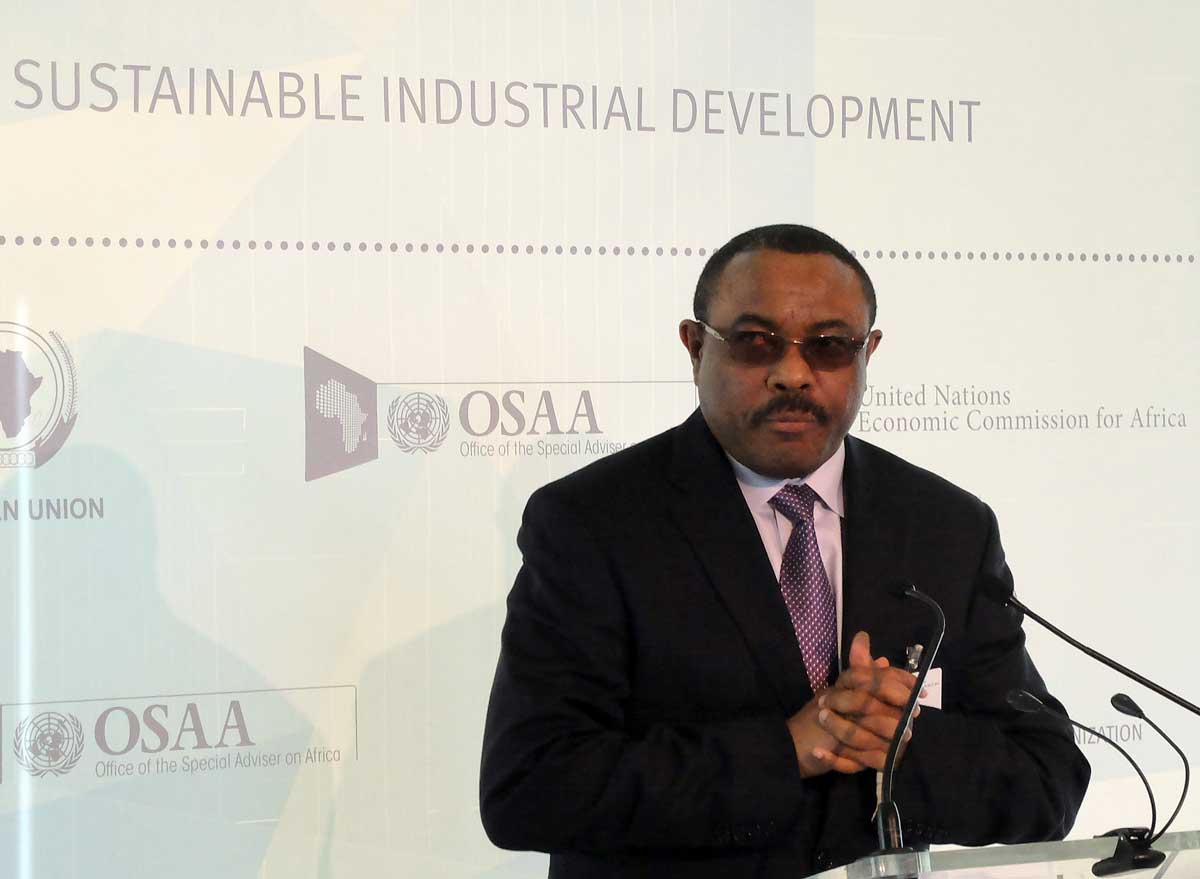
The system of government introduced in 1991, and monopolised by Meles Zenawi from the early 2000s, is irremediably dead. It had been in its death-throes since Meles’s sudden demise in 2012. The snap resignation of Prime Minister Hailemariam Dessalegn on February 15 marked the serving of the official death certificate.
He had privately indicated his intention to resign, but not until after the planned spring congress of the governing coalition of the four major ethnic parties: the Amhara National Democratic Movement (ANDM), the Oromo Peoples’ Democratic Organisation (OPDO), the Tigrayan People’s Liberation Front (TPLF) and the Southern Ethiopian People’s Democratic Movement (SEPDM).
The reason he gave for his resignation, as “vital in the bid to carry out reforms that would lead to sustainable peace and democracy”, is particularly open to question in that he was a well-known reformist. Did he quit because he was pushed or because he had become aware of his powerlessness? In the midst of the worst storm that the country has experienced for decades, he was the official captain of a crew that had become so disparate, divided and disloyal that his vessel was pitching and yawing wildly.
Hailemariam probably did not want to be held responsible in the event that it should capsize. He may also have hoped that his departure would back the ruling coalition into a corner and leave it with no other alternative than to set a course out of the storm and form a new crew capable of following it.
Hegemony?
In parallel with this decline in central power, the respective strength of the coalition’s regional parties, starting with the OPDO, has continued to rise to the detriment of the TPLF, which had dominated the coalition for more than two decades despite the fact that Tigrayans account for only 6% of the nation’s population. And alongside this centrifugal movement, opposition forces – both legal and illegal, national and anchored in the diaspora – were growing in power, after long years of repression had kept them in the wilderness.
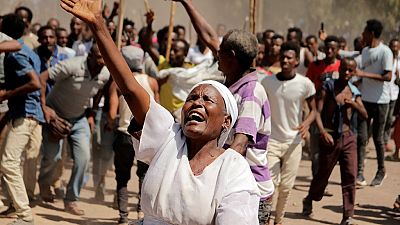
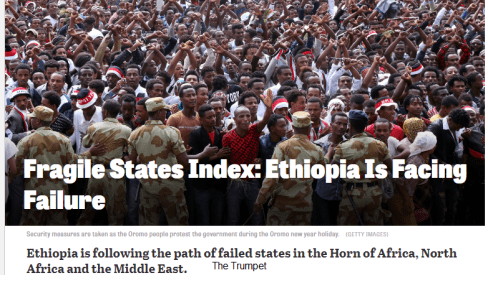
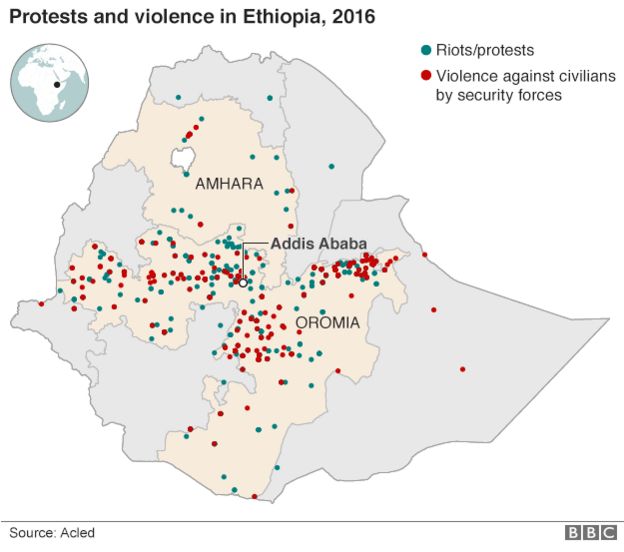
As the body politic fragments and levels out, the protests show no sign of abating, mainly in Oromya, even though not a week goes by without its death toll of victims of the security forces. Oromo complaints of marginalisation have gradually shifted towards claims of what they believe they deserve as the country’s most populous and richest region: to be at the top.
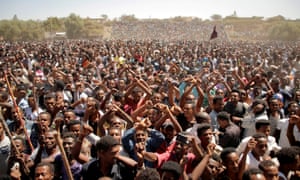
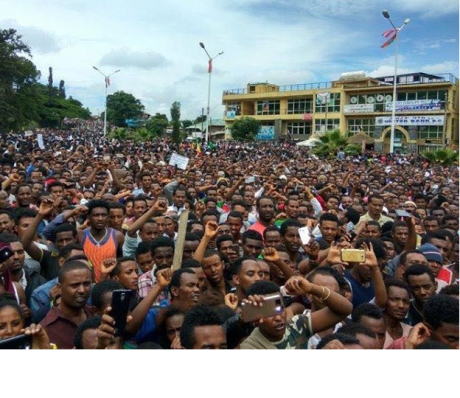
The home strike on February 12 and 13 paralysed Oromya as far as the gates of Addis Ababa, demonstrating that a blockade of the capital would not be inconceivable. Unprecedented crowds in multiple cities celebrated the return of the most prominent political prisoners: around 6,000 have been freed since a gradual amnesty announced at the beginning of January. Buoyed up by its successes, the street – at least in Oromya – could misinterpret the disarray of the EPRDF to the point that it could believe itself to have achieved an hegemonic position that none can deny it.
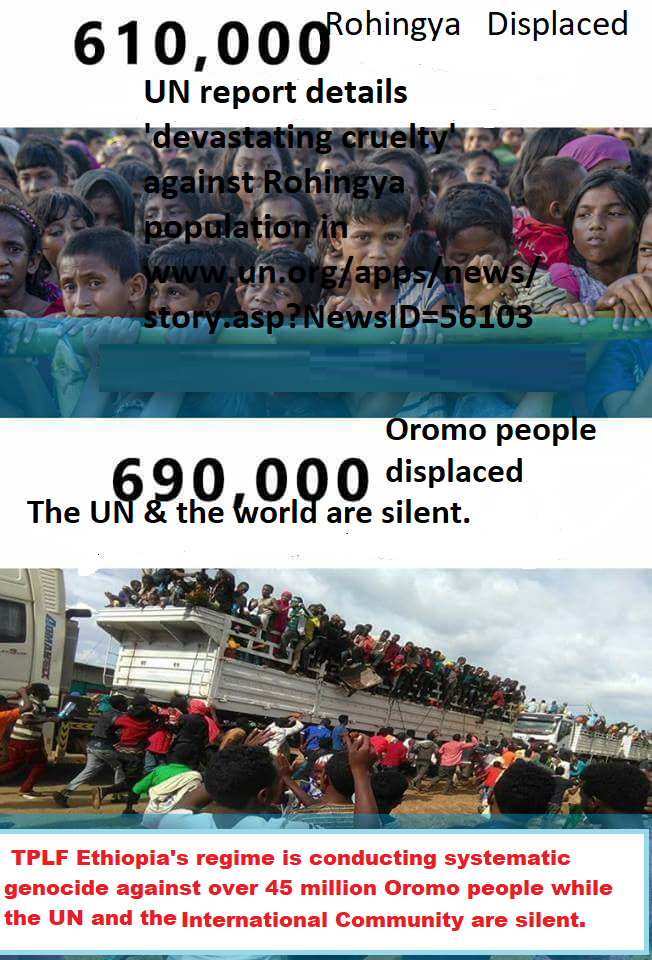
However, this popular movement, mostly spontaneous and therefore loosely organised, has its shadow side, at least on the margins. While the primary responsibility for the forced displacement of almost a million people – mostly Oromo, a minority Somali – essentially since September 2017, described as “interethnic clashes”, is attributable to the Somali authorities, at grassroots level it has stirred up ethnic tensions that were previously latent, or at most sporadic and sparse.
Ethnic clashes and nationalist hysteria
The frequent claim that multi-ethnic communities have lived in peace for centuries is both true and false. “Ethnic clashes” have always taken place around basic issues: land, pasturage, water. They have flared up with all the major upheavals and subsequent power vacuums of recent decades, such as the agrarian reforms of 1975 and the introduction of the federal system in 1992-1993.
The national parties, mainly OPDO and ANDM, have backed the quest for “national identities” and claims of “national rights” in order to assert themselves vis-à-vis the TPLF and ride the wave of protests. Some of their leaders have even given their imprimatur, at least through inaction, to outbursts of nationalistic hysteria that itself also masks well-known interests, ultimately leading to “ethnic cleansing” accompanied by dispossession and pillaging.
Recently, thousands of Tigrayans, identified with their governing elite, whose powers and resources are disproportionate, were driven out of the Amhara region. Members of the Kemant, a subgroup of the Agwa ethnicity, were massacred there. Students have had to flee their universities to escape a sometimes murderous wave of “ethnic purification”.
“Ethnic clashes” are proliferating. In some cases the regional or local security forces do nothing to stop them. A symptom of this odious climate: on websites accessible in Ethiopia , especially in the comments sections, overtly racist interethnic attacks, which would be an offense anywhere else, are flourishing as never before.
Fundamental divide
Finally, in parallel with this threefold process – disintegration in the system of power, continuing protests with sometimes violent outbursts, and rising ethnic hysteria – a fundamental divide is forming, even if it does not reach the light of day. The ultra-dominant official rhetoric is reformist, founded on a key expression: “deep renewal”. However, websites (like Aigaforum.com or Tigraionline.com) that say out loud what is only whispered in certain circles of the TPLF, insist that the only effect of the government’s acts of appeasement is to make the protesters even more demanding and exacerbate the disorders.
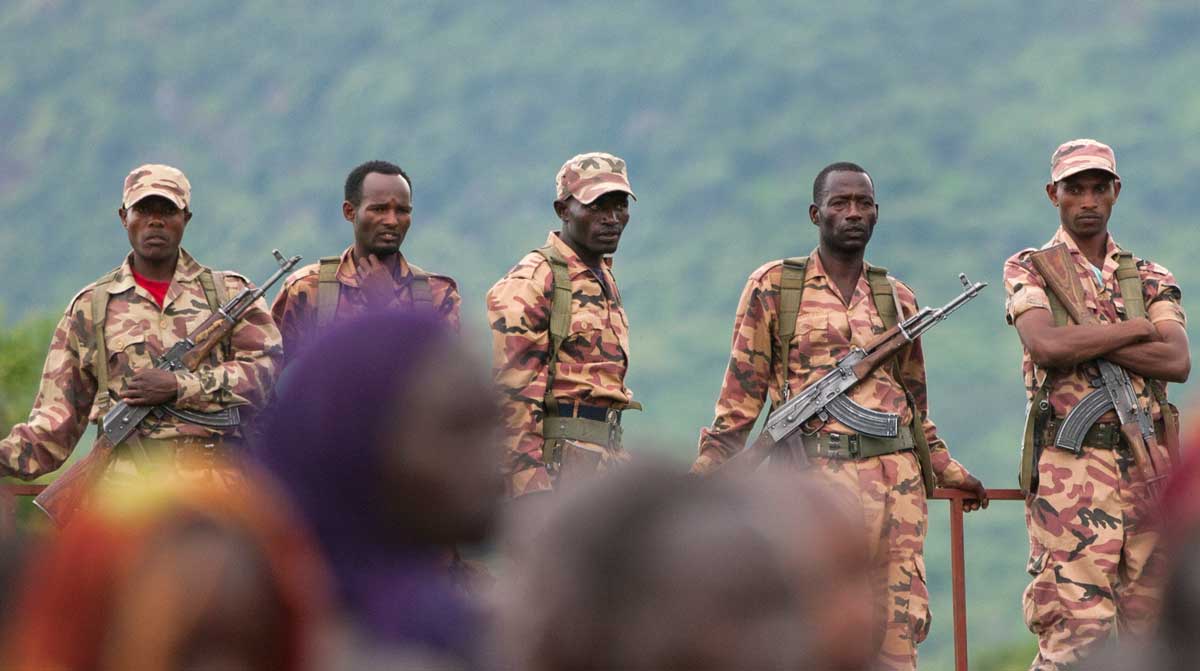
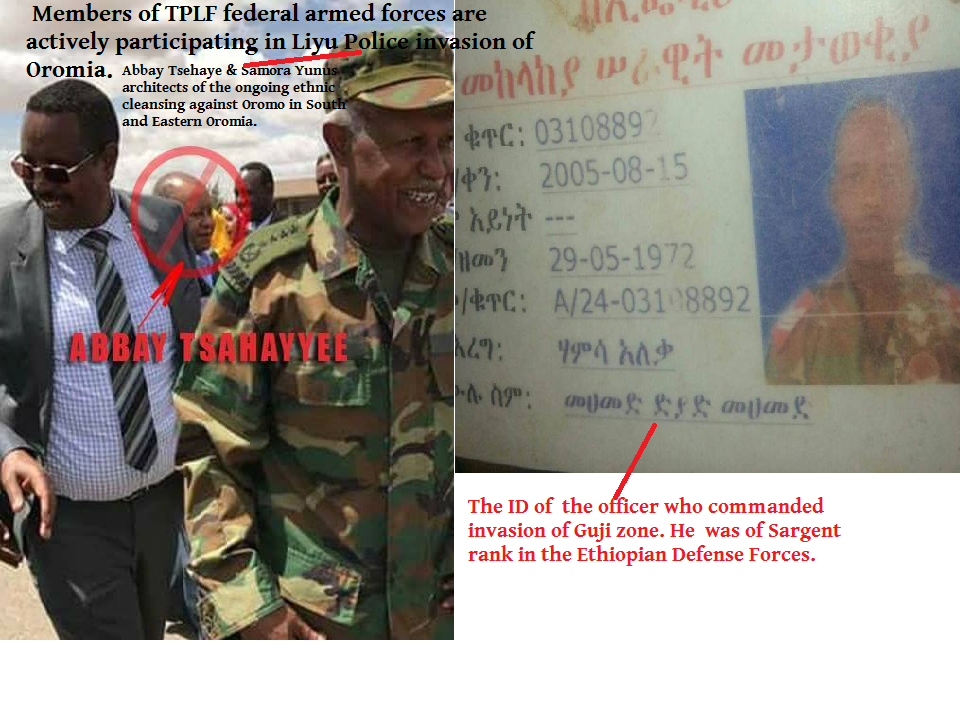
In this view, the only way to put an end to both is to employ every possible means in a trial of strength. In addition, questions remain about some interventions by federal forces – army, police, the elite Agazi unit – carried out without the prior agreement of the regional authorities, a legal requirement, and frequently accompanied by the use of disproportionate violence. These forces are disciplined and battle hardened, so individual excesses or blunders are highly unlikely. These cases of autonomous and brutal conduct, running counter to official policy, are undoubtedly commanded, or at least tolerated, by the heads of these units, although they cannot be unaware that they are an essential contributor to escalations in radicalisation and violence.
How to draw back from the precipice
Drawing back from the “precipice” requires an urgent Copernican revolution. It can be built on four cornerstones.
– Apart from a few very marginal elements, no one fundamentally questions the Constitution. It can therefore provide the frame of reference for any change.
– None of the members of the ruling coalition envisages putting an end to it, however formal and forced its perpetuation may be. They all know that the coalition’s official collapse could devour them all. At least in the short term, it is hard to find any sign of any alternative coalition that could form, let alone govern. If the EPRDF broke up, the probability that Ethiopia would become a “failed state” is very high. However weakened it is, there would still be one hand on the helm.
– At no point, so far, has the spearhead of protest in Oromya, the Queerroo (youth), called for armed struggle. This is a major change: in the history of Ethiopia, power has always come through the barrel of a gun. However, there is a growing radical fringe which believes that taking up arms will be sufficient to put an end to the regime.
– Finally, even the opposition, which was calling for the immediate formation of a transitional government of national unity, has more or less abandoned this demand. It was unrealistic. The EPRDF has just rejected it. If it had agreed, its divisions and the scattered nature of the opposition would have bogged down the formation of such a government in interminable bargaining and one-upmanship and, once in place, would have condemned it to impotence.
However, the longer the power vacuum continues, the closer the “precipice” approaches. Regardless of its divisions, the EPRDF must at all costs make the internal compromises needed to appoint a credible prime minister and government, and then actually support them so that they can take back the helm. Of course, the appointment of Lemma Megersa, although he cannot legally occupy this position, would satisfy Oromo protesters. However, it would require such major concessions in the light of what we know about the balances of power, that another Oromo or Amhara figure, or even a southerner, would seem more feasible, a remake of the compromise reached for Meles Zenawi’s successor.
State of emergency
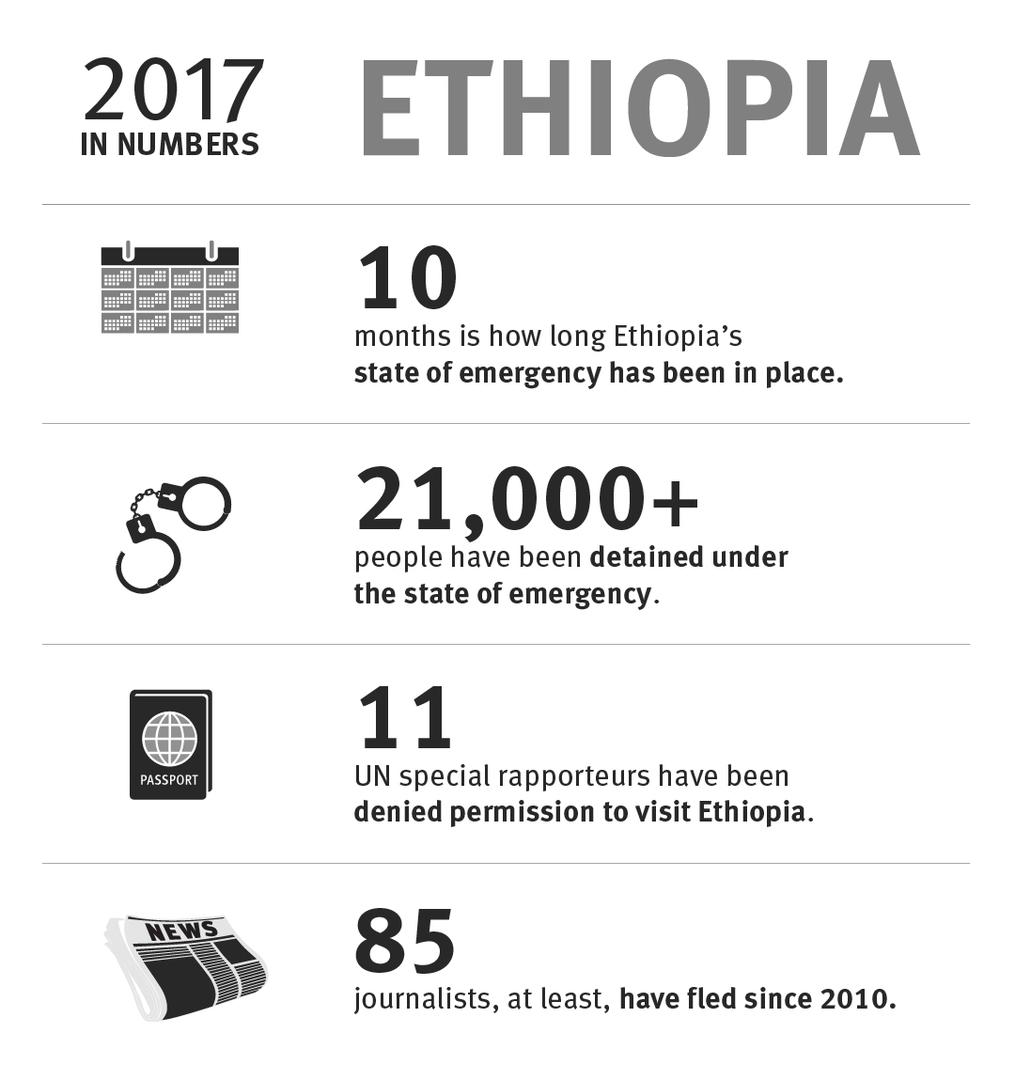
The proclamation of the state of emergency on February 16 caused an outcry, prompting the US Embassy to issue a statement of a severity unprecedented in contemporary US-Ethiopia relations, almost an ukase (“We strongly disagree with the Ethiopian government’s decision to impose a state of emergency… (This) undermines recent positive steps… We strongly urge the government to rethink this approach”).
According to the Minister of Defence, it was decided unanimously by the Council of Ministers, and therefore by its OPDO and ANDM members, who reportedly came on board after first having vigorously rejected it. If this is true, what compromises were required? At present we don’t know the terms, any more than we know what is debated behind the scenes on all the different issues, making the state of emergency just one aspect of a global negotiation. There is still much to play for.
Does it signify that political openings have been rejected and the priority placed on repression, in other words a major victory for the “hardliners”? This will also depend on its scope, those enforcing it and their behaviour. The only indication comes from the official agency press release, which states that the purpose is “to protect freedom of movement and the rights of citizens to live wherever they choose as well as build assets”, in other words first and foremost to put an end to the “ethnic based attacks” mentioned a few lines below.
It is noteworthy that it makes no mention of restrictions on political activities. If, and only if, future information on the state of emergency confirms this analysis, and if, and only if, the federal forces show a minimum of restraint in their behaviour, the government will have taken the decision incumbent on any government facing the risks of an explosion of violent excesses, including ethnic unrest on this scale.
That may perhaps be why OPDO and ANDM, which had condemned the ethnic attacks, was ultimately able to accept the state of emergency. Under these circumstances, it can also be assumed that Parliament might approve it.
However, intervention by the security forces alone will not suffice to prevent this threat if nothing changes elsewhere. They were overwhelmed during the previous state of emergency. Ethiopia has around 15,000 rural communities (kebele), each with a few dozen militiamen. In other words, probably 400,000 armed men who owe their loyalty to the leader of the kebele. There is no proof that these leaders would be willing or able to hold back ethnic attacks perpetrated by a majority of inhabitants.
At this level of crisis – breakdown in the system of government, dispersal and weakness of the legal opposition, protest that is increasingly heated, disparate in its organisation and simultaneously extreme and nebulous in its goals, proliferation of ethnic clashes – it is unrealistic to think that time and resources are sufficient for a big negotiation, a sort of “national conference”, even one that brought together the main stakeholders in and outside the country, to be able to start everything afresh and rebuild a global alternative system step-by-step.
What is urgent is to bring down the tension by focusing the hopes and energies of the activists on a political way out, in the form of a tested, unchallengeable mechanism that will be as speedy, practical and unifying as possible. The mechanism that would meet these criteria is early general elections, held well ahead of the current schedule of spring 2020.
Early general elections
First, they would clarify the political landscape. Each force would be required to present voters with its flagship measures for rebuilding the system of political, economic, military or security power. The goal would not simply be a change of regime. It would include the distribution of powers and resources within the federation, hence the famous “nationalities question” that lies at the heart of the current crisis and for almost two centuries has undermined the capacity of Ethiopians to live together.
Following the elections, this landscape could be structured and hierarchized on clear and transparent foundations, and the inevitable alliances would be formed first around their respective weights and projects. Since these foundational elections would be legislative, Parliament would finally acquire the primary role assigned to it in the Constitution. The verdict of the electorate, founded on universal suffrage, would make the outcome unchallengeable.
Finally, elections would channel protest that is both vigorous and inchoate into a concrete, tangible and decisive goal. The Queerro who favour a shift to armed struggle remain a very small minority, but they have the wind in their sails. All the voices that count in Oromya and in the diaspora continue to call for calm, for patience, arguing that change is now inevitable but needs to be given time. If they are listened to and if, moreover, the undertaking to hold these general elections could reduce the tension, defuse the reasons for protesting and therefore the risks of outbreaks, there would be a greater chance that the most extreme elements would become isolated and ethnic clashes less probable.
Free and fair
However, this scenario can only work on one condition: that these elections are “free and fair”. For this to happen, a supreme authority needs to be established, emanating from all the main stakeholders, whether government, opposition or civil society, in Ethiopia or abroad.
The former head of the military, General Tsadkan, even proposed that, in order to guarantee its independence from the current government, no member of the EPRDF should be able to be part of it, though it would be difficult for the coalition to agree to submit to the authority of a body that would resemble a weapon directed against it.
This authority would be vested with the powers needed to guarantee the ability of all the competitors to organise and express themselves freely, including the power to put on ice laws that contravene it and that it would be formally impossible to repeal rapidly.
Finally, it would set a realistic date for elections. The oppositions must have a certain amount of time to build their electoral machines, but the date should be as soon as possible. In the meantime, the government would continue to deal with day-to-day matters.
It may be objected that the formation of this supreme authority and its mandate would encounter the same kinds of difficulties as a transitional government. However, there is one big difference in scale and scope: whereas the purpose of the latter would be nothing less than to govern, the former would be restricted to a single goal: to organise and manage elections. Still unrealistic? Possibly, but probably the least unrealistic scenario to enable the country to step back.
Related:
Ethiopia’s Great Rift: Will a power struggle within the ruling party lead to reform — or more repression?
Washington Puts Ethiopia’s Human Rights Abusers on Notice, Tesfa News
Ethiopia: End Game? Having achieved so much through protest, it is unlikely that the Ethiopian people will accept half-hearted reforms. #OromoProtests #OromoStrikes, Oromian Economist

![Ethiopia's prime minister resigned on Thursday amid widespread public protests [Tiksa Negeri/Daylife]](https://i0.wp.com/www.aljazeera.com/mritems/imagecache/mbdxxlarge/mritems/Images/2018/2/16/67d066f79c5d43ae8b978280230d8a7f_18.jpg "Ethiopia declares state of emergency after PM quits")







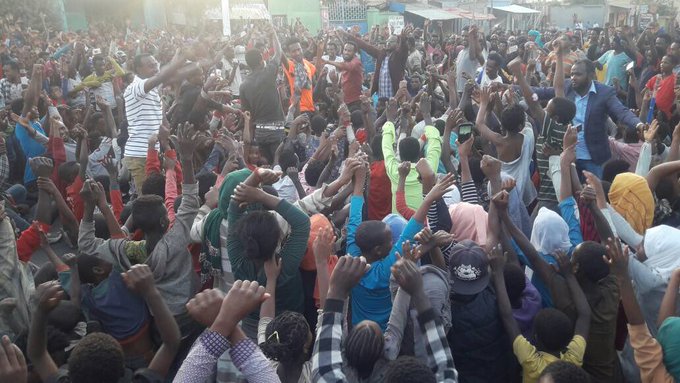
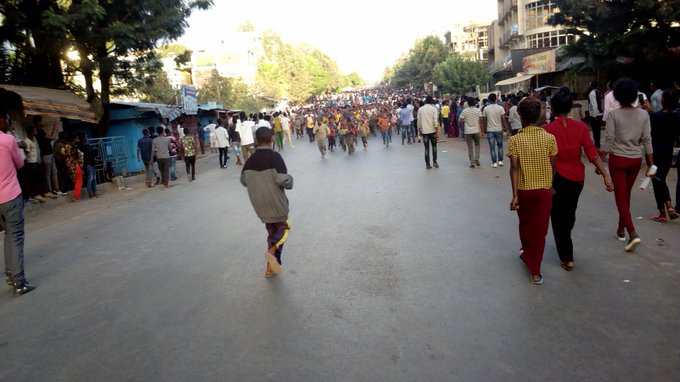


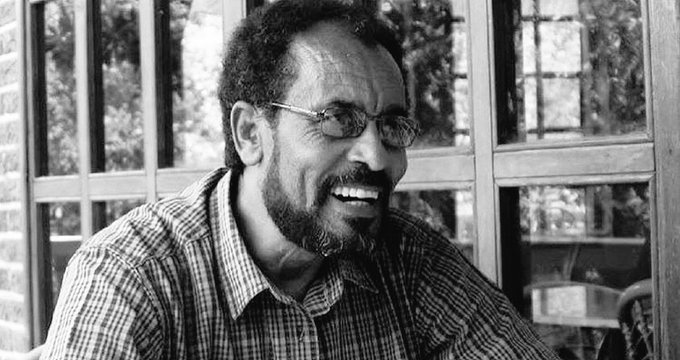




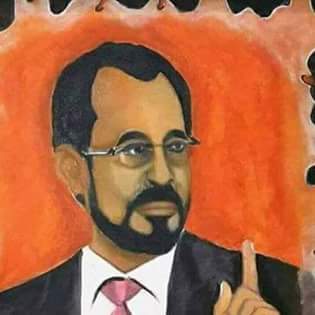
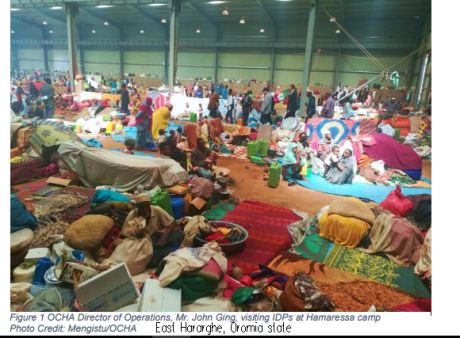
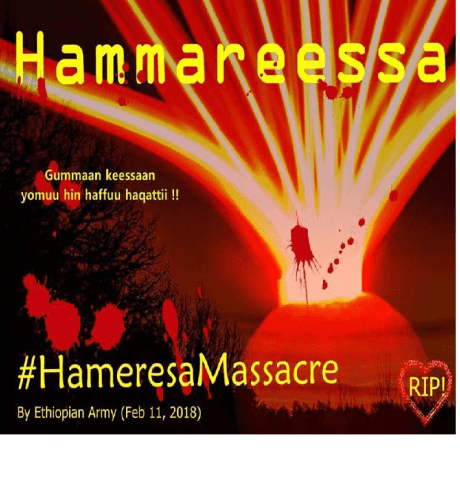 Fascist TPLF’s Agazi forces conducted another mass killings in Hameressa IDP camp.
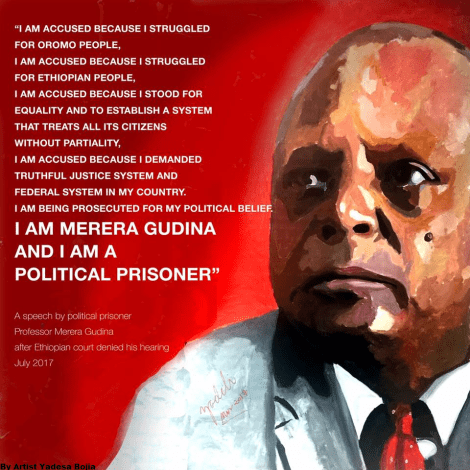
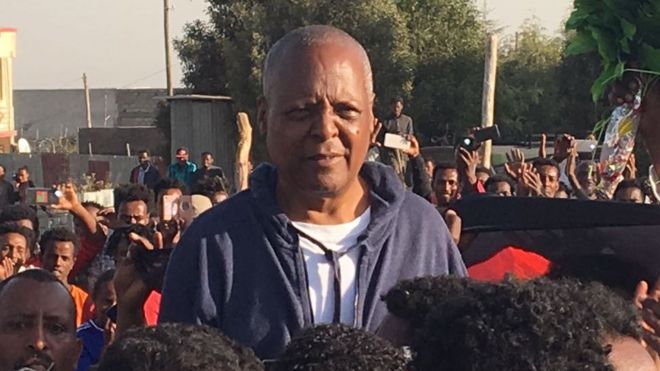
 Supporters of opposition leader Merara Gudina, wait for his release, in Burayu, Ethiopia, Wednesday, Jan. 17 2018. Ethiopia’s top opposition figure and hundreds of others were released from prison on Wednesday as part of the government’s recent pledge to free detained politicians and “widen the democratic space for all” after the worst anti-government protests in a quarter-century. Gudina led the Oromo Federalist Congress party and was arrested a year ago under the country’s state of emergency after he returned from Europe, where he had briefed European lawmakers on widespread and sometimes deadly anti-government protests. (AP Photo/Elias Meseret)





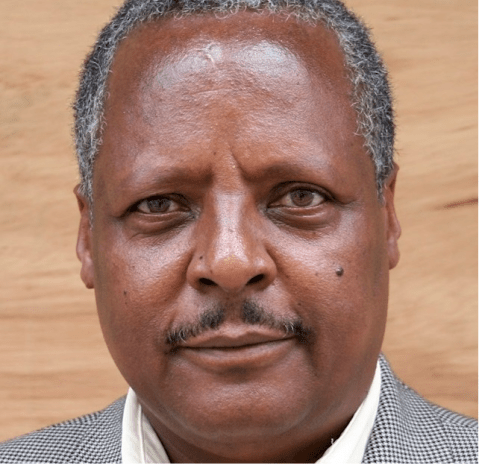


 Since then, he has been busy receiving jubilant supporters from all walks of life.


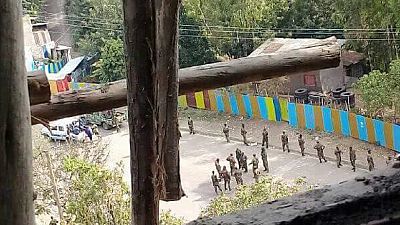


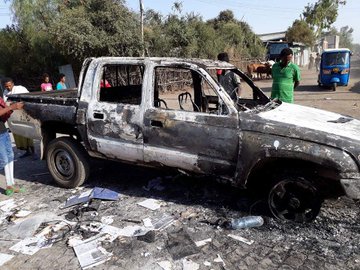
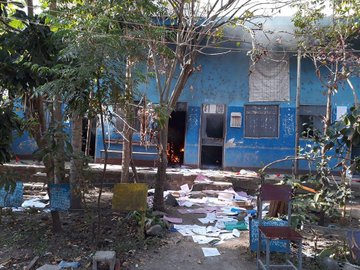
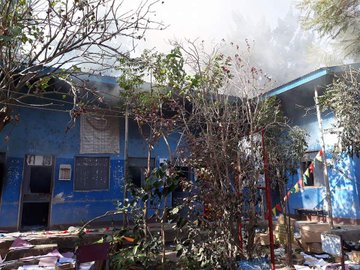



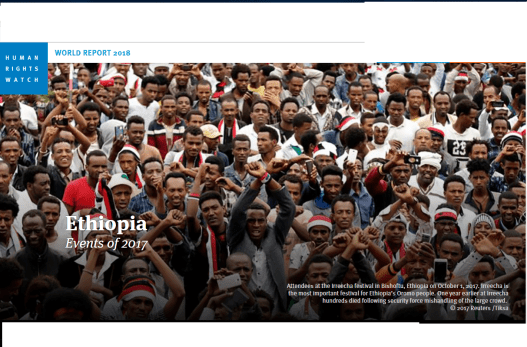
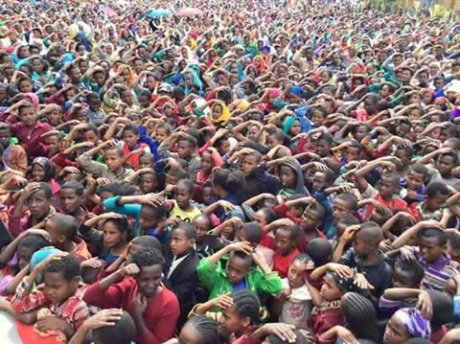
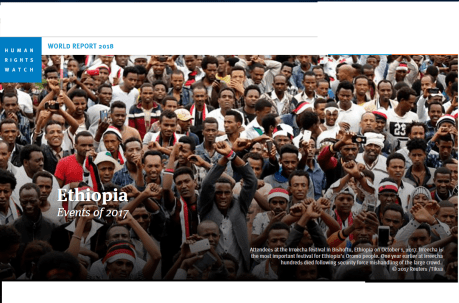 Hirmaattota Ayyaana Irreechaa Onkoloolessa 1, 2017 Bishooftuu, Itoophiyaa. Ayyaanni Irreecha uummata Oromoo Itoophiyaatif ayyaana addaati. Ayyaana Irreecha waggaa tokko dura kabajame irraatti humnootni tikaa tuutaa uummata jeequurran kan ka’e namootni dhibbootan lakkayaman du’anii ture.
























 Oromian Economist
198 Ways to Fight the T-TPLF’s State of Emergency in Ethiopia and Win, Al Mariam’s Commentaries February 19, 2018
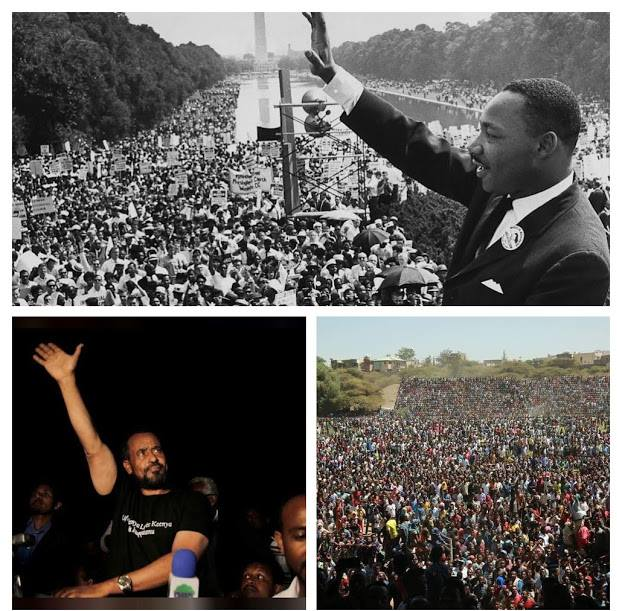
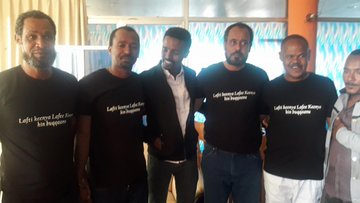
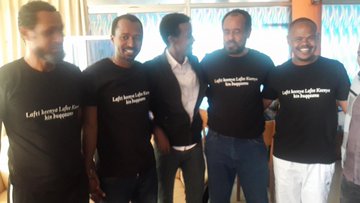
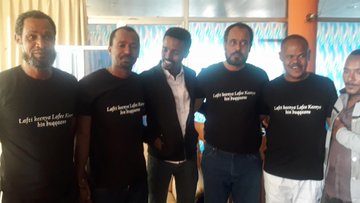
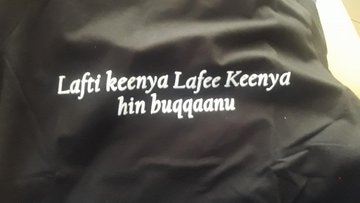
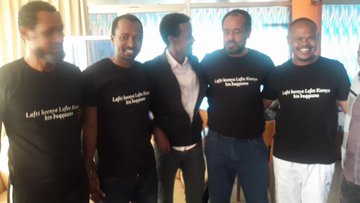
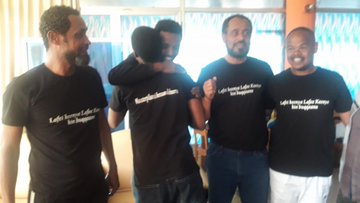
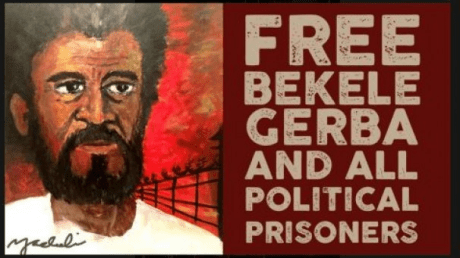
Posted by OromianEconomist in Uncategorized.Tags: #OromoProtests, #Prevent #Genocide, Africa, Against Tyranny, Al Mariam's Commentaries, Bekele Gerba translated Martin Luther King’s book ‘I HAVE A DREAM’ into Oromo language while he was in prison., Ethiopia, Oromia, SAY NO, Social movements
add a comment
198 Ways to Fight the T-TPLF’s State of Emergency in Ethiopia and Win
“One has a moral responsibility to disobey unjust laws.” — Dr. Martin Luther King, Jr.
The T-TPLF state of emergency declaration is an unjust law!
The limits of tyrants are prescribed by the endurance of those whom they oppress… If there is no struggle there is no progress. Those who profess to favor freedom and yet deprecate agitation are men who want crops without plowing up the ground; they want rain without thunder and lightning. They want the ocean without the awful roar of its many waters.” — Frederick Douglass, anti-slavery statesman.
The endurance of the Ethiopian people suffering under T-TPLF ethnic apartheid rule has completely vanished. Today, they are on the move agitating and mobilizing for peaceful nonviolent change.
Make no mistake about it!
The peaceful struggle for political change in Ethiopia is now in its final and terminal phase.
On February 16, 2018, the Thugtatorship of the Tigrean Peoples’ Liberation Front (T-TPLF) declared a war of the people of Ethiopia for the third time since October 2016 by declaring a state of emergency. That is the T-TPLF’s response to the Ethiopian people’s peaceful demands for change.
That declaration of a state of emergency is the T-TPLF’s last hurrah, their curtain call.
But the whole emergency declaration is a crock of horse manure. This is the third emergency declaration since October 2016. The people’s demand did not stop. What is so different now?
The T-TPLF state of emergency declaration should be called by its proper name: License to kill. License to jail. License to torture.
But the T-TPLF has had that license for 27 years. It is nothing new. It changes nothing.
When they T-TPLF massacred thousands of people in October 2016 at the Irrecha Festival, they did not have a declaration of emergency. For 27 years, the T-TPLF has massacred, jailed and tortured hundreds of thousands of innocent Ethiopians without a declaration of emergency.
Do the T-TPLF bosses now believe the people will kneel down to them, kiss their shoes and become their slaves in their ethnic apartheid empire simply because they scribbled a piece of paper with the words, “state of emergency”? That declaration is not worth the paper it is written on.
The fact of the matter is that the T-TPLF bosses today are desperadoes, criminals with no place to run or hide. They are at the end of their ropes, on their last legs. They do not know what to do to continue to cling to power and maintain the ethnic apartheid system they have enjoyed over the past 27 years.
So they try to prove they still have power and they are still the masters of Ethiopia’s 100 million people.
But make no mistake.
The state of emergency declaration is about sending a message to the people of Ethiopia and to the world. It is a message that announces the T-TPLF is making its final stand to cling to power come hell or high water:
The T- TPLF will never, never give up power peacefully and allow a democratic transition in Ethiopia.
The T- TPLF will kill, massacre, jail and torture to crush the people’s demand for peaceful change and cling to power.
The T-TPLF would rather see a civil war than give up power peacefully.
The T-TPLF would rather go down blazing than find peaceful ways of addressing the people’s demands.
The T-TPLF will have it ONLY its way: All for itself and nothing for anyone else. It will be the T-TPLF way of the highway.
The T-TPLF in its emergency declaration is offering the Ethiopian people a stark choice: Bow your heads, drop down on your knees and live like slaves, or die trying to be free with your nonviolent civil disobedience boots on.
So, the dreaded day has come for the T-TPLF. Ethiopia is at the crossroads and the crosshairs.
The T-TPLF wants an Armageddon.
The people of Ethiopia want peace, truth and reconciliation.
The people have resolved to free themselves of ethnic apartheid rule.
The T-TPLF is determined to keep them under ethnic apartheid rule.
The T-TPLF bosses know the end is near; and they are facing the final curtain.
How so?
The people have met their most formidable enemy. That enemy was hiding within them.
For decades, that enemy dwelled in their hearts, minds and every cell in their bodies.
That enemy goes by the name FEAR.
But the people have conquered FEAR and in so doing conquered the T-TPLF.
Robert Holmes (“The Ethics of Nonviolence”, 2013 at p. 226”), explained it best:
Simply stated, nonviolent social change by civil disobedience and mass resistance simply means the people have lost their fear of their oppressors.
What is to be done by people who have lost their fear of their oppressors?
What is to be done in the face of T-TPLF’s declaration of state of emergency and beyond?
In 1901, V.I. Lenin wrote a pamphlet entitled, “What Is to Be Done?” (p. 47). He argued the working class will not be politically mobilized into action simply by fighting economic battles over workers’ wages, working conditions and other economic rights. To transform the working class into a potent Marxist political force, Lenin said it would be necessary to form a “vanguard” of dedicated revolutionaries to spread Marxist political ideas among the workers. He prescribed, “To bring political knowledge to the workers the Social Democrats must go among all classes of the population; they must dispatch units of their army in all directions.”
I say what is good sauce for the goose is good for the gander. The principles that apply to a violent revolution apply equally to a peaceful nonviolent revolution.
The peaceful nonviolent movement led by the “youth vanguard” cannot win the struggle without educating and empowering all segments of Ethiopian society.
The youth vanguard must educate, inform, empower and mobilize all segments of the population, all members of ethnic groups in their own languages and traditions, all age and faith groups, all members of the professions and trades in the techniques of nonviolent struggle in the fight for democracy, human rights and the rule of law.
The time is NOW for the youth vanguards of the Ethiopian peaceful nonviolent revolution to penetrate every nook and cranny of Ethiopian society.
The youth vanguard, above all, must teach and preach ETHIOPIAWINET which is simply defined as LOVE.
The ultimate aim of the Ethiopian struggle must be the victory of ETHIOPIAWINET over ethnic hate and ethnic apartheid system.
Teaching and preaching peaceful change must be made synonymous and go hand in hand with teaching and preaching of ETHIOPIAWINET way of life.
The youth vanguard must teach and preach the philosophy and practice of nonviolent peaceful change and ETHIOPIAWINET in the schools, colleges and universities.
They must teach and preach peaceful change and ETHIOPIAWINET in the churches and mosques.
The must teach and preach peaceful change and ETHIOPIAWINET in the civil service and bureaucracy.
They must teach and preach peaceful change and ETHIOPIAWINET in the armed forces, the police and security forces.
They must teach and preach peaceful change and ETHIOPIAWINET among women and girls.
They must teach and preach peaceful change and ETHIOPIAWINET to the urban and rural youth.
They must teach and preach peaceful change and ETHIOPIAWINET in the tea rooms, restaurants and bars.
They must teach and preach peaceful change and ETHIOPIAWINET in the shops and market places.
They must teach and preach peaceful change and ETHIOPIAWINET in the stadiums and sports fields.
They must teach and preach peaceful change and ETHIOPIAWINET among the elites, the wealthy and privileged.
They must teach and preach peaceful change and ETHIOPIAWINET among the poor, the powerless and defenseless.
They must teach-in and teach-out peaceful change and ETHIOPIAWINET.
They must preach on and on!
They must be the change they want to see. They must live a life of ETHIOPIAWINET.
I have been teaching and preaching nonviolent social change and promoting truth and reconciliation for over 12 years.
I got involved in the Ethiopian human rights struggle because I was outraged by the Meles Massacres of 2005.
The Meles Massacres stirred deep emotions in me. For the first time in decades, I realized that though I had left Ethiopia, Ethiopia had not left me. The Meles Massacres made me realize that even though I had moved away from Ethiopia permanently, Ethiopia had not moved out of me permanently. It is a feeling that is hard to explain even today. I can only say that the massacre of those unarmed citizens (and the shocking photographs) triggered in me an emotion of volcanic outrage (that some say still flows unabated; I will not argue with them). I was not merely shocked and appalled; I was shaken to the core.
It has been said that in desperate times, we either define the moment or the moment defines us. It was at this time that I resolved to define my moment by using my pen (keyboard) as a weapon of nonviolent resistance against the tyranny of Meles Zenawi and his gang of criminals in designer suits.
I believe it is my moral obligation (and all human beings) to speak up against human rights crimes and agitate for peaceful nonviolent resistance. In my efforts, I have tried to make a small contribution by providing civic education in nonviolent resistance.
Indeed, before Official Day 1 of my involvement in the Ethiopian human rights struggle on July 3, 2006, I wrote a three-part commentary on civil disobedience and nonviolence and its relevance in the struggle for freedom, democracy and human rights in Ethiopia. I undertook that effort after the Tegbar League Addis Ababa Leadership Committee issued a statement in March 2006 indicating that it
To provide intellectual support to Tegbar and spread knowledge about the philosophy and practice of nonviolence and civil disobedience, beginning in April 2006, I issued my series.
In Part I “Of Civil Disobedience and Nonviolence” (April 23, 2006), I examined the ideas of Henry David Thoreau, who inspired Mahatma Gandhi and Martin Luther King in leading an independence and civil rights movement.
In Part II “Of Civil Disobedience and Nonviolence” (May 10, 2006), I examined Gandhi’s use of “Satyagraha,” which he defined as “truth-force,” “love-force” or “soul-force.” In fighting for human dignity of Indians in South Africa and later independence of India. Gandhi’s message to the colonial oppressors of India was simple. “My ambition is no less than to convert the British people through nonviolence, and thus make them see the wrong they have done to India. I do not seek to harm your people.”
In Part III “Of Civil Disobedience and Nonviolence” (May 18, 2006), I examined MLK’s efforts to bring peace, harmony and interracial unity between black and white people in America”.
Over the past decade, I have written dozens of commentaries promoting nonviolent change, truth reconciliation, direct action and have tried to mobilize Ethiopian intellectuals to join me in the effort.
In October 2008, I wrote a commentary entitled, “The political economy of remittances in Ethiopia”. That commentary was in fact an analysis of the billions of dollars Diaspora Ethiopians send back to Ethiopia. I raised a number of questions which focused on the role of remittances in providing economic buoyancy to help keep afloat, support, prolong and entrench the one-party, one-man dictatorship of the T-TPLF in Ethiopia.
I am gratified to learn of recent efforts by an “international task force calling for remittance boycott against regime in Ethiopia.”
In my September 2013, commentary, “The Diplomacy of Nonviolent Change in Ethiopia”, I wrote abut how people lose their fears of oppressive government and muster courage to fight back with civil disobedience. The “diplomacy” of nonviolent change involves the use of dialogue, negotiations, compromise, bargaining, concessions, accommodations, cooperation and ultimately peace-making and reconciliation.
In my September 2013 commentary , “Interpreting and Living MLK’s Dream”, I discussed Dr. King’s message of hope and redemption for our time and his unlimited imagination and hope in the infinite capacity of humanity to be humane while acutely aware of “man’s inhumanity to man”.
In 2014, I joined the boycott of Coca Cola Company for its disrespectful and humiliating treatment of the great Ethiopian patriot Teddy Afro. In my June 2014 commentary“Why I am boycotting Ȼoca Ȼola”, I called on my readers to boycott Coca Cola products. I promised then never to touch a Coca Cola product, a promise I have kept to this day.
In my January 2017 New Year message, “Dare to Dream With Me About the New Ethiopia in 2017”, I shared my dreams of the Beloved Ethiopian Community to peacefully emerge from the nightmare of T-TPLF ethnic apartheid rule. Here are a few of those dreams of: ONE Ethiopia at Peace with itself. Ethiopians finding their unity in their humanity instead of their ethnicity. Ethiopians regardless of ethnicity, religion and region subscribing to the creed, “I am my brother’s, my sister’s keeper.” The day when Truth shall rise from the ashes of lies and lead all Ethiopians on the path of reconciliation in Ethiopia. Human rights extinguishing government wrongs in Ethiopia. True multiparty democracy with iron clad protections for human rights. Learned men and women using their intellectual powers to teach, preach and touch the people. The release all political prisoners.
Above all, I have a dream of the day when Ethiopia’s young people will put their shoulders to the wheel and take full charge of their country’s destiny, leaving behind the politics of hate and ethnicity; turning their backs on those wallowing in moral bankruptcy and corruption and creating a new politics for a New Ethiopia based on dialogue, negotiation and compromise.
Simply stated, I dream of the New Ethiopia, rising over the horizon in a peaceful revolution, as a shining “city high on top of the African hill”.
In my December 2013 commentary, “Mandela’s Message to Ethiopia’s Youth: Never give up…!” Never give up and keep on trying to build your Beloved Ethiopian Community! Dare to be great. Change yourselves first before you change society. Keep on trying. Come together. Be virtuous. Be patriotic. Be courageous. Dream big. Lead from behind. Be optimistic and determined. Learn and educate the people.
In my January 2018 commentary, “Unarmed Truth and Unconditional Love (Reconciliation): Dr. Martin Luther King’s Message to Ethiopians Today”, I examined Dr. King’s lifelong message of nonviolence, peace, reconciliation in the context of Ethiopia’s dire crises today and building of a new Beloved Ethiopian Community.
All Ethiopians have a moral and ethical obligation to engage in peaceful, nonviolent change in their motherland
The time has come for all freedom-loving Ethiopians to stand up and be counted. It is time for truth or consequences. We all have a choice to make: Stand with the people of Ethiopia, or by not doing so stand with their oppressors. It is a choice without moral relativism or ambiguity. One can choose to be part of a 27 year-old problem or part of the solution to usher in the New Ethiopia.
Dr. King said, “One has a moral responsibility to disobey unjust laws.” He explained, “A just law is a man-made code that squares with the moral law or the law of God. An unjust law is a code that is out of harmony with the moral law. Any law that uplifts human personality is just. Any law that degrades human personality is unjust.”
The T-TPLF’s state of emergency declaration is an unjust law. It is a law that contravenes God’s law. It violates natural law. It is a government wrong against God-given human rights.
The peaceful, nonviolent struggle in Ethiopia must go on.
We must have Churchillian resolve in our peaceful nonviolent struggle.
Facing an imminent invasion of Britain by the Nazis, Winston Churchill was ready to fight and threw down the gauntlet. “We shall go on to the end. We shall fight in France, we shall fight on the seas and oceans, and in the air, on the beaches, the landing grounds, in the streets, in the hills; we shall never surrender.”
Ethiopians in Ethiopia and in the Diaspora must go on to the end. We must fight the T-TPLF using every weapon of peaceful nonviolent struggle.
We must fight them with civil disobedience and mass resistance in the schools, in the colleges and universities, in the streets, in the urban and rural areas, in places of worship and public gatherings, in every hamlet, village, town and city.
We must fight the T-TPLF in every open and closed political space, in the workspace and even in the prison space. We must fight them in the monkey courts and in the kangaroo parliaments. We must fight them during the day and in the night. We must fight them in the sunshine and in the rain.
Diaspora Ethiopians in the West must do their fair share. We must fight their lobbyist in the halls of Congress and in the White House. We must fight them in the newspapers, on television and radio. We must fight their trolls in cyberspace and social media.
We must fight them, to paraphrase what Churchill said of the Nazis, and carry on the struggle, until, in God’s good time, the New Ethiopia, with all its power and might, steps forth to the rescue and the liberation of all Ethiopian people from the yoke of T-TPLF ethnic apartheid system.
A very special request, my humble plea to all who are engaged in the peaceful struggle – Please no violence
We must not bring ourselves to the level of the T-TPLF.
That is because we have the most powerful weapon in our hand, hearts and minds.
That weapon is nonviolence.
We must not resort to violence against our brothers and sisters, neighbors and compatriots. Gandhi said, “the strong are never vindictive” and have no need for violence.
We who advocate nonviolent change are strong! In body, spirit and soul.
Let us heed Dr. Martin Luther King’s words:
Mahatma Gandhi said, “An eye for an eye leaves the whole world blind.”
For 12 years, I have toiled day and night, night and day, to see the daylight, the sunlight of freedom and equal opportunity shine on Ethiopia.
I do not ever want to see Ethiopia full of blind people, blinded by hate and revenge.
My dream is to see Ethiopia blinded by the light of love and of truth.
I have stood with Ethiopia’s young people through thin and thick for a long time
Now I ask them to stand with me in actively practicing NO VIOLENCE. NO DESTRUCTION OF PROPERTY. NO REVENGE.
Hate and violence cannot drive out hate and violence out of Ethiopia. Only love, understanding and tolerance can do that.
We are better than the hate mongers, those who use violence to suppress human rights.
Let us become the change we want to see!
============================================================
How can every Ethiopian man, woman and child live up to their moral and ethical obligation to resist T-TPLF tyranny and work for peaceful nonviolent social and political change.
Let me count the ways!
The following document is authored by Prof. Gene Sharp, the “intellectual father of peaceful resistance” and founder of the Albert Einstein Institution, a non-profit organization dedicated to advancing the study of nonviolent action. Prof. Sharp passed away on January 28, 2018. He has influenced numerous anti-government resistance movements around the world.
A PDF copy of the document is also available.
Prof. Sharp prepared the 198 Methods of Nonviolent Action to demonstrate that “practitioners of nonviolent struggle have an entire arsenal of ‘nonviolent weapons’ at their disposal.” He classified those “weapons” into three broad categories: nonviolent protest and persuasion, noncooperation (social, economic, and political), and nonviolent intervention.
============= ============== ================= =============
198 METHODS OF NONVIOLENT ACTION
THE METHODS OF NONVIOLENT PROTEST AND PERSUASION
Formal Statements
2. Letters of opposition or support
3. Declarations by organizations and institutions
4. Signed public statements
5. Declarations of indictment and intention
6. Group or mass petitions
Communications with a Wider Audience
8. Banners, posters, and displayed communications
9. Leaflets, pamphlets, and books
10. Newspapers and journals
11. Records, radio, and television
12. Skywriting and earthwriting
Group Representations
14. Mock awards
15. Group lobbying
16. Picketing
17. Mock elections
Symbolic Public Acts
19. Wearing of symbols
20. Prayer and worship
21. Delivering symbolic objects
22. Protest disrobings
23. Destruction of own property
24. Symbolic lights
25. Displays of portraits
26. Paint as protest
27. New signs and names
28. Symbolic sounds
29. Symbolic reclamations
30. Rude gestures
Pressures on Individuals
32. Taunting officials
33. Fraternization
34. Vigils
Drama and Music
36. Performances of plays and music
37. Singing
Processions
39. Parades
40. Religious processions
41. Pilgrimages
42. Motorcades
Honoring the Dead
44. Mock funerals
45. Demonstrative funerals
46. Homage at burial places
Public Assemblies
48. Protest meetings
49. Camouflaged meetings of protest
50. Teach-ins
Withdrawal and Renunciation
52. Silence
53. Renouncing honors
54. Turning one’s back
THE METHODS OF SOCIAL NONCOOPERATION
Ostracism of Persons
56. Selective social boycott
57. Lysistratic nonaction
58. Excommunication
59. Interdict
Noncooperation with Social Events, Customs, and Institutions
61. Boycott of social affairs
62. Student strike
63. Social disobedience
64. Withdrawal from social institutions
Withdrawal from the Social System
66. Total personal noncooperation
67. “Flight” of workers
68. Sanctuary
69. Collective disappearance
70. Protest emigration (hijrat)
THE METHODS OF ECONOMIC NONCOOPERATION: ECONOMIC BOYCOTTS
Actions by Consumers
72. Nonconsumption of boycotted goods
73. Policy of austerity
74. Rent withholding
75. Refusal to rent
76. National consumers’ boycott
77. International consumers’ boycott
Action by Workers and Producers
79. Producers’ boycott
Action by Middlemen
Action by Owners and Management
82. Refusal to let or sell property
83. Lockout
84. Refusal of industrial assistance
85. Merchants’ “general strike”
Action by Holders of Financial Resources
87. Refusal to pay fees, dues, and assessments
88. Refusal to pay debts or interest
89. Severance of funds and credit
90. Revenue refusal
91. Refusal of a government’s money
Action by Governments
93. Blacklisting of traders
94. International sellers’ embargo
95. International buyers’ embargo
96. International trade embargo
THE METHODS OF ECONOMIC NONCOOPERATION: THE STRIKE
Symbolic Strikes
98. Quickie walkout (lightning strike)
Agricultural Strikes
100. Farm workers’ strike
Strikes by Special Groups
102. Prisoners’ strike
103. Craft strike
104. Professional strike
Ordinary Industrial Strikes
106. Industry strike
107. Sympathetic strike
Restricted Strikes
109. Bumper strike
110. Slowdown strike
111. Working-to-rule strike
112. Reporting “sick” (sick-in)
113. Strike by resignation
114. Limited strike
115. Selective strike
Multi-Industry Strikes
Combination of Strikes and Economic Closures
THE METHODS OF POLITICAL NONCOOPERATION
Rejection of Authority
121. Refusal of public support
122. Literature and speeches advocating resistance
Citizens’ Noncooperation with Government
124. Boycott of elections
125. Boycott of government employment and positions
126. Boycott of government depts., agencies, and other bodies
127. Withdrawal from government educational institutions
128. Boycott of government-supported organizations
129. Refusal of assistance to enforcement agents
130. Removal of own signs and placemarks
131. Refusal to accept appointed officials
132. Refusal to dissolve existing institutions
Citizens’ Alternatives to Obedience
134. Nonobedience in absence of direct supervision
135. Popular nonobedience
136. Disguised disobedience
137. Refusal of an assemblage or meeting to disperse
138. Sitdown
139. Noncooperation with conscription and deportation
140. Hiding, escape, and false identities
141. Civil disobedience of “illegitimate” laws
Action by Government Personnel
143. Blocking of lines of command and information
144. Stalling and obstruction
145. General administrative noncooperation
147. Deliberate inefficiency and selective noncooperation by enforcement agents
148. Mutiny
Domestic Governmental Action
150. Noncooperation by constituent governmental units
International Governmental Action
152. Delay and cancellation of diplomatic events
153. Withholding of diplomatic recognition
154. Severance of diplomatic relations
155. Withdrawal from international organizations
156. Refusal of membership in international bodies
157. Expulsion from international organizations
THE METHODS OF NONVIOLENT INTERVENTION
Psychological Intervention
159. The fast
a) Fast of moral pressure
b) Hunger strike
c) Satyagrahic fast
160. Reverse trial
161. Nonviolent harassment
Physical Intervention
163. Stand-in
164. Ride-in
165. Wade-in
166. Mill-in
167. Pray-in
168. Nonviolent raids
169. Nonviolent air raids
170. Nonviolent invasion
171. Nonviolent interjection
172. Nonviolent obstruction
173. Nonviolent occupation
Social Intervention
175. Overloading of facilities
176. Stall-in
177. Speak-in
178. Guerrilla theater
179. Alternative social institutions
180. Alternative communication system
Economic Intervention
182. Stay-in strike
183. Nonviolent land seizure
184. Defiance of blockades
185. Politically motivated counterfeiting
186. Preclusive purchasing
187. Seizure of assets
188. Dumping
189. Selective patronage
190. Alternative markets
191. Alternative transportation systems
192. Alternative economic institutions
Political Intervention
194. Disclosing identities of secret agents
195. Seeking imprisonment
196. Civil disobedience of “neutral” laws
197. Work-on without collaboration
198. Dual sovereignty and parallel government
Without doubt, a large number of additional methods have already been used but have not been classified, and a multitude of additional methods will be invented in the future that have the characteristics of the three classes of methods: nonviolent protest and persuasion, noncooperation and nonviolent intervention.
It must be clearly understood that the greatest effectiveness is possible when individual methods to be used are selected to implement the previously adopted strategy. It is necessary to know what kind of pressures are to be used before one chooses the precise forms of action that will best apply those pressures.
[1] Boston: Porter Sargent, 1973 and later editions.
====================
Additional resources on the application, techniques and experiences of nonviolent resistance in different countries:
https://www.aeinstein.org/wp-content/uploads/2014/12/198-Methods.pdf
http://canvasopedia.org/wp-content/uploads/2017/12/Handbook-for-Working-With-Activists.compressed.pdf
http://canvasopedia.org/wp-content/uploads/2015/08/50-Crucial-Points-web.pdf
http://canvasopedia.org/wp-content/uploads/2015/08/CANVAS-Core-Curriculum_EN.pdf
http://canvasopedia.org/wp-content/uploads/2015/08/MOB_English_May2014.pdf