Economic and development analysis: Perspectives on economics, society, development, freedom & social justice. Leading issues in Oromo, Oromia, Africa & world affairs. Oromo News. African News. world News. Views. Formerly Oromia Quarterly
The European Parliament (EP) has officially written to the Ethiopian government seeking clarification on the arrest of an opposition leader, Dr. Merera Gudina.
The EP President, Martin Schulz, in a letter to President Mulatu Teshome said they were disturbed about the arrest of the Chairman of the Oromo Federalist Congress (OFC) leader. The EP also reiterated its call for the charges against Gudina to be made known.
‘‘It appears that Dr Gudina was arrested by Ethiopian authorities upon his return from a short stay in Brussels in early November, during which he also met with Members of the European Parliament,’‘ the letter read.
I would like to remind you, that the European Parliament is a House of democracy, where different voices can be heard, from foreign governments as well as representatives of opposition groups.
The letter stated that the Ethiopian ambassador in Brussels had said the Gudina’s detention was connected with contacts he had with individuals Addis Ababa deemed as ‘terrorists.’ It added that it was ‘rather unfortunate that his arrest is linked to meetings he had with the European parliament.
‘‘I would like to remind you, that the European Parliament is a House of democracy, where different voices can be heard, from foreign governments as well as representatives of opposition groups,’‘ the letter added.
Late last month, Ethiopian security forces arrested the academician who is the chairman of the OFC, shortly after his arrival in the capital Addis Ababa.
Prof. Merera was returning from Brussels where – together with other Ethiopian activists and the Olympian athlete Feyisa Lellisa – he had had a meeting with Members of the European Parliament on 9 November 2016.
The state-affiliated FANA broadcasting corporate however quoted authorities as saying that Gudina was arrested because he had flouted the State Of Emergency currently being enforced nationwide.
According to FANA, the Secretariat of the Command Post said Gudina violated an article of the law which prohibited any communication with banned terrorist organizations and anti-peace groups. “He is under investigation for violating this article,” the Command Post said.
The European Parliament adopted an urgency resolution on the violent crackdown on protesters in January 2016, which requested that the Ethiopian authorities stop using anti-terrorism legislation to repress political opponents, dissidents, human rights defenders, other civil society actors and independent journalists.
Since January 2016 the human rights situation in Ethiopia has not improved at all. Human Rights Watch reports that security forces have killed more than 500 people during protests over the course of 2016.
St. Paul, Minn. – Hawi Tilahune ’16, of Minneapolis, Minn., was awarded a 2017 Charles B. Rangel International Affairs Fellowship following a highly competitive nationwide contest. The Rangel Fellowship, funded by the U.S. Department of State and managed by Howard University, supports extraordinary individuals who want to pursue a career as a Foreign Service Officer in the U.S. Department of State. The Rangel Fellowship will provide Tilahune with approximately $95,000 in benefits over a two year period, and give her the opportunity to represent her country overseas. She was one of only 30 fellows selected nationwide.
Tilahune graduated cum laude with a bachelor’s degree in international studies (with honors) and political science with a concentration in African studies. She was also the recipient of one of Macalester’s top prizes for seniors, the Global Citizenship award.
As an undergraduate, she worked as a Bonner Community Scholar with the Red Cross, interned with the African Diaspora Policy Centre as a peace-building intern and at Catholic Charities as a social justice intern. She also had the opportunity to study abroad in The Hague, Netherlands, where she conducted research on Oromo diaspora discourse in The Netherlands. In the summer of 2015, Tilahune participated in the Junior Summer Institute at Carnegie Mellon University with the Public Policy International Affairs (PPIA) program. In addition to being active on her campus serving as the co-chair of the AfriKa! Student Organization and student liaison to the Macalester College Board of Trustees, Tilahune received a Mellon Mays Undergraduate Research Fellowship. Through this fellowship, she traveled to Cape Town, South Africa, in January 2016 to learn more about the challenges of inequality there.
As a diplomat, Tilahune would like to create positive change by assuming leadership in policy discussions on U.S.-Africa relations.
“Through my service as a political officer, I wantto support America’s partnership and collaboration with the next generation of Africa’s leaders,” said Tilahune. “Whether through providing training on key issues such as conflict resolution or through offeringmentorship opportunities to anchor their ambition, I hope to create positive change in allying with the dreams of young people on the continent. I specifically plan to reinforce the work of U.S. embassies across Sub-Saharan Africa in their youth engagement and help bolster the impact of Embassy Youth Councils for greater dialogue and collaboration.”
Tilahune also wants to make significant change through public diplomacy. She anticipates establishing various artistic platforms by which young people can encounter different cultures and identities and build areas of mutual understanding.
“My involvement with the Afrikan! Chorus during my undergraduate career, performing a traditional Swazi wedding song or a Soweto-style gospel melody, has opened my eyes to the dynamic power of music in building bridges among divided communities,” she said.
Tilahune plans to pursue a graduate degree in international affairs or public policy, with an interest in conflict resolution and public diplomacy.
As part of the Rangel Program, Tilahune will work for a member of congress on international issues this summer. In summer 2018, the U.S. Department of State will send her overseas to work in a U.S. Embassy to get hands-on experience with U.S. foreign policy and the work of the Foreign Service.
The Rangel Program is a joint initiative between the U.S. State Department and Howard University that aims to enhance the excellence and diversity of the U.S. Foreign Service. Begun in 2003, the Rangel Fellowship Program selects outstanding young people each year from around the country who exhibit the ideal qualities of a Foreign Service Officer. Managed by the Ralph J. Bunche Center at Howard University, the Rangel Fellowship supports those selected through graduate school and professional development activities that prepare them for their careers as Foreign Service Officers. With the academic, professional and financial support from the program, Fellows now serve as diplomats around the world, contributing to a more diverse representation and effective execution of U.S. foreign policy.
Gada is the traditional governance system of Oromos in Ethiopia and Northern Kenya. Photo: gadasunlightours.comEthiopia’s Oromo people made headlines around the world when peaceful protests turned violent against government land use changes, prompting a state of emergency.
Now Oromo voices are being heard thanks to an entity more often associated with boosting tourism than governance — UNESCO.
Ethiopians rejoiced when the traditional Oromo governance system, known as Gada, was inscribed on UNESCO’s list of intangible cultural heritage of humanity. The announcement was made during the 11th session of UNESCO’s Intergovernmental Committee for the Safeguarding of Intangible Cultural Heritage, held in Ethiopia.
UNESCO, the United Nations Educational, Scientific and Cultural Organisation, is a special agency of the U.N. created to build the defenses of peace in the minds of men.
Built over generations, the traditional Oromo Gada governance system contains regulatory measures for conflict resolution, questions of religion and women’s rights.
“In contrast to the modus operandi employed by the current, authoritarian government, the Gada form of governance contains provisions guaranteeing an effective system of ‘checks and balances,’ the separation of powers and an institutionalized opposition – all of which provides safeguards against totalitarianism and a governmental abuse of power,” according to the U.N.
When UNESCO announced it was listing the Gada system as an intangible cultural heritage, Ethiopians rejoiced, the Ethiopian Herald reported. Sara Dubee, head of the West Arsi Culture and Tourism Office, said the Oromo people have been subjected to marginalization and subjugation during the former regimes. “The day is special to me and the people of Oromo. The day is a most awaited one in the history of Oromo. Oromo people have paid all the sacrifice to see the day.”
Gada has some features that differ from western democracies, according to Waltainfo. One is the distribution of power. Researchers say western democracies are deficient in distributing power. Those in power control most of the authority and wealth of the country. The young, poor and the elders are politically and economically marginalized in Western democracies.
The Oromo make up about 35 percent of Ethiopia’s population, which now exceeds 102 million, according to Worldometers.
Ethiopia already has eight cultural and one natural site designated as UNESCO World Heritage Sites — the most of any African country. Morocco has the second highest.
The Gada system developed from knowledge gained by community experience over generations, UNESCO wrote on its website, according to Waltoinfo.com. Gada is practiced in Northern Kenya as well as Ethiopia.
The system serves as a mechanism for enforcing moral conduct, building social cohesion, and expressing forms of community culture.
In addition to distribution of power, another distinctive Gada feature that sets it apart from Western democracy is a testing period for elected leaders. Researchers say Gada believes in rigorous practical testing of candidates before they assume office, unlike western democracy, which relies almost exclusively on election.
Even though the Gada system is considered an intangible heritage, Ethiopians say the UNESCO designation will stimulate tourism.
“The Oromo people have sustained their authenticity for so long. We believe the values attached to the Gada system deserve to be safeguarded, nurtured, shared and spread across the world,” said Hirut Woldemariam, culture and tourism minster, Ethiopian Herald reported.
People can learn from the system, said Lemma Megerssa, Oromia state chief. “The adoption would increase our responsibility of safeguarding and promoting the convention, the system would be a center of tourist attraction.”
Oromo artist Mohammed Tawil said, “Our forefathers should be honored for their priceless endeavors in handing over the culture and identity of the system.”
“The Gada System is the true manifestation of the identity of the Oromo people,” Oromo artist Tadele Gemechu told the Ethioian Herald. “We should preserve it. UNESCO’s inscription could overturn the business-as-usual way of handing the values of the heritage. The government and research institutions should look ways how to bolster and promote the assets of (gada) system.”
The Oromo people have suffered a lot, said Atsede Kadire. “The Oromos have original and unique heritages that could take into account the whole form of life. The Gada system is one of the heritages that binds all. Gada system could be one of the bases for modern democracy.”
The UNESCO designation is a milestone and “a huge step to beef up our tourism industry because the world will come to learn about the Gada system from the community,” Kadire told Ethiopian Herald.
Ethiopia’s UNESCO World Heritage Sites and dates of designation include the following:
Aksum (1980)
Fasil Ghebbi, Gondar Region (1979)
Harar Jugol, the Fortified Historic Town (2006
Konso Cultural Landscape (2011)
Lower Valley of the Awash (1980)
Lower Valley of the Omo (1980)
Rock-Hewn Churches, Lalibela (1978)
Tiya (1980)
Simien National Park (1978)
Here’s what UNESCO had to say about the Gada system, according to Waltoinfo.com:
Gada is organized into five classes with one of these functioning as the ruling class consisting of a chairperson, officials and an assembly. Each class progresses through a series of grades before it can function in authority with the leadership changing on a rotational basis every eight years.
Class membership is open to men, whose fathers are already members, while women are consulted for decision-making on protecting women’s rights. The classes are taught by oral historians covering history, laws, rituals, time reckoning, cosmology, myths, rules of conduct, and the function of the Gada system.
Meetings and ceremonies take place under a sycamore tree (considered the Gada symbol) while major clans have established Gada centers and ceremonial spaces according to territory. Knowledge about the Gada system is transmitted to children in the home and at school.
Various sources indicated that the Gada system has the principles of checks and balances (through periodic succession of every eight years), and division of power (among executive, legislative, and judicial branches), balanced opposition (among five parties), and power sharing between higher and lower administrative organs to prevent power from falling into the hands of despots. Other principles of the system include balanced representation of all clans, lineages, regions and confederacies, accountability of leaders, the settlement of disputes through reconciliation, and the respect for basic rights and liberties.
Google transparency report shows dramatic drop in internet traffic out of Ethiopia on two days when at least 100 people were killed by security forces during protest
16 news sites and access to WhatsApp blocked between June and October
“As far as the Ethiopian government is concerned, social media is a tool for extremists… The reality, though, is very different” – Michelle Kagari
The Ethiopian government systematically and illegally blocked access to social media and news websites in its efforts to crush dissent and prevent reporting of attacks on protesters by security forces during a wave of protests over the last year, a new report released today shows.
Research conducted by Amnesty International and the Open Observatory of Network Interference shows that between June and October this year during times of heightened tension and protests, access to WhatsApp and at least 16 news outlets was blocked, especially in the Oromia region.
Since November last year, thousands of people from Oromia have taken to the streets to protest against possible land seizures under the government’s Addis Ababa Masterplan, which aims to expand the capital’s administrative control into the region. The government declared a six-month state of emergency in October this year in response to the protests.
The study was conducted to investigate whether and to what extent internet censorship was actually taking place after contacts of Amnesty and the Open Observatory of Network Interference in Ethiopia consistently reported unusually slow internet connections and inability to access social media websites.
Testimonies gathered by Amnesty from different parts of Oromia found that social media mobile applications such as Facebook, WhatsApp, and Twitter, have been largely inaccessible since early March this year, especially in the Oromia region where residents were waging protests against the government since last November.
The Ethiopian government is also reported to have blocked access to Facebook, Instagram, Twitter and Viber during the National University Exam week (9 – 14 July 2016) so as “to prevent students being distracted from studying during the exam period”.
Amnesty contacts also reported that internet access on mobile devices had been completely blocked in Amhara, Addis Ababa and Oromia in the lead up to protests in the three regions on 6 and 7 August.
This was confirmed in Google’s transparency reports for the period between July and November this year, which showed a dramatic drop in internet traffic out of Ethiopia on the two days when at least 100 people were killed by security forces during the protests.
Amnesty International’s Deputy East Africa, the Horn and Great Lakes Director Michelle Kagari said:
“It’s clear that as far as the Ethiopian government is concerned, social media is a tool for extremists peddling bigotry and hate and therefore they are fully justified in blocking internet access. The reality, though, is very different. The widespread censorship has closed another space for Ethiopian’s to air the grievances that fuelled the protests.
“The internet blocking had no basis in law, and was another disproportionate and excessive response to the protests. This raises serious concerns that overly broad censorship will become institutionalised under the state of emergency.
“Rather than closing off all spaces for people to express their concerns, the authorities need to actively engage with, and address the underlying human rights violations that have fuelled the protests over the last year. “We urge the government to refrain from blocking access to internet sites and instead commit its resources to addressing its citizens’ legitimate grievances.”
Deep Packet Inspection (DPI) technology used to filter websites
The report also found that the Ethiopian government uses Deep Packet Inspection (DPI) technology to filter access to websites. DPI is a technology that can be bought and deployed on any network. Though it has many legitimate functions, it can also enable monitoring and filtering of internet traffic.
The Open Observatory of Network Interference’s Maria Xynou said:
“Our findings provide incontrovertible evidence of systematic interference with access to numerous websites belonging to independent news organisations and political opposition groups, as well as sites supporting freedom of expression and lesbian, gay, bisexual, transgender and intersex rights.
“Tor Metrics data illustrate that more and more people were trying to access censorship circumvention tools, such as TOR, which indicated that the internet was inaccessible through the normal routes. This all paints a picture of a government intent on stifling expression and free exchange of information.”
Background
Ethiopia has been hit by a wave of protests since November 2015 when ethnic Oromos took to the streets to protest against possible land seizures under the government’s Addis Ababa Masterplan, which aimed to expand the capital’s administrative control into Oromia.
The protests later spread to Amhara, with demands for an end to arbitrary arrests, as well as respect for regional autonomy rights enshrined in the constitution.
Most of the protests were met with excessive force from the security forces. The worst incident involved the death of possibly hundreds of protesters in a stampede on 2 October at Bishoftu.
Protest groups say the stampede was caused by the security forces’ unnecessary and excessive use of force. The government has denied this, instead blaming the deaths on “anti-peace forces.”
The long distance athlete became famous during the just ended Rio Olympic games after he made an anti-government gesture at the end of his track event. He crossed his arms above his head as he finished the event as a protest against the Ethiopian government’s crackdown on political dissent.
He won the silver medal in the men’s marathon after finishing the 42 kilometer race. He later claimed that his life was in danger. He sought for asylum in the United States and has been living there since leaving Rio.
Given the fact that the Olympic Charter bans political propaganda, demonstrations are a rarity at the games. Nevertheless, Ethiopian runner Feyisa Lilesa snubbed the rulebook in order to call attention to the brutal actions of his country’s security forces.
Under the title, ‘‘For breaking the rules of the games,’‘ FP wrote about Feyisa: ‘‘Given the fact that the Olympic Charter bans political propaganda, demonstrations are a rarity at the games. Nevertheless, Ethiopian runner Feyisa Lilesa snubbed the rulebook in order to call attention to the brutal actions of his country’s security forces.
‘‘As the marathoner approached the finish line in second place, he crossed his arms over his head—an attention-grabbing gesture to show solidarity with his Oromo tribe. In the weeks before the race, the Ethiopian government had cracked down on protests by the embattled indigenous group and killed dozens.
They went on to quote him in an interview with AP news agency as saying, “If I would’ve taken my medal and went back to Ethiopia, that would’ve been the biggest regret of my life.” Adding further that “I wanted to be a voice for a story that wasn’t getting any coverage.”
Feyisa like the twelve others listed in his category were recognized for challenging the status quo in order to put their views across. ‘‘These individuals showed that agitation takes myriad forms,’‘ the FP said.
Aside Feyisa, another African was listed in the same category. Pastor Evan Mawarire of Zimbabwe who championed the #ThisFlag protests through the use of social media platform, Twitter. The FP listed him ‘‘For initiating a democratic movement.’‘
60 Evil Days In Oromia: Two Months of Everyday Murders, Tortures, Abductions, and imprisonments under the State of Emergency in Ethiopia
HRLHA Press Release, December 11, 2016
The TPLF/EPRDF’s hidden agenda, under a democratic facade in the past quarter century, has been challenged by Oromo youth for freedom against subjugation “Qeerro Bilisuma” ever since March 2014. The Oromo youth for freedom against subjugation has been supported by Oromos from all walks of life; the cause was reignited in November 2015 up until the TPLF/EPRDF declared the State of Emergency on October 8, 2016.
Since the State of Emergency was declared, human rights violations in Oromia have intensified on a daily basis, specifically targeting Oromo youths and elites. In the past sixty days since the State of Emergency was declared, several Oromo youths, students of universities, colleges and high schools were targeted and oppressed. The HRLHA monitored the TPLF/EPRDF atrocities against humanity through its reporters and will continue to share them with the world.
According to these reports, the TPLF/EPRDF government killing squad Agazi force has committed all sorts of human rights violations, including killings, rapes, abducting and detaining of Oromos on a daily basis.
Among the eight students who were abducted from Wollaga University in Nekemt Town in the first week of December 2016 are Sabona Chalshisa (4th year Civil Engineering) , Keraji Motima (2nd year Civil Engineering), and Nabuli Misgana Workneh (2nd year Accounting) from Rift Valley University. In the same way, an economics teacher Abebe Angassa was abducted from Hibrest school in the Tulu Bollo District, South West Showa Zone on December 1, 2016.
The HRLHA also received from its informants in south Oromia, Bale zone, in Adabba district, Gadedo community and Daraba Town information that a number of Oromo youths and elites had been picked up on December 6, 2016 at night and had been taken to an unknown destination
The following are among the many Oromos in Adabba district who have been abducted by TPLF forces
In the same month-December 2016- over 53 Oromos were taken from the southern Oromia Guji Zone,Saba Boru district. Their names are below:
The TPLF/EPRDF has turned Oromia Regional State into a state of mourning every day. Citizens are crying, no one appears to be helping, even though the world community is aware of what is happening. The world community is in a state of silence and is refusing to take concrete actions to stop the crimes against humanity taking place in the country. How many people have to be murdered before there is an intervention?
The HRLHA again expresses its deep concerns and calls on the world community to show solidarity with the Oromo people by taking concrete action against the TPLF/EPRDF dictatorial government.
Background:
Under remembering from the past, the HRLHA highlights the human rights violations reported by HRLHA and other human rights organizations against Oromo youths in the past ten years which continue to the present.
The TPLF/EPRDF government has targeted Oromo youth since the Oromo youth peaceful revolt against subjugation started in Oromia in 2005. The following is a summary of Oromo students killed, imprisoned, and disappeared by TPLF/EPRDF security forces in different universities in school year 2007
. January 1, 2007, Dembi Dollo, W. Wollega: Two Students KilledOne Oromo student, and perhaps two, died as a direct result of police beatings, and other students were severely injured and hospitalized in Dembi Dollo. Between 30 and 50 have been detained and remain detained without charge in the central Dembi Dollo jail and in two district police stations. (Human Rights Watch, February 20, 2007)· January 4, 2007, Ghmbi Wollega: Two Brothers Murdered
Two cousins, Gemechu Benesa Bula and Lelisa Waqgari Bula, were killed by members of the militia and police officers. On the evening of January 4, police and militia members were on patrol near Guyi High School when they came upon several students walking together. Unlike previous incidents, where security force patrols had been used to break up student demonstrations, there was no demonstration, but several students fled as the police and militia members approached. The patrol shot at the fleeing students, severely wounding Gemechu. Lelsa returned and covered the fallen Gemechu with his body. The patrol ordered Lelsa to leave. When he refused, he, too, was shot. Both cousins died shortly after. (Human Rights Watch, February 20, 2007
· January 18, 2007, Ghmbi, W. Wollega: Two Students Died Due to Severe Beating
In its appeal Letter to Ethiopian Ministers on Human Rights Violations Against Students, February 20, 2007, the Human Rights Watch stated “as students were gathering at school to march to the zonal administration headquarters to present a petition to the zonal administrators concerning the arrests and beatings, a squad of police broke into the school and beat yet more students and arrested others. According to reports from credible sources, dozens of students and some adults were injured in these two incidents. Eight students were hospitalized. A tenth-grade student was beaten so severely that he died a few days later. Human Rights Watch received an unconfirmed report that a second student also died as a result of the beatings.” (emphasis mine)
· January 18, 2007, Dembi Dollo, W. Wollega: at Least 27 Detained and Tortured
OSG report No. 43 stated that the following students have been detained without charge and beaten in Dembi Dollo jail : Mitiku Abdisa; 2. Mezgebu Bekele; 3. Dawit Warati;m 4. Binyamin Zerihun; 5. Amana Ayale; 6. Amanuel Magarsa; 7. Cali Kebede;8. Worku Tamrat; 9. Amanuel Degefu; 10. Gamachu Ligaba; 11. Waqgarri Habte 12. Bacha Yadesa; 13. Ashenafi Degefa; 14. Ishetu Getaneh; 15. Amanuel Aklilu; 16. Kedir Suleiman; 17. Wakshira Jabessa; 18. Geremew Mitiku; 19. Abraham Hora Gusa …
· January 25, 2007, Ganalle, Bale: at Least 11 Students Detained
OSG report No. 43 stated that the following students from Bale, most of whom were reportedly associated with Ganelle Secondary School, were detained. 1. Adan Mohammed, 2. Abdulahi Anajo
3. Ahmed Aliyi, 4. Ahmed Yaqub, 5. Aliyi Mohammed, 6. Hamza Mohammed, 7. Ibrahim Mohammed
8. Jamal Hussein, 9. Kalil Sheik Hassan, 10. Mohammed Abdulahi, 11. Tajudin Badru
. February 21, 2007, Gaara Suufi, Hararge: Ayisha Ali, 14, Murdered and Her Body was Eaten by Hyenas
A 14 year-old girl, Ayisha Aliyi, was taken by security forces at night in February, wearing only her nightgown. Local police later denied knowledge of her whereabouts, but government officials announced that dissidents would be killed on nearby Mount Sufi. When the news that some 20 people had been killed and thrown into a mountainous area known as Gaara Sufi, Ayisha’s mother, along with local people, went to the jungle and found some of Ayisha’s hair, clothes and body parts among the remains of 19 people who had been taken to Mt. Sufi and shot. Their bodies had been left there to be consumed by hyenas – leaving few remains for grieving relatives to bury. Even then, mourners were interrogated and funerals interrupted by security forces challenging relatives who had collected remains from Mt. Sufi “without authorisation.” (OSG report No. 43, VOA Afan Oromo. (2007 report will continue)
Olympic silver medalist Feyisa Lilesa (Fayyisaa Leellisaa) finished fourth in his first debut after Rio Olympic protest. He clocked 2:15:57 in Honolulu men’s marathon, December 11, 2016. Feyisa walked the last 100 meters with his famous hands in ‘X’ in silent protest. His compatriot Oromo athlete Deribe Roba finished third clocking 2:13:43.
Lawrence Cherono set a course record of 2:09:39 to win ahead of fellow Kenyan Wilson Chebet (2:10:48), who was also under the previous course record.
Kenya’s Brigid Kosgei won the women’s race in 2:31:11 ahead of American Lindsey Scherf (2:34:05) and pre-race favourite Oromo athlete Buzunesh Deba from Ethiopia (2:35:34).
The official result:
Men
1. Lawrence Cherono – 2:09:39 – RECORD
2. Wilson Chebet – 2:10:50 – RECORD
3. Deribe Roba – 2:13:43
4. Feyisa Lelisa – 2:15:57
5. Tatsuya Itagaki – 2:19:24
As the state of emergency in Ethiopia continues, the East African country remains a powder keg and unrest is brewing, particularly in Oromia, where the central government crushed down most brutally on anyone who dares voicing dissent. Some of the failures of the government to respect and integrate minorities are historical, while others are linked to the current leaders’ refusal to accept dissenting voices. Despite a positive economic and development track record – at least on paper – Ethiopia shuns diversity in political opinion by cracking down on opposition parties and jailing it members. The 2015 election, for instance, produced a parliament without any opposition, partly due to freedom of expression being strictly curtailed, leaving opposition groups hardly any room for manoeuvre.
No longer are bands of young men marauding on the outskirts of the Ethiopian capital, Addis Ababa, trying to set fire to foreign-owned factories. Nearly two months into Ethiopia’s six-month state of emergency, it appears to be having the desired effect: protests rocking its two most populous regions have subsided.
It remains to be seen, though, whether this is the beginning of a sustained period of calm or a temporary break in the most persistent and widespread protests this country has seen since the Ethiopian People’s Revolutionary Democratic Front (EPRDF) ruling party came to power following a revolution in 1991.
At that crucial juncture Ethiopia embarked hopefully on a struggle to emerge in the modern world on its own terms. It succeeded in doing so by employing a unique political model that is “an alloy of revolutionary theories, pragmatic neoliberalism and intrinsically Ethiopian customary practices”, says historian and long-term Horn of Africa expert Gérard Prunier.
While that political experiment has brought significant economic growth to the country, many claim it has failed the Ethiopian people, who are now voicing that fact.
“This government came into being with the support of the rural poor,” says Abebe Hailu, a human rights lawyer who was in college during the student movement that precipitated the 1974 downfall of emperor Haile Selassie, and who lived through the ensuing military dictatorship that eventually fell in 1991 to the rebel-founders of the EPRDF. “Now it is the rural poor that is against them – this is the irony,” he says.
When Ethiopian marathon runner Feyisa Lilesa crossed the finishing line in the Rio Olympics in August he crossed his forearms above his head in a widely adopted gesture to protest his government’s violent crackdown on ethnic protests seething since November 2015, leaving upwards of 600 dead, according to rights groups.
Those protests went against the grain of Ethiopia’s hermetic history, which has long seen numerous uprisings dealt with internally, away from prying eyes.
Ethiopia has long been a land of contradictions. On the one hand, the EPRDF has the most impressive economic and development-driven track record of any Ethiopian government in modern history.
But set against that, during the past two decades it has shunned diversity of political opinion, repeatedly cracking down on opposition parties, putting their politicians in jail or forcing them into exile. The 2015 election produced a parliament without a single opposition representative. Freedom of expression in Ethiopia is strictly curtailed, and as a result an independent civil society no longer exists.
At the same time, Ethiopia’s citizenry is increasingly angry at seemingly never-ending government corruption, while a mushrooming youthful population means the number of young unemployed men across the country irrevocably rises. Many sit idly on streets, their thoughts and frustrations turning toward the centre of power that is Addis Ababa.
“The immediate causes for the various groups protesting are different but they have the same demands: deliver the right kind of leadership,” says Yilikal Getenet, chairman of the opposition Blue Party.
Initially months of protests remained largely within the Oromia region, home to Ethiopia’s largest ethnic group, the Oromo, constituting about 35 percent of the country’s nearly 100 million population.
But then in August [2016] violence broke out among the Amhara – at 27 per cent, Ethiopia’s second largest ethnic group – in northern Ethiopia’s famed city of Gondar, a popular tourist attraction because of its ancient castles.
Violence even came to the usually serene lakeside Amhara town of Bahir Dar, another popular tourist destination and weekend getaway known for its palm-lined avenues and island monasteries. An initially peaceful anti-government demonstration there on August 7th escalated to violence after a security guard fire into a crowd, leaving at least 30 gunned down by security forces.
At the same time as the Amhara protests, co-ordinated demonstrations occurred in more than nine towns in Oromia, resulting in about 100 deaths, according to Human Rights Watch.
The most recent tragedy came a week before the state-of-emergency declaration on October 9th [2016], when more than 100 people drowned or were crushed to death during a stampede following clashes between police and protesters at a traditional annual Oromo festival at the volcanic lake town of Bishoftu, about 50km southeast of the capital.
Together the Oromo and Amhara represent more than 60 per cent of Ethiopia’s population, hence their resentment of an EPRDF perceived as having been usurped for 25 years by one of its key founding entities, the Tigrayan People’s Liberation Front (TPLF), which is drawn from an ethnic group that makes up only 6 per cent of the population, and which in addition to government dominates business and the security services.
“The TPLF has manipulated the multi-ethnic federation to divide and rule forever,” says Birhanu Lenjiso, an Ethiopian research fellow at Radboud University in the Netherlands. “The people are now asking for genuine multi-ethnic federation in the country.”
Addis Ababa, the hub of political power and the engine of Ethiopia’s economy, which exists as an autonomous city state within the federation, is surrounded by Oromia. Overall, the city has remained relatively cocooned from the tumult. But that hasn’t stopped some talking of its iconic Meskal Square in the heart of the city waiting to serve as its Tiananmen Square.
Ethiopia has long been a development darling in the eyes of the international body politic. After the world was shaken by images of Ethiopian famine in 1984, the country turned around its fiscal fortunes and it now has one of the fastest growing economies in the world.
Against the abject failure of international assistance in Somalia, Ethiopia is often held up as a heartening example of indigenous government and international partners succeeding in reducing poverty and mortality rates.
But many critics say the statistics that have wowed the international community have hidden the more complex reality in which most Ethiopians, while not as susceptible as in the past to famine and disease, are still utterly stifled in their lives’ endeavours.
“The oppressed stay silent but eventually you reach a critical mass and then it boils over,” Yilikal says. “Hundreds have been killed but they keep protesting. They go to protests knowing the risks. So what does that tell you?”
Ethiopia, famously described by historian Edward Gibbon as the country that slept a thousand years while the world ignored it, has now firmly plugged itself into the global network. Satellite dishes dotted all over residential areas in towns and cities beam in news from around the world – including from Ethiopian diaspora news channels that are potently anti-government – while mobile phone ownership and access to the internet follow a steep upward curve.
“More than 50 per cent of the Ethiopian population was born under this government,” says Robert Wiren, a French journalist writing about the Horn of Africa for the last 15 years. “This young population does not compare the present system with its predecessors but receives news from abroad which contradicts the governmental rhetoric. People in the street know that journalists and opponents are jailed, that the security forces kill demonstrators. There is a real danger of ethnic hatred against the Tigrayans.”
Matters aren’t helped by the fact that wealth from the surging economic numbers has failed to trickle down to the vast majority of Ethiopians, who eke out the daily grind while wages stagnate, and inflation and living costs rise.
All the while, rank corruption results in a select few monopolising lucrative deals in the economy, to be then observed splashing out on oversized shiny pick-up trucks and drinking bottles of Black Label whiskey in the capital’s swanky new hotels, which seem to pop up daily.
“Since Ethiopia’s economic growth is due to a centralised driven process, a lot of non-Tigray people suspect the Tigray elite to be the only beneficiary of the economic boom,” Wiren says.
History always matters, but especially in Ethiopia, where people take the long view. Ethiopians cherish their history – one of the world’s oldest Christian traditions; the only African country that wasn’t colonised – and recall and tell the associated stories spanning the centuries; at the same time they remember the tragedies and atrocities committed among the country’s various ethnic groups, all of which exerts a powerful influence on the present.
“What’s happening [now] is a combination of everything: historical marginalisation and present marginalisation,” says Merera Gudina, chairman of the opposition Oromo Federalist Congress Party. “It’s a revolt against minority rule and its policies.”
The EPRDF was preceded by two authoritarian centralised regimes: emperor Haile Selassie and then military dictator Mengistu Haile Mariam. Both were viewed as Amhara-centric, and the federal constitution created by the EPRDF in 1991– and held by many, including critics of the government, as an effective fit for Ethiopia’s more than 80 ethnic groups – was meant to mitigate that fact, accommodating Ethiopia’s diversity and competing claims.
But from the start, the EPRDF has been criticised for allowing the TPLF to hog the limelight and power in the new Ethiopia that has existed since 1991.
“The TPLF has trapped itself by ethnicising political life without accepting a real autonomy for every regional state,” Wiren says. “It is an open secret that behind each regional state leader there is a kind of unofficial political supervisor.”
This style of governance has alienated especially the Amhara (who recall when they used to call the shots) and the Oromo (who feel they have always been excluded, first by the Amhara, and then by the Tigrayans).
“They only know how to talk, they never listen,” says one Addis Ababa resident. “You have a group of Tigrayans in government deciding the fate of 100 million people who aren’t allowed to say anything.”
A major problem for the country’s protest movement is the lack of an organising body to guide it and of a central leadership to engage on its behalf with the EPRDF.
The political opposition in Ethiopia is in disarray. It has suffered and been weakened through government harassment, but has also been criticised for not matching its anti-government rhetoric with discussions of effective policy.
“What does the Ethiopian public want? Firstly peace, secondly stability, thirdly prosperity,” says one Addis Ababa-based foreign politico. “In most cases the Ethiopian opposition have conflated opposition with opposite. When asked for details of the programme for achieving those three needs they revert to type and complain about how difficult it is to be in opposition.”
To compound matters, ever since opposition MPs squabbled in the aftermath of Ethiopia’s crucial 2005 election – the country’s first genuine contest – with some choosing not to take their seats due to allegations of vote rigging, the opposition has remained split among myriad parties that appear unable and unwilling to coalesce into a single effective voice for today’s protests.
At the same time all sides, from government to opposition, whether in Ethiopia or acting overseas, appear hobbled by how the vocabulary of Amharic, the lingua franca of Ethiopia, doesn’t lend itself to terms such as negotiation and compromise. The polarisation of US politics pales in comparison to the mire found in Ethiopia: here you are either with the government or against, there can be no middle ground.
Nevertheless, many point out that it is the EPRDF, as the holders of power, who need break the deadlock.
“They must bring all concerned Ethiopian opposition political groups both home and abroad to the negotiation table,” says Endalk Chala, a prominent Ethiopian blogger studying in the US, who is unable to return to Ethiopia following the arrest in Addis Ababa of his fellow Zone 9 bloggers. “That is what I call a reform and all the rest is nonsense.”
Geopolitical considerations mean Ethiopia is held by the likes of the UK and US to be an important peace and security bulwark in the Horn of Africa, a region troubled by failing states.
Ethiopia also provides large numbers of troops to the internationally funded African force battling al-Qaeda-linked militants in Somalia, as well as to peacekeeping forces in South Sudan and Sudan. Then there’s Ethiopia’s crucial economic role in the region.
“Ethiopia is the region’s locomotive,” says Dawit Gebre-Ab, senior director of strategic planning for the neighbouring Djibouti Ports and Free Zones Authority. “With its expansion in manufacturing, Ethiopia could become the China of Africa.”
Djibouti, another key part of the West’s anti-terrorism apparatus in the region, in addition to guarding one of the world’s busiest shipping lanes between the Red Sea and Gulf of Aden, relies for a significant proportion of its GDP on business with Ethiopia.
To Djibouti’s south, Somaliland is banking on a €400 million refurbishment of its underused and underdeveloped Berbera port to alleviate its economic woes, with the next-door market of Ethiopia’s continually growing population – Africa’s second largest, and set to reach 130 million by 2025 – forming a key part of its ambitions to keep it safe from the fate of Somalia to its south.
Were Ethiopia’s internal fissures to worsen, its hitherto economic juggernaut might well be impeded – unsettling the region’s hitherto stabilising process of economic integration – or even derailed.
“Ethiopia has been the only reliable country in the Horn of Africa,” says Lidetu Ayele, founder of the opposition Ethiopia Democratic Party. “If Ethiopia is not strong, other countries will suffer. This government has used the threat of regional terrorism to its own advantage, but that threat is very real.”
“People need to be calm and patient,” Abebe says. “And we need acceptance by the government about making real reforms.”
The government conducted a significant cabinet reshuffle at the end of October, bringing in non-party-affiliated technocrats to deliver change, while promising reforms. But for a country with millennia of centralised, autocratic rule, that’s much easier said than done.
Since 1991 western observers and governments have been calling on the Ethiopian government to deepen its commitment to democratic reforms, but it hasn’t previously shown much interest in listening. Hence many aren’t convinced of either the government’s sincerity or ability to make this happen.
“This government has failed the people not once but 1,000 times, and they’ve broken promise after promise,” says Merera, who, like many others, notes the left-wing revolutionary genesis of the EPRDF. The prevailing accusation is that this ideology still guides the party, which as a result remains fundamentally anti-democratic, believing in a Leninist single-party approach, and is thereby unable to countenance reform.
Opinions about where Ethiopia is heading cover a range of scenarios. It is feasible that a renewed uprising could prove successful, or its attendant pressures result in the internal disintegration of the EPRDF. Both appear unlikely, however, certainly in the short-term. Honed by decades of experience fending off rebellions, Ethiopia’s security apparatus is ruthlessly effective – hence the apparent success of the state of emergency. If judged necessary, an even more blistering government crackdown can’t be ruled out.
Ethiopia doesn’t have to fear, according to observers, a military coup: the army is professional, well trained and its higher echelons respect the constitution and harbour no ambitions to rule. But how they might react to some of the worst-case scenarios predicted – Ethiopia descending into civil war or a failed state torn by ethnic strife – is another matter.
Most observers suggest the best way to avoid the worst case scenarios would be to, at a minimum, release all political prisoners, unshackle the media and allow freedom of expression, and begin reforming key institutions that have been found wanting, such as Ethiopia’s judicial system.
When it comes to the EPRDF’s future role in all this, opinions vary. Some say it has lost every shred of legitimacy and must immediate make way for a transitional government. Others say is not feasible nor in Ethiopia’s best interests. Rather, the EPRDF should, in addition to carrying out meaningful reforms, establish a new electoral commission that would guarantee the next local elections in 2018 and national elections in 2020 were freely contested.
“That is the best course of action as it would provide a solution that isn’t orchestrated by the government but which is chosen by the Ethiopian people,” Lidetu says.
BBC Afaan Oromo aims to deliver our journalism in a lively and engaging fashion, with a focus on interactivity and the promotion of content on social media. It is via social media that BBC Afaan Oromo seeks to engage younger and digitally savvy audiences.
Role Responsibility
We are looking for a creative and versatile journalist, with a strong understanding of what makes good digital video and how video is consumed on digital platforms. We need a journalist who is passionate about digital video storytelling and is nimble with technology.
The Ideal Candidate
You will need sound editorial judgment, a good understanding of Africa’s news agenda especially the Horn of Africa region. You will be able to tell complex stories in an engaging way. You will have sharp editing skills and the ability to respond to breaking news.
This is an exciting opportunity to lead the digital video effort producing content that works for all digital platforms.
Click through on the PDF below to see a full copy of the Job description.
The first stage of the interview process will be at the end of January
It is now more than a year since the Oromo Protest for justice and democracy began in Ethiopia. It reverberated throughout Oromia and exposed the regime’s use of brutality to suppress and silence dissenting voices. But instead of waning, the struggle gained momentum when the Amhara youth in Gondar and Bahir Dar came out not only to demand justice for themselves but also carrying slogans asking the regime to stop the killings, arbitrary imprisonments, the torture and forced disappearances of innocent Oromo civilians.
Such protest is not only the first of its kind to vehemently challenge the quarter century uncontested rule of the TPLF dominated EPRDF in Ethiopia, but also has significantly shifted the overall power balance, mindsets and political dynamics in the country. It also inspired other peoples of Ethiopia to rise up for their rights and engaged all Oromo from east to west and from south to north irrespective of age, gender or religion. (The streets in Oromia were overwhelmed by hundreds of thousands of protesters including a 77-year-old grandmother who went out with her stick in a brave act of defiance against the regime’s brutality.)
Because the protest has, beyond its initial call against land dispossession, evolved into a struggle for freedom, a resistance against injustice, and a longing for a dignified life, no amount of force or of coercion was able to suppress it, let alone stop it. A year on, it is now safe to conclude that this nationwide protest has already planted itself in the hearts and minds of millions of oppressed people as the most significant event of the year.
The protests and the public debates that followed have also impacted others’ views on the long-standing plights of the Oromo and the Amhara, the two largest ethnic groups in Ethiopia. Prior to these protests hardly anyone understood, much less publicly recognized, the sacrifices paid by the Oromo and the Amhara to live a dignified life in their own country. Above all, it exposed how successive regimes in Ethiopia have marginalized, denied and robbed these two groups of their ability to develop and flourish as human beings in their own country.
What a demanding public exposed
Inspired by these protests, currently, Ethiopians all over the country are asking their government to protect and respect their economic, social and cultural rights as well as their civil and political rights. But at the same time, the government’s response is helping the people of Ethiopia to realize that it has almost no leadership capacity to respond to their demands. Ethiopians now see that their government is dysfunctional and its leadership in crisis; what exists and functions is a dissonant leadership that exacerbates conflict, driving the society into a downward spiral from frustration to resentment, and perpetuates antagonism and hostility.
Throughout the year, the ruling party has demonstrated no notable leadership capacity; not one political leader has spoken authentically to the hearts and the minds of the people in order to solve the common problem amicably. Instead of making an effort to lead through this crisis and face the challenge by creating an accommodating environment for all Ethiopians, the ruling party cliques have remained empty demagogues who keep on sending divisive messages and wielding their power by fear-mongering techniques.
Beyond the call for freedom and justice, the Oromo and Amhara protests, as well as the defiance in various parts of the country including from the people of Konso in the south and Tigray in the north, have exposed the truth about EPRDF’s leadership capacity, which was mystified by ‘*seventeen years of relentless struggle and tested leadership to defeat the largest military in Africa*’. It is now clear that it is nothing more than an empty ideological rhetoric and a means to frighten, belittle and silence people who ask difficult questions and challenge the system. But that doesn not mean than the rest of Ethiopians do not recognize and appreciate the sacrifices and the agony the Tigray people have paid for seventeen years to oust the military dictatorship. However, it is not hard to see that the TPLF, which was born out of this struggle and had led this protracted war to victory, and the regime it dominates, have turned out to be an authoritarian regime.
There for good or bad
Although the yearlong nationwide protests led by the Oromo and the Amhara, as well as others to various degrees, have exposed the regime’s inability to bring in meaningful political leadership, for good or bad, the TPLF dominated EPRDF is the government in power which, for now, will determine the course of actions to respond to the current struggle for justice and democracy.
There is a possibility that the TPLF dominated EPRDF might take one of the following two courses of actions. Both have a potential to direct or misdirect the current call for democracy and justice in two mutually exclusive directions.
First course of action: road to democratization and peace
The first direction and course of action the TPLF dominated EPRDF may consider is the road to democracy and sustainable peace. However, reversing the current dire political condition and responding to the needs of the people requires it to recognize and understand the need for change; it requires embracing the change and transformation the people want to realize through a democratic process.
Hard as it may be, the following course of actions should precede any other course of action to start the democratization process.
Restore the constitution – build trust and confidence of citizens around the constitution by making it a practical document. Arguably, this means the regime itself should begin respecting the constitution and lead by example.
Scrap laws and policies which are against the constitution and which prevent citizens from exercising their democratic rights enshrined in the constitution. These include, but not limited to, scrapping the Anti-Terrorism Law, which is so far mainly used to silence citizens and violate their rights than persecute suspected terrorists; amending the draconian press law, which is so far used to violate citizens’ right to freedom of expression and access to information; scrapping the Civil Society and Charities Law, which is prohibiting the growth of independent civil society organizations which are the pillars of non-state actors in the development of democracy and human rights in the country.
Release all political prisoners unconditionally. Obviously, once the laws and procedures, which often undermine the constitution, are lifted there is no reason to keep people in prison.
Reform, among others, the justice system, the police, security forces and prison administrations as well as the election board, the anti-corruption commission, the human rights commission, and the state-controlled media.
Possible impact
The ruling party would lose nothing for taking this revolutionary action. In fact, it would help it to breath; to objectively address its current leadership crisis and reemerge as a legitimate political force. It would also provide it with the opportunity to think strategically.
Change is a natural state, which we cannot completely control or make predictable. It is overwhelming and chaotic, but rewarding at the end. The most important step to start the process of change is by being bold, letting go of the old and rigid ways of thinking and governing. The regime in Ethiopia has to come out of its fear of change and see the bigger picture; it should relax its grips on old practices, which did not contribute to its own growth or to that of the rest of the country for the last 25 years.
There is no question that by taking such bold actions, the TPLF dominated EPRDF has a comparative advantage over other political groupings currently operating in the country. As it has shown in the past it can rehabilitate itself quicker than others and appear as a viable political organization in the years to come.
Above all, this action ensures the continuity of the democratization processes by engaging citizens to determine their own future and relieves the existing state-citizen tensions. If this is done, the healing process, as well as the peace and reconciliation process will be relatively easier. Ultimately, this approach also guarantees the existence and continuity of Ethiopia as a nation home to all its citizens.
Implications for a protesting nation
This peaceful democratization process can bring change and transformation to the people of Ethiopia in general and the Oromo in particular, who are the largest ethnic group in the country and have been the driving force of the nationwide protests. As a result, the Oromo struggle for democracy and justice might fall under one of the following two scenarios.
First is the scenario in which Oromo elites, by the virtue of being a middle class, by affiliation to any Oromo-related organization, or by their prior personal experience come together and create a consortium, a democratic front, or a party to lead a meaningful struggle. This may, in turn, render irrelevant disorganized struggles, which often hamper or even take hostage the Oromo struggle for freedom and justice.
The physical and emotional separation and distance of the Oromo elites from the struggle on the ground may at times prevent them from sensing and living the struggle itself. Unless the democratic process on the ground creates room to accommodate all dissenting voices both from within and abroad, those who have the leadership capacity and the necessary political know-how cannot provide adaptive leadership or have the empathetic capacity to connect to the mass, particularly with the young generation that is both leading and shouldering the brunt of the struggle.
The second is a scenario in which the need to phase out the old and replace it with the new thinking and political organization both within the country and abroad takes precedence. The Oromo Protest and the current awakening is a painful form of labor to give birth to a new dynamic and profound political organization fit for the 21st century.
For this new Oromo organization to be born and to become the vanguard of the struggle, all old Oromo organizations, which were and still are trying to contribute under different names and ideologies, have to die a natural death and give way to new thinking and new possibilities. The new will have the energy and capacity to unify and transform the Oromo to a higher level and lead the struggle to victory. Like the TPLF, all Oromo organizations which existed for decades and have tried to contribute, albeit less successfully, have reached their maximum limit and are in need of reform.
The struggle between the old and the new is natural – even our cells are continually dying and being reborn. The Safuvalue, which is unique to Oromo culture and psyche, reaffirms this natural process, which urges the old to peacefully pass the scepter to the new.
Qeerro, the emboldened youth (as the name implies) is currently filling the leadership gap and taking the responsibility of leading the resistance against the current government, even as they are met with brutal responses. The Qeerro is successful in amplifying the struggle to all corners of Oromia and beyond, as well as inspiring all Oromos irrespective of age, religion, gender, class and locality. It has also unified the Oromo under the motto of ‘Tokkummaa’ (oneness or unity) and the ‘Say No’ or ‘Diidnee’ slogan.
Above all, by flying the resistance flag (not the OLF flag) the Qeerro demonstrated that the flag is the sign of freedom for which all revolutionary Oromos sacrificed their lives even long before OLF was created. It has raised this flag because it embodies hope and reminds all Oromos about those beautiful young people who died flying it. Therefore, to lead the struggle to its final destination, the current Qeerro movement is in the stage of development to come out with the new leadership and organization from within its rank and file. Many think that Qeerro is just the network of youth from colleges, high schools, and elementary schools who are just driven by social media. But the fact is there are engineers, professors, medical doctors, businesspeople, and other professionals who are part of the rank and file of the Qeerro.
When the situation is ripe and there is a favorable political environment, the Qeerro can easily transform into a political organization. It is this organization and leadership of the Oromo which can navigate the ship towards freedom through the storm and onto its final destination. It is time this passion gets a new leadership it deserves.
Status quo: The second course of action for TPLF/EPRDF
The above scenario is in the event that the ruling party takes the course to democratize through reform. The second course of action is about maintaining the status quo. But it is a dangerous choice; a choice of war. It is about TPLF/EPRDF refusing to bring change from within itself and the country as a whole.
This is also a choice that looks for easy answers; but it is not the easy way out of the current quagmire. It is easy because it does not require critical thinking and having difficult conversations. This course of action is a decision to repress and silence the current cry for democracy and human rights through the barrel of the gun. It is about war and involving its armed force, intelligence, federal police and militia in the internal issues of the country to brutally suppress the uprising. By doing so, it will only intensify the conflict to a higher level and bring human and property losses to the level the country and the people of Ethiopia can no longer endure.
Unfortunately, this is what we are witnessing today; military forces killing, arresting and torturing citizens on behalf of a regime in power. The impending consequence is that they will never be regarded as a national army delegated to protect the constitution, and will be labeled only as the enemy of the people.
In addition to its military solution to the conflict, TPLF/EPRDF is getting into its age-old habit of manipulating and drawing other nations and nationalities into a civil war; perpetuate religious conflict in different places by pitting one religion against the other; and create conflicts between rural people/farmers and urban dwellers. But it should be known that this will benefit no one, including the ruling party itself.
What is next?
Inspired by the yearlong Oromo and Amhara protests the rest of Ethiopians have made it loud and clear that they need a fundamental change; they have been saying so for 25 years, too. Ethiopians have tried with all their might and used every means possible to make their voices heard and have time and again proclaimed a moment of reckoning for a paradigm shift. Alas, instead of objectively and purposefully responding to this popular demand, the government is stuck into its old tactics of blaming, accusing, and intimidating people.
Now in a frantic act to quell and pacify the protests and silence the voices of the oppressed, in October this year the government declared a state of emergency for six months. However, the state of emergency is doing more harm than good and its implementation is driving millions to the edge of bitterness. The sooner the ruling party realizes that such techniques are only good to temporarily pacify rising public demands, the better. The only road to bring lasting solution is the road that begins by protecting the constitution and striving to build a democratic country with respect for human rights and the rule of law. This is also true for opposition political organizations, which are operating both in the country and abroad.
The underlying cause for the current protest and uprising is the struggle between the old and the new. The old is trying to do everything in its capacity to extend its life while the new is striving to shape and realize the new world it is envisioning.
For the good of all, the old (self and system) has to be courageous enough to accept and let go of its old organization, thinking, and power; it has to accept the inevitable.
The people of Ethiopia in general and the Oromo youth in particular, are determined to leave the past behind and move forward. They don’t want to be chained to and distracted by the past, which contributes less for the wellbeing of today and humanity of tomorrow.
Only when the old gives way to the new do citizens develop trust and confidence in a political system and themselves to take the responsibility of contributing to a democratic society and prosperous nation.
A painting of Silver Olympian Feyisa Lelisa crossing the finish line at Rio Olympics showing the symbol with crossed arms.It’s symbolizes the oppression of the Oromo people showing how their hands are tied without the need of handcuffs. This courageous act done by Lelisa has brought attention to the protest that is going on in Ethiopia by the Oromo and Amhara people. This painting was by the Oromo Student Union at the University of Minnesota Twin Cities Washington Avenue Bridge. Photo: Asanti Bekele
Oromo and Ethiopian Oromo South students are in grief and sadness over the government corruption that is going on back home. Some have migrated here only a few years ago and some have been born here, but the impact breaks the heart either way. It’s a devastating time in the history of Ethiopia, as the long time hidden oppression has been revealed to the world.
It was November of 2015, and the Oromo people of Ethiopia said enough and started to protest. Oromo people are the biggest ethnic group in Ethiopia and they have been the oppressed region over land, politics and even language since the start of the current government. According to BBC News, as of August 2016, over 500 people have been killed by the government and more than 10,000 have been arrested.
Ethiopia is a country located in the horn of Africa with 9 different regional states and with over 80 different ethnic groups. The main participants in this protest are in the Tigray and Oromia region. Tigray is located in the northern part of Ethiopia and is the 5th most populated region with over 5,000,000 people. This region has a government party named Tigray Peoples Liberation Front.
Oromia is located in the west and central part of Ethiopia. The capital city of Ethiopia which is called Addis Ababa is located in the heart of Oromia. The land of the city is owned and controlled by the government of Ethiopia. Although it’s the biggest ethnic group in the country, the people don’t have much say in the government actions.
As an Oromo student in America that lived in Ethiopia for more than half of my life, I have not been able to voice my opinions about the government until I came here. Part of the problem was that I never knew that the government was corrupt until I was 12 years old. In school, my classmates and I were always taught about the constitution, what rights we have and how we were free to practice them.
The things I learned in school and the things I saw in my community didn’t correspond. I used to go to a k-8 school and the high school students were protesting and the security forces were beating and nearly killing the students. I was taught that people can protest about anything and were free to address their worries about the government, but when I asked why isn’t anybody protesting or voicing their worries the response I got from my teacher was “because the people don’t see any wrong in the system, they are happy,” and I believed it.
I was taught to believe that the system was perfect but there was no way to find out if it’s really true. Every time there would be an anti-government event going on, the news would report that the civilians were the one who did wrong. The government controls anything and everything that is released to the public. Among other things, the government controlled any opposing parties too.
Oromia also has a government party named Oromo Liberation Front. This party was banned in 1992 by the government, to prevent and discourage the voices of the Oromo people in the parliament. The government then created a different party called the Oromo People’s Democratic Organization. Although this party was supposed to represent the Oromo people, events show that they have not been successful.
The anti-government demonstrations started when the government announced that the so-called “Master Plan”. This “Master Plan” concept was to expand the capital city, without the consideration of the Oromo people’s lands. This plan could have displaced many people and would have taken the farm lands that are essential to the people’s survival. According to The Guardian, in January 2016, two months after the protest, the government called the plan off after talking with representatives and stated that they have “huge respect” for the protesters who were opposed to the plan.
“They have a constitutional right to protest but the government started shooting at these people,” said Sophomore Ayantu Hundessa.
Hundessa is an Oromo student at South. She was born and raised in Ethiopia and only came to America in middle school. Hundessa has been interested in the problems back home and has tried acting on it by creating a humanities project focused on this topic to inform her peers and teachers and to bring attention to this injustice.
The violence in Ethiopia has had a strong impact on Hundessa and her family.
“There are times when we watch little 5-year-old kids covered with blood on the news and cry,” said Hundessa.“I mean looking at any kid, no matter his identity covered with blood is very disturbing. My family would give up their life to stop this genocide.”
Although the “Master Plan” was called off, there were bigger problems that were the root cause of the protests. There was still questions about the actions the government took while the protests against the plan. Before they called it off they had already killed and arrested over 140 people. They didn’t address that in the statement they made when canceling the plan. After a while, the second ethnic group, the Amhara joined the demonstration.
The bigger problem in the country of Ethiopia is that the same government party called Ethiopian People’s Revolutionary Democratic Front has been in power for over 20 years. This particular party is the second edition of the Tigrayan People’s Liberation Front party, so that makes the majority of the government officials, the Tigray people. With the Oromo people making up 34.4% of the population and the Amhara people making up 27%, the Tigray people are still in power of the whole country despite only making up 6% of the population.
Although Ethiopia is recognized as a country which has democracy, the actions of the government says otherwise. Every time a civilian has tried to practice their human rights that are also written in the country’s constitution, they face unacceptable consequences.
According to a Humans Rights Watch report, since 1992 the security forces have arrested 10,000 of Oromo people accusing them of supporting or being a member of the Oromo Liberation Front. These prisoners are now known as terrorists, since the former Prime Minister passed the draconian anti-terrorism law in 2011.
Most of the world has only been hearing about this issues since the summer of this year during the summer Olympics in Rio. After crossing the finish line in 2nd place, an Ethiopian marathon runner Feyisa Lilesa held his hands in a crossed sign. Crossed hand signs have been the symbol that is used for the Oromo protest. Lilesa is considered a hero to speak about this topic while knowing what kind danger he’s in.
Lilesa has stated in various interviews that he will not plan to go back to Ethiopia because people like him who speak out, get killed or arrested. “I know I can’t go back to Ethiopia after this,” said Lilesa in a Washington Post interview. “The government has said I would be safe if I return, but I know I will be killed, arrested, or blocked from leaving the country ever again.”
The family and friends of the South students are still living in Ethiopia and are being killed in their fight for survival. “I’m so worried for the people. I’m so sad that protesting is costing people their lives,” said Senior Tinsae Mekonnen. “The government has such little respect for their people and are willing to be reckless with lives. It also makes me mad that they can’t exercise their rights to speak freely on issues that concern their own homes and families.”
Mekonnen is a first generation immigrant, meaning her parents have come to America before she was born here. Mekonnen identifies as Amhara, and Ethiopian. She has visited Ethiopia several times.
Although the reasons to for the government to act this way toward its own people is complicated, some experts think that the government will do anything to not lose the power they once won over. The opinions of the South students deliver much deeper reasons.
In my opinion, the reason to why the government keeps acting this way is because they have been bloodthirsty for power before and still are. They think they are somehow superior to the people of other tribes than Tigray. They think if they won once, they deserve to be entitled to win each time. They have set their goal once will never stop until they reach it. Whether they have to destroy every single body in front of them or even destroy a whole group.
The killings in Ethiopia have been just an everyday occurrence to the government. “It’s become dirtier and I feel like they’ve become desensitized to the killings and serious damage they’ve done to their people,” said Mekonnen.
The government has been using the resource found in the Oromia region and have not given any kind of benefits to the Oromo people. Even before the protest “the government has been using resources found in the Oromo region and [the] Tigray Liberation Front has been leading for 25 years, so the Oromo people didn’t really have a voice in the government,” said Hundessa. “After this happened I think abusing their power and their actions are very cruel and brutal.”
Recently, according to Al Jazeera, nearly 100 people were killed in the Oromia and Amhara region in a recent three-day protest by security forces and over 50 people killed at a religious celebration in Oromia on October 2. Over 20 prisons, were dead because of a fire accident as reported by the government. Critics say it’s just a cover up for the actual group responsible, security forces.
The biggest platform for the movement in Ethiopia has been social media, especially Facebook. Many participants in the protest who are currently living in and outside Ethiopia have used the #oromoprotest to spread awareness. As of August,2016 another ethnic group has joined the protest and has been known with the #amharaprotest.
Ethiopia declared a state of emergency on October 9, 2016. Since then, internet access has been banned, people cannot watch certain TV channels, especially the ones that are about Ethiopia but are created in another country. The government has also has banned most forms of protest, and people are not allowed to show a political gesture as Lelisa did at the Olympic finish line, along many other restrictions.
Having these restrictions has made it harder now to shine attention on the genocide in Ethiopia.This historical event in Ethiopia has just begun and there still is much to do before it’s resolved.
This topic at South has not been discussed nor brought up in anyway. Having nobody noticing what is going on back home, what our families back home are dealing with is sad. Hopefully after this article, the student body and the staff can take time to recognize that their classmates are grieving inside while showing a normal face in class.
“Our social media outlets are a big tool, when I talk about it out loud, I see that not really that many people care,” said Mekonnen.
“It feels like such an ignored topic and since it doesn’t concern America, it’s been put on the burner. We need to let our friends know then let those friends talk about it more and spread our ideas through that way.”
The State Department continues to warn U.S. citizens of the risks of travel to Ethiopia due to the potential for civil unrest related to sporadic and unpredictable anti-government protests that began in November 2015. The U.S. Embassy’s ability to provide consular services in many parts of the country may be limited without warning due to the government’s restrictions on mobile and internet communications and the unpredictable nature of the current security situation. This replaces the Travel Warning of October 21, 2016.
The Government of Ethiopia declared a State of Emergency effective October 8, 2016 that includes provisions allowing for the arrest of individuals without a court order for activities they may otherwise consider routine, such as communication, consumption of media, attending gatherings, engaging with certain foreign governments or organizations, and violating curfews. Additionally, the Government of Ethiopia routinely does not inform the U.S. Embassy of detentions of U.S. citizens in Ethiopia. The full text of the decreeimplementing the State of Emergency is available on the U.S. Embassy’s website.
Internet, cellular data, and phone services have been periodically restricted or shut down without warning throughout the country, impeding the U.S. Embassy’s ability to communicate with U.S. citizens in Ethiopia. You should have alternate communication plans in place, and let your family and friends know this may be an issue while you are in Ethiopia. See the information below on how to register with the U.S. Embassy to receive security messages.
Avoid demonstrations and large gatherings, continuously assess your surroundings, and evaluate your personal level of safety. Remember that the government may use force and live fire in response to demonstrations, and that even gatherings intended to be peaceful can be met with a violent response or turn violent without warning. U.S. citizens in Ethiopia should monitor their security situation and have contingency plans in place in case you need to depart suddenly.
If you are living in or intending to travel to Ethiopia, please refer to the Safety and Security section of the Country Specific Information for Ethiopiafor additional useful information.
Due to the unpredictability of communication in the country, the Department of State strongly advises U.S. citizens to register your mobile number with the U.S. Embassy to receive security information via text or SMS, in addition to enrolling in the Smart Traveler Enrollment Program (STEP).
Contact the U.S. Embassy in Ethiopia, located on Entoto Street in Addis Ababa, at +251-11-130-6000 from 7:30 a.m. – 5:00 p.m. Monday-Thursday. After-hours emergency number for U.S. citizens is+251-11-130-6911 or 011-130-6000.
Call 1-888-407-4747 toll-free in the United States and Canada or 1-202-501-4444 from other countries from 8:00 a.m. to 8:00 p.m. Eastern Standard Time, Monday through Friday (except U.S. federal holidays).
By David H. Shinn, Adjunct Professor, Elliott School of International Affairs
George Washington University
The Ethiopian People’s Revolutionary Democratic Front (EPRDF) is experiencing its most serious governance and security challenge since it took power in 1991. It dealt successfully with the Eritrean-Ethiopian war from 1998 to 2000, managed to avoid destruction during an internal party schism at the beginning of this century, and papered over a serious political crisis in the aftermath of the 2005 national elections.
The current situation is different. It is a grassroots protest movement centered in Oromia but with manifestations in other parts of the country. Unlike the 2005 post-election crisis, the protests are not being driven by opposition political parties but mostly by individuals with local grievances and, in some cases, long-standing concerns that the EPRDF does not allow sufficient space to express dissent. Today, there is less freedom of the press and openness in Ethiopia’s political system than when I served as ambassador from 1996 to 1999.
The protests in 2016 have occurred in spite of impressive economic growth and infrastructure improvements orchestrated by the EPRDF over the past fifteen years. However, this raises the question whether these achievements in the economy are benefiting the peasant farmer and urban laborer. Part of the problem is that any government, irrespective of its success in managing the economy, begins to wear out its welcome after 25 years in power. There is also the perception of growing corruption in the political system, another common characteristic of parties that remain in power for so many years.
Ethiopia’s high population growth rate, which adds each year to the population between one and two million people, also creates strains in society. The massive expansion of primary, secondary, and, especially, tertiary education, which should be considered an EPRDF success story, has led at the same time to significant youth unemployment or under employment. Even the rapidly growing economy has not been able to employ many of these young people. Each year, an estimated 600,000 Ethiopians enter the work force. That is more than the population of Luxembourg and not a whole lot less than the population of Djibouti.
The diversity and size of Ethiopia add to the governance challenges. The second most populous country in Africa, Ethiopia has some 85 ethnic groups and important religious divisions among Orthodox, Protestants, and Muslims. While religion does not seem to be a significant factor in the 2016 protests, it has contributed to outbreaks of violence in recent years. In the minds of some, ethnic federalism has played a role in the protests, although others argue that ethnic federalism is a positive force. At a minimum, it is clear that ethnic identity continues to be important in Ethiopia’s political process.
You can add to these challenges the fact that Ethiopia is undergoing a generational shift. This development has a potential positive side because the younger generation appears to be less influenced by the prejudices and shibboleths of the older generation. The question is, however, whether enough new blood can move into positions of power before the political system unravels.
The EPRDF response to the crisis so far has been largely the historical Ethiopian response of repressive security measures. The EPRDF announced in January that it would scrap the Addis Ababa master plan that called for expanding the capital into surrounding farms. This was one of the demands of the Oromo protesters but was seen by many as too little, too late. As the protests expanded, the EPRDF increased the number of detentions and arrests, announced a state of emergency in October, and then released 2,000 detainees at the end of October. A cabinet reshuffle took place at the beginning of November.
In mid-November the EPRDF acknowledged that it was still holding 11,000 persons while one of the opposition political parties claimed the number of detainees was 60,000 and deaths had reached 1,500 over the past year. The response to the protests by the EPRDF has been piecemeal, erratic, and disjointed.
All of these issues are exacerbated by several cultural characteristics that I believe are common in the Ethiopian highlands. The concept of compromise appears to be nearly anathema to highlanders. There is a tendency to believe that you must be 100 percent for a position and, if not, you are by definition against it. There is little or no middle ground. This makes it exceedingly difficult to resolve differences. The EPRDF leadership also operates under a high degree of secrecy. There is little transparency in the decision-making process. This contributes to miscalculations by those who mistakenly interpret what the EPRDF is doing.
The question is where does the EPRDF go from here. This is obviously a question for Ethiopians to answer. The EPRDF says it is ready to reform the electoral process. As an outside observer and friend of Ethiopia, I would encourage both supporters and detractors of the EPRDF to take the EPRDF at its word and pursue vigorously electoral reform. A place to start is the municipal elections in 2018. A completely revamped political process that levels the political playing field would, I believe, go a long way to defuse the current crisis. While accommodating the concerns of the large Oromo and Amhara populations, it is also imperative to take into account the fears of the eighty plus smaller ethnic groups in Ethiopia.
(EP) DROI, Elena Valenciano (S&D, ES), made the following statement:
“On 30 November Ethiopian security forces detained the chairman of the Ethiopian opposition party ‘Oromo Federalist Congress’ (OFC), Professor Merera Gudina, shortly after his arrival in
Addis Ababa.
Prof. Merera was returning from Brussels where – together with other Ethiopian activists and the Olympian athlete Feyisa Lellisa – he had had a meeting with MEPs on 9 November 2016.
I urge the Ethiopian Government to make public any charges it has brought against Prof. Merera and I will continue to follow his case very closely.
The European Parliament adopted an urgency resolution on the violent crackdown on protesters in January 2016, which requested that the Ethiopian authorities stop using anti-terrorism legislation to repress political opponents, dissidents, human rights defenders, other civil society actors and independent journalists.
Since January 2016 the human rights situation in Ethiopia has not improved at all. Human Rights Watch reports that security forces have killed more than 500 people during protests over the course of 2016. Moreover the state of emergency has led to further significant restrictions on freedom of expression, association, and assembly. I therefore reiterate Parliament’s demands as set out in its resolution.
The European Parliament is aware of the difficult situation in Ethiopia and stresses the need to continue to support the Ethiopian people.”
International Oromo Lawyers Association (IOLA) Press Release on the Arrest of Professor Merera Gudina
5 December, 2016
The International Oromo Lawyers Association (IOLA) expresses its deepest concern over the detention of prominent Oromo/Ethiopian opposition leader professor Merera Gudina, a Chairman of the Oromo Federalist Congress (OFC) and Vice-Chairman of the Coalition of Ethiopian Federal Democratic Unity Forum (MEDREK)).
The Ethiopian government detained prof. Gudina, upon his arrival from Europe where he was addressing the European Parliament in Brussels. He was invited by the EU parliament to brief the MPs on the current situation in Ethiopia in general and the effect of the recently declared state of emergency in particular.
According to the information available to us from the official government media outlet, prof. Gudina was arrested because of his violation of Article 1 of the country’s two-month old State of Emergency decree which, in total contradiction to the nation’s constitution, seriously curtailed citizens’ fundamental right to freedom of expression and assembly. Allegedly, Prof. Merera, was accused of meeting at the EU with official of the so called “terrorist organization” namely Ginbot-7, who was also invitee of the EU MPs.
IOLA is of the opinion that Prof. Merera committed no crime but exercised his fundamental freedom to movement, freedom of expression and assembly as guaranteed in the Constitution of Ethiopia. But invoking terms of the Martial law to detain and subsequently prosecute a citizen is contrary to letters and sprits of international Human Rights Conventions governing aspects of state behaviors during emergency situation.
The imprisonment of Prof. Merera is not an exception. Almost the entire party officials of Oromo Federalist Congress – OFC, has already been imprisoned including the Deputy Chairman of the party, Mr. Bekele Gerba who is in his second round of detention for no other reason than exercising his fundamental human rights as guaranteed in the Constitution.. During his speech at the European Parliament, Prof. Merera also indicated that over 60,000 innocent Oromo civilians are currently detained in several military camps in different parts of the country, following the declaration of state of emergency.
It is with this in mind that IOLA calls on the Ethiopian government to immediately release prof. Merera without any precondition unless otherwise it is proven that he indeed committed a common crime, in which case, the government has to officially charge him with such a crime and bring him to justice.
IOLA calls on friendly government and the international community to intervene in whatever possible means to ensure that prof. Merera’s fundamental human rights are respected as stipulated in the nation’s Constitution of 1995 and demand his release without delay.
OLA stands ready to provide necessary professional support needed in this respect.
Ethiopia: Murders and Mass Incarcerations Cannot Fix the Deep Human Rights Crisis
HRLHA Press Release
December 4, 2016
The TPLF/EPRDF government boldly demonstrated its dictatorial behavior by arresting the Oromo Federalist Congress Leader Dr. Merera Giddina on Wednesday, November 30, 2016 under the pretext that he had met with the other opposition political party-G7 leaders that the TPLF labeled as a terrorist group. Dr. Merera Gudina has been taken to Maikelawi investigation Center with the other two men , Taye Negera and Kumala, both of whom live in the same home, according to HRLHA Informants. The Maikelawi Investigation Center In Addis Ababa is the TPLF Torture – House known as “Ethiopian Guntanamo”
Dr. Merera Guddina
The Government spokesman Negeri Lencho said in his briefing to journalists on December 2, 2016 “Dr. Merera Guddina has been arrested because he violated the State of Emergency rules by contacting outlawed opposition party leaders in Brussels”. Dr. Merera Guddina and Professor Berhanu Nega, the G7 Leaders had been invited by the EU parliament to Brussels to attend the Conference on the Ethiopian current political crisis sponsored by the European Parliament. In the conference, many stakeholders participated and shared their views on the current Ethiopian political crisis. The TPLF/EPRDF has no legal grounds on which to criminalize Dr. Merera Guddina- unless the TPLF government labelled the conference sponsor, the EU, as a terrorist group.
Meanwhile, the TPLF/EPRDF government of Ethiopia continues terrorizing the people of Oromia and Amhara Regional States by murdering and detaining them. Since the mass movement began in Oromia in November 2015 and later spread to Amhara Regional state, thousands have been killed, tens of thousands detained and other thousands have disappeared. The TPLF government mishandled the peaceful protests in both regional states where both nations demanded their rights to fair treatment, stopping the land grabs and marginalization.
After ten months of unrest in the country, the TPLF/EPRDF declared a state of Emergency on October 8, 2016. The TPLF killing squad Agazi force was deployed with full authorization into Oromia and Amhara Regional States to commit killings, incarcerations, rapes and steal money and valuables. Although there has been no single section of society that the Ethiopian TPLF/EPRDF regime has spared in the past one year, since last November Oromo youths in particular have become the prime targets of TPLF killing squad attacks. Several Oromo youths from universities, colleges and high schools have been disappeared by the TPLF killing squads. As a result, Oromia is losing many brilliant young men and women at the hands of TPLF murderers every day. This is putting future generations at risk.
HRLHA informants report that the TPLF/EPRDF killing squad Agazi force continues to abduct Oromo youths from universities, colleges, highschools, homes and workplaces on a daily basis. The HRLHA has received from its informants In south Oromia, Bule Hora District, Guji Zone and Ada’a Berga District East Showa Zone information that a number of Oromo youths have been picked up at night and have been taken to an unknown destination by the Agazi force.
The following are among the many Oromo youths abducted by TPLF forces on November 29, 30, 2016 and taken to an unknown destination
Under remembering from the past, the HRLHA will try to highlight the human rights violations reported by HRLHA and other human rights organizations against Oromo youths in the past ten years which continue to the present.
The TPLF/EPRDF government has been targeting Oromo youth since the Oromo youth peaceful revolt against subjugation started in Oromia in 2005.
The following is a summary of Oromo students killed, imprisoned, and disappeared by TPLF/EPRDF security forces in different universities in 2006
June 2006, Mekele, Tigrai: 44 Oromo Students of Mekele University Were Denied Certificates After Graduation Reason – In April, 2006 a Tigrean student, who was attending Adama University, committed suicide. However, Tigrean residents of Mekele were told that he was murdered by Oromo students of the university
August 2006, Haromaya University, E. Hararge: at Least 42 Detained and Then Dismissed Reason – In August 2006, following clashes between Oromo and other students caused by a student wearing a t-shirt carrying a derogatory anti-Oromo slogan, security forces attacked Oromo students at Haromaya University, E. Hararge. Only Oromo students were held for two months and dismissed from the university. At least 42 were detained and then dismissed, (OSG Report, No. 43)
August 2006, Adama University: Clash Among Students Spread to Adama University and more Oromo Students Dismissed Reason – The clash has spread to Jimma University. In this clash, which was clearly instigated to pit Oromo students against Amhara students, at least 10 lives were lost, at least 30 students from Adama, and 23 from Jimma University, were expelled. (IOYA report, November 2006
September 17, 2006, Ginchi, W. Shoa: Two Students Abducted and Disappeared
Students Bakala Dalasa and Habirru Birru were taken at night from their residence in Ginchi, W. Showa, around 7:00 PM local time, and have disappeared. (OSG report No. 43)
November 7, 2006, Mekele, Tigrai: A 3rd Year Student Strangled to Death
Shibiru Demisse Bati, a 24 year-old Oromo third-year history student, was strangled to death at Mekele University in Tigrai. Shibiru, from Siba Yesus Peasant Association, Homa, near Gimbi, Wallega, was attacked on November 4, 2006, after being dragged out of his room when the power was turned off at the university. Tensions had been growing between security forces and Oromo students in Tigrai since graduation certificates were denied to those students who had been vocal about the government’s disregard of human rights in Oromia Region.(Ethio-Tribune, November 7, 2006, and Oromo Menschenrechts- und Hilfsorganisation (OMRHO), December 2006)
December 2006, Harar, Eastern Hararge: at Least 6 Students Detained
The following Secondary School students were detained in September 2006 in and around Harar, E. Hararge. Known to be held in Harar were Murad Ahmedand Ramadan Abdella, whereas RamadanGalile, Abdi Amma, Kadir Rabsa and Dhakaba Bakar were taken to an unknown location.(OSG report No. 43)
The HRLHA tirelessly continues to express its deepest concerns regarding the human misery taking place in Ethiopia in general and in Oromia and Amhara Regional States in particular and appeals to the world community to take tangible action to stop more bloodshed in Ethiopia by putting pressure on the TPLF- led Ethiopian government
Copied To:
European Union
Rue Wiertz/Wiertzstraat 60
B-1047 Bruxelles/Brussel
Belgique/België Tel: +32 2 284 21 11 Fax: +32 2 284 69 74 Links: Website
UNICEF Headquarters
United States Fund for UNICEF
125 Maiden Lane, 11th Floor
New York, NY 10038 https://www.unicef.org
UN Security Council
Office of the Ombudsperson
Room DC2 2206
United Nations
New York, NY 10017
United States of America
Tel: +1 212 963 2671
E-mail: ombudsperson@un.org
UN Human Rights Council OHCHR address: Office of the United Nations High Commissioner for Human Rights (OHCHR)
Palais Wilson
52 rue des Pâquis
CH-1201 Geneva, Switzerland.
Africa Union (AU)
African Union Headquarters
P.O. Box 3243 | Roosvelt Street (Old Airport Area) | W21K19 | Addis Ababa, Ethiopia
Tel: (251) 11 551 77 00 | Fax:(251) 11 551 78 44
Webmaster: webmaster@africa-union.org
African Commission on Human and Peoples’ Rights
31 Bijilo Annex Layout, Kombo North District
Western Region P.O. Box 673 Banjul
The Gambia
Tel: (220) 441 05 05, 441 05 06
The US Department of State Secretarate Secretary
His Excellency Mr. John Kerry
WASHINGTON, D.C. HEADQUARTERS
(202) 895-3500
OFMInfo@state.gov
Office of Foreign Missions
2201 C Street NW
Room 2236
Washington, D.C. 20520
Customer Service Center
3507 International Place NW
Washington, D.C. 20522-3303
UK Secretary of State for Foreign and Commonwealth Affairs
The Rt Hon Philip Hammond MP
Parliamentary
House of Commons, London, SW1A 0AA
Tel: 020 7219 4055
Fax: 020 7219 5851
Email: hammondp@parliament.ukDepartmental Street ,
London, SW1A 2AH
Tel: 020 7008 1500
Email: fcocorrespondence@fco.gov.uk
Minister of Forenien Affairs (Canada)
His Excellency Stéphane Dion
Write to:
Enquiries Service (BCI)
Global Affairs Canada
125 Sussex Drive
Ottawa, ON
K1A 0G2
Email: Enquiry Service – On line form
Canada
Minister for Foreign Affairs (Sweden)
Her Excellency Margot Wallström
Switchboard: +46 8 405 10 00
Street address: Rosenbad 4
Postal address: SE 103 33 Stockhol
Minister of Foreign Affairs (Normway) His Excellency BørgeBrende
Ministry of Foreign Affairs
E-mail: post@mfa.no
Phone: + 47 23 95 00 00
Address: 7. juniplassen
QUESTION: Back to Africa. The chairman of the Oromo Federalist Congress opposition group in Ethiopia has been arrested. Gudina is well known, I think, in this building; has had meetings here and on Capitol Hill in the past; allegedly has met with or communicated with banned terrorist organizations.
MR TONER: Yep.
QUESTION: Any information on that?
MR TONER: Yeah, we do, actually. We’re obviously aware that, as you noted, Oromo Federal Congress chairman Dr. Merera Gudina has been detained by the Ethiopian Government. We’re concerned about this report. We strongly encourage the government to make public any charges it has brought against Dr. Merera. If true, this arrest is yet another example of increasing restrictions on independent voices in Ethiopia and, frankly, further reinforces our view that Ethiopia’s declared state of emergency is perhaps being used to silence dissent and deny the constitutionally protected rights of Ethiopia’s citizens. And that’s contrary, I would say, to the promises of political reform made by the Ethiopian Government when the state of emergency was announced, so we’re watching it very closely.
WASHINGTON – U.S. Senator Ben Cardin (D-Md.), Ranking Member of the Senate Committee on Foreign Relations, released the following statement Friday after Dr. Merera Gudina, leader of the Oromo People’s Congress and one of Ethiopia’s opposition leaders, was arrested earlier this week after returning home following his testimony to the European Union parliament on the current political crisis in the country:
“Dr. Gudina’s arrest appears to be based solely based on the fact that he is a member of the opposition who has spoken out publicly against the regime, and as such he should be immediately released. He is not the only member of the opposition to be arrested for speaking out, and his detention signals a disturbing lack of commitment to the fundamental freedoms enshrined in the Ethiopian constitution.
“The government’s crackdown on Oromo protesters over the past year have resulted in very troubling allegations of torture and extrajudicial killings by security forces with little in the way of meaningful accountability.
“The Ethiopian government should release all journalists, members of the opposition and civil society activists who have been detained, and take meaningful actions to open political space, starting with lifting current restrictions on social media.
“Ethiopia and the United states are close partners. As such, I call upon the government to take actions which demonstrate that it is sincere about making political reforms toward an inclusive, truly representative government.”
Background:
Senator Cardin introduced a bipartisan Senate resolution in April that condemns government crackdowns on and violence against civil society, opposition leaders and the media, as well as asks the Secretary of State to conduct a review of U.S. security assistance to Ethiopia.
(Advocacy4Oromia, 04 December 2016) Oromia Support Group Australia (OSGA) has received UN special consultative status, a significant achievement for the NGO. The status allows the organisation to attend UN conferences and circulate statements at the Economic and Social Council (ECOSOC).
“It’s very exciting for us because we were just dreaming of getting at this stage and it has been our wish for almost 10 years,” Marama Kufi, leader of OSGA, told Diaspora Action Australia (DAA) in a recent interview.
It wasn’t an easy path for the Oromia community in Australia to get the highest status granted by the United Nations to NGOs.
The road to consultative status was a long one. OSGA first sent the application in 2009, the decision for which was postponed twice. It persevered through long silences and continued requests for updates.
Marama recalls DAA’s constant encouragement through those tough times: “DAA invested a lot of energy, advice and consultation without hesitating. When we sometimes didn’t hear anything from the UN about our application, DAA would give us encouragement and motivation.”
It was not until July of this year that the organisation received the ECOSOC’s final decision.
With its special consultative status, OSGA can now participate in the work of the United Nations, such as attending the meetings of the United Nations Economic and Social Council on human rights issues. “Any time when we have human rights concerns in Ethiopia, we can report them to different bodies of the UN. Also, we get UN official invitation when there is a conference on human rights issues. We can also send a delegation when there is consultation time, as well as accessing in the periodic reviews every three years, where we can sit down and listen and then answer the questions,” Marama explains.
OSGA aims to raise awareness of human rights abuses in Ethiopia, particularly on Oromo people. It advocates against abuses and violations, based on the International Human Rights Law. Its efforts are focused on ensuring human rights and self-determination for all the people of Ethiopia.
Linking the organisation’s aim and its new UN special consultative status, OSGA’s next step will be to work hand in hand with the UN body in order to have a close connection and a way of reporting the human rights abuses in Ethiopia. OSGA’s members are still discussing the best manner to work with this recognised international body.
Despite being only one branch of a larger Oromo community network spanning many countries such as the USA, Canada and Europe, Oromia Support Group Australia is the only Oromo organisation in the world that holds this UN consultative status.
At the end of the interview, Marama reflected on the importance of OSGA’s achievement for other groups: “This new access to the UN will benefit others who work on the same human rights issue, such as Ogaden and Sidama communities. This achievement is not only for OSGA, but the entire region. We are helping others. We became a channel for global voices.”
(Advocacy4Oromia, 04 December 2016) Oromia Support Group Australia (OSGA) has received UN special consultative status, a significant achievement for the NGO. The status allows the organisation to attend UN conferences and circulate statements at the Economic and Social Council (ECOSOC).“It’s very exciting for us because we were just dreaming of getting at this stage and it has been our wish for almost 10 years,” Marama Kufi, leader of OSGA, told Diaspora Action Australia (DAA) in a recent interview.It wasn’t an easy path for the Oromia community in Australia to get the highest status granted by the United Nations to NGOs.The road to consultative status was a long one. OSGA first sent the application in 2009, the decision for which was postponed twice. It persevered through long silences and continued requests for updates.Marama recalls DAA’s constant encouragement through those tough times: “DAA invested a lot of energy, advice and consultation without hesitating. When we sometimes didn’t hear anything from the UN about our application, DAA would give us encouragement and motivation.”It was not until July of this year that the organisation received the ECOSOC’s final decision.With its special consultative status, OSGA can now participate in the work of the United Nations, such as attending the meetings of the United Nations Economic and Social Council on human rights issues. “Any time when we have human rights concerns in Ethiopia, we can report them to different bodies of the UN. Also, we get UN official invitation when there is a conference on human rights issues. We can also send a delegation when there is consultation time, as well as accessing in the periodic reviews every three years, where we can sit down and listen and then answer the questions,” Marama explains.OSGA aims to raise awareness of human rights abuses in Ethiopia, particularly on Oromo people. It advocates against abuses and violations, based on the International Human Rights Law. Its efforts are focused on ensuring human rights and self-determination for all the people of Ethiopia.Linking the organisation’s aim and its new UN special consultative status, OSGA’s next step will be to work hand in hand with the UN body in order to have a close connection and a way of reporting the human rights abuses in Ethiopia. OSGA’s members are still discussing the best manner to work with this recognised international body.Despite being only one branch of a larger Oromo community network spanning many countries such as the USA, Canada and Europe, Oromia Support Group Australia is the only Oromo organisation in the world that holds this UN consultative status.At the end of the interview, Marama reflected on the importance of OSGA’s achievement for other groups: “This new access to the UN will benefit others who work on the same human rights issue, such as Ogaden and Sidama communities. This achievement is not only for OSGA, but the entire region. We are helping others. We became a channel for global voices.”Source: http://diasporaaction.org.au/united-nations-grants-oromia-support-group-australia-the-un-special-consultative-status/
Oromia’s Almaz Ayana and Jamaica’s Usain Bolt have been crowned the female and male World Athletes of the Year at the IAAF Athletics Awards 2016, held at Sporting Monte Carlo on 2nd December 2016.
Ayana had a record-breaking year. After recording the fastest 10,000m debut in history in June, the Oromian went on to win the Olympic title at the distance in a world record of 29:17.45.
She added to her Olympic medal haul in Rio by taking bronze in the 5000m, her only loss of the year. Having recorded three of the eight fastest times at 5000m, she ended the year as the Diamond Race winner for that discipline.
She becomes the third Oromo (representing Ethiopia) woman to win this award, following Genzebe Dibaba in 2015 and Meseret Defar in 2007.
“I don’t have words to explain my feelings right now, I’m so excited,” said Ayana whose award was presented by International Athletics Foundation (IAF) Honorary President HSH Prince Albert II of Monaco. “Really, I’m so pleased.”
Bolt, who won the award five times between 2008 and 2013, added to his legacy by earning the trophy for a record sixth occasion. The sprinting superstar this year successfully defended his Olympic titles in the 100m, 200m and 4x100m, bringing his lifetime tally of Olympic gold medals to nine.
He clocked season’s bests of 9.81 and 19.78 to win the 100m and 200m in Rio and then anchored the Jamaican team to a world-leading 37.27 when winning the 4x100m.
He also went undefeated throughout the whole season at all distances, including heats.
“I live for the moments when I walk into a stadium and I hear a loud roar and Rio was outstanding,” said Bolt, whose award was presented by IAAF President Sebastian Coe. “One of the main reasons I’m continuing for another year is because of the fans; they don’t want me to retire. I have to give thanks to them.”
At the age of 21, the Canadian sprinter earned the Olympic 200m silver medal in Rio, having set a national record of 19.80 in the semifinal. He took bronze over 100m in a PB of 9.91 and anchored the Canadian team to bronze in the 4x100m, setting a national record of 37.64. FEMALE RISING STAR Nafissatou Thiam
The Belgian all-round talent won gold in the heptathlon at the Rio 2016 Olympic Games with a world-leading national record of 6810. Just 21 at the time, only one athlete (Carolina Kluft) has ever produced a higher score than Thiam’s at that age. En route to her Olympic triumph, she set a world heptathlon best of 1.98m in the high jump; higher than the winning leap in the individual high jump final. COACHING ACHIEVEMENT Harry Marra
The US coach guided Ashton Eaton to his second successive decathlon gold medal at the Rio 2016 Olympic Games, where Eaton equalled the Olympic record, and his third consecutive world indoor heptathlon title. Marra also guided Brianne Theisen-Eaton to the pentathlon title at the IAAF World Indoor Championships Portland 2016, where she broke the North American record. She later earned the bronze medal in the heptathlon at the Rio 2016 Olympic Games. PRESIDENTS AWARD Tegla Loroupe
Loroupe was the Chef de Mission for the Refugee Olympic Team in Rio. The former marathon world record-holder helped select the Refugee Olympic Team after the Tegla Loroupe Peace Foundation held a competition at the Kakuma refugee camp in north-west Kenya.
This award recognises and honours great service to athletics. WOMEN IN ATHLETICS Polyxeni Argeitaki
Argeitaki is an assistant professor of athletics at the National Kapodistrian University of Athens. The former Greek champion at middle-distance events is the treasurer, council member and president of the scientific committee at the Hellenic Athletics Federation. She has also written more than 50 scientific publications.
This award recognises outstanding achievements and contributions made to develop, encourage and strengthen the participation of women and girls at all levels of the sport.
Angola’s President Jose Eduardo Dos Santos waits for the arrival of his French counterpart at the presidential palace in Luanda in July 2015 (AFP Photo/Alain Jocard)
Johannesburg (AFP) – Angolans endured a bloody civil war and extreme poverty as for nearly 40 years power rested solely in the hands of autocratic President Jose Eduardo dos Santos.
State radio’s announcement on Friday that he will stand down next year appears to be the beginning of the end of one of Africa’s longest reigns, and could open a new chapter for a country largely closed off to the outside world.
When Dos Santos, now 74, became president in 1979, war was already raging between the MPLA government and UNITA rebels, four years after independence from Portugal.
Today, Angola has been at peace only since 2002, and is still deeply scarred by a conflict that became a vicious proxy battleground in the Cold War rivalry of the United States and the Soviet Union.
After fighting eventually ceased, a frenetic oil boom saw skyscrapers sprout up in the centre of the capital Luanda and paid for nationwide infrastructure improvements.
But it left millions of ordinary Angolans living in dire slums, and the collapse in oil prices has triggered a full-scale national economic crisis since 2013.
“In some ways he is the father figure of the nation, widely seen — rightly or wrongly — as the man who ended the war,” Soren Kirk Jensen, an Angola specialist at the London-based Chatham House think tank, told AFP.
“It wasn’t a negotiated peace, it was brutal, but it is hard to see there was any other way.
“There is growing discontent among the educated middle class, who see him as an autocrat, and as a failure due to the economy.
“But in large parts of Angola and especially rural areas, a generation that suffered during the war still view him in a positive light.
“That is his powerful legacy — very long and very mixed.”
– ‘Ruthless oppression’ –
Leading Angolan writer and opposition activist Rafael Marques is scathing in his criticism of Dos Santos and dismisses any suggestion of the president being held in affection.
Marques himself felt the sharp edge of the regime’s intolerance, standing trial twice on defamation charges and given suspended sentences.
“Dos Santos didn’t lead his country out of war — he was a warmonger who ruined his country and ransacked it for his family’s profit,” Marques said, speaking from Luanda.
“He has now run out of money to maintain his patronage system, so he became far more vulnerable to pressure by his party (to stand down).
“After 37 years of power, and after all the oil money, all you see in Angola is a few flash buildings, the misery of the people, corruption, repression and no freedom of expression.
“The most positive thing to happen would be to bring him to justice, but his departure won’t mean the end of the regime.”
Life after Dos Santos is hard to imagine for many Angolans if — as announced — he does not stand in next year’s election.
Though seldom seen in public, he has been a looming presence through the decades, exercising almost total authority over politics, the courts, the security forces, media and business.
His picture often appears on the front page of newspapers, as well as on countless billboards and framed photographs in every office.
“Looking back, he has been an extraordinary, substantial figure who was involved in ruthless oppression of opponents, including within his own party,” Martin Plaut, African analyst and fellow of the Institute of Commonwealth Studies, told AFP.
“In some ways, he did bring stability to his country and he is viewed as an ’eminence grise’ by some other African leaders. But he ruled with an iron rod.“
A street market in Bahir Dar, one of the restive areas that has seen protests and deaths this year in Ethiopia.
The European Commission issued a stinging rebuke to one of its lead partners on the African continent today (2 December), telling the Ethiopian government to “start addressing the legitimate grievances of the Ethiopian people”.
The warning came after the arrest of an Ethiopian opposition leader following his return from Europe where he had spoken out against a state of emergency imposed last month to quell anti-government protests which have seen hundreds killed.
As a major donor of EU development aid, and a key partner in the Commission’s new Trust Fund for Africa aimed at quelling so-called “irregular migration”, Brussels has been slow to publicly criticise the government in Addis Ababa.
However, the detention of Merera Gudina after his trip to Europe, appears to have changed the equation.
Speaking on Friday, a Commission spokeswoman told reporters: “We have raised our concerns over the arrest with the Ethiopian authorities.
“What Ethiopia needs now is political dialogue and interaction to start addressing the legitimate grievances of the Ethiopian people.
“We have repeatedly insisted with the Ethiopian authorities that the state of emergency should be implemented in a way respectful of human rights and in a way that serves the ultimate objective of needed political reforms.
“The arrest of Mr. Gudina is therefore detrimental to process the process of reconciliation and dialogue that the EU was eager to support.
“We call on the Ethiopian authorities to clarify the situation.”
No monies from the EU’s flagship Emergency Trust Fund (ETF) for Africa goes to the Ethiopian government or its agencies, the Commission stressed yesterday (6 September), as human rights groups say more than 400 people have been killed in clashes with the government.
Previously, when quizzed by EurActiv.com about the rising death toll in Ethiopia – estimated by Amnesty International and Human Rights Watch several months ago as more than 500 in some 18 months – the Commisssion merely pointed out that Trust Fund money went to NGOs rather than the government of Hailemariam Desalegn.
Today’s comments are much more forceful.
Gudina, the 60-year-old chairman of the Oromo Federalist Congress (OFC) was arrested at his home in the Ethiopian capital Addis Ababa on Wednesday and is being held in an unknown location with three others, said Beyenne Petros, president of the Medrek opposition alliance of which the OFC is a member.
The government confirmed his arrest to the state-controlled Fana Broadcasting Corporate, saying that he was held for “violating (the) state of emergency”.
Officials told the broadcaster that Gudina is accused of meeting Berhanu Nega, the leader of a banned group, while he was in Belgium.
Earlier this month, Gudina addressed the European Parliament in Brussels, alongside Olympic silver medallist runner and fellow Oromo tribe member, Feyisa Lilesa. EurActiv.com interviewed Lilesa during that trip, where he claimed the real death toll may be over 1,000.
EXCLUSIVE/ Ethiopia – one of the EU’s largest recipients of development aid and a key partner in the new Emergency Trust Fund for Africa for halting the flow of migrants – garnered unwelcome headlines last summer, when Olympic athlete Feyisa Lilesa raised his arms in protest at the treatment of the Oromia and Amhara peoples.
Nega, an opposition activist sentenced to death in absentia, attended the same meeting.
At home in Ethiopia, Gudina has strongly criticised repression of the unprecedented protests that have posed the biggest challenge to the quarter-century rule of the Ethiopian People’s Revolutionary Democratic Front (EPRDF).
“This is the first time they are targeting the highest level of leadership. I don’t fully understand. Merera has always done things peacefully and played by the rules,” Petros said of Gudina, a veteran political leader.
In an interview with EurActiv, the Ethiopian ambassador to the EU blamed anti-peace elements for the protests, and disputed the death toll.
Ethiopia is a secure, stable country in the Horn of Africa, says Ethiopia’s Ambassador to the EU, Teshome Toga. However, he admits “gaps” in governance have fuelled year-long protests that have left hundreds dead.
During the Rio games, Lilesa drew attention to an Oromo anti-government movement by crossing his wrists above his head — a gesture that has become a symbol of the protest movement. He has been in self-imposed exile since then.
Hundreds have been killed in a government crackdown since the unrest began about a year ago, according to human rights groups.
A state of emergency was announced in October, a week after more than 50 people died in a stampede in the Oromia region when security forces teargassed a religious festival where protesters were chanting anti-government slogans.
Since then, official figures show over 11,000 people have been arrested in the Oromia, Amhara and Addis Ababa regions where protests had been centred.
Among those arrested are leaders of small opposition parties, journalists and at least two bloggers.
Ethiopian authorities said last month that 2,000 of those detained had been released after undergoing a “re-education” and “counselling” programme.
A key complaint of the protesters is a political system which has meant that the ruling party holds all 546 seats in parliament.
Ethiopian Prime Minister Hailemariam Desalegn in October promised electoral reforms, but Gudina said this was “too little, too late”.
The Ethiopian government on Sunday (10 October) declared a state of emergency, following a year-long spate of unrest which spiked in a week of deaths and attacks on buildings and foreign companies.
Demonstrators flash the Oromo protest gesture during the Irreecha festival, where dozens died in a stampede on Oct. 2. Top Oromo politician Merera Gudina was arrested on Nov. 30. (Tiksa Negeri/Reuters)
ADDIS ABABA, Ethiopia — A top opposition politician from Ethiopia’s restive Oromo ethnic group was arrested after he spoke out against the country’s state of emergency in front of the European Parliament, a colleague said Thursday.Police arrested Merera Gudina and three others from his home in Addis Ababa late Wednesday shortly after his return from Europe, which included a Nov. 9 speech in front of the European Parliament in which he said tens of thousands have been arrested under the state of emergency.“We don’t know his whereabouts,” Beyene Petros, head of the Medrek coalition of opposition parties that includes Gudina’s Oromo Federalist Congress, told The Washington Post. “In terms of political leadership, he has been around and operating above board, peacefully.”Government spokesman Negeri Lencho said he had no information about the arrest.
Gudina appeared in front of the European Parliament with Rio Olympics marathon silver medalist Feyisa Lilesa, who sensitized the world to the demands of Ethiopia’s Oromo people when he crossed his arms in protest as he ran across the finish line in July.
Also present was Berhanu Nega of the Patriotic Ginbot 7, an armed rebel group fighting the Ethiopian government, which prompted calls for Gudina’s arrest by pro-government media.
The Oromo ethnic group, the largest in the country, have been protesting for the past year over their historic marginalization as well as corrupt local government and the confiscation of their farm land for factories. At least 700 have died in the ongoing crackdown.
On Oct. 2, a protest during an Oromo cultural festival turned into a deadly stampede when police fired tear gas into the crowd killing more than 50, according to the government — though the opposition maintains the toll was 10 times higher.
The incident was described as a massacre and prompted riots around the Oromo region and attacks on foreign and government-owned factories, farms and hotels doing millions of dollars of damage.
A state of emergency was declared a week later and since then the government said 11,000 people have been detained.
In a briefing of foreign diplomats on Nov. 17, Prime Minister Hailemariam Desalegn said that the country has largely returned to calm since the emergency was declared and promised reforms to address grievances, including a more representative parliament.
There are no opposition members in the current parliament, which was elected in 2015.
Local and international rights organizations, however, have condemned the string of arrests accompanying the state of emergency, including that of journalists and politicians.
Two members of the Zone 9 blogging collective were rearrested after the state of emergency, as well as a newspaper editor.
Gudina spoke frequently with international media, including The Post, about the plight of the Oromo. While hundreds of his party members and most of his key deputies have been arrested, he felt he was safe because of his high profile and because he stayed within the narrow political bounds allowed.
“That’s what all of us are trying to do, play by the rules,” said opposition leader Petros. “What is different now from what he has been doing over the last 20 years?”
UNESCO: Gadaa system, an indigenous democratic socio-political system of the OromoInscribed in 2016 ( at Eleventh session of the Committee) on the Representative List of the Intangible Cultural Heritage of Humanity.
UNESCO has inscribed Gadaa System of the Oromo nation as Intangible World Heritage at its eleventh session of the Intergovernmental Committee for the Safeguarding of the Intangible Cultural Heritage held in Finfinee, Oromia, at the United Nations Economic Commission for Africa Conference Centre. The Gadaa System is an indigenous and democratic Oromo (Ancient Africa’s) governance institution and social civilization.
‘UNESCO has recognized the ancient Gadaa system that is a democratic system practiced by the Oromo nation. The Gadaa system classifies the Oromo society according to age. During each age classification certain skills are taught in order to gain experience and prepare for leadership of the Oromo society. UNESCO has acknowledged that the Gadaa system is one of the foundations of international democracy.’ OMN ENGLISH NEWS (November 30, 2016).
‘On November 30, 2016, UNESCO announced that the Oromo civilization known as the Gadaa System (which is the overall Oromo’s interconnected institutions of nationhood, including its Gadaa governing institution, the Siiqqee institution of women’s equality, and the Irreecha Oromo festival of cultural and religious significance, among other components of the Gadaa System) was inscribed on the Representative List of the Intangible Cultural Heritage of Humanity.’http://finfinnetribune.com/Gadaa/2016/12/oromos-gadaa-siiqqee-irreecha-recognized-by-unesco-as-intangible-heritage/
An Ethiopian government directive under a state of emergency contains overly broad and vague provisions that risk triggering a human rights crisis, Human Rights Watch said in a legal analysis. The government should promptly repeal or revise all elements of the directive that are contrary to international law. 31 October 2016.
“Internet mobile irrati fayadamuuf mali argameera… akkas agodhani qeeroon Setting..more network….mobile network… access network name…. harka mirgara + kan jedhu tuqu… name kanjedhu … et.wap… APN… et.wap…. proxy…10.204.189.211… port…9028…. authentication… PAP or CHAP kan jedhu guutu… kana booda qeerroon mirgaan galte Mobile jam Tplf irraa hanu… sanan fayadama jira amaan kana.” #OromoRevolution.
UNESCO has recognized the ancient Gadaa system that is a democratic system practiced by the Oromo nation. The Gadaa system classifies the Oromo society according to age. During each age classification certain skills are taught in order to gain experience and prepare for leadership of the Oromo society. UNESCO has acknowledged that the Gadaa system is one of the foundations of international democracy.
SOUTHWEST OROMIA: Jimma, in the county of Limmu Saqqa government officials are in the process of reshuffling positions. Detrimental human Rights abuses have continued and government representatives have refused to finding satisfactory solutions for the demands of the Oromo people.
CENTRAL OROMIA: More than 7 Ethiopian Military (Agazi) vehicles were sent to Central Oromia in the county of Jarso. These military personnel have been terrorizing locals. In this same area, the county of Ginda Barat Agazi Militants are exploiting, harassing and human rights abuses have intensified.
United Nations High Commissioner for Refugees have taken more than 150 Oromo refugees from Yemen to Djibouti. The Djibouti government have finalised their preparation to deport the refugees to their homeland. These Oromo refugees have informed OMN that being deported to their homeland will only place them in great danger as the Ethiopian government is targeting Oromo people
Waraanni kun callisee mana Nyaataa Daandii kan Mucayyoo Nuuraa Aadam jedhamutti ssenuun mana nyaataa kana keessaa namoota nyaataa jiraniifii haadha mana nyaata Daandii kan taate Durbee Nuuraa Aadam wajjin ukkaamsee jira
Fincila Qeerroo battala kana mudateen dargaggoo fi hawaasa mara magaalattirraa funaanii hidhuun,manneen nyaataa naannoo bakka calqaba fincila kanaa ta’es cufsiisuufi namoota hedduu isaanii hidhuunis beekameera
Obboleessi ishee Duulaa Aadam Magaalaa Finfinnee keessaa bakka Askoo jedhamutti qabamee mana hidhaa maa’ikelaawwii kan jiru yeroo ta’u, isheenis mana nyaataa cufuu akka qabdu firootni mootummaa wayyaanee ilmaan Oromoo mana isheetii fayyadamanii adeemsa geggeessitooti siyyaasa Oromoo dhaaman galmaan gahaa jirti jechuun wayyaanee itti duulchisanii jiru
Yeroo ammaa kana hawaasi Oromoo magaalatti keessatti akka itti bahee galu dhabee jiraachuun isaas barameera
Roorroon hammaatus ni injifanna!
https://www.oromiamedia.org/2016/11/10/omn-oduu-sad-9-2016/addis-standard-special-edition-on-irreechaa-massacre-oct-2-2016P. 5 – #IrreechaMassacre: The day that changed the game (By Addis Standard staffs)“I saw people who had fallen inside ditches and deeper pits. I saw people who had no one to pick them up. I saw people suffocated by the smoke of the tear gas”P.8 – A survivor’s account (By Bekel Atoma Boruu)“Those who ran to save their lives from the teargas bombs and the gun shots pulled themselves and one another to the nearby 6 meters long ditch in front of the podium. The tear gas bomb thrown at the mass increased the number of people running to the ditch not seeing what is in front of them; besides they were blinded by the heavy smoke from tear gas”P.10 – Irreecha is sacred! We cannot let them take it away (By Ayantu Ayana)“I keep asking myself how dare they kill on sacred grounds and on a sacred day. How dare they? All those people muddied and bloodied in their beautiful and colorful clothes. All those lives lost. Should mourning be all we do these days? “P. 13 – Into the heart of Irreecha: Why is it so important to the Oromo? (Buli Edjeta Jobir, Guest Writer)“An amazing part of the Irreecha ceremony is its absolute orderliness, the reigning of absolute peaceful aura, the showering of love and mutual respect, the sense of oneness and unity. In all the Irreecha ceremonies recorded over the last two decades, after its first rejuvenation, there has never been a single stampede or injury recorded.”
P. 17 – Irreecha: A defining moment in a hallowed land (By Prof. Ezekiel Gebissa, Special to Addis Standard)
“In 2016, it was clear that the largest gathering of Oromos from Oromia’s all corners would be a scene of expression of anger in the wake of the government’s brutal crackdown of Oromo protests during the preceding ten months.
#OromoRevolution: Sadaasa 9 bara 2016: Godina Horroo Guduruu Wallaggaa Suluulaa Fincaa’aatti hojjettootni Warshaa Sukkaaraa Fincaa’aa hiraarsaa Waraana Wayyaanee Koomandii Poostii bahuu fi galuu dhorkamnee Ajjeefamaa, reebamaa fi hidhamaa hin jiraannu jechuun guyyaa har’aa guutummaatti hojii dhaaban. Waraanni Wayyaanee Yakka duguuginsa sanyii Uummatarratti rawwachuun uummata daranuu gara of ittisuu fi FXG jabaachuutti kan murteeffachiise takkaa waraanaan akka duubatti deebi’uu hin dandeenye uummatni fi Qeerroowwaan diinaaf mirkaneessa jiru.
FINCILA DIDDAA GABRUMMAA
Fincila roorroon dhalchu, fincila aadaa gootaa,
Ittisaa roorroo alagaa, tiksaa mirga dhalootaa.
Ni fincilla gurmoofnee, ni didanna gabrummaa,
Cunqursaa dhabamsiisnee, gonfachuuf bilisummaa.
Itti hin lakkifnu diina, saamichaan nu quncisuu,
Lafa keenya gurguree, abbaa biyyaa buqqisuu.
Addunyaattis ni himna, deebisnee deddeebisnee,
Daba diinaa saaxiluuf, dhugaa keenya beeksisnee.
Ijaaramnee falmannee, jilbeenfachiisna diina,
Diddaa keenya cimsinee, sirna gabrummaa diigna.
Daandii dhugaa irra jirraa, bilisummaa gaafannee,
Alagaa jala hin bullu, haqa keenya haalamnee.
Addunyaa dharti mootee, dhugaan yeroof qallattus,
Gaaffiin haqaa dhiibamtee, abbaa humnaaf bal’attus,
Abdii kutnee mohamnee, gabrummaaf hin hoggollu,
Bakka jirruu murannee, mirga keenyaaf haa lollu.
Rakkoo qabsoo obsinee, roorroo alagaa faccisnaa,
Ulfinaa fi bilisummaa ilmaan keenya dhaalchisna.
Mirga keenyaaf finciluun sirrii tahuu hin shakkinuu,
Mootummaa gabroomfataa hanga of irraa darbinuu.
Akka roorroon dhabamee sirni haqaa gad dhaabbatuu,
Amma illee ni fincilla diddaan keenya hin laaffatu ! (2)
Hamilton’s Oromo community may be small, but they want it known they are standing with their brothers and sisters back home.
A group of about 20 members of the Oromo Community of Hamilton stood outside City Hall Friday, holding signs with photos of struggles faced by people in Ethiopia’s largest region, Oromia.
Canada is known for its tradition of peacekeeping and contributing to the United Nations, said Abraham Turem, 51.
“I hope this government will follow that line of thinking to advocate for peace in that country.”
The gathering commemorated the first anniversary of the “climax” of peaceful demonstrations in the region, which is home to most of Ethiopia’s estimated 40 million Oromo, said Solomon Germossa. The Oromo are the country’s largest ethnic group.
Since November 2015, the government has used “excessive and lethal” force against what is largely peaceful unrest started mainly by students, says a Human Rights Watch report.
The demonstration was initially a response to authorities’ decision to clear an environmental area for a development project, the report says. Protesters feared the plan would further displace Oromo farmers, many of whom already lost land for similar projects over the past decade, it says.
The plan was cancelled in January, but the unrest has continued and now reflects broader concerns shared by many Oromo, the report says. As of June, it was estimated more than 400 people had been killed, thousands injured, tens of thousands arrested and hundreds — “likely more” — taken from their families.
Friday’s group said thousands of people have been killed and tens of thousand are in prison.
Germossa, a registered nurse, said he hasn’t been able to reach his 11 brothers and sisters in Ethiopia since last month.
“We are extremely worried about our family at this point,” he said. “Even when we go to work, our mind is always there.”
The Ethiopian government restricted use of social media so connecting with family members has been impossible, he said.
“We don’t know if our mothers, our brothers, our sisters are alive or in jail,” Germossa said. “We are almost in the dark.”
There are about 50 to 60 Oromo families in the Hamilton area, he noted.
Remembrance: 11 years ago today, on November 11, 2005, the TPLF regime massacred hundreds of protesters on streets of Addis Ababa. The protesters were rallying against the rigged election and Meles Zenawi ordered his Agazi forces to mow them down. The regime admitted 193 people were killed but the number was believed to be many folds higher.
#OromoProtests #OromoRevolution Australian MP Andrew Wilkie addresses the parliament speaking about the plight of Oromo people
“On Tuesday 15th of November 2016. We the Australian Oromo Community of Tasmania invited our independent MP Honourable Andrew Wilkie & expressed the shocking truth of human rights abuse, massacre and mass incarceration & today he is standing in Solidarity with the Oromo people in the parliament of Australia we deeply appreciate for becoming a voice for the voiceless.”
The African Commission on Human and Peoples’ Rights (the Commission), meeting at its 59thOrdinary Session held from 21 October to 4 November 2016 in Banjul, Islamic Republic of the Gambia;
Recalling its mandate to promote and protect human and peoples’ rights in Africa under the African Charter on Human and Peoples’ Rights (the African Charter);
Mindful of the obligations of the Federal Democratic Republic of Ethiopia as a Member State of the African Union, and State Party to the African Charter and the African Charter on Democracy, Elections and Governance as well as other regional human rights instruments;
Recalling that one of the objectives of the African Union is to promote and protect human and peoples’ rights in accordance with the African Charter, and to promote democratic principles and institutions, popular participation and good governance;
Reaffirming the provisions of Articles 2, 3, 4, 5, 6, 7, 9, 11, 13 and 19 of the African Charter which guarantee the right to be protected from discrimination, the right to equal protection of the law, the right to life, the right not to be subjected to torture and other ill-treatment, the right to personal liberty and protection from arbitrary arrest, the right to a fair trial, the right to receive information and to freedom of expression, the right of assembly, the right to participate freely in government and the right to equality of all peoples;
Further reaffirming the standards and principles stipulated in the Guidelines and Measures for the Prohibition and Prevention of Torture, Cruel, Inhuman or Degrading Treatment or Punishment in Africa, the Guidelines on the Conditions of Arrest, Police Custody and Pre-Trial Detention in Africa, General Comment No. 3 on the African Charter on Human and Peoples’ Rights on the Right to Life, the Declaration of Principles on Freedom of Expression in Africa, and the Report of the African Commission on Human and Peoples’ Rights Study Group on Freedom of Association and Assembly in Africa;
Deeply concerned by the deterioration of the human rights situation in the Federal Democratic Republic of Ethiopia following the protests which began in November 2015;
Concerned by the use of excessive and disproportionate force to disperse protests, resulting in the deaths and injuries of several protestors, as well as the arbitrary arrest and detention of many others;
Alarmed by reports of a fire outbreak in Qilinto Prison in Addis Ababa, on 4 September 2016, leading to the deaths and injuries of a number of inmates, including detainees;
Deeply concerned by reports that more than fifty-five people were killed and several hundreds injured in a stampede, following police attempt to disperse the crowd in a break-out protest, at a religious festival on 2 October 2016;
Concerned by allegations relating to the arbitrary arrest and detention of members of opposition parties and human rights defenders;
Alarmed by the loss of lives and the destruction of property resulting from violence perpetrated by some protestors;
Concerned by the declaration of a state of emergency on 9 October 2016, which restricts fundamental human rights and freedoms;
Further concerned by restrictions on movement, assembly, media access, internet services as well as the arbitrary arrest and detention of many people following the state of emergency declaration;
Noting reports of the release of 2, 000 persons who were detained on suspicion of engaging in protests;
The Commission:
Condemns the deteriorating human rights situation in the Federal Democratic Republic of Ethiopia, in particular the undue restrictions on fundamental human rights and freedoms resulting from the state of emergency.
Calls on the Government of the Federal Democratic Republic of Ethiopia to:
ensure that fundamental human rights and freedoms are respected and upheld during the state of emergency;
lift the ban on movement, assembly, media access, and internet services;
ensure due process of law for persons arrested and detained in connection with protests, in accordance with regional and international standards, and release persons arrested and detained without charge;
refrain from the use of excessive and disproportionate force against protestors and, more generally, take the necessary measures to guarantee the security and safety of its population;
initiate prompt and impartial investigations into these alleged human rights violations and ensure that the perpetrators of these violations are held accountable and subjected to appropriate sanctions reflecting the gravity of the offences, in accordance with relevant international and regional standards;
comply with the letter and spirit of the African Charter and other regional and international human rights instruments to which it is a party and, more particularly, the instruments referred to in this Resolution;
ensure that victims of the above violations and their families obtain full and adequate redress, including restitution, compensation, rehabilitation, satisfaction and guarantees of non-repetition; and
authorise the Commission to undertake a fact-finding mission to Ethiopia.
Calls on protestors to exercise their rights with due regard to the law and the rights of others;
Calls on all actors, particularly leaders and members of opposition parties, other stakeholders and the population in general, to refrain from any form of incitement and all other acts of violence.
Done in Banjul, Islamic Republic of the Gambia, on 4 November 2016
The struggle of the Oromo people has finally come to the attention of the global public conscience.
Demonstrators chant slogans while flashing the Oromo protest gesture during Irreecha, the thanksgiving festival of the Oromo people, in Bishoftu town, Oromia region, Ethiopia
ByAwol Allo, Al Jazeera
November 12 marked the first anniversary of the Oromo Protests, a non-institutional and anti-authoritarian movement calling for an end to decades of systemic exclusion and subordination of the Oromo.
Although the protests were sparked by a government plan to expand the territorial and administrative limits of Ethiopia’s capital, Addis Ababa, into neighbouring Oromo towns and villages, they were manifestations of long-simmering ethnic discontents buried beneath the surface.
Inside Story – What’s fuelling protests in Ethiopia?
The Oromo are the single largest ethnic group in Ethiopia and East Africa, comprising more than 35 percent of Ethiopia’s 100 million people. Yet, Oromos have been the object of discriminatory and disproportionate surveillance, policing, prosecution and imprisonment under the guise of security and economic development.
The year-long protests, which brought decades of hidden suffering and abuse to the Ethiopian streets, were held under what Human Rights Watch described as a “near-total closure of political space”.
As the protests grew in magnitude and intensity, the government responded with overwhelming and disproportionate force, unleashing what Amnesty international called “a vicious cycle of protests and totally avoidable bloodshed”.
The failure of the government to respond to long-standing grievances and the deployment of disproportionate violence which killed hundreds, exacerbated the tension, transforming what was a single-issue protest into a formidable mass anti-authoritarian movement.
The protests reached a turning point on August 6, 2016, when hundreds of thousands of people marched in more than 200 towns and cities to resist the government’s draconian and ever-escalating repression.
Another milestone came on October 2, 2016, when security forces fired tear gas and live bullets on a crowd of over two million people gathered to celebrate Irreecha, a cultural festival in which Oromos from all walks of life congregate to celebrate life and nature. While the government acknowledged the deaths of 52 people, local reports have put the number in the hundreds.
State of emergency
On October 9, 2016, the government declared a state of emergency, giving security forces and the army new sweeping powers in one of the most censored countries in the world, where the security apparatus is already extensive and permeates all levels of social structures, including individual households.
The government blocked mobile internet, restricted social media, banned protests, closed down broadcast and print media, including the influential Addis Standard magazine, and imposed draconian restrictions on all political freedoms. In its recent report analysing the effect of the emergency, Human Rights Watch described the measures as the securitisation of legitimate grievances.
Suddenly, the Oromo story moved from the periphery of Ethiopia’s political discourse to the centre.
According to the government’s own figures, more than 11,000 people have been arrested since the emergency was imposed.
Under international law, states can impose restrictions on the exercise of rights and freedoms “in times of public emergency threatening the life of the nation”. However, a state of emergency does not give the government carte blanche to do as it pleases.
Governments can only take those measures that are necessary and proportionate to the threat. The measures being taken by the Ethiopian state go far beyond what is required by the exigencies of the circumstances.
In the name of economic development and national security, it established a permanent state of emergency to obscure its lack of democratic mandate, making “development” and “security” the ultimate standards of the regime’s legitimacy.
Oromo Protests at Rio Olympics
The protests rose to global prominence when Feyisa Lilesa, an ethnic Oromo marathon runner, crossed his wrists above his head in an “X”, a gesture that came to define the Oromo protests, as he crossed the finishing line at the Rio Olympics to win the silver medal.
If the Oromo protests are a battle of ideas, a contest between those who seek equal opportunity and those who deny these opportunities to all but a few, a conflict between bullets and freedom songs, it was also a battle for the control of the narrative.
Ethiopia declares state of emergency as protests continue
Unequal access to education and the means of narrative production excluded the Oromo from mainstream knowledge frameworks, rendering them invisible and unnoticeable, and condemning their culture and identity to a precarious subterranean existence. The Rio Olympics reconfigured this dynamic.
Lilesa’s decisive intervention at one of the world’s biggest stages drew overdue attention to the story of oppression that remained largely invisible to mainstream media.
Suddenly, the Oromo story moved from the periphery of Ethiopia’s political discourse to the centre. As the news media filtered the Oromo story into the global public conscience via Lilesa’s expression of solidarity, it provided a revealing perspective on the fiction underneath the country’s reputation as a beacon of stability and an economic success story.
Achievements
This movement has already changed Ethiopia forever. It brought about a change of attitude and discourse in the Ethiopian society, repudiating the ideological proclivities and policies of the state. It enabled the society to see the government, its institutions, its symbols and its western enablers differently.
Topics that used to be considered taboo only a year ago, such as the supremacy of ethnic Tigrean elites, are no longer off limits. In short, it enabled suffering to speak.
A year after the protests erupted, and after hundreds of funerals were held, what remains uppermost in the memory of the protesters is not the dead. It is not even the bereaved. It is the stubborn persistence of the Qabso – struggle – in the face of great sacrifice, and the defiant and unrelenting call for equality and justice.
The government knows that it walked right up to the edge of the precipice. But, if it fails to address the grievances of protesters, if it continues to ignore the social fabric ripped apart by policies of divide and rule, if it does not provide justice to the inconsolable grief of parents whose children were shot by security forces, and the quiet but intensely agitated youth who have become the beating hearts of this defiant generation, it may plunge into it.
Awol Allo is Lecturer in Law at Keele University, UK.
Oct.2,2016.Members of the Oromya Regional Special Police with protesters in Bishoftu, in the Oromia region of Ethiopia. STR/Press Association. All rights reserved.
Almost exactly a year ago, Ethiopia entered its worst crisis since the arrival of the regime in 1991. Last month, a state of emergency was proclaimed. These two events have generated a flood of commentary and analysis. A few key points, sometimes underplayed if not ignored, are worth closer attention.
“Mengist yelem!” – “Authority has disappeared!”
People waited in vain for the government to react other than by brute force alone to the opposition it was facing and the resulting chaos. The unrest in Oromya, Ethiopia’s most populous state with 35% of the country’s total population, began on November 12, 2015; the uprising in part of the Amhara Region, the second largest by population (27%), on July 12, 2016.
For 11 long months the government was content to quell protest and to release information in dribs and drabs, the epitome of one-sided doublespeak. A handful of cryptic press releases repeated the same platitudes ad nauseam. When in June 2016 the ruling power finally realized the severity of the crisis, launching a series of internal deliberations, these took place in total secrecy. This pseudo-communication destroyed its credibility and in turn lent credence to the sole alternative source of information, the diaspora, which itself is often hyperbolic to the point of implausibility. On both sides, the space available for information that exhibits even a degree of measure, not to say simple rationality, is shrinking alarmingly.[1]On both sides, the space available for information that exhibits even a degree of measure, not to say simple rationality, is shrinking alarmingly.
People have stopped taking notice of anything the ruling power says, seeing it as incapable of handling the situation. In short, trust has gone. “Itis not even able to listen… It has lost its collective ability to reach the collective mindset of the governed”.[2] The general view is that Prime Minister Hailemariam Dessalegn “always promises but never delivers”.
Both in central government and in the regional authorities, or between one and the other, authority has dramatically deflated. A multitude of anecdotes confirm that it is being ignored – officials simply turn their backs – or even mocked, right up to the highest levels. The man in the street could only conclude: “Mengist yelem !” – “Authority has disappeared!”. This perception, initially confined to the cities, is increasingly reaching into the rural areas as they open up more and more.
An even more serious indictment is spreading. The government’s primary role is to maintain law and order, and it has proved incapable of doing so; worse still, the violence of repression is further fueling discontent. In the end, rather than fulfilling its first duty, the ruling power has become the principal cause of revolt.In the end, rather than fulfilling its first duty, the ruling power has become the principal cause of revolt.
“Meles left with the password”
Why this impotence and loss of credibility?
Under Meles Zenawi, the all-powerful Prime Minister who died suddenly in August 2012, the system of power was like a pyramid. Meles sat enthroned at the summit, and below him, every tier – executive or legislative, political or economic, national or regional, even local – was simply a transmission belt from the top. Party and State were inextricably intertwined. This profoundly centralized and vertical system, intensifying over the years, hung on him alone.
For most observers, the smooth succession from Meles Zenawi to Hailemariam Desalegn proved the robustness of the regime and the reliability of its institutions. However, Hailemariam lacks what it takes to “fill the boots” of his predecessor. Most of his authority comes not from his own resources but has been handed down to him through a constellation of powers – baronies one might call them – characterized not just by their diversity, but also by the rivalry, or even conflict, between them. In short, Ethiopia is left with a system of power tailored for a strongman and filled accordingly, but which now lacks a strongman. “Meles left with the password”, the joke goes.
The succession couldn’t be a change of personnel only. The whole power system too needed reshaping, and this is in full swing. Hence the misfires in response to the crisis.
People used to say that Ethiopia was like a plane on autopilot, controlled by the Meles software (“Meles legacy”). To pursue the metaphor in current circumstances, the more turbulence the plane encounters, the more ineffective the software has proved to be. It is noteworthy that constant references to that legacy have practically disappeared from official rhetoric. So the software has been disconnected, but no pilot – whether individual or collective – has been able to take over the controls.
Three big sources of the crisis
The weakening of central authority – Addis Ababa – has thus released centrifugal – regional – forces that had been steadily stifled in Meles Zenawi’s iron grip. The first source of the current crisis is the trial of strength between central authority and the peripheral powers that it originally created – a sort of bid for emancipation from the father – as well as between the peripheral powers.
At stake is the sharing of powers and resources, notably between the regions and Addis Ababa, where Tigrayans are perceived to be overrepresented, wrongly in their view, quite obviously according to all the other ethnicities.
In other words, what is at stake is the place that should be assigned to the “people’s fundamental freedoms and rights” enshrined in the constitution, collective rights. How can the country make the transition from a bogus and ethnically weighted federalism to real decentralization, which would bring about a more authentic and ethnically fairer federalism, or even confederalism? The immemorial “national question” remains as acute as ever: what will the name Ethiopia come to refer to? In other words, why should and how can an Ethiopian state exist, and on what basis?What will the name Ethiopia come to refer to?
This question has deep historical roots. From the mid-nineteenth century onwards, the economic centre of gravity shifted from the North – Abyssinia – towards the Centre. But power always remained Abyssinian. At stake in the current crisis is a historic break that would also shift power to the Centre, i.e. to Oromya. Despite their internal divisions, this claim unites the vast majority of Oromo, justified by their numbers and their major contribution to the economy. It is generally agreed that a genuine application of the constitution would be sufficient for this claim to be satisfied.
For the Amhara, whose elite dominated Abyssinian power for more than a century, the challenge is to revamp their identity. They have to say farewell to their historical ascendancy and accept that their place in the Ethiopian state should reflect their numerical and economic importance, no more, no less. In other words, the only way out of the undoubted ostracism they suffer is not to re-establish the former status quo. The assertion of “Amhara-ness” – legitimate as it is – cannot become a cover for the aspiration for a return to an “Ethiopianness” based around Amhara, with the other ethnicities in a lesser role. This metamorphosis is under way, but not yet complete. Nonetheless, many Oromo and even more Tigrayans deny that anything has changed, convinced that this elite has not abandoned its “chauvinism” and “revanchism”,and that the federal system that they defend tooth and nail could therefore never satisfy its deeply cherished ambition.The only way out of the undoubted ostracism [the Amhara] suffer is not to re-establish the former status quo.
These ethno-nationalisms have become inflamed and even paranoid. Today, “all the politics is revolving around ethnicity”, a former senior TPLF official told me, and in a previous remark: “what I see now dominantly… is the proliferation of racial or ethnic hatred”.[3] It is focused on the Tigrayans, not only because of the major role of the Tigrayan Peoples’s Liberation Front (TPLF), but because both Oromo and Amhara equate Tigrayan silence in the face of repression with approval. “The preliminary rhetoric of ethnic cleansing is already here”, opines one social scientist, a man familiar with the grass roots of the country.
The second source of the crisis relates to what might be called “democratic aspiration”. In this respect, Ethiopia’s leaders are right to talk about the price of success. Economic growth has brought the emergence of a new middle class, not just urban but also in the countryside, which has seen the rapid enrichment of an upper tier of farmers. In parallel, education has dramatically expanded. This upper tier has opened up to the outside world, in particular through social media. However, the aspiration for “individual rights” runs up against a system of power which, everywhere in Ethiopia, from the summit of the state to the lowliest levels of authority, from the capital to the smallest village, shares the same defects: authoritarianism, stifling control, infantilization.
Finally, the third source of the crisis relates to collateral damage from super-rapid growth. Such damage is inevitable, but has been exacerbated by the type and methods of development pursued. First, forced imposition through ultra-centralized and secretive decision-making, and brutal execution. “Land grabbing”, and more generally almost instant evictions with absurd levels of compensation, are commonplace. Second, the overwhelming role of the ruling power through the “developmental state” has produced an ever more powerful and arrogant oligarchy embedded in the Party-State. The stakes in the crisis are not only political: they directly concern the mobilization, distribution and therefore the accumulation of resources in the hands of the ruling power, and hence the division of the cake between central and peripheral authorities and/or oligarchies, but also between these oligarchies and the population in general.
The present crisis is particularly acute because these three factors reinforce each other. The demonstrators chant “we want justice” and “we want freedom”, but also “Oromya is not for sale” and “we want self rule” or, in Gondar, the historic capital of the Amhara, “respect for Amhara-ness”.[4]“The preliminary rhetoric of ethnic cleansing is already here.”
“Alarmists” and “complacents”
In this poisonous climate, the vigour and scale of the protest accentuated the “crisis of leadership”.[5] It was the first factor responsible for the government’s paralysis, as confirmed by one participant in the last meeting of the Central Committee of the TPLF, in early October. He ascribes it first of all to pure and simple “power struggles”, leading to a tussle that is all the more confused in that these conflicts run through every regional party, the relations between those parties, and between those parties and the centre, while on the same time the centre originates from the peripheries: the supreme decision-making body is the Executive Committee of the EPRDF (Ethiopian People’s Revolutionary Democratic Front), composed equally of representatives of the TPLF, ANDM (Amhara National Democratic Movement), OPDO (Oromo People’s Democratic Organisation) and SPDM (Southern People’s Democratic Movement).
These conflicts are first of all personal in nature, based on local affinities, religious solidarities, family connections, not to mention business interests. However, the crisis triggered a new and crucial division, between “alarmists” and “complacents”, the former advocating a rapid shift from the status quo, the latter seeing neither its necessity nor its urgency.
The “old guard” is the backbone of the “alarmists”. It consists of the survivors of the founding group of the TPLF, including the heads of the army and the security services, Samora Yunus and Getachew Assefa, plus some old comrades in arms such as Berket Simon, guiding light of the ANDM. They became involved in politics in the early 1970s, within the student protest movement against Haile Selassie. Their long journey together gives them an experience, a maturity, and a cohesion greater than that of any current within the EPRDF. Concentrated in the centre, in Addis Ababa, most of them were sidelined from official positions as Meles imposed generational change. Returning in force behind the scenes after his death, they are the strongest backers of Hailemariam Dessalegn
They ascribe the crisis to the breaking of the bonds between “the people” and the party. In their view, those most responsible are the regional parties, starting with their new leaders. The urgent priority is to restore those bonds and to reinforce central power, to compensate for the failures of the regional authorities.Everywhere in Ethiopia… shares the same defects: authoritarianism, stifling control, infantilization.
Hailemariam expressed the anxiety of this group when he said that the issues facing the regime are a matter of “life or death”,[6] and that Ethiopia is “sliding towards ethnic conflict similar to that in neighbouring countries”.[7] Abay Tsehaye, said to be the most political head of the TPLF, raised the specter of a genocide even worse than Rwanda’s.[8] Bereket Simon warned the leadership of his party that the country was sliding towards the abyss. In vain.
In contrast, Debretsion Gebremichael, member of the Politburo of the TPLF and until recently Deputy Prime Minister, one of the foremost of the second generation of leaders, retorted that there had simply been a few, geographically limited “disturbances”, that they did not reflect the overall situation in the country, that “there is no mobilization against Tigrayans anywhere”. And even, dogmatically: “It is not possible to have people to people [i.e. ethnic] conflict in Ethiopia”.[9]
The “complacents” are usually described as “technocrats” and “careerists”. They are considered to be “apparatchiks”, lacking any political fibre, owing their position and the privileges and advantages – often undeserved – that they enjoy, entirely to it.
They will only be able to conceal and perpetuate those benefits as long as the Party remains a bunker. Any opening up, any movement towards a little good governance, transparency, and accountability, would be the end of them. They are also haunted by the implacable rule of “winner takes all” that has accompanied every previous regime change. However, their attitude is ambivalent. On the one hand, they are tooth and nail defenders of the EPRDF’s monopoly of power, and therefore equally implicated in the repression.The ‘complacents’ will only be able to conceal and perpetuate those benefits as long as the Party remains a bunker.
On the other hand, they ascribe responsibility for the crisis to excessive central power, claiming that it hinders regional authority. In order to reverse this imbalance, and thereby strengthen their own positions, they are taking advantage of the outbreaks of ethno-nationalisms, notably by attempting to exploit the corresponding popular demands to their own advantage, up to and including the serious slide into anti-Tigrayan sentiment.
“The fate of Ethiopia would be determined by its periphery”
In Oromya, at least part of the OPDO, right up to leadership level, encouraged the opposition to the Addis Ababa Master Plan, the scheme to extend the capital’s administrative scope into adjacent areas of Oromya, which triggered near universal unrest across the whole State.
The same actors then did everything they could to prevent Oromya being placed under military command from Addis Ababa and then, having failed, to put a stop to it. At least locally, the authorities – necessarily members of OPDO – and the militias – under their sole control – went so far as to lend the protesters a hand.
This ethno-nationalist outbreak contributed to the appointment of Lemma Megersa and Workneh Gebeyehu to the leadership of the OPDO, after the forced resignation of numbers one and two Muktar Kedir and Aster Mamo, who were seen as puppets of Addis Ababa. The new duo are long-time members of the security services, but are said to be protégés of Abadula Gemadah, the OPDO’s only strongman, hence formerly sidelined by Meles Zenawi. The main thing is that the OPDO was able to assert its autonomy by electing leaders without external pressure or diktat.
In the Amhara region, it is equally unquestionable that the big initial demonstrations, though officially banned, were held with the support or tacit approval of part of the ANDM. At least at local level, the authorities and the security forces allowed “ethnic cleansing” against Tigrayans to take place, prompting 8000 to flee to Tigray.[10] Gedu Andergatchew, ANDM strongman, who is accused of having at least turned a blind eye, is still in place.
Even in Tigray, the regional authorities – “TPLF Mekele” – are playing the nationalist card. Abay Woldu, President of the region and Chairman of the TPLF, went so far as to declare that the integrity of Tigray was non negotiable, in a clear allusion to Tigray’s retention of the Wolkait area, whose restoration is demanded by some Amhara, and despite Addis Ababa’s call for the Amhara and Tigrayan governments to negotiate this long standing issue.
This firmness played a big part in the shift in at least part of Tigrayan opinion, expressed with rare vehemence by some circles. They vilified the “TPLF Mekele”, despised for its lack of education and impotence. They placed all their hopes in the Tigrayan old guard, “TPLF Addis”. According to them, only this old guard could bring about the democratization essential to the survival of the regime and, in the long term, the Tigrayan minority’s control over its own affairs. The same old guard, they now complain, has doubly betrayed the Tigrayan people: by evolving into an oligarchy that neglects the latter’s economic aspirations; and by turning its back on their national interests.
On the first point, they rightly emphasize that Tigray still lags behind in terms of development. But at the same time Tigrayan businessmen are said to earn exorbitant profits from undeserved privileges. In fact, the paradox is only apparent: there is so little potential in Tigray that they invest elsewhere.
Regarding the “national betrayal”, these critics highlight the old guard’s loyalty to its Marxist past, claiming that they remain “internationalist”, “cosmopolitan”, and “universalist” out of political ambition and material interest. Addis Ababa offers positions and advantages that Tigray, poor and small as it is, would be hard put to provide. The more the balance between centre and periphery shifts towards the centre, the more attractive these positions and advantages become. In short, the view is that the old guard has yielded to a centuries-old tradition of Ethiopian history: letting itself be “assimilated” by the centre and prioritizing the latter’s interests over those of the periphery. As the historian Haggai Erlich has written, “a central position” in Addis Ababa has always been preferable to remaining a “chief in a remote province”.[11]The more the balance between centre and periphery shifts towards the centre, the more attractive these positions and advantages become.
In consequence, these Tigrayans feel they have no other choice than to take charge of their own destiny and count only on themselves, i.e. something like building a “fortress Tigray”. It is up to the new generation to take over from the old, which has given up, even if this means embracing the “narrow nationalism”of which its critics accuse it. This goes as far as to see a re-emergence of the hope of reunifying Tigrayans on both sides of the Ethiopia/Eritrea border into a single nation state.
In this view, the other regions’ demands for self-rule should therefore be heard. Central government should be content with “regulating”, “balancing”, “moderating”, “arbitrating”, “coordinating”, etc. That it should be headed by an Oromo prime minister would be in the natural order of things, since Ormoya has the largest population, and would help to calm feelings in the region. In short, one Tigrayan intellectual has joked, a new Age of the Princes would be established, but one in which the Princes did not fight amongst themselves,[12] more seriously going on to express the wish that, for the first time in history, “the fate of Ethiopia would be determined by its periphery”.
State of emergency
The indignation aroused by the carnage in Bishoftu during the traditional Oromo annual festival (October 2),[13] the widespread destruction that followed the call for “five days of rage” in response, made the ruling power’s paralysis even more untenable. At the same time, the series of internal consultations within the EPRDF was coming to an end. The package of measures announced on October 9 reflects the shakiness of the snatched compromise. However acute their lack of mutual trust, the political currents and/or the ethnic components of the EPRDF had to arrive at an agreement: they knew that they had “to work together or else to sink together”.
The state of emergency was proclaimed in order “to deal with anti-peace elements that… are jeopardising the peace and security of the country”.[14]Commentators see it as evidence that the regime was “overwhelmed”. But it adds little, whether to the existing legislative arsenal,[15] or to the operational capacities of the security forces since, in practice, they have never seen themselves as severely restricted by the law.
The first objective is to instil fear and uncertainty, especially as several provisions are so vague that they can be interpreted in almost any way. They are now in everyone’s mind. For example, for the first time, long-standing informants have cancelled interviews because of the potential risk.The first objective is to instil fear and uncertainty.
The second objective is to give the military the legal sanction that army chief Samora Yunus was demanding as a condition of continuing to maintain internal order.
However, this proclamation also demonstrates that the centre has won a round in its trial of strength with the peripheries. The state of emergency places all the forces of order under the authority of a federal Command Post, with Hailemariam Dessalegn at its head and the Minister of Defense as its secretary. They thus control the mono-ethnic Special Regional Police in each state, who with 80,000 members far outnumber the Federal Police (around 40,000), and even more so the Army Special Force (the famous Agazi red berets, around 4000). The 500,000 or so militiamen also come under their authority. That is why the proclamation encountered ferocious opposition within the OPDO and ANDM.
Essentially, however, the state of emergency is a show of strength. Not only to try to reassure increasingly nervous foreign investors,[16] but above all to convince the population of the regime’s determination to recover total control of the entire country by any means – the obsession of any Ethiopian ruling power worthy of the name – and, at the same time, to make its promise of reforms credible. Otherwise, it would have been perceived as a capitulation. Sebhat Nega, patriarch of the TPLF, explained that the purpose of the state of emergency was “to create a situation to make us able to reform”.[17]
Ultimately, the aim of the compromise reached within the party was to drive a wedge between the “violent, extremist and armed struggle” – to be repressed through the state of emergency – and the “democratic peaceful engagement” expressed by so many demonstrators – holding out a hand via reform.[18]
“Leadership has miserably failed”
Interviews with senior officials cast light on the analysis that the leadership as a whole finally agreed upon. Emollient though it may be, they are all now sticking by it and keeping their previous disagreements to themselves.[19]
The analysis goes as follows: the spirit and letter of the constitution are perfect, as are therefore the federal structure, the format of the institutions, the political line. The latter is not “based on ideology but on the natural laws of development”, as it previously was on Marxist “science”. “Show me a developing country anywhere in the world which has a political strategy and guidelines as well articulated as Ethiopia!” This perfection has accomplished “miracles”. The current crisis is simply “the price of our successes”. It was preceded and will be followed by others, because it is nothing more than a stage, unremarkable and inevitable, on the path that will undoubtedly culminate in the nation catching up with developed countries in the next few decades.
However, this stage, like any other, requires “adjustments”, especially as the society – richer, more educated, more mature – has become a “demanding society”. The young in particular, the spearhead of protest, are making demands that are socio-economic rather than political. The regime is facing “challenges” for having failed to make these adjustments in time.
The main problem is deficiencies in implementation. In sum, things have gone off the rails because of human failings. Yielding to corruption, bad governance, lack of accountability, etc., “leadership at various levels of the government structure has miserably failed to fully and timely[sic] address the demands made and the questions raised by the people”.[20] The response to the crisis must therefore take two forms. First a massive purge at all levels of the Party, regional governments, the administration. Then, “to delineate” – the new watchword – the Party from the government, from the Assemblies, from justice, etc. in order to develop a system of checks and balances, since the self-correcting mechanisms within the Party have proved inadequate.The essential thing is “to discuss… with all stakeholders” in all possible and imaginable “debating platforms”, “assemblies”, “fora”, but with no specific goal or timetable, and under the sole authority of the EPRDF.
For youth employment, a “Mobile Youth Fund” funded to the tune of 500 million dollars – some 4% of the annual budget – will be created, though the details are vague and it will take several years before its effects are felt. Above all, it is part of a largely endogenous strategy of industrialization, focused on Small and Medium Enterprises (SME) on the edge of the rural areas, whereas heated debate continues within the leadership with those who advocate prioritizing foreign investment in “Industrial Parks”.
Angela Merkel and Ethiopia’s Prime Minister Hailemariam Desalegn at the national palace in Addis Ababa, Oct. 11, 2016. The German Chancellor visited Ethiopia to discuss the country’s newly declared state of emergency. Mulugeta Ayene/Press Association. All rights reserved.In strictly political terms, “our democratization process is still nascent. It is moving in the right direction, but it has not yet come up with inclusive engagement”, stated the PM.[21] Electoral law will be reformed to introduce an element of proportional representation into majority rule. However, the next elections are in 2020, and the dozens of opposition MPs present before the 2005 elections could do almost nothing to temper the authoritarianism of the regime. The essential thing is “to discuss… with all stakeholders” in all possible and imaginable “debating platforms”, “assemblies”, “fora”, but with no specific goal or timetable, and under the sole authority of the EPRDF. A promise reiterated year after year, without impact. One of the essential causes of the crisis, its federal dimension, is covered in a single short sentence in the 15 pages of President Mulatu’s speech: “more should be done for the effective implementation of the federal system”. In any case, “Ethiopia is an idol… and exemplary for the world for peaceful [interethnic] coexistence”, declares the State Minister for Federal Affairs.[22]
Anticipating the worst
What emerges from all the interviews with nonofficial contacts is that the expectation of a symbolic gesture, one that would be significant and have immediate impact, proving that the regime had grasped the essence of the crisis and wishes sincerely to address it, has not been met.
According to them, the regime is relying first on repression, and on reforms only as a “footnote”. Merera Gudina, a long-standing leader of the opposition, sums up the general sentiment: “too little, too late”.[23] Nothing has been done to reach out to either the main opposition forces, even the legal opposition, nor the civil society or the media, quite the contrary. This could be envisaged only after the end of the state of emergency, Hailemariam is said to have told one figure from the international community.
These interlocutors share the dark pessimism of an editorial in the Washington Post: “the state of emergency will bottle up the pressures even more, increasing the likelihood they will explode anew… It won’t work”.[24] According to this view, the chances of a genuine opening up on the part of the regime are so small that there is a high probability that the worst will happen: a threat to the very survival of the country, the only question being when this dislocation would occur.Washington Post: “the state of emergency … It won’t work”
While the official media bang on about the “strong commitment” of the leadership “to make its promise of deep reform a reality”,[25] interviews with top officials provide hints of the form and scope of reform, which remain consistent with the official analysis of the crisis.
Focus on “service delivery”
There is no urgency: change will be “an ongoing endless process”. The first specific deadline is in seven months, in June 2017, to report back on the purge and examine a document currently in preparation, on what the EPRDF should become in the next ten years.
In this view, the crisis is not systemic. So neither the constitution, nor the institutions, nor the political line will be touched. How could the latter be challenged since it obeys universal “laws”? For that reason, regardless of all the promised “discussions”, no convincing reasons are given for the much touted opening up to entail any restructuring of the political arena.
The EPRDF alone, as sectarian as ever, has understood and applies these “laws”, whereas the opposition parties oppose or reject them. The EPRDF alone has the near monopoly of skills needed to implement them, skills that the other parties lack. In short, the opposition is still not “constructive”. If the regime needs to become more inclusive, it is essentially in material terms, by sharing the cake more fairly through improvements in “service delivery”.
To do this, it is necessary and sufficient to put an end to individual erring through the self-reform of the EPRDF, i.e. reform by and for the Party itself. To achieve the famous “delineation”, MPs, judges, ministers, civil servants, etc. would split themselves in two, remaining obedient to the Party but putting their mission first. Why would they do this, given that they never have before? “Because they have become aware of the crisis”, is the explanation. So responding to the crisis requires no systemic reshaping through the establishment of independent counterforces. A U-turn in individual behaviour will be enough.Why would they do this, given that they never have before?
The EPRDF sticks to the same age-old paradigm. Since Ethiopia is still at a precapitalist stage, the intelligentsia is the only social group capable of setting the path to follow and leading the way. The EPRDF contains its best elements. Ethnic identities continue to be society’s main structuring factor. The EPRDF alone represents them. As one senior official confirmed, it is not until the country enters a capitalist stage that pluralism will imposed itself: with the emergence of social classes, each will construct its own political party to express its interests. What the EPRDF is still seeking is not simultaneous development AND democracy, but development THEN democracy.
In this respect, the arrival of technocrats – brandishing the indispensable PhD and with no major party position – was widely interpreted as evidence of a new openness in the cabinet reshuffle. Yet it perpetuates the monopoly rule of the “intellocracy”.
The paradox of the strongman
The consensus reached on October 9 is fragile and hence precarious. Nothing proves that the “reformers” have won the long-term game, though they have scored a point. Deep down, they do not share the same views. They lack a standout personality to act as a leader.
They have a clear view of where they want to go, which is to apply the constitution to the letter, but over a very long timescale and with no precise and concerted idea of the steps needed to get there. As for their rank-and-file adherents, they make no secret of still embracing the same paradox: we need reforms, but we need a new strongman to manage and impose them, for fear that they will otherwise lead to chaos.We need reforms, but we need a new strongman to manage and impose them.
On the opposition side, all the Oromo we spoke to emphasized the generational gap between the educated youth, broadly aged 16 to 25, spearhead of the protests notably in Oromya, and their elders. The latter are ambivalent. They feel a sincere empathy for the grievances and aspirations of the younger generation, but have reservations, even hostility, regarding the violent methods sometimes employed. In some cases they even physically opposed attempts at destruction during the “five days of rage”.[26] They remain traumatized by the Civil War under the previous regime, the Derg. Then they acquired military know-how that the young activists don’t have.
The latter also lack coordination and leadership. For all these reasons, a historian of armed popular uprisings in Ethiopia in the twentieth century has concluded that it is unlikely that the protests could become a significant guerrilla campaign, or that a sustained armed peasant upsurge – a “jacquerie” could occur.
As for the pockets of insurrection that have appeared in the Amhara region, they mainly affect areas where the authorities’ control has always been weak, even essentially formal.
Ethiopian history teaches that a regime only falls if its forces of repression, or at least part of them, turn against it. Today, apart from a few unconfirmed incidents, cohesion seems to be holding, say experts close to them. It might only break down if the EPRDF became divided to the point of being torn apart by centrifugal forces. However, the military command has always let it be known that it would intervene before this happened, as ultimate saviour of the regime. Under these circumstances, steady deterioration – a kind of rotting, seems a possible scenario.
Under these circumstances, steady deterioration – a kind of rotting, seems a possible scenario. Without any substantive resolution, the regime could re-establish law and order, as the first effects of the state of emergency seem to suggest. The reforms would not tackle the core problems. The ruling power would remain contested and delegitimized but, in the absence of an alternative, Ethiopians would toe the line. Investors would remain cautious, not to say skittish, affecting economic growth. But neither of the two opposing camps would gain the upper hand, any more than they would reach a constructive compromise. Ultimately, what might possibly occur is a classic scenario in Ethiopian history: the demise of one strongman, followed by a period of great disorder until a new strongman takes up the reins.
[2] Unless otherwise specified, all quotations are taken from interviews conducted in October 2016 in Addis Ababa and Mekele, with people who, for obvious reasons, wished to remain anonymous.
[11] Haggai Erlich, Ras Alula, Ras Seyum, Tigre and Ethiopia integrity, p. 364, Proceedings of the Eight International Conference on Ethiopia Studies, Vol. 1, Institute of Ethiopian Studies, Addis Ababa, Froebenius Institute, Goethe Universität, Frankfurt am Main, 1988.
[12] During the Age of the Princes (1769-1855), the Emperor’s power was purely nominal, and local warlords, in constant conflict, ruled the provinces.
Ethiopia: State of Emergency Is Used As Systematic State Repression in Ethiopia
HRLHA Press Release, November 21, 2016
November 20, 2016 The March 2014 Oromo student protests, which began at Jima University and spread quickly to Ambo University then in a few days to all universities, colleges, high schools and elementary schools in Oromia and continued for two months, captured the attention of the world community for the first time. In those two months, over 81 Oromos, mostly university students, were killed and thousands detained by the crackdown on the protest by Agazi force and silenced. After eighteen months, the protest flared up again on November 12, 2015 in Ginchi Town in Western Showa 80 km south of the capital city. Since then, Oromia has remained in a human rights and humanitarian crisis. The Human Rights League of the Horn of Africa (HRLHA) lists over 2000 Oromo deaths, thousands of disappearances and tens of thousands of detentions. Many more thousands have left their homes behind and are now living in forests in order to escape the TPLF sponsored killing squads. To calm the peoples’ anger- after indiscriminate shootings from both the ground and the air of innocent Oromos at the Irrecha festival in Bishoftu on October 2, 2016- the government declared a state of emergency on October 8, 2016.
Ethiopia has never been an easy place to operate. But a six-month state of emergency, combined with internet and travel restrictions imposed in response to a wave of anti-government protests, means it just got a whole lot harder.
The government has targeted the mobile data connections that the majority of Ethiopians use to get online. Internet users have also been unable to access Facebook Messenger and Twitter, with a host of other services also rendered unreliable.
This has impacted everyone: from local businesses, to foreign embassies, to families, as well as the extensive and vital international aid community.
“Non-governmental organisations play crucial roles in developing countries, often with country offices in the capitals, satellite offices across remote regions, and parent organisations in foreign countries,” said Moses Karanja, an internet policy researcher at Strathmore University in Nairobi. “They need access to the internet if their operations are to be efficiently coordinated.”
A political decision
The Ethiopian government has been candid about the restrictions being in response to year-long anti-government protests in which hundreds of people have died.
It has singled out social media as a key factor in driving unrest. Since the beginning of October, there has been a spike in violence resulting in millions of dollars’ worth of damage to foreign-owned factories, government buildings and tourist lodges across Oromia Region, initially ground zero for the dissent.
“Mobile data will be permitted once the government assesses that it won’t threaten the implementation of the state of emergency,” government spokesman Getachew Reda – who has since been replaced – told a 26 October press conference in Addis Ababa.
James Jeffrey/IRIN
Security forces ready to crackdown
The Oromo are the country’s largest ethnic group, constituting 35 percent of the country’s nearly 100 million population. They have historically felt ignored by successive regimes in Addis Ababa. In August, similar grassroots protest broke out among the Amhara, Ethiopia’s second largest ethnic group. The ruling EPRDF is portrayed by opponents as a narrow, unrepresentative clique that refuses to share power.
Ethiopia is not alone in its approach to political unrest. Around the world, as countries become increasingly integrated with online technology, the more autocratic governments are blocking the internet whenever they deem it necessary.
“The trend appears to be growing because more people are going online and using the internet, often through the use of mobile connections,” said Deji Olukotun of Access Now, which campaigns for digital rights. In 2016, it documented 50 shutdowns, up from less than 20 in 2015.
“People are enjoying the freedom and opportunity that the internet provides, which enables them to organise themselves and advocate for what they want,” Olukotun told IRIN. “In response, governments are shutting down the net to stop this practice.”
Bad timing
An aid worker, who didn’t want to be identified as her agency needs to renew its government permit, explained how she relies on Skype to communicate with far-flung colleagues.
“Before, it was hard enough, but now Skype is even more unreliable,” she said. “People can’t connect with colleagues in the field; people miss invites to meetings, can’t arrange logistics.”
The squeeze comes at a particularly bad time for Ethiopia, beyond the impact of the protest movement. Ten million people are in need of food aid as a result of drought. The Oromia and Amhara regions, where most of the anti-government unrest is happening, have some of the largest numbers of people requiring assistance.
“Websites like the famine early warning system, FEWSNET, which provides detailed regional analysis and projections on food insecurity, cannot be accessed by most stakeholders,” said an international development official.
“Some modern software systems for things like pharmaceutical supply-chain management are not working to their full capacity – making it harder to accurately track inventory and deliveries.”
Andrew Heavens/Flickr
Careful what you say
Many humanitarian organisations, including UN agencies, are heavily reliant on cash transfers to government organisations that conduct work on their behalf. They are finding it much harder to account for funds.
Another aid worker, again speaking to IRIN on condition of anonymity due to the sensitivity of operating in Ethiopia, said everything was getting delayed, including the rolling out of new programmes.
“If we can’t email or phone, we can’t find out how money has been spent, and if we can’t account and there’s no transparency, we can’t authorise new spending,” the aid worker said.
Post-truth
The importance of social media to people’s lives in Ethiopia is magnified because they so distrust mainstream media, largely controlled by the EPRDF.
“Many Ethiopians are fed up with local and state media and so they turn to diaspora news,” said Lidetu Ayele, founder of the opposition Ethiopia Democratic Party. “The problem is, a lot of things they’d view as gossip if heard by mouth, when they read about it on social media, they take as fact.”
The worst disaster during Ethiopia’s protests occurred at the beginning of October. After police and protesters clashed at a traditional Oromo festival beside a holy lake, a stampede ensued that left about 100 people drowned or crushed to death.
Social media didn’t hang around. It pulsed with claims a circling government helicopter had fired down into panicking crowds.
“My brother was telling me on the phone he was about to protest, and asking me how I couldn’t after the government had done something like that,” an Addis Ababa resident, who is half Oromo and half Amhara, recalled about the days following the stampede. “But I said to him, ‘Don’t be an idiot, it isn’t true.’”
Witnesses and journalists at the event had confirmed that the circling helicopter was in fact innocently dropping leaflets saying “Happy Irreecha”, the name of the festival.
James Jeffrey/IRIN
Unintended consequences
Policy backfire?
Even before the state of emergency, Ethiopia was one of the most censored countries in the world and a top jailer of journalists, according to the Committee to Protect Journalists.
Independent media does exist in Ethiopia, but it struggles. Last month, the Addis Standard, a well-respected private magazine, announced it was stopping its print edition due to the latest round of restrictions.
“The government has created this problem for themselves,” remarked a freelance Ethiopian journalist.
The Ethiopian diaspora in the United States maintains a strong cyber presence and is rallying to the political reform movement. Jawar Mohammed, a particularly prominent US-based social media activist, has 500,000 followers on Facebook, and broadcasts information and footage from protests demanding an end to EPRDF rule.
“The diaspora do amplify what’s happening, but it didn’t start with us,” Jawar said in an interview earlier in 2016.
Internet shutdowns between mid-2015 and mid-2016 have lost the Ethiopian economy about $9 million, according to a recent report by the US-based Center for Technology Innovation at the Brookings Institution.
“Internet disruption slows growth, costs governments tax revenue, weakens innovation, and undermines consumer and business confidence in a country’s economy,” said report author Darrell West, vice president and director of governance studies at the Brookings Institution.
“As internet-powered businesses and transactions continue to grow to represent an increasingly significant portion of global economic activity, the damage from connectivity disruptions will become more severe.”
Olukotun of Access Now said such blackouts were particularly damaging for developing countries “striving to embrace the digital economy and innovation”.
“We’ve seen juice sellers, online banks, courier services, and internet companies all lose drastic amounts of money during disruptions,” he said.
But for the ruling party in Ethiopia, a country that has known centralised authoritarian rule for millennia, the concept of ceding any of that control is anathema.
“Censoring the internet is not a solution to the protests or resistance,” said Karanja, the Kenyan researcher. “It is a blockage to the democratic trajectory of a country.”
Gujarati: Native to the Indian state of Gujarat but found around the Indian subcontinent and the world
Marathi: From the Indian state of Maharashtra, including India’s commercial capital Mumbai
Telugu: Huge numbers of speakers, like many Indian languages, primarily in Andhra Pradesh and Telangana
Punjabi: One of the world’s most populous languages, it is widely-spoken in Pakistan and parts of India
Korean: Spoken in North and South though the dialects have diverged. Pop culture slang and foreign loan words are notably more common in the South
“This is a historic day for the BBC, as we announce the biggest expansion of the World Service since the 1940s,” said BBC director general Tony Hall.
“The BBC World Service is a jewel in the crown – for the BBC and for Britain.
“As we move towards our centenary, my vision is of a confident, outward-looking BBC which brings the best of our independent, impartial journalism and world-class entertainment to half a billion people around the world.
“Today is a key step towards that aim.”
‘Relevant as ever’
The plans include the expansion of digital services to offer more mobile and video content and a greater social media presence.
On Wednesday the BBC launches a full digital service in Thai, following the success of a Facebook-only “pop-up” service launched in 2014.
Other expansion plans include:
extended news bulletins in Russian, with regionalised versions for surrounding countries
enhanced television services across Africa, including more then 30 new TV programmes for partner broadcasters across sub-Saharan Africa
new regional programming from BBC Arabic
short-wave and medium-wave radio programmes aimed at audiences in the Korean peninsula, plus online and social media content
investment in World Service English, with new programmes, more original journalism, and a broader agenda
Artist Teferi Mekonen was kidnaped on 15 November 2016. Since then his where about is unknown.
Wallisaa jalatama fi kabajama kan tahe Tafari Mokonnin guyyaa har’a, Sadasaa 15 bara 2016 humnaa nama nyaata wayyaaneettin ukkafamun isaa beekame.
Artist Nafisaa Abdulhakim was bitten and arrested on 12 November 2016 from her home in midnight in Burayyuu town, Oromia. She is being tortured at the hands of cruel fascist Ethiopia’s TPLF Agazi forces. Both Artist Teferi Mekonen and Nafisaa Abdulhakim are open to the same dangers as other Oromo nationals in TPLF’s torture chambers.
Wallistuun Oromoo jallatamtuu fi beekamtuunNafiisaa Abdulhakiim humnoota tikaa fashistii wayyaaneetiin ukkaamfamte. Mana jireenyaa ishii Buraayuu irraa Sadaasa 12 bara 2016 butanii wayita ammaa mana hidhaa hinbeekamne keessatti hiraarfamaa jirti.
The Oromo are the single largest ethno-national group in northeast Africa. In Ethiopia, they are estimated to comprise 50 million out of the country’s total population of 100 million.
Although the Oromo group is the largest among the country’s 80 ethno-national groups, it is the most oppressed group in Ethiopia and is subjected to torture and arrests from the government for demanding their rights.
“You’ll be oppressed just for being an Oromo; I was a teacher and I was telling students how to protest peacefully against what our territory is facing and the violations the government made,” Boushra told Egyptian Streets.
Students watch a movie being projected in the playground of the African Hope Learning Center. Photo: Marwa Abdallah
A couple of weeks ago, a video that made the rounds on social media showed an Egyptian man chanting during an Oromo conference in Egypt that the Oromo will get their rights and come to power in Ethiopia.
The video resulted in minor disturbances in the otherwise stable Egyptian-Ethiopian relations for a few days, with a spokesman from the Ethiopian government accusing “elements” in Egypt of financing, arming and training armed groups in Ethiopia to undermine the government.
Egyptian authorities swiftly denied all such accusations, reiterating its full support and respect of Ethiopia’s sovereignty.
Although the rift was short-lived and has since been forgotten, it is a fact that the presence of the Oromo people in Egypt has been increasing as of late.
The Oromo are the single largest ethno-national group in northeast Africa. In Ethiopia, they are estimated to comprise 50 million out of the country’s total population of 100 million.
Although the Oromo group is the largest among the country’s 80 ethno-national groups, it is the most oppressed group in Ethiopia and is subjected to torture and arrests from the government for demanding their rights.
Among the Oromo community, the majority is Muslim but there are also Christians and individuals of other religions living together in harmony without any discrimination within Oromia territory.
Since the Ethiopian government decided to implement the so-called “Integrated Addis Ababa Master Plan” to expand the Ethiopian capital, which is classified as one of the capital cities witnessing the greatest growth, it started dislocating the Oromo people from their farms without giving proper compensations.
Oromo demonstrations surfaced in Ginchi – about 80 kilometers southwest of the capital – in November 2015, with the Oromo protesting against the selling of the nearby Chilimongo forest, land seizures and the ongoing evictions of Oromo farmers.
Human Rights Watch accused Ethiopian security forces of killing 400 people during the protests. The chaos from the protests resulted in the imposition of martial law in the country, which remains under effect until this moment.
Last August, the Oromo and Amhara groups – which, together, form 80% of Ethiopia’s population – protested against the government for marginalizing the two groups, depriving them of their rights and barring them from holding top positions in the country.
Clashes during the protest resulted in the death of seven protestors who were calling for the release of political prisoners, freedom of expression and an end to human rights violations.
The Ethiopian authorities’ violations against the Oromo people have pushed many of the latter to flee the country, with some of them seeking refuge in Egypt.
According to the United Nations High Commissioner for Refugees (UNHCR) in Egypt, there were 11,192 Ethiopian asylum seekers in Egypt as of September. The number increased noticeably after the clashes between the Oromo and the Ethiopian authorities.
“Of course there’s a significant increase in numbers of Ethiopian refugees,” Tarek Argaz, a media official at UNHCR, told Egyptian Streets. “Since a year and a half, the number of asylum seekers was around 5,000.”
“The reason behind the increased flow of Ethiopian refugees to Egypt is that the Ethiopian authorities can’t arrest us here,” said 25-year-old Abdi Boushra, Director of the Oromo Volunteering Association School in the upscale Cairo neighborhood of Maadi.
Boushra says he fled Ethiopia after being detained for a year after being accused of being a member of the Oromo Liberation Front, an armed group that is outlawed by the Ethiopian government.
“You’ll be oppressed just for being an Oromo; I was a teacher and I was telling students how to protest peacefully against what our territory is facing and the violations the government made,” Boushra told Egyptian Streets.
“I got arrested for a year. Then I fled from Ethiopia to Sudan. I’m like many people who fled from Sudan to Egypt by smugglers through the desert. We paid around USD 300 to reach Egypt.”
Boushra says he spent three months in Sudan but described his time there as a “nightmare,” saying that Sudanese authorities extradite asylum seekers back to Ethiopia.
“If we went there, we will be killed,” Boushra says. “We never imagined to live in Egypt before because of the different culture and language but we come here to feel safe.”
Ashraf Melad, a lawyer and researcher on refugee affairs, described the legal situation of Ethiopian refugees in Egypt.
“The 2014 Egyptian constitution insisted to protect any asylum seeker but there’s no refugee law in Egypt. Egypt is only permitting asylum seekers to live on its land,” Melad told Egyptian Streets. “In case of committing crimes, the Minister of Foreign Affairs alerts the country of the asylum seeker who committed the crime.
“In [Sudan’s case], there’s an implicit convention between the Sudanese and Ethiopian governments of extraditing Ethiopian opposition and asylum seekers. It’s a deal which had no place in Egyptian-Ethiopian relations,” Melad added.
“The UNHCR is keen on giving each refugee his right and make sure that he deserves our help. We decreased the period for discussing the papers of people who seek asylum after they got the yellow card to live legally in Egypt from 28 months to 16 months to accept him as a refugee or not,” UNHCR’s Argaz said. “I consider this as an achievement because we have an increasing flow and a limited budget.”
Noura Mohamed, a house maid who fled from the conflict in Oromia with her 14-year-old son, resorted to smugglers to help her make her way to Egypt through Sudan, like many other Ethiopians fleeing their country.
“The [situation] in Oromia was unbearable. The security comes to arrest you in your home just for being Oromo,” Mohamed told Egyptian Streets. “The government killed my father during clashes.”
Mohamed says that, after working as a maid in Kuwait, she returned to Ethiopia, where she and her husband were detained for demonstrating “and for being an Oromo citizen in the first place.”
Mohamed was released after three months, while her husband is currently still in prison in Ethiopia.
“I wanted to bring up my only son, so I decided to flee no matter what will happen; there’s nothing worse than what we experienced,” Mohamed says.
However, she says that she is struggling in Egypt, where her monthly salary is EGP 1,500 but her rent is EGP 1,000 per month.
“The UNHCR gives me EGP 1,050 in annual expenses for my son but of course this isn’t enough,” she says.
To add to Mohamed’s woes, schools are not accessible to many asylum seekers in Egypt, making it difficult for her to secure an education for her son.
“Asylum seekers have no right to [enroll] their children in Egyptian schools; there are schools for refugees but we noticed that many Oromo children evade these schools because they’re irrelevant to their identity and language,” Boushra says.
In an attempt to address this issue, Boushra says that the community decided to establish a school to teach Oromo children the Oromo language, as well as English, Arabic and other subjects such as math and science.
“We are working in the school as volunteers and there are no fees for children,” Boushra says, adding that the school currently has 150 students but remains free of the supervision of any educational authority.
The school was established in hopes of helping the Oromo people in Egypt maintain their identity as they work to integrate themselves into the society as a whole.
While a number of Ethiopian refugees say they don’t face racism or ethnic discrimination in Egypt, seeking refuge in Egypt is not without its challenges.
Everyday, many refugees who enter Egypt illegally gather in front of the UNHCR headquarters in the 6th of October satellite city, waiting for their turn to be accepted as asylum seekers and begin integrating themselves in Egyptian society.
EXCLUSIVE/ Ethiopia – one of the EU’s largest recipients of development aid and a key partner in the new Emergency Trust Fund for Africa for halting the flow of migrants – garnered unwelcome headlines last summer, when Olympic athlete Feyisa Lilesa raised his arms in protest at the treatment of the Oromia and Amhara peoples.
He talked to EurActiv.com’s development correspondent, Matthew Tempest.
Since then, the government has declared a state of emergency, as – according to Human Rights Watch and Amnesty International – at least 500 people have died at the hands of the security services.
Interview by EurActiv last month, the Ethiopian Ambassador to the EU refused to put an official figure on the death toll. But speaking to EurActiv today, Feyisa said that the real death toll was over 1,000 and his home country – from which he is now about to seek political asylum – could end up in a Libya-style civil war.
[This interview was conducted via a translator]
When I spoke to the Ethiopian ambassador to the EU last month, he made a public assurance that you and your family would be safe. Do you trust that?
This is what they always say. I might be killed or imprisoned if I return home.
Ethiopia is a secure, stable country in the Horn of Africa, says Ethiopia’s Ambassador to the EU, Teshome Toga. However, he admits “gaps” in governance have fuelled year-long protests that have left hundreds dead.
The symbol that the TV cameras at the Olympics caught you doing with your arms in Rio, is that supposed to symbolise the ‘X’ of a voting ballot paper? Because Ethiopia is, at least technically, a democracy.
No. It is a sign my people make above their heads to show the police they are unarmed. If we had our hands in our pockets, we might be shot. It is to show our protests are unarmed and peaceful, and to represent the fact that we are all in a prison [Ethiopia].
And why are you here today in Brussels?
To meet with MEPs from the European Parliament to discuss our situation in Ethiopia, and with the head of cabinet for the Parliament President. It was very successful.
And what is your personal situation at the moment?
I have not sought political asylum yet. I have been in the USA long-term since two weeks after the Rio Olympics.
Have your family and relatives back in Ethiopia had any threats from the authorities there?
I am very, very concernced about my family. We live around 60 miles from Addis Ababa, west of the capital, in the Oromia region.
They might attack us in different ways, indirectly. Only 1% of my family actually have jobs. Yet the wife of my brother, who is a journalist, was fired from her job two weeks ago. With no reason given.
They are advancing on us with other measures.
The crux of the issue in Ethiopia seems to be that whilst it is a democracy in theory, the Tigray people have disproportionate power as opposed to the Omoria and Amhara peoples?
Yes – as you say, it is a “democracy”. But the key government and military and defence and police and economic positions are dominated by them [the Tigray].
The Ethiopian government on Sunday (10 October) declared a state of emergency, following a year-long spate of unrest which spiked in a week of deaths and attacks on buildings and foreign companies.
Based on what you hear from people on the ground, what do you think the death toll from protests over the last year to 18 months would be?
Oromia is a very large region – probably as big as two or three European countries. It has no big road network and very little infrastructure, so it is difficult to get numbers.
But I would say 500 is a very, very small estimate. I would say it is at least 1,000.
And as a voice and a face of the Oromia people now, what would your ideal solution be to the question of representation?
The demand from the public is really not all that complicated at all. It is a demand for equality, for basic human rights, and for an equal share of resources.
And are you optimistic that can happen without further bloodshed?
I am concerned. It is very difficult to be optimistic. At the beginning of the protests [in late 2015], for the first week or two, I was optimistic. But the government crackdown soon came, and this situation has continued.
Ethiopia could become like Libya.
Is that your worst nightmare?
I am very much concerned at this kind of conflict could emerge because they [the authorities] are trying to create tensions between the Amhara and Tigray and others, and because of that, things could get worse in the region.
All though my school life, we had this. In Grade 9, three of my friends were killed by the regime. It continued in 2014. The epicentre was to the west of Addis Ababa. There were other major incidents, killing, repression, and exile.
Repression in the past year was very intensive, even as I was training [for the Olympics]. I have no other job, I was just training. Three months before Rio, they asked me to participate [in the Olympic team], and it was at that point I decided to make my gesture.
And what is your life like currently?
I am now in Arizona. I have permission to stay in the US. Running is my job, and it is my survival. I had much help from the Ethiopian diaspora of exiles, with people helping to facilitate my visa, and fundraising there for me.
FURTHER READING
The Ethiopian embassy to the EU offered an official response to this interview, which EurActiv.com is happy to publish (15/11/2016):
Though Feyisa Lilesa has the right to share his opinion about the situation in Ethiopia, it is important to give a nuanced view of the reality in the country.
The exact number of demonstrators who died during the protests is still investigated by the Ethiopian Human Rights Commission (EHRC). A previous report by EHRC in June 2016 on the unrests that started in November 2015 established that the measures taken by the defense forces and the federal police in collaboration with the public to control the situation were proportionate, though in some specific cases security forces used excessive force to control the violence. According to this report, 173 people died including 14 members of the security forces and another 14 public administrators. Following this report, the Ethiopian Prime Minister H.E. Hailemariam Desalegn has shared the regrets of the government for the avoidable deaths which occurred despite the professional conduct of security forces.
Furthermore, the claim that the Ethiopian authorities are «trying to create tensions between the Amhara and Tigray» is not grounded in reality. Each region is self-administrated, and the national Parliament, the government cabinets and other institutions are representing the different peoples according to their size. With more than 80 ethnic groups in the country, the authorities have no better option than insuring peaceful coexistence between the different communities and exercising democracy, which has yet a very young history in the country − merely 25 years.
Finally, Feyisa Lilesa is implying that Ethiopia could become «another Libya», probably thereby meaning that the country could fall into chaos and instability. This might in fact precisely be the agenda of extreme anti-peace forces trying to divide the country and take advantage of a situation of chaos which would suit their hidden agendas. Widespread attacks encouraged by some extreme diaspora elements targeting public and private properties, including several foreign investments providing thousands of jobs to local communities testify of this agenda of destruction and chaos. However, the government is fully committed to restore order in the country for the benefit of the citizens and development of the country. The Prime Minister has, in accordance with the Constitution and with the approval of the House of People’s Representatives, announced a State of Emergency beginning of October. Since then, peace and order have been restored throughout the country, and some of the measures have been eased in the meantime, including lifting of travel restrictions for diplomats.
It is to be hoped that the commitment of the authorities and the public will further improve the situation in the country. However, unbalanced and biased comments in the media such as this interview are not helping to advance in this direction.
An Oromo, Ethiopian journalist missed in Adama/Gazexeessaa Abdii Gadaa achi buuteen dhabame.
Journalist Abdi Gada
An Oromo, Ethiopian journalist is missing in Adama. OBS-Oromia Broadcast Service Television journalist Abdi Gada went missing in Adama, Ethiopia last Wednesday. His whereabouts is not known yet. His family, friends and colleagues have been looking for him in all areas of detainees and prisoners including Ma’ikelawi, and Zeway (Batu). Many of his family, friends and colleagues believe that Journalist Abdi Gada was kidnapped by Ethiopian security forces because thousands of Oromo people are missing and have been arrested in Ethiopia. Journalist Abdi Gada was one among 20 Oromo (Ethiopian) journalists who were dismissed from the Oromia Radio and Television Organization in 2014, in a single day.——————————-
Gaazeexeessaan TV OBS-Oromia Broadcast Service, AbdiGadaaRoobiidarbiteAdaamattihojiidhaquufakkamanaabahettiachibuuteenisaadhabameera. Gaazexeessaankun, bara 2014 keessagaazexeessitootaOromoo 17 dhaabbataRaadiyoo fi TV Oromiyaakeessaasababatokkomalee ari’aman keessaa tokkoakka ta’eefi, saaniinbooda TV OBS keessa kan hojjataajiruudha.




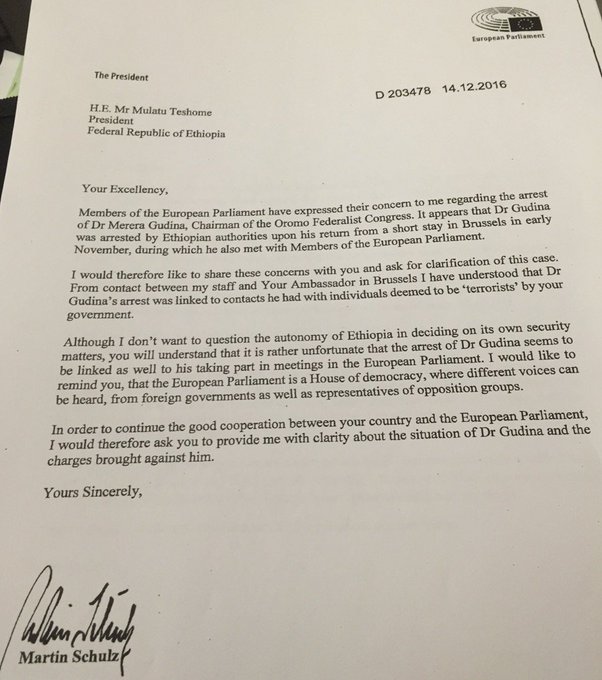



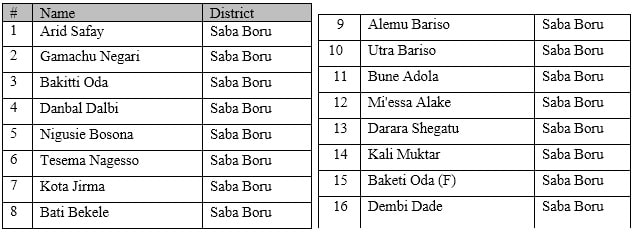
 Under remembering from the past, the HRLHA highlights the human rights violations reported by HRLHA and other human rights organizations against Oromo youths in the past ten years which continue to the present.






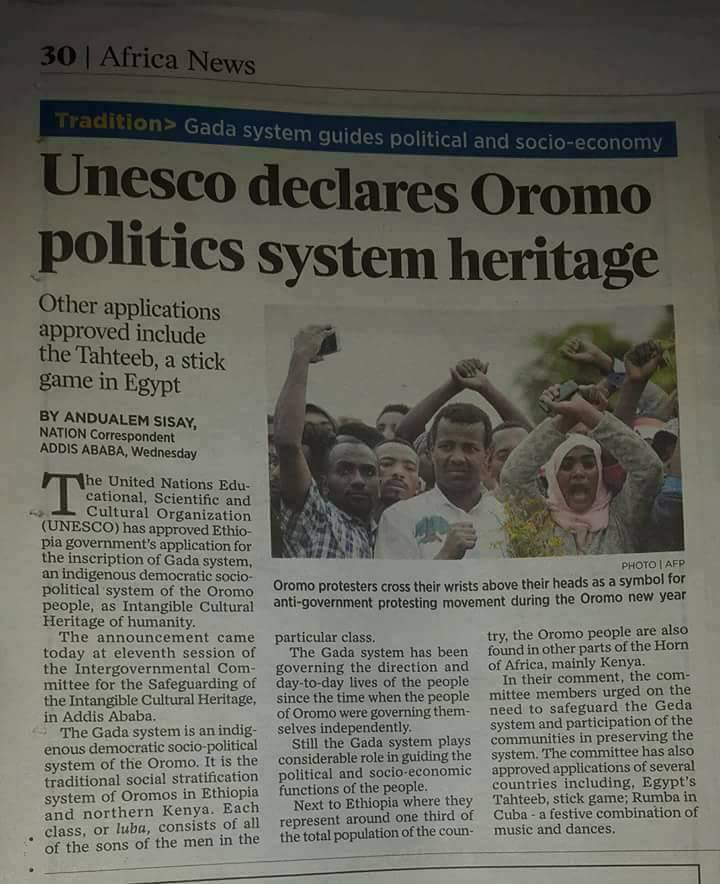




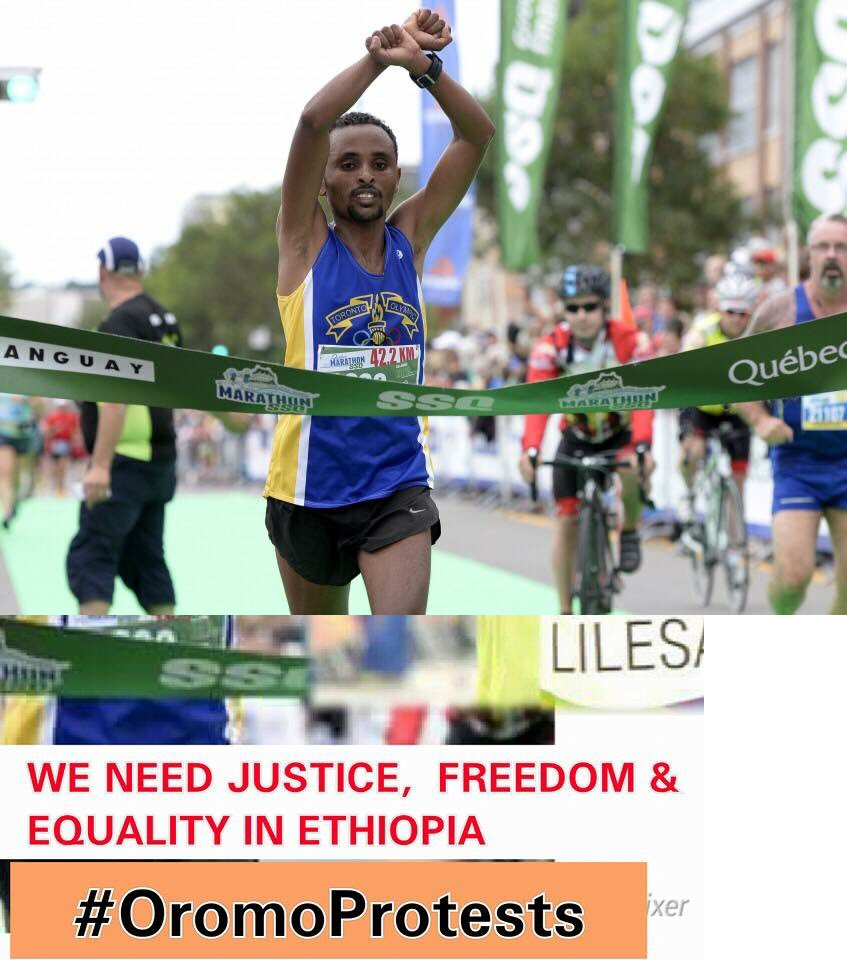


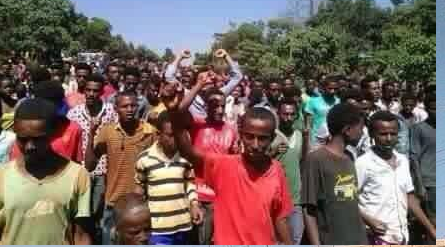


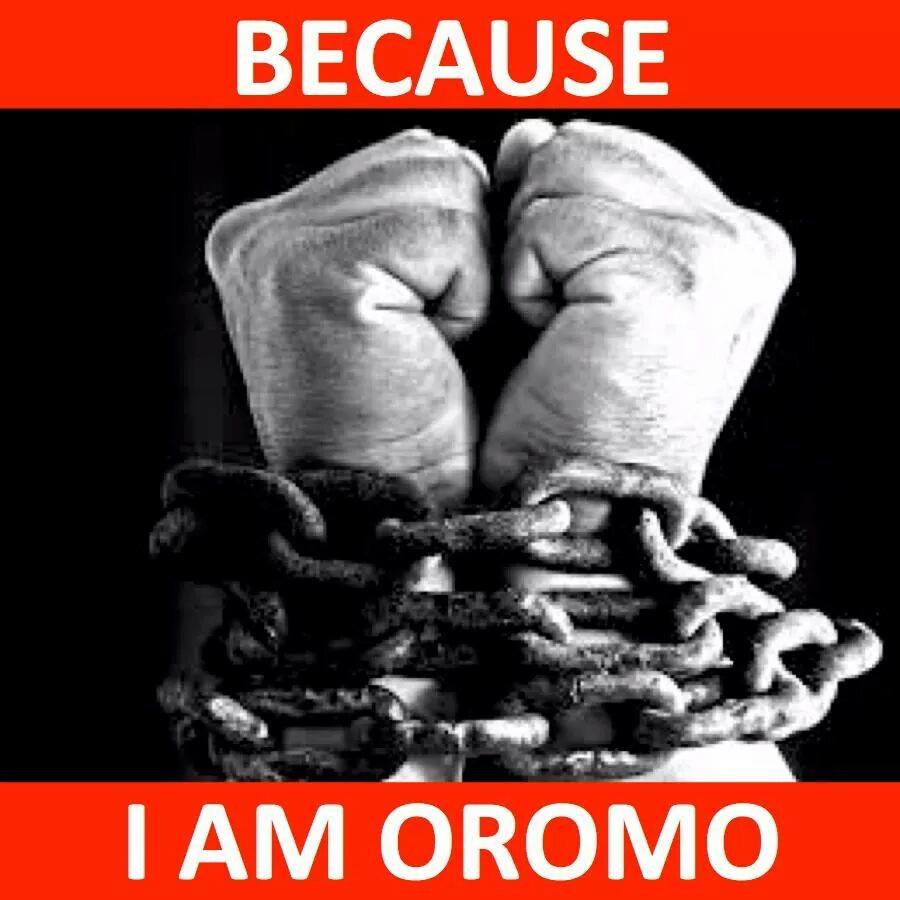
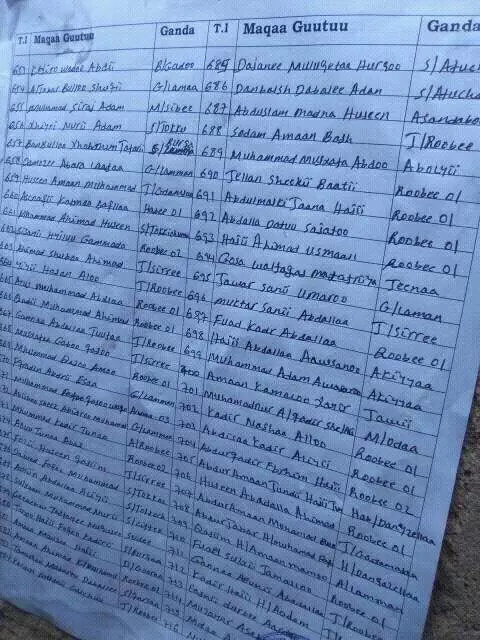
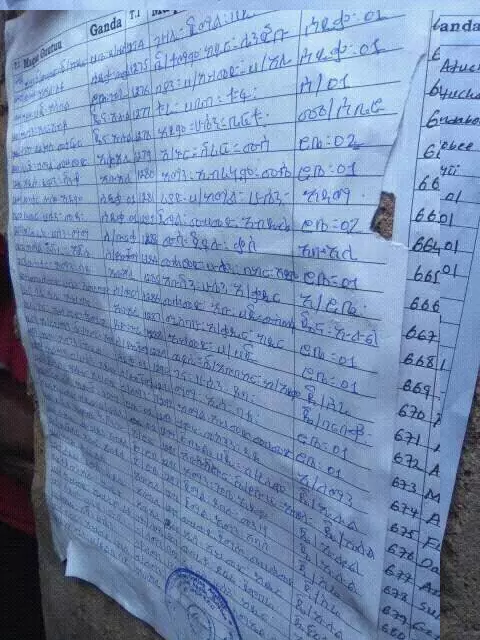
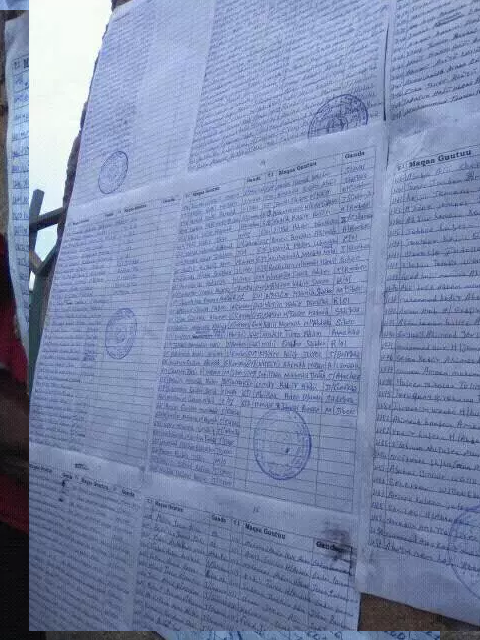
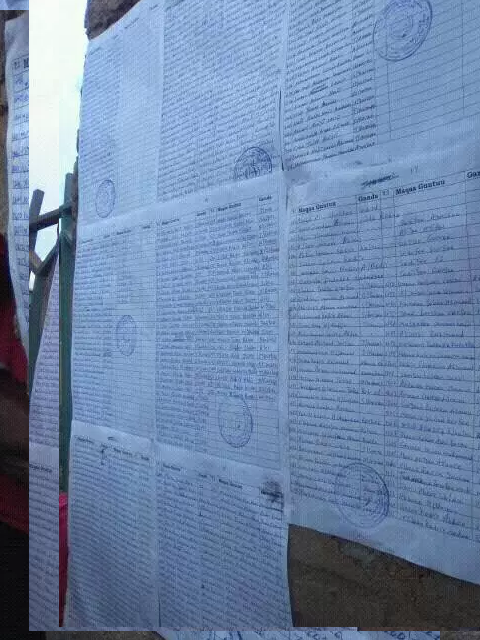
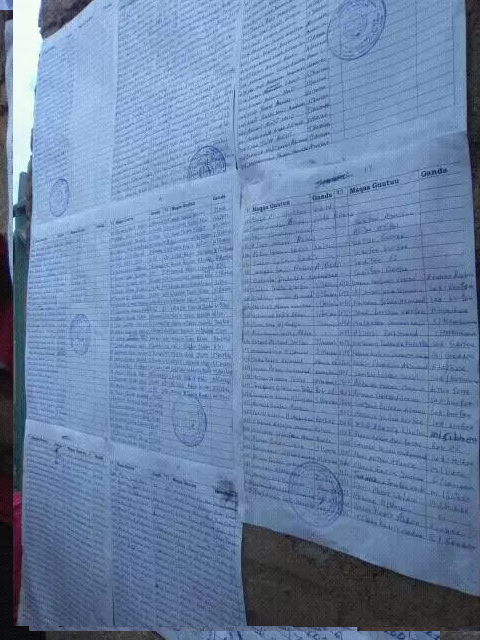
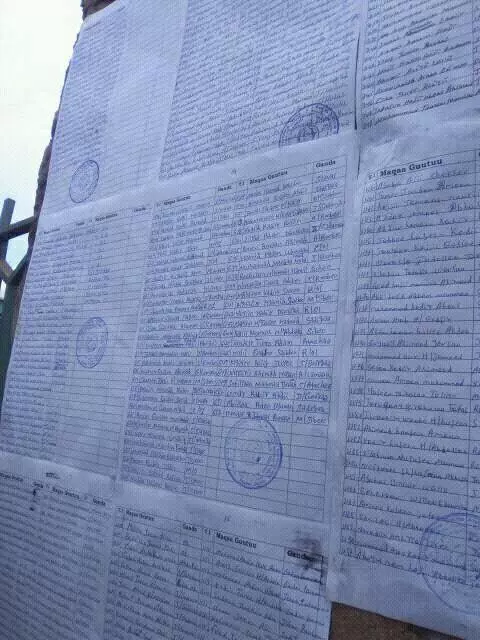
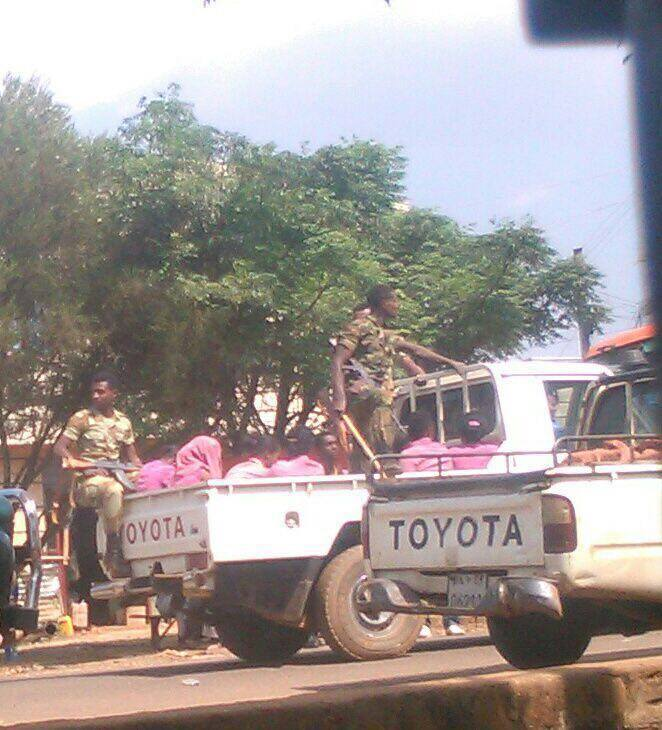


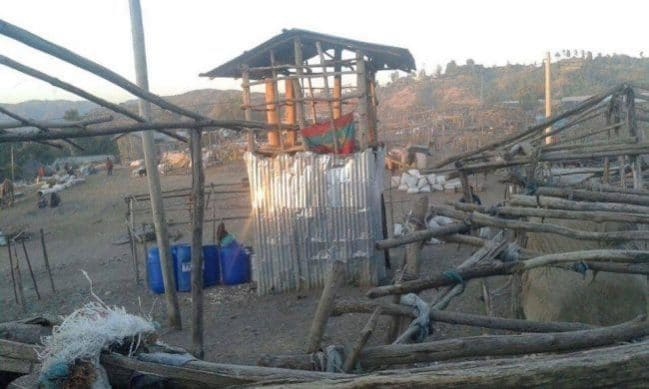
 Oromoon gaafa lolaaf ba’u “lafee jedhee “nyaata” waliin nyaata namni nyaata sanatti akka tasaa dhaquyyuu dhiisee galuun qaaniidha…….


 Muudamni Itti Fakkeessii Mootummaa Faashistii Abbaa Irree Wayyaanee gola Paarlamaa Sobaa Keessatti Har’a Gaggeesse Diramaa jechuuf Illee Diramaan hojii ogummaa artii waan ta’eef,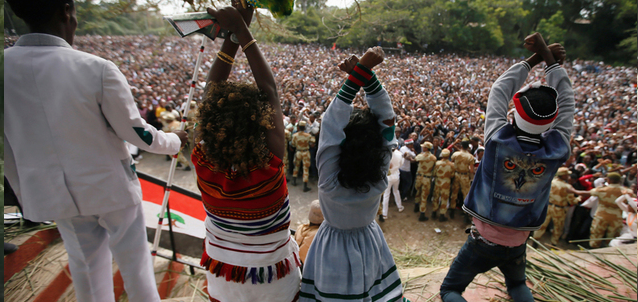









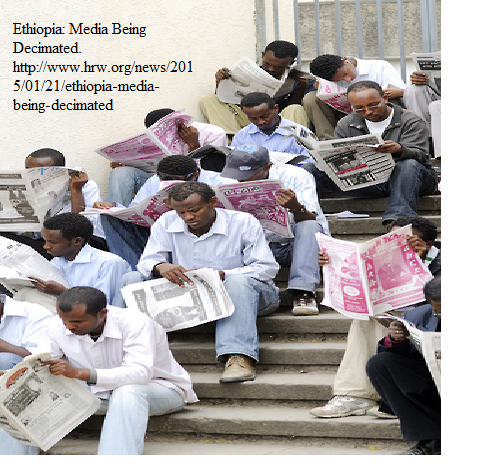


 Oromian Economist
You must be logged in to post a comment.