Economic and development analysis: Perspectives on economics, society, development, freedom & social justice. Leading issues in Oromo, Oromia, Africa & world affairs. Oromo News. African News. world News. Views. Formerly Oromia Quarterly
Human rights organization appeals to UNHCR for lifesaving assistance to Oromo refugees in Yemen
The following is a statement from the Human Rights League of the Horn of Africa (HRLHA), “a non-political and nonpartisan organization which attempts to challenge abuses of human rights of the peoples of various nations and nationalities in the Horn of Africa. HRLHA is aimed at defending fundamental human rights, including freedoms of thought, expression, movement and organization. It is also aimed at raising the awareness of individuals about their own basic human rights and that of others. It has intended to work on the observances as well as due processes of law. It promotes the growth and development of free and vigorous civil societies.”
——-
May 16, 2015
HRLHA’s Appeal to the United Nations High Commissioner for Refugees (UNHCR)
Mr. Antonio Guterres
United Nations High Commissioner for Refugee (UNHCR)
Case Postale 2500
CH-1211 Geneve 2 Depot Suisse
Emails: infoDesk@ohchr.org; GUTERRES@unhcr.org
Attention To:
Mr Amin Awad
Middle East and North Africa Bureau
UNHCR, Geneva
Dear Mr. Guterres,
The Human Rights League of the Horn of Africa/HRLHA is very concerned about the current humanitarian crisis in the Republic of Yemen following the internal conflicts and political instabilities that have broken down the social services in the country. Many nongovernmental and humanitarian organizations are reporting that the crisis in Yemen has highly affected refugees and asylum seekers who came from the Horn of Africa to Yemen to escape the volatile situations in Somalia, Ethiopia, Eritrea and other places. Among the most vulnerable are Oromo refugees and asylum seekers residing in Sanaa, Aden and other areas in Yemen.
According to the letter disseminated by the Oromo refugee community in Aden-Yemen under the heading “Only Oromo refugees are still caught up under the fire and critical circumstance and also expecting an imminent danger”, Oromo refugees are desperately seeking attention and lifesaving assistance of the UNHCR. The UNHCR’s Middle East and North Africa branch office confirmed its commitment to providing life–saving assistance for the needy people under its strategy’s priority: “UNHCR’s strategic priorities in 2015 are: to deliver innovative operational responses, including lifesaving assistance; to ensure protection for all people of concern with a particular focus on the most vulnerable, especially those in urban areas; to seek durable solutions, including resettlement as a protection tool; and to continue to respond to ongoing emergencies.” (UNHCR, Middle East and North Africa – http://www.unhcr.org/pages/4a02db416.html)
Dear Mr. Guterres,
HRLHA, Amnesty International and Human Rights Watch have reported and are still reporting that the Oromos are fleeing their country to escape persecutions by the current Ethiopian government led by the TPLF/EPRDF. The recent research document released by Amnesty International – “Because I am Oromo” – Sweeping Repression in the Oromia Region of Ethiopia – exposes that how Oromos have been regularly subjected to arbitrary arrests, prolonged detentions without charges, enforced disappearances, repeated tortures and unlawful state killings since 1991, when the current Ethiopian government came into power, as part of the government’s incessant attempts to crush dissidents.
Dear Mr. Guterres,
Thousands from other nations and nationalities in Ethiopia have also been killed, kidnapped and arrested by the TPLF/EPRDF government because of exercising their fundamental rights or holding political opinions different from TPLF/EPRDF’s political agenda.
Therefore, the HRLHA politely urges the UNHCR to:
1. Provide food and shelter assistance to vulnerable Oromo and other refugees in Yemen
2. Move them to safer neighboring countries in the Middle East or beyond.
Sincerely,
Garoma B. Wakessa
Director, HRLHA
Contact Addresses:
– 994 Pharmacy Avenue, M1R 2G7 Toronto Ontario, Canada
– Tel:- (416) 492 2506 or (647) 280 7062
– E-Mail:- hrldirector@mail.org
– Web site:- www.humanrightsleague.org
Dr. Merera Gudina, Chairman of the Oromo Federalist Congress (OFC/Medrek), and Ob. Bekele Gerba, former prisoner of conscience and OFC’s top official, jointly campaigned in Gudar, western Oromia, on Sunday, May 17, 2015, for the upcoming General Election, scheduled to be held on May 24, 2015. Thousands of supporters joined the OFC leaders in Gudar. http://gadaa.net/FinfinneTribune/2015/05/photos-dr-merera-gudina-ob-bekele-gerba-jointly-campaign-for-ofcmedrek-in-guder-oromia/
The Global African looks at land theft in Ethiopia & the connection between Belgian colonization and HIV in the Congo.
Bio
Bill Fletcher, Jr. is a columnist, activist, author and labor organizer. He is the executive assistant to the national vice president of the American Federation of Government Employees. Bill is an editorial board member of BlackComentator.com, as well as the chairman of the Retail Justice Alliance. He is also the co-author of “Solidarity Divided”; and the author of the newly released book, ‘They’re Bankrupting Us’ – And Twenty Other Myths about Unions . He is a co-founder of the Center for Labor Renewal, and has served as President of TransAfrica Forum and was formerly the Education Director and later Assistant to the President of the AFL-CIO.
Transcript:
BILL FLETCHER, HOST, THE GLOBAL AFRICAN: Today on The Global African, we’ll talk about the legacy of Belgian colonization in the Congo and a recent report on land grabs in Ethiopia.That’s today on The Global African. I’m your host, Bill Fletcher. Thanks for joining us again. And don’t go anywhere.
~~~FLETCHER: According to a new report from the Oakland Institute entitled We Say the Land Is Not Yours, the government of Ethiopia has been forcibly removing many Ethiopians from their native lands through a so-called village-ization program. The program, supposedly intended to modernize the East African nation, has sold off millions of hectares of land to foreign investors. These investors, often large-scale agriculture companies, are buying very valuable land at a cheap price. Instead of cultivating land and producing food for the people, most of the yields are being used to export to other nations.After being forced off their land, natives are cut off from access to fertile land, health care, and educational opportunity, languishing in poverty.The country’s villagization program has faced allegations in the past of torture, political coercion, imprisonment, rapes, and disappearances against those attempting to form resistance.We’re joined now with our guest from the Oakland Institute in California, Anuradha Mittal, who is the executive director and founder of the institute, which aims to create opportunity for public participation and democratic debates on key issues worldwide. Under her leadership, the Institute has unveiled land investment deals in Africa and around the world.Thank you very much for joining us on the program.ANURADHA MITTAL, EXEC. DIR., OAKLAND INSTITUTE: Thanks for having me.FLETCHER: So I just read this report that you issued concerning land theft in Ethiopia. And I had not seen anything about this in the mainstream media. And I was curious. Let’s start with how did you uncover this situation and what brought it to your attention.MITTAL: Well, in the case of Ethiopia we at the Institute have been working since 2007, 2008, when we were contacted by the communities both within Ethiopia as well as people who are now in the diaspora, people who have been forced to live in exile, who have fled the country because of the political oppression. And what we started hearing about was that in the name of development, vast tracts of land are being cleared where ethnic groups, indigenous communities have been living as agropasturalists, or growing their food, or using the forest for their medicines, for their farms.And with this displacement, you’re seeing large-scale plantations of cotton, of sugarcane coming into being in the name of development, that this will lead Ethiopia to the next century and make it a renaissance state.So we were really concerned by the kind of displacement that is happening. The government plans to give away 7 million hectares of land, leading to the displacement of over 1.5 million people. And there’s no consultation, there is no free prior informed consent. The way communities are being moved is through forced displacement, and we were very concerned about it.FLETCHER: When the Ethiopian regime that currently is in power took over in the ’90s, overthrowing Mengistu, their program seems to be completely antithetical to what we’re witnessing right now, where the regime seems to be serving the interests of global agricultural capitalists.MITTAL: You’re right on, I mean, what had happened earlier, the so-called villagization, when people were forced off their lands and the so-called villages were supposed to be created where better social services would be provided. And that was challenged. But not today. It is the same pretext that is being used that better social services would be provided, better education opportunities would be provided to communities who are being moved. And so this is the whole rhetoric of development. But our research on the ground shows that the lands which have been cleared, actually then given away to foreign investors who are coming in from India, from Malaysia, from Turkey and just about everywhere, especially in areas such as Gambela or Lower Omo, and leading to forcible displacement of people.The other shocking thing, Bill, that–I think it’s important to remember is that this kind of development, which leads to eviction of people against their choice from their homes and lands, is happening thanks to donor countries. It is happening because it has the blessings of financial institutions such as the World Bank.FLETCHER: I’d like you to explain that a little bit more. Why–what are the, what’s the interest of the World Bank in all of this?MITTAL: Well first of all, there is this belief that large-scale plantations, large-scale agriculture will lead to development and the benefits of which will somehow trickle down to those at the bottom. We have seen that trickle-down does not really ever happen.Secondly, you have these loans that are being provided. When you look at Ethiopia, over 60 percent of its budget comes from outside. Some of the key donors are United States, United Kingdom, the World Bank.And also we have another relationship. In the United States, Ethiopia is our closest ally in Africa. It is our ally in the war on terrorism. So we tend to turn a blind eye to the repression that is happening on the ground.FLETCHER: Is there an ethnic side to what’s going on? That is, are there certain ethnic groups in Ethiopia that are disproportionately affected by this? Or is this pretty much across the board?MITTAL: Well, this is happening across the board, and it’s happening to the ones who are in minority. So, for instance, in Lower Omo you have the Bodis, the Suris, the Mursis, the Nyangatoms, the Hamars who are being impacted. In case of Gambela, Anuaks are predominantly targeted. So it is a country which is ruled by a minority, the Highlanders, or the Tigrayans. And their control is being maintained through political and economic repression by displacing people from their lands, which makes their livelihoods even more difficult. And secondly, it helps to control the country politically and stay in power.FLETCHER: There’s two questions here. One is: what is happening to the populations that are being displaced? In similar situations around the world, there’s a tendency for people to move into the urban centers. Is that what’s happening here? Are people leaving the country? And the second question is about resistance. What kind of resistance is building?MITTAL: Well, both are great questions. I think Ethiopia is a little bit unique, because given the kind of political oppression you have, given there is no political space to be able to speak out as you hear from the testimonies presented in the report, which we basically felt we had to do because our fieldwork, when we have put out in reports, has been challenged by the Ethiopian government, and this time we could say it is not some Western NGO challenging the Ethiopian government, these are the voices of people within Ethiopia.So it is a very, very dire situation.In terms of resistance, again, when we look around the world, given we work around the world, we see resistance on the ground, but it is pretty appalling. In Ethiopia, again, because of the lack of civil society, lack of freedom of media, and the fact that you can be arrested, the fact that Ethiopian security forces are not just arresting people within Ethiopia, but taking away people from Kenya and South Sudan who might have challenged government’s policies, we are finding very little resistance on the ground.The resistance is more of having the courage to storytell groups such as Human Rights Watch or tell groups like the Oakland Institute what the reality is on the ground. So the resistance is of people who refuse to give up and refuse to move from their lands. And in return they’re facing persecution, they’re facing arrest, intimidation, beatings. You know, the prisons of Ethiopia are full of people who have challenged government’s development strategy.FLETCHER: Is there any sense of global support for the peoples that are facing these evictions? Or are they pretty much on their own?MITTAL: Well, I think more and more of the world knows what is happening in Ethiopia. There are groups from International Rivers, Human Rights Watch, Oakland Institute, Survival International who have been supporting the communities on the ground who have been putting out information to inform and educate. For instance, the U.S. Congress just recently deferred–UK’s development agency stopped financing PBS, the program for basic services, which was linked to the villagization scheme of the Ethiopian government. So this pressure from outside is resulting in kind of taking away some of the resources from the Ethiopian government that is financing and is facilitating displacement of people.But, of course, a lot of work remains to be done. Because of our research, it was exposed by Channel 4 in Sweden that H&M was sourcing its cotton from Lower Omo, these plantations which have come into being by displacing indigenous agropasturalists from Lower Omo. And because of the pressure, H&M had to announce that they would not source cotton from Lower Omo. So I think it is very important to keep spreading the word, to keep educating, and to keep exposing that development strategy which is based on a denial of human rights–and not just denial, but abuse of human rights cannot be a development strategy for any nation.FLETCHER: Ms. Mittal, thank you very, very much.MITTAL: Thank you. Pleasure to speak with you.FLETCHER: Absolutely. I look forward to it in the future.MITTAL: Same here. Take care. Bye-bye.FLETCHER: Bye-bye, now.And thank you for joining us for this segment of The Global African. I’m your host, Bill Fletcher. And we’ll be back in a moment, so don’t go anywhere.
~~~FLETCHER: One of the greatest holocausts of the 19th century, indeed of all time, was the murder of 10 million Congolese when the Congo, then known as the Congo Free State, was the personal property of King Leopold of Belgium–more than 10 million Congolese murdered in order to enrich this monarch of Europe.The legacy of that holocaust lives with us today and is detailed in an excellent piece by Dr. Lawrence Brown. The impact of that holocaust and the colonization of what is now the Democratic Republic of the Congo resulted in conditions that were fertile for the development of what came to be known as HIV and AIDS. HIV-AIDS first surfaces in what is now Kinshasa, which was at that time, in the 1920s, Leopoldville, in 1920, and spread as a result of the practices that were carried out by the Belgians as they tore the country apart.The Ghost of Leopold Still Haunts Us is the title of an essay written by our next guest, Dr. Lawrence Brown from Morgan State University, an assistant professor in the Department of Health Policy and Management.Dr. Brown, thank you for joining us again.DR. LAWRENCE BROWN, ASST. PROF., DEPT. HEALTH POLICY AND MGMT, NSU: Absolutely. Pleasure to be here.FLETCHER: Great. I was really struck by this article. It’s the connection that you make between Belgian colonialism and the development of AIDS. I had not seen anything like that before. And it was so different from the conspiracy theory pieces that people read, the utter denial that we see. What inspired you to write it?BROWN: Absolutely. I really had been doing a lot of thinking and studying around colonization, how that impacted health of populations and how enslavement, how these historical traumas impact the health of populations. So when I ran across this article that basically found the authors conducting a genetic analysis of the virus itself and tracking it down, through this sort of forensic process, to Kinshasa in the 1920s, I was really fascinated, because I had been looking at the Democratic Republic of Congo and its history. And so when I ran across the article and I began to read it, I noticed the word Belgium really didn’t come up in the article at all. And I was familiar with Adam Hochschild, King Leopold’s Ghost, and the story of how King Leopold and his Force Publique, this military regiment, had brought such terror and devastation to the Congolese populations, killing up to 10 million of the Congolese people, that I was really fascinated by the sheer absence of the mention of Belgian colonization.So that got my mind to thinking, and I decided I needed to write something to sort of understand, help people understand how the social determinants of health would have impacted the development and the ignition of HIV.FLETCHER: And you’re describing the Congo Holocaust.BROWN: Essentially, yes.FLETCHER: I mean, more people were killed in what was then the Congo Free State, right?BROWN: Right. It started out as the Congo Free State.FLETCHER: ‘Cause it was the personal property of King Leopold.BROWN: Absolutely. King Leopold II of Belgium.FLETCHER: That’s right.BROWN: He owned it for about 26 years.FLETCHER: That’s right. More people were killed there than the Nazis killed in their Holocaust.BROWN: Absolutely. It was terrible.FLETCHER: Now, one of the things that I was struck by then is that there are those that have tried to dismiss the issue of HIV and AIDS as being related to a virus by simply saying that it’s because of poverty.BROWN: Right.FLETCHER: President Mbeki, the former president of South Africa, was one who was very much in that direction. But you’re making a very different argument.BROWN: Absolutely. You know, the World Health Organization defines social determinants of health as the conditions in which we live, play, work, and pray. And so the social determinants of health help contribute to a disease’s spread, how it evolves, how it is able to infect and spread among human populations.And so what happened in the Belgian Congo in the 1920s is that–this article says it started in 1920s in Kinshasa. So it gives us a starting point. So we know, for instance, that the CIA starts in 1947, so the CIA didn’t create this virus. We know that certain things–we can basically say we can rule out some of the conspiracies based on this analysis.But what we do need to know and figure out is that in the ’20s it wasn’t called Kinshasa, it was called Leopoldville.FLETCHER: That’s right.BROWN: This was part of King Leopold’s domain and the Belgians’ domain by the 1920s. They had built an extensive railway system in the Democratic Republic of Congo, as we know it today, using free African labor–or forced African labor of the Congolese. They had thousands and ten thousands of men and women carrying the supplies and materials that were needed to create this railroad. They had folks who lived and died under the strain of the push to create this sort of transportation. And the railroads were used to extract ivory, and then rubber, from which King Leopold II became rich, to extract those resources from the African people.And so in the article it mentions that having this railway was critical to the spread of the virus because it allowed the transportation from places like Kinshasa, as we know it today, to /kəngɑːli/ and different cities within the nation. And so, understanding that the railways did help the spread of the virus is important, but it’s also important to understand the forced African labor that was used to build that railway and to transport the laborers, even later, after the real railroad was built, along those railways, so the transportation of people back and forth, all in the service of colonization.FLETCHER: Let me go back for a second, 1920 Leopoldville, when they say that that’s when HIV-AIDS emerged. It didn’t pop out of the air.BROWN: No.FLETCHER: So what happened?BROWN: Well, you have the animal-to-human transmission. It’s just like we’ve been talking about the Ebola virus recently, a zoonotic disease that emerges out of animal-human contact. So, in this case the theory is that chimpanzee meat in some form or fashion was consumed by an African Congolese, and thereby transmitting the simian form of that virus.Well, how might that have happened? People in that region maybe had been eating that meat on and off for several hundreds of years. They’d known how to eat that meat very properly, cooked it quite well. But under the conditions that the Belgians were putting the Congolese under, they totally disrupted the Congolese food supply to such that witnesses say that laborers were starving because they couldn’t grow their own food. So now they’re importing food from Belgium, they’re importing food so that the Congolese can eat other people’s food to survive, but they’re sending them into the forest to go and extract rubber down from the vines, they’re sending them into the forest, and folks have to climb up the trees to extract this rubber from the tree, many of them falling asleep and dying or injuring themselves in the process. And so, in this environment of extreme hunger, I could see someone saying, I don’t have anything to eat right now, maybe there is a dead chimpanzee somewhere, I’m going to take that and not cook it properly because I’m so hungry under these conditions, and then you have the transmission from animal to human in this case.FLETCHER: Fascinating. So forgive the very basic questions, but I’m not a scientist. Nineteen-twenty.BROWN: Right.FLETCHER: Okay. Then it seems to emerge publicly around 1980.BROWN: Right. So where was the virus hiding?FLETCHER: Where was a virus? Right.BROWN: Well, you know, I think that from what we understand there, really sort of this article gives three primary vectors. We’re talking about the railway that we talked about earlier. It allows for humans to travel up–the host for the virus to travel across the country, transmitting the virus. It talks about–so you have host, you have the transportation.Then you also have another vector they talk about, commercial sex workers, and so what we know as or what people commonly referred to as prostitutes. And so there are Congolese scholars that say, well, even the commercial sex work is rooted in colonization, because the Belgians would take Congolese women and exploit them in various ways. They would exploit them in terms of helping–using them to please the workers in vile ways. They would use women to–they took some of them as their second wives in the Congo Free State and later the Belgian Congo. So they perverted the very being and the spirit of the Congolese women, and as such created a sort of commercial sex work industry that allowed the virus to sort of proliferate originally.Now, in terms of spreading beyond the borders, the analysis basically says that by the ’60s or ’70s there were Haitian workers that were working in the Belgian Congo. And by the ’60s, of course, the Congo becomes Zaire under Mobutu. And so the Haitian workers working there, professionals, they go back to Haiti having contracted the virus, and then maybe a few Haitians go to New York or go to the United States, and the virus sort of emerges there in the 1980s. But it had been sort of percolating all along. I think you see in the medical literature there were people dying that they can sort of trace back and say, this was probably the disease. In the ’60s and ’70s they were starting to see something’s going on and it’s not right.FLETCHER: But what did the Belgians see between 1920 and 1960, when the Congo became independent? Is there any evidence that they even noticed that there was a problem?BROWN: I don’t think they knew that there was a specific problem with this particular disease. Now, they did have public health campaigns to help stop, like, sleeping disease and other diseases that are infectious diseases that were there at the time.Now, the important thing to know is that they were reusing syringes to sort of inoculate people against certain diseases that they knew about at the time. And so, inadvertently, I believe, you’re reusing needles, and that could have helped proliferate the spread of the virus as well at the time. So those are the kind of dynamics that even in terms of the colonial public health system, the Belgians could have played a role in terms of helping to proliferate the virus. So, whether it’s the colonial public health system, whether it’s animal-to-human transmission, whether it’s commercial sex workers or the railroads, the Belgian colonization system, first with King Leopold and then under the Belgian government, played a role in the transmission of this disease.FLETCHER: When the Belgians left the Congo in 1960, they did nothing to help in any kind of transition. They were trying to actually Balkanize the Congo, as you know, the whole fight around the Katanga province and trying to separate it off. There’s no indication that there was–I’m assuming that there was no indication of any effort to deal with any medical issues when they moved out.BROWN: Yeah, not to my knowledge. But the Belgian government did collaborate with the CIA in terms of the assassination of Patrice Lumumba, the first prime minister of the Democratic Republic of Congo. So the Belgian government plays a very powerful role, in terms of even after they leave, determining, charting the future course of the Democratic Republic of Congo, so that it’s much more likely to move in a less Pan-African direction and more so in a much more brutal dictator direction.And why is that important? Of course, if you have someone who’s in your stead managing in a neocolonial arrangement, that continues the facilitation of extracting resources from the country. And so you have critical minerals that are predominant all over the country–copper, diamonds, or coltan that’s in our smart phones and cell phones, right? And so people are fighting over those resources today. There’s been a tremendous civil war that’s been going on. Up to 5 million Congolese people have been killed in this civil war.And you see under King Leopold people’s hands being cut off because they didn’t produce enough rubber. And then in this civil war you see sort of the same thing, people’s hands being cut off as a form of punishment. And it sort of–you know, we look at how people tend to reproduce the trauma that they have experienced under these sort of extreme, harsh forms of brutalization and oppression. And that’s what I think is important to know is that so much of what’s going on in the Congo today finds its root in that period when King Leopold II–.FLETCHER: Dr. Brown, thank you very much for joining us on The Global African.BROWN: My pleasure.FLETCHER: And thank you for joining us for this episode of The Global African. I’m your host, Bill Fletcher. And we’ll see you next time.
End
DISCLAIMER: Please note that transcripts for The Real News Network are typed from a recording of the program. TRNN cannot guarantee their complete accuracy.
Addis Standard – I would like to congratulate you for being a free man at last. But what was it like to be in prison?
Bekele Gerba – Prison is not a place one appreciates to be. But I think it is also the other way of life as an Ethiopian; unfortunately it has become the fate of many of our people. You will find a lot of students, youngsters, brothers and sisters, sons and fathers, husbands and wives. Especially when it comes to the Oromo, they are there in great numbers. Therefore going there or being there was a very good experience by itself because you will understand the agony and the hardship our people are facing at the moment. There are lots of problems there too, from the type of food people eat to the type of bed they sleep on. But there are a lot of things to learn from them so I think for me it has been a place of training. What was your everyday life like and what was your biggest challenge?
My biggest challenge was the first one year and two months when I was kept in maximum security in Kality prison. The room was very small and the type of people we were with are regarded as deadly criminals in this country; they fight and even the police are scared of them. Sometimes they use drugs and they fight easily with anybody. It is a very difficult place. After being there for a year and two months I was sent to Ziway. Ziway is a place where people who come from the countryside are always kept; people who are economically not well off, mainly people who are allegedly suspected of having links with the Oromo Liberation Front (OLF). And most of them are Oromos there. There is this popular term that says ‘the prisons in Ethiopia speak Afaan Oromo.’ Is it what you are confirming to me now?
Exactly. If you take away the large number of thieves (the most popular crime there [in Ziway] is theft – and say may be out of 5000 or 6000 prisoners there about 3000 or 4000 thieves) and if you take away those people who are suspected of corruption, very few in number in fact, the rest you can say they are all Afaan Oromo speakers.
How did that make you feel as a politician whose party represents the Oromo and as an Oromo?
In one way I am very glad to be there because I felt myself sharing the agony of my own people. How am I different from those people? Those people went to prison because they demanded their rights; I was also there because I demanded my rights. In this country I thought that the Oromos are being excluded from the political and from the economic spheres or participation, something I always object. Therefore I am very glad to be there. I remember the first day I went to the court before my arrest just to see how the court was proceeding when about 500 or 600 Oromos were imprisoned and then taken to the court. I went there as a party member to witness and to see what was going on around. I felt very badly because I saw the prosecutors organizing false evidences; they were calling upon people and they were giving them orientations to testify against people whom they didn’t know at all, whom they have never seen before. I was sad and I called some media that day and gave a brief interview. I think it was after the airing of that interview that the government started following me in order to stop what I was doing. But since I was the spokesman of my party that was the job given to me – to give press conferences or sometimes press releases of what was going on around the party and anything related to the Oromo people. But after I went to prison I was relieved because I had to experience the agony of my people; I had to share their pain and I am glad for that. Going by your own explanation, if living the pain and agony of your fellow countrymen brought you relief, how did that affect your other life that you stood for? You had a family, you had a political life, and you had a career that you had to leave behind.
Like anybody else, like a human being, when you miss your family of course you feel sad. But my family is no different from other peoples’ family. For example there is a family that I know, the husband was in prison and when he was released the wife was taken to prison. Their children are growing up without a father at one time and a mother at another; my children are no better than these. And if only my family, if only a group of people enjoy normal life and the great majority are not doing the same, I think your happiness or your joy cannot be complete. Of course when I first went there I thought my family would be affected very badly but they are very courageous and they were very supportive psychologically. They were very strong and thanks to many Oromos my children did not quit school and my family has not suffered as such economically. Your daughter Bontu gave an interview to Afuraa Biyyaa radio station once and told the station you were suffering from ill health. Walk me through that. What happened? How did you maintain your health afterwards?
During the first two three days soon after I was taken to Ma’ekelawi [prison] I started having severe headache and the nurses told me that my blood pressure was high. I had never had that experience before. I was then taken to the Police Hospital and was diagnosed with the same thing; the nurses told me that I looked like a chronic hypertensive patient. I have not had that kind of medical history. Since then until I came out of the prison a few days ago, my blood pressure has been on the rise; I think may be because of the tension, I don’t know. But I am happy that after I was released I am quite okay. I haven’t taken any medication or I have not consulted any physician since my release; I feel I am healthy.
What did help you maintain your everyday sanity when you were there? Was it your interaction with other inmates? Did you have access to books?
The first year was a very difficult time and we have not had enough books and we didn’t know how to smuggle books or any magazines or anything to be read. We have not had any relations with the police; that was a very difficult time until we adjusted ourselves to the prison situations. But later on we started having some books to read that some friends brought for us. We started reading and on a small scale started writing, although it was very difficult to get it out because every three weeks or so the prison police would conduct a search and take away anything that is written; that was the difficult part of it. But after I went to the prison in Ziway I had a chance to meet senior people from the army and from the air force who were accused of staging a coup. Those are people like General Tefera and General Asamenew who were taken to Ziway together. We stayed together and they are very understanding people; they like reading, they like discussions and I enjoyed the discussions. We shared books; we read whatever books we could lay our hands on. That helped me to squeeze through all these bad times. Moving out of your time in prison, can you tell me what it was like growing up as Bekele Gerba, an Oromo child?
Surprisingly the place I was born and raised is a typical monolingual area. All the people around, all the shop owners or all the government employees and all the school staff speak only one single language, Afaan Oromo. It is a very special place I can say even by Oromia standards. Therefore I didn’t know whether there was any kind of difference between one ethnic group and the other or if there was any kind of oppression elsewhere. But when you go to colleges and universities you will begin to realize there are various ethnic groups and there are various things you will find difficult to tolerate. When I went to the big towns like Addis Abeba and I speak my own language in a taxi or in a bus people turn around and take a look at me; that was when I started to get surprised. And then the consciousness, the social consciousness – not as such political – the reality makes you a bit conscious. However I have not had any bad experience until I graduated from university and went to Wolega again as a high school teacher. And I like speaking languages; I am an outgoing person. I have no problem living with other ethnic group members. But it is later on that I came to understand that there is something wrong going on against the ethnic group I came from. Is that what drove you to get involved in politics?
Yes. Even in my employment for about 25 years I had never been involved in politics. I was simply an academician and I thought that politics was not a job for everyone. I am a teacher and if I am a good teacher in my profession I thought that will do and that was that. But gradually I found out that my peoples’ grievance is not addressed in a way that it should be. So I thought I could get involved in politics to contribute my share. I don’t know whether I had done anything or had made any change because before I could do anything substantial I was taken to prison. My life experience as a politician is not more than three years. But within that short period as a politician, I think it was during the 2010 election debate that in a rather succinct argument you spoke about the use and abuse of land distribution and said land was used to advance political causes. What made you take that very strong stand against the ruling party?
You know land is the most important resource in this country, not only in this country but everywhere. It is this resource that everybody who comes to power tries to get control of. If you simply open your eyes and look at what happens around Addis Abeba, then you will see how people are being evicted, and how other people who cannot explain where they get that amount of money from are being catapulted overnight into so much wealth. From my own experience I had a lot of friends who were brought up with me, who had been teachers with me yesterday but who had a lot of money today. That’s okay if it is a legal one.
Realizing that I tried to make a kind of taxonomy, a kind of classification, even though I cannot recall it perfectly now. Accordingly our level of citizenship is divided into various categories. There are people who when they travel around they see a land their eyes fell on and feel like having it and who can have it. Whoever is born and brought there they don’t care. So they can evict everybody and they can sell or hand it over to their friends. I call these people first class citizens. And many of these people are who claim themselves to have liberated us by struggling for 17 years. But what they did not do is liberate these poor farmers; in fact in this regard the Dergue did better for me because it took the land from the landlords and distributed it to the poor farmers, to the tillers. But this time it is the other way round.
And then there are others – regional officials like if you take the Oromia cabinet members, or the SNNPR cabinet members or the Amhara if you like – they can be categorized as second class citizens. They have their power to take any land they wish but there is a power above them. Frankly this power is the power of the TPLF who are the first class citizens. Second class citizens can sell and give but there are others above them who will watch them and who will control them. And then there are the lower hierarchies like the municipalities, for example, or like the Zonal administrators. They have also the same power but above them they know that there are two more hierarchies and may be sometimes they can be accountable. They know that whatever is remaining from the top two, they will get some amount.
And then there are others who do not own anything, who do not own any land but who just look and witness what is going on around, but who are quiet, who are made to become voiceless, who cannot do anything – like the civil servants. And finally the last one is the farmer. He is the farmer who is being looted, who is being evicted, but if at all something happens, like if the country is at war with neighboring countries or with any enemy, these are the people who are called upon to die for this land, a the land for which they don’t have any power on, for the land from which they can be evicted any time. It is the sons and daughters of these people who are going to the warfront and pay with their dear lives. But on the ground they have nothing. For example if you go around Addis Abeba and take a look at someone who is guarding a building and then ask who that man is, he will immediately tell you he was born and brought up there. And he will tell you that it was his land on which that huge building is built. These are mainly Oromos by the way.
Were you speaking that because the majority of this case is happening in and around lands predominantly belonging to the Oromos or was it because it is a trend that represents the rest of the country?
The pattern is all the same. In the name of investment people are being evicted in the South, in Amhara or even in Tigray regions. What makes Oromia very different is that the land is very close to the center and the investors, these high officials and the government representatives, all these wealthy people want to dwell around it; they want the area very much. The land is very nice, the location is very good, and the weather is good. So everyone puts his eyes on it. Otherwise the trend is all the same everywhere.
But the government argues it is offering compensations…
What does compensation mean? How much money is enough for someone who is evicted forever? Not only him but his children, his grandchildren and the next generation? What makes this very difficult is these people don’t have any profession other than farming. They don’t have any other skill. So how much compensation is enough for these people? Speaking of which, last year in May a number of University students were killed, imprisoned and have disappeared, I am sure you have heard about it, because they were protesting against the Addis Abeba Master plan, which wanted to include around eight peripheral localities known as the Oromia Region Special Zone. What was your take on that? How did you react when you heard about it?
This is obviously a crime. A massive crime has been committed, and people must be accountable for it. The students did not die in vain for me. They paid sacrifices in order to protect the constitution of this country which says each of the nine regions and the two city administrations has specific boundaries. Addis Abeba has its boundary too. Even though it has not been demarcated on the ground, it was a boundary which is lesser than what it was during the Dergue and greater than what it was during Hailesellasie regime. This was how it was agreed upon during the Transitional Government [24 years ago]. But today the outskirts have turned into Addis Abeba. On daily basis massive farmlands of the farmers are being included into the boundaries of Addis Abeba. So, when I say these students didn’t die in vain, I meant that it was simply to protect the constitution. The Vatican City State is in Rome but the Vatican City state cannot say I have to expand into Rome. That is not possible.
For me the idea is not to expand Addis Abeba as such; it is not to turn it into a beautiful or into a modern city but to change the social structure of Addis Abeba and its vicinity. By doing this what will happen is the language spoken around those areas will change. If you take Dukem, Legatafo, Burayu, Legedadhi or Sululta not long ago, may be some ten years ago, Afaan Oromo used to be the main language. But this doesn’t exist any longer. That is what I call language shift. There is a shift when you change the population, when you change the social structure, then the culture and the language will be destroyed. This is how the Australian Aborigines lost their languages, lost their identity, lost their history, and lost everything. This is how Red Indians in North America lost their identity, lost their language and lost everything. I think for me this is not different. Even though we live in the same country, and we call ourselves Ethiopians – and for me I call myself as an Ethiopian and as an Oromo at the same time – the idea is grave. Javier Perez De Cuellar, the former UN Secretary General in his writing entitled “Our Creative Diversity” wrote: “Put a people in chains, strip them, plug up their mouths, they are still free. Take away their jobs, their passport, the tables they eat on, the bed they sleep in, they are still rich. A people become poor and enslaved when they are robbed of the tongue left to them by their ancestors, they are lost forever.” No one likes to be lost forever.
But the argument from the ruling party and sympathizers of the plan is that they need to do whatever they are doing because Addis Abeba is also the capital of the federal government, the seat of the AU and of the ECA, you if like. How do you react to that argument?
Why so much focus on developing Addis Abeba only? Why is that? Why not Bahir Dar? Why not Hawassa why not Mekele? Why is the focus on Addis Abeba? And why is Addis Abeba so much concerned about the development of Oromia? When you say it is the capital of the country do you mean it is the seat of the diplomatic community? and the federal government? It is not only because of the diplomats and the civil services in the federal government that Addis Abeba is expanding. It is because of various reasons, one of which is perception – people think they are safe in Addis Abeba than any other cities in the regions. But we can work on that, the government can work on developing other cities. There is no problem in doing that. The other problem is it is not only because Addis Abeba is the capital of the federal government, it is a self-administered, a self-chartered city. It is regarded as having a status of a region. But regions, as I said earlier, have their own borders. That is all. If the constitution is no longer working, then Addis Abeba can expand indefinitely. Otherwise you cannot cut some part of Tigray and hand it over to Amhara and cut some part of Afar and hand it over to the Somali. Constitutionally it has been made impossible. That is it. No single region should be allowed to trespass that. The third is why is Addis Abeba concerned about the plan? Where is the regional government if Addis Abeba is making a plan for Oromia?
Do you think this dilemma traces its root from the very federal system the country says it is following? What, in your opinion, does the federal system currently in use in Ethiopia mean to the ordinary people? Do you think it is losing its relevance beyond being a toll deployed to serve political ends? Or as a famous Oromo legal expert once said, I quote: “beyond dishes, dances and dresses”? What does it represent?
Constitutionally this country is a federal country but as many people think, this is not a gift from the ruling EPRDF. Federalism evolved or it came out of the situation that existed 24 years ago. Twenty four years ago there were about 17 armed groups actively engaged in rebellion, with all their weapons and strongholds. So when the Dergue collapsed there was no way out of the political deadlock except to go for federalism because everyone could have gone home on his own way; the Oromos had the OLF, the Ogadens have the ONLF and so on. So except federalism no other kind of government was possible.
I think it is an argument that Leenco Lataa recently wrote in one of the local newspapers published here. That said how do you evaluate the last 24 years? Has the country lived up to the federalism arrangement? Where did the county perform best, if there is any, and where did it lag behind?
I have not read what Leenco has written. But it is true that federalism was dictated by the situation at the time. But since then what’shappening is its concept and practice is being eroded on a daily basis. If you look at regions I don’t think they are even electing their own rulers. Practically I think the country is as unitary and as centralized as it has been before. There was one big man, the late Prime Minister [Meles Zenawi] who used to appoint regional officials without the consent of the people of the regions, who used to transfer them to the federal government as he likes. That was what was happening and continued to this day. In federalism you plan your own way, levy taxes in your own way, you execute it in your own way; your priority is different from the federal government or other regions. That is not what’s happening now, but if you take Addis Abeba city for example, which is also the seat of the Oromia regional state, in the name of self-administered city its officials singlehandedly decide on the fate of the city and its areas. For them the creation of the Addis Abeba recreational ground in Burayu may be a high priority. But for the Oromia region to which the area belongs to a school of high standard may be its priority. But as things are happening now the federal government plans by itself and executes by its own finance. That is not true federalism.
So you are firmly implying that the federal system the country is following now was dictated by the existing circumstances 24 years ago but fell short of its purpose?
Yes it didn’t serve its purpose. I am saying this because we know so many people who were elected by their constituencies, but who are moved from power by the federal government. To bring another example, in March 2011 about one thousand Oromos were taken to the Ma’ekelawi prison in Addis Abeba but the Oromia regional state didn’t know; they didn’t have any knowledge of the Oromos taken by federal security agents from every corner of Oromia. Here is when one should ask what is this regional government doing? Did the regional government invite the federal government to come and act on its behalf to bring these people to justice? Are they incapable of bringing them to justice in their own region? So what is federalism? Let’s talk about ethnic federalism. Do you think there is a deliberate misrepresentation and exploitation of what ethnic federalism stands for? An exploitation by the powers that be of deploying the concept as a means to prolong their time in power, and a deliberate attempt by people who advocate for the so called unity using the side effects of ethnic federalism?
People say ethnic federalism doesn’t take us anywhere. But I simply say that the ethnic federalism that came about 24 years ago because of the situation we were in is a necessary evil that we cannot avoid. Because our identity, our language, our culture has been denied for many years before that and it is only through this way that we can promote our language, our culture, and our identity. But it is true that it is a very broad topic but I don’t believe in the idea of the unionists because on party level, for example within Medrek, there were various ethnic based parties like the Arena Tigray. You know if you scratch any party you will find out that the issue of ethnicity is underlined but by the name it implies something else, just like we have the Federal Democratic Republic of Ethiopia. Does it mean it is federal? Does it mean it is democratic? There is nothing in a name. Therefore for me every party in this country is an ethnic based party. I am not saying it’s a bad thing; it becomes bad when one ethnic group becomes a foe to another.
Politically, it becomes bad when it is used as a tool of repression against others; when it is imposed. When somebody imposes his own agenda on another, then the problem comes. If you say don’t speak your language speak only mine then here comes the problem.
But willingly I can learn your language and you can learn mine. For example people complain that we are not able to work in the regions because we don’t know the language. In the first place you are there because you want to sell your knowledge, your skill and your service, is that not? If I went to Tigray to sell my knowledge, my skill or to sell my expertise then I have to interact with the people who want to be served in the language they understand. Nobody is disallowed to work there. But the only thing is serve these people in the language they understand. Otherwise if I am an Oromo and if I want to go to Tigray and ask all the Tigray people to speak Afaan Oromo, I think that is crazy and it should be addressed. This is a situation that often goes wrong. But people love their language very much, they want to promote their culture, they want their identity very much. If there is another mechanism by which this can be addressed, such as by geographic kind of federalism, that is okay.
Does this reinforce your belief in a just ethnic federalism system that this country has to wake up to one day?
Yes and we have to appreciate our diversity. Look, if we are of the same age, wearing the same clothes, of the same height, of the same color, eat the same food, and dance the same way to the same music this world would be nasty, it would be really ugly! Very ugly! We don’t want to turn this earth into hell. We want our diversity. We want other people to sing in their own way, speak in their own language, to wear different kinds of dresses. I think the idea of trying to bring everything into one is not a sane idea. I would like to ask you the next question as someone who is an Oromo politician. Currently there are at least two predominant Oromo discourses. The first is the discourse for secessionism, although it’s a discourse that looked as if it was losing ground since the split within the former administration of the OLF, many people think it has surfaced again when the “Oromo first” debate came about in the recent past. The second is the Oromo discourse supporting a greater autonomy within the federal government – a better way of federalism that gives the Oromo a greater say in their affairs. For this group secessionism is no longer the call of the day. Where does Bekele Gerba stand? What do you see as a better way forward for the Oromo people?
Well my stand is very clear in this issue. I always say that first the rights of the Oromo should be respected. The Oromos are located in the middle of this country; they have formed this country, they are part of this country, they will remain in this country. You cannot think about Ethiopia without the presence of the Oromos. They have sustained it and they are in the center of this massive land. Therefore I think what is very important is that their rights is respected; there should be no compromise. If so I can boldly say from what I have seen and experienced that the Oromos are not after secession. But the problem is when the situation continues like it is now; when the exploitation, the eviction, the attempt to assimilate, to destroy their language, to destroy their culture, to destroy their identity goes on in such a way I think people may think otherwise. It is true that people who are following this very closely may assume the situation is getting desperate. But for me it’s not that desperate and I still believe that things can be put in the right track, and the wrongs can be righted. If we start righting the wrongs, then I think the question of an independent Oromia or an independent land will not be a very serious issue.
But it is exactly what many Oromos feel is not happening. For them this very grim situation the country keeps on generating has continued. Reports indicate that the exile of the Oromo has continued en mass as we speak; the jailing, the killing, the mysterious disappearance of University students just a year ago didn’t help either. Don’t you think this makes the secessionism discourse to gain momentum? As someone who has been in the center of the politics in the country do you see there is still hope for peaceful struggle for the rights and respect of the Oromo? Is there a room for that? Does the political space allow for that to exist?
There is a challenge. But I think there is still hope. I always believe that things can change gradually. Because of the culture we were in for hundreds, or may be thousands of years, we used to think changing a government is only possible by violence, or armed struggle. But I think that time has passed now; it is possible to change regimes and to confront governments by peaceful means of struggle. If people are very much committed to peaceful struggle, I think the situation will change and the government must exploit this situation – meaning that, as an opposition,we are very helpful, we can contribute much. Going to the jungle and destroying everything, crashing everything and building it when you come back again as new doesn’t take this country anywhere. And if the current leadership was wise, they could have designed many ways in which armed struggle in the future would not be a possibility. But I don’t think they are smart. The legacy now is that people are still toying with armed struggle. Ten years ago when the opposition, Kinijit, won Addis Abeba and much of the country, things would have changed a lot had they been given what was theirs at that time. People would begin to trust that it is possible to change regimes without war, thorough the ballot box, and the political tradition itself would have been one step forward. But we lost that. We lost that chance because of the power mongering attitude of the ruling EPRDF; we lost that big chance.
But don’t you think the refusal of the opposition to get into the parliament itself has contributed?
But they [the opposition] had pieces of information about Addis Abeba at that time that all the treasury that used to belong to Addis Abeba city administration were handed over to the federal government including transport facilities; the state capital of Oromia was called back again and Oromia was to tax the city. So it was because of what the EPRDF did that the opposition refused to accept the city. I am not saying they did a good job, or the right thing; I think they could have taken the challenge. All I am saying is it was because of what EPRDF did that everything turned into ashes and the possibility of changing regimes and leadership in this country through the ballot box failed.
Ethiopia is about a month away from holding yet another general election. Do you think elections for a country like Ethiopia are a means of sustaining power for those who have it; for the sake of the L word – legitimacy, as many argue? Or do you believe it is a means to change the political order peacefully?
From the experience we have so far I don’t think EPRDF is ready to give power anytime. If you look at what they are doing now in terms of the use of media space, they allocated 500 hours, but they designed it in a way that they can take a bulk or the large share once again. In the last election [in 2010] 10 million ETB was allocated to all the parties out of which 9.5 million went back to the EPRDF and 300, 000 ETB went to EDP. Do you believe if I tell you that we received just 3,600 ETB? That was about 175 Euros. This time they have allocated 30 million ETB and if you ask around you may find out that more than twenty something millions of it went back to the pocket of EPRDF again. Soyou are saying holding elections is just another way of legitimizing the time in power?
That is it. It is already a foregone conclusion. For me EPRDF has already won. I think there is very little thing we expect from this election. So what does it mean to be in an opposition party trying to survive under such circumstances? What makes your party decide to exist all together?
The objective of a political party is not only to seize power. If you can get the wrongs to be corrected by the ruling party that is already something; if you can do it yourself that is even better. But if you cannot do it and someone does it then that is also fine. Therefore we will try to contribute our best in this regard, irrespective of the hard situations we find ourselves in; there is no way out. We don’t want to go to armed struggle; we don’t want to show on television Ethiopians killing Ethiopians for power. So even though pursuing peaceful struggle is very difficult I personally always appreciated the likes of Mahatma Gandhi; I have always appreciated the struggles of people like Martin Luther King and I think we have to continue that way. Rome was not built in one day.
How did your prison experience change your political determination? Did it reshape you in any way? Will you go back practicing politics again?
I think I am stronger than I was when I went to prison; I consider myself more prepared and stronger than before. And I can never be out of politics; I don’t want to be out of politics. When you were handed the eight year sentence back in 2012, you made a speech that became a symbol of the rally behind the ‘free Bekele Gerba’ campaign. In this speech you said that if you were to ask an apology you would ask it from the “Almighty” and, I quote: “from my people for failing to speak to the depth of their suffering in the interest of the co-existence of people.” Don’t you think it’s exactly this attitude of putting the “interest of the co-existence of people” at the expense of the suffering of others that is sustaining repression in this country? That people like you keep silent for the sake of co-existence?
If you see what is happening in this country by members or group of people coming from certain ethnic groups against other ethnic groups you will be very sad. But these people should live together. This peaceful co-existence can be built if I have some share; if you and the others have some share as well. Personally, for example, I cannot speak everything that I saw of what happened to the Oromos at some point in this prison known as Kilinto; it was really very sad. Well coordinated and against one single ethnic group of prisoners, who are not able to defend themselves – both by the police, by the officials, by fellow prisoners, virtually everybody other than members of that ethnic group. But you don’t speak everything and at the same time you don’t generalize too because if TPLF has done something bad it doesn’t mean the whole Tigraians are like that. At the end these people have to live together. The TPLF may not be there after some point, but these people must continue to live together, so we should not put that kind of animosity among people. So there are times when you don’t speak everything. That was the idea; it is only for peaceful co-existence of these people. I did nothing for my own benefit and I am not scared for my life if I have spoken everything; I have not addressed it very well only because I want these people to co-exist. That is it.
Currently there are many political activists who are behind bars, and as many are exiled. Some of these youngsters are the same people who looked up to you as a role model. What do you say to them? How should they continue to be the voice for those who are rendered voiceless? What advice do you give them because many of them are the same young activists who spoke for you when you couldn’t from your prison cell? What words of wisdom do you share with them?
First I would like to thank everyone who supported me, who supported my family, who demanded my release, and who never forgot the cause for which I was there…I would like to thank them all. But at the same time you know doing politics in Ethiopia is a very difficult task, because the politics is, whether we like it or not, geared in such a way that it is ethnically motivated. Everybody tries to see everything from his ethnic group point of view. Is that a bad thing?
No, it is not bad. It becomes bad when what you want to achieve is at the expense of other ethnic groups. There should not be any hidden agenda that will exclude the other ethnic groups; whether we like it or not every group, every individual wants his right as we want ours. It is only by self-respect that we can maintain peace and brotherhood in this country. Now you may ask if there is peace in this country. The fact that the guns are silent, the fact that there is no war going on in the country doesn’t necessarily mean that it is as such very peaceful. We are carrying around so many things that can ignite any time. So the young generation must think about its future. This young generation should not listen if they hear these old politicians of the 1960s or 1950s who are old professors and who wrote many things and researched around but who do not contribute to the peaceful co-existence of the people of this country. They are gone, their time is gone and their time is going. But the young generation must think about its own future. And that future should be based on the idea that all should respect one another. We should respect one another. The right of one group or one ethnic group or one community depends also on the right of the other ethnic group. If there is injustice somewhere it will affect justice everywhere. When the Amharas are attacked the Oromos, the Tigraians, the Sidamas, the Somalis and so on must act. That’s what I believe in.
This article provides photos and personal stories of some of the many migrants risking the Mediterranean crossing to arrive in Europe. This dangerous undertaking would not be attempted if the situation they left behind was not so dire.
Mr. António Guterres,
United Nations High Commissioner for Refugees
Case Postale 2500
CH-1211 Genève 2 Dépôt
Switzerland
Re: Urgent Concern for Oromo Refugees in Yemen, Libya and South Africa
Your Excellency Mr. Guterres,
We, members of the Oromo Community Associations, civic and professional organizations in the United States write this urgent letter to you to bring to your attention and seek your immediate intervention on behalf of the Oromo refugees and asylums seekers currently stranded and exposed to violence in Yemen, Libya and South Africa. We are shocked by the news of barbaric execution of 28 Ethiopian refugees (including many Oromo) by ISIS in Libya on April 19, 2015. We strongly condemn this inhuman act. We are also distressed by the news of hundreds of refugees who died last month while trying to cross the Mediterranean Sea from North Africa to southern Europe. Many Oromo refugees are also caught up in the violent conflict in Yemen and the anti-immigrant violence in South Africa at the same time.
Like many immigrants, these Oromo refugees and asylum seekers have no safe place to return to. They fled from their homes in Ethiopia due to political imprisonment and brutal killings. They were seeking relief from repression at home and hoping to reach a safe place. But now many of them are caught in another violent situation and continue to suffer without any support. Many have already died in transition or in refugee camps. Our heart is bleeding by the horror that our brothers and sisters are experiencing in Libya, Yemen and South Africa.
At the same time, their immediate relatives, including children and aged parents, are brutalized by a repressive regime in Ethiopia. The Oromo people have been subjected to widespread and systematic human rights violations and killings at home in Ethiopia for several years. Systematic and sustained repressive actions such as targeted killings, abductions and disappearances, unlawful imprisonments and torture against the Oromo people have been widespread for over two decades. The Ethiopian government denies the Oromo and other peoples the freedom of association, press and free expression, although these rights are enshrined in its constitution. Several members of opposition political groups and journalists, professors and students are routinely detained, imprisoned or ‘disappeared’ (killed in hidden detentions places). Oromo leaders who genuinely defend the rights of the community are marginalized and stifled in political decision-making process or intimidated, arbitrarily detained and subjected cruel treatments. Several international organizations such as Amnesty International, Human Rights Watch, and International Crisis Group have widely documented and archived numerous cases of such state-sponsored atrocities over the years.
Dear Mr. Guterres,
We, the undersigned, members of the Oromo community associations, civic and professional organization in the United States, respectfully appeal to you for urgent intervention to save the lives of the suffering Oromo refugees in Libya, Yemen and South Africa. To alleviate their suffering and save their lives,
We request urgent relief supply to those stranded refugees in Libya and Yemen.
Urge the South African government to provide adequate protection to refugees and asylum seekers, and end the anti-immigrant violence immediately.
We would also like to draw your attention to the tragic political repression in Ethiopia that is contributing to the displacement of thousands of young people and their flight to refugee camps. To minimize the displacement of farmers, workers, students and professionals, we call upon you to use the diplomatic and political influence of your office and put adequate pressure on the government of Ethiopia:
To stop its intimidation, acts of violence, arrests and killing of innocent people, and respect their basic human and civil rights.
To establish an independent and credible commission of inquiry to investigate the violence perpetrated against students over the last year and recommend remedial measures to help the victims and their relatives.
To stop harassing and intimidating innocent citizens and end political repression and the violations of human rights.
To remove from office and bring to justice corrupt officials who threaten and intimidate the people and contribute to their displacement.
To release all journalists, student protestors and all political prisoners unconditionally.
We hope you will act promptly and save the lives of many refugees and asylum seekers, and urge Ethiopian government to change its repressive policy that is driving people from their homes to refugee camps.
Respectfully,
The Oromo Community of Atlanta, Georgia
The Oromo Community of Arizona
The Oromo Community of Boston, MA
The Oromo Community of Chicago, Illinois
The Oromo Community of Columbus, Ohio
The Oromo Community of Dallas, Texas
The Oromo Community of Denver, Colorado
The Oromo Community of Huston, Texas
The Oromo Community of Kentucky
The Oromo Community of Los Angeles, California
The Oromo Community of Memphis, Tennessee
The Oromo Community of Minneapolis and St. Paul, Minnesota
The Oromo Community Association of Michigan
The Oromo Community of Nashville, Tennessee
The Oromo Community of New Jersey
The Oromo Diaspora Association of New York
The Oromo Community of Northern California
The Oromo Community of Pennsylvania
The Oromo Community of Portland, Oregon
The Oromo Community of San Diego, California
The Oromo Community of Seattle, Washington
The Oromo Community of South Dakota
The Oromo Community of Utah
The Oromo Community Organization of Washington, DC Metropolitan Area
C.C:
E. Ban Ki-moon
Secretary-General
The United Nations
New York. NY 10017
E-mail: Inquiries@UN.Org
Fax: 212-963-7055
The State Department recommends U.S. citizens maintain a high level of security awareness during the electoral period and avoid political rallies, polling centers, demonstrations, and crowds of any kind as instances of unrest can occur. Review your personal security plans; remain aware of your surroundings, including local events; and monitor local news stations for updates. Although there have been no specific incidents of violence targeting U.S. citizens, U.S. citizens are urged to exercise caution and stay current with media coverage of local events. Election results are scheduled to be announced June 22, 2015.
During previous elections, the Ministry of Foreign Affairs (MFA) required all diplomats and international organization staff living in Addis Ababa to receive an official pass from the MFA if they planned to travel outside of Addis Ababa during the election season. While not in effect this election, the U.S. Embassy continues to urge U.S. citizens to be aware of election sensitivities. We especially recommend avoiding public polling stations on the day of the election, including schools and other public buildings. In Addis Ababa alone there will be nearly 1,600 polling stations – roughly one polling station for every kilometer.
We strongly recommend that U.S. citizens traveling to or residing in Ethiopia enroll in the Department of State’s Smart Traveler Enrollment Program (STEP) at travel.state.gov. STEP enrollment gives you the latest security updates, and makes it easier for the U.S. Embassy or nearest U.S. Consulate to contact you in an emergency. If you do not have Internet access, contact the nearest U.S. Embassy or Consulate to enroll directly.
Regularly monitor the State Department’s website, where you can find current Travel Warnings, Travel Alerts, and the Worldwide Caution. Read the Country Specific Information for Ethiopia. For additional information, refer to the “Traveler’s Checklist” on the State Department’s website.
The U.S. Embassy in Addis Ababa is located at Entoto Street, P.O. Box 1014. The Consular Section of the Embassy may be reached by telephone: +251-111-306000 or e-mail at consacs@state.gov, and is open Monday-Thursday, 7:30 a.m.-5:00 p.m. For after-hours emergencies, U.S. citizens should call +251-111-306911 or 011-130-6000 and ask to speak with the duty officer
‘OFC/MEDREK’S Election Symbol (“Five Fingers with the Open Palm”/”High Five”) Goes Viral. As Medrek’s campaign for the upcoming General Election (to be held on May 24, 2015) continues in the State of Oromia led by Dr. Merera Gudina’s Oromo Federalist Congress (OFC), and in the Southern State led by Dr. Beyene Petros’ Ethiopian Social Democratic Party (ESDP) – both member parties of the Medrek democratic multinational coalition, the election symbol of Medrek (“five fingers with the open palm,” or shortly the “high five”) has gone viral on the social media as well as on the campaign trails, and “give me high five” has also become a catchphrase to indicate a democratic multinational.’ Gadaa.net/FinfinneTribune
The Oromo Federalist Congress’s (OFC/Medrek) trailblazing campaign tour for the upcoming General Election (to be held on May 24, 2015) has continued in Oromia; over the week, the campaign train has passed through small and big towns in Arsii and Harargee Zones. In East Harargee, Dr. Merera Gudina, chairman of OFC, was presented with a plaque with photos of Mr. Nelson Mandela, Gen. Tadesse Birru and Dr. Merera Gudina (see below).
Here’s also a video of the Naqamtee OFC campaign meeting from last week:
ODUU GADDAA: OBBO DHAQQABOO EEBBAA DHALATANII WAGGAA 163 ISAANIITTI LUBBUN DHAN BOQOTAN. Oromo Elder Dhaqqaboo Eebbaa (1853-2015): The oldest man ever to have lived has died at age of 163. His eldest son Ahmed Dhaqqboo now at age of 128 is the oldest living person on earth.
This is the moment of deepest sorrow for Oromo people as they have lost their respected elder, the oldest and one of the richest library. The burial ceremony of Dhaqqaboo Eebbaa was held at his birth place in rural village of Dodolaa District in West Arsi Zone of Oromia State. Dhaqqaboo Eebbaa was born in 1853 in specific rural place called Serufta around Dodolaa town from his father Eebbaa Badhaaso and his mother Washo Kolocho. He passed away on May 10, 2015 at 11: 30 pm. Dhaqqaboo Eabbaa was dubbed by many as a living library of three his centuries with his old memories and knowledge of the social, economic and political history of the people and the country. He had witnessed major historical events in the Oromo nation and North East Africa. Obbo Dhaqqaboo Eebbaa had lived through independent Oromia in the second half of 19th century, witnessed the colonization of his country and nine Ethiopian empire regimes. His eldest son Ahmed Dhaqqboo is now the oldest living person, he is 128 years old. He considered his father as his best friend. Even though the world knows little about the legendary Oromo elder, Obbo Dhaqqaboo Eebbaa will be remembered in recorded Oromo history, by his villagers and the entire Oromo people forever. He is deeply missed. Rest in Peace! Biyyoon isinitti haa salphatu.
Part I 1 . Introduction
Election fever is gaining momentum in Ethiopia. It is ‘Election 2015’, the 5th general election since Ethiopia’s formal adoption of the more (or less) liberal constitution of 1995 that ended the hesitant ‘transition’ from the Derg’s military rule to a western-style representative democracy[1]. The projected aim of the transition was to liberalize and pluralize the politics, to reform and resuscitate the economy, to restructure the state (through democratization and decentralization), and to transform the hitherto tenuous state-society relations. Through the constitution, the regime provided itself the legal edifice on which to ensure that transitional project is attained and a liberal democracy (expressed through representative and participatory institutions) is formally instituted. In a gesture of transforming the state, the constitution recognized national diversity, legalized collective rights such as the right to self-determination[2], and institutionalized federal non-centralization. Having ostensibly demilitarized politics [3], electoral contestation became the formal mode of contending for political power. The election fever that is steadily gripping the nation now is the symptom of that contention.
Over the last few weeks, controversy has progressively raged over the politics and the logistics of the upcoming election. Decisions pertaining to recognition by the National Electoral Board of Ethiopia (NEBE) of political parties with the ‘right’ leadership [4], registration of ‘qualified’ candidates [5], and ensuring the proper adherence to the relevant rules of constitutional, electoral, and political party registration laws have provoked a lot of ire among some of the parties seeking to partake in the election. Rulings over who is qualified as a candidate and which party is qualified as a contestant have unleashed a conversation over the process and speculations over the outcome of the election. In the first election debate conducted live on public television, the major ideological fault lines between the three major political parties were outlined. In the same week, we heard that some of the parties (such as the Ethiopian Federal Democratic Unity Forum, alias Medrek in Amharic) were denied access to the state media (Ethiopian Broadcasting Corporation, EBC) on the pretext that the parties’ criticism of the media’s bias towards the incumbent is an attempt to undermine the impartiality of the media. Their petition to the NEBE has not found a response yet. Not entirely unexpectedly, tension has started to build up.
As anyone familiar with Ethiopia and its histories knows, the tension around elections is only symptomatic of deeper issues that have roots in—but never contained by—the political contestations of the past. In this piece, I offer a reflection on what election means to the various sectors of the population in the Ethiopian polity in the light of that past. I will thus reflect on what election means to the incumbent, the opposition political parties, and to the electorate, north and south. Along the way, I will also reflect on the mood in the context of which the election takes place. By drawing historical parallels between 2015 and 1915 (historical moments when two dead leaders—Meles Zenawi and Menelik II, respectively -rule from the grave in spite of the place holders whose genealogies make them unlikely successors, namely Prime Minister Hailemariam Desalegn and Emperor Eyasu II, alias Lij/Abeto Eyasu, respectively), I will point to the continuity in the nature of the State in which the election takes place, irrespective of the appearance of change. Lastly, I will offer my points on what is beyond winning and losing this particular election, and how it affects the nature of the Ethiopian state.
The starting point of this reflection is that election is a language. It is the new language one speaks in order to secure democratic legitimacy. Posited within the confines of liberal constitutionalism, it is a particular language with the idiom and vernacular of modern representative democracy. Whoever is proficient in this language technically ‘wins’ the election. In this piece, in a rather iterative manner, I reflect on the ‘facility’ or ‘proficiency’ of the contestants in this language within the context of Ethiopia in order to imagine what is beyond winning (or losing) this election.
The thrust of my argument is that there is much more work to do about the state than partaking in the motion of election. There is more to Ethiopia than mastering the language of election. I suggest that to EPRDF election is a mode of securing a technical legitimacy. To its adversaries, it is a mode of resistance to hegemonic oppression. Some of its adversaries resist its hegemonic position if only to replace it with their own. Others resist it and the State form it embodies and represents. For this latter group, the election is, more than anything else, a gesture of negating the status quo, it is a talking back to power, an utterance of societal pain long suppressed and contained. It is a way of sustaining a lamentation. It is yet another moment of reminding Ethiopia that all is not well. For the protagonists in this election saga, especially for the ruling EPRDF, the election is merely war by other means. As such, for EPRDF, it is a mode of entrenching its power by eliminating its opponents through the technology of election. Consequently, the election has little to do with the desired transformation of the state-society relations in Ethiopia.
As a result, I argue, there is little the election can do to tackle outstanding political issues that are contained in the unfinished business of state-building. In particular, there is little it can do to expand citizenship to the subject peoples of the wider South. EPRDF’s anti-democratic posture to disallow a political space where deeply political issues can be discussed (by reducing everything down to the technicalities of law and economic governance) is a proclamation of closure of politics by relegating the discussion to the realm of techniques. Election is thus reduced to a mode of enhancing what the French philosopher Michel Foucault calls ‘governmentality’, a technical-ideological apparatus of controlling and regulating the population by eliciting acquiescence in their own control and regulation. EPRDF’s adversaries, especially the north-central ethio-political class, also play their own role in this proclamation and enactment of closure of politics by aestheticizing a heavily contested political issue. As I shall argue in subsequent sections, they engage in exoticizing and aestheticizing an essentially political issue of the past and the future. They engage in a double movement that also politically demonizes – and excludes – the essentially political questions (such as the question of diversity [sameness and difference], historical political violence/injustice, misrecognition, inclusion-in-citizenship, and co-equal (re)founding of the polity. They thus aestheticize the inaugural violence by iconizing the leaders of the past through a raft of artistic products (images and lyrics, pictures and songs, etc) thereby rehabilitating them from the tyranny and oppression they represented, the tyranny and oppression they were once criticized for. At the same time, they demonize what could probably be the most important political question of modern Ethiopia—the question of diversity—by presenting it rather negatively as “politicized ethnicity.”
By so doing, i.e., by removing the important issues from the realm of the political to that of the aesthetic, they do their own bit of closing the political space for discussing the irreducibly political questions politically. The combined effect of these closures (by both groups)—born chiefly out of insecurity of EPRDF as a Government, only symptomatic of the greater insecurity of the ever more fragile Ethiopian State it runs, manages, and embodies—causes our judgement of the process and consequence of the election to be pessimistic. The insecurity of the ‘eternal kingdom’ assumed to have been established by Menelik, Haileselassie, and Mengistu; the insecurity born out of the incomplete nation-building project, prompts EPRDF’s opponents of the Amhara constituency to aspire for similar closure of the political space through aestheticization and exoticization of the infinitely political questions. 2. The Mood: Hope and Anticipation, or Angst and Despair?
Election is time-bound. Its temporality is its essence. The intensity or lack thereof is the function of its being limited in time. As a result, its process, outcome, and significance are dependent on the ‘political ecology’ of the time. It is dependent on what is ‘in the air’, what is troubling the polity, and what is exercising the large majority of the electorate. This is because election needs a particular kind of ‘democratic ambience’, as it were, a (more or less) festive atmosphere imbued with hope and anticipation (the subtext of which is fear and anxiety). Election has its own ‘mood’, sort of a national ‘political labor’. Understanding the mood – capturing the pulse of the polity in the electoral moment – helps us situate the election (the process, the result, and the context) in proper perspective. This underscores the supreme importance of a ‘right’ ‘political ecology’ that can engender hope (of winning) and of security (in the event of losing).
Hope and anxiety attend to all elections, the hope of winning and the angst of losing. However, in as much as possible, it is important that a proper balance is stricken between hope and fear, anticipation and despair. After all, the hope of renewal – the promise of exercising creative agency among the electorate – is an important ingredient of a healthy electoral democracy.
What attends Election 2015 in Ethiopia? Two areas of the public life of Ethiopia must be considered in order to map the electoral mood, namely the civic-political space for active citizens who can engage in politics on the one hand and the ‘nature’ of the state and its relation with the society on the other. 2.1 Civic-Political Space in Decline
The civic-political space has been a subject of controversy, especially since the 2005 election, the election that revealed not only the outer limits of the public sphere but also the foundational cracks in the State form in Ethiopia. In the wake of the 2005 election, the regime started to stiffen the rules of procedure in the parliament thereby limiting the discursive space even within the EPRDF-dominated parliament. That was followed by a raft of legislations on the civic/public space available for dissent, or its discursive and institutional articulation. These legislations constrained freedoms that are instrumental for, and constitutive of, democracy at a time. The Freedom of Mass Media and Access to Information Proclamation (Proclamation N0. 590/2008), the Anti-terrorism Proclamation (Proclamation No. 652/2009), and the Charities and Societies Proclamation (Proclamation No. 621.2009) were the three major legislative acts deployed by the Ethiopian government to (re)occupy the already limited space for political dissent and consequent pluralism. These laws, for all their preambular commitment to expand and implement constitutional right to freedom of expression, press and association rationalized and perfected the pre-existing streak noticed in the regime’s intolerance of expressed dissent. Self-censorship has become a way of being, a way of life, among journalists and other writers as a result. The prohibitive punishment/fines in the media and press laws and the expansion of the anti-terrorism law to press products (art 6 of Proc. 652/2009) [vi] have effectively muted an overt criticism. The extensive use of surveillance [vii], the blocking of several websites (perceived to be in opposition to the regime in power), jamming of other press/media outlets has contributed to the increasing undermining of the expression of robust dissent.
The challenge of financial self-sustenance faced by civil society organizations working on causes related to human rights, democracy, and conflict, among otbers, owing to the prohibition of external funding above the 10 % maximum has not only forced such bodies to close or re-organize themselves as purely humanitarian organizations or relocate themselves as foreign or ‘resident’ NGOs, it also severely limited their voice as an alternative articulation of socio-economic challenges of the people from the perspective of daily lived experience [viii]. The government increasingly became the only source of information on vital socio-economic and political issues of various sectors of the society.
The invocation of the anti-terrorism law for trivial reasons such as having a contact with foreign journalists, international non-governmental human rights organizations (such as Amnesty International and the Human Rights Watch), or foreign diplomats and embassies has effectively smothered people into watching their contacts and relationships. People feel that their relationships and exchanges (physical and electronic) are monitored. The invocation of the anti-terrorism law in relation to the Muslim activists protesting government intervention in religious affairs [ix]and the ‘Zone 9’ [x] bloggers and journalists jailed and currently standing trial has unveiled to us how the law can be strategically deployed against those the government perceives as opponents. This and other cases have shown the extent to which one can freely and peacefully express dissent without harassment, intimidation, and the terror of standing trial under the anti-terrorism law.
The pattern of government denial of the right of assembly and peaceful political demonstrations, especially when organized by political groupings perceived as fierce opponents of the regime (such as the Semayawi Party), selective permission of such meetings to factions of parties the government seeks to weaken (e.g. the faction within Unity for Democracy and Justice, UDJ), denial of meetings even within the premises of private organizations such as hotels to some groups (e.g. UDJ at the Imperial Hotel, 2009), the constant outlawing of meetings and demonstrations by unreasonably exploiting the “notification” duty under the Freedom of Assembly Proclamation (Proclamation No-3/1991) – where the duty to notify the municipality is interpreted as the duty to seek and secure prior permission – have all contributed to the practical stifling of freedom of assembly and peaceful demonstration. Through this strategy – and the rhetoric of averting “street action” and “color revolutions” [xi] – the government has effectively silenced political protest to its decisions, policies, and laws. This in turn has weakened and subverted participatory democracy envisaged in the constitution (art 8(3)). In practice, such violation of the right to assembly and peaceful demonstration has been repeatedly witnessed in the Muslim protest to the government’s unconstitutional intervention in the choice of leadership of, and doctrines for, the Muslim population (since 2011).
Freedom of association of political parties has repeatedly been violated in the process of political party registration by the NEBE. The recent intervention by the NEBE to ‘recognize’ the leadership of factions within the UDJ and the All Ethiopian Unity Party (AEUP) is not only meddling with the internal issues of political parties, but also unconstitutionally limiting the freedom of association of members and their right to a choice of the leaders they deem fit to lead them.
Apart from this, one can say that there is a healthy ‘electoral climate’ only when – in addition to the right to vote and be elected – citizens have the right to administrative justice, i.e., the right of access to justice in a free, fair, and impartial court or tribunal, in the event that these rights are violated or threatened. The voter intimidation historically observed in the process of voter-registration by the kebeles (often suggesting possible deprivation of vital social and public services sought from local offices) are violative of the very basic political rights that are constitutive of the very essence of democratic practice. At times such intimidations tend to forget that their right to elect includes the freedom not to vote. They forget that in Ethiopia, voting is a right, not a duty.
The enhanced developmentalist gestures of the incumbent which views individual civil and political rights as less important in the face of the colossal “war on poverty”; the unabashed emphasis on growth (even in the Growth and Transformation Plan, GTP); its increasing turning away from its ‘original’ (1991) commitment to liberal policies (also charted out in the constitution); its continued neglect, or deliberate weakening, and strategic and manipulative use of democratic institutions (i.e., institutions of representation [House of Peoples’ Representatives, HPR, and House of Federation, HOF], empowerment [NEBE, Ethiopian Human Rights Commission, Ombudsman], and of accountability and monitoring [e.g. the judiciary, Anti-corruption Commission, Auditor General] are not helping to create an environment conducive for a free and fair election. To that extent, there are complaints, grumblings, and disaffection among most of the opposition political actors who have a stake in the election. So, the rules and rulings around the process suggest that the mood is less than ideal. But a more complete account of the mood is revealed only when we examine the contradictions that come from the state form in Ethiopia. In the next sub-section [which will come in the form of a second instalment in this series of reflection around Elections 2015], I will turn to considering these contradictions that emanate from the state form and the constraints they impose on electoral democracy.
Endnote
*Tsegaye R Ararssa is a Constitutional lawyer currently in the process of completing his PhD studies at the University of Melbourne Law School. He can be contacted at tsegayer@gmail.com.
[1] The Transitional Charter of July 1991 starts with recognition of the supreme importance of the UDHR, especially civil and political rights such as freedom of expression, assembly, association. It explicitly made assertions about the need for comprehensive restructuring of the state by ensuring equality and sovereignty of the ‘nations, nationalities, and peoples” of Ethiopia and by foregrounding the right to self-determination as an organizing principle. It was negotiated principally among ethno-national liberation fronts (most centrally TPLF, OLF, EPLF but also others) who referred to themselves as “the peace-loving forces of Ethiopia”. See, Provisional Government of Ethiopia, ‘Transitional Period Charter,’ Negarit Gazetta, Proclamation No. 1/1991.
[2] Art 39 (1-3) entitles every “nation, nationality, and people” to the right to political, cultural, and economic self-determination.
[3] EPRDF was quick to work on disarming the army of the Derg and the fighters of the other liberation fronts that negotiated the Transition with it. It also proclaimed its TPLF fighters to serve as the Ethiopian Defence Force of the transitional period. The demobilization of some of the soldiers came later after the formal inauguration of the FDRE as per the Constitution. It is interesting that the first government-like institution set up everywhere immediately after the arrival of EPRDF on the scene was the “Peace and Stability Committees”. Most meetings it held in its attempt to build rapport with the people was invariably called “Peace and Democracy Conference”. The people who negotiated the Transitional Charter referred to themselves as “the peace Loving Forces of Ethiopia.” There was a rhetoric that privileged peace even in the leaders’ speeches/interviews on why relinquish Ethiopia’s right/interest over Eritrea without a fight. The climactic moment in this series of peace-venerating rhetoric came when a line is inserted even in the preamble of the FDRE Constitution to the effect that the constitution-makers are “determined to consolidate, as a lasting legacy, the peace and the prospect of a democratic order…” This flourish in rhetoric never matched with reality. The fact that TPLF’s army became the State’s national army and substantially remained to be so to date indicates not only the partisan nature of the army but also the fundamentally militarized nature of EPRDF’s politics that keeps a politicized guerilla fighters for a national army. Obviously, the needed separation of politics from (military) force in a democracy is absent in Ethiopia.
[4] The NEBE made a blunder around the election of the leadership of the All Ethiopian Unity p party (AEUP), the Unity for Democracy and Justice (UDJ).
[5] Some candidates of parties such as the UDJ and Semayawi (notably its leader Engineer Getinet Yilikal) were excluded allegedly because of the overcrowding of candidates that are running for elections in one electoral district.
[vi] Art 6 entitled “Encouragement of terrorism” reads as follows: “Whoever publishes or causes the publication of a statement that is likely to be understood by some or all of the members of the public to whom it is published as a direct or indirect encouragement or other inducement to them to the commission or preparation or instigation of an act of terrorism stipulated under article 3 of this proclamation is punishable with rigorous imprisonment from 10 to 20 years.” This article has been almost routinely (ab) used to arrest persons who run photocopy shops both in Addis Ababa and other towns.
[viii] The law on Charities and Societies limits the amount of foreign money that goes into the budget of an Ethiopian (activist) NGO to a maximum of 10 % of the total. The reason given is to limit an external influence on the local organization’s agenda of promoting human rights, democracy, peace and security, etc. In principle, the argument goes, these issues of governance are a matter under the sovereign jurisdiction of the government of Ethiopia and are not items to be shaped by financing external forces. In order to get more funding, one should be registered as a ‘resident’ or a foreign/international NGO who, if it seeks to work on issues of political governance (e.g. elections, democracy, human rights, conflict resolution, constitutionalism and rule of law, prisons, access to justice, minorities etc), should get a specific permission from the government. This has made it necessary for many of the NGOs to recast the focus of their work shifting mostly from human rights to humanitarian causes and their approach from human rights based approach (HRBA) to needs-based approach (NBA).
[ix] The Muslim activists have been protesting peacefully against the government’s interference in their religious affairs. They particularly called on the government to desist from assigning teachers and determining the content of the teachings to be delivered in Mosques. They also sought to exercise their right to select their own religious leaders without any influence by the government. After the arrest and indictment of the leaders of these protests (and those government claims are associated with them), the protestors continued to demonstrate demanding the release of their leaders. Their peaceful protest has been met by a series of violence, arrests, and various forms of intimidation by the government’s police and security forces. The arrested leaders have been tried for terrorism since. Their case has gone has been debated before regular and constitutional tribunals (CCI/HOF) and is even presented to the African Commission on Human and Peoples’ Rights. The Muslim protestors relentlessly insisted on a peaceful resistance throughout; when they are unlawfully forced to face trial, they tried to exhaust all the possible legal remedies both national and international with a hope that the government will have no excuse in accusing them of any form of violence let alone terrorism. By so doing, they are in effect putting the entire system on trial.
[x] In March 2014, six bloggers (whose blog is known as Zone 9) and three journalists were suddenly arrested and are now being tried for terrorism.
[xi] The term “Color Revolution” is often mockingly used in Ethiopia to invoke the memory of the Rose Revolution (of Georgia) and Orange Revolution (of Ukraine) and deny their possibility in Ethiopia. It is also used by EPRDF to suggest that, unlike the regimes in Georgia and Ukraine, they are too strong to be unseated by such street actions and unarmed/civilian struggles
Qaamni Qeerroo caasaa mootummaa keessaa fi kan magaalaa Naqamtee icciitii fi ijoo marii tikoota Wayyaanee kana akka saaxiletti, namooti lama man maqaan isaanii Yohaannis Abebee fi Beekkataa fi akkasumas barattoota keessaa basaasaa beekamaan Yuunibarsiitii Wallaggaa nama Tsaggaa Ashaabbir jedhamu ta’anii namooti shan waltajjicha kan geggeessan yeroo ta’u, walgahicha irratti kan akeekamee fi irratti mariyatamee kan murtaaye ukkamsitooti fi humni federaalaa uuffata sivilii uffatee uummata basaasus magaalaa Naqamtee fi Yuuniversitiilee irra akka tamsa’u irratti ta’uu Qeerroon saaxilee jira.
The Oromo Federalist Congress (OFC/Medrek) campaigning for the upcoming General Election (scheduled to be held on May 24, 2015) has continued in the State of Oromia. On Saturday, May 9, 2015, elder statesman Bulcha Demeksa and OFC Chairman Dr. Merera Gudina were in Naqamtee and Shashamane, respectively, to campaign for OFC with an unprecedented huge turnout at each location.
Naqamte Gadaa Otaa
Shashe Town
Over the last several weeks, the Oromo Federalist Congress (OFC) has been criss-crossing Oromia to campaign for the upcoming General Election on May 24, 2015; despite intimidation and harassment of voters as well as candidates by the TPLF regime (as reported here: http://wp.me/p4JW8b-3d5), there has been a huge turnout at each campaign rally, including Ambo (as reported here: http://wp.me/p4JW8b-375)
Here are some photos from Adama (dated May 8, 2015), and Ginchi and Gedo from the last week.
UPDATED (May 9, 2015): The Oromo Federalist Congress (OFC/Medrek) campaigning for the upcoming General Election (scheduled to be held on May 24, 2015) has continued in the State of Oromia. On Saturday, May 9, 2015, elder statesman Bulcha Demeksa and OFC Chairman Dr. Merera Gudina were in Naqamtee and Shashamane, respectively, to campaign for OFC with an unprecedented huge turnout at each location.
UPDATED (May 11, 2015): The Oromo Federalist Congress (OFC/Medrek) campaign tour has continued in small and big towns in Oromia. Most recently, the campaign train made a stop at Dodola in central Oromia; yet again, the OFC rally drew a crowd of thousands of potential voters, who braved the constant harassment and intimidation of Ethiopia’s TPLF regime to express their solidarity with OFC/Medrek. It is to be noted that Dr. Beyene Petros of the Ethiopian Social Democratic Party (ESDP/Medrek) revealed once again the ongoing abuses by the TPLF regime on Medrek voters and candidates, as reported by OMN over the weekend: https://www.oromiamedia.org/2015/05/amharic-news-may-9-2015/
Dr. Beyene Petros of the Ethiopian Social Democratic Party (ESDP)/Medrek speaks about the unprecedented levels of intimidation and harassment his organization’s candidates are facing ahead of the May 2015 General Election (April 2015)
The greatest crisis facing Africa is a leadership crisis in all areas of people activity.In terms of natural resources, Africa is the world’s richest continent. It has 50% of the world’s gold, most of the world’s diamonds and chromium, 90% of the cobalt, 40% of the world’s potential hydroelectric power, 65% of the manganese, millions of acres of untilled farmland, as well as other natural resources. Yet, despite this vast resource the bulk of African people live as if they were citzens of deserts. Despite being home to millions of skilled and talented innovators, African leadership struggles to stimulate and retain it strongest resource — the people: They either live in unnecessary frustration, hopelessness and poverty, die of preventable disease, or run to the West to gain appreciation. The greatest crisis in Africa is not due to HIV, religion, or famine, or even war. Because all of those things are tied to leadership in some capacity. The failure to produce an African brand from the billions of tons of raw material Africa exports to the West, is primarily due to the Faustian, myopic, selfish, backward type of non-progressive leaders who are planted as candidates in post-colonial empires. Top traits are either naive, vision-less, proxy implants, opportunistic/parasitic and totally compromised.
“The Cheetah Generation refers to the new and angry generation of young African graduates and professionals, who look at African issues and problems from a totally different and unique perspective. They are dynamic, intellectually agile, and pragmatic. They may be the ‘restless generation’ but they are Africa’s new hope. They understand and stress transparency, accountability, human rights, and good governance. They also know that many of their current leaders are hopelessly corrupt and that their governments are contumaciously dysfunctional and commit flagitious human rights violations.” George Ayittey, the distingushed Ghanaian economist.
TALL ORDER: An extra 450 million jobs need to be created in the next 20 years to match expansion in the number of working-age people in the region.
Young people without opportunities are getting angry all over Africa – and there are hundreds of millions of them. (Photo/AFP).
PROTESTS from Burkina Faso to Burundi have been sparked by youthful populations with little hope of employment and by leaders who have in some cases ruled for decades.
The discontent, which began in Burkina Faso in October, spread to the Democratic Republic of Congo (DRC) in January, and has now crossed the continent to Burundi, prompting regional leaders to call an emergency meeting after two weeks of protests and at least 14 deaths. Mass demonstrations in Burkina Faso ended Blaise Compaore’s 27 years in power.
“Underpinning a lot of these protests is anger about stalled development, rising food prices and cutting fuel subsidies,” Clive Gabay, an expert on African politics at the Queen Mary University of London, said. “You have this youthful, unemployed population that has been sidelined.”
While sub-Saharan Africa has grown faster than every region except developing Asia in the past 10 years, there aren’t enough jobs for the 1 billion people on the continent. An extra 450 million jobs need to be created in the next 20 years to match the expansion in the number of working-age people in the region, the International Monetary Fund said last month.
About 40% of people in Africa are under 15 years old, the most of any region, according to the U.S. Census Bureau. The unemployment rate for people 15 to 25 years old living in Burundi’s capital, Bujumbura, is three times higher than the rest of the working population, according to the African Development Bank (AfDB).
Rwanda President Paul Kagame has warned that the violence in neighbouring Burundi threatens stability in East Africa. Youth have led two weeks of protests to prevent President Pierre Nkurunziza from seeking a third term in office next month. The Constitutional Court approved his request, despite the opposition claiming it violates a 15-year-old peace agreement that sets a two-term limit.
Protest risk
The nations that will likely watch closely what happens in Burundi are those with elections scheduled in the next two years, Yolande Bouka, a researcher on conflict prevention at the Institute for Security Studies in Johannesburg, said. Congo, Rwanda and Tanzania and Uganda all have polls during that period.
There is “serious discontent with the type of governance offered by the leaders,” Bouka said. Given the large youth population and unemployment rate “it is not surprising that people take the street to address unresponsive government.”
Burundi ranks eighth-lowest on the United Nations Human Development Index, which measures indicators such as income, child mortality and education. Congo is second-to-last on the 190-member list.
“In many countries it’s a risky thing to go on a protest and you’re not going to risk getting arrested or shot unless there’s something real at stake,” Gabay said. “There’s something else that’s propelling people onto the street and for me they’re economic issues.”
https://magic.piktochart.com/embed/6055699-africa-bombUsing social media like Twitter and Facebook, young activists can mobilise faster than in years gone by and can collaborate across borders. The movements in Congo and Burkina Faso draw inspiration from Senegalese artists, who began protests in 2011 against power outages. The Senegalese movement was key in mobilising youth to vote President Abdoulaye Wade, who had ruled for 12 years, out of power a year later.
Demonstrations erupted in Congo in January when lawmakers tried to change electoral laws in a way that could have delayed elections. That would have extended the 14-year rule of President Joseph Kabila, who took over when his father was assassinated in 2001.
Congolese activists met with artists and musicians from Senegal and Burkina Faso in March. The police arrested them in the Congolese capital and accused them of “promoting violence.” Kabila, who faced criticism from Human Rights Watch, said he will not run for office next year.
Presidents for life
While there are countries in sub-Saharan Africa with leaders who have been in power for more than three decades, including Zimbabwe, Angola and Equatorial Guinea, political opposition there says they are suppressed.
Rwanda’s Kagame, who has been president since 2000, also hasn’t faced popular opposition as he says he is open to staying another term. Parliament is reviewing a petition signed by 2 million people who support changing the constitution to allow for a third term.
“African people are tired of presidents who aren’t delivering to their people and they’re tired of presidents who want to stay for life,” Thierry Vircoulon, Central Africa director for the International Crisis Group, said by phone. “There’s a sort of exasperation because governments aren’t delivering.”
-With assistance from David Malingha Doya in Nairobi and Michael J. Kavanagh in Kinshasa.
The following is a statement from the Oromo Community of Minnesota.
The United Nations High Commissioner for Refugees
94 rue de Montbrillant
Geneva, Switzerland
Subject: Urgent Appeal on Behalf of Oromo Refugees Stranded in Yemen
The Oromo Community of Minnesota (OCM) is sending an urgent appeal to all governmental, non-governmental and UN humanitarian agencies, on behalf of Oromo refugees stranded in Yemen due to the ongoing fighting in that country.
The Oromo in Minnesota, the largest Oromo community outside East Africa, is following the plight of refugees in Yemen with great trepidation. Our compatriots make the difficult decision to flee from their beloved homeland due to rampant and persistent persecution by successive Ethiopian regimes. Their choices are either to stay in their country and remain silent over the daily injustices or speak up and get sent to prisons for the simple reason of asserting their inalienable rights; dare to oppose violations of human rights and face disappearance, long incarceration without trial, and extra-judicially killings simply because, to use the words of Amnesty international’s recent report, they are Oromo.
These refugees had to cross through harsh environments to get to the Gulf of Aden and then board overcrowded boats. They took these risky steps to escape more serious dangers at home. As the situation in Yemen deteriorates, most of the Yemenis have moved out to the relative safety of the countryside, while other refugees have left to other countries. The only helpless ones still stranded in urban centers are Oromo refugees. We are gravely concerned for their safety.
Our urgent appeal is for the protection of their critically endangered lives based on humanitarian grounds and their evacuation to a safer country. We humbly request that repatriation to Ethiopia not be an option as they are going to face persecution by the Ethiopian government, which is what drove them to make the excruciating choice of becoming refugees in the first place.
Therefore, the Oromo Community of Minnesota is appealing to all humanitarian agencies and all individuals of goodwill to do all things in their means to assist our brothers and sisters caught up in the present tragic situation in Yemen. Our community is ready and on standby to cooperate with humanitarian agencies in their concerted efforts to save the lives of our people.
Sincerely,
The Oromo Community of Minnesota
CC:
– International Organization for Migration
– International Red Cross and Crescent Societies
– American Refugee Committee
– European Union
– US Department of State Bureau of Population, Refugees, and Migration
– American Red Cross Society
– MN Congressional Delegation
– Minnesota Governor Mark Dayton
‘Dilute the vote’:- Despite the large number of parties registered, the opposition alleges many are allied with the ruling party.
“No more than two to three parties are real opposition parties. The others don’t run to win, their role is to dilute the vote for the opposition,” Merera Gudina, associate professor of political science at Addis Ababa University and a leading opposition figure, told Al Jazeera.
Elections: Development and democracy debate ahead of Ethiopia vote
Opposition critics say May 24 elections will not be free and fair, but the government praises the democratic climate.
If Ethiopians ever possessed a strong desire to express their political views through the ballot, that sentiment seems to have dwindled in the run-up to national elections on May 24.
One 28-year-old student, who requested anonymity fearing reprisals, shrugged at the thought of the upcoming vote.
“To say we have elections, there have to be real alternatives,” he said. “This election is just so we can tell Western governments we are a democratic country,” the finance and accounting master’s degree student told Al Jazeera at Addis Ababa University’s Siddist Kilo campus.
Such views are not uncommon among the electorate and opposition members in the capital, many of whom have dismissed the upcoming vote as a formality.
The results of the 2010 election left the opposition with a single seat in the 547-seat parliament, and afterwards the EU said Ethiopia’s electoral process failed to create “a level playing field for political parties“.
It wasn’t always this way.
In 2005, the then high-school student took part in political rallies in support of the Oromo National Congress Party running under one of the main opposition coalitions, the United Ethiopian Democratic Front.
Back then, he said, the opposition was strong and united, and people thought supporting it would bear fruit.
In the election that year – preceded by a relatively open political climate – the opposition surprised the ruling Ethiopian People’s Revolutionary Democratic Front (EPRDF) by taking 31 percent of parliamentary seats.
Professor Beyene Beyene Petros [Simona Foltyn/Al Jazeera]
However, the aftermath of the vote was marked by mass arrests of student protesters and opposition leaders.
The student told Al Jazeera he was detained for months, a fate he shared with thousands of students who took to the streets.
The country’s controversial 2009 anti-terrorism proclamation has been criticised for its broad application to journalists and opposition members in the run-up to this year’s vote, including six “Zone9” bloggers currently on trial for terrorism-related charges.
Registration complaints
According to Ethiopia’s National Electoral Board, 47 parties and 5,819 candidates are contesting the ballot for the national parliament and the regional councils.
The ruling party has fielded 501 candidates for the 547-seat parliament, followed by the Ethiopia Federal Democratic Union Form (MEDREK) and the Blue Party with 270 and 139 candidates, respectively.
Opposition members complain that navigating the political landscape ahead of the election has proven difficult.
“We are more consolidated and better positioned compared to previous elections, but the space is more closed,” Professor Beyene Petros, chair of the centre-left MEDREK, told Al Jazeera.
Both MEDREK and the Blue Party have also cited difficulties registering candidates.
Blue Party chairman Yilkal Getent [Simona Foltyn/Al Jazeera]
The Blue Party’s chairman said more than half of the party’s 380 registered candidates were removed from the party list in February on administrative grounds.
“This is politically motivated to hinder Blue Party activities. The electoral board is not independent,” Yilkal Getent told Al Jazeera.
The cancellation of candidates, Getent said, has thwarted the party’s ability to mobilise voters through ongoing political debates aired on state media, as time allocations are determined based on the number of candidates.
The Blue Party considers itself centre-right and wants to appeal to the country’s young electorate, but government officials dismiss it as a far-right movement.
The government also accused the Blue Party of inciting violence last month at a government-organised rally in Addis Ababa following the killing of Ethiopian migrantsin Libya by ISIL – allegations the party’s leaders dismissed.
‘Dilute the vote’:- Despite the large number of parties registered, the opposition alleges many are allied with the ruling party.
“No more than two to three parties are real opposition parties. The others don’t run to win, their role is to dilute the vote for the opposition,” Merera Gudina, associate professor of political science at Addis Ababa University and a leading opposition figure, told Al Jazeera.
Merera Gudina [Simona Foltyn]
Some also criticised the voter registration process that ended in February, allegedly covering more than 80 percent of the eligible electorate.
Selam Gebrehiwot, a 19-year-old philosophy student, said the government is pressuring voters by tying registration to government services.
“The officials came to my house to give me the registration card although I didn’t ask for it. I was scared, so I took the card.”
The deputy chairman of the National Election Board, Addisu Gebreigzabhier, denied such allegations.
“We are just doing civic education,” Gebreigzabhier said. “The high voter registration is a result of the electorate’s desire to exercise their democratic rights.”
The pre-election process, he added, has been professionally run according to the country’s electoral laws and has been “to the satisfaction of all parties”.
Development first, democracy later
Yohannis Getachew, a 32-year-old taxi driver in Addis Ababa, has been following the ongoing political debates on the radio. He said the opposition has failed to present a convincing alternative.
“At least the government is building roads and railways. I think that’s good. I don’t know what the opposition would do,” said Getachew.
Addisu Gebreigzabhier [Simona Foltyn]
The ruling party’s growth and transformation plan has resulted indouble-digit economic growth over the past five years.
Government officials often cite EPRDF’s economic track record as its main source of voter support.
“It’s very difficult for any party to come up with an idea that can match an 11 percent growth rate,” said Ganenu Asefa, a political adviser at the Government Office for Communication Affairs.
Opposition parties, however, say that growth has benefited only a small elite aligned with the ruling party.
“The so-called growth agenda has been impressing the foreigners, not the citizens,” Professor Gudina, whose Oromo Federalist Congress party runs under MEDREK’s ticket, told Al Jazeera.
“Development without democracy is very difficult to sustain,” he added.
The government Growth and Transformation Plan (GTP) – characterised by state intervention in the economy as well as massive public investments in infrastructure – aims to turn Ethiopia into a middle-income country by 2025.
International institutions have largely praised the EPRDF’s growth agenda.
“The targets they set in the GTP were very ambitious, and even if they achieve 75 percent of those targets, it will be a tremendous achievement for a country coming from such a low base,” said the World Bank’s country director for Ethiopia, Guang Z Chen.
Chen said in order to sustain strong growth going forward, the government will need to make policy adjustments so as to stimulate the industrial sector, which currently contributes only 12 percent to the GDP.
With urbanisation advancing at twice the rate of overall population growth, job creation for Ethiopia’s idle urban youth is another priority. Analysts say although the government has recognised the need for structural reform, corruption and insufficient technical capacity could hamper its ability to manage the process. http://www.aljazeera.com/indepth/features/2015/04/confidence-ethiopia-electoral-process-slumps-150424102856756.html
Oromia Support Group Australia Appeal for Urgent Action:
To: Committee on Enforced Disappearances and Committee against Torture
Human Rights Treaties Division (HRTD)
Office of the United Nations High Commissioner for Human Rights (OHCHR)
Palais Wilson – 52, rue des Pâquis
CH-1201 Geneva (Switzerland)
Ethiopia: Kidnapped and disappearance of Oromo civilians Magarsa Mashsha And Urgessa Damana:
Oromia Support Group Australia Inc. (OSGA) expresses its deep concern regarding the kidnapping a nd disappear an ce of two Oromo civilians by the Ethiopian security forces. Mr Magarsa Mashasha Ayansa was kidnapped and diapere d on April 23rd, 7pm local tim e while Urgessa Damana was on May 4th, 2015. Mr Magarsa, community health worker, a student of Ambo University is the local area resident. He was kidnapped by Ethiopian security forces from the country’s central city Fifinna (Addis Ababa) – Bole area – while he was on a trip for his personal business. In a similar situation, Mr Urgessa Damana a former Rift Valley University Student and resident of Ambo town also captured on 4th of May 2015 by Ethiopian security forces. Since then the whereabouts of theses Oromo civilians remained unknown.
OSGA believes that th e Ethiopian government conduct violated the fundamental rights. The right to freedom from torture and the UN Body of Principles for the Protection of All Per sons under Any Form of Detention and Imprisonment including the UN Standard Minimum Treatment of Prisoners is entirely denied. We are concerned that this pattern will continue to worsen.
We respectfully believe that the Office of the United Nations High Commissioner for Human Rights (OHCHR) – Human Rights Treaties Division (HRTD) has a duty to use its diplomatic relationships with the reciprocal expectation of protecting human rights and legitimate democratic governance. These accusations reveal serious violations of human rights and legal process, and without external accountability, many vulnerable people will suffer in the country.
We, therefore, urge you to:
1. Request the Ethiopian Government to reveal the whereabouts of these two Oromo civilians and immediate and unconditional release of them including all
political prisoners under their captivity.
2. Request to investigate, amongst other things, actions taken by the Ethiopian
Government security forces in the state of Oromia and the suffering of Oromo
civilians in hundreds of official and hidden torture chambers.
3. Raise this case with the international community and other relevant
United Nation bodies. Stress the righ t to remedy, restitution,
compensation, non-repetition, and punishment of the perpetrators, in line
with the UN Guidelines on the right to treat.
We denounce the attacks on peoples who are exercising their fundamental and democratic rights.
Thanks for considering of OSGA appeal
Oromia Support Group Australia
More than 50 Oromo students arrested by Ethiopia’s tyrannic TPLF regime in Ambo, Oromia; 20 being tortured
The following is a statement from the Human Rights League of the Horn of Africa (HRLHA).
——-
Ethiopia: The Endless Violence against Oromo Nationals Continues
Fear of Torture | HRLHA Urgent Action
For Immediate Release
May 7, 2015
Harassment and intimidation through arbitrary arrests, kidnappings and disappearances have continued unabated in Ambo and the surrounding areas against Oromo youth and intellectuals since the crackdown of last year (April 2014), when more than 79 Oromos, mostly youth, were killed by members of the federal security force.
According to HRLHA correspondents in Ambo, the major targets of this most recent government-sponsored violence were Ambo University and high schools Oromo students in Ambo town. In this incident, which started on April 20, 2015, more than 50 university and high school students were arrested; more than 20 were severely beaten by the security force and taken to the Ambo General Hospital for treatment.
Although it has been difficult to identify everyone by their names, HRLHA correspondents have confirmed that the following were among the arrestees:
Those who were badly beaten and are being hospitalized in the Ambo General Hospital:
According to HRLHA reporters, the arrests were made to clear out supporters and members of the other political organizations running for the 5th General Election to be held May 24, 2015. The EPRDF, led by the late Meles Zenawi, claimed victory in the General Elections of 1995, 2000, 2005 and 2010. The TPLF/EPRDF government of Ethiopia has started a campaign of intimidation against its opponents. Extrajudicial arrests and imprisonments, particularly in the regional state of Oromia, the most populous region in the country, began late October 2014.
The Human Rights League of the Horn of Africa (HRLHA) expresses its deep concern over the safety and well-being of these Oromo nationals who have been arrested without any court warrant, and are being held at police stations and unknown detention centers. The Ethiopian government has a well documented record of gross and flagrant violations of human rights, including the torturing of its own citizens, who were suspected of supporting, sympathizing with and/or being members of the opposition political organizations. There have been credible reports of physical and psychological abuses committed against individuals in Ethiopia’s official prisons and other secret detention centers.
HRLHA calls upon governments of the West, all local, regional and international human rights agencies to join hands and demand the immediate halt to such extrajudicial actions against one’s own citizens, and the unconditional release of the detainees.
RECOMMENDED ACTION: Please send appeals to the Ethiopian Government and its officials as swiftly as possible, written in English, Ahmaric, or your own language. The following are suggested:
– Indicate your concern about citizens being tortured in different detention centers, including the infamous Ma’ikelawi Central Investigation Office; and calling for their immediate and unconditional release;
– Urge the Ethiopian authorities to ensure that detainees will be treated in accordance with the regional and international standards on the treatment of prisoners, and that their whereabouts be disclosed, and
– Make sure the coming May 24, 2015 election is fair and free
My Home, My Land is a graphic representation of much of the Oakland Institute’s work on land grabs. Illustrated by the Institute’s Intern Scholar, Abner Hauge, this publication dismantles the many myths promoted by so-called donor countries, development agencies, and corporations about the positive effects of foreign direct investments through large-scale land acquisitions.
Over the past seven years, the Oakland Institute has exposed the actual impact of the land grabs on indigenous, pastoralist, and smallholder farming families around the world. The powerful illustrations of My Home, My Land remind us of the beauty and complexity of the world’s ecosystems and indigenous cultures, and call upon us to take action now to stop exploitative land grabs internationally. My Home, My Land
Spring equinox known as Irreecha Arfaasaa in Oromo culture colorfully celebrated in Oromia on 5th April 2015. Dressed in cultural costumes, Oromians revel in the return of spring by visiting the ancient sites including mount Furii in Central Oromia.
Ayyaani Irreecha Arfaasaa Oromoo haala ho’aa fi gammachiisaan Dilabata Ebla 5, bara 2015 Tulluu Furii irraatti kabajamee oole. Tulluun furii Tulluuwwaan Ulfoo Oromoon qabu keessaa ishee tokkodha. Guyyaa kana Waaqeffattoonni fi jiraatonni Magaalaa Finfinnee, Sabbataa fi Naannawaa ishee Irrati argamanii Haala Addaan Kabajameera.
Irreecha Arfaasaa Oromoo, Oromia, 5th April 2015. Spring Celebration. Celebration of Spring equinox in Oromo Culture.
Oromo culture from ancient to present, Irrechaa time
Oromo nation and Gadaa system
Please do not call the Oromo people (the Oromians) a tribe and by extension all African nations and nationalities:
You know Why?
Read the following: What Achebe wrote referring to his Igbo people is equally applicable to the Oromo.
Chinua Achebe the renowned African novelist and poet, the author of Things fall apart, the best known and best selling novel ever in his book Home and exile (Oxford University Press, 2000, pp.3-5) says the following:
“The Igbo people of south eastern Nigeria are more than ten million and must be accounted one of the major peoples of Africa. Conventional practice would call them a tribe, but I no longer follow that convention. I call them a nation. ‘Here we go again!,’ You may be thinking. Well, let me explain. My Pocket Oxford Dictionary defines tribe as follows: ‘group of people (esp. primitive) families or communities linked by social , religious or blood ties and usually having a common culture and dialect and a recognized leader.’ If we apply the different criteria of this definition to Igbo people we will come up with the following results:
a. Igbo people are not primitive; if we were I would not be offering this distinguished lecture, or would I?;
b. Igbo people are not linked by blood ties, although they may share many cultural traits;
c. Igbo people do not speak one dialect; they speak one language which has scores of major and minor dialects;
d. and as for having one recognized leader, Igbo people would regard the absence of such a recognized leader as the very defining principle of their social and political identity.
Therefore, all in all, Igbo people would score very poorly indeed on the Oxford dictionary test for tribe.
My little Oxford dictionary defines nation as, ‘ a community of people of mainly of common descent, history or language, etc, forming a state or inhabiting a territory. This may not be a perfect fit for the Igbo, but it is close. In addition I like it because, unlike the word tribe, which was given to me, nation is not loaded or derogatory, and there is really no good reason to continue answering a derogatory name simply because somebody has given it to you.”
We see the word everywhere: throughout news reports of African struggles, in old films and on the latest television shows. You’ve probably even heard it used in a recent class covering topics related to history or anthropology.
“Tribe” has become a well-known, frequently used word to describe a particular group of people, specifically within a non-Western nation. The word seems to predominantly flood media outlets when an African ethnic group is involved in conflict or famine.
According to the Oxford Dictionaries’ newest definition of the word, a tribe is described as, “A social division in a traditional society consisting of families or communities linked by social, economic, religious, or blood ties, with a common culture and dialect, typically having a recognized leader.”
But what exactly are we implying when we use the word “tribe?” In an African context, when did this word originate and what words can we use as alternates?
Assan Sarr, assistant professor of history at Ohio University, says the word tribe first began spreading throughout Africa during the Scramble for Africa, or the period of European colonization of the continent.
“For much of Africa it seems that the word tribe became associated with the continent more during the 19th century, which means that it coincided with European imperialism,” Sarr says. “So, for Africans, the use of the word is really wrapped up in colonialism and that is one of the major reasons why Africans, or scholars who work on Africa, do not prefer the use of the term tribe to describe Africans.”
With a powerful history and past, the word “tribe” reflects social theories of the 19th century regarding stages of evolution and primitivism.
Even today, many negative connotations and falsities have continued with the use of the term to describe certain peoples within continents like Africa. The fallacies provoked by this pejorative language can include visuals of ethnic groups as clusters of half naked, barbarous, uncivilized and uneducated individuals with long feathers in their hair or spears in hand.
Definitions of the word also seem to point toward a society that exists outside of the state, one that is simple, small and static, and without the same structure as that which may be found in other complex societies and civilizations.
Sarr says the discrepancies are easily noticeable when comparing a commonly labeled tribal group, such as the Igbo, with that of Flemings, or the Flemish. The Igbo and Flemings are similarly categorized by their language and culture, and the Igbo are actually drastically greater in size — yet only the Igbo are considered a tribe.
“You don’t hear of the Irish tribe, or the Italian tribe, or the Spanish tribe. It’s always the various Arab tribes, or the Indian tribes, or the African tribes and that, for me, is one of the most potent issues that we need to be aware of. Here we are essentializing these people, we’re making them look distinctive,” Sarr says. “You are using it to refer to a group of people that share a certain historical experience, certain cultural traits, a language. This seems to me to be the perfect definition of an ethnic group, so why use the word tribe?”
Americans and Westerners are not the only people using this term, as some Africans refer to themselves as a part of a tribe. However, Sarr says that Africans do not use this word with the same assumptions and implications as those who brought it to the continent in the 19th century, or as those who may use it today in Westernized states.
In fact, as mentioned in Talking About Tribe by Africa Action, when some Africans are taught English, they are told that the correct, recognizable word to describe their ethnic group is “tribe.” In their own language, such as Zulu, the word used to describe their ethnic group actually translates to “people” or “nation.”
People and nation are two alternatives of tribe that can also be used in English to portray these multifaceted groups. Using the term “ethnic group” is also acceptable, or just simply calling them by their names – the Mende, the Wolof, the Hausa and so on.
“If they call themselves Igbo that means that word itself has a cultural meaning that the people themselves can associate with, rather than this foreign concept, this idea, that is used by others to describe them that does not capture all of their complex sets of ideas and histories and relationships,” Sarr says.
Using words like tribe and continuing to view places such as Africa as one place with one culture and one type of people is common, yet very detrimental. It is vital to be conscious of the history of the language we are using, and what our words may be negatively implying or stereotyping.
“How do we talk about Africa in a more intelligent, culturally sensitive, and helpful way? It’s this idea of unpacking all of the things that one acquired and grew up with,” Sarr says. “You have all these assumptions, these Eurocentric views, but once you start unpacking that and seeing that this is not true, then you begin to see some real interesting facts about the world.”
There’s always going to be space for reading, curating and cheering on others’ work. But there should also be a space for building on it and creating stuff of one’s own. Each of us has something to say, and we have the responsibility and privilege of adding to the discourse. It’s up to us to find and nurture the right balance and feel inspired by—not intimidated by–the work that others do. After all, everything is a remix.
Oromo historian Obbo Edao Boru narrates the life of Badhoo Dachaasaa and Muhe Abdo. Muhe Abdo was one of Oromo Liberation Front (OLF) senior leaders and founders. It was Muhe Abdo who wrote the first OLF manifesto.
Badho Dachaasaa was the first to join the Oromo Liberation armed struggle lead by Jarraa Abbaa Gadaa, Baaro Tumsaa and Lenchoo Lataa.
Hayyuun seena Obbo Edao Boru akka jedhanitti, Muhe Abdo warra ABO dhaabanii fi calqaba ogganuun nama tajaalilan keesa isa tokko. Labsa ABO calqbaa kan barreesse Muhe Abdo akka ta’e Obbo Edao Boru ibsan. Badhoo Dachaasaa sabboontota Oromoo calqaba WBO seenani qabsoo geggeesan keessa isa tokko.
Mr. António Guterres, UN High Commissioner for Refugees
Case Postale 2500 CH-1211 Genève 2 Dépôt Switzerland
Your Excellency Mr. Guterres,
The Board of Directors of the Macha-Tulama Association, USA, is writing this urgent letter to bring to your attention about the suffering of thousands of Oromo refugees and other nationals in Yemen, South Africa, Libya as well as in the Middle East and Africa. Among these refugees were individuals who were killed or beheaded by terrorists and other criminal elements. Furthermore, the most vulnerable elements of these refugees such as the sick, women, children and elderly are dying every day. At this moment no calling is more urgent and noble and no responsibility greater for the leadership of UNHCR than trying its very best for saving the lives of thousands of Oromo refugees and others who are trapped among warring factions in Yemen and attacked by terrorists in Libya and burned by criminals in South Africa.
The Macha-Tulama Association (MTA) is a non-profit organization legally registered in the United States of America for advancing the objective for which the main MTA was established in Oromia (Ethiopia) in 1963. For your information, the Oromo constitute the single largest national group in Ethiopia. And yet, they are political minority in that country. Consequently, successive Ethiopian governments, including the present one, have banned MTA, the only civic institution of the Oromo people in the Ethiopian Empire. The MTA envisioned mobilizing Oromo citizens for fighting illiteracy, diseases, constructing schools, building roads and clinics, promoting Oromo self-consciousness, and reviving Oromo language, culture and history. It also struggled to restore the human dignity and inalienable rights of the Oromo people that have been suppressed by successive Ethiopian regimes.
Continuing the policies of the previous regimes of Ethiopia, the current minority Ethiopian government has intensified political repression as well as land-grabbing and transferring other economic resources of the Oromo and other peoples to the current government officials, their supporters and foreign corporations. It is the Ethiopian government’s policy of illegal land grabbing and political persecution of the Oromo and others that have forced the young, old, women and children to flee from their fatherland and get exposed to dangerous conditions in foreign lands. Oromo refugees and other nationals who have been forced to leave their homeland by the political and economic repression of the current minority Ethiopian government are exposed to gross human rights violations and terrorism. These refugees have been forced to flee from their homeland in order to seek protection from persecution, arbitrary imprisonment, torture and extra-judicial killings because of their ethno-national and religious identities, political opinions and their economic resources. According to Amnesty International report, entitled ‘Because I am Oromo: Sweeping Repression in the Oromia Region of Ethiopia, between 2011 and 2014 at least 5000 Oromo were arrested, tortured, and faced extra-judicial executions because of being Oromo, and for also peacefully demonstrating against the regime’s land grabbing policies and the so-called Addis Ababa Master Plan that has been intended to evict millions of Oromo farmers from their prime land around Addis Ababa (Finfinnee), the capital city of the Ethiopian Empire.
Unfortunately, global powers and international financial institutions indirectly finance the gross violations of human rights of the Oromo and other people claiming that the current minority Ethiopian government is “democratic” and promotes “development.” For the Oromo and other people who have been terrorized and evicted from their ancestral lands, the claims of democracy and development are just propaganda ploys. In fact, the policies of this dictatorial regime are exposing the Oromo and others to unimaginable misery. When the people have resisted illegal removal from their ancestral lands, the current Ethiopian government’s police force and soldiers have beaten and detained them without trial, and many have been killed. It was for the purpose of saving their lives that thousands of Oromo and others have fled from Ethiopia to foreign lands. However, those who fled to South Africa, Yemen and Libya have faced torture, looting, and burning; they have been also beheaded, raped, tortured and killed by criminal elements and extremists. (Please see the following sites and videos for further information). http://www.ayyaantuu.net/ethiopia-muslim-martyr-among-those-killed-by-isis/; http://www.theguardian.com/commentisfree/2015/apr/20/south-africa-xenophobic-violencemigrant-workers-apartheid; http://www.csmonitor.com/World/Security-Watch/terrorism-security/2015/0420/Islamic-Statemurders-30-African-migrants-in-Libya-while-up-to-700-died-off-coast-video
Particularly, there are thousands Oromo refugees in Yemen alone in areas including Sana, Eden and other refugee camps. The current political crises and turmoil in Yemen has put the lives of these refugees in a very dangerous condition. These refugees are trapped among warring factions without any help from international and regional organizations such as yours. Many of these refugees have been raped, imprisoned, wounded or killed. They are also exposed to terrorists, fundamentalists, slavers and human traffickers. We are gravely concerned about the deteriorating conditions of Oromo and other refugees in Yemen, South Africa and Libya. These refugees are concentrated in camps and other places without adequate food, shelter and medical services. Therefore, we appeal to the UNHCR and your leadership to take the following urgent actions:
• First, we request that the UNHCR demand that the governments in Yemen, Libya and South Africa provide protection for Oromo and other refugees who have sought protection and safety in their countries.
• Second, we request that the UNHCR provide material support urgently for those Oromo refugees and others who are trapped among warring factions, especially in Yemen.
• Third, we appeal to the UNHCR to arrange suitable conditions with other countries for these refugees to have an opportunity for permanent settlement in third countries.
• Fourth, we request that the UNHCR seeks permanent solutions through the United Nations for eliminating political and economic conditions that have produced tens of thousands of Oromo and other refugees from Ethiopia.
• Fifth, we request that the UNHCR persuade big powers and international financial institutions not to finance the Ethiopian government’s policy of land grabbing, which has evicted tens of thousands of Oromo nationals and others from their ancestral lands.
We believe that as the UN High Commissioner for Refugees and the principal voice on refugee issues, you have an extraordinary opportunity to alleviate the incredible human sufferings of the Oromo and other refugees in Yemen, Libya and South Africa and in other countries. We urgently request you to take a concrete measure that will save the lives of Oromo and other refugees who are trapped among warring factions in Yemen. Additionally we request you to urge the government officials of Libya and South Africa to protect Oromo and other nationals in their countries. Finally, we thank you for your interest in the wellbeing of the Oromo and other refugees from Ethiopia and for taking concrete actions to protect them.
Sincerely,
Abera Tefera,
For the Board of Directors of the Macha-Tulama Association, USA
By Felix Horne, Horn of Africa researcher at Human Rights Watch.
Since the last election, the ruling party has exerted more control and increased its repression of basic liberties.
Dissent of any type, particularly in rural areas, is dealt with harshly. The long-standing 5:1 system of grassroots surveillance – under which one individual is responsible for monitoring the activities of five households – has let local officials clamp down on dissent before it spreads beyond the household level.
This is what an election campaign looks like in Ethiopia, where the ruling coalition took 99.6 percent of parliamentary seats in the last national elections, in 2010.
Jirata, who asked that his real name not be used, is a 19-year-old student who was campaigning for a legally registered opposition party recently, when security officials arrested him.
They told him that he was working for a “terrorist group” that sought to forcibly bring down the government. He was badly beaten over the course of three nights and released on the condition that he end his involvement in politics. He is still limping from his injuries, and he told me he no longer has any interest in getting involved in politics. He says he will vote for the government party “because life is easier that way”.
Jirata was working for an Oromo party, representing an ethnic group long targeted by the government. But as Ethiopians go to the polls in late May, the prospects for opposition parties to fully and fairly campaign are grim.
Since the last election, the ruling party has only exerted more control and increased its widespread repression of basic liberties, including the rights to free expression, assembly, and association.
The courts provide no justice in cases of political importance. While election day is unpredictable, it’s clear that the avenues by which opposition parties can fully function and citizens can engage on political issues are largely closed.
While there are 75 registered opposition groups, several of the largest parties have talked of boycotting the elections because of flawed electoral processes. Challenges with registering candidates, acquiring the funds they are legally entitled to, mobilising their supporters, and keeping their members out of prison have taken their toll.
In short, there is limited space for government critics to play a peaceful and constructive role.
Suppression of non-governmental voices
The Ethiopian media provides little coverage of relevant political issues ahead of the election since what vestiges of independent media existed have largely been eliminated since 2010.
Reporters critical of the government are regularly harassed, threatened and detained. In 2014 alone, over 30 journalists fled Ethiopia and at least six publications were closed down.
Sources providing information to media and human rights groups are regularly targeted. Many diaspora media websites, while heavily politicised, remain blocked in Ethiopia. Journalists must choose between self-censorship, harassment, imprisonment, and exile.
The situation hasn’t been much better for opposition parties that want to organise peaceful protests and rallies ahead of the election. The Semayawi party (Blue Party), for example, is one of the newcomers in Ethiopia’s electoral landscape, and since 2013 has tried to hold regular and peaceful issue-based protests.
Protesters and organisers have frequently been arrested and harassed, their equipment has been confiscated, and permits unfairly denied. One of their leaders is on trial on trumped-up terrorism charges.
The lone opposition parliament member is not running this time due to a split in his party, the Union of Democracy and Justice, in which Ethiopia’s national electoral board played favourites. The net effect is that the government awarded the party name to an offshoot of the party that is more closely aligned to government policies and interests.
No dissent allowed
There are few ways for Ethiopians to peacefully express dissent or to contribute to the national political dialogue. Dissent of any type, particularly in rural areas, is dealt with harshly. The long-standing 5:1 system of grassroots surveillance – under which one individual is responsible for monitoring the activities of five households – has let local officials clamp down on dissent before it spreads beyond the household level.Telephone surveillance is commonplace, and the ongoing trial of a group of bloggers called Zone 9 has resulted in increased self-censorship online.
In short, there is limited space for government critics to play a peaceful and constructive role. The only international observers to the election will be the African Union. The European Union is not sending observers, noting that Ethiopia has not implemented recommendations by previous election observers. As Human Rights Watch documented after the 2010 elections, those who complain about election irregularities risk arrest and harassment.
“If we have an issue with government where do we go?” an Ethiopian who lives in a rural area recently told me, summing it up: “There is no media that will write our story, there are no more organisations that work on issues that the government does not like, if we take to the streets we are arrested, and if we go to their office to question we are called terrorists. If we go to the courts, there is no independence – we go to jail. There are no large opposition parties to vote for in the election, and even if there were, if we vote for them our lives then become very difficult. So what can we do? The elections are just another sign of our repression.”
Felix Horne is a Horn of Africa researcher at Human Rights Watch.
“All animals are equal, but some animals are more equal than others.”
-George Orwell, Animal Farm
“The very common way that the EPRDF and its agents try to shift the public attention from lack of human and democratic rights and the daylight looting of the country’s resources, is by referring to the ‘impressive’ economic development registered in their rule. If they are talking about the only region that they are exclusively devoted to developing, then, they are absolutely right.”
In TPLF /Tigray dominated minority tyrannic regime of Orwellian social and development policy, all nations and nationalities in theory are equal in Ethiopia, but in reality Tigray is more equal than others. This is not a development process.
According to UNDP report, while more than 45% of children in Tigray have achieved Net Lower Secondary Enrollment, the statistics for Oromia is only 16.9%, very huge inequality variations. The report indicated that while Human development Index (HDI) of Tigray is the highest (above national average), states such as Oromia, Afar, Ogaden and Amhara have the lowest HDIs, below the national HDI of 0.461. These are the outcomes of Tigray only, exclusionist, social, economic and development policies of the ruling regime. UNDP is not exposing the Tigray only growth and development strategy but we can read from its data and graphs.
As the TPLF has been engaged (https://oromiaeconomist.wordpress.com/2014/10/30/amnesty-internationals-report-because-i-am-oromo-a-sweeping-repression-in-oromia/) in destabilizing, robbing and massive evictions of people from their ancestral home and land grabs in Oromia, by all sorts of engagement, resource and soil transfers, it has conducting massive subsidized development in its Tigray home. In other studies, BBC Magazine in its 20th April 2015 publication under the title ‘ Turning Ethiopia’s desert green,’reports: ” A generation ago Ethiopia’s Tigray province was stricken by a famine that shocked the world. Today, as Chris Haslam reports, local people are using ancient techniques to turn part of the desert green. In the pink-streaked twilight, a river of humanity is flowing across Tigray’s dusty Hawzien plain. This cracked and desiccated landscape, in Ethiopia’s far north, occupies a dark corner of the global collective memory. Thirty years ago, not far from here, the BBC’s Michael Buerk first alerted us to a biblical famine he described as “the closest thing to hell on earth”. Then Bob Geldof wrote Do They Know It’s Christmas? – a curious question to ask of perhaps the world’s most devoutly Christian people – and thereafter the name Tigray became synonymous with refugees, Western aid and misery. The Tigrayan people were depicted as exemplars of passive suffering, dependent on the goodwill of the rest of the planet just to get through the day without dying. But here, outside the village of Abr’ha Weatsbaha, I’m seeing a different version. From all directions, streams of people are trickling into that human river.” http://www.bbc.co.uk/news/magazine-32348749.
Martin Plaut’s analysis which is based on world banks report is also interesting and important to refer here which is as follows:-
The World Bank has just published an authoritative study of poverty reduction in Ethiopia. The fall in overall poverty has been dramatic and is to be greatly welcomed. But who has really benefited?
This is the basic finding:
In 2000 Ethiopia had one of the highest poverty rates in the world, with 56% of the population living on less than US$1.25 PPP a day. Ethiopian households experienced a decade of remarkable progress in wellbeing since then and by the start of this decade less than 30% of the population was counted as poor.
There are of course many ways of answering the question – “who benefited” – were they men or women, urban or rural people. All these approaches are valid.
The Ethnic Dimension
But in Ethiopia, where Ethic Federalism has been the primary driver of government policy one cannot ignore the ethnic dimension.
Here this graph is particularly telling:
Tigray first
The answer is clear: it is the people of Tigray, whose party, the TPLF led the fight against the Mengistu regime and took power in 1991, who benefited most. What is also striking is that the Oromo (who are the largest ethnic group) hardly benefited at all.
This is what the World Bank says about this: “Poverty reduction has been faster in those regions in which poverty was higher and as a result the proportion of the population living beneath the national poverty line has converged to around one in 3 in all regions in 2011.”
The World Bank does little to explain just why Tigray has done (relatively) so well, but it does point to the importance of infrastructure investment and the building of roads. It also points to this fact: “Poverty rates increase by 7% with every 10 kilometers from a market town. As outlined above, farmers that are more remote are less likely to use agricultural inputs, and are less likely to see poverty reduction from the gains in agricultural growth that are made. The generally positive impact of improvements in infrastructure and access to basic services such as education complements the evidence for Ethiopia that suggests investing in roads reduces poverty.”
Not surprisingly, the TPLF under Prime Minister Meles Zenawi and beyond concentrated their investment on their home region – Tigray. The results are plain to see. https://martinplaut.wordpress.com/2015/01/23/ethiopias-poverty-reduction-who-benefits/
In its 2014 National Human Development Report, which has been written on the theme of “Accelerating Inclusive Growth for Sustainable Human Development in Ethiopia,” UNDP indicates that 25 million Ethiopians currently remain trapped in poverty and vulnerability. This and many Ethiopians just above the poverty line are vulnerable to shocks and food insecurity. Maternal health care has lagged well behind other health statistics and the availability of effective health care is inconsistent across the country. UNDP’s educational indicators suggest ongoing problems with the quality of education, as shown by retention rates and educational performance markers. UNDP says, perhaps most worrying from the standpoint of inclusive growth are the high rates of un- and underemployment in both urban and rural areas, especially as large numbers of productive jobs for the poor and near-poor are needed under current and projected labour market trends. Economic growth over the past decade has generally meant an increase in productivity and output levels in some parts of the economy, but these have been accompanied by increasing severity of poverty. The absolute number of the poor is roughly the same as 15 years ago and a significant proportion of the population hovers just above the poverty line and is vulnerable to shocks. Moreover, the severity of poverty 2 increased from 2.7 per cent in 1999/2000 to 3.1 per cent in 2010/11 (MoFED, 2013b). The prevalence of vulnerabilities and food insecurity are on the rise.
According to UNDP report, during the last three years (2010/11-2012/13), inflation was in double digits. The inflation rate, which was 18 per cent in 2010/11, increased to 33.7 per cent in 2011/12, declined to 13.5 per cent in 2012/13 and fell further to 8.1 per cent in December 2013. Other studies demonstrate that inflation figures have always been in double digits including 2013 and 2014 and at present.
Further, UNDP says with a Human Development Index (HDI) of 0.435 in 2013, the country is still classified as a “low human development” country, based on UNDP’s Human Development Index. Even though Ethiopia is one of the 10 countries globally that has attained the largest absolute gains in its HDI over the last several years, in the most recent Human Development Report (2014) Ethiopia ranks 173rd out of 187 countries. Thus, its Human Development Index (HDI) has not moved appreciably during the past decade, when compared with other developing countries that have registered similar growth rates. Looking at the HDI values of Seychelles, Tunisia and Algeria, which are in the high HDI bracket, and the other 12 African countries, which are in the medium HDI bracket, the major reasons why Ethiopia is still in the low HDI bracket are low education performance (particularly low mean years of schooling) and low GNI per capita. The minimum mean years of schooling and GNI per capita for medium HDI countries were 3.5 years and US$3,000, respectively in contrast to Ethiopia’s mean years of schooling of 2.6 years and GNI per capita of US$1,300. The inequality-adjusted Human Development index (IHDI), which is basically the HDI discounted for inequalities, is also computed for Ethiopia. Between 2005 and 2013, the IHDI increased from 0.349 to 0.459 indicating an average human development loss of 0.5 per cent per annum due to inequalities in health, access to education and income. According to (UNDP 2014), Ethiopia’s IHDI for 2013 was 0.307 in contrast to HDI of 0.435 indicating an overall human development loss of 29.4 per cent.
With regard to regional disparities in HDI values, while Tigray is significantly above national average, the four states of Afar, Somali, Amhara and Oromia have the lowest HDIs, below the national HDI of 0.461.
The outcome of the development strategy of Tigray only when mathematically averaged to the whole regions cannot hide TPLF’s Apartheid policy on Oromia and the rest as it is only the development focus for 5% of the 94 million population. Thus, Tigray is rich but Ethiopia is poor. Ethiopia is rich and fast growing only for development tourists those who lodge in Finfinne and tour to Tigray to take a sample and conclude the result for the whole states.
With regard to regional disparities in HDI values, while Tigray is significantly above national average, the four states of Afar, Somali, Amhara and Oromia have the lowest HDIs, below the national HDI of 0.461.
Another social indicator which demonstrates that Tigray is more equal than others is health services. UNDP’s report confirms that there are wide inequalities in the immunization status of children in Ethiopia. Children of educated women, rich households, and Finfinnee (Addis Ababa) and Tigray State have higher chances of being fully immunized. Children from the richest and middle income households are less likely to have no immunization at all (by 74 per cent and 57 per cent respectively) compared with those from the poorest households. Children from SNNPR, Oromiya and Amhara are 3.82, 7.00 and 3.65 times less likely to be fully immunized compared with those from Tigray, which has the second highest proportion of fully immunized children. According to UNDP, a report by Save the Children (2014) also raises concerns about equity in health services citing how immunization coverage is different among different income groups, and between urban and rural areas. According to the report, children from richest households are twice as likely to be immunized compared to those from the poorest households and children in urban areas are twice as likely to be immunized as those in rural areas. Based on revised data from the National Water Sanitation and Health Inventory, national potable water supply coverage increased from 58 per cent to 68.4 per cent between 2009/10 and 2012/13, reflecting an increase in both rural and urban coverage. Even though many health outcomes have improved significantly over the last decade, Ethiopia is still lagging behind on some measures. For example, Ethiopia has still higher than expected shares of malnutrition compared with countries at the same income level. What is especially striking about Ethiopia’s health data is the exceptionally high level of maternal mortality, given Ethiopia’s income level.
UNDP argues that that development can be inclusive and reduce poverty only if all people contribute to creating opportunities, share the benefits of development and participate in decision making.
Ethiopia at a Glance (UNDP Report Data)
Population: 85.8 million (2013)
GDP: US$46.6 billion (2013)
GDP per capita: US$550 (2013)
Annual Average Br/US$ exchange rate: 18.3 (2012/13)
Life expectancy at birth (years): 62.2 (2013)
Primary school gross enrolment rate (%): 95.3 (2012/13)
Births attended by skilled health professional (%): 23.1 (2012//13)
Contraceptive prevalence rate (%): 28.6 (2011)
Literacy rate (% of both sexes aged 15 and above): 46.7 (2011)
Unemployment rate (urban) (%): 16.5 (2012/13)
Unemployment rate among urban youth (15-29) (%): 23.3 (2011/12)
Areas further than 5 km from all-weather roads (%): 45.8 (2012/13)
Mobile phone subscribers (million): 23.8 (2012/13)
Poverty can be an outcome of inefficient use of common resources and a result of exclusive mechanisms. Weak policy environment, inadequate infrastructures, weak access to technology and credits can cause poverty. Poverty can also result from the use of mechanisms by some groups in a society or community to exclude others from participating in democratic and economic development process (Ajakaiye and Adeyeye, 2002). This is defined by Hazell and Haddad ( 2001) as social deprivation…From the different reasons mentioned above in relation to poverty in developing countries, it is clear that strategies to alleviate poverty and help poor people must aim at improving the productivity and the living conditions of smallholder farmers and landless agriculture workers who constitute the majority of poor people. Furthermore, agriculture is seen as central to rural development. It is the major economic driver, the hub of rural activities, and permanent estate (IRG, 2002). The improvement in agriculture productivity is based on agricultural research and improved technologies. In many developing counties government must play an important role in this domain. However poor people may benefit from agriculture productivity only if favorable macroeconomic and trade policies good infrastructure and access to credit, land, and markets is in place.
As far as land is concerned, government in many developing countries must undertake land reform program not only for a better distribution of land but also to create mechanism capable to define and enforce property right. Land reform can promote smallholder entry into the market, reduce inequalities in land distribution, increase efficiency and thus boost output.
The ubiquitous problem of poverty continues to confound development practitioners, politicians and researchers alike. In spite of countless efforts to eliminate poverty over the past decade, 2.5 billion people live on less than $2 a day and 880 million people still live on less than $1. Most of these depend on agriculture for their livelihoods (World Development Report, 2008). While some progress has been made in some countries, the ambitious goal of halving poverty by the year 2015 appears like it will not be achieved. The objective of this paper is to characterize the problem of poverty and attempt to proffer possible insights on pathways that may jettison the rural poor out of misery into prosperous economic agents with a brighter hope for the future.
An Anatomy of Poverty
Poverty is a multifaceted concept. It affects many aspects of the human conditions, including physical, moral and psychological. According to Sen…
The levels of poverty and authoritarianism are higher in the Horn of Africa than anywhere else in the continent. Civil liberties are collateral victims. Post-Zenawi Ethiopia – a missed chance to liberalize Prime Minister Meles Zenawi’s death in August 2012 and his replacement by Hailemariam Desalegn raised hopes of political and social reforms that would benefit freedom of information. Sadly, these hopes have been dashed. The repressive anti-terrorism law adopted in 2009 is a threat that continues to hang over journalists, forcing them to censor themselves. Media that dare to violate the code of silence, especially as regards government corruption, are systematically intimidated. …There is no sign of any loosening of the vice that grips the Ethiopian media and the regime is unlikely to tolerate criticism before the elections in 2015. http://rsf.org/index2014/data/index2014_en.pdf
Ethiopia has been ranked at 176th spot among 199 countries on press freedom by US-based non-governmental organisation Freedom House.
In its Press Freedom Report 2014, not surprisingly, Ethiopia achieved a press freedom score of 81 and is categorized as “not free”, with North Korea, Belarus, Syria and the like. Ethiopia’s score in 2015 is 83 which is a declining trend.
According to Freedom House, each country or territory is given the press freedom score from 0 (best) to 100 (worst) on the basis of 23 methodology questions which are divided into three sub categories: economic environment, political environment and legal environment.
The total scores determine the status designation of free, partly free or not free.
A total score of 0-30 means press freedom status of “free”, 31-60 is categorised as “partly free”, and 61-100 is “not free”.
Neighboring Kenya and Uganda are with 122nd and 125th ranking spots respectively.
The top nations which scored the highest in press freedom are the Scandinavian countries of Norway, Sweden, Finland and Denmark, as well as European countries like Belgium, the Netherlands and Switzerland.
Freedom House noted that global press freedom declined in 2014 to its lowest point in more than 10 years.
It said the steepest decline relates to two factors – the passage and use of restrictive laws against the press, often on national security grounds, and the ability of local and foreign journalists to physically access and report freely.
Press freedom in Ethiopia declined in 2014 as the government launched a crackdown on journalists and bloggers ahead of the May 2015 elections. Among those arrested were six members of the Zone 9 blogging collective who regularly wrote on issues of human rights and governance. The government of Prime Minister Hailemariam Desalegn continued to use the draconian antiterrorism law to stifle dissent, targeting both print and online journalists, with some prosecuted in absentia. Others faced charges such as defamation. With 17 journalists behind bars as of December 1, according to the Committee to Protect Journalists (CPJ), Ethiopia was the second-worst jailer of journalists in Africa, after Eritrea.
Legal Environment
While the constitution guarantees freedom of the press, the 2005 criminal code contains many provisions that limit this right, including restrictions on “obscene” communication, defamation, and criticism of public officials. In April 2014, the state-owned broadcaster—the Ethiopian Radio and Television Agency (ERTA)—was found guilty of defaming the opposition Unity for Democracy and Justice party in a multipart documentary. The court ordered ERTA to air a correction, though an ERTA journalist who served as a presenter for the film was acquitted. In October, Temesghen Desalegn, the former editor and owner of the now-defunct independent weekly Feteh, was sentenced to three years in prison for incitement, criminal defamation, and false publication related to 2012 articles that criticized the government’s repression of student activists and ethnic minorities.
The 2009 antiterrorism law, ostensibly designed to address crimes related to armed insurgencies, has been used extensively against journalists. Most journalists prosecuted under the law have been accused of collaboration with government-designated terrorist organizations simply for publishing information about such groups or conducting interviews with their leaders. In February 2014, Somali journalist Mohamed Aweys Mudey was sentenced to 27 years in prison on terrorism charges. He had been arrested in November 2013 and detained for four months for allegedly possessing information about the operations of Somali extremist group the Shabaab in Ethiopia. In April 2014, six bloggers associated with the Zone 9 collective were arrested along with three independent journalists. The nine detainees were charged in July with receiving aid and instructions from terrorist groups with the intention to destabilize the country. In August, the government also brought criminal charges against five magazines—Lomi, Enqu, Fact, Jano, and Addis Guday—and the weekly newspaper Afro-Times. They were accused of “encouraging terrorism, endangering national security, repeated incitement of ethnic and religious hate, and smears against officials and public institutions.” The publishers of three of the magazines fled the country, but they were convicted in absentia and sentenced to over three years in prison. At least five other journalists were already serving sentences or in pretrial detention for alleged terrorism offenses, while two Eritrean journalists have been imprisoned without charge since 2006, also for suspected terrorist activities. Several additional journalists have been convicted in absentia.
Other restrictive laws that impede the practice of journalism include the 2008 Freedom of the Mass Media and Access to Information Proclamation, which imposes onerous licensing and registration requirements and harsh sanctions for violations, and the 2012 Telecom Fraud Offences Proclamation, which prescribes significant fines and up to eight years in prison for those convicted of using the telecommunications network to disseminate a “terrorizing message.” The latter law also criminalizes the use of popular voice over internet protocol (VoIP) communications software such as Skype for commercial purposes, or to bypass the telecommunications monopoly of state-owned Ethio Telecom.
The government’s selective enforcement of the laws and the lack of an independent judiciary mean that journalists have few guarantees of due process or a fair trial. Charges are often filed arbitrarily in response to personal disputes. Court cases can continue for years, and many journalists have multiple charges pending against them.
Ethiopia has one of the continent’s most progressive freedom of information laws, but access to public information is largely restricted in practice, and the government has traditionally allowed only state-owned media outlets to cover official events.
The 2009 Proclamation for the Registration and Regulation of Charities and Societies has crippled the ability of nongovernmental organizations to monitor and advocate for media freedom and other human rights issues, in part by restricting foreign funding and imposing rigid and intrusive spending rules.
In April 2014, a staff member of the international advocacy group Article 19 was detained upon arrival in Ethiopia from Kenya, held without access to a lawyer for more than a day, and deported with a warning not to return. He had been scheduled to provide journalists with security training. International organizations and activists have mounted public campaigns on behalf of jailed Ethiopian journalists, but they have had little concrete effect. Eskinder Nega, a journalist and blogger who was sentenced to 18 years in prison in 2012 for his critical reporting, was named as the recipient of the 2014 World Association of Newspapers and News Publishers (WAN-IFRA) Golden Pen of Freedom Award. The Zone 9 bloggers received significant international support after their arrest, particularly on social media. Nigerian and Tanzanian bloggers organized the first Africa-wide “tweetathon” to call for their release, and legal petitions were submitted to the African Union and the United Nations.
Political Environment
Censorship and self-censorship are routinely practiced. Many private newspapers report that officials attempt to control content through article placement requests and telephone calls to editors about stories that are critical of the government. In June 2014, 20 journalists from the state-owned Oromia Radio and Television Organization were fired with no formal explanation. The journalists said the mass dismissal could be linked to their views on a student protest movement that challenged a government plan to cede parts of Oromia State to the federal capital region of Addis Ababa.
The government obstructs access to numerous websites, including independent and international news sites, opposition websites, and the sites of groups designated as terrorist organizations. Controversial political blogs, many of which are based abroad, are blocked, preventing important voices from contributing to the local political debate. Tor, a software package that allows users to circumvent internet filtering and browse the web anonymously, has been blocked since Ethio Telecom adopted deep packet inspection (DPI) to control internet traffic in 2012. In 2013, employees of the independent Ethiopian Satellite Television Service (ESAT), a satellite broadcaster run by diaspora journalists operating abroad, were targeted with sophisticated spyware that can be used to copy files, obtain passwords, and intercept Skype calls and instant messages.
Media outlets face significant restrictions on coverage of mass protests, particularly those by the Muslim community against policies that threaten their religious freedoms, which began in 2012. Journalists who cover the demonstrations have faced arrests and harassment. In July 2014, photojournalist Aziza Mohamed of Addis Guday was arrested and held without charge for supposedly inciting protesters to violence. The editor and the managing director of the defunct Muslim weekly Ye Muslimoch Guday were similarly arrested for coverage of the protests in 2012 and 2013, respectively, and their trials on terrorism charges were ongoing in late 2014.
Harassment and intimidation of critical journalists in Ethiopia remains a common practice among law enforcement officials. A 2013 Human Rights Watch report documented dozens of cases of abuse and mistreatment of inmates at the Maekelawi detention center—a key federal facility for journalists and other political prisoners in Addis Ababa—including unlawful interrogation tactics and denial of access to basic needs, as well as to family members and lawyers, in order to obtain coerced confessions. Growing concerns about politically motivated charges and possible imprisonment have led a record number of Ethiopian journalists to flee abroad. According to CPJ, more than 30 journalists left the country during 2014, twice as many as in the previous two years combined.
Economic Environment
The number of print outlets covering politics decreased significantly after 2005, while weekly papers and magazines on business and lifestyle topics—catering to the growing urban middle class—are proliferating. The state operates the only national television station and owns almost all radio outlets, the primary sources of information for Ethiopians. State-controlled media are biased in favor of the government and the ruling party. Broadcasting law prohibits any political, religious, or foreign entities from owning stations, though the owners of the few private radio stations are generally seen as friendly to the authorities. The signals of international broadcasters such as Deutsche Welle and Voice of America (VOA) have occasionally been jammed, reportedly with technical support from the Chinese government.
Fear of prosecution and heavy taxes on the publishing process have effectively concentrated the printing industry in the hands of the largest state-run printer, Berhanena Selam Printing Press. In 2012, Berhanena Selam introduced a revised “standard contract” that allows it to refuse distribution of content deemed to be contrary to state interests. Publishers must submit to the contract or risk losing their printing privileges. The printer voided agreements with Feteh and the opposition dailyFinote Netsanet that year, effectively putting the former out of business. By giving the state enterprise the power to vet and review articles before printing them, the new contract essentially reestablished official prepublication censorship in Ethiopia.
Ethiopia and neighboring Djibouti, which has a population of less than a million, are the only countries in Africa to maintain a complete monopoly on telecommunications, including provision of internet service. With the support of the Chinese government, Ethio Telecom managed to raise mobile connectivity to nearly 29 percent of the population in 2013, though internet connectivity remained at a meagre 2 percent. The government’s control of the telecommunications sector has allowed it to contain the potential of new communication technologies to enable civic and political mobilization, but it continues to invest massive resources in these technologies to support its own state surveillance apparatus and development agenda.
Global press freedom hits decade low – survey
AFP, Washington, 29 April 2015
Freedom of the press around the world has plummeted to the worst level in a decade, a survey warned Wednesday, with the United States and China both tightening the noose.
Journalists globally encountered more restrictions from governments, militants, criminals and media owners, the annual report by the human rights group Freedom House said.
“Journalists faced intensified pressure from all sides in 2014,” said Jennifer Dunham, project manager of the report.
“Governments used security or antiterrorism laws as a pretext to silence critical voices, militant groups and criminal gangs used increasingly brazen tactics to intimidate journalists, and media owners attempted to manipulate news content to serve their political or business interests.”
One factor was the passage and use of restrictive laws, often on national security grounds.
“One of the most troubling developments of the past year was the struggle by democratic states to cope with an onslaught of propaganda from authoritarian regimes and militant groups,” Dunham said.
“There is a danger that instead of encouraging honest, objective journalism and freedom of information as the proper antidote, democracies will resort to censorship or propaganda of their own.”
Of the 199 countries and territories studied in 2014, a total of 63, or 32 percent, were rated “free” for the news media, while 71 (36 percent) were “partly free” and 65 (32 percent) “not free.”
Only 14 percent of the world’s inhabitants live in countries with a free press, Freedom House said.
The rating for the United States fell due to detentions, harassment, and rough treatment of journalists by police during protests in Ferguson, Missouri, the report said.
Elsewhere in the Americas, declines in press freedom were seen in Honduras, Peru, Venezuela, Mexico and Ecuador.
The report said only five percent of people in the Asia-Pacific region have a free press, and that the rating for China fell as “authorities tightened control over liberal media outlets.”
Europe as a region had the highest score but also experienced the second-largest decline over the past 10 years.
The report also cited tougher conditions for journalists in Russia, Syria, Algeria, Nigeria and Ethiopia, while Tunisia “registered the best score of any Arab country.”
When we are condemning J-Zuma and his fellow Zwelithini‘s statement, we must not skip the fundamental question of “why are citizens running away from their countries in Africa? Why Zimbabweans, Nigerian, Mozambicans etc. are so many in South Africa? What Malian, Senegalese, Eritreans… are doing on the Mediterranean Sea? What Ethiopian, Eritreans… are looking for in Libya on their way to cross the sea? And Why African Leaders and institutions are silence on these questions? Close to 2000 migrants died crossing the Mediterranean to Europe this year only, many times more than during the same period in 2014…
Many in our continent, many of our leaders and institutions know the answers to these questions. Unfortunately, there are no actions being taken to resolve them; there are not even any honest acknowledgements of the problem; rather we are served with empty diplomatic statements everyday with no decisive action for change. We are turning around and the situation is getting worse.
Within a week, Ethiopians were hit with a quadruple whammy. On April 19, the Libyan branch of the Islamic State in Iraq and the Levant (ISIL) released a shocking video purporting to show the killings and beheadings of Ethiopian Christians attempting to cross to Europe through Libya. This came only days after an anti-immigrant mob in South Africa killed at least three Ethiopian immigrants and wounded many others. Al Jazeera America reported that thousands of Ethiopian nationals were stranded in war-torn Yemen. And in the town of Robe in Oromia and its surroundings alone, scores of people were reportedly grieving over the loss of family members at sea aboard a fateful Europe-bound boat that sank April 19 off the coast of Libya with close to 900 aboard.
These tragedies may have temporarily united Ethiopians of all faiths and ethnic backgrounds. But they have also raised questions about what kind of desperation drove these migrants to leave their country and risk journeys through sun-scorched deserts and via chancy boats.
The crisis comes at a time when Ethiopia’s economic transformation in the last decade is being hailed as nothing short of a miracle, with some comparing it to the feat achieved by the Asian “tigers” in the 1970s. Why would thousands of young men and women flee their country, whose economy is the fastest growing in Africa andwhose democracy is supposedly blossoming? And when will the exodus end?
After the spate of sad news, government spokesman Redwan Hussein said the tragedy “will be a warning to people who wish to risk and travel to Europe through the dangerous route.” Warned or not, many youths simply do not see their dreams for a better life realized in Ethiopia. Observers cite massive poverty, rising costs of living, fast-climbing youth unemployment, lack of economic opportunities for the less politically connected, the economy’s overreliance on the service sector and the requirement of party membership as a condition for employment as the drivers behind the exodus.
A 2012 study by the London-based International Growth Center noted (PDF) widespread urban unemployment amid growing youth landlessness and insignificant job creation in rural areas. “There have been significant increases in educational attainment. However, there has not been as much job creation to provide employment opportunities to the newly educated job seekers,” the report said.
One of the few ISIL victims identified thus far was expelled from Saudi Arabia in 2013. (Saudi deported more than 100,000 Ethiopian domestic workers during a visa crackdown.) A friend, who worked as a technician for the state-run Ethiopian Electricity Agency, joined him on this fateful trek to Libya. At least a handful of the victims who have been identified thus far were said to be college graduates.
Given the depth of poverty, Ethiopia’s much-celebrated economic growth is nowhere close to accommodating the country’s young and expanding population, one of the largest youth cohorts in Africa. Government remainsthe main employer in Ethiopia after agriculture and commerce. However, as Human Rights Watch noted in 2011, “access to seeds, fertilizers, tools and loans … public sector jobs, educational opportunities and even food assistance” is often contingent on support for the ruling party.
Still, unemployment and lack of economic opportunities are not the only reasons for the excessive outward migration. These conditions are compounded by the fact that youths, ever more censored and denied access to the Internet and alternative sources of information, simply do not trust the government enough to heed Hussein’s warnings. Furthermore, the vast majority of Ethiopian migrants are political refugees fleeing persecution. There are nearly 7,000 registered Ethiopian refugees in Yemen, Kenya has more than 20,000, and Egypt and Somalia have nearly 3,000 each, according to the United Nations refugee agency.
As long as Ethiopia focuses on security, the door is left wide open for further exodus and potential social unrest from an increasingly despondent populace.
Ethiopians will head to the polls in a few weeks. Typically, elections are occasions to make important choices and vent anger at the incumbent. But on May 24, Ethiopians will be able to do neither. In the last decade, authorities have systematically closed the political space through a series of anti-terrorism, press and civil society laws. Ethiopia’s ruling party, now in power for close to 24 years, won the last four elections. The government has systematically weakened the opposition and does not tolerate any form of dissent.
The heightened crackdown on freedom of expression has earned Ethiopia the distinction of being the world’sfourth-most-censored country and the second leading jailer of journalists in Africa, behind only its archrival, Eritrea, according to the Committee to Protect Journalists.
There is little hope that the 2015 elections would be fundamentally different from the 2010 polls, in which the ruling party won all but two of the 547 seats in the rubber-stamp national parliament. The ruling party maintains a monopoly over the media. Authorities have shown little interest in opening up the political space for a more robust electoral contest. This was exemplified by the exclusion of key opposition parties from the race, continuing repression of those running and Leenco Lata’s recent failed attempt to return home to pursue peaceful political struggle after two decades of exile. (Lata is the founder of the outlawed Oromo Liberation Front, fighting since 1973 for the rights of the Oromo, Ethiopia’s marginalized majority population, and the president of the Oromo Democratic Front.)
A few faces from the fragmented and embittered opposition maybe elected to parliament in next month’s lackluster elections. But far from healing Ethiopia’s gashing wounds, the vote is likely to ratchet up tensions. In fact, a sea of youth, many too young to vote, breaking police barriers to join opposition rallies bespeaks not of a country ready for elections but one ripe for a revolution with unpredictable consequences.
Despite these mounting challenges, Ethiopia’s relative stability — compared with its deeply troubled neighbors Somalia, South Sudan, Eritrea and Djibouti — is beyond contention. Even looking further afield, across the Red Sea, where Yemen is unraveling, one finds few examples of relative stability. This dynamic and Ethiopia’s role in the “war on terrorism” explains Washington’s and other donors’ failure to push Ethiopia toward political liberalization.
However, Ethiopia’s modicum of stability is illusory and bought at a hefty price: erosion of political freedoms, gross human rights violations and ever-growing discontent. This bodes ill for a country split by religious, ethnic and political cleavages. While at loggerheads with each other, Ethiopia’s two largest ethnic groups — the Oromo (40 percent) and the Amhara (30 percent) — are increasingly incensed by continuing domination by Tigreans (6 percent).
Ethiopian Muslims (a third of the country’s population of 94 million) have been staging protests throughout the country since 2011. Christian-Muslim relations, historically cordial, are being tested by religious-inspired violence and religious revivalism around the world. Ethiopia faces rising pressures to choose among three paths fraught with risks: the distasteful status quo; increased devolution of power, which risks balkanization; and more centralization, which promises even further resistance and turmoil.
It is unlikely that the soul searching from recent tragedies will prompt the authorities to make a course adjustment. If the country’s history of missed opportunities for all-inclusive political and economic transformation is any guide, Ethiopians might be in for a spate of more sad news. As long as the answer to these questions focuses on security, the door is left wide open for further exodus and potential social unrest from an increasingly despondent populace.
*Hassen Hussein is an assistant professor at St. Mary’s University of Minnesota.
OROMO LIBERATION FRONT (OLF) AND OTHER PROMINENT OPPOSITION POLITICAL GROUPS AND SOME CIVIC SOCITIES OF ETHIOPIA HELD A CONFERNCE IN EUROPEAN PARLIAMENT, BRUSSELS, BELGIUM
On 23 of April 2015, a high level conference entitled ‘Cartoon Democracy – Authoritarian Rule and Elections in Ethiopia’ was held in European Parliament, Brussels, Belgium. The conference was organised by some members of European Parliament from different Party Groups and member states and UNPO. The conference was unique in a sense it is standing against the established mind set-ups and traditional working system of politics in the Ethiopia Empire. It managed to assemble a diversified gathering that includes various opposition leaders, journalists, international experts, politicians and human rights advocators. The conference was aimed at consulting and coordinating various voices on the ever worsening political landscape in Ethiopia.
This Conference which was held a week after the US official Under Secretary of State for Political Affairs Wendy Sherman praised Ethiopia as a democracy, suggesting Ethiopia made great strides toward an open and inclusive electoral process. Despite the US official already endorsed the outcome of Ethiopia’s traditional National election, on the other side the Atlantic Ocean, the Europeans are showing a firm stand against endorsing Sham and ceremonial election. The keynote speaker of the conference clearly indicated that assisting Authoritarian one party rule might lead the country to formidable civil conflict. The current prevalent inter- and intra-regional armed conflict, popular uprising, desperate repressive acts of the regime against civilians, rampant corruption, mismanagement, Hunger, population growth, Environmental degradation, displacement of peoples as a result of land grabbing, high rate of the expansion of pandemic diseases, government-instigated ethnic conflicts as an instrument of divide-and-rule, etc. are all indicative for Ethiopian regime’s authoritarian nature and lack of democracy in the country. Read More:-Report of EU conference 23042015 Brussels
United in Opposing Ethiopian Cartoon Democracy: European Parliament Conference Offers Platform for Dialogue ahead of 24 May Election
Overall, there seemed to be a strong agreement among the speakers on two main points: firstly, that any real democratic change and cessation of ongoing human rights abuses in Ethiopia can only be achieved through joint action involving all ethnic and political opposition movements; and secondly, that the EU and other major donors must hold the Ethiopian government accountable for its actions, by conditioning and better overseeing the flow of funds, thus ensuring that foreign aid is not being misused to perpetrate human rights violations and oppress the people it is supposed to serve. Following this successful conference, UNPO, together with its partners, will continue to work towards ensuring the Ethiopian peoples’ voices are better heard on the international stage, and encourage different ethnic and political groups to put their differences aside and work together towards positive change in Ethiopia.
Chinese-African investment has been dubbed ‘neo-liberalism with Chinese characteristics’. Africa’s trade links with Asian economies, where Africa supplies primary commodities and Asia supplies manufactured goods, simply replicate Africa’s relationship of dependency with Western traditional partners. There are grounds for this argument as many academics and policy-makers perceive China as another capitalist state following its corporate interest and profit motives (Li, Wenping, and Mbaye, 2010). Bond (2006) reiterates, ‘Chinese penetration only presents the ugly face of predatory capitalism’.
The Ethiopian Government is Responsible for the Inhuman Treatments against Ethiopian Refugees and Asylum Seekers around the World
HRLHA Press Release
25th April 2015
The Human Rights League of the Horn of Africa has been greatly saddened by the cold-blooded killing of 30 Christian Ethiopian refugees and asylum seekers in the past week in Libya by a group called Islamic State in Iraq and Syria/ ISIS. The HRLHA also highly concerned about thousands of Ethiopian refugees and asylum seekers living in different parts of Yemen were victimized due to the political crises in Yemen and hundreds have suffered in South Africa because of the unprecedented actions taken by a gang opposing refugees and asylum seekers in the country. The suppressive policy of the EPRDF/TPLF government has forced millions of Ethiopians to flee their country in the past twenty-four years. The mass influx of Ethiopian citizens into neighboring countries every year has been due to the EPRDF/TPLF policy of denying its citizens their socioeconomic and political rights. They have also fled out of fear of political persecution and detention. It has been repeatedly reported by human rights organizations, humanitarian and other non – governmental organizations that Ethiopia is producing a large number of refugees, estimated at over two hundred fifty thousand every year.
The HRLHA calls upon the Ethiopian government to unconditionally release the detained citizens and allow those who have been injured during the clash with police to get medical treatment.In connection with the incident that took place in Libya, on April 22, 2015 tens of thousands of Ethiopians marched on government- organized rallies against the killing of Ethiopian Christians in Libya. However, with the demonstrators’ angry expressions were directed at the authorities, the police used tear gas against them and hundreds of people were beaten on the street and arrested. On the 23rd and 24th of April 2015 others were picked up from their homes and taken to unknown destinations according to the HRLHA reporter in Addis Ababa.
Recommendations:
The Ethiopian government must stop political suppression in the country and respect the human rights treaties it signed and ratified
The Ethiopian Government must provide the necessary lifesaving help to those Ethiopians stuck in crises in the asylum countries of Yemen, South Africa and others.
The EPRDF/TPLF government must release journalists, opposition political party members, and others held in Ethiopian prisons and respect their right to exercise their basic and fundamental rights enshrined in the constitution of Ethiopia and international standard of human rights instruments.
In measuring national progress, Ethiopia as in its GDP per head records one of the lowest in Social Progress Index 2015. Ethiopia ranks 126 of 133 countries.
‘The Social Progress Index offers a rich framework for measuring the multiple dimensions of social progress, benchmarking success, and catalyzing greater human wellbeing…. Economic growth alone is not enough. A society that fails to address basic human needs, equip citizens to improve their quality of life, protect the environment, and provide opportunity for many of its citizens is not succeeding. We must widen our understanding of the success of societies beyond economic outcomes. Inclusive growth requires achieving both economic and social progress.’
Ethiopia (126), Niger (127), Yemen (128), Angola (130), Afghanstan (131), Chad (132) and Central African republic (133).
Ethiopia’s outcome:
One of the lowest in GDP (Income) and in SOCIAL PROGRESS Index. Social Progress Index : 41.04 (126th) Basic Human Needs: 44.04 (120th) Opportunity: 28.59 (126th) Foundations of Wellbeing: 50.49 (126th)
Water and Sanitation: 23.50
(Access to piped water, Rural access to improved water source, Access to improved sanitation facilities).
Personal Rights: 25.76
(Political rights, Freedom of speech, Freedom of assembly/association, Freedom of movement, Private property rights).
Access to Information and Communications:33.09
(Mobile telephone subscriptions, Internet users, Press Freedom Index)
Tolerance and Inclusion: 34.01
(Discrimination and violence against minorities, Religious tolerance,Community safety net).
Access to Advanced Education:5.74
(Years of tertiary schooling, Women’s average years in school,Inequality in the attainment of education, Globally ranked universities).
Ten countries in the world have been ranked as Very High Social Progress Countries as these countries generally have strong performance across all three dimensions. The average dimension scores for this tier are: Basic Human Needs is 94.77, Foundations of Wellbeing is 83.85, and Opportunity is 83.07.
As with most high-income countries, the top 10 countries score lowest on Ecosystem Sustainability and Health and Wellness.
Nearly all of the top 10 are relatively small countries, with only Canada having a population greater than 25 million.
The top three countries in the world on Social Progress are Norway, Sweden, and Switzerland with closely grouped scores between 88.36 and 87.97.
Canada is the only country among the G7 countries that has been ranked in top ten on SPI 2015
Under the High Social Progress Countries tier, there are 21 countries. This group includes a number of the world’s leading economies in terms of GDP and population, including the remaining six members of the G7: the United Kingdom, Germany, Japan, the United States, France, and Italy. The average dimension scores for this tier are: Basic Human Needs is 90.86, Foundations of Wellbeing is 77.83, and Opportunity is 73.82
The third tier of Upper Middle Social Progress Countries comprises of 25 countries. This group reveals that high GDP per capita does not guarantee social progress. Average scores for this tier are: Basic Human Needs is 80.66, Foundations of Wellbeing is 73.52, and Opportunity is 57.73.
The fourth tier Lower Middle Social Progress Countries comprises of 42 countries. The average dimension scores for this tier are: Basic Human Needs is 72.34, Foundations of Wellbeing is 66.90, and Opportunity is 47.14
Under the Low Social Progress Countries tier, there are 27 countries which include many Sub-Saharan African countries. The average dimension scores for this tier are: Basic Human Needs is 50.03, Foundations of Wellbeing is 58.01, and Opportunity is 38.35.
Under the Very Low Social Progress Countries tier, there are 8 countries. The average dimension scores for this tier are: Basic Human Needs is 38.46, Foundations of Wellbeing is 48.55, and Opportunity is 26.05.
The lowest five countries in the world on Social Progress are Ethiopia, Niger, Afghanistan, Chad, Central African Republic.
The Social Progress Index, first released in 2014 building on a beta version previewed in 2013, measures a comprehensive array of components of social and environmental performance and aggregates them into an overall framework. The Index was developed based on extensive discussions with stakeholders around the world about what has been missed when policymakers focus on GDP to the exclusion of social performance. Our work was influenced by the seminal contributions of Amartya Sen on social development, as well as by the recent call for action in the report “Mismeasuring Our Lives” by the Commission on the Measurement of Economic Performance and Social Progress.
The Social Progress Index incorporates four key design principles:
Exclusively social and environmental indicators: our aim is to measure social progress directly, rather than utilize economic proxies. By excluding economic indicators, we can, for the first time, rigorously and systematically analyze the relationship between economic development (measured for example by GDP per capita) and social development. Prior efforts to move “beyond GDP” have comingled social and economic indicators, making it difficult to disentangle cause and effect.
Outcomes not inputs: our aim is to measure the outcomes that matter to the lives of real people, not the inputs. For example, we want to measure a country’s health and wellness achieved, not how much effort is expended nor how much the country spends on healthcare.
Holistic and relevant to all countries: our aim is to create a holistic measure of social progress that encompasses the many aspects of health of societies. Most previous efforts have focused on the poorest countries, for understandable reasons. But knowing what constitutes a healthy society for any country, including higher-income countries, is indispensable in charting a course for less-prosperous societies to get there.
Actionable: the Index aims to be a practical tool that will help leaders and practitioners in government, business and civil society to implement policies and programs that will drive faster social progress. To achieve that goal, we measure outcomes in a granular way that focuses on specific areas that can be implemented directly. The Index is structured around 12 components and 52 distinct indicators. The framework allows us to not only provide an aggregate country score and ranking, but also to allow granular analyses of specific areas of strength and weakness. Transparency of measurement using a comprehensive framework allows change-makers to identify and act upon the most pressing issues in their societies.
These design principles are the foundation for our conceptual framework. We define social progress in a comprehensive and inclusive way. Social progress is the capacity of a society to meet the basic human needs of its citizens, establish the building blocks that allow citizens and communities to enhance and sustain the quality of their lives, and create the conditions for all individuals to reach their full potential.
This definition reflects an extensive and critical review and synthesis of both the academic and practitioner literature in a wide range of development topics. The Social Progress Index framework focuses on three distinct (though related) questions:
Does a country provide for its people’s most essential needs?
Are the building blocks in place for individuals and communities to enhance and sustain wellbeing?
Is there opportunity for all individuals to reach their full potential?
These three questions define the three dimensions of Social Progress: Basic Human Needs, Foundations of Wellbeing, and Opportunity.
‘Colonial laws and practices have not imposed themselves on the independent Africa; the real and biggest problem has been the unwillingness of the current African leadership to change and/ or repeal the many unjust colonial laws. If anything, colonial laws and practices have either at worst been maintained to protect whites and the black African elite interests or at best been adapted to suit the needs of the African leadership, needs of ruling tribes or clans or nations at the expense of all others….If there is anything that Africa should learn from the latest xenophobic attacks in South Africa, it is that the continent has yet to command its independence and seriously address tribal prejudice and stereotypes. Governments continue to show little or no interest in respecting people and dealing with simmering internal social injustices. African independence has perpetually shown no empathy towards any black communities carrying a different social identification from those wielding authority. Historically, we have struggled with accommodating internal diversity.
The starting point towards correcting one’s mistakes is owning them. Africa needs to stop hiding behind colonialism and accept most of the problems we face today are our internal creation and only we can make the necessary changes required. Africans can conveniently blame colonialism all they want but the majority of conflicts between nations and communities show more internal prejudice and less external intervention as the cause.’
If there is anything that Africa should learn from the latest xenophobic attacks in South Africa, it is that the continent has yet to command its independence and seriously address tribal prejudice and stereotypes. Governments continue to show little or no interest in respecting people and dealing with simmering internal social injustices. African independence has perpetually shown no empathy towards any black communities carrying a different social identification from those wielding authority. Historically, we have struggled with accommodating internal diversity.
Macha Tulama USA: Urgent Call to Help Refugees in Yemen, Libya and South Africa
April 21, 2015
As we all have been following the events happening in Yemen, South Africa and Libya and other countries in the Middle East and Africa, Oromos and other nationals are facing gross human rights violations, brutal and cold blooded murder. Oromos are appealing to Macha Tulama Association (MTA) to stand for them in any capacity as soon as possible. The appeal and plea are coming to MTA email address daily in large number. Our people are in desperate situation in the countries where they are seeking refuge to save their lives.
In the past, MTA-USA offered modest help in the wake of such emergencies. What is happening now is even more dangerous for Oromo nationals. MTA is now ready to facilitate the collection and delivery of financial support to those who are in desperate need. Time is of the essence in this issue. MTA is also planning to find the ways to support the resettlement works of the UNHCR and International Organization for Migration (IOM).
Therefore, we hereby request all Oromos and friends of Oromos to respond to these emergency calls for support of our brothers and sisters by contributing as much as we can online or by mailing check or money order to our address. We have created a separate account for this specific purpose. The board of MTA will look in to the means and ways of disbursing the funds soon and will announce on our website and social media.
To donate online, click on the “Donate” button below which takes you to “Emergency Reponse – Yemen, Libya and South Africa” page.
If you want to send check or money order, please make it payable to Macha Tulama and mail to the address below. If you have any question, email us at machatulama.usa@gmail.
“Under Secretary Sherman’s comments today were woefully ignorant and counter-productive,” said Daniel Calingaert, executive vice president of Freedom House. “Ethiopia remains one of the most undemocratic countries in Africa. By calling these elections credible, Sherman has tacitly endorsed the Ethiopian government’s complete disregard for the democratic rights of its citizens. This will only bolster the government’s confidence to continue its crackdown on dissenting voices.”
In response to today’s comments by Under Secretary for Political Affairs, Wendy Sherman, in which she referred to Ethiopia as a democracy and the country’s upcoming elections free, fair, and credible, Freedom House issued the following statement:
“Under Secretary Sherman’s comments today were woefully ignorant and counter-productive,” said Daniel Calingaert, executive vice president of Freedom House. “Ethiopia remains one of the most undemocratic countries in Africa. By calling these elections credible, Sherman has tacitly endorsed the Ethiopian government’s complete disregard for the democratic rights of its citizens. This will only bolster the government’s confidence to continue its crackdown on dissenting voices.”
Background:
Since coming into power in the early 1990s, the Ethiopian People’s Revolutionary Democratic Front (EPRDF) has dominated politics through a combination of political cooptation and harassment. The country experienced a degree of democratization through the early 2000’s, culminating in the most competitive elections in the county’s history in 2005. Since these elections, the EPRDF has restricted political pluralism and used draconian legislation to crack down on the political opposition, civil society organizations, and independent media. In the 2010, EPRDF and its allies won 546 out of 547 parliamentary seats.
Freedom House is an independent watchdog organization that supports democratic change, monitors the status of freedom around the world, and advocates for democracy and human rights.
U.S Department of State Endorsing of Upcoming Elections: Denial and Disrespect
The Human Rights League of the Horn of Africa (HRLHA)
HRLHA Statement:
The Human Rights League of the Horn of Africa (HRLHA) strongly opposes to the position that the U.S State Department has taken in regards to the upcoming Ethiopian election and the overall democratization process in the country in the past twenty-four years; and describes the comments by the Under Secretary of State as a sign of disrespect for ordinary citizens of Ethiopia and disregard for the human miseries that hundreds of thousands of Ethiopian have gone through under the EPRDF/TPLF-led government.
The HRLHA has no doubt at all that the U.S Government in general and U.S Department of State in particular, with the biggest and highly staffed of all Western embassies in Ethiopia, are very well aware of the political realities that have been prevailing in the country over the past two decades. An excellent proof is the Country Reports on Human Rights Practices that is issued annually by the US Department of State itself. Suppressions and denials of fundamental human rights in Ethiopia under the EPRDF/TPLF Government were being reported on by various human rights and humanitarian as well as government and diplomatic agencies; and, based on the facts revealed in such reports, the Ethiopian Government has repeatedly been ranked as the worst both at the regional and global levels.
In a country that has witnessed the highest number of political incarceration in its history, where unarmed students and other civilians were gunned down in hundreds simply because they attempted to exercise some of their fundamental rights, in “one of the ten most censored countries” where the existence of independent media has become impossible and, as a result, press freedom has been curtailed completely, where all sorts of socio-economic rights have been tied to political sympathy and supports, it would be an insult and disrespect to its ordinary citizens, and a disregard for the precious lives of innocent people that have been taken away by brutal hands to say that such a country is a democracy, and that the upcoming elections would be free and fair while intimidations and harassments of opposition candidates, as well as potential voters, were taking place out in the field even while the Under Secretary of State was making the comments. While encouraging the most repressive government and governing party towards becoming more dictatorial, the Under-Secretary of State’s comments discourage and undermine the sacrifices that the Ethiopian peoples have paid and are still paying to realize their century-old dream of building free and democratic country.
The Human Rights League of the Horn of Africa (HRLHA) requests that the Under Secretary of State retract the wrong comments and apologize to the Ethiopian peoples. It also urges the U.S State Department to recognize and acknowledge the realities in Ethiopia and use the close ties that exists between the two governments to put pressure on the ruling EPRDF/TPLF party so that it allows the implementation of a genuine democracy.
This is the state terrorism of the TPLF-led Ethiopian regime that continues to drive thousands of Oromo and other nationals in the Ethiopian empire to seek refuge in uninhabitable, volatile and inhospitable corners of the world. During today’s incident (watch the video below), it’s only because Finfinne is the Capital (with many international watching eyes) that the Tigrean regime’s elite killing squad had not used live bullets to violate the mourners’ freedom of assembly. Almost a year ago, on April 30, 2014, in Ambo (some 100 or so kilometers away from the Capital), the same federal militarized police force used deadly force during a nonviolent Oromo students protest against the ‘Addis Ababa Master Plan’ for Oromo Genocide; in a single day, more than 100 Oromo students and non-student civilians were killed by the federal security force in Ambo on April 30, 2014.

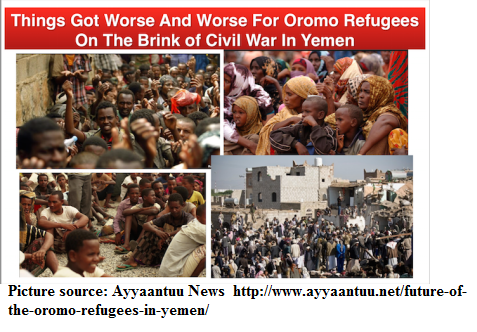



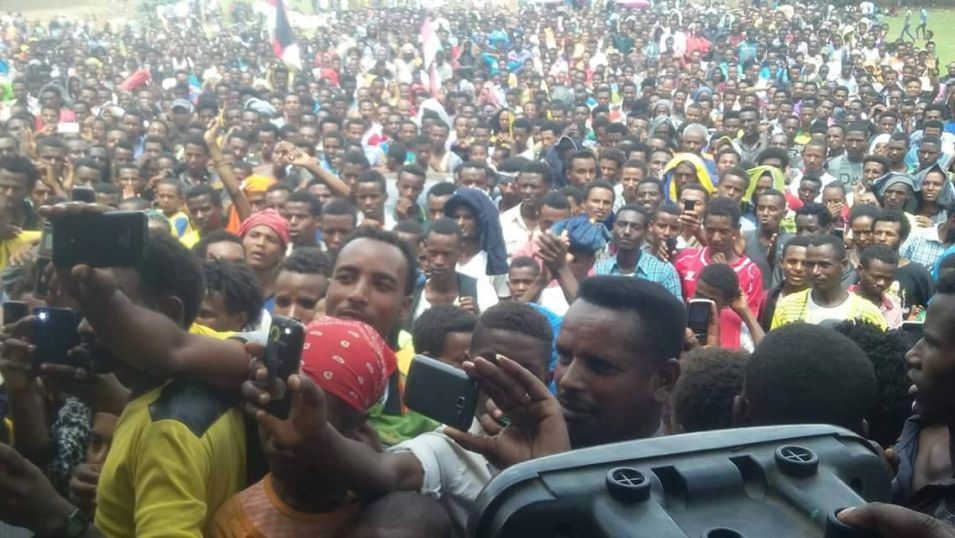
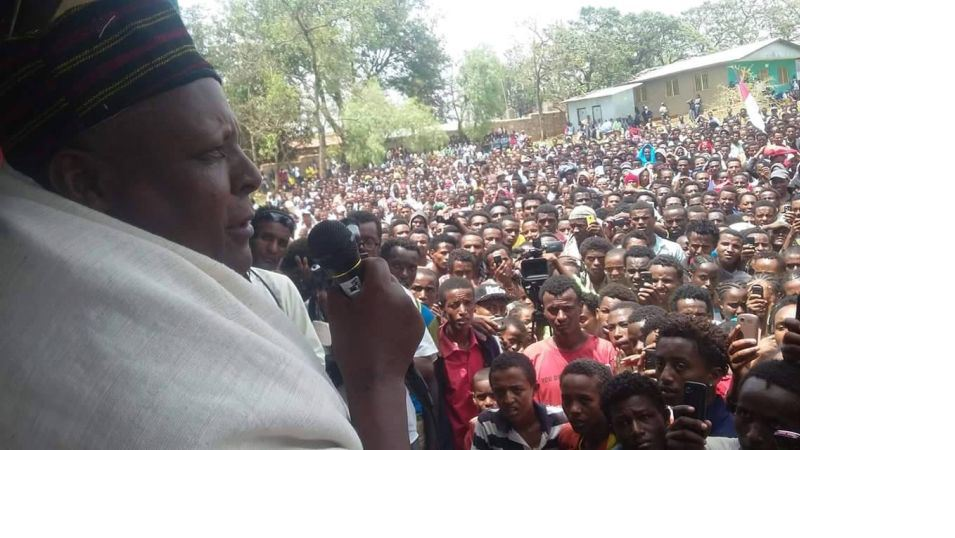
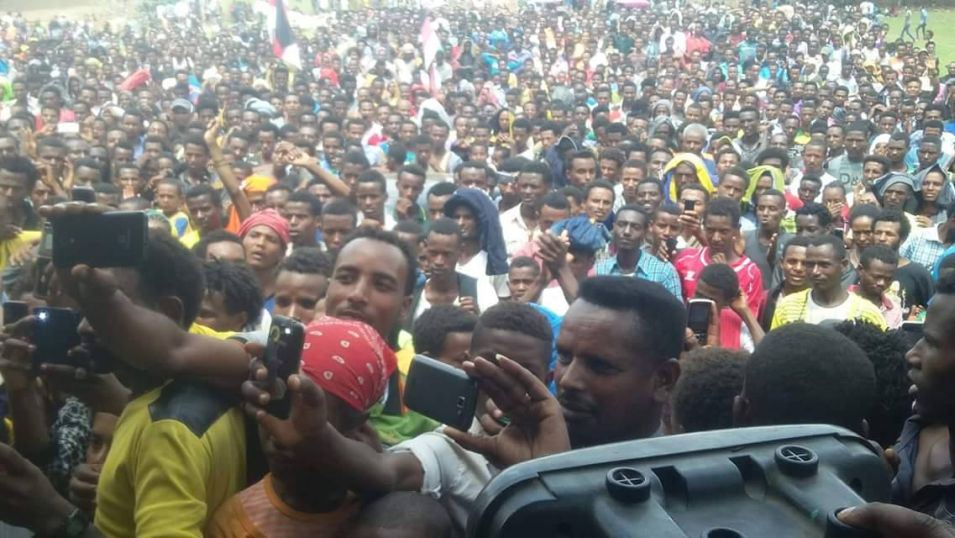
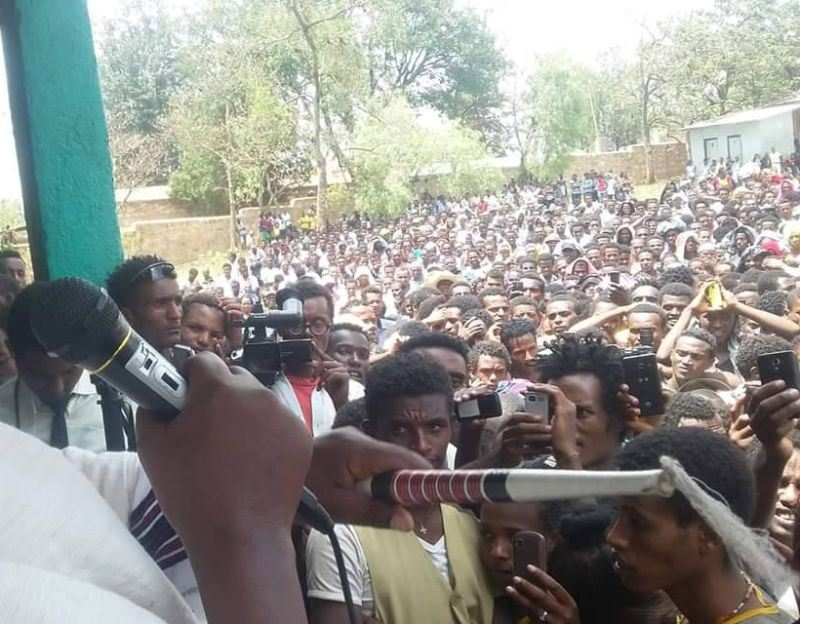
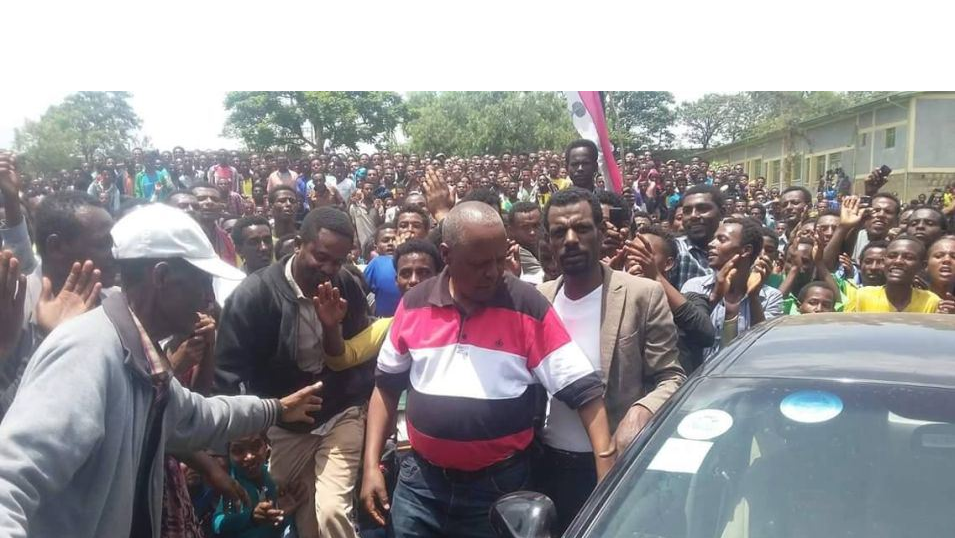

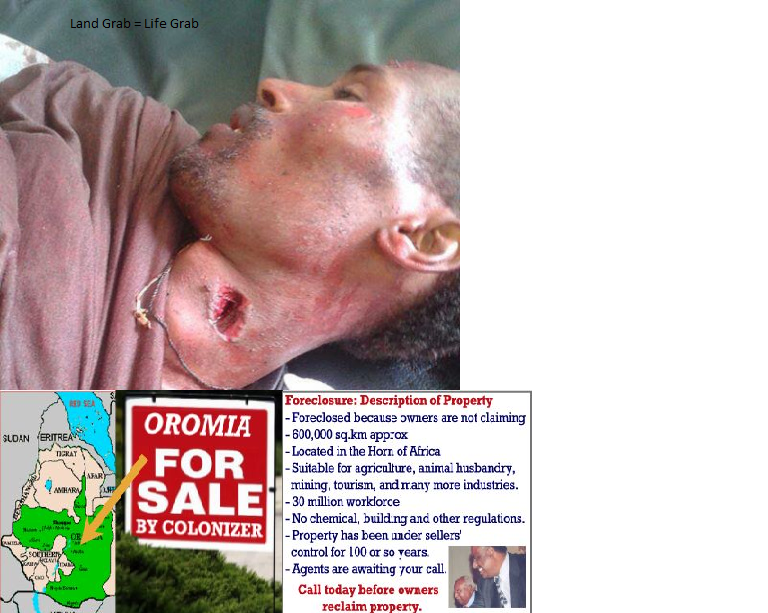






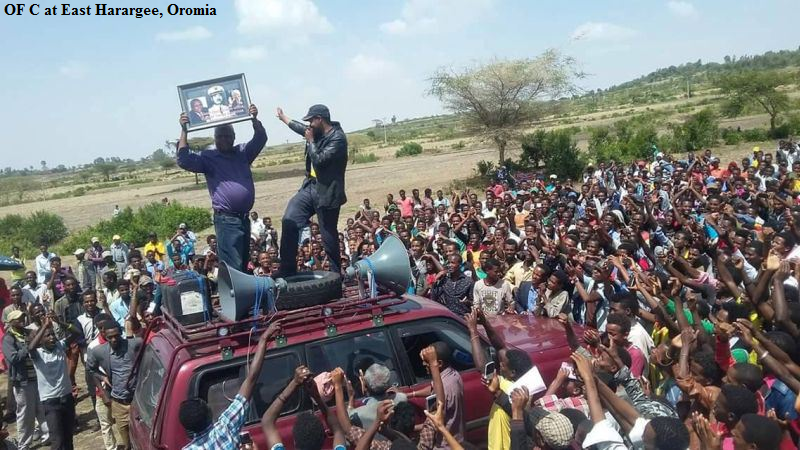
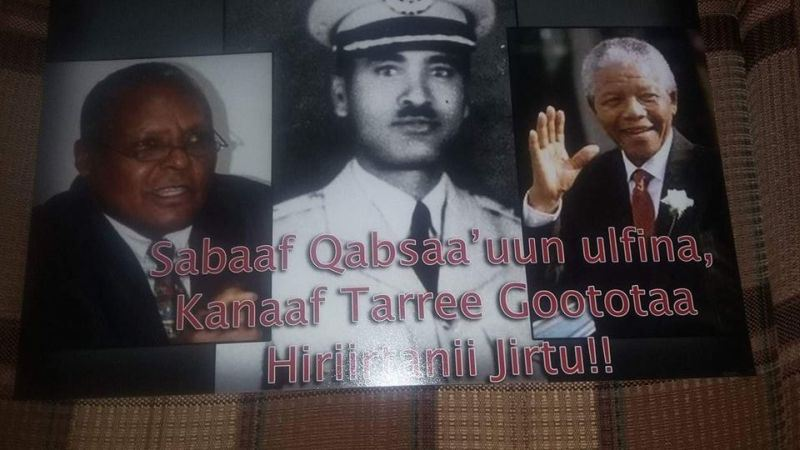
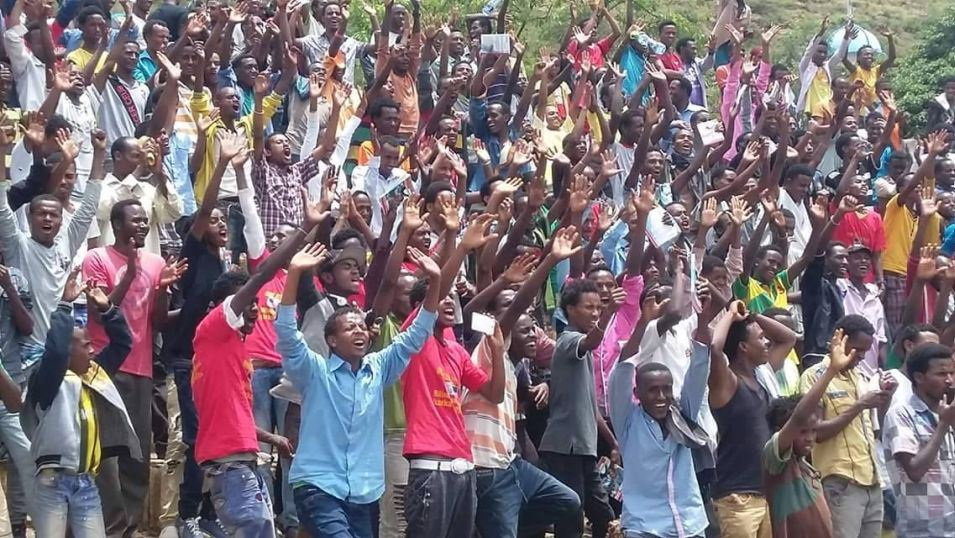
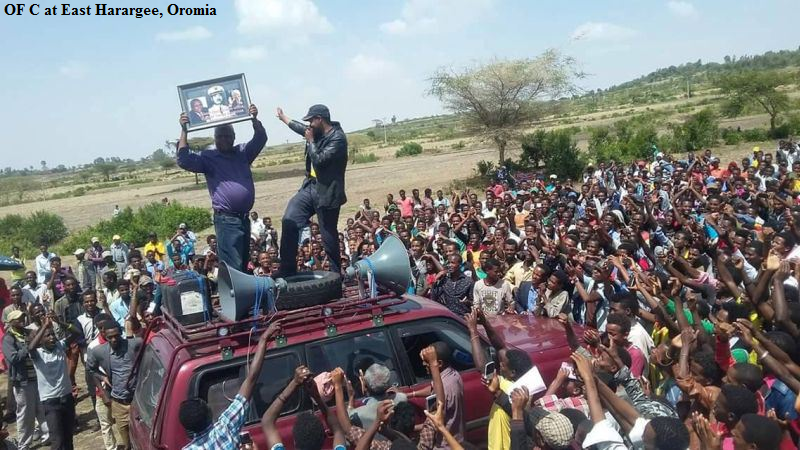
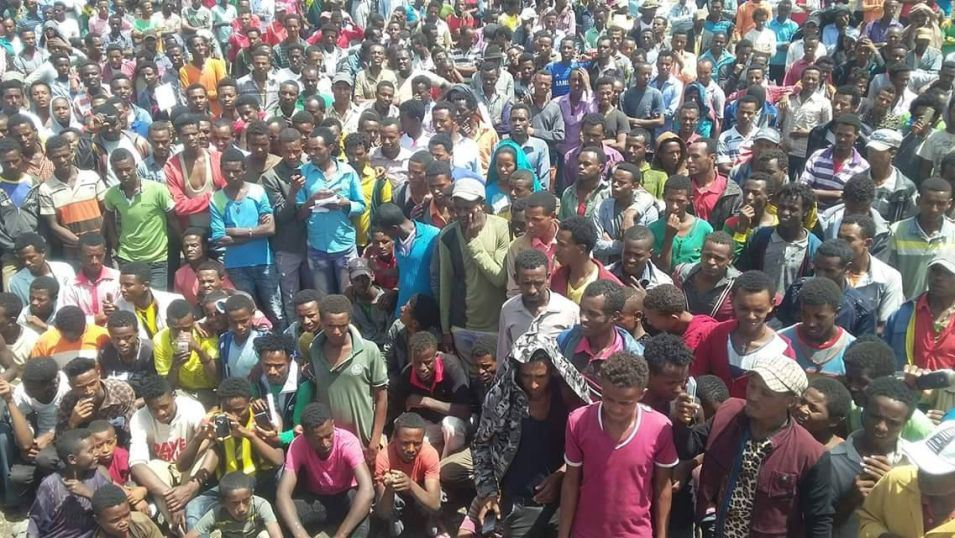
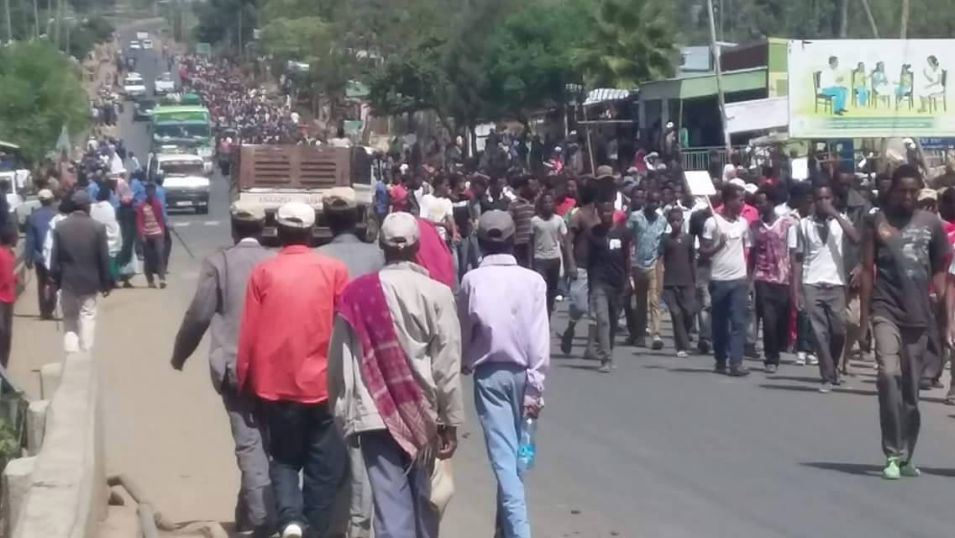
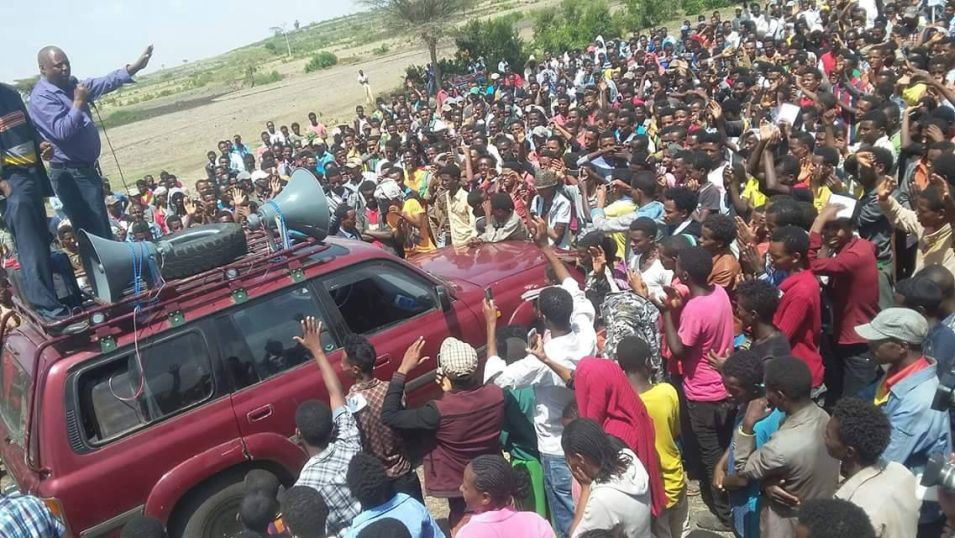
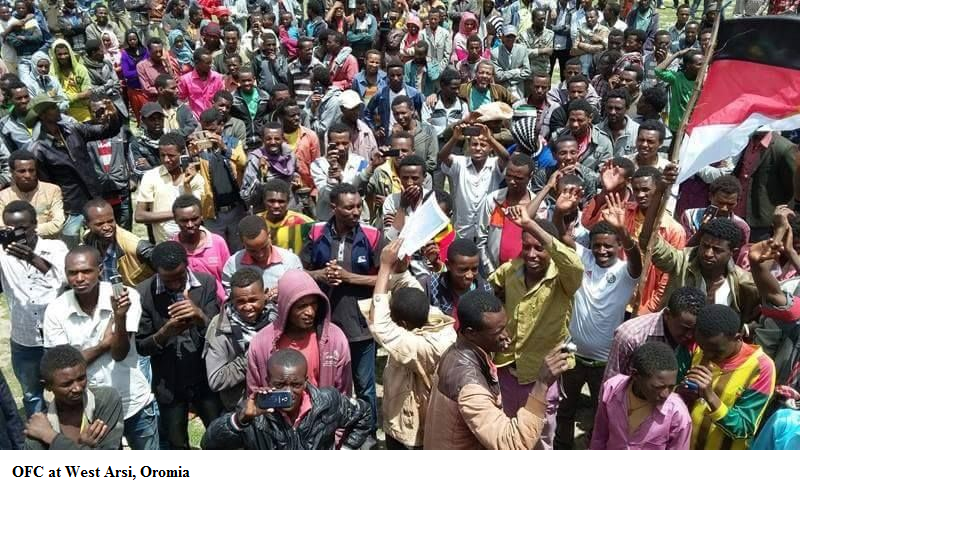
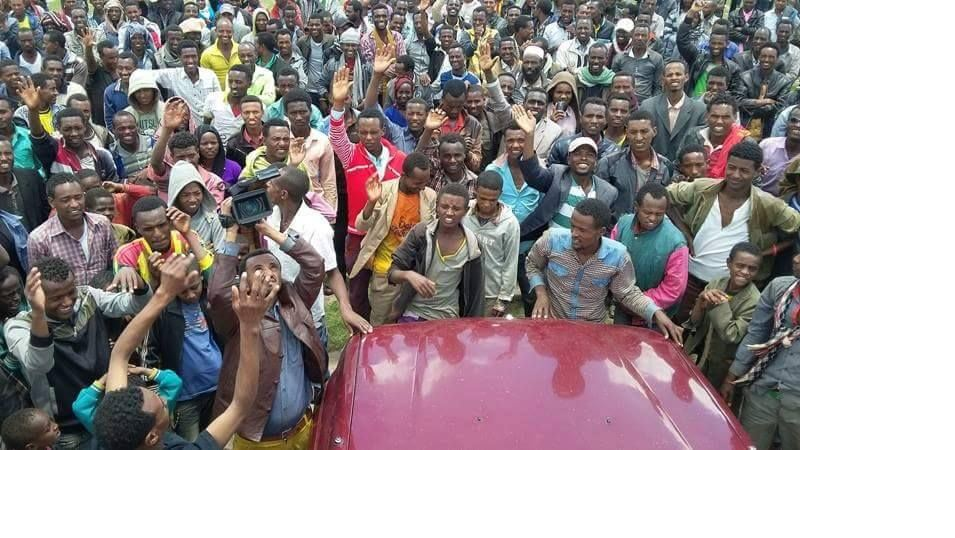
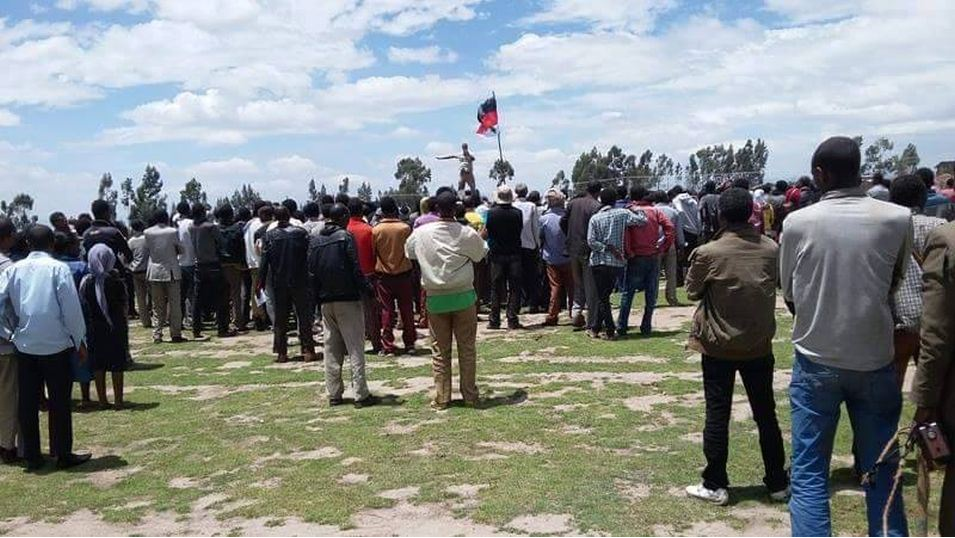
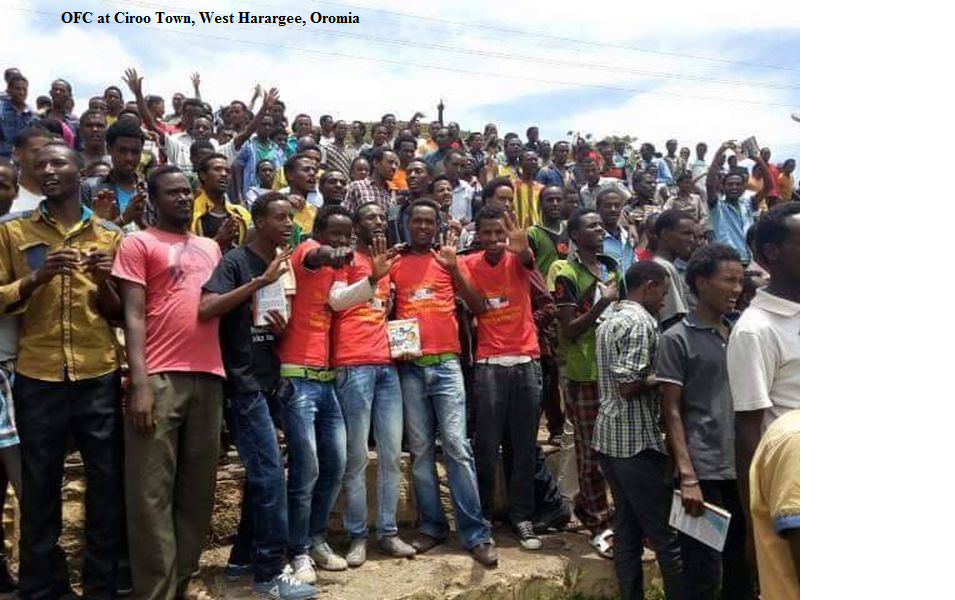
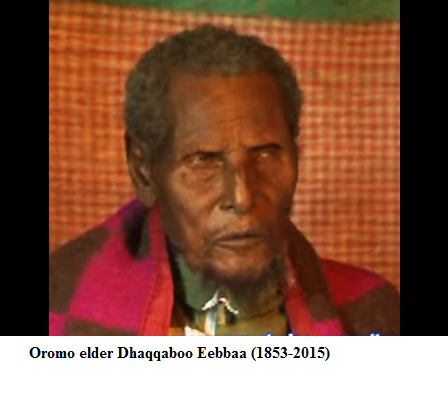
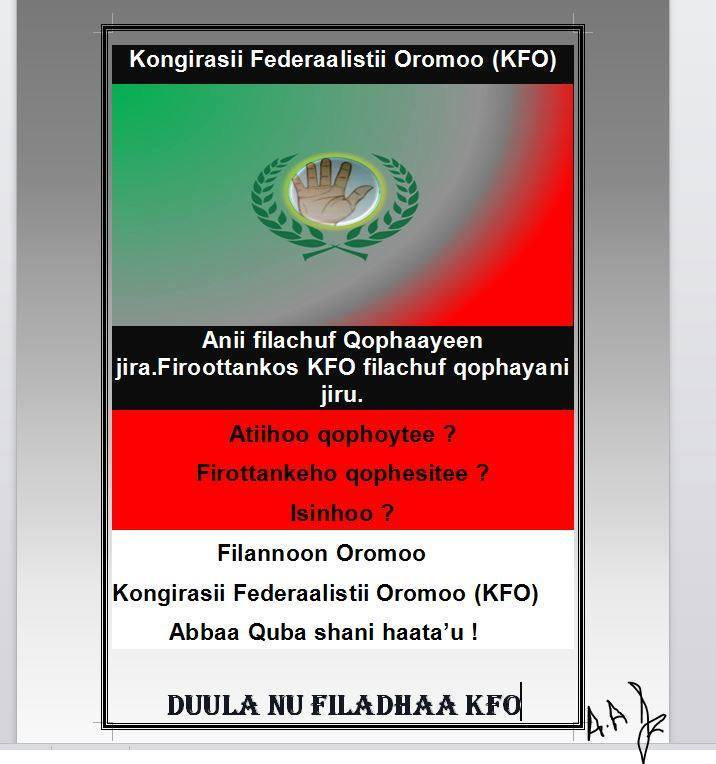
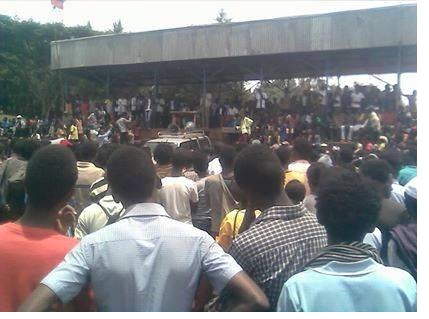
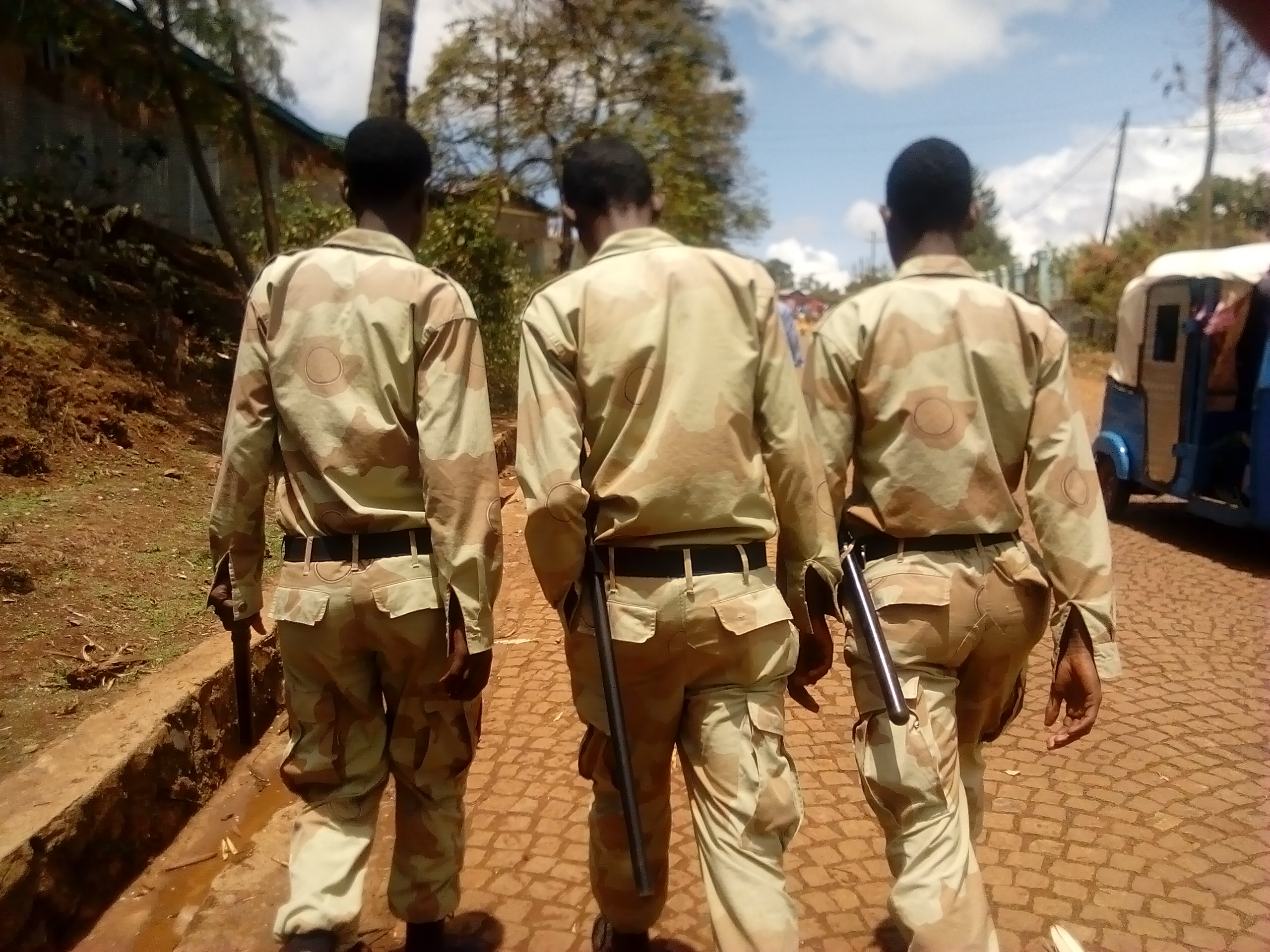
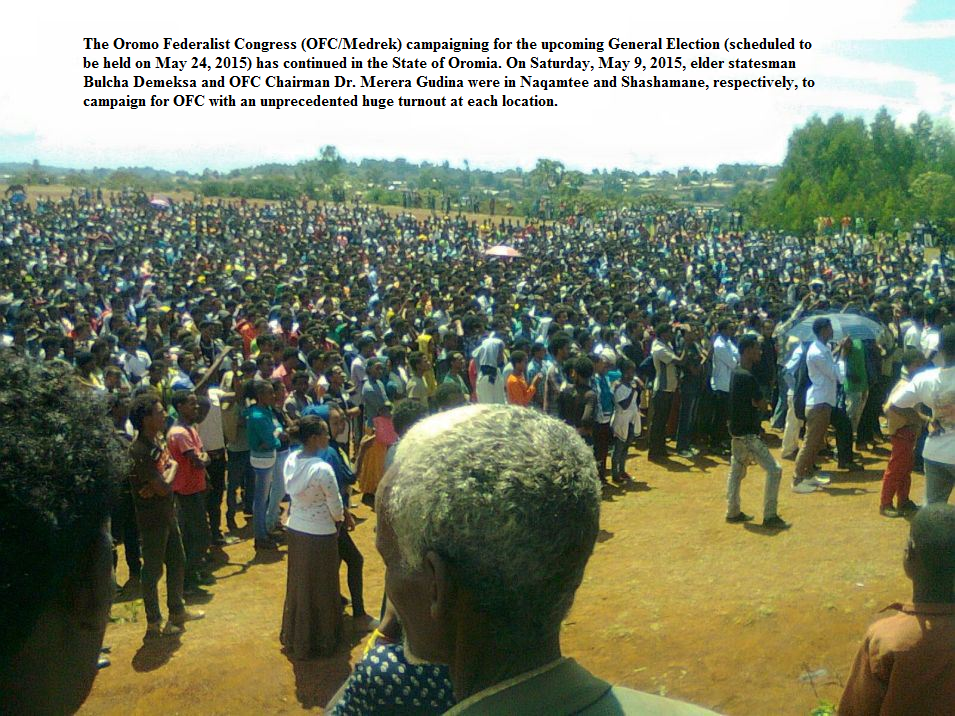
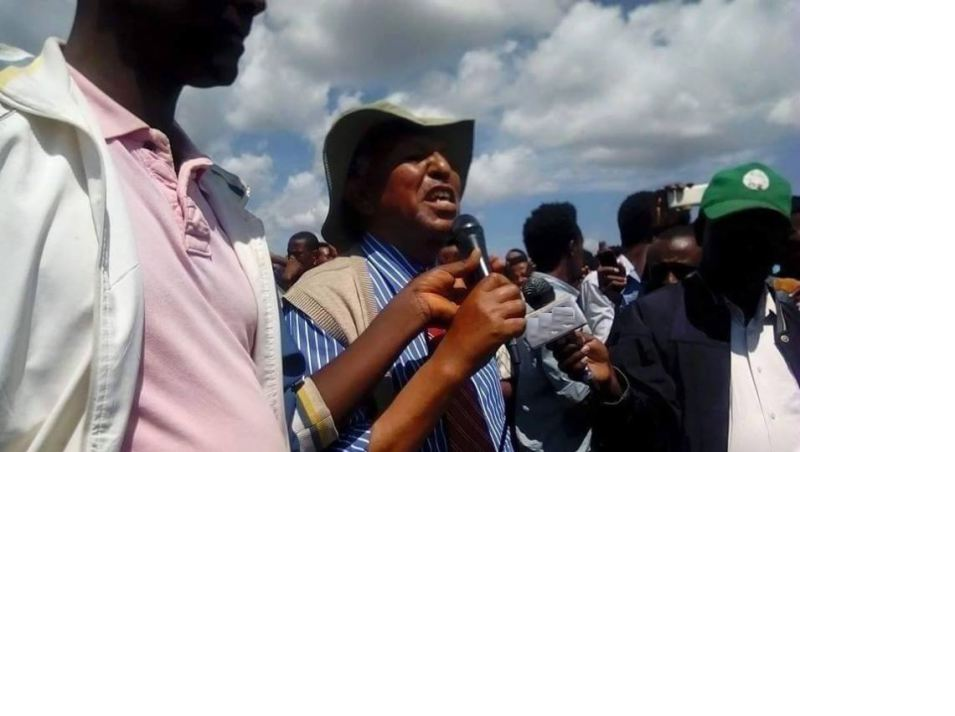
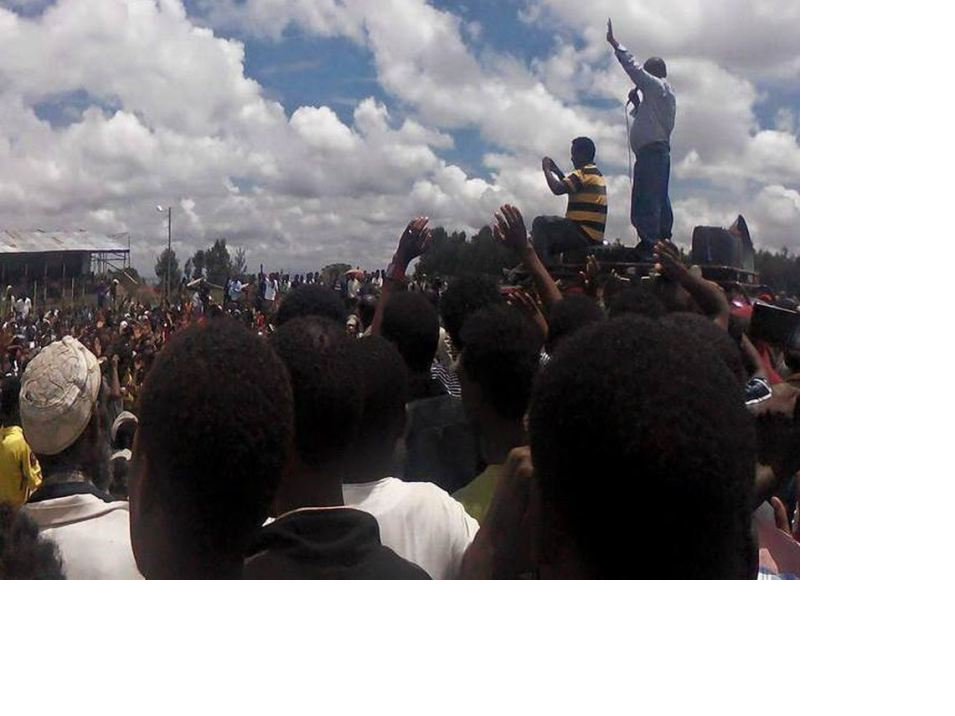
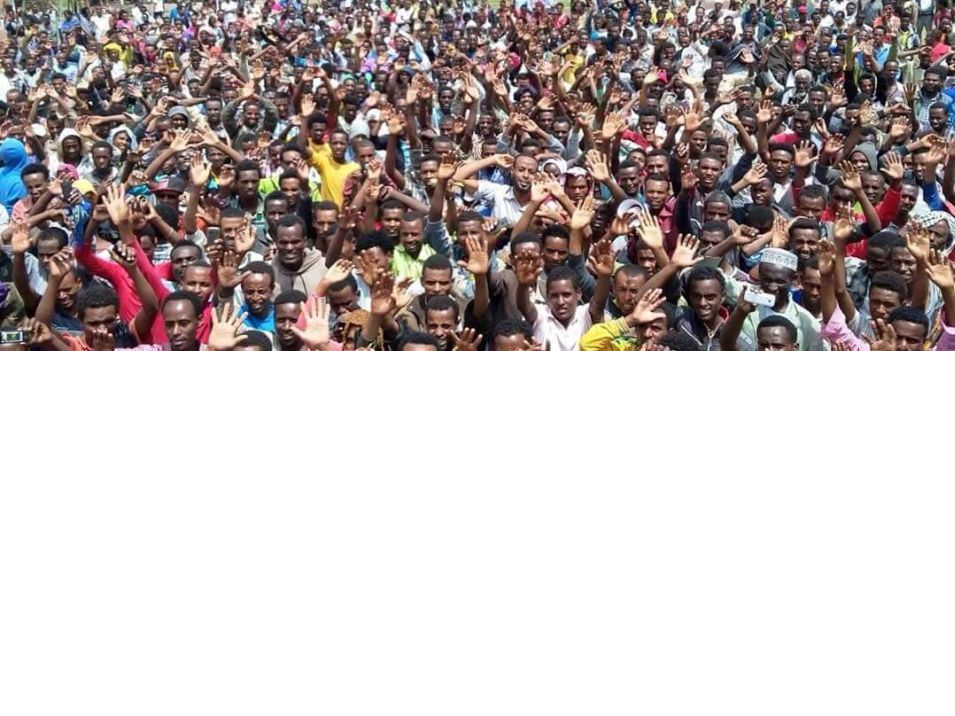
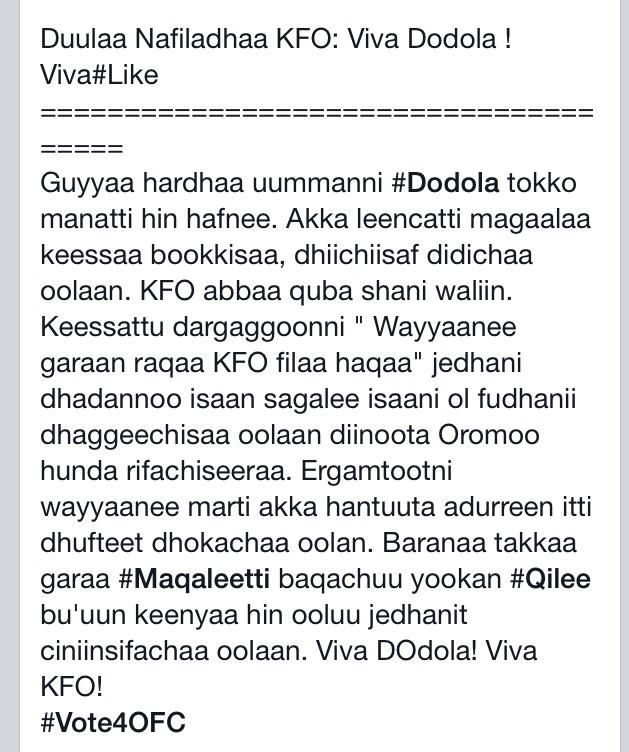
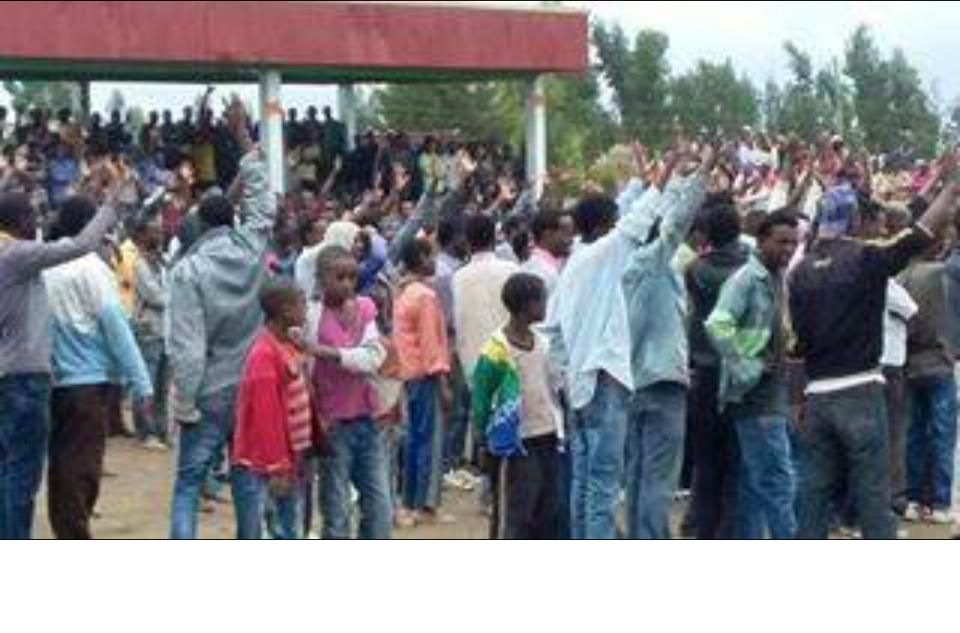
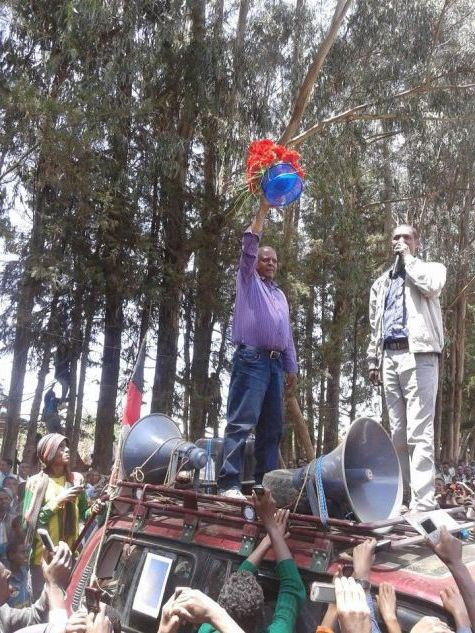
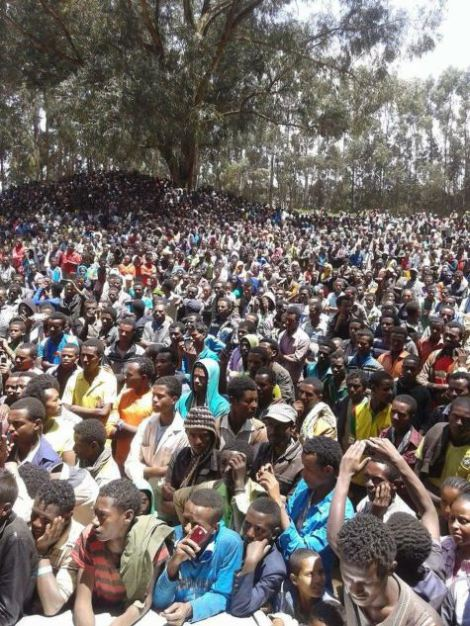
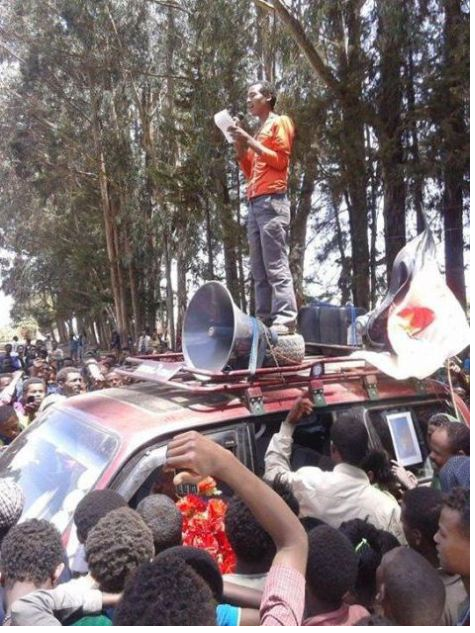
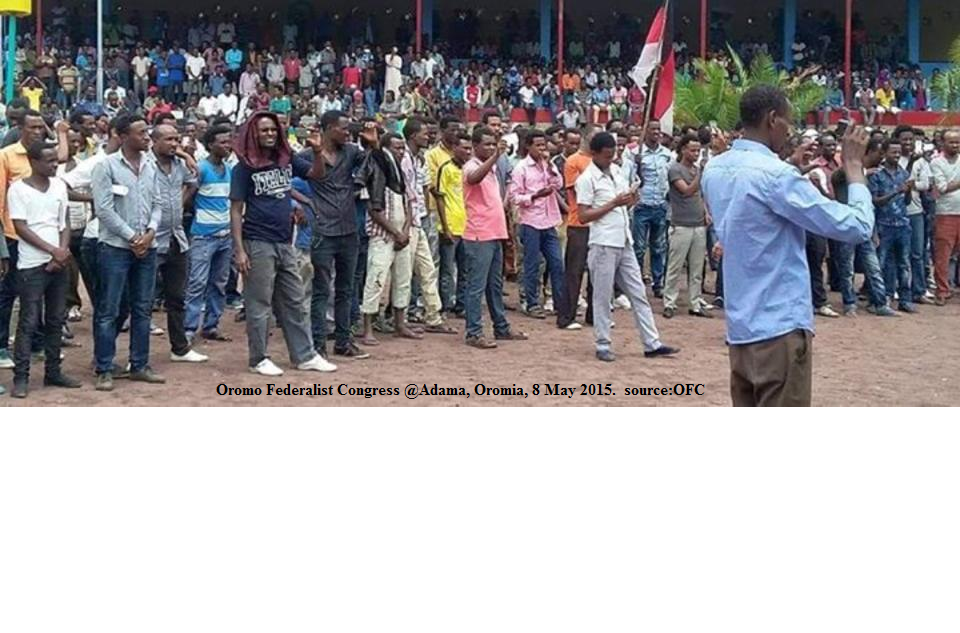



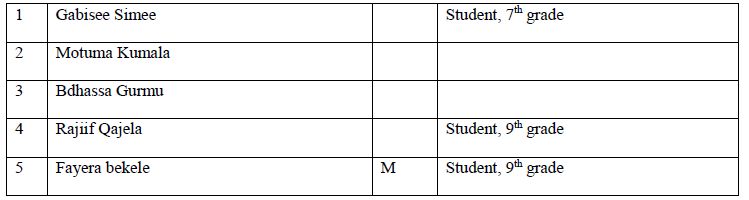
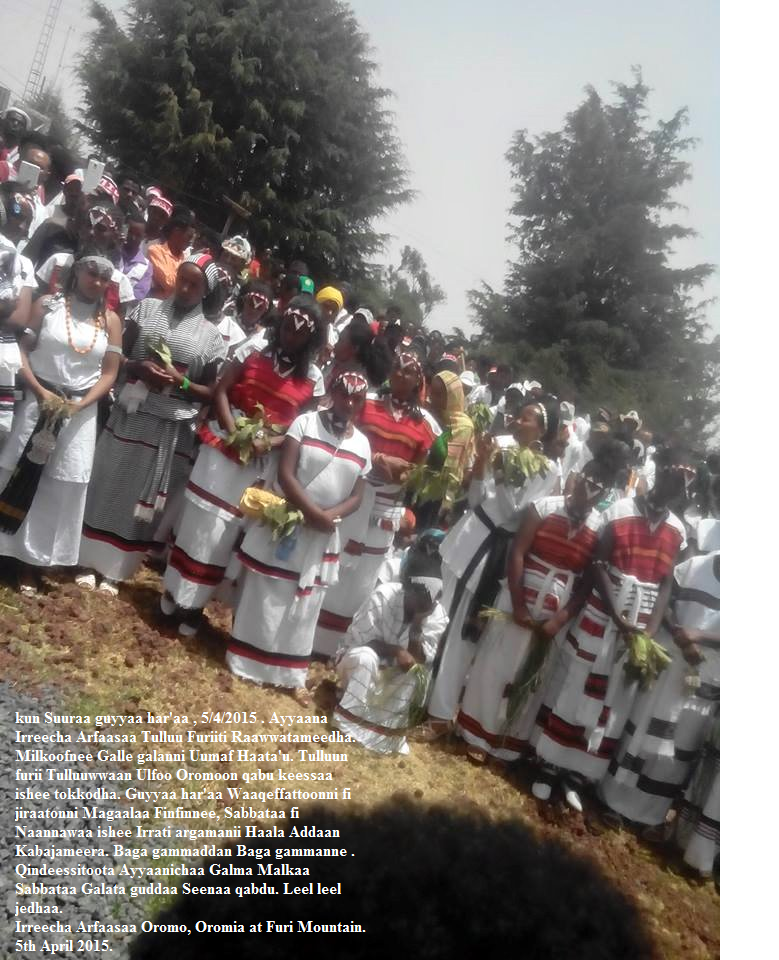
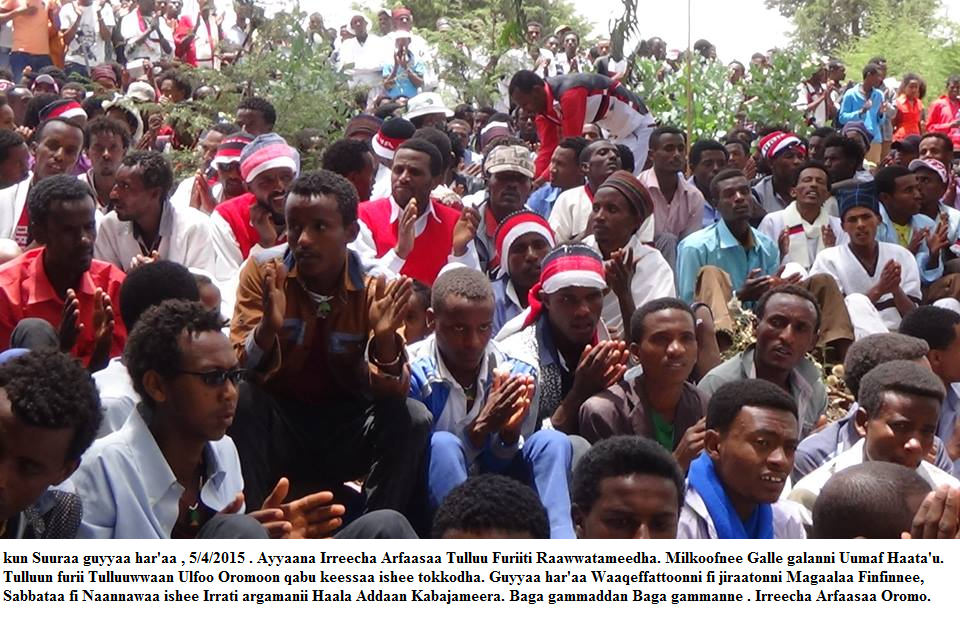


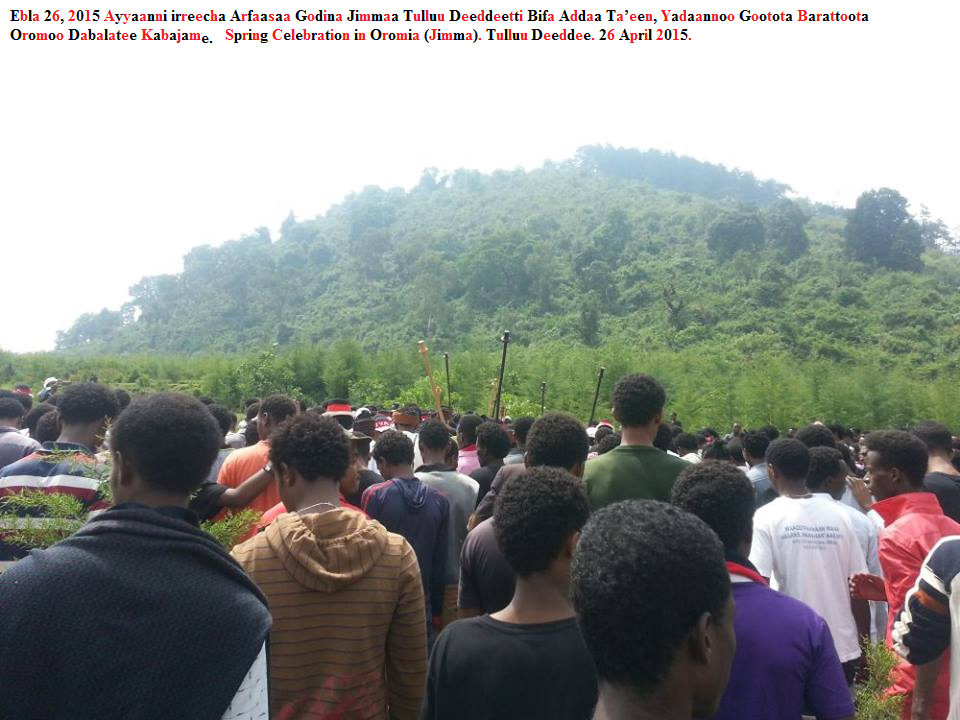
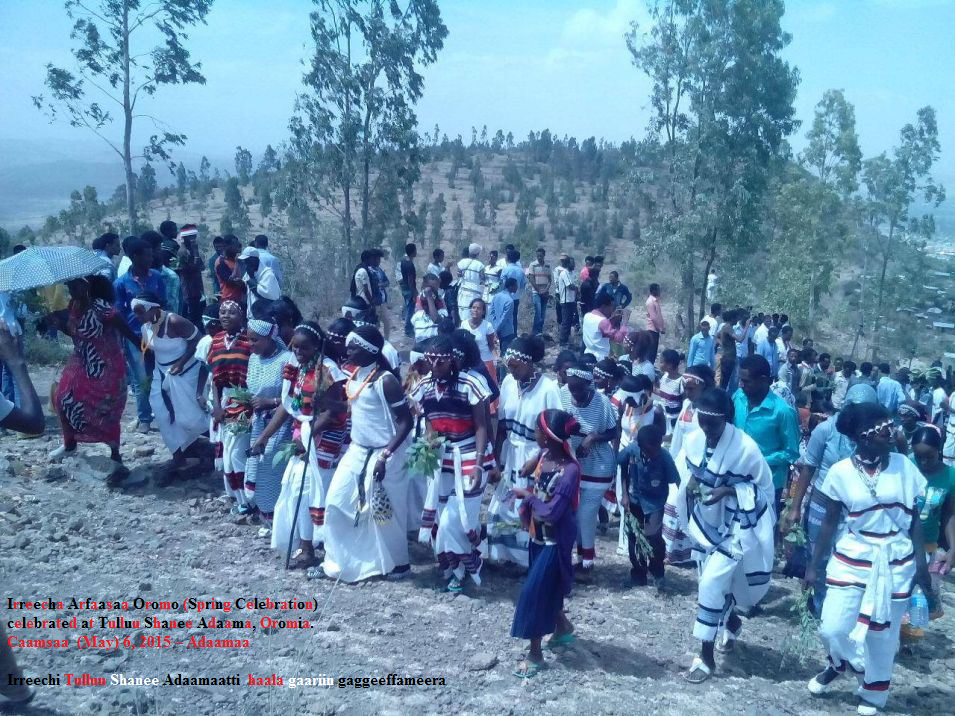
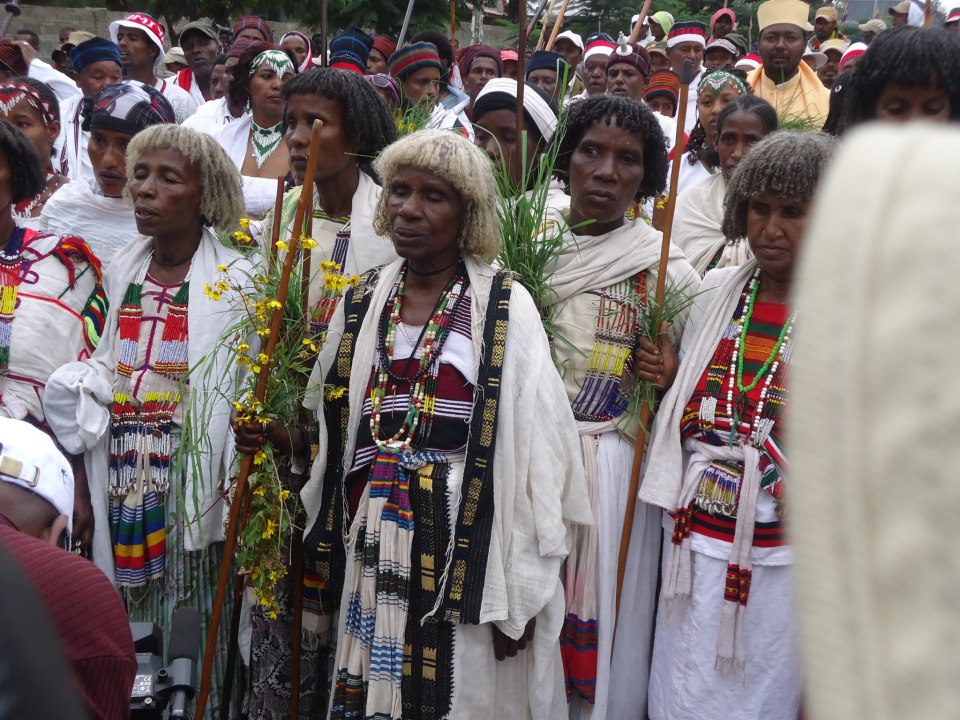


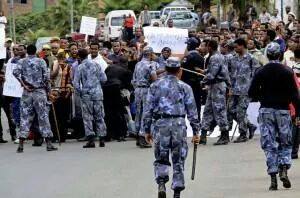
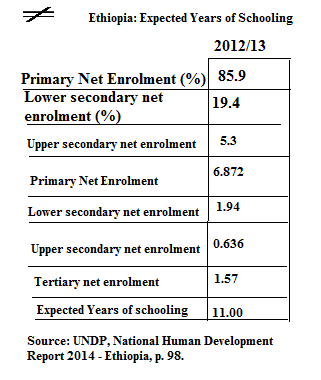
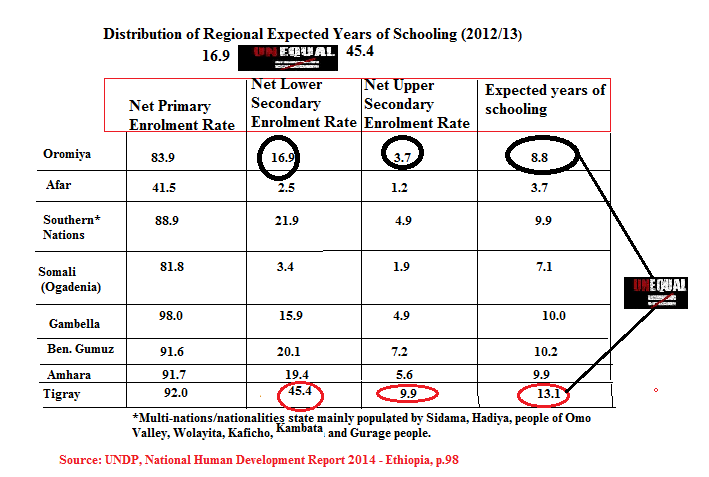
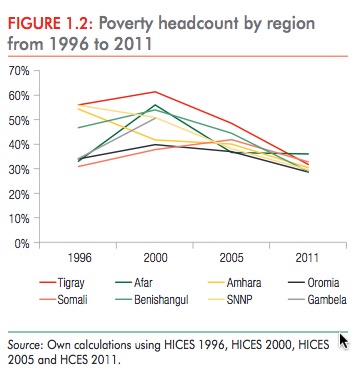
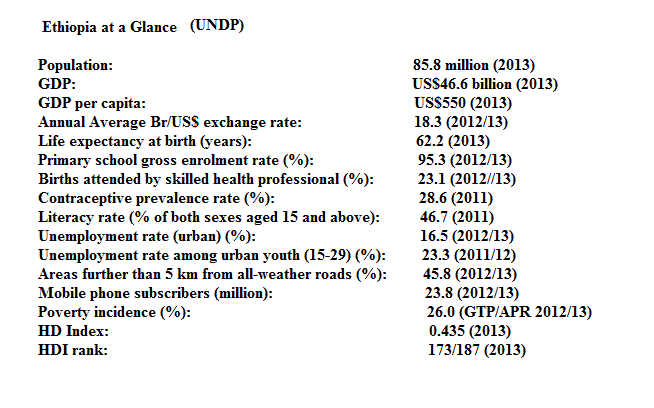
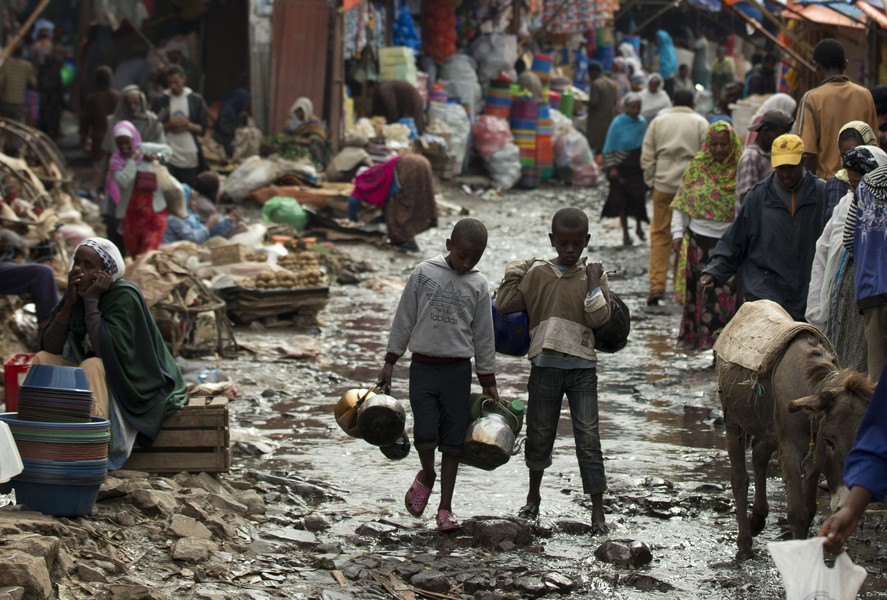



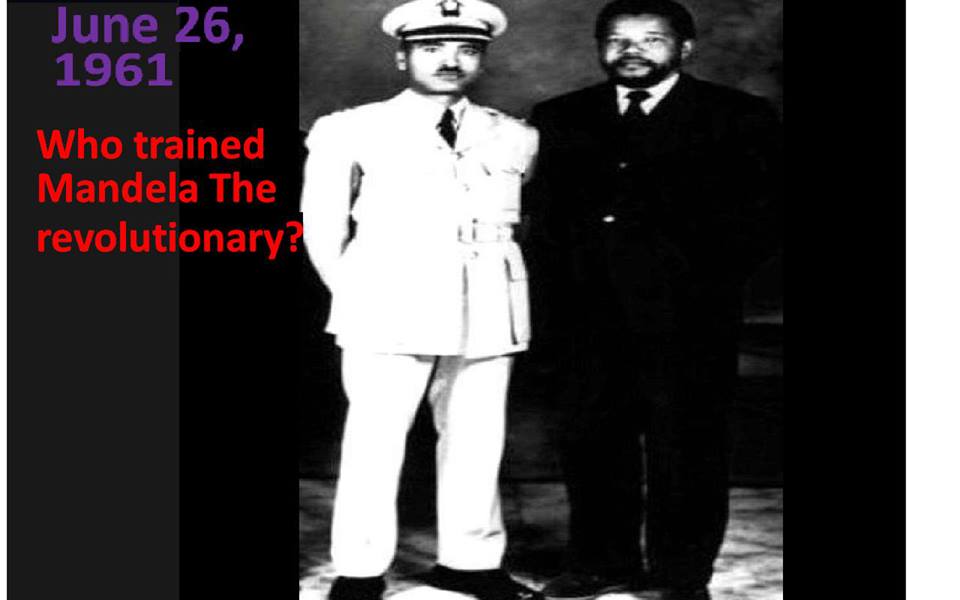
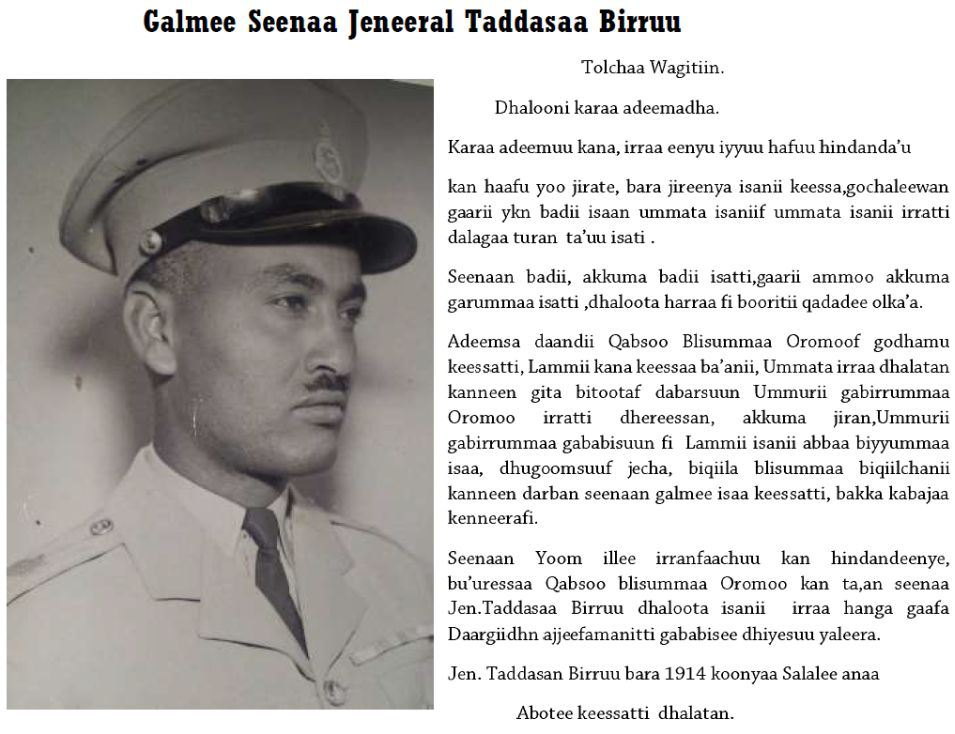
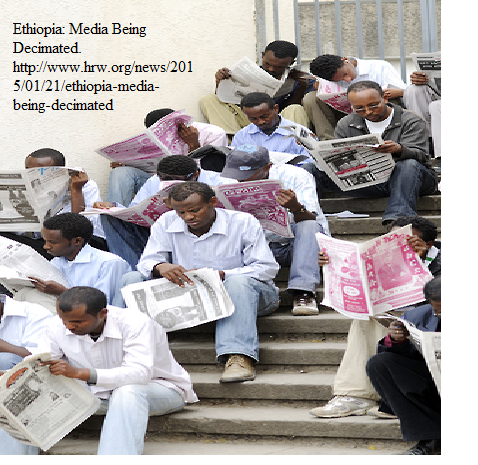
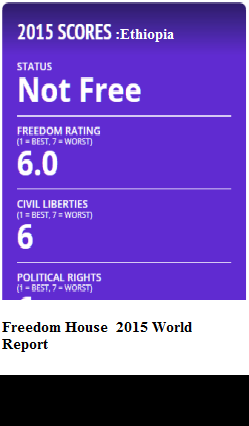
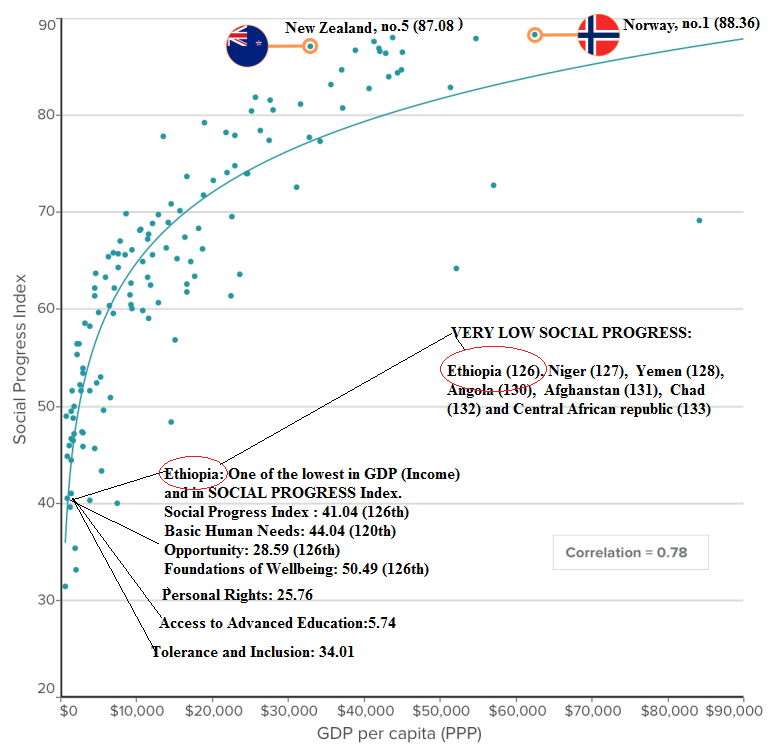
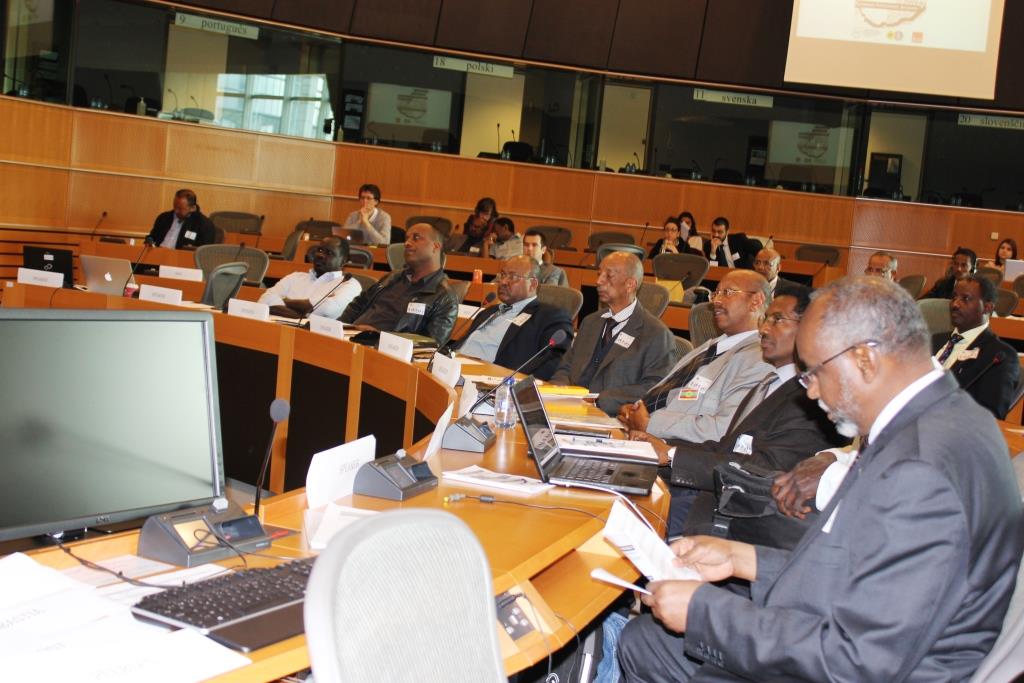
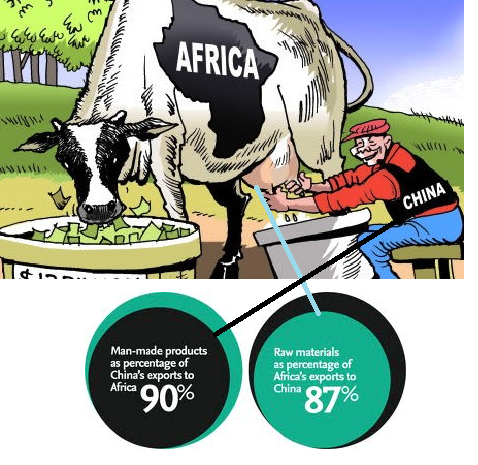


 Oromian Economist
Freedom House: U.S. Wrong to Endorse Ethiopia’s Elections. #Africa #Oromia April 23, 2015
Posted by OromianEconomist in Africa, Ethiopia's Colonizing Structure and the Development Problems of People of Oromia, Ethnic Cleansing, Free development vs authoritarian model, Groups at risk of arbitrary arrest in Oromia: Amnesty International Report, Sham elections, The Tyranny of TPLF Ethiopia.Tags: Africa, African Studies, Ethiopia's sham elections, Freedom House in response to comments by Under Secretary for Political Affairs, Genocide against the Oromo, The Tyranny of Ethiopia, Under Secretary Sherman’s comments, Wendy Sherman
2 comments
https://freedomhouse.org/article/us-wrong-endorse-ethiopias-elections#
U.S. Wrong to Endorse Ethiopia’s Elections
(Frredom House, Washington, April 16, 2015)
In response to today’s comments by Under Secretary for Political Affairs, Wendy Sherman, in which she referred to Ethiopia as a democracy and the country’s upcoming elections free, fair, and credible, Freedom House issued the following statement:
“Under Secretary Sherman’s comments today were woefully ignorant and counter-productive,” said Daniel Calingaert, executive vice president of Freedom House. “Ethiopia remains one of the most undemocratic countries in Africa. By calling these elections credible, Sherman has tacitly endorsed the Ethiopian government’s complete disregard for the democratic rights of its citizens. This will only bolster the government’s confidence to continue its crackdown on dissenting voices.”
Background:
Since coming into power in the early 1990s, the Ethiopian People’s Revolutionary Democratic Front (EPRDF) has dominated politics through a combination of political cooptation and harassment. The country experienced a degree of democratization through the early 2000’s, culminating in the most competitive elections in the county’s history in 2005. Since these elections, the EPRDF has restricted political pluralism and used draconian legislation to crack down on the political opposition, civil society organizations, and independent media. In the 2010, EPRDF and its allies won 546 out of 547 parliamentary seats.
Ethiopia is rated Not Free in Freedom in the World 2015, Not Free in Freedom of the Press 2014, and Not Free in Freedom on the Net 2014.
Freedom House is an independent watchdog organization that supports democratic change, monitors the status of freedom around the world, and advocates for democracy and human rights.
Join us on Facebook and Twitter (freedomhousedc) and Instagram. Stay up to date with Freedom House’s latest news and events by signing up for our RSS feeds, newsletter and our blog.
https://freedomhouse.org/article/us-wrong-endorse-ethiopias-elections#
Ethiopians dispute US official’s assessment of their ‘democracy’
U.S Department of State Endorsing of Upcoming Elections: Denial and Disrespect
The Human Rights League of the Horn of Africa (HRLHA)
The Human Rights League of the Horn of Africa (HRLHA) strongly opposes to the position that the U.S State Department has taken in regards to the upcoming Ethiopian election and the overall democratization process in the country in the past twenty-four years; and describes the comments by the Under Secretary of State as a sign of disrespect for ordinary citizens of Ethiopia and disregard for the human miseries that hundreds of thousands of Ethiopian have gone through under the EPRDF/TPLF-led government.
The HRLHA has no doubt at all that the U.S Government in general and U.S Department of State in particular, with the biggest and highly staffed of all Western embassies in Ethiopia, are very well aware of the political realities that have been prevailing in the country over the past two decades. An excellent proof is the Country Reports on Human Rights Practices that is issued annually by the US Department of State itself. Suppressions and denials of fundamental human rights in Ethiopia under the EPRDF/TPLF Government were being reported on by various human rights and humanitarian as well as government and diplomatic agencies; and, based on the facts revealed in such reports, the Ethiopian Government has repeatedly been ranked as the worst both at the regional and global levels.
In a country that has witnessed the highest number of political incarceration in its history, where unarmed students and other civilians were gunned down in hundreds simply because they attempted to exercise some of their fundamental rights, in “one of the ten most censored countries” where the existence of independent media has become impossible and, as a result, press freedom has been curtailed completely, where all sorts of socio-economic rights have been tied to political sympathy and supports, it would be an insult and disrespect to its ordinary citizens, and a disregard for the precious lives of innocent people that have been taken away by brutal hands to say that such a country is a democracy, and that the upcoming elections would be free and fair while intimidations and harassments of opposition candidates, as well as potential voters, were taking place out in the field even while the Under Secretary of State was making the comments. While encouraging the most repressive government and governing party towards becoming more dictatorial, the Under-Secretary of State’s comments discourage and undermine the sacrifices that the Ethiopian peoples have paid and are still paying to realize their century-old dream of building free and democratic country.
The Human Rights League of the Horn of Africa (HRLHA) requests that the Under Secretary of State retract the wrong comments and apologize to the Ethiopian peoples. It also urges the U.S State Department to recognize and acknowledge the realities in Ethiopia and use the close ties that exists between the two governments to put pressure on the ruling EPRDF/TPLF party so that it allows the implementation of a genuine democracy.
http://www.ayyaantuu.net/u-s-department-of-state-endorsing-of-upcoming-elections-denial-and-disrespect/